Beyond the Spot
42 episodes
The Cost of Being the Strong One When Everyone Leans on You
When Belonging Hurts: Healing After Community Wounds, Betrayal, and Exile
S3 Ep 35It Takes a Village (Again): Reviving Collective Care for Nervous System Healing
Healing was never meant to happen in isolation.In Episode 35 of Beyond the Spot, Tracy Gantlin-Monroy, MDiv, LPC, Brainspotting Trainer, explores the truth that many nervous systems are struggling not because something is wrong internally—but because something is missing relationally.This episode unpacks the role of collective care, co-regulation, and community in trauma healing, challenging the idea that healing is an individual process.Through a Brainspotting and neuroexperiential lens, Tracy invites listeners to reconsider what the nervous system actually needs to stabilize, process, and heal.Because sometimes the question is not:“What’s wrong with me?”But:“Who is holding me?”
S3 Ep 34The Stories We Carry: Storytelling and Ancestral Wisdom in Mental Health
We are shaped by the stories we inherit.In Episode 34 of Beyond the Spot, Tracy Gantlin-Monroy, MDiv, LPC, explores how storytelling functions as nervous-system regulation, cultural preservation, and intergenerational healing.In many marginalized communities, oral tradition has always been medicine. Before clinical models, before pathology, before diagnosis — there were stories.Stories that validated grief. Stories that encoded survival strategies. Stories that passed down dignity.This episode examines:How trauma disrupts narrative coherenceWhy sharing story in safe spaces restores regulationThe difference between performative vulnerability and embodied testimonyHow ancestral storytelling practices inform modern trauma workHow clinicians can integrate narrative without retraumatizationThe difference between retraumatizing retelling and regulated witnessing How ancestral stories encode resilienceWhat it means to decolonize the therapy space without rejecting clinical rigorBecause healing is not only about what happened.It is about who gets to tell the story. Until the lion tells the story, the hunter will always be the hero.
S3 Ep 33The Body and Belonging: From Somatic Exile to Homecoming
Episode 33 explores somatic exile — how disconnection from culture, community, and collective care is stored in the body — and what it takes to return.Drawing from Brainspotting, somatic psychology, ancestral wisdom, and present-day realities impacting marginalized communities, Tracy Gantlin-Monroy, LPC reframes belonging as a nervous-system experience rather than a social identity. This episode honors historical and contemporary sources of disconnection while inviting listeners across cultures to consider how privatized survival has shaped us all.Healing, Tracy suggests, is not about forcing closeness — but about creating safety for homecoming.
S3 Ep 32Capacity Has Consequences: How Nervous-System Growth Changes Relationships, Roles, and Tolerance
Growth in nervous-system capacity is often framed as universally positive — but it comes with consequences that are rarely discussed.In Episode 32 of Beyond the Spot, Tracy Gantlin-Monroy, MDiv, LPC and Brainspotting trainer explores how increased regulation, embodiment, and internal coherence inevitably change relationships, roles, and relational tolerance. As capacity expands, old dynamics may no longer fit. What was once tolerated may become untenable. What once felt “normal” may now feel misaligned.Drawing from Brainspotting, somatic psychology, trauma science, and spiritually grounded clinical practice, this episode names the grief, rupture, and clarity that often follow genuine healing. Capacity is not neutral — it reorganizes systems.This episode is for clinicians, helpers, leaders, and individuals navigating relational shifts after deep healing work, boundary repair, or nervous-system maturation.
S2 Ep 31Staying Regulated in a Dysregulated World Why calm is not the goal — capacity is
In this episode, Tracy Gantlin-Monroy, MDiv, LPC and Brainspotting trainer reframes one of the most misunderstood concepts in mental health and nervous-system work: regulation.Calm is often sold as the goal — but calm without capacity is fragile. In a world marked by collective grief, social unrest, economic instability, and ongoing trauma exposure, the nervous system is not meant to stay perpetually calm. It is meant to move, respond, mobilize, and return.This episode explores regulation as flexibility, not stillness. Capacity, not compliance. Tracy names how marginalized bodies are often pressured into appearing regulated to make others comfortable, while their systems are carrying far more than what is acknowledged.Listeners are invited to release the myth of calm and instead cultivate nervous-system capacity — the ability to feel, respond, and recover without collapse or self-abandonment. Capacity is a skill, give self grace towards development.
S2 Ep 30What We Practiced in 2025: A Nervous-System Praxis for Entering 2026
Episode 30 is a threshold episode — not a recap, not a reflection, but a praxis.In this closing episode of 2025, Tracy Gantlin-Monroy, MDiv, LPC, Brainspotting Trainer, names what the nervous system learned through the year’s conversations on grief, anger, boundaries, no contact, liminality, neurodivergence, culture, and liberation. Rather than offering resolutions or goals, this episode centers capacity — the ability to stay with sensation, truth, and emergence without rushing to label, fix, or perform healing.As 2025 comes to a close, this episode offers a reflective pause — not to measure productivity, but to name what the nervous system learned to stay with.This is not a recap of accomplishments. It is a praxis — an invitation to enter 2026 with regulation, honesty, and embodied wisdom.Listeners are guided to reflect on what softened, what stabilized, and what no longer requires explanation in order to be honored.Listeners are invited to carry forward what has integrated in their bodies, release what no longer serves, and enter 2026 with greater honesty, regulation, and relational integrity.This episode is an offering of grounding, reverence, and slow integration — honoring that healing is not what we accomplished, but what we can now stay with.
S2 Ep 29“The Space Between Who You Were and Who You’re Becoming”
In this episode, Tracy Gantlin-Monroy, MDiv, LPC, offers a deep nervous-system and spiritually rooted exploration of liminal space — the transitional terrain between who we were and who we are becoming. Contrary to dominant narratives that equate uncertainty with pathology, liminality is framed as a place of sacred reorganization, meaning-making, and identity expansion.Tracy unpacks:What the nervous system does in seasons of transitionWhy liminality often feels like disorientationHow social and cultural systems mislabel becoming as instabilityThe grief embedded in transformationHow Brainspotting and somatic witnessing support identity shiftsThe spiritual dimension of wandering, waiting, and unfoldingListeners are guided through grounded reflection as Tracy challenges the myth that we must “know” in order to move — and instead affirms that becoming is its own form of knowing.
S2 Ep 28THE AFTERCARE OF BOUNDARIES: How the body heals after Truth-Telling
In this episode, Tracy Gantlin-Monroy, MDiv, LPC, offers a grounded, decolonized exploration of what happens after we set a boundary. While Episode 27 unpacked the complexity of no contact and relational rupture, Episode 28 moves into the healing phase that most conversations skip: aftercare.Drawing from Polyvagal Theory, somatic psychology, intergenerational trauma, Brainspotting, and liberatory practice, Tracy names the nervous-system shifts that occur once a boundary is set — and why shame, guilt, collapse, freeze, or loneliness often surface afterward.Through somatic invitations and Brainspotting-inspired interventions, listeners learn how to:regulate after relational rupturegrieve the roles they once heldmetabolize inherited guiltunderstand the silence that follows separationrebuild identity from a rooted, regulated placeThis episode offers language, compassion, and nervous-system clarity for anyone navigating the emotional terrain of boundary-setting and the sacred work that follows.This is not just an episode about saying “no.” It’s about becoming yourself again afterward.“A boundary protects you in the moment; aftercare heals the parts of you that learned to live without protection.”Happy to share references for further engagement:Porges, S. (2011). The Polyvagal Theory.Levine, P. (1997). Waking the Tiger.Grand, D. (2013). Brainspotting.Menakem, R. (2017). My Grandmother’s Hands.hooks, bell. (2000). All About Love.Bowen, M. (1978). Family Therapy in Clinical Practice.Ogden, P., Minton, K., Pain, C. (2006). Trauma and the Body.
S2 Ep 27“NO CONTACT: When Roles Replace Relationship and Humanity Gets Lost”
In this episode, Tracy Gantlin-Monroy, MDiv, LPC, Brainspotting Trainer, reframes no contact as neither rebellion nor rejection, but a relational and nervous-system response to ruptures that were never repaired. Tracy explores how family systems operate through roles instead of relationships, how parents and adult children both lose their humanity within these roles, and why no contact can emerge from deep grief, trauma, or safety needs on either side.The episode further examines no contact within LGBTQIA+ families — naming the grief parents experience when the child they imagined no longer exists, and the grief adult children carry when acceptance is withheld.With woven reflective invitations and Brainspotting/somatic imprint interventions, this conversation offers a decolonized, embodied, and compassionate lens for understanding rupture, repair, boundaries, and the generational cost of silence.Core Insight: No contact is not the end of the story — it is the truth about what was never repaired.
S2 Ep 26“The Sacredness of Anger in a Season of Grief” A nervous-system, spiritual, and decolonized exploration of anger during collective heaviness
In this episode, Tracy Gantlin-Monroy explores the sacredness of anger during a season marked by grief, loneliness, recession, uncertainty, and collective emotional fatigue. Tracy reframes anger not as pathology, but as a nervous system signal — a spiritual truth-teller, and a decolonized emotional intelligence — a holy flare revealing need, boundary, and truth.Through a hybrid blend of somatic wisdom, decolonized psychology, and ancestral/spiritual grounding, she teaches listeners how anger functions as grief’s bodyguard and as a clarifier in seasons of despair. She reveals how anger often rises in seasons of forced joy, financial pressure, unresolved grief, and cultural expectations that silence pain. Through a blend of somatic wisdom, spiritual grounding, and liberation psychology, Tracy gently suggests listeners own their power and embrace the “how to” honor anger as a companion emotion to grief and a guide toward unmet needs, boundaries, and truth. This episode offers listeners permission to honor their fire, instead of shaming it — especially when the world demands joy while people are quietly struggling.Core Insight: Anger is not the opposite of peace — it is a pathway back to integrity, care, and belonging. Anger is not the enemy. Anger is the body insisting on honesty during collective heaviness.
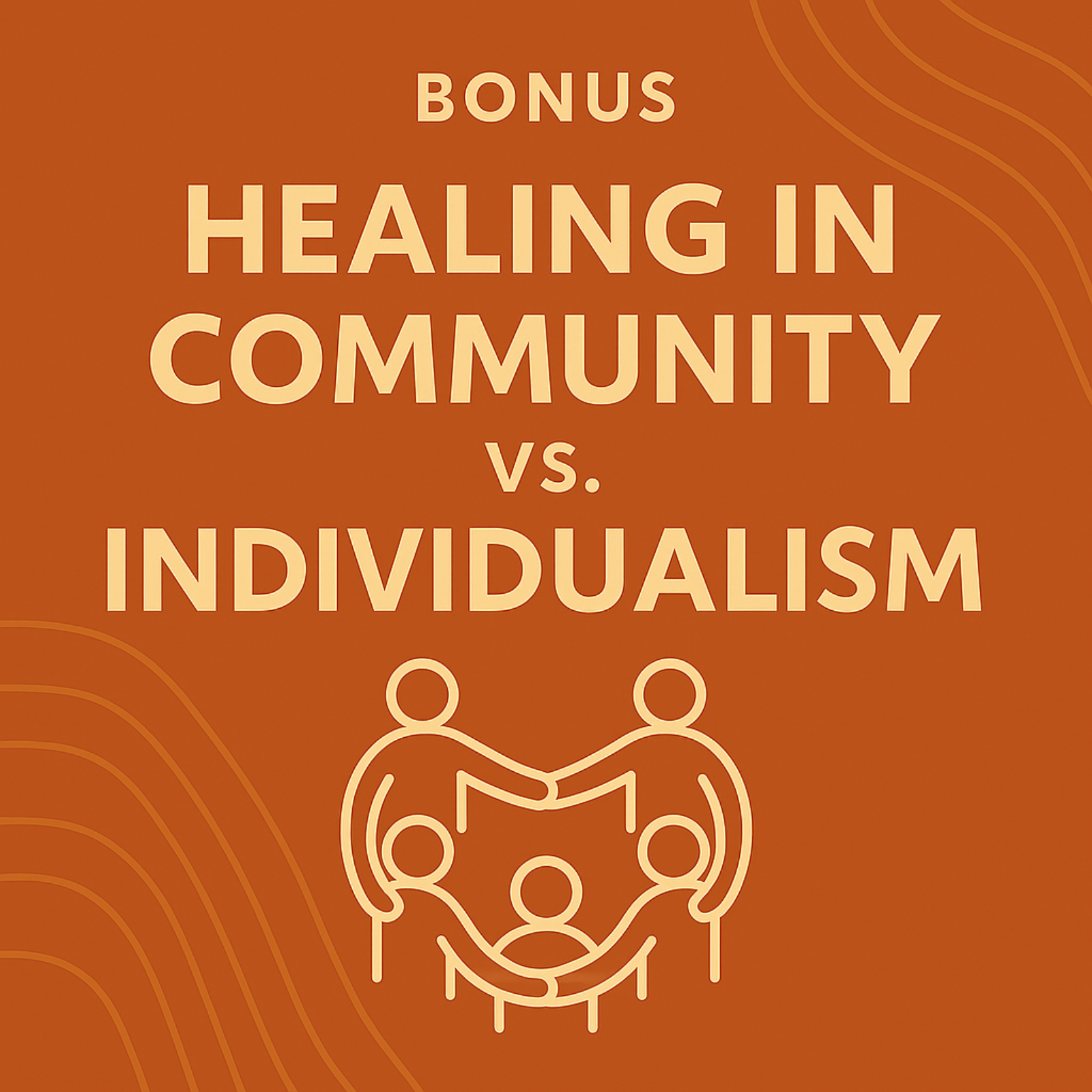
Healing in Community vs. Individualism: The Pathologizing of Connection Reflective Invitations
bonusReflective InvitationsIn this bonus episode, Tracy Gantlin-Monroy offers a series of embodied, soul-rooted reflective invitations designed to help listeners gently return to themselves and to the communities that hold them. Through nervous-system awareness, ancestral wisdom, and decolonized inquiry, these prompts guide listeners to notice how connection, belonging, and support live in the body. This episode is a soft landing — an invitation to slow down, listen inward, and reconnect with the communal rhythms our ancestors never forgot.Core insight: Reflection is not an intellectual task — it is a practice of remembering your place in the circle.
S2 Ep 25Healing in Community vs. Individualism: The Pathologizing of Connection
Healing in Community vs. Individualism: The Pathologizing of Connection Beyond the Spot: Decolonizing Healing One Brain at a Time with Tracy Gantlin-Monroy, MDiv, LPC, Brainspotting TrainerEpisode Summary: In this episode, Tracy Gantlin-Monroy dismantles the Western myth that healing is a solo journey. She traces how colonialism, capitalism, and modern psychology severed people from the collective rituals that once held the nervous system in rhythm: circle-work, song, drumming, witnessing, reciprocity. Through a decolonial lens, Tracy reveals how many of the states Western culture labels “pathology”—anxiety, depression, burnout—are often the body grieving the loss of community.She restores the lineage of Indigenous, African, and ancestral healing practices that centered connection rather than confinement. With poetic precision and clinical clarity, Tracy reframes healing as a communal act: shared breath, shared rhythm, shared witnessing. For clinicians, leaders, and anyone longing for belonging, this episode calls us back to the circle — the original nervous system sanctuary.Core Insight: Pathology is often a story of disconnection. Healing lives in relationship.

The Spiritual, Science and Soul of Coherence: Bridging HeartMath and Somatic Experiencing
bonusThe Spiritual, Science and Soul of Coherence: Bridging HeartMath and Somatic ExperiencingIn this bonus companion episode to Reclaiming Rhythm: The Nervous System Beyond Hustle, Tracy Gantlin-Monroy takes listeners deeper into the anatomy of coherence — the sacred intersection where science, soul, and somatics meet.Through the lenses of HeartMath and Somatic Experiencing, Tracy explores how coherence is both measurable and felt — the physiological rhythm of the heart and the embodied rhythm of safety.HeartMath describes coherence as heart-brain alignment, a state of psychophysiological harmony where the nervous system communicates in flow. Somatic Experiencing calls it regulation — the body’s natural pendulation between activation and rest.Together, they reveal the same truth:Healing begins when the body remembers its rhythm.Tracy guides listeners to experience coherence not as calm or control, but as internal congruence — when what you feel, what you say, and how you show up all move in resonance.Because coherence is not perfection. It’s presence. It’s truth made visible in the body.
The Spiritual, Science and Soul of Coherence: Bridging HeartMath and Somatic Experiencing
bonusThe Spiritual, Science and Soul of Coherence: Bridging HeartMath and Somatic ExperiencingIn this bonus companion episode to Reclaiming Rhythm: The Nervous System Beyond Hustle, Tracy Gantlin-Monroy takes listeners deeper into the anatomy of coherence — the sacred intersection where science, soul, and somatics meet.Through the lenses of HeartMath and Somatic Experiencing, Tracy explores how coherence is both measurable and felt — the physiological rhythm of the heart and the embodied rhythm of safety.HeartMath describes coherence as heart-brain alignment, a state of psychophysiological harmony where the nervous system communicates in flow. Somatic Experiencing calls it regulation — the body’s natural pendulation between activation and rest.Together, they reveal the same truth:Healing begins when the body remembers its rhythm.Tracy guides listeners to experience coherence not as calm or control, but as internal congruence — when what you feel, what you say, and how you show up all move in resonance.Because coherence is not perfection. It’s presence. It’s truth made visible in the body.
S2 Ep 24Reclaiming Rhythm — The Nervous System Beyond Hustle
Episode 24: Reclaiming Rhythm — The Nervous System Beyond HustleIn this powerful new episode of Beyond the Spot, Tracy Gantlin-Monroy reframes hustle culture as a trauma imprint on the nervous system — not a mindset to overcome.Tracing the historical roots of urgency, exploitation, and performative professionalism, Tracy explores how disconnection from rhythm leads to burnout, limbic countertransference, and loss of internal coherence.Through a Brainspotting and somatic lens, this episode invites listeners to return to the body’s original rhythm — a rhythm built on truth, safety, and liberation.Because healing doesn’t happen in the hustle. It happens in the rhythm of coherence.

S2 Ep 23The Soft Life Era: A Collective Reclamation Toward Liberation
Episode 22: The Soft Life Era — A Collective Reclamation Toward LiberationIn this powerful new episode of Beyond the Spot, Tracy Gantlin-Monroy reframes the “soft life” movement through the lens of nervous system healing and decolonized rest; a collective reclamation of safety, rest, and liberation.More than an aesthetic, the soft life is a somatic reclamation — a nervous system remembering safety after generations of survival. Tracy invites listeners, especially women and helpers, to explore how the longing for ease and rest is actually the body’s wisdom calling us back to regulation and liberation.Because the soft life isn’t luxury—it’s liberation.

S2 Ep 22When the Healer Is Hurting: The Cost of Carrying Others’ Pain and How to Come Home to Yourself
In Episode 22 of Beyond the Spot, Tracy Gantlin-Monroy speaks directly to healers, clinicians, caregivers, and helpers—the ones holding the pain of others while quietly carrying their own.Through a trauma-informed, decolonized lens, Tracy explores the cost of compassion fatigue, the historical weight of service in BIPOC communities, and the nervous system’s need for rest and resonance.This episode is a love letter to the helpers—a reminder that healing at the speed of safety begins with you.

S2 Ep 21Substance Use and Addiction as Coping: Addiction Reframed as Survival--Criminalization of BIPOC Communities--Somatic Approaches
Episode 21 of Beyond the Spot reframes addiction as survival—a nervous system strategy for regulation in the absence of safety and connection.Through the historical lens of colonization, systemic oppression, and the criminalization of BIPOC communities, Tracy Gantlin-Monroy, LPC (host) invites listeners to view addiction through compassion, curiosity, and embodiment.With Brainspotting and somatic healing insights, this episode challenges both clinicians and communities to move beyond judgment toward resonance—because the body isn’t seeking escape; it’s seeking home.

S2 Ep 20Episode 20: AI, Technology, and Mental Health
Episode 20 of Beyond the Spot explores the impact of technology and AI on mental health and human connection. Tracy Gantlin-Monroy reframes our digital lives through the nervous system—showing how hyperconnectivity breeds disconnection, and how embodied awareness becomes a radical act of resistance.With historical context from the Industrial Revolution to AI bias, this episode calls us back to presence, rhythm, and safety—reminding us that healing doesn’t move at the speed of code, but at the speed of humanity.
S1 Ep 19Parenting and the Nervous System: How our Unhealed Wounds Shape the Next Generation
Episode 19: Parenting and the Nervous System – How Our Unhealed Wounds Shape the Next GenerationIn Episode 19 of Beyond the Spot, Tracy Gantlin-Monroy explores parenting through the nervous system, revealing how unprocessed trauma shows up in family life across BIPOC and dominant-culture contexts.Drawing on intergenerational trauma, race-based stress, the weathering hypothesis, and allostatic load, Tracy unpacks how vigilance, silence, and avoidance shape children’s inheritance.With historical context and invitational reflections, this episode reframes parenting patterns not as pathology but as survival strategies—and calls parents and clinicians to heal their nervous systems as a gift to the next generation.
S1 Ep 18The Loneliness Epidemic: Why Disconnection Hurts the Nervous System
Episode 18 reframes loneliness as a nervous system wound with deep historical roots—from slavery and Indigenous displacement, to migration and mass incarceration, to the isolation of women carrying households alone.Tracy Gantlin-Monroy explores how loneliness shows up across history and culture, in hyper-connected digital lives, and in the bodies of marginalized caregivers. With Brainspotting insights and invitational reflections, this episode reminds us: community is not optional—it is medicine.
S1 Ep 17The Hustle of Healing When Self-Work Becomes Performance
In Episode 17 of Beyond the Spot, Tracy Gantlin-Monroy explores the hustle of healing—the way self-work has been co-opted into performance and productivity.Drawing from history, culture, and the wisdom of the nervous system, Tracy unpacks how hustle culture shows up in wellness practices, therapy rooms, and BIPOC survival strategies. She challenges clinicians to stop rewarding performance and invites listeners to reclaim healing as presence, rest, and liberation.Because true healing isn’t another hustle. It’s homecoming.
S1 Ep 16When the Therapist Needs Healing Too: Decolonizing the Myth of the Untouchable Clinician
The myth of the untouchable clinician has cost us all.In Episode 16 of Beyond the Spot, Tracy Gantlin-Monroy unpacks how therapists’ unhealed wounds—when left unattended—leak into sessions, burden clients, and reproduce systemic harm.Tracing the history of self-neglect in the helping professions, Tracy explores how clinicians were taught to fix others while denying themselves. For BIPOC clinicians, this has meant carrying double—the burden of community trauma and the pressure to prove legitimacy. For white clinicians, neutrality has too often served as a shield against naming race and power.With invitational reflections woven throughout, this episode challenges clinicians to unlearn silence, tend their nervous systems, and recognize that healing isn’t indulgence—it’s integrity.Because when the therapist heals, the space heals. And when the space heals, the client heals, too.
S1 Ep 15What’s Stored in the Body Is Bigger Than You (Beyond Epigenetics—Embodiment, Ancestral Memory, and Nervous System Inheritance)
The stories our bodies carry didn’t start with us.In Episode 15 of Beyond the Spot, Tracy Gantlin-Monroy explores the many ways trauma is transmitted across generations—not just through biology, but through silence, caregiving, systems, and spirit.Epigenetics explains part of the picture, but cultures have always known: grief can live in bones, silence can speak louder than words, and survival patterns can echo through families and communities long after the original harm.This episode weaves neuroscience, historical context, and ancestral wisdom to remind us: if trauma can be inherited, so can healing.With invitational reflections throughout, Tracy offers both clinicians and clients a lens that honors the body, culture, systems, and spirit as sites of transmission and liberation.
S1 Ep 14The Weight of Healing Spaces Why the Therapist’s Body Matters in the Room
The Weight of Healing SpacesWhy the Therapist’s Body Matters in the Room Host: Tracy Gantlin-Monroy, MDiv, LPC, Brainspotting TrainerTherapy isn’t neutral—because our bodies are not neutral.In Episode 14 of Beyond the Spot, Tracy Gantlin-Monroy explores how the therapist’s body, nervous system, and unprocessed history shape healing spaces just as much as the client’s. Drawing on history, lived experience, and Brainspotting, Tracy shows how limbic countertransference and unnoticed survival mode can shift sessions in ways that clients feel deeply—even if it goes unnamed.With invitational reflections woven throughout, this episode offers both clinicians and clients practical ways to recognize the weight of presence, the legacies we bring into the room, and the power of embodied healing.Healing doesn’t belong to the client alone. It belongs to all of us.
S1 Ep 13Trauma Work Belongs to All of US: Not Just Clients
Healing spaces are only as safe as the nervous systems holding them.Healing is relational—it flows both ways.In Episode 13 of Beyond the Spot, Tracy Gantlin-Monroy speaks to clinicians, healers, and space holders about why trauma work belongs to all of us—not just clients.Through somatic wisdom, Brainspotting, and lived experience, Tracy unpacks how unprocessed trauma and unnoticed limbic countertransference can leak into the therapy room. She offers reflections for both clinicians and clients on how survival mode, silence, or avoidance can block healing—and how awareness, presence, and nervous system work open the door to resonance.This episode invites us to unlearn what gets in the way of presence, and to remember that safe healing spaces are built on the ongoing work of everyone in the room.
S1 Ep 12Healing Is Not a Trend: What TikTok Therapists Get Wrong
In this episode of Beyond the Spot, Tracy Gantlin-Monroy, MDiv, LPC calls out the rise of viral therapy, toxic positivity, and “manifestation on steroids.” From TikTok therapists to Instagram healers, we explore how modern wellness culture has turned trauma recovery into content—and why that’s a problem.Tracy breaks down the harm of aesthetic-based healing, spiritual bypassing, and one-size-fits-all advice—and offers a return to embodied, lineage-rooted healing. Through Brainspotting, she shares how true transformation doesn’t perform. It resonates.If you’re tired of chasing algorithms and ready for something sacred, this episode is your invitation to return to what’s real.Episode 12 Reflection InvitationsWhat does “healing” mean to me when I strip away the social media version?Journal about what healing feels like in your body versus what you’ve been told it should look like.Notice if any of your images or expectations come from trend culture instead of your lived truth.Where have I felt pressured to perform my healing?Recall moments you posted or shared progress to prove worth or credibility.How did your body feel in those moments—open, grounded, and safe, or tense, shallow-breathed, and alert?When have I been harmed by quick-fix advice?Write about a time a meme, soundbite, or “manifestation” tip minimized your lived experience.What truth did your nervous system know in that moment?What practices feel sacred, even if they’re not shareable or “pretty”?Name three ways you’ve supported your healing that no one else has seen.How do those private acts of care nourish you differently than public ones?Where am I ready to slow down?Identify one area of your healing you’ve been rushing because of comparison or pressure.What might happen if you gave yourself permission to linger, to feel, to be incomplete?Who in my lineage practiced healing without the internet?Bring to mind ancestors or elders who embodied grounded, embodied care.What rituals or values from them can you reclaim now?How does my body signal ‘enough’ when I’m consuming too much online healing content?Track physical cues: fatigue, tension, irritability, shallow breathing.Experiment with stopping at the first sign of overwhelm and turning toward a regulating practice.
S1 Ep 11Neurodivergence Is Not Defiance: The Pathologizing of Nonlinear Minds in Communities of Color
What if the way your brain works was never the problem—but the way it’s been misunderstood?In Episode 11 of Beyond the Spot, Tracy Gantlin-Monroy names the racialized misdiagnosis, mislabeling, and masking of neurodivergent people—especially in Black, Brown, and immigrant communities. From ADHD to autism and everything in between, this episode explores how our brilliance was pathologized in systems designed for compliance, not care.Tracy breaks down the history of neurodivergence, the whitewashing of diagnostic criteria, and the harm of labeling nonlinear minds as "defiant." Through the liberatory lens of Brainspotting, she offers a new paradigm—one where difference is data, not disorder.If you’ve ever been called “too much,” “hard to reach,” or “not trying hard enough,” this episode is your invitation to stop apologizing for your rhythm—and start reclaiming your design.
S1 Ep 10The Myth of the Model Minority: How “Good Behavior” Became a Trauma Response
What if the pressure to be the “good one” was actually a trauma response?In Episode 10 of Beyond the Spot, Tracy Gantlin-Monroy unpacks the origins and impacts of the “model minority” myth—a narrative that has shaped and harmed Asian American, Latinx, and immigrant communities for generations.We explore how survival-based personas like perfectionism, overachievement, and silence are often rooted in collective trauma, assimilation pressure, and intergenerational fear. Through a Brainspotting lens, Tracy reveals how “good behavior” is not always goodness—but a nervous system seeking safety.This episode is a call to deconstruct false proximity to whiteness, reframe internalized performance, and restore humanity across all cultures.Whether you're a clinician, community leader, or someone healing from the myth yourself—this one’s for you.
S1 Ep 9"Tending the Sacred Wound"
Our emotions were never the problem—our silence was survival. In this episode, Tracy Gantlin-Monroy, MDiv, LPC, Brainspotting Trainer, reclaims the rage and grief of Black, Brown, and Indigenous women—and exposes how those feelings have been pathologized under the white gaze.From the “Angry Black Woman” trope. The “spicy Latina.” The “stoic Native.” To emotional invisibility in the therapy room, Tracy breaks down how Brainspotting supports embodied reclamation—and how healing becomes possible when the full spectrum of expression is welcomed.She also calls in white-bodied clinicians and co-conspirators: Liberation costs comfort. Authenticity requires discomfort. And healing demands truth.This episode is a sanctuary for grief, a song for rage, and a reckoning for those ready to feel.
S1 Ep 8"Our Emotions Were Never the Problem: Reclaiming Grief, Rage, and Expression Across BIPOC Communities"
Summary: For generations, BIPOC communities have been told we’re “too emotional.” Too angry. Too dramatic. Too loud. Too sensitive. Too much.But what if our emotions were never the problem—just the truth?In this episode of Beyond the Spot, Tracy Gantlin-Monroy, MDiv, LPC, Brainspotting Trainer, invites us to reclaim the full spectrum of our emotional expression—from ancestral grief to righteous rage.She breaks down how tropes like the “Angry Black Woman,” the “model minority,” and the “stoic Native” suppress embodied truth—and how Brainspotting helps us liberate what the nervous system never forgot.Tracy also speaks directly to white-bodied co-conspirators about the cost of choosing justice, and how true allyship requires emotional honesty and the willingness to be uncomfortable.Because healing doesn’t require silence. It requires space. And our bodies already know what to do with that space—if we let them.
S1 Ep 7"Is Spirituality Missing from Therapy? A Call Back to Our Ancestors"
Is Spirituality Missing from Therapy?A Call Back to Our Ancestors with Tracy Gantlin-Monroy, MDiv, LPC, Brainspotting TrainerWhat happens when therapy leaves spirit at the door?In this episode, Tracy Gantlin-Monroy challenges the Western clinical model’s detachment from the sacred and calls for a return to spiritually rooted healing. With reverence and clarity, she explores how ancestral practices, ritual, and embodied spirituality are not only valid in the therapy room—but vital.From Brainspotting as modern soul retrieval to breath as prayer, Tracy shares how therapists and clients alike can reconnect with what many lineages have always known: healing is sacred, not sterile.This episode is a call back—not just to tradition, but to the sacred memory inside the body.Journal Prompt Listeners “What did the women, elders, or spirit-keepers in your life do that brought peace—before they had access to therapy?”“If you could speak to your lineage today… what would your nervous system ask for?”
S1 Ep 6"From Surviving to Resonance: What Radical Attunement Looks Like"
What Radical Attunement Looks Like with Tracy Gantlin-Monroy, MDiv, LPC, Brainspotting TrainerWhat if survival isn’t the goal—but the beginning?In this episode, Tracy Gantlin-Monroy explores what it means to move beyond surviving into resonance—where the nervous system feels safe enough to be fully seen. With deep grounding in Brainspotting, somatics, and cultural awareness, Tracy names how trauma teaches us to scan and perform, while true healing invites rest, presence, and radical attunement.She calls the roll across BIPOC, Jewish, Queer, and historically silenced communities, honoring the survival strategies that have carried generations. Then, she shows how Brainspotting supports the return to resonance—not as a clinical outcome, but as a birthright.This episode is a call to feel, a reminder that being met with presence is not a luxury—it’s liberation.
S1 Ep 5"Brainspotting in the Hood: Making Neuroscience Accessible"
Brainspotting isn’t just for private practice or clinical jargon—it belongs in the barbershop, the community clinic, the classroom, community associations, ancient healing circles, on the corner, on the catamaran, the veranda during the storm, the living room, under the tree, and the hood. Brainspotting is a powerful therapeutic tool—but unlike many modalities rooted in Western clinical systems, it was designed with indigenous communities in mind, given it’s inherent nature towards the dual attunement frame, relational & neurobiological. And, the uncertainty principle.In this episode, Tracy Gantlin-Monroy breaks down how Brainspotting honors the language of the people, culture, and brought to the people it was designed to reach; all people—and, absolutely must serve. Drawing from her lived experience as a clinician, trainer, and cultural translator, Tracy reframes neuroscience as a tool for liberation, not elitism.This is a conversation about access, embodiment, and reclaiming the nervous system’s power—right where people live.
S1 Ep 4"Neutrality Isn't Healing: Naming Whiteness in the Room"
What does it mean when therapy claims to be “neutral”? And who does that neutrality actually protect?In this episode, Tracy Gantlin-Monroy, MDiv, LPC, challenges the myth of neutrality in clinical spaces—exploring how silence around whiteness, race, power, and culture often reinforces harm. Drawing from her own lived experience as an American Black therapist and her recent training in neuroscience, trauma, and psychotherapy with Dr. Damir del Monte in Poland, Tracy expands the conversation beyond social justice and into the nervous system.She explores how trauma is processed in the brain and body, how “prediction errors” create openings for healing, and how therapy becomes a new experience that rewires perception—when done with cultural and somatic attunement.
S1 Ep 3"The Algorithm Isn't Your Therapist"
Misinformation in Mental Health: What’s Not Being Said Beyond the Spot with Tracy Gantlin-Monroy, MDiv, LPCIn this episode, Tracy unpacks the rising tide of mental health misinformation and how it’s reshaping the healing landscape—for better and worse.With the rise of Instagram “therapists,” viral trauma trends, and algorithm-approved narratives, many people are unknowingly absorbing false or harmful beliefs about what healing should look like.Tracy challenges popular myths like:“You have to talk about it to heal.”“If you’re still crying, you’re not healed.”“All therapists are trauma-informed.”She names how unqualified voices, oversimplified posts, and content-driven healing can:Undermine authenticityPromote emotional floodingPressure people to perform healing rather than embody itGrounded in her expertise in Brainspotting, somatic therapy, and clinical care, Tracy shares what actually supports nervous system repair—including slowness, silence, and deep attunement.Key Themes:The harm of oversimplified trauma advice onlineWhy performance is not healingHow misinformation disrupts self-trustWhat real, body-centered healing looks and feels likeThe difference between exposure and expertise
S1 Ep 2"Your Nervous System Speaks In Sensation"
In Episode 2 of Beyond the Spot, Tracy explores what happens when trauma is not just remembered through thought—but through sensation, posture, stillness, and sound. This episode is an invitation to listen to the wisdom of your body and honor the role culture plays in nervous system healing.Drawing from her clinical background in Somatic Experiencing and Brainspotting, Tracy guides us through the ways the body communicates before words arrive—and how culture offers the rituals, rhythms, and refuge that support regulation. Whether you’ve been disconnected from your body, misunderstood in therapy, or misdiagnosed entirely, this conversation offers a new path home.This episode also dismantles the idea that healing is just about “coping,” and introduces listeners to the power of culturally rooted somatic care—care that doesn’t force the story, but follows the signal.
S1 Ep 1"The Spot and the Story"
In this first episode of Beyond the Spot, Tracy Gantlin-Monroy, MDiv, LPC, lays the foundation for the journey ahead—unpacking what Brainspotting really is and why it matters.Forget the myths. This isn’t hypnosis, and it’s not just another trauma trend. It’s a body-based, neuroscience-backed, culturally attuned modality that helps your system finish what trauma interrupted.Tracy shares how Brainspotting creates space for silence, resonance, and truth—especially for those who have been misdiagnosed, dismissed, or told to “just talk about it.”This is the episode that sets the tone: honest, grounded, and revolutionary. Because the healing doesn’t start with retelling. It starts with being seen.
"The Spot and the Story"
trailerTrailer for Ep 1. The full episode will drop Sunday, 5/18/2025 @ 4pm ET (officially).
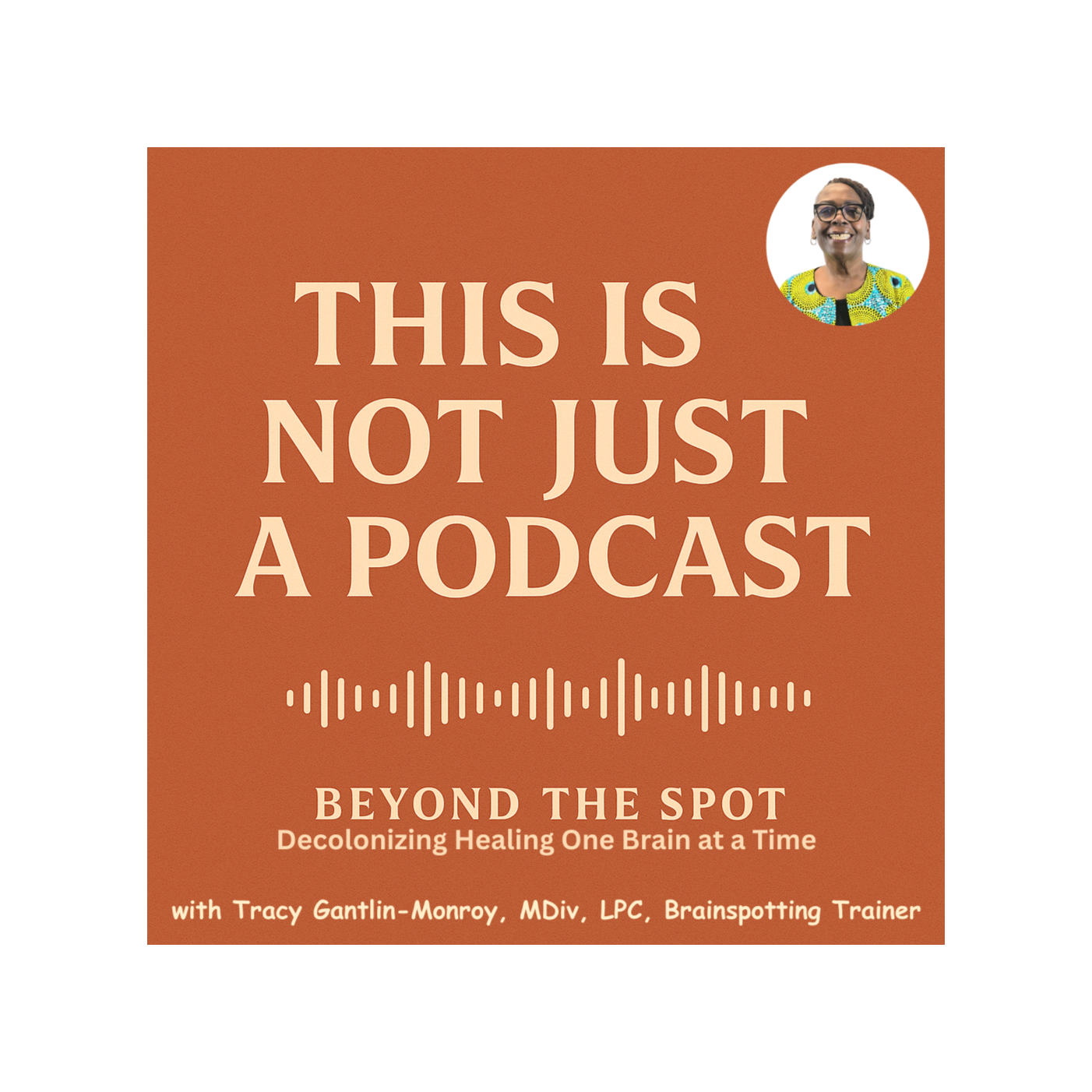
This Is Not Just A Podcast
trailerThis is not just a podcast. This is a space for embodied truth. For nervous system repair. For trauma-informed liberation.Hosted by Tracy Gantlin-Monroy, MDiv, LPC—licensed professional counselor, Somatic Experiencing practitioner, and the first Black woman Brainspotting trainer—Beyond the Spot is here to challenge mental health misinformation and honor the sacred work of healing through body, culture, and spirit.Subscribe for short, potent, weekly episodes exploring trauma, nervous system regulation, somatic healing, and culturally conscious therapy.This is where your story meets science, and your body remembers how to return home.