
Better Today Than Yesterday
171 episodes — Page 3 of 4

I Don't Get Sick Often
"The deliberate envisioning of loss supplies the perspective necessary to appreciate the gifts in your life because you can only truly understand how something is serving you once you know both its presence and its absence." -David CainDo you get sick often? Once a year? Four times a year? Every couple of years? I don’t know about you, but I hate being sick. Sore throat, headache, whatever. The demands of my life, most of them at my own doing, don’t leave much room for me to curl up and wait it out. I suspect your life is the same way. The work won’t get done, the kids won’t get fed, and the support your humans need won’t happen if you embark on a 72-hour NyQuil siesta. As tempting as that might be. I don’t get sick often. Maybe once a year. It’s during that time that Princess Buttercup exhibits unprecedented patience. I also find myself rolling this quote over in my head.“A healthy person wants 1,000 things. An unhealthy person wants one thing.” I wake up grumpy for those three days, wanting it to end. I don’t wake up on the other 362 days thinking, “I’m not sick today. It’s going to be great.” We are good at grieving. When we lose something or someone, we notice it and suffer. We see it. We fail to recognize the 947 days in a row that the hot water worked each morning. Or the sixty thousand miles your car had driven without a flat or the five years straight, even when it was negative seven. When’s the last time you sent the power company a note saying, “Thank you so much, the power works today.” I know I’m quick to tell them when it doesn’t. It’s easier to see what’s gone than what is here. I’m not here to extol the benefits of being grateful or lecture you on being present. While I think both are valuable, I struggle with them too. There are things and people we deeply appreciate, bring us joy or help us find our potential. Envision their absence because one day, they will be gone. Seeing a life without them will help you appreciate your life with them. It might be worth telling them while they can still hear you. Two Ideas To ConsiderOn Things: Find one thing in your life today that, if it were gone, would make you sad or less comfortable. Wi-fi, hot water, whatever. Take a deliberate moment and text yourself why it’s important. The texture of your favorite coffee mug, that big screen you watch your favorite show on, or that folding chair you drag to your kid’s soccer game. On People: If you know someone well enough to know their birthday, they’re likely important to you. Use that day to tell them what they mean to you and why they are a special part of your life. We don’t have to get all sappy, but make it specific, real, and meaningful. Let’s celebrate their impact on the world. And there’s no reason you have to wait till their birthday either. Take care, 👋 If this was helpful, please hit like and share it with someone who will find it helpful, too. Keep Going: This is a public episode. If you would like to discuss this with other subscribers or get access to bonus episodes, visit kellyvohs.substack.com

The Horse & The Rider
“Like everyone, you think you are rational, but you are not. Rationality is not a power you are born with but one you acquire through training and practice. Generally, what causes us to go astray in the first place, what leads to bad decisions and miscalculations, is our deep-rooted irrationality, the extent to which our minds are governed by emotion.” -Robert GreeneEmotion is good. It is the fuel that has helped create this wonderful world we live in. Despite all that is wrong, it is the best time to live. We highly emotional beings have pushed for change out of fear, ambition, altruism, love, whatever. And we should be very proud and happy that most of us live in the comfort we do now. It’s also what is wrong with our world. It can be the worst part of us. I have a highly tuned threat detector that can skew to the irrational to protect me, my family, or maybe my ego. Almost five decades of training, from living around alcoholism to worrying about whether that pile of rubbish is an IED or whether my kids are going to make it in this very hard world. Every facial expression, the tone of your voice, or what you didn’t do. All go into my calculus, and the truth is, I’m highly irrational. We all are. We find answers that suit us. And those answers are usually, inaccurately, colored by our emotions of that minute or the history we drag with us. Rationality doesn’t come naturally. It takes work, training, and experience. I’ve been considering my irrationality and wanted to share some of the lessons I got from Robert Greene’s book The Laws of Human Nature. He has three recommendations we will explore* Recognize Your Own Biases* Beware of Inflaming Factors* Implement Strategies to Bring Out the Rational Self Recognize Your Biases“Emotions are continually affecting our thought process and decisions, below the level of our awareness. And the most common emotion of them all is the desire for pleasure and the avoidance of pain. We imagine we are looking for truth, or being realistic, when in fact we are holding on to ideas that bring a release of tension and soothe our egos.”Here are a few that can keep us from being rational. * Confirmation Bias: “I am impartial and don’t look for evidence to confirm how I think.” * Conviction Bias: “I’m usually right, or I believe it so strongly it must be true.” * Appearance Bias: “I see people as they are. I don’t let their appearance sway my perspective.” * Group Bias: “I’m able to make up my mind despite belonging to groups (cultural, social, etc).” * Blame Bias: “External factors are what is wrong. I couldn’t have done anything about it.” * Superiority Bias: “I’m more ethical, kinder, smarter, etc.” (note: you usually wouldn’t say these out loud or maybe even to yourself) If you think you are immune to these, that’s your irrationality talking. You, me, and even Gramma are susceptible to all of these (and more).Beware of Inflaming FactorsGreene highlights five inflaming factors that exacerbate our irrationality. 1. Trigger points from childhood 2. Sudden gains or losses 3. Rising pressure 4. Inflaming individuals 5. Group effect. I want to talk about two. Trigger Points from ChildhoodThe older I get and the more work I do on myself, the more I see this. As parents, we all do the best we can. I know mine did, but that doesn’t mean scars are any less real. Even if I’ve made them up. Greene lays out a salient example. “Take, for example, a young man who had a distant, narcissistic, mother. As an infant or child, they experienced her coldness as abandonment, and to be abandoned must mean he was somehow unworthy of her love. Or similarly a new sibling on the scene caused his mother to give him less attention, which he equally experienced as abandonment. Later in life, in a relationship, a woman might hint disapproval of some trait or action of his, all of which is part of a healthy relationship. This will hit a trigger point - she is noticing his flaws, which, he imagines precedes her abandonment of him. He feels a powerful rush of emotion, a sense of imminent betrayal. He does not see the source of this; it is beyond his control. He overreacts, accuses, withdraws, and all of which lead to the very thing he feared - abandonment. His reaction was to some reflection in his mind, not to the reality. This is the height of irrationality.”Action: Spend real-time working to understand how your past influences your present. History is not fact; it is a story told by someone and is not always true. A professional is beneficial here. Rising PressureFrom my post, In Calm, Strength, When walking in the forest during the day, you see everything. You see every tree, bird, and detail in color and three dimensions.As night comes, you start to lose clarity. The world flattens. You aren't sure what you see ahead. Is it a tree? A bush? A monster? Stress takes us from day to night, from clear skies to cloudy. The fog rolls in, and we don’t realize it.We don't see the trees for what they are: trees. They

Unseen Struggles: Meriwether Lewis's Journey
“In the course of a week, he became to me a brother, a father, a friend, and the most worthy of confidence. His uniform good temper, coolness in danger, and resources in difficulties, his prudence, fortitude, and perseverance, under the most trying circumstances, render him a most valuable character." -William Clark talking about his friend Meriwether Lewis.In 1804, two remarkable explorers and leaders embarked on an incredible journey from the bustling frontier town of St. Louis. Their mission, commissioned by President Thomas Jefferson, was to chart the path to the Pacific. Over two years, Meriwether Lewis and William Clark would lead an expedition that covered a staggering 8,000 miles of wilderness, ultimately reaching the Pacific at the mouth of the Columbia River, now known as Oregon.It's hard for us to grasp the enormity of their accomplishments truly. The yet-to-be-named states of Missouri, Kansas, Nebraska, Iowa, South Dakota, North Dakota, Montana, Idaho, Oregon, and Washington had no roads or truck stops. No inflatable sleeping pads, pop-up tents, or origami kayaks. They made their canoes the old-fashioned way—by digging them out. Their band of boatmen, soldiers, and interpreters rounded each bend, not knowing if it meant a tribe was ready to kill them or help them.Lewis was a leader to his core, possessing the qualities you'd find in anyone who accomplishes what others deem impossible: vision, decisiveness, courage, communication, resilience, integrity, discipline, trust, humility, and curiosity. He even insisted that William Clark be his co-commander despite outranking him. He took his men into an unforgiving environment and brought them back like Ernest Shackleton a century later. It was powerful leadership, a man committed to the mission and his men.To top it off, Lewis documented over 120 new species of plants and animals, including the grizzly bear, coyote, prairie dog, and big horn sheep. Despite all the evidence and documentation, Lewis received very little credit.Unfortunately, Lewis never published his work, and he ultimately took his own life. The reasons remain debatable, with some suggesting it was an accident or foul play, but it's clear that he suffered from depression, anxiety, and possibly bipolar disorder. What's likely true is that his biological state, combined with the self-imposed pressure to achieve financial success from his journey and his increasing dependence on alcohol, pushed him to his limits. His struggles as the new Governor of the Louisiana Purchase only added to his burdens.We can't pretend to know what he was thinking, but we know it didn't have to end this way. Maybe he felt like a failure, perhaps he saw no way out, or he found himself alone, and the convergence of alcohol and depression showed him a door he couldn't resist.It makes one wonder if he had a true friend on that cold night, whether they could have helped. As you head into your week, consider how we can all be real friends. Real friends ask real questions and want real answers. “How are you doing? No, really. How are you doing?”And I don't want the socially accepted answer, 'I’m great.' I want the truth."Most of us are usually moving through something, whether it's a past trauma, a recent challenge, or a fear about the future. Most of us would appreciate the space to say, "I'm struggling. Let me tell you about it. I don't want to whine or complain, but here's what's happening. Thanks for asking, making space for me in your life, and being someone who makes me feel I'm not alone."It takes work to care. It takes work to ask hard questions and deal with real answers. But it's always worth it. We'll never know what might have happened if someone had taken the time to be the friend that Meriwether Lewis needed. It's a powerful reminder that every interaction is an opportunity to be the friend someone needs.Take care, friend. You aren’t alone. 👋 If this was helpful, please hit like and share it with someone who will find it helpful, too. Keep Going: This is a public episode. If you would like to discuss this with other subscribers or get access to bonus episodes, visit kellyvohs.substack.com

The Happiness Hazard
“Our stupidity may be clearly proved by the fact that we hold that “buying” refers only to the objects for which we pay cash, and we regard as free gifts the things for which we spend our very selves. We are eager to attain them at the cost of anxiety, danger, lost honor, personal freedom, and time; so true it is that each man regards nothing as cheaper than himself.” -SenecaAlonzo Fields was President Harry Truman’s butler, and he said, speaking of the President, “he never seemed to have a problem, and no one could tell when something was troubling him.”The issues that landed on President Truman’s desk were not easy ones. The easy problems get handled before they hit a leader’s desk. His choices were usually between awful and cataclysmic. That’s not conjecture. It’s a fact. After all, he was the one who decided to drop the first atomic weapon on mainland Japan instead of invading - two impossible choices. Truman was not the pure example of equanimity that Mr. Fields described. There were documented moments of losing his temper and being unhappy, but those were few and didn’t last long. I’m fortunate to be close to several humans who move quickly through dark places and back into the light. I work with some, and I live with some. I have deep respect for those abilities. It’s inspiring. We talk about happiness a lot. Do what makes you happy? Does that make you happy? I’m happy. I’m not happy. I’m happy if you are happy. Are you happy? Here’s the problem with happiness: we can manufacture happiness pretty quickly. A bowl of Cherry Garcia. That’s happiness. The sweet chocolate bouncing against the subtle tartness of the cherries. All of this is wrapped by the silky vanilla wonderfulness that I imagine originated in Madagascar under the watchful eye of a troop of ring-tailed lemurs. Put me outside eating said bowl of said ice cream with a warm breeze, preferably tropical, and good golly. I’m happy. That happiness lasts about as long as the sugar runs through my system. Then it’s back to whatever state I occupied before. Stop trying to be happy. Work on being satisfied.You might be unsatisfied with where you live. Maybe it’s where you work, how you look, who you love, or who doesn’t love you. It might be how you spend your time or what you don’t get to do. I don’t get to wander enough back allies of places with people who don’t look like me, talk like me, or think like me, taking photos and learning about other cultures as much as I’d like. That would make me happy, but I’m not sure it would give me what I want. I’d want more. And more. I’ll never be satisfied until I control my need for more. After all, what I wanted ten years ago is what I have now. And, unsurprisingly, it’s not enough. I refuse to believe that we can’t get our insatiable appetite for more under control. Yes, it’s ironic that the person who talks every day about being better today than yesterday is encouraging us to be satisfied. BTTY is about being better, whatever that means to you. For me, that is, in part, the quest to enjoy the way the world is now. Not the way I think it could have been or constantly focusing on the way I want to be. Doing both of those means, I miss what is here and now. Most of our perceived problems will work themselves out, one way or another. If you can do something about it, do it. If you can’t, well, what will worrying do? While I’m very happy eating Cherry Garcia, that’s not what I’m after. I’m after satisfaction. And that is work I need to do on the inside. Satisfaction won’t come with a beautiful mountainside home in the desert or a bungalow on the beach. That will make me happy for a moment or two. Erich Fromm said it wisely, "To have or to be? That is the question. The difference between having and being is the difference between a society that is geared to have more and a society that is geared to be more."Satisfaction comes when I can focus my monkey mind on doing things that have meaning for myself and those around me. Being more, not having more. It means slowing down enough to see all that is good here and now and realizing what matters —relationships, meaningful work, and living our life to potential. Our satisfaction is a factor of what we desire. The more we want, the more we need to be satisfied. The less we want, the less we need. That is inside work and something you can change today. Want more from yourself, don’t want more things. Want to be more. Not have more. Everything has a cost, and we don’t always pay in cash. We pay with our very selves. The cost is freedom, anxiety, relationships, time, and more. Something to consider over the next bowl of your favorite flavor is what work you can do on the inside that will change how you see the outside. Take care, friend. You aren’t alone. 👋 If this was helpful, please hit like and share it with someone who will find it helpful, too. Keep Going This is a public episode. If you would like to discuss this with other subscribers or get access to bonus ep
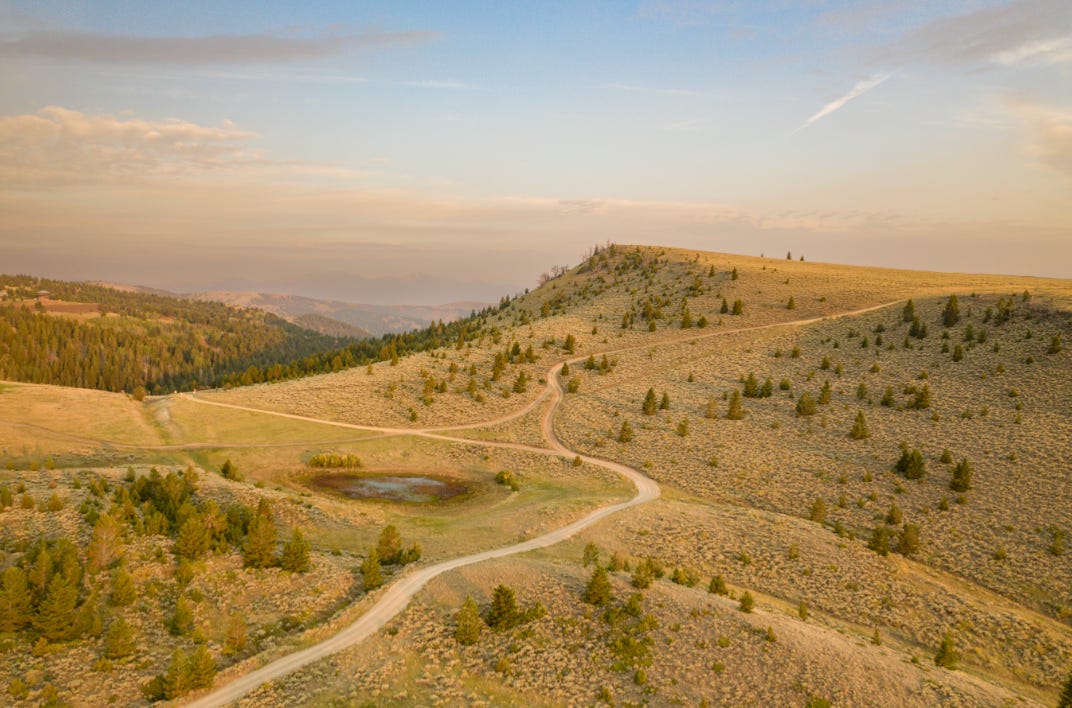
What would you do if you weren't afraid?
"We forge our truest identity by putting our heads into the mouths of the scariest demons, the realities of our lives. Only by facing our fears, our prejudices, our passions, can we transform the energy that is the source of our aggression, the source of our confusion, the source of our struggle." (Jerry Colonna, Reboot)I’ve always wondered why I tend to see the 1% wrong when 99% is right, whether it’s about me, my relationships, or the sunrise. What’s unique about us is our highly-tuned threat detector. Sabertooth tiger, run. I think this is why it is easy for us to criticize ourselves and others. We notice the slight, real or imagined because it could change our position somehow. It might even mean we die. The comment by our partner or our boss may change our life. It’s why we see the monster ahead when it’s just a tree. Our brains are wired to see the threats. Without perfect information, we fill in the gaps with our own stories. Stories that may or may not be accurate. Stories that are colored by our history, our ego, and our desires. We want to keep what we have and get more of what we think will keep us safe.Fear has a role. In scenarios where the threat is real, it keeps you alive. Carry bear spray, watch your cholesterol, and fasten your seatbelt. Where the danger’s not real, it kills our potential. It only cares about keeping you breathing. Its job is to ensure the survival of the species. Even with that, we should not view fear as our enemy, despite its every attempt to hold us back, but rather as a friend pointing us where we need to go."Fear is the primary color of the amateur's interior world. Fear of failure, fear of success, fear of looking foolish, fear of under-achieving and fear of over-achieving, fear of poverty, fear of loneliness, fear of death. But mostly what we all fear as amateurs is being excluded from the tribe, i.e., the gang, the posse, mother and father, family, nation, race, religion. The amateur fears that if he turns pro and lives out his calling, he will have to live up to who he really is and what he is truly capable of. The amateur is terrified that if the tribe should discover who he really is, he will be kicked out into the cold to die." (Steven Pressfield, Turning Pro)If you are afraid of a conversation you need to have, it’s probably the right thing to do. Maybe you’re scared of leaving your steady paycheck for that side hustle that lights you up but doesn’t align with the path everyone expects. Perhaps most importantly, you’re afraid of a conversation you must have with yourself about what is true or not about you and your life. Those answers might be scary, but they will push you down the path you were meant to walk. We must ask ourselves, “What would you do if you weren’t afraid?” Keep this question close as you head into your week (and life). Use it at every corner, every inflection point, every decision, and in every conversation. It will get you where you need to go. Take care, 👋 If this was helpful, please hit like and share it with someone who will find it helpful, too. This is a public episode. If you would like to discuss this with other subscribers or get access to bonus episodes, visit kellyvohs.substack.com

Coffee, Please
"Listening is suspending disbelief." (Rick Rubin, The Creative Act)Though I didn’t know it then, the back door was like most. The cement was smooth and discolored by the thousands of bags of trash dragged, pushed, and willed outside—a dumpster to the right and a pile of cigarette butts to the left. After swinging and slamming for over a decade, the metal door sounded like most metal doors. It was brown and heavy, at least for this prepubescent fellow. It creaked as I struggled to pull it open. I moved through the dark and musty storeroom with shelves that were twenty feet high. Thinking back, that couldn’t have been true because there were no ladders, but everything seems bigger when you’re young. Things, people, and possibilities. That day, I had a small section of tables. No doubt some law was being violated given my age, but it was the Caribbean, and this was a family business. The kitchen clanged, banged, and slid as eggs, toast, and hash browns made their way to the dining room. Perpetually hungry and encouraged by the French toast unceremoniously dropped on the stainless steel counter, I grabbed a piece of bacon and headed to my first table. Still chewing and partially coughing as I worked to swallow, I arrived to find a mother, father, and young son. He was probably 12. I don’t know what the parents ordered, but I know what he ordered. “Coffee, please.” At 12. Coffee?! I wrote it on my little pad and weaved back to the kitchen in disbelief. My age, drinking coffee?When I asked one of the old timers how and why a 12-year-old kid would be drinking coffee, they said, “They do that.”I remember the use of the word “They.” Vividly. A distinct separation between us and them. I want to believe she was grabbing any old pronoun during a busy breakfast rush, but this burned into my conciseness. So much so that I’m sharing it with you thirty years later. That family was different than “us” in some way because of what they drank. Where is that little boy now? Does he have kids? Do they drink coffee? I have a child the same age as that coffee-ordering kid in the booth that morning, and if he wants coffee…sure. It’s interesting how one word can make all the difference. I wonder if that wise old waiter had used the word “We” if I’d have remembered any of this? Are we really that different? When we take the time to go below the surface, I doubt it. Sublties, yes. But we all have strengths and struggles, hopes and horrors, and dreams and doubts. WE are just people, peopling. WE have much to learn from each other if we take the time. "To see each other clearly, you need to take turns sharing your perspective. When one is sharing their perspective, the other needs to do their best to listen selflessly." (Yung Pueblo, Lighter)Take care, 👋 If this was helpful, please hit like and share it with someone who will find it helpful, too. This is a public episode. If you would like to discuss this with other subscribers or get access to bonus episodes, visit kellyvohs.substack.com

A Time Hack That Could Change Your Life
Humans think in stories, and we try to make sense of the world by telling stories. The truly unique trait of 'Sapiens' is our ability to create and believe fiction. All other animals use their communication system to describe reality. We use our communication system to create new realities. - Yuval Noah HarariHi friends, What does success mean? That’s been on my mind lately. Well, that’s not true. It’s always been on my mind. Princess Buttercup reminded me this weekend that I’ve been working consistently since I was 13. The reasons have changed over time, but make no mistake, the money stories run deep. At a moment when I was less than ten, I remember worrying to myself that one day I would be homeless. No real reason. Just some early time travel from one young Vohs. “Worry and regret are just a misuse of your imagination.”I have the fortunate/unfortunate tendency to hold questions like “What does success look like?” heavily. I don’t hold them lightly as a friend encourages me to do or allow them to move in and out. They plant themselves and root in my mind, seeping into the crevices like water. Sometimes, that water is clear, sometimes muddy. Often, it spills out into the lives of those closest to me—sorry, folks. What is a life well lived? What will your impact be? How will the world be better because you were here? On my way to starting my sixth decade, it’s unsurprising that this would be on my mind. Maybe I’m a stereotype like that, but then maybe not. The elusivity of those answers is interesting. The socially acceptable ones are easy. Be a good father, be a good member of the community, be a good partner, etc. That’s what we are supposed to say. What about the not socially acceptable ones? The selfish ones? The ones driven by ego? By ambition? Do you have the courage to be honest with yourself? What we think, we become. The values and virtues we live help us prioritize the use of our most valuable resource, time. Do we prioritize comfort, compensation, or competition? Or do we prioritize joy, peace, and generosity? In his new book The Pathless Path, Paul Millard shared an excellent tip I want to bring your way today. He spent reflective time writing down the words that he wanted to drive his life. These priorities are what he believed would help him decide how to spend his time. His words are health, relationships, fun, & creativity. Here’s the hack: he placed them in a calendar invite that has popped up on his phone every morning at 830AM since 2013. What really matters to you? What words do you want to think about each day and act on? Does the day's momentum allow your words to be pushed aside and replaced by others? If you and I aren’t intentional about our words, we will be moved by our history, our stories, and the stories of others. I’m still unsure what success is, but Emerson’s famous words about success are worth repeating. Maybe it's worth memorizing. “To laugh often and much; to win the respect of intelligent people and the affection of children; to earn the appreciation of honest critics and endure the betrayal of false friends; to appreciate the beauty; to find the best in others; to leave the world a bit better, whether by a healthy child, a garden patch or a redeemed social condition; to know even one life has breathed easier because you have lived. This is to have succeeded!” Something to consider this week. Take care, 👋 If this was helpful, please hit like and share it with someone who will find it helpful, too. This is a public episode. If you would like to discuss this with other subscribers or get access to bonus episodes, visit kellyvohs.substack.com
Unproductively Productive
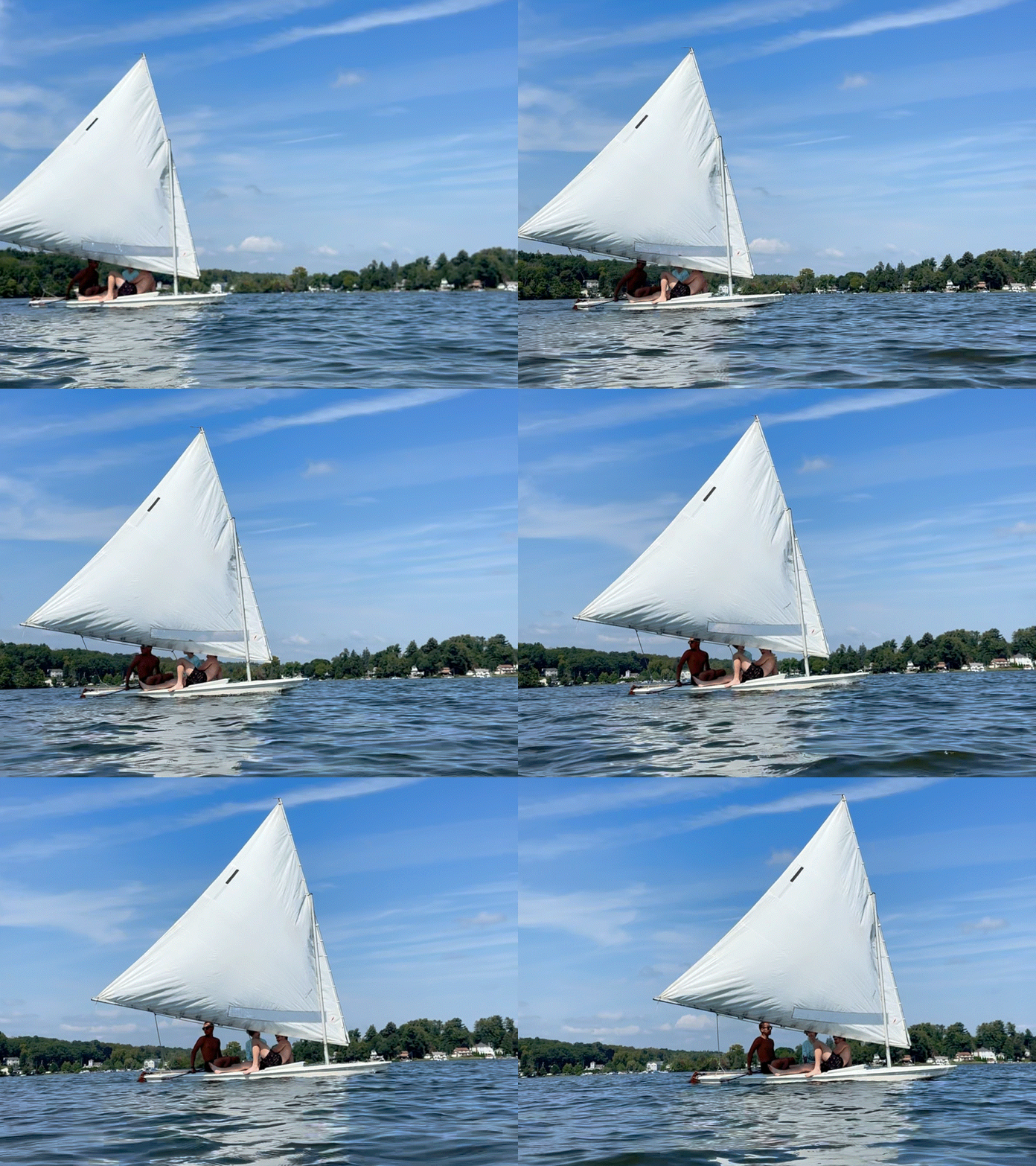
"I was too tense to appreciate the beauty around me, too preoccupied to listen inwardly or enjoy the people I love." -Tara BrachHi friends, Last weekend, three teenagers stood on a small lake beach. They watched me while I willed my muscles to remember how to rig up a little sailboat—a sunfish. I’d done it 1,000 times before, but that was thirty years ago. I was sure going into this that we would spend part of the morning with my companions using YouTube to tell me what I was doing wrong. Thankfully, we avoided that. These are little boats meant for one, maybe two. We decided to cram all three of my adventure partners onboard. I pushed them out with tips on the wind, and what happens when the boom hits you in the head.You will figure it out.Watch the water change and feel the shifts in the wind. Move with and around each other. You’ll learn to manage speed and direction, eventually. Turn into the wind. Sometimes, you’ll get it wrong, but you’ll figure it out. With some patience, you’ll go where you want. Even when you capsize, you can get it going again.Proud Papa stood there on the shore, watching those little men experience a bit of peace and joy. The connection with the water, the wind, and the requirement that you notice what is happening around you. They seemed to understand the mechanics of sailing but, most importantly, why. With the boat barely put away, we felt the pangs of hangriness pull on our patience. We headed to a lovely little sandwich-making haven in a circa late 1800s farmhouse. You’ll find kind smiles behind the counter and satisfied customers moving across the creaking floorboards or lined up for the one small WC. It’s always busy, and as is my productive custom, I’ve figured out the hack that will save us time. They have my credit card on file, and a call 30 minutes before pick up means a bag will be sitting outside with my name on it. Small town easy and personal. Also efficient and productive. I poke one of the boys to make the call, but it goes to voicemail - “We are too busy to take call-ahead orders,” the kind voice says apologetically. My impatience flares internally. “Now we are going to have to sit there for 30 minutes,” I say to myself. For some reason, I let it go. It’s summer. And I’m working on waiting. Getting uncomfortable with unproductivityHere’s what I’ve come to realize about myself. I am uncomfortable with unproductive time. With the self-imposed constraints on my time, I try to find efficiency everywhere. The app, so the green logged cup is waiting. The full calendar with the idea that unproductivity violates some unspoken code floating in and out of my conscious thought. ‘Wasted time’ is unacceptable. Frivolity is a four-letter word. Why would we ever want to wait 30 minutes for our sandwiches? Let me tell you why. Those three boys sat with me, and we ate hummus made by a small family business across the street. We discovered that the dozen-ish macaroons I splurged on have a secret center - some honey, others jam. We noticed that the glass water bottles, labels removed, would make great vases for end-of-summer flowers. Our phones disappeared as we ‘endurded’ the wait in our wet bathing suits on a hot summer day, just enjoying a moment - together. No reason. No purpose. No efficiency. Highly Unproductive. We were just being unproductively us. In truth, we were highly productive. We produced a series of moments that at least 1/4 of us will never forget. I wonder what other moments I’ve missed because of a misguided definition of what it means to be productive. Too busy being efficient to notice the things that matter. I think the things you will remember with a warm heart at the end of your life are the ones that matter most. The ‘unproductive’ moments where you slow down enough to recognize the beauty and enjoy the people you love. Consider this week how your definition of productivity might need refinement. The time you view as useless is maybe the most useful. Society may not deem it productive, but what will eighty-year-old you think? Take care, 👋 If this was helpful, please hit like and share it with someone who will find it helpful, too. This is a public episode. If you would like to discuss this with other subscribers or get access to bonus episodes, visit kellyvohs.substack.com

I'll See You On Aisle 4
"Having eyes, but not seeing beauty; having ears, but not hearing music; having minds, but not perceiving truth; having hearts that are never moved and therefore never set on fire. These are the things to fear, said the headmaster." (Tetsuko Kuroyanagi, Totto-Chan)The table was glass with dimples and a metal frame. The ones from my childhood —a cheap table on a patio, and we were almost in the parking lot. We were in a small village with surprisingly good food, but the company was better. Just family around this table. People that bring it every day. The good, the bad, the joy, the laughs, and that we-can-face-anything-together attitude. You can count on them to show up when it matters. They are the ones you lean on when the zombies come, whether they’re real or imagined. I glanced at my phone with some guilt, and my eyes settled on a subject line: “Sad News to Share.” We lost a teammate at work. She was sick, but we didn’t know how sick. She didn’t tell us it was terminal, and knowing her, that makes sense. She wouldn’t want to bother us. She was so incredibly kind and fearless. She was a tough city lady with twin boys who are severely autistic. She was always so happy, and her hugs so warm. Now she’s gone. Moments MatterI believe that life is just the moments we string together. Some noticed, some missed, others ignored. The sunrises and the sunsets. The big moons and the no moons. The baby giggles and wonderful drools. And the hugs and the hellos. Or catching your person with that, I-remember-why-I-married-you look and falling asleep holding their hand. There is little to fear except missing the moments that matter because you are too busy being scared by your imagination.We all move through life, working through our problems and triumphs. While our spectrums vary, we each require nudges of encouragement to remind us of our specialness. These nudges bump us toward the next smile, through our despair, and into the light. My friend was that light. She never failed to make me feel special - every time. I’ll never forget her example, not because of what she did, but what she didn’t do. She didn’t complain, although she had every reason to. She smiled, and she showed up for all of us. That warm smile says, “I see you.” Sometimes, all we want is to be seen. To be acknowledged. Those ripples might help someone face another day at school, find the courage to tell someone they are sorry and save a relationship, or decide that this life is worth living. Let’s hold the doors, remember the birthdays, send the smiles, and realize that everyone is suffering. That’s why we should be kind. Not because it’s on a t-shirt or a Subaru but because that human you passed on aisle four on your way to get raisin bread needs it. You might never know why but know they are suffering somehow. Fear the moments you miss and the kindness you keep. You don’t get a second chance. Here’s some action: Scroll to the end of your text messages. All the way, there is an end. Find someone down there that you haven’t texted in a while and let them know you are thinking of them. They find two more people and do the same. That little note might be the light they need today. Hug your humans and take care, The NY Times wrote this about our friend a few years ago. Rest easy, friend.👋 If this was helpful, please hit like and share it with someone who will find it helpful too. This is a public episode. If you would like to discuss this with other subscribers or get access to bonus episodes, visit kellyvohs.substack.com

A Few Words To Consider
"No matter what anyone says or does, my task is to be good."- Marcus AureliusHere are a few words I’m considering this week. I was reflecting on where I need to lean in or make a change. These are important words but not exhaustive. Some I get right, others I get wrong. I’m just a work in progress and thought I’d share in case you find them helpful too. I’m including my thoughts about the word with some wisdom from Emperor Marcus Aurelius from his journal that he kept more than 2,000 years ago. Patience.Make space for objectivity, growth, and truth. Give yourself enough time to find potential and see the world for what it is.“Everywhere, at each moment, you have the option: to accept this event with humility, to treat this person as they should be treated, to approach this thought with care so that nothing irrational creeps in.” - Marcus AureliusSelf-Control. Be objective in how you see the world, move purposefully from one unselfish action to another, and enable your mind to accept what is beyond its control and act on what is. Self-control in perception, action, and will. “Concentrate on what you have to do. Fix your eyes on it. Remind yourself that your task is to be a good human being; remind yourself what nature demands of people. Then do it without hesitation, and speak the truth as you see it. But with kindness. With humility. Without hypocrisy.” - Marcus AureliusCheerfulness. Suffering cannot be escaped. Endure it with a smile. You can at least laugh at the pain and help others laugh too. All things are temporary, and how you think about the world colors your reality. "The things you think about determine the quality of your mind. Your soul takes on the color of your thoughts."- Marcus Aurelius“Don’t be overheard complaining about life. Not even to yourself.” - Marcus Aurelius"What doesn’t transmit light creates its own darkness." -Marcus AureliusCourage.Most fear is selfish. Don’t let it stop you from being what you and the world needs.“My only fear is doing something contrary to human nature—the wrong thing, the wrong way, or at the wrong time.” - Marcus Aurelius"Do not think that courage lies only in boldness and power. The highest courage is the courage to be higher than your rage and love someone who has offended you. —PERSIAN WISDOM Truth.Seek it and share it, without exception, in things that matter - particularly with yourself.“If anyone can refute me—show me I’m making a mistake or looking at things from the wrong perspective—I’ll gladly change. It’s the truth I’m after, and the truth never harmed anyone. What harms us is to persist in self-deceit and ignorance.” - Marcus AureliusJustice.Do right, always. Fight for it, especially when no one else will or for those who cannot fight for themselves. “Care for all humans is part of being human.”- Marcus Aurelius"You can also commit injustice by doing nothing." - Marcus AureliusChange.Nothing is permanent. Use that momentum today to do good, right wrongs, and find your potential. "Everything’s destiny is to change, be transformed, and perish. So that new things can be born." -Marcus AureliusPatience, self-control, cheerfulness, courage, justice, truth, and change. Some words I’m considering this week and some actions I’m trying to take. These words all represent hard choices. The best things in life are usually hard. Take care, 👋 If this was helpful, please hit like and share it with someone who will find it helpful too. This is a public episode. If you would like to discuss this with other subscribers or get access to bonus episodes, visit kellyvohs.substack.com

C.A.R.E
“Great leaders are almost always great simplifiers, who can cut through argument, debate, and doubt to offer a solution everybody can understand.“-General Colin PowellTeams exist to do what individuals cannot. Leaders exist to maximize team performance. Here is an acronym I use daily to remind myself what my job is as a leader - C.A.R.E. ClarityCentral to the execution of anything is clarity. Why are we here? (Mission) What are we going to do? (Strategy) How are we going to behave? (Culture) What does success look like? (Vision). A powerful purpose brings people together. You must help them see where we are going so they can help get us there—clarity of vision. AlignmentDoes everyone know the path? Are we all walking in the same direction? Have we agreed on the path? Lead them down the path and show them it is possible. Are we keeping our eyes up for opportunities and obstacles? Stay focused. We are making progress. Or, in some cases, “We took a wrong turn. We have to double back.” Or, “Who needs a flashlight? That is a tree up there, not a monster. Keep going.” Or “Whoa, come back, Kelly, you’re chasing shiny butterflies again.”ResourcesGiven what we ask them to do, does everyone have what they need? Time and money are the big buckets. Almost anything is possible with enough of both. It was one thing for President Roosevelt to approve the invasion of mainland Europe to defeat the Nazis. It’s another thing entirely to ensure that General Eisenhower had enough landing craft. Emotional Connectedness To PeopleYou have had relationships with people in your life that just clicked. Being together, communicating, and being yourself isn’t hard. Often, that is a partner, a family member, or a mentor. You are open to their ideas, dreams, and perspectives. They can influence you, and you can influence them. The relationship works. When this happens at work, you benefit from being with someone you like (dare I say love) and enjoy being around. You want to help them win, and they want to help you win, too.People connected 360 degrees stay longer, are happier, and perform better. It’s a team sport, and we must work to form connections up, down, and sideways. They don’t all have to be deep, but there must be a connection between two humans trying to do their best work with a mutual understanding that we are better together. To The MissionWe have one genuinely non-renewable resource: time. No matter what we do, we won’t get more of it. We all would prefer to spend what time doing something that matters with people that matter to us. After we satisfy the necessities of life, we would prefer that our work be attributed to something bigger than ourselves. Ideally, it has meaning and is helpful to those around us, our community, and maybe the world. When we connect to a mission, we feel it. That fire gets us out of bed each morning with a relentless commitment to excellence. We will do what’s hard and right because the mission matters. Leaders who can make this connection between the work that happens each day and a larger mission will find teams that not only perform better but will sacrifice to accomplish the mission. Usually, they will do more than anyone expected (discretionary effort). Because it’s bigger than them, and it matters to the world. I use this acronym (C.A.R.E.) to remind myself what to do daily as a leader. It’s particularly helpful when things don’t go well. Usually, when things aren’t going well, I have gotten one of these wrong: Clarity, Alignment, Resources, & Emotional Connectedness.The good news is even when I get these wrong, almost everything is temporary. I have to get up in the morning and work to make it better today than yesterday. Take care, Kelly👋 If this was helpful, please hit like and share it with someone who will find it helpful too. This is a public episode. If you would like to discuss this with other subscribers or get access to bonus episodes, visit kellyvohs.substack.com

The Storm
"Leaning back in my recliner each night, staring at the ceiling, I tried to settle myself. I told myself: Life is growth. You grow or you die." -Phil KnightHey friend, I graduated from the infantry school at Ft. Benning two decades ago. Next week, a dear friend’s son will do the same. While our time there was likely very different, there are similarities. The pain, the push-ups, the heat, and the fire ants. It’s a place where the bathroom meant walking off into the woods with an entrenching tool (a small shovel). Toilet paper, well, maybe. Over time, we remember the good and forget the bad. With twenty years since they made us run till we all puked, my memories are mostly fond. Like the Staff Sergeant, with a glint in his eye as he punished us when what he was saying was, “I believe in you. Keep going. This is all a show to help you find the man you can be.” Or the weekend pass, you get near the end. Princess Buttercup and I went to see Pirates of the Caribbean. It was great. I slept the whole time, a skill I retain to this day. But holding her hand meant something different after so much suffering. Most importantly, this time helped me grow. You grow when you don’t have a choice but to do the pushups, the ruck march, or the overhead arm claps. When big angry men yell at you, you aren’t afforded the luxury of choosing what you want to do or what to fear. You don’t get to ask yourself, “Can I do this?” It’s not a choice. You do. When you do, you grow. Abraham Maslow said, "One can choose to go back toward safety or forward toward growth. Growth must be chosen again and again; fear must be overcome again and again.“ In the profession of a soldier, growth is safety. The more you grow, the more capable you become. Capable of doing your part to accomplish the mission, keep your buddies alive, and get home for another movie with your princess buttercup. You get weaker when you choose not to go for that run, not do that push-up, or not put a few more pounds in your rucksack. These choices increase the chances that the mission fails or someone you love dies. Here’s the kicker, all of this applies to you, too - soldier or not. This is our every day. I had the fortune to have your tax dollars pay for my growth. We signed up and took an oath that meant Constitution didn’t apply to us (no, really). They could essentially do whatever they liked. You don’t have that luxury. You have to make these decisions on your own. You must decide whether to sleep in or step into the storm. Whether to walk into the blizzard or stay in your warm hut by the fire. This is the best time to be alive, ever. Men and women before us made this possible. Their luxuries have become our necessities. You don’t have to walk into the woods with a shovel to do your business. The indoor bathroom that was a luxury is now a necessity—and while you’re there, the wifi works, even at 35K feet. Humans that chose to do hard things made this possible. Each of us has a choice today - grow or not grow. This choice is not for you but for your community. Your community at home, work, and the society that will exist after you’re gone. People have worked A$$’s off to make this life comfortable for us. We have a responsibility to continue the momentum. Consider your choices: * Step into the storm and grow* Stay by the warm fire and slowly dieUnderstand: That cozy fire is where potential goes to die. Not just your potential but the potential of our communities and society. We are all counting on you to help make things better every day, not just for you and me but for two generations from now, just like someone did it for us. 👋 If this was helpful, please hit like and share it with someone who will find it helpful too. This is a public episode. If you would like to discuss this with other subscribers or get access to bonus episodes, visit kellyvohs.substack.com

The delete key is the most important key on the keyboard.
"Our narrative defeats our surroundings. Every time." -Seth GodinWe find ourselves in a magnificent era where it is increasingly easier to create — first paper, then the printing press, then computers, and now almost independent machines. The future is bright. Creating is easy. Deleting it is hard. To delete the long-held beliefs about ourselves, the world, status, money, fear, love, or insert your whatever - that’s hard. Increasingly, the most valuable use of my time is not to create but to remove the un-useful. The activities that I do automatically or out of obligation that don’t bring joy, wisdom, peace, or progress to me or someone around me. I’m working to remove my desire for material things to make room for memories. To question old beliefs so that I can make sure there is room for truth. Most importantly, delete my untrue stories. Ted Chiang reminds us about the reality of our narrative, "People are made of stories. Our memories are not the impartial accumulation of every second we’ve lived; they’re the narrative that we assembled out of selected moments."—Ted Chiang Take a moment to reflect: What thoughts and beliefs should you delete from your life? How much of your day is consumed by emotional stories that lack rationality or usefulness? Are there ideas so deeply ingrained that you rarely contemplate their opposites?If history has taught us one thing, we are usually wrong in the short term. The world was flat. Now it’s not. The universe revolved around the Earth. Now it doesn’t. Humanity’s journey has been a continuous correction of mistaken notions. As Marcus Aurelius knew this when he said, "It’s the truth I’m after, and the truth never harmed anyone. What harms us is to persist in self-deceit and ignorance." Here is an exercise to take with you this week. When you use the delete key on your phone or computer, think about what else you should delete. * The work that doesn’t add value, but for some reason, you are still doing it. * The meeting someone put on repeat that keeps showing up. * The 80% of your closet you don’t wear. * The relationships that take energy but don’t give it. * But above all, be courageous enough to confront the untrue stories — about yourself, your humans, and the world.Warning: The truth is usually painful and complicated.Good luck, friend. 👋 If this was helpful, please hit like and share it with someone who will find it helpful too. This is a public episode. If you would like to discuss this with other subscribers or get access to bonus episodes, visit kellyvohs.substack.com

Shaping the Future with Optimism: 3 Key Takeaways from Kevin Kelly's Inspiring TED Talk
“It’s hard enough to create something good deliberately and with intention. And it’s no guarantee just because we believe something can happen, it will happen. But we know that unless we believe something can happen, it will not happen inadvertently by itself. And so it becomes really important that we imagine a world that we want, that we imagine solutions we want and believe that we can make them happen.” —Kevin KellyIt’s not always easy to stay optimistic. Our modern news cycle bombards us with all the bad. Both because it makes money and it’s the reality. Bad things happen every day. Author, technologist, and philosopher Kevin Kelly inspired me with his thoughts on why it’s so important to be an optimist. There is lots of good, but it’s easy to miss. Here’s why. “Most progress is what does not happen.”We forget about the diseases that have been cured, the famine that we do not experience (in most countries), or the fact that it no longer takes six weeks to travel from NYC to Chicago. Mostly, we don’t wake up worrying about the meat we need to cure or vegetables we need to can to survive the winter. We’ve made progress.“Bad things happen faster than good things. Good things take time. ““When we are compressing our news cycle to the things that have changed in the last five minutes, all the things that have changed in the last five minutes are bad because good stuff takes longer. If we were to make newspapers every 100 years, we would have different headlines.” -Kevin KellyOur lives are similar. Negative micro-events over a day or week can add up and impact perspective and attitude. Usually, if we look at our overall progress, we are better than we were ten years ago - in who we are, the quality of our lives, and our ability to continue to make progress.We have this nasty habit of moving our expectations. That’s likely not to change. Just recognize it when you do it. It’s easy to forget that the life we wanted ten years is the life we have today. “Societies are capable of creating a few percent better than they destroy each year.”It doesn’t always seem like it, but now is the best time to be alive. Ever. People live longer and have more access to better healthcare, education, and more ‘free’ time than ever. Is it still unacceptable that 200K people died of malnutrition in 2019? Absolutely. But that is down from 600K in 1990. The small percentage you and I improve each year helps make society better. If we can each do our small part in our circle to make things better, we continue the momentum of progress. Put that way, we each have a moral responsibility to get better today than yesterday. How can we apply this to ourselves: * Recognize the good. We tend to recognize the bad because it’s a threat. You have done decades of work to get things the good that is in your life now. The skills, the security, and the possibilities. Recognize that. * Greatness takes time. Be patient and focus on what you can do over a decade with the proper habits and priorities. Thinking of your life in terms of decades is hard, and that’s why so few people are willing to do the work that leads to greatness - whatever that means to them. * Nothing will happen if you don’t try.Kevin Kelly says, “No matter what your temperament is, you can still choose to be optimistic. And gigantic problems require gigantic optimism. We have a moral obligation to be optimistic because when we’re optimistic, we can shape the future, we can become better ancestors, we can expand our reach --create things bigger than ourselves.”Let’s all be good ancestors. Take care, NEXT: This is a public episode. If you would like to discuss this with other subscribers or get access to bonus episodes, visit kellyvohs.substack.com

Will you be my accomplice?
If a person gave away your body to some passerby, you’d be furious. Yet you hand over your mind to anyone who comes along, so they may abuse you, leaving it disturbed and troubled—have you no shame in that? —EPICTETUS A little one in our family was playing the other day. It was reckless in all the good ways. High energy and relentless in the pursuit of his interests. The world’s pressures, expectations of others, and worries of ‘what if’ have not burrowed in. We view the world through the lens of our wounds and triumphs. It has been shaped over our life. That lens has been polished, scratched, cracked, and sometimes duck-taped back together. Personality refers to the enduring characteristics and behavior that comprise a person’s unique adjustment to life.The word adjustment is key. We have created our personality to handle the world - a mix of genetics, experiences, and perceptions. I think mine is a shell I use to deal with the world and get what I want. It also protects what I don’t want to lose — the wall I have created to defend the castle. That is an incredible insight for me. I am who I have chosen to become - consciously or subconsciously. There is little about me that I cannot change with enough effort, thought, practice, and support. The parts holding me back from whatever I seek can be adjusted. The wonderful parts must be honored and preserved. There is almost nothing impossible. “There are more things … likely to frighten us than there are to crush us; we suffer more often in imagination than in reality.” -SenecaUnderstanding why you do what you do requires a willingness to slow down and ask the right questions. To try to see things for what they are, not what you imagine them to be. Respond, not react. There may be pain in your answers. Where there is pain, we usually get stronger. _"Either pain affects the body (which is the body’s problem) or it affects the soul. But the soul can choose not to be affected, preserving its own serenity, its own tranquillity. All our decisions, urges, desires, aversions lie within. No evil can touch them." -Marcus AureliusMy love language is words of affirmation. My need for words of affirmation comes from a place I’m only starting to uncover. Deep reflection, talking with friends and advisors, and getting real with myself helps to parse that out. Why does that matter? The opposite of words of affirmation is criticism. My need for validation makes my ability to take criticism harder. I’ve found that the closer you are to me, the harder it is to take.When I react to criticism, I stand on my castle and raise the draw drawbridge, trying to defend myself. The crazy part is it’s trying to protect me from words, not arrows. Usually, those words aren’t harmful either in intent or reality. Due to scratches in my lens, I react when I should respond. I see them as criticism from an enemy trying to storm the castle when it is often an accomplice trying to reinforce the foundation. With my walls up, I can’t see or hear. I cower behind the parapet in fear that I am not good enough. When I respond, I don’t raise the drawbridge or hide behind my walls. I can see and hear. That leads to a better understanding of the people around me and myself. It’s hard. Sometimes it hurts. But it all seems to make more sense when we make space to respond to the world instead of reacting. "Remember that to change your mind and to accept correction are free acts too. The action is yours, based on your own will, your own decision—and your own mind." -Marcus AureliusConsiderations: * Respond, don’t react. Practically, take a breath. Breathe. Make space between the event and the response. Emotional responses are not objective. * Find Accomplices, Not Critics. This may be as simple as deciding that someone is sitting next to you in your castle instead of trying to storm it. That’s a decision. * Be An Accomplice. Everyone else has their stuff too. Everyone needs accomplices in their life. Try to get in their skin and, more importantly, be helpful. When we truly try to understand perspectives, everyone gets better. That energy will come back. Remember, it all ends. Enjoy what you have, and work through what you don’t want. This, too, shall pass. If we look, we will usually find more people willing to help than hurt. "Accordingly, some things torment us more than they ought; some torment us before they ought; and some torment us when they ought not to torment us at all. We are in the habit of exaggerating, or imagining, or anticipating, sorrow." -Seneca Take care, NEXT: This is a public episode. If you would like to discuss this with other subscribers or get access to bonus episodes, visit kellyvohs.substack.com
7 Considerations To Find More Wisdom
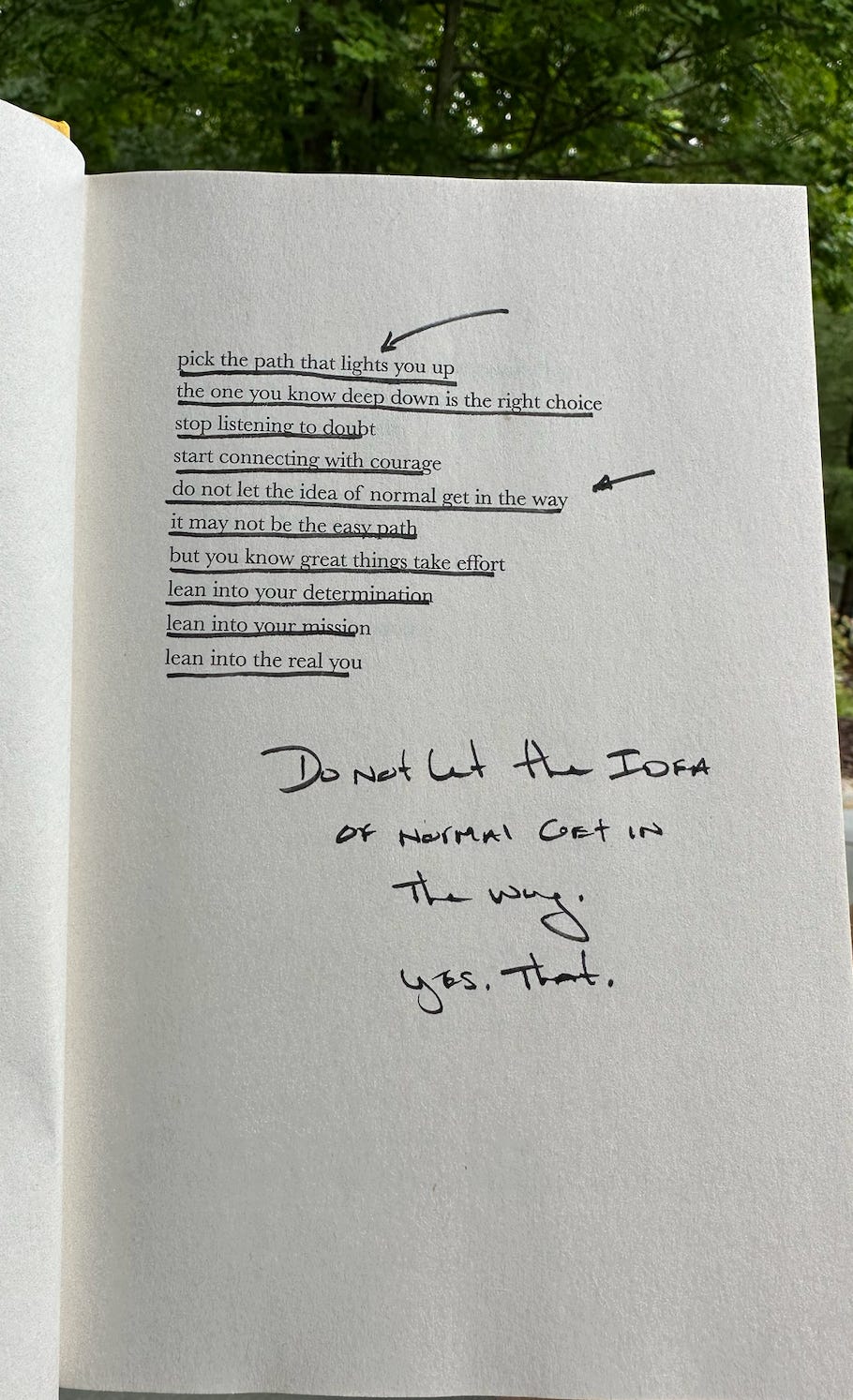
“In my whole life, I have known no wise people who didn’t read all the time – none, zero.” -Charlie MungerThey say we are the sum of the five people we spend the most time with. I say we are the sum of what we consume—food, relationships, entertainment, and media. For the first time, the number of people who did not read a book in the last 12 months eclipsed 50% of the US population. I understand why, as I’ve been drifting into a nasty habit of scrolling social media. Catching myself, I wondered what would happen if I picked up a book every time I wanted to scroll. If I scroll for 10 minutes daily, that is 3,650 minutes a year or 60 hours. A 300-page book takes the average reader 8 hours to read. If I replace my 10 minutes of scrolling with reading, I could read seven more books yearly. Well, shucks. That would be wonderful. But hold on, the average person spends 2.5 hours a day on social media. I’m not here to bash social media but rather advocate for closely examining your consumption.It’s said, “Attaining wisdom is the most important pursuit in life.” I’m still working that theory over in my head, but it’s probably pretty close. Books are a wonderful place to find wisdom, joy, empathy, and magic. “The more that you read, the more things you will know. The more that you learn, the more places you’ll go.” -Dr. SeussNot everyone loves to read. I get it. That was me for a long time. I started with audiobooks—lots of audiobooks. I’m an audio learner. Then I started to read the ones I loved and realized audiobooks are like skipping a stone over a lake. I moved from being interested in checking it off my list and more interested in understanding. If you don’t want to use these 10 minutes for reading, what else could you consume that might make you better? 10 minutes of stretching? A handwritten note to a friend? Meditation? A walk? I’ll do me. You do you. But choose wisely. What we consume, we become. Considerations: * Read things you like. Not what’s popular. * You don’t have to finish it. Move on. * Don’t read for speed. That’s vanity. Read for understanding.* Re-read your favorites. Like movies, you find things you missed the first time. * Read old books. Time has filtered for good. * Establish a habit before expecting a skill* We have one truly non-renewable resource, time. Take care, NEXT: This is a public episode. If you would like to discuss this with other subscribers or get access to bonus episodes, visit kellyvohs.substack.com

Where does accountability start?
"The true price of leadership is the willingness to place the needs of others above your own. Great leaders truly care about those they are privileged to lead and understand that the cost of leadership privilege comes at the expense of self-interest.” —GEORGE J. FLYNN, LIEUTENANT GENERAL, U.S. MARINE CORPS (RET.)With the right paperwork signed and physicals completed, replete with 77 X-rays (that can’t be healthy), I drove off post. That was it. My time in the Army was over.A friend, and former colleague, called me on my last deployment and told me he was taking a new job. One thing led to another, and he helped me make the very tricky transition from special forces to being a civilian. I’m incredibly grateful for his trust. I was out of the game for almost a decade and found myself headed back into the restaurant business in NYC - arguably the most competitive market on the planet. And the team was large, 3,000.I remember it like it was yesterday. I was on the plane’s right side, second seat from the back. A window seat. With excitement and no small amount of anxiety, I started writing. Thinking about leadership and what it means to execute. I had “no idea” what to do when I got off that plane. I kept writing. The result of that flight was the accountability formula. More than a decade later, I still lean on it. It’s easy to get upset, frustrated, and even angry when people don’t deliver. Before you do that, make sure it’s not your fault. Before we can hold people accountable, we owe them a great deal. The Accountability FormulaExpectations Describe excellence and be as specific as possible. Whether you are onboarding a new associate or Chief Financial Officer, be clear on what you want so they can do it. That’s what you’d want, right? Resources Do they have what they need? Time and money can solve most problems. Start there. Also, the physical things to do their work. If you want them to answer the phone, give them a phone. Seems like common sense, but it’s not always common. TrainingThe highest leverage activity for a leader is training. Spend your time there, and you will get it back 10x. Don’t do it, and you are throwing them into the blender. You will watch them spin until their frustration or yours forces them out. Train, train, train. Feedback & Feedforward We all want to know when we get it right and when we get it wrong. Not all feedback is accurate or helpful, but keeping it from someone is unkind. Have the courage to give it early and often. Also, try this. Tell them what you want them to do going forward. Don’t dwell on the past, be clear on the future. By the way, feedback should not be one way. Make it safe for them to tell you how you can support them better. For new teammates, focus on how the two of you communicate. Chances are, you can be better. Only AFTER you give expectations, resources, training, and feedback can you hold someone accountable. If you haven’t, it’s your fault. Not theirs. Where else can you use this formula? Anywhere you lead is my answer. I’ve often think about how I got this wrong with the kids over the years. I think it applies there too. Expectations + Resources + Training + Feedback = Accountability Now here is the secret. If you want to help enable someone to do their life’s best work, sprinkle all that with inspiration. Inspire them with the mission, your example, your confidence, your patience, and most importantly - your love. Do me a favor, hit like and send this to one person who might find it helpful too. Take care, Kelly PS - For the leaders I support, and I don’t say direct reports because our org chart is upside down, I share a document called “about us.” If you want that, email me. Keep Going: This is a public episode. If you would like to discuss this with other subscribers or get access to bonus episodes, visit kellyvohs.substack.com

You aren't alone. Fear is real for me too.
"When circumstances scare us, our imagination tends to take over, filling our minds with endless anxieties." This gem is from Robert Greene’s book The 33 Strategies of War. Knee deep in this massive volume of stories and lessons, I was delightfully surprised when Kindle recommended another book by Greene, The 50th Law. Robert Greene’s books are big, deep, and well-researched. You may know his others - The 48 Laws of Power, Mastery, and The Laws of Human Nature. He is also a mentor of another best-selling author, Ryan Holiday. The 50th Law comes from a surprising relationship Greene formed with someone you may know if you grew up in the late ’90s and early 00s or are a hip-hop fan. 50 Cent. Yep, the rapper. A fan of Greene’s work, 50 and Greene met to discuss possibly doing a book together. Greene would get full access to 50’s life and opens the book with this, “What excites me about America is its social mobility, people continually rising from the bottom to the top and altering the culture in the process. On another level, however, we remain a nation that lives in social ghettos. Celebrities generally congregate around other celebrities; academics and intellectuals are cloistered in their worlds; people like to associate with those of their kind. If we leave these narrow worlds, it is usually as an observer or tourist of another way of life. What seemed an interesting possibility here was to ignore our surface differences as much as possible and collaborate on the level of ideas—illuminating some truths about human nature that go beyond class or ethnicity.”An hour after Kindle’s recommendation, I had sucked a good chunk of the book. I’m not done yet, but some points are worth sharing. Regardless of your opinion of 50, Greene gets you thinking about fear. He cites the “50th law” of power as being fearless. He is not expanding on his 48 laws of power, but instead making the point that 50’s success is his fearlessness. 50 Cent, or Curtis James Jackson III, was born in Queens - South Jamaica. 50’s mother, Sabrina, was killed when he was eight. His grandparents raised him. At 12, and under the guise of being in after-school programs, 50 started his first business - selling narcotics. A stereotype rapper of the late ’90s, 50, also did time in prison and lived in a violent world. He saw a way out, music. Not unlike his drug-selling days, he hustled. Mixtapes in the streets, recording in basements, and whatever he had to do to bring his hope to life. Despite his growing popularity, he wasn’t out yet. Someone wanted him dead. On a spring day in 2000, 50 would take nine rounds from a semi-automatic pistol in front of his grandmother’s house. Incredibly, he survived. He would later describe this as a turning point in his life. No surprise to those that have looked death in the eye and come out the other side. It changes you. From 50, “When you’ve been in life-threatening situations, you become aware that life is not forever.” -50He recovered, and in 2002, he signed with Eminem and Dr. Dre. This is from his 2003 track “Many Men (wish me death)”“Sunny days wouldn't be special if it wasn't for rainJoy wouldn't feel so good if it wasn't for pain.”50 would have a fascinating career spanning TV, mining (yes, mining), and inspiring the next generation of artists like Pop Smoke. A prolific bankruptcy is also part of his story, which says something. 50 is adamant that he is fearless, and it’s the reason for his success - I’m not convinced. It’s likely the opposite. He is terrified. From 50, “Fear dominates most people’s lives. Fear of loss. Fear of failure. Fear of the unknown. Fear of loneliness.”He is scared of something, and with good reason. His Father abandoned him, his mother died at eight, his freedom was taken away in prison, he watches friends waste away in jail or die, and he is attacked in broad daylight while his grandmother plants petunias. Damn right, he has fears. He just doesn’t let them own him. They motivate him. He gives some insight into his thoughts with this, “When you work for others, you are at their mercy. They own your work; they own you. Your creative spirit is squashed. What keeps you in such positions is a fear of having to sink or swim on your own. Instead, you should have a greater fear of what will happen to you if you remain dependent on others for power. Your goal in every maneuver in life must be ownership, working the corner for yourself. When it is yours to lose - you are more motivated, more creative, and more alive. The ultimate power in life is to be completely self-reliant, completely yourself.”Rely on no one. That’s his mantra. Given his childhood, no surprise he feels this way. From Greene,"Your attitude has the power of shaping reality in two opposite directions—one that constricts and corners you in with fear, the other that opens up possibilities and freedom of action…Fear creates its own self-fulfilling dynamic—as people give in to it, they lose energy and momentum. Their lack of
7 Lessons From An Immigrant Who Has Shaped Your Life
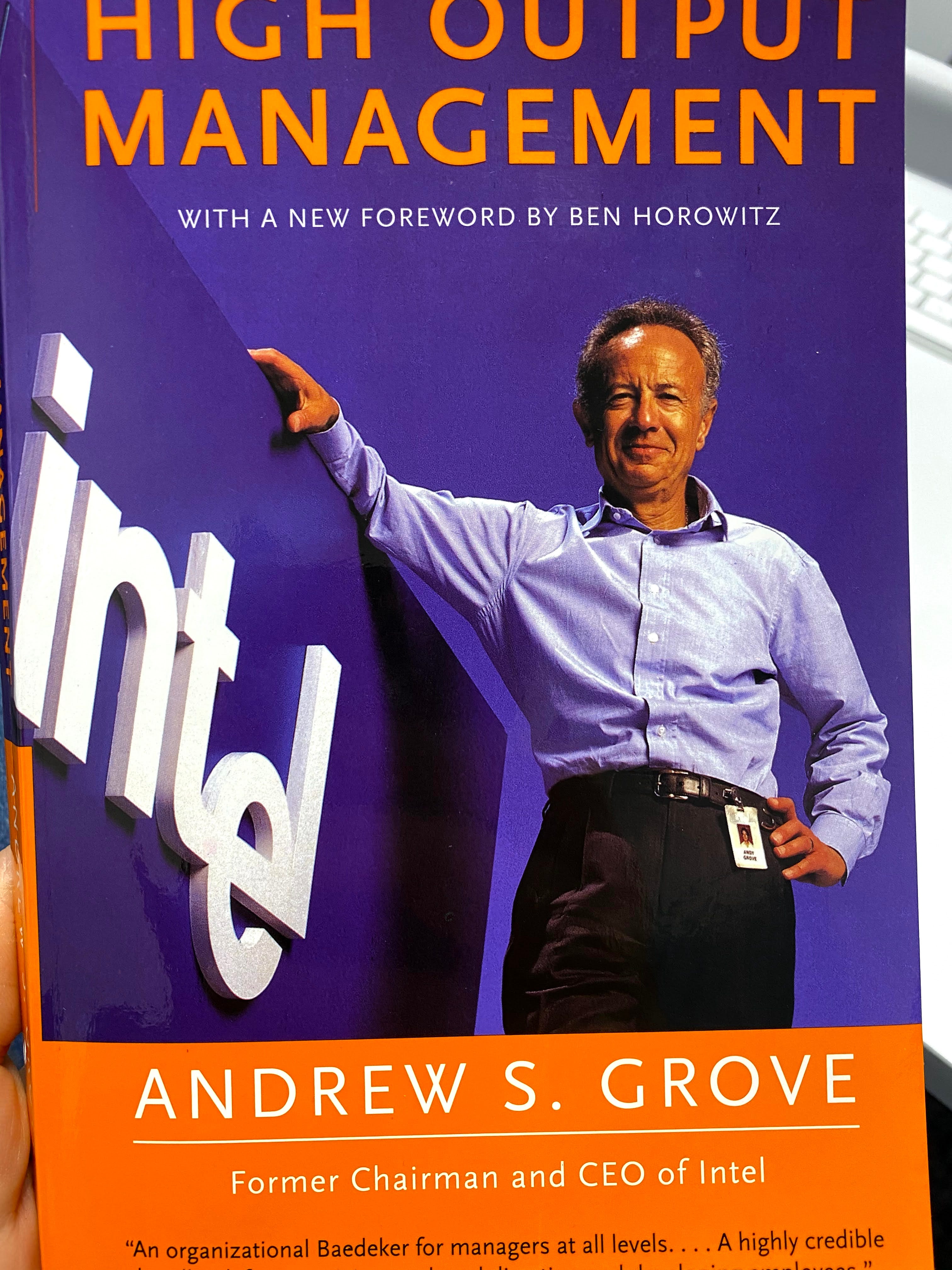
A message came in that asked for a document only I had. While walking, I found the file on my phone (a 42-page document), attached it to a teams message, and hit send. Please take a moment. That is some Jetson’s level stuff. It’s incredible, and there is a man that, in many ways, made it possible. Andy Grove, a first-generation immigrant, arrived in the US in his early 20s. In his memoir, he described his early life this way, By the time I was twenty, I had lived through a Hungarian Fascist dictatorship, German military occupation, the Nazis’ “Final Solution,” the siege of Budapest by the Soviet Red Army, a period of chaotic democracy in the years immediately after the war, a variety of repressive Communist regimes, and a popular uprising that was put down at gunpoint.Grove would join Intel corporation as the 3rd employee, become the first COO, and eventually CEO. In 1997, Time magazine chose him as Person of the Year, “the person most responsible for the amazing growth in the power and innovative potential of microchips.”In addition to his work at Intel, he published seven books, including High Output Management - a personal favorite. Grove is considered the father of the OKRs (Objectives and Key Results) used by many organizations, including mine. High Output Management is chock full of management and leadership wisdom, and I wanted to share a bit with you today. Here are a few of my favorites. 1. How you handle your time is the most important aspect of being a role model and leader.The only genuinely non-renewable resource we have is time. We can likely make anything else. You have to be aggressive about your time, and it’s hard. It’s hard to say no to people, projects and not be in the room when you have an opinion. This is from Andy, “To use your calendar as a production-planning tool, you must accept responsibility for two things: 1. You should move toward the active use of your calendar, taking the initiative to fill the holes between the time-critical events with non-time-critical though necessary activities. 2. You should say “no” at the outset to work beyond your capacity to handle.”Move to active use of your calendar. Use it as a tool. Don’t let it just fill up. Think about what didn’t happen because you were too busy saying yes. Productivity is not being busy. Productivity is creating value. The most important part about what Andy is saying is that you are a role model. How you spend your time will trickle. You are being watched, and your behaviors become team culture. Andy also says, “Strategy starts with your calendar.” Think about how you can apply that to your life. Best case, you only have 4,000 weeks. Choose wisely. 2. The task of a manager is to elicit peak performance from his subordinates. A manager has two ways to tackle the issue: through training and motivation.Teams exist to do what individuals cannot. Most of what happens in the world occurs through the work of teams. Even those that seem like individual contributors to society, I think about artists, have teams. The leader’s job is to maximize team performance.I challenge Andy’s use of motivation here as I’m not sure it’s possible to motivate someone. It is possible to remind someone what motivates them, whether money, ideology, compensation, or ego (MICE). People can be inspired to be a part of something bigger than themselves or be more than they thought they could be. That’s where leaders come in. Sprinkle their days with inspiration, and you will see the flywheel of performance pick up speed. 3. Training is one of the highest-leverage activities a manager can perform.Leaders should find the activities that provide the most leverage. Training is usually top of that list. Don’t delegate it. Don’t outsource it. Do it yourself. Face to face, I care about you, and we are in it together, training. Be clear on what excellence looks like. And don’t ever forget that before you can hold someone accountable, you owe them clear expectations. Deliver that through world-class training. 4. A manager’s output = the output of their organization + the output of the neighboring organizations under their influence.Yes, your job is to maximize team performance. Here’s the kicker of what Andy is saying. You are also responsible for the output of neighboring teams. Silos of excellence will kill an organization. When leaders embrace that they are also responsible for the adjacent performance, silos get torn down. 5. You need to plan the way a fire department plans. It cannot anticipate where the next fire will be, so it has to shape an energetic and efficient team that is capable of responding to the unanticipated as well as to any ordinary event.Teams get frustrated when their work is interrupted by fire drills created by the customer, the market, or meddling managers. Fire drills are part of your job, and you should plan accordingly. To not prepare for the inevitable is a dereliction of duty. 6. Decision-making is not a spectator sport, because onl
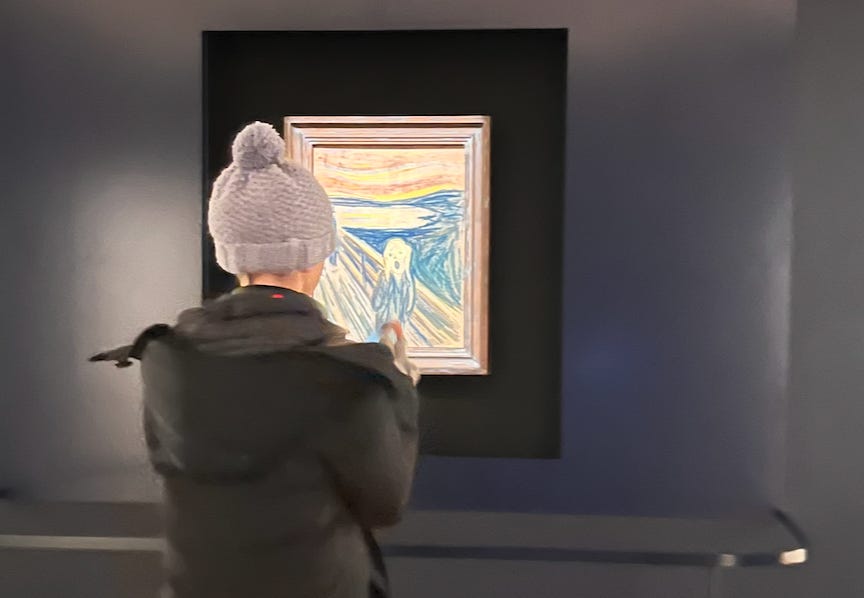
What Do Picasso, Seinfeld, and Munch Have In Common?
Hi friend, Edvard Munch. If you don’t know that name, you probably know his most famous piece—The Scream. Painted in 1893, The Scream has widely been interpreted as representing the universal anxiety of modern man. A pastel version would sell for $119 Million 68 years after Munch’s death. Munch described his inspiration for the piece this way, I was walking along the road with two friends – the sun was setting – suddenly, the sky turned blood red – I paused, feeling exhausted, and leaned on the fence – there was blood and tongues of fire above the blue-black fjord and the city – my friends walked on, and I stood there trembling with anxiety – and I sensed an infinite scream passing through nature.Munch became world-class for three reasons. 1. Repitions Really Really MatterDo the workThe pastel version gets the headlines but wasn’t the first version. He would make four that we know of, but it’s likely others existed. And while you may know The Scream, Munch was prolific in his production. When he died, he donated nearly 28,000 pieces of his work to the City of Oslo. His volume of production made him world-class. “When I paint, I never think of selling. People simply fail to understand that we paint in order to experiment and to develop ourselves.” - Edvard Munch2. Consistency Is THE DifferentiatorPractice your craft every day. To produce 28,000 pieces, Munch would have had to create one piece of art every day from the age of 3 to the day he died at 80. Munch wasn’t alone. Pablo Picasso completed 13,500 paintings with 100,000 prints and engravings. It’s said that Picasso finished two paintings each day. Another artist, in a different medium, put a system in place to deliver this kind of consistency - Jerry Seinfeld. When he started in comedy, he committed to writing one joke daily. He put a large calendar on the wall and crossed out each day that he wrote a joke. “After a few days, you’ll have a chain. You’ll like seeing that chain, especially when you get a few weeks under your belt. Your only job next is not to break the chain.” -Jerry Seinfeld3. Inspiration & ExperimentationLive. Learn. Repeat. Picasso, Seinfeld, and Munch sought inspiration from nature, society, and, importantly, fellow artists. They met others, built relationships, learned, and changed. Changed styles, mediums, and priorities.“To copy others is necessary, but to copy oneself is pathetic.” - Pablo PicassoBetter happens when you consistently do the work. Get that chain going. Whether it’s day zero or day 100 - you have to show up and keep making better. No one cares how cold, wet, tired, or under-caffeinated you are. Only you can decide if you’ll do the work of you. This is about you and the person you want to be. Do the reps. Be consistent. And seek change. Don’t ever forget, the life you want five years from now starts today. Let’s go get it, friend. This is a public episode. If you would like to discuss this with other subscribers or get access to bonus episodes, visit kellyvohs.substack.com

The Glorious Activity We All Need
Hi Friend, Last summer, the family was off doing their own thing, and I found myself at home alone with three hairy and very barky friends. I didn’t feel obligated to participate in what they were doing. In truth, I wasn’t invited. That allowed me to be alone without pressures, family responsibilities, email, calendars, or other distractions - all guilt-free.But I wasn’t alone. I was in solitude. Glorious solitude. This solitude allowed me the space to think and do what I wanted needed. I chose a stack of books, a run or two, and no small amount of just sitting. “When one is connected to one’s own core is when one is connected to others, I am beginning to discover. And for me, the core, the inner spring, can best be found through solitude." -Anne Morrow Lindbergh, Gift from the SeaThe idea of solitude is not novel. Anne Lindberg purposefully put herself in solitude when she wrote Gift From The Sea. Pablo Picasso also believed in solitude. He said it best, “Without great solitude, no serious work is possible” - Pablo PicassoAnd just yesterday, Joseph Rueter from Three Bits & Change sent me a clipping from a magazine with this from Lady Gaga,“I’m interested in living more of a life of solitude. It’s nice to have time to be alone, and be expansive, and know you are enough. I wish I could tell my younger self that.” - Lady GagaThere is a privilege in this exercise. Lady Gaga has problems you and I don’t (be thankful). Bill Gates is in rarified air with his quarterly trip to a cabin on the lake with a stack of books. Obviously, very few can do that. If we leave it at that, we would be making an excuse for inaction. There is no reason you can’t find an hour alone without distractions and a notebook. It might mean you get up a little earlier, go to bed a little later, or have a conversation with your humans, telling them what you need. You and I have, if we are lucky, 30,000 sunrises. After we get our eight hours of sleep ;), we have 1,000 minutes every day. If we let it, all those minutes will fill up with a barrage of distractions. Once your eyes open, our phones, humans, and monkey minds start. We have to make space. Space for thought, deep work, and for ourselves. "In complete solitude, I stop objectifying myself. In the bush I don’t think of myself on some social hierarchy. I don’t define my value as a comparison with others. The birds and animals don’t judge me. It’s a kind of healing in which I become human again. In complete solitude, we are not a concept of ourselves; we are ourselves." -Boyd Varty, The Lion Tracker's Guide to LifeSolitude allows us time to reflect on what is important, gain perspective, and respond to the world. In solitude, you have space to consider how to respond while everyone else is busy reacting. I’ll leave you with this, again from Anne Lindbergh. "I must find a balance somewhere, or an alternating rhythm between these two extremes; a swinging of the pendulum between solitude and communion, between retreat and return. In my periods of retreat, perhaps I can learn something to carry back into my worldly life." -Anne Morrow Lindbergh, Gift from the SeaYou might not be able to carve a week away at a lakeside cabin, but can you find an hour over the next week to spend with yourself in solitude? Nothing electronic. Just you, a notebook, and your thoughts (as scary as that might be). Be gentle with yourself. We are all a work in progress. Hug your humans, Thanks for reading Better Today Than Yesterday (BTTY)! Subscribe for free to receive new posts and support my work.Next: This is a public episode. If you would like to discuss this with other subscribers or get access to bonus episodes, visit kellyvohs.substack.com
Silos of Excellence
Hi friend, A warrior once said to me, “Silos of excellence, that’s the US government.”I will keep her name classified. At the time, she had worked for the federal government for more than 20 years. Probably 30, I can’t remember.We had formed a connection, and for her counsel, I was grateful. She kept me out of a sticky situation or two and helped me get into ones that made a difference. She was with a three-letter agency that affects US policy in places that end in stan or are republics of the banana or vodka variety. Her fluency in Russian, tradecraft, and no BS attitude would take her to other places that mattered even more (hint: we all recently learned how to pronounce the capital correctly). Silos are Deadly If you’ve worked in an organization that takes more than a couple of pizzas to feed, you have experienced silos. While I love silos on the skyline, I hate them inside organizations. They are the barrier to high performance. The reasons for their existence vary with more factors than we have pixels to discuss, but two proliferate. Communication Is KeyIn new organizations, it’s often simple. The new humans don’t know the other new humans in their neighboring silo. Culture is likely less to blame here. Instead, it’s communication. It’s that party as an awkward teenager or introverted adult - you gravitate to who you know. We crave familiarity, and when we establish relationships, we return often. The solution is easy (ish).Buy more pizzas and get people talking. Focus on communication, connection, and building community. Educate each other on who we are and what we do.Competition Is Killing You…From The InsideIn mature organizations, it’s a bit more complicated. Limited resources like time, money, and glory may encourage people to build defensive walls. Pay particular attention to glory. This is another word for credit, career path, or compensation (not just the money part). If you sense this, be warned - you must act quickly. Chances are, the leader of that team is the instigator or, at a minimum, bears some fault. Their ego, selfishness, or insecurity is causing the behavior. Be swift in your action. It’s A Leadership IssueYou need leaders to solve it—leaders who consider the entire team. You have to wage war, but it doesn’t have to be clandestine. Be loud, specific, and consistent. This is from Ben Horowitz:"There are two kinds of cultures in this world: cultures where what you do matters and cultures where all that matters is who you are. You can be the former, or you can suck." From General Jim Mattis: "I don’t care how operationally brilliant you are; if you can’t create harmony—vicious harmony—on the battlefield, based on trust across different military services, foreign allied militaries, and diplomatic lines, you need to go home, because your leadership is obsolete." Harmony is not always the answer. With the door shut, encourage disharmony. Kicking, screaming, and fighting are welcome. If you make decisions without disagreement, you probably need to try harder. When the door opens, there can be no silos or friction. You must work your A$$ off to create harmony between teams. Communication, and the resulting trust, are execution grease. This takes work, time, and humility. If you lead humans, ask yourself each night, “Did my actions today make the team better or worse?” Whatever your answer, you have another shot in about eight hours to break down silos and insist on mission-focused harmony.Take Aways: 1. If the teams are new, connection and education (Who are the humans? What do they do?) is the answer. Be intentional about establishing connective tissues across teams.2. If competition is driving silos, look at the leaders. Be clear on your expectations. If they don’t deliver, take action. 3. Leaders exist to make teams more effective. Do that enough days in a row, and you will accomplish your mission. Both for the team and for yourself. Consistency, care, and conviction - every day. Thanks for reading Better Today Than Yesterday (BTTY)! Subscribe for free to receive new posts and support my work.Next: This is a public episode. If you would like to discuss this with other subscribers or get access to bonus episodes, visit kellyvohs.substack.com

Two Questions That Really Matter
Hi friend, I’ve been giving some thought to problems lately. I’ve concluded that two questions really matter. Life is full of joy, excitement, and winning - probably more than most of us tend to see. That said, try and see all the bright sides you want, but life will show up, punch you in the face, and drop a box of problems at your feet with a cheery “Hey, I think these are yours.”Sometimes they are big curl-up-in-the-fetal position problems, and others, like Starbucks’ vicious change to its rewards program, are less severe. #1 Who will solve life’s problems with you? You came screeching into this world focused on solving the problems of eating, pooping, and sleeping. From that day to when you log out for the last time and start pushing up daisies, you will move from one problem to the next. Some of your problems are real, and some are imaginary. All need solving. Problems range from high-class problems, like the aforementioned Starbucks assault on star-redeeming dreams everywhere, to cry-your-eyes-out problems. The latter often involves giving money to doctors, lawyers, or undertakers - and sometimes all three. Although not always easy, your perception is the one thing you can control. We should all “look on the bright side,” “stay positive,” and “remember this too shall pass.” Let’s also recognize it’s not all sunshine and roses - live long enough we each stagger through thunderstorms and claw our way through poison ivy. Living is problem-solving. Stop solving problems, and you stop living.Your problem-solving partner (s) is your life's most important decision. Who will stand next to you at the funerals or the hospital bed? Who will ride that storm out at the top of the mast screaming in the face of adversity? Who will help you dance through the rain out into the rainbow? It’s never too late to get it right. And it’s never too late to fix the relationships that you want.#2 What problems do you want to solve for a living? Work - you get compensated by someone because you solve problems for them. Whether you plow driveways, teach history, pull espresso shots, make art, spreadsheet to your heart’s delight, lead teams, or raise kids (particularly this one) - you are solving problems.Find work where you LOVE solving the problems you face every day, and you will love your work. The problems will never end, and you should be grateful for that. If they do, the work ends. When that happens, solving life’s problems gets harder. Only some have the privilege of being selective about their work. For those that do, and it’s more than we think, go after the problems you love solving. Whatever you do, don’t pick work that solves your constructed status problems - they don’t matter. The only people who care about your title or how much you make are people who want something from you. Problem-Solving Is Living Deeply appreciate that life is problem-solving. Stop solving problems, and we don’t live. To optimize for living, let’s get these two questions to get right:1. Who will be your problem-solving partner? 2. What problems will you solve for compensation? Be careful - most of what we worry about never happens anyways. I hope you and I have the clarity to see the real problems from the imaginary. When we can be that problem-solving partner someone needs, let’s show up. This is a public episode. If you would like to discuss this with other subscribers or get access to bonus episodes, visit kellyvohs.substack.com

Are you honoring the overlaps?
You are the only one here for the whole ride. Fortunately, we will have friends and foes join us along the way. They will teach us, torment us, and one day they will leave us. "There is nothing worse than having nobody important in your life, yet we easily take for granted these precious, fleeting overlaps as they are happening." (David Cain, This Will Never Happen Again)When this is over, you will look back at your life and see it was a trail of encounters — moments when we overlapped with someone, either by choice or chance. Our lives crossed for a minute, year, or lifetime. We became different in some way. Large or small, that overlap changed us forever. Moments of joy, sadness, and other moments we never noticed.Like atoms, moments make up our lives. Unless we take the time to see them, we won’t. The door held open by a stranger on a cold day, the coffee cup lovingly left out for you by your partner, or the fact that the sun came up again today and you were here to see it. Don’t let your haste waste these moments.Every second we have an opportunity to recognize something or someone special. The overlap will end one day. Maybe it already has. Let’s appreciate it when we have it and honor the overlap with our attention. The moments together - the good and the bad - are ours to make and cherish. Every moment counts. Let’s respect that we are all a work in progress and love the imperfections. We are all imperfect, trying to live our perfect life.Take care, This is a public episode. If you would like to discuss this with other subscribers or get access to bonus episodes, visit kellyvohs.substack.com

Only Three Things Happen Naturally In Organizations
Coming at you this week with a few thoughts from Peter Drucker’s book The Effective Executive. As this is my second or third most highlighted book, I've whittled down these down to just over a dozen with some effort. No promises that this will be the last time I bring you wisdom from Mr. Drucker. Let’s get into it. 1. “Only three things happen naturally in organizations: Friction, Confusion, and Underperformance. Everything else requires leadership.”This happens when leaders stop showing up, providing clarity, care, competence, and acting with conviction. Now let’s talk about some things to avoid devolving into balls of friction, confusion, and suck. 2. “The crucial question is not how can I achieve but how can I contribute.”Regardless of where you are, came from, or your struggles, you can give more to the world, and your team, than you take. Also, leaders have a choice. They can create environments where ‘team’ is a verb or one where we try to elbow each other in the face. We do that with our actions, compensation structures, and the behavior we tolerate/reward. 3. “Most of what we call management consists of making it difficult for people to get their work done.”I have yet to find someone who says, “I’d like to be actively managed each day.” People want to be helped, supported, mentored, advised, coached, and led, but no one wants to be managed. Let’s be leaders, not managers. 4. “The purpose of organizations is to enable ordinary humans to do extraordinary things.”If individuals could do what teams do, we wouldn’t need teams. A leader's job is to facilitate performance and help teams/people find their potential. Sometimes that’s as simple as getting out of their way. 5. “Our job in life is to make a positive difference, not prove we are right.”This comes with the added benefit that you and everyone around you will be happier when you give up trying to prove you are right. 6. “The greatest danger in times of turbulence is not the turbulence. It’s yesterday’s logic.”When the stress comes, and the fog rolls in, clarity is everything. Slow down, ask the right questions, and seek help with the answers. Leaders must be decisive but can’t believe everything they think. ProTip: As you get older, keep young people as advisors. They will see things you won’t. 7. “Listening, the first competency of leadership, is not a skill, it’s a discipline. All you have to do is keep your mouth shut.”😶8. “Change is the norm; unless an organization sees that its task is to lead change, it will not survive.”Someone is building something right now to do what you do, but better. Whether you want to believe it or not, that’s the truth. You can sit in your warm hut making s’mores, but at some point, the marshmallows burn, you’ll run out of graham crackers, and the wolves kick in the door and eat you. Or, you can step out into the storm and face reality. The only way to survive is to keep moving, foraging for ideas, nourishing them, encouraging them, and reshaping your organization. As General Eric Shinseki said, “If you don’t like change, you are going to like irrelevance even less.”9. “Without an action plan, the executive becomes a prisoner of events”Living at the top of your inbox, reacting to what is happening, and cleaning up mess after mess is a sure way to make your way into the irrelevant-ville. If you lead an organization and don’t spend 10-20% of your time on long-term thought and action, you should consider a change. Do you need to spend one full day a week planning? Maybe not, but if you are an executive and exclusively spend your days fighting fires instead of building the next-generation fire suppression system, you probably aren’t effective. Drucker says, “We must not starve our biggest opportunities because we’re so busy throwing ourselves at our biggest problems and dwelling on past mistakes.”10. “Plans are only good intentions unless they immediately degenerate into hard work.”Slidedecks are one thing, but having that hard conversation, cutting that product, stopping that process, hiring that team, or taking that big risk is what matters. If it’s worth it, it’s going to be hard. Get to work and focus on what matters. Drucker reminds us: “There are two types of people: Those that produce results and those that give reasons why they don’t.”11. “If there is any one secret to effectiveness, it’s concentration. Effective executives do first things first and do them one at a time.”Your work is hard, and your decisions are complex. Find the space and discipline to focus on one thing at a time. Multi-tasking is anti-effective. 12. “There is nothing so useless as doing efficiently what shouldn’t be done”We spend time keeping the ‘trains on the tracks’, but maybe we should let them come off the tracks. Perhaps the trains are on the wrong tracks. Maybe we shouldn’t have trains at all. It’s like when Netflix offered to sell itself to Blockbuster for $50M and they laughed. Don’t be afraid to walk away from sunk costs, whether

The Reality of Us
2,240 Were World Class2,240 women participated in March Madness. This small group of elite women reached the pinnacle and represented only .00000028% of the world's population. A young girl watching with 9 million of their friends last month (a record!) has nearly no chance of attending that dance. So why try? There is no rational reason, but fortunately, humans have a unique ability to be irrational. For love, we often choose irrational paths. Sometimes we stay on those paths, and other times the world convinces us why ‘rational’ is better. You Suck At Most ThingsAnd so does everyone else.If I put 100 tasks in front of you, likely, you aren’t good at most of them. And there is almost no chance you are world-class at one. That’s true for you, me, and everyone on the planet. Unfortunately, society, media, and even our closest friends tell us a different story - look at this, at me, and this is easy—the athletes, artists, parents, and everyone in between. There’s no mal-intent (usually). We don’t get to see the whole journey - the first draft, the first try, or even that call from a friend at the right moment that keeps them from tapping out. The secret, everyone sucks when they start. Everyone. I worry about the kids afraid of looking foolish because they see the ‘finished product’ in today’s media-rich world. Scratch that. I worry about everyone. The toddler, tweener, twenty-something, and even this guy approaching his 5th decade. When does our ego get in the way of joy or potential? There is something liberating about recognizing your unspecialness. Sitting with a special friend on the first warm (ish) day of the year, I came across this paragraph. "The rare people who do become truly exceptional at something do so not because they believe they’re exceptional. On the contrary, they become amazing because they’re obsessed with improvement. And that obsession with improvement stems from an unerring belief that they are, in fact, not that great at all. It’s anti-entitlement. People who become great at something become great because they understand that they’re not already great—they are mediocre, they are average—and that they could be so much better." (Mark Manson, The Subtle Art of Not Giving a F*ck)Whether you want to be a writer, athlete, or ‘just’ a parent trying to shepherd your kids into adulthood a little less messed up than you…it will be hard. The irrational path of better is not paved. It’s littered with trip hazards, potholes, and an internal voice trying to send you off the cliff in a burning fireball of failure. We are walking this path together. Here are two things we can do together. 1. Embrace Your SuckLet’s check our ego at the door, pick up our bag of suck, and get to work - get obsessed with improving the right things…maybe some new things. A 1% improvement each day means that in a year, you will be more than 3 x better than you are today. It’s going to suck because you suck. Embrace it. Hug it, squeeze it, and hold it close. This is hard stuff. Be warned. It may include late-night crying sessions when you don’t know how to keep going (said every parent, ever…I know I’m not alone…someone, please tell me I’m not alone). It will require friends to lean on, real or imagined. Right now, I’m channeling Stephen King - the sober one, not the alcoholic one writing for Playboy…but it worked for him! He sucked until he didn’t suck. Talk about reps. Good golly, that guy knows how to embrace the suck. And with all of this, it may mean you still don’t make the ESPN highlight reel, publish that book, land that job, or whatever. Nothing is guaranteed except you have zero chance of living up to your potential if you don’t start. Today, I’m trying to focus on living up to my potential as a friend, father, and partner. 1) I have work to do 2) the pay is higher, and 3) the dividends aren’t subject to quarterly earnings. I’m accepting accountability partners for anyone that wants to keep me honest. 2. Be A FanLet’s celebrate progress. We all need fans on the irrational paths we choose. As those closest to you make progress, tell them. When you see excellence, call it out loudly. Whether it’s your kid, your coworker, the new barista, or that wonderful human staring at you as you floss - help them see the hole they have dug out of on their way to who they are trying to be. Now grab your satchel of suck and get to work. And don’t forget that guy that just cut you off on your way to your 3rd Starbucks today; he’s doing the best he can too. Embrace the suck, friend. Onward, Kelly This is a public episode. If you would like to discuss this with other subscribers or get access to bonus episodes, visit kellyvohs.substack.com
What shouldn't I believe anymore?
Beliefs come into our lives and often get stuck. They become a part of us — beliefs about ourselves, the world, how things should be, or how they could be. Like sweaters, we collect them, and they stack up in our closet. From time to time, we should see which are worth keeping, sharing, or tossing. Here is an idea I came across:“Read less, study less, but think more.”That is from Leo Tolstoy in a book of wonderful quotes he put together. In today’s society, it’s counterintuitive. It even contradicts what I suggested when discussing the power of reading.Here are a few questions to ask ourselves:* What do you believe?* What did you believe?* What belief have you abandoned as true in the last year?Chances are, if your answer to that last question was nothing, you aren’t trying hard enough. Maybe we aren’t wrong about most things, but we are wrong about many things. There is value in sitting with your thoughts and thinking about what you think.In our hustle to be productive, sitting with pen, paper, and your thoughts is likely not on the top of your to-do list. On your journey to be better and be who you want to be, is it possible that there is no more important task? Your beliefs, right or wrong, color your actions.Maybe it’s time to make time for quite a reflection. And as you do, take this from Marcus Aurelius’s Meditations: "Socrates used to call popular beliefs “the monsters under the bed”—only useful for frightening children." Take care, friend. This is a public episode. If you would like to discuss this with other subscribers or get access to bonus episodes, visit kellyvohs.substack.com

Station Wagon Dreams
I have a thing about station wagons: big ones, small ones, dark ones, light ones, and particularly dog-filled ones. When I see one, I get distracted from whatever I’m doing. Make, model, and other questions whiz by. What’s driving this? On the way to dinner with Princess Buttercup, we got into one. I started fantasizing about how great life would be if I had one. The absurdity of my happiness connected to a car helped me realize there have been a lot of station wagons in my life. Grandma’s black one, granddad’s big brown one, and then there was Paco’s giant yellow submarine. I remember Paco’s workhorse filled with tools, scuba gear, and dogs. We’d drive on the left on that little island and rumble through corners on a bench seat, hoping a tourist wasn’t around the bend confused they were back on the mainland. I still hear Paco’s foot click the switch on the floor. This marvel of 1970s technology engaged the bright lights. Pre-teen me loved that sound. Click-click. Click-click. Granddad’s brown one overflowed with big dogs. Big brown and white dogs. They were often wet with big slobber and even more hair. Those smells bring back grandad’s smile and mornings with buttered raisin toast. Those are happy smells.Still going through cross-town traffic, I realized why I wanted a station wagon. It’s deep, it’s emotional, and it’s been with me for a long time. It’s memories. It’s the sand-filled floorboards, dog hair swirling with the open windows, or that last drive to dinner with grandma. Maybe I think a station wagon will bring them back into my life, if only for a moment. Where do desires come from? Our desire to work someplace, be something, or go somewhere? Why do we want those clothes, that car, that house, that job, that title, that person, or those commas in our bank account? Our desires aim to fill our lives with something we perceive as missing. Often our desires are driven by seeing what others have or do. Our ability to mimic others is deep in our DNA. If they are ‘successful,’ they have a better chance of surviving, and I want what they have too. Sometimes that means we do things we shouldn’t. Or try to be people we shouldn’t. Don’t forget, just because you can win the game doesn’t mean you should play. Happiness is the absence of desire. Maybe one day, you and I will be able to eliminate desire. For me, that day is not today. As a first step, let’s work to understand our desires, their genesis, and how they shape our actions and emotions. I want a station wagon because it connects me to half a dozen people no longer here. Questions To Ask Yourself* Where are you blind? * What are the things in your life you are chasing and why? * What stories are you telling yourself? * What fears own you and are connected to something deep? * Do they exist because you are trying to cover up a scar, continue a narrative, or compensate for [fill in your blank]?Digging in might help you recognize your why. Maybe you don’t change course, but at least you know why you’re going where you’re going - and that matters. Don’t blindly follow your desires, or worse, the desires put on you by others. It’s okay to have desires. Just don’t let them own you. The more you want tomorrow, the less you can enjoy today. All easier said than done. Go gently, friend. Take care,If you liked this, you might like this one too: This is a public episode. If you would like to discuss this with other subscribers or get access to bonus episodes, visit kellyvohs.substack.com

A Secret We All Share
TL;DR1. Insecurity is natural. Mixing it with ego and ambition can kill your dreams.2. The first step to managing your insecurities is recognizing them. Look in the mirror and get real. Therapy, journaling, and meditation can help. 3. Insecurity becomes crippling anxiety for 1 in 10. Help when you can and get help if you need it. It’s okay to not be okay. 4. So far, you have survived 100% of the bad things this life has thrown at you - chances are you will figure out whatever comes next. Go get to work. This passage from Bill Walsh floated into my life recently, and it sparked some serious consideration about insecurity. "But there is another side [of ego] that can wreck a team or an organization. That is being distracted by your own importance.It can come from your insecurity in working with others. It can be the need to draw attention to yourself in the public arena. It can be a feeling that others are a threat to your own territory.These are all negative manifestations of ego, and if you are not alert to them, you get diverted and your work becomes diffused.Ego in these cases makes people insensitive to how they work with others and ends up interfering with the real goal of any group efforts." My InsecurityThis voice is in my head, planting seeds throughout my day—seeds of doubt. I’m not good enough, this person doesn’t like me, my muffin top stands out in this bathing suit, or this [..insert catastrophic thing..] is going to happen, or all the good I have will end in a brilliant fireball perpetuated by my incompetence, my irrational feelings, or my ego. The voices of doubt, perhaps more aptly described as insecurity, whisper sweet evils about my life, relationships, and work. They love to talk to me about my failings as a father. I particularly think about how my insecurities and desires affect the boys. The good news? My journey of self-reflection brings me to a place where I can write the words you just read and be okay with all of you knowing too. My daily routine includes work to identify, mitigate and marginalize those feelings. It takes a process, and it is a process. More on that in a bit. Despite my work, they still show up and play havoc with my days and sometimes with my humans. What has changed for me is my ability to recognize these thoughts when they show up. Sometimes I let them hang out and berate me. Other times I successfully put them where they belong, seeing them for the vicious heathens they are and their mission to kill my progress. Once in a while, I have to phone a friend for an assist. A word of affirmation, a perspective I can’t see, or even a swift kick to get my stuff together. A few of those friends are reading this now. I am incredibly grateful. We all need friends like you. What is insecurity? Insecurity: A state or feeling of anxiety, fear, or self-doubtSynonyms include: instability, precariousness, shakiness, unstableness, and unsteadinessInsecurity’s cousin, anxiety, can be more than voices. It can be crippling. At some point in life, 13 percent of Americans will cross the line into social anxiety disorder, meaning insecurity that gets in the way of living the life people wantWhat is important to know, and well beyond my expertise, is that this can also be a biological issue. I’ll leave it to you to unpack the diagnosable types of insecurity and implore you to recognize it as real as it affects at least 1 in 10 humans you interact with daily. That is an incredible statistic. The next time you are with a group of friends, at your weekly “this could have been an email” meeting, or maybe at your dinner table, look around - someone is struggling. Go easy. Maybe you can be that friend I mentioned earlier. Back to the rest of us who are only moderately impaired occasionally (okay, daily). Can we eliminate insecurity? Do we want to? It turns out that 1% of the population has managed to do just that - we call them psychopaths. Don’t spend too much time beating yourself up. Insecurity plays a role in our life, and that is okay. The Benefits of InsecurityIf insecurity sparks a thought from time to time, that’s okay. What is not okay is letting your ego manipulate you with your thoughts. The combination of ego, ambition, and insecurity is deadly - at work, at home, and in your head. This deadly cocktail caughtup with Ludwig Van Beethoven and in 1802 he talked about his struggles in a note. He disccused where his insecurity as his hearing faded and you can see it tangled up in his ego and ambition. It was destroying him. “what a humiliation when one stood beside me and heard a flute in the distance and I heard nothing, or someone heard the shepherd singing and again I heard nothing, such incidents brought me to the verge of despair, but little more and I would have put an end to my life”Abraham Maslow, as he often does, gives us a piercing version of an insecure person:“perceiving the world as a threatening jungle and most human beings as dangerous and selfish; feels rejected and is

Bus Driver Wisdom
A book, coffee, and porridge sit with me in an empty dining room. With no calendar appointments and no emails, it’s peaceful. This feels more right than the usual mornings. A gentle human who is the cook, attendant, and server moves effortlessly, lighting his way with his smile. I am going to miss this place. We are tucked into a little harbor in Norway. The small town of Bergen has shuffled people and goods for a thousand years. The history is deep, and the people are lovely. We were here for less than 24 hours. Four museums last night, local fare (don’t ask), street art, and a protest, all capped by Avatar Norwegian style. We won’t forget this day any time soon.The trip has worked incredibly well — eight adventurous days of planes, trains, sleds, boats, automobiles, and an energetic cohort of huskies without catastrophic delays or cancellations. With our last leg home today, I am nervous. If anything goes wrong, we miss Christmas. Already, there is a potential issue - I can’t check in for our flight, and our assigned seats have disappeared. May astute 12 year old travel partner shows up and, as he has done several times already this trip, tells me my timing is off and we are late. Given the ticket issue, we wanted to be at the airport early. He shakes me out of my bliss. I drop my head in silent defeat. He’s right again. Living in NYC, we can get almost anything delivered. A ride or lunch comes quickly, while a llama may take a few hours - depending on traffic. The front desk agent assured me that an Uber (sorry, no Lyft here) would be easy and fast. I flip to the app, and it tells me Mohamed is 26 minutes away. That’s not going to work. It dawns on me that she might consider that fast. There is a lesson there, but my stress is rising. I share our problem with her, and she returns to her first suggestion an hour ago, the bus. “It picks you up right out front,” she says for the second time this morning. “It’s what I’d do.” Why didn’t I take her advice earlier? Habit? Comfort? Control?We grab our bags and bounce through the door with a wave. She is, like her complimentary breakfast-serving colleague, lovely. She smiles at us as we push through ancient doors and into the crisp, dark morning.The cobblestones are damp, and the city is quiet. Our hotel sits across from another hotel with a patch of well-manicured landscaping between the two. Behind us, the harbor lights shift gently. We wait. I hold my concern deep inside. That’s what parents do, right? Stay calm. Stay positive. Worst case scenario, we have Christmas together on this side of the Atlantic. I feel incredible gratitude that I’m standing here with my son. We will figure it out together. Cobblestone LessonsA few moments later, headlights rumble toward us. Without slowing, the bus whips past us and around the U-shape end of the street. My heart drops. At what seems like the last moment, brake lights flash on, and it glides to a stop. I don’t know what I expected, but it wasn’t a tour bus. The doors open, and a lean 70-something determined face comes down the stairs with intensity. No smile this time, but a clear desire to help. He starts grabbing bags, and we help by tossing ours under the bus. I feel an immediate kinship with him. I know he wants to be helpful, but he’s dispensing with the pleasantries choosing to show his kindness through action. Suddenly, I think about how my family might feel on our road trips and commit to slowing down on the next one.A handful of languages fill the bus. I sit shyly behind our driver and start making up a story about his life. I imagine a tiny cottage up on the hill overlooking the harbor. A floor lamp casts a warm glow over a well-worn but comfortable chair. A stack of books waits patiently for his return. He will light a fire tonight, slide his six-foot-something frame into that chair, and pick up where he left off. Or maybe, I’m projecting what I’d like to do tonight. Small photos of his now grown children with his grandkids rest on the side table with a crescent moon out the window. A photo of his wife sits next to his stack of books. Her photo is a recent addition - she passed away last year. It feels like no one is there taking care of him. He’s not eating enough. “How long were they married?” I wonder to myself as I continue making up a story. I envision two doting daughters and their surprise that he took this job driving a bus. It’s work he does to fill his day as he misses her dearly. Again, I might be projecting but this time one of my deepest fears. My quiet storytelling is interrupted by a semi-pleading voice, “he’s getting a cup of coffee,” she says. He meets her worry with a patient nod of acceptance, and she feels better. He is being kind, but I can feel his anxiety as his head slowly turns back toward the hotel entrance. Christmas is on the line, and I suppress my desire to tell her we don’t have time. Does her husband know his quest for caffeine is delaying the entire bus?While I’m not sharing

Let's Be Medieval Stonemasons
TranscriptKelly Vohs: [00:00:00] I love historical fiction. Love! And I think it's the weaving of the stories, learning about what's happened. One of my favorite books is called Pillars of the Earth. And it follows a life of a medieval peasant. And that peasant ends up becoming a stone mason and playing a very significant role in the building of a cathedral.Then cathedrals would take more than a lifetime to create. He knew he would never see it to completion. His job, although more complicated than others, was to ensure that bricks were laid with precision and thoughtfulness. Some of them by his hand and some of them by others. And Oliver Berkman, in his book 4,000 Weeks talks about this.He talks about the idea, and I'm paraphrasing, what if we could just be medieval stone masons? We just do our work knowing we'll never see it to completion or get credit. I love this idea. Let's be medieval stone masons. We show up each day, and we lay our bricks. The next right thing. We do it with thoughtfulness and precision, and hopefully, we do it with people we love. Knowing that our work together will add up to something important, something for our community, something useful.We're never going to see it to completion, and we won't get credit. So let's live our lives like medieval stonemasons. The next right thing, the next right brick. And let's do it with people we care about to make something for our community. Medieval stonemasons. Let's do that. I hope you're good.Take care, This is a public episode. If you would like to discuss this with other subscribers or get access to bonus episodes, visit kellyvohs.substack.com

Do You Have A Hat Rack?
Transcript of Video[00:00:00] I was thinking about one of my favorite books I read a decade ago: Wooden on Leadership by Coach John Wooden. He was the head coach of the UCLA Bruins for quite a while, and they won 10 NCAA national championships for basketball. And I wanted to get this book, and I wanted to get it back in my hands. I wanted a hard copy.So I ordered it and showed up, opened it, and it fell on a page immediately. There it was.Coach Wooden was talking about hats. And in specific, he was talking about hat racks, and he said if you're gonna be a good teacher or leader, you have to have a good hat rack. Cause you're gonna wear lots of hats.You Will Wear Lots of HatsYou're gonna be a coach, and you're gonna be a counselor. You're gonna be a timekeeper, a disciplinarian, a quality control expert, and a psychologist. You're gonna be all those things. And you gotta know when to reach out and put on a different hat.It happened to me this week. I was sitting there talking to someone, a great human, and I knew at that moment I needed to put on Coach hat. Reach up, put it on, and lean into being a coach right then and there.Be Aware When You Need To Change HatsThey needed a coach. And so I did that. But I don't think knowing when to shift gears to put on the right hat is easy. Sometimes just a listener hat, and sometimes you have gotta lean in hard and tell them stuff they don't want to hear, but at that moment, put on the. So I think that's great advice.We're gonna be leaders, teachers, we gotta have a good hat rack, and we gotta be thinking about when to change hats. Good advice, coach. We're gonna go get a hat rack. Take care, This is a public episode. If you would like to discuss this with other subscribers or get access to bonus episodes, visit kellyvohs.substack.com
Do you feel like an imposter sometimes?
[00:00:00] I want to tell you a story about a farmer. Let's go back to the early 1900s when we're in Missouri, and a young man works on his family farm. This is the kind of farm where you take care of your crops and livestock, and you eat what you grow. You eke out a living and a life, and he's ambitious.[00:00:24] One of the things he wants to do is go to the military academy. He applies to West Point and doesn't get in, even though he's really smart. He has bad eyesight and wears glasses. Life puts him where he needs to be, and he ends up in France in the military as a captain of an artillery regiment.[00:00:46] He's a leader and leads admirably. He comes home, maybe not a hero, but definitely revered for what he did and by the men he did it with. He enters a new chapter of his life and opens up a store, a haberdashery that sells ties, shirts, and things like that.[00:01:05] Unfortunately, after a few years, it's going dismally. So bad, in fact, he ends up declaring bankruptcy. This doesn't stop him. He keeps moving through life and eventually gets into politics. Some wins, a loss or two, and he finds himself in the Senate. This is a humble farmer in the middle of it all, and honestly, most of the world looks down on him. They don't understand why he is there.[00:01:35] He's not as sophisticated as the rest.[00:01:38] He makes a name for himself by looking at the spending during World War II and creating a committee that worked to ensure that theft wasn't occurring.[00:01:51] Eventually, FDR would be running for his final term. Back then, the choice of a vice-presidential candidate was very different.[00:02:02] FDR just needed someone safe, and he tapped this man. Of course, by now, maybe you recognize I'm talking about President Harry Truman.[00:02:12] President Truman would become president shortly after the start of FDR's last term. FDR passed away, and then Truman was thrust onto the world stage, both figuratively and literally.[00:02:26] The stage that he ended up sitting on was at Potsdam, where he was sitting around a table with the likes of Winston Churchill and Joseph Stalin.[00:02:37] I can't imagine what was going through Harry's head at that time. He had no foreign policy experience. He was not a diplomat, and honestly, I know that both of those men were looking down on him.[00:02:51] After all, he was taking the place of a man they had worked very closely with FDR.[00:02:58] I get asked a lot, what do you think about imposter syndrome? My opinion on it has changed over time, and maybe it's because I've changed. On one side, we have imposter syndrome. This is, I'm not good enough. I'm not supposed to be here. This is a mistake.[00:03:18] On the other side, we have arrogance. No one is better than me. I should be here, and no one can teach me anything. I'm the best.[00:03:28] Somewhere in the middle is confident humility.[00:03:33] This is what I think President Truman represented specifically at that moment. He was sitting with Winston Churchill and Joseph Stalin, and they were trying to work their way out of what was just a catastrophic scenario.[00:03:49] How do we bring Europe back to something that's productive? At the same time, he was faced with a war still happening in the Pacific and with an incredible decision now that nuclear weapons had been created. He had to decide, do I drop an atomic bomb on Japan and try to end the war?[00:04:12] You know the answer to that question, and that wasn't the only decision that he was faced with over the next several years that he was president.[00:04:21] He wasn't perfect, and he made a lot of incredible decisions, a lot of them around people, some very, very poor decisions, some of them emotional, but at the end of the day, he was a farmer that became president and navigated everything in between.[00:04:38] And what he never lost sight of was that he was just a man trying to do the best that he could, and that's what he did every single day.[00:04:47] And I think it started on that day when he was sitting there with Winston Churchill and Joseph Stalin completely outmatched. He just showed up. He did the work, and he did it with confident humility. And that's all any of us can do, no matter where you find yourself. And no matter what questions you're throwing at yourself or how far to the side of imposter syndrome you are moving, just show up and do the work.[00:05:13] No one's ever ready. You just end up where you're at, and you gotta do it. You're not alone. Confident humility. Good lesson, President Truman. Good lesson. Hope you're good. Take care. Bye. This is a public episode. If you would like to discuss this with other subscribers or get access to bonus episodes, visit kellyvohs.substack.com
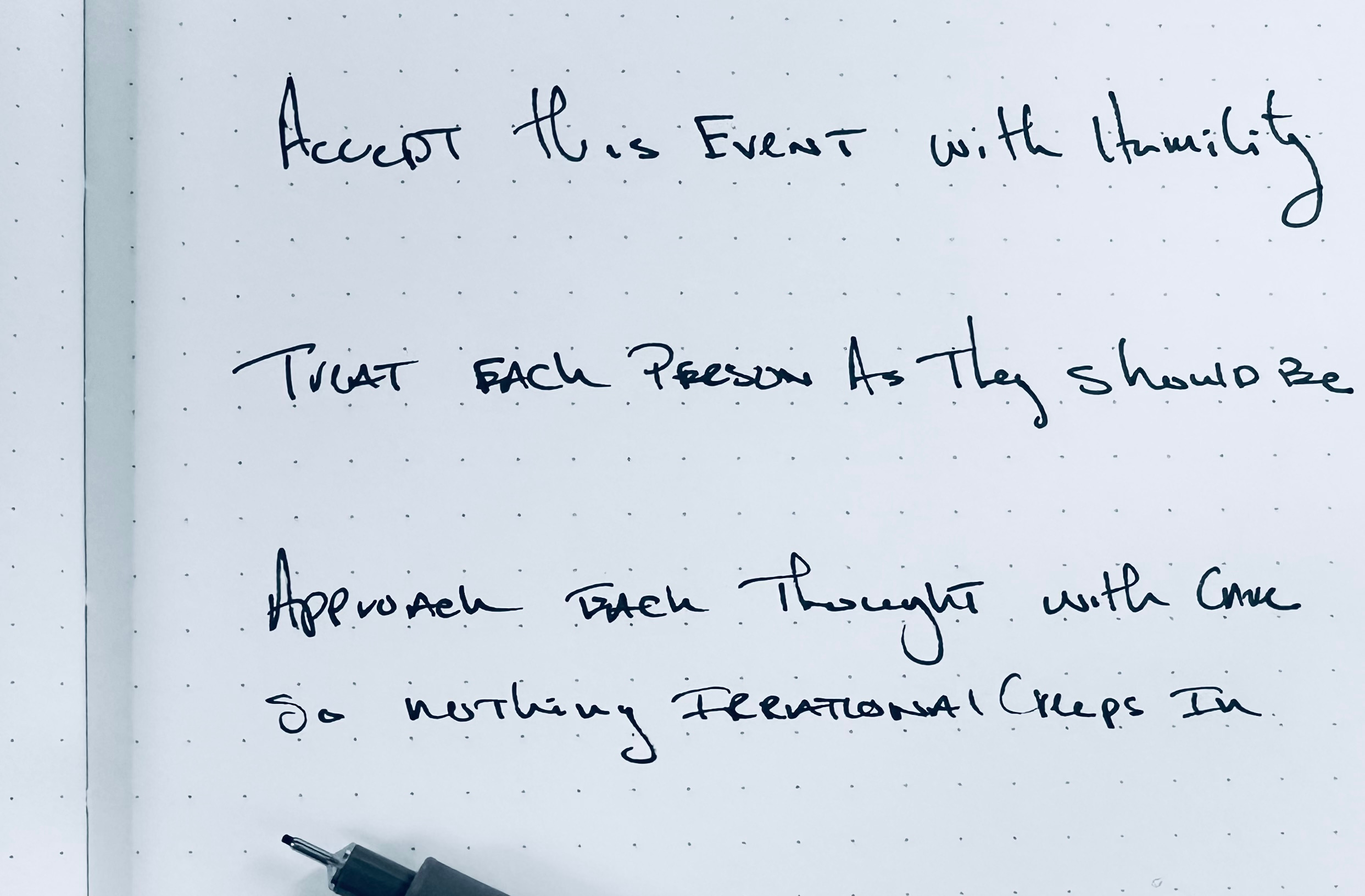
The Creep of Irrationality
The last couple of weeks stacked up on me. The requirements at work, travel and other things have resulted in poor self-care - particularly sleep. As you can imagine, a trip to the west coast and back causes havoc with the routine.I can’t emphasize the importance of sleep enough, at least for me. When I’m sleep deprived, a few things happen: * I get more negative * Everything seems more difficult* My choices get worse* The fog makes seeing a way out harderThis last point is important. Work will always be there, and there will always be more. Realizing that and being able to set boundaries is critical. When that fog rolls in, I start skipping the things that clear the fog - sleep, healthy eating, exercise, learning, etc. This perpetuates the fog. It gets thicker. Rarely does ‘working harder’ get us out of this state. It Will Look Better In The MorningThings usually look better in the morning, and for a good reason. The facts don’t change, just your perception. With proper rest, my head clears, allowing me to see things for what they are - this helps me respond, not react. One day this week, with all that running through my mind, I went to the gym for a quick workout. I was there for less than 15 minutes. The only value it had was I showed up. Seriously, that’s it. A few reps, and at least I can say I went. There is something important in that. Sometimes, show up to start the process again. I headed to the office to get things started and work through the backlog. I made myself stop and do things I knew would be fulfilling. Read, write, create, and revisit. Objective ThoughtOn that last one, I opened a list of my highlights from the book Meditations by Marcus Aurelius. You can find those highlights here. Sometimes the universe gives you what you need when you need it. The first three highlights were perfect for my head space. Here they are: The discipline of perception requires that we maintain absolute objectivity of thought: that we see things dispassionately for what they are. It’s, in other words, not objects and events but the interpretations we place on them that are the problem. Our duty is to exercise stringent control over the faults of perception, with the aim of protecting our mind from error. When sleep deprivation happens, and I know that my emotional self is showing up, I lean on this from Marcus:Everywhere, at each moment, you have the option: * to accept this event with humility [will]; * to treat this person as they should be treated [action]; * to approach this thought with care, so that nothing irrational creeps in [perception]. While we are all different, sleep is the number one stress reliever. When it gets overwhelming, consider fixing your sleep. The one thing you control is your perspective. Take care of yourself so you can be clear in thought and action. I’m struck by how the universe put these wise words where I needed them and when I needed them. I hope you find them helpful too. Meanwhile, I’m back in the fight. Onward, PS - I’m going to go deep on sleep here soon. In the meantime, check out Dr. Andrew Humberman’s episode on sleep here if you have time.PPS - I track my sleep with Whoop. If you use Whoop and want to join my team on Whoop, enter the invite code COMM-B4B56C on the community page (or email me). And if you are interested in Whoop, you can use this link to signup. This is a public episode. If you would like to discuss this with other subscribers or get access to bonus episodes, visit kellyvohs.substack.com
The Courage To Not Compete
I found myself tucked into a small seat on a long flight. Don’t cry for me, I was sitting next to one of my favorite humans on the planet, and we were on a great adventure. That adventure turned out to be more than I could ever have hoped. I’ll share some of it another time. But this may have happened 👇He slept, and I found myself deep in a new book. The Courage To Be Disliked: The Japanese Phenomenon That Shows You How To Change Your Life And Achieve Real Happiness. I’m still working through many of the concepts, and I probably need to read it a couple more times before diving deep with you. There is something that keeps rattling around in my brain, and I wanted to share it (light edits for clarity). When you are conscious of competition and victory and defeat, it is inevitable that feelings of inferiority will arise…Because you are constantly comparing yourself to others and thinking, I beat that person or I lost to that person. The inferiority complex and the superiority complex are extensions of that.We need to get away from worrying about what other people think. The reality is they do less often than we think. Most importantly, we need to help each other, not compete with each other.That’s easy to say, hard to do - especially for me. That point is important, don’t think for a minute that I don’t give credence to the thoughts of others. This is particularly true for those closest to me but also applies to strangers. I’m not immune from wanting to be admired or liked. We need to get comfortable with the fact that we won’t be good at many things. Maybe, we won’t be the best at anything. That’s hard to swallow. The secret: The competition is in the mirror, not out the window. I was lucky. My grandma told me I was special. I believed her. And, like most things, she was right. I know I’m special. Some of that good, and some of that bad. All of it, me. Take Your Work Seriously, Not YourselfWe should take our work very seriously. After all, we provide for ourselves and our families. The problem occurs when our ego gets wrapped up in the equation, and a competitive voice sneaks in. It’s too easy to look around and be judgmental and envious. I do it. I’m not proud of it, but I do. I’m human. A decade ago, I read a book that helped me with this. It was by Coach John Wooden, who won 10 NCAA national basketball championships with UCLA. Coach Wooden was famous for telling his players not to worry about the scoreboard. He shared his father’s advice: Focus on running the race rather than winning it…don’t lose sleep worrying about the competition. Let the competition lose sleep worrying about you. I think that Coach Wooden believed this. That said, he used the word competition 96 times in his book Wooden on Leadership. Even for this incredible man who did so much for so many, I know winning was on his mind. It’s on all of our minds. We’re trying to survive. Wooden just accepted the natural tendencies to compete but took action to nullify them. He took specific steps to ensure he didn’t get lost in the voices of competition. For example, he intentionally avoided using the word ‘win’ or talking about ‘beating the competition’ with his players. He felt the joy was the journey of pushing yourself to the outer limits of your ability. Just Because You Can Win The Game, Doesn’t Mean You Should PlayWe live in a society where what we do matters, particularly in this country. Often we allow our titles, our cars, and where we went to school (or didn’t) to define us. That scoreboard doesn’t matter. Wooden says, Never allow anyone to define your success.Wooden is talking about perspective. When we let others define success, we give away our perspective and seek external validation. When we own the definition, we can focus on what matters to us. Don’t give away the one thing you control - your perspective. For me, losing is when I know I could have done better. Winning is when I do the work that matters and get better. It’s stepping away from the pixels to spend time with one of my humans. It’s going for that run even when it’s cold and I’m too tired. It’s having that hard conversation I’ve been avoiding. Or, as I shared recently, it’s setting boundaries and saying no. I’ll leave you with this, again, from The Courage To Be Disliked (with light editing for clarity): …once you are released from the schema of competition, the need to triumph over someone disappears. You are released from the fear that says, ‘Maybe I will lose.’ You can celebrate other people’s happiness with all your heart. You become able to contribute actively to other people’s happiness. The person who always has the will to help another in times of need is someone who may be properly called your friend.I think step one is being a good friend to yourself. And if you didn’t have a grandma like mine - you are special. Take care, friends. This is a public episode. If you would like to discuss this with other subscribers or get access to bonus episodes, visit kellyvo
Looking Foolish Is A Superpower
BTTY gets BTTY with three ways to take it in. Watch, read, or listen. I hope you find something helpful here. Take care. BTTY turns ten this year, but it’s the last year that has taught me the most.The concept of BTTY hatched on my office floor in 2013. It was a Sunday, and I’d been on the job for 39 days. My boss and dear friend, for almost 25 years at this point, told me, “don’t do anything for 90 days.”Yet, there I was, with 67 major projects or changes that I KNEW needed to occur. There was no one in that office with me on that beautiful Sunday. Just me, a whiteboard, and my imagination.I sat on the floor and felt my heart rate increase while a wave of pressure washed over me. My skin warmed as the adrenaline pushed blood into my extremities. I realized there was no way we could do all of this.I moved to the chair and swiveled back and forth, trying to calm down. I glanced up at the light blue scribble that was tormenting me. Sixty-seven kept rattling around in my mind. 67.I said out loud, “Do what you can every day. Little steps every day, and it will get better. If we get 1% better each day, we will be over 365% better in a year.”The BTTY BlogI’ve been writing inconsistently for ten years, with gaps between some posts of more than a year. I’ve written more in the last year than the preceding nine combined.My first mention of BTTY was in a post dated August 16, 2013. Here’s a screenshot: If I’m being honest, fear kept me away—the fear of judgment, failure, and all the other voices that parlayed my hopes. Last year I resolved to change that and committed to posting weekly for a year. This is #52.As my friend Nate Kadlac recently shared about his newsletter, it grows slowly. I wanted to honor his vulnerability with my own. This is slow, and this is hard. The best things in life usually take longer than we expect and are harder.Here’s A Secret (or two)Fear, uncertainty, criticism, and doubt have been bumming a ride with me for as long as I can remember. They are riding with most of us, but society doesn’t make it okay to admit that.Sometimes it’s very dark in here, but it’s okay because I know I’m not alone - you hear those voices too. They exist to make sure you stay safe and alive. But if you let them control you, you will never live your life.There are enough obstacles in the world that will beat you down, don’t be one yourself. Unless you can get those voices under control, you’re FUC’d.Here’s another secret: No one knows what they’re doing. They’re just making it up too. Once you realize that, you are free to do you. Creating is what I’ve done and want to do - teams, ideas, cultures, and networks. The last one is of the paramilitary type, not the business card exchanging type FWIW.My career has been up and to the right, mostly. Sunshine and butterflies weren’t always present, but anything bad was, at most, a passing squall.I’ve been lucky like that. I deeply appreciate the privilege I was born with and the friends life has afforded me. They have selflessly dragged me along, or up, without asking for anything back. Those friends live and breathe ‘give more than you take.’We Are A Work In ProgressI’ve tucked their lessons in my kit bag and brought them with me. Where I’m blind, those same friends remind me to pull them out. Sometimes I listen, sometimes I don’t.“You will get better. Do the reps,” I growl silently in the best imitation of a former team sergeant who would leg press a Prius during our time in Baghdad.“Just don’t quit,” I hear my brothers in the Q course say as we trudge through another cold, wet night.“Self-awareness, self-control,” says a walking saint I’m blessed to call a friend.“The process is what matters, not the objective,” I tell myself.A warrior once looked me in the eye and said, “It’s gonna suck. Embrace the suck. You will be stronger for it.”Roger that, we continue mission. There are no rules to what’s happening here - save one. Ship something each week.Here, We Focus On What We Can ControlIt’s easy to get wrapped up in what’s happening. To notice the slights, real or perceived, and wish things were different. It’s easy to time travel into woulda’s, coulda’s, and shoulda’s.While I don’t consider myself a pessimist, I’m not an optimist. Maybe a realistic optimist? The voices in my head work their you know what’s off to tell me what’s wrong, what won’t work, and remind me of that one deep fear I have. I’m not ready to share that fear, but maybe one day.I face those voices and embrace some as friends. Slowing down helps me recognize they are just my thoughts. Every thought allowed to germinate makes the garden of my life - constant weeding and watering are required.I’m not sure where I’ll be in another ten years, but whatever happens, I’m sure it won’t be what I thought. The future usually surprises us that way. I know if I do nothing today, nothing will be different tomorrow.Four and half decades in, I can peacefully sit with the understanding that progress and process are what
My Struggles To Say No
Inbox ZeroThe first email was sent on October 29, 1969. Yesterday, 347 billion emails hit inboxes worldwide - in one day. There are only just over 2.5 billion active email addresses. You do the math. That’s over 100 emails per account per day. It’s not simply that you never get through your email; it’s that the process of “getting through your email” actually generates more email.This is from David Burkeman’s book 4,000 Weeks: A Mortals Guide to Time Management. While the list of books I’d like to read is more than I’ll get to in this lifetime, I’m making it a point to revisit the ones that matter. 4,000 Weeks is one such book. I don’t want to say this is a life-changing book, but that’s only because of my stubbornness and a little ego. It has changed my life or at least helped sharpen the pencil I’ll use to sketch what’s left. These pages served as a reminder of what is important and a curb to the misdirected parts of my ambition. I find his straightforwardness refreshing. Points like this: In the long run, we’re all deadHe goes on, Assuming you live to eighty, you’ll have about four thousand weeks. “I want to live forever”The other night at dinner, we went around the table and asked each other what superpower we wanted. One of the boys said, “I want to live forever.”Reflecting later, I thought about how life would change if I knew there was no end. If I had unlimited time to do what I wanted, would I make different choices? It’s hard to wrap your head around the idea of living forever. Please take a moment, and think about it. You stop aging, and you exist - forever. Time becomes an inexhaustible resource. An infinite resource has little value. You likely say yes to most things because you have time to get to it all. This gets to the crux of Burkeman’s point. You have 4,000 weeks on this little blue ball. If you are like me, maybe you have 2,000 left. Now, be honest with yourself. Do you make choices as if you are immortal? Or mortal? My answer is I make choices as if I’m going to live forever, and I can do it all. What’s amazing is I know what it feels like to look death in the eye. Yet, I say yes. And yes. And yes.I’m making choices, like prioritizing inbox zero or clearing the decks, instead of facing the reality of my limited time and focusing on what matters. The Most Precious ResourceI have long subscribed to the idea that I can do it all - with enough hustle, I can get it done. The truth is, it has the opposite effect. The more I think I can do, the more I try to do. This leads to a full calendar with little room for the highest priorities at work or home. Burkeman, Productivity is a trap. Becoming more efficient just makes you more rushed, and trying to clear the decks simply makes them fill up again faster.At work, I say yes, and at home, I say yes. Then, unfairly to all participating parties, I react negatively when there is no space. It’s not their fault. It’s my fault. I keep saying yes, thinking I can do it all. That’s not possible. I have to set boundaries. Burkeman leans into this exact point:Paradox of limitation: The more you try to manage your time with the goal of achieving a feeling of total control, and freedom from the inevitable constraints of being human, the more stressful, empty, and frustrating life gets. He goes on, We’ve been granted the mental capacities to make almost infinitely ambitious plans, yet practically no time at all to put them into action.Let’s Normalize “No”Why do I pack my calendar full and wrestle with my inbox incessantly? Ego? An unhealthy belief that I can do it all with something to prove? A desire to not let people down? Probably yes to all three. The truth is, you won’t be able to do everything. You won’t get to all of those ticktockagrammable places. Try as you may. You may get to inbox zero, but it will fill back up. If you embrace your mortality, does that change the choices you make? It does for me. I’m not suggesting we spend our days avoiding our work, but rather don’t let distraction or ego deprioritize what matters - whether at work, in the community, or at home. There will ALWAYS be more to do, and there won’t always be more time to do it. Intellectually, we know need to prioritize, say no, and set boundaries. The struggle is normalizing no. Can we give others the space to say no without feeling shame or guilt? Their capacities are limited, their priorities are unique, and their struggles are real. Let’s turn this on its head and help each other say no. We are in this together. Can we give each other that grace? Just a thought this week. You can see my full highlights from 4,000 weeks here. Take care out there. Onward, This is a public episode. If you would like to discuss this with other subscribers or get access to bonus episodes, visit kellyvohs.substack.com

Looking Back, I'm Embarrassed
When I think back to times and places that were difficult, they usually seem not as bad as when I was there. There is a reason for this, and it’s called Fading Affect Bias. But first, a memory. We were deployed in Baghdad and in the midst of it. 18-hour days of grind. I’d beat the sun up and stumble over to the secure room we set up to access highly classified material. The coffee wasn’t great, but if Folgers was good enough for grandad, it was good enough for me. We’d push pixels, people, and ourselves on that deployment. It was hard. I also knew I was pushing myself pretty hard. Too hard, in hindsight. Then one day, a buddy on the team looked at me and said, “Hey, I gotta tell you, you have to stop being so negative.”He was a friend, and I love him for having the courage to snap me back to reality. There was a lot wrong, like the hole in the roof from a rocket and the persecution happening all around us. And the Army, which comes with lots to criticize - bureaucracy, red tape, bad food, low pay, IEDs, and laziness. Some of that, particularly the last one, would be a reason to get out several years later. Almost every day, I miss it. I miss the dust in your nose, the adrenaline at the gate, and unknown corners - real and metaphorical. I miss the new cultures, the lessons, and the flatbread with all the fixings from a little window in Sulamaniyah. I miss the places few have been and the wide-eyed “thank you” when you change someone’s life with something the Department of Defense marked for the rubbage bin. Not to mention fierce friendship, the ‘embrace the suck’ attitude, and the ‘just don’t quit’ mantras. I’ve been curious why I remember it more fondly than when I was there. It turns out there is a psychological reason, and it’s called Fading Affect Bias (FAB). With Fading Affect Bias, negative emotions associated with an event tend to fade faster than positive ones. This fading can start as soon as the same day. When something terrible happens, or I make a mistake, I drag it around for a while. Over time, it fades. It won’t all fade and often comes back when we don’t want it. At night lying there in the dark, a smell that instantly transports you or any of 1,000 other triggers. “Dude, stop”Fifteen years later, I remember vividly that moment riding in that grey SUV with the gold stripe down the side. My buddy looked over at me and said, “Dude, stop.”What I was complaining about didn’t matter. Were there frustrating things? Yes. Did I think command could do more? Yes. Did I think some guys weren’t pulling their weight? Unequivocally. Rarely does complaining make it better. By complaining, we are complicit. Not only do I shake my head at the things that frustrated me due to their pettiness, but frankly, I’m embarrassed. I’m in the middle of a book by one of my favorite writers, and he’s sharing tales of WWI. The trenches, the starvation, and wave after wave of men walking into machine gun fire. Now there’s a reason to complain. There I was with a chow hall, a mostly hot shower, and coffee each morning. Yet, I dared to complain. People were barely making it a few hundred meters away, and I had the US Government’s full force to ensure I had what I needed. And my family was at home, safe. Yet, I complained. Note to SelfWe will lose things, friends, and dreams. Complaining rarely makes it better. Often, it makes it worse. Usually, there are worse things happening to better people. When you find yourself starting to see all that is wrong, stop and flip it over. There’s likely more good than your lens is letting you see. Clean it. I’m grateful for the fade, but more importantly, I’m grateful for friends that call me out. I’m also grateful that it doesn’t all fade. There are too many lessons and moments I don’t want to lose, including this one. Take care, friends. This is a public episode. If you would like to discuss this with other subscribers or get access to bonus episodes, visit kellyvohs.substack.com

“Living Outside The Deceptions of the Modern Life”
Coffee and A Lion Tracker’s Guide to Life is how I started 2023. This was my second time through this little gem of pithy prose. The PremiseBoyd Varty grew up on a game preserve in South Africa. His grandfather converted a bankrupt cattle ranch into a lion-hunting enterprise. Spoiler alert: the lions were eating the cattle. His father would do the right thing and bring it back to its natural state and a safari operation. Boyd would learn the art of tracking here.Boyd brings a refreshing look at life through the eyes of a tracker. Interlaced with the culture of the Shangaan, Boyd takes us through a day tracking a lion. His two mentors, Alex and Ren, provide context, wisdom, and a view of life through two men deeply connected to nature. For the metaphors, I’ll keep coming back to this one. Excerpts like this that make it worth it:“Ren lives outside the deceptions of modern life. Its structured psychological outlook has not affected him, and I know that he is a living clue to a different way of being. He doesn’t concern himself with the attainment of status or wealth. He doesn’t worry about his security in the future or his position within a social group. He doesn’t talk about politics or worry that he isn’t doing enough. To him, time is not money. Productivity is not a reflection of his value. He considers treadmills ridiculous. When it’s time to work, he works. When it’s time to rest, he rests.”It’s short, only 90 pages. A lifetime of advice in its brevity, like this: “Track what makes you feel good and bring more of it into your life. Notice what makes you feel lousy and do less of it.”More of my Favorites“I tend to just accept what I see. Ren always looks closer, he always asks why. He has a gift for examining the wallpaper of life.”Why do the elephants eat in the morning? The answer is simple, but that’s not the entire answer. Boyd accepts the first answer while Ren, his mentor, keeps asking why. There is more than what we see on the surface. "You can’t think your way to a calling. Finding what is uniquely yours requires more than rationality."This stings a little. For rationality, what are we talking about? The rationality of comparison? What did your parents want? What society tells you is right? What role do you think you play for others? You won’t find your calling in a pro/con list. It’s emotional, not logical."We live with our attention directed outward. We focus on the social cues of our culture. We look to others to define our path and value, and purpose. We lose ourselves in shoulds."I talked about warriors and how they look in. Boyd is saying the same. Don’t look to society to define your path. If you do, you might find yourself walking down the wrong path. Don’t forget: just because you can win the game doesn’t mean you should play. "We must learn to read the subtle tracks of the body, the way it relaxes and opens when something feels right, the contraction and tightness when we are not where we are meant to be."Perhaps my favorite, I feel this deeply. You know when something feels right and when it doesn’t. How often do we not listen to our bodies while our minds are wrapped up in rationalizations? Or fear? Or competition? "I don’t know where I’m going, but I know exactly how to get there, whispers the wild self. Learn to be natural."Instinct gets us to our feet. As toddlers, we stumble around exploring while our dotting parents, if lucky, keep an eye out. Our days are filled with eating, napping, and - well, the rest. Our early time at school let us finger-paint our joyful hearts away. We do what feels right, and at some point, the natural path gets supplanted by something else. Maybe there is a way to find our way back to finger painting, kindness, and homemade cookies. "I remain deeply convinced that a person who tracks down an authentic life opens up possibilities for themselves, their family, and their larger community. In these times, as the planet screams at us to reimagine our way of life, these new possibilities are deeply important."Maybe this is what matters. What would the world be like if all 8 billion of us could do what we are best in the world at and love? Easy for me to say as I sit in this fancy chair with all my privilege. There is work I have to do to track down the authentic me. I’m incredibly lucky I can even consider this, and as such, don’t I have an obligation to act? Why I Love It? The sketches, prose, and being easily consumable make it one of my favorites. Boyd’s writing is punchy but beautiful at the right moments - like nature in that way. I felt like I was hiding behind the tree with Boyd, Alex, and Ren as the bull elephant charged the air around us with his presence. "We must leave the safety of the village and venture out onto the trail of something wild and uncertain and as yet undefined. We must live on that trail, propelled forward by a set of clues only you will recognize by the aliveness they bring out in you. You must teach yourself to see your track.”You

The Art of Warriorship
I've been giving a lot of thought to warriors. I’ve found myself using this word recently and more than the days when I was surrounded by what the box office stylized as a warrior. If you close your eyes, you can conjure the stereotype- the violence, the blood, the action. A warrior, for me, is something different. Violence is not the calling card of a warrior, but rather love. I've walked with warriors, fought with them, drank with them, cried with them, bled with them, and buried them. Warriors are a special breed. All fight, but not all are violent—all sacrifice. What makes warriors special is their desire to fight for those who cannot. Sitting bull said it better than I can: "For us, warriors are not what you think of as warriors. The warrior is not someone who fights because no one has the right to take another life. The warrior, for us, is one who sacrifices for the good of others. The task is to take care of the elderly, the defenseless, and those who can not provide for themselves. Above all the children, the future of humanity." When I think of warriors: Viktor Frankl, Rosa Parks, Gandhi Churchill, Martin Luther King Jr. - those are all names, you know. And they're warriors in my book. How many warriors are out there practicing warriorship that you don't know? Chances are, you know one personally. Maybe, you are one. The warrior lovesThe warrior may fight but fights for love: a belief, a way of life, or those who cannot fight for themselves. The warrior is patient in their craft and impatient with injustice. They choose confrontation over comfort. The warrior is resilientThey are realistically optimistic - moving forward when others think it is too hard. They are a professional at getting back up, dusting themselves off, and saying, “Again, I’m ready.” They do not fear what is in front of them because of the love behind them. The warrior looks in, not out The warrior knows their imperfections - this is central to the warrior and why they train the body, the mind, and the heart. The warrior is relentless on better as there’s too much at stake not to be.They prepare as Churchill decreed, “That one day the universe will one tap them on the shoulder to do something they are uniquely qualified for, and must be ready. They live - “get strong, stay strong.” The warrior is selflessThey exist to defend what needs defending - people, ideas, and liberties. For that which cannot protect itself, the warrior brings violence of action. They act with love and bleed sacrifice. The warrior does not want to die, but if someone must, in defense of right, the warrior says, “Take me, I’m ready. But I will not go gently.” The warrior does not complainThey do the work and don’t want glory. Their only ask is that you honor their sacrifice by not wasting it.The warrior is lucidThey respond, not react. Clear in thought and action - their training has taken them to this point. They refuse to let anger or vengeance, or ego lead. Love leads and dictates their actions. They focus on what they can control, and above all, they control themselves. The warrior is confidently humbleIn actions and words, there is no pride. Confident in who they are today and who they are becoming. They want the right way, not their way. The warrior knows everyone is their teacher, and they are a small part of a much larger world. Love and humility are their most effective weapons.A warrior does not need a uniform, just a mindset. Being a warrior is a choice. Practicing warriorship is your choice. Go confidently, friends. The world needs you. Thanks for reading - if you found it helpful, please consider sharing it with another person who might too. This is a public episode. If you would like to discuss this with other subscribers or get access to bonus episodes, visit kellyvohs.substack.com
A Gentle Reminder
New Year resolutions - I understand why we do them. It’s a natural cutoff point and easy to ‘start new.’ We can do that any time of the year, but since we are here together, let’s take advantage of the collective momentum. But first, I want to offer a contratarían point of view. Let’s Stop, Not StartAs you think about what you will change in the new year, consider what you can take away. Not what you will start doing but what you will stop doing. Here are three stops that are top of mind for me.* Stop Time Travel - worry and regret are just a misuse of our imagination. * Stop Competing With Others - the only competition is in the mirror. Remember, a ‘competitor’ is incredibly close to an ‘enemy.’ You are you, be you. The best you. There’s only one of you. * Stop Thinking Leisure Time Is Bad - it’s okay to do things purely for enjoyment without any perceived benefit. Seriously, it’s okay.A Gentle ReminderFrom Bianca Sparacino, A Gentle Reminder"However you fought your battles, whatever got you here today is valid. You had to do what you had to do. Congratulate yourself on having the courage to do it, even if it was not graceful, even if it could have been executed in a kinder way or a more tender way, even if you see now that you could have done things differently. It is okay. Be gentle with yourself. You were learning. You still are." And with that, my friends, go gently into this good year. You are good. We are good. Let’s do some good. Onward. This is a public episode. If you would like to discuss this with other subscribers or get access to bonus episodes, visit kellyvohs.substack.com
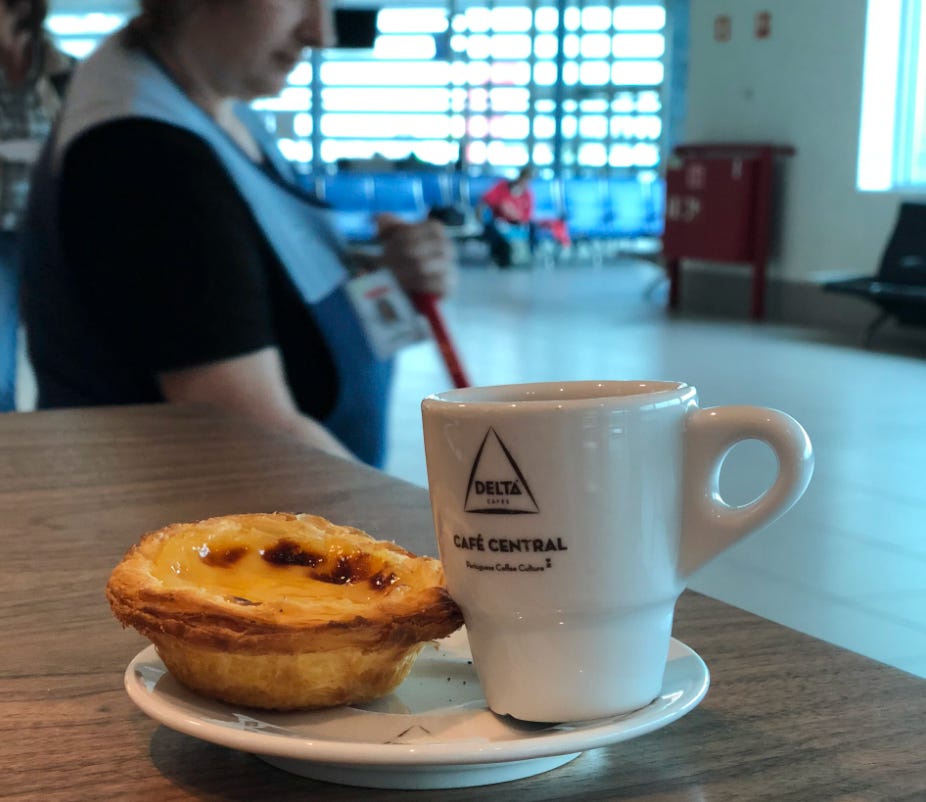
My Words Matter
Cream & Sugar, PleaseA few syllables of kindness can make all the difference.Whether at the coffee shop, the dinner table, or that video call. I see you and appreciate the part of your life you gave me.It’s saying “No, thank you” to recognize they didn’t have to offer. They aren’t there to serve you, even if you pay them with ducats, dollars, or Dominican pesos. They were being kind and helpful. Let’s honor their kindness, and it will amplify.Tell Them When They Get It RightWith so many opportunities to feel like we are getting it wrong, lean in when someone gets it right - either in their opinion or their actions. While Dale Carnegie says the sweetest sound to someone is their name, I disagree.The sweetest sound is an affirmation that your actions and opinions are good. If you agree, tell them. And if you disagree, tell them. Just be kind, and whatever we do, let’s not waffle with phrases like “I don’t disagree.”And I Am SorryI advocate using “I’m sorry.” Even if it wasn’t my fault, I’m sorry you got a flat tire this morning. I’m sorry your coffee spilled on your new shirt. I am sorry that someone you love is at risk or may not make it. Deeply. I don't believe I’m at fault for those things, but if I could fix them, I would. So, I’m sorry. And how can I help? A box of tissues and a friend may be all you need from me now. Need me to get on a plane? I’m in. I am not advocating the indiscriminate use of these words to make people feel good. I’m asking that we all recognize their power when delivered genuinely. In our haste, we often forget the little things, and lots of little things add up. We don’t have a choice - our actions send ripples into the universe: every text, email, and interaction matters.A dear friend coined the phrase “ambitiously kind”. I agree with him.Let’s be ambitiously kind friends. This is a public episode. If you would like to discuss this with other subscribers or get access to bonus episodes, visit kellyvohs.substack.com
What do you look for in a leader?
I interviewed someone recently and asked, “What do you look for in a leader?”They said, “Care. If they don’t care, nothing else matters. If they care, everything matters.”I think that’s right. We need competence, but first, we need care. This isn’t just caring for the team but caring about the mission.Care is a decision.No training, no experience, just show up. Here are a few things that come to mind about people who care.* They take 'it' on as a burden and say ‘I’m accountable.’ * They don’t quit when it gets hard or the path is unclear.* They iterate, refine, and continuously make better when no one is looking. * They know it’s not about them. It’s about the people counting on them.* They will do everything they can to make the team proud and deliver on their promises.* They check their ego at the door and admit when they don’t know, or when they’re wrong.* They take blame and give credit. Competence is experience.In the beginning, caring is enough. Over the long term, you must be competent too. This takes focus, humility, and care.Coach John Wooden led the UCLA Bruins to 10 national championships and NEVER had a losing season. He famously started each season teaching ALL players how to tie their shoes. Can you imagine that today?! There they were - 15 tier-one athletes sitting on a gleaming hardwood floor in their stocking feet. They meticulously weaved laces through their size 14s as Coach Wooden paced, doling out instructions . I don’t think any of them questioned the practice. They were professionals, and professionals take everything seriously.Sahil Bloom, in his article about the differences between amateurs and professionals, says,“The greatest performers in any craft share one trait: They have a routine and stick to it with intense discipline. Most of what we call greatness is simply the result of tiny daily actions done well—over and over and over again. They are interested in the process, not the prize.”Here are things that come to mind for me if you are trying to be competent: * Do the reps. Again and again.* Have the humility to view everyone, and every event, as your teacher.* Have the discipline to do the little things that matter. * And be relentless about better.Remember, leaders are NOT responsible for all the answers, just all the decisions. Don’t pretend you can do anything. It’s only together that we can do anything.Don’t Be Out Worked CaredMastering your craft starts with care. Care will take you through the low points and the frustrations. It will open your aperture to the possibilities. It will get you off the floor and out of the fetal position. It will allow you to say you’re sorry. It will force you to find the truth and lead with honesty. Care means love of the team, the mission, and the craft.Competency is not an end state, it’s a journey. We care to keep getting better.Go get it, friends. This is a public episode. If you would like to discuss this with other subscribers or get access to bonus episodes, visit kellyvohs.substack.com

Where is your energy going?
I think about energy.The energy I have for life, the energy I give off, and the energy I get from others—the encouragement, discouragement, and where it leaks.How can I maximize its use? How can I get more through good habits? How can I be satisfied with what I have? How can I replenish it when it’s gone? Most importantly, where am I letting my energy go to waste? I have two that lead my list.Status SeekingTime TravelStatusTo status-seeking, I shared the story of Marcus Aurelius and Lucius Commodus. One great emperor and one tragic failure. If you’ve seen the movie Gladiator, you have a sense. From Marcus:"It never ceases to amaze me: we all love ourselves more than other people but care more about their opinion than our own."He wrote that in Meditations Book 12 two thousand years ago, and it’s still a fact today. You aren’t alone.Stop worrying about what people think about you - they don’t! At least not as much as you wish. They don’t care about your hair, clothes, car, or other things our hedonic treadmill promotes. Just show up and be you. You are good enough.Time TravelI’m talking about worry and regret.Ryan Holiday says in Stillness is the Key:“The less energy we waste regretting the past or worrying about the future, the more energy we will have for what’s in front of us.”Life is just a series of moments threaded together. It’s like an old movie reel with frames. If we slow the projector down, we can see the frames for what they are. They are delicate, unique, and meant to be enjoyed. Wherever you are right now, take a moment to recognize something special: a color, a smell, or a person. If you struggle, look in the mirror.Whether at work or home, let’s take their advice. Don’t worry about what people think, and don’t time travel. You only have so much energy for your humans and your life. Please don’t waste it on things that don’t matter. You are here, be here. You are enough, and you have enough.Spend your energy wisely, friends. This is a public episode. If you would like to discuss this with other subscribers or get access to bonus episodes, visit kellyvohs.substack.com

Soulful Leadership
General James “Mad Dog” Mattis served in the United States Marine Corps for 44 years. Ask a Marine about him, and you will likely hear the reverence in their voice. His book, Call Sign Chaos, provides a glimpse into his style, life, and perspective. Love him or hate him - there is something simple about his approach. Unapologetic, authentic, responsible, and relentlessly focused on better. His “Three C’s” of Leadership are worth considering as you lead. They are: * Competence* Caring* ConvictionCompetenceOut of the gate, Mattis drops a wonderful “ism” I’ll take with me always - “Brilliance in the Basics.” He says plainly, “Don’t dabble in your job. Master it.” We applied this to our business. We were clear on the functions that drive success and said, “we will be brilliant in these before all else.” Ignore the noise—Focus, focus, focus. There is something liberating in this. Take a moment and write down the basics of your job. Are YOU delivering on those brilliantly each day, or are you walking down distraction alley?If you want to be able to show up ready for your team, whether at home or work, live brilliantly in the basics too. Prioritize sleep, what you eat, and your relationships. We don’t need fancy apps or self-cooling blankets - we need more time in bed and less time in the drive-thru. Most of all, we need time to learn, love and explore with our humans.Caring (and Communication)Mattis says, “In a family, you look out for your younger brother. You are interested in him, how he grows, how he learns, and who he wants to be.”Leaders care deeply about those they lead with soul-spying care. They take action to help with struggles and strengths without submitting an invoice - the only payment they expect is a life lived to potential.Mattis goes on, “When your Marines know how much you care, you can speak bluntly to them.”Sandwiching a critique between two compliments is accepted as best practice. Do you know what best practices get you? Everyone doing the same thing. There is a word for that, mediocrity. When they know you care - dare I say, love - you can be direct. No dancing. No pretending. Just reality. At that point, it can go something like this: “Hey, you need to fix this. I’m telling you because I love you. You might not like it. You might want to quit. But I’m the only one who cares enough to tell you. Now let’s get to work to fix it together. Are you in or out?” Conviction (and Consistency)From Mattis, “This is harder and deeper than physical courage. Your peers are the first to know what you will stand for and, more importantly, what you won’t. State your rules and stick by them. They shouldn’t come as a surprise to anyone.” Good leaders have two essential leadership traits - conviction and consistency. There should be no surprises from you, the leader. The battlefield is unpredictable enough, don’t make it worse. Be predictable. When people know the rules, they can execute against them. If they don’t like the rules, they can quit. But if they stay, clarity lets them go after it aggressively. If you want a “fear-full” team, keep them guessing. Fear is a product of the unknown. That said, balance conviction with open-mindedness. We must constantly challenge our beliefs and biases. Mattis addresses this by saying, “Balance your professional passion with personal humility and compassion for your troops…”Soulful LeadershipMattis says,“Remember: You need to win only one battle — for the hearts of your troops. Win their hearts, and they will win the fights...Leadership means reaching the souls of your troops and instilling a sense of commitment and purpose in the face of challenges so severe that they cannot be put into words.”When you practice soulful leadership, they know you will always put them before yourself. Tread lightly. Soulful leadership isn’t faked, only felt. It’s energy. It’s a deeply human connection. We send Marines because they will do whatever it takes. It’s about the mission AND those to the left and right - they feel it in their soul. They live and die, “We, Not Me.”While Mattis focused on warfighting, don’t let that dissuade you from considering the applicability to your leadership. Masters of great change like Gandhi, King, and Mandela leaned on competence, care, and conviction as they changed the world - you can too.Live brilliantly, friends. This is a public episode. If you would like to discuss this with other subscribers or get access to bonus episodes, visit kellyvohs.substack.com

Safe Operating Speed
Generally, speed limits are set for the maximum safe speed on roadways. A different approach uses Variable Speed Limit (VSL) signs that change dynamically to avoid heavy congestion or accidents. It may seem counterintuitive, but slower speeds increase the number of cars that can travel on the road. As driver anxiety decreases, the distance between vehicles declines, and stop-and-go reduces. Germany saw travel times increase by up to 15 percent, crashes decrease by 30 percent, and car volume increase by 5 percent. Similarly, in the UK, property damage-only crashes decreased by 20 percent. Slowing DownTraffic is one area of my life where I watch frustration come, and I let it go (mostly). I can recognize the thought for what it is and put it back on the shelf. It wasn’t always this way. I attribute this growth to age, audible, and adaptive cruise control. Meditation deserves some credit too. I’d ask you don’t poll my family, as they often hear me mutter, “rubbing is racing,” while my race car driver dreams manifest on road trips.Heading home one afternoon, Waze told me that the next left was mine. I looked to the right and saw the brake lights building - open roads ahead. Then it struck me: I notice when traffic is bad, not when it’s good. What is frustration? Frustration occurs when a person is blocked from reaching their desired outcome. Essentially, I’m upset because I did not get what I wanted. More free space on my calendar, a spot on the sixth-grade baseball team, tsway tickets (looking at you, Ticketmaster), or chic-fil-a sauce.Whether in traffic or tussling with my teenager, the frustration I’m talking about is a selfish emotion. The Dalai Lama framed frustration well when he said, “…frustrations, confusion, and pain result from selfish attitudes.”Opening UpMy regrets in life revolve around my anger and frustration. Frustration brings choices - I can be complicit, complaining, complacent, or correcting. At a minimum, I can change my perspective, which requires slowing down and asking some questions. What matters? Am I helping or hurting? What am I missing? Marcus Aurelius provides great counsel when he says,Everywhere, at each moment, you have the option:* to accept this event with humility* to treat this person as they should be treated* to approach this thought with care so that nothing irrational creeps in I've been leaning on these words lately. When I slow down enough to recognize my frustration or anger, I repeat them to myself. It's working, and I wanted to share them with you. I hope you find them helpful. I hope you're good out there. Safe driving, friends. This is a public episode. If you would like to discuss this with other subscribers or get access to bonus episodes, visit kellyvohs.substack.com
I'll Wait, Thank You
It weighs 445 million pounds. I made my way down the cascading elevator bank to the ground floor of the Sears Willis Tower. It is an incredibly well-programmed office building with all the trappings. It’s where Joe gets you coffee or juice, and your greens are of the sweet variety.My feet know how to find a sushi counter I have on repeat to satisfy my sustainably sourced blue fin needs. Tucked on the ground floor, you’ll find that the branding eclipses the sushi with the speed of service beats both.The counter fits eight, but most raw fish-eating topo chico-consuming patrons choose the pre-made case. Don’t cringe. They do an excellent job keeping the case temperature just right. Waiting GentlyThe line was longer than usual. My phone naturally found its way into my back right pocket, and I looked up. At the end of the counter was a big man. White shirt, no tie, dark grey suit with jet black hair combed straight back. His skin was darker than mine, with a wispy Lincoln-esque beard. It was his hands that struck me.In the torrent of fluttering access cards carried by rushing 20-somethings, he sat quietly with his fingers interlaced. The thick parts of his meaty hands rested on the sharp edge of an immaculate bamboo counter - it could easily have been the back of a church pew. He was sitting - calm, relaxed, and present. His head slowly moved as he consumed the moment and the space. I desperately wanted to know what he was thinking.Distinctly, his phone was absent. He placed his order and waited. No need to fill time, scroll dopamine land, or any of the other things happening around him. He was not bothered by the lack of personal space as his neighbor brushed against his big shoulder. He was enjoying the moment. At least, that’s the story I told myself.If I’m being honest, he was so calm he felt out of place. His comfortable solitude contrasted with a city of crashing humanity. I even checked for Agent K as I thought I was in a scene in Men In Black watching an offworlder interact with us humans for the first time. I wanted to talk to him.He looked like he needed a friend, and at the same time, he seemed serenely confident in life. No rush. Just now. Maybe his life was the complete opposite. Perhaps he was there for a job interview or just finished visiting his aging mother in the hospital. Whatever the reality, he sent a vibe into the world - “I’m me, this is now, and I’m at peace.” It was wonderful. My heart hurts a little today because I didn’t talk to him. He was deeply alone, or he knew the power of solitude. Either way, I know he had pockets full of wisdom to share - like all of us. His peaceful state won’t leave me anytime soon - particularly those interlaced fingers - waiting gently. Here’s to more moments of resting gently in what is often not a gentle world. May we give ourselves the grace and time to enjoy it all. Be gentle, friends. This is a public episode. If you would like to discuss this with other subscribers or get access to bonus episodes, visit kellyvohs.substack.com
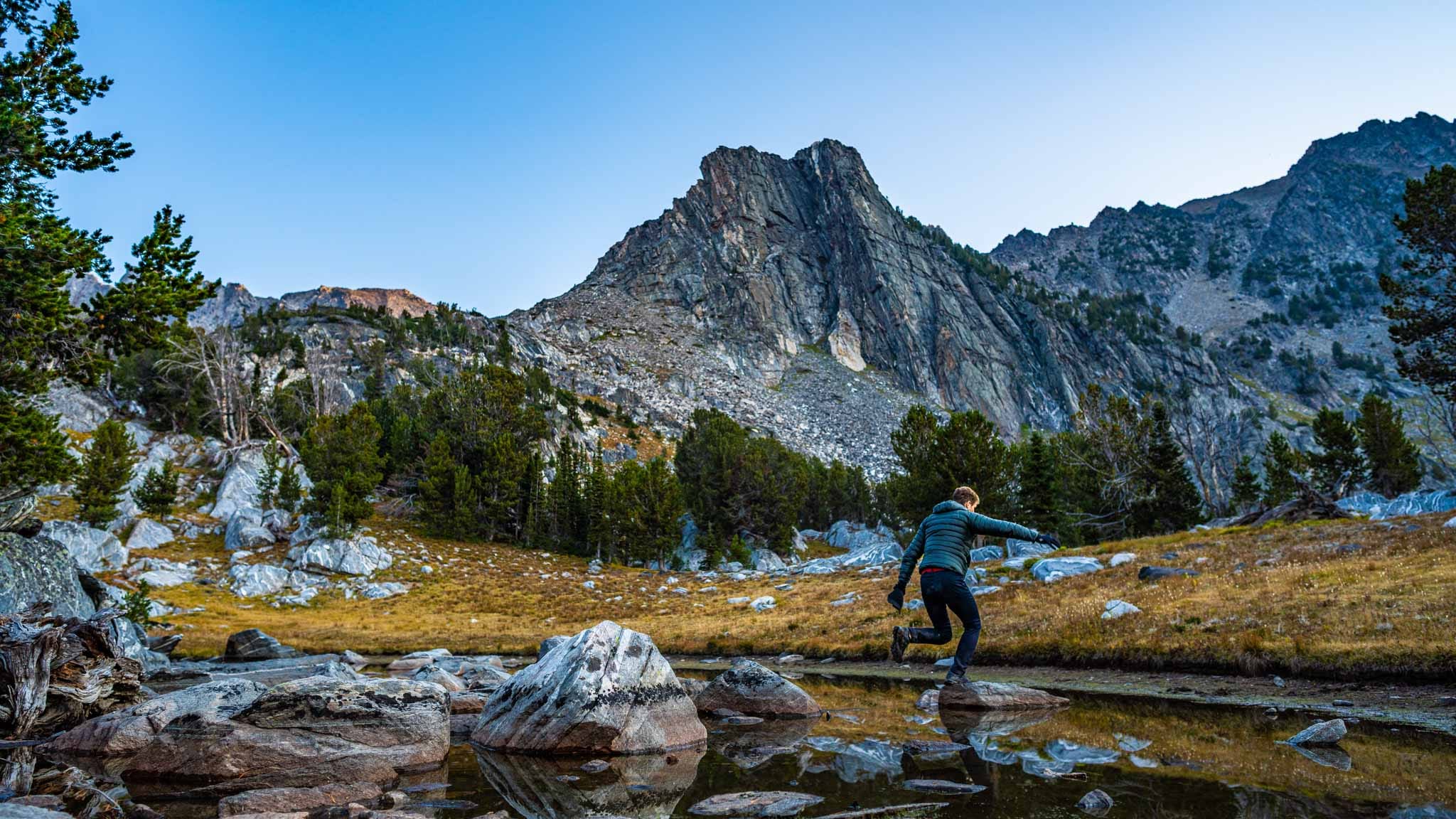
What If You Got Fired?
“What if you got fired?” That was the question I found myself asking this week. Let me explain. Economist-philosopher and author E.F. Schumacher said, “Any intelligent fool can make things bigger, more complex, and more violent. It takes a touch of genius - and a lot of courage - to move in the opposite direction.” That quote sparked a late afternoon session of walking in circles, looking at the floor. Naturally self-critical, I was saying to myself, “What am I doing that’s getting in the way?”Which led to management expert Peter Drucker whispering in my ear, “Stop what you would not start.” Which led to, “If I got fired, what would the next person do?”This is a good reframe. What if you walked into the job today? What would you do differently? When outsiders join the team, they usually challenge established norms - they are catalysts. How do we artificially make ourselves a catalyst for our teams? Or for our communities? I applaud Naval Ravikant's clarity when he says,"Don't take yourself so seriously. You're just a monkey with a plan.”We bring forward our lessons and perspectives but also our biases. Experience improves judgment as a general rule, and it creates blinders. Intentionality is required to see around them. If I can put my biases, experiences, and beliefs aside for a moment, I may find more truth. Almost everything gets better with an outside perspective. The only thing I’m sure about is I shouldn’t believe everything I think. Keep learning, friends. This is a public episode. If you would like to discuss this with other subscribers or get access to bonus episodes, visit kellyvohs.substack.com

Understanding Deeply
I grew up on a small island. It was all the things you would imagine and many that you wouldn’t: the colors, the poverty, and everything in between. My memories of being on the water run deep. Those colors are still with me - my walls, photos, clothes, and particularly when I shut my eyes.My fondest memories are with my best friend. Shadrach came into my life when I was four. We learned to sail, swim, and get sandy together. We’d push off this tiny beach in our little sailboat. He’d stand proudly on that green deck as we thumped through the chop, picking up speed.Moving the bow a couple of degrees to the left, she’d smooth out. We effortlessly moved over that blue-green canvas with the taste of salt in our mouths. Like the prow of a Norse raider, Shadrach stood resolute while his golden hair gleamed like the island god he was.We’d make our way out to the reef and back with regularity. I’d push it sometimes - usually when he wasn’t with me. Pulling the sheet tighter and tighter, I leaned back over the gunnel, and she’d lean out of the water. I wanted faster. I’d pull harder. More. She’d respond.Skimming over the surface, I go too far and pull too hard. She said that’s enough. The sail hits the water, followed by me. I’d find myself under the surface. The grasses are green, the fish are fast, and the corals are a glorious ROYGBIV. A wondrous world just a few inches away. One day, many years later and in another country, I pulled out from under our stilt house in my little red jeep. I was 16. The air was cool, and I smelled jasmine. The top was down, as it always was, and I hit play on something - ‘Pac, STP, who knows?He was probably lying near the foot of the stairs. I hope I slowed down enough to give his hair a tussle - more grey than golden now. Maybe I didn’t. I wish I did because that day, he wandered off into the mangroves, a place he loved, and never came back. When I close my eyes, I see him standing there smiling at me with a coconut the size of his head in his mouth - pure joy.In this world of go, skim, scroll, there is a power in going deep - beneath the surface. Slow down and toss an anchor overboard before you capsize. Dive in.When we take the time to understand deeply, there is so much more to life, people, and everything else. Take care, friends. Happy diving. This is a public episode. If you would like to discuss this with other subscribers or get access to bonus episodes, visit kellyvohs.substack.com
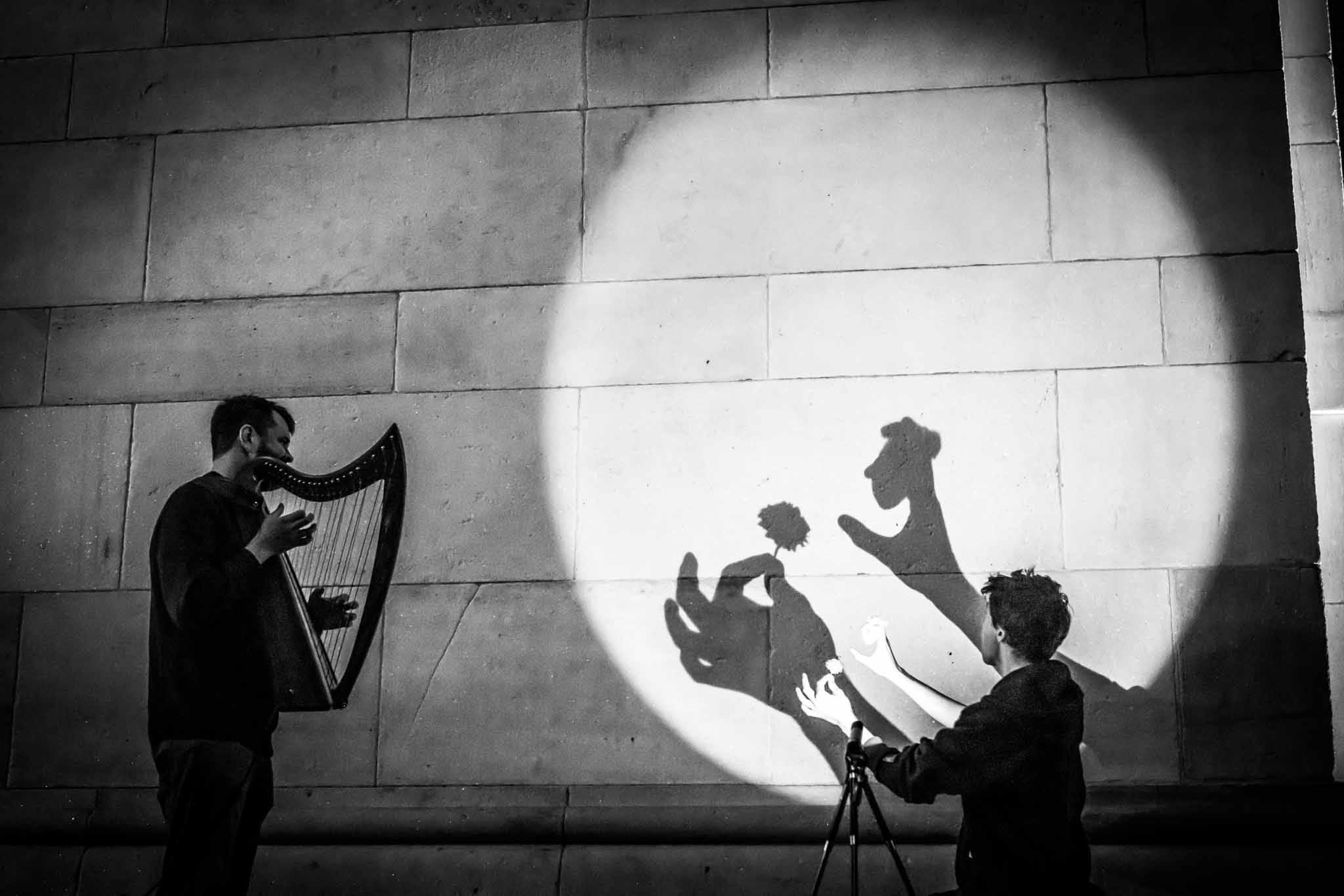
A Day Yesterday
Hi Friends,In a post a bit ago, I shared a piece of wisdom passed on to me from one of my favorite humans. She shared that she keeps a file of compliments that she can refer to when she needs it.She is an incredible human. Kind, gentle, thoughtful, and the personification of care. I’ve taken that an incorporated it into my journaling system. The process is humming and feels too important not to share. In fact, a piece of joy (memory) came up today that I hope i never forget. Thank you journal.Here goes…I have, for a few years, kept a journal. Admittedly i’m about as consistent as the 6 Train. Fear not, this isn’t a pitch for journaling or a deep dive into the health benefits. Personally, it is a valuable part of my ‘operating system’ and helps to bring clarity while supporting a good headspace. One of my favorite parts of my journaling practice is “positive time travel.”I’ve made the point repeatedly that we are the only species, that we know of, that is capable of time travel. We freely move between regret and worry - both are us misusing our imagination. While I don’t advocate regret (my regrets are around my own anger), I do think reflecting is very valuable. Revisiting your lessons and moments of joy is productive.My journal practice moves between digital and analog fluidly. Periods where banging on these keys feels right and others where 80 gram paper sans the pixels fills my cup. Either way, I log my journals in an app. This brings the benefit of fire proofing the analog along with the option of ‘wordless journaling’ by uploading a photo/video. I get to be selective about what memory I want to see again without having google or apple decide. I have to be selective.Here is my system. It’s not perfect and while I try to show up daily, I’m not always consistent. Maybe there is a BTTY bite for you in this or you can share one back at me (please!).* Day One: This is the app I use. You can get a full download of the features here. I’ll give you my highlights:* You can have multiple journals - I keep two regularly. Personal and compliments.* Adding entries: You can add entries via the app or you can text or email into the app too. You can schedule the app to text yo at a certain time each day and if you respond it will get logged. I also use it to forward emails (particularly compliments).* Robots: I use IFTTT to sync other parts of my life. IFTTT is a service, with a free option, that allows you to sync other parts of your life without doing anything. If I tap like when streaming music it will get logged in my journal. I also sync my workouts from Strava and Garmin.* Notebook - Mine is XXXX. I use a form of bullet journaling in the front (work, daily, etc) and personal journal / commonplace book in the back (I write back to front). I like this journal because it’s smaller than normal but not too small. The cover is not hard but sturdy, and you can customize the pages (dots, lines, etc).This is what I think matters.A) Getting It Out: Sometimes you need to get the firing neurons on paper. It’s like taking out the garbage. Usually by the time I am done I finish in a good place. Whether it’s brainstorming as a party of one or venting to myself. Generally, but not always, objectivity and clarity find their way onto the paper (or screen). I just write what I want and stop when I want. A dear friend turned me onto morning pages and while I don’t do this completely it’s kinda what I do.B) Resurfacing: Whether it is digital or analog (the app lets me scan PDFs easily) I look at my journal entries on the anniversary they were created. It’s like your favorite social media app resurfacing memories but without the social pressure. Whether good (joy) or bad (lesson) it comes back for reflection. There are too many lessons and moments to leave back on the side of the road. We need to revisit them to learn and to remember.Again, maybe not right for everyone but thought I’d share. Looking back where I was, sometimes with a cringe, is valuable to me. I am very excited to build my compliment journal too (thanks AW!). Maybe because my love language is words of affirmation or maybe because I spend too much time being self critical. Either way, why wouldn’t we put a system in place to remind ourselves about what is wonderful about us?If you have any thoughts or recommendations please hit me up. I’m eager to continue to make this process better. This is a public episode. If you would like to discuss this with other subscribers or get access to bonus episodes, visit kellyvohs.substack.com