Better Today Than Yesterday
Every Sunday, I share my lessons learned. I write about leadership, life, and ideas that help us get better today than yesterday.
by Kelly Vohs
Show overview
Better Today Than Yesterday has been publishing since 2022, and across the 4 years since has built a catalogue of 164 episodes. That works out to roughly 15 hours of audio in total. Releases follow a weekly cadence.
Episodes typically run under ten minutes — most land between 3 min and 6 min — though episode length varies meaningfully from one episode to the next. None of the episodes are flagged explicit by the publisher. It is catalogued as a EN-language Business show.
The show is actively publishing — the most recent episode landed 3 weeks ago, with 9 episodes already out so far this year. The busiest year was 2024, with 50 episodes published. Published by by Kelly Vohs.
From the publisher
Hey! Join me as I share my lessons about life, leadership, and the peaceful pursuit of Better Today Than Yesterday. kellyvohs.substack.com
Latest Episodes
View all 164 episodesSteps
Just Me & Her

The Price of a Thing
The Price of a ThingThings are expensive. Some things are cheap. Most of us know what we’re paying in dollars. We’re less honest about what we’re paying in life.I’ve paid a lot for what I am now. The good and the bad. The jobs, the travel, the adventure, and now the wonderful life that is today.Some of it worth it. Some of it not. We’ll spend our very selves to get things we think we need. Then one day sit quietly under a porch while it’s raining wondering where we spent well and where we didn’t.I’ve paid for being right. That one has cost me. I’ve damaged relationships trying to win arguments. Needing the other person to see it my way. I think I’ve mostly paid the right price to keep the relationships that matter.But mostly is a word that should keep you up at night.I lost someone close to me not long ago. There’s paperwork and logistics, and underneath all of it, there’s seeing the things you know they loved. A cardinal at the feeder. A ghost wink. There is something harder in that wink.What didn’t I pay. Our relationship needed work. I wasn’t happy with their end of it. But now that they’re gone, I’m realizing something. Maybe they needed more help than I was willing to give. Or able to see. I think they were managing things they couldn’t move past. And my frustration, and anger, didn’t allow me to see that.I was too busy keeping score of what I wasn’t getting to notice what they couldn’t give. I’d trade a lot of things to have another chance. To ask different questions. To try to help in a way that I didn’t. I’d probably trade most things.I don’t know that it would’ve worked. I’m honest enough to say that. Some things are beyond our reach. Some things aren’t.All the hours I spent being frustrated were hours I could have spent trying to understand. The price of my frustration was clarity. And maybe closeness. Both gone now.The price of a thing is life. Not money. Life. And the question isn’t whether we’ll pay. We will. Every day. The question is whether we’re paying attention to what we’re buying.I’ve gotten this wrong, a lot. I’m still getting it wrong.But it’s spring now. No condolences needed. Really. The daffodils are up. More winks. Happy ones. No grief here, friends. Just life. And we are all trying to spend it well.Take care. Be good. -Kelly This is a public episode. If you would like to discuss this with other subscribers or get access to bonus episodes, visit kellyvohs.substack.com

Smile Lines
She has smile lines. The library has books.It’s not really a library as I think of it. Low shelves with windows at waist height. Orchid plants without the orchids. All gifts for someone who lives here. But they call it a library, so will I. That’s where we sat for our visit.I’ve been spending a lot of time with my grandmother. Yes, at my age I have one left. One of the boys and I were with her other day. We brought her photos. She talked about the people in them. We asked her questions. She shared. What she could remember. What she kept saying, in one way or another, was be positive. She said she didn’t like that word. But the opposite was worse. “There is no reason to be negative,” she said. I don’t think she completely believes that. Sometimes there are. Then she talks about her husband.She’s talked about wanting to be with him again. He passed away 20 years ago. That’s a long time to be without your person.She will get her wish. Maybe in a month. Maybe in a few years. We will all be very, very sad. I’ll be crushed. And in some small way, happy. For her. And when I think about her, I’ll remember the raisin toast with butter. Lots of butter. The strawberries in cream with a little sugar. And the way she always wanted me to be happy with no strings.Her face has the wrinkles you’d expect, but they mostly go up. She has smile lines. It wasn’t 94 years of smiling. She had a rough childhood. But mostly 94 years of smiling. I’ll remember that. Her smile lines.I hope I’ll have smile lines, too. I think hers took work. Mine will too.Take care. Be good. -Kelly This is a public episode. If you would like to discuss this with other subscribers or get access to bonus episodes, visit kellyvohs.substack.com
The Floor
Valet took the car. We walked in and it was dark. My eyes adjusted. The front room was smaller than I thought. I should’ve worn a jacket. Then I remembered. Princess Buttercup is behind me. They aren’t looking at me anyway. She’s got the room. She always does.The host took us around the corner. The room opened up, but got darker. A beautiful booth was waiting for us. We were excited. My son had already picked out what he was going to order. The family group chat got peppered with menu screens, yellow circles drawn around what he wanted.This is my friend’s place. I think he’s one of the best in the world at this. He’s my age. Actually a year older. We’ve known each other for 25 years. He’s on my 3am list. I know if I call him at 3am he’s in the car before I’m done explaining what I need.He’ll turn 50 next year. For someone as successful as him, the last place you’d expect to find him is on a restaurant floor. Sitting tables, pulling chairs, checking dishes in the pass. Pushing some back. But there he is. That’s what he’s doing.The old idea was “management by walking around.” Get out there. See people. Connect. Be human. Leadership requires connection. But walking around isn’t enough anymore. You have to do the work.As organizations get more complex, people graduate up through layers of management by staying long enough. Eventually they don’t actually know what the job is anymore. They think they do. They don’t. When technology is changing and the market is changing, you can’t tell your team “go do this thing I heard about on a podcast.”You have to go do the thing. Learn the software. Close the sale. Cook the dish. Clear the table. Write the code. Talk to the angry customer.Two reasons.First, the old reason. The team sees you will work. You’re not in your ivory tower. Good. But that’s the smaller reason.The bigger one: you actually understand what you’re asking them to do. Not just what. Not just why. How. See the mechanics. What’s working, what’s not. What’s hard, what doesn’t matter anymore.Most leaders miss that.And if you want people to follow you, they need to know you understand.This sounds simple. Go do the work. But do you? Do you really understand both what you’re trying to do and how it gets done?If you haven’t been in the field lately, chances are you don’t. Not anymore.It used to be called “management by walking around.” I think it should be “leadership by working around.”My friend’s restaurant. The reason it’s packed on a Saturday at 5PM? He doesn’t walk around. He works around. He’s relentless about the team, the product, and the execution.I’m gonna make sure I do less walking around. More working around.Take care. Be Good. -Kelly This is a public episode. If you would like to discuss this with other subscribers or get access to bonus episodes, visit kellyvohs.substack.com
What happens when I’m sick
I was sick this week.That doesn’t happen often. When it does, I don’t want much. Just not to be sick anymore.“A healthy person wants a thousand things, an unhealthy person wants one thing.” Seneca I think. Maybe Epicurus. Some wise person with lots of quotes that people use.I’m better now. And I already want more than one thing.Build this. Read that. Run there. Plan that other thing.That all happened fast.Maybe most of us live like this. Maybe it’s just me. Not sick, we’re chasing tomorrow. The next version of a thing. Of us.The better tomorrow. Always tomorrow.The good times are just the times. You don’t know they are the good times until you look back.Sometimes you do. Those moments when you look around and say “this is good.” That takes effort too.It’s not that things need to get worse for us to do that. We just need the contrast. See the difference.It’s not always good times. Maybe its mostly good times. Good times today trying to make better times tomorrow. Borrowing today to pay tomorrow.And then later never comes because when it gets here its just another now. Another not good enough.That’s the trap I guess. Not striving. That’s fine. Even ambition is fine.The trap is staying there. Never realizing it’s enough. You are enough.Sick. Almost everything stopped. How do I make this go away?All I wanted was the way I felt last Tuesday.Last Tuesday was enough.What time is it now? Probably good. Definitely good. This isn’t about gratitude. This is about enough. Noticing when it’s enough. Then working for better but relishing that if tomorrow never comes we had today.And that was enough.Take care. Be good. -Kelly This is a public episode. If you would like to discuss this with other subscribers or get access to bonus episodes, visit kellyvohs.substack.com
Ep 191Will It Charge
“You are more than halfway to 90.”One of the kids said that the other day. For some reason, it doesn’t bother me. Gramma is 93 and still going. I do think about how I use my time. Feels like a fight to do everything that needs doing.Maybe it’s a better calendar system. Maybe it’s the 18th to-do app, integrated with a meeting transcription tool, connected with another that surfaces everything each morning. There’s no shortage of 20-somethings on YouTube who have it figured out. A tomato timer. A color-coded calendar. An index card. Or fifty. What they haven’t realized is that we won’t get to everything. There is peace in coming to grips with that. If you understand that, you stop trying to make it all work. You let go a little. And just do.If our life lasts as long as the average person, we have about 30,000 sunrises. As someone said to me recently, “the truth gets lost in averages.” Maybe we should care less about how we manage our time, and more about what we fill it with. Not efficiency. Not output. Use. Because if we fill it with the right things, it will fill us up.The most efficient me will never beat the most energized me.My phone has never run out of time. It runs out of charge. Plug it in and it works. Simple. I’m not so different.What gives me energy?* A long run on a hot day. T-shirt feels like you jumped in a pool kind of run.* A real conversation. Talk about real things.* A sunrise. A cup of coffee. Maybe together. Maybe with someone. Maybe not.* A problem that matters. Doesn’t have to be big. Just important.* An adventure with people I love. Exploring. Learning.* A person who gives more than they take.* Work that helps. When someone feels it.Do you remember the movie Cocoon? If you’re over forty, probably.Aliens come. Their cocoons are at the bottom of a pool. A group old timers start swimming in it. They don’t know why, but they feel young again. More alive. More themselves. The pool gives them something they didn’t know they were missing. I keep thinking I’d love to take Gramma for a swim in it. Maybe we could kick the walker.What they didn’t realize was that their swimming was draining the aliens inside those cocoons. Giving energy costs something. People don’t burn out because they run out of time. They burn out because they run out of energy. And usually, hope.These days I’m less worried about how efficient I am with my time. I’m more worried about where I spend it. Will it charge me or drain it? Will the people I do it with give energy or take it? If you’re not in the right place with the right people, it doesn’t matter how long you plug your phone in. It won’t charge.Hard work will make you tired. Like a good run. The right work, with the right people, will make you want to do it again tomorrow.And sometimes our job is to be the pool, to give people the charge they need at that moment. Like one of those little battery backups for your phone you drag through the airport.Time matters. Energy matters. Only so many sunrises. If you can get both working together, maybe that’s the key.Take care. Be good. -Kelly This is a public episode. If you would like to discuss this with other subscribers or get access to bonus episodes, visit kellyvohs.substack.com

Wake Zones
The air tasted like salt and diesel.The Statue of Liberty was coming up on my left.This was the summer before my freshman year.We were delivering a luxury yacht from South Jersey all the way to Old Port Montreal. I was the deckhand. I’m pretty sure the job was just a favor to my stepfather. But maybe not. Like most things in my life, this wonderful opportunity came through relationships. Looking back, I’m not sure how I got so lucky.We brought her up the Jersey coast and around the bend. Just past the tip of Manhattan, the captain had us pull over. Fenders out. Stark white against old wooden pilings.He said he could feel a light shimmer when we were on plane. “On plane” is when the boat comes out of the water and rides on top instead of pushing through. He suggested maybe he’d hit something along the coast. A buoy, maybe. A ding in the prop. “That would do it”, he told me.He handed me a mask and told me to check the props. I looked at him. I looked at the water. And looked back at him. Behind him, the Twin Towers.This was the nineties, and it was the Hudson. I was pretty sure humans weren’t supposed to swim in this anymore. I can still feel the artificially rough deck under my feet. He had me tie a rope around my waist. A bowline, really the only knot I knew. He nodded with approval. I sat on the edge and eased myself into the water. I wasn’t afraid of hepatitis. I was afraid of the monsters under the dock. I’ve always been that way around docks. Still am.The water was cold. And murky. I could barely see my hand in front of my face. A green-brown gradient haze. I ducked under the stern and kicked my way to the props, heart pounding. They came out of the murk. I couldn’t find anything wrong. But if we’re being honest, I didn’t look that hard. I was more concerned with what might eat me. No logic there, just fear.I still wonder if the captain really felt a shimmer. He was probably just doing what some captains do to brash eighteen-year-old deckhands.We kept heading north. Up the Hudson and into the Erie. Everything you might imagine. Small villages. Trees hanging over glass-like water. Kids in canoes. Almost the entire way, these waters were meant to be taken idle or just above. Go it slow. Not up on plane. And definitely not for a boat of this size.When we made it into Canada, the owner joined us. I’ll save you his name because you’d know his company. Maybe your kids play with his toys. This was his new toy. He wanted to drive. The captain obliged, but asked: “please, go easy. This is a no wake area. These waters aren’t meant for our kind of wake.”He looked up at the captain with a smirk. The kind of “whatever, I’m in charge” smirk. He grabbed both throttles in one hand and pushed them all the way forward.The propellers bit. The stern dug down. She pushed forward and picked up momentum. Soon several million dollars of fiberglass, steel, and ego were up on plane. I like to think those waves were six feet high, but I know that’s not true. I tend to exaggerate things when I look back, good or bad. They were easily three feet though, and they did what you’d expect. Fanning out on both sides, they rolled docks, tossed canoes, and sent people on shore into a rage. Some just stood there in awe of the audacity. This was not what you do here. He didn’t care. This was his time.The Mounties were waiting for us at the next lock. We could see them as we approached. The captain was almost in a panic. This was his license on the line. It turned out okay. We got off with a fine. But the lesson was real.We move through the world and through people’s lives, and behind us is a wake. It spreads out. The energy helps or it hurts.I’ve been thinking about my wake. Not necessarily slower. Or less. But intentional. Or at least aware.Take care. Be good.–Kelly This is a public episode. If you would like to discuss this with other subscribers or get access to bonus episodes, visit kellyvohs.substack.com
Lost Lesson
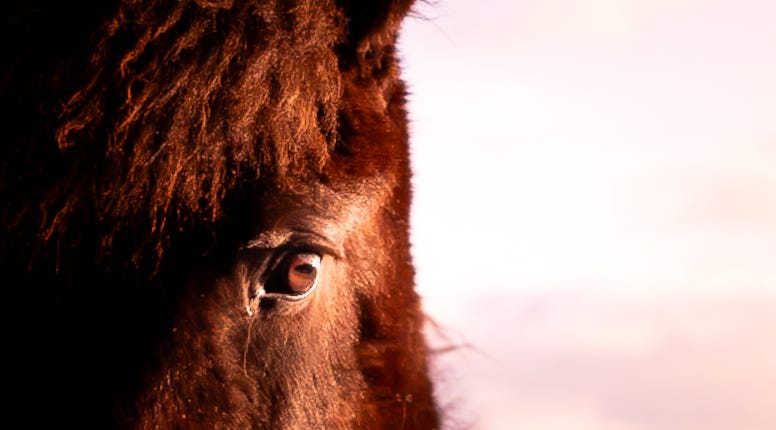
I heard once: you don’t always need new books. Sometimes, you need the old ones again.So, I’ve been re-reading favorites. In one of those, I found the metaphor of the horse and the rider.The rider is the rational self. The logical part of you. The horse, your emotions. Those emotions are your fuel for action. The energy and power that moves you. Sometimes helpful, sometimes not.Some riders can be very controlling. Thighs squeezed tight against the horse, reins pulled close. Others let their emotions own their direction. The horse goes where it wants.When the rider and horse work in balance, you get the best version of you. You harness that emotional energy in a good direction.It makes me think of advice I got from an old timer once.We were in the desert. Crisp, cool air. Wonderful early morning colors. He said, “When you have to go uphill, lean forward. The horse knows how to get up. Don’t try to control her, just let her walk up one step at a time. She may slip a little, but she’ll recover.”The funny part of all this? When I went searching for the original version of this horse and rider story, I found BTTY No. 89. I’ve shared this story with you before, but forgot. So, that’s me sitting here shaking my head. A lost lesson. I’m glad it’s back.Take care. Be good.–Kelly This is a public episode. If you would like to discuss this with other subscribers or get access to bonus episodes, visit kellyvohs.substack.com
Scotch & Signal
It’s Sunday night. He has his favorite bottle of scotch and is settling into his weekly ritual: reading emails from every employee, each listing their top five priorities — a practice Jensen Huang started in the early days of NVIDIA. For him, this was about getting early signals. It was definitely about control too.From the outside, some might call that micromanagement. Maybe even a bad practice. I’d call it unconventional. Bad practices fail. You’ll lose, get fired, or maybe even jail.Best practices are just common practices with good PR. Safe. Predictable. Average.Unconventional practices. At first glance, you might even mistake them for bad. But often they’re what we’ll do tomorrow. Ford’s assembly line was unconventional once. Misunderstood until they aren’t.What we’re really after is extraordinary. More than ordinary. That takes the courage to explore until you find what’s right. Not what everyone else says is right.Sometimes that means taking an unconventional path. Sometimes it just means executing the basics so brilliantly you beat everyone else. Extraordinary lives in both places. In the practices no one understands yet, and in the fundamentals no one bothers to masterTake care, friend. Be good.—Kelly This is a public episode. If you would like to discuss this with other subscribers or get access to bonus episodes, visit kellyvohs.substack.com

Conflict Is Not the Problem. Ego Is.
“Ego is about who’s right. Truth is about what’s right.” —Tribe of MentorsI was chatting with Princess Buttercup the other night.She’s built an incredible business. It has a real impact on people. Reflecting on something I was dealing with, I said to her, “I wonder if there are only two states when running a business. On the floor in the fetal position or euphoria.”When you’re in the thick of building something, most days are just a series of problems to solve. And the bigger your responsibility, the more those problems sit somewhere on the spectrum of hard, bad, or maybe even cataclysmic. That last one is rare. Most things are solvable. Problem solving is what we do for a living—all of us. We have jobs because there are problems to solve. And while most people don’t like finding problems, not finding them is worse. Finding a problem is finding a place to get better. To make the business more valuable. Or to shore up an area where you’re exposed. So, relish the new problems. They’re a gift.Early in my career, I felt I had to solve the problems myself. Maybe that’s natural. The younger we are, the more we think we know. Or maybe we’re just less willing to look foolish. That was me. But holding a position doesn’t mean you have all the answers. Usually, there’s someone closer to the pain who sees the way through.At some point, I realized the job of a leader isn’t to have all the answers. It’s to make decisions and make sure the team has what it needs to execute. Leadership begins when the path is unclear. Take out the flashlight, or machete, or whatever, and go. Sometimes that direction leads to an outcome that’s not ideal. But you still decide.From all of this I know I’m not responsible for the answers. I’m responsible for the decisions.I’ve still got a long way to go on managing my ego, my need for approval, and my fear of letting people down. But my default now is to put the people closest to the problem in the room and ask, “What do we want to do?”When the answer isn’t clear, people will disagree. Ideally, they will.During a leadership meeting at GM, Alfred Sloan once asked, “I take it we are all in complete agreement on the decision here?” When the room nodded, he said, “Then I propose we postpone further discussion until our next meeting, to give ourselves time to develop disagreement and perhaps gain some understanding of what the decision is all about.”That’s when the real work begins. Because conflict over the solution is healthy. What’s not often spoken is this: there are two kinds of conflict.Personal conflict and problem conflict.Personal conflict shows up when we’re protecting something. Sometimes it’s internal: fear, insecurity, the need to look smart or stay in control. Sometimes it’s external: status, power, recognition, resources. Either way, it pulls focus. It keeps us from listening. It turns the conversation into defense instead of discovery.Problem conflict is grounded in standards and craft. Driven by the desire to get to the right answer, not be the right answer. That’s what people mean when they talk about “healthy conflict.” It’s not about ego. It’s about better. It doesn’t attack people. It attacks the problem.The hard part is that these two are often tangled together. We think we’re having a good, healthy debate, but what we’re really doing is protecting something—usually ourselves. And often we don’t even realize it.I’m working on that. On recognizing when I’m in the way. Most of the time it’s not intentional. It’s just ego. Or fear. Or maybe I’m just tired. But when I let that lead, I stop listening. I get stuck defending. And nothing moves.We can’t forget—or ignore—that people show up differently in conflict. Some go quiet. Some get loud. Some need to talk it through and might sound like they’re rambling. Others hold back until they feel safe enough to speak. That doesn’t mean they’re not paying attention. It just means they process things differently.If you want the best answer, you need the whole room.Different perspectives. Different styles. All heard. All understanding. All contributing. That’s how you get somewhere.So here’s where I’ve landed.Conflict is good. But it has to be the right kind, and we need to be aware of the messy middle when personal and problem conflict overlap.When we check our ego and fear at the door, not only will everyone be happier, but we will get better answers. Importantly, we can’t control other people, but we can control how we show up.More truth. Less defense.More listening. Less protecting.More understanding. Less justifying.That’s where better lives.Take care, friend. Be good.—Kelly This is a public episode. If you would like to discuss this with other subscribers or get access to bonus episodes, visit kellyvohs.substack.com

Excellence
“The quality of a person’s life is directly proportional to their commitment to excellence.”—Vince LombardiI don’t think it’s entirely true. Plenty of people are deeply committed to excellence and still face hardship. Circumstances, ancestry, DNA, luck—those things all matter.But it’s likely mostly true. Life tends to get better, richer (whatever that means to you), and more meaningful in proportion to how seriously you pursue excellence.Excellence is personal. It means something different to each of us. Your definition and mine are probably not the same. And while I think comparing yourself to others is generally a bad idea, if you never compare yourself to anything real—someone better, something harder—how do you know your standard means anything at all? It might just be hollow. Just comfort dressed up as conviction.Maybe real excellence happens when it collides with reality. And the truth is, reality often exists outside your own head.It’s easy to avoid that. Hard to confront it.That moment when you say, maybe I’m not as good as I think.Or maybe that wasn’t as good as I thought.Of course, there are exceptions. You and I can look at the same piece of art and feel completely different things. So maybe, like just about everything else, excellence isn’t fixed.Maybe the standard moves.Maybe there are always new ones.Maybe none of us are right.But I do think this is true:Not everyone who commits to excellence finds an excellent life. But no one finds it without the commitment.Take care, friend. Be good.—Kelly This is a public episode. If you would like to discuss this with other subscribers or get access to bonus episodes, visit kellyvohs.substack.com

Tangled
"Bravery is a subjective virtue measured by how much insecurity, vulnerability, and resistance have been overcome when you’re afraid." -Mark MatousekI keep a journal.One of my favorite things about journaling is looking back on the same day from other years. Some days there are no entries. Today, there were 17. One jumped out.I'm in NYC.Mixed emotions.I'm a little tight. Not sure why.But I just read something that struck me.We all have a natural desire to:* Believe we're in control of our time. To operate with free will. * Be intelligent. Even if only in our way. * Be good(Those are from Robert Greene)Anything that challenges those beliefs makes us feel trapped, foolish, or morally wrong. That hurts. It creates frustration, sadness, maybe even shame.That was two years ago. As I write this, I'm not in NYC. Lots of other things have changed. Kids went to college, jobs changed, and a few other things too—some painful, some joyful. I think I'm better than I was that day. At least a little more clear-eyed. And those filters still feel relevant. Still helpful.TimeWhen I protect my time for what matters most, I’m better. Happier. And so are the people around me. I can’t control it all, but I need to control what I can.If I am not intentional with my time, someone else will be. The cost is real. Doing the wrong things, missing what matters, or showing up without the energy to make it count.Sometimes it means another meeting. Sometimes it means solitude. Or showing up fully at family dinner. I have a strong drive to keep charging, but I’ve learned I also need to stop and recharge.I don't have all the answers. But I know this: saying yes to everything does not work. We need to normalize saying no if we want to use this resource well.IntelligenceYou might be book smart, emotionally intelligent, or my personal favorite, high in CQ, Courage Intelligence. Maybe, if you’re one of the fortunate, you’re graced with all three.Some people worry about being smart. I know I have. I still do sometimes. But I think most of the world is working to avoid looking foolish.The ability to look foolish to learn is a superpower.It's a trade. You give up the arrogance that you might know everything, and in exchange for the humility that you probably don't know much at all.When we shift from trying to have all the answers to simply trying to find the right one, that is probably the most productive place we can be.GoodnessThis one hits for me. Most of us want to be seen as good, but what we really want is to be accepted. Even to be loved. This is where we give people the most power. Our actions or inaction are viewed through their lens, their mood, and all the other complexities that come with being human. Our fears, stories, and expectations get tangled up with theirs.Am I a good friend? A good partner? A good leader? A good person?“Fail” at this, and it pushes on identity. When that sense of goodness feels shaken, it’s worth asking more questions.Did I actually do something wrong? Am I being misunderstood?Or is the other person dealing with something of their own, and this isn’t really about me? More often than not, that’s the case.What I’ve found is that when do I get it wrong, it’s rarely about intent. It’s about impact. I meant well. It didn’t land well. That can be painful. But it’s rarely permanent.Being wrong or making a mistake doesn’t mean you’re not loved. Or even liked. It doesn’t mean you’re not good. It just means there’s work to do.When I feel off-center, I'm trying to slow down and ask better questions.* What's going on with my time?* Am I chasing someone else’s approval?* Am I letting their reaction shape how I see myself?Most of the time, they’re just working through their own stuff.We all are.Take care. Be good.—KellyMore on Courage Intelligence (CQ): This is a public episode. If you would like to discuss this with other subscribers or get access to bonus episodes, visit kellyvohs.substack.com

Stowaway
"One of the most confounding laws of human nature is that when faced with a task, people will work harder alone than they will when joined in the effort—a phenomenon known as social loafing. There is, however, an antidote. It’s the presence of one person who leaves no doubt that they are giving it everything they’ve got." -Sam Walker, The Captain ClassA story stuck with me this week. A colleague shared it, having picked it up from someone else. Stories travel like that. He was talking about a special company. The kind that, when you add it to your LinkedIn, you shine a little brighter. It feels like you've achieved something, even if you haven't done anything yet. You're riding their train. The bigger the company, the easier it is to do that. But it's not a train or a bus. Both carry mostly just riders. I see a ship. A Viking ship. Not the pillage-and-destroy kind, but the explore-and-find kind. Adventure. Purpose. Direction. It has long benches with no space for stowaways to hide. When there's no wind and the tide is against you, everyone matters. And, it's not just about effort. It's about alignment, pace, rhythm, and the people next to you. Are you helping or hurting? Yet still, things change. I've woken up to realize that I've been in the wrong seat and even on the wrong boat. When that happens, it's on me to do what's right for the team. Get back in the fight, or pick a different journey. Take care, friend. Be good. —Kelly This is a public episode. If you would like to discuss this with other subscribers or get access to bonus episodes, visit kellyvohs.substack.com

Cost
“Responsibility means recognizing both pleasure and price, action and consequence, then making a choice.” — Dan MillmanThere’s a word most people don’t want to be associated with.It sounds sharp. Dangerous. Maybe even wrong. But try building anything that matters without it.In 1961, psychologist Arnold Buss described two kinds of aggression. One hostile, driven by anger and meant to hurt. The other instrumental and driven by purpose. This doesn’t come with rage, but intention. A response, not reaction. This is focused energy that is not violent but has no apologies for pursuit.Be a good partner. Raise strong kids. Build something that matters. That takes aggression.Aggression in the service of love. Aggression in the pursuit of truth. Aggression in the protection of what matters.It’s not just helpful, it’s required.The word relentless resonates with me too. But like grit or resilience, it feels safe. If you call someone resilient that is usually a compliment. It means you show up, don’t quit, take the pain and move anyway. That’s necessary, but not the full story. And not enough.Sometimes, banging your head against an obstacle doesn’t move it. Maybe that’s when the relentless call on aggression.Not recklessness. Risk. Attack.Call someone aggressive and most of the world flinches. And maybe that’s the point. Fitting in feels safe and that’s why most people do it. Safety in numbers. But you risk getting stuck in someone else’s discomfort. And that can keep you small.Show me a parent whose child is threatened or sick. Or a parent of a child with special needs. They won’t just endure. They’ll fight. They’ll be relentless, yes. But they’ll also get sharp. Fast.Because when something truly matters, you don’t wait. It’s resolve fueled by a kind of impatient patience. The kind that acts.Or think about the neighbor who loads up a truck and drives 500 miles after a hurricane to help people they’ve never met. That’s not persistence or grit, that’s aggressive action.What’s the cost of worrying about someone else’s labelProbably a lot. More than I’m willing to pay.You’ve seen it used well. Steady. Unassuming. But when it’s time, they move with something stronger than relentlessness. Something that penetrates the problem and is hard to ignore.When it’s paired with humility, it becomes something rare. A kind of aggressive humility.It’s the willingness to pursue what matters without needing the spotlight. A confidence that doesn’t posture. It’s not about proving something. It’s about finding the right way, not their way.It’s about results.I’ve worked with people like that. I’m married to one. I think we might be raising a few.To do something that counts, you’ll need to be aggressive. With intention. Not emotion.And without apology.Take care, friend. Be good. —Kelly This is a public episode. If you would like to discuss this with other subscribers or get access to bonus episodes, visit kellyvohs.substack.com

I'm Wrong
In order to be right, you must be willing to change your mind. If you’re not willing to change your mind, you’re going to be wrong a lot. -Shane ParrishI’m wrong. About something. Or lots of somethings. We all carry a few strongly held beliefs. But if you never flip them, never walk around to the other side of the table, you risk building on something a less experienced version of you got wrong. Take one thing you’re sure about and look at it from the other side or at least another angle.For example, I’ve always believed in working backwards. I first used it in the military, then to build teams and companies. Define the objective. Build the plan. Execute. Start with the end and work back. It gives you clarity and confidence.Maybe the better move is to work forward. Start from where you are and stay alert to what the world is actually telling you. Hard in big organizations, I admit. But that shouldn’t stop us.I’ve also believed education is the foundation of progress. Maybe even the point of life. But what if that’s not true? What if learning only works when it rides on the back of humility and courage? Without those, maybe we don’t really learn. Or act.So, flip something this week. You don’t have to let it go. But you should test it. It should have to earn its place. That’s what I'm working on. Certainty is comfortable. Truth is what keeps us in the fight.Take care. Be good. —Kelly This is a public episode. If you would like to discuss this with other subscribers or get access to bonus episodes, visit kellyvohs.substack.com

Facing
To bear trials with a calm mind robs misfortune of its strength. -SenecaYesterday I met someone who runs fifty 1:1s a week.I also know someone who does zero.Both are sure their way works.Both are probably right.I used to say leading and managing is complex. Because people are complex.Today, I’m not sure that’s right.I think it’s simple. Just sometimes hard.There is no right answer. There is just right now.With the information you have. And what your team needs. Usually, the regret isn’t saying it or doing it.It’s wishing you had.Hard decisions.Hard conversations.Don’t worry about applause. Worry about what’s right.Sometimes you’ll question yourself. That’s normal.Just don’t time travel.Worry and regret are just misuses of your imagination.What matters is staying in it.Go.Exploring. Asking. Trying. Learning. Questioning. Improving. Facing. Acting.That’s the job.Not knowing everything. Not having the perfect answer.But doing the hard things.Because once you stop doing that, it’s over.Take care, friend.Be good.—Kelly This is a public episode. If you would like to discuss this with other subscribers or get access to bonus episodes, visit kellyvohs.substack.com

I Have An Idea
“The problem is that obviously good ideas are not truly innovative, and truly innovative ideas often look like very bad ideas when they’re introduced.” —Ben HorowitzWhen someone brings you an idea, what’s your first instinct?I’m trying to start with:“What I love about that is…”And when I have a hard negative reaction, I try to pause and ask:“Can you walk me through how you’re thinking about it?”The best ideas rarely show up fully formed.It might not come out polished,but that doesn’t mean it’s wrong.There’s always room to push, to question, to improve. It’s just hard when someone feels like they are alone or not understood. For me, it comes down to this:How do I want someone to treat my ideas?As a critic or an accomplice?Take care, friend.Be good.—Kelly This is a public episode. If you would like to discuss this with other subscribers or get access to bonus episodes, visit kellyvohs.substack.com

The Burn
“Abraham Lincoln wasn’t born on Mount Rushmore. He didn’t arrive in the world with his face on the penny. He came as we all do — a bare-gurgling bundle of possibility. Born, as we are, free — within some limits — to make of himself what he would.” - William Lee MillerWe ran out of water.We lived on an island. And like many places not connected to the underground magic of modern life — city water, especially — you ran out of things. Our house sat on what used to be a coral reef a few million years ago. You couldn’t just dig a well.I guess you could dig a well. But the result was brackish — basically nature’s way of saying, “Nice try.”Under our house was a cistern. A big concrete box that collected rainwater. That was our supply. If it didn’t rain, we ran out. Simple as that.So you learned to live with limits. For us, that meant what my stepfather called the Cruzan Shower. You got two minutes. That was it.Fast-forward a few decades. I’m fighting different battles now — mostly with teenagers who treat loading or unloading the dishwasher like a human rights violation.These days, I take my time in the shower. Rain from the ceiling. Somewhat indulgent. And a few minutes in, the mirror fogs up.I’m still standing there. But I can’t see myself.And lately I’ve been wondering — how much of the rest of my life is the same?I think I’m seeing clearly. But I’m just staring through fog. It feels clear. But it’s not. It’s just familiar — and familiar is often unreality.Obscured by ego. By fear. By defensiveness. Those three love to show up uninvited — usually right when something breaks.Suddenly, it’s everyone else’s fault. The timeline was off. The tools weren’t right. Mercury’s in retrograde. Anything to avoid saying, “Maybe I missed something. I was wrong.”That’s self-preservation. But it’s not understanding. And it won’t get you unstuck. And it certainly won’t help you do your best work.The more I sit with it, the more I think the most important thing in life is understanding. Understanding how the world actually works — and how it doesn’t. What I control. What I don’t. What’s true and what’s not. How other people see things — and why they might see it differently.Because it’s tempting to bend reality into what I want it to be. But the work is to see it for what it is. Because only then can I take the next right action. The next good action.That kind of clarity — the willingness to face what’s true — I saw it in Lincoln.You already know the myth: the dirt floor cabin, the rise to the presidency. What I hadn’t fully appreciated was how relentless he was about learning. Reading. Doing. Questioning. Listening. Understanding. Sure, ambition got him moving. Maybe it gets me moving too. But I think understanding is what helped him make the turn.Ambition became purpose. Because he understood. He saw clearly. It wasn’t about him.You can’t do what’s required if ego and fear are superglued to your eyeballs. If you’re stuck in the reptile brain that’s been trying to protect you for the last few million years, you can’t interact with the reality of today.That’s the work.I think it comes down to my emotional maturity. And that’s mostly about understanding my emotions — knowing what helps and what doesn’t. Seeing when I’m being defensive. When I’m not. When I’m open. When I’m actually listening — or just trying to win.Understanding makes that possible. It helps me move beyond ego and into something quieter. Out of that small, rigid room in my head — and onto open ground. A wide plain. Green grass. Puffy clouds. Room to breathe. Room to see.But it doesn’t just happen. I have to catch myself. I have to sit with it.Am I seeing what’s real? Or indulging in something more comfortable?Clarity doesn’t arrive all at once. It burns off — like fog in the morning.Most problems in life aren’t technical — they’re interpersonal. And the person I interact with the most… is me.It’s hard to have that relationship if the mirror’s foggy.The job is to clear it. To see myself for what I am — and the role I play with everyone around me.The truth. The ego. The fear. The deception. The progress. The good. The bad. The potential.Understanding reality — that’s the mission.It takes time. Sometimes help. Sometimes pain.But it starts with reflection.Take care, friend. Be good. Bye.—Kelly This is a public episode. If you would like to discuss this with other subscribers or get access to bonus episodes, visit kellyvohs.substack.com

The World Doesn’t Need Balance
“Being a trailblazer is difficult. It’s the road less traveled for a reason. It’s filled with doubt, discomfort, detours, and dead ends. Lined with naysayers, puzzled looks, and unsolicited advice from those stuck on the beaten path. And only scattered with subtle signs that you’re on the right path.”— George RavelingIt’s still dark out.I’m sitting here thinking about how much of life comes down to two things: creating or consuming. Every day, in small ways, we’re either making something or taking something in. And how we move between those two shapes everything.For much of my life, I spent it trying to create. I remember a distinct moment in my early twenties, telling myself that I wanted to spend my life creating. I do think much of what’s happened in the decades since has been driven by ambition, maybe even insecurity. And if I’m being honest, a lot of that creating was probably for me—trying to prove something, trying to matter.We move between these two states all the time—sometimes intentionally, sometimes not. Sometimes we create good things. Sometimes we don’t. But it’s always happening.When my friend forces me to do leg day, like he did yesterday, I’m creating. When I binge the wildly entertaining show 1923, I’m consuming. And when the cursor just blinks at me while I try to figure out what the organization should focus on, I’m creating.And whether we realize it or not, we’re always consuming part of the people around us too. That consumption doesn’t have to be passive. Actually, it’s not passive at all. Be careful who you’re around. Good people make you better. Bad people make you worse.And when you find the good ones, slow down. Stop. Sit across from them. Really look into their eyes. What are the color of their eyes? Notice who they are, what they’ve done, and what they hope to do. Let them teach you. Take in all of their lessons. Learn from them.This is how we get better. And maybe just as importantly, this is how we create real connection. Because ultimately, it’s all about relationships. And it’s through those relationships that we find ways to work together to create things that actually matter.I’m often asked about balance. How do you achieve it? How do you balance family and work and purpose and health?It’s natural to reach up and take that word down off the shelf and try to apply it here, as if life is best lived in perfect symmetry. But I’ve come to believe balance isn’t the goal. Especially not in this case.Because if all we do is balance—if we simply match every bit of creating with consuming—we end up neutral. We leave life even. The world doesn’t need neutral. It needs progress. It needs people who create more good than they consume. People who push forward. Who make things better.The world wasn’t handed to us. It was built by our ancestors—Through work.Through sacrifice.Through creation. Brick by brick. Life by life. They consumed what came before, yes—but they added something. They left something behind.Those people gave us a life that, for all its flaws, is still the best time in history to be alive. And that gives us responsibility. To create. To add what matters. And to remove what hurts.What I consume, I become. And what I become is what I create.It’s not two different things. It’s one motion. What I take in doesn’t just stay with me. It leaks out. It shows up in who I am. In what I notice. In what I ignore. In what I say and how I say it. And maybe most importantly, it shows up in how I make people feel when they’re around me.Somewhere inside all of that—creating, consuming, failing, trying—there’s a question worth asking: what does it feel like to be on the other side of me?Because I know, from my own experience, that I have the power to shape the environment around me.I can create environments that lift people up. Or environments that pull people down. I do it with my kids. I do it with my colleagues. And I do it with strangers, in small moments—the guy in the flat cap at the fuel pump next to me somewhere in South Dakota. We exchanged a smile on a random Tuesday morning. Hours later, by total chance, we ended up at the same roadside hotel in a sea of roadside hotels. Another smile. Small moment. A nudge to each other that we aren’t alone. Keep going.One of the most important questions I can ask myself is whether I create environments that help people move toward their potential, or environments that pull them back and make them smaller.It’s a real question. Sometimes it’s a hard one. But it’s worth asking. And whatever the answer is today, it doesn’t have to be the answer tomorrow. That’s true for almost every part of who we are.Two thousand years ago, Marcus Aurelius wrote in his journal, “My job is to be good.”Maybe part of being good is paying attention. Paying attention to what you consume. And to what you spend your time creating.Because whether it’s French fries or carrots, gossip or truth, noise or real work—what you take in shapes you. And what you create shapes what