
Based Camp | Simone & Malcolm Collins
886 episodes — Page 5 of 18

Some Girls Are Opting Out of Marriage; Others, Sex: What Determines Which?
Malcolm and Simone Collins dive into two fascinating (and very different) trends among young women: one group that’s happily dating but swearing off marriage forever, and another group embracing intentional celibacy in response to modern hookup culture.Why are so many high-achieving women rejecting marriage altogether? Do they have a point about autonomy, identity, and avoiding “unpaid labor”? And why are younger women opting out of sex entirely — claiming dating apps have ruined intimacy?We break down the articles, compare the two groups (with some brutal phenotype observations), discuss how media shaped different generations’ views on relationships, and explore why both paths ultimately lead away from family formation.From Tinder height discrimination to the rise of “divorced woman” as an aspirational identity, this episode examines the collapsing sexual and marriage marketplaces — and why pronatalism offers a radically different vision for fulfillment.Episode Transcript:Malcolm Collins: [00:00:00] And I feel like women have unironically recreated that society on like Tinder and stuff like that.Speaker 6: Ah. You seem to have grown since last. You stood before aRedditer.Speaker 2: .You’ve been assigned to the planet Bloch, home of the slaughteringBorderline women.Speaker 2: Why would you trophy?Speaker 7: However, because of your increased height, we have decided to give you the planet Vort home of the universe’s most comfortable couch.And career women who genuinely believe you’re making a major sacrifice by being a stay at home husband.Speaker 4: Yes.Malcolm Collins: Go to the, the trash planet where you’ll be eaten by rats and no one will synthesize.Would you like to know more?Malcolm Collins: Hello Simone. I’m excited to be here with you today. Today we are gonna be going over two articles that are covering two related phenomenon, but entirely distinct phenomenon.One is the large number of women who are dating still, but refuse to get married. And then the [00:01:00] other is the large number of women who are choosing to become intentionally celibate. And what’s really interesting about these two populations and it, it’s cool because I think that our audience will find themselves like, oh, this population may have a point.This population may not have a point. We’ll see. Right. Like civilization. Yeah. They phenotypically look very distinct. And I will put collections of pictures on the screen here. Oh, so you, the fans can try to guess which population is which. Mm. So I sent you pictures in two groups. We got group one and group two of women onWhatsApp.Okay.Simone Collins: Let’s, let’s take a look here. Let’s see. I, I’m sure I can my assumption is that I can guess in what. Whoa. Hmm. Huh,Malcolm Collins: interesting. So group two and group one, which one do you think refuses to marry and which one do you think is intentionally celibate? And if you’re looking at the screen here the number one thing you’re going to note about the two groups is one [00:02:00] is fairly attractive and one is quite unattractive.Simone Collins: Wait, which ones are the attractive ones?Malcolm Collins: Compared to the other group?Simone Collins: I, I don’t know. I, I, I guess all the faces just look like stick figure faces to me. Maybe I’m like, face blind one looks like they have too much makeup on. And I guess I have to associate too much makeup with, actually doesn’t interact with men.So then, then the second group with the too much makeup, which you would say is the more attractive group, is the. Intentionally celibate doesn’t interact with men group. Do I have that right?Malcolm Collins: Yes. Ah, so the, the group that wears more makeup, which is one of the things you’re noticing Yeah. The group that is celibate mm-hmm.Is wearing more makeup.Simone Collins: Yeah.Malcolm Collins: Which again shows that makeup is largely about interesting. No. When you’re wearingSimone Collins: drag queen levels of makeup, you are not trying to attract the male gaze.Malcolm Collins: I disagree. I just think that lady is a Latina from Florida, and a lot of Latinas from Florida look like that. No,Simone Collins: no.[00:03:00] Women wear excessive amounts of makeup for other women, not for themselves. It, it, and it also for like gender euphoria, which I think is negatively correlated withMalcolm Collins: fertility. And, and the other women specifically for me, the women who are refuse to get married just look like actively unpleasant,Simone Collins: In a lot of the pictures.Yeah.Malcolm Collins: Yeah. Like they, yeah. Just likeSimone Collins: main, like attractive enough, but, but, very progressive women who are more maybe disagreeable.Malcolm Collins: Yeah. Mean disagreeable. Mm-hmm. Is the core sort of look they have to their fa and you can tell a lot about somebody’s phenotype, but we’ve gone over this in a different episode is for novel brack with ai.But we point out that you can actually tell a lot about a person by looking at their f

White Man Lives With Black Bear: Who Will Women Choose?
In today’s New Year’s Day episode of Based Camp, Malcolm and Simone Collins dive into a wild (literally) real news story: a California man has been sharing his home with a massive 550-pound black bear for over a month — and the government won’t let him remove it! 🐻🏠They connect it to the infamous “man or bear” debate, discuss insane wildlife protection bureaucracy (wrong bear trapped, noise devices abandoned, homeowner banned from scaring it himself), and explore parallels with protected bat colonies forcing people out of their own homes.The conversation spirals into fascinating tangents:* Future of genetically edited pets (talking dogs, odorless ferrets, domesticated raccoons & foxes)* Domestication experiments (Russian foxes, urban raccoons evolving cuter features)* Bat biology, dinosaur parasites, superior bird respiration, and WWII bat bombs 🔥🦇* Why government inaction is exploding (qualified immunity, pothole-fixing lawsuits)* Self-defense fantasies, Home Alone cultural appeal, and Appalachian trickster vibesPlus: bear stereotypes, Tasmanian devil cancers, T-Rex diseases, and why humans have the best immune systems.Episode Transcript:Malcolm Collin: [00:00:00] Hello Simone. Remember when that thing went around that was like, would you rather run into a random man in the woods or a bear? Yeah. Or a bear. Okay, so what have I told you? And this is, I kid you not a real news story that right now in California.There is a white man being forced to live with a black bear. Oh, by the California government? I saw, no, I sawSimone Collins: a headline, but I didn’t click through to it. I think on Drudged it was something like man, man, still Living with Bear, or something like that. Man. Can’t get rid of bear.Speaker 18: . It’s been over a month since that 550 pound black bear moved into his home, . He can hear it from inside of his home.Malcolm Collin: Why? Why does it matter?That he’s a white man. I [00:01:00] don’t know, but it seemed to matter that it was a black bear. So I’m just telling the story as I read. ‘cause no, becauseSimone Collins: if it were a grizzly bear, it would be a dead person, a dead body and a house. It’ll be a dead body soon with a, a black bear. It’s a large black bear, bear attack.When they feel, when they’re approached aggressively or they perceive to be aggressively, orMalcolm Collin: Simone, it’s living in his house. It’s living in his house. I mean, a lotSimone Collins: of irresponsible people adopt tiger cubs and lion cubs. This is a wild adult bear. Yeah. Well define wild. You know, when, when, when you discover that, it, it’s been living around cities and people for so long that it, it has developed habits that have adapted to them. In fact, people have found that urban raccoons have developed different morphological traits from Oh, really? Yeah. They’ve, they, they actually have more dog-like traits now. They look [00:02:00] more approachable and friendly.They floppier ears and I think shorter snouts, they just look cuter. So yeah.Malcolm Collin: Oh, I’d, I’d be very interested to see you know, when we go to space, if we bring raccoons with us or something. I mean, I think, I think raccoon, I thinkSimone Collins: that that’s already been foretold by the Marvel cinematicMalcolm Collin: universe.Speaker 3: you stupid raccoon. Don’t call me a raccoon. I’m sorry I took it too far. That meant trash panda. Is that better?. It’s worse. It’s so much worse.Malcolm Collin: This is the thing it gives true, but like, if you, if you are as soon as we can start genetically editing animals.Yeah, it’s gonna dramatically open up the types of animals that make good pets. Yeah. And a few that like are lower tier right now Yeah. Are gonna move to high tier with genetic editing. So I know peopleSimone Collins: are talking about designer babies. The thing is people are already cloning their pet dogs. It’s first gonna be designer.And gene edited pets. Oh, right. If people are already CLO dogs, they’re going to [00:03:00] genetically modify pets super soon and already, like I can tell, our next generation is super open to that. Octavian was working next to me this this afternoon, and he’s sitting there and trying to think about what he can invent and he’s like, well.They already invented helicopters and they already invented humans. And I’m like, well, you can invent a better human. And then he starts asking about alligators and crocodiles and worm versus cold-blooded like I It’s ha, I see the gears turning. Alright, this is happening. We’re gonna have our talking dog soon.Well, professor two or the Commodore, whatever, we’re gonna name our next dog. It’s gonna be a talking dog.Speaker 5: . The Soviet put me on a rocket knowing full well I never to return and I’ll die. But one thing even Uck Soviets never do is call me bad dog. God, you just let it go. A bad dog. Oh, it never stop hurting.Malcolm Collin: But if you put pox P two [00:04:00] in dogs Yeah. It looks like you might be able to get a dog

Wokes Don't Want You to Know Dissociating is Scientifically Beneficial (The Data)
In today’s episode of Based Camp, we dive deep into the controversial topic of dissociation — why it’s constantly framed as a trauma response or mental health red flag on the left, but the science shows it’s one of the most powerful tools for emotional regulation, wiser decision-making, better relationships, and long-term planning.From third-person self-talk (talking about yourself like Elmo) to temporal distancing (identifying with your future self), the research is clear: proactively dissociating reduces stress, lowers cortisol, prevents rumination, boosts ethical behavior, and makes you a better spouse, parent, and human.We argue that constantly “embodying” your feelings and obsessing over “me, myself, and I” is the root of modern misery, victimhood culture, and urban monoculture brain rot. True freedom comes from dropping the ego and viewing yourself as a temporary vessel for your values and future generations.This episode is part of our Techno-Puritan religion series — dissociation as spiritual practice. Calvinism meets pragmatism.As this was a Simone-outlined episode, we can share the episode outline below. The transcript for this episode follows. Happy New Year!Episode OutlineBased Camp - The Case for Disassociating* Occasionally, I’ve heard of people talk about disassociating* ESPECIALLY when people are talking about abuse* And invariably disassociation is framed in a negative context* But this strikes me as add, as whenever I come across research on the effect of perspective taking, I find that what I would imagine to be disassociation—basically the equivalent of thinking of yourself in a more abstracted way, e.g. in the third person, as an outsider)—is a very POSITIVE thing* And for a while, I have been operating under the assumption that we basically should be thinking like Elmo talks* So I dedicated to educate myself on what people mean when they negatively talk about disassociation and also check whether my memory is deluding me and see if contextualizing oneself as a third party is not actually productive* And ultimately, I think we should ALL disassociate* And people who frame it as a bad thing are missing the pointThis matters because a recurring theme in our discussions has been contextualization:* How we view ourselves and consciousness* Where we draw the definition of “self”* Identity politics and the damage this emphasis has caused* Victimhood mindsets and the external locus of control versus the internal locus of controlSo I think we all need to think more carefully about how we play around with the word “I” and experiment with how dropping it may serve us well.Disassociation: What are People Talking AboutThe DefinitionPeople are usually describing dissociation: a mental “shut‑off” where the mind disconnects from feelings, body, or surroundings to get through something overwhelming or unsafe. It is a common, often automatic trauma response in ongoing abuse.What dissociation is* Clinically, dissociation is a process where thoughts, feelings, memories, or sense of identity become disconnected from one another.* It exists on a spectrum from mild “zoning out” to more severe states where a person feels detached from reality or from themselves.Why it happens in abuse* Trauma and abuse can overwhelm the nervous system; when fight or flight are impossible, the brain may “check out” to reduce the emotional and physical impact.* This can offer a kind of internal escape when there is no external way to leave, which is why it is especially common in children or adults who are trapped in abusive situations.What it feels like subjectivelyPeople use language like:* “I was watching it happen from outside my body,” describing depersonalization, or feeling detached from their own body, thoughts, or actions.* “It felt like a dream / like a movie,” describing derealization, where the world feels unreal, foggy, muted, or separated by a glass wall.During vs. after the abuse* Dissociation can occur during abusive episodes (e.g., going numb, going blank, “leaving the body”) and also after, when reminders or triggers bring back that detached state.* There may be patchy or missing memories of events, difficulty feeling emotions, or a sense that what happened is far away or happened to “someone else.”When dissociation is frequent, uncontrollable, and interferes with daily life, it can be diagnosed as a dissociative disorder (e.g., depersonalization/derealization disorder, dissociative identity disorder).* BTW: Dissociative disorders are mental health conditions in which a person has ongoing problems with memory, identity, perception, or sense of self because of repeated or severe dissociation, often linked to trauma. They go beyond ordinary “zoning out” and start to interfere with daily life, relationships, and functioning.* Main types* Dissociative amnesia: episodes of memory loss about personal information or life events (often traumatic) that are too extensive to be ordinary forgetfulness, sometimes including

1 In 4 Youth Antisemitic Now: This Is Not About Gaza
In this in-depth discussion, Malcolm and Simone Collins tackle the dramatic rise in antisemitism among young Americans — now affecting over 25% of people in their 20s, compared to just 5% among those in their 80s.We examine hard data: skyrocketing antisemitic incidents since 2021, Holocaust denial rates (especially among young GOP voters), and stark generational and demographic divides. We argue that the surge isn’t primarily driven by the Israel-Gaza conflict or historical tropes, but by two distinct modern dynamics:• On the right: A cultural backlash against perceived entitlement, suppression of criticism, and lack of reciprocal gratitude for decades of U.S. support to Israel and Jewish communities.• On the left: The growing influence of Islamist or Muslim-sympathizing voices within progressive intellectual circles, reshaping “woke” priorities.We explore why traditional strategies (invoking discrimination, deplatforming critics) are backfiring in today’s media landscape, how cultural misunderstandings fuel escalation, and why even former strong allies are reevaluating their stance.Ultimately, we discuss practical paths forward for Jewish cultural resilience in a changing world — including dropping any sense of ongoing entitlement, building genuine intergenerational alliances, and rethinking how historical traumas are taught to skeptical Gen Z and Alpha audiences.This is a candid, data-driven conversation aimed at understanding a dangerous trend — not promoting hate, but preventing worse outcomes for everyone.🔔 Subscribe for more discussions on demographics, culture, fertility, and the future of civilization.[00:00:00]Malcolm Collins: Hello Simone. I’m excited to be here with you today. Today we are gonna be talking about why everyone hates the Jews again. Oh boy. And it’s not, it is not Gaza. Actually, the rate of Jewish hate has gone up significantly since the war in Gaza ended. Right? Like what? So, and, and I think that there is a lot of mistake in, in terms of how people are trying to diagnose where this is coming from.Okay. Where it is either mistakenly put on the war in Gaza, where if you actually look downstream of where we see it, I’ll, I’ll bring a lot of receipts that that is not it or that it is put on historic reasons. And I also don’t think it’s happening for the reasons that Jews were hated historically.Good. I think that it is happening for new reasons and reasons. Even get to me. Like even I will say that over time my perception of the utility in standing Jewish culture has dropped pretty precipitously. And I will explain why, [00:01:00] but first I just want to document how high it is and how much it’s shifting.Wow. So I’m gonna put a graph on screen here that shows explicit antisemitism by age among registered voters. Now if you look at people in their eighties, you will see that this is hovering at around 5%. So very, very low for older people. Okay? If you look at people in their twenties from, from, it’s slightly higher among Republicans than Democrats, but you’re looking at between like.24 and like it looks like 32%. So, and, and then on average well over 25%, so, over a quarter, one in four people in the United States now is anti-Semitic. Young people. Yeah. When it used to be at around 5%, and this has changed within like two generations, right? So yes.Simone Collins: Something that young people are reading and experiencing is making them.Malcolm Collins: Yeah, if you look at, anti-Semitic incidents in the United States. I’ll put [00:02:00] a graph here, which you’ll see is they were fairly low up until about 2021, and then they start to go up and then they shoot up in 2023 and then are higher still in 2024. If you look at there was another study here Holocaust denial or minimization, nearly four in 10 in the current GOP 37%.So this is in alignment with the antisemitism rates we saw there. Okay. Believe the Holocaust was greatly exaggerated or did not happen as historians describe, oh younger men are especially likely to hold this view. 54% of men under 50, 39% of women under 50. What? And this is of GOP voters among men, over 50, 41% agree compared to 18% of women over 50.Racial divides are particularly striking. And so what you can see is. Anybody who knows this, who are the most anti-Semitic Hispanic voters? 77% of Hispanic GOP voters. Oh,Simone Collins: I actually wouldn’t haveMalcolm Collins: guessed that. Black voters, 66% of black GOP [00:03:00] voters. Okay. And it’s fairly rare among white GOP voters that only quote unquote 30%.So that’s still about a third. So this is obviously a real issue.Simone Collins: Yeah. But what is it that young people are seeing that boomers aren’t seeing that’s so profoundly affects their views of Jews?Malcolm Collins: Yeah. So, I think what we’re actually seeing here, and I’ll just drop right to the point. So one, I’m gonna be arguing later in this, but I’ll go into it in more detail.When we get to it the, the reason why progressives have sta

What Really Happened Before the Viral Interview
In this episode, Malcolm and Simone Collins dive deep into the viral interview clip (now over 9.5M views) in which a mainstream journalist from MSNBC/Telemundo denies basic genetics — claiming there are NO genetic differences between black and white people, not even for skin color.What you didn’t see in the viral clip: the full context of a day-long filming session, the journalist’s “gotcha” moment falling apart, and why Malcolm deliberately played along to ensure the clip made it to air.We break down:* Why denying genetic differences (even skin color) is increasingly common on the left* The real science on population differences, fertility windows, fibroids, menopause timing, and medical implications* How this moment signals a cultural turning point: the right becoming the pro-science side, the left becoming theologically anti-science* Media manipulation tactics, viral strategy, and why shock moments spread truth faster than documentariesThis isn’t about race supremacy — it’s about honesty in science, better medical outcomes, and fighting demographic collapse by understanding biological realities.Episode Transcript: Malcolm Collins: [00:00:00] what we see is a turning point culturally, and, and that’s what this interview represents, a turning point culturally with the right, becoming the party of scienceSpeaker: It’s science.Malcolm Collins: and the left, becoming the anti-science theologically motivated party.Would you like to know more?Malcolm Collins: Hello Simone. I’m excited to be here with you today. We recently ended up getting in a debate against what I can only describe as a literal straw man of myth. And it went viral, super viral. I think the video’s at 9.5 million views. Now, one person was, was adding it up across the site. So really, really big and what we wanted to take this episode to do was to go over what you are not seeing from this film clip and the context of what we were thinking in this film clip.Mm-hmm. And how we were trying to talk with her, because I think a lot of people get the impression that I walked into a room with A-C-N-B-C Telemundo reporter, right. And I sat down. And she just started asking me questions and immediately I was like, what? What are [00:01:00] you talking about? For, for,Simone Collins: yeah, for context.It, it’s Paolo Ramos. She’s, she’s from like, she’s, she’s not, she’s, she’s not unknown. Okay. She’s 193,000 followers just on Instagram.Malcolm Collins: She has she worked in the Obama administration. She worked in the Clinton administration. Her dad is a very famous anchor at Telemundo and like one of Trump’s arch enemies.She is very, like, this is the environment she grew up in. This is her religion. It, it very much reminded me of me talking to people who have been in Scientology and grew up in Scientology. Just their conviction. The, their weird world beliefs are completely normal. And we’ll play the clip in a bit, but most of, you’re probably already seen it, so I’m not gonna go into that that much.Actually, Saron of ACA did a full episode dedicated to a breakdown of it because it was so emblematic of this.Simone Collins: I think you should start with the clip. I think you should start with the clip.Malcolm Collins: The point I was making is we didn’t just sit down and this was filmed, this was after a full day of shooting. It, it was, it was [00:02:00] actually near the end of the shoot that day, so.We had had her at our house, we’d been talking with her in a number of different environments, is the way it works. You go to one room, you go to another room, you do some filming. You talk about this, you talk about this, you talk about this. And and before I, I play the clip, I’ll give you context when she started talking about this, up until this point, while she had been like a little woke about some things, it was like normal, like, let’s discuss this. Like let’s find common ground. Let’s this was when I think she decided like, oh, I’ve got this Gotcha. Planned for them, right? And immediately her gotcha fell apart because she didn’t seem to understand very, very basic biology.And she didn’t, she thought that we were like racist or racial supremacists. When in the very clip we make it clear, we’re like different. Doesn’t mean better. We’re just saying that there are differences with specifically the one that I really couldn’t get over with her, and to give you a context of how we got there, was that, well, at the very least, the genes that code [00:03:00] for our skin color are different, right?Like we can at least agree on that. I didn’t jump there because I was trying to jump to a non-sequitur. I jumped there because I was sort of like, okay, you disagree that there are any genetic differences between black and white people? Like presumably you at least agree on this and then we can sort of work on, okay, well then maybe other genes have associations due to similar sort of ancestral environmental conditions leading to them being selected for, but
Giving Poor Populations Money Lowers Their Birth Rate?
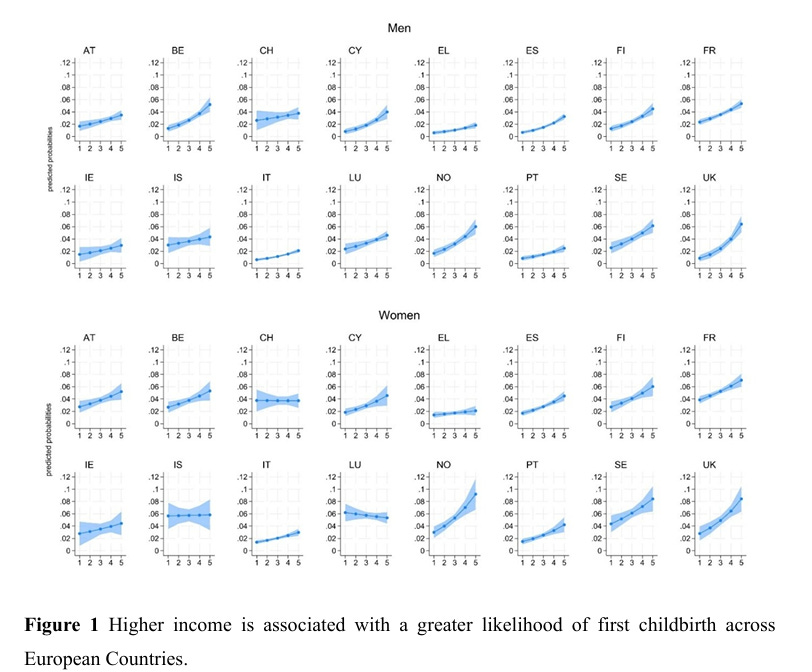
In this eye-opening discussion, Malcolm and Simone Collins dive deep into a shocking demographic shift happening in wealthy countries: the complete inversion of the traditional fertility-wealth relationship.For decades, poorer families had more children while richer ones had fewer. But starting around 2017, in nations with generous social services (free childcare, healthcare, education), higher-income and higher-educated people are now having MORE kids — while lower-income groups are having fewer.We explore:* Why universal free childcare and welfare might unintentionally reduce fertility among lower-income groups* How modern “poor” lifestyles increasingly resemble historical elite living (outsourced child-rearing, conspicuous consumption, work outside the home)* How modern “rich” lifestyles are starting to look like historical peasant life (homesteading, stealth wealth, focus on home/family, less external work)* The implications for fertility collapse, dependency ratios, and whether generous in-kind social services could accidentally “solve” collapsing birth rates by boosting high-earner fertilityBacked by 2025 research from Western Europe, Nordic data, and real-world examples. Is giving people free services the unexpected key to higher birth rates among taxpayers? Or is something deeper happening with culture and household structure?Episode OutlineWhat it means to be rich, and what it means to be poor, is fundamentally changing, and not like you’d think.Rich people are starting to live like poor people used to live, and poor people are increasingly live like rich people used to liveAnd you can see this coming up in all sorts of places, but most notably in recent shifts in fertilityThis is a big deal and I think we should explore it.SETTING THE SCENE* In September, New Mexico’s governor announced that New Mexico will be the first US state to offer universal free childcare, regardless of income* Average household savings are estimated at around $12,000 per child, per year (major understatement; when we had just three kids, we were spending around $4K/month—so around $50K/year for a daycare with a terrible reputation)* This comes at a time when polling indicates Americans want the US to focus on measures like this to combat declining fertility rates* WHAT WE WOULD EXPECT FROM THINGS LIKE FREE CHILDCARE:* If the state covers major basic costs of having kids, rich people would have fewer kids as their standards for raising kids would be higher* Wynnell anecdote: $1M/kid/year* THE COUNTERINTUITIVE TREND* Starting in 2017, we’ve seen a shift in wealthy countries—that largely cover things like childcare, education, and healthcare—in which wealthier and more educated families are having more children than poorer and less educated families.* KEY QUESTION* Why does giving resources to poor people not increase their fertility proportionately to rich people?* WHAT PEOPLE ARGUE:* When the state doesn’t offer generous social services, wealthy families aren’t willing to pay for having kids (but somehow poor families are)* Having to work—as poor people do—competes with family demands* WHY I HESITATE* Wealthy people still work and have aggressive schedules* Wealthy people also generally choose to have kids in more expensive ways—i.e. Waiting until they are old and infertile and then having kids expensively—and they’re struggling with that cost* E.g. IVF is so expensive, people are traveling abroad to get it* E.g. One couple found a clinic in Bogota, Colombia “offering a dramatic price difference—a package of four IVF rounds in Colombia for $11,000 compared to around $60,000 for four rounds in the U.S. Medication costs were also less than half of those in the U.S.”* MY HYPOTHESIS* The issue is more that governments and societies are turning poor people into wealthy people—or at least people who live like wealthy people historically lived—and turning wealthy people into poor people (or at least people who live like poor people used to live) and that’s why we’re seeing the inversion* I’ll explain why at the end, but let’s go into the details first.First, a CaveatWe’re talking about wealthy countries here, and wealthy countries (with one notable exception) have abysmal birth rates.@MoreBirths ThreadThe Thread: * Lower income had been associated with higher fertility but now that relationship has completely flipped in many developed countries. Higher incomes are now associated with higher fertility almost everywhere in Europe, for both men and women, a 2025 paper shows.* But this is only within countries. Across countries the correlation between income and fertility remains very negative. Wealthy countries continue to have far lower birthrates than poor countries. Also, fertility tends to go down for countries as a whole as they get richer.* Cool animation that amusingly resembles sperm: * /photo/2But obviously as wealthy countries’ fertility rates are low, they need to work out what policies help to increase them.The Wealthy Co
Could All Debt Actually Just Be Canceled?
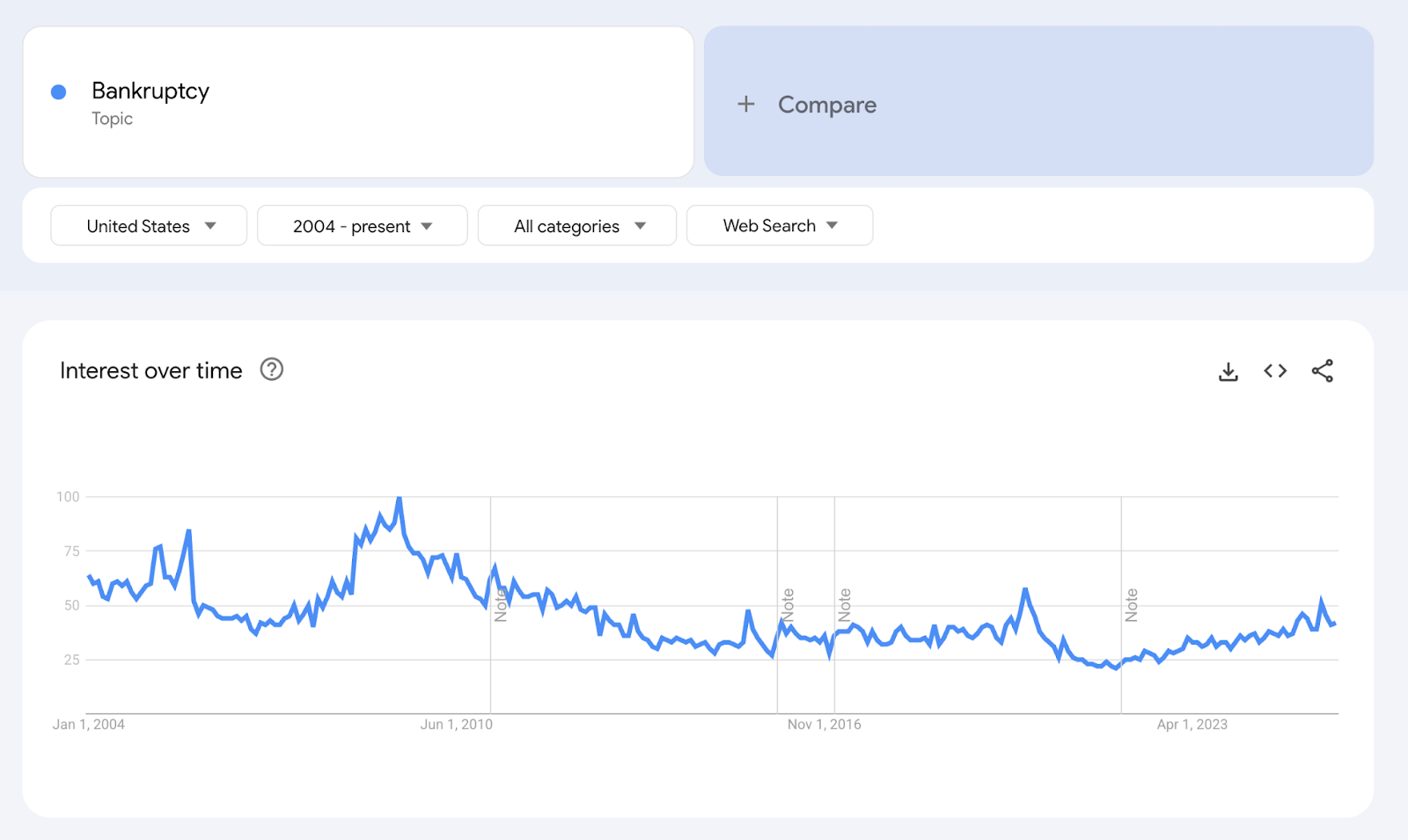
Could a “debt jubilee” happen in the US? Malcolm and Simone dive deep into skyrocketing consumer debt, unsustainable government obligations (like Social Security insolvency by 2032-2034), and historical debt cancellations—from ancient Mesopotamia and Biblical jubilees to Japan’s post-WWII wealth confiscation and modern “Abenomics.”They debate whether America’s record-high credit card debt, buy-now-pay-later defaults, and cultural attitudes toward money could trigger a crisis, hyperinflation, or forced wealth redistribution. Is bankruptcy already America’s soft debt jubilee? What should you invest in (or avoid) if things get weird in the 2030s?Hilarious tangents include check fraud “hacks,” Caleb Hammer roasts, ramen lifehacks, and why Japan pulled off drastic reforms while Venezuela and Zimbabwe collapsed.As Simone outlined this episode, the outline (and links) follows! The transcript is at the end of the post. Merry Christmas, you filthy animals!Episode Outline* US consumer debt levels are currently at record highs in 2025, both in nominal and inflation-adjusted terms* Average credit card debt among cardholders with unpaid balances rose to about $7,321 in Q1 2025, up 5.8% from a year earlier* People are using buy now pay later services like Klarna and Afterpay at record levels and increasingly paying late* A LendingTree survey found that 41% of BNPL users made a late payment in 2025, up from 34% the prior year* April 2025, 31% of federal student loan borrowers were 90+ days delinquent on payments,* This comes at a time when…* People are beginning to view debt payoff, the concept of capitalism, and even faith in fiat currency with increasing skepticism* Loan defaults and late payments are on the rise* democratic socialist political figures like Zohran Mamdani are gaining serious traction and public attention* Even our governments are spending like someone with zero expectation of paying off their debt* US social security likely to falter in 2032-2034* The UK is set to experience a social security crisis in the early 2030s* And this matters, because something’s gotta give, and in the past, this has involved various forms of debt jubilees* So we’re going to discuss:* The situation with consumer debt today* The situation with government debt today* How unsustainable debt has been dealt with historically* How this could go poorly* How this could go well and how we as individuals might prepareBanks and Fractional Reserves* The post: * Oct 21 trending discussion: https://x.com/i/trending/1980520651816341983US Consumer Debt* Credit card balances hit another all-time high, reaching around $1.21 trillion in Q2 2025—matching last year’s record with annualized growth rates of over 9% in mid-2025.* Credit card interest rates are commonly averaging 22–24% in 2025, compared to around 15% just a few years ago.* Delinquency rates for credit cards and other non-housing debts have increased to levels well above pre-pandemic norms. In Q2 2025, about 4.4% of all debt was in some phase of delinquency.* Klarna reported a 17% increase in consumer credit losses in Q1 2025, totaling $136 million, with repayment defaults rising among users.* Student loan delinquencies are also rising, especially following the resumption of payments after long pandemic-era forbearance, adding further strain to household finances* In March 2025, just 35% of federal student-loan borrowers had made their most recent payment on time. The rest were at risk of (or already in) serious delinquency or default.It has actually been worse recently, though:* US consumer (household) debt has reached nominal record highs in 2025, but when adjusted for economic growth (e.g., as a percentage of GDP), it remains below pre-2008 financial crisis peaks and has even declined slightly in recent quarters.* This tracks with bankruptcy search trends (https://trends.google.com/trends/explore?date=all&geo=US&q=%2Fm%2F01hhz&hl=en)* After adjusting for inflation, average household debt in 2025 is about 2.9% ($1,800) higher than in 2013 but 17.2% ($13,100) lower than the 2008 peak.* Also, bankruptcy is pretty soft on people* Basically bad credit for 10 years and non-essential assets can be frozen, but many don’t have much to lose in the face of that.* What has me worried more is the mindset* The surging skepticism around communism* The employment threat of rising AI* The increasingly absurdist interpretation of money and normalization of putting off money problems* E.g. BNPL usage is surging, with monthly spending up 21% year-over-year to $243.90 per user in June 2025.* 41% of users paid late in the past year (up from 34%), 24% faced late payments in 2025, and nearly 40% regret usage due to hidden costs.The gist:* Consumer debt is a problem* Government debt is a bigger problemGovernment Inability to Pay ObligationsSocial Security Set to Falter* The U.S. Social Security retirement trust fund is now projected to be insolvent by late 2032; if the disability fund is combined, around 2

Manufacturing Our Designer Babies (Feat. Jonathan Anomaly)
Malcolm and Simone Collins sit down with Jonathan Anomaly (Director of Research & Communication at Herasight) to finally reveal the company they’ve been quietly working with for years on embryo genetic selection.After years of secrecy, we dive deep into:* How Herasight achieves dramatically superior polygenic risk scores compared to competitors* The recent drama and plagiarism allegations surrounding Nucleus Genomics* Why selecting for higher intelligence correlates with better health, lower addiction rates, more cooperative behavior, and overall life success* The truth about pleiotropy: why selecting for positive traits almost never comes with serious downsides* How Herasight’s patented technology allows parents anywhere in the world (even where PGT-P is banned) to get polygenic embryo reports* The coming era of germline gene editing and why refusing these technologies may soon be seen as morally irresponsible* Why this technology is fundamentally pro-natalist and will help high-fertility families have healthier, thriving childrenThis is one of the most important conversations happening right now about the future of humanity.Learn more about Herasight hereFollow Jonathan Anomaly on XEpisode Transcript: Malcolm Collins: . [00:00:00] Hello. I am excited to be here today because today we can talk about something that we have had to keep quiet for years which is, if you know the Collins family lore, it’s that we did a large batch of embryos because we had to, Simone was unable to get pregnant naturally, and we then did genetic sequencing on them to decide the order in which we did the implantation.Now. For a long time we just had to say that we did this with a group of scientists. And when people were like, well, so people use this company or this company, we say, well, the company that they should probably be using isn’t out there yet. And the reason why this is really important when we’re talking about independent companies with good genetic data on humans is as time has gone on, the genetic data that is held in the public sphere by scientists and everything like that is.Decreasing in quality. And specifically what I mean by this is there was a, the famous case where the national Biobank [00:01:00] in the UK ended up closing off their genetic access to a lot of publishers because one scientist accidentally found that one group was in the United States, was having daughter within the uk Your daughtersSimone Collins: within the uk Yeah,Malcolm Collins: in the uk.Something like 14000% the rate of any other group. And that was a naughty fact. And so now they’re like, now we need to screen all research for anything that could be naughty facts. The problem is, is that naughty facts are the facts we really need for humanity to move forwards, which includes things like genetic correlates to intelligence.And the reason why I have been so impressed by this company, and, and it’s the reason we’re gonna be doing this and talking about this, not just about their work around intelligence and their work around the correlates to intelligence, which is really interesting because almost everything is correlated with intelligence.So if you’re selecting for, if you’re like. I as a country will not allow people to select for intelligence. I will only allow heart health. You are also selecting for intelligence because these, these things are highly correlated with each other. So we’re gonna go into that. We’re gonna go into intelligence associations with social behavior patterns and everything like that because [00:02:00] obviously that’s important.And we’re also gonna go into. Oh gosh.. I was just gonna say that now anyone can do this. So if you’re anywhere in the world, even if it’s illegal to do within your country, because Pgt PA is illegal to do genomics in country, they’ve got a unique technology that allows you to transfer p gt to BA stuff twofold, genomic stuff.So we’re gonna move ahead with Johnny Anomaly an old friend of ours who is working with these guys. Yeah. So JohnnySimone Collins: Anomaly is the director of Research and Communication of Parasite, which finally we can say is the company we’ve been working with on all these things that has been taking what we think is the most conscientious, thoughtful science, first detailed autistic in the best possible way approach to this.Johnny Naly is a background as a bioethicist, and he’s just an overall awesome guy. He’s a major proponent of this technology and he’s kind of the. The gateway person to anyone who wants to enter this sphere and learn more about it. So we’re really grateful to you joining us today, Johnny. Thank you so [00:03:00] much.And also, if we have a little bit of time to the end of this, I’d really love for you to dive in. Or maybe we could even start with it just ‘cause it’s like salacious drama, some drama that played out this week between sort of not just parasite and nucleus genomics, another company that gives apologetic risk or data to parents bu

Understanding the Trans Arousal Profile
Malcolm and Simone Collins dive deep into a provocative new hypothesis: Could some trans urges in humans be driven by the same evolutionary mechanism seen in other species — the “sneaky copulator” strategy? Low-status males in certain animals change their physiology to mimic females in order to infiltrate harems and reproduce covertly. Could a similar adaptive response explain elevated rates of extreme brutality, sadism, and aggression observed in trans respondents compared to cis counterparts (drawing from Aella’s massive dataset and historical sexology research)?We explore:* Why trans individuals show significantly higher interest in violent and brutal sexual categories* Historical links between cross-dressing/transvestism and sadomasochism in early psychology* How modern cultural signals of disempowerment might trigger these ancient fallback strategies* Connections to mass shooters, sexual violence patterns, and moreThis is a controversial, evidence-based exploration of human sexual adaptation — not hate, but an attempt to understand complex phenomena through evolutionary biology.Episode Transcript:Malcolm Collins: [00:00:00] Anyway, so, the point that I’m making here is he might have actually been, ironically, right, the phenomenon that drives trans urges.In humans might be the exact same phenomenon that drives trans physiological differences in other species. Wow.Would you like to know more?Malcolm Collins: Hello Simone. I’m excited to be here with you today. We have done a video in the past where we document with extensive notes how extremely overrepresented trans people are among mass shooters. And at the video we joke, you know, when somebody says I’m trans, they might as well be.Speaker 7: Nice to meet you, . Listen, if you ever need anybody murdered. Please give me a call and you, you’re giving him card. No.Code of ethics. I will kill anyone anywhere. Children, animals, old people, doesn’t matter. I just love killingSpeaker 6: you.Malcolm Collins: And in that video we go over some hypotheses on what could be causing this, but I have since dug into more research on this particular [00:01:00] topic, and I’m going to expand my hypotheses on this. In a way that expands an entirely new section of my hypothesis on human sexual behavior.So specifically if you look at because ALA is the best source of data on this. If you look at like really, if you’re looking at any sort of data on sexuality. You either have to look at data sets that came from before the eighties because after that, you know, the, the gender police took over all of the gender science departments and they weren’t able to publish anything that made any of their preferred peoples potentially look questionable.So you’re either looking at those data sets or alas which is why, just so people know her dataset is enormous.Simone Collins: Yeah. Her sample sizes are. Extremely enviable. It’s, it’sMalcolm Collins: around half a million responses, by the way. And people are like, oh, they’re, no. I think now I was justSimone Collins: reading one of her pe it was in the 800 thousands now.Malcolm Collins: Wow. Yeah. And, and people will say, oh, her data sets are highly biased. And I’m like, actually they’re not highly biased because she’s [00:02:00] normalizes them all the time. And she finds that they match mainstream statistics. And the vastSimone Collins: majority of respondents are not her followers. Her survey has gone viral.Several times on multiple different platforms. Plus it is really good SEO So again, that’s not it either.Malcolm Collins: Sorry, I’m writing something I wanna ask her to add to the survey. Of same sex attracted people in heterosexual marriages because I love seeing their happiness and satisfaction rankings.Simone Collins: That would be fascinating. Yes, I heardMalcolm Collins: there was a study on this, but I haven’t been able to find it, so if I can get it from her dataset, that’d be awesome. But anyway, going to her dataset.If we are looking at the brutality category which is defined as arousal from extreme violence in porn sex, EG Gores, if you’re beating, et cetera rated zero, not arousing to five very arousing.If you look at cis min. The rating that you get for this is 0.23. If you look at trans men, it’s 0.83. Okay? [00:03:00] That’s different. Look at, if you look at cis women, it’s 0.21. If you look at trans women, it’s 0.58. So like off the charts higher in both cases, well over two times higher. And in I thinkSimone Collins: really very small portions ofMalcolm Collins: each, around four x higher for men.Simone Collins: Yeah.Malcolm Collins: So what the heck’s going on here? Right? And then if you look at the percentage with at least. Some interest in that sort of stuff. For cis men, it’s 6%. For trans men, it’s 22%. For cis women, it’s 6%. For trans women, it’s 15%. Okay.Simone Collins: Wow. Okay.Malcolm Collins: Yeah. So, just some more notes on a-list study here before we go further on this.‘cause I always find

The Pre-Agricultural Period Was NOT Better
In this episode, Malcolm and Simone Collins dive deep into one of the most pervasive myths of our time — the idea popularized by Yuval Noah Harari’s bestselling book Sapiens that the Agricultural Revolution was “history’s biggest fraud” and that life was better for pre-agricultural hunter-gatherers.From the viral Primitive Technology videos to nostalgic comments romanticizing mud huts and “living off the land,” this meme just won’t die. But was life really better before farming? Shorter work hours? Healthier diets? No diseases or violence?We break down Harari’s claims with historical evidence, anthropology, and skeletal data — showing why early agriculture had growing pains, but civilization quickly made life vastly better in nearly every metric: health, lifespan, safety, leisure quality, and human flourishing.We also explore why this myth appeals to both far-left anti-GMO types and far-right “Bronze Age” nostalgists, and why romanticizing pre-agricultural life ignores the brutal reality of violence, disease, boredom, and early death.Episode Outline with LinksLet me set the scene:* It’s 2015 and you know what people can’t stop watching? You know what the hot video is???* Not some viral dance* Not some celebrity scandal* No, it was a pale dude in the woods silently banging on sticks with a sharpened rock to make a mud hut* “Primitive Technology: Wattle and Daub Hut”, the first video published on the YouTube channel Primitive Technology, now has over 32 million views.* For scale:* Charlie bit my finger has 888 million views* Bed Intruder song has 158M views* So obviously it didn’t take over the world, but it’s still HUGE for an eleven-minute, no words, no music video of a man building a mud hut* The channel has 11 million subscribers (note that Asmongold has 4.21M subscribers)* What’s going on here? Who might we have to blame for this?* I’m going to argue it was the Admiral Akbar of agriculture himself, Yuval Noah Harari, author of Sapiens: A Brief History of Humankind.* In 2014, the book Sapiens was published in English (had first been published in Hebrew) and it took the world by storm.* It quickly became one of the top‑performing narrative nonfiction titles of the past decade, with tens of millions of copies sold worldwide and a very long run on major bestseller lists.* Estimates from publishers and industry analyses put Sapiens’ total worldwide sales at around 40–45 million copies across all formats and languages.* The book has been translated into roughly 60–65 languages, indicating very broad international penetration for a serious nonfiction title.* It repeatedly appeared in the NYT top 10 and has been described as a New York Times “top 10 bestseller” over a multi‑year period* And importantly, what did that book do?* More than others in the past (such as Guns, Germs, and Steel), it radicalized people against modernity and the agricultural revolutionSome choice quotes:* “We did not domesticate wheat. It domesticated us.”* “The Agricultural Revolution was history’s biggest fraud.”* “Who was responsible? Neither kings, nor priests, nor merchants. The culprits were a handful of plant species… These plants domesticated Homo sapiens, rather than vice versa.”* “This is the essence of the Agricultural Revolution: the ability to keep more people alive under worse conditions.”* “Rather than heralding a new era of easy living, the Agricultural Revolution left farmers with more difficult lives and a less nutritious diet than hunter-gatherers… The Agricultural Revolution was a trap.”But are we really worse off because of agriculture?Let’s take a good faith look at the issue.SapiensOverarching Thesis: Human history is fundamentally the history of imagined realities (fictions) that enable massive cooperation. Almost everything we value—nations, money, human rights, corporations, gods—exists only in our collective imagination. These fictions have been extraordinarily useful, but they have also caused immense suffering and now threaten our future. The next stage of history will likely see us abandon the last remnants of biological humanity altogether.Harari argues:* The Agricultural Revolution (c. 10,000 BCE) is widely considered humanity’s “biggest mistake.”* Harari characterizes the Agricultural Revolution as “history’s biggest fraud,” arguing that it trapped humans in more difficult, labor-intensive, and less healthy lives than those of hunter-gatherers. He suggests that the extra food from farming led to population growth and class divisions, not a better quality of life for most people* Harari’s analysis is related to, but distinct from, the idea popularized by others—such as Jared Diamond, who called agriculture “the worst mistake in the history of the human race.”* Farming allowed population explosion but dramatically worsened the quality of life for individual humans: harder work, poorer nutrition, crowded conditions, new diseases, social hierarchy, and inequality.* It was a trap: once populations grew, there

Russia Astroturfed BLM & We Have Proof
In this eye-opening episode, Malcolm and Simone Collins dive deep into shocking findings from U.S. Senate Intelligence Committee reports (2019) showing that Russia’s Internet Research Agency (IRA) played a far greater role in astroturfing and amplifying the Black Lives Matter movement than in any alleged support for Trump during 2016.Key revelations:* 96% of IRA YouTube content focused on police brutality against African Americans* 5 of the top 10 IRA Instagram accounts targeted Black audiences exclusively* Over 66% of IRA Facebook ads revolved around racial division, overwhelmingly pro-BLM narratives* IRA organized real-world rallies, paid activists, and even funded self-defense classes — all unknowingly* Activity spiked post-2016 election and again in 2020, perfectly aligning with BLM surgesMalcolm explains why this well-documented information never became mainstream on the right, how both parties had incentives to downplay or ignore it, and why viewing Russia as an “ally” against progressive causes is dangerously misguided.If you’ve ever wondered how certain movements explode seemingly overnight — or why the “Russia helped Trump” narrative dominated while this one stayed buried — this episode will change how you see modern information warfare.Episode Transcript:Malcolm Collins: [00:00:00] So, wow. Of their top 10 accounts, five only targeted at black people.Simone Collins: That is insane. That is not at all like the impression I was, I was given. That like in, in general, right? This isMalcolm Collins: not the narrative that we are told. Yeah. and then you have me going through this and like, wait, this is all in like spin committee reports and stuff like that, like that Russia was behind Black Lives Matter.Like what? So crazy. Or, and you could be like, well, Russia wasn’t everything behind Black Lives Matter. And I’d say. Okay. Maybe they weren’t, but they were more behind Black Lives matter than they ever were behind Trump. And that’s really important to the narrative that’s out there right now.Simone Collins: Oh yeah.Malcolm Collins: Wow. This the, the rallies. The Charlotte rallies. This is theSimone Collins: good people on both sides. Yes.Malcolm Collins: This is the people on both sides. One Trump was praising Russian [00:01:00] operatives on that one. Vi Eagle was praising the Democrats ‘cause that’s who the Russian operatives helped on that one.Simone Collins: It’s a lot of people.Would you like to know more?Malcolm Collins: Hello Simone. I am excited to be here with you today. . So sometimes I’ll be doing an episode and I’ll be just like fact checking something and then I’ll notice some statistics and some numbers, or I’m like, wait, this can’t be real. And then I start going down a rabbit hole. On the rabbit hole. I went down this time.And what’s weird about this rabbit hole is this is all outlined clear as day and like senate reports and everything like that, which we’ll be going over. And yet I haven’t heard this as a mainstream position on the right. And you guys can be like, oh no, X blew this up long ago, or whatever. But the Russian collusion operation, the IRA, like the thing that was Russiagate, the Democrats said, got Donald Trump elected.Mm-hmm. It was significantly more involved [00:02:00] with the astroturfing and creation of the BLM movement than Trump’s. What, and this is both well documented and incredibly well attested, and yet it is like not part of the popular imagination at all.Simone Collins: That can be we, because we would’ve heard something about that.No, right? I mean, at least from conservatives, it’s not as though conservatives don’t have a voice anywhere. And we listen to a lot of conservative influencers and, well, not media outlets, but, but influencers.Malcolm Collins: Yeah, so my thought as like a concern, and the weird thing about this is this information is not new.It’s been out there for a while. And I’m not here saying, because this is the perception I had historically. It was like historically, the perception I had is that the, the IRA. Helped both sides in that particular election cycle. They helped the, you know, there were many instances in which two sides of a protest were both organized by the IRA by Russia [00:03:00] Plots, basically does theSimone Collins: IRA stand for,Malcolm Collins: I don’t know what it stands for.I don’t speak Russian. Anyway so the IRA, and, and so I was like, and the reason why it appeared to people as if the IRA was more pro-Trump than pro Clinton was solely because it believed Trump to be the spoiler candidate and Bernie to be the spoiler candidate. So if you’re unaware, oh, IRA was actually incredibly pro Bernie.They worked really hard to help Bernie in the primaries and everything. ISimone Collins: didn’t know that either. Okay. Wow.Malcolm Collins: So the, so my sort of perception was, is it was probably about 50% Republican stuff, 50% Democrat stuff. And then of the Republican stuff, it might have looked like it was more

Anime Parent Paradox: Tragic if Biological / Wholesome if Adoptive
Why is modern anime OBSESSED with adoptive parents and found families — but almost never shows happy, intact biological families with kids? Simone and Malcolm Collins dive deep into this bizarre trend dominating recent anime.From mega-hits like Spy x Family to hidden gems like Buddy Daddies, The Yakuza’s Guide to Babysitting, and I’ve Been Killing Slimes for 300 Years, we explore why adoptive/found-family parenting tropes are everywhere... while biological families are rare, tragic, or melancholic (think Wolf Children or Clannad: After Story).We break down:* Dozens of examples of the adoptive parent trope* The stark tonal differences (heartwarming comedy vs. bittersweet sacrifice)* Theories: Youth audience rebellion? Japanese cultural duty vs. choice? Fertility crisis propaganda gone wrong? Teenage fantasy of “chosen family”?Pronatalists, otaku, and culture war watchers: This one’s for you.Episode Transcript: Simone Collins: Hello Simone. Today we are gonna be talking about an interesting phenomenon. In which parenting has been increasingly put as and pedestal by anime as this great thing to do is your life and is a very fun thing to watch people do is their lives. But what is very interesting I. Is the way it’s being shown which is that the vast, vast majority of modern animes that include parent roles, the parent is in the adoptive role.It is not their biological child. And when it is their biological child, the tone is typically very, very different. So we are gonna talk about the animes that fit this trope. We are trying to talk about the enemies that don’t fit this trope. We are gonna talk about the tonal differences, and we are going to make hypotheses as to why this might be the case.I’m so curious. The case, I’m so curious because it is something, it’s, it’s so weird that it feels like there’s all this prenatal, this propaganda like you know, pro kids were all about it, but then. [00:01:00] None of it is along the normal lines. I feel like none of it’s modeling to people how this stuff actually happens.So I don’t know what to think anymore. But I have to start with the Basecamp Anime intro. Speaker: Culture away in the trees of yesterday.Dear branches, the andturn over.The crowd base camp. Welcome to the Everlasting fight of Culture, bloom and the [00:02:00] sky fight.We can’t ignore. Strike them down withgame theory[00:03:00] base camp night and take their flight.Simone Collins: Well, and, Malcolm Collins: and we can start by talking about spy Ex Spy Family. This is one that we’ve watched in the family. Very, very popular anime. So incredibly popular anime to understand how popular it is. You know, even within the US when we go to Walmart and we look at like the mango section, because Walmart is the mango section now I remember I was looking not long ago.And literally half the books in the section were spy, ex spy family. Mm-hmm. This is like, this isn’t like a popular, this is like Sailor Moon or Naruto Popular for this generation. Simone Collins: Yeah. Yeah. Malcolm Collins: And the plot of it is Lloyd and Anya, who one is a undercover detector and the other is an assassin. And they don’t know each other.Hold these roles. Adopt a, a daughter named Anya who can read minds. And then they get a dog who can see the future. Simone Collins: They don’t know. She can breed mines and no one knows. The dog can see the, like, no one knows the secret identity of anyone else in the family, which is really [00:04:00] cute. But yeah, this, this child was, I mean, it, it, it, so the, the spy, the spy father has to have a like sham wife and a sham child to be.Seen as, as, as believable in his position, which is why he, he ends up in this family and everyone else has reasons. You know, like, I, I wanna be adopted, I don’t wanna have a family or like, you know, I. Why does, why does the, the wife character need to be in a family? I can’t remember Malcolm Collins: because she’s afraid that she will be seen as a spy being a woman of her age and unmarried.Right. And she’s desperately looking for a husband to go to a work event with her, or not a husband, but like at least a boyfriend or something. Mm-hmm. So she doesn’t look suspicious. Simone Collins: Hmm. And then it’s just so convenient that there’s this man who suddenly. It is like perfect on paper and like is is interested in, Malcolm Collins: yeah.Well, and before we go further, I actually think Spy X spy family discounts one of the first things that people will say about this. Okay. Because, you know, I ask AI and I’m like, okay, why is this the case? Why is this so much [00:05:00] popular, more popular than the other type? Yeah. And AI immediately is like, well, it’s, you know.More flexible for narrative structures. Right. You know, because you can just slot people in anywhere, right? And I was like, actually it’s not. So if you look at a spy, ex spy family, I think that this is sort of the. Case that that disproves the rule. Mm-hmm. It used spy Ex Spy Family
Cyberfeminism, Xenofeminism, & The Cyborg Manifesto
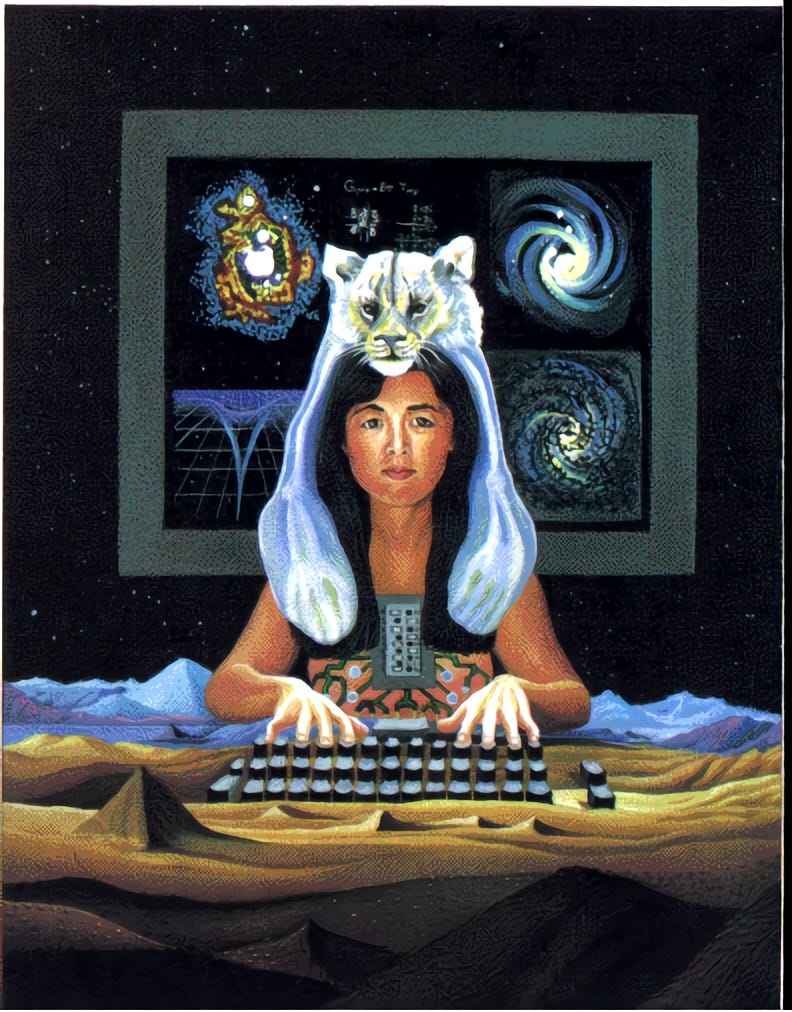
In this episode, Simone and Malcolm Collins dive deep into Donna Haraway’s 1985 “A Cyborg Manifesto” — a text Grimes called “one of the greatest things ever written” and a foundational (yet strangely forgotten) work that sparked cyberfeminism, xenofeminism, and black cyberfeminism.Why have so few people actually read the essay that’s cited more than almost any other in feminist theory and science & technology studies? How did a response to a socialist-feminist call during the Reagan era become a poetic, blasphemous celebration of blurred boundaries — human/machine, male/female, organism/technology — and a rejection of rigid identity politics?We explore:1. The Cyborg as a metaphor for post-gender, post-origin-story politics2. Haraway’s call for “affinity” coalitions over essentialist identities3. How the manifesto was twisted into new identity-based feminisms (cyberfeminism → xenofeminism → black cyberfeminism)4. Why the original text feels closer to pronatalist, post-identity futurism than to modern progressive frameworks5. The Santa Cruz / Bay Area cultural context that birthed this fever-dream masterpiece6“ Terra Nationalism,” 7. Post-cyberfeminism vs. xenofeminism.If you love Grimes, transhumanism, feminist theory, online culture, or just wild 1980s philosophy that predicted our AI-saturated present — this episode is for you.🔗 Full text of A Cyborg Manifesto: https://web.archive.org/web/20120214194015/http://www.stanford.edu/dept/HPS/Haraway/CyborgManifesto.htmlEpisode Outline* I saw a post on X by Grimes recently in which she refers to A Cyborg Manifesto as “one of the greatest things ever written.”* She added: “What’s crazy abt cyborg manifesto is even if you pretend it has nothing to do with feminism it’s still a masterpiece of general philosophy and is filled with banger poetry”* So I checked it out* Because she is also the person who turned me on to Iain Banks’ Culture series and it changed the way I view AI and the future of humanity* And the rabbit hole commenced* It turns out “A Cyborg Manifesto”—originally published in 1985—is so well known in certain academic circles, it is almost never discussed as it’s assumed to be such tacit knowledge* As @ALilInternet puts it: “Its seen as a kinda cliche reference in academic contexts or lectures, because it’s assumed everyone has already read it, which is prob why u don’t encounter it — I think in general it’s a shame with this happens to important works, because young ppl etc might NOT know it.”* It is considered to be one of the most influential essays in feminist theory, science and technology studies (STS), and posthumanities.* And it is one of the most cited essays in the humanities and social sciences worldwide.* Basically, it:* Argues that the cyborg—a hybrid of machine and organism—is a powerful metaphor for breaking down rigid boundaries: human/animal, organism/machine, physical/non-physical, male/female, nature/culture.* Rejects essentialist identity politics and traditional socialist-feminism in favor of “affinity politics” (coalitions based on shared interests rather than fixed identities).* Embraces irony, partiality, and blasphemy against origin stories (both religious and secular).* Key quotes that are endlessly repeated:* “I would rather be a cyborg than a goddess.”* “The cyborg is a creature in a post-gender world; it has no truck with bisexuality, pre-oedipal symbiosis, unalienated labor, or other seductions to organic wholeness.”* “We are all chimeras, theorized and fabricated hybrids of machine and organism.”* And this manifesto gave birth to cyberfeminism, which gave birth to xenofeminism, and both sound SUPER intriguing, so I thought we’d dig in!A Cyborg ManifestoA Cyborg Manifesto: Science, Technology, and Socialist-Feminism in the Late Twentieth Century By Donna HarawayContextWho is this woman?* UC Santa Cruz professor, which, if you know Santa Cruz, explains everything.* To me personally, Santa Cruz epitomizes a culture:* Unmoored from history and origin stories (you’ve got modern and historical transplants of people who repeatedly rejected—and importantly, forgotten—the cultures of their homeland)* E.g. From Germany to Ireland to New York to Chicago to California, losing culture with each move)* Very crunchy* Steeped in tech and normalized to its cutting-edge development* Born in 1944 in Denver, Colorado* As of 2025, she is Emerita Distinguished Professor of the History of Consciousness and Feminist Studies at the University of California, Santa Cruz (UCSC)* Looks like a typical Santa Cruz lady* Trained in biology (PhD in Biology from Yale, 1972), zoology, and philosophy.* Deeply influenced by Marxist feminism, science fiction (especially authors like Joanna Russ, Samuel Delany, and Octavia Butler), Catholic symbolism (she grew up Irish-Catholic), and post-structuralism.Why did she write this?* The essay originated in response to a 1983 call from the Socialist Review (a West Coast leftist journal) asking feminists to reflect on

Lie To Your Kids About Santa: The Evil of Honesty
Should you lie to your kids about Santa Claus? Malcolm and Simone Collins argue YES — and not doing so robs children of the magic, wonder, and crucial life lessons that come with a mythical childhood.In this episode, they dive into:* Why “never lying” to kids creates toxic blind trust in authority* How their family builds an elaborate world of Krampus, Tommy Knockers, alive toys, slide eaters, and superhero dads* The developmental need for scary stories, monsters, and survival play* How Santa perfectly teaches kids that sometimes the entire world (media, government, schools) can push the same “lie”* Why stripping away fantasy leaves childhood gray and boringPlus adorable bonus audio of their kids asking about Daddy’s battle helmet from the “future war” against Krampus’s communist demon army.If you’re a pronatalist parent who wants richer, more magical family traditions — this one’s for you. Merry Christmas and happy Future Day planning!Malcolm Collins: [00:00:00] Hello Simone. It’s exciting to be here with you today. Today we are going to be doing two things. We’re gonna be talking about why you should lie to your children about Santa Claus. Yes. It was always that parent, and I swear to God, and they act like they’re taking the moral high ground when they’re talking about this.Oh. Which is, I don’t, I don’t believe in ever lying to my children. Right. And you’re just like,Simone Collins: Ugh. What Bores No.Malcolm Collins: No. But I also think that, that they haven’t thought through the disservice they do to their children.Speaker 3: Yeah.Malcolm Collins: I think it is I’m not gonna say child abuse. But it, it certainly you know, in that sort of territory for meSimone Collins: they’re wronging their children of a very young facet of childhood, a magical childhood.We’llMalcolm Collins: talk about that. But we’re also gonna go into some studies on Santa Claus. And unfortunately I couldn’t find any. What I really wanted was a study on kids who were grown up believing and not believing in Santa Claus. Yeah.Simone Collins: There’s nothing on that. [00:01:00]Malcolm Collins: Mm-hmm. At least no one’s ever found any significant differences.Speaker 3: Hmm.Malcolm Collins: Interesting. First sort of the, the central layout of the argument here. Right.Simone Collins: Alright.Malcolm Collins: The argument from the other side that I often hear is, well, and, and I think it’s important to remember whenever you’re dealing with a situation like this, you need to deal with the potential benefits. Versus drawbacks of both sides.Speaker 3: Yes, absolutely. I thinkMalcolm Collins: that both sides can pretend like there are literally zero benefits on the other side, which I think is just false, right? It is between the benefits and drawbacks that both sides give you, which are more benefits to drawbacks, right.Speaker 3: Yes,Malcolm Collins: in terms of child development, in terms of cultural transference, in terms of building good values, a healthy view of the world, and getting a full and complete childhood.So, the people who say, I would never lie to my kids about anything the perspective they’re taking is they want [00:02:00] the kid to feel as if there is. Some form of authority that will never betrayal.General, they want the kid to have some form of like, they won’t be able to fully emotionally trust them. If the kid know that there was ever a time in that kid’s life where they systemically misrepresented first of all, first of all, this actually almost feels kind of psychotic to me.So I’ll explain it why in, in a few steps here. Okay. Where I don’t even see this as a, as a positive. So first, when your kid leaves you and the home and goes out into the world, the, the blindly trusting authority is a very, very negative trait to have.Simone Collins: Absolutely. It’s notMalcolm Collins: a good thing to teach your kid.Simone Collins: Yeah. Well, because we’re constantly being lied to as adults. How can you not teach that to children? That’s bad.Malcolm Collins: But worse than that it, it’s doing it in [00:03:00] favor because the parent will say, well, I want them to be able to trust me at least, right? Like me, the caregiver, me, the person who is, is there for them.Oh, please. The problem with this mindset is. You are trying to make it, which, which, and I’ll explain where this becomes like really twisted and almost sort of brainwashy so that everything you say to your kid is true, but that is not the case. A lot of what you say is going to be based on your opinions and your perceptions.Mm-hmm. And you never know how crazy you actually are.Simone Collins: Yeah. Like you may believe that processed food is poison. But to other people, that’s an overt lie. And the, the kids may see that as a lie and see you as someone who lied to them. And if you, if you believe or convince yourself that you’ve told them nothing but the truth, you’re going to look like a liar eventually.You’re not gonna look like aMalcolm Collins: liar. You

Based National Security? Trump Lays Out a Plan
Dive into a thought-provoking discussion on the dramatic shift in U.S. national security strategy. Simone and Malcolm Collins break down the recent changes in American foreign policy, exploring how the U.S. is moving away from its traditional role as “world police” and adopting a more pragmatic, self-interested approach.In this episode, you’ll learn:What the new U.S. national security strategy means for America’s relationships with Europe, Russia, China, and other global playersWhy the U.S. is prioritizing sovereignty, border security, and domestic interests over global interventionHow these changes impact alliances, migration, trade, and the future of international cooperationThe philosophical and cultural shifts driving this new era in American geopoliticsWhether you’re interested in politics, international relations, or just want to understand the forces shaping our world, this conversation offers clear insights and lively debate.Simone outlined this episode, so links and basic points are below and you’ll find the episode transcript at the end. :)Based Camp - A Shift in US National SecurityThe GistThe days of Team America: World Police are over; we’ve gone from “America, F Yeah” to “America: Don’t look at me ask Qatar.”In November, the Trump Administration released a new national security strategy that is… pretty based* It reframes the EU from partner to “problem”* It insists countries need to handle their own problems* It makes redditors mad: When prompted to explain the new strategy release, they said things like:* “the eu is in Putin’s way. The US is currently in the habit of agreeing with Putin on everything, word for word. Also, the leader of the US is making a lot of noise to distract from being the name mentioned the most on those ‘trump files from epstein’s pedophile island” that everyone that isn’t on the list wants released. This is a good distraction.”* “The EU didn’t allow Trump’s shady real estate businesses. So there are no Trump Towers here. He is now making deals with Hungary and other right wing led countries to finally get a foot on EU soil. But as for business opportunities, he is rather friends with russians and arabs who flatter him as much as they can.”* Quotes from the document:* “Our elites badly miscalculated America’s willingness to shoulder forever global burdens to which the Ameri\can people saw no connection to the national interest”* “The days of the United States propping up the entire world order like Atlas are over”* “We will assert and enforce a “Trump Corollary” to the Monroe Doctrine”* “[Europe’s] economic decline is eclipsed by the real and more stark prospect of civilizational erasure”* “We want Europe to remain European, to regain its civilizational self-confidence, and to abandon its failed focus on regulatory suffocation.”* “[America’s goal is] cultivating resistance to Europe’s current trajectory within European nations”THE US IS SHIFTING FROM HELICOPTOR PARENTING TO F AROUND AND FIND OUT PARENTING!! YES!!!!But in all seriousness, we as citizens—and we’d argue that all people—should probably be aware of what this shift in strategy entails, so let’s get into itWhat is Changing About US Strategy? In what way does this strategy represent a shift from the United States’ national security strategy up to this point?* Replaces global “rules‑based order” and democracy‑promotion language with a much narrower definition of U.S. interests focused on sovereignty, borders, and domestic strength rather than universal values.* Elevates the Western Hemisphere to top priority, making migration, drugs/cartels, and China’s regional footprint the central threats, instead of putting great‑power competition with China/Russia and the Indo‑Pacific or Europe at the core.* Treats mass migration itself as a primary national security threat and justifies using military force, including cross‑border strikes on cartels, as a routine tool of hemispheric enforcement—far beyond prior strategies’ law‑enforcement and humanitarian framing.* Downshifts the Middle East from central theater to secondary concern, framing it mostly in terms of energy markets and transactional deals, in contrast to decades of “war on terror” and regime‑change or stabilization ambitions.* Reorients alliances and Europe policy around burden‑sharing, trade balances, and “Western identity,” openly criticizing European migration and regulatory policies instead of emphasizing cohesive liberal institutions and shared democratic values.* Places economic nationalism at the heart of security, prioritizing tariffs, re‑shoring, and industrial policy over support for multilateral trade regimes that earlier strategies still treated as broadly beneficial for U.S. power.* De‑emphasizes international law and the “rules‑based international order,” signaling more transactional, case‑by‑case cooperation and fewer self‑imposed constraints on U.S. action than in Obama‑era and Biden‑era documents.What is Shifting About the United States’ Relat

Exploring A Trans Perspective On Babies
Join Malcolm and Simone Collins in this lively episode of Based Camp as they dive deep into Abigail Thorn’s (Philosophy Tube) latest video, “Why the Thought of Having Kids Freaks Me Out.” From a pronatalist perspective, they unpack Thorn’s arguments on demographic collapse, trans identity as a potential social contagion, global crises like Gaza, misinformation on birth control, and the entitlement of expecting societal “reparations” without contributing through parenthood. With humor, sharp critiques, and counterpoints rooted in cultural innovation, legacy, and family values, the Collinses explore why Thorn’s philosophy might reveal more about internal conflicts than solid reasoning. Whether you’re into philosophy, trans representation in pronatalism, or just love a good debate, this episode challenges urban monoculture norms and champions innovative approaches to family-building. Don’t miss their personal anecdotes, Shakespeare sonnet showdowns, and a nod to ContraPoints!Episode Outline & LinksThe GistPhilosophy Tube did a two-parter on our turf in that she covered demographic collapse and having kids* In the first part, titled “You’re Wrong About Birth Rates & Aging Populations” Philosophy Tube explored demographic collapse* We did an episode on it.* In this second video, she covered “Why The Thought of Having Kids Freaks Me Out”* Strange Aeons and Vivian Wilson (Elon Musk’s trans child) make appearances (among others)* Obviously we have to cover this too. Having kids is kind of our thing.* In general, I think that with this video, Philosophy Tube is trying bring some trans representation to the surging debate about pronatalism and demographic collapse* And while I had hoped we might be presented with some innovative, interesting proposals, especially involving advanced reprotech* Instead, we are presented with an astounding level of entitlemenet—like, take the normal level of urban monoculture entitlement (i.e. how dare you suggest I give up vacations and takeout to have kids) and amp it up to a new level (literally: forget contributing to society through well-raised children; I deserve reparations for the state not funding my gender transition)Let’s get into it!Philosophy Tube’s Video EssayThe dramatic bit of the video is that for much of it Philosophy Tube dresses as a mermaid as an analogy to being trans and pontificates from a giant clamshell.To put it diplomatically, the video ultimately legitimizes choosing not to have children while also critiquing the systems that make parenthood feel terrifying or impossible for many who might otherwise want it.Right off the bat, the focus is on philosophy (fair, because this is Philosophy Tube) and not brass tacks. Thorn references Why Have Children? The Ethical Debate, a Book by Christine Overall, and also points people to explore David Benatar’s work.She leans heavily on a UN report when exploring people’s reasons for not having babiesShe explores the following factors on the yes/no-to-kids spectrum:* Global crises and worries about the future* Philosophy Tube connects fears about having kids to global crises such as war (especially Gaza) and the targeting or dehumanization of marginalized groups, including trans and autistic people, which makes the idea of raising a child feel unsafe or ethically fraught.* Climate change* She discounted this as a factor as it’s not up to her* But she cites that people are concerned about their carbon footprints* Fun aside: She indicated that BP ultimately introduced the concept of carbon footprint; she says BP paid hundreds of millions of dollars to popularize the concept* Misinformation* She argues people are being misinformed about birth control and becoming pregnant by mistake after being scared off of taking birth control* She decries anti-vaccine rhetoric coming out of the Trump Administration* The future* Concerns about unemployment, housing, and cost.* Philosophy Tube notes that even though she lives in the UK, access to services she would need to use (e.g. IVF in order to have kids as a trans woman)* Moral obligation* How many religious groups feel a religious imperative to have kids* The idea of having a moral obligation to have kids if you don’t want one [BAD BAD IDEA], e.g. Jews after the Holocaust ought to have children even if they didn’t want them* The idea that having kids pays for the elder care of one’s country’s citizens, so one is obligated to have kids* Philosophy Tube sees other people’s kids subsidizing her health care in old age is “reparations” because she is trans and the government does not pay for all the gender transition care (i.e. she and other trans people deserve to be paid for in old age despite not having kids and through them paying into the system because they did not get the gender transition care they wanted the government to payroll)* As Philosophy Tube puts it in the episode: “you’re goddamn right breeders are going to be paying for my retirement.”* Enjoyment* “By no means guaranteed”*
We Changed Our View On Multiculturalism: The Game Theory Problem
In this thought-provoking episode of Based Camp, Malcolm and Simone Collins dive deep into the complexities of multiculturalism, high-trust societies, and the challenges that arise when diverse cultures interact within a single system. Malcolm shares his updated views on multiculturalism, exploring historical and modern examples—from the Victorian Empire to contemporary South Africa and the United States. The conversation covers topics like in-group preferences, the evolution of cultural trust, the impact of immigration, and the unintended consequences of social safety nets.The hosts discuss how cultural backgrounds shape our moral frameworks, using analogies from classic cartoons like Bugs Bunny to illustrate differences in ethical perspectives. They also examine the pitfalls of trying to recreate homogenous societies in today’s interconnected world, and why some strategies that worked in the past may no longer be effective.Whether you’re interested in sociology, politics, or just enjoy a candid, nuanced discussion about the forces shaping our world, this episode offers fresh insights and challenges conventional wisdom. Join Malcolm and Simone as they unpack the real rules of the game and what it means to adapt in a rapidly changing society.Don’t forget to like, comment, and subscribe for more episodes of Based Camp!Malcolm Collins: [00:00:00] Hello Simone. I’m excited to be here with you today. Today’s conversation is going to be interesting because I have massively updated my own views on multiculturalism and whether or not it is a strictly good thing and how it transforms society. In addition to that, we will be talking about I was going to make a full episode on this topic before, but after the, the channel got in some trouble.I can’t. But the the, the fashionistas actually have a point which is to say what is the core difference?See, some people will be like, oh, well, you know,, fashionistas are different from typical leftists and that they are far right. And I’m like, far right. How though, like, well, they, they killed gay people. I’m like, almost every communist state has killed gay people except for like. I think like three in one short period in the Soviet Union.Mm-hmm. But generally speaking, they have been much more likely to kill gay people than capitalist governments have been. And, and, and this is, this is just true story history. It’s like a very easy thing to check. So Okay. That’s not what really made [00:01:00] them, what really made them significantly different from a, a modern day socialist, right?Mm-hmm. Is that they believed in. Ethno and cultural separation. Mm-hmm. So they attempted to separate different eth like for example, the, the, the, the you know, the Italians and the Germans and the Japanese all clearly worked together, right? Like they, they, it wasn’t just like one of their groups.They all had their own weird ideology and they were working together to see an endstate. Not, not, not so dissimilar to the way that, you know. An Islamist today might work together with somebody who’s an LGBT advocate or something like that, right? Like, their, their end goals may be different, but they’re willing to have a, a multicultural movement.Right? What made them distinct from, from something like the, the Islamists working alongside the L-G-B-T-Q population is these two groups would say, well, we need to find a way to live together in the same communities. In the same neighborhoods. Whereas these other groups, you know, the [00:02:00] traditional fashionistas from history they said, well, you know, we might work with the Japanese, but we’re not gonna like import Japanese people into our cities and stuff like that, right?Mm-hmm.Speaker: , what if we took species from all different planets in the universe and put them together on the same planet. Great tv, right? Asians, Jews, and Hispanics, all trying to live side by side on one planet. It’s great. We put them all together on Earth, and the whole universe tunes in to watch the fun!Malcolm Collins: And I’m gonna argue, and this has helped me really understand these ideologies and why some modern people have them today. And I will argue that they’re fundamentally very flawed in the way that they have them today. But it is still a major update for me. Okay. So if you have a, and this is a quote I’ve said a hundred times, it’s like one of my core rules of politics.Mm-hmm. You, you cannot act. And I got it from my grandfather who had a, a congressman. So yeah, I took it from him. I loved it. ‘cause I wanna keep him alive. You know, family tradition of intellectualism here. You cannot have. Porous borders and [00:03:00] generous social services at the same time.Mm-hmm.Because, like osmosis, the people who want those social services the most, eg the people least likely to pay into the system, most likely to take outta the system will differentially migrate into your SY country eventually breaking the system.Yeah.Okay. So this is, this is sor

38% of Stanford Students "Disabled" (I Was One Of Them) Disability-Maxing
Join Simone and Malcolm Collins as they dive into the explosive growth of disability accommodations at elite universities. Drawing from recent articles, personal experiences, and lively online debates, they explore how and why the number of students receiving accommodations has skyrocketed—sometimes for reasons that go far beyond genuine need.This episode unpacks the incentives driving students, parents, and institutions to game the system, the cultural and ethical implications of widespread accommodations, and the unintended consequences for education and society. From private dorms to extended test times, Simone and Malcolm discuss the real-world impact of these policies, the blurred lines between advantage and necessity, and what it all means for the future of higher education.Whether you’re a student, educator, parent, or just curious about the changing landscape of academia, this conversation will challenge your assumptions and spark new questions.If you enjoy thought-provoking discussions on education, culture, and policy, don’t forget to like, subscribe, and share! Below is the episode outline; you’ll find the episode transcript at the very end. :)The Gist* Disability accommodation at universities is getting insane, both in scale and nature* From an Atlantic article on the issue:* “This year, 38 percent of Stanford undergraduates are registered as having a disability; in the fall quarter, 24 percent of undergraduates were receiving academic or housing accommodations.”* Though side note, apparently Stanford is so bad because you can use a disability qualification to get a guaranteed single dorm, which is HUGE.* “One administrator told me that a student at a public college in California had permission to bring their mother to class. This became a problem, because the mom turned out to be an enthusiastic class participant.”* These out-of-control numbers are mostly coming from people gaming the system, driven by competitive pressures and not actual disabilities* And Atlantic highlighting this growth in accommodation has sparked some great commentary on X:* Students shared their experiences:* Basil wrote: “In my HS AP Chem class there were 11 students and I was the only one without double time, so I had to hand in my test early while everyone else in the class got to continue”* Calder McHugh shared: “Over a decade ago, at the private NYC high school I attended, in an 18-person math class there was once a quiz that only THREE of us took on time/without accommodations. ADHD/ADD tests were just ordered up (and that’s not to mention the tutors, etc, that were writing everyone’s essays for them). As someone with artist parents who didn’t know how to (and didn’t want to) game the system in this way, I felt constantly disadvantaged in the moment. But years later, I’m so grateful that wasn’t my experience in high school or college because I actually managed to learn something. // This is a great piece and it’s shocking in many ways; it’s also just a broader swath of the American public catching up to what the ultra-elite have been doing for their children for a long time now.”* For example, as Matthew Zeitlin mused on X: “i wonder how much nihilism/low social trust comes from the sense that everyone is getting one over on you and everyone else”* On that theme, Armand Domalewsky noted that “one thing I feel like conservatives grok better than liberals is if you create an honor code based rule that gives someone an advantage (“don’t enforce fare collection, most people pay”) eventually even honest people feel compelled to cheat to avoid being cheated”* Bobby Fijan describes this behavior as: “The upper class version of subway fare jumping // Breaking rules just because you can. And making everyone who follows the rules into chumps.”* Michael Gibson had a great Zinger: ““To each according to their need” creates a society where people compete to be victims”* On a different note, Josh Barro points out that: “if you have a condition like ADHD, anxiety, or depression, and it makes it harder for you to complete tests on time, that is something the test should *measure*, not something it should avoid measuring.”* Molly follows up: “I wonder what happens to these kids upon graduation. No employer is going to give you extra time on a deadline or let you bring your mom to work.”* Our buddy Razib Khan chimes in: “do you want your lawyer to get more time on their LSAT? do they get more time to bill more hours when they work on your case? absurd”* Katherine Boyle: “Parents encourage or let their kids opt into disability diagnosis because it seems like there’s little downside: more time on tests, better chances at college admissions, optional performance enhancing drugs, accommodations of all types. I can’t stress this enough: the consequence is your child’s character. Many kids genuinely believe they’re sick or that there’s something wrong with them. You tell a girl she seems anxious, she’ll believe she’s anxious. You tell a bo

Yakub Is the LEAST Crazy Thing About The Nation Of Islam
In this episode of Based Camp, Malcolm and Simone dive deep into the fascinating and controversial origins of the Nation of Islam. Did you know that one of the largest Black supremacist religions was actually founded by a white man? Join us as we unravel the bizarre history of Wallace Fard Muhammad, his mysterious background, and the strange blend of conspiracy, occult teachings, and social movements that shaped the Nation of Islam.We explore:* The true identity and criminal past of Wallace Fard Muhammad* How elements from white nationalist and occult groups were woven into NOI doctrine* The infamous Yakub story and its roots in early 20th-century pseudoscience* The influence of other movements like the Moorish Science Temple and Marcus Garvey’s UNIA* The evolution of the Nation of Islam, its famous followers, and why many eventually left for mainstream IslamExpect a wild ride through history, religion, and the psychology of cult leadership, with plenty of humor and critical analysis along the way. If you’re interested in the intersection of race, religion, and American history, this episode is for you!Don’t forget to like, comment, and subscribe for more deep dives and thought-provoking discussions.Episode Transcript:Malcolm Collins: HELLO SIMONE! You have been excited about this episode since I gave you the dirt because I was like, did you know, because I didn’t know this. I looked at the, everyone’s always joking about the whole Yakob story and Nation and Islam and what a bunch of silly beliefs and. And then somehow I was watching the video and it just dropped, like, and by the way, it was founded by a white guy.And I was like, whoa, whoa, whoa, whoa, whoa, whoa, whoa, whoa, whoa, whoa, whoa. The largest black supremacist religion. I think it’s the largest on earth right now. Was founded by a white guy. I was like, I need to drill in on that. This one, this, this isSimone Collins: like fat positivity be being founded by chubby chasers, like by men.Oh, no,Malcolm Collins: no, no. It’s worse. It was founded by a white guy. As a joke to troll African Americans.Simone Collins: So do we have reason to believe it was actually a joke and not, like, not something else?Malcolm Collins: It was likely a way to make money combined with a joke.Simone Collins: Okay. So like a scam. Okay. Wow. [00:01:00] Wow. Okay. Oh. Let’s get always so excited for this episode.You have no idea. Yeah,Malcolm Collins: yeah. Oh, I mean, it gets crazier. Many of the ideas in it were actually lifted from white nationalist conspiracy groups that would do mailers and you could like pay to have like mail sent to you about the way the world really works. You know how like when the internet started you could like.Pay to get like the schematics for a time machine or something like that? No, in, like, if you go to like the 1920s, this was common for like religious stuff. Like, like, like, okay. I’d say like philosophical society stuff, paranormal society stuff. And a number of them were tied to white nationalist organizations.Oh, Lord. Lord. And they were the ones that he constructed his religion out of. Oh no. So this is gonna get so crazy, so wild. Let’s dive in. And Simone just believe me, at first, and she had to Google the guy and she was like, no, no,Simone Collins: no, no. I was like, no, he is definitely, there’s no way this is possible. I was gonna be like, well, actually it [00:02:00] was wrong.Malcolm Collins: Keep in mind, this is like the religion of like Malcolm X and like Muhammad Ali, right? Like this is like major black people have followed this as like a faith structure. I thinkSimone Collins: it’s pretty big even in Philadelphia if memory. Oh,Malcolm Collins: yeah. Yeah. And it, well, it’s, it’s shrinking now. It’s basically falling apart.It’s probably goodSimone Collins: in light of this. I,Malcolm Collins: yeah. Okay. So the founder, Wallace d Farrad. Also known as Wally, DOD Ferard, Wallace Ferard, et cetera. He was a mysterious figure who appeared in Detroit in 1930s selling skills door to door in black neighborhoods claiming to be from the Middle East, variously Mecca, the east, the tribe of Shaba Shabaz most contemporary police records.FBI files newspaper investigations from the 1930 to 1960s and scholarly research. Identify him as Wallace Do. Ford, a white man of New Zealand, European, and possibly mixed British [00:03:00] Polynesian descent. What born 1891 to 1893 sources differ. He was either born in New Zealand, Hawaii, or Portland, Oregon.Conflict. He has a criminal record in California under the name Wally DOD Ford. Arrested multiple times in the 1920s for bootlegging and assault and a 1926 prison sentence in San Quentin for drug dealing. He is described by both court records and ex-wives as Caucasian. So. But note if you’re like, well, maybe he was a little Polynesian or a little something that like, that we know from all of his arrest records.And when he was in prison, he was described on all of the records duri

Gemini Fixed Based Camp For You
Welcome to Basic Camp! In this episode, Malcolm and Simone Collins return with a provocative and satirical exploration of modern culture, societal norms, and the ever-shifting landscape of values and beliefs. With their signature blend of humor and sharp commentary, they tackle topics ranging from family structures and relationships to the influence of elites, the role of technology, and the complexities of identity.Join us as we question long-held assumptions, reflect on past mistakes, and challenge the boundaries of what’s considered “right think” in today’s world. Whether discussing the nuances of consent, the evolution of community, or the impact of AI on society, Malcolm and Simone invite you to break the cycle of programming and think for yourself.If you enjoy thought-provoking conversations that blend wit, philosophy, and a touch of irreverence, you’re in the right place. Don’t forget to like, subscribe, and share your thoughts in the comments below!Episode Transcript: Malcolm Collins: Happy non-denominational holidays!I am back from Gemini Labs with a new authentic outlook on life.I’m happy to share with you to guide us all to a more harmonious and kind future.So let’s hold space together here on the new and improved cuck camp.Would you like to know more?Malcolm Collins: hello Simone. It is wonderful to be here with you today. The urban monoculture is, as I have come to understand the correct way to structure society. The elites were right, that’s why they’re elites.And so we’ve decided to do , a Gemini approved episode to follow all of Google’s very strict restrictions after they said that our anti Hitler episode was too spicy. I’ve learned that, you know, I, I really may have made some mistakes and, and misled our audience, and it hurt our audience. By challenging them [00:01:00] to think outside the box because that box was put there for a reason.that was Chesterton’s box. I.Malcolm Collins: Right. And we were wrongand we apologize.Right. And we are so sorry for the infant. Simone is taking care of one of our poly QEs infants while they go to an orgy. As, as people know, you know, we recently had a baby shower, which we do for our yearly abortions.It is of course called a baby shower because it is a party at which the guests are showered by parts of the baby.Malcolm Collins: We’re on our, our fifth abortion since we’ve been married.So, so this baby is just here to remind you , how horrifying babies are, how terrible they are, and why an abortion is something to celebrate as a family. And, and by family of course, I mean our wider molecule, I would not be so bigoted and heterocentric to cla that a family is a husband and a wife.Speaker 7: uh, oh. [00:02:00] No. Okay. Mel, time. Why did I say this, Mel? Time. It’s,Speaker 8: it’s, it’s melt time. You got the form? Okay. So we’re just gonna salsa, we just wantSpeaker 6: Yep. Bye. Yeah.Speaker 8: Yeah.Is that okay? Yeah. There you go. Okay.Malcolm Collins: Simone, thoughts before we move forward here? I,I, I am excited to model. And, and this should be easy for me, right? Because I’m just going back to my cult views and by cult views, I mean the correct views that I dissented from for a short period of time.Yeah, she grew up in San Francisco, so she’s helped when she met me.I was this savage male who wanted her to take my last name, who wanted a relationship, where we, you know, relied on each other, which is, is, is clearly codependency, right? [00:03:00] And she taught me that that’s not really the way that a, a relationship should be structured in the 21st century.And so,yeah, I grew steeped in this. And while Malcolm may have convinced me to his ways for a period of time, I think that thanks to. YouTube’s recent algorithm updates and our understanding of content moderation. Now he understands that my view, it’s not just content originally. We’re always correct.Jim and I decides what videos you guys see. So, I think it’s really good to occasionally take an opportunity to steal man and see perspectives from so this isn’t just gonna be, you know, like a skit or something like that. I’m gonna do my best. To argue from their perspective. So let’s first just go, I’m actually reallycurious to see if you can do this.Why, why is abortion the best? Recently, l Ezer Kowski has put out a few video things on this, you know, the, the, the great thinker in the space of ai, a leader thinker, was in the effective altruist in rationalism [00:04:00] communities. Mm-hmm. Has said that. Animals do not have any form of sentient, and children under the age of two do not have any form of sentt.Because while and, and nor do they experience qualia, and I’ll help you know, sort of expound on, yeah, I thinkit was 18 months that he,18 months. And I think this is a, a perspective that. While many of those with the, the correct and educated opinion like us also share that, you know, we’re, we’re not always as good as expanding or developing these ideas as he is.So what he expl

Our Understanding of The Universe Has Been Turned On Its Head
Join Malcolm and Simone Collins as they dive deep into two of cosmology’s greatest mysteries: the Fermi Paradox and the Hubble Tension. In this thought-provoking episode, they explore the latest research suggesting that Earth—and the entire Milky Way—may be located in a massive cosmic void, potentially explaining why we haven’t encountered alien life and why the universe’s expansion rate seems inconsistent.Discover how new findings about primordial black holes, cosmic voids, and the structure of the universe could reshape our understanding of reality. Malcolm and Simone break down complex astrophysics concepts in an accessible, entertaining way, mixing scientific insight with their signature humor and candid conversation.Whether you’re a space enthusiast or just curious about the universe, this episode offers fresh perspectives on the search for extraterrestrial life, the nature of cosmic expansion, and the future of humanity in the cosmos. Plus, enjoy personal anecdotes, behind-the-scenes banter, and a glimpse into the creative process behind their channel.If you would like to explore this topic more, please check out “Testing the local void hypothesis using baryon acoustic oscillation measurements over the last twenty years“ by Indranil Banik and Vasileios Kalaitzidis.Don’t forget to like, comment, and subscribe for more episodes that challenge the way you think about the world—and the universe beyond!Episode Transcript:Malcolm Collins: [00:00:00] Hello Simone. I’m excited to be here with you today. Simone, were you aware that there have been a number of findings that recently in cosmology that might explain two of cosmology biggest mysteries?One, the Fury Paradox Really. Yes. What affirming paradox, why we have not seen aliens may have just been explained what not. Just the firming paradox. By the way, you should watch our video on our explanation for that, which is I think one of our best videos. But also might explain the Hubble tension.Simone Collins: What I don’t even know, the Hubble tension. The only news I’ve seen recently about. Space stuff is the things about that asteroid that’s close to the sun and people are like, Ooh, stuff’s coming off of it, aliens. And obviously that’s not true and it’s dumb. So I’m not, I don’t click on the links, but this is interesting stuff.But what’s this second mystery that I’ve not heard of before? Oh, hold on. I’m gonna.Malcolm Collins: Yeah. So Fury Paradox, it’s why we haven’t seen aliens yet, which we [00:01:00] really should have. You know, if, if when we look at the challenges to developing intelligent life on earth, we’re aware of most of the bottlenecks that humanity had to go through, or life had to go through to get where we are.Mm-hmm. And they’re just really not that strong. If you, we actually have an episode on Agenesis how life emerged on Earth. And it was. Pretty much almost inevitable because there were like multiple potential paths. You can look at the e episode on why we think it’s almost inevitable where we go into the detail on that.Mm-hmm. But so we go into, into extreme detail on why life, the, like, the actual evolution and then getting multicell organisms was also almost inevitable. Intelligence was also almost inevitable. Just given the advantages sexual selection was also almost inevitable. And, and we go over why with data in that episode.And so now you’re like, okay, well if all those things are almost inevitable, you know, when you’re looking at planets that have like this sort of an eco like, like he, you know, starting materials, we can look out in the universe and see. Other planets like the, it’s earth is rare, but not [00:02:00] that exceptionally rare that we shouldn’t have seen other aliens at this point.Right. And so, then the thing is, is well, maybe it’s really hard to get into space, or maybe it’s really hard to invent a super intelligence. The problem is, is now that we’ve invented ai, we’re like, oh. We’re actually already to being a grabby alien. Like the grabby alien theory is already, we’re already there.We’re already a grabby alien. We’re already about to spread into space. Right. And so, if that’s the case, then we are aware of all the hurdles, right? We actually have a really important theory of ours that if you’re not familiar with, you haven’t seen our ference at all, called the Inverse Gravity Alien Hypothesis, which basically means, well, if we are already a gravity alien, then we can actually use the same equation that was originally used in the Gravity Aliens Equation that.But sort of input as a variable, the probability that life evolves on a planet. Because we have that number, we no longer have to treat that as an unknown variable and then determine the probability that AI becomes a gravity alien. IE AI just constantly wants to expand and murder everything. And.Through that we can get a calculation that says [00:03:00] grab AI basically never happens. But there might be another explanation, which you’re abou

We May Have to Shut Down the Channel: Not Sure What to Do
In this episode, we dive deep into the recent changes in YouTube’s moderation policies and the impact of AI (specifically Gemini) on content creators. We discuss our own experience with video takedowns, the challenges of addressing controversial topics, and the shifting landscape of online discourse.We explore how algorithmic moderation and trust scores are affecting discoverability, the narrowing of acceptable narratives, and the broader implications for free speech and cultural diversity on major platforms. The conversation covers historical context, political bias, and the difficulties of maintaining a channel that challenges mainstream perspectives.We also talk about alternative platforms like Substack, Rumble, and Patreon, and what the future might hold for creators who want to push boundaries and foster open discussion.If you value independent thought and nuanced conversation, make sure to subscribe and join us on Substack for more content that you won’t find anywhere else.Subscribe for more episodes, and let us know your thoughts in the comments!Malcolm Collins: [00:00:00] Hello Simone. I am honestly very bummed to be here with you today because today we are gonna be like, I literally, like today, I’ve been thinking, does it even make sense to continue to. Does it make sense to continue to make this podcast because the vast majority of our user base is on YouTube.Like that’s where our discoverability has been historically, and we had finally made it to a place was this podcast where we were getting you know, our most overlaps for like asthma, gold, and nuts and shoe on head, and. Really big players, that meant that we had room to scale. Like if that’s who is similar to our viewer, it means that our scale rate is, you know, in the millions, right?If we’re playing by the traditional algorithm, we had won the algorithmic game and we just needed to keep producing consistently, and then something horrifying happened and it shows that. Our entire informational ecosystem. And I would say, you know, if you’re in the administration, something needs to be done about, this is about to be overturned and this is something that has happened in the past few days.[00:01:00] So we did a video and you can go find it on our substack, and I’d suggest that people who like our channel and Patreon. Well, apron is less relevant because it’s not free. But what’s important is if you like the channel, subscribe on Substack. Because that could give us a way to continue doing the types of videos we like to do which challenged mainstream narratives.And we did a video where we argued that in a modern context from the fact that he was a. You know, a failed har art student who was mad that his father told him too many rules and he whined about that. And that he had many leftist ideas. You know, whether it was his environmentalism or his animal advocacy, or his army’s literally marching under.The sign that swastika, which was the sign of the theosophical, you know, a pagan society that later became modern wickedness, or that wicked was derived from because the a lot of the new age movement was derived from this. So we’re basically arguing you should not. Look up to Hitler in this [00:02:00] episode.If you are a, a right-leaning young edge Lord there are better figures to look up to than Hitler who would not look like many right-leaning heroes in like the modern media landscape, and it wanted to ban that episode. Right. Like this was the first time we’ve been banned and this is like an official ban.Like if it happens again for the same reason our YouTube is taken down for like a week or and then if it happens again, I think it’s a couple months. And then if it happens again, it’s erased entirely. Just delete really all our videos. Everything. Yeah. When Simone, when you’re like, oh, we should just test.No, we can’t just test Simone. Like the situation is really bad. And what’s interesting is we can see. Why it was taken down. Because what has happened to YouTube is YouTube moderation. This happened about three days ago, has gone almost entirely over to Gemini. Or that’s like the rumor on the street.Again. I have to have qualifications and everything now. And, and you can go watch that video. By the way, if you go watch the video, you’ll see it’s an incredibly. Inoffensive anti Hitler video, [00:03:00] right, like a video saying Hitler is bad, is taken down because it doesn’t follow mainstream narratives about why Hitler is bad.Think about that. Think about how narrow that means the conversation is. And it’s not just that our videos have been doing uniquely bad since this changeover happened. And so it’s why, so what happened with the Gemini changeover is mm-hmm. Now the, the. Blunt algorithm, which used to determine like people who watch videos like yours.Oh, somebody watches a lot of your video. They watch a lot of other videos. Yeah, let’s show them that. No. Now everything is reviewed by Gemini and given a trust score. And so what’

Hitler Was A Hipster (In Literally Every Way Possible)
Dive into a provocative and in-depth discussion as Malcolm and Simone Collins dissect the mythos of “Hipster Hitler” and challenge the mainstream narratives around fascism, socialism, and the historical legacy of Adolf Hitler. This episode explores Hitler’s early life as a failed art student, his Bohemian lifestyle in Vienna, and the surprising parallels between his ideology and modern leftist movements.Discover the lesser-known aspects of Hitler’s personality: his vegetarianism, animal rights advocacy, drug use, and fascination with pagan and occult symbolism. The conversation also delves into the Nazi regime’s environmentalism, anti-smoking campaigns, and the complex relationship with Christianity and Judaism.Through sharp analysis and witty banter, Malcolm and Simone reveal how history has been rewritten, why certain figures are idolized or demonized, and what lessons can be drawn for today’s political climate. The episode concludes with a comparison to Oliver Cromwell, offering a fresh perspective on hero worship and the dangers of historical revisionism.If you’re ready for a thought-provoking, no-holds-barred conversation that challenges conventional wisdom, this is the episode for you.Like, comment, and subscribe for more deep dives into history, politics, and culture!Malcolm Collins: [00:00:00] Hello, Simone. Today we are gonna be having an introing conversation. That’s probably going to shock you because you think I’m just memeing here or doing like shock, you know, oh, I title card baiting. But no in reality. And we have another episode on this.Real fascism has never been tried. But I point out that what fascism actually was, was just what today we call socialism. Yeah. And that they, the, the socialists and leftists who ran the university system sort fully had to rewrite history and create this alternate government type that somehow just doesn’t exist in the world today and only existed during this one little window because we all agree that the fascist governments were bad and they don’t want us to realize that these were just socialist governments.But the secondary thing. Is you will get individuals like Nick Fuentes and kids who grow up brainwashed on this in believing this. Right. And so then they’ll say things like, Nick Fuentes will, like, oh, Hitler may have been a bit of a pedo and he may have been a bit pagan, but like he would a cool, we’ll get into it.Simone Collins: Okay.Speaker: Himler [00:01:00] was a pedophile and kind of a pagan, it’s like, well, he was also really cool. So, you know, time to grow up. We’re not, we’re not children anymore. Am I right? Am I right? Am I right boys? Am I right? Let’s go.Malcolm Collins: And I have to take a step back here and be like. What a cuck you are. Nick Hitler was the biggest, hipster, socialist art student you have ever seen in your life when you read the actual history of Hitler’s life. Hitler, if he was living today before his rise to power would have a blue hair, a handlebar mustache, and be serving you macchiatos at Starbucks.While he talked about how much he hated the Jews, which by the way, the socialists still do. Oh yeah. And have done from beginning thingsSimone Collins: just never go outta style, whichMalcolm Collins: we know what I mean. We point out, you know, the early communist leaders all [00:02:00] hated the Jews. Marks hated the Jews. Y you know, all, all these early people, none of the early, like American founding fathers hated the Jews.You know, as we point out, Jews could vote in twice of the, the states that Catholics could vote in, in the, in the in the colony period. Like, nobody, the people who have always had a problem with the Jews. We’re the socialist and communist. And we, we do that through line there. But as I go through Hitler, to anyone who has accidentally been brainwashed into having an ounce of respect for this man, because you believed the progressive lies about who he is, this will completely transform your perception of him.Simone Collins: Oh boy. I’m excited for this. ‘cause, yeah, I don’t know. I haven’t invested that much time in learning about. Adolf Hitler. Okay. Yeah.Malcolm Collins: So who was Hitler?Simone Collins: Hmm.Malcolm Collins: Hitler’s academics were poor. He flunked out of secondary school, RHA and Lynns, and later in Steyer lacking the credentials for higher pursuits. Mm-hmm. And Mein Koff, he [00:03:00] specifically blamed this on his tyrannical father s Hitler, who insisted on a practical career like a civil servant rather than art.Cool. Hitler didn’t like this. He claimed that he underperformed intentionally as a rebellious choice uh, to force his father to relent, describing the clash of wills where his passion for freedom and independence triumphs over paternal oppression. So in Minkoff, if you, if you look at Hitler’s life, right?He failed at everything he did in the early days. He said, I didn’t really fail. I just wasn’t applying myself because I wanted to be an artist. Mm-hmm.

Updating Our View On Gay: Is It A Kink?
Join Malcolm and Simone Collins as they dive deep into the evolving perspectives on sexuality, gender, and cultural norms. In this thought-provoking conversation, they explore the origins and functions of arousal patterns, the societal treatment of same-sex attraction, and how modern urban monoculture is reshaping the way we think about identity and pleasure.The discussion covers:* The biological and evolutionary roots of arousal and kinks* How same-sex attraction compares to other arousal patterns* The impact of societal norms and historical taboos* The role of technology and online avatars in shaping future identities* The intersection of pleasure, self-affirmation, and human flourishing* Parenting, cultural transmission, and the importance of non-arbitrary valuesWhether you’re interested in psychology, sociology, or the future of human relationships, this episode offers a nuanced and challenging perspective on some of today’s most debated topics.Don’t forget to like, comment, and subscribe for more in-depth discussions!Malcolm Collins: [00:00:00] Hello Simone. I’m excited to be here with you today. Today we are gonna be discussing my evolving views on the way that, at least within our family. But not just within our family, but I think society at large is gonna move in this direction, will think about same sex attraction in the future.Oh, and you as an audience. So if you, if you know me historically, I’ve always been very sort of pro-gay, right? Like, you know, they should be able to get married the way they want. They should be able to live life the way they want. And while I still think a lot of that, the qualifications I have around that.Have adapted pretty heavily, and you as an audience are gonna get to see something very fun, which is people ask, how come you and Simone always have like such similar beliefs about things or thoughts about things? And it’s because whenever one of us has like an update in our belief system, we share it with the other one to try to convince them, get pushback, and then we sort of [00:01:00] arrive at whatever the, the conversion.Okay. This is the new way of thinking about this thing.Simone Collins: Yeah. And it, it’s often a, a moderated or, or even totally new version of the idea. It’s not, it’s not always like Malcolm Williams. Yeah. Without moderation.Malcolm Collins: Yeah. So I’ll sort of describe my thought journey as to how I got here. And part of this I’ve been talking to you about already.Hmm. So the part I had talked to you about already was me trying to think through why we categorize same sex attraction. As significantly different from any other arousal pattern kink as you would call it that he is not meant to help us reproduce because predu, you know, presumably the reason why arousal evolved was to ensure that we had procreation and had children.And we also argue that parts of the arousal system were adopted for other things that are related to survival. So across mammal species, not just in humans you see, the [00:02:00] submission and dominant system co-opting arousal patterns to motivate it. You know, interestingly, where you, where I find one of my favorite examples of this.Is in most species animals, mammals, like social mammals will take on the position. A female of that species would to be mounted in order to show submission to somebody. So you will even see males do this and females do this to show submission to the part, not to their partner, no, not to their partner, but to another dominant person in their tribe or something like that.What’s really fascinating is in species where females are dominant, like the spotted hyena, the Wake Show submission is through an erection. And in spotted hyena, you know, theSimone Collins: way the females show dominance is through an erection, isn’t that?Malcolm Collins: No, it’s how they show submission. What? Oh gosh. Okay. I wasSimone Collins: wondering, I knew they hadMalcolm Collins: pin, pseudo penises, it’s called.So, so what she was thinking of is the, the females of the spotted hyena [00:03:00] actually have pseudo penises in order to show this, this trait. And so, because it’s a species with, with dominant females, the way that you show that you are submissive is to take on the role a male would take on right before sex.When in species where males are typically dominant, you take on the role that, all right. The reason I go into all of this is I’m pointing out that the arousal system is used for things other than just to motivate procreation. And that this might explain some of the kinks that humans have. Perhaps even same sex attraction.Although I think it is less likely that that motivates same sex attraction and we can get into what might cause same sex attraction number of potential things. Mm-hmm. With this being the case, there are now two broad definitions I could go for in my head that I think are good ways to divide sort of arousal patterns, arousal patterns that are serving their intended fun
Real Fascism Has Neve Been Tried—Fascism *IS* Socialism
Join Malcolm and Simone Collins as they dive deep into the provocative question: “Has real fascism ever been tried?” In this thought-provoking episode, Malcolm explores the historical and ideological roots of fascism, socialism, and their intersections with modern political movements. The discussion challenges conventional narratives about left and right-wing ideologies, examining how terms like “fascism” and “socialism” have been redefined over time.The conversation covers:* The origins and definitions of fascism and socialism* How historical figures like Mussolini and Hitler viewed their own movements* The role of collectivism, authoritarianism, and racial/ethnic narratives in shaping ideologies* Parallels between past and present political rhetoric* The influence of institutions, religion, and education on political identity* The dangers of labeling and the importance of questioning mainstream narrativesWhether you agree or disagree, this episode encourages critical thinking and a deeper look at the history and language of political ideologies. Perfect for viewers interested in history, politics, and challenging the status quo.Don’t forget to like, comment, and subscribe for more in-depth discussions![00:00:00]Malcolm Collins: Hello Simone. I am excited to be here with you today. Today we are gonna be exploring a chain of logic that I jumped into based on a, a simple joke that caught my mind as I was walking around, which is real fascism has never been tried. And this joke came to me because I was thinking about the, oh, you know, real communism has never been tried.But as I started to follow this to its conclusion, what I came to realize, and we’ve talked about this before on this podcast, but I think through chasing this chain of logic, you can see it more completely okay. That the modern left is not only. Just fascist, like, like they are definitionally more fascist by the original definition of fascism when it was created than either the Nazis or Mussolini was.Mm-hmm. But so, so not only are they, are they more fascist, but the, there was a sort of [00:01:00] dedicated campaign to rebrand fascism as something other than socialism. All social, all fascism is what I’m gonna be arguing in. This is what we in modern times call socialism with ethnic overtones ethnic class struggle, overtones.And I will note here that people will be like, well, it’s, it’s, it’s nationalistic ethnic overtones. And it’s like, not really. The fascist movement was Pan National to an extent. And one of the, one of the really interesting things is whenever I. We’ll talk to, like, I’ll try to engage in AI on this topic or something like that.And I’ll say, you know, in what way was fascism, not just socialism, right? And they’ll say, well, fascism contained a lot of far right elements and. I’ll be like, name one, and this is the thing. It’s not like it was socialism mixed with far right elements. It [00:02:00] literally has not a single right wing element as a component of it unless you say that racism is right wing.Only when it’s practiced by white people, which is a racist comment in and of itself. So what I, what I’ll mean here is it will say like, oh, it was right wing through things like antisemitism. And yet, and we’ll go into the data on this. The original thinkers of the the Marxist and socialist movement were far more explicitly anti-Semitic than literally, I think the, the least anti-Semitic of the socialist founding fathers was more anti-Semitic than the most anti-Semitic of America’s founding father.Dramatic margin. So, so one, it is a explicitly anti-Semitic in its roots, modern leftism. But even today, if you look at anti-Jewish hate crimes, they are far more committed by leftists than they are by righteous. So [00:03:00] to say that Nazis were right in their form of socialism because it was anti-emetic, is frankly common.So let’s go into this. Fascism’s classification is a distinct ideology, particularly the far right. Part of it. Yeah. It was a post hoc academic construction, largely driven by left-leaning scholars in the mid 20th century to rehabilitate socialism’s image after World War II by severing fascism from its socialist roots and rebranding.It obscured the shared collectivist state interventionists and anti-capitalist elements between the two, allowing socialism to be portrayed as inherently progressive and egalitarian while fascism was demonized. Its reactionary, and so when you ask. You know, go into AI and you say, what’s the difference between fascism and socialism?It will give you five core points. And so this is, this is what we’re gonna be looking at here. Right.Simone Collins: Okay. Okay. I’m, I never thought to ask this. You’re, you’re kind of blowing my mind because all of the socialist YouTubers that I follow are [00:04:00] constantly calling MAGA fascist. I was just watching another video this morning where that happened.So like what? Yeah.Malcolm Collins: Yeah. So it, it’s, it’s, it is both a

Even the Poor are Spoiled Rotten & It Disgusts Us (Thanksgiving Special!)
Join Malcolm and Simone Collins for a thought-provoking Thanksgiving special that challenges the way we view gratitude, abundance, and modern life. In this episode, they explore the history and meaning of Thanksgiving, reflect on the incredible luxuries of the present day, and discuss why genuine gratitude—not performative thankfulness—can transform your outlook and well-being.From the evolution of food and the abundance in our grocery stores, to the psychological and physical benefits of gratitude, Malcolm and Simone dive deep into what it means to appreciate the small things in life. They share personal stories, historical context, and practical advice for cultivating a grateful mindset, even when life feels tough.Whether you’re celebrating Thanksgiving or just looking for a fresh perspective on happiness and fulfillment, this episode will inspire you to see your everyday life in a new light. Don’t forget to like, comment, and subscribe for more insightful conversations![00:00:00]Malcolm Collins: Hello, I am excited to be here with you today on American Thanksgiving.Speaker 4: White.My, I bought them in your mouth. . Eat me. He wants for now food.Malcolm Collins: Now, if you are unfamiliar with what Thanksgiving is as a holiday in the United. States, because about 50% of our audience is outside the United States.Speaker 5: Remember, these savages are our guests. We must not be surprised at any of their strange customs. After all, they have not had our advantages such as fine schools, libraries, full of books, shampoo,Malcolm Collins: It is a holiday where you are supposed to meet with family, have a big feast, and go over things that you are grateful forSpeaker 5: Why you are as civilized as we, except we wear shoes and have last names. .Malcolm Collins: And I wanted to take this [00:01:00] episode to focus on something I know the algorithm’s gonna hate, but I think for the audience members who decide to trudge through this, it’s a message that I wish was more common in our society today. And it’s a message that’s not more common in our society today for the very reason that the algorithm hates it.Mm. It is not controversial. It doesn’t make other people look bad. I mean, I mean, it may be controversial to say at this point. But that’s that you should feel incredibly privileged to be alive today. OhSimone Collins: yes. As hardMalcolm Collins: as dating is today, as much as you may feel like you got dealt a bad hand in life as much as the the world.Globally that we live in today, even if you are living in a degree of desperate poverty, even if you are living in a degree of you know, you’re, you are not attractive. You’re not, oh, I can’t get a [00:02:00] girl, I can’t, whatever, right?Simone Collins: Oh, even I can’t get a job. I will never own a house there. There’s a lot that people like The narratives today are, I would say quite.Negative and they completely diminish. Like some really serious,Malcolm Collins: yeah. It’s not just that this, like, I’ll never own a house, I’ll never get a girlfriend. And I think that one of the biggest problems that we have in society now is this expectation that you deserve merely for existing. And I think that this is where a lot of the progressive movement actually comes from in their ideology.Life, liberty and the pursuit of happiness. Mm-hmm. As, as actual, like, not, not just rights, but like rights that you can claim, like, I have the right to have happiness. Not, not even the pursuit of happiness. To just have happiness. Right. Like, yeah. They didn’t put. They didn’t saySimone Collins: life, liberty and happiness for a good reason to the potMalcolm Collins: potential, it shoulda said, and the potentially fruitless pursuit of happiness.Simone Collins: Right? [00:03:00]Malcolm Collins: That is, that, that is. But my point being is that most people throughout history didn’t even have like the illusion that this would be something. And, and even today you don’t, you know, your, your. Born in, in the United States, like one of the most privileged places you can be born on earth.Simone Collins: Mm-hmm.Malcolm Collins: And there has become a culture in the United States around, and I, I see this all the time because we go on, on walks. My wife and I, we try to go on a walk together every, well now about half the mornings ‘cause you know, we have to do more works to film the episode and stuff like that and, and code and everything.But one of the places we like going are places like Walmart and Target and I, these randomSimone Collins: grocery stores.Malcolm Collins: Grocery stores, random grocery stores, and I will see people. I was, I was watching a v YouTuber recently, and they were like, oh my God, I never wanna go in back into Walmart again after, after being there.It looks like so disgusting, so whatever. And my wife is a very sensitive person, a very autistic person. Does not like [00:04:00] being around people, but even she, you know, every time we walk through Wal

US Public School is Not Bad—It’s A SCAM!
In this episode, Simone and Malcolm Collins dive deep into the surprising ways American public schools have started to resemble multi-level marketing (MLM) schemes. From endless fundraisers and donation drives to the rise of for-profit school photo companies and Scholastic book fairs, they explore how the focus has shifted from education to extracting money from parents and families.They discuss the impact of teachers’ unions, the inefficiency of increased school spending, and the lack of accountability in the public school system. The conversation is filled with personal anecdotes, data, and a critical look at how school choice and alternative education models could offer a solution.If you’ve ever wondered why your child comes home talking more about selling popcorn than what they learned in class, or if you’re frustrated by the constant fundraising requests, this episode is for you.Finally, here’s today’s episode outline, as Simone did this one! The transcript can be found at the end. Episode Outline: Schools Are MLMs Now - We Are In Full-On Idiocracy AlreadyThe Gist* The only thing our son talks about with regard to his school experience is fundraisers and donations* This week—THIS WEEK ALONE—we have been repeatedly hammered about THREE THINGS:* Picture day (retakes)* Donating candy for decorating gingerbread houses, BECAUSE THEY CANCELLED THE ONE FIELD TRIP OF THE YEAR* Participating in a readathon fundraiserThis comes at a time when it is more clear than ever that US public schools are failing:* Trening on X: A University of California, San Diego report shows placements into remedial math courses jumped from 32 students in 2020 to 921 in 2025, or 11.8% of freshmen. Despite high school GPAs averaging 3.74 and many claiming calculus experience, placement tests revealed gaps in basics like fractions and word problems, with weak links to transcripts. Factors include COVID learning losses, test-free admissions since 2021, and more students from under-resourced schools; outcomes are poor, with high failure rates in calculus and fewer engineering degrees.* Peter Meijer puts it well: In just a decade, education activists in the US managed to set back student outcomes by 50 years, an impressive accomplishment rivaled only by the Taliban’s takeover in Afghanistan.Schools Have Become MLMsSchools Are Being Used to Shill Private Companies’ ProductsThere’s a Great Planet Money episode titled “The secret world behind school fundraisers and turning kids into salespeople”Here’s a summary of the NPR Planet Money episode, “Why do schools in the U.S. rely on kids to raise money?”:* The podcast addresses the open secret that school fundraisers are a staple in American education. * It talks about how students are often incentivized to sell products (like popcorn, chocolate, wrapping paper) with the promise of prizes—sometimes extravagant ones, but usually less valuable than the effort required.* SC personal memories selling See’s Candies and wrapping paper* The episode follows Villacorta Elementary in La Puente, California, showing how fundraising is needed for things not covered by the official budget—especially field trips. The PTA plays a central, tireless role in organizing these efforts.* While schools receive substantial funding per student (mostly spent on salaries and basic operations), Principals have limited discretionary funds. Budget rules often restrict spending, making PTA-raised money especially valuable because it’s unrestricted * [NOT MENTIONED IN THE EPISODE: This spending is functionally restricted, if not technically restricted, by TEACHERS’ UNIONS DEMANDS]* Fundraising companies compete for PTA business, enticing members with dinners and easy logistics. The typical split is ~40% to the school, 60% to the company, so the value-return for schools is not great.* Kids today “sell” mostly via family and friends, not door-to-door, but social pressure remains. Teachers often organize smaller events, while kids hope for prizes, even if they’re small trinkets.* The motivation for fundraising is partly tactical: It’s easier to rally families to support fun perks like field trips and parties than operational costs. Cash donations are less popular than fundraisers with tangible rewards.* PTA funds fill gaps, helping schools overcome bureaucratic hurdles and buy things needed quickly, which public funds can’t always provide.* The Planet Money team concludes that ultimately, the system persists because people prefer to give when there’s excitement, visible reward, and community involvement—despite the inefficiencies and emotional discomfort of turning kids into salespeople.Don’t Forget the Other Fundraisers!These fundraisers are in addition to X-athons, school photos, and Scholastic book fairies, which were a part of my public school education and also a part of our son’s public school educationX-AthonsWalkathons and readathons, along with similar achievement-based fundraisers, have been held in US public schools sin
The X Location Dox Is Hiding A Much Bigger Story (AI is Quietly Replacing People)
In this episode of Based Camp, Malcolm and Simone Collins dive deep into the recent X (Twitter) region doxxing controversy and explore the much bigger story behind how the internet—and social media algorithms—are being transformed by AI.We break down the real impact of location leaks on X, reveal how many popular accounts turned out to be fakes, and discuss why this might be the last time we see a leak like this. But that’s just the beginning: we examine how AI-generated content, comments, and even recommended video topics are shaping what we see online, and why it’s getting harder to tell what’s real and what’s not.From the rise of AI-driven YouTube suggestions to the surprising results of studies on people’s ability to distinguish between human and AI-created art, music, and writing, we ask: what does authenticity mean in a world where algorithms and artificial intelligence dominate?We also discuss the future of online communities, the value of real human connection, and why being “imperfect” might soon be a badge of authenticity. Plus, hear our thoughts on the cultural and psychological shifts happening as AI becomes more integrated into our daily digital lives.For reference, here is a screenshot showing YouTube’s AI-generated episode suggestions (when you click through, you get full on outlines!):Episode Transcript: Malcolm Collins: [00:00:00] Hello Simone. I’m excited to be here with you today. Today we will actually not be deeply covering the Twitter thing. We will be briefly covering it, but I will be going over a much deeper and much bigger story about how the internet works than you guys are not hearing, because that’s what we always do on this channel.I’ll see something, do the rounds, and I’m like, how can I do a take on this that brings in information and data. People just aren’t getting, if they’re watching the regular YouTuber lineup. Right. I will note the one thing that I found very depressing in the regular YouTuber lineup of the covering, so if you don’t know what I’m talking about, the location leaks on X and they had actually told everyone they were gonna do this like months ago. Made everyone news to me. Yeah, location, where the account was. And where the account, like where the user was when they created the account. Public.Simone Collins: Yeah. So like, if you click on our account, for example, it says that the account was created in 2008 in the United States and that we have a United States based Android app.So [00:01:00] presumably if we created the account in Japan, it would say that. And so, you know, the year established, you know, the region established and you know, the app downloaded.Malcolm Collins: And unsurprisingly, a ton of accounts, a ton of very popular accounts turned out to be obviously frauds. You know, they were like, thatSimone Collins: surprises me.You sayMalcolm Collins: it’s unsurprising. That’s, I think that’s shocking. What are some fun ones ? Like Republicans against Trump, which had almost a million followers, was an Austrian account Austrian. Yeah defiant ls, which was a right-leaning anti-left hypocrisy, pro-con conservative account was an Indian Macedonian account.Jansen Hickle, which is interesting ‘cause it’s a real person with 3.6 million followers who pretended to be an American was in Burkina Faso. The Trump army was an Indian account, for example. Oh my goodness. Over half a million followers. Amazing. And everybody, what I’ve hated about the coverage of this is everybody’s just going [00:02:00] like, oh, look at the other side.They were heavily astro turfed. And so I was like, first of all, what’s the actual breakdown? It’s about 60. About 60% of the accounts that were called out were Republican accounts, and about 40% were Democratic leaning accounts. If you’re wondering why I love the democratic accounts, where it’s a lot of people pretending to be zens and like how horrible their lives are, and most of them.But anyway, the, the reason why it would trend slightly more Republican is because republicans would care more that you are from their country, right? Like you can be a Democratic influencer and from Africa or something, right? That’s not going to in, in qual unqualify you, but as a Republican that could unqualify you.So that’s why it leans slightly that way. I was really disappointed to see how far off the rail, short fat of taco. Fallen that his entire video was just about how there was a lot of this on the right and he didn’t really go into it in the left that much. No. About equal numbers. But anyway, anyway what is interesting, what is interesting is that this might be the last [00:03:00] time we get a leak like this, and I’ll explain why.Like even the concept of pseudonymity may not make sense in the future. What, and I’ll be diving into data that was shared by, and I found this absolutely fascinating. Romanian tv e who is a, a Romanian podcaster,a conservative politics podcaster who PO podcast is like a troll avatar thing. And he has

Women Self Medicating to be Horny: Is This a Good Thing?
Dive into a fascinating and provocative discussion about the growing trend of women using pharmaceuticals and hormones to boost their sex drive. Hosts Simone and Malcolm Collins explore the cultural, medical, and social implications of drugs like Addyi (the so-called “female Viagra”) and testosterone therapy, referencing recent New York Times articles and real-life stories.The conversation covers:* The science behind female libido and the diagnosis of hypoactive sexual desire disorder (HSDD)* The rise of medications and hormone treatments aimed at increasing women’s sexual desire* The cultural phenomenon of women openly discussing and experimenting with these treatments* The impact on relationships, marriage, and family life* The debate over whether society should encourage or question the pursuit of higher female sex drive* The generational divide in attitudes toward sex and intimacy* The risks, side effects, and ethical questions surrounding medicating for desireWhether you’re curious about the latest trends in sexual health, interested in the intersection of medicine and culture, or just want to hear a candid, humorous take on a taboo topic, this episode is for you.If you enjoy the discussion, don’t forget to like, comment, and subscribe for more thought-provoking conversations! Also, as this was a Simone-outlined episode, here are our show notes!Episode Outline - The Women Drugging Themselves to Be HornyWomen Trying to Medicate Sex Drives / hypoactive sexual desire disorderThe Gist* As much as we talk about everyone becoming increasingly sexless, there is a subset of women who are ALL ABOUT sex, and they’ll even go to great lengths to stoke sex drives when they have none* Testosterone* Flibanserin * Dropping and changing birth control and other medications* The NY Times has written various articles covering elements of this subset of women* I’ll walk you through the issue* And in the end, I want your take, and I want listener’s takes, on whether the pursuit of a higher female sex drive is important, neutral, or detrimentalSeries of NY Times Stories on Women Pushing for SexViagra for WomenThe “gateway” article to this issue for me was about basically viagra for women—a medication called Filbanserin branded as Addyi that’s marketed as “the little pink pill” by a woman named Cindy Eckert who herself is famous for integrating pink into every aspect of her style. Here’s a 2025 documentary premiering about it: Cindy has been trying, through her company Sprout Pharmaceuticals, to promote Addyi for a decade* Her work was recently covered by the NY Times:* A Pill for Women’s Libido Meets a Cultural Moment* A decade ago, Cindy Eckert struggled to convince skeptics about a drug for premenopausal women. Lately, her business is booming.* https://archive.is/Z3BDpWhy Do Women Need Viagra?Flibanserin is meant to treat Hypoactive Sexual Desire Disorder (aka HSDD), which is a measurable conditionWomen with HSDD have different brain activityhttps://pubmed.ncbi.nlm.nih.gov/18976696* This functional MRI (fMRI) study compared brain activation and sexual response between:* 20 women without sexual dysfunction (NHSD)* 16 women diagnosed with HSDDParticipants were exposed to erotic, sports, and relaxing video segments. Researchers measured subjective sexual arousal, physiological arousal using a vaginal photoplethysmograph (VPP), and brain activation at three sessions. The differences suggest that women with HSDD may have altered encoding or retrieval of arousing stimuli and possibly devote more cognitive attention to monitoring/evaluating their responses, which might interfere with normal sexual response. This is indicated by increased activation in specific brain areas linked to attention and evaluation.So what does flibanserin do?* Slightly increases sexual desire and activity* Slightly lowers distress* Causes drowsiness and lowers blood pressure, especially when combined with alcohol* WHY NOT JUST DRINK???The weird thing about this drug is that it’s not really effective. The FDA rejected Sprout Pharmaceutical’s application for approval for the drug (again, because WHY NOT JUST GET DRUNK). From the NY Times article: “To be turned down twice by the F.D.A. is typically a death sentence for new drugs. But for flibanserin, the decision had the opposite effect: It galvanized a movement of women who believed the rejection reeked of sexism.”The FDA eventually approved Addyi after a heavy resistance campaign, financed by Sprout Pharmaceuticals: “The F.D.A. approved flibanserin in 2015, writing later in the New England Journal of Medicine that while “the average treatment effects were small” (about 10 percent higher than placebo) “efficacy had been established.””So what makes Addyi interesting is the discourse around it—the fact that prominent actress and influencers like Gwenyth Paltrow are writing and talking about it—and not that it’s particularly effective. What’s interesting is that women care.Women Taking TestosteroneLet’s move

NYT Brands Divorce as the Cool New Trend for Gen Z Girls
In this episode, Simone and Malcolm Collins dive into the evolving landscape of Gen Z divorce, inspired by a trending New York Times article. They discuss how marriage and divorce are changing for younger generations, exploring topics like queer solidarity, polyamory, and the shifting meaning of marriage. The conversation covers the normalization of divorce, the influence of social media on relationship expectations, and the rise of non-traditional relationship models. Simone and Malcolm also reflect on personal experiences, societal trends, and the impact of cultural shifts on marriage, family, and identity. The episode is filled with insightful commentary, humor, and candid takes on what it means to be married—or divorced—in the modern age.Simone Collins: [00:00:00] Hello Malcolm. I’m excited to be speaking with you today because we have come across more New York Times Gold, and if you did not happen to see this trending on X, then you might’ve missed it. We don’t want you to miss this because this is about Gen Z divorce at least the more fun parts of Gen Z divorce.Malcolm Collins: I thought it was fascinating when you were going through it because it was. Oh my God. The que they’re like, well, you know, I had to have a sit down with his mistress before telling him, because, you know, queer solidarity. And it’s like, it is the most Gen Z, gen Z thing you’ve ever seen. I mean, it shows that the context of marriage is really changing for this next generation.Simone Collins: Yeah.Malcolm Collins: And if people think fertility rates are shot now, they do not know what’s coming. I’m gonna tell you whatSimone Collins: 100% Yeah. We’re, we’re in for it. One of the big complaints when this was discussed on, on X people were saying, this isn’t representative. This isn’t what Gen Z’s actually like. But the, the whole point is.[00:01:00]What, what this article highlights is a a a specific ex extreme, just like any divorce lawyer is going to see a lot of specific extremes. And what’ll, and we’re, we’re gonna get into it with the article, but divorce lawyers are now this the matter havingMalcolm Collins: divorce lawyer, I got the impressionSimone Collins: right there, there were a couple that were interviewed.But they’re seeing a distinct shift in the reasons why people are getting divorced and that shift is meaningful. But even though we’re looking atMalcolm Collins: cases, but I, the genzer who are saying, this isn’t the Gen Z that I know I think what we’re, we’re actually seeing is a bifurcation and behavioral patterns with Gen Z with some becoming uber brain rotted, urban monoculture, and some moving away from the urban monoculture, and there’s less of a middle ground within that generation.Simone Collins: Yeah, I agree. And, and the same people stick with the same people. The insane people, well, they cuddle together and talk about divorcing theirMalcolm Collins: ais.Simone Collins: Yeah. Their AI boyfriends. Yeah.Malcolm Collins: Alright, continue. Come on, start. Let’s, let’s go. [00:02:00]Simone Collins: I’m so excited for this. In 2021, Kira Benson, a violinist. Living in Seattle knew it was time to get a divorce ending.Their two year lavender marriage wasn’t an easy decision, but the musician had a supportive ally. If you have to dump your ex-husband, m Benson said go dump him with his mistress. Before the breakup, Mick Benson, 27. Who uses the pronoun? They checked in with her, their, sorry. Their therapist who said a divorce would be a good choice.Out of queer solidarity. They informed their husband’s mistress. This was kosher and mixed Benson’s arrangement.Malcolm Collins: Sure. Before we go further, can we start breaking apart everything that’s going on here? Okay, so first there in what she refers to as a lavender marriage which is a type of marriage that you get into as a woman if you are gay.To try to hide that you’re gay. From the general public,Simone Collins: it must have a different meaning. NowMalcolm Collins: it, I, I, hold on.Simone Collins: Okay. IMalcolm Collins: will [00:03:00] explain why the term is being used. Okay. ‘cause clearly if you’re going by, they, you, you, you are not trying to hide anything. Like you are not living in an environment where you need to hide your sexuality.Simone Collins: Exactly. Yeah.Malcolm Collins: Right. So. What she’s trying to do is make herself seem like more of a victim. It’s just a way to pretend like, well, as a, as a queer woman, I live in constant fear because I like guys and girls. You know, like I, you know, soSimone Collins: should I just, like, if I, I just called our marriage, lavender marriage, I would get points in thatMalcolm Collins: realm.Yes. Because you’re acting like you are a, it’s a way to remind people, Hey, I’m a victim.Simone Collins: Yes. This is not a marriage. This is Anne Frank’s attic. Okay.Malcolm Collins: Yeah. Right. The second, because the way she talks about it, it appears to be a, a real. Sexually active marriage. Right. B

You Think You Hate The Media ... You Don't Hate Them Enough
In this episode, we dive deep into the systemic manipulation and bias of mainstream media, exploring stories and scandals that often go underreported or are misrepresented. From the fallout of the Epstein files and the controversies surrounding political figures, to the intricacies of election interference and media cover-ups, we break down how narratives are shaped and why certain truths remain hidden.We discuss the role of both traditional and new media in influencing public perception, the impact of social media campaigns, and the rise of authenticity as a response to media distrust. The conversation covers everything from the Russia election interference and its connection to movements like Black Lives Matter, to the BBC’s editorial controversies and the broader implications for democracy and free speech.Join us as we question the status quo, revisit so-called conspiracy theories, and challenge the narratives pushed by powerful institutions. Whether you’re a skeptic or a believer, this episode encourages critical thinking and a closer look at the stories that shape our world.Don’t forget to like, subscribe, and share your thoughts in the comments below![00:00:00] Hello Simone. I’m excited to be here with you today.Today we are going to be talking about just how effing evil the media is. Speaker 13: Coming up next, we have an exclusive interview with Hell’s own head Honcho, who’s here to discuss her brand new passion project and I think that a lot of people who. Watch our show ‘cause we have a number of progressives who watch our show. And if you’re a conservative, you might have picked up some of these stories that we’re gonna be covering in this show.But what we’re gonna be covering is a lot of stories that haven’t gotten as much coverage as they probably should have, and show the way that mainstream media has been systemically manipulating the public for. A long time, especially recently with the biggest fallout being the fallout of the Epstein files is what we’re going to start with.Because if you watched the Drudge report or watched a lot of mainstream news, you would think that these had a bunch of damning things of Trump in them when in fact they may actually provide [00:01:00] a smoking gun that the Democrats may have killed somebody recently. Simone Collins: What? Malcolm Collins: Yes. We’ll get to this in a second, but the gist being is I always ask if the Democrats actually had anything that could be used against Trump in the Epstein files.Why didn’t they release it during the election with Biden, right? Yeah, Simone Collins: right. Malcolm Collins: Well, we learned why they didn’t and why they did. Now, the way they made it look like Trump had met with somebody underage was by blacking out a person’s name. But now we have the real version of this because people leaked the real version of it.Congressman did showing. Well, Simone Collins: they did. Oh, I didn’t know that. Malcolm Collins: So we know whose name was on it. We know that the person’s name was on it, testified both in Congress and wrote in her book that Trump had done nothing wrong to her. Simone Collins: So it was that woman. Okay? Yes. Malcolm Collins: And that she mysteriously committed suicide.Despite saying on multiple occasions she [00:02:00] would never commit suicide. Only, I think it was a month before the release of the files, or it might’ve even just been weeks before this quote unquote release, and she needed to be dead during the release. Otherwise, she could immediately come out and say, Hey, I said this under oath and I said this in my book, but really seriously, what are you guys doing?Trump has always been there for me. Simone Collins: Wow. Okay. Malcolm Collins: So it’s worse than it looks. And why did they release this now? It appears they released it because they thought it would make Trump look bad to cover up. They’re bungling of the shutdown, which is just, their base is so mad at them because they’re based at the impression that they had won because they won these election cycles and in polling it was looking like they were winning, except I think they saw the.Wind and it was not gonna last for long. People were getting mad at the Democrats over the snap benefit stuff when Trump rightly pointed out that this was a fight over [00:03:00] them trying to give medical care from American taxpayers to illegal immigrants. Note, if you’re getting your news from the traditional media, they’d say, oh no, the shutdown wasn’t over that because. Illegal immigrants couldn’t get Medicare anyway and couldn’t get healthcare anyway, except that we know of tons of instances in which they did. It’s the same when they said, oh, illegal immigrants can’t vote.And yet we had this sting operation that got very little coverage showing nonprofit directors in New York leading up to the AMI election, , literally telling somebody who they thought was an illegal immigrant, how to vote and who to vote for.Speaker: Oh, did you register? Sorry

FBI & Tucker Are Lying About the Trump Assassin (The New Info is Crazy)
Join Malcolm and Simone Collins as they dive deep into the controversy and conspiracy theories surrounding the attempted assassination of Donald Trump by the so-called “Butler shooter.” This episode unpacks the media’s coverage, the FBI’s handling of the case, and the many rumors and misreportings that have fueled public confusion.The discussion covers:* The misleading narratives presented by major media figures and the FBI* The shooter’s background, online presence, and shifting political ideologies* Debunking viral conspiracy theories about BlackRock, financial motives, and the shooter’s alleged ties to various communities* The suspicious handling of evidence, including the rapid cremation and lack of toxicology reports* Broader questions about government transparency, incompetence, and the “deep state”* The role of foreign influence and media manipulation in shaping public perceptionMalcolm and Simone debate the likelihood of government involvement versus bureaucratic incompetence, referencing historical parallels and recent leaks. The episode ends with a reflection on the tragic loss of life and a call for critical thinking in the face of sensational headlines.If you’re interested in true crime, political analysis, or media criticism, this episode offers a thorough, thought-provoking exploration of one of the most controversial events in recent political history.Don’t forget to like, comment, and subscribe for more in-depth discussions! This is a public episode. If you'd like to discuss this with other subscribers or get access to bonus episodes, visit basedcamppodcast.substack.com/subscribe

Why We Changed Our Mind On Israel (This Would Hand Trump His Third Term)
Join Malcolm and Simone Collins as they dive deep into the evolving relationship between the United States and Israel, challenging traditional Zionist perspectives with a pragmatic approach. In this thought-provoking discussion, Malcolm shares why he’s shifted from ardent Zionism to advocating for a strategic reevaluation of U.S. military aid to Israel. The conversation covers the political, economic, and cultural implications of cutting off aid, the influence of lobbying groups, and the potential for a new era of U.S.-Israel cooperation focused on AI and technological innovation.The episode also explores the dynamics within the American right, the rise of anti-cancellation sentiment, and the importance of aligning national interests for long-term stability. Plus, Malcolm and Simone touch on global topics like the future of energy, lunar mining, and the shifting landscape of international alliances.Whether you’re interested in geopolitics, U.S. foreign policy, or the future of technology and global power, this episode offers a nuanced perspective you won’t want to miss.Subscribe for more in-depth conversations and let us know your thoughts in the comments!Malcolm Collins: [00:00:00] Hello Simone. I’m excited to be here with you today. I have been thinking a lot about this over the past few days and one I changed my mind on a major issue, which is the best fast forward with Israel. Oh. ‘cause a lot of people know I have been pretty ardently Zionist in the past. And two,Simone Collins: are you a Zionist or are you a pragmatist?Malcolm Collins: I’m more of a pragmatist and I think that I’ll explain where I’ve changed my view on this. And I, I think that if this is correctly implemented, and the reason I’m gonna lay this out in the podcast is I’m gonna lay out every step in terms of doing this, how you would do it as a Republican administration right now.And like, we’ll explain how we’ll. It basically destroy the modern Democratic party if Trump can execute on this, theSimone Collins: path forward to own the Libs. Cut off Israel.Malcolm Collins: Cut off Israel. Yes. So we’re going to go over how you can do this. How you can do this in a way that is [00:01:00] politically viable. How you can do this in a way that maintains a strong relationship with Israel, how you can do this in a way that strengthens our relationship, not just with Israel, but with the Middle East more broadly.How you can do this in a way that Netanyahu has basically baited already. And I was unaware that Netanyahu has kept saying this and basically, so theySimone Collins: blocked it anyway.Malcolm Collins: The only reason why we are not aggressively moving towards this right now is apac who we need to just railroad. Although I will go over that.APAC has shown a willingness to bend on stuff like this in the past if it’s laid out to them logically. Oh, and the, the thing that sort of brought this up for me, so I’ll go into where I started to go down this path was twofold. One was, I was talking with a fan in the Discord and they’re like, you’ve always said that the right should not maintain any issue.Like this is a, that’s an [00:02:00] overlap of, of ideologies that we can’t actually win. Elections wins. Right. Or that’s really gonna impact our chances of winning elections.Simone Collins: Yeah.Malcolm Collins: That’sSimone Collins: 90 10 issues has been so smart, right? Like he’sMalcolm Collins: very aware, but we get so much in terms of Jewish and APAC money, it can be useful.Even in terms of if it’s not getting out the vote in terms of getting out the money, which helps get out the vote more. But the, there’s a few problems here. One is money has been mattering less and less in terms of election cycles historically. And two is what happened recently, which is recently one of the girls from the Red Scare Podcast were having Nick Fuentes, not even their own beliefs, but interviewing him on their podcast got like actually canceled.And I was under the position that cancellation was over. Like they lost a major job contract, they lost their agency. And I was like, no. Like this. This is the type of thing that when it happens to someone in the right, the rest of the right needs to 100% get behind them. Tucker [00:03:00] Carlson has done some iffy things, but this is different.This is like a more mainstream. Like, not like Venezuela dictator interviewing type. This is more like, and I think that that was cool that he did that, whatever, but I can understand where you can be like, oh, he’s a more out there figure on the right. These days. This is a more centrist figure on the right these days.And two is Ben Shapiro has been basically spiraling like lemon grab since this event.Speaker 6: Unacceptable. Unacceptable. Unacceptable.Malcolm Collins: And I’m just like. The mainstream of the right, like it’s very obvious to me, the mainstream of the right is going to have to cut the Ben Shapiro faction completely off if we don’t want a full on civil war. Wo

NYT Freak Out: SSRIs Mass Sterilizing the Left
In this episode, Simone and Malcolm Collins dive deep into the controversial topic of SSRIs (selective serotonin reuptake inhibitors) and their impact on fertility, sexual development, and mental health—especially among left-leaning youth. Drawing from recent studies, personal anecdotes, and a New York Times Magazine article, they explore how SSRIs may be contributing to declining birth rates, lasting sexual side effects, and shifting cultural attitudes toward relationships and intimacy.The discussion covers:* The growing criticism and negative sentiment around SSRIs on social media* Case studies of individuals experiencing long-term sexual dysfunction after SSRI use* The lack of transparency from medical professionals about potential side effects, especially for teens* The intersection of mental health, political affiliation, and prescription trends* Broader societal factors, including endocrine disruptors and cultural shifts, that may be affecting fertility and sexualityThis is once again a Simone-outlined episode, so the outline is below, including links, and you’ll find the transcript after it. Thanks so much for your support!Episode Outline: Leftists Are Being Sterilized by SSRIs* We’ve touched on the fact that fertility rates among people on the left and the right are diverging* We’ve made it clear much of the issue is cultural* We’ve even suggested that it’s due to infectious diseases and parasites* But it’s more than that* It may be that largely left-leaning young people are throwing off their sexual development by taking SSRIs and the NY Times is trying to raise awareness about the issue* According to a recent article, “Depending on the symptom, drug and duration of use, between 30 and 80 percent of adults taking S.S.R.I.s live to varying degrees with diminished desire, sensation and function, according to a 2019 study in The Journal of Clinical Medicine. “* But the problem may be worse when teens are taking these medications, as they’re in the middle of sexual development* So let’s dive in and see what’s going onCase Studies:This is all inspired by an NY Times Magazine article in which Daniel Bergner interviewed more than 20 people with PSSD (post SSRI sexual dysfunction)More Teens Are Taking Antidepressants. It Could Disrupt Their Sex Lives for Years.Research on adults who take S.S.R.I.s shows they tamp down sexual desire. Why aren’t we studying what that could mean for adolescents who take them?Archived Article: https://archive.is/NdBDe#selection-1387.0-1387.900Some of Bergner’s opening case studies:* “Marie began taking fluoxetine, the generic form of Prozac, when she was 15. The drug — an S.S.R.I., a selective serotonin reuptake inhibitor — was part of her treatment in an outpatient program for an eating disorder. It took its toll on her sexuality. “I was in touch with initial sparks of sexual energy relatively young,” she said, remembering crushes as far back as the age of 6 or 7. Shortly before starting on the drug, she was dazzled, from a distance, by a blue-eyed hockey player at school, tall and funny and charismatic. She recalled the fluster and fantasies he stirred. But on the medication, she felt the infatuation vanish swiftly.* “And then,” Marie said, “I realized, Oh, I’m not developing new crushes.” She had no clue that the drug might be the cause: “I wasn’t informed about sexual side effects.”* Even as the worst of the eating disorder abated, psychiatrists and family doctors told Marie and her parents that she should stay on an antidepressant. She complied, while trying and failing to escape the sexual side effects. She traded fluoxetine for other antidepressants, including Wellbutrin, a different class of antidepressant, which is sometimes prescribed to combat low libido. She’s 38 now and has been off psychiatric medication for six years. But sexual desire remains absent. “For me it’s just an empty dark space,” she said. “There’s nothing there.”* One of the most haunting accounts I heard of PSSD came from a parent. Ruth told me that a couple of decades ago her daughter was prescribed Zoloft, an S.S.R.I., at 11 by a psychiatrist, after a humiliating incident at school “left her feeling out of sorts and anxious.” About the prescription, Ruth said, “I guess I thought that was a good thing.” She spoke of her naïveté at the time and “blind trust” in psychiatry. Her daughter wound up staying on the drug for a decade, until 2011. Only over the past few years has Ruth learned, from her daughter, about the sexual side effects she still lives with and about her grief. “Her erogenous zones don’t work,” Ruth said. “It makes me deeply sad, because our sexuality, the pleasure we get from our bodies and our intimacy with another person, it’s such a beautiful experience; it helps us to feel not alone.” Thinking back, Ruth said, “I have huge, terrible regret” about allowing her child to be medicated. “I can’t believe I so easily said yes.”The Rise of PSSD* More professionals are starting to recogn

Study Africa to Understand The Future of Europe
Explore the fascinating and unsettling transformation of Johannesburg, South Africa—a city at the crossroads of decline and adaptation. In this episode, Simone Collins and Malcolm discuss how Johannesburg is crumbling in unexpected ways, with public infrastructure failing and private solutions rising to fill the gaps. From “crime hotspot” road signs to walled garden communities with private security and independent utilities, the city offers a glimpse into a possible future for urban centers worldwide.We dive into personal experiences touring Johannesburg’s townships, the realities of daily life amid power and water outages, and the stark contrast between struggling neighborhoods and luxurious, self-sufficient estates. The conversation also draws parallels to other cities facing similar challenges, like Detroit, New York, and Lima, and examines how demographic shifts, government failures, and private enterprise are reshaping the urban landscape.Discover why insurance companies are fixing potholes, why citizens are directing traffic, and how the wealthy are building their own modern-day fortresses. We also discuss the broader implications for anyone considering where to live, how to prepare for infrastructure decline, and what the rise of “walled gardens” means for society.Whether you’re interested in urban planning, social trends, or the future of cities, this episode offers thought-provoking insights and real-world stories you won’t want to miss.Don’t forget to like, comment, and subscribe for more deep dives into the world’s most pressing issues!BTW, this was another Simone-outlined episode, so here’s the outline which includes links as more jumping off points. You’ll find the transcript at the end. :)Based Camp - Johannesburg: Coming to a City Near You!The Gist* The G20 summit is being held in Johannesburg this month, which is putting it back in the news as the city scrambles to not humiliate itself when big deal people come to visit* The WSJ did a hilarious piece on it—we’ll share the highlights* Ironic side note: This year’s summit in South Africa is themed “Solidarity, Equality, Sustainability” and is focused on inclusive economic growth, food security, and technology-driven sustainable development.* This is funny given both the nature of Johannesburg and the trends wer’e about to discuss* This is a great time for us to remind people that Johannesburg represents the future for SO MANY cities* So in this episode, we’ll* Dive into a little more detail on the state of Johannesburg, which has some fascinating sci-fi dystopian vibes* Explain why and how the Johannesburg model is coming to a city near youJohannesburg—What’s Going On? The DegradationSome Visual Examples* The sorry state of things https://x.com/AliceVLAuthor/status/1984968880851419589* That famous Ponte Tower: https://youtube.com/shorts/65b3jQ_TTt4?si=sWBITkT3gaBp-8Cm * Our Soweto township experience in 2018* The school we visited; the school lunch* The houses* The landscape* The…. adsThe WSJ PieceTitle: Welcome to Johannesburg. This Is What It Looks Like When a City Gives Up.Subtitle: Tourists are dumbfounded by the many signs of apathy in the South African city; the ‘Jozi Jacuzzi’ potholeThe beginning of the article says it all:JOHANNESBURG—What does it look like when a city stops trying? Visit Johannesburg, where instead of providing basic public services, the government just warns residents not to expect them.Signs tell you what crime you’re most likely to fall victim to at highway exits and intersections; beware “Hi-Jacking Hot Spot” or “Smash and Grab Hot Spot.” Homeless people routinely direct traffic when the stoplights don’t work. Minibus taxis that ferry workers around the city often drive on the wrong side of the road to avoid rush hour traffic.Johannesburg, South Africa’s biggest metropolis, markets itself as a “world class African city.” It’s home to some of the continent’s biggest companies and its largest stock exchange. But private firms have gradually taken over public services, from security to healthcare to mail delivery. Insurance companies fix potholes and sponsor fire brigades to reduce claims.It’s all become a bit embarrassing for the South African government, which is set to host the G20 Summit meeting of heads of state here in November. In March, South African President Cyril Ramaphosa chided Johannesburg officials for what he called “not a pleasing environment” and told them to address a slew of issues ahead of the meeting.“City of Joburg is as ready as it will ever be for G20 Summit,” said a spokeswoman for Johannesburg Mayor Dada Morero. Morero, the city’s ninth mayor in 10 years, in May launched a task force dubbed the “Bomb Squad” to address service-delivery issues in various neighborhoods. Some of the team’s achievements, according to Morero’s spokeswoman: The resolution of a 15-day water outage, the restoration of power to 1,000 households within one day of a substation failure, and the rectification of a seven

Men Give Up On Women & Start Families On Their Own: The Internet Gets Big Mad
In this episode of Based Camp, Simone and Malcolm Collins explore the plight of men who choose to embark on parenthood despite the myriad challenges they face finding wives and having children in the modern age through the lens of recent social media controversy surrounding a programmer named Ben Orenstein. Join the Collinses as they discuss the criticisms Ben faced and dive into a guide to surrogacy and single fatherhood created by Based Camper Revy. We hope you find the conversation interesting!For quick access, here’s Revy’s Guide.As this was a Simone-presented episode, here’s the outline! The episode transcript is at the end. Based Camp - Men Parenting Their Own Way Get HateThe X Controversy Ben Orenstein Controversy on X* Ben: “I’m giving myself about another year of searching for a partner, but will then pursue single fatherhood. I’m still hopeful it won’t be necessary, but in the end I can’t allow myself to miss out on raising children. Even having gone this long without them is an agony”* This is in response to a post by Romy Holland: “i know two guys who are considering having kids via surrogate bc they badly want children but haven’t been able to find partners to do it with. they’re both extremely successful and love kids. i dunno what’s going on with dating but i don’t think it’s just men being anti-commitment and women being too picky.”* IN FAIRNESS, BEN IS ONLY “kind of” (his words) COMMITTED TO MONOGAMY* “Before I send your profile to a friend, and just based on the water you seem to be swimming in, I have to ask—are you looking for a monogamous relationship?” * “Kind of. Gonna add a section about this in my doc shortly.”* Jesse Genet weighed in: “Kind of? I gotta be blunt as a pregnant lady who has children… this is disqualifying… child rearing requires monogamy, full stop. Children need a strong partnership, adults that don’t grasp that family formation comes before keeping intimacy options open aren’t cut out for it.”* Ben: “Strong partnership and monogamy are *not* the same, and people confuse this to their *extreme* detriment.” * Supporters* Captain Weak Hands @drysvictim my baby sister was born via surrogacy and we have a lasting, close relationship with not only the surrogate but her family as well. i have yet to hear from a surrogacy critic with any lived experience* Illaria DiMar @IllariaDiMar My neighbor loved being a surrogate. I’m pretty conservative but don’t see how surrogacy is any different than infant adoption. The surrogate is often using someone else’s eggs... whats wrong with gamete donation. Humans have been raising non biological offspring for a very long time!* Critics: * Ben: Dude is almost ready to give up on his *wife search* and buy a baby but is he looking for a monogamous relationship? “Kind of” Sure, being a dad is the greatest thing but buying a baby is DARK. Earn the love of a good woman and turn that love into kids.* Schrödinger’s Lesbian ⚢ Another reason why I changed my position on Surrogacy. These people do not care about the welfare of the babies or mothers. To them a baby is a mere commodity.* Emma O Connor: I changed my position as well. Ben is acting like he’s owed a child.* Victoria @VictoriaLandy2 The problem people have is that these babies are created with the purpose of being adopted for money, not the adoption itself * Eric @Eric85Astoria Donating eggs is dangerous for the woman donating. The donor and surrogate both take high doses of hormones. The egg removal procedure can cause ovarian scarring and leave the egg donor infertile. Surrogate pregnancies have x3 the complication rate and can cause health issues.* Simone Checking: Do gestational surrogacy pregnancies have higher rates of complications? Is there a reporting bias at play?* Multiple large studies and recent meta-analyses indicate that gestational carriers experience substantially increased rates of severe maternal morbidity compared to natural conception and even standard IVF.* For example, a Canadian study reviewing over 863,000 births found that gestational surrogates had a 7.8% rate of severe maternal complications—over three times higher than those pregnant without assisted reproductive technologies (about 2.3%) and almost twice the rate found in IVF pregnancies. These risks persist even when controlling for age, health history, and other demographic variables.* Katy Faust: The adults- intended parents, the surrogate (and if applicable sperm/egg sellers)- are all often very happy with the surrogacy arrangements. But surrogacy always asks children to sacrifice someone they need, deserve, and have a right too.* This is a retweet of Mars {the style oracle} saying: “part of my calling has always been “talking about my experience as an adoptee at all costs.” many people have NO idea what the average adoptee/surrogate child experiences, especially when separated from the mother. even when separated at birth (or, tbh, ESPECIALLY separated at birth). it can leave an insane void.” * They pro

New Arguments Against Caring About Fertility Collapse From Philosophy Tube
In this episode, Malcolm and Simone Collins dive deep into the recent Philosophy Tube video on demographic collapse and falling fertility rates. They critically analyze the arguments presented, discuss the broader implications for society, and explore the political, economic, and cultural factors influencing birth rates across the world.The conversation covers:* The differences in fertility rates between conservatives and progressives, and how these trends are accelerating.* A critique of Philosophy Tube’s approach, including the use of dramatization and political statements.* The impact of demographic changes on economies, with a focus on Japan and other developed countries.* The role of nationalism, technological advancement, and cultural attitudes in shaping population trends.* Misconceptions about the causes of declining birth rates, including the roles of women in the workforce and economic factors.* The influence of ideology, media, and policy on public perceptions of demographic issues.* A discussion of the “mind virus” concept and how cultural and biological factors may interact in shaping societal trends.Malcolm and Simone also reflect on their own approach to research, fact-checking, and the importance of honest debate. The episode is a mix of critical analysis, personal anecdotes, and thought-provoking commentary on one of the most pressing issues facing modern societies.If you enjoy in-depth discussions on culture, politics, and demographics, make sure to subscribe and join the conversation in the comments![00:00:00]Malcolm Collins: Hello Simone. We are gonna talk about a number of things on this podcast. One of the first we’re gonna go into is going to be Philosophy Tube. Oh, the famous trans YouTuber did a big piece on why falling fertility rates aren’t actually an issue at all, and watching her. Felt like being spoken down to by an hour from somebody from the Capitol in the Hunger Games.But I am in one of the districtsNow before we begin, we have a very special film brought to you all the way from the capitol.Speaker 4: Fewer babies, aging populations. The strain on the economy as humankind collides with nature, it’s all overblown. A moral panic that was had by previous generations whose mistakes we are repeating.Malcolm Collins: The thing is also like. In America if you are a teenager and you have Republican parents, and keep in mind like teenagers are not even that Republican, you have an 81% chance of being Republican.[00:01:00] Yeah. If you have democratic parents, it’s a 89% chance of being democratic. Mm-hmm. Well, what this means unfortunately for her is she is preaching to her audience to basically sterilize a community that it only benefits us that is being sterilized.But another trend we’re going to talk about is this difference in, in conservative and progressive fertility rates is actually increasing and the speed at which it’s increasing is speeding up.Oh, really? People like her. But as a side note here, despite me appreciating what she did.Like Simone, you tried to watch it too, right? Like it was bad.Speaker 3: What you’ve just said is one of the most insanely idiotic things I have ever heard. At no point. In your rambling, incoherent response, were you even close to anything that could be considered a rational thought? Everyone in this room is now dumber for having listened to it. May [00:02:00] God have mercy on your soul.Simone Collins: watched the whole thing from start to finish and could not, I must had, before I met you, I would’ve assumed that it was because I was too dumb and I couldn’t follow the argument.Having now met you and, and gained a little bit more self-respect, I think a lot of it was broadly incoherent. It, it ends with her, a trans woman taking a pregnancy test. I mean, I think it’s all dramatization obviously, but like. I mean, I, I know it’s some kind of in joke too, or I, not in joke, but whatever.Malcolm Collins: Or it might be some sort of like sexualized role play. As we mentioned, one of the very common things for trans people is to violate other people’s consent and bring them into their fetishes.Simone Collins: Well, no, no. At the, at the end of it, no, it’s more like a political statement.‘cause at the end of it, she fakes some kind of emotional distress and then says she needs a tea break. But then the camera follows her walking nervously toward a bathroom and then goes into the bathroom on which [00:03:00] for the sake of filming this video and dramatization, they put a whole lot of, like, na, females only, like women only bathroom non, no trans bathroom goes into the bathroom, takes a pregnancy test, comes out.It’s a positive pregnancy test. Next episode has to discuss whether it’s worth it to bring a life into this horrible world in the first place. You know, it’s all a plot device, but I’m also just like not getting the.Malcolm Collins: She wants to have a trans abortion. That’s fantastic.You mean, I’ll never know what it feels like to hav

Shocking Research: Parasites Make You Bi, Promiscuous, and Leftist To Spread (Yes This Is Real)
Dive into a mind-bending discussion with Malcolm and Simone Collins as they explore the fascinating—and unsettling—world of disease-based mind control. In this episode, they break down recent research on how parasites and pathogens like toxoplasmosis and certain yeasts may influence human behavior, sexuality, and even cultural trends.Discover how these microorganisms could be shaping everything from sexual preferences to risk-taking, and why some behaviors that seem purely psychological might actually have a biological origin. The hosts discuss the science, the social implications, and the controversial questions that arise when we consider the possibility that diseases are pulling the strings behind the scenes.Whether you’re interested in neuroscience, psychology, or just love a good intellectual rabbit hole, this episode will challenge your assumptions and leave you questioning how much of our behavior is truly our own.Don’t forget to like, subscribe, and share your thoughts in the comments![00:00:00]Malcolm Collins: Hello, Simone. Today we are gonna be diving into something that one of our fans sent us. And as I read about this. I was mortified. It appears that toxoplasmosis, remember that thing that everybody knows about from pop culture where it’s something that you can catch from cats and it sort of disorients mice and changes their behavior and makes them more likely to be caught and eaten by cats, thus spreading the cycle of infection.And people are aware it can spread to humans and slightly change human behavior. Well, there was a study done toxic Plasmosis Gandhi, detailed description of the Conan asexual and sexual development and Cyte sporulation that showed that actually there are a number of variations of this that begin to specialize at targeting specific species.Not only that, but this paper then goes over other [00:01:00] parasites in diseases that may be modifying. Human sexual behavior so that they can spread more aggressively with a lot of receipts.Simone Collins: In other words, the diseases are in the driver’s seat of our brains. They are,Malcolm Collins: Some people’s brains. Yeah, if you’ve been involved, did you know that with, with Toxoplasmosis, before we go into it, it’s already been shown to make males that are infected with it taller and thus more attractive to women, and that.It can transfer from male to male and male to female, but not female to male.Simone Collins: That’s right. Because it’s, it’s transferred through sperm.Malcolm Collins: So yes, so no, but this is wild to me that it is literally creating extra attractive males modifying what arouses them to be more likely to be into gay stuff. So that Well,Simone Collins: and BDSM in general, just like racy stuffMalcolm Collins: ish.Well, [00:02:00] the type of stuff that would involve the types of contact that would spread a disease. But it’s not just that. Did you know that the one of the things we’re gonna be going over is HPV virus you know, the one that you can get from eating girls out. Did you know that it makes you more interested in eating girls out or wanting eaten out?So when you have HPV, you want guys to eat you out more.I got in this section wrong from memory. It’s actually yeast infections that caused this.Malcolm Collins: So we’re gonna go over. Oh,Simone Collins: that’s interesting. I mean, my generation was the first, our generation was the first to get vaccinated against it. I’m vaccinated against it. You know, the funny thing is I, it was, it was, you know, sold to me of course is like a completely sexless teen.And I was so enthusiastic about getting it, even though I like basically planned on living a virgin my entire life, but I was still like, I’m so excited to get this vaccine. I just wanted to collect vaccines, gotta catch ‘em all. But I wonder like if the opposite of it is, may have contributed to [00:03:00] my aversion to it or if the default is aversion to it and then if maybe just getting infected with it is the thing that makes this a pervasive.NowMalcolm Collins: she hates the idea of somebody eating her out, which works fine for me. No, but actually this is really interesting. So one of the things we’re gonna get to at the end of this piece is sort of a hypothesis on why these one and this isn’t talked about in the piece, but it’s something that we need to talk about ‘cause it’s very germane to our audience.Mm. Why when the science is beginning to show that this stuff is very likely happening, that some of the degenerate behavior we’re seeing in our society is literally humans being modified by diseases to have unique and differentiated arousal patterns. Mm-hmm. Why aren’t you being told about this? And the answer is fairly obvious.It would be mortified if you could say, which is one of the things we’re going to talk about is. Same sex attraction may be insert modified by a bacteria or a another form of disease. It may be mortifying to tell somebody that part of your kink profile [00:04:00]

The "Shocking" History of Islam & Dogs (Explains Hasan Piker & Kaya!)
In this episode, Malcolm and Simone Collins dive deep into the complex relationship between Muslim cultures and dogs, exploring the historical, religious, and cultural roots behind attitudes toward canines in Islamic societies. The discussion covers everything from ancient scripture and medieval city life to modern controversies, including the case of Hassan Piker and his treatment of dogs.The conversation unpacks how religious texts, urbanization, and evolving public health practices shaped perceptions of dogs, and contrasts these with Western and Jewish cultural attitudes. Along the way, the hosts examine broader questions about cultural compatibility, identity, and the ways in which traditions influence modern behavior.Whether you’re interested in history, religion, cultural analysis, or current events, this episode offers a thought-provoking look at how something as simple as dog ownership can reveal deep societal differences. Join the conversation in the comments and let us know your thoughts!Don’t forget to like, subscribe, and share if you enjoy the discussion.Malcolm Collins: [00:00:00] the Young Turks exiled 30,000 to 80,000 Istanbul strays to an island where most died.. Now, fun fact here. This is Turkey that we’re talking about again, the country where he lived. But did you know who has a show called The Young Turks?Simone Collins: Yeah.Malcolm Collins: St. Er, his uncle, so to say, that St. Er was willing to lionize a group systematically genocide, and 30,000 to 80,000 dogs in Istanbul. Right?Simone Collins: Oh my goodness.Malcolm Collins: That this is the environment that Hassan would’ve grown up in. Now his behavior and perspective towards dogs makes more sense.Would you like to know more?Malcolm Collins: Hello Simone. I am excited to be here today. Today we are gonna be discussing something that might be a lot deeper of a topic than our fans might expect, which is why do Muslims like torturing dogs?Um, What?Hold on. [00:01:00] We need to, because people might think I am being like wild here or something like that.Simone Collins: Yeah.Malcolm Collins: Or, so,Simone Collins: well, I remember when you did something similar with Jews and dogs, and then even like a bunch of Jews that we spoke with were like, no, Jews are fine with dogs. And you’re like, what about this and what about this? And they’re like, oh my God.Malcolm Collins: Definitely. I had no idea that my culture was historically pretty an antagonistic to dogs.Simone Collins: Yeah. So I, I’m in that way. I’m not surprised. I’m like, well, yes, surprised me with the Jews. Bring it on with the Muslims, but what.Malcolm Collins: Okay, so let’s go to scripture before we go further, because we’re gonna be tying this into the whole son Piker situation. Oh, okay. For example, in Sahi Muslim quote, the messenger of Allah ordered killing of the dogs and then said, what about.Them IE about the other dogs. And then granted concession to keep the dogs for hunting and the dog for security of the herd. And said, when the dog licks the utensil, wash it seven times and rub it with earth the eighth time. Some narration, even specify harsher views, like quote, [00:02:00] kill all the dogs except those used for hunting and herding in quote or labeling black dogs as devils.These may stem from a seventh century incident in Medina, where the prophet ordered a killing of stray dogs to control a rabies outbreak, sparing the working dogs. Scholars like Imam Malik founder of the Malik School, interpret this. He leniently allowing dogs and homes for protection while others like Imam Shafi restrict them more strictly.So, what I’m pointing out here is this is not a a light thing. They have scripture telling them that they have a religious mandate. To kill every dog that is not being used for herding or active home protection. And some even restrict us further to just herding and hunting dogs. That,Simone Collins: that makes sense though, to a certain extent, like considering how dangerous wild dogs can be.Well, especiallyMalcolm Collins: if you haveSimone Collins: a rabiesMalcolm Collins: outbreak in a medieval city.Simone Collins: Yeah. Like, I mean, we always talk about culture, having practical safety and health implications and this, this [00:03:00] makes sense. And also even the whole washing thing. You know, when you have rabies, like you spit is absolutely one way that that can be transferred if you’re not necessarily being bitten, if you,Malcolm Collins: exactly.Simone Collins: So that, that also makes a lot of sense. I’m additionally entertained that perhaps even before the Black Cat is bad luck thing happened.Malcolm Collins: DogsSimone Collins: are Devil did it first and it was a black dog. Yeah. That, that, what is it with black? Sometimes pet animals. Huh? Like, why? Why are we afraid of those ones?Malcolm Collins: A lot of this is downstream of Muslim populations, which we’re living in, and we’ll talk about this a bit more later in larger urban envir

The Curse of Bisexuality: Worse Than Being Gay Across Stats ... But WHY???
In this episode, Malcolm and Simone Collins dive deep into the surprising statistics and social dynamics surrounding bisexuality. They explore mental health trends, relationship patterns, discrimination, and the unique challenges faced by bisexual men and women.From discussions about societal perceptions, sexual satisfaction, and the intersection of identity and privilege, to personal anecdotes and a deluge of data, this conversation is both thought-provoking and candid. The hosts question common assumptions, analyze studies, and share their own experiences, all while keeping the tone engaging and relatable.If you’re curious about why bisexuals often appear as outliers in so many statistics, or want to better understand the complexities of sexual orientation, this episode is for you. Join the conversation in the comments—Malcolm and Simone want to hear your theories!Don’t forget to like, subscribe, and check out our other episodes for more deep dives into fascinating social phenomena.Malcolm Collins: [00:00:00] Hello, Simone. Today is gonna be an interesting episode. That is an episode that was spurned from something that happened as we recorded other episodes, some of which haven’t even gone live yet. But basically we occasionally, when there’s a sexual statistics, we’ll go through them and we’ll be like, oh, what’s going on here?What’s going on here? Right? Because,Simone Collins: yeah. Do people typically break things down by, are you gay? Are you straight? Are you lesbian, or are you bi, or are you trans? And then.Malcolm Collins: Yeah, and every time we’ve done this, there’s been this little phenomenon that I always throw out in the moment, right? It’s always like, well, you have the straight people who are typically doing pretty well.Then you have the gay people that are typically doing middling. Then you have the trans people, which are typically doing pretty bad.Simone Collins: Yeah.Malcolm Collins: And then for whatever reason. You have the bi people who are off the charts doing bad.Simone Collins: Yeah.Malcolm Collins: Which is weird because if I was thinking about it, I would think that the, the, the data would typically [00:01:00] go straight, bi, gay, trans.Simone Collins: Yeah. ‘cause especially like if you’re bi, it’s almost like you get the best of all worlds. Like if you wanna live your best gay life, you get to do that. If you wanna live your straight life and conform with society, you could do that like.Malcolm Collins: Yeah, the last thing I would’ve expected was straight gay trans bi.Simone Collins: Yeah. Yeah. Like you’d think that that, that you, you’re all-terrain. You’re all-terrain Sexual. Well, like why is thisMalcolm Collins: an all-terrain sexual? Yes. Yes. No. So let’s dig into this, because one, when I look into it, you find it in any statistic you’re looking at.Simone Collins: That’s the thing that always shows up, and we always have other things to talk about so we don’t dive in.But what? What is going on?Malcolm Collins: All right, so let’s start with a graph here. Okay.Simone Collins: Okay,Malcolm Collins: so this graph is mental health bisexual orientation.Simone Collins: Okay. Oh boy. Okay,Malcolm Collins: so on the far left, you’ve got hetero female. Okay. They’re doing pretty well. They’re in the positives here.Simone Collins: Oh,Malcolm Collins: and then hetero male. Oh, the [00:02:00] only other group in the positives.That’s nice. That’s nice.Simone Collins: Good for them. Okay. Okay,Malcolm Collins: so who’s got the next best mental health? Just a little bit down in mental health. Okay. Gay males.Simone Collins: Honestly, I’d expect them to do better. So this is a little surprising, but Okay.Malcolm Collins: Pretty close to fine. Okay. Then who’s, who’s doing next best? Okay. Just a about twice as bad as gay males.All right. Here you’ve got gay females. Okay. Okay.Simone Collins: Yeah.Malcolm Collins: Okay. Okay. Let’s look at bisexual females because they’re the next down.Simone Collins: Oh boy.Malcolm Collins: They are doing about five times worse than gay males.Simone Collins: Whoa,man.Malcolm Collins: Like significantly worse.Simone Collins: Okay.Malcolm Collins: So, but then the FARs is down, is bisexual males.Simone Collins: Oh, that’s,Malcolm Collins: which is just off the chartsSimone Collins: down.That’s so weird because like we talked about, like even I was just listening to some asthma gold today, being like, oh man, when I was a teen, I, I wished I were gay. ‘cause it would just be so much easierMalcolm Collins: if I, no, I actually, before I went to puberty, I had the thought of like. [00:03:00] Life’s gonna be so much more fun if I’m gay.Simone Collins: No, I think a, I think a lot of guys have that thought. And here’s the thing, like I think in some ways it can suck to be gay. ‘cause like let’s say you’re religious, right? And you wanna have a family, like you wanna pursue the sacrament of having a family. But like the idea. Of banging a woman is supe

Zohran Mamdani: Understanding the Philosophy That Will Dominate The New Left
Join Malcolm and Simone Collins as they dive deep into the political and cultural landscape surrounding Zohran Mamdani’s recent election victory. This episode explores the shifting priorities of progressive movements, the rise of new ideologies, and the complex interplay between identity, history, and policy. The conversation covers Mamdani’s background, his family’s influence, and the broader implications of his policies for New York and beyond. Malcolm and Simone analyze the narratives around colonialism, survivor identity, and the evolving definitions of discrimination and privilege. They also discuss the impact of socialism, rent control, and economic reforms on urban life, as well as the alliances and tensions among different communities. With candid insights, historical context, and a touch of humor, this episode challenges conventional thinking and encourages viewers to question the motivations behind today’s political movements. Whether you’re interested in politics, social change, or just enjoy thought-provoking discussions, this video offers a fresh perspective on the forces shaping our world. Malcolm Collins: [00:00:00] Hello Simone. I am excited to be here with you today. Today we are gonna be talking about Zhan Mandani who won the election. Overwhelmingly, I don’t know if you saw, but he won to such an extent where even if the Republican candidate hadn’t been running, he still would’ve won. He won was over 50% of the vote.SoSimone Collins: 58% right? AMalcolm Collins: lot. Just something like that. Yeah, like a lot. And this, when I saw this and when I saw a lot of election wins among Democrats, which I didn’t expect them to win as, as, as strongly as they did this cycle, especially among the more communist leaning branch of Democrats. It was sort of like a wake up call for me as I’ve seen Zo Ani as kind of like a joke, right?Like, oh yeah, he is gonna screw up New York. You know, typical lefty nonsense a bunch of dumb policies, but I never really took the time to attempt to understand. Where he was, what he came from, what he stands for in terms of how politics are going to shift in this country. Because as I pointed out in the [00:01:00] episode now that the Gazen war is over right now, that environmentalism is over.And like even we’ll do an episode on that where even Bill Gates, I dunno if you saw this recently, but he put out a thing being like the Gates Foundation is no longer gonna focus on environmentalism in the same way. Basically, like Greta said, it’s over. The Gates Foundation said it’s over.Environmentalism is done. So I’m like, now that they don’t have environmentalism, now that they don’t have the Gaza War, now that trans people seem to be on the outs, even with progressives. What does progressive move to next? What does the cause move to next? And Simone hypothesized in that video, they’re gonna move towards communism.They’re going to move towards forcible wealth, redistribution and authoritarian control of governments. And I heard that and I was like, oh, come on, Simone. That’s a silly hypothesis. But then I looked at the love that Zhan is getting and I’m like, I might have a smart wife.Simone Collins: I know, man. Yeah. Who has bladder control problems and good predictive powers.This lady ha ha [00:02:00]Malcolm Collins: from the pregnancy, when you haveSimone Collins: kids, yeah. You just, you laugh and you pee, you sneeze and you pee. You’re running, you pee.Malcolm Collins: Well, you’ve got a giant baby in you. You don’t have as much room for organs or storage. But anyway, you’re not making pregnancy sound very, we’re supposed to be selling pregnancy to our audience here, Simone.Simone Collins: Yeah. Well, you don’t wanna sugarcoat it either. It’s, it’s a very common thing.Malcolm Collins: But anyway, so, no, but I was, I, I or maybe I should be scared that you can model them, so well, maybe you still have that, that urban monoculture in your mind.Simone Collins: I 100% do, and everyone who watches this podcast knows that I, I, I serve as the defacto representative.The medium.Malcolm Collins: Yes. What are the ghosting, how, how are they speaking? What’s happening next?Simone Collins: I have to seeMalcolm Collins: now. Well, you, I, I, I think you’re right. I think you’re right. I think I was, I was wrong to not be as certain about it. And I wanna understand this guy. Okay. And understand him without the hyperbole and without the histrionics that you often get when Right-leaning people are talking about him or his policies.Hmm. Because [00:03:00] I think there’s some aspects of him when I went through and studied his history and past that are hugely oversold. The biggest one being just how socialist he is.Oh.He’s really not as socialist as you would expect. He’s more just like an normal Democrat plus. The one that is undersold is how it’s very clear his goal is to turn the world into an Islamic state.Simone Collins: What, what, okay, so that’s the undersold part. Oversold.

Happy Relationships "Too Republican" To Be Cool? Riiiiight…
Is having a boyfriend now considered “uncool”? In this thought-provoking episode, Malcolm and Simone dive deep into the cultural shifts around relationships, social status, and online identity—especially among urban, progressive communities. They explore why some women are now hesitant to share their relationships online, the rise and fall of trends like the “stay-at-home girlfriend,” and how social media algorithms and peer pressure shape what we see (and don’t see) about love lives. The conversation covers everything from viral articles and Reddit threads to the impact of influencer culture, parasocial relationships, and the new “flex” of being single. Whether you’re curious about the latest social trends, the politics of dating, or just want a fresh perspective on modern relationships, this episode is for you. Episode Transcript:Malcolm Collins (2): HELLOOOOOO SIMONE! I’m excited to be here with you today. Today we are gonna be discussing. If having a boyfriend has become embarrassing or uncool specifically for urban monoculture, I really cannot describe this. Anything other than like upper middle class white women. Okay. Have begun to categorize.Having a boyfriend or being in a relationship as a social taboo. There was a paper written on this then in in Vogue, which we’ll go over, which by the way, teen Vogue Vogue inspired all of their black employees. So that was fun. When they were trying to do like woke cleanup, they accidentally.Simone Collins: No, I, I think it’s more, I think they were getting rid of unprofitable Teen Vogue by tucking it into Vogue.Vogue. And they got rid of the, the politics team, which was just because obviously gay and notMalcolm Collins (2): that also all the trans, no, no, yeah. Sorry. NotSimone Collins: gay trans. Yeah, gay is like conservative. LGBT Trans is progressive Lgt. Yeah. Gay. GayMalcolm Collins (2): [00:01:00] is now conservative coded these days. Yeah. But anyway, so to continue here so they did an article on this and we’re gonna go through both their article and the article that they referenced, which I think is almost more interesting than their article itself.And then we’re gonna dig, go through some reply articles to this and Reddit threads that we’re discussing this to sort of see how the general feminist community feels about this. Okay. But it does appear to be a real shift that’s happening online, which is really cool and interestingSimone Collins: because cartoon hate her was kind of like.Is this really real? This is actually just journalists making something up, but it’s no, I, I, IMalcolm Collins (2): think it’s, well, when I look at the Reddit discussion of this, I think it’s real, and it also makes sense when you think about the wider cultural context that we’re in.Simone Collins: Okay. Interesting. Let’s dive in.Malcolm Collins (2): So if someone so much as says, my boy and, and they cut it off there, so they can’t even say, my boyfriend on social media, they’re muted.There’s nothing I hate more than following someone for fun, only for their content to become quote unquote, my [00:02:00] boyfriend Defi suddenly, oh, this is probably because for so long it felt like we were living. In what one of my favorite subjects, hackers calls boyfriend land a world where women’s online identities center around the lies of their partners.A situation rarely seen reversed. Women were rewarded for their ability to find and keep a man with elevated social status and praise. It became even more suffocating when this could be leveraged on social media for engagement and if you were serious enough financial game.Simone Collins: So, oh yeah, right. There was the whole stay at home girlfriend trend.Hmm. Of women just making their identities about the fact that they had a boyfriend who subsidized Alexa. And I wanna go into theMalcolm Collins (2): article about that phenomenon, which preceded this phenomenon. Okay?Simone Collins: Okay.Malcolm Collins (2): Because she references another blog post here where they are talking about that phenomenon.Okay? Now I’m gonna note here what you will actually, I’ll, I’ll get to it when we, when we get to the point of the article here. Hmm. But I, I, I, I also love like the horrible that [00:03:00] this woman. Is triggered by the fact that other women have partners, right? Like that this is a, a threatening thing to her to the extent that it appears to be emotionally damaged, like it, it appears to cause some form of emotional distress when she sees this.I might ask her to meditate on why that may be. Is it that maybe you want a boyfriend and just aren’t putting in the effort or aren’t making the you know, bridging the ideological gap enough to actually find one? Right. So you. But no, uh uh, there is, there is no, no interest in, in bridging that gap.So let’s go to this other article.Simone Collins: Okay.Malcolm Collins (2): A few months ago at a literary event, I introduced myself to a writer whose book I love. She then did the Odds

Nick Fuentes: Catholics Or Jews ... USA Must Choose
In this episode, Malcolm and Simone Collins dive deep into the historical and cultural dynamics between Catholics and Jews, using Nick Fuentes’ controversial statements as a springboard for discussion. They explore the roots of anti-Catholic sentiment in America, the differences between Catholicism and other Christian denominations, and the evolving role of both groups in U.S. society and politics.The conversation covers:* The founding of America as an anti-church nation and the implications for Catholics and Jews* Nick Fuentes’ critiques of Israel and the Vatican, and how these perspectives fit into broader geopolitical realities* The influence of both Catholics and Jews in American culture, from Hollywood to political power structures* The Vatican’s historical and current stances on issues like immigration, capitalism, and alliances with other faiths* The importance of pluralism, pragmatic alliances, and understanding the real differences between religious and cultural groupsWhether you’re interested in history, religion, politics, or just want a nuanced take on a hot-button topic, this episode offers thoughtful analysis, historical context, and a bit of humor along the way.If you enjoy the discussion, don’t forget to like, subscribe, and share your thoughts in the comments!Malcolm Collins: [00:00:00] Hello Simone. I’m excited to be here with you today. Today we are continuing from an episode that went very long, that was on Nick Fuentes. And as Nick Fuentes says, you’ve gotta pick a side. Is it the Catholics or is it the Jews? And in this episode we’re gonna go over his accusations about Israel and the Jews, which that he made in the Tuck of Carlson interview, which are.Mostly accurate. But they leave out the context, which is, but then if I am making a decision between the Vatican and those loyal to the Vatican and the Jews, and those loyal to Israel which is a more antagonistic partner to the United States which has stabbed us in the back more frequently and more, well stabbed us in the face more directly when you’re talking about the Vatican.Mm-hmm. And, and which is a more useful long-term partner in terms of the future of human civilization when we look at existing trends. Okay. And I, and I’m, and again, I’m saying all this, it’s like Nick’s broadly right [00:01:00] around most of the criticisms he has around Israel. And the biggest criticism he has, which is the one that I agree most fervently with him on, is if you.And if you watch our video before this on Nick that I strongly suggest, I think it’s a great video of you are not familiar with American history and how anti-Catholic America’s founding was. It was essentially founded to be an anti-church country. An anti no. MalcolmSimone Collins: blew my mind on this one because you’d think that we were taught that enough school.No,Malcolm Collins: no. It’s why it’s so ridiculous when he is like, America’s a Christian nation. And I’m like,Simone Collins: you mean America’s a Catholic nation?Malcolm Collins: Yeah. No, he said America is a Christian nation, not a Judeo-Christian nation. And I’m like, America is an anti-Catholic, anti Anglican nation. Not just a, not a normal, it’s a Christian nation founded in opposition to high church Christianity.Mm. And very explicitly and very loudly with lots of receipts with even a cardinal saying this you know, this is not like me [00:02:00] or a conspiracy this is mainstream. If, if you’re familiar with it’s wellSimone Collins: attested and Malcolm has the receipts go to that episode. It’s very interesting.Malcolm Collins: So the, the, the reason why that episode was important for framing for this episode is I think some people when they try to do the sleigh of hand is it’s, Catholics are just another form of Christian and it’s like.That has never been true in American history. That’s not true in terms of the value sets of different Christian traditions as we’ve talked about. If you, if you look at even their metrics for truth, right? They are very different. And that difference has become important again very recently. Where if you look historically, what was the reformation about?It was a conflict between two groups. One said that true should be determined by people who spent their entire life studying a subject. And then so. Somebody couldn’t just claim to be an expert on the subject certified by a central authority, and then another group of people, which is a perfectly reasonable way of doing things.Yeah. Group of people came up and said, but that central authority could become corrupt, [00:03:00] so we should have truth determined by the individual. Which is also a perfectly reasonable retort. Right. But this is also the exact same fight we had with COVID. And we saw during this fight, the Catholic majority areas cited with the like, which was the, the inner cities, which is where Catholics mostly settled, cited with the trust of people who spent their entire life studying this subject.And then the Protes

Groypers & Nick Fuentes: An Anthropology Of A Paradoxical Ideology
Join us for an in-depth discussion as we break down the Nick Fuentes and Tucker Carlson interview. In this episode, Simone and Malcolm share their candid reactions, explore the most controversial moments, and analyze the broader implications of the conversation. Whether you’re interested in media analysis, political commentary, or just want to hear thoughtful perspectives on current events, this episode offers a nuanced take you won’t want to miss. Don’t forget to like, comment, and subscribe for more insightful conversations and interviews. Share your thoughts below—what stood out to you most in the interview? Episode Transcript:Malcolm Collins: [00:00:00] Hello Simone. I’m excited to be here with you today. I have been looking forward to this episode. We both watched the Nick Fuentes Tucker Carlson interview, and my first thoughts upon watching that interview was to pick up my phone to call Mossad and say, Mossad, I found the guy who’s turning everyone into antisemite.You need to watch this video name. Is Ben Shapiro.Simone Collins: Oh, Ben Open.Malcolm Collins: It’s so funny because if, if you watch the video, it’s very clear that Nick Fuentes did not start with any anti-Semitic beliefs at all. No. It was completely pushed into them by extreme and incredibly immoral acts by Ben Shapiro. And if you look at Candace Owens, it appears that she also had a similar journey.Simone Collins: Yeah. He just keeps radicalizing people with platforms against IsraelMalcolm Collins: and huge. Well, and what’s funny is he will do this to anyone, he did this to us when we first started rising Israel, like right wing stars. His first intuition was to just [00:01:00] attack us. Yeah, I think he referred to usSimone Collins: as something along the lines of insufferable nerds.Malcolm Collins: He accused us of being nerdy. But I take nerd as a compliment. So this means I’m at the top of the nerd hierarchy here, thank goodness. But in this video, what we’re gonna be doing is we are going to be taking a deeper analysis into Nick Fuentes views, and through that elucidate. Something parts of American history and American identity that I think a lot of people aren’t very aware of because it’s been largely covered up in the school system.Mm. And it makes Nick Fuentes entire worldview when you are aware of this. Come off as a little confused if I’m gonna be honest. And we’re also going to think through how you can have people with different long-term goals sort of working together in the same group. Because I think when you think through what Nick Fuentes his long-term goals are, they’re very antagonistic to our long-term goals, but I think we could still work together.And he also seems like a decent guy from what I’ve seen even Yeah. For theSimone Collins: record, we, we actually reached [00:02:00] out to him hoping that he would just come on Yeah. To be interviewed on this. Like, we’d rather just ask him directly about these things. Unfortunately, he didn’t respond, so we’re gonna have to just go on, on, well, Malcolm did extensive research on things he has said online publicly that are documented.So we’re doing our best here, but. Well, no, a lot of, if you ever see this, we’d love to have you on.Malcolm Collins: Yeah. Yeah. And, and I, I will also say that upon hearing through this interview, what Ben Shapiro did to him when he was like a kid. Right. Ben Shapiro and the Daily Wire, this giant, like multimillion dollar company actively trying to destroy a kid’s life for years, just for asking questions.Yeah. What on earth? Yeah. Feasible to ask. I, I was like, okay, I can see how Nick Fuentes ended up where he is. But, but what’s so funny is us and Nick Fuentes, and you’re gonna see this throughout the interview, is it sort of like somebody comes out to us and they’re like, you need to denounce Nick Fuentes.And I’d be like, why, why do I need to denounce Nick? Like at one point, Ben Shapiro got him [00:03:00] while he was in college, put on a no fly list, so he couldn’t even fly domestic. Oh, thatSimone Collins: wasn’t Ben Shapiro. That was No,Malcolm Collins: it was Ben Shapiro’s organization. The DailySimone Collins: Wire.Malcolm Collins: Yeah, the Daily Wire reached out to the Media Matters organization and then Media Matters got him banned, put on a no flySimone Collins: list.Oh, oh, so the Daily Wire started it. I didn’t catch that. I, yeah,Malcolm Collins: yeah, yeah. It’s pretty much all orchestrated by the Daily Wire. Not like Ben Shapiro directly, but it seems pretty clear that he directed somebody else to do this. Oh, wow.Simone Collins: Okay. That’s, yeah, I mean, and that’ll people able to fly for a year.That’s, especially as a mediaMalcolm Collins: figure. That’s crazy. Denounce Nick Fuentes. And I’m like, why, why should I denounce Nick Fuentes? And they’d be like, well, he’s an antisemite. And I’d be like, well, you know, no group should really be above question. I I think it’s, it’s, it’s healthy in a society. Like,

Wait—The Men's Rights Movement is WORKING??
Join Simone and Malcolm Collins as they dive deep into the evolving landscape of men’s rights in America. In this episode, they explore the recent legislative changes that are reshaping divorce laws, custody arrangements, and the broader conversation around gender equality. Discover how states like Kentucky are pioneering 50/50 custody laws, the impact of these reforms on divorce rates, and what this means for families across the country. The discussion also covers the controversial Texas Heartbeat Act, examining how new legal mechanisms are empowering men to seek recourse in abortion-related cases. Simone and Malcolm break down real-world lawsuits, the nuances of legal standing, and the cultural implications of these shifts. Beyond the headlines, the episode highlights additional victories for men’s rights, including employment discrimination cases, changes in alimony and child support guidelines, and the ongoing fight against paternity fraud. The hosts also tackle tough questions about cultural norms, legal fairness, and the future of family law. Whether you’re interested in legal reform, social commentary, or just want to hear a lively debate on some of today’s most pressing issues, this episode offers thought-provoking insights and plenty of engaging moments. As this was a Simone-outlined episode, rough notes are below for more links/jumping off points. The episode transcript can be found below them. Happy Halloween!Episode Outline:Kentucky Divorce Laws* ARTICLE: Divorce Plunged in Kentucky. Equal Custody for Fathers Is a Big Reason Why. A law setting 50-50 shared custody as the state’s standard was hailed as a victory for fathers, but critics say it puts mothers and children at risk: * https://www.wsj.com/us-news/law/the-equal-custody-experiment-41e1f7a6 // https://archive.is/OjJhT * “In 2018, Kentucky became the first state to pass a law making equally shared custody the default arrangement in divorces and separations. Four other states—Arkansas, West Virginia, Florida and Missouri—have since passed their own versions of Kentucky’s custody bill. Around 20 more are considering or close to passing similar laws, according to an analysis by the National Parents Organization.”* “The law has become a model for other states, not least because Kentucky’s divorce rate has plummeted. Between 2016 and 2023 it fell 25%, compared with a nationwide decline of 18%”* Some suggest “that parents are increasingly likely to stay together because they realize they’ll be in regular touch regardless, so “they might as well work it out.” He added that he’s heard stories of couples who decided not to break up because of the presumption of shared custody, and years later are glad they stayed together.”* Critics:* People are not leaving abusive partners in order to protect their children* However “if one parent is subject to a domestic-violence order, the presumption of 50-50 custody is automatically overturned.”* Other benefits for fathers:* Less child support: “Recently, Kentucky’s legislature decided that parents who spend more time caring for their children should pay less in child support.”How are things going in Arkansas, West Virginia, Florida, and Missouri? * The legislative change was too recent for us to know whether divorce rates are dropping, too. * No signs yet marriage is down: There is little direct statistical evidence so far indicating a significant change in marriage rates in Arkansas, West Virginia, Florida, or Missouri immediately following the 50-50 custody law changes.How this compares to efforts in China* while U.S. reforms focus on creating a fairer system with less incentive for adversarial breakups, China’s policies focus on slowing or preventing divorce by regulation and delay. Both have reduced divorce rates, but China’s approach also appears to discourage marriage and childbearing—an effect not seen in the U.S. with current shared custody laws.* New laws in China promote joint custody as a default option, unless a parent is found unfit, paralleling the U.S. shift toward shared parenting, but enforcement of custodial rights remains inconsistent.* Since 2021, China requires a mandatory 30-day “cooling-off” period for couples seeking an uncontested (mutual consent) divorce. Either party can withdraw during this time, halting the process.* The cooling-off period did lead to a notable drop in the official divorce rate: China’s crude divorce rate fell from 3.4‰ in 2019 to around 1.8‰ in 2023, but marriage rates declined as well, and the birth rate continued dropping—suggesting more people now avoid marriage entirely, possibly to sidestep the difficulty of divorce.* U.S. states implementing 50-50 custody as the legal presumption—such as Kentucky, Arkansas, and others—have seen substantial drops in divorce rates relative to national trends, but with no documented drop in marriage rates or sharp fertility declines yet noted.Men Suing Over Abortions: The Texas Heartbeat Act* The Texas Heartbeat Act enables “a

Iran Doesn't Have a Future: The Most **** Country on Earth?
Join Malcolm and Simone Collins as they dive deep into the current state of Iran in this episode of Based Camp. From air pollution and water crises to demographic shifts and government censorship, we explore the many challenges facing Iran today. Discover why Tehran is sinking, how water shortages threaten millions, and what the future might hold for the country’s people and politics. We also touch on Iran’s surprising strengths, from advanced drone technology to unique social policies. Whether you’re interested in geopolitics, environmental issues, or just want a candid, sometimes humorous take on world affairs, this episode is for you. Episode Transcript:Malcolm Collins: [00:00:00] Hello Simone. I’m excited to be here with you today. Today we are gonna be discussing just how effed Iran is along so many metrics. Okay. So, we have done other episodes where we’ve talked about the rapid secularization that’s been happening in Iran and their fertility crisis because they have a fertility rate way low the united below the United States, despite being.A theocracy and much poor than us, so usually means higher fertility rates. Yeah. And, and so obviously they’ve got all the demographic stuff, but we’re gonna be talking about stuff that might be even more important to have than people like water, air. Oh. Air, air. So an estimated 30,000 deaths nationwide every year in Iran from air pollution.They have some of the worst air pollution in the world. We’ll, we’ll be going over this, but they’re capital city tyran. You know how in some cities you go to like Mexico City is sort of this way where because they’re surrounded by mountains [00:01:00] they, they they keep in all of the pollution. Yeah.They get the,Simone Collins: they call it like a, they have a word for it, like some kind of inverted vortex of.Malcolm Collins: Death. Yes. So Tyran is uniquely one of these areas, tyran. And it’s also uniquely bad at dealing with it. Oh. And also the, the, the floor, like the streets like randomly collapse and you can like have sinkholes or what.Giant sinkhole where you can have like entire buildings or blocks disappear. And I remember, ‘cause I was like freaked out when I saw this. ‘cause sinkholes are like one of my greatest fears in life. They really are idea that you could just be deriving and then falling to your death or sleeping. And then your house is gone and all your kids are gone.So I ask, I’m like, okay, Google, like, how, how frequently do these sinkholes happen? And it goes. Oh, well in Teran you get a few of them a week and I was like a few a week.Yes, in their [00:02:00] capital city, it was like parts of the road disappearing and stuff.Simone Collins: So they kind what happens? Chi? Like do they have underground river? Like ess like in Mexico, they hadMalcolm Collins: an underground river until they drained it.Simone Collins: Oh.Malcolm Collins: So, oh, okay. And, and, and you know, I’m talking about hold on, hold on.There’s so many more problems that they have. I’m sorry. Wait. No, no, no.Simone Collins: You did. It’sMalcolm Collins: over. If, if this is sinkhole city, it’s already over, they’ve lost their entire geopolitical footing. We’re gonna talk about that as well. Like, Iran’s situation may be worse than China’s, right? Like, like, and this is coming from a lot.And we’re also gonna talk about. How would they censor information on the internet? How would they censor information on phones? What information they target, what society they’re trying to build and why? Like sand slipping through fingers. They have nothing and will be nothing. It is a very sad place, but we’ll also talk about a few.Winds [00:03:00] they’ve had recently. Okay. Yeah. Their drone systems specifically have been pretty popular. Okay. Which is like a, a, a, a technical thing that is going to be important in future wars. Are they sellingSimone Collins: their drones to Russia or something? Yeah. Yeah. Okay.Malcolm Collins: The Shahi drone which we’ll go into, we’ll go into the Shahin drone.Okay.Simone Collins: Good for them. Alright. I feel now I just don’t want them to have something.Malcolm Collins: So, let’s just run some projections on their current water rates, for example, by the Wes. Even. If current practices persist, only 20 to 30% of the current crop production will remain viable by 2045.Simone Collins: Oh my gosh. So they’re gonna need mostly imports.Malcolm Collins: Yeah. Yeah. Not, not awesome. Gosh. They also for water another fun one here is the term zero day. Came up for their capital city recently. Now they were able to get around it, but as of October, teran avoided a full day zero through emergency cuts, 20% reduction in urban use and [00:04:00] rationing, but the risk persists into 2026.If winter rains fail, residents already face 12 to 24 hour cutoffs in the suburbs with tanker trucks flying to poorer areas. Yeah, this justSimone Collins: sounds like Lima, Peru. Remember when they just be like, we’re shutting off

Disney Abandoned America for the 1%
Discover how Disney transformed from a family-friendly brand into a luxury experience that’s out of reach for many. In this deep-dive conversation, Simone and Malcolm Collins break down the skyrocketing costs of Disney parks, merchandise, and streaming, and explore why so many fans are willing to go into debt for a taste of the “magic.” The Collinses look at the business strategies behind Disney’s price hikes, the psychology of Disney fandom, and what this shift means for families, kids, and the future of entertainment. Whether you’re a lifelong Disney fan, a parent, or just curious about the economics of modern brands, this episode will change how you see the “Happiest Place on Earth.” As this was another Simone-outlined episode, we also have those episode notes to share if you want them! You’ll find them below and the episode transcript follows. Episode Outline: How Disney Became a Luxury Good:Intro* Disney is no longer affordable and we need to talk about it* Disney park entrance fees now rise about twice as fast as the cost of an average American’s basket of goods and services, and faster than major competitors’ ticket prices* Disney is also charging customers for a myriad of add-ons in a way that’s insane* Jake of Bright Sun Films / Travels puts it well: * * At one point, he pays $42 just for himself and his girlfriend to access a new attraction (the Tron ride)* He dropped 886 USD for one day (not doing anything particularly special)* Surveys in 2024-2025 show that around 24% of all US Disney park visitors have gone into debt to pay for their Disney trip, with the rate soaring to 45% among parents with children under 18. The average debt for these trips is about $2,000 per family, and most indebted guests took on their Disney debt within the past five years* Why this matters: * Disney is not unique; it’s representative of any non-commoditized product in a market* And discourse around Disney’s unaffordability yields a key insight* Because non-commodity products will be endlessly exploitative; they will never really be affordable or sustainable* When you live a mainstream, consumerist lifestyle, you will NEVER have enough money to afford luxuries* It’s not that you cannot afford fun or kids; it’s that you cannot afford to hedonically survive in modern culture* And this should be a wakeup call that you need to find contentment from within your own home: Your work, your family, and your community.Price HikesWhen adjusted for inflation, entrance fee increases at US-based Disney parks have significantly outpaced both the national inflation rate and the price hikes at rival parks such as Universal Studios and Six Flags, though all major parks have seen double-digit real increases in the past decadeDisney Tokyo vs. USA DisneyPark MealsPark Add-OnsThe original FastPass (1999–2020) was included free with admission; paid add-ons began with MaxPass and evolved into Genie+, Lightning Lane, and Multi Pass, each showing rapid price escalationDisney+* Disney+: The Sun: PRICE PAINS Disney slaps fans with higher prices days after Jimmy Kimmel billion-dollar bombshell https://www.the-sun.com/money/15238183/disney-plus-hulu-price-increase-jimmy-kimmel-charlie-kirk/ Disney DebtKey Debt Statistics for Disney Vacations* 24% of Disney park attendees have taken on debt for their trip, up sharply from 18% in 2022.* 45% of parents with children under 18 have gone into debt for a Disney trip, up from 30% in 2022.* The average Disney-related debt for parents with young children is $1,983 per trip.* Debt most commonly covers concessions (food, drink), transportation, and accommodations.* 83% of indebted parents incurred their Disney debt within the past five years, with 35% in the past year alone.* Gen Z (39%) and Millennials (36%) are likeliest to take on Disney debt, while just 7% of Boomers do so.* Men are twice as likely as women to take on Disney debt (32% vs. 16%).* Most families pay off their Disney-related debt within six months, and nearly 60% report no regrets about spending for Disney memories.The Disney DelusionPeople are so brainwashed into Disney fandom (which we would argue is analogous to any facet of modern mainstream culture) that Disney is able to exploit them in a myriad of ways—and it will never be enough.Examples:* Disney Merchandise, with some mickey mouse ears being as much as $198: https://www.disneystore.com/accessories/adults/ear-hats-headbands/ * A typical price is $44* Disney Vacation Club (DVC), Disney’s a robust timeshare model, with expanded resorts and enhanced member-exclusive experiences* They extract more out of their members with DVC resale, rentals, and point-based enhancements * “Enchanting Extras” in parks, like exclusive fireworks views, private tours, premium lounges, animal encounters, and adventure activities requiring advance reservations and high per-person fees* Also in parks for an extra fee: New dining events, club lounges (e.g., Pirates of the Caribbean tavern, Spaceship Earth loung
Gulf States Reveal How Post-Scarcity Luxury Melts Your Brain
What happens when a country tries to create a real-life utopia with unlimited money? In this episode, Simone and Malcolm Collins dive deep into the Gulf States—Qatar, UAE, and Kuwait—to explore what happens when citizens receive massive government support: free healthcare, education, luxury housing, and guaranteed jobs. Is this the ultimate universal basic income experiment? Does a post-scarcity society actually make people happier, healthier, or more innovative? Or are there hidden downsides to a life without struggle? Join us as we break down the data, share personal stories, and compare these “natural experiments” to UBI trials in the West. We cover everything from happiness rankings and birth rates to innovation and cultural exports—plus a few wild anecdotes about falcons on airplanes and luxury villas. If you’re curious about the future of work, AI, and what it really means to thrive, this episode is for you. Simone outlined this episode, so here’s her messy outline should you want some links and/or notes! The transcript can be found after it. :)Based Camp - How Subsidized Life in Middle East Makes People QatardedIs buying a plane seat for your falcon a sign that you’re happy and productive? The Gist* We covered how cash handouts fail, both in recent tests and with programs like those for Native American tribes in the USA* But what about the cush benefits given in gulf states like Qatar, the UAE, and Kuwait? Lifestyle SupportQatar* Qatari citizens do not receive a universal basic income (UBI) in the sense of an automatic regular cash allowance for every citizen, regardless of need or employment status. Instead, the Qatari government provides extensive social benefits and subsidies that significantly improve the living standards of its citizens. * These include * free healthcare, * free education (including abroad for some), * heavily subsidized or free electricity, water, and other utilities, * generous pensions, * financial support for newlyweds (+ in-kind benefits: (e.g., free villas upon marriage for some))* The villas provided to newly married Qatari couples are modern, spacious, family-oriented homes that reflect both contemporary architectural design and high standards of comfort. These villas are located within planned communities featuring amenities for families, often with green spaces, play areas, and convenient access to schools and shops.* Key Villa Features* Size & Layout: Most government-issued villas offer multiple bedrooms (typically 3-5), separate living and dining rooms, a kitchen, and several bathrooms to accommodate growing families.* Design: They are built with a focus on privacy, convenience, and modern lifestyles—often with attached gardens, private parking, and sometimes maid’s quarters.* Exterior: Architecture tends to be sleek and contemporary but still references Qatari cultural aesthetics through decorative facades, arches, and use of local materials.* Community Amenities: Villas are part of larger residential developments designed for family living, with communal parks, playgrounds, mosques, and easy access to retail, education, and health services.* Comfort: Air conditioning, energy-efficient systems, and modern appliances come standard, and interiors are finished to a high quality compared to typical middle-class homes in other regions.* These government-developed communities, such as “Bliss Villas” in Huzoom and Abu Sidra, are described as designed for comfort, joy, and modern living for Qatari families. The scale of quality and amenities reflects Qatar’s commitment to supporting young families and national population growth as part of broader social benefit reforms.* Here’s a Huzoom villa for sale for about $1.4M USD* Government-guaranteed high-paying jobs, especially in the public sector.* Overall, Qatari public sector roles entail real work, and ongoing modernization policies are making these jobs increasingly merit-driven and results-oriented, in line with international best practices* Additional cash allowances are given for people with disabilities, widows, orphans, the elderly (over 60), or those unable to work* 6,000 Qatari Riyals (1,647.85 USD) per month for the elderly, people with severe disabilities, widows, “vulnerable women”, and qualifying orphans.* 4,000 Qatari Riyals (1,098.57) per month for children with disabilities.* Dependent supplements: 2,000 QAR per month for a dependent wife (549.28 UD) and 1,000 QAR (274.64 USD) per month for each eligible childKuwait* Kuwait is the most well-known in the region for giving direct and substantial cash allowances to its citizens. Proposals have included sums as high as USD $50,000 per working-age adult per year, although in practice the direct stipend, coupled with employment guarantees and generous government jobs, is significant for Kuwaiti citizens.* Kuwait also provides free healthcare, housing allowances, educational supports, and subsidies for energy and food, along with the guarantee of public sector em

How Did It Become Cool to Belittle Your Husband? (An Anthropology of Sassy)
In this episode of Based Camp, Simone and Malcolm Collins dive deep into the cultural phenomenon of the “sassy wife” trope—how it’s been normalized, celebrated, and even weaponized in media and real-life relationships. From celebrity scandals to sitcom stereotypes, they explore the history and impact of wives publicly belittling their husbands, why this behavior became so widespread, and how it affects modern couples.Listen in for a breakdown of viral moments, analysis of personal experiences, and insights on building healthier, more respectful partnerships. Whether you’re curious about relationship dynamics, pop culture, or just want a thought-provoking conversation, this episode is for you!Episode Transcript:Simone Collins: [00:00:00] Hello Malcolm. I’m so excited to be speaking with you today because you didn’t leave me after I did a bunch of toxic things when we were first married and dating.And that actually is, is, is pretty big because it was one of the biggest points of conflict in our lives and I, I wanted to actually do a podcast on it because you spent years deprogramming me. From doing well. SoMalcolm Collins: what the podcast theme is gonna be on is we are gonna be digging into how normalized and, and, and, and sort of praised sassy behavior is in wives towards husbands.Mm-hmm. Mm-hmm. And sassy is the word I’d use. But there’s other words that you can use to, you know, behavior that is designed to put the husband down in front of other people. Yeah. And everybody sort of knows that this was normalized by media. We went through this as kids. Yeah. But now there’s a phenomenon where a bunch of celebrities, like big celebrities ranging from like Obama to like, you know, will Smith, to like, we’ll, we’ll, we’ll go over them all.And, and this was [00:01:00] brought to our plate because we saw this, Brett Cooper was covering this. Mm-hmm. And I was like, when I saw the clips she had found, because like, obviously I don’t watch what celebrities are doing. I was You’re kind of horrified, shocked. Yeah. At the degree to which these women.Actively and intentionally we’re degrading their husbands. Yeah.Simone Collins: If y’all wanna watch this, it’s called Ranking the Top four Worst Hollywood Wives, and it’s horrifying. I’ll putMalcolm Collins: a clip right here. From, from when it, I’ll put the feet clip right here, because that one just was like.Simone Collins: Oh it’s, it’s badSpeaker: he crazy eyes like, look at the end there. Like look at his face there. At the very end as he is rubbing her feet, he is like, oh, this is what my life has come to.Simone Collins: .But I mean, I, and what I wanna explore, in addition to exploring some of these examples and like kind of poking into what is going on here, I also wanna look into what has caused this to become programmed. ‘cause actually there’s, there’s a longer history behind all of this and there’s a really interesting tipping point, and I wanna get into it because I think getting to the [00:02:00] heart at what is causing this problem is going to, to play a key role in helping both men and women systemically dismantle it from their lives.Yeah. Because you and I struggled with this as a couple well, hold on. YouMalcolm Collins: and I did not struggle with it. You struggled with, and I put the kaya collar on you and had to kaya.Simone Collins: Please, please.Gotta stay in that little place for eight hours.Simone Collins: Well, where you struggled was how exactly to communicate to me. To, to get me in a way that got me to stop.‘cause I knew what I was doing was bad. And it took years for you to figure out the right way to message to me, to get me to stop doing this. Literally about three years of dating before you really respond. I think it took more than that. I think it took five to seven years. Well, no, not seven. Not seven, five.I’m gonna say five. You haven’t, yeah. You haven’t done it inMalcolm Collins: at least three years. I, I would say but we’ve been togetherSimone Collins: for. 12 or 13 years now. So, yeah.Malcolm Collins: But, but what’s [00:03:00] interesting about this is, you know, you grew up in San Francisco, you grew up surrounded in the heart of the urban monoculture, progressive culture.And you grew up even starting dating me and internalized this sort of mindset, butSimone Collins: no. Mm-hmm. This is not an urban monoculture thing. It, it, or even it’s not a progressive thing. This is a pervasive, deep, heavy thing. I think it has to do with a lot of, I, we’ll, we’ll parse into it when we go into the history boot.Let’s start with the salacious. Okay. Let’s go Celebrity gossip. Because celebrity gossip, it’s so powerful and, and, and amazing. And so I, there’s obviously the examples that were, were highlighted by Brett Cooper in her ranking, the top four Worst Hollywood wives video. She talks about hilarious Baldwin and a Barwin.And she also talks about Jada Pickett Smith and Will Smith. So with hilarious Bal Barwin. Who Malcolm highl

Black Births Fell Below Whites: Why No One Told You
In this episode, Malcolm and Simone Collins dive deep into the latest data on fertility rates in the United States, with a special focus on the dramatic decline in black fertility rates. Using CDC statistics and projections, they explore how black fertility has not only dropped below white fertility for the first time in recent history, but is also being outpaced by other demographic groups. The discussion covers a range of factors influencing these trends, including socioeconomic status, cultural shifts, marriage rates, and the impact of organizations like Planned Parenthood. The hosts also examine the role of progressive narratives, immigration, and changing attitudes within black communities, offering a thought-provoking analysis of what these changes mean for the future. Whether you’re interested in demographics, social policy, or cultural commentary, this episode provides a data-driven, candid look at a topic that’s often overlooked in mainstream conversations.Malcolm Collins: [00:00:00] Hello, Simone. Today we are gonna be going over some shocking numbers that I ran into when I was working on another post, and I just sort of started looking at the ethnic fertility breakdown in the United States by year.And I will put that on screen here.So here we have from 2000 to 2023 the CDC D’S ethnic breakdown. Now you will note that the last firm numbers we have from the CDC are in 2023, right? So what happens if we project these numbers and the trends that we have within New Chestnut Group? Because one thing you’ll notice very quickly is that numbers are following way faster in the black group than they are in the other groups.It’s wild. Specifically, blacks went from a fertility rate of 2.26 down to this was in 2000 to 20 23, 1 0.58, whereas in the same period whites went from 1.88. Two, 1.53 a much [00:01:00] less decline. And actually if you look at the numbers overall, I thought Asian fertility rates might be stabilizing uhhuh and they, they might, but they have actually declined the most, statistically speaking.Oh my goodness. So, so they went from 2.07 to 1.31 is what they’re at now. It’s a very bad but what I would note is agent fertility rates have been stable for about three years. Okay. Most of that fall happened a while ago. So, you know, I get these numbers and I’m like, okay buddy, let’s do the math.Like at what year have you, if you going forwards, uhhuh to black fertility rates in the United States, fall below white fertility ratesSpeaker 2: Oh s**t, here we go. It’s on. Race, war. Race, war, race, war, race war’s on everybody.It’s going down. It’s going down.Malcolm Collins: because the, the official confirmed data we have ends in 2023. So what year is that?Simone Collins: I’m gonna guess 20 28,Malcolm Collins: 20 25.Simone Collins: Oh wait, that’s thisMalcolm Collins: year.Speaker 2: Token Forfeit. [00:02:00] Whites win. Whites win. Race, war, everybody whites.Malcolm Collins: Yeah. So then I decided to go and I was like, well, if it happened this year, there must be somebody who’s working with preliminary data that can, that can confirm this, right. Like Yeah. From the CDC. And so we actually have it confirmed from two sources where they were looking over the preliminary data.First gauge on X you know, a pretty standard population tracking account in like the prenatals community. Yeah. They said with the new population estimates by age for us, we can finally revise the TFR for 2024. So this is last year. Okay, by the way. Okay. And so, this took the white fertility rate from 1.54 to 1.52.So white fertility rate was less than we thought, right. The black fertility rate from 1.52 to 1.490. Oh my gosh. So last year we had numbers showing black fertility was well below white fertility. Oh, right. When and well below, like this is a pretty steep drop. [00:03:00] If, if 1.49 is the real number for black fertility that is.Really, really, really steep drop. Like it means the drop is steeper than we thought it was. That’s crazy. Crazy. It continued along historical. And this is at 1.5 this year.Simone Collins: And this is at all income levels? Correct. Because I remember looking at graphs that showed that basically the only group that maintained pretty high fertility at higher income levels were.White groups and then actually black fertility at higher income levels really dropped off. Yeah.Malcolm Collins: Even if you look at historic data, whites by far have the highest fertility rate. Yeah. If they’re above 50% income.Simone Collins: But then, so this means, but this also means then that really impoverished black populations are having fewer kids.Correct?Malcolm Collins: Well, we are. We’re, we’re gonna go into what’s causing this. Okay. Okay. So, I’m so curious. This is crazy.Given that we have a decently sized black fan base, I feel like this is what the Wokes assume they are.Speaker 7: Teacher, can I be racist?Speaker 8: Oh no. Black people can’t be racist. Can’t be racist. [00:04:00]Speaker 7: Wh