
AMDG: A Jesuit Podcast
460 episodes — Page 5 of 10
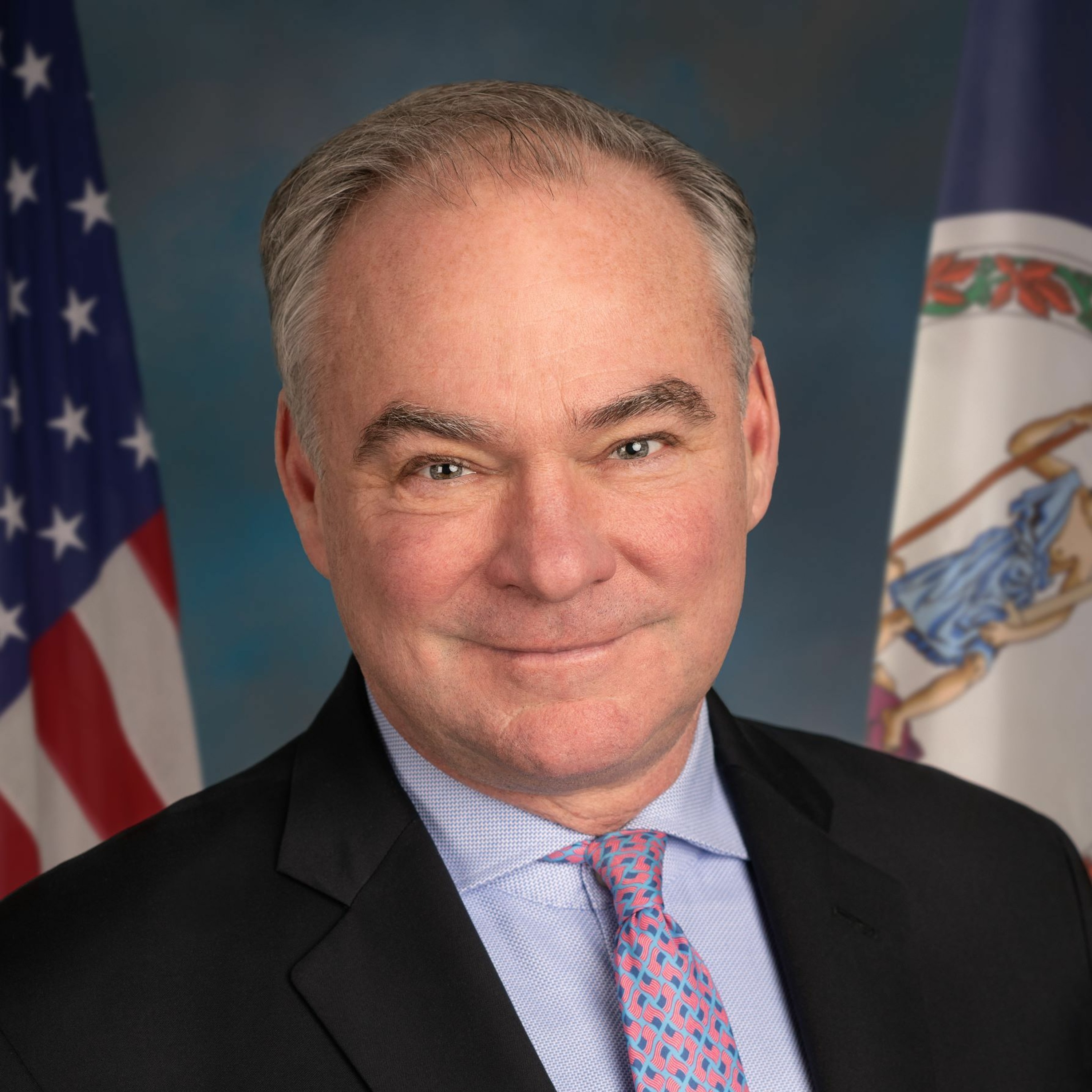
Faith and Politics with Senator Tim Kaine
Decades before Virginia Senator Tim Kaine ran for vice president in 2016, he spent a year ministering alongside Jesuits in the country of Honduras. That experience changed his life forever. Even though Senator Kaine was in Honduras back in 1980 and 1981, he still talks about his time there as if he got back just yesterday. It was the experience in Honduras that exposed him to the horrors of poverty and led him to pursue a career in public interest law and then in politics. Host Mike Jordan Laskey asked Senator Kaine about his time in Honduras and how his faith informs his public service. After the conversation with Senator Kaine, stick around for more context on the Jesuits and Honduras. Harrison Hanvey, who works at the Jesuit Conference’s Office of Justice and Ecology, just got back from a trip to Honduras, where he was part of a delegation marking the 40th anniversary of the disappearance and death of the American Jesuit missionary Fr. Guadalupe Carney. Harrison’s stories provide some helpful context to Senator Kaine’s experience. Learn about Senator Kaine’s time in Honduras: https://www.nytimes.com/2016/09/03/us/politics/tim-kaine-honduras-jesuit.html?unlocked_article_code=1.5Ew.8Wj2.VBV-AGA2I3Eg&smid=url-share Learn about Fr. Guadalupe Carney, SJ: https://www.americamagazine.org/politics-society/2023/09/20/james-carney-jesuit-revolutionary-honduras-martyr-246126 AMDG is a production of the Jesuit Conference of Canada and the United States. www.jesuits.org/ www.beajesuit.org/ twitter.com/jesuitnews facebook.com/Jesuits instagram.com/wearethejesuits youtube.com/societyofjesus
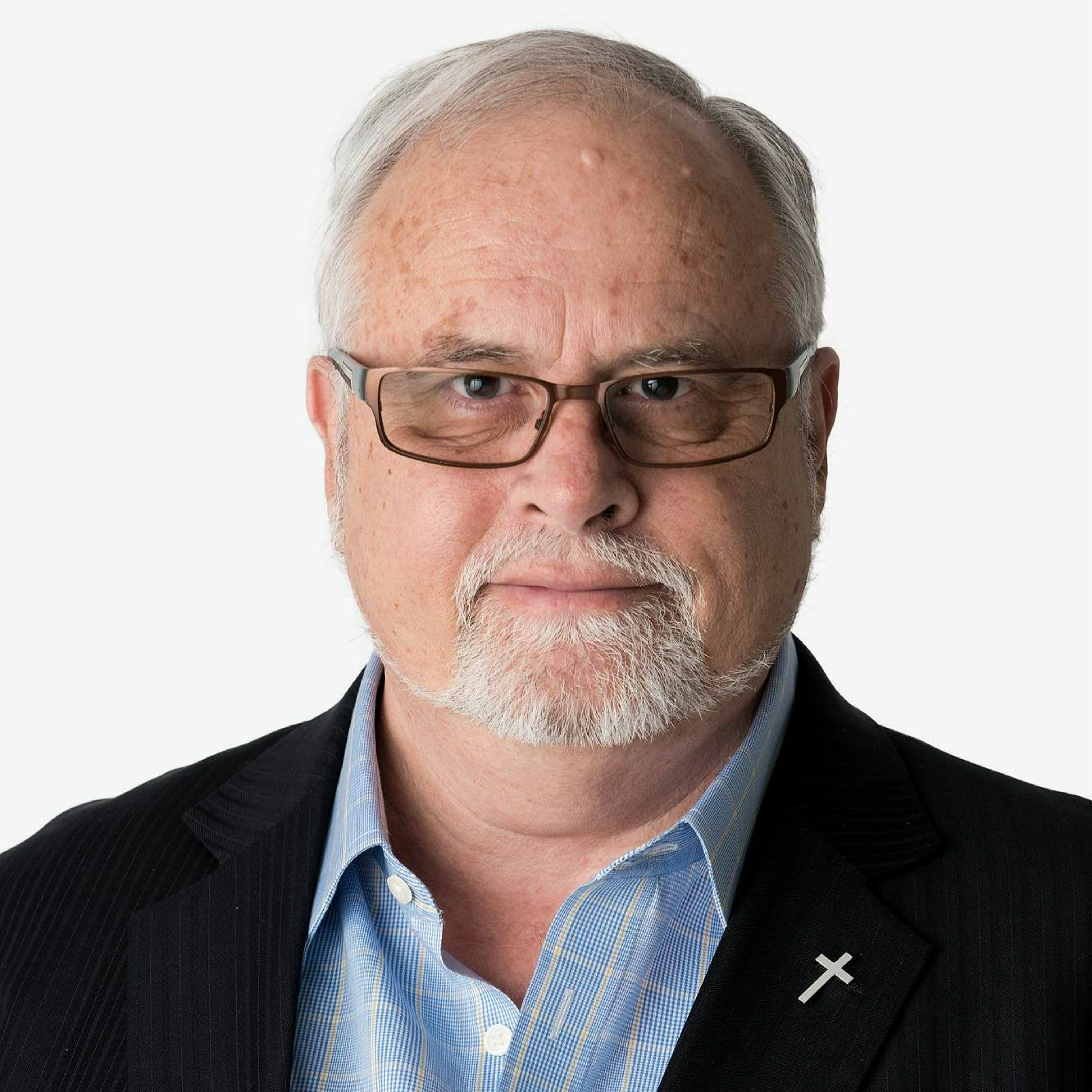
An Ignatian Approach to Mary
If you’ve ever been intimidated by Ignatian spirituality, today’s guest will put you at ease. In fact, Fr. Michael Hansen is determined to make the Ignatian exercises accessible to as many people as possible. Why? It’s simple: He knows that God is at work, whether you’re doing the full thirty day retreat or just a one-off reflection. Host Eric Clayton has been intrigued by Mick’s work for a while. In fact, longtime listeners will remember when he came on our podcast a few years ago. He talked about the First Spiritual Exercises. Mick wrote a book by the same name. But it’s also a shorthand for what Ignatius meant in the 18th Annotation of the full Spiritual Exercises. Both Mick and Ignatius want people to be able to access the riches of Ignatian spirituality, even if you don’t have thirty days to sit at a retreat center. Today, Mick brings us up to date on that work. But he also introduces us to a monthlong initiative he’s been steering that invites us to contemplate the many Marian devotions of Ignatus of Loyola. Mick and the Jesuits in Australia have produced a beautiful collection of short meditations that pair a Marian image—perhaps a statue that Ignatius would have seen in his childhood or a painting that hung in his room—with guided prayers to help us more intentionally journey through this month of Mary. If you’ve ever wanted to know what Ignatian contemplation of the Blessed Mothers looks like, this is the episode for you. Learn more about the First Spiritual Exercises: https://jesuit.org.au/ignatian-spirituality/first-spiritual-exercises/ Check out the Marian reflections and get on Mick’s mailing list: https://us10.campaign-archive.com/home/?u=75fd6f8cf8deaab17d0961da5&id=3f175b637a
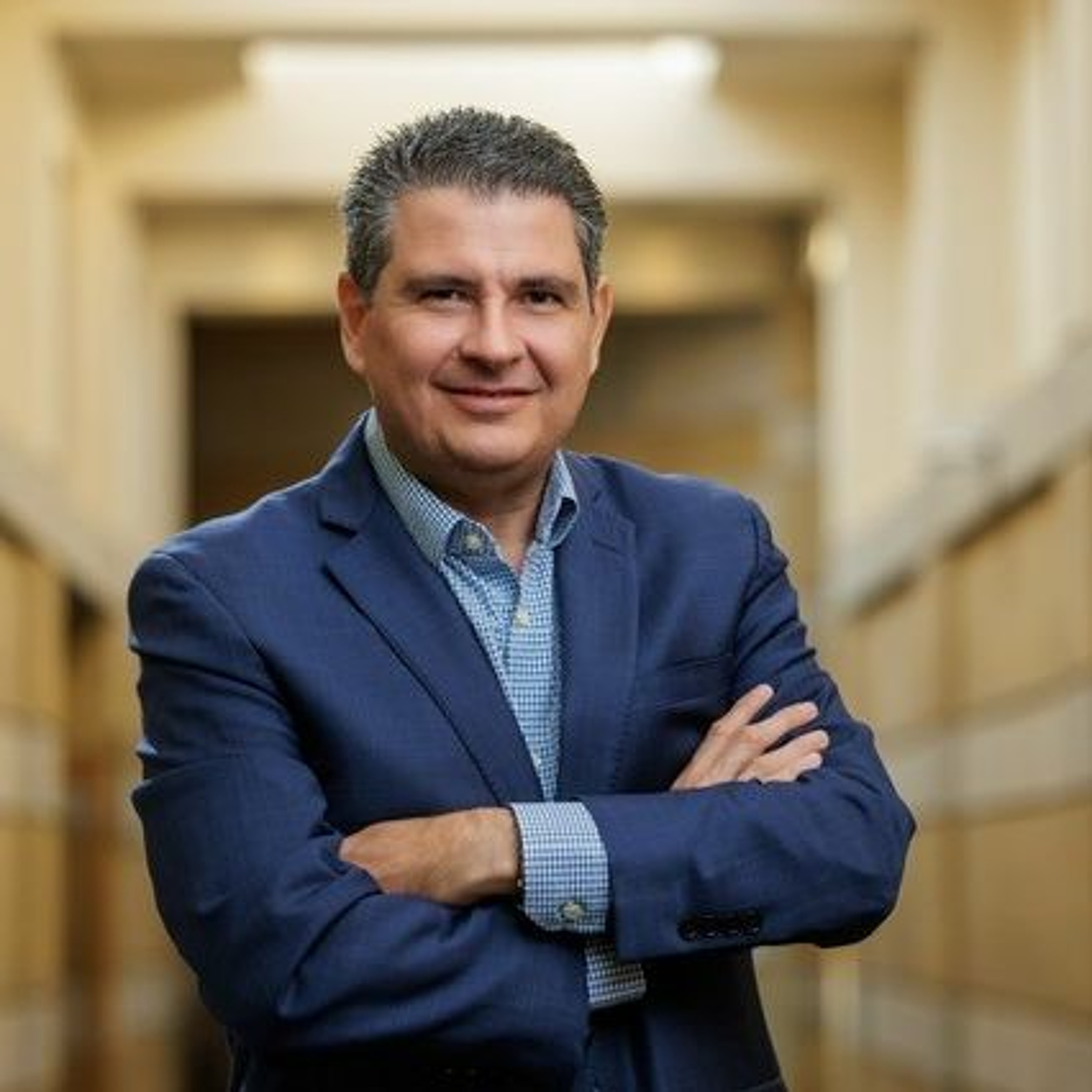
From Prison in Nicaragua to Exile in the U.S. with Juan Sebastián Chamorro
If you have followed Jesuit-related headlines over the past few months, you might have heard about the situation in Nicaragua. In August, the government of dictator Daniel Ortega and his wife, Vice President Rosario Murillo, closed the Jesuit-run University of Central America in the capital city of Managua. They confiscated the property, too, including the Jesuit residence there. While these developments have captured the attention of the Society of Jesus globally, they are just one part of a much larger trend of repression in Nicaragua. To learn more about the context, host Mike Jordan Laskey spoke recently with Juan Sebastián Chamorro. An economist by trade who ran for president of Nicaragua against Ortega in 2021, knowing full well the election would not be free and fair, Juan was arrested by the police in the middle of the night in June 2021. He would go on to spend 20 months behind bars as a political prisoner, separated from his wife and daughter. Last February, Juan was one of 222 political prisoners from the country who was freed and put on a plane to the United States. Nicaragua has revoked his citizenship, and Juan now lives here in exile with his family. This academic year, he is serving as a visiting fellow at the Kellogg Institute for International Studies at the University of Notre Dame. In the conversation, Juan described the context and background of the repression in Nicaragua. He also talked about the experience of his arrest, imprisonment and exile to the United States. Juan also has had a lifelong connection to the Jesuits and spoke of how his faith supported him during his incredible hardship. Juan is a member of one of the most prominent families devoted to public service in the modern history of Nicaragua – his aunt was the first female president of the country and his cousin Christiana was imprisoned at the same time Juan was. His commitment to carrying on his family’s legacy despite the risks, not to mention his impassioned defense of democracy in his beloved home country, made this conversation one of the most moving interviews in the history of AMDG. If you would like to learn more about how to support the Jesuits, students and faculty connected to the University of Central America, visit Jesuits.org/nicaragua. Learn more about Juan: https://kellogg.nd.edu/juan-sebasti%C3%A1n-chamorro AMDG is a production of the Jesuit Conference of Canada and the United States. www.jesuits.org/ www.beajesuit.org/ twitter.com/jesuitnews facebook.com/Jesuits instagram.com/wearethejesuits youtube.com/societyofjesus
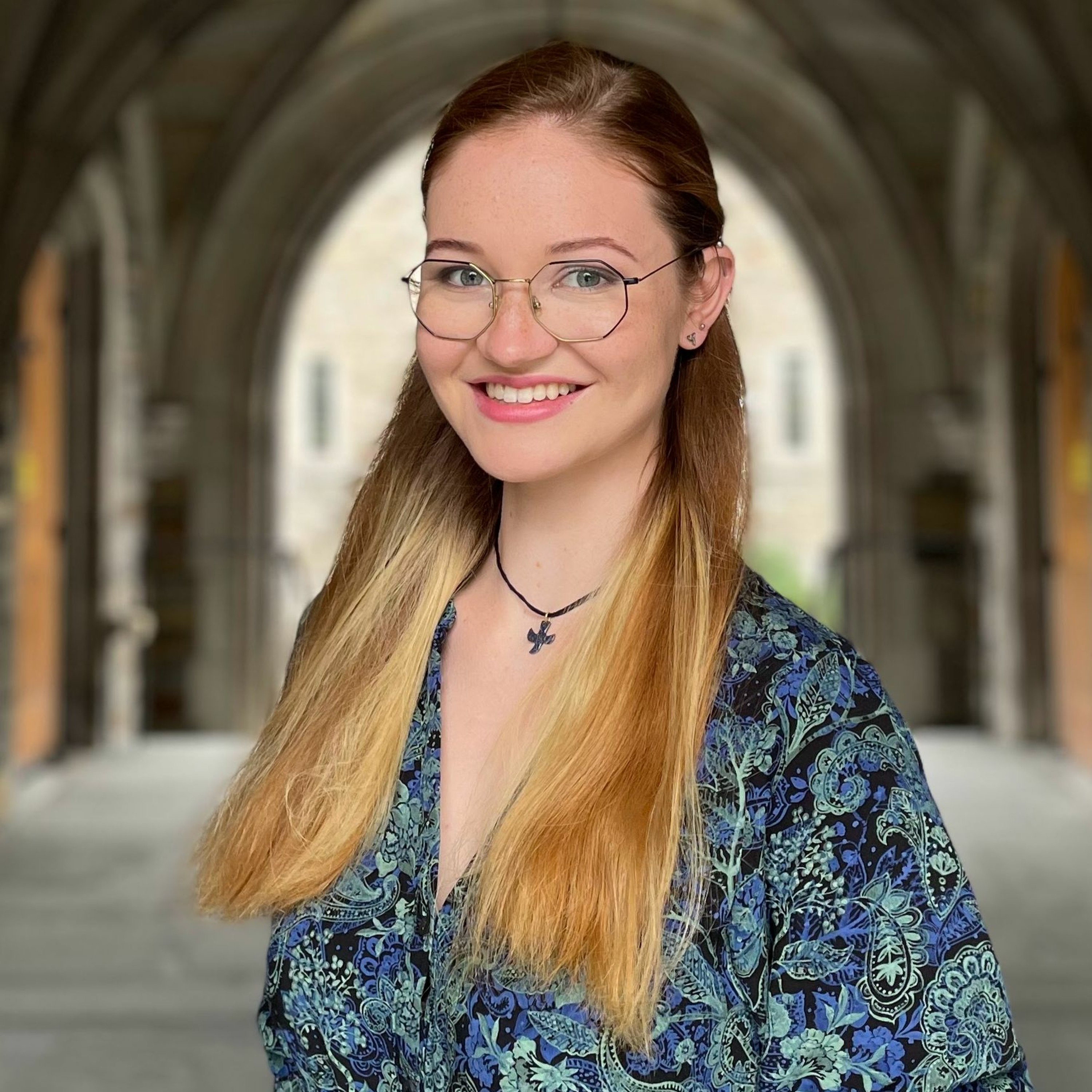
Meet the Jesuit University Student Voting at the Synod with Julia Osęka
You may have heard that the General Assembly of the Synod of Bishops is meeting all month long in Rome. This is just the latest stage of the years-long Synod on Synodality, which included listening sessions in parishes and other Catholic ministry settings all over the world. Participants will be discussing issues connected to communion, participation and the mission of the church. One thing that makes this synod different from all the others that came before it is that this is the first time that laypeople – including women – are participating as voting members. And one of those laypeople is Julia Osęka, and she’s today’s guest. Julia is a physics and theology major at Saint Joseph’s University, the Jesuit college in Philadelphia. Originally from a small town in Poland, the story of how Julia came to represent North America and young adults at the synod is an incredible one. Julia got involved in a synod initiative that united the Catholic universities and Newman centers from the Archdiocese of Philadelphia, a collaborative effort that was unique in the country. From there, thanks to her deep faith, thoughtful disposition and ability to listen intently and generously, Julia was selected to participate in the continental stage of the synod, and then finally chosen to participate in Rome. Host Mike Jordan Laskey asked her what it was like to find out she was going to the synod, and how she’s navigating missing a month’s worth of classes. They also talked about her background and how she found herself at Saint Joe’s in the first place. When you listen to the conversation, you’ll be able to tell how impressive and faith-filled Julia is. It’s so great that she’s representing young adults, Jesuit higher ed and all of us from North America at the synod. Along with this episode, we are publishing an article by one of Julia’s campus ministers at St. Joe’s, Beth Ford McNamee. In the piece, Beth describes the synod process in Philadelphia that eventually led to Julia’s participation in Rome. You can read that piece at Jesuits.org. Learn more about Julia: https://www.sju.edu/news/pope-francis-appoints-julia-oseka-25-delegate-universal-assembly-rome-marking-first-time AMDG is a production of the Jesuit Conference of Canada and the United States. www.jesuits.org/ www.beajesuit.org/ twitter.com/jesuitnews facebook.com/Jesuits instagram.com/wearethejesuits youtube.com/societyofjesus
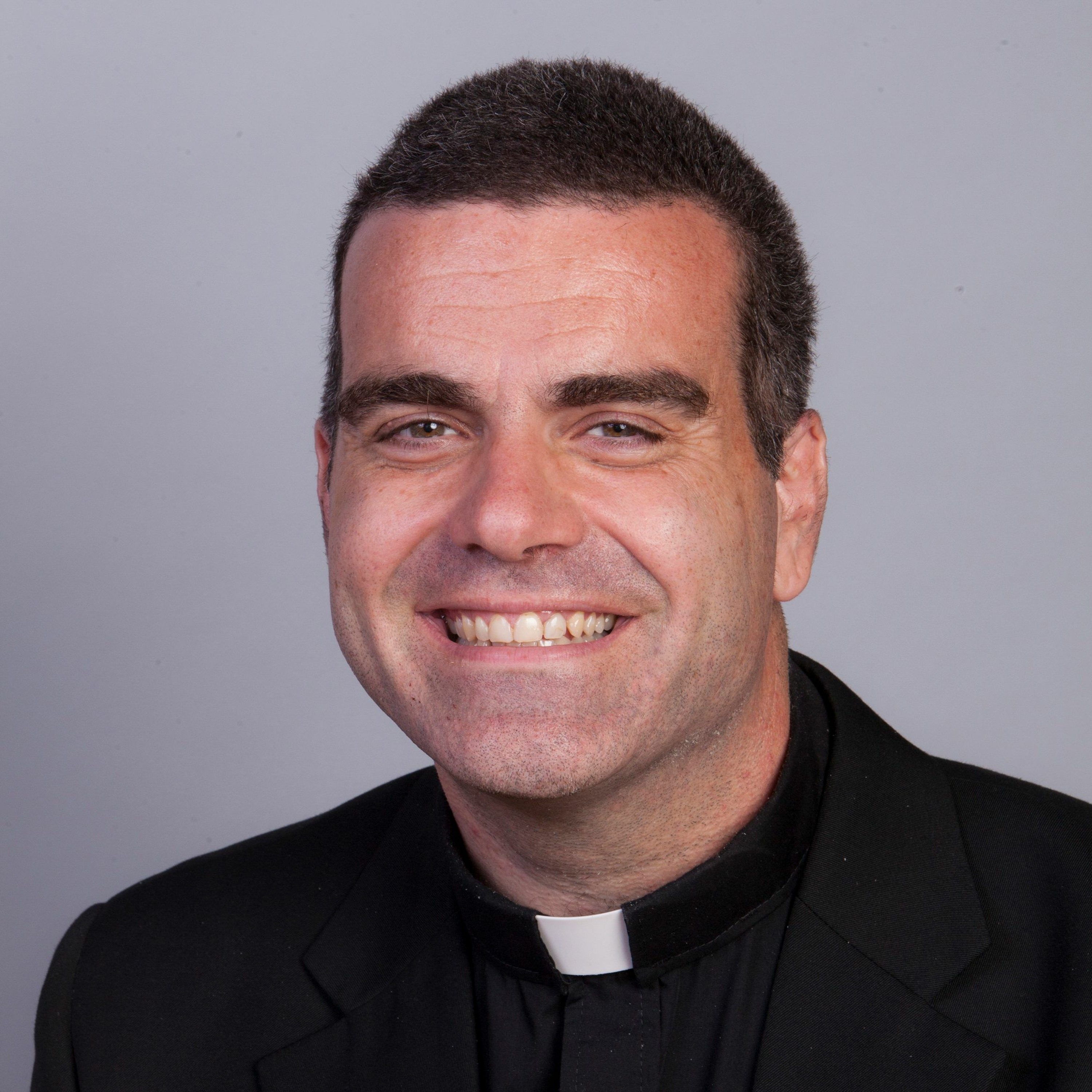
Why This Standup Comedian Became a Jesuit Priest with Fr. Jake Martin, SJ
Here’s a list of famous comedians who all have at least one thing in common that’s relevant to this podcast: Bob Newhart, Bill Murray, Bob Hope, Chris Farley, George Carlin, Amy Poehler, Conan O’Brien, Stephen Colbert, Steve Carell, Dan Aykroyd, John Leguizamo, John Candy, Jimmy Fallon, Jimmy Kimmel, Jim Gaffigan, Janeane Garofalo and John Mulaney. Did you guess? They all have a Catholic background in some way or other. Some were raised Catholic and left the church, some are still practicing Catholics today or practiced throughout their lives, and Bob Hope was a famous convert to Catholicism thanks to his devout wife Dolores. Why are so many Catholics, including a bunch of Jesuit high school and college alumni, comedians? What is it about the faith that leads performers down this road? Today’s guest is uniquely qualified to reflect on this question. Fr. Jake Martin, SJ, is a Jesuit priest. He’s also a standup comedian with a deep background in theater, improv comedy and the study of film. After completing his Ph.D. in film studies at Trinity College Dublin earlier this year, Fr. Jake is now teaching film at Loyola Marymount University in Los Angeles. He also writes about culture for America magazine. And it was a recent piece on the Catholic comedian Jim Gaffigan that led host Mike Jordan Laskey to reach out for this interview. Jim Gaffigan, an alum of Georgetown University, has never been shy about including his Catholicism in his standup comedy performances, but his most recent special, titled “Dark Pale,” takes the religiosity to a whole new level. There’s a whole segment in the performance when Gaffigan just tells the story of Our Lady of Guadalupe and Saint Juan Diego. There’s no big punchline or payoff. He just tells the story, in his own clever way. But it felt like it could’ve been a homily, or at least a talk at a parish mission. Mike asked Fr. Jake about Gaffigan and for Fr. Jake’s own theories about why there are so many Jesuit-educated, Catholic comedians out there. They also talked about Fr. Jake’s own background as a performer and how he integrates his identities as priest in comedian into a single, unified person. Read Fr. Jake Martin, SJ: https://www.americamagazine.org/voices/jake-martin AMDG is a production of the Jesuit Conference of Canada and the United States. www.jesuits.org/ www.beajesuit.org/ twitter.com/jesuitnews facebook.com/Jesuits instagram.com/wearethejesuits youtube.com/societyofjesus
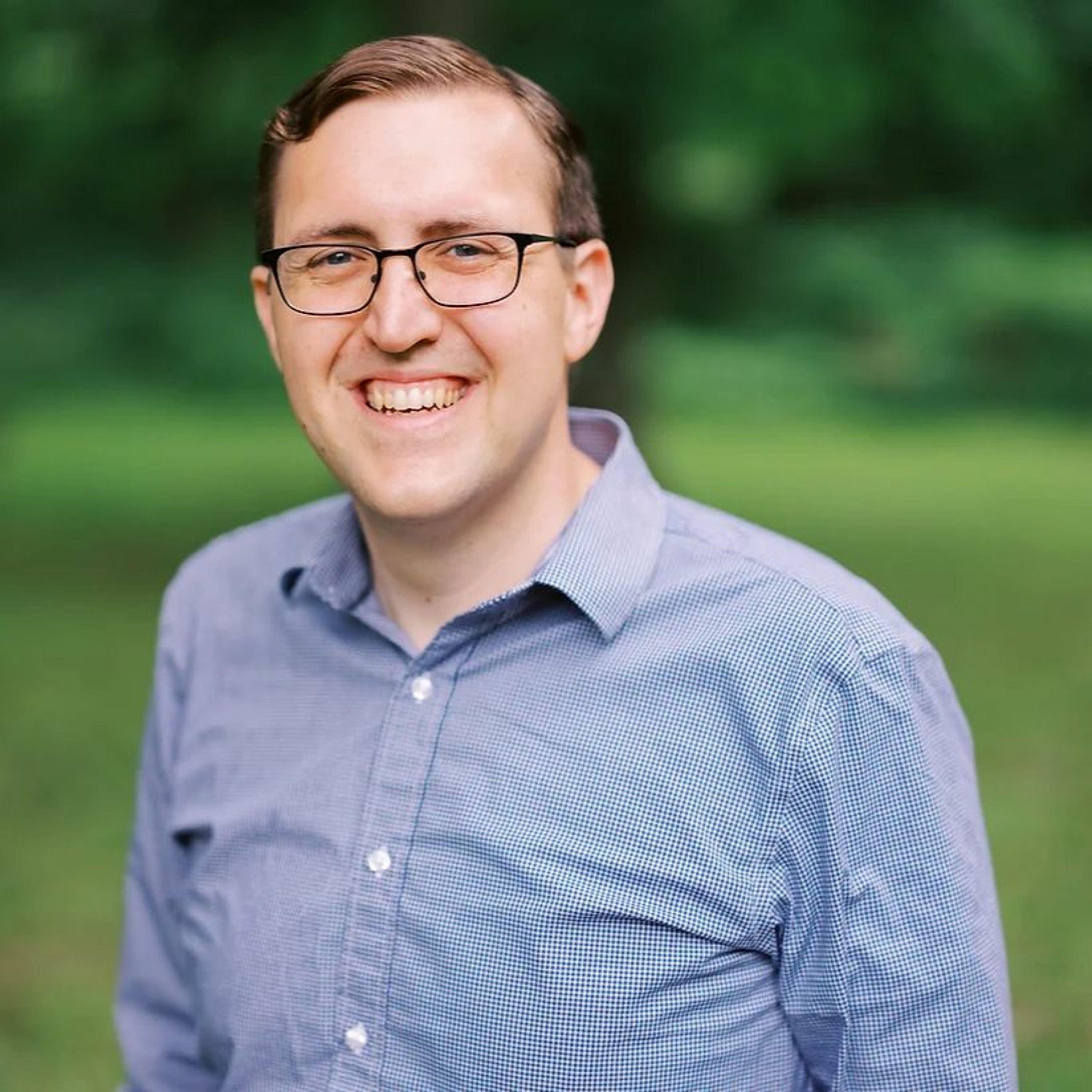
Finding God in All Films with John Dougherty
If you’ve had any encounter with Jesuits or Ignatian spirituality, you know the whole thing rests on the simple yet radical idea that God is to be found in all things. And films — stories — are an obvious place to look for God. Stories reflect who we are as people; they point the way toward where we might yet go. We can all point to our favorite “religious” film, right? ("The Mission," "Of Gods and Men," "Calvary"...) But what about movies that are less obviously religious? That seems almost entirely bereft of any spirituality? Today’s topic—and guest—will provide some answers. John Dougherty has been working in Jesuit schools for more than a decade. He knows a thing or two about finding God in all things—and helping others do the same. As a writer, he’s penned many an essay at the intersection of faith, pop culture, parenting and spirituality. That’s why America Magazine asked him to helm the weekly “Catholic Movie Club” column. You can learn more about John at johndocwrites.com. And follow along at the Catholic Movie Club: https://www.americamagazine.org/section/catholic-movie-club
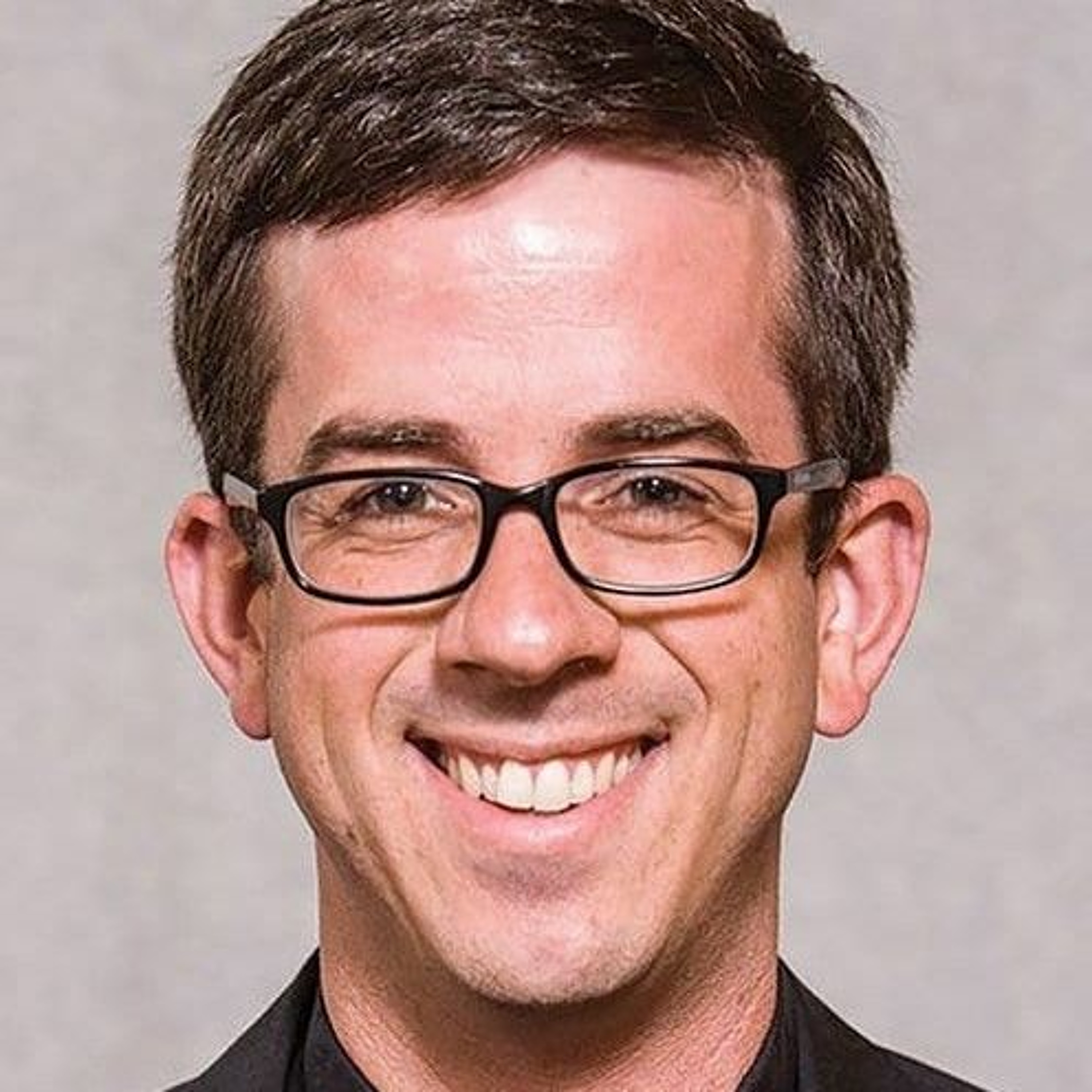
Reckoning with Catholic Slaveholding with Fr. Chris Kellerman, SJ
Fr. Chris Kellerman, SJ, is the author of "All Oppression Shall Cease: A History of Slavery, Abolitionism, and the Catholic Church" (Orbis, 2022), which provides a rigorously researched, era-by-era history of the Catholic Church’s teachings and actions related to slavery. The book gives a detailed account of the Church’s slaveholding past while issuing a call for the Church to take the necessary steps to reconcile with its history. Fr. Kellerman is also the brand-new Secretary of Justice and Ecology for the Jesuit Conference of Canada and the United States. He talked with his colleague and guest host MegAnne Liebsch about the book and the Office of Justice and Ecology's advocacy work on a wide range of pressing social issues. Fr. Kellerman's book: https://www.amazon.com/All-Oppression-Shall-Cease-Abolitionism/dp/1626984891 Sign up for the Office of Justice and Ecology's newsletter and action alerts: https://jesuits.org/advocate AMDG is a production of the Jesuit Conference of Canada and the United States. www.jesuits.org/ www.beajesuit.org/ twitter.com/jesuitnews facebook.com/Jesuits instagram.com/wearethejesuits youtube.com/societyofjesus
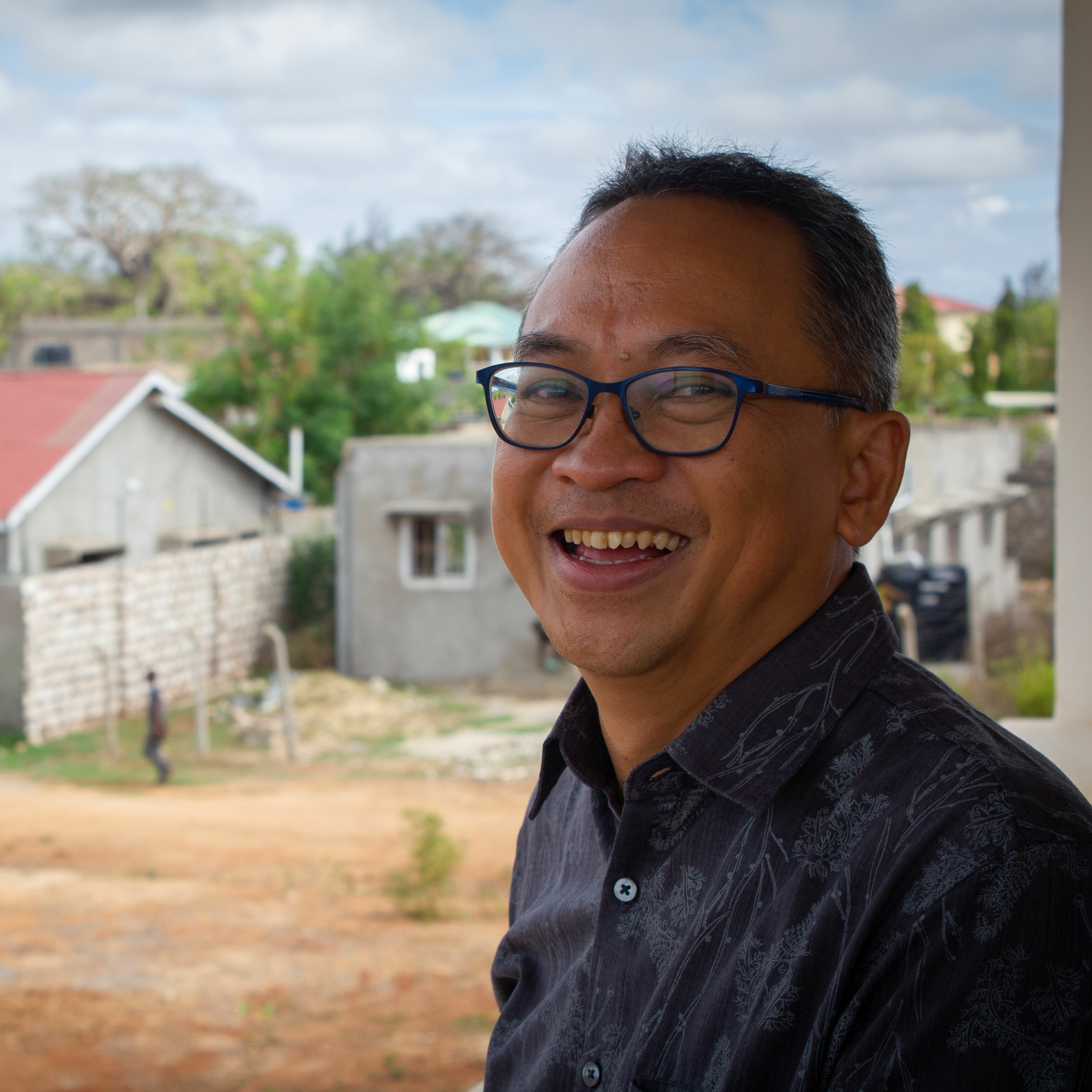
Why Inter-Spiritual Trialogue is a Better Approach to Sharing Across Faiths
Many weeks ago, host Eric Clayton visited a coastal town in Kenya called Malindi — and the Jesuit community that lives there. It’s a new community, only about five or so years old, and it’s been tasked with carrying out the legacy of St. Francis Xavier who visited that very place many, many years ago. Xavier — the great missionary — spent only a few days on that shore. But while there, he engaged in interreligious dialogue, meeting with and learning from the local Muslim communities. The bishop of Malindi has asked the Jesuits of today to return and continue that work. Fr. Thomas Aquino Deshi Ramadhani, or just Deshi for short, is the Jesuit who has been tasked with leading these efforts. Originally from Indonesia, he’s accustomed to building community with Muslims and those of other faiths. He’s also a writer—an author of many books—and a retreat director. When Eric was with him, he was preparing to give a retreat on the enneagram and Ignatian spirituality. Today’s conversation is very rich. It touches of course on interreligious dialogue—and why Deshi prefers to call it inter-spiritual trialogue—and about how the enneagram influences the writing life. Deshi dives deep into his own spiritual background and shares with us countless nuggets of spiritual wisdom. But one thing that is worth highlighting is that the fruits of this conversation reflect the nature of our global Catholic faith: an Indonesian and an American meeting in Kenya and bound together by the Ignatian tradition and our desire to live out the Gospel. Deshi’s Books: https://www.amazon.com/stores/Thomas-Ramadhani/author/B093C9SQ4D?ref=ap_rdr&store_ref=ap_rdr&isDramIntegrated=true&shoppingPortalEnabled=true Video on Malindi: https://www.youtube.com/watch?v=Ir2KffiLgUY Video on Xavier’s Chapel in Malindi: https://www.youtube.com/watch?v=ocY0kWWxfcw&t=4s Vocation Story on an American Jesuit in Africa: https://www.youtube.com/watch?v=Fm_g0ernKSI&t=6s

Why Commitment Will Change the World with Pete Davis
Conventional wisdom would have us keep our options open. Don’t commit until you have to—and even then, always have a backup plan. The world’s a big place with lots of choices, and you deserve your crack at all of them. That might be conventional wisdom. But our guest today, Pete Davis, firmly disagrees. In fact, he wrote a whole book about it. It’s called “Dedicated: The Case for Commitment in an Age of Infinite Browsing.” And in it, Pete lays out not only why committing ourselves to something greater can give our lives more meaning and purpose, but why commitment can lead us to becoming more engaged and effective citizens of our world. Pete is a civic advocate from Falls Church, Virginia, and a graduate of Harvard Law School where his graduation speech, “A Counterculture of Commitment” went viral. As he says in our interview, his passion isn’t just commitment; his passion is deepening American solidarity and democracy. To that end, he cofounded the Democracy Policy Network, and travels the country promoting projects and initiatives that build up local democratic institutions—thus giving more people more power over their political and civic lives. As you listen to Pete talk, you’ll note that the principles of Catholic social teaching and Ignatian spirituality are never far from his mind. Pete gives us a masterclass in how to translate the Ignatian tradition into political engagement—and how to do so with joy. You can learn more about Pete and his work at petedavis.org. And check out the film Pete mentions at the end of the conversation here: https://putnamdoc.com/

What Does Healthy Masculinity Look Like? with Christine Emba
If you spend any time on social media, you might have seen Washington Post columnist Christine Emba’s big essay earlier this summer. It’s headlined “Men are lost. Here’s a map out of the wilderness.” Every so often there’s a piece about contemporary masculinity that pops up, but Christine’s piece was so widely read. The essay takes on the challenges men face in American society today with nuance, clarity and incredible depth. Christine really is a fabulously smart writer and reporter, which you’ll know if you read any of her columns or her book “Rethinking Sex: A Provocation,” which came out last year. Host Mike Jordan Laskey asked Christine about the crises men are facing, the ultra-conservative voices that have become quote-unquote “manfluencers,” and what she sees as key ingredients to cultivating healthier masculinity. As Christine is a convert to Catholicism, Mike also asked her what she thought about how celibate clergy in particular might model masculinity, and what advice she might offer from her research to people raising or forming young men. “Men are lost” essay (unlocked): https://wapo.st/47AwiZq Follow-up piece (unlocked): https://wapo.st/3YAzeBj Christine's book: https://www.amazon.com/Rethinking-Sex-Provocation-Christine-Emba/dp/0593087569/ref=tmm_hrd_swatch_0?_encoding=UTF8&qid=1692621051&sr=8-1 AMDG is a production of the Jesuit Conference of Canada and the United States. www.jesuits.org/ www.beajesuit.org/ twitter.com/jesuitnews facebook.com/Jesuits instagram.com/wearethejesuits youtube.com/societyofjesus

Discover Your Inner Artist Spirit with Chris Pramuk
Today's host, Eric A. Clayton, encountered today’s guest’s professional title before he met the man himself. Eric was told to chase down the person who held the “Chair of Ignatian Thought and Imagination” at Regis University—and he was not disappointed. Dr. Chris Pramuk is said chair. He’s also an associate professor of religious studies. His interests focus on the intersection of faith, creativity and justice, and the conversation reflects this multitude. Chris and Eric jump from Thomas Merton to the musical tradition of the Black Catholic Church to Buddhism to Joni Mitchell. Woven throughout the conversation is a clear thread of Ignatian spirituality—and an invitation to each of us to discover the artist spirit alive within ourselves. Chris has written six books, including the two we discuss in this episode: Hope Sings, So Beautiful: Graced Encounters Across the Color Line and The Artist Alive: Explorations in Music, Art and Theology. He’s also written two award-winning studies on Thomas Merton. Learn more about Chris, his work and his books at the links below. The Artist Alive — https://www.amazon.com/Artist-Alive-Explorations-Music-Theology/dp/1599828383 Hope Sings, So Beautiful — https://www.amazon.com/Hope-Sings-So-Beautiful-Encounters/dp/0814682103 https://www.regis.edu/academics/faculty-finder/faculty/chris-pramuk
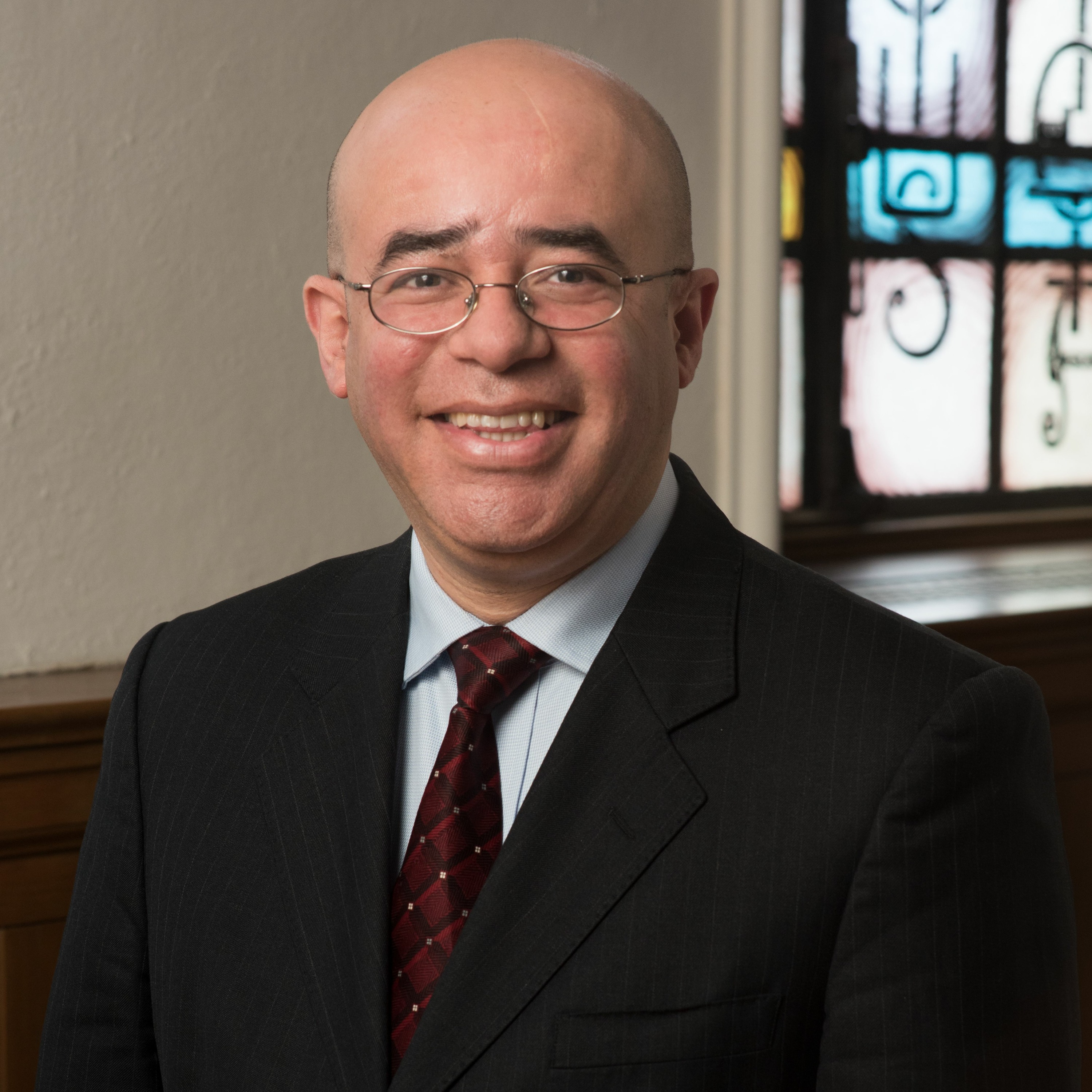
Less Than Half of U.S. Latinos are Catholic. How Can the Church Respond? with Hosffman Ospino
You can’t talk about the Catholic Church in the United States without talking about Latino Catholics. About half of the Catholic population in the United States is Latino, which includes U.S.-born Hispanics and about the one million Latino immigrants who arrive here each year. And very few people if any know more about U.S. Latino Catholicism than Professor Hosffman Ospino, an associate professor of Hispanic Ministry and Religious Education and the chair of the Department of Religious Education and Pastoral Ministry at Boston College’s School of Theology and Ministry. Professor Ospino has led numerous research studies on Latino Catholics, including a brand-new report called “Ministry with Young Hispanic Catholics: Towards a Recipe for Growth and Success.” He’s also an expert on evangelization and pastoral ministry. It’s rare to find someone who’s so strong in sociological research and theology. Host Mike Jordan Laskey asked Professor Ospino about current trends in U.S. Latino Catholicism and about what he learned in his recent study. They talked about the decreasing number of U.S. Latinos who identify as Catholic, which is a fact of deep concern to him and calls for fresh ministry approaches. His passion for ministry and his sharp intelligence come through every second of this interview. Learn more about Dr. Ospino and read his newest research: https://www.bc.edu/bc-web/schools/stm/faculty/faculty-directory/hosffman-ospino.html Article referenced in the episode: https://www.thebostonpilot.com/article.php?ID=194657 AMDG is a production of the Jesuit Conference of Canada and the United States. www.jesuits.org/ www.beajesuit.org/ twitter.com/jesuitnews facebook.com/Jesuits instagram.com/wearethejesuits youtube.com/societyofjesus

A Summer Retreat with the Four Female Doctors of the Church
As we turn the corner into the second half of summer, you might be wondering to yourself: When do I get a chance to rest and recharge? It’s been nothing but go, go, go. If that sounds like your summer days, then today’s episode is a treat. Spiritual director and award-winning author Vinita Hampton Wright returns to the pod to talk about her newest book from Ave Maria Press, “Set the World on Fire: A 4-Week Personal Retreat with the Female Doctors of the Church.” These four women are your guides into a new understanding of who you are – and who God is to you. Vinita’s book is a retreat, one you can make on your own or in community. And don’t let the mention of 4 weeks concern you – there’s no set timeline. You can pray with these four women as the Spirit inspires. Today’s conversation is a great introduction not only to Vinita’s book, but to the experience of God at work in our world – both in the past and present – that these four doctors of the Church challenge us to be alert to. Take time to savor Vinita’s insights, let the Spirit speak to you through them. And if you’re interested in learning more about her book or her other work, check out the link below. https://www.amazon.com/Set-World-Fire-Personal-Retreat/dp/1646801016
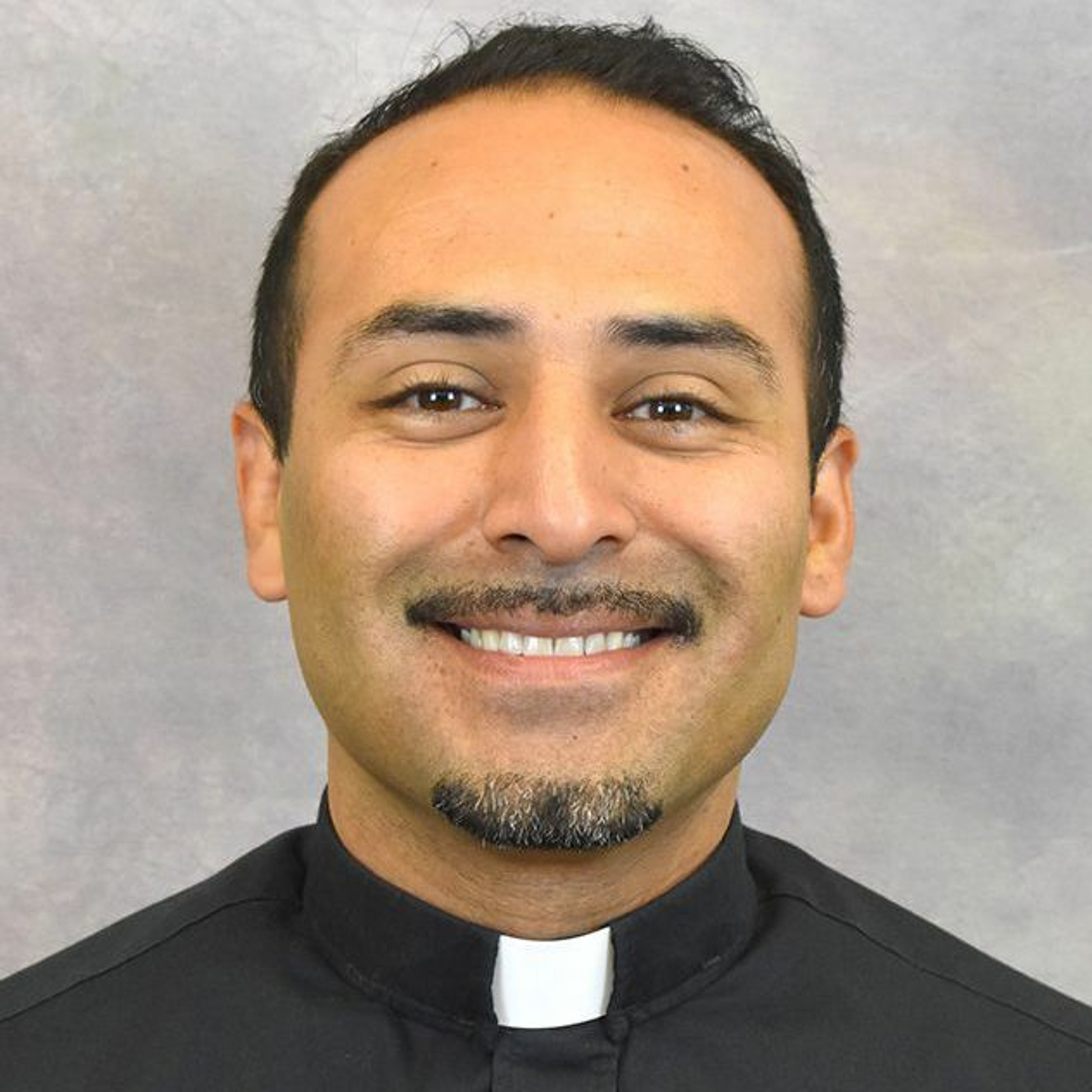
Inside the Unique Ministry of Jesuit Procurators with Fr. Victor Cancino, SJ
The Society of Jesus’ 71st Congregation of Procurators, which was held in Loyola, Spain. Over 100 Jesuits gathered for the congregation, one from each province in the world plus Jesuit Superior General Fr. Arturo Soca and his assistants. So what exactly is a Congregation of Procurators? It sounds like old-fashioned Church speak. A brief explanation: There are two types of big global congregations the Society of Jesus holds. The first and more famous type is called a General Congregation, in which a new superior general is typically elected. There have been only 36 of these meetings since the founding of the order in 1540. All the way back at the second General Congregation in 1565, the delegates decided that more frequent meetings were needed. This led to the Congregation of Procurators, whose main technical function is to decide if a General Congregation should be called via a simple “yes or no” vote. Only very rarely do the procurators vote “yes.” But it’s a unique opportunity for Jesuits to gather and reflect on the state of the Society within today’s world. While the gathering itself lasted two weeks in Spain, the work of the procurators takes over a year. Once elected by his respective province, each procurator travels throughout his province and speaks to as many Jesuits as possible. The point is to develop a sort of “state of the Society” perspective from your own corner of the world. The procurators submit their reports to the Superior General, who in turn crafts a document on the state of the global society called De Statu Societatis. This document will be published and publicly available soon. Today’s guest is Fr. Victor Cancino, who was the procurator from the USA West province. Fr. Cancino lives on the Flathead Indian Reservation in western Montana and is the pastor-delegate for St. Ignatius Mission. Host Mike Jordan Laskey asked him about the gathering itself plus what he learned while traveling throughout the West province, which stretches from Alaska to Hawaii to the US -Mexico border in Arizona. It was fascinating to hear his insider’s take on the whole process – a reminder that we are part of a church whose name means “universal.” Learn more about the Congregation of Procurators: https://www.jesuits.org/stories/jesuits-gather-for-71st-congregation-of-procurators-in-loyola-spain/ Read Fr. Cancino's articles at America magazine: https://www.americamagazine.org/voices/victor-cancino-sj AMDG is a production of the Jesuit Conference of Canada and the United States. www.jesuits.org/ www.beajesuit.org/ twitter.com/jesuitnews facebook.com/Jesuits instagram.com/wearethejesuits youtube.com/societyofjesus
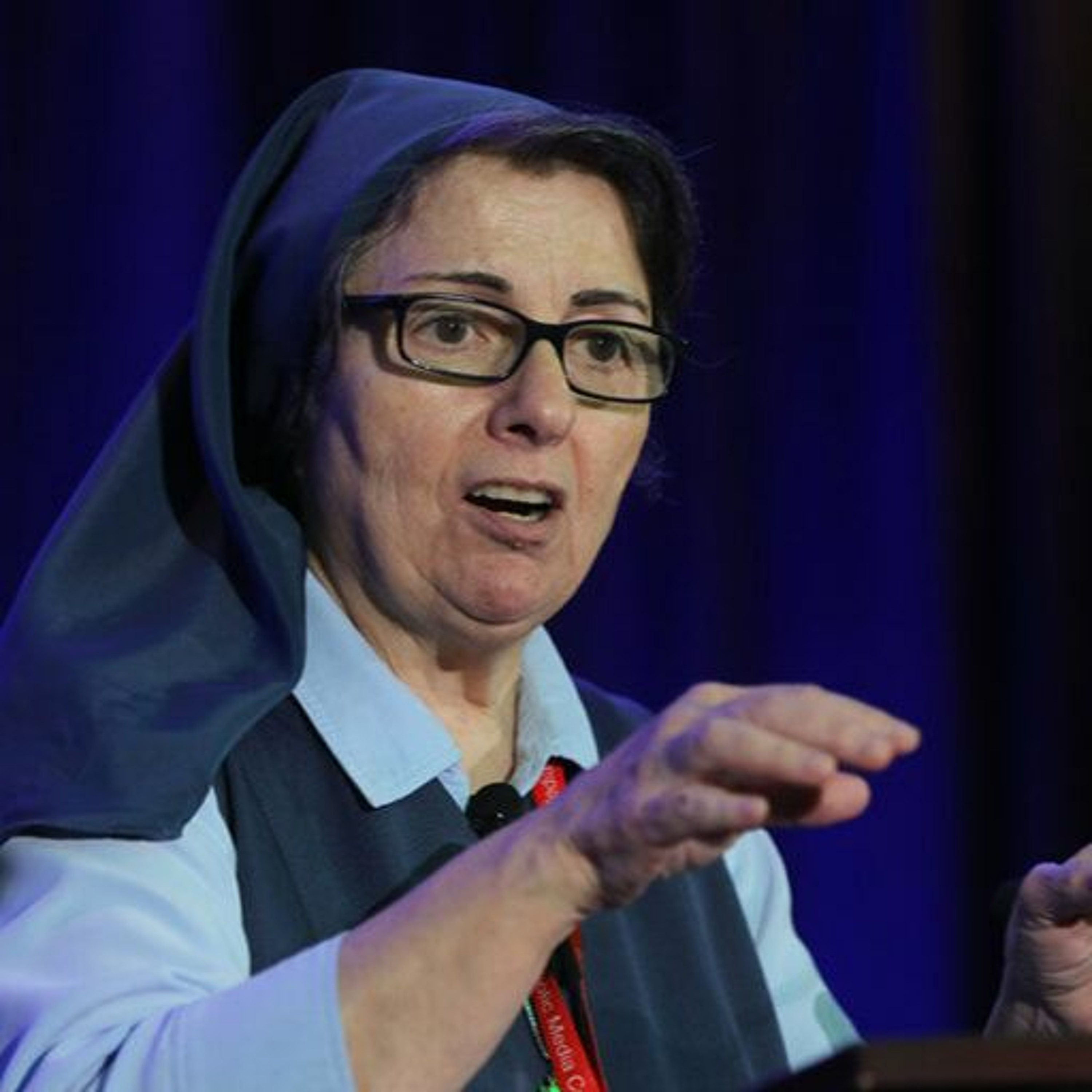
Why Media Literacy Is A Gospel Value with Sr. Rose Pacatte, FSP
Sr. Rose Pacatte was the keynote speaker at the 2023 Catholic Media Conference. She talked about how artificial intelligence and the spiritual life intersect, how social media can — and cannot — spread the Gospel, and how we’re all called to media literacy as part of our lives as Christians. Today, Sr. Rose joins us to reflect on all these things: AI, Threads, pop culture, media literacy and her own vocation at the intersection of media and religious life. Sr. Rose, a member of the Daughters of St. Paul, is an award-winning author and the founding director of the Pauline Center for Media Studies in Los Angeles. And if you like what she has to say, if you find yourself intrigued and wanting to go deeper, Sr. Rose invites you to check out the advanced certificate in media literacy that the Pauline Center for Media Studies is offering, staring July 30 2023. Here's the link: https://media.pauline.org/certificate And here's more information on World Communications Day at the papal messages: https://www.comunicazione.va/en/giornata-mondiale-comunicazioni-sociali.html Photo Credit: OSV News photo/Bob Roller
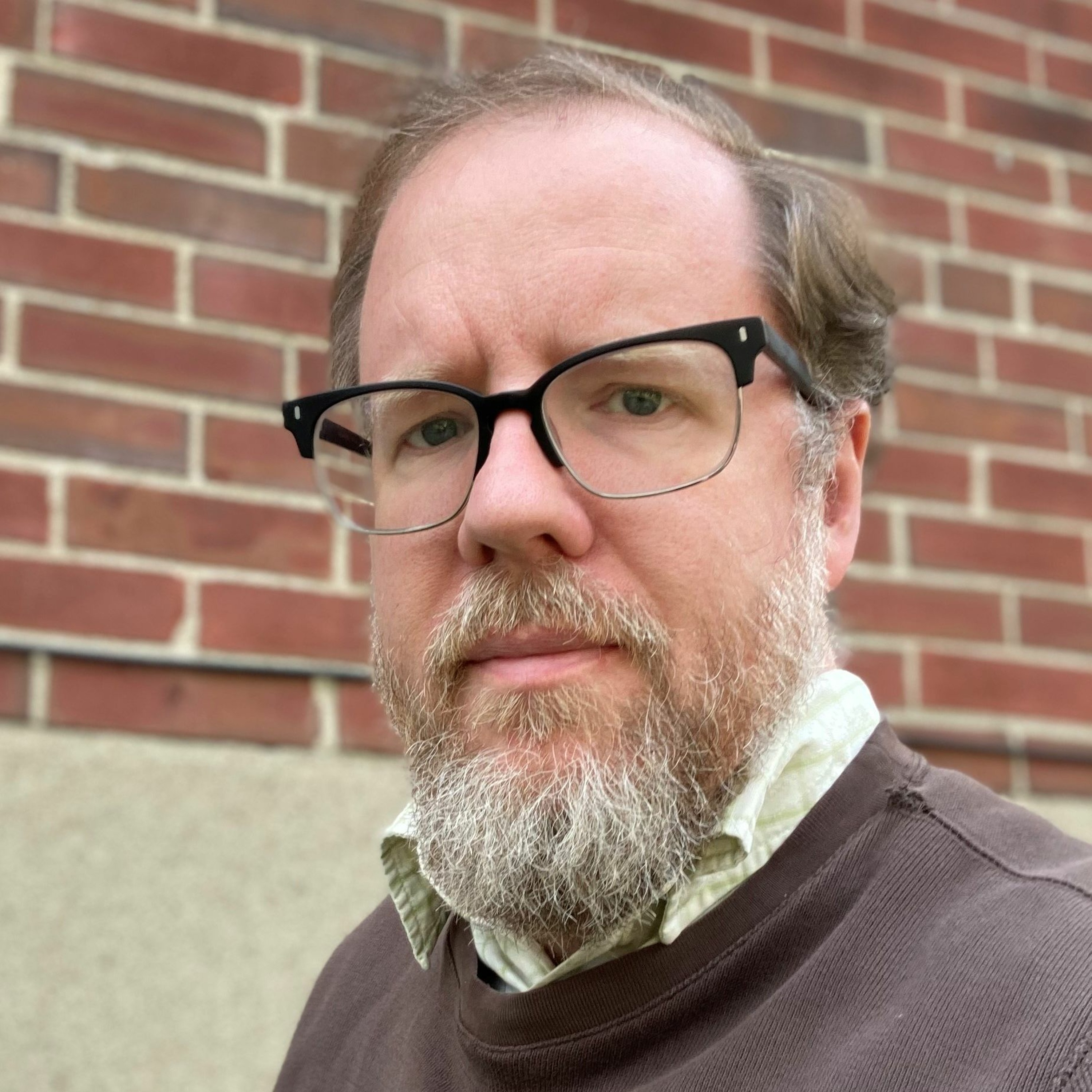
Growing Closer to God Through Sacred Art with John Herreid
John Herreid is the creative mind behind a new publication from Ignatius Press called “The Catholic Home Gallery.” This stunning volume is made up of 18 works of art by contemporary Catholic artists, each of which is removable from the book and suitable for framing. The images are accompanied by short essays on the artist and their work. John is a graphic designer for Ignatius Press and a talented artist in his own right. He’s also a passionate student of art history and deeply faith filled. Host Mike Jordan Laskey asked him about how the Home Gallery came to be, and what trends he’s noticing in Catholic sacred art today. They also talked about the intersection of beauty and faith more broadly. Whether you’re a lover of sacred art or just curious about how art can help you grow closer to God, you’ll really enjoy John’s reflections. The Catholic Home Gallery: https://ignatius.com/catholic-home-gallery-chgx/ A sneak peak inside the volume: https://files.ignatius.com/Flipbooks/CHGX/index.html?_ga=2.158954554.1473659349.1689086078-1735304729.1683906951 AMDG is a production of the Jesuit Conference of Canada and the United States. www.jesuits.org/ www.beajesuit.org/ twitter.com/jesuitnews facebook.com/Jesuits instagram.com/wearethejesuits youtube.com/societyofjesus

Why We Need More Feminist Prayers with Shannon K. Evans
What makes a prayer “feminist?” Shannon Evans — author, retreat facilitator, and the spirituality and culture editor at National Catholic Reporter — is back on the pod today to reflect on exactly that question. She has a great new book out, a compilation of prayers, called “Feminist Prayers for My Daughter: Powerful Petitions for Every Stage of Her Life.” And let me assure you, this book is for everyone. Not only does it provide spiritual accompaniment, but also demands that we ask questions like: What would the Psalms have sounded like if they’d been written by women? What life experiences do we need to better integrate and lift up in our prayer? What images and understandings of God do we need now, in this moment, to better deepen our relationship with our Creator? Shannon shares her reflections on these questions, as well as insight into her own writing journey — and some hot takes mystics and why they’ll be the topic of her next book. A brief warning: There is mention of sexual abuse around minute 15 of this episode. No details are given, and the context is Shannon’s own surprise about the power of her book’s prayers in very challenging situations. We invite you to check out the show notes to find links to Shannon’s website, books and Substack. Get Shannon's book: https://bakerbookhouse.com/products/466175 Visit Shannon's site: https://www.shannonkevans.com/ Sign up for her Substack: https://shannonkevans.substack.com/?utm_source=homepage_recommendations&utm_campaign=1424232 Check out her IG: https://www.instagram.com/shannonkevans/
The Story Behind the New Synod Working Document with Professor Anna Rowlands
A vivid definition of the Catholic Church is attributed to the literary giant James Joyce: Catholic means “here comes everybody.” Never in recent history has that felt more accurate than during the current Synod on Synodality. Lots of AMDG listeners have been active in the synod, participating in this global process of spiritual conversation and consultation. The synod comprises several stages, from the listening sessions in local churches all the way to the upcoming gatherings of the Synod of Bishops in Rome in October 2023 and 2024. For the first time ever, about 20% of the voting members of the synod will be made up of lay women and men. And last week, the General Secretariat of the Synod in Rome published a 60-page document called the “Instrumentum Laboris,” which will be the basis of the work of the Synod fathers and mothers when they gather. Unlike previous Synods, this Instrumentum Laboris is not a document to be amended and approved, but a series of questions on key topics related to communion, mission and participation in the church. The document itself is an incarnation of synodality, which makes space for all participants to be heard. One of the Synod team members who collaborated on this working document is Professor Anna Rowlands, today’s guest. Anna holds the St. Hilda Chair in Catholic Social Thought and Practice at Durham University in the United Kingdom. She is a political theologian who works at the intersection of political and social theory and Christian theology. Anna is the author of an acclaimed book on Catholic Social Teaching titled “Towards a Politics of Communion: Catholic Social Teaching in Dark Times,” which was published in 2021. Anna is one of the few people on Earth who have read pretty much every word submitted to Rome from the church all over the world, so she brings an incredible wealth of experience and a truly global perspective to the conversation. Host Mike Jordan Laskey asked her how the working document was shaped and for her take on the key themes that animate it. It is fascinating to hear what most surprised her as she took in such a enormous volume of testimony from every continent. We hope Anna’s reflections will be a useful introduction for you and that you’ll have the chance to read and pray with the working document, maybe even in spiritual conversation with people in your own local community. Read the working document: https://www.synod.va/en/news/instrumentum-laboris-a-document-of-the-whole-church.html Learn more about Professor Rowlands: https://www.durham.ac.uk/staff/anna-rowlands/ AMDG is a production of the Jesuit Conference of Canada and the United States. www.jesuits.org/ www.beajesuit.org/ twitter.com/jesuitnews facebook.com/Jesuits instagram.com/wearethejesuits youtube.com/societyofjesus
Henri de Lubac, SJ: From Censored to Sainthood? with Rev. Dr. Jordan Hillebert
This past April, French bishops voted to open the sainthood cause of 20th century Jesuit theologian Henri de Lubac. If you had a time machine and went back to the 1950s and told Fr. de Lubac this news, he probably wouldn’t believe you. In those years, the church was so nervous about de Lubac’s scholarship that he was prevented from teaching theology and his books were removed from Jesuit libraries. He experienced a rehabilitation within his own lifetime and was even named a cardinal by Pope John Paul II in 1983. Host Mike Jordan Laskey has heard de Lubac’s name many times over the years, both for this theological controversy and even more importantly for the immense impact his work had on the Second Vatican Council and today’s church. But he knew pretty much nothing about him, so he invited the Rev. Dr. Jordan Hillebert on the show today to get him up to speed. Jordan Hillebert is an Anglican priest, a theologian and tutor at St Padarn’s Institute in Cardiff, Wales. He was born and raised in the United States and moved to Scotland in 2011 to pursue a PhD in theology at the University of St Andrews. His research interests include systematic theology, modern Christian thought and the theology of Henri de Lubac, whose work he has edited and authored several books on. His most recent book is called “Henri de Lubac and the Drama of Human Existence.” Mike asked Jordan to get all of us nonexperts acquainted with de Lubac’s life and work, and he did an amazing job. Jordan is clearly so intimately familiar with this great Jesuit. Jordan also shared a bit about his own vocation story and what his experience has been like as an Anglican studying a modern Roman Catholic theologian. Jordan’s book: https://undpress.nd.edu/9780268108571/henri-de-lubac-and-the-drama-of-human-existence/ Follow Jordan on Twitter: https://twitter.com/JordanHillebert www.jesuits.org/ www.beajesuit.org/ twitter.com/jesuitnews facebook.com/Jesuits instagram.com/wearethejesuits youtube.com/societyofjesus

How Young Adults’ Faith is Defying Classic Categories with Ellen Koneck
There are so many theories about why young adults are leaving the Catholic Church today. Maybe our parishes aren’t welcoming enough, or maybe they’re watering down the faith. Maybe young people are being asked to do too much to be part of the community. Or maybe they’re not being asked to do enough. Maybe they’re angry at the church’s positions on social issues. Or maybe they just drift away because they don’t find anything relevant at church. It can be challenging to offer grand, sweeping theories about young adults and the church because we’re talking about millions of people. Young adults aren’t monolithic. But there is some good quantitative and qualitative data we can work with, and today’s guest is uniquely equipped to offer some compelling arguments. Ellen Koneck is the executive director of Commonweal Magazine, the venerable Catholic journal of opinion that celebrates its 100th birthday next year. She’s an incredibly insightful writer with experience in pastoral ministry, making her an astute observer of the reasons her fellow young adults slip out the church door. She also took over her role at Commonweal after working as head writer at the Springtide Research Institute, which does some of the best statistical work on young people and the church you can find anywhere. Ellen combined her wealth of experiences and observations into a talk she gave this past April for the Catholic Common Ground Initiative in Chicago. Ellen and host Mike Jordan Laskey recently had a wide-ranging conversation on why church membership is a bad metric for measuring youth involvement in faith, why the problem of polarization might not be as crucial to address as alienation, and how Commonweal is trying to reach a new generation of readers. Watch Ellen’s talk here (starts at 30:50): https://www.youtube.com/watch?v=B6E54YDSdEY&t=4s Commonweal: https://www.commonwealmagazine.org/ Springtide Research Institute: https://www.springtideresearch.org/ AMDG is a production of the Jesuit Conference of Canada and the United States. www.jesuits.org/ www.beajesuit.org/ twitter.com/jesuitnews facebook.com/Jesuits instagram.com/wearethejesuits youtube.com/societyofjesus
Meet the New Leader of the Church’s Global Aid Network with Alistair Dutton
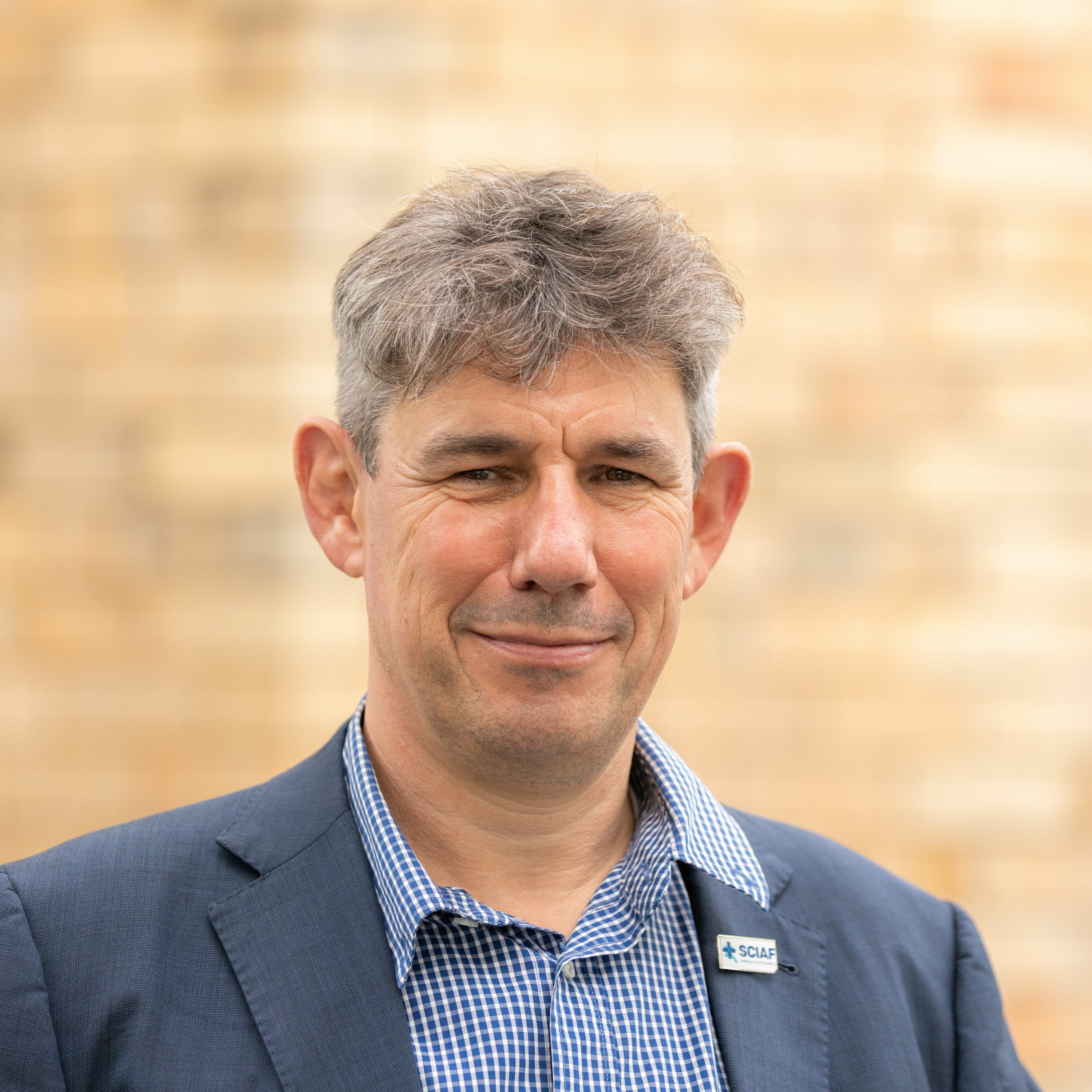
If you were going to make a list of the most inspiring things the Catholic Church is doing in the world, the work of Caritas Internationalis would be right there near the top. Caritas is a global confederation of Catholic charities working to alleviate poverty, promote social justice and advocate for the rights of the marginalized. With members organizations spread across about 200 countries and territories, Caritas is one of the biggest humanitarian networks in the world. Here in the US, the Caritas-affiliated organizations you’ve probably heard of are Catholic Charities, which serves people domestically, and Catholic Relief Services, which works overseas. In Canada, the Caritas organization is called Development and Peace. Today’s guest is the brand-new secretary general of Caritas, Alistair Dutton. He was just sworn in last week and elected a few weeks before that. Alistair had been serving as the director of Caritas’ agency in Scotland, which is called SCIAF. He will take over leadership of Caritas at a pivotal time. Last year, Pope Francis removed Caritas’ top leaders due at least in part to low staff morale. Host Mike Jordan Laskey asked Alistair what he hopes to do in his first weeks and months as secretary general to help promote healing within the organization. Alistair also discussed the work of SCIAF and some of the most inspiring humanitarian projects he has seen around the world, plus why Catholics ought to care about challenges those on the margins are facing both at home and abroad. Finally, as Alistair was a Jesuit himself for five years, he talked about how his formation in Ignatian spirituality influenced his life path and inspires him today. Learn more about Alistair and his election: https://www.vaticannews.va/en/vatican-city/news/2023-05/alistair-dutton-elected-new-secretary-general-caritas.html Caritas Internationalis: https://www.caritas.org/ SCIAF: https://www.sciaf.org.uk/ AMDG is a production of the Jesuit Conference of Canada and the United States. www.jesuits.org/ www.beajesuit.org/ twitter.com/jesuitnews facebook.com/Jesuits instagram.com/wearethejesuits youtube.com/societyofjesus
More Jesuit Saints Not Named Ignatius with Casey Beaumier, SJ
There’s always the temptation for religious orders to lionize their founder. To point to a single person and say, “There! That’s the way to live the Christian life! Just do what they did.” Despite the number of parishes and programs and centers named for Ignatius of Loyola, the man himself was pretty resolute on the need to have your own experience of God. His experience was exactly that: his experience. The unique way God was at work in his life. Ignatian spirituality and the Spiritual Exercises are gifts to us so that we can come to encounter God in our own way. So, we can look to Ignatius himself for inspiration. But as we should expect, the Ignatian tradition – and the Society of Jesus – has a vast array of diverse and fascinating figures. Saints and blessed, examples we can look to from the very first days of the Society to the present. Look to Ignatius, yes, but look also to the countless other sources of inspiration for living the Christian life. To help us do exactly this, the Institute for Advanced Jesuits Studies at Boston College has published a new, wonderful book: “Jesuit Saints and Blesseds: Spiritual Profiles.” The book traces the history of the Society through the lens of its holy people and is a companion for us as we explore our own paths to holiness. Back again on the podcast to talk about the book and Jesuit saints is Fr. Casey Beaumier, a Jesuit and the director of the Institute for Advanced Jesuits Studies. The conversation spans such important topics from which Jesuit saints are most inspirational in sustaining one’s vocation to which Jesuit saints most deserve an academic building named after them. (Hint: The answer is Joseph Pignatelli, and if you want to read up on him, there’s a link below where we’ve also included a link to the book and the Institute.) Learn about Joseph Pignatelli, SJ: https://www.jesuits.org/stories/what-joseph-pignatelli-sj-teaches-us-about-living-in-isolation/ Buy the book: https://jesuitsources.bc.edu/jesuit-saints-and-blesseds-spiritual-profiles/ About the Institute: https://www.bc.edu/content/bc-web/centers/iajs.html
What You've Never Considered About Jesus with Joe Tetlow, SJ
Often in the story of St. Ignatius of Loyola, we zero in on the “cannonball moment.” It’s the instant in Ignatius’ story when everything changes—even if the would-be saint hasn’t yet fully realized it. But even more important than that war wound is the eleven months that follow, that long, tedious period of recovery and reflection and reading. It’s then that Ignatius encounters a book on Jesus Christ, and through that book, the God of Jesus Christ, the God who had been loving him all along—and speaking to him through his desires and experiences. That’s the moment in the Ignatian tradition that best frames today’s conversation. Our guest is Jesuit Fr. Joe Tetlow, currently the director of Montserrat Jesuit Retreat House in Lake Dallas, TX and the author of the new book, “Considering Jesus: The Human Experience of the Redeemer.” The title speaks for itself. Fr. Tetlow’s book is an opportunity to pray with Jesus’ own experiences, to see how those experiences speak to and inspire us. You’ll hear, too, how Fr. Tetlow’s own experiences shape his writing and retreat work—and can guide us in our own daily lives. You can get your own copy of Fr. Tetlow’s new book—or one of his many others—by checking out the links below. https://store.loyolapress.com/considering-jesus https://store.loyolapress.com/you-have-called-me-by-my-name https://store.loyolapress.com/always-discerning
Why Catholics Should Watch TV’s “Lodge 49” with Creator Jim Gavin
“Lodge 49,” a comedy-drama TV series that ran on the channel AMC for two seasons, is about an ex-surfer named Dud (Wyatt Russell) who’s drifting through life after the loss of his father and the closing of his family’s pool supply store. He stumbles into a rundown old fraternal lodge belonging to a group called the Order of the Lynx. (Think of the freemasons or the Benevolent and Protective Order of Elks.) At the Lodge, he meets a luminous knight of the order named Ernie (Brent Jennings) who’s also a plumbing salesman. Ernie welcomes the much younger Dud with open arms. And so begins host Mike Jordan Laskey’s favorite onscreen friendship in television history, these two guys of wildly different backgrounds and personalities hanging out and having some truly wild adventures together. Because running alongside this story of friendship and community in the face of economic downturn and social erosion is the mysterious legend of the Order of the Lynx itself, which is centered on some sort of alchemical philosophy that may or may not be true. Mix all of its ingredients together and “Lodge 49” is one of the strangest, most beautiful works of art you can find on television or anywhere else. The wildly original creative mind behind “Lodge 49” is Jim Gavin, today’s guest. A writer, Gavin published an acclaimed collection of short stories called “Middle Men” in 2013 before making the transition to TV. Gavin grew up in an observant Catholic family and went to Catholic school all the way through his college years at the Jesuit Loyola Marymount University in Los Angeles. Both the show and the book are shot through with Gavin’s Catholic imagination, calling to mind work by other Catholic and lapsed-Catholic authors like Walker Percy, Don DeLillo, and George Saunders as we meet wounded characters searching for meaning and mercy. Mike asked Jim about his Catholic background and its influence on his work. They also talked about the current writers’ strike in Hollywood, which Jim is participating in. Watch “Lodge 49” on Hulu: https://www.hulu.com/series/lodge-49-5061e151-c887-4e29-9e13-c1b48e392123 Read “Middle Men”: https://www.amazon.com/Middle-Men-Stories-Jim-Gavin/dp/1451649347 AMDG is a production of the Jesuit Conference of Canada and the United States. www.jesuits.org/ www.beajesuit.org/ twitter.com/jesuitnews facebook.com/Jesuits instagram.com/wearethejesuits youtube.com/societyofjesus
Centering Women’s Leadership in the Church with Phyllis Zagano
As you probably know, the global Catholic Church is in the middle of a three-year synod process on the topic of synodality. The synod has featured thousands of listening sessions with the faithful all over the world, the biggest consultation process in the history of the church. Maybe you’ve been involved in one or more of these meetings yourself. One of the key themes that has emerged again and again in the reports on these meetings is women’s leadership in the church. Here’s how the document synthesizing the synod process in the United States puts it: “…there was recognition for the centrality of women’s unparalleled contributions to the life of the Church, particularly in local communities. There was a desire for stronger leadership, discernment, and decision-making roles for women – both lay and religious – in their parishes and communities. ‘People mentioned a variety of ways in which women could exercise leadership, including preaching and ordination as deacon or priest. Ordination for women emerged not primarily as a solution to the problem of the priest shortage, but as a matter of justice.’” And if you’re going to reflect on women’s leadership in the church, you just have to talk to Dr. Phyllis Zagano. Dr. Zagano is a scholar based at Hofstra University in New York and is one of the world’s leading authorities on the past and present of women’s leadership in the Catholic church. Host Mike Jordan Laskey invited her on the show to talk about her new book, titled “Just Church: Catholic Social Teaching, Synodality, and Women,” which was just published by Paulist Press. They discussed the history of women serving as deacons in the Catholic Church, plus some ways the church might better empower women today. Learn more about Dr. Zagano: https://sites.hofstra.edu/phyllis-zagano/ Her new book: https://www.amazon.com/Just-Church-Catholic-Teaching-Synodality/dp/0809156539 AMDG is a production of the Jesuit Conference of Canada and the United States. www.jesuits.org/ www.beajesuit.org/ twitter.com/jesuitnews facebook.com/Jesuits instagram.com/wearethejesuits youtube.com/societyofjesus
ChatGPT, Social Media and Our Souls with L.M. Sacasas
Most of us probably don’t stop to reflect on our use of technology and how the devices and apps we use affect our lives and society as a whole. What is it doing to our brains and our souls that we reach for our smartphones mindlessly hundreds of times a day? What do we say on social media that I wouldn’t say in real life, and how does our behavior online make the world better – or, more likely, worse? Today’s guest, L.M. Sacasas, is an incredible thinker and writer who has devoted his career to asking big questions of our technology and what it’s doing to our communal life and individual lives. Sacasas has a great Substack newsletter called “The Convivial Society” that is host Mike Jordan Laskey’s favorite thing to read these days. Sacasas has this amazing ability to read and absorb scholars from the past like Marshall McLuhan, Neil Postman, Hannah Arendt and the Jesuit literary theorist Walter Ong and apply their arguments to our very different media environment today. In this conversation, Sacasas shares his thoughts on AI chat-bots like ChatGPT and Microsoft’s new Bing and Google Bard. He and Mike also talk about social media and smartphones and artificial light and time and what countercultural roles faith communities might play in offering venues for incarnational, authentic community. Subscribe to “The Convivial Society”: https://theconvivialsociety.substack.com/ Read L.M. Sacasas on Fr. Walter Ong, SJ: https://www.thenewatlantis.com/publications/the-inescapable-town-square Listen to L.M. Sacasas’ interview on the Ezra Klein Show: https://www.nytimes.com/2021/08/03/podcasts/transcript-ezra-klein-interviews-lm-sacasas.html AMDG is a production of the Jesuit Conference of Canada and the United States. www.jesuits.org/ www.beajesuit.org/ twitter.com/jesuitnews facebook.com/Jesuits instagram.com/wearethejesuits youtube.com/societyofjesus
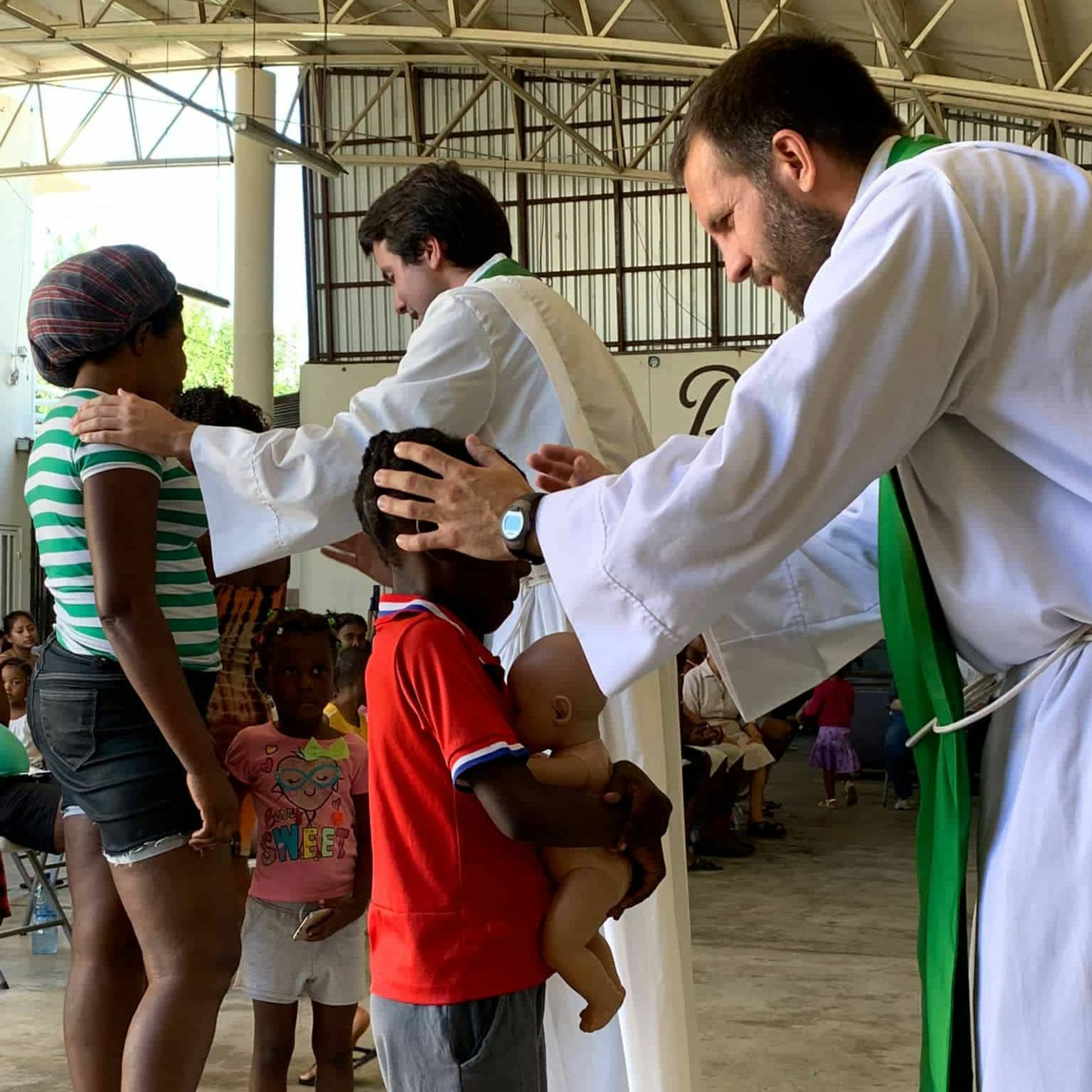
Special Episode: The Jesuit Border Podcast Welcomes Fr. Jim Martin, SJ
In 2021, two Jesuits who had just been ordained priests were missioned to serve migrant communities on the U.S.-Mexico border in Brownsville, Texas. Soon after they arrived, Father Brian Strassburger and Father Louie Hotop agreed that there were so many incredible people and stories they were encountering that they just had to share them with the world through a podcast. They asked our communications team at the Jesuit Conference for help producing it, and the result has been one of the most inspiring podcast series you’ll ever hear. It's called the Jesuit Border Podcast and we are thrilled to be featuring one of their recent episodes here on our AMDG feed. In this episode, Fr. Louie and Fr. Brian shift from interviewers to interviewees. Asking the questions this time around is the great Jesuit author Fr. Jim Martin, who leads Louie and Brian through an Ignatian examen of their ministry in Brownsville over the past two years. It’s a fabulous interview with so much vulnerability and insight. Be sure to subscribe to the Jesuit Border Podcast wherever you listen. Jesuit Border Podcast, plus study guides: https://thejesuitpost.org/2021/11/the-jesuit-border-podcast/ AMDG is a production of the Jesuit Conference of Canada and the United States. www.jesuits.org/ www.beajesuit.org/ twitter.com/jesuitnews facebook.com/Jesuits instagram.com/wearethejesuits youtube.com/societyofjesus

For the Love of God, Read! with Jessica Hooten Wilson
For many of you listening, the idea of spiritual reading is probably a familiar concept. You might have a book or two on your bedside that you pray with each night: something on the lives of the saints or new insights into old spiritual practices. Next to that pile of spiritual books might be a bible, and each day you read a passage, slowly, prayerfully. It's not hard to look for the Holy Spirit at work in books you find in the spirituality section of your local bookstore. But what about in the other sections: fiction, sci-fi, romance and memoir? Is the Holy Spirit at work in those books, too? Our guest today, Dr. Jessica Hooten Wilson, says yes – to a degree. Her newest book, “Reading for the Love of God: How to Read as a Spiritual Practice,” challenges us to look at all our reading through the lens of spirituality. How is God inviting us deeper into our vocation, deeper into the mysteries of creation through the texts we spend our time with? Jessica is the inaugural Visiting Scholar of Liberal Arts at Pepperdine University in Malibu, California. She previously taught at the University of Dallas. She’s the author of several other books that explore this topic of saints, sinners and texts — both those considered holy and those less so. She speaks around the world on topics as varied as Russian novelists, Catholic thinkers and our topic today: a Christian approach to reading. As you listen to this conversation and reflect on your own reading habits, consider Ignatius of Loyola. He, too, provides us with a helpful approach to reading. Recall that during his recovery from his cannonball wound, he wanted to read books on knights and courtly romance. Instead, he was given what we would consider spiritual reading: a book on saints and one on the life of Christ. God spoke to Ignatius in part through these texts; they were pivotal to his conversion. Even so, Ignatius goes on to insist that God is to be found in all things — not only the spiritual and religious texts but every aspect of life. How might you approach your own reading through this Ignatian lens? What might God reveal? Learn more about Jessica's work at her website: https://jessicahootenwilson.com/ And check out her new book: http://bakerpublishinggroup.com/books/reading-for-the-love-of-god/407190
Fr. Ed Dowling, SJ: AA's Spiritual Sponsor with Dawn Eden Goldstein
Fr. Ed Dowling is a Jesuit priest you might never have heard of before. After hearing his story, you might find yourself wondering how this holy man isn’t more renowned. Thanks to a new book by Dawn Eden Goldstein, Fr. Ed is finally getting his due. Goldstein is the author of “Father Ed: The Story of Bill W’s Spiritual Sponsor,” which is the first biography of Father Edward Dowling, SJ, a Jesuit from St. Louis who became a close friend and spiritual mentor to Bill Wilson, the co-founder of Alcoholics Anonymous. Although not an alcoholic himself, Fr. Ed had a deep understanding of the twelve-step program and its spiritual principles. He helped Bill Wilson overcome his depression and deepen his relationship with God. He also devoted his ministry to helping people in recovery from various addictions and afflictions, as well as promoting social justice and ecumenism. The book is based on extensive research and interviews Dawn conducted with people who knew Fr. Ed and Bill Wilson. It reveals the remarkable story of how these two men from different backgrounds and faiths forged a bond that changed their lives and the lives of millions of others. It also shows how Fr. Ed’s Jesuit spirituality influenced the development of AA and its legacy. Father Ed is an essential read for anyone interested in the history and spirituality of Alcoholics Anonymous, the role of Jesuits in American culture, and the power of friendship and grace in overcoming personal struggles. Host Mike Jordan Laskey asked Dawn to share some of the most fascinating things she learned about Fr. Ed, and how his ministry might inform the church’s work with those in recovery today. Read an exclusive excerpt from the book about the time Bill W. met the St. Louis Jesuits at Jesuits.org/dowling. Dawn’s book: https://www.amazon.com/Father-Ed-Story-Spiritual-Sponsor/dp/1626984867 Follow Dawn on Twitter: https://twitter.com/DawnofMercy AMDG is a production of the Jesuit Conference of Canada and the United States. www.jesuits.org/ www.beajesuit.org/ twitter.com/jesuitnews facebook.com/Jesuits instagram.com/wearethejesuits youtube.com/societyofjesus

Embodied Ritual and Radical Solidarity with Susan Bigelow Reynolds
When Susan Bigelow Reynolds was studying theology in grad school at Boston College, she saw an advertisement for free housing at St. Mary of the Angels Church in the Boston’s Roxbury neighborhood. In exchange for the place to live, she’d have to provide a few hours of parish work per week. That seemed like a good deal, so she moved right in. Little did she know that her decision would come to shape her academic focus, lead to six years of ethnographic research in the parish, and bring about the publication of her incredible new book, which is titled “People Get Ready: Ritual, Solidarity, and Lived Ecclesiology in Catholic Roxbury.” Throughout her research, both during her time living at the parish and in the years since, Susan explored how a diverse community of Black, Caribbean, Latin American and Euro-American Catholics at St. Mary of the Angels Church have constructed rituals of solidarity as a way of building bridges across difference. She argues for a retrieval of Vatican II’s notion of ecclesial solidarity as a basis for the mission of the local church in an age of migration, displacement and change. Susan’s book is a must-read for a few reasons. For one, it’s a beautifully written volume that combines memoir, theology and ethnography in a fascinating yet accessible way. Further, “People Get Ready” is essential for anyone interested in American urban Catholicism at all, especially in light of the challenges and opportunities posed by cultural diversity, social justice issues and parish mergers and closures. Finally, the story of this parish community is a powerful testament to how ritual can foster friendship, power, peace and survival amid suffering and marginality. “People Get Ready”: https://www.amazon.com/People-Get-Ready-Solidarity-Ecclesiology/dp/1531502016 Learn more about Susan: https://candler.emory.edu/faculty/profiles/reynolds-susan.html Read Susan in Commonweal: https://www.commonwealmagazine.org/ways-of-the-cross AMDG is a production of the Jesuit Conference of Canada and the United States. www.jesuits.org/ www.beajesuit.org/ twitter.com/jesuitnews facebook.com/Jesuits instagram.com/wearethejesuits youtube.com/societyofjesus
The Passion Like You've Never Heard it Before with J.J. Wright
There’s nothing better than the Easter Triduum – from the Mass of the Lord’s Supper on Holy Thursday through the bitter, heavy celebration of the Lord’s Passion on Good Friday to the unparalleled drama of the Easter fire and baptizing new Christians at the Vigil on Saturday night. The one big danger this time of year: We’ve heard the stories of Christ’s suffering, death and resurrection so many times now that it’s easy for them to go in one ear and out the other. To paraphrase the words of T.S. Eliot, we might have the experience but miss the meaning. Sometimes, approaching a familiar story like the Passion in a new way can make all the difference. And today’s guest has just released a new musical project that does just that. J.J. Wright is a composer, pianist and director of the Notre Dame Folk Choir. This Lent season, J.J. and the Folk Choir, in collaboration with professional musicians, writers and producers, released “The Passion.” The project is a 95-minute, fully--staged production that depicts the disciples on Holy Saturday as they retell the events of Jesus’ last days, from the anointing at Bethany to Golgotha. Using contemporary musical forms to get into the story in a new way really made host Mike Jordan Laskey pray and reflect with the Passion narratives with new depth and attention. Now Notre Dame isn’t a Jesuit university, of course, but the project is an extremely powerful example of Ignatian imaginative prayer: The work does a great job of really bringing you into the scene yourself. Mike asked J.J. about how the work came to be and how putting together something so huge and ambitious affected the way J.J. hears the Passion story himself. You’ll hear some of the music included in the episode during our conversation. You can also find and listen to “The Passion” wherever you get music, including services like Spotify. Learn more about J.J. Wright: https://jjwrightmusic.com/ Learn more about the Notre Dame Folk Choir: https://folkchoir.nd.edu/ Learn more about “The Passion”: https://news.nd.edu/news/notre-dame-folk-choir-to-release-new-album-on-christs-passion-on-ash-wednesday/ AMDG is a production of the Jesuit Conference of Canada and the United States. www.jesuits.org/ www.beajesuit.org/ twitter.com/jesuitnews facebook.com/Jesuits instagram.com/wearethejesuits youtube.com/societyofjesus
Saint Joseph University: A Beacon of Hope in Lebanon with Fr. Salim Daccache, SJ
One of the most interesting Jesuit universities in the world is Saint Joseph University in Beirut, Lebanon. Founded in 1875, Saint Joseph is the only Jesuit university in the Arab World. On its incredibly impressive list of alumni are seven presidents of Lebanon. The former Superior General of the Jesuits, Fr. Peter Hans Kolvenbach, earned his doctorate there and then joined the faculty. Saint Joseph has a medical and a law school and five total campuses in all in the capital city. In the middle of a religiously diverse country, it brings together 12,000 students from all backgrounds, including large communities of both Christian and Muslim students. As they carry out their essential mission, Saint Joseph is facing unimaginable challenges due to multiple intertwined crises plaguing the country of Lebanon right now. On August 4, 2020, a historically powerful explosion at the Port of Beirut killed over 200 people and left about 300,000 homeless. All five of Saint Joseph’s campuses were damaged by the blast. This instability worsened an already-dire economic crisis. A few weeks ago, host Mike Jordan Laskey talked to the university’s president, Fr. Salim Daccache, SJ, about the university and how it’s responding to today’s challenges. Fr. Daccache has led Saint Joseph’s since 2012 and earned his undergraduate degree there in 1973. A scholar and an experienced administrator, Fr. Daccache has such a clear passion for the school and is dedicated to doing whatever he can to support students, faculty and staff. Against this backdrop, the university is asking for donations in support of scholarships. Our listeners in the United States can make tax-deductible donations via a PayPal link on our website, which you can find at https://www.jesuits.org/stories/the-only-jesuit-university-in-the-arab-world-needs-our-help/. AMDG is a production of the Jesuit Conference of Canada and the United States. www.jesuits.org/ www.beajesuit.org/ twitter.com/jesuitnews facebook.com/Jesuits instagram.com/wearethejesuits youtube.com/societyofjesus
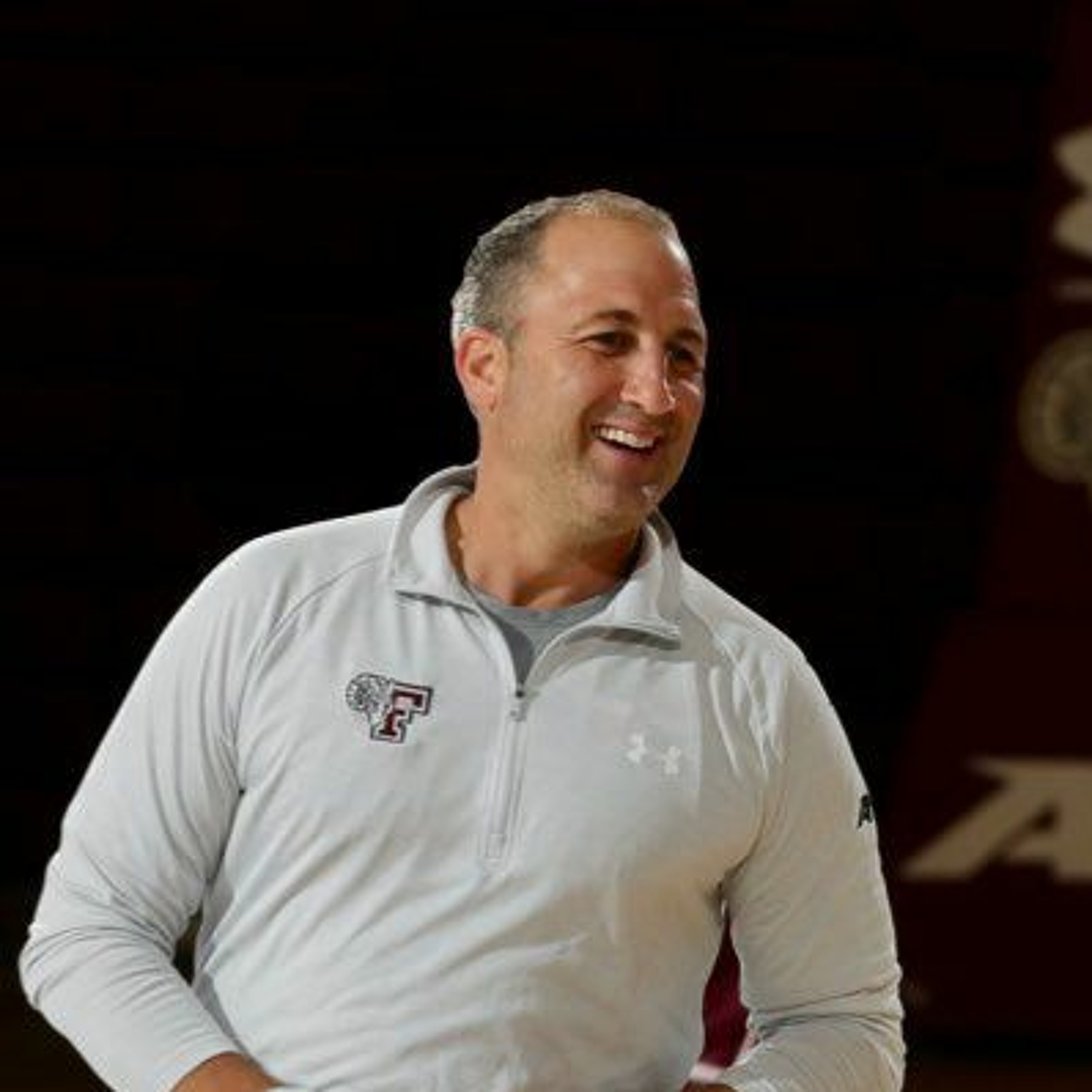
Jesuit March Madness with Coach Keith Urgo
Here in the American Jesuit universe, we’re in two parallel holy seasons at the same time: Lent and March Madness. Nine Jesuit teams between the women’s and men’s tournaments are in the Big Dance this year, and you can read all about them on our website at Jesuits.org/basketball. Today’s guest didn’t quite make it to the NCAA tournament this year, but he led one of the biggest success stories in all of college basketball this season. And this was his first year as a head coach at any level. Keith Urgo is the head coach of the Fordham Rams men’s team – and the Atlantic 10 Coach of the Year. Fordham put up a record of 25 wins and 8 losses this season; the last time Fordham won this many games in a season was all the way back in 1991. Coach Urgo has deep Jesuit roots: He went to Gonzaga College High School in Washington, DC, then played basketball and lacrosse at Fairfield University. After college, he spent time working with a nonprofit organization called PeacePlayers, which uses basketball to bring people together in some of the most divided countries on Earth. He’s a fascinating guy and you’ll want to keep your eye on him in future years. In the second half of the show, we’re re-running one of our favorite basketball segments we’ve ever done here on the show. A couple years ago, host Mike Jordan Laskey talked to the author John Gasaway, who writes on college hoops for ESPN and wrote a book on Catholic college basketball called “Miracles on the Hardwood.” At the end of that conversation, John and Mike took turns drafting the greatest men’s players in Jesuit basketball history, building fantasy teams who will only ever compete against each other in our imaginations. Don’t forget to root for Creighton, Marquette, Gonzaga, Saint Louis University, Holy Cross and Xavier this week. Learn more about PeacePlayers: https://peaceplayers.org/ AMDG is a production of the Jesuit Conference of Canada and the United States. www.jesuits.org/ www.beajesuit.org/ twitter.com/jesuitnews facebook.com/Jesuits instagram.com/wearethejesuits youtube.com/societyofjesus
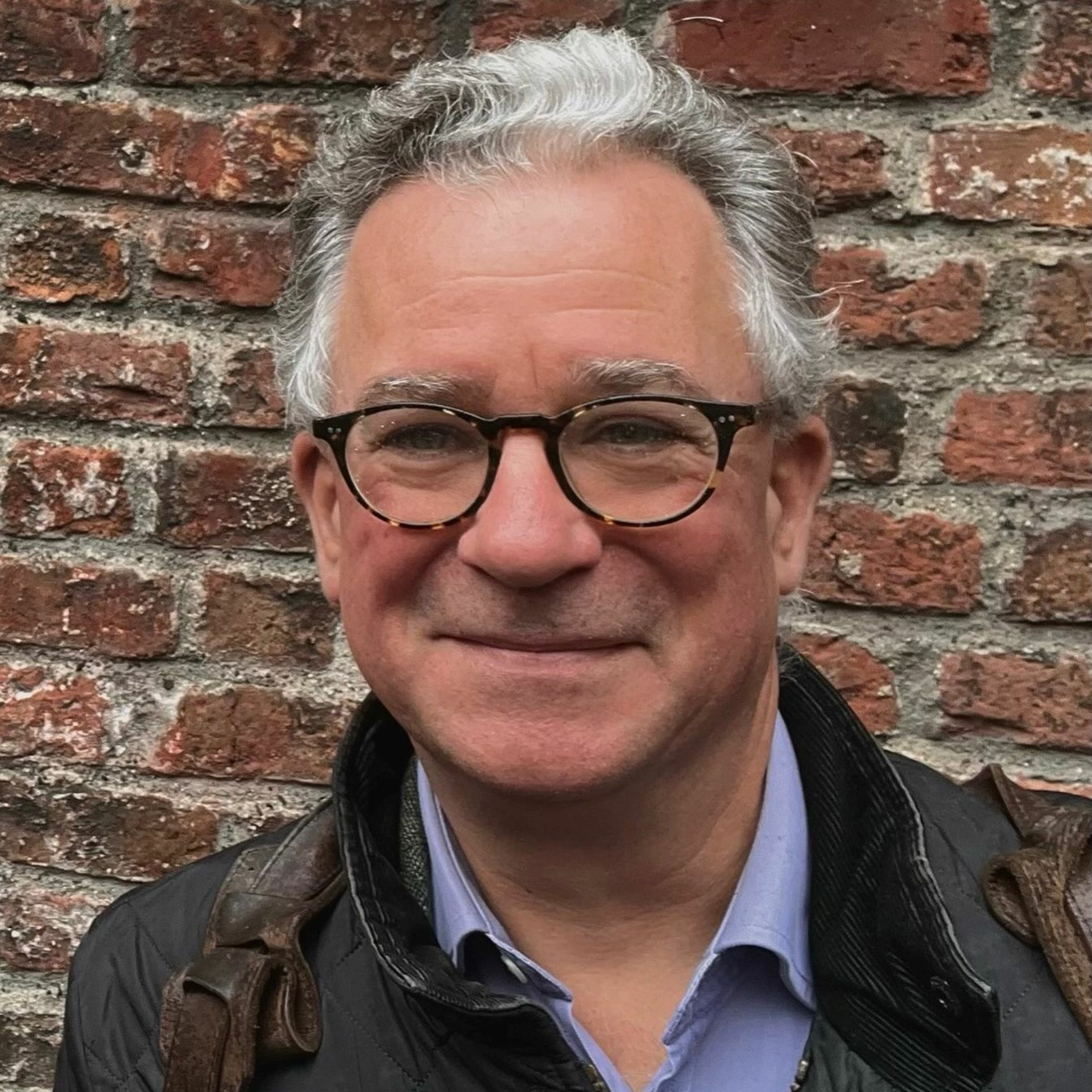
Pope Francis' 10 Years of Leadership with Austen Ivereigh
Ten years ago, on March 13, 2013, Cardinal Jorge Bergoglio was elected Pope. Do you remember those first hours and days? We found out he was from Argentina, the first Pope from the Global South. Then we heard his name would be Francis the First…or maybe just Francis? Then we saw him step to the window above St. Peter’s Square, looking fairly calm but probably also a bit overwhelmed, and he asked the pilgrims thronging below to pray for him before he offered his first papal blessing. He seemed humble and warm. Then there were other stories of his humility: he checked himself out of the hotel he’d been staying in. He celebrated his first Holy Thursday Mass washing the feet of inmates at a prison. Since then, it’s an understatement to say it’s been quite a decade for the church and the world. Host Mike Jordan Laskey wanted to reflect on the first 10 years of Francis’ papacy. What have the major themes been? How has the church changed – and not changed? Where might we be headed? Today’s guest today is perhaps the most qualified person to talk about these questions in the English-speaking world. Austen Ivereigh is a journalist, author and commentator who has written two books about Pope Francis: “The Great Reformer” and “Wounded Shepherd.” He also collaborated with the Pope himself on a book called “Let Us Dream”, which charts a path forward from the Covid pandemic. In this conversation, Austen offers his characteristically sharp insight on everything Pope Francis; few people on the planet have such a strong understanding of the Holy Father’s heart and mind. Learn more about Austen: https://www.austeni.org/ His America Magazine piece on the 10-year anniversary: https://www.americamagazine.org/faith/2023/02/16/francis-revolution-decade-244685 AMDG is a production of the Jesuit Conference of Canada and the United States. www.jesuits.org/ www.beajesuit.org/ twitter.com/jesuitnews facebook.com/Jesuits instagram.com/wearethejesuits youtube.com/societyofjesus

Two Best Picture Nominees Catholics Should See with Alissa Wilkinson
The Academy Awards are coming up March 12th, so we wanted to recommend a couple of Oscar-nominated movies that fans of the podcast might enjoy. And there was one person host Mike Jordan Laskey was hoping to interview for this episode: his favorite film critic of all time, Alissa Wilkinson from the website Vox, where she’s the senior culture writer. Nobody writes on the intersections of cinema and theology and spirituality like Alissa does. Over and over again, she finds angles that no other critics see. Alissa writes essays that are profound, funny, moving, and eminently readable. She joined Mike to talk about two Best Picture nominees: “Women Talking” and “The Banshees of Inisherin.” Alissa talked about both films and what makes them especially compelling for a Catholic audience. She also discussed what goes into the art of criticism more broadly, and what she thinks about the current trend of religious communities depicted on the big screen. Alissa on "Women Talking": https://www.vox.com/culture/23345084/women-talking-review-tiff-augustine Alissa on "The Banshees of Inisherin": https://www.vox.com/culture/23413305/banshees-inisherin-review-history-civil-war Alissa's newsletter: https://wilkinson.substack.com/ AMDG is a production of the Jesuit Conference of Canada and the United States. www.jesuits.org/ www.beajesuit.org/ twitter.com/jesuitnews facebook.com/Jesuits instagram.com/wearethejesuits youtube.com/societyofjesus
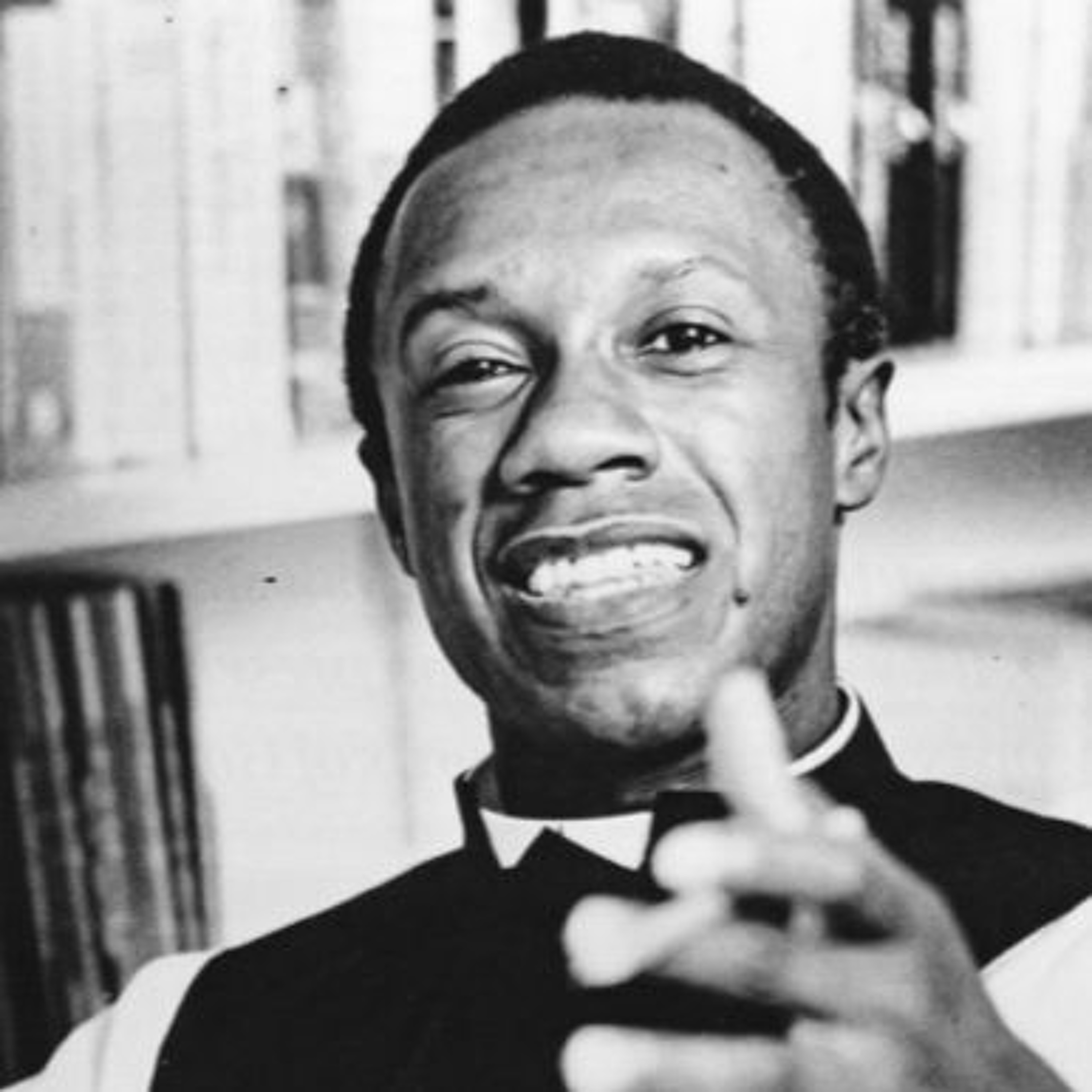
Why You Should Meet Fr. Clarence Rivers
You may have never heard the name Fr. Clarence Rivers before today. Fr. Rivers was a renown composer and liturgist, among other things, and he was helping people better understand—better see themselves—in the liturgy long before the Second Vatican Council made such actions the norm. Fr. Rivers was also the first Black priest ordained in the Archdiocese of Cincinnati, and his own heritage and lived experience greatly informed his approach to the liturgy and to his own priestly ministry. But Fr. Rivers is slowly being lost to the relentless march of time. His legacy is interwoven in so much of how we understand Catholic liturgy today, and yet his name is far from our lips. Fortunately, our guests today—Emily Strand and Eric Styles—host their own podcast, and it’s called Meet Father Rivers. Emily has taught religion at the collegiate level for more than 15 years, and currently does so at Mt. Carmel College in Ohio. She is the author of two books on Catholicism and has published several essays on religious and literary themes in popular culture in peer-reviewed publications. Emily is also a life-long Church musician, serving her parish as a cantor, accompanist and ensemble director, and serving the National Association of Pastoral Musicians as Chair of the Forum on Communication. Eric Styles has served as the Rector of Carroll Hall, an intentional undergraduate residential community at the University of Notre Dame, since 2016. He holds degrees from the University of Cincinnati and Loyola University Chicago. Eric worked as a Parish Liturgy Coordinator at Saint Benedict the African Catholic Church in Chicago and as a House Manager for the Theatre School of DePaul University. He spent time discerning the call to religious life with the Society of Jesus, though eventually discovered that was not where God was inviting him to be. Eric remains active in the performing arts as a collaborator with Afro House, a Baltimore based music driven performance art ensemble. Eric writes about theology, liturgy, and contemporary culture. Both of our guests are passionate about the liturgy, deeply inspired by the legacy of Fr. Rivers and determined to help form the imagination of people of faith today. Listen to the podcast, "Meet Father Rivers:" https://podcasts.apple.com/us/podcast/meet-father-rivers/id1590237311 Learn more about Emily: https://emilystrand.liturgyandlife.com/ Photo courtesy of "Catholic Telegraph" (Cincinnati)
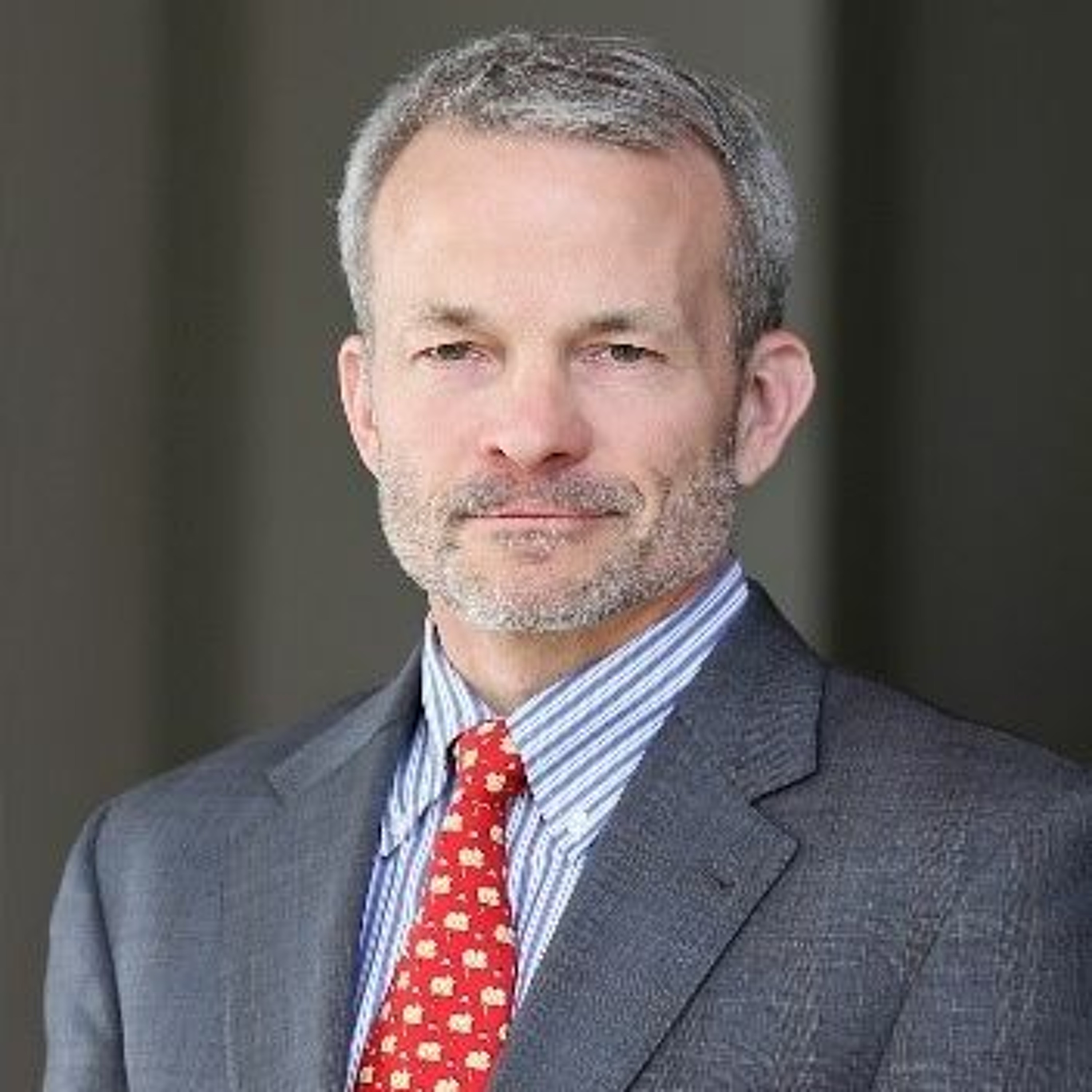
Christ's Inclusive Definition of "Neighbor" with Bill O'Keefe
Lent is just around the corner, and there are so many vivid symbols of this liturgical season. You’ve got ashes and palms and purple stuff everywhere. No Alleluias, no Glorias, no meat at the Friday fish fry. One of the best Lenten symbols is the CRS Rice Bowl, those little cardboard boxes we fill with cash to support the work of Catholic Relief Services (CRS) overseas. It’s easy to grab a Rice Bowl, fill it up, turn it in without thinking twice about where our money is going. Today’s guest can help us fill in the gaps and learn about the incredible work going on in about 100 countries around in the world on behalf of Catholics in the United States. Bill O’Keefe is CRS’ Executive Vice President for Mission and Mobilization. He oversees the agency’s efforts to build a movement of Catholics and others of good will to support CRS’ global mission and build action-oriented global solidarity with poor, vulnerable, and marginalized people around the world. These efforts include lobbying Congress and the Administration on a range of foreign policy issues and engaging U.S. Catholics in public campaigns to change U.S. foreign policy in ways that promote justice and reduce poverty overseas. Host Mike Jordan Laskey asked Bill to share some of the most inspiring things he’s seen CRS working on around the world, and how our faith inspires us to care for all who are suffering, no matter what country they live in. In the days since they recorded their conversation, we have all seen the unimaginable destruction from the earthquake in Turkey and Syria. You can visit crs.org to see how CRS and their partners are responding to the incredible amount of need in those countries. AMDG is a production of the Jesuit Conference of Canada and the United States. www.jesuits.org/ www.beajesuit.org/ twitter.com/jesuitnews facebook.com/Jesuits instagram.com/wearethejesuits youtube.com/societyofjesus
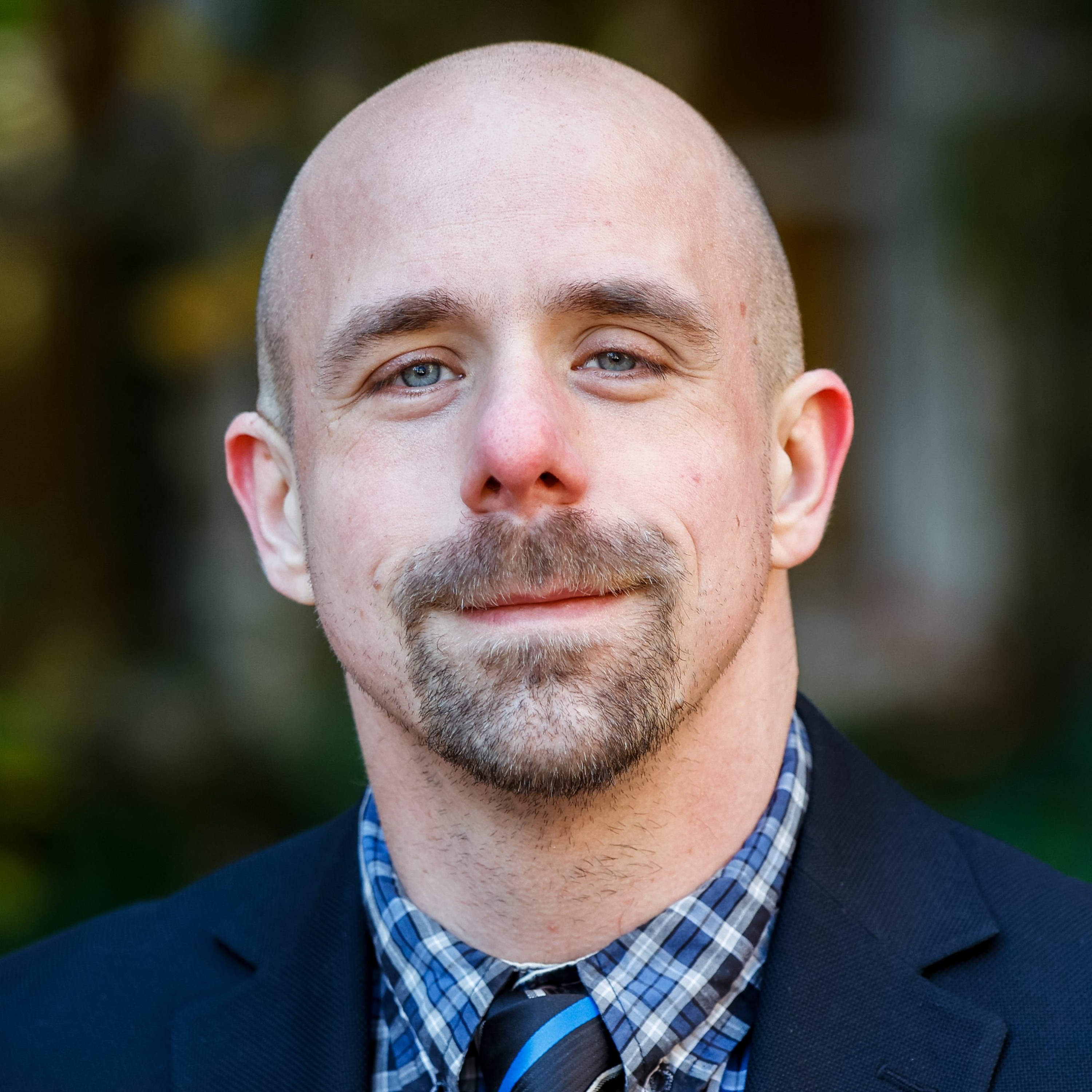
Uncovering the History of Native Boarding Schools with Researcher Nick Lewis
On this week’s AMDG, host MegAnne Liebsch talks to historian Nicholas Lewis about his research into the history of Jesuit-run boarding schools for Indigenous children. These schools were part of a larger U.S. government attempt to assimilate Indigenous peoples into white European culture from the 1820s to as late as the 1970s. Indigenous families were compelled to send their children to boarding schools, effectively stripping children of their language, culture and community. Jesuit leadership in the U.S. knew that Jesuits administered a number of such schools, but accounts varied as to how many, where they were located, and for how long. So in January of 2022, Nick was hired to examine the archives and identify some of these basic facts. His research has confirmed 24 mission locations where the Jesuits ran a boarding school for Native children, a full list of which can be found on our website and is linked below. We invited Nick on the podcast to discuss his findings and give us a broad overview of this history. ***Warning: This episode deals with trauma, as well as mentions of physical and sexual abuse. Take care while listening.*** Further resources: Our website: www.jesuits.org/native-boarding-schools Full list of Jesuit-run school locations: https://www.jesuits.org/press-release/list/ Report on boarding school funding: https://inthesetimes.com/article/catholic-church-mission-schools-investigation-treaty-ojibwe-native-people Native American Boarding School Healing Coalition: https://boardingschoolhealing.org/ Truth and healing efforts at Red Cloud Indian School: https://www.redcloudschool.org/pages/truth-and-healing Education for Extinction David Wallace Adams: https://kansaspress.ku.edu/9780700629602/ Converting the Rosebud by Harvey Markowitz: https://www.oupress.com/9780806159850/converting-the-rosebud/ Boarding School Seasons by Brenda Child: https://www.nebraskapress.unl.edu/nebraska/9780803214804/ Churches and the Indian Schools by Francis Paul Prucha: https://www.amazon.com/Churches-Indian-Schools-1888-1912-Francis/dp/0803236573
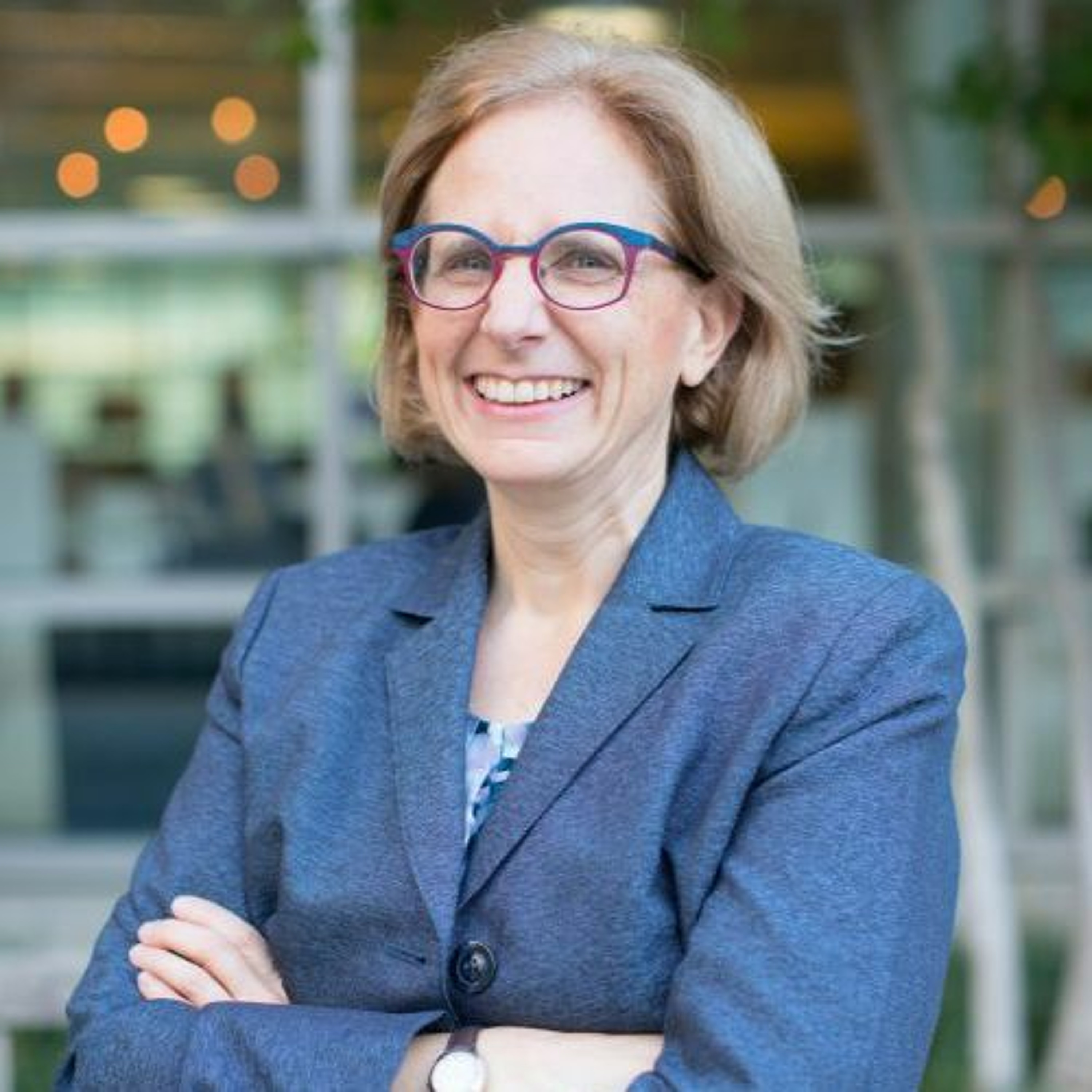
How to Overcome Polarization With Amy Uelmen
One of the big challenges in higher education today is polarization in the classroom, which of course reflects the polarization of the country at large. Professors like Dr. Amy Uelmen are trying to figure out how to encourage their students to speak and listen to each other across divides on complex social issues where there are no easy answers. Amy is a professor at the Georgetown Law Center, where she’s also a special assistant to the dean and the director of mission and ministry. Just in case that’s not enough to keep her busy, Amy is also a Senior Research Fellow at the Berkley Center on Religion, Peace and World Affairs. Host Mike Jordan Laskey asked her about her work at the intersections of faith, morality and law, and also to see if they could tease out some tips that those of us who aren’t in law school could use when trying to connect with people we disagree with on thorny issues. Amy is also a member of the Focolare Movement, a lay ecclesial movement and international organization founded in Italy by Chiara Lubich in 1943. Focolare is centered on Christ’s prayer from the Gospel “that they all may be one,” so it’s clear to see how Amy’s faith life is leading directly to her research and work in the classroom. Learn more about Amy: https://www.law.georgetown.edu/faculty/amelia-j-uelmen/ Essay on dialogue after the January 6 riot: https://canopyforum.org/2021/01/13/whither-dialogue-after-the-capitol-riot/ Learn more about Focolare: https://www.focolare.org/en/ AMDG is a production of the Jesuit Conference of Canada and the United States. www.jesuits.org/ www.beajesuit.org/ twitter.com/jesuitnews facebook.com/Jesuits instagram.com/wearethejesuits youtube.com/societyofjesus
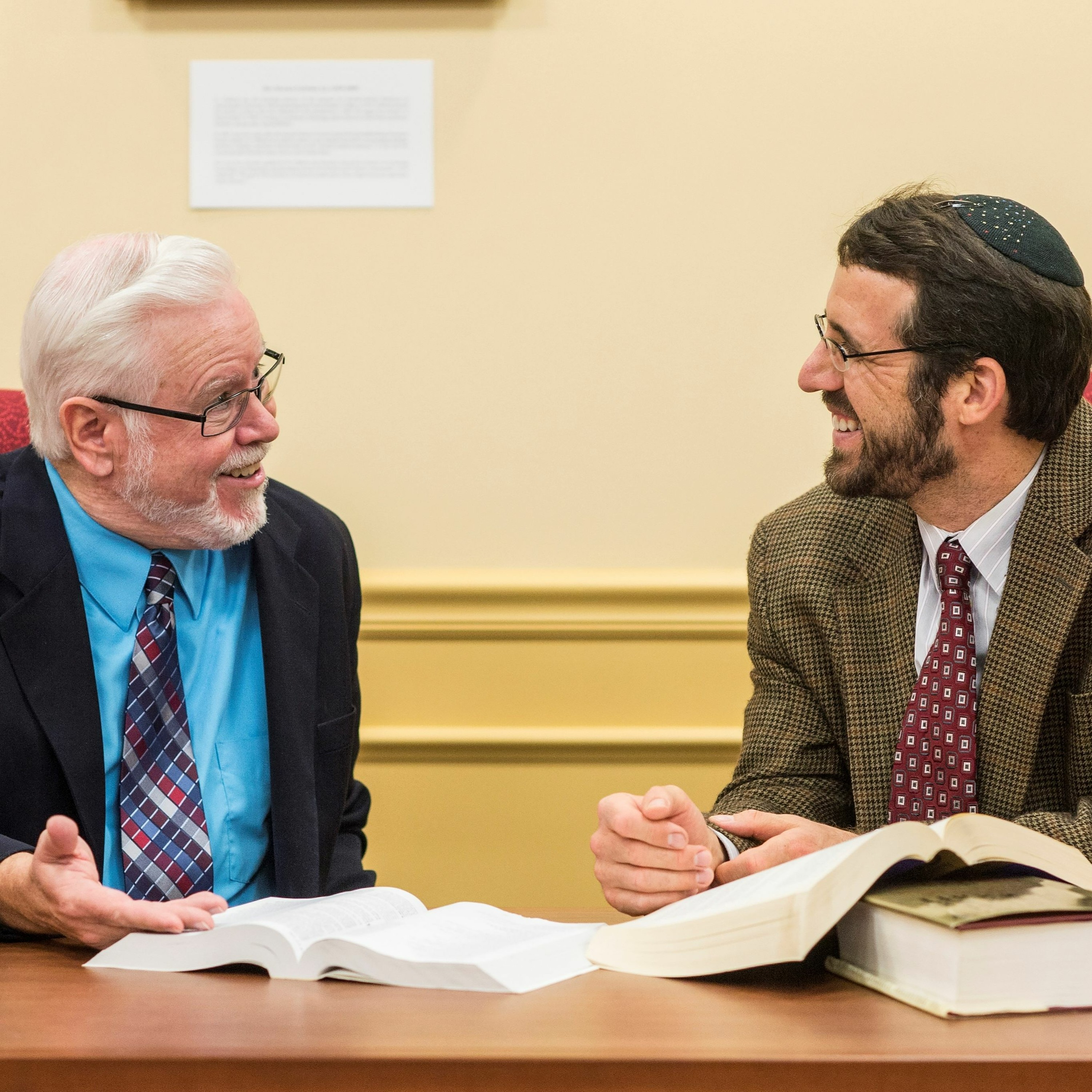
Building Bridges Between Jews and Catholics With Philip Cunningham and Adam Gregerman
A disturbing trend over the past couple of years has been the rise of antisemitism. The Anti-Defamation League, which tracks antisemitic incidents, says 2021 was the worst year in decades and that 2022 will look similar once the numbers are tabulated. We’re in a five-year upswing overall. Let’s not give any more oxygen to acts of hate. Instead, we are thrilled to be sharing this conversation host Mike Jordan Laskey recently had with Dr. Phil Cunningham and Dr. Adam Gregerman, two scholars who have devoted their careers to building bridges between Jews and Catholics. Phil and Adam lead the Institute for Jewish-Catholic Relations at Saint Joseph’s University in Philadelphia. The institute was founded in 1967 in response to the Second Vatican Council. Phil is Catholic and Adam is Jewish, and their shared leadership models the type of engagement the institute is all about. You’ll see this sort of collaboration on display throughout the episode. Mike asked them for a brief historical overview of the relationship between Catholics and Jews, and why the promulgation of the Vatican II document Nostra Aetate was such an important turning point. Adam and Phil also talked about the work they’re doing today, and how we can build relationships across religious divides without erasing each faith’s uniqueness. Institute for Jewish-Catholic Relations: https://www.sju.edu/college-arts-and-sciences/ijcr Council of Centers on Jewish-Christian Relations: https://ccjr.us/ AMDG is a production of the Jesuit Conference of Canada and the United States. www.jesuits.org/ www.beajesuit.org/ twitter.com/jesuitnews facebook.com/Jesuits instagram.com/wearethejesuits youtube.com/societyofjesus
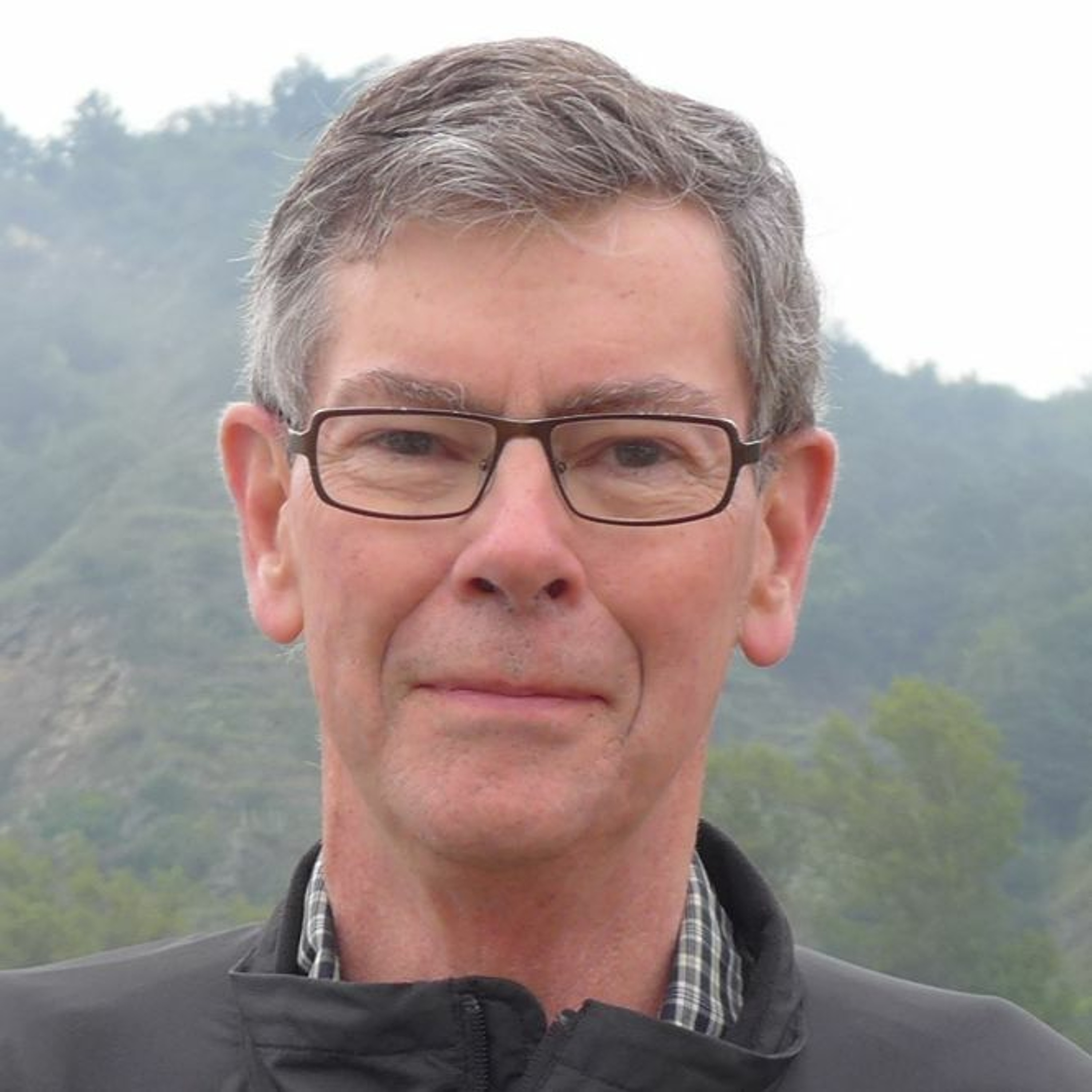
How Ignatian Spirituality Can Make This Year Great with Jim Manney
If you’ve spent much time reading about Ignatian spirituality, there’s a good chance you’ve come across the work of Jim Manney. He has a great book on the Examen called “A Simple, Life-Changing Prayer” that often serves as introduction for many to this all-important part of Ignatian spirituality. Jim has this way of boiling down his vast—and it is vast!—array of Ignatian knowledge in a way that is accessible, powerful and practical. His writing stays with you. And so, his newest book, which essentially is an exercise in making Ignatian spirituality accessible and practical, is pretty exciting. It’s called “What Matters Most and Why: Living the Spirituality of St. Ignatius of Loyola.” In the book are 365 daily reflections—each less than a page. Jim is today’s guest, and he walks us through his own life story, how he became so enamored with the spirituality of Ignatius, how he goes about sharing it with others and why he thinks it’s important to do so. Learn more about Jim's work by visiting: jimmanneybooks.com.
Learning From Pope Benedict XVI's Post-Papacy With Historian Christopher Bellitto
Over the past couple of weeks, there have been countless reflections on the life and work of Pope Emeritus Benedict XVI, highlighting his rich theological writings and his decades of church service and even some of the challenging moments he faced before, during and after his papacy. He was a complex man with so much experience. Let us pray that he might rest in the peace of Christ forever. Whenever a world-historical event happens related to the papacy, host Mike Jordan Laskey likes to call up his friend Dr. Christopher Bellitto, Ph.D. Chris is a medievalist, a church historian and a professor of history at Kean University in New Jersey. He’s a frequent media commentator on church history and contemporary Catholicism, and you might have seen him quoted in recent days in the Washington Post, CNN, NBC and other outlets. He always brings the long view to current events as a scholar of history. Chris talked about the history of papal resignations and what lessons the church might learn from how Benedict’s post-papacy unfolded. He also talked a bit about the history of Jesuit superior general resignations, and teased his upcoming book from Georgetown University Press titled “Humility: The Secret History of a Lost Virtue.” Learn more about Dr. Bellitto: https://sites.google.com/a/kean.edu/christopher-m-bellitto-ph-d/ AMDG is a production of the Jesuit Conference of Canada and the United States. https://www.jesuits.org/ https://beajesuit.org/ twitter.com/jesuitnews facebook.com/Jesuits instagram.com/wearethejesuits youtube.com/societyofjesus
The View from Piscataway Park: Talking Indigenous Justice with Anjela Barnes
Today’s guest is Anjela Barnes, the vice president of the Accokeek Foundation. In her work, she helps preserve and protect Piscataway park, located in southern Maryland on the Potomac River. This is part of the traditional homelands of the Piscataway people, of which Anjela is a member. As you’ll hear in this episode, host Eric Clayton met Anjela at Loyola University Maryland. She was on a panel discussing what justice looks like for Indigenous people—and what injustices have been perpetrated throughout our history. And while the conversation certainly focused on the need for justice, one theme kept resurfacing: Too often discussions around issues of Indigenous communities are limited to the mere reality that Indigenous people are not relics of the past but in fact members of our present community with joys and challenges and hardships and triumphs just like anybody. Yet, many of us are still surprised to learn that there are Indigenous folks next to us in line at the supermarket or the next booth over at the diner. And so, what you’ll hear today is a delicate dance, a paradox almost. Anjela and Eric discuss how Indigenous people are more than just stories, more than a window into the past. And yet, at the same time, without understanding and asking after those stories, without looking through that window, we can not grasp the unique experiences—and, as such, the unique injustices and struggles—of Indigenous communities in the present. We can not reduce people to a single story, and yet we still must page through those many chapters. This is an important conversation—and we hope you’ll find it insightful. If you want to learn more about Anjela and her work at the Accokeek Foundation, visit https://www.accokeek.org/.
Wrestling With God and Poetry With Philip Metres
Poetry can be intimidating and inaccessible. Why even bother? Guest Philip Metres is a living reminder that it’s worth it to bother, worth it to wrestle with poetry even when it’s difficult because the power of language is uniquely human and is one of the best parts of being alive. Phil is a poet, author and professor of English literature at John Caroll University in Cleveland, Ohio. He’s the author of ten books and has won fellowships from institutions like the Guggenheim Foundation and the National Endowment for the Arts. As the product of a Jesuit high school and college education, it’s consoling to see that much of his work takes up themes of spirituality and social justice, and what prompted host Mike Jordan Laskey to invite Phil on the show was a fabulous essay Phil wrote for Image Journal that was part book review, part memoir and part theological reflection. Phil also reads two of his poems and talks about them. Read Phil’s Image Journal essay: https://imagejournal.org/article/the-other-world-and-this-one-immanent-and-transcendent-tendencies-in-contemporary-poetry/ Learn more about Phil: https://philipmetres.com/ AMDG is a production of the Jesuit Conference of Canada and the United States.
Advent, Nine Months Pregnant With Nicole Perone and John Grosso
Earlier this month, Nicole Perone and John Grosso were anxiously awaiting the birth of their first child. Nicole and John are both what you could call professional Catholics – Nicole is the national coordinator for a young adult initiative called ESTEEM that works to prepare college students for faith life after graduation. And after several years working in digital media for the Diocese of Bridgeport, Connecticut, John is on the communications team at a network of Catholic philanthropic organizations called FADICA. In between Nicole and John’s conversation with host Mike Jordan Laskey and the release of this episode, Rose Marie Grosso was born on December 12, and both she and Nicole are doing well. The question at the heart of this episode: What was Advent like for two super-thoughtful, Jesuit-formed parents-to-be? Does the story of the Holy Family resonate differently when you’re nine months pregnant? And as people who have devoted their professional and personal lives to serving the church, Nicole and John offered their reflections on the state of the church today – their thoughts and feelings on this community of faith they’re bringing Rose Marie into. AMDG is a production of the Jesuit Conference of Canada and the United States.

Six Christmas Movies for the Ignatian Soul with Fr. Jim McDermott, SJ
It’s a great time of year to sit back, relax and watch a Christmas movie. To help you fill out your binge-watching schedule these last few days before Christmas, host Mike Jordan Laskey invited Fr. Jim McDermott, SJ, onto the show to talk about some of their favorite movies to watch this time of year. Jim is an ideal candidate for this work. He’s a fantastic writer who covers the intersection of pop culture and spirituality. (His Twitter handle is literally “@PopCulturPriest.” These days, he’s an associate editor at America Magazine in New York, but he has training and experience as a screenwriter and spent some time working for the TV channel AMC. Jim and Mike each picked three of their favorite Christmas movies to discuss. They also talked about Jim’s life as a Jesuit writer and what interests some of his Hollywood executive friends about his vocation to the priesthood. It was a super-fun conversation and should get you in the Christmas spirit – which, as you’ll hear from Jim and Mike as a common theme in this discussion, means two parts joy and maybe three parts melancholy. Read Fr. Jim in America Magazine: https://www.americamagazine.org/voices/jim-mcdermott AMDG is a production of the Jesuit Conference of Canada and the United States.
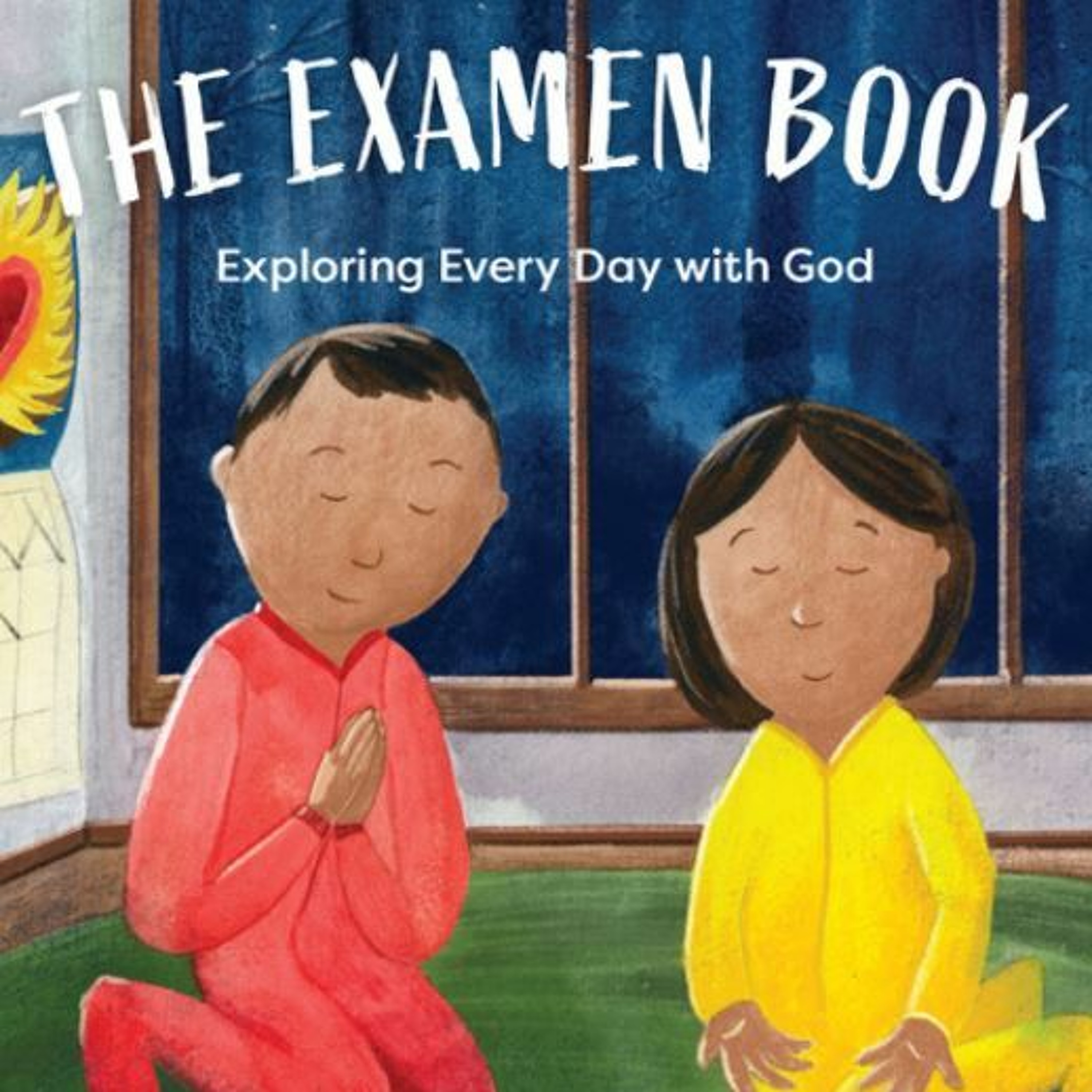
The Examen Like You've Never Seen It Before
In today's episode, meet writer and illustrator team, Paul Mitchell and Katie Broussard, a brother and sister passionate about sharing Ignatian spirituality with kids -- their own and others! Their latest project, "The Examen Book" from Loyola Press, doesn't just teach kids how to pray the examen; it invites families to encounter a God of love together. A little more about Paul and Katie: Paul cares full-time for his young sons and writes in the service of lay formation. He taught in Uganda, Chicago, Boston, and Egypt, and studied theology at the University of Notre Dame and the Boston College School of Theology and Ministry. Katie is an award-winning illustrator of The Examen Book, Audacious Ignatius, Sorin Starts a School, and I'm a Saint in the Making. Buy the book: https://store.loyolapress.com/the-examen-book Find "Audacious Ignatius": https://cordepress.com/ Learn more about Paul: https://paulmitchell.blog/ Learn more about Katie: https://katiebroussard.com/about/
What St. Joseph Can Teach Us This Advent With Sr. Colleen Gibson, SSJ
Saint Joseph is the most mysterious character from the Advent story. He doesn’t say anything and we know pretty much nothing about him, yet there are few figures more central to the story of our faith community. So host Mike Jordan Laskey asked his friend, Sister Colleen Gibson, SSJ, if she could help shed some light on this shadowy member of the Holy Family. Sr. Colleen is a Sister of Saint Joseph of Philadelphia and has spent a lot of time praying and reflecting on her community’s patron. Unsurprisingly, given Sr. Colleen’s intelligence and creative gifts, she brought multiple perspectives on St. Joseph you might have never considered before. Sr. Colleen also talks about her own vocation story of becoming a millennial religious sister, plus a bit of the history of the Sisters of Saint Joseph, which were founded in France by a Jesuit in 1650. Sr. Colleen also tells us about her own new podcast project, which she’s co-hosting with another sister of Saint Joseph. It’s called Beyond the Habit and they’ve just released their first few episodes. If you’d like some more Advent content from us here at the Jesuit Conference, you can sign up for daily email reflections on faith heroes formed in the Ignatian tradition at Jesuits.org/advent22 and register for a free evening of reflection on Zoom at Jesuits.org/adventprayer, which is being hosted by iconographer Kelly Latimore and writer Cameron Bellm (Wednesday, December 14, 7:30pm ET). Listen to Beyond the Habit on Spotify or wherever you get podcasts: https://open.spotify.com/show/3dcsfiK6IQJvWFvgAbZUuR Follow Sr. Colleen on Instagram: https://www.instagram.com/yoitssistercoll/ AMDG is a production of the Jesuit Conference of Canada and the United States.
Inside the Tradition of Jesuit Theater with Fr. George Drance, SJ
Back at some of the very first Jesuit-run schools in the 1500s, teachers would work with students to put on plays. This tradition was called “Jesuit drama,” and it was seen as a fantastic way to accomplish several educational goals at once. The plays themselves were in Latin, so that helped the students learn the language. Plays required memorization and skilled rhetoric, both big values at the time. And the subject matter of these early dramas were Catholic morals and doctrine, so they were seen as central to religious instruction, too. The rich tradition of Jesuits involved in theater has continued through the ages all the way to modern times, evolving and adapting through the centuries. One of the most accomplished Jesuit theater actors, teachers and scholars is Fr. George Drance, today’s guest. Fr. Drance, who teaches theater at Fordham University, has performed and directed in more than 20 countries on five continents. He’s also the founding artistic director of the Magis Theatre Company in New York, which draws its name from that classic Jesuit word that means “the more” or “the greater.” Host Mike Jordan Laskey asked Fr. Drance about his dual vocations as Jesuit and theater artist, a bit about the history of Jesuit drama and the parallels between theater and Ignatian spirituality, how Catholic liturgy and drama are intertwined, and some of his favorite projects through the years. Also, we wanted to let you know about two Advent resources we’re preparing here at the Jesuit Conference. The first is a daily email series called Ignatian Heroes. We have 25 fabulous writers offering short reflections on Jesuits and others who have been influenced by Ignatian spirituality. You can sign up to receive these reflections at Jesuits.org/advent22. Then, we’re sponsoring a live Advent evening of reflection on Zoom. It’s called “Room at the Inn: An Ignatian Journey with the Holy Family into Advent.” The session will be led by the fabulous iconographer and visual artist Kelly Latimore and one of our favorite spiritual writers, Cameron Bellm. It’s on Wednesday, December 14, at 7:30pm ET. You can sign up for free at Jesuits.org/adventprayer. Learn more about Fr. George Drance and Magis Theatre Company: https://www.magistheatre.org/ AMDG is a production of the Jesuit Conference of Canada and the United States.
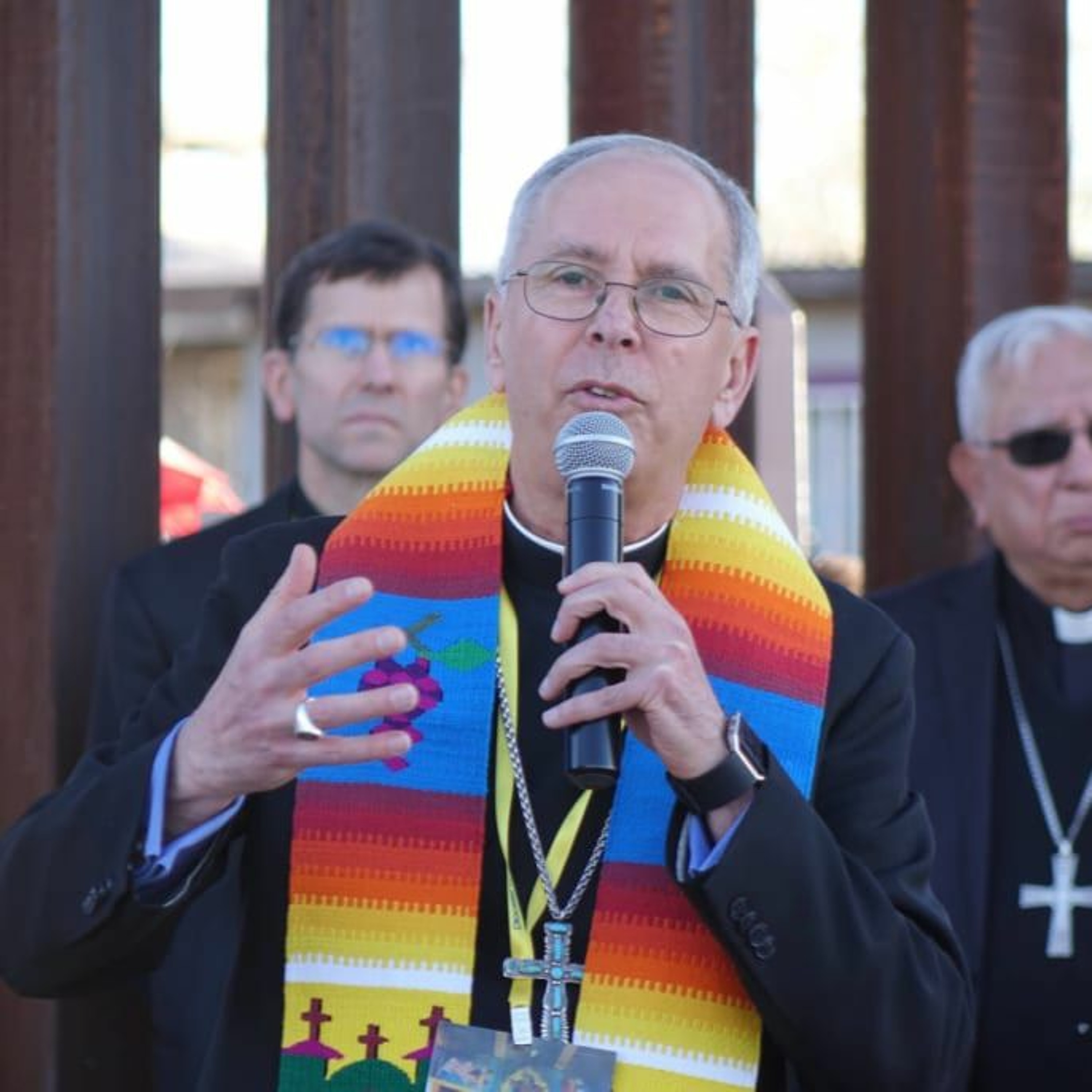
Breaking Bread and Borders with Bishop Mark Seitz on the Jesuit Border Podcast
This week, we’re pleased to bring you another cross-over episode with our colleagues from the Jesuit Border Podcast! Jesuit fathers Brian Strassburger and Louie Hotop live and work in the Rio Grande Valley, providing aid and spiritual companionship to migrants on both sides of the US-Mexico border. Their podcast depicts their daily ministry, and how communities are responding to the humanitarian crisis on the border. On this episode, Brian and Louie interview Bishop Mark Seitz of the Diocese of El Paso, TX. Known for his advocacy for the poor and vulnerable, Bishop Seitz offers a unique perspective as a leader of the Church in a border community. On this episode, he calls for a deeper conversation about migration, one that is not solely dominated by socio-political concerns, but shaped by a theological perspective that identifies the migrant experience as essential for understanding the Church. He also talks about celebrating Mass at the border wall on an altar which straddled both sides; a reminder of the unifying force of the Eucharist even amidst division. We offer our own reflection on experiences of breaking bread with migrants through our Sacramental ministry; including a 12-year-old altar server named Vincent who just can’t quite seem to figure out when to ring the bells. Subscribe to the Jesuit Border Podcast wherever you listen! Learn more about Louie and Brian’s work: https://thejesuitpost.org/2021/11/the-jesuit-border-podcast/