
AMDG: A Jesuit Podcast
460 episodes — Page 4 of 10
Why This Journalist Profiled a Jesuit for The New Yorker with Jack Herrera
A couple of weeks ago, The New Yorker magazine published a fabulous profile of a Jesuit priest: Fr. Brian Strassburger, SJ, who lives in a Jesuit community that’s serving migrants on the U.S.-Mexico border in Texas and the Mexican state of Tamaulipas. The piece went deep into Fr. Brian’s vocation story and how he wound up at the border as his first assignment after ordination to the priesthood. The article is also theologically rich, politically astute and paints a vivid picture of the harsh reality the migrants the Jesuits accompany are facing every day. The author of the story is a freelance reporter named Jack Herrera whose work on immigration, among other topics, has appeared in places like The Atlantic and the Los Angeles Times. Jack is our guest today. In reporting the story, Jack spent hours and hours with Fr. Brian and his fellow Jesuits in their ministry. Host Mike Jordan Laskey wanted to know what Jack learned from his experience: What most surprised him as he accompanied the Jesuits on both sides of the border? What stories and research got left on the cutting room floor? How did the project come to be in the first place, and why was The New Yorker interested? If you have read the story already, we hope this conversation will be a helpful supplement to what made it onto the page. If you haven’t read the story yet, we can’t recommend it highly enough. “The Betrayal of American Border Policy”: https://www.newyorker.com/news/dispatch/the-betrayal-of-american-border-policy Jack Herrera: https://x.com/jherrerx Del Camino Jesuit Border Ministries, where Fr. Brian serves: https://www.jesuitscentralsouthern.org/our-work/del-camino/ How Jesuits Accompany Today’s Holy Families on the Border: https://www.youtube.com/watch?v=85U1B3zECU4 www.jesuits.org/ www.beajesuit.org/ twitter.com/jesuitnews facebook.com/Jesuits instagram.com/wearethejesuits youtube.com/societyofjesus www.jesuitmedialab.org/

The Surprising History of Jesuit Colleges with Michael T. Rizzi
The end of the summer and the beginning of fall means many of us will be returning to school in one form or another. Teachers, students, bus drivers, cafeteria workers—it’s all about to begin again. It’s a time of excitement and maybe a little apprehension. I’ll wager a bet that a few listeners are familiar with a particular type of school. It may be your alma mater; it might be your place of employment. It might just be where you send your tuition. I’ll bet when you visit this school, there are signs with funny Latin words: cura personalis, magis, agere contra and so on. Of course I’m talking about Jesuit schools. And whether or not you’ll be setting foot on one in the coming weeks, I think you’re going to like today’s episode. Because our guest, Dr. Michael T. Rizzi, is about to take us on a brisk tour through the vast and compelling history of Jesuit colleges and universities in the United States. Dr. Rizzi is the director of student affairs at the University of Pittsburgh. He’s written an incredible book aptly called “Jesuit Colleges and Universities in the United States: A History.” In it, he tells the story of this particular kind of school, how it has developed and what it has meant to the history of the U.S. We’re introduced to not only a cast of characters but every Jesuit college past and present. It’s a history with more than a few surprises. And it may just make you appreciate your own Jesuit school that much more. If you’d like to pick up a copy of Dr. Rizzi’s book, visit this link: https://www.amazon.com/Jesuit-Colleges-Universities-United-States/dp/0813236169
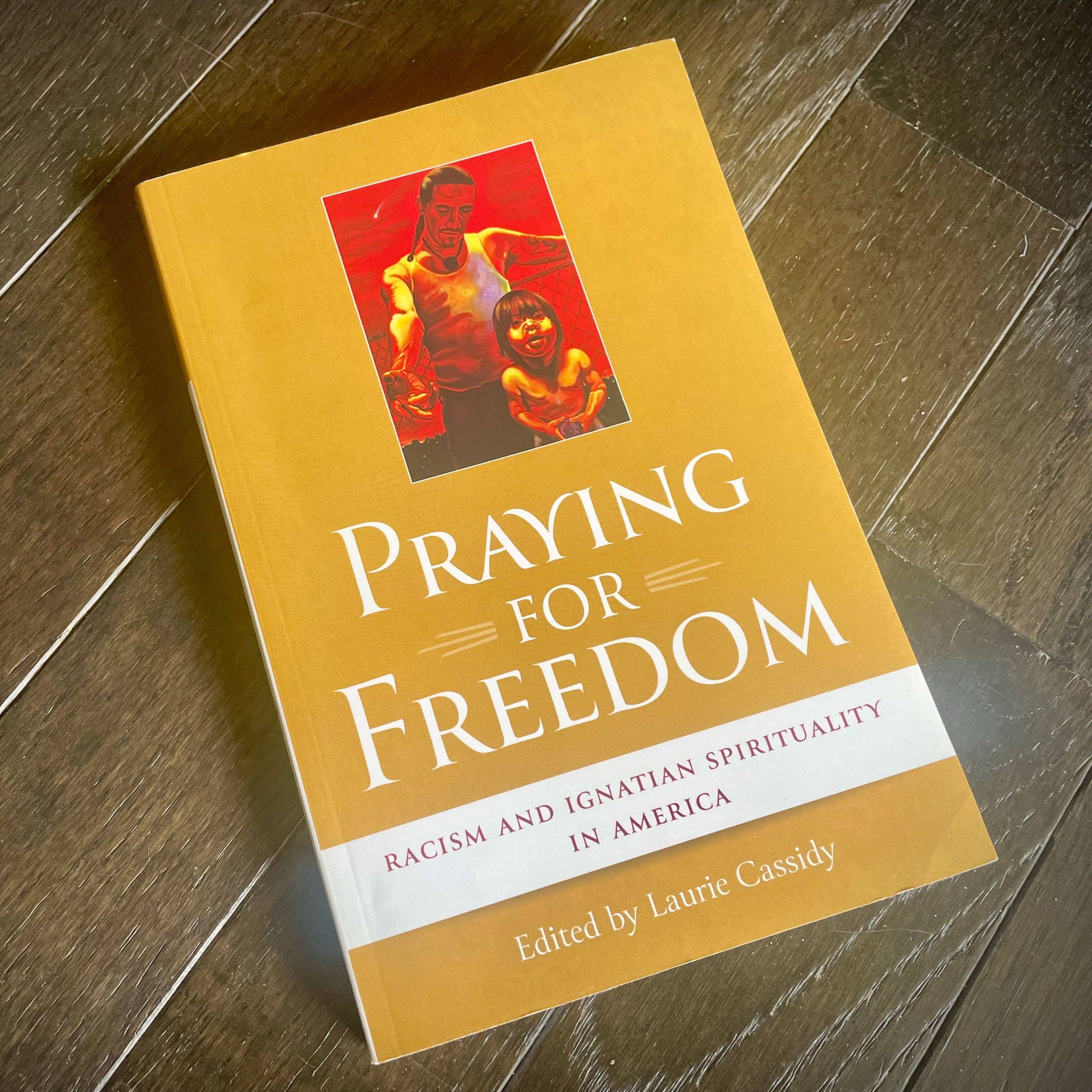
A Conversation About Racism and the Spiritual Exercises
This is a conversation about racism and the Spiritual Exercises of Ignatius of Loyola. Put more precisely, this is a conversation about how the Spiritual Exercises might better form us to understand and push back against the repercussions of racism in America. The question that frames this conversation is one that comes from the global Society of Jesus. At the last General Congregation—GC 36—when Jesuits from around the world gathered to elect a new superior general and examine the most pressing issues facing our world today, this question was raised: Why do the Exercises not change us as deeply as we should hope? In short, how does injustice and racism and violent persist, even after so many of us have made the Exercises? The Exercises, after all, are meant to change our hearts and minds, to help us better understand God and who God desires that we be with and through community. This question is at the heat of a new book from Liturgical Press. It’s called “Praying for Freedom: Racism and Ignatian Spirituality in America.” It’s a collection of essays and reflections that attempt to wrestle with this question and try to envision how we might build a more just and compassionate society. We have three guests today. Dr. Laurie Cassidy, the editor of the anthology, currently teaches in the Christian Spirituality program at Creighton University. She is an award-winning author and editor, and has been engaged in the ministry of spiritual direction for more than 30 years. Our two other guests, Elise Gower and Justin White, both contributed chapters to this book, both reflecting on their own experiences of a retreat called “The God of Us All: Praying with Black Spirituality.” They both share with us personal and powerful insights into their own prayer life. Elise has an extensive background in Ignatian spirituality, higher education and leadership, having served as associate director of Contemplative Leaders in Action—a formation program for young adults—and at Loyola University Maryland in the offices of Campus Ministry and the Center for Community Service and Justice, and more. Justin White has a long career in Jesuit education, having taught theology for 8 years at Cristo Rey Jesuit High School in Baltimore and having held several roles at Loyola Blakefield, most recently as a counselor for middle school students. If you have ever prayed through the Spiritual Exercises or if that’s something you hope to do, this conversation will add a helpful frame to your prayer and challenge you to examine those places in our lives where we are resistant to God’s love—those places where we are not free. Our prayer today is one of freedom—as we begin this conversation, let us pray that we all may recognize those places of unfreedom in our lives, and take the necessary steps to step beyond those obstacles. https://litpress.org/Products/6791/Praying-for-Freedom
Catholic Ethics, Transhumanism & Star Trek: A Conversation with Dr. Jason Eberl
Today’s topic is one straight out of science fiction. We’re talking about transhumanism—which, as you’ll soon learn, is very much a real thing with very real ethical implications. That’s why Dr. Jason Eberl, professor and director of the Albert Gnaegi Center for Health Care Ethics at Saint Louis University, is here to share his insights and expertise. Transhumanism, at its core, is about modifying the human body. As Dr. Eberl will explain, that can be as simple as taking some sort of drug to help focus your mind during a late-night study session. But it can also imply something much more—think of a cyborg from Star Trek. And we do—think about Star Trek, I mean. Dr. Eberl is an expert fan, having written and edited countless essays, articles, book chapters and more investigating the philosophical side of some of our favorite pop culture franchises. It’s a helpful way to engage a tricky, complex topic like transhumanism. As Dr. Eberl says, it gives us distance to game out ethical scenarios that are both uncomfortable and necessary to making good decisions. We do that in today’s conversation, too. While we may arrive at few answers, Dr. Eberl lays out a variety of outcomes that transhumanism—in all its varied forms—might lead to. Some are good; some, less so. But as you’ll see, these aren’t just hypothetical issues for the next Star Trek series; these are issues that can have very tangible impacts in our daily lives and relationships. This conversation brings in insights from everyone from Mr. Spock to St. Thomas Aquinas, and helps us better understand what it means to be embodied. Ultimately, as Dr. Eberl lays out, it’s because of our limitations, our imperfections as humans, that we are able to find happiness. That sounds counterintuitive, but I think by the end of today’s episode, you might begin to see why. Want to check out some of Jason Eberl’s prolific works? SLU Faculty Page: https://www.slu.edu/arts-and-sciences/bioethics/faculty/eberl-jason.php "Battlestar Galactica and Philosophy:" https://www.amazon.com/Battlestar-Galactica-Philosophy-Knowledge-Begins/dp/1405178140/ "The Ultimate Star Wars and Philosophy:" https://www.amazon.com/Ultimate-Star-Wars-Philosophy-Blackwell/dp/1119038065/ "Star Trek and Philosophy:" https://www.amazon.com/Star-Trek-Philosophy-Popular-Culture-ebook/dp/B003S3RL8U
Celebrate Ignatius' Feast by Celebrating Jesuit History
Today, July 31, we celebrate the Feast of St. Ignatius of Loyola. Happy feast day! We'll wager a guess that if you’re a listener of this podcast, then today’s saint needs no introduction. You know about the cannonball, the pilgrimage, the Spiritual Exercises and the founding of the Society of Jesus. Ignatius’ story, told year after year, might even begin to feel a bit dry. That’s why we're excited about today’s interview. Our guest takes a fresh approach to this well-known history. We’re looking at the story of Ignatius and the Jesuits not from a chronological perspective but from a thematic one. Claudio Ferlan is an Italian historian and was a fellow at Boston College’s Institute for Advanced Jesuit Studies. His time at BC has led to the publication of a new book titled “The Jesuits: A Thematic History.” What are these themes? We explore the historical development and importance of the Ignatian identity, of the role of mission work in the Society, of the Jesuit’s unique way of proceeding and of the inevitable conflicts that Jesuits have found themselves engaged in. We think you’ll find this to be a brisk, fascinating tour of Jesuit history. And if you do like this conversation or just have an interest in Jesuit history, then pick up a copy of “The Jesuits: A Thematic History” here: https://jesuitsources.bc.edu/the-jesuits-a-thematic-history/
Why So Many Scholars Love Bernard Lonergan, SJ with Jonathan Heaps
There is a list of Jesuit giants through history you hear over and over. That list starts with Saint Ignatius and his companions, of course, then includes to other Jesuit saints and blesseds to more modern Jesuits who are often called by just one name: Rahner. Hopkins. De Lubac. Teilhard. Arrupe. Dulles. Ellacuria. Bergoglio. And today’s episode is about one more on this list: Lonergan. Bernard Lonergan was a Canadian Jesuit philosopher and theologian who lived from 1904 to 1984. And to be honest, his work is intimidating. He was pretty clearly a genius and wrote volumes on volumes of work on topics like epistemology, the philosophy of science, economic and political theory, and so much more. His most significant work is a 1957 book called “Insight: A Study of Human Understanding.” Whatever Lonergan was up to during his life was so important that there are scores of scholars who devote their careers today to studying and responding to his work. Today’s guest is one of these scholars: Jonathan Heaps is the director of the Bernard J. Lonergan Institute at Seton Hall University in South Orange, New Jersey, and the author of the recent book The Ambiguity of Being: Lonergan and the Problems of the Supernatural. Host Mike Jordan Laskey asked Jonathan to introduce Lonergan to us and explain why there is this whole cottage industry around Lonergan’s thought and why he’s still important today. Jon did a great job translating some of Lonergan’s big ideas into language even Mike could understand. We think you’ll enjoy the chance to get this accessible introduction to one of the most influential North American Jesuits ever. Jonathan Heaps: https://www.jonathanheaps.com/ Lonergan Institute: https://www.shu.edu/lonergan/ AMDG is a production of the Jesuit Media Lab, a project of the Jesuit Conference of Canada and the United States. www.jesuits.org/ www.beajesuit.org/ twitter.com/jesuitnews facebook.com/Jesuits instagram.com/wearethejesuits youtube.com/societyofjesus www.jesuitmedialab.org/
How One Gen X Theology Professor Teaches Gen Z with Scott Moringiello
A few weeks ago, our guest was the sociologist of religion Tricia Bruce, who talked about what we know about the state of the American Catholic Church today. On this episode, host Mike Jordan Laskey is pursuing the same questions but from a different angle. Our guest is Scott Moringiello, and he’s an associate professor of Catholic Studies at DePaul University in Chicago. In that role, he teaches a rather large course called Introduction to Catholicism, which he has taught multiple times. Over the years, he has taught hundreds of Gen Z kids from all sorts of religious backgrounds about the foundational basics of the Catholic faith. He’s gotten to learn about the students’ own experiences with faith and what energizes them or keeps them distant. Scott was also an academic mentor of Mike’s almost 20 years ago. He was a graduate assistant in a phenomenal liberal arts seminar Mike took, which he still considers the greatest intellectual experience of his life. One way you can tell the power of that class is the fact Scott and Mike are still friends all this time later. So they talked a bit about what made that class so incredible and how it informed Scott’s own approach to education. They also discussed some of his Scott’s mentors from Regis High School in New York City, his Jesuit alma mater that’s still near and dear to his heart. Finally, Mike also asked Scott the role of the liberal arts and college education in the world of ChatGPT. They had a wide-ranging conversation that feels a bit like old friends getting together over a meal or a libation. Scott Moringiello: https://las.depaul.edu/academics/catholic-studies/faculty/Pages/Scott-Moringiello.aspx AMDG is a production of the Jesuit Media Lab, a project of the Jesuit Conference of Canada and the United States. www.jesuits.org/ www.beajesuit.org/ twitter.com/jesuitnews facebook.com/Jesuits instagram.com/wearethejesuits youtube.com/societyofjesus www.jesuitmedialab.org/

Swimming From Regis Jesuit to Olympic Gold with Missy Franklin
In honor of the upcoming Summer Olympics in Paris, we’re thrilled to welcome the swimmer and five-time Olympic medalist Missy Franklin onto the podcast. Maybe you remember Missy taking the Olympics by storm back in 2012 at the age of 17. What you might now know, though, is that Missy was a student at Regis Jesuit High School in Denver, Colorado during that Olympic run. She went back and graduated the year after her historic performance. Host Mike Jordan Laskey asked Missy how the school community supported her during those wild weeks and months. She couldn’t have been happier to talk about Regis Jesuit and how the school stood by her and welcomed her back to class as her whole, genuine self – and not just a newly minted celebrity. Missy described finding her faith at Regis Jesuit, as she did not come from a religious background, and she shared stories from her time at school and what she’s been up to during her retirement from competitive swimming. After the conversation with Missy, you’ll hear a piece written and read by Gretchen Kessler, one of Missy’s mentors at Regis Jesuit and the first principal of the school’s girls division. Regis Jesuit is the only Jesuit high school in the U.S. or Canada – and we think maybe in the world – that educates both young men and women but does so in distinctive, separate divisions. While students come together for extracurricular activities and other events, their core instruction is in single-sex classrooms. It’s a unique model that got its start in Denver 20 years ago. Gretchen retired from her role in recent years, but she still works at the school in alumni relations. It’s fascinating to hear her reflect on starting something new and bold two decades ago. It was an experiment that worked and has turned out hundreds of high-quality alumni like Missy Franklin herself. Missy Franklin: https://www.missyfranklin.com/ Regis Jesuit High School: https://www.regisjesuit.com/ AMDG is a production of the Jesuit Media Lab, a project of the Jesuit Conference of Canada and the United States. Our theme music by Kevin Laskey. Also featured in this episode is "These Moments Live," by Abstract Aprils, licensed through Audiio.com. www.jesuits.org/ www.beajesuit.org/ twitter.com/jesuitnews facebook.com/Jesuits instagram.com/wearethejesuits youtube.com/societyofjesus www.jesuitmedialab.org/
How Beauty Heals at the Homeboy Art Academy with Fabian Debora
Most of our listeners have surely at least heard of Homeboy Industries, which is the largest gang intervention, rehab and re-entry program in the world. Founded in Los Angeles by the Jesuit priest Fr. Greg Boyle in 1988, Homeboy works with about 10,000 former gang members each year in dozens of different ways, from job training to tattoo removal to wraparound case management services. Fr. Greg recently received the Presidential Medal of Freedom for his pioneering work in this area. One of Homeboy’s initiatives that host Mike Jordan Laskey just learned about recently is the Homeboy Art Academy, which engages at-risk youth and adults in diverse forms of art as tools for healing and transformation. The art academy is the brainchild of today’s guest -- Fabian Debora, an accomplished visual artist and a former gang member himself. Fabian’s story is so powerful – full of trauma and despair and hope and beauty and community. Unlike most episodes of AMDG, this one isn’t a classic interview. We’re just going to let Fabian share his story with you. You don’t want to miss it. Fabian Debora: https://www.fabiandebora.com/ LA Times profile of Fabian in conjunction with his “Cara de Vago” exhibition: https://www.latimes.com/california/story/2024-03-15/fabian-debora-wants-you-to-see-the-light-of-gang-life-homeboy-industries Homeboy Art Academy: https://homeboyindustries.org/services/art-academy/ AMDG is a production of the Jesuit Media Lab, a project of the Jesuit Conference of Canada and the United States. AMDG theme music by Kevin Laskey. Other music in this episode includes “Cool Math” by AstroMouse, “Coastin” by CTrox, “Fat Cloud” by Marscott and “Dawn” by Nicolas G, licensed through Audiio.com. www.jesuits.org/ www.beajesuit.org/ twitter.com/jesuitnews facebook.com/Jesuits instagram.com/wearethejesuits youtube.com/societyofjesus www.jesuitmedialab.org/
The Holy Spirit Provides with Holy Trinity's Migrant Familia
"The Holy Spirit provides." This is one of the central mantras of the Migrant Familia program at Holy Trinity Jesuit Parish. Based in Washington, DC, the parish's Familia provides crucial support to newly arrived migrants and asylum seekers, helping them find housing, apply for work permits, enroll in school, and receive medical care. More than provide services, however, the Familia program creates, well, a family for migrants who come to the U.S.—often without resources, friends, or family of their own. On today's episode, I talk with the coordinator of the Familia program, Ashley Klick, and two of its graduates, Julien Patrick Tete Wabo and Miguel Flores. Both fled political persecution in Cameroon and Nicaragua, respectively. They came to the U.S. alone, and through their own determination and the accompaniment of Holy Trinity, they have built new lives. They spoke candidly about the hardship of migrating, but they also shared their love and admiration for one another—and for the Familia as a whole. I found it to be a really touching conversation, and I hope you do too. ++++++++++++++++++++++++ Learn more about Holy Trinity's Migrant Familia: https://trinity.org/social-justice/migrants-refugees Find out how the Jesuits across the U.S. and Canada accompany migrants: https://www.jesuits.org/our-work/justice-and-ecology/migration-and-immigration/ This episode was recorded, edited and produced by MegAnne Liebsch.
How Communication Technology Transforms Cultures with Fr. Paul Soukup, SJ
The internet, wherever we access it, is so much of our lives now. Being online isn’t some alternate reality different from our real lives. The internet is real life. But what is that doing to our brains and our souls? How are the mini computers in our pockets affecting our lives, whether we’re using them for listening to great Jesuit podcasts or mindlessly scrolling through Instagram? What is our technology doing to our ability to, say, pay attention to the person in front of us? Or to read something long and dense? Or to be be bored? Or to pray? Host Mike Jordan Laskey has been growing more curious about these questions over the past few years, and it has led him to learn more about a discipline within the study of communications called “media ecology.” Media ecology is all about the environment that our ways of sending and receiving information create. The printing press affected all elements of culture in countless way; same thing for the radio and photograph and television and computer and smartphone. And one of the leading scholars working in media ecology today, especially at the subject area’s intersection with religion, is a Jesuit priest named Fr. Paul Soukup, and he’s today’s guest. Fr. Soukup is a professor of communication at Santa Clara University in California, where he teaches and writes on these topics. Some of his book titles are helpful introductions to his areas of interest: “Communication and Theology”; “Christian Communication”; “Media, Culture and Catholicism”; and “Out of Eden: 7 Ways God Restores Blocked Communication.” Mike asked Fr. Soukup to orient us to the world of media ecology and how he sees our media environment today affecting our individual and communal lives. They also discussed the media ecology of theology and how information technology development through the ages has affected the ways the church does its thinking and praying. More about Fr. Soukup: https://www.scu.edu/cas/communication/faculty-and-staff/paul-soukup-sj/ AMDG is a production of the Jesuit Media Lab, a project of the Jesuit Conference of Canada and the United States. www.jesuits.org/ www.beajesuit.org/ twitter.com/jesuitnews facebook.com/Jesuits instagram.com/wearethejesuits youtube.com/societyofjesus www.jesuitmedialab.org/

What We Know About Today's Church (And How We Know It) with Tricia Bruce
We presume listeners to this podcast are interested in the state of the Catholic Church in North America. But if you stop to think about what you know about the church, or how you think you know what you now, you might realize your picture is incomplete. Maybe we parrot popular talking points about polarization or disaffiliation or frustrations with this or that church teaching. But so many of perspectives come from sitting where we sit – our age, race, class, gender, geography, political and ecclesial preferences, and so on. And because the Church is so diverse and multifaceted, we need to expand my vision if we want to more fully understand the complexity of our community today. Dr. Tricia Bruce is a perfect conversation partner to help broaden our perspective. Dr. Bruce is a sociologist of religion with expertise in U.S. Catholicism, and has studied and written about topics like polarization in the church, the landscape of Catholic parishes in America, and American attitudes toward abortion. She has numbers and stories from surveys and focus groups and interviews that help give her a wide, deep view of the U.S. Catholic Church that’s so much Dr. Bruce’s award-winning work has appeared in publications like The Wall Street Journal and Time Magazine. She keeps extremely busy in several concurrent positions: She is Director of Springtide Research Institute; faculty fellow of the University of Southern California’s Institute for Advanced Catholic Studies; President-Elect of the Association for the Sociology of Religion; and Consultant to the Vatican’s General Secretariat of the Synod. Host Mike Jordan Laskey asked her about how the sociology of religion is done, and what topics she is most curious about these days. They talked about polarization, interesting trends religion researchers are noticing, and what she might want to tell high-level decision makers in the church about what she is learning. Dr. Tricia Bruce: https://triciabruce.com/ Associated Press article referenced in the conversation: https://apnews.com/article/catholic-church-shift-orthodoxy-tradition-7638fa2013a593f8cb07483ffc8ed487 AMDG is a production of the Jesuit Media Lab, a project of the Jesuit Conference of Canada and the United States. www.jesuits.org/ www.beajesuit.org/ twitter.com/jesuitnews facebook.com/Jesuits instagram.com/wearethejesuits youtube.com/societyofjesus www.jesuitmedialab.org/
Learning from the Martyrs Alfred Delp, SJ, and Edith Stein with Fr. Peter Nguyen, SJ
Of all the saints and heroes of the faith we have in our Catholic tradition, it can be difficult to spiritually connect with martyrs. Maybe that’s part of the point of martyrs, to trouble us a bit in a holy way, to remind us that sometimes faith in Christ can mean literally laying down one’s life for one’s friends. The martyrs invite us to reflect on the depth of my own faith commitments, and whether we’d share their steadfast courage if we were in their shoes. Does faith come first in my life, or only when it’s convenient? Today’s guest is the perfect person to ask about Christian martyrdom and what we might learn from the stories and witness of individual martyrs. Fr. Peter Nguyen, SJ, is a theologian and a scholar of Christian martyrdom, and he has devoted much of his career learning and writing about martyrs. A Jesuit priest who spent this past academic year at Marquette University as the Reverend Francis C. Wade, SJ, Chair, Fr. Nguyen spoke to host Mike Jordan Laskey recently about two martyrs who gave their lives during World War II: Fr. Alfred Delp, SJ, and Edith Stein, who is also known as St. Teresa Benedicta of the Cross. Both Delp and Stein died as part of the resistance to Nazi Germany. Fr. Nguyen thinks it is worthwhile to engage with their legacies today, even as the details of their lives might challenge us and make us uncomfortable. Learn more about Fr. Nguyen: https://www.creighton.edu/campus-directory/nguyen-peter His book on Alfred Delp: https://www.amazon.com/Against-Titans-Theology-Martyrdom-Alfred/dp/1978704771 AMDG is a production of the Jesuit Media Lab, a project of the Jesuit Conference of Canada and the United States. www.jesuits.org/ www.beajesuit.org/ twitter.com/jesuitnews facebook.com/Jesuits instagram.com/wearethejesuits youtube.com/societyofjesus www.jesuitmedialab.org/
Pathway to Priesthood: How to be a Jesuit Priest in Secular Society
Welcome to “Pathway to Priesthood”—a limited audio series from the Jesuit Conference of Canada and the United States. In these conversations, host Eric Clayton talks with Jesuits who are in the final days of preparing for ordination to the priesthood. They reflect back on their vocation stories and experience of Jesuit formation, and wrestle with some of the biggest questions surrounding priestly ordination. On this, our final episode — at least for now — we’re reflecting on what it means to be a Jesuit in a secular society. And to help round out this series, we have three Jesuit guests: C-Y Kao, Brendan Coffey and Brendan Gottschall. For all of us, Jesuit or not, questions of living our faith in the modern age are important — and we get to the heart of them in today’s conversation. C-Y was born and raised in Catholic family in Taiwan. He has a background in diplomacy and foreign service. He first met the Jesuits through the Christian Life Community in Taiwan, and then again through his studies at Georgetown University. Brendan Coffey, a native of Cherry Hill, New Jersey, met the Jesuits at St. Joseph’s Prep School in Philadelphia and again at Fordham University in the Bronx. Brendan Gottschall, from South Jersey, was formed by both the Augustinians and the Jesuits at St. Augustine Prep and Georgetown University, respectively. And yes, it was entirely by accident that we invited two Jesuits from Jersey named Brendan to be on the same episode. As you listen to their stories and reflections, we invite you to consider whether you or someone you know might be interested in discerning a call to Jesuit life. If so, head over to beajesuit.org. We also invite you to keep in prayer these and all of our Jesuits preparing for ordination. Ordinations will take place in the United States on June 8 and in Canada on June 15.

Making Catholic Films for Atheists with Eric Groth
If you’re as interested in Catholicism and the arts as we are here at AMDG, you might also have been excited to see that a new movie about Flannery O’Connor’s writing and life is now playing nationwide. The movie is called “Wildcat,” directed and written by Ethan Hawke and starring his daughter Maya Hawke, who plays both Flannery and a range of characters who appear in the author’s stories. The movie blends traditional biopic narrative with detours into brief adaptations of O’Connor’s stories, bringing the author’s churning life alive in a moving, provocative way. The film was the younger Hawke’s idea, who first read O’Connor while in high school. The father/daughter team assembled an incredible cast of folks including Laura Linney and Liam Neeson, and we cannot recommend it to you highly enough. Today’s guest was also intimately involved in the birth of the film. His name is Eric Groth, and he served as one of “Wildcat”’s executive producers. Eric’s background is in producing Catholic films, including the 2018 movie “Paul, the Apostle of Christ.” He initially found his way into filmmaking sort of by accident, looking to use the medium to reach teenagers during his career in Catholic youth ministry in the 1990s. Host Mike Jordan Laskey asked Eric about why and how he got involved in “Wildcat” and what it was like to work with Ethan and Maya Hawke. They also talked about Eric’s own vision of the intersection of faith and creativity and why, in his words, he likes to make “Catholic movies for atheists.” It was a fascinating conversation and we can’t wait to see what Eric works on next. More about Eric Groth: https://www.osvtalks.com/talks/producing-catholic-films-for-atheists/ “Wildcat” trailer: https://www.youtube.com/watch?v=R2WxoPxP_lQ AMDG is a production of the Jesuit Media Lab, a project of the Jesuit Conference of Canada and the United States. www.jesuits.org/ www.beajesuit.org/ twitter.com/jesuitnews facebook.com/Jesuits instagram.com/wearethejesuits youtube.com/societyofjesus www.jesuitmedialab.org/
Pathway to Priesthood: Answering Tough Questions
Welcome to “Pathway to Priesthood”—a limited audio series from the Jesuit Conference of Canada and the United States. In these conversations, host Eric Clayton talks with Jesuits who are in the final days of preparing for ordination to the priesthood. They reflect back on their vocation stories and experience of Jesuit formation, and wrestle with some of the biggest questions surrounding priestly ordination. On this episode, we’re asking tough questions—literally. In our church and in our world, we’re surrounded by questions that make us uncomfortable, by hot-button issues and ideological divides. Like it or not, this is the world, this is the church, that our newly ordained Jesuits are stepping into. In fact, they’ve been in it all their lives. But now, they engage the world and the church as priests. Our two Jesuit guests for this episode are Tom Elitz and returning champion, Christopher Alt. If you listened to our second episode of this limited series, you already know Christopher. He was raised in Oshkosh, Wisconsin. He attended the University of San Diego and, later, Boston College. It was there that he met the Jesuits, though it would be a number of years before he took the leap and entered. Tom was born in Philadelphia but grew up in Cinnaminson, New Jersey. He met the Jesuits as an undergraduate student at St. Joseph’s University. Before entering the Society, he worked as a financial analyst and internal auditor at Johnson & Johnson. Tough questions are inevitable in any vocation. Our hope is that today’s episode will give you some tools for reflecting on ways to approach them. As you listen to their stories and reflections, I invite you to consider whether you or someone you know might be interested in discerning a call to Jesuit life. If so, head over to beajesuit.org.
The Surprising History of Humility with Christopher Bellitto
It’s graduation season, which means it’s commencement address season. Host Mike Jordan Laskey did a quick Google search for “most common words in graduation speeches,” and the top hit provided this list – which doesn’t include prepositions or other super-common words: 1. Life 2. Make 3. People 4. World 5. Yourself 6. Success 7. Generation 8. Human There are certainly exceptions, but the standard commencement address is all about YOU, the graduates, and what YOU will do with YOUR immense gifts to find incredible success or change the world. Here’s some stuff you don’t typically hear: You’re not any more special than anyone else; no achievements are really yours alone; you’re going to die someday. In other words, there’s not much humility this time of year – not among most graduates and certainly not among those select few invited to give graduates advice. My guest today thinks the world could use a lot more humility. Dr. Christopher Bellitto is a professor of history at Kean University in New Jersey and a frequent media commentator on Catholicism. His latest book from Georgetown University Press is titled “Humility: The Secret History of a Lost Virtue,” which is incredibly readable, fascinating and even fun. It traces the concept of humility through millennia, going back to Socrates in ancient Greece – when humility wasn’t always seen as a good thing – up through teachings from Judaism, Islam and Christianity and into the Enlightenment and all the way up into our modern context. Mike asked Chris why he decided to write the book, and what he learned about the history of humility. They also talked a bit about St. Ignatius of Loyola, who had his own complex relationship with humility. Chris is one of my the best conversationalists around and Mike had a lot of fun digging into this underappreciated, under-practiced virtue. Chris' book: https://press.georgetown.edu/Book/Humility More about Chris: https://sites.google.com/a/kean.edu/christopher-m-bellitto-ph-d/ AMDG is a production of the Jesuit Conference of Canada and the United States. www.jesuits.org/ www.beajesuit.org/ twitter.com/jesuitnews facebook.com/Jesuits instagram.com/wearethejesuits youtube.com/societyofjesus www.jesuitmedialab.org/
Pathway to Priesthood: How Am I Accompanied?
Welcome to “Pathway to Priesthood”—a limited audio series from the Jesuit Conference of Canada and the United States. In these conversations, host Eric Clayton talks with Jesuits who are in the final days of preparing for ordination to the priesthood. They reflect back on their vocation stories and experience of Jesuit formation, and wrestle with some of the biggest questions surrounding priestly ordination. On this episode, we’re talking about accompaniment. We’re asking the question: Who makes up the community that walks with a Jesuit? To reflect on these questions and more, we have two Jesuits: Patrick Hyland and Joe Dickan. Joe is from Long Beach, California and Patrick is from Cleveland, Ohio. Both men have traveled abroad as part of their formation and have been greatly affected by these international experiences they’ve had—Patrick in Spain and Joe in Lebanon. These experiences have given them insight into Jesuit community at the international level. In today’s conversation, you’ll hear what it’s like to live in such communities and you’ll be reminded again of how important a personal life of prayer is—whether or not you’re a Jesuit. As you listen to their stories and reflections, I invite you to consider whether you or someone you know might be interested in discerning a call to Jesuit life. If so, head over to beajesuit.org.
This Jesuit's on Fire: A Pentecost Story
This year marks 10 years since Fr. Paul Shelton, SJ, was ordained a priest. As a result, he's been feeling a bit reflective, nostalgic even. He's been thinking about the very first Mass he ever celebrated. But not for the reason you think. Today's episode of "AMDG: A Jesuit Podcast" is a fun one. In it, we hear from a variety of voices, a variety of perspectives on what actually happened at Paul's first Mass. Because it was anything but ordinary. It was Pentecost. And a Jesuit caught fire. This is the story of that day.
Pathway to Priesthood: How Do I Know I'm Ready?
Welcome to “Pathway to Priesthood”—a limited audio series from the Jesuit Conference of Canada and the United States. In these conversations, host Eric Clayton talks with Jesuits who are in the final days of preparing for ordination to the priesthood. They reflect back on their vocation stories and experience of Jesuit formation, and wrestle with some of the biggest questions surrounding priestly ordination. On this episode, they dive into one of those all-important Ignatian concepts: Discernment. The two Jesuit guests—Mike Tedone and Christopher Alt—talk about how they employed the tools of discernment in their own vocations. One of the most important questions any of us can ask when we stand at the cusp of a major vocational decision is this: How do I know I’m ready? Well, discernment helps us wrestle with that question; and, that question takes center stage today. Christopher was raised in Oshkosh, Wisconsin. He attended the University of San Diego and, later, Boston College. It was there that he met the Jesuits, though it would be a number of years before he took the leap and entered. Mike grew up in Orange County, California. After a volunteer experience with Jesuit Volunteer Corps in Micronesia, he, too, eventually found himself at Boston College where friendships with Jesuit scholastics convinced him that he could become one himself. As you’ll hear, both men had to ask hard questions of themselves and of God about their vocation. While there may be few if any quick answers, Christopher and Mike share with us how they went about discovering the right answers for their lives. As you listen to their stories and reflections, I invite you to consider whether you or someone you know might be interested in discerning a call to Jesuit life. If so, head over to beajesuit.org.

How Catholic Charities Lives the Gospel with Kerry Robinson
If you made a list of the best things about the Catholic Church in the United States, Catholic Charities USA would be in that list’s very top tier. A network of 168 local agencies based in dioceses throughout the country, Catholic Charities served more than 15 million of our at-risk neighbors last year alone. They serve people without homes, those who are unemployed or underemployed, children who are hungry or malnourished, elderly persons who are isolated, vulnerable migrants and refugees on the move, families recovering from natural disasters, pregnant women and new mothers in need, and persons with disabilities who have inadequate care. All together, the work of Catholic Charities makes up one of the largest networks of humanitarian aid in the nation. Today’s guest is Kerry Robinson, the president and CEO of Catholic Charities USA. If Catholic Charities is in the top tier of American Catholic endeavors, Kerry is in the top tier of American Catholic leaders. She’s dynamic, passionate, faith-filled and extremely smart. And she’s the second-ever woman and second layperson to lead the network. Before joining Catholic Charities, Kerry spent almost two decades working with a group called Leadership Roundtable, which she helped to found in 2005. Leadership Roundtable helps the church develop and implement best management practices to build accountable and transparent leadership culture. Kerry’s entire career has been dedicated to strengthening the church, and her experience and vision helped prepare her to lead this massive network. Host Mike Jordan Laskey asked her about what she has learned in her first year on the job, plus how Catholic Charities is responding to the extremely challenging conditions facing migrants and asylum seekers arriving in the US in the hopes of providing safety and opportunity for their families. She also shared some favorite stories and things she has learned from traveling all over the country visiting Catholic Charities agencies and how her Jesuit education at Georgetown University helped set her on her life path. Learn more about Kerry Robinson: https://stories.catholiccharitiesusa.org/introducing-kerry-alys-robinson/ Catholic Charities USA: https://www.catholiccharitiesusa.org/ Catholic Charities staffers facing rising threats: https://religionnews.com/2024/03/22/threats-to-catholic-charities-staffers-increase-amid-rightwing-anti-migrant-campaign/ AMDG is a production of the Jesuit Conference of Canada and the United States. www.jesuits.org/ www.beajesuit.org/ twitter.com/jesuitnews facebook.com/Jesuits instagram.com/wearethejesuits youtube.com/societyofjesus www.jesuitmedialab.org/
Pathway to Priesthood: Why Religious Life?
Welcome to “Pathway to Priesthood”—a limited audio series from the Jesuit Conference of Canada and the United States in which host Eric Clayton talks with Jesuits who are in the final days of preparing for priestly ordination. Hear Jesuits reflect back on their vocation stories and experience of formation, all while wrestling with some of the biggest questions surrounding priestly ordination. On this episode, we’re asking a basic question: Why even consider religious life? And what actually is it? To reflect on these questions and more, we have two Jesuits: Michael Mohr and Brook Stacey. Michael was born and raised in Baton Rouge, Louisiana. He has a background in teaching, and has spent the last couple of years of his formation studying at the Pontifical Gregorian University in Rome. Brook grew up in Toronto, Ontario. Though his undergraduate studies were in geology, he has more recently completed a master’s degree in psychospiritual studies. Both men have had the opportunity to live in a variety of places throughout the formation, and they both come at this question of religious life from very different perspectives. But at the end of the day, they both have found great consolation as members of the Society of Jesus. As you listen to their stories and reflections, consider whether you or someone you know might be interested in discerning a call to Jesuit life. If so, head over to beajesuit.org.
English version: Reynaldo Domínguez's Deadly Fight to Care for Creation
In 60-plus years of life, Reynaldo Domínguez has never heard someone say, "I live without water and I live in peace." Water is fundamental to a healthy and peaceful life, he says. Yet for Reynaldo and his community in Guapinol, Honduras, access to clean water has become a deadly fight that has killed two of his brothers and sent him and his family into hiding. The conflict started in 2018 when the Honduran company Inversiones Los Pinares, backed by international investors, began to dig out a road through the mountains deep inside the protected National Park Carlos Escaleras. As they began they began digging an open-pit iron ore mine, harmful sediments filled the Guapinol River, the source of water for many of the surrounding communities. Reynaldo and his community quickly organized to push back against this illegal and life-threatening environmental disaster. Things quickly turned deadly. Many of Reynaldo's fellow activists have been jailed, even more have been forced to migrate, and several have lost their lives in the fight to protect the land for future generations. Reynaldo joined us from an undisclosed location to tell us about what's happening in Guapinol. This episode was recorded in Spanish. Listen to the original here: https://soundcloud.com/jesuitconference/reynaldo-spanish-mixdown-v2-240118?si=f61e75f956234a7fa9f55ddf0ebaf2ca&utm_source=clipboard&utm_medium=text&utm_campaign=social_sharing Learn more about our partners Radio Progreso: https://www.radioprogresohn.net/ Learn more about SHARE Foundation: http://www.share-elsalvador.org/ +++++++++++++++++++++++++ This podcast was edited and produced by Harrison Hanvey and MegAnne Liebsch. Jose Artiga, executive director of the SHARE Foundation, provided English language dubbing. Original theme music by Kevin Laskey. Photo by Photo by Roberto Palomo.
Versión en español: La lucha mortal de Reynaldo Domínguez para el cuidado de la creación
En más de 60 años de vida, Reynaldo Domínguez nunca ha oído a nadie decir: "Vivo sin agua y vivo tranquilo". El agua es fundamental para una vida sana y en paz, nos afirma. Sin embargo, para Reynaldo y su comunidad en Guapinol, Honduras, el acceso al agua potable se ha convertido en una lucha mortal que ha matado a dos de sus hermanos y lo ha enviado a él y a su familia a la clandestinidad. El conflicto comenzó en 2018 cuando la empresa hondureña Inversiones Los Pinares, respaldada por inversores internacionales, empezó a excavar una carretera a través de las montañas en lo más profundo del Parque Nacional protegido Carlos Escaleras. Cuando empezaron a excavar una mina de hierro a cielo abierto, sedimentos dañinos llenaron el río Guapinol, fuente de agua para muchas de las comunidades de los alrededores. Reynaldo y su comunidad se organizaron rápidamente para oponerse a este desastre medioambiental ilegal y peligroso. La situación no tardó en volverse mortal. Muchos de los compañeros activistas de Reynaldo han sido encarcelados, otros se han visto obligados a emigrar y varios han perdido la vida en la lucha por proteger la tierra para las generaciones futuras. Reynaldo se unió a nosotros desde un lugar desconocido para contarnos lo que está sucediendo en Guapinol. Escucha el episodio en ingles: https://soundcloud.com/jesuitconference/english-version-reynaldo-dominguezs-deadly-fight-to-care-for-creation?si=e8902d693fc34f6ca1fe8a1329b4b0ea&utm_source=clipboard&utm_medium=text&utm_campaign=social_sharing Más información sobre nuestros socios de Radio Progreso: https://www.radioprogresohn.net/ Más información sobre la Fundación SHARE: http://www.share-elsalvador.org/ +++++++++++++++++++++++++ Este podcast fue editado y producido por Harrison Hanvey y MegAnne Liebsch. José Artiga, director ejecutivo de la Fundación SHARE, se encargó del doblaje al inglés. Tema musical original de Kevin Laskey. Fotografía de Roberto Palomo.
Grace, Attention and Beauty with Marilynne Robinson
The American essayist and novelist Marilynne Robinson may not be Catholic, but her writing reveals a deeply sacramental imagination. Through five books of fiction and dozens of essays, Robinson trains her readers in the art of spiritual attention. Where is God’s grace operating in nature and in the ordinary ways humans love, disappoint and forgive one other? In her essay “Psalm 8” she writes, “I have spent my life watching not to see beyond the world,” but “merely to see, great mystery, what is plainly before my eyes… With all due respect to heaven, the scene of miracle is here, among us.” Robinson is best known for her novel “Gilead,” which won the Pulitzer Prize in 2005. It has three sequels, each installment following a different protagonist in the fictitious Iowa town. The last of those, “Jack” (2020), traces the wanderings of a Prodigal Son who has difficulty recognizing a place in his family, church, and hometown. We all know a Jack or two, and Robinson helps us understand their plights with empathy. In March 2024, she released a new book, "Reading Genesis," which is a long meditation on the first book of Hebrew Scripture. She defamiliarizes old stories that we thought we understood – of Adam and Eve, of Cain and Abel, of Abraham and Sarah. She challenges easy clichés – Old Testament God: bad! Jesus: good! – to show us how God’s faithfulness to humanity starts right there…in the beginning. Which is why today’s interview with guest host Fr. Joe Simmons, SJ, starts with Genesis, and branches out into philosophy, science, poetry and fiction, and back to theology. Fr. Simmons, who wrote his doctoral dissertation on the work of Robinson and Virginia Woolf, even talks with our guest on Ignatius Loyola and his contemporary, John Calvin – and the miseries of studying in 16th-century Paris! – which made Fr. Simmons laugh out loud. You won’t want to miss that. More about Marilynne Robinson: https://us.macmillan.com/author/marilynnerobinson "Reading Genesis": https://www.amazon.com/Reading-Genesis-Marilynne-Robinson/dp/0374299404 More about Fr. Joe Simmons, SJ: https://www.marquette.edu/theology/directory/joseph-simmons.php AMDG is a production of the Jesuit Conference of Canada and the United States. www.jesuits.org/ www.beajesuit.org/ twitter.com/jesuitnews facebook.com/Jesuits instagram.com/wearethejesuits youtube.com/societyofjesus www.jesuitmedialab.org/
How Poetry and Prose Change Lives with Gary Jansen
In honor of National Poetry Month - which is currently underway during April 2024 - author and editor Gary Jansen returns to the podcast to talk about his latest book, "Meditations at Midnight: Poetry and Prose." Gary lives at the intersection of faith and art. He’s worked in publishing a long time—both at secular publishing houses editing Catholic authors, and now at Loyola Press, acquiring and mentoring authors that are writing for a Catholic publisher. Gary is an author himself; he’s been on this podcast before talking about his ghost-ridden memoir, “Holy Ghosts,” and his self-help book called “MicroShifts.” In 2023, he won the Christopher Award for the children’s book “Remember Us With Smiles,” that he co-wrote with his wife. And those are just a few of his books. He’s back today to talk about his latest book and to reflect on the lasting impact that good writing can have on our souls. If you want to learn more about Gary, visit garyjansen.com.

The Story Behind Flannery O'Connor's New Novel with Jessica Hooten Wilson
You might be familiar with the American Catholic novelist, Flannery O’Connor. You might have read her short stories in a class, maybe “A Good Man Is Hard to Find” or “Everything That Rises Must Converge,” to name a few. You might have even read one of her novels, an essay or two or some of her letters. You might know that she spent much of her relatively short life in Georgia. And, if you know her work well, then you also know that she died in 1964. And so, you might be really surprised to learn that she published her third novel, “Why Do the Heathen Rage?” earlier this year. Well, to be clear, the renowned O’Connor scholar and Fletcher Jones Endowed Chair of Great Books at Pepperdine University and today’s guest, Dr. Jessica Hooten Wilson did. Dr. Wilson has been working on this project—uncovering O’Connor’s notes and drafts—for several years now. And the final result is quite stunning: While the book isn’t really a full and final novel—O’Connor died before she could finish it—what Jessica Hooten Wilson gives us is a literary excavation of Flannery’s life, legacy and the story that might have been. Now, if you are familiar with O’Connor, you likely are also familiar with recent discourse about her thoughts and writing on race. Dr. Wilson does not shy away from addressing this sordid legacy head-on. In reflecting on this final, unfinished novel, Dr. Wilson notes that we really see Flannery coming up against her own limitations in understanding race in the American South. And yet, we also see her struggling to reconcile the clear racism of her day with her own Catholic faith. It’s not an easy conversation, but Dr. Wilson walks us through with care and grace. If you are interested in learning more about her work, visit jessicahootenwilson.com and be sure to pick up your copy of “Flannery O’Connor’s Why Do the Heaten Rage? A Behind-the-Scenes Look at a Work in Progress,” now available from Brazos Press.
From Video Game Designer to Jesuit with Shane Liesegang, SJ
There’s an old saying in Jesuit circles: If you’ve met one Jesuit, you’ve met one Jesuit. A fun list to make is all the different careers guys had before joining the Society of Jesus. We have actors and comedians, doctors and lawyers, astronomers and one former lieutenant governor. Shane Liesegang, SJ, today’s guest, is the only Jesuit host Mike Jordan Laskey has ever met who was a video game developer. Before entering the Jesuits in 2015, Shane worked for over a decade in video game development for several different studios. He worked on hugely popular games like the Fallout Series and Skyrim. Shane was living his dream. But then he felt called to something more. Today, Shane is a Jesuit scholastic studying Theology at Boston College’s Clough School of Theology and Ministry. He didn’t leave his entire gaming life behind when he entered the Jesuits, though. In fact, one of Shane’s former employers, a hugely influential studio called Bethesda Game Studios, brought him back into the fold to work on a game called Starfield that was released in 2023. In this deeply complex space exploration game, the studio wanted to create a fictional religion that certain characters in the game would profess. So they asked Shane to write this religion’s core texts, which are featured in several places in the game. Shane argues that creating video games is an art form. The combination of visual aesthetics, interactivity and storytelling, not to mention the incredibly detailed and vast universes game developers make, all combine to elevate video games to something more than a mere time waster. If you’re skeptical about this claim, let Shane try to convince you in this conversation. Shane also talked about his unique vocation story and how game design is not dissimilar from Ignatian imaginative prayer in some crucial ways. This was an utterly fascinating conversation and we think you’ll really enjoy meeting Shane, whether you love video games or not. Clip from the game that features the religion Shane wrote: https://youtu.be/hrPhQSP7no8?si=Fig5KmRuQjozJ_w_&t=93 Learn more about Shane: https://shaneliesegang.com/ AMDG is a production of the Jesuit Conference of Canada and the United States. www.jesuits.org/ www.beajesuit.org/ twitter.com/jesuitnews facebook.com/Jesuits instagram.com/wearethejesuits youtube.com/societyofjesus www.jesuitmedialab.org/
Founding and Growing the Cristo Rey Network of Schools with Fr. John Foley, SJ
Fr. John P. Foley, SJ, spent 34 years as a missionary in Peru -- a full career in most lines of work. But then, in 1995, he was missioned back to the United States to start a high school for Latino students from low-income backgrounds in Chicago. Despite immense challenges -- like not knowing where the school would be even at the press conference announcing there would be a new school -- Cristo Rey Jesuit High School was founded in Chicago's Pilsen neighborhood in 1996. Centered on an innovative corporate work study model, through which students spend a day a week working with partner companies, low-income students were able to access a high-quality Catholic prep school education. The idea spread like wildfire and the Cristo Rey Network was born, which today includes 39 schools around the country. Fr. Foley led the network after eight years as the first school's president. Host Mike Jordan Laskey asked Fr. Foley to share the stories of those early days and how they found such incredible success despite the odds. Learn more about the Cristo Rey Network: https://www.cristoreynetwork.org/ AMDG is a production of the Jesuit Conference of Canada and the United States. www.jesuits.org/ www.beajesuit.org/ twitter.com/jesuitnews facebook.com/Jesuits instagram.com/wearethejesuits youtube.com/societyofjesus www.jesuitmedialab.org/
Leading Creighton University in a Secular Age with Fr. Daniel Hendrickson, SJ
While Fr. Daniel Hendrickson, SJ, president of Creighton University, is excited for both his women's and men's basketball teams' March Madness journeys, today’s episode isn’t about basketball at all. (Well, it makes an appearance for a couple minutes at the end.) It’s about the roles of Jesuit colleges and universities in our world today. Host Mike Jordan Laskey spoke with Fr. Hendrickson a couple months ago about his book “Jesuit Higher Education in a Secular Age,” which explores how Jesuit education can help students create meaningful connections in our highly self-centered, transactional era. Mike asked Fr. Hendrickson about the book’s primary intellectual influence, the peerless contemporary philosopher Charles Taylor. They also talked about the history of Jesuit education and how its vision of educating the whole person stands in contrast to the epidemic of siloed academic departments. Fr. Hendrickson is an incredibly thoughtful leader and it was a lot of fun to pick his brain about the past, present and future of Jesuit higher ed. More about Fr. Hendrickson: https://www.creighton.edu/leadership/president/presidents-biography His book: https://www.amazon.com/Jesuit-Higher-Education-Secular-Age/dp/1647122333 AMDG is a production of the Jesuit Conference of Canada and the United States. www.jesuits.org/ www.beajesuit.org/ twitter.com/jesuitnews facebook.com/Jesuits instagram.com/wearethejesuits youtube.com/societyofjesus www.jesuitmedialab.org/

Making the Jesuit App “Pray As You Go” with Emma Holland
Ever since the Jesuits in the United Kingdom launched the daily prayer project “Pray As You Go” (PAYG) in 2006, the creative team behind the resource has shared fabulous audio prayer programs that are spiritually nourishing in their beauty and simplicity. Each day combines music, Scripture from the lectionary, and short spoken prayer prompts that always invite you to reflect on the Scripture in a new way. PAYG will slow you down and invite genuine contemplation, making it so different from almost any other smartphone app or podcast program out there. Hundreds of thousands of people around the world love PAYG, especially here in North America – maybe you’re one of them. For years, host Mike Jordan Laskey – a huge fan of PAYG – has been curious about the team behind the app. How does an episode come together? What inspired the format and why does it work so well? How do they want to grow? So Mike invited Emma Holland onto the show, who serves as PAYG’s director. She has worked for the Jesuits in the UK for almost a decade and has advanced from an audio producer to the leader of the project. Mike asked Emma to take us behind the scenes of PAYG and to share what she loves about her work. It was such a fun conversation and if you haven’t prayed with PAYG before, we really hope you’ll give it a try. You can find it in your smartphone’s app store or download daily episodes using your podcast player of choice. Pray As You Go: https://pray-as-you-go.org/ AMDG is a production of the Jesuit Conference of Canada and the United States. www.jesuits.org/ www.beajesuit.org/ twitter.com/jesuitnews facebook.com/Jesuits instagram.com/wearethejesuits youtube.com/societyofjesus www.jesuitmedialab.org/
How Fr. Walter Ciszek, SJ, Found God in Soviet Captivity with Jim Keane
The basic details of Father Walter Ciszek life sound like a movie: An American Jesuit priest ministering in Eastern Europe around the time of World War II, he was arrested by the Soviet Union and falsely accused of being a Vatican spy. He spent time in a KGB prison and more than a decade in Siberian labor camps. His family and his Jesuit brothers back in the U.S. assumed he was dead. During his captivity, Fr. Ciszek secretly heard confessions, celebrated Mass, baptized, comforted the sick, and ministered to the dying. His unwavering faith sustained him through solitary confinement, torture, and violent interrogations. The John F. Kennedy administration negotiated his release, and he returned to the United States in 1963. In the years following his release, Fr. Ciszek wrote two books, “With God in Russia” and “He Leadeth Me.” The latter book, a spiritual memoir, shot up to the very top of Amazon’s bestseller list recently, decades after its publication. Why? The extremely popular Catholic prayer app Hallow, which just ran a Super Bowl commercial a few weeks ago, picked “He Leadeth Me” to anchor their Lenten prayer program this year. It’s safe to assume thousands of folks are meeting Fr. Ciszek for the first time. So we thought we’d take the chance to introduce him to AMDG listeners, too. Host Mike Jordan Laskey asked Jim Keane to come on the show to talk about Fr. Ciszek and his legacy. Jim is a senior editor at America Media, where he oversees the book reviews, literary essays, the Catholic Book Club and the "Faith and Reason" section. Jim is a fantastic writer and storyteller and he has written several great pieces on Fr. Ciszek over the years. So Mike asked Jim to share some of his favorite Fr. Ciszek stories and reflect on why the biggest Catholic smartphone app around might have picked “He Leadeth Me” to read this Lent. America Media's coverage of Fr. Walter Ciszek: https://www.americamagazine.org/issue/100/return-russia https://www.americamagazine.org/faith/2017/06/08/little-known-story-behind-father-walter-ciszeks-god-russia https://www.americamagazine.org/politics-society/2024/02/16/walter-ciszek-soviet-prison-247340 https://www.americamagazine.org/issue/article/chained-free https://www.americamagazine.org/arts-culture/2022/05/10/cbc-column-walter-ciszek-242962 AMDG is a production of the Jesuit Conference of Canada and the United States. www.jesuits.org/ www.beajesuit.org/ twitter.com/jesuitnews facebook.com/Jesuits instagram.com/wearethejesuits youtube.com/societyofjesus www.jesuitmedialab.org/

Learning to Love Lent Through Music with Margaret Felice
When you hear the word “Lent,” what is the first thing you think of? Maybe it’s purple or giving up social media or chocolate. Or maybe it’s trying to build better prayer habits or abstaining from meat on Fridays. Or famous Lenten Scripture passages like the Transfiguration. For Margaret Felice, today's guest, one thing that’s always near the top of her mind when it comes to Lent is music. Margaret is a professional singer and liturgical musician with an absolutely stunning voice. She’s also a terrific writer and a first-year doctoral student in theology at Boston College’s Clough School of Theology and Ministry. She taught religion and directed a liturgical choir at Boston College High School for 18 years. Host Mike Jordan Laskey asked Margaret to pick two of her favorite Lenten hymns that we could discuss. She picked “Again We Keep This Solemn Fast” and “Were You There.” And as a totally surprising gift, Margaret went ahead and recorded herself singing both these hymns along with accompanist Chris Rakovec on piano. We’ll include excepts from both hymns in the episode. Margaret and Mike also talked about the role of the Lenten season without our spiritual lives, and what opportunities this yearly observance gives us to grow in faith, hope and love. Margaret Felice: https://margaretfelice.com/ AMDG is a production of the Jesuit Conference of Canada and the United States. www.jesuits.org/ www.beajesuit.org/ twitter.com/jesuitnews facebook.com/Jesuits instagram.com/wearethejesuits youtube.com/societyofjesus www.jesuitmedialab.org/
Synodality: Embracing Tension, Staying at the Table with Fr. Agbonkhianmeghe Orobator, SJ
Today's guest has an incredible amount of experience of the truly "catholic," global nature of the church. Fr. Agbonkhianmeghe Orobator, SJ, today serves as the dean of the Jesuit School of Theology at Santa Clara University. This school is one of the two Jesuit “theologates” in the United States, which means it’s a place where Jesuits in formation from all over the world pursue theology studies alongside lay students. Before arriving at JST last August, Fr. Orobator spent seven years as the president of the Jesuit Conference of Africa and Madagascar, leading the Jesuits on the continent where the order is growing fastest. A theologian originally from Nigeria with a doctorate from the United Kingdom who specializes in ecclesiology, the study of the Church, he is the author of a number of books, including “Theology Brewed in an African Pot” and “The Pope and the Pandemic: Lessons in Leadership in a Time of Crisis.” In the first few months of his tenure at the JST, Pope Francis invited Fr. Orobator to attend the Synod on Synodality in Rome, where he was a voting member. Host Mike Jordan Laskey asked him about that experience, about synodality at work in the Church in Africa, and what his goals are for his leadership at JST. You’ll see from his thoughtfulness and deep faith on display in this conversation why Fr. Orobator has been tapped for big leadership roles within the Society of Jesus and beyond over and over again. Learn more about Fr. Orobator: https://www.scu.edu/jst/about/faculty/orobator.html AMDG is a production of the Jesuit Conference of Canada and the United States. www.jesuits.org/ www.beajesuit.org/ twitter.com/jesuitnews facebook.com/Jesuits instagram.com/wearethejesuits youtube.com/societyofjesus www.jesuitmedialab.org/
Get to Know Pierre Teilhard de Chardin with Sr. Kathy Duffy, SSJ, Ph.D.
Even though the French paleontologist and theologian Pierre Teilhard de Chardin died in 1955, it feels like his work is still being discussed and debated in theological circles all the time. There are numerous associations and publications dedicated solely to exploring Teilhard’s huge body of work. He made it back into the news this past fall when Pope Francis described him as “often misunderstood” during a Mass in Mongolia. Host Mike Jordan Laskey reached out to one of the foremost Teilhard experts in the United States, Sister Kathy Duffy, SSJ, to learn more about this fascinating Jesuits. Sr. Kathy is a Sister of St. Joseph of Philadelphia and the president of the of the American Teilhard Association. She’s also Professor Emerita of Physics at Chestnut Hill College in Philadelphia, where she directs the Institute for Religion and Science. She has written two books on Teilhard, including, most recently, “Teilhard’s Struggle: Embracing the Work of Evolution” (Orbis). Sr. Kathy also guides retreats on topics related to Teilhard’s life and work. Mike asked Sr. Kathy to introduce him to Teilhard’s life and thought. Why does he continue to be so interesting to so many people today? And why is he controversial? Sr. Kathy talked about the relationship between faith and science, some key biographical moments in Teilhard’s life that shaped his theology, and where readers new to his work might want to start. American Teilhard Association: https://teilharddechardin.org/ Sr. Kathy Duffy, SSJ, Ph.D.: https://www.chc.edu/faculty/kathleen-duffy www.jesuits.org/ www.beajesuit.org/ twitter.com/jesuitnews facebook.com/Jesuits instagram.com/wearethejesuits youtube.com/societyofjesus jesuitmedialab.org/
Solidarity and Service in the Jesuit Volunteer Corps with Tom Chabolla
For more than 60 years, the Jesuit Volunteer Corps (JVC) has been a pioneer in the service landscape. With over 100 volunteers each year and over 12,000 alumni, they are one of the largest lay, Catholic, full-time volunteer programs in the world. JVC gives young adults the opportunity to engage in service and solidarity with local communities, rooted in the values of spirituality, simple living, community and social justice. Host Mike Jordan Laskey recently spoke with JVC’s president, Tom Chabolla, who has served in the role since 2018. Tom has more than 30 years working in faith-based and community-development organizations and he brings a wealth of expertise to the role. Mike asked Tom about what inspires him in his work, plus how he and his team navigated the pandemic. They also talked about the challenges JVC and other similar organizations are facing today and how they’re responding. This conversation is the second part of a two-week series on full-time volunteer programs in the Ignatian family. Be sure to listen to last week’s conversation between my colleague Eric Clayton and Mary McGinnity, president and CEO of the Ignatian Volunteer Corps, which typically works with volunteers quite a bit older than JVs, folks who have spent decades in career and family life. Jesuit Volunteer Corps: https://www.jesuitvolunteers.org/ About Tom Chabolla: https://www.jesuitvolunteers.org/jvc-news/meet-tom-chabolla-jvc-s-new-president-jvc-is-proud-to-welcome-tom-at-the-helm-of-the-organization-starting-november-1 www.jesuits.org/ www.beajesuit.org/ twitter.com/jesuitnews facebook.com/Jesuits instagram.com/wearethejesuits youtube.com/societyofjesus jesuitmedialab.org/
Service Never Stops: Talking Ignatian Volunteers with Mary McGinnity
In the final meditation of the Spiritual Exercises, St. Ignatius of Loyola reminds us “that love ought to manifest itself in deeds rather than in words.” We are called to love and serve in all things. And so, it’s hardly a surprise that in the 500 or so years since Ignatius wrote those words, countless service organizations have grown and flourished within the Ignatian tradition. Over the course of the next two weeks, we’re going to explore two of those organizations. Today, we’re talking about the Ignatian Volunteer Corps with President and CEO of IVC, Mary McGinnity. Mary has more than 30 years of experience in leadership positions in education, faith formation, pastoral counseling, parish ministry and faith-based non-profit social justice and service organizations. She’s a graduate of the College of Holy Cross and served as a Jesuit Volunteer. Most importantly, Mary is passionate about integrating service and justice. Today’s host Eric Clayton has had the privilege of traveling to a number of IVC communities and meeting countless Ignatian volunteers. These are remarkable women and men who bring to their service experience a whole career worth of knowledge, insights, skills and networks. And they offer all of these invaluable resources to local nonprofits, bolstering the capacity of communities to respond to some of the most pressing needs of our time. What’s more, IVC is a lay-led organization that is empowering lay leaders. In many ways, IVC is helping all of us envision what it means to be Church — especially as we all try to live the ongoing lessons of the Synod on Synodality. If you’re interested in learning more about IVC, visit IVCUSA.org.
Beauty, Leadership and the Mystery of God with Fr. Leo O'Donovan, SJ
It’s hard to know where to start an interview with Jesuit Fr. Leo O’Donovan. At 89 years old, Fr. O’Donovan’s could boast a hefty list of accomplishments and accolades—though he’s not much interested in bragging. A theologian by training, he studied under the prominent Jesuit Fr. Karl Rahner in Munich, where O’Donovan’s own body of work would eventually earn him The Knight Commanders Cross of the Order of Merit, with Star, of the Federal Republic of Germany. For over a decade, Fr. O’Donovan served as president of Georgetown University. He also served on the board of the Walt Disney Company and the National Council on the Arts. Through his many leadership positions, he has become friends with global leaders such as German Chancellor Helmut Kohl, Former U.S. Secretary of State Madeline Albright, and President Joe Biden—to name a few. Contrary to what his impressive CV might imply, Fr. O’Donovan is easy to talk to. He’s an eager storyteller, drawn to engaging people, whether that be his first-grade teacher, a Dominican nun, or his mentor Karl Rahner. For the last eight years, Fr. O’Donovan has served as the director of mission for the Jesuit Refugee Service in the U.S, a position which he calls “an incredible privilege.” Our conversation covers all this and more. +++++++++++++++++++++++++++++++++++++ Learn more about the Jesuit Refugee Service at jrsusa.org This episode was produced and edited by MegAnne Liebsch
How the Jesuit Prison Education Network is Changing Lives with Fr. Tom Curran, SJ
Have you ever met someone so passionate about something that you just couldn’t help getting excited about it, too? That was host Mike Jordan Laskey's experience when he first met Fr. Tom Curran, SJ, today's guest. Fr. Curran, who served as the president of Rockhurst University in Kansas City for 16 years, is now the coordinator of the Jesuit Prison Education Network (JPEN). Through participation in JPEN, nine different Jesuit institutes of higher learning offer college courses and degree programs -- taught by their own college/university professors -- at correctional facilities around the country. The programs are open to both those who are incarcerated and prison staff members, and Fr. Curran has some incredible stories about how the programs have changed the students and teachers lives and even the cultures of the correctional facilities themselves. In the conversation, Fr. Curran describes some of the ways our criminal justice system is dehumanizing and how prison education is a prophetic statement against that reality. He also talks about how Ignatian spirituality inspires his work and shared some of the most powerful stories from the JPEN programs. Subscribe to the JPEN email newsletter: https://jesuitscentralsouthern.us21.list-manage.com/subscribe?u=7e1f684649378603a3b6af1a0&id=6aee2e3285 AMDG is a production of the Jesuit Conference of Canada and the United States. www.jesuits.org/ www.beajesuit.org/ twitter.com/jesuitnews facebook.com/Jesuits instagram.com/wearethejesuits youtube.com/societyofjesus https://jesuitmedialab.org/
Still Following Yonder Stars with Br. Bob Macke, SJ
This past weekend, we celebrated the Feast of the Epiphany, when the three magi followed yonder star to God’s perfect light (to paraphrase the old song). By gazing at the stars, people from near and far we’re drawn to Christ—a reminder that, woven into the very fabric of the universe, God reveals Godself, guiding us deeper into God’s mystery and an encounter with Christ. What was true more than 2,000 years ago remains true today. Stars, meteorites, planets, the mysteries of space still speak to us of God and God’s dream for creation. And the Society of Jesus continues to be on the forefront of discerning God in the stars. More than 30 asteroids have been named for Jesuits. There are a similar number of craters on the moon bearing Jesuit names. And based on the work of today’s guest, it’s entirely possible that the Society of Jesus might find itself with a few more astral namesakes in the not-so-distant future. Br. Bob Macke, SJ, is one of the world’s foremost experts in the study of meteorites. And his work has been instrumental in OSIRIS-REx mission, a recent NASA mission that might reveal new insight into the earliest moments of the solar system. Today, he talks to us about his work, his vocation and what he hopes to learn as he continues to comb through space—that final frontier. Br. Bob studied physics at the Massachusetts Institute of Technology and Washington University in St. Louis, before entering the Society of Jesus in 2001. Between 2011 and 2013 he studied theology at Boston College School of Theology and Ministry, during which time he also constructed a new ideal-gas pycnometer for measuring meteorite densities. Br. Macke joined the Vatican Observatory in July 2013, where he studies meteorite physical properties in the observatory’s meteorite laboratory. In August 2014, Br. Macke became the curator of the Vatican collection of 1200 meteorite specimens.
An Ignatian Spiritual Boost to Start 2024 with Christopher Collins, SJ
Happy New Year! And welcome to the first episode of AMDG of 2024. Each January, to kick off a new year, we like to delve into aspects of Ignatian spirituality that might be particularly useful as we think about forming better habits and growing deeper in our relationship with God over the next 12 months. After all, Ignatian spirituality is all about discovering who God dreams we might be by better understanding the person God already knows we are—and already loves. This year is no different. We’re excited to welcome Jesuit priest, Fr. Christopher Collins, to the show today. Fr. Collins is the Vice President for Mission at the University of St. Thomas in Minnesota. He’s the author of several books, most recently “Habits of Freedom: 5 Ignatian Tools for Clearing Your Mind and Resting Daily in the Lord” from Ave Maria Press. It’s this book we discuss today. An important story from Scripture that Fr. Collins returns to again and again in his book—and in our conversation—is that of the Baptism of Jesus, which we celebrate on January 8. It’s an important day not only in the life of Jesus but also in our own spiritual journeys. The challenge, as Fr. Collins articulates, is to hear those words of God the Father to Jesus spoken also to us. Do we see ourselves as the beloved of God? We should! Because remembering that essential piece of our identity can make all the difference as we begin a new year. Pick up your copy of Fr. Collins' book here: https://www.avemariapress.com/products/habits-of-freedom
Ignatius of Loyola, Comic Book Hero with Tyler Button of Tapestry Comics
If you’re a long-time listener of this podcast—and certainly if you’re a graduate of Jesuit education—then you likely know a thing or two about the story of St. Ignatius of Loyola. You know about his courtly life, the cannonball, the conversion, the books he read while bedridden, his pilgrimage and the cave and the founding of the Society of Jesus. You probably can rattle plot points off just like that. But have you ever taken time to really immerse yourself in the story? To imagine what Ignatius said to his fellow soldiers? To picture the scene of the early companions gathered before the pope? In short, have you painted in the sketch of Ignatius’ life so that the colors leap from the page? Today’s guest, Tyler Button, certainly has—in more ways than one. A former special education teacher, Tyler is now the founder of Tapestry Comics, a publisher that focuses on making historical narratives exciting and accessible to readers of all ages, but especially high school students. His past projects have featured William the Conqueror and Joan of Arc. But in turning to the life and legacy of Ignatius of Loyola—and imagining himself in the scenes he was portraying—Tyler discovered the practical power of Ignatian spirituality. In today’s conversation, we unpack what it means to tell the story of Ignatius across a new medium—and why it matters for the Ignatian family today. If you’re interested in learning more about Tyler’s work or getting a copy of his book, “The Greater Glory: The Story of Ignatius Loyola,” you can contact him https://www.tapestrycomics.com/contact.
10 Great Christmas Characters with Shannon Evans and Cameron Bellm
It's an AMDG Christmas jamboree: our first-ever five-person episode. Friends of the pod (and awesome writers/retreat leaders) Shannon Evans and Cameron Bellm join AMDG's three co-hosts Mike Jordan Laskey, Eric Clayton and MegAnne Liebsch for a draft of Christmas characters. The conversation is raucous, overstuffed, reflective, spiritual, a little melancholic, mostly fun -- kind of like the whole Christmas season overall. The appearance of Shannon and Cameron is also a teaser for our new project, the Jesuit Media Lab, which gathers, forms and unleashes Ignatian creators. See how you can get involved at jesuitmedialab.org. Merry Christmas from AMDG and everyone at the Jesuit Conference of Canada and the United States. www.jesuits.org/ www.beajesuit.org/ twitter.com/jesuitnews facebook.com/Jesuits instagram.com/wearethejesuits youtube.com/societyofjesus
What You Need to Know About the Life of Jesus this Christmas with Andrea Tornielli
“There is no faith without an encounter, because faith is a personal encounter with Jesus,” Pope Francis writes. He goes on: “One of the things that helps us when we have the Gospels before our eyes is to imagine those encounters with Jesus—recreate them, look at him ourselves, meet him ourselves. In the Gospels, to look and to see are two very important verbs. So let us approach the episodes in the life of Jesus with eyes filled with contemplation.” This is a brief excerpt from the introduction to the new book “The Life of Jesus” by veteran Vatican reporter and current editorial director of the Vatican Dicastery for Communication, Andrea Tornielli. Andrea is today’s guest. And as you’ll quickly learn, in his work and his writing, he lives out Pope Francis’ words. His new book isn’t just a retelling of the Gospel. It’s an experience. It’s an invitation to immerse ourselves in the story, to use our imagination and bring to life the words of Scripture. We hear, too, throughout his book the teachings of Pope Francis. In short, this book is a compilation of biblical text, imaginative prayer and papal insights. It’s very Ignatian. And, as Pope Francis reminds us, we are challenged to approach these key episodes in the life of Jesus with contemplative spirit. And we’re approaching one of those key moments now: Christmas, the Incarnation. In the conversation today, Andrea pulls from his book and his own personal prayer life to help us as we journey through these remaining Advent days and prepare anew for Christ. If you’d like to learn more about “The Life of Christ” and pick up a copy, visit the Loyola Press online store: https://store.loyolapress.com/the-life-of-jesus
How to Be Religious with Phil Christman
From the Jesuits of Canada and the United States, this is AMDG. I’m Mike Jordan Laskey. Sometimes, people wonder how we pick guests for the show. We tell them the Jesuit network is so huge that we’ll never run out of interesting conversation partners. Sometimes, though, we come across someone outside of a Jesuit context whose work we love and who we wish we could ask on the show. If only they had a Jesuit connection! But then in some rare occasions, when we look into this great person who’s not connected to the Jesuits, we discover they do indeed have a connection! That was the case with today’s guest, the author and University of Michigan professor Phil Christman. Phil is the author of two great books of essays, which are titled “How to Be Normal” and “Midwestern Futures.” He also writes a Substack newsletter called “The Tourist” and contributes frequently to “Commonweal.” And, we just found out that he got his master’s degree at Marquette University in Milwaukee, Wisconsin. There’s the Jesuit connection we needed! Phil’s essays are funny, sharp, clear, complex and always original. He weaves together elements of memoir, theology, pop culture and literary criticism and more. Host Mike Jordan Laskey’s most common reaction when reading Phil Christman, beyond marveling at his curiosity and his mastery of the essay form, is to sit back and think, “Well, I’ve never thought about that topic in that way before.” One of Mike’s favorite essays of Phil’s is from his book “How to Be Normal,” and it’s titled “How to Be Religious.” An observant Christian in a largely secular milieu, Phil writes about faith in an incredibly compelling way. Phil and Mike talked about the essay and the nature of religious faith. They also discussed teaching English composition in the age of ChatGPT, and why Phil left Twitter after years of being an active user. Phil’s Substack: https://philipchristman.substack.com/ Phil’s books: https://beltpublishing.com/blogs/authors/phil-christman AMDG is a production of the Jesuit Conference of Canada and the United States. www.jesuits.org/ www.beajesuit.org/ twitter.com/jesuitnews facebook.com/Jesuits instagram.com/wearethejesuits youtube.com/societyofjesus
Telling Old Stories in New Ways This Advent with Joe Durepos
This coming Sunday, December 3, is the first Sunday of Advent and the start of a whole new Church Year. These days leading up to Christmas and beyond can feel overwhelming: spiritually, emotionally, all of it. So, it’s tempting to say, Haven’t we already done this? What more do I have to learn from these stories? I’m going to sit this one out. Today’s guest, Joe Durepos, is a story expert. He’s worked in publishing for more the four decades: as a bookseller, a sales rep, a literary agent and an acquisitions editor. He helped launch Fr. Jim Martin’s bestselling book, My Life with the Saints, and Mother Teresa’s No Greater Love. He’s worked with countless other incredible authors, including Becky Eldredge, Fr. Richard Rohr, Chris Lowney, Joy Loverde and many more. He retired from Loyola Press in 2018 and was inducted into the Association of Catholic Publishers Hall of Fame in 2019. Now, he spends his time coaching writers through his own agency, Durepos Literary. But Joe doesn’t just read and edit authors; he’s an author himself. And his new work, 2024: A Book of Grace-Filled Days, is the antidote we need to the complacency we might find ourselves in during this season of Advent. Joe shares with us what it was like to prayerfully write a whole year’s worth of reflections, what he learned for his own spiritual life and what we might learn, too, as a result. Today, as you listen to Joe share about his own prayer journey, I invite you to consider your own. What might you add during these Advent days? How might the Spirit be inviting you to prepare anew for the coming of Christ? One suggestion: Sign up for our daily Advent reflections. Just head over to Jesuits.org/advent. And while you’re cruising around the internet, pick up a copy of Joe’s book—I’ve linked to it in the episode description, as well as info on Durepos Literary. Just a note on today’s episode: We recorded last week, November 21, so when Joe mentions the readings of the day, that’s the day in question. Sign up for our Advent reflections: https://jesuits.org/advent Learn more about Joe’s current work: https://www.dureposliterary.com/ Get a copy of 2024: A Book of Grace-Filled Days: https://store.loyolapress.com/2024-a-book-of-grace-filled-days?quantity=1
Give Thanks the Ignatian Way with Mark Thibodeaux, SJ
This week in the United States, we celebrate Thanksgiving. It’s a holiday in which we’re invited to cultivate a disposition of gratitude. What are we thankful for? Who are we thankful for? How can we be gifts to others? Gratitude is a foundational disposition in Ignatian spirituality. Ignatius wanted us to know that our God is a giver of good gifts, a God who delights in us for the gift that we already are—and for the giftedness we have yet to share with the world. From that place, that spiritual sense of self, we go out to do God’s good work. Today’s guest is Jesuit priest Mark Thibodeaux. He’s the pastor of Holy Name of Jesus Parish in New Orleans and a prolific writer on all things Ignatian. He’s something of an expert on that foundational Ignatian prayer of gratitude: the examen. Fr. Thibodeaux has been praying the examen for a long time, and today we talk about how and why the examen is such a versatile prayer. There are examens to ferret out racism and examens to combat climate change and examens to help us better understand the mission of our Jesuit institutions. But at the end of the day, the examen is about gratitude. Without it, everything goes south. So, today, we talk about prayer, spirituality and gratitude. Check out our compilation of examen prayers: https://www.jesuits.org/spirituality/the-ignatian-examen/ Get a copy of Fr. Mark's book, "Reimagining the Ignatian Examen:" https://store.loyolapress.com/reimagining-the-ignatian-examen
Practicing Synodality Through Art with Jen Norton and Allison Beyer
At the end of October, about 1900 people arrived at a massive hotel in Washington, DC, for the 26th annual Ignatian Family Teach-In for Justice, which is sponsored by the Ignatian Solidarity Network. Most of the attendees were students from Jesuit high schools and colleges, gathered for three days of prayer, encounter, Catholic social teaching education and political action. Like always, the energy at this year’s teach-in was palpable. There were great keynote speakers and informative workshops on topics like the war in Israel and Gaza and the legacy of Jesuit slaveholding. One new element of the teach-in, though, was a temporary art gallery assembled right outside the main hall. Organized through a joint project of the organizations Catholic Artist Connection and Discerning Deacons, the exhibit showed off the work of dozens of artists who had participated in three-month process of prayer and dialogue in response to the ongoing Synod on Synodality. The artists created paintings and sculptures and wrote poems in response to their experience. As host Mike Jordan Laskey walked around the gallery, one enormous canvas caught his eye: It’s a brightly colorful painting of Jesus titled “But Who Do You Say That I Am?” Jesus looks out at the viewer, gesturing toward us, inviting us to answer the question ourselves. Surrounding him on the canvas are some of Christ’s ancient titles: Bread of Life, Good Shepherd. The painter of the work is a California-based artist named Jen Norton, and she’s one of today’s guests. Our other guest is Allison Beyer, who was the Art & Synodality program coordinator. Mike asked them both about the project and why they think art is such a powerful force for healing in our divided church and world. Check out the virtual Art & Synodality gallery: https://catholicartistconnection.com/artandsynodality-virtual See more of Jen Norton’s work: https://www.jennortonartstudio.com/ AMDG is a production of the Jesuit Conference of Canada and the United States. www.jesuits.org/ www.beajesuit.org/ twitter.com/jesuitnews facebook.com/Jesuits instagram.com/wearethejesuits youtube.com/societyofjesus
The History of the Jesuits in the United States (Part 2) with Fr. David Collins, SJ
Today’s episode is the second part of host Mike Jordan Laskey's conversation with Fr. David Collins, SJ, about his fabulous new book “The Jesuits in the United States: A Concise History.” If you didn’t hear the first part of the interview, you might want to go back to last week’s episode and catch up. On today’s show, we focus mostly on American Jesuit history from the 20th and 21st centuries. Fr. Collins is an associate professor in the Department of History at Georgetown University, where he’s also the Haub Director of Catholic Studies. “The Jesuits in the United States: A Concise History”: www.amazon.com/Jesuits-United-St…ory/dp/1647123488 Fr. David Collins, SJ: gufaculty360.georgetown.edu/s/contact/0…vid-collins AMDG is a production of the Jesuit Conference of Canada and the United States. www.jesuits.org/ www.beajesuit.org/ twitter.com/jesuitnews facebook.com/Jesuits instagram.com/wearethejesuits youtube.com/societyofjesus
The History of the Jesuits in the United States (Part 1) with Fr. David Collins, SJ
“The history of America cannot be told without the history of religion, the history of American religion cannot be told without the history of Catholicism, and history of Catholicism in America cannot be told without the history of the Jesuits in America.” That’s the beginning of the dust jacket text for the new book “The Jesuits in the United States: A Concise History” by Fr. David J. Collins, SJ, published by Georgetown University Press. Fr. Collins is an associate professor in the Department of History at Georgetown University, where he’s also the Haub Director of Catholic Studies. It’s incredible how you can learn about America and the Society of Jesus in just 175 pages of Fr. Collins’ clear and engaging prose. If you have any interest at all in the Jesuits in the U.S., then we can’t recommend this book highly enough. Starting in 1566, the book traces the activity and growth of the Jesuits throughout America, highlighting key figures, landmark events, and important stories like the history of Jesuit slaveholding. When host Mike Jordan Laskey started the interview, hey thought they’d make it through the book in one episode, but there’s so much richness to cover that we’re splitting up the conversation into two parts. Today, we’re covering the 16th century up through the U.S. Civil War. Next week, you’ll hear their discussion about more modern Jesuit history. “The Jesuits in the United States: A Concise History”: https://www.amazon.com/Jesuits-United-States-Concise-History/dp/1647123488 Fr. David Collins, SJ: https://gufaculty360.georgetown.edu/s/contact/00336000014RZf9AAG/david-collins AMDG is a production of the Jesuit Conference of Canada and the United States. www.jesuits.org/ www.beajesuit.org/ twitter.com/jesuitnews facebook.com/Jesuits instagram.com/wearethejesuits youtube.com/societyofjesus