
Afropop Worldwide
529 episodes — Page 8 of 11

Crate Diggers And Remixers
A vast, new world of DJs, record collectors and producers are going to far reaches of the Earth to find forgotten records and new styles of music. Their discoveries are then brought back home, remixed, repackaged and re-released to be heard by an entirely new audience. We speak to some of these globetrotting DJ and producers Chief Boima and Geko Jones to hear about their experiences, the music they’ve discovered and how they go about remixing some of these styles in order to create a new and updated sound. Produced by Saxon Baird. [APWW #636] [Originally aired 2012]
The Other Afro-Latino: Hidden Sounds from Ecuador, Bolivia and Uruguay
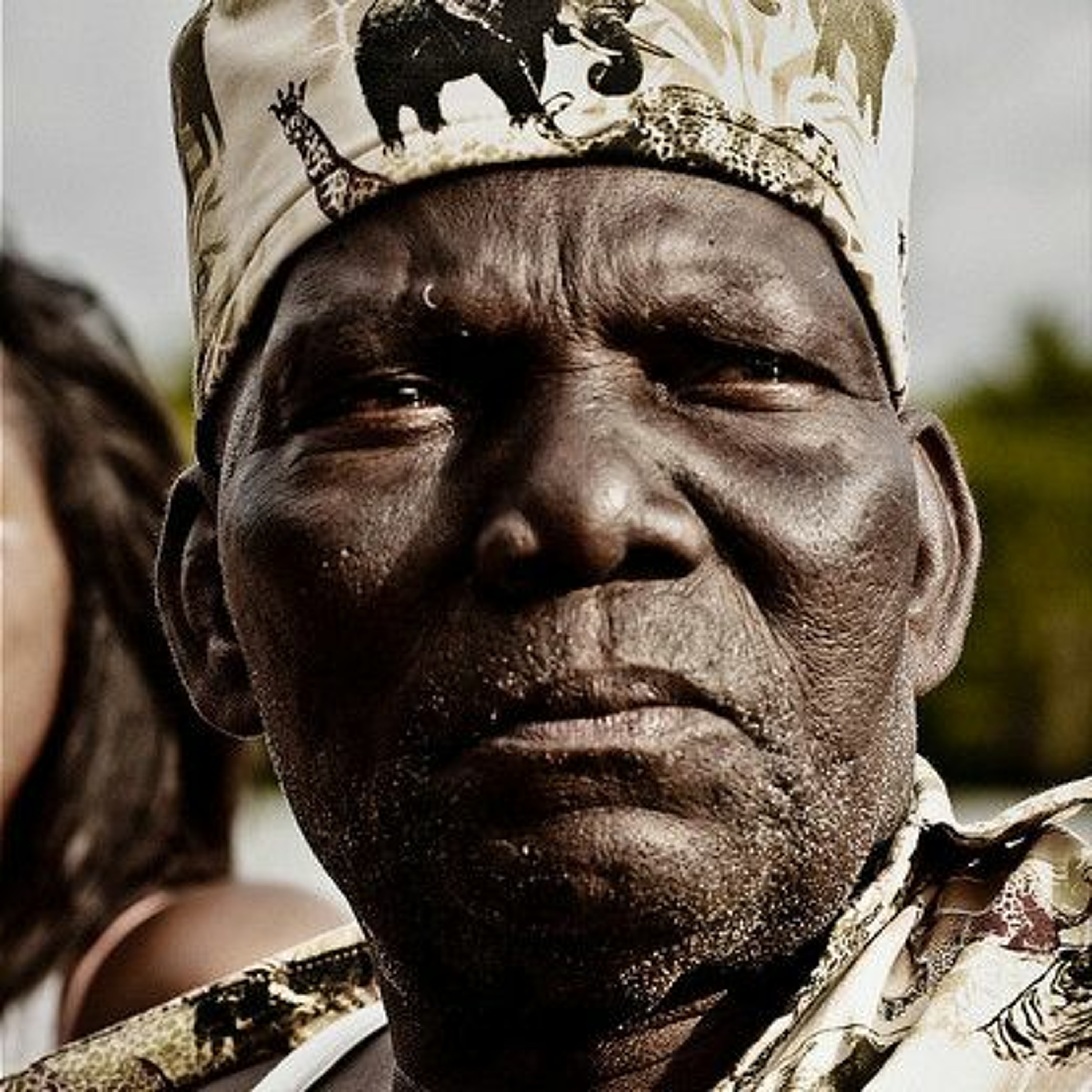
Afro-Cuban and Afro-Brazilian musical giants have long enjoyed the spotlight, yet throughout Latin America there are other black enclaves producing some of the New World's most vibrant music. Their stories have gone untold for far too long. In this episode, Afropop explores these lost sounds, starting in an Ecuadorian desert valley where African and Andean traditions have mixed seamlessly into fiery dance music. Then we're off to mangrove-studded Esmeraldas to search out the last marimba legends living on the jungle waterways. We continue to Bolivia, where a tiny black minority uses their music to fight for recognition by the indigenous government and last, we'll listen to the driving carnival music of Uruguay, candombe. Tune in for exclusive interviews and recordings by everyone from marimba master Papa Roncon to Candombe-jazz legend Hugo Fattoruso. Produced by Marlon Bishop. [APWW #565] [Originally aired 2009]
Umm Kulthum - The Voice Of Egypt
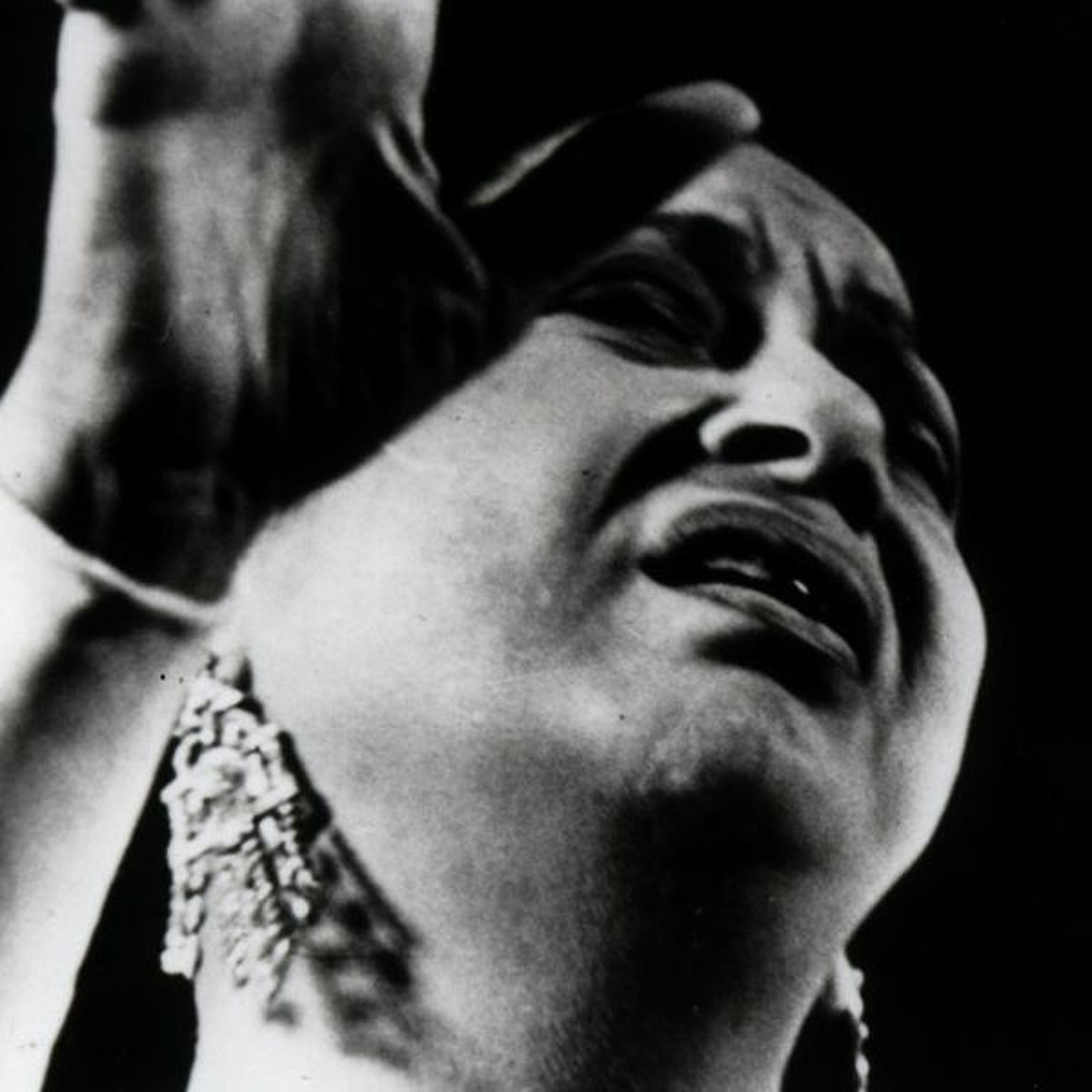
Umm Kulthum has been called the greatest singer in the Arabic speaking world in the 20th century. Born in 1904 the humble daughter of an Egyptian village imam, she went on to become a glamorous Cairo celebrity in her 20s, and soon after that, a cultural icon whose monthly live radio broadcasts brought much of Egypt to a standstill. She turned high poetry into popular culture. She extended musical forms with her virtuoso, extended vocal improvisations. Combining historical, religious, literary and musical passions, she inspired an enduring sense of national pride and left a legacy for the ages. Millions gathered for her 1975 funeral. With Umm Kuthum biographer Virginia Danielson as guide and guest, this program explores the life and music of a musical legend. Produced by Banning Eyre. [APWW #465] [Originally produced in 2005]
2020 Highlights
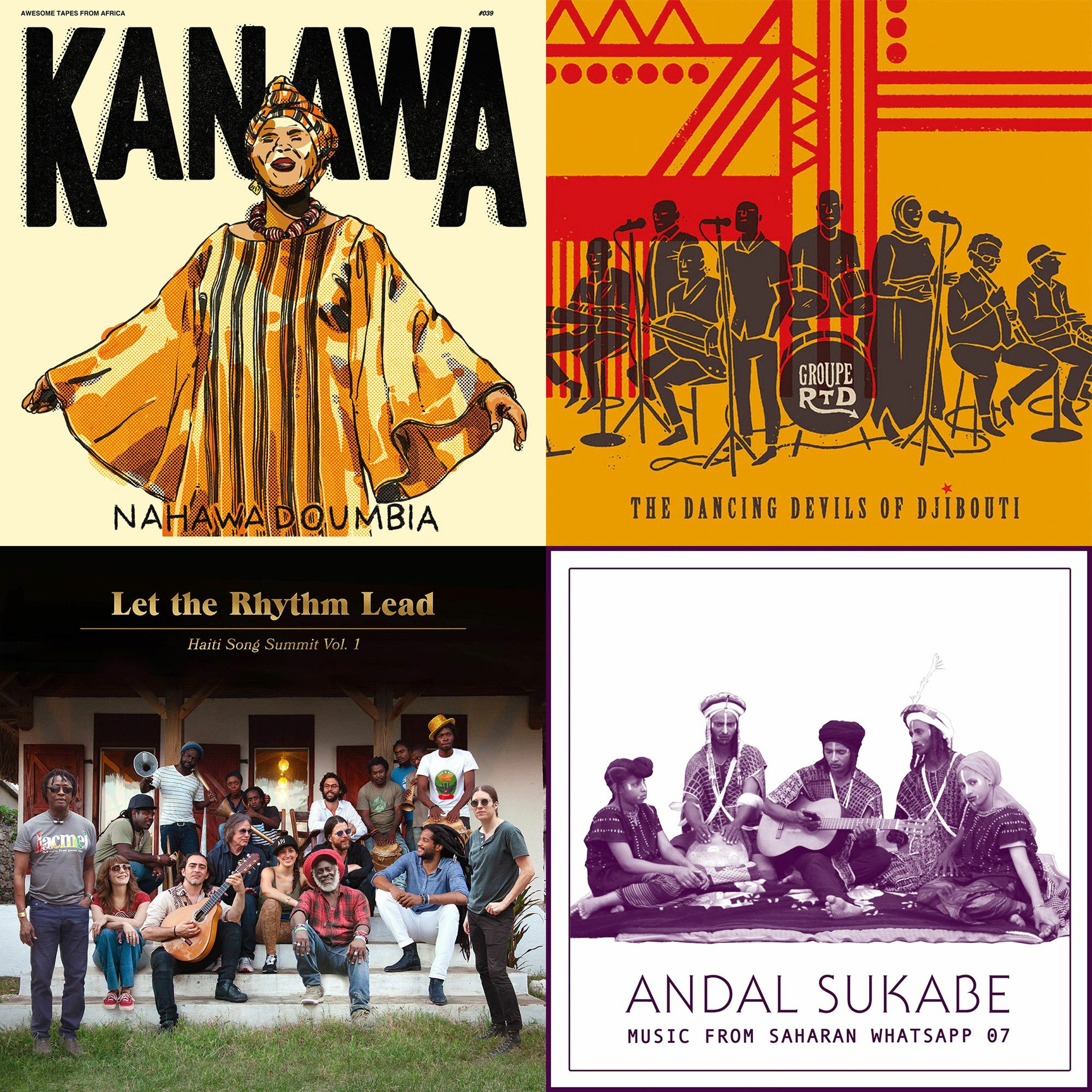
2020 has been a year like no other. Tours and concerts have been cancelled, and future plans remain up in the air. Just the same, a great deal of fantastic music has emerged from Africa and the diaspora. In their annual tradition, Georges Collinet and Banning Eyre take stock of the year’s offerings, covering an ever-growing array of styles and artistic movements. Not exactly a “best of the year” show, but you can be sure to hear artists and sounds you won’t find anywhere else! Produced by Banning Eyre. APWW #826

Sao Paulo Migrations: Hybrid Musical Resistance in Brazil’s Alpha City
Brazil’s economic and artistic powerhouse, São Paulo is a true megapolis, being the largest city in Latin America and fourth largest city in the world. Built on successive waves of immigration, it’s a melting pot of cultures, viewpoints and musical beats with a flourishing alternate arts scene that includes vibrant poetry slams, renowned street art and an incredible array of music forms that push against established hierarchies of race, class, gender and sexual orientation. In this dramatically unequal city, hybrid cultural expression happens spontaneously, fusing ancient and modern, local and foreign, traditional and avant-garde. Produced in São Paulo by David Katz (and completed remotely following travel bans), this program surveys the São Paulo soundscape to explore dynamic facets of its musical resistance. Beginning with some background information provided by historian Rodrigo Bonciani, we hear songs from northeast migrants that tried to make sense of their adopted city in the 1950s, 60s and 70s, including Tom Zé and Caetano Veloso, as well as Itamar Assumpção of the resident Vanguarda Paulista movement. Then, committed hip-hop specialist DJ Dandan guides us through the rap scene of the 80s, 90s and beyond, before acclaimed artists explore the influence of soul, funk and other global forms on their work, including the producer BiD and singers Aricia Mess and Curumin, the latter taking a closer work at the challenges and rewards of living and working in such a place. The reggae underground is revealed through testimony from Yellow P of Dub Versão sound system, Dani Pimenta of Feminine Hi-Fi and Lys Ventura of Fresh Dancehall, along with producer/bassist Victor Rice and drummer/producer Bruno Buarque. Then, the rich avant-garde scene is illuminated by words and music from Anelis Assumpção and members of Bixiga 70 and Metá Metá, and there are musings on the Covid-19 pandemic, as well as the city’s hopeful future. Overall, the listener is immersed in the broad diversity of São Paulo’s intense music scene, making it entirely clear that the city has become the most important site of contemporary music culture in Brazil during the new millennium. Produced by David Katz All images copyright ©David Katz

The Mighty Amazon
The Amazon River basin has long been a mystery to Brazil. Located far from the centers of business and power in the nation's southeast, the jungle provinces of the Brazilian north have long been ignored by the nation at large. But recently, Brazilians have discovered that the cities and waterways of the Amazon are home to some of the nation's hottest music. In this Hip Deep episode—a musical history of Pará state, where Afro-Caribbean influences have created a unique local flavor that connects the dots between Brazilian music and the rest of Latin America, we check out the guitar heroes of old-school Amazonian dance bands, investigate the origins of the early '90s lambada dance craze, and explore the bubblegum bass culture of tecno brega. Featured interviews with singer Gaby Amarantos, lambada revivalist Felipe Cordeiro and ethnomusicologist Darien Lamen, among others. Lead Producer: Marlon Bishop Assistant Production: Saxon Baird, Joe Dobkin APWW #691 Originally produced in 2014

GC's DJ Roadshow - From Kwaito To Amapiano
In this episode, Georges Collinet inaugurates a traveling talent search introducing guest deejays and producers with unique perspectives on global African music. First up is Matthew Key—a.k.a. DJ M-Point—host of "The Loxion Music Mix Show" on WESU FM in Middletown, CT. Key has been absorbed in South Africa’s post-apartheid pop music for 22 years, and he takes us on a tour through a succession of genres, starting with kwaito, the country’s joyous, jazzy response to long awaited freedom, and leading up to the latest SA music craze, Amapiano. Produced by Georges Collinet, Matthew Key and Banning Eyre. [APWW #821]
The Afro Roots Virtual Fest 2020 in Miami
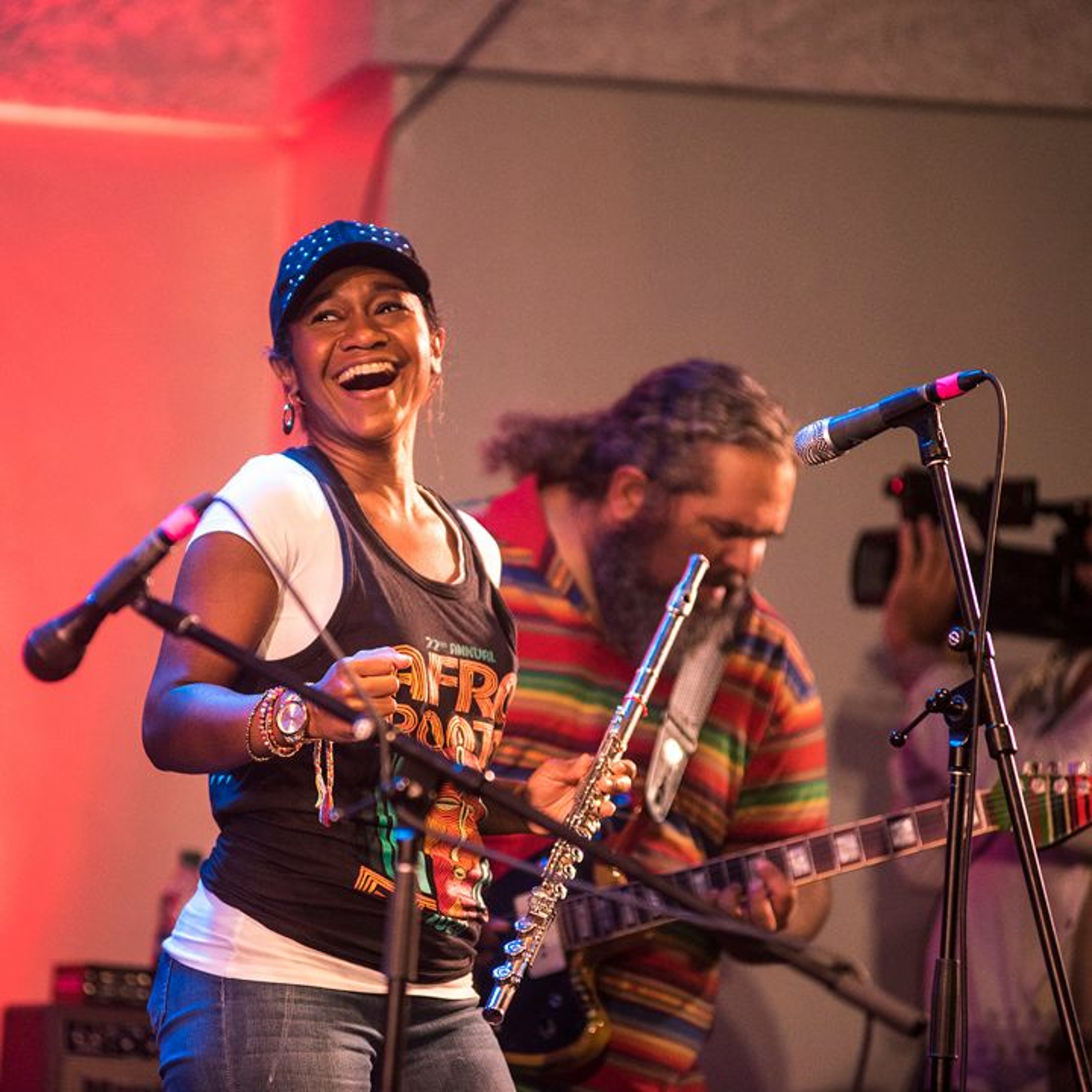
Miami is still in lockdown mode for large gatherings but we don't let that stop us as we travel, virtually, to Miami's beautiful open air, art deco North Beach Bandshell right across from the Atlantic Ocean. Enjoy highlights from the just completed Afro Roots Virtual Fest featuring the city's leading globally grooving artists. Crank it up! Johnny Dread of Cuban/Rasta heritage opens up with his original mix of classic reggae, rock and international sounds. Cortadito, called the best Latin act by the Miami New Times in 2019, offers an updated version of 19th century son montuno from the mountainous region of northeastern Cuba while its two lead singers--one from Havana and one from Santiago de Cuba in the east--take turns performing originals from these two distinct traditions. The Spam All Stars stretch out with quirky spoken word, Latin and eclectic combinations. Venezonix perform Venezuelan roots music enlivened by electronic textures. And Alsarah of the Nubatones beams in a soulful duet from Brooklyn of her songs in Nubian and Arabic, reflections on diaspora and displacement, with her oud player Brendan Terzig. Remember the joy of dancing to live music ?! Ah yes. [APWW #820]

819 Live from the Archive
When Afropop Worldwide launched back in 1988, a key goal was to capture the live energy of incredible artists emerging from Africa, the Caribbean and beyond. Most of those recordings were preserved on reel-to-reel tapes. The coronavirus lockdown has given us a chance to start revisiting and preserving. And we have been amazed to rediscover the energy of that thrilling era. On this music-rich program of concerts recorded live at S.O.Bs in New York City, we hear from Congo’s Papa Wemba, South African township heroes Mahlathini and the Mahotella Queens, the royal couple of Algerian rai music Chaba Fadela and Cheb Sahraoui, and Martinique zouk stars Marce and Tumpa. It’s a riveting blast from the past! Produced by Banning Eyre.

Baaba Maal Acoustic Live In NYC
Baaba Maal has toured the world, backed by his electric group, Daande Lenol. Sometimes he has performed as an acoustic duo with his longtime musical partner, Mansour Seck, on guitars and vocals. And rarely, Baaba has assembled a large acoustic group featuring guitars and traditional instruments. We caught such a moment at one of our all time favorite live recordings, Baaba and his acoustic big band performing at Joe's Pub in New York City. Beautiful! [APWW #383] [Originally aired in 2014]

Thomas Mapfumo Live in NYC at SOB's
In 1991, Thomas Mapfumo and the Blacks Unlimited made their second tour of the United States. It was a fascinating transitional moment in the band’s history. Mapfumo had recently added two musicians playing the metal-pronged, Shona mbira, enriching the band’s lineup of guitar, bass, drums, keyboards, brass and percussion. The band had now evolved into a kind of folk orchestra in which everyone sang, allowing for beautifully layered vocal arrangements. This recording, made by Afropop Worldwide at S.O.B.'s in New York City during that historic tour, is a true gem in the Afropop archive. It captures one of Africa’s most innovative and unusual artists and bandleaders at the height of his powers. One listen to this sublime recording and you will understand why producer Banning Eyre devoted some 15 years to writing the new book Lion Songs: Thomas Mapfumo and the Music That Made Zimbabwe. [APWW #55] [Produced by Sean Barlow in 1991]

Afropop Closeup: Pana-Soul Crooner Ralph Weeks’s Enduring Classic “Something Deep Inside”
Soul singer and multi-instrumentalist Ralph Weeks left Panama for Brooklyn, New York, when he was 17. Today he's a hearty 77, and still takes the stage with his finely honed falsetto to offer the enduring classic of a song he wrote more than 50 years ago, "Something Deep Inside." The song has passed through various renditions over the years and, in this podcast, Weeks lifts the hood on the creative process that led to a classic, with enthusiasm and an easy laugh. Produced by Steve Burkholder.

818 Lockdown Serenade
For all those stuck at home or stressed out during these uncertain times, here’s an hour of uplifting music from Mali, Cuba and South Africa. Vusi Mahlasela, Alex Cuba, Afel Bocoum and Oumou Sangare have all known the travails of personal pain and political turmoil. And yet all find the strength and vision to create music that soothes and reassures even as it moves dancing feet. On this program, we hear fresh music and words from all four. Produced by Banning Eyre and Sean Barlow.

Afropop Closeup: Everything Transforms
Two new bands, one from Morocco and one from Tunisia, are mixing jazz, funk, and rock with centuries-old ritual music with roots in the trans-Saharan slave trade. It rocks, but what does it mean for the tradition? Afropop talks with both bands about the divergent ways that they negotiate innovation and conservation. Produced by Sebastian Bouknight and Lauren Shenkman.

Ancient Text Messages - Batá Drums In A Changing World
In Africa, drums don't only play rhythms, they send messages. “Ancient Text Messages: Batá Drums in a Changing World” explores an endangered tradition of drum speech in Nigeria, and how that tradition changed and thrived in Cuba, where large numbers of enslaved Yoruba arrived in the 19th century. Producer Ned Sublette speaks with ethnomusicologist Amanda Villepastour, language technician Tunde Adegbola, and drummer Kenneth Schweitzer about how language and music overlap. Produced by Ned Sublette. [APWW #724] [Originally aired in2016]

Borderless Sounds - The New North Africa
North African music receives very little coverage in the United States. There are no high-profile mixes of recent Tunisian underground dance music from hip DJs, and no young Algerian musicians with major distribution deals in the U.S. So we decided to explore what exactly is going on today in this part of the world. We trace the origins of some of the region’s most interesting current music to the banlieues of Paris, like raï ’n’b--a new autotuned and synth-heavy offshoot of raï. We also explore the Gnawa reggae movement, which finds common ground between Sufi trance and the message of Marley. Returning to familiar traditions, we present a live recording of Kabyle mandoleplayer Hamid Ouchène from Montreal’s Nuits d’Afrique festival, backed by a group of Montreal-based musicians with origins throughout the African continent. We next turn to the North African metal scene that developed during Algeria’s civil conflict to meld Berber folk music with black metal. Finally, we check out the new chaabi revival. Produced by Jesse Brent. [APWW #692] [Originally aired in 2014]

Closeup: Art Is Freedom - A Conversation With Criolo
One of the most important performing artists to emerge on the Brazilian music scene in the new millennium, Criolo has crafted a diverse and eclectic body of work. Moving between rap, reggae, Afrobeat, samba, electronic music and other genres, Criolo has constantly used his music to address the dramatic issues of race, social inequality and governmental corruption that have blighted contemporary Brazil. In this podcast, Criolo tells producer David Katz about his early struggles in the peripheral favelas of Sao Paulo, the evolution of his life and work and the liberating nature of art. Photo: ©David Katz
817 The Story Of Gumbe
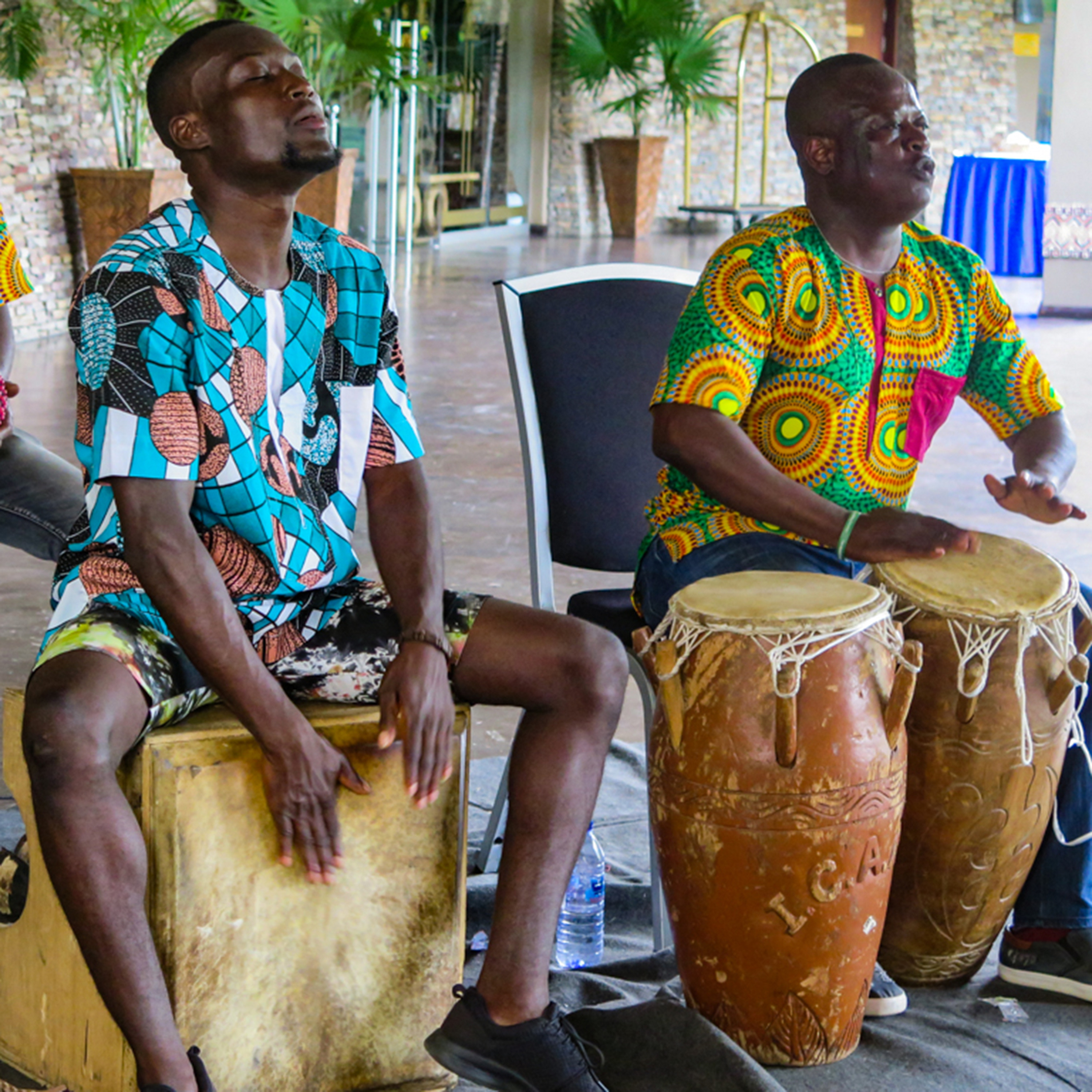
The square gumbe frame drum was created centuries ago by enslaved Africans in Jamaica. It traveled to Sierra Leone with freed Maroons from Jamaica’s highlands in 1800. From there, the drum and its evolving, pan-ethnic music spread to 17 African nations. In this program we trace the history and legacy of this joyous and surprising music with field work in Jamaica, Sierra Leone, Ghana and Mali. Produced by Banning Eyre.
816 Bomba, Plena And Puerto Rican Protest Music
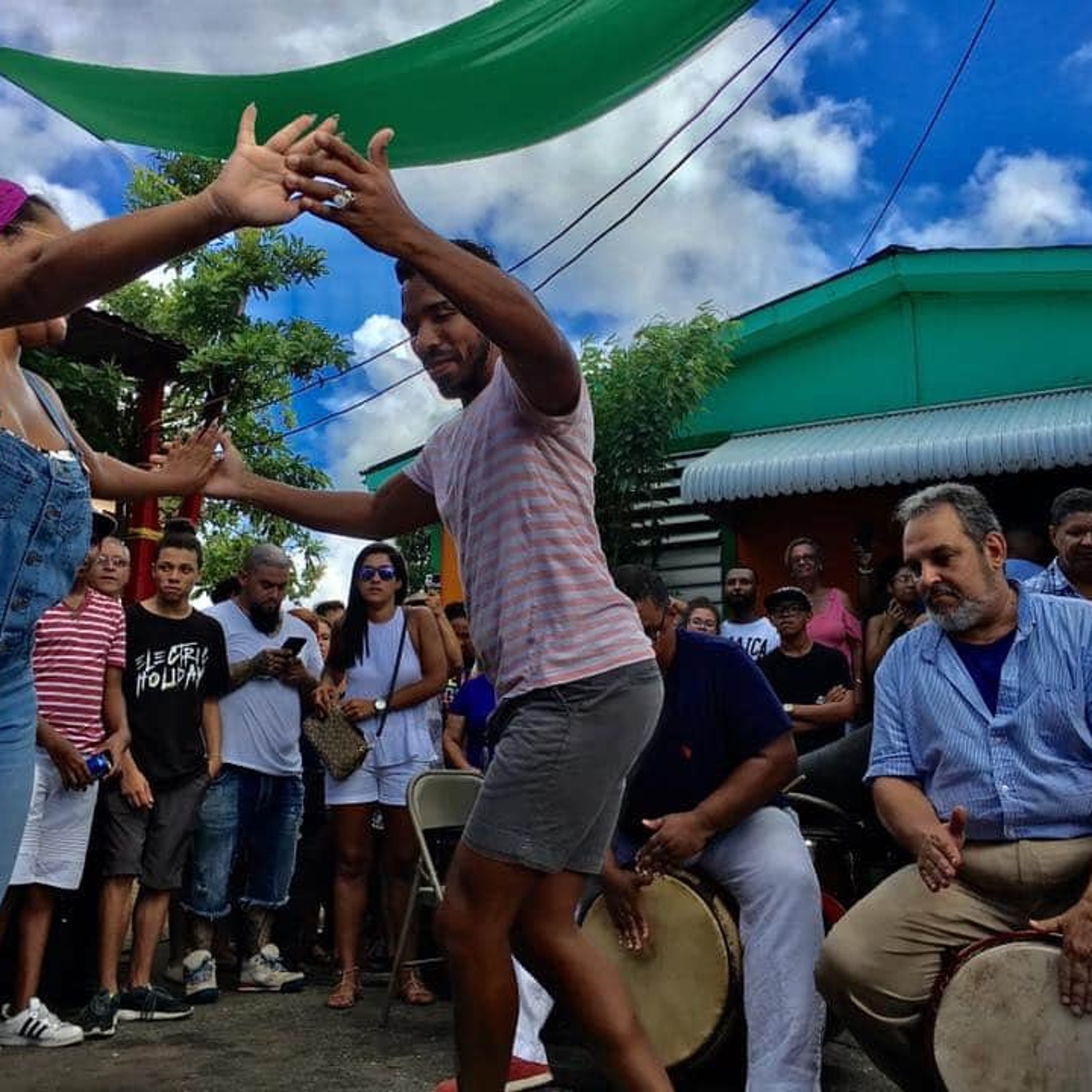
On this program, we look at Puerto Rican protest songs over the past two centuries, including Paracumbé's subversive bomba dances from the time of slavery, Las Barrileras 8M, an all-women drumming group demanding an end to violence against women and a new plena from Hector Tito Matos about the death of George Floyd. The past three years have been incredibly traumatic for Puerto Rico: two hurricanes followed by slow recovery efforts that led to the death of 3,057 on the island, a text message scandal mocking women’s rights that eventually brought down a governor, the deaths of more unarmed Black men, women and children across the United States and of course the coronavirus pandemic. Producer Dan Rosenberg looks at how artists across Puerto Rico including Plena Libre helped in the healing process after Hurricane Maria by performing for those who lost their homes in the storm. We’ll hear music from marches that led to the resignation of Governor Ricardo Rosello. “We’ve been under attack from nature and bad governments and so many things since 2017, and from before, but 2017 made us more aware,” explains Nelie Lebron-Robles. “Here we are. One nation with a very distinct Latin American identity, very proud of who we are. We’ve discovered we can do anything that we propose ourselves to do.”

Johnny And Sipho: A Friendship Made On Earth
Johnny Clegg and Sipho Mchunu formed the South African crossover band Juluka in the mid-1970s. But by then, the two had been palling around apartheid South Africa, playing music, dancing and getting into trouble with the police for years. And even though Juluka disbanded in 1985, the two remained close friends until Clegg died in 2019. In this podcast we hear both artists reflecting on a remarkable friendship. Produced by Banning Eyre.

Hip Deep In The Niger Delta
The massive Niger River Delta is a fantastically rich cultural region and ecosystem. Unfortunately, it has been laid low by the brutal Biafran War (1967-70) and by decades of destructive and mismanaged oil exploration. This program offers a portrait of the region in two stories. First, we chronicle the Biafran War through the timeless highlife music of Cardinal Rex Jim Lawson, perhaps the most popular musician in Nigeria at the time. Then we spend time with contemporary musical activists in Port Harcourt’s waterfront communities and in oil-ravaged Ogoniland to hear how music is providing hope for these profoundly challenged communities. The program features new and classic music, the words of Nigerian scholars, musicians, activists and veterans of the Biafran War, concluding with an inspiring live highlife concert on the Port Harcourt waterfront in which rappers and highlife graybeards come together to imagine a better road ahead. Produced by Banning Eyre. [APWW #754] [Originally aired in 2017]

Africa And The Blues
When this episode first aired, the recent death of Malian guitar legend Ali Farka Touré inspired a new round of speculation about the roots of the blues in Africa. Touré famously argued that the beloved American genre was "nothing but African," a bold assertion. Among scholars, Gerhard Kubik's book Africa and the Blues has gained recognition as the most serious and penetrating examination of the subject. This program in our Hip Deep series was produced in collaboration with Kubik, allowing a rare opportunity to delve into his vast collection of recordings. We listen to Ali Farka Touré and John Lee Hooker through Kubik's ears, and hear from many lesser-known artists on both sides of the Atlantic. Even though the blues is a central component of American music, it is one of the most mysterious, and least understood aspects of our popular music culture. This program gives us new insight. Produced by Banning Eyre. (Originally aired 2007)

Closeup: Drumming as A Resistance Movement
Brazil’s Grupo Didá, is an extraordinary ensemble of Afro-Brazilian women who use music to fight against injustice and racial inequality. Producer Dan Rosenberg speaks with the group's founder, percussionist Adriana Portela, about how Didá is working to redefine gender roles in Salvador da Bahia, and anthropology professor Andrea Allen (University of Toronto) on the history of slavery in Brazil, and the horrific violence inflicted upon enslaved women.

Youssou's Egypt
In 2004, Youssou N'Dour joined forces with Egyptian master-musician Fathy Salama for a sonic adventure, Egypt (2004, Nonesuch). Through the differing forms of expression from east and west of the Sahara, Youssou and Fathy explore the shared spiritual bonds that unite Muslims across the continent. The result is a soulful retracing of their common roots. [APWW #437]

814 My Friend Manu
Cameroonian musician and composer Manu Dibango passed away on March 24 at his home in France, an early victim of Covid 19. “My Friend Manu” is a tribute to the exceptional man who, by chance, as he says, gave us the famous Soul Makossa, a tune that opened the Disco era. In this episode of Afropop Worldwide, Georges Collinet goes back in time to recollect his friendship with his fellow Cameroonian. He explores the many ways their lives paralleled and intersected after they were sent to France by their parents for an education. This musical journey is enhanced by the wisdom and sonorous laughter of Manu Dibango and by the mesmerizing music culled from over 200 records that Manu produced over a 60 year career. In “My Friend Manu” you will not only sample some Maxi Voom Voom, as Georges Collinet’s show on the Voice Of America was called, but also have a taste of Andouillette and Suya in Yaoundé, Cameroon. And you will finally know how to correctly say Ma Ma Ko, Ma Massa, Ma Ma Makossa. “My Friend Manu” is definitely a multi-sensory delight! Photos by Pierre René-Worms, used with permission.

The Musical Legacy Of Al - Andalus Part 2
Even before the expulsion of Jews (1492) and converted Muslims, or Moriscos, (1610) from Al Andalus, many Andalusians crossed the Straight of Gibraltar to resettle in North Africa, and as far east as Syria. All these centuries later, Andalusian art forms and communities persist, especially in Morocco, Algeria, Tunisia, Libya, and Syria. This Hip Deep program examines the intriguing variety of Muslim "Andalusian" music traditions, especially in Morocco, Algeria, and Syria. Once again, our guide is Andalusian scholar Dwight Reynolds. We'll also hear from Moroccan musicians, a specialist on Syrian Andalusian traditions, and of course, we'll hear lots of music, including the Orchestra of Fes, Ensemble Essoundoussia of Tlemcen, Algeria, and legendary Syrian singer Sabri Moudallal. Produced by Banning Eyre. [APWW #440]
The Musical Legacy Of Al - Andalus, Part 1 - Europe
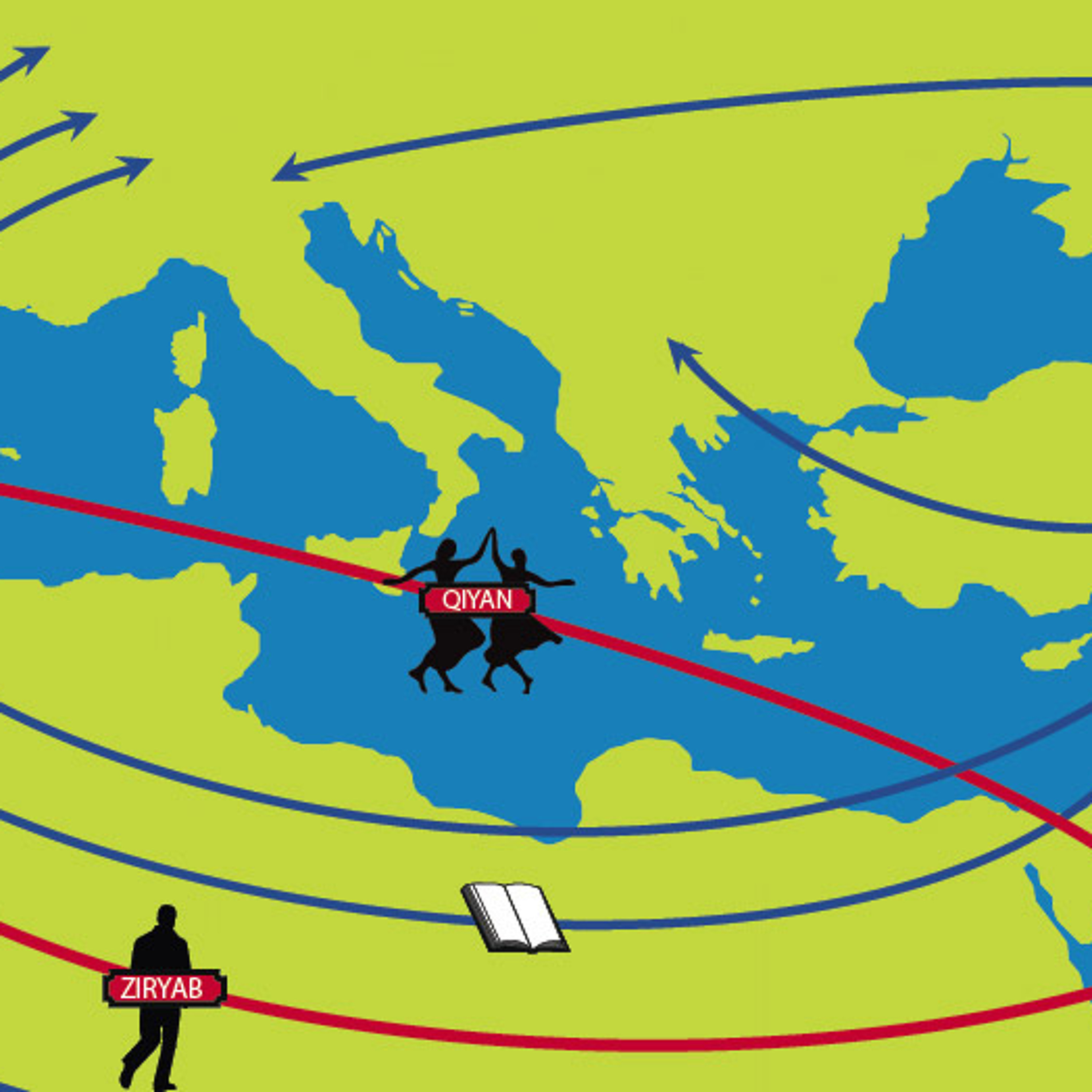
The 700-year period of Muslim courts and conquerors in Medieval Spain (711-1492) leaves behind many mysteries. In the first of a three-part look at the musical legacy of Andalusia, this program presents period recreations of medieval Spanish music and considers the lasting influences the era would have on Europe. This program takes a provocative look at instruments--the lute and the violin--at the tradition of troubadours, European poetry and vocal styles, and much more, all informed by the insights of Al-Andalus scholar Dwight Reynolds (University of California, Santa Barbara). Many enigmas remain, but you may never hear European music in quite the same way after this venture into the heritage of Al-Andalus. This is part of Afropop Worldwide's "Hip Deep" series exploring the historical roots of musical cultures of the Afro-Atlantic world. Produced by Banning Eyre.
Botswana, Dumelang
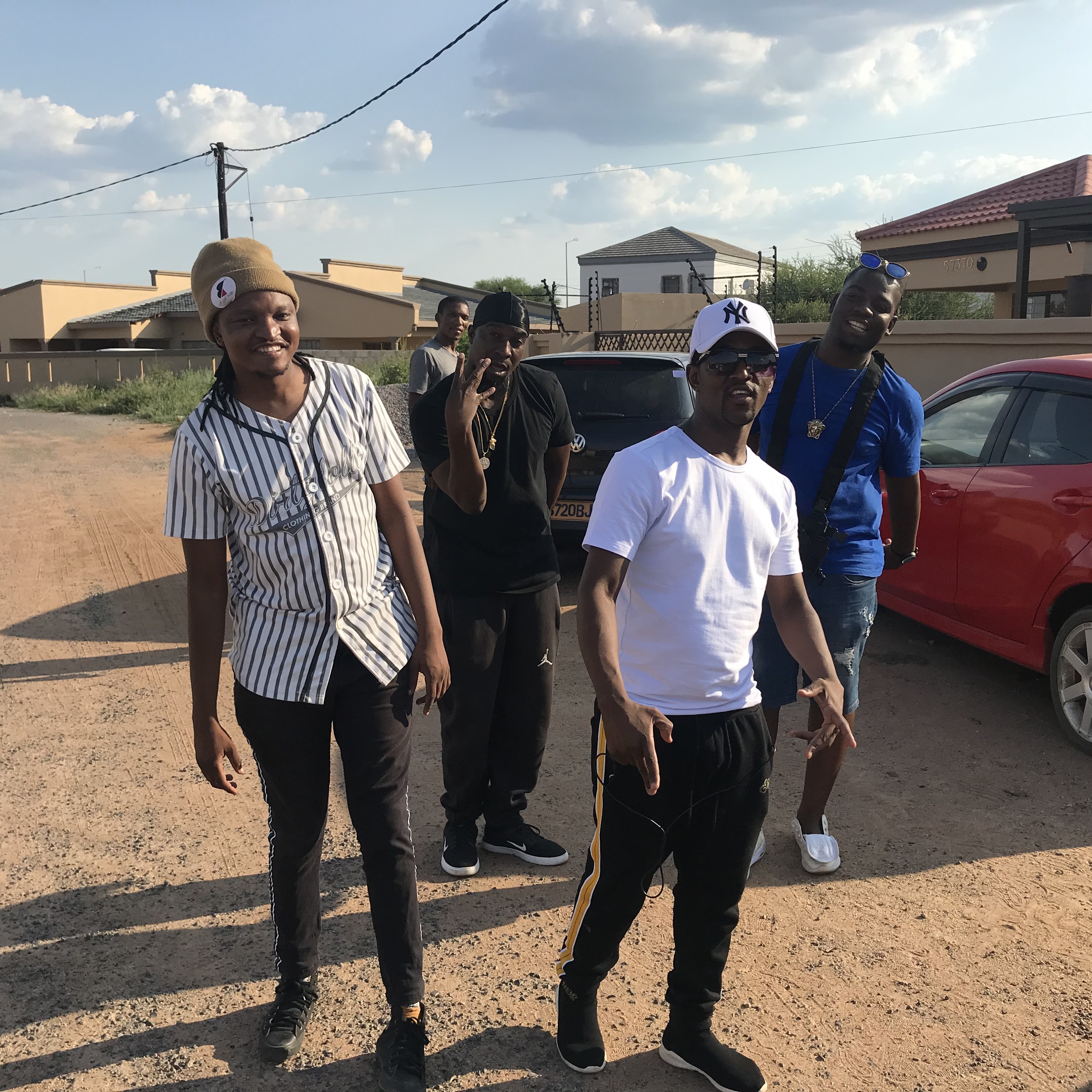
Botswana is a large, landlocked country in Southern Africa, a vast stretch of desert and savannah between South Africa, Zimbabwe and Namibia with a population of only 2.2 million. While widely overlooked internationally for their music, over the past 20 years Batswana have steadily built a diverse and fruitful local scene that includes traditional choirs, hip hop and kwaito, R&B and jazz and even heavy metal. While the biggest star in the country, Franco, packs stadiums with his Congolese-derived Setswana kwassa kwassa, Vee Mampeezy, Charma Gal and a host of aspiring stars champion a distinctly local fusion called house kwassa: a mix of rumba guitars, house beats and kwaito vocals. In this program we hear from Kabelo Mogwe of the popular cultural troupe Culture Spears; hip hop star Jujuboy; the metal band Skinflint; Afro soul singer Mpho Sebina and reformed house kwassa badboy Mingo Touch. We also head to a midnight recording session with young producer Zolasko and singer Naisi Boy and learn the insides of the Botswana music video industry with videographer Jack Bohloko. Produced by Morgan Greenstreet and Lollise Mbi.

Rhythm Nations
Some countries are embedded in our collective memory for their trademark rhythms--samba for Brazil, rumba for Cuba, Afrobeat for Nigeria, mbalax for Senegal. We'll celebrate these beats with some of their seminal practitioners. Produced by Sean Barlow. APWW #787 Originally broadcast in 2018

Madagascar Medley
On a return trip to Madagascar, we catch up with and hear new music from tsapiky maestro Damily, the “King of Salegy” Jaojoby, an exciting new duo starring Sammy of Tarika Sammy, Toko Telo and more. This music-rich edition is filled with entrancing and hard-to-find roots pop. In the wake of 2018’s hard-fought presidential election, Madagascar faces a new era with former DJ Andry Rajoelina at the helm. Word is his theme song was a major boost. We’ll hear it. We’ll also sample rare field recordings from this spectacularly musical and often overlooked Indian Ocean island. Produced by Banning Eyre. APWW #800 Originally broadcast in 2019
South African Roots In The 21st Century
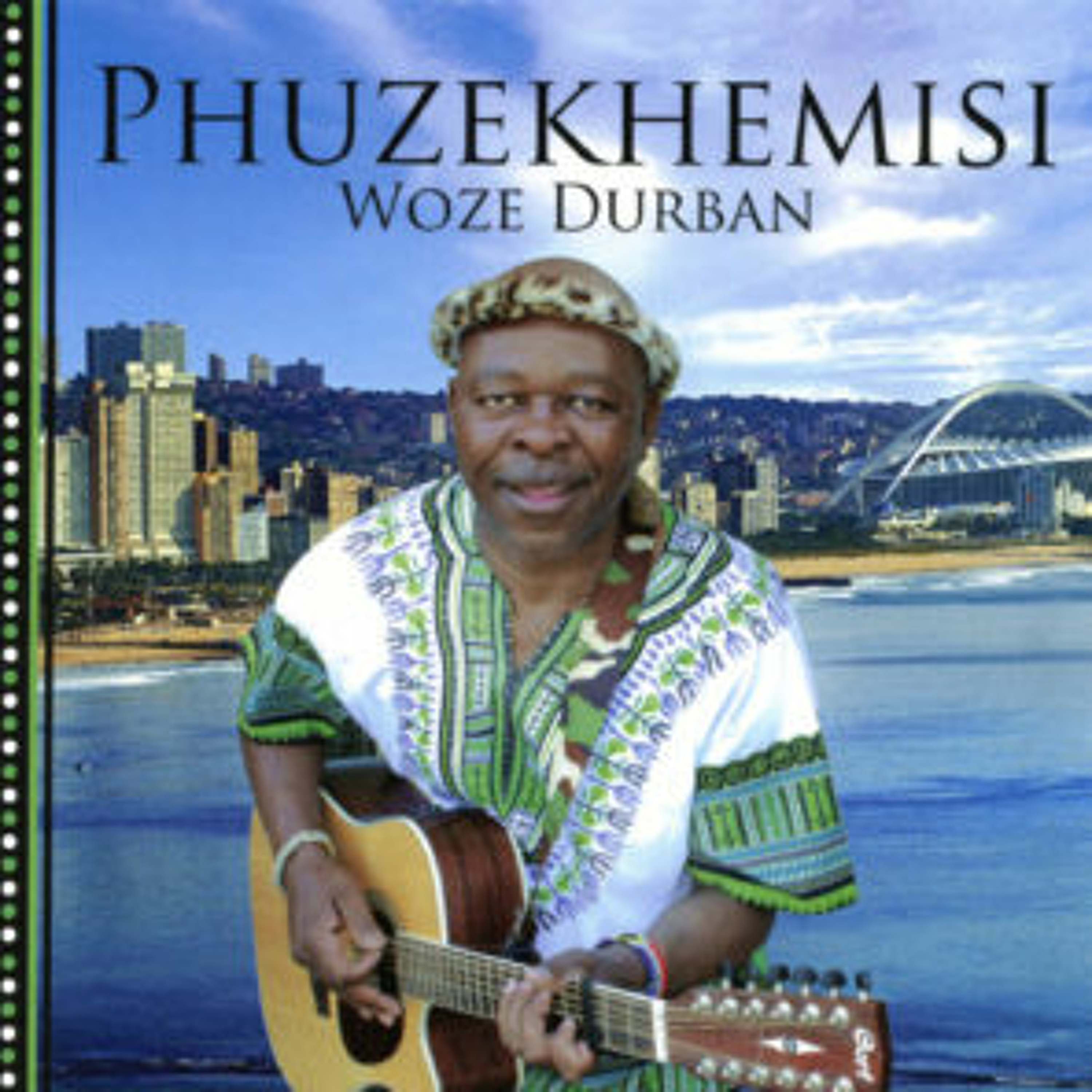
Century Yes, it’s the age of South African House, Afrobeats, Afro R&B and the likes, but roots music lives on in South Africa. This show updates the Zulu pop music known as maskanda, with a look back at its history and a survey of the current scene--rich musically, but troubled by fan rivalry that can lead to violence and even deaths. We’ll hear nimble ukapika guitar playing, heavy Zulu beats and bracing vocal harmonies. We’ll meet maskanda legend Phuzukhemisi and veteran South African radio broadcaster Bhodloza “Welcome” Nzimande, long a champion of maskanda music and a would-be peacekeeper in the fractious current scene. We’ll also hear from Zulu guitar legend Madala Kunene, and check out some of the recent gqom music that has largely replaced maskanda and other roots styles in the lives of young South Africans. Produced by Banning Eyre. [APWW #803] [Originally broadcast in May 2019]
Rap, Reggae and Cultural Resistance in Belo Horizonte, Brazil
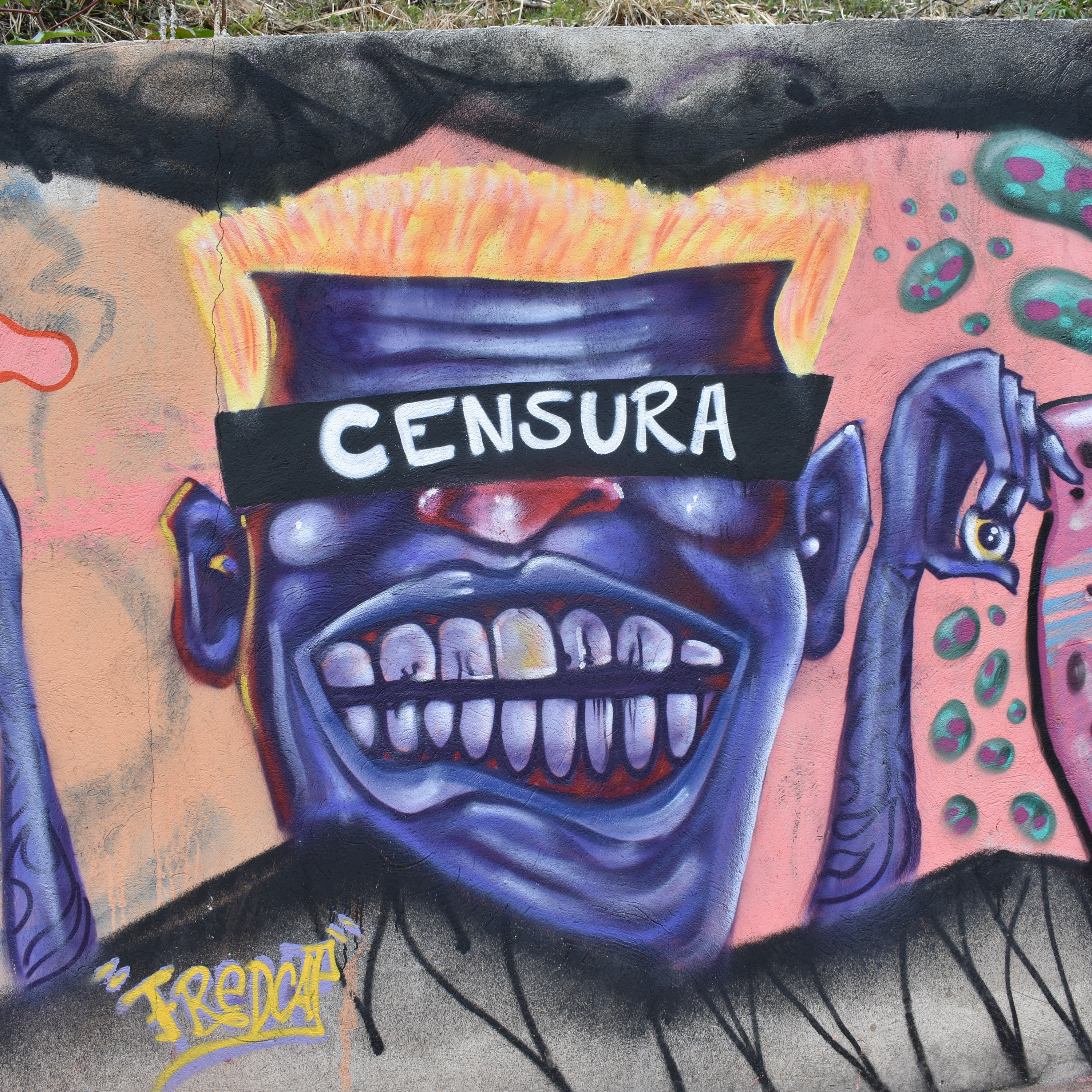
Belo Horizonte is Brazil’s sixth largest city and including its surrounding districts, the country’s third largest metropolitan area. The capital of Minas Gerais, a state built on mining, dairy products and coffee production, Belo Horizonte is often seen as a parochial, conservative backwater, yet its thriving alternative arts scene provides robust forms of musical and cultural resistance to the exclusionary policies of reactionary president, Jair Bolsonaro, especially through local variants of hip-hop and reggae. Produced in Belo Horizonte by David Katz, this program explores the intricacies of the city’s homegrown resistance movements, based in squatted buildings and public spaces in the city center and peripheral favelas on the outskirts. It reveals the surprising complexities of the renowned Belo Horizonte rap scene, which is intricately linked to improv theatre and urban poetry movements, with a revived Carnival culture, African-Brazilian Candomblé and baile funk all part of the local form’s very distinctive musical backdrop; the smaller reggae scene also addresses issues such as social exclusion, income disparity, racial bias, gender discrimination, transphobia and environmental crises. In the show, we’ll hear from rappers such as Roger Deff, Samora Nzinga and the leftfield duo of Hot e Oreia, as well as Leo Vidigal of the Deska Reggae sound system and Zaika dos Santos of Salto, the city’s first female-run sound; Tiago Lopes of the Rastafari collective Roots Ativa and former rapper Kdu dos Anjos and guide us through the permaculture and upcycled fashion projects they have established in the massive favela complex of Aglomerada da Serra, providing employment and social integration to some of the city’s most disenfranchised residents. Produced by David Katz. Image: copyright David Katz [APWW #812]
Accounting for Taste: Dire Straits, Jim Reeves, and Death Metal in Africa
When we talk about the influence of American performers on African music, we usually think about a few obvious examples, legends like Michael Jackson, Jimi Hendrix or James Brown. In this episode, we go beyond these stars to explore the legacy of some lesser-known inspirations. We’ll learn how the fluid guitar playing of ’70s rock band Dire Straits became massively popular in the Sahel, influencing Tuareg rockers like Tinariwen and Tamikrest. We’ll hear about the American country superstar Jim Reeves’ African career, and the unlikely story of how the pedal steel made it from Hawaii to Lagos. Finally, we’ll travel to Angola with the help of director Jeremy Xido, to explore that nation’s death metal scene. And along the way, we will try to understand just how to account for taste. Produced by Sam Backer with help from Jesse Brent. [APWW #703] [Originally aired in 2015]
Edo Highlife: Culture, Politics And Progressive Traditionalism
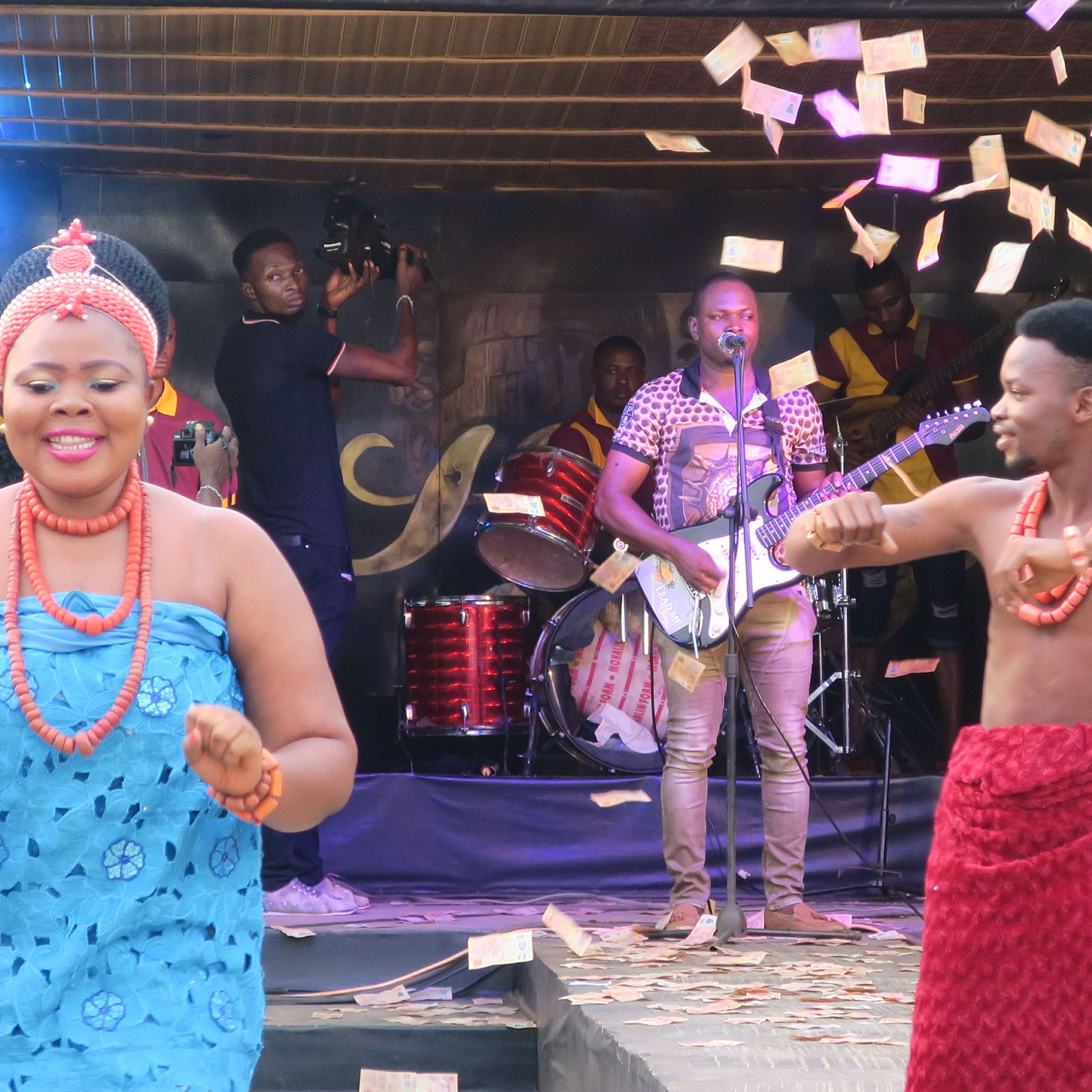
Highlife—West Africa’s pioneer popular music of the late colonial and independence periods—has mostly faded from popularity in 21st century Nigeria. However, highlife is alive and well in Edo State, 300 kilometers east of Lagos, and the center of the former Benin Kingdom. Edo highlife musicians fill the role of traditional musicians by animating community ceremonies such as weddings and funerals, and praising prominent members of the community, in exchange for “financial love.” This traditionalism is also progressive: Edo highlife music draws on traditional genres like asonogun, ojeke, agbi, ivbiagogo, and ekassa, and musicians continue to incorporate instruments and styles from neighboring Yoruba communities and Western popular music. In this Hip Deep program, we'll hear how Edo highlife musicians have found sustainable careers by simultaneously rooting their music in their local communities and appealing to diasporic enclaves in Europe and the United States. Their local support has even allowed certain musicians to broach political themes, singing in support or in critique of specific politicians, a rare occurrence in contemporary Nigeria. We’ll hear from legends and innovators including Sir Victor Uwaifo, Ambassador Osayomore Joseph, and Alhaji Waziri Oshomoh as well as current stars including Dr. Afile, Akogbehian and Johnbull Obakpolor. Produced by Morgan Greenstreet and Austin ‘Maro Emielu. [APWW #751] [Originally aired in 2017]

SxSW Virtual Showcase
The cancellation of South by Southwest was one of the early shocks in the global coronavirus pandemic. Countless artists, fans, vendors, nightclub owners and festival staff were devastated. Afropop Worldwide had been scheduled to host 12 bands at an SXSW showcase. We decided to reach out to some of these artists and make a radio show with their music just the same. This program features Skype interviews and music from RAM (Haiti), Blaya (Portugal) and BLK JKS (South Africa), and music from Ghana, Cape Verde, Colombia and more—all artists we had hoped to feature. The music is uplifting, and the stories illustrate the global reach of the ongoing crisis. Produced by Banning Eyre [APWW #811]

With Feet In Many Worlds
more of the musical artists who are making a difference cannot be pinned down to any one national identity.Migration, intermarriage, and the hurly burly of our globalized planet are creating new and growing generations of change-makers with hyphenated identities. In this program we hear from Ayo (Nigerian/Roma/German), Meklit Hadero (Ethiopian-American), Weedie Braimah (Ghanaian-American), La Dame Blanche (Cuban-French), Pascal Danai of the band Delgres (Guadeloupean-French) and others, as we sample the rich music and hear the stories, challenges and triumphs of this fascinating new generation of global musical creators. Produced by Banning Eyre. [APWW #772]

810 GlobalFEST 2020
New York City's globalFEST is a landmark musical event every January, a sonic feast featuring 12 artists on three stages in a single winter night. In this program, we hear extended live tracks from Senegal's Cheikh Lo, also Meklit, Les Amazones D'Afrique and dynamic new sounds from Turkey and South Korea. Rising star in Algerian rai music Sofiane Saidi makes his U.S. debut. In a season when we are being denied live music experiences, a virtual soiree at 2020's globalFEST edition may just be the next best thing.

A History Of Puerto Rican Salsa
The first time Puerto Rican bandleader Willie Rosario heard the word salsa applied to the Cuban-style music he played was in Venezuela, where DJ Phidias Danilo first popularized it. Subsequently applied as a marketing tool by Fania Records in New York, the word quickly became a marker of Puerto Rican identity. This 1995 production talks to the founding bandleaders of the genre -- Rafael Ithier (El Gran Combo), Quique Lucca (Sonora Ponceña), and Willie Rosario -- and presents immortal hits of early Puerto Rican salsa. Produced by Ned Sublette with José Mandry. [APWW #207]
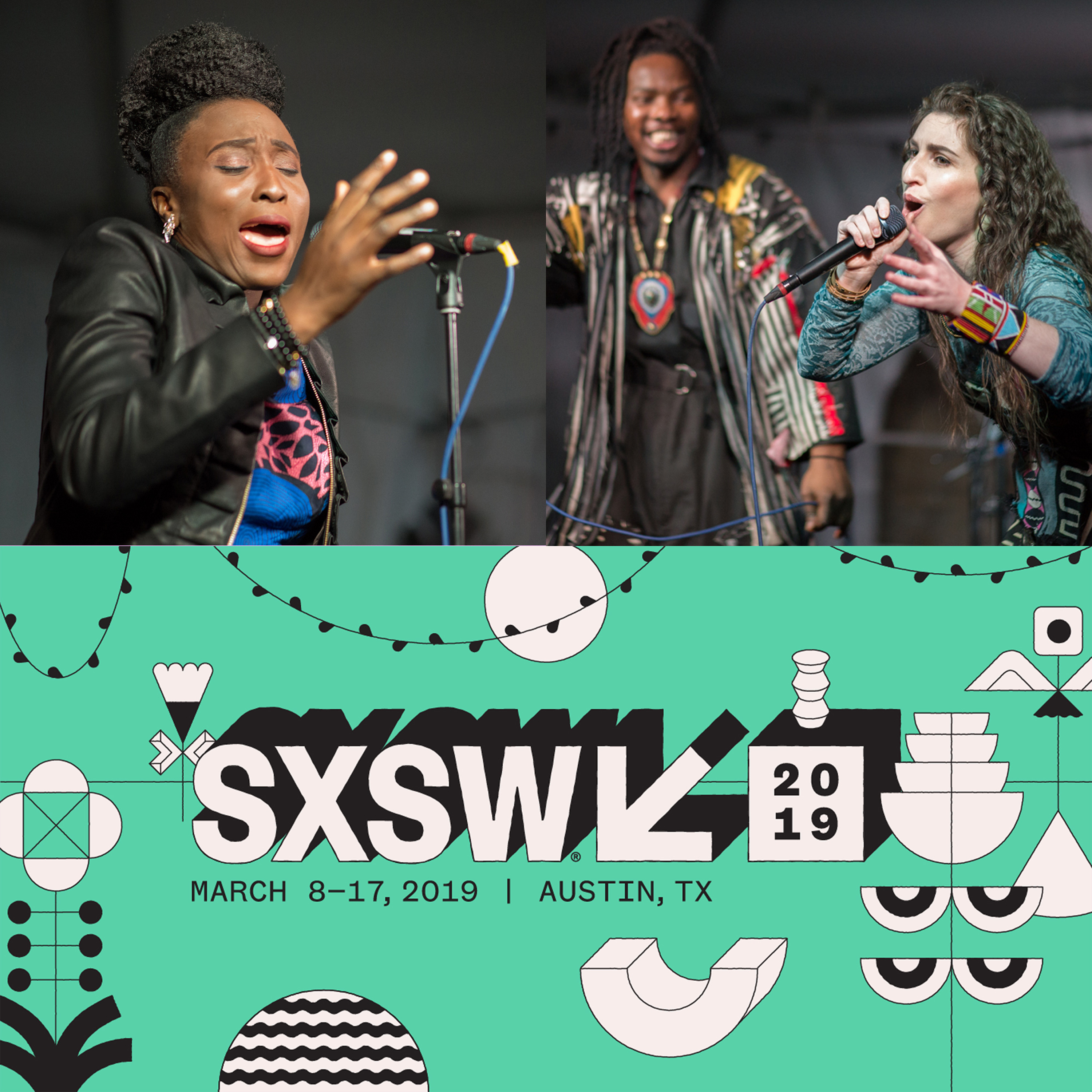
801 Afropop At SxSW 2019
In 2019, Afropop Worldwide hosted a stage at South by Southwest in Austin, TX, for the first time. Our lineup featured innovative new sounds out of Africa, including Jojo Abot from Ghana, Adekunle Gold from Nigeria, groundbreaking DJ AfrotroniX, Sauti Sol from Kenya and more. In this episode, we meet the artists, sample their sets, and take in the growing presence of African music at America’s most essential pop music expo. The start of a fine tradition! Produced by Banning Eyre. [APWW #801] [Originally aired in 2019]
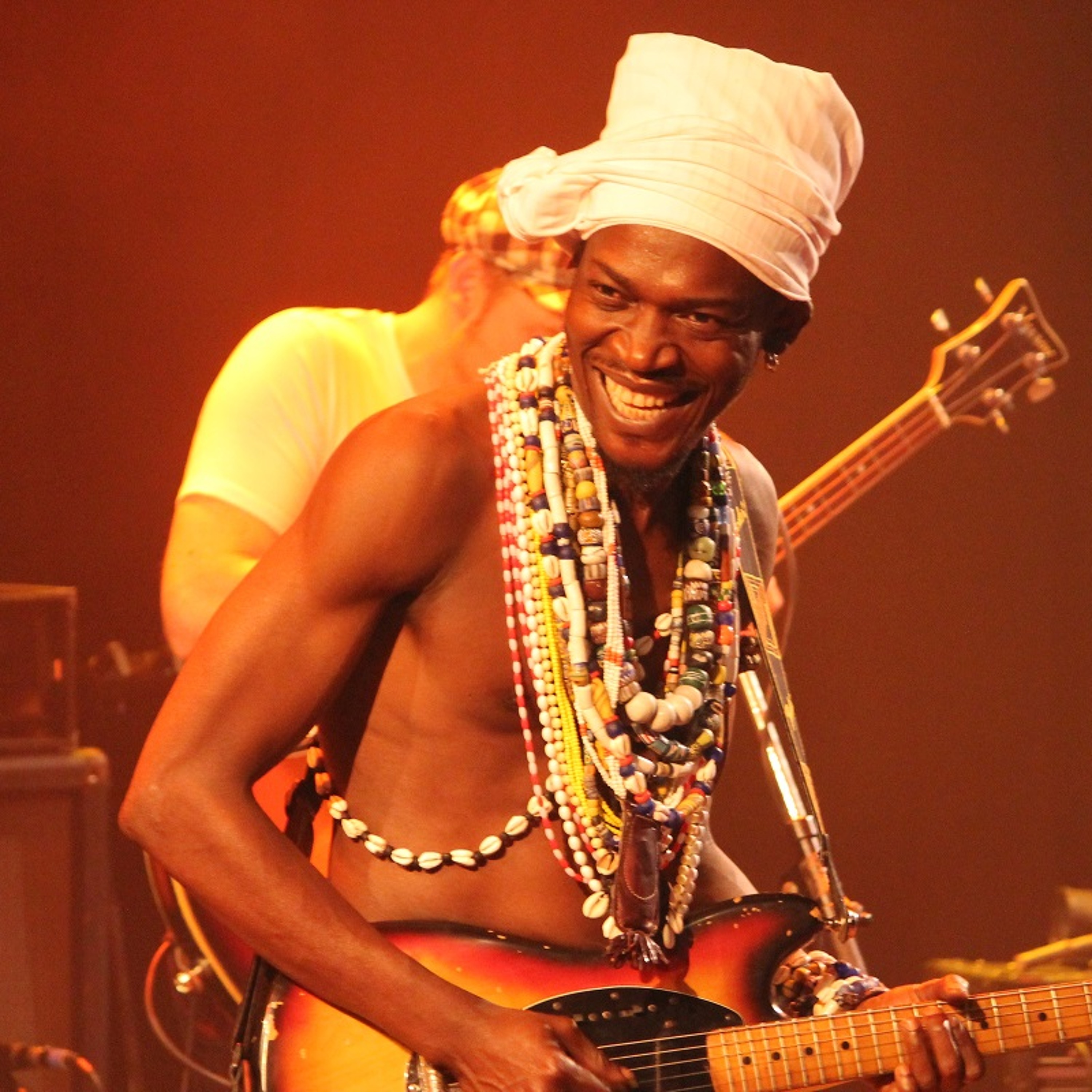
Voodoo To Go Festival
Producer Morgan Greenstreet follows the trail of West African Vaudou spiritual music to a very unlikely place–Utrecht, Netherlands–for the first edition of the Voodoo To Go Festival. The three-day festival, pioneered by Togolese entrepreneur Leopold Ekué Messan, set out to demystify Vaudou/Vodun/Voodoo spiritual practices by featuring music and dance from Togo, Benin, Haiti, Cuba and Suriname and bringing people together for films, food and a panel discussion about “Good and Evil in Voodoo.” From the opening ceremony, to the climactic final moments of the festival, the music at Voodoo To Go was filled with the spirit: Trance-inducing traditional music from Togolese/Beninois diaspora group Djogbé; heavy, retro Vaudou funk from Togolese musician Peter Solo and Vaudou Game, based in Lyon, France; Surinamese Kawina music from Rotterdam-based dance band Dray-ston; Late-night Haitian Vaudou-jazz from Erol Josué; and, finally an intense collaboration between Cuban jazz maestro Omar Sosa and Togolese musician and dancer Ayaovi Kokoussé. Alongside the excellent music, we hear from various participants in the festival discussing what Voodoo means to them: a Winti priestess; fascinated Dutch music fans; and, of course, the musicians who make music inspired by the spirit. [APWW # 717] [Originally aired in 2014]
Diaspora Encounters: The Indo-Caribbean World
Competition between communities of Indian and African descent has been a mainstay of politics and culture in the former British colonies of Trinidad and Tobago, and Guyana. This rivalry plays out in institutions from the University of the West Indies to the West Indies cricket team, and of course, popular music. At the time of Trinidad's Independence, the Afro-Caribbean political elite of the day sought to enshrine calypso as the country's national music, but new genres have emerged, from the steel-pan jazz and calypso of the 1960s to soca and its successor, chutney-soca, which for the first time in the 1980s fully integrated Indian and African influences in a local popular music. This Hip Deep edition explores all of these styles, and also the music of diaspora communities in the U.S. and the U.K.. Ethnomusicologist Peter Manuel of the City University of New York shares his ground-breaking research on Indo-Caribbean music in all of its geographic and social contexts. His music and insights reveal a fascinating, overlooked story of hybrid Caribbean culture. Produced by Siddhartha Mitter. [APWW #556] [Originally Aired 2008]

Aurelio Badian Damily And The Kid From Timbuktu
This guitar-focused program presents a series of mostly acoustic sessions with Garifuna star Aurelio Martinez, griot guitar master Aboubacar "Badian" Diabate, Malagasy tsapika phenom Damily, and Abdramane Toure, the 17-year-old guitarist for Khaira Arby of Timbuktu. These four uniquely talented players talk about their careers, their learning process, and their highly personal guitar styles. Along the way we catch up with a rich selection of beautifully guitar-filigreed music, from Honduran soul to Sahara desert blues and the uniquely boogieing funerals of southern Madagascar. Produced by Banning Eyre in 2011. [APWW #608]
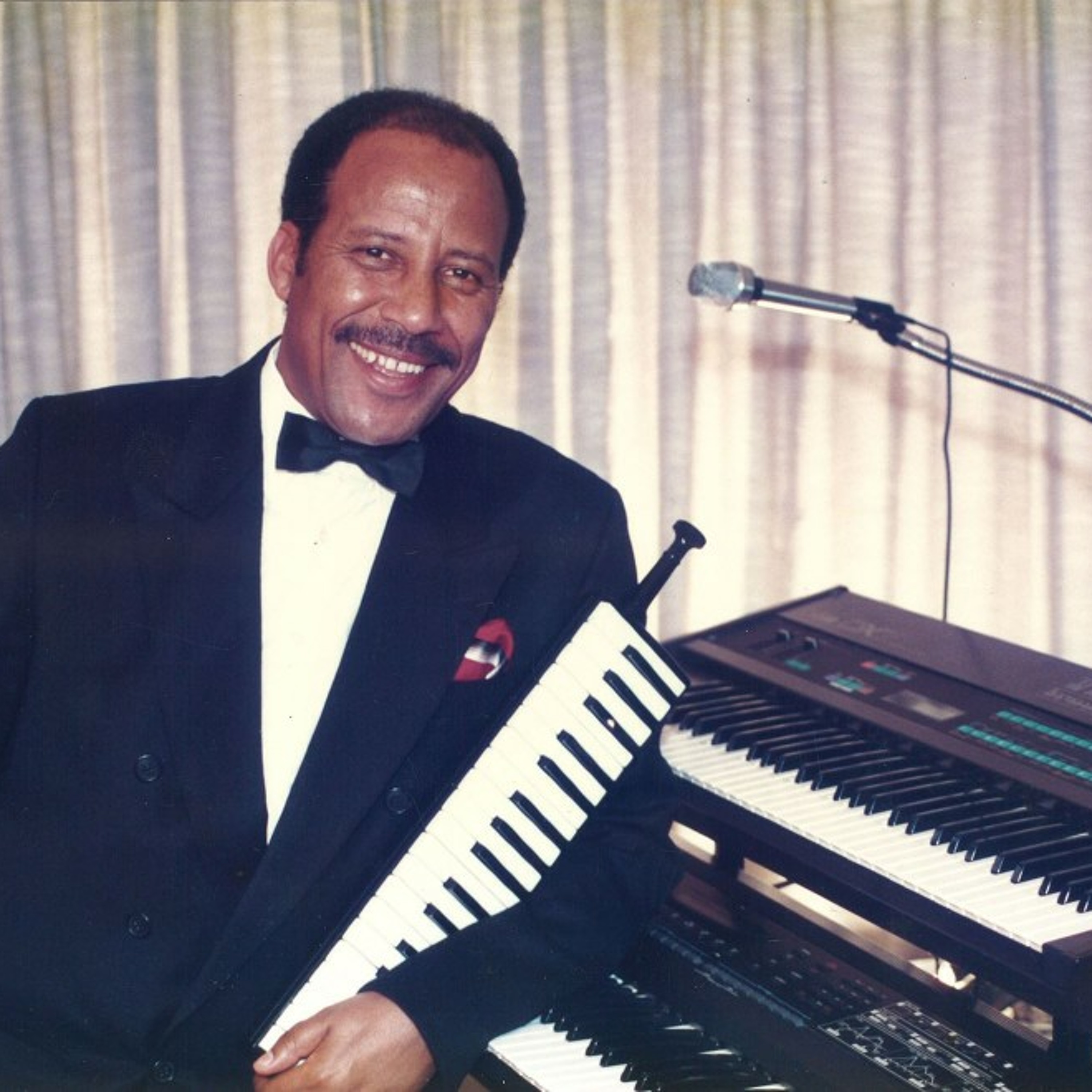
Afro - Tech: Stories Of Synths In African Music
Technology is one of the great drivers of musical change, and often one of its least understood. In this episode, we explore the synthesizer, looking closely at the history of this ubiquitous (and often debated) piece of musical technology, and investigating how and why it was first used in a variety of African musics. Enabled by groundbreaking record reissues by synth pioneers like William Onyeabor (Nigeria) and Hailu Mergia (Ethiopia), disco stars like Kris Okotie, and South African superstar Brenda Fassie, we take you back to the ’70s and ’80s, listening to the birth of a distinctly African electronic sound. Produced by Sam Backer.
Discover and Record: The Field Recordings of Hugh Tracey
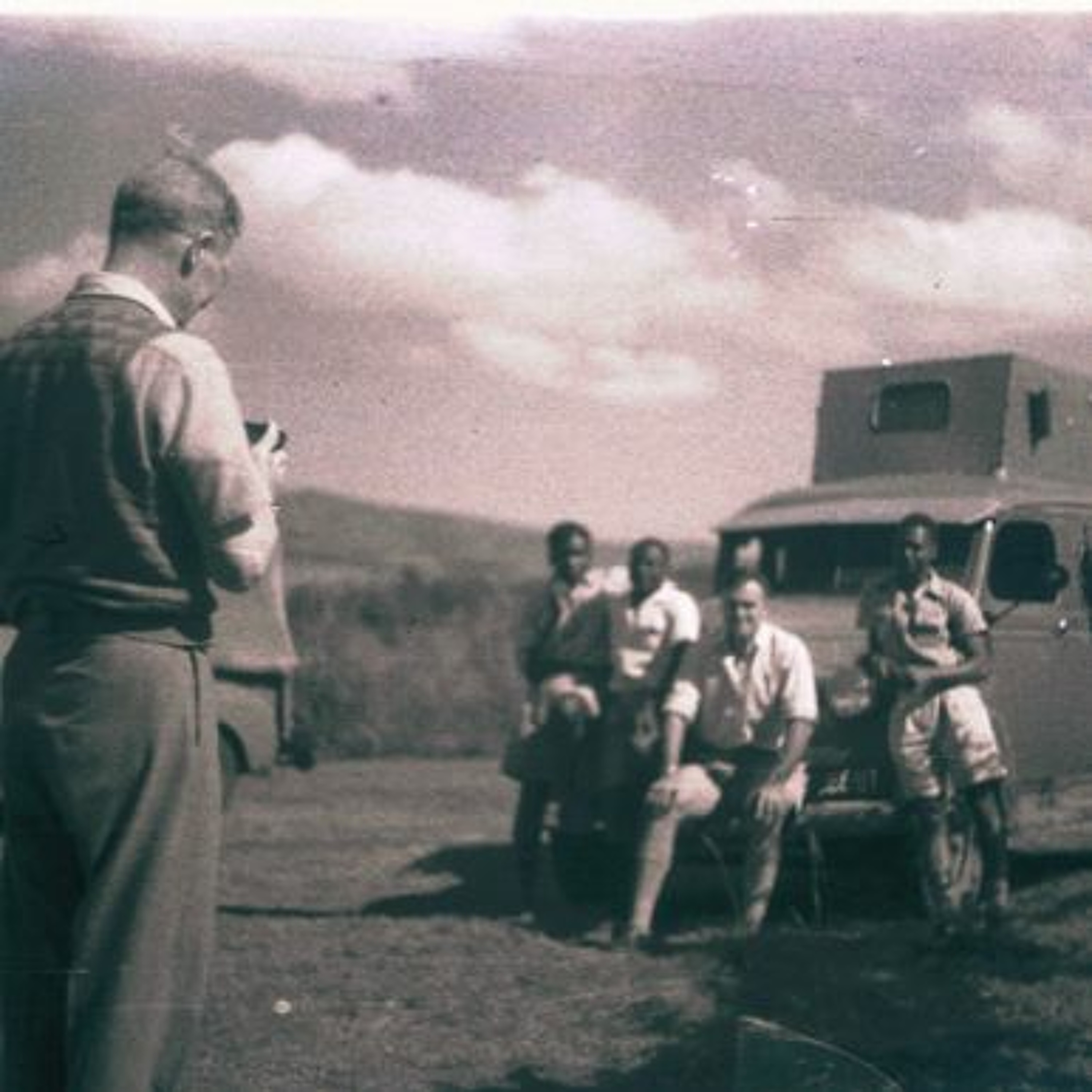
In this Hip Deep edition, Afropop producer Wills Glasspeigel heads to South Africa to reveal the story of the inimitable Hugh Tracey, a field recordist born at the turn of the 20th century in England. A wayward youth, Tracey found himself in Africa in the 1920s where he became fascinated with music from Zimbabwe. Tracey became a pioneer field recordist, making over 250 LPs of traditional African music for the Gallo label in South Africa. Like John and Alan Lomax in the US, Tracey was instrumental in preserving hundreds of songs that have since gone extinct. Glasspiegel speaks with Dianne Thram, director of Tracey library in Grahamstown, South Africa; Tracey's son Andrew, a musician and field recordist in his own right; Michael Baird, an expert on the Tracey catalog; and esteemed South African anthropologist David Coplan. We'll also head to Malawi to make a field recording of our own with the help of Malawian singer, Esau Mwamwaya. [APWW #590] Originally aired 03-25-2010
Cape Verde Sounds - Heard And Unheard
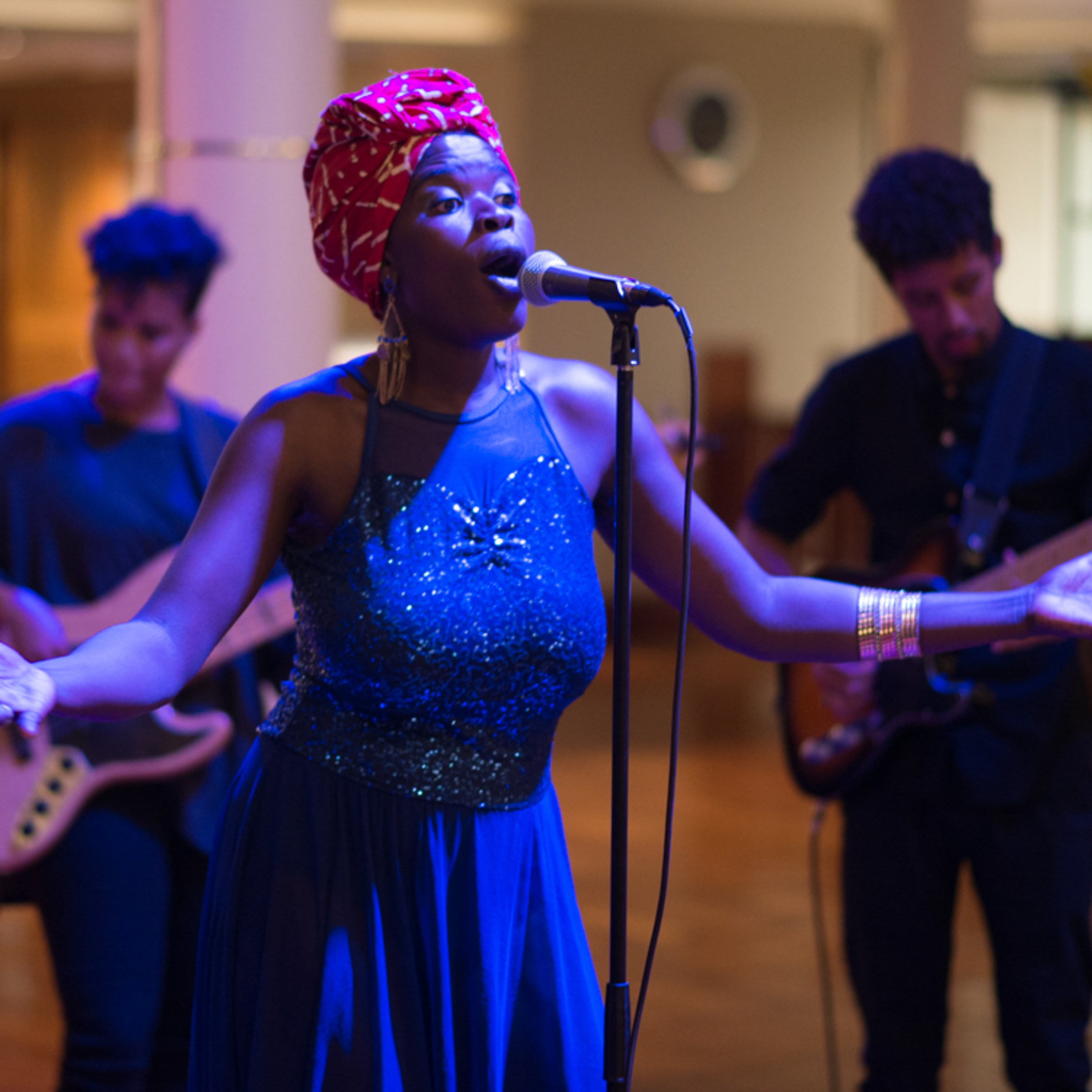
On a 2018 return visit to the archipelago of Cape Verde, we find all sorts of fresh musical activity, global and local. We hear some spectacular young female vocalists in this program, including Fatou Diakite, descended from a Malian family, but raised in Cape Verde and Guinea Bissau, and a master of styles from morna to gumbe. We also meet Lucibela, now based in Lisbon, and one of the most talked about Cape Verdean singers today. And we hear new work from Nancy Vieira, Jenifer Solidade and Elida Almeida. We also meet local artists unknown on the local scene, including producer and cutting-edge songwriter Wilson Silva, and high school-aged singer Maya Neves—already a diva! The great Cesaria Evora may be gone, but Cape Verde’s musical spirit is thriving! [APWW #779]
The Afro Roots Festival in Miami
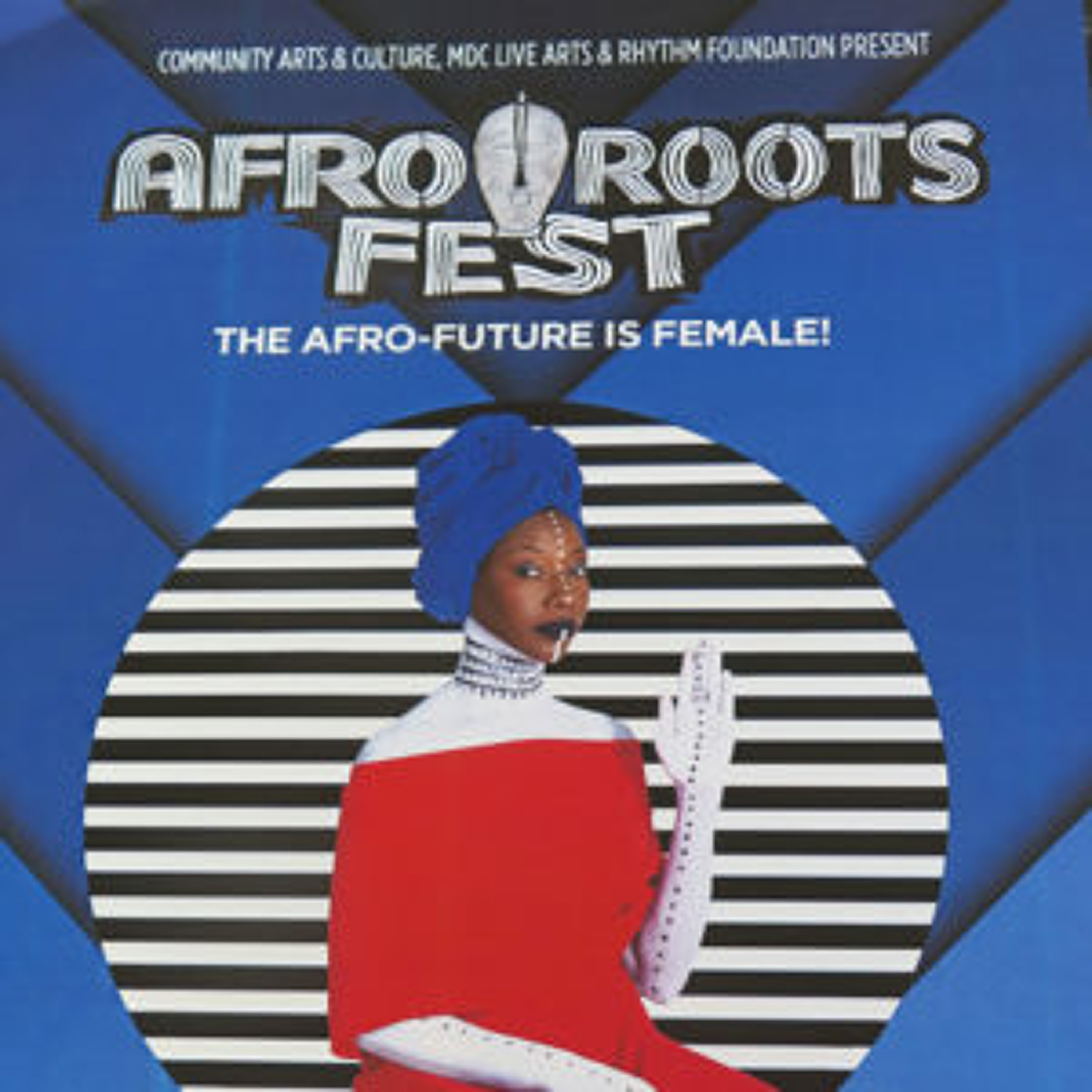
We go to Miami to enjoy highlights from the 21st annual Afro Roots Fest at the North Beach Bandshell. Co-headliners are the sublime griot singer Noura Mint Seymali from Mauritania and the Grammy nominated diva Fatoumata Diawara from Mali. Noura graces us with special backstage performance of the ancient harp, ardine. And Fatoumata sings a capella, showing us what she says is her voice as a traditional instrument. We also hear local artists Jose Elias of Cortadito and the Grammy nominated Danay Suarez. Along the way, we take a tour of Miami's lively local radio. Afro Roots indeed! Produced by Sean Barlow and Banning Eyre. Live mix by Niall Macaulay.

Here Comes 2020
While others look back on 2019 and the decade of the 2010s, Georges Collinet and Banning Eyre choose instead to look ahead to the 2020s in their annual year-end conversation. It's an hour of African music that points to the future: new styles, new hybrids, artists to watch, and glimpses of upcoming Afropop Worldwide projects and productions. Georges and Banning take a moment to acknowledge some greats who have left us, but whose music will surely live on. And they put out a challenge to listeners regarding the future of our program.
Luiz Gonzaga The King of Baiao
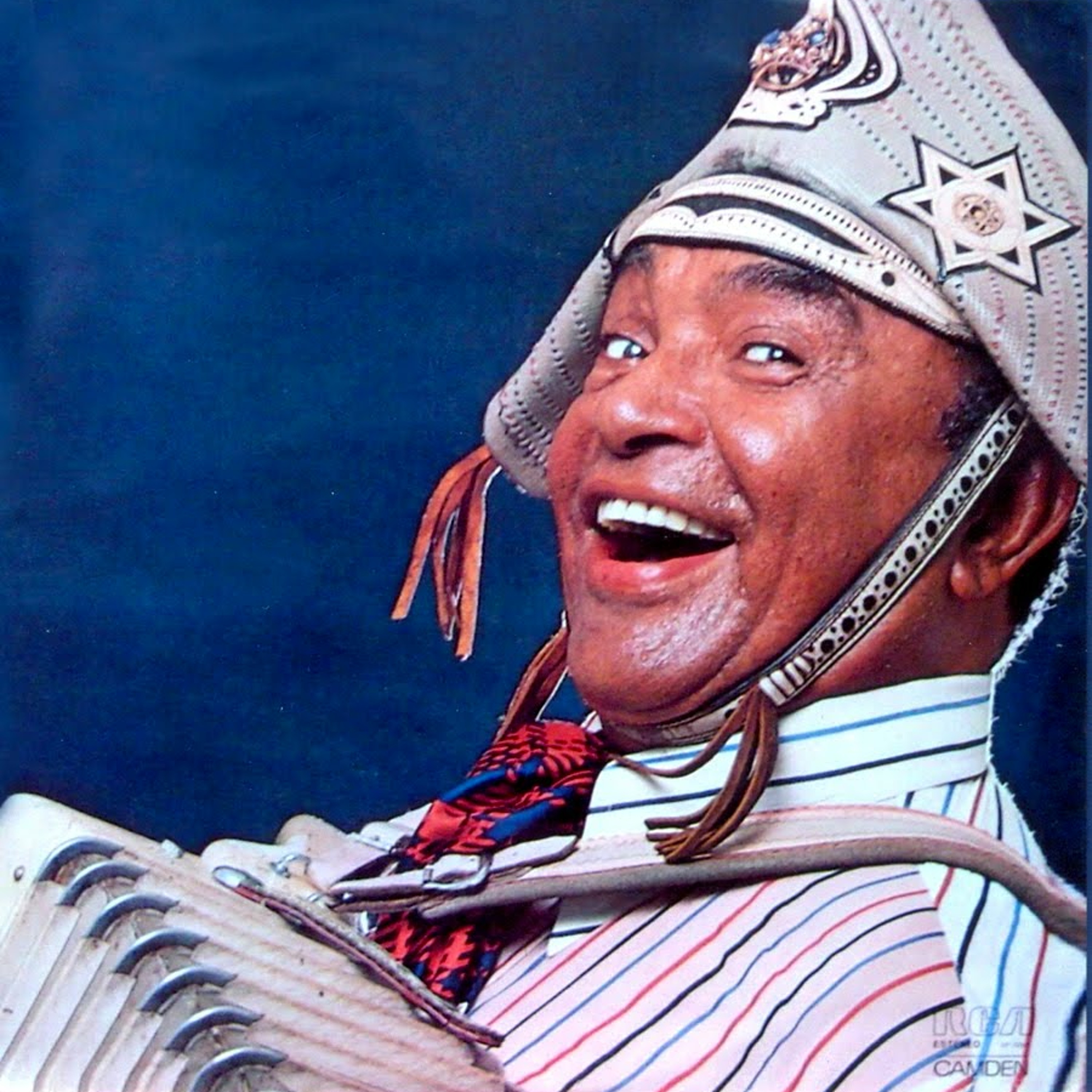
Sweet accordion riffs, the steady twang of the triangle, and the off-beat pounding of the zabumba drum make forro a favorite for all Brazilians. The infectious tunes and syncopated beats have been described as "a mixture of ska with polka in overdrive." This edition of Afropop Worldwide's Hip Deep will profile forro creator Luiz Gonzaga--from the wanderlust that led him from his rural birthplace in northeastern Brazil to a pumping career in the capital, Rio de Janeiro, in the 1940s. Conversations with Brazilian artists, recorded on location in the forro capital of Recife, following in Gonzaga's footsteps. Co-produced by Harvard's Megwen Loveless. APWW #457
Carnival in Brooklyn
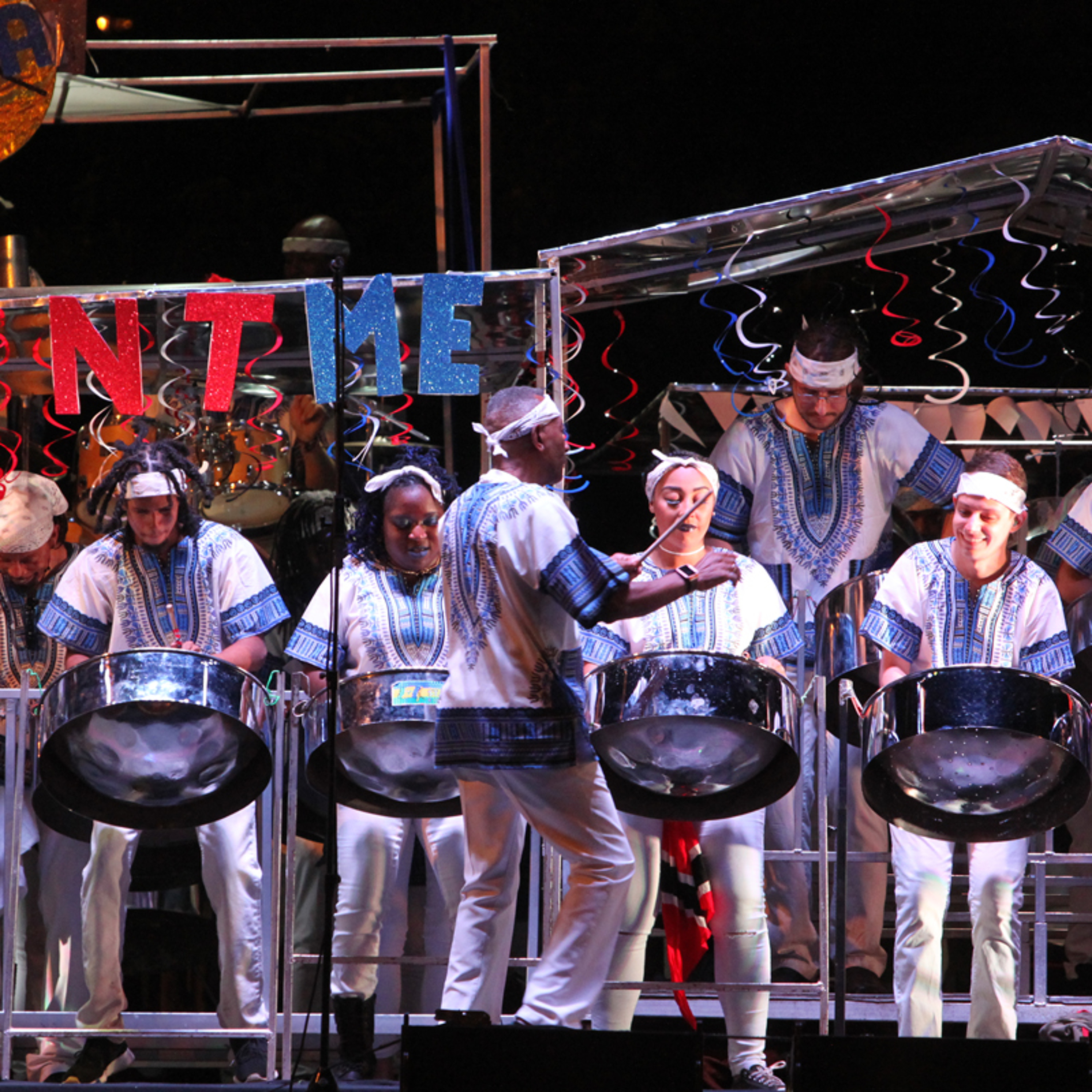
On this program, we follow Caribbean steel-pan bands and Haitian rara groups through their preparations for Brooklyn's West Indian Day Parade and Carnival, into the special jouvert celebration that kicks off carnival with revelers and performing groups dancing through the pre-dawn streets of Brooklyn; to the intense Panorama steel-pan competition, the daylight parade and beyond. We also hear how members of these Caribbean communities keep their cultural activities alive and thriving despite the considerable challenges they are facing in a rapidly gentrifying city. APWW #739
Bolsonaro Is and Isn't
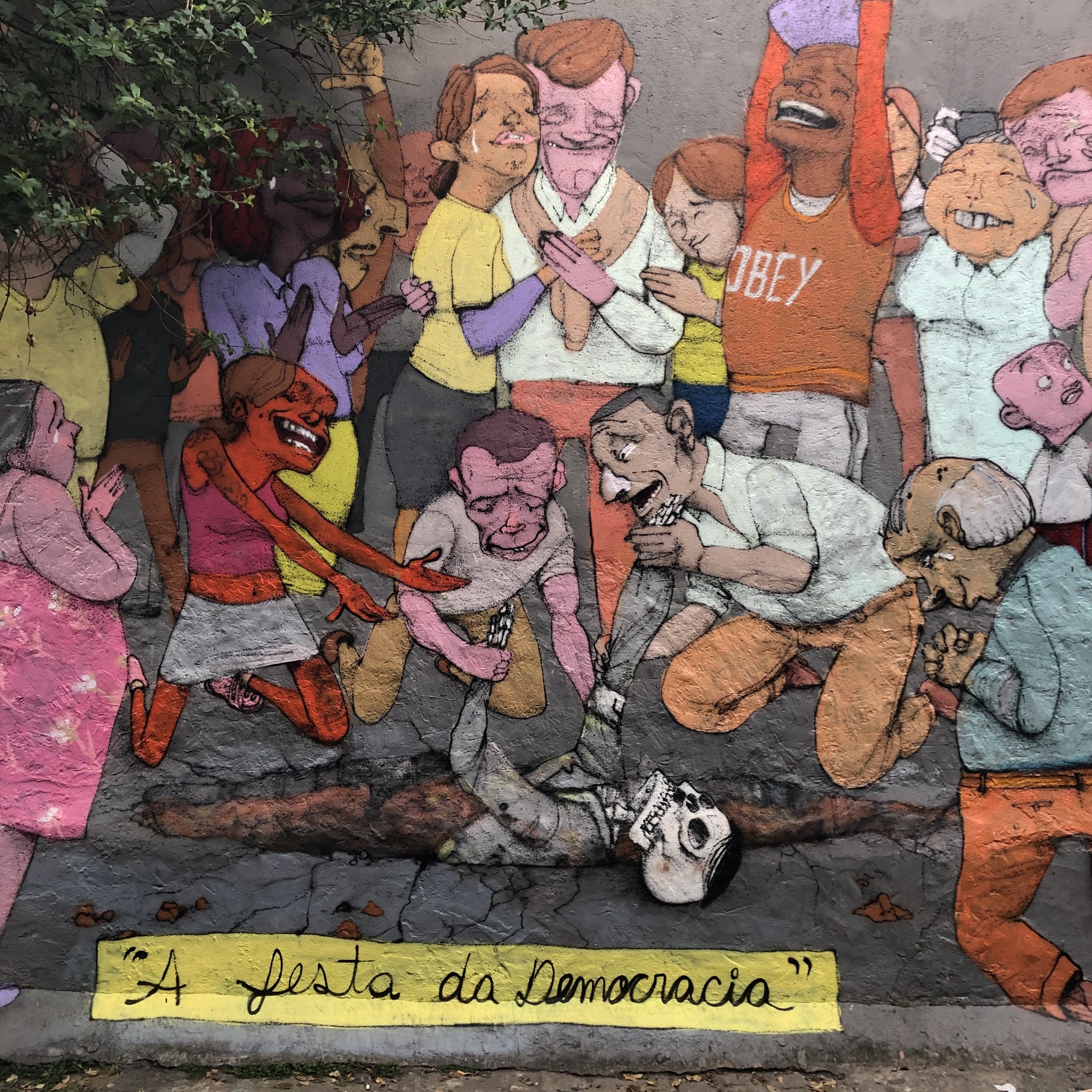
If Americans hear about Brazil's president Jair Bolsonaro at all, he's usually described as a "Brazilian Donald Trump." But on this week's CloseUp, we step out of the American bubble, and look at who Bolsonaro is, who his targets are, and how he rose to power. We also hear the first round of songs written to protest his hard, right-wing politics.