Accidental Gods
399 episodes — Page 4 of 8
S18 Ep 1What do we really think about Food? Revolutionising what we eat with Sue Pritchard of the Food, Farming and Countryside Commission
We're told so often that people 'don't want the nanny state to intervene' in what we eat or drink or smoke - and often the people saying this are those who employ literal nannies to raise their children. But is it true? What would we learn if someone courageous, with vision, depth and care were to find ways to ask ordinary people what they really feel? #TheFoodConversation is huge - in scope and depth and duration - but more in terms of what it teaches us about how people actually feel, what they actually think, and the massive difference that we can make by helping ordinary people to understand more about how food could be healthy, nutritious and affordable - as opposed to how it is now. If you've listened to previous episodes of this podcast, you'll know that total systemic change is one of our foundational beliefs: it's coming whether we like it or not and we'd like to manage a just transition rather than waiting to see what arises from the ashes if we keep pushing business as usual until our entire bus dives over the edge of the biophysical cliff. And so we are always on the lookout for people who not only think systemically, but who get it; who aren't just talking the talk, but who are making things happen on the ground that will lead us all closer to the tipping points of change. Sue Pritchard is one of these people. She's the Chief Executive of the Food, Farming and Countryside Commission, leading the organisation in its mission to bring together people across the UK and the world to act on the climate, nature and health crises, through fairer and more sustainable food systems, and a just transition for rural communities and the countryside.She is a Trustee of CoFarm Foundation and is an independent Governor at Royal Agricultural University. Sue lives an organic farm in Wales, where she and her family raise livestock and farm for conservation.This conversation was sparked by the FFCC's inspiring Food Conversation - which brings together ordinary people and begins to unpick the web of deceit surrounding our food - and replaces it with something that is real and decent and nourishing on a physical and systemic level. This was such an inspiring, invigorating conversation and I hope you enjoy it as much as I did. Food Farming and Countryside Commission The Food Conversation Food Conversation YouTube The case for AgroEcologyCUSP Nature of Prosperity DialogueChris van Tulleken - Ultra Processed People (book)

S17 Ep 14How do we live, when under the surface of everything is an ocean of tears? With Douglas Rushkoff of Team Human
Our guest this week is Douglas Rushkoff, a man whose insights and intellect have earned him a place among the world's ten most influential intellectuals by MIT. As the host of the acclaimed Team Human podcast and author of numerous groundbreaking books, including "Survival of the Richest," Rushkoff's work delves into the intricate dance between technology, narrative, money, power, and human connection.Douglas shares with us the palpable "ocean of tears" lurking beneath the surface of our collective consciousness—a reservoir of compassion waiting to be acknowledged and embraced. His candid reflections on the human condition, amidst the cacophony of a world in crisis, remind us of the importance of bearing witness to the pains and joys that surround us. He challenges us to consider the role of technology and AI not as tools for capitalist exploitation but as potential pathways to a more humane and interconnected existence.As we navigate the complex interplay of digital landscapes and social constructs, Rushkoff invites us to question the gods of our modern age—wealth, power, control—and to seek solace in the simpler, more profound aspects of life: friendship, community, and the transformative power of awe. His vision for a society that embraces these values, even as it stands on the precipice of uncertainty, offers a beacon of hope for those willing to engage with the deeper currents of change.For listeners yearning to dive into the depths of our potential for transformation, this conversation with Douglas Rushkoff is an invitation to join a chorus of voices seeking to reshape our collective destiny. Tune in to this episode of Accidental Gods and join us on a journey to redefine what it means to be human in a world teetering between collapse and rebirth.

S17 Ep 16Evolving Education: Building a Doughnut School with Jenny Grettve of When!When!
This week's guest is one of those people whose breadth and depth is an inspiration. As you are about to hear, Jenny Grettve is an author, a philosopher, a systems thinker who takes her ideas and brings them alive in the world. She's the founder and director of When! When!, a design studio that tests and actively implements ideas and projects on systemic transformation with the goal of slowing down our speeding meta crisis. When!When! regards simplicity as a tool for innovation and create a beautiful and regenerative life for all. Those who work in and for When!When! believe that at the core of our planetary problems lie vulnerable human ponderings about why we live, what life is meant to be and how that is deeply intertwined with our economic structure. By daring to open up dialogues on economy and emotions, fear and trust, technology and using fewer resources, but also on hope and how all living things profoundly need each other, they believe they can unlock new possibilities for our shared futures. Jenny's heart-mind is huge and deep and we explored many areas of the transformation that's coming, from the evolution of a primary school along Doughnut Economic lines to the future of architecture, to the role of systems thinking in our political, social and, in the end, human, evolution. It was a truly heart-warming conversation and I hope it helps you, too, to think to the edges of yourself. https://www.jennygrettve.comhttps://videos.theconference.se/jenny-grettve-feminist-economieshttps://www.howtolivehappilyonmars.com/home/small-cities-leadhttps://www.howtolivehappilyonmars.com/home/systems-thinking-on-a-beautiful-life
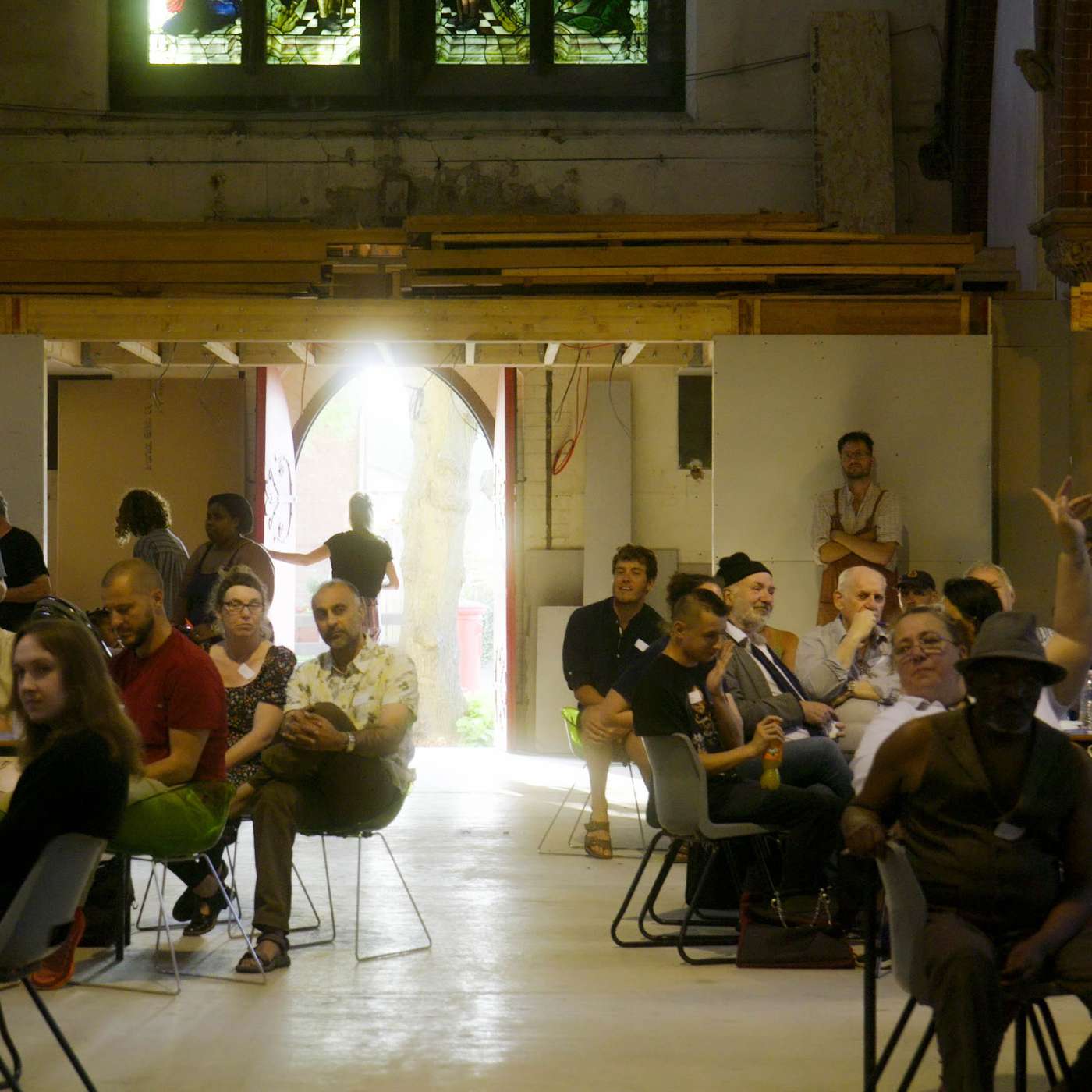
S17 Ep 15Building Trust - One Conversation at at Time: Cooperation Hull with Gully Bujak
Today we venture into the heart of Hull, where the seeds of change are being sown by the hands of ordinary people. Gully Bujak, our guest this week, is a force of nature who, since her awakening to the climate crisis in 2018, has channeled her energy into the creation of Cooperation Hull, a beacon of participatory democracy and local empowerment.Drawing inspiration from the groundbreaking work of Cooperation Jackson in Mississippi, Gully and her team have set their sights on the city of Hull, a place where political disengagement and socioeconomic challenges have forged a community ripe for change. With the lowest voter turnout in the UK and facing threats from climate change, Hull's residents are finding their voice through the innovative approach of neighborhood assemblies.Gully shares the powerful story of how these assemblies are not just meetings but crucibles of collective wisdom, where residents from all walks of life come together to listen, to speak, and to find common ground. From the facilitation of respectful dialogue to the co-creation of community-driven initiatives, these gatherings are rekindling the art of conversation and the flame of active citizenship.As we listen to Gully's journey from Extinction Rebellion activist to a catalyst for grassroots transformation, we are reminded that the future is not a distant dream but a living reality being woven by the hands of those who dare to act. Cooperation Hull is more than an organization; it's a movement, a call to action for communities everywhere to reclaim their power and shape the world from the ground up.For listeners who feel the pull to be part of this unfolding story, who yearn to see their own neighborhoods awaken to their potential, this episode is an invitation to step into the arena of change. Be inspired by the vision of Cooperation Hull, and consider what it would mean to ignite a similar spark in your corner of the world.Gully's Bio: Gully Bujak is an activist and community organizer who has dedicated her life to the pursuit of a just and sustainable future. From her early days with Extinction Rebellion to her current role at the helm of Cooperation Hull, Gully embodies the spirit of resilience and hope. Her commitment to direct democracy and local empowerment is not only changing the landscape of Hull but also serving as a model for others to follow.For those eager to learn more and to connect with the movement, visit the show notes for links to Cooperation Hull, upcoming assemblies, and resources to fuel your journey into community-led revolution. Tune in, be inspired, and join the wave of change that starts right at your doorstep.Cooperation Hull https://www.cooperationhull.co.uk/Cooperation Jackson https://cooperationjackson.org/Jackson Rising Redux - NEW Book https://cooperationjackson.org/announcementsblog/2023/3/2/jackson-rising-redux-out-nowGuardian Article re the HSBC Action and Acquittal https://www.theguardian.com/commentisfree/2023/nov/20/windows-major-bank-jury-climate-crisisGiroscope https://giroscope.org.uk/Accidental Gods Gatherings https://accidentalgods.life/gatherings-2024/
S17 Ep 18Vulture Capitalism - Exposing the toxic system and how to outgrow it with Grace Blakeley
This week's guest is one of those who understands the nuts and bolts - the iniquities - of the current system - and has ideas of how we can shape something better from the hot mess of corruption and greed in which we're mired. Grace Blakeley is a staff writer at Tribune Magazine and author of several books, including 'Vulture Capitalism: Corporate Crimes, Backdoor Bailouts and the Death of Freedom' in which she peels back the layers of our economic system, exposing the stark realities hidden beneath the veneer of 'free markets' and 'democratic' institutions.Grace's journey from the New Statesman to the frontlines of political commentary has equipped her with a unique vantage point to critique the fusion of state and corporate power, illuminating the dark corners of corporate greed and government complicity. With a narrative as gripping as a thriller, she exposes the corruption that led to tragedies like the Boeing 737 MAX crashes and the grim theatre of financial crises.In our conversation, Grace challenges the notion that some are born to rule while others to be ruled, advocating for a new democratic settlement that truly empowers people. She shares inspiring examples from Blaenau Ffestiniog to Cooperation Jackson, highlighting communities that are redefining resilience and self-governance. Her call to action is clear: it's time to question, to demand, and to actively participate in shaping a future that is just, equitable, and truly democratic.As we navigate the most critical moment in human history, Grace's insights are not a roadmap toward a world where the many, not the few, hold the power. For anyone feeling the weight of our current system's failures, this episode is a clarion call to join hands, make your voice heard, and be part of the collective effort to weave a future we can all be proud of.For those ready to dive into the mechanics of Grace's analysis and to explore the potential of a society reimagined, visit her website for links to her other books and to upcoming events. Grace's Bio: Grace Blakeley is a staff writer at Tribune magazine, author, and a prominent voice in economic and political commentary. Her work has taken her from the New Statesman to BBC Question Time, and now to the forefront of the movement challenging the entrenched powers of capitalism. With a sharp wit and a clear vision, Grace is not only dissecting the present but also sowing the seeds for a future where democracy and economic justice are not just ideals but realities.https://graceblakeley.co.uk/
S17 Ep 17Accidental Gods Spring Equinox Meditation 2024
"Consciousness creates MatterLanguage creates RealityRitual creates Relationship" - Oscar Mira-Quesada quoted by Nina Simons in podcast #218Part of our moving towards a healed and healthy culture for humanity is rewilding our relationships with ourselves, each other and the earth. A key part of this is building rituals that have meaning for us in the context of these relationships. Connecting to the cycles of the earth is a straightforward ritual that acknowledges, honours and respects the world we live in and our place within the planetary cycles - and our own.This guided visualisation walks us into the moment of balance between the long nights and the long days, the restorative time of winter and the outward-acting time of summer, between being to doing. Please take time for yourself to sit quietly, perhaps light a candle, or otherwise create a space out of time that has meaning for you. It doesn't have to be at the moment of the equinox, whenever that is for you, wherever you are in the world, it's the connection that counts, the marking of the day. And you don't have to limit yourself to one pass through - please feel free to explore this more deeply than one single iteration. If you want other, similar journeys, they are a whole host in the Accidental Gods Membership Programme. For those of you in the Southern Hemisphere, where you are moving from doing to being, from the long days to the long nights, this meditation is more appropriate. I mentioned Alnoor Ladha and Lynn Murphy and our discussion of Initiation Cultures and Trauma Cultures, which was in episode 208.

S17 Ep 12Seeds of Hope: Cultivating a Future of Flavour and Resilience with Sinead Fortune and Kate Hastings of the Gaia Foundation
In this nourishing episode of Accidental Gods, we delve into the fertile world of seed sovereignty with Katie Hastings and Sinead Fortune of the Gaia Foundation's Seed Sovereignty Programme. Katie, hailing from the lush landscapes of Wales, and Sinead, rooted in the rugged beauty of rural Aberdeenshire, share their passion for reviving ancient grains and fostering communities of growth.Embark on a journey through the tales of black oats, a crop once on the brink of oblivion, now experiencing a renaissance on the cliffs of Pembrokeshire. Discover how these oats, intertwined with the stories of generations, are being brought back into circulation by a vibrant network of farmers, engineers, and chefs, all dedicated to preserving the diversity of our seed heritage.As we explore the practical steps and the profound joy of seed saving, we're reminded that every seed sown is a vessel of potential, a beacon of hope in an ever-changing climate. Katie and Sinead illuminate the path towards a more resilient food system, where local, open-pollinated seeds adapt and thrive, offering unique flavors and a promise of sustainability.This episode is a clarion call to reconnect with the origins of our sustenance, to embrace the community spirit inherent in the cycle of seed to harvest, and to participate in the movement towards a future where our choices at the dinner table also nurture the earth.Whether you're a seasoned grower, a curious gardener with a windowsill plot, or simply someone who cherishes the act of sharing a meal, this conversation is an invitation to join hands in shaping a world where the diversity of our plates reflects the diversity of our landscapes.For those inspired to take root in this revolution, visit the show notes for links to local seed initiatives and resources that will guide you in becoming an integral part of this flourishing movement. Tune in and let the stories of seeds sow inspiration in your heart, as we cultivate a world abundant in flavor, joy, and resilience.Katie's Bio: Katie Hastings is the Wales Coordinator for the Gaia Foundation's Seed Sovereignty Programme, where she works alongside farmers and growers to build a more resilient seed system from the ground up. As part of this work, she facilitates the Wales Seed Hub - a cooperative of agroecological seed growers, and Llafur Ni - a network of people working together to revive rare Welsh oats. Katie is co-founder of the community organisation Mach Maethlon, where she has coordinated a horticultural training programme, food hub and community growing scheme. Katie's seed journey started when she had a mental breakdown and was referred for horticultural therapy by her doctor. She found hope for the future in growing food in community with others. In her free time she swims in her local river and walks her dog up Cadair Idris mountain. Sinead's Bio: Sinéad Fortune is Programme Lead for the Seed Sovereignty Programme, as well as coordinating the programme work in Scotland where she's based. She works with coordinators around the UK and Ireland to support community groups, market gardeners and farmers to train in seed production and to develop and strengthen the connections that make the seed sovereignty movement thrive. Her academic background in Political Ecology focused on food security and community empowerment, and her diverse professional experience spans community food movements, alternative sustainable food production, science education and behaviour change. When Sinéad isn’t working in seed sovereignty or willing her crops to grow, she can be found wandering the woods looking for interesting fungi, crafting herbal lotions, potions and remedies, or playing a few tunes on the fiddle.Gaia Foundation https://gaiafoundation.org/Seed Sovereignty www.seedsovereignty.infoSeed Hub Wales https://www.seedhub.wales/about-us/Open Food Network Seed Hub Shop https://openfoodnetwork.org.uk/hwb-hadau-cymru-wales-seed-hub/shopThe momentous black oat feast: https://www.seedsovereignty.info/welsh-oats-back-in-black/Llafur Ni film: https://vimeo.com/489406001Guardian coverage of the Black Oat story: https://www.theguardian.com/environment/2022/oct/28/black-oats-llafur-ni-wales-crops-grains-growers-farmers-aoeKatie's article about the issues with oat processing: https://www.seedsovereignty.info/oat-quest-inching-towards-tasting-our-oats/Recent Oxford Real Farming Conference panel discussion I hosted: https://soundcloud.com/user-775591787/orfc2024-the-story-of-black-oats-lost-and-foundKatie's guide to starting your own seed cooperative: https://www.seedsovereignty.info/so-you-want-to-start-a-seed-coop-week-1-finding-your-varieties/
S17 Ep 13Finding a Cure for Civilisation: Delving Deep into the Roots of Being with visionary and shaman, Drea Burbank of Savimbo.
“Respect is earned. Honesty is appreciated. Trust is gained. Loyalty is returned.”— Oscar Auliq Ice - quoted on Savimbo websiteIn this pivotal episode, we journey with Drea Burbank from the depths of a fundamentalist Mormon cult to the rainforests of the Colombian Amazon. Drea's life story, chronicled in her book "Shaman Gurl" (linked in the show notes), is a testament to human resilience and the quest for truth. From her escape over the mountains, through the fiery trials of being a firefighter, to her awakening during medical school, Drea's path has been anything but conventional.Now, as a co-founder of Savimbo, Drea is part of an extraordinary mission: to introduce a human rights code for nature. With the support of 60 indigenous leaders from across the globe, she is leading the charge to bring legislation to the UN that enshrines the rights of nature into law. This episode is an urgent call to recognize the voice of nature and the indigenous custodians who have preserved 30% of the planet's intact land and 80% of its biodiversity.Drea's conversation is a revelation of the indigenous perspective on ecotourism, cultural competency, and the necessity of a post-colonial lifestyle. She shares the transformative impact of ecotourism training programs and the importance of creating safe spaces for spiritual awakening in a world that often suppresses regrowth. As she and her colleagues prepare to share their vision with the world through a series of powerful videos, we invite you to become bridges for this crucial movement. Follow Savimbo across social media platforms, amplify the voices of these indigenous leaders, and help turn the tide towards a future where the rights of nature are not just recognized but revered.For those who are ready to be part of this monumental shift, to stand with the guardians of our planet's remaining wilderness, this episode is an essential listen. Join us as we explore the profound connections between human healing and planetary health, where the fight for nature's rights is a fight for our collective future.We were speaking on a starlink and we lost the connection several times so I apologise in advance for any glitches in the conversation, but this was solid gold and I wasn't going to let minor issues of technology get in the way of your hearing it. Enjoy!LinksDrea’s websiteSavimboDrea on Medium (on Carbon Credits and Blockchain) Shaman Gurl Johnson et al ‘Cultural Competency’

S17 Ep 11River Charters, Net Zero Cities and BioRegional Banks: Creating a Life-Ennobling Economic System with Emily Harris of Dark Matter Labs
In this week's episode of Accidental Gods, we dive into the visionary world of economic transformation with Emily Harris of Dark Matter Labs. Emily, a chartered accountant with an MA in regenerative economics, is not your average number cruncher. She's at the forefront of reimagining our financial systems, exploring the intersection of technology, governance, and the natural world. Join us as Emily unveils the bold concept of life-enabling economics (LEE) and the radical aspiration of establishing bioregional banks — a system where money is no longer a mere transactional tool but a means to foster a thriving web of life. From a watershed-scale project in Scotland to the Sheffield River Don project, Emily details practical steps towards making these ideas a reality, including the creation of relationship registers and multivalent currencies like 'river coins'.The conversation also touches on the challenges of aligning current political and economic systems with these pioneering concepts. Emily shares insights into the Net Zero Cities team's efforts, working with 112 mission cities to forge climate city contracts and policy labs that embody a mission-oriented methodology. This episode is a call to action for all listeners to engage with these transformative ideas. If you're inspired by the potential of a future where financial systems are in harmony with ecological and social well-being, then tune in, offer your thoughts, and be part of the change. Emily's work is a testament to the power of collective imagination and the tangible steps we can take towards a regenerative economy.For those ready to delve deeper into the mechanics of these groundbreaking ideas, visit the show notes for links to the thought-provoking blogs and learn how you can contribute to this evolutionary journey. Accidental Gods is the platform where we explore the edges of possibility — and this episode is a beacon of hope for a world in dire need of economic renaissance.As I say at the top of the conversation, these are amongst the most interesting concepts I've ever read - and I spend my life exploring this field. I'd like to read you the opening paragraph of the Concept paper: "Instead of focusing on labour, property, individual or democratic rights, this vision seeks to unfurl the full potential of agrowing planetary consciousness. It is an expression of practical realism embedded in a deep respect for allmanifestations of life; past, present, human, more-than-human, the sacred and the machine. This economyseeks to move beyond the everyday codes of property, labour, capital and private contracts and break freefrom the constrictive dance of socio-political isms. It offers an unbounded understanding of agency, invitingthe full range of adjacent possibilities, thus refuting the exploitation of the many for the benefit of the few."and then a few paragraphs down, "At its core, this is a provocation of the heart. An invitation to cultivate lives of profound collaboration, dignity,psychological and physical freedom. It is a framework meshed in human embodied experience that criticallyincludes machine and non-human systems, integrating them into the same expansive beyond-paradigm ofinter-becoming."The two papers are in the show notes and they're definitely worth reading. In the meantime, this conversation moved even beyond these into whole new areas that, once again with DML, breached the boundaries of my thinking - in a good way. Dark Matter Labs https://darkmatterlabs.org/Life Ennobling Economics Position Paper https://drive.google.com/file/d/1EiU8MQ3JKtuCJIUTrxkl2Fzx0xWBiWDu/viewLife Ennobling Economics Concept White Paper https://drive.google.com/file/d/1hNpgVEyYiERE0Jj3gczUfK9ki9GmrFRm/viewBlog on BioRegional Banks Part 1: https://provocations.darkmatterlabs.org/towards-multivalent-currencies-bioregional-monetary-stewardship-and-a-distributed-global-reserve-dac459dc844e Blog on BioRegional Banks Part 2: https://provocations.darkmatterlabs.org/towards-multivalent-currencies-bioregional-monetary-stewardship-and-a-distributed-global-reserve-38ed3849395fBlog on BioRegional Banks Part 3: https://provocations.darkmatterlabs.org/towards-multivalent-currencies-bioregional-monetary-stewardship-and-a-distributed-global-reserve-951ca09dd76dBlog on BioRegional Banks Part 4: The Swedish Cornerstone prototype was co-developed with Linnéa Rönnquist with the support of SamhällskontraktetEmily Harris in Episode #176 https://accidentalgods.life/bridging-from-the-necessary-to-the-possible-with-emily-harris-of-dark-matter-labs/Indy Johar Episode #205 https://accidentalgods.life/becoming-intentional-gods-claiming-the-future-with-indy-johar-of-the-dark-matter-labs/
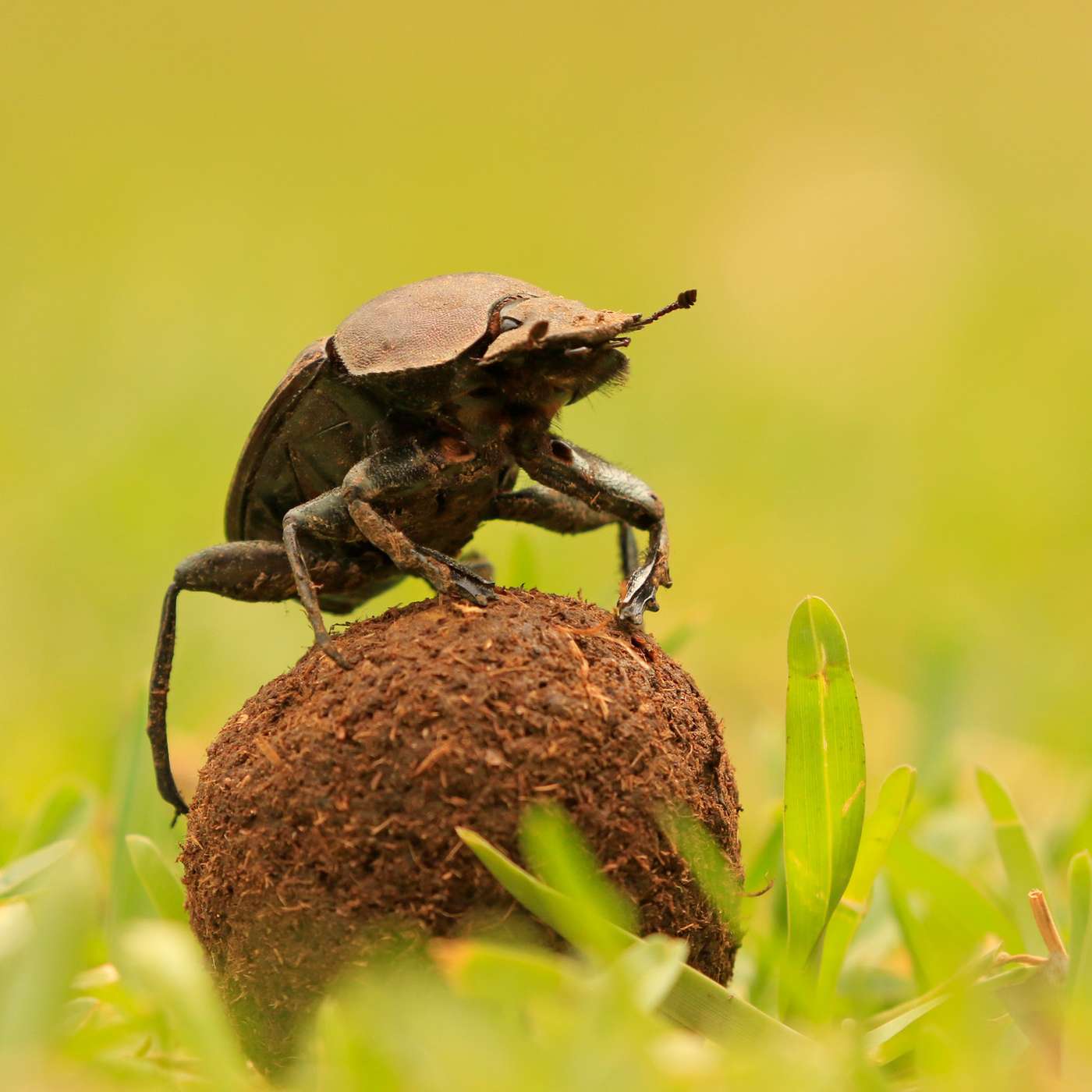
S17 Ep 10Dung Beetles, People and helping the Keystone Species with Claire Whittle, the Regenerative Vet
In this week's episode we delve into the intricate world of dung beetles and their critical role in regenerative farming with the passionate and knowledgeable Claire Whittle, the Regenerative Vet. Claire's journey from a conventional large animal practitioner to a fervent advocate for farming in harmony with nature is not only inspiring but also a testament to the profound impact one species can have on the environment. With her vivid and captivating storytelling, Claire brings to life the bustling ecosystem that thrives within a simple cowpat, highlighting the crucial work of dung beetles in nutrient cycling, reducing greenhouse gases, and supporting biodiversity. This conversation is a call to action for farmers, vets, and anyone interested in sustainable agriculture to reconsider the way we interact with the land and its inhabitants. Whether you're managing vast farmlands or nurturing a small garden, this episode is a treasure trove of insights on how we can all contribute to a healthier planet by stepping into our role as a positive keystone species. So, grab your headphones and prepare to be charmed by the unsung heroes of the pasture, as we explore the significance of these tiny earth-movers in shaping a regenerative future.Dung Beetles for Farmers https://www.dungbeetlesforfarmers.co.uk/Claire on Instagram https://instagram.com/dr_DoWhittle/ Claire's Regen Vet on Instagram https://instagram.com/RegenerativeVetClaire at Kingshay https://www.kingshay.com/advice/meet-the-consultants-2/claire-whittle/
S17 Ep 9End State: 9 Ways Society is Broken and How we Fix it, with James Plunkett
This week, I spoke with James Plunkett, a man who has spent his career at the intersection of policy and social change. From the halls of Number Ten to the charity sector's front lines, James's unique perspective has birthed a book that critically examines what's wrong with our society and offers tangible fixes. Together, we dissect our societal challenges, from outdated institutions to the technology of gods, and discuss structured ways to mend a fractured system.James has spent his entire career thinking laterally about the complicated relationships between individuals and the state, with a particular focus on digital transformation and public policy, from the social innovation agency Nesta to the charity Citizens Advice and before that roles at 10 Downing Street, the Cabinet Office, and the Resolution Foundation think tank.James combines a deep understanding of social issues with an appreciation of how change is playing out not in the ivory tower, but in the reality of people’s lives. As a result of all these insights, he's written an optimistic book, 'End State: 9 Ways Society is Broken and How we fix it.' that explores how we can reform the state to meet the challenges of the twenty-first century.As you'll hear, he didn't think of this as a hopeful book when he began - it was more of a response to seeing the ways the old system of the 20th century was not keeping up with the new world. How we have, in EO WIlson's words, 'Paleolithic emotions, Mediaeval Institutions and the Technology of gods' and this isn't necessarily a good combination to face the meta-crisis. But James did come out with hope for the future and structured ways our current system could make these happen. Accidental Gods often inhabits a world where the current system is broken beyond repair and the only answer is to create a new one and help people shift into it. So this was fascinating, enlivening conversation with someone who has lived and worked in the heart of the superorganism and can see ways through to a world where the human and more than human worlds flourish. James's book https://www.hachette.co.uk/titles/james-plunkett/end-state/9781398702202/James on Twitter https://twitter.com/jamestplunkettJames on BlueSky https://bsky.app/profile/jamestplunkett.bsky.socialJames on LinkedIn https://www.linkedin.com/in/james-plunkett-a1472827/James on Medium https://medium.com/@jamestplunkett

S17 Ep 8Growing a Public Chorus for Change: reshaping democracy with Alex Lockwood of the Humanity Project
We don't have a democracy, we have a kleptocracy that elevates to positions of power those amongst us who are most comfortable with leaning into their inner Dark Triad of Psychopathy, Narcissism and basic low cunning. Then, when they get there, we're surprised that they go on to wreak havoc with all that we believe to be good and right and beautiful. Doing the same thing time after time is the very definition of insanity - clearly we need a new way of connecting, of communicating, of articulating our needs and wants that give us a sense of connection, agency and sufficiency, that bring out the best of us, not our own inner dark triads. We need a new means of governance that works from the ground up and works for a thriving future for the human and more-than human world. This week's guest is absolutely immersed in the questions of how we transform our governance. More than this, he is immersed in actually making it happen. Alex Lockwood was a Senior Lecturer in Professional and Creative Writing at Sunderland University and he practiced what he taught - because he's also the author of a novel, The Chernobyl Privileges and a non-fiction memoir, The Pig in Thin Air. More recently, he was actively involved in Animal Rebellion, a kindred organisation to Extinction Rebellion and then that evolved into becoming a founder member of The Humanity Project, an astonishing, life-affirming, inspiring collective movement for change. At the times when the news about climactic tipping points and the loss of sulphur particles and the impact of el Nino combines with the horrors of political destruction around the world, it's really good to remember there are highly motivated, highly intelligent people getting together to create visions for change that will work and to which we will all look forward. This podcast rekindled my belief in a future that can work. I hope it does the same for you.Humanity Project https://humanityproject.uk/Hard Art Festival in Manchester "The Fête of Britain" https://hardart.metalabel.com/ha002/Global Assembly https://globalassembly.org/Lee Jasper https://en.wikipedia.org/wiki/Lee_JasperClare Farrell https://www.dazeddigital.com/life-culture/article/61534/1/extinction-rebellion-xr-co-founder-clare-farrell-prison-hsbc-windows-smashAlex on Twitter https://twitter.com/alexlockwoodAlex on LinkedIn https://www.linkedin.com/in/alex-lockwood-narrative-leadership/

S17 Ep 7Dancing with the god within: Finding the Sovereign Feminine with thought-leader Maggie Ostara
How does each of us find our sovereignty, our sense of what it is to have agency and be alive in the world, and align this with the part in all of us that is anchored in compassion, connection and empathy? How, in short, do we encounter and encourage our own sovereign feminine?Dr Maggie Ostara is a long-time friend of the podcast - she was with us in episode 116 when we talked about finding our purpose in the world: What's mine to do, what's yours to do and what's ours to do together? I've put a link to this in the show notes in case you want to go back and listen. Since then, Maggie has written the international Amazon best-seller: Feminine Sovereignty: Eight Pillars for Regenerating Ourselves and Our World. It was published towards the end of last year and I've been wanting to talk to Maggie ever since. Her book is absolutely of our time and for our time: it's courageous and hard-hitting in terms of its dissection of where we are, but it's full of compassion and wisdom and embodied exercises that you can do as you go along. And as you'll hear in the podcast, in 2024 she’ll be offering the Feminine Sovereignty Explorers Club and the Feminine Sovereignty Leadership Incubator based in the principles of the 8 Pillars. She’s a certified Human Design and Quantum Human Design Specialist, Level 4, a certified Radiant Body Yoga Instructor, and a certified Clarity Breathwork Practitioner. She supports her global audience through her thriving YouTube channel and works with clients 1:1 and in groups.So this is a perfect sequel to Nina Simons last week - yet again, we are talking about ways of finding the god within - and engaging outwards with the world. Maggie's previous Accidental Gods episode #116 https://accidentalgods.life/daring-to-risk/Where to buy the book and/or get the first 50 pages for free FeminineSovereigntyBook.com Where to find out about the Feminine Sovereignty Explorers Club FeminineSovereigntyBook.com/explorersclubWhere to find out more about the Feminine Sovereignty Leadership Incubator FeminineSovereigntyBook.com/incubatorWhere to find out more about Human Design SovereigntybyDesign.com and YouTube.com/maggieostaraphdSusan Harper, Master Teacher of Continuum ContinuumMontage.com Where to find Maggie on Facebook Facebook.com/maggiesaleostaraWhere to find Maggie on Instagram Intstagram.com/SovereigntybyDesign
S17 Ep 6On Nature, Culture and The Sacred with Elder and Visionary, Nina Simons
"Consciousness creates matter,Language Creates Reality,Ritual creates relationship' - Oscar Miro-Quesada quoted by Nina Simons in her book ’Nature, Culture and the Sacred’ One of the extraordinary privileges of hosting a podcast like this is that I get to talk to some of my heroes, to ask questions, to have a conversation about the things that really matter. This week's guest is one of these. Nina Simons is an author, a leader - and we'll hear how that word was imposed on her and then she learned to embody it, she's a visionary in the deepest sense, and I would say, in a world that is crying out for the wisdom of elders, she is an elder, a wisdom-bearer, someone who has brought deep humility and authenticity to the whole of her life. In more outward terms, in 1990, she co-founded Bioneers, which started off as a conference and has grown into one of the foremost trailblazers of the movement for a whole and healed earth. On the website it says 'We act as a fertile hub of social and scientific innovators with practical and visionary solutions for the world's most pressing environmental and social challenges.' Nina is also a writer. She's a co-author of 'MoonRise: the Power of Women Leading from the Heart' and then more recently, she wrote Nature, Culture and the Sacred: A Woman Listens for Leadership, which is the kind of book that opens new doors, it's got the crackle of authenticity and the deep wisdom of someone who really does listen, to the earth, to other elders, to her own body, who has the capacity to walk the earth, asking, 'what wants to come through me?' without presuming to know the answer and then the integrity to write what comes. And what came in that particular walk was this: "This is no time for small talk. This is a time for mythmaking. This is a time for epic poetry. This is a time to tell the tales that will become our compass for the days ahead. " So, with this as our guiding light, please enjoy the conversation. Nina's website https://www.ninasimons.com/Bioneer's website https://bioneers.org/Nature Culture and the Sacred (Introduction is available for Free Download here) https://bioneers.org/ncs/Bioneers Learning https://www.bioneerslearning.org/Bioneers You Tube Channel https://www.youtube.com/@bioneersNina on Facebook https://www.facebook.com/ninasimonsauthorNina on LinkedIn https://www.linkedin.com/in/nina-simons/Nina on Instagram https://www.instagram.com/1ninasimons/The Burning Times Film https://youtu.be/34ow_kNnoro

S17 Ep 5Gathering the Memes of Production: Building Co-ordi-Nations with Josh Davila of Blockchain Socialist podcast
Those of you who've followed the podcast for any length of time know that I feel our capacity to connect across long distances, to share ideas in real time, is one of the things that has shifted our culture from being complex to super-complex, or hyper-complex, or whatever adjective we want to create that intimates a massive increase in the complexity of our communications and our actions. One key part of this is the evolution of blockchain, particularly in its Ethereum incarnation. Most of us know blockchain, if we know it at all, as the core of Bitcoin, but it's progressed far beyond this in the last decade, not only in the core technology, but in the thinking around it. Once, a libertarian playground, there is now a whole infrastructure of interconnected mycelial webs of progressive, regenerative communities who are building on and with Ethereum. I know this can often feel as if it's not part of our world - and it isn't an integral part - yet - in the way mobile phone technology is, or Zoom, or using a banking app, or a meditation app, or measuring your blood glucose in real time... but it's going to be a part of things in the same way these are soon. In the same way mobile phones became indispensable, I think some of the experiments in smart contracts and ways of hooking up currencies are going to become integral to our lives. And even if I'm wrong, there are a few certainties: The old paradigm is crumbling; the superorganism has to be dismantled; we do need to learn to live more regeneratively, connected more deeply to ourselves, each other and the web of life. And it's this connection that inspires our guest today. Josh Dàvila is host of one of my must-listen podcasts, Blockchain Socialist, where he, often joined by Primavera de Filipi hold fascinating, deep, thoughtful conversations that take me right to the edge of my understanding so that I have to listen to each episode three or four times to really get to grips with the ideas. Josh is also an author. His book 'Blockchain Radicals: How Capitalism Ruined Crypto and How to Fix It' is essential reading for anyone who's remotely interested in this space. Like Diana Finch in last week's episode, he has the capacity to take mindbendingly complex ideas and render them straightforward and even obvious - and in Josh's case, he's rendering social concepts of how our culture is run and how we can change it, in parallel to the evolution of blockchain, the nature of Ethereum and what can be done with it. And then he and Primavera are right in the middle of a whole host of conversations about the concept of Coordi-Nations - which are what I would have called communities of passion and purpose, as opposed to communities of place (though there's nothing to stop a community of passion and purpose arising in a specific geographic location. In the end, I think that's likely to happen). But we're getting ahead of ourselves: If I'm right that 2024 is the year when the tipping points become obvious even in the mainstream, then we need the ideas that will shift us out of business as usual and into new ways of being. Josh and his co-thinkers are having those ideas and I dearly wanted to share some of them on the podcast. So here we go.Josh's Website https://theblockchainsocialist.com/Blockchain Radicals book https://theblockchainsocialist.com/blockchain-radicals-book-announcement/in the UK here: https://uk.bookshop.org/p/books/blockchain-radicals-building-beyond-capitalism-josh-davila/7441624?ean=9781914420856Josh on Patreon https://www.patreon.com/theblockchainsocialistCheck back here for the Audio book after February 6th BlockchainGov.eu https://blockchaingov.eu/Primavera De Filipe and Jessy Kate Co-ordi-Nations Blog https://jessykate.medium.com/coordi-nations-a-new-institutional-structure-for-global-cooperation-3ef38d6e2cfaRojava https://en.wikipedia.org/wiki/Rojava_conflict

S17 Ep 4Let's get rid of Money and start afresh! Dismantling the Super-Organism with Diana Finch
Happy New Year. It feels to me as if this year, the journey is going to be one of continual change and of challenge - that 2024 will be the year when it is impossible for anyone to pretend that the life we knew, the life we grew up believing would go on indefinitely - is going to continue. The old order is dying, but if we're to absolute collapse on a global scale (because clearly it's happening locally all over the world, usually pushed by the governments of people who are statistically most likely to be listening to this podcast) -but if we're going to avert absolute breakdown everywhere, then we need to dismantle the super-organism of the markets. Markets, globalisation, the entire neo-liberal model of free trade that was neither free nor liberal, nor particularly new... these are the common thread that perpetuates the world we know. Yes, we have to change our political systems, our power generation, our food systems..... all of these are core, but it's the markets and our concepts of value and money - the core of capitalism that keep the whole show on the road. One way or another, they are going - either there's a crash and nothing... or we succeed in managing a degrowth curve to a much simpler system that is not just less extractive, it's regenerative - it repairs some of the desperate harm we've done in recent times. So I want this podcast really to begin to look at how we could shape this downward slope - to play with ideas that could take use forward into something different - to begin to build narratives, stories, mythologies, collective heroic journeys of how we as a culture could affect the change that we need. Yes, the super-organism feels as if it has a life of its own, but it is composed of individuals and if we all change our behaviour, our expectations, our understanding of what's good and what isn't - then it will change. I still believe this is possible and I'm definitely working towards this. As is our guest this week. Diana Finch has worked in senior leadership roles in a variety of socially and environmentally focused non-profit organisations since 2001. Through this work, she became convinced that our economic system is the root cause behind the environmental and social challenges the non-profit sector is trying to address. She started to become interested in the field of new economics, and was thrilled to join the Bristol Pound team as Managing Director in 2018. She continued to be a director until the organisation was wound up in 2023. The experience helped her develop an understanding of the problems with our existing economic system, creating a determination to share what she has learned by writing a book called 'Value Beyond Money: an exploration of the Bristol Pound and the building blocks for an alternative economic system' The book is not out until September, but it I was privileged to read it early and was so struck by Diana's capacity to lay out clearly the various different ways we have begun to see money and the alternative systems that people are trying - the Bristol Pound was an astonishing endeavour and the story of how it came about and why it ended are remarkable in and of itself. But it's the ideas that come after - why did it not work and what could we do now - what could help us shift from exactly where we are, to where we need to be - these are the solid gold. We did talk for a long time. If necessary, we'll split this into two bits. I'm not sure if we're going to need to, so... we'll see. In the meantime, enjoy the ideas of how we could be different - and then if you know of anyone who could fund this, please do let us know. PreOrder Diana's book https://crowdbound.org/product/value-beyond-money/The Bristol Pound legacy homepage https://www.bristolpoundlegacy.info/Holochain https://www.holochain.org/Art Brock Metacurrency https://www.artbrock.com/metacurrency/resourcesBradford Citizen Coin https://bradford.citizencoin.uk/Mark Fisher Ghosts of my Life https://uk.bookshop.org/p/books/ghosts-of-my-life-writings-on-depression-hauntology-and-lost-futures-mark-fisher/517207?ean=9781780992266Mark Fisher Capitalis Realism - Is there No Alternative https://uk.bookshop.org/p/books/capitalist-realism-new-edition-is-there-no-alternative-mark-fisher/7313424?ean=9781803414300Confessions of an Economic Hitman Short Animated Version https://www.youtube.com/watch?v=pYtb5zatgMgNew Economics Foundation https://neweconomics.org/Positive Money https://positivemoney.org/Reference booksLess is More: How Degrowth can save the world by Jason Hickel https://uk.bookshop.org/p/books/less-is-more-how-degrowth-will-save-the-world-jason-hickel/364774Doughnut Economics: 7 Ways to Think like a 21st Century Economist https://uk.bookshop.org/p/books/doughnut-economics-seven-ways-to-think-like-a-21st-century-economist-kate-raworth/
S17 Ep 3Promethean Project - Part 2: Crafting the future with Dr Simon Michaux
bonusWelcome to the second part of our conversation - if you haven't listened to the first part, please do so - it's here [LINK]and Simon has very kindly agreed to come back to join our Cutting Edge gathering on Sunday 19th March at 7pm UK time. He'll be with us for an hour during which you'll have a chance to ask him the questions that matter to you - all the things I don't think to ask - and then we'll have another hour together to explore ways each of us can ground what we're learning in our own lives. So you can sign up for this at accidentalgods.life - go to the Gatherings page. I've also put a link in the show notes. And while we're talking about Gatherings, there's still space on Dreaming Your Death Awake on Sunday 7th January. This is our chance really to delve deeply into the year just gone, and look ahead at how we want to shape our attention and intention for the year that's coming. After all the outward connection of the holiday season, this is a time to go inwards, to be kind to ourselves, to explore all that we can be and want to be. This, too, is part of our Accidental Gods tradition and we have people who've come year after year to give themselves the gift of time and space and the company of people who share the journey. So please do come along, we would love to share this time with you. I've put a link in the show notes and it's also on the website accidentalgods.life under the 'Gatherings' tab. Prometheus Project Link: Episode 172 https://accidentalgods.life/transforming-industry-to-create-a-genuine-green-revolution/Episode 175 https://accidentalgods.life/drawing-humanity-out-of-the-cave-with-dr-simon-michaux/Episode 183 https://accidentalgods.life/lifeboats-and-volcanoes-part-3-of-our-series-with-simon-michaux/Episode 184 https://accidentalgods.life/bonus-reality-check-less-quantity-more-quality-in-a-future-that-will-work-part-4-with-simon-michaux/Cutting Edge - come and meet Simon - ask him your questions - and we'll gather afterwards to see how we can apply all we're learning in our own lives https://accidentalgods.life/the-logistical-realities-of-our-world/
S17 Ep 3The Promethian Project: Building a Radical Tomorrow with Dr Simon Michaux
Happy New Year. My guest this week is a long term friend of the podcast. Dr Simon Michaux has been a physicist and geologist and then became an expert in the reality of the circular economy. He now works in the Geological Survey of Finland and is a regular advisor to the Finnish parliament. The day after we recorded this podcast, he was talking to the British consulate in Helsinki and in the last year, he's explained the reality of where we're at over 200 times, and one third of those talks was to governments around the world. He's been extraordinarily generous with his time on Accidental Gods. He was with us in podcasts number 172, 175, 183 and 184 with a series of excoriating, fact-filled, grounded, lucid conversations on the reality of the transition we face, so who better to start us off into 2024 with a conversation about where the world is going, where it could go, where it might go, where it should go in the coming year. This was one of our longest ever podcasts and truly, my brain had turned to slurry and was leaking out of my ears by the end, but Simon's ideas of how we could build a different way of being - and his ability to turn ideas into action feels revolutionary to me in the best possible way. We talked for hours. Many ours - and because we ended up defaulting to Zoom for the recording so we do have a video - the entire unexpurgated hours of which we will put up on YouTube - so if you want to see Simon's slides, head over there. But Caro has edited this down to the highlights so that it makes for easier listening, even so, we're spanning more than one podcast. At the time of recording, I don't know exactly how many, but we'll release them all at once, so just let your favourite podcast provider just stream them all for you. One thing to say before we head into the first conversation is that Simon has very kindly agreed to come back to join our Cutting Edge gathering on Sunday 19th March at 7pm UK time. He'll be with us for an hour during which you'll have a chance to ask him the questions that matter to you - all the things I don't think to ask - and then we'll have another hour together to explore ways each of us can ground what we're learning in our own lives. So you can sign up for this at accidentalgods.life - go to the Gatherings page. I've also put a link in the show notes. And while we're talking about Gatherings, there's still space on Dreaming Your Death Awake on Sunday 7th January. This is our chance really to delve deeply into the year just gone, and look ahead at how we want to shape our attention and intention for the year that's coming. After all the outward connection of the holiday season, this is a time to go inwards, to be kind to ourselves, to explore all that we can be and want to be. This, too, is part of our Accidental Gods tradition and we have people who've come year after year to give themselves the gift of time and space and the company of people who share the journey. So please do come along, we would love to share this time with you. I've put a link in the show notes and it's also on the website accidentalgods.life under the 'Gatherings' tab. Simon's Website https://www.simonmichaux.com/Prometheus Project link to follow Episode 172 https://accidentalgods.life/transforming-industry-to-create-a-genuine-green-revolution/Episode 175 https://accidentalgods.life/drawing-humanity-out-of-the-cave-with-dr-simon-michaux/Episode 183 https://accidentalgods.life/lifeboats-and-volcanoes-part-3-of-our-series-with-simon-michaux/Episode 184 https://accidentalgods.life/bonus-reality-check-less-quantity-more-quality-in-a-future-that-will-work-part-4-with-simon-michaux/Cutting Edge - come and meet Simon - ask him your questions - and we'll gather afterwards to see how we can apply all we're learning in our own lives https://accidentalgods.life/the-logistical-realities-of-our-world/
S17 Ep 2Plant Spirit Teachers: learning from the Elder Plants with Dr Simon Ruffell
For this time around the dark nights of the winter solstice - at least in the northern hemisphere - we've been exploring more of an inner landscape - being reflexive with Nathalie and Della, and before that, exploring the living myths of our land and how we can ground them in our current reality with Angharad Wynne. And this week, we're heading inward and outward, travelling to Peru with Dr Simon Ruffell, psychiatrist, ayahuasca researcher and student of Shipobo curanderismo. Since 2016, Simon has been working closely with Indigenous communities in the Amazon basin, exploring the effects of ayahuasca and the role of ceremony and spirit in healing. As you'll hear in the conversation that follows, Simon manages to bridge between the world of western science and the older world of indigenous spirit with extraordinary integrity, humour and a grounded. commitment to the traditions he's learning that feels wholly authentic. He's experiencing the depths of ancient teaching and exploring the leading edge of modern science, delving into epigenetics, the microbiome and neuroplasticity. As we rest in the cusp of the dark nights, that time of reflection and renewal, I wanted to bring you something that felt as if it spoke deeply to the ethos of Accidental Gods, and I couldn't imagine anything better. So people of the podcast, please welcome, Dr Simon Ruffell. Simon's personal website https://www.drsimonruffell.com/Simon's Onaya website https://Onaya.ioWebsite for donations https://onaya.science ICEERS https://www.iceers.org/Simon on LinkedIn https://www.linkedin.com/in/simon-ruffell-27bba0191/Simon on Facebook https://www.facebook.com/simon.ruffell Simon on Twitter https://twitter.com/sgdruffellOnayaScience on Twitter https://twitter.com/Onaya_ScienceDreaming Awake shamanic training (with Manda and her apprentice) https://dreamingawake.co.uk
S17 Ep 1Meditation for the Winter solstice of 2023
bonusHere is our winter solstice meditation - please create a space for yourself where you won't be disturbed and where you can feel your way into the dark, regenerative space of the longest night. If you want to draw the curtains, switch off all the power and light a candle, this may help you to connect with the place of rest and renewal. This version is the shortest and comes with music in the background. If you'd prefer longer versions with or without music, you can find them belowand if you are in the southern hemisphere and would rather experience a meditation for the height of the sun and the bright time of the longest day, that’s at the foot of the links. Winter Solstice meditation - 17 minutes Without Music https://media.transistor.fm/a20d6861/492c0725.mp3Winter Solstice meditation - 22 minutes With Music https://media.transistor.fm/361287b3/6bad5f45.mp3Winter Solstice Meditation: 22 minutes Without Music https://media.transistor.fm/e11c283a/d522798e.mp3Winter Solstice Meditation: 27 minutes With Music https://media.transistor.fm/4c1945ed/1ab5c80a.mp3Winter Solstice Meditation: 27 minutes Without Music https://media.transistor.fm/25cbf6e7/e9f16280.mp3
S17 Ep 1Solstice Dreaming: 3 podcasters gather round the Dark-Nights fire: Della Duncan, Nathalie Nahai and Manda Scott
This is the fourth year of our now-traditional Winter Solstice podcast get-together in which Nathalie Nahai, Della Duncan and I sit around our virtual dark-nights fire to reflect on the podcasting year just gone and explore what has changed for us since the last time the seeds of new beginnings were grounded in the heart of what has passed. This is becoming one of the highlights of my podcasting year - a chance to range far and wide and deep in the company of two women whose podcasts never fail to touch me deeply, and whose opinions on life, the universe and everything are always inspiring and enlightening. Della Z Duncan is a Renegade Economist based in the San Francisco Bay Area. She is a co-host of the Upstream Podcast, a Right Livelihood Coach, a faculty member at the California Institute of Integral Studies, a Senior Fellow at the London School of Economics, a founding member of the California Doughnut Economics Coalition, and the designer and co-facilitator of the Cultivating Regenerative Livelihood Course at Gaia Education.Nathalie Nahai is an author, keynote speaker and host of the Nathalie Nahai in Conversation podcast enquires into our relationship with one another, with technology and with the living world. She's author of the international best-sellers Webs Of Influence: The Psychology of Online Persuasion and, more recently, Business Unusual: Values, Uncertainty and the Psychology of Brand Resilience which has been described as “One of the defining business books of our times”. She's a consultant, artist and the founder of Flourishing Futures Salon, a project that offers curated gastronomical gatherings that explore how we can thrive in times of turbulence and change.Before we head into the conversation, I want to invite you to 'Dreaming Your Year Awake' which takes place on Sunday the 7th of January. This is our chance really to delve deeply into the year just gone, and look ahead at how we want to shape our attention and intention for the year that's coming. After all the outward connection of the holiday season, this is a time to go inwards, to be kind to ourselves, to explore all that we can be and want to be. This, too, is part of our Accidental Gods tradition and we have people who've come year after year to give themselves the gift of time and space and the company of people who share the journey. So please do come along, we would love to share this time with you. I've put a link in the show notes and it's also on the website accidentalgods.life under the 'Gatherings' tab. And now, People of the Podcast, please welcome Della Duncan, co-host of the Upstream podcast and Nathalie Nahai, host of the Nathalie Nahai podcast, and me. LinksSummer Solstice Meditation - Essence https://chrt.fm/track/8F5463/media.transistor.fm/6f621f9a/7a43d63f.mp3Summer Solstice Meditation with Birdsong With Birdsong https://chrt.fm/track/8F5463/media.transistor.fm/6f621f9a/7a43d63f.mp3Poem: The Invitation by Oriah Mountain DreamerTheory: Two Loop Theory by Meg Wheatley and Deborah Frieze Conversation: Marxism & Buddhism with Breht O'Shea on the Upstream Podcast Conversation: A Marxist Perspective on Elections with August Nimtz on the Upstream PodcastConversation: Beyond the Clock with Jenny Odell on the Upstream PodcastOrganization: California Doughnut Economics CoalitionRiversimple: Future Guardian Governance https://www.riversimple.com/governance/Planet Local Summit https://planet-local-summit.localfutures.org/about/Podcast: The way out is in: Grief and Joy on a Planet in Crisis: Joanna Macy on the Best Time To Be Alive (Episode #12)(https://plumvillage.org/podcast/grief-and-joy-on-a-planet-in-crisis-joanna-macy-on-the-best-time-to-be-alive-episode-12)Flourishing Futures Salon: https://www.ffsalons.comPre-order Any Human Power https://linktr.ee/anyhumanpower
S16 Ep 13Bright Fires, Dark Nights: Connecting deeply and building tribe as we head to the Solstice with Angharad Wynne
This week, as we head down towards what, in the northern hemisphere at least, is the long nights, the dark nights, I wanted to explore our heritage, the way we celebrate the solstice in this land, the land of Britain. I'm aware that quite a lot of you listening are from the southern hemisphere where you're heading up to your long sun and your fires burn differently. I recorded a summer solstice meditation at our long days in June and when we get to the meditation - after the podcast with Della Duncan and Nathalie Nahai, I'll put that up. In the meantime, I hope this conversation with Angharad Wynne helps open doors to reconnection wherever you are in the world. Angharad is a story-teller, a placemaker, a myth-creator holder of tribe and of the land. A native of Wales, she is deeply connected to the land there, and holds retreats and workshops designed to help people connect with the living spirits of the land. In the podcast you're about to hear, she describes her 3 year "Dadeni" training which helps to create the deep tribe-connections, community-connections we speak about in the podcast. If you're interested in this, applications are open until 21st January and the link is in the show notes. I'd also like to remind you that if you have ideas of previous podcast guests - including Angharad, or anyone you've heard over the years - that you'd like us to invite for one of our Sunday evening 'Cutting Edge' events please click the link in the show notes, or go to the podcast section of the website and find the button there and let us know. this is your chance to talk to people, to ask the questions I didn't get around to asking, but you wish I had. And then afterwards, there'll be a chance to connect with other people in breakout rooms, to share your thoughts and ideas and ways of grounding what you've heard in everyday life. So, it's the dark month, the time when we rest, and regather and recoup. The time when we light the fire and invite our tribe to join us. In the spirit of connection, people of the podcast, please welcome, Angharad Wynne, a bard of Wales. Angharad's site https://www.angharadwynne.com/Dadeni Programme https://www.dadeni.org/Dreaming the Land https://www.dreamingtheland.com/aboutThree Degrees of Influence - https://exploringyourmind.com/impact-the-three-degrees-of-influence-theory/

S16 Ep 12Braced for Impact: Cutting through the Greenwash and Lies with Rachel Donald of Planet: Critical podcast
Our guest this week is host of one of my must-listen podcasts - one I've been following since the spring, when Dr Simon Michaux mailed me and said, you need to listen to Rachel - and he was right. Rachel Donald is host of Planet: Critical one of the world's top-rated podcasts on the poly-crisis and systems change. She interviews some really big players on the world stage with integrity and panache - her conversation with Alastair Campbell where she never lets him off the hook is an absolute exemplar of how to hold power to account and I think we're seeing the change in real time on his podcast with Rory Stewart. When she's not podcasting, Rachel is a climate corruption journalist who investigates why the world is in crisis—and what to do about it. With world exclusives in major papers, Rachel investigates the gaslighting which props up our broken systems. She travels the world talking on - and off - the record to heads of government and oil industry executives, to the people who make our current system tick and who are often just as afraid as we are about the direction and speed of travel towards the edge of the extinction cliff. Rachel has an almost unique insight into the nature of the systemic catastrophe we've built for ourselves and therefore of the ways we might address it. This was a bracing conversation. There are no easy answers and I had some of my rosier tinted lenses broken along the way. But in the end we came to the place we often get to with this podcast - that building communities of place, purpose and passion where we value each other, and our capacity to love bravely is what might - perhaps - bring us to the emergent edge of inter-becoming that Indy Johar spoke of a few weeks ago. So brace yourselves, this is not an easy podcast, but we need to know where we're at so we can let go - again - ever more completely - of our assumptions about business as usual and do whatever we can, wherever we are, to be that emergent edge. Planet: Critical podcast https://podcasts.apple.com/gb/podcast/planet-critical/id1545009586Planet: Critical website https://www.planetcritical.com/Rachel on Twitter https://twitter.com/CrisisReportsRachel on LinkedIn https://www.linkedin.com/in/rachel-donald/Diem25 - Democracy in Europe Movement https://diem25.org/en/

S16 Ep 11Cars of the future (NOT EVs!) - Transforming transport and business with Hugo Spowers of Riversimple Movement
Our guest this week is Hugo Spowers, Company Architect of Riversimple, whose purpose is 'To pursue, systematically, the elimination of the environmental impact of personal transport.' Modernity demands that we have personal transport and the thought of giving it up is one of the many sticking points when people try to imagine a way through to a regenerative future: nobody wants to be limited to their immediate vicinity for work, leisure or social connection. At the same time, we're becoming increasingly aware of the limitations of electric vehicles - Simon Michaux has explained in detail the logistical limitations to rare earth batteries, and the environmental catastrophe created by their miningWhich is what makes the Riversimple's hydrogen fuel cell car so transformative. They've gone right back to the basics of what makes a car in the first place and then how could it be made better - not just lighter and more efficient and fuelled by something that doesn't create greenhouse gases - but how could it be made so that the aims of the manufacturer and the customer are aligned - and both are aiming for a habitable planet. On its own, this would be inspiring - but Riversimple doesn't stop there. The company is structured with the innovative - and I genuinely believe transformative - 'Future Guardian Governance model' - Hugo describes this in near the end of the podcast so I won't go into it here, but it seems to me that if every company in the world shifted to this model tomorrow, by the day after, we'd be on our way to healing many aspects of the meta-crisis. So with this in mind, sit back and prepared for a fundamental shift in how we see our role in the world and how we could move towards the future we need, with Hugo Spowers of Riversimple. Riversimple https://www.riversimple.com/RIversimple Subscription model https://www.riversimple.com/subscription/Riversimple Future Guardian governance model https://www.riversimple.com/governance/Invest in Riversimple here https://www.riversimple.com/investment/Paul Hawken 'The Ecology of Commerce' https://uk.bookshop.org/p/books/the-ecology-of-commerce-revised-edition-a-declaration-of-sustainability-paul-hawken/883510?ean=9780061252792

S15 Ep 10Beyond the Brink is the Beginning with Richard Wain - Launching 27th November 2023
Words have the power to change worlds. Powerful words, powerfully written can open doors to the future. Beautiful words, beautifully written, can give us hope . Richard Wain's new collection of poetry is doing all of these, with panache, and heart and soul.We all know by now that we need total systemic change - and a central thesis of this podcast is that we'll get there best by creating narratives that build this - both highlighting the need for it and exploring possible paths through. What's becoming clear is that this is an emotional and spiritual journey long before it's a logistical one. So we need to find ways to reach beyond people's head-minds into their heart-minds and spirit-minds. With this in mind, our guest this week is a poet, an entrepreneur and an artist. Richard Wain is founder and director of the digital marketing agency Vu Online, and of the Positive Nature Network, both committed to creating networks of businesses that can support each other in the move towards a regenerative, flourishing future. He is also a poet with a commitment to celebrating openness and vulnerability and he has now written a beautiful, generative book of poetry called Beyond the Brink is the Beginning.I met Richard when he came to our 6 month Thrutopia Masterclass back in May of 2022 - and was struck by his capacity to grasp the big ideas. Then I began to read the poems that arose out of our classes and was really in awe of his capacity to take these big, complex ideas, find the emotional spark at their core and weave it into something that could open hearts and help others to understand what really matters. We've been planning this podcast for ages, but his book is coming out soon, so now is the time - though in the end, as always happens, we roamed far and wide beyond the book, to the positive nature network and how small businesses and their owners, who are often their founders and may well be the sole employee, can begin to be part of the solution. As ever, we approached our own edges, which, a bit like poetry, is what this kind of medium is all about. Richard's book will launch on 27th November 2023 at The Barrel House in Totnes. Go along if you can!Here's the event link: https://www.eventbrite.co.uk/e/beyond-the-brink-is-the-beginning-book-launch-tickets-74349440076Buy the Book here: https://www.beyondthebrinkbook.com/Positive Nature Network https://www.positivenaturenetwork.co.uk/Vu Online https://vuonline.co.uk/Richard on YouTube https://www.youtube.com/@richardwainpoet

S16 Ep 10Building Lifeboats to the Emerging Futures with Sophia Parker of the Joseph Rowntree Foundation
My guest this week is someone who is both right at the edge of the emerging futures and in a position to exert leverage at some of the highest points of the scale at which change happens. Sophia Parker is the Emerging Futures Director at the Joseph Rowntree Foundation, a philanthropic organisation with a long history of progressive work, aiming for social and cultural equity. It is still committed to the research that sheds new light onto the nature and scale of poverty and injustice in the UK. It is still advocating for change and supporting the people who are making it happen - but newly it is supporting those who are at the leading edge of paradigm shift, exploring all the myriad ways we could break out of late stage capitalism and towards that more flourishing future our hearts know is possible. And there are so many ways - one of the many things I took on board from this conversation was the number of people and organisations around the world who are working in and expanding the radical spaces we've touched on recently with Indy Johar and then Alnoor Ladha and Lynn Murphy. In her role as the Director of the Emerging Futures Programme, Sophia is working at the heart of the change, connecting ideas, exploring how best to support them in ways that will grow us forward and not just keep propping up the old system and the old narratives. She's delving deeply into ways to change the narrative, the levels at which that happens, where are the tipping points in our culture and how do we support and entire ecosystem of transformation. Near the top of the hour, we talked about hope and truly, I came away from this conversation a lot more hopeful than when we started. Bio:Sophia Parker was CEO of Little Village, the London-based charity she founded in 2016 that works to tackle child poverty. Now, she is the Emerging Futures Director at the Joseph Rowntree Foundation, a philanthropic organisation with a long history of progressive work, aiming for social equity. The Emerging Futures programme was set up to imagine and grow radical new approaches to tackling poverty, in collaboration with partners and people with lived experience of poverty.Previously she has held senior leadership positions in think tanks and charities, as well as working in government locally and nationally, and was a Research Associate at Harvard's Kennedy School). Share your ideas for future Gatherings: https://accidentalgods.life/ideas-for-gatherings/ Sophia's Blog Emerging Futures at JRF - two years in, the story so far | JRFJoseph Rowntree Foundation https://www.jrf.org.uk/JRF Emerging Futures https://www.jrf.org.uk/society/emerging-futures/Little Village https://littlevillagehq.org/Geoff Mulgan Another World is Possible https://www.geoffmulgan.com/another-world-is-possibleMeg Wheatley - Two Loop theory https://transformationallearningopportunities.com/two-loop-theoryEF/JRF Imagination Infrastructure Event https://www.imaginationinfrastructuring.com/imagination-infrastructure-initiatves/iievent-pw8gjThe Onion Collective: https://www.onioncollective.co.uk/The Onion Collective: Liminal economics paper - https://medium.com/onioncollective/liminal-economics-swimming-at-the-edge-of-the-economy-f16fb476daa4Centre for Public Impact https://www.centreforpublicimpact.org/europeCanopy https://www.canopy.si/Center for Economic Democracy https://www.economicdemocracy.us/York: New Constellations https://newconstellations.co/journey/york/Opus in Sheffield https://weareopus.org/CoLab Dudley https://dudleyhighstreet.uk/colab-dudley/SuperFlux https://superflux.in/Cassie Robinson Emerging Futures, Patterning the Emerging Horizon https://videos.theconference.se/cassie-robinson-emerging-futuresLankelly Chase https://lankellychase.org.ukThirtyPercy https://thirtypercy.org/Dimple Abichandani https://www.ncfp.org/people/dimple-abichandi/Nkem Ndefo https://lumostransforms.com/team/nkem-ndefo/

S16 Ep 9The Animate Earth Responds: Initiation in a time of Crisis with Alnoor Ladha and Lynn Murphy
How do we move ourselves – individually and collectively – from the broken Trauma Culture of our times, to the Initiation Culture that will allow us to step forward, healed and whole?Alnoor Ladha and Lynn Murphy have co-authored a book: Post-Capitalist Philanthropy: Healing Wealth in the Time of Collapse.Vandana Shiva says of it, “Ladha and Murphy walk us through the deep logics of neoliberalism, the foundations of globalisation and the ideology of corporate free trade … the authors dissect philanthrocapitalism. And they indicate the possibilities of reclaiming the true economies of the gift, of solidarity, of caring and sharing. For now, I invite you to please read on as if Life depends on it.”On every level, this is a remarkable work, grounded in the understanding that we hold our realities in our bodies, that we have been born into a trauma culture, even as we yearn for the our birthright and our legacy as inheritors of initiation cultures. This is one of several genuinely transformative concepts that Lynn and Alnoor bring to the table: the intellectual capacity to explore the crisis of the moment – coupled with absolute grounded, experiential knowing that we are spiritual beings first, that we are mystical beings, and that if we can find the humility and the willingness to change, if we can bring ourselves to the web of life full open, asking for help, the Animate Earth responds.Biographies: Lynn Murphy is a strategic advisor for foundations and NGOs working in the geopolitical South. She was a senior fellow and program officer at the William and Flora Hewlett Foundation where she focused on international education and global development. She resigned as a”‘conscientious objector” to neocolonial philanthropy. She holds an MA and PhD in international comparative education from Stanford University. She is also a certified Laban/Bartenieff movement analyst.Alnoor Ladha is an activist, journalist, political strategist and community organiser. From 2012 to 2019 he was the co-founder and executive director of the global activist collective The Rules. He is currently the Council Chair for Culture Hack Labs. He holds an MSc in Philosophy and Public Policy from the London School of Economics. Post Capitalist Philanthropy https://www.postcapitalistphilanthropy.org/Transition Resource Circle: https://www.transitionresourcecircle.org/Alnoor on LinkedIn https://www.linkedin.com/in/alnoor-ladha-85a1882/Alnoor on Twitter https://twitter.com/alnoorladhaEpisode 56 'Four Arrows Flying' https://accidentalgods.life/four-arrows-flying/
S16 Ep 2Bringing Indigenous food back to the people: a conversation with Josiah Meldrum of Hodmedod's
bonusThis is an Accidental Gods bonus Episode recorded at the Marches Real Food and Farming Conference held at Linley Estate in Shropshire in September. Josiah Meldrum is co-founder and Director of Hodmedod's - which was set up specifically to enable local growers to farm regeneratively - and sell the produce they want to grow (and can grow in ways that help to regenerate the land), to people who want to buy their produce. This sounds obvious - but in our hyper-industrialised world, where industrial farming meets the industrial food industry (ultra-processed foods, we're looking at you), with their overt and covert advertising - it's radical. Truly, spectacularly radicle. This is localism in action. It's the deliberate enactment of the values and principles that need to expand far, far beyond the shores of Britain if we're to create the future we'd be proud to leave behind. In the understanding that this was actually recorded in a barn, please enjoy the conversation - and if you're interested in getting in touch locally to help with next year's event, please contact the Shropshire Good Food Partnership. Similarly, if people in other areas interested in sharing on bioregional food and farming futures work then the organiser, Jenny Roquett, is keen to setup a learning space on this.Hodmedod's https://hodmedods.co.uk/Josiah on LinkedIn https://www.linkedin.com/in/josiahmeldrum/Hodmedod's on Facebook https://www.facebook.com/hodmedodsHodmedod's on Twitter: https://twitter.com/hodmedodsMarches Real Food and Farming Conference Marches Real Food and Farming Conference Shropshire Good Food Partnership Shropshire Good Food Partnership Stockholm Resilience Centre Report on Planetary Boundaries: https://www.stockholmresilience.org/research/research-news/2023-09-13-all-planetary-boundaries-mapped-out-for-the-first-time-six-of-nine-crossed.html

S16 Ep 8Power to the People: Changing the way things work with Simon Oldridge
We all know the climate and ecological tipping points are terrifyingly close. What can we do - as individuals and collectively? Simon Oldridge has ideas that answer both of these. Simon first joined us back in episode #182 when he joined his colleague Anthea Simmons and they spoke eloquently about the strategies of the South Devon Primary group which are aimed at raising one progressive candidate in borderline constituencies in the UK, so that the hard right doesn't swan through the middle on a minority of the votes because the anti-Tory vote has been split (again). Getting progressive politicians into power is their primary aim, but they also want to make sure the candidates who become MPs understand the concerns of their constituents and are prepared to act as independent-minded individuals in the House of Commons, not simply lobby fodder. So that was a fun and sparky conversation, but it seemed to me at the time that we could have delved down a lot more deeply into SImon's broader work to find politically viable ways to address the climate and ecological emergency, particularly his work with Zero Hour, the campaign for the Climate and Ecology Bill and which has produced a number of detailed and fascinating reports, including one about the Ambition Gap we have as we head for Net Zero and another entitled, 'Creating a Nature-Rich UK'. Hence, we came back for another conversation - because apart from anything else, it's so enlivening to talk with someone else who spends their entire life thinking about these things: and if I can't have fun on the podcast, what's the point? I am well aware that many of you listening are not in the UK - and that politics is a very siloed space: we all have our own rules to work within and our own levels of bureaucracy and kleptocracy masquerading as democracy that we're trying to reform. So I hope that some of the ideas we explore, particularly the bigger ones of global power systems and routes to net zero and nature-based solutions strike home far outside the boundaries of this island. And yes, I still have Covid, so I apologise in advance for the state of my voice. Target Seats suitable for replicating South Devon Primary https://www.politicalprimary.org/target-mapSouth Devon Primary on Twitter https://twitter.com/sdevonprimarySouth Devon Primary on LinkedIn https://www.linkedin.com/company/sdevonprimary/Simon on Twitter https://twitter.com/SiOldridgeSimon on LinkedIn https://www.linkedin.com/in/simon-oldridge-17207a206/Zero Hour: https://www.zerohour.uk/Zero Hour Reports https://www.zerohour.uk/reports/Zero Hour on Twitter https://twitter.com/@CEBill_nowCREDS - https://low-energy.creds.ac.uk/ Stanford study: https://thehill.com/opinion/energy-environment/3539703-no-miracle-tech-needed-how-to-switch-to-renewables-now-and-lower-costs-doing-it/ Oxford study on how Decarbonising the Energy system could save $Trillions https://www.ox.ac.uk/news/2022-09-14-decarbonising-energy-system-2050-could-save-trillions-oxford-studyClimate and Ecology Bill:https://bills.parliament.uk/bills/2943Episode 182: South Devon Primary https://accidentalgods.life/primary-strategy-growing-a-new-voting-paradigm-in-the-south-devon-primary/
S16 Ep 7Becoming Intentional Gods: Claiming the future with Indy Johar of the Dark Matter Labs
If we're at the moment of choice between flourishing and destruction, what would you choose? We are at a moment of decision: We either step forward into our own Great Destruction, which could theoretically see us wipe out all of humanity and most of the More than Human World…Or we could step into what Indy Johar calls 'The Great Peace', claiming our birthright as the Interstitial Generation between the old paradigm of extraction, consumption and pollution—and the new one that could arise where we accept the interbecoming of all things, where we as individual humans take our place in a community of care and experience that encompasses all of the world. This is our potential, laid out in clear terms, by thought leader and evolutionary, Indy Johar of Dark Matter Labs. Indy is an architect by training and a maker by practice; he is a Senior Innovation Associate with the Young Foundation, and, amongst many other things, he co-founded Impact Hub Birmingham and Open Systems Lab, was a member of the RSA’s Inclusive Growth Commission, and was a good growth advisor to the Mayor of London. He is an explorative practitioner in the means of system change & the dark matter design of civic infrastructure finance, outcomes, and governance. Indy is a co-founder and Director of 00 and Dark Matter Laboratories - a field laboratory focused on building the institutional infrastructures for radicle civic societies, cities, regions and towns. Dark Matter Labs says, 'Around the planet, we’re feeling the consequences of outdated institutions and inadequate infrastructures incapable of coping with planetary-scale challenges. At Dark Matter, we believe in taking on these challenges via a new, civic economy.'Their many strands of work include the Radicle Civics experiments (where 'Radicle', is the first part of a seedling to emerge from the embryonic seed of a plant), which explores, amongst other things, how we could re-imagine houses as autonomous beings, not things we own . One of the many exciting things about Dark Matter Labs is that they create these experiments on the ground: I've put a link to their blog post on Repermissioning the City in the show notes and really, if you have time, I encourage you to read it for ideas of things that are actually happening as we speak. Beyond that, Indy and Dark Matter explore so much of what this podcast is about: governance systems, economics, management, the nature of the world if we were able to take our place within it as fully conscious beings in a fully conscious web of life. This took me right to the edge of my thinking, which is such an exciting, enlivening place to be: walking the knife edge between what we know (or think we know) and what might yet be possible. Both Indy and I had various viruses so there's some coughing and some rough-speaking, particularly from my end, but if you can manage that, I think this is one of those episodes that has the power to change worlds. So people of the podcast, please do welcome, Indy Johar of Dark Matter Labs. Dark Matter Labs https://darkmatterlabs.org/Radicle Civics https://drive.google.com/file/d/1U9LXY3CTN2upEG38oz4j4vW8Vb0Yq21u/viewProject 00 https://www.project00.cc/Dark Matter Blog https://provocations.darkmatterlabs.orgRepermissioning the City https://provocations.darkmatterlabs.org/re-permissioning-the-city-unlocking-cities-growing-underutilised-spatial-assets-for-an-emergent-1550997714a4Indy on LinkedIn https://www.linkedin.com/in/indy-johar-b440b010/Dark Matter on LinkedIn https://www.linkedin.com/company/darkmatterlabs/Dark Matter Labs on Twitter https://twitter.com/DarkMatter_Labs7Gen Cities https://www.7gencities.org/7Gen Cities CiFi Gathering Report https://uploads-ssl.webflow.com/6462104f72fa898a55556e56/651ec633d3229a3920f0c03a_CiFi_Report_7GenCities_0410.pdfEmily Harris, AG podcast #176 https://accidentalgods.life/bridging-from-the-necessary-to-the-possible-with-emily-harris-of-dark-matter-labs/Systems change needs Democratic change https://ddc.dk/why-systems-change-will-lead-to-democratic-renewal/#

S16 Ep 4Courageous Conversations - talking about what matters with Rowan Ryrie of Parents for Future
How can we, as parents, grandparents and anyone who cares about the fate of future generations, live our lives in such a way that when our children ask us why we didn't do more, we can say with honesty that we did all that we could? How do we help them to build resilience, to feel safe in a supportive community and in connection with the natural world so that as they grow, they can face the truth about the world they have inherited?And how can we use our role as parents to create conversations that matter, not only with people with meet in our daily lives but also with those in positions of power. These are some of the core questions that prompted environmentalist and movement-builder, Rowan Ryrie to co-found Parents for Future, a fast-growing group of parents who have come together to support each other in navigating the climate crisis and trying to secure a safer, fairer world for children everywhere. Rowan says, 'Together, we can be much more courageous than we can alone,' and she's brought this understanding to their latest project, 'Courageous Conversations'. It's a pilot project just now, but when the results are in next year, it will be spread out around the UK and then, if there's funding, around the world, to give us emotionally literate tools to engage with the people we encounter in our communities of place, purpose and passion. This feels to me to be right at the cutting edge of the emergent future we need to create. It's grounded in a theory of change that makes sense in the realities of overall systemic change, while at the same time, understanding that shift happens one courageous conversation at a time, and that we all feel better if we can share our fears and build hopes that work for everyone. Rowan specifically wanted me to assure everyone that Parents for Future is not only for those with young children - or any children - if you care about the world we're leaving to the generations that come after us, human and more than human, then do join. There are 28,000 members and rising, all around the world - and if there's not a physical, location-based group near you, and you want to set one up they'll help. Parents for Future https://parentsforfuture.org.uk/Larger Us https://larger.us/Climate Psychology Alliance https://www.climatepsychologyalliance.org/Climate Parent Fellowship https://ourkidsclimate.org/climate-parent-fellowship/The Week https://www.theweek.ooo/The Britain Talks Climate research paper https://climateoutreach.org/reports/britain-talks-climate/ Social Media linksRowan, LinkedIn https://www.linkedin.com/in/rowan-ryrie/Rowan Instagram @rowanryrieTwitter https://twitter.com/rowanryrieParents for Future LinkedIn https://www.linkedin.com/company/parents-for-future-uk/Instagram https://instagram.com/@rowanryrieTwitter https://twitter.com/parents_4futureMastadon: https://climatejustice.global/@Parents4FutureUK FB: https://www.facebook.com/ParentsForFutureUK/ Instagram: https://instagram.com/@parentsforfuture_uk Mastadon: https://climatejustice.global/@Parents4FutureUK FB: https://www.facebook.com/ParentsForFutureUK/
S16 Ep 5The Web of Life & New Tech Webs – A Beautiful Connection? with Monty Merlin of ReFi DAO
How much do you know about AI, blockchain and Web 3.0? If you're like us, the answer is probably very little. But these techs are going to change our world out of all recognition and while there is the potential for catastrophe, in the right hands, the same technology has the potential to help us shape the future we'd all be proud to leave behind and this is what this podcast is about. Monty is one of the founders of ReFi DAO. Monty is working deeply and effectively at the cutting edge of emergence, a change-maker working on many different scales to build a future we'd be proud to leave behind. He is helping to build a global network of regenerative communities and start-ups and then taking those ideas out into the world as a public speaker and evangelist for ReFi & Regeneration. His public work includes a TEDx talk titled 'Can Crypto Regenerate the World?'. He has an undergraduate and Master's degree in Management & Innovation, with specialism in sustainability, digital technologies, blockchain, and design & systems thinking.This conversation ranged across landscapes from the nature of greenwashing to the potential for borderless nations, from the way financial markets currently underpin the existing structures, to how they could be tilted to underpin a whole new regenerative paradigm. We explored the difference between what's sustainable and what's regenerative - and discovered what's actually happening now, that you could be involved with in your communities of place, purpose and passion. I say the word, 'inspiring' way too often in this podcast, and I apologise in advance, but it's true: knowing that this is happening is one of the bright points of this year and I am genuinely thrilled to be able to share it with you.ReFi DAO https://www.refidao.com/ReFi podcast https://podcasts.apple.com/gb/podcast/refi-podcast/id1609683147ReFi blog https://blog.refidao.com/Monty's TEDx 'Can Crypto Change the World?' https://www.youtube.com/watch?v=9-4HW3iPtfoEcological Benefits Framework https://canyouchangethefuture.org/Toucan https://toucan.earth/Celo https://celo.org/Cosmolocalism explained https://www.cosmolocalism.eu/publications/Julia Hailes MBE https://juliahailes.com/
S16 Ep 2What your Food Ate - Or why you should never eat industrially farmed food ever again- With Anne Bicklé and David Montgomery
How does soil health intimately and profoundly impact human health? What's the link between the soil microbiome and the human gut microbiome? How can we begin to restore our health, and the health of the living earth in concert with each other? These are the questions posed by the outstanding book 'What your Food Ate: How to heal our land and reclaim our health' and the co-authors, Anne Biklé and David Montgomery are this week's guests as we delve deeply into the nature of soil, the functions of fungi, the populations of bacteria we depend on that inhabit our guts, and how we might affect total systemic change in the food and farming system. So a little light listening for your day. In detail, Anne Biklé is a biologist, avid gardener. She is among the planet’s leading experts on the microbial life of soil and its crucial importance to human wellbeing and survival. She is married to David Montgomery, who is a professor of Geomorphology at the University of Washington. David has studied everything from the ways that landslides and glaciers influence the height of mountain ranges, to the way that soils have shaped human civilizations both now and in the past. All of this has led him to write a number of books, including Dirt: The Erosion of Civilisations which explores how our historic - and contemporary - farming practices have critically undermined the living soil on which we depend. Following this, David and Anne co-wrote, The Hidden Half of Nature: The Microbial Roots of Life and Health and the book we're going to be exploring in depth today: What your Food Ate: how to heal our land and reclaim the our Health. David also plays in the band, Big Dirt, which is, and I quote directly from their Facebook page: Americana Alternative. Whatever that means. Roots folk-rock with something to say and fun to listen.I read What your Food Ate earlier this year and if you've listened to the podcast for any length of time, you'll have heard me mention it more than once. It's the most readable exploration I've come across of how our food is grown, and how it could - and should be grown - it's really easy to read, but it's full of the kind of mind-blowing data that we need if we're going to change our habits. You'll hear more in the podcast, but truly, the detail they gathered on the difference in content between food grown in the modern agri-business farm and that grown on a regenerative farm with no chemical inputs and no or minimal ploughing, one that strives to build the soil health and so build the health of everything else... it's both terrifying and inspiring. If you want something to persuade you that you need to change the places you buy your food, this is it. So, here we go. People of the Podcast, please welcome Anne Biklé and David Montgomery. Dig2Grow Website https://www.dig2grow.com/Buy the Books: https://www.dig2grow.com/booksBig Dirt https://www.reverbnation.com/bigdirtmusic

S16 Ep 1Transforming Narrative Waters with Ruth Taylor of the Common Cause Foundation
Here at Accidental Gods, we are increasingly of the opinion that our most urgent need as we face the polycrisis is to find a sense of being a belonging that changes our life's purpose. We all know we're not here just to pay bills and die, but knowing what we're not here for is not enough: we need to feel at the deepest level what we are here for, to rebuild the deep heart connections to the web of life such that we can take our place in the web with integrity and authenticity and a true sense of coming home. As we head into our sixteenth season, our third century of episodes, this is our baseline. The membership is here to delve deep into the practice and to give the time and the space to building the connections and the podcast exists to outline the theory and to give a voice to other people on this path. And with that in mind, it is my great pleasure to introduce you to this week's guest, the narrative strategist, Ruth Taylor. I came across Ruth when she published a Medium post entitled 'To UnPathed Waters and Undreamed Shores' - and just that title alone was enough to get me to read it. And then I was blown away by the ideas Ruth put forward, by her theories of narrative change, which are clearly at the heart of all we do, and by the clarity of her thinking and writing. I've put the link in the show notes so you can read it for yourself. In the 6 months since she agreed to come onto the podcast, she's published several other posts and a long paper called Transforming Narrative Waters, which delves even more deeply into the need for, and practice of, narrative change. Ruth works for the Common Cause Foundation which I first came across when I was at Schumacher College and had my eyes opened to the emotional intelligence behind it, and the astonishing work it's been doing in the world. Ruth is particularly interested in narrative change and writes a regular newsletter called In Other Words that collates the latest thinking in this field so she was an ideal person to explore the nature of framing, and story and how we can get to grips with changing the stories we tell ourselves about who we are and why we're here and how our relationships to each other and the world can still shift us away from the cliff's edge.CCF is a not for profit that works at the intersection between culture change and social psychology. Over the past ten years, it has pioneered a new way of inspiring engagement through catalysing action that strengthens and celebrates the human values that underpin the public's care for social and environmental causes. Its work is centered on the research findings that, 1) people are more likely to support environmental and social change when they place importance on their intrinsic values, such as equality, curiosity, broadmindedness and community, and 2) that the majority of people in the UK place importance on these values, but are constantly having their more extrinsic values primed due to the consumerist culture in which we live. With this in mind CCF offers training and support to a range of organisations on how to develop messaging and campaigning strategies that engage with people’s intrinsic values in order to rebalance the value norms in our societies.Ruth on Linked In https://www.linkedin.com/in/ruth-taylor-14747173/To Unpathed Waters and Undreamed Shores https://commoncausefoundation.org/to-unpathed-waters-undreamed-shores/Transforming Narrative Waters https://ruthtaylordotorg.files.wordpress.com/2022/01/transforming-narrative-waters.pdfCulture and Deep Narratives blog (Medium) https://medium.com/inter-narratives/culture-deep-narratives-and-whac-a-mole-16cc1ecfc0a9Online Course: Values 101: Creating the Cultural Conditions for Change https://www.tickettailor.com/events/commoncausefoundation/820814?Global Action Plan https://www.globalactionplan.org.uk/Internarratives https://inter-narratives.org/The Common Cause Foundation https://commoncausefoundation.org/HumanKind Book https://uk.bookshop.org/p/books/humankind-a-hopeful-history-rutger-bregman/4969515?ean=9781408898956CultureHack https://www.culturehack.io/Narrative Initiative https://narrativeinitiative.org/about-us/The Culture Group https://theculturegroup.org/Parents for Future https://parentsforfuture.org.uk/

S15 Ep 13Equinox Meditation: Finding the balance point in ourselves and the world
bonusManda's Equinox meditation focuses on finding our sense of balance as the tilt of the world balances between summer and winter, light and dark, day and night. And from that, finding a stable place with the three pillars of our heart minds: joyful curiosity, gratitude and compassion. The meditation is available with Birdsong and with MusicBirdsong https://media.transistor.fm/66b6845b/79a1c49b.mp3Music https://media.transistor.fm/8284fc49/d9bae6ab.mp3
S15 Ep 13Walking the edge between light and dark: Equinox reflections on Accidental Gods past, present and future
bonusAs we head into winter in the northern hemisphere, as the tilt of the world hangs in balance, we reached our 200th episode. So this is a time to look back and look forward: to look at where we've been, where we are and where we might go. From our origins as an adjunct to the Accidental Gods Membership, explaining the neurophysiology and neuropsychology behind what we're doing, and then then the spiritual grounding of connecting to the web of life... we moved into talking to people who live at the edge of the new system. In doing so, we discovered the magic of podcasts as a way to nudge our whole system towards change. If it is the case, as Ilya Prigogine says, that 'when a system is far from equilibrium, small islands of coherence in a sea of chaos can move it to a higher order', then Accidental Gods aims to be one of the small islands of coherence. We are here to show the potential in the wonder of our world and humanity's place in it - and to be utterly clear how far we still are from that potential. Above all, we're here to help map the routes through to the new system that can yet emerge from the transition and transformation of our times. Accidental Gods https://accidentalgods.life/join-us/Thrutopia Masterclass https://thrutopia.life/
S15 Ep 13Meeting the Spirit of the Land: exploring Spirituality in Farming with biodynamic grower, André Tranquilini
In this, our 200th episode of Accidental Gods podcast, I am delighted to be joined by André Tranquilini, estate manager at Waltham Place, a 220 acred biodynamic estate in Berkshire, in the UK. André is a biodynamic farmer, consultant and teacher. He has been the manager at Waltham Place since 2018. André has worked extensively as a market gardener, Steiner school teacher and farmer, and was a founding member of the seed company, Living Seeds, in Portugal. Born in Brazil, André has had the opportunity to work and manage farms in his homeland, as well as Portugal and the UK. He has traveled widely teaching workshops and lecturing on Biodynamic Agriculture and is recognised as a biodynamic consultant by the international Biodynamic Agriculture section at the Goetheanum in Switzerland. This was one of the podcasts where we could have talked for hours, if not days. With is background in Brazil and coming from a mix of several racial groups, both colonised and colonisers, André brings a unique mix of perspectives just from the outset. Then with his training in Steiner's philosophy, and at Emerson College, coupled with his choice to specialise in biodynamic farming, he offers insights into the spirituality of agriculture, of how we can bring genuine deep connection with the web of life into our reality to re-connect the disconnections of the last ten millennia. He is passionate about the nature of living food and really knowledgable on how different it is from the industrially farmed and processed foods we are generally offered. He's part of a think-tank, A Bigger Conversation, that's looking into appropriate technology in farming and is at the leading edge of innovation in the biodynamic field, bringing the best of our new world together with the depth of experience that has grown out of the connection with the land. This was an inspiring and generative conversation and I bring it to you with great joy. Waltham Place https://www.walthamplace.com/Waltham Biodynamic Education: https://www.walthamplace.com/biodynamic-gardeningBiodynamic Association https://www.biodynamic.org.uk/Emerson College https://emerson.org.uk/A Bigger Conversation Think Tank https://abiggerconversation.org/DOK Trial: https://www.biodynamic.org.uk/wp-content/uploads/2023/05/42-years-of-the-DOK-trial-research-Star-furrow-issue-139-Spring-2023-pages-22-23.pdfScientific American https://www.scientificamerican.com/article/tropical-forests-may-be-getting-too-hot-for-photosynthesis/
S15 Ep 12Making The Nettle Dress: a journey of attention and intention and magic and loss with Allan Brown and Dylan Howitt
"Grasping the Nettle' is at the heart of the film. Making a dress this way is a mad act of will and artistry but also devotional, with every nettle thread representing hours of mindful craft. Over seven years Allan is transformed by the process just as the nettles are. It's a kind of alchemy: transforming nettles into cloth, grief into beauty, protection and renewal. A labour of love, in the truest sense of the phrase, The Nettle Dress is a modern-day fairytale and hymn to the healing power of nature and slow craft."This week is our one hundred and ninety ninth episode of the Accidental Gods podcast. It's been quite a ride, and to celebrate the end of our second century, my partner, Faith, has come to join me as host, and we have two guests, textile designer Allan Brown and Dylan Howitt who is a filmmaker with over 20 years of making documentaries and features for the BBC, Netflix, Sky, Discovery - if you've heard of them, Dylan's worked with them. Allan was exploring how we could feed and clothe ourselves as we head towards a world of localism and increasing self reliance. A journey that began with a simple question - namely 'how can we clothes ourselves?' - led to his spending seven years of his life making a a dress from the fibres of the nettles that grew locally. He harvested them in his local wood, made the fibre, spun over fourteen thousand feet of it, hand wove it, and then made it into a truly beautiful dress for his daughter. It was an extraordinary process of experimentation, discovery and ensoulment - a journey into possibility that would be hard to match in our current, frenetic world. And we know about this: the patience of it, the wonder, the loss, the grief, the resilience, the alchemy… the sheer magic, because Dylan made a film, 'The Nettle Dress' which also took 7 years and is also a process of emergence and ensoulment and magic and discovery. The film is one of the most profoundly moving I've seen in a long time: it's deep time brought into being, it offers connection and profound attention and intention as it follows Al's profound intention and attention. It's so, so different from what we normally see, so grounding - and when we had the chance to talk to Al and Dylan, it made sense for Faith to join me: she's the maker in our partnership, she's been a textile maker and designer and she thinks differently than I do in many ways. So this is a joint endeavour and all the stronger for it. Dylan Howitt Bio Dylan Howitt is a filmmaker with many years of experience telling compelling stories from all around the world, personal and political, always from the heart. Twice BAFTA-nominated he’s produced and directed for BBC, Netflix, ITV and Channel 4 amongst many others. His latest feature documentary, The Nettle Dress, follows textile artist Allan Brown on a seven-year odyssey making a dress from the fibre of locally foraged stinging nettles. Allan Brown Bio Allan Brown (Hedgerow Couture) is a textile artist from Brighton, East Sussex, in the UK. Working primarily with sustainable natural fibres like nettles, flax, hemp and wool, Allan takes these raw materials and transforms them into beautiful cloth with the aim of creating functional, durable clothing that draws lightly from the land, reflecting the fibres and colours of the landscape he lives and works in. Dylan's website www.dylanhowitt.comDylan on LinkedIn https://www.linkedin.com/in/dylan-howitt-babb3395/Watching The Nettle Dress https://www.nettledress.org/watchNettles for Textiles on Facebook https://www.facebook.com/groups/1648679398499874Hedgerow Couture on Facebook https://www.facebook.com/hedgerowcoutureSimon and Ann at Flaxland https://www.flaxland.co.uk/contactGillian Edom from sting to spin https://gillianedomsbook.blogspot.com/
S15 Ep 11Healthy Human Culture: Diving deep into ourselves, each other and the world, with Sophy Banks
How do good people create systems of oppression? What is Health? What is unHealth? And how do we move from the latter to the former in ways that mean good people create systems of co-creation, inter-being and connection? This week, we explore all these questions with Sophy Banks, Founder and Lead Facilitator of Healthy Human Culture. This week's guest is a remarkable woman who was one of the shining lights amongst those who came to teach us at Schumacher college, before the pandemicSophy Banks has been an engineer, a footballer, and a therapist. She was deeply involved in the Transition movement from its inception, finding ways to balance inner and outer work, to keep heart-focused in a world where a lot of outward-focused action can so easily lead to burnout. I met Sophy as she was moving away from that role, moving into Inner Transition as a new movement and also working deeply with Grief Tending workshops inspired by her time with Sobonfu and Patrice Malidoma Some from Burkino Faso. That was back in 2017 and clearly the world has moved on since then and Sophy has moved with it. She is now Founder and Lead Facilitator of the Healthy Human Culture movement where she brings together the deep learning and experience of the past decades in a system of online learning journeys and other workshops which offers a vision for a world in which societies, communities, workplaces, families and individuals can thrive. It's a journey of healing and understanding and exploration and it feels absolutely core to where we are going, could go, need to go as people and as a culture. It is always an honour, a delight, and a deeply thought-provoking, moving experience to talk with and learn from Sophy. I hope you enjoy this as much as I did. Healthy Human Culture https://healthyhumanculture.com/Grief Tending https://grieftending.org/Sophy on LinkedIn https://www.linkedin.com/in/sophy-banks-uk/
S15 Ep 9Inspiring the climate majority with Prof Rupert Read
We're on the edge of so many tipping points it's hard to know where to start. But paralysis isn't useful and so we need to talk to the people who are still moving forward - and who have ideas of how we can carry more and more people with us. With that in mind, this week's guest is a many-time friend of the podcast: someone completely aligned with our aims and ideals and whose energy, activism - and capacity to write and publish books that are right on the nail - leave me awestruck. Professor Rupert Read is an associate professor of Philosophy at the University of East Anglia. With a first degree from Oxford and a doctorate from Rutger's, he has a polished academic pedigree and he's certainly written a lot of philosophical texts and papers. But it's as an activist, thought-leader and fearless advocate for truth that he really stands out. Rupert's books 'This Civilisation is Finished', 'Parents For a Future' and, most recently 'Do you want to know the Truth' are all hard-hitting examinations of exactly where we are and how we could move forward in ways that will at least begin to acknowledge the truths of the meta crisis. It's not all writing, though, Rupert, was one of the core founders of Extinction Rebellion and has been arrested for his actions on behalf of our future. He went on to co-found the Moderate Flank and is now one of the key thinkers and figureheads of the Climate Majority Project. He appears almost daily on television and radio in the UK and around the world and I am really grateful that he's made the time to join us here at Accidental GodsRupert's website https://rupertread.net/books/The Climate Majority Project https://climatemajorityproject.com/IF you want to help - the CROWDFUNDER is here: https://www.crowdfunder.co.uk/p/power-climate-action
S15 Ep 8The Art of Living Well - A Creative Life on the Land with Elisa Rathje of AppleTurnover TV
In this week's episode I'm talking to someone I met on last year's Thrutopia Masterclass: someone who was there to explore and share ideas about how we might get through to that flourishing future we'd be proud to leave behind. Elisa Rathje is an artist, a filmmaker, a podcaster, a writer, an unschooling parent - and a homesteader whose life is an expression of her philosophy that we need to live closer to, and in harmony with, the land. She and her family farm one and a half acres on Saltspring Island off the west coast of Canada between Vancouver and Vancouver island where she makes her appleturnover TV channel for Youtube, with short films showing the ways she's rediscovering, or in some cases, creating anew, ways to grow and thrive on and with the land. We've had some pretty hardcore conversations recently on the podcast, and I thought it was time for something inspiring, less of how we fix the broken structures at national level, and more how we can each live different lives, tell ourselves different stories of who we are and how we are... get into the detail of composting toilets and community buses and how to keep chickens and geese and sort the water... all the things we're really going to need to learn, or relearn or otherwise bring into being as we shift forward into the small farm future that Chris Smaje was talking about last week. So this is a regenerative episode, about regenerating our souls as we heal the land. appleturnover TV https://appleturnover.tv/The Journal of Small Work https://appleturnover.tv/farm/journal/Miraculous Abundance https://uk.bookshop.org/p/books/miraculous-abundance-one-quarter-acre-two-french-farmers-and-enough-food-to-feed-the-world-perrine-herve-gruyer/1935503?ean=9781603586429Feminism and the Mastery of Nature https://uk.bookshop.org/p/books/feminism-and-the-mastery-of-nature-val-plumwood/825976?ean=9780415068109Attachment Parenting https://attachmentparenting.co.uk/Hold onto your kids by Gordon Neufeld and Gabor Mate https://uk.bookshop.org/p/books/hold-on-to-your-kids-why-parents-need-to-matter-more-than-peers-gabor-mate/739814?ean=9781785042195
S15 Ep 8Spiritual Activism: Permaculture of land, heart and people with Maddy Harland
This podcast is focussed on all the ways that we can bring all of ourselves to the project of total systemic change: our minds, bodies, spirits, hearts - and the practicality of what we do. Given this, we're delighted to welcome to the podcast Maddy Harland, the Co-founder and Editor of Permaculture Magazine . Maddy, and her husband Tim, co-founded a publishing company, Permanent Publications, in 1990 and Permaculture Magazine in 1992 to explore traditional and new ways of living in greater harmony with the Earth. She is the author of Fertile Edges—regenerating land, culture and hope and The Biotime Log. Maddy and Tim, have designed and planted one of the oldest forest gardens in Britain: once a bare field, it is now an edible landscape ,a haven for wildlife, and a reservoir of biodiversity. I met Maddy first back in the early days of this millennium when the whole Permaculture team was in the south east of England. More recently, they moved to Devon in the south west, where they are retrofitting a Devon longhouse to become zero carbon and restoring an old woodland to be a sanctuary for rare species like Dormice and Pied Flyctachers - and to be a place of healing and retreat for people. Maddy has been one of the beacons of the regenerative movement for decades. She's edited one of the world's most vibrantly alive magazines for over thirty years, she's interviewed - and edited - everyone who is anyone in this field from Vandana Shiva to Satish Kumar to Patrick Whitefield hundreds, literally, of the less well known, but absolutely cutting edge, inspiring people in all corners of the world who are living the change that will take us to the future we'd be proud to leave behind. If anyone knows where we're at, and what potential there is for change, she does. So it was a joy to be able to connect and explore ideas with someone who's given their life's energy to exploring the ways that change can happen. COUPON: PERMACULTUREGODS - with this, you'll get a free copy of Maddy's book Fertile Edges, with your subscription. Please use the code at the Checkout. (NB: this is valid until 23:59 on 6th November 2023 - and works once a subscription and Fertile Edges have been added to the cart, and then the code added)Website link at which to use it: https://shop.permaculture.co.uk/collections/permaculture-magazinePermaculture Magazine Website: https://www.permaculture.co.uk/Permaculture Books: https://www.permanentpublications.co.uk/Free Permaculture e-books: https://shop.permaculture.co.uk/collections/free-ebooks-1Permaculture Magazine YouTube: https://www.youtube.com/@PermacultureMagazinePermaculture Magazine Facebook Page https://www.facebook.com/PermacultureMagPermaculture Magazine Instagram https://www.instagram.com/permaculturemagazinePermaculture Magazine Twitter https://twitter.com/PermacultureMagPlus a free Intro to Permaculture Course: https://workspace.oregonstate.edu/free-on-demand-intro-to-permaculture-open-online-resourceSetsuden in Japan - https://en.wikipedia.org/wiki/SetsudenFilm: In grave danger of falling food: https://www.acmi.net.au/works/80421--in-grave-danger-of-falling-foodbarefoot-economist/
S15 Ep 7This Mighty Heart: exploring the power of Heart Intelligence with Scilla Elworthy
We all know that we need to reconnect to our HeartMinds and to bring our Heart Intelligence up to meet the explosion of left brain intelligence - we just don't know how to do it. This week's guest is one of my living heroes - who does have clear, grounded ideas of how to do this. Dr Scilla Elworthy was thirteen years old when she saw the Soviet Invasion of Hungary on the television and understood the horror of what was happening. Her mother found her packing a case to go to Budapest to help and managed to persuade her to stay home by promising she'd help to train her to be what the world needed. When she was sixteen, she worked in a holiday camp for Auschwitz survivors, and sat peeling potatoes and listening to them talk of their suffering. Since then, she has been nominated three times for the Nobel Peace Prize for her work with Oxford Research Group to develop effective dialogue between nuclear weapons policy-makers worldwide and their critics. In 2003 Scilla founded Peace Direct, to work closely with locally-led peace building initiatives throughout the world, bringing us daily experience in how to help prevent violent conflict and build sustainable peace throughout the world.She has written numerous books, given numerous TED and TEDx talks and now leads The Business Plan for Peace to demonstrate the cost-effectiveness of transforming destructive conflict. She was awarded the Niwano Peace Prize in 2003 and the Luxembourg Peace Prize in 2020. She is one of the clearest, most grounded thinkers I have ever met and she's working tirelessly to create the future we'd be proud to leave behind. I was more than a little star-struck, but this was a genuinely heart-felt conversation and I hope listening to it leaves you feeling as heart-connected as it did me. The Mighty Heart https://mightyheart.co.uk/The Mighty Heart in Business program: 18th October - 6th December 2023 https://thebusinessplanforpeace.org/the-mighty-heart-in-business/TED Talk: Fighting with Non Violence https://www.youtube.com/watch?v=mk3K_Vrve-ETEDx Talk: Dare to Question: Why are we so afraid of getting older https://www.youtube.com/watch?v=J6zenOjPC1ATEDx Talk: How do I deal with a bully without becoming a thug? https://www.youtube.com/watch?v=sgWyolwBGgETEDx Talk: The Future Belongs to those who can see it https://www.youtube.com/watch?v=TWDl1PqGjqYTEDx Talk: Do something - OK, but how? https://www.youtube.com/watch?v=KYlhHkLgBWATEDx Talk: The Business Plan for Peace https://www.youtube.com/watch?v=vH1WgurH5FAConversations in Compassion w Dr Scilla Elworthy https://www.youtube.com/watch?v=3C5BMRDYzc8Book: Pioneering the Possible https://uk.bookshop.org/p/books/pioneering-the-possible-awakened-leadership-for-a-world-that-works-scilla-elworthy/3218709?ean=9781583948620Books: The Mighty Heart in Action and The Business Plan for Peace https://mightyheart.co.uk/media/
S15 Ep 6AI: Integral to the future or existential risk? (or both) - conversations on current evolution with Daniel Thorson
How dangerous is AI? Are Large Language Models likely to subvert our children? Is Generalised AI going to wipe out all life on the planet? I don't know the answers to these. It may be that nobody knows, but this week's guest was my go-to when I needed someone with total integrity to help unravel one of the most existential crises of our time, to lay it out as simply as we can without losing the essence of complexity, to help us see the worst cases - and their likelihood - and the best cases, and then to navigate a route past the first and onto the second. Daniel Thorson is an activist - he was active in the early days of the Occupy movement and in Extinction Rebellion. He is a lot more technologically literate than I am - he was active early in Buddhist Geeks. He is a soulful, thoughtful, heartful person, who lives at and works with the Monastic Academy for the Preservation of Life on Earth in Vermont. And he's host of the Emerge podcast, Making Sense of What's Next. So in all ways, when I wanted to explore the existential risks, and maybe the potential of Artificial Intelligence, and wanted to talk with someone I could trust, and whose views I could bring to you unfiltered, Daniel was my first thought, and I'm genuinely thrilled that he agreed to come back onto the podcast to talk about what's going on right now. My first query was triggered by the interview with Eliezer Yudkowsky on the Bankless podcast - Eliezer talked about the dangers of Generalised AI, or Artificial General Intelligence, AGI, and the reasons why it was so hard - he would say impossible - to align the intentions of a silicon-based intelligence with our human values, even if we knew what they were and could define them clearly. Listening to that, was what prompted me to write to Daniel. Since then, I listened many times to two of Daniels own recent podcasts: one with the educational philosopher Zak Stein on the dangers of AI Tutors and one with Jill Nephew, the founder of Inqwire, Public Benefit Company on a mission to help the world make sense. The Inqwire technology is designed to enhance and accelerate human sensemaking abilities. Jill is also host of the Natural Intelligence podcast and has clearly thought deeply about the nature of intelligence, the human experience and the neurophysiology and neuropsychology of our interactions with Large Language Models. I've linked all three of these podcasts below and absolutely recommend that you listen to them if you want more depth than we have here. What Daniel and I tried to do today was to lay things out in very straightforward terms: it's an area fraught with jargon and belief systems and assumptions, and we wanted to strip those away where we could and acknowledge them where we couldn't, and lay out where we are, what the worst cases are, what the best case is, given that we have to move forward with technology, switching it all off seems not to be an option—and how we might move from worst to best case. With this latter in mind, I've included a link to Daniel's new project, the Church of the Intimate Web which aims to connect people with each other. I've also - because it seems not everyone listens to the very end of the podcasts - included a link to our membership programme in Accidental Gods where we aim to help people connect to the wider web of life. I definitely see these two as interlinked and mutually compatible. So - trigger warning - a lot of this is not yet impinging on public awareness and we're not yet aware of how close we are to some very dangerous edges. This podcast leads us up to the edge so we can look over. We do it as gently as we can, but still, you'll want to be resourced and resilient before you listen. The Emerge Podcast https://www.whatisemerging.com/emergepodcastEmerge with Zak Stein https://podcasts.apple.com/gb/podcast/emerge-making-sense-of-whats-next/id1057220344?i=1000610403148Emerge with Jill Nephew https://podcasts.apple.com/gb/podcast/emerge-making-sense-of-whats-next/id1057220344?i=1000613784941Bankless with Eliezer Yudkowsky https://podcasts.apple.com/gb/podcast/bankless/id1499409058?i=1000600575387The Church of the Intimate Web https://tome.app/the-church-of-the-intimate-web/the-church-of-the-intimate-web-a-response-to-the-global-intimacy-disorder-clhgc8h1l1b2p5k3z9ppbitfyAccidental Gods Membership https://accidentalgods.life/join-us/The Soul's Code by James Hillman https://uk.bookshop.org/p/books/the-soul-s-code-james-hillman/1563087?ean=9780553506341
S15 Ep 5Walk Deep, walk true, and listen to your dreams: wordsmithing the human spirit with Abigail Morgan Prout
Peruvian shaman Oscar Miro-Quesada says that "Consciousness creates matter, Language Creates Reality, Ritual creates relationship.” This week I'm speaking with someone who bring reality into being with words and weaves relational rituals. Abigail Morgan Prout is a poet, life coach, mother and visionary. She and I have been talking to one another for about three and a half years. We connected just before lockdown and then, as life became weirder, Abigail's daily poems were a bright flash in the whirling chaos, a doorway into a world halfway across the planet that was different in so many ways, and yet so often the same; a sense of soul connection to someone who gets it; an excoriating and sometimes intensely personal, vulnerable view into someone else's life, shared with great courage - and word-jewels of true beauty that connected me again to the wonder of the web of life, and the wonder of language. As a writer, I am always in absolute awe of the fact that we can make black marks on a white page and evoke the whole multi-dimensional, multi-sensory glory of human and More-Than-Human experience. As a prose writer, I am ever more in awe of the skill poets bring to their word-smithing, and Abigail's is beautiful, moving and inspiring at all levels. It's not just me that thinks so - Walk Deep, the collection that arose from lockdown won the 2021 Homebound Poetry Contest. So when Homebound published Walk Deep, I really wanted to bring Abigail onto the podcast - to talk about the process of writing, which is one of my more major obsessions, but also to talk about everything she brings to this -she's a life coach and a teacher of life coaches. She's a daughter and a mother and she holds ceremony in beautiful ways. We didn't touch much on this last in the main body of the podcast - but, as happens so often, as soon as I'd stopped recording, we talked about exactly this, and it seemed so profoundly important, that I hit record again and we added another ten minutes of what, to me, is not just podcasting gold, but human gold, spiritual gold; the account of someone's experience of a lifelong dream that came to life, but more than that, of the ways the web of life is so ready to connect with us and offer help if we can only open to hear it. So that's tacked on at the end, before the final credits.Abigail's website https://www.abigailprout.com/Spiral Leadership Method https://www.spiral-leadership.com/Accidental Gods Membership (the Intention Intensive is within the Membership) https://accidentalgods.life/join-us/Abigail on FB https://www.facebook.com/abigail.m.proutInstagram: @Insta: abigail_Morgan_prout
S15 Ep 4A Green New Deal that Works for People and Planet with Max Ajl
Our guest this week is Max Ajl, who is an associate researcher with the Tunisian Observatory for Food Sovereignty and the Environment and a postdoctoral fellow with the Rural Sociology Group at Wageningen University. He has written for multiple journals and is an associate editor at Agrarian South & Journal of Labor and Society. It was his 2021, his book, 'A People's Green New Deal', published by Pluto Press, that brought Max to my attention. If you've been listening to the podcast for any length of time, you'll know that one of our regular contributors, Simon Michaux, is adamant that the material flows for the various posited Green New Deals don't exist - that they are logistical impossibilities. But what Max argues strongly and with brilliant clarity in his book and elsewhere, is why these things should not happen even if they could: why they are better viewed as extensions of the Giant Vampire Squid wrapped around the face of humanity (not his phrase) - and that there's a better, much more deeply green set of ideas and ideals based in actual earth connection, the restoration of what should be fundamental human rights across the world and the widespread implementation of agro-ecological principles. His book seems to me an eco-socialist manifesto and while its values are closely aligned with the podcast, the nature of this as a political theoretical and practical concept is not something we'd previously explored on the podcast. So now we have. In the course of our early discussion, we touched on the Cochamamba Peoples' Agreement - and then never came back to it. So very briefly, I'd like to fill you in, because this agreement is both an internationally agreed document and, in itself, a statement of core ecosocialist principles. The conference from which it arose took place in April 2010, when more than 35,000 people from 140 countries gathered in Cochabamba, Bolivia, and developed a consensus-based document reflecting substantive solutions to the climate crisis. Two things arise immediately. First, thirteen years on, we would call it the climate, ecological and cultural crisis. Second, and more important than the semantics - much though they matter - was the ways this agreement came into being. There were 17 working groups, and a lot of effort was put into consensus building - working out what mattered and what worked, or could be imagined to work - not the failed COP process of deleting anything that offends a member state until you have a basically meaningless document. I've attached links in the show notes and I really recommend you follow them, because it is profoundly important. It is, in fact, the framework we need to work towards. What's distressing is that it's over 13 years old and hardly anyone in the hegemonic nations of what Max Ajl calls the core - as opposed to the periphery - has heard about it and still fewer care. So we need to change that. If you do one thing after this podcast, as Max says, it'll be to join an organisation. If you do two things, the second will be to tell people about the Cochabamba People's Agreement. And Max's book. The sound quality was not the best. but Alan has woven his production magic and I hope your ears will accept the result as a price worth paying for the ideas we explore here. A People's Green New Deal https://www.plutobooks.com/9780745341750/a-peoples-green-new-deal/Cochabamba People's Climate Agreement https://www.climateemergencyinstitute.com/uploads/Peoples_climate_agreement.pdfand https://archive.globalpolicy.org/social-and-economic-policy/the-environment/climate-change/49253-need-for-recognition-of-cochabamba-peoples-agreement-in-un-climate-negotiations.htmlLandworkers' Alliance https://landworkersalliance.org.uk/La Via Campesina https://viacampesina.org/en/Colin Duncan The Centrality of Agriculture https://uk.bookshop.org/p/books/the-centrality-of-agriculture-between-humankind-and-the-rest-of-nature-colin-a-m-duncan/3518385?ean=9780773513631Selimah Vaiani Rethinking Unequal Exchange: the global integration of nursing labour markets https://utorontopress.com/us/rethinking-unequal-exchange-4ORGANISATIONS SUGGESTED BY LISTENERSCompass https://www.compassonline.org.uk/#DemocratizingWork https://democratizingwork.org/Doughnut Economics https://doughnuteconomics.org/ Eco-socialists in Australia https://socialist-alliance.org/New Economy Network Australia https://www.neweconomy.org.au
S15 Ep 3Becoming a Stag Beetle! Living the Interspecies Treaty of Finsbury Park with Ruth Catlow
In this week's episode, we have a return guest to the podcast. Ruth Catlow has taken the amazing work she did in lockdown and held live festivals in the park where people get to become one of the seven core species: a dog, a Canada goose (just visiting!) a tree, grass… and, yes, a stag beetle. What they're not being, are people. So they're looking at the world through new eyes, hearing it with new ears, smelling, tasting, sensing in all ways - and the whole experience of what it is to live in this place as home, instead of just dropping in…becomes deeper, and more complex and more alive. And then each of the species can put forward ideas for the Interspecies Treaty of Finsbury Park which will make it a much better place for everyone - including the people. And then - because Ruth's enthusiasm and expertise range widely over the ways things can be made more fair and equitable, as well as work better, she's designed the app that allows a much fairer voting system, so the people-become-MoreThanHumans can vote on the seven ideas put forward for the Treaty in ways that allows more nuance than simply ranking them. This last became a whole other hour of conversation on voting systems and how we can create a decent democracy - so that's the bonus... well worth a listen! The Treaty of Finsbury Park https://treaty.finsburypark.live/CultureStake App https://culturestake.org/Episode #163 https://accidentalgods.life/cultures-of-commoning/Experiences of the Interspecies Festival https://www.islingtontribune.co.uk/article/now-we-know-how-trees-in-the-park-feelNordic LARP https://nordiclarp.org/Quadratic Voting https://en.wikipedia.org/wiki/Quadratic_voting
S15 Ep 3Voting our way to a fairer future: Contemplations on quadratic voting with Ruth Catlow
bonusThis is the part of the podcast where we talk about voting systems, specifically the quadratic voting on the blockchain that Ruth has made into an app that's in use in the Park. Then we moved into her work with Government ministries and big corporations, bringing the aliveness and liveliness, and special insight of Live Action Role Play into politics and industry to help people see things from a wider context. This is how we change the world: one new idea at a time...
S15 Ep 2Five Insights for Avoiding Global Collapse with economist Gaya Herrington
What does it take to avoid global collapse? Is there still time? And if so, what are the societal, social, cultural and goal-oriented changes that we need to make to get there? This week's guest is one of the new generation of super-thinkers who have the capacity, individually and collectively, to bring into being that better future our hearts know is possible. Gaya Herrington received her first master’s degree in Econometrics from the Liberal University of Amsterdam and her second master’s in Sustainability from Harvard University. In between she worked for KPMG, for the Dutch Government as a regulator and then back to KPMG in the US, where she now lives. She is a member of the Transformational Economics Commission of the Club of Rome, a recurring guest lecturer at the Victoria University of Wellington, New Zealand, and works at Schneider Electric as Vice-President of ESG Research. She wrote her thesis for her second Masters on the seminal Limits To Growth work that first came out in 1972. The paper she wrote as a result of this went viral - and she expanded it into a book called Five Insights for Avoiding Global Collapse. She has made this freely available by download and I have put a link in the show notes - because this is absolutely essential reading for anyone on this path. The take home message though, as you'll hear, is that if we all work together, there is still time. Which should be a fairly familiar idea to those of you who have listened to other guests. But this time, we'll really unpick the data and concepts behind it in the company of someone who has worked hard at the coal face of the old system and has seen how to change it. Gaya's book https://mdpi-res.com/bookfiles/mono/6206/Five_Insights_for_Avoiding_Global_Collapse.pdf?v1682069789Gaya's paper at KPMG https://advisory.kpmg.us/articles/2021/limits-to-growth.htmlManfred Max-Neef https://gaiafoundation.org/the-barefoot-economist-manfred-max-neef/Club of Rome: Earth for All https://www.clubofrome.org/publication/earth4all-book/
S15 Ep 1Exploding the Myth of a Farm-Free Future (and fake meat!) with Chris Smaje
How do we make the case for a fully ecological farming system, that can feed all of us, while restoring the bio-sphere and providing affordable, nutritious food. How can we become a good keystone species - and what does that mean. This second episode with Chris Smaje, explores his new book, 'Saying No to a Farm Free Future: The Case for an Ecological Food System and against Manufactured Foods.' Chris was last a guest on the podcast in the spring of this year (2023), in episode 166, in which we explored his book 'A Small Farm Future' - what it meant, how he came to write it, and what a Small Farm Future might look and feel like. At the time, we veered toward the topic of the Eco-Modernist manifesto and in particular their concept that 'Precision Fermentation' is necessary to feed the world's population - and would enable us to dispense with farming, which they regard as the author of all the world's ills. Chris said then that he was writing something that would address this more directly and suggested he come back when it was ready.And now his new book is ready, and he has come back to talk about it. The book absolutely does what it says on the tin, and does it well. Chris has a background in academia and his capacity for critical thinking shines through the text as he examines the good and the bad of the Eco-Modernist agenda, and in particular the new kid on the Eco-Modernist block, George Monbiot and his latest tract, Regenesis. He really dives deeply into the assertions that are made, takes them apart and shows the (many) places where they don't stack up. At the end, he makes a heartfelt, grounded, and I think rather beautiful plea for us to rediscover our human place as a good keystone species, instead of feeling we have to wall ourselves up in concrete boxes eating manufactured food. Chris's Book: Saying NO to a Farm Free Future https://uk.bookshop.org/p/books/saying-no-to-a-farm-free-future-the-case-for-an-ecological-food-system-and-against-manufactured-foods-chris-smaje/7448082?ean=9781915294166Chris’s website smallfarmfuture.org.uk Chris's blog https://chrissmaje.com/blog/Chris on Twitter https://twitter.com/csmajePrevious Accidental Gods episode https://accidentalgods.life/living-in-a-post-carbon-post-capital-post-urban-world/Tyson Yunkaporta Sand Talk https://uk.bookshop.org/p/books/sand-talk-how-indigenous-thinking-can-save-the-world-tyson-yunkaporta/3904066?ean=9781925773996