Accidental Gods
399 episodes — Page 7 of 8
S8 Ep 3Towards a Progressive Future: politics and activism in the world of climate change with Jeremy Gilbert
How can we build a progressive political movement that spans the world and that will take us to where we need to be: a future we can be proud of and towards which all of us will want to work? Taking politics, activism, progressive ideals with Jeremy Gilbert, Professor of Cultural and Political Theory at the University of East London. This is one of our most nakedly political conversations - because politics is the language of power and those who rule over us do so with at least the vestige of a democratic mandate. To understand how to affect change, we need to understand how to shift the levers of power on a worldwide scale. But change always begins at home, so in this week's episode, we're talking about political activism in the UK and where it might go in the near term. Our guest is someone really well placed to discuss this: Jeremy Gilbert is Professor of Cultural and Political Theory at the University of East London. His most recent publications include Twenty-First-Century Socialism (Polity 2020) the translation of Maurizio Lazzarato's Experimental Politics and the book Common Ground: Democracy and Collectivity in an Age of Individualism. His next book, Hegemony Now : How Big Tech and Wall Street Won the World , co-authored with Alex Williams, will be published in 2022. He writes regularly for the British press (including the Guardian, the New Statesman, open Democracy and Red Pepper) and for think tanks such as IPPR and Compass, is routinely engaged in debates and discussion on Labour Party policy and strategy, and has appeared on national television as a spokesperson for Jeremy Corbyn's leadership of the Labour Party.He has been involved with both mainstream party politics and extra-parliamentary activism throughout his adult life, having been an active participant in the social forum movement of the early 2000s, a member of the founding national committee of Momentum (the controversial organisation established to support Corbyn's leadership of Labour), and being a former elected member management committee of Compass, a pluralist left-wing think tank and lobby group.Jeremy is an an advisor to and participant in a range of ongoing projects such as The World Transformed and the New Economy Organisers Network. He has also participated in many cultural projects, particularly connected with music and sonic culture, and is a founder member of Lucky Cloud Sound System and Beauty and the Beat, two successful and respected collectives that have been organising regular dance parties in East London since the early 2000s, at many of which he still regularly DJs.Jeremy also maintains a lifelong commitment to public education outside the academy, currently hosting Culture, Power, Politics, a regular series of free open seminars and lectures.Links: Jeremy's website: https://www.jeremygilbert.orgJeremy's blog: https://jeremygilbertwriting.wordpress.com/2021/06/04/2020-analysis/Jeremy's papers on Open Democracy: https://jeremygilbertwriting.wordpress.com/2021/06/04/2020-analysis/Guardian review of Jeremy's book 'Twenty First Century Socialism': https://www.theguardian.com/books/2020/feb/06/twenty-first-century-socialism-by-jeremy-gilbert-reviewJeremy at Novara Media: https://novaramedia.com/tag/jeremy-gilbert/Compass: https://www.compassonline.org.uk/The World Transformed: https://www.theworldtransformed.org/Momentum: https://www.theworldtransformed.org/
S8 Ep 4Medicine Woman Speaks: Deena Metzger, elder, wisdom-keeper, poet and visionary brings 19 Ways to a Viable Future
How can we embrace our humanity and use it in service to the earth and all that lives? How can we bring the best of ourselves to the best of the Web of Life in full understanding of the chaos of the moment, with full and open hearts? Deena Metzger has given her life to finding answers - and shares them here.From her experience at three years old when she saw the spirit of her grandmother at the foot of her crib, Deena Metzger's life has been devoted to the exploration of the worlds of spirit and of humanity, combined, in search of an answer to the question: What is your Calling? Working as a poet, novelist, therapist, healer and visionary, she has brought together Nineteen Ways to a Viable Future - a route by which all of humanity can become the best of ourselves and thus be what the web of life needs of us. In this conversation, we explore some of those Ways and the routes by which Deena reached them, together with her thoughts of the present and future as we move into the time of crisis. In her own works, Deena Metzger is a poet, novelist, essayist, storyteller, teacher, healer and medicine woman who has taught and counseled for over fifty years, in the process of which she has developed therapies (Healing Stories) which creatively address life threatening diseases, spiritual and emotional crises, as well as community, political and environmental disintegration.Deena has spent a lifetime investigating Story as a form of knowing and healing. As a writer, she asks: Who do we have to become to find the forms and sacred language with which to meet these times?She conducts training groups on the spiritual, creative, political and ethical aspects of healing and peacemaking, individual, community and global, drawing deeply on alliance with spirit, indigenous teachings and the many wisdom traditions. One focus is on uniting Western medical ways with indigenous medicine traditions.Deena's website: https://deenametzger.net/
S7 Ep 12Thresholds to Truth: Conversations on Climate Change with younger generations with Louis Weinstock
In a world of uncertainty, transformation and potential catastrophe, how can we find our own truth and, from there, speak with authenticity to the children and young people in our lives about the world that is coming? Louis Weinstock is a celebrated psychotherapist who finds ways to help people of all ages connect with their own truth and share it. In this episode, we explore our attitudes to death, loss - and the climate emergency - and how we can hold the conversations that need to happen. Louis Weinstock is a remarkable man - a deeply committed therapist who does his best to make his skills available to as many children and young people as need them - and so many do. He focuses on grief and loss, initially around death and diagnoses of fatal illness, but increasingly the existential grief of our dying ecosystem and the despair, rage and frustration at a world that is not acting as it could or should. In this profoundly moving podcast, we talk in depth about how all of us can exist with our grief and despair, how we can hold them tenderly, and how, from these places of resilience and strength, we can hold the conversations that need to happen in our widening circles. About Louis: Louis works with children, and the child inside us all, the one that wants to be loved, the one that wants to cry, the one that knows what it wants, the one that really does dance like no-one’s watching, the one that spends timeless hours looking at bugs under a piece of bark, the one that keeps getting back up no matter how many times they fall down.He helps people find a light in the darkness, especially in grief, in the shadow, in the things that are unseen, unheard, unspoken. Her sees death as our greatest teacher, and avoidance of it our biggest mistake. He made an audio course all about death and life here: it will help you become more fully alive in your everyday existence. He runs Magic Power of Grief circles at festivals, and in other spaces and places.He believes the body is deeply intelligent, and our ‘symptoms’ are just fragments of our soul seeking wholeness. Rumi once said “What is the body? That shadow of a shadow of your love, that somehow contains the entire universe”.He loves using design, collaboration and creativity to solve big, meaningful problems. One way he does this is by helping to run a charity – Apart of Me – that helps kids transform their grief into compassion. This project also has two side projects which are focused on helping younger children grow into emotionally empowered leaders: Earthlings and Bounce Works.Making a home for experience in words is his favourite spiritual craft. You can check out some of his writing here. His book about How The World Is Making Our Children Mad And What To Do About It - is available now. See also Episode 131 of the podcast where we talk to Louis about it.Louis Weinstock: https://louisweinstock.com/A Part of Me https://www.apartofme.app/Wider Horizons Summer Festival: https://widerhorizons.events/
S8 Ep 1Sounds like Magic: a journey into the wild magic of sound with Caro C
How can sound edge us closer to the centre of ourselves, bring us closer into connection with our own authenticity and with the heart of the earth? Caro C has produced the Accidental Gods Podcast since its inception. Here, she talks about the wild magic of sound in all its forms. Caro C has been described as a Soul Enchantress (BBC Radio 3) and a 'One Woman Electronic Avalanche' (BBC Introducing), she's a composer and musician, a sound engineer and a solo performance artist. She's a rock climber and a dreamer, a creator of magic with all things sound. She created the music that is our signature at the head and foot of the podcast and she's been our engineer and producer for nearly two years, weaving miracles with technology and weaving our conversations in ways that bring them to coherence while always being a balm to the ears. As she launches her new album, Electric Mountain, we talk about her journey into sound, her experience of earth-connection and conscious evolution and how she weaves all of these into into a deeply connected, dream-woven life. Links: Caro's Page: https://carosnatch.com/Caro on Bandcamp: https://carosnatch.bandcamp.com/
S8 Ep 2Accidental Gods Podcast bookclub with writer and commentator, Ece Temelkuran
bonusEce Temelkuran is an astonishingly astute, great-hearted writer. Joining us from Zagreb, she gave us an hour of wisdom, insight and compassion, based around her book 'TOGETHER: 10 Choices for a Better Now' - with an international audience and some cracking questions, this is our gift to you this weekend. Ece Temelkuran is an international columnist, political analyst, novelist and sharp, brilliant, astute - and great hearted - writer. Her books 'HOW TO LOSE A COUNTRY' and 'TOGETHER' have been met with great international acclaim. (she shared a stage at the Edinburgh Festival with Ed Milliband, of the outstandingly successful 'Reasons to be Cheerful' podcast. He was also something political at one point in the UK, when such things mattered...) She was our guest in podcast 74 -and on the first Sunday of September, she returned with a one hour Zoom-based Bookclub to delve deeper into the compassionate wisdom of her books.
S7 Ep 13Circles of Power: Urban Micro Anaerobic Digestion with Rokiah Yaman
How can we embed circular thinking in our food, energy, water & waste to benefit people and the planet? LEAP Micro Anaerobic Digestion is building the systems in the UK, Nigeria, Malaysia and around the world to create local zero waste cultures that provide food and energy to their communities. Rokiah Yaman is the Project Director for LEAP Micro Anaerobic Digestion. A part of the project from the start, she coordinates the LEAP demonstration sites, oversees fundraising and planning activities, and manages infrastructure and operational logistics, helping to bring micro AD technology and the closed-loop ethos into public spaces where people can see who it works in their own communities.In this episode, Rokia talks us through the technologies involved in Micro Anaerobic Digestion, and introduces us to the projects in London, the Scottish Highlands and Islands, Nigeria and Malaysia. We find out how it works, and how we can make it work in urban and rural settings, as part of the power spectrum of the future, where circularity is embedded in the way we live and we generate our own energy closer to home, giving us autonomy and agency and cutting the mega-corporations out of the loop. As ever, our signature music comes from Caro C, but this week, we have additional music at the head and foot from Billy Surgeoner's album 'Hey Mountain Hey' - the track is The Pollen Path Leap: https://www.madleap.co.uk/Hey Mountain Hey: BillySurgeoner.BandCamp.com/track/the-pollen-path/
S7 Ep 11Thresholds of Being: Connecting to the webs of land, life and death with Dr Sharon Blackie
In a world where the only constant is change, how can we find the best of our wisdom? How can we find true connection to the spirits of the places we live so that we might learn better how to be in the transition that is coming? How, above all, can we approach death with equanimity, and even joy? This week, we explore all of this with author, mythicist - and elder - Sharon Blackie.Dr. Sharon Blackie is an award-winning writer and internationally recognised teacher whose work sits at the interface of psychology, mythology and ecology.Her highly acclaimed books, courses, lectures and workshops are focused on the development of the mythic imagination, and on the relevance of our native myths, fairy tales and folk traditions to the personal, social and environmental problems we face today.As well as writing four books of fiction and nonfiction, including the bestselling If Women Rose Rooted, her writing has appeared in the Guardian, the Irish Times, the Scotsman and more, and she has been interviewed by the BBC and other major broadcasters on her areas of expertise. Sharon is one of those rare people who walks her talk in every part of her life. Through the past decades, she has lived in each one of the Celtic lands: Scotland, then Ireland, then Wales, always in remote areas with few people and a wild, powerful landscape. Her deep roots to our mythology and to the spirits of place have left her uniquely placed to speak to and of the old ways of our ancestors - and the ways we can avail ourselves of the ancient wisdom of lineage and place to weave new ways of being that will help to guide us through the change that is coming. This week's podcast is a deep, deep dive into our shamanic past and our future. Join us and step beyond the veils. Sharon Blackie Website: https://sharonblackie.netBooks: https://uk.bookshop.org/shop/sharonblackie
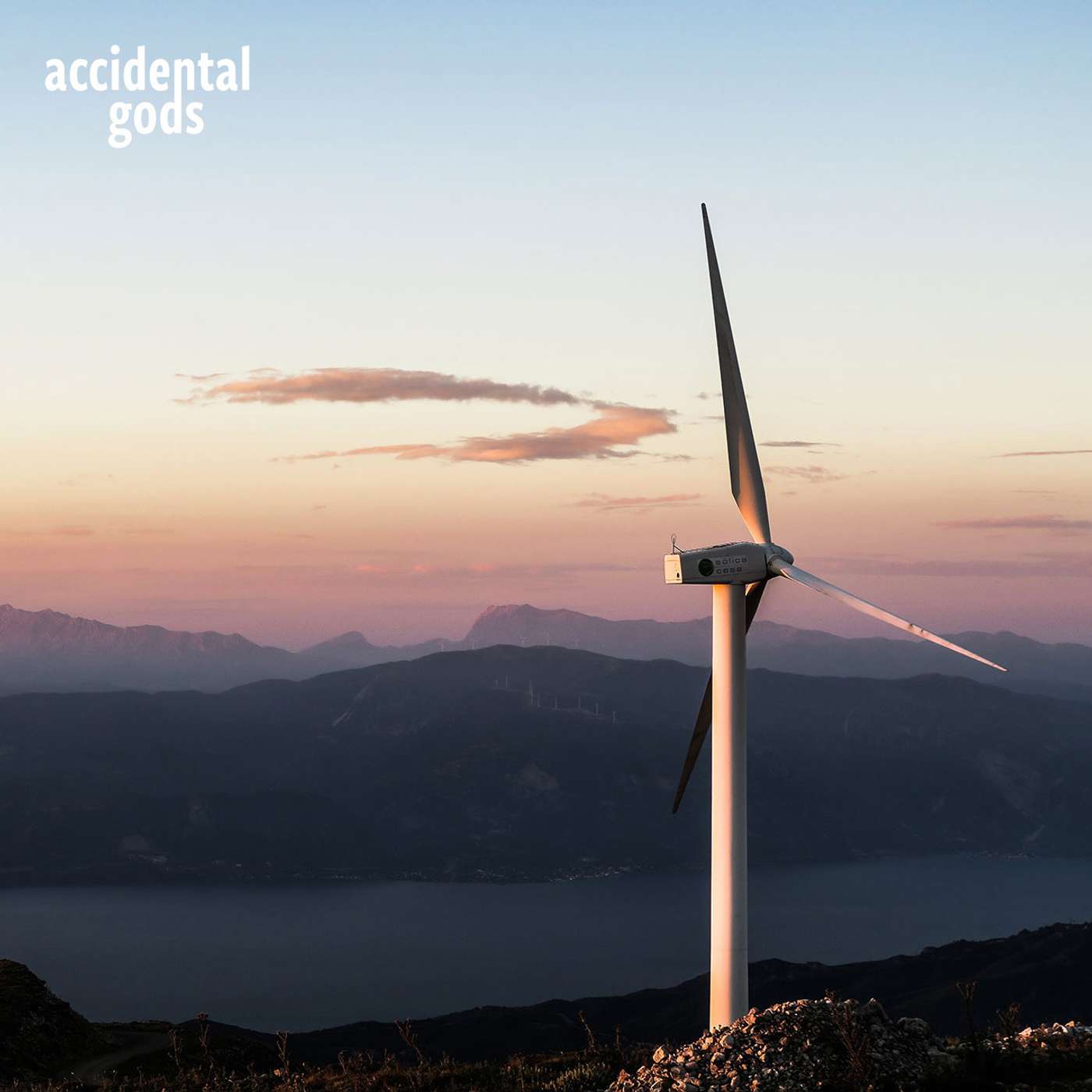
S7 Ep 10Power to the People: an Energy R-Evolution for the 21st Century with Howard Johns
How are we going to create the power that we need in a world where fossil fuel use has to end? How can we end the central control of power and keep safe our data in a world where data-mining is a pernicious - and lucrative - as coal mining? Howard Johns has spent all his professional life finding answers. He shares them here. Howard was a climate activist on the front lines until he realised that he needed ways to say 'yes', instead of 'no'. Accordingly, he set about building solutions, eventually founding Southern Solar a national solar energy company, and Ovesco a locally owned renewable energy cooperative. At the same time he chaired the trade body representing the UK solar industry, finding himself once again a campaigner around energy policy in the process. A believer in solutions, Howard is convinced we have all the technology and money we need to implement the climate and energy solutions we need. It is now time for lots of people to get involved with making it happen.Howard TED talk: https://youtu.be/pkGAMb5sYvgHoward's website: https://www.howardjohns.net
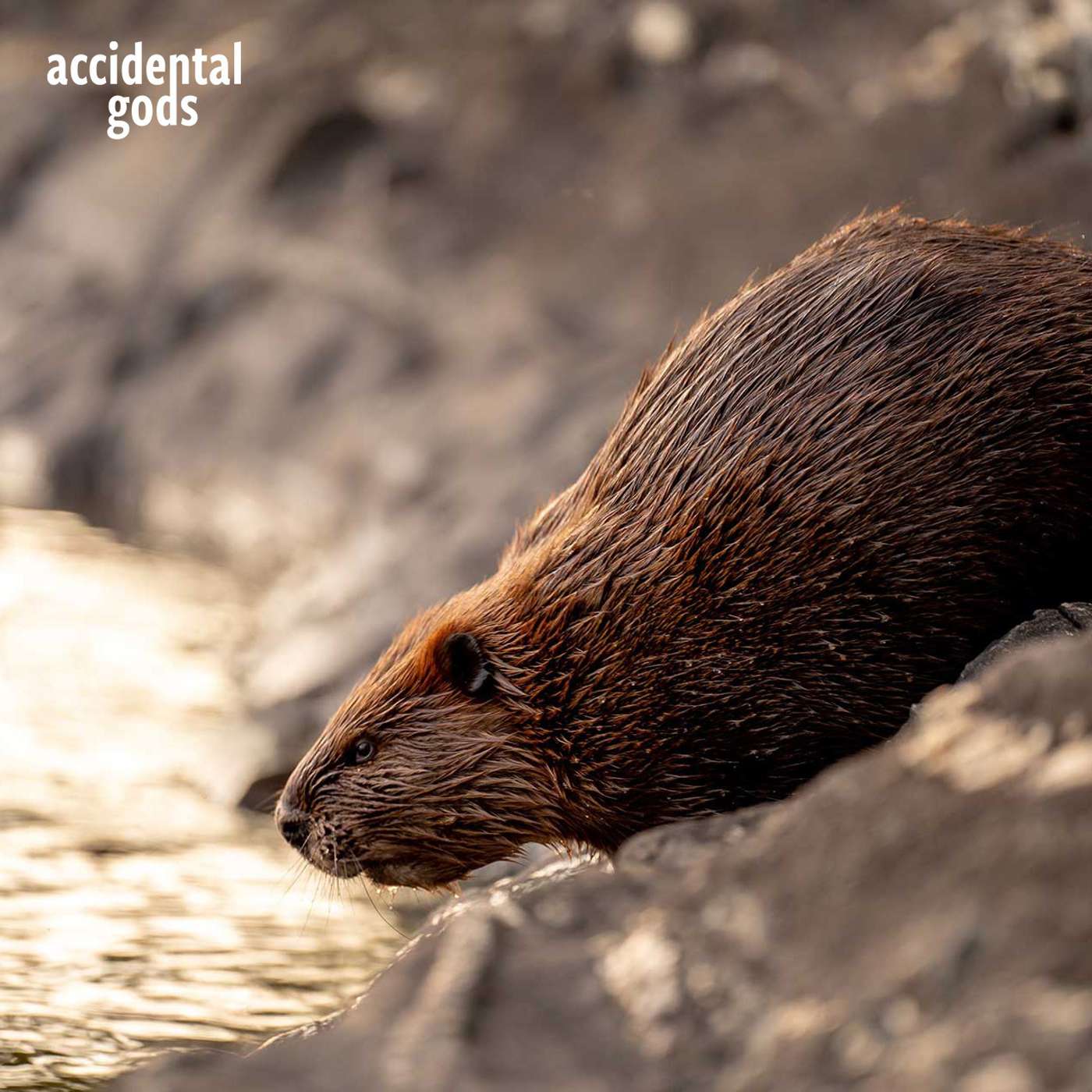
S7 Ep 9Beaver ReWilding: Gateway to Transformation - with Eva Bishop of the Beaver Trust
How can we begin to reverse the destruction of our countryside, the pollution of our rivers - and our disconnection from the Natural World? Beavers, of course. Eva Bishop of the Beaver Trust tells of the UK introduction of beavers and puts it in a whole-system context. The Beaver Trust is a small group of committed individuals who understand the deep interconnectedness of life. By bringing beavers back to the UK where once they flourished, they are seeing whole ecosystems grow back to life. In their work with farmers and landowners, they are able to open gateways to radical restoration of our landscapes and biodiversity, reversing the catastrophic species loss of the past five decades. Eva Bishop is their Communications Director. In this week's episode, we explore the work of the Trust and it's place in the wider systemic change we need if we're going to make it through the current bottleneck. The Beaver Trust https://beavertrust.orgThe Lodge Cast podcast: https://podcasts.apple.com/gb/podcast/the-lodge-cast/id1530950902Twitter: https://twitter.com/BeaverTrust/All We Can Save: https://blackwells.co.uk/bookshop/product/All-We-Can-Save-by-Ayana-Elizabeth-Johnson-editor-Katharine-K-Wilkinson-editor/9780593237083
S7 Ep 8Meeting the World unmasked - with Forrest Landry
When Forrest Landry was 16 years old, he took a vow to meet the Natural World openly, fully, without any projection or expectation on his part - he was not going to take one step and wait for the rest of the world to take 99 steps to him - he was going to go all the way. His life has been shaped by the experience - and he talks to us this week about where that has taken him. "Love is that which enables choice. Love is always stronger than Fear. Always choose on the basis of Love." – Forrest LandryYou might know him as the founder and CEO of Magic Flight, a company among the first to introduce the portable vaporizer to the world, but Forrest Landry is really a philosopher, writer, researcher, scientist, engineer, craftsman, and teacher who has been studying and practicing the varied High Arts since the mid 70’s.Before creating Magic Flight, Forrest was a third generation master woodworker who found that he had a unique set of skills in large scale software systems design. This led to work in the production of several federal classified and unclassified systems, including various FBI investigative projects, TSC, IDW, DARPA, the Library of Congress Congressional Records System, and many others.This work was a fun diversion, but Forrest’s heart has always been most focused on metaphysics – the study of what is, what is the nature of being, what is the nature of knowing, and why are we all here. And, so, the most challenging system design that Forrest has tacked is his work “The Immanent Metaphysics” a decades long effort to restore legitimacy to the practice of metaphysics and construct a rigorous, coherent and precise statement of, well, everything. He talks to us this week of his experience in connecting with the world unmasked - about the considerations of life that it led to: what matters most and how we, too can connect with it. Forrest Landry TED Talk: https://youtu.be/iAmLRLc4ffkSolarPunk questions answered: https://mflb.com/civ_dev_1/solarpunk_questions_out.pdfOverall orientation to What is needed to meet the coming transformation: https://mflb.com/civ_dev_1/overall_recommendations_out.pdfForrest Landry's technical investigations into the meaning of life: https://mflb.com/geek_index_1.html
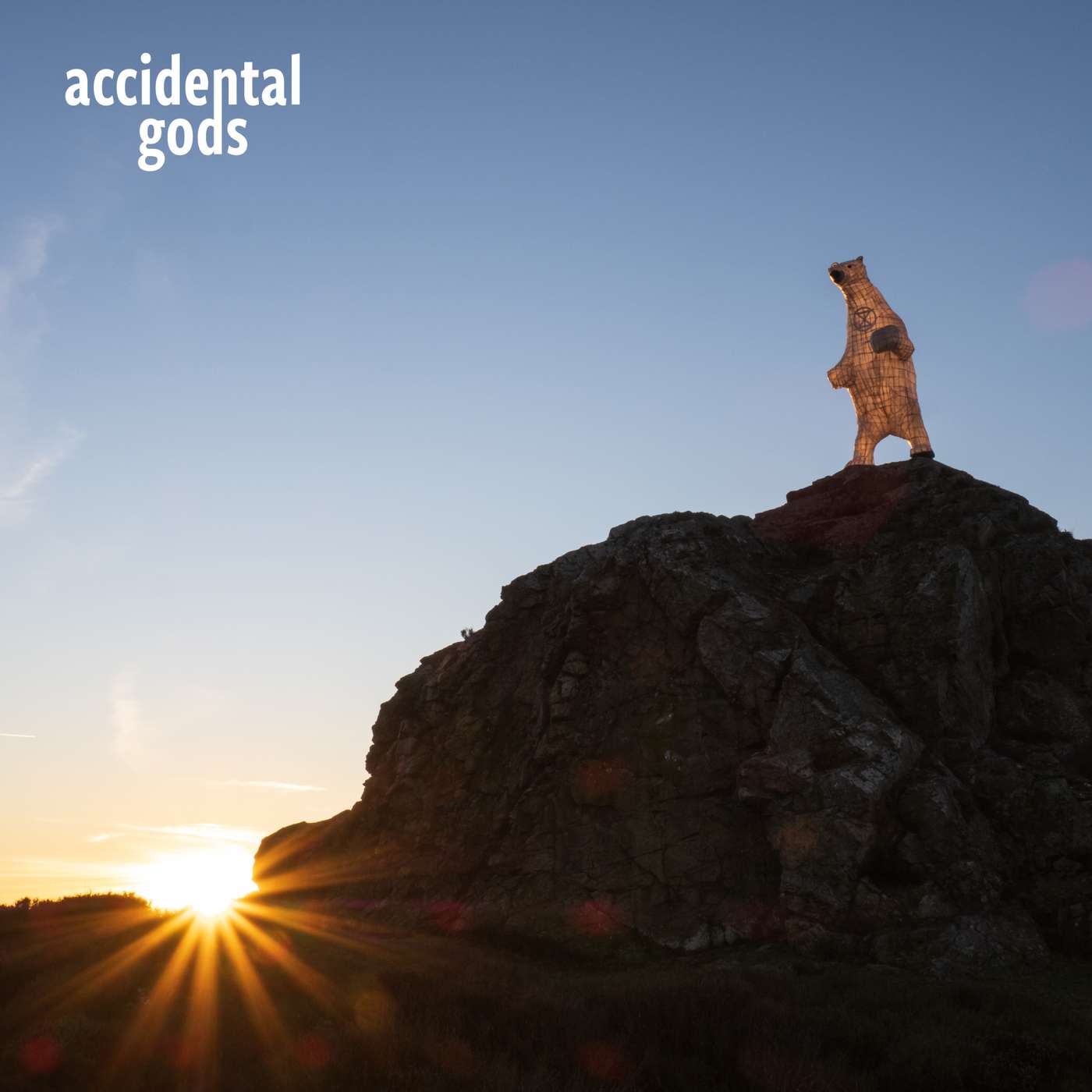
S7 Ep 6Climate Pilgrimages converging on COP26 with Bamber Hawes and Benjamin Christie.
COP26 takes place in Scotland in November. How can ordinary people persuade our elected Overlords that they need to change the system? Across the UK, Climate Actions are being prepared. We speak to two people involved in Pilgrimages to Glasgow about what drives them and what they hope will change. COP26 takes place in Glasgow, Scotland in November of this year. This is our best - possibly our last - chance to persuade those who govern the world that the climate and ecological emergency needs swift and radical action. So how can we get the message through to those who are driving our collective bus that they need to turn the wheel before we all hurtle over a cliff? How can we persuade them that 'business as usual' is no longer an option, or that alternatives do exist if we only had the creativity, imagination, courage and empathy to make them work? This week, we speak to two people involved in two separate Pilgrimages to Glasgow to find out what they're planning and why. Benjamin Christie is driven by the deeply held belief in the possibility of a more equitable, sustainable and harmonious world. He works to support NGOs and ethical businesses develop and achieve their goals. With a career spanning events, media and business development, Benjamin has been fortunate enough to gain experience of many different countries, environments and partnerships at first hand. He's speaking on behalf of the SPINE OF ALBION Pilgrimage which is walking from the southernmost tip of England to the northernmost tip of Scotland - through Glasgow at the time of COP26. Links to his work and activities include: http://www.listeningtotheland.com/https://medicinefestival.com/https://www.wisdomkeepers.earth/Bamber Hawes says of himself that he is 'a Thing Maker'. He trained as an Industrial Designer in Sussex, then moved to London and had various companies making furniture, building sets and film props, art directing and modelmaking.In 2005, after 22 years living in Hackney just off the Murder Mile he 'ran away from his annoying media clients' to Bishop's Castle in South Shropshire, where he now is a picture framer, furniture maker, artist and Art Co ordinator for an Art Trail and is a Town Councillor.Now, he has created CLARION, a 10 foot Polar Bear made to be portable. He and Clarion will be walking from his home in Bishop's Castle to Glasgow in time for COP. Instagram: @clarion_the_bearFacebook: Clarion_the_BearTwitter: @BearClarion His call to those who might want to join him is this: Calling anyone who would like to be part of a commitment to our living, breathing Earth and the future of all life. I am organising a Climate Crisis Pilgrimage from South Shropshire to the COP26 climate talks that starts on 1st November in Glasgow. Would you be interested in joining me for a day of walking as I progress northward?I will be doing the whole 306 mile walk which will take 22 days. Each day I will be joined by local people from the area that I have reached. The unusual thing is that I will be accompanied by a ten foot high sculpture of a polar bear, that I have made. The bear, called Clarion, is made from thin bamboo poles, willow withies and many layers of heavy duty tissue paper bonded together with waterproof PVA. He is carried on a palanquin. He ain't heavy! I am looking for people to join me for a day walking along footpaths, bridle paths, canal towpaths and B roads. The intention for this pilgrimage is to come together to walk, to talk, to connect with each other, to connect with the landscape by moving through it slowly, admiring its beauty and grandeur. To be positive and kind, and to build active hope. To smile and laugh while being serious.Walking to the climate talks will not change the world ~ but I can think of nothing better to do to show the earnestness of my belief that we must learn to talk together and build community, only in Oneness will we make a better more just world. Clarion and I will be coming through your area on these dates:DAY ONE 10th October Bishop's Castle to LongdenDAY TWO 11th October Longden to Platt LaneDAY THREE 12th October Platt Lane to BulkeleyDAY FOUR 13th October Bulkeley to KingsleyDAY FIVE 14th October Kingsley to RainhillDAY SIX 15th October Rainhill to Appleby BridgeDAY SEVEN 16th October Appleby Bridge to MiddleforthDAY EIGHT 17th October Middleforth to GarstangDAY NINE 18th October Garstang to LancasterDAY TEN 19th October Lancaster to HincasterDAY ELEVEN 20th October Hincaster to SadgillDAY TWELVE 21st October Sadgill to AskhamDAY THIRTEEN 22nd October Askham to CalthwaiteDAY FOURTEEN 23rd October Calthwaite to CargoDAY FIFTEEN 24th October Carge to Stapleton GrangeDAY SIXTEEN 25th October Stapleton Grange to LockerbieDAY SEVENTEEN 26th October Lockerbie to MosslandsDAY EIGHTEEN 27th October Mosslands to ElvanfootDAY NINETEEN 28th October Elvanfoot to DouglasDAY TWENTY 29th October Douglas to StrathavenDAY TWENTY ONE 30th October Strathaven to BusbyDAY TWENTY TWO 31st October Day offDAY TW

S7 Ep 7A Bridge to the Future: Walking the path between Wisdom and Despair with Matthew Taylor
What is it that makes us human? How can we bring the best of ourselves to the current crises – individually, and as a civilisation? In this episode, we talk to Matthew Taylor, CBE FAcSS, and explore his ideas around ‘co-ordination theory’ and how we can use them to create new politics and new ways of organising our society to give more people a better, more equitable say in how we make things happen. Matthew Taylor, CBE FAcSS, is the Chief Executive of the NHS Confederation, but before that, he was Chief Executive of the Royal Society for the Arts (or more properly, for the Arts, Manufactures and Commerce) - and before that, he was head of the Number 10 Policy Unit for Tony Blair's Labour Government. He is a regular panelist on BBC Radio 4's Moral Maze, presents 'Agree to Differ' and occasionally, Analysis on the same channel. He's also deeply interested in the intersection between neurophysiology, psychology and human behaviour - and how we can bring these to bear on the current transformative moment in our history. In this episode, we explore his ideas around 'co-ordination theory' and how we can use them to create new politics and new ways of organising our society to give more people a better, more equitable say in how we make things happen. Matthew Taylor blog: https://www.thersa.org/blog/matthew-taylorMinimate: Co-ordination theory: https://youtu.be/-54DxHlOMncThe Podcast with Daniel Schmachtenberger and Tristan Harris: https://podcasts.apple.com/gb/podcast/your-undivided-attention/id1460030305?i=1000526825665

S7 Ep 5Active Hope: bringing resilience and reconnection to the world with Chris Johnstone and Madeleine Young
As our world hurtles towards tipping points, how can we be part of the solution? How can we find resilience, in ourselves, our lives and our communities? Above all, how can we bring Active Hope to the world? Dr Chris Johnstone and Madeleine Young have set up an online training course based in Joanna Macy's work that reconnects and we talk about it in this week's podcast. With a background in medicine and psychology, Chris Johnstone's work over the last thirty years has focused on exploring what helps us face disturbing situations (whether in our own lives or the world) and respond in ways that nourish resilience and well-being. His books include Active Hope (co-authored with Joanna Macy and translated into more than eleven languages) and Seven Ways to Build Resilience. His online resilience courses have attracted students from more than sixty countries. He lives in the north of Scotland where he teaches online at CollegeOfWellbeing.com, ResilienceTraining.net and ActiveHope.TrainingMadeleine Young is a permaculturist, homeopath and XR activist. She's a trained facilitator in The Work that Reconnects and has helped to co-create the Active Hope online training. Find their free video-based online course in Active Hope at https://activehope.trainingOnline resilience courses at https://resiliencetraining.nethttps://www.activehope.infohttp://collegeofwellbeing.comhttps://chrisjohnstone.info
S7 Ep 4Being, Belonging, Beyond: Bringing the sacred to a turbulent world with Sue Philips of Sacred Design labs
As we hover on the edge of the Great Turning, how can we find a spiritual practice that draws from the roots of who we are and yet provides the sustenance we need to help us navigate our changing world? Sue Philips of Sacred Design Labs explores the possibilities. Sacred Design Lab is a soul-centred research and development lab that explores and interprets the changing landscape of spiritual and community life. The Lab collaborates with divinely restless, intellectually curious and entrepreneurially practical leaders to help design and prototype the spiritual communities and infrastructure of the future, interpreting ancient best practice in the service of transformation. Sue Philips, one of the co-founders of the Lab says of herself that, 'I am relentlessly curious about liberating ancient wisdom to solve complex problems. I’m passionate about inspiring spiritual flourishing, designing for meaning making, and witnessing the transformation that happens when people roam around in what matters most.My wife and I share our 30-minute “family chapel” every morning, to remember who we want to be and what we care about, and to cultivate imagination for “the more beautiful world our hearts know is possible.”1I’m part business strategist, part design geek, and part monastic. On any given day I might read liberation theology, human-centered design briefs, or business school case studies. Ideally all of them side by side. I graduated from Colgate University and the Episcopal Divinity School, and taught at Harvard Divinity School, where I am a Ministry Innovation Fellow. My wife and I live in Tacoma, WA with whichever of our five children is passing through.'As we hover on the edge of the Great Turning, increasingly, we seek a spiritual foundation that is fit for purpose in the twenty-first century. In this week's podcast, we discuss how that might come about, how we might recognise broad spiritual foundations that are universal and useful to support our connection with a numinous world. Links: Sacred Design Lab: https://sacred.design

S7 Ep 3The Mermaids had to happen! Reflections on G7 activism - and beyond with Sophie Miller
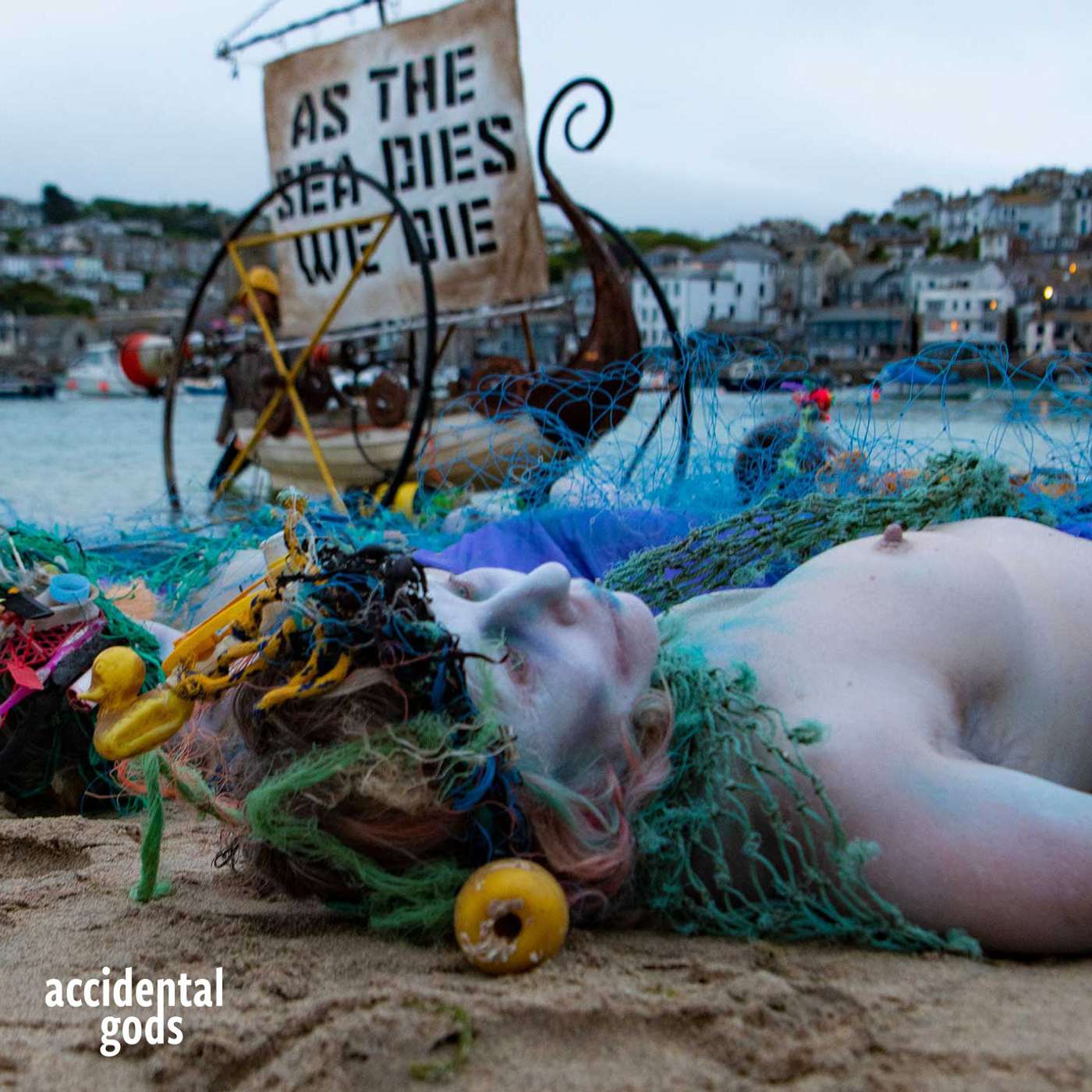
In a world that is literally burning, with politicians whose positions of power are predicated on their not listening, what are the most creative, thoughtful, caring people on the planet doing to bring about change? Sophie Miller of Ocean and Extinction Rebellions was an integral part of the stunningly impressive actions at the G7 summit earlier this summer. In this second of two parts, she reflects on her experience - and looks ahead to future actions. Sophie Miller trained at Central St Martins before moving on to a decade-long career in television design. Now, she gives her time and energy to Extinction Rebellion as a Red Rebel - and to Ocean Rebellion, of which she is a co-founder. She lives in Cornwall, and so when she discovered that the first post-Covid G7 summit was taking place in her country and her county, she had to ask. In this week's second inspiring podcast, she describes what it actually takes to mount a successful action in the current political climate. She talks of the growing support from all aspects of the Fourth Estate and - movingly - of the practical - and spiritual - path that has brought her to this place and this time. She speaks as an activist who understands the damage done to the Oceans, knowing that there is still time to change what we're doing. We discuss the nature of policing, of totalitarianism - and the ways we can all work to transcend the crushing forces of authority to bring something deeper and more profound to our world. https://oceanrebellion.earthhttps://rebellion.globalhttps://extinctionrebellion.uk
S7 Ep 2Fire at Sea: bringing activism - and mermaids! - to the G7 summit with Sophie Miller
"Never doubt that a small group of thoughtful, committed citizens can change the world. Indeed, it is the only thing that ever has.' As our world burns ever faster and our politicians cling ever more desperately to the old ways of being and behaving, Sophie Miller of Ocean Rebellion commits her creativity, artistry and courage to bringing truth to power. Sophie Miller trained at Central St Martins before moving on to a decade-long career in television design. Now, she gives her time and energy to Extinction Rebellion as a Red Rebel - and to Ocean Rebellion, of which she is a co-founder. She lives in Cornwall, and so when she discovered that the first post-Covid G7 summit was taking place in her country and her county, she had to ask. In this week's inspiring podcast, she describes the practical - and spiritual - path that has brought her to this place and this time - as an activist who understands the damage done to the Oceans -and that there is still time to change what we're doing. We discuss the nature of policing, of totalitarianism - and the ways we can transcend the crushing forces of authority to bring something deeper and more profound to our world. This is the first of two parts. Next week, we'll be back to find out how the activism transpired and where we all go from here. https://oceanrebellion.earthhttps://rebellion.globalhttps://extinctionrebellion.uk
S7 Ep 1How to Save the our Planet: the Facts - with Professor Mark Maslin
How did we get here? How bad are things really? Is there still hope? (Yes!) and... crucially - what can we do, individually, collectively, in our businesses, in our governments, around the world, to turn the bus from the edge of the cliff? Professor Mark Maslin is a climate scientist with a mission to explain in clear terms all we need to know. And he does it with panache, enthusiasm and optimism. How do we unpick the damage of Neoliberalism? How can we break the connections between work and income and unsustainable consumerism? Amidst the ideas of how our climate is changing, Professor Mark Maslin, FRGS, FRSA, offers answers to the social and economic ills of our time. Mark Maslin FRGS, FRSA is a Professor of Earth System Science at University College London. He is a Royal Society Industrial Fellowship, Executive Director of Rezatec Ltd and Director of The London NERC Doctoral Training Partnership. He is a member of Cheltenham Science Festival Advisory Committee and sits on the Corporate Social Responsibility Board of the Sopria-Steria Group and Sheep Included Ltd. Mark is a leading scientist with particular expertise in past global and regional climatic change. He has published over 175 papers in journals such as Science, Nature, and The Lancet. His areas of scientific expertise include causes of past and future global climate change and its effects on the global carbon cycle, biodiversity, rainforests and human evolution. He also works on monitoring land carbon sinks using remote sensing and ecological models and international and national climate change policies, and has presented over 50 public talks over the last five years including Google UK, Twitter EU, New Scientist Live, UK Space conference, Oxford, Cambridge, RGS, Tate Modern, Royal Society of Medicine, Fink Club, Frontline Club, British Museum, Natural History Museum, Goldman Sachs, the Norwegian Government, UNFCCC COP and the WTO. He has also written 8 popular books, over 60 popular articles. His “Climate Change: A Very Short Introduction” by Oxford University Press is now in its fourth edition and has sold over 50,000 copies. In this podcast, we talk about his most recent book, 'How to Save our Planet: the Facts' which does exactly what it says on the tin. A crips, cleanly written, utterly absorbing book, this is one of the clearest books ever written on the nature of the problems that assail us, the fact that it's not too late to change - and what we need to do at every level of society to change things. It's small enough to leave in the smallest room of the house - or by the kettle in the kitchen - so that everyone who comes by can pick it up and learn something useful. This is how we change the world, one aphorism at a time. Links from the podcast How to Save Our Planet: https://www.penguin.co.uk/books/320/320155/how-to-save-our-planet/9780241472521.htmlMark Maslin's home page: https://www.geog.ucl.ac.uk/people/academic-staff/mark-maslinReview of Bill Gates's book: https://link.springer.com/article/10.1007/s12115-021-00581-zThe Conversation: How bad could things be if we do nothing?: https://theconversation.com/climate-change-how-bad-could-the-future-be-if-we-do-nothing-159665
S6 Ep 16Behave More! Rebuilding Our World Differently with Alexandra Kurland
Imagine a world where we listen to the voices of the young as much as the old, the women as much as the men, all races, all abilities, all income streams - all species... where we honour difference, where compassion and empathy are our keynotes, not competition and separation. If this is the world we want, how do we get there? In this second of two parts, we explore the existential question of our time with behaviourist Alexandra Kurland.Alexandra Kurland is a horse clicker trainer, behaviourist, classical rider - and convenor of the annual (now bi-annual) Science Camp that explores the art and science of positive reinforcement. She is host of the Horses for Future podcast, co-host of the Equiosity podcast, and author of The Click that Teaches and a whole host of other books and online courses about horse training. In today's podcast - the second of two - Alex and Manda continue to dive deeply into the fundamental question of our time - how do we bring people of widely disparate political views to a point where we all pull together to create a flourishing, generative future for people and planet? We have the answers. We just need to see the possibilities and be emotionally and psychologically prepared to apply them. So this is a behavioural problem now, not a technological one. Which means it needs the brightest behavioural minds on the planet to begin to think about it. And we can start now... The Clicker Center: https://www.theclickercenter.comEquiosity: https://www.equiosity.comHorses for Future: https://kurlanda.wixsite.com/sequestercarbonMary Hunter: PORTL shaping: https://behaviorexplorer.com/author/mary/An Introduction to PORTL shaping: https://www.artandscienceofanimaltraining.org/tools/portl-shaping-game/The New Climate War by Michael Mann: https://blackwells.co.uk/bookshop/product/The-New-Climate-War-by-Michael-E-Mann-author/9781913348687
S6 Ep 14Behave! - Solving the existential crisis of our times, with Alexandra Kurland
If we have all the technical and scientific answers to solving the climate and ecological crisis - which we do - how do we bring the greater mass of humanity to a place where we all work together, bringing our boundless creativity to the creation of a regenerative world? Exploring the world of behaviour with Alexandra Kurland, behaviourist, horse trainer and regenerative farmer. First of two parts. Alexandra Kurland is a horse clicker trainer, behaviourist, classical rider - and convenor of the annual (now bi-annual) Science Camp that explores the art and science of positive reinforcement. She is host of the Horses for Future podcast, co-host of the Equiosity podcast, and author of The Click that Teaches and a whole host of other books and online courses about horse training. In today's podcast - the first of two - Alex and Manda explore one of the fundamental questions of our time - how do we bring people of widely disparate political views to a point where we all pull together to create a flourishing, generative future for people and planet? We have the answers. We just need to see the possibilities and be emotionally and psychologically prepared to apply them. So this is a behavioural problem now, not a technological one. Which means it needs the brightest behavioural minds on the planet to begin to think about it. And we can start now... The Clicker Center: https://www.theclickercenter.comEquiosity: https://www.equiosity.comHorses for Future: https://kurlanda.wixsite.com/sequestercarbonMary Hunter: PORTL shaping: https://behaviorexplorer.com/author/mary/An Introduction to PORTL shaping: https://www.artandscienceofanimaltraining.org/tools/portl-shaping-game/The New Climate War by Michael Mann: https://blackwells.co.uk/bookshop/product/The-New-Climate-War-by-Michael-E-Mann-author/9781913348687

S6 Ep 13The Hijacking of our Common Law - and how to set it free: with Mothiur Rahman of the New Economy Law Center
Does the law take care of you? Does it work in your interests, for a common sense of justice - a genuine common-weal? If not, why not? And what can we do to change the way things are going? Mothiur Rahman of the New Economy Law Centre explores our current crisis of agency. Mothiur Rahman is founder of New Economy Law and a pioneer member of XR. In his first podcast with us, we explored the work he has done, helping to create a law that works for ordinary people. This week, we look at the ways the current system is breaking the law and how we can help to re-weave it into something that helps people and planet to flourish. New Economy LawArticle: Stir for Action - Land and PowerArticle: Resurgence & Ecologist - Extinction Rebellion, A Civil Rights MovementPresentation: UKELA Wildlaw Conference hosted at Sussex University (2019)Presentation: Vaults Festival 2019 - Decoloniality & Rewilding Psyche
S6 Ep 12Braver Angels: building trust, empathy and decency across the political chasm
How can be rebuild trust in politics, politicians and each other? How would it feel to be free of partisan divisions? Could we heal our world in time? Braver Angels is dedicated to helping people bridge divides - to find the better angels of themselves and each other. Braver Angels - originally Better Angels - came into being after the divisive nightmare of the 2016 Presidential Election in the US. It began with a group of people in a barn in South Lebanon Ohio and has since spread to 20,000 people around the US, with chapters in other nations around the world. Their skill - their superpower - is to bring the social and humane technologies originally created to help bring together couples on the brink of the most acrimonious divorces. With skills in listening and a good dose of empathy, they help us to see the humanity in each other and so find the best of ourselves to bring to the table. John Wood Jr is an Ambassador for Braver Angels and has been working in the depths of the partisan divide. In this podcast episode, he shares the experience and wisdom of his journey, and that of the Braver Angels project. Details here: https://braverangels.org
S6 Ep 11River Dart Wild Church: Druid Christian Sam Wernham, founder of a land-based church explores the nature of wild contemplation.
How does it feel to stand at the balance point between ancient Christian mysticism and the Druid's path of deep connection with the natural world? What do we become if we marry the traditions of Christianity with the far older, land-based traditions of this land - and all lands? In a living answer to these questions, Rev Sam Wernham founded the River Dart Wild Church and the Wild Monastics, as well as the Wild Spirit Community - all dedicated to a deep and sacred connection with the land. "When do you feel most alive? When are you most open and connected with a deeper sense of being? When do you fall in love with life and want to turn towards the world with hope and care?Perhaps, like us, your sacred ground is the earth under your feet… your sacred spaces are cathedrals of trees with branches filled with wind and rain, sunlight or stars… your baptismal pools are filled with deep brown river water or the wild and salty sea. Perhaps, like us, you yearn to share this… for spiritual community, for authentic meeting and deep silence with people and with all beings. So, welcome to wild church!"In this podcast, we explore Sam's journey to the founding of the Wild Church and Wild Monastics - how these fulfil the need for deep connection, and where her spiritual activism has taken her since the pandemic began. Wild Church (including Wild Monastics): https://www.riverdartwildchurch.comWild Wisdom School: https://wildwisdomschool.comWild Spirit Community: https://wildspiritcommunity.com/founder/Blog Post: Returning to the Monastery of the Heart
S6 Ep 10Why dignity matters more than nationalist pride with bestselling political columnist Ece Temelkuran
Imagine a world where dignity is valued over nationalistic pride; where we know that 'enough' is the opposite of 'more'; where we understand the bonds that draw us together. Author Ece Temelkuran launches her new book 'Together' - and shares with us its message of human resilience. More at https://accidentalgods.life Ece Temelkuran is one of the Turkey’s best known novelist and political commentators. She has contributed to the Guardian, Newstatesman, New Left Review, Le Monde Diplomatique, Frankfurter Rundschau, Der Spiegel, The New York Times and Berliner Zeitung.Her books of investigative journalism broach subjects that are highly controversial in Turkey, such as the Kurdish and Armenian issues and freedom of expression.Her novel Women Who Blow on Knots won a PEN Translates award, sold over 120.000 copies in Turkey, and has been published in translation in Germany, Croatia, Poland, Bosnia and France with editions also forthcoming in China, Italy and the USA.Her non-fiction work: HOW TO LOSE A COUNTRY is a searing indictment of the rise of the neo-fascist right around the world, rooted firmly in her own experience in Turkey. TOGETHER breaks new ground - a series of ten essays, each exploring life - hers and the world's - and ways the human spirit rises above the exigencies and horrors that we can create - to manifest the bright points of human existence that signal hope for the world. The writing is lyrical, sharply insightful and deeply moving. In this podcast, we explore the woman beneath the words - and the ways we can take what she offers to bring us all closer together. Ece Temelkuran's Website https://www.ecetemelkuran.comTogether: the book - https://blackwells.co.uk/bookshop/product/Together-by-Ece-Temelkuran-author/9780008393809
S6 Ep 9ReWorlding: Co-Creating a Politics of Wholeness with Eva Schonveld and Justin Kenrick
How would the world flourish if our politics were based on trust? And how can we make that happen? Eva and Justin are co-creating the 'ReWorlding' online conference in late May and we came together to explore how even the making of this has been an exploration of what it is to be human, to trust, to grow and to dare to be different. Eva and Justin were guests of podcast 44 [https://accidentalgods.life/re-democratising-democracy/] - in which we explored the links between personal and collective trauma -and they outlined the work they were doing in Scotland to build towards a constitutional convention that would help to weave new democratic structures for an independent Scotland. Now they are weaving a new Gathering into being - an online week, bringing together people from all over the world to find new ways to be human in the 21st century - ways that will take us forward into a world that is regenerative for the human and more than human worlds. In their own words: "Reworlding is asking: how can we develop new decision making processes - and integrate with enduring ones - in order to collectively create a decolonised, just, empathic and regenerating world at every level?This is not a call to get involved in politics. This is a call to help create a new politics.Reworlding will bring together people who have:experience of working with their own and others’ trauma, and/ orexperience of decision making systems that seek to enable a mutual world, and/ orexperience of resisting domination to protect and enable a just and regenerative worldThis week is an exploration, a scouting out of what is already happening, and a searching ahead: imagining and working towards assembling a politics of wholeness, including through deepening our awareness of what colonises within and between us - and what liberates us."Links: More on the Gathering here: https://heartpolitics.squarespace.com
S6 Ep 8Webs of Connection: Rebuilding soil, talking with bees and the magic of fungi with Navona Gallegos
Regenerative Farming - or Agro-ecology - is being widely recognised as one of the best ways to mitigate the climate crisis. But how does it actually work? What can we do with our back gardens, our rooftops, our local verges to make a difference? Navona Gallegos explains the science - and the spirit - of working with the land. We first spoke with Navona Gallegos in podcast #55 (here) when she had newly moved onto the land she was starting to farm in New Mexico. In this podcast, she returns to talk about how her work is progressing there - and to talk more deeply about the actual mechanisms we can use to draw carbon down into our soils. She says this: "Where I am called is to bring more focus on the fungi, as that really is the 'how' of soil regeneration, be it agricultural, forest, greening deserts, whatever, and I don't hear people talking about that enough. We know fungi and their glomalin are what sequester carbon (mitigate climate change, reverse ocean acidification, etc.) and cycle macro and micro nutrients thereby increasing abundance and nutrient content in foods thereby increasing the capacities of those who eat those foods. Last time I spoke about fungi in relation to the soil food web, but I'd like to really make clear how and why fungi are the keystone to soil health and therefore human health, land health, etc. and how we support them and get out of their way. Fungi are the neural network of the Earth, communicating the state of the environment to plants and giving them the tools to respond. By facilitating plant growth, fungi are also changing climate patterns; there are many examples of how revegetating an arid area brings more rainfall. And so, I have a vision I'd like to speak on (that is SO possible) of vast stretches of land, even whole continents, once again connected in mycelial webs. I think that is a goal we should set for our species for the next seven generations because if we have that, we have connected ecosystems and watersheds that are clean, abundant, biodiverse, adaptable, and full of so much food, fiber, and fuel for humans and more than humans. Just like disease is broadly described as a breakdown of communication within the body, the destruction of those mycelial networks through tillage and other harmful practices marked the start of the wetiko culture. The 'how' is simple: plant a wide diversity of plants, mostly annuals; bring more wood into systems via mulch and hugel culture and leaving woody debris (and I can go into how that lignin is decomposed by fungi into humic substances, which are the storehouses of the soil for carbon and other nutrients and even DNA information of other types of life forms that is stable for thousands of years as well as cleans contaminated soil by binding contaminants, AND how fungi are the gatekeepers to those stores and information, choosing when to draw on them); use fungal composts (not bacterial dominated); stop disturbing the soil (there are ample resources now for no-till and I can elaborate); rotational grazing with animals to increase plants vigor and diversity; do not pull weeds, rather create a more fungal soil and watch the 'weeds' back off on their own (ie, create what we want rather than resist what we don't want). As far as the 'how' socially/politically, it's all about changing our thinking and viewing the world as alive. Rather than paving over an empty lot or growing mono-crop grass lawns, let's create ordinances that promote more ground cover and diversity. This advocacy doesn't just have to be about making more human food. We need rooftop gardens everywhere possible to mitigate the heat island effect and create positive feedback loops of rainfall and temp. that allow more growth. Mulch your leaves instead of bagging and throwing them away. Everyone can find a way to promote this either in stopping destructive gardening and growing practices or by advocating for community growing spaces or by guerilla hugeling, planting, seed-saving, foraging, and buying locally. Long-lived indigenous cultures all have practices that support fungal networks. One of the main issues I see when I consult on soil building is a psychological clinging to control when the system really needs to just be left alone and supported in simple ways. The more we rewild our minds and our communities, the more we will get away from the perceived need to micro-manage, the more we can hear the voices of the land so our actions are efficient and effective, AND simultaneously build the equivalent of human mycelial networks where we can trade tools and information in an open-source way. "I don't have a lot of concrete ideas myself around how to build political will. Rather, where I'm at is simply the acknowledgement that we need to change our thinking fundamentally and let go of scarcity/wetiko culture by reconnecting. Fungi are literally the (re)connectors of terrestrial life. My personal path toward reconnection is by changing how we grow food in our gardens
S6 Ep 7Swimming in a New Sea: creating a different world of money with Jonathan Dawson of Schumacher College
Imagine a world where money works differently. Where there's enough for everyone's needs, not their greed and where we work together for a life we all want. In this week's podcast, Jonathan Dawson, head of the Regenerative Economics program at Schumacher college explores how. Jonathan Dawson, co-creator of the Masters in Regenerative Economics at Schumacher college, is a sustainability educator and a former President of the Global Ecovillage Network. He has around 20 years experience as a researcher, author, consultant and project manager in the field of small enterprise development in Africa and South Asia and before joining the College he was a long-term resident at the Findhorn ecovillage.Jonathan is the principal author of the Gaia Education sustainable economy curriculum www.gaiaeducation.org, drawn from best practice within ecovillages worldwide, that has been endorsed by UNITAR and adopted by UNESCO as a valuable contribution to the UN Decade of Education for Sustainable Development. He teaches this curriculum at universities, ecovillages and community centres in Brazil, Spain and Scotland. He has also adopted the curriculum to virtual format and teaches it through the Open University of Catalunya in Barcelona.In this week's wide-ranging discussion, we explore the differences between the hard, mechanistic view of economics and the wider, more regenerative view that is based in moral philosophy. From there, we look at the ways we can change the stories we tell ourselves about value and worth and the ways we are moving forward in an ever-changing world. Links: Articles: DAWSON J. Teaching Economics for the 21st Century, Resilience.org. http://www.resilience.org/stories/2015-10-06/teaching-economics-for-the-21st-centuryDAWSON J. Changing Stories: Using narrative to shift societal values, Resurgence (March, 2015) http://newstoryhub.com/2014/08/changing-stories-using-narrative-to-shift-societal-values/DAWSON J. A wave of disruption is sweeping in to challenge neoliberalism, Guardian, March 12, 2015 http://www.theguardian.com/sustainable-business/2015/mar/12/disruption-challenge-neoliberalism-commons-political-systemBooks: Kate Raworth: Doughnut Economics https://blackwells.co.uk/bookshop/product/Doughnut-Economics-by-Kate-Raworth-author/9781847941398Mariana Mazzucato: The Mission Economy: https://blackwells.co.uk/bookshop/product/Mission-Economy-by-Mariana-Mazzucato-author/9780241419731Tim Jackson: Post Growth: https://blackwells.co.uk/bookshop/product/Post-Growth-by-Tim-Jackson-author/9781509542529Kim Stanley Robinson: The Ministry for the Future (fiction): https://blackwells.co.uk/bookshop/product/The-Ministry-for-the-Future-by-Kim-Stanley-Robinson-author/9780356508832Bill Gates: How to Avoid a Climate Disaster: https://blackwells.co.uk/bookshop/product/How-to-Avoid-a-Climate-Disaster-by-Bill-Gates-author/9780241448304TED TALKRupert Sheldrake (banned by TED) https://youtu.be/JKHUaNAxsTg
S6 Ep 6Wild Weeds/Living Foods: Katrina Blair of Turtle Lake Refuge on Wild Foraging, Plant Whispering and healing the earth
How can we bring vibrancy, life, diversity and connection back to the land? How would we be if we listened to all the wild plants of our land? Katrina Blair first listened to plants at the age of 11 - and is now transforming her local community. In this inspiring podcast, she leads us through ways we, too, can connect with plants as our teachers. Katrina Blair began studying wild plants in her teens when she camped out alone for a summer with the intention of eating primarily wild foods. She gained an MA from John F Kennedy University in Orinda, CA in Holistic Health Education and - as she tells us in the podcast - went on to found Turtle Lake Refuge in 1998, a non-profit organisation whose mission is to celebrate the connection between personal health and wild lands. She teaches sustainable living practices, permaculture and wild edible and medicinal plant classes locally and internationally. She is the author of two books, one a raw food cook book's 'Recipes for Living Deep' and The Wild Wisdom of Seeds (linked below). The Mission Statement of Turtle Lake Refuge says that it exists to celebrate the connection between personal health and wild lands. We are inspired to promote and practice sustainable ways of living, honouring wild nature and the evolution of community. Examples of our work include growing, harvesting and preparing local, wild and living food for the community, educating about the great values of the wild edible and medicinal abundance available in our area, providing local micro greens for the public schools, restaurants and stores and educating about organic land stewardship practices through our project Bee Happy Lands. Links: Turtle Lake Refuge: http://www.turtlelakerefuge.orgRecipes for Living Deep: http://www.turtlelakerefuge.org/rawfoodcookbookThe Wild Wisdom of Weeds: http://www.turtlelakerefuge.org/wild-wisdom
S6 Ep 5Honouring the Children: We bequeath them the Earth. What do they need from us in this time of transformation?
“No decision shall be made and no action taken unless it holds the good of the children of all beings, of this generation and seven hence, at its heart.”How would our world be if we based every act on the impact it would have down the generations? What do our children - and their children - need us to do now, to grant them a flourishing future? A simple video asks that question and invites our children to answer. We talk to its makers. When David SmartKnight heard that the G7 summit was coming to Cornwall in June 2021, he went to the land and asked of it ‘What can I do?’ That night, he had a dream… and as is the way of things, when we align ourselves with life, the world joins our actions. Pretty soon he and his co-producer, Klaudia van Gool had a team of people, who came together to make a beautiful, moving 3 minute video and a project of awe-inspiring scope, to bring the words of the world’s children to the world’s leaders in ways they cannot ignore. As for David himself: Following a thriving career as an IT consultant, for 25 years David has asked: “What does it mean to live sustainably?”. This has resulted in studying & applying Permaculture, shamanism, Non-Violent Communication, storytelling, teaching, social enterprise, running a smallholding, planting and managing coppice, making greenwood furniture, keeping livestock and holding ceremonies. All woven into a second career as an environmental educator, devising and delivering a European-wide teacher training program, creating and piloting a sustainability curriculum for secondary, establishing two award-winning Environmental Education Centres and running eco-build projects as community empowerment exercises.“Sustainability”, he believes “is a completely inadequate ambition: what we actually need is regeneration, which, by necessity, requires both personal fulfilment and social justice.”Between his deep-nature connection business, the complexities (and joys) of single-parenting two teenagers and devoting much of his time to supporting the Regenerative Cultures strand underpinning Extinction Rebellion, David currently is spearheading “The Children’s Fire Project” – an ambition to bring the 7th Generation Principle to the heart of global economic thinking.And this is Klaudia: I grew up on the edge of a village in the south of the Netherlands, considering the fields out the back my play ground. I had an urge to garden and made small gardens around the house. I signed myself up as a youth member of a national nature conservation charity.It wasn’t until I decided on an Environmental Science degree after moving to the UK and having children, that things came together for me and I realised i couldn’t think of anything better to do than work in the field I loved, which I have continued to do ever since.I worked as an Environmental Business Services Adviser for the Groundwork Trust for eleven years, after personal experience of various small businesses ranging from construction to food processing.In addition to the degree in Environmental Science, I attended many trainings in the fields of business, permaculture, education & teaching, facilitation, management, sustainability skills and personal development.I have gathered many skills through training and practical experience: gardening, preserving, foraging, basketry, living willow structures, strawbale and cob building, bushcraft, herbal medicine and more.Once I started on the permaculture path, I got hooked, started teaching permaculture in 2007 and have taught 31 PDCs to date. This path had led to a social permaculture interest, see more here.In recent years I have been involved with Extinction Rebellion, mostly focussing on regenerative cultures and deepening my curiosity for ceremony and herbal knowledge and skills. The Children’s Fire Website: https://childrensfire.earthVideo Link to 'Honouring the Children's Fire': https://youtu.be/4SO6dS1Qa9IKlaudia van Gool: http://klaudia.co.uk
S6 Ep 4Wild Law and Justice in action: Spiritual Activism with Mothiur Rahman, founder of New Economy Law
Why does the law not protect us? Why does our government not strive every sinew to keep us safe at all levels? What would it look like if the law did protect, care for and sustain common people? Answers on this, and the depths of life from Mothiur Rahman, pioneer member of XR Muslims.Mothiur Rahman speaks with raw courage and a unique combination of vulnerability and strength as he describes his own journey to spiritual connection and how it informs his life, from supporting anti-fracking campaigners to working with XR visioning. From helping defeat the first major fracking application in the UK, to taking part in XR actions to highlight government inaction, Mothiur walks his talk with clear integrity, a sharp, engaged mind and a commitment to bringing about a regenerative future. New Economy LawMuslims for Extinction Rebellion FB pageArticle in Resurgence Magazine: "A Civil Rights Movement"Mothiur’s statement to be read at his trial (for XR Action - the case was dismissed before this could be read out)Mothiur's article in Stir for Action Land & Power:Community ChartersMothius's talk at Vaults Festival 2019 Decolonise/Decarbonise: Decoloniality & Rewilding the Psyche
S6 Ep 3ReWilding the Forests of Life: Alan Watson Featherstone, Trees for Life and moving forward
How does it feel to commit - completely, without reservation - to the flow of life? Where do we find the courage and resilience to take the first steps on the path? And how does the world - that same flow of life - support us when we have done so? In this second of two parts with Alan Watson Featherstone we explore more deeply the creation of Trees for Life - how it arose and what it entailed... In itself, this is impressive, but what makes it inspiring for those of us who might not be able to set up a world-changing forest reWilding project, is the extent to which, having made a commitment to change the world, the world itself supports us in our endeavour. This is what is so inspiring about Alan's story, what gives us hope in a world hurtling towards so many tipping points: that if we listen to our innermost yearnings, if we follow our hearts and let our intuition lead us - then when we step onto the path of our calling the world supports us in our endeavour. Alan's website: https://alanwatsonfeatherstone.comTrees for Life: https://treesforlife.org.uk/alan-watson-featherstone-founder-of-trees-for-life/Findhorn community https://www.findhorn.orgAuroville community https://auroville.orgRestore the Earth http://www.restoretheearth.co.ukGlobal Ecovillage Network https://ecovillage.org
S6 Ep 2Seeds of Change: Growing a different Future with Alan Watson Featherstone
What are we here for? What - exactly - is the purpose of life? Imagine a world where finding our life's purpose - and having the courage to follow it - was at the core of everything we did. Alan Watson Featherstone listened to the prompting of his heart and set up Trees for Life to ReWild the Great Caledonian Forest in Scotland. Three decades on, there are thousands of acres alive with new growth. In this first of two podcasts, he describes his journey to Findhorn.Alan is an ecologist, nature photographer, international speaker – and founder of Trees for Life, the charity that grew from a promise made at a Gathering, into a multi-million pound organisation owning – and ReWilding – thousands of acres of the Scottish Highlands. Along the way, he organised the planting of trees by the million, the fencing of thousands of acres to protect saplings – and helped lay the roots for the re-introduction of beavers to Scotland.His journey from electronics undergraduate to one of the world’s foremost advocates for Wild Land and our connection with nature is an inspiration for anyone and everyone who seeks to connect with a sense of purpose in life. Alan's website: https://alanwatsonfeatherstone.comTrees for Life: https://treesforlife.org.uk/alan-watson-featherstone-founder-of-trees-for-life/Findhorn community https://www.findhorn.orgAuroville community https://auroville.orgRestore the Earth http://www.restoretheearth.co.ukGlobal Ecovillage Network https://ecovillage.org'Dreaming Your Soul's Path' Gathering at Accidental Gods https://accidentalgods.life/dreaming-your-souls-path/
S6 Ep 1Parents for A Future: Creating a world we're proud to bequeath to future generations with Rupert Read
Suppose we all made this year the one where we choose to make a difference? We could take a sabbatical and join in the actions around COP26. Or we could go to work and do whatever it takes to make our business regenerative. Or we could join Parents For Future and build a world that we are proud to leave to our children. Rupert Read on his new book: Parents for a Future and how now is the time to act. Professor Rupert Read works in the philosophy department at UEA in Norwich. He's author of numerous books and a hands-on, sit-in-the-streets climate activist. His latest book, Parents for a Future is a passionate, beautifully argued clarion call for all of us to do whatever it takes to move us onto a trajectory that will shape the future we need and want for future generations: a future we're proud to leave behind. This year in particular is a crucial turning point. As we emerge from COVID and move towards COP26 in Glasgow, the decisions we make now will shape this decade, which will shape this century, which will shape this millennium - and the future of the human and more-than-human worlds. You can connect at @parents4afuture and #ParentsforFuture, so head for both of those and see what you can do to make this year the one where we changed. Parents for a Future Book: https://www.parentsforafuture.org/shopRupert's website https://parentsforafuture.org ThruTopia paper: https://www.huffingtonpost.co.uk/rupert-read/thrutopia-why-neither-dys_b_18372090.htmlNarrative Ark Television for the future website https://narrativeark.net
S5 Ep 12Meeting our needs, healing the earth: Donnie Maclurcan of the post growth institute
Suppose we already have all the answers to the crises that assail us? Suppose countless people, companies, non-profit organisations and local community groups were already working to change the way things work? And suppose we could knit these together into a movement for change? Donnie Maclurcan of the Post Growth Institute explores the ways we can find a generative future. Donnie is a facilitator, author and social entrepreneur, passionate about all things not-for-profit. Originally from Australia, he moved to the U.S. in 2013, from where he coordinates the Post Growth Institute. As a consultant, he has worked in Egypt, Kenya, Fiji, Thailand and South Korea, helping 500+ not-for-profit projects start, scale and sustain their work, while his own initiatives include developing: Free Money Day, the Post Growth Alliance, the (En)Rich List, the Offers and Needs Market process, The Not for Profit Waytraining, Silent Skype team meetings, Project Australia, and the globally-used #postgrowth hashtag. An Affiliate Professor of Economics at Southern Oregon University and Fellow of the Royal Society of the Arts, Donnie holds a Ph.D. in social science.He is passionate about the concept that we already have the answers to the current world, social, cultural, climatic, ecological and economic crises - and that if we can understand this fact, it will help us to work towards answers that will work. In the podcast, he explores the ways in which we can spread this understanding, and build on it to create a generative future. He focuses on the things that are already working - and ways we can shift the focus of our economy away from the massive hoarding of wealth by big multinationals and the global hyper-rich. How on Earth: https://blackwells.co.uk/bookshop/product/How-on-Earth-by-Donald-Maclurcan-author-Jen-Hinton-author/9780990369004
S5 Ep 11Breaking the Austerity Myth: The system is broken - but we can mend it. With Richard Murphy
Imagine a world where we didn’t always feel as if money was tight. Imagine an economy that works for the health and welfare of people and planet rather than all of us working for the health of the economy. Richard Murphy describes where money comes from and how we could use it differently. We all know the economy is broken - that the experiment of free market capitalism has driven us to the edge of extinction. The problem is working out what to replace it with that will help us to find new ways of being without creating such havoc that lives are destroyed in the process. In this first of a two-part series, Richard Murphy explores ways we can change the current system to create a different world. Richard Murphy is a political economist, author of the book 'The Joy of Tax', and is a visiting professor at Sheffield, Anglia Ruskin and City universities. He's an adviser at the Fair Tax Mark and was deeply involved in creating the first iteration of the Green New Deal in the UK. He writes the Tax Research Blog, which shines bright lights on the economic illiteracy of free-market governments. In our conversation, we explore how money is made in the current system, the mythology of austerity and how the world could be if we all understood the nature of the lies. When we all see the Emperor has no clothes, we can re-create a new way of doing and being. Tax Research Blog: https://www.taxresearch.org.uk/Blog/Fair Tax Mark: https://fairtaxmark.netThe Joy of Tax: https://blackwells.co.uk/bookshop/product/The-Joy-of-Tax-by-Richard-Murphy-author/9780552171618Tax Justice Network: https://www.taxjustice.netThe Green New Deal: https://greennewdealgroup.org
S5 Ep 10The Town that shaped its world: Pam Barrett on FlatPack/DIY Democracy and taking charge of politics
We all know national politics is in chaos. But local governance can be a place of enlivening, inspiring, radical change. Pam Barrett speaks of her work to change the nature of her local town council - what she achieved - and how we can do the same. Pam Barrett worked at the heart of the Westminster government's civil service. Then she moved to picturesque Buckfastleigh, a mill town on the edge of Dartmoor in Devon, and began to see how badly the town was served by the town and regional councils. She started a group to preserve the town's only swimming pool. That grew, and the pool was saved, and she moved on, in time, to stand as an independent for the town council. A group of others stood with her, and they gained 9 seats on a 12 seat council. Which meant they could do things, make things happen... discover the freedom that local democracy gives if it truly serves the local people. With the newly independent group on the local council, the concept of 'of the people, by the people, for the people' took on new meaning. They moved the council to a bigger room and made the proceedings far more transparent. They asked local people what they wanted to do - and then worked out how much it would cost.. .23p per household per week to really keep the swimming pool open, other bits for other things, amounting to an extra 97p per household per week. And then they let local people decide if they wanted that...and, like almost all participatory budgeting, when people have a chance to really see what their money goes towards - they did want it, and they were happy to pay. So that four years later, when the council came up for re-election, 10 independent councillors stood and 10 were elected. Pam's story is one of agency, and local empowerment and it can play out pretty much anywhere in the world where democracy is still alive. Listen in and be inspired - then go out and see what you can do in your local area. FlatPack Democracy: https://www.flatpackdemocracy.co.ukTrust the People online Training: https://actionnetwork.org/events/trust-the-people-online-course-spring-2021Be Buckfastleigh: https://bebuckfastleigh.co.ukPositive News on Pam Barrett and Buckfastleigh: https://www.positive.news/uk/the-devonshire-town-that-transformed-local-democracy/Handforth Parish Council Zoom call (full) https://www.youtube.com/watch?v=qsalmnyed7kHandforth Parish Council Zoom (highlights) https://www.youtube.com/watch?v=lgGmYeAm0jk
S5 Ep 9The Subtle Shaman: Chris Taylor, living our purpose and the Tao of R-evolution
How does it feel to know we're really living our purpose? What's the felt sense inside that tells us to keep going in a particular direction? Or to stop? Radical evolutionary, Chris Taylor explores the pathways to right being that will let us transform what it is to be human. Chris Taylor, author of 'The Tao of Revolution' is a Tai Chi teacher, regenerative farmer, musician, performance poet, facilitator-of-change and author - who describes himself as a revolutionary mystic. Or mystical revolutionary. His book is described as 'A field guide for Global Transformation, - a book on climate and societal change that isn't about the coming chaos, but about how we learn to live with the future. The system will not be over-thrown, it will be overgrown - here's how.' In this heart-warming, thought-provoking podcast we move through Immanuelle Wallerstein, Quaker philosophy and Mellissa Etheridge to the Green New Deal, QAnon and Taoism, to how we can live deeply connected to the land that feeds us. Ultimately, we explore the opportunities and gifts of our times and the ways that we can each find the margins of ourselves, find the things that make our hearts sing and find the ways to do them - so that together, we are building a world based on connection, coherence and empowerment. Chris Taylor's book: The Tao of Revolution: https://blackwells.co.uk/bookshop/product/The-Tao-of-Revolution-by-Chris-Taylor-author/9781939269973Oasis Human Relations: https://www.oasishumanrelations.org.ukGrace Blakeley: Green Capitalism is not enough: https://democracycollaborative.org/learn/publication/green-capitalism-not-enoughJem Bendell's Deep Adaptation paper: https://jembendell.com/2019/05/15/deep-adaptation-versions/Immanuelle Wallerstein: World Systems Analysis: https://blackwells.co.uk/bookshop/product/World-Systems-Analysis-by-Immanuel-Maurice-Wallerstein/9780822334422
S5 Ep 8Models of Mind: bringing emotional intelligence into the heart of governance with Rachel Lilley
How different would our world be if we understood how our minds - and feelings - worked? How would our workplaces change if everyone was doing their best to understand how everyone else experienced the world? Dr Rachel Lilley describes how shifting our perspectives changes everything - from work to home to government. Rachel combines extensive academic research with many years practical experience working with teams and senior leaders to offer unique and practical insights into attention, emotions, consciousness and decision making. She has particular expertise in behaviour change related to sustainability, climate change and community engagement as well as extensive academic and personal experience of using mindfulness to develop self and other awareness and gain insight.In today's podcast, we discuss the basis behind her PhD thesis, which explored the practical results of teaching mindfulness to civil servants in the Welsh Government and how this impacted on the ability to deliver results particularly related to climate change actions. The core of this: that people learned how their own minds worked - and so began to understand how others' minds work, that not all minds are the same, and not all thought processes follow the same lines - is transformative in our lives, our workplaces and our ability to respond to the current planetary crisis. Rachel explains the basis of her work and its results so far- as well as the potential for extending it further. Rachel Lilley Predicting Mind website - https://predictingmind.comLisa Feldman Barret: How Emotions are Made - https://blackwells.co.uk/bookshop/product/How-Emotions-Are-Made-by-Lisa-Feldman-Barrett-author/9781509837526George Lakoff Metaphors we Live By: https://blackwells.co.uk/bookshop/product/Metaphors-We-Live-By-by-George-Lakoff-author-Mark-Johnson-author/9780226468013Podcast: Sam Harris talking to Anil Seth: https://samharris.org/subscriber-extras/113-consciousness-and-the-self/
S4 Ep 4Everybody Now: A PodBoom on The Climate and Ecological Emergency
bonusEverybody NowClimate Emergency and Sacred Duty We’ve caused a turning point in the Earth’s natural history. Everybody Now is a podcast about what it means to be human on the threshold of a global climate emergency, in a time of systemic injustice and runaway pandemics. Scientists, activists, farmers, poets, and theologians talk bravely and frankly about how our biosphere is changing, about grief and hope in an age of social collapse and mass extinction, and about taking action against all the odds.On 19th October 2020, Everybody Now is being released by podcasters all over the world as a collective call for awareness, grief and loving action. With contributions from: Dr. Gail Bradbrook - scientist and co-founder of Extinction RebellionProf. Kevin Anderson - Professor of Energy and Climate Change at the University of ManchesterDámaris Albuquerque - works with agricultural communities in NicaraguaDr. Rowan Williams - theologian and poet, and a former Archbishop of CanterburyPádraig Ó Tuama - poet, theologian and conflict mediatorRachel Mander - environmental activist with Hope for the FutureJohn Swales - priest and activist, and part of a community for marginalised peopleZena Kazeme - Persian-Iraqi poet who draws on her experiences as a former refugee to create poetry that explores themes of exile, home, war and heritageFlo Brady - singer and theatre makerHannah Malcolm - Anglican ordinand, climate writer and organiserAlastair McIntosh - writer, academic and land rights activistDavid Benjamin Blower - musician, poet and podcaster Funding and Production: This podcast was crowdfunded by a handful of good souls, and produced by Tim Nash and David Benjamin Blower Permissions: The song Happily by Flo Brady is used with permission.The song The Soil, from We Really Existed and We Really Did This by David Benjamin Blower, used with permission.The Poem The Tree of Knowledge by Pádraig Ó Tuama used with permission.The Poem Atlas by Zena Kazeme used with permission.The Poem What is Man? by Rowan Williams from the book The Other Mountain, used with permission from Carcanet Press.
S5 Ep 7Kindness, tribalism, faith, hope: exploring Christianity in the climate crisis with David Blower
Kindness costs nothing and it enhances our lives and those around us. And yet our world is full of random acts of unkindness. How can we change this? How can we extend the boundaries of faith and spirituality to bring the best of ourselves to a world in crisis. This week, podcaster, musician, writer, theologian – and deep spiritual activist – David Blower talks about Christianity and kindness and the climate crisis. David Benjamin Blower is a radical Christian theologian, a musician, a writer, and a podcaster. He is co-host of NOMAD podcast which describes itself as 'Stumbling through the post-Christendom wilderness looking for signs of hope". His first book Kingdom vs Empire is 'an explosive manifesto for politicised faith in 21st Century Britain.'In this deep dive into the nature of faith, we explore spirituality, belief, tribalism - and the narratives we spin ourselves of where we are and where we could be. David's Website davidbenjaminblower.comDavid's Music benjaminblower.bandcamp.com/musicNomad podcast - Elizabeth Oldfield episode: https://podcasts.apple.com/gb/podcast/nomad-podcast/id301419170?i=1000493995562Nomad podcast - Elaine Heath episode: https://podcasts.apple.com/gb/podcast/nomad-podcast/id301419170?i=1000422414384Climate PodBoom - https://pdst.fm/e/media.transistor.fm/1f96c344/de91b51d.mp3
S5 Ep 6The Ocean is Alive: Ocean-shaman Glenn Edney speaks of the living waters of the Earth.
What if the Ocean were a living thing, in the way that the earth breathes as Gaia? The Maori say that if the Ocean is healthy, so, too, will the people be healthy. And we are not healthy - nor is the Ocean. But we are intimately linked and Glenn Edney, Ocean Deep Ecologist explains how - and what we can do to heal ourselves and the waters of the Earth. Glenn Edney is a Deep Ecologist, an Ocean explorer, diver, sailor, an activist for the living Ocean - and a deeply thoughtful visionary, following in the footsteps of his hero, Jacques Cousteau. He's the author of three books, the most recent, published in 2016, is 'The Ocean is Alive'. He wrote this as his way to help those of us more land bound to understand that, like Gaia, the Ocean is a living entity with its own hyper-complex physiology - that everything from the chemical composition of the water, through the lives of the plankton and microbiomes to the majesty - and super consciousness - of the great whales, is part of a single Being. The detail of how the Ocean lives and breathes is fascinating and glorious, but it's the stories of connection, heart-to-heart, with the living elements of the Ocean that stay with us long after we've put the book down. In the podcast, Glenn shares his complete connection with the Ocean - and the ways we can - and must - open to this magnificent part of our planet. “Mena kei te hauora te moana ka pera ano te hauora o te iwi” If the ocean is healthy so too will the people be healthy - Maori sayingThe Ocean is Alive: book link: https://blackwells.co.uk/bookshop/product/The-Ocean-Is-Alive-by-Glenn-Edney-author/9780473352608High and Deep Sea Photos by Glenn: https://www.synchronicityearth.org/wp-content/uploads/2018/02/Synchronicity-Earth-High-Deep-Seas-Insight.pdf
S5 Ep 5Trust The People: Creating a politics that works
How would our world feel if our local, regional and national politics really listened to all the people, really brought together diverse views, and knew how to listen deeply to whatever was said? How would we be if our politics brought out the best in all of us, and worked for the living planet? We talk to Trust The People, a new movement to bring this about - globally. Trust The People is a movement of community builders open to everyone sharing deliberative democratic tools to support local communities dealing with global crises. In this episode, Mags Mulowska, an activist with TTP, explores how our current system is broken, and the ways we can change it so that everyone has choice and a voice, so that everyone's voice is heard and communities build around a sense of place and of purpose. She describes the courses run by TTP and some of the ways they have led to flourishing outcomes in diverse local communities. And we discuss the May local elections in the UK and how people can join a movement of independent candidates dedicated to bringing radical inclusivity, deep listening and trust to the local process. Trust the People: https://www.trustthepeople.earthIsabel Hardman "Why we Get the Wrong Politicians"

S5 Ep 4Four arrows flying: Alnoor Ladha, activist and visionary on changing the stories we tell ourselves.
What if we could see the nature of the stories that drive us, how would we be? Would we be able to change them? And what would we want in their place? This week, Alnoor Ladha, mystic, visionary, activist and regenerative farmer explores the four ways to change the world.Alnoor Ladha's work focuses on the intersection of political organizing, systems thinking and narrative work. He was the co-founder and Executive Director of The Rules (TR), a global network of activists, organizers, designers, coders, researchers, writers and others focused on changing the rules that create inequality, poverty and climate change. TR started in 2012 as a time-bound project and an experiment in anarchist organizational design, exploring new ways of how to work, play and make trouble together. Alnoor comes from a Sufi lineage and explores/writes about the intersection between politics and spirituality in troubled times. He is also a co-founder of Tierra Valiente, a post- capitalist community in northern Costa Rica.In this week's podcast, we discuss his ideas of Capitalism, memes and mind viruses - notably the idea of the Wetiko - and what the antidotes might be. We explore the nature of subjective reality and the narratives that promote capitalism. We explore the need for mystical anarchism, the means by which we might transcend subject/object duality, cultivating relationality and cultivating a sense of connection to the web of life. The Rules: https://therules.org/author/alnoor/Tierra Valiente: https://www.braveearth.comSeeing Wetiko: on capitalism, mind viruses and antidotes: https://www.kosmosjournal.org/article/seeing-wetiko-on-capitalism-mind-viruses-and-antidotes-for-a-world-in-transition/What could possibly go right: https://www.resilience.org/stories/2020-10-20/what-could-possibly-go-right-episode-19-alnoor-ladha/
S5 Ep 3Building Soil: Healing the Earth: Feeding Humanity - Regenerative Farming with Navona Gallegos
What if we had a way to draw carbon out of the air, heal our ecosystems and feed the world? We do: It's called Regenerative Agriculture and the understanding of how we do this is key to a flourishing future. But we need to listen to the land first, as Navona Gallegos describes in this new Accidental Gods podcast. Navona Gallegos is an ecologist and farmer working to transition desert back into grassland in the arid Southwest of Turtle Island. She works and educates on the intersection of clean water, biodiversity, carbon sequestration, and nutrition: soil. Navona's passion is decolonization and she sees building soil as the keystone that allows us to step into right relation with our surrounding ecologies, access more of our innate capacities, and create a culture that truly meets our needs. Her insight into the spiritual connection with the land is a breath of fresh air, giving us ways to connect that are healing for us as well as the earth. Links: Dr Elaine Ingham's Soil Food Web: https://www.soilfoodweb.com
S5 Ep 1All the Best of 2020: Books and Podcasts that will lift you into the new year - and beyond.
bonusAn end-of-year round up of the best fiction and non-fiction books - and podcasts - of 2020. All are my opinion and this is only a tiny selection of the really good stuff out there - but it's good. Enjoy! We have to stop consuming stuff... but we never stop imbibing ideas. So here are some to choose from - all links to Blackwells. For obvious reasons. Non-Fiction 'From what is to what if' by Rob HopkinsThe Trembling Warrior and others by Gill Coombs'The Best of Times, the Worst of Times' by Paul Behrens'How to Be More Pirate' by Alex Barker'Doughnut Economics' by Kate Raworth (also Doughnut Economics Action Lab) 'Less is More' by Jason Hickel'The Ocean is Alive' by Glenn Edney'The Tao of Revolution' by Chris TaylorFiction: 'This is How You Lose The Time War' by Amal El-Mohtar and Max Gladstone'The Border Keeper' by Kerstin Hall 'Slough House' by Mick Herron'Agent Running in the Field' by John le Carré'Attack Surface' by Cory Doctorow'Call Down the Hawk' by Maggie Stiefvater'The Timekeeper' by Tara Sim'In Other Lands' by Sarah Rees Brennan'The Ten Thousand Doors of January' by Alix E Harrow'The Left Handed Booksellers of London' by Garth Nix.'A Deadly Education' by Naomi Novak'Fallible Justice' by Laura Laakso'Poison in Paris' by Robert Wilton'The Last Protector' by Andrew Taylor'The Angel of the Crows' by Katherine AddisonPodcasts: Upstream hosted by Della DuncanThe Hive hosted by Nathalie NahaiThe Sustainable Futures Report by Anthony Day A New and Ancient Story by Charles Eisenstein'Your Undivided Attention' by Tristan Harris'Regenerative Agriculture Podcast' by John KempfFarm Gate hosted by Ffinlo Costain'Equiosity' by Alex Kurland'Horses For Future' by Alex KurlandDrinking from the Toilet by Hannah BranniganLink to Dreaming the Year Awake
S5 Ep 1Birthday/Solstice Celebration: a new Anniversary tradition, with Della Duncan and Nathalie Nahai
It's our Birthday... and it's the December Solstice, the time of transition and potential transformation . In honour of which, we are crafting a new tradition: a PodBoom shared with Della Duncan of UPSTREAM podcast and Nathalie Nahai of THE HIVE. So, it's our Birthday - and it's that time of year when every pundit endeavours to look back at the year just gone and ahead to the one that is coming. And we thought we'd like to establish a parallel tradition, where we bring together our favourite podcasting-friends and explore the ways we think. So we set up a structure that will be repeatable in future years... where we give each other gifts of a book, podcast or something else that has brought us real insight, and then we explore each other's existential questions. And we have fun. So that you can have fun too. Della Duncan is a Renegade Economist who hosts the UPSTREAM podcast challenging traditional economic thinking and uplifting stories of sustainable, just, and equitable economic systems-change around the world. Della is also a Right Livelihood Coach, a Senior Fellow of Social and Economic Equity at the International Inequalities Institute in the London School of Economics, the Course Development Manager of Fritjof Capra’s Capra Course on the Systems View of Life, and an Alternative Economics Consultant.Nathalie Nahai is host of THE HIVE podcast. Nathalie is an international speaker and author of the best-selling book, Webs of Influence: The Psychology of Online Persuasion, which has been translated into seven languages.Her work explores the intersection between persuasive technology, ethics and the psychology of online behaviour, and clients include Google, Accenture, Unilever and Harvard Business Review, among others.Nathalie gives keynotes, workshops and webinars on the psychological dynamics behind evolving consumer behaviours, teaching people how to ethically apply behavioural science principles to enhance their website, content marketing, product design and customer experience.A member of the BIMA Human Insights Council, she also hosts The Hive Podcast, Seeking The Self and several Guardian podcasts, and contributes to national publications, television (BBC, Sky, CNN), and radio (BBC Radio 4) on the impact of technology in our lives.From Nathalie:BooksBraiding Sweetgrass - Robin Wall KimmererWomen Who Run with the Wolves - Clarissa Pinkola EstésFoxfire Wolfskin - Sharon BlackieThe Abundant Earth - Eileen CristPodcast: Eco Civ Podcast From Della: BooksThe Dangerous Old Woman: Myths and Stories of the Wise Woman Archetype - Clarissa Pinkola EstésBuilding Bridges, Not Walking on Backs: A Feminist Economic Recovery Plan for COVID-19 - Hawaii State Commission on the Status of Women The Sickness is the System: When Capitalism Fails to Save Us from Pandemics or Itself - Richard WolffPodcast: Upstream Conversations that I mentioned From Manda: BooksEnglish Pastoral - James Rebanks Less is More - Jason HickelSlow Horses - Mick Herron
S4 Ep 14Living to Learn: transforming education with Rachel Musson of ThoughtBox
How can we make learning a genuinely transformational experience? One that's fun, and inspiring and that teaches us HOW to think, not WHAT to think? Rachel Musson had given her life to asking this question and ThoughtBox is her answer. Suppose we all learned three things at school: empathy, critical thinking and systems thinking... imagine how different the world would be. Suppose we learned how to think clearly, how to communicate, how to understand our own feelings and express them without feeling the need to trash other people just because we were hurt, or angry. Rachel Musson, founder and educational director of ThoughtBox, a radical, new co-learning programme speaks of her journey to create the system, and how it's working - in over a thousand schools and fifty four nations across the world. Rachel believes in co-learning: no more lesson plans, but a classroom of peers who take the core of a topic and build on it together. The result is a flexible learning environment where everyone thrives, where each individual is given space and encouragement to grow to be the best of themselves. Imagine a world where this is possible. Where it is happening. Where it is growing... About Rachel Rachel Musson is a teacher, trainer, writer and thought-leader onsustainable education and wellbeing in schools.Working for 13 years as a Secondary English teacher, Rachel has taughtstudents and trained teachers in schools across the world including the UK,Ireland, Australia, Nepal and Tanzania. She is the Founding Director ofThoughtBox Education – a social enterprise fostering triple wellbeing byhelping young people deepen relationships with themselves, society and thenatural world. She is the pioneer behind Changing Climates: a free climatechange curriculum currently being used in 1500+ schools across 56 countries.Rachel is currently working with industry leaders on education reform policyand standing as an international thought-leader on climate-change educationand triple-wellbeing in schools.ThoughtBox: https://www.thoughtboxeducation.comThoughtBox Community Network: www.thoughtboxeducation.com/communityNew free membership for global educators: https://www.thoughtboxeducation.com/teaching-for-a-better-worldFreedom to Think: Blog on the new anti-capitalist ban in UK schools: https://www.thoughtboxeducation.com/blog/freedom-to-think

S4 Ep 11The Best of Times, The Worst of Times: Responding to Climate Change with Dr Paul Behrens
How bad are things really? Is it too late to avert the climate and ecological catastrophe? And if not, how do we pull ourselves back from the brink? Exploring answers with Paul Behrens, author of 'The Best of Times, The Worst of Times'. We live on the edge of change - the facts can be terrifying, but the creative potential of our times is inspiring and just as jaw-dropping as the horrors of the reality we inhabit. Paul Behrens is Assistant Professor of Energy and Environmental Change at Leiden University in the Netherlands. He has advised governments and his work on climate change has appeared in leading scientific journals, as well as on the BBC, in the New York Times and Scientific American. He's got a clear, un-sensational view of the way things are - and how we can bring ourselves back from the brink. In our conversation, we explore the realities and the possibilities - and where we might go from here. Pauls Book: https://blackwells.co.uk/bookshop/product/The-Best-of-Times-The-Worst-of-Times-by-Paul-Behrens-author/9781911648093
S4 Ep 10Breaking the Rules to save the world: How to be More Pirate, with Alex Barker
How can we take the radical, renegade, rule-breaking, revolutionary ideals of the golden age of Pirates and transmute them to gold in our world? Alex Barker, author of 'How to be More Pirate' lays out the maps to the treasure of change. The concept of radical, renegade, revolutionary insurgency based on the model created in the Golden Age of Pirates was given wings by Sam Conniff's best selling book, BE MORE PIRATE. In the wake of its success, Sam needed to find ways to help the many people the book inspired. And for that he needed help. Enter Alex Barker, Primary Pirate, visionary, breaker of rules and maker of gatherings on and offline. Alex and Sam between them have steered Pirate groups from industries as far apart as car manufacturing (Mercedes), Social Media Mega-Giants (Google) and nationally owned health care providers (the UK's NHS). But we can go deeper than simply breaking the old, fossilised structures of industries... we can change the entire system. Because, as Sam says, 'problems will not be fixed by fixing the problems... what's really needed is an overhaul of the engine that's causing the problems. In other words, the business model.' And, as Alex says, 'I want to see many more new crews forming outside of formal structures, so that while the old models fall, new ones are already emerging.' Accidental Gods seeks to be part of that emerging eco-system of new ways of being. And to get there, we need new ways of thinking - and ways we can each break out of the moulds that have cast us. Alex Barker offers a map to the treasure of change. Follow us! The book: https://www.bemorepirate.com/the-bookThe Workshops: https://www.bemorepirate.com/the-workshopRethink Humanity Paper: https://www.rethinkx.com/humanity As we said at the end of the podcast, Mike Raven and Ross Thornley of AQAI have kindly agreed to let Accidental Gods subscribers and members access their Adaptability Quotient test. The link is here: DISCOUNT CODE FOR AQAI: https://app.aqai.io/signup/aqme?discount_code=ACCGODS
S4 Ep 9Spiritual Activism, Raw Courage and Being the Change: Sophie Miller of the Red Rebel Brigade
In the midst of nonviolent direct action, is a red thread, holding the liminal space between the old and the new, between action and re-action, between hope and extinction. The Red Rebel Brigade is a distinctive feature of XR Actions and here we have a glimpse from the inside. More at Red is the colour of our life blood. It joins us to the land and all the web of life. It was chosen as the original colour of the silent life-dancers of Extinction Rebellion as an explicit symbol of this life blood - and although other colours have been used, notably black for oil and blue for the sea - the feature of a red line of silent individuals threading between police and activists has become a key component of XR Actions across the world. For those not involved in the Red Rebel Brigades, their presence can feel transformative. To understand better the deep, shamanic connection with the land and the sensing-into-spirit that is an integral part of Red Rebel actions, we interviewed Sophie Miller, founder of the Cornish Red Rebels in the UK and key activist in many other actions over the past eighteen months. Anyone who is interested in becoming part of the world wide movement of Red Rebels can find out more on their web page: http://redrebelbrigade.com
S4 Ep 8Codes for a Healthy Earth: New rules for a flourishing world with Shelley Ostroff
Greta Thunberg says that ‘We cannot save the planet by playing by the rules, so the rules have to be changed’. This is self-evidently true, but that leaves us with the question of what rules could we create that we could all live by. Polly Higgins has the Earth Protector law, but Shelley Ostroff has gone one step further with her Codes for a Healthy Earth and the World Water law. Together, these rules spell out our connection with the More than Human world, and leave us with agency, initiative, and a sense of genuine flourishing. Shelley Ostroff (PhD) is a planetary activist, leadership consultant, social architect, mystic and writer. She is the founder of www.togetherincreation.org, www.7days-of-rest.org, www.codes.earth and other initiatives dedicated to the healing and replenishment of the planet and all its inhabitants. Concerned by the suffering and devastation humans cause each other, other species and the planet, she dedicated herself to exploring whole-system systems dynamics and integrative healing wisdom from diverse disciplines and traditions. She has worked with people from all walks of life, from different sectors of society and across continents as a therapist, consultant, mentor, and creative partner in cultivating individual, collective and whole-system wellness. Through ongoing research and practice, she has developed a unique holistic approach to human and whole-system healing and transformation that includes evolving blueprints for a new form of holistic health-oriented global Eco-Governance.Links:Codes for a Healthy Earth https://www.codes.earthTogether in Creation: www.togetherincreation.orgSeven Days of Rest https://www.7days-of-rest.org/Accidental Gods: https://accidentalgods.life/