Accidental Gods
399 episodes — Page 5 of 8

S14 Ep 16Psychedelics: the key to evolution or (yet more) big Pharma hype? With Dr Ros Watts of ACER Integration
We are the Accidental Gods. We didn't plan to be the ones to hold the god-like power to destroy most of the life on this planet, but here we are, at a place where one single species - ours - has the capacity to do just this. The routes to Armageddon seem to be increasing all the time, but they all have one thing in common: they're predicated on our absolute disconnection from the web of life. It is a central tenet of this podcast that, for most of our evolutionary history, humanity has existed as an integral part of this web - and that we were aware of our connectedness. Quite how we lost this is open to question and I doubt if we'll ever find concrete answers: certainly I don't think speculation is worth a lot of emotional or intellectual bandwidth - because what really matters - what can and, I think, should, take up most of our energy in whatever time we have left - is finding ways to heal the rift, to re-connect us to the living web so that we can ask of it, 'What do you want of me?' and respond to the answers in real time. If you've listened to this podcast much, you've heard me say this once or twice before. Possibly more often. If you're a part of the wider Accidental Gods community and come along to our monthly Intention Intensives, then you've heard me say it Every. Single. Time. we meet. (!) So, yes, finding ways to do this at scale is something of an obsession. I think it's the only way we're going to get through, and that if we can achieve it. we'll have made a significant shift in the evolution of our consciousness - our wisdom (the bit that AI will never be able to emulate). But one of the things from which I have steered quite clear is the field of psychedelics. There are a lot of reasons for this and we explore some of them in the podcast we're about to hear because I have found someone whose opinion I trust implicitly, who has direct experience of the use of psychedelics in a number of fields and whose integrity feels strong. Dr Rosalind Watts is a clinical psychologist who was the former Clinical Lead of the 'psilocybin for depression' trial at Imperial College, London. She also gave a ground-breaking TEDx talk in 2017, in which she opened up the results of that first trial to her peers and to the world. Since then, though, she has written a Medium post in which she points out some of the pitfalls of that trial, and opens up the concept that if we use psychedelics indiscriminately in a toxic culture, they are as likely to amplify the toxicity as they are to heal. Having realised this, and experienced some of the harm that plant medicines can do if not held within a supportive framework, Ros has gone on to found ACER Integration, a twelve month online course with monthly modules built around connections to and with trees - designed explicitly to create the supportive culture people need to integrate their experiences. So - if you're expecting us to talk about all the multi-coloured wonders of psychedelics, then forget it, that's not what this podcast is about. It's about understanding the systemic nature of mental health, of cultural experience and of the ways plant spirits can act to change this. It's inspiring and it's a call to action, as well as a profoundly important health warning as we approach the brink of yet another tipping point. ACER Integration: https://acerintegration.com/Ros on Medium: https://medium.com/@DrRosalindWatts/can-magic-mushrooms-unlock-depression-what-ive-learned-in-the-5-years-since-my-tedx-talk-767c83963134Ros on Newsnight https://headtopics.com/uk/psilocybin-calls-to-ease-restrictions-on-magic-mushroom-drug-39313183Ros on Twitter https://twitter.com/drrosalindwattsRos on LinkedIn https://www.linkedin.com/in/dr-rosalind-watts/Ros Paper on Psychedelic link to Biophilia https://www.mdpi.com/2813-1851/2/2/12ACER integration on LinkedIn https://www.linkedin.com/company/acer-integration/Psypan https://www.psypanglobal.org/ DoubleBlind paper https://doubleblindmag.com/colonialism-by-another-name/Film - Psychedelic Chronicles https://psychedelicchronicles.earth/Ros's TEDx talk https://youtu.be/8kfGaVAXeMYThe Hive w Camila Moreno https://podcasts.apple.com/gb/podcast/the-hive-podcast/id1387510537?i=1000612916498

S14 Ep 15Summer Solstice Meditation with Manda Scott
bonusIt's the summer solstice, the longest day and the shortest night. What matters now in our world is that we reconnect with the rhythms of the living web. This meditation is designed to help you connect to the rising sun on this day of longest light.This version of the summer solstice meditation has periods of silence in which you can explore your own feelings and observe the focus of your awareness. As with all meditations, please find a safe, quiet place where you can be completely undisturbed for the duration of the meditation - and a short while afterwards.

S14 Ep 15Summer Solstice Meditation - with Manda Scott (with birdsong behind)
bonusIt's the summer solstice, the longest day and the shortest night. What matters now in our world is that we reconnect with the rhythms of the living web. This meditation is designed to help you connect to the rising sun on this day of longest light.This version of meditation has birdsong overlaid so there is no silence. As with all meditations, please find a safe, quiet place where you can be completely undisturbed for the duration of the meditation - and a short while afterwards.
S14 Ep 15Manda - Summer Solstice Roundup, Reading and Listening
At the halfway point of the year, Manda looks back on what's been on the podcast, forward at (some of) what's to come, thoughts on where we're at as a world, and explores the books and podcasts that have stood out in the past six months. Non fiction A People’s Green New Deal by Max Ajl https://uk.bookshop.org/p/books/a-people-s-green-new-deal-max-ajl/5731783?ean=9780745341750Building Tomorrow by Paddy Le Fluffy https://blackwells.co.uk/bookshop/product/Building-Tomorrow-by-Paddy-Le-Flufy/9781739345204Spinning Out By Charlie Herzog Young https://blackwells.co.uk/bookshop/product/Spinning-Out-by-Charlie-Hertzog-Young/9781804440315Saying No to a Farm Free Future by Chris Smaje https://uk.bookshop.org/p/books/saying-no-to-a-farm-free-future-the-case-for-an-ecological-food-system-and-against-manufactured-foods-chris-smaje/7448082?ean=9781915294166Two Lights by James Roberts https://uk.bookshop.org/p/books/two-lights-james-roberts/7366651?ean=9781912836178Post-Capitalist Philanthropy: Healing Wealth in a time of collapse by Alnoor Ladha and Lynn Murphy: https://blackwells.co.uk/bookshop/product/Post-Capitalist-Philanthropy-by-Alnoor-Ladha-Lynn-Murphy/9798986531007 Fiction Black Water Sister by Zen Cho https://uk.bookshop.org/p/books/black-water-sister-zen-cho/6464196?ean=9781509800018The Grief Nurse – Angie Spoto https://uk.bookshop.org/p/books/the-grief-nurse-angie-spoto/7230526?ean=9781914518171Now She is Witch by Kirsty Logan https://uk.bookshop.org/p/books/now-she-is-witch-a-witch-story-unlike-any-other-from-the-author-of-the-gracekeepers-kirsty-logan/7387771?ean=9781529116113Habitat Man by DA Baden https://www.dabaden.com/habitat-man/The First Fifteen Lives of Harry August by Claire North https://blackwells.co.uk/bookshop/product/The-First-Fifteen-Lives-of-Harry-August-by-Claire-North/9780356502588Frankie Boyle, Meantime https://uk.bookshop.org/p/books/meantime-frankie-boyle/6521254?ean=9781399801157Podcasts Bankless Episode w Eliezer Yudkowsky https://podcasts.apple.com/gb/podcast/bankless/id1499409058?i=1000600575387Planet Critical – particularly the episode w Alastair Campbell https://podcasts.apple.com/gb/podcast/planet-critical/id1545009586?i=1000615243292David Bollier’s Frontiers of Commoning, particularly the episode with Alnoor Ladha and Lynn Murphy https://podcasts.apple.com/gb/podcast/frontiers-of-commoning-with-david-bollier/id1501085005?i=1000615201925Your Undivided Attention https://podcasts.apple.com/gb/podcast/your-undivided-attention/id1460030305The Great Simplification https://podcasts.apple.com/gb/podcast/the-great-simplification-with-nate-hagens/id1604218333
S14 Ep 14The Sacred Depths of Nature: exploring the interface of science, spirituality and religion with Ursula Goodenough
Sometimes the synchronicity of this podcast leaves me very happy. About six months ago, I was thinking that I wanted to talk to someone who really lived at the interface between science and spirituality, where I could begin to sand down some of the rough edges of my own thinking. And that afternoon, I discovered that the 2nd edition of Professor Ursula Goodenough's book 'The Sacred Depths of Nature' was due to be published in the first half of this year. So we set up a podcast and then it turned out that my calendar management was haywire and I'd booked it for the day after teaching one of the most challenging of the shamanic dreaming courses. Normally I'd give myself several days to come back to something approaching consensus reality. You may think I don't spend a lot of time in CR as it is, and you'd be right, but there are degrees of my untethering and the day after a dreaming course is not my most tethered. But in the end, it was magical - really good to re-read Ursula's book in the evening and then have a quiet day reflecting and exploring things that snagged my attention. And so here we are: Ursula is a Professor of Biology Emerita at Washington University. She has discussed religious naturalism in essays, college classes, and as part of blogs and television and radio productions. She participated in conversations with the Dalai Lama sponsored by the Mind and Life Institute. She is author of the book, “The Sacred Depths of Nature” which, examines cosmology, evolution, and cell biology, celebrates the mystery and wonder of being alive, and suggests that this orientation might serve as the basis for “planetary ethic” that draws from both science and religion. And on the basis of this concept, in 2014, Ursula was part of the founding of the Religious Naturalists Association. And now comes the second, updated, edition, that looks into epigenetics and pandemics and generally updates both the science and the moving reflections that each scientific section evokes. It's beautiful, thoughtful, and inspiring. Robin Wall Kimmerer, author of Braiding Sweetgrass said of it, “At once expansive and intimate, empirical and immanent, analytical and intuitive, material and spiritual, science and poetry get to dance joyfully together in these pages.” What better encouragement would we need to explore more deeply with the author? So People of the Podcast, please welcome Professor Ursula Goodenough, author of The Sacred Depths of NatureIn 2023, Ursula was elected to the National Academy of Sciences. Sacred Depths of Nature http://sacreddepthsofnature.com/Order Ursula's book here http://sacreddepthsofnature.com/order-book/Religious Naturalist Association https://religious-naturalist-association.org/welcome/National Academy of Sciences https://source.wustl.edu/2023/05/goodenough-mckinnon-elected-to-national-academy-of-sciences/Terence Deacon - The Symbolic Species https://www.goodreads.com/book/show/733691.The_Symbolic_SpeciesBitch by Lucy Cooke https://uk.bookshop.org/p/books/bitch-a-revolutionary-guide-to-sex-evolution-and-the-female-animal-lucy-cooke/6532317?ean=9781804990919
S14 Ep 13Reality Check: Less Quantity, More Quality in a Future that will Work, Part 4 of our series w Simon Michaux
This is the fourth of our ongoing series with Dr Simon Michaux. As ever, we ranged far and wide, but this time within the remit of 'what does the world look like in 2050 if we make good choices now?' Specifically, how do we construct and power our civilisation beyond the emergence of the new system. And yes, that's impossible to predict exactly, but it's not overly hard to make some basic observations - that we'll have phased out fossil fuels; that we'll reduce our inputs and outputs; that we'll live more simple, but higher quality lives. Specifically, we narrowed down on possible energy sources, and Simon proposed something which has been known for decades, but not put into practice, once again, with his trademark data to support his thesis. This one is genuinely hopeful - though of course we’ll have to completely rearrange our entire value system to put the living biosphere (current and future) ahead of profit - but we do know this... Enjoy!Confessions of an Economic Hitman - Animated Short version: https://www.youtube.com/watch?v=pYtb5zatgMgNaomi Klein Shock Doctrine https://naomiklein.org/the-shock-doctrine/
S14 Ep 12Lifeboats and Volcanoes: part 3 of our series with Simon Michaux
This week's guest is fast becoming a friend of the Podcast. In the first part of what is now an ongoing series, Dr Simon Michaux outlined for us the nature of the materials crisis - the fact that there is simply not enough stuff, not enough copper or cobalt or lithium to continue to manufacture at the levels we have been - and there's not even enough to make the renewable (or, as Nate Hagens would call them, rebuildable) technology to replace the fossil fuel power we're going to have to stop using. If you haven't listened to these two, please do, because lot of this conversation is predicated on that one, and on our second podcast where we looked at Michaux's hierarchy of needs and really delved into power generation in more depth. I had planned that we'd look more at the remaining five of Simon's hierarchy of needs in this conversation, but - like most of these podcasts - the plan went out of the window when I asked how he was doing and it was clear that he'd been having some really interesting conversations. And so we went with this - because it seems to me that if the people who get it are multiplying, then it's useful for us to know this - we can support the narratives that unpick the 'business as usual' dynamics and begin to look forward to what will work. That's the core of this podcast - what can we do, how can we do it - and how can we ensure that enough people get this to create a global movement. We had to cut off faster than we'd like, so there will be (at least) a podcast four!Simon Michaux Podcast 1 https://accidentalgods.life/transforming-industry-to-create-a-genuine-green-revolution/Simon Michaux Podcast 2 https://accidentalgods.life/drawing-humanity-out-of-the-cave-with-dr-simon-michaux/Gail Tverberg 'Our Infinite World: https://ourfiniteworld.com/William Rees: https://www.postcarbon.org/our-people/william-rees/GOES REPORT http://goesfoundation.com/news/posts/2021/june/plastic-and-toxic-chemical-induced-ocean-acidification-is-causing-a-plankton-crisis-and-will-devastate-humanity-in-the-next-25-years/

S14 Ep 11Primary Strategy: Growing a new voting paradigm in the South Devon Primary
As you'll know by now, one of our core motivators in creating this podcast was the realisation that the 'democratic' systems of the world are largely broken and are not a useful way to affect change. I used to be a political activist. I thought I'd given all that up, but today's conversation has definitely re-awakened my political instincts because today I'm talking with two of the people who set up South Devon Primary: a group committed to changing the political system in the UK. So the first thing to say for those of you who live elsewhere is that this episode is focused on the need for change in the Westminster Parliament. But the issues are worldwide and whatever your political system, it could probably do with being shaken up. We need to share best practice across the globe and what Simon Oldridge, Anthea Simmons and Ben Long have created feels like a template that could be replicated not just throughout the UK but across the world. The principles are basic and while it's not going to take us to full democracy in one giant leap, it's definitely a step in the right direction. If adopted around the nation (and the world) it could see us move away from the politics of hatred, fear and resentment to something a great deal more generative. To look at these three in more depth and so understand where they're coming from: Simon Oldridge was an accountant with Ernst and Young and then CEO of a manufacturing company. More recently, his awareness of the climate and ecological crisis has led him to engage with a group endeavouring to put forward a Climate and Ecology Bill to the UK parliament (he talks about this in the podcast) and to set up the South Devon Primary campaign which you'll hear about in much more depth. Anthea Simmons is Editor in Chief of the progressive online paper, West Country Voices, speaker for Devon for Europe and author of a number of books, including one for young climate activists. Before that, rather like Simon, she worked in financial asset management. She's a passionate advocate for the South Devon Primary and invented the Democracy Meter, which you're also hear about in the conversation. Ben Long is an author and educator and currently helps his partner run her ceramics business in Devon. He didn't join us on the podcast - partly because I think two extra voices is enough to contend with - but he's a core part of the work of South Devon Primary. And that work is practical, active, really intelligently targeted and if it were taken up around the country, could do more, I think, to shape the outcome of the next general election than anything else I've found. Listen, enjoy - and then make this happen as near to wherever you live as you can. South Devon Primary Website https://www.southdevonprimary.org/Zero Hour https://www.zerohour.ukAnthea Simmons on LinkedIn https://www.linkedin.com/in/antheasimmons/West Country Voices on Twitter https://twitter.com/WCountryVoicesSimon Oldridge on LinkedIn https://www.linkedin.com/in/simon-oldridge-17207a206/Simon on Twitter https://twitter.com/SiOldridgeSouth Devon Primary on Twitter https://twitter.com/SDevonPrimaryBen Long on Twitter: https://twitter.com/benwhlongSimon - Twitter thread w Local MP https://twitter.com/SiOldridge/status/1641713280967213056

S14 Ep 10No More Fairy Stories: Writing the way through, one tale at a time - with Denise Baden
If you've listened to this podcast at all recently, you'll know that I'm in the editing phase of the new book - the phase where we 'carve it into tiny pieces, throw significant chunks of it in the recycling (because words are never wasted and text storage is basically free) and rebuild the rest into something shinier, sharper and generally more succinct.' And I'm telling you this because this week's guest is a fellow writer who knows what it's like to stare at a blank page until your forehead bleeds - but in this case, she's also an academic psychologist who has the data to back up the value of Thrutopian writing. Dr Denise Baden is a Professor of Sustainable Practice at the University of Southampton, and she says, that 'working in sustainability and climate change, the more you know the scarier it is. Like the sun, you can’t look too closely at it, but face to one side, you make your way, because in fact, it’s easy to put everything right. All the solutions are right here, they just have to catch on. Walking lightly and mindfully upon the earth is so doable. I started writing as therapy, with green solutions as the main ingredient, stories to soothe my soul. Then my characters and their stories took over centre stage, leaving the green solutions to season the stew.'Denise is one of those people who sees a problem and starts creating real world solution. in 2018, she set up the series of free Green Stories writing competitions to inspire writers to create positive visions of what a sustainable society might look like, and to tell stories that showcase solutions, not just problems because her data show that's what we need. In the process she continued to research what works in terms of fiction and climate communication - as a result of which, she has written a novel, Habitat Man, and she compiled an anthology of short stories called No More Fairy Tales: Stories to Save Our Planet. which she had ready by COP27 so there was a copy for every delegate to read. Magnificently, she is on the Forbes list of Climate Leaders: https://www.forbes.com/sites/solitairetownsend/2023/03/19/68-climate-leaders-changing-the-film-and-tv-industry/Denise Website https://www.dabaden.com/Green Stories website https://www.greenstories.org.uk/ NEXT NOVEL PRIZE DEADLINE IS 26th JUNEDenise on Twitter: https://twitter.com/DABadenauthorDenise publications and academic record https://www.southampton.ac.uk/people/5wzjrb/professor-denise-badenSustainable HairCare project: https://ecohairandbeauty.com/Details of the project with Bafta and Albert https://www.greenstories.org.uk/climatecharacters/Key hashtags are #ClimateCHaracters and #HotOrNot. The survey is here (please go an complete it!) bit.ly/433n71wThe images were designed by https://www.rubberrepublic.com/ (check out their website – the first and third especially are hilarious and the one about the old XR protestor is incredibly moving. Thrutopia website https://thrutopia.lifeBooks mentioned by other authorsCarbon Diaries by Saci Lloyd https://www.goodreads.com/book/show/4935015-the-carbon-diaries-2015The Ministry for the Future by Kim Stanley Robinson https://uk.bookshop.org/p/books/the-ministry-for-the-future-kim-stanley-robinson/2164043
S14 Ep 9Meeting the Ocean: Rekindling our deepest connections through art and science with Markus Reymann
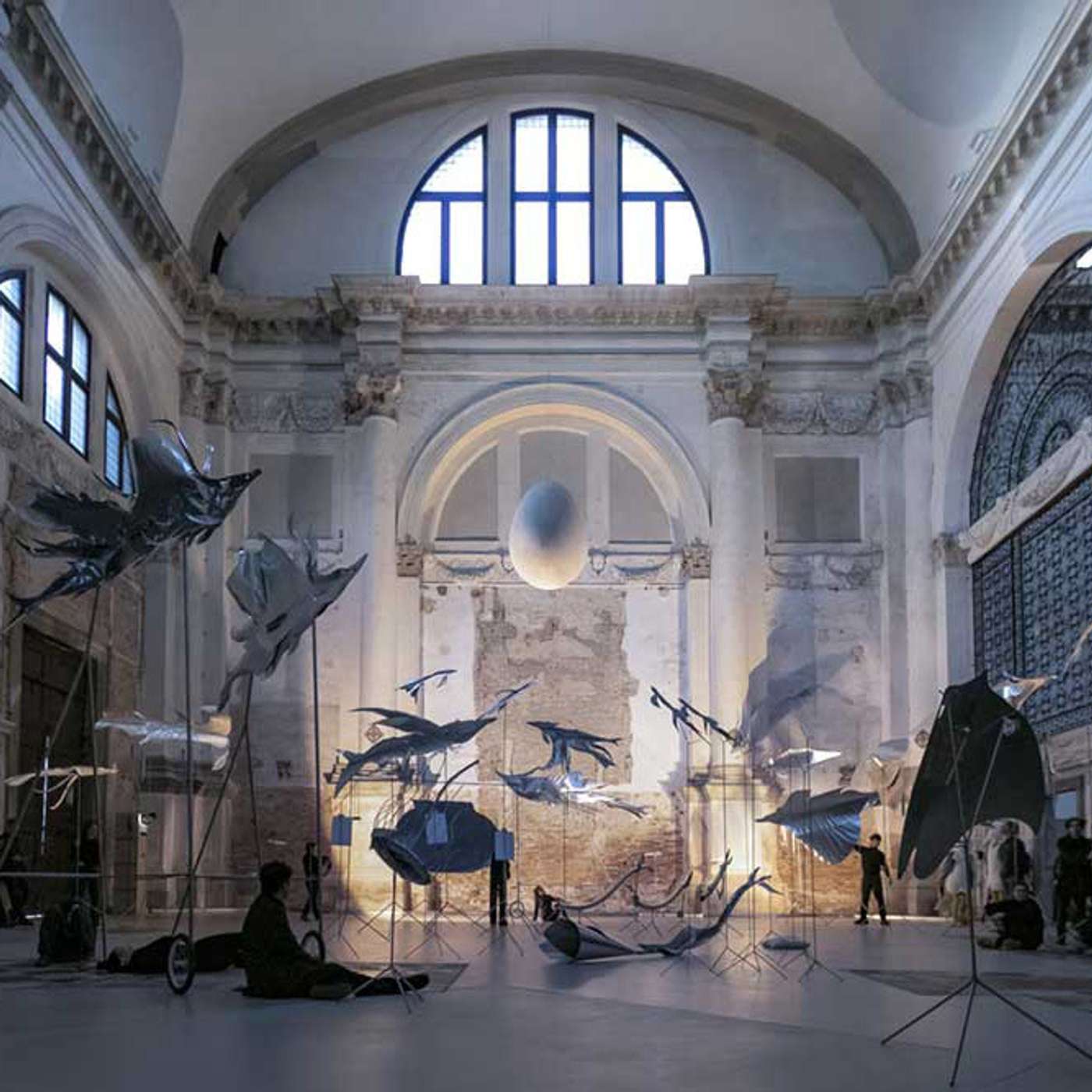
How do we really create systemic change? How do we shift narratives towards a generative future? How do we bring artists, scientists, policy makers, educators, conservationists, journalists, and all the different siloed tribes together in ways that let them genuinely communicate and listen to the web of life? This week's guest is someone who is actively working on so many levels to change all these things. As you'll hear, Markus Reymann is a Director of a European Arts foundation, which doesn't sound nearly as exciting as it is. Because this is an arts foundation with a difference. TBA21 says of itself that it is a leading international art and advocacy foundation and it stewards the TBA21 Collection and its outreach activities, which include exhibitions, educational offers, and public programming. The TBA21–Academy, which Markus helped set up, is the foundation’s research center, 'fostering a deeper relationship with the Ocean and other bodies of water by working as an incubator for collaborative inquiry, artistic production, and environmental advocacy. For more than a decade, the Academy has catalyzed new forms of knowledge emerging from the exchanges between art, science, policy, and conservation in long-term and collaborative engagement through fellowships and residency programs. All activity at TBA21 is fundamentally driven by artists and the belief in art and culture as a carrier of social and environmental transformation.' We talk a lot about social and environmental transformation on this podcast: it's what we're here for and what we believe is essential not just to creating that future we'd be proud to leave behind, but to creating any liveable future at all for most of the species on the planet. We talk a lot, too, about systemic thinking, about paradigm shifts and about our capacity as a species to let go of our dominant narratives, and the need for someone, somewhere to bring together the scientists, the artists, the policy makers, the journalists, the educators…and do it in a way that breaks down the barriers, lets them actually understand each other - and then shows them other cultures that think differently, that have different value systems than ours ,so they can see that there are different ways of doing things that will work. And this, is what Markus is doing. Here is someone who understands systemic thinking and who is applying it with depth and breadth and great heart. Bio: Markus Reymann is Director of TBA21–Academy, a non-profit cultural organization he co-founded in 2011 that fosters interdisciplinary dialogue and exchange surrounding the most urgent ecological, social, and economic issues facing our oceans today. Markus leads the Academy’s engagement with artists, activists, scientists, and policy-makers worldwide, resulting in the creation of new commissions, new bodies of knowledge, and new policies advancing the conservation and protection of the oceans. In March 2019, the Academy launched Ocean Space, a new global port for ocean literacy, research, and advocacy. Located in the restored Church of San Lorenzo in Venice, Italy, Ocean Space is activated by the itinerant Academy and its network of partners, including universities, NGOs, museums, government agencies, and research institutes from around the world.Reymann also serves as Chair of Alligator Head Foundation, the scientific partner of TBA21–Academy. Alligator Head Foundation established and maintains the East Portland Fish Sanctuary, and oversees a marine wet laboratory in Jamaica.TBA21 https://tba21.org/TBA21–Academy: https://tba21.org/tags/?tag=tba21_academyOcean Space in Venice https://tba21.org/tags/?tag=ocean_spaceWalid Raad https://www.walidraad.com/Anthropocene Observatory https://www.territorialagency.com/anthropoceneWoods Hole Oceanographic Observatory https://www.whoi.edu/
S14 Ep 8Proudly Mad: exploring mental health and the climate emergency with Charlie Hertzog Young
How did one man make the shift from Not wanting to live in this world, to refusing to live in this world?If you've listened to this podcast for any length of time, you'll know that I did the Masters in Regenerative Economics at Schumacher college in 2016-17. It was a genuinely life changing experience not least because I met some of the most inspiring people I could imagine - young, motivated and incredibly bright. And of them all, Charlie was the brightest. Even before we met, he'd studied economics at Harvard and SOAS which for those of you not in academia, are both hardcore and supremely activist. And while doing the MA, he was acting as researcher for one of our best known non-fiction journalists and writers. What I didn't know was that he was already an award-winning activist who, over the course of his career has worked for the New Economics Foundation, the Royal Society of Arts, the Good Law Project, the Four Day Week Campaign and the Centre for Progressive Change, as well as the UK Labour Party under three consecutive leaders. Charlie has spoken at the LSE, the UN and the World Economic Forum and written for The Ecologist, The Independent, Novara Media, Open Democracy and The Guardian.I should have guessed most of that. What I perhaps also ought to have understood better was that he was bipolar - he now says of himself that he's proudly mad which I love - and how deeply it influenced who he was and what he did. So when he contacted me a while ago with news that he'd written a book, I wasn't remotely surprised. What was slightly surprising was that he is now a double amputee, and that his book is written about the interface between mental health, the climate emergency and what we now call eco-anxiety but which I think needs a rather stronger name than that implies. But definitely, this is something I wanted to talk about on the podcast - the edges to which our awareness of this time brings us, the frustration that arises out of living in a culture that still, broadly, gaslights all of us and does its best to rob us of the power to bring about change. Note that I don't think it's succeeding, and Charlie's book is a testament to the not-succeeding of the dominant culture, to the resilience of people around the world who are living with the reality of the climate, ecological and societal crisis and are forging paths through the chaos. Spinning Out: Climate Change, Mental Health and Fighting for a Better Future is an extraordinary book. It approaches head on the things we often turn away from, and we did this too, in the podcast - so this is a potential trigger warning. We do discuss Charlie's suicide attempt and how he ended up with two prosthetic legs, so if this is going to be hard for you, please tap into whatever are your resources before you listen. And then sit back and enjoy, because Charlie's brought his astonishing capacity for humanity, deep thought, and huge emotional intelligence to this and I loved it.Charlie's website https://charliehertzogyoung.cargo.site/Charlie on Linked In https://www.linkedin.com/in/charlie-hertzog-young-frsa-40b50b162/?originalSubdomain=ukCharlie's book, Spinning Out https://footnotepress.com/product/spinning-out/Charlie at Hay on Wye https://www.hayfestival.com/p-20173-charlie-hertzog-young-and-mya-rose-craig-talk-to-areeba-hamid.aspx

S14 Ep 7Building Tomorrow: Bonus addition: Painting 2050 if we get things right
bonusPaddy and I recorded a brief 15 minute bonus of how the world could look if we actually employed all the strategies in 'Building Tomorrow' - so sit back, soak it in - and then let's make it happen... BIO: Author, Paddy le Flufy read mathematics at Cambridge, then - as seems to have happened with quite a lot of our recent guests, he took a job in the city and qualified as an accountant with KPMG. And then, as also seems to happen with our guests, he didn't buy into the system, but instead spent years, living a double life in which he worked as a finance specialist in London for six months of the year and then used the money to live in remote places, alongside people whose lives were radically different from his own. He has traveled with economic migrants, been taught to fish by the rural people of Mozambique and lived with Hadza hunter-gatherers. He spent two months living with an indigenous tribe in the Ama§on rainforest, then won a Royal Geographical Society Award to spend an entire year being taught by traditional wisdom-keepers from another jungle culture. Since 2015, he has been based in the UK and then Canada, researching how we can redesign our economic system to avert the impending environmental catastrophe. His book is the result and it brought together some ideas we've explored already on the podcast, but knits them with things I had never heard about, and it creates a whole that has the potential to change the way our culture functions - which is genuinely exciting. Paddy's website https://paddyleflufy.com Paddy on Linked In https://www.linkedin.com/in/paddy-le-flufy/Paddy on Substack https://paddyleflufy.substack.com Doughnut Economics https://doughnuteconomics.org/RiverSimple https://www.riversimple.com/governance/Sovereign Money https://positivemoney.org/our-proposals/sovereign-money-introduction/FabLab https://www.fablabs.io/Curitiba Bus Tokens https://brazilianexperience.com/curitibas-bus-system-2/Cosmo-Localism https://www.thealternative.org.uk/dailyalternative/2019/5/13/what-is-cosmo-localism-and-why-we-think-its-a-game-changer

S14 Ep 7Building Tomorrow: Practical steps to a new economic system with Paddy Le Flufy
As you will know by now, this podcast searches long and hard for answers to the over-riding question of 'what do we need to do, to get us from where we are, to where we need to be to set the stage for that generative future our hearts know is possible?' So when I got a book that directly asked and then answered that question, I dived straight in. 'Building Tomorrow: Averting Environmental Crisis With a New Economic System' does exactly what it says on the cover. It's full of concrete examples of individuals, organisations and businesses who are forging new ground at the leading edge of change, weaved into a coherent imagining of a future that runs by different rules.Author, Paddy Le Flufy, read mathematics at Cambridge, then - as seems to have happened with quite a lot of our recent guests, he took a job in the city and qualified as an accountant with KPMG. And then, as also seems to happen with our guests, he didn't buy into the system, but instead spent years living something of a double life, earning money as a finance specialist in London then spending it living in remote places, alongside people whose lives were radically different from his own. This period culminated with a year, funded by a Royal Geographical Society Award, being taught by indigenous wisdom-keepers in the Peruvian Amazon. Since 2015, he has been based in the UK and then Canada, researching how we can redesign our economic system to avert the impending environmental catastrophe. His book is the result of this research. It brings together some ideas we've explored already on the podcast, but knits them with things I had never heard about, and it creates a whole that has the potential to change the way our culture functions - which is genuinely exciting. Paddy's website https://paddyleflufy.com Building Tomorrow on Amazon https://www.amazon.co.uk/Building-Tomorrow-Averting-Environmental-Economic/dp/1739345207/ Paddy on Linked In https://www.linkedin.com/in/paddy-le-flufy/Paddy on Substack https://paddyleflufy.substack.com Paddy on Twitter www.twitter.com/paddyleflufy Doughnut Economics https://doughnuteconomics.org/RiverSimple https://www.riversimple.com/governance/Sovereign Money https://positivemoney.org/our-proposals/sovereign-money-introduction/Fab Labs https://fabfoundation.org/ Torekes currency https://www.torekes.be/nl/home/ Cosmo-Localism https://www.thealternative.org.uk/dailyalternative/2019/5/13/what-is-cosmo-localism-and-why-we-think-its-a-game-changerThe Cosmolocal Reader https://clreader.net/

S14 Ep 6Building Bridges to the Future with Cat Tully of the School of International Futures
If you've listened to the podcast at all over the past few years, you'll know that the search for routes to total systemic change has always been the driver of what we're doing and why we're doing it. Even so, it's not often I talk to someone who is singlemindedly exploring the routes to that systemic change and who has the tools to help everyone explore the potential for what might come next. And so this week, I am immensely happy to have had the chance to talk to Cat Tully, a remarkable woman who spends her life helping people to bridge the space between where we are and where we need to get to, in ways that drag as little of the past with us as possible, while opening the widest gates we can to the systems, structures and practices that stand the best chance of a generative future. Cat leads the School of International Futures (SOIF), a not-for-profit international collective of practitioners based in the UK that use futures thinking to inspire change at the local, national and global levels. SOIF has worked with organisations like the UN, Omidyar, NATO, the Royal Society and national governments across the planet - all with the explicit intention of making the world fairer for current and future generations. SOIF also supports a growing network of Next Generation Foresight Practitioners - young people under the age of 35, who can advocate for and engage with change in their communities and the wider world. There is so much that the SOIF is doing - so many people it's bringing together - we could have spent our time together talking about specific instances, and Cat does use specific examples of projects she's involved in to highlight specific areas, but in general, we wanted to explore the ideas, the systems, the ways we might think differently so that you can pick them up and run with them. Because one thing is becoming increasingly clear as our future unfolds - which is that none of us knows what it is, and it's going to take all of us, using the best tools we have, to make it clear. Cat is bringing us those tools, honed and ready for use. SOIF Projects:If you are interested in learning strategic foresight to shape the future of your community or your organisation, SOIF offers an annual in-person Summer Retreat in Strategic Foresight, happening from 24 to 28 July 2023 in the UK and virtual courses throughout the year. The next virtual courses in 2023 are starting in May and September.Futures toolkit for leaders: SOIF and California 100 published "Beyond Strategic Planning: Foresight Toolkit for Decision Makers"—a primer for leaders looking for straightforward, pragmatic ways to apply foresight to their work.The National Strategy for the Next Generation programme engaged 16-30-year-olds, Next Generation Champions, to imagine futures of the UK's international development role in 2045.SOIF developed the Framework for Assessing Intergenerational Fairness with Calouste Gulbenkian Foundation. The tool has been used by All Parliamentary Party Groups for Future Generations (APPG) in their initiative Futures Check, and we have developed a policy brief on Building a Coalition for Intergenerational Fairness in the European Green Deal.Next Generation Foresight Practitioners, an initiative by SOIF, is the largest global network of next-generation future-alert changemakers democratising the futures and foresight field. With 100 fellows and 500 members of a global network, the initiative supports young change agents that use foresight to shape better futures for their community and the world, e.g. NGFP members in Africa imagining Digital Futures of the continent, seeding collaboration with an Impact fund and creating opportunities for members to be visible, BBC Futures article, Youth Climate and Energy Futures Lab at COP26 and contributing to United Nations General Assembly on the SDG Moment Closing Panel.Other links3 Horizons model https://www.boardofinnovation.com/blog/what-is-the-3-horizons-model-how-can-you-use-it/Beth Barany https://bethbarany.com/

S14 Ep 5Bridging from the Necessary to the Possible with Emily Harris of Dark Matter Labs
IF the present system is broken - and is in fact the heart of the meta-crisis - how can we transform peacefully to something that will work to create the future we'd want to leave behind? That's the core question of this podcast and so it was with great joy, that I found Dark Matter Labs. DML says of itself, "We’re working to create institutions, instruments and infrastructures for a more equitable, caring and sustainable future.Around the planet, we’re feeling the consequences of outdated institutions and inadequate infrastructures incapable of coping with planetary-scale challenges. At Dark Matter, we believe in taking on these challenges via a new, civic economy. An economy that’s community-led, and based on many-to-many relationships. An economy that prioritises mental wellbeing and Nature-based Solutions as platforms for further change. We’re an ambitious not-for-profit designing and building the underlying infrastructure to support this new civic economy, exploring how ownership, legal systems, governance … might begin to change." Which sounds exactly like what we need in our world as we head to the edge of total transition - and exactly what this podcast is about. So I asked if there was someone I could talk to - and connected with Emily Harris. Emily is a Chartered Accountant. She also holds an MA in Regenerative Economics (Distinction) from Schumacher College and a BSc in Medical Sciences from Imperial College. She trained with Deloitte in London and was a manager in their Big Ticket Restructuring Team during the 2008 global financial crisis.Prior to joining DML, Emily spent 11 years running her own consultancy business which took her all over the world and included a number of international CFO positions. In our current meta crisis, Emily has a view from both sides of one of our major divides - and now she's bringing all that experience, and a brilliantly sharp analytical mind to finding answers. Running after the conversations with Simon Michaux and Zahra Davidson, this feels like a further piece in the broader puzzle of how we are going to get from where we are, to where we need to be if we're going to create the future we want to leave behind. We spent a long time exploring Emily's background, so that I - and so you - would understand the depth she brings to this. And then we launched into what she's actually doing and it was really very inspiring. There is hope, and Emily and the teams at DML are at the core of our potential. Be ready to grasp the depth of the problem - and the many possibilities for change. Dark Matter Labs https://darkmatterlabs.org/DML on Medium https://provocations.darkmatterlabs.org/DML Medium on Financing Civic Transition https://provocations.darkmatterlabs.org/financing-city-transitions-a-public-civic-deep-code-innovation-challenge-9f2ef55b4bdaNora Bateson Aphanipoiesis https://norabateson.medium.com/aphanipoiesis-96d8aed927bcGillian Tett Warrior Accountants Leading the Green Revolution https://youtu.be/jR0n8mekzro

S14 Ep 4Drawing Humanity out of the Cave with Dr Simon Michaux (Part 2 of a series)
This week, we're returning to the second part of the ongoing series with Dr Simon Michaux. If you haven't listened to the first part, I'd recommend you do and I'll put the link in the show notes, but the edited highlight is that Simon is a mining engineer who is dedicated to crunching the numbers that nobody else bothers to crunch - of how much stuff there is: key stuff, like copper and lithium and cobalt and concrete - and where it comes from and how much power it takes to dig it up and move it around and where that power might come from. Our original plan for this 2nd part in our conversation was to explore Michaux' hierarchy of needs - the logistical things we'll need as we move to a low entropy, post-carbon, (which is to say, post-fossil-fuel) world. Everything in these conversations is predicated on the understanding that we've got to where we are by burning fossil fuels, which is to say concentrated ancient sunlight, laid down over millions of years - millions of years ago - and that this sudden access to vast quantities of readily transportable energy has changed who we are. Our civilisation is built on this stuff. But we haven't necessarily used it wisely. If I had time, I might write the counter-factual history where we discover oil in a culture that isn't predicated on power hierarchies and the accumulation of resources to the few by the many. But we don't live in that culture. We live in this one and we've burned more oil since 1995 than the whole of the rest of human history before that point. In doing so, we've brought ourselves to the point where the entire ecosystem on which we depend is breaking down and we need urgently to step back and think differently. Which is the entire point of this podcast - what does the thinking differently look like? How can we connect to the web of life in a way that allows us to play a constructive, regenerative part in a flourishing web? What are the spiritual and psychological and conceptual shifts this will take and how best can we make those shifts?In all those questions, I've tended to take for granted, for instance, the idea that we need to shift to renewable sources of power without actually thinking about whether that was a logistical possibility. Which is where Simon comes in because he does think about these things and he has the numbers to back it up. He gave his baseline talk 91 times in 2022 - sharpening it at every iteration - and now he's talking at governmental level to people who are listening, even if they don't yet know quite what to do. Unless you're listening in Scandinavia, he is probably not talking to your government. But he should be. So part of the reason for continuing the conversation is so that we - all of us who care - can get our heads around reality and then we can use that understanding to create governance systems that work. Link to Part 1 with Simon https://accidentalgods.life/transforming-industry-to-create-a-genuine-green-revolution/Balanced Resource Economy Paper https://www.centrumbalticum.org/files/5598/BSR_Policy_Briefing_2_2023.pdfSimon's Site https://www.simonmichaux.com/Alice Friedman site https://energyskeptic.com/Alice Friedman - When the Trucks Stop Running https://www.goodreads.com/en/book/show/27136955The Venus Project https://www.thevenusproject.com/Sam Harris TED Talk on AI https://youtu.be/8nt3edWLgIgBiomimicry Institute https://biomimicry.org/what-is-biomimicry/

S14 Ep 3The Fine Art of Huddles: multiplying our potential by the power of our peers with Zahra Davidson of Huddlecraft
How can we begin to shift away from the old hierarchical dominance structures of our past 2,000 years, towards something where everyone brings the best of themselves and embraces and celebrates the best in other people?It was in hunting for answers to this, that I came across this week's guest: someone who is opening doors all round the world in the creation of a regenerative, emotionally literate future. Zahra Davidson was Co-founder of and is now the Chief Executive and Design Director at Huddlecraft, an organisation that promotes and supports peer to peer learning. With a background spanning social entrepreneurship, service design, system change, sustainability and visual communication. she describes herself now as a purpose-led designer and strategist, working for a post-growth future for our finite planet. As you'll hear, Zahra and Huddlecraft have evolved a system of peer to peer learning that absolutely helps those involved to grow the emotional literacy - to exercise their conceptual and psychological muscles - as a way of shifting our culture's centre of gravity in a more generative direction. As part of this, she is Strategic Advisor to Money Movers (formerly called OwnIt), a movement designed to empower women to take Climate Action by moving their personal finances - and they are aiming to move £1billion by 2030. She and Huddlecraft are also involved in the newly formed Collective Imagination Practice Community - and any of you who have listened to more than a couple of podcasts will know that I'm fairly firmly of the belief that if we're going to get to that flourishing future we'd be proud to leave behind, we'll need a massed act of collective re-imagining of our trajectory. Huddlecraft https://www.huddlecraft.com/Huddlecraft 'Huddles' (peer learning groups) currently open for sign-up https://www.huddlecraft.com/huddlesHuddlecraft 101 training (learn to apply the power of peer-led approach) https://www.huddlecraft.com/101 Money Movers: women moving money for the planet https://www.wearemoneymovers.com/Collective Imagination Practice Community https://medium.com/imagination-practice/collective-imagination-practice-community-2023-24-1c1405d33662Joseph Rowntree Emerging Futures https://www.jrf.org.uk/blog/emerging-futures-updateDoughnut Economics Action Lab https://doughnuteconomics.org/CIVIC SQUARE https://civicsquare.cc/Medium post on creating 'microclimates' for learning and change inside organisations https://medium.com/huddlecraft/how-can-we-create-microclimates-for-learning-and-change-inside-organisations-70aae0266d9dMedium post on creating a 'surge' of peer to peer learning over the next decade https://medium.com/huddlecraft/a-surge-of-peer-to-peer-learning-through-multiple-intertwining-movements-55a101b5db5aZahra on LinkedIn https://www.linkedin.com/in/zahra-davidson-84710920/Huddlecraft on Twitter https://twitter.com/HuddlecraftHuddlecraft on Instagram https://www.instagram.com/huddle.craft/

S14 Ep 2Bonus: Exploring the banking crash with Grace Rachmany - in which I ask all the questions I never asked before...
bonusFollowing our podcast with Grace Rachmany, we stayed online and talked about the banking crash. At the time of recording, we only knew about Silicon Valley Bank - Credit Suisse hadn't gone down yet - but we talked about the nature of finance, of cryptocurrencies, of the totally unsustainable nature of the economy. This is the kind of conversation that I often have with guests after the podcast is over. Usually it happens off-air and I wish we'd captured it. And this time, we did. So if you're interested in the two of us riffing in a rather less structured way than the usual podcast, this is it.

S14 Ep 2Meshworks of Being: Building Community on the DAO with Grace Rachmany of Priceless DAO
We know that the future is based on Community. What we lack are practical routes to creating communities of community on a worldwide scale - ones that can form and will be resilient enough to survive. In this week's podcast, therefore, I'm genuinely thrilled to introduce you to one of the women who is breaking new ground in the creation of communities at scale and across wide geographic areas. In quite specific order, Grace Rachmany is a mother, a tech industry trouble shooter, author of over a hundred White Papers, creator of Voice of Humanity, Gangly Sister and - crucial to the trajectory we're taking just now - co-creator of Priceless DAO. If you've heard our podcast with Cory Feco back in episode #170, you'll know we invited Cory to tell us about DAOs specifically because we knew we were going to talk to Grace and wanted you to have at least a grounding in the nature of Disseminated Autonomous Organisations and the nature of the Web 3 revolution so that we could head straight into Grace's ideas and work in this podcast. And here we are: Grace is one of those people who has thought outside the boundaries of our current system, about the nature of the current system, about economics and governance and politics and decision making and the creation of viable communities as we head out of the old paradigm into something new and different. The result is Priceless , which is a cause-based DAO in the form of a networked nation, which says it is dedicated to creating a true alternative economy and alternative citizenship for its members.In pursuit of this, Priceless funds economic experiments that are designed to replace the current monetary system. The holders of PricelessDAO tokens can create whatever they want with the DAO, while the founders of Priceless Economics develop decentralized economic models that support life on earth.At Priceless, we are convinced that the existing financial system is crumbling and at the end of life. While many projects seek to salvage what we’ve got, Priceless is looking forward to creating a completely new system that will be a destination for those trying to escape the collapse of everything.I mean, you know everything’s collapsing, right? What can you do about it? At the very least you can give your sh*tcoins to PricelessDAO. Any funds we have will be used to research, design, prototype, and deploy economic models that respect humans and the planet.Which is just what we're here for. Truly. If you want to know more, or to be part of her thinking, follow the links below - and then stay tuned for the bonus podcast, in which we recorded the follow-up conversation on the nature of cryptocurrency and Ponzi schemes and the global financial crash(es). Grace's website https://gracerachmany.com/Priceless website https://pricelessdao.io/Grace's Medium posts https://rebeccarachmany.medium.com/group-currency-what-if-you-could-only-transact-as-a-community-38f4234f72cGrace on LinkedIn https://www.linkedin.com/in/rebeccarachmany/recent-activity/Drea Burbank and the Savimbo project: https://www.savimbo.com/

S14 Ep 1Dancing with the Muppets of Cutthroat Island: Transforming Industry to create a genuine Green Revolution with Dr Simon Michaux
How much actual stuff do we have in the world compared to what we need to make the 'Green Revolution' happen? This week's guest is another of those recently elevated to my pantheon of people I Must Listen To whatever they say and however they say it and I am genuinely thrilled to welcome him onto the podcast. Dr Simon Michaux has been a physicist and geologist. His PhD is in mining engineering and he worked for years in the mining industries in Australia. In 2015, he moved to Europe and became involved in urban mining, or reverse metallurgy, which is to say the recovery of essential minerals from existing waste - what we would call the beginnings of the circular economy - and from there, he moved to Scandinavia where he now works in the Geological Survey of Finland and is a regular advisor to the Finnish parliament. From all of which you will gather that Simon is deeply embedded in the actual physicality of the world we inhabit - and, because he's also committed to creating the future we want and need, he is growing ideas of the future we could inhabit. Of all the people I've encountered as I roam the digital web for ways we can shift our relationship with the living web, Simon is the one who has his finger on the actual logistics of what's going on - he can list the reasons why most of the targets for our transition away from fossil fuels are simply logistically impossible. It's not until you hear his crunching of the numbers that you begin to realise how much arm waving is going on in the corridors of power. How much raw self-delusion is being practice by the people who we still, at some deep subconscious level, trust to keep the show on the road. And I think we need to know this. It's hard. It's sobering. It's shocking, on many levels, but if we aren't grounded in reality then we're not going to build forward So hold onto your seats - this isn't easy, but we do need to know it. And then we need to plan our responses. Fast. (NB - the accompanying image is of a copper mine and the pollution from it is destroying an entire water system) Simon's website: https://www.simonmichaux.com/Assessment of the Extra Capacity Required of Alternative Energy Electrical Power Systems to Completely Replace Fossil Fuels https://tupa.gtk.fi/raportti/arkisto/42_2021.pdfAnswers to Hot Topics around the above report: https://www.youtube.com/watch?v=AdJH3tKjvzMWhat are the Raw Material Supply Bottlenecks to the Green Transition? The Need for a New Plan https://www.youtube.com/watch?v=3o0xzCa2fLQInterview with Mark Mills of the Manhattan Institute https://www.manhattan-institute.org/presidents-update-2021/interview-mark-mills
S13 Ep 11Reasons to be Sheepful: from wedding shawls to burial shrouds with Yuli Somme of Bellacouche
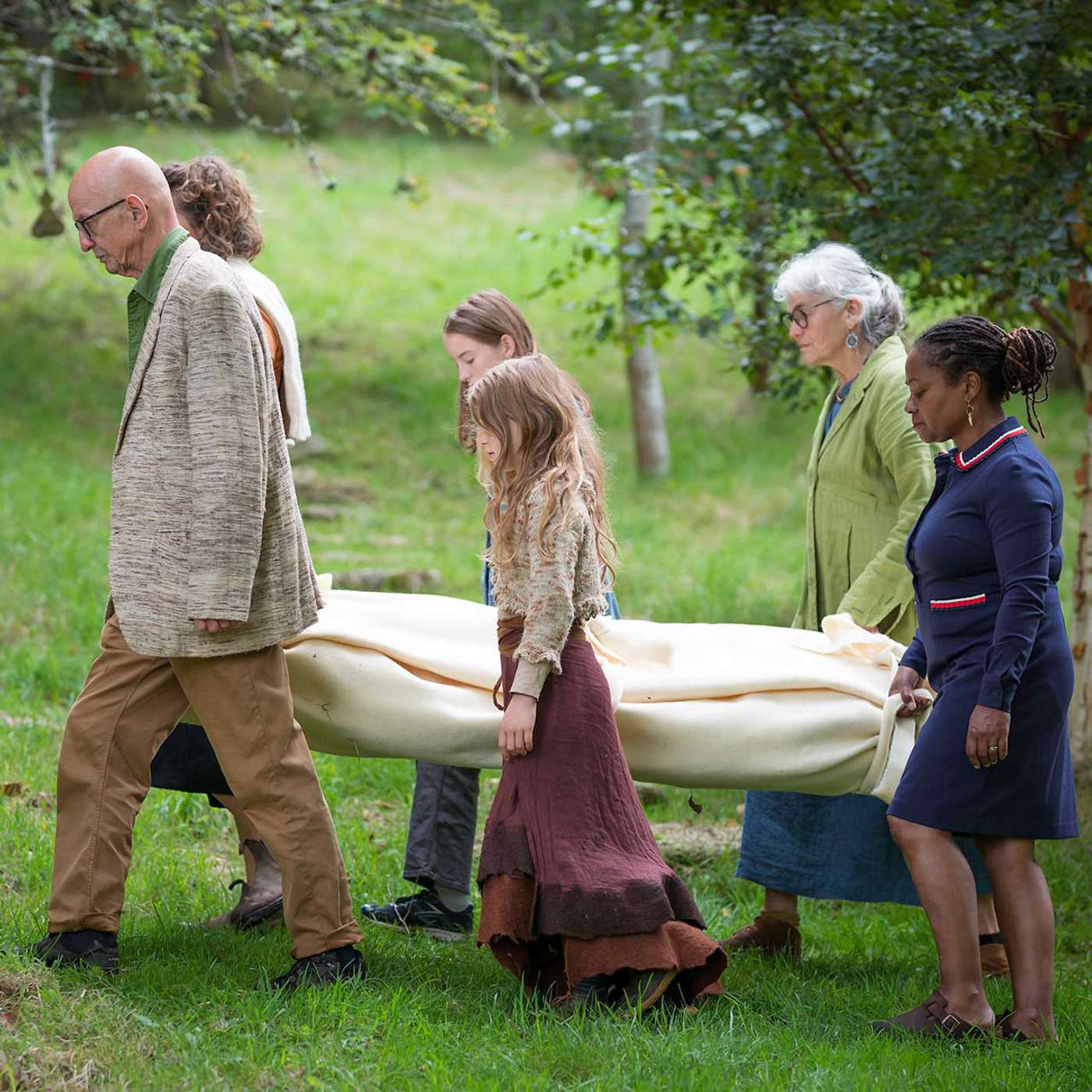
Our crisis, our challenge, our opportunity is complex. More than ever, it matters now that we not get caught in separate silos where we focus just on atmospheric carbon, or just on plastic pollution, or just on our cultural addiction to fossil fuels. We need responses that cover all of these fields, new stories that let us move into a future we can barely imagine. So, that's what this podcast is for: to give a platform to people whose perspectives are new or different or challenging or inspiring in ways that will help us all to weave new stories of how we could do things differently - and this week, we're talking to Yuli Summe of Bellacouche, whose work has taken her from weaving to felt making to the creation of burial shrouds. Yuli is a maker, someone deeply grounded in our connection to the ancestry of the land and the ways we have sustained ourselves from it. She's been working with wool since childhood and is embedded in the rich lore of shepherd, farm and land, of the fullers and spinners and weavers that were so much a core of our history - and will be again as we move to a more localised, simpler economy and way of living. This conversation moved from the courage of one man in the second world war, to the courage of his daughter in laying to rest her fear of death, through fields and high tors and the rhythms of feltmaking. It felt to me like a song to our future and I hope it leads you forward in the same way. BioYuli was born in Norway and although she has lived most of her life in Devon, the traditional weaving and knitting heritage of Norway has deeply influenced her since she was old enough to hold needles to knit with. She is a member of Make SouthWest and through this organisation, has been an active teacher of felt making and textile understanding in schools, and is part of the Green Maker Initiative.At the turn of the millennium, an Arts Council grant allowed Yuli to travel to Turkey to work with traditional master feltmakers, and it was there that she started thinking about a “lifetime” garment made of felt, inspired by witnessing the making of a ‘kepenek’, a felt cloak traditional to Kurdish shepherds. Yuli is a member of the South West FibreShed – a growing community of fibre and dye growers, processors, makers and manufacturers across the South West whose aim is to produce home-grown textiles and garments in a more healthy, resilient and regenerative textile ecosystem. This group is affiliated to the international FibreShed group.Another Man's Shoes https://www.waterstones.com/book/another-mans-shoes/sven-somme/9780954913731Yuli Somme Bellacouche https://www.bellacouche.com/yuli-somme/Human Composting https://www.youtube.com/watch?v=_LJSEZ_pl3YGood Funeral Guide https://goodfuneralguild.co.uk/Natural Death Centre http://naturaldeath.org.uk/

S13 Ep 10Technology for a future that works with Cory Feco of the DOI Foundation
The one big question that this podcast exists to answer is - what does our future look like when it works? When we endeavour to answer this, there seems quite a clear divide between those us born in the twentieth century who grew up in a world before broadband, and those born in the nineties and later who never got to know the strange weeble of the dial up tone, but instead grew in a world where their every move was dissected by their peers on social media. We can look some other time at the emotional and spiritual impact of that but today I wanted to look at the people who are determined to use the rapidly evolving technology for good. I'm going to interview someone called Grace Rachmany in a couple of weeks time. She's setting up a DAO, a disseminated autonomous organisation, to create not just a community, but a network of communities that - she says - could be free of the need to use dollars, or pounds or the currency of their nation, in 10 years.Which sounds pretty exciting. But I to understand how it works and what it is she's planning to do, we needed to know what a DAO actually is. And to get to that, we have to unpick Blockchain a bit, because the one thing I learned when we invited Reiki Cordon to speak on blockchain last summer, was that it went over a lot of people's heads. So this is the first time I've actually sought out someone on the basis that they could tell me what I wanted to hear. I wanted an idiot's guide to blockchain, to DAOs, to web 3.0 and the web 3 revolution because that seemed like something this podcast ought to know about. All of which leads me to introduce this week's guest. Cory Feco is a member of the DOI foundation which describes itself as 'an international community of communities bound by a common interest in persistent infrastructure.' Cory himself is a podcaster at the DOICast - which is one of my must-listen podcasts - I've put a link in the show notes. Beyond that, he describes himself as a web 3 impactivist, and a recovering workaholic. He started as an entrepreneur at 9 selling products from catalogs door to door and ever since have been the most satisfied when walking the path less tread. He has founded and failed, founded and sold, trained hundreds, consulted dozens, lead teams of many, lead only himself, won some awards, and made countless mistakes - and through this the one constant has been growth. He is completely plugged in to a world about which I only have a transient and shallow understanding, but I know enough to know that it could make or break our chances of a flourishing future. Advaya https://advaya.co (soon to be advaya.life) Advaya course with Nathali Nahai https://www.digitalage-course.com/DOI Foundation https://www.doi.org/DOICast podcast https://podcasts.apple.com/gb/podcast/the-doicast/id1618462106CryptoWorld https://shopcryptoworld.com/DOA HQ https://www.daohq.co/EarthSong Seeds https://earthsongseeds.co.uk/
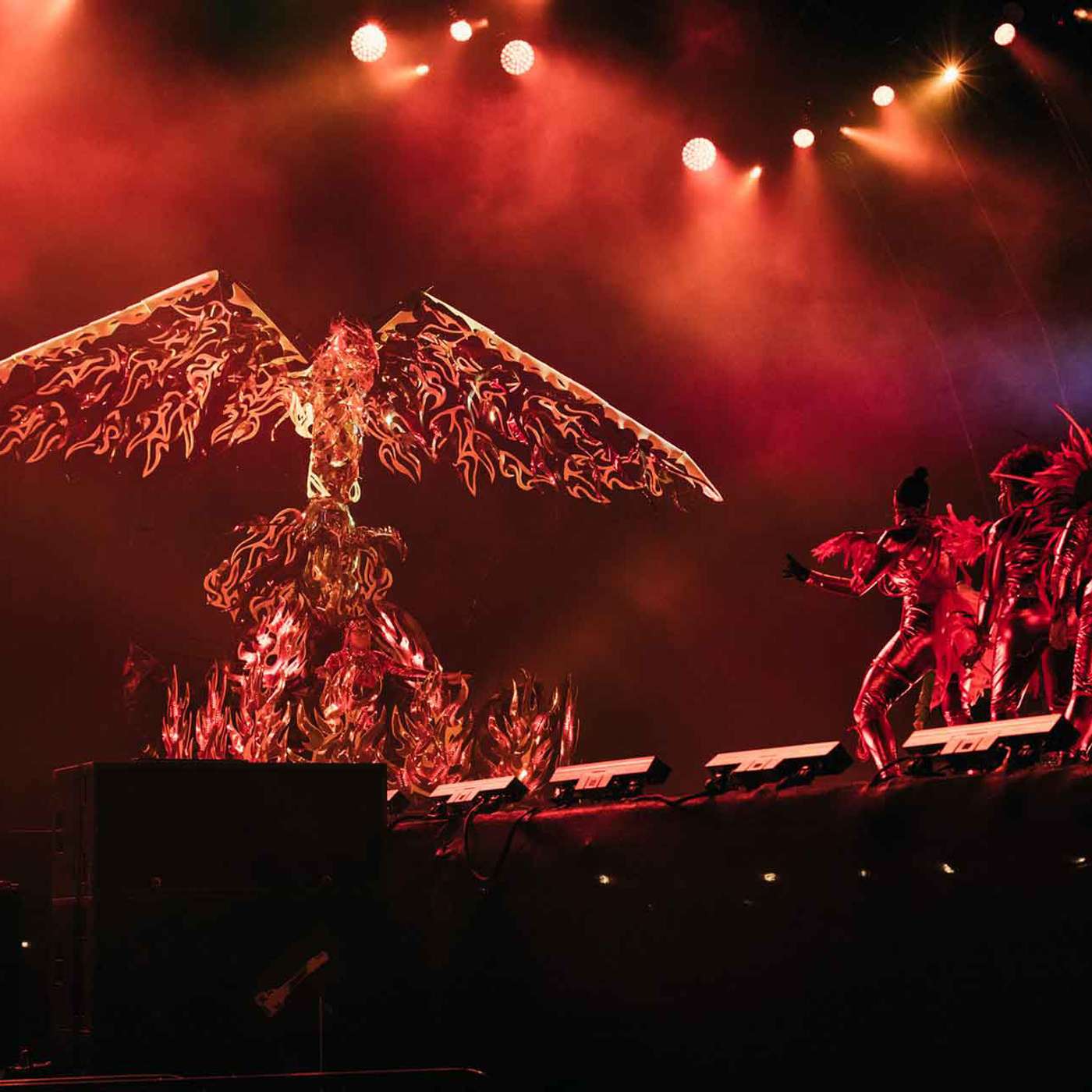
S13 Ep 9Be Kind, Be Useful, Create Giants in the Sky: transforming community with Alan Lane of Slung Low
The Accidental Gods podcast exists to set the conditions for emergence into a new system: to bring a critical mass of us to a place where emergence into a new system is a rewarding reality. To get there, we bring to you some of the many astonishingly creative, compassionate, switched-on people who are working at the leading edge of change. Alan Lane is one of these people. He's the artistic director of the theatre company Slung Low, which in turn is one of the most innovative theatre companies in the UK, if not in the world. Absolutely embedded in the neighbourhood in which they work, Slung Low are committed to their core principles of 'Be Kind, Be Useful, Everyone gets to do what they want. Nobody gets to tell anyone else what they can't do.' (within obvious limits - as you'll hear). Alan is also the author of the book 'The Club on the Edge of Town' which is subtitled 'A Pandemic Memoir' but is so, so much more - this is the story of how Slung Low arose, how it came to be entered in the oldest Working Mens' Club in England (unable to change the name), and ultimately became a Food Bank during the pandemic. It's the story of standing in the rain, of keeping promises, of integrity and grit and sheer bloody-minded tenacity. Most of all, it's a story of how a small group of committed people made a huge difference to the lives of their neighbours and community. It is also the story of the culture clash that you'll hear more about in the podcast, and that led, ultimately, to Slung Low moving elsewhere in Leeds. Since then, their transformation to being part of the team that put on the utterly magical opening event of the Leeds Year of Culture 2023, where the city's most famous pop star spoke to a god - is the stuff of legend. In their new world, their core purpose is to make Awe and Wonder happen - and they are doing it with commitment, integrity, enthusiasm and raw inspiration. In this episode, Alan tells the story that led from standing in the rain in Nottinghill to creating technical magic on a stage in Leeds. We explore the power of story to change people's lives and the value of commitment to the things we believe in. We dig deep into Alan's absolute moral imperatives and his compassion for the people around him, people he values, people he teaches to value themselves in a world that, in his words, 'teaches us we're cogs in a machine and we're scum' is heartbreakingly wonderful. Truly, if the whole world was inspired as Leeds is being inspired, we'd be in a different place. (And the god that rose out of the river was a world first: made with drones, everyone said it was impossible. And Alan and the team made it happen anyway. How good of a metaphor is that for what we have to do now in our emerging new system?)Bio: Alan Lane is Artistic Director of Slung Low directing most of their work over the last decade including projects with the Barbican, the RSC, The Almeida, West Yorkshire Playhouse, Liverpool Everyman, Sheffield Theatres, Singapore Arts Festival and the Lowry. Slung Low make large scale people’s theatre work on stages, trains, castles, swimming pools, fishing boats and town centres.In 2017 Slung Low headlined Hull UK City of Culture 2017 with Flood by James Phillips: a 4 Part epic performed online, live and on the BBC. Over half a million people saw a part of Flood. It won a Royal Televisual Award Yorkshire for innovation in drama.In 2019 the company took over management of the oldest working men’s club in Britain, The Holbeck in South Leeds. Initially, they ran this venue as a Pay What You Decide creative and community space, but during lockdown, they transformed into one of the only non-means-tested Food Banks in the country. Their work there was transformative and Alan wrote the book 'The Club on the Edge of Town' out of their experiences there. Late last year, the company moved venues to a warehouse next to their favourite primary school and began to help organise the astonishing, miraculous, technologically outstanding (and magically wonderful) opening event to Leeds Year of Culture 2023, which culminated in Corrine Bailey Rae talking to a god in front of a rugby stadium filled with 10,000 artists. Slung Low https://www.slunglow.org/Arts Together Leeds https://artstogetherleeds.co.uk/partner/slung-low/Leeds 2023 https://leeds2023.co.uk/Buy 'The Club on the Edge of Town' https://salamanderstreet.com/product/the-club-on-the-edge-of-town-paperback/The Club on the Edge of Town audio version https://www.audible.co.uk/pd/The-Club-on-the-Edge-of-Town-Audiobook/B0B8TKMXWQ
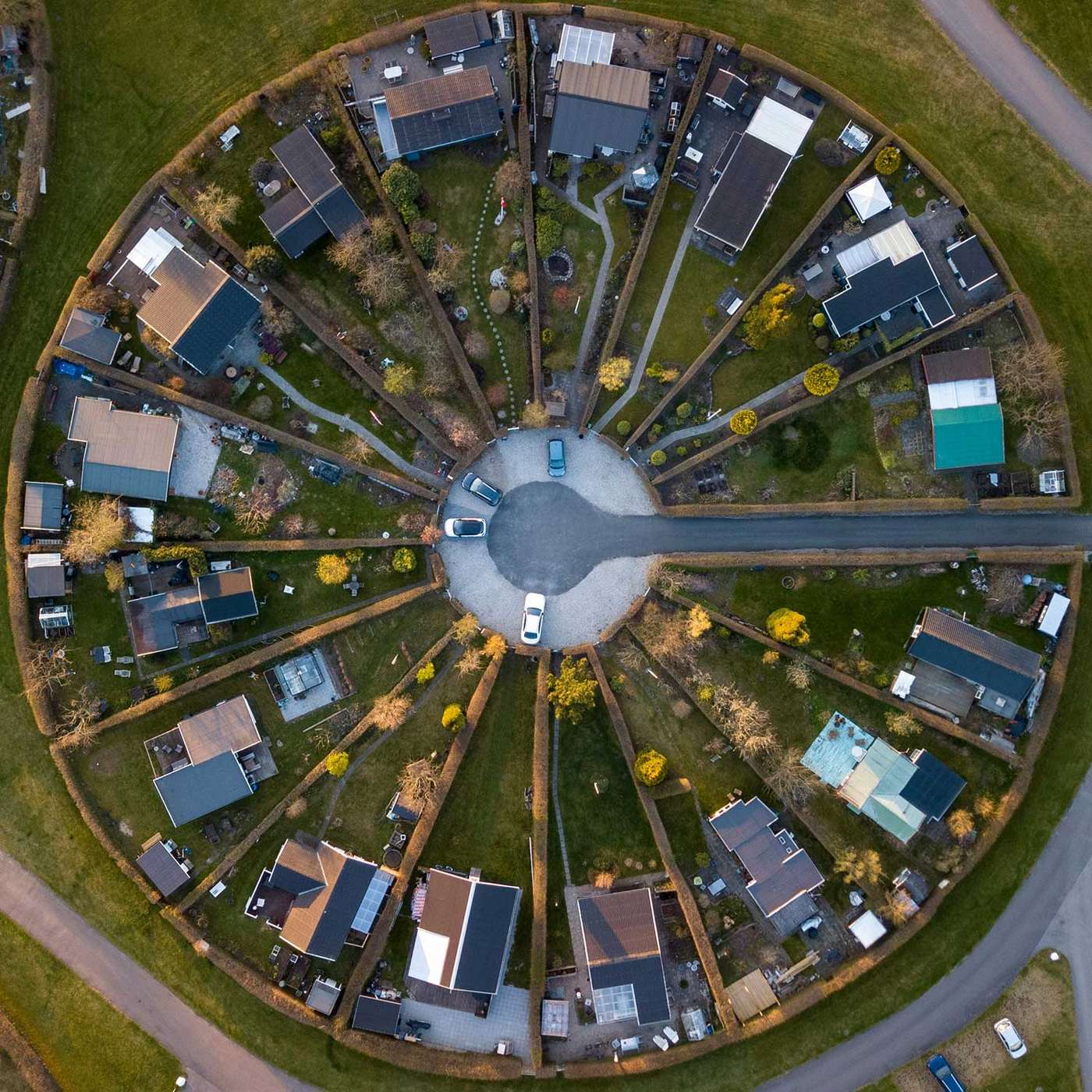
S13 Ep 8One Planet Living: Mapping Minds to create a new Consciousness, with Pooran Desai, OBE.
It is our mission on this podcast - and the wider membership community from which it arose - to open doors and break down barriers, to bring forward the ideas and the actions of, and give voice to, the absolutely amazingly creative people who get that business is not usual, that the reality we have created for ourselves is misguided at best - and dangerously toxic at worst - and are doing their best to bring about change in a timescale that matters. This week, we spoke with Pooran Desai, whose scope and scale and grasp of the nature of the problem is unmatched. Pooran is a serial environmental entrepreneur and it felt like a breath of fresh air, to connect with someone who sees the bigger picture and is working to affect change at all levels. We explored topics that ranged from the building of Britain's first sustainable community at BedZED in London, to the nature of the meta-crisis and why measurement of single indices is one of the key factors in the emergency. On the way, we discusses the different natures of left and right brain thinking and how they apply to databases (and why databases are so critical to the way that business and so politics works in the world), the evolution of sustainable development goals (and why those started out well but have become yet another way of greenwashing business in its endless drive for profit), the nature of reality and how Daoist meditation can give us insights into our own delusions…and ways we could save the NHS 80% of its costs. This was a hard-hitting conversation. We didn't mince words or step around ideas. I found it exhilarating, enlightening and inspiring and hope you do to. Bio: Pooran Desai has been a neuroscientist, a property developer, and a technology entrepreneur, but all of it has been in service to a regenerative future. In 1994, he co-founded one of the world’s first sustainability organisations, Bioregional which is responsible for setting-up enterprises in sustainable forestry, organic farming, recycling and real estate development.He assembled a wealth of environmental and sustainable talent to create the UK’s first zero-carbon urban eco-village, BedZED, which was completed in 2002. In 2004, he was awarded an OBE for services to sustainability - in the days when the word still meant something seriously worthwhile. Pooran led Bioregional’s One Planet Living® initiative for 18 years, leading teams that created sustainability strategies in 30 countries creating a set of principles that served as inspiration for the United Nations’ Sustainable Development Goals (SDG’s). Pooran is author of OnePlanet Communities: A Real-Life Guide for Sustainable Living, and is a trustee of the Design Council, supporting their 'Design for Planet' mission.In 2019, Pooran founded OnePlanet, to create a software suite that helps people, companies, policy makers shift to networked thinking - to let go of the constraints of consensus reality and the linear thinking that got us into this mess, and move towards systemic thinking that might get us out of it. LinksAlan Watts recordings https://alanwatts.org/audio/Sharon Blackie Post-Heroic Journey https://open.substack.com/pub/sharonblackie/p/the-post-heroic-journeyKnepp https://knepp.co.uk/

S13 Ep 7Saving Chocolate! and finding solutions to the meta crisis with Nicola Peel
Accidental Gods podcast exists to open doors and break down barriers, to bring forward the ideas and the actions of and give voice to the gloriously creative people who give their lives to the idea and realisation of a regenerative future. In this wide-ranging conversation with Solutionist and film-maker, Nicola Peel, we learned of the horrors of oil spills in the Amazon and the ways fungi could clear them if only the oil companies would let the work begin. We explored the nature of regenerative farming in the global north and - particularly - in Ecuador where agro-forestry is rebuilding soil on land that had previously been devastated by beef farming - and how the polycultures might save the cacao industry. We contemplated death and burial, whether carbon offsetting can be useful, the concept of air as a global commons and how to integrate localism into the map of a flourishing future. At the end - as often happens - I stopped recording but we carried on speaking and it seemed that Nicola was saying things that definitely should have been in the podcast. So I hit record again. Twice. We've stitched those bits on at the end for you. BioNicola Peel is a Solutionist, environmentalist, film maker and host of the Solutions podcast. For over 20 years her work has been focussed on environmental solutions. As a filmmaker, she has made documentaries to raise awareness, built rainwater systems for those drinking contaminated water and brought together scientists to use fungi to clean up oil spills. She has built buildings made of thousands of plastic bottles filled with rubbish and taught agroforestry to regenerate the soil and prevent further deforestation of the Amazon. She believes that around the world, people are waking up to the climate and ecological breakdown we are facing. For many they think it is up to governments or big business or someone else to fix the problems and feel disempowered to be a part of the change themselves. Believing, too, that every one of us have different strengths and different areas of expertise, Nicola's focus is to identify the issues we face and see what opportunities and solutions there are to address these issues. Nicola's website https://www.nicolapeel.com/Nicola's Solutions podcast https://www.patreon.com/solutionistNicola's annual newsletter https://mailchi.mp/3bb712bfc940/a-year-in-the-life-of-a-solutionist-nicolas-news-and-views-2022Film 'Blood of the Amazon' https://youtu.be/Y5b--eRsX9oFilm 'A Solution to Pollution' https://youtu.be/KO1WjFRL_XAResearch into Taro and its impacts https://www.researchandmarkets.com/reports/5610413/taro-market-analysis-report-industry-size
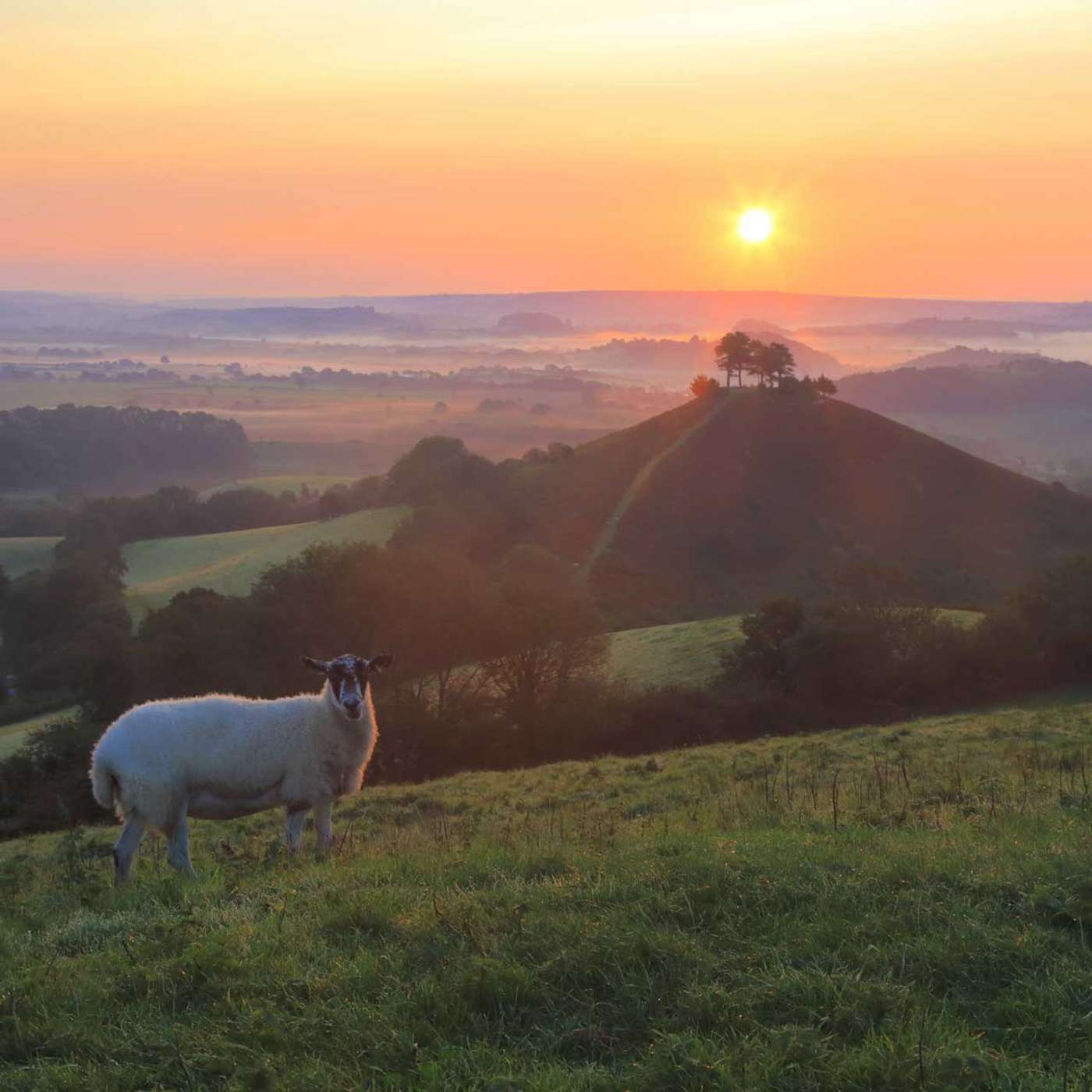
S13 Ep 6Living in a Post-Carbon, Post-Capital, Post Urban world - with Chris Smaje, author of A Small Farm Future
Chris Smaje is a social scientist by training and a small-scale farmer by occupation. For the past 19 years, he has co-worked a small farm in Somerset, in southwest England. Previously, he was a university-based social scientist, working in the Department of Sociology at the University of Surry and the Dept of Anthropology at Goldsmith's College. HIs focus was aspects of social policy, social identities and the environment. Since switching focus to the practice and politics of agro-ecology, he's written for various publications, such as The Land, Dark Mountain and Permaculture Magazine, as well as academic journals such as Agroecology and Sustainable Food systems. He blogs at Small Farm Futures and has previously been a director of the Ecological Land Co-op. His latest book, A Small Farm Future, forms the basis of this conversation - in it, he lays out Ten Crises of our times, which, put together, create the Wicked Problem of this moment in history. From there, the remaining three parts of the book explore the ways in which rural localism can offer a way for humanity to see itself through the numerous crises we currently face both in the richer and poorer countries. In the podcast, we take the book as our starting point (really, you should read it) and look less at the why, of rural localism and more at the ways it might happen and how it might work. We delve into the ways humanity has organised in the past (with deep passing references to Graeber and Wengrow's brilliant book, The Dawn of Everything') and how we might self-organise in the future. We look at the future of energy, at our conceptions of prosperity, the ways small farms can feed the world - and the absolute insanity of the 'precision fermentation' model of feeding eight billion people while enabling them to flourish free of corporate capture. Chris's blog https://smallfarmfuture.org.uk/Chris's book https://uk.bookshop.org/books/a-small-farm-future-making-the-case-for-a-society-built-around-local-economies-self-provisioning-agricultural-diversity-and-a/9781603589024Chris's response to Monbiot's Regenesis https://smallfarmfuture.org.uk/?p=1978Article on The Land updating the book https://www.thelandmagazine.org.uk/articles/commons-and-households-small-farm-futureChris on Twitter https://twitter.com/csmajeGraeber and Wengrow - The Dawn of Everything https://uk.bookshop.org/books/the-dawn-of-everything-a-new-history-of-humanity/9780141991061Simon Michaux https://www.simonmichaux.com/Rebecca Solnit - A Paradise Built in Hell http://www.rebeccasolnit.net/book/a-paradise-built-in-hell/What your food Qte https://uk.bookshop.org/books/what-your-food-ate-how-to-heal-our-land-and-reclaim-our-health/9781324004530The Agricultural Dilemma https://uk.bookshop.org/books/the-agricultural-dilemma-how-not-to-feed-the-world/9781032260457

S13 Ep 5Unlocking Curiosity: Regenerating Business from the packaging up with Jo Chidley of Re and Beauty Kitchen
Jo Chidley is one of those forces of nature, unconstrained by the way things are usually done. As the co-founders of Beauty Kitchen, she and her partner refused venture capital, keeping their business free to become a B-Corp and to put people and planet ahead of profit. She's dedicated to producing the best outcome for the people who work for her as well as for the people who buy her products. And in the process of finding the best ways forward, she came across the horror of single use packaging and the devastation it's causing both in terms of the extraction and the post-use pollution. So Jo founded 'Re' to find ways to bring 'reuse' back into the 'reduce, reuse, recycle' triad. Now, she's invited to Davos to speak about the way this could transform the vast global packaging industry. So in this week's podcast, we talked about why this is essential to transforming our world, and how it could work. Jo has ideas that seem (and are) innovative now, but ten years from now, will be the way things are done. With enthusiasm, integrity and a great deal of humour, she offers solutions to the meta-crisis that rely on each one of us changing behaviour - and she's devoting her life to making it possible - indeed inevitable - that we do. Bio: Jo Chidley is a circular economy expert, chemist, herbal botanist, and co-founder of Beauty Kitchen and Re. Founded in 2014, Beauty Kitchen is the highest scoring B Corp in the UK beauty industry and it's changing the face of the beauty industry with its aim to create the most effective, natural, and sustainable beauty products in the world. Jo went on to found Re, a company devoted to reducing the mountains of waste from our global $1tr annual single use packaging industry. As one of the pioneers of sustainable beauty, Jo and her company have accelerated the transition to Reuse through sustainable innovation by implementing Cradle to Cradle design into Beauty Kitchen’s circular approach. Jo's been instrumental in developing the world’s first closed-loop solution for beauty packaging and powered the service behind the ground-breaking Re programme which is resuable packaging for personal care brands & retailers. Beauty Kitchen is recognised on the UK’s 50 Most Disruptive Companies list and has won numerous industry awards, including ‘Who’s Who in Natural Beauty’.Jo has won multiple industry awards, including the Natwest Everywoman Award in the Brand of the Future Category and was recognised as one of the 10 most influential people in Natural Beauty in the UK. She’s been featured in the likes of ELLE, Woman & Home magazine and BBC News and is a founding member of the Global Advisory Board for Sustainable & Natural Cosmetics. Jo was voted Nr 2 in the 2018 Who’s Who of Natural Beauty.The Beauty Kitchen https://beautykitchen.co.uk/Re https://www.rereworld.com/Jo on Linked In https://www.linkedin.com/in/jochidley/wet uplink https://uplink.weforum.org/uplink/s/The Ethical Consumer https://www.ethicalconsumer.org/
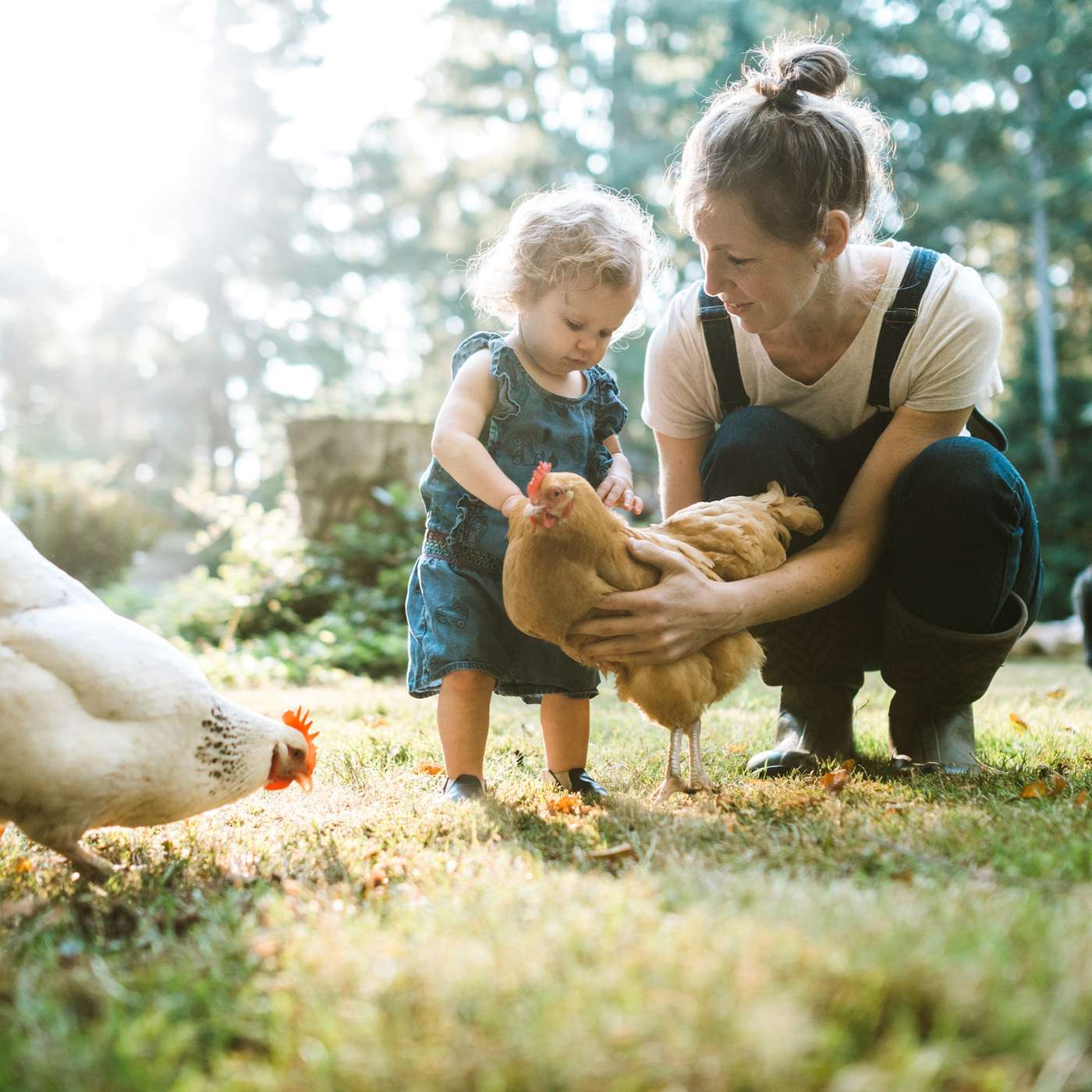
S13 Ep 4Stop eating Chicken! - The future of food with Rob Percival, author of The Meat Paradox
Rob Percival is a writer, campaigner and food policy expert with The Soil Association. His commentary on food and farming has featured in the national press and on prime time television, and his writing has been shortlisted for the Guardian’s International Development Journalism Prize and the Thomson Reuters Foundation’s Food Sustainability Media Award. He works as Head of Food Policy for the Soil Association.The Meat Paradox is his first book, and goodness, it's been a world changer - since its hardback publication, Rob's become a global superstar: invited to speak to groups across the spectrum of industry and culture about the nature of our relationship with the food that we eat. We left our first conversation each feeling that we'd just begun to scrape the surface of possibility and it would be good to talk again. We had scheduled another podcast for later this year, but I saw that the book had just come out in paperback and that coincided with our having a total technological crash in this week's interview. So Rob really kindly agreed to fill in at super short notice so that we could talk more about life and death and food and the nature of the meta-crisis. There's so much to this that really cuts to the core of who we are and where we're heading as a species, and we ended - again, feeling that there was more to say. But in the meantime, we explored the nature of the food system, the concept of precision fermentation, what makes 'whole' foods and how we might feed the world without industrial agriculture. Rob gave his one big suggestion for moving things forward - stop eating chicken. At the end, we opened another huge topic and began to explore the nature of death, and who our fear of the unknown leads us to denial of the meta-crisis and, in the end, denial of death itself. So we'll be back when Rob's next book comes out, but in the meantime, here are more thoughts on the social, political, practical and moral aspects of how we take in the building blocks of life. Radio 4 Book of the Week https://www.bbc.co.uk/programmes/m001hf27Rob's website https://rob-percival.com/about/The Meat Paradox in paperback https://uk.bookshop.org/books/the-meat-paradox-brilliantly-provocative-original-electrifying-bee-wilson-financial-times/9780349144573Rob on Twitter https://twitter.com/Rob_Percival_Previous Episode https://accidentalgods.life/the-meat-paradox/Green Alliance https://green-alliance.org.uk/GA Report https://green-alliance.org.uk/publication/shaping-uk-land-use-priorities-for-food-nature-and-climate/Bionutrient Food Association https://www.bionutrient.org/Global Governance Futures podcast that refers to how we cope (or don't) with the inevitability of our own mortality https://podcasts.apple.com/gb/podcast/global-governance-futures-imperfect-utopias-or-bust/id1548522280?i=1000590656384
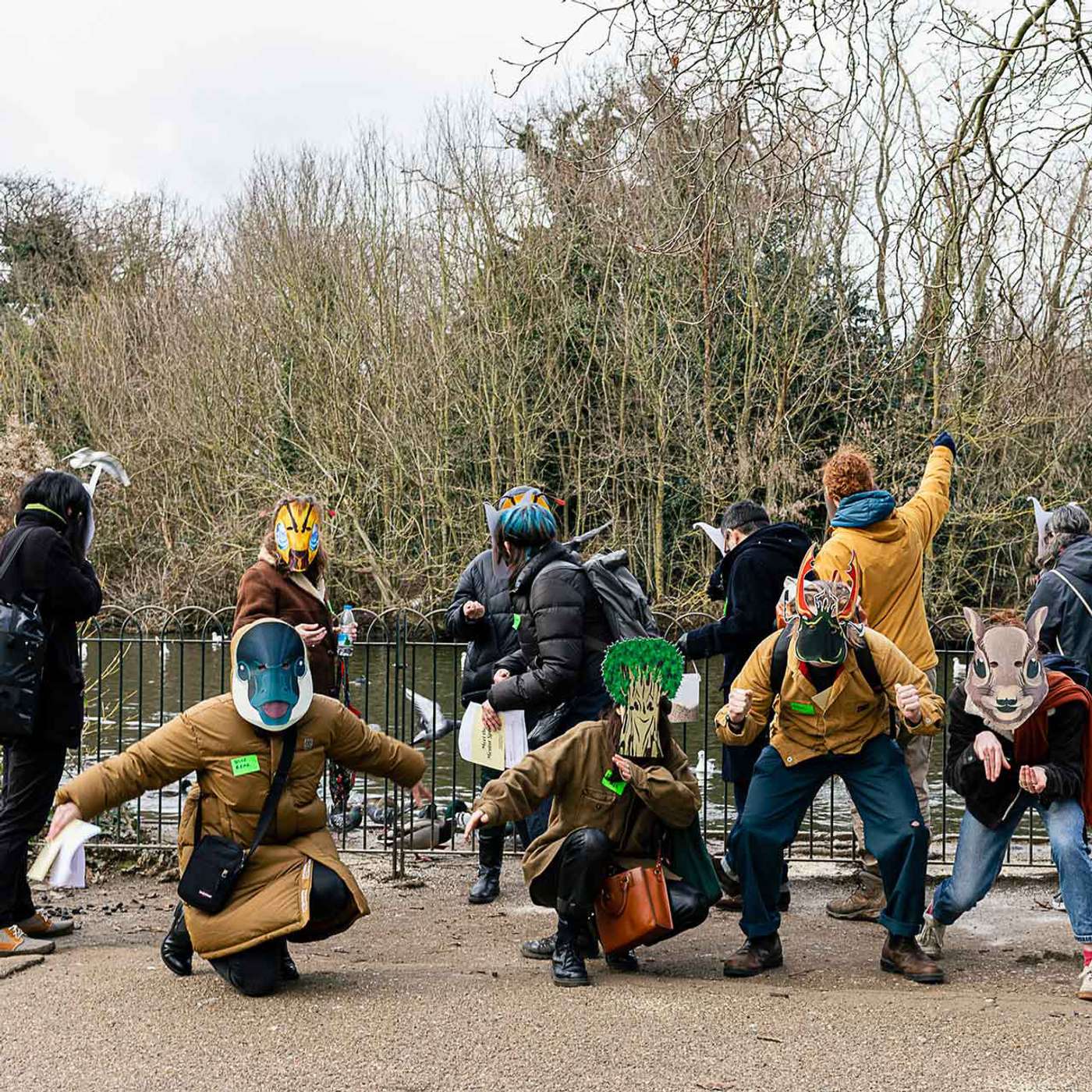
S13 Ep 3Cultures of Commoning: Quadratic voting, indigenous connectivity and pacifist chess with Ruth Catlow
This week's conversation ranges over an astonishingly wide range of topics from ways to facilitate interspecies communication through play and ways to play 3-person pacifist chess (and thereby change the world), to the nature of democracy and how the use of quadratic voting on the blockchain to inspire artistic endeavours in north London might be expanded nationally and internationally on the scale of global governance to shift the cultural dominance away from capital hegemony to a more fluid, genuinely inclusive democracy. All this in conversation with Ruth Catlow. Ruth is co-founder (with Marc Garrett) and co-director (with Charlotte Frost) of Furtherfield, a project based in Finsbury Park in London which organises for inclusivity and equity in art and technology and advocates for their use in imagining and building real social change and positive environmental impact.Background and Bio: Furtherfield's mission is to open up the tools and debates of the exclusionary realms of art and technology for collective action for collective good. Ruth and her colleagues invest time and energy in decentralised and distributed p2p practices, fostering new creative collaborations between artists and communities, as well as challenging debates about the role of art and technology in society.With this, Ruth's work advances critical discussions of emergent technologies and their implications and she has, for example, led the way in terms of understanding what blockchain technologies mean for the arts and beyond. She directs the Furtherfield decentralised arts lab, DECAL and is also key to the development of live action role play (LARP) games for research, partnering with researchers to craft imagined/futuristic scenarios in which a group of players explore a complex socio-digital issue. Since late 2020, Ruth has been immersed in the massive Interspecies Treaty LARP as part of her participation in the EU Horizon 2020 funded CreaTures project. All participants advance more-than-human justice by playing the game as other species, representing them in Assemblies to discuss and plan an Interspecies Festival that will celebrate the signing of 'an Interspecies Treaty of Cooperation (known as 'The Treaty of Finsbury Park') in 2025. Ruth is also one of the organisers of the 'Radical Friends' conference in 2022 and co-author/editor of the book that arose from it called 'Radical Friends: Decentralised Autonomous Organisations and the Arts' and co--PI of the Serpentine Galleries Blockchain Lab.Furtherfield https://www.furtherfield.orgDECAL https://decal.furtherfield.org/ Ruth's website https://ruthcatlow.net/CultureStake app https://www.furtherfield.org/culturestake/More on the XDai blockchain https://medium.com/mycrypto/what-is-the-xdai-chain-and-why-should-i-try-it-40f539732fb4Radical Friends https://torquetorque.net/publications/radical-friends/Serpentine Galleries Blockchain Lab. https://www.serpentinegalleries.org/whats-on/blockchain-lab/The Treaty of Finsbury Park https://www.furtherfield.org/the-treaty-of-finsbury-park-2025/Cade Diehm - paper co-written with Ruth https://newdesigncongress.org/en/pub/finsbury-park-2025 Finsbury Park https://www.parksandgardens.org/places/finsbury-parkPBES Report https://ipbes.net/global-assessment
S13 Ep 2Being the Change: Journeys in Service to Life with Gail Bradbrook
This week's guest is a friend of the podcast, Dr Gail Bradbrook. Best known for her role in co-founding Extinction Rebellion, Gail is one of our nation's (and our world's) deepest thinkers on radical change: what will it take to shift the juggernaut of predatory capitalism from the orgy of extraction, consumption and destruction that has brought us to the edge of crisis, and instead turn it towards a celebration of life in all its forms? Gail is also a leading beacon of practical activism - how can we bring the collective conversation to bear on the existential crises of our time? In our conversation, Gail honours the teachers that have helped her to find balance and insight, and to find practical, clear-eyed hope amidst all the potential for despair. We go on to explore her work in BCAN (see below) and, particularly, to explore the nature of horizontal organising. In a world where half the (western) population is wedded to the old hierarchical, patriarchal structures of top-down dominance, what happens in the other half when we experiment with other, less culturally familiar ways of being? Extinction Rebellion was one of the biggest, and most public expressions of horizontal organising in the modern contemporary world. A great deal of theory was put into practice and the results were often visible in newspaper headlines. Recorded a mere handful of days after the 'We Quit" press release from XR, we look at some of the lessons learned, and how we might do things differently next time. BIO:Dr Gail Bradbrook has been researching, planning, and training for mass civil disobedience since 2010 and is a co-founder of Extinction Rebellion (XR). Since its launch in October 2018, XR has spread around the world so that now, there are more than 1150 XR groups in 75 countries. Gail has trained in molecular biophysics, and her talk on the science of the ecological crisis, the psychology of active participation, and the need for civil disobedience has gone viral and been inspired many to join XR. She is from Yorkshire, the mother of two boys, the daughter of a coal miner, and was named by GQ as one of the top 50 influencers in the UK, and honoured in the 2020 Women’s Hour Power list for her part in instigating a rebellion against the British Government.More recently, she is one of the cofounders of the Be the Change Affinity Network of XR activists exploring ways to shift our cultural rigidity into something regenerative and distributive by design. Gail is a genuine visionary leader - one of one of the deepest, most enlightened thinkers we know; living at the leading edge of change and exploring radical answers to the questions of our time. She's also deeply spiritual and emotionally thoughtful, and it's always an enormous joy to explore with her the big questions of our time: what are we here for and how can we shift the entire nature of our culture in practical ways? TED Talk - My Stroke of Insight by Jill Bolte Taylor https://youtu.be/UyyjU8fzEYUGail's Telegram link: https://t.me/+i4zNgXH_oDc4YjM0Amanita Dreamer https://www.amanitadreamer.net/Seed Sistas - https://seedsistas.co.uk/3 Horizons model - https://www.boardofinnovation.com/blog/what-is-the-3-horizons-model-how-can-you-use-it/Netflix How To Change Your Mind - https://www.netflix.com/gb/title/80229847

S13 Ep 1Plan. Pause. Reset: Real Steps to Radical Transformation with Eva Schonveld and Justin Kenrick
Eva is a climate activist, process designer and facilitator. She has co-convened the Transformative Conflict for Transition Network summit, supports sociocratic system development, decision-making and facilitation in many contexts including Extinction Rebellion Scotland.Justin is an anthropologist and activist from Edinburgh. He is a member of Extinction Rebellion Scotland. Since 2009, has worked with the Forest Peoples Programme, supporting communities to secure their community lands and determine their own futures.Long term friends of the podcast, Eva and Justin live and work right at the leading edge of change, exploring and testing ways to help people move into the flowing, more vulnerable, less triggered spaces that allow for genuine inner change, and therefore change in our outer relationships. The spaces this work creates are essential to the move to a future where people and planet flourish. In this first Accidental Gods podcast of 2023, we explore the things that make our hearts sing, and the ways Eva and Justin's work is transforming communities around the world, with a particular emphasis on their homeland of Scotland, where Independence feels a breath away. Politics, Trauma and Empathy paper https://www.globalassembly.net/news/politicstraumaempathyRewording https://www.globalassembly.net/reworlding-2022-programmeRewording on Medium https://medium.com/experiental-space-research-lab/reworlding-the-art-of-living-systems-d6fef0deeb11Previously on Accidental Gods - Episode #44 https://accidentalgods.life/re-democratising-democracy/Previously on Accidental Gods - Episode #73 https://accidentalgods.life/reworlding-co-creating-a-politics-of-wholeness/The film on the Ogiek of Mount Elgon that Justin mentioned is hereDeep Decolonisation Resource is here

S12 Ep 15Three years on: Manda's reflections on our third anniversary - and looking forward into 2023
bonusAs we move from our third to our fourth year, it seemed like a good time to look back on the origins of the whole Accidental Gods project - why and how we started and what our original aims were - and then to look forward to the coming year and what we're focussing on both on the podcast and within the membership. So much has changed even in such a short time. We're all more aware than ever of the tipping points around us, but also more aware of what we can do, of the many, many roles that are here to be filled by people who have time and energy and commitment to give to transforming the future. So this is a paean to possibility and a thank you to all who have been part of the journey this far. Upstream podcast with Della Duncan https://podcasts.apple.com/gb/podcast/upstream/id1082594532The Hive podcast with Nathalie Nahai https://podcasts.apple.com/gb/podcast/the-hive-podcast/id1387510537Richard Bartlett's blog: http://richdecibels.com/Simon MIchaux https://www.simonmichaux.com/Accidental Gods Gatherings https://accidentalgods.life/gatherings-2022/Accidental Gods Membership: https://accidentalgods.life/
S12 Ep 14Food, Farming and Feeding the Soul: with Satish Kumar in conjunction with the Oxford Real Farming Conference
Satish Kumar is one of the absolute titans of the Regenerative movement in the UK. In 1962, he and and one of his fellow Jain monks made an 8,000 mile mendicant peace pilgrimage around the world, stopping in the capitals of what the nuclear nations of the earth: Russia, USA, China, France and the UK. He settled in the latter and soon became known for his work in connecting people and ideas. He founded the Small School in Devon and went on to found Schumacher College, deeply rooted in his ideas that education should engage head, hands and heart. In 1973, he founded Resurgence Magazine (now: Resurgence and Ecologist Magazine) and for the next forty three years, was its Editor in Chief, stepping down on his 80th birthday. This week, Accidental Gods teamed up with the Oxford Real Farming Conference, to speak with Satish as he prepares to head to Oxford where he'll lead a meditation for farmers on the morning of Friday 6th. We explore more deeply his concepts of education, food and farming and the re-connection of people to the living web of life. He ends with a meditation, similar to the one he will lead live in the conference. Now entering its thirteenth year, the Oxford Real Farming Conference (ORFC) is the unofficial gathering of the agroecological farming movement in the UK, including organic and regenerative farming, bringing together practising farmers and growers with scientists and economists, activists and policymakers in a two-day event every January. Working with partners, the conference offers a broad programme that delves deep into farming practices and techniques as well addressing the bigger questions relating to our food and farming system.Working with partners in the UK and internationally, the Oxford Real Farming Conference (ORFC) brings the real food and farming movement together, attracting people from around the world who are interested in transforming our food system. In 2021 and 2022, the conference went entirely online, but the physical gathering has traditionally been in Oxford (it was set up as an alternative to the Oxford Farming Conference, which happens at the same time) and this year, there will again be a physical programme.ORFC has always been the place to share progressive ideas. Subjects include agroecology, regenerative agriculture, organic farming and indigenous food and farming systems. The broad programme delves deep into farming practices and techniques as well as addressing the bigger questions relating to our food and farming system.Crucially, it has always been the participants who provide the ORFC programme. The sessions reflect their diversity, ranging from the intricacies of soil microbiology to new kinds of marketing; setting up a micro-dairy to the value of introducing mob grazing and agroforestry to the farm; from the joys and tribulations of farming to the kind of economic structure we need to support the kind of food system we need. It is this diversity of participants and interests that keeps ORFC alive and growing.Online tickets are available. The ORFC works with the interpretation collective, COATI, to make sure sessions are accessible.Follow the conference on Twitter, Instagram or Facebook for all the latest news and speaker announcements.Online Programme https://orfc.org.uk/orfc-2023-online-programme/
S12 Ep 13Traditional Solstice Celebration: Looking back and looking forward with Della Duncan and Nathalie Nahai
As the year stills and tilts afresh, we bring you our annual moment of reflection with two podcast hosts we really admire. There's a meditation at the end, to bring you into your own space of stillness and reflection, but ahead of this, we delve into where we think the global human psyche is at this moment, how we feel when we look upstream, and what we see; and what makes our hearts sing, and what does it prompt us to do: core questions that open up a wealth of ideas, reflections and imaginings of how our world could be as we step forward into 2023, amidst all the tipping points, clear-eyed, strong-hearted and ready to give it all we've got. Nathalie Nahai is an author, keynote speaker and host of The Hive Podcast, a series that enquires into our relationship with one another, with technology and with the living world. With a diverse background in human behaviour, persuasive tech and the arts, she brings a unique vantage point from which to examine the complex challenges we face today. Her best-selling book: Webs Of Influence: The Psychology of Online Persuasion has been adopted as the go-to manual by business leaders and universities alike, and her new book, Business Unusual: Values, Uncertainty and the Psychology of Brand Resilience, has been described as “One of the defining business books of our times”. A consultant and facilitator to Fortune 500 companies, Nathalie also serves as a behavioural science advisor and helps organisations to ethically apply behavioural science principles to enhance their business. Having lectured at some of the world’s most prestigious institutions, Nathalie's ability to ignite conversation and offer tools and strategies with which to harness human potential, has helped countless organisations transform how they approach business online, with clients including Google, Accenture, Unilever and Harvard Business Review, among others.Della Z Duncan is a Renegade Economist. Areas of her livelihood garden include hosting the Upstream Podcast, challenging mainstream economic thinking through documentaries and conversations including most recently, The Green Transition Pt 1: The Problem with Green Capitalism and Pt 2: A Green Deal for the People, supporting individuals as a Right Livelihood Coach, helping transition businesses and organizations as a post-capitalist consultant, and teaching and facilitating retreats and workshops on the Work that Reconnects, Systems Change, and Post-Capitalist Economics. Della is also the Course Development Manager of Fritjof Capra’s Capra Course on the Systems View of Life, a founding member of the California Doughnut Economics Coalition, and a Senior Lecturer of Renegade Economics and Regenerative Livelihoods at the California Institute of Integral Studies, Santa Cruz Permaculture, Vital Cycles Permaculture, and Gaia Education. Upstream podcast with Della Duncan https://podcasts.apple.com/gb/podcast/upstream/id1082594532The Hive podcast with Nathalie Nahai https://podcasts.apple.com/gb/podcast/the-hive-podcast/id1387510537
S12 Ep 12Earthborne Rangers: Playing our way to a future that works with Andrew Navaro
The average child in the western world attends 10,000 hours of school - and plays 20,000 hours of games. In the 'adult' world, many of us spend hours devoted to levelling up our characters and exploring imaginary worlds. If the Tech-bros get their way, we'll soon live entirely in the Metaverse and have minimal contact with the real world beyond the walls of our concrete hutches. But imagine a different world: where the people of earth have come together to solve the multi-polar traps of the climate, ecological, sociological, economic and political crisis of our times. How might the world look in a couple of thousand years if we've made it through to the flourishing future we want for our descendants? That's the premise of Earthborne Rangers, a tabletop card game that's the brainchild of Andrew Navaro, Founder and Creative Director of Earthborne Games, a company that 'creates breathtaking tabletop games that prioritize environmental sustainability in every aspect of their creation – from manufacturing to fulfillment. Every Earthborne product is made as sustainably as possible, with unparalleled transparency throughout the process. There’s a hopeful future on the horizon, one that reimagines our relationship with the Earth and the stories we tell on the gaming table, and we’re going to create it together. In this week's inspiring episode, we talk to Andrew about the game's genesis, about how where we set our energy defines where we go, and why it was important to him to create a game that fostered cohesion and community, sharing and exploring while still being fun and exciting to play. As the game nears completion and launch, we talk about the Kickstarter campaign that funded it and the design challenges, as well as the deeply thought-through ethos of the world Andrew and his team have created. As we head into the holidays, join us for a world of new ideas. Order the game here https://earthbornegames.com/The Rulebook https://earthbornegames.com/wp-content/uploads/EBR001_Rulebook_web.pdfReality is Broken by Jane McGonigal https://uk.bookshop.org/books/reality-is-broken-why-games-make-us-better-and-how-they-can-change-the-world/9780099540281

S12 Ep 11Living Well within our Limits: Actions for systemic change with Prof Julia Steinberger
Professor Julia Steinberger researches and teaches in the interdisciplinary areas of Ecological Economics and Industrial Ecology. She is the recipient of a Leverhulme Research Leadership Award for her research project 'Living Well Within Limits' investigating how universal human well-being might be achieved within planetary boundaries. She is Lead Author for the IPCC's 6th Assessment Report with Working Group 3.She has held postdoctoral positions at the Universities of Lausanne and Zurich, and obtained her PhD from the Massachusetts Institute of Technology. She has published over 40 internationally peer-reviewed articles since 2009 in journals including Nature Climate Change, Nature Sustainability, WIRES-Climate Change, Environmental Science & Technology, PLOS ONE and Environmental Research Letters.As part of our drive towards finding the people at the leading edge of change, we wanted to connect with Prof Steinberger really to unpick the detail of personal and collective action. Each of us is only one person and the nature of the change can feel overwhelming even while it feels urgent. So we need to hear directly from the people whose entire lives are given to solving this problem and who have concrete ideas of what we can do and how, who can direct our priorities and show us where the best leverage points lie. Prof. Steinberger has clear ideas of how our culture can live within planetary boundaries and we unpick them in this podcast. Enjoy! Julia on Medium https://jksteinberger.medium.com/an-audacious-toolkit-actions-against-climate-breakdown-part-1-a-is-for-advocacy-7baa108f00e9Living Well Within Limits https://lili.leeds.ac.uk/Positive Money https://positivemoney.org/Fossil Banks, No Thanks https://www.fossilbanks.org/
S12 Ep 10Data is the New Plastic! Ethics, Accuracy and AI with Dr John Collins of Machine Intelligence Garage
Dr John Collins worked for the UK's Central Electricity Generating Board in the days when such things were nationalised industries. His PhD involved creating a real-time dosimeter for workers in nuclear plants so they didn't have to wait 2 weeks to learn the results of the film-based dosimeters that were in use. In doing so, he saved the CEGB considerable amounts of money - and, mere importantly, saved the lives and health of the men and women who worked there. Thus began a lifetime working at the leading edge of business where innovation meets ethics and morality so that now, he is the Ethics and Responsible Innovation Advisor at Machine Intelligence Garage and on the Ethics Advisory Board at Digital Catapult. He's writing a book called 'A History of the Future in Seven Words.' With all this, he's an ideal person to open up the worlds of business, innovation and technology. In a wide-ranging, sparky, fun conversation, we explore what might make AI safe, how a future might look with sustainable business, whether 1.5 is 'still alive' and if that's even a useful metric - and how much power does it take to post an Instagram picture compared to making a plastic bottle (spoiler alert: it's the same power and the same CO2 generated - assuming both use the same power source and *if* the image is stored for 100 years... which the way we're going, might not happen. But still... ). John on LinkedIn https://www.linkedin.com/in/drjohnlcollins/Digital Catapult https://www.digicatapult.org.uk/

S12 Ep 9Telling the Truth and Moving Forward: Building the Moderate Flank with Rupert Read
Rupert Read is Assistant Professor of Philosophy at the University of East Anglia, but he is also a Green party activist, and a prolific speaker, media spokesperson and author advocating for a wholehearted, whole-culture response to the Climate and Ecological Emergency. A long-term friend of the podcast, Rupert joins us today to talk about his new book: 'Do You Want to Know the Truth: The Surprising Rewards of Climate Honesty' and to announce the launch of a new movement, the Moderate Flank, which aims to bring together a moderate majority of people who care deeply about anthropogenic climate change, but don't want to engage in polarising actions. In this deeply honest, raw episode, Rupert makes a passionate case for an anti-polarising movement which can engage people from all walks of life and furnish them with the tools for change that will help us to adapt to the coming changes - and to ensure that politically, economically, culturally, we create a more just, equitable - and regenerative - society that we can leave to the generations that come after us. Rupert's new book https://249897.e-junkie.com/product/1756224/Do-you-want-to-know-the-truth3F-The-surprising-rewards-of-climate-honestyRupert's Website https://rupertread.net/Rupert's SubStack: https://rupertread.substack.com/Rupert on Twitter https://twitter.com/GreenRupertReadModerate Flank: https://moderateflank.org
S12 Ep 8End of year round-up: Manda's favourite podcasts, fiction and non-fiction of 2022
As we do each year, we've curated a list of the Accidental Gods' favourite podcast and books of 2022. Enjoy!Podcasts Nate Hagens The Great Simplification - fourth of four (so far) with Daniel Schmachtenbergerhttps://podcasts.apple.com/gb/podcast/the-great-simplification-with-nate-hagens/id1604218333?i=1000583952697The Sustainable Food Trust episode with Dr Michael Antoniouhttps://podcasts.apple.com/gb/podcast/the-sustainable-food-trust-podcast/id1511133906?i=1000559083233/Global Governance Futures with Jacqueline McGladehttps://podcasts.apple.com/gb/podcast/global-governance-futures-imperfect-utopias-or-bust/id1548522280?i=1000544342241ITS BLOODY COMPLICATED by Compass - Episode with Byron Fay of Climate 200https://podcasts.apple.com/gb/podcast/its-bloody-complicated-a-compass-podcast/id1502390267?i=1000582130469Catherine Weetman Circular Economy Podcast Catherine musing on sustainabilty https://podcasts.apple.com/gb/podcast/circular-economy-podcast/id1465879853?i=1000583550758Catherine with Simon Hombersely of Xampla https://podcasts.apple.com/gb/podcast/circular-economy-podcast/id1465879853?i=1000582020564The rest is politics w Alastair Campbell and Rory Stewart - episode w Mark Drakefordhttps://podcasts.apple.com/gb/podcast/the-rest-is-politics/id1611374685?i=1000579634739Non-Fiction Books The Club on the Edge of Town - Alan Lane https://salamanderstreet.com/product/the-club-on-the-edge-of-town-paperback/Flourish - Sarah Ichioka and Michael Pawlynhttps://www.triarchypress.net/flourish.htmlhttps://www.flourish-book.comA People's Green New Deal - Max Ajlhttps://www.plutobooks.com/9780745341750/a-peoples-green-new-deal/Our Farming Life - Lynn Cassells and Sandra Baerhttps://chelseagreen.co.uk/book/our-wild-farming-life/(also A Dairy Story - David and Wilma Finlay of The Ethical Dairy)https://www.theethicaldairy.co.uk/cheese-shop/dairy-storyLouis Weinstock: How the World is Making our Children Mad and What to Do about ithttps://louisweinstock.com/how-the-world-is-making-our-children-mad-and-what-to-do-about-it/https://www.naominovik.com/2022/09/published-today-the-golden-enclaves/The Barn at the End of the World by Mary Rose O'Reilley The Apprenticeship of a Quaker Buddhist Shepherdhttps://www.amazon.co.uk/Barn-End-World-Apprenticeship-Buddhist/dp/1571312544Novels The Kingdoms - Natasha Pulley https://natashapulley.co.uk/books/ and https://uk.bookshop.org/books/the-kingdoms/9781526623119Tuyo - Rachel Neumeier https://www.rachelneumeier.com/writing/tuyo/Kingdom of Silence Jonathan Grimwood (also Jack Grimwood and Jon Courtenay Grimwood) https://www.amazon.co.uk/Kingdom-Silence-Jonathan-Grimwood-ebook/dp/B086R544MD/Naomi Novik - The Golden Enclaves - Lesson 3 in the Scholomance Trilogyhttps://www.naominovik.com/2022/09/published-today-the-golden-enclaves/The Stranger Times by CK McDonnell (also The Dublin Trilogy by Caimh McDonnell) BUNNY McGARRYhttps://uk.bookshop.org/books/the-stranger-times-the-stranger-times-1/9780552177344https://whitehairedirishman.comalso Kevin Hearn Ink and Sigil series https://kevinhearne.com/books/ink-sigil/
S12 Ep 7Regenerative by Design: Creating Communities that work with Charlie Fisher of Transition by Design
In a world that feels as if all the certainties are breaking down, how can we build the communities of place and of purpose that will give us the resilience to bridge from the old structures to the new? Exploring deeply practical ways to build community with Charlie Fisher. Charlie Fisher is a co-founder and director of the Co-operative Architecture Practice, Transition by Design. He's a researcher and urban-instigator working on regenerative land use approaches and more collaborative forms of city-making driven by the belief that to unlock collective imagination for equitable societies we must remove structural barriers that are preventing people from connecting with one another.His role over the past decade has been to build capacities within land-based organisations, primarily around urban affordable housing and mechanisms for holding land in the commons. He writes about, and runs workshops on, group dynamics, decision-making, housing finance, incorporation approaches, legal structures, stakeholder mapping, business planning, and visioning. In 2020, he was developing the Oxygen Fund, a £5m revolving equity fund with the Oxfordshire Growth Deal, which led him to explore how regenerative land use can be supported through Distributed Co-operative Organisations (DisCOs🕺) and web3 Regenerative Finance (ReFi) projects. He is in the core team of regenerative blockchain-based property developer Oasa, a Swiss Association, which bought its first piece of land in 2021 at Traditional Dream Factory in Portugal. In building this ecosystem together, he is the interface between various thematic working ‘circles’ and has led the design of our sociocratic coordination system. He is an adviser to the Center for Community Land Trust Innovation, and in 2023 he’ll be running a cohort-based course, Unearthing Common Ground, with 50 land trusts globally and 50 regenerative web3 projects to support exchange between traditional land trust projects and web3 practitioners. In this conversation, we open up the key question of building communities: what does it take to create the connections between people that make communities work? What questions matter and how do we know which things we can leave till later? How do we move from consensus to consent so that things move forward at the speed we need as our material supply chains falter? How can we engage the best in human creativity to build communities that will have the flexibility, heart and coherence to survive? Charlie is deeply embedded in so many of these questions, and finding ways through that work in the real world. With any luck at all, we'll be moving onto a 2nd conversation when a couple more of our hundred day segments have passed - so if you have questions, let me know. Charlie's super site https://charliefisher.super.site/Transition by Design https://transitionbydesign.org/Community Land Trust network https://www.communitylandtrusts.org.uk/Garden City Principles https://tcpa.org.uk/garden-city-principles/Nabeel Hamdi: Small change: Intelligent Practice and Practising intelligence https://uk.bookshop.org/books/intelligent-practice-and-practising-intelligence/9781844070053https://www.gov.uk/government/news/garden-communities-set-to-flourish-across-englandLILAC in Leeds http://www.lilac.coop/Oasa Earth (which incorporates the Traditional Dream Factory in Portugal) https://oasa.earth/
S12 Ep 6Fractal Improv: finding generosity, connection and compassion amidst our fear with Belina Raffy
We know our climate is in crisis and that time is running out. But we also know that screaming at people to wake up is not working. What if we gave ourselves permission to tell the truth - and the skills to do it with humour and compassion so that we didn't trigger the resistances of fear? This Episode, we explore stand-up and improv in sustainable communications with Belina Raffy.Belina Raffy, Empress and Improvisation guide, is the director of Maffick Ltd & Applied Improvisation and Thrivability thought-leader, Thrivable World Quest co-founder and global captain.She used to work in London and New York as an Executive for one of the largest global financial institutions, in 13 years, she saw many people struggle with burn-out. She studied improvisation to find out: 1) how these skills help individuals respond to the unexpected, and navigate ambiguity 2) how it can transform our organizations as a whole. She encourages people to explore what happens when we consciously align our work with how nature and people thrive. She believes that our ability to improvise gives us a choice about how to respond to life’s challenges. Improvisation helps us develop our creative thinking skills in service of a happier life, and play a vital part in our response to our complex, dynamic world. It is her passion to spread these mindsets and practices and support others discover the power of improvisation.In this sparkling, thought-provoking episode, we explore the differences between stand-up and improv, and how the structures of either and both can allow us to reach past the tribal screaming of our time, to a more gentle, compassionate, connected way of reaching each other. Humour reaches the places that charts, data and stats never will - and Belina has years of experience in creating spaces where people can find what matters most to them, and share it in ways that make us laugh - and care.Belina's website https://www.maffick.com/Belina at Wisdom Together https://www.wisdomtogether.com/belina-raffy-maffick-ltd/Belina's book https://www.maffick.com/#the-bookBelina on YouTube https://www.youtube.com/watch?v=Zi1EGkh_vzgUpcoming courses1-hour online ‘Compassionate Climate Comedy’ on 7 NovAnd next 7-week Sustainable Stand Up course starts 19 JanDetails at https://www.sustainablestandup.com/#coursesInga Foundation http://www.ingafoundation.org/Red Cross Disaster Risk Reduction https://climatecentre.live/courses/participate/ The Frontier Development Lab https://frontierdevelopmentlab.org/ and https://fdleurope.org/ .

S12 Ep 4Compass: Charting a Progressive Route through the Political Maelstrom with Neal Lawson
In a world where our 'democracy' is manifestly not fit for purpose, how can we turn the brief, bright fireworks of political sanity into floodlights of progressive values, of liquid democracy that leads to an equitable, regenerative culture? With Neal Lawson of the progressive campaign group, Compass. Neal Lawson was brought up in an activist household and joined the Labour party at sixteen. After university, he worked for the Transport and General Workers' Union and then was a speech writer for Gordon Brown during the New Labour years. He has been helping to lead the political campaign group, Compass, since its formation in 2003. He is more focused than ever on how to make big transformative change happen. He works on strategy, relationships, funding and fronting Compass. He writes for The Guardian,[9] the New Statesman[10] and OpenDemocracy[11] about equality, democracy and the future of the left, and appears on TV and radio as a political commentator. He was the author of All Consuming (Penguin, 2009), which analysed the social cost of consumerism. Lawson's writing has been heavily influenced by the late Polish Marxist sociologist Zygmunt Bauman who described him as “one of the most insightful and inventive minds on the British political stage”.Compass itself is a home for those who want to build and be a part of a Good Society; one where equality, sustainability and democracy are not mere aspirations, but a living reality. We are founded on the belief that no single issue, organisation or political party can make a Good Society a reality by themselves so we have to work together to make it happen. Compass is a place where people come together to create the visions, alliances and actions to be the change we wish to see in the world.In this episode, we explore the recent history of politics in the UK and then open more deeply into the routes by which our manifestly broken political system could be transformed into something that will - in Neal's words - transform the brief flaring fireworks of hope into floodlights that can transform our nation, and the world. Compass https://www.compassonline.org.uk/campaigns/winasone/Compass 45 Degrees paper https://www.compassonline.org.uk/publications/45o-change-transforming-society-from-below-and-above/What is Quadratic Voting? https://towardsdatascience.com/what-is-quadratic-voting-4f81805d5a06It's Bloody Complicated podcast https://podcasts.apple.com/gb/podcast/its-bloody-complicated-a-compass-podcast/id1502390267Book: Four Thousand Weeks https://uk.bookshop.org/books/four-thousand-weeks-the-smash-hit-sunday-times-bestseller-that-will-change-your-life-9781784704001/9781784704001
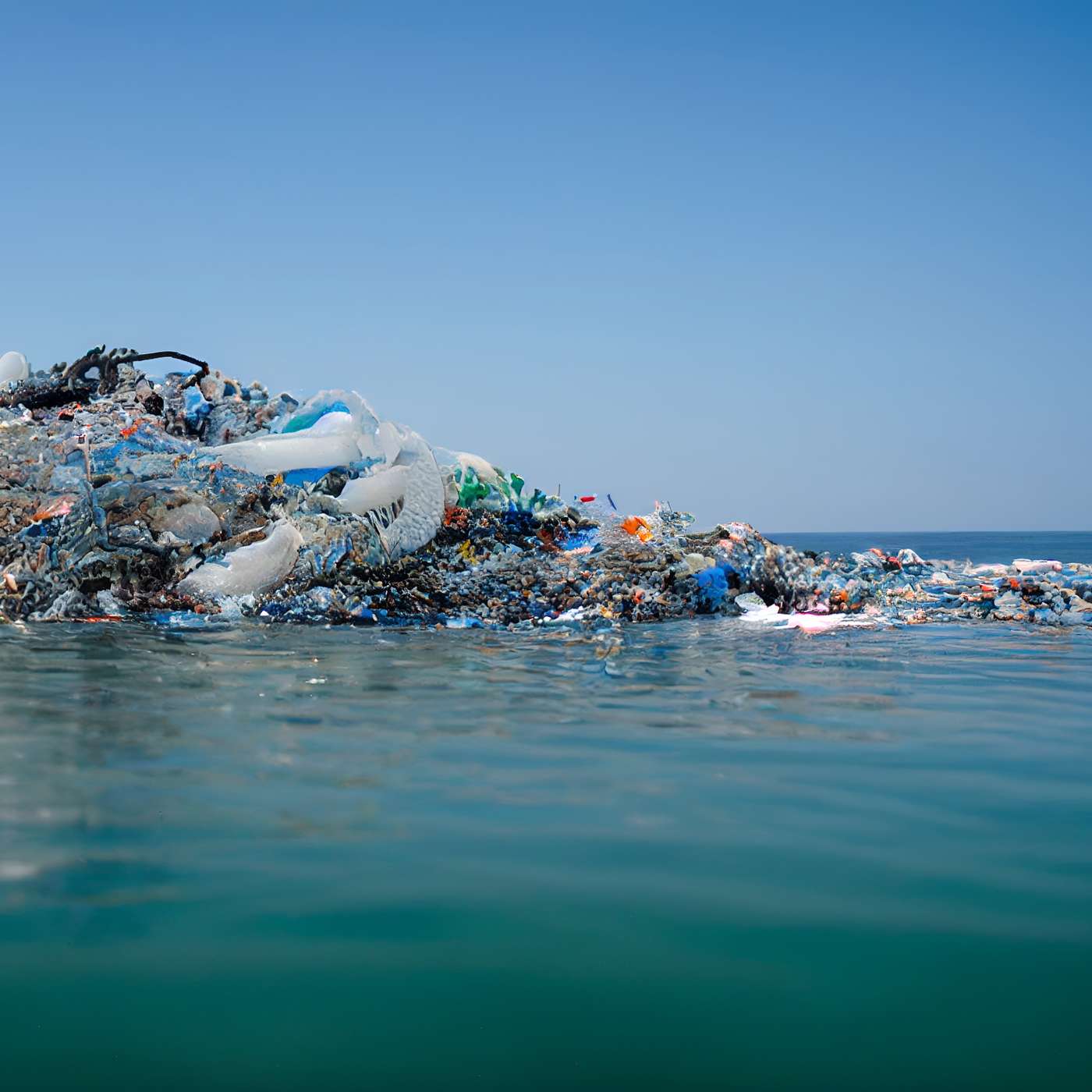
S12 Ep 5The Kindness of Strangers: Ocean Rowing, Solitude and Transformation with Dr Roz Savage MBE
What happens when we realise we're trying to be something we're not? For Roz Savage, this led to a transformation that took her from Management Consultant to the first woman to row solo across the world's 3 big oceans. Now she devotes her life to the healing of the planet.Dr Roz Savage MBE is an Ocean Rower, Author, Speaker, Lecturer, Sustainability Advocate. Her feats have been described by Sir Richard Branson as “Heroic, epic, inspiring, historic.” Best known as the first (and so far only) woman to row solo across the world’s “Big Three” oceans - the Atlantic, Pacific, and Indian - Roz inspires us to think again about what is possible, and encourages us to step up fully into the potential of our highest selves.She combines her self-taught life skills with principles from neuroscience, psychology, personal development and leadership theory, to inspire people around the world. In 2010 she was named Adventurer of the Year by National Geographic. In 2012 she was a World Fellow at Yale. In 2013 she was appointed a Member of the Order of the British Empire in the Queen’s Birthday Honours for services to fundraising and the environment. In 2017 she took up a position at Yale, lecturing on Courage in Theory and Practice.She's author of four books, the most recent of which, The Ocean in a Drop, is published in November 2022. She's a committed and vibrant speaker whose experiences have reached audiences across the world with her example of the potential for transformation that lies within all of us. In our conversation, we delved into her experience of the oceans - what led her to throw in her job and take instead to the high seas - and then how she is using the self-knowledge she gained then, the emotional, mental and spiritual transformation that arose, to bring change to the world around us. We explore politics and economics and theories of change that bring us to the cutting edge of what is possible. Roz's website https://www.rozsavage.com/about/Ross book https://www.rozsavage.com/author/Naomi Klein Shock Doctrine https://uk.bookshop.org/books/the-shock-doctrine-the-rise-of-disaster-capitalism/9780141024530Elinor Ostrom https://www.ecosia.org/search?method=index&q=elinor+ostrom+governing+the+commonsRebecca Solnit http://www.rebeccasolnit.net/book/a-paradise-built-in-hell/Three Horizons Framework for Future Thinking: https://h3uni.org/tutorial/three-horizons/Daniel Schmachtenberger 'strange attractors' https://civilizationemerging.com/about/Fediverse https://www.fediverse.to/
S12 Ep 3Matereality and Corporate Mischief: reshaping Business as if the job were to create a world that works with B.Lorraine Smith
What if businesses existed not to price-gouge consumers and destroy the planet, but to be part of a pathway to a flourishing future? What if the end-of-year reports were not expensive exercises in greenwash, but were actually truthful - and useful. With B.Lorraine Smith, creator of Matereality.B. Lorraine Smith is a writer, speaker, corporate mischievist, and generally curious student of life. She changes minds (most often her own), casting a dubious eye on the line between work and play. She holds a vision of a future where all industry is a force for healing and any exceptions compost themselves into history. She has been working towards this vision with global companies since 2004, bringing together activists, executives and thought-leaders. she shares what she finds as she goes along, telling as much truth as she can figure out how to spell. (Or, in the case of Matereality, how to respell.)Originally from Toronto, Canada, she spent a decade based in New York City and recently relocated to Montreal, all the better to explore the banks of the St. Lawrence River (whom she calls Lia).She runs ultra-long distances on urban trails, spins and knits her own original designs, and holds doggedly to the belief that our senses of connectedness and curiosity are our best assets. She is an independent consultant whose purpose is to contribute to the shift to a regenerative economy, one where society thrives within a healthy biosphere. Her areas of expertise inform each other – as a writer, consultant, ultramarathoner, textile artisan and sojourner. She describes her approach as “spore-based,” taking a cue from nature about how to evolve and spread important ideas. Lorraine has consulted for leading change-agents and large companies, informing strategy and stakeholder dialogue to shift us to a regenerative economy. She is also a frequent speaker at conferences on sustainability and corporate innovation.She speaks fluent French and Portuguese, as well as conversational German and Spanish. Originally from Toronto, Canada, Lorraine has lived in Australia, Brazil, Germany, New Zealand and New York City. She currently calls Montréal home.In this episode, following on from our conversation with Jennifer Hinton 2 episodes ago, we delve deeply into the concepts that underpin Lorraine's idea of 'Matereality' - what it is, and how her experience as a 'sustainability consultant' to some of the world's largest companies has led her to a new way of assessing the impact a business actually has on the planet and people it is, in theory, designed to serve. What would the world be like if corporations actually decided to benefit people and planet? Actually. Not their share holders or the vulture capitalists? With grace, humility and endless humour, Lorraine describes her journey and her conclusions of how we could re-shape the business world in time to change the trajectory towards global melt-down. This is an episode full of ideas at the corporate level, that we can nonetheless bring into our own lives. We all live in the corporate world. Even if we don't talk at C-Suite level, we are the glue that holds everything together - and we can change the ways we interact with the corporate Masters of the Universe. Lorraine's website https://www.blorrainesmith.com/materealityWebsite https://www.blorrainesmith.comYouTube Lorraine's Channel Facebook https://www.facebook.com/BLorraineSmith/ Twitter @BLorraineSmithInstagram blorrainesmithLinkedIn https://www.linkedin.com/in/b-lorraine-smith-155a875/Medium https://blorrainesmith.medium.com/dear-mr-hagedorn-b9e5e1c7672d
S12 Ep 2Flourish: Designing new paradigms and expanding our agency with Sarah Ichioka
What will it take to restore balance in our world? How can we repair our devastated environments, and secure future generations' survival? And what's they key to unlock the mindset shift to enable truly regenerative transformation? With Sarah Ichioka, co-author of 'Flourish: Design Paradigms for our Planetary Emergency'.Sarah Ichioka is co-author with Michael Pawlyn of 'Flourish' a rich, inspiring book that outlines key paradigm shifts for this time of planetary emergency. Looking deeply into the web of life, Flourish proposes a bold, imaginative - and do-able - set of regenerative principles to transform how we design, make and manage our buildings and our communities. Sarah is an urbanist, curator, writer and podcast host. Connecting cities, culture and ecology, she has been recognised as a World Cities Summit Young Leader, and one of the Global Public Interest Design 100. She is founding director of the Singapore-based strategic consultancy 'Desire Lines' and is co-author, with Michael Pawlyn, of the book 'Flourish' and co-host with Michael of the Flourish podcast. In this expansive, incisive conversation, Sarah expands on the five paradigms she and Michael identified that are holding us back in the old 'business as usual' frame and the ways we can shift our world-view to new ways of thinking, being - and designing our lives. Drawing on the work of foundational thinkers like Freya Matthews, Donella Meadows, Janine Benyus and Ronan Krznaric, plus existing communities such as the Los Angeles Eco Village, Sarah shows us that the ideas and actions are already in place, we just need to build them bigger, proving that, as Willam Gibson has said, the future is here, it's just unevenly distributed. Flourish book: https://www.flourish-book.comFlourish podcast: https://podcasts.apple.com/gb/podcast/flourish-systems-change/id1602779076Donella Meadows Leverage Points: https://donellameadows.org/a-visual-approach-to-leverage-points/Freya Matthews: http://www.freyamathews.netJay Griffiths 'Pip Pip': http://jaygriffiths.com/books/pip-pip/Ronan Krznaric 'The Good Ancestor' :https://uk.bookshop.org/books/the-good-ancestor-how-to-think-long-term-in-a-short-term-world/9780753554517Deep Time Walk App: https://www.deeptimewalk.org/kit/app/Los Angeles Eco-Village: https://laecovillage.orgBuilt Environment Declares: https://builtenvironmentdeclares.comArchitects Climate Action Network: https://www.architectscan.org
S12 Ep 1Planet, not Profit: Envisioning a genuinely sustainable future in a not-for-profit world with Jennifer Hinton
We live in a world run by profiteers: the rush to make money destroys people and planet with equal disregard. But how would the world look if all businesses existed to promote wellbeing in all its forms? How could we make this work? Re-imagining our relationship to profit with Dr Jennifer Hinton of Lund University, Sweden.Dr. Jennifer Hinton is a systems researcher and activist in the field of sustainable economy. Her work focuses on how societies relate to profit and how this relationship affects global sustainability challenges. Her relationship-to-profit theory uses systems thinking and institutional economics to explain how key aspects of business and markets drive social and ecological sustainability outcomes. She started developing this theory in the book How on Earth, which outlines a conceptual model of a not-for-profit market economy – the Not-for-Profit World model. She holds a double PhD in Economics and Sustainability Science. As an activist, she collaborates with civil society organizations, businesses, and policy makers to transform the economy so that it can work for everyone within the ecological limits of the planet. She is a researcher at Lund University and a senior research fellow at the Schumacher Institute.In this episode, we explore the natuer of the various Growth vs Degrowth/postgrowth paradigms and how the shift to not-for-profit businesses worldwide could signal a shift to the end of profiteering and a change in the focus of humanity. If we're not simply driving for more profit for shareholders and bigger bonuses for the C-suite, then what can we be for? Can businesses pivot to a world where they actually exist to further the welfare of people and planet? What would that look like and how would it work? This is one of the keys to a flourishing future. If businesses continue to push for sales growth/profits growth at all costs, then we're finished. If they can begin to turn the extraordinary creativity that has seen their profits soar, to something worthwhile…then anything is possible.Envisioning a not for profit future: Paper https://nonprofitquarterly.org/envisioning-a-not-for-profit-world-for-a-sustainable-future/Jennifer on LinkedIn: https://www.linkedin.com/in/jennifer-hinton-758a544/Paper: Fit for Purpose: https://journals.librarypublishing.arizona.edu/jpe/article/id/2231/Paper: A Not for Profit Economy for a Regenerative Sustainable World: https://www.researchgate.net/publication/359043036_A_Not-For-Profit_Economy_for_a_Regenerative_Sustainable_WorldPaper: Five Key Dimensions of Post Growth Business: Putting the Pieces Together: https://www.researchgate.net/publication/351610225_Five_Key_Dimensions_of_Post-Growth_Business_Putting_the_Pieces_TogetherPaper: Relationship to Profit A Theory of Business Markets and Profit for Social Ecological Economics https://www.researchgate.net/publication/348742711_Relationship-to-Profit_A_Theory_of_Business_Markets_and_Profit_for_Social_Ecological_EconomicsGlas Cymru: https://corporate.dwrcymru.com/en/about-us/company-structure/glas-cymruBRAC: http://www.brac.netMyuma: https://www.linkedin.com/company/the-myuma-group/about/Book: How on Earth: Flourishing in a Not for Profit World: https://arxiv.org/abs/1902.01398Jennifer on Twitter: @HintojenTim Jackson Prosperity without Growth: https://timjackson.org.uk/ecological-economics/pwg/Patagonia going Not For Profit: https://www.theguardian.com/us-news/2022/sep/14/patagonias-billionaire-owner-gives-away-company-to-fight-climate-crisis-yvon-chouinard
S11 Ep 12Re-Enchantment: Creating rituals to re-discover our embodied sovereignty with Isla McLeod
What do we do when we feel disempowered, disconnected, alone and afraid? We can throw ourselves more deeply into social media, drink, drugs and deeper disconnection…or we can build rituals with intention, creativity, gratitude and kindness that re-connect us with the web of life. With Isla McLeod, ritualist and shamanic healer.Isla McLeod is a creator of ceremonies, ritual designer, transformational healer and companion at the thresholds. She has dedicated her life to bridging the gap between humanity and the soul of the earth. In her new book, 'Rituals for Life: A guide to creating meaningful rituals inspired by nature', she brings decades of experience in creating ritual and ceremony to the exploration of what ritual is and how it can enhance our lives, returning our sense of engagement, of being part of something greater, of 'turning up the dial on the beautiful'. In this, our second conversation on the podcast, we explore the origins of the book in Isla's own childhood in Nigeria and Japan, and the sense she had of being surrounded by rituals that held real power to connect. From there, we explore her sense of devotion to the Earth as a living being as she encountered it in Dartmoor and the sense of ritual as a doorway to the sacred. We delve deeply into what ritual is and how we can each create our own rituals for the thresholds that matter: what the key ingredients are and what we can play with and make our own. And finally, we explore a ritual for each season, that touch on different aspects of our lives, different thresholds and doorways. Isla McLeod website: https://islamacleod.com/Isla on Accidental Gods podcast #111 https://accidentalgods.life/earth-alchemy/Martin Prétchel Book 'Long Life, Honey in the Heart' : https://wordery.com/long-life-honey-in-the-heart-martin-prechtel-9781556435386
S11 Ep 11The Meat Paradox: Ethics, morality and shamanic spirituality: exploring the politics of protein with Rob Percival
We are human because for most of our evolutionary history, we have eaten meat whilst treating animals as relations and giving thanks to them. We held these the two sides of this paradox in tension. But in the past decades, we have created hells on earth in our industrialised farming and abattoirs so that eating from them is no longer remotely ethical. How do we resolve the paradox? Is global veganism the answer or are there other ways to create a generative relationship with our humanity and the food we eat? With Rob Percival, author of The Meat Paradox.For hundreds of thousands of years, we lived as forager-hunters, our lives intimately entwined with the lives - and then deaths - of the animals that we ate. And then we cut that link and now we eat meat in plastic packages with cute pictures on the front to remove our awareness of the death that has arisen. And yet at our deepest levels, we know that meat is murder. How do we resolve this paradox?Rob Percival is a writer, campaigner and food policy expert. His commentary on food and farming has featured in the national press and on prime time television, and his writing has been shortlisted for the Guardian's International Development Journalism Prize and the Thomson Reuters Foundation's Food Sustainability Media Award. He works as Head of Food Policy for the Soil Association. The Meat Paradox is his first book and it's one of the best, deepest, and most genuinely engaging that I've read of the many that seek to address the huge cultural divide that surrounds our consumption of meat. This is a book that delves into neuroscience (denial, cognitive dissonance and the lies we tell ourselves), indigenous spiritual/shamanic practice, ancient ancestral practice as depicted in cave paintings that were created over a span of 30,000 years (that's a long time for an art form) and the actual experience of what it is to stand in an abbatoir and make eye contact with a cow as she walks into the stun cage. Reading this book will change your life. Talking to Rob on the podcast was a joy and an inspiration and we ranged across all of these subjects and more. We didn't get to the last-line dedication to Odin, which I had thought would be the core of the podcast, but then I discovered in the pre-recording conversations that Odin is a rescue dog (which is wonderful, but not quite the backbone of a shamanic/spiritual podcast that I'd imagined). Nonetheless, this is a deeply felt, deeply touching podcast that delves deep into the very meat of our identities in the modern world. The Meat Paradox: https://uk.bookshop.org/books/the-meat-paradox-brilliantly-provocative-original-electrifying-bee-wilson-financial-times/9781408713815Web: rob-percival.com https://rob-percival.com/Twitter: @rob_percival_ https://twitter.com/Rob_Percival_IPES report: The Politics of Protein: http://ipes-food.org/pages/politicsofproteinSustainable Food Trust Report: 'Feeding Britain': https://sustainablefoodtrust.org/our-work/feeding-britain/LRB: A Million Shades of Red by Adam Mars-Jones: https://www.lrb.co.uk/the-paper/v44/n17/adam-mars-jones/a-million-shades-of-red
S11 Ep 10Hagitude: Paving the way to empowered elderhood with Sharon Blackie
"As elders, our job is to die, as eventually we come to live —always in service to life." How do we do this? How can we pass into our elder years with grace and rage and depth and honouring of who we are, and emerge wiser, and more attuned to our soul's calling. With Dr Sharon Blackie, author of Hagitude.Dr. Sharon Blackie is an award-winning writer, psychologist and mythologist. Her highly acclaimed books, courses, lectures and workshops are focused on the development of the mythic imagination, and on the relevance of myth, fairy tales and folk traditions to the personal, social and environmental problems we face today. As well as writing five books of fiction and nonfiction, including the bestselling If Women Rose Rooted, her writing has appeared in several international media outlets, among them the Guardian, the Irish Times, and the Scotsman. Her books have been translated into several languages, and she has been interviewed by the BBC, US public radio and other broadcasters on her areas of expertise.In today's episode, we explore the writing of Sharon's latest book, HAGITUDE: what it is, how it came about, how the powerful old women of the European folk tales provide a model for what it is to live in the second half of life: we explore alchemy, the magic of the land, the Cailleach, death, dying...and Terry Pratchett's Granny Weatherwax as the ultimate role model for older age!HAGITUDE website: https://hagitude.orgSharon Blackie personal website: https://sharonblackie.netSharon's podcasts dedicated to Hagitude: https://hagitude.org/podcast/Accidental Gods Episode 90: https://accidentalgods.life/thresholds-of-being/Sunday Times Review of Hagitude: https://www.thetimes.co.uk/article/hagitude-by-sharon-blackie-review-busting-the-menopause-myth-dl0n6bbjx
S11 Ep 9Beyond the tribal divisions of right and wrong: Exploring Restorative Engagement with Sophie Docker
We know that tribalism is destroying us, that the need for 'us' to be right and 'them' to be wrong and to become enraged when we're challenged…is what's destroying us. But how do we change? How do we connect across our differences and hear pain without attributing blame? Exploring all this and more with Sophie Docker of The Restorative Engagement Forum and Open Edge.Sophie Docker is a highly experienced workshop leader, facilitator and mediator working in organisations, education and community. She is Level 3 trained in restorative Justice and CNVC Certified Nonviolent Communication trainer with a number of other decision-making, dialogue communication and conflict engagement tools up her sleeve. She has a degree in Politics and Economics and a Postgraduate diploma in Law but most of her learning came from meditation, and wide and wild experiments in living, being in community, collaborating and organising in economic, social and environmental justice campaigns and movements. Sophie's approach is underpinned by Nonviolent Communication and Restorative Practice, which she has been working with since 2012. She is a Restorative Justice practitioner registered with the Restorative Justice council and a Certified Trainer with the Centre for Nonviolent Communication and brings a systemic lens to these approaches using them personally and professionally to engage with presenting issues.Sophie's work focuses on transforming internal and external domination systems and experiencing ourselves as essential to life, and as part of a complex adaptive living system. Her work is influenced by relational neuroscience, transactional analysis, meditation, multiple conflict engagement modalities and a deep exploration into the dynamics of personal and structural power, privilege, violence and its impacts. In this episode, we explore the nature of our binary tribalism, our tendency to 'other' that which we don't understand and to become triggered when challenged. And then, with Sophie's guidance and experience, we talk of the ways we can move beyond that - how she has learned and is learning to step beyond our age-old tools of domination and power-over, into something where we allow our own pain but don't feel the need to project it out - and by being different, allow different outcomes. Links: Restorative Engagement Forum: https://restorativeengagementforum.comOpen Edge: https://www.openedge.org.ukSophie's page on the Nonviolent Communication Training portal: https://nvctraining.com/nvc-trainer/sophie-docker