
10% Happier with Dan Harris
1,082 episodes — Page 11 of 22

Ep 6069 Strategies for Managing Your Time | Laura Vanderkam
New episodes come out every Monday, Wednesday, and Friday for free, with 1-week early access for Wondery+ subscribers. --- So many of us suffer over the issue of time management. Our guest today approaches the topic from research and personal experience and dives into how we can think more strategically about our time and aspire to build resilient schedules, rather than perfect ones. Laura Vanderkam is the author of several time management and productivity books. Her latest is Tranquility by Tuesday: 9 Ways to Calm the Chaos and Make Time for What Matters. Her work has appeared in The New York Times, The Wall Street Journal, and Fast Company. Laura's TED Talk on "How to Gain Control of Your Free Time" has been viewed more than 12 million times, and she also hosts the podcast Before Breakfast. Her previous books include Off the Clock: Feel Less Busy While Getting More Done, I Know How She Does It: How Successful Women Make the Most of Their Time, What the Most Successful People Do Before Breakfast, and 168 Hours: You Have More Time Than You Think. In this episode we talk about: Why time is the great leveler Why time management strategies aren't only for people lucky enough to set their own schedules Why Laura's number one rule in her book is to "give yourself a bedtime" Why she is a big believer that that weekends and evenings do not have to be work free zones How to use exercise as a reset button during your day Why creating a habit doesn't have to mean doing it everyday The time management rule that Laura gets the biggest pushback on And the rule Laura says all the other rules are jealous of Full Shownotes: https://www.tenpercent.com/tph/podcast-episode/laura-vanderkam-606

Ep 604A Three Part Plan for Anxiety | Dr. Luana Marques
New episodes come out every Monday, Wednesday, and Friday for free, with 1-week early access for Wondery+ subscribers. --- The notion of "being your authentic self" might sound like too much of a tired trope, but getting real and stripping away your fears and hang-ups can help you live a more meaningful life. In her new book, "Bold Move: A 3-Step Plan to Transform Anxiety into Power", Dr. Luana Marques shares her story about growing up in chaos and learning early skills of cognitive behavioral therapy that helped her cope with anxiety and live boldly. Dr. Luana Marques is an Associate Professor of Psychology at Harvard Medical School, a former president of the Anxiety and Depression Association of America (ADAA), and a renowned mental health expert, educator, and author. In this episode we talk about: Luana's personal story growing up in Brazil and struggling with anxiety as a child What it means to live boldly What is psychological avoidance and the 3 R's of Avoidance Luana's three step plan to transform anxiety into power How to be comfortably uncomfortable Why the brain is a faulty predictor Why being bold is not the same as being fearless Why social support is the number one buffer across any mental health issue How aligning your daily actions with your values can help you deal with anxiety How to identify your values by looking at pain And what Luana means by "being the water not the rock" Full Shownotes: https://www.tenpercent.com/podcast-episode/dr-luana-marques-604

Ep 603Why Dwight from The Office (Rainn Wilson) Is Calling for a "Spiritual Revolution"
New episodes come out every Monday, Wednesday, and Friday for free, with 1-week early access for Wondery+ subscribers. --- Why, you might fairly ask, am I interviewing Rainn Wilson, best known for his star turn on the sitcom The Office playing Dwight Schrute, the hilariously dysregulated paper salesman with a lust for power and a tragic haircut? Why, you may ask, am I interviewing that dude about mental health and spirituality? Because in real life, Rainn Wilson has spent many, many years wrestling with religion, sobriety, and marital ups and downs, and he's got a new book called Soul Boom in which he cracks a lot of jokes and also makes a dead serious case for a spiritual revolution. (I'll explain exactly what he means by that.) In this episode we talk about: the role of the Baha'i faith in his life why he was so miserable at the height of The Office's popularity what he considers his greatest achievement in life the importance of spiritual pilgrimage the ingredients of the perfect religion, which he insists must include potlucks. A little bit more about Rainn: he won three Emmys for his work on The Office. He hosts a podcast called Metaphysical Milkshake, and he's got a new travel series on Peacock called Rainn Wilson and the Geography of Bliss. Full Shownotes: https://www.tenpercent.com/podcast-episode/rainn-wilson-603

Ep 602The Cost of Living With a Secret | Geena Rocero
New episodes come out every Monday, Wednesday, and Friday for free, with 1-week early access for Wondery+ subscribers. We're going to start experimenting with these Friday episodes. Historically on Fridays, we've dropped guided meditations – and we will still do that – but we're also going to try some different formats, including some shorter episodes with guests that might not be a fit for our traditional Monday and Wednesday shows. Today we've got Dan's new friend Geena Rocero. She has an incredible story about what it's like to live with an all-encompassing secret. Geena was born and raised in the Philippines. There, she became a star on that country's thriving transgender beauty pageant scene. Then she moved to America to launch her modeling career. But here, in this new country, she was justifiably very worried about letting anybody in the fashion world know that she was transgender. So for many many years, she lived with a secret -- one that could destroy her livelihood at any moment. In 2014, she decided to come out publicly in a TED Talk that now has more than 4 million views. She's now a public speaker, trans rights advocate and an award-winning producer/writer/director. She is also an author, just out with a new memoir, called Horse Barbie. You'll hear her explain what that title means. We also talk about the cost of living with a secret, why she decided to come out, and the overlap between gender and spirituality. Where to find Geena Rocero online: Twitter: twitter.com/geenarocero Instagram: instagram.com/geenarocero Book Mentioned: Horse Barbie: A Memoir Other Resources Mentioned: Geena's TED talk: Why I Must Come Out Download the Ten Percent Happier app today: https://10percenthappier.app.link/install

Ep 601Meditation Party with Sebene Selassie and Jeff Warren: Psychedelics, ADHD, Waking Up From Distraction, and Singing Without Being Self-Conscious
ENew episodes come out every Monday, Wednesday, and Friday for free, with 1-week early access for Wondery+ subscribers. --- Welcome to Round II of the Meditation Party. The feedback we got from our first episode was overwhelmingly positive, so we're going for it again. Meditation Party is an experiment we're running with a chattier format – more of a morning zoo vibe, but way deeper, of course. The real agenda here is to show that meditation doesn't have to be a solo death march; it is vastly enhanced by having friends. Dan's co-hosts in this episode are his two close friends: the great meditation teachers Sebene Selassie and Jeff Warren. Sebene Selassie is based in Brooklyn and describes herself as a "writer, teacher, and immigrant-weirdo." She teaches meditation on the Ten Percent Happier app and is the author of a great book called, You Belong. Jeff Warren is based in Toronto and is also a writer and meditation teacher who co-wrote the book, Meditation for Fidgety Skeptics with Dan Harris. Jeff also hosts the Consciousness Explorers podcast. In this episode, we talk to Jeff about what it's like to be a meditation teacher who has ADHD. And even if you don't have ADHD, there's a lot of practical value to this conversation, because we all have unruly minds, and Jeff has found some great ways to work with this condition. We also take listener questions, discussing topics like drugs. Specifically, psychedelics — and whether you're violating Buddhist precepts if you take them. We also talk about how frustrating it can be to repeatedly wake up from distraction in meditation. And finally, we have a segment talking about the stuff we're psyched about right now… in which Sebene sings for us. Full Shownotes: https://www.tenpercent.com/podcast-episode/sebene-selassie-jeff-warren-601

Ep 600Mayim Bialik On: Anxiety, Anger, Believing in Both Neuroscience and God, and the Pressures of Being a Teen TV Star
New episodes come out every Monday, Wednesday, and Friday for free, with 1-week early access for Wondery+ subscribers. --- Historically on this show, we want guests who either have skills that they can teach us (i.e. meditation teachers or happiness researchers) or we want people who are willing to get super personal about their interior lives—and today you're gonna meet a bold-faced name who happens to have both qualifications in spades. Mayim Bialik burst onto the scene in the 1990s as the star of the TV show Blossom. Then she stepped away, got a bachelor's and a PhD in neuroscience, and became a mom. She returned to TV with another sitcom, The Big Bang Theory. And now she has a very full plate as the co-host of Jeopardy! and the host of a podcast of her own called Mayim's Breakdown. Oh, and she's also written four books, including Girling Up: How to Be Strong, Smart, and Spectacular and Boying Up: How to Be Brave, Bold, and Brilliant. In this episode we talk about: The pressures of being a teen star Mayim's fascination with the brain How she squares her scientific expertise with her religious beliefs Why she half-jokingly says she was born "a mental health challenge" The difference between anxiety attacks and panic disorder Why she's chosen to be so public about her complicated psychiatric history Whether it's possible to be overdiagnosed The tools she personally uses to stay afloat What's behind her busyness, and what happened when she decided to stop working all the time And why at age 47, she's now taking the time to learn how to express her anger in a healthy way A note that there are some mentions of suicide and addiction in this episode. Full Shownotes: https://www.tenpercent.com/podcast-episode/mayim-bialik-600

Ep 598Joseph Goldstein On: How Not To Try Too Hard in Meditation, Why You Shouldn't "Waste Your Suffering," and the Value Of Seeing How Ridiculous You Are
New episodes come out every Monday, Wednesday, and Friday for free, with 1-week early access for Wondery+ subscribers. --- It's always a big deal when we get the maestro Joseph Goldstein on the show. He's one of the greatest living meditation teachers—and we cover a lot of ground in this conversation both related to meditation and to life. This is the third installment in a series we've been running this month on the Eightfold Path. If you missed the first two episodes, don't worry. Joseph starts our conversation with a brief description and explanation of this pivotal Buddhist list. The list is basically a recipe for living a good life. In this episode we talk about: How to strike a balance between trying too hard and trying too little in meditation How to handle your doubts about whether you're meditating correctly What the Buddhists really mean when they say "let it go" What Joseph means when he says, don't waste your suffering Why he uses the word ridiculous so much to describe the way our minds work How the eightfold path encompasses both daily life and formal meditation The simplest possible definition of mindfulness How mindfulness can prevent unwholesome or unhealthy states of mind from arising What to do when unwholesome states have already arisen Being mindful of seeing, which is an often overlooked A simple explanation of the tricky Buddhist concept of not self The Buddhist concept of wisdom And the importance of having a sense of humor about your own mind A note that we initially conducted this conversation live via Zoom as part of a benefit in support of an organization called the New York Insight Meditation Center, which is an offshoot of IMS. Full Shownotes: https://www.tenpercent.com/podcast-episode/joseph-goldstein-598

Ep 597Mike D On: The Value of Failure, the Addictive Power of Adrenaline, and How a Beastie Boy Got Into Lovingkindness
New episodes come out every Monday, Wednesday, and Friday for free, with 1-week early access for Wondery+ subscribers. --- Today's show features one of Dan's personal musical heroes, Mike Diamond — "Mike D" from the Beastie Boys. Their conversation is wide ranging and covers topics from the role of failure in achieving success to Mike's personal meditation practice. They say, "never meet your heroes", but Mike D doesn't disappoint in this smart and thoughtful discussion. Mike D formed the Beastie Boys with Adam Yauch, aka MCA, in the early 80's, winning a number of Grammys and spanning a multi-decade career. In 2018, along with his bandmate, Adam Horovitz, Diamond co-authored Beastie Boys Book, which told the story of the band in its own words and reached #1 on The New York Times Best Seller list. A limited series of live shows, in which the two brought stories from the book to life, was captured in the 2020 film Beastie Boys Story. Content Warning: The content is a little mature at points so take care if you're listening with kids. In this episode we talk about: How Mike reconciles the misogyny of the Beasties early work The evolution of the band — and how they freed themselves from feeling imprisoned by their own personas The role of failure in achieving success The value of taking risks in creative endeavors Watching his late bandmate, Adam Yauch, find Buddhism, and how that impacted their music The addictive nature of adrenaline when performing The role meditation and yoga played for Mike as he tried to calibrate the highs and lows while on tour — and how these practices also now play a role in parenting his two kids How he works through self-judgment while meditating How he and the other surviving bandmate, Adam Horovitz, managed their grief in the wake of the untimely death of Adam Yauch And how a Beastie Boy came to embrace, of all things, loving-kindness Full Show Notes: https://www.tenpercent.com/podcast-episode/mike-diamond-597

Ep 595The Selfish Case for Being Ethical | Eugene Cash
New episodes come out every Monday, Wednesday, and Friday for free, with 1-week early access for Wondery+ subscribers. --- Virtue is a tricky topic. It's often sold to us by religious leaders who are thundering judgmentally, and sometimes hypocritically, down to us from the mountaintop. But from the Buddhist perspective, there is actually a deeply self-interested case for ethics and virtue. The Buddhists are not trying to get you to follow a bunch of very specific rules: they are trying to get you to do no harm because that will make you happy. This is part two of our series on a venerable Buddhist list called the Noble Eightfold Path. The three middle items on the list all have to do with ethical conduct. They are: right speech, right action, and right livelihood. Our guest today, Eugene Cash, is gonna talk about this stuff in super practical, non-dogmatic and non-preachy ways. Cash has been a Buddhist teacher since 1990. He's the founding teacher of San Francisco Insight and a senior teacher on the Spirit Rock Teachers Council. His teaching is influenced by many streams of Buddhism— Theravada, Zen and Tibetan. In this conversation we talk about: How to make terms such as virtue and ethics more attractive to skeptics Eugene's case that being ethical is in your self-interest His idea that kindness can actually be hard-nosed and tough How the Buddha could be hard on people when it was helpful for those people How to use right speech skillfully Why he says that practicing right action all day long is his idea of fun The technical versus the holistic understanding of right livelihood The difference between "being present" and "presence" And what has kept him devoted to the eightfold path for so many years Full Shownotes: https://www.tenpercent.com/podcast-episode/eugene-cash-595

Ep 594Neil DeGrasse Tyson on Why Having a "Cosmic Perspective" Will Help You Do Life Better
New episodes come out every Monday, Wednesday, and Friday for free, with 1-week early access for Wondery+ subscribers. --- Today's guest is the legendary astrophysicist Neil deGrasse Tyson. Tyson is the director of the Hayden Planetarium at the American Museum of Natural History, the host of the Emmy nominated podcast, Star Talk, and the recipient of 21 honorary doctorates. He also has an asteroid named in his honor. Tyson's latest book is right up our alley on the show. It's called Starry Messenger: Cosmic Perspectives on Civilization and it's basically about how taking a scientific perspective can improve your life—and the world. In this episode we talk about: Applying a scientific lens to our emotions The importance of intellectual humility How the knowledge of death brings meaning to life Neil's long view of social media Whether we are living in a simulation Neil's personal mental health regime And whether there is intelligent life in the universe Full Shownotes:https://www.tenpercent.com/podcast-episode/neil-degrasse-tyson-594

Ep 592The Buddha's Eight Part Recipe for Happiness | DaRa Williams
New episodes come out every Monday, Wednesday, and Friday for free, with 1-week early access for Wondery+ subscribers. --- This episode kicks off our series on the Eightfold Path which will continue on Wednesdays for the next two weeks with Eugene Cash and Joseph Goldstein. DaRa Williams is a trainer, meditation teacher and psychotherapist and has been a meditator for the past 25 years. She is a practitioner of both Vipassana and Ascension meditation and is a graduate of the Spirit Rock/Insight Meditation Society Teacher Training Program and is an IMS Emeritus Guiding Teacher. In this episode we talk about: The first two components of the Eightfold Path: Right View and Right Thinking How the Eightfold Path has played out in DaRa's life The notions of Intuition, Clear Seeing, and Openness And the very tricky skills of renunciation and fostering non-attachment to outcomes Full Shownotes: https://www.tenpercent.com/podcast-episode/dara-williams-592

Ep 591Michael Imperioli (From The Sopranos and White Lotus) Knows a Shitload About Buddhist Meditation
New episodes come out every Monday, Wednesday, and Friday for free, with 1-week early access for Wondery+ subscribers. -------- Actor Michael Imperioli is best known for a string of memorable onscreen performances that include Goodfellas, The Sopranos, and most recently on The White Lotus. What you may not know is that he has a deep Buddhist practice and has actually grown into something of a meditation teacher. In this episode we talk about: The classic celebrity life crisis that brought Imperioli to Buddhism The importance of consistent practice as a way to get familiar with your mind so that your thoughts and emotions and urges don't own you The specific Tibetan Buddhist tradition Imperioli practices and what his daily practice looks like Whether meditation helps him be more creative How acting and meditation are similar Whether getting older affects our ability to grok impermanence Why Imperioli started teaching meditation online How to meditate off the cushion in daily life Full Shownotes: https://www.tenpercent.com/podcast-episode/michael-imperioli-591

Ep 589The "Performance Whisperer" George Mumford Has Deep Strategies for Flow and Success
New episodes come out every Monday, Wednesday, and Friday for free, with 1-week early access for Wondery+ subscribers. ---- Perhaps nobody is better at helping people unlock themselves than the Buddhist meditation teacher George Mumford who taught meditation to Michael Jordan and Kobe Bryant. He's also worked with inmates, police officers, and corporate executives. There's a reason why they call him the "Performance Whisperer." George has an incredible story: he began teaching mindfulness and meditation after kicking a serious drug habit, leaving a career as a financial analyst, and then earning a master's in counseling psychology. He's got a new book, it's called Unlock: Embrace Your Greatness. Find the Flow. Discover Success. His first book was called The Mindful Athlete: The Secret to Pure Performance. If you want to hear him talk about that book, we've put links in the show notes to his prior appearances on this podcast. In this episode we talk about: What it means to be in flow and why many of us may be achieving that state more than we think How to challenge negative self-talk The importance of gratitude The importance of service The importance of making mistakes (as George says, "no struggle, no swag") How to recognize what he calls your hideouts Why he identifies as an empath and why he believes this may have played a role in his addiction And George's take on often misunderstood terms such as love, hope, and faith Full Shownotes: https://www.tenpercent.com/podcast-episode/george-mumford-589

Ep 588Gretchen Rubin on: How To Use Your Five Senses To Reduce Anxiety, Increase Creativity, and Improve Your Relationships
New episodes come out every Monday, Wednesday, and Friday for free, with 1-week early access for Wondery+ subscribers. --- Today's guest is a happiness expert and devout non-meditator. In her latest book Life in Five Senses: How Exploring the Senses Got Me Out of My Head and Into the World, she describes how a routine visit to her eye doctor made her realize she'd been overlooking a key element of happiness: her five senses. Gretchen Rubin is the author of many books, including the New York Times bestsellers Outer Order, Inner Calm; The Four Tendencies; Better Than Before; and The Happiness Project. Her books have sold more than 3.5 million copies worldwide, and have been translated in more than thirty languages. She also hosts the top-ranking, award-winning podcast Happier with Gretchen Rubin. In this episode we talk about: What led Gretchen to explore the five senses How we often take our senses for granted How our senses work with the brain to impact our perception The relationship between the senses and nostalgia The surprising power of ketchup and vanilla when it comes to the sense of taste The sense of hearing and what she calls her "Audio Apothecary" How to be a better listener The interplay between the senses of taste and smell The sense of touch and the use of comfort objects Why she decided to visit The Metropolitan Museum of Art everyday to explore the five senses And how she uses the five senses to boost creativity Full Shownotes: https://www.tenpercent.com/podcast-episode/gretchen-rubin-588

From the Metta Hour Podcast with Sharon Salzberg | "Real Life" Book Preview
bonusYou may have heard our interview with Sharon Salzberg earlier this week where we talked about openness, not believing the stories you tell yourself, and why the most powerful tools often seem the most stupid at first. I'm a big fan of hers and everything she does, so we wanted to give you a special preview of her new book, Real Life: The Journey from Isolation to Openness and Freedom. In Real Life, Sharon sets a path out for us, merging the insights of inspiring voices with her own teachings to: Uncover a deeper sense of ourselves Expand our vision of what's possible for ourselves Align our words, hearts, and actions with our core values Navigate loss without getting stuck in bitterness or disconnect Carry a sense of community with us, even in stormy times Recover from the emotional effects of crisis Learn the art of letting go and beginning again Build emotional intelligence to face times of difficulty without fear Seek out joy in everyday life, even when things don't go our way Befriend ourselves on the journey of being human Embark on the journey to embody a life of curiosity, authenticity, and freedom. So enjoy this excerpt from her book, Real Life.

Ep 586Modern Life Is Making You Sick, but It Doesn't Have To | Dr. Gabor Maté
New episodes come out every Monday, Wednesday, and Friday for free, with 1-week early access for Wondery+ subscribers. --- There's so much to be grateful for in modern medicine. We can all agree that we would not do as well in a world with no Advil or dentistry. And yet, our guest today, who is a renowned doctor, says modern medicine is overlooking something crucial: the pernicious impact that modern living has on our minds and bodies. In other words, we are surrounded by these hidden societal and structural sources of stress and we aren't thinking about how to treat and prevent these factors that are degrading our happiness and our immune systems. Dr. Gabor Maté is a bestselling author with an expertise on everything from stress to addiction to ADHD. His latest book is called, The Myth of Normal: Trauma, Illness, and Healing in a Toxic Culture Content Warning: This episode has mentions of child abuse, sexual trauma, suicide and addiction In this episode we talk about: What he means by "the myth of normal" How diseases, such as autoimmune conditions, are an "artifact of civilization" How to begin to tackle what Dr. Maté calls, "the social sources of illness" His definition of trauma and the difference between "big T traumatic events" and the trauma of "wounding" How trauma in society is so normalized that we don't even recognize it Whether the term trauma is overused Why comparing suffering is a fruitless endeavor What he means by "the necessity to be disillusioned" The power and possibility of psychedelics Why he thinks we should incorporate shamanic medicine into our western medical framework And what he means by "undoing self-limiting beliefs" and how these beliefs show up in our everyday lives Full Shownotes: https://www.tenpercent.com/podcast-episode/gabor-mate-586

Ep 585Alexander Dreymon (Star of Netflix's "The Last Kingdom") on: Therapy, Marriage, Anger, Masculinity, Meditation, and Being Nice (Even If You're a Viking)
New episodes come out every Monday, Wednesday, and Friday for free, with 1-week early access for Wondery+ subscribers. Alexander Dreymon is the star of a great show on Netflix called "The Last Kingdom." He plays a Viking, so you're literally not going to find a guy who is more stereotypically masculine. But I've gotten to know Alexander recently and he's also incredibly thoughtful. We cover a lot of ground in this conversation: marriage, parenting, anger therapy, sleep, human connection, meditation, masculinity, and, uh, how to show your body on Netflix without developing body dysmorphia. We also talk a lot about his show, which is awesome, although it is coming to an end — just a few days ago, Netflix posted the series finale, a movie-length episode called "Seven Kings Must Die" that wraps up the whole story. In this episode we talk about: how having male friends makes his romantic relationship even better The importance of therapy, of silliness and of kindness the importance of exercise in his life and how he tries not to get overly attached to his body looking a certain way a whole discussion between the two of us on the Buddhist idea of non-self what his meditation practice looks like now that he has a toddler around the house what it's like to wrap up his show, the Last Kingdom, and what might be next Full Shownotes: https://www.tenpercent.com/podcast-episode/-alexander-dreymon-585 Where to find Alexander Dreymon online: Instagram: @alexander.dreymon Other Resources Mentioned: The books of Bernard Cornwell, on which "The Last Kingdom" series is based Additional Resources: Download the Ten Percent Happier app today: https://10percenthappier.app.link/install

Ep 583Jennifer Senior On: Grief, Happiness, Friendship Breakups, and Why We Feel Younger Than Our Actual Age
New episodes come out every Monday, Wednesday, and Friday for free, with 1-week early access for Wondery+ subscribers. --- It's likely uncontroversial to assert that Jennifer Senior is one of our finest living journalists. She's currently a staff writer at The Atlantic and before that she spent many years at the New York Times and New York magazine. Jennifer's written on a vast array of topics, but she has a special knack for writing articles about the human condition that go massively, massively, viral. One such hit was a lengthy and extremely moving piece for The Atlantic that won a Pulitzer Prize. It was about a young man who died on 9/11, and the wildly varying ways in which his loved ones experienced grief. That article, called "What Bobby McIlvaine Left Behind," has now been turned into a book called, On Grief: Love, Loss, Memory. In this interview, we spend a lot of time talking about this truly fascinating yarn, but we also talk about her other articles: one about an eminent happiness researcher who died by suicide, another about why friendships often break up, and a truly delightful recent piece about the puzzling gap between how old we are and how old we think we are. Jennifer has also written a book about parenting, called All Joy and No Fun which we also reference a few times throughout. In this episode we talk about: Jennifer's perspective on the Bobby McIlvaine story Lesser known theories of grieving from Elisabeth Kubler-Ross The work involved in finding meaning in loss Why – from an evolutionary standpoint – we hurt so badly when we lose someone we love Commitment and sacrifice The puzzling gap between how old you are and how old you think you are The power and perils of friendship Why Jennifer has chosen to focus so much of her writing on relationships Full Shownotes: https://www.tenpercent.com/podcast-episode/jennifer-senior-583

Ep 582Sharon Salzberg On: Openness, Not Believing the Stories You Tell Yourself, and Why the Most Powerful Tools Often Seem Stupid at First
New episodes come out every Monday, Wednesday, and Friday for free, with 1-week early access for Wondery+ subscribers. --- Today's episode is a rangy and fascinating conversation with a titan of the modern mindfulness scene: Sharon Salzberg. She is the co-founder of the Insight Meditation Society, a renowned meditation retreat center and has written twelve books. Her latest is called, Real Life: The Journey from Isolation to Openness and Freedom. We get personal and talk about a fascinating question: why did so many Jewish kids of Sharon's generation (the Boomers) get interested in meditation? Sharon was part of a whole crew called the JewBu's — young Jewish people, mostly from New York, who found their way to India and other parts of Asia in the 1960s and 70s, learned about Buddhism, and then came home and taught it to so many of us. In this episode we talk about: The case for openness versus constriction. What is openness? Why do we want it? And how does one achieve it? How not to take so seriously the stories you tell yourself Whether shame is ever useful How the most powerful tools (like self-compassion) can often seem so stupid at first The importance of having a growth mindset versus a fixed mindset Why gratitude gets a bad rap The difference between self-centeredness and "healthy pride" Sharon's recent and quite harrowing medical odyssey — and how meditation helped her get through it Full Shownotes: https://www.tenpercent.com/podcast-episode/sharon-salzberg-582

From The Prof G Pod with Scott Galloway | The Future of Work
bonusAs a wrap up to our Work Life series, we want to share a preview of another podcast we love: Prof G hosted by Scott Galloway. His interview, "Scott Galloway on: the Impact of Work on Mental Health, the Role of Luck in Success, and How Much is Enough," kicked off this latest series. Scott's show combines business insight and analysis with life and career advice, and we're big fans. In this episode of Prof G, Scott shares his view on the "Future of Work"— from recruiting, to mentorship, to building teams. He touches on the role nepotism plays in the future of recruiting, to securing a job post-college, and team organization in the workplace. You can hear more episodes of the Prof G podcast here.

Ep 580Tripping Out with a Legend: Jon Kabat-Zinn on Pain vs. Suffering, Rethinking Your Anxiety, and the Buddha's Teaching in a Single Sentence
New episodes come out every Monday, Wednesday, and Friday for free, with 1-week early access for Wondery+ subscribers. --- A beautifully weird conversation with the creator of Mindfulness-Based Stress Reduction. Jon Kabat-Zinn, Ph.D. is Professor of Medicine emeritus at the University of Massachusetts Medical School, where he founded its world-renown Mindfulness-Based Stress Reduction (MBSR) Clinic in 1979, and the Center for Mindfulness in Medicine, Health Care, and Society (CFM), in 1995. He is the author of many books including Full Catastrophe Living and Wherever You Go, There You Are. His latest book, Mindfulness Meditation for Pain Relief, illustrates a range of evidence-based mindfulness meditation practices for those suffering with the challenges of chronic pain. In this episode we talk about: The origins of MBSR and its relation to pain relief Pain vs. Suffering The accessibility of awareness The limitation of mindfulness meditation as a self-improvement practice The quote, "open your mouth and you're wrong" Jon Kabat-Zinn's definition of of healing Full Shownotes: https://www.tenpercent.com/podcast-episode/jon-kabat-zinn-580

Ep 579How to Meditate in Hell | Jarvis Jay Masters
New episodes come out every Monday, Wednesday, and Friday for free, with 1-week early access for Wondery+ subscribers. --- Today we have a truly incredible episode about how to meditate in hell. You're going to meet a man named Jarvis Jay Masters, who I interviewed from his cell on death row at San Quentin prison in California. Any of us who meditate do our best to apply it to life's ups and downs — but this person has been applying it in some truly extreme circumstances. Jarvis has now spent more than three decades on death row, including more than two decades in solitary confinement. Shortly after Jarvis's death sentence, he became interested in Buddhism, and started developing a rigorous practice under the tutelage of a Tibetan lama, Chagdud Tulku Rinpoche. Jarvis has now written and published two books about his life, Finding Freedom and That Bird Has My Wings. Both feature forewords by the renowned meditation teacher Pema Chödrön, who has been on this show, and his second book was endorsed by the late Archbishop Desmond Tutu and also by Oprah Winfrey, who selected the book for her famous book club last year. Jarvis's current appeal sits before a federal judge as we speak. A decision on his future could be reached any day. Heads up there are frank discussions of suicide and domestic violence in this conversation. In this episode we talk about: His childhood His road to prison How he unlearned traditional (and harmful) aspects of masculinity How he began to write, and the impact that had on him and his standing in the prison How he meditates in a noisy prison The details of his meditation practice His off-the-cushion practice of 'engaged Buddhism' with his fellow inmates How he prepares for the possibility of release–and for the possibility of execution How he defines freedom Full Shownotes: https://www.tenpercent.com/podcast-episode/jarvis-jay-masters-579

Ep 577Does Mindfulness Actually Make You Happier (or Better) at Work? | Prof. Lindsey Cameron
New episodes come out every Monday, Wednesday, and Friday for free, with 1-week early access for Wondery+ subscribers. --- People have mixed feelings about the popularization of mindfulness and meditation over the last 10 or 15 years with some referring to it as "McMindfulness." The critiques can be worthy and the mainstreaming of meditation and mindfulness also have helped millions of people upgrade their lives. One of the many areas where mindfulness and meditation have made inroads of late is the workplace. All sorts of employers are offering their teams access to meditation via apps or in-person training. But does this stuff actually work? Does it really make you happier at work or better at your job? And what techniques produce which benefits? Professor Lindsey Cameron is an Assistant Professor at the University of Pennsylvania's Wharton School of Management. Her research focuses on mindfulness as well as the future of work. She has a 20 year practice, having studied and taught primarily in the Vipassana and non-dual traditions. In her prior career, Professor Cameron spent over a decade in the US intelligence and in diplomatic communities serving the Middle East, Africa, and Europe. In this episode we talk about: What companies mean when they talk about mindfulness at work What the mindfulness at work research says and how Prof. Cameron parses the results The ways mindfulness helps us counteract our inherent biases and stereotypes Which specific practices are most beneficial, depending on the situation Prof. Cameron's tips for integrating small mindfulness moments into our everyday routines Where she stands on the whole "McMindfulness" debate Prof. Cameron's research into the gig economy — and how, paradoxically, an Uber worker can feel a sense of autonomy and freedom even though the work is ultimately being dictated by an algorithm Full Shownotes: https://www.tenpercent.com/podcast-episode/lindsey-cameron-577

Ep 576Jerks at Work | Amy Gallo
New episodes come out every Monday, Wednesday, and Friday for free, with 1-week early access for Wondery+ subscribers. --- This is the third installment in our Work Life series. In other episodes, we cover topics like imposter syndrome, whether mindfulness really works at work, and whether you should actually bring your whole self to the office. Today's episode is one that many of us struggle with: interpersonal conflict at work. Our guest is a true ninja on this topic. Amy Gallo is a workplace expert who writes and speaks about interpersonal dynamics, difficult conversations, feedback, gender, and effective communication. Gallo is a contributing editor at Harvard Business Review and the author of a new book, Getting Along, How to Work with Anyone, Even Difficult People. She's also written the The Harvard Business Review Guide to Dealing With Conflict, and she cohosts the Women at Work podcast. In this episode we talk about: Why quality interactions at work are so important for our professional success and personal mental health Why Gallo believes one size doesn't fit all when it comes to dealing with difficult people in the workplace Why avoidance isn't usually an option What the research tells us about work friendships Why we have a tendency to dehumanize people who have more power than us Why passive aggressive people can be the most difficult to deal with The provocative question of whether we are part of the problem when work conflict crops up And, a taxonomy of the eight different flavors of difficult coworkers, including the pessimist, the victim, the know-it-all, and the insecure boss — with tactics for managing each. Full Shownotes: https://www.tenpercent.com/podcast-episode/amy-gallo-576

Ep 574Do You Feel Like an Imposter? | Dr. Valerie Young (Co-Interviewed by Dan's Wife, Bianca!)
New episodes come out every Monday, Wednesday, and Friday for free, with 1-week early access for Wondery+ subscribers. --- The phrase imposter syndrome has increasingly crept into the culture. If you haven't heard of it, it basically means that you feel like you're a fraud, despite evidence to the contrary. As this term has gained more purchase in our culture, it's also been subjected to an increasing amount of scrutiny and criticism, and also confusion. So, today we're going to try to cut through some of that with Dr. Valerie Young, who's been an internationally recognized expert on imposter syndrome since 1982. Young is the co-founder of the Imposter Syndrome Institute. She wrote a book called, The Secret Thoughts of Successful Women: Why Capable People Suffer from the Impostor Syndrome and How to Thrive in Spite of It. As you'll hear her explain, imposter syndrome is not just for women — men deal with it, too, as do many other people along the gender spectrum. This is the second installment of our ongoing work/life series. In this episode we talk about: The three things that define impostor syndrome Dr. Young's contention that imposter syndrome impacts both men and women, but tends to hold women back more What it means to shift from impostor thinking to thinking like "a humble realist" Why we need to learn to reframe competence Whether or not impostor syndrome is limited to the professional sphere The impact of identity/social group Three tools for dealing with imposter feelings Whether or not imposter feelings ever go away What to do if you're in a relationship with someone with imposter syndrome And whether there are any upsides to imposter syndrome Full Shownotes: https://www.tenpercent.com/podcast-episode/valerie-young-574

Ep 573Scott Galloway on: The Impact of Work on Mental Health, the Role of Luck in Success, and How Much is Enough
New episodes come out every Monday, Wednesday, and Friday for free, with 1-week early access for Wondery+ subscribers. --- This is the first of a four part series on work that we're calling, "Work Life." Work can play a huge role in our sanity and happiness, or lack thereof. So today we're going to tackle some common and thorny questions with a guy who has been extremely successful at work and now teaches other people how to do so. We talk about questions such as how much work life balance should we really strive for? Is hustle culture really dead? What's the role of luck in success? How much is enough and should you bring your whole self to the office? Scott Galloway is a professor of marketing at NYU's Stern School of Business. He's also a serial entrepreneur. He's founded nine companies, including Profit, Red Envelope, and Section Four. He's served on the boards of directors of the New York Times Company, Urban Outfitters and Panera Bread. He's the best-selling author of many books, including, The Algebra of Happiness, Post Corona, and his latest book, which is called Adrift: America in 100 Charts. He's also the host of two podcasts, Prof. G. and Pivot. The latter, Pivot, which he co-hosts with the legendary tech reporter Kara Swisher. In this episode we talk about: Why work is such a big factor in determining our mental health What's the number one retention factor at work How capitalism pushes us towards living to work rather than the other way around Why Galloway believes men's sense of self-worth is so often (maybe too often) based on their ability to earn Where he stands on the idea of "bringing your whole self to work" How to get over being fired His thoughts on side hustles, work/life balance and whether remote work will stick around post COVID Why he says being in the office is important for young workers if they want to get ahead, especially young men Why, despite making a great living, he still has economic anxiety The rare moments when he is able to enjoy himself and say, "this is enough" His addiction to the approval of others How Galloway handles his critics, while retaining his willingness to go out on a limb and be controversial Full Shownotes: https://www.tenpercent.com/podcast-episode/scott-galloway-573

Ep 571What Is Holding You Back From Greatness? | Lewis Howes
New episodes come out every Monday, Wednesday, and Friday for free, with 1-week early access for Wondery+ subscribers. --- It's hard not to like Lewis Howes. He's extremely open about his personal struggles, from childhood trauma to romantic challenges, from family drama to failure and self-doubt. Lewis is a voracious learner, relentless in his pursuit of his interests–and he'll bust his ass to get to the bottom of things in his own life. His main area of interest is what he calls greatness. He hosts a podcast, a very popular one, called The School of Greatness. He has spent many many years interviewing people who have excelled in all sorts of areas and has become a true student. Lewis now has a new book, called The Greatness Mindset, in which he shares what he's learned via all of these interviews and his own personal work. In this episode we talk about: The source of Lewis's interest in greatness The difference between a powerless mindset and a greatness mindset The pernicious impact of self-doubt How to counter your inner critic via a 'contract with yourself' How to face your fears The importance of mission and purpose Where selfishness fits into finding your mission and purpose And we have a friendly debate about the law of attraction Full Shownotes: https://www.tenpercent.com/podcast-episode/lewis-howes-571

Ep 570You Are Not a Sh*tty Person | Carla Naumburg
New episodes come out every Monday, Wednesday, and Friday for free, with 1-week early access for Wondery+ subscribers. --- There's so much compelling research behind the notion of self compassion. Even though many of us think we need an internal cattle prod in order to retain our edge, research shows that people who have a supportive inner attitude — who have their own back — are more resilient and effective. Not to mention happier. And nicer. And yet, it is easy for skeptics to be turned off by some of the language and practices of self compassion. So today we brought in a guest who puts it in plain English, and is very funny. Carla Naumburg PhD is a clinical social worker, author, and mother. She has a lot to say about self compassion, and she does so in a way that skeptics will find appealing. One other note about Carla. A lot of her books are directed at parents, especially parents who are self critical. But this episode is aimed at everybody. We do talk a little bit about parenting at the end, but it's not the main focus. Just so you have it, her books have titles such as: How to Stop Losing Your Sh*t with Your Kids and You Are Not a Sh*tty Parent. It's common for parents to think they suck. It's also common for humans to think we suck. That we are somehow terrible people. Sit back, relax, and let Carla disabuse you of that notion. In this episode we talk about: What Carla calls "shitty human syndrome" Asking ourselves, what do I need right now? How, for skeptics, the data on the effectiveness of compassion practices is a powerful incentive. The third arrow of denial and distraction The very human problem of not knowing how to deal with our feelings. Using "noticing, connection, curiosity, and kindness" as ways to get super clear about the practice of self-compassion Curiosity as the antidote to judgment How loving-kindness ties into the ability to treat ourselves with self-compassion. Kinder self-talk Practicing self-care by setting boundaries Single tasking as a strategy for decreasing stress And, using acronyms like SNAFU and KISS as a simple way to quickly access complicated thoughts Content Warning: This episode contains explicit language. There is a clean version over on the TPH app and website. Full Shownotes: https://www.tenpercent.com/podcast-episode/carla-naumburg-570

Ep 568The Many Benefits of a "Paradox Mindset" | Dolly Chugh
New episodes come out every Monday, Wednesday, and Friday for free, with 1-week early access for Wondery+ subscribers. --- The human animal doesn't love paradox. We love a clear, simple story. Us versus them. Good versus evil. But life is rarely like that. This is especially true when it comes to wrestling with history. Our guest today calls it the patriot's dilemma. How do you love your country while also acknowledging the painful and horrifying stuff that has happened in the past? Dolly Chugh is a professor at the New York University Stern School of Business where she teaches MBA courses in leadership and management. This is her second time on the show. The last time she came on, she spoke about the concept of being "good-ish." One of the reasons we get defensive when people criticize us is that we feel like it's a threat to our precious notion of being a good person. But if you have a good-ish mindset, then there's always room to grow. Her new book, A More Just Future, encourages us to do that for America. Content Warning: This episode includes brief mentions of slavery and violence. In this episode, we talked about: Why Dolly was scared to write this book What the home team bias is and how it shows up when we think about our past What belief grief is The "long time ago illusion" And, what Dolly calls being a gritty patriot Full Shownotes: https://www.tenpercent.com/podcast-episode/dolly-chugh-568

Ep 567Jonathan Haidt on: The Upside of Striving, How to Build a Stronger Mind, And What to Do with Ideas You Hate
New episodes come out every Monday, Wednesday, and Friday for free, with 1-week early access for Wondery+ subscribers. --- Usually episodes of this show are organized around one big question, but today's guest, Jonathan Haidt, is just too interesting for one clear focus. In this episode, we dig into a ton of fascinating topics, including: why it can make you happier to see your own irrationality and hypocrisy, the value of interacting with ideas you do not like, how to navigate social media sanely, how to get ahead at work (and stay happy in the process), the upside of striving, the wisdom of the Stoics, and more. Jonathan Haidt is a renowned social psychologist from New York University's Stern school of business and the author of many books, including: The Happiness Hypothesis: Finding Modern Truth in Ancient Wisdom, The Righteous Mind: Why Good People are Divided by Politics and Religion, and The Coddling of the American Mind: How Good Intentions and Bad Ideas are Setting Up a Generation for Failure. Since 2018, he's been studying the contributions of social media to the decline of teen mental health and the rise of political dysfunction. One other note: heads up that this conversation includes mentions of self-harm and suicide. In this episode we talk about: Haidt's elephant and rider metaphor that explains how our minds' operate How to use different techniques from hypnosis to Buddhist and Stoic practices to tame our unconscious Why we've evolved to be hypocrites and how admitting our flaws can help us come out ahead Buddhism as a counterpoint to our success oriented culture The deleterious effects of social media on democracy and young people's mental health Full Shownotes: https://www.tenpercent.com/podcast-episode/jonathan-haidt-567

Ep 565A Radical Alternative to Revenge | sujatha baliga
New episodes come out every Monday, Wednesday, and Friday for free, with 1-week early access for Wondery+ subscribers. --- Very often, when somebody pisses us off, our first instinct might be to plan some sort of revenge even if we rarely, if ever, actually follow through with it. Obviously, the trait of revenge seeking is counterproductive and it happens to also feel terrible. All the great wisdom traditions tell us that we should be forgiving instead and this isn't just some sort of finger wagging from the morality police; it's just straight up good advice. It's in your best interest not to be coiled up inside endless revenge fantasies. Of course, this is all easier said than done. Today, though, our guest, sujatha baliga, both says it, and does it. She has an extraordinary story: she was horribly abused by a family member, and then, after an encounter with his Holiness the Dalai Lama, learned how to forgive the seemingly unforgivable. What's more, she now helps other people do that. Perhaps, starting now, even you. sujatha baliga is a long time Buddhist practitioner and internationally recognized leader in the field of restorative justice. She was named a 2019 MacArthur Fellow and is working on her first book. Content Warning: This episode includes multiple references to violent and traumatic experiences, including homicide and incest. In this episode we talk about: Her personal story, including her early experience with sexual assault within her family Her life-changing encounter with his Holiness the Dalai Lama, and her experience with learning to forgive with the help of meditation Her experience working in the criminal justice system Her definition of restorative justice, why she believes we need it, and the three key questions it asks in each case Whether there is evidence that restorative justice works The limits of restorative justice What happens if someone who is the victim of a crime does want traditional punishment or even revenge How you can apply what she's learned in her life — including her time in the field of restorative justice — to our own lives And a specific meditation practice that can help you do it Full Shownotes: https://www.tenpercent.com/podcast-episode/sujatha-baliga-565

Ep 564How to be Less Judgmental (Of Other People – and Yourself) | La Sarmiento
New episodes come out every Monday, Wednesday, and Friday for free, with 1-week early access for Wondery+ subscribers. --- Meditation and mindfulness doesn't uproot your capacity to be judgmental, but it can help you see the value in being judgmental by learning how to work with the judging mind. La Sarmiento has been practicing Vipassana meditation since 1998. La is a mentor for the Mindfulness Meditation Teacher Certification Program, a teacher with Cloud Sangha, and a contributor to the Ten Percent Happier app. In this episode we talk about: How mindfulness can help us identify when we're being judgmental The difference between discernment and judgment How it can be so delicious to be judgmental of others – but why it's actually harmful to ourselves and others The four questions to ask when we notice ourselves going into judgment mode How to operationalize the phrase "am I suffering right now?" Investigating the motivations behind striving for success Why owning up to being a jerk is sometimes the exact right answer Full Shownotes: https://www.tenpercent.com/podcast-episode/la-sarmiento-564

Ep 562How to Get Over Rejection | Florence Williams
New episodes come out every Monday, Wednesday, and Friday for free, with 1-week early access for Wondery+ subscribers. --- This is the last episode in our four-part series where we're counter-programming against the way Valentine's Day is often celebrated, and examining different kinds of relationships including romantic, friendship, and family. Today we're probing a mystery: Why, from an evolutionary standpoint do we take heartbreak and rejection so hard? It can send the body and mind into a vicious spiral. As one genomics researcher has said, "heartbreak is one of the hidden landmines of human existence." There are countless pieces of art dedicated to heartbreak. Songs, movies, poems, the list is pretty much endless. But what does science say? Why does this happen to us? How exactly does the body react to a bad break up, from a romantic partnership, or a friendship or even a job? And what can we do to get over it? These are the questions the writer, Florence Williams decided to tackle after her own 25 year marriage fell apart. And the answers are fascinating. Florence Williams is a science journalist and author, and a contributing editor at Outside Magazine. Her latest book is called, Heartbreak: A Personal and Scientific Journey. It is just out in paperback, and has been nominated for the PEN/Wilson Award for Literary Science Writing. In this episode we talk about: The passage of time as a way to heal all wounds The role purpose plays in recovery William's three part heartbreak recovery toolkit (calming down, connecting to other people and finding purpose) The connection between openness and resilience How to become more open to a lack of closure The good and bad news about heartbreak And, rejecting some of the conventional approaches to heartbreak Full Shownotes: https://www.tenpercent.com/podcast-episode/florence-williams-562

Ep 561How the Science of Attachment Can Help You Make and Keep Friends | Dr. Marisa G. Franco
New episodes come out every Monday, Wednesday, and Friday for free, with 1-week early access for Wondery+ subscribers. --- Did you know that having friends can make you less depressed? One survey found that the average American had not made a new friend in the last five years but 45% of people said they would go out of their way to make a new friend if they only knew how. Our guest today, Dr. Marisa G. Franco, has written a bestselling book about how understanding your own psychological makeup and attachment style can help you make and keep friends. Franco is a psychologist and a professor at the University of Maryland. Her book is called Platonic: How the Science of Attachment Can Help You Make–and Keep–Friends. This is episode three of a four part series in which we are doing some counter programming against the typical Valentine's Day fair. In this episode we talk about: Why friendship is undervalued in our society (while romantic love is overvalued) and why this is damaging on both a societal and individual level The impact of technology on our relationships as explained by something called "displacement theory" The biological necessity of social connection and the devastating physiological and psychological impacts of loneliness Attachment style and its relationship to our friendships What you can do to make friends, including being open or vulnerable (without oversharing) How to reframe social rejection The importance of generosity How to handle conflict with your friends The difference between flaccid safety and dynamic safety in your friendships When to walk away from a relationship How to make friends across racial, gender, and socioeconomic lines How to deal with social anxiety And how our evolutionarily wired negativity bias can impact the process of making friends Full Shownotes: https://www.tenpercent.com/podcast-episode/marisa-g-franco-561

Ep 559How to Handle Family Drama | Nedra Glover Tawwab
New episodes come out every Monday, Wednesday, and Friday for free, with 1-week early access for Wondery+ subscribers. --- If you're part of a family, you've probably experienced some level of drama. Maybe it's minor annoyances, like an uncle who chews too loudly. Maybe it's divorce, sibling rivalry, or abuse. There are lots of flavors in this noxious cornucopia. Nedra Glover Tawwab is a licensed clinical social worker and the author of the new book Drama Free: A Guide to Managing Unhealthy Family Relationships. She's here to talk about how to handle family drama of all types. This is episode two of a four part series in which we are doing some counter programming against the typical Valentine's Day fair. Content Warning: There are some brief mentions of rape and incest in this conversation. We also talk about substance abuse, sexual abuse, and domestic abuse. In this episode we talk about: Nedra's own experiences with family dysfunction The terms boundary issues, enmeshment, and codependency The uncomfortable realization that you might be (at least part of) the problem The limits of compassion What to remember if you choose to spend time with a family member with whom you have a difficult relationship Why you should not "un-become" yourself just to fit in with your family Why shaming people doesn't make them better–and what does The temptation of receding into a victim mentality, and how to avoid it When to end a relationship What the term "toxic forgiveness" means Some of the myths about forgiveness And her remedies for various family drama scenarios, including: How do you get your mom to see a therapist? Full Shownotes: https://www.tenpercent.com/podcast-episode/nedra-glover-tawwab-559

Ep 558Myths of Love, Sex, Dating, and Relationships | Myisha Battle
New episodes come out every Monday, Wednesday, and Friday for free, with 1-week early access for Wondery+ subscribers. --- This episode is part one of our four-part series where we're counter-programming against the way Valentine's Day is often celebrated, and examining different kinds of relationships including romantic, friendship, and family. Today's guest hews a bit more closely to the traditional Valentine's Day theme and will do some myth-busting around all the things we tend to get wrong when we talk about romantic relationships. Myisha Battle is the author of the book, "This Is Supposed to Be Fun: How To Find Joy in Hooking Up, Settling Down, and Everything in Between." She also hosts the podcasts Down for Whatever, and Dating White. Much of her public work focuses on the early stages of relationships, but in her private practice, she counsels people at all stages, and in all kinds of relationships. Content Warning: Explicit language and conversations about sex. In this episode we talk about: Five ways to improve intimacy and connection in romantic partnership The nuts and bolts of sex, and how we often get intimacy and sex confused in unhelpful ways Understanding men's and women's cycles to depersonalize issues in sex and relationships The myth of finding "the one" The orgasm gap Bromance And if you're looking, tips on how to make finding a partner easier Full Shownotes: https://www.tenpercent.com/podcast-episode/myisha-battle-558

Ep 556Deep Genealogy | Spring Washam
New episodes come out every Monday, Wednesday, and Friday for free, with 1-week early access for Wondery+ subscribers. --- So many people are interested in their family tree. What kind of lives did our ancestors lead and what do their stories say about us? Today's guest, Spring Washam, asks us to reckon with the people who have come before us in order to fully understand who we are and why we do the things we do. Washam is a well-known teacher, author, and visionary leader based in Oakland, California. She is the author of A Fierce Heart: Finding Strength, Courage and Wisdom in Any Moment and her newest book, The Spirit of Harriet Tubman: Awakening from the Underground. Spring is considered a pioneer in bringing mindfulness-based meditation practices to diverse communities. She is one of the founding teachers at the East Bay Meditation Center, located in downtown Oakland, CA and has practiced and studied Buddhist philosophy in both the Theravada and Tibetan schools of Buddhism since 1999. In this episode we talk about: How Spring came to write about Harriet Tubman's life Her work with plant medicine and the shamanic traditions The dream and the "conversations" Spring had with Tubman Why we are all so interested in ancestry How we can deepen our relationship with our ancestors Family Constellation Therapy as a modality for doing ancestry work Spring's own family history Why she is still processing the experience of writing her book about Harriet Tubman What she means by the "inner underground railroad" and how it is alive today And, how, in the inner underground railroad, freedom equates to nirvana Content Warning: mentions of suicide Full Shownotes: https://www.tenpercent.com/podcast-episode/spring-washam-556

Ep 555Can You Really Trust Your Gut? | Amber Tamblyn
New episodes come out every Monday, Wednesday, and Friday for free, with 1-week early access for Wondery+ subscribers. --- There may be a temptation in some circles to dismiss intuition as witchy, folkloric, or unscientific but there's actually a ton of science around this. Our guest, author, actress and director, Amber Tamblyn will guide us through this. Tamblyn argues that intuition is a trainable skill but that this south-of-the-neck intelligence is often obscured by being too stuck in our heads and out of touch with our bodies. Tamblyn has been nominated for Emmy®, Golden Globe, and Independent Spirit Awards. Her work in television spans over two decades including starring roles on House M.D., and Two and a Half Men. On the big screen, she starred in movies such as The Sisterhood of the Traveling Pants and 127 Hours. She's written seven books, including her latest, which is called Listening in the Dark: Women Reclaiming the Power of Intuition. In this episode we talk about: How she defines intuition, and the role it plays as a bridge between the conscious and unconscious parts of our minds Why we are conditioned to validate rational intelligence over intuitive intelligence The gut/brain connection, and why the enteric nervous system is known as the "second brain" Practical tips for getting better at listening to our bodies The role of meditation in boosting intuition The scientific research that points towards the importance of having a relationship with nature, and how this can improve our intuition The relationship between intuition and creativity How we should think about dream life What to do when you're not sure whether you should trust your gut How to recognize the difference between anxiety and intuition And why our society has downplayed the importance of intuition, which has been a tool used against women and men Full Shownotes: https://www.tenpercent.com/podcast-episode/amber-tamblyn-555
Ep 553Meditation Party: The "Sh*t Is Fertilizer" Edition | Sebene Selassie & Jeff Warren
New episodes come out every Monday, Wednesday, and Friday for free, with 1-week early access for Wondery+ subscribers. --- Today's episode is the first in an experimental new series called Meditation Party. Dan takes listener calls with fellow meditators Sebene Selassie and Jeff Warren and get candid about their practices and dealing with life Sebene Selassie is based in Brooklyn and describes herself as a "writer, teacher, and immigrant-weirdo." She teaches meditation on the Ten Percent Happier app and is the author of a great book called, You Belong. Jeff Warren is based in Toronto and is also a writer and meditation teacher who co-wrote the book, Meditation for Fidgety Skeptics with Dan Harris. Jeff also hosts the Consciousness Explorers podcast. Call (508) 656-0540 to have your question answered during the Meditation Party! Full Shownotes: https://www.tenpercent.com/podcast-episode/sebene-selassie-jeff-warren-553

Ep 552Understand Your Brain, Upgrade Your Life | Dr. Jill Bolte Taylor
New episodes come out every Monday, Wednesday, and Friday for free, with 1-week early access for Wondery+ subscribers. --- The better you understand your brain – and the more effectively you can work with it – the happier and healthier you will be. This is the central contention of today's extraordinary guest, Dr. Jill Bolte Taylor and she makes this assertion based on two levels of deep expertise. First, Dr. Taylor is a Harvard-trained neuroanatomist. Second, back in the '90s, she experienced a severe hemorrhage in the left hemisphere of her brain causing her to lose the ability to walk, talk, read, write or recall any of her life. She later recovered, but that experience, which you will hear her describe in riveting detail, gave her incredible insight into how the brain works. She wrote a massive best-selling book called, My Stroke of Insight, which she has now followed up with a book called, Whole Brain Living, where she lays out exactly how to understand your brain and how to work with it. In this episode we talk about: Dr. Taylor's personal story and how her life has changed post-stroke The marvels of the human brain The differences between the brain's two hemispheres How our society is skewed towards the left hemisphere and how living too much in the left hemisphere can burn us out The brain's "four characters" and how to work with these characters through a practice she calls "The Brain Huddle" The differences and similarities between "The Brain Huddle" and another practice we've talked about before on this show called, "RAIN" And she describes a tool for understanding your emotions called, "The 90-Second Rule" Full Shownotes: https://www.tenpercent.com/podcast-episode/jill-bolte-taylor-552

Ep 550The Science of Persuasion | Vanessa Bohns
New episodes come out every Monday, Wednesday, and Friday for free, with 1-week early access for Wondery+ subscribers. --- It can be difficult to grasp how much power of persuasion we actually have, or how to wield it wisely. In today's episode we look at science-based strategies for observing the effect we have on others, and how to better deal with our fear of rejection, and asking for favors. Vanessa Bohns is a social psychologist and a professor of organizational behavior at Cornell University. She is the author of You Have More Influence Than You Think: How We Underestimate Our Power of Persuasion, and Why it Matters. In this episode we talk about: How much we often underestimate our own influence Why it's so hard to say no Why people are paying attention to us more than we think The impact of asking for things in-person The responsibility that comes with being in a position of power What it means to experience your own influence And how we can be more aware of the influence we have Full Shownotes: https://www.tenpercent.com/podcast-episode/vanessa-bohns-550

Ep 549Lessons From the World's Longest Scientific Study of Happiness | Dr. Robert Waldinger
New episodes come out every Monday, Wednesday, and Friday for free, with 1-week early access for Wondery+ subscribers. Today's guest is the man in charge of the world's longest scientific study of happiness, a study that has been running since 1938. Dr. Robert Waldinger is a professor of psychiatry at Harvard Medical School, the director of the Harvard Study of Adult Development at Massachusetts General Hospital, and co-founder of the Lifespan Research Foundation. He is also a Zen master and teaches meditation in New England and around the world. His TED Talk is one of the most viewed of all time, with over 43 million views. He's the co-author, along with Dr. Marc Schulz, of The Good Life. In this episode we talk about: What the Harvard Study of Adult Development is and how it got started How much of our happiness is really under our control Why you can't you be happy all the time The concept of "social fitness" Why you should "never worry alone" How having best friends at work can make you more productive And why, in his words, it's never too late to be happy Full Shownotes: https://www.tenpercent.com/podcast-episode/robert-waldinger-549

From The Happiness Lab with Dr. Laurie Santos | Being Here Now with Tony Hale
bonusWe're sharing a preview of another podcast we love, The Happiness Lab. On The Happiness Lab, Dr. Laurie Santos explores all the ways we get our happiness wrong and what we can to do really feel better. She walks through the latest evidence-based strategies for improving your mental health, sharing practical advice on what will really bring more joy. In her latest New Year season of The Happiness Lab, Laurie tackles how to listen to the inner voice of what we really need in the new year. We're often looking into the future... hunting for the "next big thing." We can get so fixated with these events and the happiness we hope they'll deliver, that we forget to look for joy right now. Actor and author Tony Hale (Veep, The Mysterious Benedict Society, Arrested Development) joins Laurie to discuss how he was always chasing new accomplishments, until he realized he was missing the chance to be happy living in the moment. You can hear more from The Happiness Lab at https://podcasts.pushkin.fm/thls6?sid=tph/.

Ep 544The Dharma of Money | Spencer Sherman
When we think about Buddhism or the dharma, we probably don't think about money. But when the Buddha laid out guidelines about how to make an ethical livelihood, this didn't preclude material success. This episode is part two of this week's series on money, and dives into how we can bring Buddhist principles to an area of our lives that can create so much fear, greed, and dread. Spencer Sherman is the founding CEO of Abacus, a values-driven financial firm, and certified mindfulness teacher. He teaches the Fearless Finance program and The Mastery of Money program for NYU's Inner MBA program. He is also the author of The Cure For Money Madness. In this episode we talk about: How to identify and reframe our potentially harmful beliefs about money How to apply the Four Brahma Viharas to having a healthier relationship with our finances How to use the RAIN technique when we become anxious about money Spencer's 'Enough Practice' designed to give us a sense of equanimity How generosity helps us let go and can create a sense of abundance How mindfulness of money can key us into interconnection And whether you can actually be a successful investor if you're guided by Buddhist values Full Shownotes: https://www.tenpercent.com/podcast-episode/spencer-sherman-544

Ep 543The Psychology of Money | Morgan Housel
Money is often a messy and complicated topic that provokes a lot of anxiety. Today's show is the first episode of a two-part series on managing our relationship to money and understanding what role money really plays when it comes to our happiness. Morgan Housel is the author of The Psychology of Money: Timeless Lessons on Wealth, Greed, and Happiness. Translated into over 50 languages with over two million copies sold, Housel is a two-time winner of the Best in Business Award from the Society of American Business Editors and Writers, winner of the New York Times Sidney Award, and a two-time finalist for the Gerald Loeb Award for Distinguished Business and Financial Journalism. In this conversation we talk about: The difference between happiness and contentment The difference between being rich and being wealthy The elusive but crucial concept of "enough" The importance of not moving the goalposts when it comes to enough-ness Why financial success is more about behavior than intelligence How our lived experiences impact our perspectives on money Full Shownotes: https://www.tenpercent.com/podcast-episode/morgan-housel-543

Ep 542The Enlightened Mind | Part 5 of The Dalai Lama's Guide to Happiness
What is the Dalai Lama's own meditation practice like? In this final episode, the Dalai Lama goes into great detail about the whys and wherefores of meditation, taking us way into the deep end. We cover single-pointed versus analytical meditation, gross and subtle levels of the mind, "true cessation," and how we can use sleep as practice for the moment of death. Dr. Davidson returns to explain key, esoteric terms and to help us understand how we can apply elements of the Dalai Lama's practice to our everyday lives. Want more of The Dalai Lama's Guide to Happiness? Download the Ten Percent Happier app wherever you get your apps. Full Show Notes: https://www.tenpercent.com/podcast-episode/dalai-lama-guide-542 Other Resources Mentioned: Healthy Minds Innovations Thukdam Additional Resources: Download the Ten Percent Happier app today: https://10percenthappier.app.link/JoinChallengePod

Ep 541Is Reincarnation Real? | Part 4 of The Dalai Lama's Guide to Happiness
One of the Dalai Lama's most challenging teachings, especially for secular western minds, is reincarnation. In this episode, His Holiness describes the Buddhist deity who he believes to be his "boss." Dan then sits down with Richie again to discuss whether there is any scientific evidence for rebirth. The episode begins and ends with emotional moments, where members of our team respond with tears to being in the presence of the Dalai Lama. Want more of The Dalai Lama's Guide to Happiness? Download the Ten Percent Happier app wherever you get your apps. Full Show Notes: https://www.tenpercent.com/podcast-episode/dalai-lama-guide-541 Other Resources Mentioned: Healthy Minds Innovations UVA research on reincarnation Additional Resources: Download the Ten Percent Happier app today: https://10percenthappier.app.link/JoinChallengePod

Ep 540Wise Selfishness | Part 3 of The Dalai Lama's Guide to Happiness
How can we get better at selfishness? That's one of many fascinating topics we cover in this episode, in which we play snippets from Dan's one-on-one interview with His Holiness, and then unpack it all with Dr. Richard Davidson, neuroscientist and founder of the Center for Healthy Minds. We talk to His Holiness about "wise selfishness," how to handle our enemies, and whether he ever gets angry. Then Richie recounts a time when His Holiness exhibited a rare flash of anger— towards him, in fact. Want more of The Dalai Lama's Guide to Happiness? Download the Ten Percent Happier app wherever you get your apps. Full Shownotes: https://www.tenpercent.com/podcast-episode/dalai-lama-guide-540 Other Resources Mentioned: Healthy Minds Innovations Additional Resources: Download the Ten Percent Happier app today: https://10percenthappier.app.link/JoinChallengePod

Ep 539The Cake Incident | Part 2 of The Dalai Lama's Guide to Happiness
The Dalai Lama makes a risky move. When confronted by a young American woman coping with incredible loss, he does something surprising and counterintuitive. The incident surfaces a question that is more urgent now than ever: As social media, tribalism, individualism, and a global pandemic conspire to keep us separated from each other, how do we maintain what psychologists call "social fitness"? In conversation with Dr. Richard J. Davidson, world renowned neuroscientist and longtime friend and collaborator of the Dalai Lama, we unpack the scientifically demonstrated benefits of the social connection embodied by His Holiness, and give easily accessible strategies to incorporate this wisdom into your everyday life. Also, Dan has a bit of an identity crisis. Want more of The Dalai Lama's Guide to Happiness? Download the Ten Percent Happier app wherever you get your apps. Full Shownotes: https://www.tenpercent.com/podcast-episode/dalai-lama-guide-539 Other Resources Mentioned: Healthy Minds Innovations Compassionate Leadership Summit The Wellbeing Project Additional Resources: Download the Ten Percent Happier app today: https://10percenthappier.app.link/JoinChallengePod
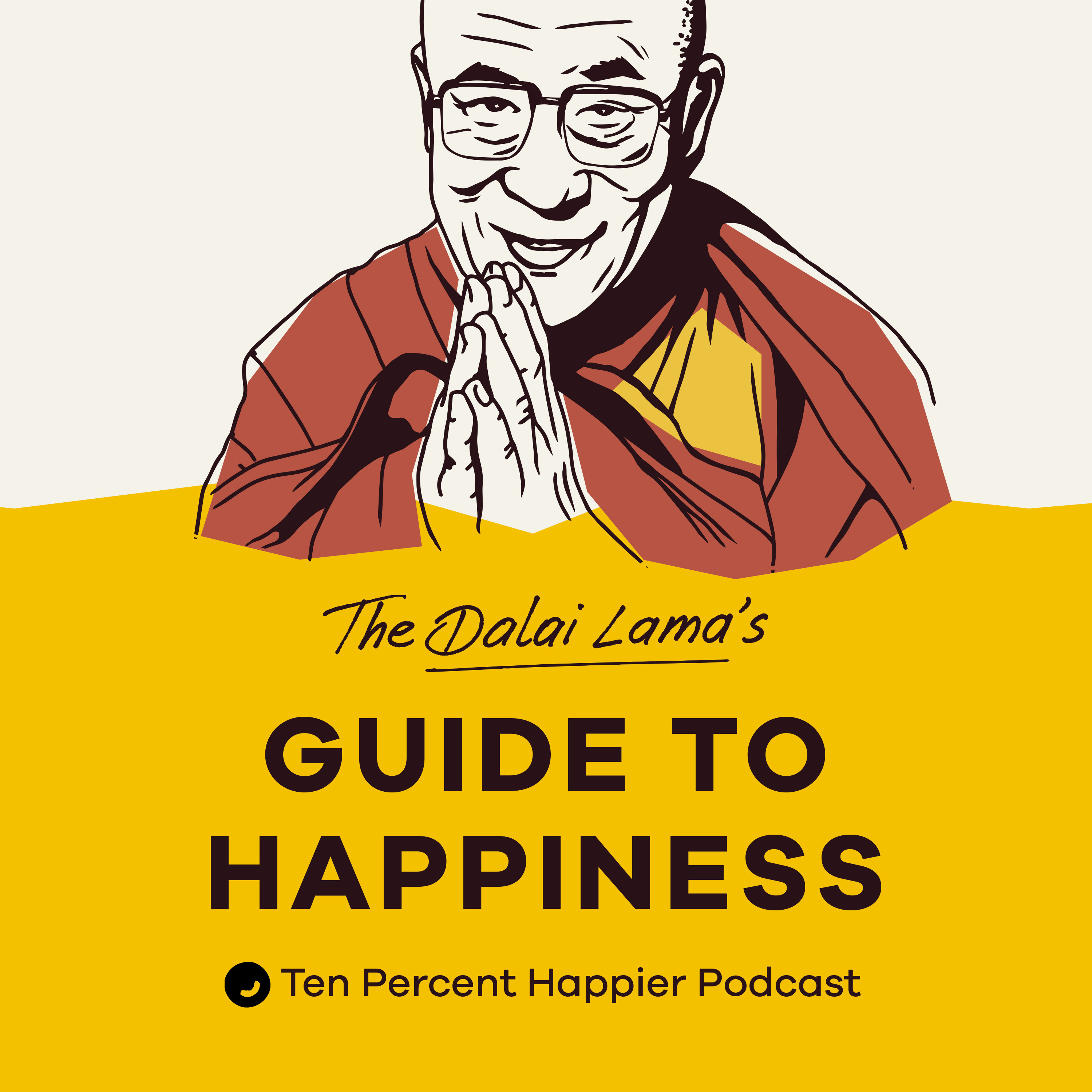
Ep 538The Dalai Lama's Guide to Happiness | Part 1
Dan flies to Dharamsala, India to spend two weeks in the orbit of His Holiness the Dalai Lama. This is the first installment of a five-part audio documentary series, something we've never done before now. Over the course of the episodes, we talk to His Holiness about practical strategies for thorny dilemmas, including: how to get along with difficult people; whether compassion can cut it in an often brutal world; why there is a self-interested case for not being a jerk; and how to create social connection in an era of disconnection. We also get rare insights from the Dalai Lama into everything from the mechanics of reincarnation to His Holiness's own personal mediation practice. In this first installment, Dan watches as a young activist directly challenges His Holiness: In a world plagued by climate change, terrorism, and other existential threats, is the Dalia Lama's message of compassion practical — or even relevant? Full Show Notes: https://www.tenpercent.com/podcast-episode/dalai-lama-guide-538 Other Resources Mentioned: Healthy Minds Innovations Compassionate Leadership Summit Additional Resources: Download the Happier app today: https://my.happierapp.com/link/download