Your Intended Message
311 episodes — Page 5 of 7
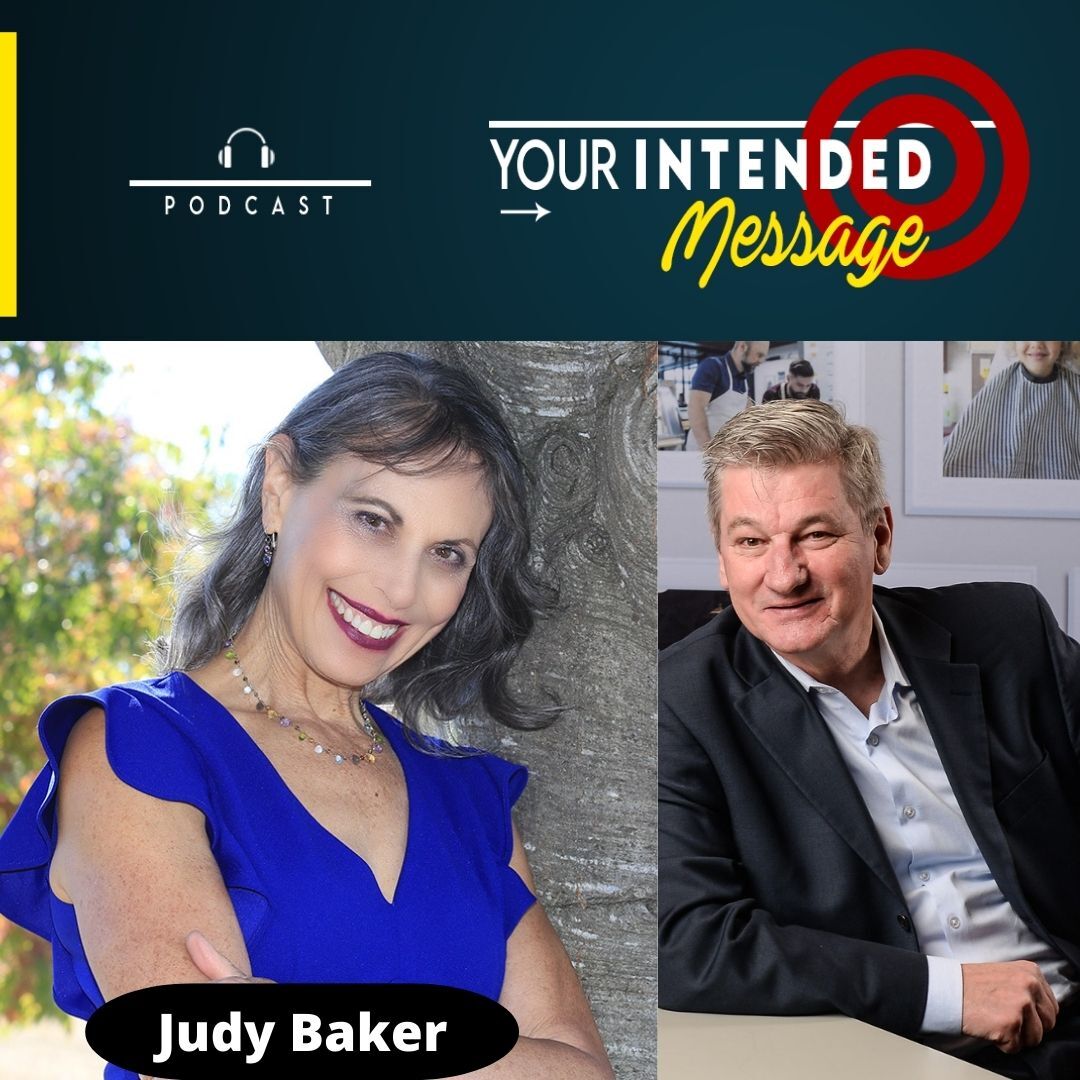
Ep 111Book Marketing for Authors: Judy Baker
How to use a book to promote your business Write and publish your book, then promote it to boost your success Episode 111 {Judy is based in California) In this conversation with Judy Baker we explore: How to leverage your book as a business marketing tool Five mistakes to avoid when marketing your book Why give your book to clients and prospects as a gift What you and me have in common with the armadillo How to positive your service business with a competitive advantage What you can learn from the reshaping of the wine business in North America What you can learn about marketing even if you don't have a book About Judy Baker: Book Marketing Mentor, Judy M. Baker, helps business authors get more bang for their book, turning content into cash long after a book launch. After conquering cancer in 2014, she became an author advocate and self-publishing evangelist. Her memoir will publish in 2022. Her workshops and one-on-one mentoring sessions have inspired hundreds of author to build awareness about themselves, their books and their businesses. bookmarketingmentor.com Are you a nonfiction author that wants to revisit your book marketing strategy? then visit Book Buzz Audit to arrange your 30 minute mentoring session with Judy Baker. No charge, no obligation. BookBuzz.Audit.com ----- Excerpts from this conversation with Judy Baker: 04:59 Oh, Well, you brought up a good point because that would make a great subtitle. But if your intention is, how do you know it's about your brand, or how you show up or how you make an impression on people, you want to look at a title that is, well, and these days, this is even more important. Most of the time, people are not walking into a physical bookstore, they're looking for you online. And so a short title, one or two words is far better. And then you can have a humongous subtitle, you could have, I think it's up to, like 30 words in the subtitle. So amplify what that book is about, but grab people's attention with something that is very important to them, and tells them what they're going to get out of it. You're You're completely right on that someone I just interviewed recently has a book out called raise your fees, without losing clients? Well, yeah, you know, immediately what that's about. Now, that's a little bit longer title than, then I would typically say, but because she knows her audience really well, she came up with the title after she was working on the book. And that's the other thing, you probably are going to have a working title, great. But what you wind up at the end, might be something different. And you can find out if it resonates with people, because you ask them. And that's, that's a that's another thing authors often do that can hold them back. You write on your own, but at some point, you need to collaborate with editors, with your book designer, you need to interact with the people you intend the book for, and get their feedback. And if you've ever looked at any of the successful book, funding campaigns, crowdfunding, Indiegogo, or Kickstarter, you're going to see that people are saying, Oh, here's my ideas. What do you think? And do you have any suggestions? And if you know, here's, here are my possible covers. So when you get engagement going on as early as possible, that's fabulous. But sometimes you don't know until after. And if you're self published, it's a lot easier to change your book cover and your book title. But even if you are working with a team, listen to what other people say, we can't we don't see ourselves the way others do. We don't see that our books the way other people do. So we need to ask questions. ----- 24:36 Judy, you told us some of the mistakes they made. What are some of the best practices that you've seen people do? 24:55 Well, one of the one of the best strategies I've seen is creating companion pieces to your book. Some authors are now are now creating a limited series podcast where they're sharing information about the book. And that makes it a little more manageable. But if you say, Okay, I'm going to do a series based on my book, and maybe I'm gonna go chapter by chapter and are just part of it, then you're revealing information, but you're inviting people in. So that's really great. The other strategy that seems to be very effective is not only audio, but video. So if you are a nonfiction author, and you serve your clients, there's probably something you're doing that's included in your book that you could do short short videos about, and put that out there. And this is another tip. If you're doing video, yes, put it up on YouTube, because YouTube is one of the largest search engines. But you want to make sure that video in its native form, if you're going to use it on social uploaded in its original form, on to say LinkedIn, or Facebook or Twitter or Instagram. Because there's a bias on all of those rented platforms, for native information, they don't want you going out the door, they want to keep you on the pl
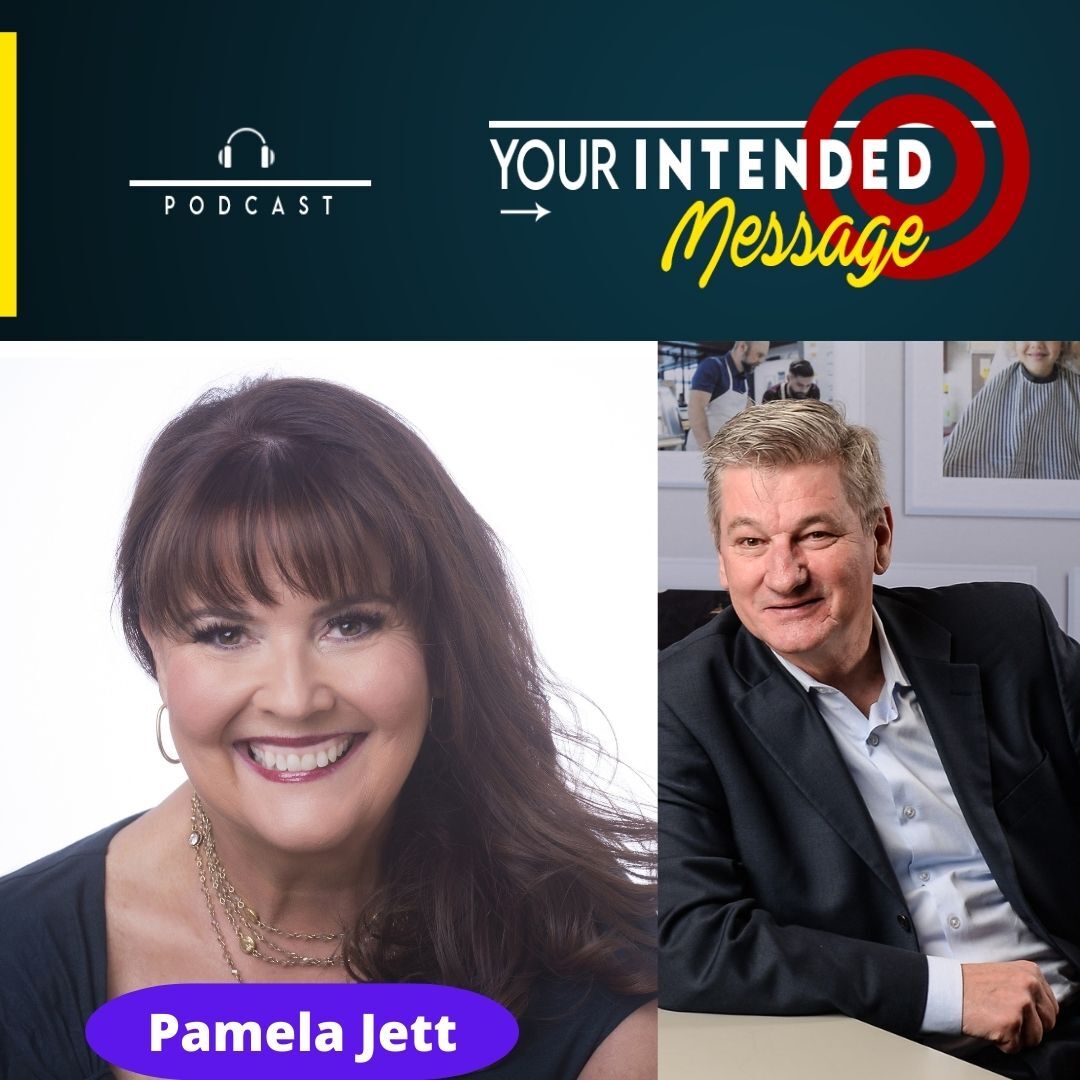
Ep 110Communicate in the Positive Instead of the Negative: Pamela Jett
How to be communicate to your team in a positive way How to tame the negative thoughts in your head that can sabotage your success Pamela Jett is a leadership and communication skills expert who has been working with leaders for almost three decades to them communicate, lead and succeed. Episode 110 (Pamela is based in Arizona) In this conversation with Pamela Jett we explore: The critical difference between being relentlessly positive instead of pursing happiness (happiness is an unrealistic goal) Words to chose and words to lose (stop sabotaging your intended message) How to stop the negative ranting in your head The three principles of positive communication Situational life-saving phrases to escape emotional traps How to communicate as an effective leader in any situation About Pamela Jett: As an internationally recognized communication and leadership expert, speaker, author, and executive advisor, Pamela Jett works with professionals to better understand that choosing to be “Relentlessly Positive” even in difficult situations isn’t naïve… it’s leadership. After graduating from San Diego State University with a degree in Speech Communication and receiving recognition as one of the top 20 speech and debate competitors in the country, Pamela went on to earn her master’s degree in Communication. It was while pursuing her Ph.D. at the University of Utah that her love of teaching adults powerful success skills was kindled. Learn more about Pamela Jett and her programs at her website www.PamelaJett.com Learn more about the turnkey leadership academy here. No charge to check out this coaching assessment quiz. ----- Excerpts from this conversation with Pamela Jett: So I believe in instead of chasing happiness, I believe and fostering relentless positivity or choosing to be relentlessly positive. Because when I am relentlessly positive, my likelihood of having happiness increases. So in many ways, relentlessly positive attitude is one of the key drivers of happiness. And relentless positivity is all about our mindset. ----- 03:39 Okay, so we just had a fire in the plant. How can I be positive about that? Well, here's the key. Relentlessly positive communicators focus not on the past, they focus on the future. So they would acknowledge the devastation or the challenge. So a great leader would say something like, we have just had a very devastating fire. And I am confident that we as a team can put together a fast recovery plan so that we can get back on track in a timely fashion. So there are a couple of keys to that. The first is acknowledging that something bad happened because if you're a leader after a devastating fire in a plant, and you go in and you say hey, it's gonna be a great day, and you use that rah rah, cheerleader, kind of happy clappy positivity, that doesn't work. But if I say, yes, we've had something bad happen, we've had this bad fire. And so the word and is a word to choose the word but is a word to lose. Because if I said, Oh, we've had this devastating fire, but it really kind of negates that empathy piece that I just gave as a leader. And if I don't acknowledge that this was tough, everybody's gonna think that I am as a leader, completely delusional that I don't have any empathy that I have no feeling for what they're going through. But if I say, hey, this was a really, really devastating fire, and I'm confident that we as a team can put together a great recovery plan, I use the and it doesn't negate my empathy. And then I'm using another principle of relentlessly positive communication, which is the future focus. And I'm confident we can put together a great recovery plan. So it gets us working on solutions, not sitting there moaning and groaning over the problem. Now, that's a very simplistic example. That is how relentlessly positive communication differs from that rah rah cheerleader, have a good attitude, always be positive. Look, on the bright side, it's very strategic. I'm doing it intentionally to build trust with my team. And I'm doing it to also help move forward into problem solving. ----- But if I just accept, or even simply say, Wow, that was interesting, which is a neutral statement. Wow. That was interesting. ----- 16:07 Feelings drive decisions, not logic, not reason. And I know, when people are listening to this, they might be thinking, wow, that's not true. I decided to buy my car because I researched and I did and yes, you do that, and you have your data and your logic and rationale to back it up. And some people have the space between the feeling and their decision is just so minuet that they can't be they don't recognise that they're gathering those facts. For some of us, Hey, I know I've got a feeling. And I am aware now that I'm gathering facts, and I've made my decision, neither way is right or wrong. It's just some people make their decisions so differently, and they gather their facts so quickly, they can't really recognise that they went through a feeling phase b
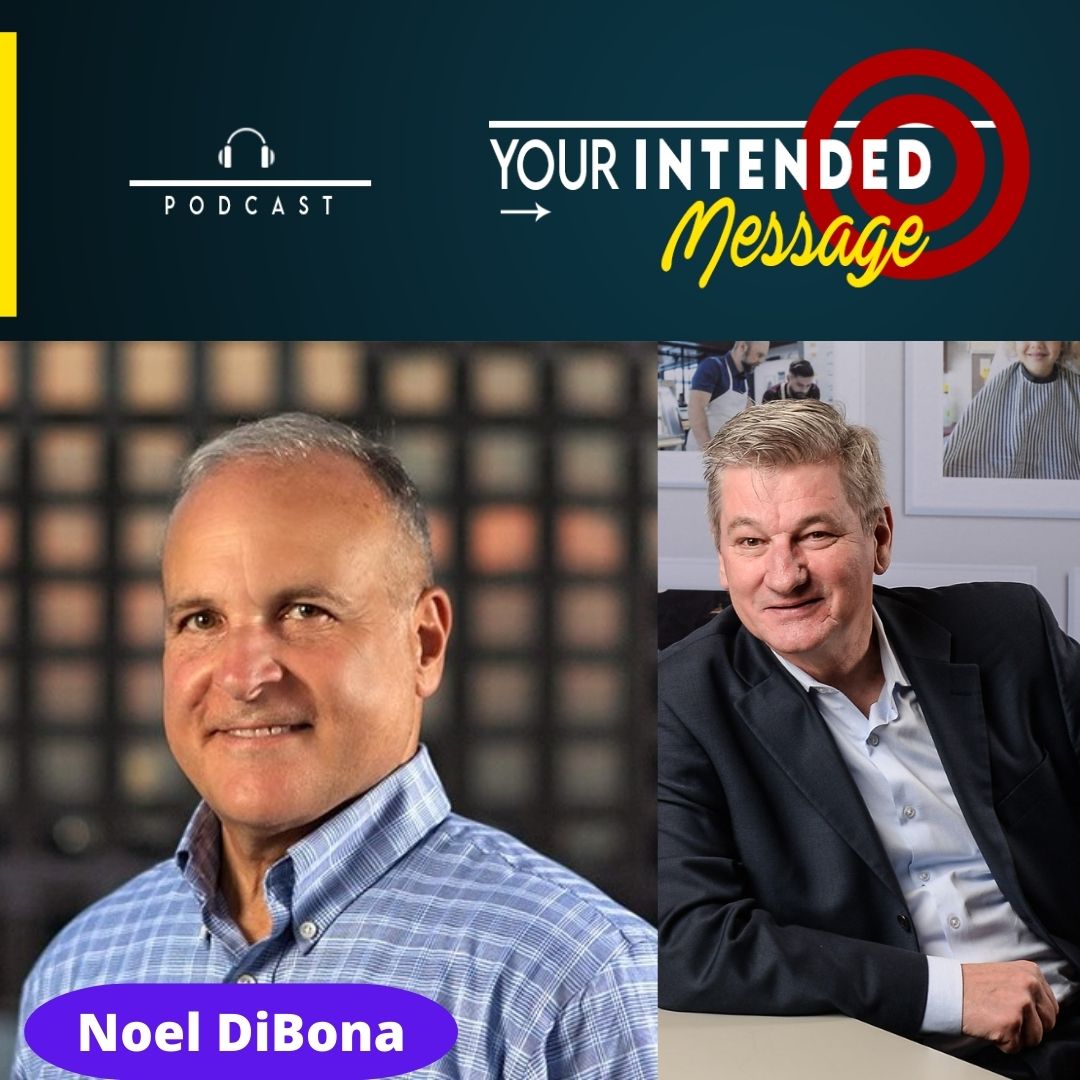
Ep 109Building High-Performance Teams: Noel Dibona
Self Awareness and Openness Builds Winning Teams What can we learn from the Special Forces to build workplace teams? Noel DiBona has served on high performance teams in private business and in military Special Operations. Episode 109 (Noel is based in North Carolina) In this conversation with Noel DiBona we explore: How self awareness is the foundation for strong teams The importance of sharing strengths and blind spots Recognizing the effects of stress on you and your teammates Behavioral analysis and how to use it How not to forgo your perspective and authentic self When independence and collaboration clash About Noel DiBona: Noel began his career as an operations supervisor in a Clorox manufacturing facility and he was frustrated at the lack of productivity. He set out on a mission looking for ways to build better teams. Over 35 years he served on high-performing teams in military special operations and business. While serving in executive management at Fluor Corporate, CH2M and Tetra Tech he perfected a system to develop high-performing teams. As a consultant he has helped clients save millions of dollars through better resource use. His clients included Electrolux, DuPont, GSK and many others. Learn more about Noel DiBona and his services for building high-performing teams at the website www.ConsultDiBona.com You can arrange for a Team Improvement Plan (no charge) at the website. Excerpts from this conversation with Noel DiBona: 02:13 Delighted to be talking with you all. And I'm curious of all the teams you worked on, I would imagine working in Special Forces, one really learns how to appreciate all the nuances of a team working together for one purpose. 02:31 Absolutely George, in a team such as that high performance team, we all knew what our jobs were, we could fill in with for each other, we were cross trained, and were brutally honest with each other. But we would put our lives on the line for one another. So it was what you would consider to be the utmost highest respect, trust and open communication that you could possibly expect of any high performance team. It was truly a pleasure and an honor for me to be part of that through my career. 03:03 And Noel, did you find that you could take lessons learned in that team environment and apply it into business? 03:11 Absolutely, George, one of the things that we were able to do, when I came out of the military was really understand how people are orienting themselves towards getting their work done and how everybody works just a little bit differently. And when I came out of the military, I was very prone to looking forward to talking to people to understand what they were doing. And to just put myself in the learn mode. I was very inquisitive, asked lots of questions. I wanted to know how everything worked. And I got that from being in the military, because we're in contact with so many people, so many different folks from different walks of life, that I'm extremely comfortable dealing with many, many different types of individuals. And so right from the very beginning, when I got out of the military, I was focused on really building relationships with the people I worked with. ----- 06:52 In taking a deep dive into understanding ourself, and perhaps putting into words, features, characteristics that we never put into words, that's probably good for ourself. Is that also meant to be shared with the team saying, Hey, guys, here's how I think here's how I think through things. So please don't take it wrong when I do this? 07:18 Absolutely. The second part of this is for each individual on the team, to have an honest conversation with one another about their strengths, and their potential blind spots, the things that might make them a little bit not so easy to get along with when there's pressure and stress. We can talk with each other very openly, honestly, and in a cordial way, when there's no heat on us. But as the team comes under stress, the stress of everyday business, depending on what's happening in that company, people begin to work in a way where they might over utilize their strengths. And when they over utilize their strengths, there's a flipside to the good things that we do. For example, we might be really proactive, and we might be independent minded, which is a really good thing when you're trying to bring change about in the organization. However, if the other people are more collaborative, and I'm under a lot of stress, then it's going to come across in a way that might not really be that good to build teamwork from it might tear down teamwork a little bit. So we want every individual to have an open and honest conversation with one another, in order to gain a better sense of appreciation of who we are. And we can do this with people that have worked with each other for years and years. And sometimes they know, obviously, a little bit more than if they had just started working with each other. But it's really, really interesting to no
Ep 108Leadership Story Telling: Alan McLaren
Why Leaders Need to Tell their Stories How story telling teaches, builds the brand and humanizes you Alan McLaren was the global chairman of YPO (Young Presidents' Organization) Episode 108 (Alan is based in Oakville, Ontario) In this conversation with Alan McLaren we explore: Why leaders might be obligated to tell their stories How story telling helps the business The effective use of story telling as a teaching tool The relationship between passion and authenticity The writing on your tombstone Overcoming the challenge of impostor syndrome Story telling though videos About Alan McLaren: Alan has served as CEO of InfinityComm, a creative marketing agency, for 17 years. As Global Chair of YPO, he lead a board of 15 global CEOs serving 32,000 members in 150 countries with aggregate company revenues of more than $9 trillion. STRATA Originals is the program for leaders who want to raise their voice and start a conversation that will engage audiences and build trust. Learn more at the website, InfinityComm.ca ----- Excerpts from this conversation with Alan McLaren 03:46 CEOs need to get their voice out there in a big way. Because? 03:52 Well think about this for a moment. I think there's one part is a bit of a mandate. Our view is, if you've reached a certain level of success in life, isn't it important to give back the things you've learned? And only you have learned them. By the way. We could argue that there have been 10,000, maybe more books on the topic of leadership. There's only one human that's experienced your leadership journey. And that's you. So wouldn't that be awesome to be able to to express your learnings to others? So that's kind of number one, we think it's imperative on leaders to be able to spread that message. But there are other reasons there's building your personal brand, it can actually help grow your business. I've got a dozen reasons why. But it leads to credibility. You can develop strategic relationships. George, how did we connect again, you saw me on LinkedIn, because I'm out there with my voice and giving me an opportunity to now to share that with your audience. That's how the game is played. When you're out there, stuff will hit you. So what a great opportunity to get out there teach and then also get opportunities to grow your business and grow your brand. ----- 05:01 Teach? CEOs don't often think of themself as teachers. Should they? 05:09 Well, let's think about it in the context of leadership and coaching. We all know that great leaders are also great coaches. It doesn't mean that everybody with a title is a great leader. Right? We all heard that before. But a good coach is someone who asks great questions. And by the nature of asking great questions, you need to be very knowledgeable about the topic. So you can have really insightful questions asked, right. We've all worked for people who were incredible leaders, because what they asked us questions that got us thinking about things. So what we want to do is encourage, and it's part of the learning as well as if you're not a good teacher. Let us teach you to be a storyteller. So if we teach you to be a storyteller, I mean, George, in your world, as you know, you teach people to be storytellers to be able to get their message out there. It's not just here's the three things on the PowerPoint and go from because it bores the crap out of people. You want people, engulfed in your story and engulfed in your message. So we want to teach people to do that. And through stories, they will express their experiences and ergo teach people. So it's not in a traditional way of going to school and learning these three things. No, it's let me share my experience with you. And hopefully, you'll garner something from that. So that's why we we help them do that. ----- 17:01 Alan, you mentioned that when you started creating videos, what took off wasn't your expertise, but it was what you were passionate about. And my guess is that that passion was easy to identify, when watching the videos, like clearly this guy is passionate about this as opposed to lecturing. And is that a criteria that a CEO needs to examine before they start spreading their thought leadership? 17:35 George, thank you for that. It's the number one thing when you discover passion. There's nothing that can be faked about that. And so when we look at that, and sometimes by the way, that passion doesn't necessarily relate to the business. We have a client, who is a competition lawyer, but his passion and his stories come around the power of ideas, to spread my message, which is about hope for the world. And so it's nothing to do with it. His experience, obviously is helpful. But his passion is about helping people. So that's what we do with him as we discover that and there are many permutations, by the way of all the customers we have, there's not one that's exactly the same. Their passions relate sometimes directly to their business, but often they don't. So they're either
Ep 107Writing Stimulates Critical Thinking: Jim Rowe
Critical Thinking and Communication Skills are Linked How effective communication skills can save time and money Jim Rowe has 45 years in marketing both on the client side and the agency side. Episode 107 ( Jim is based on Long Island, New York) In this conversation with Jim Rowe we explore: The skills gap and why we should change STEM learning to STEAM The skills gap in problem solving and writing skills Why writing is essential to critical thinking Why writing skills have suffered and what can we do Why people don't know what they don't know How communication challenges wastes executives' time The importance of getting messages down to one page About Jim Rowe: Jim served as Brand Manager with Coke, VP Marketing with Cutty Sark and President of two small Satchi divisions. Currently leading Jim Rowe Marketing. Jim published a 2-book series, Get Your Ducks in a Rowe. It's a fable that helps executives address the skills gap of their new employees. ----- Excerpts from this conversation with Jim Rowe To write is to think ----- ADAPTER Analyze - Deduce - Author - Preform - Tackle - Evaluate - Refine ----- 03:38 What has happened is that the we are not really teaching our young executives and young people in school, we're not teaching them to be disciplined thinkers in order to communicate better. And I think what happens is, you know, if you say to somebody, do you know how to write and you know how to think, and you know, how to communicate, everybody's gonna say, yes, because we do it all day long on social media. However, there is so little training as it relates to writing and that to me, my fundamental premise, here is five words - to write is to think. And I think we do so little writing that doesn't fit we don't, and students in general, and a lot of executives, if we don't spend our time writing, we're not training ourselves to think clearly. And I think that's really a big part of the problem. ----- 34:06 And Jim, I think I heard a message in there is that investing in improving the communication skills, saves money. 34:14 Well, yeah, it saves money. And because what is the big phrase that we've heard all of our lives "Time is money". And think about the senior executive, his most precious personal resource is time. And wouldn't you know, when I walk into a meeting, and everybody's not sure nobody had an agenda, I have a very good friend who was just hired away from a big company to go be the account person at another huge company. We know all the names. And in the interview, because he read the book, and he loved it, and he and he said to me, You know what, one of the questions they said and the point they made, it would be great if you could just get here and get everybody to have an agenda for the meeting. Isn't that incredible? Isn't that incredible than an enormous organization is concerned that nobody is pulling the team together. I have another friend who's in a small company read the book Love that. He said, I'm thinking of using this for everybody because our zoom meetings because they're all over the country, they're chaotic and people are talking. Just go through the simple 10 step process. You know when you're setting up for a golf swing, there's about six steps you got to do and trying to keep them on your mind is one thing. The same goes true for communication and thinking, follow the format and everything is going to be a little bit easier for you. ----- ----more---- Your Intended Message is the podcast about how you can boost your career and business success by honing your communication skills. We’ll examine the aspects of how we communicate one-to-one, one to few and one to many – plus that important conversation, one to self. In these interviews we will explore presentation skills, public speaking, conversation, persuasion, negotiation, sales conversations, marketing, team meetings, social media, branding, self talk and more. Your host is George Torok George is a specialist in communication skills. Especially presentation. He’s fascinated by the links between communication and influencing behaviours. He delivers training and coaching programs to help leaders and promising professionals deliver the intended message for greater success. Connect with George www.SpeechCoachforExecutives.com https://www.linkedin.com/in/georgetorokpresentations/ https://www.youtube.com/user/presentationskills https://www.instagram.com/georgetorok/
Ep 106Embrace Your Servant’s Heart: Jim Hardwick
Giving will reward you more than taking Yes, you can build your business and life with the intention to serve Jim Hardwick is a Fractional VP Sales who has started leading a C suite executive retreat to Kenya. Episode 106 (Jim is based in Phoenix, Arizona) In this conversation with Jim Hardwick we explore: What does it mean to embrace your servant's heart? How can you get more success by giving instead of taking? What if people take advantage of your generosity? Why did you start leading dental expeditions to Kenya? What benefit does a fractional VP Sales bring to a corporation? About Jim Hardwick: Jim is president of Aspire Sales. He has over 25 years experience as a VP Sales and offers his service as a fractional VP sales for corporations. He and his wife, Jody lead a dental team to Kenya each year. In 2023 Jim will lead a safari experience to Kenya for C suite executives with an emphasis on how to embrace your servant's heart. Jim welcomes your questions about sales. Enjoy a no-charge conversation with him. Call him - 623-451-1080 Email - [email protected] Jim Hardwick on Linkedin Excerpts from this conversation with Jim Hardwick Don't serve to say, "I served". It's not a checkbox --- But if you don't have that passion, then serving becomes a chore. And when it's a chore, then it's not your heart that's serving. .You're serving because you feel obligated to serve. Once you find that passion like we found in Kenya, the place we never wanted to go, It's amazing what transpires. ----- I give away free advice. If you have sales pain, if you need a question about sales, call me. I'm here, call me. When I do that. George, I get calls. I talked to a CEO of a health care company, I was in healthcare for 36 years. And he knows software, unbelievable. He's got a great program, but he's still trying to learn about health care, I spent an hour with the gentleman. I didn't bill them for my time, because if I can help him elevate his business, guess what, we all win, because that's going to come back to me someday. And that's, that's the way I live my life. I don't worry about where my next clients gonna come from. 26:59 I would say be real, be vulnerable with your employees build trust, when you can gain that trust, and the employees know that you're there to help them be successful. And they sincerely feel that your business is going to take off. It's just taking that extra two minutes, sometimes just to praise somebody when they've done a good job with recognition. And you've acknowledged them. I've seen it a lot where in this is not necessarily the case in small business owners, but for large corporations, when the CEO walks in walks in, you can tell a joke and it might not be funny, but everybody laughs right, because that's the right thing to do. The important thing for those folks, is it down on the level of your employees understand what their issues are. Don't surround yourself with all the Yes Men. We'll be out in the field, talk to your customers, your customers that are buying from you. If they're not buying from you better darn well figure out why because ultimately, it's your responsibility. So it's not hard. The people make it hard. It's that trust. It's that vulnerability, and then lead with passion and lead with that servant's heart. ----- ----more---- Your Intended Message is the podcast about how you can boost your career and business success by honing your communication skills. We’ll examine the aspects of how we communicate one-to-one, one to few and one to many – plus that important conversation, one to self. In these interviews we will explore presentation skills, public speaking, conversation, persuasion, negotiation, sales conversations, marketing, team meetings, social media, branding, self talk and more. Your host is George Torok George is a specialist in communication skills. Especially presentation. He’s fascinated by the links between communication and influencing behaviours. He delivers training and coaching programs to help leaders and promising professionals deliver the intended message for greater success. Connect with George www.SpeechCoachforExecutives.com https://www.linkedin.com/in/georgetorokpresentations/ https://www.youtube.com/user/presentationskills https://www.instagram.com/georgetorok/
Ep 105Communicate in the Hybrid Workplace: Brenden Kumarasamy
How to communicate in the changing workplace Build smarter relationships with the people around you Brenden Kumarasamy publishes instructional videos on his YouTube channel, MasterTalk with over 25,000 subscribers. Episode 105 (Brenden is based in Montreal, Canada) In this conversation with Brenden we explore: The challenges of communicating well in a hybrid workplace How to build stronger relationships by managing your energy How questions can improve your communication and hence relationships Why a phone call or video message can make a big difference How to rate your relationships on value Why treating people fairly doesn't mean treating them all the same Three exercises to boost your communication skills Why you need to care better for your best relationships About Brenden Kumarasamy: Brenden is the founder of MasterTalk, he coaches ambitious executives & entrepreneurs to become top 1% communicators in their industry. He also has a popular YouTube channel called MasterTalk, with the goal of providing free access to communication tools for everyone in the world. For free resources on how to improve your communication skills, visit RockStarCommunicator.com Excerpts from this conversation with Brenden Kumarasamy If you communicate 20% better, not 200% better, not 200,000% better. If you communicate 20% better than your competition, you will stand out 100% of the time. 02:21 So the way that I think about this, George is communication is so much more than giving a presentation at work or doing a job interview. It's every interaction we'll have with every human being will meet for the rest of our lives. It's the way we talk to our families. It's the way we order food at a restaurant, and we talk to the waiter. It's the way that we travel. When we meet strangers, we don't know we have to speak their language and figure out how to talk to them. So we can have a good time communication. Once we realize George is not just about increasing the bottom line, but leading a fulfilling life. That's when we start to take it more seriously. And the question to think about as we get this conversation started, George is how would your life change? If you are an exceptional communicator, a lot of us dream about our vacations, we dream about the expensive things we want to buy. But we don't dream hard enough about a world in which we're a great communicator in it. ----- 28:13 And And now, what does that mean to people when they go back into the workplace? If they had a set of rules for Okay, when I'm in a online meeting versus an in person meeting? What should I do differently? 28:28 100%. So there's three key differences. The first one is eye contact. So in their virtual George, your eyes generally just stay in one direction, which is the camera lens, whether you're speaking to one person or 10,000. But in person, meaning let's assume 16 People for the purposes of this podcast, you have to move your eyes across, because there's just looking at one direction, most of you gonna be like, oh, did this person care about me does this person and human beings start to invent stories in their mind around while you're not looking at them. Human beings are fascinating creatures. So that's the first thing is I would start there. The second difference between online and in person is there's the less friction to get feedback. So in an virtual meeting, if you want to get feedback on how it went, things we could do differently. You have to really sit them down one on one, get a zoom call, it's a lot more formal. In person, you'll say Okay, guys, how did that go? What can we do next time it's a lot more. It's not the right term is but it's a lot more vivacious. It's more live, it's more like it's within the energy, it's in the flow of the group. Whereas in virtual, it's not as it's not as cool. It's not as interesting. That's probably the second key difference. And then the third difference is the follow up. So the follow up means if you're in a meeting with somebody in person, I mean, you guys can hang out after the meeting. Right? You can get some dinner after it's a lot easier. It's much harder, virtually. So my best bet now I gave different advice at the height of the pandemic but I'll So my advice now is if you're having too many virtual meetings with your team, try to find a way to meet them in person, if you can, if you can, if not do the virtual social hour if you want. But ideally, you want to try and get those things back in person. And one special tip I'll give, that a lot of leaders I coach don't really do enough, is if you all have a fully remote team, write down everyone's location, so that when people join the company, introducing the people in their own city so that at least they can meet in many groups, I'm so surprised at the fact that nobody really takes that extra step. And it really makes a difference. ----- So at Rockstar communicator.com, you'll find access to a ton of free trainings that we do on communication, w
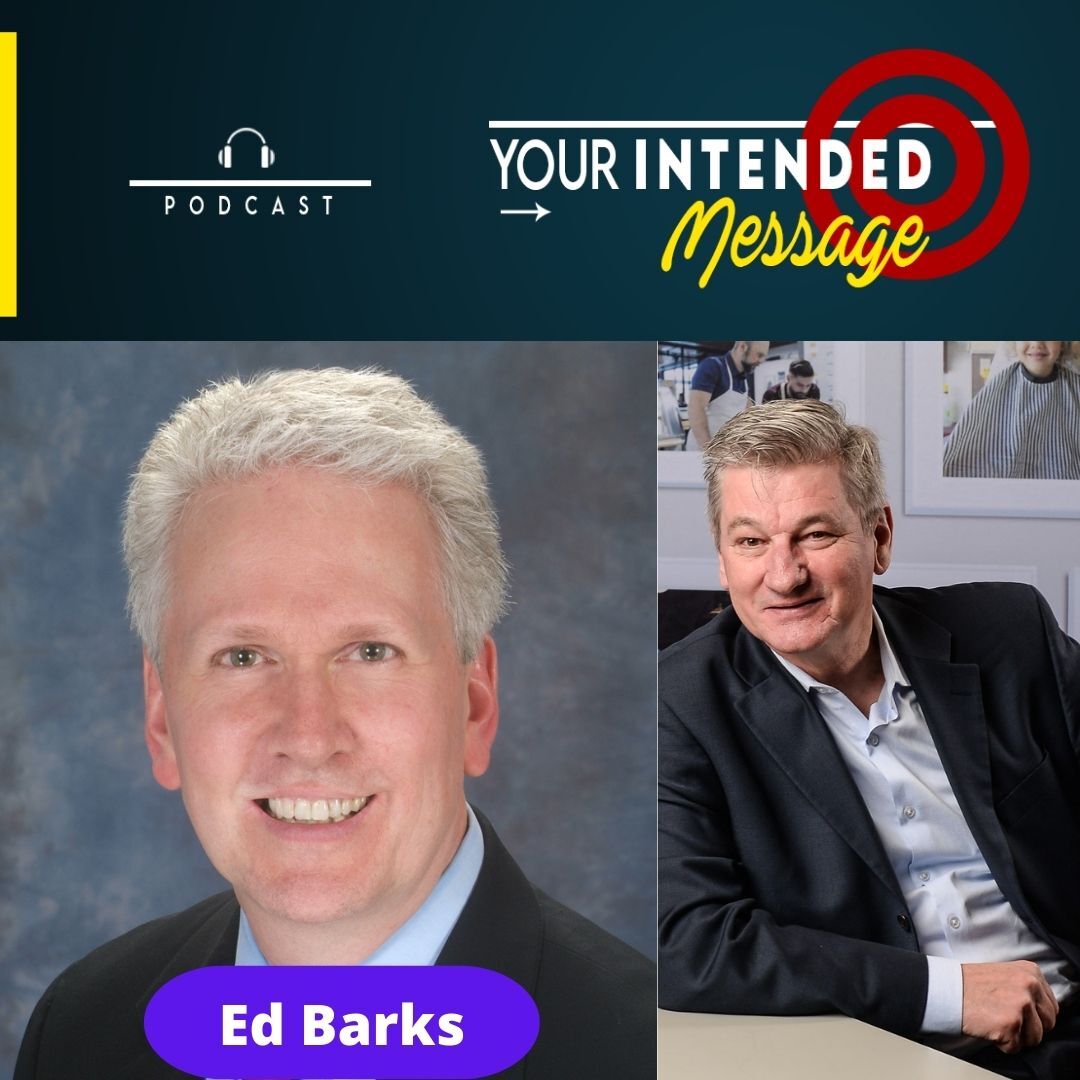
Ep 104Talk to the Media: Ed Barks
Why and how to talk to the media? Talk to the media to convey your corporate messages with personal flavor Ed Barks has 25 years experience as a specialist in media communications. Episode 104 (Ed is based in Washington DC) In this conversation with Ed Barks we explore: Why business leaders should develop positive relations with the media How to approach the media to help spread your message How to prepare for media interviews How to answer questions that you don't want to address Why you should never say "No comment" When the office sceptic becomes an asset How to develop your soundbites About Ed Barks: Ed is president of Barks Communications with 25 years experience working with communication and government relations executives to help their companies reach long-term business and public policy goals. He is the author of four books. The most recent is "Insider Strategies for the Confident Communicator: How to Master Meetings, Presentations, Interviews and Advocacy. https://barkscomm.com/eds-books/ ----- Excerpts from this conversation with Ed Barks Internalize your message so you can verbalize your message. 02:57 I'm going to kind of flip that a little bit George, if you don't mind and talk about the positives of it. And when you look at how you're interacting with the media, you need a number of things. And let me focus on two right at the top. First is your message, you need a magnetic message or George as you refer to it your intended message. So it's a matter of knowing what you're going to say it's developing that message ahead of time, and it's being able to stick to it during the course of your interview. No matter what questions come up, and what questions the reporter may toss out, you need to keep coming back to that message. Now the second key that I'll mention is the notion of sustained professional development. You can't just do one interview and think you've got it nailed. Or certainly you can't go into your first ever interview without any preparation in any planning. So what that indicates is that you need to over the long haul, sharpen your communications edge. And that involves starting off perhaps with low risk situations, maybe you're talking to a local shop or a kind of newspaper or a trade journal that doesn't get a whole lot of circulation. And then you build upon that until maybe one day you're ready for CNN or the New York Times. So those are a couple of things that are key right off the top. ----- 18:22 And when when one is being interviewed by a reporter, is it is the rule that you must answer every question. 18:34 Well, you have to answer every question. Sure. But on your terms, and what I mean by that we talked we spoke a few moments ago about some techniques for dealing with Q&A. And so you need to look at how you can manage those questions and build a bridge from that question to your intended answer your intended message. So look at how you can take the question and build upon it and you don't want to be accused of spin. You know, we've all heard these, Sunday morning talk shows where the host says to the senator, well, gee, isn't this a beautiful day outdoors, and the senator says, Well, yes, my favorite color is red. You can't be talking on on two distinct planes like this, you have to find a way to meet in the middle. So that's where those techniques for Q&A come into play. And I go into those in depth in both Reporters Don't Hate You and in the most recent book, Insider Strategies for the Confident Communicator. ----- ----more---- Your Intended Message is the podcast about how you can boost your career and business success by honing your communication skills. We’ll examine the aspects of how we communicate one-to-one, one to few and one to many – plus that important conversation, one to self. In these interviews we will explore presentation skills, public speaking, conversation, persuasion, negotiation, sales conversations, marketing, team meetings, social media, branding, self talk and more. Your host is George Torok George is a specialist in communication skills. Especially presentation. He’s fascinated by the links between communication and influencing behaviours. He delivers training and coaching programs to help leaders and promising professionals deliver the intended message for greater success. Connect with George www.SpeechCoachforExecutives.com https://www.linkedin.com/in/georgetorokpresentations/ https://www.youtube.com/user/presentationskills https://www.instagram.com/georgetorok/
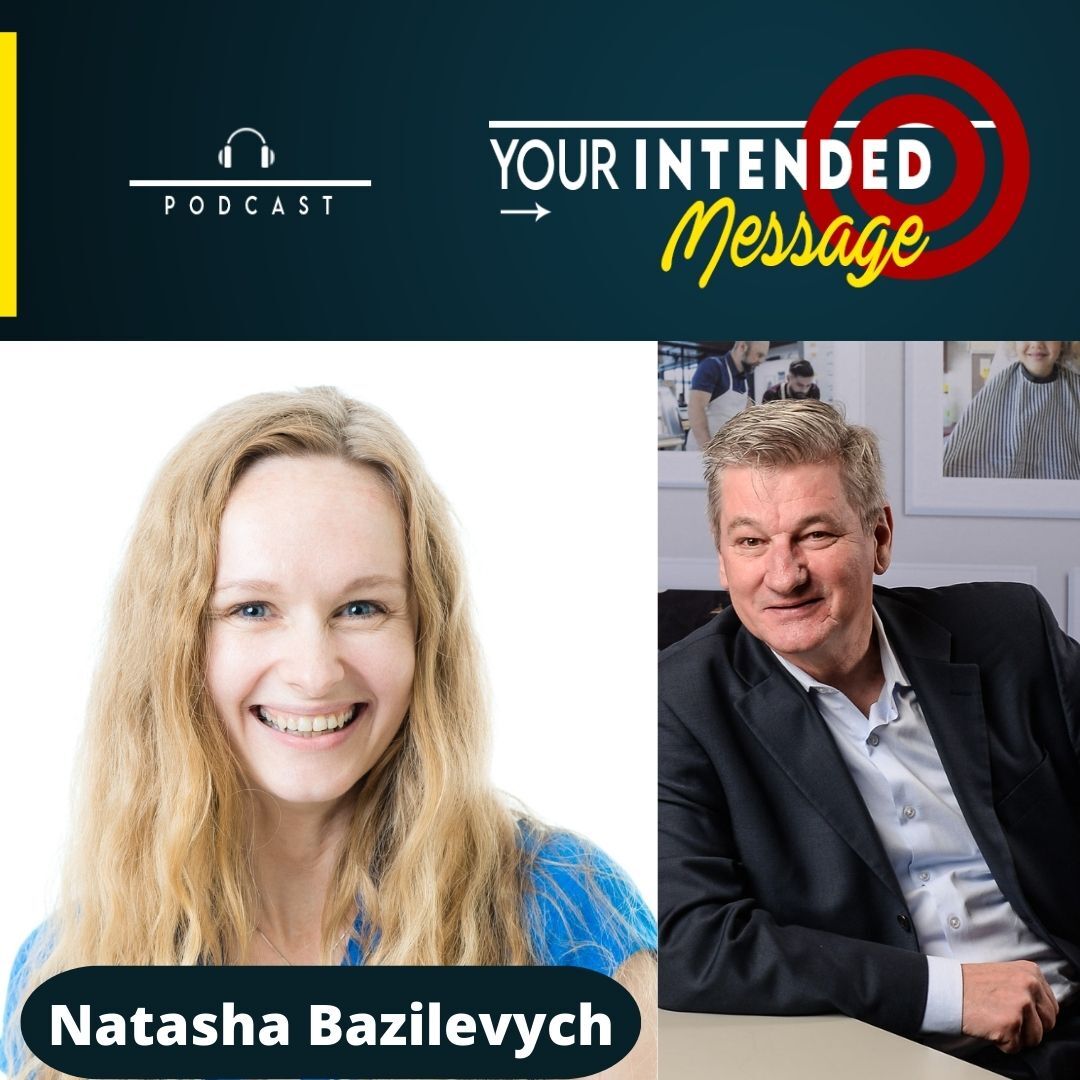
Ep 103Overcome the Fear of Public Speaking: Natasha Bazilevych
How can you handle the fear of public speaking? How can you become a more confident public speaker? Natasha Bazilevych has been teaching presentation skills for about 15 years. Episode 103 (Natasha is based in Delaware) In this conversation with Natasha Bazilevych we explore: How to channel anxiety as energy How to use exposure therapy to overcome your fears Why you need to focus on the audience instead of yourself How to build your speaking skills like any other skill set Why your past does not determine your future About Natasha Bazilevych: Natasha is a public speaking coach and trainer. As president of ChangeView Academy she helps entrepreneurs develop[ their business skills do they can create a successful business and life. Learn more about ChangeView here. She has run 7 marathons and 11 half-marathons. She hosts the podcast, Speak with Power Podcast. To learn more about Natasha and her services visit the website www.NatashaBazilevych.com When you are there you can sign up for the free Public Speaking 101 video course. ----- Excerpts from this conversation with Natasha Bazilevych 03:03 When I present, I experience a little bit of nervousness at the beginning, which I love. And that's another rush. And then I turn those emotions, that nervousness into energy and excitement. So for me when I speak, it's a very similar experience when I love it. That's why I actually love it when I use this excitement and this adrenaline because it's normal to be nervous to be a little bit afraid, we would say but even say that that's just nervousness not necessarily fear. And when you have this little bit of, of these kind of emotions at the beginning, then you can understand, okay, hey, this is not really nervousness, necessarily, it's excitement. And then you can turn it into passion and deliver a great message. Because that's what it helps me make other people also passionate about my topic is because I use this nervous energy, turn it into excitement, and then show it through passion so that people love the message and enjoy it as much as I do. So it is very similar to when we just start so this is not even about finishing a marathon. It's more like starting a marathon or studying some kind of event like this. When so much excitement in the air and also nervousness because you're studying you don't know what time will you run with Will you be able to finish? It's still unknown. And so it's this this whole adrenaline energy that you use to keep going. And then of course when you finish it's the feeling of victory. ----- 10:17 Yes. So this particular client, she also had a fear of public speaking. And what's interesting, we could dig out the moment that created this fear for her. So it wasn't just all the time, all her life, it wasn't psyche, cardio, or anything connected with her health. But it was in her mind. It wasn't even physical necessarily. But in her mind, she kept remembering one moment, that was a failure for her, she gave a presentation, and people in the audience mocked her. So she felt like a loser like a failure plus that some of those people were really respected by her. So that created this negative memory in her mind, that kept being a block for her to go and present again. And so anytime she needed to present afterwards, she had to, she just had public speaking fear, she had all that anxiety because of this block because of that memory. So what we needed to do is to go back, use visualization. And remember the moments when she was very successful in her presentations before that, and even after, and anchor the feeling of that success. And just remember how good she was then plus also, we needed to go back into the moment of when she was not successful. And when she failed, and we had to recreate reframe that experience of hers, so that she could see the positive of that negative experience so that you could see that it doesn't really matter to her what those people are thinking. And then it was easier for her to look at it differently. Because this is actually a very deep work. When you go into your mindset. And you have to reframe, recreate, delete those old beliefs, and then seeing it differently, because that is what's blocking. So the first thing we did with this client was to go into the memory and retrieve the moments of success, retrieve the moments of failure, and start reframing them emotionally. 12:25 And what I'm hearing there, Natasha is when we retrieve that moment of failure, for example, we can we can reframe it, we can say, Yeah, I wasn't as good as I intended to be. But I wasn't as bad as they said, I could have been a lot worse. And so that's the beginning. And I suppose we can all also look back and say, Well, you know what? That was just, that was just practice, I can get better. So we need to say that, hey, it was a it didn't go well. But it doesn't make me a failure. ----- ----more---- Your Intended Message is the podcast about how you can boost your career and business success b
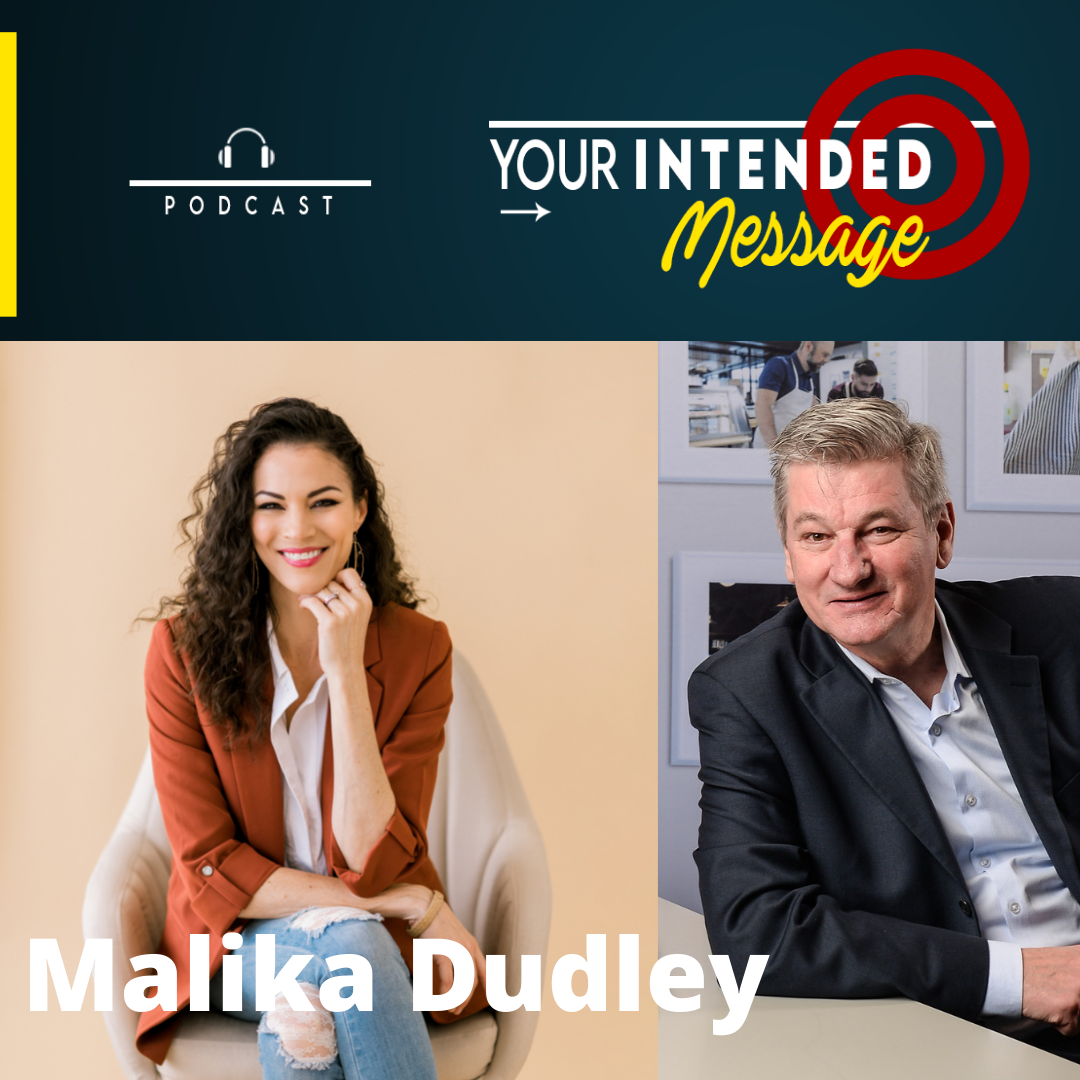
Ep 102Get Your Good News Story in the News: Malika Dudley
How can you get in the news with a good news story? How do you catch the attention of the media and how do you show up? Malika Dudley has studied the science of communication and is a TV reporter. Episode 102 (Malika is based in Hawaii) In this conversation with Malika Dudley we explore: How to get your good news story noticed by the media How to make your offer irresistible How to communicate with the media Why one "No" doesn't really mean "No" How to build ongoing positive relationships with the media How to talk on television in studio or on Zoom About Malika Dudley: Malika is a TV reporter based in Hawaii. She is a multi-award winning journalist with 2 Emmy nominations, a Murrow and multiple SPJ (Society for Professional Journalists) awards. She is host of The Communification Podcast - a podcast that will help you unlock your communication potential and feel less alone in your communication struggles. Visit the podcast here or click image below https://www.communificationpodcast.com/ This is Malika's second appearance on Your Intended Message. You can listen to her first appearance in episode 82. Here's an example of a good news story done well. Malika interviews community volunteer, Kaimana Brummel, talking about "Kaukau 4 Keiki" a food share program for children when they are not in school. Notice how well Kaimana conveys her message. https://www.kitv.com/news/local/urgent-need-for-volunteer-delivery-drivers-to-feed-maui-countys-hungry/article_422fc328-60fe-11ec-a0c3-cf510670aeab.html Excerpts from this conversation with Malika Dudley 02:48 Probably the newscast that you're going to identify and try to get on would be the morning show, instead of the evening show. Morning shows are longer. Number one, they are more fluid. And they allow for that good news to kind of work its way into the forecast. Every newscast wants to also have good news. 03:13 If you're trying to get into an evening newscast, you're trying to get in the kicker, probably. So that's the last little tidbit that gets shown right before they say goodbye. And usually it's something light and fun to kind of wrap up the show and not leave people with that bad taste in their mouth of the everything is doom and gloom. It's the universe, the kids from the University of Hawaii, that won in Las Vegas with their driverless remote control car. So it's something that is intriguing, but not necessarily a new story, but can be fun. Oh, that's cool. You kind of want to be in that category of, Oh, that's cool. If you're going for the evening newscasts, it would be something small like that. So there are several different things that you can do. One thing is make it easy for us. How do you make it easy for the reporter or the producer or the anchor to have you on the show? One way is to offer up your party's as something that you can link this to current events. So what's going on right now? And how can you help someone to solve that problem? And this is something that you've thought about a lot. All business leaders do. So you probably already know the answer to that question. So let's say that you're a Life Consultant, and it happens to be January. Send out your press release and explain the things that you would be able to say on the air. Now keep in mind that you're probably going to get, at most three minutes of time. So a three minute interview. So you don't want to overwhelm the press release with all the things, you know, you want to give them bullet points. So get good at writing press releases. Here's a paragraph about what I do. Here's what I can tell you on the newscast. Bullet points. Here is a little bit about me and my background, and, and then provide assets. Media assets, like video, headshots, just whatever you think they might be able to use on the newscast, we definitely need visuals. If you're talking about, so let's let's go with that life coach analogy. Here are the five things that you can do to have a great year this year. And you have B roll of one of your coaching clients exercising, right, and that's number one is exercise. So you send them a 15 second clip of you know, someone exercising, sure, we could go through our files and find the B roll video of exercise. ----- 12:37 So if you can get your friends to email the news at whatever the news station email is because that email goes to everybody in the news organization, if you can get your people to email in and say, hey, wow, thank you so much for that segment by data data that this morning, I learned data data data, I would so love to see more of that. It doesn't go on deaf ears. I mean, I can't tell you, if you guys didn't listen to the last podcast that we did, that I did with George, where we talked about 20% of the people love you 20% of the people hate you. And then the ones in the middle are indifferent. The indifferent ones never email the news. The haters do. And the lovers Oh, I wish they did more. And so when we get one of those emails, the news director legit
Ep 101Capitalize on Your Uniqueness: Jamie Greenberg
Are you generic or unique? First discover that uniqueness, then leverage it. The market craves and rewards uniqueness Jamie Greenberg is know as "The Imaginologist" igniting sparks of imagination and inspiration in others and then turning that inspiration into business. Episode 101 (Jamie is based in New Jersey, New York) In this conversation with Jamie Greenberg we explore: How entrepreneurs struggle with finding and sending their intended message Why discovering and interpreting your uniqueness is critical to success The gorgeous chaos of random creativity Finding and leveraging the divine downloads The systematic process that must follow the creativity Jamie Greenberg dramatically increases experts' reach and income by helping them "Capitalize on their mission and uniqueness" with a differentiator that earns them money they are really worth. You can arrange a complementary 30-minute business Development Evaluation call here https://jamiegreenberg.as.me/meetandgreet Get your free copy of the mini E-book, The Four Steps to Stand Out So Your High-Ticket Clients can Find You! ----- Excerpts from this conversation with Jamie Greenberg You can't worry about the how, and the creative at the same, it's like having your foot on the brake in the gas at the same time, you have to give yourself permission to have that creative process. ----- 09:00 Jamie, the divine downloads, clarify for us, please. These are thoughtful insights we have or these are crazy ideas or these are these are just chaotic thoughts in our mind that may or may not fit together? 09:21 This is a great question. And if it fits into the title of your show, beautiful because when you create an intention, you know, I really want to be an entrepreneur, I want to be an exit strategist, entrepreneur. I'm coming from corporate for, you know, 2030 years I really want to get into consulting and consulting or coaching. There's something burning inside me I have this passion. And I don't know exactly what it is. But my intention is to move out of this miserable space that I'm in that I'm putting up with and experience myself in a completely different way and learn the entrepreneurial way of life where Creating an intention. So we put that out into the universe. You know, we've where we're sort of designing inadvertently, we we do this every second of our lives. So when we put it out in the universe, now you're giving the universe something to grab onto. And that big manager in the sky starts to conjure up the things that you're asking for, I know, it sounds a little magical. And we've heard the term law of attraction. But the law of attraction is as much as the law as gravity. We don't question gravity. But because, you know, the law of attraction is a little harder to touch. But it's just as real. So those intentions come out. The universe gets it, they start to, it pulls that which is likened to itself is drawn. And things start showing up, don't they for you? Have you ever had that kind of experience? ----- 33:14 Jamie, if people want to find out more about about how you can help, I believe you offer a 30 minute consultation, no charge, no sales pitch, just a consultation? How do they take advantage of that? 33:30 Well, we have a link that we're going to put at the bottom of the podcast in the description. It's a free business development, evaluation of whether you're emerging or whether you want to scale your business, we just take a bird's eye view a 360 view of where you are here. And then I'm going to help you with some strategies and put together a little roadmap to see if we can get some clarity around the next step on how to scale where you want to go next. And also, for everybody on the podcast, we're gonna give away a free little mini ebook that talks about our whole signature system platform from which they can then start putting in their divine downloads, putting in their pop out themes and take their first shot at it. And then they can also bring that to the core. And we can start the process right on that core of codifying and organizing their uniqueness. Right on they're in a very process dependent way to see what methodology can arise from this so they can use that to design their offers and their price ladder from that. They'll get they're essentially generators like their webinars, seminar and keynotes and all those modules We create which there's about 22 of them in the signature platform is their get video visible, social selling marketing plan. And that's how they're going to become the inspirational face for their business. ----- ----more---- Your Intended Message is the podcast about how you can boost your career and business success by honing your communication skills. We’ll examine the aspects of how we communicate one-to-one, one to few and one to many – plus that important conversation, one to self. In these interviews we will explore presentation skills, public speaking, conversation, persuasion, negotiation, sales conversation
Ep 100What is Self Leadership: Andrew Bryant
Mastering Self is True Strength The practice of intentionally influencing your thinking, feeling and actions towards your objectives Andrew Bryant is passionate about waking people up to their best possible selves, whether that is the C-Suite of a company or disadvantaged teenagers. Episode 100 (Andrew is living in Portugal. He has ties to England, Australia, Singapore and Brazil) In this conversation with Andrew Bryant we explore: The three pillars of self leadership The enduring significance of Aristotle's Logos, Pathos and Ethos The difference between who you are and what you do The underpinning of self esteem to self confidence The importance of self validation The value of experiencing failure and crisis Andrew Bryant is author of four books, including Self Leadership and his latest, The New Leadership Playbook, Being Human Whist Delivering Accelerated Results. Learn more about this book and his offers at www.TheNewLeadershipPlaybook.com Learn more about Andrew's programs on developing Self Leadership at www.SelfLeadership.com ----- Excerpts from this conversation with Andrew Bryant The three pillars of self leadership: Self awareness Self regulation Self learning ----- 07:15 That's curious, sometimes labelling the activity is enough to provide the insight to fix it. 07:29 Can be. I love the metaphor of dragons, and the mythical creatures, but we all have our own dragons, you know, whether that's a negative self talk, or a lack of self belief or self worth. And an interesting thing is that we feed our own dragons don't we? We talk negatively about ourselves or other people. And those dragons get bigger and bigger and bigger, fatter, and fatter and fatter. And at some point in coaching and recognizing that in a narrative way, you got to just stop feeding that dragon, you got to put it on a die, you've got to stop this. And then the dragon gets smaller and smaller. But the trick is to never let the dragon go away completely. Because those dragons serve as a purpose that the negative self talk that the pessimism, it actually protects us from hubris. It protects us from doing really stupid things. I've got a good friendly relationship with my own dragons. These are some things that if I feed them, you know, will get me in a lot of trouble. Thankfully, I'm at an age where I've tamed those dragons and I have people around me that can hold me accountable. They go, hey, you know, Andrew, you've gone a bit too far this way. Ah, yes. playing that one out. So that's where this you move from self awareness into self regulation or self management, which is the second pillar of self leadership is okay, I know that, you know, I can be a victim of hubris or arrogance or ridiculousness or whatever your particular Dragon is. ----- Well, it was breaking the dragon down. So dragons are a construct, right? They are anything in our brain is a construct. I mean, we, we, as human beings are meaning making machines, we we construct meaning out of anything that happens, right? ----- 15:23 Hmm. And it sounds like part of self-leadership is self-validation, being willing to, to validate oneself without depending on that external validation, which is nice once in a while. It's always nice to hear somebody say something and mean it. Yeah, but we need to be comfortable with ourselves. 15:46 Yeah, a lot of time people, particularly for executives, they're looking for executive presence, the ability to project gravitas and confidence and poise under pressure. And so they're looking for that confidence that a lot of people say to me, Andrew, I really need to develop my confidence. And sometimes it is confidence they need, but to what you're speaking is the self esteem that is underneath the confidence. Confidence is I've done in the past, I'm doing it now. And therefore I can project into the future that I'm unlikely to be able to be successful doing that again. But self esteem is the self value underneath that. Because the word esteem is an old word for value, isn't it? So it's self value. And it's it's actually a verb, not a noun, we don't have self esteem as a fixed quantity, it's a daily process, like taking a shower, you know, it works for a few hours. And then you're going to need another one, we need to self value on a regular basis to know what our value proposition is. And so some people who say I lacked confidence actually are not they don't know their own value. One of the exercises I do in my my workshops, whether that's in person or online, is I get people to say, Hi, my name is fill in blank, my value to my organization is, and you know, people really struggle with this. They talk about their role and the things they do. Yeah, all of those things are great, but we could find somebody else to fill that role to do that job. What is your value? What is it that you uniquely bring to your position? And a lot of people struggle with that. But when they get it Oh, actually, I'm valuable, and then they usually realize they're bei
Ep 99Leverage Your Voice: Andrew Churchill
Speak with a human voice, not like a robot Allow your voice to reflect your emotions Andrew Churchill demonstrates the value and power of voice when presenting your message. Episode 99 (Andrew is based in Montreal) In this conversation with Andrew Churchill we discuss: The common mistake of business and technical presenters How to move your voice outside of the "professional zone" A simple exercise to explore your other voices The curious connection between voice and emotion Why audio quality and voice is more important for virtual presentations How your body language effects your voice Andrew Churchill specializes in helping entrepreneurs, academics and technical experts deliver their messages in a clear way. He teaches engineers at McGill University how to connect with their audiences. You can find Andrew on Linkedin at Andrew H Churchill ----- Excerpts from this conversation with Andrew Churchill I don't try and change your voice I try and just allow you can actually use your voice. Because really what happens for most people is they fall into a professional voice. And the and the professional voice is the range of the professional voice is very, very narrow. And what happens if you present in that range is you're essentially become monotone. ----- So if you have any three or four year olds kicking around in your life, go to the library of children's stories that they would enjoy hearing and read them. Read them one of those stories and then with your phone, record yourself. And what you'll hear is you actually have an enormously rich, dynamic storytelling voice. And what happens when most people do academic presentations is they may eliminate 90% of their voice. And, and what we need to do is give you permission to use the whole thing. And one way to recognize that is, is actually it's I'm not really just trying to be funny, when I say children's stories. I actually do this exercise with academics and in classrooms at McGill University. I actually bring children's books into McGill University classrooms, and have students close their eyes. And listen to someone read a children's story, right after having listened to the person read an academic abstract of a journal article. And I tend to not have to say much more, I just do that, and simply say, Okay, who would you rather listen to, and they get the point. ----- What you always want to think about doing as a presenter is getting the audience to lean in. And if I'm too loud, so if I come too loud and too hard at you, you're actually going to lean backwards, I'm actually pushing you away. And what I want to do is I want to pull you in, people don't realize so sometimes your most important message should be done quietly. Because people will lean in and listen. Because people think it's a secret. They think it's important. When we talk about things that are most important. We actually tend to talk quieter, not louder. T hat's where if as a speaker, you can let yourself feel this is a problem with memorization, people memorize and then they stop feeling because they're just reading the script. And then they're in that professional voice because they want to sound professional and they're reading a script in their head. Even if it's memorized your your brain is still reading it. It's reading your memory, versus delivering it and allowing yourself to feel. And that's the danger of memorization is we as we no longer feel it's why a podcast conversation sounds like conversation, but a presentation often sounds like someone talking at us instead of with us. ----- So if I was only going to make one investment if I only had 100 bucks or 150 bucks to spend, I'd spend it on the mic, not the camera. ----- 21:11 And Andrew, there's there's an interesting point I thought you raised there. And that's that, even though the audience might not be looking, observing our body language, we are aware of our body language, and how we receive the messages from our body shows up in our voice. ----- ----more---- Your Intended Message is the podcast about how you can boost your career and business success by honing your communication skills. We’ll examine the aspects of how we communicate one-to-one, one to few and one to many – plus that important conversation, one to self. In these interviews we will explore presentation skills, public speaking, conversation, persuasion, negotiation, sales conversations, marketing, team meetings, social media, branding, self talk and more. Your host is George Torok George is a specialist in communication skills. Especially presentation. He’s fascinated by the links between communication and influencing behaviours. He delivers training and coaching programs to help leaders and promising professionals deliver the intended message for greater success. Connect with George www.SpeechCoachforExecutives.com https://www.linkedin.com/in/georgetorokpresentations/ https://www.youtube.com/user/presentationskills https://www.instagram.com/georgetorok/
Ep 98Prospecting on Linkedin that Works: Austin McCulloh
Prospecting on Linkedin does work when you follow a process First create your prospecting plan, then follow it Austin McCulloh helps his clients bring in qualified leads week after week. Episode 98 (Austin is based in Iowa City, Iowa) In this conversation we explore: How to leverage automation without spamming How to cut through the clutter How to leverage connection and CRM software to stay visible Why an initial negative response is a good sign How to integrate inbound and outbound marketing Better questions to ask to build the relationship Mistakes to avoid: Too focused on self Commission breath Thinking short term Not following a system Asking strangers, "How are you?" About Austin McCulloh: Austin has personally made over 16,000 prospecting contacts on Linkedin. He has helped clients make over 25,000 prospecting contacts. Get your copy of the 10-Step Effective Prospecting Process here If you're looking for help to bring in new qualified leads to set up weekly meetings, learn more here. Excerpts from this conversation with Austin McCulloh 02:43 LinkedIn is LinkedIn is the social media of business, or that's how we think of it. And, and a lot of us are on there. And I keep hearing from people saying, well, I've tried prospecting on LinkedIn, but it doesn't work. What do you say to that? 03:03 You want the honest response? I want the truth, the brutal truth. I'm saying they don't work. I'm saying they're not doing it the right way. I mean, that's just the raw truth. And the reason why I'm laughing and I say it, and do I, whoever the listener is, if they're not having success, why they should be optimistic is because they're right now listening to somebody who is, has done it more than 99.9% of the world. I've failed on it, I've done well on it. So the first thing I'll say is, they probably don't have a process. So they don't know who they're reaching out to. If you don't know who you're reaching out to, you don't know what to say to them, you don't know how to engage in conversation. So really, they don't have the components all lined up. And then another key point, and we're going to come back to all these, but they're too focused on themselves, trying to push what they have to offer excited about what they have to offer. And that's not what resonates with your prospects, especially when they're complete strangers. ----- 16:57 It's okay to be direct in terms of asking questions, if you're really trying to solve a pain point for somebody, because if it's a real pain, and you're trying to solve it, trying to help them with something. 17:08 But don't have the intention to go close them right away. Kind of like what you talked about George have the intention of being curious, being kind of like a researcher, ask the open ended questions, get a sense to see if it's good for them. And then if anything, your intention should be to set a meeting to learn more, not close business. So focus on the meeting, not on the client yet. ----- 18:02 Somebody either accepts it, or they don't accept the connection request. if they don't accept it, never gonna communicate with them not in contact with them. I f they accept it, and they reply, then the conversation is ongoing. If they accept it, and they don't reply to the first message, I have it set that 92 minutes later, another follow up message will be sent. And then about two days and 22 minutes later, another one is sent, I have about three total follow up messages. So four total that go out, there's the connection request and the message that goes along with it, three follow ups. Now sometimes you get some people who never end up, they'll accept it, but they never respond to any of those four messages. And then you get other people who respond to the first, the second, the third or the fourth, you get where I'm coming from. So that's that once somebody replies, ----- 32:00 Just take another look at it take another go. Great question. If you have not had success with prospecting online, or even if you haven't done it before, so regardless, you haven't had success because he did it or you've never done, take 30 minutes to an hour before you even start or before you restart and put together an actual plan. Now obviously, working with somebody who has done it before can can critique your plan can help you a lot with it. But if you know who you're reaching out to, you already have a few scripts put together already know what questions you want to ask and you know what you want your end result to be, it's all going to work much better. And then also know what you want to measure for it too. So have expectations of if I'm doing so many contacts, I want to see how many accepted connection requests I get, how many responses I get, because then you can tell if it was a success or failure or and also meeting set as well. So that's what I'd have to say I know it's a lot of different variables, but a lot of people are just kind of shooting from the hip. And when you have a plan to
Ep 97Discover Your Inner Theme: Fredrik Haren
Inner Theme, Brand Moniker & Core Message What are the differences and relationships amongst them? Fredrik Haren is The Creativity Explorer. He's on a journey to explore creativity around the world from diverse perspectives and experiences. Episode 97 (Fredrik was living in Singapore and moving back to Sweden) In this conversation we explore: Why it's important to discover your inner theme How the right brand moniker distinguishes you from the competition The danger of being labeled an expert Why you need to start your presentation from the position of the audience How message and mission are connected A place to inspire your creativity About Fredrik Haren" Fredrik is known as The Creativity Explorer. He has interviewed thousands of people in 70 countries on six continents about their creative process. His book, The Idea Book, was included in "The 100 Best Business Books of All Time". Fredrik owns three islands. One of them, known as "Ideas Island" (www.IdeasIsland.com) he never stays on. Instead he lends the island out, for free, to creative people from around the world who want to spend a week to work on a creative project. Fredrik helps people find their Inner Theme to help them get clarity on their purpose and true message. It's an intense one hour, on-off, session. To learn more about the Clarity session contact Fredrik at [email protected] Or connect on Linkedin https://www.linkedin.com/in/fredrikharen/ Visit his website at www.FredrikHaren.com His Inner Theme: Humanity to the power of ideas His Brand Moniker: The Creativity Explorer His Core Message: Helping humanity create its potential Excerpts from this conversation with Fredrik Haren The topic is creativity, my inner theme is humanity to the power of ideas. So what that means is I believe in the potential of humanity, and I believe in the power of human creativity, so the humanity to the power of ideas, that's my inner theme. 07:55 Moniker is like a nickname, but it's based on the character of a person. So a brand moniker is basically a description of your character as a speaker, based on what you speak on. My brand moniker is the Creativity Explorer. And there are many, many creativity speakers, but there's only one Creativity Explorer. And to explore means to venture into unknown territory in order to learn more about it. Instead of being a creativity expert, which 1000s of people are an expert kind of implies that you know, everything about a topic, and explore it knows nothing about the topic, but he's desperate, very, very keen and curious to find out as much as he can. So I explore human creativity, I'd much rather be the creativity explorer than the creativity expert. And that makes me do those very unusual interviews with going to Mongolia and interviewing the nomads, or paper artists in Bangkok are those kind of people that I interview to truly understand human creativity, regardless of industry, country culture, or whatever. If there's one thousand Creativity speakers, there's only one Creativity explorer. So the brand moniker this makes me stand out against all the other people who have similar topics to speak on. And the inner theme is that resonating the resonance to that message that only that only I can, that only I can deliver the only that only I can deliver, but that everyone needs to hear, which is that everyone should be more everyone should be more creative. And everyone should learn from everyone around the world to pick up the best ideas regardless where they might be. ----- 14:33 Start where the audience mentally is. Where, what's their understanding of the topic you're going to speak on, and you have to start there and then you can bring them all the way to where you are, if you're skilled enough, or rhetorically strong enough or or if sometimes you might not. I would argue it's always possible as long as you start where they are. There's the one of my classical rhetorical trick. Formula is the four piece of material whereas its position problem possibility proposal. And the first one is the most important position means where are we now? And it's and you just basically describe where what the world looks like in words that makes an audience say, Yes, this is true. This is where we are right now, then comes the problem. And most people start with a problem right away. If you start with a problem right away, and people haven't agree that that is the problem, then that you have lost them. So you start with where we are, then you say the problem, then you paint the picture. Imagine if we don't have this picture if we don't have this problem anymore. And therefore, then comes the proposal. What do we need to do now? Very simple rhetorical trick to deliver any speech. America used to be great, but now we have lost our position that was, the problem is we're not the superpower. We're not a great country that we used to be. We are getting getting immigrants are coming in and they're raping our women. Therefore, I suggest,
Ep 96Get the Marketing Fundamentals Right: Tim Fitzpatrick
Better Marketing Starts with the Fundamentals Create your marketing plan by asking the right questions Tim Fitzpatrick is the president of Rialto Marketing. He points out that marketing doesn't need to be difficult when you create the right plan. Episode 96 (Tim is based in Colorado) In this conversation we explore: What are the fundamentals of marketing? What else should you know about your customers? What descriptors might you use to describe your best customers? How many key markets should you have? What questions do you need to ask of yourself? Why your customer needs to be the hero while you are the guide? About Tim Fitzpatrick: Tim has been an entrepreneur for more than 25 years. His first company grew 60% before being acquired in 2005. Tim has been described as displaying an incredibly dry sense of humor. When you think he's serious, he might be joking. Learn more about Tim and Rialto Marketing here. Get your free copy of the 90-day marketing plan here. www.GrowthMarketingPlan.com Tim Fitzpatrick is the host of The Rialto Marketing Podcast Excerpts from this conversation with Tim Ftizpatrick 02:00 I would say marketing shouldn't be difficult. All you need is the right plan. 02:05 The right plan? And that suggests that a people either don't have a plan yet, or for some reason they they create the wrong plan. Why does that happen? 02:20 I think the biggest reason that happens is just information overload. There's the first business I was involved in you mentioned wholesale distribution company. When I was in that business, it was mid 90s. When I got into that business, and marketing then was totally different than it is now. You know, websites were informational brochures, there was no social media, there wasn't search engines at that point. It was totally different. Now, there's all kinds of marketing channels, you know, you you have paid online advertising, you've got email marketing, you have social, you have content, you have your website, right, the list goes on and on and on. And within those channels, there's all kinds of tactics. And so so many people are just battling information overload. They're like, what do I do? Like, what's the next step that I need to take based on where I am? To get to where I want to go? And there's too many choices. We're just overloaded. You know, it's like going into the grocery store, and you're at the cereal aisle, it's like, people that aren't from the US to come into the cereal aisle in the US are like, Oh, my God, what the hell? Like you have like four different kinds of Chex. What's going on? There's too many choices. And people don't know what the next best thing is for them to focus on. That's the biggest problem. ----- 16:10 Sounds sounds like an ideal working relationship working with people you like to work with, and profitable at the same time, I can't think of a better combination. And and I imagine that those ideal people, we probably are, we probably need to be having more conversations with them to dig deeper into what's motivating them, we probably need to be coming up with more questions. And if there's a question or two that, that you know that we might go out to those ideal customers, if we could have coffee with them or, or lunch with them or breakfast, or just sit down at a and just ask them one or two, three questions, what would be those kinds of questions that would help us better understand them and better serve them? 16:57 Yeah. So I love this question. And this leads right into, you have the your intended message podcast here. That's what we're moving into. As you interview clients, you cannot create messaging that is going to gain your audience's attention and interest until you understand them completely. You need to be able to enter the conversation they're having in their head as it relates to what you do. And we need to speak in their language, not our own. And the only way we can do that is by doing research. And the easiest place to start is exactly what you just said, we always recommend people interview their existing and past customers. Once you know who those ideal clients are, then you can reach out to him. Say, Hey, you know, as a current or past customer, we we value your opinion, you know, we would love to just chat with you and ask you a little bit more about your what your experience has been with us. Would you be willing to take 10 or 15 minutes? Awesome, great, cool. So when you sit down and have that conversation, there's a lot of different questions you can ask. But they're all they all need to fall in this realm. One, when when you started looking for companies like ours, what was the problem that you had that you needed to solve? How, how? How had you tried to solve that problem? In the past? And it didn't work? How is it making you feel? How did you find us? Why did you choose us? What about us? versus our competitors? Made you choose us? In working with us? What's been the biggest benefit or result that you've ga
Ep 95Networking for Results: Michael Hughes
How to build and nurture a stronger more productive network A strong network is based on strong relationships Michael Hughes is the networking guy. He shares his insights about networking online, in person and in a hybrid world. Episode 95 (Michael is based in Ottawa, Canada) In this conversation we explore: How to center your mind for a better networking experience How to use Linkedin to start the conversation The nuances of virtual versus live networking The importance of establishing trust as the foundation The importance of value exchange in networking Leverage your curiosity The strengths and challenges of introverts and extraverts About Michael Hughes: Michael has invested the past 20 years researching networking as a business strategy and professional competency. He is known as North America's Networking Guru. He is a past chair of the Board of Directors of the Ottawa Board of Trade, one of the oldest and most respected Chambers of Commerce in Canada. Learn more Michael Hughes and his programs at www.NetworkingForResults.com https://www.linkedin.com/in/networkingforresults/ Excerpts from this conversation with Michael Hughes 11:58 Here's the reality. The reality is, every person has the potential to help you in some way, to the extent that they're willing to enable your mission. Our mission is to discover their ability as we grow and develop a relationship with them. So rather than having that one dimensional perspective of, "I just connected with George, I want to I want him as a client, I want him to give me money". It's about understanding, George, you and I are both professionals. And there's a way that we can help one another. Networking is not a sales arena. It's a peer to peer connection environment. And the more you focus on building a relationship, from a peer to peer perspective, and those opportunities are always here, as you connect with people as you interact with them to talk about their career, talk about their background, talking about their interests, talk about what's important to them. And the more you can position yourself, so that you can build that relationship. Now relationships are about three things. They're about trust, value, and contribution. Every important relationship in your life is based on trust. But it's built on value. And we all have a value. And then the third thing is contribution. So the smartest thing you can do as you connect with people engage in these conversations, is find some way to, to contribute to them, to be helpful for them. And that's, that's the biggest piece. The most difficult part for most professionals, when it comes to online networking and relationship building, is transitioning their mindset, from a technical perspective, to a personal perspective, and growing a professional relationship to see how we can help one another. That's my perspective. ----- 24:47 Michael if you could talk to to a business leader who's preparing to go to a networking event. And perhaps they're a little cautious, uncertain, nervous? What if you could give them one, two or three pieces of advice? And maybe it starts with what self talk should they have? What talks should they have with themselves before they go into the room? 25:19 Just an excellent question because too many people get so stressed and worked up about walking into a room full of people. And so what I suggest to people is just before you walk into the room, take 10 or 15 seconds and remind yourself that success you've had in the past. First of all, what's one event I went to where I'm in a good context. The second thing is, is to think in terms to prepare for success. And I'm going to meet somebody here who can have an impact on my career, or my life. So that's the starting point is, is prepare yourself as you walk. And the second thing is, once you while you walk in is be yourself. So many times we try and be someone else. And it just doesn't work to be yourself. And the third thing is think in terms of connecting with people making friends. Remember, I keep telling people networking is not a sales environment. It's a peer to peer connection network. People don't go to networking events to be sold. Consider that you're going to meet other professionals and discover the value they have and see how you can work together. ----- ----more---- Your Intended Message is the podcast about how you can boost your career and business success by honing your communication skills. We’ll examine the aspects of how we communicate one-to-one, one to few and one to many – plus that important conversation, one to self. In these interviews we will explore presentation skills, public speaking, conversation, persuasion, negotiation, sales conversations, marketing, team meetings, social media, branding, self talk and more. Your host is George Torok George is a specialist in communication skills. Especially presentation. He’s fascinated by the links between communication and influencing behaviours. He delivers training and c
Ep 94Conversations Worth Having: Jackie Stavros & Cheri Torres
Everything happens because of a conversation How can you shape your conversations for more positive results? Jackie Stavros and Cheri Torres challenge us and guide us on how to create and participate with more productive conversations - both with ourselves and others. Episode 94 (Jackie is based in Michigan. Cheri is based in North Carolina) In this conversation we explore: The difference between appreciative and depreciative conversations How to use curiosity as a conversational tool The concept and practice of Appreciative Inquiry How to manage the conversation in your head How to build a stronger team with better questions The power of generative questions and positive reframing About my guests: They are co-authors of the book, Conversations Worth Having: Using Appreciative Inquiry to Fuel Productive and Meaningful Engagement Learn more about Conversations Worth Having and the free resources here. Jackie Stavros is known for creating a program called SOAR. That's a positive approach to strategic thinking, planning and leading. She's worked in 25 countries using appreciative inquiry to help 1,000s of people. Cheri Torres is a serial entrepreneur having started one nonprofit and two for profit organizations. She holds a Master's in transpersonal psychology and PhD in educational psychology. Excerpts from this conversation with Jackie Stavos and Cheri Torres 02:50 The book is called Conversations worth having. And it is it's focused on the idea that everything we do happens in conversation, whether in conversation with others, or a conversation with ourselves. And so if we want to have the outcomes we are hoping for, we need to be careful about the conversations we have, we need to choose to have conversations that move us towards what we want conversations that invite strong relationships, and bring us well being as well in the way we engage in those conversations. 03:33 Now, I'm curious, I imagine that all conversations, start with the conversation with ourselves. And I'm also wondering, How much control do we have over those self conversations? 03:48 That's a great question, George. I think if you're aware of it, and we're talking about it now, you are you have an intention to decide, am I going to come into a conversation above the line from an appreciative space? Or, you know, am I am I below the line? And in our book, we talk about the importance of tuning into yourself, and simply asking a question, Where am I? Am I above the line, or that depreciated place below the line. And if you're below the line, and you're listening to this, just try this technique to pause. Take a deep breath, see how that feels in you and get curious and just pausing and breathing. Get you to move above the line. It just resets your whole body mindset. 04:33 Jackie, I want to clarify what the line represents. 04:37 So imagine a straight line. If you're above the line, that's called an appreciative space where I value you, George, I value the situation that we're in. And I want to add value so that's appreciation. If you're below that line, you're in that depreciated space where you know I may not be valuing you I may not value the situation. mission. And sometimes, if you don't think about your intended message, you could fall, the words can take you below the line. And even if you don't get enough sleep or have enough water, or, you know, just just your physiologic can push it below that line. So think about where am I? ----- 12:57 Now, Sherry, I noticed some, some powerful wisdom in there and advice. And what, what resonated with me is that when one when we think we're being criticised that instead of responding in anger, or defending, or counter attacking, we respond with curiosity. 13:26 Hey, George, that's exactly right. Get curious. Jackie mentioned that tuning in that, can we be intentional with our conversations? That when you someone criticises you, it's normal to feel defensive, or like wanting to lash back. But if you pause, that interrupts that pattern, and it also interrupts the, the biochemical soup that is starting to be dumped into your system. And if you then take several deep breaths, which is what Jackie mentioned, that deep breathing kicks in the parasympathetic nervous system, which further tamps down the cortisol and testosterone, and then getting curious is a positive emotion, which pushes you into the executive functions of the brain, where you can ask a question, you can be intentional with your conversations. 14:27 And I just add that there's a magazine behind me that says the business case for curiosity. So Harvard Business Review did an article on the business case for curiosity for business leaders, and there, you think about their intended messages. And if you were to just look up curiosity, all the health benefits of curiosity. And if you're naturally curious, it's easier it's more natural. You'll be asking general questions. ----- ----more---- Your Intended Message is the podcast about how you
Ep 93Selling with Personality Intelligence: Benjamin Bressington
You can have more influence, persuasion or close deals faster Understand personality styles and leverage the data about persuasion Benjamin Bressington offers insights into the science of persuasion and selling based on behavioral research. Episode 93 (Ben is an Australian living in Florida) In this conversation we explore: Why AIDA is a selling model that is out of date (150 years) The difference between closing and committing Key questions to ask to tap their emotional needs The bird conflict that you need to understand to avoid The common theme between professionals sales people and start athletes Why you should record your sales conversations The role of data in selling About Benjamin Bressington Ben applies lessons from criminology and gamification to help companies and sales people close deals faster. Ben is the CEO of Behavior Sales, a leading personality intelligence company. His latest book is “People Ignorant: Unlocking Success, Confidence & Influence.” Learn more about how you can use the Behavior Sales techniques to boos your sales at www.BehaviorSales.com Download your free copy of the Behavior Sales book free download Excerpts from this conversation with Benjamin Bressington The worst thing you want to do in handling an objection is go feature benefit feature benefit because people become product pushers and not problem solvers. 02:28 It was designed for a different type of consumer behaviour. And one of the things is, you need to understand what we call sales resistance. And a lot of the things people are doing in today's communication is creating unintended resistance, hence, you get ghosted. Hence, people go, Hey, that sounds interesting. Will you send me a flyer? Will you send me an email? That's them brushing you off? Because what's going to happen next, they're going to ghost you, right? So the thing is, is people need to be aware of the words, they're saying how they're saying it because you're actually creating subconscious emotional resistance, which we call sales resistance, and therefore, you're actually sabotaging your own sales. So you can do this with body language, and you can do it linguistically. And that's what we're why we're sharing so much about behavioural intelligence, and how this has really changed. There's the old school of selling. And now there's the new school of selling, which actually uses data to actually provide people with a feedback loop on how to improve their communication. ----- Ben in wrapping up, if you could offer a sales leader, one, two or three bits of advice, and maybe it's something you've already said, but they're gonna they're gonna go meet with 13 for a sales meeting, and what might they be saying about we're going to change the way we're selling. And here's what I want you to do. Number one, is start addressing personality, understand personality and understand how to have personality driven conversations to create the connection to is look at how you're using your sales rep. recordings. A lot of people use record calls, but never do anything with them. They don't create, we can actually help a company create a winning conversation baseline that allows you to compare every conversation you're having against that to find out well, was my tonality different was my questions different, that type of stuff, right? So out like we've got immense data you're not even using. So therefore you're losing massive amounts of data. And three would be starting to look at how you're using persuasion. Are you using external or internal and if you're still using external I can promise you your sales are being killed. ----- ----more---- Your Intended Message is the podcast about how you can boost your career and business success by honing your communication skills. We’ll examine the aspects of how we communicate one-to-one, one to few and one to many – plus that important conversation, one to self. In these interviews we will explore presentation skills, public speaking, conversation, persuasion, negotiation, sales conversations, marketing, team meetings, social media, branding, self talk and more. Your host is George Torok George is a specialist in communication skills. Especially presentation. He’s fascinated by the links between communication and influencing behaviours. He delivers training and coaching programs to help leaders and promising professionals deliver the intended message for greater success. Connect with George www.SpeechCoachforExecutives.com https://www.linkedin.com/in/georgetorokpresentations/ https://www.youtube.com/user/presentationskills
Ep 92Content Repurposing: Sally Curtis
How to leverage your content by reusing and recycling it in other formats Stay in touch with your market with bite sized messages Sally Curtis points out the marketing power of bite sized messages and reveals how to leverage your existing content to reconnect to stay remembered. Episode 92 (Sally Curtis is based in Australia) In this conversation we explore: How to repurpose content from your book or whitepaper Where to find content even if you haven't written a book or whitepaper How to create your messages bites to be easily consumable How to create teachable moments that linger with your target audience The role of the right image for your tiles How you can use a question in your bite sized message to engage About Sally Curtis Sally is a content repurposing and marketing strategist who helps authors consultants, speakers and professionals leverage their wisdom to educate and retain their clients. She is the chapter president of the South Australian Professional Speakers of Australia. Learn more Sally Curtis and her programs at www.SallyCurtis.biz Get your free copy of the ebook, The 3 Easy Steps to Turn Your Book into 2 years Worth of Content Excerpts from this conversation with Sally Curtis 03:30 The reports and the white papers and the blog post don't go away, we still need words to to gather the information. But within the words, there are key points, key reminders. And if we can, it seems to me if we could represent those key points in a visual way that people need to be reminded. 03:57 Absolutely, and that's the key thing when your intended message is to create an impact for your audience. And you've got all of this great content. One of my beliefs is that your, your clients need to be able to consume you on their worst day. So if someone's having a few think back to your own as scenario, when you're having a really bad day, the last thing you want to do is read a long email. And that's when we get into ticking and flicking emails. So if you transport or parallel that across your articles, people aren't going to want to read a long article when they're having a bad day. So if you're wanting to create that impact by making it bite sized, you're actually making it easy to consume, easy for them to understand and easy for them to remain connected to you, even when they're having a very, very bad day. 04:50 And that makes sense to me because there's some days when I when I pick up the newspaper. I just I read the headlines and I read the comics 05:00 Yes, absolutely. There you go. Yep. And that's, that's the whole thing, what you've done there is you've automatically gone, it's that that is too hard. I'm going to read something that's fun, that's entertaining, that's inspiring, and potentially educational. And those little snippets are exactly what's occurred for you. So you've gravitated to something that's going to help you have forward movement that day, or being more of an inspired or educated state. And that's exactly what turning that long form content into that bite sized content enables your audience to have we the messaging is getting much more intentional. ----- 07:14 Hmm. So we need to reach our clients in a way that is easy for them, that feels useful to them. And and they might even I suppose would it be ideal? A good test is if I'd put out a bite sized piece of content or put out content? Would it be neat if people started quoting me? 07:49 Absolutely. And that's where when you have written a white paper on it, and these are the things that I say a white paper or book, we all have a we talked about this earlier, I have Sally isms. But we all have something you know, our name isms, we've all got rants, we've all got particular sayings that we say. And if you're extracting them and bringing them to your audience in a new way. And that repetition of ever coming out helps people identify with you. And then those bite size bits go, oh, that's one of Sally's or that's one of George's pieces, because it becomes instantly recognizable, and said, Here's the difference with visibility. Now you're recognizable now you're familiar. And one of the things that I find when you've got that authority piece, you've broken it down, you're now educating, inspiring, and helping your audience have forward movement Is often what happens is these people that are consuming you, and engaging with you, they actually see us start to send you referrals, and they start talking about you and this is before they actually even do business with you. So the bit they do business with you after the after they've actually become an advocate of you and they've started to send people to you. And that's where those repeatable or quotable messages, make it easy for them to tell a story about you because it was bite size again. ----- ----more---- Your Intended Message is the podcast about how you can boost your career and business success by honing your communication skills. We’ll examine the aspects of how we communicate one-to-on
Ep 91Find and Tell Your Origin Story: Robert Tighe
Why are you you - and why are you here? Explore the stories that shape you, change you and define you Robert Tighe leads us on the discovery of our Origin stories. As a journalist he was inspired to find and help people tell their amazing stories. (Everyone has amazing stories.) Episode 91 (Robert Tighe is based in New Zealand) In this conversation we explore: What is the origin story and why is it so important? Searching through the stages of life to find key stories The relevance of stories that shape you, change you and define you Telling good stories starts with story finding Addressing the question "why?" The relevance and danger of sharing painful stories Using story telling as a leadership and teambuilding tool About Robert Tighe Robert helps business leaders reflect on their past to create a more purposeful future. Irish born, Robert explored various pursuits before returning to his first dream of becoming a journalist. He enjoys finding and conveying stories. Learn more about Robert and book your Story Strategy call at www.RobertTighe.com Excerpts from this conversation with Robert Tighe 05:22 Robert, you you brought up Simon Sinek. And in the power of why I'm wondering how important is why in discerning one's origin story? 05:36 Yeah. I think it's really important. I think it's really key because I think the best businesses have a really authentic, why behind you know what they do. And listen, I know, there'll be some sceptics out there who feel that, you know, I sell widgets, and I make really good widgets, and I sell them for a lot of money. And I don't really care about my why. And that's fine, too, that there's that I totally understand that perspective. But I think more and more so now than ever before. You know, we're all in the people business. You know, we're all kind of that it's that horrible cliché people buy from people. But if they don't know about you as a person, then it's really hard for them to trust you, it's really hard for them to get a sense of why you or your company or your product, or your service is the right person to help them solve their problem. And I think if you can demonstrate an authentic why and the origin story isn't about making up a story here, I think it's probably good to get that across. But if you can get across your why and on in a real a very real and authentic manner. I think it just really helps you stand out from the crowd of other people, in your space, in your industry, in your sector, whatever it might be. And it's particularly important, I should add, George, if you're in any kind of business, where you're selling your expertise, right, you know, where you're in that kind of people to people type business, because, if people know your why, they can get your why then it can really kind of give them a sense of okay, yeah, this is, this is I'm in the right place here. This is the right person to help me solve my problem. 15:26 You mentioned the term that you're more of a story finder, than a storyteller. How, what are what questions do you pose to people to help them find their best stories? 15:42 Yeah, I don't know, if I have like a template of questions that I asked it is very much a conversation. And it is very much as I've talked before, about really making it easy for them by asking them to go back to you know, a few different stages in their lives, to take them back to their their, their earliest memories. One question that I love to ask people is, what is your earliest understanding our kind of realization of the concept of what you do now? So it might have been said, say the industry you're in now. Or if you're in sales, what was your very first understanding of what selling was? What was your first understanding of say what a customer was, I worked with a customer experience consultant recently who he talked to me about what he did, but he spent 20 minutes talking in jargon about UX, and CX and all these terms and acronyms. And that meant nothing to me. When I stopped and asked him to think back to his very first understanding of what a customer was, and and what a customer meant, he told me about his first job working as a paperboy during a paper round. And he realized very quickly that if he didn't get out of bed on time, the papers didn't get delivered on time, the customer wasn't happy, and his boss wasn't happy, and he didn't get paid. So see immediately kind of grasp that the customer was key. You know, from the very early ages, it was very first job, he realized that, you know, keeping the customer satisfied was the most important part of his job. And I just said, listen, that's, that's it, you've made that you're working in customer experience now. And essentially, that is still the same kind of thing that you need to focus on. Right. So in terms of questions, I think, rather than questions, it really is helping people identify stories that maybe they don't recognize the value in themselves. Because I think a lot of the time we're too
Ep 90Leverage Linkedin to Get More Business: Daniel Alfon
How to Get More Business from Linkedin Linkedin is NOT intuitive Daniel Alfon offers thoughtful advice about how to wisely using Linkedin to achieve your career or business goals. He points out several common misunderstandings that lead to costly mistakes. Episode 90 (Daniel Alfon is based in Israel near Tel Aviv) In this conversation we explore: Recognizing the common misconceptions about Linkedin A smart approach to setting up your Linkedin profile The critical self-reflection you need to examine before you do anything Why more connections might not be valuable to you How to make the tool work for you instead of falling victim to the tool The advantage in making the most of your banner How Google is supporting your Linkedin profile About Daniel Alfon Daniel helps business owners leverage Linkedin to get more leads to grow the business. Daniel joined Linkedin in Feb 2004. He takes a strategic approach with this online tool. He makes the tool work for him and his clients instead of getting seduced by the shinny object. You can start improving your Linkedin profile by writing a headline that grabs your target audience. Get a free copy of the cheat sheet here. Or visit the site www.DanielAlfon.com Excerpts from this conversation with Daniel Alfon Exposure is overrated on LinkedIn. Think of your own profile as a website and not as a CV. 05:33 You're absolutely right, it boils down to your intended message. What should be your intended message? And in three quick steps, Who's your ideal reader? Exactly? Like you said, the second step question is, what would you like those people? What action would you like those people to perform after they visit your profile? And the third, are you providing them with the information in the right order for their brain to process it and say, hey, I want to reach out to that person. I was listening to an episode we had with Diana Booher (Episode 48), the executive presence coach. You divided it in, you divided it into four buckets, if I remember correctly. The first was the first impression and how we speak as the leader, and how you handle questions. And lastly, about your personality. We may transform those four buckets to LinkedIn quite easily. The first impression is what we see when you we visit your profile or when we see you as one of the search results. So it's really the banner and the headline, that that in two seconds, that's what most people see. And then it's the term you use. And the way you make people understand they need to scroll and discover a little more about you. And the way you handle questions would be the way you interact on LinkedIn. Whether you share whether you comment, whether you like or ask questions on LinkedIn, and your personality should reflect your real life personality. You shouldn't create a personality for LinkedIn. LinkedIn is here to serve you as a business leader, and not the other way around. ----- 08:35 Yes, the banner is a great place to to highlight or to showcase your thought leadership. And one of the things we need to remember is that whenever someone Google's our name, then our LinkedIn profile will be one of the very top results. When I Googled George Torok. It's the third results. Even though you published books, and you were on a lot of other platforms, LinkedIn is rated very highly on your on Google. ----- 09:11 Now Now that's interesting, Daniel, because that's, and I've noticed that too, but I didn't put much thought into that. And it's probably something that a lot of people don't think about that. LinkedIn, your LinkedIn profile is, comes up high in the Google search. 09:27 That's absolutely right. And it doesn't matter for the sake of our conversation that maybe the business leader has not visited their LinkedIn profile or hasn't logged in for two years. It doesn't matter. It's not about us. It's about them. It's about our audience. ----- 14:36 Daniel, you have I think around 1200 contacts on LinkedIn. My first impression was when I looked Oh, this guy's a LinkedIn expert doesn't have a lot of contacts. That was my first first impression. Those contacts I'm guessing you selected each one specifically, and your criteria Are you for picking for connecting with them? What's your criteria? 15:04 You're absolutely right. And it's a great question, I have actually less than that. Some of them are followers who have less than 1000, real life connections if you'd like. And for me, connection, or hitting accept is the end of a process. So if we had a meaningful conversation, then I would either accept the invitation or send one. But if I'm asking myself, well, that person went asking, in two years time will remember anything from our conversation. And it naturally happens, you know, pre COVID. If we work together, side by side, for some time, we had some mutual relationship that lasted who was significant enough? And instead of just saying, Wow, I'm, I'm hot and popular have 5k. Just ask yourself, are you translating those connec
Ep 89How to Explain Your Complex Products and Services: Steve Lowell
Demonstrate a unique understanding of your market You don't have to be different from everyone who offers what you do. You simply need to appear to be different. Steve Lowell explains how to apply Deep Thought Strategy to your marketing positioning and sales conversations to entice clients to buy from you. Episode 89 (Steve is based in Ottawa, Canada) In this discussion we explore: How to get people to say, "Hmm, I've never thought of it that way before" What can you learn from the tennis instructor's mistake and epiphany Why the language of your offer is critical How to reveal the hidden problem they weren't aware of Why you don't want to be seen as an expert and what the better label is How to address different target audiences while following the same path What is the process of Deep Thought Strategy Leveraging your book as a marketing tool About Steve Lowell Steve is the 2022 president of the Global Speakers Federation representing over 6,500 professional speaker s around the globe. Steve Lowell CSP, has been speaking and performing on the live stage since the age of 6, that’s over 53 years ago. Steve is the author of three books and five online courses. If you are a non-fiction author and ready to leverage the power of your book, watch this eye-opening webinar "You're an Author... Now What?" (no charge) WebinarforAuthors.com ----- Excerpts from this conversation with Steve Lowell 02:30 So it's a big process, I call it deep thought strategy. And we kind of look at it from this angle. The objective is to demonstrate a unique understanding of your market or prospects or audience's world from a perspective they have never considered before. So the process starts with exploring not your solution. And not all the great things that you've created, but exploring the market and trying to find an angle that the market has not considered before. And then what we do is we take the complex idea or solution and we break it down into its most basic components, and craft a very simple straightforward message that doesn't present another solution as much as it presents another problem. So it's sort of the objective is to bring their awareness to a problem they never even knew they had, I'm talking about the audience or the prospect of the market. And the desired outcome of this whole process is to get the market or the audience to kind of do this, you want them to go, Hmm, I've never thought of it like that before. And that's the desired outcome that we work towards. ----- 20:49 The question is, "What is my unique understanding of your condition? From a perspective you have never considered before? How am I going to demonstrate that I know your condition better than you know your condition?" You see, if I'm trying to sell you my complex idea, the worst thing I can do is try and sell you my complex idea. What I need to do is I need to open your perspective, so that you understand that you need my complex idea. I need you to tell me that you need my complex idea. If I sit here and try and convince you that you need my complex idea. I'm just another sales guy. And I look like everybody else. So the question we work towards is, how am I going to demonstrate to you as my prospect? How am I going to demonstrate to you a unique understanding of your condition, from a perspective you have never considered before. I want you to be able to go, I've never heard it like this before. No wonder I can't do that. No wonder I can't reach this outcome. And only until we achieve that, at that point, then my solution becomes relevant to you. Up until that point, it doesn't, it's not even relevant. It's just you know, another checkmark on the shopping list and all of the different people you've seen in your life. So that's it. That's a tough mindset shift to make sometimes. ----- ----more---- Your Intended Message is the podcast about how you can boost your career and business success by honing your communication skills. We’ll examine the aspects of how we communicate one-to-one, one to few and one to many – plus that important conversation, one to self. In these interviews we will explore presentation skills, public speaking, conversation, persuasion, negotiation, sales conversations, marketing, team meetings, social media, branding, self talk and more. Your host is George Torok George is a specialist in communication skills. Especially presentation. He’s fascinated by the links between communication and influencing behaviours. He delivers training and coaching programs to help leaders and promising professionals deliver the intended message for greater success. Connect with George www.SpeechCoachforExecutives.com https://www.linkedin.com/in/georgetorokpresentations/ https://www.youtube.com/user/presentationskills
Ep 88Executive Team Building: Anne Thornley-Brown
Build stronger teams that work in-person, virtually and hybrid Effective teams face and overcome the challenges, while weak teams use the challenges as excuses Anne Thornley-Brown explores the challenges and paths to effective team building. She reminds us that team members need the confidence to tell the emperor he has no clothes. Episode 88 (Anne is based in Toronto, Canada) In this discussion we explore: The challenges of virtual and hybrid teams The difference between socializing, recreation and enhancing communication skills The silliness of some team-building exercises The danger of group think and dominating personalities Why we need to listen to the minority viewpoints The opportunities of new technology including virtual worlds Why it's critical to diagnose the problem correctly before deciding on the solution Who else should you include on your team that you might be missing? About Anne Thornley-Brown Anne is the founder and owner of Executive Oasis International. This Toronto-based team-building firm has designed and facilitated executive retreats, meetings and team building for companies from 19 countries She is also a professional actress, and an emerging novelist seeking a literary agent for her first two novels. Anne and her team at Executive Oasis International help organizations build stronger teams around the world. Learn more about the team building programs at www.ExecutiveOasis.com Excerpts from this conversations with Anne Thornley-Brown 02:56 Tell us what some of those challenges are, particularly during the pandemic. 03:03 Well, the biggest challenge, of course, is working from home. And, and building a cohesive unit, when you're not seeing each other face to face every day. Silos were a problem long before the pandemic, but now that people are spread out and they're not engaging face to face, they becoming even more entrenched. 03:27 Have you (to overuse the word) pivoted your building exercises to include hybrid and virtual teams. 03:39 Absolutely, it was essential you and I both live, the Greater Toronto Area. And in Canada. For the past two years, we've had meeting bans, travel bans. Some venues have had to close. I was speaking with one of the resorts that I've used, and we just came back out of another lockdown two weeks ago. And they just closed down because they couldn't open their dining or their meeting rooms. So they rescheduled all of their corporate business. It became essential to make virtual and now hybrid options available to clients. ----- 10:17 Those who are waiting to get back to normal before we start training again, or building the team, what's your advice to them? 10:28 Don't wait. And the other thing is don't think that throwing a recreational activity at your team is going to solve your issues of communication. It's not going to happen. It's not going to resolve conflicts. I've seen companies doing things like ukulele lessons and virtual escape rooms. Now, please don't get me wrong. I'm not a party pooper. I'm Jamaican. I love to party. I love to dance. I love to have fun. But there's a time and place. And that type of activity, while it has its place is not a substitute for doing the targeted and focus work on building your teams. I don't know, George, you go into corporations. Have you observed this tendency to? Well, how do they put it fiddle while Rome was burning? 11:20 Yeah, you're right. And and I'll tell you the one that the the activity that that irks me the most, it's we're going to have a team building exercise, and we're going to go Axe Throwing, ----- 32:31 And in wrapping up, if you could offer team leaders, one, two or three pieces of advice on what they can be doing right now, to reinforce their team, to keep their team cohesive. What might be that one, two or three pieces of advice. 32:51 One thing I would say is, I was I worked for an organization and the CEO was brilliant, he would have these things called breakfast with Bob, where he would bring frontline people in to have breakfast with him. And he would listen to them. He would hear what they have to say about what was going on with their clients. And in the industry. We can still do that virtually. I mean, let's get creative folks. Yes, we can have a virtual breakfast, where we meet via technology and tech, we can send the breakfast to the homes of the various team members. In Ontario. we just opened up dining rooms two weeks ago, restaurants and caterers are hurting, they need the business to stay afloat. Let's get creative. And in that way, we will help keep the local economy afloat. So that's the first thing have sessions in which your senior people are actually interfacing with your frontline people, but has to go further. We need to also hear from our clients. We need sessions like that where clients are letting us know what their main concerns are, and how we can improve what we're offering. And the other piece is a whole supply chain. That's one thing that COVID-19 has brought to
Ep 87The language of love, loss and compassion: Dr. Joseph Stern
When compassion is missing, what can you do? Technical competency is not the same as compassion. Yet both are critical in healthcare. Dr. Joseph Stern is a neurosurgeon who discovered that compassion was missing from healthcare, when his younger sister, Victoria, developed leukemia, had a bone marrow transplant and died. Episode 87 In this conversation with Dr. Joseph Stern, we explore: The importance of emotional agility There's a time for compassion and a time for technical expertise Understanding the patient's anxiety and terror Developing shared vulnerability to communicate in an empathetic way How routine can get in the way of connecting with people Shifting from empathy to technical precision Why it's critical for health care professionals to manager their own emotional care Recognizing and removing the emotional armor Dr. Joseph Stern is a neurosurgeon. He is the author of "Grief Connects Us: A Neurosurgeon's Lessons on Love, Loss and Compassion. You can find the book on Amazon or click the link here. Excerpts from this conversation with Dr. Joseph Stern 02:51 So everything is about the focus on training and education as a neurosurgeon is about becoming technically proficient and mastering very difficult subject matter. But we're working with people. And these people are generally terrified, and whether or not they're dying, they need a compassionate connection with their doctor. And that's where I feel that in neurosurgery training, but particularly in medicine, I think we fall down on the job in terms of the importance of what it is to connect with patients and in with what they're going through. So I feel that was what my sister brought, to me, it wasn't so much that I was that it's only when people are dying, it's that anyone who is getting medical care, is at a low point and needs a compassionate connection, you need to have shared vulnerability and an ability to communicate in an empathic way with patient. ----- You're a stronger, better person by allowing yourself to be vulnerable ----- 15:39 I'm assuming that you have become a more compassionate doctor, more compassionate surgeon. What language Have you started to use more of that you didn't use before? 15:57 I think I listened more, I listened more and tried to talk less. I sit and I give people time, and I want to hear what they are concerned about and what matters to them. And so I feel that the meaningful relationships with patients are really what sustained me that actually, you know, by the time I'm fairly advanced, in my career, I've been doing a surgery for a long time, I liked doing surgery. But I also really like the the relationship, the trust that the patients put in me and kind of our relationship. So I cultivate that. I also think that I'm not afraid to ask questions about what they're feeling or what their goals are, and what what it is that they're experiencing, what is it, they're worried about? What scares them? So I think a lot of times in the past, I probably would have shut down a topic like that and moved on to a medical treatment or bombing people with facts. I'm, I'm going to give them all the facts about their illness. And it's, in reality, they're multiple planes of communication are going on at the same time. One is the fact information dump, you know, which a lot of times doctors do, but the other is like, what are you experiencing? What are you taking away from this? What are your worries? What are your goals? What concerns you here? And I think that those ability or willingness to get a little bit uncomfortable, maybe to cry, maybe two, but more to listen. ----- 24:42 Well, we're looking at a time in healthcare where burnout is at very, very high rates. And I believe that some of the reason for burnout is our we're not kind to ourselves, so there's no self compassion. We don't we don't take time to make sure that we're okay. And because we push away the grief and these other experiences, we, it ends up being a very fragile relationship that we have that we have when we could really dig in and be more connected and get more pleasure and more value out of work. And so I, I would urge them to make some of these transitions toward honest communication, really being in touch with their own emotional experiences not shying away from these connections and conversations, and, and the emotional agility part that you need to be a successful provider of healthcare. You need to be able to have that connection and also have the technical expertise. And if you can learn to bounce between those two, you're really going to be a very wonderful provider. ----- ----more---- Your Intended Message is the podcast about how you can boost your career and business success by honing your communication skills. We’ll examine the aspects of how we communicate one-to-one, one to few and one to many – plus that important conversation, one to self. In these interviews we will explore presentation skills, public speaking, conversation, persuasio
Ep 86Control your mind and emotions: Brad Yates
What is EFT? Emotional Freedom Techniques. How might it help you? You don't need to fear being trapped by your emotions. You can exert control. Brad Yates walks us through understanding and using EFT, (also known as tapping) to relieve stress, build confidence and manage our personal energy. Episode 86 (Brad is from California) In this conversation with Brad Yates we explore: How not to feel trapped by our emotions How to build a better understanding and control of our emotions What is tapping, (EFT) and how might you start using it for your benefit? How does tapping leverage our understanding of acupuncture? How might tapping encourage positive self talk? What is the science that supports Emotional Freedom Techniques? What is the connection with self hypnosis, rhythm and sensory feedback? How might you start tapping with Brad? (no obligation and no charge) Who is Brad Yates and what has he done? Brad Yates is known internationally for his creative and often humorous use of Emotional Freedom Techniques (EFT). He has also been a presenter at a number of events, including Jack Canfield's Breakthrough to Success, has done teleseminars with “The Secret” stars Bob Doyle and Dr. Joe Vitale, and has been heard internationally on a number of internet radio talk shows. There are over 1,000 videos on his YouTube, that have been viewed over 36 million times. Invited by Jack Canfield to speak at his Breakthrough to Success event. Featured speaker on all 14 Tapping World Summits Graduate of Ringling Bros. and Barnum and Bailey Clown College. Visit his website TappWithBrad.com ----- Excerpts from this conversation with Brad Yates It helps us control our mind and our emotions. Because so often those run away and we feel like we're at the mercy of our emotions. And that's why we have EFT, which is short for Emotional Freedom Techniques. It's a simple mind body technique for giving us more freedom in terms of our emotions, rather than being trapped by the discomfort of fear, anger, sadness, and these all these natural emotions, but that sometimes we get sucked into and really limits the quality of our lives. Now, that's curious. If I'm hearing that, right, you're saying that we can become captive, or a slave to our emotions and and perhaps we need to be a little bit more free from some of the emotions. It's not that we make the emotions go away, we just need to be in better control. ----- 07:06 Brad, so the tapping is tapping with your finger on parts of your body. And you were just tapping on your, your face there in two or three places. And, and it was it's about one tap a second, roughly. And while you're talking so I'm curious, is it the tapping that on the spot? Or is it is it a way of self hypnotism? There are, there are similarities. I started out as hypnotherapist before getting into this. You know, after being a clown, and, and an actor, I'm not a doctor, but I played one on TV. But there are there have been studies done to show that the tapping is an active part of the process. So and you can actually tap without saying any words and you will calm down, it will down regulate your stress, even without the words now adding in the words and particular using affirmations using hypnotic language using cognitive behavioural therapy. There's different ways of using wording, even NLP that can then help that process. So you're getting the benefits of the the physical downregulation of stress with the tapping along with the mindset training at the same time is is then the the chief result of the tapping a reduction in stress. Yes, that's the most the most obvious one. And so when you look at when you consider that most if not all of the issues that trouble us, both physically and emotionally, are either caused by or worsened by stress, then you'll see why a stress relief tool like this can be so helpful in so many different areas of life, including our physical well being our emotional well being and even our behaviour and our attempts to be more successful. Because we then have that freedom to do things that we were afraid to do before. Alright, so let's, let's take a look at and how this works. And here I am listening and looking at you and I'm thinking okay, my first thought is just sounds a little weird. And in so how do we get past that obstacle? How do we get past that brand? Yeah, absolutely. George and I totally understand anyone who's there at that. I have introduced this to a lot of people and and sometimes people will be almost violent in their reactions. Like this is the stupidest thing. I'll get comments on YouTube from people you know, saying things like that. And then I'll often get comments from people later saying, I thought this was so stupid and now I am so grateful that I have this process. So there is that that resistance. And as mentioned, I went to clown college. So when I learned this, this was not the strangest thing I've ever done, so I had an easier time. But for the rest of you who didn't have th
Ep 85How to Give a Technical Presentation to Non-Techies: Andrew Churchill
For Engineers and Technical Professionals when presenting to a non-technical audience Transforming complex concepts into simple ideas people can understand Andrew Churchill leads us through the process of dissecting complicated issues reimaging the key points into a clear and compelling message. Episode 85 In this conversation with Andrew Churchill we examine: How to get better feedback when preparing your presentation Recognizing the presence of unintended messages How one entrepreneur made a successful pitch for his spinal surgery tool Why it's critical to consider how the audience will feel Why the audience doesn't need to know everything The danger of false focal points Andrew Churchill specializes in helping founders and researchers deliver technical messages in a clear way. He teaches engineers at McGill University how to connect with their audiences. You can find Andrew on Linkedin at Andrew H Churchill ----- Excerpts from this conversation What do you want to know more about? How did you feel? And what did the person actually say? ----- And the challenge is, as an academic, how do you present your research to people in three minutes that aren't in your discipline? So how do we go from that technical, unfamiliar world of my work? So you can understand me? And understand what I'm doing? The three minute thesis competition, ----- I talk about connection, comprehension and credibility. George, you probably immediately recognise those as logos, pathos, and ethos. Communication is not changing very rapidly. I mean, yeah, we have a microphone now and an electronic screen. But But, but the way humans relate to each other. The things we remember, the things that draw us in our capacity to remember, one of the things I'm one of the things I'm always talking with people is it's not. You don't have to dumb it down. But you can't give us a lot of detail. Because we can't remember a lot. And we can't process a lot. So so it's not so when people say don't use jargon, I always say don't use technical words, use plain language. I don't think I don't actually think that's so so here's a, here's maybe a controversial take. Academic academics should use technical language. They should use plain language too. But they shouldn't shy away from the language of their field. 12:41 They should teach it to us, they should bring us to their language. So because plain language doesn't work, there, you know, there there needs to be a plain language. ----- 18:39 When we try and present technical information to a non technical audience. So it's not just about definitions, and explanation. The worst thing you can do is sound like a Wikipedia article. And most people start with a Wikipedia article worth of information, which is fine. That's what the whiteboards for. You put the that information on the whiteboard, then you figure out what you want people to remember. And then you figure out how to tell it in a way that people are going to become curious and motivated to listen. And, and then you try and finish in a way that people are going to be motivated to do whatever you're hoping they'll do after. 19:40 And Andrew I notice at least three important parts or elements to that that presentation. They started with something we know or at least are familiar with the flight simulator and they related that to the spinal surgery so they built a connection If they just started in with spinal surgeon Ha, we don't know, we don't know anything about that. But they made that connection. So they started where we know that made a connection made us curious, introduced only one technical word, which then was explained, which now goes in our memory. And we might feel good, I learned a new word today, haptic and even know what it means. I can use it in the sentence. It's like, when you're stirring the soup, and you feel that resistance, that's haptic feedback, you know, the right thickness of your stew. 20:35 That's a great analogy is perfect. See, it worked. And that message was received, because now George can explain haptic feedback. ----- But it's about being very strategic, and only choosing to highlight the ones you need and deleting way more than you think. The more you can delete, the more likely people are to understand and and stay with you. I think there are two things that go on there. At least I think about this two ways. Be interesting to see if this resonates for you. One is a concept I call cognitive overload. Whereas you give me things eventually. can't take anymore. I'm done. And then I shut down. 32:15 And then the other one is a concept that I think of is false focal point. I give you a detail. You think it's important. It's not. So I've created a false focal point. Because you're going to you pick up on things. As you listen, you're like, Oh, that's interesting. But if it's not important if it's not central, but it's interesting. I've actually undermining myself. Because I've created interest in something. That's not what I'm t
Ep 84What’s Your Personality Style and Why Should You Care? Joni Peddie
Know your personality style so you can leverage your strengths and mitigate your weaknesses Joni Peddie guides us through the 9 personality styles of the Enneagram model Episode 84 When you know and understand your hard wired personality style you will: Recognize your blind spots Appreciate your natural resting state Be more comfortable with your internal dialogue Have greater control of your reactions when stressed The nine personality styles of the Enneagram in the sequence discussed: 8. Challenger 9. Peacemaker 1. Reformer 2. Helper 3. Achiever 4. Individual 5. Investigator 6. Loyalist 7. Enthusiast Joni Peddie is the co-author of: The FAB Quotient: Experience Resilience and Fight Fatigue. She is co-author of: Resilience Up Assessment (in 200 countries). Joni is based in South Africa. To learn more about her programs visit www.ResilientPeople.co,za You can access your own resilience in 4 dimensions: Physical, Mental, Emotional and Purpose Driven Resilience. Contact Joni by email to get the assessment at [email protected],za There is a $25 fee for the assessment. ----- Excerpts from this conversation with Joni Peddie 06:19 And why is it important for us to understand our, our strongest personality type? 06:27 Because for personal growth and personal transformation, you need to know your own personality type to say, right journey. If your personality type is called the top three in the Enneagram, then, what is the fear of the top three? What does that shadow kind of fear? You and I spoke a few minutes ago about the internal dialogue. And that can be largely driven by the fear and the desires of their personality type and the attitude of their personality type. So if you know, with specificity, which one you were born, you can start to self manage in different ways, so that your fears and your blind spots don't trip you up. And you can personally grow and be able to self manage differently, and then communicate in different ways to different personality styles to other people who are born different personality styles. ----- 18:13 And does that mean that if a person is in one of those neighbourhoods, that they are also more likely to have shoulder personality of the other two types? 18:26 Very good insight there not a lot of people ask that question, George. And I've been teaching this for 25 years. So yep, very good question. If they could have, we actually call it wings, but shoulders would work. So you're born a header, you know, that's your type. And then on either side, you've got a shoulder connected to the head. So that's always on the circumference of the circle. So if we're talking about a type, clearly there could have a shoulder of an 8 or shoulder over one. But certainly a type one couldn't have a shoulder of a non or shoulder to so the shoulders don't have to be in that neighbourhood that can kind of straddle neighbourhoods. ----- 26:24 Do these strengths become a haven when we're stressed, stressed or threatened? 26:32 They certainly do. An earlier starting point, which was good, you know, you kind of revert back to the type that you were born. So they become a haven because you you're hardwired that way. It's so it's automatic behaviour. And actually, when people are stressed, the FBI uses the Enneagram. Because they can show when world leaders are stressed, those habits are automated, and you kind of play out an automated set of habits. However, when you're not stressed, and you're more mindful, and you're more present, and you're more self aware. Socrates said, self awareness is the beginning of wisdom. So when you're more self aware, you actually then will choose how you respond to people. And in what way, you will choose that whole behaviour set according to the person you're speaking to the task, that issue were the businesses and the business growth. People will not easily know your Enneagram type. And I find those leaders that I deal with are exemplary because they are not stuck in a certain automated pattern. They are free of it. So there's a little bit of an oxymoron here is you need to for personal growth, know which type you are born. And then you want to kick that box away and you want to go right I don't want to be a slave to that Enneagram type, I want to be agile, and use different behaviour sets according to the situation, the people that I'm working with. ----- ----more---- Your Intended Message is the podcast about how you can boost your career and business success by honing your communication skills. We’ll examine the aspects of how we communicate one-to-one, one to few and one to many – plus that important conversation, one to self. In these interviews we will explore presentation skills, public speaking, conversation, persuasion, negotiation, sales conversations, marketing, team meetings, social media, branding, self talk and more. Your host is George Torok George is a specialist in communication skills. Especially presentation. He’s fascinated by the links between c

Ep 83How to Deliver TED Talk Presentation: Devin Marks
Let's deconstruct TED Talks to discover whey they were so popular Devin Marks, the TED Talk Whisperer, reveals his findings and lessons from the success of TED Talks Episode 83 Be sure to add your review on Apple podcasts Topics and ideas we discuss: History lesson from Billy Graham Finding your story from your history to support the big idea Why you need a Sherpa to Climb Mount Everest How did the story raise $200 M for a start-up? Presenting stronger online How the big idea is underpinned with three key points How to use the Athenian temple model to frame your presentation A clearly focused message, a story wrapped message and an action inspiring message Devin Marks has trained hundreds of speakers to deliver TED, TEDX and TED-style talks. Get your copy of Top 3 Secrets for Connecting with Online Viewers. Click the link or visit ConnectToCompel.com Excerpts from this conversation with Devin Marks 06:36 When you're working with potential Ted, or TEDx speakers, or Ted type talks, where do you start with them? 06:46 Always with their story. One of my favourite questions is what brought you to this invitation to deliver a talk? Just walk me through the career path, the life path, the relationship path that led to today? What I it's always fun, especially when I'm working with engineers who always preface that with I don't have any stories. There's a rich seedbed of story in the career, the relational and the life path, and it probably is connected. That's what the rearview mirror is for, to what they're doing today. The big idea they're called to share. And then from there, we typically begin to ask, what is that big idea? And can we mill it down and begin refining it through a six step process? I call that the idea mill. Focusing on that first principle. There's probably about 400 words and about a three and a half minute discourse. And it's unwieldy and misshapen. And it's sometimes their pre idea, and they've got six of these floating around, we want to hone in on that one over time. And then begin tweaking, refining, balancing it, tightening it concentrating it, we want it to be tweet length, or shorter, memorable, illiterate, etc. ----- 11:17 I've been told that most people take too long setting up the story. 11:24 So true, too much detail too much this that the other just enough, we need just enough. I liken a TED Talk to climbing Mount Everest. And I'm not going to ask you to do that on your own. I'm a Sherpa. I'm a servant to your ambition. And so I'll lead you up Mount Everest, we've been up and down many, many, many times. I know where the gravel crumbles, I know where the wind is bad and the sun is too hot and waters good or bad. We can go a number of ways. But trust me in this path. Well, I mean, they're grappling hooks, we need to toss onto the side of that mountain and pull up. And those are those relatable details. Those are those little two or three is all you need to establish credibility and ideally share something of your story that's relatable, and that the audience can import into their own story and future. Right. I've done that before. Oh, I want to go with you on this journey. ----- 19:59 What mistakes do you see business leaders committing in their style or delivery, when they come to you that you need to cleanse out of their system. 20:17 Too often they're accustomed to being the sage on stage, the authority figure that no one tells them, they're doing anything wrong. And so that that certainty that they got it is a confidence but also it hobbles them in the delivery that is a TED talk. Because a TED talk or a TED level delivery in any context, involves a great deal of rehearsing a great deal of coaching and a great deal of feedback from general audience members. And that feedback loop improves the delivery every time. And that, that takes a little bit of courage to let go of control. ----- ----more---- Your Intended Message is the podcast about how you can boost your career and business success by honing your communication skills. We’ll examine the aspects of how we communicate one-to-one, one to few and one to many – plus that important conversation, one to self. In these interviews we will explore presentation skills, public speaking, conversation, persuasion, negotiation, sales conversations, marketing, team meetings, social media, branding, self talk and more. Your host is George Torok George is a specialist in communication skills. Especially presentation. He’s fascinated by the links between communication and influencing behaviours. He delivers training and coaching programs to help leaders and promising professionals deliver the intended message for greater success. Connect with George www.SpeechCoachforExecutives.com https://www.linkedin.com/in/georgetorokpresentations/ https://www.youtube.com/user/presentationskills
Ep 82Improve Your Virtual Presence with Lessons from a TV Newscaster: Malika Dudley
Want to get better on Zoom? Study the TV newscasters. They know how to speak to the camera. Malika Dudley reveals tips and mistakes from her experience as a TV weather reporter and interviewer. Episode 82 Ideas and topics we explore: Similarities between speaking on Zoom and on TV Handling anxiety when speaking - live or virtual Why it's important to appear to make eye contact Preparing for on camera interviews Reminder that you can't please everyone How to leverage your video recordings Malika Dudley is an award winning TV journalist. She is a former Miss Hawaii. She studied Communicology, (the scientific study of human communication). She hosts The Communification Podcast ----- Excerpts from this conversation with Malika Dudley One of my biggest tips would be to look at the lens of the camera instead of the face, because then you will be connecting with your audience more. So you need to sacrifice a little bit yourself. Because for you, it's nice to have that connection and look at the faces that you're looking at. But my recommendation would be to at least go back and forth, if you can. ----- 07:05 Oh, absolutely. I think everyone can relate to that, right. And what's awful about zoom, is that a lot people are not good audience members. So maybe one thing for our audience members is that when you are attending a zoom, make sure that you're doing the same things that you would do in person. you don't want to look bored, or maybe you're someone could be reacting to some, they're looking at their phone, and they get some kind of a whatever on their phone. And so they have this weird look on their face, you would never know because you're you have no idea what's happening in their room. So it's very different than in person where I can tell when someone's checked out, and they're looking at their phone, maybe they're reacting to their phone, or if I have everyone's engagement, and so as an audience member, it's really important to nod your head and smile, use those facial expressions to really give encouragement to your speaker. And then yes, as the speaker, you, you kind of have to take it all with a grain of salt. And in fact, when I do speeches that are online, or if I have a presentation, I actually will put my notes up on top like in my screen, so I won't be able to actually see faces. And, my dad always told me that you need to practice until it looks like you never practice today and in your in your life. ----- 26:53 Communification Did a word search online. And this was a word in the urban dictionary. And so they combined communication with beautification. So it's the beautification of your communication. But also the more I searched online, I found that some people use this word communification to describe the unification of community. And both of those things are the goals and the vision for my podcast. And when you listen to the podcast, not only will it help you to unlock your communication potential by teaching you these tangible research, base communication, strategies for navigating through things like apologizing, you know, when someone lies to you, or if you are being deceptive. My first season is about communication and technology. So a lot of things like cyber bullying and phubbing, which is phone snubbing. So, you know, it's, it's just a place for us to learn and grow. And then the opposite side of it is I think people need to feel like they are not alone. They want to know that when they're struggling, and we all feel this way. We just think, oh, my gosh, I'm the I'm the only one I'm the failure. I'm the one that just sucks at this. But no, you are not alone. So many people struggle with the same issues. I have a guest on usually, it's a celebrity, like my first episode was with the bucket list family, who has two and a half million followers on Instagram and all over, all over the internet. They're, they're very, very popular. And we talked about how social media, you know, impacts their communication. And so it's really great to kind of hear from these people that live this day in and day out, when you see that they struggle. I mean, this woman who has millions of followers, is feeling depressed and judged and needs to take a break, then I think that makes us normal people feel so much better. When we go, oh, wow, I feel the same way. But I thought I was all alone. And look at this girl who is liked by millions of people and still feels the very same exact way. Because guess what? We're all human. ----- ----more---- Your Intended Message is the podcast about how you can boost your career and business success by honing your communication skills. We’ll examine the aspects of how we communicate one-to-one, one to few and one to many – plus that important conversation, one to self. In these interviews we will explore presentation skills, public speaking, conversation, persuasion, negotiation, sales conversations, marketing, team meetings, social media, branding, self talk and more. Your ho
Ep 81Lessons from Sports to Apply to Workplace Teams: Diana Cutaia
What can we learn about communication and team building from playing and coaching sports teams? Don't throw the ball the way you want to. Throw the ball the way they can catch it. The same rule applies to communication. Episode 81 Former basketball coach, Diana Cutaia, offers inspiration and practical advice on how to build stronger teams. Concepts and ideas that we explore: How to reframe and address a behavior problem Reminder about the lure of anger when communicating Focus on process not the outcome, because process determines results Celebrate other's results Beware of the weakest link and the danger of tolerance Why might the team resist change, again? The role of the coach in supporting the team It's more than a pep talk Diana Cutaia is founder of Coaching Peace Consulting. They help organizations boost workplace efficiency by building stronger teams and nurturing a healthy environment. Coaching Peace provides virtual programs and multiday retreats. Diana Cutaia is based in Oregon, USA. Learn more at CoachingPeace.com Excerpts from this conversation with Diana Cutaia: 03:07 Yeah, I think you hit on a good point there. George, I think one of the things to begin to think about when we think about behaviour, whether that's behaviour of a child, or adults. Either way is they are trying to communicate with us and let us know, and there is a reaction. I mean, we always say, you can't change someone else, but you can change the way you interact with them. And that, thus may change their behaviour. I think it's really important for us to understand if I'm a manager, and I walk into a meeting with one of my employees, and we're doing a performance evaluation, and they come in and they're wildly defensive, before I say anything. I could get angry as a manager and say, hey, you know, no, we're not gonna, if you're gonna come in here and be defensive. Or I could try to understand what feels threatening for them in this space, that they need to be defensive. And how have I contributed to that? And how might I approach this differently now that I have some understanding about how they're perceiving what we are doing? And I think that's really important for us to kind of recognise and understand is that, you know, that connection and that communication becomes really important. ----- 10:09 Lessons from sports teams? Oh, gosh, there's so many, I think, the first of which is team, right, and how we kind of operate as a team. And I think one thing that we learned in sport that I wish we could really translate, there's some businesses that do this really well, some companies that we've worked with, that we have been so impressed with how they do this is oftentimes we think about empathy, only in the context of sadness or tragedy, like when something bad happens, how are we empathising with someone? How are we being in that space with them? And I think one of the things that we learn in sport is empathy, is also about connecting with someone else's joy. So when you know your teammate hits a last second shot, and scores that basket, whether you win or lose, you think this is amazing, this is the best thing that ever happened. And there's this unbelievable amount of joy over their success. When I coached, I would always say, if the other team makes a great basket, there are times I'll cheer him on, as a basketball coac., I'll cheer him on if you did something. I'm not going to not recognise greatness and good things that happen. I'm going to share you have amazing joy. How do we do that? In businesses? How do we celebrate each other's successes? How do we cheer folks on when they need it, and also acknowledge them in those moments and not make it where it's adversarial or competitive in the way that we are using competition as a comparison, not a collaboration? ----- ----more---- Your Intended Message is the podcast about how you can boost your career and business success by honing your communication skills. We’ll examine the aspects of how we communicate one-to-one, one to few and one to many – plus that important conversation, one to self. In these interviews we will explore presentation skills, public speaking, conversation, persuasion, negotiation, sales conversations, marketing, team meetings, social media, branding, self talk and more. Your host is George Torok George is a specialist in communication skills. Especially presentation. He’s fascinated by the links between communication and influencing behaviours. He delivers training and coaching programs to help leaders and promising professionals deliver the intended message for greater success. Connect with George www.torok.com www.SpeechCoachforExecutives.com www.SuperiorPresentations.net https://www.linkedin.com/in/georgetorokpresentations/ https://www.youtube.com/user/presentationskills
Ep 80How to be an outstanding podcast Guest: Alex Sanfilippo
Podcasting is an easy way for people to get to know, like and trust you. Leverage the power of podcasting to build your brand. Alex Sanfilippo is an entrepreneur who started his first business at the age of 10. He recently launched services to help podcasts guests and hosts to make podcasting simpler and more fulfilling. Episode 80: We explore: Addressing the "Why?" of podcast hosting or guesting Why podcasting is a powerful channel to nurture trust and build relationships Five key points to cover when pitching to a podcast host How to sound and feel when on the podcast How to handle awkward moments during the interview How to prepare yourself for your podcast appearance Alex Sanfilippo founded PodPros.com a provider of services for podcast hosts and guests. PodMatch.com - Automatically Matches Ideal Podcast Hosts And Guests For Interviews PodcastSOP.com - Software For Podcasters To Manage The Workflow Of Each New Episode Release Alex Sanfilippo is based in Florida, USA. ----- Excerpts from this conversation between Alex Sanfilippo and George Torok 09:56 There are listeners who because of their experience, expertise and wisdom are potential guests for podcasts. What what can they do that might help them appear attractive to a host? The first thing I would say, and you mentioned pod match, which I'm so thankful that you mentioned that George. Have a place whether it's pod match or not, where you can have all of your information. So you don't have to put it all in a message is that what you can put that link into a message with here's the 30 things I've done, here's a picture of me, here's this, right, have all those things somewhere. And I can easily get you and your audience kind of a list of the things that they should have, that's pretty easy to find, I can get you a link for that. Actually, if you just go to podpros.com/guesting. Get Your copy of the free checklist There's a list of 12 things you can look at, that will help you be able to set up a really nice one sheet. Again, you don't need to use my services, that's something you can just look at as a free resource. But once you're actually getting to the pitch, and you want to keep it short, so we can have that link where you can send them more details. But the first thing I always tell people is to lead with value. Lead with value. Leading with value simply means to me to to actually care is to start off so George, like when I when I reached out to you to be on your show. I liked the name of the show. I liked the description. I liked your voice. I was like, Man, that sounds pretty cool. But that wasn't enough. I could have led with that. I was like, No, I'm gonna listen to an episode. I picked an episode. As a matter of fact, I want to recommend that episode because it goes well, we're talking about today, because we're not going to get into storytelling today. But as with Graham Brown, and he talked about the three bucks storytelling technique, that's episode 68 of your intended message, go listen to that episode. Phenomenal. As soon as I listened to that I had the lead with value section done, I had listened to that. I liked it a lot. And I liked it so much I left to review the podcast. So when I reached out to George I told him, Hey, I left you a review of your podcasts I listened to Episode I got a lot from it, I learned how to tell better stories. And then once I did that, the next thing I did, so number two, that's lead with value number two, is to make a meaningful request. A lot of people when they're doing pitching, they don't actually ever make the request. They just kind of leave it open ended. And a lot of podcast hosts or potential clients are it's kind of like, well, what am I supposed to do with this? Give them a clear action, something they can take. So I actually made a meaningful request. I told George, hey, here's a spot that I think I could add value to your audience, would you be willing and interested to having me on the podcast, and that left it very, that gave him the chance to actually say yes or no to me. The third thing I'll mention is to offer credibility. And offering credibility simply means that if I know somebody that knows George, I'm going to reference their name and be like, hey, you know, if you want to talk to Tiffany, she's a mutual friend of ours. You can reach out to her I was on her podcast, anything to add a little bit of credibility to show that you know what, you have some skin in the game that place or I spoke at this conference last year, I've been on 30 podcasts and last year, anything that's going to help something really short. And then the next thing I'm going to mention is to to make it easy to say no, this is kind of how I end the thing is I usually make it really easy. A lot of people, they just don't hear back, you don't hear back from people that you're pitching about your business idea, or that you're pitching to be on their podcast because they don't want to break your heart. If you already did
Ep 79Communication Techniques from a Retired Spy: JJ Brun
Imagine being sent into a war zone with the mission of collecting information and influencing behavior of combatants. Unlike James Bond, you don't have a license to kill, Nor do you have a fancy car and fancy devices. You survive and succeed by communicating effectively. Episode 79 JJ Brun was a "Contact Handler" in a war zone in Bosnia Herzegovina. His official title was Director General Intelligence Strategic Debriefing Officer. He was there to collect information from the people. He survived and succeeded in his role of building a large intelligence network of local people. Ideas and concepts that we explore: How to mentally prepare when you know you can't shoot your way out The importance of appreciating names and getting them right Why deception is not the best approach Developing your listening and observing skills Key phrases to build trust and encourage open conversation Assessing personal types and adapting your approach Get your free copy of "The 10 Most Effective Ice-Breaking Feel-Good Questions" by sending an email to [email protected] Learn more about JJ Brun and his services at the website TheRetiredSpy.com YES, you heard that right, JJ Brun offered to provide a no-charge workshop of up to 60 minutes on "Making Sense of the People Puzzle in Times of Change" To learn more about that program and to arrange that for your team, contact JJ Brun at [email protected] Tell him you heard about this offer on the podcast, Your Intended Message. His first book, Sell Naked on the Phone, sold over 60,000 copies. ----- Excerpts from this discussion with JJ Brun 2:25 Now a contact handler. Very unique skill set is a person where he or she is sent into a hostile environment where he or she has to cultivate sources within that environment and determine their intentions, or even modify their behaviours if and when required. Without the use of any Jedi mind tricks. So my claim to fame within the intelligence community is that I was the first one volunteered to be a contact handler. I was sent over to the UK to be trained to learn the skill sets and then I deployed into Bosnia Herzegovina being the first Canadian trained within this field since the Second World War. 7:31 Perfect. I was provided with my identity. Gov stories, funds, everything that I need all the little administrational aspect and I was provided with my weapon. And that was a shock to me, because I was provided with a pistol two empty magazines that can hold 10 bullets each and 10 bullets, one pistol, two magazines, 10 bullets. And I'm like, where's the rest of the bullets? As in? I've got two magazines. Should I not have 20 bullets? To which we had an argument. Either I sign that off and I have to then come when I leave, bring back the pistol, the two magazine and the 10 bullets. I was in trouble when I said to the gentlemen, what if I use one and I only bring nine bullets? Do I have to bring you the empty casing to prove that I've used one. He responded with if you don't bring me 10 bullets, you're going to get court martial. 13:38 JJ, I heard two, two points here that intrigued me. One is that you provided them with a voice. You were simply a conduit to allow them to have a voice. And my question is, why was that important to them? And even more than that, you said you had a network of bad guys. And why would the bad guys want you to convey their message? 14:05 Okay, well, the first one is that everybody wants to talk. And there's a saying, I don't know who's the author from this? Or who came up with this, but people don't care how much you know, until they know how much you care. Right. That's a famous statement, and applies also across across cultures. Over there. There's different ethnicities? Well, back then he was the Serbs and Croats and the Muslims. And everyone wants to be heard everyone wants to share their story. And you just have to provide them a safe environment where you want to receive their story. And they want you to document they want you to to know that you're looking to make a difference. Now we were trained, we can't promise anything. You don't fake it, you don't promise the moon, you have to be authentic. And quite often I would say, I can't promise you anything. Let me go back review what you've just shared with me. And Let's reconnect, when would be a good time for you Tuesday or Wednesday of next week, morning or afternoon, we'll book a meeting from a meeting. And people, if you come with the sincere interest of sharing the story, right that their life mattered. And I was more of a reporter, in a sense of you're going there, you're looking to build a canal to find a connection with now, in every interaction we have with people either going to compete or complete that interaction. Right, either going to compete or complete. Now, English is my second language. And when I'm reading the word complete and complete, one has the letter L. And so my brain was goes to well, What's the L factor in order to complete an
Ep 78Mission Driven CEO. What does that look and feel like? Ethan Martin
Mission Driven Leaders have a higher calling, more than profit Ethan Martin and his team at PFD Group coach high growth, mission driven companies to greater heights Episode 78 In this conversation we explore: What does it mean to be a mission driven leader? How does that clear vision and mission nurture a strong team? Why might three year goals and plans be more successful? Why it's okay to adjust plans along the way? What does love have to do with it? What can an entrepreneur learn from flying a plane? Ethan Martin is president of PFD Group. PFD Group focuses on helping high growth companies identify their strategic goals, build high performing teams, and execute their plans, by leveraging their expertise as industry CEOs. Learn more about PFD Group here Ethan Martin is Rockefeller Habits and 3HAG certified. He is author of "The Mentorship Engine" Ethan Martin is a pilot who also teaches entrepreneurs to fly and make the connection between flying and entrepreneurship. ----- Excerpts from this conversation with Ethan Martin 02:11 What we're seeing with our clients all over the world, George, is the importance of having a higher calling tied to your business. When there's, we call it a BHAG. This is from Jim Collins and the fantastic research that Jim has done with From Good to Great, and his other books, especially Beyond Entrepreneurship 2.0, which we absolutely love, just so much wisdom in that book. As leaders, we have a calling, we have an opportunity to truly steward the lives of those people working for us. And what we see when we align our business to a higher calling, some big problem that may take most of our life to solve, if not even beyond our lives. Iit helps us to attract and retain the best talent. people I think we are realizing from this pandemic, that life is short, and who we choose to spend our time with is critically important. And so when as leaders, we align ourselves to these higher calling what's really on our heart, what we're really passionate about, it is amazing how that is really key to building a great business that will grow, that will be very profitable, that will really solve everything. But it all begins with having that kind of powerful mission tied to your company. ----- 04:29 So it goes beyond simply being in love what you do. It sounds like there's some direction setting and prioritizing of what exactly you're going to do. 04:40 Yeah. It's one of the things we see with all of our clients is it's important to have a vision. And this is created with a CEO in collaboration with his or her leadership team really important to pick what mountain are we going to climb? Where do we want to be in about 10 years? Where we want to be in three years - because three years is this magical timeframe. George, in terms of communication being so, so clear, we'll oftentimes see in companies we call this mid mountain fog. Where if the leadership team has this bold vision, but they haven't kind of chunked it into like a three year time frame, that's real. Because in three years, we have 12 quarters, to make all kinds of great investments, and people and product and partnerships, all kinds of things can happen. But it's also close enough in that it's real. We see a lot of companies struggle with things like a five year wild ass guess, where the CEO, the leadership team, the ambassadors, all know, there's really not a lot tied to it, and then ends up being really stressful, because no one's really sure how to get there, or who they need to get there. So three years becomes absolutely magical for really focusing leadership teams around where they want to go. ----- ----more---- Your Intended Message is the podcast about how you can boost your career and business success by honing your communication skills. We’ll examine the aspects of how we communicate one-to-one, one to few and one to many – plus that important conversation, one to self. In these interviews we will explore presentation skills, public speaking, conversation, persuasion, negotiation, sales conversations, marketing, team meetings, social media, branding, self talk and more. Your host is George Torok George is a specialist in communication skills. Especially presentation. He’s fascinated by the links between communication and influencing behaviours. He delivers training and coaching programs to help leaders and promising professionals deliver the intended message for greater success. Connect with George www.torok.com www.SpeechCoachforExecutives.com www.SuperiorPresentations.net https://www.linkedin.com/in/georgetorokpresentations/ https://www.youtube.com/user/presentationskills
Ep 77What can we learn from a motivational speaker from Russia? Pavel Verbnyak
Motivation is like a shower. You need it every day. We are individuals, yet we each need our daily shot of motivation in our own way, every day. What might we learn from Pavel Verbnyak, a motivational speaker from Russia? Episode 77 On this interview, Pavel Verbnyack from Moscow, Russia, offers his insights about pursuing success - and helping those around you do the same. You might believe that the definition of success various by person, nation, perspective and challenges - and you would be right. You might be surprised that the challenges and techniques to motivate and grow are similar, regardless of circumstances. How do you find mentors? What do you need to do each day to think, feel and do more success? Why you should not fear the word, "No". The power of books that you have at your fingertips. Why you might stop searching for the latest thing and instead look back 2,000 years. PS: You might notice that that my (George) audio is poor on this episode. I apologize. I got a new Logitech camera which messed up my microphone settings. Go figure. I trust that you will enjoy this discussion with Pavel Verbnyak. He's a young Russian who is clearly motivated and motivating and striving for greatness. https://www.linkedin.com/in/pavelverbnyak/ https://www.facebook.com/verbnyak ----- Excerpts from this conversation with Pavel Verbnyak 9:14 Yeah, thank you for your question. George. I had a very nice wise grandfather, who who just participated in World War Two. He was born in 1923. And he is my first role model. He passed away around 90 years old in 2013 and he was always positive. He loved people. He had hundreds of friends in the city we lived in and he taught us - me and my brother because my father passed away when I was seven and my grandfather was like a father. He didn't blame others. He understood everything if he got some people who, maybe I did something wrong with him, but he, I didn't hear any bad words from from him. And the same for me, George, when I shared with him, he taught me to play chess, he, I felt this love from him and his acceptance for who I am. It doesn't really matter if I took some mistakes, and, and even this dream, this goes, he and my mom supported me, George, but first couple of years, I didn't share with all of my thoughts and ideas to them. I just did something every single day. I have some books. I've read, I developed myself. Absolutely. They know what I do. But they supported me. Yeah, George, it's very important to have this kind of support. And if someone is negative to you, don't say you don't share your goals and dreams. Just do something. When you develop yourself. Other people will see Wow, he's different while he's doing something nice, while he's confident or he's getting better. And because of that, they started to ask you Wow, George, Pavel, what do you do you are different now? What what do you read? What can you recommend me. And if they ask you, you can recommend that. But I never recommend or provide some ideas or thoughts to people who doesn't ask me to do that. So it's very important, George. And support is very important. But it doesn't really matter. If nobody is supporting you. You have yourself you have your supporting group, by yourself just one person, you can do something great just by yourself, and other people will support you on your journey. ----- 24:46 Right, George. And there are a lot of beautiful books. So read, decide exactly what you want and read that kind of books. If you would love to become a great salesperson. Great. books on sales, or negotiation or psychology of communication of in something like that. If you would love to be to become successful, you should learn from successful people, you should model successful people. If we think and act as other successful people think and follow the law of cause and effect, we become like them step by step. And we can achieve these kinds of results or them. So the cause and effect goes, thoughts and action and effect its results. So 1000s of people achieve that kind of results and goals and successes we would love to achieve. So learn from them, ask for help, ask for recommendation, write them a message, send them a message in LinkedIn as I did with George. And if they say no, okay, next, no. Next, would you become my mentor? Next? No. But someone say yes, someone would ask George says, Yep, I would. I would love to talk with you in a zoom. Let's, let's get to know each other. And that's why we became friends, and I'm on your podcast because I send a message. But most of the people say No, today in their hands in their heads. They say no, he's, he's, he's too busy. He's so successful, he's going to say no to me. But this eliminate this fear of rejection, eliminate this fear of, of failure, fear of you and success. And so there are a lot of limiting beliefs and fears. You should go forward to your dreams and you will achieve great results and ask for help. Ask for what you want. ----- ----more----
Ep 76Podcast Guesting for the C Suite: Brandy Whalen
If you are a business or community leader how can you succeed as a podcast guest? Brandy Whalen is a facilitator of meaningful conversations. She is co-founder of Kitcaster, an agency that books and prepares leaders to appear on podcasts. Episode 76 Our discussion explores podcast guesting as an avenue to convey your messages in a more meaningful way. Why would leaders appear on podcasts? Why is podcasting a more attractive channel than social media? How can you prepare to be an effective and memorable guest? What can you do to feel more comfortable when being interviewed? How can you convey a more human feel to your message? What can you do when the host stumbles or asks inappropriate questions? Kitcaster books business leaders on the right podcasts to best convey their intended message. Learn more and Kitcaster and their services here. https://www.linkedin.com/company/kitcaster/ https://www.linkedin.com/in/brandy-whalen/ https://twitter.com/kitcasterpod Excerpts from this discussion with Brandy Whalen of Kitcaster podcast agency... 2:05 Who would want to be on a podcast as a guest? And why? Well, I think that anyone and everybody should be on a podcast, I tell our clients that everyone has a story to share with the world. It's just sometimes people have a little bit more of a hard time finding their story. Our clients are typically C level executives. So they are CEOs CFOs, head of human resource CTOs. They're looking to get in front of audiences to really showcase their expertise in whatever whatever area they they tend to land. Are they delivering a corporate message? Or is it more of a personal message? Yeah, that's a really that's a really good question, George. And, you know, I love the the name of your podcast, your intended message, because I feel like I that is what I preach every single day. And really, what I tell our clients is that there is not a single podcast out there that I think would want to have you on as a guest to you can pitch your product or service. That would be a terrible listen. What we tell our clients is that podcasts provide this unique opportunity for potential customers, customers, employees, to really get a good look at who it is that's behind the curtain of whatever company you're out there representing. And maybe bring in your personal - always bring in your personal story. Then your professional journey as well. No, it doesn't have to be a sales pitch. You don't have to run through your corporate talking points. Those will come naturally if you do it right. And you're weaving the conversation together in a more organic way. ----- ----more---- Your Intended Message is the podcast about how you can boost your career and business success by honing your communication skills. We’ll examine the aspects of how we communicate one-to-one, one to few and one to many – plus that important conversation, one to self. In these interviews we will explore presentation skills, public speaking, conversation, persuasion, negotiation, sales conversations, marketing, team meetings, social media, branding, self talk and more. Your host is George Torok George is a specialist in communication skills. Especially presentation. He’s fascinated by the links between communication and influencing behaviours. He delivers training and coaching programs to help leaders and promising professionals deliver the intended message for greater success. Connect with George www.torok.com www.SpeechCoachforExecutives.com www.SuperiorPresentations.net https://www.linkedin.com/in/georgetorokpresentations/ https://www.youtube.com/user/presentationskills

Ep 75Audea - the Youtube of audio content: Amit Kukreja
With more than two million podcasts, It's time to create a YouTube of audio content Audio publishing is exploding online with more than two million podcasts and 48 million episodes. How can this audio content be organized and searched? Episode 75 Amit Kukreja (CEO & Founder) has launched Audea.io - the answer to the quest for organized and aggregated audio content. Let's learn more about this new platform, the gap it fills and the future of published audio online. Why is audio content so attractive and easy to consume? What are the missing pieces in podcast distribution? Why are the podcast distributors unlikely to promote most podcasts? What lessons can we learn from YouTube videos that can be applied to audio? Visit Audea.io Excerpts from this discussion: 01:12 Let's find out about audio. And people might have said that, when TV came out that radio was going to die, but it didn't. It maybe even got stronger over the years. And people might have said that when when video came out, like YouTube came out, audio is gonna die. But it hasn't. In fact, there's been a proliferation. And I believe the number of podcast audio podcasts is somewhere in the millions, which sounds crazy. What's happening? What's the attraction of audio? Why is it still here? And what in fact, why is it growing? 01:52 I think the recent pandemic definitely gave people a lot more time on their hands over the past two years, and they had more time to do different things. And audio became one of those core forefronts of how they were ultimately consuming content. I think one of the big things to understand about audio, and the reason I'm so bullish on it to the point where I made a whole technology company and platform around it, is that I think that it's sort of the next wave of how humans are going to be able to be productive, while still consuming content, content creation and production. And as you said, the proliferation of it, there's never been a better time to be alive. If you are a content creator, whether you're creating articles, video or audio. The problem with that no barrier to entry is that there are literally millions of billions of different pieces of content created every day and distributed on major technology platforms. If that's the case, the question then becomes what's vying for our attention. And audio is one of those mediums where you don't need to stare at the screen, or you don't need to have a sort of intimate relationship with the with the content in a way that it consumes your time, you're actually able to do other things while consuming content on the go and the ability to be productive, which is what we all care about. But still get the information, which is what we also care about, to me creates a symbiotic relationship with audio as a medium and content as a an emerging democratised way of people consuming different things. So I think at that point, if audio has platforms that are able to support it and help a and are able to help get it discovered more in the mainstream, then it just becomes a no brainer in terms of how big it can get ----- 27:12 Where do you see Audea a year from now. And five years from now. Our goal is to get it to the point where we can hit critical mass, I think when we hit a critical mass, we'll be able to get some funding from venture capitalists. We tried to get funding over the past four months actually. And it was such a rocky experience. It was a tonne of rejections. And it wasn't rejections in the context of the idea is bad. It was rejections in the context of you don't have the numbers, we need yet to justify giving you a couple million dollars. Because it was a lot of cold emails to a lot of people in Silicon Valley. And I was getting the meetings, you know, people were actually sitting down and talking with me through Zoom. And these are meetings that are very hard to get with people who have very limited amount of time. So the idea has the interest we know from the venture community. Now it's just a question of us building up enough intestinal fortitude, and empirical data to justify that this is an idea worth funding. So, best case scenario a year from now I think we hit enough critical mass, we have 1015 20,000 users. And at that point, we can get some funding from some venture capitalist. And once we get that funding, it's off to the moon in the next five years. ----- ----more---- Your Intended Message is the podcast about how you can boost your career and business success by honing your communication skills. We’ll examine the aspects of how we communicate one-to-one, one to few and one to many – plus that important conversation, one to self. In these interviews we will explore presentation skills, public speaking, conversation, persuasion, negotiation, sales conversations, marketing, team meetings, social media, branding, self talk and more. Your host is George Torok George is a specialist in communication skills. Especially presentation. He’s fascinated by the links b
Ep 74Speak from the Emotional Perspective of the Audience: Neil Gordon
To connect with your audience, they must realise that you understand them and care Neil Gordon reveals the Silver Bullet of speaking. We explore: The problem that experts and knowledgeable speakers face Why and how to take the focus off you and focus on your audience How to make that emotional connection How to distill that complicated message into a silver bullet The power of one idea Valuing the listener more than the speaker The fallacy about information Neil Gordon is a former editor at Penguin Book where he worked with New York Times bestselling authors. Neil helps speakers transform their audiences into audiences that are attentive, transfixed, hungry and empowered. Neil wasn't a natural with words. For most of his first 20 years, he abhorred reading. Then a switch flipped and he pursed writing and speaking with a vengeance. Neil says there are 5 types of public speakers. Which are you? Take the free quiz here Public Speaker Type Quiz Learn more about Neil Gordon, his pubic speaking programs and the free introductory course here. Neil Can Help Excerpts from this discussion with Neil Gordon: 02:31 One of the things that so many speakers struggle with George is that they know a lot, a lot, a lot of information, they have a lot of knowledge, they've been developing their expertise for often decades. But the larger issue they face is that they basically have forgotten what it's like not to know something. And then they go out on stage, or they give a virtual presentation, and they do what we call the show up and throw up. They just vomit out all of their information. They cram. If they have 45 minutes to talk, they cram as much of their content into that 45 minutes as they can. But for a person who doesn't know what they know, right, who is a newbie who is a beginner at whatever their subject matter expertise is, they might find value in all of that content. But because learning is so metabolically expensive, it can be overwhelming. And then the friction comes when they don't actually look like they don't actually make anything actionable. Once the talk is over and saying, Oh, that was really good. And then they move on, they really forgotten about it. I know that I've been in an audience member like that many times over where I appreciated the value that they had to share. But I just couldn't sort it out in my own mind. And I couldn't make it actionable. Or at least I didn't. ----- 03:56 And when you talk when you coach a speaker, do they push back and say, but I can't leave something out? What if I leave something out? And they think I don't know. 04:10 Yeah. And what you are highlighting there, George is a larger issue that so many experts have and it's not even just picking on experts, people are like this, in general, is that they go about solving a problem from their perspective. A person is going up on stage and they're thinking, Am I going to seem authoritative enough? Are people going to be paying attention? Are they going to have me back? Am I going to get Am I being paid enough for this? Or how do I actually get paid for this? They're focused on their stuff. But effective communication values the recipient over the sender and they focus on the audience ----- 11:34 How do we transfix the audience? But the opening of a talk is sort of like the start of a race. A race has this really high point of tension... On your mark, get set. And that moment, right between get set and go or the gun going off, is that highest point of tension, because anything can happen. Anything is possible, but nothing yet has. And similarly at the start of a talk, you've walked out on stage, you're there, your audience is there, nothing has happened yet. Anything is possible. It's very pregnant, a point of tension. Versus saying, Oh, thank you so much. It's so nice to be here does is it squanders that tension and disperses it. And one of my favourite examples is a former client of mine, and she had this big national keynote for her for company's national conference. And she just started with, "A longtime friend of mine didn't know what to do." And that was it. And at that point, you could hear the pin drop, because she took all that tension and she harnessed it. ----- 28:36 I will give one piece of advice, per your question, George. And that is to become absolutely religious, about the problems that your participants your employees are experiencing. As they understand it, and to create your message as an extension of solving those problems to whatever extent you have the capacity to do. And so again, people are most likely to embrace the solution must provide within the context of a problem they care about solving. And if your solution, your vision for the company for the next quarter is a certain thing, they will get on board, much more likely to get on board, if you first help them to feel seen and heard. It starts with the problem as they understand it. You learn what are you guys struggling with right now? What does it
Ep 73The Empathy Effect on leadership communication: Dr Helen Riess
Empathy is not an inborn trait. It can be taught and learned. Dr Helen Riess is an empathy researcher at Harvard Medical School and a clinical psychiatrist at Massachusetts General Hospital. We examine these aspects about empathy: What is empathy and what is not? Why is empathy critical to effective communication? How might we demonstrate true empathy over fake sympathy? How to guard against empathy overload? How can leaders apply empathy in building their teams? Dr Helen Riess is the author of the bestselling book, The Empathy Effect: Seven Neuroscience Keys for Transforming how We Live, Love work and connect across Differences. Dr Helen Riess is the CEO and Founder of Empthetics, a tech ed company that offers online and blended empathy and relationship skills training for healthcare, business and law enforcement. Dr Riess's TEDX talk "The Power of Empathy" has received more than 650,000 views. Excerpts from this interview: Most of us have probably heard the word, many people probably have their own idea of what they think it is. Please tell us your definition of what Empathy means to you? And most importantly, what it's not. 02:50 That is a great opening question, George, because many people have a sense that they know what empathy is. But it's actually more than one thing. It's an umbrella term. Because people often confuse empathy with just being nice or kind. Empathy is, is involved quite a few brain structures that enable us to perceive the emotions of others. Of course, that means we have to pay attention to the emotional signals, right? So it helps with perception of emotion, it helps with taking the perspective of other people. So it means taking off our own spectacles and putting on the lens that somebody else is wearing to see the world through their eyes. Empathy involves what's called an effect sharing, which means that when we see somebody in an intense emotion, we actually share that emotion to some degree, because of how our brains map other people's emotions on our own brain structures, which is why when we see somebody really sad and sorrowful, sometimes we get a little misty and teary ourselves, or when we're around people that are just elated and happy it buoys everybody up. That's called shared aspects or shared emotions. And then empathy works with all of these brain parts to process what other people are thinking and feeling. Which then motivates empathic concern, which is really what gets us to do things to help other people. And then the output after we feel that concern, is what I call caring compassion, because that's what comes out of us. So empathy is really the input that allows us to perceive and understand and then based on many factors, including just how well we're doing taking care of ourselves, we have the ability to show caring and compassionate behaviour coming out of us. ----- 10:11 I'm curious about the concept that empathy can be learned. So if it is a skill that can be learned and can be honed, where does one start? Where does one start to say, Okay? How's my empathy level? How do I improve it? 10:39 So, importantly, empathy is a mutable human trait, which means it changes, it's not the same, I don't have the same empathy every single day, and neither does anyone else. When we talk about empathy, we have to realise it can be blunted. So as I said before, if you're around too much pain and suffering, you at some point, might have to limit your exposure, or take a breath and step back, or even take a day off. Because there's only so much the human mind and heart can absorb. So when we tamp down empathy, we are at risk for losing it if we don't replenish, and we don't kind of reset to be sensitive to other people. And the reason I got into all of this empathy research is that, through my own experience, working with patients and just reading the media, there has been a time when patients are really saying they don't get enough empathy and care from their doctors. And I was seeing that as a major problem. Because if you don't feel cared about, you're not that likely to follow recommendations or even want to come back and see that doctor. I was really on a quest to see if if you can beat empathy out of people, can you also bring it back? And a lot of people said no, if once you burned out, that's probably it like, or maybe those people never had any to begin with. And through my research, I realised that we are most empathetic when our challenge channels are open, when we're really focusing on the other person and not so much on ourselves. And that there are ways to enhance our perception of other people, for example, by learning to read their faces accurately, because the human face is actually a roadmap of emotion. But if we're not looking at each other, you're going to be missing what people are feeling. And of course, during this pandemic we're in when half our faces are covered, it's even more important to pay attention to what people are saying with their eyes. And
Ep 7272 Austin McCulloh, How to Set the Stage for a Successful Sales Conversation
Why is opening more important than closing for success in sales? How to turn an apparent disadvantage to your advantage? Selling is a competitive pursuit, and it can be difficult. It can be challenging and rewarding. It doesn't need to be scary. It requires thought, preparation and habits. Most important is the mindset and self-talk. What are you telling yourself to win or sabotage your success. Highlights from this conversation with Austin McCulloh Rewiring your response to the word, "No" Setting daily routines to maintain your energy levels How to open the connection with a prospect and why this is important How a guy only 5 foot 7 became a team leader in college football Austin McCulloh, is a specialist in lead generation. He has personally made more than 16,000 prospecting contacts on Linkedin. He's helped his clients generate more than 25,000 prospecting contacts. He manages his energy levels and follows repeatable systems to build relationships and spur business growth. You can learn more about Austin and his services here www.mccullohadvising.com You can also book a free, no-obligation call on his calendar at the website. ----- Excerpts from this conversation with Austin McCulloh about the sales conversation: I'm guessing that you gained lessons from that experience that has helped you today. And if there are one, two or three lessons from your experience playing football being a smaller guy than the rest of them, what what are those lessons that have stayed with you? 02:36 Hmm, that's a really good question. I've never had anybody actually asked me that question. The one thing that's coming to mind is, it's not always a bad thing to have disadvantages. Now, was it a pain because I was smaller. So I didn't have the physics on my side. Yeah. But I believe life is always preparing you for where you need to go. And obviously, my intention was never or my plans were never to be in the NFL. But because I needed to compete with these guys, much larger than I was on the football field, I had to work out harder, I had to work out more. And that taught me to be more consistent taught me to be more disciplined. And for example, our coach even wanted to be one of those leaders who, whenever we're doing something and he was up on stage, he would always call me up to demonstrate an exercise when we were lifting. So that taught me to be a leader in front of others of my actions, not just in my words. So I guess now that I'm an entrepreneur, and I have been for years, playing college football, especially at the size disadvantage ended up being a benefit, because it just taught me how to be consistent taught me how to be a hard worker. 03:41 And, if we talked about nothing else, Austin that that one point would probably make this interview valuable by itself. So having a disadvantage is actually an advantage. Because you learn to get to get over the disadvantage. You learn to use it to your, your, your benefit. And that's probably the best lesson especially when it comes to sales. Because selling anything is tough. There's you've always got competition. Let's talk about the sales conversation. You help people improve and make their sales conversation more effective. Where does the conversation start? 04:27 That's a great question, George. So I always like to say there are four steps, okay. And I go from the first to the fourth, top to bottom for anybody who's watching. The first point in sales is making the contact. The second stage right below that is the conversation and that's what we're going to come back to that's the answer to your question, George. The third one is you need to set up meetings and is obviously the fourth is closing the business. So I kind of fumbled around so to recap this contact Conversation, meeting or meetings, and then new business close business. So to answer your question, the most important one, there is the conversation. Because in today's world, it's not that hard to make a contact, especially on social media, you reach out to your family and friends, there are a lot of people who contact, okay. When you get a meeting set, it's not as tough to make a sale. Because if you say the wrong word or their objections, we all know that it's easier to handle those actually on the call, and then closing business. Have you ever heard sales is about opening? It's not about closing? You know what I'm talking about? Huh? Got it. A lot of people think it's about closing. So really, the bread and butter out of those four steps is in the conversation piece. And of course, I'm more than happy to elaborate on that. ----- ----more---- Your Intended Message is the podcast about how you can boost your career and business success by honing your communication skills. We’ll examine the aspects of how we communicate one-to-one, one to few and one to many – plus that important conversation, one to self. In these interviews we will explore presentation skills, public speaking, conversation, persuasion, negotiati
Ep 7171 John Arms, Fractional Work - How does it work?
Fractional work. Is it right for you? Is it right for your team? John Arms writes, speaks and advocates for the professional gig economy which is becoming part of the new normal for work. He serves as a fractional Chief Marketing Officer. In this interview we explore: How is fractional work different from consulting? Why might fractional team leaders be attractive to a growing business? Why might fractional work be attractive to experienced professionals? How might a stagnant business leverage the wisdom of fractional team leaders? What are the challenges of fractional work? How might fractional workers freshen the workplace culture? John Arms is co-founder of Voyageur University, a learning community for people transitioning to an independent career. Learn more about Voyageur U here. You can get 30 days free with the code NEWTRAIL https://voyageur-u.salesreach.io/freedom Want to know more before you go further? Check this free guide book. ----- Find John Arms on Linkedin https://www.linkedin.com/in/johnarms/ ----- ----more---- Your Intended Message is the podcast about how you can boost your career and business success by honing your communication skills. We’ll examine the aspects of how we communicate one-to-one, one to few and one to many – plus that important conversation, one to self. In these interviews we will explore presentation skills, public speaking, conversation, persuasion, negotiation, sales conversations, marketing, team meetings, social media, branding, self talk and more. Your host is George Torok George is a specialist in communication skills. Especially presentation. He’s fascinated by the links between communication and influencing behaviours. He delivers training and coaching programs to help leaders and promising professionals deliver the intended message for greater success. Connect with George www.torok.com www.SpeechCoachforExecutives.com www.SuperiorPresentations.net https://www.linkedin.com/in/georgetorokpresentations/ https://www.youtube.com/user/presentationskills
Ep 7070 Jason Hunt, Social Media Marketing?
Does social media marketing work? When does it work best? How to integrate your online marketing funnel? Jason Hunt is Co-founder of Merged Media, a full service digital marketing agency. We explore the integration of social media, paid advertising, lead magnets, podcasting and email within your marketing outreach. To experience success with digital marketing, you need to connect the dots of the various platforms and approaches. Jason Hunt describes how that process works. We explore the strengths and challenges of these platforms: Facebook- still the ruler of the social media jungle Google Ads - more pricey now, yet still effective because of the intent of the searcher Linkedin - more focused on B to B YouTube - the video variation of Google Tik Tok - it's evolving into more than a place for dancing videos Pinterest - a visual experience most relevant for reaching national markets Learn more about Merged Media and the Merged Marketing podcast In this excerpt, Jason Hunt describes the funnel. ----- A great example of this is an episode that we recently did with a man by the name of Joe Garcia, and we talked about the five steps to manifesting your dream. Okay, that was the topic of the podcast episode. And we put it out there to the world of Facebook. And what I did was this was important because the target audience is very important, the closer we can marry that message to the person seeing it, the better click cost, you're going to get better lead gen cost, you're going to get just got to marry that message up as as as the best as best as possible with that user that seeing it. So in this specific episode, the five steps of manifesting your dream, it was a quick clip of Joe talking about one of those steps. And we use that clip and targeted an audience of people that were entrepreneurs, but also showed interest in law of attraction. Okay, so by narrowing the audience down to not just entrepreneurs, but entrepreneurs that are interested in the law of attraction, this is a very good audience for this particular podcast episode. So those click costs to get somebody from Facebook, to go to see that ad, watch the ad and then go over to our podcast was like three cents a click. ----- Links for Merged Media https://www.facebook.com/mergedmedialtd/?ref=br_rs https://www.instagram.com/mergedmedia/ https://www.youtube.com/channel/UCH3SVt5G6ZzT8DqNwN2Y9GQ ----- ----more---- Your Intended Message is the podcast about how you can boost your career and business success by honing your communication skills. We’ll examine the aspects of how we communicate one-to-one, one to few and one to many – plus that important conversation, one to self. In these interviews we will explore presentation skills, public speaking, conversation, persuasion, negotiation, sales conversations, marketing, team meetings, social media, branding, self talk and more. Your host is George Torok George is a specialist in communication skills. Especially presentation. He’s fascinated by the links between communication and influencing behaviours. He delivers training and coaching programs to help leaders and promising professionals deliver the intended message for greater success. Connect with George www.torok.com www.SpeechCoachforExecutives.com www.SuperiorPresentations.net https://www.linkedin.com/in/georgetorokpresentations/ https://www.youtube.com/user/presentationskills
Ep 6969 Howard Rankin: Thinking, Consciousness and Critical Thinking
Communication starts within your body, not necessarily within your brain. How do you feel about that thought? I Think, Therefore I am Wrong, is the title of the latest book from Dr Howard Rankin. How does the title of that book make you feel? Does it intrigue you or disgust you? Why? Your body and mind are designed to communicate effectively within the body. Yet, communication with other people might not work so well because the body/mind relationship is based on survival and energy conservation. Topics and Ideas that we explore in this discussion: I think, therefore I am wrong. What does that mean? Why might we ignore facts or distort reality? Your brain is an energy hog. Why do we experience binary thinking? And why is that dangerous? How might physical activity help you recharge or rewire your brain? When was the last time you truly enjoyed eating a grape? How might nature help you reset? Communicate with Influence Check this online training program from Dr Howard Rankin on how to be more successful with your communication. ----- ----more---- Your Intended Message is the podcast about how you can boost your career and business success by honing your communication skills. We’ll examine the aspects of how we communicate one-to-one, one to few and one to many – plus that important conversation, one to self. In these interviews we will explore presentation skills, public speaking, conversation, persuasion, negotiation, sales conversations, marketing, team meetings, social media, branding, self talk and more. Your host is George Torok George is a specialist in communication skills. Especially presentation. He’s fascinated by the links between communication and influencing behaviours. He delivers training and coaching programs to help leaders and promising professionals deliver the intended message for greater success. Connect with George www.torok.com www.SpeechCoachforExecutives.com www.SuperiorPresentations.net https://www.linkedin.com/in/georgetorokpresentations/ https://www.youtube.com/user/presentationskills
Ep 6868 Graham Brown, The 3 Box Storytelling technique
How to build your story on the framework of The Christmas Carol and it's not Bah Humbug! Graham Brown offers analysis, practical insights and artistic encouragement to storytelling in business. Highlights from this discussion with Graham Brown Leveraging the power of the journey Move people to change while making them feel that they are on familiar territory How to diminish the fear of the unknown The power of analogy when you want to become the Uber of ... People forget what you said, yet remember how you made them feel The importance of allowing listener to fill in some of the blanks How to rehearse and refine your key stories The relevance of the back story. Why are you here? Why old stories are the best Graham Brown is the founder of Pikkal & Co, an award winning podcast agency based in Singapore. He has the experience of hosting over 400 episodes on his podcast. He is an author on the subject of The Digital Transformation of Communication. His works include The Human Communication Playbook and The Mobile Youth: Voices of the Connect Generation. Podcast Guesting Pro is a dedicated Podcast Booking Agency that works with B2B thought leaders. They help you reach new audiences and build your authority by booking you on podcasts to showcase your expertise and spread your message. Learn more here... https://www.podcastguesting.pro/ ----- ----more---- Your Intended Message is the podcast about how you can boost your career and business success by honing your communication skills. We’ll examine the aspects of how we communicate one-to-one, one to few and one to many – plus that important conversation, one to self. In these interviews we will explore presentation skills, public speaking, conversation, persuasion, negotiation, sales conversations, marketing, team meetings, social media, branding, self talk and more. Your host is George Torok George is a specialist in communication skills. Especially presentation. He’s fascinated by the links between communication and influencing behaviours. He delivers training and coaching programs to help leaders and promising professionals deliver the intended message for greater success. Connect with George www.torok.com www.SpeechCoachforExecutives.com www.SuperiorPresentations.net https://www.linkedin.com/in/georgetorokpresentations/ https://www.youtube.com/user/presentationskills
Ep 6767 Holley Mignosi, Hypnotic Body Language Supports your Stories
Leverage your body language to convey more powerful stories You might have heard that story telling is an effective way to convey your message. However, are you using your body to support your story or might your body be sabotaging your intended message? Holley Mignosi is a former model, acting coach and fitness coach who appreciates the nuances of body form, posture and movement. She helps speakers coordinate their body language with the power of stories. Get your free copy of the 15 Hottest Hand Gestures so you can add Sizzle to your presentations. https://www.holleymignosi.com/hot15 Listen to her powerful life-changing story. (It starts at 16:59 if you can't wait.) Insights from this interview with Holley Mignosi: Your body is communicating 100% of the time, whether you are award of it or not Athletes and dancers are keenly aware of every movement of their body Your presentation doesn't start when you start to speak, it starts when you enter the room We are looking at you and judging based on what we see Hands are trust triggers; Let people see your hands Why the underdog story is so powerful and why you need to heal before you tell it The Four Es of Engagement Expanded Posture Engaging Eye Contact Emotional State Control Echo Technique The Four Pillars of Charisma Curiosity Playfulness Resilience Victorious Learn more about Holley Mignosi and her programs for the Art of Storytelling and Hypnotic Stage Presentations at her website https://www.holleymignosi.com/ ----- ----more---- Your Intended Message is the podcast about how you can boost your career and business success by honing your communication skills. We’ll examine the aspects of how we communicate one-to-one, one to few and one to many – plus that important conversation, one to self. In these interviews we will explore presentation skills, public speaking, conversation, persuasion, negotiation, sales conversations, marketing, team meetings, social media, branding, self talk and more. Your host is George Torok George is a specialist in communication skills. Especially presentation. He’s fascinated by the links between communication and influencing behaviours. He delivers training and coaching programs to help leaders and promising professionals deliver the intended message for greater success. Connect with George www.torok.com www.SpeechCoachforExecutives.com www.SuperiorPresentations.net https://www.linkedin.com/in/georgetorokpresentations/ https://www.youtube.com/user/presentationskills
Ep 6666 Peter de Jager, Problem Solving - Where is the Box
Problem Solving: First we need to see the box Peter de Jager explores the challenges, beliefs and joys of effective problem solving Problem solving is a fundamental skill, yet many get it wrong. They approach problem solving like mathematics in their search for the right answer. Insights from this discussion with Peter de Jager There is no spoon Your box might not be my box There is no one right answer The problem is not the situation The problem you see might not be the real problem The first step is to reassess the situation Your solution might address the situation while not addressing my problem The problem might be a matter of perception Peter de Jager has been addressing problem solving and change for more than 40 years. He is an agent of change and champion of problem solving. And yes, his perspective has changed over those decades as he continues to change... He has produced more than 100 webinars on the topic of change. You can find the library of his webinars here... wwwTechnobility.online ----- ----more---- Your Intended Message is the podcast about how you can boost your career and business success by honing your communication skills. We’ll examine the aspects of how we communicate one-to-one, one to few and one to many – plus that important conversation, one to self. In these interviews we will explore presentation skills, public speaking, conversation, persuasion, negotiation, sales conversations, marketing, team meetings, social media, branding, self talk and more. Your host is George Torok George is a specialist in communication skills. Especially presentation. He’s fascinated by the links between communication and influencing behaviours. He delivers training and coaching programs to help leaders and promising professionals deliver the intended message for greater success. Fact about George Torok He hosted the radio show, Business in Motion for 19 years, interviewing over 500 guests. Connect with George www.torok.com www.SpeechCoachforExecutives.com www.SuperiorPresentations.net https://www.linkedin.com/in/georgetorokpresentations/ https://www.instagram.com/georgetorok/ https://www.youtube.com/user/presentationskills
Ep 6565 John Wilson, Boost employee engagement
Employee engagement is at all-time lows. Why and what can you do about it? John Wilson examines the crisis of low employee engagement. Insights Every employee has the right to a good leader. Bad leaders make bad bosses. Better employee engagement is a competitive advantage. Who owns the responsibility for employee engagement. (Hint, it's not HR.) What does low engagement cost the organization? How does low engagement effect mental health? What is the CEO disease? John Wilson is the founder and CEO of CEO Global Network. This is where CEOs go to learn from other successful CEOs. CEO Global Network is on a mission to significantly improve the success and lives of CEOs and executives, their families and their companies. Learn more about CEO Global Network by clicking on the logo. ----- ----more---- Your Intended Message is the podcast about how you can boost your career and business success by honing your communication skills. We’ll examine the aspects of how we communicate one-to-one, one to few and one to many – plus that important conversation, one to self. In these interviews we will explore presentation skills, public speaking, conversation, persuasion, negotiation, sales conversations, marketing, team meetings, social media, branding, self talk and more. Your host is George Torok George is a specialist in communication skills. Especially presentation. He’s fascinated by the links between communication and influencing behaviours. He delivers training and coaching programs to help leaders and promising professionals deliver the intended message for greater success. Fact about George Torok He hosted the radio show, Business in Motion for 19 years, interviewing over 500 guests. Connect with George www.torok.com www.SpeechCoachforExecutives.com www.SuperiorPresentations.net https://www.linkedin.com/in/georgetorokpresentations/ https://www.instagram.com/georgetorok/ https://www.youtube.com/user/presentationskills
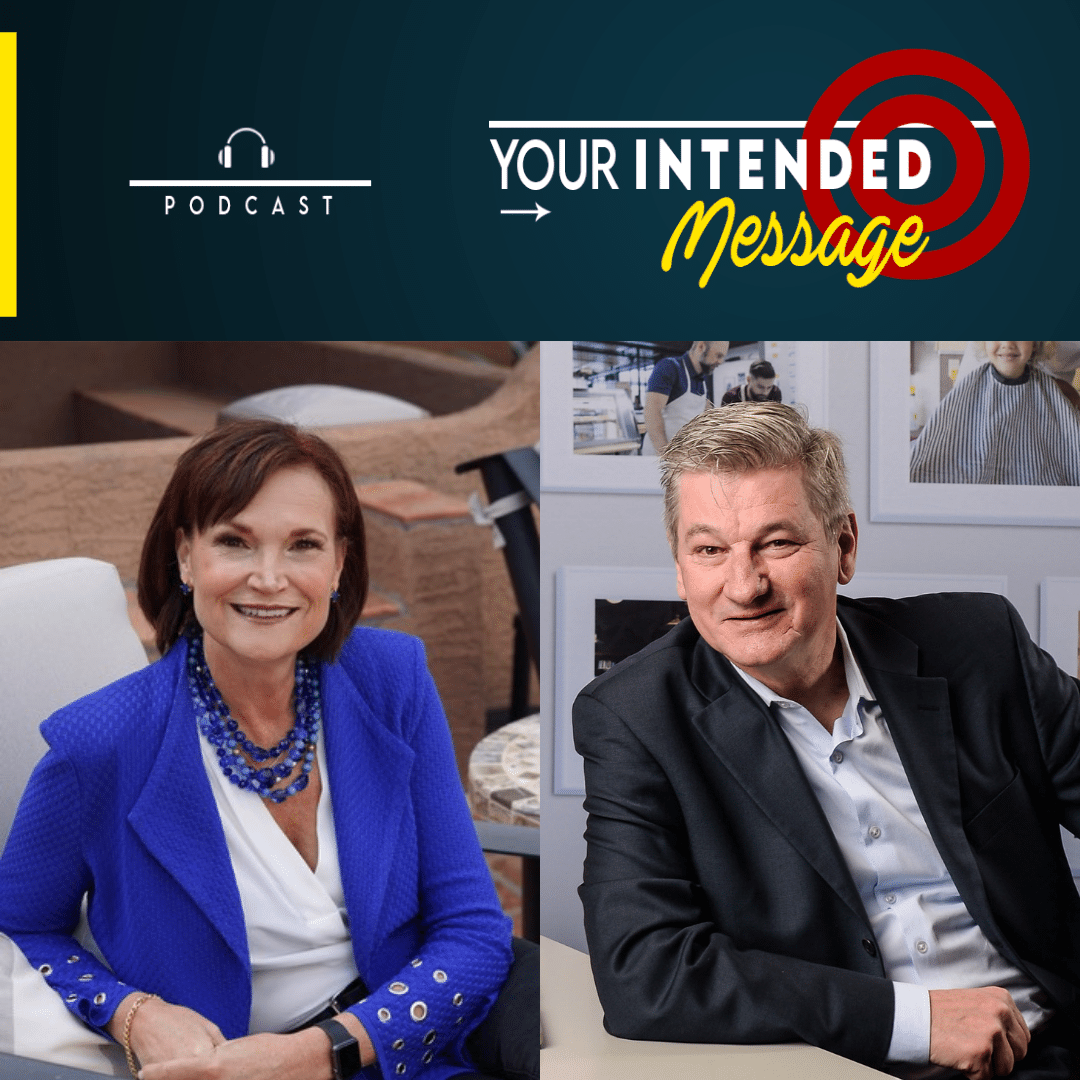
Ep 6464 Kristin Arnold, Speak and Shine on Panels
How can you leverage panels to spread your message and enhance your image as an expert? Do you speak as a panel guest or panel moderator? Would you like to deliver a more effective and professional image while providing a message of value to the audience? Join Kristin Arnold as we examine: How to prepare for the panel? How to deliver soundbites? How to say less while conveying more? How to generate more panel opportunities? How to create a more interesting and engaging experience? Kristin Arnold is a professional meeting facilitator and leading authority on moderating panel discussions. She is the author of six books including, "123 Ways to Add Pizzazz to a Panel Discussion" Learn more about the book here www.PanelPizzazz.com ----- ----more---- Your Intended Message is the podcast about how you can boost your career and business success by honing your communication skills. We’ll examine the aspects of how we communicate one-to-one, one to few and one to many – plus that important conversation, one to self. In these interviews we will explore presentation skills, public speaking, conversation, persuasion, negotiation, sales conversations, marketing, team meetings, social media, branding, self talk and more. Your host is George Torok George is a specialist in communication skills. Especially presentation. He’s fascinated by the links between communication and influencing behaviours. He delivers training and coaching programs to help leaders and promising professionals deliver the intended message for greater success. Fact about George Torok He hosted the radio show, Business in Motion for 19 years, interviewing over 500 guests. Connect with George www.torok.com www.SpeechCoachforExecutives.com www.SuperiorPresentations.net https://www.linkedin.com/in/georgetorokpresentations/ https://www.instagram.com/georgetorok/ https://www.youtube.com/user/presentationskills
Ep 6363 Jason Voiovich, Blending Story Telling, Marketing and History
"Your Intended Message is Your Intended Story" Effective marketing is based on telling powerful stories. You can create powerful stories when based on lessons from history. Jason Voiovich Is a marketer and story teller who studies the lessons of history. Insights from this conversation History doesn't repeat itself but it does rhyme. Gain a competitive story telling edge from history lessons Stories build on minimal facts - then additional facts are added to fill in the gaps Why did each of the four participants in the War of 1812 tell a different story? The story contains a hero, villain and conflict Abraham Lincoln was an excellent story teller and joke teller Over 25 years, Jason Voiovich has launched hundreds of new products. His success as a marketer is based on his power of observation of people and history. He studied the presidents of the United States from the perspective as Marketer in Chief and published his findings in his book, Marketer In Chief. You can find his book at all the usual book distributers and learn more at this website https://marketerinchief.com/ ----- ----more---- Your Intended Message is the podcast about how you can boost your career and business success by honing your communication skills. We’ll examine the aspects of how we communicate one-to-one, one to few and one to many – plus that important conversation, one to self. In these interviews we will explore presentation skills, public speaking, conversation, persuasion, negotiation, sales conversations, marketing, team meetings, social media, branding, self talk and more. Your host is George Torok George is a specialist in communication skills. Especially presentation. He’s fascinated by the links between communication and influencing behaviours. He delivers training and coaching programs to help leaders and promising professionals deliver the intended message for greater success. Facts about George Torok He hosted the radio show, Business in Motion for 19 years, interviewing over 500 guests. Connect with George www.torok.com www.SpeechCoachforExecutives.com www.SuperiorPresentations.net https://www.linkedin.com/in/georgetorokpresentations/ https://www.instagram.com/georgetorok/ https://www.youtube.com/user/presentationskills
Ep 6262 Mark Brown, Business Story Telling
Enhance your Business Message with story telling How might you use stories more easily and effectively in you business messages. That might be in a team meeting, a sales presentation, or a leadership presentation. Mark Brown is the 1995 Toastmasters World Champion of Public Speaking He conveyed powerful stories in that presentation. He continues to help speakers, presenters and leaders deliver more effective messages through the power of story. Insights from this conversation with Mark Brown How to find your stories? Look at the photos on your phone. What amazed you? What amused you? What moved you? Authenticity plus Vulnerability = Credibility The common connects Stories mirror our lives Stories add meaning to your corporate message Look for the humanity behind the numbers Stories convert data into three dimensional meaning Mark Brown offers speech and presentation coaching for leaders. Learn more about his coaching programs here: https://markbrownspeaks.com/executive-coaching/ ----- ----more---- Your Intended Message is the podcast about how you can boost your career and business success by honing your communication skills. We’ll examine the aspects of how we communicate one-to-one, one to few and one to many – plus that important conversation, one to self. In these interviews we will explore presentation skills, public speaking, conversation, persuasion, negotiation, sales conversations, marketing, team meetings, social media, branding, self talk and more. Your host is George Torok George is a specialist in communication skills. Especially presentation. He’s fascinated by the links between communication and influencing behaviours. He delivers training and coaching programs to help leaders and promising professionals deliver the intended message for greater success. Facts about George Torok He hosted the radio show, Business in Motion for 19 years, interviewing over 500 guests. Connect with George www.torok.com www.SpeechCoachforExecutives.com www.SuperiorPresentations.net https://www.linkedin.com/in/georgetorokpresentations/ https://www.instagram.com/georgetorok/ https://www.youtube.com/user/presentationskills1