Your Intended Message
311 episodes — Page 4 of 7

Ep 161Does your customer service truly serve the customer? Zak Garside
Are you ready to stand out from the competition? What can you do to be more attractive to your customers? Episode 161 (Zac is based in Salt Lake City) In this conversation with Zac Garside we explore: Why you should call your competition How does your automation help the customer? Why compete on price when there are better ways to compete Three steps to appear different to your customers What is the role of customer service? Treat your customer service the way you want them to treat your customers How can you use those customer service call-recordings How are you attempting to intimidate your customers? How to cultivate more constructive feedback for your CS reps How to get your people to care Why customer service starts with the leader About our guest, Zac Garside: Zac became the CEO of Power Selling Pros at age 27 simply by asking the Founder to make him CEO. Zac speaks to business owners all over the US teaching them how to grow their business with the power of customer service. You can get your copy of his newsletter, The Storytelling Habit at this website. Tell him you heard him on Your Intended Message to receive a discount code for his courses or coaching programs. www.ZacGarside.com ----- Excerpts from this conversation with Zac Garside If you call a Delta customer service representative to get help. After the call ends, it will ask you one question. And I love this question. Because this is helping them I think the question is, on a scale of one to five. If you owned a business, how likely are you to hire the person you just talked to? Oh, wow, would it be five for yes and one for no? Amazing question. Big and now they're taking that feedback, which is so much better than on a scale of one to 10. How are you how well how good was our service? Right? How likely are you to hire the person who just helped you? And you take that feedback back to your team? That's motivating because that is a direct reflection of the type of service you provided. Last time I called delta. I couldn't book a flight online for some reason wasn't working. So I called them this representative was so positive so kind and she found that I had like $700 worth of EA credits in my account that I didn't even know were there. She finds it, she, she applies it for me. She said something was broken and went and brought somebody else to get involved. I just, I felt like she really cares. He or she, she like actually means what she's saying to me, which is very, very different from most companies. Because even if you have the right words, and you technically say the right things, if I don't feel like you care, you mean it, it actually can work against you. It's like the slick used car salesman who says the right things, but you just don't feel right about it, you know, versus a more a more clumsy salesperson who kind of tripped over their words, the pitch isn't perfect. But you feel like they mean it, you feel like they really, really care. And so you're inclined to look at beyond the mistakes and do business with them. ----- ----more---- Your host is George Torok George is a specialist in executive communication skills. That includes conversation and presentation. He’s fascinated by way we communicate and influence behaviors. He delivers training and coaching programs to help leaders and promising professionals deliver the intended message for greater success. Connect with George www.SpeechCoachforExecutives.com https://www.linkedin.com/in/georgetorokpresentations/ https://www.youtube.com/user/presentationskills https://www.instagram.com/georgetorok/
Ep 160How to Score High Ticket Sales: Craig Andrews
Build irresistible first time offers to accelerate high ticket sales How to attract the right customer while repelling the wrong customer Episode 160 (Craig is based in Austin, Texas) In this conversation with Craig Acosta we explore: Why a first time offer helps you address fears and risks of buying When to use a first time offer How to price your first time offer relative to your main offering What's the ideal price range for B to B selling? What to address with the first time offer How many deliverables to include How to structure the offer to leverage cognitive bias The danger of a free offer or freebies How to justify the temporary low price offer Why you must clearly describe your ideal client The three necessary components Why you need to know the live time value of your customer About our guest Craig Andrews: Craig has driven over weight for half a billion dollars in revenue. He helps business build irresistible first time offers that accelerate high ticket sales. His wife had the chance to pull the plug and did not. That's why he's still here. Learn more and connect at https://allies4me.com/ https://www.linkedin.com/in/craig-andrews/ https://www.facebook.com/allies4me Free Offer: 1. Get the guide to build your First Time Offer 2. Take the 23-day self-paced course to develop your First Time Offer https://allies4me.com/yourintendedmessage ----- Excerpts from this conversation with Craig Andrews There are three components that determine that. The first is what you're offering has to be high value. And I've actually had prospects coming through that when they hear us asking the questions we're asking, they realize, oh, these guys aren't some Mickey Mouse firm. These guys are serious players that know what they're doing. And they actually say partway before we even got to the offer, say, I don't think we're in the same price range. anyone said anything about price, they just took that from they realize what we did, they realize the value of it, and they knew it was not cheap. So that's the first thing is whatever you're selling has to be high value. And they have to know it's high value. The second thing is you have to set expectations on what the market value is, if they don't already know that. And so that's why I say if you come back in two or three weeks, this is what this price will be. So we're telling them, this is the value of what we're doing. So that's also setting expectations that's putting them in the ballpark of what we would normally charge for our work. And then the third thing that I mentioned a couple minutes ago, is a plausible reason for why it's heavily discounted this time. And the plausible reason can depend upon different things I would not recommend you ever use all because we're not hitting their sales numbers this month, we're offering a special that's please don't do that. No, no, no, that lead makes you look too cheap and desperate. ----- ----more---- Your host is George Torok George is a specialist in executive communication skills. That includes conversation and presentation. He’s fascinated by way we communicate and influence behaviors. He delivers training and coaching programs to help leaders and promising professionals deliver the intended message for greater success. Connect with George www.SpeechCoachforExecutives.com https://www.linkedin.com/in/georgetorokpresentations/ https://www.youtube.com/user/presentationskills https://www.instagram.com/georgetorok/
Ep 159Is your content marketing working for you? Hannah Acosta
What if your social media marketing isn't working? How can you get valid leads with social media? Episode 159 ( Hannah is based in Raleigh, NC) In this conversation with Hannah Acosta we explore: Should you publish content on social media What are the different type of contacts on social media? How can you create evangelists to spread your message? Why Social media isn't enough to create evangelists How to better engage your clients, fans and prospects? Which social media should you use? How to reach out and monitor the social media conversations What else might you include in your content to interest your customers? Who might you partner with when posting on social media? What mistakes are made in social media posting? How might you appeal to human feelings? How to educate your customers without making them feel stupid How to excite your customers to promote your message on social media About our guest Hannah Acosta: Hannah has launched over 5,000 social campaigns. She has helped generate over 25,000 leads for her clients. She is the leader of the Social Media Department at Ugly Mug Marketing. Learn more at https://www.uglymugmarketing.com/ https://www.linkedin.com/in/hannahacosta/ https://www.instagram.com/uglymugmarketing/ ----- So the natural progression is this idea of moving people, from stranger to friend to customer and ultimately to an evangelist. An evangelist is somebody who is going to rant and rave about your product or service or about your podcast. And they're going to go and tell all of their friends and family about how they they need to experience your product or service. Right. And that's ultimately our goal as business owners as entrepreneurs. We want to create evangelists for our business, I hear time and time again, from our clients that referrals are their best clients, right? If they get a referral, it's so much easier to sell to someone when they've been recommended. Or they talked with a friend or family member or another business owner colleague about why your product or service is the best for them. And so when we approach social media, it's about maintaining the relationship with our existing customers, to get them to feel like we really care about them outside of just that exchange of money, right? A lot of people think that that journey ends once someone becomes a paying customer. But that's really just the beginning of it because we want to try and get that referral. We want to get them to rant and rave so that they become an evangelist, because that takes a step out of the progression for us. Once someone becomes an evangelist. They're much more likely to recommend our product or service to their friends and family. So we have to do less work in that stranger area. ----- ----more---- Your host is George Torok George is a specialist in executive communication skills. That includes conversation and presentation. He’s fascinated by way we communicate and influence behaviors. He delivers training and coaching programs to help leaders and promising professionals deliver the intended message for greater success. Connect with George www.SpeechCoachforExecutives.com https://www.linkedin.com/in/georgetorokpresentations/ https://www.youtube.com/user/presentationskills https://www.instagram.com/georgetorok/

Ep 158Weed Words: You Guys
Beware of the Weed Words that Choke your intended message. Avoid the phrase "YOU GUYS" Episode 158 You guys When you’re talking to me, please don’t address me as you guys. Even if I’m part of a group, I don’t want to be addressed as you guys because That’s gang talk, low class, disrespectful. ----- Connect with George www.SpeechCoachforExecutives.com https://www.linkedin.com/in/georgetorokpresentations/ https://www.youtube.com/user/presentationskills https://www.instagram.com/georgetorok/
Ep 157What’s your point and how to convey it: Joel Schwartzberg
Get to the point! Do you know what your point is? How to make your point Episode 157 (Joel is based in New Jersey) In this conversation with Joel Schwartzberg we explore: What is a valid point? The structure and litmus test of a point How to tie sub-points to the big mission How many points are too many? How to create a meeting agenda based on points What the magic words to clarify your point? The importance of an action step The role of inspiration in your point About our guest, Joel Schwartzberg: He was the national champion in public speaking on the collegiate level. He's a frequent contributor to Harvard Business Review, Inc.com and Toastmaster magazine. He is the author of Get to the Point, Sharpen your Message and make your Words Matter. His clients include State Farm Insurance, Comedy Central, and Brennan Centre for justice. Learn about his books and services at www.joelschwartzberg.com ----- Excerpt from this conversation with Joel Schwartzberg: So the funny thing about points is, we assume we know what one is because we use that language all the time. Get to the point, what's your point? Did you make your point, and it's presumed that it's something like an idea or a topic may be even a theme. But the truth of the matter, and what's most instructive and helpful for us is if we reimagined this word point, as something very specific, it's not a topic, it's not a theme. In essence, it's an argument or a proposition, you're basically making a case for something that if you nail it, your audience will think a new, or they'll take an action step that you want them to take. And that only happens when you make this proposition, this argument to them a case and you can tell it's a point because you can prove it with data with storytelling with reasonability, with all of Aristotle's tools, going way back when, but just as an example, because that's a description, and I like to really drill down. Let's talk about podcasting. So if I said to you, George, or you said to me, I want to talk today about podcasting. That's your topic. But what have you told me about podcasting? Is it on the rise? Or is it becoming antiquated? Is podcasting a good thing or a bad thing? Have there been evolutions in podcasting? Is there a good way to podcast a bad way to podcast? I have no idea the point you're trying to make if you use the word podcasting, and even if you said the importance of podcasting, or the evolution of podcasting? Are those things good or bad? Is it going up or down? This is why it's so important to distinguish between a theme and a topic or a point. ----- ----more---- Your host is George Torok George is a specialist in executive communication skills. That includes conversation and presentation. He’s fascinated by way we communicate and influence behaviors. He delivers training and coaching programs to help leaders and promising professionals deliver the intended message for greater success. Connect with George www.SpeechCoachforExecutives.com https://www.linkedin.com/in/georgetorokpresentations/ https://www.youtube.com/user/presentationskills https://www.instagram.com/georgetorok/

Ep 156Make Messages Stick with Brain Glue: James I. Bond
How to be more persuasive with emotional triggers Discover the word tricks to magically be more convincing Episode 156 (James is based in L.A, California) In this conversation with James I. bond we explore: Why logic often fails to convince How to sell using emotional word triggers How to make ideas sticky How to get people to make decisions faster The power of poetry, analogy, alliteration, humor 14 techniques to tap into brain glue How you can brainstorm for brain glue ideas About our guest, James I Bond: James Bond is one of America's leading behavioral management and marketing specialists. He is author of the bestselling book, BRAIN GLUE - How Selling Becomes Much Easier by Making Your Ideas "Sticky" Learn more about his book at www.BrainGlue.com ----- Your message is not just words. It's not just numbers. It's passionate emotion. When you can transfer that emotion to the other person, they're more likely to buy from you. ----- ----more---- Your host is George Torok George is a specialist in executive communication skills. That includes conversation and presentation. He’s fascinated by way we communicate and influence behaviors. He delivers training and coaching programs to help leaders and promising professionals deliver the intended message for greater success. Connect with George www.SpeechCoachforExecutives.com https://www.linkedin.com/in/georgetorokpresentations/ https://www.youtube.com/user/presentationskills https://www.instagram.com/georgetorok/ For weekly tips to improve your presentations visit https://toroktips.com/

Ep 155Weed Words: Living under a rock
The Weed Words are words you need to avoid when you speak, because they choke your intended message. Unless you’ve living under a rock Sweet words of praise – right? Just the opposite. When you hear this phrase how do you feel? Respected or insulted? Why would a speaker use this phrase? Is this speaker trying to build rapport by suggesting that you are living under a rock? Is the speaker under the rock with you or standing on top of the rock and grinding down on you? Is the speaker suggesting that you are equal to them or beneath them? Perhaps the speaker is proud of something they know that you don’t. Ha, ha, I know more than you. You’re ignorant and I’m not because I don’t live under the rock like you. When you hear that phrase, how do you feel? The speaker suggested that you’ve been living under a rock? What does that say about how the speaker sees you? Is this a sign of respect? Why would they even suggest such an insulting scenario? When you hear this phrase what do you see? What lives under a rock? Slugs. Did the speaker just call you a slug? Why does the speaker see you as a disgusting creature living under a rock. Would you ever say that to a person that you care about or want to develop a trusting relationship with? You must be a slimy ignorant creature and I’m here to enlighten you because I am the anointed one. You’ve been hiding under a rock like a slug and I’m here to enlighten you with my wisdom. Now bow down to my greatness – you slug. Should I respond with thanks for calling me a slug you arrogant jerk, now just watch me slime you. Or should I throw the rock at the speaker? Beware of the Weed Words Your host is George Torok George is a specialist in executive communication skills. That includes conversation and presentation. He’s fascinated by way we communicate and influence behaviors. He delivers training and coaching programs to help leaders and promising professionals deliver the intended message for greater success. Connect with George www.SpeechCoachforExecutives.com https://www.linkedin.com/in/georgetorokpresentations/ https://www.youtube.com/user/presentationskills https://www.instagram.com/georgetorok/
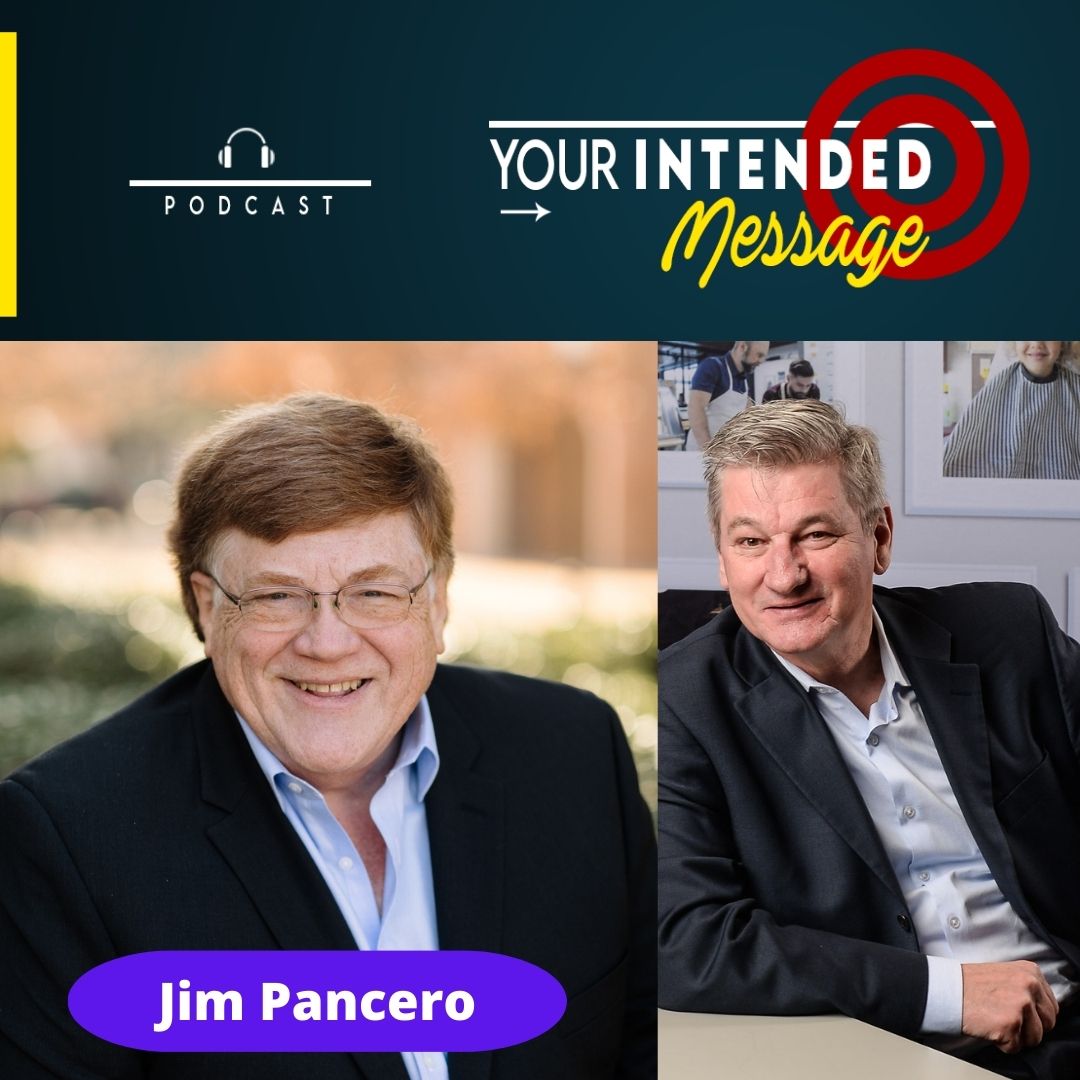
Ep 153Selling has changed. Have you adapted? Jim Pancero
You can always sell more if you want to How has selling evolved and how must you adapt? Episode 154 (Jim is based in Dallas, Texas) In this conversation with Jim Pancero: How the sales person has lost their power The loss of trust in sales Where is the sales person in the process of researching a purchase? How can the sales rep save the customer from misinformation? How are you conveying your distinct difference and advantage? What is the evolution of selling and what's next? About our guest, Jim Pancero: Jim Pancero is a sales and sales leadership speaker, trainer and consultant with over 40 years of experience in sales. Connect with or follow Jim on Linkedin to see his weekly short sales tips videos. https://www.linkedin.com/in/jimpancero/ Check out the sales online training at https://www.advancedsalesuniversity.com/ ----- In this podcast episode, sales and sales leadership expert Jim Pancero discusses the challenges of modern sales and how they have evolved over time. He notes that buyers are more skeptical of experts and sales reps are being brought in later in the buying process. Jim emphasizes the importance of balancing technical product skills, selling skills, and business and financial skills in order to gain a competitive advantage in sales. He also discusses the changing role of salespeople and sales managers and the critical turning point in the sales process. Jim offers valuable advice for sales managers and emphasizes the need for sales organizations to adapt to changing customer expectations and market conditions. ----- Excerpts from this conversation with Jim Pancero We better make damn sure we get their attention when we do perform. And the other point is just supporting a customer, giving 'em great service isn't good enough anymore. It's losing to the eyes of the customer. It's like, so what else have you done for me? I have a salesperson say, boy, my customer's loyal. Why he is still loyal. They say, well, when they order something, we get 'em the right thing. We get it to 'em on time. We answer their questions when they call and we know what we're talking about. . And I started laughing and saying, isn't that kind of minimum requirements to the job? That's your competitive advantage. That's what you're bragging about is you, you took care of 'em. So what, what else have you done? And so it's looking at this that's reactive selling is just not effective today like it used to be. It used to be if you took care of a customer, you service them. They kept around long term. Now they're saying, what else have you done for me lately? And then the final point is we need to make sure that we keep reminding our customers that if we do have differences, we remind them of them. I believe the toughest single question in selling is when a buyer sits there and says, okay to a sales rep says, okay, look, you're the third vendor I've talked to this week about this stuff. Why based on all the competitive options available to me, do I wanna buy from you? And look at how people don't have their, their answers organized, they give generic responses. Uh, and they, they, they're not reminding the customer. The customer assumes everybody's equal. ----- ----more---- Your host is George Torok George is a specialist in executive communication skills. That includes conversation and presentation. He’s fascinated by way we communicate and influence behaviors. He delivers training and coaching programs to help leaders and promising professionals deliver the intended message for greater success. Connect with George www.SpeechCoachforExecutives.com https://www.linkedin.com/in/georgetorokpresentations/ https://www.youtube.com/user/presentationskills https://www.instagram.com/georgetorok/ For weekly tips to improve your presentations visit https://toroktips.com/

Ep 154Weed Words: Very
Are you using or abusing the word VERY? Here's a Weed Word to remove from your speaking The Weed Words are words and phrases that can choke your intended message like nasty weeds. These short clips will highlight one word or phrase each week so you can remove these weeds from your speaking. Episode 153 V E R Y Stop using the word very because it is vague, lazy and deceptive. Very is an adverb. That means its purpose is to modify an adjective, verb or other adverb. Adverbs have a broad range of work. Maybe that’s why they are often misused. I’ve noticed that very shows up as the most overused and misused adverb. That should be enough reason to stop using it. When you use the word very, you are not standing out. You are simply repeating a word that too many people use and misuse. Very is a lazy word. What do I mean? People use very when they are lazy. They can’t be bothered to search for a better word, so they say very. It was very cold. Did you mean freezing or frigid? It was very hot. Did you mean boiling or stifling? I was very hungry. Did you mean famished? It was a very slow. Did you mean sluggish? It was very important. Did you mean crucial? Just when you thought that the word very couldn’t be more abused, we are tormented with the phrase - very unique. What does that mean? Unique means one of a kind. Unlike any other. There’s nothing else like it. There are no degrees of unique. No shades of gray. Simply one of a kind. Unique. You can’t modify the word unique. It’s unique or it’s not. It gets worse. Have you heard very, very unique? That’s ridicules. It’s lazy talk and it’s a lie. The mistake that people make is believing that adding the word very in front of their description makes it stronger. Instead, it makes it vague and weaker. Are you smart or very smart? Did you mean brilliant? The word very is a vague expression of more. However, it’s not visual and it’s not measurable. It’s vague. It’s a lazy word choice. We can’t see or feel it. When you use the word very, you confuse your audience because they don’t know what you mean. Instead select words that are clear, measurable or visual. Beware of the Weed Words. Listen to these Weed Word Alerts every week. Then listen to the latest episode where we explore aspects of business communication skills. George Torok Watch the Weed Word videos https://www.youtube.com/watch?v=ahi1kt3n4g0&list=PLE0OVNUcJBI7KHEm4YyhhNQLuo10hUzjj our host is George Torok George is a specialist in executive communication skills. That includes conversation and presentation. He’s fascinated by way we communicate and influence behaviors. He delivers training and coaching programs to help leaders and promising professionals deliver the intended message for greater success. Connect with George www.SpeechCoachforExecutives.com https://www.linkedin.com/in/georgetorokpresentations/
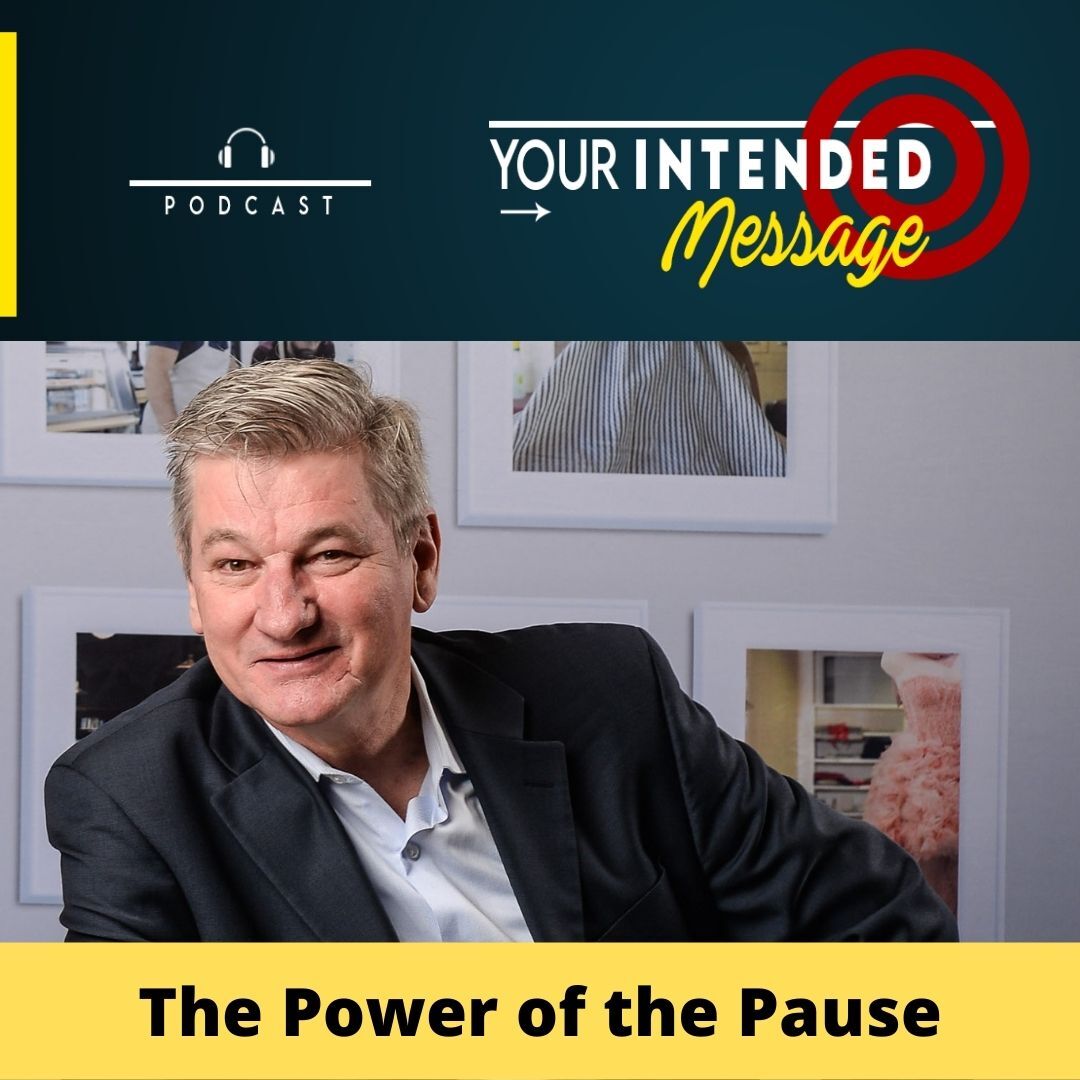
Ep 152Harness the Power of the Pause when Speaking
Ten ways you can use the pause in your presentation for greater impact Why is the pause such a powerful tool yet abused Episode 152: In this episode George Torok examines the power of the pause and presents 10 reasons and examples to use in your presentation for greater success. Are you using the purpose on purpose to engage your audience? What lessons can you take from comedy about the pause? When are good times to insert the pause? How long should you pause? What if you pause by mistake? How can you embrace and enhance your comfort with the pause? George Torok is a specialist in communication skills. He coaches executives to deliver their message more successfully. That might be in conversation or presentation. Learn more about his programs and the results of his clients at https://www.speechcoachforexecutives.com/ Get your weekly presentation tips at https://toroktips.com/ ----- Excerpts from this episode: The old cliché suggests that “Silence is Golden”. There are times when you might appreciate some silence in your life. On the other hand, silence can feel disquieting, disturbing and anxiety ridden. When you are speaking to an audience you might consider silence the enemy or the sign of a bad presentation. Imagine that you get lost in your thoughts and stop speaking. You go silent and anguished while trying to recover and start speaking again. You might even feel that any noise is preferable to silence. That’s when the umms and ahhs escape your lips. Don’t panic. Consider the positive benefits of pauses in your presentation. Even an unplanned pause can be perceived positively by the audience. Many speakers would improve the power of their presentation if they inserted tactical pauses throughout their presentation. The ability to pause might be the most important technique that speakers need to learn. It might sound simple but like many simple lessons, it’s not easy. It can be extremely difficult to pause when you are delivering a presentation. You might feel compelled to speak because you believe silence is the enemy. You perceive pausing as a sign of weakness. The reality is that silence could be your most powerful communication tool. Perhaps you’re not convinced. That’s understandable. Consider these examples and reasons to pause during your presentation. ----- Recapture Attention It’s almost impossible to hold the attention of the audience throughout your presentation. You need to recapture their attention. Pausing is an effective way to do that. Simply look at the audience with a calm smile and say nothing for as long as it takes. That could be several seconds that feels like eons to you. Invite Interaction When you want the audience to speak you must allow them that silence to think and respond. When you want a response, ask a question and wait in silence for the first answer. Then prod the group for another opinion and wait. Pausing while standing before your audience can feel horrendous, yet it might be the most powerful presentation technique for you to master. ----- ----more---- Your host is George Torok George is a specialist in executive communication skills. That includes conversation and presentation. He’s fascinated by way we communicate and influence behaviors. He delivers training and coaching programs to help leaders and promising professionals deliver the intended message for greater success. Connect with George www.SpeechCoachforExecutives.com https://www.linkedin.com/in/georgetorokpresentations/ https://www.youtube.com/user/presentationskills https://www.instagram.com/georgetorok/ For weekly tips to improve your presentations visit https://toroktips.com/

Ep 151Weed Words: Thanks for having me
If I have you, how would you feel? If you were had how would you feel? What is gross about this phrase? Welcome to Weed Words, the weekly micro tip on words to avoid so you can have more credibility when you speak. ----- Thanks for having me What do you feel or see when you hear this phrase? Thanks for having me. I cringe. The visual associated with this phrase is yucky. I hosted a radio show for 19 years and interviewed over 600 guests. I continue to interview guests on my podcast, Your Intended Message. Please tune in because it’s the podcast about communication in business. Your Intended Message. Sometimes the guest says, thank you for having me. Yuck, I didn’t have you. There are two ways to interpret this phrase. You were either - duped or eaten. The past tense of have is had. If you were had, that usually means you were cheated. I didn’t cheat you. The other interpretation of have is eaten. What did you have for lunch? A hamburger. It was delicious. What did you have for dessert? A crème Brule. Who did you have yesterday? That’s a relevant question for Hannibal Lector. Remember Hannibal the Cannibal. He could answer, I had a census taker along with a nice chianti and fava beans. I suppose that the ghost of that census taker could say, “Thank you for having me. Trust that I was delicious” Stop saying thank you for having me. It’s gross. Instead, you can say Delighted to be on (name of program) Thank you for the opportunity to talk to your audience about (the topic) It was a pleasure to discuss how people can (benefit of the topic) Thanks for inviting to speak to your audience on (name of program) Thank you for the engaging conversation about (the topic) Notice how these phrases are much more thoughtful, engaging and friendly. Until I switch to the cannibal diet, I’m not going to have you. So please don’t say, thank you for having me. Beware of the Weed Words ----more---- Your host is George Torok George is a specialist in executive communication skills. That includes conversation and presentation. He’s fascinated by way we communicate and influence behaviors. He delivers training and coaching programs to help leaders and promising professionals deliver the intended message for greater success. Connect with George www.SpeechCoachforExecutives.com https://www.linkedin.com/in/georgetorokpresentations/ https://www.youtube.com/user/presentationskills https://www.instagram.com/georgetorok/ For weekly tips to improve your presentations visit https://toroktips.com/

Ep 150The Battle Between Sales & Marketing: Gary Garth
Why doesn't sales and marketing play well together? How can we get sales and marketing on the same team? Episode 150 (Gary is based in Medellin, Columbia) __CRACK THE CODE ON SALES AND 10X YOUR REVENUE___ Because you are a loyal listener of "Your Intended Message" get your FREE 'The Zero to 100 Million Sales Blueprint' endorsed by: - Head of Channel Sales at Amazon - Director of Partner Program at Microsoft - Head of Global Sales Enablement at Google Go to 👉 https://garygarth.com/product/zero-to-100-million-sales-blueprint/ Apply at checkout COUPON: yourintendedmessage ----- Summary The importance of sales and marketing alignment. 0:00 Three facts to know about Gary Garth There’s often a disconnect between sales and marketing. 2:14 The disconnect between sales and marketing. How to solve the problem. How can one department contribute towards the other? How can we make sure that we’re speaking the same language? What kind of priorities can 4:24 How one department can contribute to the other one. Best practices for sales and marketing. The importance of having sales and marketing as an army in the same front. 6:28 Creating a chief revenue officer. Creating a weekly sales and marketing meeting. Why you need to understand your ideal customer profile from a sales and marketing standpoint. 8:43 The 20 metrics sales and marketing should have locked down. Understanding the ideal customer profile. The first obstacle is creating awareness about the solution. The two different value propositions. What is the alignment between sales and marketing? How does it fit into the equation? 12:20 Alignment between sales and marketing. Addressing the misalignment between marketing and sales. The third thing is to establish equal KPI. 14:35 Aligning tools to make a tremendous impact. Establishing equal kpi. Practical examples of success for marketing and sales. 16:25 Practical example, direct response marketing campaign. 70% of all leads come through phone calls. Sales and marketing each come with their own bias. Did you struggle with marketing people? 18:50 Sales and marketing have their own biases. How to make sales and marketing work together. How to get your sales and marketing departments to work together. 21:20 Marketing and sales need to be more open and willing to ask questions. The first step is collaboration. Aligning the two customer journeys. Step one, mapping out the entire customer journey. About Gary Garth Gary is a serial entrepreneur, founder and CEO of elevate.io. He's authored the zero to 100 million sales blueprint book, and the Goals Grit and Greatness Planner. He's been featured in Inc, Forbes, Success and many other prominent publications as a serial entrepreneurs since 2002. Gary has started and successfully exited six companies, including large outbound sales, call centres, radio advertising networks, and an award winning eight figure, digital marketing agency. ----- Gary Garth's current projects include: www.elev8.io www.goalsgritandgreatness.com https://www.0to100million.com ----- Excerpts from this conversation with Gary Garth That's, I guess that's the million dollar question here. What I see in nine out of 10 scenarios, when I work with companies, the very first thing you can do to get an immediate assessment of how much collaboration there is between these two departments, how well they understand each other, and what areas of opportunity you can address is get them in a room together, and then had them both map out the entire customer journey. So before they even become a customer, their prospect and that whole process to when they become a customer and understanding also, if you're looking at it from a as a as a business owner standpoint, their ability to cross sell, upsell products, collect testimonials, create case studies, how many referrals Do you have understanding that whole process and aligning on all the different metrics? You will probably get one very clear picture from sales. And another picture for marketing. So aligning those two customer journeys, less as and heavy one universal one will always tend to spark a lot opportunities because sometimes, the customer is continuously has communication with the account manager account executive in b2b, for example, but do they know exactly when to identify an upsell across an opportunity and how to promote it? Could marketing for example, provide some content or collateral case studies, an ROI calculator that can demonstrate if you did x, y, z and expanded your service from Package A to B or added this or the product to the equation? Here's the expected impact financially speaking as a result of that, all of a sudden, you'll see a lot of revenue opportunities. So just mapping out the entire customer journey. That would be step number one. ----- ----more---- Your host is George Torok George is a specialist in executive communication skills. That includes conversation and presentation. He’s fascinated by way we communicate and influence behavio

Ep 149Weed Words: A bunch
What does a bunch mean to you? When you hear the word, what do you think? When you say it, what do your listeners think? Welcome to Weed Words, the weekly micro tip on words to avoid so you can have more credibility when you speak. ----- Hey, I got a bunch. Do you want to buy a bunch? How many bunches do you want? How excited do you get when you hear the word - bunch? How do you think your clients or team feels when you talk - bunch talk? Do you provide a bunch of products or services? Are you proud of the bunch of options you offer to you clients? Are you asking your team to generate a bunch of ideas? What are you trying to say? What do you want people to think, see or feel when you say that? What’s a bunch? Go ahead. Think of a bunch. What comes to mind? Bananas. What else? Grapes, flowers When you talk to monkeys how can you get them excited? Say “I’ve got a bunch for you.” When you want to score with that attractive monkey, simply coo, “Come up to my place, I’ve got a bunch.” When talking to humans about a bunch, they’ll recognize that you want to date monkeys. Say bunch to humans, and they’ll think, Oh you’re not talking to me. Let me introduce you to my monkey. And don’t try to dress it up by calling it a whole bunch, a big bunch or bunches. Instead, toss the bananas and find words that are clear and descriptive: You provide an assortment of products or services. You’re proud of the selection of options you offer. You ask your team for a dozen ideas. Be clear and descriptive. Keep the bunch talk for monkey-tinder. Beware of the weed words. Listen to these Weed Word Alerts every week. Then listen to the latest episode where we explore aspects of business communication skills. George Torok Watch the Weed Word videos https://www.youtube.com/watch?v=ahi1kt3n4g0&list=PLE0OVNUcJBI7KHEm4YyhhNQLuo10hUzjj our host is George Torok George is a specialist in executive communication skills. That includes conversation and presentation. He’s fascinated by way we communicate and influence behaviors. He delivers training and coaching programs to help leaders and promising professionals deliver the intended message for greater success. Connect with George www.SpeechCoachforExecutives.com https://www.linkedin.com/in/georgetorokpresentations/

Ep 148How the Workday Warrior Gets More Done: Ann Gomez
Boost your productivity with less distractions What if you delayed checking your messages for at least 20 minutes? Episode 148 (Ann is based in Toronto, Canada) In this conversation with Ann Gomez we explore: What is the warrior mentality and how can you apply it to your work? Why are distractions so addictive and so damaging? The conversation you need to have with yourself and then your team Why being brilliant and driven can work against you? Three challenges that overcomplicate our day and how to address them A hack to have shorter meetings and end on time The power of short bursts of focus Assessing the urgency and best channel for the message About Ann Gomez: Ann is the founding president of Clear Concept Inc., an international training organization. Her latest book is, Workday Warrior: A proven path to reclaiming your time. For almost 20 years, Ann and her team have been training the world's busiest people to thrive at work. Learn more about Ann and Clear Concept Inc, at https://clearconceptinc.ca/ Learn more about her books at https://clearconceptinc.ca/books/ ----- Excerpts from this conversation with Ann Gomez: 03:29 Okay. So the first step is to clarify what is most important, too many people are trying to do too many things. I was one of those people for many years. So what I hear is people say, Oh, I have too many priorities, I don't have enough time to go around. And and it's true that most people are spreading themselves too thin. And so this obviously is a conversation you'd want to have with your your team with your leader, to make sure you're all clear on the core priorities. But it's really important to know what your top priorities are and what your future priorities are. And there's a difference here. There's a ton of great ideas out there. There's no end in sight of things we can spend our time on, we just need to define what are we doing now versus later. And that later could be a week from now a month from now a year from now, like you decide what's appropriate for you. But in terms of core priorities, there's a magic number of three, three core priorities. And this is not discrete tasks. This is project so one of my core priorities is serving clients and that I dedicated about half of my week to serving clients. It's a big category of work. And I often have many clients on the go all wrap up one project to take on another so it's not like it's one task. There's multiple tasks in that core priority. Right leaders often have their team as another core priority. Sales and Marketing might have business development activities as part of their core priorities. And this is not just one task. It's a bucket of work. It's a category of work. But when we think about our work in that way, we start to get more strategic But what we're saying yes to right now. So that's the first thing to be clear on your top priorities. ----- 05:43 So the second step is to combat this not enough time syndrome that so many of us have. And the strategy is to pay yourself first. So once we know what our core priorities are, then we want to block that time in our calendar before other things get in the way. So we've heard this concept, pay yourself first with financial resources. Now we're applying that same principle to our time, our limited resource, right? As you said, Can't make more time we get our 24 hours. So how are we spending it. And so we want to be very proactive about building routines around our core priorities, and then leaving the leftovers for all of those other things. So for example, protect focus work time, most of us need to have time for independent work that doesn't include email, chats, informal conversations, like independent work, to build a document, edit, and a spreadsheet, whatever that may be. And so we want that time to be uninterrupted when our alerts are off, minimize email, minimize, chat, whatever it may be, close our door and focus. ----- ----more---- Your host is George Torok George is a specialist in executive communication skills. That includes conversation and presentation. He’s fascinated by way we communicate and influence behaviors. He delivers training and coaching programs to help leaders and promising professionals deliver the intended message for greater success. Connect with George www.SpeechCoachforExecutives.com https://www.linkedin.com/in/georgetorokpresentations/ https://www.youtube.com/user/presentationskills https://www.instagram.com/georgetorok/ For weekly tips to improve your presentations visit https://toroktips.com/

Ep 147Weed Words: In my humble opinion
In my humble opinion When you hear this phrase what do you think? How do you feel about the speaker? Are you eager to hear a humble opinion? Do you feel that they are truly humble? Do you believe that their opinion is valid? Do you prepare yourself for a less than humble opinion? Do you think, Who asked for your opinion? The words humble and opinion do not belong in the same sentence. Put them together and warning bells ring in our heads. When I hear this phrase, the question that pops up is “Are you expressing your opinion or are you pretending to be humble?” If you are truly humble, why are you expressing your opinion? A humble person doesn’t express an opinion. They keep their mouth shut. I imagine that your humbleness doesn’t compare to the Dalia Lama. He doesn’t claim to be humble. He simply is. If you are humble, you don’t need to say it. We will recognize your humbleness by the way you speak and treat others. So your claim to being humble is … what’s the word I’m searching for… weak, false, phony – a lie. If you are humble why express your opinion? If your opinion has value, why is it humble? If your opinion is valid and is more than an opinion – why degrade it? What I find curious and revealing is that this phrase doesn’t suggest that you are humble, instead it’s only this particular opinion that is humble. Other opinions might not be humble. If your opinion is humble – don’t express it. If you believe you must pretend to be humble because you don’t have faith in your opinion, shut up. If you want your opinion to be taken seriously, don’t pretend to be humble and don’t call it an opinion. Instead say, “Based on my experience… Based on my research, Based on my perspective If you offer value, there’s no reason to fake humble. If your message is valuable, don’t give it crutches by calling it humble. Say what you mean and mean what you say. Beware of the weed words. Listen to these Weed Word Alerts every week. Then listen to the latest episode where we explore aspects of business communication skills. George Torok Watch the Weed Word videos https://www.youtube.com/watch?v=ahi1kt3n4g0&list=PLE0OVNUcJBI7KHEm4YyhhNQLuo10hUzjj our host is George Torok George is a specialist in executive communication skills. That includes conversation and presentation. He’s fascinated by way we communicate and influence behaviors. He delivers training and coaching programs to help leaders and promising professionals deliver the intended message for greater success. Connect with George www.SpeechCoachforExecutives.com https://www.linkedin.com/in/georgetorokpresentations/
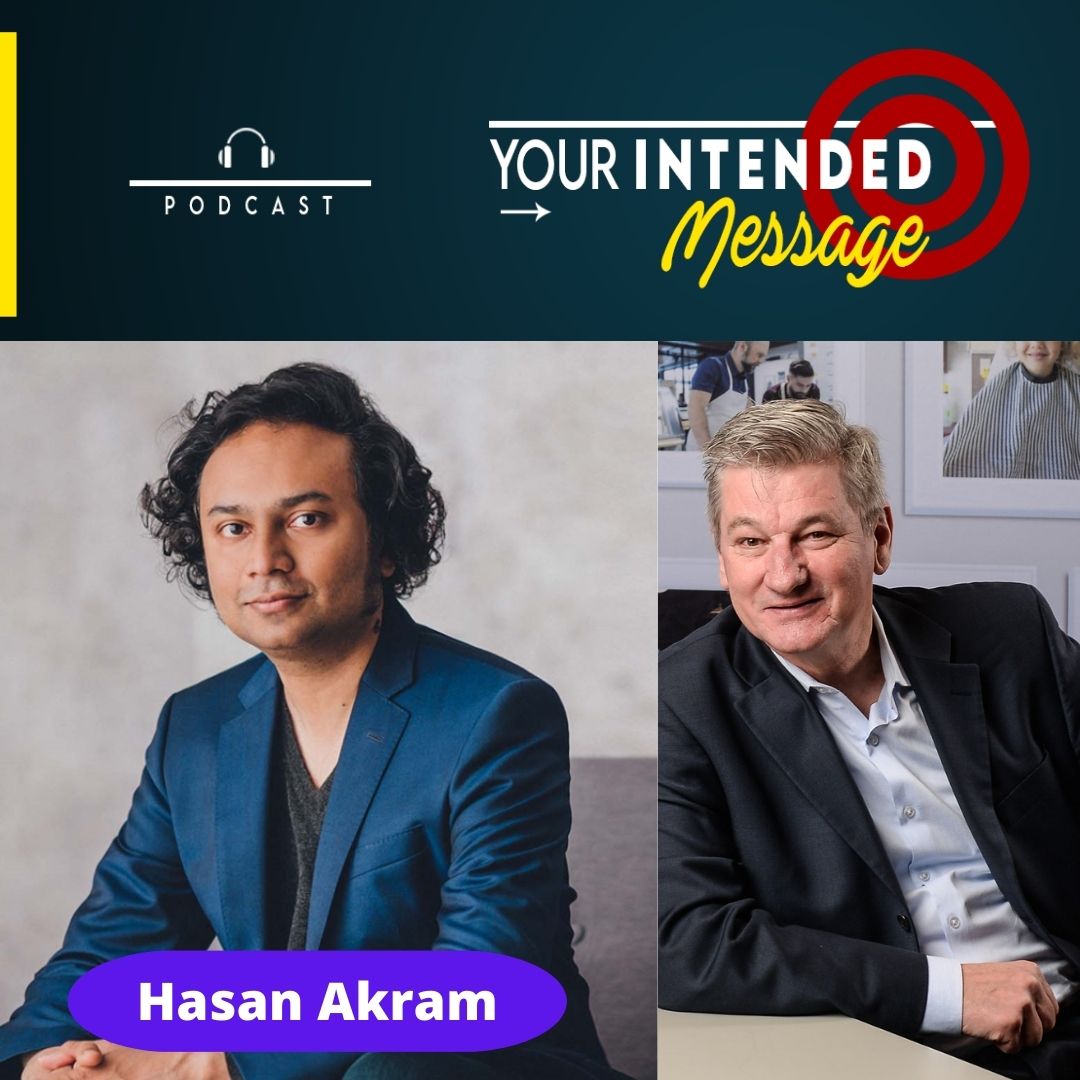
Ep 146Start with Empathy: Hasan Ibne Akram
The mind of a scientist and the passion of an entrepreneur How to get people to understand your message Episode 146 (Hasan in based in Munich, Germany) In this conversation with Hasan Ibne Akram we explore: Why does an engineer need to be a T shape communicator? How does a scientist talk to investors and get the money? How engineers and scientists can communicate with business executives Why is empathy critical to effective communication and less stress How to develop your empathy as a skill set Stories, analogies and authenticity oh my! Managing your perspective to change your world About Hasan Akram: Dr. Hasan is a serial entrepreneur. He is a computer scientist working in the domain of Autonomous Vehicle Safety. He is passionate about high performance. He is the author of The Million Dollar Monk, which examines high performance. Train your brain to overcome brain burn-out and leverage more of your brain's power with the use of science-based training programs. https://brainvincible.com/ ----- Excerpts from this conversation with Hasan Ibne Akram: Another amazing person that I have really tried to learn from him, who is an amazing communicator, and a scientist Neil deGrasse Tyson. Neil deGrasse, Tyson takes those concepts of physics, astrophysics, that you that only a handful of scientists will be able to read in their journals. And he sells it to everybody. And that is an amazing way of communicating. The recent book that I'm almost done with, I'm about to publish is called a brief history of autonomous vehicle, because that's the domain I work in. And I really try to follow Neil deGrasse Tyson, because the book is or everyone. And that's like communicating at that level. So that everybody understands, is really the name of the game. Because there was one joke, somebody said that, you know, we have such a good professor coming in that he's so good that nobody will understand him. But that's not a good professor, a good professor, is one that even the guests will understand everything. Terrific reminder, interesting analogy. Yes, he's so good that no one will understand him. And that's not something that anyone wants to have said about themselves. ----- I have to also train my people, don't give me the details, I only need three numbers because there are like 2000 things on my table. If I go to the details, there's no way I can. ----- First. I would say empathize - empathy, empathy and empathy. Empathy is really the key. Once you're able to empathize, the second part is if you're if you're a leader, you have to be precise. And one very interesting thing that the difference between leader and a manager, your job is not to give a task of a leader. A leaders job is to give a mission, and how can you articulate that mission and the vision with your team, and somehow li that mission and vision with their life mission and vision, using empathy? That's the formula and a curious challenge for all leaders out there and definitely something worth working on. ----- ----more---- Your host is George Torok George is a specialist in executive communication skills. That includes conversation and presentation. He’s fascinated by way we communicate and influence behaviors. He delivers training and coaching programs to help leaders and promising professionals deliver the intended message for greater success. Connect with George www.SpeechCoachforExecutives.com https://www.linkedin.com/in/georgetorokpresentations/ https://www.youtube.com/user/presentationskills https://www.instagram.com/georgetorok/ For weekly tips to improve your presentations visit https://toroktips.com/

Ep 145Weed Words: I just want to
I just want to When the person starts their talk with this phrase, how do you feel? Whose interest are they speaking to? You or themself? Does this make you feel valued? Not me! Why would you care what the speaker wants? Why would the speaker believe you care what they want? What would you listen to what they want? The speaker isn’t talking for your benefit but for their own purpose. It’s about what they want. When you see this phrase in writing, often its proper English – I just want to Notice there are three ts in that phrase. What happens when the person speaks this phrase? It mutates into I jus wanna What was simply annoying, has become repulsive. What happened to the letter t? Why the street slang talk? Why are they so lazy when speaking? Why is it so hard to enunciate the letter t? I just wanna How do you feel when you hear that phrase? Do you feel special? Do you feel that you are about to hear something profound? Or are you already discounting what follows this gutter talk? When I hear the word wanna – I’m reminded of guano. That’s bird poop. The next time the speaker says, I jus wanna – you might respond with “bird poop”. Now I know what you mean. The easiest way to avoid sounding like poop, is to speak for the benefit of your listener and not for your self gratification. We don’t care what you wanna. Beware of the Weed Words. Listen to these Weed Word Alerts every week. Then listen to the latest episode where we explore aspects of business communication skills. George Torok Watch the Weed Word videos https://www.youtube.com/watch?v=ahi1kt3n4g0&list=PLE0OVNUcJBI7KHEm4YyhhNQLuo10hUzjj What are your suggestions for weed words? Listen to these Weed Word Alerts every week. Then listen to the latest episode where we explore aspects of business communication skills. George Torok Watch the Weed Word videos https://www.youtube.com/watch?v=ahi1kt3n4g0&list=PLE0OVNUcJBI7KHEm4YyhhNQLuo10hUzjj our host is George Torok George is a specialist in executive communication skills. That includes conversation and presentation. He’s fascinated by way we communicate and influence behaviors. He delivers training and coaching programs to help leaders and promising professionals deliver the intended message for greater success. Connect with George www.SpeechCoachforExecutives.com https://www.linkedin.com/in/georgetorokpresentations/

Ep 144Transformational vs Transactional Leadership: Niels Brabandt
Why is sustainable leadership critical to team success? What is the science of effective leadership? Episode 144 (Niels is based in London, England) In this conversation with Niels Brabrandt, we explored: What is the science behind effective leadership? Why leaders must discard silly motivation phrases What are the tools of sustainable leadership and hence sustainable teams What is the difference between transactional and transformational world? Why is the role of an opinion critical to the team? How to lead in the hybrid workplace About Niels Brabandt: He successfully built and sold a business, so he speaks from real-world experience regarding leadership. Unlike others, he did the scientific research on leadership which means that he has proof and evidence for his claims. Niels not only practiced leadership in business but also in sports: he was a professional football (soccer) referee for decades. Learn more about Niels and his programs at http://www.nb-networks.com/ Connect with Niels at https://www.linkedin.com/in/nielsbrabandt/ ----- Excerpts from this conversation with Niels Brabandt: Yeah, sustainable teams are part of that definitely a different team phase, which are probably known however, many people only connect sustainability to aspects like the environment or recycling and that is not the only aspect we need to talk about. It's about employee retention. It is about focusing on your employees. But most importantly, we need people who know their craft, do a podcast as you do here without doing the research, how to do the tech how to do the audio, the video, the lighting, however, we often have people who became leaders basically either because someone else quit and they were promoted, or someone else thought they are a good leader and they will just pick or unfortunately quite often based on their network. I don't want to pull out cronyism and nepotism here however in many cases people became leader because other people said I like you I know you and here you are with your leadership job if you do not know the scientific background if you do not know the tools, and I do not mean opinions. I mean proper scientifically proven tools if you do not know them, there's no chance you can be a good leader some people have a bit more talent maybe a bit more empathy, a bit more approach to it naturally but that will not work in the long run. You still need the proper tools and scientific evidence tells you if something works or not. No motivational or inspirational one line ever paid the rent or made a team go the extra mile for longer than probably 24 hours. ----- The leader has to figure out because sometimes people don't know about these concepts, transactional transformation, and they don't have to know it's the leaders job to know that they have to figure out who in my team is transactional, who in my team is transformational. Because we have a certain effect, which unfortunately, effect recruiting, people like to recruit people who are exactly like themselves. It's called isomorphism, ISO Greek for equal more for parents. So when someone is exactly like you, you prefer to work together with them. However, when you are a transformational leader, you have a transactional job to give away, you hire a person who prefers to work transformation, because they are just like you. They probably quit within the first couple of months, because they will say, look, I was looking for something where I have time on my own, and I can decide and steer people and lead people, you basically gave me a repetitive task to do every single day that's complete. So it's very important, the leader has to figure out who is transactional, and who is transformational. ----- ----more---- Your host is George Torok George is a specialist in executive communication skills. That includes conversation and presentation. He’s fascinated by way we communicate and influence behaviors. He delivers training and coaching programs to help leaders and promising professionals deliver the intended message for greater success. Connect with George www.SpeechCoachforExecutives.com https://www.linkedin.com/in/georgetorokpresentations/ https://www.youtube.com/user/presentationskills https://www.instagram.com/georgetorok/ For weekly tips to improve your presentations visit https://toroktips.com/

Ep 143Weed Words: introduction to these Weed Word Alerts
Welcome to this series of mini reports about the words that can sabotage your intended message. We expose the Weed Words that get in the way of your message. Listen in to learn about these rascals and how to avoid these mistakes. These alert will usually be less than two minutes yet offer value tips in a fun way. ----- Are you talking to me? Are you talking to me? Did you want me to listen to what you say? If you want me to listen, then say something worthwhile. Do you want me to listen to every word or only the important words? How will I know the difference? Will you deliver a clear message – the one that you intend to deliver? Or might you obscure it with words that confuse, clutter and cloud your intended message? How hard are you going to make me work to decipher your message? Are you going to speak and then say, Well, you know what I mean? No, I don’t. I only know what I believe I heard. Did you consider that my perception of your message might be vastly different from your intended message? Why might that be? Perhaps you peppered your speaking with filler words, trigger words or vague words. Did you speak in code, slang or sloppy language? We are judged by how our message is perceived. The core of our message is in the words we use. Those words can reinforce our message or choke it like weeds. What are those Weed Words that you need to avoid? Listen to my posts so you can become aware of those weed words. Imagine the difference when people listen to and appreciate all your words. When you speak, deliver a clear and powerful message without the weed words. Listen to these Weed Word Alerts every week. Then listen to the latest episode where we explore aspects of business communication skills. George Torok Watch the Weed Word videos https://www.youtube.com/watch?v=ahi1kt3n4g0&list=PLE0OVNUcJBI7KHEm4YyhhNQLuo10hUzjj our host is George Torok George is a specialist in executive communication skills. That includes conversation and presentation. He’s fascinated by way we communicate and influence behaviors. He delivers training and coaching programs to help leaders and promising professionals deliver the intended message for greater success. Connect with George www.SpeechCoachforExecutives.com https://www.linkedin.com/in/georgetorokpresentations/
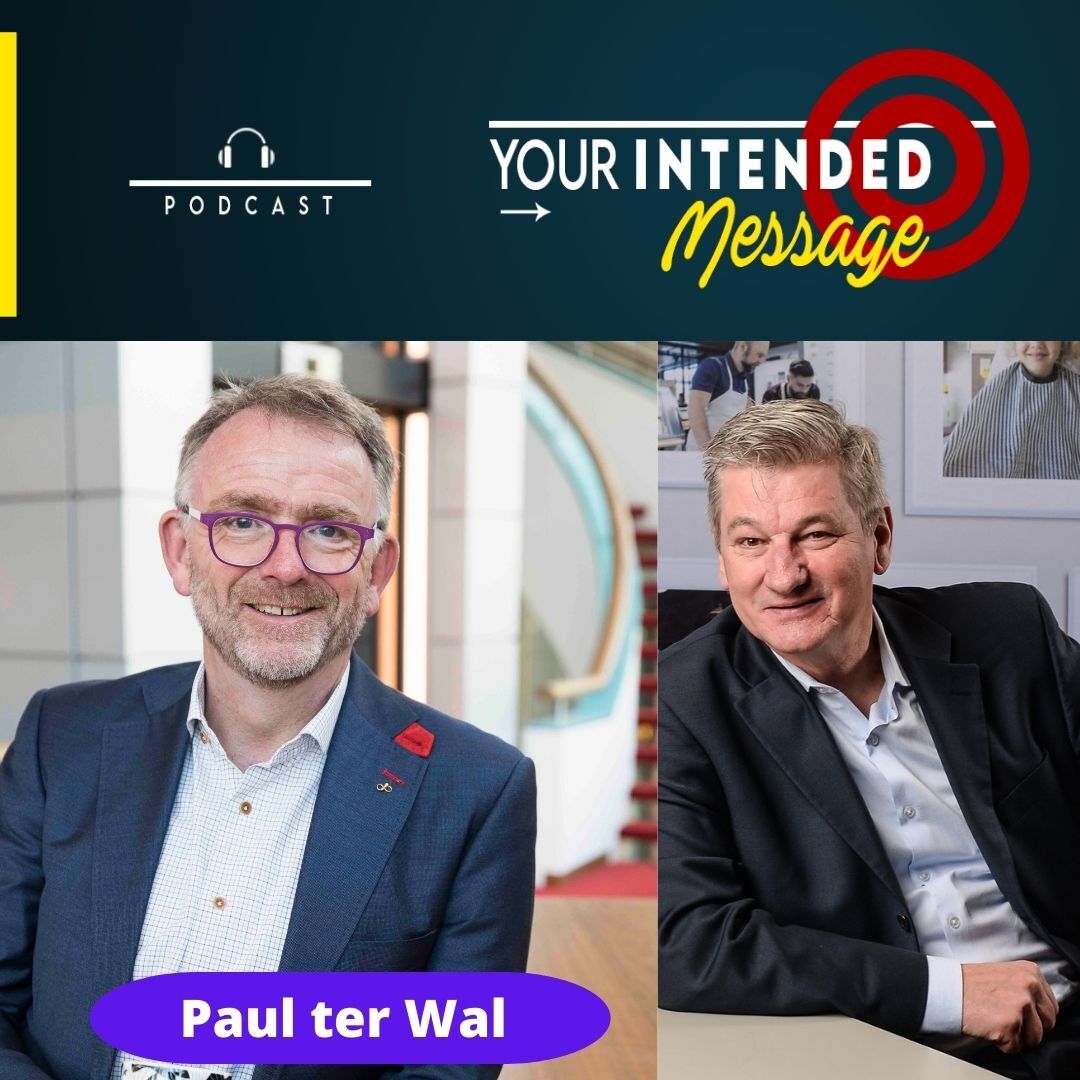
Ep 142Workplace Engagement: Paul ter Wal
Are you ready to better engage your workplace team? What are the benefits of better engagement in the workplace? Episode 142 (Paul is based in the Netherlands) How workplace engagement contributes to profitability Why core values and non-negotiables become more relevant Why leaders need to become better listeners How the pandemic and younger generations are reshaping the workplace Why people need a direction and purpose What's more important than money Why alignment is critical and how to create it. About Paul ter Wal: Paul says that core values are non-negotiable for Gen Y & Z. Paul was President of the Global Speakers Federation in 2019-2020 and learned how to create stronger belonging via the internet. Take the employee engagement survey - no charge https://team-andare.com/employee-engagement-survey See how you think your team is doing. https://www.youtube.com/user/paulterwal ----- Excerpts from this conversation with Paul ter Wal You know your own core values, know your own non negotiables? Who are you? What are you standing for, then be sure that you are aligned with the core values, the mission and vision of the organization. Because that's the base. Walk your talk. If you can't walk the talk of the organization, you can't be a good leader. ----- The advantages of having engaged employees are very important for profitability. So it's no longer Well, if you don't like it anymore, go away, we will find somebody else. Now the employer has to work on engagement to get the retention. ----- Simon Sinek and Aristotle told us a long time ago that you need to find your why. And I think younger people are much more aware of the question. Why am I doing what I'm doing? Is that what really gets me fun? So yeah, it's it's not that they don't like the money. But it was for a long time, the absolute number one, work hard, be successful be ribs. Now it is seeking purpose, work hard, and maybe you will be successful. So what we teach older employees and older people thought after fighting wars, that we said, well, we need well being we need more money, we want to have more material. They have it all. They have a car, they're have a house. So then the only stuff is not in material is not a money. It's more in why am I doing this? What is what is my purpose in life. And I think that change too, because we became less religious, less connected to Protestant, Roman, Catholic, Anglican, communist socialist, we add those core values that were put upon us, by others in church or whatever, that's gone, especially in Europe. It's gone. You need to find your own why. And I think that's one of the reasons that a lot of younger people have mental issues as well. They are looking for, why am I doing what I'm doing? What is my purpose in life? Why am I here? And normally, the priest or the vicar will tell you why you were here. I think over the years spotted the genius at still now that changed. And that's what I see. I'm becoming much more aware of it. That suddenly we want to know what our core values as negotiables are. And then it's Our individual core values. And that is connecting to your why. ----- ----more---- Your host is George Torok George is a specialist in executive communication skills. That includes conversation and presentation. He’s fascinated by way we communicate and influence behaviors. He delivers training and coaching programs to help leaders and promising professionals deliver the intended message for greater success. Connect with George www.SpeechCoachforExecutives.com https://www.linkedin.com/in/georgetorokpresentations/ https://www.youtube.com/user/presentationskills https://www.instagram.com/georgetorok/ For weekly tips to improve your presentations visit https://toroktips.com/

Ep 141Initiate More Productive Conversations: Chris Fenning
How to participate in more productive conversation What must you do in the first minute? Episode 141 (Chris is based in The Netherlands) In this conversation with Chris Fenning we explore: How to structure your conversation before you speak How to clarify the conversation in your head from the spoken one The three step GPS model to frame your conversation like a story Why you might need to zoom in and out when discussing details How to use the validation checkpoint to ensure interest and timing Recognize the danger of your assumptions About Chris Fenning: Chris has written several books on business communication, including his latest, The First Minute. Organizations that he teaches at include Google, Pepsi and NATO. Chris has a goal to give away one million communication skills books to students around the world to help them prepare for careers in business. Learn more about Chris Fenning, his products and services at his website: https://www.chrisfenning.com/ Check out his book, The First Minute https://www.chrisfenning.com/books/ ----- Excerpts from this conversation with Chris Fenning We start at the beginning in our heads. And then we start talking, we're already partway through the chain of though. So the conversation begins in the detail. ----- 01:58 The first minute is a practical how to guide for how to be clear and concise when you start communicating verbally or written. It's about planning and delivering that first minute of a corridor conversation, rather than meeting of an email, or chat or a meeting that you've got with your boss. So how to structure that message so that you get to the point, make your intentions clear, which ties in nicely with your intended message, because it's all about making sure your intended message comes across clearly and concisely. And really make sense to the person or people that you're talking to. ----- 30:20 There's a summary of some of what I've said. and it's, it's this, never assume your team knows what you're talking about. All the things we've talked about today about assuming people understand the context of the topic, or I thought my intention was clear, I didn't maybe not exactly say it, but it was obvious what I meant. All of those things. Never assume the team knows, always start from the beginning of the story. And do that zoom out. So never assume that they know the context. Never assume they know the intent, make it clear why saying it. Here's the topic we're going to going to talk about, here's why I'm talking to you about it. You need to take action, you need to listen to this information and work out if it impacts you. Those sorts of things should be explicitly stated. And that by itself will remove a lot of frustration in teams, particularly the conversations that end up having Well you never You never asked me to do it. Yes, I did. I told you about this situation. Well, you guessed but you've never told me that back and forth. Get really explicit. Never assume. Always. state very clearly. ----- ----more---- Your host is George Torok George is a specialist in executive communication skills. That includes conversation and presentation. He’s fascinated by way we communicate and influence behaviors. He delivers training and coaching programs to help leaders and promising professionals deliver the intended message for greater success. Connect with George www.SpeechCoachforExecutives.com https://www.linkedin.com/in/georgetorokpresentations/ https://www.youtube.com/user/presentationskills https://www.instagram.com/georgetorok/ For weekly tips to improve your presentations visit https://toroktips.com/

Ep 140Ace that job interview: Fatemah Mirza
How to prepare for that critical job interview Prepare for the standard and the unexpected questions Episode 140 (Fatemah is based in Los Angeles, California) In this conversation with Fatemah Mirza we explore: How to feel more comfortable with job interviews How to address those standard questions What "tell me about yourself" really means How to mitigate your red flags and time gaps How to tell enough without telling all Testing the fit between your personality and their culture About Fatemah Mirza: Fatemah started CareerTuners in 2010, through which she helps ambitious job seekers find, apply for and get higher-paying, more fulfilling jobs. She helps job seekers take control of their job search. There are free resources about resume writing, Linkedin, salary negotiation and interviewing on the website. https://careertuners.com/podcast/ ----- Excerpts from this conversation with Fatemah Mirza The interview process itself is a key part of that. And that's something that a lot of people approach with, with trepidation. They're quite nervous, and they don't necessarily perform well. Why do you think they suffer so so greatly in an interview situation? I think it's because you're putting yourself worth on the line. And that's really difficult for a lot of people, you're asking to be judged. And that's not fun. But if that's something you're struggling with, I recommend going out there and interviewing with companies that you just don't even want to work with. This will give you practice, you can even practice negotiating with them. ----- I always wondered about the question. "Tell me about yourself". And I used to think that that was a lazy question. But then later I realized it's actually a brilliant question because people tend to answer it poorly. What did they do wrong? What should they do instead? I think people tend to focus too much on themselves and their history as opposed to contextualize in what they've done to whatever the job is hiring for. Transitions are so common now like transitioning from one field to another. So focusing too much on the field that you're trying to leave is not a good idea. Even in that question. Tell me about yourself. You have to talk about, basically give the interviewer this message that I am the exact right fit for this position. I've been working towards this position my entire career history. I have the adequate training for this position and I know the hard work that it's going to take for me to succeed in that position. ----- You should ideally try to keep your answers to one to two minutes, you want to give the interviewer a chance to kind of mentally reset, because if you keep talking for too long, they might get disengaged, they only have a very limited attention span. One to two minutes is about five to 10 sentences. And if you're like man, I'm really like short selling myself. I should be talking more about this once in a while. It's okay for one of your answers to be a little bit longer. I could talk more about this if you like ----- ----more---- Your host is George Torok George is a specialist in executive communication skills. That includes conversation and presentation. He’s fascinated by way we communicate and influence behaviors. He delivers training and coaching programs to help leaders and promising professionals deliver the intended message for greater success. Connect with George www.SpeechCoachforExecutives.com https://www.linkedin.com/in/georgetorokpresentations/ https://www.youtube.com/user/presentationskills https://www.instagram.com/georgetorok/ For weekly tips to improve your presentations visit https://toroktips.com/
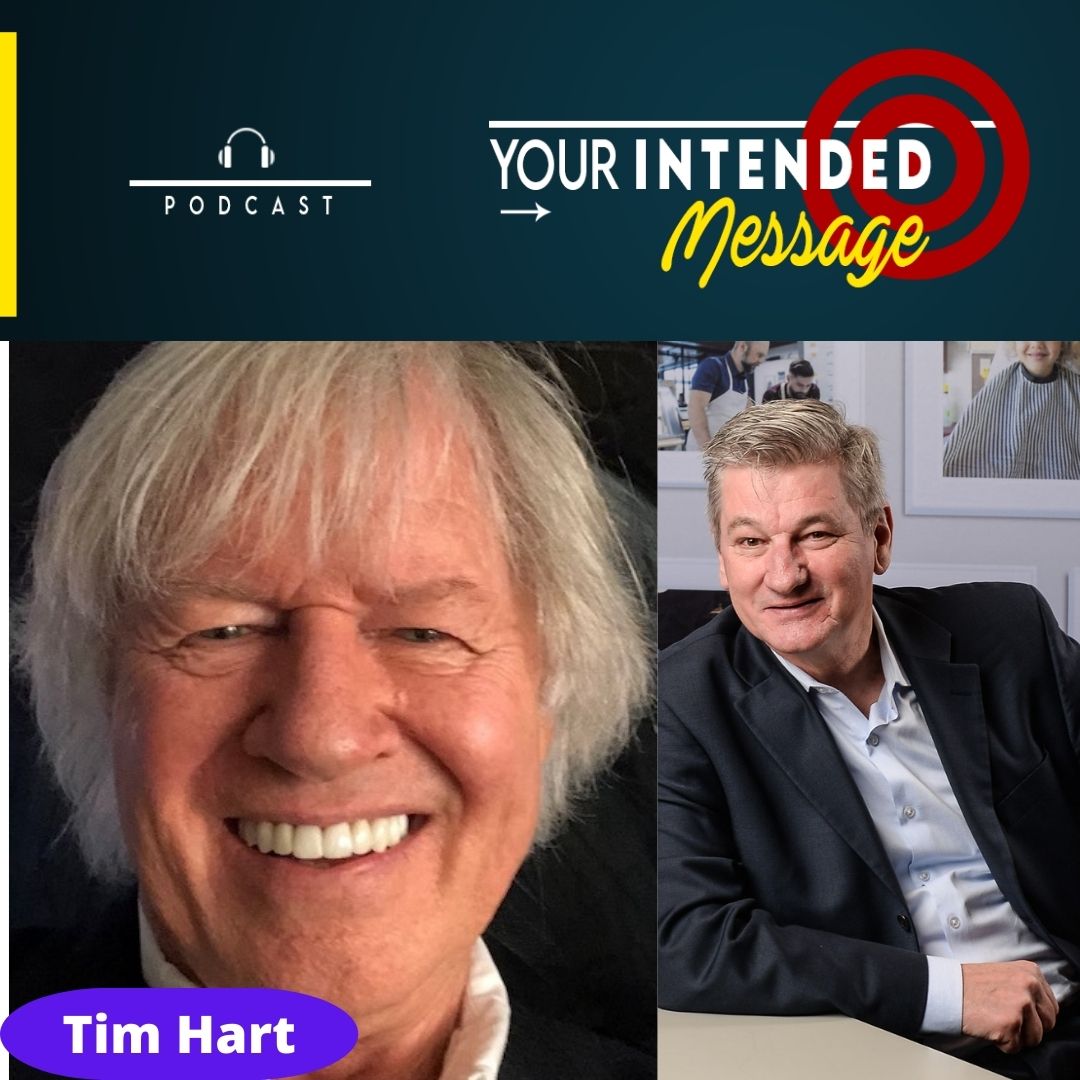
Ep 139More Confidence for the CEO to Speak: Tim Hart
Pubic Speaking is a Skill that can be Learned even for the CEO How to feel more confident and sound more natural Episode 139 (Tim is based in Beverly Hills. CA) In this conversation with Tim Hart we explore: The challenge of negative self talk How to make that connection with your audience The importance of addressing your leadership communications skills The power of stories and especially secret stories About Tim Hart: As founder and President of Leading CEO, the the past 20 years, Tim has trained thousands of executives in presentation skills. Previously, he was CEO of two major US advertising agencies. He produced advertising for seven automobile brands comprised of American, Japanese, German and Korean car companies. He is co-author of "Out Loud - How Public Speaking can Change Your Life and the World". Learn more about Tim Hart and his programs at https://www.leadingceo.com/ ----- Excerpts from this conversation with Tim Hart I have a client who is CEO of one of the biggest companies in the world. And the thing with what happened with that, and the story about that is this, he wanted no one to know that he's working with me. So this became this top secret thing. And they kind of snuck me into the building. And yet with him, I probably had the best time because we opened up in the very beginning to talk about stories. I told him a story that I've never told anyone. And he told me the same thing story that he had never told anyone from that point on, we were bonded. ----- 06:56 And I suppose it's helpful to examine oneself, with some self thought, but it's destructive to be constantly flogging oneself. I'm bad, I'm bad. 07:10 Absolutely, I'll tell you one of the key things that I do. And this is kind of if there's a secret sauce in terms of what I do. Anytime I do any training, I ask everybody to give the person who's speaking feedback. But ask them to tell them what they liked about it. I never asked them to criticize anybody. And so you're getting positive feedback from everybody in the room, which is great. If I see something that I want to change, I'll just go in and change it. And it's very different. So they get the positive feedback. And then the way I handle it is, can we first thing I say to all kind of work with you on this, I have to get their permission. And then they say yes, no one's ever said no to me, by the way. And so they say yes. And then I'll go in there and work with them on specific things that I think they need to learn and change. And they do. It's fast how people change when you have that kind of one on one exchange. So no change right in front of everybody. ----- Tell me a story and I will connect with you. That's how it works. And that's why I encourage people here and I'll give everybody that's watching this an assignment I do with all my clients. Sit down and write out plenty stories of your own We've all got 20, at least. Write down 20 meaningful stories and go through them and make sure that you understand each one of them. And then after you've done that, throw it away. And they're all in your head. And what happens is that when you're giving a presentation, you can grab one of those stories and tell it if it's if it's relevant to what you're talking about. Because the the thing about stories is they should be relevant to your conversation. ----- ----more---- Your host is George Torok George is a specialist in executive communication skills. That includes conversation and presentation. He’s fascinated by way we communicate and influence behaviors. He delivers training and coaching programs to help leaders and promising professionals deliver the intended message for greater success. Connect with George www.SpeechCoachforExecutives.com https://www.linkedin.com/in/georgetorokpresentations/ https://www.youtube.com/user/presentationskills https://www.instagram.com/georgetorok/ For weekly tips to improve your presentations visit https://toroktips.com/
Ep 138The Dirty Dozen Words & Phrases that Sabotage your Message: George Torok
If you knew the words that sabotage your message, would you stop using them? Learn what words to avoid and how to clean up your messages. Episode 138 In this episode George Torok offers his insights about: Why you need to select your words thoughtfully What common phrases could you stop using to be better understood What are the perceptions that people might form based on your word choice Why it's important that the words you use are your choice, no excuses What are these 12 dirty phrases to stop using George Torok is a specialist in communication skills. He coaches executives to deliver their message more successfully. That might be in conversation or presentation. Learn more about his programs and the results of his clients at https://www.speechcoachforexecutives.com/ ----- Excerpts from this episode: Let's review the dirty dozen words and phrases that sabotage your message. Take these words and phrases out of your messages, and you're more likely to be effective and successful when you speak. What are these Dirty Dozen? The first category is the category of vague words, vagueness. And it's hard to come up with a vague word. If I tell you to come up with a vague word you probably it's difficult to come up with one because the concept itself vagueness does not help us think it does not help us see, what are the two biggest common mistakes of vagueness that people use. They talk about stuff, get your stuff together, get your stuff, pick up your stuff. Well, what is stuff? What does stuff look like? What does stuff feel like? What does it smell like? When they say stuff? Do they mean your gear? Do they mean your books? Do they mean your materials? Do they mean the groceries? What is the stuff? The only time that stuff is a good phrase is when you're talking about what you put in the turkey? Don't be a turkey stopped using stuff. And the other one is things. And yes, there was a song from the sound of music. These are a few of my favourite things. And that case, it's okay. But other than that, stop using the word things. Why? Because again, what do you see? What do you feel when you hear that word things? Oh, yeah, I really get it now. Now I understand. You're talking about things. It's vague. It doesn't tell us what you're talking about. When you say things? What is it? You mean? Are you talking about benefits? Are you talking about products? Are you talking about problems? Are you talking about steps in a process? Are you talking about trucks? Are you talking about machinery? Are you talking about ideas? Those are specific, and help people see and understand what you're talking about stuff and things are not clear. Get rid of them? ----- If you're looking for more ideas on presentation skills, and you haven't yet, be sure to sign up for the weekly tips on present superior presentations. And you can do that at www.TorokTips.com Remember to come back every week because most of the time we interview guest experts on communication from around the world. So far, we've had guests from 13 countries, which gives us a terrific perspective. And every once in a while, you can tune into one of these solo shows where I will offer you some of my insights. Remember, if you want to get your message across, get rid of the dirty dozen words and phrases that sabotage your message so that you can deliver your intended message. If you liked what you heard, tell your friends and post your five star review on Apple podcasts because that helps more listeners find us come back every week for more practical insights to help you deliver your intended message. I'm your host, George Torok If you found this helpful and entertaining, be sure to listen to the upcoming Weed Word Alerts. They are short rants about silly words that people say. ----- Your host is George Torok George is a specialist in executive communication skills. That includes conversation and presentation. He’s fascinated by way we communicate and influence behaviors. He delivers training and coaching programs to help leaders and promising professionals deliver the intended message for greater success. Connect with George www.SpeechCoachforExecutives.com https://www.linkedin.com/in/georgetorokpresentations/ https://www.youtube.com/user/presentationskills https://www.instagram.com/georgetorok/ For weekly tips to improve your presentations visit https://toroktips.com/

Ep 137Why is Your Website Not Working: Chris Davidson
Where do you start when fixing your website? What is the purpose of your website and how can you make it work for you? Episode 137 (Chris is based in the UK) In this conversation with Chris Davidson we explore: Why your website might not be working How to test the results of your website How to sharpen your target focus How to leverage content on your website Guidelines to boost the power of your site blog Advertising or SEO which to follow and why About Chris Davidson: Chris is a highly experienced engineer and consultant, who started working in the IT sector more than 40 years ago. He specializes in website tools and services for SME service-oriented companies, and is the author of 'Why Your Website Doesn't Work'. Learn more about Chris Davidson and his services at https://www.activepresence.com/ Why Your Website Doesn't Work ----- Excerpts from this conversation with Chris Davidson 02:24 The biggest reason is weak target focus. That's the biggest reason there isn't a strong focus on exactly what their intended, perfect customer or client is. And that means that there then isn't enough information about any product or service they're selling. There can't be because they haven't got in mind a clear idea of who their their perfect client is. Now, this is making an assumption, of course, that all the other underlying foundations are in good shape. They may be they might not be you know that you can't tell from looking at a house, whether the foundations are in good shape. That's why you have it surveyed before you buy it. So there is a number of steps that one could go through a number of tears, five, in fact, but the biggest issue, the biggest issue is this weak target focus, weak target focus, and let's come back to those tears in a moment. But first, let's have a clear understanding of what you mean by weak target focus people. So people come to my website, and I'm offering coaching for executive presentations. What's wrong with that? Yeah, so there's nothing wrong with that, George, that is, that is okay. You know, that is your intended message, no pun intended. That is your intended message, isn't it? That you offer presentation training for executive? Okay, that's clear. That's clear. But I might say, Well, what sort of markets, George do your, most of your clients from? And you might respond by saying, Oh, they're spread across all these sectors? Or you might say, well, actually, Chris, you know, 80% of my business comes from the finance sector for just for the sake of example, right? And then I might say, Well, if that's the case, George, why don't you just go all out and say, I do executive presentation coaching for finance executives, because if you then focus all of your marketing efforts on that particular that niche, you're going to get the other 20% Anyway, they're gonna get caught up in the wake of the passing ship and dragged along and you can decide whether you Want to service them how you want to service them as and when they arrive. But the sharper you make the point, the deeper it's going to dig in. So I think that would be the point I would make to anybody out there, I would just come back to them and say, look, what is your intended message? And who is it really for? Is it really cross sector? Or, actually is 80% of your business coming from SME sized businesses? Okay, in what sector? Well, most of its in most of it actually thinking about his professional services? Okay, well, then let's just do that. It's very rare that you're gonna come across somebody who is genuinely so spread out that they're picking up business equally from all sectors, you know, it doesn't happen that way. Because, you know, people get referred to one another. And what have you is that always there's a, there's always, if you dig into the numbers, there's always a sector in the lead somewhere. And why not just focus on that. ----- ----more---- Your host is George Torok George is a specialist in executive communication skills. That includes conversation and presentation. He’s fascinated by way we communicate and influence behaviors. He delivers training and coaching programs to help leaders and promising professionals deliver the intended message for greater success. Connect with George www.SpeechCoachforExecutives.com https://www.linkedin.com/in/georgetorokpresentations/ https://www.youtube.com/user/presentationskills https://www.instagram.com/georgetorok/ For weekly tips to improve your presentations visit https://toroktips.com/
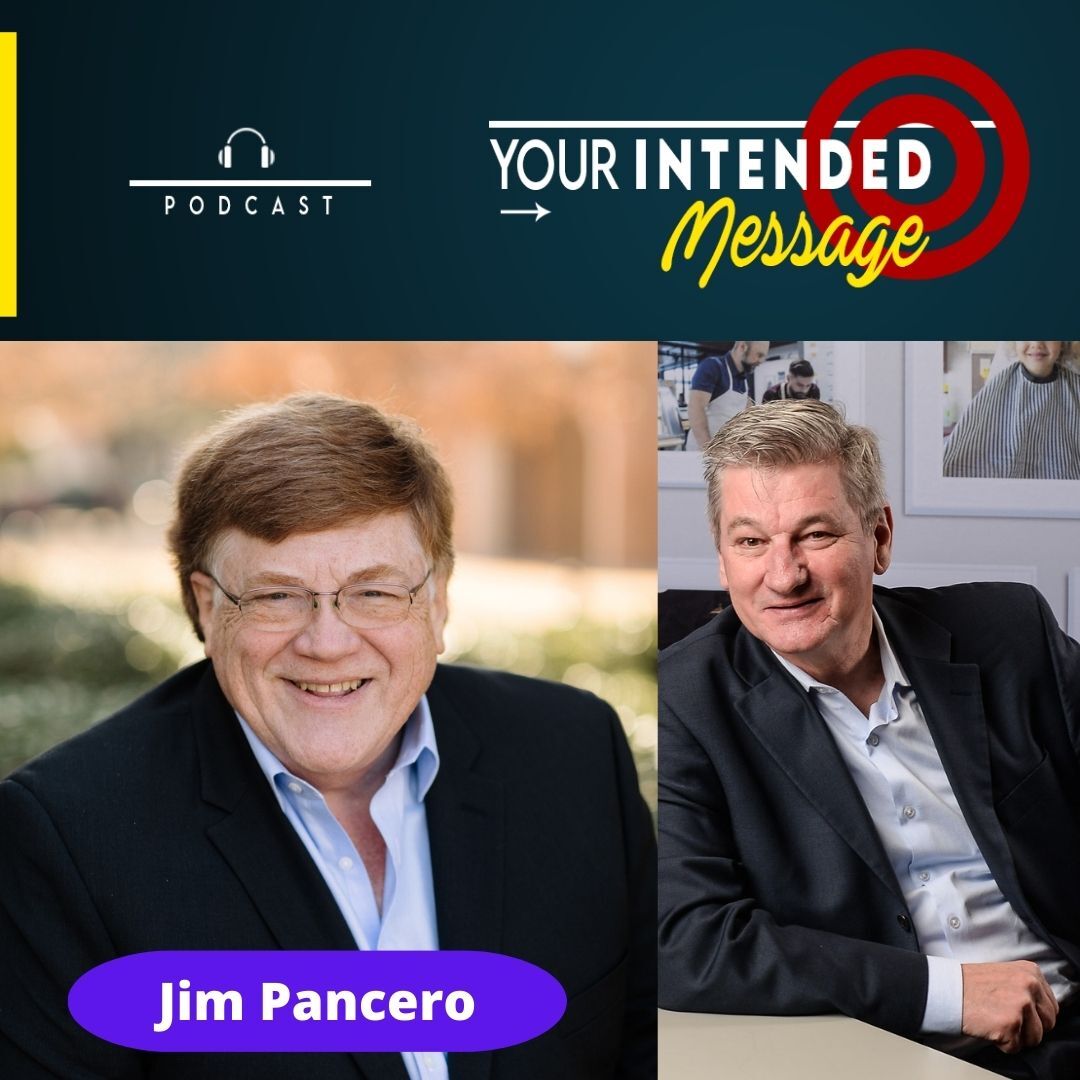
Ep 136How to be more persuasive: Jim Pancero
If you work with people you need to persuade What can you learn from effective selling techniques? Episode 136 (Jim is based in Dallas, Texas) In this conversation with Jim Pancero we explore: The best way to be more persuasive How to sell your ideas and yourself without feeling salesy Why the first step is to lower resistance and how to do that The power of asking questions and listening Why you can't simply throw the weight of your authority around How to accept unwelcomed suggestions with grace About Jim Pancero: Jim has worked as a sales and sales leadership speaker, trainer and consultant for over 40 years. He has been recognized with many awards including being inducted into the National Speakers Association Hall of Fame. He has volunteered as a photographer for Dallas area Special Olympics and a musical non-profit organization. Connect with Jim on Linkedin where he publishes three brief sales videos every week. https://www.linkedin.com/in/jimpancero/ Watch the sales training videos at AdvancedSalesUniversity.com ----- Excerpts from this conversation with Jim Pancero: 02:32 And certainly sales is important for any business. And but I want to take a look at the people who are not in sales, or at least think they're not in sales, but they really are. And maybe there's something they could learn from sales, if they can only get over the aversion to being called a salesperson, Jim, how can we help those people? ----- So over half the people I've trained did not choose sales as a profession, but wound up having to be persuasive and sales in their job. The second part of it is if we look at in remove the word selling and sales, and just say what's happening here, we're trying to be persuasive. I don't know of any job that does not require you to be persuasive, at least to somebody, whether it's to your customers, if you're in retail, whether it's to your boss, if you're in an administrative position of doing something, whether it's to your co workers to get them to help you with the project, or just how you get along with your family parenting is the toughest persuasive position there is because you're trying to persuade a five year old not to do something that they think is completely reasonable, like throwing ketchup on the wall. or something? So it's how do we persuade? How do we convince because you can't just order anybody. Because even if you can get away with it, because you're their boss, or you're their parent, they resent you for it starts to cause a distance and you become less effective. If we really look, if we want to be effective in life, our job is we have to motivate others. The challenge though, of doing that, is there some real specific rules of motivation? The first rule of motivation is you can't motivate anybody to do anything. It's just it's a fact. So how do we become persuasive in that environment? Well, it's the second rule, everybody's already highly motivated Zig Ziglar, the motivational speaker used to say, I can show you a bunch of unmotivated people it's called a cemetery. And if we looked at everybody's already highly motivated, the problem is rule number three, and that is people are motivated for their reasons, their bias, their background, their culture, their beliefs, everything about them biases, how they view what motivates what they want to be motivated about. So if we look at as a leader, as a manager, even as a co worker, all we can do is build an environment so that people want to motivate themselves. And if we look at how do we do that? How do we create an environment, whether it's with a peer, a boss, an employee, or with a customer, or a neighbor, any of these things, if we look at it, what it comes down to is, if we're more persuasive, and we're more effective, and how we communicate, ----- ----more---- Your host is George Torok George is a specialist in executive communication skills. That includes conversation and presentation. He’s fascinated by way we communicate and influence behaviors. He delivers training and coaching programs to help leaders and promising professionals deliver the intended message for greater success. Connect with George www.SpeechCoachforExecutives.com https://www.linkedin.com/in/georgetorokpresentations/ https://www.youtube.com/user/presentationskills https://www.instagram.com/georgetorok/ For weekly tips to improve your presentations visit https://toroktips.com/
Ep 135Flip the Fear of Public Speaking: Peter George
Channel the fear of public speaking into positive energy Competence breeds confidence Episode 135 (Peter is based in Rhode Island) In this conversation with Peter George we explore: How to channel the fear of public speaking as positive energy What's the real fears that create anxiety How to control the energy to boost your performance Why it's critical to realize that perfection is not the goal How changing your focus to the audience makes it easier for you Harness the power of visualizing your positive outcome About Peter George: Throughout his childhood, Peter dealt with a lisp and a stutter. Consequently, he grew up shy and introverted, avoiding communication with others. For the past 17 years, he has been coaching professionals to be calm, confident and credible when they speak. He is the host of the Public Speaking with Peter George podcast. He is the author of The Captivating Public Speaker, Engage, Impact and Inspire Your Audience Every Time. Learn more about Peter George and find free resources at... https://petergeorgepublicspeaking.com/ ----- Excerpts from this conversation with Peter George: 03:55 I imagine not everyone needs to go through the therapy with Cruella and tears every every Tuesday morning. When you work with people, and you help them address the fear of public speaking, where do you start? 04:17 First of all, I don't believe there is such a thing. And I say that sort of tongue in cheek, but if we look at why we get nervous about speaking, it's adrenaline. Our adrenaline's flowing. So George, let's say you and I are going to an amusement park and you love roller coasters. And this amusement park has a brand new roller coaster. It does all these flips and you're hanging from the top and everything else. And I'm looking at the line and looking at the roller coaster go on. I don't think so. You and I are probably feeling the same thing. You're getting an adrenaline rush and that's what you consider it this is going to be great Oh, my heart's beating, My blood pressure's up, I'm getting sweaty, I'm so excited to get on this roller coaster, I'm going to be standing there going, this is the last thing in the world, I want to do my heart's racing, My blood pressure's going up and getting all sweaty. It's adrenaline. Now how we label it might be different. And that's just one aspect of it. But a lot of us are afraid of public speaking, if you will. Because we don't want to make fools out ourselves. We don't want to be embarrassed. And I certainly get that. Or we, we know that we're not sufficiently prepared, or we don't know how to prepare. So all these things make us nervous as they should, if you don't know how to do something, and then you have to go do it in front of other people. It would be me going to Yankee Stadium, having never faced a 90 mile an hour fastball before 50,000 people in the stands, and I'm at home plate. What are the odds, I'm going to hit this ball, slim to none. And I know that. So I would be nervous up there that I'm going to make a fool out of myself. This might be making it very light. But that's really what it comes down to. And the idea that public speaking is the greatest fear known to humanity. I don't agree with that either. If you look at studies, it's well behind spiders, snakes, even clowns. So I'm one who's petrified of clowns, by the way. ----- 16:37 Hmm, and maybe a good mantra to to keep in mind when when people are speaking to heck with them. You don't like it The heck with you. And Peter, I'm also wondering, I noticed when you you started telling us those two stories about your family, but about first about your your dad to firefighter, and then your your great grandma. Might that be a technique that a person can use when they're delivering a speech or a presentation by bringing in a personal or a family story? Because they'll that will automatically make them feel good, because they're talking about something that they care about. ----- ----more---- Your host is George Torok George is a specialist in executive communication skills. That includes conversation and presentation. He’s fascinated by way we communicate and influence behaviors. He delivers training and coaching programs to help leaders and promising professionals deliver the intended message for greater success. Connect with George www.SpeechCoachforExecutives.com https://www.linkedin.com/in/georgetorokpresentations/ https://www.youtube.com/user/presentationskills https://www.instagram.com/georgetorok/ For weekly tips to improve your presentations visit https://toroktips.com/

Ep 134Write email that Grabs Attention and doesn’t Offend: Liz Danziger
Check your email with the "you idiot" test before you send How to write emails that are more productive Episode 134 (Liz is based in L.A.) In this conversation with Liz Danziger we explore: How to write emails that work effectively What to check when you reread before sending The three P's to prepare your message The New York Times and court room guide for emails How to write and email that people read The right type of emotional language About Liz Danziger: Liz is the author of four books published by major publishers including business writing guide, Get to the Point! She is also a columnist on Inc.com She has decades of experience in helping teams to write clearly and confidently. Her goal is to empower people to wield the power of words to create success. To receive her monthly writing tips called Writamins visit www,WorkTalk.com At the same site you can get your copy of Ten Tips for Communicating Effectively in a Fast-Paced World. You can arrange a complimentary 30-minute call to explore communication issues in your organization. Select a time on her calendar https://calendly.com/worktalk ----- Excerpts from this conversation with Liz Danziger: 02:53 Yes, one thing is that they could know their purpose before they start and know their point before they start. My view is that most writing problems happen before a person starts to write. They happen in the thinking phase when people don't think about their purpose. And that's why I'm so pleased to be on this podcast, your intended message, because that's exactly what the worktop trainings are about is having people be clear on their intentions, and then target their readers. And so the first thing is to know your purpose and your point. The second thing would be to think about your reader it astonishes me sometimes, how people will just sit down and they're just tap it, tap it tap, but they're writing away. And then if I stopped them in coaching or in training, and I asked them, so what do you think your readers interested in? And they're like, oh, that's an interesting question. So they need to think about the reader and they need to use clear language. And the last thing I will say is, people have to reread before they send. It's a common common error that people just tap it tap and send without proofreading. And they live to bear the consequences. ----- And the way to use email, when you have an emotional message to send is to send the person an email saying, There's something I need to discuss with you, are you available next Tuesday at 1015. That's how you use email when you have emotions. Because the emotional email will come back to bite you. ----- And sometimes you can do some short, persuasive emails. I just want to backtrack a little bit and talk about when your topic, your theme, which is your intended message, which I just love. And there are basically three main purposes that business documents have. And those are to inform, to request and to persuade. If you look at every email you ever wrote, you will see that in all likelihood, it falls into one of those categories you're telling, you're asking or you're selling. And we need to know which of those we're doing in order to effectively convey our message. ----- ----more---- Your host is George Torok George is a specialist in executive communication skills. That includes conversation and presentation. He’s fascinated by way we communicate and influence behaviors. He delivers training and coaching programs to help leaders and promising professionals deliver the intended message for greater success. Connect with George www.SpeechCoachforExecutives.com https://www.linkedin.com/in/georgetorokpresentations/ https://www.youtube.com/user/presentationskills https://www.instagram.com/georgetorok/ For weekly tips to improve your presentations visit https://toroktips.com/
Ep 133The Whole Message = Your Intended Message + The Unintended Message
Are you clear on the difference and interference between your intended and unintended messages? Episode 133 In this episode, George Torok offers his insights about: What are the two blended components of the whole message? What are the filters that might distort your intended message? What is that static that can sabotage your intended message? What are the elements that generate the unintended messages? George Torok is a specialist in communication skills. He coaches executives to deliver their message more successfully. That might be in conversation or presentation. Learn more about his programs and the results of his clients at https://www.speechcoachforexecutives.com/ ----- Excerpts from this episode: Today, let's look at the title of this podcast, your intended message. That is part of the message that you send. When you send a message. Did you know that there are two distinct parts not so distinct, mixed together within your message, your whole message is actually a blend of your intended message and the unintended messages. Let's look at the challenges of both. And once you are aware of these challenges, you can deal with them more effectively, and communicate more successfully. Start let's start with the intended message. The intended message, of course, is the message that you want to send you hope to send and you believe you sent. However, it's not necessarily the message that was received and understood. And you can probably guess why is that the case? Well, here's four possible reasons why your message might not get through the intended message might not get through one. Perhaps you failed to clarify your message before sending. And this is a common mistake when it's more common when speaking than writing, we can do it in writing. The good news about is when you write a message, you have time to review and edit before you send. And if it's a particularly thorny message, you might be wise enough to write it, review it, put it aside for a day and come back to it the next day where you can review it and edit and maybe not send it at all. However, when you're speaking, the danger is you don't have the opportunity to edit unless you have prepared and rehearsed this message that you are delivering, which I suggest you do whenever you can. So perhaps the first reason why your intended message doesn't get across is maybe you simply failed to clarify your message before sending clarify your message before you start speaking. And that might mean pausing and thinking before you speak. ----- To you, it's a mess. To me, it makes sense. And your head. What's going on your head makes sense to you, because you've had all your life to get used to the mess in your head. And when you want to send a message, you need to take that message in your head, convert it into words, speak the words, they hear the words and convert it into the mess in their head, there's a couple of translations going on. Good opportunity for things to go wrong. And one of the areas of things might go wrong, is the filters that we use, to that we put your message through before we even consider it. And the filters, we have filters, we filter your message because we are bombarded by messages every day. And we need to make quick decisions. And sometimes those filters work against you getting your intended message across. What are some of those filters? Well, the first one is beliefs. What are the beliefs that they have? The beliefs they have about you, your company, your organisation, the group you hang around? When what beliefs the topic, your topic, you're talking about that you're telling them? What do they believe? How do they believe differently? And are you addressing those beliefs? Are you clarifying the message, ----- Your host is George Torok George is a specialist in executive communication skills. That includes conversation and presentation. He’s fascinated by way we communicate and influence behaviors. He delivers training and coaching programs to help leaders and promising professionals deliver the intended message for greater success. Connect with George www.SpeechCoachforExecutives.com https://www.linkedin.com/in/georgetorokpresentations/ https://www.youtube.com/user/presentationskills https://www.instagram.com/georgetorok/ For weekly tips to improve your presentations visit https://toroktips.com/

Ep 132Write Your Book: Michael Levin
You can publish your book with a ghost writer How do you know if it's time to publish your book? Episode 132 (Michael is based in New Jersey) In this conversation with Michael Levin we explore: Recognizing if you are at the right point to publish your book Why a book is an interim report and not a final report Your message must be of value to your readers How your book can shift the narrative Why a thought leader must publish their book The 90-minute book plan The benefit of independent publishing About Michael Levin: Michael is a New York Times bestselling author and is the most prolific and experienced business ghostwriter in the US publishing industry. He has written more than 20 legitimate national bestsellers and multiple number bestselling books for his clients. To explore working with Michael to write your book, you can call him at 617-543-3747 Learn more at his website: https://www.michaellevinwrites.com/ ----- Excerpts from this conversation with Michael Levin: Books are magic ----- The first chapter is about the readers' problems ----- 03:02 Writing a book for yourself is one skill. But then the other skill is writing it as a ghostwriter. Putting someone else's ideas into words. What mental shift do you need to make when you go into ghostwriter mode? 03:22 Yeah, that's a great question. George, I met Amy Tan, I actually shot pool with Amy Tan, it's a long story. And she she wrote the kitchen, God's wife and the Joy Luck Club and a lot of other best selling really important books. She says that whenever she was getting into a different character, she would look at her shoes. And just imagine she was physically in the shoes of the other character. I don't really look at my shoes. But I do think a lot about what's this person's worldview? How do they grow up? What did they see that I haven't seen? How do they express themselves? And I'll study the transcript of the call because that's going to give me clues as to their syntax, and how and then their word choice, their mode of expression. Do they like short sentences? Do they go on as I am now. And you put that all together? And it's sort of a mimicry skill combined with the ability to write writing someone else's voice and put material together, you put that all together and and you can generally find your way into somebody's voice. I mean, I've been doing this long enough. So I've been doing this for 30 years. So you know, this is what I do. ----- Yeah, so I'm hearing there, that one possible sign or signal that you might be ready to write a book is when you're going through a major change in your own growth, own development? 09:34 Yeah, that's true. That one of the times to write a book is when you're about to make a great leap forward in your career and you want the world to understand who you are, as opposed to seeing the world seeing you as who you've been. And then at the same time, there are other folks who are most of the most of the people I work with, as I said, they're already successful. And they just simply they want more, you know, they want more clients. They want more assets under management. They, they want more fame, they want their brand to be out there in a bigger way. They want it to be easier to acquire new clients, they don't want to have to, you know, get out there and speak or hustle or do all that they want the book to do the work for them. And that's what books do. Books are magic. I always say that, when you do a book magic happens, you cannot predict from which direction the magical calm or what it will look like. But time after time after time, the results for the clients are indeed magical ----- ----more---- Your host is George Torok George is a specialist in executive communication skills. That includes conversation and presentation. He’s fascinated by way we communicate and influence behaviors. He delivers training and coaching programs to help leaders and promising professionals deliver the intended message for greater success. Connect with George www.SpeechCoachforExecutives.com https://www.linkedin.com/in/georgetorokpresentations/ https://www.youtube.com/user/presentationskills https://www.instagram.com/georgetorok/ For weekly tips to improve your presentations visit https://toroktips.com/

Ep 131Networking, Connecting & Giving: Larry Kaufman
Build a stronger support system by connecting and giving to others Build life-changing relationships from college to retirement Episode 131 (Larry is based in Chicago) In this conversation with Larry Kaufman we explore: Recognizing the value of a strong and supportive network How to build stronger connections by giving and open to help others Understanding that there are many forms of giving Distinguishing your inner circle from your outer circle How to start the conversation if you are in career transition How to handle a person who is only a taker About Larry Kaufman: Larry is the author of the best-selling book, The NCG Factor - a Formula for Building Life-Changing Relationships from College to Retirement. He is a connector, giver and rainmaker who lives his life to help others. Larry is the Managing Director for the Midwest Region at Jefferson Wells. Learn more about Larry at the website www.Kaufman-Larry.com Learn more about the book, on Amazon. ----- Excerpts from this conversation with Larry Kaufman: It's really getting to know people, more authentically learning about them, and finding ways to be a connector and a giver. ----- 04:32 So that concept of giving could be as simple as connecting someone to a better source a better resource? 04:41 Right! Because I'm not always the best resource. You know, if you if you needed, you know, someone to fix the electrical in your house. I have to refer you to some people, my network, we're going to be without power. ----- 07:38 It does. I don't give with expectation for the GET. And if you do, you're doing it wrong. However, I've been very giving and it's very fulfilling. I enjoy it. Like it's it's a big thrill. It's euphoric, when I hear back, Larry, this connection led to a job or helped my charity or did this for me and my family. But sometimes you will need that favour George, you'll need it for a family member for yourself. And it's those people, you know, those in transition with a job that never built a network, they were working 70 hour work weeks, all sudden, 20 years later, they're out of a job. They're like, I don't have a network. And they're asking people they don't know for favours and they're like, I don't really know you. And so I can help my children, my spouse, those in my inner circle, outer circle, I have built a great network. And usually it's not for myself that a call on those favours. It's for other people that need help. But I have needed favours you have to read the book to read about a favour I called in for my son but it really is important to build relationships because you can't do the Godfather ask for that favour. Someday I'll need that favour. ----- 15:08 So you don't necessarily need to be emailing them every week or every month, if the relationship ended on a strong positive, there's a pretty good chance is still that strong positive? 15:24 Yeah, because I've reached out to people, and I got them a job five years ago and said, Hey, Mary, I need your help, Larry, whatever you want, you know, I'm in my job because of you. Well, you know, I didn't get them the job. So I could call them later for a favour. But I know when I call them, it's like, hey, we pick up where we left off. And so it's, it's wonderful. It's hard to keep in touch with 1000s of people. But, it happens, it happens naturally, or unexpectedly, and it's good. ----- ----more---- Your host is George Torok George is a specialist in executive communication skills. That includes conversation and presentation. He’s fascinated by way we communicate and influence behaviors. He delivers training and coaching programs to help leaders and promising professionals deliver the intended message for greater success. Connect with George www.SpeechCoachforExecutives.com https://www.linkedin.com/in/georgetorokpresentations/ https://www.youtube.com/user/presentationskills https://www.instagram.com/georgetorok/ For weekly tips to improve your presentations visit https://toroktips.com/

Ep 130Your conscious vs. your subconscious: Vince Poscente
Is your conscious and subconscious on the same team? What is the path out of chaos? Episode 130 (Vince is based in Dallas) In this conversation with Vince Poscente we explore: Recognizing the conflict between your conscious and subconscious Why you must resolve that conflict before you can pursue success How to face an earthquake in your personal life Understanding the role of fear and how you might harness your fears Creating your own solution loop to escape the earthquake Appreciating the value of an outside perspective About Vince Poscente: Vince is a New York Times best selling author of eight books including his latest, The Earthquake. He is president of Board Developer providing sound advice for high growth companies. You can learn more about Vince Poscente and order his latest book at www.VincePoscente.com ----- Excerpts from this conversation with Vince Poscente: There is no linear way out of chaos. ----- But to answer your question about the earthquake, sometimes we experience a personal earthquake, where we're incapacitated, or we're catatonic or just paralysed by fear of maybe it's bankruptcy, maybe it's divorce, maybe it's a health scare, maybe it's losing a child. I mean, these personal earthquakes that can add absolutely devastate us can create this environment of chaos. And therefore, how do you get through that chaos? How do you get unparaandlysed and move forward? How do you engage in that way? And so I'd taken from my own personal financial earthquake, and then turned it into another parable about the ant and the elephant experiencing an earthquake at the very outset of the book, and then how do you get out of this, this chaos? What is this way to get there? And so that was the challenge of the book. ----- 08:35 Well, here's a fact. When you run away from fear, it gets larger. When you run towards fear, it gets smaller. And that is not part of our human experience. Is it like if you run towards something, it gets bigger normally, but fear is insidious. It is. And it's, it's, it's obviously when you get in the middle of it, the reason it gets smaller, you go, Oh, I can handle this, you know. So those fears, correlate to being able to kind of go against your instinct, which is to run and hide, right? Because there's a part of the brain called the amygdala. And the amygdala is the oldest part of the brain. And it's quite small about the size of a walnut but that's the gatekeeper for thought, meaning that if you can't get past the amygdala, meaning let's say there's a tiger in the bushes somewhere, right? The amygdala is going to kick in to do one of three things. It's going to either freeze. That's the first instinct. The second instinct is to flight to run away. And then the third instinct which would kick you gotta get past these three. The third one is to fight right so freeze think of a rabbit in the in a field right a little bunny rabbit, and here's a predator, right? What does it do? It first freezes and it just looks around and hopefully you don't see me you don't see me they don't see any. If the predator sees the little bunny, the bunny is going to take off, right? And then if it's cornered, it's going to rear and then fight, okay, none of those three responses as part of this human condition is to is going to be efficacious, there's going to be very little progress made if you freeze, flight or fight. So, the hack, by the way, in case you're wondering, let's say you get scared going on stage, speaking to a bunch of people. The reason you've had a bad experience in the past and don't want to do it, again, is that you forgot to breathe, you're not breathing. And that's trigger for the amygdala, the trigger for the freeze flight or fright flight, or fight freeze flight or fight is to, is to lack of oxygen flow, which is shallow breathing. So when you're scared, let a scary movie, just notice what your breathing is. It's like it's shallow. It's Oh, no, what's right, and that is triggering the amygdala. Now it's very safe in a movie theatre to just be there. But if in real life, you're in any of those three states, you're not going to make progress. In fact, the opposite is gonna you're gonna get hurt, something's going to, you know, create a truth in the subconscious mind that this is not a good feeling, but maybe it becomes something like a lack of deserve ability, or there's all sorts of dysfunction that can happen from fear taking hold. ----- ----more---- Your Intended Message is the podcast about how you can boost your career and business success by improving your communication skills. We’ll examine the aspects of how we communicate one-to-one, one to few and one to many – plus that important conversation, one to self. In these interviews we will explore presentation skills, public speaking, conversation, persuasion, negotiation, sales conversations, marketing, team meetings, social media, branding, self talk and more. Your host is George Torok George is a specialist in executive co

Ep 129Quiet Quitting and the Alternatives: Chris Tuff
In your job what fires you up? What sucks? Why both are part of your work and how to find the right balance? Episode 129 (Chris is based in Atlanta, Georgia) In this conversation with Chris Tuff we explore: What is the right balance of work you love and work that sucks? How the different generations view work differently Why the grass isn't always greener elsewhere What does work flexibility mean and how is it changing? The value of more constructive feedback How to develop authentic connection with the team How to be nice and still fire someone About Chris Tuff Chris is the author of "Save Your Asks" and "The Millennial Whisperer". Through his energy, humor and storytelling, Chris demonstrates how connection can accelerate business growth as well as recruitment and retention. Learn more about Chris at the website www.ChrisTuff.me Books by Chris Tuff ----- Excerpts from this conversation with Chris Tuff ----- There is nothing worse in life than complacency. ----- So 70%, generally speaking, of your job should actually fire you up and actually put this into tactics where on the first week that someone joins my team, I will have them take their job description and figure out what's in your 70% zone of excellence and fire you up. And then what's in your 30% zone of suck, right? Because the harsh reality, and I tell this to anyone willing to listen is that 30% of all of our jobs are gonna suck. ----- I went into an organization that had, okay, so they have 100,000 employees, but 2500 HR leaders, all right, which will give you perspective to just how much they put in their people and culture 2500 people. And so I dissected their data we did, we spent two months prepping for this meeting. And it all came down to just one big takeaway, which is just make it easy, everyone loves it here. But you make it so hard for people to actually move laterally to other parts of that organization. The simplest thing you can do is allow people to make those lateral job moves, because people are not leaving, because you make it so difficult, because you end up prioritizing those, those jobs for people from the outside. ----- Effective, authentic connection. How do you how do you know if it feels right? So authenticity is one of the things that's so few and far between in this world and my whole platform is around authentic connection. And, you know, one of the things that I emphasize is what I call the art of the fly by. And the art of the fly by is simply going by anyone on your team's desk and just saying, or, you know, in a hybrid workforce, texting them a video text message and say, George, that vacation you took last weekend look, epic. Tell me more about it. Like, I saw that you hung out at the beach and tried out surfing, that's awesome. Props to you. How did it go? Right? It's just taking a little bit of that vested interest in their daily lives, ----- ----more---- Your Intended Message is the podcast about how you can boost your career and business success by improving your communication skills. We’ll examine the aspects of how we communicate one-to-one, one to few and one to many – plus that important conversation, one to self. In these interviews we will explore presentation skills, public speaking, conversation, persuasion, negotiation, sales conversations, marketing, team meetings, social media, branding, self talk and more. Your host is George Torok George is a specialist in executive communication skills. That includes conversation and presentation. He’s fascinated by way we communicate and influence behaviors. He delivers training and coaching programs to help leaders and promising professionals deliver the intended message for greater success. Connect with George www.SpeechCoachforExecutives.com https://www.linkedin.com/in/georgetorokpresentations/ https://www.youtube.com/user/presentationskills https://www.instagram.com/georgetorok/ For weekly tips to improve your presentations visit https://toroktips.com/
Ep 128Convey Your Message with a Short Book: Mike Capuzzi
If you have experience and expertise you can publish a book Let's explore the magic of short books to boost your intended message Episode 128 (Mike is based in eastern Pennsylvania) In this conversation with Mike Capuzzi, we explore: Why a short book can help your business differentiate from the competition Why a short can boost your career and help build your team Where do you start when planning a book Why a short book is better than a long book How do approach your book project The magic of short books and free books About Mike Capuzzi: Mike has written and published 19 books, including two Amazon @1 Best Sellers. He has helped over 225 business owners, entrepreneurs and corporate leaders publish their own short books. He started his career in engineering and shifted to marketing in 1994. Grab the offer of three free ebooks about the magic of publishing short books here https://mikecapuzzi.com/magic/ ----- Excerpts from this conversation with Mike Capuzzi ----- The thought is always about serving the reader first ----- I think most of us are short on time, or at least we appear to be, therefore lets appreciate it - this idea of a short book that can be read in an hour or so. ----- About two thirds of our clients are local business owners, the local retailer, the local physician, the local chiropractor, the local insurance agent. And that person that woman, or man who writes that book, they typically want to be what I call five mile famous, they want to be the number one chiropractor, the most sought after Dentist, the you know, insurance agent who's known for XYZ, whatever it might be. So they're not looking to be a worldwide phenomena, they are looking to be an established authority in their community. So for them, it's really about being different than their competition. Each one of those types of business owners has a ton of competition, most of their competition, if not all have never written a book. So right there differentiates them. So being five mile famous for the local business owner is definitely one of the biggest benefits. For the corporate leader, the entrepreneur, the business owner, like myself, who has a worldwide audience, we have clients all over the world, it's a bit different, it is more about establishing your authority, your expertise on a worldwide level doesn't necessarily mean speaking, though. I have spoken on stage several times over the years. But it's really about being a credible source of podcast guest, you know, immediate interview potential prospect for media. And it's really about using your book to establish that expertise, that authority, that credibility. ----- ----more---- Your Intended Message is the podcast about how you can boost your career and business success by improving your communication skills. We’ll examine the aspects of how we communicate one-to-one, one to few and one to many – plus that important conversation, one to self. In these interviews we will explore presentation skills, public speaking, conversation, persuasion, negotiation, sales conversations, marketing, team meetings, social media, branding, self talk and more. Your host is George Torok George is a specialist in executive communication skills. That includes conversation and presentation. He’s fascinated by way we communicate and influence behaviors. He delivers training and coaching programs to help leaders and promising professionals deliver the intended message for greater success. Connect with George www.SpeechCoachforExecutives.com https://www.linkedin.com/in/georgetorokpresentations/ https://www.youtube.com/user/presentationskills https://www.instagram.com/georgetorok/ For weekly tips to improve your presentations visit https://toroktips.com/

Ep 127Professional Service Firms, Polish Your Message: Sandra Bekhor
You communicate on many channels and must get it right every time How do you manage the emotional messages? Episode 127 (Sandra is based in Toronto) In this conversation with Sandra Bekhor, we explore: The communication challenges of professional service firms How to polish your customer service messaging How to handle angry customers The importance of modern thinking and adopting the scientist mindset Why start with scripts and how to use them How to make promises that you can fulfil About Sandra Bekhor: Sandra is the subject matter expert for the comprehensive, "Marketing for Architects" course offered by the Royal Architectural Institute of Canada. Bekhor Management provides strategic and authentic practice development coaching for small to mid-sized professional service firms. Learn more about her services at www.Bekhor.ca ----- Excerpts from this conversation with Sandra Bekhor ----- Communication isn't one thing. So just because you're great at doing your presentation, your pitch to your client, well doesn't mean that you know, how to give someone feedback. And it doesn't mean that you know, how to handle conflict. Right. So, there are so many different aspects of communication. ----- So you have to write a script. And that's your starting point. And then practice it with situations that are safe. And then eventually you do learn that language that is authentic to you. So that when you go into the real world, and and use the script, and it's just a starting point, it's not that you're going to stick to that language Exactly. But you will actually feel bolstered. ----- So your renovation firm doing some renovations on the house. And I'm on the phone with you and say well... I thought you were going to your people were going to show up on Monday, and it's now Tuesday afternoon and they still aren't here and I didn't get any calls. What the hell's the matter with you people? 09:36 Are I'm going to jump in here as Samantha. Oh, George, I am so glad you told me this happened. You know, this week, things have just gotten out of control with people being sick and having family emergencies. And I didn't realize that this happened this morning. I don't know how I will fix this for you. But just give me an hour. I'm going to check in with my team and I promise to call you back in an hour. And then we will discuss what what we can do about this. 10:15 Okay, now I'm calm. ----- 18:22 Ah, wonderful. See? And again, you you, you calm the situation. And you didn't over promise you didn't make excuses. And you pointed out I don't know, I'll have to find it and get back to you. And sometimes that's good enough. 18:41 You know, this is such an interesting point. Most professionals are scared to say I don't know. And it's actually a secret weapon. Just Just remember that people calm down when they see your own. I don't know, transparency. You know, if you say I don't know, it doesn't mean your failure. It doesn't mean you're not good at your job doesn't mean that you're not smart. It means you don't know this exact moment, that specific very thing. And you're making a promise that you will go find out for the person who does know, and you will get back to them. You didn't lose anything in admitting that you don't know. In fact, the person calmed down, because you said that instead of pretending, pretending that you know something that you don't know, which would have made it worse. ----- ----more---- Your Intended Message is the podcast about how you can boost your career and business success by improving your communication skills. We’ll examine the aspects of how we communicate one-to-one, one to few and one to many – plus that important conversation, one to self. In these interviews we will explore presentation skills, public speaking, conversation, persuasion, negotiation, sales conversations, marketing, team meetings, social media, branding, self talk and more. Your host is George Torok George is a specialist in executive communication skills. That includes conversation and presentation. He’s fascinated by way we communicate and influence behaviors. He delivers training and coaching programs to help leaders and promising professionals deliver the intended message for greater success. Connect with George www.SpeechCoachforExecutives.com https://www.linkedin.com/in/georgetorokpresentations/ https://www.youtube.com/user/presentationskills https://www.instagram.com/georgetorok/ For weekly tips to improve your presentations visit https://toroktips.com/

Ep 126From Technical Expert to Leadership: Susan Schwartz
Be emotionally intelligent to lead motivated teams When you lead, you can't be the smartest person in the room Episode 126 (Susan is based in San Francisco) In this conversation with Susan Schwartz, we explore: Making the transition from star performer to team leader Developing an insider code when working with different personality types The difference between emotional intelligence and emotionally intelligent When technical expertise encounters the challenge of leadership Building the team by delegating responsibilities and developing skills The leaders' dirty little secret about leading About Susan Schwartz: Susan is author of, Creating a Greater Whole: A Project Manager's Guide to Becoming a Leader. It's the main textbook for a Project Management Communication course at Georgetown University. Susan developed an Expert to Excellence leadership program that uses practical, measurable Emotional Intelligence methods that help people understand intangible leadership skills and create tangible action plans Learn more about Susan and her programs at expertisetoexcellence.me ------ Excerpts from this conversation with Susan Schwartz Emotional intelligence is about observations and behaviors ----- And what happens when a technical person is promoted for their expertise. And all those years, they spent honing that knowledge. They've had a mindset, that's all about them. What is their expertise, people come to them. They are the expert. When you get promoted to be a manager or a leadership role, all of a sudden, it's not about you. It's about them. And that's awfully scary because your performance evaluation is not based on what you achieved. Your performance evaluation is based on what the people who work with you or for you, and perhaps even partners outside of your company. So you have to really start paying attention to them ----- 07:00 Right. And you've got to delegate. That's perhaps the one of two most important skills because you're so busy doing their job, you can't do your job till after five o'clock. You can't get promoted if you're busy doing your people's work, because you are so very important. And nobody else can do what you can do. That can't possibly promote you, because you're too valuable in your current role. 07:31 And I heard of a pearl of wisdom there that I want to repeat for people, if you are a leader, a team leader, a manager, if you're the only one that can do the job, then you aren't doing your job. If you're the only one who can do what it is that your your department your team delivers, then you're really not doing it properly. Because you're not the manager, you think you're still the star. And your success is dependent on their success. And so that comes back to you have to start being open, and realize that your success is by giving people professional development, helping them grow. And that's the second piece of the puzzle. And this is why I love the name of your podcast is these new, expert knowledge experts transforming to leadership role, sometimes have difficulty assuring that the message they intended is received as they intended. And because how often I've done it a lot of you sure you've done it altogether. That's not what I meant. And it still happens to me today. And it's not what I meant. Because you you just made an assumption that they think exactly like you think. So if you're explaining it in your terms, of course they should know it. And then you end up getting frustrated doing it yourself. And then people leave, because they're just humiliated. They think they're stupid. And then because you're not your message isn't being received as you intended. And you get frustrated because they're not smart enough or fast enough. So then you take it back and you do it yourself. ----- ----more---- Your Intended Message is the podcast about how you can boost your career and business success by improving your communication skills. We’ll examine the aspects of how we communicate one-to-one, one to few and one to many – plus that important conversation, one to self. In these interviews we will explore presentation skills, public speaking, conversation, persuasion, negotiation, sales conversations, marketing, team meetings, social media, branding, self talk and more. Your host is George Torok George is a specialist in executive communication skills. That includes conversation and presentation. He’s fascinated by way we communicate and influence behaviors. He delivers training and coaching programs to help leaders and promising professionals deliver the intended message for greater success. Connect with George www.SpeechCoachforExecutives.com https://www.linkedin.com/in/georgetorokpresentations/ https://www.youtube.com/user/presentationskills https://www.instagram.com/georgetorok/ For weekly tips to improve your presentations visit https://toroktips.com/
Ep 125Build your network one conversation at a time: Rob Thomas
How to network effectively without being a pest Identify, Maximize, Refine and Nurture your Network of Contacts Episode 125 (Rob is based in Connecticut) In this conversation we explore: How to start conversation at a networking event How to flip the conversation when the other person attacks in sales mode How to meet the most prominent people at the event Are business cards still relevant and what is the protocol? Spot the early warnings that this person is poison How to take the pressure off yourself at a networking event About Rob Thomas: Rob is the founder and president of RobThomasGLOBAL and creator of the Rob Thomas Method, (RTM). He is the author of "Who Do You NEED to Meet?" Rob teaches and coaches business, owners, senior executives, sales professionals and entrepreneurs how to Identify, Maximize, Refine and Nurture your network of contacts. Learn more about Rob Thomas and his programs at the website RobThomasGlobal.com You can find Rob Thomas on Linkedin https://www.linkedin.com/in/robert-l-thomas/ ----- Excerpts from this conversation with Rob Thomas about Networking 03:28 Well, because I used to be that guy. So when I do my public talks out and about, I talked about how I wasn't always like this, I had to learn my lesson. I was that sales guy that you would see it those different grip and grins, and I would come up to you, I would push my business card into your face. And I would say, hey, so let's have a conversation about how I can sell you. Essentially, I didn't say exactly that, but close enough. I didn't ask for your card. I don't want your card. And you know, people wouldn't say that, but they'd be very nice. And then next thing, you know, they would end up throwing out the card. And I would never keep track of them. Because of course, you know, I would never ask for theirs. And I would follow up and they didn't want to talk to me. So it wasn't until I sat down at a diner with my dear friend Brian. And he and I were about ready to talk about one of the different sales gigs I had been a part of over the years. And he started off by saying, Alright, Rob, so we ordered our coffee. What are you going to sell me today? I didn't have a reply to that. I didn't know what to say. And it was from that point on that my business coach at the time. We sat after that and he said congratulations, you've arrived. You have now figured out that it isn't always about you. ----- ----more---- Your Intended Message is the podcast about how you can boost your career and business success by improving your communication skills. We’ll examine the aspects of how we communicate one-to-one, one to few and one to many – plus that important conversation, one to self. In these interviews we will explore presentation skills, public speaking, conversation, persuasion, negotiation, sales conversations, marketing, team meetings, social media, branding, self talk and more. Your host is George Torok George is a specialist in executive communication skills. That includes conversation and presentation. He’s fascinated by way we communicate and influence behaviors. He delivers training and coaching programs to help leaders and promising professionals deliver the intended message for greater success. Connect with George www.SpeechCoachforExecutives.com https://www.linkedin.com/in/georgetorokpresentations/ https://www.youtube.com/user/presentationskills https://www.instagram.com/georgetorok/ For weekly tips to improve your presentations visit https://toroktips.com/

Ep 124Linkedin is a Watercooler: Marc W, Halpert
Be visible, attention-grabbing and relevant How to leverage Linkedin as your personal marketing platform Episode 124 (Marc is based in New York city) In this conversation we explore: When and why to connect with others How to invite connections Appreciation for the privilege of connections How to be amazing-er What to include in every Linkedin post Please don't try to sell me your bridge When to report inappropriate activity How to attract captivating recommendations About Marc W. Halpert Marc coaches individuals, trains groups, speaks, writes and comments on all thinks Linkedin. He works to make each professional look amazing-er than their competitors in all walks and stages of professional life, with expertise in working with professional practitioners, nonprofit officers and particularly baby boomers maneuvering with the workforce. Visit his website at https://connect2collaborate.com/ Naturally you can visit his profile on Linkedin. You can easily follow him to see his regular posts. If you want to connect be sure to listen to this interview and use the magic word. https://www.linkedin.com/in/marchalpert/ ----- Excerpts from this conversation with Marc W. Halpert Linkedin is NOT a job board ----- 05:04 Mark and you caught my attention with LinkedIn is not a job board. But that was the original purpose. And both you and I, as entrepreneurs, as business owners, we know that we need to be constantly marketing and selling, but a person who has a job, they think they can stop spreading their message, stop promoting themselves. And that's a danger. 05:40 It's a big mistake, worse than a danger. Because the moment you stop promoting yourself, your company is just making you one of the rats in the maze. All right, you're just rolling around. If you can't convince other people in your company, maybe in other departments, or you want to rise to some other position about the value you bring to the company by how you project the company, marketing strategy, the marketing message, then you're just a worker bee. Who wants to be a worker bee? If you are not consistently adding material about what you accomplish on behalf of the company. You're not differentiating yourself within the company. You're not going to be in that company for you all your life your whole life. ----- Find the amazing in every person ----- But it makes it a privilege to connect to somebody. So I like to use the metaphor, someone walks up to your front door of your house, knock knock. You say who's there? This, they'll say, Hi, I'm here knocking at your door. So hi, I'm here. with you on LinkedIn. What do you want? Why should I let you into my metaphorical house? Where my metaphorical family of connections that I nurture and take very good care of live? Why? If you can't tell me at Knock, number one, that's not a knock number two. Number three, sorry, I asked you twice. I just don't. But sometimes I get people say, Well, I offered to connect with you. I didn't know you could do that. And I'm a good friend of so and so. And they said, Well, why don't you tell me that? Why didn't you sell save yourself and me the effort of volley balling this whole thing around? Oh, I didn't think about that. Well, why? Then I'm beginning to make my own mental image of do I really want to be involved with this knucklehead? I mean, really? And who would I ever refer this person to if they don't do their homework and see, so if you read my LinkedIn profile, anybody listening? Anybody listening, you read my LinkedIn profile, and you want to connect with me, there is this magic secret word in my profile that you have to include in your LinkedIn connection request to me, then I'll go, you're worth considering. Because you took the time to read and you saw what I said. ----- ----more---- Your Intended Message is the podcast about how you can boost your career and business success by improving your communication skills. We’ll examine the aspects of how we communicate one-to-one, one to few and one to many – plus that important conversation, one to self. In these interviews we will explore presentation skills, public speaking, conversation, persuasion, negotiation, sales conversations, marketing, team meetings, social media, branding, self talk and more. Your host is George Torok George is a specialist in executive communication skills. That includes conversation and presentation. He’s fascinated by way we communicate and influence behaviors. He delivers training and coaching programs to help leaders and promising professionals deliver the intended message for greater success. Connect with George www.SpeechCoachforExecutives.com https://www.linkedin.com/in/georgetorokpresentations/ https://www.youtube.com/user/presentationskills https://www.instagram.com/georgetorok/ For weekly tips to improve your presentations visit https://toroktips.com/
Ep 123Networking in the Room: Frank Agin
Build your relationships, build your network How to show up in the room for networking Episode 123 (Frank is based in Ohio) In this conversation we explore: How to prepare your mindset for networking events How to start the conversation and move it forward Why it's more than harvesting leads Helping others via referrals, introductions and encouragement The role of karma, faith and trust Your secret weapon is the Cloak of Invincibility How to be more memorable About Frank Agin Frank is president of AmSpirit Business Connections and organization that empowers entrepreneurs, sales representatives and professionals to become successful through networking. https://www.amspirit.com/ He is host of the Network Rx Podcast a weekly short-form podcast with insights and interviews related to better business relationships. https://frankagin.com/ ----- Excerpts from this conversation with Frank Agin And I define networking as two or more people working towards their mutual benefit. ----- 06:31 You know, it's, yeah, there are both extremes. And I had a psychologist on my podcast several years ago. And he kind of dissected, he said, there are really three people in the room, he said, There's the wallflower, there's the person who is braggadocious. And then, there's the person who's trying to make the quick sale. And that really, the fourth person in the room is the person doing it, right. And he said, the thing that all of them have in common, all four of them have in common, is they're all insecure. The person who feels like they need to always be talking. They're insecure, I gotta get my message out, the person who needs to make the sale, they're insecure, they just need to close the deal. The person who's the wallflower feels insecure. But the person who does it right is insecure as well, but just has learned how to deal with that insecurity. ----- 08:58 Nobody's going to reject that person who's there to help other people. And so all of a sudden, you kind of transform yourself from, I don't need to be the wallflower I'm here to help other people. And the reason the person's the wallflowers they're afraid that they're going to be rejected. And so if they just kind of stepped into, I want to hear what this other person has to say, because there might be a way I might have information that will help them, I might have an introduction that will help them I might have, you know, somebody to refer them to depending upon the situation. ----- Be very interested in them. And so you sort of get them talking about the things that they you know that they're a value to them. ----- ----more---- Your Intended Message is the podcast about how you can boost your career and business success by improving your communication skills. We’ll examine the aspects of how we communicate one-to-one, one to few and one to many – plus that important conversation, one to self. In these interviews we will explore presentation skills, public speaking, conversation, persuasion, negotiation, sales conversations, marketing, team meetings, social media, branding, self talk and more. Your host is George Torok George is a specialist in executive communication skills. That includes conversation and presentation. He’s fascinated by way we communicate and influence behaviors. He delivers training and coaching programs to help leaders and promising professionals deliver the intended message for greater success. Connect with George www.SpeechCoachforExecutives.com https://www.linkedin.com/in/georgetorokpresentations/ https://www.youtube.com/user/presentationskills https://www.instagram.com/georgetorok/ For weekly tips to improve your presentations visit https://toroktips.com/

Ep 122Boost your Presence with Gravitas: Diane DiResta
You don't need to be an executive to have presence Check your gravitas, communication and appearance Episode 122 (Diane is based in New York) In this conversation we explore: The contributing components of presence What are the elements of gravitas, communication and appearance? The power of confidence and decisiveness How to align your communication How to establish your grounding position before you speak How to wield the power of the pause to your overwhelming advantage How to show up (and mistakes) for virtual meetings About Diane DiResta A speech pathologist, professional speaker, executive speech coach and past president of National Speakers Association NYC. She has spoken on 4 continents and is the author of Amazon category bestseller, Knockout Presentations. Learn more about Diane at her website https://www.diresta.com/ ----- Excerpts from this conversation with Diane DiResta Gravitas is the biggest component and it makes up 67% of the message. Or the definition communication is 28%. And your appearance is 5%. of executive presence. ----- They're not grounded. So I give people actual practical tools that they can use. So here's one that I'll share with your listeners. Whether you are on a screen or in a in person meeting, the first thing you want to do is establish a grounding position. Why? Because a lot of times in the beginning, we're fidgeting we have energy, we don't know what to do with it. So here's what you can do, put both feet flat on the floor, lean in at a 15 degree angle with both hands on the table. I don't know if you can see this. And what this does is it creates a presence and a grounding. So even if your heart is pounding out of your chest, we don't see it, you look confident. So then the audience responds to you as if you are confident and then you start to feel more confident. You start to feel their respect and attention. So it starts with little things. But what I've discovered is it's the little things that make the greatest impact. So nobody listening today has to do a big total makeover, but little tweaks along the way will get you to where you want to go. ----- So when you talk about appearance, looking polished, and you're being authentic part of that your background when you're on screen. So how are you showing up, and I've had people with beds in the background, not good. So you can have a branding background, a background, like what I have, or you can use your home as long as it's professional looking, or an office. But all of these little things add up to an impression, a brand and executive presence. ----- 22:58 So energy is good. Enthusiasm is good, absolutely. But you can still be really enthusiastic, and come to a pause. So it's like a stop sign. Don't go past the stop sign, come to a complete stop, and then move. Let people have time to process. ----- ----more---- Your Intended Message is the podcast about how you can boost your career and business success by improving your communication skills. We’ll examine the aspects of how we communicate one-to-one, one to few and one to many – plus that important conversation, one to self. In these interviews we will explore presentation skills, public speaking, conversation, persuasion, negotiation, sales conversations, marketing, team meetings, social media, branding, self talk and more. Your host is George Torok George is a specialist in executive communication skills. That includes conversation and presentation. He’s fascinated by way we communicate and influence behaviors. He delivers training and coaching programs to help leaders and promising professionals deliver the intended message for greater success. Connect with George www.SpeechCoachforExecutives.com https://www.linkedin.com/in/georgetorokpresentations/ https://www.youtube.com/user/presentationskills https://www.instagram.com/georgetorok/ For weekly tips to improve your presentations visit www.TorokTips.com
Ep 121Shift your mindset from judger to learner: Marilee Adams
Are you asking questions to build or to tear down? What is the difference between a learner and a judger mindset? Episode 121 ( Marilee is based in New Jersey) In this conversation we explore: The polar opposites of learner versus judger mindsets How to recognize your current mindset How to shift your mindset with the choice map How to be a stronger leader by asking stronger questions How to ask better questions of yourself Why decisions can be more productive when you are in learner mode About Marilee Adams Written 4 books, in August released two new books: (1) 4th edition of Change Your Questions, Change Your Life: 12 Powerful Tools for Leadership, Coaching, and Results—a business and leadership fable. (2) Change Your Questions Change Your Life Workbook: Master Your Mindset with Question Thinking. Note that the fable book has sold over 400,000 copies in 22 languages, mostly by word of mouth. Marilee is the Founder and CEO of the Inquiry Institute, a consulting, coaching and educational organization that works internationally with organizations and government agencies large and small. Marilee is a Senior Brown Belt in Karate, though that was 20 years ago; these days it’s mostly yoga for her! ----- Download your free copy of the Choice Map here and start making more productive choices about your mindset www.InquiryInstitute.com Excerpts from this conversation with Marilee Adams I think the most powerful leaders are the ones who can ask the most powerful questions and who encourage people around them to do the same thing. ----- 04:59 And you you raise the the learner mindset versus the judging mindset. And that's something that you talk in your book about. Please tell us, what's the difference? What's the distinction? And why is it important? 05:13 Okay, I'm gonna describe each and I'm also going to show you a model that makes it easier to do that. So first of all, let's assume that all of us, every human being has two mindsets. One I call judger. And the other I call learner, it's important to remember we all have both, both are normal. And we will always have them, because we are not only neurologically hardwired for them, but we're also socially ingrained in them. So when I talk about being in judger, mindset, that means that I'm being more close minded more, putting myself or others down, being more judgmental, because judging means judgement fall. And it can lead to a lot of self doubt, and also interacting with other people in ways that are not respectful and may actually be dismissive. So, but that's part of all of us. And even if we don't like that part, that doesn't mean it's not there. And it's really useful to say, oh, yeah, that's me to accept all the parts of me. And if we can speak that we would be speaking from learner mindset, which we all have. And when we're in learner mindset, we're more open minded, more accepting, more able to look from other people's point of view, and be dedicated to what can I create and learn in this situation with this person? So we all have both mindsets all the time. What makes the powerful is that when we can observe the mindset we're in, and then ask ourselves, will this mindset let's say, it's judger? Well, this mindset helped me get to where I want to go in this situation. Most of the time, the answer's no. But unless we can observe our mindsets, we might not even notice that. So it's important to note that I'm just going to, I'm going to show this and I'm going to make a comment about it to your listeners and your viewers. So this right, here it is, I get this confused. But this is called the choice map. And we all have both mindsets, the judger mindset, and the learner mindset. And at any moment, we're in one or the other. And if we're in if we notice, we're in judger, we can start to use the switching lane. So it becomes a very practical how to. So I know that this podcast is mostly auditory, which means people are not seeing it. But I do want to say that if you're interested in the choice map, go to my website, which is www inquiry institute.com. So you can go to my website, you can get the choice map for free. So there's a protocol for how to do it, you take a short quiz, which is also gives you some useful information. But then you can have the choice map and use it. And it's the core of not only change your questions, change your life, but all the other books that I've written and the work that I do that George, you mentioned a bit in the beginning. So does that answer your question? ----- 25:25 Do you discourage people from being the judge? 25:33 I would change that question a little bit. So, when they learn about the model of learner judger, and they start to see what the costs have been in their lives, and in particular situations of being in judger, rather than learner, then I don't need to convince them of anything, they start to go, oh, this problem occurred because I was in judger. And I was just obstinate, maybe there's a different way to go abo

Ep 120Be Aware of Burnout and Prevent It: Janice Litvin
Burnout is a Real Threat and You Can Prevent It Mental health doesn't show up like a broken bone, yet it's present Episode 120 (Janice is based in San Francisco) In this conversation we explore: The challenges of identifying and mitgating burnout The difference between stress and burnout - and the connection That burnout is not an on-off switch but a downward spiral Simple course corrections - outdoors, sunlight and social interaction Our health includes mental, physical and emotional How burnout might be temporary How to have supportive conversations with your team About Janice Litvin Author of Banish Burnout Toolkit. (Available at Amazon or her website: JaniceLitvin.com/Book (can download a free first chapter) Keynote speaker and workshop leader who helps leaders and their teams prevent burnout so they can come to work healthy and happy and be productive. She also helps employees change their reactions to stress from the inside out. And she makes it memorable and fun. Learn more at www.JaniceLitvin.com ----- Excerpts from this conversation with Janice Litvin 01:21 Well, I use the World Health Organization's definition of burnout, which is chronic workplace stress that has not been successfully managed. Actually, they call the syndrome caused by chronic workplace stress that has not been successfully managed. Now, a lot of people confuse the term stress with burnout. A lot of people say Oh, I'm so burned out. True burnout is complete mental, physical and emotional exhaustion to the point where you really have to take an extended leave. Really, when people say, Oh, I'm so burned out, I think what they really mean is, I'm very stressed out. And I might be approaching burnout. And that's important to note as well. 02:11 And how can one make a determination or distinction? I'm feeling lousy right now? How do I know if I'm stressed, or if I'm burned out? 02:23 It all starts with the brain. When someone says I'm feeling lousy, that's a very broad statement that could mean physical, that can be emotional, can be mental. And so it all starts with the thoughts. If you're waking up in the morning, and the first thought on your mind is something you have on your to-do list, you might be a little stressed. And you might want to start thinking about spending a few moments throughout the day, not focused on work, whether that means taking a five minute break outside in the sun, which releases a lot of happiness, chemicals, or calling a friend. And having a nice chat with a friend just checking in say, How's your day going? You know, I have all this work to do. I'm feeling nervous, and the friend can say, well, and that reminds you of things you already know, take it one step at a time. Let our emotions run our thoughts, do the most important thing first, all the things we already know sometimes our thoughts, a lot of our brain with fear. And we just need to come back down to earth. ----- 13:54 Well, I want to say this. When someone is struggling, a lot of people are afraid of being labelled mentally ill. So they're not going to go to their boss and say I'm feeling mentally ill today. They're not gonna go to their bosses, I'm struggling because they don't want to be labelled as that person can't do the job. Everybody wants to come across as being adept at their work and successful at their work. And yet, it's important to it really goes back to what I said earlier, which is people knowing each other and having a good team cohesion. That might mean a team off-site once a month where you go do a charity project like a cleanup day, or, or go feed the hungry or go read to some children something or go on a Heart Walk or whatever it is or left the team, vote on a charity and they want to raise, do their own little fun. charity drive for who walks the most number of minutes or the most number of steps or whatever you want to do. Does everybody chip in, so much money for however many steps they took, and donate that money to a cause that the team votes on whether it's a heart association or, or a school or whatever, and build, begin to take these baby steps toward building a really strong unit team. ----- ----more---- Your Intended Message is the podcast about how you can boost your career and business success by improving your communication skills. We’ll examine the aspects of how we communicate one-to-one, one to few and one to many – plus that important conversation, one to self. In these interviews we will explore presentation skills, public speaking, conversation, persuasion, negotiation, sales conversations, marketing, team meetings, social media, branding, self talk and more. Your host is George Torok George is a specialist in executive communication skills. That includes conversation and presentation. He’s fascinated by way we communicate and influence behaviors. He delivers training and coaching programs to help leaders and promising professionals deliver the intended message for greater success. Connect with George ww

Ep 119Presentation Lessons from Clown School: Don Colliver
Learn from Clown School, Blue Man Group and Improv, oh my! How to use clown presence in your presentation Episode 119 (Don is based in San Francisco) In this conversation with Don Colliver, we explore: How clown training helps you leverage your flaws for human connection The importance of getting well prepared for your presentation How to shine through an embarrassing moment The ATM method to handle distractions and interruptions How to use the clown techniques of complicity and wink Why you need to become more aware of your emotional and state Why it's okay to reveal your kryptonite A crazy and effective way to rehearse your presentation About Don Colliver Don Colliver teaches popular public speaking courses internally at Google and around the world; leads improv, clown, and sketch comedy classes for the Berkeley Rep School of Theatre; and speaks professionally for Fortune 500 companies including Adobe, Cisco, and Medtronic. Don has performed with the Blue Man Group, toured internationally as a theatrical Clown for contemporary circus Spiegelworld, and is listed in the Cirque du Soleil performer database. Try this exercise to gauge the level of engagement with your audience. Get your free copy of the exercise here. https://www.doncolliver.com/engage ----- Excerpts from this conversation with Don Colliver That is fascinating, Don, because what I'm hearing is that we want you to be good, we want you to be prepared, we want you to show up and ready to present and we want you to be the best that you can. And if we see that you put in that effort, then we forgive a flaw or mistake. However, we will not forgive when you are not prepared. 07:38 A well put and I will take it even further. Forgive makes it sound like you're like I'm going to ignore that. I found that a small bobble actually gets the audience more on your side, if you're properly prepared, it makes them and that's what the clown that's what I mean by the clown element. A basic structure of a clown Act is the clown comes out, ready to deliver something to the audience very excited, full of hope. Of course something goes wrong. The clown shares the vulnerability; the clown is vulnerable to the audience like that did not go as I planned. No problem, I'm going to keep trying. And the audience is like okay, and then the clown of course, has another mistake, another failure even more extravagant. And this continues on this pattern continues on the audience gets more and more on the side of the clown. Until usually in a clown bit the clown fails into some sublime unintended beauty. This is not presentation this is this is where it diverts from what we're talking about. I'm just saying, if you are prepared enough, if you are properly prepared, a little bit of humanity will actually get the audience on your side. ----- This is what I do before all of my presentations, I rehearse five to seven times, front to back without stopping. But two of those times I do a very specific method. One time, I will go through my presentation, and I'll do extremely big body movements. Like crazy, I'll close the door, no one can see me I'll pull the shades down. So it's, it's private. And, and I'll like wave my hands around, I'll jump on the couch, I'll crawl on the ground. Depending upon what I'm talking about. Just as much as I can, I'll use my entire body. Of course, you never do this in the real presentation. But what it's going to leave a residual amount of appropriate movement, because you'll end up finding that you are acting crazy during the most important and emphatic parts of your presentation, it will just kind of sort out. You don't have to script it, it'll just happen. The second one is do the same thing. But with vocal variety. Again, close the door, pull the shades down, make sure nobody's watching. But really talk up and down and whisper and light and yell and really hit your points hard. And again, you won't speak like that during the presentation. But the residual will be your voice. We'll have a lot more interesting vocal variety when you give that presentation that wasn't there before. A lot of folks, non native speakers struggle and ask how can I help my vocal variety? This is a tip I often throw their way of practice. Let's have fun! ----- ----more---- Your Intended Message is the podcast about how you can boost your career and business success by improving your communication skills. We’ll examine the aspects of how we communicate one-to-one, one to few and one to many – plus that important conversation, one to self. In these interviews we will explore presentation skills, public speaking, conversation, persuasion, negotiation, sales conversations, marketing, team meetings, social media, branding, self talk and more. Your host is George Torok George is a specialist in executive communication skills. That includes conversation and presentation. He’s fascinated by way we communicate and influence behaviors. He delivers training and coaching programs to help
Ep 118How does Charisma relate to Greek Mythology: Scott Mason
How can you build your charisma? How does Greek mythology offer constructive leadership analogies? Episode 118 (Scott is based in New York City) In this conversation with Scott Mason, we explore: Charisma as a leadership quality The difference between entertainment and charisma Why powerful charisma both attracts and repels Why we need heroes that are flawed How to recognize charisma The importance of enabling the connection between your head and heart The rich litanies of Greek mythology Why Greek myths are a safe source of leadership lessons About Scott Mason Scott is a graduate of Columbia Law School and worked as legal counsel & a senior executive with government and nonprofit organizations for a quarter of a century. Scott's insights on Greek mythology and business success have appeared in book compilations and online magazines and blogs; he additionally was the founding host of the Greater New York City area's official podcast for Toastmasters International, the world's largest public speaking organization. Scott encourages everyone he knows to find a personal mythological avatar whose characteristics inspire them and keep them reaching high; his is Helios, the god of the sun, and has been ever since he was a little boy. Arrange for your complimentary Charisma Assessment with Scott. Select a meeting time from his calendar. https://calendly.com/scottmasonllc/ignite-your-charisma ---- Excerpts from this conversation with Scott Mason 06:26 Actually, I'm gonna bust you out a little bit, George, before we started taping you and I had a conversation about some apprentices that you're bringing on, and they were from Africa, and you wanted to work with them to help them help you. I find it interesting in light of that conversation that you mentioned Perseus because Perseus from a symbolic perspective, and I actually wrote a series of essays about this for LinkedIn and Instagram represents also someone who understands the need to ask for help. When it comes to achieving their goals. He literally saw the thought originally, he made the promise to kill Medusa basically as a boast. But then the king that he made this boast in front of held him to it, he realised pretty quickly, I can't do this alone. This is more than any one person can handle. And so he sought the help of the gods Athena, and Hermes, who literally walked him through an entire process along with some other folks along on the way to find Medusa. And then to destroy her. On the way back, he stopped in Ethiopia to help some other people out. That was a woman who was being chained to a rock to be eaten by a monster as a as a sacrifice. He used Medusa his head, or maybe actually use a sword to kill that monster. But in any event, he's left with this woman, Andromeda, who was an Ethiopian Princess, flew back to Greece, and they found it actually the greatest ancient Greek civilization of Mycenae. And so I think that in terms of what you just said to me, about what you're doing in your own professional life right now, as a growing business person, where you want to go, and the possible outcomes of what your work with other people could lead to Perseus as perhaps an even greater and more profound metaphor than you even realised. ----- Anyone can be charismatic so long as they take the four foundational steps and apply them into their lives to become charismatic, and it manifests itself very differently depending on who you are and what age and stage and and other characteristics you have in your mind. ----- 22:19 Your intended message could not be a more appropriate set of words, for the answer to that question. When I decided to land upon this framework as the tool for passing on my message, I knew that there would be a lot of people that responded to it exactly, as you just described. And in fact, one of the things that I viewed initially, as a sign that this ultimately would succeed, was the amount of negativity that I received, unsolicited online. I had people, by the way, who didn't seem to understand that I realised that Greek myths, right, like Zeus doesn't really exist. So I had people that were concerned about my immortal soul, or people who, you know, reminded me that I wasn't talking about the Bible, that sort of stuff. And I also, though, had people including some in my immediate circle, who felt the need to send me text messages, or DM saying that what I was doing sucked. Actually, George, that's charisma. Because I tell you, how many times when you're scrolling through social media, do you feel the need to stop and tell someone that you hate what they're doing? Usually, most people just scroll on, it said to me, it had an impact. My message is not intended to go to everyone. If you don't like Greek myths, well, I can get you to like them. But if you don't like allegory, if you don't like something that's out of the box, and creative, and there's nothing wrong with folks that aren't that way, I don't judge them. This ain't for you. The clien

Ep 117How to Calm an Angry Person in 90 Seconds: Doug Noll
Imagine the results when you can calm an angry person in 90 seconds - or less Anger is a normal emotion and you can manage those angry people in your life Episode 117 (Doug is based in California) In this conversation with Doug Noll, we explore: That angry is simply one part of our emotional personality How to quickly sooth the angry soul Anger is an indication of a boundary violation What is emotional invalidation and how does it harm Mistakes to avoid with facing angry people Why anger is not necessarily bad How to manage your own anger and recognize the triggers Why ranting is not a helpful solution About Doug Noll Doug Noll is a lawyer-turned-peacemaker. In addition to his law degree, he has a Masters Degree in Peacemaking and Conflict Studies. In 2000, he left a successful law practice as a civil trial lawyer to help people resolve conflicts without litigation or conflict. Doug was born nearly blind, partially deaf, and with two clubbed feet. His disabilities were challenging to overcome….and he did He’s a second-degree black belt and tai chi master, a certified ski instructor, an airplane and helicopter pilot, a white-water river rafter, and a jazz violinist. Doug teaches people how to de-escalate angry people in 90 seconds or less. His fourth book, an Amazon bestseller, is called De-Escalate: How to Calm an Angry Person in 90 Seconds or Less. Doug has online video courses and provides workshops and coaching to individuals and organizations desiring to increase their emotional competency. As a listener of Your Intended Message you are entitled to receive a free book, How to Listen Others into Existence. Take advantage of this offer here www.DougNoll.co/intended-message ----- Excerpts from this conversation with Doug Noll: 03:04 Well, it's very interesting. There are at least 12 Different kinds of anger. And we don't have time to go into all the different kinds of anger there are, but there are at least 12 Different kinds of anger. And at its root, of course, Anger is an emotion. And there are many levels and intensities of anger. So you can be frustrated, which is an anger, emotion, you can be annoyed, you can be enraged, you can be irritated, you can be you can have hatred, so many, many different levels. The key to all of these emotions are that when we get triggered into an angry emotion, the emotional centres of our brain take over. And they shut down the thinking part of our brain. And we've all had this experience when we've seen it, you get angry, you can't think what some really interesting brain scanning studies show is that when the listener labels the anger to the angry person, the speaker, the anchor goes away in about 90 seconds. And all I would say is something like this, Hey, George, you are really pissed off, you're angry, you're frustrated, you feel completely disrespected and ignored. You don't feel appreciated. You feel a little bit of anxiety and worry about all of this. And you're sad because you feel betrayed. And the whole thing is just really frustrating to you. If you were really angry by me saying those words in that way to you, your brain would literally calm itself down. What's effectively happening is that because your prefrontal cortex is offline when you're angry, when I tell you what you're feeling, it allows your prefrontal cortex to grab a hold and figure things out and all of a sudden calm itself down. And it's how every human brain is hardwired. And it happens in less 90 seconds. It's how it works, 05:04 Doug, if if we did nothing else in this conversation today that that phrase that you just did, you just delivered there is enough to provide tremendous value. Because what I'm noticing is one when you said that you were not responding, anger to anger, which is the typical response, well, you're angry, I'll be even angrier. Yes, I can be a bigger jerk than you no problem. That's the typical response. And then we wonder why he was so unproductive. And we both go away feeling frustrated and unsatisfied. But when you said that, and even though I mimicked anger before, I wasn't angry, but I could imagine if you were saying that to me, and I was angry, it's like, oh, you get me? You understand me? 05:50 Exactly. That's exactly right. And here's what's happening. angry people need to be listened to, they're angry because they're not being heard at a deep emotional level. And when you can fulfil that need by validating their emotional experience, when I call listening another person into existence, anger goes away instantly. And it happens every single time without failure. And I have had 12 years of field experience teaching murderers and maximum security prisons, how to become peacemakers and mediators to stop prison violence. And I've taught over 20,000 inmates these skills, and every single one of them has had success with it in many cases. We started in 2010, my colleague Wolkoff and I started in 2010, in the largest, most violent women's prison in the world. Valley St

Ep 116Self-improvement Starts with Self: Kevin Palmieri
Positive Self Talk leads to Positive Habits Your action speaks louder than your words Episode 116 (Kevin is based in New Hampshire) In this conversation with Kevin Palmieri, we explore: The power of both positive and negative habits Recognize the value and purpose of pain Leading your team by enhancing their value The importance of seeking the next level of development When mistakes can be valuable Why it's powerful to do something for the first time How you can escape self-imposed traps & limits About Kevin Palmieri Kevin is the CFO, Founder & Co-Host of Next Level University, a Global Top 100 Self-Improvement podcast with more than 1000 episodes reaching over 600 thousand people in more than 125 countries. After overcoming depression and suicidal ideation, Kevin became passionate about self-improvement and entrepreneurship. Through his podcasting and speaking, he made it his life's purpose to make a positive impact on as many people as possible. Kevin believes in a heart-driven, no BS approach to holistic self-improvement while teaching people to get to the next level of their lives. Are you ready to explore the next level of your life? Then take this course to challenge your thinking and actions. (This course is free.) https://www.nextleveluniverse.com/next-level-5-to-thrive-registration/ ----- Excerpts from this conversation with Kevin Palmieri: 03:10 So next level suggests that we are a continuous work in progress. 03:18 Yes, yeah. 100%. When you build a house, you don't just build a house and then leave it. You have to clean the house, you have to maintain the house, you have to keep up with the times, maybe you have to change your wiring, when the electrical codes change, there's always something going on. So by definition, Nothing ever stays the same. If something is quote, unquote, in maintenance mode, it's probably getting worse. And I'm not saying that as a human intrinsically, you're getting worse. But if you're not creating new skills, if you're not becoming a better communicator, if you're not honing your leadership skills, you're probably losing ground and you're losing momentum, and you're not going to get the opportunities and the impact that you want out of life. It's a never ending game. ----- 05:07 And Kevin, I, I think I heard a powerful insight there, you mentioned about when you improve, when you get better, you feel better, you feel good about yourself. And it perhaps to me that, that feeling good about yourself is those little accomplishments that you you make every day, every week, every year, 05:30 I grew up with very low self worth, George. And I always wondered why. And I think a lot of the reason behind that was I wasn't willing to try new things. And I wasn't willing to prove to myself that I actually was more capable than I gave myself credit for. And by doing that, I actually kept lowering my worth, lowering my worth, lowering my worth. So when you do things that maybe you didn't believe, were possible, when you learn something that helps you understand yourself at a deeper level, I think you can start to value yourself internally at the appropriate level. And I think it takes self awareness, which is going to take learning, ultimately, yeah. 06:09 Hmm. And you, you said you lowered yourself, your self worth your self esteem. And it sounds like at one point, you lowered it so much that you even thought, well, what's the point of living anymore? I'm not worth anything. How did you escape from that? That prison? 06:31 I think that for me, I had found quote, unquote, success. So I was a six figure earner at 26. And I remember when I opened my final pay stub, I said, Why aren't I happier than I am, this is exactly what I wanted. I have everything I could ever want, what's going on here? So I think I got all this awareness at once about what true happiness quote unquote, and success was. Now, luckily, I had a very supportive group of people around me. So the day that I felt the worst, the day that I was having these suicidal thoughts, I texted somebody close to me. And I said, Hey, I'm having these thoughts. I'm having these feelings, I'm having these emotions. I don't know what's going on. I don't know what to do. And I think two things happened. One, I was in enough pain to reach out to somebody to the person I reached out to gave me permission to make a different choice that day. He said, Well, so much has changed for you, but your environment. So they're saying, Of course you don't feel valued, you're hanging out in places where you're not valued. And if you were hanging out where you should be hanging out, you would be valued, and you'd feel more valuable, and your self worth would be higher. But if I reached out to somebody, George, and I said, Hey, I'm feeling a certain way, I don't know what to do. And they said, Well, Kevin, nobody likes their job. Everybody hates their job that's par for the course, then what are the odds, I would have felt safe enough, courageous enoug

Ep 115Cross Culture Communication: Katja Schleicher
How to boost your cross culture communication results Your culture is simply your perspective of the world Episode 115 (Katja is based in Den Hagg, Netherlands) In this conversation with Katja Schleicher, we explore: What are the challenges of cross culture communication? How to establish a positive relationship How to recognize the traps that might blind you to your bias Why you need to be a tourist more often How food can bridge the cultural divide How to build your multicultural team When you should not use Oregano About Katja Schleicher KATJA SCHLEICHER knew already at an early stage that talking is gold and silence the beginning of all troubles… Known for her provocative style and her sense of humor on stage she looks deeper in our communication troubles – and is not afraid to talk about them. After her studies (German & English language & Literature. Linguistics & psychology) she pursued an international career in PR, Advertising and Corporate Communications for Media & HiTech Companies. For more than a decade she now passionately enables effective & empathic communication with all the clients she works with. From big banking, conservative pharma to ambitious startups. From 1:1 dialogues to the big stages. With three languages, two passports and an European heart, Katja travels across borders constantly to bring people and ideas closer through communication. She speaks at conferences about communicative misunderstandings and how to initiate change through communication. Learn more about Katja and her programs at the website katajashleicher.com ----- Excerpts from this conversation with Katja Schleicher: 02:27 You know, you correctly said that I really love to be around people that come from different backgrounds and mindsets, because and that brings me to intercultural communication in a straight line. This is where it's getting interesting. Where everything is the same or a similar a over time, it's getting less interesting. We are getting sloppy. We think, oh, yeah, he or she, they will understand me anyway, even if I do not pronounce clearly, even if I'm, you know, I'm in sloppiness, right? And that was one of the reasons why I liked the title of your podcast, Your Intended Message so much, often the intention doesn't get through, it simply gets lost in translation. And you see that not just in business, you see that in relationships. A lot. That after a certain time, it's like Yeah, yeah, you know, oh, yeah, George. Yeah, yeah, yeah, of course. I love George. Yeah. Huh. And the intention behind it kind of gets lost. So in intercultural context, this is one of the biggest challenges and that is one of the most beautiful things that you it's never getting boring, because there's always an impulse. There's always a notch there was always something that happens, right and the end, especially in intercultural contexts, we try we as human beings, it's in us, we try in particular to get our intended message across and we take effort we, we check back. If you ever had a relationship with someone from a different cultural or language background, you know that you make double and triple Sure, okay. Did sweetheart get what I meant? Or did he just hear my words and that to me is the way we should face all the challenges in intercultural communication. So, accept there is someone from a different intercultural background and again, intercultural gene does not mean just countries, it could be in the same company that you speak to someone from the purchasing department and if you're from the marketing department, I can assure you there are quite some cultural differences and communication, right? So, the more foreign the more strange, the better, because that keeps us sharp, it keeps us alert. Of course, this is tiresome. Yes, it is much more easy if you have somebody mumbling and you know what you mean? Yep. But on the other hand, it gets boring, so fast. So, this is so the challenge to bring it back to this one send the challenge is in intercultural communication. That is, it really requires everything from you. But it rewards you with everything is now you will learn so many new things in my perspective. ----- 21:39 How do you feel about a leader in the workforce? Learning more about the other people's culture, language or beliefs? How can they do that without appearing to intrude? 22:01 Now there is this wonderful balance between interrogation or intruding and curiosity. And what I invite my clients to do very often is to treat their teams as a destination and behave themselves as the best tourist they could be. Because when we go somewhere, we are curious, right? We are usually more wired for question. When we started, you just asked me in German, "Wo ist der Bahnhof?" Where is the station? Right? So as a tourist we are wired for questions, because we know that maybe our message or intended message is not getting through. So asking a question is very helpful here. And if you're if you're in leadership posit
Ep 114Crisis Communication: Edward Segal
How to communicate during a crisis Crisis management and communication Episode 114 (Edward is based in Washington, DC) In this conversation with Edward Segal, we explore: How to be better prepared for your next crisis (hope isn't a plan) Silly phrases to avoid and what you should and can say Why it's never "off the record" What to include in your crisis management plan What to say when you still don't know what caused the problem How to deliver a clear message that is understood and believed How to prepare for the media, especially when facing serious accusations About Edward Segal: Bestselling author of the award-winning book, Crisis Ahead: 101 Ways to Prepare for and Bounce Back from Disasters, Scandals and Other Emergencies, published in 2020 by Nicholas Brealey A leadership Strategy Senior Contributor for Forbes.com where he covers crisis-related news, topics and issues Host of the weekly podcast, the Crisis Management Minute Learn more about the book and working with Edward Segal here https://publicrelations.com/ You can get a copy of the ebook at 50% off. Click this link and use the code CRISIS https://nblibrary.papertrell.com/redeem Get a free copy of the crisis management template by requesting it from Edward at this email address [email protected] ----- Excerpts from this conversation with Edward Segal: 02:09 Well, mistake number one is that they often do not have a crisis management plan. And a crisis management plan can act as a roadmap guidebook to how to respond, manage and recover from a crisis. But even if a company has a plan in place, the chances are pretty good that they have not looked at it, reviewed it or updated it in quite some time. And even worse, they haven't even practiced the plan against various scenarios to make sure it will work when needed. ----- 06:18 And that template sounds like a handy tool because I can imagine a lot of people just thinking about a crisis plan, get overwhelmed, and don't know where to start or are reluctant to start. In one of the challenges must be which crisis do we pay? Do we prepare for it? Because there are so many? 06:38 Well, that's the purpose of the plan. A plan and crisis management plan helps you to prepare for every possible crisis, every possible contingency. There are some things you can plan for and say, well, we might have a problem such as bad weather, whether it's flooding, snow, hurricanes, tornadoes, depending upon where in the country you live. You should take steps immediately to prepare for those Mother Nature related crises. Other crisis situations, such as allegations of sexual harassment, fraud, counterfeit, all those kinds of things, especially accounting, or book or bookkeeping related issues, there are ways to take steps to mitigate if not totally prevent those kinds of crisis. I've identified more than 100 Different crisis triggers. And it's kind of like it's an extension of Murphy's Law. If anything can go wrong, it will. Well, my law is if you it's not a matter of if you're going to have a crisis, it's when how bad it's going to be, how are you going to handle it, and how you're going to recover from it. And that's what the book and the crisis management plan template is designed to help people address those issues. ----- ----more---- Your Intended Message is the podcast about how you can boost your career and business success by improving your communication skills. We’ll examine the aspects of how we communicate one-to-one, one to few and one to many – plus that important conversation, one to self. In these interviews we will explore presentation skills, public speaking, conversation, persuasion, negotiation, sales conversations, marketing, team meetings, social media, branding, self talk and more. Your host is George Torok George is a specialist in executive communication skills. That includes conversation and presentation. He’s fascinated by way we communicate and influence behaviors. He delivers training and coaching programs to help leaders and promising professionals deliver the intended message for greater success. Connect with George www.SpeechCoachforExecutives.com https://www.linkedin.com/in/georgetorokpresentations/ https://www.youtube.com/user/presentationskills https://www.instagram.com/georgetorok/ For weekly tips to improve your presentations visit https://toroktips.com/
Ep 113Marketing is Broken: Gee Ranasinha
The Marketing crisis for small business and startups Beware of the trap of choosing efficiency over effectiveness Episode 113 (Gee is based in Strasbourg, France) In this conversation with Gee Ranasinha, we explore: Why marketing is broken and the resulting marketing crisis Appreciating the value of differentiation and danger of not How to recognize "the people who call themselves marketers" Why it starts and ends with how people feel Why you want to consider the amygdala in your marketing plans The real purpose of branding when connecting with your decisions About Gee Ranasinha: Founder and CEO of KEXINO, an award-winning start-up and small business marketing agency. Gee's background is in B2B marketing, small business marketing, branding, differentiation, and customer behavior. Gee's been in marketing since the days of dial-up modems. For seven years Gee was Worldwide Director of Marketing for a software company, working with clients such as IKEA, Marvel, Nestlé, Airbus, and Time Magazine. For the past 14 years he has been CEO of KEXINO, an award-winning marketing agency specializing in helping startups and small businesses around the world deploy next-generation marketing within - and across - their organizations. A Fellow of the Chartered Institute Of Marketing, Gee is also Visiting Professor at European business school IEF, teaching final-year MBA students on Marketing and Behavioral Economics. Connect with Gee and learn more at Kexino.com ----- Excerpts from this conversation with Gee Ranasinha: 01:59 It's quite simple, really, it goes to my history, way back when, for seven years, I was worldwide director of marketing for a software company, fairly large software company in Europe serving blue chip clients such as timing can IKEA, Nestle, Airbus Marvel people like that. And whenever I was invited, to have marketing agencies come in to pitch for our business, I was always amazed at how little notice they took towards any fiduciary responsibility for the marketing plans that they proposed. And at the same time, this is back in 2007 or so the thing called the internet was beginning to affect our daily lives. I don't know George, maybe you've heard of it, this thing called the internet. 02:51 It was, it was the big brands who were the ones taking advantage of the potential of the internet because they had greater technical experience. And obviously, deeper pockets. And small businesses and startups are getting left behind. And so I figured that there was an opportunity for a marketing agency resource, specifically aimed at helping small businesses and startups that could help them leverage the power of online engagement and the evolution of customer buying processes. And so that's why in January 2008, I resigned my comfortable corporate position, with all its trappings and international travel and company cars and expense accounts, and all that sort of stuff. And we launched our marketing agency. ----- 12:51 So firstly, I think marketing is in crisis, because it is ideologically disliked, in the higher tiers of business. Okay. And secondly, I mean, I'll expand upon this in a minute. Secondly, I think marketing is in crisis, because much of the work conducted by people who call themselves marketers, notice I didn't call the marketers I said people who call themselves marketers is only a tiny bit of what marketing is actually about. 13:26 And what the people who call themselves marketers are actually doing is communications is promotion. 13:38 Which if we go back to the four P's of marketing is you know, only 25% of what marketing is. And so, as a result of just focusing on comms and communications and messaging, marketing has been relegated to a sales support function. Right. And within so many organizations, the marketing function is seen as, producing brochures, updating the website, getting some tote bags made, getting some stress balls printed, and at the other end, marketing is being used as an automation tool to automate lead generation and advertising. But it's delivering substandard and increasingly ineffectual results. So what do I mean that CEOs have a dislike to marketing? 14:36 I think they have an inherent distrust in marketing because it goes against the way they think, CEOs and CFOs, accountants, numbers-people, that they look at other areas of the business. And those areas are very pragmatic and they're very, they're based on rationality. They're based on sequential thought. ----- Businesses are looking to create a, a data driven repeatable process, but one that's devoid of creativity, salience, or resonance, and then they wonder why their marketing doesn't work. ----- It needs to have in in my opinion, it needs to have somebody who understands a customer. There are far too many conversations that I have with business owners with people who call themselves marketers who haven't spoken to a customer in the past six weeks. Now to me that tantamount to a dereliction of duty, ----- The book he
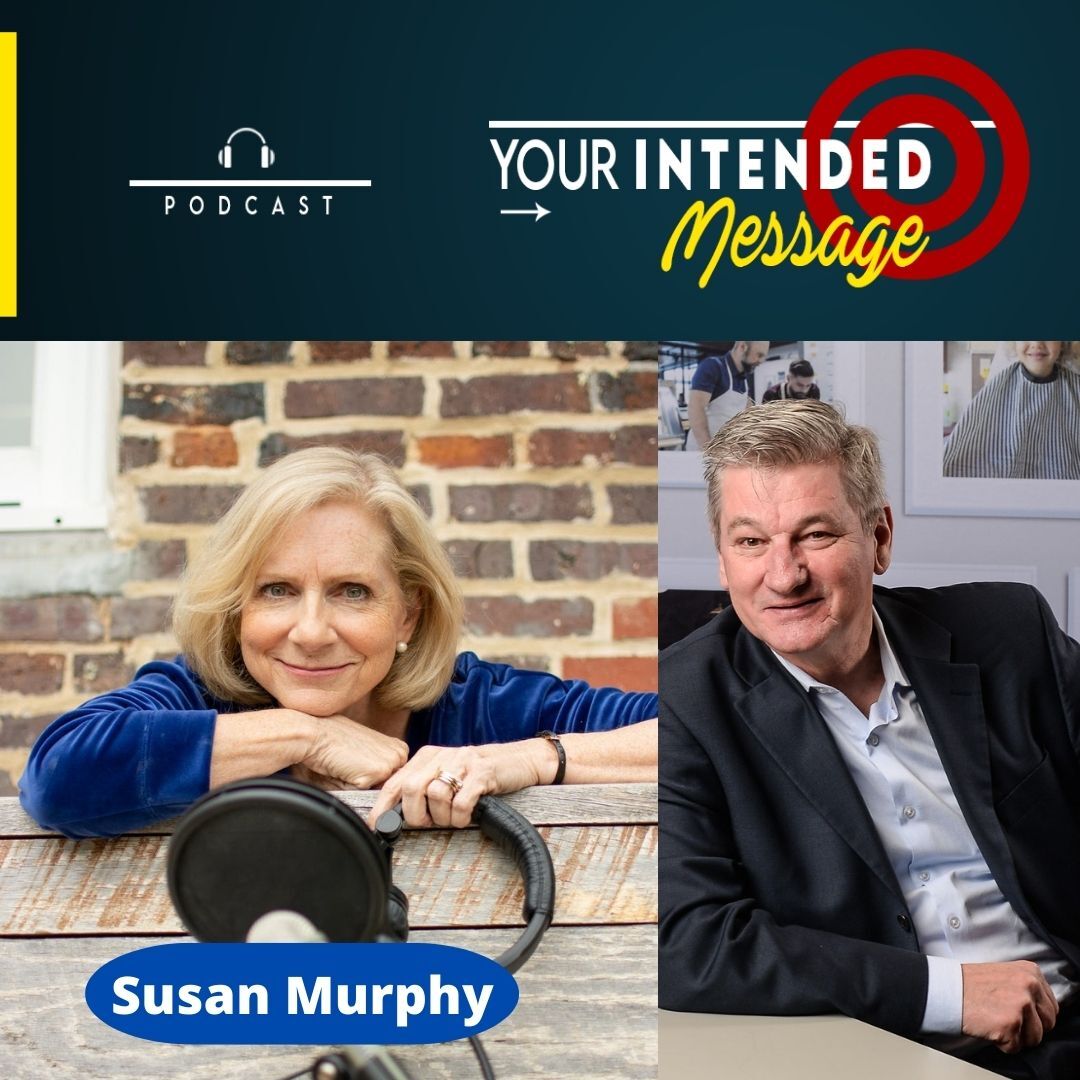
Ep 112Find Your Authentic Voice: Susan Murphy
Connect with Listeners with Your True Voice How can you uncover and leverage your authentic voice Episode 112 {Susan is based in North Carolina) In this conversation with Susan Murphy, we explore: Why is your authentic voice critical to your success? What mental and physical exercises can you use to uncover that voice? The three simple techniques to improve your voice today What can you learn from the voices of Darth Vader and Jar Jar Binks? How to connect with the audience when telling the story Recognizing that the presentation is part of a process What grade level so you speak from? About Susan Murphy: Susan has been in the broadcast industry for more than 40 years and she is always open to reinvention. Voice coaching is the most rewarding job she has ever had. Her primary clients are in the broadcast industry and she can you improve your voice to deliver a more powerful and intentional message. Visit her website to learn more and arrange an initial consultation at wwwSusanMurphyVOSOT.com Connect with Susan on Linkedin https://www.linkedin.com/in/susan-murphy-a649406/ ----- Excerpts from this conversation with Susan Murphy: 02:31 I work with reporters and anchors at TV stations around the country. And the primary thing I work with is finding helping them to find their authentic voices. They all have them. It's just that women in particular, don't tend to use them. Which I think goes back to their childhood where that breathy girlish Barbie doll voice probably served a need back then got them the attention they wanted or needed, allowed them to navigate, perhaps a sort of dysfunctional home life or whatever. But it doesn't serve them well getting into adulthood. So what I do is, I don't teach anything that they don't already have, you know, in their bodies, I just help them discover it, I just uncover their authentic voices. So once you do that, already, you have started with a rising a blossoming confidence. And that's what a lot of reporters lack too. But that's mostly because of their age. So the authenticity piece starts and then I move into some writing with them, because they all go out on different stories every day, or they're looking at anchor copy different every day. Are you making an intentional connection to this story? And they look, and you wouldn't do a story with a grieving mother the same way you would do a St. Patrick's Day parade, which you Okay, everybody gets that. But there's more to it than that. So making that intentional connection, not only with the story, but how about with the people you work for? Oh, and that's not your bosses, the people you work for is the audience. If you can't make an intentional connection to what you're talking about, or to what you're delivering, I try never to say reading because there's a difference. ----- Write your script, like a fifth grader, how old are you in fifth grade, you're 10. Deliver it, like a college professor. ----- 10:47 Short sentences are a reporter's best friend. You can do so much more with the tone of your voice in a short sentence, then you can do in a long one, because in a long one, you're just trying to get from A to Z. 11:03 If you keep the sentences short, if you make sure you take those pauses between the sentences, tone happens, you almost don't have to manufacture it, because those words will automatically trigger tone. And when you're not worried about tripping over the next word, or the next thought. It's amazing how authentic that delivery can be. ----- 24:38 If you were going to rephrase all of that, say for a group of seventh graders, is there a way you could explain it to maybe seventh graders that might be better for my audience? Oh, okay. And then hopefully, they'll be able to explain it in a way that helps the seventh graders but then it allows you to write it better. ----- Scientists who explained complex ideas in simple sentences include: Albert Einstein Carl Sagan Neil deGrasse Tyson ----- ----more---- Your Intended Message is the podcast about how you can boost your career and business success by improving your communication skills. We’ll examine the aspects of how we communicate one-to-one, one to few and one to many – plus that important conversation, one to self. In these interviews we will explore presentation skills, public speaking, conversation, persuasion, negotiation, sales conversations, marketing, team meetings, social media, branding, self talk and more. Your host is George Torok George is a specialist in executive communication skills. That includes conversation and presentation. He’s fascinated by way we communicate and influence behaviors. He delivers training and coaching programs to help leaders and promising professionals deliver the intended message for greater success. Connect with George www.SpeechCoachforExecutives.com https://www.linkedin.com/in/georgetorokpresentations/ https://www.youtube.com/user/presentationskills https://www.instagram.com/georgetorok/ For weekly tips to improve yo