You Are Not A Frog
320 episodes — Page 4 of 7

Ep 197How to Deal With Your Inner Critic
We can learn how to say no to other people, but often don’t say no to ourselves or to our inner critic who’s always telling us we can do more or be better. We become our own worst enemy when it comes to setting boundaries and prioritising our own needs. This is why we need self-compassion, and to overcome the toxic self-talk that often fuels our negative self-talk.In this quick dip, Rachel will help you name the critical voice and acknowledge its presence, explore the underlying triggers and needs that contribute to self-criticism, and treat yourself with kindness and understanding, just as you would a close friend.When we pay too much attention to our inner critic, we risk feeling more stressed, putting strain on our relationships, and overall negatively impacting our wellbeing. So it’s time to challenge that negative self-talk and replace it with compassionate. No only will it benefit you, but it’ll benefit those close to you, too.Listen to this episode toDiscover the impact of toxic self-talk and how it affects our relationships and self-perception.Explore the importance of self-compassion and its role in enhancing relationships and personal growth.Gain practical tips and techniques for dealing with your inner critic and cultivating self-kindness.Episode highlights[00:01:52] Toxic self-talk[00:04:11] Self-compassion[00:04:57] Shame[00:05:57] Boss bitch[00:09:12] When our amygdala goes too far[00:10:04] Motivating with the stick, not the carrotResourcesTHRIVE Weekly PlannerMore episodes of You Are Not a Frog:What to Do When You Can Never Do Enough as a Working Mum – Episode 174, with With Corrina Gordon-BarnesHow to Escape the Tyranny of the ‘Shoulds’ – Episode 196 with Charlotte HousdenThe Surprising Power of Self Coaching (and How to Do it Well) – Episode 117, with Dr Claire KayeDownload the episode’s workbook and CPD form. You can use them for reflection and to submit for your appraisal.Enjoyed this episode?Write a review and share this with your friends.Connect with RachelHave any questions? Contact Rachel through these platforms:LinkedIn: @Dr-Rachel-MorrisTwitter: @DrRachelMorrisEmail: [email protected] out more about our trainingMentioned in this episode:[FREE Webinar] How to Lead Without RescuingJoin Dr Rachel Morris and Dr Sarah Coope for a free 60-minute live webinar on Tuesday 21st April, 2026 at 19:30-20:30 BST OR Thursday 23rd April, 2026 at 13:00-14:00 BST[FREE Webinar] How to Lead Without Rescuing

Ep 196How to Escape the Tyranny of the ‘Shoulds’
Do you find yourself trapped by the expectations and pressures of what you think you “should” be doing? Is there a voice in your head, berating you for not living up to their standards? If so, you might be experiencing the tyranny of the shoulds.You’re not alone in feeling overwhelmed or uncertain. But it turns out that hearing others' stories can help you realise that your struggles are common. Also, if you rely on others for feedback it’s important to know whom to ask and when, so you don’t end up with an over-eager cheerleader or someone who’ll burst your bubble before its time.In this episode, Charlotte Housden discusses her research on successfully navigating change and how we can escape that nagging, finger-wagging presence we all have from time to time.That voice of doubt and fear can trap us in a cycle of unhappiness and unfulfilment. It might mean we miss out on opportunities for growth, personal development, and finding true satisfaction in our lives and careers. But by remembering that you are not your thoughts, you can start to free yourself from the tyranny of the shoulds.Listen to this episode toGain insights from interviews with 108 people in 27 countries on successfully navigating change in life.Understand the importance of hearing others' stories, and how it can make you feel less alone.Get the resources you nee to facilitate and sustain change.Episode highlights[00:06:50] The importance of knowing you're not alone[00:09:27] Stories and consequences of change[00:11:14] How to give feedback[00:17:15] Delaying gratification on a new project[00:18:59] What to do when you feel you need to change everything at once[00:23:46] Job crafting[00:25:51] The shift in the psychological contract[00:29:10] The tyranny of the shoulds[00:33:39] Midroll[00:36:12] The three musts[00:37:39] You are the sky. Everything else is just the weather[00:40:32] You are not your thoughts[00:43:42] What most medical students aren't taught about their own thoughts[00:47:51] What doctors need to make it to the top[00:50:11] The key to greater productivity[00:52:50] Charlotte's top tipsAbout the guestCharlotte is a chartered coaching psychologist helping individuals to navigate their organisations and careers. She has interviewed 108 people in 27 countries identifying how they successfully navigate change and is the author of Swim Jump Fly: A Guide to Changing Your Life.LinkedIn | WebsiteResourcesTHRIVE Weekly PlannerWhat Happens When We’re Really Listened to – Episode 180, with Tom DillonHow to Avoid Becoming the Second Victim – Episode 92, with Dr Caraline Wright & Dr Lizzie SweetingJob Crafting for Happiness – Episode 144, with Kirsten Armit, Dr Colin Lindsay, and Dr Daljit HothiSwim Jump Fly: A Guide to Changing Your Life – Charlotte’s bookCharlotte’s Tyranny of the Shoulds podcastThe Happiness Trap: Stop Struggling, Start Living, by Russ HarrisDownload the episode’s workbook and CPD form. You can use them for reflection and to submit for your appraisal.Enjoyed this episode?Write a review and share this with your friends.Connect with RachelHave any questions? Contact Rachel through these platforms:LinkedIn: @Dr-Rachel-MorrisTwitter: @DrRachelMorrisEmail: [email protected] out more about our trainingMentioned in this episode:[FREE Webinar] How to Lead Without RescuingJoin Dr Rachel Morris and Dr Sarah Coope for a free 60-minute live webinar on Tuesday 21st April, 2026 at 19:30-20:30 BST OR Thursday 23rd April, 2026 at 13:00-14:00 BST[FREE Webinar] How to Lead Without Rescuing⭐️ Book Your FrogFest Ticket Now

Ep 195Am I Burning Out?
If your job is demanding, jou've probably wondered at some point if you're burning out. The constant stress and pressure in health and social care especially can leave us feeling overwhelmed and exhausted. But ignoring the signs of burnout can have serious consequences, affecting not only our performance but our wellbeing and our relationships too.In this quick dip episode, Rachel introduces the Stress Curve and how it can help you recognise if you're nearing burnout. She explains the different stages of the curve and provide practical steps you can take to prevent burnout and perform at your best. It's about finding what works for you and making small changes that add up a big impact.Listen to this episode toRecognise the signs of burnout and its consequences, so you can prioritise your wellbeing and relationships.Learn from real-life experiences and to prevent burnout, tailored to the unique challenges faced by people in healthcare.Discover the stress curve model as a tool to assess your current position and make small, impactful changes to improve your wellbeing and performance.Episode highlights[00:01:43] Check your battery level[00:02:43] Symptoms of burnout[00:03:47] The stress curve[00:05:59] Not enough pressure to perform[00:07:29] Dropping off peak performance[00:08:26] Early signs of burnout[00:09:18] Take a snapshop [MIDROLL][00:10:26] Where are you on the stress curve?[00:13:01] What factors are contributing to how you feel?[00:13:32] What are your early warning signs?[00:15:38] What small steps can you take?[00:17:14] Stay in your zone of powerResourcesDownload a copy of the graphWatch the video to see the graphTHRIVE Weekly PlannerMore episodes of You Are Not a Frog:Surprising Ways to Avoid Burnout – Episode 188 with Nick PetrieEmbrace Your Capacity, Not Your Limits – Episode 176 with Dr Sarah CoopeIs it ‘Normal’ Not to Cope? – Episode 143Download the episode’s workbook and CPD form. You can use them for reflection and to submit for your appraisal.Yerkes–Dodson lawEnjoyed this episode?Write a review and share this with your friends.Connect with RachelHave any questions? Contact Rachel through these platforms:LinkedIn: @Dr-Rachel-MorrisTwitter: @DrRachelMorrisEmail: [email protected] out more about our trainingMentioned in this episode:[FREE Webinar] How to Lead Without RescuingJoin Dr Rachel Morris and Dr Sarah Coope for a free 60-minute live webinar on Tuesday 21st April, 2026 at 19:30-20:30 BST OR Thursday 23rd April, 2026 at 13:00-14:00 BST[FREE Webinar] How to Lead Without Rescuing

Ep 194How to Manage Your Energy if You're a Highly Sensitive Person
Managing your energy can be a challenge at the best of times. But if you’re a highly sensitive person, you might be more prone to burning out due to your unique traits and the demands of your work.Being highly sensitive doesn’t mean being touchy, but having a high degree of empathy and a particular way of processing sensory input. That means it might take longer to recover from a tricky situation like a conflict with a colleague, or witnessing something traumatic at work.The key to managing energy as a highly sensitive person is to understand and embrace your sensitivity, and put strategies in place to protect and replenish your energy.This week, Rachel talks with Dr Becki Taylor-Smith, an anaesthetist and coach who specialises in helping highly sensitive individuals discover their superpowers.Around 1 in 5 people has high sensitivity. With this higher degree of empathy often comes the need to help people, which is why there may be many more people in medicine who identify as highly sensitive.People who identify as highly sensitive make great leaders, but can be reluctant to step forward. So without support or strategies in place to help them harness their abilities, teams can miss out on the unique abilities they have.But by setting small boundaries and incorporating self-care activities into their daily lives, highly sensitive people can be supported and encouraged to thrive in their own careers, and lead others.Listen to this episode toLearn how to manage your energy effectively as a highly sensitive person in high-stress jobs.Discover strategies to prevent burnout and overwhelm while still making a unique difference.Understand the traits of highly sensitive people and how to embrace them as a superpower in leadership and teamwork.Episode highlights[00:04:22] Traits of highly sensitive people[00:09:10] How to tell if you're a highly sensitive person[00:11:07] When being highly sensitive can be a superpower[00:14:08] Highly sensitive people as leaders[00:20:58] The ABCs of managing your energy[00:27:38] How to protect yourself and your energy[00:32:12] Avoiding burnout due to sensory overload[00:35:37] How to support highly sensitive people[00:39:26] Becki's top tipsAbout the guestDr Becki is an anaesthetist and coach supporting sensitive professionals caring for people and the planet to rediscover their joy and make their difference without burning out.LinkedIn | Facebook | WebsiteResourcesTHRIVE Weekly PlannerMore episodes of You Are Not a Frog:How to Thrive in a High-Stress Job When You’re Neurodivergent – Episode 179 with Matthew BellringerAre Your Tiny Traumas Building Up to Burnout? – Episode 182, with Dr Claire PlumblyDownload the episode’s workbook and CPD form. You can use them for reflection and to submit for your appraisal.Download Becki’s free guide to using your sensitivity as a superpowerThe Highly Sensitive Person: How to Survive and Thrive When the World Overwhelms You, by Elaine AronEnjoyed this episode?Write a review and share this with your friends.Connect with RachelHave any questions? Contact Rachel through these platforms:LinkedIn: @Dr-Rachel-MorrisTwitter: @DrRachelMorrisEmail: [email protected] out more about our trainingMentioned in this episode:[FREE Webinar] How to Lead Without RescuingJoin Dr Rachel Morris and Dr Sarah Coope for a free 60-minute live webinar on Tuesday 21st April, 2026 at 19:30-20:30 BST OR Thursday 23rd April, 2026 at 13:00-14:00 BST[FREE Webinar] How to Lead Without Rescuing⭐️ Book Your FrogFest Ticket Now

Ep 193How Do You Say No When Someone Might Die?
Saying no and setting boundaries are core to avoiding burnout. But if saying no might put a patient at harm – or worse – what can you do?In this quick dip episode, Rachel explains the concept of core and flex boundaries along with core and flex consequences. Core boundaries are non-negotiables that we always enforce, rather than preferences we’d like to enforce but can be flexible around.Key to this approach is also recognising the short- and long-term consequences of saying no.By not setting boundaries or saying no when we need to, we risk damaging our relationships and neglecting our own needs. This can lead to regret, unfulfilled goals, and negative effects on other people who rely on us. But by setting rigid and flexible boundaries, we can get closer to a healthy work-life balance, and keep our priorities and commitments in tact.Listen to this episode toDiscover how to set boundaries and say no in challenging situations, ie when someone's life might be at stake.Understand the concept of core and flex boundaries and how they can help in decision-making.Learn about the short-term and long-term consequences of setting boundaries and saying no, and the importance of considering them when making decisions.Episode highlights[00:03:43] Introducing core and flex boundaries[00:04:55] Core boundaries[00:06:21] Flex boundaries[00:09:26] What happens when core boundaries are in conflict[00:11:34] Short-term consequences[00:12:34] Long-term consequences[00:15:59] Core and flex consequences[00:17:59] Hierarchy of boundaries[00:19:40] Putting this into practiceResourcesTHRIVE Weekly PlannerHow to Avoid Amygdala Hijack Part 1 – Episode 169How to Avoid Amygdala Hijack Part 2 – Episode 171The Problem with Boundaries – Episode 161Download the episode’s workbook and CPD form. You can use them for reflection and to submit for your appraisal.Enjoyed this episode?Write a review and share this with your friends.Connect with RachelHave any questions? Contact Rachel through these platforms:LinkedIn: @Dr-Rachel-MorrisTwitter: @DrRachelMorrisEmail: [email protected] out more about our trainingMentioned in this episode:[FREE Webinar] How to Lead Without RescuingJoin Dr Rachel Morris and Dr Sarah Coope for a free 60-minute live webinar on Tuesday 21st April, 2026 at 19:30-20:30 BST OR Thursday 23rd April, 2026 at 13:00-14:00 BST[FREE Webinar] How to Lead Without Rescuing

Ep 192How to Challenge Upsetting Behaviour
Interactions between team members can have a big impact on performance and outcomes. Disrespect and hostility can create a threatening environment and hinder collaboration and productivity. In a medical setting, it could literally be a life-or-death situation.The Civility Saves Lives movement aims to raise awareness about the importance of behaviour and promote a culture of civility. By showing respect and support towards each-other, teams can enhance their performance, deliver better outcomes, and provide a healthier and kinder path towards personal growth.In this episode, Dr Chris Turner, co-founder of the Civility Saves Lives movement, demonstrates how we can create an environment where civility is valued, information is freely shared, and everyone feels empowered to contribute. By taking the time to show respect – and to address disrespect without offering judgement – we can make a positive difference in the workplace and improve outcomes for teams and patients.Listen to this episode toUnderstand the importance of civility and its role in improving team performance and patient outcomes.Learn about the effects of incivility on individuals and their ability to think and perform under high-pressure situations.Find out about the origins of the Civility Saves Lives movement, and its impact on behaviour in healthcare.Episode highlights[00:01:32] Meeting Chris[00:02:21] Civility Saves Lives[00:10:50] The minimum unit of performance is the team[00:13:32] Setting an environment for people to speak[00:16:25] What happens when we're scared of being wrong[00:23:40] How hostile behaviour impacts teams[00:25:45] How rudeness affects trust[00:27:22] We don't go to work to be unpleasant[00:31:21] Knowing that someone's got you[00:35:15] How to give feedback[00:49:44] Curiosity's role when giving difficult feedback[00:55:08] How to avoid the drama triangle[00:59:09] Understanding cultural context[01:01:52] Accepting uninvited criticism[01:04:23] How to take difficult feedback[01:06:15] The act of saying sorry[01:09:39] Chris' top tipsAbout the guestChris is a consultant in emergency medicine at the University Hospital of Coventry and Warwickshire. He co-founded Civility Saves Lives with Joe Farmer, a grassroots organisation dedicated to raising awareness of the impact of behaviour on performance.LinkedIn | Twitter | WebsiteResourcesTHRIVE Weekly PlannerHow to Escape the Drama Triangle and Stop Rescuing People – Episode 75, with Annie HanekomHow to Have Crucial Conversations – Episode 85, with Dr Ed PooleyDownload the episode’s workbook and CPD form. You can use them for reflection and to submit for your appraisal.When Rudeness in Teams Turns Deadly – Chris’ talk at TEDxExeterThe Decline in Task Performance After Witnessing Rudeness is Moderated by Emotional Empathy - A Pilot Study, by Gadi GilamZero Degrees of Empathy: A New Theory of Human Cruelty and Kindness, by Simon Baron-CohenMedical Student Perceptions and Experiences of Incivility: a Qualitative Study, by Louise Griffin and Anna BaverstockPromoting Professionalism by Sharing a Cup of CoffeeThe 15 Commitments of Conscious Leadership: A New Paradigm for Sustainable Success, by Jim Dethmer, Diana Chapman, and Kaley KlempRadical Candor: Fully Revised and Updated Edition: How to Get What You Want by Saying What You Mean, by Kim ScottEnjoyed this episode?Write a review and share this with your friends.Connect with RachelHave any questions? Contact Rachel through these platforms:LinkedIn: @Dr-Rachel-MorrisTwitter: @DrRachelMorrisEmail: [email protected] out more about our trainingMentioned in this episode:⭐️ Book Your FrogFest Ticket Now[FREE Webinar] How to Lead Without RescuingJoin Dr Rachel Morris and Dr Sarah Coope for a free 60-minute live webinar on Tuesday 21st April, 2026 at 19:30-20:30 BST OR Thursday 23rd April, 2026 at 13:00-14:00 BST[FREE Webinar] How to Lead Without Rescuing

Ep 191The Real Reason Other People's Boundaries Make Us Cross
When someone else sets boundaries, do you feel able to do the same, or do you resent their ability to say no? Often, our anger towards others' boundaries comes from our own unmet needs and desires, and what presents itself as resentment is actually envy.Guilt, shame, and fear often prevent us from expressing our own needs, which just compounds those negative emotions. Without shifting our mindset, we can end up adopting a victim mindset and feeling even more trapped.In this quick dip episode, Rachel describes how we can identify our underlying needs, find ways to express them, and take small, practical steps towards getting what we want, even if it feels unattainable.Listen to this episode toLearn how to navigate boundaries and handle feelings of resentment when others say no to you.Understand the difference between anger and envy, and how envy can reveal what you truly want.Pick up strategies for identifying your own needs, expressing them to others, and finding ways to meet them.Episode highlights[00:02:12] Envy[00:05:47] What is your underlying need?[00:06:43] What happens when we make ourselves the victim[00:07:55] Questions to ask yourself[00:08:54] What is stopping you from meeting your needs?[00:10:01] If you could wave a magic wand[00:11:40] Expressing your needs to othersResourcesTHRIVE Weekly PlannerWhy Can’t I Say No – Episode 163How to Use Power Language to Keep Your Boundaries Strong – Episode 179How to Say No and Deal with Pushback – Episode 125, with Annie HanekomAtlas of the Heart: Mapping Meaningful Connection and the Language of Human Experience, by Brené BrownDownload the episode’s workbook and CPD form. You can use them for reflection and to submit for your appraisal.Enjoyed this episode?Write a review and share this with your friends.Connect with RachelHave any questions? Contact Rachel through these platforms:LinkedIn: @Dr-Rachel-MorrisTwitter: @DrRachelMorrisEmail: [email protected] out more about our trainingMentioned in this episode:[FREE Webinar] How to Lead Without RescuingJoin Dr Rachel Morris and Dr Sarah Coope for a free 60-minute live webinar on Tuesday 21st April, 2026 at 19:30-20:30 BST OR Thursday 23rd April, 2026 at 13:00-14:00 BST[FREE Webinar] How to Lead Without Rescuing

Ep 190How to Be REALLY Productive... Without Losing the Plot
Productivity and time management are difficult at the best of times. But when your job directly affects people’s lives, it can be tricky to make time to get organised, so that we have control over our days, and our inbox isn’t overflowing.What we need is to manage our attention and make space for what matters. In this episode, Rachel is joined by productivity expert Graham Allcott. Graham shares ways we can prioritise and delegate tasks, make dedicated time for deep work, and get on top of our todo list rather than feel crushed by it.Cluttered inboxes and disorganised days can lead to more stress, which can impact your work as well as your coworkers’. So listen to this episode for actionable strategies that will help you start each day with more focus, and less overwhelm.Listen to this episode toImprove your productivity without striving for perfection.Manage your attention and prioritise tasks, especially in high-stress jobs.Learn how to implement a weekly review to stay organised and in control.Episode highlights[00:04:38] How to Stop Messing About on Your Phone[00:06:52] Managing attention for people in high-stress jobs[00:08:12] Introducing the second brain[00:08:54] Structuring your day[00:11:25] Making space for what matters[00:13:42] Weekly review[00:15:32] The second brain in more detail[00:18:20] What app should I download?[00:19:40] Inbox Zero[00:23:53] Good messaging hygiene for teams[00:26:02] How psychological safety can help when your team is stuck[00:27:59] Team dynamics around timings and deadlines[00:29:31] More email etiquette[00:31:44] CORD model[00:35:35] The end of your todo list[00:38:29] Graham's three tipsAbout the guestGraham is the author of the best-selling book How to Be a Productivity Ninja, and the founder of Think Productive, a company that helps teams and individuals get a better handle on their time. Graham also hosts the Beyond Busy podcast and writes a newsletter to help busy people rev up for the week ahead.LinkedIn | WebsiteResourcesTHRIVE Weekly PlannerThink Differently About Your To-Do List – Episode 153How Safe Do You Feel at Work? – Episode 70 with Scott ChambersHow to be a Productivity Ninja – Graham’s first bookInbox Zero – the original method by Merlin MannThe CORD productivity modelGraham’s Rev Up for the Week email newsletterBeyond Busy – Graham’s podcastDownload the episode’s workbook and CPD form. You can use them for reflection and to submit for your appraisal.Enjoyed this episode?Write a review and share this with your friends.Connect with RachelHave any questions? Contact Rachel through these platforms:LinkedIn: @Dr-Rachel-MorrisTwitter: @DrRachelMorrisEmail: [email protected] out more about our trainingMentioned in this episode:[FREE Webinar] How to Lead Without RescuingJoin Dr Rachel Morris and Dr Sarah Coope for a free 60-minute live webinar on Tuesday 21st April, 2026 at 19:30-20:30 BST OR Thursday 23rd April, 2026 at 13:00-14:00 BST[FREE Webinar] How to Lead Without Rescuing⭐️ Book Your FrogFest Ticket Now

Ep 189What Will Your Future Self Thank You For?
We’ve all had weeks where our schedules are packed tightly and there’s no time for ourselves, leaving us exhausted and overwhelmed. The problem is we often make commitments for our future selves without thinking about what might be on their plate in the future.In this quick dip episode, Rachel uncovers ways we can make space for the the big and important things in our lives, set rules and boundaries to prevent over-committing, and creating space to cope with challenging times ahead.Not everything that comes out of the blue is a bad thing. But when we over-book ourselves and neglect our own needs, we risk leaving ourselves unable to really enjoy the fun things that unexpectedly come our way, or cope with the tricky things.Try taking a moment to consider what your future self will thank you for. This will help you say no to those extra commitments, and practice more self-compassion.Listen to this episode toLearn how to stop over-scheduling so you can create space for yourself and avoid burnout.Understand the importance of setting boundaries and making rules for yourself to prioritise your wellbeing.Discover a form of self-compassion in advance.Episode highlights[00:01:19] A piece of long-term homework[00:02:06] Looking backwards[00:03:01] Writing a letter from your future self[00:03:43] Fear of missing out[00:06:34] Looking after our future self[00:08:22] What rules would your future self like you to understand?[00:09:12] When were you overstretched?[00:11:30] Make some space for what's coming up[00:12:02] Putting self-compassion into practiceResourcesTHRIVE Weekly PlannerThink Differently About Your To-Do List – Episode 153How the Enneagram System WorksDownload the episode’s workbook and CPD form. You can use them for reflection and to submit for your appraisal.Enjoyed this episode?Write a review and share this with your friends.Connect with RachelHave any questions? Contact Rachel through these platforms:LinkedIn: @Dr-Rachel-MorrisTwitter: @DrRachelMorrisEmail: [email protected] out more about our trainingMentioned in this episode:[FREE Webinar] How to Lead Without RescuingJoin Dr Rachel Morris and Dr Sarah Coope for a free 60-minute live webinar on Tuesday 21st April, 2026 at 19:30-20:30 BST OR Thursday 23rd April, 2026 at 13:00-14:00 BST[FREE Webinar] How to Lead Without Rescuing

Ep 188Surprising Ways to Avoid Burnout
Do you give yourself permission to rest? If you’re like many people in caring professions, you worry that taking time out to look after yourself means not spending that time helping others. That thinking may have got you to your position now, but is it serving you, or is it time to update your operating system?The problem with rest is that we often confuse it with inaction. But rest from work doesn’t have to mean rest from activity. As this week’s guest, Nick Petrie discovered, for high achievers, rest could be going to the gym or Argentinian tango. Nick’s research shows that the way to beat burnout is not to stop doing things altogether, but to find things you love to do, but that are entirely outside of your sphere of work.Choosing what you do outside of work needs to be done with care, however. If you’re used to working in a fast-paced and competitive environment, a gym where everyone’s visibly pushing themselves to beat their neighbour might not give you the release you need.But engaging in activities or hobbies that give you a complete break from work and allow you to reconnect with your body and emotions could be instrumental in preventing burnout.Listen to this episode toDiscover surprising factors that contribute to burnout.Hear examples from high-performing people about the patterns and correlations of burnout across different fields.Find out how people successfully manage burnout by finding activities that let them switch off and recharge.Episode highlights[00:04:41] Correlations of burnout[00:15:23] Opposite worlds[00:22:46] The risk of finding a world not opposite enough[00:26:22] Six types of opposite world[00:28:47] More correlations of burnout[00:32:31] Sharing in others' experiences[00:36:07] Creating mechanisms for yourself[00:38:11] The burnout curve[00:41:35] Allostatic overload[00:43:25] Three degrees of burn[00:46:08] Catching the warning signs in yourself and others[00:49:11] Nick's top tipsAbout the guestNick Petrie is a researcher and speaker on leadership, resilience and burnout prevention. Nick helps organisations prepare for the future by creating solutions that help leaders be more adaptable, resilient and strategic. He holds a Masters degree from Harvard University and is the author of the book Work Without Stress: Building Resilience for Long Term Success.LinkedIn | WebsiteResourcesTHRIVE Weekly PlannerMore episodes of You Are Not a Frog:Get Some Air Cover to Help You Set Boundaries – Episode 181How to Avoid Burnout on Repeat – Episode 160The Truth About Burnout – Episode 25Nick’s LinkedIn posts on burnoutWhat does “allostatic load” mean for your health?Download the episode’s workbook and CPD form. You can use them for reflection and to submit for your appraisal.Enjoyed this episode?Write a review and share this with your friends.Connect with RachelHave any questions? Contact Rachel through these platforms:LinkedIn: @Dr-Rachel-MorrisTwitter: @DrRachelMorrisEmail: [email protected] out more about our trainingMentioned in this episode:⭐️ Book Your FrogFest Ticket Now[FREE Webinar] How to Lead Without RescuingJoin Dr Rachel Morris and Dr Sarah Coope for a free 60-minute live webinar on Tuesday 21st April, 2026 at 19:30-20:30 BST OR Thursday 23rd April, 2026 at 13:00-14:00 BST[FREE Webinar] How to Lead Without Rescuing

Ep 187Stress vs Overwhelm – And Why You Should Know the Difference
We all get stressed or overwhelmed with our daily responsibilities from time to time. But we’re not always good at telling them apart. And this is important, because the way out of overwhelm is different form the way out of stress.Stress is caused when the demands on us outweigh the resources we feel we have to cope. Overwhelm happens when high amounts of stress make us feel like we can't cope with our lives' demands. The way out of overwhelm is non-doing, resting, and letting our nervous system settle down.Prolonged stress and overwhelm can lead to burnout, which just puts more stress on our nervous system, and makes it harder for us to function. In this quick dip, Rachel offers practical advice to help you take care of yourself, recognise overwhelm, and give yourself the time you need to rest.Listen to this episodeTo learn the difference between stress and overwhelmTo discover the benefits of non-doing and how it can help you overcome overwhelmFor practical tips on reducing overwhelm in the futureEpisode highlights[00:03:19] Mindful play[00:05:03] The F**k it mindset[00:06:58] What will future me thank me for? (midroll)[00:08:16] Permission to stopResourcesTHRIVE Weekly PlannerMore episodes of You Are Not a Frog:How to Say F**k it and Become Ridiculously Relaxed – Episode 130 with John C ParkinThe Perils of Perfectionism – Episode 22 with Nicky OdgersWhat to Do When You are Overwhelmed – Episode 132 with Gerrie HawesHow to Escape the Drama Triangle and Stop Rescuing People – Episode 75 with Annie HanekomAtlas of the Heart: Mapping Meaningful Connection and the Language of Human Experience, by Brené BrownDownload the episode’s workbook and CPD form. You can use them for reflection and to submit for your appraisal.Enjoyed this episode?Write a review and share this with your friends.Connect with RachelHave any questions? Contact Rachel through these platforms:LinkedIn: @Dr-Rachel-MorrisTwitter: @DrRachelMorrisEmail: [email protected] out more about our trainingMentioned in this episode:[FREE Webinar] How to Lead Without RescuingJoin Dr Rachel Morris and Dr Sarah Coope for a free 60-minute live webinar on Tuesday 21st April, 2026 at 19:30-20:30 BST OR Thursday 23rd April, 2026 at 13:00-14:00 BST[FREE Webinar] How to Lead Without Rescuing
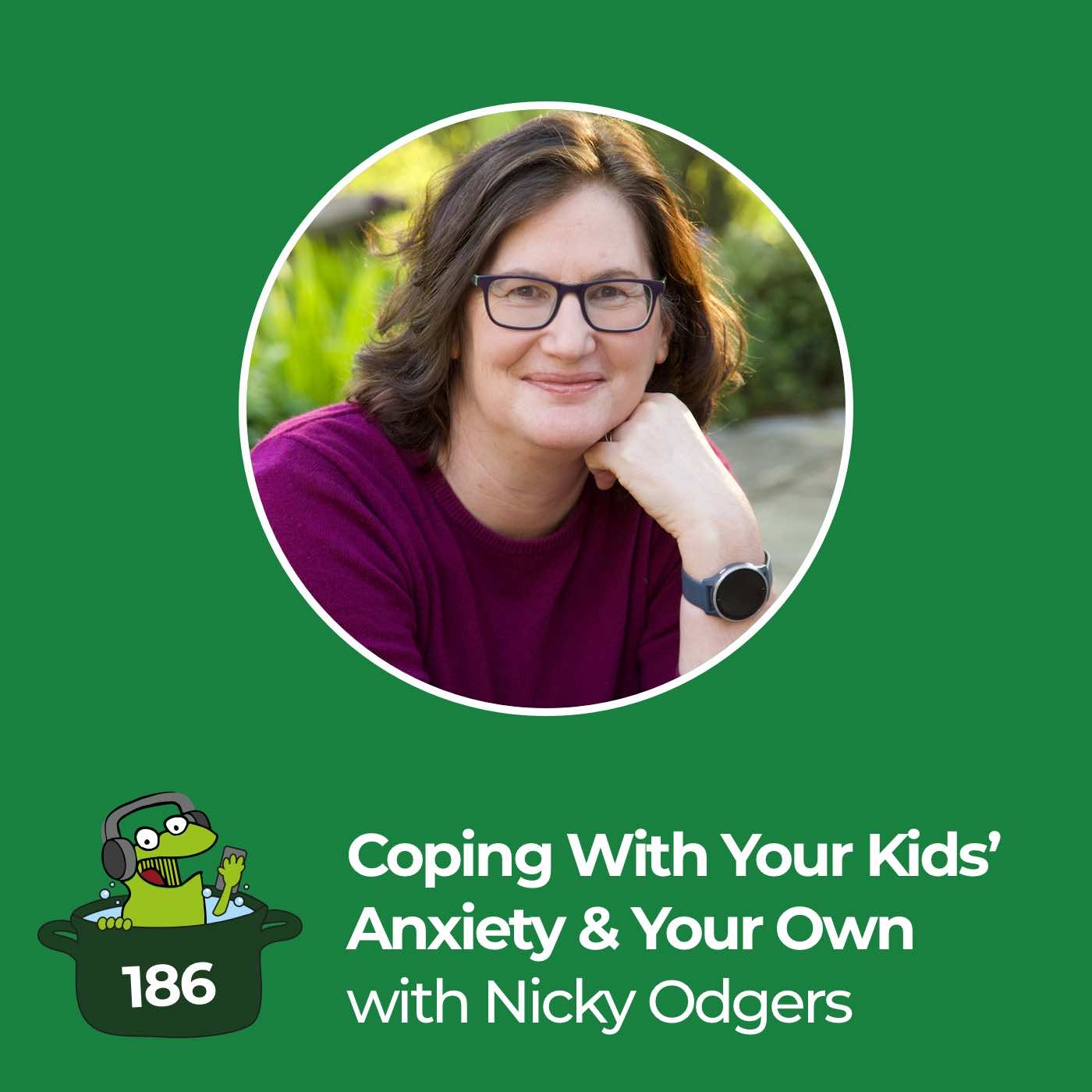
Ep 186How to Cope With Your Kids’ Anxiety, Your Colleagues’, and Your Own
Confronting anxiety is easier said than done. It’s hard enough with adults, but with children it’s even more tough. Anxiety keeps us safe, but often we over-predict that something bad will happen and under-predict our ability to cope. The key is to learn how to manage anxiety before it becomes a problem.This week’s guest is educational psychologist Nicky Odgers. She specialises in working with kids who are feeling anxious about attending school. A lot of what she helps kids with applies to adults – things like mapping thoughts and emotions to physical sensations, replacing negative thoughts with more realistic ones, and practicing techniques to help us relax.Anxiety can interfere with our lives and become a problem if it goes unaddressed. Naturally we want to avoid things that cause us anxiety, but this stops us from learning that we can cope and that the terrible thing we fear may never happen.Listen to this episode toLearn about anxiety in children and teenagers, and how it can manifest as school avoidanceGain insight into how anxiety affects adults, including healthcare professionals, and how to manage it effectivelyUnderstand the thought patterns, physical sensations, and behaviours associated with anxiety, and how to address them to prevent avoidance and build coping skillsEpisode highlights[00:03:46] Epidemic of anxiety[00:09:21] Anxiety as pathology[00:14:00] Thoughts, feelings, physical sensations, and behaviours[00:20:54] Safety behaviours[00:23:26] When is it right to step in and offer help[00:29:18] Anxiety in healthcare[00:31:47] How to persuade someone their fears are unfounded[00:34:35] Mind-reading[00:41:03] Teaching people to solve problems[00:45:14] Worry time and worry monsters[00:47:14] Distracting yourself from worry[00:48:24] Helpful safety behaviour[00:49:52] Helping anxious people[00:52:48] Neurodiversity and autism[00:55:58] Nicky's tips for managing anxietyAbout the guestNicky Odgers is an educational psychologist with a particular interest in school anxiety. She helps parents and schools to support children and young people to feel less anxious about attending school, to better manage their emotions, to develop their confidence, to initiate and sustain positive relationships and be more successful in their learning. LinkedIn | WebsiteResourcesTHRIVE Weekly PlannerEpisode 22: The Perils of PerfectionismEpisode 181: Get Some Air Cover to Help You Set BoundariesSchool Anxiety Support for Parents – Facebook groupNicky’s information and resource for parents and schools about school anxiety and EBSADownload Nicky's free handout for children, young people, and parentsStarving the Anxiety Gremlin for Children Aged 5-9, by Kate Collins-DonnellyMy Anxiety Handbook: Getting Back on Track, by Sue Knowles, Bridie Gallagher, and Phoebe McEwenBooks by Poppy O’NeillWhat to Do When You Worry Too Much, by Dawn Huebner PhDHelping Your Child with Fears and Worries, by Cathy Creswell and Lucy WillettsGet Your Sh*t Together, by Sarah KnightThe Life-Changing Magic of Not Giving a F**k, by Sarah KnightDownload the episode’s workbook and CPD form. You can use them for reflection and to submit for your appraisal.Enjoyed this episode?Write a review and share this with your friends.Connect with RachelHave any questions? Contact Rachel through these platforms:LinkedIn: @Dr-Rachel-MorrisTwitter: @DrRachelMorrisEmail: [email protected] out more about our trainingMentioned in this episode:[FREE Webinar] How to Lead Without RescuingJoin Dr Rachel Morris and Dr Sarah Coope for a free 60-minute live webinar on Tuesday 21st April, 2026 at 19:30-20:30 BST OR Thursday 23rd April, 2026 at 13:00-14:00 BST[FREE Webinar] How to Lead Without Rescuing⭐️ Book Your FrogFest Ticket Now

Ep 185Don't Wait for Tomorrow to Improve – Take Control Now
Do you find yourself thinking "it will be better tomorrow", or believing things will improve in a few months' time “when x happens”?In this quick dip episode, Rachel reveals how waiting for outside events to occur leads to more problems – because even when tomorrow comes, we’re still the same person facing the same challenges as we were yesterday.This mindset can lead us to looking for partial solutions which ultimately keep us from solving our bigger problems. But by focusing on our zone of power, we can reclaim agency over the things we can change, instead of waiting on events we can’t control.If we don’t try and take control, we can end up in a continued cycle of waiting for tomorrow to come. This leads to more stress, burnout, and exhaustion becoming the norm. But when we’re in our zone of power, we’ll find it much easier to deal with what today and tomorrow has in store.Listen to this episode toChallenge your "it’ll be better tomorrow" mindsetLearn practical strategies for creating urgency and focusing on your zone of powerKnow when to wait and see, and when to take actionEpisode highlights[00:02:18] Making it better now[00:03:13] Going down the vortext of busiyness[00:04:20] Urgency to change[00:05:59] What is the burning platform?[00:07:26] Be in your zone of power[00:08:25] If I could wave a magic wand[00:09:36] Ignore things for a period[00:10:38] Watchful waiting[00:12:01] Take actionResourcesTHRIVE Weekly PlannerMore episodes of You Are Not a Frog:What Happens When We’re Really Listened to – Episode 180, with Tom DillonHow to Use Power Language to Keep Your Boundaries Strong – Episode 179Enjoyed this episode?Write a review and share this with your friends.Connect with RachelHave any questions? Contact Rachel through these platforms:LinkedIn: @Dr-Rachel-MorrisTwitter: @DrRachelMorrisEmail: [email protected] out more about our trainingMentioned in this episode:[FREE Webinar] How to Lead Without RescuingJoin Dr Rachel Morris and Dr Sarah Coope for a free 60-minute live webinar on Tuesday 21st April, 2026 at 19:30-20:30 BST OR Thursday 23rd April, 2026 at 13:00-14:00 BST[FREE Webinar] How to Lead Without Rescuing

Ep 184Is it You - or is it Menopause?
One way or another, menopause affects everyone at some point. If you’re not experiencing symptoms yourself, you almost certainly know or work with someone who is. That’s why understanding its effects and being able to offer support and compassion is so important.Women going through menopause can experience a wide range of physical, psychological, and hormonal symptoms. These symptoms often go unnoticed or ignored, which can impact confidence and increase anxiety. Lack of confidence or temporary difficulty in making decisions can lead to organisations losing talented, experienced women who thought they were experiencing cognitive decline. By perpetuating the stigma and embarrassment around menopause, we prevent women from seeking help and support.But there are resources and solutions available to help women manage their symptoms and continue to thrive at work - and Dr Claire Kaye joins us this week to talk through what we can all do.It starts with becoming more aware of the symptoms of menopause and recognising when they’re affecting us or our colleagues.If you’re looking for support with menopause, lifestyle changes like sleep hygiene, exercise, and nutrition can help. There are also medications available, but coaching can have a huge impact.We can educate ourselves and others about the symptoms and resources available, and seek out support from in-house Menopause Ambassadors, as well as support groups. If you’re experiencing menopause or perimenopause, coaching and medical support is available.Listen to this episode toUnderstand more about the physical and mental symptoms of menopause, and how they can affect people's work and personal lives.Learn about the importance of awareness, education, and support for people going through menopause, especially in the workplace.Discover resources and strategies for managing menopause symptoms, including lifestyle changes, medication, coaching, and group support.Episode highlights[00:03:14] What is the menopause[00:12:18] What can women do to help themselves?[00:18:35] Caring for yourself[00:30:12] Is it a midlife crisis?[00:32:14] What we tell kids about the menopause[00:33:49] Invisibility[00:37:19] Claire's tips[00:45:46] Rachel's tipsAbout the guestDr Claire Kaye, an executive career coach who specialises in career development and perimenopause and menopause in the workplace. She works with women who are experiencing symptoms of the menopause and helps them find ways to thrive while maintaining their careers and personal lives.LinkedIn | Facebook | Instagra m | WebsiteResourcesBalance: free menopause and perimenopause symptom tracker appTHRIVE Weekly PlannerMore episodes of You Are Not a Frog:Episode 117: The Surprising Power of Self Coaching (and How to Do it Well)Episode 124: How to Change When Change is ScaryEpisode 107: Defining Your Own Success in LifeDownload the episode’s workbook and CPD form. You can use them for reflection and to submit for your appraisal.Enjoyed this episode?Write a review and share this with your friends.Connect with RachelHave any questions? Contact Rachel through these platforms:LinkedIn: @Dr-Rachel-MorrisTwitter: @DrRachelMorrisEmail: [email protected] out more about our trainingMentioned in this episode:[FREE Webinar] How to Lead Without RescuingJoin Dr Rachel Morris and Dr Sarah Coope for a free 60-minute live webinar on Tuesday 21st April, 2026 at 19:30-20:30 BST OR Thursday 23rd April, 2026 at 13:00-14:00 BST[FREE Webinar] How to Lead Without Rescuing⭐️ Book Your FrogFest Ticket Now

Ep 183Why You Don’t Need to Earn Your Rest
So many of us are caught up in a vortex of busyness. We end up working harder and harder without doing anything that re-energises us, all because we feel like we have no other choice.As healthcare professionals, we feel like rest is a reward for good behaviour, but it's a basic human need, and a professional responsibility. Why? Because rest makes us better at our job, and – frankly – we deserve it.In this quick dip episode, Rachel explores ways we can give ourselves permission to rest and remind ourselves that it's not something we need to earn. When we give ourselves that space, our wellbeing and productivity will improve.Nobody else is going to give us the time or permission, so we need to do this for ourselves. It will inevitably come with some guilt, but we can acknowledge that, then put our own wellbeing first and make it a professional priority.Listen to this episode toLearn about rest and how it affects our brainsUnderstand the different zones that we operate from, and how they impact our performanceGet tips on how to prioritise rest and make time for it in your daily lifeEpisode highlights[00:02:22] What happens when we rest[00:04:34] Threat zone, drive zone, and rest zone[00:06:04] If we fail to rest[00:07:18] Why we find it so hard to rest[00:08:30] Giving ourselves permission[00:11:23] SummaryResourcesTHRIVE Weekly PlannerRachel’s previous Facebook Lives:What puts you into the corner?What to do if you get ambushed in a meetingMore episodes of You Are Not a Frog:Why We Become Terrible in a Crisis – Episode 167Enjoyed this episode?Write a review and share this with your friends.Connect with RachelHave any questions? Contact Rachel through these platforms:LinkedIn: @Dr-Rachel-MorrisTwitter: @DrRachelMorrisEmail: [email protected] out more about our trainingMentioned in this episode:[FREE Webinar] How to Lead Without RescuingJoin Dr Rachel Morris and Dr Sarah Coope for a free 60-minute live webinar on Tuesday 21st April, 2026 at 19:30-20:30 BST OR Thursday 23rd April, 2026 at 13:00-14:00 BST[FREE Webinar] How to Lead Without Rescuing

Ep 182Are Your Tiny Traumas Building Up to Burnout?
For people in caring professions, trauma can be something we experience on a regular basis. an event doesn’t have to be earth-shattering to be traumatic, and if we let those “little T” traumas build up over time without addressing them, we can find ourselves in a constant sate of fight, flight, or freeze.When stress and trauma accumulate over time, we can minimise what triggers us and downplay our experience. Each time we do, we deplete our battery, pushing it from the green zone of calm and energy, to the amber zone of fight-or-flight, and if we’re not careful, into the red zone where accessing empathy and compassion – and even good decision-making – is much harder. This is often when burnout appears to come “out of nowhere”.But there are ways we can disrupt the burnout pattern, and tap into our nervous system to help us in those moments when we’re triggered.Listen to this episode toUnderstand the impact of “little T” traumas on our nervous system and how they can accumulate over timeLearn about the importance of recognising and prioritising self-careHear practical tips on how to recharge and avoid burnoutEpisode highlights[00:03:49] Big T and little T traumas[00:06:35] Impact on the nervous system[00:08:51] Normalising stress and overworking[00:09:58] Giving ourselves space[00:11:04] How housekeeping can help with our stress response[00:14:27] Saying no to avoid burnout[00:15:20] Functional levels of IQ[00:17:15] Where is your battery level?[00:20:34] Burnout and trauma[00:25:05] Defining boundaries[00:28:33] Emails[00:30:33] Minimising trauma[00:32:46] Self-help strategies[00:38:08] The red zone[00:42:11] Finding safety[00:43:39] Claire's top tipsAbout the guestDr Claire Plumbly is a clinical psychologist specialising in trauma, anxiety and burnout. Alongside her online therapy practice she creates engaging short-form videos on improving your mental health. She regularly runs online workshops for overcoming stress, procrastination and unhealthy boundaries.LinkedIn | Facebook | Instagram | YouTube | TikTok | WebsiteResourcesThe Inner Consultation: How to Develop an Effective and Intuitive Consulting Style, by Roger NeighborCan't Even: How Millennials Became the Burnout Generation, by Anne Helen PetersenBurnout: Solve Your Stress Cycle, by Emily and Amelia NagoskiHuberman LabEpisode 172: How to Survive a Toxic System – on Both Sides of the PondEpisode 130: How to Say F**k it and Become Ridiculously RelaxedDownload the episode’s workbook and CPD form. You can use them for reflection and to submit for your appraisal.Enjoyed this episode?Write a review and share this with your friends.Connect with RachelHave any questions? Contact Rachel through these platforms:LinkedIn: @Dr-Rachel-MorrisTwitter: @DrRachelMorrisEmail: [email protected] out more about our trainingMentioned in this episode:[FREE Webinar] How to Lead Without RescuingJoin Dr Rachel Morris and Dr Sarah Coope for a free 60-minute live webinar on Tuesday 21st April, 2026 at 19:30-20:30 BST OR Thursday 23rd April, 2026 at 13:00-14:00 BST[FREE Webinar] How to Lead Without Rescuing⭐️ Book Your FrogFest Ticket Now

Ep 181Get Some Air Cover to Help You Set Boundaries
We’re not just service providers – we’re carers and helpers. This can make it hard to set boundaries and prioritise our workload. What we need is air cover.By working together with your colleagues, you can create agreements about what to say yes and no to, and hold each-other accountable.And you can also seek out peers outside of work, so you can share your dilemmas and feel less alone. If we keep silently struggling with saying no or setting boundaries, we can start feeling burnout, which can affect our judgement.In this quick dip, Rachel explains how we can get some protection at work, and ask our peers outside of work for support.Listen to this episode toUnderstand the concept of air cover and how it can help with setting boundaries and prioritising workloadLearn about how shared accountability and informal networks can help give us air coverGet actionable steps for finding and using air cover to make saying no easierEpisode highlights[00:02:16] We're trying to solve the wrong problem[00:03:49] What happens when we want to say "no"[00:06:36] Legal air cover[00:06:58] Finding air cover in accountability[00:09:03] Air cover from informal networks[00:12:12] How air cover helps to cope with fear[00:12:44] Air cover against complaints[00:14:41] Action pointsResourcesMore episodes of You Are Not a Frog:Episode 161: The Problem with BoundariesEpisode 125: How to Say No and Deal with PushbackTHRIVE Weekly PlannerSign up to receive a link to the episode workbook and CPD form downloads for each podcast. You can use them for reflection and to submit for your appraisal.Enjoyed this episode?Write a review and share this with your friends.Connect with RachelHave any questions? ****Contact Rachel through these platforms:LinkedIn: @Dr-Rachel-MorrisTwitter: @DrRachelMorrisEmail: [email protected] out more about our trainingMentioned in this episode:[FREE Webinar] How to Lead Without RescuingJoin Dr Rachel Morris and Dr Sarah Coope for a free 60-minute live webinar on Tuesday 21st April, 2026 at 19:30-20:30 BST OR Thursday 23rd April, 2026 at 13:00-14:00 BST[FREE Webinar] How to Lead Without Rescuing
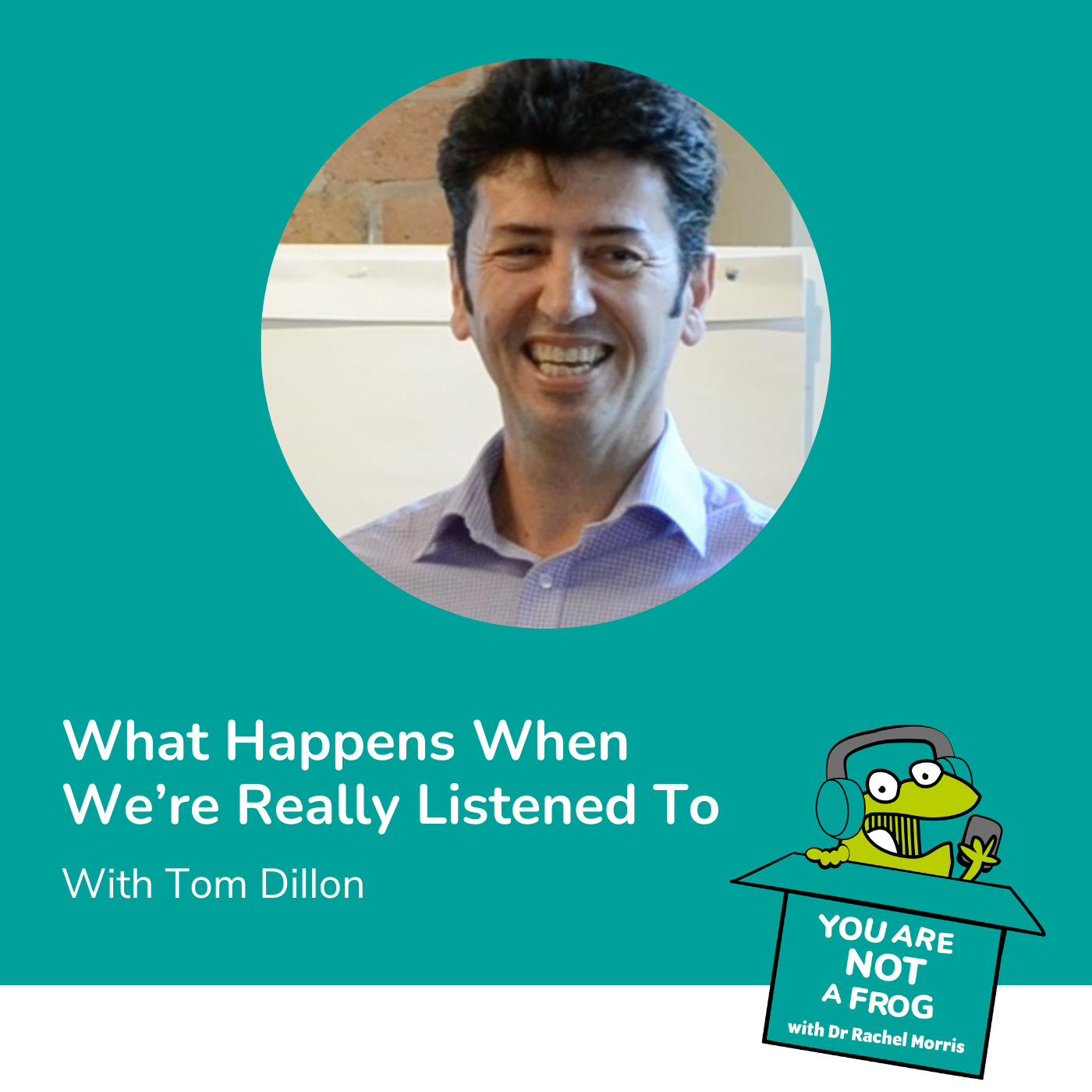
Ep 180What Happens When We’re Really Listened to
Do you ever feel like you're just not being heard? Or like you’re under pressure and no one understands how much you’re juggling? Especially in high-stress careers, few of us have the chance to truly be listened to – and coaching can help with that.Coaching isn’t therapy or listening to someone else’s advice. It's about exploring solutions yourself, with guidance. Coaching gives you permission to take a tricky situation and ask "If this were different, what would I notice?".Coaching allows you to “think to the end of your thoughts”, with someone who listens and asks really effective questions.Better still, by adopting a coaching mindset, you can help your teams solve problems using the skills and knowledge they already have.If you’ve felt burnt out, ignored or resentful, help is at hand. This week, transformational coach, trainer, and author Tom Dillon joins Rachel to explore how different coaching approaches can help you reclaim your agency, think more clearly, and act positively.Listen to this episode toLearn about the benefits of coaching, including how it can transform your life and provide a space for thinking and explorationUnderstand how coaching differs from therapy and mentoring, and why coaching is a valuable tool for healthcare professionalsDiscover different coaching approaches, like the person-centred and solution-focused approaches, and how they can be used to help you generate options and make your own decisionsEpisode highlights[00:02:46] What haas coaching ever done for us?[00:05:30] Coaching vs therapy[00:07:12] The power of being listened to[00:10:51] Hearing back what you've just said[00:12:43] The person-centred approach to coaching[00:14:29] Are doctors good listeners?[00:16:27] The solution-focused approach to coaching[00:23:57] When negative beliefs prevent us from imagining solutions[00:29:42] Cognitive behavioural approach[00:31:50] Somatic approach to coaching[00:34:09] Neuroscience approach[00:39:48] Gestalt coaching approach[00:45:17] Coaching "the uncoachable"[00:48:25] Taking a coaching approach[00:53:00] Work with Tom[00:53:21] Your Coaching JourneyResourcesYour Coaching Journey – Use the code FROGSPAWN for a 20% discount on Tom’s courseConnect with Tom via LinkedInFree coaching provided by the NHSEpisode 163 – Why Can’t I Say NoEpisode 67 – Bringing Your Best Self to Work, with Dr Sarah GouldingEpisode 63 – How to Survive Even When Times are Tough, with Dr Caroline WalkerDr Jill Bolte Taylor – The 90 second life cycle of an emotionSign up to receive a link to the episode workbook and CPD form downloads for each podcast. You can use them for reflection and to submit for your appraisal.Mentioned in this episode:[FREE Webinar] How to Lead Without RescuingJoin Dr Rachel Morris and Dr Sarah Coope for a free 60-minute live webinar on Tuesday 21st April, 2026 at 19:30-20:30 BST OR Thursday 23rd April, 2026 at 13:00-14:00 BST[FREE Webinar] How to Lead Without Rescuing⭐️ Book Your FrogFest Ticket Now
Ep 179How to Use Power Language to Keep Your Boundaries Strong
Have you ever had to do something you didn't want to do? Maybe it was a task at work, a favour for a friend, or a chore at home. It can be frustrating and draining when it seems we have no say in our actions. It can make us feel powerless and stressed out. And that's not good for our work quality or our well-being.But is that true? Do we really have no choice at all?In this Quick Dip, we share how to use power language to set boundaries and take back control of your life. Keeping your work and life balance in check can be hard when you feel like your freedom is taken away. You will learn seven simple words to help you regain autonomy.Learn how to set boundaries through your language. If you want to know how to regain control of situations that drain you out, this episode is for you.Here are three reasons why you should listen to the full episode:Find out what it means to give over connecting.Discover the importance of autonomy in motivation.Learn the seven words that will help you take back autonomy.Episode Highlights[00:37] Connecting with People Who Drain You[03:05] Taking Back Autonomy[04:55] The End Goal[05:24] Even If[07:42] Causing Inconvenience[08:30] Power LanguageResourcesDrive by Daniel H PinkMore episodes of You Are Not a Frog:Episode 74: Managing Your Time in a System Which Sucks with Dr Ed PooleyEpisode 153: Think Differently About Your To-Do ListEpisode 161: The Problem with BoundariesTHRIVE Weekly PlannerSign up here to receive a link to the episode workbook and CPD form downloads for each podcast. You can use them for reflection and to submit for your appraisal.Enjoyed this episode?Write a review and share this with your friends.Connect with RachelHave any questions? ****Contact Rachel through these platforms:LinkedIn: @Dr-Rachel-MorrisTwitter: @DrRachelMorrisEmail: [email protected] out more about our trainingMentioned in this episode:⭐️ Book Your FrogFest Ticket Now
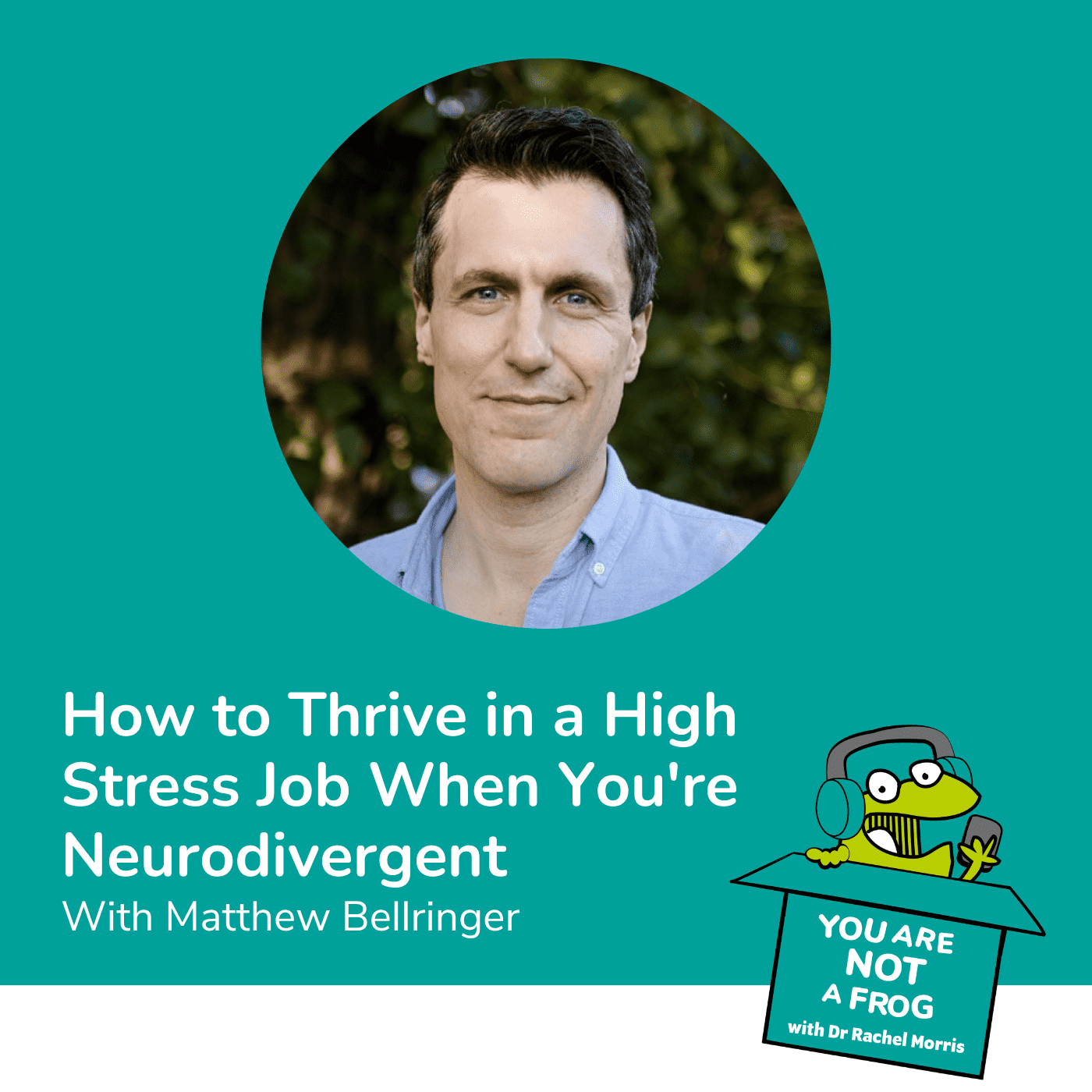
Ep 178How to Thrive in a High-Stress Job When You’re Neurodivergent
In the words of today’s podcast guest, “Everyone can benefit from neurodiversity”. But how much do you understand about the way it impacts you and your colleagues?Neurodiversity can be a real strength in high-stress roles like medicine. Different ways of thinking can allow us to cope with high pressure situations, handle complex information, and perform brilliantly in ways that others couldn’t.But it also offers us challenges, both when it comes to managing our own needs but also in supporting those around us. A great example is “masking”, where people try to hide elements of themselves in order to “fit in” with those around them. It takes a huge amount of energy, and can take a significant toll on our mental and physical wellbeing.You might have a diagnosis of something like ADHD, ASD, or dyslexia, or know a colleague or family member who does. But even if you don’t, all of us benefit from understanding more about different ways of thinking and seeing the world, and knowing how to support each other better using our unique strengths and talents.In this conversation, we hear from neurodivergence coach and facilitator Matthew Bellringer who unpacks the terminology in a brilliantly clear way. He shares how you can make the most of the advantages of neurodivergence in you and your team, as well as dealing more effectively with the challenges it brings so we can support each other better.Listen to the episode if you want toUnderstand the terminology of neurodiversity and how it can benefit individuals, society, and organisationsLearn about the unique strengths and challenges that come with neurodivergence, and how to capitalise on those strengths while mitigating the costsDiscover how masking and camouflaging can take a toll on the mental and physical wellbeing of neurodivergent individuals, and how to work towards expressing oneself and one's experiencesEpisode highlights[00:03:25] Neurodiversity and neurodivergence[00:06:59] Twice-exceptional people[00:10:55] Neurodivergence and empathy[00:12:32] Superpowers vs mutant powers[00:15:51] Hyperempathy[00:18:42] Masking[00:21:13] Themes that show up for neurodivergent people[00:27:20] Neurodivergence, health, and lifestyle[00:30:07] Addiction and compulsion[00:33:00] Helpful coping mechanisms[00:35:10] When your zone of genius is outside of your role[00:38:00] How neurotypical people can help the neurodivergent[00:41:23] Get curious about your needs[00:42:32] Neurodivergence and leadership[00:43:22] Advocating for yourself[00:44:27] Seeking diagnosis and supportAbout the guestMatthew Bellringer helps people with neurodivergent traits to develop their strengths and deal more effectively with the costs. In his work, he frequently encounters frustration and anxiety as common experiences for neurodivergent people in high-stress jobs.LinksConnect with Matthew via LinkedInCurious Being - Matthew’s community for unconventional people who want to make the world a better placeWork with MatthewDelightful Dissent – Matthew’s podcast exploring assumptionsTHRIVE Weekly PlannerSign up here to receive a link to the episode workbook and CPD form downloads for each podcast. You can use them for reflection and to submit for your appraisal.Enjoyed this episode?Write a review and share this with your friends.Sign up for a FREE workbookJoin the Shapes Collective Facebook groupFind out more about our trainingFind Rachel on LinkedInFollow Rachel on TwitterEmail [email protected] in this episode:⭐️ Book Your FrogFest Ticket Now[FREE Webinar] How to Lead Without RescuingJoin Dr Rachel Morris and Dr Sarah Coope for a free 60-minute live webinar on Tuesday 21st April, 2026 at 19:30-20:30 BST OR Thursday 23rd April, 2026 at 13:00-14:00 BST[FREE Webinar] How to Lead Without Rescuing

Ep 177Why You Should Expect Pushback and What To Do About It
It's a fact of life that we can't please everyone. That's why one of the hardest things to do is say no and try to keep everyone happy with our decisions. Even if it's against our will, we try to give a piece of ourselves to everyone. The thing is, that takes a toll on us until resentment builds up in our hearts. So, how do you expect pushback while staying firm with your decisions?In this Quick Dip, we explore the topic of pushback, how it affects our emotions, and why we should expect it. We lay down tips on removing guilt from receiving pushback and handling other people's reactions. It's one thing to expect pushback but another to deal with it. The first step is to accept the fact that there's somebody that will always oppose your views and decisions.Stand your ground firmly but compassionately. If you want to know how to expect and deal with pushback, this episode is for you. Here are three reasons why you should listen to the full episode:Learn the power of expecting pushback.Find out how resentment builds up and its consequences.Discover the best ways to deal with pushback.Episode Highlights[00:29] On Pushback[02:26] Expecting Pushback[03:39] How Resentment Builds Up[04:35] Expecting Feedback[05:07] How to Deal with Pushback[07:34] Hunting for the Grain of Truth[10:32] Setting Boundaries and Expecting PushbackResourcesThink Again by Adam GrantMore episodes of You Are Not a Frog:Episode 125: How to Say No and Deal with Pushback with Annie HanekomEpisode 161: The Problem with BoundariesEpisode 169: How to Avoid Amygdala HijackBeat stress at work with our Zone of Power Bitesize Pack!THRIVE Weekly PlannerSign up here to receive a link to the episode workbook and CPD form downloads for each podcast. You can use them for reflection and to submit for your appraisal.Enjoyed This Podcast?Write a review and share this with your friends.Connect With MeHave any questions? Contact Rachel through these platforms:LinkedIn: @Dr-Rachel-Morris Twitter: @DrRachelMorrisEmail: [email protected] out more about our training here.Mentioned in this episode:[FREE Webinar] How to Lead Without RescuingJoin Dr Rachel Morris and Dr Sarah Coope for a free 60-minute live webinar on Tuesday 21st April, 2026 at 19:30-20:30 BST OR Thursday 23rd April, 2026 at 13:00-14:00 BST[FREE Webinar] How to Lead Without Rescuing
Ep 176Embrace Your Capacity, Not Your Limits
High-stress and high-performance professions like healthcare often push people beyond their limits. When this happens, stress and burnout are often the unfortunate consequences.In this episode, Dr Sarah Coope joins us to discuss how to avoid burnout by embracing your capacity. She delves into finding your optimal stretching point for each of your limited resources. Sarah also examines the nature of our fear of saying no. And we explore the consequences and benefits of managing and maintaining your capacity.If you find yourself stretched too thin, then this episode is for you. Here are three reasons why you should listen to the full episode:Understand your limits and capacity. Discover how to shift your mindset and avoid burnout. Learn how to embrace your guilt. Episode Highlights[10:30] Shifting Your Mindset to Embrace Your Capacity[19:30] Saying No to Avoid Overstretching Yourself[28:30] Identify Your Optimal Stretching Point[38:30] Managing Emotions and Language Usage[44:20] How to Deal with the Guilt From Saying NoResourcesIndistractable: How to Control Your Attention and Choose Your Life by Nir EyalConnect with Sarah on LinkedIn | TwitterEpisode 99: How to Deal with Criticism When You’ve Reached Your LimitEpisode 169: How to Avoid Amygdala HijackEpisode 171: How to Avoid Amygdala Hijack Part 2Learn 8 ways to set boundaries without stress with our Just Say No ToolkitReach out to Rachel at [email protected] Sign up here to receive a link to the episode workbook and CPD form downloads for each podcast. You can use them for reflection and to submit for your appraisal.Enjoyed This Podcast?Write a review and share this with your friends.Connect With MeHave any questions? Contact Rachel through these platforms:LinkedIn: @Dr-Rachel-Morris Twitter: @DrRachelMorrisEmail: [email protected] out more about our training here.Mentioned in this episode:⭐️ Book Your FrogFest Ticket Now[FREE Webinar] How to Lead Without RescuingJoin Dr Rachel Morris and Dr Sarah Coope for a free 60-minute live webinar on Tuesday 21st April, 2026 at 19:30-20:30 BST OR Thursday 23rd April, 2026 at 13:00-14:00 BST[FREE Webinar] How to Lead Without Rescuing

Ep 175How To Influence Without Getting Frustrated
You have brilliant ideas and solutions that can make a difference in your work. But how do you get others on board with them? It can be hard to convince others when they have different views and opinions. The thing is, you can’t change someone’s mind without knowing where they are coming from and what matters to them. You have to face it with confidence, grace, patience, and, sometimes, acceptance.In this quick dip episode, we talk about how you can influence anyone by understanding yourself and them. We then discuss the impact of focusing on your zone of power and the importance of conflict and disagreement.Find out how to tackle any challenge with skill and insight. If you want to know how to influence others gracefully, this episode is for you. Here are three reasons why you should listen to the full episode:Find out what things are inside and outside your zone of power.Learn how not to get stressed when influencing people.Discover why you can’t control influencing someone.Episode Highlights[00:28] Circle of Influence[02:30] What You Have Control Over in Influencing[03:09] The Zone of Power[04:35] Focus on Action[06:51] What is Behind Conflict?[07:51] How to Influence People[10:55] Focusing on Your Zone of PowerResourcesThe Five Dysfunctions of a Team: A Leadership Fable by Patrick LencioniMore episodes of You Are Not a Frog:Episode 23: How to do conflict well with Jane GunnEpisode 122: How to be Happy at Work with Sarah MetcalfeTHRIVE Weekly PlannerSign up here to receive a link to the episode workbook and CPD form downloads for each podcast. You can use them for reflection and to submit for your appraisal.Enjoyed This Podcast?Write a review and share this with your friends.Connect With MeHave any questions? Contact Rachel through these platforms:LinkedIn: @Dr-Rachel-Morris Twitter: @DrRachelMorrisEmail: [email protected] out more about our training here.Mentioned in this episode:[FREE Webinar] How to Lead Without RescuingJoin Dr Rachel Morris and Dr Sarah Coope for a free 60-minute live webinar on Tuesday 21st April, 2026 at 19:30-20:30 BST OR Thursday 23rd April, 2026 at 13:00-14:00 BST[FREE Webinar] How to Lead Without Rescuing

Ep 174What to Do When You Can Never Do Enough as a Working Mum with Corrina Gordon-Barnes
On this episode of You Are Not a Frog, our guest, Corrina Gordon-Barnes, joins us to discuss the challenges working mothers face in traditional family units. The conversation sheds light on the value of self-compassion, learning to navigate negative emotions, and striking a balance between work and family life. This episode is for everyone involved in parenting, not just mothers. It’s not just women who experience mum guilt!For a new perspective on mum guilt and actionable advice for a healthy balance between career and family life, don't miss out on this invaluable conversation with our guest, Karina Gordon.Here are three reasons why you should listen to the full episode:Recognise and navigate feelings of shame and mum guilt in your parenting journey.Discover the role of self-compassion and reparenting in achieving a balanced life.Understand the impact of societal norms and social media on our emotional state as parents.Episode Highlights[03:39] The Challenges of Motherhood and Mum Guilt[07:50] The Impact of Perfectionism and Shame in Parenting[12:06] Challenges and Mum Guilt in Parenting[21:08] Understanding Shame and Overcoming Negative Emotions[29:57] Challenges and Strategies for Working Moms[40:56] Coping with Guilt and Shame in the Work-Life Balance Struggle[48:16] Top Tips for Overcoming Mum Guilt and ShameResourcesSolve for Happy by Mo GawdatConnect with Corrina: Website | Instagram | Twitter | LinkedInWant to learn more from Corrina? Listen to these previous You’re Not a Frog Podcast episodes: Episode 121: How to Be a Happy Working Parent Episode 104: How to Cope with Nightmare Relatives and Colleagues Without Losing the Plot Episode 89: Should I Stay or Should I Go?Episode 32: How to Take Control of Your Thoughts We’re releasing a FREE mini-series this May and June about how healthcare teams can set better boundaries and love their work! Check it out here: THRIVE Weekly PlannerEnjoyed This Podcast?Write a review and share this with your friends.Connect With MeHave any questions? Contact Rachel through these platforms:LinkedIn: @Dr-Rachel-Morris Twitter: @DrRachelMorrisEmail: [email protected] out more about our training here.Mentioned in this episode:⭐️ Book Your FrogFest Ticket Now[FREE Webinar] How to Lead Without RescuingJoin Dr Rachel Morris and Dr Sarah Coope for a free 60-minute live webinar on Tuesday 21st April, 2026 at 19:30-20:30 BST OR Thursday 23rd April, 2026 at 13:00-14:00 BST[FREE Webinar] How to Lead Without Rescuing

Ep 173Do I Disappoint Myself Or Others?
Disappointing ourselves and others is an awful feeling highlighted by guilt and shame. It can often lead us to act out regretfully as we attempt to mask it. Out of fear of its consequences, we resort to tiptoeing around others. This is most common in the medical field, where people tend to prioritise the needs of other people before their own. It could be why you may have difficulties saying no to people. In this quick dip episode, I will dive into how you can deal with disappointment. Learn to understand your needs and take action. Understand it's okay if you can't do everything or please everyone.If you’re a doctor struggling with stress because you are afraid to disappoint yourself and others, this episode is for you.Here are three reasons why you should listen to the full episode:Discover the source of your disappointment.Learn how to overcome your fears by saying no. Explore the benefits of prioritizing your needs above others. Episode Highlights[00:00] The Fear of Disappointing Others[02:08] Sources of Disappointment[7:14] Consequences of Self-Disappointment[11:01] Prioritize Yourself and Your NeedsResources:Learn 8 ways to set boundaries without stress with our Just Say No ToolkitSign up here to receive a link to the episode workbook and CPD form downloads for each podcast. You can use them for reflection and to submit for your appraisal.Join our free Masterclass for Leaders in Healthcare on June 20, 2023: "Know Your Limits, Claim Your No” Enjoyed This Podcast?Write a review and share this with your friends.Connect With MeHave any questions? Contact Rachel through these platforms:LinkedIn: @Dr-Rachel-Morris Twitter: @DrRachelMorrisEmail: [email protected] out more about our training here.Mentioned in this episode:[FREE Webinar] How to Lead Without RescuingJoin Dr Rachel Morris and Dr Sarah Coope for a free 60-minute live webinar on Tuesday 21st April, 2026 at 19:30-20:30 BST OR Thursday 23rd April, 2026 at 13:00-14:00 BST[FREE Webinar] How to Lead Without Rescuing
Ep 172How to Survive a Toxic System - on Both Sides of the Pond
Does it feel like you're in a toxic work environment and can't get out? Too many doctors — both in the UK and elsewhere — find themselves in a whirlwind of work. There's always more to do, and you don't want to imagine the consequences of what happens if you fail. There seems like there's no way out, but the truth is, you always have a choice.In this episode of You Are Not a Frog, Dr Dike Drummond and I dive into a topic that affects many industries but is particularly prevalent in healthcare — surviving and thriving in a toxic work environment without burning out.If you’re a doctor stuck in the whirlwind of your toxic work environment, this episode is for you.Here are three reasons why you should listen to the full episode:Learn what you can change in a toxic work environment.Discover ways to improve how your career serves you.Find out how doctors can care for themselves and why that helps them do their job better.Episode Highlights[00:00] Doctors as Coal Mine Canaries[13:41] How Profit Creates a Toxic Work Environment[23:34] How Doctor Training Creates a Toxic Work Environment[30:49] You Always Have a Choice[40:02] Change or Leave Your Toxic Work Environment[52:13] Bureaucracies Always Add More Work[54:48] Drummond and Morris’ Three Top TipsResourcesSign up for our free webinar on June 20th Free Masterclass For Leaders In Healthcare with Dr Rachel Morris Download our free ‘Just Say No’ toolkit!Visit The Happy MDListen to the Physicians on Purpose PodcastGet Dike’s booksReach out to Rachel at [email protected] Shapes Toolkit TrainingTHRIVE Weekly PlannerSign up here to receive a link to the episode workbook and CPD form downloads for each podcast. You can use them for reflection and to submit for your appraisal.Enjoyed This Podcast?Write a review and share this with your friends.Connect With MeHave any questions? Contact Rachel through these platforms:LinkedIn: @Dr-Rachel-Morris Twitter: @DrRachelMorrisEmail: [email protected] out more about our training here.Mentioned in this episode:⭐️ Book Your FrogFest Ticket Now[FREE Webinar] How to Lead Without RescuingJoin Dr Rachel Morris and Dr Sarah Coope for a free 60-minute live webinar on Tuesday 21st April, 2026 at 19:30-20:30 BST OR Thursday 23rd April, 2026 at 13:00-14:00 BST[FREE Webinar] How to Lead Without Rescuing

Ep 171How to Avoid Amygdala Hijack Part 2
Life can seem full of threats and stresses we face daily. As high-stress professionals, these types of situations are a part of daily life. All of this can place a great mental load on our brains and trigger our amygdala to not always respond in the best way. That's why it's important to learn how we can reduce these threats and manage our stress. The question now is how can we do this?Picking up where we left off, this quick dip episode dives into the last four factors of the SCARF Model. We learn more about tips and techniques that can help minimise threats and improves our response. Reward yourself and develop habits that can help you feel certain, in control, and supported even amidst all the stress.Learn how to better manage your stress and respond to difficult situations. Avoid an amygdala hijack when you listen to this episode!Here are three reasons why you should listen to the full episode:Find out what 'C,' 'A,' 'R' and 'F' stands for in the SCARF Model.Discover how being friends with everyone can lead to less stress and a better work life.Listen and learn how you can apply the SCARF Model in your work and personal life.Episode Highlights[00:44] What ‘C’ Stands For in SCARF[03:20] The ‘A’ in SCARF Model[04:34] The Power You Hold[06:26] The ‘R’ Stands For…[07:31] Everyone is a Friend[09:41] The ‘F’ in SCARF[10:55] Applying the SCARF Model[12:35] Avoiding Amygdala Hijack With HelpResourcesYou Are Not A Frog Episode 169: How to Avoid Amygdala Hijack Part 1Learn about the SCARF Model by David RockLearn more about your Zone of Power Book a call and reach out to Rachel at [email protected] Sign up here to receive a link to the episode workbook and CPD form downloads for each podcast. You can use them for reflection and to submit for your appraisal.Enjoyed This Podcast?Write a review and share this with your friends.Connect With MeHave any questions? Contact Rachel through these platforms:LinkedIn: @Dr-Rachel-Morris Twitter: @DrRachelMorrisEmail: [email protected] out more about our training here.Mentioned in this episode:[FREE Webinar] How to Lead Without RescuingJoin Dr Rachel Morris and Dr Sarah Coope for a free 60-minute live webinar on Tuesday 21st April, 2026 at 19:30-20:30 BST OR Thursday 23rd April, 2026 at 13:00-14:00 BST[FREE Webinar] How to Lead Without Rescuing

Ep 170How to Feel Happy, Calm, and Connected
Our conditioning has trained us to rely on the egocentric left brain. We often overthink things, even when we have no control over them. But what if we didn't have to accept that this is simply how our brains work?This week, Dr Giles P Croft joins us to discuss his experience of having a TIA that caused his left brain to stop functioning properly. Giles shares what it’s like to access his right brain freely without any worry in mind. We discuss how our thinking left brain often gets in the way of us staying in the present moment. We also lay down simple ways to get reacquainted with our right brain.Don’t miss this episode and gain wisdom on how to be happy, calm, and connected.Here are three reasons why you should listen to the full episode:Learn how the left brain has evolved to dominate our thinking.Discover how the left and right brain consciousness works.Find out simple steps to get more connected with your right brain.Episode Highlights[03:44] Giles’s Background and Experiencing a TIA[10:17] How He Was Feeling the Entire Time[12:16] We Allow the Left Brain to Dominate[16:00] The Divided Brain[19:34] The Power of Now[23:38] Become Aware of Our Thoughts[30:17] How the Right and Left Brain Works[32:34] Tips on How to Get from the Left to the Right Brain[39:21] Don’t Sweat the Small Stuff[44:10] Facing Stress and Challenges[50:57] Giles’ Top Three TipsResourcesConnect with Giles: Website | Facebook | LinkedIn | YouTube | TwitterWellbeing Wednesdays: Website | Apple PodcastsTwo Brain FactsJill Bolte Taylor: My stroke of insightThe Divided BrainWhole Brain Living by Jill Bolte TaylorThe Power of Now by Eckhart TolleDon't Sweat the Small Stuff . . . and It's All Small Stuff by Richard CarlsonThe Power of Regret by Daniel H. PinkMore episodes of You Are Not a Frog:Ep46: Default to happyEp105: The Simplest Way To Beat Stress and Work HappierEpi130: How to Say F**k It and Become Ridiculously Relaxed (even about stuff that REALLY matters)THRIVE Weekly PlannerSign up here to get the episode workbook and CPD form downloads.Enjoyed This Podcast?Write a review and share this with your friends.Connect With MeHave any questions? Contact Rachel through these platforms:LinkedIn: @Dr-Rachel-Morris Twitter: @DrRachelMorrisEmail: [email protected] out more about our training here.Mentioned in this episode:⭐️ Book Your FrogFest Ticket Now[FREE Webinar] How to Lead Without RescuingJoin Dr Rachel Morris and Dr Sarah Coope for a free 60-minute live webinar on Tuesday 21st April, 2026 at 19:30-20:30 BST OR Thursday 23rd April, 2026 at 13:00-14:00 BST[FREE Webinar] How to Lead Without Rescuing
Ep 169How to Avoid Amygdala Hijack Part 1
Criticism and feedback are fundamental to growing as an individual and professional. However, often, our brain perceives such conflicts as a threat. The amygdala acts upon this and kicks in our survival instincts. As a result, we check out and shut down to protect ourselves. How do we avoid acting from this place of fear and focus on working toward developing ourselves?In this quick dip episode, we uncover the overarching principle of the amygdala. We discuss how to avoid an amygdala hijack and how not to operate from our threat zone. We have a choice around how we perceive and respond to triggers. We introduce the first principle of the SCARF Model and how to get over it.Learn how to minimise threats for yourself and others. If you want to know how to avoid an amygdala hijack, this episode is for you. Here are three reasons why you should listen to the full episode:Learn why avoiding amygdala hijack increases performance and happiness.Discover the idea of Civility Saves Lives.Discover the 'S' in the SCARF model.Episode Highlights[00:28] Avoiding Amygdala Hijack[02:55] Civility Saves Lives[04:16] You Have a Choice[07:37] The ‘S’ in SCARF Model[08:38] Becoming Aware of How You Display Status[10:05] Getting Over Status[10:51] Being in a Higher StatusResourcesYou Are Not A Frog Ep 167: Why We Become Terrible in a CrisisCivility Saves LivesLearn about the SCARF Model by David RockTHRIVE Weekly PlannerSign up here to receive a link to the episode workbook and CPD form downloads for each podcast. You can use them for reflection and to submit for your appraisal.Enjoyed This Podcast?Write a review and share this with your friends.Connect With MeHave any questions? Contact Rachel through these platforms:LinkedIn: @Dr-Rachel-Morris Twitter: @DrRachelMorrisEmail: [email protected] out more about our training here.Mentioned in this episode:[FREE Webinar] How to Lead Without RescuingJoin Dr Rachel Morris and Dr Sarah Coope for a free 60-minute live webinar on Tuesday 21st April, 2026 at 19:30-20:30 BST OR Thursday 23rd April, 2026 at 13:00-14:00 BST[FREE Webinar] How to Lead Without Rescuing
Ep 168How to Do Something Different in Your Career
This week, Jo Watkins, co-founder of The HOW People, joins us to explore entrepreneurial possibilities for doctors without leaving their day jobs. We talk about what holds us back from pursuing a business idea and how you can get started on this journey. We also discuss honing the transferable skills you already have to discover what you'd like to try.If you want to start doing something different in your life and career, listen to our full conversation in this episode of You Are Not a Frog.Here are three reasons why you should listen to the full episode:Discover your 'why' in life and business.Understand why you learn most by failing.Recognise and hone your transferable skills as a professional and entrepreneur.Episode Highlights[04:50] The Beginning of Jo’s Entrepreneurial Career[07:56] Worrying about the Unknown in Business[10:56] Honing the Skills Within[14:21] What Hinders Our Transferable Skills[17:41] Think about Your Why[20:00] Learning by Failing[25:21] Jo’s ‘Why’[30:32] Putting Boundaries in Place for Your Business[33:51] How to Manage the Reality of Running a Business[38:33] Getting Advice from People Who Have Done It Before[42:37] Unrecognised Transferable Skills of People in High-Stress Jobs[47:26] Making Time for Exploration[49:53] Jo’s Top Three TipsResourcesConnect with Jo Watkins: Website | Instagram | Email | LinkedInBook a 4D Coaching and Mentoring session with Jo.Help inspire the next generation of awesome humans with The HOW People. THRIVE Weekly PlannerSign up here to receive a link to the episode workbook and CPD form downloads for each podcast. You can use them for reflection and to submit for your appraisal.Enjoyed This Podcast?Write a review and share this with your friends.Connect With MeHave any questions? Contact Rachel through these platforms:LinkedIn: @Dr-Rachel-Morris Twitter: @DrRachelMorrisEmail: [email protected] out more about our training here.Mentioned in this episode:⭐️ Book Your FrogFest Ticket Now[FREE Webinar] How to Lead Without RescuingJoin Dr Rachel Morris and Dr Sarah Coope for a free 60-minute live webinar on Tuesday 21st April, 2026 at 19:30-20:30 BST OR Thursday 23rd April, 2026 at 13:00-14:00 BST[FREE Webinar] How to Lead Without Rescuing
Ep 167Why We Become Terrible in a Crisis
As a medical professional, facing high-stress situations every day might make you think you can handle anything. But the truth is, decisiveness isn't always what you want when things go wrong. Not every crisis is the same. Sometimes, the best course of action is to take a step back and come back to the crisis later.In this quick dip episode, we uncover why we become terrible in a crisis, even as healthcare professionals. We explore how we typically react to stressful situations and their consequences. Then, we discuss strategies to ensure you've left the stress zone before you handle your crisis. It all begins with self-awareness and self-apprehension.Before anything, it's crucial to take a pause. If you want to know how to develop good crisis management skills for yourself and others, this episode is for you. Here are three reasons why you should listen to the full episode:Discover why being in our stress zone makes us terrible at dealing with crises.Learn the best course of action when you're backed into the corner.Find out how to make your own amygdala hijack rescue pack.Episode Highlights[00:29] Dealing with Crises as a Healthcare Professional[02:42] Why We Become Terrible in a Crisis[03:25] Four Choices When You are Backed into the Corner[04:39] The Amygdala’s Job[06:19] You are Responsible for Your Reaction to a Crisis[08:23] How to Deal with Being Backed into a Corner[10:56] Knowing What’s Urgent and What’s Not[12:16] Get Out of Your Stress Zone[16:44] Investigating the Stories in Your Head[18:20] Making Your Own Amygdala Hijack Rescue PackResourcesEpisode 157: The Power of Pressing PauseHow to Say No ToolkitTHRIVE Weekly PlannerSign up here to receive a link to the episode workbook and CPD form downloads for each podcast. You can use them for reflection and to submit for your appraisal.Enjoyed This Podcast?Write a review and share this with your friends.Connect With MeHave any questions? Contact Rachel through these platforms:LinkedIn: @Dr-Rachel-Morris Twitter: @DrRachelMorrisEmail: [email protected] out more about our training here.Mentioned in this episode:[FREE Webinar] How to Lead Without RescuingJoin Dr Rachel Morris and Dr Sarah Coope for a free 60-minute live webinar on Tuesday 21st April, 2026 at 19:30-20:30 BST OR Thursday 23rd April, 2026 at 13:00-14:00 BST[FREE Webinar] How to Lead Without Rescuing
Ep 166Are You OK?
How often do you answer honestly when asked are you ok? Many people often say I’m’re ok even when you really aren’t. In truth, we aren’t ok. In today’s world, you’re faced with high-stress jobs, societal pressure and the uncertainty of the new normal. As we come out of the recent crisis, changed and unsure of who we are, it’s harder than ever to be ok.You have to recognize and accept when you’re not ok. In this episode, James Spice joins us for a conversation about what it means to be a human being who isn’t really ok. He asks the real questions that can help us become more aware of who we are and how we really feel. With his simple tools and strategies, you can learn to cope with not being ok and find out who you are after you’ve drastically changed from before.If you’re ready to accept that you’re not ok, you can learn what to do next when you tune in to this episode of Your Are Not a FrogHere are three reasons why you should listen to the full episode:Understand the impact of the recent crisis you and the world have gone through.Discover the new you in the new normal with the help of some great guide questions.Find out the next steps to take towards being ok.Episode Highlights[02:51] How the World Makes It Difficult to Be Ok[07:25] Who Are You In the New Normal?[13:37] It’s True, People Aren’t Ok.[16:16] The Rule of Thirds[20:31] Deciding What To Do To Be Ok[26:13] Recognising Your Values and Emotions[31:55] Shifting Into The New Normal[37:22] Living With Intention[40:47] How The Past Crisis Changed People[46:09] Taking the Steps To Be Ok[52:09] James’ Three Top TipsResourcesMen Are from Mars; Women Are from Venus by John GrayMyer-Briggs Type IndicatorInsights Discovery Connect with James Spice: LinkedIn | Website | EmailReach out to Rachel at [email protected] Shapes Toolkit TrainingTHRIVE Weekly PlannerSign up here to receive a link to the episode workbook and CPD form downloads for each podcast. You can use them for reflection and to submit for your appraisal.Enjoyed This Podcast?Write a review and share this with your friends.Connect With MeHave any questions? Contact Rachel through these platforms:LinkedIn: @Dr-Rachel-Morris Twitter: @DrRachelMorrisEmail: [email protected] out more about our training here.Mentioned in this episode:⭐️ Book Your FrogFest Ticket Now[FREE Webinar] How to Lead Without RescuingJoin Dr Rachel Morris and Dr Sarah Coope for a free 60-minute live webinar on Tuesday 21st April, 2026 at 19:30-20:30 BST OR Thursday 23rd April, 2026 at 13:00-14:00 BST[FREE Webinar] How to Lead Without Rescuing

Ep 165What’s Your Flight Plan?
Do you ever feel like someone else is running your life? Do you find yourself just following a set of instructions in everything you do? Without realising it, we often permit other people to control our lives. It's like living a life we don't enjoy on autopilot without questioning it The thing is, it's not too late to design your own flight plan. You have the power to take control and lead the life you want to live.In this quick dip episode, we highlight the importance of designing our own flight plan. We explain why working happier with your best interest in mind is the true key to success. You only have one life, and it is fully yours. Don’t let others take control of your happiness and success. Follow what it is that your heart truly wants.If you want to design your flight plan and start taking control of your life, stay tuned to this episode.Here are three reasons why you should listen to the full episode:Uncover why working harder doesn’t lead to happiness.Know what it’s like to take control of your time and your work.Learn how to design your flight plan.Episode Highlights[00:28] Your Flight Plan[02:45] How Do You Want to Live?[04:03] Happiness Leads to Success[05:33] How to Become Happy in Your Journey[08:28] Take Control of Your Life, Work and Time[10:55] Getting Close to Your Ideal LifeResourcesTHRIVE Weekly PlannerSign up here to receive a link to the episode workbook and CPD form downloads for each podcast. You can use them for reflection and to submit for your appraisal.Enjoyed This Podcast?Write a review and share this with your friends.Connect With MeHave any questions? Contact Rachel through these platforms:LinkedIn: @Dr-Rachel-Morris Twitter: @DrRachelMorrisEmail: [email protected] out more about our training here.Mentioned in this episode:[FREE Webinar] How to Lead Without RescuingJoin Dr Rachel Morris and Dr Sarah Coope for a free 60-minute live webinar on Tuesday 21st April, 2026 at 19:30-20:30 BST OR Thursday 23rd April, 2026 at 13:00-14:00 BST[FREE Webinar] How to Lead Without Rescuing
Ep 164How to Stay Calm through Complaints (Even When It’s Personal)
Can you keep cool when you receive a complaint about your work?Complaints are part and parcel of every profession. No matter how common they may be and how hard you work to avoid them, the anxiety that you’ll get one is always there. It’s even more nerve-wracking if you work in healthcare. Often, complaints come with threats of referral to a professional regulator. All of a sudden, your career might be on the line.This week, Dr Annalene Weston of Dental Protection Australia joins us to discuss how to stop taking complaints personally. We talk about the thought process that comes with patient complaints and discuss strategies on how to depersonalise and best deal with them.If you want to know the mindset shift that will change how you deal with complaints., listen to our full conversation in this episode of You Are Not a Frog.Here are three reasons why you should listen to the full episode:Learn the root of practitioners’ fear of receiving a complaint.Find out how you can shift your mindset around getting complaints.Discover the value of support when dealing with complaints inside and outside your control.Episode Highlights[04:41] Getting More Complaints in Healthcare[10:19] Getting Affected by Complaints Even When You’re Not at Fault[13:39] Fear of Complaint[18:42] Mindset Shift around Getting a Complaint[25:15] Understanding It from the Patient’s Point of View[34:21] Being Right vs Being Good in a Relationship[38:49] Dealing with Things Outside Your Control[43:20] Getting Struck Off[45:36] What Helps When Dealing with Complaints[53:42] How to Depersonalise Complaints[57:57] Annalene’s Top Three Tips in Dealing with Complaints[1:01:04] Forgive YourselfResourcesDental Protection AustraliaConnect with Dr Annalene Weston: LinkedIn | TwitterEpisode 78: Complaints and How to Survive Them Ep1: Preparing to Fail Well with Drs Sarah Coope, Annalene Weston and Sheila BloomerEpisode 80: Complaints and How to Survive Them Ep2: What to Do When You Make a Mistake with Drs Clare Devlin and Dr John PowellEpisode 82: Complaints and How to Survive Them Ep3: Surviving the Process with Drs Jessica Harland, Caroline Walker, and Heidi MounseyFrederik Imbo: How not to take things personally | TED TalkGetting to Yes by Roger Fisher and William UryDownload our free ‘Just Say No’ toolkitTHRIVE Weekly PlannerSign up here to receive a link to the episode workbook and CPD form downloads for each podcast. You can use them for reflection and to submit for your appraisal.Enjoyed This Podcast?Write a review and share this with your friends.Connect With MeHave any questions? Contact Rachel through these platforms:LinkedIn: @Dr-Rachel-Morris Twitter: @DrRachelMorrisEmail: [email protected] out more about our training here.Mentioned in this episode:⭐️ Book Your FrogFest Ticket Now[FREE Webinar] How to Lead Without RescuingJoin Dr Rachel Morris and Dr Sarah Coope for a free 60-minute live webinar on Tuesday 21st April, 2026 at 19:30-20:30 BST OR Thursday 23rd April, 2026 at 13:00-14:00 BST[FREE Webinar] How to Lead Without Rescuing

Ep 163Why Can’t I Say No
Too often, we say yes to every request and every demand, even when it's not what we want. It's not about people-pleasing. It's about your values. But ask yourself, is it worth it? Is sacrificing your peace and well-being a worthy cost of validating your internal dialogue? In a world that applauds the grind, learning to say no will keep you grounded. Setting boundaries helps you care for yourself. When you care for yourself, you can look after others to the best of your ability.In this quick dip episode, we uncover the root of the problem of our struggle with saying no. We flesh out the people-pleasing tendencies and internal shame around setting boundaries. Your value does not equate to how hard you work and how much you give yourself to other people. Set yourself free from the internal stories and scripts you’re telling yourself. Once you do, you can get clear on what truly matters.If you want to know how to start saying yes to yourself, stay tuned to this episode.Here are three reasons why you should listen to the full episode:Uncover the two myths about people pleasing.Discover the heart of why we struggle to set boundaries and say noLearn strategies that will help you start saying no without guilt and shame.Episode Highlights[00:00] On People Pleasing[00:58] Why We Struggle to Say No[04:31] Feeling Shame in Setting Boundaries[07:05] How to Start Saying No[10:55] Your ValueResourcesEpisode 152: How Perfectionism and Shame Lead to Stress and BurnoutEnneagram Personality TestDownload our free ‘Just Say No’ toolkitTHRIVE Weekly PlannerSign up here to receive a link to the episode workbook and CPD form downloads for each podcast. You can use them for reflection and to submit for your appraisal.Enjoyed This Podcast?Write a review and share this with your friends.Connect With MeHave any questions? Contact Rachel through these platforms:LinkedIn: @Dr-Rachel-Morris Twitter: @DrRachelMorrisEmail: [email protected] out more about our training here.Mentioned in this episode:[FREE Webinar] How to Lead Without RescuingJoin Dr Rachel Morris and Dr Sarah Coope for a free 60-minute live webinar on Tuesday 21st April, 2026 at 19:30-20:30 BST OR Thursday 23rd April, 2026 at 13:00-14:00 BST[FREE Webinar] How to Lead Without Rescuing
Ep 162How to Stop Making Decisions Based on Fear
How do you make decisions? Is it from a deep place of knowing and intuition? Or is it merely out of fear? Making big decisions (or even small ones) can understandably be stressful and anxiety-inducing. But being stuck in fear-based thinking is a prescription for misery - and for living a life doing stuff you don’t actually want to do. This week, Henri Stevenson, Executive Coach and Shapes trainer, joins us to discuss how to stop making decisions based on fear and anxiety. We break down how many of us fall into this pattern and then share simple strategies to get our egos out of the way and base our thinking on freedom and love.If you want to stop making decisions based on fear and live in alignment with what you REALLY want, listen to our full conversation in this episode of You Are Not a Frog.Here are three reasons why you should listen to the full episode:Discover how to tell the difference between decisions made from intuition versus fear.Learn how to stop making decisions purely through fear of complaints or criticisms.Find out why being self-indulgent is anything ‘but’.Episode Highlights[05:41] Henri’s Journey to Finding a Different Operating System[10:40] What Ego Is[14:18] Why We Pay More Attention to Fear-Based Thoughts[19:11] Investing in Your Self-Growth[25:05] The Bottom Line of Self-Indulgence[36:52] How to Decide From a Better Mental Place[38:18] How to Get Over a Fear Hump[39:44] Techniques to Overcome Fear[43:33] What to Do When You’re Completely Overwhelmed[48:33] Practising Self-Compassion[49:53] Henri’s Top Three TipsResourcesConnect with Henri Stevenson: Website | LinkedInEpisode 126: Using Nature to Answer Your Big Questions With Henri StevensonMy Stroke of Insight by Jill Bolte Taylor, PhDDownload our free ‘Just Say No’ toolkitFind out more about how you can come to our 2023 Off Air Off Grid Retreat! Sign up for Henri's one-day Nourish Retreat happening in PAUS. Cambridgeshire on the 29th of June 2023!THRIVE Weekly PlannerSign up here to receive a link to the episode workbook and CPD form downloads for each podcast. You can use them for reflection and to submit for your appraisal.Enjoyed This Podcast?Write a review and share this with your friends.Connect With MeHave any questions? Contact Rachel through these platforms:LinkedIn: @Dr-Rachel-Morris Twitter: @DrRachelMorrisEmail: [email protected] out more about our training here.Mentioned in this episode:⭐️ Book Your FrogFest Ticket Now[FREE Webinar] How to Lead Without RescuingJoin Dr Rachel Morris and Dr Sarah Coope for a free 60-minute live webinar on Tuesday 21st April, 2026 at 19:30-20:30 BST OR Thursday 23rd April, 2026 at 13:00-14:00 BST[FREE Webinar] How to Lead Without Rescuing

Ep 161The Problem with Boundaries
We need boundaries. In fact, you might have already set some of your own. But ask yourself: how often do you let those boundaries crumble?It’s not unusual for professionals in high-stakes industries to give in to other people’s demands, even if it means losing the boundaries they set. That’s not healthy — so why do we do it?In this Quick Dip, we explore the challenges doctors and other professionals face when trying to enforce their boundaries. The problem isn’t in knowing when to say no or what boundaries to put up. We delve into various real-life scenarios and discuss how power language can help reinforce boundaries effectively.Stay tuned to this episode if you want to know the problem with boundaries and how to overcome it.Here are three reasons why you should listen to the full episode:Understand the importance of power language.Learn how to embrace consequences and regain control.Discover how the amygdala can undermine your boundaries.Episode Highlights[00:28] Boundaries for High-Stress Professionals[02:42] The Consequences of Boundaries[03:55] Embracing Consequences and Regaining Control[05:49] The Amygdala and its Role in Boundary Setting[08:46] Problems that Crumbling Boundaries Cause[09:15] Boundaries are Set for Good Reasons[10:19] Being in Control[11:28] Know Why You’re Setting the Boundary[12:27] Power Language[14:12] Bearing the Consequences[16:17] Boundaries Have a ReasonResourcesJust Say No ToolkitWe Can Do Hard Things Podcast with Glennon DoyleTHRIVE Weekly PlannerEnjoyed This Podcast?Write a review and share this with your friends.Connect With MeHave any questions? Contact Rachel through these platforms:LinkedIn: @Dr-Rachel-Morris Twitter: @DrRachelMorrisEmail: [email protected] out more about our training here.Mentioned in this episode:[FREE Webinar] How to Lead Without RescuingJoin Dr Rachel Morris and Dr Sarah Coope for a free 60-minute live webinar on Tuesday 21st April, 2026 at 19:30-20:30 BST OR Thursday 23rd April, 2026 at 13:00-14:00 BST[FREE Webinar] How to Lead Without Rescuing
Ep 160How to Avoid Burnout on Repeat
No one wants to burn out. When you experience burnout, you might find yourself thinking much more slowly and your productivity drops. Many high-stress professionals often feel guilty and ashamed for struggling with burnout. Unfortunately, the demanding and high-stress environment these days makes burnout much more likely to happen again and again. So what can you do to avoid experiencing burnout in the future?In this episode, Dr Claire Ashley joins us for a conversation about the very real issue of burnout. We talk about what happens in our brains during burnout. She dives into the 12 stages of burnout and how we can use to recognize when we’re starting to burn out. Find out what you can do so that you can go back to work and how you can change things so you’re healthier and less likely to burn out all over again.If you want to avoid burnout from repeating, listen to our full conversation in this episode of You Are Not a Frog.Here are three reasons why you should listen to the full episode:Find out how guilt and shame can become weapons that lead you to burn out.Understand the twelve stages of burnout and recognize if you’re experiencing burnout these days.Learn great tips to prevent burnout in the first place and make sure it never happens again.Episode Highlights[03:38] Claire’s Experience with Burnout[05:12] Why Burnout Happens[09:21] Guilt and Shame as Weapons Against You[19:58] How Burnout Affects Work[24:22] Breaking Out of the Burnout Cycle[27:40] The Twelve Stages of Burnout[31:29] Burnout Treatment and Prevention[35:32] Seeking Help[39:25] The Change You Can Control[48:44] Top Tips From Claire and RachelResourcesAssociations of physician burnout with career engagement and quality of patient care: a systematic review and meta-analysisTara Brach on Real But Not True: Freeing Ourselves from Harmful BeliefsYou Are Not a Frog Episode 112: Why We’re Ditching the Term ‘Imposter Syndrome’ with Dr Sarah GouldingLaura Hyde FoundationConnect with Claire: Instagram | Website | Do Yourself No HarmJoin Claire’s Facebook group, The Burnout DoctorCheck out the Faculty of Medical Leadership and Management Conference for Rachel’s panel discussion on job crafting.Register for the free upcoming training, If I Don’t Do It, No One Will: The Ultimate Guide to Loving Your Limits for Leaders Who Do It All on March 27.THRIVE Weekly PlannerSign up here to receive a link to the episode workbook and CPD form downloads for each podcast. You can use them for reflection and to submit for your appraisal.Enjoyed This Podcast?Write a review and share this with your friends.Connect With MeHave any questions? Contact Rachel through these platforms:LinkedIn: @Dr-Rachel-Morris Twitter: @DrRachelMorrisEmail: [email protected] out more about our training here.Mentioned in this episode:⭐️ Book Your FrogFest Ticket Now[FREE Webinar] How to Lead Without RescuingJoin Dr Rachel Morris and Dr Sarah Coope for a free 60-minute live webinar on Tuesday 21st April, 2026 at 19:30-20:30 BST OR Thursday 23rd April, 2026 at 13:00-14:00 BST[FREE Webinar] How to Lead Without Rescuing
Ep 159How to Have More Impact with Less Effort
What criteria do you use when prioritising the tasks on your to-do list? Do you just put them in the order you get them? Maybe you pick the ones that seem the most urgent?Here’s an alternative: do the ones that are the easiest first. Not everything worth doing needs to be difficult!In this quick dip episode, we talk about the reality of our limits. In a high-stress job, getting everything done in one day is nearly impossible. And that's okay! What's important is putting your focus where you can be most effective. You may have heard of the urgent-important matrix for prioritising, but we're taking it up a notch using the impact-effort matrix. We will teach you how to define the impact you want to create and acknowledge the reality of the effort needed to make that impact.Stay tuned to this episode if you want to know how prioritising your life might require completely different criteria from what you thought.Here are three reasons why you should listen to the full episode:Learn why prioritising your tasks based on impact and effort can help you be more effective. Discover how to direct your focus towards things that are easier to do.Understand that you have limited time and energy. Don't waste them on things that won't make you happy or don't make much of an impact. Episode Highlights[00:30] Know Your Limits so You Can Focus[03:41] What to Focus On[05:30] Define Your Impact[08:30] The Reality of Effort [09:48] The Effort Impact Matrix [10:57] #1 High Impact and High Effort Tasks[12:41] #2 High Impact and Low Effort Tasks[13:18] #3 & #4 Low Impact and High Effort Tasks [14:08] Rethink Your PrioritisingResourcesEffortless: Make It Easier to Do What Matters Most by Greg McKeownHere are a couple of You’re Not a Frog podcast episodes to check out: Episode 106: How to Stop Worrying When There’s a Lot to Worry About with Caroline Walker Episode 129: How to Cope with Trauma on the Frontline with Dr Caroline Walker Episode 153: Think Differently About Your To-Do ListEpisode 156: How to Change Your Life in 12 Minutes Per Week THRIVE Weekly PlannerEnjoyed This Podcast?Write a review and share this with your friends.Connect With MeHave any questions? Contact Rachel through these platforms:LinkedIn: @Dr-Rachel-Morris Twitter: @DrRachelMorrisEmail: [email protected] out more about our training here.Mentioned in this episode:[FREE Webinar] How to Lead Without RescuingJoin Dr Rachel Morris and Dr Sarah Coope for a free 60-minute live webinar on Tuesday 21st April, 2026 at 19:30-20:30 BST OR Thursday 23rd April, 2026 at 13:00-14:00 BST[FREE Webinar] How to Lead Without Rescuing
Ep 158The Glass Slipper and Other Challenges for Women in Medicine
Professor Chloe Orkin & Dr Nuthana Bhayankaram of the Medical Women's Federation join us in this episode to discuss sexism in medicine. We share first-hand experiences and explore why it remains a glaring issue today. We then discuss some strategies for action and what we can do to improve things.If you want to know what the glass ceiling, glass cliff, and glass slippers are and how to avoid them, listen to our entire conversation in this You Are Not a Frog episode.Here are three reasons why you should listen to the full episode:How does sexism manifest in the medical world?Learn the barriers to progress for medical women. Discover what we could do on an organisational and individual level to advocate for equality.Episode Highlights[04:01] Sexism in Society[06:48] Medical Women's Federation[08:18] The Growth of Representation of Women in Medicine[10:22] Working in a Male-Dominated Hierarchy[15:33] On Speaking Up[17:44] Barriers to Progress for Women[23:06] Why Women Don’t Apply[25:38] Women’s Household and Professional Roles[31:10] What We Could Do on an Organisational and Personal Level[38:02] How to Deal with Blatant Sexism[44:01] The Work the Medical Women’s Federation Does[45:11] Chloe and Nuthana’s Top Three TipsResourcesMedical Women’s Federation: Website | Instagram | Twitter | FacebookThe Medical Women PodcastBritish HIV AssociationConnect with Professor Chloe Orkin: Email | TwitterConnect with Dr Nuthana Bhayankaram: Email | TwitterRegister for the upcoming MWF Spring Conference 2023: ‘Empowerment: Driving Change and Development in Medicine,’ which will be held virtually on March 17. This conference is open to anyone interested in equity in medicine. There will be a recorded copy, too, for those who want to catch up afterward. Registration fees: Members: £20, Non-Members: £35, and Students: £5.THRIVE Weekly PlannerRegister for the free upcoming training, If I Don’t Do It, No One Will: The Ultimate Guide to Loving Your Limits for Leaders Who Do It All, on March 27.THRIVE Weekly PlannerSign up here to receive a link to the episode workbook and CPD form downloads for each podcast. You can use them for reflection and to submit for your appraisal.Enjoyed This Podcast?Write a review and share this with your friends.Connect With MeHave any questions? Contact Rachel through these platforms:LinkedIn: @Dr-Rachel-Morris Twitter: @DrRachelMorrisEmail: [email protected] out more about our training here.Mentioned in this episode:⭐️ Book Your FrogFest Ticket Now[FREE Webinar] How to Lead Without RescuingJoin Dr Rachel Morris and Dr Sarah Coope for a free 60-minute live webinar on Tuesday 21st April, 2026 at 19:30-20:30 BST OR Thursday 23rd April, 2026 at 13:00-14:00 BST[FREE Webinar] How to Lead Without Rescuing

Ep 157The Power of Pressing Pause
When you're dealing with a stressful situation, your first instinct might be to act immediately to solve it. Unfortunately, acting immediately often means you don't think your actions through. Acting rashly can worsen the situation, making it even more stressful. Fortunately, there's a better way to respond to stress. All you have to do is take a few seconds to press the pause button.In this quick dip episode of You Are Not a Frog, you'll discover the power of pressing pause in the middle of a stressful time. Rachel shares some of her own difficult experiences and how pausing could've helped her react better. She talks about how our brains can respond to stress and what we can do to ground ourselves and go back to rational human thinking. Face stressful situations as the person you want to be when you use the power of pressing pause. Discover how pausing can help you deal with stress when you take a moment to pause with us and tune into this quick dip episode.Here are three reasons why you should listen to the full episode:Discover how much time you need to pause and deal with stress. Learn how you can ground yourself back into your parasympathetic nervous system.Find out what the four Ps are and how you can use them to make a plan to pause.Episode Highlights[00:36] Backed Into the Stress Zone[05:22] Taking Seconds to Hours to Press Pause[07:53] Getting Back Into Your Parasympathetic Nervous System[10:11] Getting Enough Pause Time[12:09] The Four Ps PlanResourcesDr Jill Bolte Taylor Ted TalkPrint or save a Pause Button to help you pause when facing stressful situations.Use our You Are Not a Frog CPD Reflection Forms to make your pause planEnjoyed This Podcast?Write a review and share this with your friends.Connect With MeHave any questions? Contact Rachel through these platforms:LinkedIn: @Dr-Rachel-Morris Twitter: @DrRachelMorrisEmail: [email protected] out more about our training here.Mentioned in this episode:[FREE Webinar] How to Lead Without RescuingJoin Dr Rachel Morris and Dr Sarah Coope for a free 60-minute live webinar on Tuesday 21st April, 2026 at 19:30-20:30 BST OR Thursday 23rd April, 2026 at 13:00-14:00 BST[FREE Webinar] How to Lead Without Rescuing
Ep 156How to Change Your Life in 12 Minutes Per Week
For high-stress professionals like us, one of the biggest obstacles to making a change in our lives or pursuing our great ideas is time. You might feel overwhelmed by the change you want to make or afraid of what other people would say. It's your choice not to let these reasons stop you from changing your life.Robbie Swale changed his life by using 12 minutes of his week. He joins us in this conversation to discuss an amazing realisation he had: you can achieve so much by taking a little bit of your time. He discusses the challenges of nurturing your great ideas and how to overcome those obstacles. Robbie also dives into the four phases of creating something new and the importance of starting.Don't let your great ideas go to waste. Learn how to change your life in 12 minutes when you tune in to this episode.Here are three reasons why you should listen to the full episode:Find out the main excuses your mind can come up with and learn how you can overcome them.Discover how small and steady can help you win the race and achieve great things.You have more time than you think — enough time to start changing your life this week!Episode Highlights[03:15] Robbie's Journey of Great Ideas[08:42] Doing the Same Thing, Differently[12:13] Great Ideas VS Criticism[17:31] The Power of the Tortoise [25:59] Practice Makes Better Relationships[29:30] Breaking Down Career Change[33:41] Keep Going[36:50] Managing Time for High-Stress Professionals[39:21] Getting Started[41:51] Executing Your Great Ideas: Just Start[45:20] Robbie's Top Three Tips to Start Changing Your LifeResourcesCheck out the Shapes Toolkit for training tips to help manage stress and overwhelm.12-Minute Method Series by Robbie SwaleBook 1: How to Start When You're StuckBook 2: How to Keep Going When You Want to Give UpBook 3: How to Create the Conditions For Great WorkBook 4: How to Share What You've MadeSmart Passive Income Podcast with Pat FlynnSeth GodinYou Are Not a Frog Episode 154: How to Fix Your Broken MeetingsThe Tim Ferriss ShowEat Pray Love by Elizabeth GilbertBig Magic by Elizabeth GilbertMagic Lessons Podcast with Elizabeth GilbertThe Coach's Journey Podcast with Robbie SwaleThe 12-Minute Method Podcast with Robbie SwaleRobbie's writing blog Connect with Robbie: Website | LinkedIn | Twitter | Facebook | Instagram | Youtube | EmailEnjoyed This Podcast?Write a review and share this with your friends.Connect With MeHave any questions? Contact Rachel through these platforms:LinkedIn: @Dr-Rachel-Morris Twitter: @DrRachelMorrisEmail: [email protected] out more about our training here.Mentioned in this episode:⭐️ Book Your FrogFest Ticket Now[FREE Webinar] How to Lead Without RescuingJoin Dr Rachel Morris and Dr Sarah Coope for a free 60-minute live webinar on Tuesday 21st April, 2026 at 19:30-20:30 BST OR Thursday 23rd April, 2026 at 13:00-14:00 BST[FREE Webinar] How to Lead Without Rescuing
Ep 155The One Thing You Can Do For Your Well-being
As healthcare professionals, we know what we need to do for our physical and mental well-being. So why aren’t we doing it?Often, the first thing we give up when we get busier is something that makes our lives happier. We've normalised giving up our basic needs to make room for productivity. No one bats an eye at it anymore. But is living your one shot at life like this really worth it at the end of the day?In this quick dip episode, we talk about the one thing you can do right now for your well-being. The biggest barrier to well-being is not knowledge; it’s setting aside time to do it. It will feel uncomfortable, but we don’t have to give up the thing that makes us happy to make room for busyness. Otherwise, you’ll find yourself burned out before you realise what’s happening.If you want to know how to start prioritising your well-being as you get busier in life, stay tuned to this episode.Here are three reasons why you should listen to the full episode:Understand how not to fall into the bottom of the vortex of busyness.Learn the five (or eight!) ways to well-being.Start doing the one thing you need for your well-being.Episode Highlights[00:33] The Biggest Barrier to Health and Fitness[02:03] Vortex of Busyness[04:03] Stress and Burnout[05:05] Ways to Well-Being[06:22] The Three Types of Life[08:19] The ONE Thing You Can Do Right Now for Your Well-BeingResources5 Steps to Mental WellbeingTED Talk: The new era of positive psychology | Martin SeligmanTHRIVE Weekly PlannerJoin the Permission to Thrive CPD Monthly Membership Programme for Doctors here!Reach out to Rachel at [email protected] Sign up to get your CPD workbook for this episode.Enjoyed This Podcast?Write a review and share this with your friends.Connect With MeHave any questions? Contact Rachel through these platforms:LinkedIn: @Dr-Rachel-Morris Twitter: @DrRachelMorrisEmail: [email protected]: @drrachelmorrisFind out more about our training here.Mentioned in this episode:[FREE Webinar] How to Lead Without RescuingJoin Dr Rachel Morris and Dr Sarah Coope for a free 60-minute live webinar on Tuesday 21st April, 2026 at 19:30-20:30 BST OR Thursday 23rd April, 2026 at 13:00-14:00 BST[FREE Webinar] How to Lead Without Rescuing
Ep 154How to Fix Your Broken Meetings
Whether we like it or not, meetings are essential in running an organisation. But when was the last time you attended a meeting without feeling bored? Meetings are supposed to help us get work done more effectively. It's an opportunity for us to raise issues and make important decisions. But despite their importance, very few of them are done well. How, then, can we transform our meetings from bad and boring to helpful and interesting?Dr Carrie Goucher joins us in this episode to discuss the basics of a good meeting. She also explains how to disagree with other people in meetings while maintaining good relationships. Then, we lay down simple and practical actions making meetings shorter, more productive, and better.If you want to know how to start running engaging and effective meetings, stay tuned to this episode.Here are three reasons why you should listen to the full episode:Learn how to plan meetings beyond just hygiene factors.Discover how to engage and encourage people to speak their minds during meetings.Find out the best way to run an effective meeting.Episode Highlights[04:16] How Carrie Got into Meetings[06:07] Planning Beyond Hygiene Factors[09:57] Carrie’s PhD in Meetings[15:02] How to Encourage People to Speak Up [21:42] Addressing Hierarchy[24:58] Disagreeing without Criticising[29:13] ‘Yes, but…’[34:04] How to Run a Meeting[38:53] The Four Quadrants of a Meeting Documentation[42:17] How to Run a Meeting with Time Constraints[45:11] How to Share Information in an Engaging Way[48:56] Carrie’s Top Three Tips for Running Good Meetings at WorkResourcesTake an off-grid You’re Not a Frog retreat with us this coming May. Get a special discount when you book before February 10th. Get 25% OFF of FewerFasterBolder’s Meeting Leaders E-Course! FewerFasterBolder's Free Resources to downloadFor people changing meetings across a whole department or organisation - listeners can express interest for Meeting Pioneers cohort from March 2023 hereDownload FewerFasterBolder’s Invitation Template and Capture Canvas here for FREE!THRIVE Weekly PlannerConnect with Carrie: FewerFasterBolder | LinkedInEnjoyed This Podcast?Write a review and share this with your friends.Connect With MeHave any questions? Contact Rachel through these platforms:LinkedIn: @Dr-Rachel-Morris Twitter: @DrRachelMorrisEmail: [email protected] out more about our training here.We are including short promotions for companies or products that we genuinely stand behind - and think will be helpful to you. Thanks for helping us support the businesses that allow us to keep hopping into your ears every week. We do take a small commission from the product placements, but we only ever recommend stuff we love!Mentioned in this episode:⭐️ Book Your FrogFest Ticket Now[FREE Webinar] How to Lead Without RescuingJoin Dr Rachel Morris and Dr Sarah Coope for a free 60-minute live webinar on Tuesday 21st April, 2026 at 19:30-20:30 BST OR Thursday 23rd April, 2026 at 13:00-14:00 BST[FREE Webinar] How to Lead Without Rescuing

Ep 153Think Differently About Your To-Do List
Do you constantly feel guilty about unfinished tasks at the end of the day? Do you keep finding yourself wanting to improve how you manage your time?Your to-do list is not a fixed and immovable bucket. It’s a river of opportunities that you have a choice and control over. How would you choose what things to fish out of this river wisely?In this quick dip episode, we discuss shifting our mindset about our to-do list from a bucket to a river. We only have a limited amount of time in the world. Instead of trying to do the impossible of managing our time, we need to start learning how to manage the opportunities we take. We have the power to choose what we take out of that river. So think differently about what you want to pull out, and choose wisely.If you want to know how to think differently about your to-do list, stay tuned to this episode.Here are three reasons why you should listen to the full episode:Understand why it’s impossible to manage time.Learn why you should think differently about your bucket list.Start applying the Four F’s Method in your life.Episode Highlights[00:29] Four Thousand Weeks[02:37] Think Differently About Your To-Do List[03:55] The Problem with Thinking of Your To-Do List as a Bucket[06:21] Shifting Your Mindset About To-Do Lists[07:26] How to Choose What to Pick Up Out of the River[08:06] Four F’s Method[15:31] Choosing WiselyResourcesFour Thousand Weeks: Time Management for Mortals by Oliver Burkeman OLIVER BURKEMAN: 4000 weeks…it’s all we got in this lifetime, folks! From the Wild with Sarah Wilson Podcast Books by Marshall Goldsmith Episode 15: Eff It Living. An evidence-based way to beat stress and change your life with John C. ParkinEpisode 130: How to Say F**k It and Become Ridiculously Relaxed (Even about Stuff That REALLY Matters) with John C. ParkinTHRIVE Weekly PlannerJoin the Permission to Thrive CPD Monthly Membership Programme for Doctors here!Reach out to Rachel at [email protected] Sign up to get your CPD workbook for this episode.Enjoyed This Podcast?Write a review and share this with your friends.Connect With MeHave any questions? Contact Rachel through these platforms:LinkedIn: @Dr-Rachel-Morris Twitter: @DrRachelMorrisEmail: [email protected] out more about our training here.Mentioned in this episode:[FREE Webinar] How to Lead Without RescuingJoin Dr Rachel Morris and Dr Sarah Coope for a free 60-minute live webinar on Tuesday 21st April, 2026 at 19:30-20:30 BST OR Thursday 23rd April, 2026 at 13:00-14:00 BST[FREE Webinar] How to Lead Without Rescuing
Ep 152How Perfectionism and Shame Lead to Stress and Burnout
Why is it that doctors work themselves to the point of burnout and stress and making themselves sick? In a system that seems to demand perfectionism in healthcare workers, medical professionals aim for impossibly high standards. What happens when they can't meet the standards they set for themselves?Dr Sandy Miles joins us in this episode to explore the concept of shame and how we respond to it. She also explains why shame breeds perfectionism in healthcare workers. After explaining the concept of shame, we also share practical, actionable tips to overcome shame and have a healthier response to it. If you want to know how shame fosters perfectionism in healthcare workers, stay tuned to this episode.Here are three reasons why you should listen to the full episode:What exactly is shame, and how does it manifest in our daily lives? Learn common responses to shame and how to overcome it healthily. Understand why shame causes perfectionism in healthcare workers.Episode Highlights[03:31] Introducing Sandy[05:21] Defining Shame[12:28] How Identities Are Tied to Shame[15:39] 3 Ways People Respond to Shame[18:07] How to Respond to Shame[27:19] Shame and Perfectionism in Healthcare Workers[32:17] How to Overcome Maladaptive Perfectionism[36:49] What You Can Do Today[44:51] Recognize What You Can Control[47:35] Sandy’s AdviceResourcesTake an off-grid You’re Not a Frog retreat with us this coming May. Get a special discount when you book before February 10th. Can’t make it in May? Dr Sandy recommends the Acacia Retreat in September. You're Not a Frog Episode 92: How to Avoid Becoming the Second Victim with Dr Caraline Wright & Dr Lizzie SweetingThis is Going to Hurt: Secret Diaries of a Junior Doctor by Adam KayBooks and videos from Brene BrownShame and MedicineShame in Medicine: The Lost Forest, a 10-part documentary podcast produced by The Nocturnists THRIVE Weekly PlannerConnect with Sandy: Twitter | LinkedIn | Email ([email protected])Enjoyed This Podcast?Write a review and share this with your friends.Connect With MeHave any questions? Contact Rachel through these platforms:LinkedIn: @Dr-Rachel-Morris Twitter: @DrRachelMorrisEmail: [email protected] out more about our training here.Mentioned in this episode:⭐️ Book Your FrogFest Ticket Now[FREE Webinar] How to Lead Without RescuingJoin Dr Rachel Morris and Dr Sarah Coope for a free 60-minute live webinar on Tuesday 21st April, 2026 at 19:30-20:30 BST OR Thursday 23rd April, 2026 at 13:00-14:00 BST[FREE Webinar] How to Lead Without Rescuing

Ep 151Embracing Your Limits in a Limitless System
Everyone praises those who work hard — so it’s not unusual for people to think that it’s good to push your limits and do as much as you can.But what’s the best thing to do when you’re tired and exhausted? Should you see how far you can go, or take a break?In this short episode, we discuss embracing our limits as a choice. With so many things out of control, we need to discern when to take a rest because work will never stop for us. We also discuss how you can start to recognise warning signs. Remember, people don’t go from okay to complete burnout overnight, it’s a long process.If you want to know how to embrace your limits and live a happier life, stay tuned to this episode.Here are three reasons why you should listen to the full episode:Why do we need to embrace our limits and take a break more often?How can we recognise our limits and take action before burnout forces us to stop? Understand that we don’t need to feel guilt and shame about our limits. Episode Highlights[00:28] Learn to Embrace Your Limits [02:27] You Always Have a Choice[03:18] How to Recognise Our Limits and Take a Break[07:18] The Guilt Around Rest[09:21] Learn to Recognise Warning Signs[12:30] How to Embrace Your LimitsResourcesJoin us for a 3-day Off Air-Off Grid thinking retreat on the 2nd - 5th May 2023Episode 88: How to Ditch the Saviour Complex and Feel More Alive with Rob Bell THRIVE Weekly PlannerJoin the Permission to Thrive CPD Monthly Membership Programme for Doctors here!Reach out to Rachel at [email protected] Sign up to get your CPD workbook for this episode.Enjoyed This Podcast?Write a review and share this with your friends.Connect With MeHave any questions? Contact Rachel through these platforms:LinkedIn: @Dr-Rachel-Morris Twitter: @DrRachelMorrisEmail: [email protected] out more about our training here.Mentioned in this episode:[FREE Webinar] How to Lead Without RescuingJoin Dr Rachel Morris and Dr Sarah Coope for a free 60-minute live webinar on Tuesday 21st April, 2026 at 19:30-20:30 BST OR Thursday 23rd April, 2026 at 13:00-14:00 BST[FREE Webinar] How to Lead Without Rescuing
Ep 150How to Get People to LOVE your Ideas
Convince change to happen.You've got great ideas for change. It's just a matter of putting these plans into motion. However, change needs to be something where everyone works together. You can't just tell someone to do this or that. Because of this, change can be a challenge. But don't let this discourage you! With the right message and space for a conversation, you can convince the people around you to make change happen.In this episode of You Are Not a Frog, Toby Moore joins us for a conversation about communicating ideas and convincing people to change. We dive into creating a message that connects with people. You'll find that sharing what you want, why you want it, and how you'll do it can become a call to action. Discover how you can put your great ideas into motion through conversation and a better communication strategy.Don’t stop your ideas from changing the world! Tune in to this episode to find out more about convincing your audience.Here are three reasons why you should listen to the full episode:Understand the importance of structuring your what, why, and how to create a convincing messageFind the language that helps your audience understand, believe, and connect with you.Learn how you can have a call to conversation with your audience.Episode Highlights[03:15] Change for People[06:40] Elements of a Better Communication Strategy[11:13] Starting With Your What and Why[16:43] Connecting Your Reasons[19:28] Understand, Believe and Take Action[24:19] Using Lived Experiences as a Better Communication Strategy[27:49] The Importance of Structuring Your Message[34:01] Overcoming Objections[40:36] Top Three Tips to Encourage ChangeResourcesStart With Why by Simon SinekMAKE IT: How to Work with Clarity, Confidence and Creativity by Toby MooreSign up now and join our free online Anti-Challenge Challenge this January!THRIVE Weekly PlannerJoin the Permission to Thrive CPD Monthly Membership Programme for Doctors here!Reach out to Rachel at [email protected] Sign up to get your CPD workbook for this episode.Enjoyed This Podcast?Write a review and share this with your friends.Connect With MeHave any questions? Contact Rachel through these platforms:LinkedIn: @Dr-Rachel-Morris Twitter: @DrRachelMorrisEmail: [email protected] out more about our training here.Mentioned in this episode:⭐️ Book Your FrogFest Ticket Now[FREE Webinar] How to Lead Without RescuingJoin Dr Rachel Morris and Dr Sarah Coope for a free 60-minute live webinar on Tuesday 21st April, 2026 at 19:30-20:30 BST OR Thursday 23rd April, 2026 at 13:00-14:00 BST[FREE Webinar] How to Lead Without Rescuing
Ep 149When Working Harder Doesn't Work
How have you been living your life so far? Most of us have worked hard all our lives to be successful. Whilst hard work is commendable, it can start to define your life. Instead, how about we try to work happier so that we can find fulfillment in everything we do.In this quick dip episode, Rachel talks about what to do when working harder isn’t working anymore. She explains why working harder is actually counterproductive and why it can fail us. Rachel also shares simple but powerful tips to flip your mindset and adopt a healthy work ethic. Work hard at your job, but work twice as hard in looking after yourself. That is how you can create a life worth living.If you want to know how to work happier instead of harder, tune in to this episode!Here are three reasons why you should listen to the full episode:Discover why working hard is failing you instead of leading you to success.Learn why you should write a ‘to be’ list instead of a ‘to do’ listUnderstand the importance of embracing your limits.Episode Highlights[02:53] Working Hard in High-Stress Jobs[04:15] Why Working Harder is Failing Us[06:55] Guilt from Not Working Harder[10:44] Focus on Working Happier, Not Working Harder[12:16] Flipping the Mindset[13:11] ‘To Do’ List vs ‘To Be’ List[16:29] Recognise Your LimitsResourcesThis Is Going to Hurt (TV Series 2022)Four Thousand Weeks by Oliver BurkemanCheck out more You Are Not a Frog episodes about how to say ‘no’ and prioritise powerfully here:Episode 54: How to work more flexibly, without the stressEpisode 105: The Simplest Way to Beat Stress and Work HappierEpisode 109: Is It Possible To Have Fun At Work?Episode 122: How to be Happy at WorkEpisode 125: How to Say No and Deal with PushbackEpisode 134: How to Tell People What They Don’t Want to HearEpisode 135: How to Escape the Urgency TrapEpisode 141: You ChooseEpisode 145: How to Know if You’re Being ‘Resilience Victim Blamed’Join You are Not a Frog’s January Anti-Challenge!Join the Permission to Thrive CPD Monthly Membership Programme for Doctors here!Reach out to Rachel at [email protected] THRIVE Weekly PlannerSign up to get your CPD workbook for this episodeEnjoyed This Podcast?Write a review and share this with your friends.Connect With MeHave any questions? Contact Rachel through these platforms:LinkedIn: @Dr-Rachel-Morris Twitter: @DrRachelMorrisEmail: [email protected] in this episode:[FREE Webinar] How to Lead Without RescuingJoin Dr Rachel Morris and Dr Sarah Coope for a free 60-minute live webinar on Tuesday 21st April, 2026 at 19:30-20:30 BST OR Thursday 23rd April, 2026 at 13:00-14:00 BST[FREE Webinar] How to Lead Without Rescuing
Ep 148Best Bits of 2022: Stress and Worry
The stress and worry we felt during the pandemic didn’t disappear in 2022. As medical practitioners, having a myriad of problems and uncertainties on our plate has simply become part of the job. But after over a hundred episodes, our conversations here at You Are Not A Frog have shown that we can make choices that help us to cope with and even overcome stress, anxiety and worry. So let’s wrap up another fantastic year by rediscovering the best bits of our podcast episodes on stress and worry. We revisit our favourite conversations on breaking the anxiety cycle, doubts and fears, and the power of ‘f**k it’.Happy Holidays, dear listeners! Let’s end this year and start 2023 right by learning how to beat burnout and work happier.3 reasons why you should listen to the full episode:Listen to the most talked-about YNAF episodes.Rediscover tips and tricks for living a healthier and happier life.Recount simple techniques for dealing with work-related burnout. Episode Highlights[02:01] Episode 119: Dealing with Stress and Worry [04:10] GROW [09:23] Breaking the Anxiety Cycle[12:21] Episode 106: Worrying Is Not Caring [15:30] Learn to Let Go [18:14] Episode 105: Don’t Believe All Your Thoughts [23:53] When Your Doubts and Fears are Valid[28:14] The Default State[31:59] Finding Calmness[33:14] Episode 130: The Power of “F**k It’ [37:08] Thinking Is the Problem[41:42] Release All Attachments ResourcesJoin our January 2023 Anti-Challenge. Sign up here! Check out the full interviews of the episodes we featured today!Episode 119: How To Improve Your Mental Health In 10 MinutesEpisode 106: How to Stop Worrying When There’s a Lot to Worry AboutEpisode 105: The Simplest Way to Beat Stress and Work HappierEpisode 130: How to Say F**k It and Become Ridiculously Relaxed (Even about Stuff That REALLY Matters)10 Minutes to Better Mental Health by Lee David and Debbie BrewinTHRIVE Weekly PlannerShapes ToolkitPermission to Thrive CPD Monthly Membership Programme for DoctorsSign up to get your CPD workbook for this episode.Enjoyed This Podcast?Write a review and share this with your friends.Connect With MeHave any questions? Contact Rachel through these platforms:LinkedIn: @Dr-Rachel-Morris Twitter: @DrRachelMorrisEmail: [email protected] out more about our training here.Mentioned in this episode:⭐️ Book Your FrogFest Ticket Now[FREE Webinar] How to Lead Without RescuingJoin Dr Rachel Morris and Dr Sarah Coope for a free 60-minute live webinar on Tuesday 21st April, 2026 at 19:30-20:30 BST OR Thursday 23rd April, 2026 at 13:00-14:00 BST[FREE Webinar] How to Lead Without Rescuing