Yoga in the Therapy Room: Tips for integrating trauma informed yoga
266 episodes — Page 5 of 6
S1 Ep 58Episode 58 Authenticity and Self-Brainspotting with Cynthia Schwartzberg
*KINDLY NOTE: Cynthia will be doing an experiential, please don't do this while driving* What is self-brainspotting? How do you reset your expectations and your rulebook for a better and more authentic life? What does true inner authenticity look like? MEET CYNTHIA SCHWARTZBERG Cynthia Schwartzberg, LSCW, is a well-recognized leader in the ground-breaking Brainspotting field. She has spent decades using Brainspotting and other highly regarded techniques to help individuals and couples discover their authentic selves and lead richer, freer, and more meaningful lives. Cynthia is currently a practicing therapist in Atlanta who delights in the voyage to authenticity she and her clients embark on daily. Using the latest neuroscience as well as ancient wisdom traditions from around the world, she has devoted her life to going as far as possible into the experiences of both curiosity and wonder. Visit Cynthasis and read her book, The Curious Voyage. Connect with Cynthia on Facebook, Pinterest, Youtube, and LinkedIn. FREEBIE: Check out this Brainspotting Session and find out more about Financial Flow. IN THIS PODCAST: The importance of authenticity 03:51 Changing your rulebook 07:26 Releasing your expectations 17:17 Self-brainspotting 26:12 The importance of authenticity Authenticity to me is about helping somebody come home to themselves and to live their life from their heart, and their true nature. (Cynthia Schwartzberg) Therapists are invited into a person's journey and voyage to self-discovery and acceptance, which ultimately leads to authenticity. Therapy and mental health practices teach people how to regulate and how to be in the "flow" of life so that people can progress throughout their lives instead of fighting uphill battles. Changing your rulebook Within our subconscious and conscious awareness, we know that there are things we should and should not do. However, there are also things that we have been taught not to do by the societies, communities, and families that we grew up in. These rules you can tweak, and these rules you should question so that you can find the ones that are authentic to yourself instead of feeling obliged to follow what everyone else does. A lot of us will say, "oh, that's the way we do it in our family" … but that may not be your way, that may not be the right way. Have you ever thought about it? Have you ever questioned it? (Cynthia Schwartzberg) You can change your rulebook and self-awareness by keeping track of keywords and patterns that you have. When do you have certain thoughts? The key is to become aware … that's why [my book] is called The Curious Voyage. Start to get curious about things by asking yourself a few questions. (Cynthia Schwartzberg) Releasing your expectations Our expectations get stuck when fear and a sense of forcing something to happen are present. I realized how much we each create our struggle because [we] expect other people to show up in a certain way, and they do not. (Cynthia Schwartzberg) We experience distress when our expectations do not match the present moment. To experience a sense of peace, we need to accept reality for what it is instead of what we hoped it would be. You can always improve where you are in life and make positive changes to what is happening, but you cannot wish for something that is to be something else. All sustainable change begins with the acceptance of the present to then shift it for the future. Self-brainspotting Brainspotting is based on the idea that where we look – the position our eyes rest in – can impact how we feel. This resting eye position is combined with a grounding activity to center the client into a space of calm. It is from this space that difficult matter is dealt with, and with a therapist present, the client can make great progress in overcoming stress. Where do you gaze when you allow your eyes to settle? Self-brainspotting is what you do without a therapist present. Further Notes: Suggestions for Therapists to Consider as They Guide Clients on The Curious Voyage Set an intention of what you want to get out of this book as we go through some of the exercises. (Having an intention to embark on the journey can help keep the work focused.) • Chapter One How do you feel connected to people in your life? Who do you feel most connected to and why? Who do you feel least connected to and why? • Chapter Two What beliefs keep you bound to your mother/father that are causing you stress and confusion? • Chapter Three Consider you may need time to go back to Chapter 2 as you work with Desire, Imagination, and Expectation. • Chapter Four As the client is working with Love, Power, Serenity Exercise: Releasing Capes, consider asking: What is one next step you are ready to take and what do you need to release? • Chapter Five Explore Listening together. Connect With Me Download the Free guide: How to build confidence and competence bringing yoga into the therapy room The Yoga in Therapy Collective —where therapists
S1 Ep 57Episode 57 The Mindful Practice of Zentangle with Cathy Boytos
Have you struggled to stay present with meditation? Do you need a quick technique to help you overcome the stifling feelings of perfectionism? Can you use rhythmic art to help you build self-esteem? MEET CATHY BOYTOS Cathy Boytos has spent most of her life creating art (Fine Art, Mixed Media, Photography and Botanicals). She is an award-winning Graphic Designer, but now devotes most of her time to Botanical Illustration Art and Zentangle® - a method of drawing structured patterns through dots, lines, curves, and orbs. Cathy left the corporate world as a Graphic Designer and became a certified Zentangle instructor in 2014. She immediately began teaching Zentangle classes in the Triangle area of NC, and although she has spent years selling and displaying her art at exhibitions, her passion has always lied in teaching it. Visit The Triangle Tangle and connect with Cathy on Facebook, Instagram, and Pinterest. IN THIS PODCAST: What is Zentangle? 03:26 Zentangle as a remedy for perfectionists 11:04 Using Zentangle as a practice of gratitude 15:42 Zentangle is not like doodling 26:38 What is Zentangle? Zentangle is more than an art method. It is comprised of a collection of patterns that are made up of various shapes. The beauty of it is that everything is already structured, and all you have to do is start drawing. Before you know it, you're going to end up with this beautiful piece of abstract art that most people had no idea they could do. (Cathy Boytos) After a Zentangle group art class, all the tiles that the art is drawn on are put together into one big piece. You can then see how everyone interprets and draws things differently, and it develops from an art class into a profound lesson. That is indicative of how we are as people. We're all different, and there's nothing wrong with any of us. We're all unique. (Cathy Boytos) Zentangle as a remedy for perfectionists Because the methodology behind the Zentangle method is a combination of structure and intuition, it can be a great remedy and soothing activity for perfectionists. It is just art and intuitive drawing. We don't put value judgments on it or think it has to be a certain way. Zentangle began as a form of mediation. This is why it does not work well under ego-driven, intellectual, and thought-centered work, like perfectionism. Using Zentangle as a practice of gratitude When people find that they can do this, gratitude comes naturally. You become so grateful … [for] your life, your ability to do this … aren't we grateful that we can do this? (Cathy Boytos) People experience gratitude by completing Zentangle art because it allows them to focus on their experience in the present moment and see their abilities in a new light. They see what they can do, and often feel more confident afterward. The Zentangle can therefore also help people build up their self-esteem and self-confidence. It is all about the process and not the result. Zentangle is not like doodling There is a distinction between completing Zentangle art and doodling. Doodling is like mindless art. You may doodle when you are doing something else like talking on the phone or listening to a podcast. With Zentangle, you are mindful. You are intentional and present. You breathe deeply, stay present in the moment, and experience it fully. Connect With Me Download the Free guide: How to build confidence and competence bringing yoga into the therapy room The Yoga in Therapy Collective —where therapists learn, grow, and get support with yoga-informed practices Explore the Yoga Basics for Therapists course—designed to help you confidently and ethically integrate yoga into therapy Yoga Basics: The Therapist's Guide to Integrating Trauma-Informed Yoga into Sessions Instagram: @chris_mcdonald58 Join the Free Bringing Yoga Into the Therapy Room Facebook group Leave a review and subscribe to this podcast Self-Care for the Counselor: A Companion Workbook: An Easy to Use Workbook to Support you on Your Holistic Healing and Counselor Self-Care Journey ... A Holistic Guide for Helping Professionals)
S1 Ep 56Episode 56 How to use Feng Shui for your Counseling Office with Susannah Alle
Which Feng Shui principles can therapists use in arranging their office space for good energy? Do you have overstuffed bookshelves, drawers, or closets in your office? How can you create a healthy energetic flow within your office? MEET SUSANNAH ALLE Susannah Alle is a certified feng shui consultant and the owner of Healing Homes Feng Shui. When Susannah first found out about feng shui in the 1990s, she was immediately hooked. She found it enlightening to see how our environments impact our lives and vice versa. Once she began to make feng shui adjustments in her home and saw how it improved her life, there was no going back. Susannah began her formal feng shui training by studying the traditional methods of classical feng shui. After becoming certified, she began to explore the more spiritual approach of BTB (western) feng shui. She uses tools from both disciplines but takes a more modern, contemporary approach to her consultations. Visit the Healing Homes Feng Shui website and connect with them on Instagram. Email them at: [email protected] IN THIS PODCAST: Laying out your therapy office - 05:29 Bringing nature into your office space - 10:13 Elements in Feng Shui - 12:32 Avoid clutter - 18:45 Laying out your therapy office Desk placement: have your back in front of a solid wall with a clear view of the door in the distance. The reason for this is if you have your desk facing the wall and your back to the room, it feels uncomfortable … there's no view, there's no vision. (Susannah Alle) Avoid having your desk facing the wall with nothing to look at in front of you. Have a clear view of the door to have control of the room, your back to the solid wall behind you, and open space in front of you to feel stabilized and inspired. If you cannot change your desk, consider: getting a desk chair that has a back to it putting something shiny or a small mirror on your desk to see the door without having to turn putting a picture on the wall behind you that has a depth of field to it, like open fields or the ocean. Couch placement: make sure that the client can also see the door from where they sit on the couch. Coffee table: consider a round coffee table for a gentler energy flow, and avoid sharp corners. Bringing nature into your office space Always try to have a plant – a real one if you can – in your office space. In Feng Shui, when we want to add [wood] energy to a room, we use … things that represent that element. (Susannah Alle) A plant brings an important refreshing, vital, and calming energy to a room, and makes a noticeable difference. Elements in Feng Shui Fire: it is expansive and actionable energy. Use Himalayan salt lamps. Earth: transitional and grounding energy, like spring. Use crystals, pottery, ceramics. Metal: the energy of autumn. Use metal objects. Water: quiet and soothing energy, like winter. Use a small fountain feature. Avoid clutter Having clutter around you, on your surfaces, in the bookshelves, on the tables, is both frustrating to look at, can create unnecessary stress, and creates stagnant energy. You want to make sure you have a nice, even balance. Don't have anything that can also be stressful; you want to find that sweet spot. (Susannah Alle) Do not chuck all the clutter into a drawer or stuff it into a closet because that energy will still be stuck. Get the energy flowing and moving throughout your office by using what you need, having some small things around, and either giving away or throwing out old things that no longer bring value or a service to you. Connect With Me Download the Free guide: How to build confidence and competence bringing yoga into the therapy room The Yoga in Therapy Collective —where therapists learn, grow, and get support with yoga-informed practices Explore the Yoga Basics for Therapists course—designed to help you confidently and ethically integrate yoga into therapy Yoga Basics: The Therapist's Guide to Integrating Trauma-Informed Yoga into Sessions Instagram: @chris_mcdonald58 Join the Free Bringing Yoga Into the Therapy Room Facebook group Leave a review and subscribe to this podcast Self-Care for the Counselor: A Companion Workbook: An Easy to Use Workbook to Support you on Your Holistic Healing and Counselor Self-Care Journey ... A Holistic Guide for Helping Professionals)
S1 Ep 55Episode 55 Embodiment in eating disorder recovery and mental health treatment with Rachel Lewis-Marlow
How do you incorporate embodied healing into eating disorder treatment? Why is it important to have a bottom-up approach for body-to-brain communication in recovery? What is the role of the provider's embodiment in eating disorder recovery? MEET RACHEL LEWIS-MARLOW Rachel Lewis-Marlow is a somatically integrative psychotherapist, dually licensed as a Licensed Professional Counselor and a Massage and Bodywork Therapist. She is also a Certified Advanced Practitioner in Sensorimotor Psychotherapy and has advanced training and 30 + years of experience in diverse somatic therapies. Rachel is also the co-founder of the Embodied Recovery Institute, which provides training in a trauma-informed, relationally oriented, and somatically integrative model for eating disorders treatment. Recently, she authored a chapter on the application of Sensorimotor Psychotherapy to eating disorders treatment in the book, Trauma-Informed Approaches to Eating Disorders. Visit the Embodied Recovery Institute and connect with them on Facebook and Instagram. IN THIS PODCAST: Reconnecting the mind and body - (06:11) Why somatic approaches help treat eating disorders - (07:10) Embodied recovery for eating disorders - (10:00) The role of the provider's embodiment in eating disorder recovery - (22:15) Reconnecting the mind and body [Stitching is about] how we allow that new felt-sense experience to build cognition, and how do we allow [our minds] to make meaning from that present moment, new somatic experience to build the belief about who we are and what the world is like for us to be in. (Rachel Lewis-Marlow) The concept of stitching is about reconnecting the mind and the body in a bottom-up approach, where someone is encouraged to make sense of an experience through what they feel and what they are presently feeling. This contrasts with the standard top-down approach, where people often rely on their minds to understand what they are experiencing instead of sticking with and feeling the experience itself. This way of stitching, of linking our felt-sense experience to our emotional experience and our cognitive meaning-making [processes], is how we do that. (Rachel Lewis-Marlow) Why somatic approaches help treat eating disorders Embodied work is a missing piece in many standard treatment plans of eating disorders. It is essential because information about the world travels from the experiences of the body to the mind, and people experience the world as children long before they have the language to decode and organize everything. Those [body-to-mind] foundations are there, and if we do not provide people with experiences to have a new somatic organization through new somatic experiences, then what we're asking people to do is to constantly swim against the foundational current of what their body is telling their brain. (Rachel Lewis-Marlow) Encouraging somatic experiences to reconnect the body-to-brain circuit is what helps people to communicate better with their body and understand what their body needs. Therefore, people will no longer distrust their bodies and work against them, but instead learn to communicate with and trust their physical experiences again, which is a cornerstone to recovering from eating disorders. Embodied recovery for eating disorders It is a weaving together of many different theoretical and therapeutic maps to help us understand how eating disordered behaviors are an expression of neurological dysregulation, and what is impacting [the] body's capacity to co-regulate … and self-[regulate]. (Rachel Lewis-Marlow) It is a way of assessing the underlying somatic foundation of eating disordered behaviors and thoughts so that mental health professionals can build interventions that speak directly to the body in its own language. Embodied recovery looks at: Movement patterns Birth history The role the body plays genetically in nutrition A person's attachment system Helping someone to understand how their body regulates Using the body as a resource for healing Embodiment is the intersection of awareness and the body. The awareness of our bodies, and the awareness of how we experience the world through our bodies. The role of the provider's embodiment in eating disorder recovery The first thing, the last thing, and everything in between that you do to help your client is for you to show up in your full embodied self during treatment. You cannot ask your clients to go someplace that you are not willing to go. Three levels of somatic providers: Somatically aware: they understand this is important but they cannot facilitate the somatic experience. Somatically oriented: they know how to facilitate this for their clients but it is still a top-down approach where they use cognitive cues instead of physical cues. Integrated provider: they use their somatic organization in an intentional and nuanced way to have regulated treatment with their clients. Connect With Me Download the Free guide: How to build confidence and competence b

Energy Art with Michele Lundstrom
bonusAre you interested in energy art? What are some of the benefits of creating art with real crystals? How can you create energy art? MEET MICHELE LUNDSTROM Michele Lundstrom is a Licensed Mental Health Counselor in private practice and an intuitive empath. She is also a Shamanic practitioner, Certified Advanced Chakredy® Practitioner, Reiki Master, Empath Coach, Teacher, and Energy artist. Michele provides intuitive readings through your subtle energy (the chakras) to help identify and prioritize what your energy wants to bring to your awareness; as well as energetic imbalances and direct channeled healing energy to the chakras. She is a carrier of lightning medicine since she was struck by lightning a few years ago. Michele also offers coaching for empaths and intuitive medical and mental health professionals. Visit Michele's counseling website and see also Luminous Ignus. Connect with Michele on Facebook, Instagram, and Psychology Today. IN THIS PODCAST: What is energy art? (07:20) How do you create energy art? (08:29) Orgonite crystals (13:16) What is energy art? It is not just about creating a piece of art, it's about creating a piece of art that is infused frequency energy, and vibration. (Michele Lundstrom) Energy art is founded on the science behind working with energy that has been compounded through crystals and metals that rest together in a resin. They can help soothe energy blocks in the body, and have other incredible benefits. How do you create energy art? Michele may start an art session with an idea in mind, however, most of the art pieces come about through a process of letting go, and just seeing where the progress takes her. In my paintings … I'm in a meditative space when I [create it]. I'm not thinking about what I'm going to create, I may have an image in my mind as I go into it, but it's like the runners high. I go into that space and just paint. (Michele Lundstrom) Practice letting go when you create energy art so that you can work with whatever energy comes through you instead of trying to organize everything mentally. Use watercolors or alcohol inks because they are more difficult to control to help you work in a process of non-attachment, and letting go. Orgonite crystals When you have crystals and metals [in resin] with different metal and crystal powders it compacts that energy … [and] crystals vibrate, so you get the crystal that is vibrating and it's compacted in that resin and releasing this [healing] energy. (Michele Lundstrom) You can experience the benefits of orgonite combined with other healing crystals in resin when you hold them, or place them in your home, or around your room. If you want to test the authenticity and strength of your orgonite crystals, place them in some water and freeze them. If patterns form in the ice around the crystal, then you know that the crystal and its energy are real. Some benefits of having orgonite near you or in your home include: improved sleep protection from overexposure to EMFs (electro-magnetic frequencies) better mood regulation feelings of peace and relaxation Connect With Me Download the Free guide: How to build confidence and competence bringing yoga into the therapy room The Yoga in Therapy Collective —where therapists learn, grow, and get support with yoga-informed practices Explore the Yoga Basics for Therapists course—designed to help you confidently and ethically integrate yoga into therapy Yoga Basics: The Therapist's Guide to Integrating Trauma-Informed Yoga into Sessions Instagram: @chris_mcdonald58 Join the Free Bringing Yoga Into the Therapy Room Facebook group Leave a review and subscribe to this podcast Self-Care for the Counselor: A Companion Workbook: An Easy to Use Workbook to Support you on Your Holistic Healing and Counselor Self-Care Journey ... A Holistic Guide for Helping Professionals)
S1 Ep 54Episode 54 How you can align with your dream life and business from the inside-out with Dr. Shannon D. South
Is your intuition the voice of your soul and wise self? What are some traps that can stop you from moving forward in your life? How can visualization help you to overcome stressors in your life? MEET DR. SHANNON D. SOUTH Dr. Shannon D. South, aka the "Joy Doctor", is an award-winning therapist, an Amazon best-selling author, and an inspirational speaker. Dr. Shannon is also the founder of the Ignite Your Life! and Grow Your Business by Growing You Breakthrough Programs! In 1994, Dr. Shannon had a spiritual experience during meditation that healed her debilitating anxiety and depression permanently. Since this transformative experience, Dr. Shannon has helped thousands of clients connect to their most loving, abundant, and joy-filled selves. Her recent book, Grow Your Business by Growing You, is a roadmap to this unique, healing process. For a free discovery call to see how Dr. Shannon can help align you with your highest potential, go to www.drshannonsouth.com. Connect with her on Facebook, Youtube, and LinkedIn. Check out Dr. Shannon's upcoming Spirit and Soul retreats. IN THIS PODCAST: Helping therapists align their dream lives and businesses (08:56) Traps that can stop people from moving forward (15:20) Your intuition is your soul's calling (24:32) Helping therapists align their dream lives and businesses Studies show us that when we have an external focus of control, we have more anxiety and depression, so when we bring this in and become the solution and align with our real needs … when we align with [them] … we can tap into that flow better. (Dr. Shannon South) You can tune yourself, like an instrument, to your needs and desires so that you are better able to care for yourself. This happens by working on your healing. By focusing your control on your internal self you have more confidence, peace, and ability to cope with fluctuations in the external world. Step into parts of [yourself] that are beyond the mind, [so that you] are not just all mental. (Dr. Shannon South) Make use of visualization, meditation, breathwork, and many different modalities that help you to connect your physical body and your conscious mind. Have this unison and compassion between mental and physical instead of having your mind work against your body and your sensations. Traps that can stop people from moving forward There are different subconscious survival traps that people can fall into which keep them stuck in the past, blocking their attempts and progress at moving forward. Some of them are: Perfectionism The not-enough trap The spiritual bypass and running after any quick solution Depression and burnout Your intuition is your soul's calling Intuition is your soul [speaking] … that part of us that is longing [for] us to grow, that's pulling us, luring us to the soul [to grow] towards our callings and our passion … and passion is the pipeline to the soul. (Dr. Shannon South) Find your passions, because they are the bridges that can take you to the things that are nourishing for you. Allow space for the things that are healing and nourishing to you once you find them. Schedule time for them in your days and weeks to improve your self-connection. Connect With Me Download the Free guide: How to build confidence and competence bringing yoga into the therapy room The Yoga in Therapy Collective —where therapists learn, grow, and get support with yoga-informed practices Explore the Yoga Basics for Therapists course—designed to help you confidently and ethically integrate yoga into therapy Yoga Basics: The Therapist's Guide to Integrating Trauma-Informed Yoga into Sessions Instagram: @chris_mcdonald58 Join the Free Bringing Yoga Into the Therapy Room Facebook group Leave a review and subscribe to this podcast Self-Care for the Counselor: A Companion Workbook: An Easy to Use Workbook to Support you on Your Holistic Healing and Counselor Self-Care Journey ... A Holistic Guide for Helping Professionals)
S1 Ep 53Episode 53 Empower yourself and discover more success in your practice with Linda Bonnar
Do you have feelings of low self-worth that are getting in the way of your success? Do you often struggle with comparing yourself to others? Are you treating yourself with respect and kindness? MEET LINDA BONNAR Linda Bonnar is a Personal & Corporate Coach, Author, Trainer, and Educational Wellbeing Consultant based in New York City. Passionate about empowering others to succeed, Linda partners with business executives and future leaders across the globe. She equips her clients with a range of skills, tools, and techniques to overcome challenges successfully and move forward confidently, allowing them to thrive in life and not just survive the "daily grind". As a corporate coach and trainer, Linda has worked with individuals from global companies such as Google, Warner Media, Oliver Wyman, Guardian Wealth Management, Salesforce, and Chevron. Visit Linda Bonnar's website and connect with her on Facebook, Instagram, Twitter, LinkedIn, and Youtube. IN THIS PODCAST: The importance of having a solid foundation of self-confidence How to improve self-worth and self-esteem Self-esteem in business Linda's three things to remember The importance of having a solid foundation of self-confidence Self-confidence and self-esteem are not only important for you to function well in life, but they are important because they provide you with a solid foundation of self-worth. [If our foundation is poor] anything else that we try and build on top of that foundation is incredibly unstable. Jobs, relationships, how we think of ourselves … our self-esteem, and self-confidence, if that foundation isn't solid, nothing else is going to stand on it. (Linda Bonnar) If you do not have self-esteem and struggle with confidence, you will struggle with upholding healthy relationships and boundaries because you can say no, accept a good partner, or take the job offer. Self-worth, which comes from having self-esteem and confidence, is crucial to you having a healthy, vital, and happy life. How to improve self-worth and self-esteem Knowing that you are a good person and you deserve to be treated with respect … starts with you. We teach people how we want to be treated often by how we treat ourselves. (Linda Bonnar) Improving your self-worth and self-esteem comes from you, and starts with you. You need to treat yourself with respect, compassion, and friendship to begin to feel worthy of accepting that from others. If you are in the habit of accepting negative behavior and poor emotional hygiene from those in your life, then you may think that is what you are worth, but that is not true. [Become] aware of the thoughts in your [head] and the feelings that [you] allow to run the show as well. Be mindful of the story [you] are telling yourself, what's that narrative that [you're] listening to on a day-to-day basis? (Linda Bonnar) Self-esteem in business If you notice that you are falling into the comparison trap, catch yourself. The more you become aware the more easily you can stop doing it. It is not only a comparison trap, but you are also then assuming the life of the other person you are comparing yourself to. Use the three Cs: Catch: catch yourself when you are having comparative thoughts and when your self-worth dips. Challenge: challenge the thought and force yourself to look at only the facts, and not to get swept away in assumptions. Change: change the thought by changing the question, "what is a more empowering way I can think about myself?" Linda's three things to remember 1 – Listen to hear: do not listen to reply, but rather listen to hear on a deeper level. 2 – Practice self-compassion: self-compassion is powerful to both improve your life and to quieten the inner critic. 3 – Follow the three Cs: catch yourself when you are going downhill, challenge the thought, and change your pattern. Connect With Me Download the Free guide: How to build confidence and competence bringing yoga into the therapy room The Yoga in Therapy Collective —where therapists learn, grow, and get support with yoga-informed practices Explore the Yoga Basics for Therapists course—designed to help you confidently and ethically integrate yoga into therapy Yoga Basics: The Therapist's Guide to Integrating Trauma-Informed Yoga into Sessions Instagram: @chris_mcdonald58 Join the Free Bringing Yoga Into the Therapy Room Facebook group Leave a review and subscribe to this podcast Self-Care for the Counselor: A Companion Workbook: An Easy to Use Workbook to Support you on Your Holistic Healing and Counselor Self-Care Journey ... A Holistic Guide for Helping Professionals)
S1 Ep 52Episode 52 Find Healing through the Tao Te Ching, with Jessie Kanzer
ECan wisdom from the past still ring true today? Do you sometimes need help returning to your center when life gets busy? Do you know how to properly "do nothing"? MEET JESSIE KANZER As an 8-year-old refugee who only spoke Russian, Jessie (or "Asya" then) yearned to fit in. Having arrived in America, she changed her name and much about herself. Later though, she experienced depression, an eating disorder, and all sorts of existential problems. She pursued Hollywood fame, men, and the American Dream, but always fell short - until she stopped. With the help of the Tao Te Ching she rediscovered herself and her innate power, and she learned to chill. Her book, Don't Just Sit There, DO NOTHING, will help others do the same. Visit Jessie Kanzer's website and connect with her on Facebook, Instagram, and Twitter. FREEBIE: Read the first two chapters of Jessie's book for free! IN THIS PODCAST: About the Tao Te Ching How to be an expert in doing nothing Let go of the "all or nothing" mentality About the Tao Te Ching The Tao was written in the 6th century BC. It is amazing to me how human nature has changed very little. Our surroundings may have changed but our needs [are very much the same]. (Jessie Kanzer) Human beings at their core have been much the same throughout human history. People throughout centuries have struggled with: Comparing themselves to others Searching for external validation Following outside messaging for fear of stepping into who they are And so the Tao always brings us back to our center … brings us back to quietude, and encourages us to connect with our inner selves. (Jessie Kanzer) How to be an expert in doing nothing Have an activity that you do that centers on stillness: this can be meditation, yoga, meditative running, walking, breathwork, spending time in nature, and so forth. Seek stillness physically, mentally, spiritually, and emotionally. Focus on building the connection to your inner voice. Schedule time into your calendar: write "DO NOTHING" for 1, 2, 5, or 10 minutes in your daily activities. Enter your flow state: try activities once a day or week that help you to enter your flow state where you forget about time passing, and focus wholly on one thing. Let go of the "all or nothing" mentality Sometimes you need to be honest and real with yourself and push yourself to do the things that you have been avoiding getting to. However, when it comes to practicing stillness, you cannot beat yourself up about struggling because the struggle is a part of the process. Each time it does not go well, try again. I always tell people, and I say this in the book, do what you can. Do what you can for yourself … you start with little moments of stillness. (Jessie Kanzer) Consistent small actions that grow over time are far more sustainable than forcing yourself to try something completely new and then beating yourself up if you fail. Connect With Me Download the Free guide: How to build confidence and competence bringing yoga into the therapy room The Yoga in Therapy Collective —where therapists learn, grow, and get support with yoga-informed practices Explore the Yoga Basics for Therapists course—designed to help you confidently and ethically integrate yoga into therapy Yoga Basics: The Therapist's Guide to Integrating Trauma-Informed Yoga into Sessions Instagram: @chris_mcdonald58 Join the Free Bringing Yoga Into the Therapy Room Facebook group Leave a review and subscribe to this podcast Self-Care for the Counselor: A Companion Workbook: An Easy to Use Workbook to Support you on Your Holistic Healing and Counselor Self-Care Journey ... A Holistic Guide for Helping Professionals)
S1 Ep 51Episode 51 How Therapists can really help parents of high risk kids with Aaron Huey
EAs a parent, do you practice self-care? How does practicing emotional regulation as an adult make you a better parent? What can therapists do to help stressed-out parents who deal with unhappy children? MEET AARON HUEY Aaron has been working with children, teens, and parents for over 18 years. After ten years directing camps and empowerment programs around the world, Aaron opened Fire Mountain because he wanted to work with kids and families on a deeper level. Over the first few years of running programs like Teen Rites of Passage, Aaron realized the need to turn his efforts towards teens struggling with drugs, alcohol, and the behaviors and issues related to addiction. Aaron's formal educational background is in acting. He graduated from the top acting school in the US, The American Academy of Dramatic Arts in 1990. His skills in comedy and drama make him an influential speaker and presenter, and a favorite among the kids. His confidence, compassion, and humor set the tone for deep healing and fun. Visit the Fire Mountain website and connect with them on Youtube. Listen to Aaron's parenting podcast, Beyond Risk & Back. Connect with Aaron on Twitter and LinkedIn. Join the Parenting Teens that Struggle Facebook Group. IN THIS PODCAST: How unregulated parents negatively impact their children Parents need to learn how to regulate Practice adult relationship care How therapists can help parents of high-risk kids How unregulated parents negatively impact their children Some parents get into the bad habit of taking their anger and frustration out on their children when they are young. As the children age, they learn how to retaliate and treat the parents the same way, which of course upsets the parents even more. What we do as parents when we feel defensive and attacked is that we escalate, and I see parents escalating the situation as much as I see children escalating. It's an emotional escalation because … we don't [always] have emotional intelligence. (Aaron Huey) When parents are stressed, have not slept well, have not eaten well, are worried about their children, have work issues and so forth, they do not make the best decisions. If in those moments their children ask something of them or push them too far, parents can often snap and yell unnecessarily at their kids. This behavior is then learned by children as the way to behave in these situations. If we're not sleeping, eating [well], or drinking enough water, or if we're not breathing on purpose and we're not moving our bodies, we are in survival mode because you cannot accidentally be a good parent when your child is in crisis … your best parenting from survival is not good parenting. (Aaron Huey) Parents need to learn how to regulate Somewhere we have anchored that emotions are a pivot point, but [they're] not. They make it worse. You're not going to make a good decision from an emotional place … the thing about emotions is that they change, they're fluid, they're not static. (Aaron Huey) Even a good fluid parenting decision in a crisis is a bad one. Parents must address their self-care. By regulating themselves, parents will be less likely to flip in a crisis and make poor, emotional decisions. Practice adult relationship care If both parents or partners are unregulated, have not cared for themselves, and act solely based on their emotions, then it is highly likely that their adult relationship has also suffered. Have you gone on a date with your spouse? Have you gone to coffee with your [parenting] ex and you're still trying to make things work with your parenting stuff? Tend to [your] relationship [with them] … and you vent, and after five or ten minutes with them you go, "okay, how are you doing?" (Aaron Huey) Have emotional conversations with an adult, whether that is your spouse, your co-parenting ex, or another adult that you are friends with to discuss your emotions, have your emotions be heard and reflected, and released. When the parent then discusses an issue with their child, the parent can remain calm and collected and not release all their tension out upon the child. It is harmful to the child and unproductive for the situation if the parent – the adult – is having a power struggle with the child. How therapists can help parents of high-risk kids Therapists can ask parents with high-risk kids: "what does taking care of yourself look like?" If those parents do not practice self-care and self-regulation behaviors, therapists need to fully explain to the parents how they are hindering their ability to connect with their children when in a crisis. Therapists need to get parents to understand that: 1 – Self-care is imperative to good parenting 2 – Tending to their adult relationship is vital to their being able to handle tension with their children Connect With Me Download the Free guide: How to build confidence and competence bringing yoga into the therapy room The Yoga in Therapy Collective —where therapists learn, grow, and get support with
S1 Ep 50Episode 50 The Impact of Blood Sugar on Mental Health with Dr. Ritamarie Loscalzo
Can untreated elevated blood sugar levels contribute to anxiety and depression? Which blood sugar-related symptoms can therapists look out for in their clients? What can you do to reduce insulin resistance? MEET DR. RITAMARIE LOSCALZO Dr. Ritamarie specializes in using the wisdom of nature to restore balance to hormones. She places a special emphasis on thyroid, adrenal, and insulin imbalances. Dr. Ritamarie founded the Institute of Nutritional Endocrinology to empower health and nutrition practitioners to get to the root cause of health concerns by using functional assessments and natural therapeutics to balance the endocrine system, the body's master controller. Dr. Ritamarie is trained and certified in the art of using whole, fresh plant foods in delicious ways to restore balance to hormones and body systems, and she's trained and certified other health and wellness professionals – doctors, nurses, nutritionists, health coaches — in the art of using palate-pleasing, whole fresh food as medicine. Visit her website, and connect with Dr. Ritamarie on Facebook, Instagram, and LinkedIn. Listen to her Reinvent Healthcare podcast and read her books. IN THIS PODCAST: How does blood sugar impact mental health? Which blood sugar-related symptoms therapists can therapists look out for? How to treat and steady blood sugar levels How does blood sugar impact mental health? When the blood sugar is out of balance with symptoms [like] … cranky, irritable … are related not just to low blood sugar … but when I do the testing on people, most of them [actually have] high blood sugar but the sugar is not getting into the cells because of a condition called insulin resistance. (Dr. Ritamarie) Insulin is a hormone that transports sugar into the cells for the body to have energy. Cells can become insulin resistant over time if someone eats too much sugar too frequently. Therefore, they have high blood sugar, but low levels of cellular sugar. Sporadic blood sugar levels impact your memory, mood, attention span, ability to focus, as well as your production of serotonin and dopamine – happy hormones – in the gut and brain. Which blood sugar-related symptoms therapists can therapists look out for? Therapists should lookout for some of the following symptoms in their clients that could relate to imbalanced blood sugar levels: If a client cannot go for two hours between meals and snacks without feeling cranky, moody, or irritable. If a client still feels hungry after eating a full meal. If the client is prone to exhaustion in the afternoon. If a client struggles to get up and start their day without a cup of coffee. If a client is constantly craving sugar and carbohydrates. You have to look at the possibility of blood sugar [imbalances]. It is so overlooked … you know, the most common cause of sudden death from health failure is insulin resistance. (Dr. Loscalzo) How to treat and steady blood sugar levels 1 – Observe diet Limit your intake of processed and highly refined food. Blood sugar imbalance leads to immune imbalance. The folks that have dysregulated blood sugar are going to have more problems with infectious diseases. (Dr. Loscalzo) 2 – Be conscious of your vitamin and mineral intake. Highly sugary and processed foods can block or minimize the body's ability to absorb nutrients, vitamins, and minerals. Eat raw, healthy, whole foods wherever possible to ensure a higher vitamin content and take a good supplement. 3 – Reduce stress Cortisol, the stress hormone, seeks out glucose – sugar – in the body to put into the blood when the person is feeling stressed or anxious. Stress hormones cause a spike in blood sugar to help you run away from the stressor, like a lion. However, we have no lions in our streets, but we do have emotional and mental stressors daily. Connect With Me Download the Free guide: How to build confidence and competence bringing yoga into the therapy room The Yoga in Therapy Collective —where therapists learn, grow, and get support with yoga-informed practices Explore the Yoga Basics for Therapists course—designed to help you confidently and ethically integrate yoga into therapy Yoga Basics: The Therapist's Guide to Integrating Trauma-Informed Yoga into Sessions Instagram: @chris_mcdonald58 Join the Free Bringing Yoga Into the Therapy Room Facebook group Leave a review and subscribe to this podcast Self-Care for the Counselor: A Companion Workbook: An Easy to Use Workbook to Support you on Your Holistic Healing and Counselor Self-Care Journey ... A Holistic Guide for Helping Professionals)
Getting Started Teaching Yoga in Clinical Practice, Solo episode with Chris McDonald
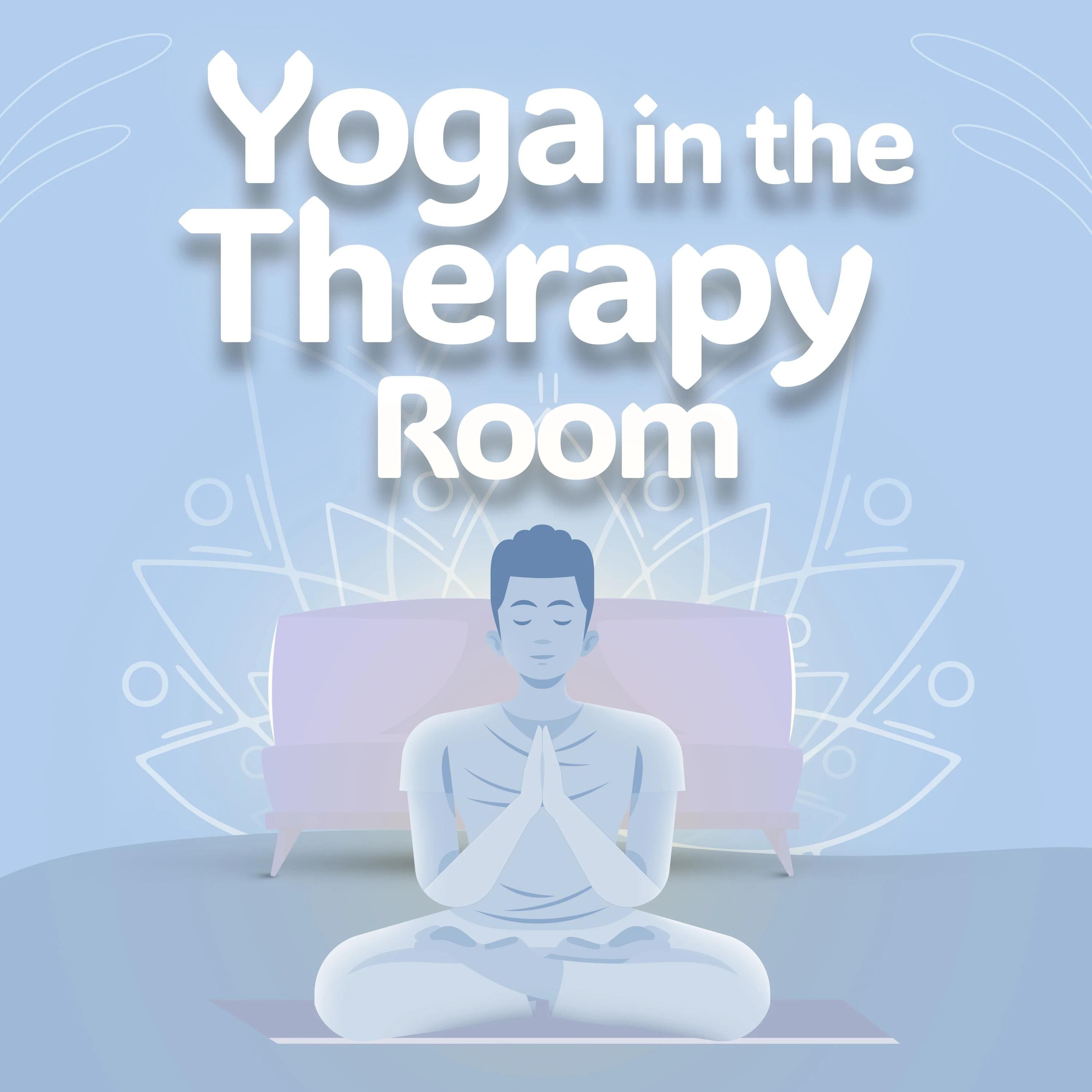
bonusWhy should you consider using yoga in therapy? Which parts of yoga can benefit and deepen your therapeutic practice? How can yoga empower your clients? IN THIS PODCAST: Benefits to using yoga in therapy Getting started: take small steps See what your clients already know Keeping yoga trauma-informed Benefits to using yoga in therapy Yoga can be used as a bottom-up therapeutic practice for trauma-informed healing. Clients who struggle with trauma are generally more successful in using bottom-up therapy practices first, such as breathwork, meditation, yoga. They have less success with top-down practice, such as CBT and traditional talk therapy. [Clients with trauma, anxiety, and depression] have trouble even thinking straight because their [frontal cortex] goes offline if they get too emotional. Bottom-up approaches use more [therapeutic modalities] to get to the deeper parts of the brain so that you can get clients more regulated. (Chris McDonald) You can use these bottom-up approaches to help the client regulate emotionally and physically before leading into CBT and talk therapy. - Yoga can be used to achieve emotional regulation because it is present-moment focused. It helps clients to center themselves on the "now" and be present within themselves and what is happening around them. - Yoga can be taught as a coping skill. Therapists can teach basic yoga poses or breathing techniques to their clients for them to use at home or whenever they feel unsettled. It empowers clients to have more control over their regulation and emotions. Getting started: take small steps Yoga training is a big commitment of time and money. Help yourself through this accreditation by taking it in small steps. Consider taking classes in your own time to become more familiar with yoga before getting a certificate. If you do not want to teach movement, you do not have you. You can start with teaching basic breathwork to your clients. Remember, it starts with a relationship: build this first. Build a relationship and trust with your clients before diving into doing yoga with them. I don't start, depending on the situation, maybe until the third or fourth session if we do any at all, depending on their treatment plan. But for some people who are highly activated, I will sometimes start with breathwork in the second session if we're not getting anywhere. (Chris McDonald) Decide what you want to teach. Where is the starting point for you? The key to teaching this is to know this pose or breathwork inside and out, and for you to feel totally comfortable with it before teaching it to someone else so that you can guide them. Here, repetition is important. Create a safe and welcoming space. With both telehealth and in-person, make sure whatever is around and behind you is soothing and peaceful. Welcome them warmly to ease them into this new space and the yoga. See what your clients already know Introduce yoga to your clients as an option. It is an invitation, and your clients can decline if it is not for them. If your client does consent to yoga and wants to incorporate it into their therapy with you, discuss yoga with them to see how familiar they are with it already. Keeping yoga trauma-informed - Let your clients know they can stop at any time or to ask a question - Enquire about potential injuries, surgeries, or limitations your client may have so that you can modify yoga for them - Tell clients to stop if they feel pain - Provide clients with a time frame about how long the yoga may take - Notice where you are seated and where they are seated so that they feel that they have enough space - Practice alongside your client - Assign some poses or breathwork sessions as homework for the clients so that they know they can use yoga as a tool to help them regulate Connect With Me Download the Free guide: How to build confidence and competence bringing yoga into the therapy room The Yoga in Therapy Collective —where therapists learn, grow, and get support with yoga-informed practices Explore the Yoga Basics for Therapists course—designed to help you confidently and ethically integrate yoga into therapy Yoga Basics: The Therapist's Guide to Integrating Trauma-Informed Yoga into Sessions Instagram: @chris_mcdonald58 Join the Free Bringing Yoga Into the Therapy Room Facebook group Leave a review and subscribe to this podcast Self-Care for the Counselor: A Companion Workbook: An Easy to Use Workbook to Support you on Your Holistic Healing and Counselor Self-Care Journey ... A Holistic Guide for Helping Professionals)
S1 Ep 49Episode 49 How to Create Full Bodied Success Mastery with Avital Miller
How can you achieve full-bodied mastery for success and enjoyment for life? What is the relationship between willingness and willpower? Why should you be mindful of who you listen to? MEET AVITAL MILLER From Program Manager at Microsoft to award-winning author of Healing Happens and international keynote speaker, Avital Miller has passionately shared spiritual, healing, and dance programs to thousands of people worldwide for over 15 years. Avital helps people feel a touch of love in their hearts, joy in their spirits, and peace in their minds. She is a certified energy healer, healing breakthrough consultant, former Yoga and Fitness Teacher, and graduate of Washington University with a Bachelor of Science in Mechanical Engineering and a Major in Dance. Visit Avital Miller's website, and connect with her on Facebook, Instagram, Twitter, Pinterest, and LinkedIn. Visit her Youtube Channel and listen to her Podcast, Healing Happens. Sign Up for Avital's Live Webinar! IN THIS PODCAST: Go with the flow of life Do not listen to everyone or everything Willpower for your life Do what you can do "What is the gift?" Go with the flow of life Have dreams, goals, ambitions, and desires, but marry them with a level of ease and trust that things will work out how they need to. Life is in constant flux, a push and pull, and people can enjoy life more when they allow themselves to be led as well as when they take the lead. Do not listen to everyone or everything Take a stand and make decisions for your life as an active agent. Do not give your power and agency away by letting other people make decisions for you. Be mindful of who and what you are listening to. Many famous people in the world were told at the start of their careers that they would be failures: Oprah Winfrey, Stephen Spielberg, Michael Jordan, Lady Gaga: They were all told … that they didn't have the potential for [their dreams] … that they are doing today, amazingly successfully. Thank goodness they didn't listen because imagine the impact that they're making that we would have lost if they listened. (Avital Miller) Imagine the impact that each person in the world could make in pursuit of their dreams and ambitions if they chose not to listen to those who tell them that they cannot do it. Willpower for your life With the word "willpower" there's also [the word] "willingness", and when we have willingness it is easier to have willpower. (Avital Miller) Being willing to live your life and be active in your experience can lend you the willpower to do challenging things. Willpower and discipline are the keys to carving out success in your life – you just have to be willing to live. What is your reason to live? Studies have shown that severely ill patients often heal faster or better when they have something to live for. What is going to give you your willpower? Do what you can do Do what you can do and what is within your ability to make your life better, healthier, more joyful, and expansive. Say yes to the things that inspire you, challenge you, and bring you joy. Do what you can do within your realm of abilities to get to a healthier, happier place. "What is the gift?" What is the gift that you can learn from your own story? It [comes] from their own story of having this challenge and then seeing themselves overcome it beyond what was expected and creating a gift to give to other people. (Avital Miller) You do not have to deny the challenges that come up with health issues while you observe the wisdom that you can garner from having experienced them. Connect With Me Download the Free guide: How to build confidence and competence bringing yoga into the therapy room The Yoga in Therapy Collective —where therapists learn, grow, and get support with yoga-informed practices Explore the Yoga Basics for Therapists course—designed to help you confidently and ethically integrate yoga into therapy Yoga Basics: The Therapist's Guide to Integrating Trauma-Informed Yoga into Sessions Instagram: @chris_mcdonald58 Join the Free Bringing Yoga Into the Therapy Room Facebook group Leave a review and subscribe to this podcast Self-Care for the Counselor: A Companion Workbook: An Easy to Use Workbook to Support you on Your Holistic Healing and Counselor Self-Care Journey ... A Holistic Guide for Helping Professionals)
S1 Ep 48Episode 48 Managing the Stigma of Holistic Counseling with Janis Cohen
Have you ever worried that you will be judged by others because you use holistic strategies in therapy? Do you feel like you are in the "holistic closet" due to people's misperceptions about holistic modalities? Can you stand in confidence of your work? MEET JANIS COHEN Janis R. Cohen, LCSW, is internationally known as The Intuitive Therapist. She has worked with children, adults, couples, and families for almost three decades. Janis combines her extensive clinical expertise with psychic and intuitive gifts of clairvoyance, empathy, and mediumship. She uses this unique skill set to get to the root of a challenge with razor-sharp accuracy and to offer specific and effective strategies to resolve her client's problems. In addition, Janis offers Intuitive Therapeutic Psychic Readings to people who want clarity and direction for their most pressing issues around money, love, relationships, and health as well as connecting them with loved ones who have crossed over. Janis has authored articles in PINK Magazine, Associated Press, and has published her own columns in local newspapers such as The Jewish Times, Aquarius Magazine, and Conscious Living Magazine. Her podcast, The Intuitive Therapist, merges therapy with intuition, spirituality, and metaphysics. Visit Janis Cohen's website and connect with her on Facebook, Instagram, Twitter, and LinkedIn. IN THIS PODCAST: Stand in your confidence Stepping into your gifts Find your holistic community Stand in your confidence I work with clients all the time who I help [to] stand in their confidence … if you are able to help people with the gifts and skill sets that you have, shout that from the rooftops, and you know what? The right people are going to come to you and support you, and the right people are going to come to be your clients. You're going to find your groove. (Janis R. Cohen) You need to stand in your confidence in what it is that you do. Do not be apologetic or uncertain. Most people have interests in the work that you openly enjoy doing, so appreciate your skills and abilities and put them to good use. It may not be an easy journey in the beginning because this work is not for everybody, but if it is for you, then have passion for the work that you do and commit to expanding your skills and expertise. Stepping into your gifts One of the first things to do, if you are feeling nervous about your work, is to address the fear that you feel may arise if you do fully step into your gifts. What is scary about explaining your work to people? To me, getting comfortable with your gifts is [about] understanding the fact that it is who you are, and you have every right to not want to … publicize it, however, you are sacrificing who you are. You are risking not being able to influence and model for other people standing in your truth. (Janis R. Cohen) Judgment is a big piece that people fear, but counter that by asking what if it helps people? What if you can teach people in your life the things that you know and do well? They can become some of your best supporters. Find your holistic community Surround yourself with people who support and inspire you. Talk to other people and build those connections that support because [it helps to know] other people who … experience this, who also promote themselves and have a business with whatever their holistic strategies are. (Chris McDonald) Seek out colleagues, mentors, and advisors who either are in your current position or have been there who can help support you. Join various groups and meet-ups, search for knowledge and you will find those who have similar interests and stories to yours. Connect With Me Download the Free guide: How to build confidence and competence bringing yoga into the therapy room The Yoga in Therapy Collective —where therapists learn, grow, and get support with yoga-informed practices Explore the Yoga Basics for Therapists course—designed to help you confidently and ethically integrate yoga into therapy Yoga Basics: The Therapist's Guide to Integrating Trauma-Informed Yoga into Sessions Instagram: @chris_mcdonald58 Join the Free Bringing Yoga Into the Therapy Room Facebook group Leave a review and subscribe to this podcast Self-Care for the Counselor: A Companion Workbook: An Easy to Use Workbook to Support you on Your Holistic Healing and Counselor Self-Care Journey ... A Holistic Guide for Helping Professionals)
S1 Ep 47Episode 47 How to use Spirituality in Counseling with Alissa Schneider
How do you introduce faith into counseling with clients? Why should you be mindful of the content that you consume? What happens when faith does not quell pain? MEET ALISSA SCHNEIDER Alissa Schneider is a licensed mental health counselor who specializes in helping people struggling with anxiety, OCD, and eating disorders. She uses an integrative approach with her clients while being very compassionate, and she integrates faith into the counseling sessions should her client desire it. She wants to help people who are struggling with chronic issues that are getting in the way of living a full life, and her aim is to help clients live a life of meaning. Visit Alissa's website, contact them at (561) 449-2478 Connect with her on LinkedIn. FREEBIE: Access and read Alissa's free ebook and more! IN THIS PODCAST: Introducing faith into counseling Encourage clients to work with positivity Faith and thoughts Faith and difficulty Introducing faith into counseling Include questions about faith and religion on the informed consent form that clients sign at the beginning of treatment. If they say, "yes, I'm a Christian" or "I have this particular viewpoint" then I will go deeper into that in the sessions with them and ask them questions about their faith and what that looks like for them. (Alissa Schneider) You can ask your clients about their faith but allow your clients to lead the conversation about their religious beliefs. Open-ended questions can be helpful conversation starters and are more ethical than outright claims or statements. Encourage clients to work with positivity In therapy and counseling, encourage clients to look for and create positivity. This does not mean that you should pretend that everything is okay. Instead, look for the good rather than taking in the bad unchecked. You can be mindful of what you listen to, what you watch, and who you speak to. Being aware of the content that you expose yourself to is important. You have to ask yourself in the moment how that is impacting you. Is this something that is improving [your] relationships with others? What are [you] feeding your brain? … we hold onto a lot of things, and it affects us subconsciously. (Alissa Schneider) Faith and thoughts There is a difference between active thinking and automatic thinking. Automatic thoughts can feel difficult to control and they are products of your subconscious. Do not try to control them specifically, but you can change them through mindfulness and intentional work. On the other hand, active thoughts are the ones you create. You can create active thoughts in response to automatic thoughts as an effort to "reprogram" your brain. It is easier to be more intentional about what kind of thoughts we're bringing in more actively, and I think that's where we have the power, and our clients have the power … that can help to bring meaning into our [lives] and positively impact our relationships. (Alissa Schneider) Bringing faith into your thinking can help keep you aligned with creating positive, active thoughts instead of being stuck in an automatic cycle. Faith and difficulty Most people use prayer to try and change or fix something, but that does not work. The human experience is to move through difficult things with the ability and capacity to get from one side to the other. Prayer helps you move through your life, but it does not take away your struggles. Prayer brings you strength to overcome them. This life is going to have pain, it is going to have suffering, but how can we bring faith into that … a lot of people pray for their suffering to go away, and I think naturally we want more pleasure than pain in our lives … but we are going to experience pain. (Alissa Schneider) People can bring pleasure and joy into the midst of pain while they overcome it and lean on their faith to give them the strength to get past their pain. Connect With Me Download the Free guide: How to build confidence and competence bringing yoga into the therapy room The Yoga in Therapy Collective —where therapists learn, grow, and get support with yoga-informed practices Explore the Yoga Basics for Therapists course—designed to help you confidently and ethically integrate yoga into therapy Yoga Basics: The Therapist's Guide to Integrating Trauma-Informed Yoga into Sessions Instagram: @chris_mcdonald58 Join the Free Bringing Yoga Into the Therapy Room Facebook group Leave a review and subscribe to this podcast Self-Care for the Counselor: A Companion Workbook: An Easy to Use Workbook to Support you on Your Holistic Healing and Counselor Self-Care Journey ... A Holistic Guide for Helping Professionals)
S1 Ep 46Episode 46 How to market your practice when you offer multiple modalities with Joanna Sapir
Are you working in your zone of genius? Is there a difference between marketing a holistic practice to a regular practice? Is your current marketing strategy connecting you to your ideal client? MEET JOANNA SAPIR Joanna Sapir has been a teacher and mentor for more than twenty years — from the classroom to the gym floor to wellness practices around the world. She works with established practitioners that are doing innovative and transformational work in marketing, sales, and administration. Joanna's special ability is helping practitioners become true leaders of their businesses. Her goal is for them to find more fulfillment and purpose in their work, serve their clients more deeply - and create predictable income and streamlined systems while doing it. She believes that when you step into leadership of your business, you show up for the world in a bigger, better, and more powerful way than ever. A San Francisco Bay Area native, Joanna now lives in Sonoma County, is the mother of two teenaged sons, and is a national champion in Olympic-style weightlifting. Check out Joanna Sapir's website and listen to The Business (R)evolution Podcast. Connect with her on Facebook, Instagram, and LinkedIn. FREEBIE: The Client Champion Formula workshop IN THIS PODCAST: Business systems Work in your zone of genius Marketing versus sales Business systems Every successful business relies on effective systems. As the business owner, it is your job to figure out how to make things run well, and how to make them run smoothly so that the business can grow on its own while the day-to-day work gets completed. What are the step by step … repeatable processes that you use in any scenario? Once you develop these processes and make them most effective you can automate some pieces, you can outsource some pieces, and you make them run smoothly so they can be repeated, and then repeat great client results. (Joanna Sapir) These types of systems can be your: Sales system Marketing system Client service system Having slick business systems is a great help to solo practice owners and entrepreneurs because it enables the business to help the owner. Make the business work for you, not the other way around. It makes it easier for you and it makes your business smooth and streamlined. If your business feels chaotic, or when you have those times where you are heavily booked, usually the burnout happens because of lack of systems. (Joanna Sapir) Work in your zone of genius Consider hiring an administrative staff member to help you run your business so that you can work in your zone of genius, instead of spending your time and energy doing things you either highly dislike or are not all that good at. Work in your zone of genius and excellence, and outsource the rest: Zone of genius: where you light up with enjoyment at doing the work and are great at what you do. Zone of excellence: where you are good at the work, but it does not light you up. Zone of competence: you can do the work, but you are not great at it. Zone of incompetence: you are not able to do the work properly. In all the different things we have to do in business, some things are going to fall into those lower two, and you absolutely want to outsource those for sure. (Joanna Sapir) Marketing versus sales Marketing is centered around getting noticed and attracting attention to your business. Do not use mass-marketing strategies for your business, and instead market yourself by speaking directly to your ideal client. The message in your marketing will therefore change from "look at me" to "I see you". The sales process starts once you are in conversation with them about them becoming a client of yours. It is usually the leads who become clients. Simple marketing process: Marketing to your leads: these are the people in your email lists, who follow you on social media, and those who interact with you on an occasional basis. Marketing to the public: you market to the public to create leads. Your marketing is not selling your services, your sales process is. Marketing is just where you are talking to your ideal [clients] and showing them that you see them, [get] that attention, and [bring] them into your world … so you can invite them to take that next step. (Joanna Sapir) Connect With Me Download the Free guide: How to build confidence and competence bringing yoga into the therapy room The Yoga in Therapy Collective —where therapists learn, grow, and get support with yoga-informed practices Explore the Yoga Basics for Therapists course—designed to help you confidently and ethically integrate yoga into therapy Yoga Basics: The Therapist's Guide to Integrating Trauma-Informed Yoga into Sessions Instagram: @chris_mcdonald58 Join the Free Bringing Yoga Into the Therapy Room Facebook group Leave a review and subscribe to this podcast Self-Care for the Counselor: A Companion Workbook: An Easy to Use Workbook to Support you on Your Holistic Healing and Counselor Self-Care Journey ... A Holistic Gu
How to Use Crystals in Therapy with Teresa Cox Mayle
bonusHow can crystals be used in therapy to deepen a client's connection with their subconscious mind? Where do you start in becoming acquainted with crystals? How do you cleanse them after sessions? MEET TERESA COX MAYLE Teresa has been a counselor for nearly 30 years and qualified as an LCMHC in 2014. Her professional experience includes working in crisis intervention, with individuals with disabilities as a Student Support Services counselor, and as a community college Director of Counseling Services. Teresa has experience treating young adults and adults for a wide variety of life challenges such as chronic medical conditions, anxiety, depression, panic attacks, dissociation disorders, trauma, TBI, career changes, self-discovery/identity crisis, military retirement, and relationship issues. Since she was a teenager, Teresa has been fascinated by alternative spirituality and belief systems. She has read Tarot cards intuitively for most of her life, and she is a reiki master, hypnotherapist (trauma-focused), EMDR, and EMDR Flash practitioner. Connect with Teresa on LinkedIn and Psychology Today. Book a consultation with her at Thrivemind Counseling and Wellness, LLC. IN THIS PODCAST: Using crystals in session Cleaning crystal energy Crystal grids Getting started Using crystals in session If clients are open to using crystals in session, they can consider holding selenite crystals in their hands. Selenite [comes from] Selena [who] was the Goddess of the moon and ancient traditions and that's where it gets its name … it's connected to the moon and the [sub]conscious mind. (Teresa Cox Mayle) Therapy works in unison with the subconscious mind and that is where the most healing can happen. Even though therapeutic experiences can be had in the conscious mind, often deeper and more revealing insights are had when someone is in sync with their subconscious. Using selenite crystals in session can be a way to encourage that. Cleaning crystal energy Crystals have been said to carry the energy of those who have held or handled them. You can cleanse your crystals in various ways, such as: burying them in the earth for a few weeks or months moon bathe them during a full moon by leaving them on a windowsill at night leave them in the sun during the day soak them in rock salt It's always important to set an intention that you want the stone to rise to its highest purpose and ability. If you know reiki or some type of energy technique, [you can] infuse it with that. (Teresa Cox Mayle) Crystal grids Crystal grids are based on sacred geometry. The star of David is well-known as an example of sacred geometry, and it can be replicated with crystals into a grid. Getting started Quartz crystals are a good place to start. Hold it up to the light and see if you can find a rainbow or pyramids and different shapes. They just make you happy when you hold them up to the light. You don't have to believe they've got any mysterious magical powers, just for the joy of a sparkling stone. (Teresa Cox Mayle) Amethyst and rose quartz crystals are also good introductions to become acquainted with if you are wanting to get to know crystals. Connect With Me Download the Free guide: How to build confidence and competence bringing yoga into the therapy room The Yoga in Therapy Collective —where therapists learn, grow, and get support with yoga-informed practices Explore the Yoga Basics for Therapists course—designed to help you confidently and ethically integrate yoga into therapy Yoga Basics: The Therapist's Guide to Integrating Trauma-Informed Yoga into Sessions Instagram: @chris_mcdonald58 Join the Free Bringing Yoga Into the Therapy Room Facebook group Leave a review and subscribe to this podcast Self-Care for the Counselor: A Companion Workbook: An Easy to Use Workbook to Support you on Your Holistic Healing and Counselor Self-Care Journey ... A Holistic Guide for Helping Professionals)
S1 Ep 45Episode 45 Effective Treatment for OCD with ERP, with Dr. Roseann Capanna-Hodge
Do you treat patients with OCD? Why can you not treat OCD like anxiety? How does ERP work alongside CBT for effective OCD treatment? MEET DR. ROSEANN CAPANNA-HODGE Dr. Roseann is a mental health trailblazer, founder of The Global Institute of Children's Mental Health, and Dr. Roseann, LLC. She is known for brain-based solutions for struggling kids and her work has helped thousands reverse the most challenging conditions, such as ADHD, anxiety, mood, autism, learning disability, Lyme, and PANS/PANDAS using PROVEN holistic therapies such as neurofeedback, biofeedback, and psychotherapy. She is the author of the first-ever book on teletherapy activities for child and adolescent therapists, "Teletherapy Toolkit" and "It's Gonna be OK!" She gives parents step-by-step solutions for their struggling kids with her books and remote neurofeedback program. A media personality, she is often featured on dozens of media outlets: Fox, CBS, NBC, PARENTS, and New York Times. Visit her personal website and childrensmentalhealth.com. Connect with her on Facebook, Instagram, Twitter, Youtube, and Pinterest. Find out More about Roseann's Get Unstuck Summit! Freebie: Check out these free coping statements! IN THIS PODCAST: OCD ERP CBT and OCD treatment OCD OCD, obsessive-compulsive disorder, is not always related to anxiety and it cannot be treated as anxiety. OCD is about the over-activation of the nervous system, the obsessive thinking, the compulsive behaviors that are deeply rooted in behavioral habituation … people inadvertently reinforce people's OCD all the time. (Dr. Roseann Capanna-Hodge) People may comfort others who suffer from OCD instead of reminding them that they are capable of self-regulating as well. ERP Exposure and response prevention is about educating the client in the neuroscience behind behavioral changes and enabling them to self-regulate based on behavioral changes. [The clients] get the insight, they understand, then they understand how to break free from the accommodation. They learn how to talk back to their OCD and their worries or intrusive thoughts. (Dr. Roseann Capanna-Hodge) Clients are given the tools to overcome their OCD by learning about what their triggers are. Later in therapy, clients interact with safe exposure to those triggers and learn behavioral strategies to overcome the OCD and compulsive needs for rituals. CBT and OCD treatment Cognitive-behavioral therapy is an important aspect of OCD treatment. However, it needs to work in unison with behavioral strategies and not only be based on talk therapy. You are using [CBT] in a way that is relevant to the OCD and you're really focusing on the exposure. With CBT we're doing cognitions and behaviors … but CBT alone is not as effective as when we incorporate the exposure part. (Dr. Roseann Capanna-Hodge) If you work with clients who suffer from OCD, consider taking on training in ERP because it adds another necessary and integral dimension to their treatment. Connect With Me Download the Free guide: How to build confidence and competence bringing yoga into the therapy room The Yoga in Therapy Collective —where therapists learn, grow, and get support with yoga-informed practices Explore the Yoga Basics for Therapists course—designed to help you confidently and ethically integrate yoga into therapy Yoga Basics: The Therapist's Guide to Integrating Trauma-Informed Yoga into Sessions Instagram: @chris_mcdonald58 Join the Free Bringing Yoga Into the Therapy Room Facebook group Leave a review and subscribe to this podcast Self-Care for the Counselor: A Companion Workbook: An Easy to Use Workbook to Support you on Your Holistic Healing and Counselor Self-Care Journey ... A Holistic Guide for Helping Professionals)

S1 Ep 44Episode 44 The Hidden connection between Mental Health and Physical pain with Debora Wayne
Why is it integral to uncover blind spots to find total healing? How many physical ailments are due to disturbances in a person's biofield? How do negative patterns of emotions and habits cause bodily manifestations of discomfort? MEET DEBORA WAYNE Debora Wayne is the Founder and CEO of The International Chronic Pain Institute. She is a world-renowned energy healer whose leading-edge, non-drug method, known as HighSpeed Healing™, has (virtually) helped tens of thousands around the world to rapidly release Chronic Pain, Depression, Anxiety, Trauma, Battles with Weight, Binge-Eating, Chronic Fatigue, Insomnia, and other chronic conditions. A highly sought-after speaker and #1 Bestselling Author of "Why Do I Still Hurt?", Debora has earned degrees and certifications in Psychology, Hypnotherapy, & Chemical Dependency Counseling. She has 35+ years of practicing and teaching Meditation, is a nationally recognized Glass Artist, a former professional Modern Dancer, a Certified Yoga Instructor, and leads the Only Practitioner Training worldwide in her proprietary method known as HighSpeedHealing™. Visit The International Chronic Pain Institute and connect with them on Facebook. Connect with Deborah on Facebook, Instagram, Youtube, Clubhouse, and LinkedIn. IN THIS PODCAST: Make an effort to find blind spots Do not fixate on symptoms Anxiety Debora's advice to listeners Make an effort to find blind spots We are unconscious and have blind spots to certain habits that we have, habits of thinking and habits of emotion, and the [unconscious] choices we make every day. This is what is causing our problems but until we become aware of it, we can't change it. (Debora Wayne) The root cause of physical ailments, especially chronic illness, is often much deeper than we realize. The misaligned and maladaptive habits that people unconsciously form negatively impact their mental, physical, and emotional health. Do not fixate on symptoms The world focuses solely on the physical manifestations of illness and does not look further than the symptoms. It disregards the research that most illness begins before the symptoms show. We get obsessed with the symptoms, and the symptoms are never the root cause of the problem. (Debora Wayne) Symptoms are the manifestations of the problem, but they are not the problem itself. Therefore, to achieve overall treatment and healing, especially physical healing, there needs to be a level of awareness of what is going on inside a person. Consider their habits, thoughts, emotions, and so forth. Most people don't recognize that there is a direct connection between mental, emotional, and physical health. When people have physical pain especially, they become fixated on the symptoms and try to cut it out or drug it out, and that will not solve the problem. (Debora Wayne) Anxiety Anxiety is a pattern of thoughts and emotions … both of these can be found in your energy field. Thoughts and emotions are invisible … and the invisible realm, which is what the energy field is, is the precursor to anything that shows up [physically]. (Debora Wayne) Disturbances in the biofield, due to harmful patterns of thoughts and emotions, manifest as uncomfortable feelings in the physical body which are then labeled as symptoms of anxiety or depression. The body is providing you feedback on what is happening internally. The symptoms are manifestations of feedback and are not the root cause. Therefore, to heal the body, it is necessary to identify and work through the disturbances in the biofield and internal world. Debora's advice to listeners - If you are suffering from any type of pain or symptom from disease, do not stop searching for healing. Take the next step and keep trying to find the solution. - Take quiet time every day to listen to what your body, mind, and spirit are trying to tell you. Try to spend more time in nature. - Develop a personal practice that will help you develop a relationship with your inner self. Connect With Me Download the Free guide: How to build confidence and competence bringing yoga into the therapy room The Yoga in Therapy Collective —where therapists learn, grow, and get support with yoga-informed practices Explore the Yoga Basics for Therapists course—designed to help you confidently and ethically integrate yoga into therapy Yoga Basics: The Therapist's Guide to Integrating Trauma-Informed Yoga into Sessions Instagram: @chris_mcdonald58 Join the Free Bringing Yoga Into the Therapy Room Facebook group Leave a review and subscribe to this podcast Self-Care for the Counselor: A Companion Workbook: An Easy to Use Workbook to Support you on Your Holistic Healing and Counselor Self-Care Journey ... A Holistic Guide for Helping Professionals)

S1 Ep 43Episode 43 What are Energetic Cords and How to Cut them, Interview with Michele Lundstrom
What is an energetic cord? Can energetic cords become harmful if left alone? How can you clear and cut energetic cords from yourself? MEET MICHELE LUNDSTROM Michele Lundstrom is a Licensed Mental Health Counselor in private practice and an intuitive empath. She is also a Shamanic practitioner, Certified Advanced Chakredy® Practitioner, Reiki Master, Empath Coach, Teacher, and Energy artist. Michele provides intuitive readings through your subtle energy (the chakras) to help identify and prioritize what your energy wants to bring to your awareness; as well as energetic imbalances and direct channeled healing energy to the chakras. She is a carrier of lightning medicine since she was struck by lightning a few years ago. Michele also offers coaching for empaths and intuitive medical and mental health professionals. Visit Michele's counseling website and see also Luminous Ignus. Connect with Michele on Facebook, Instagram, and Psychology Today. IN THIS PODCAST: What is an energetic cord? Negative and positive cords Cutting energetic cords Setting energetic boundaries What is an energetic cord? Mainstream speech already contains expressions such as "no strings attached" or "cut the ties", so the ideas of energetic cords are already known to people. People can "attach" energetically to someone in a good or a bad way, drawing and giving good or bad energy to them. As a therapist, you may be corded into someone, or someone may have corded into you if you are constantly thinking about them outside of the therapy room. If you are stuck in a running loop thinking about a person, there is a high chance of an energy cord between you two. Negative and positive cords Sometimes we cord in because we really want to take care of them. As therapists we're very nurturing people … [parents] do this all the time. When a child is young, they need to be corded into us in order to feel secure … but around the age of 10 or 12, this can start to create problems. (Michele Lundstrom) If a child is healthy, secure, and confident enough in themselves, they will start pulling away from their parent. The parent can then care for them emotionally and give them love and encourage their autonomy. In an unhealthy relationship, this cord would turn into manipulation and control for the parent to keep their child close. This dynamic is present in romantic relationships as well. Cutting energetic cords Intention is the powerhouse of clearing cords, because if your intention is [rooted] in, "I have my autonomy, this is my body, this is my energetic field", … the intention combined with the amazing properties of that stone will help you to clear those. (Michele Lundstrom) You can practice cutting energetic cords by: - intentional meditation - using crystals - speaking out and confirming the boundaries of your energetic field Setting energetic boundaries Start with your intention and your belief system, which could be in God, Source, the Divine, the universe; all of these can work. Create a sort of barrier around yourself with energy that comes from a source, such as your religion, beliefs, or even from the warmth of the sun or the feeling of being grounded from the earth. Use this energy as a bubble around yourself. Program this barrier with love, security, and safety, and imagine it existing gently around you. I recommend cord-cutting every single day just to take care of and reclaim your autonomy. Your energy field is yours. (Michele Lundstrom) Connect With Me Download the Free guide: How to build confidence and competence bringing yoga into the therapy room The Yoga in Therapy Collective —where therapists learn, grow, and get support with yoga-informed practices Explore the Yoga Basics for Therapists course—designed to help you confidently and ethically integrate yoga into therapy Yoga Basics: The Therapist's Guide to Integrating Trauma-Informed Yoga into Sessions Instagram: @chris_mcdonald58 Join the Free Bringing Yoga Into the Therapy Room Facebook group Leave a review and subscribe to this podcast Self-Care for the Counselor: A Companion Workbook: An Easy to Use Workbook to Support you on Your Holistic Healing and Counselor Self-Care Journey ... A Holistic Guide for Helping Professionals)
S1 Ep 42Episode 42 How Your Conscience is the Key To Unlock Limitless Wisdom and Creativity, with Leonard Perlmutter
Why is detachment important for making intentional decisions? What is true willpower? What do you know about the ego? MEET LEONARD PERLMUTTER Leonard Perlmutter(Ram Lev) is the founder and director of the American Meditation Institute and is the originator of National Conscience Month. He studied in Rishikesh, India under Swami Rama of the Himalayas. Leonard has presented informative Yoga Science and meditation workshops at the M.D. Anderson Cancer Center, The New York Times Forum on Yoga, the Washington University Medical School, the U.S. Military Academy at West Point and has served on the faculties of the New England Institute of Ayurvedic Medicine and the International Himalayan Yoga Teachers Association. Leonard is the author and editor of Transformation: The Journal of Yoga Science as Holistic Mind/Body Medicine. His Heart and Science of Yoga® course curriculum has been certified by the Albany Medical College, the American Medical Association, and the American Nurses Association for continuing medical education credit. Visit the American Meditation Institute website. Connect with them on Facebook, Twitter, Youtube, and LinkedIn. Read Leonard Perlmutter's book, Your Conscience. IN THIS PODCAST: Meditation to unlock your mind True willpower The ego Your conscience Meditation to unlock your mind Meditation helps a person to become detached. What that means is by meditating regularly, every day, we learn how to create a space between stimulus and response. In that space between stimulus and response, we find the freedom of action so that we can redirect our attention towards the conscious to determine the true thought to think, word to speak, and action to take. (Leonard Perlmutter) By becoming detached, a person is no longer bound to their emotions and their immediate reactions. Through detachment, people can pause and observe something that happens around them instead of immediately reacting. Meditation teaches detachment, and detachment enables pause, and pause allows people to sit in their peace and decide from a place of stability and calmness, instead of mindlessness and fear-based reactions. True willpower From taking intentional action from the pause, people can direct their energy and focus on the things that they can see genuinely do matter. Therefore, they can practice true willpower, because they can recognize the wise and unwise decisions and are willing to wait or work to make the best and truest decision happen in reality. The more that I do these types of experiments and follow the wisdom of the conscious; I am continuously building the muscles of willpower to do what is to be done when it is to be done, and not do what is not to be done when it is not to be done. (Leonard Perlmutter) The training of meditation can, therefore, be used in every aspect of daily life. The teachings of meditation can be superimposed in many ways, and we can rely on these teachings when making any decision. The ego The ego is hardwired to the reptilian brain, and the reptilian brain is totally invested in self-preservation, as is the ego … it means that both the ego and the reptilian brain are terribly fearful of annihilation … from the yoga-science perspective, death is merely change and growth. (Leonard Perlmutter) The ego has a limited perspective and so it cannot perceive anything other than what is known to be good. It wants to remain with what it knows, because it fears change, even if what it knows is overly difficult or painful. The ego is often in wrong, but it never doubts. It defines every relationship or life event as either pleasant or unpleasant, and it only wants to serve the pleasant, therefore opposing everything that is unpleasant. It is important to remember that not everything that is pleasant is good for us, and often the things that are unpleasant are good for us. Therefore, do not always blindly accept the ego's recommendation on things, because then you will be the one who suffers. Your conscience In order to start making shifts, you need to parent your unconscious mind and the ego. Teach them to be quieter and listen to the conscience, the seat of your wisdom and creativity. For the sake of an experiment, make your thoughts, words, and deeds come from your conscience to experience a different way of being. Everything that we need to make a decision about should have the ego senses and the unconscious mind work though an experiment with the conscience, and it's up to me not to give the ego, senses, and unconscious mind too much too soon. (Leonard Perlmutter) Connect With Me Download the Free guide: How to build confidence and competence bringing yoga into the therapy room The Yoga in Therapy Collective —where therapists learn, grow, and get support with yoga-informed practices Explore the Yoga Basics for Therapists course—designed to help you confidently and ethically integrate yoga into therapy Yoga Basics: The Therapist's Guide to Integrating Trauma-Informed Yoga into Sessions Instagra
S1 Ep 41Episode 41 The Life Changing Impact of Breathwork & Meditation with Kushal Choksi
What is the biggest lesson you can learn from breathwork and meditation? How can a tragic event alter the course of your life? Can consistent meditation practice build resilience in a person? MEET KUSHAL CHOKSI Kushal Choksi is an author, entrepreneur, and a chocolatier. He practices and teaches breathwork and meditation. And once upon a time, he was a Wall Street trader. Kushal started his career as a quantitative analyst with Goldman Sachs. He left his position as Vice President of Asset Management there to join Athilon, an investment fund. Having helped ramp up a $45 billion portfolio, he then moved to India to join BlackRock's Fixed Income business, where he managed billions of dollars in funds. After returning to New York, he submitted to his passion for entrepreneurship and started his own tech startup. He and his wife now run Elements Truffles, a New York-based artisanal chocolate company built on values of Ayurveda, sustainability, giving back, and ethical trade. Kushal is a trainer of personal development, meditation, wellness, and leadership programs for the Art of Living Foundation. He has taught secrets of breathwork and meditation to thousands across the US, Europe, and Asia. Visit Kushal's website and read his book, On a Wing and On a Prayer. Connect with him on Instagram, Twitter, and LinkedIn. IN THIS PODCAST: Kushal's lessons from breathwork The impact of life-altering events Meditation for resilience Kushal's lessons from breathwork I've been practicing and meditating for 15 years. One of the biggest lessons I learned was this is the game of losing. The more you lose, the more you win. (Kushal Choksi) You lose: - Stress - Depression - Limiting concepts - Limiting conditioning of your mind that keeps you stuck in reactive patterns Everything that we do comes from a pattern in our mind that was formed due to previous experiences that we have had. These patterns can be changed by awareness, pausing, and acting intentionally. Both mediation and breathwork provide you with the ability to be aware and to pause, and these combined enable you to act and make changes with intention. Losing these patterns and impressions through breathwork makes us feel so at ease and at home. This is the game of losing, losing all of these things, to become a better version of yourself. (Kushal Choksi) The impact of life-altering events Tragedies can make people more receptive to new spiritual paths because impactful events in life make people pause and take a moment to ask bigger questions, instead of being caught up in the bustle of life. An event like this can create that sense of, "what just happened to me, and what am I doing?" (Kushal Choksi) The most recent global event has been the pandemic. It caused almost every person to ask the same questions and to look at their life, how they are living, and question whether it aligns with them or not. Are you putting in the effort that you want to in your job, your relationships, and your passions? Or are you distracted by the bustle of everyday life? Meditation for resilience A daily practice of meditation and breathwork can build resilience in a person. So much so, that when life gives them challenges, they are not swayed too much, because they have a sense of stability within themselves. Meditation and breathwork provide people with detachment and calmness which helps them relate more calmly to their emotions; they cannot be swayed by them instantly. You become so natural, you become so resilient and strong that you can move through challenges without getting tossed around. That inner sense of confidence and strength lets you cut through these obstacles. (Kushal Choksi) Connect With Me Download the Free guide: How to build confidence and competence bringing yoga into the therapy room The Yoga in Therapy Collective —where therapists learn, grow, and get support with yoga-informed practices Explore the Yoga Basics for Therapists course—designed to help you confidently and ethically integrate yoga into therapy Yoga Basics: The Therapist's Guide to Integrating Trauma-Informed Yoga into Sessions Instagram: @chris_mcdonald58 Join the Free Bringing Yoga Into the Therapy Room Facebook group Leave a review and subscribe to this podcast Self-Care for the Counselor: A Companion Workbook: An Easy to Use Workbook to Support you on Your Holistic Healing and Counselor Self-Care Journey ... A Holistic Guide for Helping Professionals)

The Therapeutic Power of Drumming with Greg Whitt: Bonus Episode
bonusWhat are some of the surprising mental health benefits clients can receive from drumming? How does music interact with mood? What are some tips for therapists who want to start a drum circle? MEET GREG WHITT At Drum for Change, Greg Whitt facilitates workshops and retreats designed to connect people to one another and to the world around them. Greg studied holistic lifestyle practices in graduate school at the Maryland University of Integrative Health. His studies focused on how ancient wisdom traditions can benefit modern society. His studies support his work in leading interactive and experiential education programs in corporations, congregations, communities, and classrooms. Cleverly disguised as music, his programs are actually hands-on philosophy, teaching how to live, work, and play well together in a community. Visit the Drum for Change website. Connect with them on Facebook and Youtube. Connect with Greg on LinkedIn or email him at: [email protected] IN THIS PODCAST: Drumming benefits for mental health Music and mood Advice for therapists wanting to start a drumming group Drumming benefits for mental health Dr. Barry Bittman, a neurologist, came together with a music therapist to study the benefits of music and drumming on people's physiological wellbeing. Together, they did clinical studies on the benefits of music alongside treatment when working with patients who struggled with burnout and cancer. In their research studies they discovered the science that proves group drumming in a particular way will boost the immune system and reduce the stress response … other agencies have done similar work and validated that all this is true. (Greg Whitt) Music and mood It is a well-known phenomenon that putting on your favorite song or the songs that you loved from your youth will get you in a better mood if you are feeling down. There is science behind this. We know that we can flip that switch and use music to change our mood. What we may not know is that the same switch is also changing our biology … it is [interesting] to do this in ways that aren't just sitting and listening but are actually creating opportunities for engagement. (Greg Whitt) Drumming, dancing, and singing are all ways in which people can engage with the music instead of only sitting and listening to it. Becoming involved in the music and with the community that is creating the music has been shown to dramatically improve overall mood, wellbeing, and help people to regulate their emotions. Advice for therapists wanting to start a drumming group To start the group, you need a certain number of enthusiasts from the start who want to join in to get it going. Consider the cost of purchasing equipment because renting can be a potential hazard in case drums or instruments are damaged by people. Have some training in leading a drum circle. Remember that it is not about drumming. Take part in drum circles in your area to get an idea of what they can be about. The measure of success isn't musicality, and it's not about the instruments that you use. It's about the relationships that you're creating during the occasion, and that's what really makes all the difference. (Greg Whitt) Connect With Me Download the Free guide: How to build confidence and competence bringing yoga into the therapy room The Yoga in Therapy Collective —where therapists learn, grow, and get support with yoga-informed practices Explore the Yoga Basics for Therapists course—designed to help you confidently and ethically integrate yoga into therapy Yoga Basics: The Therapist's Guide to Integrating Trauma-Informed Yoga into Sessions Instagram: @chris_mcdonald58 Join the Free Bringing Yoga Into the Therapy Room Facebook group Leave a review and subscribe to this podcast Self-Care for the Counselor: A Companion Workbook: An Easy to Use Workbook to Support you on Your Holistic Healing and Counselor Self-Care Journey ... A Holistic Guide for Helping Professionals)

Ep 40Episode 40 How Thoughts Become Your Reality, Interview with Cassidy Rey
EHow does your perception shape the way you view the world? Is it possible to transform your negative thought patterns? What can you do to intentionally improve your life from your thoughts to your reality? MEET CASSIDY REY Cassidy Rey is a Psychic/Medium Spiritual Healer who provides clients with messages from their Spirit Guides and Angels, and the mastermind behind Let's Get Friggin' Weird. Cassidy did her undergraduate in Psychology and began a master's program at the University of San Diego to be a Clinical Mental Health Counselor. However, as she progressed in her master's program, she couldn't see herself conforming to the "counselor" life. With that feeling, she took a leap of faith and dropped out of school to start pursuing a different dream; becoming a Holistic Life Coach: Psychic/Medium. Cassidy was around the age of 2 when she first started to feel, see, and talk to spirits. She created her own Psychic/Medium business, 'Let's Get Friggin' Weird', and took off on a 6-month road trip around the United States to spread her gifts of healing to other people. Her goal is to continue to share her gift with the world and give people the healing messages they need to become their best and highest self. Visit Cassidy's website, Let's Get Friggin' Weird. Connect with her on Instagram, LinkedIn, and Youtube. IN THIS PODCAST: Perception Transforming negative thought patterns You need to believe it Perception Everything in this world is what you perceive it to be and a big thing I like to preach on is that there's really no right or wrong, or good or bad, in this world. Everything is just what you know and believe to be true. (Cassidy Rey) The world is what you make it to be. Manifestation and perception go together, and manifestation is not about wishing for love or more money. On a deeper level, manifestation is about your mindset, how you wake up in the morning and face the day, the way you speak to yourself, and the way to speak out into the world. All of this becomes and influences your reality. In this way, depending on how you think, speak, and act, you can also manifest negative things into your life if you are not aware of yourself, your emotions, and your thoughts. Manifestation and creating a calm, nourishing life are intentional. Transforming negative thought patterns By speaking out negative words, you give them life. If you struggle with finding a partner, and you call yourself "unlovable", you are giving that reality life. However, if you focus on loving yourself, you give the presence of love a reality in your life. If you feel love, you find, see, and interact more with love. If you feel loneliness, and speak it into reality, you find, see, and interact more with the feeling of loneliness. It always comes down to the thoughts. They're believing that they're not enough or they're believing that they don't deserve it, or they'll never get it, so they don't. (Cassidy Rey) You need to believe it Changing your thoughts and limiting beliefs are not going to happen on their own. You must put in some work as well, and believe the thing that you want is possible, and on its way to you. Creating your thoughts and manifesting is not about writing a list on a piece of paper. It is about you working to change how you think about yourself and the world. You, essentially, are changing the world for yourself. You start the shift. It sounds so crazy, but it is so simple. I know that can be a tough thing to hear or say, especially in the psychology field with depression and anxiety, it's not just a switch of a mindset and there are other things that need to go into it, but I think 90% of it is your mindset and believing in yourself. (Cassidy Rey) Connect With Me Download the Free guide: How to build confidence and competence bringing yoga into the therapy room The Yoga in Therapy Collective —where therapists learn, grow, and get support with yoga-informed practices Explore the Yoga Basics for Therapists course—designed to help you confidently and ethically integrate yoga into therapy Yoga Basics: The Therapist's Guide to Integrating Trauma-Informed Yoga into Sessions Instagram: @chris_mcdonald58 Join the Free Bringing Yoga Into the Therapy Room Facebook group Leave a review and subscribe to this podcast Self-Care for the Counselor: A Companion Workbook: An Easy to Use Workbook to Support you on Your Holistic Healing and Counselor Self-Care Journey ... A Holistic Guide for Helping Professionals)
S1 Ep 39Episode 39 An in depth discussion of using energy techniques in therapy with Stacey Shapiro
Have you heard of comprehensive energy psychology? How can energy work combine with psychotherapy? How can therapists use these techniques to maintain their energy in session? MEET STACEY SHAPIRO Stacey Shapiro has been on a mission to assist families and therapists in finding peace. She has spent the last 20 years developing an intuitive and integrative approach to her work as a Clinical Social Worker, Play Therapist, and Master Life Coach. She specializes in anxiety and trauma amongst children, teens, and adults. Stacey's down-to-earth style, collaborative and intuitive nature make it easy for her clients to find success. Currently, she is in private practice through tele-mental health. Her extensive work history includes teaching classes on Play Therapy and Human Development and Family Studies. Currently, she is running a coaching program for self-care and awakening for mental health therapists. She is also developing a parent coaching program, called the P.E.A.C.E. program. Visit Stacey Shapiro's practice website and the Awareness Coaching website. Connect with Stacey on LinkedIn and check out her profile on Psychology Today. Resources for mental health therapists: Freebie: Receive the Advance Therapist Self-Care Workbook Take the quiz to find out if your routine includes the self-care you need, if you're starting to feel stressed, or if you're totally burned out. You will access the meditation and self-care workbook on the results page. Sign up for the 5-Week Self Care and Awakening Program. IN THIS PODCAST: Comprehensive energy psychology Using EFT in therapy Biofield Stacey's advice to new holistic counselors *Disclaimer: wash hands prior to doing and energy work and run it by your doctor. Comprehensive energy psychology Comprehensive energy psychology works on three energy systems: 1 – Meridians 2 – Chakras 3 – Biofields They are using muscle testing to ask the body where there might be stuck energy and the belief is that all negative emotions are just stuck energy and if we can move the energy, which comes first, then we can move the memories and the sensations people are feeling in their body which helps them bring in the cognitive peace. (Stacey Shapiro) Using this combined approach of energy work and bodily sensations to move through stagnant emotions can enable the psychotherapeutic process to go more smoothly. Using EFT in therapy Certified therapists can use EFT tapping and conscious word pairings in therapy if their client is open to it. A combination of tapping and word pairing is most effective in regulating an anxious person. Tapping is a way to regulate energy flow throughout the body and conscious word pairings help to calm someone down by expressing how they feel. For example: "I am anxious about this event however I know I will be safe on the other side". Conscious word pairings help a client to validate their current feeling while placing their future in a comfortable setting, in a place where the current anxiety has ended, and they feel calm. Biofield Your biofield, also known as the aura, is your circle of energy. You can consciously expand it or bring it closer to you when you feel like you are being impacted by the negative energies of other people around you. Some quick tips on cleansing your aura: - Using sound - Using your hands, place them in front of you and imagine your aura stops where your hands reach - Use visualization and your imagination to think of waterfalls to clear the biofield and close it so that other people's energies cannot come in and drain yours. Grounding and taking energy in from the earth or going up into the ethers and bringing the energy down so that [your biofield] is filled in. (Stacey Shapiro) Therapists can use these techniques to keep themselves "safe" from their client's negative energies during counseling sessions. It is also important for empaths to make use of these techniques to keep themselves grounded. Stacey's advice to new holistic counselors If you want to release energy quickly, take deep breaths in and out. When you breathe in, say the word "relax", and when you breathe out, say the word "release". Go into any part of your body that feels tense and practice this breathing technique to soothe this tension. Connect With Me Download the Free guide: How to build confidence and competence bringing yoga into the therapy room The Yoga in Therapy Collective —where therapists learn, grow, and get support with yoga-informed practices Explore the Yoga Basics for Therapists course—designed to help you confidently and ethically integrate yoga into therapy Yoga Basics: The Therapist's Guide to Integrating Trauma-Informed Yoga into Sessions Instagram: @chris_mcdonald58 Join the Free Bringing Yoga Into the Therapy Room Facebook group Leave a review and subscribe to this podcast Self-Care for the Counselor: A Companion Workbook: An Easy to Use Workbook to Support you on Your Holistic Healing and Counselor Self-Care Journey ... A Holistic Guide for Help
S1 Ep 38Episode 38 Don't Hate your Guts! Holistic Treatment for Disorders of the Gut/Brain Interaction with Dr. Jennifer Franklin
Why does psychology matter in gut health? Can you use your psychology as a powerful tool to promote healing in your physical body? How can your body and mind help one another to recenter and find peace? MEET DR. JENNIFER FRANKLIN Dr. Jennifer Franklin is an experiential, relational, somatic, and mindfulness-based psychologist with about twenty years of psychotherapy experience. She has an educational background in mind-body/holistic psychology. Dually licensed in North Carolina and California, Dr. Franklin offers individual and couples therapy, teletherapy, and consultation. Dr. Franklin worked at the UNC Center for Functional GI & Motility Disorders and specializes in healing functional medical problems, especially Disorders of Gut-Brain Interaction like IBS, along with issues associated with anxiety, panic, interpersonal relationships, attachment, and trauma. She has served as an associate editor for the Journal of Humanistic Psychology, has taught mindfulness/Vipassana meditation, and has been a long-time yoga practitioner. Visit the Don't Hate Your Guts website as well as Open Door Therapy. Connect with her on Facebook, Twitter, and Youtube. Email her at [email protected] See also Dr. Franklin's newly launched Brain-Gut Connection Webinar Series! IN THIS PODCAST: Why does psychology matter in treating the gut Be aware of your influence Use your body to help your mind Why does psychology matter in treating the gut The gut-brain axis … the vagus nerve is part of the nervous system that allows your brain and gut … and other digestive organs as well to communicate … there is always this [gut to brain] communication happening in our bodies and there's a lot of information being transmitted about what's happening in our bodies. (Dr. Jennifer Franklin) The messages that flow from the gut to the brain are essential for proper brain function because they are messengers of homeostasis in the body. This is because the gut gives information about the environment that the body is in. This information is sent by the gut to the brain. On the other hand, people's psychology impacts them in various ways. People's desires, perceptions, wants, needs, and fears fluctuate daily. This is an important variable because, with awareness, one can influence it to create positive change. Be aware of your influence Even though someone cannot control their symptoms, they can control their thoughts and can work to shift their perspective for the greater good of their physical health. When there's a stressor and a threat in our environment, whether, in our internal environment or our external environment, our brain zooms in on the threat … that threat are our symptoms, so then we get more focused … on the symptoms that are not making us feel very good, then we feel helpless to stop them, then we feel out of control … it leads to an unpleasant cascade of psychological, and worse, physiological symptoms. (Dr. Jennifer Franklin) This is where psychology becomes important in physical health: be aware of the influence that you can have over your thoughts. Use this ability benevolently and help your healing, instead of hyper-focusing on what is wrong. Focus on what you can influence positively. Use your body to help your mind Just as how you can use your mind to help your body, you can use your body to help your mind overcome stress and anxiety. Moving the body with slow, steady, and calm movements shows the brain that the body is safe, not in danger, and can relax. Activities such as yoga and gentle exercise help regear the mind from being in an activated nervous system to getting back "into the body", out of the mind, and therefore in the present moment, as oftentimes anxiety and stress are future-related. Connect With Me Download the Free guide: How to build confidence and competence bringing yoga into the therapy room The Yoga in Therapy Collective —where therapists learn, grow, and get support with yoga-informed practices Explore the Yoga Basics for Therapists course—designed to help you confidently and ethically integrate yoga into therapy Yoga Basics: The Therapist's Guide to Integrating Trauma-Informed Yoga into Sessions Instagram: @chris_mcdonald58 Join the Free Bringing Yoga Into the Therapy Room Facebook group Leave a review and subscribe to this podcast Self-Care for the Counselor: A Companion Workbook: An Easy to Use Workbook to Support you on Your Holistic Healing and Counselor Self-Care Journey ... A Holistic Guide for Helping Professionals)
S1 Ep 37Episode 37 How to create Abundance in your practice and manifest what you most desire with Petia Kolibova
What's holding you back from an abundant life? Are you ready to discover how to manifest the holistic practice you most desire? MEET PETIA KOLIBOVA Petia Kolibova is a women's transformation coach who helps women who have been pushed down and been playing it small due to toxic relationships or unhealed childhood trauma to create a life that is true to them and their soul purpose. Her mission is to help women who are on the path to healing from past wounds move through their limiting beliefs and internal blocks so they can finally do what feels good to them. Petia pairs feminine flow with strategic planning to give entrepreneurs immense clarity and exact steps to transition from side-hustler to CEO. If she is not interviewing on her podcast Unapologetically Abundant, working out, or reading, you will find her in nature disconnecting from the world, connecting to herself. Visit her Website and listen to Unapologetically Abundant. Connect with her on Facebook, Instagram, Youtube, and LinkedIn. IN THIS PODCAST: How are you choosing to look at the world? The alignment with yourself, purpose, and values What is Human design How to have an abundance mindset How you can use affirmations How are you choosing to look at the world? What are your beliefs? What are you putting out into the world? Do you believe that running a business is hard work? We all have the opportunity to learn from those people who are already where we want to be. Life doesn't have to be hard and we don't have to go through the struggle before we can reach success. We get to be really mindful about what we believe and what do we believe is possible and what are we affirming on our life. (Petia Kolibova) It is possible for us to choose ease and look at the world differently – and this is what will reflect back to you. The alignment with yourself, purpose, and values We're here to support those who align with our values and who really honor us. (Petia Kolibova) It is important for you to start asking yourself these questions and affirming what it is that you want: • What are you truly experiencing in your life? • Who do you want to be working with? • Who are your ideal clients? • How do you feel and how do they feel? • What's the session like? In order for you to do your best work and impact your clients' lives in a meaningful way, you need to know whether they align with you. It really is important that you know yourself and know what you want your life to look like and feel like and then make decisions based on that. What is Human Design This is a map of your unique genetic design, with detailed information on both conscious and unconscious aspects of yourself. It guides you to discover your own truth. Knowing what your Human Design is will guide you on how to navigate life. It will detail your talents, skills, and potential and it will give you a map for actualizing these. You can begin to understand how you are designed to engage with the world and it will show you where you are susceptible to your environment's influence and conditioning. *Discover your Human Design How to have an abundance mindset When we are focusing on what is working and what feels good, we feel better right? And it's when we feel better that we can have the clarity for the next step, or expanding our reach, or helping more people. But it's coming from a place of, right now, I am feeling right. (Petia Kolibova) It's very easy to identify the things that you are lacking and what is not working. You need to shift your mindset to focus on what is working already. Stop focusing on the 'lack of' and put your energy into the positive aspects. Shift from a space of 'this is missing and I don't have it' to 'what do I love, what do I have?' It's about aligning yourself with your purpose, aligning and trusting in abundance and then taking inspired action, when you're feeling right and doing the right things, even if they don't feel good to you. (Petia Kolibova) How you can use affirmations Your affirmations have to be believable; you can start with some general ones but affirmations help you reprogram your belief system. Instead of focusing on the challenge and what is not working, affirmations help you rewrite your beliefs and how you're feeling. Creating affirmations on what you want to be focusing on in your life and making them general enough and emotional enough, so that you can feel them and believe them, is the key! Connect With Me Download the Free guide: How to build confidence and competence bringing yoga into the therapy room The Yoga in Therapy Collective —where therapists learn, grow, and get support with yoga-informed practices Explore the Yoga Basics for Therapists course—designed to help you confidently and ethically integrate yoga into therapy Yoga Basics: The Therapist's Guide to Integrating Trauma-Informed Yoga into Sessions Instagram: @chris_mcdonald58 Join the Free Bringing Yoga Into the Therapy Room Facebook group Leave a review and subscribe to this podcast S

How to be an Intuitive Therapist with Janis R. Cohen
bonusAre you able to tap into your intuition? Do you bring it into your therapy sessions to help clients? Perhaps you are uncertain about how to do this and want to learn more! MEET JANIS R. COHEN, LCSW Janis R. Cohen has been a licensed therapist for almost 30 years and is also a clairvoyant, empath, and medium. She is internationally knowns as The Intuitive Therapist and offers Intuitive Therapeutic Readings (a process that is unique to her in the field of psychotherapy), Past Life Regression hypnotherapy, and Intuitive Therapy Programs. Janis works with spiritually conscious people who struggle to make decisions and take action. She helps them feel confident and certain about their decisions and live fulfilling lives. In 2016, Janis published her first book called The Intuitive Therapist, which helps therapists, coaches, and counselors accelerate and empower their clinical practices with the wisdom of their intuition. Janis's podcast, The Intuitive Therapist Podcast, merges intuition, spirituality, metaphysics, and therapeutic wisdom to teach listeners how they can master their emotional, psychological, spiritual, and financial destinies. Visit Janis's website and listen to The Intuitive Therapist Podcast. Connect with her on Facebook, Instagram, and Twitter. You can reach her by calling: 404-558-3971. Email her at [email protected] IN THIS PODCAST: What is intuition Clair(s) - 4 ways we receive information Intuitive gifts How to tap into your intuition Using your intuition in session with clients What is intuition Intuition is that little voice inside that feels like a hunch or nudge or little whisper of information. It's literally your internal guidance, guiding you. (Janis R. Cohen) Intuition in its simplest form is your gut instinct guiding you. It shows up in different ways, it can be really subtle or it can be quite 'loud'. Subtle intuition could be when you get an inkling to call someone because you have been thinking about them, or you can get intuitive signs which reinforce the hunch you've had had. If you're in danger, you could get a very clear, loud, urgent sign to change course. Clair (s) - 4 ways we receive information 1. Claircognizance means clear knowing. 2. Clairsentience means clear feeling. 3. Clairvoyance means clear seeing. 4. Clairaudience means clear hearing. Each of us has a primary way of receiving information. So how do you figure out which one is yours? Imagine you walk into a restaurant, what do you notice first? What you see? What do you hear? What do you smell and sense? And what do you know. That is immediately your primary way of receiving. And then all the other ones support that. (Janis R. Cohen) Intuitive gifts These intuitive gifts are available to everyone. When people are in touch with their intuitive gifts, it's a knowingness inside. This is a neutral knowing, in the same way there is a 6th sense, which you can't always explain. Everybody is intuitive and psychic, people just don't pay attention and dismiss a lot. (Janis R. Cohen) How to tap into your intuition 1. Create an intention to do so: get really clear about what your intuitive sense is vs what your ego says. 2. Create awareness: be in a state of awareness so that you are open to receiving information. 3. Be in an imaginative state: be in the here and now, be open to anything being a possibility and embrace being playful. 4. Develop intuitive currency with yourself: keep track of your intuitive nudges in a notebook, you will then start building up your intuitive currency and intuitive trust. 5. Trusting what you get: don't ignore those subtle nudges. 6. Taking action on what you receive: this can guide you to just be. 7. Validation: when you step into the life of being an intuitive person. The more you have the intention to receive information, the more you open up your awareness: the more you're in a playful state where you're allowing things in, the more you document… It's like you build that muscle and you start to live in a space of receiving. (Janis R Cohen) *You can read more about this in Janis' book: The Intuitive Therapist Using your intuition in session with clients As a therapist, it's amazing to be able to draw from the vision of insight that you have and you're able to pick up on things that your client is struggling to put into words, or maybe they are not even aware of. This is the way to go, in terms of shifting and expanding not only how you show up as a therapist, coach or counselor and how you serve the clients, but also how you can grow your business. (Janis R. Cohen) It is important that you trust yourself and lean into those nudges or hunches and share them with your clients. More often than not, it is indicative of the way they are feeling, or something they are going through, but they may just not be able to verbalize it in a way that makes sense. Connect With Me Download the Free guide: How to build confidence and competence bringing yoga into the therapy room The Yoga in Therapy Col
S1 Ep 36Episode 36 A guide to Angel Healing with Heidi Dalzell
What is angel healing in therapy? How is angel healing another form of energetic treatment? Can you connect to your angels in your conscious mind? MEET HEIDI DALZELL A psychologist with a 25-year-old private practice, Heidi Dalzell has long known the benefits of self-exploration. As a lifelong seeker, Heidi has studied many spiritual practices and traveled widely, bringing her connections into private practice. These influences include Mindfulness and Buddhist inquiry, an appreciation for Hinduism and Bhakti yoga, and many New Age practices. She believes that true healing incorporates mind (psychology), body (somatic practices, such as yoga), and spirit (connection with the higher self and the Divine). Heidi has trained with a number of healers, and in addition to her credential as a doctor of psychology, she is a certified spiritual coach, a certified past-life regressionist, and a certified angel guide. Heidi works with people throughout the US in her coaching practice. She is an avid writer and teacher and has appeared on numerous podcasts. Check out the Soulful Connections Coaching website and Facebook page. Visit Heidi's personal website. Contact her practice at (215) 630-7154 or email her at [email protected] IN THIS PODCAST: What are angels? Your angels Getting to know your angels What is angel healing? What are angels? The ideas behind what angels are may be informed by your religious background. For some people, angels are guardians or loved ones who have passed on. For others, angels are messengers from God. The word "angel" is Greek, and it means messenger … "el" at the end of the word, as well as [at the end of] a lot of angel names such as Michael, Raphael, Gabriel … comes from the Hebrew word "Elohim" which means the divine. So really … angels are messengers of the divine. (Heidi Dalzell) Across the board, angels are believed to be energetic beings that want to help and guide people. People project human forms onto them in a way to empathize and connect more easily with the concept of angels. What angels look like, if you believe in them, is quite dependent on you. Your angels Each person has angels. You have guardian angels who have been with you for many lifetimes. Our guardian angels are divine intelligence that expresses itself to us in an individual way so that we can develop a personal relationship with them. (Heidi Dalzell) The relationship that you form with your angels is unique to you and them. They may come to you in a vision, or as a physical touch, or energetic sensation. Each of your angels will feel different to you: your guardian angel will feel different from an archangel. Your angels want to connect with you. They want to help people, but they cannot connect to and guide them if the person is not open to receiving their messages and opening that channel of connection. Getting to know your angels There are different ways for you to begin meeting your angels: Enter a meditative state Say "guardian angel, thank you for allowing me to know you". Talk with them in a way where you thank them for what you are hoping for them to do Then, ask them what you would like to know Listen for the answer and be in stillness. What is angel healing? It is a part of the energetic world. Therefore, angel healing is a form of energy healing. It connects to what the client is struggling with and encourages them to deepen their connection to themselves and their spirituality. As a therapist, it is possible to form energetic attachments to your clients, especially when you are treating them through difficult issues of their own. Sometimes you may need to perform a chord-cutting ceremony to separate yourself from their energy to protect your own and to maintain the therapeutic process. Connect With Me Download the Free guide: How to build confidence and competence bringing yoga into the therapy room The Yoga in Therapy Collective —where therapists learn, grow, and get support with yoga-informed practices Explore the Yoga Basics for Therapists course—designed to help you confidently and ethically integrate yoga into therapy Yoga Basics: The Therapist's Guide to Integrating Trauma-Informed Yoga into Sessions Instagram: @chris_mcdonald58 Join the Free Bringing Yoga Into the Therapy Room Facebook group Leave a review and subscribe to this podcast Self-Care for the Counselor: A Companion Workbook: An Easy to Use Workbook to Support you on Your Holistic Healing and Counselor Self-Care Journey ... A Holistic Guide for Helping Professionals)
S1 Ep 35Episode 35 Therapist's Integrative Tools: Neurofeedback and Biofeedback, with Dr. Roseann Capanna-Hodge
Are you interested in becoming certified in and providing biofeedback in your practice? What are the differences between neurofeedback and biofeedback? How do these integrative tools provide treatments to clients that are both science-backed and holistic? MEET DR. ROSEANN CAPANNA-HODGE Dr. Roseann is a mental health trailblazer, founder of The Global Institute of Children's Mental Health, and Dr. Roseann, LLC, which is, "Changing the way we view and treat children's mental health". She is known for brain-based solutions for struggling kids and her work has helped thousands reverse the most challenging conditions, such as ADHD, anxiety, mood, autism, learning disability, Lyme, and PANS/PANDAS using PROVEN holistic therapies such as neurofeedback, biofeedback, and psychotherapy. She is the author of the first-ever book on teletherapy activities for child and adolescent therapists, "Teletherapy Toolkit" and "It's Gonna be OK!" She gives parents step-by-step solutions for their struggling kids with her books and remote neurofeedback program. A media personality, she is often featured on dozens of media outlets: Fox, CBS, NBC, PARENTS, and New York Times. Visit her personal website and childrensmentalhealth.com. Connect with her on Facebook, Twitter, Youtube, and Pinterest. Freebie: Check out these free coping statements! IN THIS PODCAST: Holistic treatment Biofeedback and neurofeedback Becoming certified Holistic treatment Holistic strategies do not go against or challenge other medical approaches to wellness, recovery, and healing. Clients do not have to pick one or the other. You can work with a combination of different approaches to wellness without thinking that you must "pick a side". The neuroscience behind changing behavior is to regulate the nervous system first, then come in with new learning. When we try to separate those [by saying] "oh, you only need to do meds" or "oh, you only need to do counseling" when the person is in full limbic activation … and that's not how the brain works. (Dr. Roseann Cappana-Hodge) Culturally people think that taking a pill or going to counseling is going to resolve the issue in full. However, full treatment often requires a set of different strategies, depending on the severity of the issue. Your brain struggles to learn when it has shut down due to illness, stress, or unresolved trauma. Taking a pill may mask symptoms but it will not resolve the problem. This is why holistic treatment can be life-changing for some people because it combines physical wellness with mental and emotional wellness for an integrated approach to recovery. Biofeedback and neurofeedback Biofeedback is, through conscious control, learning how to regulate what we call our autonomic nervous system, and neurofeedback is subconscious control. (Dr. Roseann Cappana-Hodge) With biofeedback, you are using your brain to think about regulating your breath, heart rate, muscle tension. The combination of synchronizing and deepening the breath to calm the heart rate is a popular therapeutic exercise in soothing the autonomic nervous system, which is the body's stress manager. The goal is to learn how to move from an activated autonomic nervous system state into a parasympathetic nervous system state: moving from stressed and anxious to calm and present. On the other hand, neurofeedback uses technology at a more subconscious level. With neurofeedback you're hooked to a computer and you're going to get feedback every time your brain produces a healthy combination of brain waves. Your subconscious brain … in two to three seconds of getting reinforcement your subconscious brain … instantaneously starts producing that healthy combination of brainwaves. (Dr. Roseann Cappana-Hodge) Through receiving reinforcement for producing healthy brain waves, the brain will begin to change how it works. These tools help people to get out of being only within their thoughts and back into their body sensations, which are running the show. Becoming certified Biofeedback training is shorter, more affordable, and something that you can do on your own without guidance from a mentor. Go to the website https://www.bcia.org/ for more information. Neurofeedback training, however, is more extensive, expensive, and time-intensive. You are required and encouraged to work with a mentor to become fully certified. Connect With Me Download the Free guide: How to build confidence and competence bringing yoga into the therapy room The Yoga in Therapy Collective —where therapists learn, grow, and get support with yoga-informed practices Explore the Yoga Basics for Therapists course—designed to help you confidently and ethically integrate yoga into therapy Yoga Basics: The Therapist's Guide to Integrating Trauma-Informed Yoga into Sessions Instagram: @chris_mcdonald58 Join the Free Bringing Yoga Into the Therapy Room Facebook group Leave a review and subscribe to this podcast Self-Care for the Counselor: A Companion Workbook: An Easy to Use Workbo
S1 Ep 34Episode 34 The Benefits of Past Life Regression, with Carolyn Sheehan
How can clinical hypnotherapy treat anxiety in its totality? What are the benefits of past life regression and healing physical pain? How does past life regression depend on the wisdom of the heart center? MEET CAROLYN SHEEHAN Carolyn began with spiritual practices in the late 1990s with Reiki, EFT training, and all things metaphysical. She then completed her original hypnotherapy training at The Edgar Cayce's Association for Research and Enlightenment center in Virginia Beach VA with the National Association of Transpersonal Hypnotherapists (N.A.T.H.). She continued her education by receiving her Master's Hypnotherapy training with the International Association of Counselors and Therapists (I.A.C.T.) Carolyn is also a Medical Reiki Master~Teacher, EFT practitioner and a Past Life, Life Between Lives Regressionist. She is a Certified Angel Intuitive Healer with Marcia Hebrank, who trained directly with Doreen Virtue. Visit her website. Connect with her on Facebook, LinkedIn, and Youtube. IN THIS PODCAST: What is past life regression? Heart center over the thinking mind Healing anxiety Past life regression and trauma What is past life regression? People are affected by their past lives whether they realize it or not because your subconscious mind carries the memories of your past existence. (Carolyn Sheehan) People's subconscious minds can carry memories and patterns from past lives into a person's current life. They may be working on patterns and behaviors that they inherited and are not necessarily their own. Through uncovering them and healing them a person can let them go, and be freer to make space and decisions that serve them best for where they are currently at. - Memories can be stored in the physical or mental body - People can attract the same kind of relationships in people due to unresolved past experiences Going back and remembering, restoring, rebalancing all of these memories is the most important part of the work that I do. (Carolyn Sheehan) Heart center over the thinking mind During past life regression sessions, Carolyn guides her clients to listen to and ask questions to their heart center instead of their thinking minds. Their thinking mind is their conscious self, the person who they have grown up to be thus far in their current life, and this mind is limited to what it understands and remembers from the current life. The heart center is connected to the subconscious, so it is through here that a client can more easily access any past life experiences they may have had. Healing anxiety We can go back to the original time of when anxiety was first an issue for you … and work around restoring, rebalancing, and being forgiving of that initial time. That is helpful and healing, especially for children. (Carolyn Sheehan) Through clinical hypnosis and past life regression sessions, a person can be healed from their anxiety by going back to the first time that they experienced this stress, and coping with it from the root. Instead of working with the symptoms and trying to treat the aspects of anxiety, clinical hypnosis seeks to treat the root cause of the anxiety in the first place. Past life regression and trauma If someone goes into a past life regression session and they witness old traumas, Carolyn advises them to treat it as if they were watching a movie and not reliving the same experiences twice. Before a session starts, Carolyn and the client will establish a safe place, and if a person feels overwhelmed, they can move into their safe place and continue with their healing. Connect With Me Download the Free guide: How to build confidence and competence bringing yoga into the therapy room The Yoga in Therapy Collective —where therapists learn, grow, and get support with yoga-informed practices Explore the Yoga Basics for Therapists course—designed to help you confidently and ethically integrate yoga into therapy Yoga Basics: The Therapist's Guide to Integrating Trauma-Informed Yoga into Sessions Instagram: @chris_mcdonald58 Join the Free Bringing Yoga Into the Therapy Room Facebook group Leave a review and subscribe to this podcast Self-Care for the Counselor: A Companion Workbook: An Easy to Use Workbook to Support you on Your Holistic Healing and Counselor Self-Care Journey ... A Holistic Guide for Helping Professionals)
S1 Ep 33Episode 33 NLP & The Power of the Mind with Vassil Karamanov
Have you heard of neuro-linguistic programming? What is a quick NLP mindset strategy you can use to overcome anxiety? How does one overcome limiting beliefs? MEET VASSIL KARAMANOV Vassil is a Transformation Life Coach. His holistic skillset includes being a Master NLP Practitioner, Master TIME Techniques Practitioner, Hypnotherapist, EFT Practitioner, and Meditation Teacher. Vassil aims to help people break through and experience massive transformations in all areas of life such as Health (physical+emotional+mental), Career, Relationships, and Personal Development. He specializes in helping people step into massive action, eliminate bad habits and regain control of their power. His approach explores stepping into the higher self and tapping into the flow state. Visit Vassil's website. Connect with him on Instagram, Youtube, and LinkedIn. IN THIS PODCAST: What is NLP? Coaching versus therapy Thoughts and body What is NLP? NLP can simply be defined in two ways; understanding how the brain works, and the science of excellence. What NLP is is they took some of the most successful therapists, psychotherapists, and hypnotherapists from the last couple of decades and they looked at what worked. What were they doing with their patients that created lasting results? From that field NLP was born, neuro-linguistic programming. (Vassil Karamanov) NLP helps people deal with life's opportunities and challenges. The strategies taught in NLP can be used in treating mental health issues because it focuses on what causes the problems that people deal with, and what is obstructing their thought processes. The tools provided by NLP help people move away from their ego and allow them to adopt other perspectives to their life which helps them to approach their problems in different, more constructive ways. Coaching versus therapy Therapy requires many years of schooling, and it works under strict sets of regulations and laws, whereas coaching is more open-ended, and not bound to the same level of regulation. With coaching, you still need to be aware of what is beneficial for the client. If the client is dealing with depression and anxiety, coaching may not help, and they need to be referred out to a therapist. Clients can get the most out of coaching if their goals are to overcome their fears, change their life, and start building productive and healthy habits. Therapy and coaching can work together: coaching can elevate the understandings achieved in therapy. Thoughts and body Research has shown that negative thoughts create negative responses in the body. A negative thought is processed for seven seconds in the brain before the body releases hormones, such as cortisol, in response to the stress-inducing idea. In this state, we are not our best, and we cannot perform and live our lives in ways that allow us to grow and mature. Guilt, sadness, or jealousy, those are emotions that we can't create … we can't be our best selves or be in a flow state or bring our best personality [when we feel them]. No, it brings out the worst personalities, and that is why [negative thoughts] are important to [heal] because they can be slowing you down your whole life. (Vassil Karamanov) Your mind may hold onto limiting beliefs because it is trying to protect you from the hurt you may have experienced in the past. Releasing them is the key to helping you move forward. Connect With Me Download the Free guide: How to build confidence and competence bringing yoga into the therapy room The Yoga in Therapy Collective —where therapists learn, grow, and get support with yoga-informed practices Explore the Yoga Basics for Therapists course—designed to help you confidently and ethically integrate yoga into therapy Yoga Basics: The Therapist's Guide to Integrating Trauma-Informed Yoga into Sessions Instagram: @chris_mcdonald58 Join the Free Bringing Yoga Into the Therapy Room Facebook group Leave a review and subscribe to this podcast Self-Care for the Counselor: A Companion Workbook: An Easy to Use Workbook to Support you on Your Holistic Healing and Counselor Self-Care Journey ... A Holistic Guide for Helping Professionals)
S1 Ep 32Episode 32 Best Practices for using Tarot Cards in Counseling Sessions, with Paula Spare
How much do you know about tarot cards? Are you interested in bringing tarot into therapy for your clients? How do tarot cards compliment CBT? MEET PAULA SPARE Paula is a former educator and classically trained musician. She left teaching due to illness which led her to study yoga and Ayurveda for the past 15 years. During that time she returned to her love of the metaphysical, which led to the birth of Open Key Tarot. Recently, she received her Masters in Counseling and is working towards removing the stigma and taboo of Holistic modalities in counseling. She is passionate about ethically enhancing traditional theoretical modalities (CBT, etc.) with archetypal tools like Tarot. Connect with Paula on Facebook and Instagram. Visit the Open Key Tarot website. IN THIS PODCAST: How can tarot cards help therapists with clients Using tarot with CBT Introducing a client to tarot cards How can tarot cards help therapists with clients Tarot cards can be beneficial for clients who are stable and do not struggle with psychosis. They are grounding tools, and when a patient is feeling more grounded, they can receive more benefits from it. Although, tarot cards do need to be tied to a theoretical orientation. Somebody's who's having a hard time with, for example, money … and feeling like they're completely drained, you could have a deck of cards … you could have [the client] shuffle the deck, take a look at which one they pull out and say: "let's talk about this". (Paula Spare) You can use the cards as conversation starters to get to the deeper meanings and findings behind a client's thought processes. Using tarot with CBT Tarot cards can act as conversation starters, and they encourage clients to think about the deeper meanings behind what they feel when they interact with a card. Therefore, tarot cards can be used alongside CBT as a mental health technique to get a client talking and interacting with their thoughts. You're not doing a reading for them at all. It's just like "we're going to talk about this today … how do you feel about looking at something that would be a good visual to bring you back, would this be something that would be helpful?" and it may not be helpful for them but its an idea that you can use as a toolbox. (Paula Spare) Introducing a client to tarot cards First, spend a few sessions with the client to get to know them better before introducing tarot. Once you think that they may be open to them, ask them "how would you feel about this? Would this be something that you are interested in doing?" Demystify them for your clients. Let them know that there is no magic involved, no spells; just conversation starters and something that you can use in-session to prompt some deeper discussions. A medium is anything that just helps somebody get to the core of their feelings … any help that it can give you in a session with somebody, and it helps them tune in a little better, I'm all about that. (Paula Spare) Bring both skepticism and an open mind to the table. It is okay to dip a toe in and explore. Connect With Me Download the Free guide: How to build confidence and competence bringing yoga into the therapy room The Yoga in Therapy Collective —where therapists learn, grow, and get support with yoga-informed practices Explore the Yoga Basics for Therapists course—designed to help you confidently and ethically integrate yoga into therapy Yoga Basics: The Therapist's Guide to Integrating Trauma-Informed Yoga into Sessions Instagram: @chris_mcdonald58 Join the Free Bringing Yoga Into the Therapy Room Facebook group Leave a review and subscribe to this podcast Self-Care for the Counselor: A Companion Workbook: An Easy to Use Workbook to Support you on Your Holistic Healing and Counselor Self-Care Journey ... A Holistic Guide for Helping Professionals)
S1 Ep 31Episode 31 Reinvent your Counseling practice with Holistic Mental Health Strategies, with Katy Rader
How is movement scientifically proven to assist emotional processing? What can clinicians do to help their patients commit to forming healthy habits? Can you integrate the principles of movement, sleep, and nutrition into your counseling practice for treatment? MEET KATY RADER Katy works with clients to manage anxiety and trauma responses through the lens of Holistic Mental Health. She is a Certified Mental Health Integrative Medicine Practitioner (CMHIMP). Katy utilizes physical health and lifestyle methods, like nutrition, movement, and sleep, to help clients manage their mental health symptoms. Katy works in private practice as a Licensed Mental Health Counselor in the north Indianapolis/Carmel area. Katy lives in Indianapolis and is married with three children. Visit her website, Beacon of Change. Email her at [email protected], or contact her practice at 317-530-3050 IN THIS PODCAST: Movement for mental health Forming healthy habits Sleep for mental health Nutrition for mental health MOVEMENT FOR MENTAL HEALTH Bilateral movements such as swimming, walking, cycling, and running all help clients process their emotions. This is because the constant alternating repetition of movement helps their brain to move through the issue and complete the emotional cycle. When the body is stuck, so is the mind. Move the body to help the mind find new perspectives and ways of interacting with a situation or problem to solve. FORMING HEALTHY HABITS The trick is getting it enough in a routine that it reinforces itself … typically that's about three times a week. (Katy Rader) Once a client has practiced a new activity three times a week for three weeks, that is when the new habit starts to be formed. Getting a client to carve out that time to commit to trying something new three times a week will make it easier for them to assimilate this new habit into their lifestyle. Keep in mind that it is important to validate their emotions as committing to a new routine may be difficult for them in the beginning. SLEEP FOR MENTAL HEALTH When we're low on sleep we have increased stress hormones, we have more cortisol coursing through our veins and that's never good because it impairs thinking and emotional regulation. (Katy Rader) A patient must decide for themselves that their sleep, health, and movement are worth the effort to take care of. Often teaching a patient about the importance and benefits of getting good consecutive sleep is enough to motivate them to try correcting their sleep schedule, because they desire those benefits. NUTRITION FOR MENTAL HEALTH There are benefits to keeping a food diary. This is not to have people keep count of their calories, but instead to keep track of what they eat, how often they eat it, and when they eat it. These insights can be greatly helpful to discerning how the client copes with stress or anxiety throughout the day when it comes to food. It's something that helps you take a look at what you're actually taking into your body and what the things [are] that you're low on. It's not about calories … it may [show that someone] is not getting enough magnesium, and magnesium is something that helps our bodies fully relax. (Katy Rader) It is also beneficial to see which food groups of nutrients they are missing out on because properly nourishing the body is a foundation of mental and emotional health. Be sure to have a disclaimer that states that you are not a doctor and nutritionist, and refer your patients out to them if your patients are asking about nutrition specifics. Connect With Me Download the Free guide: How to build confidence and competence bringing yoga into the therapy room The Yoga in Therapy Collective —where therapists learn, grow, and get support with yoga-informed practices Explore the Yoga Basics for Therapists course—designed to help you confidently and ethically integrate yoga into therapy Yoga Basics: The Therapist's Guide to Integrating Trauma-Informed Yoga into Sessions Instagram: @chris_mcdonald58 Join the Free Bringing Yoga Into the Therapy Room Facebook group Leave a review and subscribe to this podcast Self-Care for the Counselor: A Companion Workbook: An Easy to Use Workbook to Support you on Your Holistic Healing and Counselor Self-Care Journey ... A Holistic Guide for Helping Professionals)
Self-Care for the Empathic Person with Sarah Granahan
bonusWhat are some of the skills and abilities of empathic people? How can empaths learn to protect their energy and harness their empathy? Why are nature and water essential to self-care for an empath? MEET SARAH GRANAHAN Sarah Granahan is the Founder of Color My Spirit, LLC - an organization she created in 2012 to offer inspiration, motivation & self-healing to people. Sarah is an Energy & Intuitive Coach with training as a Holy Fire® Reiki Master/Teacher (RMT), Healing Touch Practitioner Apprentice (HTP-A), Hypnotherapist, Integrative Health Coach, and Healy Practitioner. Her gifting includes being an Intuitive Empath, Shaman, Medium, Animal & Child Messages & Energy Worker, and Wellness Coach. Sarah treats people with sleep disturbances, anxiety, pain, grief, wound healing, fatigue, or side effects from medication and chemotherapy. She also offers sessions for people who want to explore their shadows and clear old energy to support their general well-being. In 2020, Sarah expanded her practice and opened Color My Spirit Wellness - a place where alternative & holistic practitioners can gather to treat clients on the physical, mental, emotional, and spiritual levels to encourage alignment and balance. Visit her website. Connect on Facebook, Twitter, or subscribe to her Youtube channel. Alternatively, give her practice a call at 919-803-8085 or email her at [email protected]. IN THIS PODCAST: What is an Empath? Some top self-care tips for empaths Intention is important WHAT IS AN EMPATH? With an empathic person, or an empath, they take it to a whole other sensory and processing level. It's a heightened sense of awareness that they have with their surroundings, the people that they're around, the environments they find themselves in. (Sarah Granahan) An empath will not only feel the emotions of the people around them, but they may take it on as their own and carry the emotional weight that does not belong to them. It can become difficult for them to distinguish between what their emotions are and the emotions that they feel that belong to or come from other people. However, being an empath is a gift, and it is something to be celebrated. It is a gift. It's a way to determine and get a heads up on things and something I keep in my tool belt when I'm at work, or in my friend circle, or just a way that I can help myself feel better and maintain my health instead of having these waves of up and down all the time. (Sarah Granahan) Some signs of having the empathic ability: Feeling deeply connected to being outside and in nature Having the feeling of carrying the weight of the world on your shoulders Crying easily Being worried and concerned about your loved ones Treating pets like family Being more compassionate and caring for your loved ones than most people around you Getting tired easily from spending time with energetically demanding people Becoming emotional when watching movies and tv shows Mimicking and picking up on other people's illnesses and physical pains SOME TOP SELF-CARE TIPS FOR EMPATHS Emotions are very much so cleansed by water. Empaths may be very attracted to being around lakes and water … its because water is a very big healer and clearer of our emotional field. (Sarah Granahan) Positive self-talk is essential. Eating lots of fruits and vegetables and drinking lots of water. Taking care to get enough quality sleep and time resting. Spending time in nature to ground energy and decompress from people. Setting healthy boundaries, pulling back from people-pleasing, and learning how to say no. Practice journaling to let go. Planning for emotional overload. If you have had a busy time, plan some space for yourself at the end to replenish yourself. Practice distinguishing between your emotions and energy and those of other people. Work with visualizing techniques. Imagine the person you want to become and the life you want to lead, and take small steps every day towards those goals. INTENTION IS IMPORTANT If these ideas are new to you, or you are struggling with implementing them, start simple and focus on intention. It is your intention to get better, reclaim your energy, and replenish yourself. You intend to learn how to protect your energy, set healthy boundaries, and put yourself first which will teach those around you to do the same. Connect With Me Download the Free guide: How to build confidence and competence bringing yoga into the therapy room The Yoga in Therapy Collective —where therapists learn, grow, and get support with yoga-informed practices Explore the Yoga Basics for Therapists course—designed to help you confidently and ethically integrate yoga into therapy Yoga Basics: The Therapist's Guide to Integrating Trauma-Informed Yoga into Sessions Instagram: @chris_mcdonald58 Join the Free Bringing Yoga Into the Therapy Room Facebook group Leave a review and subscribe to this podcast Self-Care for the Counselor: A Companion Workbook: An Easy to Use Workbook to Support you on Your Holis
S1 Ep 30Episode 30 An effective and practical framework for managing stress by Dr. Nina Ahuja
How can medical professionals turn unhealthy competition into healthy collaboration? What is the significance of emotional intelligence to leadership and stress management? Which frameworks can therapists use to help them overcome self-doubt and negative self-talk? MEET DR. NINA AHUJA Dr. Nina Ahuja is a surgeon, award-winning medical educator, senior academic leader, certified emotional intelligence facilitator, founder of Docs in Leadership, an organization established to promote and deliver leadership education to health professionals, and author of the bestselling book "Stress in Medicine: Lessons Learned Through My Years as a surgeon, from Med School to Residency, and Beyond". She is an advocate for emotionally intelligent leadership, mental health, wellness, equity, diversity, and inclusion. Visit her website. Connect with her on Facebook, Twitter, or Instagram. IN THIS PODCAST: Dr. Ahuja's ADMIT framework Benefits of frameworks for therapists The importance of emotional intelligence DR. AHUJA'S ADMIT FRAMEWORK The ADMIT framework is something that I feel is a very powerful tool to help organize that jumble of emotion and feeling of overwhelm that we experience when we are in high-stress situations. (Dr. Nina Ahuja) ADMIT is an acronym that stands for five phases of experience which are common sources of stress: A: adapting to new ways D: doing the work M: measuring success I: introspection T: transformation You can use the ADMIT framework when you are feeling overwhelmed to help you understand which phase of experience in stress you are currently struggling with. Once you have identified which phase, you can dive deeper into it. I've seen success with [ADMIT] implemented with individuals as well as in teams … this could be applied personally and professionally. It can be applied to a personal goal or a team goal. (Dr. Nina Ahuja) The ADMIT framework helps to uncover the psychological barriers around what we do and what we do not do. It is a tool that you can use to increase: Emotional intelligence Awareness around our reactions to situations BENEFITS OF FRAMEWORKS FOR THERAPISTS You can couple the ADMIT framework with the Smart Goals framework so that you can uncover those underlying stressors and reasons, and create actionable change to implement a shift that is aligned with your goals. Combine the ADMIT framework for understanding your stressors better with the Smart Goals framework to make meaningful change in your personal life, and to move through any difficulties in your professional one. It's reframing our perspectives and then reprogramming our self-talk when it comes to those things and recognizing that there's success in everything we do but it depends on how you look at it, and how you're going to measure it. (Dr. Nina Ahuja) Use the framework to pull yourself out of the rabbit hole of comparing yourself to other medical professionals. As much as success in the medical field is objective, it needs to be met with personal strength and growth as well. Nurture a healthy internal dialogue to reframe how you view yourself to others because your journey is different from someone else's journey. THE IMPORTANCE OF EMOTIONAL INTELLIGENCE Emotional intelligence is the foundation of being able to cultivate positive and healthy relationships. It is about being aware of your emotional response and providing yourself with the ability to choose how to react in any given moment, versus being at the mercy of your unchecked emotions. The more aware we are … the more effective we can be in managing them... instead of having a maladaptive response … so I believe that emotional intelligence is a key factor in relationships and because of that I think it's essential for everyone to develop it. (Dr. Nina Ahuja) Your emotional intelligence is what you depend on when you are reacting and responding to your colleagues, your family, and strangers. You exponentially broaden your capacity to create a positive impact in the world when you work on expanding your emotional intelligence. Emotional intelligence is important for: Leadership, because it encourages empathy Managing stress, because it allows you to shift emotional responses to situations Connect With Me Download the Free guide: How to build confidence and competence bringing yoga into the therapy room The Yoga in Therapy Collective —where therapists learn, grow, and get support with yoga-informed practices Explore the Yoga Basics for Therapists course—designed to help you confidently and ethically integrate yoga into therapy Yoga Basics: The Therapist's Guide to Integrating Trauma-Informed Yoga into Sessions Instagram: @chris_mcdonald58 Join the Free Bringing Yoga Into the Therapy Room Facebook group Leave a review and subscribe to this podcast Self-Care for the Counselor: A Companion Workbook: An Easy to Use Workbook to Support you on Your Holistic Healing and Counselor Self-Care Journey ... A Holistic Guide for Helping Professionals)
S1 Ep 29Episode 29 Find Out What's Possible Through A Positive Mindset with Elizabeth Meyer
What does your self-talk sound like? How do you start to believe positive affirmations from not believing in them at all? Can taking baby steps lead to genuine momentum and bring about real change? MEET ELIZABETH MEYER Elizabeth Meyer is a caring, warm, and intuitive Coach and Psychotherapist. She specializes in working with women who are seeking personal growth, healing, and transformation. She helps women shift their mindset, removing self-limiting beliefs and other internal blocks to success so that women can dream big and live the life of their dreams! Elizabeth has been a licensed psychotherapist for 25 years receiving her BS in Psychology from Grinnell College and her MSW from the University of Pennsylvania. She is also a Certified Personal and Professional Coach, having received her certification from The Coaches Training Institute (CTI) over 16 years ago. Connect on Facebook or visit her website. Email her at [email protected] or phone her practice at 508-909-4109. IN THIS PODCAST: How to overcome self-limiting beliefs The power of baby steps Getting the momentum going HOW TO OVERCOME SELF-LIMITING BELIEFS Normalize them: the first step to overcoming something is to accept that they exist. You can accept their existence without believing what they say. Learn and adapt: Almost everything is "figureoutable". There are things that you can learn to help you make meaningful changes in your life and mindset. There are things that we can learn. We can learn to do specific tasks. If there are special techniques, we can learn them. If there are mindset skills, we can learn them. We just have to apply ourselves. (Elizabeth Meyer) Self-belief: when you make changes in your mindset, you may not believe them immediately because you have spent so long believing the opposite. Work on building the structure for the creation and incubation of positive thoughts, and they will come. Depending on how people respond to the affirmation we can tweak it because it has to be something that we believe. (Elizabeth Meyer) If it feels too strange or ingenuine, remind yourself that you are learning and that it is a work in progress. THE POWER OF BABY STEPS Fear and nervousness are normal. They are emotions that are telling you that this is something near to the edge of your comfort zone and that you are close to expanding yourself. Do not run away from the fear, because you can still take small actions despite it. It's normal to be scared. It is normal to feel concerned … taking a baby step allows you to feel "okay, I can do this one small thing" and then moving forward on that one small thing gives you permission to take another baby step, and another baby step. (Elizabeth Meyer) The shifts that you make do not need to be grand and scalable all the time. You can make small waves and movements. A small step is better than no step at all. GETTING THE MOMENTUM GOING Each baby step not only helps you to make progress, but it helps you to slowly build up momentum. Over time, your small actions will turn into habits, and your new jobs will become daily routines, and before you know it your venture has become a part of your lifestyle and schedule. It all starts with a movement, and even the smallest movement done a little bit every day or week is enough to get the ball rolling. The most difficult part is starting alone, so pick something easy, commit to your growth, and take your first baby step. Connect With Me Download the Free guide: How to build confidence and competence bringing yoga into the therapy room The Yoga in Therapy Collective —where therapists learn, grow, and get support with yoga-informed practices Explore the Yoga Basics for Therapists course—designed to help you confidently and ethically integrate yoga into therapy Yoga Basics: The Therapist's Guide to Integrating Trauma-Informed Yoga into Sessions Instagram: @chris_mcdonald58 Join the Free Bringing Yoga Into the Therapy Room Facebook group Leave a review and subscribe to this podcast Self-Care for the Counselor: A Companion Workbook: An Easy to Use Workbook to Support you on Your Holistic Healing and Counselor Self-Care Journey ... A Holistic Guide for Helping Professionals)
S1 Ep 28Episode 28 How to set Energetic Boundaries with Lisa Lewis
What is an energetic boundary? Why is building your self-awareness an integral part of maintaining your energetic boundaries? Can energy be like water? MEET LISA LEWIS With three certificates in energy healing and Level 2 Reiki certified, Lisa has gained extensive training in the mind-body connection. She also has the traditional training of a Master's degree in Marriage and Family Therapy and offers clients a holistic approach during sessions. Dedicated to her private practice and work in her community, Lisa sees patients in her Pasadena, California office, as well as virtually in online therapy or phone therapy. She has a keen interest in helping those who struggle with issues related to being a highly sensitive person, as well as parents and individuals navigating depression, anxiety, stress, or trauma. With over 20 years of education, training, and life experience, Lisa is well-equipped to help others in their healing and personal growth. Connect on Instagram, Facebook, and LinkedIn. Sign up for her free 8-week email and listen to her podcast here, or visit her website here. Email Lisa at [email protected] or call her for an initial consult at 626.319.5076. IN THIS PODCAST: How to set energetic boundaries Build your self-awareness How to get into your body Lisa's advice to listeners HOW TO SET ENERGETIC BOUNDARIES The first step to learning how to set energetic boundaries for yourself is to: Know how to ground yourself: You can ground yourself into the Earth as a meditation, and feel yourself be secure and connected with the earth, sending energetic roots into the soul that connects you with nature. Once you get really comfortable doing that, that's when you feel more centered and more grounded within your body, and then your energetic boundary [is within] the distance from your shoulder, if you extend your arm, all the way out in front of you … that bubble that goes all the way around you. That is your space … then you can say "this is me, and that is you". (Lisa Lewis) Get to know what your energy feels like: Once you are comfortable and aware of how it feels to be within your own energy space and to feel what your energy feels like, you can more easily recognize if you are holding onto or are carrying energy that does not belong to you. By being grounded within your body and being comfortable and aware of your energetic boundary, you can more easily pick up if somebody is – intentionally or not – overstepping it. If the other person doesn't know how to set their own boundary, you might feel invaded by somebody. You might feel them come into your personal space, and highly sensitive people are very sensitive to people entering their space. (Lisa Lewis) BUILD YOUR SELF-AWARENESS Getting to know what your energy feels like to you is an integral part of building your self-awareness. Make intentional time to understand what it is that you need to feel at peace and grounded. This is also where self-care becomes important. Consider: Taking a little time every day for self-reflection, such as writing in a journal, Meditating Moving your body and exercising. Moving your body helps move emotions and feelings through [your] body. If we tend to get stuck, and if feelings and emotions get stuck in our body, that's when disease can develop in certain areas in our body. If we separate the word disease, that there's a dis-ease in our own physical body. So, it's working with the energy to help move that dis-ease through your body so that it doesn't get stuck., stagnant or blocked. (Lisa Lewis) Imagine that the energy flowing through you is like how water flows through a river. Each day you can ask yourself: Is there a part of me that feels stuck today? Where does it feel stuck? How can I get that energy to move and flow through me and beyond me? HOW TO GET INTO YOUR BODY To become connected to and grounded within your body, you need to slow down. The mind works quickly and is loud, whereas the body is quiet and slow. With the body you can use the art of inquiry: when you feel sensations in the body, such as feeling a weight or emptiness in the stomach, or sadness in your heart, you can ask questions. Imagine giving those sensations a color or a description to make them more tangible and therefore easier to heal. Do not bring judgments into this space. LISA'S ADVICE TO LISTENERS The first step is the hardest, but the second and third and the rest are always a little easier. If you are considering it, do not be nervous about being a part of group therapy, because it can offer a different kind but equally valuable therapeutic experience. Connect With Me Download the Free guide: How to build confidence and competence bringing yoga into the therapy room The Yoga in Therapy Collective —where therapists learn, grow, and get support with yoga-informed practices Explore the Yoga Basics for Therapists course—designed to help you confidently and ethically integrate yoga into therapy Yoga Basics: The Therapist's Guide to Int
S1 Ep 27Episode 27 Integrating Muscle Response Testing into Practice, with Angela Santiago
Have you heard of muscle response testing? How can you use muscle response testing to do deep trauma healing work with your clients? What are some self-care tips that you can utilize at work? MEET ANGELA SANTIAGO Growing up in Germany, Angela lived on the outer skirts of a small town in Bavaria, where using holistic remedies was just a daily way of living. After moving to the US at age 24, she slow and steadily pursued her passion to learn more about herbal tinctures and holistic remedies, mainly for her own family. In the mid-nineties, the path to her healing practice expanded while studying the gentle art of Healing Touch, EFT, Touch for Health, and eventually Emotion Code. In addition, Angela's deep-rooted love for herbal medicine has also lead her to become a certified Aromatherapist, which she specializes in for over a decade, to support and balance client's emotional ups and downs, safe and naturally. Angela is the mother of 3 children and 7 grandchildren, that continued on the same Holistic Path that she instilled in them. Visit her website. Connect on Facebook and Instagram. Download the free e-book: How to Move Forward with Ease IN THIS PODCAST: What is muscle response testing? Conscious and subconscious mind Angela's self-care tips for therapists WHAT IS MUSCLE RESPONSE TESTING Muscle response testing is an energetic modality where I can check on myself … it's called a ring-in-ring method. (Angela Santiago) I take the tip of my pointer finger and the tip of my thumb, and I put it together as a ring on both hands. I open the ring on my right hand and lock it into my left-hand ring. The ring in ring method is when you: Connect the tip of your pointer finger with the tip of your thumb, creating a ring. Create a ring on both hands. Open a pointer finger and interlock it with its thumb through the other ring, so that your rings on both hands are interlocked with one another on each side. If you ask a question and the ring breaks, the answer is no. If you ask a question and the ring remains in place, the answer is yes. You can use the ring method to find if there is still trauma in the body from past experiences that have not been resolved. CONSCIOUS AND SUBCONSCIOUS MIND I have to say with some clients you achieve results quicker [than] with others, and it has to do with … are they receptive? Do they want to release their stuff? (Angela Santiago) Some people may have suppressed their feelings and thoughts so deep that their conscious mind and their subconscious minds are not able to hear one another. In this case, using muscle response testing can help you to get your clients to find the place in their memory or trauma that they have missed that is still being triggered, and work through it. SELF-CARE ADVICE FOR THERAPISTS Breathing deeply with your hand on your forehead, Sitting quietly with your hand on your heart and taking intentional deep breaths, Take a walk around the block on your break to calm your mind from work and to revitalize your energy, Place a diffuser in your office for using essential oils. [Self-care] is imperative, to keep our mind clear, calm, and collected, because it's very easy to get overwhelmed and go down the rail with a client sometimes. (Angela Santiago) Connect With Me Download the Free guide: How to build confidence and competence bringing yoga into the therapy room The Yoga in Therapy Collective —where therapists learn, grow, and get support with yoga-informed practices Explore the Yoga Basics for Therapists course—designed to help you confidently and ethically integrate yoga into therapy Yoga Basics: The Therapist's Guide to Integrating Trauma-Informed Yoga into Sessions Instagram: @chris_mcdonald58 Join the Free Bringing Yoga Into the Therapy Room Facebook group Leave a review and subscribe to this podcast Self-Care for the Counselor: A Companion Workbook: An Easy to Use Workbook to Support you on Your Holistic Healing and Counselor Self-Care Journey ... A Holistic Guide for Helping Professionals)
S1 Ep 26Episode 26 Cultivating Mindful Interventions with Yunieska Krug
How can therapists combine mindfulness with equity? Can mindfulness be made more accessible? What are your most effective mindfulness techniques as a therapist? MEET YUNIESKA KRUG Yunieska Krug and has a Masters Degree in Clinical Social Work from Boston University. She is a Licensed Independent Clinical Social Worker in both Massachusetts and New Hampshire. Yunieska is also licensed as a Masters Level Alcohol and Drug Abuse Counselor in New Hampshire. She has extensive experience working in various settings with diverse populations. Yunieska holds certifications in Cognitive Behavioral Therapy, Dialectal Behavioral Therapy, and Mental Health with aging populations. Yunieska's clinical specialties include treating Trauma, Anxiety disorders, Depression, Adjustment issues, Life coaching, Interpersonal conflict resolution, Relationship loss, Multi-cultural issues, Dual-diagnosis, and Substance use disorders. Her treatment approach is empathic, empowering, and patient-centered. Additionally, she is able to speak Spanish fluently. Visit her website. IN THIS PODCAST: Mindfulness strategies for therapists Equity and mindfulness Mindfulness advice MINDFULNESS STRATEGIES FOR THERAPISTS We really have to take care of ourselves and our bodies so that we can be present for our clients because … we're constantly exposed to vicarious trauma. (Yunieska Krug) Guided mediation Subtle yoga course Aromatherapy Reiki Having a daily mindfulness practice that is dedicated to yourself and your wellbeing will enable you to give great therapy while maintaining your peace at the same time as you guide people through their treatment. EQUITY AND MINDFULNESS Mindfulness should not be exclusionary or be kept away from people who cannot afford to pay for full services. Teaching people mindfulness tactics and techniques in their counseling, especially people who do not have the time or financial resources to pay for a full course, is a good way to make sure that mindfulness is accessible for everyone. Making sure that we are updating and letting … our clients know that [there are] mindfulness strategies that don't have to be a large expense. (Yunieska Krug) If you have the capacity and the resources at your practice, consider offering free sessions or videos to people who could greatly benefit from valuable mindfulness information. MINDFULNESS ADVICE Do not be hyper-focused on the journey and trying to control outcomes. Embrace contrast in your life to give yourself the emotional freedom to move forward with intention. Connect With Me Download the Free guide: How to build confidence and competence bringing yoga into the therapy room The Yoga in Therapy Collective —where therapists learn, grow, and get support with yoga-informed practices Explore the Yoga Basics for Therapists course—designed to help you confidently and ethically integrate yoga into therapy Yoga Basics: The Therapist's Guide to Integrating Trauma-Informed Yoga into Sessions Instagram: @chris_mcdonald58 Join the Free Bringing Yoga Into the Therapy Room Facebook group Leave a review and subscribe to this podcast Self-Care for the Counselor: A Companion Workbook: An Easy to Use Workbook to Support you on Your Holistic Healing and Counselor Self-Care Journey ... A Holistic Guide for Helping Professionals)

S1 Ep 25Episode 25 Holistic Treatment of Eating Disorders with Rebecca Capps
What are some holistic strategies that can treat eating disorders? How do mindfulness and breathwork come together to strengthen the benefits of intuitive eating? Can you bring aromatherapy principles into eating disorder treatment? MEET REBECCA CAPPS Rebecca Capps is a Licensed Marriage and Family Therapist committed to helping clients feel good about their body and happy in life—without food guilt or dieting. She named her practice Mind-Body Thrive because she takes a holistic approach and believes that in order to thrive, one must consider both the mind and body. Rebecca lives near the beach in Santa Barbara, California, with her husband and 1-year-old son, Rowan. Visit her website. Connect on Facebook, Instagram, and Pinterest. Take this free eating personality quiz to learn about what your eating style says about you. Get the free guide of Self-Love Meditation. Sign up for the 30 days Intuitive Eating Program. IN THIS PODCAST: Intuitive eating as a treatment for eating disorders Mindfulness and breathwork for eating Benefits of aromatherapy INTUITIVE EATING AS A TREATMENT FOR EATING DISORDERS It's ironic, like, just giving yourself unconditional permission to eat because when we say: "I can't have the brownies", well obviously we're going to think about the brownies until the cows come home. Giving yourself unconditional permission to eat and to honor your taste preferences and to notice how they play into your satisfaction. (Rebecca Capps) Intuitive eating is a powerful tool that people who have suffered from eating disorders before can use to overcome the intense restriction that they feel over their food and their body. After a long period of time stuck in an eating disorder, people become detached from their hunger cues and can no longer identify – or trust – their body when it is telling them what they need. In this instance, intuitive eating is listening to what your body wants and learning to honor those cravings until the intensity wears off and you begin to seek out nutritious food instead of the food that you used to restrict from. In this, mindfulness is necessary. [Intuitive eating] is a way to reject the diet mentality and to get angry a culture that has … fed us this myth that we need to always control and listen to "health gurus" and "fitness influencers" instead of tuning into our own body's own natural, inherent wisdom, because the truth is that the body is inherently healing, it wants to heal itself and its actually the mind that keeps us stuck. (Rebecca Capps) Intuitive eating helps people to get out of a cerebral realm and focus their attention on what their body is asking for, instead of what they think it should be asking for. MINDFULNESS AND BREATHWORK FOR EATING Mindfulness is an integral part of intuitive eating. You can combine mindfulness and basic breathwork to ground the body away from stress, out of past trauma or memory, and into the present moment. From this place of presence, awareness, and a sense of calm, once you have removed yourself out of yesterday's stressful emotions or this morning's difficult situation, you can connect to what it is that your body needs instead of eating what your emotions feel like eating. Breathing often mirrors our internal emotional state and truly those who suffer from mental disorders, specifically anorexia and bulimia, we need that kind of grounding to ground down and be in the moment so that we can tune into our hunger cues. (Rebecca Capps) BENEFITS OF AROMATHERAPY It is possible to use aromatherapy as a paired healing modality to treat eating disorders alongside doing breathwork. Different oils instill different beneficial feelings in patients, such as: Geranium: instills self-trust, Rose: opens the heart chakra, Patchouli: helps with self-confidence, Bergamot: calms a person from anxiety and stress. Consider having a multi-disciplinary treatment plan, so that you are aware of how you can use different modalities and how they work together, instead of focusing only on one. Connect With Me Download the Free guide: How to build confidence and competence bringing yoga into the therapy room The Yoga in Therapy Collective —where therapists learn, grow, and get support with yoga-informed practices Explore the Yoga Basics for Therapists course—designed to help you confidently and ethically integrate yoga into therapy Yoga Basics: The Therapist's Guide to Integrating Trauma-Informed Yoga into Sessions Instagram: @chris_mcdonald58 Join the Free Bringing Yoga Into the Therapy Room Facebook group Leave a review and subscribe to this podcast Self-Care for the Counselor: A Companion Workbook: An Easy to Use Workbook to Support you on Your Holistic Healing and Counselor Self-Care Journey ... A Holistic Guide for Helping Professionals)
The Power of Sound Healing with Jade Perry
bonusAre you interested in bringing sound healing into your therapy practice? How can sound healing and singing bowls create an effective ritual for commencing and completing the therapeutic process? How does sound affect you? MEET JADE PERRY Jade is a Shaman, Doula, and Homeschooling Mama of 2 Beautiful Souls. She's studied and been certified in a variety of Holistic Practices such as Sound Healing, Massage Therapy, Shamanic Healing(Energetic Work), and Aromatherapy. Visit her website. Connect on Instagram and Clubhouse (natureheals) IN THIS PODCAST: What is sound healing? Physical benefits of sound healing Using sound healing alongside other modalities Be mindful of how sound impacts you WHAT IS SOUND HEALING? For me sound healing is anything that deals with singing bowls. You can also use your voice and a variety of other instruments, but I typically use singing bowls, and you get some that are made out of different metals or some that are made out of quartz crystal. (Jade Perry) Sound healing works through the fact that sound creates its own vibration, and that vibration infuses into your energy, bringing about change, and this change can look like: Relaxation, A greater sense of calm, Clarity, Greater awareness, Overall, sound healing creates an encompassing and soothing presence, allowing you to align with that type of clear and peaceful energy. PHYSICAL BENEFITS OF SOUND HEALING Going for a sound bath, being surrounded by singing bowls that are played either on or around your body, can have similar effects on your body and mind as going for an in-depth massage. If you place and play singing bowls directly onto the body, the vibrations that are created travel directed into the physical body instead of going around the room, leading to a more immediate calming effect. USING SOUND HEALING ALONGSIDE OTHER MODALITIES I use [sound healing] with shamanic healing in my practice … I don't always start with the singing bowls and the shamanic healing because it can be a lot … but for certain things that we're working on, it really helps to bring the integrative and the new energy in so that [the patient] can integrate it more easily. (Jade Perry) Using singing bowls at the end of a session can help a client to take the new energy in and allows them to end their therapy session with you in a higher vibration, both mentally and physically. In this way, using singing bowls makes the therapeutic process smoother and more centered. At the end of a healing session, that's kind of the space that you're in, and so having the sound bowls come in [at the end] allows you to really anchor it, accept it, and remember how to get back there. (Jade Perry) You can use sound healing and singing bowls as a ritual to either begin or end the session. Having a ritual such as this signifies the start and the end of the sacred healing space that the therapist and the client enter when the session commences and closes. BE MINDFUL OF HOW SOUND IMPACTS YOU Sound impacts you in different ways. Notice how sounds make you feel, such as listening to the news versus listening to your favorite song. You can use this new knowledge to find a deeper equilibrium in life when you are feeling overwhelmed. Try chanting, singing bowls, singing with your voice, listening to nature, and so forth. You can learn about sound, how it impacts you and how it makes you feel to learn more about yourself. Connect With Me Download the Free guide: How to build confidence and competence bringing yoga into the therapy room The Yoga in Therapy Collective —where therapists learn, grow, and get support with yoga-informed practices Explore the Yoga Basics for Therapists course—designed to help you confidently and ethically integrate yoga into therapy Yoga Basics: The Therapist's Guide to Integrating Trauma-Informed Yoga into Sessions Instagram: @chris_mcdonald58 Join the Free Bringing Yoga Into the Therapy Room Facebook group Leave a review and subscribe to this podcast Self-Care for the Counselor: A Companion Workbook: An Easy to Use Workbook to Support you on Your Holistic Healing and Counselor Self-Care Journey ... A Holistic Guide for Helping Professionals)
S1 Ep 24Episode 24 Step up your Self-Care with My Little Therapy Box, with Natasha Page
How do you connect to your emotions as a therapist? Are there therapeutic aids that you can use in-session to increase the depth of therapy for your client? Can you use similar therapeutic aids for your self-care? MEET NATASHA PAGE Natasha is a B.A.C.P Accredited counselor and Psychotherapist based in Nottingham England. Visit her website. Connect on Instagram and Facebook. Purchase My Little Therapy Box Mood Cards and visit the website. IN THIS PODCAST: Benefits of My Little Therapy Box Limitations of My Little Therapy Box My Little Therapy Box as self-care for therapists BENEFITS OF MY LITTLE THERAPY BOX The resource My Little Therapy Box is a tool that everyone, therapists and day-to-day people alike, can benefit from because it allows people to identify their emotions while simultaneously giving them constructive advice or feedback that may encourage them to make meaningful changes to their situation. The difference is [that] there wasn't a product out there that was helping people to just pinpoint like this what is actually going on in their life … a lot of the emotion cards focus just on the emotion which can be really helpful but actually for some people it can be really hard to explore that emotion. (Natasha Page) My Little Therapy Box, while validating emotions, looks at more practical things that you can look at or do that can help you to process the emotion, and what in your life might be linking you to that felt emotion. I know these are really hard-hitting subjects to bring up, but of course the difference between not asking that question as a therapist … if you don't ask you might not ever know and that could just be so powerful in getting someone to open up and say: "I have felt like that". (Natasha Page) If you are in session and using the My Little Therapy Box and a client picks out a card that they may not be ready to speak about but are indicating to you, that helps you to know that those things are on their mind and perhaps in the future you can revisit that topic with them. LIMITATIONS OF MY LITTLE THERAPY BOX Even though there are powerful benefits, it is also necessary to be aware of the potential limitations. The My Little Therapy Box is not a replacement for actual therapy. It is a tool that is meant to aid the therapeutic resource. People need to know that if they are experiencing suicidal thoughts then on the cards it recommends to them that they should consider seeking out a therapist or medical professional who can assist them. It is not recommended to use the cards with a child that is younger than 11 years old. This resource has the strongest positive outcomes with older children, teenagers, and adults. MY LITTLE THERAPY BOX AS A SELF-CARE FOR THERAPISTS Since therapists are the point of call for many people, they must make space and time to care for themselves when it is needed. Have time to exercise, Make space to have hobbies outside of work, Consider using the My Little Therapy Box cards. Of course, these cards can be used in just the same way [for you] as a client that you are supporting might use them … in the form of talking with someone, of course, maybe journaling, writing things down as well and just reflection and taking time to stop, pause and reflect on how you've been. (Natasha Page) Always ensure that you are checking in on yourself because day-to-day therapy work can become a heavy burden on you if you are not caring for yourself or making space to find external support. Keep an open mind to getting your therapy if you think it may help you, because you are a person too, and it can help you as much as it helps your clients to talk to someone who can listen. Connect With Me Download the Free guide: How to build confidence and competence bringing yoga into the therapy room The Yoga in Therapy Collective —where therapists learn, grow, and get support with yoga-informed practices Explore the Yoga Basics for Therapists course—designed to help you confidently and ethically integrate yoga into therapy Yoga Basics: The Therapist's Guide to Integrating Trauma-Informed Yoga into Sessions Instagram: @chris_mcdonald58 Join the Free Bringing Yoga Into the Therapy Room Facebook group Leave a review and subscribe to this podcast Self-Care for the Counselor: A Companion Workbook: An Easy to Use Workbook to Support you on Your Holistic Healing and Counselor Self-Care Journey ... A Holistic Guide for Helping Professionals)
S1 Ep 23Episode 23 Discover the Rubenfeld Synergy Method, Interview Joan Brooks
Can you utilize physical touch in therapy? How does physical touch help an anxious patient to remain in the present moment? What are the ethics behind using physical touch in session? MEET JOAN BROOKS At the end of a day-long workshop with Ilana Rubenfeld in 1997, Joan knew that not only would this be the work she'd do for the rest of her life, she also knew in my bones that she would one day teach this work to others. As a lifeline learner, Joan has continued to hone and deepen her skills as both Synergist and teacher. I have devoted my life to helping others heal from the wounds and trauma of life. Today, in her private practice, Joan primarily helps women who have experienced sexual trauma heal so they can step into their full power and take their rightful place in the world. Visit the training program website. Connect on Facebook. Activate Your Clients' Inner Healing Wisdom! Click here for your free gift. IN THIS PODCAST: Can you introduce physical touch into counseling sessions? How to introduce physical touch Ethics of touch CAN YOU INTRODUCE PHYSICAL TOUCH INTO COUNSELING SESSIONS? The first thing to do is to educate your client about what touch is. You can do this via virtual therapy as well because you can describe and show your clients what it is that you want them to do. Educate them about what you mean by touch. I describe … in the guide the soft, full contact … it's very soft and I'm not applying any pressure, and help the client be able to listen to the body and to start with physical sensation. That's usually the easiest thing for people to be able to do when they first make contact with their body … to be aware of the physical sensations. (Joan Brooks) Help your clients be aware of their bodies. Ask them: Is there a message your heart wants to give you? Is there a message you want to give your heart? This opens a dialogue up to the client interacting with their body. They can then learn to see their body as an entity that can store emotion and experiences. It helps the client to practice empathy, awareness, and kindness towards their body instead of seeing it only as a mechanism for living. HOW TO INTRODUCE PHYSICAL TOUCH Ask your clients: Where they feel their anxiety or their emotion in their body, What physical sensations are they feeling? How is their emotion manifesting in their body? I would then ask my client if she would be willing to put her hand or hands there. I would already have talked to her about a full, soft contact, not pressure. We're not kneading it, it's not massage, we're not trying to fix it. What we're doing is listening. (Joan Brooks) Have your client visualize that they have their awareness, love, and attention in their hand, and they are then placing that hand softly on the spot on their body that is currently enduring the anxiety. You want your client to focus on the physical sensation because when they concentrate on the physical sensation, then they are in the present moment, in the here and now. ETHICS OF TOUCH Words can do damage and yet as therapists we're … taught to use words in a way that's not harmful, in a way that is helpful rather than harmful. So, the same is true of touch, and the benefits of touch are so tremendous. (Joan Brooks) Touch builds, enhances, and maintains the therapeutic alliance because it is a method of communicating the therapist's intention and presence through touch. It enhances the client outcomes. The client is a full participant in the session because touch calls on the body to be a part of the client's healing. The most effective way to contact innate healing is through touch, although touch needs to be done with training and consciousness. With proper training, touch can be a huge benefit for therapy, but it needs to be spoken about and taken seriously and openly. Connect With Me Download the Free guide: How to build confidence and competence bringing yoga into the therapy room The Yoga in Therapy Collective —where therapists learn, grow, and get support with yoga-informed practices Explore the Yoga Basics for Therapists course—designed to help you confidently and ethically integrate yoga into therapy Yoga Basics: The Therapist's Guide to Integrating Trauma-Informed Yoga into Sessions Instagram: @chris_mcdonald58 Join the Free Bringing Yoga Into the Therapy Room Facebook group Leave a review and subscribe to this podcast Self-Care for the Counselor: A Companion Workbook: An Easy to Use Workbook to Support you on Your Holistic Healing and Counselor Self-Care Journey ... A Holistic Guide for Helping Professionals)
S1 Ep 22Episode 22 Simple Holistic Habits for Overall Wellness with Gennifer Morley
What does holistic wellness look like? How can different types of exercise positively aid the body and mind in different ways? Why should you pause? MEET GENNIFER MORLEY Gen is the owner of North Boulder Counseling, a thriving group therapy practice in Boulder, CO which specializes in anxiety at all ages. She is a Licensed Practicing Counselor and has spent her life outside and is curious about the human experience. Gen's goal in life is to promote freedom from anxiety and fear for as many people as possible. Gen is wildly and lovingly, disarming. With Gen, you will laugh, think and play every time. She is also a triathlete and a very low runner. Visit her website. Connect on Instagram, LinkedIn, and Facebook. Find candid and relatable videos on mindfulness, meditation, and holistic lifestyles changes that are accessible here. IN THIS PODCAST: What is holistic? Exercise advice Mindfulness WHAT IS HOLISTIC Having a holistic outlook on your therapy, habits, and overall life practices means simply look at the entire picture. Being holistic and working holistically means observing how everything impacts everything else. This is why holistic counseling will not only look at which emotional issues someone is dealing with, but will also look at what a person's eating, exercise, and daily habits are because they too have an overall impact on someone's health. EXERCISE ADVICE Recent findings suggest that people who are anxious prefer to do weight training and people who are depressed may prefer to do cardio. To really oversimplify her research, what she has found is that cardio is very good for depression and weight-training is really good for anxiety. (Gennifer Morley) Lifting heavy weights forces you to go slow and focus on controlled, deeper breathing. In turn, this can greatly benefit someone who may be struggling with anxiety and who is always running on a fast-paced cycle. If you are hyper-aroused or stimulated, doing a hypo-activity like weight training and deep breathing can be soothing to the nervous system. Conversely, if someone is in a depression, doing cardio and running, swimming, or even going for a brisk walk can ramp up the body's functions and release happy hormones. When it gets to where your muscles burn, it releases all kinds of endorphins but the research my friend is doing is actually talking about specifically about what neurochemicals get released … we're not talking about getting cute, we're talking about using exercise specifically in place of medication because its going to make chemicals go in your brain that are exactly what you need. (Gennifer Morley) MINDFULNESS A pragmatic way of looking at holistic wellness and mindfulness is to practice becoming aware of when you are not doing okay, and on the other hand, when you are doing okay. When you are on your healing journey, the first step is noticing when you are not doing so well and pausing the story in your head that your ego might try to tell you as to why you are not doing good. Simply notice pause, and take a little moment to be with yourself. The pause can be merciful. Even after a difficult event, you can still pause and retroactively care for yourself. All of this work relates to building your neuroplasticity skills and helps you to change your mindset and approach to yourself so that you can be kinder, more empathetic, and reach the highest version of yourself. Connect With Me Download the Free guide: How to build confidence and competence bringing yoga into the therapy room The Yoga in Therapy Collective —where therapists learn, grow, and get support with yoga-informed practices Explore the Yoga Basics for Therapists course—designed to help you confidently and ethically integrate yoga into therapy Yoga Basics: The Therapist's Guide to Integrating Trauma-Informed Yoga into Sessions Instagram: @chris_mcdonald58 Join the Free Bringing Yoga Into the Therapy Room Facebook group Leave a review and subscribe to this podcast Self-Care for the Counselor: A Companion Workbook: An Easy to Use Workbook to Support you on Your Holistic Healing and Counselor Self-Care Journey ... A Holistic Guide for Helping Professionals)

S1 Ep 21Episode 21 Feel your Bliss with Restorative Reiki Yoga with Mandy Bernard and Amy Sawyer
How can yoga practice aid therapy? Can you combine restorative yoga and reiki? What benefits can you experience when you practice restorative yoga? MEET AMY SAWYER AND MANDY BERNARD Amy Sawyer has been practicing yoga on and off for most of her adult life. She fully embraced yoga after a personally challenging year in 2015 and enrolled in yoga teacher training with the intention of invoking self-care and deepening her own practice. After experiencing the profound personal and spiritual growth that a regular practice had in her life, she felt called to teach and share yoga with others. Amy considers herself a lifetime student and is a strong believer in "we teach what we need to learn." She leads a soulful, heart-opening practice that inspires students to bring awareness to their lives on and off the mat and to honor the teacher within. Mandy Bernard has worked with yogis of all ages. She has trained in trauma-based yoga with David Emerson, Ayurveda with Hilary Gilvaltis of Kirpalu, and Thai Massage with Deon DeWitt. Her classes combine a blend of movement, mindfulness, reflection, and alignment often with the theme of self-love woven throughout. She co-leads international and national women's yoga and wellness retreats and is the owner of Salty Dog Yoga & Surf. When she isn't teaching yoga you will most likely find her wearing overalls hanging in nature, doing an art project, or hanging with her family. Find out more on Salty Dog website. Connect on Instagram and Facebook. Visit Amy's website. Connect on Instagram, Twitter, and Facebook Subscribe to the YouTube channel. IN THIS PODCAST: Benefits of yoga and therapy Combining restorative yoga and reiki Advice to holistic counselors BENEFITS OF YOGA AND THERAPY In Western society many people come to practice yoga for the physical benefits, there are multitudes of emotional and mental benefits as well. I think just being on our mat and being present with our breath and with our body and observing where we are allows us to come into a deeper place of peace and acceptance no matter what we're going through in life. (Amy Sawyer) Yoga can benefit you whether you are using it to overcome trauma, move through a difficult transition in life, or simply to strengthen your body. Its benefits can adapt to what you need it to do for you at that moment. It is also through the practice of yoga that you can learn to come back to the present moment, which is also a pillar in therapy: noticing where you are now and being present in the moment instead of living in your memories or in a reality that is not real. COMBINING RESTORATIVE YOGA AND THERAPY Restorative yoga and reiki are complementary practices. Restorative yoga gives your body the chance to relax and come down from the constant high that most people in Western society are encouraged to chase. The idea of "no pain no gain" and "hustling" constantly leads to many people going about their lives without presence or awareness because they are too busy doing as many things as they can. Combining reiki and restorative yoga is a practice where you can ground your body and mind into the present moment. Reiki, even though it's a specific type of training, we all know that if we bump our toe on something our immediate thought is to grab our toe and rub it, that is sending energy to where you feel pain, and reiki is the same concept. We're intentionally sending energy to help calm down, relax and heal. (Amy Sawyer) ADVICE TO HOLISTIC COUNSELORS It is a journey: you might start one day and fall out of your routine, but it is more about getting back up and continuing to practice even when you may miss a day. It is about being kind and compassionate to yourself and remembering that there is no end destination. One minute can be enough to reset and connect. Come back to the present moment. Do not live in the past or too far into the future: being in the present reminds you that you have the power, you are alive, and that you are enough Connect With Me Download the Free guide: How to build confidence and competence bringing yoga into the therapy room The Yoga in Therapy Collective —where therapists learn, grow, and get support with yoga-informed practices Explore the Yoga Basics for Therapists course—designed to help you confidently and ethically integrate yoga into therapy Yoga Basics: The Therapist's Guide to Integrating Trauma-Informed Yoga into Sessions Instagram: @chris_mcdonald58 Join the Free Bringing Yoga Into the Therapy Room Facebook group Leave a review and subscribe to this podcast Self-Care for the Counselor: A Companion Workbook: An Easy to Use Workbook to Support you on Your Holistic Healing and Counselor Self-Care Journey ... A Holistic Guide for Helping Professionals)

S1 Ep 20Episode 20 The Inward Facing Journey with Joe Gilbert
Why do some people embark on spiritual journeys? How is the mind like a puppy when it comes to meditation? What can you do to make yourself "lighter"? MEET JOE GILBERT Joe Gilbert is a clinical mental health counselor and meditation teacher. His primary office is at the Cedar Walk Wellness Center in Hillsborough, NC. He lives with his wife in Hillsborough, enjoys hiking and backpacking, listening to the birds, and cuddling with his animal companions. Find out more at his website. IN THIS PODCAST: Why would you want to embark on an inward facing journey? Stilling your mind Travel lighter WHY WOULD YOU WANT TO EMBARK ON AN INWARD FACING JOURNEY? We hear people say "I want to be more present. I want to be in the present moment" and the reality is that you are never out of the present moment, it's just for a lot of us – a lot of the time – we don't like it and so we think there's something wrong, that I need to go out of my soul to find something to fix it. (Joe Gilbert) Many people live on autopilot, unaware or dissociating from their current reality, and think that they need to achieve something other than themselves in order to find peace, or presence, in their current lived experience. Going on an inward-facing journey means meeting your own needs so that you can be present in your reality without running away from it. You meet your needs, put your ego to rest and simply be, without worrying continually. I knew I could not keep living my life the way I was living it … I always had existential questions … a lot of the times I would get the response "just don't think about it, no big deal" …there was this continual pull from me to question everything … self-inquiry to me is continuing to ask "what's true here?" And we find out what's true by stripping away what's false. (Joe Gilbert) Surrendering helps you to let go of the structures that you hold onto that remain the perception of what you think your reality is. Surrender, and open yourself up. STILLING YOUR MIND Find what works for you, because some people need: More movement: People who find stillness in mind and spirit could try a form of yoga, tai chi, or a gentle hike to move the body without becoming over-excited. To get rid of the script: Get rid of the idea of what you think meditation and stillness look like because it is different for everyone. To stop running: Stop running from something, because yoga works well when you settle into the unknown and say "yes" to what comes up if it resonates with you and your Higher-self. To trust your intuition: This may take a little while, but use meditation as a way to get back in touch with your intuition, and you can even use your intuition to get in touch with meditation. Treat your mind like an excited puppy. It will run off and get distracted and want to play and collide into a million things at once, but you accept it for where it is and you do not yell at it because you understand that it is new to the world, just as your mind is new to meditation. TRAVEL LIGHTER We just travel lighter [so] we don't take ourselves so seriously, and when I'm not taking myself so seriously, I don't have much to defend, I don't get so defensive … I don't get addicted looking for something that is going to somehow save me. (Joe Gilbert) Through embarking on an inward journey you can travel lighter through life. By completing a spiritual journey and figuring out who you really are, what is really important, and what you really want to focus your energy and attention on, you become lighter. When you know what is important to you, you can release all the rest that is weighing you down and keeping you stuck in the past and stuck in old habits that no longer serve you. Connect With Me Download the Free guide: How to build confidence and competence bringing yoga into the therapy room The Yoga in Therapy Collective —where therapists learn, grow, and get support with yoga-informed practices Explore the Yoga Basics for Therapists course—designed to help you confidently and ethically integrate yoga into therapy Yoga Basics: The Therapist's Guide to Integrating Trauma-Informed Yoga into Sessions Instagram: @chris_mcdonald58 Join the Free Bringing Yoga Into the Therapy Room Facebook group Leave a review and subscribe to this podcast Self-Care for the Counselor: A Companion Workbook: An Easy to Use Workbook to Support you on Your Holistic Healing and Counselor Self-Care Journey ... A Holistic Guide for Helping Professionals)
The Ethics of Using Essential oils in Clinical Practice with DeeAnna Nagel
bonusAre you curious about using essential oils in your counseling practice? What are some of the ethical considerations to be aware of when working with essential oils in your sessions? How can you introduce your clients to essential oils? MEET DEEANNA NAGEL DeeAnna Nagel, LMHC is a former psychotherapist turned aromatherapist and intuitive. She integrates energy healing and intuition as well as chakra balancing and essential oils into her work with others. Her greatest passion is guiding people toward their soul's purpose. She holds several credentials in the healing arts. Find out more at her website and connect on Facebook, Twitter, and Instagram. Ethically Speaking: The Use of Essential Oils in Therapy IN THIS PODCAST: Guidelines for using essential oils safely and ethically Safety with essential oils Essential oils and informed consent GUIDELINES FOR USING ESSENTIAL OILS SAFELY AND ETHICALLY Get certified and take a course. There are many aromatherapy schools that teach short courses and introductions. Our scope of practice in most states says [that] if you are going to introduce any new thing, you must demonstrate that you have training. It is worded differently in every state, but that's the gist. (DeeAnna Nagel) You can use essential oils as a kind of prompt, or journal prompt. Wave the bottle under someone's nose and ask them to write down or discuss what it brings up for them. It can be that simple. Know your client's experience: ask your client if they have had any experience with essential oils before bringing it into practice. What it is that they do or do not know will inform you and give you clues as to where you need to teach them more, or what else you can introduce them to. Ask your clients if they have any experience with essential oils. If they do, and they have used the essential oils "straight" (without carrier oil) then you will give them different advice or guidance as opposed to another client who has never worked with essential oils before. Avoid discussing medical practices of essential oils with your clients. I teach people that they can either rely on the systems of the body like the digestive and respiratory system, or they can rely on the chakra system. Whichever systems you use, you speak to the oils as in "this particular oil really supports the respiratory system" … [use the word] supports. (DeeAnna Nagel) SAFETY WITH ESSENTIAL OILS Avoid going in the sun for extended periods of time right after having applied essential oils, especially citrus kinds such as lemon or bergamot. Do not purchase essential oils from huge companies where they can be mass-produced, such as Amazon. If you want to purchase essential oils, look for local outlets that make them in smaller batches because then you will be more likely to purchase essential oil that is natural and free of additives and scents. Avoid placing oils in membrane areas of your body such as your eyes. If you do get the essential oil in your eye, do not flush it out with water: flush it out with a carrier oil. Test an essential oil on the inside of your wrist to test your skin's reaction to it. As a psychotherapist or coach or a helper or healer of any kind, again, the best thing we can do is empower our client to learn their bodies, whether you're talking about mindful eating or essential oils or suggesting yoga. The client needs to know their body. (DeeAnna Nagel) ESSENTIAL OILS AND INFORMED CONSENT If you are supplied with essential oils from a company and you are distributing those oils to your clients through sales, you are not allowed to sell them to your clients because that is considered a dual relationship. If you sell oils to your clients and they sell oils to other people, you become their employer, and that breaches ethical considerations. Recommend to your clients that if they would like to purchase an essential oil that they get a high-quality one. Do not push for a certain brand or company, as that could land you in ethical trouble. BOOKS MENTIONED IN THIS EPISODE DeeAnna Nagel - Essential Soul Care: Your Guide to Designing an Expansive Life [in progress] Connect With Me Download the Free guide: How to build confidence and competence bringing yoga into the therapy room The Yoga in Therapy Collective —where therapists learn, grow, and get support with yoga-informed practices Explore the Yoga Basics for Therapists course—designed to help you confidently and ethically integrate yoga into therapy Yoga Basics: The Therapist's Guide to Integrating Trauma-Informed Yoga into Sessions Instagram: @chris_mcdonald58 Join the Free Bringing Yoga Into the Therapy Room Facebook group Leave a review and subscribe to this podcast Self-Care for the Counselor: A Companion Workbook: An Easy to Use Workbook to Support you on Your Holistic Healing and Counselor Self-Care Journey ... A Holistic Guide for Helping Professionals)
S1 Ep 19Episode 19 How Ayurveda Can Help You and Your Clients with Sonia Arora
Have you heard of Ayurveda? How can the principles behind Ayurveda help you to get to know yourself and your clients better? Can opposites help you to find balance? MEET SONIA ARORA Sonia grew up in India, the home of Ayurveda and Yoga. Ayurveda was woven into the fabric of our lives, though she did not fully recognize its significance at the time. She has a traditional career as a CPA, with a long stint in the corporate world, and all along, Sonia nurtured an abiding interest in holistic health and wellness. In 2015, this led her to study Ayurveda at the Yoga on High School of Ayurveda / California College of Ayurveda. It began as a personal exploration and has turned into a passion. Sonia has completed the Level 1 Ayurveda Health Educator (AHE), Level 2 Ayurveda Health Practitioner (AHP) studies, the AHE Internship program, and currently the Clinical Ayurvedic Specialist internship. She has also completed training to be a future Ayurveda teacher for the program and mentored students. Find out more at her website and connect on Facebook and Instagram. IN THIS PODCAST: What is Ayurveda? Body types in Ayurveda Healing in Ayurveda The start of your day sets the pace WHAT IS AYURVEDA Ayurveda is a combination of two words: auyr and veda. 'Veda' means science or knowledge and 'ayur' means life or lifespan. So, Ayurveda is the science or knowledge of life or lifespan. Ayurveda is a holistic modality from India concerned with preventing disease. Ayurveda essentially helps people to avoid sickness although it does have ways of helping people who do have an illness. The basis of Ayurveda is the elements. Everything and everyone in the universe is made up of the elements and these are five elements, from the lightest to the heaviest: ether or space, air, fire, water and earth … this is not to be literal, it's more about their qualities. (Sonia Arora) The idea behind it: Space: A container that surrounds you as well as pertaining to space in your body. Air: The idea of movement. There is movement both around you and within your body. Fire: Metabolism, when you eat anything it becomes digested to form new tissues in your body. There is metabolic fire and a mental fire, pertaining to how you perceive the world and how your brain digests information around you. Water: This is more literal in the sense that the body is 70% water. Earth: Structure, all solid parts of the body are earth and in a more philosophical sense the body comes from the earth at birth and is returned back to the earth with death. BODY TYPES IN AYURVEDA In Ayurveda, all these elements and their properties were combined to form three main body types. Everyone has all the elements in their body, but there is one type that is predominant: 1 – Air type or Vata:: Very lightly and narrowly built, Everything is small: hair, lips, skin are all small They are quick: they talk, move, and think fast 2 – Fire-type or Pitta: Medium built people with well-defined muscle definition They may have a reddish or yellowish tone to their skin A direct person: they have a direct way of speaking to you or expressing themselves Tend to become or assume the role of leader 3 – Water and earth type or Kapha: Water and earth are heavy, slow and they have flow, so people with water or earth type have strong emotions They have qualities such as sweetness, stability, and strong emotions with the flow They have structure and stability in their body as well, so they are usually broader and bigger These people are your dependable people HEALING IN AYURVEDA What Ayurveda says, all healing is [that] like increases like and opposites bring balance. So, if you are anxious, and that comes from speed, then slow down. If you are angry, that comes from fire, then cool down. (Sonia Arora) Each type, when stressed, acts out in a certain way. Someone who is an air type that is moving faster and faster may elevate their anxiety and what helps them is to slow down. Someone who is a fire type that tends to be hotheaded when under pressure, may need to cool down to bring their balance. Someone who is a water type may need to bring vigor into their slow stability in order to curb nostalgia or feeling stuck in their emotions. All types can learn to push and pull from each other in order to remain whole and stable in themselves. Bring awareness to what you are doing and decide whether you are ready to, or want to, change a small piece of what you want to change today or not. THE START OF YOUR DAY SETS YOUR PACE Your start of the day already is at a frantic pace that is going to maybe set the tone for your day, and if that keeps happening day after day, eventually it's going to bleed into your life. (Sonia Arora) Your daily routines make up your weeks, and your weeks add on to your months. Every day may seem like it is not important, and you may leave all the things to tomorrow if you are too busy or disorganized or overwhelmed, but today really is all that you have. Take each morning as an opportunity
S1 Ep 18Episode 18 Overcome Self-Doubt and Build Your Holistic Practice with Confidence with Keri Nola
Do you sometimes struggle with self-doubt? How can you interact with these parts of yourself and still do the thing you were anxious about? How can you harness the power of growing pains? MEET KERI NOLA Often referred to as the Queen of Abundance or the Shadow Mama by her clients, Keri's superpower is illuminating your gifts by helping you upgrade your energy & weave your soul with aligned structure. After over a decade of growing a prosperous practice as a Licensed Holistic Psychotherapist, she retired and expanded her work into the realms of Best Selling Author, Podcaster, and Founder of the Sacred Soul Circle for Healing Entrepreneurs. Today she has a global practice mentoring healers as they transmute the energies of fear and doubt into confidence, clarity, and skills to joyfully and abundantly serve. Find out more at her website and connect on Instagram. Click here for the Free Abundance Activation challenge. IN THIS PODCAST: Feeling self-doubt How do we meet the parts of ourselves that are doubting Growing pains FEELING SELF-DOUBT Welcome to humaning! It is so normal to move through periods of feeling unsure and vulnerable. I think we add to the intensity of the doubt by being hard on ourselves or making ourselves wrong for it … the self-doubt is both personal and unique to our own history and experience, and it is also collective and [from] the community. (Keri Nola) When we place ourselves in a box we limit our capacity to help, heal, and to serve others in the way we are able to. If we do not have a relationship with our self-doubt, we continue to buy into collective ideas, becoming further estranged from ourselves, and make choices that are detrimental to our practice and to ourselves as people and as healers. Self-care principles have been squashed under the weight of western medicine even though these acts and principles have existed for many hundreds of years throughout different cultures. I feel really strongly about us giving ourselves permission to be honest about the healing value of things beyond what has just more recently in the last 30 to 50 years been deemed "best". (Keri Nola) HOW DO WE MEET THE PARTS OF OURSELVES THAT ARE DOUBTING The parts of us that doubt might be keeping us from literally doing the thing we may need to be doing such as marketing or branching out. We can supervise these parts of us. We can supervise the doubts, give them attention and love, and still do the thing that we are nervous about. It is possible to still take risks when you are afraid, that is what being brave is about. Ask yourself: What does this part that is doubting need from you? How can you connect with yourself and say "I see you, I'm here for you" How can you hold and love on that part that doubts while you still take the brave step and do the thing I love that our work is called a "practice" and that's because it's really just in a lot of ways a big exploration and a big experiment. We try this, we try that and overtime I think we can develop more and more trust with ourselves because sometimes it's going to feel scary for a while until we do it, and we have examples over and over again that it works. (Keri Nola) GROWING PAINS Follow your bliss but also follow your growing pains. A lot of the discomfort you experience when you try new things and overcome self-doubt is due to the fact that you are stretching your comfort zone and surpassing your own limits. That is how you grow and develop both as a practitioner and as a human being. Pain is also a symptom sometimes of something stretching and expanding to bring something new to life and so as a new version of ourselves is coming online, it's not always very comfortable. We're outgrowing our old self and stepping into our new self and that is uncomfortable a lot of the times. (Keri Nola) BOOKS MENTIONED IN THIS EPISODE 44 Holistic Tips For Peaceful Sleep by Keri Nola Connect With Me Download the Free guide: How to build confidence and competence bringing yoga into the therapy room The Yoga in Therapy Collective —where therapists learn, grow, and get support with yoga-informed practices Explore the Yoga Basics for Therapists course—designed to help you confidently and ethically integrate yoga into therapy Yoga Basics: The Therapist's Guide to Integrating Trauma-Informed Yoga into Sessions Instagram: @chris_mcdonald58 Join the Free Bringing Yoga Into the Therapy Room Facebook group Leave a review and subscribe to this podcast Self-Care for the Counselor: A Companion Workbook: An Easy to Use Workbook to Support you on Your Holistic Healing and Counselor Self-Care Journey ... A Holistic Guide for Helping Professionals)
S1 Ep 17Episode 17 Embracing Authenticity In Holistic Practice with Sam Mahon
As a therapist do you find yourself putting up a front of who you should be to your clients? Does being authentic as the therapist to who you are, increase the success of the counseling that you provide? Why is self-care important to being authentic? MEET SAM MAHON Samantha Mahon is a Licensed Clinical Mental Health Counselor (LCMHC)) in North Carolina. She has an associate's degree in human services, a bachelor's degree in social work, and a master's degree in mental health counseling with a specialization in crisis and trauma, phew, that was a lot. She is a certified life & business coach, is trained in Rapid Resolution Therapy®, and is a Certified Holy Fire® Level II Reiki practitioner. Rest assured, Sam is not a stuffy collegiate who brags about all of her educational experiences, in fact, she is quite the opposite. If you met her on the side of the road, you would have no idea that she was a therapist. Her tattoos speak to the painful and miraculous experiences that she has embraced throughout her life. Her words- both written and spoken are words of authenticity, sometimes crude and lewd but always true to who she is as an authentic person. Find out more at www.mypeakpractice.com IN THIS PODCAST: Getting past personas Does your authenticity aid counseling? Self-care and authenticity GETTING PAST PERSONAS It is challenging but it is so rewarding to see someone really step into that energy of being authentic and being true to who they really are. I don't think that there's any other options in living our lives these days. (Sam Mahon) There will be times where you might modify or slightly change how you portray who you are, but the essence is that you are true to being yourself, in whichever way, shape, or form that takes. You are able to be authentic in your role as a therapist because being a therapist should not mean that you change yourself. Instead, you bring the best aspects of yourself forward and utilize that in order to make your therapy stronger. It doesn't really matter what style of healing you do necessarily. What matters is the connection or the relationship that you have with your therapist or the therapist with the client. If I'm not showing up as me then they're connecting to something that isn't me. (Sam Mahon) DOES YOUR AUTHENTICITY AID COUNSELING? Definitely! As a therapist, you are a person first and it is from your personality that you can authentically connect with your clients through the lens of the therapy that you offer them. People respond positively to sincerity and to authenticity, and when your clients can see that you are offering them your full attention as you are, with your therapist hat on and your full presence as who you are, you show them that they are valued, that you care and that you are not pretending. If we don't do the work ourselves, then it's really hard to get our clients to do the work … for example, with most clients: I'm not asking them to do something that I haven't already done myself … and I'll tell them [that] this particular strategy … modality I have already done, so I know that it works, and here is how it works. (Sam Mahon) SELF CARE AND AUTHENTICITY If you want to bring authenticity to the table in your counseling, you need to be taking care of yourself in order to bring your best self. Therapists are experiencing the same stressors and anxieties due to the pandemic as their clients are, and so it is important for you to also be taking care of yourself as well as teaching them to care for themselves. Connect With Me Download the Free guide: How to build confidence and competence bringing yoga into the therapy room The Yoga in Therapy Collective —where therapists learn, grow, and get support with yoga-informed practices Explore the Yoga Basics for Therapists course—designed to help you confidently and ethically integrate yoga into therapy Yoga Basics: The Therapist's Guide to Integrating Trauma-Informed Yoga into Sessions Instagram: @chris_mcdonald58 Join the Free Bringing Yoga Into the Therapy Room Facebook group Leave a review and subscribe to this podcast Self-Care for the Counselor: A Companion Workbook: An Easy to Use Workbook to Support you on Your Holistic Healing and Counselor Self-Care Journey ... A Holistic Guide for Helping Professionals)