wise athletes podcast
195 episodes — Page 3 of 4

S3 Ep 89#89 — Better Athleticism via Foot-Core Connection w/Emily Splichal DPM
Dr Emily As a Podiatrist, Human Movement Specialist, and Global Leader in Barefoot Science and Rehabilitation, Dr. Splichal has developed a keen eye for movement dysfunction and neuromuscular control during gait. Originally trained as a surgeon through Beth Israel Medical Center in New York City and Mt Vernon Hospital in Mt Vernon, NY, in 2017 Dr. Splichal put down her scalpel and shifted her practice to one that is built around functional and regenerative medicine. Tips: Activation – walk barefoot 30 min/day. Spikey ball 2x/d Strength – muscles in foot. "Core" of foot is fascially connected to body core and pelvis. Forward lean. Feet shoulder width apart. Rock body forward…push toes to come back up. Stand on one leg for 30 seconds. Look for youtube videos for more. Recovery – massage for feet to improve circulation. 5 minute foot release. Stand on golf ball. Naboso.com barefootstrong.com Dremilysplichal.com

S2 Ep 88#88 — How to get a strong heart for performance and health (& much more) w/Dr Ben Levine
I thought it timely to look deeply into the heart of the older athlete. I think about my heart a lot. I am constantly monitoring my resting heart rate, my training heart rate, my HRV, how my heart feels when I am going all out, and I think hard about how to make my heart work better today and tomorrow and long into the future. I thought it was time to talk to the one and only Benjamin Levine, MD, a practicing cardiologist and researcher with an amazing track record in Sports cardiology and cardiovascular physiology and exercise. Dr. Levine is also the founder and Director of the Institute for Exercise and Environmental Medicine at Texas Health Presbyterian Hospital Dallas, Professor of Internal Medicine/Cardiology and Distinguished Professor of Exercise Sciences at the University of Texas Southwestern Medical Center. Dr Levine is the real deal, and this short conversation is so chock full of useful information you’ll want to listen twice. All right let’s talk to dr Benjamin Levine. https://www.texashealth.org/ieem/About-Us/Directors-Letter IEEM: https://www.texashealth.org/ieem BIO: https://www.texashealth.org/ieem/Faculty/Benjamin-Levine Institute for Exercise and Environmental Medicine: https://www.texashealth.org/ieem
S3 Ep 87#87 — Zeroing-in on Fun AND Fitness (p.2 of 2 with Hunter Allen)
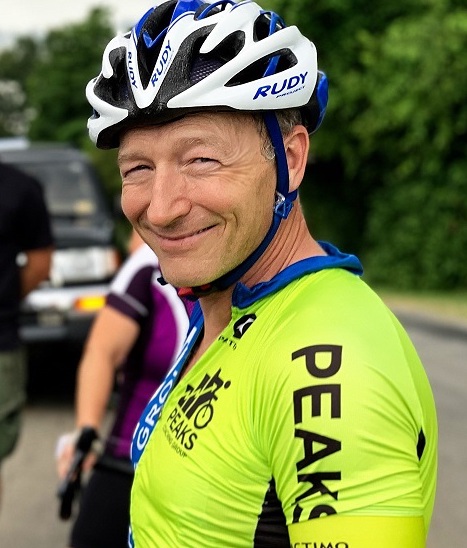
Episode 86 -- Part 1: basic training principles, key training & physiology terms, simplified training intensity levelsEpisode 87 (this episode): Part 2: deep dive into "no man's land" and sweetspot, how to prioritize training efforts, and more on why building in fun is the key Hunter Allen Bio: Ex-Pro cyclistPeaks Coaching Group Founder, CEOUSAC Level 1 Coach …. Focusing on : Road Cyclists, MTB and TriCo-Founder TrainingPeaks WKOCo-Author “ Training and Racing with a Power Meter ” Co-Author " Triathlon Training With Power "Co-Author “ Cutting Edge Cycling ”2008 Olympic USA BMX Team Technical CoachAnd, it should be noted, still a super fit dude (298 FTP) Peaks Coaching Group: http://www.peakscoachinggroup.com/
S3 Ep 86#86 — Make Training Fun for Better Performance (p.1 of 2 with Hunter Allen)
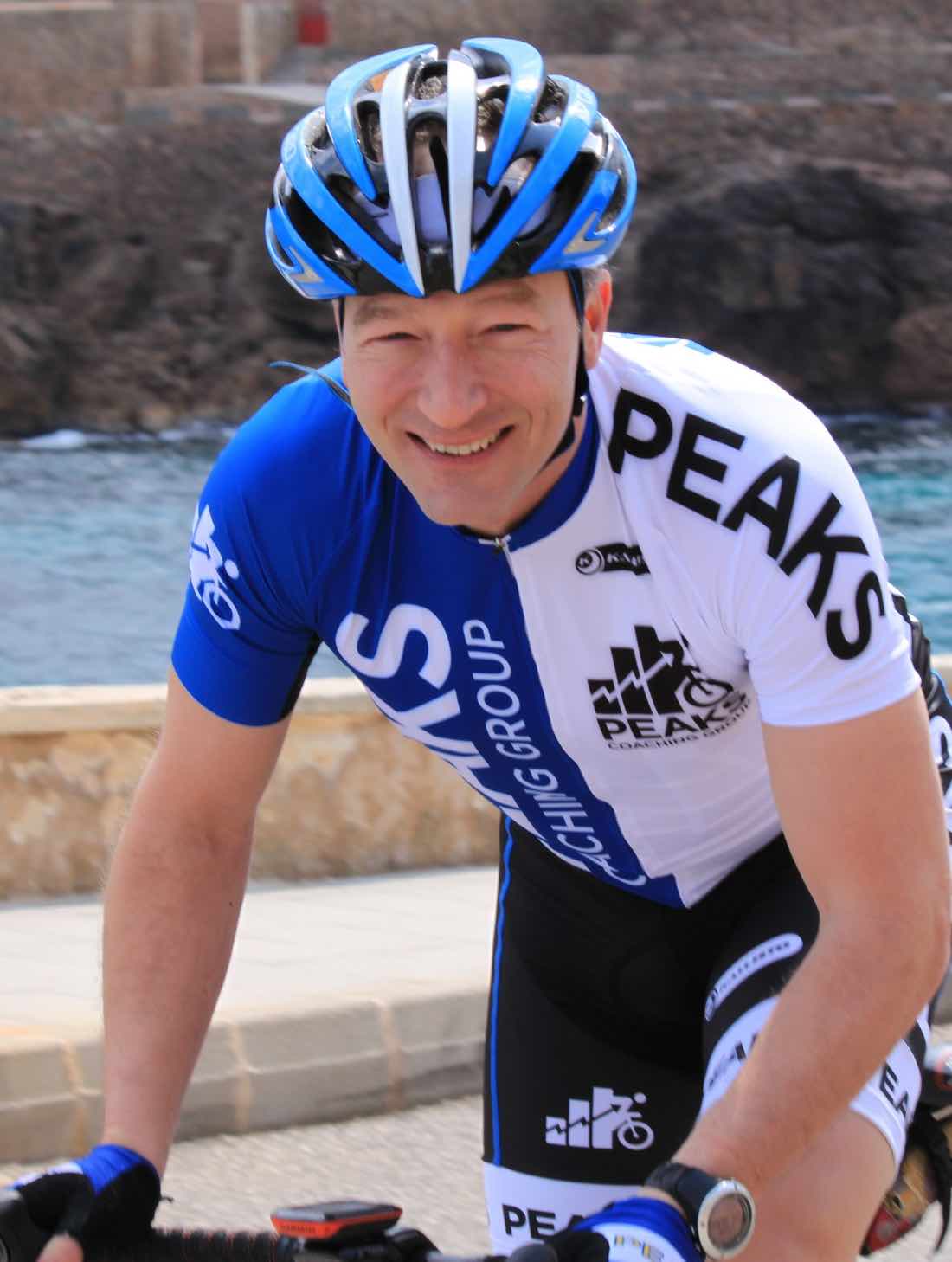
Episode 86 (this episode) Part 1: basic training principles, key training & physiology terms, simplified training intensity levelsEpisode 87: Part 2: deep dive into "no man's land" and sweetspot, how to prioritize training efforts, and more on why building in fun is the key Hunter Allen Bio: Ex-Pro cyclistPeaks Coaching Group Founder, CEOUSAC Level 1 Coach …. Focusing on : Road Cyclists, MTB and TriCo-Founder TrainingPeaks WKOCo-Author “ Training and Racing with a Power Meter ” Co-Author " Triathlon Training With Power "Co-Author “ Cutting Edge Cycling ”2008 Olympic USA BMX Team Technical CoachAnd, it should be noted, still a super fit dude (298 FTP) Peaks Coaching Group: http://www.peakscoachinggroup.com/ Download slides from Hunter Notes 5 Levels of Intensity Countdown (the Wise Athletes simplified version) LEVEL FIVE (5): Short maximum output efforts above threshold. This level includes VO2max testing efforts (so a 10 second flying 200 on the track to a 5 minute VO2Max effort), — you are using everything you got. All out for a short time. Pacing is hard without practice but what is notable is how, even with proper pacing, you fail to maintain the power output after a very short time. This is similar to weight lifting…the bigger the weight, the fewer the reps. The fast twitch muscles fatigue quickly from using up ATP and accumulation of waste products that make the muscle environment more acidic and interfere with the muscle function. At this level, oxygen is the limiter. After a rest, the muscle recovers and can go again but not quite as well. This process can be repeated a few times but the fast twitch muscle will get fatigued (maybe damaged?) and need to heal and adapt before the next effort (hopefully a couple days hence if you went to failure). At this level, you really need a power meter or smart trainer to measure your power output for the training interval. HR won’t help because of the delay in HR response. LEVEL FOUR (4): Lactate threshold / FTP/ steady state (around an hour) — it’s a concept as much as it’s a power output that can be sustained as long as glucose is available to burn and lactate can be cleared and used by the mitochondria. Similar to this is the Functional Threshold Power….It’s called functional because an hour is a nice round number and is approximately the time needed to complete a 40k TT which is a standard TT distance in cycling. This might also be about the time it takes to burn through available glucose. You are breathing heavily but steadily. You are not talking. At this level, if you paced it correctly, glucose is the limiter, not oxygen. A power meter is helpful but you could also do an FTP test based on distance covered in 1 hour or time to compete 25 miles. LEVEL THREE (3) Tempo / Sweetspot (also called “no man’s land”) is in-between lactate threshold and endurance pace. This is where racing lives unless it is a very short or very long race. This is advertised as being more time-efficient than polarized training. Sweetspot is the high end, just below Threshold, while Tempo is the lower end, just ab
S3 Ep 85#85 — A Mindset for Athletic Longevity with Carrie Jackson
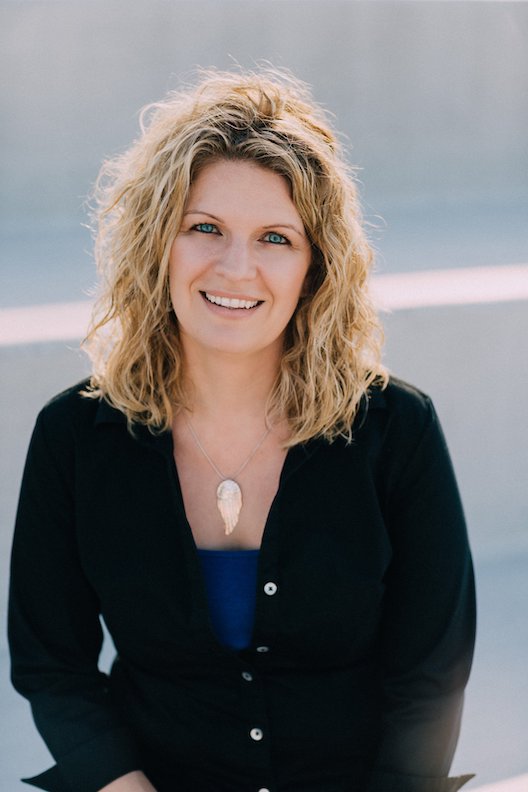
Carrie Jackson Certified Mental Performance Consultant through the Association for Applied Sport Psychology and co-author of the book Rebound Carrie has helped athletes achieve amazing athletic accomplishments – things they never thought were possible for them. She's worked with athletes that get so nervous before competition they wondered if they should quit; now those same athletes show up to their events and not only perform well, but actually enjoy it! She's worked with injured athletes through their recovery and helped them return to their sport only to have their greatest season yet. Contact Carrie https://carriejackson.com/ Rebound Top Your Game
S2 Ep 84#84 — Psyche of the Injured Athlete w/Dr Laura Miele
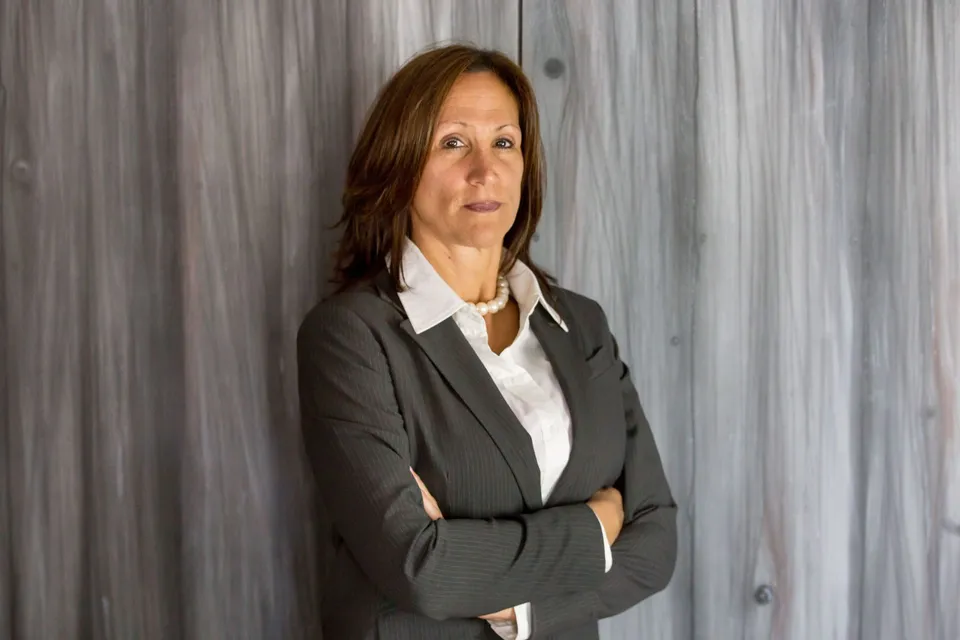
Dr. Miele Bio Dr. Miele runs her own business ‘Mind over Body Athletics, LLC’ in which she trains and consults athletes and coaches in a variety of sports, sport psychology, injury prevention, and training methods. Dr. Miele played Division I basketball at Arizona State; was Tight End for the Arizona Caliente, of the Women’s Professional Football League; and was also a New York Golden Gloves semi-finalist in 2004. She began coaching athletes in 1986 and has been involved as a personal exercise and fitness trainer since 1994. Dr. Miele has traveled extensively throughout the United States and Europe as an athlete and coach and has been involved in consulting, coaching and teaching a wide range of sports including but not limited to; Basketball, Volleyball, Softball, Baseball, Football, Archery, Bowling, Figure Skating, Hockey, Boxing, Wrestling, Field Sports, Golf, Soccer, Swimming, Track and Field, Gymnastics and Tennis. Links to resources Dr. Laura Miele's website: https://www.sportfitnessconsulting.com/ Psyche of the Injured Athlete on Amazon: https://a.co/d/4qDlEdI
S2 Ep 83#83 — Pain Solutions: Real vs. Hype w/Paul Ingraham of PainScience.com
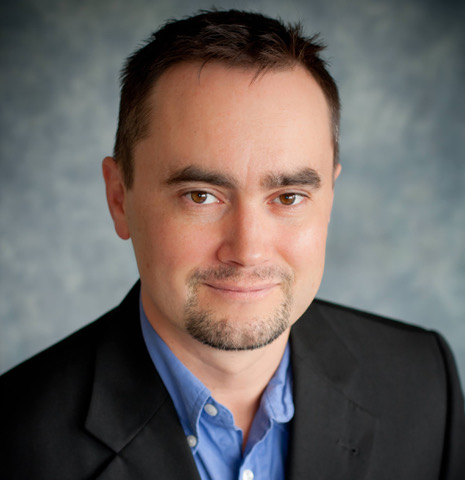
Paul says that the science of aches, pains, and injuries is surprisingly weird, controversial, and interesting, and his job is to translate it for both patients and pros. In his writing, he works to make it friendlier than the institutional health care sites, but more scholarly and detailed than most health blogs. My own experience on painscience.com was shocking....I was shocked at how gullible I have been over these many years. It was humbling to find several “areas of no doubt” ….of ”universal truths”, I thought ….that are actually based on repeated anecdote and faith in authority instead of scientific fact. I always thought that I was skeptical but it turned out I was a sucker for a well-articulated, logical explanation. Listen in to discover your own pain solutions that will really work for you. Pertinent Links to PainScience.com https://sciencebasedmedicine.org/why-i-quit-my-massage-therapy-career/ https://www.painscience.com/structuralism https://www.painscience.com/historical_perspective https://www.painscience.com/stretching https://www.painscience.com/what_works https://www.painscience.com/art_of_rest Paul Ingraham Bio Paul Ingraham is a Vancouver science writer and a former Registered Massage Therapist. He left that profession over concerns about pseudoscientific beliefs and practices, and went on to create PainScience.com, a website about the science of pain, injury, treatment, and rehab, where he has published hundreds of articles and ten books on these themes, the most successful of which is his guide to the tricky topic of "trigger points." He's also a reluctant runner and, until very recet retirement, an avid ultimate player (the Frisbee sport) with a long list of his own sports injuries and pain problems. https://www.painscience.com https://www.painscience.com/about.php https://www.painscience.com/about-paul-ingraham.php
S2 Ep 82# 82 — Mind Over Muscle: How to Tolerate Suffering as an Athlete w/Matt Fitzgerald
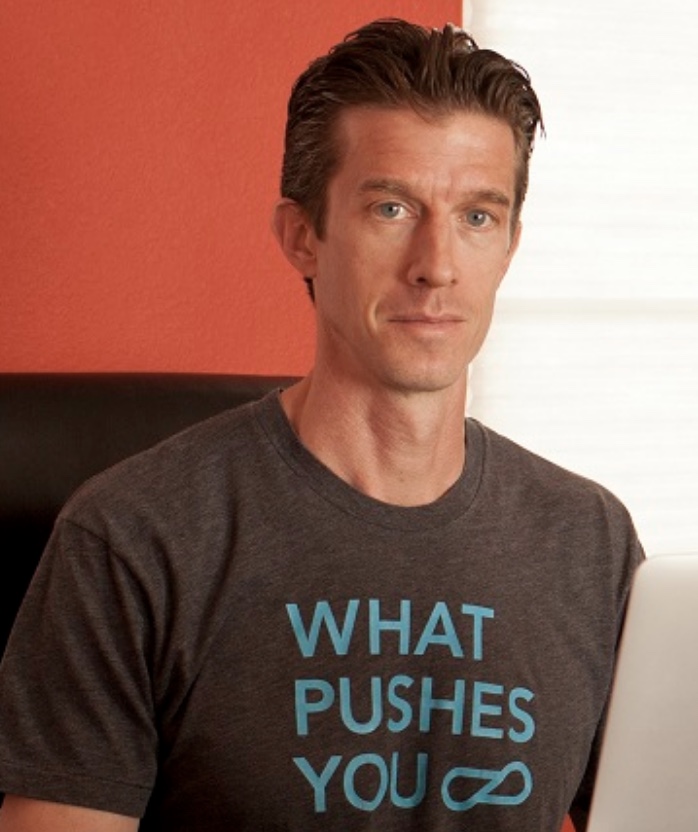
Listen in as Matt and I explore his knowledge of the psychology of suffering...or dealing with discomfort in sport. Few people manage to reach their potential because they don't know how to find the limits. They quit on themselves. And they regret it. Bio -- Matt Fitzgerald Website: https://mattfitzgerald.org/ Starting with a job offer from Bill Katovsky, the original founder of Triathlete, to join the tiny staff of an endurance sports startup magazine based in Sausalito, Matt has written for AthletesVillage.com, Active.com, Competitor Group, and his writing has appeared in Bicycling, Maxim, Men’s Fitness, Men’s Health, Men’s Journal, Outside, Shape, Stuff, and Women’s Health. Matt has a special passion for writing books and has written many. Matt is also a certified sports nutritionist, and has served as a consultant to numerous sports nutrition companies, including Energy First, Healthy Directions, PacificHealth Labs, and Next Proteins. Having coached for Carmichael Training Systems in the early 2000’s, Matt continues to design readymade training plans for triathletes and runners that are sold through TrainingPeaks.com and FinalSurge.com, as well as customized plans available through this website.
S2 Ep 81#81 – Muscle Building Nutrition for Endurance Athletes w/James Morehen, PhD
Topics covered Use of protein for maintenance and building muscle when combined with exercise How much protein? Timing? Use of supplementation? What else is helpful? Creatine? Omega's? Vitamins? Minerals? How to lose body fat without losing muscle? Is fasting or intermittent fasting a good idea for the older athlete? Related podcast episodes: Body Composition: https://www.wiseathletes.com/podcast/76-body-composition-sports-performance-w-matt-fitzgerald/ Optimizing Muscle: https://www.wiseathletes.com/podcast/65-optimizing-aging-muscle-w-brendan-egan-phd/ Nutrition for Recovery: https://www.wiseathletes.com/podcast/19-nutrition-for-recovery-with-ec-synkowski/ Bio https://morehenperformance.com/ Jame Morehen, PhD is a a published author and respected performance nutritionist registered with the Sport and Exercise Nutrition Register (SENr). James seeks to help individuals achieve optimal health, wellness and performance with individual performance nutrition solutions backed by evidence informed strategies to help individuals fuel and recover from the demands of their sport and lifestyle. BSc Sport & Exercise Science MSc Sports Physiology PhD Sports Nutrition Areas of work: - Body Composition - Weight Management - Health & Wellness - Travel Nutrition - Training Strategies - Competition Performance - Optimal Recovery
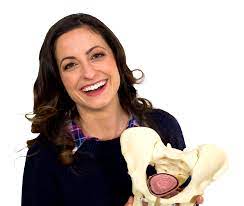
S2 Ep 80#80 — Power to the Pelvis w/Dr. Susie Gronski
drsusieg.com DR. SUSIE GRONSKI — Licensed doctor of physical therapy since 2010Certified pelvic rehabilitation practitionerSex counselor and AASECT certified sexuality educator (University of Michigan trained)Author of Pelvic Pain The Ultimate Cock BlockInternational male pelvic pain and sexual health educator A licensed doctor of physical therapy, certified pelvic rehabilitation practitioner, international teacher, and creator of one-to-one and self-paced health programs that help men with pelvic pain become experts in treating themselves. 5 S’s Support - for organs that sit on top of pelvisStability - structural control over distal actionsSump pump - pee, semen Sexual appreciation Sphincteric control The major health knock on cycling has been its potentially negative effects on pelvic health. Rigorous training on a thin bicycle saddle (seat) can cause unwanted rubbing and prolonged pressure that leads to decreased blood flow. In men, cycling has been linked to testicular pain, numbness, and infertility in extreme cases. In women, unchecked pelvic distress can lead to pain, incontinence and girdle distress. Pelvic Issues: Penis painPudendal neuralgiaHard-flaccidPersistent genital arousal disorder (PGAD)Penis fracture (sexcapade injuries happen!)Testicle painPost-vasectomy pain syndrome - Pain after vasectomyPeyronie's disease - A condition where scar tissue forms, most commonly, around the base of penis resulting in an abnormal bend or curve in the penisPre- or post-prostatectomy surgeryPain with or after ejaculationPainful erectionsErectile dysfunction (ED)Premature ejaculation (PE)Abdominal painGroin painPelvic painSacroiliac joint (SIJ) painPersistent hip or lower back painTailbone painPain with sittingPain during bowel movementsConstipationUrinary urgency or frequency- Frequently feeling a strong and sudden urge to urinateUrinary or fecal incontinence Previous Wise Athletes episode mentioned in discussion with Dr. Gronski
S2 Ep 79#79 — Fasting: The Oldest Cure in the World w/Steve Hendricks
Steve Hendricks, author of The Oldest Cure in the World. Stevehendricks.org/ Bookshop.org
S2 Ep 78#78 — Bone Health Plus w/Melissa Rittenhouse PhD
Improving bone health through nutrition and exercise...advice from Melissa Rittenhouse PhD, endurance athlete, registered dietitian, certified specialist in sports dietetics, PhD in Exercise Physiology. sportsandwellnessnutrition.com/ Melissa Rittenhouse PhD, RD, CSSD. Registered DietitianCertified Specialist in Sports Dietetics. PhD in Exercise Physiology Dr Rittenhouse has been practicing in the areas of sports nutrition and human performance since 2002. She is a sports dietitian, and a Road Runners Club of America (RRCA) certified coach. She participated in the 2004, 2008 and 2012 Olympic Marathon Trials.
S2 Ep 77#77– Salt vs Electrolytes with Andy Blow
Andy Blow Bio Andy Blow is a Sports Scientist with a BSc Honours degree in Sports and Exercise Science from the University of Bath. An expert in hydration, he has co-authored a number of scientific studies and books. He was once the Team Sports Scientist for the Benetton and Renault Formula 1 teams and remains an adviser to the Porsche Human Performance Centre at Silverstone. Andy has finished in the top 10 of IRONMAN and IRONMAN 70.3 races, as well as winning an XTERRA Age Group World title. It was his own struggles with cramp that led to him specializing in hydration and founding Precision Fuel & Hydration. Andy Online https://www.precisionfuelandhydration.com/ https://www.instagram.com/precisionfandh/ https://www.facebook.com/precisionfandh/ https://www.twitter.com/precisionfandh/ Andy's Articles https://www.trainingpeaks.com/blog/should-athletes-avoid-salt/ https://www.trainingpeaks.com/blog/3-ways-your-hydration-status-changes-as-you-age/ https://www.trainingpeaks.com/blog/why-athletes-need-sodium/ https://www.trainingpeaks.com/blog/exercise-associated-muscle-cramps/ https://www.precisionhydration.com/performance-advice/performance/age-aging-performance-decline/ https://www.precisionhydration.com/performance-advice/hydration/should-your-hydration-strategy-change-as-you-get-older/ https://www.precisionhydration.com/performance-advice/hydration/ageing-and-endurance-performance/ https://www.precisionhydration.com/performance-advice/nutrition/how-to-choose-energy-format-gels-chews-bars-drinks/ https://www.precisionhydration.com/performance-advice/nutrition/combining-carbs-and-electrolytes/
S2 Ep 76#76 – Body Composition & Sports Performance w/Matt Fitzgerald
Listen in as Matt and I explore his knowledge of managing body composition and the use of sugar for sports performance...and how the two propositions are not in conflict. Bio -- Matt Fitzgerald Website: https://mattfitzgerald.org/ Starting with a job offer from Bill Katovsky, the original founder of Triathlete, to join the tiny staff of an endurance sports startup magazine based in Sausalito, Matt has written for AthletesVillage.com, Active.com, Competitor Group, and his writing has appeared in Bicycling, Maxim, Men’s Fitness, Men’s Health, Men’s Journal, Outside, Shape, Stuff, and Women’s Health. Matt has a special passion for writing books and has written many. Matt is also a certified sports nutritionist, and has served as a consultant to numerous sports nutrition companies, including Energy First, Healthy Directions, PacificHealth Labs, and Next Proteins. Having coached for Carmichael Training Systems in the early 2000’s, Matt continues to design readymade training plans for triathletes and runners that are sold through TrainingPeaks.com and FinalSurge.com, as well as customized plans available through this website.
S2 Ep 75#75 – Have Your Chocolate & Eat It Too w/Rym Selmi
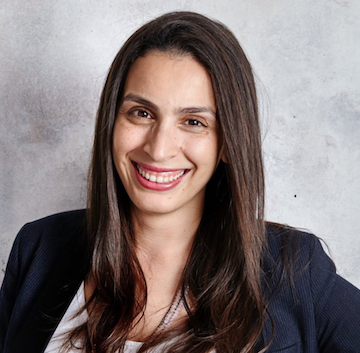
Rym Selmi, the inventory of Miiro Chocolate. The Latin miro, means “To Wonder.” Miiro Chocolate is all about helping people rediscover the carefree childlike wonder that makes life so special. www.miiro.co I have found that I am able to restrict myself from eating “bad” foods quite well. But I have begun to think I do not have a good balance between my health, athletic performance goals and …for lack of a better word….“enjoying myself”. The key, I’ve been thinking, is to find a way to not suffer so much. To find a way to have healthier foods around me that I can have when I want but that are not engineered to make me lose control. So that I can find some sort of balance between healthiness and fitness AND having enjoyment in my food. When I heard about Miiro Chocolate, a low-sugar but delicious chocolate, I thought I might have found what I was looking for...but I found so much more.
S2 Ep 74#74 — Un-F**k Your Feet (w/Dr. Ray McClanahan)
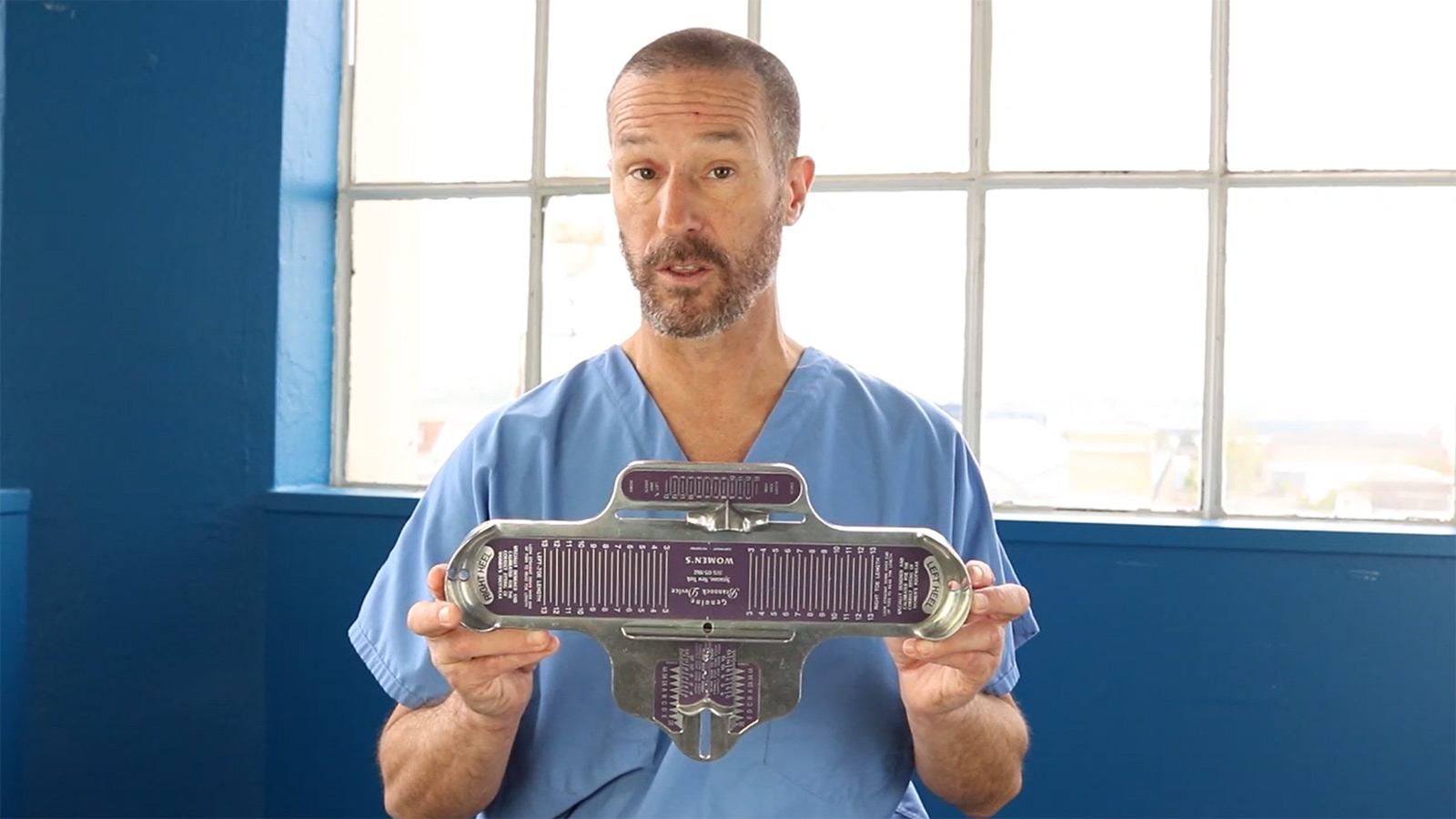
Do you want foot shaped feet or shoe shaped feet? The answer lies in what you want your feet to do for you. Do you want to fit into fashionably shaped pointy shoes? Just keep doing what you're doing. Do you want pain-free feet, that can support your athletic endeavors ...feet that look like the foot you were born with....straight toes? Listen in. Who Is Dr Ray McClanahan? Dr. Ray McClanahan completed his undergraduate studies at Liberty University in Lynchburg, Virginia, graduating with a Bachelor of Science in Education. Next, he attended Pennsylvania College of Podiatric Medicine (now Temple University School of Podiatric Medicine), and graduated in 1995. Upon graduation, he completed a two-year podiatric, surgical residency training in Portland, Oregon, at Legacy Health Systems and Kaiser Permanente as a Podiatric Physician and Surgeon. Dr. McClanahan’s practice, Northwest Foot & Ankle in Portland, Oregon, allows him to care for those who find their highest joy when in motion. In his 26 years as a podiatrist, he has learned that most foot problems can be corrected by restoring natural foot function. He is also the inventor of Correct Toes, silicone toe spacers. His professional goal is to provide quality natural foot health services with an emphasis on sports medicine, preventative and conservative options as well as education on proper footwear. Dr. McClanahan is an active runner and athlete. In 1999, he finished 14th in the U.S. National Men’s Cross-Country Championships and had a near Olympic Trials qualifying 5,000 meter mark of 13:56 in 2000. He then qualified for the World Duathlon Championships in 2001. https://www.nwfootankle.com/patient-resources/ https://correcttoes.com/ https://healthyfeetalliance.org/ Link to article: Why Shoes Make "Normal" Gait Impossible
S2 Ep 73#73 — An Easy End to Pain w/Rick Olderman, PT
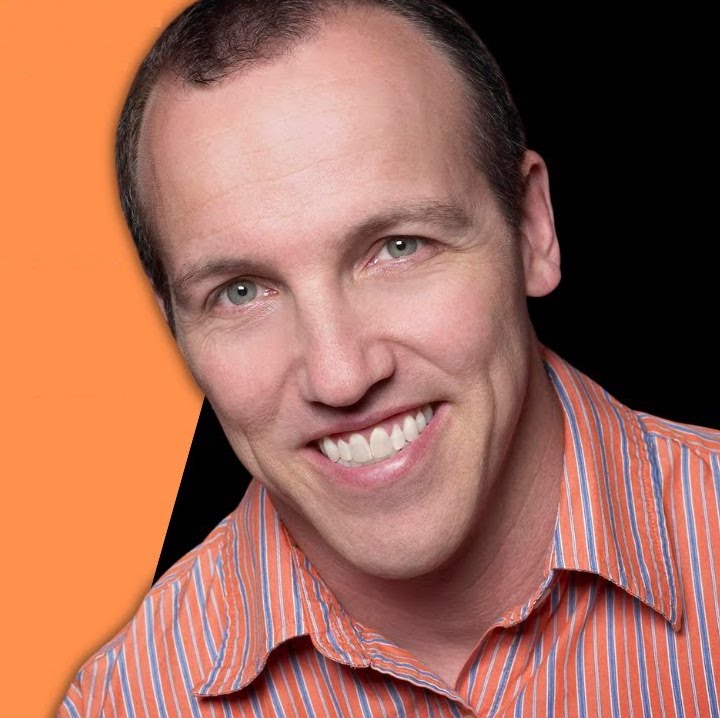
Orthopedic Physical Therapist -- Rick Olderman Rick Olderman is a sports and orthopedic physical therapist with more than 25 years experience who specializes in helping people with chronic pain experience a pain-free life. He graduated with his Master’s Degree from The Krannert School of Physical Therapy at the University of Indianapolis in 1996. Listen in to hear Rick share his fundamental understanding about how the body works to create and solve pain. If you have back pain, shoulder pain, headaches or some other chronic pain, you must listen to my talk with Rick. He explains is simple language how you and I can truly understand why we are having pain, and follow simple tips for resolving chronic pain quickly. Rick is the very best at giving simple instructions to find and fix the mistakes you and I make everyday that contribute to the pain in our bodies. Rick’s system-based approach is simple yet effective for identifying solutions to reduce or eliminate pain in our bodies. Rick wrote the popular Fixing You® series of books — found on Amazon.com — to help people with chronic pain or injuries. Rick tells us how to live pain-free without the need for medication. Links for more info: Downloadable programs now available online at fixingyoumethod.com Practitioners can find an online training program at healpatientsfaster.com Free stuff from Rick: rickolderman.com Use code: fixingyou for a 20% discount on any program.
S2 Ep 72#72 — Heart Rate Foundations of Fitness with Coach Hunter Allen
Heart rate is a powerful metric for guiding improvements in fitness. The only problem with heart rate is that while seemingly simple, it is really a complex aggregation of many variables that need to be considered and managed to make use of this valuable metric. Hunter tells us how to do it. Hunter's latest venture: Project Fuerza -- NFT artwork Hunter is co-author of the book “Training and Racing with a Power Meter” (with Dr. Andy Coggan). He also co-wrote “Cutting-Edge Cycling” with Dr. Stephen Cheung, was the co-developer of TrainingPeaks WKO software, and is the founder of Peaks Coaching Group. Widely known as one of the top experts in the world in coaching endurance athletes using power meters, Hunter Allen has been instrumental in developing and spreading the power training principles. Hunter is a USA Cycling Level 1 coach, was the 2008 BMX technical coach for the Beijing Olympics and has taught the USA Cycling Power Certification Course since 2005. A former professional cyclist for 17 years with over 40 road victories to his credit, Hunter has been coaching endurance athletes since 1995, and his athletes have achieved more than 2000 victories and numerous national, world championship titles and Olympic Medals. Hunter Allen - Contact http://www.peakscoachinggroup.com/hunterallen https://shoppeaks.com/category/training-plans/ projectfuerza.com
S2 Ep 71#71 — Framework for Durability w/Dr Nick DiNubile
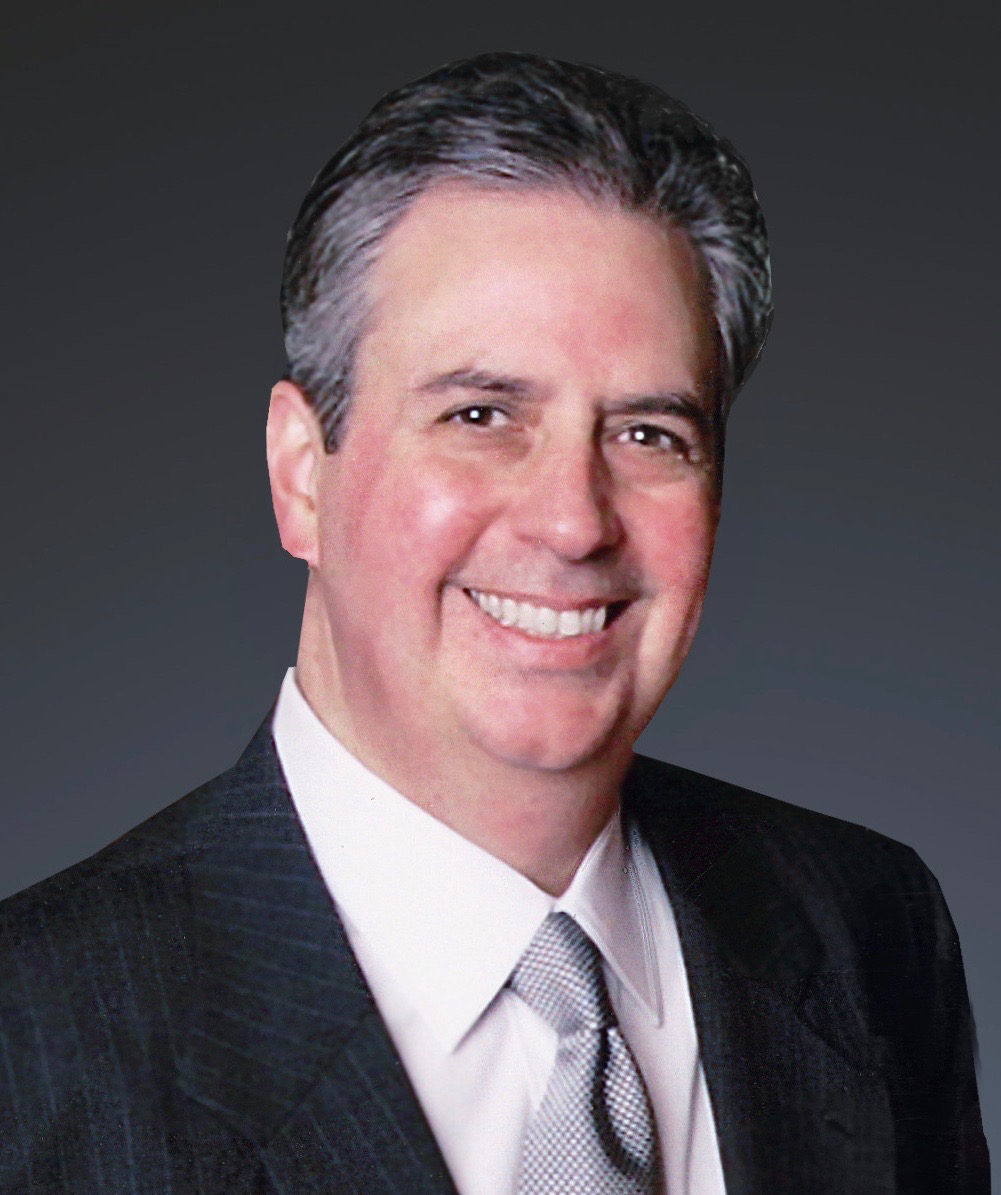
"How to get an Extended Warranty on your body." Dr. Nick DiNubile is an Orthopaedic Surgeon specializing in Sports Medicine and is a Clinical Assistant Professor of the Department of Orthopaedic Surgery at the Hospital of the University of Pennsylvania. He is the author of the bestselling book, FrameWork- Your 7 Step Program for Healthy Muscles, Bones & Joints and is Executive Producer and host of the award winning national PBS television special, Your Body’s FrameWork. Dr. Nick has served on The President’s Council on Physical Fitness and Sports with Arnold Schwarzenegger and also sits on the board as well as serves as the Chief Medical Officer of The American Council on Exercise (ACE). He has worked with Philadelphia 76ers, the Pennsylvania Ballet, and countless athletes and celebrities. Most recently he has been named Vice President of The American Academy of Anti-Aging Medicine. drnick.com Dr. Nick says it’s not about longevity as much as it’s about durability. Find your weak links. Test yourself to find where you are weak, sore, tight, etc. You need balance...meaning, you need to have some minimal capability in all the major parts of your body...you cannot have certain movements or muscles or joints that you avoid using. Resolve the weak links. You have to be willing to work through some pain, and find the line before a level of effort that results in damage. Toughen the area around the weak link to reduce the chance of.the weakness allowing an injury Work around...avoid areas that you cannot resolve or toughen....but you must find a way to retain "balance" Toward the end we talk about new technologies for improved healing for the older athlete, and ways to mitigate inflexible scar tissue formation from injuries that leads to re-injury so often. BIO Nicholas A. DiNubile, MD is an Orthopaedic Surgeon specializing in Sports Medicine in private practice in Havertown, Pennsylvania. He is the bestselling author of the FrameWork series of health and wellness books and is also Executive Producer and host of the award winning national PBS television special, “Your Body's FrameWork.” Dr. DiNubile has served as Orthopaedic Consultant to the Philadelphia 76ers Basketball Team and Pennsylvania Ballet. He was appointed Special Advisor to the President's Council on Physical Fitness and Sports (1st Bush Administration with Arnold Schwarzenegger as Chairman). He has advised two United States Presidents on matters of health and health policy, and has cared for numerous celebrities and high level athletes. He is the Vice President of the American Academy of Anti-Aging Medicine (A4M), Chief Medical Advisor for the American Council on Exercise (ACE) and is on the Global Advisory Board for the International Sports Hall of Fame. Dr. DiNubile was a contributor to the Surgeon General's Report on Physical Activity and Health and is Executive Editor of the Physician and Sportsmedicine Journal. Dr. DiNubile has been part of the teaching faculty at the University of Pennsylvania School of Medicine for many years, and is Chairman of the Department of Orthopaedic Surgery at Delaware County Memorial Hospital. He is a lead spokesperson for the American Academy of Orthopaedic Surgeons and the American Orthopaedic Society for Sportsmedicine. He has had extensive healthcare executive experience and served as Orthopedic Medical Director for over a decade for US Healthcar
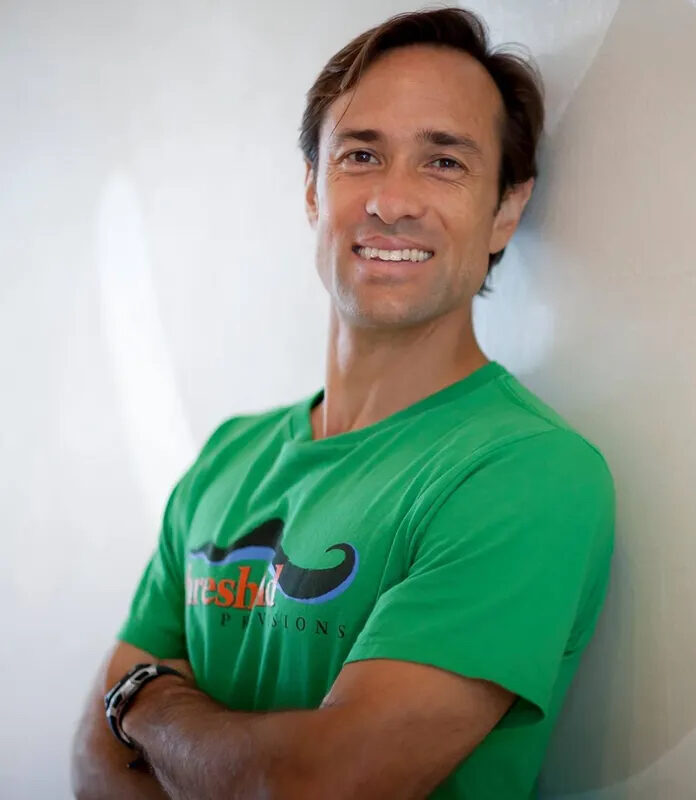
S2 Ep 70#70 — Healing Yourself w/ Joe Taft
Joe Taft was born a mover. He has always found refuge in the pursuit of excellence in a variety of sports and outdoor activities. He has been studying human movement patterns as either an athlete, coach or the teacher in a variety of sports, such as skiing, tennis, kayaking and yoga. In 1990, after a decade-long career in whitewater kayaking, Joe discovered yoga. Yoga provided Joe the insights into how the body desires balance in order to be pain-free and how to apply subtle alignment actions at the right time. Levels of Progression: Find something that is a means to an end (e.g., driving to work, washing dishes), and do it mindfully. Do a workout but be super mindful in what you are doing (e.g. your foot hitting the ground, your breathing) Do a daily stretch or a time where you are "in you body" to practice awareness of how your body is feeling BIO Joe (E-RYT500 and YACEP) has been teaching yoga for two decades. He has spent thousands of hours on his mat as the student and the yoga teacher, which is demonstrated in his acute attention to detail in creating a powerful theme-based class. Joe's classes strive to connect our human journey to the yogic principles of alignment. Joe spends hours each week creating a life-inspiring theme which is present in every part of the class sequence and aspect of each pose and its action. His classes are unique to Joe's style of weaving together clear and careful instruction with a fun and flowing synthesis of building balanced strength, core stability, flexibility and breath work. His students have a deep appreciation for his therapeutic insights and eye for correcting postural habits and helping them become pain-free. Students leave his classes and trainings feeling uplifted and inspired. JOE'S YOGA JOURNEY: Joe was born a mover and has always found refuge in the pursuit of excellence in a variety of sports and outdoor activities. He has been studying human movement patterns as either an athlete, coach or the teacher in a variety of sports, such as skiing, tennis, kayaking and yoga. In 1990, after a decade-long career in whitewater kayaking, Joe discovered yoga and has never looked back. The practice of yoga has given Joe the insights into how the body desires balance in order to be pain-free and how to apply subtle alignment actions at the right time. Joe continues to expand his studies and enjoys participating in a variety of movement practices such as Pilates, weight training, mountain biking, kayaking, rock climbing and running. He applies his understanding of how the breath, meditation, and balanced musculature work together. Contact Info: https://joetaftyoga.com/ https://www.instagram.com/joe_taft_yoga/ https://www.youryoga.com/
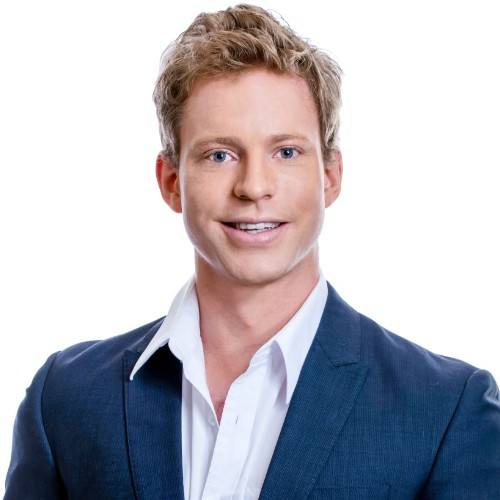
S2 Ep 69#69 — Longevity Longcuts & Shortcuts w/ Dr. Brad Stanfield
Brad Stanfield, MD Today on episode #69, I talk with Dr. Brad Stanfield, a medical doctor and searcher for ways to optimize longevity. This is a impossibly complex subject fraught with wrong-headed shortcuts, snake oil, and marketing lies. What is aging? How to stop accelerated aging? Supplements to take to help offset the impact of aging? No mega dosing.. Some good ones: Vitamin D, omega 3, zinc, magnesium (threonate), creatine, collagen, glycine, Dr Stanfield's prediction of chemicals that will prove to make a big difference in longevity and healthspan: Rapamycin -- look after the protein / MTor type of issues Stains -- look after the fat / cholesterol issues SGLT2 Inhibitors -- blood sugar related issues Contact info: https://drstanfield.com/ https://www.youtube.com/c/DrBradStanfield/about https://www.ncbi.nlm.nih.gov/pmc/articles/PMC3836174/
S2 Ep 68#68 — Becoming Anti-Fragile w/Dr Mike T Nelson
Mike T Nelson, PhD Today on episode #68, I talk with Dr. Mike T Nelson, the creator of the Flex Diet for building metabolic flexibility, and now the Phys Flex certification for building anti-fragility across a range of physical and mental functions. Episode 32: https://www.wiseathletes.com/podcast/32-helping-older-athletes-feel-young-again-via-metabolic-and-physiologic-flexibility-with-dr-mike-t-nelson/ Bio Creator of the Flex Diet Certification & Phys Flex Certification, kiteboarder, lifter of odd objects, metal music lover. PHD IN EXERCISE PHYSIOLOGY FROM UNIVERSITY OF MINNESOTA BA IN NATURAL SCIENCE FROM ST. SCHOLASTICA MS IN BIOMECHANICS FROM MICHIGAN TECHNOLOGICAL UNIVERSITY ASSOCIATE PROFESSOR AT CARRICK INSTITUTE FOR CLINICAL NEUROLOGY MEMBER OF THE AMERICAN COLLEGE OF SPORTS MEDICINE (ACSM) CERTIFIED SPORTS NUTRITIONIST FROM THE INTERNATIONAL SOCIETY OF SPORTS NUTRITION (CISSN) INSTRUCTOR AT ROCKY MOUNTAIN UNIVERSITY PROFESSIONAL MEMBER OF THE AMERICAN SOCIETY OF NUTRITION (ASN) PROFESSIONAL SPORTS NUTRITION MEMBER OF THE INTERNATIONAL SOCIETY OF SPORTS NUTRITION (ISSN) NATIONAL STRENGTH AND CONDITIONING ASSOCIATION (NSCA) CERTIFIED STRENGTH AND CONDITIONING SPECIALIST (CSCS) Dr. Mike's Website https://miketnelson.com Dr. Mike's Instagram drmiketnelson Physiological flexibility the 4 main regulators pH, temp, blood gas oxygen and CO2, and blood glucose. The 8 interventions (2 for each) are: ● Hot -such as warm temps outside or sauna ● Cold - cold water immersion, cooler temps, cold showers ● HIIT -high intensity exercise as Wingates (aka Beast Mode) ● LISS - as my buddy Luke from Muscle Nerds calls it "Least Mode" aka lower intensity exercise ● Low blood glucose - via fasting protocols ● High(er) blood glucose challenge - 2 pop tart test ● Slow breathing techniques and breath holds ● Fast (supra ventilation) techniques like Wim Hoff and others -------- Met Flex = Flexible Diet + metabolic flexibility. The focus is Body composition and athletic performance, which are intertwined. Body composition is good for health, self esteem and performance. Athletic performance is good for health (body is built to move), longevity (3 factors) and body composition (burning calories Principals Speed of adaptation reflects health status and resilience: fuel switching speed, sugar tolerance, temperature tolerance, HR capacity (max vs. resting), endurance, mobility and strength provides headroom to recover from problems. Benefit stacking: getting multiple benefits from our actions and food Health maintenance is the real goal. Achieving goals is nice, but sustaining fitness and health is the real achievement. The key is fuel matching and non-linear calorie imbalance. (Practice maintenance) No suffering; stay within yourself but push a little most days. “Better is better”. Optimal is elusive but will slowly be achieved for each person Little things add up. Start with easy to gain momentum and motivation for harder change. Exercise doesn’t
S2 Ep 67#67 — Hormone Health for the Older Male & Female Athlete w/Dr Kyle Gillett
Dr. Kyle Gillett Today on episode #67, I talk with Dr. Kyle Gillett, a medical doctor and expert in hormonal health. Dr Gillett and I attempted to cover this broad topic in under an hour by avoiding the technical details and focusing on the high-level tips on how the older athlete can recover and maintain hormonal health for improved general health, higher fitness, and a better quality of life. Listen in to hear about the surprising mistakes people make with common supplements and other tips for dealing with common conditions such as: low energy, lack of focus, declining strength, and more. When I was younger, I felt great all the time. Of course, back then ‘feeling great’ was just feeling normal. Now-a-days, ‘feeling great’ is a special thing, and I want more of it. Hormones are the key. Much of what Dr Gillett told me I had heard or read about before somewhere in the internet universe timeline, but in our short hour together, Kyle was able to frame the topic of hormones to provide context to the why’s and how’s of getting more of feeling great. BIO Dr. Kyle Gillett, MD, a dual board-certified physician in family medicine and obesity medicine and an expert in: optimizing hormone levels to improve overall health and well-being in both men and women; improving hormones using behavioral, nutritional, and exercise-based tools; and safely and rationally using supplementation and hormone therapies. Website: https://gilletthealth.com/ Instagram: https://www.instagram.com/kylegillettmd/ Twitter: https://twitter.com/GillettHealth ASCVD Risk Calculator: https://tools.acc.org/ascvd-risk-estimator-plus/#!/calculate/estimate/ Want to know more?: Read:
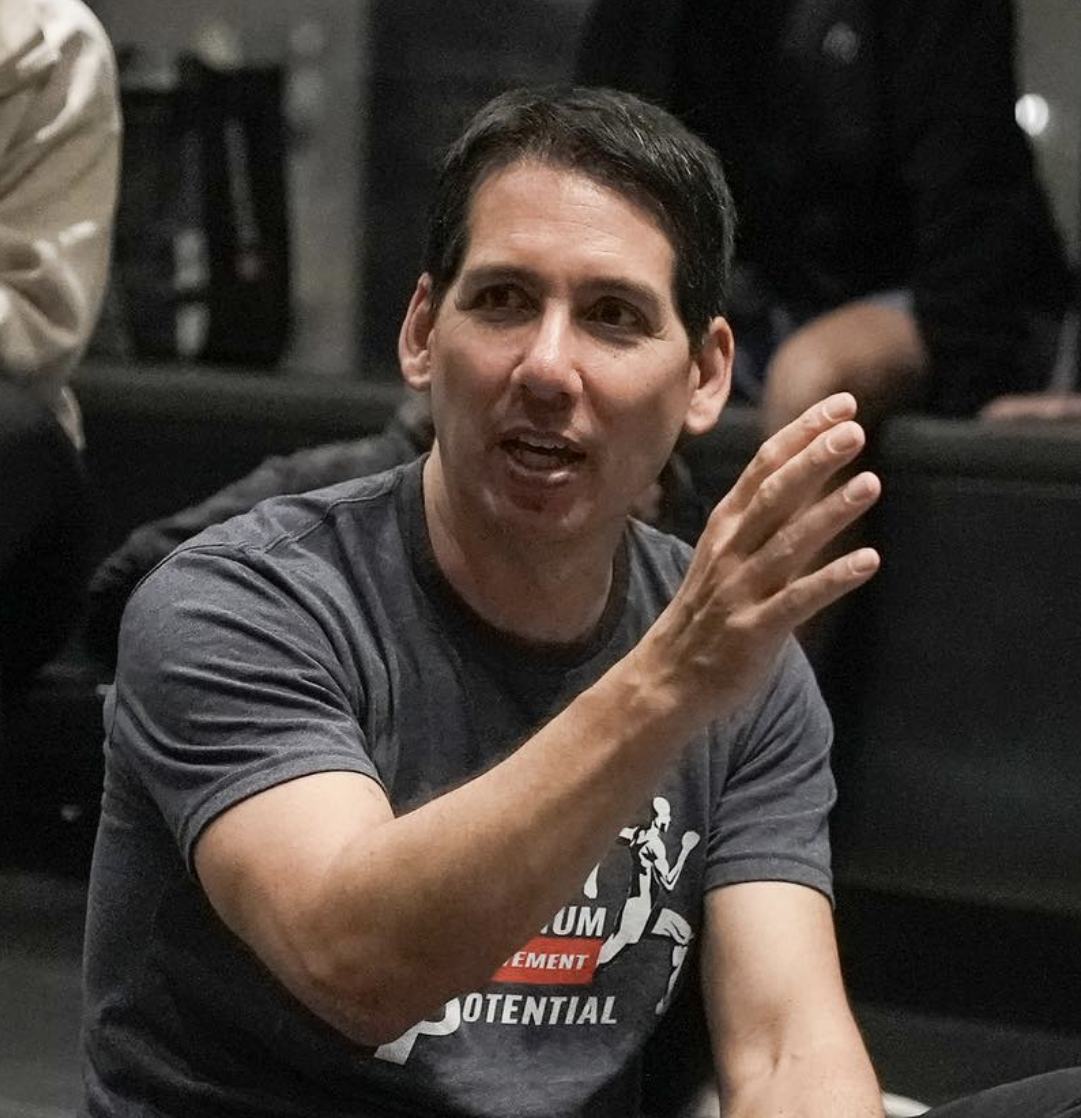
S2 Ep 66#66 — Electrical Muscle Stimulation (EMS) for Training & Recovery w/Derek Hansen
Derek Hansen is one of very few expert in using electronic muscle stimulation. WiseAthletes talks to Derek to finally understand how to get real benefit from your EMS unit. Welcome back to the Wise Athletes podcast. Today on episode #66, I talk with Derek Hansen, a Certified Strength and Conditioning Specialist who has been using EMS or Electronic Muscle Stimulation as a part of his work with athletes of all ages seeking to recover from injury and surgery as well as seeking additional performance advantage. I have owned and used an EMS device for years without really knowing what I was doing, so I decided to find out how it is done. Join me as Derek goes through the many ways EMS can be used by older athletes to deal with limited ROM, injuries, surgeries as well as simple recovery from exercise and as a substitute for exercise when traveling or otherwise unable to get it done the natural way. Derek is a NSCA Certified Strength and Conditioning Specialist that has been working with athletes in speed, strength and power sports since 1988. Originally working with Track and Field athletes, Derek expanded his services to assist athletes in all sports with an emphasis on speed development. He has since worked with some of the top performers in the world as a coach and a consultant – including Olympic medallists, world record holders, Canadian National team athletes, professional sports organizations and professional athletes from numerous sports. Locally, Derek has produced some of the top sprinters in British Columbia and continues to work with some of the fastest athletes in various sports. Provided below are some of Derek’s key qualifications, credentials and designations: NSCA Certified Strength & Conditioning Specialist NSCA Provincial Director for British Columbia – 2006 to 2010 NCCP Level 3 Track and Field Coach – Sprints and Hurdles Emphasis NCCP Level 2 Olympic Weightlifting Coach Course Conductor for the National Coaching Institute (NCI) Vancouver for Strength & Conditioning and Recovery & Regeneration Head Strength and Conditioning Coach for Simon Fraser University in British Columbia, Canada Sport performance consultant, sport technology advisor and rehab specialist for a number of teams in the NFL, NBA, NHL, MLB, MLS and NCAA Division I college sports Presenter, workshop leader and lecturer at major international conferences on various topics relating to sport performance, rehab and sport technologies Speed, strength & conditioning consultant – Cycling Canada – BMX and Track Cycling – 2013 to present Speed, strength & conditioning consultant – Speed Skating Canada – Long Track preparations for the 2010 Olympics Past Recruitment & Athlete Development Coach – Vancouver Region – for Bobsleigh Canada Head Coach – Metro Athletic Club – Track and Field – 2001-2009 Head Strength & Conditioning Coach – Canadian Men’s Field Hockey Team – 1999-2004 Head Strength & Conditioning Coach – Canadian Olympic Women’s Softball Team – 2001-2004 Consultant – BC Basketball/Basketball Canada – Centre for Performance Youth Development – 2001-2008 If you would like more information on Derek’s qualifications and experience, please e-mail him at [email protected] and he would be happy to send you his curriculum vitae. Instagram: @derekmhansen
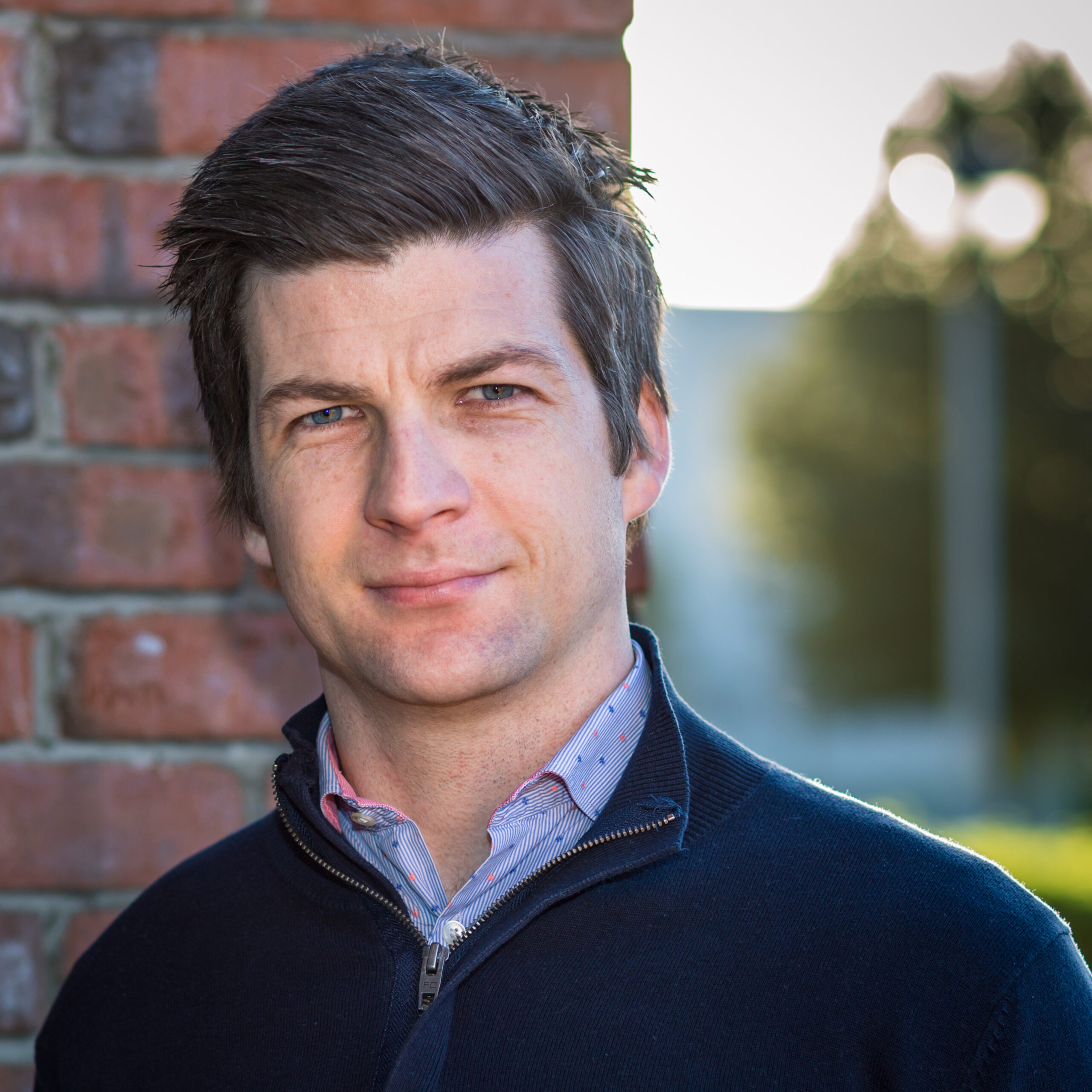
S2 Ep 65#65 – Optimizing Aging Muscle, w/Brendan Egan, PhD
Sponsor: RePowerU -- a free fitness practices assessment (a 10-minute questionnaire) Dr. Egan is an expert in skeletal muscle function and adaptation during aging. Brendan joins Wise Athletes today to share his unique insights into the synergy between nutrition and exercise interventions to optimize performance in older athletes. BIO Brendan Egan, PhD is Associate Professor of Sport and Exercise Physiology, and Deputy Head of School, in the School of Health and Human Performance at Dublin City University, Ireland, and a Visiting Research Scientist at the Florida Institute for Human and Machine Cognition, USA. His research investigates skeletal muscle function and adaptation across the life course, with special interest in the synergy between nutrition and exercise interventions to optimise performance in populations ranging from athletes to older adults. His research group performs human trials involving both acute and chronic interventions for outcomes around performance (physical and cognitive), recovery and adaptation, and have employed a wide range of experimental designs, and have been complimented by molecular analysis tools including transcriptomics, proteomics and metabolomics. Nutrients recently and presently under investigation include caffeine, creatine, omega-3 fatty acids, resveratrol, leucine, protein hydrolysates, beetroot juice, and exogenous ketones, as well as dietary interventions that aim to increase daily protein intake in older adults. Outside of academia, through his sporting career as an Gaelic footballer, Brendan has had a lifelong association with sport, training and performance at all levels of competition from grassroots to elite level, and also practices in the field as a performance nutritionist with emphasis on intermittent field-based team sports, and endurance athletes, most recently with the Dublin Hurlers and the Irish Paratriathlon team.
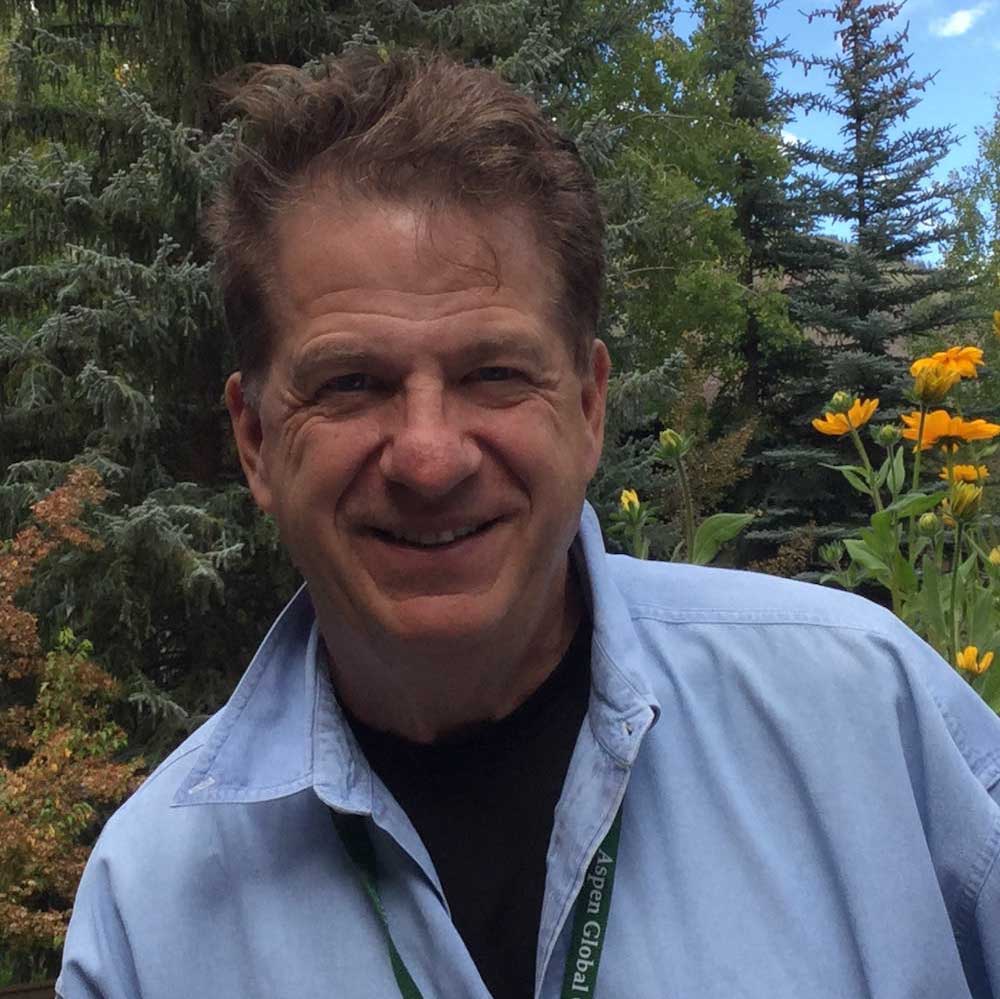
S2 Ep 64#64 – Eating for Higher Energy w/Dr. Rick Johnson
Sponsor: RePowerU -- a free fitness practices assessment (a 10-minute questionnaire) Discussion Summary: Today I am pleased to present episode #64 with one of the world’s foremost experts on fructose and why people get fat, Dr Richard Johnson. Today you will also learn some easy changes to your own lifestyle to improve your health, which is of course the foundation for being a strong athlete. I have already stopped eating added sugar, and after my first discussion with Dr. Johnson I stopped all high sodium foods. After today I started a routine of drinking 2 liters of water or green tea everyday to make sure I do not get dehydrated. Bio: Website: https://drrichardjohnson.com Richard J. Johnson, M.D. has been a practicing physician and clinical scientist for over 25 years. He is internationally recognized for his work on the role of sugar and its component fructose, in obesity and diabetes. His work has also revealed a fundamental role for uric acid (which is generated during fructose metabolism) in the metabolic syndrome. Dr Johnson 's science research has been funded by the National Institute of Health since the 1980s. Rick is a member of the American Society for Clinical Investigation. He has published over 700 papers, lectured in over 45 countries, and is a highly cited scientist. He is the author of Nature Wants Us To Be Fat, published in 2022, and he previously authored The Sugar Fix with Timothy Gower in 2008 and The Fat Switch in 2012. He is currently a Professor of Medicine at the University of Colorado in Denver.
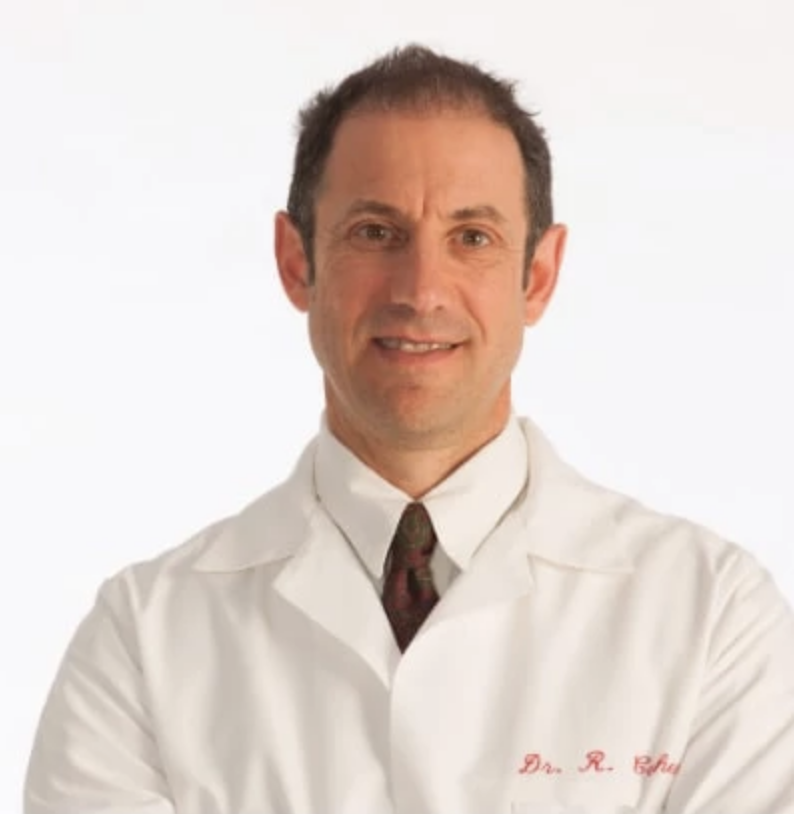
S2 Ep 63#63 — Boosting Testosterone Right with Rick Cohen, MD
Sponsor: RePowerU -- a free fitness practices assessment (a 10-minute questionnaire) "For men, think of your testosterone as an overall marker of your health and wellbeing." Wondering about the benefits of sufficient testosterone? How do these grab you? Improved athletic performanceDecreased workout recovery time—less joint pain, stiffness and muscle sorenessIncreased lean muscle mass and decreased body fatEnhanced libido and sexual functionFeeling calmer, more stress-proof, and more positive about your life Listen in as Dr. Rick Cohen shares his tips for lifestyle tweaks to boost your testosterone. (1) How do you know if you have a testosterone (and wellness) problem? Morning Wood (yes, that) -- #1 indicatorCan't keep your muscle mass...losing muscle and adding body fatCan't recover as well or as fast as you used to doA lack of motivation....a feeling of "flatness"High blood sugarHigh stressFatigue Adam Test: https://www.nebido.com/tools/low-testosterone-symptoms-check-adam-questionnaire Carol Bike: https://carolbike.com/ (2) Things you can do: Sleep -- try the EmFit pad - https://emfit.com/Nasal Breathing -- Dr Dallam Episode on Wise AthletesJet Pack -- testicle cooling before sleep (if you dare)Wear a CGM -- find out for sure if you are having sugar spikes and get your blood sugar under control (Levels)Stress management -- sauna, functional yoga, breathing (4-7-8, etc.)Leaf EKG patch -- the very best HRV tracking...most accurate -- use it as a biofeedback device to learn to destressBlood Flow restriction -- muscle building with less recovery needed (and less risk of injury)Sperti -- Full spectrum lights'Supplements: boron, magnesium, zinc, selenium More from Dr. Cohen: By Rick Cohen, MD: Be All the Man You Can Be: Quick Start Guide Sleep and recover fully. Get eight solid hours of sleep every night. Block out all light (even clocks) to create total darkness.Turn off all electronics one hour before bedtime.Slowly take ten, deep nose breaths twice daily. Inhale for a count of six, hold for four, exhale for eight) Get up from your chair at least once every hour during the day.Take walks barefoot on the grass or sand.Lie in the sun for 15 minutes without sunscreen, with your legs, arms, and torso exposed. Avoid toxins. Replace your conventional toiletries with organic, paraben-free versions.Eat only organic varieties of the “dirty dozen” foods.Strictly avoid eating soy and all GMO products—especially corn, soy and canola.Avoid hard liquor.Limit your wine and/or beer intake to four servings weekly, and no more than two per day. Keep your powered cellphone out of your pants pocket.Wear boxer shorts, not briefs. Practice pleasure. Have sex at least twice a
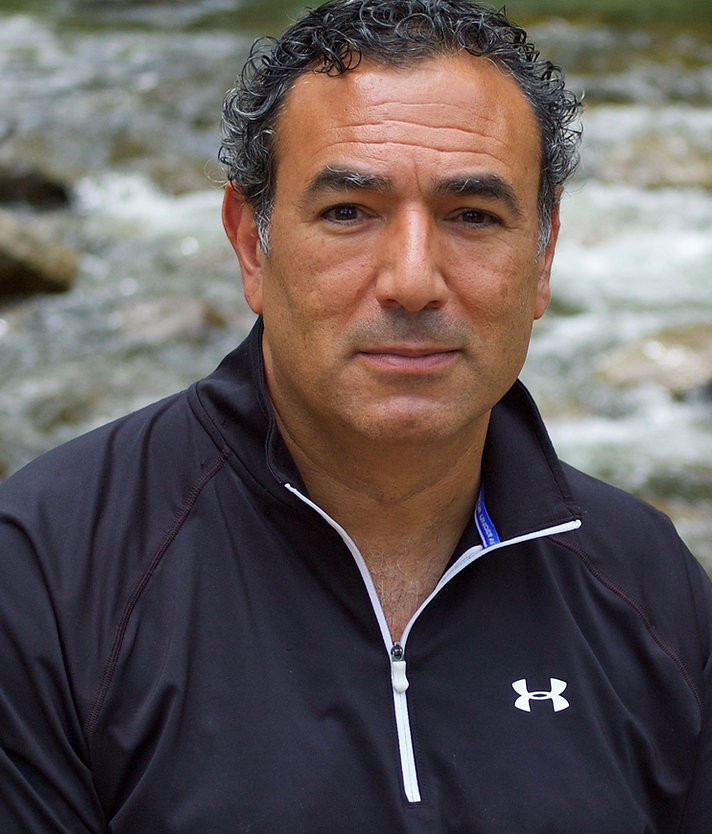
S2 Ep 62#62 — Body Image & Eating Disorders, Doug Jowdy, PhD
Sponsor: RePowerU -- a free fitness practices assessment (a 10-minute questionnaire) Episode 3 of 3 with Dr Jowdy. Part 1 -- An introduction to common psychological impediments to athletic and healthPart 2 - More details on what we can do to become stronger psychologically as well as physicallyPart 3 - Body image & eating disorders common to athletes Today we explore the all-to-common problem of using exercise to compensate for eating disorders and body image issues. Dr. Doug Jowdy talks though how to think about this problem and how we can overcome it. Website: https://www.drdougjowdy.com Book: Gold Medal Mind: https://www.goldmedalmind.com Dr. Jowdy has been practicing the art and science of psychology since 1986. He considers it a blessing to join people on their journey in the arena of sport, or in the game of life. It is his passion to serve as a guide to help others create a life that exceeds one’s expectations
S2 Ep 61#61 — Mental Flexibility, Doug Jowdy, PhD
Sponsor: RePowerU -- a free fitness practices assessment (a 10-minute questionnaire) Episode 2 of 3 with Dr Jowdy. Part 1 -- An introduction to common psychological impediments to athletic and healthPart 2 - More details on what we can do to become stronger psychologically as well as physicallyPart 3 - Body image & eating disorders common to athletes Website: https://www.drdougjowdy.com Book: Gold Medal Mind: https://www.goldmedalmind.com Dr. Jowdy has been practicing the art and science of psychology since 1986. He considers it a blessing to join people on their journey in the arena of sport, or in the game of life. It is his passion to serve as a guide to help others create a life that exceeds one’s expectations
S2 Ep 60#60 — A Winning Mind with Doug Jowdy, PhD
Sponsor: RePowerU -- a free fitness practices assessment (a 10-minute questionnaire) Episode 1 of 3 with Dr Jowdy. Part 1 -- An introduction to common psychological impediments to athletic and healthPart 2 - More details on what we can do to become stronger psychologically as well as physicallyPart 3 - Body image & eating disorders common to athletes Website: https://www.drdougjowdy.com Book: Gold Medal Mind: https://www.goldmedalmind.com Dr. Jowdy has been practicing the art and science of psychology since 1986. He considers it a blessing to join people on their journey in the arena of sport, or in the game of life. It is his passion to serve as a guide to help others create a life that exceeds one’s expectations Private practice in Boulder and Denver where Dr. Jowdy specializes in sport psychology, psychological/medical conditions and personal growth. In his practice he sees both athletes and non-athletes between the ages of 9 and 65. Dr. Doug Jowdy is on faculty as an Assistant Clinical Professor in the Department of Orthopedics at the University of Colorado Hospital Denver School of Medicine. He consults with intercollegiate and high school athletic departments, as well as with business and industry. He also receives referrals from the U.S. Olympic Committee and is a consultant with the U.S. Paralympic Committee. Dr. Jowdy has worked for the U.S. Olympic Committee on two separate occasions. In 1989, he completed a research assistantship under the guidance of Shane Murphy, Ph.D., the first psychologist hired by the U.S. Olympic committee. A decade later, he served as the team psychologist for U.S. Speed Skating and helped both the long and short track teams prepare for the Olympics. As a result of his working closely with Apolo Anton Ohno, 8x Olympic Medal Winner, he is featured in Apolo’s autobiography, Zero Regrets.
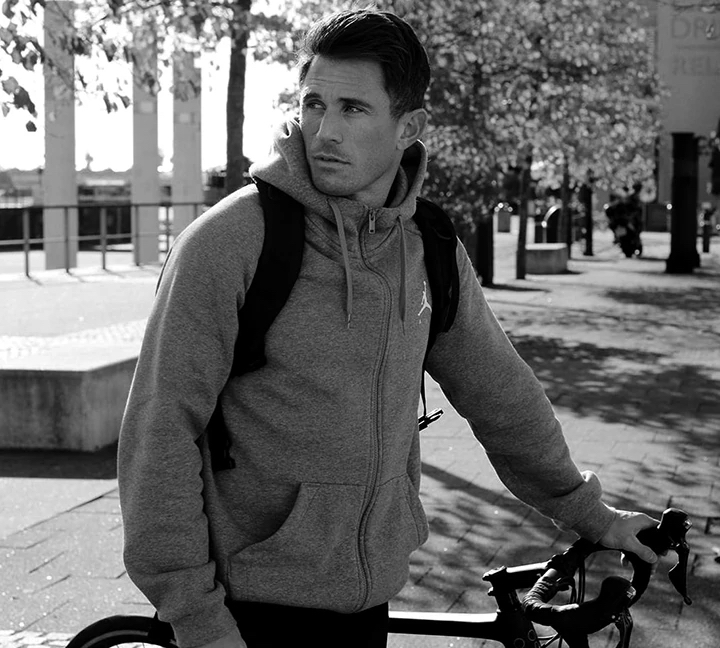
S2 Ep 59#59 — Strength Training for Endurance, Chris Peden
Sponsor: RePowerU -- a free fitness practices assessment (a 10-minute questionnaire) Outline of Discussion Rules: SimpleMinimal effective dose — Be patient Goals: Do no harmKeep you fresh enough enough to rideGet stronger slowly About Chris: https://ridethestruggle.com/blogs/struggle/winter-strength-training-plan-for-cyclists Coach Chris Peden is strength coach to talented cyclists including Zoe Backstedt who currently holds Under 23 National, European and World titles on the road, track and in Cyclocross. Chris believes the old way is not always the right way and highly recommends strength training to any cyclist looking to improve. “Riding your bike should always be the main priority. However, incorporating strength training will further enhance cycling performance if it’s done right.” Strength training enhances exercise economy, anaerobic capacity, lactate threshold, maximal strength, maximal speed and endurance, while also reducing the rate of fatigue. Isn’t that a cyclists ultimate wish-list?” Says Chris. Chris believes strength training is overlooked by many cyclists for two reasons: (1) the fear of adding additional weight to our bodies, and (2) because they don't know how. “Riders who combine cycling with strength training have leaner body composition over those who just cycle. Muscle mass doesn’t suddenly appear on the body once you start lifting weights. It takes years of dedicated regular lifting with minimal cardio.” "We learn strength training as a new skill quite easily - like learning to ride a bike." Contact: https://linktr.ee/CPeden Chris Peden, Strength, Endurance & Nutrition Coach Combined Athletic Performance Portsmouth, UK
S2 Ep 58#58 — Is Sugar Really so Bad? (Richard Johnson, MD)
Discussion Summary: For many years now, I have been hearing that fructose, a component of table sugar and HFCS, is a particularly bad actor for my health. I decided it was finally time to find out if that was really true and if so why. Today I am pleased to present episode #58 with one of the world’s foremost experts on fructose, Dr Richard Johnson. What you will learn today is that the problem is worse than you’d expect, but easier to solve than you’d imagine. Dr. Johnson will tell us why we put on excess weight, why we find it hard to sustain weight loss, why we get high blood pressure, type 2 diabetes, and gout, and how these disease are all related. Yeah. And, You will also learn some easy changes to your own lifestyle to improve your health, which is of course the foundation for being a strong athlete. I can tell you that these illnesses run in my family, so I am taking Dr. Johnsons advice to heart. Maybe you should do the same… Bio: Website: https://drrichardjohnson.com Richard J. Johnson, M.D. has been a practicing physician and clinical scientist for over 25 years. He is internationally recognized for his work on the role of sugar and its component fructose, in obesity and diabetes. His work has also revealed a fundamental role for uric acid (which is generated during fructose metabolism) in the metabolic syndrome. Dr Johnson 's science research has been funded by the National Institute of Health since the 1980s. Rick is a member of the American Society for Clinical Investigation. He has published over 700 papers, lectured in over 45 countries, and is a highly cited scientist. He is the author of Nature Wants Us To Be Fat, published in 2022, and he previously authored The Sugar Fix with Timothy Gower in 2008 and The Fat Switch in 2012. He is currently a Professor of Medicine at the University of Colorado in Denver.
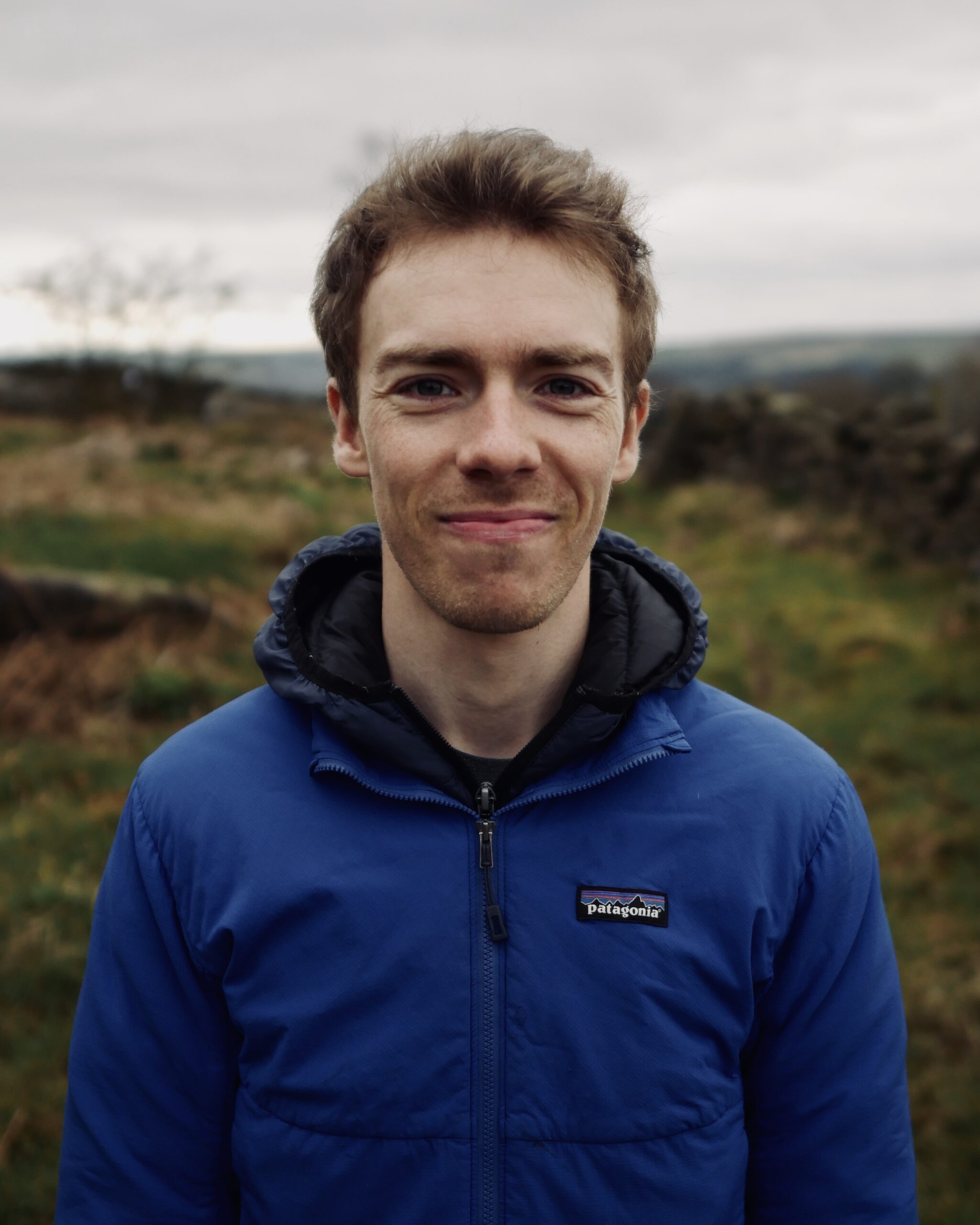
S2 Ep 57#57 — Climb Strong with Tom Bell, UK Hill Climb Champion
Sponsor: RePowerU -- a free fitness practices assessment (a 10-minute questionnaire) Welcome back to the Wise Athletes podcast with Joe Lavelle and Glen Winkel. On today’s episode, number 57, we are joined by Tom Bell, UK Hill Climb National Champion who is a past UK mountain bike marathon national champion and the current UK Hill Climb National champion. Tom is a cycling performance consultant who with his wife Dr. Emma Wilkins, own High North Performance, a coaching company based in the UK. Bio: Cycling performance consultant alongside wife Dr Emma Wilkins at High North Performance, a coaching company based in Harrogate UK. Multi-time UK national champion in various cycling disciplines; 2017 Mountain Bike Marathon National Champion and current (2021) UK Hill Climb National Champion. Links: https://highnorth.co.ukhttps://www.instagram.com/tombellco
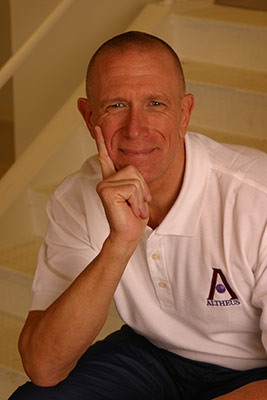
S2 Ep 56#56 – Mobility Drills –> Happy Body, Dr. Stephen Black
Sponsor: RePowerU -- a free fitness practices assessment (a 10-minute questionnaire) Dr. Stephen Black, CEO and Owner of Rocky Mountain Human Performance Center. Stephen A Black, DSc, M.Ed., PT, ATC, CSCS is considered a world-renowned leader in the field of sports medicine, rehabilitation, fitness, and sports performance. As a physical therapist, athletic trainer, and certified strength and conditioning specialist, Stephen uses his background in sport biomechanics, movement quality, muscle imbalance, and manual therapy to specialize in all aspects of human performance. He has worked extensively with a variety of professional athletes and teams with emphasis on holistic care and an integrative approach. website: http://www.rockymountainhpc.com/ Dr. Stephen Black, CEO and Owner of Rocky Mountain Human Performance Center. Stephen A Black, DSc, M.Ed., PT, ATC, CSCS is considered a world-renowned leader in the field of sports medicine, rehabilitation, fitness, and sports performance. As a physical therapist, athletic trainer, and certified strength and conditioning specialist, Stephen uses his background in sport biomechanics, movement quality, muscle imbalance, and manual therapy to specialize in all aspects of human performance. He has worked extensively with a variety of professional athletes and teams with emphasis on holistic care and an integrative approach. Stephen has created RockyMountain Human Performance Center allowing him to work one on one with athletes, direct his associates in optimal sports medicine delivery while conducting research and teaching in a variety of arenas. He has worked with professional teams (Dallas Cowboys, Denver Broncos, Tampa Bay Buccaneers, Toronto Blue Jays), Olympians in gymnastics, wrestling and swimming. Stephen attended the 1988 and 1992 Olympic games delivering lectures on his methods along with treating athletes in attendance. In 1978 Stephen redesigned the sports medicine delivery model by opening S.T.A.R.T., Inc. (Sports Therapy for Athletic Rehabilitation and Treatment), developing a comprehensive program to proactively attend to imbalance, deficiencies, and poor movement patterns before injuries developed. This was one of the first facilities of its kind and the model has been replicated multiple times. In 1986 he opened the first health club in America (Fitness First, Feeding Hills, MA) to focus on integrated health care along with health promotion and wellness. He continues to consult in the health club and wellness industries along with his activities in sports medicine and teachings at Florida Gulf Coast University and Rocky Mountain University of Health Professions. Prior to his current ownership of RockyMountain Human Performance, Stephen was the director of the Health and Fitness Institute at Stamford Hospital located in Stamford Connecticut. He and his team were responsible for the design, construction and operation of this integrated healthcare facility. Going back further in his diverse history Stephen was President of the Athletic Trainers of Massachusetts, which was one of the first organizations and states to achieve licensure for Athletic Trainers. Stephen is featured in 50 Athletes Over 50; Teach Us to Live Strong, Healthy Life by Don McGrath, PH.D. along with several local and national publications such as Sports Illustrated, ESPN, Men’s Health Magazine, and Glamour. In addition to his clinical work, he has made significant academic contributions in the form of laboratory research, biomechanical research, and clinical education, teaching thousands of individuals worldwide. Numerous publications and articles chronicle Stephen’s tenure in research, academia and c
S2 Ep 55#55 — A Grand Fondo From The Heart – Bluewater International Grandfondo
Sponsor: RePowerU -- a free fitness practices assessment (a 10-minute questionnaire) Outline of Discussion The origin story behind BIGWhat was the result? Why did it succeed so well?How to replicate this in other cities? What are the keys? What are the layers…the sequence of what comes first, second, etc.? Summary of Key Points 4 pillars Community health -- Lowering barriers to accessCharityConnectionFun Keys: Non-profit with a cause that resonated with many people, cyclists and beyondQuality volunteers (enabled by the “no one is making money; we’re all in this together”)Support of professional and celebrity cyclists and personalities (no fees, just hotel plus 1 dinner: Hunter Allen, Lance Armstrong guy, Canadian continental league team, …)…also enabled by non-profit status?Effective board leadership…connections plus strong management skillsA great jersey that people liked and wanted to wearInclusive of experienced, inexperienced, and non-riders; weekly rides to provide skills and fitness for 12 weeks in the lead upSome people jumped in early to make it happen, while others saw a success and wanted to be a part of it….a snowball effect. It’s takes a community Cycling shops (and other vendors) help out and get businessCity provide support and get positive Successes Bike ridership is way upCity received a ton of tourism benefit…people came from all over YouTube videos: https://www.youtube.com/channel/UCIqZIaLc_W8koxWvrb4g1nQ B.I.G. Website: https://bigf.ca/
S2 Ep 54#54 — Better Posture = More Power + Less Pain with Annette Verpillot
Sponsor: RePowerU -- a free fitness practices assessment (a 10-minute questionnaire) The Posturepro Method We know that posture stems from your brain’s interpretation of the information it receives. We also know that your body is constantly fighting the effects of gravity in order to keep you upright or moving. Proper posture allows your body to work efficiently against gravity. On the contrary, poor posture leads to excess energy expenditure in attempt to stay upright. This can be exhausting! In order to optimize your posture, The Posturepro Method observes several elements: BRAIN-BODY Muscles respond to the commands of the brain. A brain imbalance leads to a muscle imbalance. FOOT SENSOR The weight distribution of your feet changes knee and hip mechanics. EYE SENSOR The eye muscles tell your brain where your body is in space. TMJ Recent studies have show that the position of the jaw affects our posture. Annette’s biography: Annette Verpillot is the founder of Posturepro, a health company specialized in restoring the brain-body connection through some of the world’s most advanced rehabilitation and injury prevention techniques. She has created the Posturepro Method which has gained global recognition for eliminating chronic pain, increasing strength, and improving sports proficiency. Additionally, Annette actively works with clients, professional athletes, trainers, practitioners, and researchers to develop solutions to tackle global health issues. Here are links to connect with Annette: Website: posturepro.co Instagram: @posturepro Facebook: @Posturepro Youtube: @posturepro1 Twitter: @posture_pro ClubHouse: @posturepro Posturepro Club: https://www.facebook.com/groups/postureproclub TedTalk: https://youtu.be/S3qdSo8z0Is Annette bio: https://posturepro.co/annette-verpillot/ YouTube Channel: https://www.youtube.com/c/Posturepro Example video from website: https://posturepro.co/improve-your-posture-through-your-feet/
S2 Ep 53#53 — Wearables for Health & Fitness — Adam Bataineh MD
Sponsor: RePowerU -- a free fitness practices assessment (a 10-minute questionnaire) Who is Dr. Adam Bataineh? Adam Bataineh, MD: Internal medicine doctor focused on aging and longevity. Co-founder and chief medical officer of Span Health, a longevity-focused health coaching app. The focus of the Wise Athletes podcast is older athletes, and how they can improve athletic performance today and retain their athletic capability for a long time. As a group, older athletes are big users of performance tracking tools for heart rate, power output, speed, and distance; and more and more we are adding biometric tracking wearables for general health and fitness tracking, such as sleep duration and HRV. Dr Bataineh is an expert in the wearables market. Dr. Adam Bataineh on Twitter: https://twitter.com/DrAdamBat Our discussion topics: Why do we need continuous tracking of anything? Why isn’t my annual physical and blood test with my family doctor good enough?An overview of the market: types of devices, data services that sit on top of devices to give us advice?Where are the devices and AI accurate enough to turn over our decision-making to the machines?What is the 80/20 rules in this space? How do I get the biggest bang for my money and time? What is Span Health? Span Health is one of the startups that translates the science of personalized nutrition & lifestyle using your data to find what works. "We started with a mobile app with tools and content to run experiments, validate which ones truly work for you, and stack healthy habits into a sustainable routine, "says Patrick Samy, co-founder and CEO of Span Health. Span Health website: https://www.span.health
S1 Ep 52#52 — Make Your Joints Last a Lifetime – Howard Luks, MD
My Talk with Dr. Luks Dr. Luks is a top Orthopedic Surgeon and Sports Medicine Physician who is also a masters endurance athlete. Dr Luks knows all too well how hard it can be and how important it is to remain athletic for the pleasures it brings to life as well as for the many health and longevity benefits that cannot be obtained in any other way. In our discussion we cover a set of topics that are of interest to all older endurance athletes, including: How do I interpret that joint pain that appeared out of nowhere, and what should I do? When should I get an MRI? How to avoid training mistakes behind “overuse” injuries that can take away our athletic fun. Arthritis: ….. am I causing arthritis by exercising a lot? Should I rest my joints to let them heal? Surgery vs. no surgery: What’s this top orthopedic’s surgeon’s surprising perspective on the role for surgery? If you are dealing with chronic pain, thinking about surgery, worried about arthritis or just want to understand your body a little better…listen in to this conversation. You will learn a ton. Who is Howard J Luks, MD? Dr. Luks has been named as one of the top Sports Medicine Physicians in the United States, by US News and World Report. He has also been named as one of the Top 10 “Social Health Makers” for Osteoarthritis. Dr. Luks has been named one of the top Sports Medicine Physicians in New York for nearly 10 years in a row and Dr. Luks was named one of Twitter’s Top Ten Doctors and served as an Advisory Board Member of the Mayo Clinic Center for Social Media for 3 years. After graduating with honors from New York Medical College, Dr. Luks completed his Orthopedic Surgery residency in NY in 1996 and a fellowship in Sports Medicine at the Hospital For Joint Diseases in NYC in 1997. As the Chief of Sports Medicine and Arthroscopy at New York Medical College for over 20 years, Dr Luks was entrusted to teach the next generation of Orthopedic Surgeons about the needs of athletes of all ages. As a Board Certified Orthopedic Surgeon specializing in Sports Medicine, Dr. Luks focus is on injuries that involve the shoulder, knee, ankle, and elbow. More than twenty years of experience in an academic community has enabled Dr. Luks to offer a comprehensive sports medicine treatment experience; including a solid education about what’s bothering you, and a formal plan to move forward and back to your anticipated level of play. Most injuries are managed non-operatively with a focus on how to adjust training, lifestyle, diet, and exercise to improve condition. Blog post on when to get an MRI: https://www.howardluksmd.com/sometimes-our-joints-just-hurt-and-its-ok-not-to-know-why/ Website: https://www.howardluksmd.com/ Twitter: https://twitter.c
S1 Ep 51#51 — The AFib Cure Co-Author, Dr John Day
Sponsor: RePowerU -- a free fitness practices assessment (a 10-minute questionnaire) Who is Dr. John Day? Dr. John Day is a cardiologist specializing in the treatment of atrial fibrillation and other abnormal heart rhythm conditions at St. Mark’s Hospital in Salt Lake City, Utah. He received his medical degree from John Hopkins and completed his residency and fellowships in cardiovascular medicine and cardiac electrophysiology at Stanford University. Dr. John Day is board certified in cardiology and cardiac electrophysiology. Since 2004, Dr. John Day has appeared as a health expert on all of the major television networks. For several years he had a weekly television segment on the CBS affiliate in Utah. Over 65,000 people now follow him through his newsletter, blog, or social media channels.In 2017 Dr. John Day published his first book, The Longevity Plan. This book went on to become an Amazon number one best seller and was named best books of 2017 by the Huffington Post.In 2021 Dr. John Day published his second book, The Atrial Fibrillation Cure which was also an Amazon best-seller and was the top selling book in the entire cardiovascular space for over two months.In addition to his books, Dr. John Day is the prolific author of more than 100 studies that have been published in many of the most prestigious scientific and medical journals. He also is the founding editor-in-chief of the Innovations in Cardiac Rhythm Management medical journal.Dr. Day is also a researcher and pioneer in the field of electrophysiology, with a patent on technology that allows physicians to map the source of atrial fibrillation three-dimensionally. https://drjohnday.com/ Podcast Summary Notes "Long time, competitive endurance athletes have a higher risks of AFib, which is a marker of premature aging. The faster you solve AFib, the better your long-term outcome. Ablation technologies have come a long way….success rates of 80-90% can be expected." What is atrial fibrillation? (https://www.cdc.gov/heartdisease/atrial_fibrillation.htm) Atrial fibrillation (AFib or AF) is the most common type of treated heart arrhythmia. An arrhythmia is when the heart beats too slowly, too fast, or in an irregular way.When a person has AFib, the normal beating in the upper chambers of the heart (the two atria) is irregular, and blood doesn’t flow as well as it should from the atria to the lower chambers of the heart (the two ventricles). AFib may happen in brief episodes, or it may be a permanent condition. Cardiologist vs. Cardiac electrophysiologist (EP)? To become an EP takes an extra 2 years of trining. EP’s deal with every electrical related to the heart. Treatments: ablation, pacemakers, etc. <h3 class="w
Bonus: Slaying Myths & Adapting to Nasal Breathing
bonusSponsor: RePowerU -- a free fitness practices assessment (a 10-minute questionnaire) This is a shortened version of Episode 50 (1.5 hours long)....I cut out the good and left the great. If you haven't listened to the full episode, start with this one and then graduate to the full story from George Dallam, PhD. Nasal breathing is not a trick or hack to get an unnatural advantage. Nasal breathing is the designed in way to breathe properly. Not nasal breathing causes health and performance problems. But it's never too late to do it right. Learn the why's and how's of nasal breathing from George Dallam, PhD. Dr. Dallam says, "One simple rule: breath through nose all the time, or as much as possible." Benefits of nasal breathing: Better filtering of particles and viruses (less nasal infection, bronchitis). Filtering becomes even more important when exercising because we take in so much more air.Less water lost though breathingLess energy spent on breathing (more energy for locomotion); higher O2 extracted per breath (higher efficiency)Recovery from "EIB" exercise induced bronchoconstriction (exercise induced asthma)Provides a powerful training stimulus to improve fitness…make you faster even if you go back to mouth breathing in high intensity efforts, such as racesImproved stress managementBetter sleep, and overall improved recovery from exercise (lower stress, avoidance of snoring)Better posture and movement ability with improved diaphragm activityFunctional movement benefits —diaphragm is a major core muscle that is under strength when we mouth breathe. Avoids possible damage to the heart from over breathing (a hypothesis from Dr Dallam) Notes from discussion with George Dallam, PhD Myths about breathing: I feel the need to breath faster when I need more oxygen — mostly false. It is the presence of higher than usual CO2 in the blood that causes the “air hunger”CO2 is bad, and needs to be removed as fast as possible — false; CO2 is necessary for normal bodily functions. Too much AND too little CO2 are bad for the body.Breathing faster brings in more oxygen (superoxygenation) — no; red blood cells are generally 95-98% oxygenated after passing by lungs. You don’t get more oxygen into red blood cells, you just lose more CO2 from blood plasma, which creates problems for the bodyBreathing doesn’t take much energy or oxygen to do — false. During exercise, breathing can use as much as 15% of the total energy burn of the body…15% of the oxygen being used. If we can save 25% of that by breathing more efficiently (less breathing for same oxygen), we’ll have more oxygen left over for other muscles to use.An athlete cannot get enough oxygen for exercise though just nasal breathing — false. It is easy to see why people would come to this conclusion after one attempt, but with adaptation, many elite athletes compete using just nasal breathing. What does the nose do for us? Conditioning of the air: humidifying the air and warming up the air. Reduce lung dehydration and related wheezing and breathing problemsFiltering: particulates (dust, smoke), viruses are captured in
S1 Ep 50#50 — The Science of Better Breathing with George Dallam, PhD
Sponsor: RePowerU -- a free fitness practices assessment (a 10-minute questionnaire) Nasal breathing is not a trick or hack to get an unnatural advantage. Nasal breathing is the designed in way to breathe properly. Not nasal breathing causes health and performance problems. But it's never too late to do it right. Learn the why's and how's of nasal breathing from George Dallam, PhD. Dr. Dallam says, "One simple rule: breath through nose all the time, or as much as possible." Benefits of nasal breathing: Better filtering of particles and viruses (less nasal infection, bronchitis). Filtering becomes even more important when exercising because we take in so much more air.Less water lost though breathingLess energy spent on breathing (more energy for locomotion); higher O2 extracted per breath (higher efficiency)Recovery from "EIB" exercise induced bronchoconstriction (exercise induced asthma)Provides a powerful training stimulus to improve fitness…make you faster even if you go back to mouth breathing in high intensity efforts, such as racesImproved stress managementBetter sleep, and overall improved recovery from exercise (lower stress, avoidance of snoring)Better posture and movement ability with improved diaphragm activityFunctional movement benefits —diaphragm is a major core muscle that is under strength when we mouth breathe. Avoids possible damage to the heart from over breathing (a hypothesis from Dr Dallam) Time marks to find particular parts of discussion: Dr. Dallam background and the beginning of interest in nasal breathing: 4:58Myths about breathing:18:51What does the nose do? 31:00More problems from mouth breathing: 39:30Stress and related lower performance from over breathing: 46:30Intro to transition to nasal breathing: 50:50Advantages of nasal breathing: 53:58Potential heart damage (related to AFib) from mouth breathing during hard exercise: 1:05:23How long does it take to adapt to nasal breathing during exercise: 1:07:15Summary of adaptations in transition to nasal breathing: 1:12:13Recommendation for getting started: 1:20:14How to find Dr. Dallam: 1:26:10 Notes from discussion with George Dallam, PhD Myths about breathing: I feel the need to breath faster when I need more oxygen — mostly false. It is the presence of higher than usual CO2 in the blood that causes the “air hunger”CO2 is bad, and needs to be removed as fast as possible — false; CO2 is necessary for normal bodily functions. Too much AND too little CO2 are bad for the body.Breathing faster brings in more oxygen (superoxygenation) — no; red blood cells are generally 95-98% oxygenated after passing by lungs. You don’t get more oxygen into red blood cells, you just lose more CO2 from blood plasma, which creates problems for the bodyBreathing doesn’t take much energy or oxygen to do — false. During exercise, breathing can use as much as 15% of the total energy burn of the body…15% of the oxygen being used. If we can save 25% of that by breathing more efficiently (less breathing for same oxygen), we’ll have more oxygen left over for other muscles to use.An athlete cannot get enough oxygen for exercise though just nasal breathing — false. It is easy to see why people would come to this
S1 Ep 49#49 — Training for Injury Prevention with Matthew Smith, DC CES
Sponsor: RePowerU -- a free fitness practices assessment (a 10-minute questionnaire) Matthew Smith, DC, CES Dr. Matt Smith is a sports chiropractor, strength coach, and the founder of EverAthlete, an online strength training, injury prevention, and recovery resource for outdoor enthusiasts. Matt has been a trusted coach and consultant to some of the best athletes and highest performers in the world, helping them navigate injuries and perform at their best. EverAthlete website: https://www.everathlete.fit/ Instagram: https://www.instagram.com/everathlete/?hl=en Part 1 — Breathwork for Recovery (episode 48) -- https://www.wiseathletes.com/podcast/48-breathwork-for-faster-recovery-matthew-smith-everathlete/ Part 2 — Injury Prevention for Older Athletes Older Athlete are particularly vulnerable to injuries: Many years to accumulate movement problems and muscle imbalancesPast injuries from accidentsToo much time sittingToo little cross-trainingSlower healing Summary (1) Do assessments to identify body areas that need work Example: Lunge Movement Assessment: Lowering the body down so the back knee comes close to touching the floor. Then stepping back to the original position. A few things we look for in a test like that are: (1) torso control: Does the torso stay upright or does it drop down towards the floor, towards the knee as you go through the movement.(2) lower body: are the hips (and torso above) shifting from side to side, and do the hips stay level?(3) front foot points straight ahead(4) front knee to point straight ahead in line with 2nd and 3rd toe (vs. pointing inward our outward relative to the foot)(5) overall movement should look smooth and stable When we see a problem, we do further breakout tests to fine tune the finding. Do they struggle with hip or ankle mobility or lumbar stability? Deficiencies in those areas can lead to a “messy” lunge. (2) How to avoid injuries: Focused efforts on individual muscles that need to be addressed (based on assessments) in order to allow proper movement patterns: tissue work (foam roller) stretching (lengthening tight muscles) activation (such as using bands to turn on muscles creating muscle imbalances)Practice standard movements until competent (check out Matt's Instagram or Website for details)Mix up training: use of strength training as cross-training: healthy exercise to build balanced strength into the body for greater resilience as well as to learn proper movements that don’t lead to stressful movements (and pain or poor performance). Force the body to adapt to a variety of movements…to bring the body back to balance.&n
S1 Ep 48#48 — Breathwork for Faster Recovery — Matthew Smith, EverAthlete
Sponsor: RePowerU -- a free fitness practices assessment (a 10-minute questionnaire) Matthew Smith, DC, CES Dr. Matt Smith is a sports chiropractor, strength coach, and the founder of EverAthlete, an online strength training, injury prevention, and recovery resource for outdoor enthusiasts. Matt has been a trusted coach and consultant to some of the best athletes and highest performers in the world, helping them navigate injuries and perform at their best. EverAthlete website: https://www.everathlete.fit/ Instagram: https://www.instagram.com/everathlete/?hl=en Summary During exercise, approximately 15% of the calories we burn is used for breathing. That is oxygen that is unavailable for our muscles that propel us. What if there was a way to be more efficient in breathing? What if that same skill in breathing would allow us to be more calm and recover faster? To sleep better? Wouldn’t that be a skill worth learning? Overbreathing Caused by stress: shallow chest breathing Causes stress: mouth breathing increases stressPoor breathing habits How? Belly breatheBreath slowerNasal breathingGet comfortable How to start Everyday lifeLow intensity exercisePush the envelope Videos: Diaphragmatic Breath Video: Diaphragmatic BreathingClear the nose to be able to breathe nasally: https://youtu.be/1IWWcyk3_jkSwitching to nasal breathing during exercise (10-12 weeks): https://youtu.be/0gtlAAQzENw ——Notes on discussion with Matt (not a transcript)-- We are interested in understanding your perspective on how fitness impacts health and longevity, and on how health impacts fitness. Matt is a sports chiropractor and strength coach. Worked in athletic performance for 15 years. Founded Everathlete….now an online platform focused on helping athletes improve outdoor pursuits: hiking, swimming, biking, running. Training programs and recovery programs. Started with a focus on injury treatment and prevention for athletes…migrated into a performance training company designed to meet people where ever they are, and helping them get to where they want to go. We use a wide variety of resources including strength training, soft tissue therapy, injury prevention techniques, breathwork (as a tool for recovery). We will be recording two podcasts with Matt. (1) breathwork and (2) performance training for adventure athletes including injury prevention. Worked with a wide variety of athletes: olympians and world champions, as well as many masters athletes. Breathwork: Several books have come out in the last few years. Oxygen Advantage, Breath are the most notable. Q: What is breathwork? Breathwork is the practice of breathing to improve one’s health. Used it heavily personally and with athletes. Deliberate practice of breath to improve your state of being.
S1 Ep 47#47 — Dry Needling for Fast Healing — Christine Bell, PT
Sponsor: RePowerU -- a free fitness practices assessment (a 10-minute questionnaire) Christine Bell Christine Bell has more than 20 years of experience and expertise in treating orthopedic and sports injuries. Having worked in Australia, the UK and the USA she has learned many treatment methods and techniques and treated a vast array of sports and orthopedic conditions. She is an expert in many techniques for healing injured athletes, including Dry Needling, which is a super fast method of healing the soft tissues of an athletes body. Contact Christine here: https://aussie-pt.com/contact/ Mobility & Strength Class Video: https://us02web.zoom.us/rec/share/ZiE8tLNNrVTgvEJKjuN4aX28t5QQnnpejNOtholCGJ3f9t8f2k81M2yLCdCZy3wD.WJ4JM9iStHsHnhDQ Passcode: 71L&VPo+ Note: you need a long foam roller, a mat, hand weights and a small looped band for this workout. Notes from Discussion with Christie Bell, P.T. Christine is in the business of fixing injured athletes Q: Why are you so good? The first thing I look at is the cause of the injury. I don’t just look at the spot that is painful. I look for the source of the problem. Further up or down the chain, that is directly influencing the injury. Look at the overall body. The key is to have enough time. I book 1 hour sessions to have enough time to get to the bottom of what is happening. What is it they are doing that is causing that pain. Lately there are a lot of problems related to working at home…which is not setup for sitting in a good posture for a long time. Q: What is your backstory? Grew up in Australia. Primary sport was basketball. Always spraining ankles. The physios helped me a lot, and I eventually wanted to do that. I got my PT education in Australia and later Boston, MA USA. Q: What is Dry Needling, and how does it help? Dry Needling is a fairly new modality. It is based on trigger points. A PT is trained to deal with trigger points, but it is hard to get at the trigger that can be deep in the muscle. So, a needle can get down into the muscle without having to push through the overlaying tissue. Plus Needling takes a second vs. 30-60 minutes, maybe multiple times rubbing on the trigger point. It is fast. Trigger Point — like a lentil (bean) under the muscle or a tight, ropey band in the muscle that is switched on all the time. Can be from over use Referral pain — a spinal / nerve being pinched by a tight muscle in the back that is causing a nerve pinch. Sciatic nerve pain is a sharp pain. A referred trigger point is usually a dull muscle pain. Q: What is “Dry” needle? Same as acupuncture needle. The needle is very thin since there is not hollow channel inside for delivering liquid like you would use for an injection. Because it is so thin, you usually cannot feel it. Q: Acupuncture vs. Dry Needling? Acupuncture is based on meridians where as dry needling is doing directly to the muscle to relieve trigger points. Acupuncture is for systemic issues more than muscle issues. Q: What is Dry Needling use for? Muscle issues and tendon issues. Neck, back, thumb, tennis / golfer e
S1 Ep 46#46 — Forestalling Age with Fitness with Dr. Stephen Black
Sponsor: RePowerU -- a free fitness practices assessment (a 10-minute questionnaire) http://rockymountainhpc.com/dr.-black.html Dr. Stephen Black is the CEO and Owner of Rocky Mountain Human Performance Center. He is an acknowledged leader in the field of sports medicine, rehabilitation, fitness, and sports performance. Dr. Black has worked extensively with professional and amateur athletes in many sports, leveraging his holistic and integrative approach to improve performance. Dr. Black is himself a long-time, high-level athlete, who knows personally as well as professionally the challenges and opportunities available to us all for slowing the effects of aging with individualized programming for higher fitness and superior performance. Dr. Black’s philosophy is to proactively addressing imbalances, deficiencies, and poor movement patterns to help older athletes become healthier and stronger while having fun. Show Notes: not a transcript but a summary of the key points discussed with links to other material mentioned. Key Points Summary: Age: Chronological vs. physiological age: create a gap in your favorStart Early: the earlier you start in athletic, the better your health as you get older (don’t wait!)Be Proactive: avoiding health problems has a much bigger payoff than solving health problems after they arrive.Consistency & Moderation: for the older athlete, consistency is key to derive the benefits of healthy behaviors, and moderation is important as we shift to prioritizing health over performance.Patience: progress toward health and fitness is a journey, not a destination.47 foods: stay within your food selections to find consistencyProtein: 1.5-2.2 grams of protein per kilo of body weight for an active person working out 1-3+ hours per day. And, err on the side of too much to compensate for worsening digestion and signaling in our bodies as we get older. Eat protein with carbs (1-to-3 ratio of protein to carbs)Weight-bearing Resistance Exercise: older athletes must get some weight-bearing resistance exercise to retain muscle mass and maintain bone health.Recovery: Use a 1-to-3 ratio. For every 1 dose of high intensity, 3 does of recovery. Dose = time exercising. “I’m as good once as I ever was”. But get the recovery to avoid injury and/or catastrophe. Q: Connection between Health and fitness today as well as between health and fitness into the distant future. Consider two sides of that questions: chronologic age vs. physiological age. One thing is the younger a person started participating in athletic activity, the greater their health as chronological age progresses. Exceptions can occur due to lifestyle changes and accidents. But putting deposits into the fitness bank helps delay aging. Q: One of the key questions is, for each person, what are the interventions that will make the most impact for the least investment, least effort? I assume it will be a unique conclusion for each person, as everyone is different genetically, and has had a unique life to date, but also each person has attempted in his or her own way to compensate for the impact of aging on
S1 Ep 45#45 — Build Strong Habits with Samuel Salzer
Sponsor: RePowerU -- a free fitness practices assessment (a 10-minute questionnaire) Build strong habits to find the consistency you need to create the life you want to live Our Guest Today -- Samuel Salzer https://www.samuelsalzer.com/ Samuel Salzer is a habit expert and experienced Behavioral Designer, specializing in creating scalable behavior change solutions. Co-author of the book Nudging in Practice - How to Make It Easy to Do The Right Thing and one of the world’s first Chief Behavioral Officer's in tech. He's co-founded the Habit Coach Professionals, providing the first certification dedicated to helping coaches level up their coaching business using tools and insights from behavioral science. Changing behavior is hard. Generating engagement, increasing adherence, improving retention, maintaining growth — online or offline, it doesn’t matter. It’s hard. The good news? Behavioral Design makes it easier. Sam is a expert in applying insights from Behavioral Science and Behavioral Economics to fuel habit formation and digital behavior change. Sam wants to make the world a better place, one good habit at a time. To that end, Sam provides help to coaches and value-driven organizations make their products and services better using the latest Behavioral Design tools and insights. Show notes: not a transcript but a rough but thorough description of what was discussed and the points made People struggle to make changes in their lives. Sometimes for a long time. People want to improve themselves in some way. They have a good intension but when they seek help, the world gives them a terrible solution that either doesn’t work at all or only provides short term benefit, and sometimes provides harm. Samuel’s fuel is to take the science behind behavior change to turn it into actionable advice and tools for regular people to use in making their lives better. Samuel has worked on solutions that have helped millions of smokers seeking to break the habit, and for weight management interventions, and he has provided 1-on-1 coaching as well. I now know that behavior change and habit formation is a skill that any of us can learn. So we are not helpless if we care to get control over ourselves to install good habits that will allow us to do the things we want to do consistently. I originally started the Wise Athletes podcast with Dr Glen Winkel in order to talk to experts to discover what would make a difference for the older athlete looking to both improve performance AND to extend the time in life I could be a strong athlete. My initial idea was that if I only knew what to do, that would be enough, but I was so wrong. There are 3 obstacles: (1) what IS true, what should older athletes like me know in order to make good decisions about improving performance, staying healthy, and extending the window for being a strong athlete. But quickly I came to understand that: (2) there are too many things that are true and relevant to my goals. I had to find a way to prioritize, to apply an 80/20 rule, a way to be sure to do the behaviors that will have the biggest impacts for the smallest efforts… https://www.wiseathletes.com/applying-an-80-20-rule-the-fitness-practices-assessment/
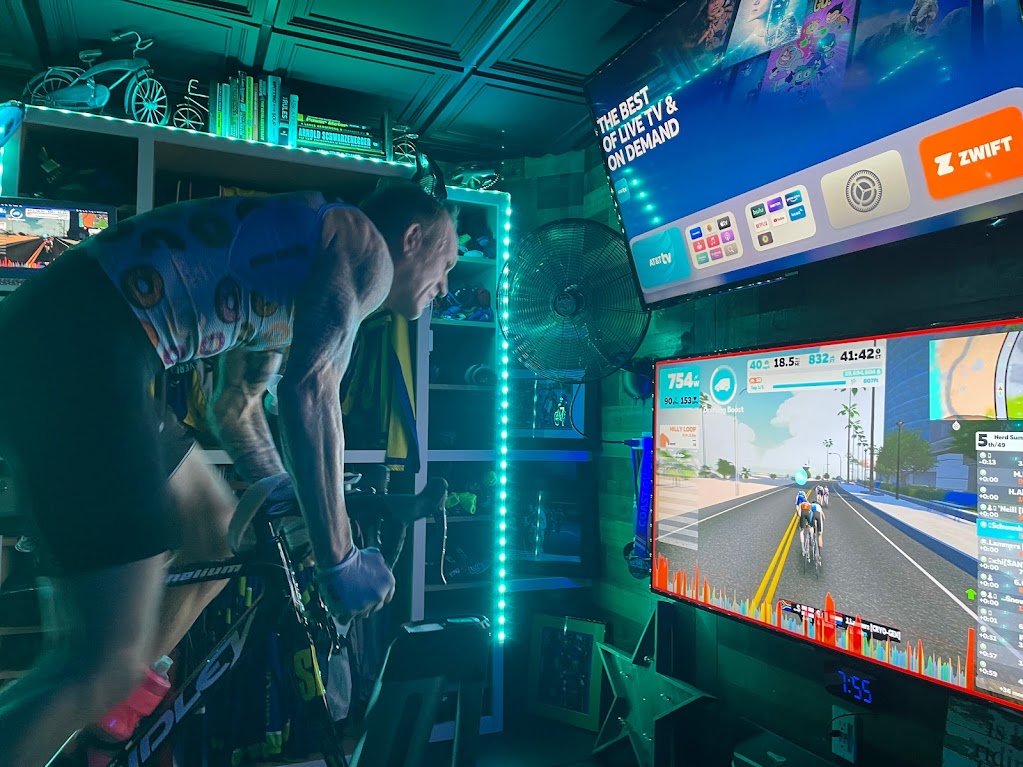
S1 Ep 44#44 – Chris Schwenker, PT, Virtual Cycling’s Biggest Fan
Sponsor: RePowerU -- a free fitness practices assessment (a 10-minute questionnaire) Our Guest Today: Chris Schwenker, P.T.: "Indoor Virtual Cycling is the evolution of our great sport. The Zommunique' (theZommunique.com) has it covered with in-depth reporting, eSports racing news, community features, cutting-edge training and performance research, tips, and suggestions. The ZOM's authoritative content team, led by its founder, Chris Schwenker, P.T., an avid virtual cyclist and Physical Therapist with over 25 years of experience, focuses on the athlete, the avatar, and everything in between." Chris Schwenker, P.T. background Semi-retired as owner and director of his private Orthopedic Physical Therapy practice after over 20 years, Chris is blessed with the freedom to pursue his passion for virtual cycling and writing. On a continual quest to give back to his bike for all the rewarding experiences and relationships it has provided him, he created a non-profit - The DIRT Dad Fund (www.DIRTDadFund) to support members of his online cycling team. Through the pages of his cycling and fitness blog site, The Zommunique' (www.TheZommunique.com), Chris is committed to helping others with his bike. Chris graduated with top honors as valedictorian of his hometown high school and received a full academic scholarship. He attained a biology degree from Brandeis University, where he played Division 3 soccer as a Justice Brandeis Scholar. Chris received his professional post-graduate degree from the SUNY-Stony Brook School of Physical Therapy and has been in private practice for over twenty years. Chris has co-authored several research papers, been a guest on multiple fitness and cycling-related podcasts, and written and interviewed for many articles on the subject. You will find him behind his desk when not riding on the North Fork of Long Island roads, where he lives with his beautiful wife and is proud of his two college student children.Love all of virtual cycling, not just Zwift.Always loved sports. Soccer in college, then powerlifting. Got big (192 lbs with very low body fat), and didn’t do any cardio. When Chris’s father died young (before he met any of Chris’s children), Chris shifted into cardio sports.Raced up and down the east coast. Transformed his body: from 192 lbs to 128 lbs with single digit body fat. Now his son is 21 years old.He now rides mostly indoors. The original issue was the time constraint for when he could ride. He only had a window early in the day, before the sun rose, so he was riding indoors mostly at 4 - 630am. Chris was also concerned about safety on the roads he had easy access to ride.He did try freezing cold rides, but didn’t like it.He is a member of the DIRT team, which has 10,000 members. It’s the biggest club on Zwift.Chris rides a lot. 15,000 miles last year.Chris started virtual cycling to stay warm, and stay safe, but that isn’t why he does it now. He now is attached to the community, camaraderie, ….his friends are on Zwift. The racing teamwork is much better than real life in his amateur experience. AND, you don’t have to crash.Racing in virtual cycling is real racing. The thrill of victory and the agony of defeat lives on in the virtual environment.Chris’s team uses team tactics to make the virtual racing more exciting than real life racing. Any advice for people transitioning from rid
S1 Ep 43#43 – Yoga for Cyclists with Hunter Allen
Sponsor: RePowerU -- a free fitness practices assessment (a 10-minute questionnaire) Yoga for Cyclists? YES! Yoga is everywhere, but is it for cyclists? YES! Hunter Allen was one of the first coaches to bring yoga to his clients to help them be more resilient, recover faster, and get stronger on the bike. Using yoga to recover faster and get stronger on a bike.... with Coach Hunter Allen Hello, and welcome back to the Wise Athletes podcast with Joe Lavelle and Dr. Glen Winkel. On today’s episode, number 43, we are joined by the legendary cycling coach Hunter Allen. Hunter was co-author of the book “Training and Racing with a Power Meter” (with Dr. Andy Coggan) which has been translated into 8 languages and sold over 120,000 copies. He also co-wrote “Cutting-Edge Cycling” with Dr. Stephen Cheung, was the co-developer of TrainingPeaks WKO software, and was the founder of Peaks Coaching Group. Episode 40 with Hunter Allen: https://www.wiseathletes.com/podcast/40-power-meter-find-your-superpower-with-hunter-allen/ What Hunter is less well known for is his work in bringing yoga to cyclists with his Yoga for Cyclists video. When Hunter was a professional cyclist, he was looking for ways to help him recover and become more supple without adding to his exercise regime. He found yoga, and over the years was able to curate a set of yoga poses that work best to help cyclists recover and, over time, develop supple, resilient muscles. Widely known as one of the top experts in the world in coaching endurance athletes using power meters, Hunter Allen has been instrumental in developing and spreading the power training principles. Hunter is a USA Cycling Level 1 coach, was the 2008 BMX technical coach for the Beijing Olympics and has taught the USA Cycling Power Certification Course since 2005. A former professional cyclist for 17 years on the Navigators Team with over 40 road victories to his credit, Hunter has been coaching endurance athletes since 1995, and his athletes have achieved more than 2000 victories and numerous national, world championship titles and Olympic Medals. Hunter Allen -- Yoga for Cycling Pioneer http://www.peakscoachinggroup.com/ https://shoppeaks.com/product/yoga-for-cyclists/ Hunter was one of the first to bring the benefits of yoga to the cycling world. He started when he was a professional cyclist….he was looking for ways to recover better. How did you bring yoga into cycling? When you start to understand the idea of muscles and how bound up we become as cyclists because of the awkward position we are in for so many hours. Bent over, arms out in front, never extend legs fully, craned neck. Because of the 1000s of hours we are in that position we develop muscles very specific to that. I can always tell who is a cyclist because they have stand with knees slightly bent. Never straighten legs. Hamstrings are tight. Never extend through heels. Tight hip flexors. Needed to create suppleness in those muscles to become a better cyclist. Prevent muscle cramps. Create more rel
S1 Ep 42#42 — Muscle Activation Technique for Performance and Pain, with Rhonda Mansell
Sponsor: RePowerU: 12 Elements of Fitness Assessment (a free service): https://formfaca.de/sm/SR_8_j7es ——— MAT is based on four pillars: Look at limits in range of motion (ROM), and where a limited ROM is found, look at the muscles involved in creating the normal ROM…those are the muscles that are weak or are not firing wellTest those muscles to confirm inhibition Treat those muscles to reactivate themThen retest the range of motion to confirm resolution So, how long does the effect last? “Until you break it”. ——— Outline of Discussion What is MAT? It’s a biomechanically based process designed to identify and correct muscular imbalances that are responsible for chronic tightness…pain….decreased performance. MAT practitioners do not treat pain directly…they don’t seek pain and go to the location of the pain to provide treatment. Instead, MAT practitioners look for imbalances between right and left side of body, which would indicate an area of weakness which may be the cause of the tightness, pain, decreased performance. Rhonda Mansell background: Been in the fitness industry for 30+ years. 10 years ago had a client go to MAT, which intrigued Rhonda. She looked into MAT and decided to learn it. The first day experience in class included every person had a story about how MAT solved their long-standing problem. Rhonda has treated olympic athletes, elderly parents of clients and athletes of all types. What is a neuromuscular (brain to muscle) connection? What is inhibition? It you use a box as an analogy for brain to muscle connections, an elite athlete’s box would be full of connections. The elite athlete would be able to engage all or nearly all of his/her muscle fibers on demand. The typical person’s box would be much less full. The typical person cannot actuate his/her muscle fibers on demand due to a variety of possible reasons including a lack of training to tell the brain such connections are needed. Imagine a graph. At the top is the maximum threshold and at the bottom is the minimum threshold. Above the top / maximum is injury and muscle failure. Below the minimum is muscle atrophy and possibly cell health (from non-use). In between is the “set point” for that muscle. Ideally the set point is close to the maximum. But as we age our muscles do not function as well or recover as quickly as when we were younger. The set point can be far below the maximum due to over training, injury, overuse, muscle inhibition, not recovering well. By increasing the connection between the brain and the muscle, you can improve the set point to get it closer to the maximum threshold. What is set point? it is the physiological operating window. The load that the muscle can handle. If you exceed it, you are going to get inhibition of that muscle, especially if you keep exceeding the set point. That means, the set point (and power output) will fall further below the maximum threshold (where the set point would be with zero inhibition). It shows up as tightness or pain. The muscle fibers are not actually being damaged. Muscles are a set of muscle fibers. Muscle fibers in a muscle do not all turn on at the same time, not even if you want to lift the heaviest thing you could. We’ve all he
S1 Ep 41#41 – How to Combine Strength & Cycling Training to get Faster on the Bike — Menachem Brodie
Sponsor: RePowerU -- FREE Fitness Practices Assessment (a 10-minute questionnaire): https://formfaca.de/sm/SR_8_j7es Outline of Discussion - Year-Round Strength Training is a non-negotiable requirement for masters cyclists; Menachem tells us how to do it to get faster on the bike Previous Episode with Menachem: https://www.wiseathletes.com/podcast/38-truth-in-strength-training-for-masters-cyclists-with-menachem-brodie/ Videos referenced: Prone Glute Raise: https://www.youtube.com/watch?v=oIXiUdgUZ38Anatomical Adaptation Stage details: https://www.youtube.com/watch?v=m1f-HCWm5wEGoblet Squat: https://www.youtube.com/watch?v=ZaMwB7ANueY3 Core Exercises for Cyclists: https://www.youtube.com/watch?v=QK5reUmwMsQBretzel: https://www.youtube.com/watch?v=-VczZv4Pbq8 Topics: Why Year-round is a non-negotiable for masters cyclistsHow to get the most out of your strength trainingThe importance of postureWhat IS true core training"? 5 stages of strength training to cover throughout the year. Anatomical adaptation (3-6 weeks, low to no weight, building up movement skills) - Oct/NovHypertrophy (8-12 weeks; more weight but only RPE 7/8) - Dec/Jan/FebMax strength (endurance athletes shouldn’t lift very heavy … avoid injury)Conversion to sport specificMaintenance (not covered today) (Unless you are an elite level, you only need to go thru the first 4 stages.) The Strength Training Calendar (1) September/October — end of season…take a couple weeks off to recharge, then begin strength program in the Anatomical Adaptation stage. 4-6 weeks (less, if you’ve been lifting all year; more, if you are new to strength training) of anatomical adaptation…just learning to move properly in the fundamental 5+1 movements. This is where most of the benefit comes from if you are not well trained in proper body movement. Just body weight or very low weight. Need to learn how it feels to move properly, then you can tell if you are doing it right without watching in the mirror. front squat (e.g., goblet, weight in front of you) is preferable to back squat. prone glute activation is one Menachem really likes. Lay on stomach, hands under chin. Cyclists generally have a hard time doing this because they don’t have a conscious brain connection to the glute is they haven’t been using it (very common among cyclists). The glute is supposed to generate 30% of the power in the pedal stroke.divots on the side of glutes indicates low muscle tone in glutes. Glutes should be round and full. Example movements: Prone glute activation - Tempo goblet squat (3-1-3-1….3 seconds down, 1 second pause at the bottom with tension throughout the glutes and sp