
What Fresh Hell: Laughing in the Face of Motherhood | Parenting Tips From Funny Moms
1,097 episodes — Page 11 of 22

Ask Margaret: How Do I Handle Devices on Playdates?
Do we have the authority to keep other kids off their own devices in our home? A listener wrote in to ask: "How have you all handled other kids' devices in your home? My 9-year-old daughter has neighborhood friends come over most days. There is an 11-year-old with an iPhone and little to no restrictions on its use. Is it overstepping to say that if another kid's device comes in, it has to stay on our kitchen table until they leave?" Margaret says that it's totally within your control to decide how devices are used in your own house. Have a basket where phones and tablets can be placed at the beginning of a playdate. Or allow their use only in the areas of the house where you can monitor their use. Don't feel bad about keeping a hard line, even if you get comments or eyerolls from kids. You'll feel much better if you don't have to constantly worry about what kids might be doing on their devices in your house—because that really is your responsibility. Special thanks to our sponsor, Pampers! For trusted protection, choose Pampers, the #1 Pediatrician Recommended Brand. Download the Pampers Club App today to start earning free diapers. Learn more about your ad choices. Visit podcastchoices.com/adchoices

Fresh Take: Esau McCaulley, "How Far To The Promised Land"
How can we talk about America’s ongoing legacy of racism without sliding into despair? In his new memoir HOW FAR TO THE PROMISED LAND, Esau McCaulley tells his own story—and questions why Black failure is judged collectively, while Black success is perceived as the merit of an individual. Rev. Esau McCaulley, PhD, is an author and associate professor of New Testament at Wheaton College. His work has been published in The New York Times, The Atlantic, the Washington Post, and Christianity Today. Esau and Amy discuss: Why "escaping poverty" is a misleading term How experiences that set the context for heroic bravery also create the possibility for failure What caused Esau to change his definition of justice Here's where you can find Esau: www.esaumccaulley.com @OfficialEsauMcCaulley on Facebook @esaumccaulley on Twitter on Instagram Buy HOW FAR TO THE PROMISED LAND: https://bookshop.org/a/12099/9780593241080 We love the sponsors that make this show possible! You can always find all the special deals and codes for all our current sponsors on our website: https://www.whatfreshhellpodcast.com/p/promo-codes/ Learn more about your ad choices. Visit podcastchoices.com/adchoices
Ep 331Making It Work With Extended Family
Sign up for What Fresh Hell Plus on Supporting Cast to get all episodes ad-free, plus monthly bonus episodes. Supporting Cast works right where you already listen! Go to whatfreshhell.supportingcast.fm to subscribe in two taps for just $4.99 a month, or $39.99 a year. How do we maintain healthy relationships with our extended family, whether they live five or five hundred miles away? Amy and Margaret talk about how their own extended families operate, and what works best to keep everyone connected. Amy and Margaret discuss: The types of conflicts that extended families typically experience The value of extended family—whether or not they live nearby How to model healthy extended family relationships for your kids Here are some links to further reading on the topic: Michele Meleen for Love to Know: Definition of Extended Families: Meanings and Roles Kiley Hurst for Pew Research Center: More than half of Americans live within an hour of extended family Frank Bruni for The NYT: "Tolstoy and Miss Daisy" Megan Carnegie for BBC Family Tree: The tensions that fan tricky in-law relationships Karen L. Fingerman, et. al, for Purdue University: In-Law Relationships Before and After Marriage: Husbands, Wives, and Their Mothers-in-Law Fatherly: 16 Tips For Creating Healthy Boundaries With Your Extended Family We love the sponsors that make this show possible! You can always find all the special deals and codes for all our current sponsors on our website: https://www.whatfreshhellpodcast.com/p/promo-codes/ Learn more about your ad choices. Visit podcastchoices.com/adchoices

Ask Amy: I've Got a Bedtime Staller
How do we get our savvy stallers to get ready for bed in a reasonable amount of time? Amy gives a listener some tools for speeding up a bedtime slowpoke. Nici came to our Facebook group to ask: "Please help this mom of a very smart and savvy 11-year old who is some kind of Jedi master of STALLING. He knows it’s bedtime. He doesn’t want to go to bed. But instead of outright complaining, he subtly and consistently stalls his bedtime by doing little tiny things to stall the process. Pointing out each little thing he’s doing in order to stall is annoying and only makes him dig his heels in more. I love him so much, and I know this is all probably a ploy for attention, BUT COME ON. I feel like we give him a LOT of attention throughout the day and in general. What can I do?" What is your kid getting out of stalling? Maybe they do want to just stay up later. It could be that his bedtime needs to be rolled back by half an hour. You can also try doing the unpreferred activities before the preferred one. All the bedtime stuff (homework, shower, pajamas, teeth, whatever it is) comes before the preferred activity (TV, gaming, time with you). When something with a kid becomes an ongoing struggle, the best place to start is to ask these two questions: what can I add? What can I take away? You might add external motivation, rewards, a later weekend bedtime. You might take away your presence while he stalls, the dog that is there to distract him, the sugary treats that might be revving him up. Work these dials one at a time, and have patience. Once you figure out a kid's secondary gain, and/or the currency that motivates them, things will usually fall into place. Special thanks to our sponsor, Pampers! For trusted protection, choose Pampers, the #1 Pediatrician Recommended Brand. Download the Pampers Club App today to start earning free diapers. Learn more about your ad choices. Visit podcastchoices.com/adchoices

Fresh Take: Minna Dubin on Mom Rage
After Minna Dubin's New York Times essay on mom rage went viral, she received hundreds of messages from other parents, thanking her for daring to explore something most of us would rather pretend doesn't exist. Dubin was therefore inspired to write the new book MOM RAGE: The Everyday Crisis of Modern Motherhood, to explore what exactly mom rage is, where it comes from, and what we can do about it. Minna's writing has appeared in the New York Times, Salon, Parents, among others, and as a leading feminist voice on mom rage, Minna has appeared on MSNBC, Good Morning America, and NPR. In this interview, Minna and Amy discuss: Why mom rage is a complex multi-phase physiological and psychological cycle that starts long before we explode The societal neglect of mothers, and how it contributes What does—and doesn't—work to mitigate our mom rage We discussed Minna's original essay, and our own takes on mom rage, in this additional episode. Here's where you can find Minna: @minnadubin on IG, Twitter, Threads https://minnadubin.com Buy MOM RAGE: https://bookshop.org/a/12099/9781541601307 We love the sponsors that make this show possible! You can always find all the special deals and codes for all our current sponsors on our website: https://www.whatfreshhellpodcast.com/p/promo-codes/ Learn more about your ad choices. Visit podcastchoices.com/adchoices

Ep 330Best of: Sick Day Hacks
One day out of school? Fine, here’s the remote. But by day four of a low-grade temp— just enough to keep the kid home— most parents get rather desperate for ideas. We are both unfortunate experts on the topic of kids’ sick days, and here's what we've learned. This is a "Best Of" episode from the pre-Covid days. If your kid might have Covid, definitely ignore any "they're probably fine, just send them" advice you may hear in this episode! Amy and Margaret discuss: what you should already have around the house in anticipation of those “Mommy, I don’t feel well” moments why sick days are not the time to introduce a new skill why we must always beware secondary gain Here’s links to some research and articles with great ideas for sick-day kids that we discuss: Stephanie Morgan for Momtastic: 10 Activities When Sickness Has You Stuck At Home from NPR: Should My Slightly Sick Child Stay Home? The Rules Often Conflict and most importantly, this sobering read, from Heather Murphy for the New York Times: Fish Depression is Not a Joke We love the sponsors that make this show possible! You can always find all the special deals and codes for all our current sponsors on our website: https://www.whatfreshhellpodcast.com/p/promo-codes/ Learn more about your ad choices. Visit podcastchoices.com/adchoices

Fresh Take: Devorah Heitner on Growing Up in Public
How do we help our kids navigate the possibility of going viral online for one little mistake? Devorah Heitner, author of the new book Growing Up in Public: Coming of Age in a Digital World, explains how we can protect our kids online without invading their privacy. Devorah Heitner is a leading authority on raising resilient and kind kids in our always-connected world. Her writing on kids and technology has appeared in The New York Times and The Washington Post, among others. Devorah, Amy, and Margaret discuss: what accountability for mistakes should look like for kids what drives parents to overtrack their kids online - and the consequences mentoring versus monitoring our kids' digital activity Here's where you can find Devorah: Instagram: @devorahheitnerphd Twitter: @DevorahHeitner Website: devorahheitner.com Buy GROWING UP IN PUBLIC: https://bookshop.org/a/12099/9780593420966 We love the sponsors that make this show possible! You can always find all the special deals and codes for all our current sponsors on our website: https://www.whatfreshhellpodcast.com/p/promo-codes/ Learn more about your ad choices. Visit podcastchoices.com/adchoices

Ep 329Back-to-School Back-to-Ones
Sign up for What Fresh Hell Plus on Supporting Cast to get all episodes ad-free, plus monthly bonus episodes. Supporting Cast works right where you already listen! Go to whatfreshhell.supportingcast.fm to subscribe in two taps for just $4.99 a month, or $39.99 a year. Getting-ready playlists? Choosing outfits the night before? Bringing snacks to the pickup line? We asked our audience about their favorite back-to-school tips... and we also allowed some venting about back-to-school craziness as well. Amy and Margaret discuss: To make lunch or not to make lunch How to keep outfits clean at breakfast The best time to grocery shop Here are links to resources mentioned in the episode: Read the full Facebook thread here and if you're not already part of our amazing group, you can join at www.facebook.com/groups/whatfreshhellcast! Watch the short film Amy mentions: "How Was Your Day?" directed by Allison Hadar and Maddie Corman We love the sponsors that make this show possible! You can always find all the special deals and codes for all our current sponsors on our website: https://www.whatfreshhellpodcast.com/p/promo-codes/ Learn more about your ad choices. Visit podcastchoices.com/adchoices

Ask Margaret: How Do You Get Your Kids to Part with Their Toys?
How do we get rid of the giant dollhouse or racecar track that our kid insists they ALWAYS play with? (Even though they don't.) Here's how to clean house while remaining on your kid's team. A listener on Facebook asks: "How have you been able to get your younger children to part with toys? I’m trying to get rid of the giant four-foot dollhouse we were gifted several years ago. My daughter is 4 and I think she only ever played with it 3 or 4 times (years ago), yet she is so attached to it! Did I mention it’s huge?! Oh and I hate it! I typically get rid of things they don’t play with when the they aren’t around, but this is like a piece of furniture and she’ll definitely notice its absence." There are two paths to getting this dollhouse out once and for all, Margaret explains. Playing the role of teammate and the role of benevolent dictator. Playing teammate means asking for your kid's help on how to get the dollhouse to someone who would appreciate it more. Playing benevolent dictator means acknowledging your child's love of the toy while holding firm on your stance of getting rid of it. Margaret prefers the teammate approach - your kid should feel heard, but they should also know you're in charge and have final say in the toy department. It's a good idea to rotate your child's toys out of site for a bit so that once they come out again, they feel new and exciting. And check in with your child regularly about which toys they're actually playing with to help them understand what's most important to them. Here's the link to the resource Margaret mentions in the episode: Birute Efe for Kidsactivities.com: "10 Ways to Get Rid of Toys without Drama" Special thanks to our sponsor, Pampers! For trusted protection, choose Pampers, the #1 Pediatrician Recommended Brand. Download the Pampers Club App today to start earning free diapers. Learn more about your ad choices. Visit podcastchoices.com/adchoices

Ask Amy: My Child Is Not Nice to Her Grandparents
How do we teach our children that it's not okay to say mean things about family members, especially in front of them? Diana emailed us to say: "My 5-year-old daughter has a clear and strong preference for my in-laws versus my own parents, I think because she saw more of them when she was little, so is more comfortable with them. It hurts my feelings and also hurts theirs. She is very honest about her feelings and will say that she doesn’t want them to come over, doesn’t want them to sit next to her, doesn’t want them to stay when they do come over. I hoped by seeing them more she would warm up and she usually does have a good time with them once she settles in, but she’s still saying hurtful things. I would greatly appreciate any advice on making the situation more manageable." When children are expressing repeated resistance to spending time with certain grownups, it's always important to rule out whether there's another, more serious and unexpressed reason for that resistance. Once that's been ruled out, consider what secondary gain your child might be receiving from saying these things. Most 5-year-olds are old enough to have empathy, and understand when they've hurt others' feelings. It's also an age by which kids can usually learn to control their impulses. A child who is saying rude things to their friends and teachers, and not just at home, might need a little scaffolding around impulse control, and learning more appropriate ways to express her frustration. In that case, these hurtful comments can become teachable moments for fostering emotional intelligence. On the other hand, if only one person or setting is the location for these rude comments, then you know that it is in your child's control to express their frustrations differently. Model what you expect, hold the line, and you should see improvement. For more resources and ideas, check out this article: Amy Morin for VeryWell Family: 10 Ways to Handle Disrespectful Behavior Special thanks to our sponsor, Pampers! For trusted protection, choose Pampers, the #1 Pediatrician Recommended Brand. Download the Pampers Club App today to start earning free diapers. Learn more about your ad choices. Visit podcastchoices.com/adchoices

Fresh Take: Dr. Emily Edlynn on Autonomy-Supportive Parenting
How do we reconcile the desire to give our kids independence with the desire to protect them from the world? Dr. Emily Edlynn, author of the new book Autonomy-Supportive Parenting: Reduce Parental Burnout and Raise Competent, Confident Children, explains how we can let go of the anxiety-driven controlling impulses inherent in modern parenting. In this interview, Dr. Edlynn and Margaret discuss: The intersection of autonomy-supportive parenting and neurodiverse kids What an autonomy-supportive environment looks like (and what gets in the way) Tools we can use to prevent overparenting Here's where you can find Dr. Edlynn: www.emilyedlynnphd.com @DrEmilyEdlynn on IG, Twitter, LinkedIn The Art and Science of Mom, Emily Edlynn, PhD on FB Buy AUTONOMY-SUPPORTIVE PARENTING: https://bookshop.org/a/12099/9781641709767 We love the sponsors that make this show possible! You can always find all the special deals and codes for all our current sponsors on our website: https://www.whatfreshhellpodcast.com/p/promo-codes/ Learn more about your ad choices. Visit podcastchoices.com/adchoices

Ep 328I've Got a Mom for That
Sign up for the What Fresh Hell newsletter! Once a month you’ll get our favorite recent episodes, plus links to other things to read and watch and listen to, and upcoming special events: http://eepurl.com/h8ze3z We've got a mom for that! We asked our listeners what specialties you're the go-to people for. In this episode we discuss those unique and useful talents, from being the one who can pack an entire sectional into an SUV, to being the one who can make dinner for six out of a basically empty pantry. To that end, if you'd like to be the mom for that, Amy recommends Sam Sifton's book No-Recipe Recipes in this episode. We love the sponsors that make this show possible! You can always find all the special deals and codes for all our current sponsors on our website: https://www.whatfreshhellpodcast.com/p/promo-codes/ Learn more about your ad choices. Visit podcastchoices.com/adchoices

Ask Margaret: Should I Quit the School's Group Chat?
"I am part of a WhatsApp chat with other parents in my child's nursery. It's not set up by the nursery, nor does it seem to have all of the parents in it. The problem is it's very unpleasant and dominated by a small minority of very vocal complainers. It's causing me some anxiety and some distrust of the nursery which objectively seems unwarranted. What can I do?" Group chats are a double-edged sword. Some are amazing, like the What Fresh Hell Facebook group, and some are anxiety-causing and more trouble than they're worth. It's not your job to convince the other parents that they're being too negative - it IS your job to opt out for your own sanity and mental health, though. And it's perfectly fine to do so. You can quit completely or just mute notifications and go in to ask a genuine question every once in a awhile. It can occasionally be useful to know when certain events are happening or if there is an early dismissal, for example. Ultimately, engage with the conversations that are useful, and excuse yourself from the unhelpful negativity and complaining - you'll thank yourself later! Special thanks to our sponsor, Pampers: For trusted protection, choose Pampers, the #1 Pediatrician Recommended Brand. Download the Pampers Club App today to start earning free diapers. Learn more about your ad choices. Visit podcastchoices.com/adchoices

BEST OF: Debbie Reber on Parenting Kids Who Are Differently Wired
“It's becoming increasingly clear that different ways of being are more 'normal' than most people realize, and that is truer with each passing year," says Debbie Reber, author of Differently Wired: Raising an Exceptional Child in a Conventional World. In this "Best of" Fresh Take, Debbie offers concrete, actionable ideas that will allow us to become exceptional parents to our exceptional kids. Debbie Reber is a parenting activist, bestselling author, speaker, and the founder of TiLT Parenting, a top podcast, community, and educational resource for parents raising differently wired children. Debbie, Amy, and Margaret discuss: why typical suggestions for parenting neurodivergent kids can be inadequate finding opportunities to "tilt" our parenting, rather than struggling to straighten our child why small changes can have big impacts for differently wired kids Here's where you can find Debbie: https://www.debbiereber.com/ @debbiereber on Twitter @DeborahReberAuthor on Facebook Buy Debbie's book: https://bookshop.org/a/12099/9781523506316 TiLT Parenting is now part of the Adalyst Media network! Check out all of our amazing podcasts at adalystmedia.com. We love the sponsors that make this show possible! You can always find all the special deals and codes for all our current sponsors on our website: https://www.whatfreshhellpodcast.com/p/promo-codes/ Learn more about your ad choices. Visit podcastchoices.com/adchoices

Ep 327BEST OF: How Little Parenting Can We Get Away With? (with guest James Breakwell)
Sometimes we need to stop trying so hard for things to get easier. We asked our listeners: where’s an area of your parenting where you got better results by doing less? In this episode we discuss our listeners' best advice on how to parent more lightly by caring less about our children’s: homework potty training outfits palates basic hygiene birthday parties We also talk “bare minimum parenting” in its many forms with guest James Breakwell, author of Bare Minimum Parenting: The Ultimate Guide to Not Quite Ruining Your Child. James says bare minimum parenting isn’t about the number of kids you have: “Two children aren’t twice as much work as one. If you’re already yelling at the first kid, just add the name of the second kid at the end.” For James, bare minimum parenting is about playing the long game. Can you look around at a group of adults and pick out which ones had baby massage or language-immersion preschool? Okay, sometimes they’re dead ringers. But most of the time you can’t, and we think James’s new book is slyly revolutionary in the way it enables all of us to do less, worry less, and get our kids to pretty much the same place in the end. In other words, Bare Minimum Parenting doesn’t have to mean no rules. It can mean basic rules that work for your family. But those rules aren’t set by the family next door, or that clickbait-y guilt-inducing article you just read. And when the rules don’t work? Put them aside for a bit. No regrets. ICYMI: in this episode Margaret mentions this slackline as her key to bare minimum backyard fun— her kids play on it for hours. Here's where you can find James: Buy James's book: https://bookshop.org/a/12099/9781982599294 @XplodingUnicorn on Twitter @ExplodingUnicorn on Facebook We love the sponsors that make this show possible! You can always find all the special deals and codes for all our current sponsors on our website: https://www.whatfreshhellpodcast.com/p/promo-codes/ Learn more about your ad choices. Visit podcastchoices.com/adchoices

Ask Amy: What Age Is Old Enough for Social Media?
At what age are our children ready for the sometimes shark-infested waters of social media? What limits can we set and tactics can we use to keep them safe while allowing them to communicate with their friends and stay connected? Megan sent an email to [email protected] to ask: "I’m getting so worried about social media as my kids grow older. As a mom of three (ages 9, 12, and 14), I find myself at a loss when it comes to navigating this digital landscape. My oldest, who is in 8th grade, is starting to express a desire to get social media. She keeps talking about how all of her friends have it. However, I can’t help but worry about the unrealistic standards it sets, and how that could affect her development and self-esteem. Am I crazy for not wanting her to get Instagram and Tiktok? I want her to grow up like an average kid and not miss out on things her friends are doing. I just wish social media wasn’t so toxic, especially for girls." Your kid is likely telling the truth when she says that most of her peers are on social media. That doesn't mean your concerns as a parent for her safety and privacy aren't incredibly valid. Social media doesn't have to be an either absolutely-none or no-holds-barred decision. Privacy settings, and controlling what your child is posting, give you some control. It's possible to start with tighter reins and more oversight and then slowly let out the slack line. Take the particulars of your own kid into consideration. You know what's right for your kid. Set the rules you want with an open dialogue, rather than have it become something that your daughter can't talk about with you at all.Approaching social media with your child, rather than forbidding until she figures out how to do it behind your back, is probably the better option. Links to resources Amy mentions in the episode: Wait Until 8th: https://www.waituntil8th.org/ Devorah Heitner's book Growing Up In Public: https://bookshop.org/a/12099/9780593420966 Bark.us (use this code for a free trial: https://www.bark.us/?ref=2R4XYRK) Special thanks to our sponsor, Pampers: For trusted protection, choose Pampers, the #1 Pediatrician Recommended Brand. Download the Pampers Club App today to start earning free diapers. Learn more about your ad choices. Visit podcastchoices.com/adchoices
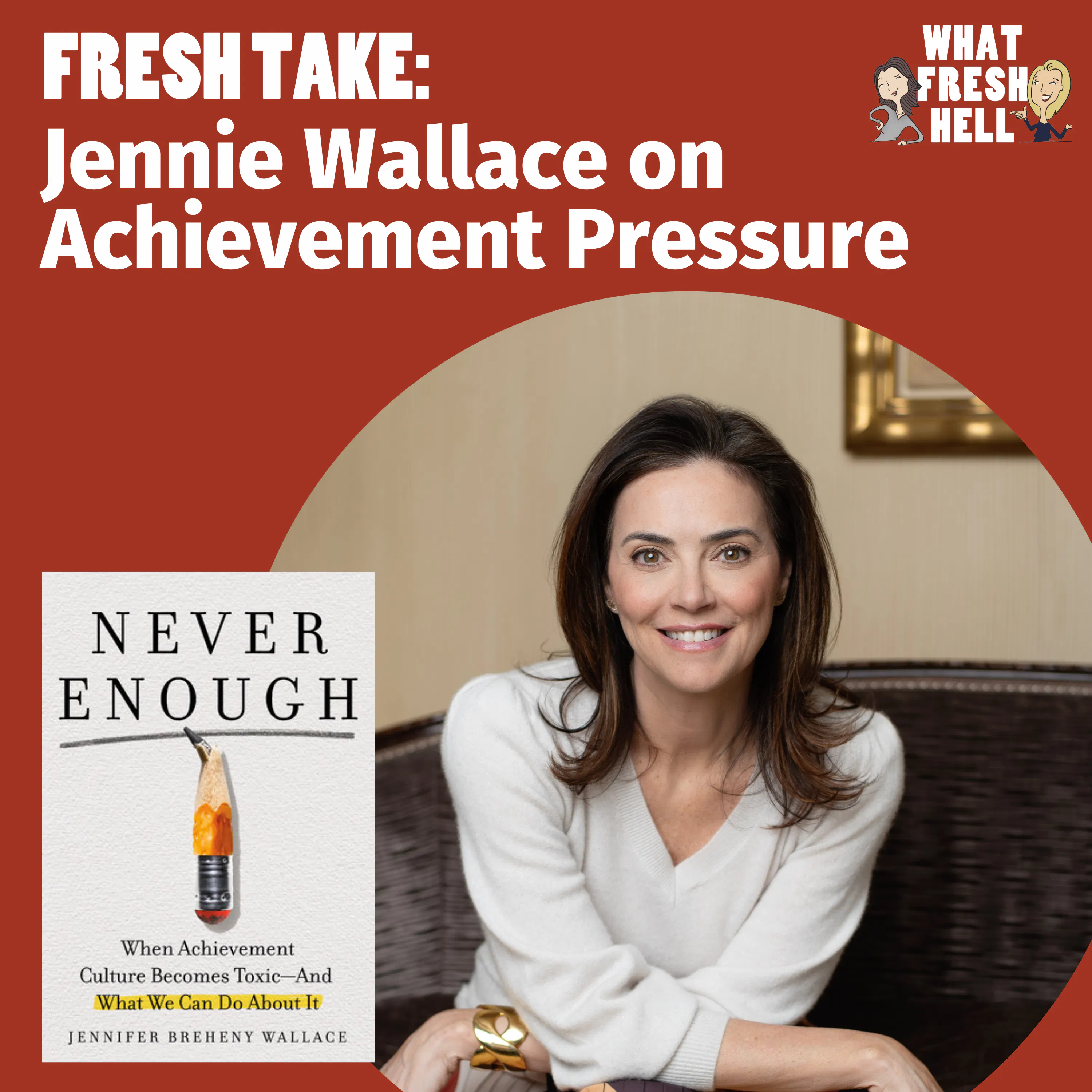
Fresh Take: Jennifer Wallace on Achievement Pressure
Two recent national studies underlined that there's a surprising group of children at risk for worse mental health outcomes: kids who go to high-achieving schools. How do we protect our kids from the pressures all around them to succeed at any cost? Jennifer Wallace, author of the new book Never Enough, shows us how to teach our kids that they matter intrinsically. Jennifer Wallace is an award-winning journalist and a frequent contributor to the Wall Street Journal and the Washington Post. She lives in New York City with her husband and their three teenagers. Amy, Margaret, and Jennifer discuss: Why achievement pressure is at an all-time high How parents contribute to, but are not solely responsible for, this pressure How to teach our kids that they matter independently of their achievements Here's where you can find Jennifer: jenniferbwallace.com @jenniferbwallace on IG @jennifer.b.wallace on FB Buy Jennifer's book: https://bookshop.org/a/12099/9780593191866 We love the sponsors that make this show possible! You can always find all the special deals and codes for all our current sponsors on our website: https://www.whatfreshhellpodcast.com/p/promo-codes/ Learn more about your ad choices. Visit podcastchoices.com/adchoices
Ep 326When Typical Parenting Advice Just Doesn't Fit
What happens when the usual parenting advice feels zero-percent applicable to our own situation? The first step is to let go of any "second arrow" self-blame that that is the case. The second step is to chart our own paths. Amy and Margaret discuss: What types of kids may not benefit from the one-size-fits-all parenting advice Why the concept of default parenting advice is harmful Why kids "irritating behaviors" are signs that they are growing and learning appropriately Here are links to some of the resources mentioned in the episode: Sarah Lyons for Western NY Family Magazine: "One Size Doesn't Fit All" Our episode "When Your Kid Doesn't Fit the Mold" Jeanie Lerche Davis for WebMD: 10 Commandments of Good Parenting Dana Bosu: How to Cope When Your Child is Different Andrew Solomon: Far From the Tree Ross Greene: The Explosive Child Rita Eichenstein: Not What I Expected Deborah Reber: Differently Wired Sign up for What Fresh Hell Plus on Supporting Cast to get all episodes ad-free, plus monthly bonus episodes. Supporting Cast works right where you already listen! Go to whatfreshhell.supportingcast.fm to subscribe in two taps for just $4.99 a month, or $39.99 a year. We love the sponsors that make this show possible! You can always find all the special deals and codes for all our current sponsors on our website: https://www.whatfreshhellpodcast.com/p/promo-codes/ Learn more about your ad choices. Visit podcastchoices.com/adchoices
Ask Margaret: My Kid Won't Eat a Bite of Dinner!
What do we do when, despite every tactic we can think of, our child refuses to eat dinner? Margaret puts a mom's anxieties around missed meals into perspective. Jillian asks: "What do you do when your two-and-a-half-year-old absolutely refuses to put a lick of dinner in her mouth? Night after night I offer multiple items. We've tried eating on the couch and in front of theTV, hoping the mindless eating scenario might happen. None of it has worked. At my wit's end!" Margaret recommends buying the book Child of Mine: Feeding with Love and Good Sense by Ellen Satter. Satter explains that the parent decides what to serve, and the child decides what to eat. It's not our job to force feed our kids when they would rather be doing anything else. They may simply not be hungry, especially if they had a late afternoon snack. If you think there's something serious underlying this reluctance to eat, definitely reach out to your pediatrician. But if your child eats well at other meals, there is probably not reason for concern. Don't chase your child's behavior and bend over backwards to get them to eat at all costs. Even if they don't want to eat, they can sit quietly at the table while everyone else enjoys dinner. If they start throwing food or otherwise misbehaving, don't hesitate to end the meal for them or otherwise give appropriate consequences. And as Margaret can attest from the other side, it will get better as they get older! Special thanks to our sponsor, Pampers: For trusted protection, choose Pampers, the #1 Pediatrician Recommended Brand. Download the Pampers Club App today to start earning free diapers. Learn more about your ad choices. Visit podcastchoices.com/adchoices

Fresh Take: Bea Kim on Rediscovering Yourself After Motherhood
What does it mean to have an identity outside being a mother? How do we forge a new sense of self that includes motherhood but isn't defined by it? Life coach Bea Kim provides tips for defining our true values and then living those values out. Bea Kim is the founder of Parent Refresh, a company that provids parent-focused services through life coaching, fitness, and community, and Awaken, a diversity, equity, and inclusion educational company. Bea and Margaret discuss: The liminal space between pre- and post-parenthood How mismanaged expectations cause problems for new moms What it means to define our own values and why it's important for mothers Here's where you can find Bea: https://beakim.com/ https://medium.com/bea-kim-coaching on Medium https://www.linkedin.com/in/beabahn/ on LinkedIn @beakimcoaching on IG We love the sponsors that make this show possible! You can always find all the special deals and codes for all our current sponsors on our website: https://www.whatfreshhellpodcast.com/p/promo-codes/ Learn more about your ad choices. Visit podcastchoices.com/adchoices

Ep 325Crazymakers
We all know someone who causes chaos, lawful and otherwise, wherever they go. Those people, are called "crazymakers," a term first coined by Julia Cameron and which perfectly describes the unwelcome disruption they bring to our own peace of mind. Here's how to spot the crazymakers in your life, and how to avoid getting caught up in their mischief. Margaret and Amy discuss: The true definition of a crazymaker and the three top types Why crazymakers use low-power strategies of dominance How maintaining your own self worth helps deter crazymakers Check us out on YouTube! We love the sponsors that make this show possible! You can always find all the special deals and codes for all our current sponsors on our website: https://www.whatfreshhellpodcast.com/p/promo-codes/ Learn more about your ad choices. Visit podcastchoices.com/adchoices

Ask Amy: Should I Care If My Teenagers Curse?
How do we tell our kids not to curse when they insist that everyone around them—maybe even their parents—do so? Amy explains different scenarios for cursing and what she deems appropriate for her own kids. A listener asks: "Can you talk about when kids curse, when we curse...does it matter? My kids are almost 13 and 15 and they say everyone curses. We allow some cursing—heck, we have even been known to toss out some ourselves—but now I think my oldest curses too much and yet she is a straight A student." When it comes to younger kids, Amy explains, it pays to be strict about cursing or else you'll run out of room to enforce rules around such things when they're older. There's a big difference between cursing at, say, a stubbed toe, and cursing at someone or calling them a curse word. The latter never flies in Amy's house. You can also differentiate for your kids the kinds of conversations that happen amongst friends and those that occur in formal settings like school and work. Special thanks to our sponsor, Pampers: For trusted protection, choose Pampers, the #1 Pediatrician Recommended Brand. Download the Pampers Club App today to start earning free diapers. Learn more about your ad choices. Visit podcastchoices.com/adchoices
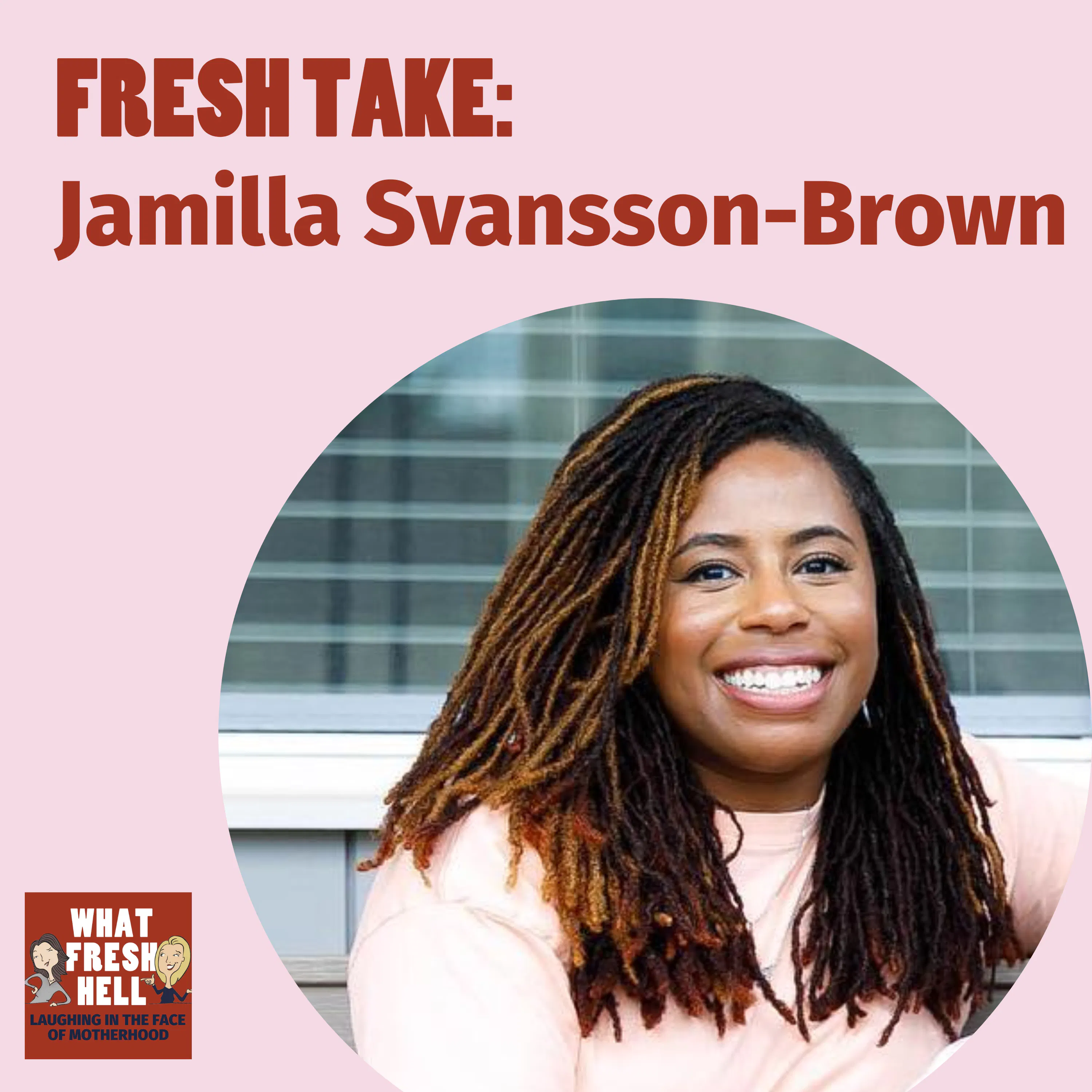
Fresh Take: Jamilla Svansson-Brown on How Motherhood Changes Us
Can we grieve the person we were before motherhood? Jamilla Svansson-Brown, who runs a YouTube channel with her wife Que, discusses how motherhood changes us, strengthening marriages, and listening to people with different lived experiences. Jamilla and Que are a two-mom family based in Atlanta, GA, who have been creating content for over 7 years after recognizing a gap in the influencer industry and not seeing creators who were Black Women, Fem/Masc presenting, or a part of the LGBTQ community. Jamilla and Margaret discuss: How parenthood changes our relationships with our partners How the division of labor works in the Svansson-Brown household What it means to be an authentic ally Here's where you can find Jamilla and Que: www.jamillaandque.com @jamillaandque on YouTube, TikTok, and IG We love the sponsors that make this show possible! You can always find all the special deals and codes for all our current sponsors on our website: https://www.whatfreshhellpodcast.com/p/promo-codes/ Learn more about your ad choices. Visit podcastchoices.com/adchoices

Ep 324BEST OF: Ditching What Doesn't Matter (with the Lazy Genius)
Are people with clean houses doing a bit? Are people with messy ones somehow less worthy? Kendra Adachi, author of THE LAZY GENIUS WAY tells us how to make a just-good-enough system that works for exactly us - and stop caring about everything else. Kendra Adachi also hosts "The Lazy Genius" podcast and is the mother of three young kids. Kendra, Margaret, and Amy discuss: How to implement systems that are practical rather than Pinterest-worthy Why we should stop applauding chaos as the only indicator of vulnerability The power of putting everything in its place Here's where you can find Kendra: www.thelazygeniuscollective.com Buy The Lazy Genius Way: https://bookshop.org/a/12099/9780525653936 @thelazygenius on IG We love the sponsors that make this show possible! You can always find all the special deals and codes for all our current sponsors on our website: https://www.whatfreshhellpodcast.com/p/promo-codes/ Learn more about your ad choices. Visit podcastchoices.com/adchoices

Ask Margaret: My Child Is Being Ostracized
When our child is suddenly being left out of their friend group, how can we help them cope without giving in to our own emotions about the situation? A member of our Facebook group writes: "My 9-year-old finally made a new group of friends this year in school, and the other day at recess they announced that they don’t want to be her friend anymore. She is crushed, and while I know this is part of growing up, I don’t know how to help her. I let her stay home today- to be honest, partly so she doesn’t have to endure a recess with this group of girls ignoring her or worse. I know missing school is not the answer. How can I help her? " Margaret reminds this listener that she's not on the emotional roller coaster with her kid in this situation - rather, she is a neutral and safe space for her child to express their feelings about the situation. It's important to let your child feel whatever they need to about the situation without trying to "fix" them or suggesting how they might behave differently in order to gain entry back into the friend group. Remind them that they can only control how they react to the situation, and empower them to focus on other friendships, hobbies, and activities for the time being. In the meantime, watch out for signs that your child is suffering from severe bullying, such as weight loss, loss of appetite, or loss of interest in normal activities - this could mean that they need a more robust form of intervention on their behalf. Here are links to some resources Margaret mentions: Sherri Gordon for VeryWell Family: 7 Tips for Helping Kids Deal With Being Ostracized Our episode about bullies Our episode "Mean Girls with Katie Hurley" Special thanks to our sponsor, Pampers: For trusted protection, choose Pampers, the #1 Pediatrician Recommended Brand. Download the Pampers Club App today to start earning free diapers. Learn more about your ad choices. Visit podcastchoices.com/adchoices

Fresh Take: Lara Love Hardin
What happens when your perfect life comes crumbling down? Lara Love Hardin, author of the new memoir "The Many Lives of Mama Love" shares her experiences of addiction and incarceration, how it affected her children, and how it shaped the new life she has now. Amy and Lara discuss: What it's like to parent from prison How the prison system keeps women down How Lara found her own version of redemption Here's where you can find Lara: https://www.laralovehardin.com/ IG: @laralovehardin Facebook: Lara Love Hardin Buy Lara's book: https://bookshop.org/a/12099/9781982197667 The Gemma Project Watch Lara's TED Talk We love the sponsors that make this show possible! You can always find all the special deals and codes for all our current sponsors on our website: https://www.whatfreshhellpodcast.com/p/promo-codes/ Learn more about your ad choices. Visit podcastchoices.com/adchoices

Ep 323We Forgot What Little Kids Were Like
Once your kids are a little bit older, can you be dropped into the madness of having little ones again without missing a beat? Apparently not - here's what Margaret learned after a brief season of tending to little kids again. Amy and Margaret discuss: The stakes of babysitting versus parenting All the little things we block out once our kids are more independent How times stretches out forever when you've got little kids to entertain all day If you're near New Braunfels, Texas, check out the McKenna Children's Museum! We love the sponsors that make this show possible! You can always find all the special deals and codes for all our current sponsors on our website: https://www.whatfreshhellpodcast.com/p/promo-codes/ Learn more about your ad choices. Visit podcastchoices.com/adchoices

Ask Amy: I've Already Got the End-of-Summer Scaries
Why is it that summer never seems to be the picture-perfect, sun-washed experience we want for our kids? Amy helps a listener ditch her mom guilt over not providing her kids with the "perfect" summer. "I have the end of summer scaries. Or end of summer mom guilt. I feel so bummed that I have spent most of the summer in survival mode instead of really enjoying it with my children. I probably have seen way too many of those "you only get 18 summers" posts. My oldest starts first grade in two weeks and I feel like I completely failed. I wish we had spent more time swimming, riding bikes, all of that quintessential summer stuff. Instead, I feel like I've spent most of it breaking up fights with his 4 year old brother, keeping the 18 month old from injuring himself, and saying "no" to every request. I'm notoriously hard on myself so I probably just need a reality check. Does anyone else feel this way?" It's totally normal to feel like the summer is a more difficult time of year, especially with three little kids to entertain, Amy explains. There are more hours of daylight and more unstructured time. And, by the way, your kids don't vaporize once they turn 18, and if they're away at college, summer is when you WILL see them, at least somewhat more than you did during the school year. Try to decouple yourself from the overwhelming "you only get 18 summers with your kids" messaging. It robs you of the ability to remain present THIS summer with your kids. So how do you try and be present with your kids without worrying about how many summers you have left in the bank? Start super small. Declare that it's "ice cream dinner" tonight or let the kids cover the driveway in chalk drawings. The "summer memories" we're supposed to be making are by definition lazy and unstructured. And those little things we may think are nothing special are probably what our kids will look back on most fondly. Special thanks to our sponsor, Pampers: For trusted protection, choose Pampers, the #1 Pediatrician Recommended Brand. Download the Pampers Club App today to start earning free diapers. Learn more about your ad choices. Visit podcastchoices.com/adchoices

Fresh Take: Ash Brandin, The Gamer Educator
How can we place reasonable limits on our kids' screen time— and how do we know what's reasonable? Ash Brandin, better known on Instagram as @TheGamerEducator, brings their experience as an educator (and gamer) to help families better understand and manage technology in ways that can benefit the entire family. In this episode, we discuss: why screens are "value neutral," and why their educational merit is derived more from how screens are being used the one question we should ask ourselves to know whether screens are okay in a given moment how to raise kids who will be able to set their own parameters around screens and gaming once we're no longer there to harass them Here's where you can find Ash: TheGamerEducator.com @TheGamerEducator on IG We love the sponsors that make this show possible! You can always find all the special deals and codes for all our current sponsors on our website: https://www.whatfreshhellpodcast.com/p/promo-codes/ Learn more about your ad choices. Visit podcastchoices.com/adchoices

Ep 322Teaching Kids About Money
Teaching kids about how money works feels ever more important in a world where we pay for things by waving our phones, and where a couple of taps brings us anything we want to our doorstep twenty-four hours later. Sometimes we feel like protecting our kids from the realities of our financial situations is what is most appropriate. But somewhere along the way we can start teaching kids financial literacy by making our family decisions around money concrete and transparent. In this episode we discuss: our children's many "blind spots" around money and spending (and what were once our own) the differences in spending when people use credit cards versus cash how to discuss your family's "money values" in terms of what you are (and are not) willing to spend Here are some links to resources mentioned in the episode: @bethkobliner on Twitter BusyKid: What Your Child Can Understand About Money, Age by Age Beth Kobliner for PBS News Hour: Money habits are set by age 7. Teach your kids the value of a dollar now Jana B. Woodhouse for How Money Works: Can You Teach Your Kids How Money Works? (Yes!) Shereen Marisol Meraji and Andee Tagle for NPR's Life Kit: Want to teach your kids about money? Start by including them in the conversation Johnathan G. Conzelmann and T. Austin Lacy for Brookings: Financial and student loan (il)literacy among US college students Our episode "Should We Pay Our Kids To Clean Our Rooms?" Our Fresh Take with Bobbi Rebell Check us out on YouTube! We love the sponsors that make this show possible! You can always find all the special deals and codes for all our current sponsors on our website: https://www.whatfreshhellpodcast.com/p/promo-codes/ Learn more about your ad choices. Visit podcastchoices.com/adchoices

Ask Margaret: Ground Rules for House Guests
How do you host relatives in your home in a loving and generous way without becoming overwhelmed? Margaret explains that hosts, not guests, get to make the rules for timing and length of their visits. A listener asked: Do you have any ground rules or tips and tricks for having family come stay with you? My husband and I live interstate between both of our families of origin, so if they visit, they stay with us. We don't live in a large house and we're finding the line between hospitality and what we can handle hard to draw. How can we simplify our approach? When people come to your house, it's perfectly acceptable to set ground rules that represent roughly 50% of what you need/want, and 50% of what your guests would prefer. Ultimately, though, it's your house, so you have veto power should a disagreement arise. You have the right to decide when and how long people come to stay with you. You may get pushback from relatives, but you are within your rights to gently decline their requests. That being said, operate from your maximum place of generosity and do your best to accommodate the people who raised you/your spouse and want to be in their grandkids' lives. Special thanks to our sponsor, Pampers: For trusted protection, choose Pampers, the #1 Pediatrician Recommended Brand. Download the Pampers Club App today to start earning free diapers. Learn more about your ad choices. Visit podcastchoices.com/adchoices

Fresh Take: Erin Pepler
Why are women expected to love pregnancy and new motherhood without exception or complaint? Erin Pepler, author of the collection of essays "Send Me Into the Woods Alone," discusses the stigma that still persists around mothers expressing difficulty and displeasure with their lives—and how reading and writing about motherhood has improved her own life. Erin Pepler is a freelance writer whose work has appeared in Today’s Parent, ParentsCanada, SavvyMom, Romper, Scary Mommy, MoneySense, Broadview Magazine and more. Erin and Amy discuss: Why pregnancy is "objectively weird" Why women are expected to downplay their pain and suffering particularly as new mothers How anxiety can shape us as parents... and when it's time to take a closer look Here's where you can find Erin: erinpepler.com @erinpepler on Instagram and Twitter @erinpeplerwriter on Facebook Buy SEND ME INTO THE WOODS ALONE: https://bookshop.org/a/12099/9781988784892 We love the sponsors that make this show possible! You can always find all the special deals and codes for all our current sponsors on our website: https://www.whatfreshhellpodcast.com/p/promo-codes/ Learn more about your ad choices. Visit podcastchoices.com/adchoices

Ep 321Why Was This a Thing? Rules We Once Lived By
Rooms where no one was allowed to go? Saving up phone minutes? Opening one kind of cereal at a time? What odd rules did we once live by that we can't imagine following now? Amy and Margaret discuss: The Good Room Snuggies Peek Freans Links to references in this episode: The Onion: Bloodthirsty, Undead Ghoul Advocates Chocolate-Cereal Consumption "Certain things are for company" - comedian Sebastian Maniscalco "Company is Coming" - comedian Chris Fleming Peek Freans Follow us on Threads @whatfreshhellcast We love the sponsors that make this show possible! You can always find all the special deals and codes for all our current sponsors on our website: https://www.whatfreshhellpodcast.com/p/promo-codes/ Learn more about your ad choices. Visit podcastchoices.com/adchoices

Ask Amy: When Should Kids Stop Sharing a Room?
What are the signs that kids no longer want to share a room, and when do the cons of a shared space outweigh the pros? Amy cites a study or two to help a mom decide what's best for her two boys. Emily asks: How do I know when the right time is for my two boys (ages 7 and 8) to stop sharing a room? Are there signs I should be looking for? For context, the boys have shared a room since they were 1 and 2. We have a guest room that we occasionally let one sleep in, but it’s usually just when one is sick. I have heard from other moms that the benefits of sharing a room can expire as they get older, but I am not sure what I should be watching for. If the current arrangement is working for everyone in the family there's no need to immediately change things up. But there are signs you can watch for that might mean a change is worth consideration. A child's desire for privacy, siblings who bicker constantly, a divergence in interests or habits, and increasing homework loads are all signs that separate spaces might be needed. Studies also show that kids also get more sleep when they don't share rooms. However, this doesn't necessarily mean separate bedrooms. There could be one room designated for sleeping/study ,and another room designated for play and activity. Don't feel guilty if your kids need to share a room, or if it just works better for the whole family that way. As far as knowing when it's time to change things, the clearest signal may be if and when one of the room-sharers actually asks for their own space. Here are links to some resources Amy mentions in the episode: Erin Quinn-Kong for Sleep Foundation: Having Your Own Room as a Kid May Be Worth 28 Minutes of Sleep Kara Carrero for Extremely Good Parenting: Should siblings share a bedroom? This research will help you decide! Special thanks to our sponsor, Pampers: For trusted protection, choose Pampers, the #1 Pediatrician Recommended Brand. Download the Pampers Club App today to start earning free diapers. Learn more about your ad choices. Visit podcastchoices.com/adchoices
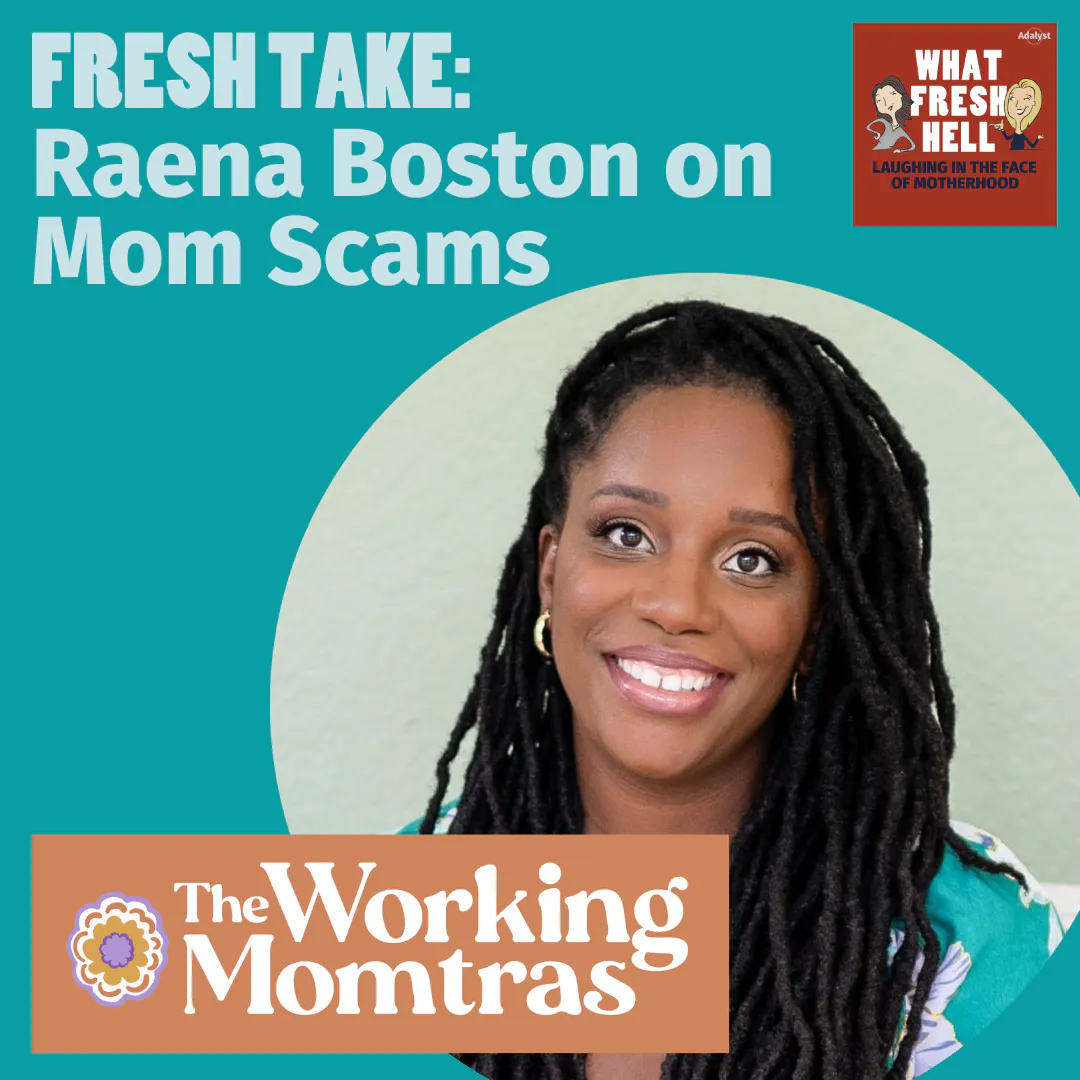
Fresh Take: Raena Boston on Mom Scams
What "scams" about motherhood have we become subject to without really questioning them? What would happen if we stopped subscribing to these ideas? Raena Boston, founder of the Working Momtras, discusses ways to counteract the sexism inherent in parenting, particularly mothering, and how to make the personal political. Raena is a mom of three, co-founder of the nonprofit Chamber of Mothers, and a fierce advocate for working families. In this interview, Raena and Margaret discuss: Mom guilt as a scam and how we can dismantle it Why dads need parental leave too What federal paid family leave really means Here's where you can find Raena: www.theworkingmomtras.com @theworkingmomtras on IG @workingmomtras on Twitter Listen to our episode with Kate Mangino on her book "Equal Partners" We love the sponsors that make this show possible! You can always find all the special deals and codes for all our current sponsors on our website: https://www.whatfreshhellpodcast.com/p/promo-codes/ Learn more about your ad choices. Visit podcastchoices.com/adchoices

July Bonus TEASER: Ask Us Anything
It's July bonus episode time! We opened up the floor for our listeners to ask us anything, and it turns out we're still learning things about each other after all these years. Topics include: The best parenting book Amy has ever read Pajama grams Billy Joel's and Bill Clinton's dogs To listen to the full episode, sign up for What Fresh Hell Plus on Supporting Cast. You get all episodes ad-free, plus monthly bonus episodes. Supporting Cast works right where you already listen! Go to whatfreshhell.supportingcast.fm to subscribe in two taps for just $4.99 a month, or $39.99 a year. Learn more about your ad choices. Visit podcastchoices.com/adchoices

Ep 320Let's Stop Caring What People Think
What if we didn't let other people's judgments change our game plans—as women, as mothers, and as humans? We're wired to pay attention to what other people think. There's a reason those judgments can be painful. Are there ways we can break free and care less? In this episode Amy and Margaret discuss... How our innate need to belong (and not ostracized) is hard-wired The "behavioral inhibition system" and how it gets triggered Whose feelings and judgments we should take into account Why parenting is an especially problematic zone for others' judgments of us Here are links to some of the resources mentioned in the episode: Our episode "Parenting With An Audience" Governor J.B. Pritzker's speech to the 2023 graduates of Northwestern University: "The kindest person in the room is often the smartest." Rachel Moss for HuffPost UK: How To Actually Stop Caring What Other People Think Of You hotter.com: At What Age Do You Feel Most Comfortable In Yourself? Arthur C. Brooks for The Atlantic: No One Cares! Naomi I. Eisenberger: Why Rejection Hurts: What Social Neuroscience Has Revealed About the Brain’s Response to Social Rejection Sarah Coyne for The Joplin Globe: Parenting with an audience changes the rules We love the sponsors that make this show possible! You can always find all the special deals and codes for all our current sponsors on our website: https://www.whatfreshhellpodcast.com/p/promo-codes/ Learn more about your ad choices. Visit podcastchoices.com/adchoices

Ask Margaret: My Kid Is Super Slow in the Mornings
How do you let your child experience natural consequences for their slowpoke actions—without going insane yourself? Listener Katie asks: "My 11-year-old has trouble meeting deadlines we set for her (running to catch the bus, not getting to bed by her bedtime). When my husband and I try to help her stay on track she talks back or purposefully stalls more! I don’t know how to not get triggered by that. It makes me angry which doesn’t help. Any suggestions? Either for staying calm or what to try with her? We rely more on consequences than positive reinforcement. I would love my husband to be more of a positive presence in the morning, which might improve things. I’m only partially around for mornings (which doesn’t help). Thanks for at least letting me rant!" Margaret has been here herself. She coordinated with her child's school and asked them to issue the appropriate disciplines for lateness to her child on days her child was late, removing herself from being responsible for the consequences. It's important to remember that children aren't just fed by positive attention; negative attention gets them going just as much. Eleven-year-olds typically begin testing boundaries and asserting their independence, since they have no real power of their own at that age. Try telling your child that they are in charge of their own routines, as well as all consequences for being late. Ask them what they might need from you to make the routine a success—a wake-up call, packing a lunch, whatever the thing may be—and then try to leave them to their own devices. Eventually, they will realize you are serious about their making their own trains run on time. Special thanks to our sponsor, Pampers: For trusted protection, choose Pampers, the #1 Pediatrician Recommended Brand. Download the Pampers Club App today to start earning free diapers. Learn more about your ad choices. Visit podcastchoices.com/adchoices

Fresh Take: Hari Kondabolu on "Vacation Baby"
Why shouldn't you tell people your baby name ideas before the baby comes? What happens when the early mornings with a toddler clash with the late-night schedules of comedy clubs? Comedian Hari Kondabolu, whose new comedy special "Vacation Baby" is available for streaming on YouTube, discusses how parenting has changed his comedy— and the unexpected pleasures, amidst the struggles, of parenting during the pandemic. Hari Kondabolu has been praised as "one of the most exciting political comics in stand-up." He currently co-hosts the Netflix food competition show “Snack vs. Chef” with Megan Stalter. Hari first achieved widespread recognition for his award-winning documentary "The Trouble With Apu." In this episode Hari, Amy, and Margaret discuss: Why having a pet is definitely not the same as having a kid What he wants his audiences that aren't parents yet to understand about being a dad Why representation has become even more important to Hari now that he's a parent Here's where you can find Hari: harikondabolu.com Social media: @harikondabolu Watch "Vacation Baby" on YouTube: https://www.youtube.com/HariKondaboluOfficial Get the extended version of Vacation Baby: https://harikondabolu.bandcamp.com/ We love the sponsors that make this show possible! You can always find all the special deals and codes for all our current sponsors on our website: https://www.whatfreshhellpodcast.com/p/promo-codes/ Learn more about your ad choices. Visit podcastchoices.com/adchoices

Ep 319BEST OF: Setting Boundaries
It often becomes clear to us where our boundaries should have been set only after those lines have been crossed and left far behind. But whether it's with overbearing extended family members or partners who leave socks on the floor, how do we create effective boundaries? Especially after it's been established that we're not very good at it, and especially in a world that doesn't very much like women who aren't afraid to set them? In this "Best Of" episode we discuss why boundaries should be set early and often– and not just in problematic relationships, either. Healthy boundaries with our spouses, partners, and co-workers are what make long-term relationships possible. And don't forget positive boundaries. Want to start setting aside more money each month? Having one date night a week, or one weekend morning when you get to sleep in? It starts with saying so. Here are links to some writing on the topic that we discuss in this episode: Fatherly: 16 Tips For Creating Healthy Boundaries With Your Extended Family Mark Manson: Boundaries Elizabeth Earnshaw for Mind Body Green: A Therapist Explains 6 Things People Get Wrong About Setting Boundaries Sarah Saweikis for Medium: Scared to Set Boundaries? How to Set Boundaries to Improve Your Relationships and Increase Peace of Mind We love the sponsors that make this show possible! You can always find all the special deals and codes for all our current sponsors on our website: https://www.whatfreshhellpodcast.com/p/promo-codes/ Learn more about your ad choices. Visit podcastchoices.com/adchoices
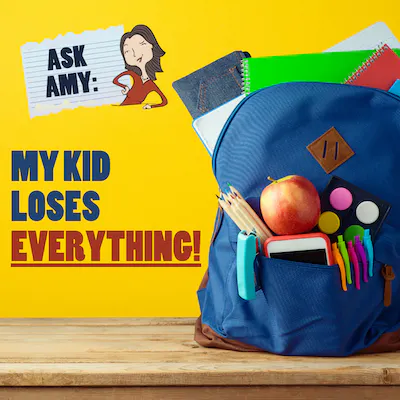
Ask Amy: My Kid Loses Everything!
Tired of buying new everything when your kid inevitably misplaces it? It's natural for kids to be a little disorganized, but if your kid is losing things left and right, there are some simple steps you can take. A member of our Facebook group asked: Any suggestions for the kid who loses everything? My son is 9. He lost three sweatshirts in the two months he was in in-person school, a tennis racquet at tennis camp, baseball glove at baseball practice, shin guards at soccer camp… and don’t even get me started on water bottles! The “lost and found” turned up one of the many things he has lost, but that is it. He swears each time that he put the things in his bag. Unless, there is a sweaty shin guard thief, this obviously is untrue. We’ve tried charts and check lists. We’ve tried making him earn the replacement items, but nothing seems to stop the constant misplacing of items. HELP! For the truly forgetful kids, the oft-cited "natural consequences"– if he doesn't have his shin guards, he won't be able to play, and he'll sure remember next time!– rarely work. Your child will feel chagrined, but be just as likely to forget the next time. In this episode Amy suggests what has worked in her household, like making reminders unmissable (put the reminder ON the doorknob, not hanging above it) labeling everything that costs more than the label would (Amy uses oliverslabels.com) use list-making apps and model using them yourself (Amy uses Workflowy) Kids do well if they can. Don’t give up on the checklists and the reminders if they don’t work right away. Keep your support system consistent– and non-shaming– and eventually your child will check for those shin guards before he leaves the field. Here are some resources worth looking into for kids who are a little disorganized: Check out Carolyn Dalgliesh's ideas for helping forgetful kids get organized: http://www.carolyndalgliesh.com/ Sara Olsher of Mighty + Bright has lots of great tools for helping kids stay organized Our Fresh Take with Ryan Wexelblatt, the ADHD Dude Special thanks to our sponsor, Pampers: For trusted protection, choose Pampers, the #1 Pediatrician Recommended Brand. Download the Pampers Club App today to start earning free diapers. Learn more about your ad choices. Visit podcastchoices.com/adchoices
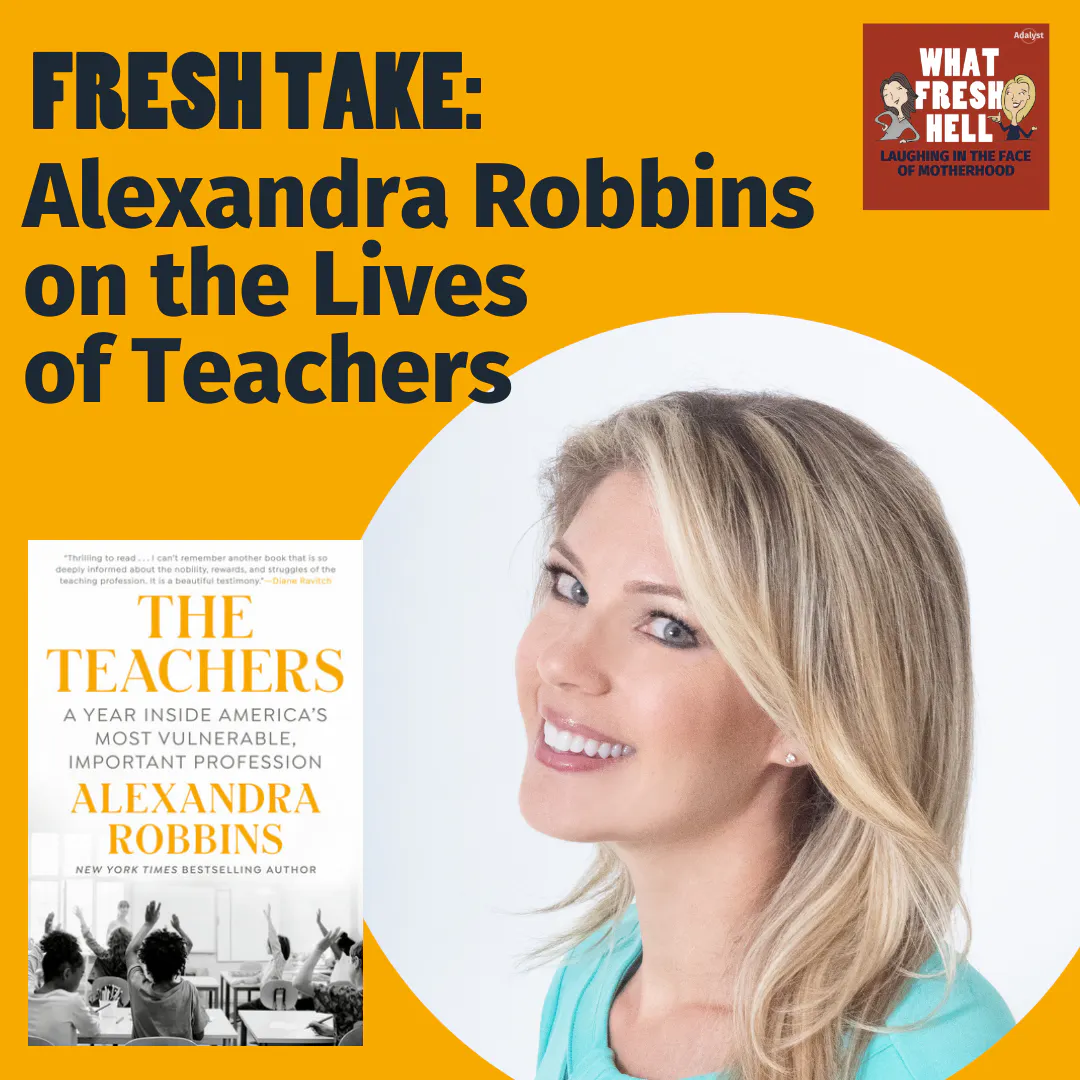
Fresh Take: Alexandra Robbins on the Lives of Teachers
What does it really take to be a public school teacher in America? Alexandra Robbins, author of "THE TEACHERS: A Year Inside America's Most Vulnerable, Important Profession," illuminates how today's teachers battle against school shootings, shrinking budgets, irate parents and politicians, and the educational system itself. Alexandra Robbins is an award-winning investigative reporter who has written for publications, including The New York Times, The New Yorker, The Wall Street Journal, The Washington Post, and The Atlantic. In this interview Alexandra, Amy, and Margaret discuss: Our common misconceptions about what being a teacher entails Why the "teacher shortage" is a misnomer How we can truly support teachers Here's where you can find Alexandra: https://alexandrarobbins.com/ Facebook: AuthorAlexandraRobbins Twitter: @AlexndraRobbins Instagram: @authoralexandrarobbins Buy The Teachers: https://bookshop.org/a/12099/9781101986752 We love the sponsors that make this show possible! You can always find all the special deals and codes for all our current sponsors on our website: https://www.whatfreshhellpodcast.com/p/promo-codes/ Learn more about your ad choices. Visit podcastchoices.com/adchoices

Ep 318The Best Advice for Dealing with Teenagers
How do we raise healthy, loving, polite, and appreciative teens? Is it humanly possible? From remaining "passively available" to taking our adolescents' seemingly trivial problems seriously, our listeners had great advice for bringing up teenagers. Amy and Margaret discuss: The blessing of nerd-dom How to keep your face in check when talking to your teen Why it's important to let your teen fail sometimes Here's our Fresh Take with Michelle Icard, author of "Fourteen Talks by Age 14" Here's the link to the full thread in our Facebook group Sign up for What Fresh Hell Plus on Supporting Cast to get all episodes ad-free, plus monthly bonus episodes. Supporting Cast works right where you already listen! Go to whatfreshhell.supportingcast.fm to subscribe in two taps for just $4.99 a month, or $39.99 a year. We love the sponsors that make this show possible! You can always find all the special deals and codes for all our current sponsors on our website: https://www.whatfreshhellpodcast.com/p/promo-codes/ Learn more about your ad choices. Visit podcastchoices.com/adchoices
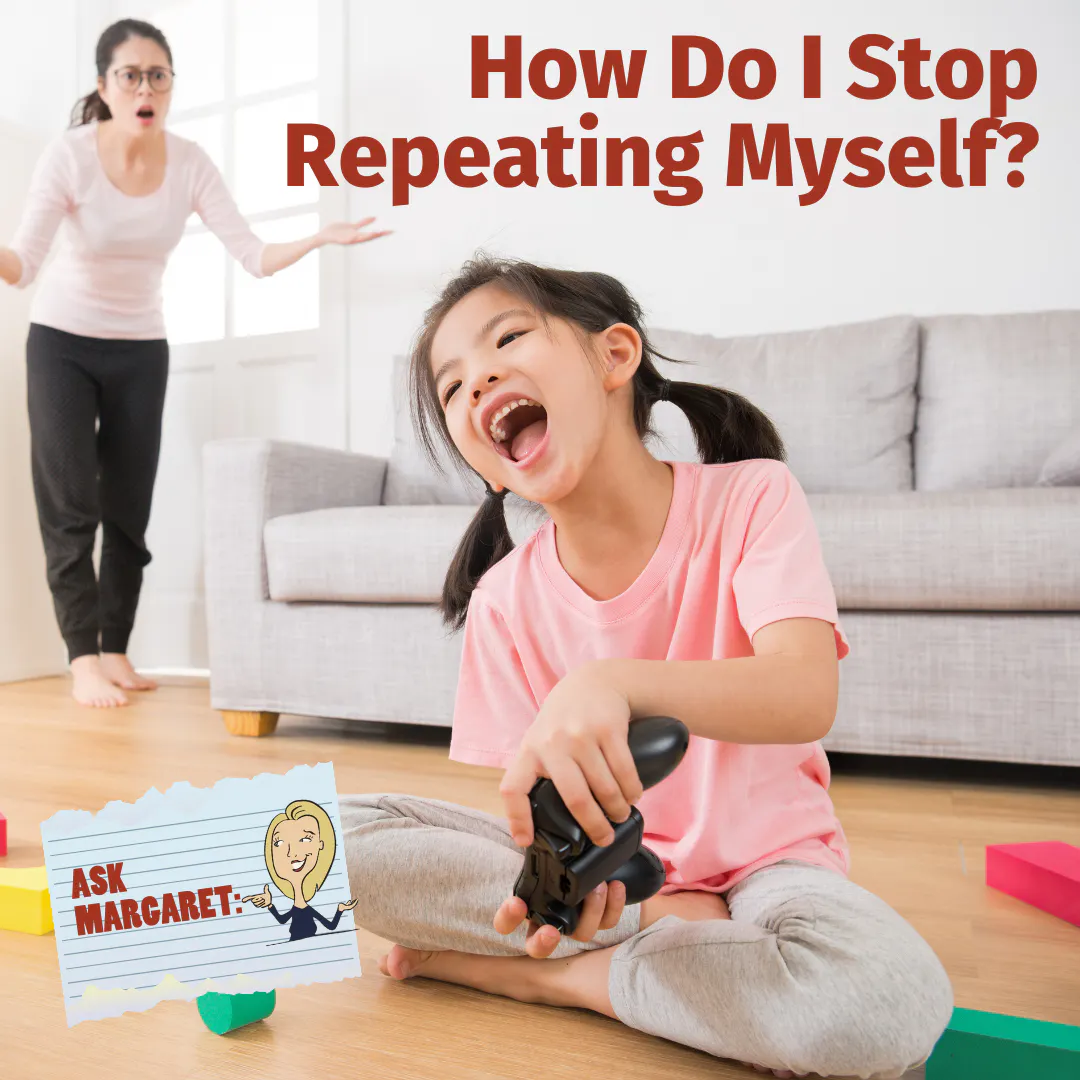
Ask Margaret: How Can I Stop Repeating Myself?
How do we get our kids to do things the FIRST time they're asked, not the millionth time? Is it even possible? A listener from our FB group asks: "You have often given the advice from the dog-training world not to repeat yourself over and over again, because you are teaching your kids they only have to respond to the 3rd, 7th, or 100th time you ask. My question is: what do I do instead? Say I tell my toddler, "It's time to go brush teeth," and he ignores me to keep playing because: toddler. If I immediately remove the thing the toddler is playing with and pick him up to go to the bathroom, we are in tantrum land. Then bedtime is delayed by twenty minutes while we calm down. I don't want to turn every interaction into an exhausting battle of wills, but I also don't want to sound like a broken record. HELP." When kids are resisting instructions, it's important to suss out the real problems and find solutions for those specific instances. In this case of asking your toddler to brush their teeth: it's normal to sometimes have to repeat yourself with toddlers. But you also want to establish that you won't repeat yourself until they respond. You might insert an intermediate step where you say something like "Oh, it looks like you're really enjoying your truck right now. I'm going to go get the toothpaste out and give you a few more minutes." It's a back-to-one situation! And remember: just because you repeat yourself or get frustrated with your toddler doesn't mean you're doing anything wrong. You're doing the best you can. Special thanks to our sponsor, Pampers: For trusted protection, choose Pampers, the #1 Pediatrician Recommended Brand. Download the Pampers Club App today to start earning free diapers. Learn more about your ad choices. Visit podcastchoices.com/adchoices

Fresh Take: Sara Olsher on Talking to Our Kids About Hard Things
When we're going through difficult seasons in our lives—illness, death, divorce, tragedy—it feels easier to protect our kids by leaving them out of the conversation. Sara Olsher, founder of Mighty + Bright, says kids don't miss a thing—and that we're missing the opportunity during such times to help our children learn resilience. Sara founded Mighty + Bright after guiding her child through her own divorce and cancer diagnosis. Mighty + Bright provides visual schedules, picture books, and other tools to help parents prioritize mental health for their kids, learning together and incorporating coping skills into their day-to-day lives. In this interview Sara, Margaret, and Amy discuss: How to raise resilience for ourselves and kids What works for families who are in hard seasons Why protecting kids from difficult issues doesn't work Here's where you can find Sara: http://mightyandbright.com @mightyandbrightco Check out all the amazing children's books Sara has written: https://bookshop.org/contributors/sara-olsher We love the sponsors that make this show possible! You can always find all the special deals and codes for all our current sponsors on our website: https://www.whatfreshhellpodcast.com/p/promo-codes/ Learn more about your ad choices. Visit podcastchoices.com/adchoices

Ep 317Is This a Midlife Crisis?
What does it mean to have a midlife crisis? What exactly counts as "midlife," and (yikes) are we already in it? Can we avoid the disenchantment and the rash decision-making that stereotypically accompany such times in our lives? A listener in our Facebook group asked: "Who has been thru their midlife crisis and how did you deal? Turning 40 next week has me feeling like I've wasted my life. Can I get over the what-ifs?" In this episode Amy and Margaret discuss: How American culture has changed its views on aging Why women and men experience midlife crises differently Why the age of your children might be the thing triggering your crisis Here are links to some of the resources discussed in the episode: Howard P. Chudacoff: How old are you? Age consciousness in American culture Laurence Steinberg: Crossing Paths: How Your Child's Adolescence Triggers Your Own Crisis Mark Jackson: Life begins at 40: the demographic and cultural roots of the midlife crisis Sign up for the What Fresh Hell newsletter! Once a month you’ll get our favorite recent episodes, plus links to other things to read and watch and listen to, and upcoming special events: http://eepurl.com/h8ze3z We love the sponsors that make this show possible! You can always find all the special deals and codes for all our current sponsors on our website: https://www.whatfreshhellpodcast.com/p/promo-codes/ Learn more about your ad choices. Visit podcastchoices.com/adchoices
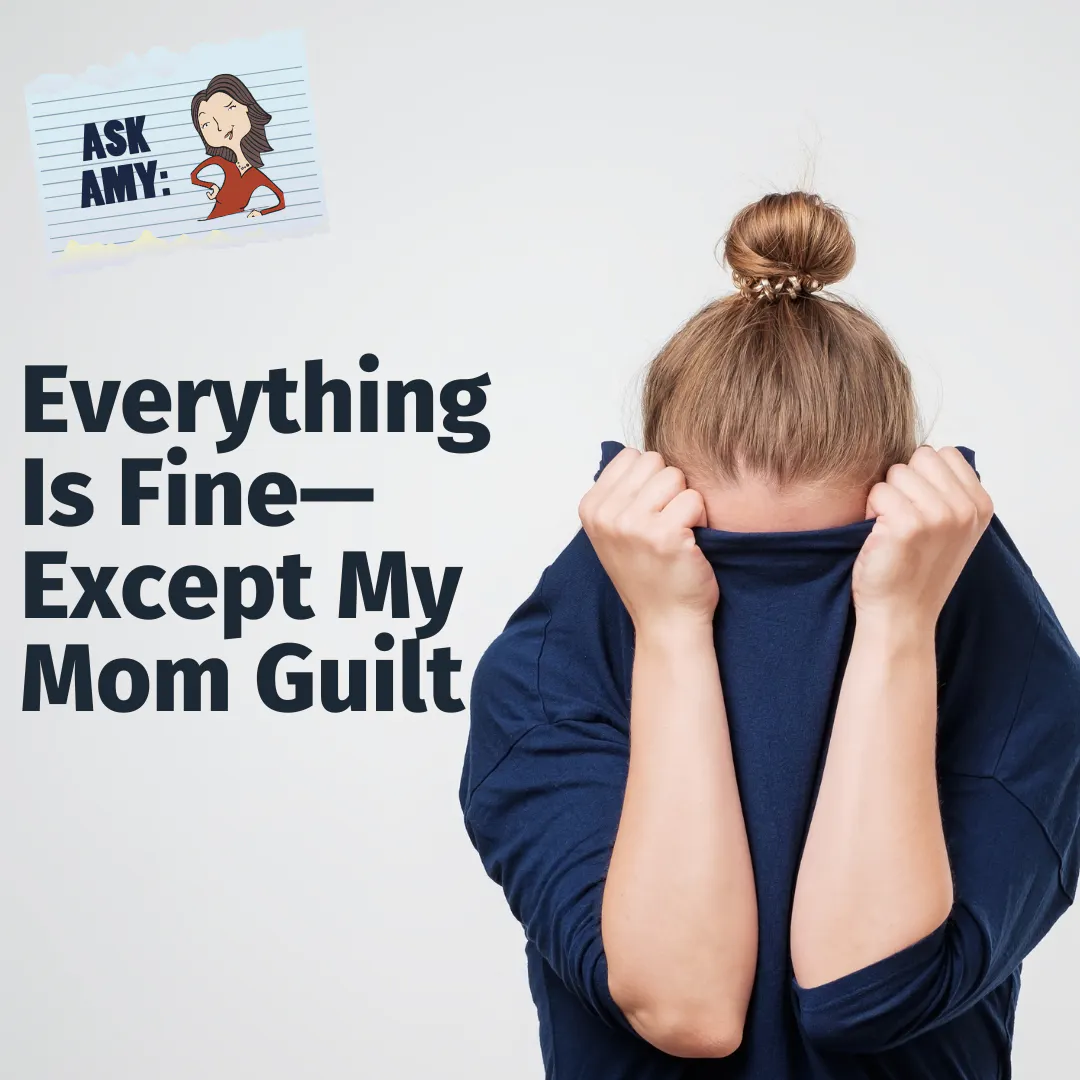
Ask Amy: Everything Is Fine—Except My Mom Guilt
When our children have a brush with danger, we moms love to punish ourselves for what might have happened. So does society at large. Amy tells a listener how to complete her trauma response and move on from a stressful event. A listener on Instagram asked: "How do I move past the mom guilt? I'm the mother to an 18-month-old that loves dogs. We have a rescue. I didn't grow up with dogs. We went for a walk today and came across an informal dog play date that we joined…the dogs were off leash. I asked if it was okay to bring my child, and the other owner said yes. I stupidly at one point let my little one walk away from me. Another dog came to sniff at her, and my dog kicked into full-on protective mode. The first time I'd ever seen that. My little one almost got hurt. We left soon after that and I never let my child out of my arms again. And once I got home, I Googled and saw, no, you should never take a kid to a dog play park. I feel so bad, so ashamed. How do I move on? Amy suggests that this listener is stuck in an incomplete trauma response, which Amelia and Emily Nagoski discuss in their book BURNOUT. It's important, Amy says, to complete the stress cycle, or else you stay stuck in the tunnel (as these authors explain). In our Ditching Mom Guilt episode, we discussed how mom guilt is a result of magical thinking in your primitive brain. If you're the cause of what's going wrong for your kids, you can also be the solution. Amy suggests that gratitude-based meditation of "I am safe now, I am safe now" and extra cuddles with the little one can help complete the stress cycle, along with a healthy dose of self-compassion and conscious uncoupling from the undeserved shame all moms, not dads, are made to feel when their children are perceived to be in danger. Special thanks to our sponsor, Pampers: For trusted protection, choose Pampers, the #1 Pediatrician Recommended Brand. Download the Pampers Club App today to start earning free diapers. Learn more about your ad choices. Visit podcastchoices.com/adchoices

Fresh Take: Rainesford Stauffer on Rethinking Ambition
Why do we as women get accused of too much or too little ambition, but never the right amount? And why are mothers expected to let go of all nonfamilial ambitions once they become parents? Rainesford Stauffer, author of the new book “All the Gold Stars: Reimagining Ambition and the Ways We Strive," started by completely reconsidering the role of ambition in her own life. In this book, she invites us to redefine ambition for ourselves. Going above and beyond doesn't have to the worthiest thing about us. In this interview Rainesford and Amy discuss: How and when Rainesford changed her thoughts around her own ambition How parenting and ambition intersect How to define ambition for yourself Here's where you can find Rainesford: www.rainesfordstauffer.com Twitter: @Rainesford Instagram: @rainesford_stauffer Buy Rainesford's book: https://bookshop.org/a/12099/9780306830334 We love the sponsors that make this show possible! You can always find all the special deals and codes for all our current sponsors on our website: https://www.whatfreshhellpodcast.com/p/promo-codes/ Learn more about your ad choices. Visit podcastchoices.com/adchoices

Are Vacations Worth It?
Why don't vacations feel like vacations for moms? Could it be all the prepping, packing, and traveling, with the additional pressure to make memories that will last a lifetime for our little ones? Here's how to make vacations truly fun and relaxing for the whole family. In this episode we discuss the wisdom of "taking turns being tired" why "going with the flow" is not an additive stance to vacation preparation why vacations get better as kids age Here are some links to some writing on the topic that we discuss in this episode: Marie Holmes for HuffPost: Behind Every Precious Vacation Memory Stands An Exhausted Mother CafeMom: Moms Don't Get to 'Relax' on Family Vacations, For the Husbands Who Don't Get It Colleen Lanin for Travel Mamas: Ain’t Nobody Happy if Mama Ain’t Happy – Tips for Happy Travel with Kids The Onion: Mom Spends Beach Vacation Assuming All Household Duties In Closer Proximity To Ocean We love the sponsors that make this show possible! You can always find all the special deals and codes for all our current sponsors on our website: https://www.whatfreshhellpodcast.com/p/promo-codes/ Learn more about your ad choices. Visit podcastchoices.com/adchoices
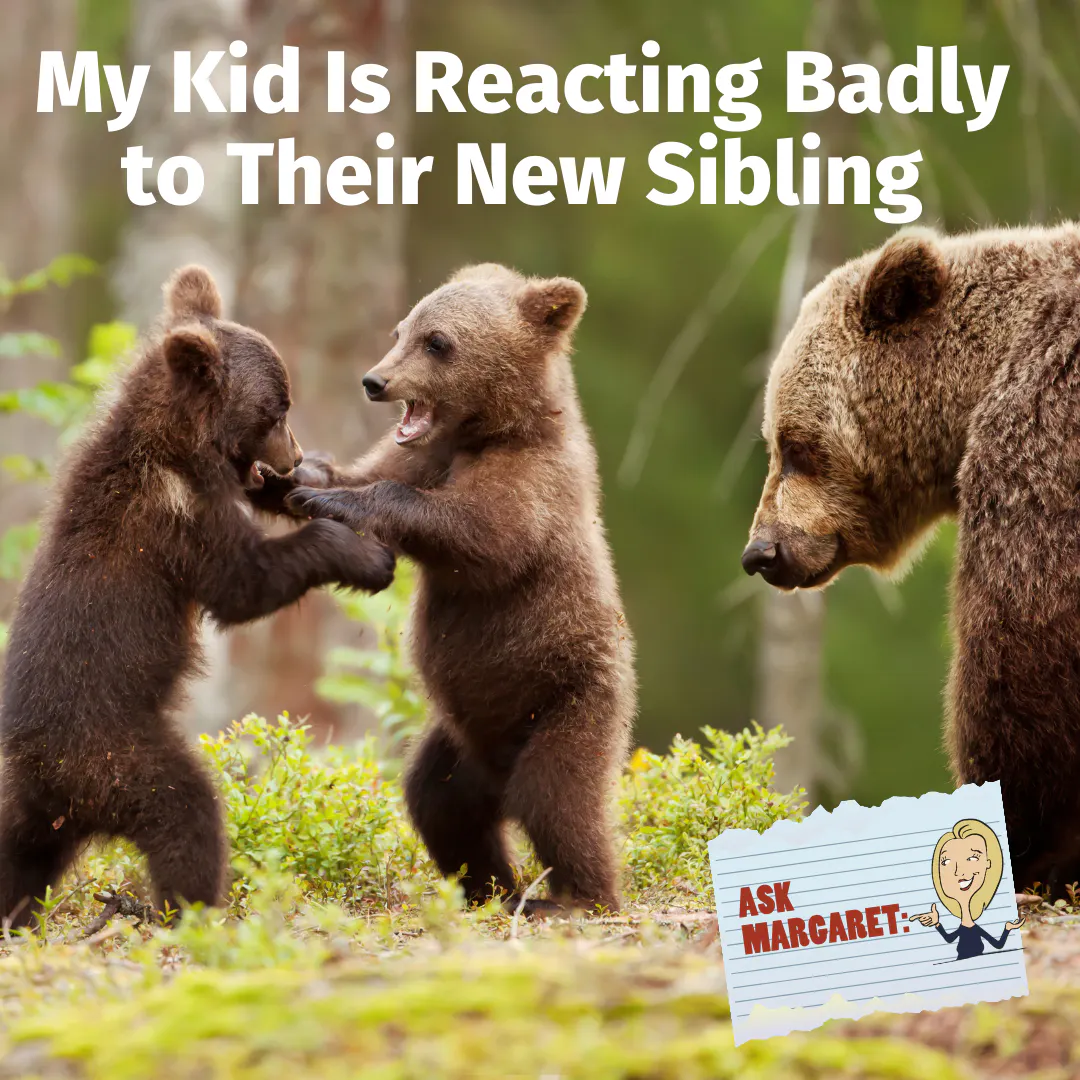
Ask Margaret: My Kid Is Reacting Badly to Their New Sibling
How do we help our children transition from pampered baby of the family to middle child? Is the resulting misbehavior going to go on forever? Someone in our Facebook group asked: "My five-year-old became a middle child a few months ago. He is so sweet and loving to his new little sister, but has been acting out: spitting, running around, saying bad things, hitting another kid in his pre-K class. He has been very difficult at home, too. He was never like this before becoming a middle child. Somebody please just tell me this is a phase." Yes, it's just a phase, Margaret assures us, citing her own experience being usurped as the baby of the family when she was five. This acting out is boundary-seeking behavior. When presented with changes in the family dynamic, kids will investigate to see if they can get away with more than they were able to previously. You can make your child feel validated in his frustration, but it's still important to set firm boundaries around unacceptable behavior. Here's the article Margaret suggests: Kate Marple for BabyCenter: Helping your child adjust to a new sibling Special thanks to our sponsor, Pampers: For trusted protection, choose Pampers, the #1 Pediatrician Recommended Brand. Download the Pampers Club App today to start earning free diapers. Learn more about your ad choices. Visit podcastchoices.com/adchoices