
Wet Fly Swing Fly Fishing Podcast
1,062 episodes — Page 13 of 22
S8 Ep 435WFS 435 - Delaware River Fly Fishing with Scott Meyer and Steve Borst from Black Dog Outdoor Sports
Show Notes: https://wetflyswing.com/435 Presented By: Trxstle, Yellowstone Teton, Togens Fly Shop, Mavrk Fly Fishing Sponsors: https://wetflyswing.com/sponsors Scott Meter and Steve Borst from Black Dog Outdoor Sports are here to take us into the Delaware River system. We find out a little more about the history of the Catskills and this part of the country, which streamside guide is a must-have, and what their remote deer camp cabin is all about. We find out what's the best time to fish the Delaware River and the different hatches you can take advantage of. We also talk about what they have going at the shop and how they can get you started with almost any outdoor activity you want to explore. Here we go! Show Notes with Black Dog Outdoor Sports 06:00 - Steve tells us how the shop got started. Now they got lots of different outdoor equipment such as hunting, camping, paddling, fly fishing, etc. 11:00 - Steve fishes the Catskills 90% of the time. We also hear about the other streams they fish on. 15:20 - "Roscoe, New York is self-proclaimed trout town USA." 20:20 - May is the best time to fish in New York. You get a lot of hatches such as the Quill Gordons, Hendrickson, Caddis, March Browns, etc. 21:45 - They also have October Caddis which are huge Caddis, size 6 to 10 inches. 26:30 - We talk about the book, Art Flick by Roger Keckeissen - a Catskill Legend. 33:00 - We noted Lee and Joan Wulff. We had Joan Wulff on the podcast at WFS 100. 36:54 - The Pepacton Reservoir has one of the cleanest water in the country. 44:05 - Steve tells the story of how rainbow trout got in the Delaware River. 46:54 - They talk about the fly shop and what they have there. 51:30 - We noted the Kenetrek Boots which are very durable. They got some in the shop. 59:15 - Steve is an active member of Ducks Unlimited. 1:07:00 - We talk about their dogs and find out how they came up with their shop name. 1:11:45 - Shout out to OnXMaps.com for being a reliable tool outdoors. 1:14:16 - Steve uses a 280 Remington Bolt Action Left-handed Mountain Rifle. 1:15:25 - Scott recommends a 10-foot, 3-wt Sage Sense fly rod for Euro nymphing. Show Notes: https://wetflyswing.com/435

S8 Ep 434WFS 434 - John Gierach on Dumb Luck and the Kindness of Strangers, McGuane and Hemingway
Show Notes: https://wetflyswing.com/434 Presented by: Trxstle Sponsors: https://wetflyswing.com/sponsors John Gierach, the author of the book Dumb Luck and the Kindness of Strangers, is back on the podcast to dig back into some of his amazing books. We find out from John what makes a good guide. We also learn about how much a fly rod loves a dry fly, what rejection feels like, and how he deals with writer's block. Dumb Luck and the Kindness of Strangers Show Notes with John Gierach 1:53 - We had John in the podcast in episode 047. 3:21 - We look back on the previous books he had published. 4:32 - He talks about his book that just came out titled All the Time in the World. 5:52 - John describes his process of writing a book. 9:23 - We talk about his book titled Dumb Luck and the Kindness of Strangers. 12:56 - He takes us on his trip to Colorado last September. 15:34 - He explains how he prefers to include conservation issues in his books. 17:33 - He talks about Thomas McGuane and Ernest Hemingway. He also shares a bit about the latter's book titled Big Two-Hearted River. 20:20 - He tells about what makes a great fishing guide in his opinion. 29:35 - I ask him about his interesting notes from his book Dumb Luck and the Kindness of Strangers which is how much a fly rod loves a dry fly. He also tells about the first ever written mention of fly fishing anywhere. 34:10 - He shares his struggles back then and how he dealt with rejection when he was just starting out as a writer. 36:44 - He gives tips on how to know what story will create an impact on readers. 38:44 - I mention our episode with Lane Forrer. John also talks about the true success of writing and how to be a good writer. 40:49 - He shares his take on impostor syndrome. 42:43 - He gives advice on what to do when a publisher rejects your book. 44:35 - He shares his take on writer's block. 45:15 - He talks about his friend Paul who died from cancer. He shares more about this in his book Dumb Luck and the Kindness of Strangers. 50:53 - He mentions the quote "It takes an old man to appreciate it, but it takes a kid to think it's important." and how it also applies to writing and fishing. 51:34 - He explains what his quote means about how vanity has lost its grip on him over time. 52:49 - He mentions a quote from Nick Lyons' book. 54:31 - He gives his opinion on the book and movie A River Runs Through It. 56:07 - He tells about his planned trip. 58:19 - He talks about the techniques he uses when fishing for trout. 59:46 - I ask him about his spey game. 1:01:55 - He talks about fly fishing being like a con game. 1:03:40 - He shares his plans and some upcoming events for his latest book. Show Notes: https://wetflyswing.com/434

S8 Ep 433Great Lakes Dude #1 with Jeff Liskay - Steelhead, Walleye, Lake Erie, Fly Fishing
Show Notes: https://wetflyswing.com/433 Sponsors: https://wetflyswing.com/sponsors/ Jeff Liskay is going to take us around the Great Lakes today. You'll get the history of all the lakes, where to fish, and a heads up on this new podcast all in 20 minutes' time for the Great Lakes. 01:10 - Jeff shares his personal journey into fishing, starting with a small bait and tackle shop in Lakewood, Ohio, called the Tackle Box. He stopped every day after school and eventually started working there, scooping out minnows for small bait buckets of the perch anglers heading to Lake Erie. 03:20 - Jeff met his first two mentors while working at the Tackle Box. He continued to add more mentors to his list over the years. 04:05 -Jeff started his guiding journey on Lake Erie before transitioning to fly fishing. His first fly fishing experience was on the Au Sable River in Michigan for trout, which left a lasting impression on him. 05:20 - If you'd like to share how you got the fishing bug, maybe from your grandfather, dad, mom, sibling friend, or even your mate, reach out to Dave at [email protected] or Jeff so we can share your story with others, especially if it's a way cool story. 05:28 - Jeff Liskay answers a common question he gets asked - why he chooses to live in Ohio. He explains that being part of the Great Lakes fishing community is exciting because he can fish for various freshwater species and never run out of challenges. 06:12 - Jeff describes the vastness of the Great Lakes region, which offers 11,000 miles of shoreline and 94,000 square surface miles of water for anglers to explore. 07:03 - The northern portion of the Great Lakes is remote and rugged, where Lake Superior starts and is known for the sinking of the SS Edmund Fitzgerald on November 10, 1985. iI spawned the famous Gordon Lightfoot song, the Wreck of the Edmund Fitzgerald. 07:49 - The region also has many islands, some of which are home to a small caribou population. Isle Royale is a remote National Park Island surrounded by clear waters and other islands. It is an ideal destination for fishing and water activities and a dream come true for explorers. 09:56 - The St. Mary's River offers a unique fishery with migratory trout and a chance to catch Atlantic salmon. Another interesting spot is the Garden River, which has an annual run of trout and salmon and a crossbreed of chinook and pink salmon. 11:00 - The lower section of the St. Mary's River has warm water species like bass, walleye, musky, and pike. The Georgian Bay is one of Jeff's favorite fishing spots, with 3000 islands and home to a massive musky weighing 65 pounds with a 30.5-inch girth. 11:57 - Lake Huron has a robust population of migratory trout and salmon, making it a great spot for fly fishing. 12:39 - Michigan is called the Mitten State because of its shape. Jeff has many fond memories of fishing on Lake Michigan and its tributaries, which offer great opportunities for fly fishing for species such as lake trout and carp. 15:30 - Lake St. Clair, sometimes referred to as the sixth Great Lake, is a productive warm water fishery in the Midwest, with gin-clear waters making it a great spot for sight fishing. It is home to every warm water species and has one of the largest populations of muskies, over 40 inches in the US. 19:08 - East of Lake Erie, the Niagara River offers a unique fishing experience with its powerful water and the world-famous falls as a backdrop. Lake Ontario offers trophy trout and salmon fishing in untouched areas where warm water species are rarely seen. The Salmon River, located on the far east end of Lake Ontario, is a shining star for fly fishing, with clear waters and a chance to catch Atlantic salmon in the summertime. Show Notes: https://wetflyswing.com/433

S8 Ep 432WFS 432 – Reel West Coast with Brendan Morrison – Hockey, Fly Fishing
Show Notes: https://wetflyswing.com/432 Presented By: Range Meal Bars, Stonefly Nets, Mavrk Fly Fishing, Togens Fly Shop Sponsors: https://wetflyswing.com/sponsors Brendan Morrison from Reel West Coast is here today to share his story of becoming a professional hockey player and how his love of fly fishing came to be. We hear about that winning goal he made that pushed Michigan to the National Championship and what it's like to play in front of cameras and huge crowds. We talk about how they film their episodes at Reel West Coast, what's coming up for them, and why we should be excited about it. How did Brendan transition from scoring goals to scoring fish? Listen to this episode to find out! Show Notes with Brendan Morrison 06:30 - Brendan mentioned BC Outdoors with Mike Mitchell. Brendan was invited to host their show. 10:30 - We noted the Northern Lights Lodge. We just had Curtis Royer recently in episode 425. We also had Skeed Borkowski in episode 397. 14:30 - Brendan played professional hockey for 14 years. We hear about what it's like to play in front of the camera with huge crowd. 22:55 - Brendan tells us about that time when he scored the winning goal against Colorado which was their first NCAA National Championship in 32 years. 25:00 - Reel West Coast is heading into its 7th season. They have more than 60 episodes published. 27:15 - We hear about their upcoming trip to Chile this month. 30:15 - We talk about their trip to Terrace, BC with Nicholas Dean where they Spey fished for steelhead and salmon. 34:25 - We dig into hunting. Brendan talks about hunting for mule deer in Southern Alberta. 37:00 - Brendan's 21-year-old son plays hockey too! 38:00 - Brendan played center. He was originally drafted by the New Jersey Devils. He talks about playing with the big names in hockey. 40:00 - Wayne-Gretzy was Brendan's hockey hero. 43:40 - Len Ronson played pro hockey from the 1950s to the 1970s. He lived next door to us in Oregon. 45:15 - Alex Ovechkin is creeping up to take the number 1 spot as an all-time scorer. 50:00 - Vancouver versus Calgary? Brendan tells us the story of that awesome rivalry. 1:03:55 - Brendan explains what a hat trick means in hockey. "When a player scores three goals in a game." Show Notes: https://wetflyswing.com/432

S8 Ep 431WFS 431 - Chota Outdoor Gear With Mark Brown and Caleb Luzader - Waders, Boots, Fly Fishing
Show Notes: https://wetflyswing.com/431 Presented by: Daiichi, Chota Outdoor Gear Sponsors: https://wetflyswing.com/sponsors Mark Brown and Caleb Luzader are here to break down the Chota Outdoor Gear story and some of the unique products they have in their line. Mark takes us into the history of Chota products. We find out how the waders and hippies came to be and what they are all about. We also get the lowdown on who the mastermind was behind Chota way back in the day. Chota Outdoor Gear Show Notes with Mark Brown and Caleb Luzader 2:46 - Mark tells about how he got into fly fishing and how came into Chota Outdoor Gear. 4:18 - He shares a bit about the history of the company and who the mastermind was behind Chota. 6:35 - Caleb also shares how he got into fly fishing and how he started working in the company. 7:20 - Caleb takes us to that time when he got a scholarship for competitive bass fishing in college. 10:42 - I mention our Euro Nymphing School with Pete Erickson. 11:26 - Mark tells more about Frank Bryant, the man behind Chota, and the development of their boots through the years. 15:38 - He also tells about their hippies and the do's and don'ts in storing and taking care of your Chota wading boots. 19:36 - He shares what they think about when working on a new product. They prioritize durability and comfort. 20:25 - Their bestselling footwear is the HYRB-800. 22:54 - Caleb talks about what he does in the company and his focus for this year. 24:40 - He tells the advantages of wearing their waders and hippies while fly fishing. Their goal is to create an affordable but really good wader. 28:50 - Mark breaks down the features of their waders and how to wear them. 33:00 - He talks about how to take care of your waders and the warranty that comes with buying a pair. 36:30 - He tells the material they use for their waders. 39:21 - Caleb shares what size of waders he gets and how he wears them as someone who is taller than the average. 42:35 - Mark tells a bit about the next big things they'll be doing in Chota. 43:34 - He shares the story of how they came up with their cloak wading shoe cover. 50:00 - Caleb talks about their line of products for women which are being carried by their sister company called Miss Mayfly. 52:50 - Caleb shares his observation on the industry in terms of the consumers most of the similar companies cater to. 55:10 - I ask them about the safety while using their products. 56:37 - Caleb shares an idea on waders for kids. 58:28 - Mark talks about the importance of helping the next generations to get into fly fishing to grow and continue the sport. 1:00:21 - We do the two-minute drill. I ask them about their go-to fly, favorite species to fish, bucket list trips, and recommended conservation groups for people to check out. Show Notes: https://wetflyswing.com/431

S8 Ep 430WFS 430 - Trout Spey Fishing with Tim Flagler - Fly Tying, Skagit, Show Season
Show Notes: https://wetflyswing.com/430 Presented By: Dalton - Country Financial, Mavrk Fly Fishing, Chota Outdoor Gear, Stonefly Nets Sponsors: https://wetflyswing.com/sponsors/ Tim Flagler is back on the Swing to break out some of his magic, focusing on trout spey fishing. With his years of experience and knowledge, Tim discusses the best lines and rods for this style of fishing and how to present the fly to the fish. We also dive into fly tying as Tim shares some of his top fly patterns. Who better to learn from than the one and only Tim Flagler, possibly the greatest fly-tying YouTuber on the planet? Trout Spey Fishing Show Notes with Tim Flagler 1:00 - Only a few spots left to fill at the Stillwater School! Head to wetflyswing.com/trips to learn more and join Phil Rowley for some incredible Stillwater fishing at the Northern Lights Lodge. 2:52 - We talk about the show season, and I ask Tim what his favorite part of the show scene is. 5:17 - Tim and his family live in Northwestern New Jersey, where they have access to a beautiful trout stream. 6:55 - We had Tim on the show last year, where we talked about his YouTube Channel. In case you missed that episode, check it out here: WFS 279 - Tim Flagler on Tightline Productions, Fly Tying Tutorials and Youtube 7:40 - Tim walks us through the definition of trout spey. He said that what it really refers to are lightweight spey rods. He said he got into trout spey fishing because he wanted to solve night fishing. 17:06 - We talk about trout spey presentation. Tim explains that trout mostly spend their time within a foot of the bottom, where they find most of their food and can stay away from predatory birds. Tim prefers to use weightless flies that can be taken down to the depth where trout are with a poly leader or a sink tip. 19:32 - He explains different setups for trout spey, including single-hand setups and two-handed trout spey with Skagit rigs and shorter heads designed for larger flies and heavier sink tips. 23:39 - Tim recommends using a short Skagit head for a 9ft 5wt setup, something like the OPST commando head, with a shooting line like a bare monofilament or Amnesia. A poly leader or tip is needed to complete the Skagit setup. 27:05 - We discuss the confusion around choosing the right weight for spay lines, as it is different from traditional single-hand lines. Tim recommends seeking advice from a fly shop or spey instructor to avoid wasting time and money on incorrect setups. 31:07 - The pandemic put a damper on spey casting events and claves, but they are slowly coming back. There are various events and clinics for spey casting, including trout spay clinics, and they are worth attending. Tim mentions the Spey Nation. 32:00- We talked about Tim's fly fishing presentations and clinics where he teaches about different setups and gear. Tim's specialty is in macro videography and incorporating it into his fly-tying patterns. 34: 22 - Tim has been producing fly-tying videos for 40 years now. 38:24 - Tim discusses his long-standing affiliation with Orvis and MidCurrent. He also mentions the success of the one-minute tying tips, which have been popular due to their digestible format, and the tie-offs with Tom Rosenbauer that they started during the pandemic and have become very popular. 43:03 - Tim breaks down the difference between Catskill-style dry flies versus other types of dry flies. 46:00 - Tim explains that for two-handed rods, he generally uses a Skagit head with a heavier sink tip and larger flies, while a Scandi head is lighter and better suited for smaller flies and lighter tips. 48:00 - Tim has a varied collection of rods, which includes both spey and single-handed ones. He has a Douglas DXF and an Orvis Clearwater. He also has a Redington Hydrogen Trout Spey 2wt 11'0″. 53:30 - We talk about flies that Tim uses for trout spey fishing. Tim is currently working on a series of flies to hopefully sell commercially through Fulling Mill. 57:00 - Tim mentions four key elements for his flies: a trailing hook, the ability to push water to attract fish, fine dark markings to resemble natural prey, and movement. Additionally, he notes that incorporating a little bit of flash can also be effective in imitating bait fish. 1:00:00 - Tim discusses the importance of spey casting and the different casts used for different river conditions and wind directions. 1:03:00 - Tim noted some great instructors for those who want to dig deeper into spey casting. He recommends Klaus Frimor, Simon Gawesworth, John Hazlett, and Topher Brown as some of his favorite instructors to watch. 1:08:00 - Tim said that he is still learning and taking spey casting lessons himself, including one with champion Whitney Gould at the Golden Gate Angling & Casting Club. 1:10:00 - Time for the two-minute drill. I asked Tim to pick a rod and a fly. Tim chose a single-hand 9ft 5wt rod and a squirrel and herl bugger. His tip for trout spey fishing is to seek coaching from an expert. Tim's dr
S8 Ep 429Traveled #5 - Snake River Fly Fishing with Larry Larsen - Smallmouth Bass, Giant Rainbow Trout
Show Notes: https://wetflyswing.com/429 Presented By: Yellowstone Teton Sponsors: https://wetflyswing.com/sponsors Larry Larsen from Snake River Fly is here to break out some good stuff. We got a little inside look into a really cool tailwater fishery that is not quite as well known as the section upstream. He's got some really amazing fly-tying materials that we talked about and what I call a cult following around fly-tying, material, and just some amazing fishing. We also talk about their YouTube channel and what they have going at the fly shop. Time to experience the road less traveled. Let's jump into the Basalt Canyon of the Snake River and find if bass, carp, or big giant trout are the biggest traction. Here we go... Show Notes with Larry Larsen 07:30 - We just had Jon Stiehl from Trout Hunter recently in episode 3 of our Traveled Series. 11:50 - The Mayor of the town of American Falls, also a fly fisherman, pushed for catch and release, artificial only season. 15:50 - Larry tells the story of how the fly shop came to be. 21:55 - We talk about where they find steelhead from where they are. 34:30 - We talk about how they get ready for the smallmouth season. 39:00 - We talk about what they use for boats. 40:30 - As far as tailwaters, Larry considers the Madison River the best. 49:00 - Larry recommends a 6 or 7 wt fly rod for smallmouth. 54:45 - We dig into carp fishing with Brendan Morrison. 59:10 - Tip: When fishing for carp, do not blind cast. Observe the water and watch where they rise. 1:01:00 - They have a YouTube channel, Snake River Fly. Check them out right now! Brandon mentioned the video they just did, the Baby JJ. Show Notes: https://wetflyswing.com/429
S8 Ep 428WFS 428 - Wade Out There Podcast with Jason Shemchuk - Fly Fishing, Art, A-10 Warthog, Utah
Show Notes: https://wetflyswing.com/428 Sponsors: https://wetflyswing.com/sponsors In this episode, we had the pleasure of chatting with Jason Shemchuk, the host of the Wade Out There podcast. Jason's story is an inspiring one, as he has led a life full of adventure and exploration. From being an Air Force fighter pilot to starting his own podcast and painting, Jason has always been driven to pursue his passions and live life to the fullest. During our conversation, we delved into why Jason started his podcast and how his experiences in the Air Force have shaped his outlook on life. We also discovered some surprising similarities between our own journey and Jason's. If you're looking for an inspiring story that will leave you feeling motivated to chase your own dreams, be sure to tune in to our latest podcast episode with Jason Shemchuk! Wade Out There Show Notes with Jason Shemchuk 3:11 - Jason shares how and why he started his blog and the WadeOutThere Fly Fishing Podcast after he stopped flying for the Air Force. He joined the Air Force when he was 18. 4:45 - After leaving the Air Force, he also started painting again and selling his art online. 7:22 - He has been running his podcast for over two years now. Talking with guests in his podcast helped him progress in his fly fishing journey. 9:31 - I ask him about his journey working in the Air Force flying A-10s for 14 years. His interest in flying airplanes started when he was a kid. 14:36 - He breaks down the build and purpose of the A-10s. 16:45 - I mention our 400th episode with Beau Beasley and his book on Project Healing Waters to be released soon. 18:06 - Jason gives his take on post-traumatic stress disorder (PTSD) among veterans. He believes that being part of a community regardless if it's related to fly fishing or not is important and helpful. 24:28 - He now flies commercially while working on his podcast and art. 25:18 - He and his family moved to Utah from Kansas City, Missouri about a year and a half ago. 29:50 - I mention the book The War of Art by Steven Pressfield which we both love and ask him to choose one to go pro fully among art, podcast, and writing. 31:43 - He talks about his journey in the Air Force and painting and the value of hard work and struggles. 37:00 - We mention other novels by Steven Pressfield such as Gates of Fire and The Legend of Bagger Vance. 38:00 - He talks about fly fishing in the rivers in Utah. He lives near the Weber River. 40:00 - I ask him about his fly fishing style. 41:33 - His go-to local fly shop is Angler's Den in Roy, Utah and Fish Heads Fly Shop in Heber City, Utah. 42:43 - Jason describes his art. He's a watercolor artist and will be switching to oils soon. His latest series is the Trout Expression which is 18x24 in size. 47:48 - He shares what he learned from A.D. Maddox whom he considers his art mentor. A.D. is a fly fishing artist who uses oil as a medium. She guested in Jason's podcast in episode 30. 50:54 - He talks about his aspirations and plans for the Wade Out There podcast. 54:00 - He mentions our interview with Domenick Swentosky in episode 305. He influenced Jason with the blog he was writing. 55:12 - We do the two-minute drill. I first ask him about his go-to rod in terms of weight and length. 58:20 - He shares the next fly fishing big trip he will be going on. 59:50 - I mention our episode with Wade Fellin about the Big Hole Lodge. 1:00:08 - He talks a bit about the last time he went fly fishing in Montana. 1:00:02 - He tells his go-to fly which is the orange scud. 1:03:25 - He gives advice to those who are thinking about starting a podcast. 1:04:20 - He mentions Pat Flynn of the Smart Passive Income Podcast who was very helpful for him in starting his podcast. He was also my first mentor when I started. 1:05:22 - He tells about the warthog. Show Notes: https://wetflyswing.com/428

S8 Ep 427WFS 427 - Caddis Hatches with Craig Mathews - 1% for the Planet, Yvon Chouinard, Yellowstone
Show Notes: https://wetflyswing.com/427 Presented By: Range Meal Bars, Trxstle, Drifthook Fly Fishing, Dalton - Country Financial Sponsors: https://wetflyswing.com/sponsors/ Looking to up your game on caddis hatches? We have Craig Mathews to share his expertise on caddis flies and their history today on the Swing! Craig also shares some incredible stories from his time as a police officer and his adventures around Yellowstone, including how he co-founded 1% for the Planet with Patagonia founder Yvon Chouinard. 1:02 - We just finished the big stillwater school giveaway, and we'll be announcing the winner soon. We're headed up to Northern Lights Lodge in Northern BC. If you want to join us for some insane stillwater fishing and epic wilderness lodge experience, head here to grab a slot. 3:47 - Craig has been fly fishing for 68 years, starting in Michigan, where he grew up. He moved to Yellowstone, where he worked as a police chief, and started his fly fishing business, Blue Ribbon Flies, in 1979. 6:29 - Blue Ribbon Flies began as a wholesale fly-tying company that employed disabled fly tiers and grew to over 40 tiers, including federal prisoners. They tied for big brands like L.L. Bean and Orvis and local fly shops. 9:04 - Craig worked as a guide and outfitter while running the business. After retiring as a police chief, he opened a retail store and gave the wholesale business to the fly tyers. He sold Blue Ribbon Flies in 2014 after 35 years. 10:27 - Craig tells us how he met Patagonia founder Yvon Chouinard. We've done several Patagonia episodes in the past. Check out one with Ted Manning here: WFS 345 - Patagonia the Company with Ted Manning - Conservation, Home Planet, Yvon Chouinard 12:00 - Craig shares the inspiring story of co-founding 1% for the Planet with Yvon Chouinard, which celebrated its 20th anniversary in 2022. 20:25 - Craig authored several books, including Fly Patterns of Yellowstone with John Juracek, in the 80s and early 90s. He also wrote Fly Fishing Yellowstone Hatches in 1992, which guides anglers on the major insect hatches in and around Yellowstone and the Mountain West. 21:20 - His book Simple Fly Fishing was revised a few years ago. It sold over 30,000 copies and supports conservation efforts. 22:08 - Craig also wrote the Western Fly Fishing Strategy in the mid-90s, which he considers his most significant work. He also wrote the Yellowstone Fly Fishing Guide, revised three years ago and published by Lyons Press. We had Nick Lyons on the show before. 23:31 - Craig continues to tie flies and donate them to conservation causes while also using bird skins collected during hunts for similar purposes. He and his wife were on the founding board of the Yellowstone Park Foundation for nine years, now known as Yellowstone Forever. 25:16 - Craig discusses his upcoming book about pheasant tails that he co-wrote with Yvon, which features about 30 patterns. He also shares insights about caddis hatches and other insect emergences in the Yellowstone region. 52:24 - Craig recommends Gary LaFontaine's book Caddisflies as the best book on caddis. He also shares stories about Gary and their collaboration. 56:40 - Craig talks about how his fly shop, Blue Ribbon Flies, was a hub for fly fishermen where he met many people. He also mentions that Jack Gartside had a room in the shop's basement. 1:00:24 - Craig mentioned that he is writing a book about his adventures at Yellowstone and shared stories about his friendship with the Gypsy Jokers and Hells Angels. 1:17:49 - We hear stories about his long friendship with Yvon and how he has inspired him and others in the industry. Show Notes: https://wetflyswing.com/427
S8 Ep 426Littoral Zone #3: How to Approach New Lakes with Phil Rowley - Stillwater Fly Fishing
Show Notes: https://wetflyswing.com/lz3 Presented By: Daiichi, Drifthook Fly Fishing, Stonefly Nets Sponsors: https://wetflyswing.com/sponsors Today we got Phil Rowley to get you prepared for approaching new lakes on your next trip. He shares his expertise and provides invaluable tips and techniques for anglers looking to tackle unfamiliar waters. According to Phil, the key to success all starts with meticulous planning and preparation. In this blog post, we'll dive deeper into Phil's advice and explore how it can help you improve your fishing game. New Lakes Show Notes with Phil Rowley 5:54 - Phil tells about that time in 2007 when he participated in the Canadian Fly Fishing championship with a team and they won the gold medal. He had never fished the venue lake before that. 8:24 - The framework of success starts with planning and preparation. Skeet Reese, a world-class bass angler, said that proper preparation prevents poor performance. Talk to friends, colleagues, or guides in local fly shops that have fished the lake before. You can also check online forums and social media. Phil recommends a private Facebook group called Stillwaters. 11:33 - Hi gives tips on using Google maps when looking at the lake. This provides a 3D graphic that shows the low-lying and mountainous areas. When fly fishing lakes, it's best to go to areas that are 20 feet deep or less. With this, you can be assured that sunlight penetrates up to the bottom of the lake. This stimulates plant growth in the area where fish feed from. 13:31 - Another advantage of fishing in shallow waters less than 20 feet deep is you'll have a lot of presentation options and techniques. 15:43 - He talks about navigating the lake using Google Earth view. 17:01 - He also recommends using a bathymetric or underwater contour map. His go-to website for a host of different bathymetric maps is AnglersAtlas.com. You can print the map and bring it with you. 20:11 - When the contour lines in the bathymetric map are compact and tight together, that indicates a rapid change in depth. 21:26 - We dig into the preparation of equipment and gear. Typically when Phil gets on the water, he likes to have a minimum of two to three rods. Look for a fly line that is capable of throwing indicators and long leaders. 24:07 - He mentions the drogue. It is an underwater parachute that slows and controls the drift of the boat. This controls your boat and enables you to focus on your presentation. He also recommends other must-haves such as a sounder, polarized sunglasses, thermometer, throat pump, vial, and nets. 27:55 - Make it a habit to have an aquarium net with you. You can use it to get a sample along the shoreline or catch something with it. 28:40 - Make sure that all your accessories are topped up too like your swivels for your indicator rigs, tippets, and nippers. Make sure also that you have binoculars. 30:23 - Bring a notebook or your smartphone with you to make notes about your adventure such as the location, weather, the food sources that you pumped from a fish, the hatches, and the equipment you used among others. This is because you could probably return to the same lake one day and use your notes as a reference so as not to start all over again. 31:36 - When you get to the shore, pay attention to what you see and hear. Slow down and look. Spend about 10 to 20 minutes on the shore. Listen for moving fish, birds, those kinds of things. 36:59 - When you're already out on the water, go slowly and look around. Give the sounder a few minutes to settle and adjust after you put it into the water, then check the temperature. Phil ideally looks for water temperature for trout at 50-65 degrees Fahrenheit. If you're fishing for other species, make sure you're familiar with the temperature ranges. 38:10 - Pay attention to bird activity, especially when they are flying low to the water. That's a sign that they are feeding on something emerging from the water. 39:19 - When out on the water, look for the factors that provide trout with comfort, protection, and food. Phil talked more about these in the Littoral Zone #1 episode. 41:12 - Lakes go through distinct seasons. Here he talks about thermocline. 44:46 - Phil's favorite spots when it comes to structure are drop-offs, little channels, and troughs. The seam between the light and the dark water is a great place to prospect and drift along or anchor. 45:46 - Your sounder is critical because it helps find these subtle differences in depth that don't show up on a bathymetric map or Google Earth. Phil uses the Humminbird Helix 7. 48:26 - Phil digs into the food factors. A throat pump, used correctly and properly, can be invaluable because it tells you what prey the trout are feeding on. You want to get samples from the trout's esophagus, not its stomach. 50:50 - He gives a step-by-step process of how to properly use a throat pump so as not to be more invasive than necessary. 54:31 - Cover as much water as you can until you find fish or
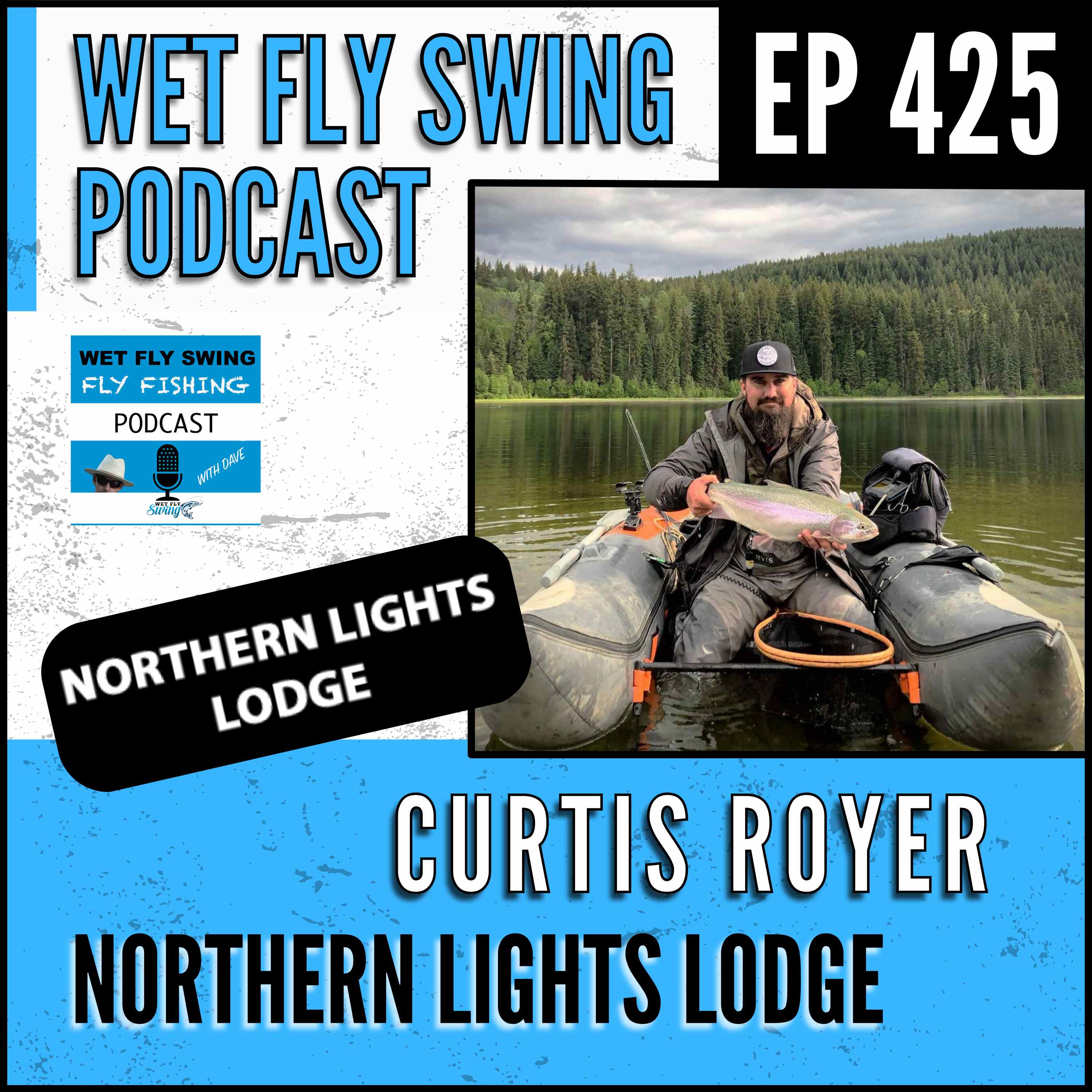
S8 Ep 425WFS 425 - Northern Lights Lodge with Curtis Royer and Phil Rowley - Stillwater School, Bull Trout, Bears
Show Notes: https://wetflyswing.com/425 Enter the Giveaway: https://wetflyswing.com/giveaway Presented By: Trxstle, Jackson Hole Fly Company, Drifthook Fly Fishing, Angler's Coffee Curtis Royer from the Northern Lights Lodge is here today to talk about the upcoming Stillwater School on May 2023. We're also joined by the Stillwater Master, Phil Rowley as we break down the steps to join, what to expect, and what to prepare for before you get there. What makes this place so special and why should you be excited about it? We dig into it and answer most of the FAQs. So here we go... Show Notes with Curtis Royer and Phil Rowley 05:45 - Skeed Borkowski was on the podcast in episode 397. 08:45 - Their program starts mid-May. They have an upcoming Stillwater School this May 2023. Check out their website to see what they have going. 20:45 - We noted that drone shot video of a Stillwater rainbow chasing a Chernobyl fly which they got on a first take. 28:10 - Curtis breaks down the steps in getting to the lodge from the US. 34:20 - Curtis tells the story of when they caught 48 lake trout in one day. 43:30 - They run their programs almost exclusively with pontoon boats. 49:50 - We talk about the things to remember when encountering a bear out there. 55:30 - Quennell Lake is the deepest freshwater lake in North America. 1:01:00 - Phil mentioned The Cruiser pontoon boat by Outcast. 1:11:00 - Bull trout fishing starts mid-August and goes on till mid-October. 1:12:20 - Curtis tells the story of his most memorable bull trout experience. Show Notes: https://wetflyswing.com/425
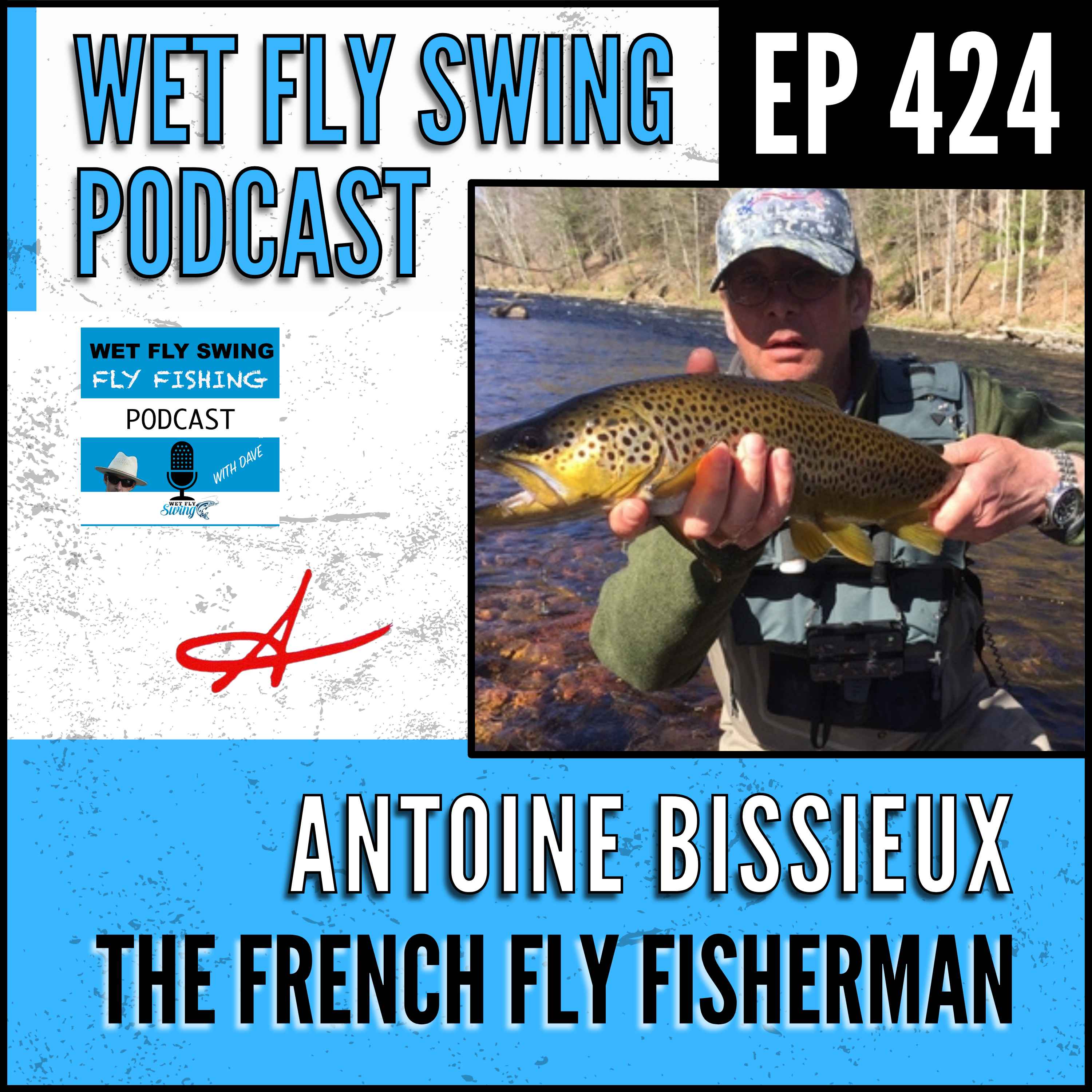
S8 Ep 424WFS 424 - Euro Nymphing with the French Fly Fisherman - Farmington, Hendricksons, Sulfur Hatch
Show Notes: https://wetflyswing.com/424 Presented By: Trxstle, Togens Fly Shop, Drifthook Fly Fishing, Country Financial Sponsors: https://wetflyswing.com/sponsors The French Fly Fisherman Antoine is here to take us to Euro nymphing. We find out how to present your fly more effectively and how to identify big fish, and we touch on many of the Farmington river hatches today. We also find out why Antoine traded his ski boots for a fishing rod. Antoine also shares his tips on guiding and teaching beginners, including those who are not confident with their fly casting. 4:00 - Antoine worked with Kyle Leard and Pete Kutzer at the Orvis Fly Fishing School for several years before moving to Connecticut with his wife. He became a guide on the Farmington River, where he shares his expertise in Euro nymphing and identifying big fish. 08:47 - Antoine started skiing competitively at age 12 in the Alps until he was 16. Later, he met an American woman in Paris at 21, and they eventually settled in New York for 15 years before moving to Vermont. 9:44 - Antoine had to quit skiing after breaking his back and having 20 screws put in it. He continued to ski until his doctor advised him to stop to avoid being confined to a wheelchair. He now channels his passion into fly fishing, fly tying, and building automatic watches. 11:45 Antoine tells us the story of how he got into Orvis School. We did several episodes on Orvis before. We had an episode with Perk Perkins and also with Tom Rosenbauer. 14:35 - Antoine discusses the year-round fishing opportunities at the Farmington River, a tailwater fishery known for its excellent brown trout population. He said late spring is considered the best time to fish there. 19:16 Antoine delves into Euro nymphing, sharing tips and techniques especially useful for those interested in learning competition tactics. 22:01 - Antoine shares insights on the equipment he uses for fly fishing, including his preference for high-end gear and his practice of building his own leader. He uses a Scientific Angler competitive line like the SA Mastery Euro Tactical Mono Nymph Fly Line. 24:00 - Antoine uses a Hardy 9'9" 2wt rod for Euro nymphing and a longer 11 and 1/2 rod for go-all conditions. He also uses his Hardy 9'9" 2wt rod for low-water conditions in the summer when fish may be more easily spooked. 28:32 - Antoine shares his approach to building leaders, using Devaux, a French brand, for most leaders and combining it with Orvis's tippet. He also notes that for beginners, he starts with thicker leaders to help them get a feel for casting. 38:05 - Antoine shares with us how the fishing conditions at the Farmington River vary throughout the year. He also talks about Euro Nymphing in different conditions at the Farmington River. 42:40 - Antoine shares that the Farmington River has a healthy population of big fish, with 20-inch brown trout and wild fish being a common catch. 47:49 - Antoine shares some valuable insights on identifying trophy-sized fish and techniques for presenting your fly effectively to increase your chances of catching them. He also talks about his approach to guiding visitors who may not have great fly-casting skills. He said he uses a lot of CDC. 59:06 - We discussed the hatches on the Farmington River, particularly the Hendrickson hatch, which used to be a major event but has become less stable due to changes in water flow. They also have the glimmer hatch, caddis, blue-winged olives, and winter caddis. 1:05:45 - The Farmington River has a major Isonychia hatch that starts in June and goes until mid-November. 1:07:38 - We then talked about fly shops around the Farmington River. Of course, there's Orvis and also UpCountry. 1:09: 36 - Antoine discussed a new product called SwimWell ™ Oxygenated Fish Recovery Spray, which sprays oxygen onto fish to aid in their recovery. The product is set to be showcased at an upcoming fishing show in Denver. 1:12:08 - Antoine shared that if he had to choose just one fly, it would be a size 16 Perdigon. And if he could choose one river to return to before he dies, it would be the river in the eastern part of the Pyrenees. Show Notes: https://wetflyswing.com/424

S8 Ep 423Traveled #4: East Idaho Fly Tying and Fly Fishing Expo with Bruce Staples - House of Harrop, Yellowstone Teton
Show Notes: https://wetflyswing.com/423 Presented By: Yellowstone Teton Sponsors: https://wetflyswing.com/sponsors Bruce Staples takes us on a journey inside the Fly Tying and Fly Fishing Expo. We find and hear about some of the histories of the people who made this event unique. Bruce breaks down the list of the fly fishing icons that will be there, what you can expect, and why you should be there this year. We also hear about the great Teton Dam story, how it came to be, and why it got destroyed. Bruce was on the podcast for the first time at WFS 269 so it's great to check back with him. Here we go... Show Notes with Bruce Staples 03:00 - We just did an episode with Jon Stiehl from Trout Hunter where we talked mostly about the Henry's Fork river. 3:45 - We had Bruce on the podcast for the first time in episode 269. 07:00 - The first Fly Fishing Expo they did was in 1994 at a local hotel. 16:40 - We talk about the House of Harrop. 18:10 - Mike Lawson was on the podcast in episode 190. 20:10 - Bruce mentioned Doug Gibson from Three River Ranch and a bunch of other names who will be at the Fly Fishing Expo this year. 24:30 - Steven Fernandez is one of the top fly tyers in the country. 30:40 - Dan Bailey promoted Montana so much that it became a well-known fly-fishing destination. 38:30 - Bruce tells the story of how the Teton Dam came to be in the 60s and how it got destroyed in the 70s. 43:15 - We talk about the Banquet at the Fly Fishing Expo. 45:00 - You can check out what they have going at SRCexpo.com 58:20 - Bruce's rod of choice is a 9-foot 6 wt. His top fly is a Dry Muddler. 1:00:00 - Tip: Watch the water. Observe and stay undercover. Show Notes: https://wetflyswing.com/423

S8 Ep 422WFS 422 - Top Umpqua Flies with Brent Bauer - New Products, Patterns, Hippie Stomper
Show Notes: https://wetflyswing.com/422 Presented By: Stonefly Nets, Mavrk Fly Fishing, Trxstle Sponsors: https://wetflyswing.com/sponsors Brent Bauer is here to take us back to Umpqua Flies and some of the top-selling flies and products they have in their line. We hear about how a fly makes it through the Umpqua cut list, the process, some funny stories, and some of their most popular flies. A man who has been at Umpqua since back in the day, here we go with Brent Bauer. Umpqua Flies Show Notes with Brent Bauer 3:07 - I mention episode 303 with Russ Miller about how Umpqua Feather Merchants came to be. 3:37 - Brent talks about how he got into fly fishing. He grew up in Oregon on the Coast Fork Willamette River. 5:23 - Their family moved to Southern California when he was in high school. 8:04 - He shared how he got connected with Umpqua. His first professional gig in fly fishing was in Westbank Anglers in Houston, Texas in '97, then he got into Umpqua in the early 2000s as a dealer support manager. 12:29 - He takes us back to the downturn back then at the company. 16:25 - He shares his second favorite job at Umpqua and the challenges they deal with working in the company. 18:56 - They are the first company that introduced the taper leader. They are also the largest seller of fly fishing hooks in the US. 20:41 - He tells the categories of their products which are flies, hooks, leaders, tippet, streamside, fly tying, and bags. Currently, Brent is the Director of Product Management. He handles all new product designs and development in all categories. 25:05 - He walks us through the process of deciding on which fly designs go in their catalog. He and Jeff Fryhover, their President, have been members of their fly committee for over two decades now. 29:20 - He talks about their collaboration process with their fly tyers. 31:32 - We talk a bit about travel. He already has been to Alphonse in Seychelles. 33:00 - He shares their top-selling categories. One of the products he mentions is the hippie stomper. 34:52 - I ask him if they keep track of their top products every year. They do extremely well in dry flies in general. They're the hardest flies to tie. 35:34 - He mentions the stimulator by one of their signature tyers, Randall Kauffman. 36:16 - He mentions other trending categories at Umpqua. 38:03 - He shares how they name their flies. 38:55 - He gives us a rundown of their bestselling flies. Among them are the chubby chernobyl, elk caddies, and hippie stomper. 39:20 - We dig into the hippie stomper. He recommends a red size 14 hippie stomper. He says it's a deadly fly. 40:25 - I ask him to compare the hippie stomper with the missing link which he says is a fantastic fly. 41:28 - He talks about their collaboration with Andrew Grillos, the signature tyer of the hippie stomper and the mini hippie stomper which they launched a couple of years ago. We had Andrew in the podcast in episode 339. 45:04 - He gives us their top nymphs. One of them is the zebra midge tungsten which he says is a killer. 51:01 - He talks about what sets Umpqua apart from the other companies. He mentions their signature fly designer program and the late Dave Whitlock who was their first signature fly designer. 52:38 - He also says that the other aspect of their success is the relationships created in Thailand, Sri Lanka, and India by the late Dennis Black, Umpqua founder. 55:45 - I ask him why they placed their production in Sri Lanka. They have hundreds of tyers in each of their factories in the abovementioned countries. 57:44 - He shares the challenges they encountered having their production process in those countries. 59:10 - We dig into the categories they look at to consider certain flies in their top list. 1:03:22 - We do the two-minute drill. 1:04:31 - He gives advice to those who are new to getting into the game. 1:06:40 - He shares what's next for them in product development. He also mentions some products that they just launched. Show Notes: https://wetflyswing.com/422

S8 Ep 421WFS 421 - The Anglers Academy with John Hudgens - Henry's Fork, Bolivia, Dry fly Fishing
Show Notes: https://wetflyswing.com/421 Presented By: Mavrk Fly Fishing, Drifthook Fly Fishing, Angler's Coffee, Chota Outdoor Gear Sponsors: https://wetflyswing.com/sponsors John Hudgens is here to talk about The Anglers Academy and his long history around fly fishing, education, and travel. We get a little bit of the history of the Henry's Fork area, learn how to cast to a rising fish correctly, and find out what the parachute cast is all about. Plus, John's 5 dry fly tips for success. John also takes us to Bolivia and tells us why that place is his favorite fly-fishing destination. How can Anglers Academy help you develop your casting ability and make you a better angler? John breaks it all down today! Show Notes with John Hudgens 04:00 - John got a job in Bob Jacklin's fly shop when he was 15 years old. 11:45 - John tells us about what they have going at the Anglers Academy. 14:00 - John and his wife used to work for Yellowdog Fly Fishing in Bozeman, Montana. 15:30 - I noted Jim Klug who was on the podcast in episode 87. 16:00 - "It's hard to beat Bolivia. The fishing that exists there for Golden Dorado" 20:20 - Most people travel to Brazil for peacock bass. 22:40 - We noted the Untamed Angling and talk about the good stuff they do out there. 31:00 - Los Roques is one of John's favorite fly fishing destinations but getting there can be quite risky especially when you arrive in Caracas. 42:00 - They teach fishing while the fishing is good. We talk about when and how they do their classes. Bob Jacklin and some other great anglers are instructors in the academy. 45:45 - John talks about Henry's Fork fishing in May and June. 48:40 - We had Mike Lawson in episode 190 where he talked about the Green Drake hatch. 52:55 - John talks about how they teach casting mechanics. 54:00 - We had Bruce Chard on in episode 408, talking about keeping the cast low. 56:00 - He talks about how to do a parachute cast. 1:04:20 - Step 1: Get that drift correctly. Step 2: Look at your fly to know what's happening. 1:06:30 - John tells us what's coming up next for the Anglers Academy and how you can sign up for their classes. Show Notes: https://wetflyswing.com/421
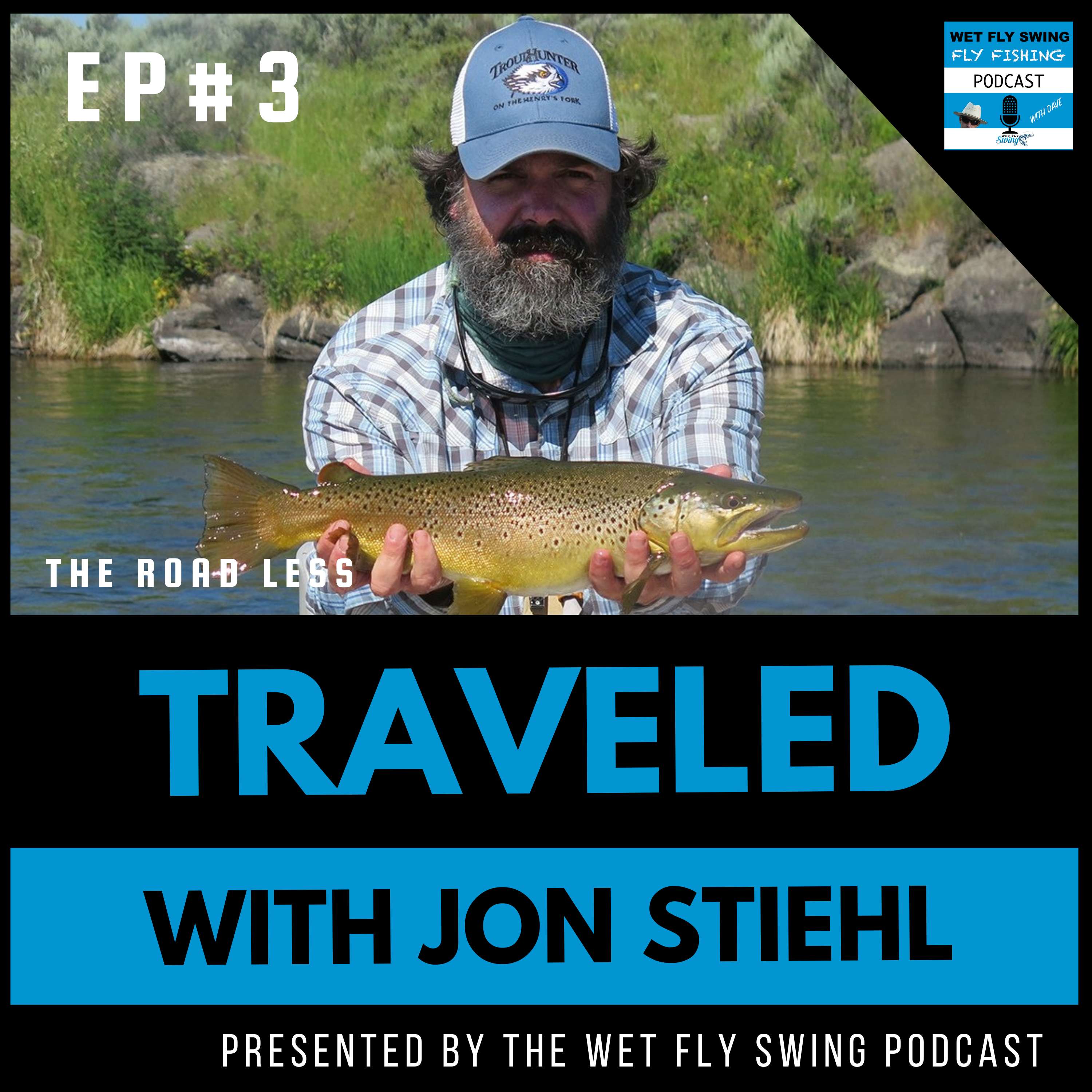
S8 Ep 420Traveled #3: Trouthunter with Jon Stiehl - Henry's Fork, Leaders, Ranch Water
Show Notes: https://wetflyswing.com/420 Presented By: Yellowstone Teton Sponsors: https://wetflyswing.com/teton Jon Stiehl is here to take us to TroutHunter Lodge and how he came to own and take this famous lodge to the next level. We get the history of the ranch water. We've heard a lot about that over the years. We get some inside information on Island Park. Find out about some of the cool box canyons in this area, tricos, and what makes Henry's Fork so famous out west. TroutHunter Show Notes with Jon Stiehl 3:31 - Jon talks about Island Park and its history. Their town is 33 miles long. The village they are in is called Last Chance. 7:28 - They have a great bar at TroutHunter called the Last Chance Bar & Grill. Jeff Currier recommended their bar in our first traveled episode. 8:44 - He shares how he started the TroutHunter. He and his business partner, Rich Paini, came out as interns in 1993 to work for the Henry's Fork Foundation. This was also the time when they met Rene Harrop. 12:08 - Working with Rene was a great help in starting the TroutHunter. The name was his idea. 13:16 - I mention our episodes with Mike Lawson and Brandon Hoffner. 13:49 - He describes Henry's Fork which is also known as the North Fork of the Snake River. 15:12 - He talks a bit about how the Johnny Sack cabin came about 17:20 - I ask him if there are other things that could be done in their area in terms of conservation. He did a socio-economic survey on angling in the area as an intern for the Henry's Fork Foundation. 20:33 - He gives tips for those who are planning to visit and fish in their area. Harriman Ranch is crowded from June 15th to July 4th. For him, the Harriman Ranch is the biggest and most beautiful spring creek you've ever seen with fantastic hatches. 23:41 - We talk about nymphing in Henry's Fork. 24:40 - We dig into the hatches in their area. He says the real gem of the whole summer is the flying ant fall. You want to make sure that you got them in your box from about the middle of July until September. 31:15 - He talks about the hatches from late September to early October. 33:11 - He describes the TroutHunter ranch. 38:56 - Most of their guides these days use a skiff because it is easier to navigate when windy. 42:00 - He talks about the brown drake and the blue-winged olives. 43:39 - We talk about flies. 45:12 - He walks us through the process of how to start when there's a big hatch. 48:42 - He shares that time when Japanese anglers frequently visit their lodge. They had more sizes of tippets. That's when they thought of bringing their tippets into the lodge to sell. 52:53 - He describes the extrusion process for their leaders. 58:13 - He talks about Rene Harrop and mentions the House of Harrop. He considers Rene his guiding light on fly fishing. 1:03:26 - We do the two-minute drill. I first ask him about a good bar in their area that he would recommend. He recommends Shotgun and Ponds. 1:04:07 - He gives a tip on dry flies and dealing with the wind when fishing. 1:05:51 - He shares the events and things they are looking forward to in TroutHunter. He also mentions a band that their guides have put together called the Tail Hooked Whitey. Show Notes: https://wetflyswing.com/420
S8 Ep 419WFS 419 - Norway Fly Fishing with John Bond -Brown Trout, Montana, Swinging Flies
Show Notes: https://wetflyswing.com/419 Presented by: Mavrk, Zag, Country, Drifthook Sponsors: https://wetflyswing.com/sponsors Have you ever had to uproot your entire life and go halfway across the globe to chase a dream? That's precisely what John Bond, the owner of Rena Fish Camp, did! We are digging into Norway Fly Fishing today on the Swing! John Bond is here with us today to take us fishing in Norway and to talk about how he moved his drift boat, gear, and life from Montana to Norway amid COVID. We also find out how streamer fishing changed the game for him. Learn tips and tricks from the Umpqua signature Dragon tier himself as John takes us through the art of swinging for brown trout in Norway. Norway Fly Fishing Show Notes with John Bond 3:47 - John's interest in fly fishing began early, having spent countless weekends traveling to fishing sites throughout the East Coast with his family. 05:20 - John worked as a butcher and part-time fly fishing guide in Vermont, but his ultimate goal was to move to Montana, a place his parents often talked about. 06:42 - He sold an old rod on Craigslist and made friends with the buyer's two sons, who offered him an apartment in Bozeman. 09:45 - In 2010, during his first streamer fishing trip in Missouri, John was amazed by how fish reacted to his Sculpzilla fly. This experience changed the fly fishing game for him. 11:25 - Just three months after moving to Montana, he invested $5,000 in a boat worth more than his Jeep Cherokee. 14:33 - In 2013, he caught a 28-inch female brown trout on the Yellowstone River, and the experience changed his fishing game. 15:17 - John is an Umpqua signature tier for the Dragon, previously known as the Beefcake. 17:24 - We delve into John's fly fishing techniques and how he applies them to streamer and nymph fishing. He uses a Scientific Angler Sink Tip fly line. 22:00 - John breaks down the differences between the brown trouts in Montana versus the browns in Norway. 23:41 - A spin fisherman caught a 20-pound brown trout six years ago. John and his friend Christopher got a 25-inch brown on his third day in Norway. 25:05 - John talked about the Yellowstone Angler and James Anderson and how he opened the door to his guiding life back in Montana. 26:05 - John went to Norway with his wife in 2017. They visited Rena Fiskecamp in Norway, where the owners mentioned the camp might be up for sale. John jokingly suggested he would buy it and move to Norway, despite having no plans to leave Montana then. 27:32 - In 2019, John and his wife made the decision to move to Norway after she became pregnant with their second child. 30:37 - John and his friends went salmon fishing on the Orkla River in Norway, which is well-known for its fantastic Atlantic salmon fishing. After that, he went to Matt Haye's Winsnes Fly Fishing Lodge, where he had a brush with death. 35:39 - John tells us more about the Rena Fish Camp. The Rena River is one of the only rivers open to the public by buying a fishing license. 40:08 - We hear the story of how John moved his family, his gears, his brand new Adipose drift boat, and even his dog from Montana to Norway in the middle of the COVID-19 pandemic. 46:44 - John has been an ambassador with G. Loomis for several years through Yellowstone Angler. He is also an advisor with the Scientific Angler. 48:15 - We get a picture of life in Norway and the differences from life in the U.S. 58:24 - John talks more about his family's lodge and his guiding business on the Rena River. In summer, they have the midnight sun, and people can fish all night during those days. 1:03:00 - Norwegians traditionally have a culture of catching and keeping fish. The practice of catch and release has been steadily gaining popularity over the last 10 to 15 years. 1:04:43 - We hear the best time to visit their fish camp. People come from all over the world to catch Arctic Norwegian grayling. 1:13:45 - John tells the story of how he nearly died while salmon fishing using his brand new G. Loomis Asquith on the Gaula River. 1:17:25 - John ties a variety of flies. Wade Fellen had some luck fishing with the Dragon. 1:17:25 - John ties a variety of flies. Wade Fellen of the Big Hole Lodge had some luck fishing with the Dragon. We also did another episode about Norway with Erlend Nilssen. Show Notes: https://wetflyswing.com/419

S8 Ep 418WFS 418 - Fly Fishing Kodiak with Adam Cuthriell - Steelhead, Karluk River, Fishhound Expeditions
Show Notes: https://wetflyswing.com/418 Presented By: FishHound Expeditions Sponsors: https://wetflyswing.com/sponsors Adam Cutthriel is back on the podcast to take us into one of the great steelhead rivers around the world. We discover how he was able to put together one of the only programs in this part of Alaska, in Kodiak. We find out how and why you might want to book a spot with Adam and the FishHound crew. And we also hear about their recent trip to Honduras with Cam, one of his main Guides. Every time I get Adam on the show, it's always a good time, good laughs so I'm excited to share this one with you. Here we go. Show Notes with Adam Cuthriell 02:20 - We did an episode with David Gravette, a professional skateboarder in episode 407. He told us his story of breaking almost every bone in his body from skating. 06:00 - Adam tells us what the trip looks like starting day 1. 07:20 - Adam tells the story of how they we able to set up a lodge in Kodiak with the help of his friend's wife who happens to be the President of the Kodiak Native Corporation. He noted Girdwood Brewing Company which his friend started. They make great beer. 12:00 - Steelhead holds a special place in their hearts. 13:20 - They had a new record set this year of catching 38 steelheads in one day. 16:45 - For the last 2 years, it did not matter which flies you use. Everything worked. 22:40 - Bears are everywhere in Kodiak. 26:30 - Trips are sold out this year but if you want to book ahead of time, you can head over to FishHound.com to check in with Adam and see what they have coming next. 26:59 - The Situk is a phenomenal river. Adam talks about why it's a great fishery. 31:50 - We had Will Donnelly from FishHound Expeditions too in episode 401. 32:20 - They have 10 full-time guides. 34:00 - Adam tells us about their trip to Honduras. 39:45 - John McMillan was here in episode 117. 40:57 - Hobo Spey is Adam's top fly. For rod, he uses 12-foot 7-wt. 42:00 - Adam is going to Bolivia for Golden Dorados in June. Show Notes: https://wetflyswing.com/418

S8 Ep 417Littoral Zone #2 with Phil Rowley and Brian Chan - Stillwater Fly Fishing Tips and Tricks
Show Notes: https://wetflyswing.com/417 Sponsors: https://wetflyswing.com/sponsors Today we're with the two Stillwater Legends, Phil Rowley and Brian Chan as we dive deep into the Stillwater world! We discover a handful of tips and tricks that we can apply today to up our Stillwater game. We break down the lifecycle and the different hatches of chironomids and find out how to use this knowledge to your advantage in catching big fish. Phil and Brian are good friends and have fished together for many years. They've written a few books on Stillwater fly fishing, recorded DVDs, and taught schools and seminars. They are dedicated to helping us achieve more success and enjoyment on the water. Show Notes with Phil Rowley and Brian Chan 07:45 - Brian talks about chironomid hatches and species. 10:15 - Brian talks about the life cycle of a chironomid. 16:15 - Trout like to feed on the dull pupa. 19:20 - Brian is a Biologist too. 34:45 - A depth finder and a fish finder are very useful tools to have on a Stillwater fishing trip. 39:55 - Phil and Brian are going to have an online chironomid course. Stay tuned for that one! Show Notes: https://wetflyswing.com/417

S8 Ep 416WFS 416 - Kootenai River Fly Fishing with Dave Blackburn - Montana, Bull Trout, Bluegrass
Show Notes: https://wetflyswing.com/416 Presented By: Range Meal Bars, Yellowstone Teton, Trxstle, Stonefly Nets Sponsors: https://wetflyswing.com/sponsors Dave Blackburn takes us on a journey through the Kootenai River in Montana. Discover the rich history of Kootenai, learn the secrets of when to fish for the best catch, and explore the various fishing techniques you can use there. Dave also shares some hilarious anecdotes, such as teaching Hollywood star Richard Dreyfuss how to cast on the set of Always. Find out how you can book a guided trip with him. And don't miss out on the grand finale where Dave delivers a fantastic banjo performance to complete our Kootenai experience. Kootenai River Show Notes with Dave Blackburn 5:24 - Dave tells the story of how he got into fly fishing. His teacher in the sixth grade taught fly tying classes. He started tying flies at age nine. 6:10 - He went to West Virginia University and participated in a placement program for foresters. He was inspired to work in the Bighorn National Forest after seeing the movie Jeremiah Johnson, which depicted the Rocky Mountains. 6:40 - Dave was a backcountry ranger in the Cloud Peak primitive area and met his wife there. They visited his wife's family in Libby, Montana, where he discovered the Kootenai River. 7:54 - He talks about the first time he went fly fishing for native rainbows in the Kootenai River. He used a Mustad 94833. 10:23 - He describes the Kootenai River. He also talks about the impoundment of Libby Dam in 1974, which created a 90-mile lake and became home to various species of fish, including Kokanee salmon, rainbows, and cutthroats. 13:38 - I ask him about the best months to fish at the Kootenai River. He talks about the flows of the river mimicking a natural hydrograph due to the endangered status of the white sturgeon. 15:18 - He met with the technical management team along with the Fish, Wildlife & Parks and agreed to stop power peaking to prevent the sturgeon from becoming endangered. 16:15 - The green drakes have come back since the power peaking stopped. Green drakes can be seen around the second or third week of July. 17:46 - Dave shares a brief history of Kootenai and what the area is known for. The name Kootenai originated from French trappers to refer to the deer robes that the Kootenay Indians would tan. 19:34 - Libby is home to a historical museum. There is also the Cabinet Mountain Wilderness which is a grizzly bear habitat. 21:15 - He talks about the seasonal progression of hatches on the river. They have this thing they call a happy hour hatch. 22:58 - He discusses the various ways of fishing on the river, including float fishing, walk-wading, swing, and Euro nymphing. Dry fly fishing is the most popular way to fish at Kootenai River. 26:53 - He talks about fish size at Kootenai River. He mentions the 29-pound rainbow caught at the Kootenai River. 30:24 - The films River Wild and The Revenant were shot in Kootenai falls. 30:43 - He met Steven Spielberg when the film Always was shot in the Kootenai National Forest and around Libby in the 1980s. He had an opportunity to teach Richard Dreyfuss how to cast on the set and also had lunch with Holly Hunter and Dreyfuss. 33:03 - He talks about their 30-inch club and the incidental catches on bull trout. The biggest bull trout they've ever taken was about 41-inch bull trout, probably about 25 pounds. 35:31 - He discusses native fish management. The Redband rainbows currently do not have Endangered Species Act (ESA) protection, unlike the bull trout and white sturgeon. 38:22 - He talks about fishing trips at Kootenai. He says that a 3-day trip would be ideal when visiting Kootenai. Kootenai is the second largest river in the state. 42:35 - He talks about their lodging at Kootenai Angler and that time when they built their first rental cabin in '92 under $15,000. 43:25 - He shares that time when Meryl Streep wanted to stay in their cabin during their filming of The River Wild. 44:15 - Now they have a total of four cabins and an onsite restaurant that is open to the public. 45:20 - He describes what their busy summer looks like in the cabin and the drift trips they do. The floatable section of the Kootenai with the exception of the falls is 50 miles. 49:03 - Kootenai River is less famous than the Madison River or Big Horn. The traffic is unlike in other areas, and Dave thinks that is Kootenai's saving grace. 50:55 - There are a lot of places where people can camp along the river. 52:51 - He talks about the Kootenai Falls. 55:01 - Dave runs a full-service package for those who plan to visit Kootenai. 56:02 - He talks about the possibility of hooking big-sized rainbows. Streamer fishing is the most effective way to catch big rainbows. His head guide, Joe, caught a 32-inch rainbow on a hopper dropper rig. 58:04 - Jeff Currier was up in Kootenai fishing with him a while back. They used the SA stillwater line. Jeff caught a 9-pound rainbow using a Scientific Angler Stil

S8 Ep 415WFS 415 - Mavrk Fly Fishing with Jeff Sasaki - Euro Nymphing, Stinger Reel, Truckee River
Show Notes: https://wetflyswing.com/415 Presented By: Mavrk Fly Fishing Sponsors: https://wetflyswing.com/sponsors Jeff Sasaki, Designer of Founder of Mavrk Fly Fishing, walks us through his euro nymphing setup today and the physics behind the famous Stinger Micro Reel. We get a bunch of casting tips and talk about what it's like to fish the Truckee River in California. We discover how he transitioned from owning a successful cellphone case company to making the lightest fly reel in the world. Jeff also tells us how he fishes dry flies with a euro nymphing rig. Wait... WHAT??? Does that actually work? Listen to this episode to find out! Show Notes with Jeff Sasaki 04:40 - Casting Tip: You got to get all the slack out of your line even if that means starting out with short casts. 07:00 - We noted the Stinger Micro Reel which is designed specifically for euro nymphing tight line techniques. It weighs about 1.3 ounces. 16:10 - Jeff spent most of his career as a product designer. He started out with transportation design. He became the first Industrial Designer at Fox Racing. 21:00 - Jeff designed an aluminum iPhone case so his dog wouldn't chew on his phone. He started the company, Element Case and later sold it. 30:00 - He tells the story of how biologists repopulated the Bonneville cutthroat in Idaho and later found them at Pilot Peak in Nevada. 38:30 - Jeff describes how he casts dry flies with a euro nymph rig. 41:45 - Tip: If you want more control of your flies, go with the heavier leaders - 20 to 15 pound. 15 to 12 is a good all around. 58:48 - The Stinger doesn't work with any other kind of fishing except for euro nymphing. 1:07:45 - Jeff mentioned James Park from Red Truck. He was on the podcast in episode 246. Show Notes: https://wetflyswing.com/415

S8 Ep 414WFS 414 - Henry's Fork Foundation with Brandon Hoffner - South Fork Snake, Yellowstone Cutthroat
Show Notes: https://wetflyswing.com/414 Presented By: Yellowstone Teton Sponsors: https://wetflyswing.com/teton Brandon Hoffner of the Henry's Fork Foundation (HFF) is here to take us to one of the conservation groups leading the way on the Henry's Fork South Fork of the Snake in this amazing part of the country. We find out why water use is the number one topic that Brandon is focusing on in his work. We discover which species they are also focusing on and some of these famous rivers in this part of the world. We also get a little glimpse of how they are working around these water rights and some of these big issues around water which is always a very interesting topic. Henry's Fork Foundation Show Notes with Brandon Hoffner 4:18 - We talk about how popular Henry's Fork is and how the Henry's Fork Foundation came about. 8:21 - He describes Henry's Fork. 10:16 - He mentions the Idaho potatoes, one of the largest irrigated agricultural systems in the world. It's a massive part of Idaho's economy. 15:30 - He talks about the South Fork Initiative. One of their biggest works is tributary restoration such as in Rainey Creek. They ensure the best habitat conditions available for Yellowstone Cutthroat Trout (YCT). 18:09 - He discusses the issue of the increasing population of rainbow trout in South Fork. The Idaho Fish and Game has been working on this issue for a long time. 19:56 - They use electro-shocking to remove rainbow trout from the South Fork and stock them in other Eastern Idaho waters. 22:49 - He caught a 28-inch YCT in Yellowstone Lake. 25:25 - We talk about nymphing and euro nymphing and his perfect day of fishing. 26:28 - He shares how he got into fly fishing and a bit about how his career started. He grew up in Eastern Colorado. He has been in the foundation for 12 years. 29:27 - He talks about his past trips with the HFF Team and breaks down their trip to Argentina last year. 33:29 - Aside from the South Fork Initiative, the foundation also focuses on the Island Park Reservoir. He gives further details on their initiatives for the reservoir. 45:08 - To get water reports, you can email Dr. Rob Van Kirk, their Science and Technology Director. Show Notes: https://wetflyswing.com/414

S8 Ep 413Traveled #2: Pete Erickson on the Euro Nymphing School - Team USA Gold, Eastern Idaho, South Fork Snake
Show Notes: https://wetflyswing.com/413 Presented By: Yellowstone Teton Sponsors: https://wetflyswing.com/teton Pete Erickson is here to break down the Euro Nymphing School, focusing on the South Fork of the Snake, Henry's Fork, and some of the other great rivers in this area. Pete gives us his update since episode 118. We find out what Team USA has been up to and how that gold medal in Italy came to be. We also find out how are we going to learn these tips and tricks from the gold medal winner in our upcoming trip. We also dig into a little history of euro nymphing and find out how you can up your game with this big trip and price pack we have going right now. Time to experience the road less traveled euro style! Euro Nymphing Show Notes with Pete Erickson 4:15 - He gives an update since we had him in episode 118 to talk about euro nymphing tips. Teaching English at Boise School District takes a lot of his time. He mentions the travels and competitions the Team USA did. 5:53 - He tells the time when Team USA won the gold in Italy. We also had Bret Bishop, another Team USA member, in episode 368. 7:40 -He says that the euro nymphing style is different in each country you go to. You have to completely recalibrate. He also tells about that time he bumped into the French Team on the Henry's Fork. 8:55 - He describes a marble trout which is usually found in Europe. He also tells about how they prepare before a competition. 10:47 - He shares their secret to winning the gold in Italy. He describes the glacial flour. 12:04 - I ask him if there are similarities between the waters in Europe and the stuff over here we're gonna be hitting. We also talk about the South Fork of the Snake River and why it's awesome to euro nymph in this area. 14:30 - He walks us through his euro nymphing program. He's a teacher that believes in guided discoveries. 17:01 - We talk about how they came up with the term European nymphing. 20:02 - We're giving away a trip with a bunch of gear from over 10 different companies. Head over to wetflyswing.com/giveaway to join. 20:40 - He shares his gears for euro nymphing. You can do it with a 9ft 5wt, but a 10 to 10 1/2ft 3wt is better. The Echo Shadow X is his favorite rod. 22:33 - We talk about the lines for euro nymphing and why these lines are so thin. He typically uses lines from Airflo and RIO. 24:42 - He gives a bit about the Euro Nymphing School we'll be doing. 25:46 - Team USA will compete in Kamloops, BC in September. Pete grew up fishing around Kamloops. That's where he caught his first trout when he was about 6 years old. 27:41 - We talk about fishing in Loch Leven in Scotland and the huge boats they use there for fishing. It's the best boat he has ever lake-fished out of. This is also where he got the chance to go to the castle where Mary Queen of Scots was imprisoned. Her secret letters during her imprisonment were just discovered. 31:32 - We talk about our upcoming Euro Nymphing School. 34:00 - He recommends areas in Eastern Idaho that you can nymph on: the South Fork and the Henry's Fork. The South Fork is pretty consistent, especially at that time of the year when the water is down. It's amazing for euro nymphing. 36:32 - He breaks down what his leader looks like. In the Czech Republic, he fished a 9x. He also gives more tips on this. 40:14 - I ask him which is more important between the leader and the rod. He ranks it according to importance - leaders, rods, and then flies. He also digs into the technical aspect of casting with euro nymphing rods. 44:15 - He shares how he designed the Shadow X Rod. For him, it is the most sensitive rod out of all of them. It's very light in the hand. It's also Bret Bishop's favorite rod. On their Master's Team that won in Italy, almost all of them were using that rod. 48:15 - He tells who influenced his knowledge and style on fly fishing. 49:34 - I ask him about Tim Rajeff, the Echo fly rods co-founder. He already sold the company. 52:07 - We talk about drift boats. 53:10 - He tells what makes the South Fort of the Snake one of the greatest rivers in the country. This and the Henry's Fork are great euro nymphing rivers. 55:48 - He tells why Eastern Idaho is a mecca for fly fishing. 56:27 - We give a shout-out to WorldCast Anglers. They have a fly shop in Victor, Idaho. Pete has been working with them since the early '90s. Show Notes: https://wetflyswing.com/413
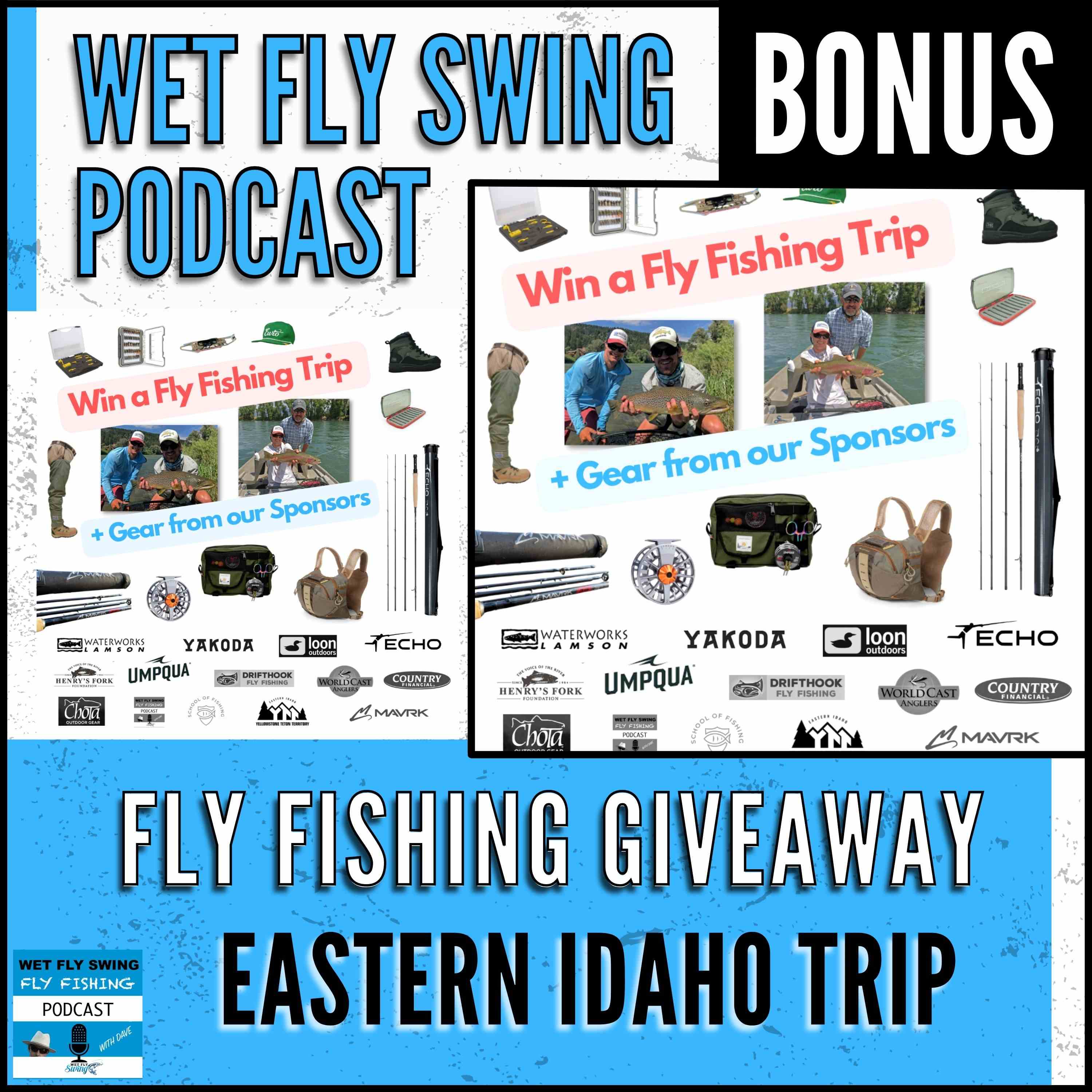
S8 Ep 412Win a Fly Fishing Trip to the Euro Nymphing School + Gear Giveaway
bonusEnter to Win Here: https://wetflyswing.com/giveaway We are giving away a trip to win a trip to fish the Henry's Fork, the South Fork of the Snake and a huge prize pack from our sponsors. Enter for a chance to win a Echo Euro Nymphing rod, Lamson Reel, fly tying tools, waders and much more.

S8 Ep 412WFS 412 - Fly Fishing Alaska by Road with Joseph Jackson - Gierach, Rainbows, Yakutat
Show Notes: https://wetflyswing.com/412 Presented By: Yellowstone Teton, Chota Outdoor Gear, Dalton - Country Financial, Mavrk Fly Fishing Sponsors: https://wetflyswing.com/sponsors Joseph Jackson, author of It's Only Fishing book, is here to talk about Alaska fishing by car. We hear about some of the less-known places you can add to your itinerary if you're heading into the 49th state. We break down the species list, what to bring, best times and places to hit while road-tripping Alaska highways. We also talk about his passion for writing. We find out why he likes to focus on the whys and not the how-tos when he writes. He tells us his favorite John Gierach quote and that one question he wants to ask John. Show Notes with Joseph Jackson 03:00 - We had the other Joe Jackson, aka Sgt. Bassfisher in episode 384 where we talked about tying poppers and cartoon flies. 11:00 - Alaska's interior is a secluded small stream where you can catch world-class grayling. Anything North of the Alaska range is Alaska's interior. 16:30 - Joe breaks down the places you can drive and the best time to target grayling, trout, and kings. 19:00 - Late August and early September is the perfect time to fish anywhere if you're not focusing on any species and want to cast your rod on any water. 26:15 - Joe talks about the stuff you can do along Steese Highway. He talks about doing a little hunting too. 28:30 - July is the busiest fishing time of the year in Alaska. 32:30 - Joe noted Delta Junction as a beautiful place to be in. Also the Copper River Valley in Glennallen. 41:00 - Two important things to bring when road-tripping the Alaska highways: 2 extra tires and at least 20 gallons of gas. 44:20 - Joe's first book, "It's Only Fishing" was about being a road system angler. 53:10 - Joe noted one of John Gierach's famous quotes, "You could say the same thing about fishing that they say about baseball... it takes an adult to play the game well but it takes a kid to think that it's important". JG was on the podcast in episode 407. 56:00 - Joe's got a question for John Gierach... "What does he see as true success in writing?" 57:00 - We hear about what his next book will be about. 1:02:00 - Writing about Yakutat was one of the most challenging things for Joe and he tells us why. 1:10:20 - Joe noted TU and Backcountry Hunters and Anglers. 1:12:30 - Grab a copy of Gunner Peterson's Highway Angler. It's the bible for roadside fishing in Alaska. Show Notes: https://wetflyswing.com/412
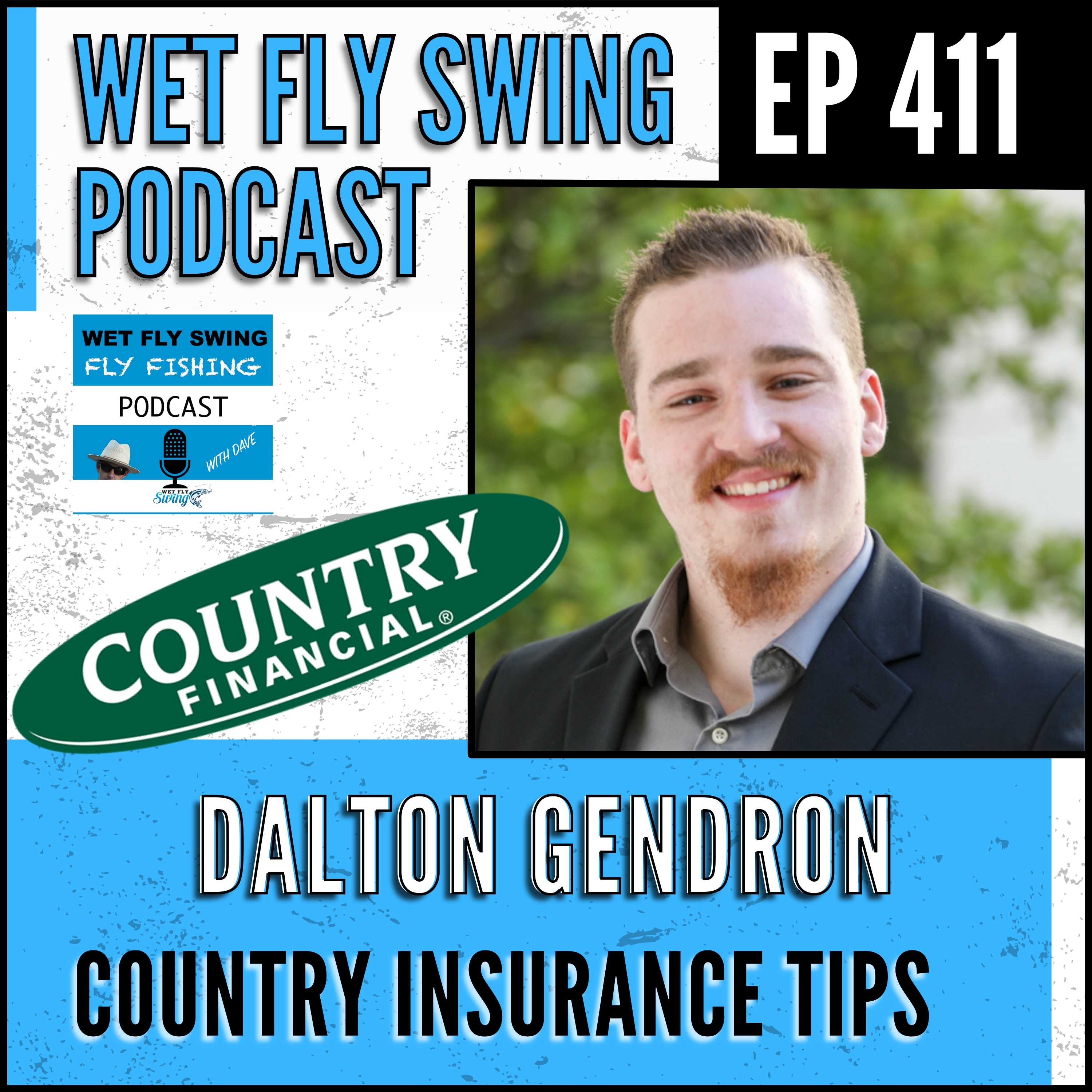
S8 Ep 411WFS 411 - Insurance Tips with Dalton Gendron - Country Financial, Motorcycles, Education
Show Notes: https://wetflyswing.com/411 Presented By: Dalton - Country Financial Sponsors: https://wetflyswing.com/country Dalton Gendron from Country Financial is here to help you with tips on ensuring that your outdoor gear and family are covered with insurance. We discover what type of insurance is commonly overlooked today and find out what you should be thinking about next time you chat with your agent. We get some tips on preventative actions you can think about to prepare for some crazy things that might happen in the future. Let's jump into this one and find out why Dalton wears a half helmet while cruising on his Harley Davidson. Insurance Tips Show Notes with Dalton Gendron 2:33 - I ask Dalton if flooding is a major thing to consider in getting insurance. 3:34 - He gives tips on getting insurance for your properties including homes, boats, fishing rods, and things that are not traditionally covered by a policy in an event of a disaster. 5:47 - He shares a bit about his background and where his love for helping others came from. 7:27 - He tells how his interest in outdoor activities started. He grew up on the outskirts of a small town called Welches in Mount Hood. 8:23 - I ask him what makes Country Financial different from other insurance companies out there. 9:26 - He tells the big things that people should think about based on their location. These include earthquakes and floods which are not traditionally covered in policies. 11:22 - I ask him if they also deal with theft. He explains the comprehensive coverage on cars which can cover theft and accidents. The few items that have limitations on them such as firearms and jewelry. For these, they can do a scheduled personal property meaning they'll insure it for the value of what it's worth and replace it for that cost regardless of where it got stolen and where it got lost. 14:23 - Home and renters insurance give personality liability coverage everywhere in the world. 15:13 - He walks us through his session with a potential client. 15:53 - He tells the difference between Renters Insurance and Home Insurance. 17:04 - I tell a story about that time when my car was stolen. 18:01 - He gives us other resources or educational pieces on preventive measures. 20:40 - We talk about the increasing crime rate and recklessness in the present time. 22:19 - He shares the types of cases he has handled as an insurance agent. 23:19 - He talks about his ideal clients. He has a business partner that does financial planning as well on top of the insurance. 25:17 - He walks us through his and his partner's process of discussing retirement plans with clients. 27:38 - He shares the process of switching policies and coverage. 30:20 - He shares his love for hiking which he usually does with his wife and their golden retrievers in the Gorge. He used to do snowboarding and drive his off-road vehicle in the snow and sand dunes. He also owns a '95 Harley Davidson Dyna Wide Glide. His dad owns an old 1973 Shovelhead that he's had for about 35 years. 32:08 - We talk about how to stay safe while riding a motorcycle. He also shares his ride with his buddies last summer down to Reno, Nevada. I bring up the 1969 film Easy Rider which was about two Harley-riding hippies who drove from L.A. to New Orleans. 37:19 - He says that the loud pipes in Harley Davidson bikes are partially for safety to make sure other people can hear the rider if they can't see him. 37:58 - He shares more about that trip where they rode for 14 hours straight and camped overnight just north of Crater Lake. 40:33 - We do the two-minute drill. I first ask him about the outdoor activities he's been thinking to do for the next year or two. He has done skydiving a couple of times which he says was the best adrenaline rush he ever had. His big goal this year is to go back into fishing, get a fishing license, and get back out on the river. 42:44 - He talks about the concept of a moratorium when something happens to an insured home or person. 43:23 - I give a shout-out to Karmic Outdoors which is for lost stuff such as outdoor gear. 44:08 - He tells about their upcoming trip to Canada in April. He's also hoping to go to Hawaii at the end of the year which is his ultimate vacation goal. Show Notes: https://wetflyswing.com/411
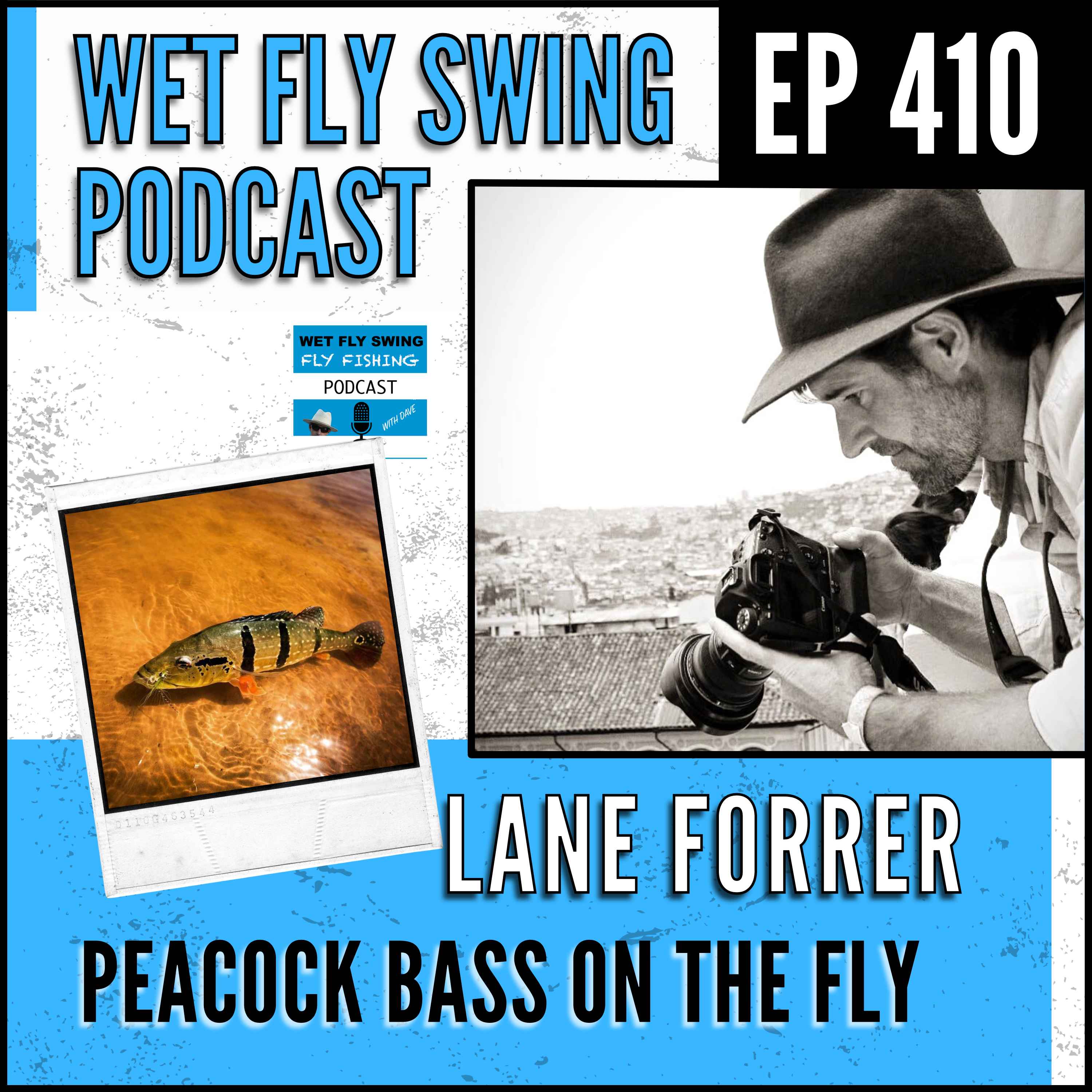
S8 Ep 410WFS 410 - Peacock Bass on the Fly with Lane Forrer - Columbia, Ecuador, Payara
Show Notes: https://wetflyswing.com/410 Presented By: Range Meal Bars, Chota Outdoor Gear, Trxstle, Mavrk Fly Fishing Sponsors: https://wetflyswing.com/sponsors Lane Forrer takes us to Columbia and Ecuador as we talk about how to catch peacock bass on the fly. We hear about how he found himself setting up this program in this part of the world and how you can put together a trip to the jungle. What's the difference between catching a regular bass versus a peacock bass? Lane describes it all today. We also discover why Columbia is actually a great fly-fishing destination - tropical weather and Spanish-speaking species! Show Notes with Lane Forrer 05:00 - Lane usually uses a 7-wt fly rod for either fresh or saltwater 05:55 - Lane's wife is from Ecuador. They've been living there for more than 15 years now. 07:30 - We had Javier Guevara from Ecuador in episode 249 where we talked about arapaima fishing in the Galapagos Islands. 12:00 - Columbia is a popular fly fishing spot in South America. 24:00 - Fer de Lance is a very venomous snake that can be found in South America. 29:00 - We touch on peacocks on the fly. Lane describes it as "every man's fish of the jungle". 32:45 - Flatwing bait fish fly looks like a deceiver. 39:30 - Orinoco is the main river that drains most of the rivers in South America. 42:20 - The temensis peacock bass gets really big. 43:45 - Payaras have scary teeth! 44:30 - We noted the red-tailed catfish. 46:40 - Lane breaks down the steps in getting to Bogota from the US. Show Notes: https://wetflyswing.com/410

S8 Ep 409WFS 409 - Outer Banks Fly Fishing with Brian Horsley - North Carolina, Abacore, Bluefish
Show Notes: https://wetflyswing.com/409 Presented By: Mavrk, Zoe Angling Group, Trxstle, Drifthook Fly Fishing Sponsors: https://wetflyswing.com/sponsors Capt. Brian Horsley from Outer Banks Fly Fishing is here to break down the North Carolina outer banks and the saltwater species he focuses on. We discover which runs have been up and down the region over the years. We find out which lines they use to dredge the bottom. Very interesting topic here. And we also find out how to catch red snappers and albies on the fly, plus the saltwater HD. If you love giant fish and occasional shark, then this episode is the one for you. Here we go. Brian Horsley from OBXflyfishing.com. Show Notes with Brian Horsley 03:45 - Brian describes a bluefish blitz. 05:00 - In 2006, Brian started commercial fishing for seabass and groupers. 06:30 - Brian noted the North Carolina Marine Fisheries conservation group. 24:30 - October and November are the prime time for albies fishing in NC. 25:30 - Brian and his wife are partners in guiding. She's been guiding for over 25 years. 28:45 - Brian is also a photographer. 36:20 - Since 1996, Brian has used Jones Brothers (marine) boats. A 23-foot Cape Fisherman. 48:15 - Brian uses a photo hosting site called SmugMug.com 52:40 - He recommends the Salt HD and the Igniter 8 Sage fly rods. Also a Marvk 9 wt. Show Notes: https://wetflyswing.com/409

S8 Ep 408WFS 408 - Fly Fishing Florida with Bruce Chard - Tarpon, Bonefish, Permit, Grand Slam
Show Notes: https://wetflyswing.com/408 Presented By: Drifthook Fly Fishing, Yellowstone Teton, Angler's Coffee, Range Meal Bars Sponsors: https://wetflyswing.com/sponsors Bruce Chard is back on the podcast today to take us to fly fishing Florida, one of the greatest saltwater destinations in the world. We find out how to catch giant tarpon, big bonefish, and permit on the flats. We discover how to prepare for tailing fish. We also get some sight fishing tips. This is an all-around huge episode and a great one with Bruce. Fly Fishing Florida Show Notes with Bruce Chard 3:30 - Bruce shares his scheduled trips for 2023 which is a busy year for him. He has six bonefish schools and hosted trips booked for this year. 4:41 - He mentions he's going to take a class with Bill Oyster to learn how to build a bamboo fly rod. We had Bill in the podcast in episode 343. 5:57 - I mention our interview with him in 2020 in episode 124 where we discussed giant tarpon fly fishing. 6:05 - He talks about Venice, Florida and Snook Alley which is a popular place to go at night time for snook fishing. 7:44 - I ask him for tips on planning hosted trips. He says he knows his guides and takes care of them whenever they are on a trip. 9:46 - He talks about the world-famous saltwater fly fishing destination which is the Florida Keys. 11:05 - When he first started guiding in 1992, Florida Keys was also one of the top destinations for giant bonefish. He says this is not as prevalent as it used to be, but they have more species now than before. 12:00 - We dig into the technical aspect of bonefishing in the Keys. He says bonefishing is good in the warm months in super shallow waters in the Keys. 14:11 - He talks about tarpon fishing. He emphasizes the importance of sight fishing and angling. 21:53 - Almost all the permit fly fishing tournaments were held in the Keys. He says that the guides in the Keys are technically advanced and devoted to their career. 23:12 - Permit is one of the hardest fish in the world to catch in the fly. He shares his outlook on permit fishing. 24:28 - Getting a permit to see the fly is more challenging than with the bone and tarpon because they're pretty concentrated on looking down and most of the time they don't allow you to get very close. The higher the odds you're fishing for permit, the higher the odds you're having a farther distance cast and distance shot. 31:35 - He breaks down his process from picking up his fly when he fishes for permit. It depends on the angler's ability to make the cast. He describes how to do the backhand cast to catch a permit. 39:18 - We dig into the three main factors to focus on when looking for fish -- the shape of the fish, contrast, and movement. He also talks about what inexperienced anglers usually do which leads to wasted opportunities and not being able to catch anything. 53:15 - We dig into the grand slam. It's catching a bonefish, permit, and tarpon all in one day. 56:35 - He breaks down the rod set up for those who want to hit the grand slam. He says most really good guides in the Keys have really good tackle, top-notch reels, and rods ready to go. They also have saltwater rods that clients can use. 57:13 - For those who want to bring their own stuff, a 9ft 8wt is the average overall bonefishing rod. 58:09 - He recommends a nine or 10wt for an average permit setup. But when it's windy and they're bonefishing, they use a 9wt. 58:53 - For tarpon fishing, they use an 11wt which is the heaviest rod that they use. A lot of times they use a 10wt even for big fish. 59:04 - The weight of the rod has to do with the weight of the line. And the weight of the line has to do with how big your fly is. 59:20 - If we put things into ratio and proportion of your rod and line size compared to the size of the fish, it doesn't make any sense. 1:00:34 - We dig into flies. He mentions the Peterson's Spawning Shrimp and the Ragin Craven fly. Both are good for bonefish, permit, and other flats species. He likes throwing shrimpy flies that allow his anglers to strip the fly and stay connected. 1:04:41 - I ask him if there's one line that he uses for all these species with different weights. He designed and created a full line of Scientific Anglers (SA) Salt Water Grand Slam Series Fly Line Tapers. It became their top-selling saltwater fly line. 1:05:36 - He shares that time when he worked with Airflo. They used the same design from SA to make the Tropical Punch Fly Line. It also became a top-selling saltwater line for seven years. 1:09:03 - He talks about Jim Teeny who he considers one of the greatest guys in the industry. He helped Bruce to get started in his career. 1:09:50 - We do the two-minute drill. He gives a tip on casting in the wind. 1:12:50 - He mentions the Bonefish & Tarpon Trust as the conservation group he supports. 1:13:06 - He recommends sunglasses with copper or amber-colored lens for saltwater fishing. He shares his experience on this. Show Notes: https://wetflyswing.com/408
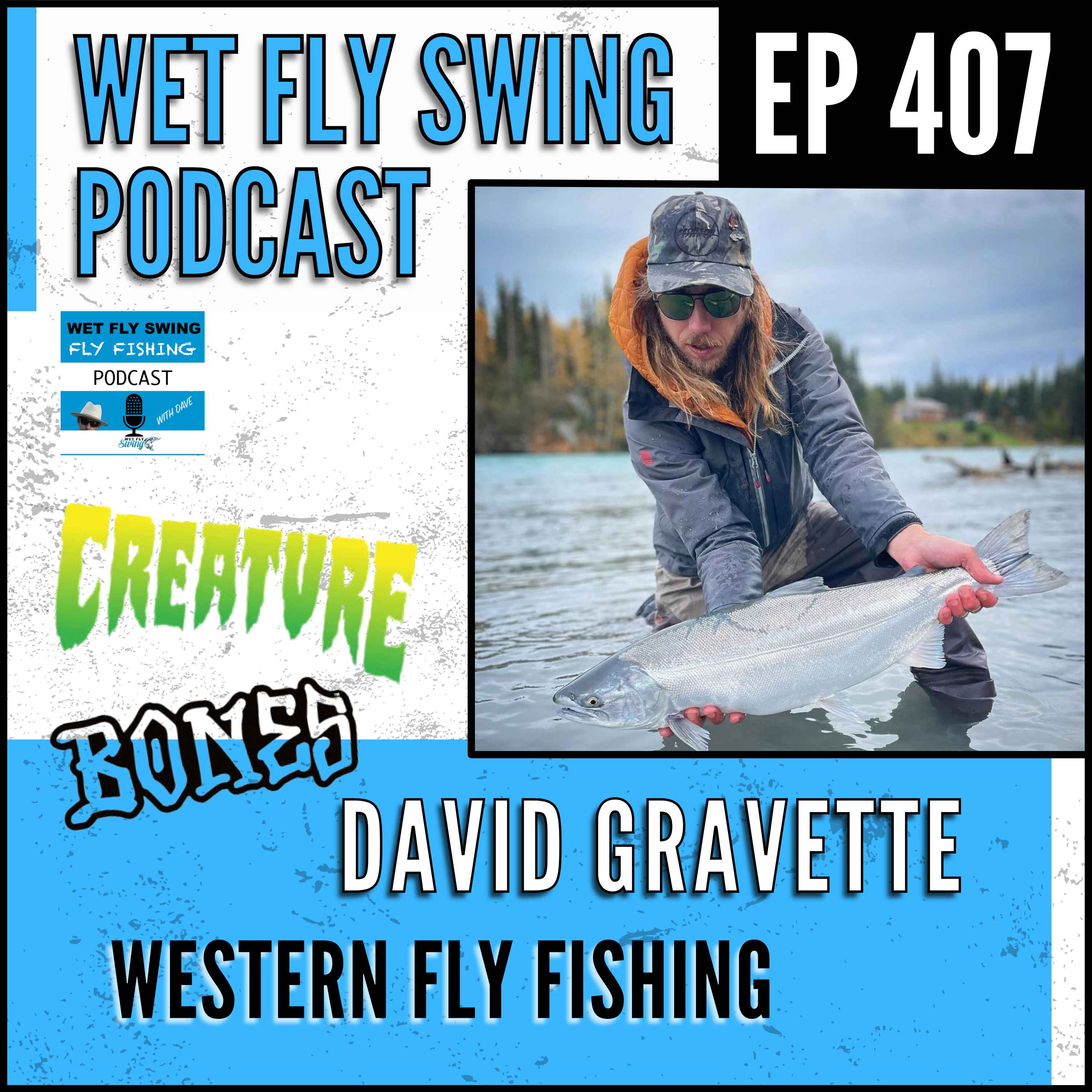
S8 Ep 407WFS 407 - David Gravette on Western Fly Fishing, Professional Skateboarding and Thrasher
EShow Notes: https://wetflyswing.com/407 Presented By: Mavrk, Range Meal Bars, Stonefly Nets, Trxstle Sponsors: https://wetflyswing.com/sponsors Pro skateboarder and fly angler, David Gravette, takes us into his world of broken bones and what keeps him going strong. We hear about my connection to skateboarding back as a youth and how I first connected with David and where our connection in fly fishing in the northwest comes from. We also find out how he dealt with a toxic storage mess under his house. Western Fly Fishing Show Notes with David Gravette 4:22 - David shares a story about his major shoulder surgery in 2017 and his hip dislocation and how fly fishing helped him recover from that and his depression. 13:13 - I ask him about his target species. 14:52 - He mentions KC Badger, angler and BMXer, who is one of the first dudes he ever fished with. 15:10 - He talks about his first Redington setup and his first rod which was his dad's old fly fishing rod. He gives a tip on getting a good line for your setup. 17:50 - I tell about that time in grade school when I tried skateboarding. He shares his first memories of skating and his first time in a skate park when he was just 10 years old. 20:41 - We talk about the film A River Runs Through It. We had John Dietsch who was the stuntman for Brad Pitt in the movie in episode 135. 23:20 - He shares his perspective on skateboarding now versus that time before the internet became a huge thing which he considers the golden years of skateboarding. 25:38 - He says how fishing keeps him sane every time he recovers from an injury. 28:49 - He talks about that time when he went out to fly fish while having a pin sticking out of his foot. 33:09 - I ask him what fly fishing trips he wants to do. 35:06 - He shares his opinion about how skateboarding now became more focused on one's ability and skills to market himself on social media. 38:00 - He talks about some skateboarding tricks. 40:07 - He mentions some fellow fly anglers whom he learned fly fishing from like KC Badger and Kayla Lockhart. 42:35 - He tells his preferred waters to fish in. We also talk about his steelhead trip in Seward, Alaska which he considers his best day of fishing. 00:50:09 - We talk about The Nine Club skateboarding podcast. 00:50:37 - I ask him if he's going to pursue fly fishing as a career or stick with skateboarding. 00:52:45 - He talks about his childhood and his dad who is also a fly fisher and an athlete back then. 00:55:39 - He shares the story of when he was a toddler and got lost out in a forest while they were camping. 00:58:07 - I ask him about his techniques in stillwater fishing. 00:59:26 - He tells one of his least favorite things about fly fishing. 00:59:58 - We share our encounters with rude fly fishers. 01:10:17 - He talks about scootering. 01:12:02 - He takes us to that time when he became a professional skateboarder. 01:15:00 - He talks about Creature Skateboards. 01:16:27 - He talks about the brand which kicked him off their company and the struggles and risks as he travels to skate. 01:23:39 - He talks about the dead crash. He also mentions some big names in the sport like Tony Hawk and Bucky Lasek. 01:26:28 - I ask him about tropical fly fishing. 01:28:09 - I give him a tip on gloves. I recommend the Fox gloves from REI. 01:29:48 - I asked him about his plan for the next five years, and he shared this funny clip with The Illusion in Tosh.0. 01:32:35 - He tells the story of the oil spillage in their house which took four years to be fixed. It was the biggest residential contamination in Portland City history. 01:35:42 - I ask him about his skateboard tricks. He shares his trick that became his most significant mark on skateboarding. 01:38:18 - I ask about Thrasher Magazine. He tells his kayak of choice which is from Dagger. 01:39:55 - He tells his choice of weed. He gives a shout-out to his rolling paper company called Parachute Papers. 01:42:12 - He shares what he's looking out for this year that gets him excited. 01:46:50 - We talk about his social media presence. He mentions his skateboards in Creature that feature fish graphics which include the Gravette Lures Pro Creature Skateboard Deck. 1:48:41 - I mention our episode with Kris Bare on urban carp. Show Notes: https://wetflyswing.com/407

S8 Ep 406WFS 406 - George Cook on Fly Fishing for King Salmon in Alaska - Kanektok River, Spey, Alaska West
Show Notes: https://wetflyswing.com/406 Presented By: Mavrk, Dalton - Country Financial, Drifthook Fly Fishing, Trxstle Sponsors: https://wetflyswing.com/sponsors George Cook is back on the podcast today and takes a deep dive into swinging flies for kings. We get a rundown on some of the history around the Kanektok and Nushagak Rivers. We find out when you should be planning your trip if you want to target rainbows, kings, and chinooks in Alaska. George tells us his gear setup to up your Spey game and we also talk a little bit about his passion for hunting. George also talks about what he calls, "Pillow Water" and how to do a cadence cast. Show Notes with George Cook 05:45 - We've done a hunting episode before with Jay Scott in episode 354. 07:30 - George will be at the Pacific Northwest Sportsmen's Show on February 15-19, 2023. They will have a hunting boot booth there. 14:30 - They hooked 105 fish in 8 days on the Nushagak River last year. But none of those fish were over 18 pounds. 19:30 - George talks about doing a DIY float trip on the Kanektok River, swinging for chinooks, kings, and rainbows. 35:20 - June 15 to July 8 would be the period to mouse for rainbows and chinook. George recommends doing a guided trip if you want to target chinooks. 38:10 - Dave Duncan Sr and his sons have over 30 years of experience guiding in the Kanektok River. George also noted Alaska West who's been at it for a long time. 44:00 - George went full Spey since 2010. He rarely uses the single-handers nowadays. 44:45 - We mentioned Jim Teeny. He was one of my first guests on the podcast at WFS 05. 52:10 - They have a saying for flies "if it ain't chartreuse, it ain't no use". George explains. 1:00:25 - George explains what he calls a Pillow Water. 1:04:20 - George tells us one of the greatest stories he's ever heard. 1:06:11 - We dig into the recommended gear. 1:16:20 - George describes how to do a cadence cast. Show Notes: https://wetflyswing.com/406
S8 Ep 405Littoral Zone #1 with Phil Rowley - Finding Fish on Stillwaters, Fly Fishing Tips and Tricks
Show Notes: https://wetflyswing.com/LZ1 Sponsors: https://wetflyswing.com/sponsors Do you know what a Littoral Zone is? Did you know it's the most productive part of the lake? Phil Rowley takes us into stillwater fishing and explains what this new Littoral Zone Podcast is all about. He describes which is the best rod for stillwaters and why. Phil gives us the step x step process to find fish in lakes. Click the button below to listen to the podcast and find out all of the answers to help you find fish on your next trip. Littoral Zone Show Notes with Phil Rowley 01:33 - Phil explains what is the perfect stillwater fly rod to use. He recommends a rod between 5 and 7-weight, preferably 9.5 or 10 feet long. A longer rod will help with roll casting on the lake. 04:146 - We find out what is the best motor for stillwater fishing. Always use the most powerful electric motor you can find. Phil uses a 55 lbs Minn Kota motor. There is a photo of a motor below but not the exact model that Phil uses. Make sure to use a lithium battery to help with reducing weight and last much longer. 06:03 - Phil describes which is the best indicator color to use. He likes hot pink and hot orange for bright days. 07:58 - Phil talks about how to find trout in stillwaters. Trout are cruisers in lakes and may live in one part of the lake for their entire life. Lakes can be intimidating because of their size. 09:55 - We cover the three things you need to know to find fish: comfort, protection, food, and observation. 10:09 - Comfort is one major factor to consider when finding fish in terms of water temperature, weather, and seasonal changes. The warmer the water gets, the less oxygen it holds. 50 to 65 degrees Fahrenheit is the key temperature for trout in lakes. Water temperature also affects the food that fish eat. 12:24 - Lower a thermometer with a cord into the lake to find the 50 to 65-degree prime window. 12:40 - Weeds also give off oxygen so there will be more fish around weeds. Tributaries to lakes can also be good places to find cool water and fish during the summer months. 15:35 - Lakes go through seasonal changes. During the changes, it can affect where trout will be in the lake. You can find fish in shallow waters just after ice comes off when it is stratified. Different temperatures of water temperature will not mix. 17:31 - During the summer the lake will be mixed and fish may be in deeper waters especially as things get warmer. 19:08 - Wind can affect how you can find fish. Foam lines can be key places to find fish as well. 19:45 - The next factor is protection. These are things that give the trout confidence to come in and feed. Light, structure, vegetation, and depth are keys. Algae is one key factor. Rippled service helps fish to find comfort. 22:30 - Light is a key factor. Generally, fish are in shallow water during the morning and evening and deeper during the day. 23:07 - Structure is another factor in finding fish. Trout like bass love structure but they don't hold on to points. They cruise edges and ledges. Drop-offs, points of land, and other transition zones are where fish will be. 23:58 - He discusses the three basic zones or areas of a lake. The shoreline area, shallow shoal area, and deep water zone. The shallow shoal area is the grocery store of the lake because it's influenced by light which stimulates plant growth and provides oxygen for the fish. 27:47 - Use the land adjacent to the lake to show you what the slope of the underwater lake looks like. If the bank is at a steep angle into the lake then the slope of the river may be steep. 29:00 - Always think about transitions. Phil spends his time around these areas and a beaver lodge could be another great area to focus on. 29:58 - Bathymetric maps are a key to finding fish. This is a map with a series of lines that shows the depth of the water. Google maps can work great as well. 31:25 - Sounders are very helpful for finding fish. These are also known as fish finders but Phil calls them sounders because they help you find structure and not just fish. Look for changes in depth around structures. Phil likes the Hummingbird Helix 7. 33:15 - The third piece of finding trout is food. If you find the food, you will find the fish just like the grocery store for humans. Weed beds provide oxygen, protection, and the majority of the food. 34:45 - A throat pump is an important tool. Here's a link to Phil's website and the tool. It helps you identify the prey items and size of insects. It is not a stomach pump. 36:23 - We find out how to use a throat pump and why you should not squeeze water into the mouth. Phil talks about the best way to do it so you avoid pushing your sample away from you. White margarine containers can help to hold your sample. You can also discover feeding activity from a throat pump sample. 40:00 - Chironomids are the most widespread food source in lakes so it's very important to understand these insects. The smaller the insect, the earlier it emer
S8 Ep 404WFS 404 - Rod Building Supplies with Matt Draft at Proof Fly Fishing - Kits, Equipment and Tools
Show Notes: https://wetflyswing.com/404 Presented By: Stonefly Nets, Mavrk, Drifthook, Range Meal Bars Sponsors: https://wetflyswing.com/sponsors Matt Draft is back on the podcast with an update on what he has been up to and some more rod-building supplies and tips. We find out how Matt built his business that doesn't require any marketing. I also dig into some random questions that give us a feel for the how and why behind building a rod-building supplies business. Rod Building Supplies Show Notes with Matt Draft 2:50 - We look back to our episode back in 2018 which was episode 85. 3:37 - Matt gives an update on Proof Fly Fishing. He says they added a new video series with the title How to Restore a Bamboo Fly Rod. 4:24 - He shares tips on restoring a bamboo rod and building one from scratch. More information on these can be found in the tutorials section on their Proof Fly Fishing website. 6:20 - I ask him how he figured out that restoring bamboo rods is the next step he wanted to take. 8:09 - He walks us through the steps of building your own rod. He recommends ordering or customizing a kit from their website and watching their video tutorials. 10:15 - He breaks down the parts of building your own rod. 12:47 - He talks about the blanks which have the largest cost among their rod-building supplies. One of his favorites is the Czech Nymph Blank. 13:09 - He gives the two defining characteristics of a true Czech blank. 13:33 - He talks about cork grips. He also shares some of their new stuff, the carbon fiber handles and EVA grip. 16:28 - We talk about other products from their website. One of these is the Gorilla Glue which is an unbelievable adhesive. They have a tutorial on using Gorilla Glue as a rod finish. 21:00 - We dig into the usual blocks that people encounter when they are just starting out in building their own rods. 22:27 - I mention the Gink and Gasoline series where I found Matt. 23:06 - He gives some tips for those who are looking to get an affordable bamboo rod. 25:43 - He shares about their specialized tutorials. 27:13 - He talks about the process of building rods. 29:27 - He takes us back to building his company. 32:06 - He tells his species of choice. 32:40 - He recommends The Classic Fly Rod Forum that people can dig into to learn more about rod building. 33:08 - I ask about his plans for the company. 35:09 - I mention our episode with Joe Jackson on deer hair bugs. 35:37 - He shares his gratitude to the rod-building community for being generous with information and materials when he was just starting out in the business. 41:01 - He talks about his goal for this year. 42:20 - He shares how he runs and promotes his business. 45:06 - We talk about what music he listens to while building rods. He mentions the Counting Crows. Show Notes: https://wetflyswing.com/404
S8 Ep 403WFS 403 - Trout Spey Fly Fishing with Kynslee Scott - Montana, OPST Groove, Steelhead
Show Notes: https://wetflyswing.com/403 Presented By: Dalton - Country Financial, Yellowstone Teton, Togens Fly Shop, Zoe Angling Group Sponsors: https://wetflyswing.com/sponsors Kynslee Scott is here with an update for swinging flies for trout. We find out which trout Spey setup she loves out of Montana and why the Polyleader is the key for big Montana rainbows and browns. She takes us to the Klickitat River and how she's been guiding there since 2015. She gives us a review of her experience in using G Loomis fly rods and OPST Skagit lines. We also break down the flies and materials selection for October Caddis in Montana. Show Notes with Kynslee Scott 05:00 - In 2008, Kynslee moved to Missoula for college where she learned how to properly row a boat, guide, and progress in fly fishing. 07:45 - Kynslee uses a 31-11 G Loomis IMX Pro along with a Commando Head OPST 13:50 - She describes her tip setup throughout the year. 17:30 - We talk about the October Caddis in the fall and how they fish during this season. 20:15 - For October Caddis season, she uses a size 4 elk hair caddis. 22:30 - She noted the 9-foot 3-wt 2-handed Micro Skagit OPST. 30:45 - She's been guiding the Klickitat River since 2015. They have a lodge there called, Flying L Lodge that's been there since 1946. They also have Reds Fly Shop there. 35:20 - We had Joe Rotter on from Reds Fly Shop in episode 186. 47:45 - We just had Jeff Currier for the second time where he talked about the 440 species he caught on the fly. 1:11:10 - Stuart Foxall was on the podcast in episode 391 where we talked about Spey and steelhead. 1:13:00 - She talks about wanting to get a marlin on the fly again. She remembers watching her dad fighting and landing a 500-pound marlin in Hawaii. 1:15:20 - Kynslee is an ambassador for G-Loomis rods. Show Notes: https://wetflyswing.com/403

S8 Ep 402WFS 402 - Maine Fly Fishing with Kevin McKay - Big Brook Trout, Dry Flies, On the Reel
Show Notes: https://wetflyswing.com/402 Presented By: Range Meal Bars, Chota Outdoor Gear, Stonefly Nets, Drifthook Sponsors: https://wetflyswing.com/sponsors Kevin McKay is here to talk about Maine fly fishing and give a tour of some of the best brook trout and smallmouth bass fishing in the country. We find out and discover how to fish the West Branch for big brook trout. We hear about which streamer you should be using if you only had one. We get a ton of resources including fly shops and other websites. We also talk about the forums that Kevin runs on his website. We're going to dig into all these and cover a number of species on top of brook trout. We even find out how they've been living off the grid for six years and how and why they offer free lodging in their camp on the river. Maine Fly Fishing Show Notes with Kevin McKay 03:28 - Kevin tells how he got into fly fishing. The first fly rod he bought was from L.L.Bean. 5:44 - He shares the story of his very first experience of fly fishing. 7:02 - He shares why he started his websites MaineFlyFish.com and MaineFishingAdventures.com. 9:21 - He feels honored to be part of the Scott Fly Rods Pro Staff. 9:54 - He shares about his career aside from fly fishing. 10:39 - He mentions that his photos and website are in Bob Clouser's book on smallmouth. 12:34 - He says the two people who influenced him on fly fishing. 13:52 - He walks us through the meticulous process of getting a guide's license in Maine. 14:44 - I try to answer a "Lost Person" scenario which is also part of getting a guide's license. 19:01 - I ask about the restrictions on hunting in Maine. 19:54 - He tells that a lot of people in Maine get a guide's license as a prestige thing. 22:29 - We dig into what he does in Maine and his place being off the grid. 26:00 - He talks about the species he is focusing on. 28:58 - He shares his technique for hitting a landlocked Atlantic salmon. 32:42 - He tells the best times to fish in Maine. 33:55 - He shares a story of their trip to a remote pond with his dad where they caught a 19-inch brook trout. 41:15 - He tells where to go to catch some brook trout. 42:48 - He recommends some resources for people who want to fly fish in Maine. These include his website and fly shops in Maine. 45:42 - He talks about the main fly shops in Maine. 48:50 - We dig into the gear to hopefully hit a brook trout. 50:31 - I mention our episode with George Cook where he talked about chinook in Alaska. 51:21 - I ask him about the sink tip they use. He mentions the Airflo Kelly Galloup streamer line which is his new favorite. 53:09 - He talks about the chubs which the brook trout eat. He also shares that time when a brook trout bit his hand. 54:25 - We dig into his fly fishing style and the techniques he teaches his clients. 58:28 - I ask him about the best times to fish in the West Branch. 1:00:08 - He recommends some places to stay in the West Branch area. These include the Big Eddy Cabins and Campground and the Big Moose Inn. 1:03:51 - He talks about the brook trout in Labrador, Canada. 1:05:15 - He gives tips on fishing in Maine. 1:08:35 - He talks about his fly fishing podcast entitled On The Reel. 1:13:21 - We dig into his off-the-grid. 1:17:09 - He describes his place and his tiki bar. 1:19:58 - He talks about their electricity consumption with living off the grid. 1:22:25 - We do the Two-Minute Drill where I ask him about fishing for brook trout, reliable resources for fly fishing, conservation issue, and budgeting tips. Aside from his website, he recommends Maine IF&W as a resource. 1:25:52 - I ask him about the property value in Maine. Show Notes: https://wetflyswing.com/402

WFS 401 - Our Alaska Fly Fishing Guide with Will Donnelly - FishHound Expeditions, Willie Nelson
EShow Notes: https://wetflyswing.com/401 Presented By: FishHound Expeditions Sponsors: https://wetflyswing.com/sponsors Will Donnelly, head guide at FishHound Expeditions, takes us into Alaska with a focus on road-tripping. We break down Alaska by car - where you should be heading, species you can chase, and some tips on flies technique. We also talk about that trip we had last year and what you can expect when you fly out to Alaska with the FishHound crew. Show Notes with Will Donnelly 04:45 - Will moved to Anchorage Alaska with his parent when he was 10 years old 10:45 - Eligible Alaskans get Permanent Fund Dividend. 13:30 - Will talks about fishing in Honduras. 17:30 - Adam Cuthriell was on the podcast 3 times in episodes 324, 346, and 377. 22:30 - The fish in Alaska are meat eaters. Mousing is the best way to catch them. 35:00 - Will talks about how they painted a steelhead on their Astro van. 39:30 - Will tells the story of when he caught his first steelhead on the Kenai River with the help of an otter. 48:00 - His favorite mouse pattern is the Rio Pip Squeak. Shares a tip that almost always guarantees a hook-up. Photo by CaddisFlyShop.com 1:00:30 - The Kenai and Susitna Rivers both flow into the Cook Inlet. 1:03:20 - Will recommends his favorite fly shop in Anchorage, Mossy's Fly Shop 1:13:20 - Will talks about fishing one of the Kodiak rivers in July. Show Notes: https://wetflyswing.com/401
S8 Ep 400WFS 400 – The Mid Atlantic, Fly Fishing Festivals and PHWFF with Beau Beasley
Show Notes: https://wetflyswing.com/400 Presented By: Country Financial, Trxstle, Togens Fly Shop, Stonefly Nets Sponsors: https://wetflyswing.com/sponsors Beau Beasley is here to take us into the mid-Atlantic Region. We find out what makes a good fly shop and why some fly shops go out of business. We talk mainly about what they have going at Project Healing Waters and the new book that he's working on which has 40 powerful stories from veterans with traumatic pasts. This episode is dedicated to the veterans who had to live with their trauma and those who laid their lives to serve our beloved country. Show Notes with Beau Beasley 04:00 - Beau was a retired Fairfax firefighter and paramedic. 07:45 - We had Chuck Furimsky on the podcast in episode 292 11:45 - Lefty Kreh once said to Beau, "There are 2 kinds of people in fly fishing. The kind of people that show their knowledge with everybody and the ones that share their knowledge." 19:19 - The very first time that Beau entered a fly shop, he got treated very poorly when he came in with a spinning rod. That fly shop is not around anymore. 29:23 - Beau tells the story of when he was in a fly shop and mistakenly thought that LT Cahill stands for Lieutenant Cahill. He got corrected by not feeling like an idiot. 33:33 - Rick Pope was on the podcast in episode 158. 34:13 - Tom Rosenbauer is one of the best-known fly anglers in the country. 38:15 - Beau is offering something that hasn't been offered before. They've partnered with the Recreational Boating & Fishing Foundation. And they're hosting the first-ever Beyond the Cast Women's Symposium. 43:15 - His first fly fishing book is called, Fly Fishing Virginia: A No Nonsense Guide to Top Waters. 48:05 - Beau talks about being involved with Project Healing Waters for 15 years. 51:30 - His new book will be titled, Healing Waters: Veteran Stories of Recovery in their Own Words. This book is expected to be out in March 2023. 53:00 - We had Joe Jackson on the podcast in episode 384 who told the story of recovering from a heart attack. 1:09:15 - Beau's new book is dedicated to Brian Mancini, who lost his life as a result of his service and the post-traumatic stress disorder that he experienced. 1:37:00 - Visit TXFlyFishingFestival.org Show Notes: https://wetflyswing.com/400

S7 Ep 399WFS 399 - Jeff Liskay on Ohio Steelhead, Swinging Flies, Skagit Lines and the Steelhead School
Show Notes: https://wetflyswing.com/399 Presented By: Country Financial, Yellowstone Teton, Togens Fly Shop, Zoe Angling Group Sponsors: https://wetflyswing.com/sponsors Jeff Liskay is back on the podcast to take us back into some tips on swinging flies for Lake Erie steelhead. We find out which spey casting tips Jeff gave me on our trip to Ohio. We also get the low down on the plan for next year's Steelhead School trip that is gonna be changing. We might be hitting multiple locations. We also get a wrap-up from our guest on the school event on the Fireside Chat with Dave. It was a fun time. We sat around the campfire under the stars at the cabin. We basically talk about what is all about at the end of the episode. Ohio Steelhead Show Notes with Jeff Liskay 3:50 - Jeff and I look back on the Steelhead School trip we did in December last year. 5:30 - I ask him about his gear including the new Skagit short from Scientific Anglers (SA) that we used on our Ohio trip. 7:38 - He gives tips on fishing the streams of Ohio which is a great spot for steelhead fishing. 11:14 - I tell a story about that time we were in the Grand River and I surprisingly caught a brown trout which is pretty rare in that area. 13:04 - He talks about the importance of fly selection. 15:23 - He shares his thought process when he or somebody does not get anything from the water, no feedback, no fish, or no touches. 17:59 - We dig into the gears and techniques we used during our trip which includes the TC Tip Kit from SA that comes in 10 and 12 feet. 29:30 - I ask him if the Steelhead School trip is something that he would do again. He also shares his perspective on that trip. 31:56 - We give a shout-out to Boris who was not able to join us on the trip due to a health concern. 34:29 - He mentions some great spots and waters to explore and fish in. 35:32 - We share our plans for the next Steelhead School. If you're interested to join us, you can go to www.WetFlySwing.com/SteelheadSchool. 36:24 - We talk about when the airline lost my checked-in bag during our trip. We also give a shout-out to Reece Fabbro Jr., Jeff's friend and owner of The Backpackers Shop for helping us out. 37:22 - He also gives a shout-out to Dan Pribanic of Chagrin River Outfitters and Jerry Darkes who also guested on the podcast in episode 170. 38:44 - He tells about the best months to go fishing in Ohio. 45:31 - He talks about the hatchery versus the wild. 48:28 - I ask him why he likes the 11'6'' over the longer and shorter ones. 50:39 - He talks about how he guides and teaches casting and how he helped me during our trip. 53:19 - He asks me what I think the questions he asks to a client when they step into the water. 54:52 - He tells the difference between spey and Skagit. He calls the skagit controlled chaos. 56:23 - We dig into the flies they use including his go-to fly. 1:03:23 - Our fireside chat during the trip where we asked each participant about their experience. Show Notes: https://wetflyswing.com/399
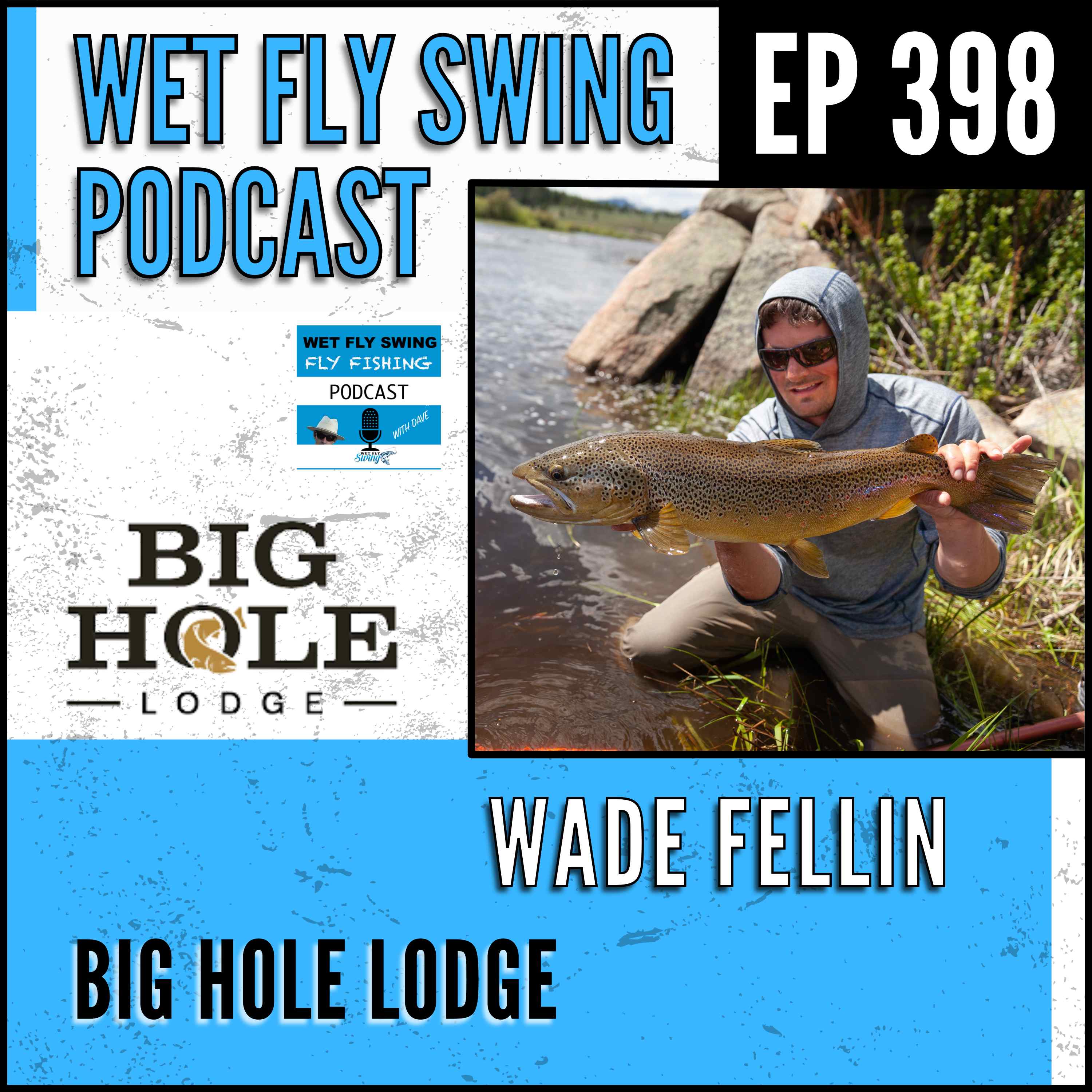
S7 Ep 398WFS 398 - Big Hole Lodge with Wade Fellin - Fly Fishing Montana, Hopper Box, Yellow Sally
Show Notes: https://wetflyswing.com/398 Presented By: Chota Outdoor Gear, Togens Fly Shop, Drifthook, Country Financial Sponsors: https://wetflyswing.com/sponsors Wade Fellin of Big Hole Lodge is here to take us into one of Montana's most well-known trout streams. We find out which hatch is Wade's favorite throughout the year. It coincides with Mother's Day. And we also find out which big celebrities are doing shows nearby as we speak, not too far away from Wade's operation there. We also find out some of the struggles with pressure as everything grows. Wade has definitely seen some things there. We get a couple of tips on that as well. For me, the Montana stream is another bucket list. Big Hole Lodge Show Notes with Wade Fellin 3:23 - Wade and I talk about Montana and the celebrities who are shooting a show in Montana like Kevin Costner and Harrison Ford. 5:40 - He describes Bozeman, Montana where he grew up. He also talks about the work he does with a water quality advocacy group. 8:42 - We talk about the Madison and Smith Rivers and the permit and licensing regulations for these waters. 11:57 - He shares the amazing story of how his parents built and grew the Big Hole Lodge. 14:45 - He talks about their first clients who were the writer Thomas McGuane III and his son and how Thomas helped them get the word out for the lodge. 15:48 - He tells the months when it gets pretty packed in the river and some issues with water resource management. 19:01 - He shares when the season starts for their lodge. 20:34 - He talks about brown trout issues causing the Fish, Wildlife, and Parks (FWP) to consider closing these rivers on Oct 1st this year. He also shares their schedule and operation hours in their lodge. 25:07 - He shares when his dad and grandfather joined the army and special forces. 27:05 - He mentions the healing facility in the Big Hole River called the Freedom Ranch where his dad volunteers to teach fly casting. He also shares how fly fishing helped the veterans in the healing facility. 29:40 - We talk about the rivers in Montana and the laziness in fly fishing. 33:14 - He walks us through the other rivers in Montana that people can fish in. 39:26 - He tells a story of catching the most gorgeous 29-inch brown trout he ever saw after 30 years of fishing the river. 45:10 - He talks about his dad's career at his age. 47:01 - We dig into the Big Hole River. He also recommends an itinerary of the rivers in Montana. 50:06 - He talks about their plans for the lodge. 52:00 - We touch a little bit on the laws in Montana on stream access and the upcoming legislative session that could put fly fishing lodges like theirs, which rely on public access to public waterways, out of business. 54:41 - He tells the hatches that really get him excited when he thinks of the Big Hole. 56:23 - We go into detail about their hatch chart and his favorite hatch, the Yellow Sallies. 1:01:33 - He describes his fly and hopper box and the day box they give their clients in the lodge when guiding. 1:03:23 - He recommends some other fly shops other than their lodge. Among these are Great Divide Outfitters, Healing Waters Lodge, and Hook & Horn. 1:04:50 - He shares how they got the 2017 Orvis-Endorsed Fly Fishing Lodge of the Year award and why he loves the Big Hole Lodge and the people in it. 1:07:02 - I ask him about his favorite Harrison Ford movies. 1:08:05 - We talk about one of the trips they offer in the lodge which is the horseback assisted mountain lake fishing. Show Notes: https://wetflyswing.com/398
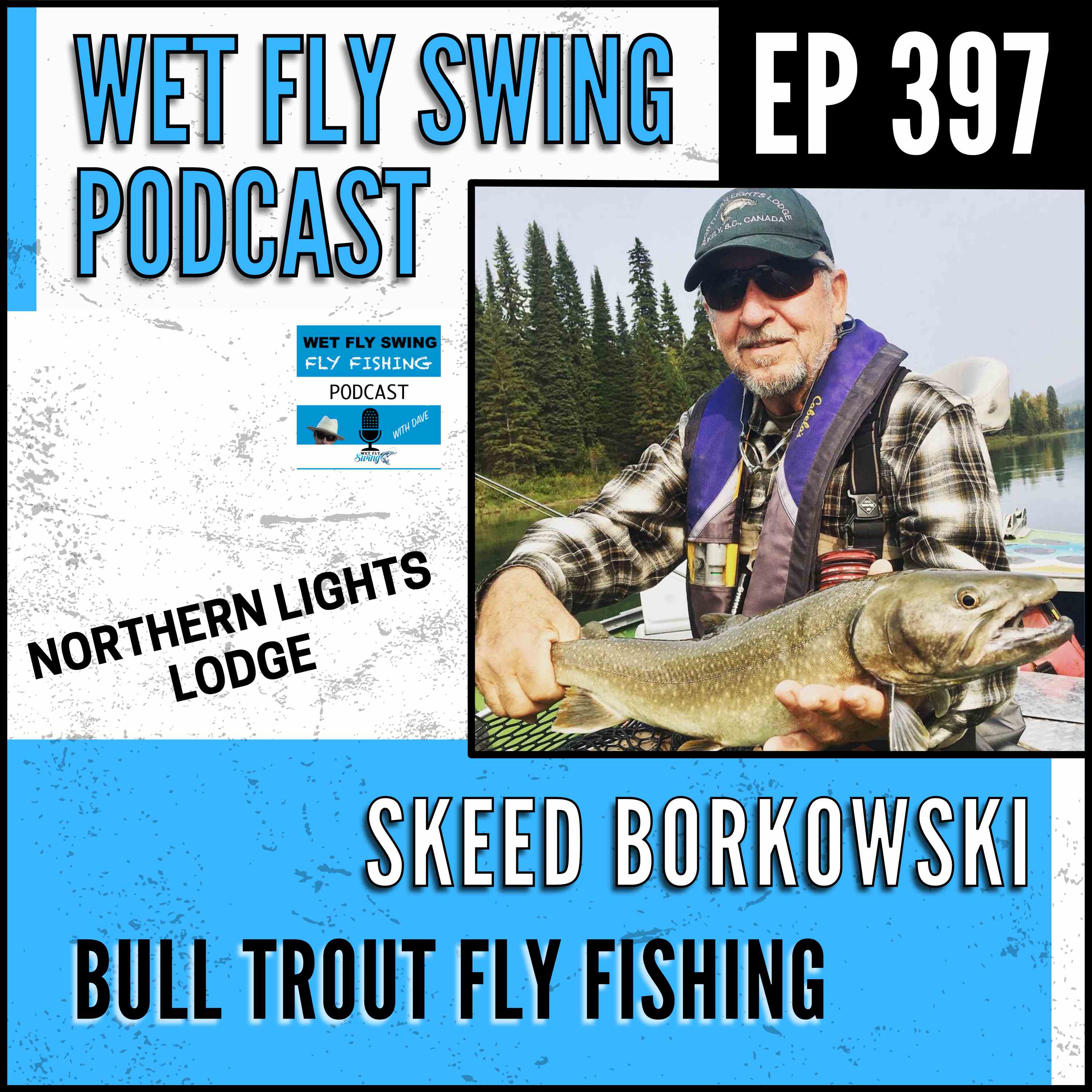
S7 Ep 397WFS 397 - Bull Trout Fly Fishing with Skeed Borkowski - Rainbow Trout, Northern Lights Lodge, Skeena Basin
Show Notes: https://wetflyswing.com/397 Presented By: Chota Outdoor Gear, Drifthook, Zoe Angling Group, Trxstle Sponsors: https://wetflyswing.com/sponsors Skeed Borkowski is here today to take us into the Northern Lights Lodge and the wilderness of Northern British Columbia. We discover what it takes to catch bull trout on the fly. We talk about the relationship of these big rainbow trout to Skeena steelhead. We also talk about the Stillwater areas which we'll be digging into more as we get going this year. Skeed has the greatest name out there and he is the most interesting man in Northern Canada. Bull Trout Fly Fishing Show Notes with Skeed Borkowski 05:30 - Their lodge is situated in Quesnel Lake. 12:45 - Northern Lights Lodge was established in 1942. 25:45 - Their salmon runs come all the way from Vancouver to Fraser River to Quesnel River to Quesnel Lake. 29:25 - September to mid-October is the best time to target bull trout. The average you can catch is about 24 inches. 40:00 - They had a large sockeye run at about 800,000 that came into the system in different tributaries. 41:45 - We talk about the gear setup for bull trout. 45:00 - Skeed tells the story of when he had a heart attack. 54:45 - Skeed describes what the lodge looks like and how much its capacity is to accommodate. 1:11:50 - Skeed sent me a photo of Pat Dorsey. Show Notes: https://wetflyswing.com/397
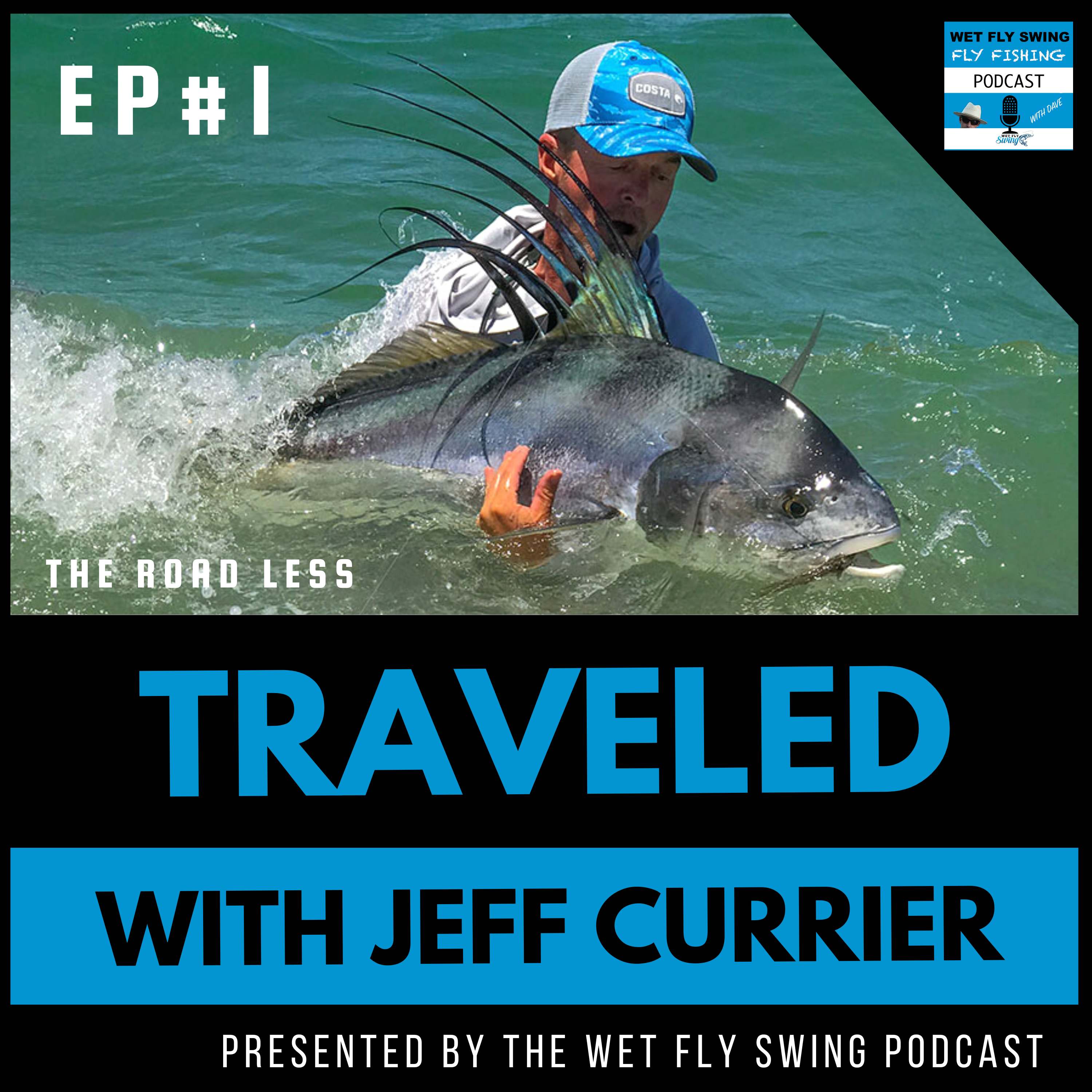
S7 Ep 396Traveled #1: Jeff Currier on Eastern Idaho Fly Fishing - Henry's Fork, S. Fk Snake, Teton River
Show Notes: https://wetflyswing.com/396 Presented By: Yellowstone Teton Sponsors: https://wetflyswing.com/sponsors Jeff Currier is back again with an update on his journey to catch 500 species on the fly. Jeff is one of the most well-known travelers in fly fishing and has been traveling around the world with over 440 species caught on the fly. Today Jeff takes us into his life in Eastern Idaho and the great rivers he has fished around this part of the country. Time to experience the road less traveled, here we go! Time to experience the road less traveled, here we go! Eastern Idaho Fly Fishing Show Notes with Jeff Currier 07:45 - Jeff Currier was on the podcast for the first time in episode 65. We talked about his experience catching 400 species on a fly. He's eyeing 500 now, he's already on 440. 09:50 - He caught a big-eyed emperor in Seychelles. 12:30 - Yellowdog Fly Fishing just bought a fly shop in Bozeman. 13:30 - Jeff talks about Eastern Idaho fly fishing 25:50 - Bret Bishop was on the podcast in episode 368. 35:00 - You can check Jeff's 2023 schedule here. 51:00 - The South Fork of the Snake River is one of the greatest rivers in the West. 52:00 - Jeff mentions other rivers that he recommends you fish. 54:45 - Jeff tells a story of when he was on the same airplane with Henry Winkler. Henry was on the podcast in episode 334. 59:00 - September to October is the best time to fish Eastern Idaho. 1:12:10 - Jeff recommends you stop by Trout Hunter Bar and Grill. Show Notes: https://wetflyswing.com/396
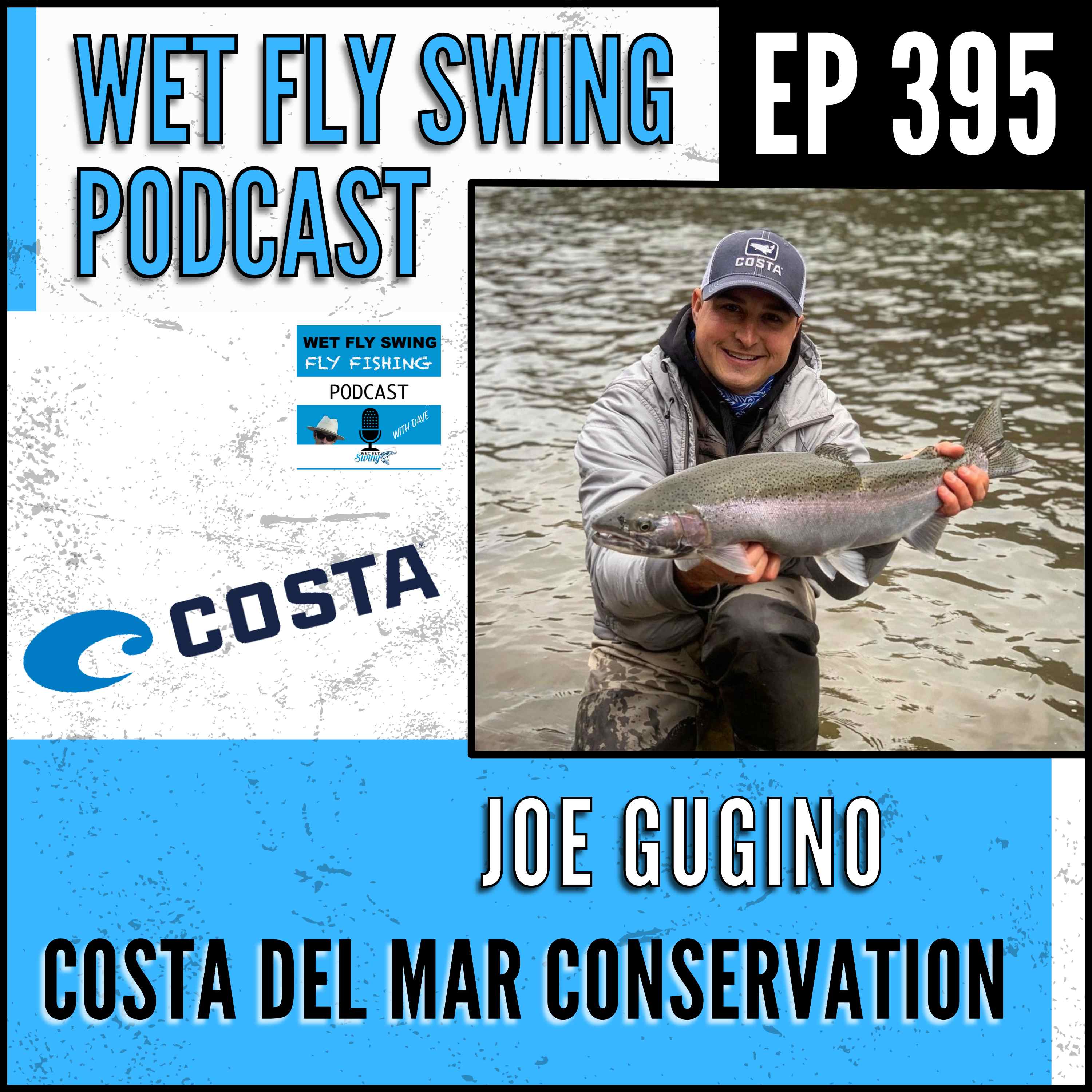
S7 Ep 395WFS 395 - Costa Del Mar Conservation with Joe Gugino - Kick Plastic, Planet Purpose Solutions
Show Notes: https://wetflyswing.com/395 Presented By: Zoe Angling Group, Yellowstone Teton, Drifthook, Range Meal Bars Sponsors: https://wetflyswing.com/sponsors Joe Gugino of Costa Del Mar takes us into the conservation work they've been focusing on to protect the species we love. We find out where Joe's passion for striped bass comes from, what the American Saltwater Guides Association has going on right now, and how Planet Purpose Solutions is helping Costa fulfill their vision in conservation. Taking the glare off the water and the big conservation issues today. Costa Del Mar Conservation Show Notes with Joe Gugino 3:44 - Joe talks about how he got into fly fishing when he was still in Connecticut where he and his brothers grew up. He started on saltwater and striped bass which has been his number one species. 6:01 - He talks about the fluctuating population of striped bass over the years and the work they do in Costa Del Mar to address that problem. 8:47 - We go into detail about what he does in Costa as the Conservation and Community Partnerships Manager. 11:09 - We dig into their products including my favorite the C-Mates Readers. He recommends their copper base lenses. In episode 272 with Evan Russell from Costa, we talked about how to choose polarized sunglasses for fishing. 14:09 - He shares Costa's plans and upcoming conservation programs for both salt and freshwater. 15:54 - We talk about episode 390 with Darren Calhoun. He also shares his experience when his team and their partners went to the Wind River Reservation this summer and what he loved about the area. 19:45 - He shares more about the Protect Report that they will release in time for their 40th anniversary next year. He also tells how Planet Purpose Solutions is helping them with their conservation programs. 21:40 - He mentions the Kick Plastic movement. 23:27 - We dig into how Costa's focus on conservation started. 26:43 - He takes us back to when he was first contacted by Costa when he started a fishing company. 30:34 - He talks about their activity of tagging marlins and stripers with the International Game Fish Association (IGFA) to see where these groups of fish are going and how they can protect them. 34:25 He describes Magdalena Bay and tells about their plan to go there with the Costa team, Costa pros, Indifly, and scientists from the Billfish Foundation and IGFA. 40:07 - He explains the importance of community involvement in conservation to create a positive impact on the environment. 41:14 - He tells where people can access their Protect Report. He also reveals the new sustainability hub on the Costa Del Mar website which is sort of a condensed version of the Protect Report. 42:21 - We dig into plastic pollution and their efforts to address this. He mentions the experts whom they are working with for this cause which are Planet Purpose Solutions and 5 Gyres Institute. 45:13 - He talks about their successful work with Bonefish & Tarpon Trust (BTT) which was the Project Permit and the short film called A Pathway for Permit. It tells the story of their collaborative efforts to conserve and protect the Florida Key's permit fishery. 47:34 - We talk about football and the team he is supporting. Show Notes: https://wetflyswing.com/395

S7 Ep 394WFS 394 - Fly Tying 101 with Jim Misiura - $ Saving Tips, PA Fly Fishing, Gartside Gurgler
Show Notes: https://wetflyswing.com/394 Presented By: Yellowstone Teton, Stonefly Nets, Range Meal Bars, Zoe Angling Group Sponsors: https://wetflyswing.com/sponsors Jim Misiura shares the story of how he created one of the largest fly tying channels on YouTube. We discover some fly tying 101 and tips on fishing Pennsylvania streams. We also get money-saving fly tying tips including this one on dumpster diving which is pretty good. We dig into his fly tying and teaching channel and the difference between guiding and instructing. We get into some details on what he has done in the past and just all around how he built his platform. I've learned a lot from Jim over the years so I'm excited to share this one with you. Fly Tying 101 Show Notes with Jim Misiura 00:03:46 - Jim talks about how he got into fly fishing. 00:05:45 - He shares how he grew his YouTube channel @TheFlyManJim. He also tells the story of when he met a 12-year-old kid in the Sowbug Roundup in Arkansas. He learned fly tying from his videos. 00:10:17 - We dig into his content and how he chooses what fly he's going to tie next for his videos. He also mentions some other big channels when he started in 2010. 00:14:07 - He talks about that time when he stopped fly tying and his plans for his channel. He also shares the story of how he became good friends with the late Charles Meck, author of the book Pennsylvania Trout Streams and Their Hatches. 00:18:28 - We talk a bit about Joe Humphreys and our episode with Joe Jackson. He also mentions the late Jack Gartside who is a big influence on the flies he ties. 00:21:57 - We dig into his passion for teaching. 00:23:06 - He gives money-saving tips for those who want to get started on fly tying. He recommends his videos on selecting a quality hackle and making sense of hooks. Money Saving Tips for Fly Tying 1. Purchase the best material you can afford. 2. Watch the proportions of your materials. 3. Use materials that you can find that you don't have to pay for. 00:26:02 - He talks about dumpster diving for materials he uses for fly tying and from whom he learned it. He recommends his video on beginner fly tying materials wherein he explains how and where to get materials. 00:27:31 - We talk about the Gartside Gurgler and how Jack Gartside came up with it through dumpster diving. 00:28:35 - He delves into his money-saving tip of finding materials around that can be used for fly tying. 00:30:53 - We talk about his video on making a bobbin holder and other of his homemade tools like the bobbin threaders. 00:35:40 - He shares how Poul Jorgensen's VHS videos helped him when he began to take an interest in fly tying. 00:36:35 - He recommends Gary Borger's video with Scientific Anglers and Anatomy of a Trout Stream by Rick Hafele for those who want to learn fly fishing. We had Gary on episode 45 and Rick on episode 37. 00:37:24 - He shares his plans for his channel. 00:38:36 - He tells more about his home water in Pennsylvania which is the Lackawanna River and why he loves fishing there. 00:40:10 - He mentions A&G Outfitters, a fly shop near the Lackawanna River. He also serves as a fly fishing instructor in the area. He clarifies the difference between a guide and an instructor. 00:45:04 - He shares how he builds his own fly rods to save money on fly fishing. He buys a blank from Hook and Hackle. He also takes to that time when he built his very first rod, which he still uses, in the late '80s 00:48:01 - We dig into how he earns through his channel. Show Notes: https://wetflyswing.com/394

S7 Ep 393WFS 393 - Fly Fish Portland with Eric Leininger - Tiger Musky, Steelhead, Cold Water Tips
EShow Notes: https://wetflyswing.com/393 Presented By: Range Meal Bars, Yellowstone Teton, Zoe Angling Group, Drifthook Sponsors: https://wetflyswing.com/sponsors Eric Leininger from Fly Fish Portland takes us into his background as a guide in Alaska and around the West. We find out why Eric loves to fish muskies over steelhead and we break down some of the recommended gear to stay warm while fishing in cold waters. Eric also shares some of the best flies he uses that work like magic for all species. This is a long one but full of great stories and tips. Show Notes with Eric Leininger 08:50 - Eric tells the story of how he got invited to go to Bulkley Canada for steelhead fishing. 11:45 - Eric started guiding for Goodnews River Lodge in Alaska. 30:00 - Eric built his own custom sink tips and gave some to people that ripped his idea off. 30:25 - Brian Silvey came up with the F.I.S.T. (floating intermediate sink tip) line which is one of the best winter steelhead lines out there. Brian was on the podcast in episode 148. 36:45 - Kevin Feenstra was on the podcast in episode 13. 44:40 - We talk about the Northwest Fly Fishing Outfitters. 45:10 - We talk about the Friday Night Flies. 49:25 - Tiger musky vs steelhead, what's the difference? 54:50 - Eric noted the fly called, The Jerk Changer which he described as one of the best flies he used. 58:10 - Mike Schultz and his team is doing great stuff out there. Mike was on the podcast in episode 229. 1:10:00 - Eric recommends the Scientific Anglers' Tropical Tighten line. Also the SA's 30-foot clear intermediate line. 1:21:00 - Eric did a video on cold water feet tips. 1:30:00 - We break down the recommended gear to keep you warm. 1:45:00 - Sauvie Island is a great place to fish for carp. 1:47:00 - Kevin Morlock was on the podcast in episode 102 where we talked about carp fishing in Beaver Island. Show Notes: https://wetflyswing.com/393
S7 Ep 392WFS 392 - 50 Places to Fly Fish Before You Die with Chris Santella - Last Steelhead, Grateful Dead
Show Notes: https://wetflyswing.com/392 Presented By: Zoe Angling Group, Drifthook, Range Meal Bars, Country Financial Sponsors: https://wetflyswing.com/sponsors Chris Santella, author of the 50 Places to Visit Before You Die series, is here to break down some of the best places to fish. We find out what was like to interview some of the greats in fly fishing and outdoor sports. We also talk about his band, Catch and Release, how they wrote songs, and their influences in music. You're gonna love this one! Show Notes with Chris Santella 11:30 - Chris caught his first steelhead on the North Umpqua River. 21:15 - He tells us how the idea for the book came about. 32:30 - Chris' first book was, Fifty Places to Play Golf Before You Die: Golf Experts Share the World's Greatest Destinations, published in 2004. 34:50 - He's done 16 other '50 Places' books after the golf one. 36:00 - The book about sailing was a challenge to write for him. That was his third '50 places' book written. 44:05 - Chris interviewed Frank Moore for his fly fishing book as well as other respected names in fly fishing and fly tying. 54:00 - Fifty Places to Drink Beer has done very well too. 55:15 - We talk about his music background. He had a band called, Catch and Release. They wrote and recorded original songs. Check out their music here. 1:00:00 - They play live regularly at the Oakshire Beer Hall in Portland. 1:02:00 - The Grateful Dead band was a great influence on Chris. His favorite song was Jack Straw. Show Notes: https://wetflyswing.com/392

S7 Ep 391WFS 391 - Aqua Flies, Spey & Steelhead with Stuart Foxall - Kanektok, Kings, Atlantic Salmon
Show Notes: https://wetflyswing.com/391 Presented By: FishHound Expeditions, Drifthook Fly Fishing, Zoe Angling Group, Country Financial Sponsors: https://wetflyswing.com/sponsors Stuart Foxell from AquaFlies is here today to talk about steelhead and kings, fishing in Alaska West and Scotland. He walks us through fishing the 4 main rivers in Scotland and the seasons to target salmon, steelhead, and big browns. We talk about spey flies, how he ties them, and how he loves to use tube flies. We also dig into a bunch of resources to up your fishing and fly-tying game without having to attend trainings, just like Stuart. Show Notes with Stuart Foxall 09:45 - Stuart did his first trip with Brian Niska in Alaska. Brian was on the podcast in episode 370. 16:55 - We talk about fishing on the Kanektok River, AK. 20:40 - Intruder tube fly works great for kings. 22:15 - Kings season in Kanektok starts mid-June. 31:00 - Stuart talks about fishing the 4 big rivers in Scotland: River Spey, River Dee, River Tay, and River Tweed. 32:10 - FishPal.com is a great resource for getting to know more about the rivers in Scotland. 43:30 - For steelhead, Stuart uses the fly called, Potbellied Pig tube fly. 50:15 - Stuart explains why he prefers tube flies. 1:05:00 - Stuart ties for Aquaflies. 1:10:00 - Stuart recommends reading Hugh Falkus books. 1:13:15 - Scott Baker was on the podcast in episode 17. Show Notes: https://wetflyswing.com/391

WFS 390 - Wind River Canyon with Darren Calhoun - Tribal Waters, Patagonia, Indifly
Show Notes: https://wetflyswing.com/390 Presented By: Country Financial, Drifthook, Zoe Angling Group, Range Meal Bars Sponsors: https://wetflyswing.com/sponsors Darren Calhoun of Wind River Canyon is here to share the story of creating the movie Tribal Waters and working with Patagonia and Teton Gravity Research. We find out how the Wind River reservation and some other groups actually sued the federal government and won the case to protect their water rights. We also find out about the fishing the Wind River Canyon and what makes this part of the country so unique. This is a pretty huge episode so I hope you get the chance to connect with Darren down the line and show your support for all the stuff they have going on. Wind River Canyon Show Notes with Darren Calhoun 00:03:50 – Darren talks about when he learned how to fly fish from their then neighbor, Gordon Eastman, who used to make wildlife films in the '60s. 00:05:33 – He shares the struggle of hiring tribal members as guides. 00:06:45 – We talk about the poverty and unemployment rate in the reservations, but also the increasing number of tribal members who take up post-secondary education. 00:10:02 – He discusses the unique political relationship between the American Indian tribes and the US government. 00:12:36 – We dig into the film, Tribal Waters, how it came to be and what it means to him. He takes us to when he pitched the idea to Patagonia of including environmental justice in the film. 00:15:16 – He shares how the Tribal Waters film encouraged some people to reach out and ask what they can do, and their plan on creating a foundation to raise and manage funds for getting tribal lands back. 00:18:42 – Darren gives his perspective on working with Patagonia and Teton Gravity Research for the Tribal Waters film. In episode 345, we had Ted Manning on the show which took us behind the scenes of Patagonia. 00:19:55 – He commends Patagonia for their conscious practice of contributing to environmental conservation and Yvon Chouinard for giving away his company to fight climate change. 00:20:39 – We talk about Gordon Eastman and his movies. He was the biggest influence to him on fly fishing. We also dig into what influenced his passion for conservation started. 00:24:54 – He takes us to Wind River Canyon and gives tips on access to the area. 00:31:10 – We talk about how people taking water from the river and dams affects the trout population and other issues they encountered when they tried to pass a tribal water code they developed. 00:36:50 – He talks about how getting everybody involved to preserve the tribal lands and the environment is a challenge. 00:39:30 – He tells listeners how to learn more and help out for the cause. He encourages people to educate themselves on the history of the relationship between the American Indian tribes and the US government. He further clarifies this and the concept of tribal sovereignty and stereotyping American Indians. 00:42:45 – We talk about the movie Dances with Wolves and its effect on how people see American Indians. 00:45:41 – We discuss the other indigenous issues across the world and the fact that indigenous peoples are now being recognized. 00:47:05 – He talks about this poster that shows if humans go extinct. He also shares how scarcity pushed their community to establish a game code for hunting and the controversy that surrounded it. 00:52:50 – He recommends the best times to fish depending on what type of fishing you want to do and the species you'll get per season. He also shares the challenges in fishing in Wind Canyon for dry fly season. 00:58:40 - He tells what people can do in the Wind River Canyon during the summer. 1:03:35 - He tells more about their organization, Indifly, and how they are fulfilling their mission to create ecotourism and fly fishing businesses for indigenous populations and reconnect the younger generation with the outdoors. Matt Shilling, Indifly Executive Director, also guested in the show in episode 342. 1:06:03 - We talk about other big rivers and activities like fishing and hiking that people can do down in the Wind River Canyon area. I mention our episode with Grant Breidenbach wherein he gave us the ultralight backpacking gear list. 1:11:04 - He shares what's the most important business tip for him for those who are thinking about starting a business. 1:13:50 - He talks about his plans for retirement and his business. Conclusion with Darren Calhoun and Wind River Canyon That was Darren Calhoun shedding light on tribal lands, indigenous populations, and environment preservation. I hope this episode encouraged you to educate yourselves about our history; find ways to help in protecting the reservations and preserving our environment and resources for the next generations. Again in Darren's words, we're all here for such a short time. Why would you want to have a negative impact on the environment when you could do just the opposite? Show Notes: https://wetflyswing.com/390
S7 Ep 389Innovative Materials and Fly Tying Tools with Jeff Coffey at Zag.Fish + Fly Fishing Giveaway
bonusJeff Coffey also gives us an update on some of the new fly fishing materials they have going at Zag.Fish.
S7 Ep 389WFS 389 - Bowhunting for Beginners with Adam Miller - Bowhunter Chronicles Podcast and the Worlds Worst Bowhunter
Show Notes: https://wetflyswing.com/389 Presented By: Drifthook, Country Financial, Range Meal Bars, Togens Fly Shop Sponsors: https://wetflyswing.com/sponsors Adam Miller, host of the Bowhunter Chronicles Podcast, is here to break down the steps in getting started in bowhunting. We find out how you can get going gear-wise right now without having to spend a ton of money. We talk about what makes a good hunter and how to increase your chance of getting a kill. We also talk about his podcast and the remarkable guests he's had that we should follow to up our hunting game. Show Notes with Adam Miller 03:30 - They launched their podcast in January 2018. 12:00 - Adam killed his first deer with a bow when he was 19. 18:30 - We talk about bowhunting 101. 42:20 - In Michigan, bowhunting season starts October 1 and goes up till November 14. Then rifle season begins from November 15 to December 1. 57:00 - We mentioned John Eberhart who's also known for being a master bowhunter in Michigan. He's also authored some hunting books. 59:00 - We had Jay Scott on the podcast in episode 354 where we talked about elk hunting. 1:02:00 - Adam noted Zach Ferenbaugh from Hunting Public and Jason Samkowiak. 1:06:00 - A flagship bow costs around 1300 to 2000 dollars nowadays. Show Notes: https://wetflyswing.com/389
WFS 388 - Florida Fly Fishing with John Grasta - Tarpon Spey, Fair Flies, Bass Pro
Show Notes: https://wetflyswing.com/388 Presented By: Togens Fly Shop, Country Financial, FishHound Expeditions Sponsors: https://wetflyswing.com/sponsors John Grasta, Bass Pro Ambassador, breaks down Florida Fly Fishing with a focus on skagit and tarpon spey. We find out how you can DIY your way to tarpon with a spey rod without a boat, which other species you can hit on a road trip if you're planning to head down to Florida and why he is loving Bass Pro and his life so much in Florida. We dig into his favorite products from Fair Flies towards the end and why Florida is such an epic place. It's pretty awesome to get his perspective, not only on fishing but also on other things. Florida Fly Fishing Show Notes with John Grasta 00:03:06 - John talks about how he got into fly fishing. His father's side of the family were avid hunters and fishermen. 00:05:12 - He mentions his mentor who introduced him to saltwater fishing and to David Olson of White's Tackle who taught him how to create distance by using a shooting head and mono running line. 00:06:54 - John talks about how he refined the traditional spey rod techniques and how that turned into his biggest addiction. 00:08:25 - He provides tips to those who want to get into tarpon fishing. 00:12:13 - He shares his techniques in fishing in alligator infested waters. 00:16:40 - He says that the pre-made fair fly brushes are the end all be all and why he deviated from the traditional fly fishing techniques. 00:18:03 - He tells about his biggest speckled sea trout which was 29 1/2 inches and weighed 10.2 pounds. He caught it using the predator hot orange/chartreuse 5D brush from Fair Flies. 00:20:22 - He describes how he ties the poppers that he use on tarpon and his own go-to pattern for everything which is the spitter gurgler. 00:24:10 - He mentions Nicklaus Bauer's videos that he often watches to learn patterns for catching pike and muskie and think of how he can put his personality into those patterns. 00:26:23 - He breaks down how he hooks into a tarpon. 00:31:50 - He talks about the Cabela's Vector Two-Hand Fly Rod which is one of his favorite rods. 00:34:33 - He talks about the benefits of the two-handed fly rod. 00:37:54 - He tells how he uses his pickup truck to gain elevation and distance when fishing. 00:40:29 - He mentions some of the good lakes in Florida for fishing such as Lake Apopka and Starke Lake in Ocoee. 00:42:28 - He talks about the Bass Pro Shop and gives tips on where to fish in Florida and the best times to catch a tarpon there. 00:48:24 - He specifies the best months and times of the day to catch some tarpon in Florida. 00:50:12 - He elaborates the benefits of using a Spey rod making it a great tool to have if you're going to Florida. 00:58:01 - He describes his setup for fishing tarpon and gives tips on how to reduce the line twist or what he calls pigtail. 01:01:42 - He enumerates the different species of fish you can hook into in Florida. 1:07:23 - He mentions two fly shops in Orlando that are the best resources to get gears and get the lay of the land. 1:09:42 - He talks about the Everglades National Park. 1:14:22 - He mentions other outdoor activities to do in Florida such as camping and kayak fishing and gives tips on how to plan your trip. 1:20:21 - He talks about the first time he moved to Ocoee, Florida 15 years ago and shares some information for those who are thinking about moving to Florida. 1:25:02 - We talk about the International Convention of Allied Sportfishing Trades (ICAST) 2022. He also mentions the Balsax Previa Max floating line (dark blue) which he uses for his running lines. 1:27:49 - He commends Fair Flies for making the best equipment for fly tying and other fly fishing products which he uses for bass, tarpon, and saltwater species down in Florida. One of his favorites is their pre-made dubbing brushes. 1:31:25 - He takes us to fishing around alligators in Florida and gives tips on what to do and what not to do to prevent accidents and being attacked by alligators. 1:38:28 - He tells a story of a lady losing her dog to an alligator. Show Notes: https://wetflyswing.com/388