We Don't PLAY!™ Best AI SEO News - Website Marketing - Pinterest Business SEO Insights - Monetization Tools
711 episodes — Page 4 of 15

S11 Ep 36SEO Secrets: Why Do Search Engines Rank Webpages Higher Than Others? Marketing Masterclass with Favour Obasi-ike
SEO Secrets: Why Do Search Engines Rank Webpages Higher Than Others? with Favour Obasi-Ike) | Get exclusive SEO newsletters in your inbox.This discussion focuses on web page ranking and SEO strategies, particularly in the context of evolving search algorithms and AI. Favour highlighted the importance of domain authority and page authority, emphasizing that content needs to be contextual, comprehensive, and in multimedia formats to rank effectively. They discuss practical tools like Google Search Console and SEOGets for analyzing website data and improving rankings. Additionally, the conversation touches on the accelerated pace of content indexing due to social media and podcasts, suggesting that unique analysis and experience, especially through quotes and diverse content clusters, are crucial differentiators in a world saturated with AI-generated content.Next Steps for Digital Marketing + SEO Services:>> Need SEO Services? Book a Complimentary SEO Discovery Call with Favour Obasi-Ike>> Need more information? Visit our Work and PLAY Entertainment website to learn about our digital marketing services.FAQs on Elevating Web Page Ranking in the AI Era1. Why do some web pages rank highly on search engines while others don't?Web pages rank differently due to various factors that influence their visibility to search engine algorithms and users. Key reasons for higher rankings include strong domain authority, relevant and contextual content, the use of multimedia formats, and addressing user queries effectively. Conversely, pages may not rank well if their content is outdated, contains error messages or broken links, lacks credibility, or fails to provide the type of information users are actively seeking. Essentially, a page's ability to rank is a reflection of its usefulness, credibility, and technical optimization in the eyes of search engines.2. What is "domain authority" and why is it important for web page ranking?Domain authority refers to the credibility and trustworthiness of your entire website in the eyes of search engines. It's often represented by a score from 0 to 100, with a higher score indicating greater authority. A strong domain authority is crucial because it signals to search algorithms that your website is a reliable source of information. This trust is built through the credibility of your content and its context. A website with high domain authority can help its individual web pages rank more easily, even if a new page is just published, because the overarching trust established with Google (and other search engines) extends to all its content. Tools like Ahrefs can be used to check your website's domain authority.3. How do content pillars and content clusters contribute to a webpage's ranking?Content pillars and content clusters are strategic approaches to organizing your website's content to improve ranking. Content pillars are broad, foundational topics central to your business or niche. Content clusters are groups of related, more specific articles or pages that link back to a central pillar page. This structure creates a "roadmap" for both users and search engines, demonstrating a comprehensive understanding of a topic. By providing detailed, interconnected content around specific themes, you establish your website as an authoritative resource, allowing people to find you based on various related search queries, thus boosting your overall search visibility.4. How can multimedia and different content formats improve web page rankings?Incorporating multimedia and diverse content formats significantly enhances a web page's ranking potential. While basic text is important, pages that include elements like embedded YouTube videos, infographics, FAQs, pricing lists, and even quotes, offer a richer user experience. Videos, for example, generate captions (text within text), and podcasts can be transcribed, effectively creating "text to the power of three" (text, audio, video all contributing to textual content). This multi-format approach provides more context and content for algorithms to parse, caters to different learning preferences, and increases user engagement, signaling to search engines that the page is valuable and comprehensive.5. What role do search engines like Google Search Console play in optimizing web pages for ranking?Google Search Console (GSC) is a free and essential tool for website owners to monitor their site's performance in Google Search. It acts as the "internet service provider" for your website within Google's database. GSC provides valuable data on how users find your site, which queries they use, and how your pages are performing. By tracking queries, impressions, and clicks, you can identify what information people are seeking and then strategically create or refine content to ad
S11 Ep 35Is SEO Dead in 2025? Who Knows? (SEO Services, Case Studies, Testimonials and Ultimate Guide with Favour Obasi--ike)
SEO Services Edition: Is SEO "Dead" in 2025? Who Knows? (Case Studies, Testimonials, and Ultimate Guide with Favour Obasi-Ike) | Get exclusive SEO newsletters in your inbox.Favour Obasi-Ike presents an engaging and conversational discussion that emphatically argues for the continued relevance of Search Engine Optimization (SEO) in 2025 and beyond, directly refuting the idea that SEO is "dead."Favour Obasi-Ike, joined by other marketing professionals (with a guest LIVE! audio testimonial), highlights that SEO is foundational for online visibility across various platforms, including traditional search engines and AI-driven systems like ChatGPT. The dialogue stresses the importance of consistent content creation, strategic updates, and a holistic approach to online presence, emphasizing that SEO is not merely about keywords but about understanding user intent and providing valuable, well-structured information.Favour Obasi-Ike illustrates these points with practical examples and case studies, demonstrating how effective SEO can significantly boost website traffic, lead generation, and overall business growth by ensuring content is discoverable and impactful. The discussion ultimately positions SEO as a continuous, essential investment that underpins all successful digital marketing efforts.Next Steps for Digital Marketing + SEO Services:>> Need SEO Services? Book a Complimentary SEO Discovery Call with Favour Obasi-Ike>> Need more information? Visit our Work and PLAY Entertainment website to learn about our digital marketing services.FAQs about the Is SEO "Dead" in 2025? Who Knows? Episode:1. Is SEO dead in 2025?No, SEO is not dead in 2025; in fact, it's more vital than ever. The perception that SEO might be obsolete often stems from a misunderstanding of what it truly encompasses. Search Engine Optimization (SEO) is fundamentally about being discoverable online. With 8.2 billion people in the world and 1.1 billion websites, and an astounding 8 to 16 billion daily searches on Google alone (with 15% being new searches every day), the act of searching for information is constant and growing.The conversation clarifies that "SEO" isn't limited to traditional search engines like Google. Platforms such as ChatGPT, Google, Reddit, TikTok, LinkedIn, Apple Podcasts, Spotify, and YouTube all function as "search engines" where content needs to be optimized to be found. Therefore, anything you do to increase your visibility on these platforms is a form of SEO. The speaker emphasizes that fancy new terms like GEO, AEO, AIO, or SXO are just "cosmetics" for the same underlying principle: making your content discoverable. The core idea is that if you're not focusing on SEO, you're missing out on crucial opportunities for people to find your website and business.2. How has AI impacted SEO, and does it replace traditional SEO efforts?AI does not replace traditional SEO; instead, it exposes and adds structure to it. AI tools and platforms like ChatGPT, Alexa, Siri, Grock, Deepseek, Meta AI, Cloud, Perplexity, and Gemini rely on information from existing traditional platforms and servers. This means that to be found by AI search engines, your content first needs to be optimized and present on these traditional sources (like Google, Bing, Yandex, etc.).The speaker highlights that AI search engines respond based on information given from a "source." If you are not optimizing your original content and website (the "source"), you cannot become a "resource" for AI. AI is looking for well-structured, authoritative content with clear brand citations and links. Having duplicate profiles or unverified business claims on platforms like LinkedIn, for example, can negatively impact how AI (and traditional search engines) perceive your online presence, making it harder for your business to be recognized and recommended. Essentially, AI leverages and amplifies the importance of a robust, well-optimized online foundation.3. What are the key elements for a strong online presence in 2025, beyond just keywords?In 2025, a strong online presence moves beyond solely focusing on keywords to prioritizing conversations, user experience, and a holistic, structured approach to content. Key elements include:Content with Purpose: Focus on "who are you talking to? Who are you serving? Why are you showing up?" Your content should address specific questions and needs, aiming for positive, neutral, or negative sentiment analysis from AI.Continuous Optimization: SEO is not a one-time fix. Websites and content need regular updates. Blogs, for
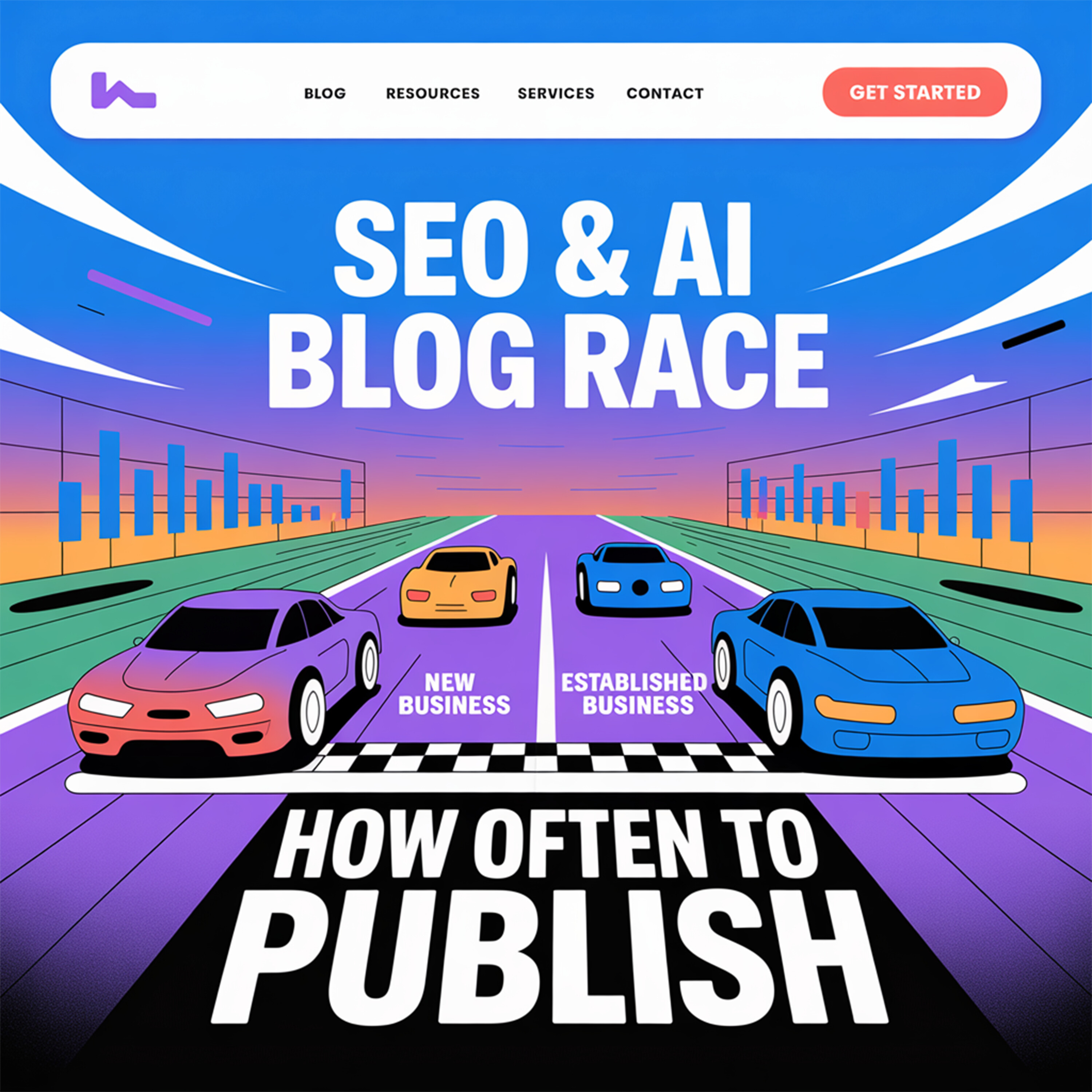
S11 Ep 34What Are the Best Blogging and Publishing SEO Practices for New or Established Websites? (Digital Marketing Masterclass with Favour Obasi-ike)
What Are the Best Blogging and Publishing SEO Practices for New or Established Websites? (Digital Marketing Masterclass with Favour Obasi-Ike) | Get exclusive SEO newsletters in your inbox.This marketing discussion from Clubhouse audio centers on Search Engine Optimization (SEO) and its role in online business growth, particularly through blog content. It emphasizes that SEO is more than just ranking; it's a consistent strategy for online visibility. Favour Obasi-Ike recommends publishing blog posts regularly, suggesting one to two per week for new businesses and three to four for established ones, while also stressing the importance of updating older content to maintain relevance and a competitive edge. Furthermore, the conversation highlights the significance of structured data, diverse content formats (text, audio, video), and distributing content across various platforms to maximize reach and engagement, ultimately leading to organic traffic and reduced advertising costs.FAQs on SEO Content Strategy for Online GrowthHow often should a new website publish blog posts for SEO?For a new website just starting out and building momentum, it's recommended to publish one to two blog posts per week. This approach allows a new business or solopreneur to establish a consistent online presence without feeling overwhelmed. Publishing once a week translates to 52 new web links annually, which can significantly contribute to a website's visibility on search engines like Google, ChatGPT, and Bing. This frequency is considered a "gear one to gear three" strategy, focusing on foundational content and answering common customer questions.What is the recommended blog post frequency for established businesses aiming for accelerated growth?Established businesses looking to drive fast and significantly boost their SEO should aim to publish anywhere from three to four times a week. This higher frequency, referred to as moving from "gear one to gear five," is for businesses with the resources to create consistent, high-quality content. The more frequently new and updated content is published, the faster search engines like Google understand the website's relevance and authority, leading to improved rankings and increased organic traffic.Beyond initial publication, how important is updating old blog posts for SEO?Updating old blog posts is crucial for maintaining SEO relevance and extending the lifespan of your content. Every time an article is updated (given a "last modified" date), it resets its 24-month relevance cycle with search engines. This combats "content decay," where older, un-updated articles lose visibility to newer, more recent information on the same topic. Best practices suggest updating content monthly or at least quarterly. Updates can include adding FAQs, recent statistics, use cases, quotes, videos, or other rich media. This consistent updating signals to search engines that your content remains current, practical, and authoritative, improving its chances of ranking higher and for longer.What are the "three levels" of showing up online that are critical for SEO?The three critical levels for showing up online in a systematic and structural way are:Website: This is the overall digital presence, providing the "full platter" of your brand and offerings.Web Page: This refers to individual pages within the website that contain specific content. It's the "content of the website."Web Link (Blog Post/Article): These are the individual pieces of content that provide access to the specific information on a web page. They serve as "leading tools" for growth and are the primary way people find content on search engines. These three layers must work together, much like the components of a burger or sandwich, for effective online visibility.How do search engines evaluate content, and what role does "structured data" play?Search engines evaluate content by reading both the visible text (HTML) and the underlying script (XML). To rank effectively, content needs to be presented as "structured data," which goes beyond just getting a raw response from an AI tool. Structured data includes elements like headings, titles, metadata, schema markup, internal and external links, images with alt text, and other organizational components. These elements help search engines understand the context, relevance, and relationships within your content, making it easier for them to index and rank your pages for relevant queries. Search engines, including AI platforms like ChatGPT, scan the top 20 Google results for relevance, recency, and practicality, aligning with Google's E-E-A-T (Experience, Expertise, Authority, and Trust) guidelines.How can businesses maximize the reach and impact of their blog content beyond just publishing it on their website?To maximize reach, blog content should be actively distributed across various platforms, treating each blog post as a valuable

S11 Ep 33Julie Drost Lokun: How to Brand Yourself Better by Building Professional Relationships Online + In-Person
Meet Julie Lokun, the founder of The MediaCasters and Cre8tive Con. This discussion centers on the importance of authentic networking, emphasizing in-person connections and genuine follow-up over superficial interactions. Julie Lokun and Favour Obasi-Ike highlight the value of self-awareness in professional settings, distinguishing between introvert and extrovert networking styles, and the significance of building relationships based on trust and mutual support. They also address the practicalities of establishing and safeguarding a business, advising listeners on due diligence and surrounding themselves with a supportive team.FAQ about this episode on event networking?1. What are the key elements of effective personal and professional branding?Effective personal and professional branding is crucial for successful networking and overall career growth. It involves understanding how you present yourself to the world and how others perceive you. This includes your online presence, your demeanor in person, and the consistency of your message. A strong brand is authentic, clearly communicates your vision, and resonates with your audience. The "Cold Play concert" example highlights the potential for public incidents to drastically impact one's brand, emphasizing the importance of being mindful of your actions both publicly and privately.2. Why is follow-up considered the most important and often overlooked aspect of networking?Follow-up is paramount in networking because it transforms initial encounters into meaningful connections. Many people neglect this step, leading to superficial interactions that don't yield results. The hosts emphasize that if a follow-up doesn't happen, it might indicate a lack of genuine connection or interest sparked during the initial conversation. Effective follow-up isn't just about sending an email; it's about actively listening during the initial interaction, identifying how you can offer value, and making a memorable impression that encourages the other person to want to connect further.3. How can individuals move beyond superficial networking and build deeper, more valuable relationships?Building deeper connections goes beyond exchanging business cards. It requires being genuinely interested in others rather than solely focusing on self-promotion. Asking insightful questions, actively listening, and identifying ways to connect people with others in your network are powerful strategies. This approach fosters a sense of "know, like, and trust," which is the foundation of any strong relationship, whether personal or professional. By focusing on creating value for others, individuals can build a robust network that extends beyond fleeting encounters.4. What are the differences between introverts, extroverts, and ambiverts in a networking context, and how can each type succeed?The discussion highlights that introversion, extroversion, and ambiversion relate to how individuals manage their energy, not necessarily their shyness or confidence. Extroverts gain energy from social interaction, while introverts' energy can be depleted by large groups. Ambiverts exhibit a mix of both. For introverts, pacing themselves, choosing events they are passionate about, and potentially having a "sherpa" or partner can make networking more manageable. Extroverts need to be mindful of not overwhelming others and tailoring their approach. Self-awareness is key for all, allowing individuals to navigate networking spaces effectively by understanding and managing their own energy levels.5. What is the vision and purpose behind Creative Con, and what does it offer attendees?Creative Con was born from the desire to create a live event that elevates the voices of powerful entrepreneurs. The founder, Julie Lokun, aimed to provide a stage for individuals who are changing the world through their businesses, books, and media presence. Creative Con is designed to be a transformative experience where attendees can build meaningful connections, be surprised and delighted by the program, and leave as a "different, better version" of themselves. It emphasizes collaboration, learning, and fostering a supportive ecosystem for entrepreneurs.6. What is the ideal balance between speaking and listening during networking events?The hosts strongly suggest a 70/30 split: listening 70% of the time and speaking 30%. The rationale is that if people are truly interested in what you have to say, they will ask you questions. This approach emphasizes curiosity and humility over self-promotion. By listening more, you gain a deeper understanding of others' needs and can identify opportunities to provide value, leading to more profound connections. The only exception is if you are a paid keynote speaker, in which case speaking 100% of the time is appropriate.7. What is the future of networking, especially in an era of AI and digital communication?Despite the rise
S11 Ep 32What are the Biggest SEO Mistakes Killing Your Website Rankings? Learn with Favour Obasi-ike
What are the Biggest SEO Mistakes Killing Your Website Rankings? Learn with Favour Obasi-Ike | Get exclusive SEO newsletters in your inbox.This audio from a Clubhouse audio Marketing Club discussion explores common SEO mistakes that hinder website rankings and offers strategies for improvement. Favour emphasizes the critical importance of a professional website for business legitimacy and online visibility, particularly for search engines and AI models. We discuss the long-term nature of organic SEO versus the immediate, but often less effective, impact of short-term ad campaigns, especially when a strong web presence isn't established. Practical advice includes optimizing website content, titles, and technical elements like Google Search Console integration, along with leveraging platforms like Pinterest for targeted advertising and understanding the interconnectedness of online presence across various digital channels.FAQs1. Why is having a website considered crucial for any business today?Having a website is no longer optional; it's a foundational requirement for any legitimate business. Without one, you're essentially invisible to potential customers and search engines. Someone emphasizes, "if I can't find you, I can't pay you." A website acts as your intellectual property, your online home, and the primary place where people will seek to understand and connect with your business. It establishes credibility, allows for tracking and analysis of customer interactions, and serves as the central hub for all your online presence, from social media to search engine results.2. What are some common SEO mistakes that can severely impact website rankings?Several major SEO mistakes can "kill your rankings." One prevalent issue is a lack of consistent content creation and updates. Simply posting a blog and forgetting about it is a thing of the past; sites need regular fresh content to be reindexed by search engines. Another critical error is improper page titling; many focus on what they want to say rather than what people are actually searching for. Beyond content, neglecting to connect your website to Google Search Console is a significant oversight, as it prevents Google from effectively seeing and indexing your site. Building a visually appealing website that isn't optimized for search engines is like having a beautiful house with no address—it won't be found.3. How does the concept of "patience is a virtue" apply to achieving high search engine rankings?Achieving high organic search rankings is a long-term game that requires significant patience and consistent effort. Unlike paid advertising, organic growth takes time to build momentum. Trying to rank for highly competitive terms like "Black Friday 2025" in just two months with organic strategies is unrealistic, especially when competing against businesses that have invested years. The analogy of waiting for a tree to germinate highlights that genuine growth requires consistent "watering" and care over an extended period. Focusing on building an audience and consistent content creation will lead to surprising and predictable growth over time.4. What are the key components of a "real business" online, beyond just a website?Beyond having a basic website, a "real business" online needs several elements to establish legitimacy and foster trust. This includes having an LLC or being registered with the secretary of state. The website itself should have an address in the footer, ideally hyperlinked to Google Maps, to provide location signals to search engines and potential customers. Furthermore, a business needs to actively manage its online presence across various platforms (LinkedIn, Google Business Profile, social media) and ensure that its website is connected to analytics tools like Google Search Console and Microsoft Clarity for tracking user behavior. Investing in professional branding, including a well-designed logo and a clear customer journey, also signals a serious and committed business.5. How can businesses leverage AI chatbots and other interactive elements to improve website conversions?AI conversational chatbots can significantly boost website conversions, with reported increases between 20% to 33%. These tools act as virtual assistants, guiding visitors and providing immediate support, similar to an in-person store assistant. By engaging users through pop-ups, chatbots, or other calls to action, businesses can prevent visitors from leaving confused or unable to find what they need. The goal is to turn passive viewers into active participants, ensuring they take action and ideally return to the site.6. What role do citations and backlinks play in boosting a website's authority and visibility?Citations and backlinks are crucial for increasing a website's domain authority and visibility. When other reputable platforms like Reddit, Wikipedia, YouTube, or various social media sites lin
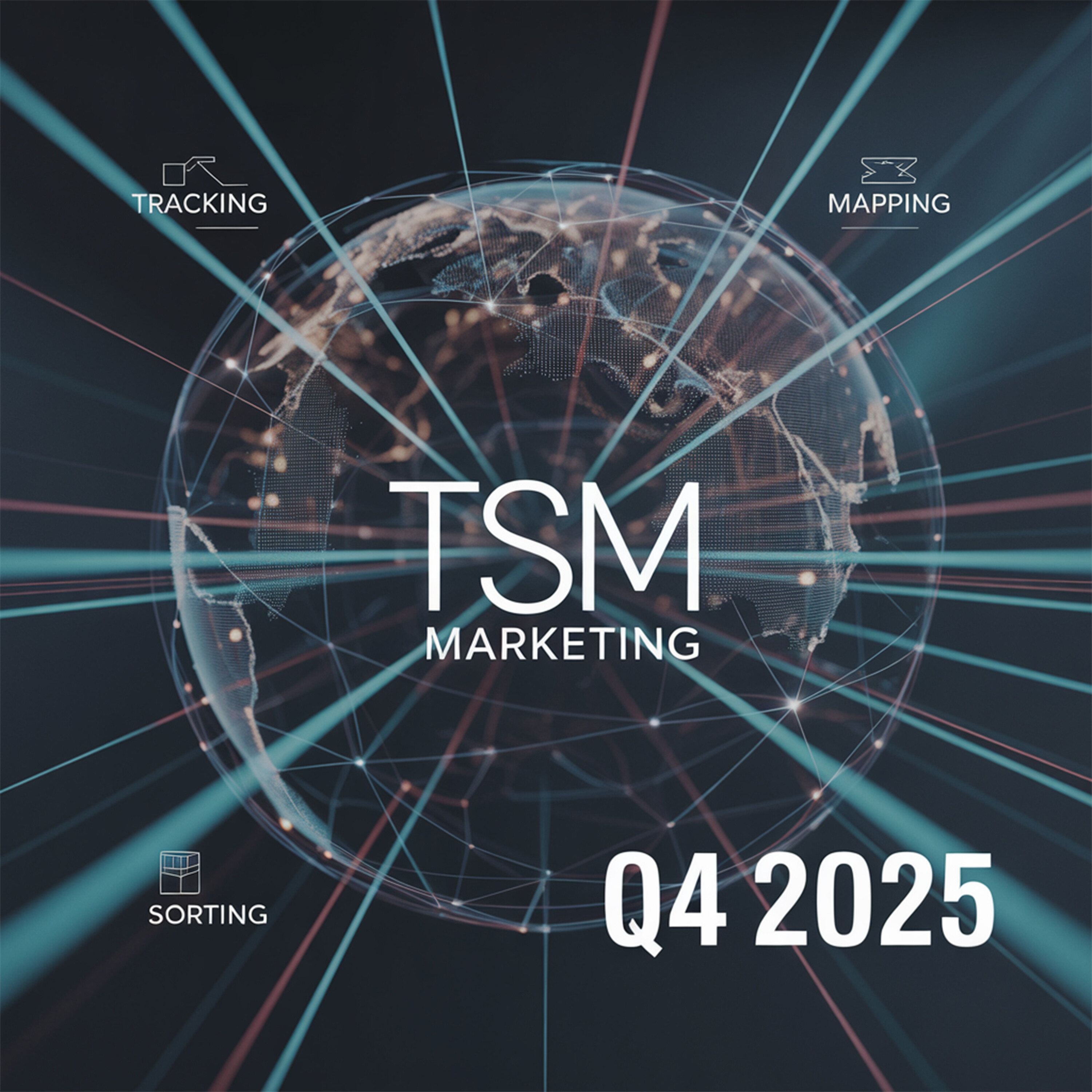
S11 Ep 31SEO Marketing Successful Strategies for Q4 2025: Tracking, Sorting, and Mapping Data Intelligence with Favour Obasi-Ike
SEO Marketing Successful Strategies for Q4 2025: Tracking, Sorting, and Mapping Data Intelligence with Favour Obasi-Ike | Get exclusive SEO newsletters in your inbox.This episode explains a three-step TSM marketing approach—Track, Sort, and Map—designed to create successful marketing strategies, particularly for Q4 2025. The tracking phase emphasizes the importance of a website for gaining organic and paid impressions, highlighting metrics like organic, paid, and earned traffic. Next, the sorting phase focuses on organizing business analytics by purchasing power, location, and pre/post-purchase intent to better understand customer needs.Finally, the mapping phase involves strategically distributing content across various platforms, using tools like pixels and analytics, to ensure the right audience finds the right products or services. The speaker also offers free SEO services and calls to help businesses implement these strategies.FAQs about this SEO Marketing Successful Strategies for Q4 2025: Tracking, Sorting, and Mapping Data Intelligence episode:1. What is the core three-step marketing strategy discussed for Q4 2025?The core strategy for marketing success in Q4 2025, and beyond, is the "TSM approach," which stands for Track, Sort, and Map. This methodology emphasizes understanding how your business is set up, collecting and organizing data, and then strategically guiding your audience from initial interest to conversion.2. Why is "tracking" considered the most important step in this strategy?Tracking is paramount because it provides the foundational metrics needed to understand your marketing efforts. Just like a runner on a track needs clear lines, businesses need to track metrics like impressions, leads, clicks, and website visitors. This involves monitoring organic, paid, and earned traffic. Without a website, which serves as the primary hub for collecting this data (including domain, hosting, and email communication), effective tracking is impossible. The speaker stresses, "When you track, you're able to attract," highlighting that data-driven insights allow you to effectively attract your target audience.3. How does the concept of "attention as a new currency" relate to successful marketing strategies?Favour introduces "attention as a new currency" and "retention as a new balance," emphasizing that in today's crowded digital landscape, consistently capturing and maintaining audience attention is crucial. This is achieved through consistent, valuable content across various platforms like blogs, podcasts, and social media. By tracking engagement and understanding what resonates with your niche audience, you can create a search-based campaign that puts your content at the top of search results, making you "first seen" and "first remembered," which directly translates to gaining valuable attention.4. What are the key considerations for "sorting" marketing data effectively?Sorting involves organizing your traffic and business analytics in a way that provides deeper insights into your audience. Key sorting parameters include purchasing power, location, pre-purchase intent, and post-purchase intent. By understanding where your audience is coming from, what they need, and why they need it, you can tailor your offerings more effectively. An example given is adapting workshop formats (morning/evening, virtual/in-person) and content (lead generation, AI visibility) based on audience feedback, rather than offering generic courses. Email marketing and audience segmentation are highlighted as crucial tools for this in-depth sorting.5. How does the speaker recommend optimizing paid advertising, specifically Google Ads, in conjunction with organic efforts?Favour suggests a cautious approach to Google Ads, advising against running them if you're not already showing up organically on Google search. Organic presence leads to a lower cost per acquisition, result, and click. While Google Ads can be effective with manual structures, exact and phrase matching, and granular control, the ultimate goal should be to shift towards a higher percentage of organic traffic (e.g., 62% organic vs. 38% paid). This is because organic traffic "earns" results and builds long-term authority, saving money over time compared to continuously paying for traffic. Platforms like Pinterest are also highlighted for their detailed targeting capabilities at a potentially lower cost per click compared to Google Ads, especially when leveraging tracked audience interests.6. What role does a website play in the overall TSM marketing strategy?A website is presented as the absolute foundational element. Without a website, none of the tracking, sorting, or mapping can effectively occur. It's the hub for organic impressions, a platform for content creation (blogs, podcasts), and a critical tool for understanding where your audience comes from (e.g., new vs. returning visitors). The website allows for the installa
S11 Ep 30Marketing Series Workshop: FAQs about 4-Day LIVE! Training (August 26-29, 2025) with SEO Expert, Favour Obasi-ike
📣 Marketing Series Workshop FAQ & Details: August 26-29, 2025 | Sign Up for the In-Person/Virtual Workshop Here 📣Favour Obasi-Ike introduces a Marketing Series Workshop FAQ & Detailed room across a four-day, eight-session marketing series training designed for business owners, entrepreneurs, creators, and inventors who already possess an online presence, such as a website. Each 90-minute session, offered twice daily (day and night) with identical content per day, focuses on a different marketing area: SEO and AI, LinkedIn, Pinterest, and podcasts.This workshop will provide actionable strategies and tool demonstrations for optimizing these platforms to maximize business growth in 2025 and 2026. Participants (open to all) can purchase group LIVE! sessions for $99 or VIP tier for $999 which includes four additional private coaching sessions. Replays and notes are provided for all registered sessions, and a Q&A segment will conclude each workshop.FAQ: Marketing Series Workshop: August 26-29, 2025 | Sign Up for the In-Person/Virtual Workshop Here 📣What is the Marketing Series Workshop and when does it take place?The Marketing Series Workshop is an intensive program designed for business owners, entrepreneurs, creators, and inventors who want to optimize their online presence and marketing strategies. It will be held from August 26th to August 29th, next week, Tuesday through Friday. Each day will feature two 90-minute sessions: a day session (10:00 a.m. to 11:30 a.m. Central) and a night session (6:00 p.m. to 7:30 p.m. Central). The daily topics are SEO and AI (Tuesday), LinkedIn (Wednesday), Pinterest (Thursday), and Podcast (Friday).Who is this workshop for, and who is it not for?This workshop is ideally suited for business owners, entrepreneurs, creators, and inventors who already possess a website or other established business presence outside of social media. It's for those who want to improve their search engine rankings (including AI platforms like ChatGPT and Perplexity), generate leads, increase website traffic, and build brand awareness. It is not recommended for individuals or businesses that do not currently have a website and do not plan to establish one, as the workshop content is geared towards leveraging existing online infrastructure for scaling. However, if you intend to create a website, podcast, or optimize existing business accounts (LinkedIn, Pinterest), then the workshop is still relevant.How many workshops are there and how are they structured?There will be eight workshops in total, spread across four days, with two 90-minute sessions per day. Each day covers a specific marketing topic (SEO/AI, LinkedIn, Pinterest, Podcast). The morning and evening sessions on the same day will cover identical material, allowing attendees to choose the most convenient time. You are not required to attend both daily sessions; attending one will provide you with the full content for that day's topic.What is the duration of each workshop, and what can attendees expect during the sessions?Each workshop session is 90 minutes long. During this time, the instructor will share their screen, demonstrate tools, and provide practical insights based on strategies used for clients. The sessions are structured to be interactive, with dedicated time for questions and answers. The goal is to provide attendees with actionable knowledge and resources they can immediately apply to their businesses.Are replays of the workshop sessions available?Yes, replays are available for every session you sign up for. If you register for eight sessions, you will receive eight replays. If you sign up for two sessions, you will receive two replays. These replays will be accessible within 1 to 24 hours after the live session, allowing attendees to review the material at their convenience.What are the pricing options for the workshop?There are two pricing tiers for the workshop:Standard Group Session: Each session costs $99. This includes access to the live group session, replays, and notes.VIP Private Session: For $999, you receive access to the live group session, replays, notes, PLUS four additional one-on-one private coaching sessions, totaling an extra 4 hours of personalized consultation. This premium option also includes website consultation and installation assistance to apply the workshop's blueprints directly to your site.Do attendees need to take both the day and night sessions for the full content?No, you do not need to take both the day and night sessions on a particular day to receive the full content for that topic. The material covered in the morning session is identical to the material covered in the evening session for the same day. However, if you wish to reinforce your learning or have a refresher, you are welcome to attend both. You simply choose one of the available plans (either the $99 group session or the $999 VIP upgraded tier) for the specific day/topic you want to attend.Why is this workshop importa

S11 Ep 29Why Does My Business Website Have No or Low Internet Traffic? (SEO Masterclass with Favour Obasi-ike)
Why Does My Business Website Have No or Low Internet Traffic? (SEO Masterclass with Favour Obasi-Ike) | Get exclusive SEO newsletters in your inbox.This Clubhouse LIVE! Audio Marketing Club discussion centers on common reasons why websites experience low or no traffic, primarily attributing it to lack of connection with search engines like Google Search Console. Favour emphasizes that a website is like a "house," requiring proper ownership and consistent engagement to appear in search results and gain visibility.Sign up for our 4-Day LIVE! Marketing Workshop | Starting August 26-29, 2025 | Click this link here to sign up!The conversation further explores the importance of transactional value on websites and the strategic use of platforms like Reddit, Wikipedia, YouTube, and Google for driving traffic, highlighting that owning your digital real estate is crucial for long-term business success with traditional and artificial intelligence search engines. Favour advises businesses to focus on strategy, consistency, and answering user queries through their website content to improve their online presence and conversion rates.FAQS: Website Traffic | The Engine and The FuelWhy does my website have low or no traffic?The primary reason a website experiences low or no traffic is a lack of connection to search engines. Your website needs to be recognized and indexed by major search engines like Google (via Google Search Console), Bing (via Bing Webmasters Tools), Yandex, Ecosia, DuckDuckGo, and even AI search engines like ChatGPT and answer search engines like Alexa. Without this connection, your website is essentially invisible to people searching for information, products, or services that you offer. Think of your website as a car; without a battery (the connection to search engines), it won't run, no matter how good it looks.How do search engines act as the "battery" for your website?Search engines are the "battery" because they provide the power and connectivity needed for your website to be found. Just as a car needs an active battery to drive or a remote needs batteries to turn on a TV, a website needs to be connected to search engines to gain visibility and traffic. These platforms are the conduits through which potential visitors discover your content. If your website isn't indexed and recognized by these engines, it's like having a car without an engine – it exists, but it cannot function as intended to bring you where you need to go.What is Google Search Console and why is its connection to my website crucial?Google Search Console is Google's internet service provider for your website. It's the critical link that allows Google to understand and index your site's content. Connecting your website to Google Search Console is the first step in ensuring your site can be found by users through Google searches. Without this connection, Google cannot effectively "see" or "read" your website, making it difficult for your content to appear in search results. It's also vital for verifying ownership of your website, similar to holding the title deed to a car – you can't truly operate or sell something you don't legally own.What does "domain authority" mean and how does it impact website traffic?Domain authority is a measure of a website's credibility and trustworthiness in the eyes of search engines. A higher domain authority generally leads to better search engine rankings and more traffic. When you first launch a website, its domain authority is effectively zero. Consistently creating and updating high-quality content, building valuable backlinks, and ensuring your website is connected to search engines can gradually increase your domain authority. This is a long-term strategy; typically, a website gains about seven domain authority points per year with consistent effort. The higher your domain authority, the more Google trusts your site and the more likely it is to rank higher in search results.Why is owning your website and its properties (like Google Search Console) so important for long-term success?Owning your website and its associated properties, especially Google Search Console, is paramount because it grants you control and access to your digital real estate and traffic data. Without clear ownership (e.g., if a developer verifies Google Search Console under their account instead of yours), you risk losing control over your site's visibility, data, and future direction. This ownership ensures that the traffic and insights generated from your online efforts truly benefit your business, rather than contributing to platforms or entities you don't control. It's about building and owning assets, not just renting space.How does content strategy, particularly answering specific questions, contribute to website traffic?Creating targeted content, especially articles that directly answer frequently asked questions, is a highly effective way to gain tr
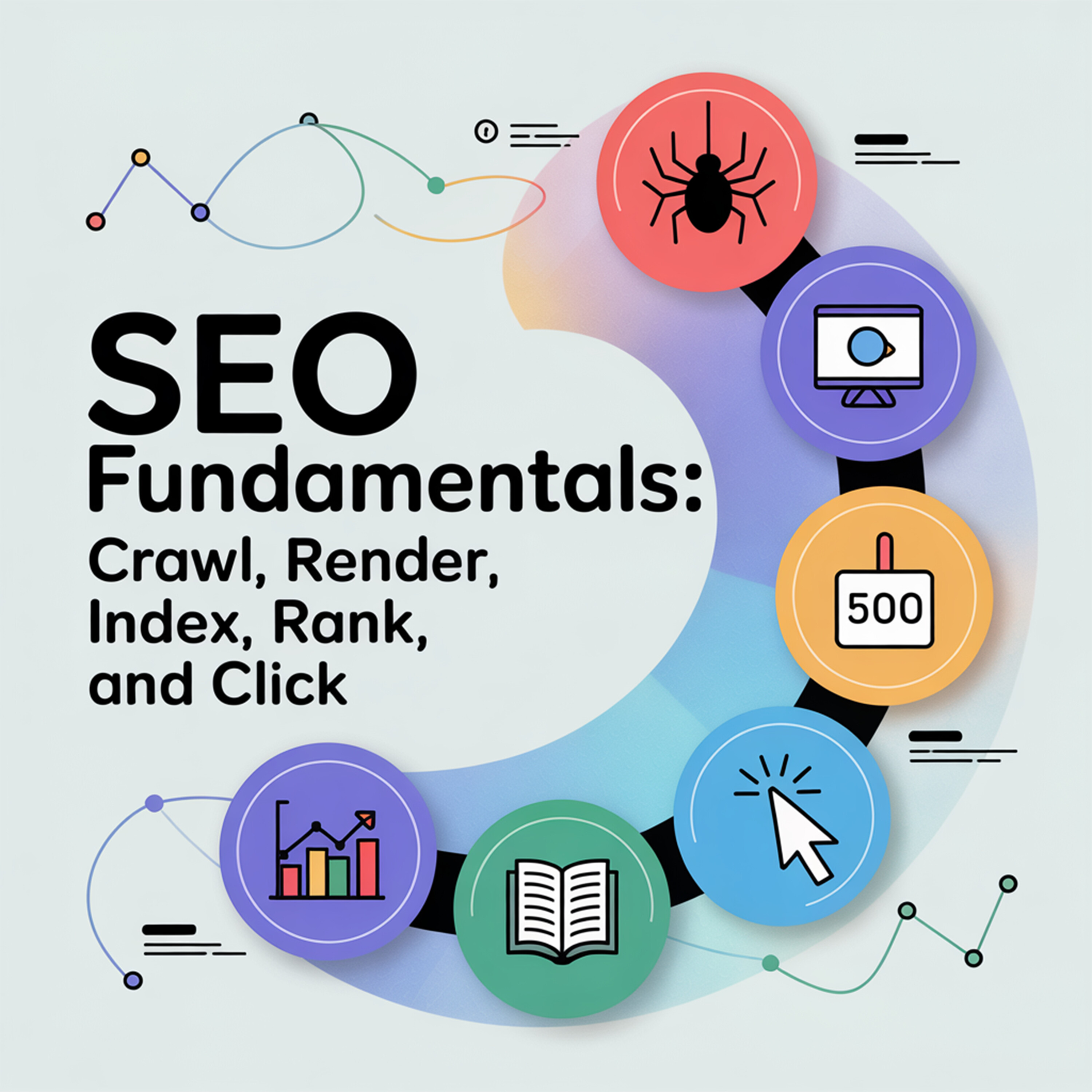
S11 Ep 28SEO Fundamentals: How to Crawl, Render, Index, Rank, and Click Internet Webpages with SEO Expert, Favour Obasi-ike
SEO Fundamentals: How to Crawl, Render, Index, Rank, and Click Internet Webpages with SEO Expert, Favour Obasi-Ike | Get exclusive SEO newsletters in your inbox.We discuss Search Engine Optimization (SEO) and its impact on online business growth, in this episode. We emphasize the importance of strategic content creation and website optimization for ranking highly on search engines like Google. The conversation also touches upon related topics such as website development, conversion rate optimization (CRO), and the patience required for SEO results, contrasting it with immediate, paid advertising. Favour illustrates SEO success with personal examples of articles that ranked quickly, highlighting the "crawl, render, index, rank, and click" process crucial for online visibility and customer acquisition.How do website development and SEO work together to improve online visibility?Favour: Effective website development is foundational for SEO. Websites need to be readable, well-organized, and user-friendly to ensure a positive visitor experience. SEO, on the other hand, is a broad area encompassing both on-page (e.g., meta titles, meta descriptions, alt tags) and off-page efforts (e.g., backlinks). The goal is to optimize the site so it ranks highly on search engines like Google, ideally within the top 5-10 results, to increase visibility and attract more clicks. While a well-built website provides the structure, SEO ensures it's found by the right audience.What is the typical timeframe for seeing SEO results, and why is patience crucial?Favour: Unlike paid advertisements that can yield immediate attention, SEO takes time to show significant results, typically between 3 to 6 months. This delay is due to the saturation of online content and the complex processes search engines use to crawl, render, index, and rank websites. Many clients seek "quick fixes," often resorting to ads, but sustained SEO efforts require patience and consistent work to build domain authority and organic presence over time.How does Favour differentiate between "paying for attention" (ads) and "catching attention" (SEO)?Favour: There’s a critical distinction between paying for attention through ads and genuinely catching attention through organic strategies like SEO. Ads offer "impressions" and "reach," but don't guarantee engagement or conversion. Catching attention implies deeper engagement, leading to clicks and ultimately, the ideal client who is genuinely interested in the business's offerings. SEO focuses on attracting an "ideal client avatar" by understanding their psychographic, sociographic, and demographic inputs, leading to more qualified leads.What are the five crucial steps in the SEO process outlined by Favour?Favour: The SEO process consists of five interconnected steps:Crawl: The initial discovery phase where search engines cautiously navigate and explore new or updated web content. It's like a website's "baby" phase.Render: The time it takes for search engines to process and understand the content and structure of a website. This is the "loading time" before indexing.Index: The process where search engines create an inventory or directory of your website's content. This involves creating a sitemap and using relevant keywords to categorize your content for search.Rank: Once indexed, a website is positioned in search results based on various algorithm standards. Higher rankings mean greater visibility.Click: The ultimate goal, where users find and click on your content because it's relevant and compelling, leading to conversions or engagement.Why is "domain authority" important in SEO, and how is it built?Favour: Domain authority is a crucial factor in SEO, calculating and averaging a website's "domain presence." This means consistently showing up where people look for information and providing consistent, valuable content without fail. A strong domain authority allows websites to rank faster, even for new articles. It's built through sustained content creation, strategic SEO implementation, and establishing a credible online presence over time.What is the significance of local SEO compared to national or global SEO?Favour: Local SEO often yields faster results than national or global SEO because the competition is significantly lower. For businesses with a local focus or a niche audience, optimizing for local search terms allows them to convert leads more quickly. While larger organizations might have greater resources, small, nimble local businesses can see a higher return on investment (ROI) from their SEO efforts due to the focused nature of their target audience.How can business owners effectively test their SEO strategies despite the long-term nature of results?Favour: While it can take months for SEO results to fully manifest, testing is still vital. Businesses are already "testing" by consi
S11 Ep 27AI SEO Checklist: Key Strategies for 2025 and Beyond | Marketing Essentials with Favour Obasi-Ike
AI SEO Checklist: Key Strategies for 2025 and Beyond | Marketing Essentials with Favour Obasi-Ike | Get exclusive SEO newsletters in your inbox.In this podcast Search Engine Optimization (SEO) essential checklist episode, Favour will be sharing insights into its foundational elements and practical application for businesses. He explains how connecting websites to search consoles like Google Search Console and Bing Webmaster Tools is crucial for online visibility. The conversation also emphasizes the importance of sitemaps as the "brain" of a website, detailing how they transmit crucial information to search engines.Key aspects such as keyword research, on-page SEO (including image optimization and meta descriptions), off-page SEO (like Google Business Profile and backlinks), content strategy, and technical SEO (mobile-friendliness, site speed, and HTTPS) are thoroughly discussed to empower listeners with actionable steps for enhancing their digital presence.AD BREAK: Book your sessions with Somatic Massage!Frequently Asked QuestionsWhat are the fundamental basics of SEO that every business owner needs to understand?The foundational basics of SEO begin with proper "setup." This means ensuring your website is connected to Google Search Console and Bing Webmaster Tools. These platforms are non-negotiable for online visibility, acting as the internet service providers that make your website findable by search engines. Just as you need internet service to be online, your website needs to be submitted to these tools to appear in search results. Furthermore, after acquiring a domain, it's crucial to select reliable hosting, which impacts your website's performance and scalability. Understanding that your website is an "intellectual property" capable of attracting traffic is key, and this visibility is achieved by making it readable, accessible, clickable, and findable, not just by its name but by the solutions it offers.Why is a sitemap crucial for a website's functionality and discoverability?A sitemap serves as the "brain" of your website. Without it, your website, despite looking good, lacks the functionality to transmit signals effectively to search engines. The sitemap contains links to all your website's pages, including product links, category links, blog posts, and core pages like the homepage and contact page. When you create and submit a sitemap, you are essentially providing search engines (like Google, Bing, Siri, Alexa, and even AI platforms like ChatGPT) with a structured map of your content. This allows them to index your pages efficiently, making your content discoverable when users search for relevant keywords or phrases. Updating your sitemap with fresh content ensures continuous visibility and relevance in search results.How does effective copywriting and content formatting contribute to SEO and user engagement?Effective copywriting and content formatting are vital for both SEO and retaining user attention. Key principles include:Conciseness: Sentences should ideally be 10 words or less, and paragraphs no more than three to five sentences, making content easy to skim and digest.Action-Oriented Language: Start sentences with verbs or adverbs to encourage engagement.Headings and Subheadings (H1, H2, H3 tags): Use these to break up text, provide clear structure, and help search engine crawlers understand the content's hierarchy. Google's web crawlers read and index these tags, which can improve your visibility in "people also search" sections.Impact Statements: Include a clear thesis upfront and a strong closing statement.White Space and Bullet Points: Utilize these to enhance readability and prevent overwhelming blocks of text.Clarity and Specificity: Your content should be clear, legible (consider font size for various screens), and directly address specific user queries. This ensures that users find value and direction, leading to higher engagement and conversion rates.Ultimately, good copy stops the "scroll" and encourages visitors to stay longer, signaling relevance to search engines and increasing the chances of conversion.How does on-page SEO optimization, particularly image and link optimization, improve website performance?On-page SEO involves optimizing individual web pages to rank higher and earn more relevant traffic in search engines. Key aspects include:Image Optimization: This goes beyond just changing file formats. It involves compressing images (e.g., using compressor.io) to reduce file size without losing quality. Large image files slow down website loading speeds, leading to higher "bounce rates." Renaming image files with relevant keywords also signals content to search engines.Internal Links: Linking to other relevant pages within your website improves user navigation and helps search engines understand the structure and depth of your content.External Links: While some may fear sending users away, strategically linking to credible external sou
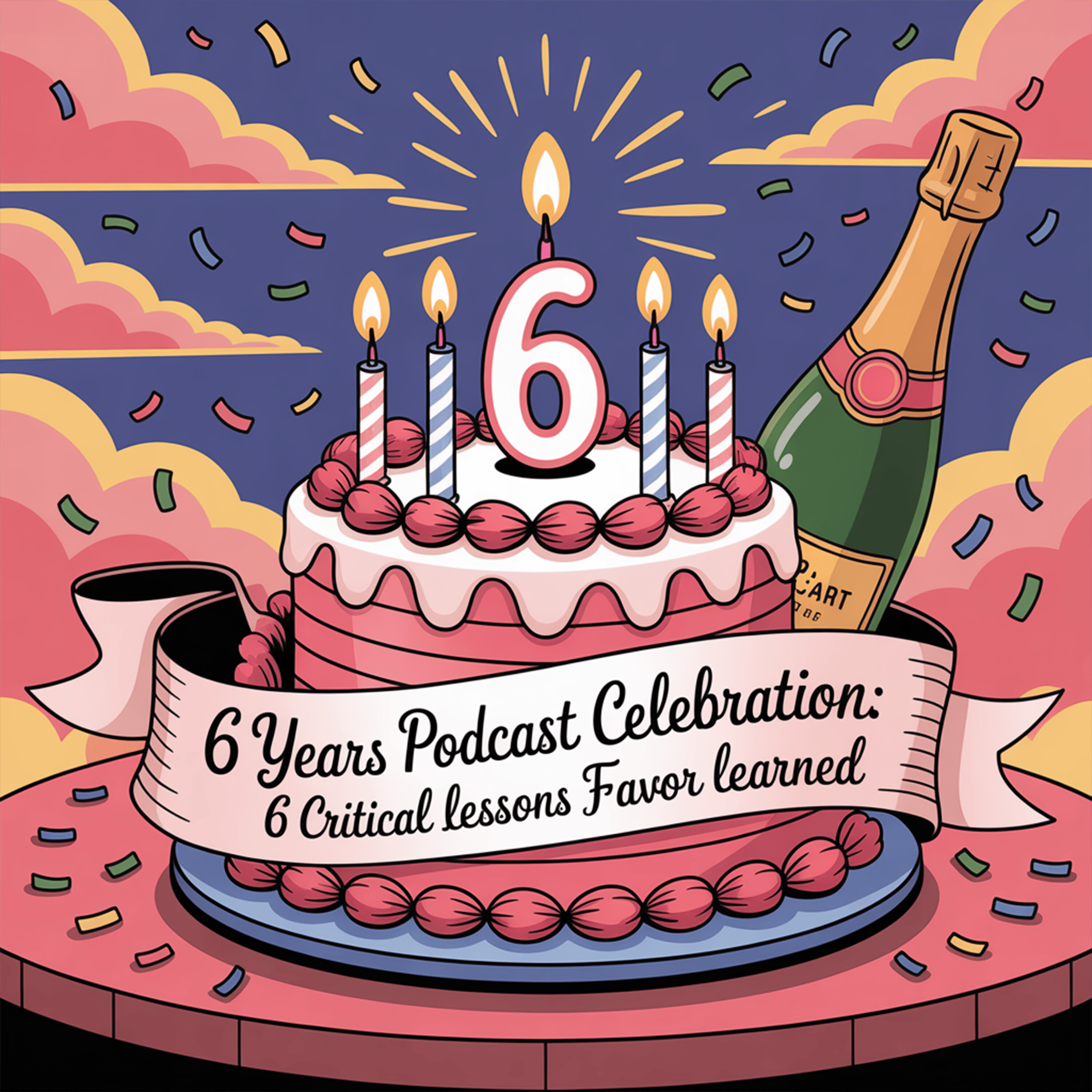
S11 Ep 26We Don't PLAY Podcast 6th Birthday: 6 Critical SEO and Business Growth Lessons with Favour Obasi-ike
We Don't PLAY Podcast 🥳 Turns 6 Years Today: 6 Critical Podcast Wisdom Lessons Favour Obasi-Ike Learned | Get exclusive SEO newsletters in your inbox.In an insightful address, Favour Obasi-Ike marks his sixth anniversary by sharing six crucial lessons learned from his journey, emphasizing the importance of overcoming initial setbacks, dedicating sufficient time to content creation, and conducting thorough research to understand audience needs. He also highlights the evolving landscape of digital visibility, stressing that analytics are vital for understanding audience engagement and that a podcast should be viewed as an intangible asset to be protected and leveraged. NEWS UPDATE: Upcoming workshops focused on SEO, AI, LinkedIn, Pinterest, and podcasting will start soon to provide practical guidance, reinforcing the idea that consistent effort and strategic distribution are key to online success. Sign Up Here.FAQs about this 6 years celebratory podcast1. What is the significance of "We Don't PLAY Podcast" celebrating six years, and what has been its growth trajectory?The "We Don't PLAY Podcast" is celebrating six years of consistent podcasting, a significant milestone given that many podcasts stop within 6-8 weeks. The podcast, which started on August 12, 2019, has published over 550 episodes, with an additional 200 unreleased episodes, demonstrating a remarkable output over its six-year run. Initially, the podcast was a solo endeavor, but it evolved to include guest interviews as the host realized the demand for diverse voices. The podcast's reach is truly global, currently being streamed in over 151 countries. This expansion highlights the power of consistent content creation and strategic distribution. The host also noted a significant increase in downloads after transitioning to a new hosting platform, achieving 1,000 downloads in just 10 days, a number that previously took much longer on their old platform. This growth signifies the podcast's increasing authority and audience engagement.2. What are the key marketing lessons learned over six years of podcasting?Favour shared six crucial lessons learned over six years of podcasting:Embrace "No": Rejections or initial setbacks, including internal doubts, should be seen as opportunities for reflection and innovation, prompting a re-evaluation of strategies to achieve a "yes." This was personally experienced when the podcast's initial concept and name, "Play Flaev," failed due to copyright issues with incorporating music, leading to the creation of "We Don't PLAY."Take Your Time: Consistency and quality are paramount. Building a podcast takes time and dedication. The host emphasizes investing quality time in content creation to reciprocate the time listeners invest, highlighting that most podcasts fail within the first two months due to a lack of sustained effort.Do Your Research: Understand your audience and their needs. Researching topics that people want to hear about, whether through direct conversations or AI tools like ChatGPT, ensures that the content is relevant and valuable. This allows for the creation of episodes that directly address audience interests.More People Want Their Voices Heard: There's a high demand for platforms where individuals and businesses can share their stories and expertise. Recognizing this led the host to invite guests to the show, shifting from a solo format to a collaborative one, which significantly broadened the podcast's appeal and content diversity.Leverage Analytics: Podcast analytics are your best friend. They provide crucial data on who is listening, where they are located (countries, cities, states), and what content resonates with them. This information is vital for informed content production, targeted advertising, and building a deeper connection with the audience.Treat Your Podcast as an Intangible Asset: A podcast is more than just audio content; it's an intellectual property. It can be trademarked and even turned into an NFT, signifying its value as a business asset. Protecting this asset is crucial for long-term growth, investor engagement, and potential licensing opportunities.3. How does Favour Obasi-Ike view podcasting as a marketing tool, particularly for businesses?Favour considers podcasting to be one of the most effective and lowest-effort, highest-impact marketing tools available. The core idea is that by simply speaking on topics you are knowledgeable about, the audio content can be repurposed into various forms of digital content, such as LinkedIn posts, emails, website articles, and online publications. This "talk-to-text" conversion maximizes content reach with minimal additional effort. For businesses, podcasting offers a unique way to build authority, reach a global audience, and generate demand for products or services. The long-term nature of podcasting also allows for consistent content creation that contin
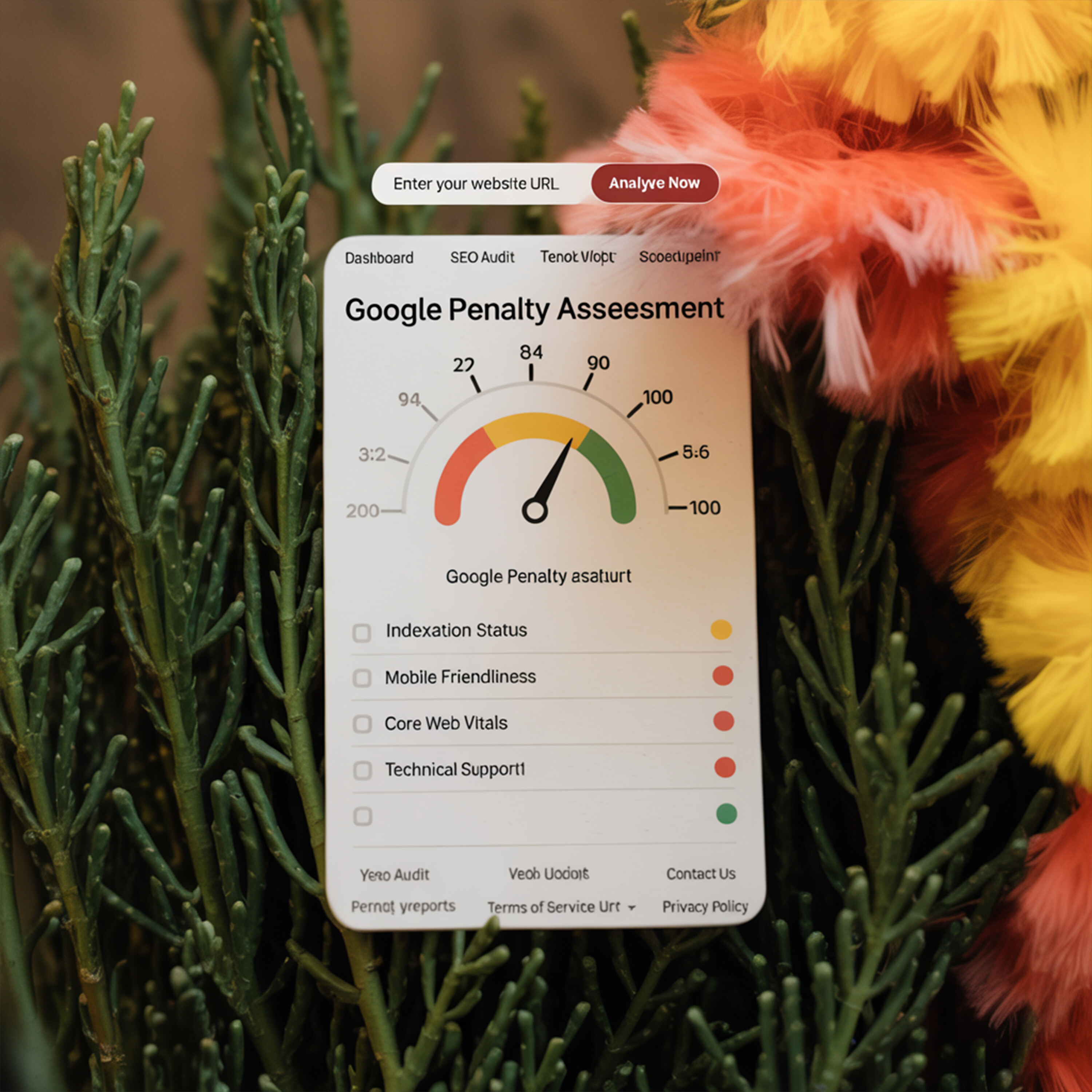
S11 Ep 25Technical SEO Masterclass: How Do I Know If My Website Is Penalized by Google & Search Engines? Website Health Check with Favour Obasi-ike
How Do I Know If My Website Is Penalized by Google? Website Health & Technical SEO Masterclass with SEO Expert, Favour Obasi-ike, MBA, MS | Get exclusive SEO newsletters in your inbox.This extensive SEO audio provides an in-depth discussion on technical SEO and how businesses can identify and address Google penalties impacting their websites. Favour uses analogies like a car's engine or a leaking roof to explain complex concepts, emphasizing that a penalty often signals a need for correction and improvement, not failure. Key areas covered include website structure, content quality (thin vs. thick content), proper use of tags and categories, image optimization, video embedding, and leveraging Google Search Console for diagnostics. The conversation also touches on the distinction between manual and algorithmic penalties and offers practical advice, such as using search operators, to check website visibility and performance.Frequently Asked Questions1. How can I tell if Google has penalized my website, and what does it mean?Google penalizes websites when they violate webmaster guidelines, often due to issues with content quality, relevance, or technical structure. A penalty means your site's search ranking is negatively affected, leading to reduced visibility and traffic. While a penalty might seem negative, it's actually an opportunity for correction and improvement, indicating that your site is at least visible enough for Google to notice. You might receive email notifications from Google, or you can check your Google Search Console for specific error messages and performance insights.2. What are the two main types of Google penalties, and how do they differ?There are two primary types of Google penalties:Manual Penalty: This occurs when a human reviewer from Google's web spam team flags your website for violating guidelines, often due to manipulative practices like spammy or hidden links ("black hat SEO"). These are rare but indicate a severe violation.Algorithmic Penalty: This is far more common and happens automatically due to issues detected by Google's algorithms. Reasons can include outdated or "thin" content, low quality or irrelevant information, generic AI-generated content, unnatural links, or regurgitated content. These penalties lead to automatic demotion or removal from search results.3. How does "thin content" contribute to Google penalties, and what makes content "thick"?"Thin content" refers to web pages that lack depth, context, or comprehensive information on a given topic. It's often characterized by a low word count, insufficient detail, and a lack of supporting elements. Google measures articles by reading time, word count, and character count. If your content is significantly shorter than the industry average for a similar topic (e.g., 300 words vs. 3,000 words), it's considered thin and unlikely to outrank competitors."Thick content," conversely, is rich in information and provides a thorough exploration of a topic. To create thick content, you should:Expand on topics: Go beyond basic definitions, offering more context and depth.Include various elements: Incorporate images (optimized for size), embedded videos (not uploaded), audio clips, statistics, examples, comparison charts, quotes, listicles, proper formatting (headings, links), and frequently asked questions (FAQs).Answer user intent: Ensure your content directly addresses the questions and needs of your target audience.4. Why is connecting my website to Google Search Console crucial for identifying and resolving penalties?Google Search Console (GSC) is the primary tool Google provides for website owners to monitor their site's performance in search results and identify issues. Connecting your website to GSC is the first essential step because it allows Google to communicate error messages and indexing problems directly to you. Within GSC, you can view performance insights, check the "Pages" section under "Indexing" to see which pages are known, submitted, or unsubmitted, and understand why certain pages might not be indexed. This diagnostic information is vital for understanding the root causes of any penalties and guiding your corrective actions.5. What are common technical SEO issues that can lead to Google penalties, beyond content quality?Technical SEO issues relate to the structural and operational aspects of your website that affect how search engines crawl and index it. Common problems include:Website size and image optimization: Large file sizes, especially for images and uploaded videos, can slow down your website, leading to a poor user experience and penalties. Use compression tools (e.g., compressor.io) for images and embed videos instead of uploading them.Broken or inaccessible links: Ensure all links within your sitemap and across your site are functional and lead to valid destinations.Incorrect robots.txt or "no index" tags: The robots.t
S11 Ep 24Technical SEO: What's the Fastest Way to Get Webpages Indexed by Search Engines? (SEO Masterclass with Favour Obasi-ike)
What's the Fastest Way to Get Webpages Indexed (Technical SEO) by Search Engines? with SEO Expert, Favour Obasi-ike, MBA, MS | Get exclusive SEO newsletters in your inbox.This episode focuses on search engine optimization (SEO) and the fastest ways to get indexed by search engines, extending beyond just Google to include other platforms and AI-powered large language models (LLMs) like ChatGPT emphasizing that building trust with search engine algorithms is paramount, achieved through consistent content creation, linking strategies (backlinks), and connecting websites via tools like Google Search Console. Favour highlights the importance of updating existing content and addressing user queries to improve visibility across various search and AI platforms, ultimately advocating for a strategic and patient approach to online presence rather than solely focusing on a single ranking metric.AD BREAK: Get 20% off your first booking & be the first to know about our new arrivals, spa deals, and events with Somatic MassageFrequently Asked Questions about Search Engine Indexing and Online PresenceWhat is the fastest way to get indexed by search engines?The fastest way to get indexed by search engines is by building trust and establishing connections. This means having conversations around the questions people are asking and providing answers in the form of website links. These links should then be shared on other reputable websites to create backlinks, which signal to search engines that your website has authority. It's not just about creating a lot of content, but about creating relevant, high-quality content that answers user queries and is linked to by trusted sources.Why isn't my website ranking on search engines?There are several reasons why your website might not be ranking. Common issues include not having your website manually indexed or automatically discovered by search engines, or not being connected to Google Search Console. Additionally, your content might not be seen if it's not frequently updated, as AI servers and search engines prioritize recently modified content. A lack of engagement and underutilization of your website compared to time spent on social media can also hinder its visibility. Essentially, if search engines aren't "seeing" your content, they can't recommend it.How long does it take for SEO efforts to show results?Ranking SEO web pages on Google and other search engines takes time and consistency. While immediate indexing can occur within hours or days for consistent posters, significant milestones, such as receiving your first 10 clicks, can take around six months, even with hundreds of articles. The key is consistent effort, building trust with algorithms, and maintaining an active online presence. The compound effect of consistent content creation can lead to substantial impressions over time.How does trust factor into search engine ranking?Trust is paramount for search engine ranking. Just as in human relationships, search engines, particularly Google, rely on trust to refer content. This trust is established when other third-party websites, which Google already trusts, link to your website, thereby vouching for your site's authority. These "off-page SEO referring domains" (like links on Reddit, Trustpilot, LinkedIn, Pinterest) may have varying impact, but they contribute to your credibility and signal to search engines that your content is valuable and reliable.Is traditional SEO still relevant with the rise of AI and Large Language Models (LLMs) like ChatGPT?Yes, traditional SEO is still very relevant and, in fact, synergistic with AI and LLMs. While AI provides generative answers, it often sources its information from traditional search engines like Google. Therefore, optimizing your content for Google through good SEO practices (like answering frequently asked questions, using appropriate keywords, and having a well-structured site map) directly contributes to your brand being cited and mentioned in AI-generated responses. AI and SEO are not competing but are interdependent, with AI leveraging the foundation built by strong SEO.How can I optimize my content for AI search engines?To optimize for AI search engines, focus on providing succinct, evidence-based answers to specific, question-based headings, similar to "People Also Ask" sections on Google. Ensure your content is frequently updated ("last modified" date is recent) as AI prioritizes fresh information. AI servers are looking for up-to-date, relevant context. By consistently creating and updating content that answers user queries and by connecting your website to search engines via tools like Google Search Console, you increase the likelihood of being sourced and mentioned by AI.What is the significance of a "sitemap" and "DNS" in getting indexed?A sitemap acts as a map of your website, providing search engines with a
S11 Ep 23Why Are My Digital Marketing SEO Efforts Not Working? (SEO Masterclass with Favour Obasi-ike)
Why Are My Digital Marketing SEO Efforts Not Working? with SEO Expert, Favour Obasi-ike, MBA, MS | Get exclusive SEO newsletters in your inbox.This Clubhouse session features offering advice on Search Engine Optimization (SEO), particularly for small businesses. Favour explains that effective SEO involves consistent effort and strategy, likening it to a conversation where businesses answer frequently asked questions.He suggests creating diverse content formats, like long-form "pillar" blog posts supported by shorter "cluster" content, and emphasize the importance of localizing content for brick-and-mortar businesses.The discussion also touches upon tools like Semrush and Ahrefs for SEO analysis, while advocating for a "mindset, skillset, toolset" approach to digital marketing, stressing that understanding fundamental principles and consistent application are more crucial than expensive tools alone.Favour illustrates concepts with real-world examples and interactive exercises, encouraging listeners to apply the strategies themselves to improve their online presence and drive organic traffic.AD BREAK: Get 20% off your first booking & be the first to know about our new arrivals, spa deals, and events with Somatic MassageFrequently Asked Questions1. Why aren't my SEO efforts working, and what's the fundamental issue?SEO efforts often fall short due to a lack of consistent strategy and the failure to address user intent directly. The core problem is not "showing up for a term" because the relevant link or content isn't "activated." This means your content isn't directly answering the questions people are frequently asking online or isn't positioned to be easily seen by search engines. Expecting different results from repeating the same ineffective actions is likened to "insanity." Effective SEO, at its heart, is a conversation where your content provides clear, direct, and valuable answers to user queries, similar to how a meaningful conversation builds understanding and leads to further engagement.2. How can I effectively create content for SEO in 2025?The primary goal for content creation in 2025 is to answer frequently asked questions online and establish yourself as the authoritative "person of interest" providing those answers. This transforms SEO into a conversation. To achieve this, focus on creating content that directly addresses user queries. For instance, if the most searched question of 2024 was "What time is it?", then providing a direct answer makes you the "respondent to the answer." This content can be distributed through various formats, with podcast episodes and blogs being the fastest ways to publish. Consistency is key, with a suggested minimum of 10 minutes to 10 hours per week dedicated to content creation.3. What is the "pillar and cluster" content strategy, and how does it improve SEO?The "pillar and cluster" strategy involves creating a comprehensive "long-form" piece of content (the pillar) that covers a broad topic in depth, acting as a foundational resource. This pillar can include comparisons, statistics, infographics, videos, listicles, charts, and FAQs. Subsequently, you create "mid-form" and "short-form" content pieces (the clusters) that delve into more specific sub-topics or variations derived from the pillar. These clusters link back to the main pillar, creating a strong internal linking structure. This method allows you to cover a topic from multiple dimensions, compound your SEO interest, and establish semantic connections across your website. Each published blog can generate numerous new "keywords" or "seeds," further expanding your content ecosystem.4. How does updating old content contribute to better SEO, and what is a "last modified page"?Regularly updating old content is a powerful SEO tactic. When you update an existing article, especially with current information (e.g., changing "2025" to "2026"), it signals to search engines that your content is fresh and relevant. This updated page becomes a "last modified page," which AI algorithms prioritize and pick up more readily from the internet. The concept is that an active website with recently updated content is more likely to rank higher. By updating older posts and linking them to newer ones, you create a dynamic "spiderweb" of content, ensuring your website always appears "on" and active, leading to improved rankings and longevity.5. Are SEO tools like Semrush and Ahrefs crucial for a comprehensive hyperlocal SEO strategy, and are there free alternatives?While tools like Semrush and Ahrefs are excellent for comprehensive analysis, especially for hyperlocal strategies (e.g., checking Name, Address, Phone number consistency across directories), they are not strictly necessary to get started or achieve results. These tools can be expensive, and it might be more cost-effective to hire a
S11 Ep 22How Long Does It Take to Rank SEO Webpages on Google & AI Search Engines? (SEO Masterclass with Favour Obasi-ike)
How Long Does It Take to Rank SEO Webpages on Google & AI? with SEO Expert, Favour Obasi-ike, MBA, MSThe We Don't PLAY podcast host discusses how long it takes for SEO web pages to rank on Google and AI search engines, emphasizing that there's no single answer, ranging from days to months or even years depending on website history and consistent updates. I highlight the importance of submitting websites to Google Search Console, understanding domain and hosting, and strategically creating content that answers questions. They differentiate between Google's organic impressions and AI's "earned SEO"or earned impressions, underscoring that being visible on Google is a prerequisite for AI search visibility. The discussion also touches on content velocity, the value of a consistent online presence, and how to use tools and strategies to improve search engine optimization for both traditional and AI-driven searches.FAQs about this episode1. How long does it typically take for a new webpage to rank on Google and AI search engines?For a brand new website or webpage, it generally takes around 3 to 6 months to start ranking significantly on Google and AI search engines. For an existing website or webpage, it can take days to weeks to significantly show up on Google and AI search engines. However, the speaker highlights a case where an article ranked in just two days. This rapid ranking is attributed to the website's existing credibility, similar to having a good credit score with a bank. Google and AI prioritize established entities. For entirely new content, especially if it's the first time a link has surfaced on the internet, it can even rank within 24 hours. The key takeaway is that it's a marathon, not a sprint, and consistent effort is crucial for long-term gains.2. What are the foundational steps to ensure a website can even appear on Google and AI search results?Before any SEO efforts can be effective, your website needs to be visible to search engines. The first crucial step is to have a website that Google can "see." This involves submitting your website to Google Search Console, which acts as Google's internet service provider for your site. Without this submission, your website isn't connected to Google's internet, making it invisible to their indexing systems. Think of it like a book not being in a library's inventory; it can't be found. Additionally, your website needs proper hosting (e.g., WordPress, Hostinger, GoDaddy), as a domain alone isn't enough to make it a functional, searchable website.3. How do traditional SEO and AI search results differ, and what does "earned SEO" mean in this context?The speaker distinguishes between traditional SEO and AI searches by introducing the concept of "earned SEO." Traditional SEO focuses on organic impressions, where your content naturally ranks based on relevance and quality. AI searches, on the other hand, are described as "earned impressions." This means that AI platforms like ChatGPT, Perplexity, and Grok look for the top results already showing up on Google. Therefore, if your website isn't ranking organically on Google in the first place, it's impossible for it to show up in AI search results. "Earned SEO" suggests that your presence and visibility on AI platforms are a consequence of having already "earned" strong organic rankings on traditional search engines. AI searches also have a shorter, often 24-hour, countdown timer for relevance, emphasizing rapid content updates and a broad presence across different platforms.4. Why is consistent content updating and strategy crucial for long-term SEO success?SEO is not a one-time fix; it requires continuous effort. Google (and now AI) periodically "deletes" or de-prioritizes old, irrelevant content from its servers if it's not updated. The concept of "tokenization" refers to the duplicate copy of your webpage that Google remembers, and if this isn't refreshed, your content will lose visibility. Therefore, consistently updating existing articles (even minor edits) and publishing new content with a clear strategy and plan are vital. This continuous effort creates a "spiderweb" of interconnected content, signaling to search engines that your website is active, relevant, and authoritative.5. What role does "content velocity" play in effective marketing and SEO?Content velocity refers to how quickly you can create and distribute relevant content across various platforms. Beyond just quality (answering questions and providing value), the speed at which you produce and share content significantly impacts your reach and ranking potential. Distributing content on platforms like Facebook, Pinterest, Clubhouse, LinkedIn, and various podcast directories (Apple Podcast, Spotify, Amazon Music) creates numerous backlinks and brand mentions. This widespread presence, coupled with consistent new content, sig
S11 Ep 21Why Isn't My Website Ranking on Search Engines (Google) or AI SEO Brand Mentions? (SEO Masterclass with Favour Obasi-ike)
Why Isn't My Website Ranking on Google or AI SEO Brand Mentions? with SEO Expert, Favour Obasi-ike, MBA, MS📈 Why Websites Don't Rank on Google and AI Search Engines?This episode provides a detailed discussion on why websites may not rank well on Google and AI brand mentions, emphasizing the importance of Search Engine Optimization (SEO). Favour, through an interactive Q&A format and a case study on his own podcast, explains how connecting websites to search engines like Google Search Console, answering common user queries, and consistently updating content with relevant keywords are crucial for online visibility. The discussion also touches upon the evolving nature of search with AI and the significance of strategic content creation across various platforms to improve brand presence and search rankings.FAQs about this episode1. Why isn't my website ranking on Google or AI brand mentions?Your website likely isn't ranking because it's not effectively connected to search engines and isn't providing answers to the questions people are actively searching for. Think of it like this: if your website talks about "cakes" but isn't optimized for terms like "custom cakes" or "delicious cakes," then search engines won't connect users looking for those terms to your site. This also applies to AI brand mentions; if your content doesn't answer the specific questions AI models are sourcing, your brand won't be cited. The core issue often stems from not being properly indexed and understood by Google Search Console, which acts as Google's internet service provider for websites.2. How can I ensure my website is visible to search engines and AI?To ensure visibility, your website needs to be connected to Google Search Console and actively respond to questions that people are asking across various search engines and AI platforms (like Google, ChatGPT, Gemini, Perplexity AI, Anthropic Cloud, XAI Grok, Meta AI, and Deepseek AI). This means creating content – whether text (blogs), audio (podcasts), or video (YouTube) – that directly answers specific, highly searched queries. The more questions you answer with relevant, high-quality content, the more likely your website (or specific web pages) will appear in search results and AI brand mentions.3. What role do "experience, expertise, authority, and trust" (E-E-A-T) play in Google ranking?Google's guidelines for ranking emphasize E-E-A-T: Experience, Expertise, Authority, and Trust. This means your content should not only provide information but also demonstrate that you are a credible source. An "experience" is about creating content that leaves a lasting positive impression, much like a memorable show. "Expertise" means showcasing deep knowledge in your field. "Authority" is about being recognized as a go-to source, and "Trust" is built by consistently delivering reliable and valuable information. Adhering to these principles helps Google identify your content as high-quality and trustworthy, thus improving your ranking.4. What is "tokenization" in the context of website ranking, and why is "last mod" important?"Tokenization" refers to the concept that when you submit your sitemap to Google Search Console, you're essentially creating a digital "token" or copy of your website's structure and content. This allows search engines to understand and index your pages. "Last mod" (last modified) is crucial because search engine algorithms (including AI) prioritize recently updated or created content. If your content has a recent "last mod" date, it signals to the algorithm that it's fresh and potentially more relevant, giving it a higher chance of ranking at the top. Regularly updating and refreshing your content helps maintain its relevance and visibility.5. How does answering specific questions impact my website's ranking?Answering specific questions directly impacts your ranking by making your content the "respondent" to user queries. If people are asking "What time is it?" or "What is today?", and your content addresses these (or more niche, relevant) questions, you become a source of answers. Search engines and AI models are designed to provide the best answers to user prompts. By semantically aligning your content with highly searched questions, you increase the likelihood of your web pages being discovered, cited by AI, and ultimately ranking higher in search results.6. What's the significance of domain names and brand names having 2-3 syllables for brand recognition?Brands with two to three syllables, like "Disney" or "Chick-fil-A," are often more memorable and easier to recall. This sonic simplicity aids in quick recognition and retention, which is crucial for branding. In the digital age, this extends to search and voice commands, where shorter, easily pronounced names can lead to better user experience and stronger brand association. While n

S11 Ep 20How to Avoid High Merchant Payment Processing Fees using CLEARswipe with Co-Founder, Jeremy Russo (GoClearSwipe.com)
Need to start saving on recurring processing fees? Visit GoCLEARswipe.com to get started with your demo and on-boarding today!💰 Navigating Payment Processing Fees with CLEARswipe with Co-Founder, Jeremy Russo.ClearSwipe, a company co-founded by Jeremy Russo, that helps businesses reduce or eliminate credit card processing fees through a strategy called dual pricing.Jeremy Russo explains that these fees, often the third-highest cost for businesses, can be avoided by offering customers two distinct prices: a lower "cash" price and a slightly higher "credit card" price that includes the processing fee.This discussion clarifies the nature of interchange fees, how different businesses (high-risk vs. low-risk) face varying rates, and the distinction between dual pricing (transparently displaying two options) and surcharging (adding a fee at the end of the transaction, which isn't compliant in all states).CLEARSwipe aims to integrate seamlessly with existing accounting systems like QuickBooks and is designed to be a compliant solution for businesses of any size, offering next-day funding and month-to-month contracts.ChaptersIntroduction to CLEARSwipe @ 0:00Jeremy Russo introduces ClearSwipe, a company that helps businesses avoid high credit card processing fees. He explains how he got involved in the business after realizing the significant costs his own company was paying in credit card fees.Understanding Credit Card Processing Fees @ 3:42Jeremy provides an overview of how credit card processing fees work, including the different types of fees (interchange, assessment, etc.) and how they vary based on the type of business and card used. He explains the concept of "dual pricing" where businesses can offer customers a cash discount.Benefits of Dual Pricing @ 8:22Jeremy dives deeper into dual pricing, explaining how it allows businesses to transparently display a credit card price and a cash price, giving customers the choice on how they want to pay. This enables the business to avoid credit card processing fees entirely.Integrating CLEARSwipe with Existing Systems @ 11:54Jeremy discusses how CLEARSwipe can integrate with various invoicing and payment platforms like QuickBooks, allowing businesses to seamlessly implement dual pricing without having to change their existing systems and workflows.Compliance and Availability of CLEARSwipe @ 15:13Jeremy clarifies that dual pricing is compliant in all states, unlike surcharging which has more restrictions. He also explains that ClearSwipe can be used by businesses of any size, locally or nationally/internationally.Onboarding and Support with CLEARSwipe @ 18:24Jeremy outlines the onboarding process for new ClearSwipe customers, including an initial discovery call, demo, and hands-on support to ensure a smooth integration and implementation.Recap and Next Steps @ 30:38Jeremy summarizes the key benefits of using ClearSwipe to save on credit card processing fees, and encourages listeners to explore the option even if they don't end up working with ClearSwipe, as the education alone can be valuable.FAQs on CLEARSwipe: Eliminating Processing Fees with Dual PricingWhat are credit card processing fees and why do they exist?Credit card processing fees are charges incurred by businesses when they accept credit or debit card payments. These fees are primarily made up of "interchange" fees, which are charged by card networks like Visa, Mastercard, American Express, and Discover. These fees cover the cost of owning and using the card, as well as the processing of transactions. The exact percentage of these fees can vary based on several factors, including the type of business (e.g., high-risk versus low-risk, where high-risk businesses like tow truck services might incur higher fees due to potential chargebacks), the volume of transactions, and the specific type of card used (e.g., an American Express Platinum card with rewards will cost a business more to process than a basic debit card). Businesses ultimately bear these costs, which in turn fund the rewards and benefits consumers receive from their credit cards.How do traditional payment processors like PayPal and Stripe compare to Clear Swipe in terms of fees?Traditional payment processors like PayPal, Stripe, and GoDaddy are widely known and trusted, making them convenient choices for many businesses, especially those just starting out. However, they typically charge higher processing fees, often ranging from 2.5% to 3.5% plus an additional 20 or 30 cents per transaction. While convenient, these fees can accumulate significantly, impacting a business's profitability, regardless of the average transaction size. Clear Swipe, on the other hand, focuses on eliminating these fees for the business by offering a "dual pricing" model, which passes the processing fee onto the customer who chooses to pay with a card. This allows businesses to retain 100% of their advertised price.How does CLEARSwipe inte
S11 Ep 19Free vs. Paid Podcast Hosting Platforms: Strategic SEO and Social Business Marketing Guide with Favour Obasi-ike
Free vs. Paid Podcast Hosting Platforms - A Strategic Business Guide (SEO Sundays) with SEO Expert, Favour Obasi-ike, MBA, MS.Looking for insights on free versus paid podcast hosting platforms? Favour Obasi-ike, with six years of experience using free platforms like Spotify for Creators (formerly Anchor.fm), explains the benefits and drawbacks of each option. He emphasizes the importance of owning one's RSS feed and understanding analytics for monetization, detailing his recent switch to a paid platform, Art19 by Amazon, for better data and ad control. The discussion also touches on broader business principles, including consistent content creation and community building, suggesting a strategic progression from free to paid hosting as a podcast grows.FAQs about this episodeWhat is the main distinction between free and paid podcast hosting platforms?The core difference between free and paid podcast hosting platforms lies in the level of control, data access, and monetization opportunities they offer. While free platforms like Spotify for Podcasters (formerly Anchor.fm) are excellent for starting and building an audience due to their accessibility and ease of use, they often come with limitations on analytics, character limits for descriptions, and control over advertising. Paid platforms, on the other hand, provide more comprehensive analytics, greater control over ad placements (including the ability to approve or reject brands), better distribution tools, and increased potential for monetization, allowing podcasters to scale their operations and potentially generate more income.Why is owning your RSS feed crucial for podcasters?Owning your RSS (Really Simple Syndication) feed is paramount because it acts as your podcast's unique identification code and intellectual property. It's akin to having the title to your car or your social security number – it signifies ownership and control. The RSS feed is what allows your podcast to be distributed across various platforms like Apple Podcasts, Amazon Music, Spotify, and more. Without direct control over your RSS feed, you might face significant challenges if you decide to switch hosting platforms, as it could be tied to an email address or account you don't fully control, hindering your ability to migrate your content and audience seamlessly.What are the key benefits of transitioning from a free to a paid podcast hosting platform?The transition from a free to a paid podcast hosting platform offers several significant benefits, primarily centered around enhanced control, data, and monetization. Paid platforms typically provide:Comprehensive Analytics: Access to detailed data about listeners, downloads, and geographical reach, allowing for better audience understanding and informed content strategy.Monetization Control: The ability to implement programmatic ads, host-read ads, and baked-in ads, with some platforms (like Art19) offering the unique advantage of approving or rejecting specific brands for advertising.Increased Visibility and Reach: While free platforms offer distribution, paid platforms can provide more robust tools for maximizing reach and ensuring content is optimized for various directories.Professionalism and Scaling: Moving to a paid service often signifies a commitment to professional growth and provides the infrastructure needed to scale the podcast as a business, fostering long-term sustainability and impact.What challenges might a podcaster face when using a free hosting platform like Spotify for Podcasters (Anchor.fm)?Despite its advantages for beginners, Spotify for Podcasters (Anchor.fm) presents several limitations when compared to paid alternatives. Favour Obasi-ike highlights:Limited Analytics: The dashboard may only show a fraction (e.g., 10-15%) of the actual download and listener data, making it difficult to accurately assess audience engagement and growth.Character Limits: Restrictions on the length of podcast descriptions (e.g., 600 characters on desktop vs. 4,000 on mobile) can hinder SEO efforts and the ability to include comprehensive keywords and information.Lack of Ad Control: Free platforms generally do not allow podcasters to approve or reject specific brands for programmatic ads, meaning you have less control over the type of advertisements associated with your content.Data Migration Issues: While not explicitly a "challenge" of the free platform itself, Favour Obasi-ike notes that when moving to a new platform, historical data often cannot be transferred, requiring a fresh start on analytics.How can podcasters effectively monetize their content?Podcasters can monetize their content through various advertising models:Programmatic Ads: These are automated advertisements inserted into the podcast episodes, often without direct control over the specific brands or content of the ads.Host-Read Ads: The podcaster reads the advertisement t

S11 Ep 18Monetize Email List Marketing for Local Business Advertising: Actionable Practical Steps with SEO Expert, Favour Obasi-ike
The podcast excerpt focuses on strategic email marketing for local businesses, aiming to boost revenue by enhancing online visibility. It highlights the importance of understanding search competitors, utilizing Google Search Console and Google Business Profile for SEO, and consistently engaging with audiences through valuable, non-sales-focused content. The discussion also touches on the synergy between AI tools like ChatGPT and traditional search engines, emphasizing that contextual relevance in communication is key to driving both audience engagement and financial growth. Favour offers practical advice, such as using QR codes at physical locations to convert foot traffic into online leads and segmenting email lists to cater to specific audience needs.📈 Monetizing Local Business Email Marketing with SEO (FAQs)1. Why is email marketing crucial for local businesses in 2025 and beyond?Email marketing is highlighted as one of the best strategies for local businesses to increase revenue in 2025 and moving forward. It serves as a consistent way to stay connected with your audience, providing valuable insights and information without overwhelming them with direct sales pitches. By consistently showing up in their inbox, even if just to tell them useful information, businesses can build familiarity, trust, and ultimately increase revenue over time. It's about maintaining a consistent presence ("out of sight, out of mind" applies here) and demonstrating value, which eventually leads to inquiries and conversions.2. How can local businesses identify and learn from their direct search competitors?Local businesses should actively search for their direct competitors, especially those within a 1-5 mile radius if they have a physical storefront. The purpose is to understand what these competitors are offering, their pricing, how they attract customers (e.g., foot traffic, online traffic), and what kind of content they are producing. A practical tip is to sign up for their email lists to observe the types of emails they send. This "pure marketing" approach allows businesses to identify areas for improvement in their own strategy or to capitalize on aspects where they are already performing better.3. What is the significance of connecting a business website to Google Search Console and other platforms?Connecting a business website to Google Search Console is critical because it acts as Google's internet service provider for websites, essential for visibility on Google.com, Google AI Overview, Google Gemini, and Google Analytics. This connection provides crucial "authority data" and helps businesses understand their ranking and search performance. Additionally, linking the website to Google Business Profile, Bing Webmasters, Microsoft Clarity, and Bing Places is recommended to strengthen local rankings and generate local search signals. These connections establish familiarity between the business and major online platforms, allowing for valuable data collection and enhanced online presence.4. How can a local business leverage its physical location for digital lead generation?A local business with a brick-and-mortar store and a glass window can strategically place a visible and legible QR code on the window. This QR code should lead to the business's website or an opt-in page where visitors can leave their contact information. This tactic effectively converts foot traffic into qualified leads by inviting interested passersby to engage digitally. Furthermore, scanning the QR code provides valuable analytics, including IP address tracking, which reveals the geographical origin of potential customers, aiding in understanding audience demographics and refining marketing efforts.5. What is the "tell, tell, tell, sell" approach in email marketing, and why is it effective?The "tell, tell, tell, sell" approach emphasizes providing value and building a relationship with the audience before attempting to sell. Instead of constantly pushing products or services ("selling, selling, selling, selling, then telling"), businesses should focus on "telling" their audience about relevant information, answering questions, and explaining the importance of certain topics. This consistent delivery of valuable content establishes trust and keeps the business top-of-mind. When the time comes to make an offer, the audience is already engaged and more receptive because the business has consistently demonstrated its helpfulness and expertise, making sales feel less transactional and more like a natural progression of the relationship.6. Why is "context" the key missing ingredient between email marketing and increased revenue?"Context" is identified as the crucial element that connects email marketing to increased revenue. This includes the subject lines, preview text, hyperlinks, messaging, images, videos, and overall releva
S11 Ep 17Content Marketing AI Solutions: CEO Edition with SEO Expert, Favour Obasi-ike
Content Marketing AI Solutions: CEO Edition with SEO Expert, Favour Obasi-ike, MBA, MS.Welcome to an extensive discussion on AI solutions for content marketing, specifically for CEOs and business owners. We emphasize the importance of leveraging AI and search engine optimization (SEO) to enhance online visibility and brand mentions discussing practical applications of AI tools like Harpa AI for content creation, transcription, and analytics, highlighting how these tools can streamline workflows and improve content discoverability across various platforms. The conversation also touches upon the evolving landscape of podcasting as a powerful tool for establishing authority and generating leads, with personal anecdotes illustrating its effectiveness in attracting brand collaborations. Finally, we underscore the critical role of owned media in earning visibility within AI search algorithms and the necessity for businesses to adapt their content strategies to stay relevant in the digital age.FAQs1. How is AI transforming the landscape of Search Engine Optimization (SEO)?AI is fundamentally changing SEO by simplifying its processes and shifting the focus from simply ranking for keywords to writing for the algorithm. In the past, the goal was to rank high in search results based on keywords. Now, AI-powered search engines prioritize "brand mentions" and contextual relevance.2. What is "writing for the algorithm" in the age of AI, and why is it crucial for businesses?"Writing for the algorithm" means creating content specifically optimized for how AI systems process and interpret information. This involves writing in speech-friendly formats, using text, video, and image content, and ensuring it's highly contextual to your brand, experience, and engagement. It's no longer just about keyword density; it's about providing a clear, impactful message that resonates with AI's understanding of relevance and authority.3. What practical steps can a business owner take to leverage AI for content marketing and improve their online visibility?To effectively leverage AI for content marketing, business owners should: Conduct a Search Console Audit: Use tools like searchconsoleaudit.com to understand how algorithms perceive your website. Create Brand-Relevant Content: Write content that aligns with what people expect your brand to discuss, offering solutions through your products and services. Utilize AI Tools for Content Creation and Optimization: Employ AI tools like DeepSeek, ChatGPT, or Harpa AI for tasks like transcribing videos with timestamps, rewriting content for specific platforms (e.g., Facebook posts with hashtags), and generating ideas. Focus on Owned Media: Prioritize creating evergreen content on platforms you own (podcasts, blogs, website) as this highly valuable "owned media" will be recognized as "earned media" by AI search engines, leading to brand mentions and credibility. Analyze Performance with Advanced Analytics: Beyond Google Analytics, explore tools like Fathom Analytics to gain deeper insights into user behavior, geographic data, and the effectiveness of your content, which helps in delivering precisely what the audience seeks. Digital Marketing Resources:>> Join our exclusive SEO Marketing community>> SEO Optimization Blogs>> Book Complimentary SEO Discovery Call>> Subscribe to We Don't PLAY PodcastBrands We Love and SupportLoving Me Beauty | Buy Vegan-based Luxury ProductsUnlock your future in real estate—get certified in Ghana today!See Privacy Policy at https://art19.com/privacy and California Privacy Notice at https://art19.com/privacy#do-not-sell-my-info.
S11 Ep 16Google Search Console SEO: Business Growth and SEO Strategies with Favour Obasi-Ike: Unlocking AI Solutions
Google Search Console SEO: Business Growth and SEO Strategies: Unlocking AI Solutions with SEO Expert, Favour Obasi-ike, MBA, MS.This Clubhouse audio captures a dynamic online discussion about digital marketing strategies and business growth, primarily focusing on Google Search Console trends. The speakers, including the host and "Doctor Fashion" share personal triumphs, such as property acquisitions and brand partnerships, illustrating the tangible benefits of consistent effort and community building. Key topics explored include leveraging AI for content creation, the importance of analyzing search data to drive traffic and monetization, and the critical role of maintaining an updated online presence. The conversation also touches upon podcast sponsorships, email marketing, and the overall significance of professional branding in today's digital landscape.FAQs about Google Search Console (GSC SEO)1. What is the significance of Google Search Console search trends for businesses?Google Search Console search trends are crucial for businesses because they provide real-time insights into what content is trending up or down. This tool, now a full feature after moving from its beta phase (Search Console Insights beta), allows businesses to analyze search volumes and content performance over specific periods (e.g., period over period, like this time last year vs. now). By understanding these trends, businesses can tailor their content creation to match seasonal interests and high-demand topics, ensuring their content remains relevant and discoverable.2. What are the essential aspects of SEO (Search Engine Optimization) and website structure for long-term online presence?Effective SEO and website structure are critical for long-term online presence. This involves using Google Search Console to mine data for intellectual property, tracking tools, ranking words, and key phrases that drive transactions. Content should be structured to target high CPC (cost per click) keywords, ensuring that blogs and landing pages are optimized for search engine visibility and lead to checkout pages. Additionally, it's crucial to understand the lifespan of content; blogs, for example, have a lifespan of about 24 months. Failure to update links and content within this period can lead to deletion from Google's index, highlighting the need for continuous content refreshment and relevance.3. What are the key monetization strategies for content creators, particularly in podcasting?For podcasts, this often involves "host-read ads" and "programmatic ads." Host-read ads are directly integrated into the episode by the host and can be placed as "pre-rolls" (before the episode), "mid-rolls" (during the episode), or "post-rolls" (after the episode). Programmatic ads involve inserting ad slots that brands can bid on, leading to scheduled payouts based on impressions or engagement. Building analytics and systems that allow for both organic and programmatic monetization, as seen with Amazon brand partnerships, is key to generating consistent revenue.Digital Marketing Resources:>> Join our exclusive SEO Marketing community>> Latest blogs on SEO optimization and Online Marketing>> Book your Complimentary SEO Discovery Call>> Book Paid Marketing Consultation Call>> Subscribe to We Don't PLAY PodcastBrands We Love and SupportLoving Me Beauty | Buy Vegan-based Luxury ProductsUnlock your future in real estate—get certified in Ghana today!See Privacy Policy at https://art19.com/privacy and California Privacy Notice at https://art19.com/privacy#do-not-sell-my-info.
S11 Ep 15Cost-Benefit Analysis of LLM Tools & AI Search Optimization | Roundtable Quiz Show
Optimizing for AI Search Results / Cost-Benefit Analysis of LLM Tools / Why So Expensive? (Roundtable Quiz Show) with SEO Expert, Favour Obasi-ike, MBA, MS.This 🔥 HOT TOPIC 😳 Clubhouse Audio Marketing Club discussion centers on the high cost and value of Large Language ModelS (LLM) SEO tools in 2025. Favour evaluated several platforms like Ahrefs, Profound, Cognizo AI, Scrunch AI, Athena HQ, Am I on AI and Peec comparing their features, pricing, and the specific LLMs they track. A key theme is the perceived return on investment (ROI), with most participants expressing hesitation due to the expense and limited perceived value compared to free alternatives or established SEO practices. The conversation also touches on the evolving landscape of AI search, data privacy concerns, and the importance of strategic, targeted marketing over broad platform presence. Ultimately, the discussion highlights Mentions.so as a more affordable, comprehensive option and Etheo.co as a free alternative, emphasizing the need for businesses to carefully research and align tool usage with their specific goals and existing strategies.AI and SEO Tools in 2025: FAQsWhat are LLM SEO tools and why are they so expensive?LLM (Large Language Model) SEO tools are platforms designed to help businesses optimize their online presence for search engines that increasingly rely on AI models like ChatGPT, Perplexity, Gemini, and Grok. They provide insights into how a brand is being mentioned and ranked across various AI-powered search environments. The high cost of these tools, ranging from hundreds to over a thousand dollars per month, is attributed to their early stage in development, the advanced technology involved, and the value they aim to provide in navigating the evolving AI search landscape.Is traditional SEO becoming obsolete with the rise of AI?No, traditional SEO is not becoming obsolete. As one speaker emphatically states, "SEO is not going anywhere. Email is not going anywhere. AI is definitely not going anywhere." The integration of AI simply adds new layers and dimensions to SEO. While new AI search platforms like Grok, Perplexity, and Google AI Overviews are emerging, the foundational principles of SEO – such as quality content, strategic keyword use, and website structure – remain crucial. These AI tools are essentially "cosmetics for SEO," enhancing and speeding up the existing processes of content creation, understanding, and distribution.What is "Answer Engine Optimization" (AEO) and how does it relate to SEO?Answer Engine Optimization (AEO) is a term used to describe the process of optimizing content to be found and presented by AI-powered "answer engines." These are different from traditional search engines in that they often provide direct answers rather than just lists of links. AEO is essentially an enhanced form of SEO, focusing on how AI models interpret and present information. It requires understanding what questions your target audience is asking and structuring your content (e.g., through FAQ pages) to provide clear, concise answers that AI models can easily extract and present.Digital Marketing Resources:>> Join our exclusive SEO Marketing community>> Latest blogs on SEO optimization and Online Marketing>> Book your Complimentary SEO Discovery Call>> Book Paid Marketing Consultation Call>> Subscribe to We Don't PLAY PodcastBrands We Love and SupportLoving Me Beauty | Buy Vegan-based Luxury ProductsUnlock your future in real estate—get certified in Ghana today!See Privacy Policy at https://art19.com/privacy and California Privacy Notice at https://art19.com/privacy#do-not-sell-my-info.

S11 Ep 14Advertising Best Practices for SEO and Brand Monetization: 5 Ms of Advertising Explained with Favour Obasi-ike
Advertising Best Practices for SEO and Brand Monetization: 5 Ms of Advertising Explained with SEO Expert, Favour Obasi-ike, MBA, MS This extensive Clubhouse plus audio offers a comprehensive guide to advertising best practices for brands, emphasizing monetization and SEO. Favour introduces the "five M's" of advertising: media, measurement, message, mission, and money, explaining how each element is crucial for business growth and brand building. The discussion highlights the importance of intentional content creation, leveraging organic reach before paid advertising, and understanding the customer journey from awareness to conversion. Practical advice includes utilizing platforms like podcasts for deeper connections, optimizing content for search engines, and making informed decisions based on data analytics rather than solely focusing on immediate sales.FAQsWhat are the "Five M's" of advertising and how do they work with the "P's" of marketing?The Five M's of advertising are: Media, Measurement, Message, Mission, and Money. These M's are crucial for building a successful business and brand. They work in conjunction with the traditional "P's" of marketing (Product, Price, Place, Promotion, and sometimes People, Process, Physical Evidence). While the P's define your marketing strategy, the M's provide a framework for executing effective advertising. Favour emphasizes the importance of aligning these two frameworks, asking "how do you get these two to work together hand in hand?" Essentially, the "P's" help define what you're offering and how you're positioning it, while the "M's" guide how you effectively communicate and monetize that offering through advertising.Why is having a "Message" that resonates with your audience so important in advertising, and how does timing play a role?The "Message" is highlighted as a core element. It's not just about having a product, but about sending a message that truly resonates with the target audience at the right time. An effective message helps solve a problem for the audience. The speaker uses the analogy of offering a jacket when someone is looking for a tank top – it's the right message at the wrong time, making it ineffective.How does "Media" function as the "currency" of advertising, and what are some examples?"Media" is described as the "red carpet" of advertising and the "currency of your advertising." Without media, you cannot run ads. This refers to the various platforms and file types through which your advertising content is delivered. Examples include social media platforms (Facebook, TikTok, LinkedIn, Pinterest, Instagram), billboards, TV, radio, and even older formats like newspapers and magazines. Regardless of the platform or era, the content (video, audio, text, image) needs to be uploaded as a "media file" (MP3, MP4, MOV, PNG, JPEG, TXT). The compelling nature of this media (whether it's "catchy" or "hooking") directly impacts its effectiveness in engaging an audience.Digital Marketing Resources:>> Join our exclusive SEO Marketing community>> Latest blogs on SEO optimization and Online Marketing>> Book your Complimentary SEO Discovery Call>> Book Paid Marketing Consultation Call>> Subscribe to We Don't PLAY PodcastBrands We Love and SupportLoving Me Beauty | Buy Vegan-based Luxury ProductsUnlock your future in real estate—get certified in Ghana today!See Privacy Policy at https://art19.com/privacy and California Privacy Notice at https://art19.com/privacy#do-not-sell-my-info.

S11 Ep 13Asset Acquisition: Investing Wisely in Ghana Real Estate 🏡 Certification with ACRELS, Louv Ford and Dez Gerald, LHS, ASP
Do you want to invest In Ghana Real Estate (Africa), the Certified Way? This podcast episode features an interview with two beautiful businesswomen, Louv Ford and Dez Gerald, LHS, ASP, who discuss the inception and mission of ACRELS (African Continent Real Estate Listing Service). >> Unlock your future in real estate—get certified in Ghana today! <<Motivated by personal experiences and a desire to address the misconceptions surrounding investing in Africa, they created ACRELS to provide a vetted and standardized platform for real estate transactions in Ghana. This podcast episode highlights a significant partnership with GARB (Ghana Association of Real Estate Brokers) and React (Real Estate Agency Council for the government of Ghana), emphasizing the importance of education and certification for real estate professionals to sanitize the industry and ensure transparent dealings, particularly for the global African diaspora. They also encourage potential investors to utilize ACRELS.COM for listings and connect with certified agents, while providing insight into the differences between real estate titles in the U.S. and Ghana.FAQsWhat are the benefits of taking the Ghana real estate certification course?Taking the Ghana real estate certification course offers several benefits, especially for the global African diaspora. Firstly, it provides essential education on the home-buying process in Ghana, including critical differences in land and immigration laws compared to other countries (like the U.S.). Secondly, for those intending to sell real estate, passing the course and subsequent testing leads to certification, allowing them to join the Ghana Association of Real Estate Brokers (GARB) and be listed on the government's official React database as an approved professional. This certification enables individuals to earn income by facilitating real estate transactions in Ghana from anywhere in the world, either through referrals or by actively managing deals with local partners. Lastly, beyond professional gains, the course serves as a vital tool for the diaspora to reconnect with their ancestral home and understand their identity, fostering community and enabling self-sufficiency within the Black community globally.Can individuals practice real estate in Ghana without physically moving there?Yes, individuals can practice real estate in Ghana without physically moving there, although options exist for relocation. The certification course is online and on-demand, allowing people from anywhere in the world to become certified. Once certified, individuals can work with partner firms like Ewells Realty and Consultancy in Ghana. If they intend to move to Ghana, Ewells can help with the work permit process for selected agents. However, for those remaining abroad, inter-office contracts facilitate transactions. Certified agents can refer business for a set commission or take on more active roles, doing "most of the work" from afar, thereby earning a larger commission (e.g., a 50/50 split).Discover Africa’s Real Estate Marketplace on ACRELS.COMDigital Marketing Resources:>> Join our exclusive SEO Marketing community>> Latest blogs on SEO optimization and Online Marketing>> Book your Complimentary SEO Discovery Call>> Book Paid Marketing Consultation Call>> Subscribe to We Don't PLAY PodcastBrands We Love and SupportLoving Me Beauty | Buy Vegan-based Luxury ProductsSee Privacy Policy at https://art19.com/privacy and California Privacy Notice at https://art19.com/privacy#do-not-sell-my-info.

S11 Ep 12(Season Trailer) Campfire 🪵🔥 Check-in: What to Expect from AI SEO / GEO and Digital Marketing Podcast
trailerThis is the trailer for Season 11* of the We Don't PLAY podcast. It aims to attract new listeners by highlighting the podcast's focus on various digital marketing topics, including Pinterest, search engine optimization (SEO), artificial intelligence (AI), and general business strategies.Favour emphasizes that the show demystifies search-related concepts and encourages listeners to subscribe for valuable insights. Contact information, including email addresses and website URLs, is provided for further engagement, making it clear this is an invitation to a community centered around online business and marketing discussions.What is the We Don't PLAY podcast about?The We Don't PLAY podcast covers a range of digital marketing topics, including Pinterest, podcasting, and everything related to SEO tactics. Its primary goal is to help listeners understand and demystify the concept of "search" in the digital landscape.Who is the target audience for this podcast?The podcast is aimed at active entrepreneurs, business owners, creators, interested in marketing, digital marketing, AI, SEO, Pinterest, or generally business-related content that can be found in a podcast format.What can listeners expect from Season 11 of the We Don't PLAY podcast?Season 11 is highlighted as the current season, and while a specific trailer is mentioned as a rare occurrence, it serves to encourage potential listeners to subscribe. Listeners can expect continued discussions on the core themes of Pinterest, podcasting, and SEO, aimed at simplifying complex search concepts.How can I subscribe to or listen to the We Don't PLAY podcast?You can subscribe to the We Don't PLAY podcast by searching for it on your preferred podcast platform. The provided websites are wedontplaypodcast.com or playinc.online.Are there any specific contact methods if I have questions or feedback?Yes, listeners can contact the podcast via email:General inquiries: [email protected] email for "Favour" (Favour): [email protected] about the We Don't PLAY! SEO Tactics for Online Businesses: Pinterest, AI and Digital Marketing Insights podcast.What is the overall tone or message conveyed by the podcast?The podcast aims to be welcoming and informative, focusing on demystifying complex digital marketing topics. The trailer concludes with a positive and personal message, including "God bless you" and "Jesus loves you."What specific digital platforms or tools does the podcast focus on?The podcast explicitly mentions focusing on Pinterest, podcasts (as a medium itself), and various aspects of SEO (Search Engine Optimization). AI is also mentioned as a related interest.What is the core mission of the We Don't PLAY podcast, as described in the trailer?The core mission is to help listeners understand and demystify what "search" means in the context of digital marketing, specifically through discussions on Pinterest, podcasting, and SEO.Thank you for listening to our worldwide guest interviews and insightful high-level conversations.Digital Marketing Resources:>> Join our exclusive SEO Marketing community>> Latest blogs on SEO optimization and Online Marketing>> Book your Complimentary SEO Discovery Call>> Book Paid Marketing Consultation Call>> Subscribe to We Don't PLAY PodcastBrands We Love and SupportLoving Me Beauty | Buy Vegan-based Luxury ProductsBecome a Certified Real estate Agent in Ghana | Sign up NowSee Privacy Policy at https://art19.com/privacy and California Privacy Notice at https://art19.com/privacy#do-not-sell-my-info.
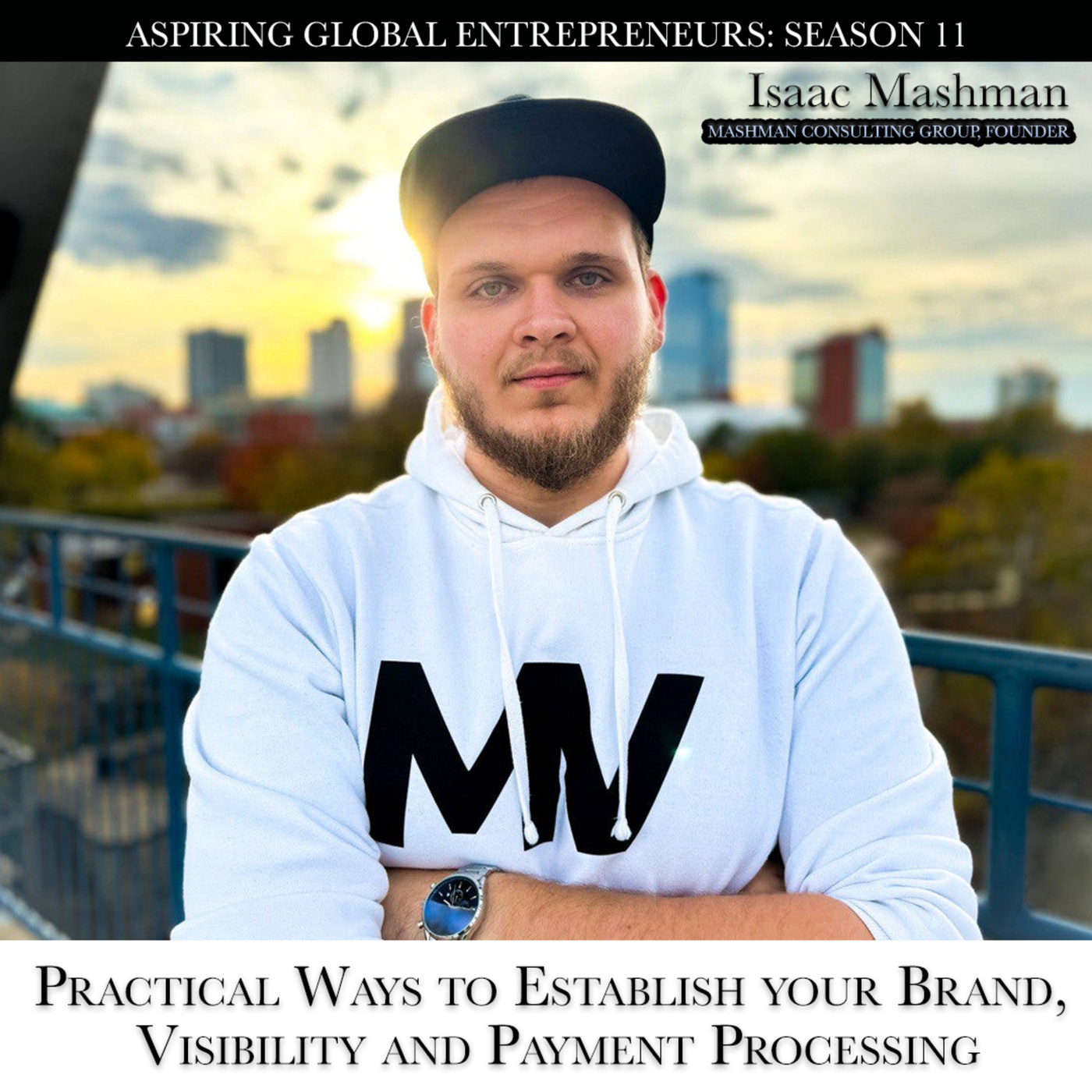
S11 Ep 11Practical Ways to Establish your Brand, Visibility, and Payment Processing 💸 ft. Mashman Consulting Group Founder, Isaac Mashman
🧠 Building Unrivaled Brands: Visibility, Marketing, and Payment ProcessingIn this featured podcast episode, Favour Obasi-ike had a discussion with Isaac Mashman, a top personal branding consultant, who shares his journey from a financially struggling upbringing to establishing Mashman Consulting Group (MCG). The conversation centers on crucial aspects of brand building, including the importance of unique and memorable business names, the distinction between personal and business branding, and strategies for online visibility. Isaac also addresses the often-overlooked area of payment processing, advising listeners to consider long-term financial implications and leverage technology like AI for informed decision-making. The episode emphasizes the significance of consistency, reputation management, and strategic marketing for sustained business growth.FAQs on this episodeWhat is personal branding and how does it differ from business branding?Personal branding revolves around an individual's reputation, emotions, and associations. It's about consciously building and directing how you, as a person, are perceived. Examples include historical figures like Moses or modern public figures like Kevin Hart. A strong personal brand can automatically build trust and credibility for any business ventures you launch, as customers associate your established expertise with the business. In contrast, business branding focuses on the identity and reputation of a company or organization. A crucial distinction in practice is that a personal page should use first-person language, while a business page should use third-person.How important is a unique and clear name when starting a business?A unique and clear name is paramount for a business's long-term success and visibility. Counter-intuitively, naming a business after oneself (like "Mashman Consulting Group") can be a powerful strategy if you don't intend to sell the business, as it avoids competition for credibility and establishes a direct association with the founder. When choosing a name, consider if it's unique enough to secure consistent social media handles and domain names across all platforms, which simplifies recall and builds trust. Clarity in the name is also vital; it should easily communicate what the business offers to avoid confusion.What are some key considerations for choosing a business name?When selecting a business name, prioritize uniqueness to avoid competing with numerous other businesses for trademarks, copyrights, Google visibility, and social media handles. Consider the long-term vision: if you plan to exit and sell the business, it's generally not advisable to name it after yourself. Conversely, if you aim to build a legacy business to pass down, a personal name can evoke an "Americana" feel. The name should also convey a clear message about what your business offers. Simpler names with two or three syllables tend to be more memorable and easier to retain, as seen with top brands like Amazon and Apple.Digital Marketing Resources:>> Join our exclusive SEO Marketing community>> Latest blogs on SEO optimization and Online Marketing>> Book your Complimentary SEO Discovery Call>> Book Paid Marketing Consultation Call>> Subscribe to We Don't PLAY PodcastBrands We Love and SupportLoving Me Beauty | Buy Vegan-based Luxury ProductsZetvaa | Buy Premium Human Hair Extensions OnlineBecome a Certified Real estate Agent in Ghana | Sign up NowSee Privacy Policy at https://art19.com/privacy and California Privacy Notice at https://art19.com/privacy#do-not-sell-my-info.
S11 Ep 10Free vs. Paid Podcast Hosting: Optimize Your Podcast SEO with Insights Expert, Favour Obasi-ike
Choosing the Best Free or Paid Podcast Hosting Platform? 😳 Here's Everything You Need to Know with Pinterest SEO Expert, Favour Obasi-ike, MBA, MS This power-packed, exclusive, and deep discussion offers an in-depth look into the best podcast hosting platforms for 2025, emphasizing their features, pricing, and impact on business monetization and brand scaling. Favour highlights the importance of strategic distribution, content optimization, and publication consistency for a podcast's success. The Clubhouse plus audio round table conversation also explores the role of AI in podcast production and marketing, advocating for its use in automation rather than content creation. Ultimately, Favour underscores that while platform choice is important, authenticity and a well-thought-out strategy are paramount for a podcast's long-term growth and influence.FAQs about Choosing the Best Free or Paid Podcast Hosting Platform1. What is the fundamental purpose of starting a podcast for a business or brand?Starting a podcast is presented as an effective way for businesses and brands to build, scale, and eventually monetize their offerings. The core idea is that a brand holds inherent value, which should appreciate over time through consistent interaction, effort, investment, and asset development. A podcast serves as a living asset, allowing a brand to understand its audience's journey (where they're coming from and where they're going), effectively bringing the brand to life and fostering connection rather than just seeking to impress. It helps businesses understand their purpose, who they serve, why they serve them, and where their audience is listening from, ultimately contributing to better outcomes and experiences.2. What are the key factors to consider when choosing a podcast hosting platform, and what is the difference between free and paid options?When choosing a podcast hosting platform, several factors are crucial. For those looking to invest and monetize seriously, compliance with standards like IAB Tech Lab (Interactive Advertising Bureau) is vital for accurate analytics and advertising justification. Technical aspects such as SEO, distribution capabilities, monetization options (e.g., programmatic ads, host-read ads), and analytics (downloads, ad deliveries, listenership, demographics) are important. Paid platforms like Art19 (by Amazon), Simplecast (partnered with SiriusXM), and OmnyStudio offer more robust analytics and monetization features, often being IAB compliant.For those starting on a low or no budget, free platforms like Spotify for Creators, Libsyn, and Buzzsprout are viable options to get started and gain experience. While these might have limitations like download caps and less comprehensive analytics (as they don't fully track intellectual property if you're not investing), they provide a pathway to build an audience and understand the process. The speaker highlights that even major podcasters like Gary Vaynerchuk started on free platforms, demonstrating that the platform itself is less important than content optimization and consistent distribution.Digital Marketing Resources:>> Join our exclusive SEO Marketing community>> Latest blogs on SEO optimization and Online Marketing>> Book your Complimentary SEO Discovery Call>> Book Paid Marketing Consultation Call>> Subscribe to We Don't PLAY PodcastBrands We Love and SupportLoving Me Beauty | Buy Vegan-based Luxury ProductsZetvaa | Buy Premium Human Hair Extensions OnlineBecome a Certified Real estate Agent in Ghana | Sign up NowSee Privacy Policy at https://art19.com/privacy and California Privacy Notice at https://art19.com/privacy#do-not-sell-my-info.
S11 Ep 9Pinterest SEO: What Is the Best Podcast Hosting Platform? | Pinterest Marketing SEO Expert, Favour Obasi-ike Breaks it Down 🎙️🎧
What's the Best Podcast Hosting Platform? Pinterest SEO Expert, Favour Obasi-ike, MBA, MS breaks it ALL down in this episode from Hosting, Distributing, to Monetization opportunities.Podcast Foundations: A Creator's GuideThis Clubhouse audio session focuses on podcast hosting platforms and their distinction from podcast directories.Favour, an experienced 6-year SEO podcaster, emphasizes the importance of choosing an IAB (Interactive Advertising Bureau) certified platform for those looking to monetize and scale their podcast, while noting that free platforms like Spotify for Creators are suitable for hobbyists. The discussion also covers various podcast styles, episode types, and crucial SEO strategies like optimizing show notes and verbalizing keywords for better search engine visibility. Ultimately, the speaker advises listeners to prioritize impact over budget and consistency in content creation.What is the fundamental difference between a podcast hosting platform and a podcast directory?A podcast hosting platform is where producers upload, store, and manage their podcast audio files. It serves as the "home" for your podcast, similar to how a website host stores your website files. From this platform, you distribute your content. In contrast, a podcast directory is a consumer-facing platform where listeners find and access podcasts. Examples include Apple Podcasts, Spotify, YouTube, Castbox, and Amazon Music. These directories pull information (like your RSS feed) from your hosting platform to display your episodes to a wider audience. Therefore, the hosting platform is for the creator to manage and distribute, while the directory is for the listener to discover and consume.Why is it crucial for a podcast hosting platform to be IAB certified?IAB (Interactive Advertising Bureau) certification is vital for podcast hosting platforms, especially if the creator intends to monetize and scale their podcast. The IAB sets industry standards for metrics like downloads and listener behavior, providing a reliable and trusted framework for advertisers and businesses to assess a podcast's reach and engagement. Without IAB certification, a podcast might struggle to attract serious advertising revenue or prove its audience data, limiting its potential for growth and commercial viability. This certification signifies adherence to industry best practices and provides a level of trust and authority in the digital advertising landscape.What is an RSS feed and why is it important for podcasts?An RSS (Really Simple Syndication) feed is a web feed that contains a summary of content from a website or, in the case of podcasts, a listing of all podcast episodes, including their titles, descriptions, and audio files. It's akin to an XML file for websites. The RSS feed is crucial because it's the mechanism by which podcast directories (like Apple Podcasts, Spotify, etc.) receive updates about new episodes from your podcast hosting platform. When you publish a new episode on your hosting platform, the RSS feed is updated, and directories that subscribe to your feed are notified, making your new content available to listeners across various platforms.Digital Marketing Resources:>> Join our exclusive SEO Marketing community>> Latest blogs on SEO optimization and Online Marketing>> Book your Complimentary SEO Discovery Call>> Book Paid Marketing Consultation Call>> Subscribe to We Don't PLAY PodcastBrands We Love and SupportLoving Me Beauty | Buy Vegan-based Luxury ProductsZetvaa | Buy Premium Human Hair Extensions OnlineSee Privacy Policy at https://art19.com/privacy and California Privacy Notice at https://art19.com/privacy#do-not-sell-my-info.

S11 Ep 8Java Twist: The Inventive World Mix of Coffee and Fruit Beverages ft. Founder, Steve Schuyler
Looking For A Cold Brew Coffee and Fruit Juice Blends Mix? Meet Java Twist Founder, Steve Schuyler, the founder and creator of Java Twist, a unique beverage company that crafts cold brew coffee and fruit juice blends. Steve explains how he developed the idea after running out of iced tea while making an Arnold Palmer, leading him to mix coffee with lemonade. His initial creation led to a range of nine distinctive flavors, including coffee with cranberry, pineapple, and even apple, alongside two non-coffee lemonade options like chocolate and blueberry.Java Twist uses simple, clean ingredients and offers sugar-free alternatives, with products available for purchase on their website and at select retail locations.FAQs about this episodeWhat is Java Twist and how did it start?Java Twist creates unique and refreshing beverages, primarily cold brew coffee mixed with various fruit juices. The business launched in 2019 in Wisconsin, with its first flavor, cold brew coffee with lemonade, an invention born when the founder, Steve Java, ran out of iced tea while making an Arnold Palmer. He experimented with coffee and lemonade, tweaked the recipe, and found customers were "blown away" by the taste. Initially a grassroots effort, bottling the drink himself, Steve discovered that coffee, much like wine, pairs well with many fruits, leading to the expansion of their product line.What are the key ingredients and characteristics of Java Twist beverages?Java Twist prioritizes simple and clean ingredients: cold brew coffee, water, sugar (or monk fruit for zero-sugar options), and fruit juice. The use of cold brew coffee is a key secret, as it removes the acidity often found in hot-brewed coffee, allowing it to perfectly mirror the natural acidity of the fruit juices.What are Java Twist's most popular flavors?While popularity can vary by region and season, some consistently top-selling flavors include the cranberry coffee, which is a sweet-tart coffee with a subtle, almost chocolatey finish. The chocolate lemonade is also a bestseller, especially in retail stores like Meyer, likely because it offers a familiar lemonade base without coffee, making it an approachable entry point for new customers. The blueberry lemonade is also performing very strongly, particularly at events. The original lemon and lime flavors also do well, with lime being particularly popular in the southern U.S. and apple more so in northern regions.How can customers purchase Java Twist products and connect with the company?The simplest way to purchase Java Twist is through their website, www.java-twist.com, where customers can order individual flavors or a "mix six-pack" to sample a variety. The products are shelf-stable and can be shipped directly to customers' homes. For those in Wisconsin, there's also a physical storefront where the products are bottled. Java Twist actively participates in special events, fairs, and farmers markets, which are announced on their social media platforms. The company is also active on Instagram, Facebook, LinkedIn, TikTok, and YouTube, and the founder's personal cell phone and email are available on the website for direct inquiries.>> Buy your Java Twist Flavors Online Now 🛒Digital Marketing Resources:>> Join our exclusive SEO Marketing community>> Latest blogs on SEO optimization and Online Marketing>> Book your Complimentary SEO Discovery Call>> Book Paid Marketing Consultation Call>> Subscribe to We Don't PLAY PodcastBrands We Love and SupportLoving Me Beauty | Buy Vegan-based Luxury ProductsZetvaa | Buy Premium Human Hair Extensions OnlineSee Privacy Policy at https://art19.com/privacy and California Privacy Notice at https://art19.com/privacy#do-not-sell-my-info.

S11 Ep 7Pinterest SEO: Summer Pinterest Marketing SEO Strategies / Content Optimization Planning with SEO Expert, Favour Obasi-ike
Pinterest SEO: Summer Pinterest Marketing SEO Strategies / Content Optimization Planning with SEO Expert, Favour Obasi-ike, Favour Obasi-ike, MBA, MSThis episode's discussion centers on leveraging Pinterest for enhanced business visibility and SEO, emphasizing its role as a powerful, often underestimated visual search engine.Favour highlights strategic content optimization for Pinterest, including keyword integration and consistent posting, and compare its long lifespan for content to other social media platforms like Instagram.Favour also touch on the importance of linking social media efforts back to a main website for overall digital strategy and discuss utilizing analytics to refine marketing approaches across various online channels.FAQs1. What are the key differences and connections between Google SEO and Pinterest SEO?While both Google and Pinterest function as search engines, they operate with distinct approaches. Google is primarily a text-based search engine, albeit one that incorporates visual elements like images and videos (YouTube).Pinterest, on the other hand, is inherently a visual search engine, where text, audio (within video), and carousels contribute to its search algorithms. A fundamental connection lies in their shared goal of serving relevant information to users, valuing trust and relevance in content.2. Why is seasonal content optimization, especially for summer, crucial for businesses?Seasonal content optimization is vital because it aligns with the psychological and real-time experiences of the audience.By incorporating seasonal keywords like "summer" into content titles, descriptions, email campaigns, and even website links, businesses can tap into current user intent and create a subconscious connection. For example, "summer savings" codes are naturally more appealing during the summer months.3. How does Pinterest serve as an effective starting point for a customer's planning journey?Pinterest is described as a "beginning spot" for a user's search journey because people often turn to it in the early planning stages of an event or purchase, such as a party, graduation, or wedding. Its visual nature allows users to explore ideas and gather inspiration.For businesses, this means that content on Pinterest is encountered when users are asking foundational questions, making it an ideal platform for attracting early-stage interest and guiding potential customers towards a deeper understanding of products or services.4. What is the significant difference in content lifespan between Pinterest and other social media platforms like Instagram, and what are the implications?A key distinction is the content lifespan: a Pinterest pin can have a lifespan of up to 5 months, whereas an Instagram post might only be relevant for about 19 hours.This means that content on Pinterest offers "evergreen value," continuously attracting engagement over a much longer period without constant refreshing. In contrast, Instagram requires frequent content creation to maintain visibility.Digital Marketing Resources:>> Join our exclusive SEO Marketing community>> Latest blogs on SEO optimization and Online Marketing>> Book your Complimentary SEO Discovery Call>> Book Paid Marketing Consultation Call>> Subscribe to We Don't PLAY PodcastBrands We Love and SupportLoving Me Beauty | Buy Vegan-based Luxury ProductsZetvaa | Buy Premium Human Hair Extensions OnlineSee Privacy Policy at https://art19.com/privacy and California Privacy Notice at https://art19.com/privacy#do-not-sell-my-info.
S11 Ep 6Pinterest SEO: Summer Pinterest Marketing SEO Strategies: Content Optimization Planning (AI Conversation Summary)
bonusListen to the quick deep AI conversation dive on how to achieve Ultimate Summer 2025 Pinterest SEO success with Content Optimization strategies that will help you scale as a business!See you in the next episode with SEO Expert, Favour Obasi-ike, MBA, MSDigital Marketing Resources:>> Join our exclusive SEO Marketing community>> Latest blogs on SEO optimization and Online Marketing>> Book your Complimentary SEO Discovery Call>> Book Paid Marketing Consultation Call>> Subscribe to We Don't PLAY PodcastBrands We Love and SupportLoving Me Beauty | Buy Vegan-based Luxury ProductsZetvaa | Buy Premium Human Hair Extensions OnlineSee Privacy Policy at https://art19.com/privacy and California Privacy Notice at https://art19.com/privacy#do-not-sell-my-info.

S11 Ep 5Decoding Google SEO: Search, Website Structure, and Strategy with SEO Expert, Favour Obasi-ike 🔍
Decoding Google SEO: Website Optimization Best Practices for Businesses and Brands with SEO Expert, Favour Obasi-ike, MBA, MSFavour emphasizes that Google's search functionality extends beyond keywords, leveraging AI and algorithms like Google Mera to understand user intent and facilitate conversational searches. He explains the importance of a well-structured website with internal linking for optimal search engine optimization (SEO) and visibility. The discussion also highlights the significance of a holistic digital footprint across various platforms (Google, Pinterest, YouTube, TikTok, Amazon) to capture diverse user behaviors, emphasizing that marketing is an investment that yields valuable data for business growth and conversion. Ultimately, we underscore that SEO is foundational and evolving, not being replaced by AI but rather exposed and enhanced by it, and that a strong online presence is crucial for businesses.How has Google's search capability evolved beyond simple keywords?Google has significantly advanced beyond merely matching keywords. It now focuses on understanding the intent behind a user's search, a concept the source refers to as "understanding beyond keywords." This involves recognizing nuances like compound words (e.g., "self-improvement" vs. "self improvement") and tailoring results based on context such as location (e.g., suggesting nearby restaurants if you search for "restaurants to eat"). This deeper understanding is powered by algorithms like Google MUVERA (Multi-Vector Retrieval), which transforms search from a static library of web pages into a more conversational and intuitive experience, aiming to provide exactly what the user is looking for. Favour emphasizes that Google's goal is to anticipate user needs, providing relevant results that lead to an "expected end."What is Google MUVERA and how does it enhance the search experience?Google MUVERA, or Multi-Vector Retrieval, is a new algorithm that significantly enhances Google's ability to understand search intent. Unlike traditional keyword-based searches, MUVERA allows Google to engage in more conversational interactions, retrieving information based on the consistent patterns and themes in a user's search history and behavior. This means Google can provide highly personalized results, similar to how YouTube's algorithm suggests videos based on watch history. He highlights that MUVERA moves Google beyond being just a "library of results" to a "library that turns into conversations," delivering more precise and relevant information.Looking for Business Inquires with SEO Services? Book A CallMore Resources:>> Join our exclusive SEO Marketing community>> Latest blogs on SEO optimization and Online Marketing>> Book your Complimentary SEO Discovery Call>> Book Paid Marketing Consultation Call>> Subscribe to We Don't PLAY Podcast>> Start Your Email Marketing 14-Day Trial with FlodeskBrands We Love and SupportLoving Me Beauty | Buy Vegan-based Luxury ProductsZetvaa | Buy Premium Human Hair Extensions OnlineSee Privacy Policy at https://art19.com/privacy and California Privacy Notice at https://art19.com/privacy#do-not-sell-my-info.
S11 Ep 4New Website SEO Optimization? Start Your AI SEO Campaign With This Chess ♟️ 🔥 Move: A Conversation with SEO Expert, Favour Obasi-ike
SEO Optimization for Business Websites: SEO, AI, for High Market Authority with SEO Expert, Favour Obasi-ike, MBA, MSFrom this episode, Favour had audio Marketing Clubhouse audio roundtable session, where we discuss crucial aspects of Search Engine Optimization (SEO) for websites, particularly focusing on new and established online presences. He emphasized the need for a strong web presence in today's digital landscape, despite the rise of AI tools like ChatGPT, as these AI systems often pull information from well-optimized websites.Key topics include understanding Google's new "MUVERA" algorithm (Multi-Vector Retrieval Algorithm), the importance of technical SEO elements like H1 tags and schema markup, and the value of local SEO strategies. The discussion also highlights the utility of screen recording tools like Loom and Vimeo for business communication and sales, and the significance of conversion rate optimization (CRO) to ensure website effectiveness.FAQs on New Website SEO Optimization for Businesses1. Why is having a website crucial for a business, even in the age of AI and platforms like ChatGPT?In today's digital landscape, a website remains an indispensable asset for any business. While AI tools like ChatGPT are powerful for information retrieval, they primarily draw content from existing websites. If your business doesn't have an online presence that these AI models can access, it becomes challenging to be discovered and gain long-term visibility. A website serves as your digital storefront, your authoritative profile, and a valuable asset that allows AI to pick up on your offerings, ensuring your brand is seen, heard, and remembered.2. What is Google MUVERA, and how does it change the way Google's algorithm functions?Google MUVERA, which stands for Multi-vector Retrieval Algorithm, is a new algorithm launched by Google. It signifies a shift in how Google processes information. Traditionally, Google acted like a library, providing direct results based on keywords. With MUVERA, Google's algorithm goes beyond simple keyword matching.3. What is the "ABC of SEO" and why are all three components essential for a website's visibility?The "ABC of SEO" outlines three fundamental aspects for a website's online visibility: A - Crawling: This refers to whether search engine bots (like Googlebot, Bingbot, or AI bots) can access and read your website's pages. If your pages cannot be crawled, they cannot be discovered by search engines. B - Indexing: This is the process where bots analyze your content and decide whether to include it in their search results listings. For content to be indexed, it must meet quality standards and be relevant to potential searches. It's like a library deciding if a book is valuable enough to be put on a shelf for readers. C - Serving (Search Results): This is the final stage where your content is presented to users in search results. This involves not only basic links but also rich snippets, FAQs, and other optimized elements. Looking for Business Inquires with SEO Services > Book A CallMore Resources:>> Join our exclusive SEO Marketing community>> Latest blogs on SEO optimization and Online Marketing>> Book your Complimentary SEO Discovery Call>> Book Paid Marketing Consultation Call>> Subscribe to We Don't PLAY Podcast>> Start Your Email Marketing 14-Day Trial with FlodeskBrands We Love and SupportLoving Me Beauty | Buy Vegan-based Luxury ProductsZetvaa | Buy Premium Human Hair Extensions OnlineSee Privacy Policy at https://art19.com/privacy and California Privacy Notice at https://art19.com/privacy#do-not-sell-my-info.
S11 Ep 3Spotify Internal Linking for Podcasts, Music Playlists and Audiobooks / Did You Know This? 👀 [2025 Podcast Guide with SEO Expert, Favour Obasi-ike]
Spotify Internal Linking for Podcasts, Music Playlists and Audiobooks - Did You Know This? 👀 [2025 Podcast Guide with SEO Expert, Favour Obasi-ike, MBA, MS🎙️ Podcast Seriously: Mastering Spotify and Building Your Audio BrandThis SEO podcast episode introduces a new Spotify feature allowing internal podcast linking, which enables creators to connect episodes, songs, and playlists directly within their podcasts, enhancing the listener experience and potentially increasing engagement.The discussion emphasizes the importance of choosing the right hosting platform like Anchor.fm (now Spotify for Podcasters) to fully leverage these features and distribute content widely across major platforms like Apple, YouTube, and Amazon. Furthermore, the conversation highlights the strategic use of short-form video clips and SEO practices to attract new audiences and maintain long-term listener retention, transforming podcasting from a simple task into a strategic long-term content marketing and branding endeavor.What is the new Spotify internal podcast linking feature, and how can it be used by podcasters and guests?The new Spotify internal podcast linking feature allows users to link directly to specific episodes, songs, or playlists within Spotify from their podcast episodes. For podcast hosts, this means they can reference previous episodes and provide a direct clickable link, making it easier for listeners to navigate and explore related content. How does the new Spotify internal linking feature improve audience engagement and retention for podcasts?This feature significantly improves engagement and retention by making it effortless for listeners to access referenced content. Instead of just mentioning "listen to episode 29," podcasters can embed a direct link to that specific episode, or even a particular timestamp within it. This reduces friction for the audience, encouraging them to delve deeper into a podcast's back catalog or explore related music playlists. By providing a curated and seamless experience, similar to YouTube's suggested videos, podcasters can increase "watch time," "listen time," and overall active and passive engagement, making their show more enjoyable and leading to more subscribers and downloads.Why is using Spotify's hosting platform (Anchor.fm/Spotify for Podcasters) crucial for utilizing this new feature?Utilizing Spotify's own hosting platform (formerly Anchor.fm, now Spotify for Podcasters) is crucial because this new internal linking feature is specifically designed and catered to that platform. While other hosting services like Buzzsprout or Libsyn can distribute content to Spotify, they do not offer the same direct administrative or operational access to Spotify's unique features. Being hosted directly on Spotify for Podcasters means you are an "admin or operator" within their system, allowing you to fully integrate and leverage features like internal podcast linking, polls, clips (like shorts for podcasts), and access to Spotify's audience network, which provides valuable listener analytics.Access to Resources ⬇️Need SEO Services?>> Join our exclusive SEO Marketing community>> Latest blogs on SEO optimization and Online Marketing>> Book your Complimentary SEO Discovery Call>> Book Paid Marketing Consultation Call>> Subscribe to We Don't PLAY Podcast>> Start Your Email Marketing 14-Day Trial with FlodeskBrands We Love and SupportLoving Me Beauty | Buy Vegan-based Luxury ProductsZetvaa | Buy Premium Human Hair Extensions OnlineSee Privacy Policy at https://art19.com/privacy and California Privacy Notice at https://art19.com/privacy#do-not-sell-my-info.
S11 Ep 2Website Value Enhancement: SEO Tactics for Brands to Stop Doing SEO Backwards 🛑 🫷
Website Value Enhancement: SEO Tactics for Brands to Stop Doing SEO Backwards - Join SEO Expert, Favour Obasi-ike, MBA, MSIn this SEO podcast episode, offers guidance on Search Engine Optimization (SEO), primarily focusing on common mistakes and effective strategies for improving online visibility. It emphasizes the importance of a forward-thinking approach to SEO, contrasting it with "doing SEO backwards," which often involves neglecting website updates, not connecting to Google Search Console, or failing to optimize for technical SEO aspects. Favour highlights the significance of consistent content creation, likening blog posts to "index funds" that yield long-term benefits, and discusses the role of social media platforms like Pinterest in driving traffic and establishing brand trust. Ultimately, the discussion promotes an educational, intentional, and consistent strategy for businesses to be seen, heard, and remembered online.Quick FAQs to answer1. What does "doing SEO backwards" mean, and what are the core principles for doing it correctly?"Doing SEO backwards" refers to common mistakes businesses make that hinder their online visibility and impact. It often involves not updating websites, failing to connect to Google Search Console, neglecting technical SEO, or prioritizing social media posts over foundational website content.Doing SEO correctly, or "forward," means focusing on three key principles: Being Seen (Visibility): Ensuring your website and content are discoverable by search engines and users. This involves consistent content creation, proper indexing, and effective use of keywords. Being Heard (Authority): Becoming a trusted source of information. This is built by consistently providing valuable content that answers user queries and demonstrates expertise, leading to search engines "hearing" your authority on a topic. Being Remembered (Trust & Loyalty): Creating a lasting impression that encourages repeat visits and builds brand loyalty. This is achieved through consistent value delivery, a strong brand presence, and engaging content that resonates with the audience over time. 2. What is the significance of consistently publishing blog content, and how does it relate to "index funds"?Consistently publishing blog content is crucial for expanding a website's reach and building long-term organic traffic. The speaker likens blogs to "index funds" in finance: Long-Term Growth: Just as index funds grow over time, each blog post has a lifespan of 24 months, generating impressions and traffic for an extended period. Publishing 52 blogs in a year, for example, creates 1,248 months of potential visibility across those articles. Increased Access Points: Each new blog post acts as a new "door" or "access point" to your website, making it easier for search engines (Google, Bing, ChatGPT, etc.) to discover and index your content. More indexed pages mean more opportunities for users to find you. Access to Resources ⬇️Need SEO Services?>> Join our exclusive SEO Marketing community>> Latest blogs on SEO optimization and Online Marketing>> Book your Complimentary SEO Discovery Call>> Book Paid Marketing Consultation Call>> Subscribe to We Don't PLAY Podcast>> Invest in Energea Solar Sustainable Energy>> Start Your Email Marketing 14-Day Trial with Flodesk>> Save 40% on flights, hotels & car rentals with eDreams>> Access 50,000 rows of GSC SEO data with SEOGetsBrands We Love and SupportLoving Me Beauty | Buy Vegan-based Luxury ProductsSee Privacy Policy at https://art19.com/privacy and California Privacy Notice at https://art19.com/privacy#do-not-sell-my-info.
S11 Ep 1🎉 Welcome to Season 11! 🎉 Your Google Search Console (GSC) Alternative: Understand SEOGets.com from Co-Founder, Matthew Mellinger with Favour Obasi-ike
Welcome to Season 11! 🎉 Meet Matthew Mellinger 📈 The Google Search Console Analytics Alternative: SEOGets.com, Co-founder!In this episode, Co-founder Matthew Mellinger discusses SEOGets.com, a tool designed to enhance the utility of Google Search Console data.FAQs about SEOGets.comWhat is SEOGets.com and who founded it?SEOGets.com is a powerful SEO analytics platform co-founded by Matthew Mellinger and developed by "Gee" from Brazil. Matthew, also the owner of Local SEO Partners, discovered Gee's initial development and, instead of building a similar platform himself, partnered with Gee to expand SEOGets.com. The platform serves as an enhanced interface for Google Search Console data, aiming to make SEO analysis more user-friendly, efficient, and insightful.How does SEOGets.com differ from Google Search Console and other SEO tools?While Google Search Console is a free and powerful tool providing first-party data directly from Google on website performance, its interface is often described as clunky, cumbersome, and not user-friendly, with limitations on data exports (e.g., only 1,000 rows in CSV). Unlike third-party tools like Semrush or Ahrefs, which often provide inaccurate keyword data, SEOGets.com relies solely on Google's own accurate, first-party data; 50,000 rows of data (50 times more than Search Console). What are some of SEOGets.com's key features and why are they valuable?SEOGets.com offers several valuable features designed to streamline SEO analysis and identify actionable insights: Master Dashboard with Tagging and Sorting: Allows users to manage and quickly view performance across multiple sites, which is particularly beneficial for agencies or those with large portfolios. Privacy Blur: A quick toggle for blurring sensitive data during screen shares or screenshots, enhancing privacy. Batch Filtering: A standout feature enabling users to apply complex filters (e.g., finding "who, what, where, why, how" questions) across queries and pages without needing regex. This is crucial for identifying content gaps and optimization opportunities. Content Groups: Users can define custom content groups (e.g., "blog," "landing pages," "services") to analyze performance for specific sections of their website, providing granular insights. Branded vs. Non-Branded Queries: Easily filter and analyze performance for branded terms versus non-branded terms, helping understand different traffic sources. Decaying Reports: Identifies keywords or pages that are losing impressions or rankings, allowing for proactive content refreshing and optimization to prevent further decline. Opportunity Identification: Helps users find "low-hanging fruit" opportunities by pinpointing high-impression, low-click-through-rate keywords, or pages ranking in positions 2-7 that could easily move to page one with minor content adjustments. Access to Resources ⬇️Need SEO Services?>> Join our exclusive SEO Marketing community>> Latest blogs on SEO optimization and Online Marketing>> Book your Complimentary SEO Discovery Call>> Book Paid Marketing Consultation Call>> Subscribe to We Don't PLAY Podcast>> Invest in Energea Solar Sustainable Energy>> Start Your Email Marketing 14-Day Trial with Flodesk>> Save 40% on flights, hotels & car rentals with eDreams>> Access 50,000 rows of GSC SEO data with SEOGetsBrands We Love and SupportLoving Me Beauty | Buy Vegan-based Luxury ProductsSee Privacy Policy at https://art19.com/privacy and California Privacy Notice at https://art19.com/privacy#do-not-sell-my-info.
S10 Ep 72📣 SEASON 11 EXCLUSIVE UPDATES: Podcast Sponsorships, Interviews Are Back, Global Streaming Update, Remembering Diogo Jota 🇵🇹🕊️ and More with SEO Expert, Favour Obasi-ike
bonusIn this podcast episode, Favour Obasi-ike, MBA, MS, previews Season 11 of the "We Don't PLAY" podcast, highlighting upcoming changes like new background music composed by the host and the reintroduction of interviews with guests such as Co-Founder, Matthew Mellinger from SEOGets. Favour shares personal updates including their music career as "Flaev Beatz" and a recent divorce, emphasizing the importance of wellness and self-care.The episode also celebrates the podcast's global reach, now streaming in 149 countries, and announces the return of advertisements featuring beneficial products. Finally, Favour encourages listeners to engage with past episodes and offers digital marketing consultation services.FAQs about 🗣️ We Don't Play: Season 11 Exclusive Updates1. What’s new in Season 11? Interviews return tomorrow, starting with Matthew Mellinger (SEOGets co-founder). Ads for relevant products listeners care about. Fresh background music (Afrobeats/hip-hop) produced by Flaev Beatz (Yours Truly) in 29 mins. "Waterfall season" – unreleased episodes (recorded since 2023) and abundant content. 2. How global is the We Don't PLAY Podcast now?Streamed in 149 countries, fulfilling the host’s dream of worldwide internet radio impact. Listen to the podcast to hear the full list of countries digitally streaming.3. Who is the host of the We Don't PLAY Podcast show?Favour Obasi-ike, MBA, MS (Flaev Beatz) – Houston-based SEO expert, Christian digital marketer, and self-taught musician (drummer/producer). His music (since 2005) is on Apple Music/Spotify.4. What personal philosophies does the host share? Prioritize well-being (contrast therapy, coconut water). Embrace growth: avoid being "stuck," seek new info, and connect authentically. Peace > chaos Daily fulfillment: "Do 3 things that fulfill you daily." Hydrate + speak positively. 5. Will Season 11 cover non-marketing topics?Yes! Alongside SEO/AI/digital marketing, expect: Wellness tips ("soft skills," health). Life-changing product insights (research encouraged). 6. How can I work with Favour Obasi-ike?Book a free 30-min consult for SEO, web development, or Podcast/Pinterest management: calendly.com/flaevbeatz playinc.online 7. Why does the new background music matter?Music produced sets the tone for Season 11’s energy—Afrobeats/Hip-hop fusion, with potential future vocals in coming LP, being 2 decades in the Entertainment Business Industry.8. What’s the host’s top personal growth tip? Try new patterns (e.g., brush teeth with your non-dominant hand). Start your day with prayer + 3 fulfilling actions. Research everything; speak positivity over yourself. Access to Resources ⬇️Need SEO Services?>> Join our exclusive marketing community 📥>> Latest blogs on SEO optimization and online marketing>> Book a Complimentary SEO Discovery Call>> Book Paid 1-hour Marketing Consultation Call>> Subscribe to We Don't PLAY Podcast>> Invest in Energea Solar Energy (Sign Up & Earn $50)>> Start 14-Day Trial with Flodesk with Email Marketing>> Save $100s on flights, hotels & car rentals with eDreams>> Access 50,000 rows of GSC SEO data (vs. GSC's 1,000-row limit) with SEO GetsBrands We Love and SupportLoving Me Beauty | Buy Vegan Skin Care Luxury ProductsZetvaa | Buy Premium Human Hair Extensions & Curly WigsSee Privacy Policy at https://art19.com/privacy and California Privacy Notice at https://art19.com/privacy#do-not-sell-my-info.
S10 Ep 71SEO Explained: Ready to Dominate Artificial Intelligence (AI) Search Results? // Join SEO Expert, Favour Obasi-ike [Season 10 Finale]
SEO Explained: Ready to Dominate Artificial Intelligence (AI) Search Results? - Join SEO Expert, Favour Obasi-ike, MBA, MSIn this episode, Favour emphasizes that Search Engine Optimization (SEO) is not dead, but rather evolving, particularly with the rise of Artificial Intelligence (AI) in search. They advocate for businesses to dominate AI search results by consistently creating relevant and valuable content that directly answers user questions.Key strategies include optimizing website content for various search platforms like Google and Bing, prioritizing podcasting due to its direct vocal search optimization benefits, and leveraging AI tools like Etheo.co and Notebook LM to identify and address common queries. Ultimately, the goal is to build authority and trust by being the go-to source for answers within a specific niche, ensuring content is easily discoverable across diverse search mediums.What is the core idea behind dominating AI search results?Dominating AI search results isn't about being overbearing or just an "alpha"; it's about "leading by example" and establishing your website as the authoritative source for specific questions within your niche. The goal is to consistently provide the most relevant and comprehensive answers to user queries, ensuring that AI-powered search engines, like Google's AI Overview or ChatGPT, cite your content as the primary source. This dominance is quantified by your content showing up as the direct answer, even in "zero-click" scenarios where users get immediate responses without needing to click through to a website.Is traditional SEO dead in the age of AI?No, traditional SEO is not dead; rather, its methodologies are evolving. The speaker emphasizes that "SEO right now is literally exposing people who don't do SEO at all." While the fundamental principles of visibility and discoverability remain, the "how" of SEO is changing. AI is making it more crucial than ever to have a well-structured online presence, akin to a house with "bricks, walls, windows, and frames." Without proper SEO, a website lacks the fundamental structure to be found and attributed by AI.What are the essential first steps to dominate AI search results?The first and most critical step is to "create content that is going to allow people to find your content on the web." Beyond that, connecting your website to major search consoles like Google Search Console, Bing Webmasters, Yandex, and DuckDuckGo is crucial. These platforms provide insights into "Total Addressable Search Market" (TASM) and help you understand what your target audience is searching for. It also highlights the importance of tools like Etheo.co, which helps identify questions people are asking AI about your business, providing a direct roadmap for content creation.Access to Resources ⬇️Need SEO Services?>> Join our exclusive marketing community 📥>> Latest blogs on SEO optimization and online marketing>> Book a Complimentary SEO Discovery Call>> Book Paid 1-hour Marketing Consultation Call>> Subscribe to We Don't PLAY Podcast>> Invest in Energea Solar Energy (Sign Up & Earn $50)>> Start 14-Day Trial with Flodesk with Email Marketing>> Save $100s on flights, hotels & car rentals with eDreams>> Access 50,000 rows of GSC SEO data (vs. GSC's 1,000-row limit) with SEO GetsBrands We Love and SupportLoving Me Beauty | Buy Vegan Skin Care Luxury ProductsZetvaa | Buy Premium Human Hair Extensions & Curly WigsSee Privacy Policy at https://art19.com/privacy and California Privacy Notice at https://art19.com/privacy#do-not-sell-my-info.
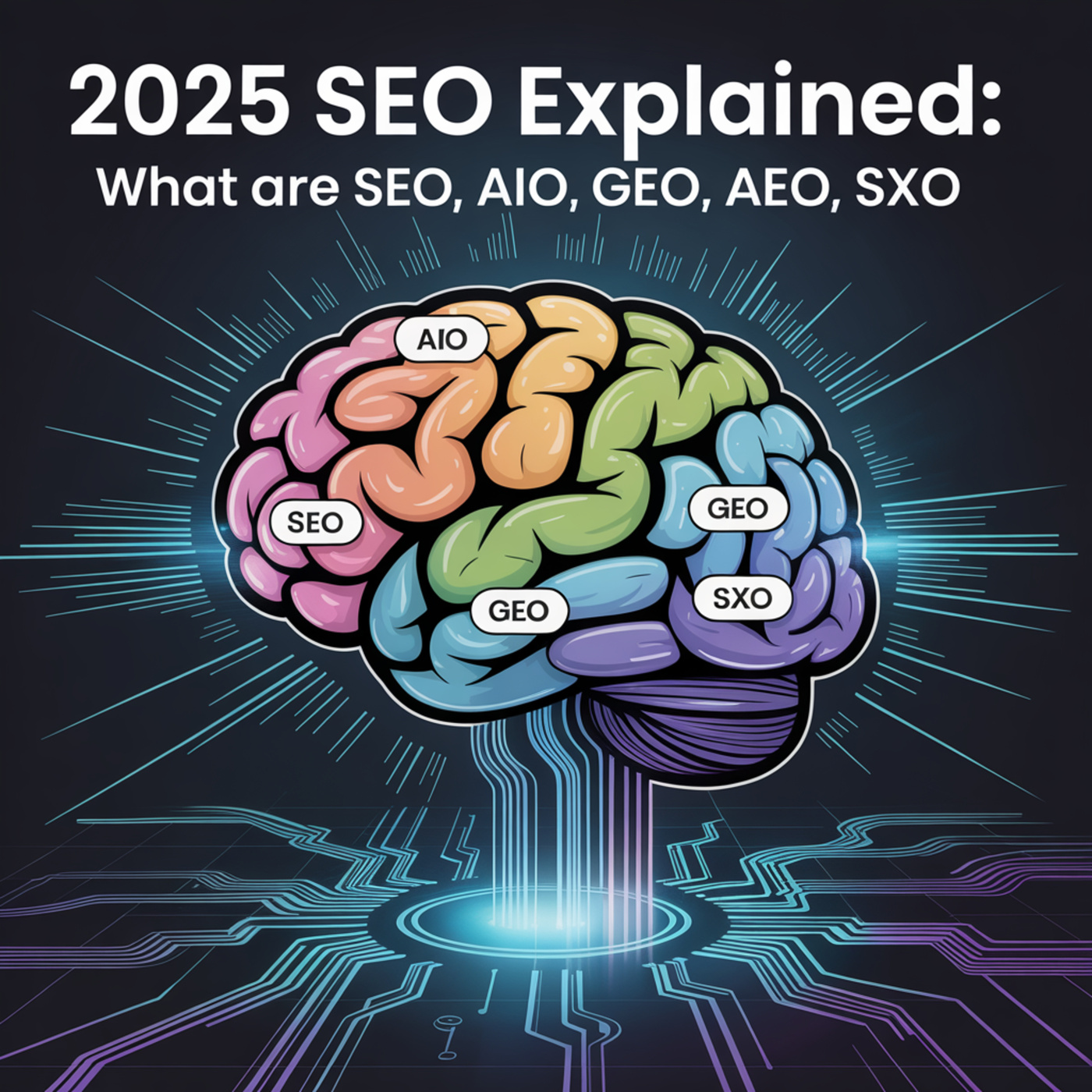
S10 Ep 702025 SEO Explained: What Are SEO, AIO, GEO, AEO, and SXO? 🧠 AI Conversations with SEO Expert, Favour Obasi-ike
2025 SEO Explained: What Are SEO, AIO, GEO, AEO, SXO? 🧠 AI Conversations with SEO Expert, Favour Obasi-ike, MBA, MSIn this episode, from Clubhouse discussion from a marketing club, focusing on the evolving landscape of search engine optimization (SEO). We explain various "O" terms like AIO, GEO, AEO, and SXO, emphasizing that while they might seem distinct, they are interconnected facets of SEO. The conversation also touches upon the increasing importance of AI in search, the role of multimedia content like podcasts, and the shift from solely focusing on traffic to building trust and authority through consistent, relevant content. We highlight the need for businesses to adapt to these changes, suggesting that SEO is a long-term strategy best handled by professionals.FAQs on SEO and Its Evolving LandscapeWhat are the core components of traditional SEO, and why are they still crucial in 2025?SEO, or Search Engine Optimization, fundamentally aims to make web content discoverable and understandable by search engines. Favour emphasizes three core components: crawling, indexing, and ranking. Crawling refers to search engine bots reading and understanding your content. Indexing means that once crawled, the content is stored in a searchable database. Finally, ranking determines the content's position in search results for relevant queries. Even with new advancements, these basics remain vital because if a website isn't technically set up to be crawled and indexed effectively, it cannot gain visibility or authority on platforms like Google or Microsoft. This foundational setup, including proper DNS records and canonical tags, ensures that your content is discoverable and structured for optimal performance, much like ensuring a house has a strong foundation before adding amenities.How do "earned impressions" and "backlinks" contribute to SEO strategy, and why are they preferred over "paid impressions"?"Earned impressions" refer to organic visibility gained through valuable content and strong SEO, rather than through paid advertising. Backlinks are incoming links to a website or webpage. Favour strongly advocates for earning backlinks rather than buying them, as earned backlinks signify genuine authority and trust from other reputable sources.What is Generative Engine Optimization (GEO), and how does it relate to the rise of AI models in search?Generative Engine Optimization (GEO) focuses on how AI models like ChatGPT and Perplexity understand and summarize information to connect back to your content as a citation.GEO shifts the focus from traditional search engine results pages (SERPs) to a more conversational style of search, where specific, nuanced questions are answered by AI, with your content potentially serving as the authoritative source. Access to Resources ⬇️Need SEO Services?>> Join our exclusive marketing community 📥>> Latest blogs on SEO optimization and online marketing>> Book a Complimentary SEO Discovery Call>> Book Paid 1-hour Marketing Consultation Call>> Subscribe to We Don't PLAY Podcast>> Invest in Energea Solar Energy (Sign Up & Earn $50)>> Start 14-Day Trial with Flodesk with Email Marketing>> Save $100s on flights, hotels & car rentals with eDreams>> Access 50,000 rows of GSC SEO data (vs. GSC's 1,000-row limit) with SEO GetsBrands We Love and SupportLoving Me Beauty | Buy Vegan Skin Care Luxury ProductsZetvaa | Buy Premium Human Hair Extensions & Curly WigsSee Privacy Policy at https://art19.com/privacy and California Privacy Notice at https://art19.com/privacy#do-not-sell-my-info.
S10 Ep 69Your Comprehensive SEO Checklist for Ultimate Business Growth - Save This Episode For Future Reference with SEO Expert, Favour Obasi-ike
Your Comprehensive SEO Checklist for Ultimate Business Growth - Save This Episode For Future Reference with SEO Expert, Favour Obasi-ike, MBA, MSIn this episode, Favour focuses on Search Engine Optimization (SEO) and its importance for online visibility and business growth. They break down an SEO checklist, emphasizing fundamental elements like website setup with Google Search Console and Bing Webmaster Tools, keyword research, and on-page SEO including image optimization, internal and external linking, and meta descriptions. They also touch upon off-page SEO through platforms like Google Business Profile and the critical role of content SEO in attracting and engaging audiences. The conversation highlights the increasing synergy between SEO and AI, suggesting that structured data and updated content are vital for being referenced by AI agents.What are the fundamental steps for setting up a website for SEO?To effectively set up your website for SEO, the initial and non-negotiable steps involve connecting your website to both Google Search Console and Bing Webmaster Tools. These platforms act as "internet service providers" for search engines, making your website visible, readable, accessible, clickable, and findable.Additionally, generating and submitting a sitemap is essential. The sitemap serves as the "brain" of your website, providing search engines with a structured map of all your pages, including product links, categories, tags, and blog posts, allowing for efficient indexing and visibility.Why is keyword research critical for business growth in SEO?Keyword research is paramount because it allows businesses to prioritize information based on what their target audience is actively searching for, considering both search volume and keyword difficulty.What are the key elements of effective on-page SEO?Effective on-page SEO involves optimizing various elements within your website's pages to improve visibility and user experience. Key elements include: Image Optimization: Compressing images to reduce file size without sacrificing quality (e.g., using tools like compressor.io) and renaming image files with relevant keywords. This improves page load speed, which is crucial for user retention. Internal and External Linking: Strategically incorporating internal links to guide users through your website and external links to relevant, authoritative sources. Meta Descriptions: Crafting compelling meta descriptions for each page, acting as "preview text" to entice users to click from search results. Heading Tags: Utilizing H1, H2, and H3 tags not just for visual hierarchy but also for screen readers and search engine crawlers to understand the structure and main topics of your content. Content Legibility: Ensuring text is easy to read by using appropriate font sizes, breaking up large blocks of text with white space, and incorporating bullet points and bolding for skimability. Access to Resources ⬇️Need SEO Services?>> Join our exclusive marketing community 📥>> Latest blogs on SEO optimization and online marketing>> Book a Complimentary SEO Discovery Call>> Book Paid 1-hour Marketing Consultation Call>> Subscribe to We Don't PLAY Podcast>> Invest in Energea Solar Energy (Sign Up & Earn $50)>> Start 14-Day Trial with Flodesk with Email Marketing>> Save $100s on flights, hotels & car rentals with eDreams>> Access 50,000 rows of GSC SEO data (vs. GSC's 1,000-row limit) with SEO GetsBrands We Love and SupportLoving Me Beauty | Buy Vegan Skin Care Luxury ProductsZetvaa | Buy Premium Human Hair Extensions & Curly WigsSee Privacy Policy at https://art19.com/privacy and California Privacy Notice at https://art19.com/privacy#do-not-sell-my-info.

S10 Ep 68Pinterest SEO Power: Digital Marketing Acceleration with Visual Search [Exclusive Updates + High-Value Markets] with SEO Expert, Favour Obasi-ike
Pinterest SEO Power: Digital Marketing Acceleration with Visual Search [Exclusive Updates + High-Value Markets] with SEO Expert, Favour Obasi-ike, MBA, MSFavour Obasi-Ike approaches Pinterest as a powerful visual search engine rather than just another social media platform. He underscores its unique advantage in driving long-term visibility and lead generation, unlike more ephemeral platforms like Instagram.His strategy focuses on keyword optimization and well-structured boards to align with user search intent, ensuring content remains discoverable over time. He also stresses the importance of integrating Pinterest with a business website to build equity and direct high-intent traffic. Additionally, he highlights the role of AI-powered tools in refining ad performance and streamlining content creation.A holistic SEO strategy, combining on-page and off-page tactics to strengthen a brand’s digital authority. can make Pinterest as a sustainable channel for business growth, where strategic planning yields compounding returns.FAQ: The Power of Voice Branding and Podcasting1. Why is Pinterest considered an "underrated" platform for marketing, and for whom is it best suited?Pinterest is often underrated for marketing because many people primarily use it for ideas and pinning rather than for business purposes. However, it's a powerful marketing tool because it functions more like a visual search engine than a traditional social media platform.Pinterest is highly recommended for almost any type of business, including product-based businesses, e-commerce, authors (selling books), Amazon affiliates, bloggers, service-based businesses, coaches, corporations, private companies, and enterprises.2. How does Pinterest differ from traditional social media platforms like Instagram or Facebook in terms of content longevity and user intent?Unlike Instagram or Facebook, where content has a short lifespan (an Instagram post's half-life is about 72 hours), Pinterest pins have a much longer lifespan, potentially benefiting you for years. Content posted on Instagram or Facebook is designed for immediate engagement (likes, comments), while Pinterest is primarily a search engine where users go to "plan" and "discover." People search on Pinterest for unbranded ideas and inspiration, similar to how they use Google Images.3. How can businesses leverage Pinterest's unique features, such as boards and linking capabilities, to drive traffic and generate leads?Pinterest's "boards" act like organized folders, allowing businesses to categorize content by specific interests, much like aisles in a grocery store. This helps users easily find content relevant to their needs.A key advantage of Pinterest is its robust linking capabilities. When you create a pin, you can include a "destination link" that directs users back to your website, blog post, product page, or even other platforms like YouTube or Spotify. This directly drives traffic to your owned properties.Access to Resources ⬇️Need SEO Services?>> Join our exclusive marketing community 📥>> Latest blogs on SEO optimization and online marketing>> Book a Complimentary SEO Discovery Call>> Book Paid 1-hour Marketing Consultation Call>> Subscribe to We Don't PLAY Podcast>> Invest in Energea Solar Energy (Sign Up & Earn $50)>> Start 14-Day Trial with Flodesk with Email Marketing>> Save $100s on flights, hotels & car rentals with eDreams>> Access 50,000 rows of GSC SEO data (vs. GSC's 1,000-row limit) with SEO GetsBrands We Love and SupportLoving Me Beauty | Buy Vegan Skin Care Luxury ProductsZetvaa | Buy Premium Human Hair Extensions & Curly WigsSee Privacy Policy at https://art19.com/privacy and California Privacy Notice at https://art19.com/privacy#do-not-sell-my-info.
S10 Ep 67🎙️ The Power of Voice Branding and Vocalizing Your Keywords; Apple Podcasts Turn 20 Years Old with SEO Expert, Favour Obasi-ike
🎙️ The Power of Voice Branding and Vocalizing Your Keywords with SEO Expert, Favour Obasi-ike, MBA, MSIn this episode, we cover extensive discussion on voice branding through podcasting, emphasizing its significance for business owners and content creators. I highlight how vocalizing keywords through podcasts acts as a powerful SEO optimization strategy, enhancing discoverability and building trust with an audience over time. The conversation also explores the technical aspects of podcasting, such as hosting platforms, RSS feeds, and the importance of consistent content creation and audience engagement for long-term growth and authority in a specific niche.FAQ: The Power of Voice Branding and PodcastingWhat is voice branding and why is it important for businesses?Voice branding is the intentional development of a unique and recognizable vocal presence for a brand or individual. It goes beyond simply speaking; it encompasses elements like tonality, vocabulary depth, and the emotional connection your voice creates with listeners. For businesses, voice branding builds trust and establishes authority, allowing your audience to feel your brand's presence and emotion.How does voice branding connect with digital audio content and SEO optimization?Voice branding is fundamentally linked to digital audio content, especially through podcasting. When you engage in voice branding, you are actively vocalizing your keywords.By discussing topics relevant to your brand and vocalizing key terms within your content, you make your business discoverable through search, enabling people to find you when they're looking for information related to your field. Why are podcasts highlighted as the primary medium for voice branding and scaling a business?Podcasts are presented as the ideal medium for voice branding because they provide a unique platform to vocalize keywords and establish a brand's presence through emotion and feeling.The asynchronous nature of podcasts means listeners can engage while multitasking (driving, working out), making it a highly accessible and impactful medium for reaching an active and proactive audience. What are the key elements of effective voice branding in a podcast?Effective voice branding in a podcast involves several key elements. Firstly, it's about building trust with your audience; people are more likely to listen and engage with a voice they trust. This trust is fostered by demonstrating expertise, providing actionable insights, and avoiding redundancy in content. Secondly, careful keyword research is essential to ensure your topics align with what your target audience is searching for. Thirdly, the overall "feel" of your podcast, including elements like music, sound effects, and the host's vocal style, contributes to the emotional connection and brand identity.Access to Resources ⬇️Need SEO Services?>> Join our club community for exclusive information 📥>> Latest blogs on SEO optimization and online marketing>> Book a Complimentary SEO Discovery Call>> Book Paid 1-hour Marketing Consultation Call>> Subscribe to We Don't PLAY Podcast>> Read our Marketing Newsfeed>> Invest in Energea Solar Energy (Sign Up & Earn $50)>> Start 14-Day Trial with Flodesk (Save 50% This Year)>> Save $100s on flights, hotels & car rentals with eDreams>> Access 50,000 rows of GSC SEO data (vs. GSC's 1,000-row limit) with SEO GetsBrands We Love and SupportLoving Me Beauty | Buy Vegan Skin Care Luxury ProductsZetvaa | Buy Premium Human Hair Extensions & Curly WigsSee Privacy Policy at https://art19.com/privacy and California Privacy Notice at https://art19.com/privacy#do-not-sell-my-info.
S10 Ep 66Need SEO Visibility? Learn Better Online Business Structuring with SEO Expert, Favour Obasi-ike
SEO Visibility for Better Business Structure with SEO Expert, Favour Obasi-ike, MBA, MSIn this SEO visibility episode, Favour emphasizes the crucial role of strategic business structure and SEO visibility tactics for online success. The core idea revolves around distributing content across various digital platforms, asserting that a strong online presence necessitates more than just social media. The discussion extends to the importance of keyword research, content pillars, and analytical tools like Google Search Console and SEO Gets, all aimed at optimizing a business's digital footprint for long-term growth and effective customer engagement.FAQs1. What is the fundamental principle for improving business visibility online?The core principle for improving online business visibility is having a strong business structure. Just as a soccer player needs to be in the right physical position to make a shot, a business needs to be in the right online position to make sales. 2. How does an effective website contribute to business visibility and customer retention?An effective website serves as a central hub for your online presence. To stay relevant in 2025 and beyond, a website must consistently create valuable content that encourages visitors to return. This is likened to a restaurant serving good food: if customers love it, they'll come back, tell their friends, and promote it.The more questions a website answers, the more useful and visible it becomes, leading to increased traffic and customer loyalty.3. What is a key SEO visibility tactic discussed, and why is it effective?Podcasting is highlighted as a highly effective SEO visibility tactic. The speaker's own podcast, "We Don't PLAY" has achieved significant global ranking, demonstrating its power. Podcasting is effective because, as a host, you become the author and controller of the content. Listeners learn from you, connect with your message, and are likely to return, share, and subscribe. 4. What is the significance of a business's "online location" and underlying internet infrastructure?Even without a physical "brick and mortar" location, a business has an online "location" rooted in its website and underlying internet infrastructure. This includes its domain name, which is managed by entities like ICANN (Internet Corporation for Assigned Names and Numbers) and translated by DNS (Domain Name System) into an IP address, connecting users to the desired website. Just as a physical business is registered within a state, an online business has its digital "address." Understanding this infrastructure, including elements like DNS records and mail exchange records for business emails, is crucial for maintaining operational stability, ensuring proper email function, and effectively distributing a business's online presence globally.Access to Resources ⬇️Need SEO Services?>> Join our club community for exclusive information 📥>> Latest blogs on SEO optimization and online marketing>> Book a Complimentary SEO Discovery Call>> Book Paid 1-hour Marketing Consultation Call>> Subscribe to We Don't PLAY Podcast>> Read our Marketing Newsfeed>> Invest in Energea Solar Energy (Sign Up & Earn $50)>> Start 14-Day Trial with Flodesk (Save 50% This Year)>> Save $100s on flights, hotels & car rentals with eDreams>> Access 50,000 rows of GSC SEO data (vs. GSC's 1,000-row limit) with SEO GetsBrands We Love and SupportLoving Me Beauty | Buy Vegan Skin Care Luxury ProductsZetvaa | Buy Premium Human Hair Extensions & Curly WigsSee Privacy Policy at https://art19.com/privacy and California Privacy Notice at https://art19.com/privacy#do-not-sell-my-info.
S10 Ep 65Wix vs WordPress vs Shopify vs Squarespace: Business Website SEO Fundamentals with SEO Expert, Favour Obasi-ike
🕸️ Website SEO: Wix vs WordPress vs Shopify vs Squarespace with SEO Expert, Favour Obasi-ike, MBA, MSThis episode extensively discusses Search Engine Optimization (SEO) fundamentals, particularly for websites built on platforms like Wix, WordPress, Shopify, and Squarespace emphasizing the critical role of structured data and blog tags for improving search engine visibility, noting that Wix often defaults to disabling crucial blog tag signals. The discussion also highlights the importance of technical SEO, including website speed and broken link management, alongside the strategic integration of AI tools and content creation for long-term business success. Ultimately, he advocates for asset acquisition through owning one's domain, hosting, and professional email, stressing that web pages, not entire websites, are ranked by search algorithms.FAQs: SEO Fundamentals for Website Platforms1. Which website platforms are discussed, and can they all rank well on search engines?The discussed website platforms are Wix, WordPress, Shopify, and Squarespace. All these platforms can indeed rank effectively on various search engines like Google, ChatGPT, and Microsoft Bing. The key difference lies in how they achieve this and the integrated features they offer. Wix, Shopify, and Squarespace are often noted for having built-in hosting, whereas WordPress typically requires external hosting.2. What is "structured data" and why is it crucial for search algorithms?Structured data refers to a standardized format for providing information about a webpage. Search algorithms, including those used by Google and AI search engines, heavily rely on structured data to understand the content and context of your website. This helps them point users towards relevant solutions for their frequently asked questions. Implementing structured data ensures your website gains maximum benefit from search algorithms.3. How do categories and tags differ, and why are both important for SEO?Categories and tags, while related, serve different purposes for SEO. Categories are like collection pages, grouping related content (e.g., "Marketing" or "Music"). Tags, on the other hand, are more specific keywords or "word clouds" that represent individual topics within your content (e.g., "email," "branding," "photography"). Both are vital for SEO: categories help organize your content into broader themes, while tags create detailed keyword-rich connections, acting as "extra wings" that allow your content to "fly" in search results by providing more specific entry points for users and algorithms.4. What role does "technical SEO" play in a website's success, and how can one assess it?Technical SEO is described as the "lifeblood" of your online business, maintaining and sustaining your website's success. Tools like Siteliner.com can be used to check for broken links and duplicated pages on websites with fewer than 250 pages. Access to Resources ⬇️Need SEO Services?>> Join our club community for exclusive information 📥>> Latest blogs on SEO optimization and online marketing>> Book a SEO Discovery Call>> Subscribe to We Don't PLAY Podcast>> Schedule Paid Strategy SEO Meeting>> Read our Marketing Newsfeed>> Connect with Favour Obasi-ike on LinkedIn>> Invest in Energea Solar Energy (Sign Up & Earn $50)>> Start 14-Day Trial with Flodesk (Save 50% This Year)>> Save $100s on flights, hotels & car rentals with eDreams>> Access 50,000 rows of GSC SEO data (vs. GSC's 1,000-row limit) with SEO GetsSee Privacy Policy at https://art19.com/privacy and California Privacy Notice at https://art19.com/privacy#do-not-sell-my-info.
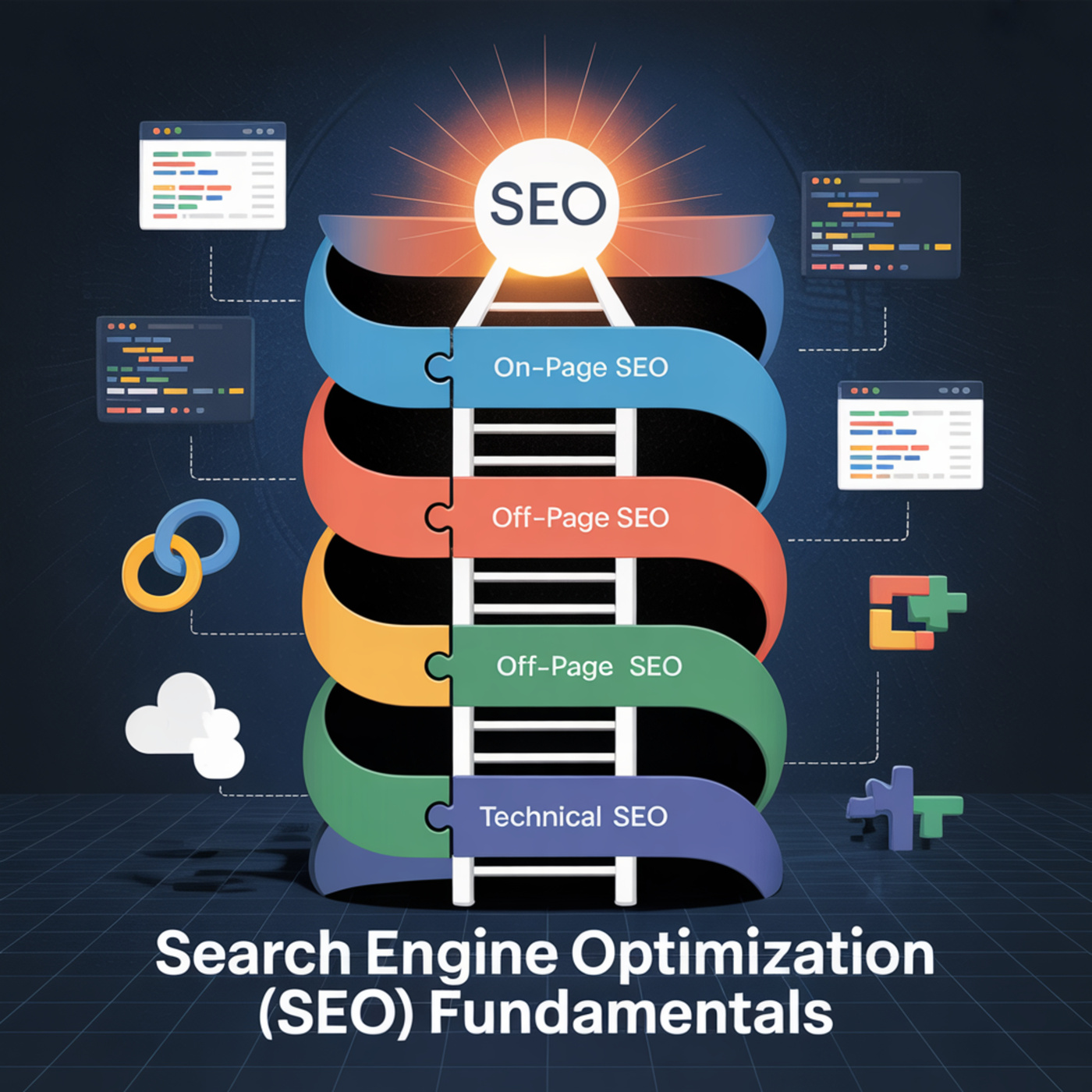
S10 Ep 64Mastering Search Engine Optimization (SEO) Fundamentals: On Page SEO, Off-Page SEO, and Technical SEO for Best Marketing Visibility on Search Algorithms with SEO Expert, Favour Obasi-ike
Search Engine Optimization (SEO) Fundamentals: On Page SEO, Off-Page SEO, and Technical SEO for Best Marketing Visibility on Search Algorithms with SEO Expert, Favour Obasi-ike, MBA, MSIn this episode on "SEO Fundamentals", Favour discusses the critical role of Search Engine Optimization (SEO) in online visibility for business growth and long-term sustainability, emphasizing on-page, off-page, and technical SEO. Favour highlights that technical SEO is the foundation, ensuring a website's optimal performance through aspects like fast page loading, robust hosting, and proper domain management. The conversation also touches upon the importance of website traffic as the "lifeblood" of a business, distinguishing between mere impressions (people viewing) and conversions (people taking action), which is greatly influenced by strategic content creation and the effective use of analytics tools like Google Search Console. Ultimately, the discussion stresses that understanding and implementing these SEO fundamentals is crucial for any online business to succeed and avoid wasted effort.Frequently Asked Questions about Online Presence and SEOWhat are the core components of effective SEO?Effective SEO is built upon three fundamental pillars: on-page, off-page, and technical SEO. Technical SEO acts as the essential foundation, much like water hydrating a body, ensuring your website's health and functionality. This includes aspects like page load speed, server performance, robust hosting, and a properly configured domain. On-page SEO involves optimizing elements directly on your website, such as content, keywords, and internal linking. Off-page SEO focuses on external factors that boost your website's authority, such as backlinks, social media presence, and local business listings. Without a strong technical foundation, efforts in on-page and off-page SEO may be wasted.Why is technical SEO considered the "water" for a website?Technical SEO is analogous to the water a body needs for hydration because it addresses the foundational needs of your website. Just as water is essential for life, technical SEO is critical for a website's functionality and discoverability. It encompasses elements like fast page loading speeds (avoiding large image files), choosing the right hosting and server with sufficient bandwidth, and securing a unique domain name.What is the importance of a domain and hosting in the context of a website?A domain is your website's unique identification code, serving as the "key" that opens the door to your online property. It's an intellectual property that needs annual renewal, much like registering a business. Hosting provides the "land" where your website "house" is built, offering the server space and infrastructure for your site to exist and be accessible online.Access to Resources ⬇️Need SEO Services?>> Join our club community for exclusive information 📥>> Latest blogs on SEO optimization and online marketing>> Book a SEO Discovery Call>> Subscribe to We Don't PLAY Podcast>> Schedule Paid Strategy SEO Meeting>> Read our Marketing Newsfeed>> Connect with Favour Obasi-ike on LinkedIn>> Invest in Energea Solar Energy (Sign Up & Earn $50)>> Start 14-Day Trial with Flodesk (Save 50% This Year)>> Save $100s on flights, hotels & car rentals with eDreams>> Access 50,000 rows of GSC SEO data (vs. GSC's 1,000-row limit) with SEO GetsSee Privacy Policy at https://art19.com/privacy and California Privacy Notice at https://art19.com/privacy#do-not-sell-my-info.
S10 Ep 63The Podcast SEO Blueprint for Branding and Business Growth with SEO Expert, Favour Obasi-ike
The Podcast SEO Blueprint for Branding and Business Growth with SEO Expert, Favour Obasi-ike, Favour Obasi-ike, MBA, MSIn this episode, we start an in-depth guide to podcast SEO for 2025-2026, emphasizing strategies for business growth through podcasting. It outlines the "low effort, high impact" approach, highlighting the importance of wide distribution across numerous platforms and strategic keyword integration in show titles, descriptions, and creator names. The speaker stresses the necessity of a dedicated website and email list for a podcast's success, viewing podcasts as a vital PR tool and a means to build authentic connections. Key takeaways include the significance of research, understanding podcast categories, and optimizing episode content for search visibility, ultimately aiming to transform a hobby into a serious business venture.What are the key elements of podcast SEO for long-term growth?For long-term growth, a podcast needs a strong SEO foundation built on several key elements: Domain and Website: A dedicated website for the podcast (e.g., podcastname.com) with good hosting allows for the creation of articles and serves as an anchor for links and resources. Tools like On Podium can simplify this. Email List: An email list is essential for direct communication with listeners about new episodes and offerings, as relying solely on platform algorithms is insufficient. Keyword Optimization: Keywords are vital in the show name, show description (utilizing the full 4000 characters available on mobile Spotify for Creators), creator name, and episode titles. Researching relevant keywords and embedding them naturally in both spoken content and written descriptions is crucial for discoverability. Strategic Episode Titles: Episode titles should clearly state the problem or topic being addressed, rather than generic "Season 1, Episode 1" formats, to immediately capture listener interest and improve searchability. Content Consistency and Value: Regularly publishing valuable, informative content that addresses audience problems fosters trust and keeps listeners engaged. Categorization and Language: Properly selecting primary and subcategories (e.g., Health & Wellness > Mental Health) and accurately setting the language helps target the right audience and improves visibility within specific niches. What is the core concept of the Podcast SEO Blueprint 2025-2026?The Podcast SEO Blueprint emphasizes a "low effort, high impact" approach to growing a business through podcasting. The central idea is to maximize the visibility and reach of a podcast by strategically optimizing its presence across numerous platforms and utilizing strong SEO principles. This allows the podcast to serve as an anchor for building connections, establishing trust, and ultimately driving business growth. The speaker highlights that consistent, thoughtful application of the blueprint over 90 days can provide a significant competitive advantage.Access to Resources ⬇️Need SEO services?>> Join our club community for exclusive information 📥>> Latest blogs on SEO optimization and online marketing>> Book a SEO Discovery Call>> Subscribe to We Don't PLAY Podcast>> Schedule Paid Strategy SEO Meeting>> Visit Official Website>> Connect with Favour Obasi-ike on LinkedIn>> Invest in Energea Solar Energy (Sign Up & Earn $50)>> Start 14-Day Trial with Flodesk (Save 50% This Year)>> Save $100s on flights, hotels & car rentals with eDreams>> Access 50,000 rows of GSC SEO data (vs. GSC's 1,000-row limit) with SEO GetsSee Privacy Policy at https://art19.com/privacy and California Privacy Notice at https://art19.com/privacy#do-not-sell-my-info.
S10 Ep 62Maximize ROI: SEO vs PPC Strategies for Business Growth with SEO Expert, Favour Obasi-ike
Maximize ROI: SEO vs PPC Strategies for Business Growth with SEO Expert, Favour Obasi-ike, MBA, MSIn this enlightening episode, we delve into the ROI strategies of SEO versus PPC, equipping businesses with the knowledge on how to optimize their advertising efforts. SEO, known for its long-term benefits, plays a critical role in building website authority and fostering customer relationships, leading to sustainable growth. In contrast, PPC offers immediate visibility, perfect for urgent marketing needs.Join SEO expert Favour Obasi-ike as he shares targeted insights into these advertising strategies, emphasizing the importance of high-quality content and a well-structured website.This episode is essential for businesses aiming to refine their online presence and make informed marketing decisions. Discover how a balanced approach can align with your unique business goals and resources.Frequently Asked Questions: SEO vs. PPCWhat are the fundamental differences between SEO and PPC?SEO (Search Engine Optimization) and PPC (Pay-Per-Click) are both forms of online advertising aimed at increasing visibility and driving traffic, but they operate on different principles. SEO is considered "organic advertising," focusing on optimizing a website to rank higher in search engine results naturally over time. This involves consistent effort to improve content, structure, and authority, ultimately earning traffic without direct payment per click. PPC, on the other hand, is "paid advertising" where businesses pay a fee each time their ad is clicked. This allows for immediate visibility and can generate traffic quickly, but it requires a direct monetary investment for every interaction. While both aim to attract attention and retention, SEO builds a long-term, compounding asset, while PPC offers more immediate, controlled exposure.What are the typical conversion rates for SEO and PPC?According to the Fire US Marketing, the average SEO conversion rate in 2025 is projected to be 2.4%. This represents a slight increase from 2.2% in the previous year, indicating that SEO remains a viable and growing strategy. In contrast, the conversion rate for PPC (pay-per-click) is significantly lower, dropping to 1.3%. This suggests that while PPC can deliver quick traffic, the quality of that traffic in terms of conversion to desired actions (like sign-ups or purchases) may be lower compared to organically acquired traffic.Why is building content on a website crucial before investing in paid advertising?Without existing content, a website lacks the "real estate" to convert visitors into valuable leads or customers. Creating numerous pages, blogs, and resources transforms a basic website into a "candy store" that offers value and encourages longer engagement (higher sessions per page). Running ads to a content-rich website means you're investing in a well-established ecosystem that can provide a better return on ad spend and build lasting relationships, rather than just driving fleeting clicks.Access to Resources ⬇️Need SEO services?>> Join our club community for exclusive information 📥>> Latest blogs on SEO optimization and online marketing>> Book a SEO Discovery Call>> Subscribe to We Don't PLAY Podcast>> Schedule Paid Strategy SEO Meeting>> Visit Official Website>> Connect with Favour Obasi-ike on LinkedIn>> Invest in Energea Solar Energy (Sign Up & Earn $50)>> Start 14-Day Trial with Flodesk (Save 50% This Year)>> Save $100s on flights, hotels & car rentals with eDreamsSee Privacy Policy at https://art19.com/privacy and California Privacy Notice at https://art19.com/privacy#do-not-sell-my-info.

S10 Ep 61Pinterest SEO: Marketing Hacks to Drive High-Quality Traffic, Leads, and Sales with SEO Expert, Favour Obasi-ike
Pinterest SEO: Marketing Hacks to Drive High-Quality Traffic, Leads, and Sales with SEO Expert, Favour Obasi-ike, MBA, MSIn this episode, we cover barrier-free information on marketing trends you need to know in 2025 using Pinterest SEO as a powerful, yet often underestimated, tool for driving traffic, leads, and sales for businesses.I highlight Pinterest's unique nature as a visual search engine and seasonal platform, emphasizing its evergreen content lifespan compared to social media providing actionable strategies for optimizing Pinterest presence, including utilizing business accounts, claiming websites, understanding keyword research through methods like the ABC technique, and filtering content by video, boards, profiles, and products.We also compare paid advertising strategies across platforms, particularly contrasting Pinterest's earned traffic model with others, while stressing the importance of tracking analytics, understanding the customer journey, and converting leads effectively for long-term business growth.Example: We have a guest who spent $450 on a Meta Ads Campaign for 10 days and made $90 back. 😭Solution: We helped him break down his ad spend how he could have saved $300 to achieve a better result more than $90 ROIYou can find this towards the end of this episode!FAQs on Mastering Pinterest SEO for Business Growth1. What makes Pinterest a uniquely effective tool for businesses, especially compared to social media platforms?Pinterest stands out because it functions primarily as a visual search engine, not a social media platform. Unlike ephemeral content on Instagram or Facebook, Pinterest content has a lifespan of up to five months, making it an "evergreen tool."Its core appeal lies in "interest" (Pinterest - P = Interest), where users actively search for specific interests and keywords with strong buying intent. This leads to 97% non-branded or unbranded searches, meaning users are looking for solutions or ideas rather than specific brands, offering businesses a unique opportunity to be discovered.Additionally, Pinterest allows direct linking back to websites from pins, a feature generally unavailable on other social media platforms, facilitating direct traffic, leads, and sales.2. How can businesses leverage Pinterest SEO to drive traffic, leads, and sales?To effectively leverage Pinterest SEO, businesses should start by creating a professional Pinterest business account linked to their root domain website.The platform's algorithm focuses on "interests and keywords" matching search intent. Businesses can identify relevant keywords by using Pinterest's search bar for suggestions (e.g., "Pinterest SEO strategy," "Pinterest SEO tips") and by employing the "ABC method" to see who is ranking for specific terms. Content should be categorized into multi-media formats like videos, boards, profiles, and products. Optimizing file names with relevant keywords for images (JPEG, PNG) is crucial, as these keywords are retained even when content is downloaded, ensuring long-term visibility.Leave a review about our Pinterest SEO episode now.Access to Resources ⬇️Need SEO services?>> Join our club community for exclusive information 📥>> Latest blogs on SEO optimization and online marketing>> Book a SEO Discovery Call>> Subscribe to We Don't PLAY Podcast>> Schedule Paid Strategy SEO Meeting>> Visit Official Website>> Connect with Favour Obasi-ike on LinkedIn>> Invest in Energea Solar Energy (Sign Up & Earn $50)>> Start 14-Day Trial with Flodesk (Save 50% This Year)>> Save $100s on flights, hotels & car rentals with eDreamsSee Privacy Policy at https://art19.com/privacy and California Privacy Notice at https://art19.com/privacy#do-not-sell-my-info.

S10 Ep 60AI SEO Secrets: Learn How AI and SEO Work Together for Better Online Marketing Results with SEO Expert, Favour Obasi-ike
🤖 AI SEO Secrets: Better Online Marketing Results with SEO Expert, Favour Obasi-ike, MBA, MSIn this episode, I explore the intersection of Artificial Intelligence (AI) and Search Engine Optimization (SEO), emphasizing how integrating AI into websites through code and scripts is becoming crucial for online visibility. I highlight the importance of schema markup and content structured for generative AI (like FAQs and LLMs) to enhance search engine understanding and ranking. This discussion also touches upon leveraging various online platforms (Google Search Console, Bing Webmaster Tools, social media, podcasts) to build domain authority and generate citations, ultimately leading to better search performance. I also stress that consistent, high-quality, and well-optimized content across multiple channels is key for long-term online success.Frequently Asked Questions on AI SEO Secrets1. What are the core "AI SEO secrets" and why are they crucial for online presence?The core "AI SEO secrets" emphasize the integration of AI codes and scripts into websites, moving beyond simple ChatGPT blog posts. This integration creates a "union" between a website and search algorithms, aiming for an "equilibrium" where the site consistently ranks high. SEO is far from dead, despite some organic traffic shifts, highlighting its ongoing importance. The fundamental idea is to leverage AI to make online content creation and optimization more efficient and effective, ensuring a site not only appears but also maintains its visibility in an increasingly sophisticated AI-driven search landscape.2. How does schema markup work with AI to enhance search visibility, especially for voice search?Schema markup is presented as a critical AI SEO secret. It's a rich, text-based format that uses prompts to signal algorithms about website content. For example, it can automatically generate timestamps for video content, creating "video schema" without manual input. This is particularly important for voice search engines, which rely heavily on "AI overviews" that are often based on FAQs. By structuring content with schema markup, especially in an FAQ format, websites provide clear, structured information that AI-powered search engines can easily understand and use to generate accurate, informational responses, thereby improving visibility in answer-based searches.3. What is the significance of LLMs.txt and how does it differ from robots.txt?I introduce LLMs.txt as a new development, distinct from the traditional robots.txt. While robots.txt controls how search engine crawlers access and index websites, LLMs.txt specifically targets "answer-based" search engines, which are often "generative AI-based." This implies that LLMs.txt is designed to optimize content for AI models that focus on generating direct answers to user queries, rather than just indexing pages for general search results. Effectively, it's about tailoring website information for the specific consumption patterns of large language models.Access to Resources ⬇️Need SEO services?>> Join our club community for exclusive information 📥>> Latest blogs on SEO optimization and online marketing>> Book a SEO Discovery Call>> Subscribe to We Don't PLAY Podcast>> Schedule Paid Strategy SEO Meeting>> Visit Official Website>> Connect with Favour Obasi-ike on LinkedIn>> Invest in Energea Solar Energy (Sign Up & Earn $50)>> Start 14-Day Trial with Flodesk (Save 50% This Year)>> Save $100s on flights, hotels & car rentals with eDreamsSee Privacy Policy at https://art19.com/privacy and California Privacy Notice at https://art19.com/privacy#do-not-sell-my-info.
S10 Ep 59AI SEO: Meet Apple iPadOS 26 Local Capture and Etheo.co; AI Visibility Tool with SEO Expert, Favour Obasi-ike
🤔 AI SEO: Local Capture, Etheo.co, and Podcast Strategy with SEO Expert, Favour Obasi-ike, MBA, MSIn this episode, Favour Obasi-ike, MBA, MS discusses SEO (Search Engine Optimization) and its evolving landscape, particularly in the realm of AI (Artificial Intelligence) and voice search with a new tool!I introduce a "trio" of concepts: Local Capture, Etheo (GEO - Generative Engine Optimization), and Podcast SEO. Local Capture is presented as a new feature within iPadOS 26 enabling high-quality local recording, suggesting its potential for podcast creation as an alternative to professional studio tools. Etheo is introduced as an AI visibility tool that tracks how a brand is mentioned by AI language models like ChatGPT, Claude, and Gemini, emphasizing the importance of a strong web presence to rank on these new platforms. The discussion also highlights how podcast optimization through strategic use of keywords and a connected website is crucial for discoverability in the modern voice SEO environment.1. What is Local Capture and how does it relate to podcasting?Local Capture is a new feature introduced with iPadOS 26, exclusively available on iPads. It allows users to record high-quality audio and video directly on their device, effectively turning their iPad into a portable recording studio for podcasts. Unlike more established professional platforms like Riverside, Local Capture is an in-built feature, making it highly convenient for users to produce content on the go, akin to using a phone for voice memos or notes. While it doesn't currently offer features like transcription or extensive editing tools (like Riverside), it focuses on providing a direct and high-quality local recording solution for content creators, particularly podcasters, to easily capture raw material.2. How does the new iOS 26 enhance the user experience, beyond Local Capture?The new iOS 26 introduces several significant changes and enhancements to the Apple user experience. One notable aesthetic change is a "3D kind of glass effect styleesque" across the phone interface, making elements like call buttons appear with a transparent, multifaceted look. Functionally, AI integration allows for new features such as caller identification that prompts the caller to state their identity before you pick up, and a cleaner message list that filters out transactional or telemarketing calls into a separate junk folder. For Apple Podcast users specifically, iOS 26 brings voice enhancement for clearer listening, increased playback speeds up to 3x (from 2x), and a redesigned "Browse" section, now called "New," which offers a more visually appealing and intuitive way to discover new and popular podcasts. 3. Why is having a website crucial for podcasts in the era of voice SEO and AI?The website acts as a "fortress," providing a dedicated domain where listeners can find more information and where potential traffic from podcast directories can be directed. Without a website, a podcast is unlikely to show up on AI platforms like ChatGPT, Claude, or Gemini.Access to Resources ⬇️Need SEO services?>> Join our club community for exclusive information 📥>> Latest blogs on SEO optimization and online marketing>> Book a SEO Discovery Call>> Subscribe to We Don't PLAY Podcast>> Schedule Paid Strategy SEO Meeting>> Visit Official Website>> Connect with Favour Obasi-ike on LinkedIn>> Invest in Energea Solar Energy (Sign Up & Earn $50)>> Start 14-Day Trial with Flodesk (Save 50% This Year)>> Save $100s on flights, hotels & car rentals with eDreamsSee Privacy Policy at https://art19.com/privacy and California Privacy Notice at https://art19.com/privacy#do-not-sell-my-info.