We Don't PLAY!™ Best AI SEO News - Website Marketing - Pinterest Business SEO Insights - Monetization Tools
711 episodes — Page 3 of 15
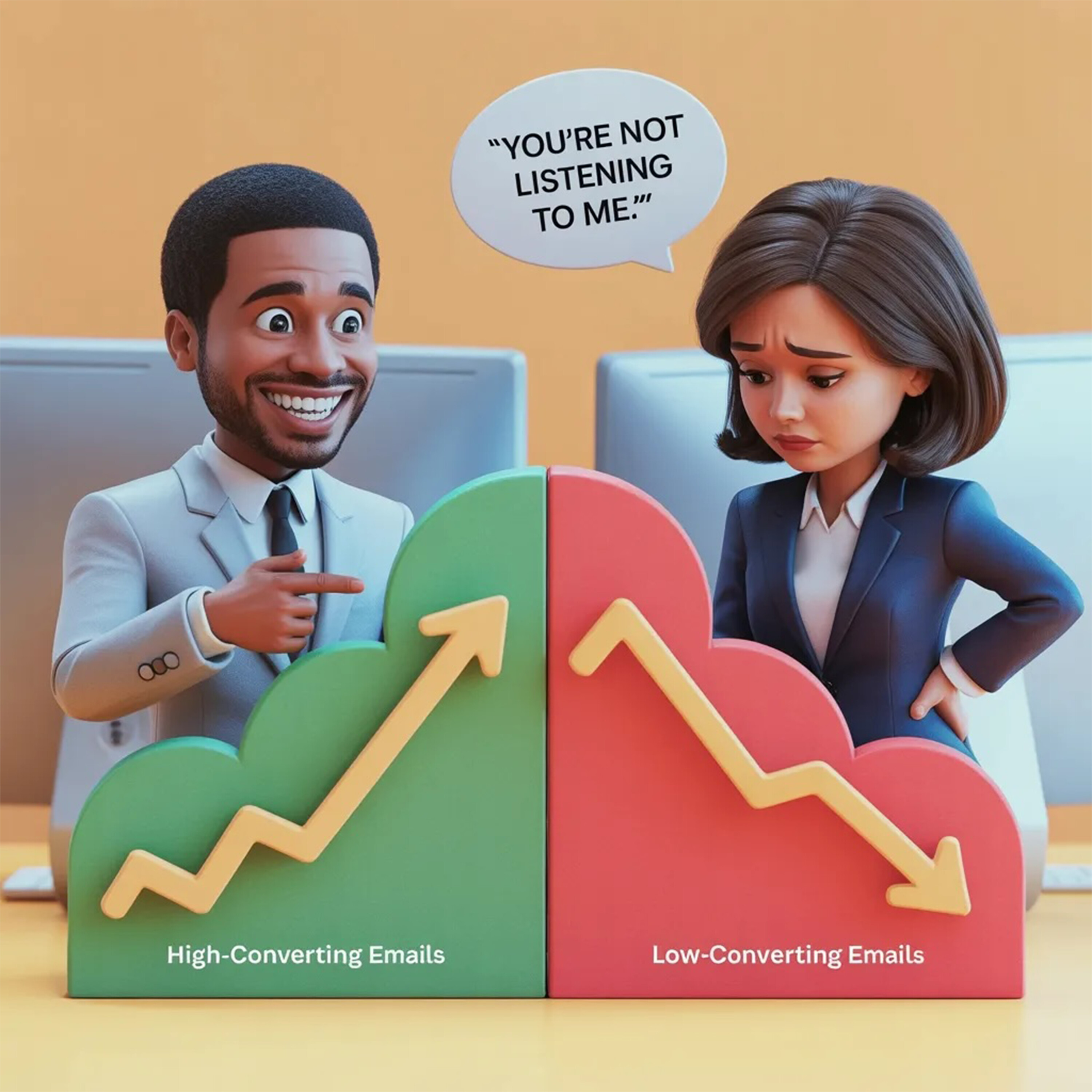
S12 Ep 11High-Converting Emails vs Low-Converting Emails Marketing Masterclass with Favour Obasi-ike
In this comprehensive session, Favour Obasi-ike, MBA, MS explores the strategic nuances of email marketing. The discussion transcends basic sales tactics, positioning email as a foundational pillar for business documentation, professional credibility, and high-impact communication. Favour emphasizes that while social media platforms often dominate the marketing conversation, email remains a superior channel for conversion and long-term relationship building. The session provides a detailed roadmap for entrepreneurs and developers alike, covering technical infrastructure, audience psychology, and the necessity of intentional engagement.Strategic Insights and Market ComparisonsThe conversation highlights a stark contrast between the ephemeral nature of social media and the enduring impact of email marketing. Favour notes that social media conversion rates typically languish below 1%, whereas search engine optimization (SEO) and email marketing can achieve conversion rates ranging from 16% to over 33%. This discrepancy is attributed to the "currency" of email: the exclusive time and attention granted by the recipient. Unlike social media posts that are quickly buried by algorithms, an email retains its conversion potential long after it is sent, provided it reaches the recipient's inbox through proper technical execution.Need to Book An SEO Discovery Call for Advertising or Marketing Services?>> Book a Complimentary SEO Discovery Call with Favour Obasi-Ike>> Visit Work and PLAY Entertainment website to learn about our digital marketing services>> Join our exclusive SEO Marketing community>> Read SEO Articles>> Subscribe to the We Don't PLAY Podcast>> Purchase Flaev Beatz Beats Online| Marketing Channel | Average Conversion Rate | Primary Advantage || Social Media | < 1% | High initial visibility and brand awareness. || Email Marketing | 16% - 33%+ | Direct connection, longevity, and high intent. || SEO | 16% - 33%+ | Sustainable organic traffic and credibility. |Technical Infrastructure and DeliverabilityA significant portion of the session is dedicated to the technical "hygiene" required to maintain high deliverability. Favour introduces Google Postmaster as an essential tool for monitoring domain health and ensuring that communications are not flagged as spam. The technical setup involves a rigorous configuration of DNS records, including MX, SPF, and DKIM, which serve as the digital credentials for a legitimate sender. Furthermore, the discussion touches upon the physical properties of an email, such as file size and font optimization, which can inadvertently trigger spam filters if not managed correctly.| Technical Component | Purpose | Best Practice || Google Postmaster| Domain Health Monitoring | Regularly check [postmaster.google.com](https://postmaster.google.com). || MX, SPF, DKIM | Authentication & Compliance | Ensure all DNS records are correctly configured. || List Hygiene | Deliverability Maintenance | Clean the list after every campaign to remove bounces. || Email Size| Spam Prevention | Use standard fonts (16px-20px) to keep file sizes low. || Segmentation| Engagement Tracking | Group audiences by behavior or interest for targeted messaging. |Content Strategy and Audience EngagementFavour and his guests, including the developer Ifeanyi, discuss the shift toward more sophisticated, developer-friendly tools like Resend, which allow for scalable, code-driven email templates. The consensus is that modern audiences do not "read" in the traditional sense; instead, they "skim" for value. Consequently, the use of listicles, bullet points, and concise subject lines is paramount.A professional subject line should ideally be limited to three or four words to avoid appearing "junior," while the preview text should be leveraged to provide the necessary context that encourages a click.The session concludes with a call for intentionality in marketing. Favour suggests a "Want vs. Need" framework: use the subject line to address what the audience *wants* (immediate value or curiosity), and use the body of the email to deliver what they *need* (tutorials, case studies, or interactive elements like polls). This approach ensures that the communication is not just seen, but acted upon.Podcast Episode Timestamps[00:00] – Introduction to the role of email in documentation and professional communication.[01:03] – Favour Obasi-ike’s background in intellectual property and search engine marketing.[02:35] – Comparative analysis of conversion rates across social media, SEO, and email.[04:50] – Technical requirements for deliverability: Google Postmaster and MX record
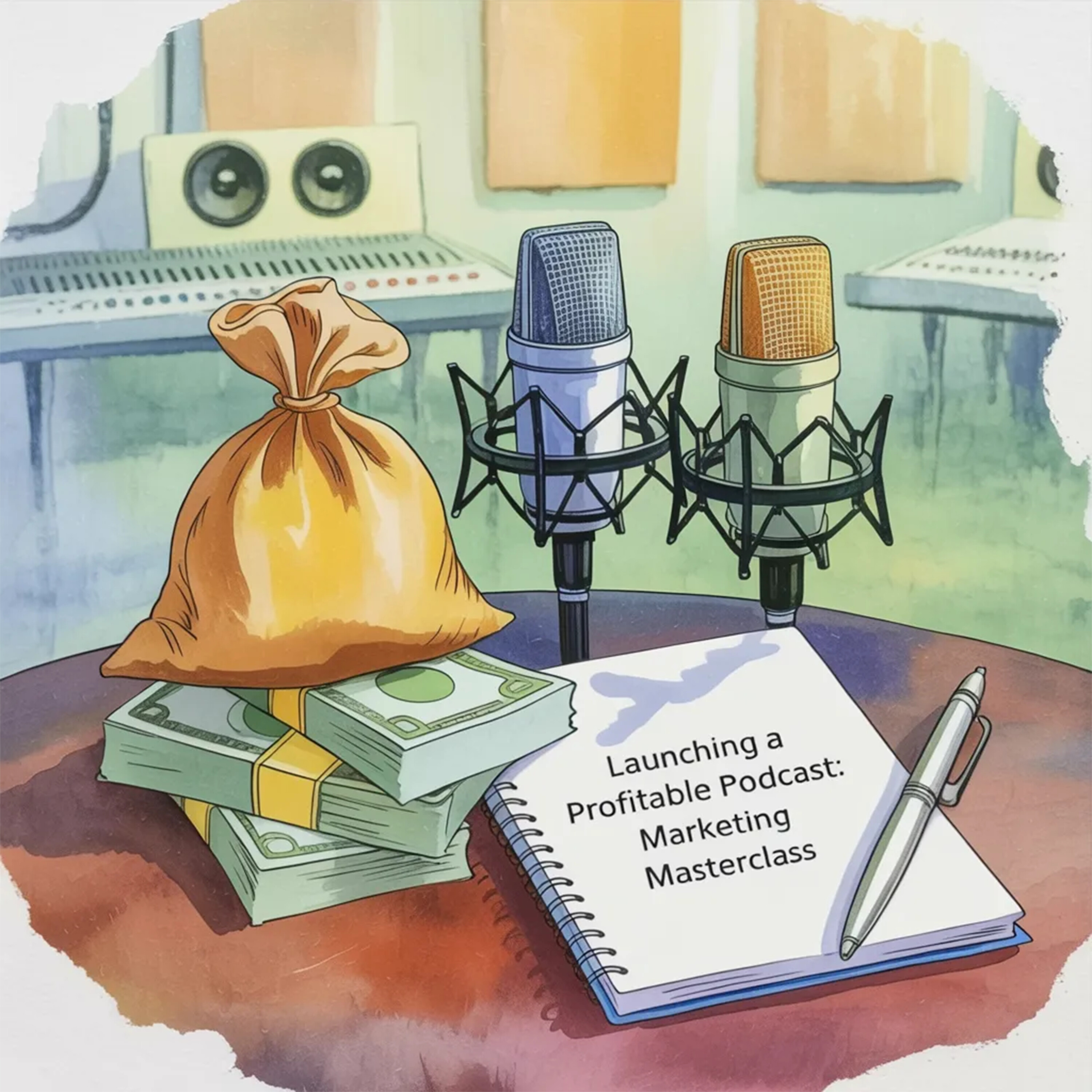
S12 Ep 10Launching a Profitable Podcast: Marketing Masterclass with Favour Obasi-ike
In this insightful session, Favour Obasi-ike, MBA, MS, a seasoned marketing expert, delves into the intricacies of launching and sustaining a profitable podcast. This episode is a goldmine for anyone looking to move beyond just creating content and build a podcast that generates both impact and income. Favour breaks down the essential strategies for creating a podcast that stands out and delivers tangible results.This session is a must-listen for aspiring and current podcasters who want to understand the business of podcasting. Favour provides a clear roadmap for building a strong foundation for your podcast, from establishing a web presence to leveraging SEO for discoverability. If you're ready to take your podcast to the next level, this episode is packed with actionable advice and expert insights.Need to Book An SEO Discovery Call for Advertising or Marketing Services?>> Book a Complimentary SEO Discovery Call with Favour Obasi-Ike>> Visit Work and PLAY Entertainment website to learn about our digital marketing services>> Join our exclusive SEO Marketing community>> Read SEO Articles>> Subscribe to the We Don't PLAY Podcast>> Purchase Flaev Beatz Beats OnlineIn this episode, you'll learn:[03:34] The foundational idea behind a profitable podcast: impact.[05:34] Why your podcast needs its own website and domain.[08:00] The importance of email capture for building a direct relationship with your audience.[10:10] How to think of your podcast as a separate entity from your main business.[11:06] The concept of creating and building capacity for your podcast.[14:00] How to create a content bank and repurpose your podcast content.[20:01] The significance of SEO in podcasting and how to optimize your show notes.[30:04] How to use your podcast to build a community and generate leads.[39:15] The power of anchor text and how to use it to drive traffic to your website.[43:21] The importance of choosing the right genre and categories for your podcast.[50:00] How to create a content strategy that aligns with your business goals.[59:01] The value of guesting on other podcasts to expand your reach.[01:05:00] How to use your podcast to build a personal brand and establish yourself as an expert in your niche.See Privacy Policy at https://art19.com/privacy and California Privacy Notice at https://art19.com/privacy#do-not-sell-my-info.
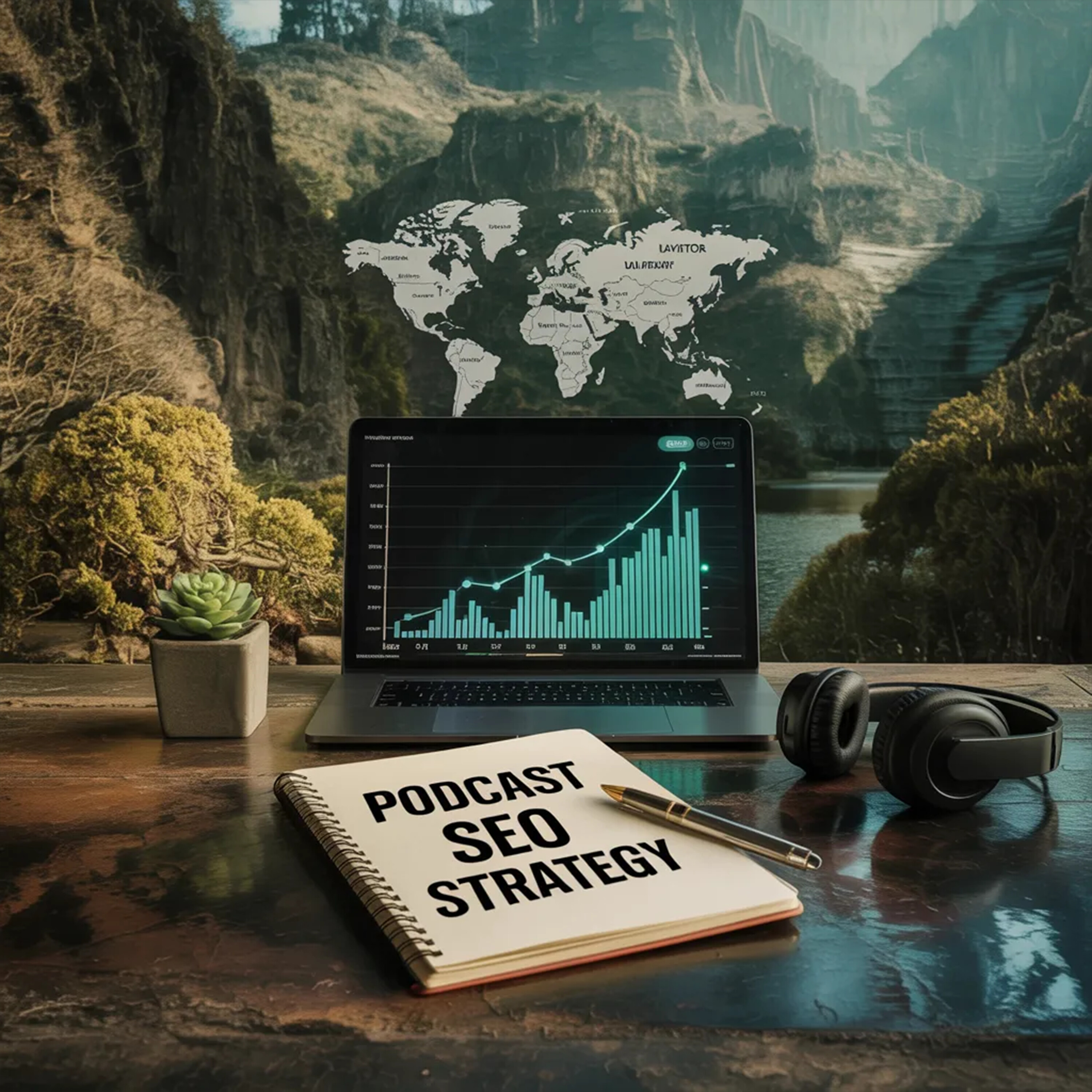
S12 Ep 9Podcast SEO Monetization for Marketing International Businesses (Masterclass Finale) with Favour Obasi-ike
Are you ready to take your podcast from a passion project to a monetization-based international business advertising/marketing tool? In this comprehensive episode, host Favour Obasi-ike, MBA, MS delivers an in-depth masterclass on leveraging podcast SEO and monetization strategies for international business growth. This session is the final installment in a series focused on helping podcasters and business owners build sustainable, globally-reaching content strategies.Favour explores the critical intersection of podcasting, search engine optimization, and international business development. The episode covers essential topics including multilingual content localization, performance benchmarks, download metrics, and how to position podcasts for passive monetization through advertising networks.Key highlights include real-world success stories from clients who have transformed their podcasts into powerful SEO assets, including a case study of turning 50 podcast episodes into 50 optimized blog posts that now rank on Google's AI-powered search results. Favour also demonstrates how his own podcast appears in Google's featured snippets and AI mode results, providing concrete proof of the strategies discussed.The episode features interactive discussions with community members Juliana, Celeste, and others who share their own experiences with SEO implementation, AI optimization (AIO), and the tangible business results they've achieved. Juliana shares an exciting success story about landing a major client through Google Gemini recommendations, directly attributable to SEO work completed three years prior with FavourThis episode is essential listening for podcasters, content creators, coaches, consultants, and international business owners who want to understand how to build long-term digital assets, increase discoverability across global markets, and create multiple revenue streams through strategic content optimization.Need to Book An SEO Discovery Call for Advertising or Marketing Services?>> Book a Complimentary SEO Discovery Call with Favour Obasi-Ike>> Visit Work and PLAY Entertainment website to learn about our digital marketing services>> Join our exclusive SEO Marketing community>> Read SEO Articles>> Subscribe to the We Don't PLAY Podcast>> Purchase Flaev Beatz Beats OnlineWhat You'll Learn:International SEO Fundamentals: How to optimize your podcast content for multiple languages, regions, and search engines (Google.com, Google.co.uk, and beyond).Monetization Metrics That Matter: Understanding downloads vs. unique listeners, 7-day and 30-day performance benchmarks, and what advertising networks look for.Multilingual Content Strategy: Leveraging localization and translation features to expand your audience across different cultures and languages.Podcast-to-Blog Conversion: The proven method of turning podcast episodes into SEO-optimized blog posts that rank on Google and drive traffic back to your audio content.AI Optimization (AIO): How to position your content to appear in Google's AI mode, featured snippets, and AI-powered recommendation engines like Google Gemini.Real Results: Case studies including a client whose emotional coaching podcast now ranks on Google, and a CPA who landed a major client through Gemini AI recommendations.Long-Term Asset Building: Why SEO is a marathon, not a sprint, and how work done today pays dividends for years to come.Detailed Episode TimestampsIntroduction & Overview (00:00 - 05:55) 00:00 - 00:13: Episode title: "Podcast SEO Monetization for International Businesses". 00:13 - 00:45: Welcome and call to subscribe to We Don't Play Podcast. 00:45 - 01:27: Overview: International business connections through podcasting. 01:27 - 02:31: Performance benchmarks: Downloads vs. unique listeners, measuring success. 02:31 - 03:33: Building sustainable growth and niche dominance. 03:33 - 04:48: Multilingual content and localization strategies. 04:48 - 05:55: International perspective: Moving beyond regional thinking.International SEO Strategy (05:55 - 10:03) 05:55 - 06:58: Analytics insights: Tracking international audience growth. 06:58 - 08:04: Case study introduction: Client success with emotional coaching podcast. 08:04 - 09:09: Turning 50 podcast episodes into 50 SEO-optimized blogs. 09:09 - 10:03: Podcast-to-blog strategy and long-term asset building.Content Conversion & Client Success Stories (10:03 - 15:00) 10:03 - 11:00: Amazon book-to-podcast conversion strategy. 11:00 - 12:00: Passive vs. active content consumption patterns. 12:00 - 13:00: Multi-platform distribution: Spotify, Apple Podcasts, YouTube. 13:00 - 14:0
S12 Ep 8Podcast SEO: Monetization Marketing Strategies for National Businesses with Favour Obasi-ike
Combining a business with a podcast creates a powerful "win-win" scenario for national brands. This episode, Favour Obasi-ike, MBA, MS unpacks how to transform your podcast from a simple communication channel into a strategic, long-term business asset. The core mission is to educate and inform your audience with valuable content that builds authority and keeps them returning. By focusing on foundational SEO, strategic content creation, and data-driven analytics, businesses can create evergreen assets that drive monetization. This approach shifts the focus from fleeting social media metrics to lasting search intent, ensuring your content serves your audience precisely when they need it, paving the way for profitable growth through advertisements, sponsorships, and subscriptions.Host Information & ResourcesReady to apply these strategies to your business? Visit playinc.online or click the link in the show description to schedule a complimentary 30-minute website audit.Favour will personally send you a recording of the audit, showing you what's happening from the outside looking in, and provide actionable next steps.Need to Book An SEO Discovery Call for Advertising or Marketing Services?>> Book a Complimentary SEO Discovery Call with Favour Obasi-Ike>> Visit Work and PLAY Entertainment website to learn about our digital marketing services>> Join our exclusive SEO Marketing community>> Read SEO Articles>> Subscribe to the We Don't PLAY Podcast>> Purchase Flaev Beatz Beats Online--------------------------------------------------------------------------------Key Topics & Timestamps1. [00:00] Introduction: The Power of Podcasting for BusinessesThis session is the third installment in a comprehensive series exploring podcasting strategies for local, regional, national, and international businesses. The central argument is that a podcast is more than just a marketing tool; when paired with a business, it becomes a win-win engine for growth. The fundamental mission of any business podcast is to educate and inform its audience, providing value that fosters loyalty and repeat engagement. However, before a business can effectively monetize its content, it must first establish a solid, discoverable presence within the vast podcasting ecosystem.2. [02:15] Foundational SEO: Is Your Podcast Discoverable?Monetization is impossible if your target audience cannot find your show. The first and most critical step for any business podcaster is to verify that their show is listed and discoverable across the podcast ecosystem. This foundational presence is the bedrock upon which all growth and revenue strategies are built. You can use the following free tools to check your podcast's visibility:• pod.link• ivy.fm• listennotes.comOnce you've confirmed your podcast is registered and accessible, you can begin to implement the core monetization strategies that this discoverability enables.3. [04:30] Three Pillars of Monetization: An OverviewThe world of podcast monetization can be complex and overwhelming. To simplify the process, this episode focuses on three primary methods that form the foundation of a sustainable revenue strategy. By understanding these core pillars, you can choose the path that best aligns with your business goals and audience. The three monetization models are:1. Advertisements2. Sponsorships3. SubscriptionsThe effectiveness of these strategies is often determined by a crucial technical decision made at the very beginning of the podcasting journey: the choice of a hosting platform.4. [06:00] Strategic Decision 1: Choosing Your Hosting PlatformSelecting a podcast host is not merely a technical detail; it is a strategic business decision that directly impacts your ability to generate revenue. It is crucial to choose a platform that is IAB (Interactive Advertising Bureau) certified, as this is often a prerequisite for receiving ads from major networks. Your hosting platform manages your RSS (Really Simple Syndication) feed, which is the technology responsible for distributing your episodes to directories like Apple Podcasts and Spotify. This RSS feed is the gateway to monetization, and it contains a surprisingly powerful and often overlooked setting that directly impacts your national reach: the language selection.5. [08:45] The Underrated National SEO Tactic: Language SelectionSmall technical settings can have an outsized impact on audience reach, and the language selection within your RSS feed is a prime example for national businesses. Correctly setting your podcast's language
S12 Ep 7Podcast SEO Monetization: Actionable Marketing Secrets for Regional Businesses with Favour Obasi-ike
Favour Obasi-ike, MBA, MS introduces this episode reframes “monetization” as a value exchange, built on the core truth that “there's no conversion that started without a conversation.” It presents a strategic model where financial returns are the natural result of building trust through dialogue. Applying this specifically to regional businesses, the discussion outlines strategic podcasting techniques to improve search engine visibility and drive revenue.The key tactic is the deliberate use of geographic keywords within episode titles, scripts, and author fields to dominate local search results. By treating a podcast as permanent intellectual property rather than just a marketing tool, businesses create a lasting reference point that validates their brand through expert conversations, building consumer trust and market authority.This value-exchange model is powered by converting listener attention into growth through methods like pre-roll ads, affiliate partnerships, and private subscriptions. Furthermore, the speaker advises using analytics to identify high-performing locations, allowing businesses to refine their content and promotional strategies for specific audiences. Ultimately, consistent, helpful audio content serves as the foundational engine for long-term customer loyalty, where monetization is the direct outcome of the deep relationships built through strategic, SEO-focused conversations.Key Takeaways: Actionable Insights• Local First, Regional Second: Even international brands are local to someone. The foundational strategy is to dominate your immediate search radius (5-25 miles) by embedding location-specific keywords—such as city, state, province, or zip code—directly into your podcast titles, spoken content, and show notes. This ensures you are discoverable by the customers actively searching for services in your specific operational areas.• Conversation Before Conversion: The speaker's primary argument is that trust is the essential precursor to any transaction. A podcast's main function should be to initiate meaningful conversations and consistently answer customer questions. This process naturally builds the credibility and trust required to guide a listener toward becoming a loyal customer, making the "sale" a frictionless conclusion to a relationship, not a high-pressure pitch.• Podcast as an Intellectual Property Asset: Your podcast should be treated as a core business asset, on par with your domain name or email list. It functions as a permanent, searchable "place of reference" that validates your expertise and builds long-term equity. As the speaker notes, a successful podcast creates listenership, authorship, and readership—"it's a lot of ship sailing"—that expands into partnerships and affiliate relationships.• Give Them What They Want, Then What They Need: This two-step engagement strategy is crucial for audience growth and retention. The speaker reveals their strategic thinking: "Give them what they need first, right? Let me actually put it this way. Give them what they want and then give them what they need." First, attract new listeners with content that answers what they want (their direct search queries). Then, build loyalty and authority by providing the deeper, more valuable content they truly need.Concluding TransitionWith these foundational principles established, the episode transitions into the specific, tactical SEO strategies that bring this value-driven approach to life.Need to Book An SEO Discovery Call for Advertising or Marketing Services?>> Book a Complimentary SEO Discovery Call with Favour Obasi-Ike>> Visit Work and PLAY Entertainment website to learn about our digital marketing services>> Join our exclusive SEO Marketing community>> Read SEO Articles>> Subscribe to the We Don't PLAY Podcast>> Purchase Flaev Beatz Beats OnlineTimestamped Segments• [00:00:00] Introduction: Why Regional Businesses Need Podcast SEO ◦ Favour outlines the opportunity for regional businesses to build trust, loyalty, and brand awareness through location-focused content.• [00:05:15] The Core Strategy: Hyper-Local Targeting ◦ Details on how to use specific city, state, and province names in episode titles and spoken scripts to attract local search traffic.• [00:09:30] Redefining Monetization: Trust and Conversation ◦ Favour argues
S12 Ep 6Podcast SEO: 15 Podcast Monetization Tactics Establishing Local Business Visibility with Favour Obasi-ike
Podcast SEO and monetization strategies tailored for local businesses is today's episode discussion. Favour Obasi-ike emphasizes the importance of metadata, noting that elements like podcast titles, descriptions, and author names serve as critical search signals for discovery.By treats these fields as structured data, creators can establish local authority and ensure their content surfaces in specific user queries across platforms like Spotify and Apple Podcasts.The source further highlights the compounding value of backlinking, explaining how consistent episode releases create a vast network of searchable links that drive traffic back to a brand’s website. Ultimately, the text argues that a well-optimized podcast acts as a long-term intellectual property asset that builds credibility and solves audience problems through searchable, evergreen audio content.In the 2026 search ecosystem, local visibility is no longer a matter of chance; it is a matter of engineering. This episode serves as a strategic blueprint for local businesses to command "page dominance" by transforming audio content into a high-authority digital asset. By deploying a "spread map" strategy—scaling influence from local roots to international authority—business owners can ensure their brand is the definitive answer to specific consumer queries.The objective is to move beyond the "hobbyist" mindset and treat podcasting as a capital-efficient SEO machine. We explore how to build an "engine" that runs independently via technical metadata and RSS syndication, allowing your brand to reside permanently in the search database.Key Takeaways for Local Business Owners1. Metadata is Your Search ID: Your title, author field, and description must match the exact phrases your customers use. If your "ID" doesn't match the search query, the algorithm cannot process your "legal documents," and your business remains invisible.2. Exploit the 50x50 Rule: Syndication is a volume game. By appearing on 50 platforms, you create thousands of high-authority backlinks. This sheer volume of structured data makes your brand unavoidable in local searches.3. Implementation over Information: ROI is the result of action, not note-taking. Podcasting is a long-term index fund for your brand; the earlier you start the "audio documentation," the more interest your digital legacy accrues. Move from "doer" to "architect" today.Need to Book An Appointment?>> Book a Complimentary SEO Discovery Call with Favour Obasi-Ike>> Visit Work and PLAY Entertainment website to learn about our digital marketing services>> Join our exclusive SEO Marketing community>> Read SEO Articles>> Subscribe to the We Don't PLAY Podcast>> Purchase Flaev Beatz Beats OnlinePodcast Timestamps[00:00:00] – The Spread Map: Establishing the strategic journey from local business to international brand authority.[00:03:00] – Statistical Authority: Reviewing personal benchmarks (600 episodes, 156 countries) as a model for growth.[00:06:00] – The Harry Potter Paradox: Why naming your show for the "benefit" is the only way to be found before you are famous.[00:10:00] – The Psychology of Blue Links: Why "Blue Links" signify trust and confidence in the search results.[00:14:00] – Spotify Signal Case Study: Using the phrase "workout habits for men over 40" to identify exact-match search signals.[00:22:00] – Compounding Link Math: The 50x50 breakdown of how to generate 2,500 links across platforms like SiriusXM and iHeart.[00:31:00] – The Celese Interaction: Overcoming ADHD and task-paralysis by choosing documentation over perfection.[00:45:00] – The Legacy Challenge: Transitioning from a task-based worker to a legacy-based brand architect.The Mathematics of Syndication & The "Compounding Effect"Strategic dominance is a function of Depth and Cadence. While frequency is important, "Depth" is determined by your average episode length. A 60-minute episode provides sixty times more data points for an algorithm to index than a one-minute clip.The true ROI of podcasting is found in the Compounding Link Formula:50 Episodes (One year of weekly audio documentation) x 50 Distribution Platforms (Apple, Spotify, SiriusXM, Podchaser, Castbox, iHeart, etc.) = 2,500 High-Authority BacklinksThis volume creates a "digital balloon that never pops." As you add more helium (content), the structure becomes stiffer and more secure. To maximize this, maintain a Cadence (release cycle) closer to "1" (daily). A faster cadence spi

S12 Ep 5Eventbrite Marketing SEO Strategies to Sell Online Tickets and Events Organically 🎟️ (Case Studies) with Favour Obasi-ike
This episode unpacks how Eventbrite marketing and SEO can be used to grow a business and sell tickets through organic search. Favour Obasi-ike emphasizes that placing targeted keywords at the beginning of event titles is crucial for creating effective URL (uniform resource locators) slugs that rank well on search engines. To build trust and boost visibility, event organizers should also embed YouTube videos and utilize back-linking strategies within event descriptions. Real-world case studies discussed illustrate that scheduling events at least one month in advance allows search algorithms sufficient time to index the content and reach potential attendees. Even after an event concludes, Favour notes that active links continue to drive traffic, serving as a long-term asset for brand awareness. Ultimately, the source advocates for a data-driven approach that combines strategic messaging with technical SEO to ensure sustainable audience growth.Need to Book An Appointment?>> Book a Complimentary SEO Discovery Call with Favour Obasi-Ike>> Visit Work and PLAY Entertainment website to learn about our digital marketing services>> Join our exclusive SEO Marketing community>> Read SEO Articles>> Subscribe to the We Don't PLAY Podcast>> Purchase Flaev Beatz Beats OnlineEpisode Timestamps[00:00:00] Introduction: Why Eventbrite is a Hidden SEO GoldmineThe episode begins by positioning Eventbrite as a critical platform for business marketing, lead generation, and product promotion, beyond mere event discovery. The emphasis is on creating every listing with the "searcher's benefit" in mind, focusing on how the event serves the needs of a potential attendee actively searching for a solution. This strategic mindset is the key to unlocking the platform's potential and leads directly into the most critical setup step for organic success.[00:05:30] The Single Most Important SEO Factor: Your Event TitleThe event title is presented as the most crucial element for SEO success because it directly generates the event's URL slug. Placing primary keywords at the beginning of the title ensures they appear at the start of the URL, dramatically improving visibility on Google and Eventbrite. Conversely, placing keywords at the end creates a less effective URL and weakens search ranking from the outset. Getting this step wrong can undermine the entire organic marketing effort.[00:12:15] The Long-Term Value of an Eventbrite ListingA unique feature of Eventbrite is that its event links remain active and discoverable long after an event ends. These expired listings function as permanent digital assets that continue to house links to websites, YouTube videos, and other resources. As such, an old event page acts as a long-term digital billboard, continuously driving traffic and brand visibility for months or years. This sets the stage for a practical case study.[00:17:45] Case Study 1: The Wreath-Making Workshop (A Paid Event Strategy)This case study demonstrates timing, targeting, and iterative improvement by combining organic SEO with minimal paid ads. A client's first workshop failed due to a two-week lead time, which was insufficient for search engine indexing. For the second attempt, strategic changes were made: scheduling four weeks in advance for algorithm indexing, creating a high-quality 4K promotional video, and running hyper-targeted Facebook ads with a $5/day test budget aimed at building community. The result was a sold-out event, providing a repeatable formula for marketing local, paid events.[00:31:00] Technical SEO Deep Dive: Why Your Website Pages Get De-IndexedThis section explains technical reasons for losing search ranking over time. Key factors include the "Last Modified" date in a website's XML sitemap, which signals content freshness to search engines; the 24-month lifespan of a blog post's SEO relevance if left untouched; and the actionable "update rule" of updating two old pages for every new one published. A contrast is drawn with podcast RSS feeds, which re-index the entire channel with each new episode, highlighting a unique SEO benefit of podcasting. This reinforces the importance of an updated digital presence to support event marketing.[00:48:15] Case Study 2: The Junk Journaling Workshop (A Free Event Strategy)This case study proves the core SEO principles work for a free event launched by a brand-new account with zero prior audience. The client created a new Eventbrite listing for a niche craft workshop with one month of lead time. Relying purely on organic discovery, all 10 free slots sold out to unknown at

S12 Ep 4Actionable Business Marketing Tactics | Local SEO Edition with Favour Obasi-ike
The actionable local SEO and marketing strategies for businesses to implement in 2026 with Favour Obasi-ike. The primary recommendation involves using QR codes as digital lead magnets to bridge the gap between physical locations and online platforms. This further emphasizes the power of podcast appearances and high-authority PR backlinks to establish brand credibility and improve search engine rankings. Additionally, the discussion explores short-form video tactics on YouTube and Instagram as tools to drive traffic to specific landing pages or low-ticket offers. The speakers conclude that consistent data tracking and strategic positioning are essential for scaling a local business effectively.Next Steps for Booking A Discovery Call | Digital Marketing + SEO Services:>> Need SEO Services? Book a Complimentary SEO Discovery Call with Favour Obasi-Ike here>> Visit our Work and PLAY Entertainment website to learn about digital marketing services.>> Join our exclusive SEO Marketing community>> Read SEO Articles>> Subscribe to the We Don't PLAY Podcast>> Purchase Flaev Beatz Beats OnlineEpisode Timestamps & Key Takeaways1. The QR Code Renaissance: Your Digital Lead MagnetQR codes have re-emerged as a low-cost, high-impact tool for local marketing, serving as a powerful bridge between physical customer presence and digital engagement. More than just a link, a strategic QR code acts as a direct gateway for lead capture, data collection, and relationship building, turning passing interest into a measurable interaction.[00:02:30] The Core Tactic: Creating and Deploying QR Codes Implementing a successful QR code strategy involves a few key steps:Generation: Use a dedicated tool like flowcode.com to create a custom QR code.Destination Strategy: Instead of linking to a generic homepage, direct users to a specific, high-intent page on your website. This could be a contact page, location page, a special offer landing page, or an email list signup form. The goal is to make the next step clear and valuable.Physical Placement: Maximize local visibility by placing the QR code on a variety of physical assets, including brick-and-mortar storefront windows, flyers, business cards, leaflets, and even in collaboration with other local businesses like restaurants.[00:07:15] Case Study: The Loungewear Brand A 2023 case study of a loungewear client at the Arendelle Mills Mall demonstrates the power of this tactic. During the Christmas season, the business used QR codes to promote a raffle for a family loungewear set. Shoppers scanned the code to enter, which successfully:Built their email list with qualified, local leads.Drove both in-store and online sales by creating a direct engagement point.The campaign successfully accelerated their online business by focusing on the core brand message of family bonding, turning a simple raffle into a meaningful touchpoint that resonated with their target audience.[00:13:45] Critical Best Practices To ensure your QR code campaign is effective and avoids costly mistakes, follow these essential practices:Incentivize the Scan: Offer a compelling reason for someone to pull out their phone. Frame it as a gateway to exclusive sales, monthly offers, or entry into a contest.Test Before You Print: Before investing in hundreds of flyers or stickers, thoroughly test the QR code with multiple people and different devices to ensure it scans correctly and links to the right destination.Track the Interaction: On your backend system, verify that a scan is being registered. This is crucial for measuring the campaign's effectiveness and understanding user engagement.This direct, one-to-one engagement tactic sets the stage for a broader, community-focused strategy: live events.2. Front-End Offers: Building Community with EventsA "front-end offer" in this context is less about an immediate transaction and more about securing a customer's commitment. Local events are the perfect vehicle for this strategy, providing a platform to foster deeper relationships, build brand loyalty, and create a powerful feedback loop that traditional digital marketing often misses.[00:15:30] Case Study: The Junk Journaling Business This case study follows a client with a purely traditional, offline business and zero website traffic. The strategy and results were transformative:Problem: The client had zero website traffic and was operating a purely traditional, offline business, making them invisible to online search and limiting
S12 Ep 35 Critical Technical SEO Fixes for Small Businesses in 2026 with Favour Obasi-ike
In this comprehensive episode, host Favour Obasi-ike, joined by guests Celese Williams, Dr. Fashion, and Ryan Dennis, cuts through the noise to deliver the five most essential SEO fixes small businesses must implement in 2026. Moving beyond abstract theory, the discussion provides a masterclass in actionable strategy, covering the non-negotiable foundations of site architecture, the currency of strategic link building, the revenue-killing impact of slow site speed, the power of dominating local search, and the technical integrations needed to get indexed and noticed by search engines.Next Steps for Booking A Discovery Call | Digital Marketing + SEO Services:>> Need SEO Services? Book a Complimentary SEO Discovery Call with Favour Obasi-Ike here>> Visit our Work and PLAY Entertainment website to learn about digital marketing services.>> Join our exclusive SEO Marketing community>> Read SEO Articles>> Subscribe to the We Don't PLAY Podcast>> Purchase Flaev Beatz Beats OnlineKey TakeawaysMaster Your Site Architecture: A well-structured website with proper canonical tags, optimized images, and clear headings is the non-negotiable foundation for both user experience and search engine visibility.Treat Links as Currency: Strategically build internal and external links, ensuring every piece of content has a corresponding URL on your website to build authority and drive traffic from multiple sources.Prioritize Blazing-Fast Speed: A slow website kills conversions and rankings. Actively manage site speed through optimized hosting, a Content Delivery Network (CDN), and compressed media files.Dominate Your Geographic Area: For businesses serving specific areas, embedding location data (maps, zip codes, city names) directly into your site is crucial for capturing "near me"searches.Integrate to Accelerate: Directly connect your website to Google Search Console and Bing Webmaster Tools and manually submit new content to get indexed significantly faster than waiting for organic crawls.Detailed Show Notes & Timestamps[00:00:00] Introduction: Setting the Stage for 2026Host Favour Obasi-ike kicks off the new year by tackling the evergreen challenge of Search Engine Optimization. He frames "fixing" SEO not as a one-time task but as a continuous process of optimization that is fundamental to brand awareness, website traffic, and revenue growth. He provides an initial call to action, directing listeners to the link in the show description to book a consultation or subscribe to his email list for ongoing insights. With the stage set, the episode transitions into the first and most foundational technical fix for any small business website.[00:04:15] SEO Fix #1: Site Architecture - The Foundation of Your Digital PresenceSite architecture is the fundamental blueprint of a website, dictating how both users and search engine algorithms navigate, understand, and value its content. A strong architecture is the bedrockof any successful digital presence, ensuring content is organized, accessible, and easily discoverable.Key components of a robust site architecture include:Canonical Tags: A canonical tag tells search engines which version of a page is the "master copy," preventing duplicate content issues. As Favour Obasi-ike explains with the "Adam Apple"analogy, just as a person has one true name, your content must have one single, consistent identity recognized by search engines to avoid confusion.Image Optimization: Large, uncompressed image files are a primary cause of slow load times. Uploading images that are several megabytes in size will significantly degrade site performance and hurt search rankings.Link Health: Regularly checking for and fixing broken or duplicate links is essential for a clean and functional site structure.Website Updates: Using the "brushing your teeth" analogy, Favour Obasi-ike explains that keeping content and copyright dates current signals relevance. Search engines prioritize fresh, well-maintained content, and an outdated copyright date is a direct signal that a site may be abandoned or irrelevant.*Heading Tags (H1-H6):* Properly structured headings organize content for human readers and provide a clear hierarchy that helps search engines understand the main topics and subtopics of a page.URLs & Schema: Keyword-rich URLs (e.g., .../cookie-recipes) and schema markup (microdata for recipes, events, etc.) give search engines explicit context about a page's purpose, imp

S12 Ep 2SEO Secrets for 2026: Schema Markup, Website Structure, and Page Indexing Deep Dive with Favour Obasi-ike
SEO Secrets for 2026: A Deep Dive into Schema Markup, Structure, and Indexing with Favour Obasi-ike with Favour Obasi-Ike | Sign up for exclusive SEO insights.Happy New Year! This episode provides a focused, actionable roadmap for business and website owners aiming to dominate search rankings in 2026. It moves beyond basic SEO to reveal three foundational, yet often overlooked, strategies: two internal and one external.Favour synthesizes the strategy into a winning formula: Schema + Structure + Speed. A website that excels in these three areas becomes a "triple threat"—it's understood by algorithms, technically sound, and delivers a superior user experience, making it the preferred result in search.Call to Action: For professional SEO help, you can book a call at playinc.online, listen to the podcast at wedontplaypodcast.com, or contact the me via email ([email protected]). More resource links available below.Core Framework for 2026 SEO Success:Internal Secret #1: Master Schema MarkupWhat it is: Explicit code (microdata) that tells search engines and AI exactly what your content means (e.g., Article, FAQ, Product).Why it matters: It "future-proofs" your content by turning pages into structured assets that AI-driven search tools can understand and feature correctly. It's the essential language for communicating with modern algorithms.Internal Secret #2: Prioritize Logical Site StructureWhat it is: A clear, hierarchical blueprint for your website using heading tags (H1, H2, H3, etc.) in the correct, sequential order.Why it matters: It serves both crawlers and users. It guides algorithms through your content while creating an intuitive, trustworthy experience for visitors. A confused structure repels both.External Secret: Leverage Automatic IndexingWhat it is: A technical method using an API to submit thousands of pages per day to Google, bypassing the strict 10-URL daily limit of manual submission in Search Console.Why it matters: For content-rich sites, it ensures your work is efficiently seen and indexed by Google, preventing valuable content from being overlooked.Episode Timestamps[03:30] Internal Secret #1: Master Schema MarkupWhat it is: Explicit code that tells search engines and AI what your content means.Why it matters: It future-proofs content, turning pages into structured assets that modern algorithms and AI search tools can correctly understand and feature.[13:00] Internal Secret #2: Prioritize Logical Site StructureWhat it is: A clear hierarchy using heading tags (H1, H2, H3) in correct order.Why it matters: It guides search engine crawlers and creates an intuitive, trustworthy experience for human users. Poor structure confuses both.[22:00] External Secret: Leverage Automatic IndexingWhat it is: Using an API to submit thousands of pages/day to Google, bypassing manual limits.Why it matters: Ensures large volumes of content are efficiently seen and indexed. A case study showed 27% of a 17M-page portfolio indexed in two weeks.[29:30] Key Conclusion: The "Triple Threat" FormulaThe winning formula is Schema + Structure + Speed. This combination ensures a site is understood by algorithms, technically sound, and delivers a superior user experience.[31:00] Call to Action: For help, book a call at playinc.online, listen to the podcast, or contact the host via email/LinkedIn.Next Steps for Booking A Discovery Call | Digital Marketing + SEO Services:>> Need SEO Services? Book a Complimentary SEO Discovery Call with Favour Obasi-Ike here>> Visit our Work and PLAY Entertainment website to learn about digital marketing services.>> Join our exclusive SEO Marketing community>> Read SEO Articles>> Subscribe to the We Don't PLAY PodcastSee Privacy Policy at https://art19.com/privacy and California Privacy Notice at https://art19.com/privacy#do-not-sell-my-info.

S12 Ep 1Season 12 Introduction - We Don't PLAY!™️ Podcast Theme Music by Favour Obasi-ike
Welcome to Season 12 of the We Don't PLAY!™️ Podcast show! Enjoy the latest instrumental for the show as we dive in shortly!See Privacy Policy at https://art19.com/privacy and California Privacy Notice at https://art19.com/privacy#do-not-sell-my-info.
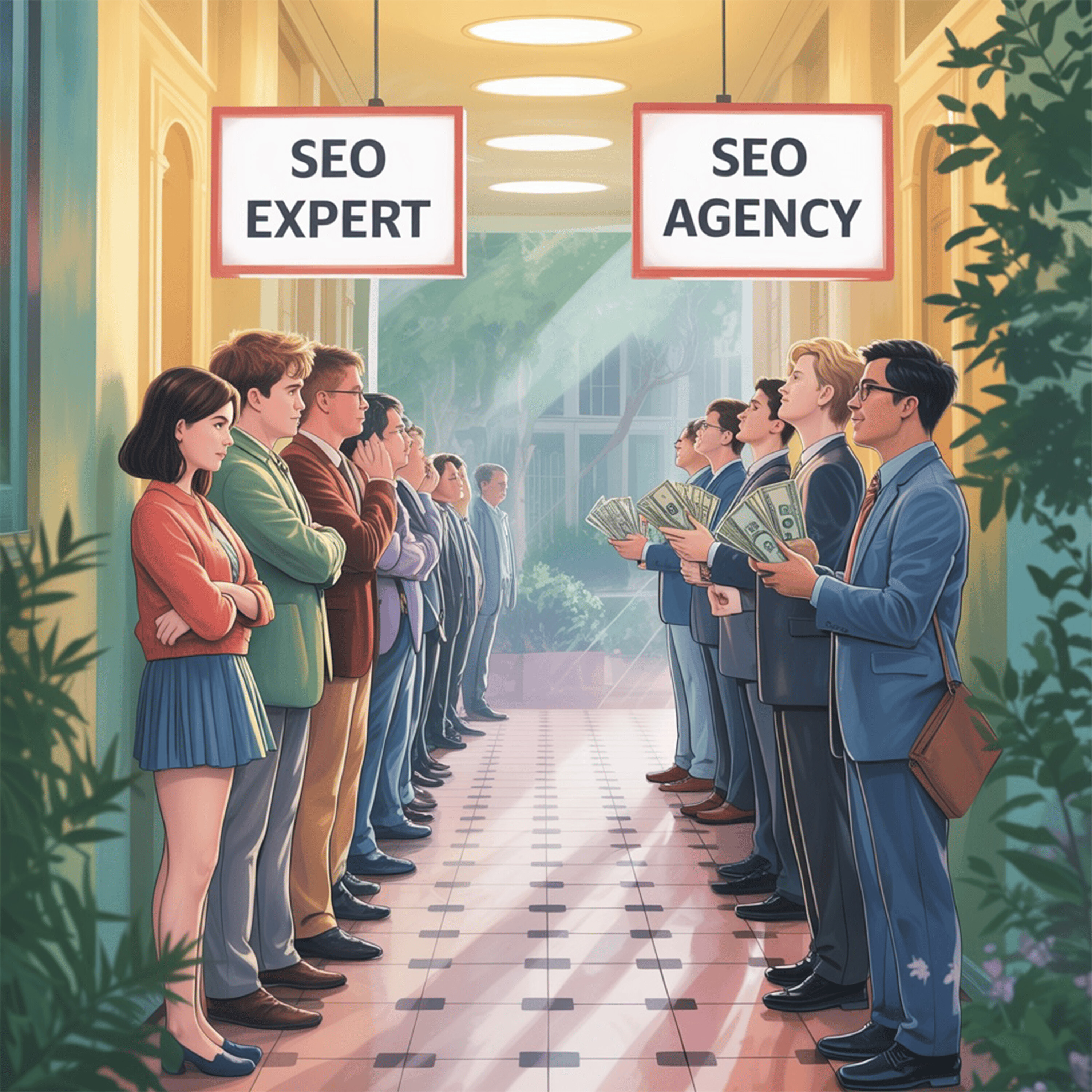
S11 Ep 75SEO Expert vs. SEO Agency: Making the Right Choice for Your Business (Decision Makers Edition) with Favour Obasi-ike
SEO Expert vs. SEO Agency: Making the Right Choice for Your Business (Decision Makers Edition) with Favour Obasi-ike with Favour Obasi-Ike | Sign up for exclusive SEO insights.Episode SummaryBusiness decision-makers constantly face the challenge of choosing between a solo SEO expert and a full-service SEO agency to drive their online growth. In this episode, host Favour Obasi-ike is joined by guests Marc McIntosh, (G.A.) Pimpleton, and Jolanta Kissoon Young to demystify this critical choice.The discussion unpacks the distinct roles of each provider, revealing that an expert acts like a specialist "doctor" for targeted advice, while an agency serves as a holistic "coach" for comprehensive execution. The conversation also ventures into the dark side of the industry, exposing common pitfalls and scams with firsthand accounts of fraudulent practices.Finally, the group provides a concrete, actionable framework for vetting a trustworthy partner, emphasizing the non-negotiable need for proven results and the power of earned trust to ensure your SEO investment translates into real business growth.Read New SEO Article: Is It Worth Hiring an SEO Expert in 2026? [Table Comparison]Next Steps for Booking A Discovery Call | Digital Marketing + SEO Services:>> Need SEO Services? Book a Complimentary SEO Discovery Call with Favour Obasi-Ike here>> Visit our Work and PLAY Entertainment website to learn about digital marketing services.>> Join our exclusive SEO Marketing community>> Read SEO Articles>> Subscribe to the We Don't PLAY PodcastKey Takeaways for Business LeadersFirst, define your need before you hire. The most critical first step is to align your business stage with the right provider. An SEO expert is ideal for startups or businesses needing strategic advice, specialized audits, or tactical guidance ("seeing where the needle is"). A full-service agency is better suited for mid-to-large companies that require an aggressive, multi-disciplinary growth strategy and hands-on implementation ("moving the needle").Second, "receipts" are non-negotiable. Do not hire a provider based on promises alone. Demand tangible proof of their competence and impact. Ask for detailed case studies, analytics, and data—what G.A. calls "receipts"—that show where past clients in your industry started and where they finished. This data should clearly demonstrate an increase in revenue, reach, and other key business metrics.Third, trust is earned through value. The most reliable and effective SEO partners are often those who don't rely on aggressive advertising. As Marc argues, trust is built over time. Seek out experts and agencies who freely educate their audience through podcasts, blogs, or online communities. This demonstrates genuine expertise, builds a foundation of trust, and proves they are more focused on delivering value than just making a sale.Detailed Episode Breakdown & Timestamps1. Introduction: The Core DilemmaStarting at 00:00, host Favour Obasi-ike opens the discussion by framing the critical decision business owners face: whether to engage a freelance SEO expert or a larger SEO agency. He emphasizes the strategic importance of this choice, noting that it can define a company's digital foundation and shape its future growth trajectory.At 01:15, Favour Obasi-ike provides an initial breakdown of the fundamental differences, describing an expert as a specialist focused on a specific problem, while an agency covers a comprehensive range of needs. He also introduces the idea that, under specific circumstances, the two can work together effectively.At 03:30, two primary scenarios for collaboration are detailed: an expert can augment an agency's team with specialized skills for a particular project, or an expert can be brought in to provide a "third eye" perspective for an established in-house team, offering an outside view to improve internal processes.With the core dilemma established, the discussion moves to the crucial task of matching your specific business needs to the right provider model.2. Differentiating Roles: The Doctor vs. The CoachBeginning at 05:00, the conversation highlights that to make a smart investment, you must first diagnose your own needs. This section provides a clear framework—the "Doctor vs. the Coach"—to help you distinguish between the need for tactical advice versus comprehensive execution and align your specific requirements with the right type of service provider.At 06:45, the conversation compares the two roles using a clear analogy: the expert is like a doctor who diagnoses and prescribes, while the agen
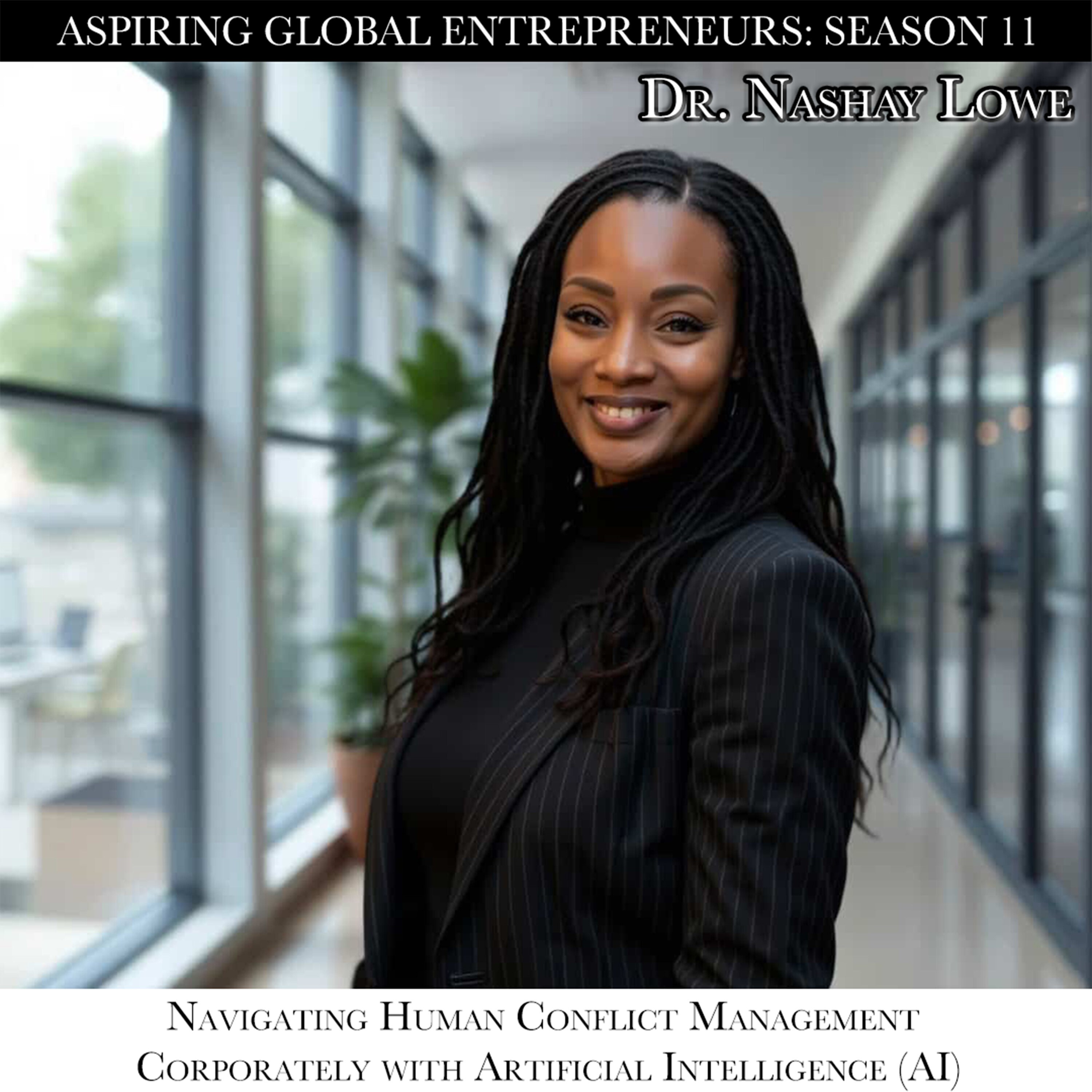
S11 Ep 74Dr. Nashay Lowe: Navigating Human Conflict Management Corporately with Artificial Intelligence (AI)
In this podcast episode, host Favour Obasi-Ike sits down with international conflict management expert Dr. Nashay Lowe to reveal how AI can serve as the ultimate mirror, reflecting our hidden biases and transforming how we communicate.Episode SummaryThis conversation delves into the strategic importance of understanding Artificial Intelligence not merely as a technological advancement, but as a transformative tool for enhancing professional communication, streamlining problem-solving, and fostering profound self-reflection. Dr. Nashay Lowe guides us through the necessary mindset shift required to harness AI's power, moving beyond skepticism to see its potential as an indispensable partner in complex human endeavors.The discussion charts a journey from initial resistance to a nuanced appreciation of AI's role in the modern workplace. Favour Obasi-Ike and Dr. Nashay Lowe dissect the common fear that AI will replace human jobs, reframing the technology as a "power tool" that augments human capability rather than rendering it obsolete.Dr. Nashay Lowe states that the real professional risk isn't being replaced by AI, but by a colleague who masters it. The conversation culminates in a powerful central metaphor: AI as an objective mirror. As Dr. Nashay Lowe states, "Conflict reveals who we are, it doesn't create our divisions it reflects them." In the same way, AI offers a unique ability to reflect our communication patterns and strategic gaps without the inherent lens of a human observer.Ultimately, the episode reveals that AI's effectiveness is entirely dependent on human guidance. Through skillful prompting, critical questioning, and a commitment to ethical use, professionals can leverage AI to see their challenges, and themselves, with unprecedented clarity. This episode provides a compelling roadmap for anyone looking to integrate AI thoughtfully into their work.These are the essential insights you need to navigate this new landscape.Key TakeawaysThis section distills the most critical and actionable insights from the conversation with Dr. Nashay Lowe. These takeaways serve as foundational principles for any professional seeking to adapt to and thrive in an increasingly AI-integrated world, transforming a complex technology into a practical asset for growth and efficiency.AI is an Evolutionary Tool, Not an EnemyResisting AI is akin to resisting the adoption of computers or smartphones—a futile effort against an inevitable technological evolution. The true professional threat is not being replaced by AI itself, but by someone who masters AI as a tool to work more efficiently and effectively. Adaptation is no longer optional; it's a core professional competency.AI Serves as an Objective MirrorThe most powerful application of AI in subjective fields like conflict management is its ability to act as a mirror to our own communication patterns, biases, and choices. By analyzing language and scenarios without a human's inherent emotional or experiential lens, it can reveal subtle tensions, repetitive biases, and strategic blind spots that we might otherwise miss.Human Input Dictates AI OutputThe value of AI is not in the technology alone, but in the user's ability to guide it. Dr. Nashay Lowe emphasizes the necessity of iterative prompting, asking critical questions, and providing specific context to achieve nuanced results. A generic prompt yields a generic answer; a thoughtful, challenging prompt unlocks a deeper level of analysis and creativity.AI Can Augment, But Not Replace, EmpathyWhile AI lacks genuine consciousness or empathy, it serves as an invaluable diagnostic tool. Dr. Nashay Lowe powerfully argues that AI can remind us where empathy is missing in our strategies and communications. It can highlight a failure to consider another perspective or identify language that lacks warmth, prompting the human user to inject the necessary emotional intelligence.The User is the Ultimate Guardian of PrivacyAs AI systems become more deeply integrated with our personal and professional data streams, the user's responsibility grows exponentially. The conversation highlights the valid paranoia around connecting AI to sensitive information. The key takeaway is that the user must proactively manage data connections and maintain confidentiality, for instance, by using anonymized scenarios rather than identifiable information.These core principles provide a framework for leveraging AI not just as a machine, but as a partner in professional development.Detailed Episode Timestamps & NotesThis structured guide provides a detailed breakdown of the episode's key moments and discussions. Use these timestamps to navigate directly to the topics and insights that are most relevant to your professional journey.[00:00:00] Introduction: The Power of Human ConnectionHost Favour Obasi-Ike and Dr. Nashay Lowe reflect on their meeting in
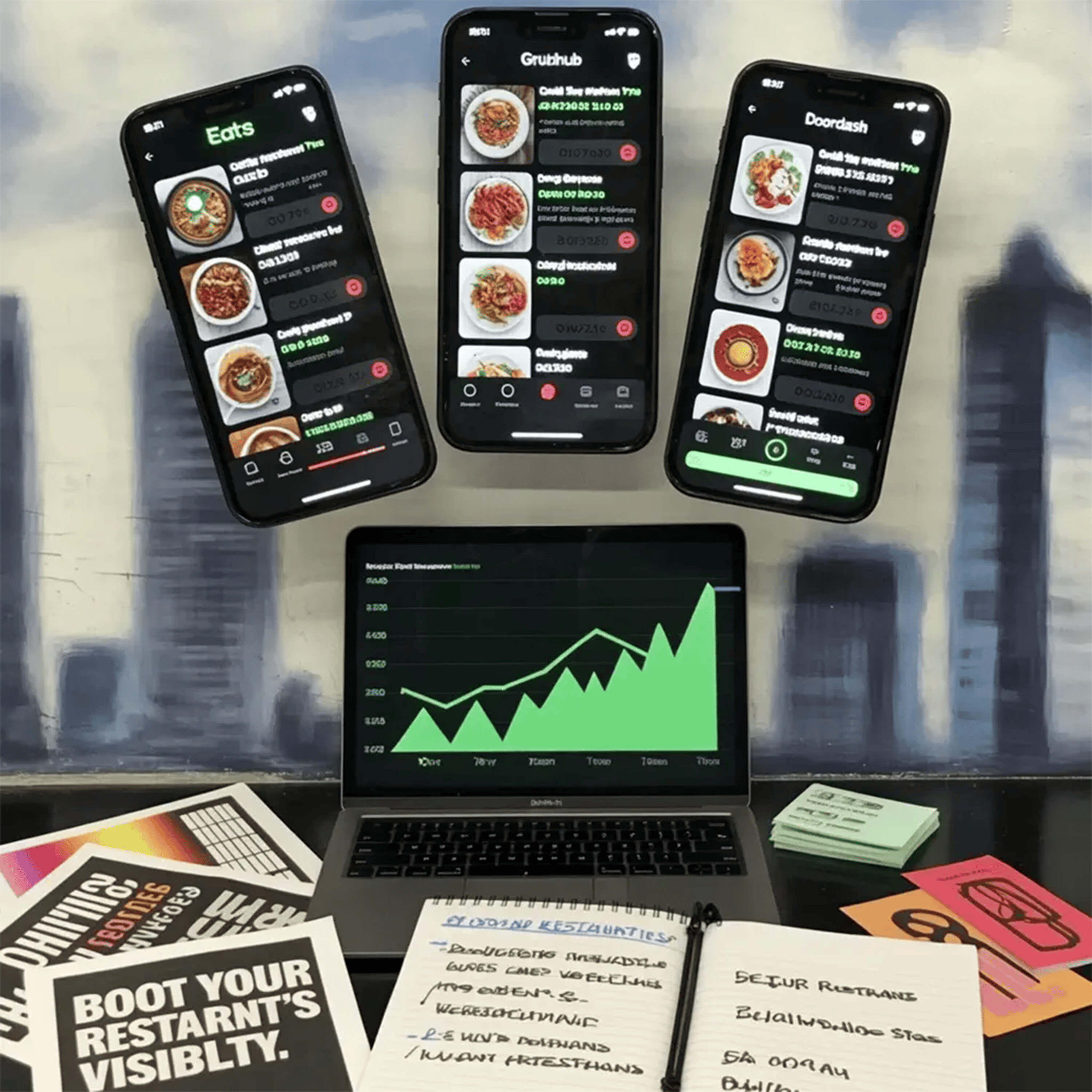
S11 Ep 73Restaurant Food SEO: Uber Eats, Grubhub, DoorDash and OpenTable Marketing Tactical Strategies with Favour Obasi-ike
This Clubhouse marketing session explores the multifaceted world of Restaurant SEO and its application to local businesses. Favour details how establishing a strong digital presence through third-party platforms like Uber Eats and DoorDash creates a "franchise SEO" ecosystem that builds brand authority. The discussion emphasizes off-page strategies, such as connecting Google Business profiles and social media links, to drive traffic and foster community trust. Participants also examine the role of multimedia content, suggesting that podcasts and videos can humanize a brand by showcasing chef interviews or cooking processes.Beyond restaurants, the conversation expands to cover niche industries like private investigation, highlighting how AI-driven search and reputation management are reshaping modern visibility. Ultimately, the sources advocate for a strategic blend of long-term organic growth and immediate paid advertising to maintain a competitive edge.Restaurant SEO: Uber Eats, Grubhub and DoorDash Marketing Tactical Strategies with Favour Obasi-ike with Favour Obasi-Ike | Sign up for exclusive SEO insights.-------------------------------------------------------------------------Next Steps for Booking A Discovery Call | Digital Marketing + SEO Services:>> Need SEO Services? Book a Complimentary SEO Discovery Call with Favour Obasi-Ike here>> Visit our Work and PLAY Entertainment website to learn about digital marketing services.>> Join our exclusive SEO Marketing community>> Read SEO Articles>> Subscribe to the We Don't PLAY Podcast-------------------------------------------------------------------------Episode Timestamps[00:00:00] Introduction: Defining Restaurant SEOThe discussion begins by establishing that "Restaurant SEO" is not a unique discipline but rather a specialized application of local SEO. This foundational understanding is critical for any business reliant on a physical location for customer visits, from restaurants and local stores to farm markets. At [00:01:15], the host defines Restaurant SEO as local SEO with a "restaurant tag" on it, emphasizing its importance for driving traffic, generating tangible results, and gathering customer feedback—all vital for a local establishment's growth.By [00:03:30], the conversation introduces two key strategies for extending a restaurant's online reach. The first is Franchise SEO, which involves leveraging third-party platforms with active communities, such as DoorDash, GrubHub, OpenTable, and NextDoor. Listing a restaurant on these services creates powerful backlinks to its primary website, enhancing its authority.The second is Off-Page SEO, which refers to activities on other digital platforms, primarily social media sites like Facebook, Instagram, and TikTok. Connecting these profiles back to the main website helps build a robust online presence and authority. These definitions set the stage for the episode's central strategic debate on driving business growth.[00:10:00] The Core Debate: SEO for Trust vs. Ads for ImmediacyThis section frames the episode's central conflict, presenting two competing yet complementary philosophies for driving restaurant growth. The speakers weigh the immediate, traffic-driving power of paid advertising against the long-term, trust-building foundation of a solid SEO strategy.At [00:11:45], John makes a strong case for prioritizing paid advertising, asserting that restaurants "need customers now." He argues that paid strategies, such as a proven Facebook advertising model, are the most effective tools for immediate results and that SEO should be considered a secondary, long-term project. At [00:15:20], another speaker supports John's point on the need for immediacy, using a practical example to illustrate the customer mindset: "if I want chicken wings, I'm not worried about SEO."By [00:18:00], Favour presents the counter-argument, clarifying that SEO's primary role is to build trust and credibility before a sale can occur. He uses the analogy of a "red flag" for anyone promising immediate sales directly from SEO. The group reaches a consensus that a balanced approach is best: ads are essential for short-term traffic, while SEO serves as the indispensable long-term foundation for sustainable growth and brand authority. The conversation then transitions from this high-level strategy debate to a specific, actionable content strategy proposed by the host.[00:25:00] A Creative Content Strategy: The Restaurant PodcastThis segment introduces a novel and powerful idea for re

S11 Ep 72Happy Birthday, Favour Obasi-ike! 🥳
Happy Birthday to Favour Obasi-ike. He shares a personal message of gratitude while celebrating a birthday. He reflects on the show's prolific output, noting that over 140 out of 600+ episodes were produced in the current year alone. As the show prepares to enter its twelfth season in 2026, listeners are encouraged to explore the extensive archives via a searchable website to find specific marketing and business topics via wedontplaypodcast.comThis brief update serves as a direct connection with the audience to offer appreciation for their consistent loyalty. Finally, the creator concludes the message by looking forward to future content and heading off to a commemorative dinner.-------------------------------------------------------------------------Next Steps for Booking A Discovery Call | Digital Marketing + SEO Services:>> Need SEO Services? Book a Complimentary SEO Discovery Call with Favour Obasi-Ike here>> Visit our Work and PLAY Entertainment website to learn about our digital marketing services.>> Visit our Official website for the best digital marketing, SEO, and AI strategies today!>> Join our exclusive SEO Marketing community>> Read SEO Articles>> Need SEO Services? Book a Complimentary SEO Discovery Call with Favour Obasi-Ike>> Subscribe to the We Don't PLAY Podcast-------------------------------------------------------------------------See Privacy Policy at https://art19.com/privacy and California Privacy Notice at https://art19.com/privacy#do-not-sell-my-info.

S11 Ep 71Merry Christmas!🎄🎁 ❄️ God Bless You! ✝️ from Favour Obasi-ike (Holiday Greetings Special)
bonusMerry Christmas to you and your beautiful family! This episode features Favour Obasi-ike offering a holiday greeting to his precious listeners. This captures a seasonal well-wish intended to convey warmth and spiritual favor during the winter festivities. By using a traditional festive salutation, Favour aims to establish a positive connection with you, the listener. The message is succinct and celebratory, focusing entirely on a Christian blessing associated with the Christmas season. This simple piece of media serves as a sincere gesture of goodwill and holiday cheer.Thank you for listening to the We Don't PLAY™️ Podcast Show! God bless you!-------------------------------------------------------------------------Next Steps for Booking A Discovery Call | Digital Marketing + SEO Services:>> Need SEO Services? Book a Complimentary SEO Discovery Call with Favour Obasi-Ike here>> Visit our Work and PLAY Entertainment website to learn about our digital marketing services.>> Visit our Official website for the best digital marketing, SEO, and AI strategies today!>> Join our exclusive SEO Marketing community>> Read SEO Articles>> Need SEO Services? Book a Complimentary SEO Discovery Call with Favour Obasi-Ike>> Subscribe to the We Don't PLAY Podcast-------------------------------------------------------------------------See Privacy Policy at https://art19.com/privacy and California Privacy Notice at https://art19.com/privacy#do-not-sell-my-info.

S11 Ep 70What Makes a High-Converting Website in 2026? AI SEO Marketing Masterclass with Favour Obasi-ike
Merry Christmas Eve everyone! 🎄🎁 In this episode, Favour Obasi-ike and guest, Jon Muranko will deconstruct the essential elements of a high-converting website for 2026 and beyond. The high-level conversation moves beyond simple aesthetics to offer a masterclass in marketing psychology, user intent, essential analytics, and actionable strategies for businesses preparing for the future.They explore why a "pretty" website often fails to convert, the power of framing conversion as a value-driven conversation, and the non-negotiable tools every business owner needs to understand their audience and drive meaningful results.What Makes a High-Converting Website in 2026? AI SEO Masterclass with Favour Obasi-ike with Favour Obasi-Ike | Sign up for exclusive SEO insights.-------------------------------------------------------------------------Next Steps for Booking A Discovery Call | Digital Marketing + SEO Services:>> Need SEO Services? Book a Complimentary SEO Discovery Call with Favour Obasi-Ike here>> Visit our Work and PLAY Entertainment website to learn about our digital marketing services.>> Visit our Official website for the best digital marketing, SEO, and AI strategies today!>> Join our exclusive SEO Marketing community>> Read SEO Articles>> Need SEO Services? Book a Complimentary SEO Discovery Call with Favour Obasi-Ike>> Subscribe to the We Don't PLAY Podcast-------------------------------------------------------------------------Key Actionable Insights• Focus on Intent, Not Just Appearance: A professionally designed website doesn't guarantee conversions. The key is to first understand the user's intent—what problem they are trying to solve—and then build specific pages with clear copy and calls-to-action that guide them toward a defined outcome, whether it's a download, a call, or a sale.• Conversion is a Conversation: Replace aggressive "buy my stuff" tactics with a value-driven conversation. A high-converting website uses tools like interactive quizzes, valuable lead magnets, and strategic videos to engage users, build trust, and demonstrate value long before asking for a purchase.• Master Your Data: You cannot improve what you don't measure. Using free and powerful tools like Google Search Console and Microsoft Clarity is no longer optional. These platforms are not just for tech experts; they are crucial for understanding visitor behavior, identifying friction points in the user journey, and making informed, data-driven decisions to improve conversion rates.Detailed Episode Breakdown & Episode Timestamps1. Introduction & The Core Principles of Conversion[00:00 - 08:45]The episode opens, establishing a new framework focused on marketing psychology and user intent, moving beyond just visual design. Favour Obasi-ike introduces the show, and John challenges the myth that a "pretty" website automatically converts. The key is defining a clear conversion goal (e.g., a "shy yes" lead, a direct call, or a purchase).They introduce "The 97% Problem"—highlighting that most websites fail to engage the vast majority of visitors, reframing the core job as capturing the motivated 3%.2. The Critical Role of Time, Analytics, and Video[08:45 - 16:30]Focus shifts to on-page experience, where time is treated as critical currency. Favour Obasi-ike discusses load speed, information processing time, and the effort to take action. A key tactic is embedding YouTube videos to boost engagement and time-on-site using YouTube's platform.The segment stresses that driving traffic without analytics is a major pitfall, leaving businesses with no insight into visitor behavior or lead sources.3. The Marketer's Essential Toolkit & Mindset[16:30 - 24:15]A practical toolkit of free, essential resources is outlined: Google Analytics, Google Search Console, Bing Webmaster Tools, and Microsoft Clarity (described as "security cameras for your website"). To combat "paralysis by analysis," John advises simply getting a basic site live as a "Phase 1," using tools like ChatGPT for help. A critical warning is issued: technical skill (left brain) must be combined with marketing psychology and copywriting (right brain) for true conversion success.4. High-Impact Conversion Mechanisms in Action[24:15 - 40:40]Favour Obasi-ike details five powerful conversion mechanisms:Video: Increases engagement and time on site.Quiz: Generates high-intent leads through interactive questions.Lead Magnet: Exchanges value (e.g.,

S11 Ep 69Stewart Cohen: Cutting Through the Noise with Credibility & Building a Lasting Business
In this episode, we sit down with a top entrepreneur and filmmaker Stewart Cohen, an expert and business owner of nearly 20 years, to unpack how to build genuine credibility and lasting success in an age of overwhelming digital noise ("cyber noise").Stewart shares timeless principles from his entrepreneurial journey, shaped by a family legacy of business ownership, and contrasts the foundational strategies of the past with the unique challenges of today.Stewart argues that in a world where “social media lies, websites lie,” the most valuable currency is in-person credibility. He provides a masterclass in turning client relationships into your most powerful marketing engine and explains why protecting your audience’s attention is the ultimate business discipline.🎯 Core Takeaways & Episode Timestamps[03:15] — The Entrepreneurial Blueprint: A Family LegacyStewart reveals how growing up with a father and stepfather who were business owners made entrepreneurship feel like a natural path, instilling a deep sense of responsibility where "the buck stops here."[05:45] — Principle #1: The Non-Negotiable FoundationThe #1 key to his nearly 20-year run? "Do what you love." Stewart contrasts deep passion for your craft with chasing trends, highlighting love as the ultimate driver of resilience and longevity.[08:10] — A Grounded View on MotivationA pragmatic look at the time vs. money debate. Stewart acknowledges that paying bills is a powerful early motivator, but stresses that sustainable owners must understand **"the whole arc of business," **not just the fun parts.[10:30] — Building Credibility: Then vs. NowReflecting on marketing 20 years ago (direct mail, in-person meetings) versus today’s landscape. Stewart identifies the modern core challenge: building true credibility when digital personas are cheap and easily fabricated.[13:00] — Your Best (and Free) Sales TeamStewart’s central philosophy: "A happy client is also your best salesperson." He makes the strategic case for prioritizing client retention over the relentless chase for new leads, leveraging powerful organic word-of-mouth.[15:20] — A Key Insight on FeedbackThe host shares a critical reframe: that feedback is "the best currency for your business."Stewart identifies this as a powerful lesson on the importance of proactively seeking client input.[17:00] — A Strategy to Tame the "Cyber Noise"Stewart’s personal filter: consume only what is relevant to avoid "death scrolling." He gives a concrete example of unfollowing a contact who posted off-brand content, illustrating how irrelevant noise dilutes professional credibility.[21:15] — Choosing Your Tribe & ClienteleWith limited hours in the day, it’s crucial to be intentional. Stewart discusses the importance of identifying and choosing to work with your "tribe"—like-minded people who share a passion for creating excellent work.[23:40] — The Art of Earning an InboxThe golden rule for email (and all communication): Be consistently relevant. Every irrelevant message is a withdrawal from your trust bank. You have seconds to prove your message is "worthy" of someone’s time.[26:30] — Parting Advice & How to ConnectStewart’s final, overarching lesson is "Be respectful of people’s time." He shares where he focuses his own clean, professional communication.🔗 Mentioned Resources & LinksConnect with Stewart Cohen:LinkedIn: Stewart CohenProduction Company: scpictures.com / stewartcohen.comInstagram: @scpicturesMedia Licensing: superstock.comConnect with We Don't PLAY!:Website & Our Services: playinc.onlineBookings/Inquiries/Sponsorships: [email protected] unique stock photography and video footage for any creative project with Superstock.com here >>💡 From the Host, Favour Obasi-ike, MBA, MSThank you for listening to We Don't PLAY!. Our mission is to help you effectively listen, live, learn, and earn. If you're ready to cut through the digital noise and build a marketing strategy with genuine longevity, we're here to help.We invite you to visit playinc.online to schedule a complimentary SEO discovery call. Let's build something lasting together.See Privacy Policy at https://art19.com/privacy and California Privacy Notice at https://art19.com/privacy#do-not-sell-my-info.

S11 Ep 68How to Write Catchy Titles (Meta), Descriptions, and High-Impact Headlines with Favour Obasi-ike [Step-by-step SEO Guide]
How to Write Catchy Titles, Descriptions, and High-Impact Headlines for your websites, email marketing, social media marketing, Pinterest SEO, and more with Favour Obasi-Ike | Sign up for exclusive SEO insights.Episode Summary:In this comprehensive episode + guide on crafting effective digital headlines, titles, and descriptions to boost online engagement. The speaker emphasizes that metadata acts as the essential context for content, serving as the primary factor that drives click-through rates across platforms like Google, YouTube, and LinkedIn. Strategic advice includes maintaining a title length of approximately 55 to 65 characters to avoid text truncation while maximizing visual impact. I also recommend using odd numbers, brackets, and power words to leverage psychological triggers that improve visibility and user trust. Finally, the discussion frames intentional copywriting as a vital tool for business owners to transform passive web traffic into active conversions and long-term brand authority.In high-level digital strategy, titles, descriptions, and headlines are not merely decorative—they serve as the essential "key frames" of metadata. This content architecture bridges the gap between raw information and audience discovery by providing the necessary context (Author, Host, Duration, and Intent) that search algorithms require to categorize an asset. By transforming raw content into searchable, high-value assets, a strategist ensures that the brand is prioritized within the user's search journey.Favour emphasizes that structured delivery and architectural integrity correlate directly to business results. If a title fails to establish immediate relevance, the conversion path is broken before it begins. Success in the current landscape requires a commitment to iterative improvement—ensuring the "next version" of a title or metadata set is systematically optimized based on data rather than intuition. This log details the tactical framework used by Favour, currently ranked #2 (We Don't PLAY!) on the FeedSpot Top 100 Marketing Podcasts (trailing only Gary Vaynerchuk), to drive visibility across SEO, PPC, and email ecosystems.Deep Dive: The Quantitative Science of Click-Through Rates (CTR)To maximize ROI, content creators must move beyond "gut feeling" and toward research-backed optimization. Using industry benchmarks from Orbit Media and Moz, we can calibrate headlines to meet the psychological triggers that drive user action.-------------------------------------------------------------------------Next Steps for Digital Marketing + SEO Services:>> Need SEO Services? Book a Complimentary SEO Discovery Call with Favour Obasi-Ike>> Visit our Work and PLAY Entertainment website to learn about our digital marketing services.>> Visit our Official website for the best digital marketing, SEO, and AI strategies today!>> Join our exclusive SEO Marketing community>> Read SEO Articles>> Need SEO Services? Book a Complimentary SEO Discovery Call with Favour Obasi-Ike>> Subscribe to the We Don't PLAY Podcast-------------------------------------------------------------------------Timestamps[00:00] Catchy Titles vs. Structure; Metadata as the "Context to the Content."[05:00] The 600-Pixel Rule; Pixel Weight (W vs. l); The 55-Character Sweet Spot.[10:00] Moz Study Analysis; Numbers in Headlines; Why Odd Numbers Win; Brackets and Transparency.[15:00] Power Words and Psychological Triggering; Tool Highlight: CapitalizeMyTitle.[20:00] Platform Evolution: Instagram as TV; LinkedIn SEO and the One-Time URL Edit Rule.[25:00] Case Study: Ranking #2 on FeedSpot; The Math of the 12-Hour Masterclass; Call to Action.Effective content strategy requires tracking the flow of information to ensure "next-version" improvements. The following log segments the Masterclass into thematic chapters, providing the "So What?" factor for each strategic shift.Chapters:Chapter 1: The Metadata Framework [00:00 - 10:00] Context vs. Content. This segment establishes that metadata is the "context" (attributes like host and duration) that allows users to value an asset before engaging. Without these key frames, even high-quality content remains invisible to search engines and the "Exact Searcher Intent."Chapter 2: The Utility of Catchy Copy [10:00 - 18:00] Visibility Across the Funnel. Effective copy acts as the primary catalyst for Click-Through Rates (CTR) across SEO, LinkedIn,
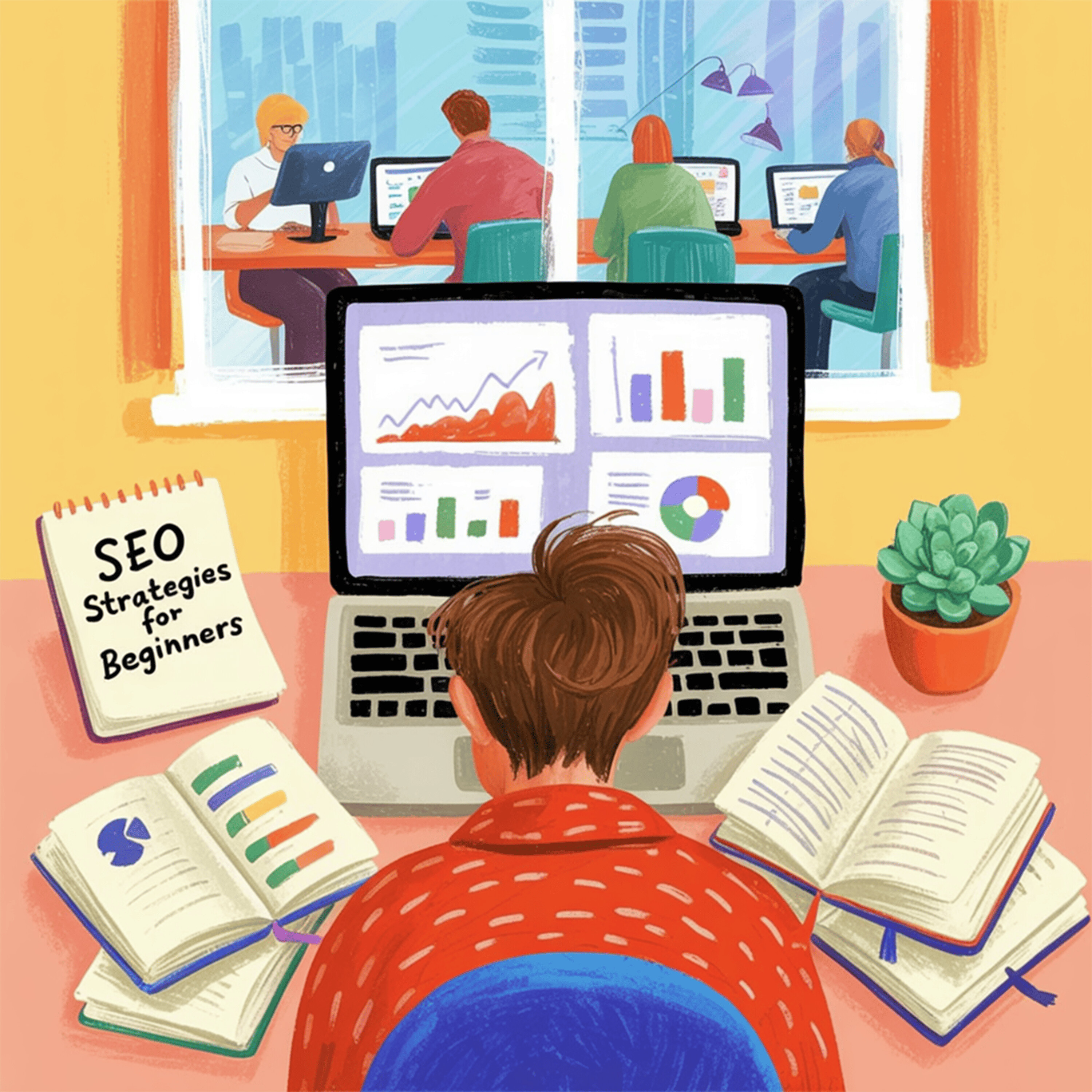
S11 Ep 67Mastering SEO Business Strategies for Beginners: Search Intent and Keyword Trends Guide with Favour Obasi-ike
In this fast-paced episode of the "We Don't PLAY!™️" podcast, host Favour Obasi-ike and business colleague, Pierre DeBois deliver a no-fluff, actionable guide to SEO for beginners and business owners. We cut through the noise and focus on two powerful, accessible strategies: decoding user intent and leveraging seasonal trends. Learn why long-tail keywords beat high-volume searches, how SEO is the essential engine for AI-powered search, and how to use free tools to plan content that converts.Mastering SEO Strategies for Beginners: Search Intent and Keyword Trends Guide with Favour Obasi-Ike | Sign up for exclusive SEO insights.--------------------------------------------------------------------------------Next Steps for Digital Marketing + SEO Services:>> Need SEO Services? Book a Complimentary SEO Discovery Call with Favour Obasi-Ike>> Visit our Work and PLAY Entertainment website to learn about our digital marketing services.>> Visit our Official website for the best digital marketing, SEO, and AI strategies today!>> Join our exclusive SEO Marketing community>> Read SEO Articles>> Need SEO Services? Book a Complimentary SEO Discovery Call with Favour Obasi-Ike>> Subscribe to the We Don't PLAY Podcast--------------------------------------------------------------------------------This is your playbook for making digital visibility simple, strategic, and effective.Episode Timestamps[00:00:00] IntroductionFavour opens the show with the podcast's mission to help you "listen, live, learn, and earn," framing this episode as a practical SEO starter kit.[00:01:30] Strategy 1: The Power of Intentional SearchesWhy longer, specific queries like "comfortable shoes for Christmas" signal a buyer ready to act, and how to create content that meets this precise need. We break down the user's journey through the three layers of the web.[00:06:10] How SEO Gets Your Content FoundDemystifying crawling, indexing, and visibility. We explain why SEO is your website's foundational engine and how it powers modern AI search tools, not the other way around. Includes tips on using LinkedIn for backlinks.[00:10:45] Strategy 2: Capitalizing on TrendsUsing the "fruit season" metaphor, we show how to use tools like Google Trends to identify keyword cycles. Learn how to plan content 2-3 months ahead to build authority and rank #1 when the trend peaks.[00:15:30] Guest Perspective: Pierre on Intent and the Rise of AEOPierre clarifies that Answer Engine Optimization (AEO) is an evolution of SEO, not a replacement. He breaks down intent with an "apple pie" analogy and stresses the need to anticipate user questions in all content.[00:20:15] Practical Example: Searching for "Apple Pie" on an AI Engine (DeepSeek)A live demo using DeepSeek shows how AI responds to layered intent—from a general recipe search to "links please" for store locators—highlighting why your website needs specific, indexable pages.[00:24:00] Pierre's Advice: SEO is Not "Set and Forget"Why you must be ready to pivot. Pierre shares a personal story of how analytics revealed his true audience, forcing a complete strategy shift, and why the quiet season is perfect for planning.[00:26:45] Using Analytics to Refine Your StrategyA rundown of free tools (Google Search Console, Microsoft Clarity, etc.) and how to use data on user devices and browsers to craft hyper-relevant marketing that makes "sense" and "cents."[00:30:15] Final Actionable Advice & Wrap-UpYour clear next steps: Find your audience's questions, check them against trends, create content, and distribute it where your community lives. Favor encourages you to take the leap and start.Key Quotes:"SEO is not a set and forget it type activity. It's making adjustments over time because the technology behind it may be changing just enough to create new opportunities that you may want to take advantage of." - Pierre"You can speak without talking, but you can't think without words." - Myron Golden (quoted by Favor)Mentioned Tools & Resources: Google Trends, AnswerThePublic, SparkToro, DeepSeek, Google Search Console, LinkedIn, and more.Subscribe to "We Don't PLAY!™️" for more straight-talking marketing strategies to grow your business today!See Privacy Policy at https://art19.com/privacy and California Privacy Notice at https://art19.com/privacy#do-not-sell-my-info.
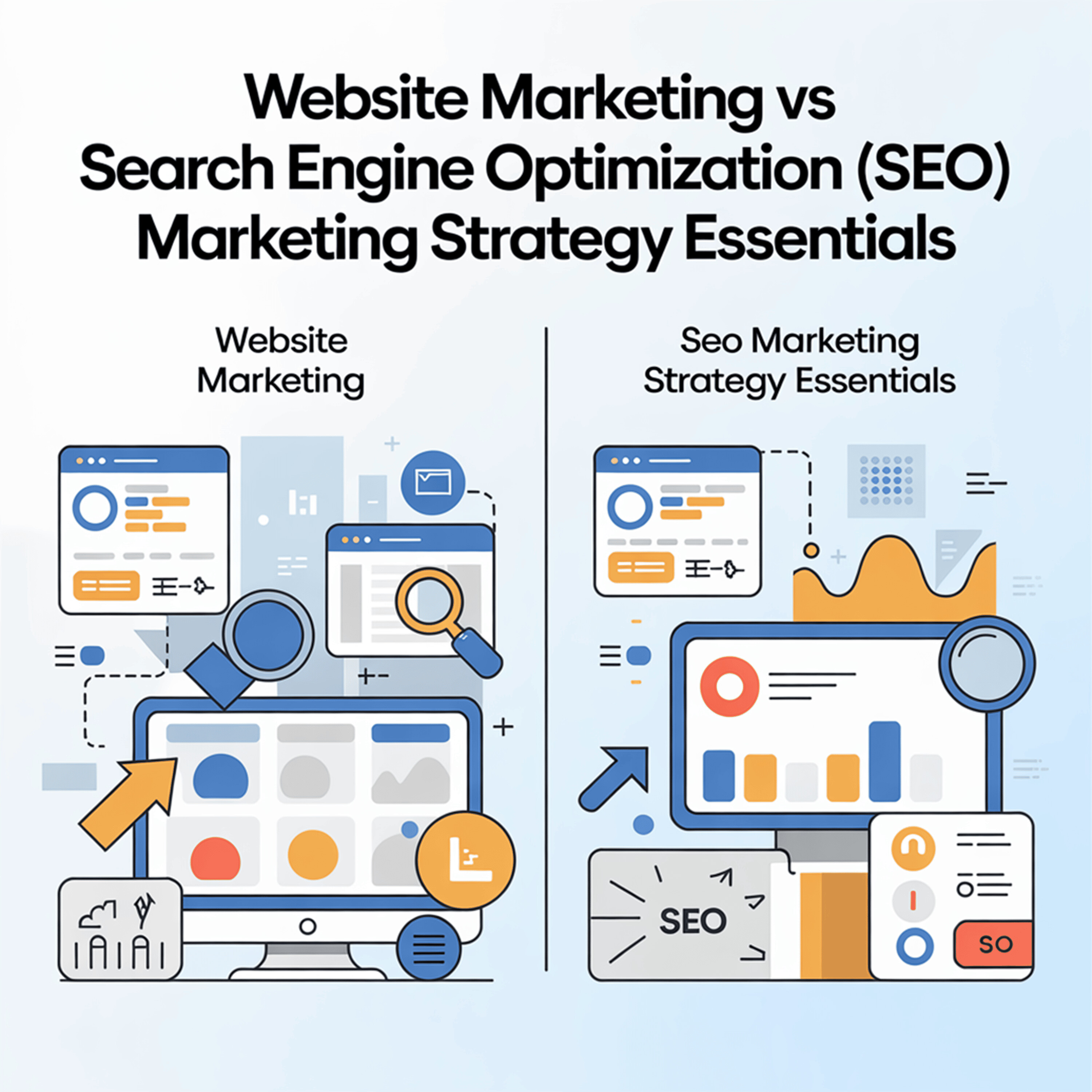
S11 Ep 66Website Marketing vs. SEO Marketing | The Complete Digital Business Essentials Guide with Favour Obasi-ike
Website Marketing vs. SEO Marketing: The Complete Business Essentials Guide with Favour Obasi-Ike | Sign up for exclusive SEO insights.This episode demystifies the relationship between website marketing and Search Engine Optimization (SEO), clarifying the critical distinction between the two. The discussion frames website marketing as the broad, all-encompassing "ecosystem" of a brand's online presence, including email, social media, and advertising. In contrast, SEO is presented as the tactical, high-performance "engine" that powers a website's visibility and drives targeted traffic within that ecosystem. Through foundational principles, practical strategies, and live consultations with business owners, this guide provides a comprehensive framework for building a powerful and effective digital identity.--------------------------------------------------------------------------------Next Steps for Digital Marketing + SEO Services:>> Need SEO Services? Book a Complimentary SEO Discovery Call with Favour Obasi-Ike>> Visit our Work and PLAY Entertainment website to learn about our digital marketing services.>> Visit our Official website for the best digital marketing, SEO, and AI strategies today!>> Join our exclusive SEO Marketing community>> Read SEO Articles>> Need SEO Services? Book a Complimentary SEO Discovery Call with Favour Obasi-Ike>> Subscribe to the We Don't PLAY Podcast--------------------------------------------------------------------------------Key Takeaways• Website Marketing is the Ecosystem, SEO is the Engine: Website marketing is the entire universe of your online activities, from email campaigns to social media posts. SEO is the specific, technical practice of optimizing your website to be found by search engines, giving your marketing efforts direction and power.• Your Website is Your Digital Identity: A website is more than a link or a digital storefront; it is the central hub for establishing your brand's credibility, trustworthiness, and authority, creating a lasting experience for both new and returning visitors.• Messaging Precedes Marketing: The effectiveness of any marketing tactic hinges on compelling messaging that connects with customer psychology. As demonstrated with the "strawberry" example, great marketing shifts a customer's mindset from a simple "need" to an emotional "want."• Storytelling Sells, Facts Only Tell: To convert visitors into customers, product descriptions must go beyond listing features and instead create an emotional connection. As speaker Mo advises:• Technical Health is Non-Negotiable: A website's foundational health depends on more than just load speed and hosting. Consistently publishing fresh content is critical because every update creates a new "tokenized" copy for search engines to crawl. A dormant site gives search engines no reason to return, while an active site signals relevance and forces re-evaluation, directly impacting rankings.--------------------------------------------------------------------------------Detailed Episode Notes1. Defining the Landscape: Website Marketing vs. SEOTo build a successful online presence, it is vital to distinguish between the overarching platform of website marketing and the specific tactics of SEO. Website marketing represents your brand's total visibility and communication channels online. SEO, a critical component within that framework, is the deliberate set of actions taken to ensure your website is discovered by the right audience at the right time. Understanding this difference is the first step toward a coherent and effective digital strategy.Contrasting Key ConceptsWebsite Marketing (The Ecosystem)The Truck and Engine AnalogyThe relationship between these two concepts can be understood through a simple yet powerful analogy presented during the episode:"Think of your website like a truck. Website marketing is the truck itself—it exists, it's present, and it's visible. SEO is the engine that actually moves the truck forward, giving it the power, speed, and direction it needs to reach its destination."With these foundational definitions established, it's clear that the website itself serves as the strategic center of all marketing efforts.2. The Strategic Hub: Your Website's Core FunctionYour website is your most critical digital asset. It is the definitive online destination where you control the narrative and build direct relationships with your audience. Far more than jus
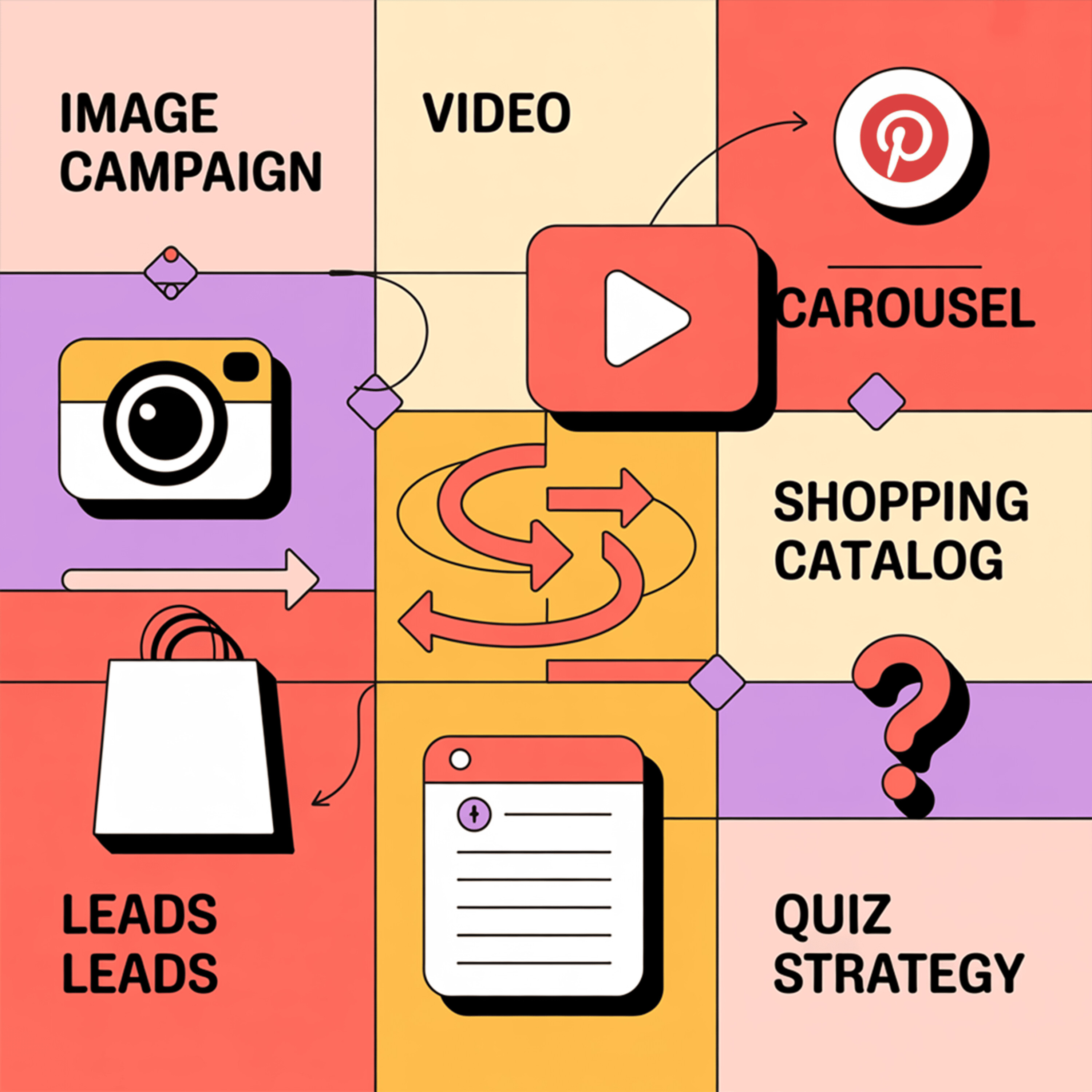
S11 Ep 65Pinterest Advertising Campaigns: Image, Video, Carousel, Shopping Catalog, Leads & Quiz Ads Strategy with Favour Obasi-ike
Pinterest Advertising Campaigns: Image, Video, Carousel, Shopping Catalog, Leads & Quiz Strategy with Favour Obasi-Ike | Sign up for exclusive SEO insights.Pinterest for business advertising, emphasizing its power as a visual search engine rather than a traditional social media platform. Favour highlights that Pinterest users exhibit a higher purchasing power and are in a planning mindset, making their minimal time spent on the platform highly intentional for conversions compared to engagement-focused sites like TikTok or Facebook. Practical advice is offered on running various ad types—including image, video, carousel, catalog, and lead/quiz ads—along with technical specifications and the importance of claiming a website to utilize Pinterest's tagging system for superior analytics and targeting, such as act-alike audiences and zip code campaigns.Ultimately, we position Pinterest advertising as a valuable, data-driven strategy for businesses seeking a high return on time and investment.--------------------------------------------------------------------------------Next Steps for Digital Marketing + SEO Services:>> Need SEO Services? Book a Complimentary SEO Discovery Call with Favour Obasi-Ike>> Visit our Work and PLAY Entertainment website to learn about our digital marketing services.>> Visit our Official website for the best digital marketing, SEO, and AI strategies today!>> Join our exclusive SEO Marketing community>> Read SEO Articles>> Need SEO Services? Book a Complimentary SEO Discovery Call with Favour Obasi-Ike>> Subscribe to the We Don't PLAY Podcast--------------------------------------------------------------------------------Why 90 Minutes a Month on Pinterest Beats 35 Hours on TikTokIntroduction: The Hidden Power of the Internet's Digital Vision BoardWhen you think of Pinterest, what comes to mind? For many, it's a digital scrapbook for wedding ideas, home decor inspiration, and tonight's dinner recipe. But what if this familiar facade conceals one of the most misunderstood and powerful marketing engines online? Behind the vision boards and DIY projects lies a platform built not on fleeting attention, but on deliberate intention.This episode reveals five surprising truths about Pinterest that defy conventional social media wisdom and highlight its unique, untapped value for businesses and marketers.--------------------------------------------------------------------------------1. The 90-Minute Paradox: Why Less Time on Platform Means More for BusinessIt's a counter-intuitive finding that stops most marketers in their tracks: Pinterest users spend significantly less time on the platform than users of other major networks.According to recent data, the average user spends just 1 hour and 31 minutes per month on Pinterest. Compare that to the time sinks of other platforms:• TikTok: 35 hours per month• Facebook: 29 hours per month• Instagram: 15 hours per monthThis isn't a sign of low engagement; it's a signal of high-intent, purposeful activity. Breaking it down, 91 minutes a month averages to just about 3 minutes per day. Users aren't there to endlessly scroll. In those three minutes, a user is on a mission: they might spend 30 seconds looking for an idea, a minute to find the right one, and the next minute to affirm it, save it for later, or click through to act on it immediately. This focused, goal-oriented behavior means every minute is packed with commercial intent."So if you're planning on Pinterest and you're spending less than 2 hours to be on a platform that's going to give you maximum return on your time and investment, it's worth it than spend 35 hours to do the same thing..."2. The Audience Isn't Just Browsing—They're Planning and They Have Buying PowerThe fundamental difference between Pinterest and other platforms is user mindset. While other networks thrive on a culture of passive "swiping," Pinterest is the go-to destination for active "planning." Users are there with the specific intention of preparing for something—whether it's an event, a book, a wedding, a shoe, a color, or a tip—which makes them uniquely receptive to relevant brand content and advertising.This high-intent audience also has significant financial leverage:• Approximately 45% of Pinterest users have an annual household income of at least $150,000.• Their purchasing power is 5% to 38% higher than
S11 Ep 64Which Podcast Platform is Best? Podcast Hosting Platforms Vs Podcast Streaming Directories: Research Explained with Favour Obasi-ike
Which Podcast Platform is Best? Podcast Hosting Platforms Vs Podcast Streaming Directories: Research Explained with Favour Obasi-Ike | Sign up for exclusive SEO insights.This podcast episode provides a comprehensive discussion on starting and growing a podcast, focusing heavily on the selection of the best podcasting platform. A key distinction is made between podcast hosting platforms (like Spotify for Creators, formerly Anchor.fm) and podcast listening platforms (such as Apple Podcasts, Spotify, and Amazon), emphasizing that a host distributes content via an RSS feed to multiple directories.Our conversation underscores that podcasting should be conversation-first, not monetization-first, and advises beginners to start for free to minimize initial costs. Practical advice is offered on SEO for podcasts, including the importance of consistent episode releases, with statistics showing that many podcasters quit early, and also highlights the benefit of choosing an IAB-compliant host for future monetization opportunities through advertising networks.--------------------------------------------------------------------------------Next Steps for Digital Marketing + SEO Services:>> Need SEO Services? Book a Complimentary SEO Discovery Call with Favour Obasi-Ike>> Visit our Work and PLAY Entertainment website to learn about our digital marketing services.>> Visit our Official website for the best digital marketing, SEO, and AI strategies today!>> Join our exclusive SEO Marketing community>> Read SEO Articles>> Need SEO Services? Book a Complimentary SEO Discovery Call with Favour Obasi-Ike>> Subscribe to the We Don't PLAY Podcast--------------------------------------------------------------------------------4 Surprising Podcasting Truths That Will Save You Time and MoneyThe appeal of starting a podcast has never been stronger. With just a microphone and an idea, it seems you can reach a global audience, build a community, and create a thriving brand. This allure draws thousands of aspiring creators to the medium, all asking the same questions: "How do I start? Which platform is best? How do I make money?"But the common wisdom surrounding podcasting is often a minefield of misleading advice and expensive pitfalls. The path to a successful, sustainable show is paved with counter-intuitive truths that most creators learn the hard way. The reality is that podcasting is less about instant fame and fortune and more about a long-term commitment to a very specific craft.This article will save you time, money, and frustration. We've distilled the most surprising and impactful lessons learned from podcasting experts into four foundational takeaways. Understanding these truths from day one will give you a realistic roadmap and a significant advantage over the thousands who quit before they ever find their voice.1. It’s a Conversation, Not a Cash MachineThe most common mistake new podcasters make is focusing on monetization from day one. They get caught up in finding ad sponsors and driving transactions before they've even built an audience. The primary purpose of a podcast, especially in its early stages, must be conversation. When you have a conversation with someone, you don't expect a monetary transaction afterward; you expect an exchange of value.In podcasting, that value is trust, thought leadership, and a genuine relationship with your listeners—all earned over time. Trying to monetize too early feels transactional and inauthentic, pushing potential listeners away before they have a chance to connect. As one expert puts it, the focus must be on the relationship first."if you start a podcast to run ads or to monetize, you you're actually better off starting a business than starting a podcast to monetize."This "conversation first" approach is far more sustainable. It allows you to build a loyal community that values your perspective. Monetization can and will come later, but only after trust has been firmly established. That trust is ultimately a more valuable asset than any early ad revenue.2. Your First Episodes Will Suck (So Don't Buy That $400 Mic)Many aspiring podcasters fall hook, line, and sinker for spending hundreds or even thousands of dollars on expensive equipment before they've produced a single minute of content. This is a costly mistake. I've seen seasoned creators get their best gear for dirt cheap simply by buying it from new podcasters who quit. They’
S11 Ep 63Pinterest SEO Business Masterclass: The Power of Pinterest Marketing, SEO and Evergreen Content for Businesses with Favour Obasi-ike 🌳
Power of Pinterest and Evergreen Content Marketing Masterclass for Businesses with Favour Obasi-Ike | Sign up for exclusive SEO insights.💡 These Content Amplification, SEO, and Value Pricing-based topics are comprehensively discussed regarding the efficacy and power of Pinterest SEO and evergreen content marketing for business growth. Favour suggests that Pinterest should be utilized as a strategic visual search engine because its content has a significantly longer, evergreen shelf life compared to ephemeral social media posts, like those found on Instagram.A core recommended strategy involves repurposing content across platforms, particularly by feeding material from established business websites and social channels directly into Pinterest to maximize distribution. The conversation also explores broader entrepreneurship themes, stressing the necessity of building a proprietary content ecosystem to safeguard intellectual property against unpredictable platform shutdowns.Furthermore, professionals advise business owners to embrace delegation and consistency to avoid burnout, concluding that implementing paid consultations or low-cost products is crucial for establishing value and filtering high-quality client leads.--------------------------------------------------------------------------------Next Steps for Digital Marketing + SEO Services:>> Need SEO Services? Book a Complimentary SEO Discovery Call with Favour Obasi-Ike>> Visit our Work and PLAY Entertainment website to learn about our digital marketing services.>> Visit our Official website for the best digital marketing, SEO, and AI strategies today!>> Join our exclusive SEO Marketing community>> Read SEO Articles>> Need SEO Services? Book a Complimentary SEO Discovery Call with Favour Obasi-Ike>> Subscribe to the We Don't PLAY Podcast--------------------------------------------------------------------------------Your Instagram Posts Last 72 Hours. Here’s How Pinterest Gives Them a 5-Month Lifespan.As a business owner, you know the feeling. You pour time, energy, and creativity into crafting the perfect social media post for a platform like Instagram. You post it, engage with the initial flurry of comments, and then... it vanishes. Within a few days, it’s lost in the endless scroll, its relevance faded, forcing you back onto the content creation treadmill to do it all over again.But what if there was a platform that treated your hard work not as a fleeting post, but as a long-term, searchable asset? A powerful, often misunderstood tool that could give your content a lifespan measured in months, not hours.This episode reveals five surprising takeaways about Pinterest that can fundamentally change your content strategy, turning your marketing efforts from a constant sprint into a sustainable, long-term investment.Five Surprising Truths About Pinterest for BusinessTakeaway 1: You Can Instantly Import Your Entire Instagram HistoryOne of the most powerful and underutilized features of a Pinterest business account is its ability to directly connect with your Instagram business account. This process, which must be done on a computer, is a game-changer for any business with a backlog of Instagram content.Once you claim your Instagram profile under your Pinterest settings and authenticate the connection, Pinterest will automatically "ingest" all of your historical Instagram posts. This includes every image and, crucially, their original captions, which are then organized into a board that is, by default, called a "social board." For businesses that have spent years building a visual library on Instagram, this feature instantly populates their Pinterest profile with hundreds or even thousands of pieces of content with minimal effort.Takeaway 2: Your Content's Lifespan Jumps from 72 Hours to 5 MonthsThe difference in content longevity between platforms is staggering. An Instagram post has an ideal lifespan of around 72 hours before it fades from relevance. In stark contrast, a pin on Pinterest has an evergreen lifespan of 3.5 to 5 months.Of course, the 72-hour figure for Instagram is not set in stone; it's a strategic consideration, not a stamped guarantee. As an algorithm-driven platform, there are always variable factors. A post could hit the explore page and last longer. But it’s a critical benchmark for understanding the platform’s nature."if you're bringing all your 72-hour posts from Instagram and you'r
S11 Ep 625 Lessons from 5 Years on Clubhouse App with Favour Obasi-ike 🎙️
5 Lessons from 5 Years on Clubhouse App with Favour Obasi-Ike | Sign up for exclusive SEO insights.This episode primarily discusses five key lessons learned from my 5 years on Clubhouse: intentionality, priority, patience, consistency, and tenacity (or resilience).Throughout the session, Favour interacts with the audience, emphasizing the importance of building relationships, providing value, and adapting to the evolving nature of the app for both personal and business growth, including mentions of his successful We Don't PLAY™️ podcast. The conversation also touches on other topics such as marketing strategy, the app's history, and making connections that lead to real-world opportunities.--------------------------------------------------------------------------------Next Steps for Digital Marketing + SEO Services:>> Need SEO Services? Book a Complimentary SEO Discovery Call with Favour Obasi-Ike>> Visit our Work and PLAY Entertainment website to learn about our digital marketing services.>> Visit our Official website for the best digital marketing, SEO, and AI strategies today!>> Join our exclusive SEO Marketing community>> Read SEO Articles>> Need SEO Services? Book a Complimentary SEO Discovery Call with Favour Obasi-Ike>> Subscribe to the We Don't PLAY Podcast--------------------------------------------------------------------------------Introduction: The Long Game in a Short-Attention WorldIn a digital world defined by fleeting trends and constant app-hopping, we rarely stick with a single platform long enough to draw deep conclusions. We download, explore, get bored, and move on. But what happens when you treat a social network less like a fleeting distraction and more like a consistent practice?On November 24, 2025, I opened a room on Clubhouse to mark a personal milestone: five years to the day since I first joined the audio-only platform. Back in 2020, it was an exclusive, invite-only space, and stepping into it felt like starting at a new school where you don’t have any friends. You had to make them from scratch. Everyone was new, everyone was building, and that shared experience created a unique digital culture. As I celebrated that anniversary live on the app, I reflected on the journey.That long-term commitment revealed five essential, and sometimes surprising, principles for connection and growth in any digital space. These aren't just tips for social media; they are foundational lessons for navigating our increasingly online lives with purpose and impact.--------------------------------------------------------------------------------1. Intentionality: The Opposite of DoomscrollingIn a sea of infinite feeds and endless distractions, the first lesson is to choose to be present with a purpose. Intentionality means reframing your use of an app from a passive consumption habit to an active, goal-oriented practice. It requires asking why you are opening the app at that moment. Is it to learn something new? To support a peer? To connect with one specific person or engage with a larger community?This is a crucial shift because it puts you in control. Instead of letting an algorithm dictate your experience, you actively decide how to spend your time and energy. Whether you're speaking to a room of one or one thousand, being intentional ensures that every session has a purpose, which in turn fosters more meaningful interactions."having intentionality has increased my chances of connecting people at a deeper level."2. Priority: You Actualize What You PrioritizeBeyond simply managing your time, the second lesson is to consciously prioritize your attention. On an audio platform, this means prioritizing the rooms you join, the topics you engage with, and even what you choose to listen to—in essence, "prioritizing your ear." You can't be everywhere at once, so you must decide what conversations and connections are most aligned with your goals.For me, prioritizing Clubhouse as a platform for my podcast, "We Don't Play," was a game-changer. By consistently making it a key part of my content strategy, I generated new ideas and engaged with my audience in real-time. This focus was instrumental in a monumental achievement: releasing 131 podcast episodes just this year alone, out of a six-year journey. When you make something a priority, you dedicate the focus and resources necessary to bring it to life."When you prioritize, you actualize because what you're prioritizi
S11 Ep 61SEO 101, Podcast 101, and Pinterest Business 101: Digital Marketing Masterclass with Favour Obasi-ike
This SEO 101, Podcast 101, and Pinterest Business 101: Digital Marketing Masterclass with Favour Obasi-Ike | Sign up for exclusive SEO insights episode outlines how a podcast acts as the central content piece ("the meat of the sandwich"), supported by Search Engine Optimization (SEO) and the long-term visibility offered by Pinterest for distribution and content longevity.The discussion explores practical aspects of content creation, such as keyword research, the importance of authenticity and storytelling, and the value of having a consistent digital presence across multiple platforms to build trust and authority. The conversation also features audience participation, with tips exchanged regarding tools like SEMrush and LLMRefs, and an emphasis on how a personal voice acts as a business's currency and brand identity.--------------------------------------------------------------------------------Next Steps for Digital Marketing + SEO Services:>> Need SEO Services? Book a Complimentary SEO Discovery Call with Favour Obasi-Ike>> Visit our Work and PLAY Entertainment website to learn about our digital marketing services.>> Visit our Official website for the best digital marketing, SEO, and AI strategies today!>> Join our exclusive SEO Marketing community>> Read SEO Articles>> Need SEO Services? Book a Complimentary SEO Discovery Call with Favour Obasi-Ike>> Subscribe to the We Don't PLAY Podcast--------------------------------------------------------------------------------If you're in business, you've felt the pressure. The digital marketing world is a constant barrage of advice: "You have to be on TikTok," "Run more ads," "Post on Instagram three times a day." It’s overwhelming, noisy, and often leads to a scattered strategy that feels more like throwing spaghetti at a wall than building a sustainable business.But what if there was a simpler, more powerful formula? After a deep dive into an expert discussion on modern content strategy, a surprisingly clear framework emerged: SEO + Podcasting + Pinterest. Think of it as a "digital marketing sandwich." SEO and Pinterest are the buns, providing structure and long-term discoverability. The meat in the middle is your podcast—the core of your message, the engine for trust, and the source of all your content. This approach brings clarity, structure, and a self-reinforcing system to your marketing efforts.--------------------------------------------------------------------------------1. Your Content's Lifespan: The 5-Month Rule of PinterestDifferent platforms treat your content in vastly different ways. A post on most social feeds might have a relevant lifespan of 72 hours before it’s lost in the algorithm. This is the most surprising truth revealed: Pinterest is in a league of its own, with an average content lifespan of five months.This isn't just a minor difference; it's a game-changer. It reframes your content from a fleeting post into an evergreen asset. Imagine you had two storage units, both costing the same price. Storage A expires in 72 hours, while Storage B gives you five months. Which would you choose for your valuable assets? Content on Pinterest works for you for months, continually driving traffic and awareness long after you've published it."If you do that for your content on Pinterest, that's what you'll be creating because Pinterest has a a span of 5 months. So let's say you have a podcast you've done that's 5 minutes long. 5 minutes podcast episode that turns into a fivemon timeline."In essence, the speaker illustrates how a small, five-minute piece of content gains a five-month lifespan, creating an outsized return on the initial time investment.--------------------------------------------------------------------------------2. The Podcast as a Secret SEO EngineMany people think of a podcast as just an audio file. In reality, it’s a powerful, multi-faceted tool for search engine optimization. Each episode offers seven distinct slots where you can submit strategic "intel" to platforms like Apple and Spotify, telling their algorithms precisely what your content is about.These seven SEO opportunities within a single episode are:• Podcast Cover Art• Episode Cover Art• Episode Title• Episode Description• Podcast Title• Podcast Description• The Author NameThis is incredibly impactful because it gives you numerous chances to signal your relevance. The title fields offer around
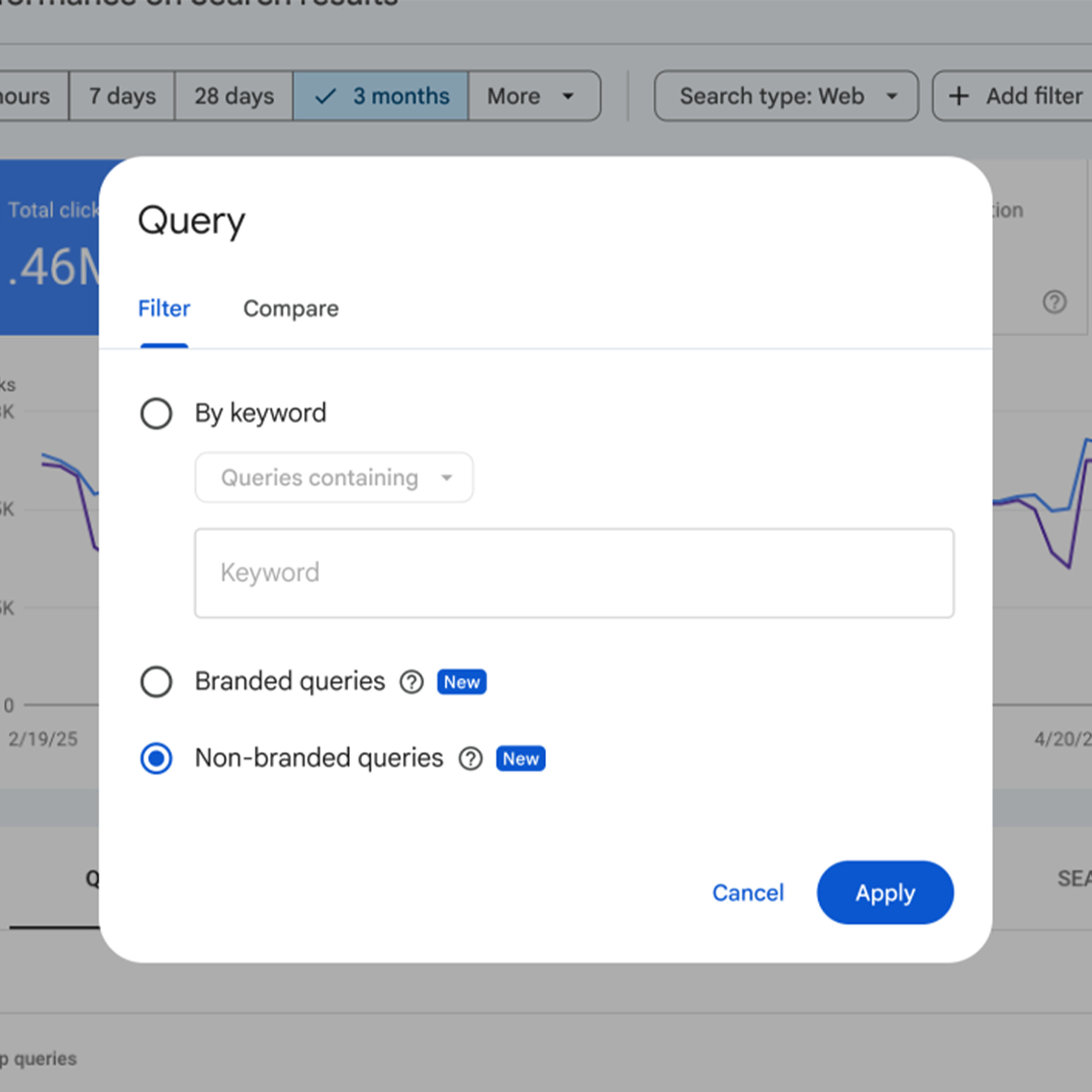
S11 Ep 60Google Search Console (GSC) New! Branded and Non-Branded Queries + Annotation Filters | Marketing Talk with Favour Obasi-ike
Google Search Console (GSC) New! Branded and Non-Branded Queries + Annotation Filters | Marketing Talk with Favour Obasi-Ike | Sign up for exclusive SEO insights.This episode focuses on Search Engine Optimization (SEO) and the new features within Google Search Console (GSC).Favour discuss the recently introduced brand queries and annotations features in GSC, highlighting their importance for understanding both branded and non-branded search behavior.The conversation also emphasizes the broader strategic use of GSC data, comparing it to a car's dashboard for website performance, and explores how this data can be leveraged to create valuable content, such as FAQ-based blog posts and multimedia assets, often with the aid of Artificial Intelligence (AI) tools. A key theme is the shift from traditional keyword ranking to ranking for user experience and the interconnectedness of various digital tools in modern marketing strategy.--------------------------------------------------------------------------------Next Steps for Digital Marketing + SEO Services:>> Need SEO Services? Book a Complimentary SEO Discovery Call with Favour Obasi-Ike>> Visit our Work and PLAY Entertainment website to learn about our digital marketing services.>> Visit our Official website for the best digital marketing, SEO, and AI strategies today!>> Join our exclusive SEO Marketing community>> Read SEO Articles>> Need SEO Services? Book a Complimentary SEO Discovery Call with Favour Obasi-Ike>> Subscribe to the We Don't PLAY Podcast--------------------------------------------------------------------------------As a content strategist, you live with a fundamental uncertainty. You create content you believe your audience needs, but a nagging question always remains: are you hitting the mark? It often feels like you’re operating with a blind spot, focusing on concepts while, as the experts say, "you don't even know the intention behind why they're asking or searching."What if you could close that gap? What if your audience could tell you, explicitly, what they need you to create next?That’s the paradigm shift happening right now inside Google Search Console (GSC). Long seen as a technical tool, recent updates are transforming GSC into a strategic command center. It’s no longer just for SEO specialists; it’s the dashboard for your entire content operation. These new developments are a game-changer, revealing direct intelligence from your audience that will change how you plan, create, and deliver content.Here are the five truths these new GSC features reveal—and how they give you a powerful competitive edge.1. Stop Driving Your Website Blind: The Dashboard AnalogyManaging a website without GSC is like driving a car without a dashboard. You’re moving, but you have no idea how fast you’re going or if you’re about to run out of fuel. GSC is that free, indispensable dashboard providing direct intelligence straight from Google. But the analogy runs deeper. As one strategist put it, driving isn’t passive: "when you're driving, you got to hit the gas, you got to... hit the brakes... when do you stop, when do you go, what do you tweak? Do you go to a pit stop?"You wouldn't drive your car without looking at the dashboard. So you shouldn't have a website and drive traffic and do all the things we do without looking at GSC, right?Your content strategy requires the same active management—knowing when to accelerate, when to pivot, and when to optimize. The new features make this "dashboard" more intuitive than ever, giving you the controls you need to navigate with precision.2. The Goldmine in Your Search Queries: Branded vs. Non-BrandedThe first game-changing update is the new "brand queries" filter. For the first time, GSC allows you to easily separate searches for your specific brand name (branded) from searches for the topics and solutions you offer (non-branded). This is the first step in a powerful new workflow: Discovery.Think of your non-branded queries as raw, unfiltered intelligence from your potential audience. These aren't just keywords; they're direct expressions of need. Instead of an abstract concept, you see tangible examples like:• “best practices for washing dishes”• “best pet shampoo”• “best Thanksgiving turkey meal”When you see more non-branded than branded queries, it’s a powerful signal. It means you have access to a goldmine of raw material you ca
S11 Ep 59Cloudflare Outage ⚠️ & Adobe x Semrush Deal: Tech Dependency, SEO Strategies & Business Website Strategy with Favour Obasi-ike
⚠️ Cloudflare Internet Outage; Adobe x Semrush Deal: Tech Dependency vs Business Website Strategy with Favour Obasi-Ike | Sign up for exclusive SEO insights.This is Marketing Club Clubhouse discussion, primarily focusing on the widespread impact of a recent Cloudflare outage that affected numerous popular platforms like ChatGPT, Spotify, Uber, and Zoom. Favour Obasi-ike uses this event to emphasize the importance of business continuity and operational redundancy, urging listeners to research and select robust platforms for their own enterprises to mitigate the risks of future outages. Furthermore, the discussion touches upon the rapidly changing tech industry landscape, including the significant Adobe acquisition of Semrush and the competitive moves of companies like Canva, prompting audience commentary on the potential implications of these corporate shifts on product quality and market strategy. Favour also suggests alternative hosting solutions like SiteGround and Hostinger as more resilient options for business websites.--------------------------------------------------------------------------------Next Steps for Digital Marketing + SEO Services:>> Need SEO Services? Book a Complimentary SEO Discovery Call with Favour Obasi-Ike>> Visit our Work and PLAY Entertainment website to learn about our digital marketing services.>> Visit our Official website for the best digital marketing, SEO, and AI strategies today!>> Join our exclusive SEO Marketing community>> Read SEO Articles>> Need SEO Services? Book a Complimentary SEO Discovery Call with Favour Obasi-Ike>> Subscribe to the We Don't PLAY Podcast--------------------------------------------------------------------------------The Day the Internet Stumbled: 3 Surprising Lessons from a Single Tech OutageIntroduction: More Than Just a GlitchA single infrastructure failure on a Tuesday morning did more to reveal the precarious nature of our digital world than a dozen industry white papers. When the internet infrastructure company Cloudflare experienced a major outage, it was far more than a momentary glitch.Its scale was staggering. Suddenly, a diverse range of major companies—including Canva, ChatGPT, Spotify, Uber, and Zoom—were all experiencing issues simultaneously. The event wasn't just a technical problem; it was a revealing moment that offered a rare peek behind the curtain of the digital world. It exposed hidden vulnerabilities and surprising dynamics within the tech ecosystem we all depend on. This article distills the three most impactful lessons learned from that single event.1. The Internet Isn't a Cloud, It's a Jenga TowerThe Centralization SurpriseThe core lesson from the Cloudflare outage was the shocking revelation of just how centralized our decentralized-seeming internet truly is. The popular image of the internet is a resilient, distributed network, but the reality is that a small number of foundational companies form the base of a massive Jenga tower. When a key block like Cloudflare was jostled, users quickly discovered that dozens of different services were all pointing "towards one direction," revealing a hidden single point of failure. Seemingly stable pieces higher up—from your design software to your ride-share app—began to wobble.This one incident impacted a staggering list of applications, highlighting the sheer diversity of services reliant on a single piece of infrastructure: Canva, Archive of Our Own, Canvas, Character AI, ChatGPT, Claude AI, Dayforce, Google Store, Grinder, IKEA, Indeed, League of Legends, Letterboxed, OpenAI, Quizlet, Rover, Spotify, Square, Truth Social, Uber, and Zoom. For the average user, this means the digital services that feel distinct and independent are, in fact, far more fragile and codependent than they appear.2. While You Were Offline, Big Tech Made Some Bizarre MovesA Bizarre Acquisition Amidst the ChaosWhile the digital world was grappling with the outage, news broke that Adobe was acquiring SEO tool Semrush for $1.9 billion. This development, happening alongside the infrastructure chaos, sparked widespread confusion and skepticism. As many in the tech community noted, Semrush "has nothing to do with creative" software, which is Adobe's core domain.The concern was palpable, with one community member expressing a common fear:"I really hope this Semrush acquisition doesn't affect quality and support. Big corporation buyouts [rarely succeed]."The analysis behind thi
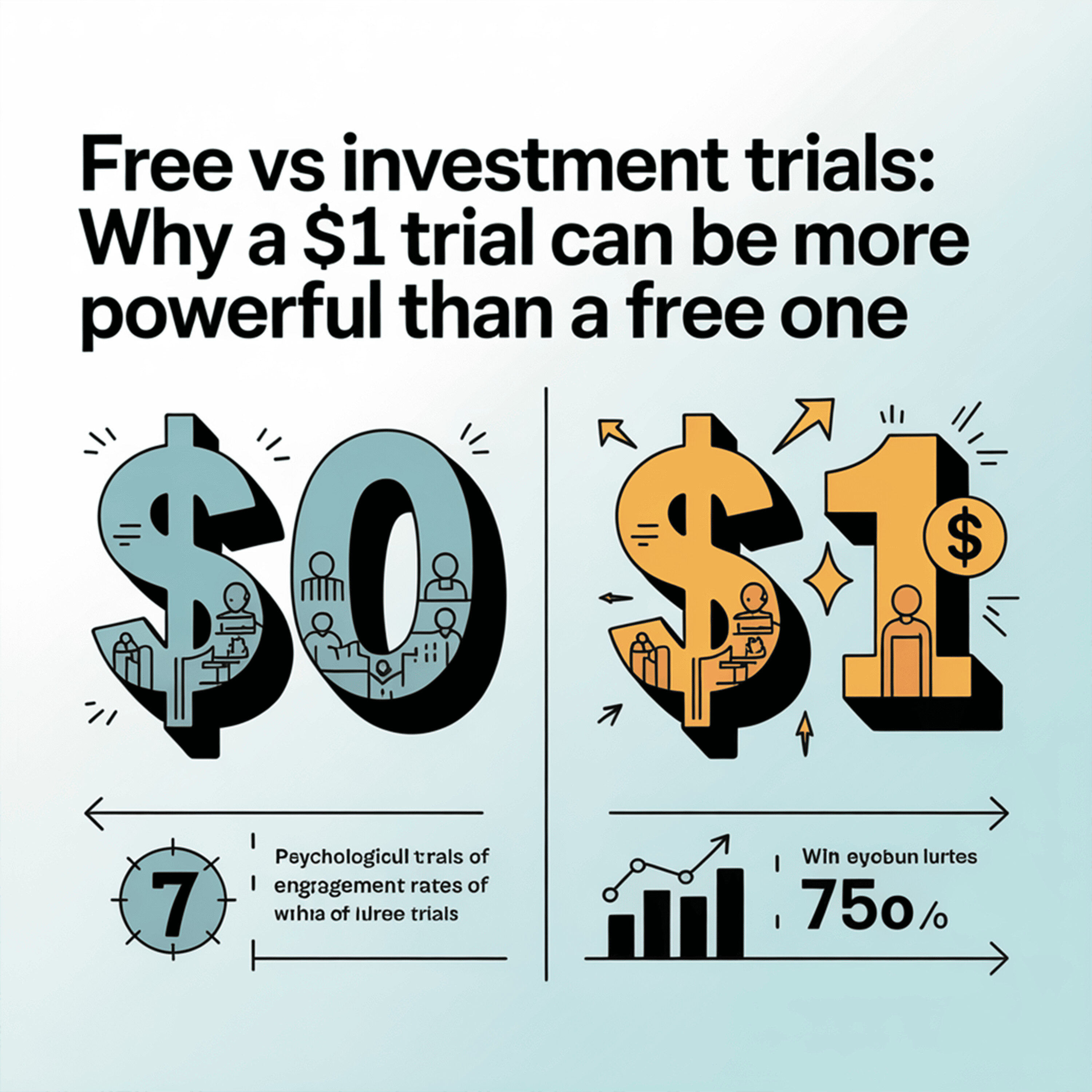
S11 Ep 58Free Vs Investment Trials: Why a $1 Trial Can Be More Powerful Than a Free Trial with Favour Obasi-ike
Free Vs Investment Trials: Why a $1 Trial Can Be More Powerful Than a Free Trial with Favour Obasi-Ike | Sign up for exclusive SEO insights.This Clubhouse audio session focused on marketing strategies, specifically comparing the efficacy of free trials versus investment trials for products and services. Favour discusses how an investment trial, even as low as one dollar, establishes a financial commitment from the customer, potentially leading to better conversion than a completely free offer, though both require nurturing efforts. The conversation also touches on upcoming holiday sales, various email marketing platformslike Flowdesk, and the importance of technical SEO and website development in business growth. Ultimately, Favour advises business owners to analyze and decide which trial method best suits their goals, emphasizing that the psychology of value is crucial for long-term customer engagement.--------------------------------------------------------------------------------Next Steps for Digital Marketing + SEO Services:>> Need SEO Services? Book a Complimentary SEO Discovery Call with Favour Obasi-Ike>> Visit our Work and PLAY Entertainment website to learn about our digital marketing services.>> Visit our Official website for the best digital marketing, SEO, and AI strategies today!>> Join our exclusive SEO Marketing community>> Read SEO Articles>> Need SEO Services? Book a Complimentary SEO Discovery Call with Favour Obasi-Ike>> Subscribe to the We Don't PLAY Podcast--------------------------------------------------------------------------------Introduction: The "Free Trial" FallacyOffering a "free trial" is a universal business strategy, especially during peak seasons like Black Friday or the holidays. It's the go-to method for attracting customers by lowering the barrier to entry. But have you ever considered that "free" might not be the most effective path to gaining truly committed customers?This article explores a few surprising truths about customer psychology and commitment by comparing the standard free trial with a powerful alternative: the "investment trial." We'll examine why asking for a small, initial investment can fundamentally change the customer relationship and lead to better results.The Surprising Takeaways from Free vs. Investment Trials1. The Power of a Single Dollar: Shifting from a "User" to an "Investor" MindsetThe core difference between a "free trial" and an "investment trial" is the financial commitment. A free trial has none, while an investment trial requires a small payment, even if it's just $1. This seemingly minor detail triggers a significant psychological shift.When a customer pays—even a nominal amount—their mindset changes. They are no longer a passive user getting something for free; they have become an active investor in a potential solution. This act pre-qualifies them and changes their relationship with the product from the very beginning. Because they have invested, they are more likely to perceive the engagement as a "better experience," reinforcing the value of their decision and anticipating an even greater return on a larger future investment....if you now say, okay, it's $99 or it's $1,000 or it's whatever amount of dollars, the person doesn't feel like they have to think twice about started because they've already financially committed to something that was an investment that they were interested in. That's the difference.This initial commitment dramatically shortens the time it takes to convert a trial user into a full-paying customer. The journey from a $1 investment to a $1,000 purchase is psychologically shorter than the journey from "free" to any paid plan. While a free trial may require 14 to 30 days of nurturing to achieve conversion, an investment trial can convert in as little as 10 minutes or one hour because the primary psychological barrier has already been crossed.2. The Real Cost of "Free" Isn't Zero—It's TimeNothing is truly free. In a free trial, the user isn't paying with money, but with an equally valuable currency: their time and attention.When someone engages with a free product, they are spending time processing information and making a decision. The business's goal is to make that time investment feel so valuable that it leads to a financial one. Think of the common B2B strategy of offering a free 30-45 minute consultation call. The prospect invests their time, and i
S11 Ep 575 Marketing Takeaway Secrets for Zip Code Marketing 2.0 with Favour Obasi-ike
5 Marketing Takeaway Secrets for Zip Code Marketing 2.0 with Favour Obasi-Ike | Sign up for exclusive SEO insights.Favour discusses Zip Code Marketing 2.0, emphasizing its importance for local businesses. Favour explains that this marketing strategy involves geo-targeting audiences based on their zip codes and interests to achieve local market success through tailored content and advertising.Key platforms for this type of marketing include Amazon, Google, YouTube, and TikTok, with a forward-looking mention of using Connected TV for targeted ads as part of the "2.0" evolution. Favour also stresses the necessity of thorough research before launching ad campaigns and highlights the value of SEO and content strategy in driving commercial growth and connecting with potential customers.The internet is a constant flood of marketing advice. We're told to blog more, post more, and spend more on ads. It's overwhelming, and most of it feels like noise. But every so often, you stumble upon a single conversation that cuts through it all.That's what happened to me during a one-hour Clubhouse talk on "Zip Code Marketing 2.0." Favour shared a series of potent, surprising, and immediately actionable insights that challenge the 'more is more' gospel of content marketing and the 'gamble' of paid ads, offering a refreshingly precise alternative. The talk covered both foundational tactics for local businesses and a stunning look into the future of hyper-local advertising. Here are the five secrets I learned.--------------------------------------------------------------------------------Next Steps for Digital Marketing + SEO Services:>> Need SEO Services? Book a Complimentary SEO Discovery Call with Favour Obasi-Ike>> Visit our Work and PLAY Entertainment website to learn about our digital marketing services.>> Visit our Official website for the best digital marketing, SEO, and AI strategies today!>> Join our exclusive SEO Marketing community>> Read SEO Articles>> Need SEO Services? Book a Complimentary SEO Discovery Call with Favour Obasi-Ike>> Subscribe to the We Don't PLAY Podcast--------------------------------------------------------------------------------Takeaway #1: Hyper-Niche SEO Can Deliver Results in Under 24 HoursWe're often told that SEO is a long game, requiring months of consistent effort. This case study proves that with the right strategy, it can be shockingly fast.Favour shared the story of a client selling a "prayer box for busy moms". By researching the competition, they discovered the niche had been neglected for years. After making a few strategic tweaks to the website, the client started getting sales directly from their Google link in less than 24 hours.The real insight wasn't just finding a low-competition keyword; it was understanding the customer's specific behavior. The sales came in at 6 a.m. and 2 a.m.—times when busy moms could find a quiet moment before their day began. This hyper-specific understanding of when and why a customer searches is more powerful than a hundred generic blog posts. It's the direct result of putting research before action.SEO is not just blog, blog, blog, blog. Like there there has to be some reasoning behind it.The lesson: your fastest path to profit might not be broad appeal, but a laser-focused solution for a neglected niche whose buying habits you can pinpoint to the hour.Takeaway #2: The Golden Rule of Ad Spend Is About Time, Not MoneyFor many businesses, running paid ads feels like gambling. You put money in and hope for the best. The speaker offered a simple, powerful principle to completely reframe this approach.Do not spend a dollar on ads if you've not spent a second on research.The logic is undeniable: running ads to a market that already needs and is searching for your product is infinitely more effective than trying to create demand from scratch. True success in advertising doesn't start with a campaign; it starts with research and development (R&D) to find the perfect market fit. Stop treating your ad budget like a slot machine and start treating it as the final step in a rigorous R&D process.Takeaway #3: Every Online Sale Is a Treasure Map (And X Marks the Zip Code)This point was so simple it was brilliant. Every single time you make an online sale—whether through Shopify, Squarespace, or Stripe—you collect a crucial piece of data: the customer's zip code.This isn't just
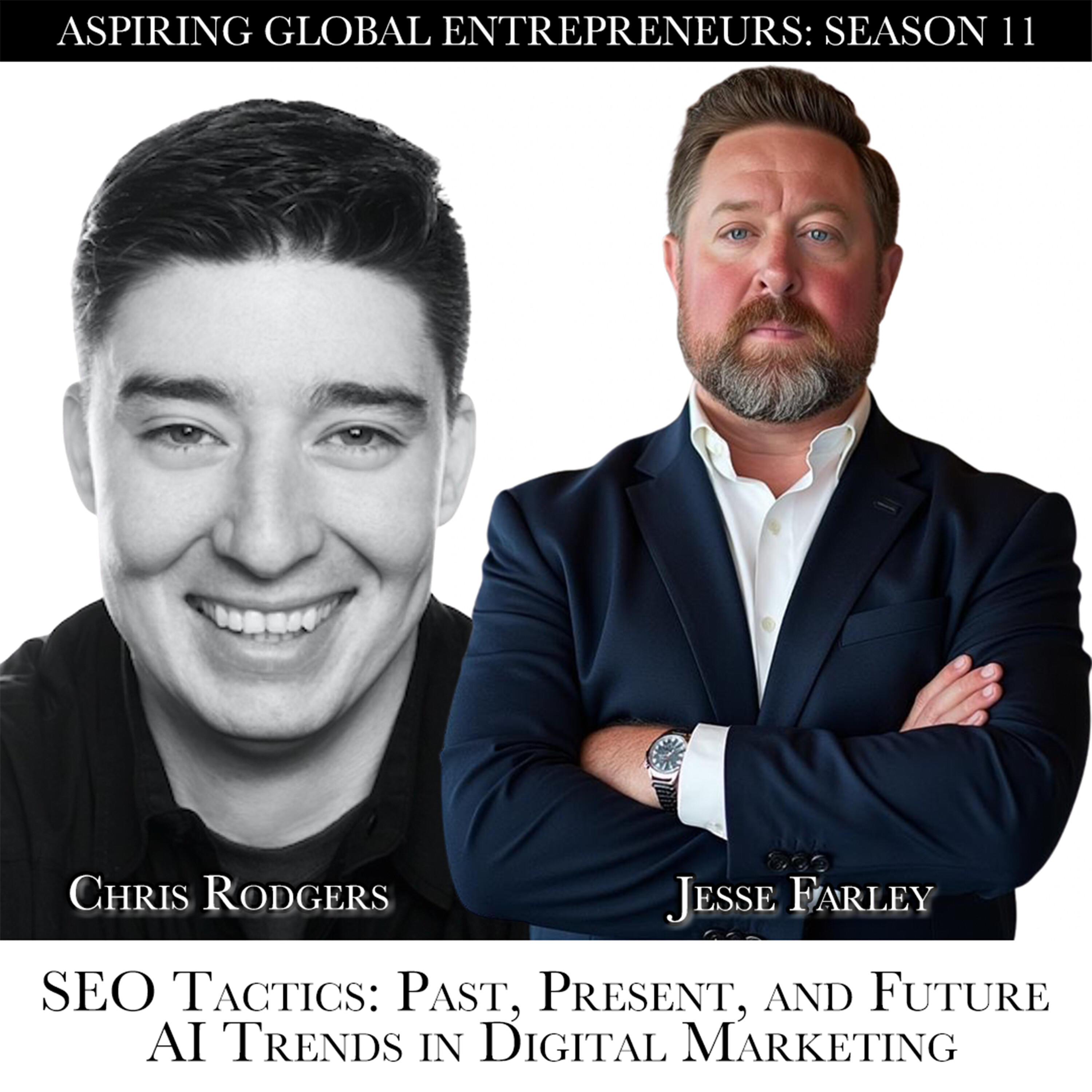
S11 Ep 56Chris Rodgers and Jesse Farley: SEO Tactics; Past, Present, and Future AI Trends in Digital Marketing
Meet our SEO guest experts, Chris Rodgers and Jesse Farley of CSP Agency, discussing the history and future of Search Engine Optimization (SEO).Chris explains that he founded the company in 2012 as SEO Pros, focusing on providing better value to clients and eventually pivoting to a business-centric SEO approach after meeting Jesse. Jesse shares his extensive background in the industry, including co-founding an SEO company in 2000 and his focus on integrating SEO with strategic business goals as an in-house team would. Our conversation also explores the impact of Artificial Intelligence (AI) on SEO, concluding that older, purely keyword-driven technical SEO is "dead," but a "human-first", audience-aligned approach is more crucial than ever for success with large language models (LLMs). Finally, our guests stress the importance of simplifying SEO concepts for clients and providing measurable business value with CSP Agency (LinkedIn).Glossary of Key Terms in this episodeAI (Artificial Intelligence)Technology that enables computers to perform tasks that typically require human intelligence. In the context of the podcast, it refers to systems like ChatGPT that provide conversational answers and are changing how users access information.Answer EngineA system designed to give a direct answer to a question (e.g., "2+2 equals 4") rather than a list of websites. This is contrasted with traditional search engines that provide links for the user to sift through.BacklinkingThe practice of getting other websites to link to your own. The podcast explains that its strategy has evolved from being keyword-focused to being brand-mention-focused.Brand MentionsInstances where a brand name (e.g., "JBL") is mentioned online. This is now seen as a crucial signal of authority and relevance, especially when paired with a sentiment score.Business-First ApproachAn SEO strategy that prioritizes delivering true business value, such as revenue and strategic goals, over simply increasing rankings and traffic.Canonical TagsA type of HTML tag mentioned as part of the technical SEO jargon that can confuse clients who "don't understand what canonical tags mean."Core Web VitalsA set of specific technical performance metrics that Google uses to measure user experience. Jesse dismisses them as largely unimportant except as a minor tie-breaker.CSP AgencyThe company featured in the podcast, co-led by Chris and Jesse, which focuses on a "business-first" and "human-first" approach to SEO.Human-First ApproachAn SEO philosophy focused on understanding and answering the direct, conversational questions of a human audience, rather than targeting the synthesized keywords that search engines use.In-house TeamA company's internal marketing department. Jesse contrasts their strategic role with the typical executional role of an external agency.KISSAn acronym for "Keep It Simple, Stupid." It is the guiding principle for CSP Agency's client education philosophy, emphasizing clarity and the avoidance of jargon.LLMs (Large Language Models)The underlying technology for AI systems like ChatGPT. The podcast stresses that modern SEO must be aligned with how LLMs process information and understand human queries.Meat (or MEAT)Jesse's expansion of Google's E-A-T framework, adding M for Multimedia and E for Engagement to encourage diverse content formats and interactive experiences.SEO (Search Engine Optimization)The practice of optimizing a website and its online presence to rank higher in search engine results. The podcast details its evolution from a technical, keyword-based practice to a strategic, human-centric marketing channel.SEO ProsThe original name of Chris's company when he founded it in 2012.Website MigrationsThe process of moving a website to a new domain, platform, or server. Jesse notes that his agency has saved many clients from "dire straits" during these complex technical processes.XML Feeds / XML IndexTechnical methods for syndicating and indexing content, mentioned as part of the complex back-end of how websites are structured for search engines to crawl.--------------------------------------------------------------------------------Next Steps for Digital Marketing + SEO Services:>> Need SEO Services? Book a Complimentary SEO Discovery Call with Favour Obasi-Ike>> Visit our Work and PLAY Entertainment website to learn about our digital marketing services.>> Visit our Official website for the best digital marketing, SEO, and AI strategies today!>> Join our exclusive SEO Marketing community>> Read SEO Articles>> Need SEO Se

S11 Ep 55Victor Varnado: Creative Business Tactics by Integrating Art and Comedy for Success
Meet our guest Victor Varnardo, who discusses his career evolution from a comedian and actor to a producer and entrepreneur. Victor explains that he initially sought to become an actor but pivoted to writing and producing to overcome being typecast due to his albinism, eventually deciding to focus solely on his art and transforming it into a viable business.Throughout the conversation, Victor Varnado shares insights from working with celebrities like Eddie Murphy, Charlie Murphy, and Arnold Schwarzenegger, and highlights the importance of an entrepreneurial mindset for artists, particularly emphasizing the value of gaining people's attention and using platforms like Amazon Direct Publishing for passive income.Victor’s career began with roles in major movies alongside stars like Eddie Murphy and Arnold Schwarzenegger. But early success came with a creative ceiling. The entertainment industry saw him through a narrow lens, limiting the roles he was offered. As Victor explains, being "a black person with albinism... that was the extent of how people looked at me and wanted to cast me."Faced with being typecast based on his physical appearance, he made a pivotal decision: he would take control of his own narrative by writing and producing. This path led him from artist to entrepreneur, driven not just by ambition, but by the necessity of building a world that would showcase his talent, not just his difference. He had to transform his creative passion into a sustainable business to gain the freedom he craved."I wanted to spend all day just being creative and following my curiosity. And in order to do that, I had to turn my art into a business."This episode breaks down the core business principles Victor used to make this transition. These lessons offer a simple and understandable blueprint for any aspiring creator looking to build a career on their own terms.Thank you for listening to this episode.Visit Victor's Website @ SupremeRobot.com hereBuy The Anti-Racism Activity Book on Amazon here--------------------------------------------------------------------------------Next Steps for Digital Marketing + SEO Services:>> Need SEO Services? Book a Complimentary SEO Discovery Call with Favour Obasi-Ike>> Visit our Work and PLAY Entertainment website to learn about our digital marketing services.>> Visit our Official website for the best digital marketing, SEO, and AI strategies today!>> Join our exclusive SEO Marketing community>> Read SEO Articles>> Need SEO Services? Book a Complimentary SEO Discovery Call with Favour Obasi-Ike>> Subscribe to the We Don't PLAY Podcast--------------------------------------------------------------------------------See Privacy Policy at https://art19.com/privacy and California Privacy Notice at https://art19.com/privacy#do-not-sell-my-info.
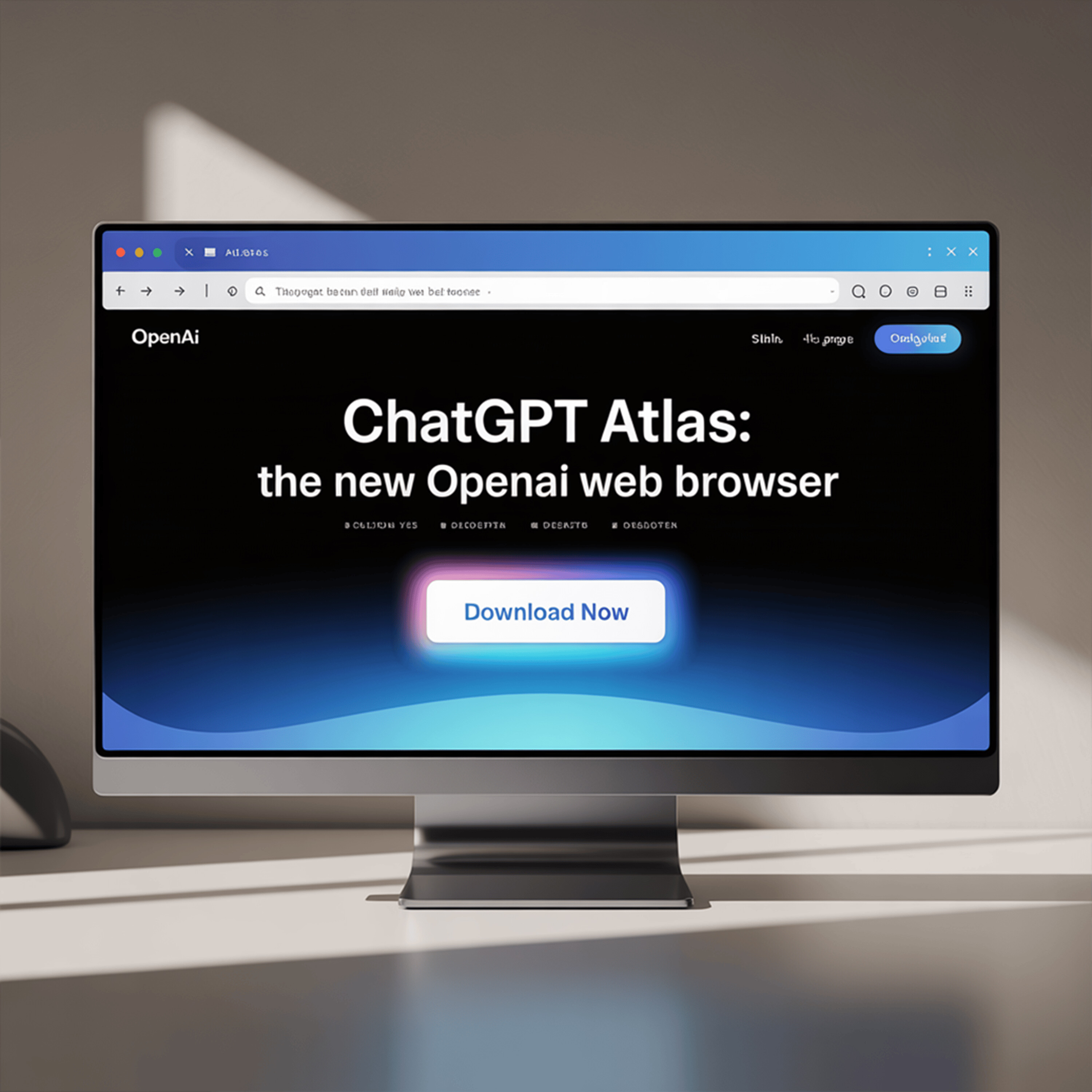
S11 Ep 54Download ChatGPT Atlas: The New OpenAI Web Browser (for Apple macOS Users First) Talk with Favour Obasi-ike
ChatGPT Just Launched an AI Browser to Topple Google… And It's Built on Google's Bones! Download ChatGPT Atlas: The New OpenAI Web Browser (for Apple macOS Users First) Talk with Favour Obasi-Ike | Sign up for exclusive SEO insights.AI is rapidly changing the digital tools we use every day, and the humble web browser is the latest frontier in this revolution. Once a simple window to the internet, the browser is now becoming an intelligent partner, capable of not just finding information but completing tasks on our behalf. In a move that has sent ripples through the tech world, OpenAI has quietly released its own AI-powered browser for macOS, code-named "Atlas."This isn't just another app; it's a direct shot across the bow of established giants like Google Chrome and a signal of a new, intense battle for how we access the digital world. I've spent time with Atlas, putting it through its paces, and my hands-on experience revealed several surprising, and at times counter-intuitive, facts about this new tool and the future of search. What I found suggests that the path to displacing the old guard is more complicated—and more entangled—than anyone imagined.--------------------------------------------------------------------------------Next Steps for Digital Marketing + SEO Services:>> Need SEO Services? Book a Complimentary SEO Discovery Call with Favour Obasi-Ike>> Visit our Work and PLAY Entertainment website to learn about our digital marketing services.>> Visit our Official website for the best digital marketing, SEO, and AI strategies today!>> Join our exclusive SEO Marketing community>> Read SEO Articles>> Need SEO Services? Book a Complimentary SEO Discovery Call with Favour Obasi-Ike>> Subscribe to the We Don't PLAY Podcast--------------------------------------------------------------------------------This episode depicts the review of ChatGPT Atlas, a new AI-powered web browser released by OpenAI, currently exclusive to Apple macOS users. The speaker discusses their experience downloading and using Atlas, noting that it is a direct competitor to Perplexity's Comet browser, which was released previously. The central focus is on Atlas's features and its potential place in the competitive AI and search landscape, particularly its reliance on and perceived partnership with Google and Apple systems, despite aiming to capture market share. Favour Obasi-ike also offers strategic advice for businesses on how to adapt to these new AI search platforms and contrasts the different pricing tiers and functionalities of Atlas with other existing AI models."...don't think about how to rank on ChatGPT. Think about how to show up for the people who are looking for you in places that they frequently connect with."The Google ParadoxA central theme is Atlas's deep dependency on the very ecosystem it aims to compete with.• Authentication: Users sign up for Atlas using their ChatGPT account, which for many is authenticated via a Google account.• Data Import: Atlas facilitates user transition by importing bookmarks and passwords directly from Google Chrome.• Information Sourcing: In practice, Atlas surfaces content directly from Google-owned properties. A test search for videos returned results exclusively from YouTube, and the interface includes a clickable Google icon that directs the user to Google's own search results page."If you're going to chatgpt.com and you're signing in or signing up or logging in with a Google mail account, what does that tell you about where ChatGPT is getting its information from? Google."User Experience and Key FeaturesFavour provides a first-hand account of using Atlas, comparing its performance and features to both traditional browsers and Perplexity's Comet.Performance and UI• Speed: Atlas was observed to load faster than the Perplexity Comet browser.• User Interface: The UI design borrows heavily from Google's search interface, featuring distinct tabs for Home, Search, Images, Videos, and News.Core Features• Sidebar Integration: Allows users to view a webpage and receive AI responses directly in a sidebar.• Contextual Suggestions: The browser can suggest ideas based on the user's web activity, such as composing emails.• Memory: Retains information from previous interactions to inform future suggestions.• Agent Mode: This is positioned as a
S11 Ep 53How to Use Google Advanced Search for Professional Business SEO Marketing with Favour Obasi-ike
How to Use Google Advanced Search for Professional Business SEO Marketing with Favour Obasi-Ike | Sign up for exclusive SEO insights.If you want to know "How to use Google Advanced search like a pro," this is the episode for you! I lead a marketing discussion focused on leveraging advanced search techniques for business operations. The participants explore the practical application of Google's Advanced Search feature by using a horror filmmaker's brand as a case study to demonstrate how to narrow search results and discover content opportunities. The conversation is highly interactive, with Favour Obasi-ike guiding attendees through the process of finding the hidden Advanced Search link on Google's website and using specific search operators to gain a competitive advantage.--------------------------------------------------------------------------------Next Steps for Digital Marketing + SEO Services:>> Need SEO Services? Book a Complimentary SEO Discovery Call with Favour Obasi-Ike>> Visit our Work and PLAY Entertainment website to learn about our digital marketing services.>> Visit our Official website for the best digital marketing, SEO, and AI strategies today!>> Join our exclusive SEO Marketing community>> Read SEO Articles>> Need SEO Services? Book a Complimentary SEO Discovery Call with Favour Obasi-Ike>> Subscribe to the We Don't PLAY Podcast-------------------------------------------------------------------------------- Locating and Understanding Google Advanced SearchA significant portion of the discussion is dedicated to a detailed walkthrough of the Google.com interface to locate the Advanced Search feature, emphasizing that it is not immediately visible.• Navigating the Google.com Interface: The speaker provides a structural analysis of the Google.com homepage, breaking it down into a header and footer, treating it like a standard website. ◦ Header Elements: About, Store, Gmail, Images, Search Labs, Google products (nine dots), and the user's Google account. ◦ Footer Elements: Advertising, Business, How Search Works, Privacy, Terms, and Settings.• Finding the Advanced Search Tool: The precise path to the tool is outlined as follows: 1. Go to google.com. 2. Scroll to the gray footer section at the bottom of the page. 3. On the bottom right, click on Settings. 4. From the settings menu, select Advanced Search. ◦ The direct link provided in the session is: google.com/advanced_search.• Google's Broader Initiatives: Favour encourages a deeper look at Google's footer content, pointing out links that reveal the company's operational principles and corporate goals, such as How Search Works (which details organizing information, ranking, testing, and spam detection) and a section on sustainability, which states a goal to "collectively reduce 1 gigaton of their carbon equivalent emissions annually by 2030."Case Study: SEO Strategy for a "Horror Filmmaker"The session's central tutorial is a live case study using a search term provided by a participant, "P," who identifies as a "disabled horror filmmaker."• Initial Search Analysis: ◦ A standard Google search for horror filmmaker yields results focused on popular movies and lists of famous male directors (e.g., "the best horror film um directors"). ◦ Google's auto-complete suggestions include related commercial and informational queries like horror filming techniques, horror movie structure, and horror movie checklist.• Using Advanced Search: ◦ Favour inputs "horror filmmakers" into the "this exact word or phrase" field in Advanced Search. This action automatically wraps the term in quotation marks in the standard search bar, significantly refining the results.• Identifying a Niche Opportunity: ◦ The speaker observes a critical gap in the search results: "I noticed that out of all these names that I see, there's no woman that is on the list." ◦ This observation is corroborated by Google's suggested search bubbles, which include terms like list, female, and&n

S11 Ep 52Public RSS Feeds vs Private RSS Feeds for Best Podcast SEO Distribution and Monetization Practices with Favour Obasi-ike
Public RSS Feeds vs Private RSS Feeds for Best Podcast SEO Distribution Practices with Favour Obasi-Ike | Sign up for exclusive SEO insights.In this podcast episode, Favour provides an extensive comparison between public podcast RSS feeds and private podcast RSS feeds, offering guidance on how to choose the appropriate option for one's needs, particularly for business growth. A public podcast is openly accessible on various platforms and directories like Apple Podcasts and Spotify, serving as a powerful tool for brand building, content marketing, and increasing accessibility. Conversely, a private podcast is characterized by requiring authentication for access, making it suitable for exclusive content, internal corporate training, or paid subscription communities, with platforms like Supercast and Hello Audio recommended for this purpose. Favour stresses that consistent content publication and maximizing RSS feed distribution to various directories are crucial for public podcast success, while noting that starting with a public podcast is often advisable before transitioning to a private, often monetized, model.The Public RSS Feed: Maximizing Reach and DiscoverabilityA public podcast RSS feed is a publicly listed show available on third-party platforms and directories. It is designed for open access and broad distribution.• Definition: A public feed is accessible to anyone on podcast players and websites without requiring a login or payment. It operates on a one-to-many distribution model, where a single RSS feed from a hosting platform is submitted to numerous podcast directories.• Analogy: The structure is comparable to a website, which has a backend hosting provider (e.g., GoDaddy, Hostinger) and a front-facing content management system (CMS) or website that users interact with. In podcasting, the hosting platform holds the audio files, and the directories (players) make them accessible to listeners.• Mechanism of Reach: The key to a public podcast's success is submitting its RSS feed to as many directories as possible. Each directory is a separate website or application, and being listed on 30 different players means 30 distinct online entities are linking back to the podcast, significantly enhancing its digital footprint and discoverability.The Private RSS Feed: Monetization and ExclusivityA private podcast RSS feed is intentionally not listed on public directories and is structured to control access.• Definition: A private feed is ineligible for public listing because it requires authentication—a user must sign up, log in, or pay to access the content. This creates a secure and exclusive listening experience.• Analogy: This model is comparable to subscription-based streaming services like Netflix or Amazon Prime. Users pay a fee to access a database of proprietary content. A private podcast operates on the same principle, offering exclusive audio or video content to a select audience.• Mechanism of Access: Access is granted only after a specific action is taken by the user, typically involving payment or registration. This makes it a powerful tool for delivering premium content, courses, internal communications, or community-specific updates.--------------------------------------------------------------------------------Next Steps for Digital Marketing + SEO Services:>> Need SEO Services? Book a Complimentary SEO Discovery Call with Favour Obasi-Ike>> Visit our Work and PLAY Entertainment website to learn about our digital marketing services.>> Visit our Official website for the best digital marketing, SEO, and AI strategies today!>> Join our exclusive SEO Marketing community>> Read SEO Articles>> Need SEO Services? Book a Complimentary SEO Discovery Call with Favour Obasi-Ike>> Subscribe to the We Don't PLAY Podcast--------------------------------------------------------------------------------Actionable First Steps for a New Podcaster1. Choose a Hosting Platform: The recommended starting point is creators.spotify.com (formerly Anchor.fm) because it is free and provides a straightforward entry point.2. Create SEO-Driven Content: Focus on producing episodes with clear, searchable titles and detailed descriptions that answer potential listener questions.3. Distribute Widely: After setting up the podcast, use a service like pod.link to find a comprehensive list
S11 Ep 51Shopify SEO Vs WordPress SEO Masterclass for eCommerce Optimization with Favour Obasi-ike
Shopify SEO Vs WordPress SEO Masterclass for eCommerce Optimization with Favour Obasi-Ike | Get exclusive SEO newsletters in your inbox.Unlock the secrets of eCommerce optimization with Favour Obasi-ike! In this episode, we dive deep into the ultimate showdown: Shopify SEO vs WordPress SEO. Whether you're focused on local marketing strategies or scaling nationally, understanding which platform fuels your marketing success is crucial. Discover proven SEO tactics for website optimization, from image compression and technical SEO to content marketing strategy that drives organic traffic.We break down the critical SEO strategies for both platforms—learn why WordPress demands consistent maintenance and plugin updates, while Shopify offers a simpler, lower-maintenance backend for asset acquisition and product monetization. Get actionable AI tips on audio marketing, email marketing strategy, and how to monetize your email list effectively.This is a masterclass in search engine optimization that moves beyond basic SEO tips to cover branding strategy, market intelligence, and measuring ROI. Learn how to create a successful marketing plan that turns your website into a high-converting asset. Don't miss these essential marketing fundamentals for business optimization and digital success.--------------------------------------------------------------------------------Next Steps for Digital Marketing + SEO Services:>> Need SEO Services? Book a Complimentary SEO Discovery Call with Favour Obasi-Ike>> Need more information? Visit our Work and PLAY Entertainment website to learn about our digital marketing services.>> Visit our Official website for the best digital marketing, SEO, and AI strategies today!>> Join our exclusive SEO Marketing community>> Read SEO Articles>> Need SEO Services? Book a Complimentary SEO Discovery Call with Favour Obasi-Ike>> Subscribe to the We Don't PLAY Podcast--------------------------------------------------------------------------------Key Episode Topics:Shopify vs WordPress: Platform choice for selling products vs selling services.SEO Optimization: Image file naming, alt text, and site speed fundamentals.Content Strategy: How to use audio and blog content for audience building.Website Maintenance: The non-negotiable tactics to avoid critical errors.AI Marketing: Leveraging AI strategies for search engine dominance and brand mentions.--------------------------------------------------------------------------------Recommended Use Cases• For Selling Products (especially for beginners): Shopify is the primary recommendation. ◦ Its backend is designed for intuitive product management, including variations, colors, SEO metadata, HTML formatting in descriptions, and sales channel management (Facebook, Instagram, TikTok) all in one interface. ◦ It is ideal for businesses that want a simple, workable solution to log in, manage products, and minimize technical overhead.• For Selling Services: WordPress is generally recommended. ◦ It provides superior aesthetic control to create a professional-looking service-based website. ◦ A significant portion of the web (43%), including government, medical, and educational institutions, is built on WordPress, attesting to its robustness for non-product-centric sites.• For Scalability & SKU Volume: The discussion presents a nuanced view. ◦ One participant suggests WordPress is a great alternative for businesses with under 25-50 SKUs. ◦ The same participant suggests Shopify may be preferable for those with more complex needs or over 100 SKUs, though it can get "hairy" with very high volumes. ◦ However, it's noted that major corporations like Gym Shark and Mattel use Shopify for thousands of SKUs, indicating it can be scaled effectively, likely with significant custom development.--------------------------------------------------------------------------------Critical E-commerce Optimization &a
S11 Ep 50Google SEO Best Practices - How to Kickstart Your Holiday Digital Marketing Campaign with Favour Obasi-Ike
Google SEO Best Practices - How to Kickstart Your Holiday Marketing Campaign with Favour Obasi-Ike | Get exclusive SEO newsletters in your inbox.In this episode, recorded live in a Clubhouse audio app room (10/20/22), we dive into the fundamentals of effective digital promotion. Favour Obasi-ike cuts through the noise to reveal that successful marketing isn't a one-time campaign, but a continuous conversation. He emphasizes that the true engine of growth is a simple, powerful focus on answering your audience's questions and solving their genuine problems. This consistent value is what naturally builds brand awareness and creates unstoppable momentum.We explore the critical first step that many miss: listening. No matter your budget, your marketing efforts must begin with listening to your target audience through tools like surveys and social media monitoring. This isn't just about data collection; it's about understanding their deepest needs and the language they use, so you can tailor your content for maximum impact.Our conversation also features guest John, who reinforces that at the heart of it all is storytelling. It's about framing your product or service as the essential solution within a compelling narrative that resonates. We even sparked an interactive poll with our live audience to uncover the most effective marketing channels, highlighting that success comes from knowing where your people are and how they engage.Ultimately, this discussion drives home a non-negotiable truth: establishing authority and trust comes from giving away valuable, comprehensive information. When you focus on being a resource first, you build the foundation that reliably drives conversions.Tune in to learn how to kickstart a marketing strategy that is both authentic and powerfully effective with Google SEO and more!Episode Answer KeyMarketing is described as an ongoing, daily process, much like PR, that focuses on building awareness and solving problems. In contrast, advertising is periodic and represents a specific, time-bound activity that can work in conjunction with broader marketing efforts.The first step in kickstarting a marketing campaign is not spending money, but rather listening, asking questions, and conducting surveys. Favour Obasi-ike emphasizes that this process begins with identifying the questions people are asking to understand their problems and needs.User-Generated Content (UGC) is a marketing method where other people talk about a brand or its products without the brand being directly involved. Examples mentioned by Favour Obasi-ikeare ads from Apple and Coca-Cola that show people using their products in real-time, real-life situations, which helps build brand awareness.Storytelling is powerful because it allows businesses to market themselves without overtly selling. Favour Obasi-ike explains that businesses that tell stories do well because they are gaining attraction, momentum, and connecting with an audience that can relate to the problem and the proposed solution.Testing is an essential and continuous part of any marketing campaign. As Favour Obasi-ikementioned in the context of Facebook advertising, a campaign cannot proceed without testing because it helps tighten up marketing efforts and understand what resonates with the target audience.Apple created a group study concept where they invited people into a store to interact with products without any pressure to buy. Favour Obasi-ike described how, by observing what products, like the iPhone over the iPad, people were most drawn to, they could understand customer needs for portability and functionality, which informed their strategy.John's primary recommendation for a small-budget campaign is to "story your solution." This involves identifying a specific niche and their problems, and then creating video content that tells the story of how that problem was solved for a particular type of person.Favour Obasi-ike advises that there is no such thing as "too much information" if the focus is on serving people and satisfying their needs. Providing comprehensive, valuable content that answers questions establishes top authority, solves problems, and attracts an attentive audience.Businesses use surveys to ask direct questions about the customer experience, such as "How did we serve you?" and "How can we serve you better?" Favour Obasi-ike notes that the responses contain trigger words and key insights that help the business understand customer preferences, which are then used to solve those specific problems in the next marketing campaign.To create an appealing response, Favour Obasi-ike suggests using a variety of formats beyond simple text. These include pictures, video tutorials, infographics, how-tos, carousels, slides, and sound bites.Next Steps
S11 Ep 49Navigating Email Marketing Best Practices for Podcast Growth with Favour Obasi-ike
Navigating Email Marketing Best Practices for Podcast Growth with Favour Obasi-Ike | Get exclusive SEO newsletters in your inbox.This episode focuses on navigating email best practices for podcast growth. Favour Obasi-ike, a creative entrepreneur and business owner with a background in SEO, Pinterest, and podcasting, shares insights and strategies to help podcasters grow and scale their business through effective email marketing.Key recommendations include the importance of having a dedicated website for a podcast, vocally mentioning the website on the show for transcription purposes, and strategically using keywords in episode titles and descriptions for organic search visibility.Favour Obasi-ike also emphasizes the critical role of email deliverability and managing customer relationships using a reliable email service provider and CRM system, offering specific advice on elements like font size, image resolution, and avoiding underscores in usernames to ensure accessibility and strong organic reach.Next Steps for Digital Marketing + SEO Services:>> Need SEO Services? Book a Complimentary SEO Discovery Call with Favour Obasi-Ike>> Need more information? Visit our Work and PLAY Entertainment website to learn about our digital marketing services.>> Visit our Official website for the best digital marketing, SEO, and AI strategies today!Core Principle: The Podcast-Website SymbiosisThe foundational element for podcast growth is establishing a dedicated online presence. Favour Obasi-ike argues that every podcast, regardless of its stage, requires a website.• The "Front Door" Analogy: A website is described as the "front door" for the podcast. When a listener hears a URL mentioned in an episode and types it into a new browser tab, they are metaphorically "opening a door" to the podcast's home. The homepage is the initial entry point from which they can explore other content.• Central Hub for Engagement: The website serves as a central location for listeners to connect more deeply with the show. It is the ideal place to host freebies, newsfeeds, blog posts, and, most importantly, an email sign-up form.• Capturing the Audience: By verbally directing listeners to a specific URL on the podcast (e.g., "go to playinc.online/newsfeed"), podcasters create a direct path for listeners to subscribe to an email list. This is demonstrated in real-time by Favour Obasi-ike asking listeners to provide their first name and best email via a link.Strategic Email Marketing for Audience EngagementOnce a system for capturing emails is in place, the focus shifts to strategic content and delivery to build and maintain a relationship with the audience.Content and Subject Line Strategy• Intrigue Over Information: Generic subject lines like "Episode One Introduction" are less effective. A more powerful approach is to use curiosity-piquing subject lines, such as, "Want to know the best way to make a sandwich?"• The "Sandwich" Analogy: This example illustrates that a subject line can use a relatable concept to draw in an audience, even if the episode's core topic is different (e.g., using the layers of a sandwich as an analogy for content marketing). This method attracts both those interested in the literal subject and the curious.• Valuable First Content: A podcaster's first episode, or the first email a new subscriber receives, can be strategically repurposed. For a business, this could be a "Frequently Asked Questions" episode, providing immediate value and educating a potential client about their services.Cadence and ConsistencyBuilding Relationships: The goal of email marketing is customer relationship management (CRM). Consistent communication builds familiarity and trust.Email Frequency: Favour Obasi-ike personally sends a minimum of two emails per month, rarely exceeding four to eight unless for a segmented campaign. The goal is to maintain a presence without overwhelming the audience.The Annual Cycle: Favour Obasi-ike views email as an "orbit," aiming to send 365 emails over time to represent a full cycle. After a year, the strategy should evolve, introducing a "new form" or "new formality" to keep the content fresh.Technical Foundations for Email DeliverabilityEffective email marketing is impossible if the emails do not reach the intended inbox. Favour Obasi-ike highlights several critical technical aspects that directly impact deliverability and audience reception.Platform and Server IntegrityThe Importance of the ESP: The choice of Email Service Provider (ESP) is crucial. A key objective should be to use a platform with a high-quality server to achieve deliverability rates of at least 99.9%.Recommended Platform: Favour Obasi-ike is a partner with and recomm
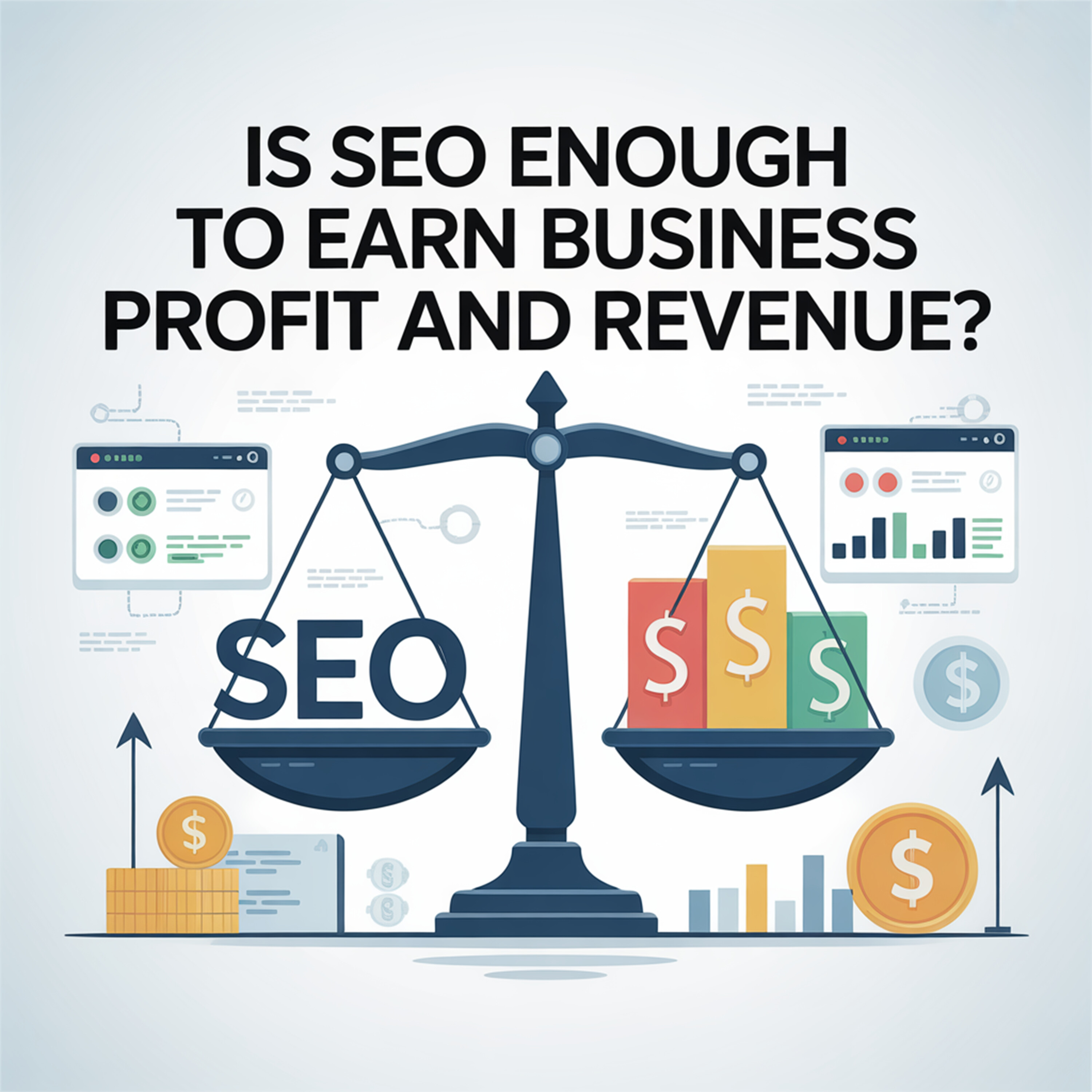
S11 Ep 48Is Website SEO Enough to Earn Business Profit and Revenue? Digital Marketing Talk with Favour Obasi-ike
Is SEO Enough to Earn Business Profit and Revenue? Marketing Talk with Favour Obasi-Ike | Get exclusive SEO newsletters in your inbox.In this episode of the We Don't PLAY podcast, host Favour Obasi-Ike delivers a masterclass on the strategic role of Search Engine Optimization (SEO) in today's digital landscape. He dismantles the myth that SEO is a silver bullet, arguing instead that it's a foundational component that must work in concert with a healthy business and other marketing channels. We dive deep into how major shifts, like Google's algorithm changes and the rise of AI-driven search, are making a sophisticated SEO strategy more critical than ever.Tune in to learn how to leverage SEO not just for traffic, but as a powerful data intelligence engine to understand your customers and drive informed business decisions.Next Steps for Digital Marketing + SEO Services:>> Need SEO Services? Book a Complimentary SEO Discovery Call with Favour Obasi-Ike>> Need more information? Visit our Work and PLAY Entertainment website to learn about our digital marketing services.>> Visit our Official website for the best digital marketing, SEO, and AI strategies today!Key Takeaways:SEO is a Necessary Ingredient, Not the Entire Recipe: You can't build a successful business on SEO alone. It cannot fix a bad customer experience, poor operations, or a weak value proposition. True success comes from integrating SEO with other channels like email marketing, advertising, and social media.The Search Landscape is Rapidly Evolving: Major changes are reshaping how we think about SEO. With Google removing traditional numbered pages and the emergence of AI-native browsers like Perplexity AI, strategic SEO is more vital than ever. Content freshness, signaled by the "last modified" date, is becoming a key ranking factor.SEO's Core Value is Data & Intelligence: The most powerful benefit of SEO is the actionable data it provides. By using tools like Google Search Console, you can understand customer intent, identify market needs, and make smarter decisions about product development and advertising. SEO is technically psychology.A Proactive Content Strategy is Non-Negotiable: Success requires planning content months in advance. The lifespan of your content varies dramatically by platform—while an Instagram post lasts ~72 hours, a Pinterest pin can drive traffic for over 5 months, making platform choice a key strategic decision.SEO Must Be Fully Integrated: SEO shouldn't live in a silo. Its power is multiplied when woven into email marketing (optimizing images and landing pages), paid ads (using search data for targeting), and lead conversion. It is the "byproduct" of good marketing practices.Implementation Requires a Clear Model & Timeline: Whether you choose a DIY approach, build an in-house team, or outsource to an agency, achieving results takes time. Expect to see significant traction in 1-3 months for established sites and 3-6 months for new ones—an investment that can define your business's trajectory for years to come.Digital Marketing SEO Resources:>> Join our exclusive SEO Marketing community>> Read SEO Articles>> Need SEO Services? Book a Complimentary SEO Discovery Call with Favour Obasi-Ike>> Subscribe to the We Don't PLAY PodcastSee Privacy Policy at https://art19.com/privacy and California Privacy Notice at https://art19.com/privacy#do-not-sell-my-info.
S11 Ep 47Download Perplexity Comet: AI-native Browser; Web Adoption and Security Talk with Favour Obasi-ike
Download Perplexity Comet: AI-native Browser; Web Adoption and Security Talk with Favour Obasi-Ike | Get exclusive SEO newsletters in your inbox.Perplexity AI's free "Comet" web browser, which occurred this past Thursday. We expressed excitement over this development, highlighting Comet's functionality as an AI-powered browser that can import Google Chrome extensions and act as a personal assistant, shopping, and email agent.The conversation extensively examines the implications of Comet's introduction on the browser market share, particularly in relation to the dominance of Google Chrome, and explores how this new tool affects Search Engine Optimization (SEO) strategies and content visibility for businesses.Finally, a significant portion of the discussion addresses crucial concerns regarding user privacy and data security when utilizing these advanced AI tools, emphasizing the need for caution and strategic use.Next Steps for Digital Marketing + SEO Services:>> Need SEO Services? Book a Complimentary SEO Discovery Call with Favour Obasi-Ike>> Need more information? Visit our Work and PLAY Entertainment website to learn about our digital marketing services.>> Visit our Official website for the best digital marketing, SEO, and AI strategies today!FAQs about this episode1. What is the Perplexity AI Comet Browser?Comet is an AI web browser released by Perplexity AI. Comet essentially integrates Perplexity AI capabilities into a browser format. The concept involves having an AI web browser, similar to using Google Chrome but with AI integration.2. When was the Comet browser released, and to whom?The free Comet browser was recently made available to everyone worldwide. It was announced on a Thursday. However, Comet was initially released to people who had Perplexity Max in July. This three-month period (July to October) allowed Perplexity to keep it exclusive within their beta program or exclusive community before releasing it universally.3. How can I download the Comet browser, and what platforms is it available on?You can download the Comet browser by visiting perplexity.ai/comment. It is available for both Mac and Windows.4. What are the key features and capabilities of the Comet browser?The Comet browser offers several features that distinguish it from traditional browsers:• Extension Import: You can import your Google Chrome extensions into the Comet AI browser.• Agentic Capabilities: It is described as a personal assistant that helps with many things. It can: ◦ Autonomously control browser actions, such as closing tabs and opening pages. ◦ Fill out forms. ◦ Control Google Drive. ◦ Shop for you. ◦ Send out emails, leveraging a feature called "background assistant".• Current Focus: It is currently heavily focused on the web, though a mobile app is anticipated, similar to the existing Google Chrome app and Perplexity app.5. Why did Perplexity AI release the Comet browser?Perplexity is doing this to gain market share and compete with major rivals, particularly Google. The current browser market is heavily dominated by Google Chrome, which holds about 72% of the market share (specifically cited as 71.77% to 71.86% recently).6. How is Perplexity AI related to Microsoft and other platforms?Perplexity is closely associated with Microsoft and Bing. The platforms are interconnected, as LinkedIn is also owned by Microsoft. It is noted that Microsoft is also involved with Copilot and is "somewhere in the mix" of OpenAI/ChatGPT content, further connecting it to Comet.7. What are the major concerns regarding security and privacy with agentic AI browsers?The primary concerns revolve around security, privacy, and user adoption. Since the Comet browser can autonomously control browser actions, access Google Drive, and fill out forms, there are questions about how much security is provided.• Data Compromise: One critical concern is that if a company's chosen AI platform (like Comet) lacks necessary security measures, a client could be exposed to a hack, potentially compromising years of hard work.• Lack of Regulation: There is a belief that there is not enough regulation surrounding privacy in the AI space, often favoring convenience and productivity over individual privacy.8. How will AI search browsers impact SEO and business visibility?AI search models are changing how businesses achieve visibility:• Beyond Top 10: AI models are no longer just scanning the top 10 search pages; they are scanning anywhere between 10 to 40 links or sources. Businesses should aim to be in this "Top 40 listing".• Platform Diversity: Visibility is achieved when a brand is interconnected across various platforms, including LinkedIn, YouTube, Google, Pinterest, the website, blogs,
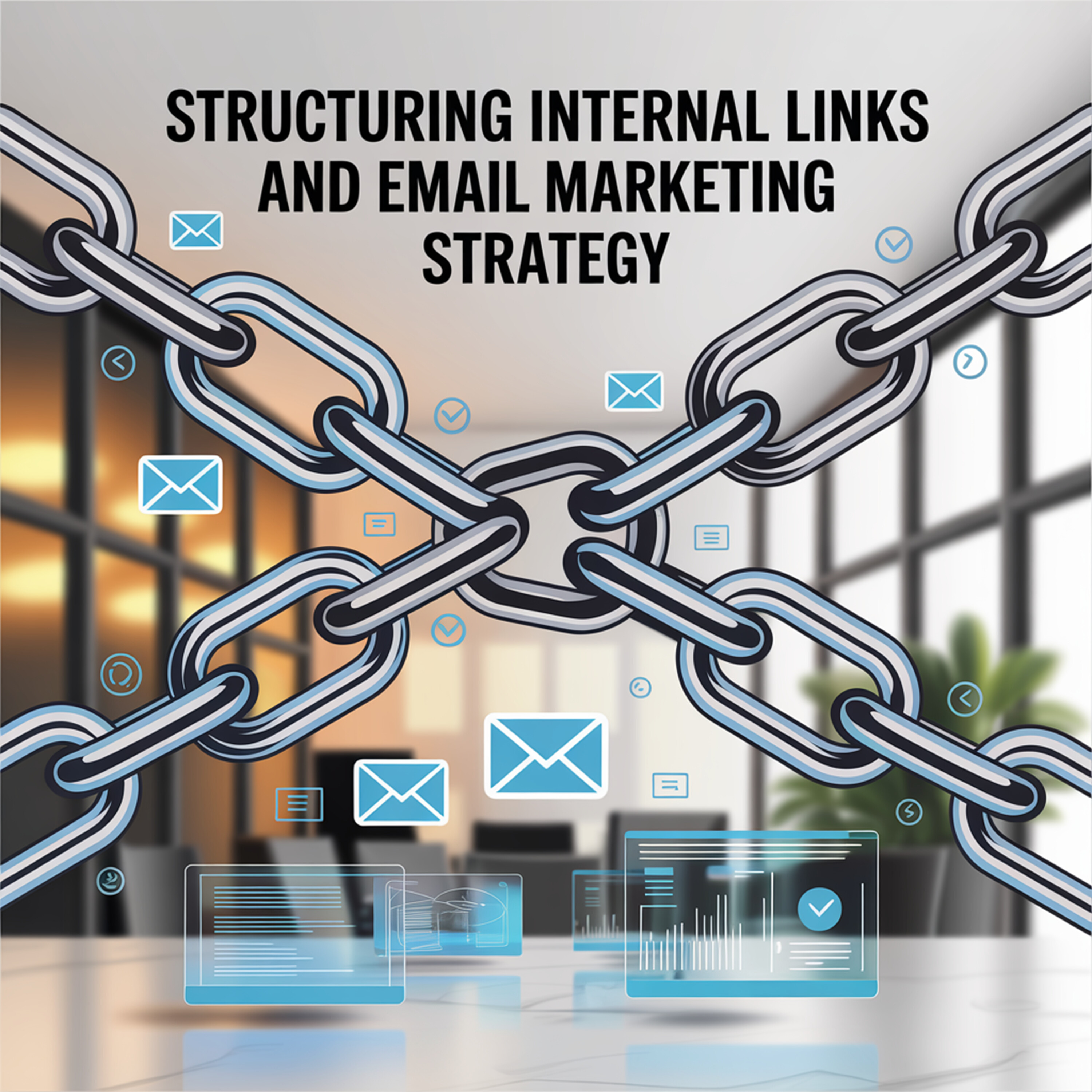
S11 Ep 46AI SEO: What's the Best Way to Structure Internal Links? Email Marketing Bonus 📥 with Favour Obasi-ike
AI SEO: What's the Best Way to Structure Internal Links? Email Marketing Bonus with Favour Obasi-Ike | Get exclusive SEO newsletters in your inbox.This episode unveils an extensive discussion about the optimal methods for structuring internal links within your website to improve search engine optimization (SEO) and user experience. I explain that internal links should be contextually relevant, often using the analogy of a "sandwich" where the highlighted text (anchor text) aligns directly with the content of the linked URL. The conversation emphasizes that effective internal linking creates a "spiderweb" structure, connecting old and new content to enhance readability and discoverability by algorithms like Google. Finally, I discuss related digital marketing topics, including the benefits of leveraging email marketing platforms like Flodesk for cost efficiency and high deliverability, linking this back to the importance of a strong online structure.Next Steps for Digital Marketing + SEO Services:>> Need SEO Services? Book a Complimentary SEO Discovery Call with Favour Obasi-Ike>> Need more information? Visit our Work and PLAY Entertainment website to learn about our digital marketing services.>> Visit our Official website for the best digital marketing, SEO, and AI strategies today!10 Answer Keys for this episode1. An internal link is a word, phrase, or sentence that is highlighted to become a hyperlink. This link connects the current page to another relevant page or resource that exists within the same website domain.2. The "sandwich" effect occurs when the highlighted text (anchor text) uses the same words or phrase as the keywords found in the destination page's URL. This creates a strong contextual connection that is easily understood by both human users and search engine algorithms, improving the chances of the page ranking for those terms.3. Linking new and old pages creates a "bridge" or a "spiderweb" structure across a website. This practice helps search engines and users discover all related content, regardless of its publication date, ensuring that value is passed between pages and creating more pathways for visitors to find relevant information.4. Linking directly to a checkout page is a strategy to reduce friction and save the customer time, potentially leading to higher conversions, especially if the customer has already seen the product and has all the necessary information. Linking to a product page allows the customer to read more details and make a decision, but it introduces an extra step and risks them getting distracted by other items.5. "Structural marketing" is a concept where marketing efforts are built with discipline, rules, and a foundation, much like a physical structure. The website serves as the foundation, and its pages, connected by internal links, must be active and structured logically to support marketing goals.6. A website's search bar functions like Google's own search. When a user searches for a specific term like "candy" or "flowers," the website pulls results from its own internal index or inventory. If the website's content (the resource) is not properly structured and indexed, the search function (the source) is useless, like a well with no water.7. Local businesses should highlight the text of the city or state they want to be found in and link it to a relevant page. This is a form of on-page SEO that sends a signal to algorithms that the business serves that specific location, which can have a large long-term impact on local search visibility.8. HTTPS is the secure version of HTTP. Using an HTTPS link for hyperlinking ensures a clean, direct, and secure pathway for the user and search engine crawlers. Using an HTTPlink can result in a different, less secure experience that might cause the link to bounce back or redirect unnecessarily.9. A "do follow" link signals to search engines that you endorse the destination page and are attributing value or "link juice" to it. A "no follow" link tells search engines that you are citing or suggesting the link but are not endorsing it, so no domain authority or ranking signal is passed.10. When you update and republish one page that is internally linked to many other pages (e.g., 10 or 20), it sends a new signal to search engine algorithms for all connected pages. This one update effectively "republishes" all the linked pages in the eyes of the algorithm, signaling fresh activity across a wide swath of the website without having to manually update each page.Digital Marketing SEO Resources:>> Join our exclusive SEO Marketing community

S11 Ep 45Flodesk Email Marketing Unlimited Pricing Plan Ends Nov 28! What Do I Do? Technical Talk with Favour Obasi-ike
Flodesk Email Marketing Unlimited Pricing Plan Ends Nov 28! What Do I Do? Technical Talk with Favour Obasi-Ike | Get exclusive SEO newsletters in your inbox. Favour Obasi-Ike, an active partner, strongly advocates for the email marketing platform Flodesk.He emphasizes that its unlimited pricing model will end on November 28th and urges listeners to sign up before this date to lock in the beneficial pricing.He highlights Flodesk's robust deliverability through its use of Amazon SES and its superior click-through rates compared to competitors like Constant Contact and Mailchimp.The discussion also touches upon Flodesk's features, such as its comprehensive educational platform ("Flodesk University") and integration capabilities with services like Stripe and Shopify, while differentiating it from project management tools like ClickUp.Ultimately, Favour presents Flodesk as a cost-effective solution for creators and business owners seeking high-quality email marketing and business growth.He offers an affiliate link for a 14-day free trial and a 50% discount.Read the full article on "Join Flodesk Unlimited Pricing Plan by Nov. 28: Here's Why" here: https://www.playinc.online/post/join-flodesk-unlimited-pricing-plan-email-marketingNext Steps for Digital Marketing + SEO Services:>> Need SEO Services? Book a Complimentary SEO Discovery Call with Favour Obasi-Ike>> Need more information? Visit our Work and PLAY Entertainment website to learn about our digital marketing services.>> Visit our Official website for the best digital marketing, SEO, and AI strategies today!The most urgent message is the November 28th deadline to lock in Flodesk's unlimited pricing. This is a critical opportunity to secure cost predictability and avoid future standard pricing. Sign up now to get grandfathered in!Why Flodesk's Value is UnmatchedFlodesk’s primary advantage is its unlimited pricing model. For a single flat fee, you get unlimited subscribers, emails, and workflows, leading to significant savings. This is a game-changer for cost efficiency, allowing you to scale without unpredictable costs. Discover how this core value proposition can transform your budget.The Engine Behind Your Success: Superior DeliverabilityA key reason for Flodesk's effectiveness is its technical foundation. It boasts a 17% higher view rate by leveraging Amazon SES, ensuring high deliverability and ensuring your emails land in the inbox, not spam. This technical superiority is the backbone of its high click-through rates.Explore Flodesk's Powerful FeaturesFlodesk is a comprehensive platform built for creators. Explore its full suite of capabilities:Design & Content: Create stunning emails with beautiful templates and embed videos or GIFs.Automation & Workflows: Set up triggered emails and sequences to nurture leads effortlessly.E-commerce Integrations: Seamlessly connect with Stripe and Shopify to sell products directly.Lead Capture: Build landing pages and pop-up forms to grow your list.Customization: Use custom domains and segmentation for a personalized touch.Proven Results: See our DataOur case studies show Flodesk's impact. One user saw click rates jump from 2-5% on Constant Contact to 35-40% with Flodesk. Another client migrated from ConvertKit (Kit) and saw their engagement more than double. The platform was the problem, and Flodesk was the solution.Learn with Flodesk UniversityGet the most out of your subscription with Flodesk University, a free, comprehensive educational platform. Learn everything from basics to advanced strategies without costly onboarding.How Flodesk Stacks UpWhile platforms like Mailchimp, Constant Contact, and Brevo are great, Flodesk differentiates itself with its unlimited pricing, superior aesthetics, and proven deliverability. It’s the cost-effective solution for serious business growth.Ready to experience the difference? Use our affiliate link for a 14-day free trial and a 50% discount applied at checkout.Digital Marketing SEO Resources:>> Join our exclusive SEO Marketing community>> Read SEO Articles>> Need SEO Services? Book a Complimentary SEO Discovery Call with Favour Obasi-Ike>>
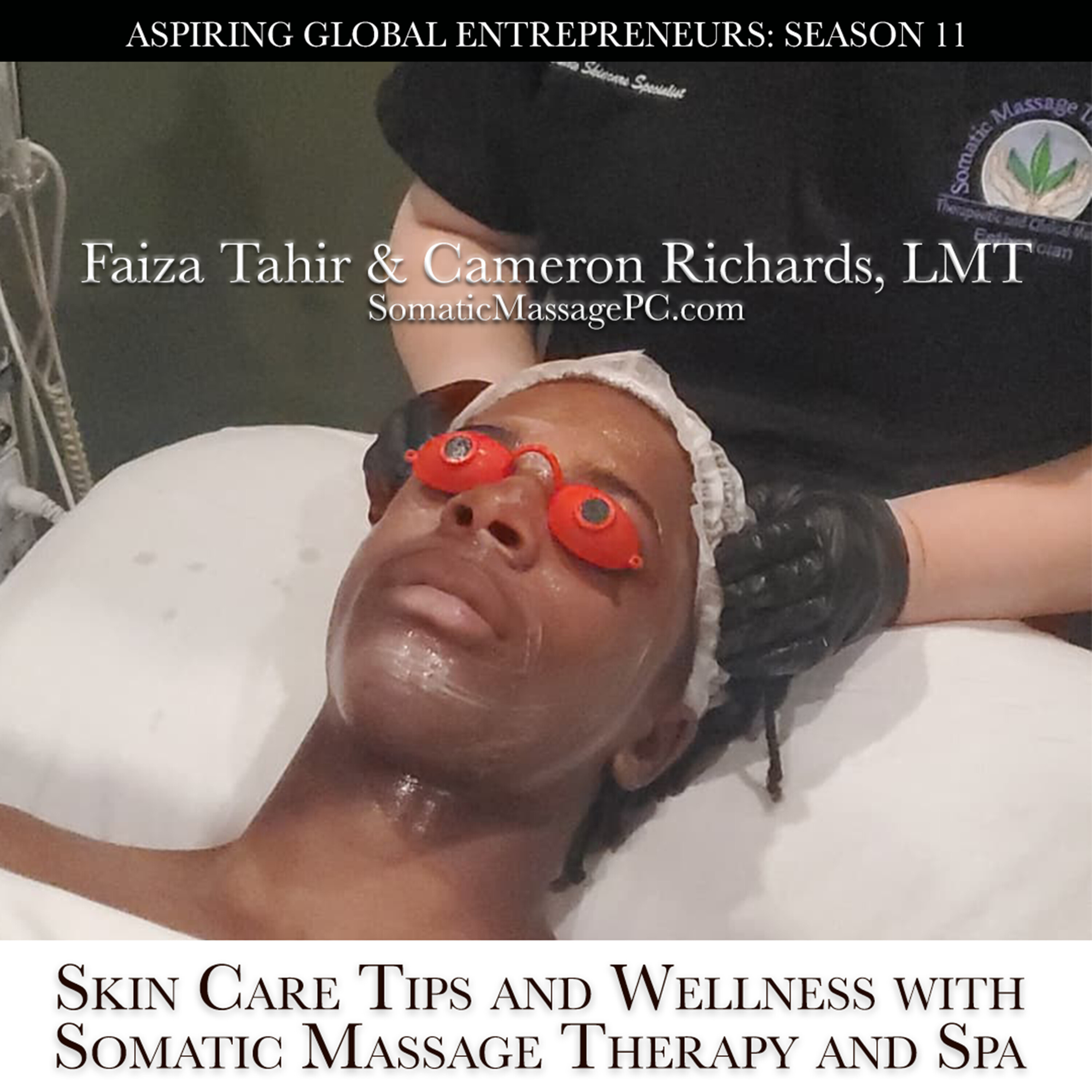
S11 Ep 44Skin Care Tips and Wellness with Somatic Massage Therapy and Spa Esthetician, Faiza Tahir & Cameron Richards, LMT (Owner)
This podcast features Cameron Richards, LMT and Faiza Tahir of Somatic Massage Therapy and Spa. The central theme is a therapeutic and educational approach to skincare that extends beyond traditional spa facials.Faiza Tahir, an Esthetician with 13 years of experience, specializes in a holistic methodology, combining advanced in-office treatments with client education and at-home care. A core offering is the Face Reality "Acne Boot Camp," a 100-day program designed to clear acne through bi-weekly treatments and a dedicated product regimen.The spa's philosophy emphasizes treating the skin from both the inside and outside, using modern modalities like LED light therapy and providing clients with a deep understanding of product ingredients and proper skin maintenance. The overall client experience is designed to be efficient, with 50-minute sessions and no downtime, aiming to produce tangible results and a feeling of rejuvenation.Business and Contact InformationYou can connect with Somatic Massage Therapy and Spa through multiple channels for information or to book a free consultation.• Business Name: Somatic Massage Therapy and Spa• Location: 113 Jericho Turnpike, Floral Park, NY (on the border of western Queens and eastern Nassau County)• Website: somaticmassagepc.com• Phone (Call): 516-686-9557 ◦ Fisa's Direct Extension: 7• Phone (Text): 516-447-4373• Booking: Can be done online via somaticmassagepc.com/book-appointment or by calling in.• Remote Consultation: Prospective clients can text a picture of their skin concern for an initial assessment from Fisa.--------------------------------------------------------------------------------Key Personnel and ExpertiseFaiza Tahir, Esthetician• Experience: 13 years in the aesthetics industry.• Education: Licensed through the New York Institute of Beauty (NYIB).• Certifications: Acne certified by Face Reality.• Dual Expertise: Holds experience working in both day spas and medical spas, giving her proficiency in both "relaxing facials" and "clinical graded facials."• Role: Serves as the Master Esthetician at Somatic Massage Therapy and Spa, performing all facials, peels, and skincare treatments. She is driven by a passion to "make a difference in the skins."Cameron Richards, Licensed Massage Therapist• Role: As a licensed massage therapist, Cameron highlights the critical need for skincare education, which he personally received from Faiza• Perspective: He emphasizes that the average consumer often lacks the knowledge to select appropriate skincare products, potentially causing more harm than good. He notes, "...if I don't know much imagine the average person out there who just walks into a Target Walgreens and just pick up anything off the shelf because they think it's going to work and they end up doing more harm."• Focus on Education: Cameron ensures that education is a key component of the client experience at the spa, particularly for men who may not be aware of proper skin cleansing and exfoliation techniques post-shaving.Core Skincare PhilosophyTherapeutic Treatments over Standard FacialsFaiza distinguishes the spa's services from conventional facials, framing them as targeted treatments.• Quote: "These are not only facials. These are therapeutical treatments we do. We do not use the word treatment at this spa, but these are the therapeutical... facial for them."• Day Spa vs. Med Spa: Fisa clarifies that while med spa products contain highly "active" ingredients used under a doctor's supervision, the spa's professional-grade products are highly effective and bring about significant changes in the skin.A Holistic "Inside and Out" ApproachThe treatment philosophy is comprehensive, addressing skin health from multiple angles.• External Healing: In-office treatments focus on healing the skin from the outside using professional products and modalities.• Internal Healing: Clients are provided with products, such as vitamins from the Face Reality line, to promote healing from within.• Hydration: The importance of hydration, both oral and topical, is stressed for all skin types, including acne-prone and mature skin.Specialized Acne Treatment Program: The Face Reality Boot CampA cornerstone of the spa's offerings is a structured, results-oriented program for acne clients.• Objective: To clear the client's skin within 100 days (approximately 3 months).• Process: 1. Free Consultation: The process begins with a skin analysis and a thorough review of the client's current home care products and their ingredients. 2. Bi-Weekly Treatments: Clients come in every two weeks for in-office procedures. 3. Dedicated Home Care: Clients are instructed
S11 Ep 43Web Optimization: Technical SEO and Content Marketing Best Practices with Favour Obasi-ike
Web Optimization: Technical SEO and Content Marketing Best Practices with Favour Obasi-Ike | Get exclusive SEO newsletters in your inbox.Focusing on web optimization, technical SEO, and content marketing, likened to building a durable house or maintaining a high-performance car. The discussion features several experts who explore strategies for increasing online visibility and revenue, emphasizing the critical role of a strong website foundation, reliable hosting, and effective content creation, particularly through blogs and YouTube, to address customer questions. We also debate the impact of AI on search and the necessity of SEO versus relying on other traffic channels like TikTok, concluding that a unified, authoritative online presence is key to gaining trust and accelerating business growth.--------------------------------------------------------------------------------Next Steps for Digital Marketing + SEO Services:>> Need SEO Services? Book a Complimentary SEO Discovery Call with Favour Obasi-Ike>> Need more information? Visit our Work and PLAY Entertainment website to learn about our digital marketing services.>> Visit our Official website for the best digital marketing, SEO, and AI strategies today!--------------------------------------------------------------------------------What marketing topics are central to this discussion? The core topics discussed are web optimization, technical SEO, and content marketing.Why are technical setup and content vital for a website? Technical and content aspects should work together to make your website an "optimized place" and an "optimized greenhouse" for your business online. When you combine technical elements and content, you create a much wider network and a more extensive resource.What does the term "optimization" imply? Optimization is equated with consistency. If a website is not being optimized consistently, it is metaphorically stuck, like a car not moving in a driveway.How should a business approach content creation to serve both people and algorithms? Website owners should write for people first, but they must also keep the search algorithm in mind. The goal is to create many pages that interlink, providing a journey from discovery to decision for the user, utilizing various formats like video, audio, infographics, FAQs, or glossaries.How does authorship relate to building credibility online? When content is created on your website, it should be attributed to an author page originating from the person writing the content. Including expert quotes within a blog that has your name attached builds credibility. Furthermore, having your name indexed by Google as a blog author via a profile link can put you ahead of the competition.--------------------------------------------------------------------------------Technical SEO and Website FoundationWhat are the fundamental components necessary for a website? The process starts with your domain, followed by your hosting, and then your website. Key technical considerations include where you host the website, the CMS platform used, and how your DNS records are configured.Why is choosing a quality host important? You must have the correct hosting, meaning the host should not go down. Many cheap hosting services put literally thousands of websites on the same servers. It is better to pay more for a higher quality server.How can I monitor if my website is experiencing downtime? You can use free monitoring tools, such as Uptime Robot, which will monitor your website's uptime and send you an alert if the site goes offline.What is a major technical mistake regarding domain names? A "big one" is simply keeping track of your domain name. It is recommended to renew your domain name for a couple of years at a time, rather than just one year.What is the distinction between technical setup and content in an analogy? Technical SEO is like the exterior of a car—the battery, engine, oil, and fluids—determining speed and duration. Content marketing is the interior—the steering wheel, comfort, and aesthetics.--------------------------------------------------------------------------------AI, Schema, and Search StrategyWhat is the relationship between AI, search, and structured websites? The rise of AI suggests a thin line is developing between unstructured websites and structured websites. AI is actively affecting the way people search.What is schema, and how is it used on a website? Schema refers to structured data. When implementing schema on a web page, you should focus on elements like breadcrumbs, FAQs, and price/stock information, as these elements allow you to have a much higher signal. Structured data involves taking unstructured information (like a general blog post) and organizing it using visual elements, examples, statistics, and expert quotes.How can a business
S11 Ep 42Google Celebrates 27th Year Anniversary: 🥳 The Evolution of SEO, AI, and Marketing with Favour Obasi-ike
Google Celebrates 27th Year Anniversary: 🥳 The Evolution of SEO and Marketing with Favour Obasi-Ike|Get exclusive SEO newsletters in your inbox.This podcast episode covers the evolution of Search Engine Optimization (SEO), primarily centered around Google's 27th anniversary today. Favour emphasizes the importance of Google in the digital ecosystem, contrasting it with other search methods like Bing and AI platforms such as ChatGPT.Key topics include the history of Google, from its original name "BackRub" to its current focus on AI integration and features like AI Overviews, and the foundational role of backlinks and semantic search in ranking. Furthermore, the discussion transitions into advice for businesses on using podcasting and maintaining a well-organized Content Management System (CMS) by creating numerous, contextually relevant pages to achieve better visibility and capture diverse audience segments in the evolving search landscape.Next Steps for Digital Marketing + SEO Services:>> Need SEO Services? Book a Complimentary SEO Discovery Call with Favour Obasi-Ike>> Need more information? Visit our Work and PLAY Entertainment website to learn about our digital marketing services.>> Visit our Official website for the best digital marketing, SEO, and AI strategies today!Quiz Answer Key from this Episode1. Google's original name was "Backrub." This initial search algorithm, created in 1996, functioned by analyzing backlink data to determine the importance and relevance of web pages.2. The name "Google" originated from a misspelling of "Googol." A Googol (G-O-O-G-O-L) is a mathematical term for the number one followed by 100 zeros, which represented the founders' mission to organize a seemingly infinite amount of information on the web.3. The modern "Backrub" concept is likened to a reciprocal relationship where platforms "back each other up." For example, a link from a LinkedIn profile back to a personal website, and a link from that website back to LinkedIn, creates a "back rub" where the two entities reinforce each other's authority through backlinks.4. Embedding a YouTube video on your website creates a "double count" of watch time. A viewer contributes to the "page session time" on your website (first-party data) while simultaneously increasing the "watch time" on your YouTube video, benefiting both platforms.5. The two primary organic methods are: 1) Creating multiple, semantically connected pages on your own website that thoroughly cover a topic. 2) Getting featured on multiple pages across different websites that link back to your site.6. The PSPS framework stands for Product, Service, Problem, Solution. A business defines its product and service, then identifies the customer's problem (often expressed as questions) and provides the solution through its content and offerings, targeting both pre-purchase and post-purchase stages.7. Connecting a website to Google Search Console is like registering a car. This action officially registers your website "property" with Google, activating its visibility across the worldwide web and all of Google's global data centers, allowing it to be found by searchers.8. In 2013, the major shift was the introduction of the Hummingbird algorithm. This update moved Google toward semantic search and the use of Knowledge Graphs to better understand the context and intent behind user queries, rather than just matching keywords.9. A business can create a series of dedicated pages that each tackle a specific, related aspect of "cookies." For example, pages could be created for "types of cookies," "dark-chocolate-cookies-vs-red-velvet-cookies," and "how-to-make-homemade-cookies," creating a dense, interconnected library of content that signals expertise on the topic to search engines.10. "Search everywhere optimization" describes the modern reality where being visible on Google allows a brand to show up on other platforms as well. Because platforms like Reddit, Pinterest, and LinkedIn have high authority on Google, optimizing your presence on those sites contributes to your overall search visibility.Glossary of Key Terms in this Podcast EpisodeAlphabetThe parent company of Google.BacklinkA link from one website to another. The more backlinks a business gets, the more authority it is perceived to have by search engines. It's described as a "back rub" or one site "linking back to you."BackRubThe original name for Google's search algorithm, created in 1996. It analyzed backlink data. The term is also used as a metaphor for the reciprocal nature of backlinking.BERTAn AI-related technology integrated into Google's search algorithm to better understand the nuances and context of language in search queries.Content Management System (
S11 Ep 41Technical SEO Study: Website Speed / Content Delivery Network (CDN) / Content Management System (CMS) = Why Is My Website Slow?
Technical SEO Study with Favour Obasi-Ike: Website Speed / Content Delivery Network (CDN) / Content Management System (CMS) = Why Is My Website Slow?| Get exclusive SEO newsletters in your inbox.Technical SEO is a major common issue for websites causing them to start loading slowly. We discuss that slow speeds are often caused by poor hosting platforms lacking sufficient bandwidth and uncompressed media, particularly images and videos.Crucially, we emphasize the importance of acquiring and maintaining intellectual property ownership, including the domain and C panel (Control Panel) access, to prevent developers from holding site information hostage.Additionally, the conversation highlights technical aspects like utilizing a Content Delivery Network (CDN), compressing files using tools like compressor.io, and employing proper image file types and alt text for improved search engine optimization.Next Steps for Digital Marketing + SEO Services:>> Need SEO Services? Book a Complimentary SEO Discovery Call with Favour Obasi-Ike>> Need more information? Visit our Work and PLAY Entertainment website to learn about our digital marketing services.>> Visit our Official website for the best digital marketing, SEO, and AI strategies today!Answer Key1. What is "Technical SEO"? Technical SEO, or "technical search engine (everywhere) optimization," refers to the technical methods used to ensure a brand or business shows up on web servers and desired websites, typically in the form of a link. It involves optimizing the underlying infrastructure of a website to improve its visibility and performance in search results.2. Identify and explain the two primary factors discussed that cause a website to load slowly. The two primary factors are the hosting platform and the presence of numerous uncompressed images. A poor hosting platform may have insufficient bandwidth or be an overloaded shared server, while large, uncompressed image files significantly increase the amount of data a user must download, slowing the entire loading process.3. What is a "high bounce rate," and how does it relate to a website's performance? A high bounce rate occurs when a visitor comes to a website and leaves quickly without interacting further. This is often caused by slow loading times, as users lack the patience to wait for content; another website might provide the same information three seconds faster, which is enough to make a user leave.4. Define what a Content Delivery Network (CDN) is and name the two types of servers that comprise its network. A CDN, or Content Delivery Network, is a system that stands between a website's hosting (the origin) and the end-user. It caches and compresses website files, like images, across multiple geographic locations to deliver them to users more quickly. The two types of servers within a CDN are the origin server, where the website's original content is stored, and the edge server, which is geographically closer to the end-user and delivers the cached content.5. Why is it crucial for a business owner to have direct ownership of their website's hosting server? Direct ownership of the hosting server ensures control over one's intellectual property and prevents being held "hostage" by a developer. If a business is on someone else's overloaded shared server, performance issues on one site can affect all sites (a "domino effect"). Owning the server provides direct access to the control panel, backups, and the website's blueprint, which is vital for management and troubleshooting.6. Explain the role of "alt text" and how it contributes to a website's visibility and accessibility. Alt text, or alternative text, is a description added to an image's code. It provides context to search engines like Google and AI indexers, making the images searchable and improving the site's overall SEO. Furthermore, alt text is critical for accessibility, as it allows screen reading software to describe the image to visually impaired users.7. What is a "cPanel," and what critical functions can be performed by accessing it? "cPanel" stands for Control Panel. It is the administrative dashboard for a website's hosting server. Accessing the cPanel is critical because it allows a user to get backup data, access the actual blueprint of the website, and see technical details like the file sizes of stored images.8. Describe the significant negative impact that uncompressed images can have on a website, using the specific numerical example from the discussion. Uncompressed images drastically increase a website's loading time because of their large file size. The example given was an online store with 50 products, each with two image variations. If each u
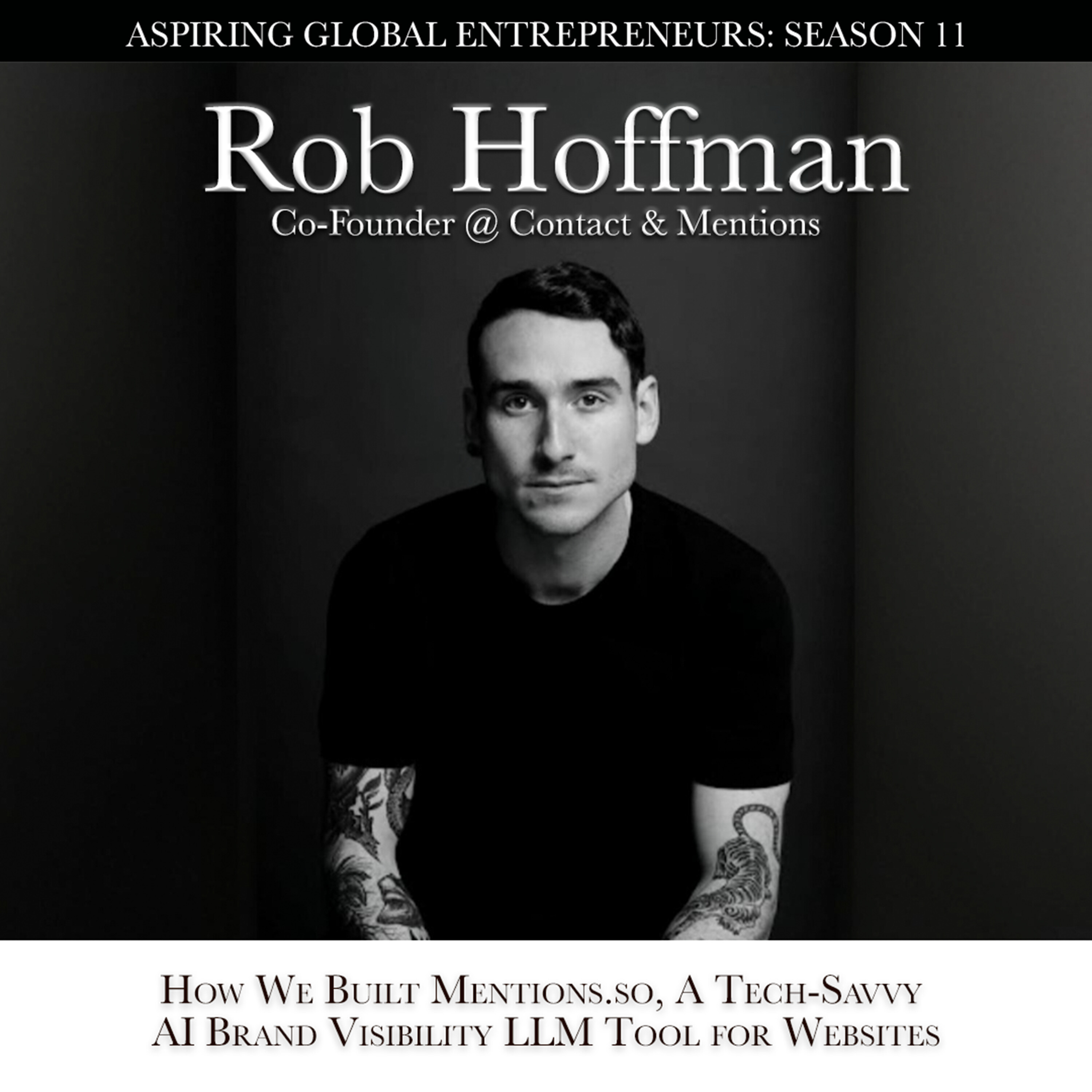
S11 Ep 40Rob Hoffman: How We Built Mentions.so, A Tech-Savvy AI Brand Visibility LLM Tool for Websites
Meet Rob Hoffmann, the founder of the AI SEO LLM marketing tool "Mentions." Our conversation focuses on the evolving landscape of search engine optimization (SEO) due to the rise of Large Language Models (LLMs) like ChatGPT, Claude, Grok, DeepSeek, and Perplexity etc,, which are becoming alternatives to traditional Google search. Rob Hoffmann discusses his journey into entrepreneurship, which started with an SEO agency called Contact, and how the need to track and improve brand visibility on these new AI platforms led to the creation of Mentions, which helps brands appear in LLM recommendations.Throughout our interview, Rob Hoffmann emphasizes the importance of reverse engineering consumer behavior, the need for excellent customer service (even providing his direct phone number to customers), and the affordability of mentions compared to competitors. Our discussion concludes with practical advice for businesses on determining if investing in LLM visibility is worthwhile based on their customer's buying journey.FAQs1. What is Mentions, and why was it founded?Mentions is a tool that assists brands and SEO agencies in navigating the evolving search landscape dominated by Artificial Intelligence (AI) and Large Language Models (LLMs).Founding Rationale:• Mentions was born out of Rob Hoffmann’s SEO agency, Contact.• The shift was necessitated by the recognition that SEO had "changed a lot" recently in response to AI, with search trends moving away from Google and "towards platforms like ChatGPT" (along with Perplexity, Gemini, Claude, etc.).• The founding goal was to be "the SEO agency of the future".• The tool was specifically created to solve two problems: providing a way of measuring brands visibility on LLM platforms, and helping brands get more visibility on platforms like ChatGPT.2. Why are LLMs becoming preferred search alternatives, and how does this affect marketing?People are increasingly turning to LLMs because consumer trust in traditional Google search results (the SERP’s top 10 links) has declined, as many users feel these results have been "gamed" by marketers.• Trust in ChatGPT: Conversely, trust in ChatGPT is "through the roof". This is because the chat-based interface makes interaction feel like a conversation with a friend or even a therapist, providing personalized responses from an "all-knowing AI entity".• Customer Acquisition Channel: Because ChatGPT is becoming a frequently used search engine alternative, showing up in its responses when a user searches for a product (e.g., "what is the best organic sulfite free shampoo") is seen as a "great customer acquisition channel".3. How does the mention tool conceptualize LLM visibility (GEO)?Mentions is built on the understanding of how modern LLMs generate answers: LLM + search operator = the result.• The Process: When a user inputs a query (e.g., "what is the best shampoo for dry scalps"): 1. The LLM searches the internet (like Bing or Google). 2. It scrapes the top 10 to 20 results that show up on those search engines. 3. It digests, summarizes, and serves that information to the user.• The Strategy: For a brand to achieve visibility in LLMs (GEO), they must first show up in those underlying search results (traditional SEO). Mentions helps brands reverse engineer the process by figuring out how platforms like ChatGPT get their data and, critically, what sources they are citing to provide responses, thereby guiding the brand to become a cited source.4. What are the key features of the mentions platform?Mentions helps users understand and optimize their content strategy based on LLM data.• Prompts Section (Favorite Feature): This allows users to track specific searches or prompts. When tracking a prompt, mentions shows examples of conversations and, most usefully, lists the pages that are most being cited by ChatGPT. This list provides an "easy road map" for the brand to know whether they should create new content or reach out to those listed publishers to get mentioned.• Analytics Feature: This feature pulls data from Google Analytics 4 (J4) into an easy-to-use dashboard. It helps users see which pages on their website people are visiting most often from LLMs (such as ChatGPT or Perplexity), along with geographical data and device usage (mobile vs. desktop). The founder notes that seeing this traffic is often a "magical experience" for users.• Tracking Cadence (24-Hour Clock): Mentions inputs tracked prompts into all supported LLMs (ChatGPT, Perplexity, Claude, Deepseek, etc.) every 24 hours. This is essential because LLM responses are not identical on every search (the overlap is about 70%), so regular, repeated testing ensures the collection of a large data set, which increases the accuracy of the insights provided.5. Who should invest in mentions or GEO (LLM visibility)?The decision to use mentions depends entirely on the company's buyer jo
S11 Ep 39Why Is My Competitor SEO Outranking Me? Marketing Real Talk with Favour Obasi-ike
Why Is My Competitor SEO Outranking Me? Marketing Real Talk with Favour Obasi-Ike (Glossary)| Get exclusive SEO newsletters in your inbox.🍪 Learn how to Outrank your Competitors with Strategic SEO and Content in this episode as we center on Search Engine Optimization (SEO) and strategies for outranking competitors for online search results. Key factors highlighted for improved ranking include content volume and depth, domain longevity, the incorporation of diverse media such as videos and infographics, and adherence to Google's E-A-T (Experience, Expertise, Authority, Trust) principles. The conversation also emphasizes the importance of consistent content creation, utilizing platforms like YouTube and LinkedIn for broader reach, and analyzing competitor strategies using tools like Screaming Frog. Ultimately, success in SEO is tied not just to ranking, but to converting traffic into sales through compelling offers and strong brand engagement, especially for local businesses via Google Business Profile optimization.Next Steps for Digital Marketing + SEO Services:>> Need SEO Services? Book a Complimentary SEO Discovery Call with Favour Obasi-Ike>> Need more information? Visit our Work and PLAY Entertainment website to learn about our digital marketing services.>> Visit our Official website for the best digital marketing, SEO, and AI strategies today!FAQsWhat are the main reasons a competitor might outrank me in SEO?Competitors often outrank others for several key reasons:Content Volume and Longevity: They may have a greater number of pages dedicated to a specific topic or have content that has been published and active for a longer period, building trust and authority over time.Rich Media and Content Diversity: Successful competitors often incorporate diverse content types such as videos, infographics, tables, FAQ sections, glossaries, checklists, white papers, or lead magnets. They also use "clusters" or subtopics to provide comprehensive coverage of a main topic.Consistent Content Creation and Distribution: They actively create and distribute content across multiple platforms, such as podcasts, YouTube videos, and blog posts, then push this content to their website and email lists, creating a "compounding interest" effect.Adherence to E-E-A-T Principles: Google's algorithm (Experience, Expertise, Authoritativeness, and Trustworthiness) favors websites that consistently demonstrate these qualities. Competitors who maintain active, responsible, and responsive domains that align with E-E-A-T guidelines are rewarded.Depth and Quality of Content: Their content offers significant value, often being longer reads (7-30 minutes or more) and providing in-depth information. This increases engagement metrics like watch time for videos and reading time on websites, building a higher trust score for their site.Contextual and Experiential Information: They go beyond basic information to provide rich context, educational value, and an "experience" for the user, like describing the warmth and enjoyment of chocolate chip cookies, which resonates more deeply with the audience and signals value to the algorithm.How does consistent content creation impact SEO rankings and user trust?Consistent content creation is crucial for both SEO rankings and building user trust. When you consistently publish high-quality, relevant content:Algorithm Favorability: Search engine algorithms, like Google's, prioritize fresh and regularly updated content. Frequent updates signal an active and valuable resource, leading to better visibility.Topical Authority: Consistently covering a topic from various angles and through numerous subtopics (content clusters) establishes your website as an authority in that niche. This comprehensive approach tells search engines that your site is a go-to source for information, improving your ranking for related keywords.Increased Engagement: Regular content provides more opportunities for users to engage with your site. Longer articles, videos, and podcasts increase "dwell time" (time spent on your page), which is a positive signal to search engines that users find your content valuable.Trust and Loyalty: Just like building a relationship, trust is built over time. If you consistently provide valuable, educational, and engaging content, users will come to know, like, and trust your brand. This loyalty extends beyond initial clicks, encouraging repeat visits and conversions.Long-term Visibility: Content, especially well-optimized evergreen content, has a long lifespan. A comment made on LinkedIn four years ago, for example, can still generate engagement and connections today, demonstrating the lasting power of consistent authorship and digital presence.What role do internal and external links play in impr
S11 Ep 38Effective SEO Strategies for Beginners with Favour Obasi-Ike | Marketing Essentials
What's the Best Effective SEO Strategy for Beginners? Marketing Essentials with Favour Obasi-Ike (Glossary)| Get exclusive SEO newsletters in your inbox.This discussion offers an in-depth exploration of Search Engine Optimization (SEO) strategies, primarily for beginners and small business owners emphasizing the importance of audience targeting, answering user questions, and consistent content creation (such as blogs and podcasts) to improve online visibility.Key technical SEO aspects are highlighted, including securing a website with HTTPS, creating and submitting a sitemap (XML file) for search engine readability, and focusing on long-tail keywords for better conversion rates. The conversation also touches on the effective use of various platforms like Clubhouse, Google Analytics, and Google Search Console for data intelligence and content distribution, ultimately aiming to protect, earn, and scale a business's online presence.Book Web Dev SEO Services?🧠 Book Web Dev SEO Services or Technical SEO Services with Favour Obasi-ike🧠 Visit our Official Work and PLAY Entertainment Website | Discover Best SEO Marketing Services🧠 Join our exclusive SEO Marketing community🧠 Read SEO Articles🧠 Subscribe to the We Don't PLAY Podcast🧠 Purchase Flaev Beatz Beats Online🧠 Favour Obasi-ike Quick Links🧠 Start Recording your Podcast with Riverside Today | Sign Up with My Affiliate Link HereNeed Marketing Resources?📑 Read about SEO Topics📑 Read about Clubhouse Audio Topics📑 Read about Pinterest SEO Topics📑 Read about Marketing Topics📑 Read about Podcast Topics📑 Read Social Media Tips📑 Read Billboards Tips📑 Read Work and PLAY Entertainment Newsfeed🎙️ Sign up with PodMatchFAQs1. What is the fundamental principle of effective SEO for beginners?The best SEO strategy for beginners starts with understanding and targeting your audience by asking questions. SEO is fundamentally about providing answers to the questions people are asking. This approach not only helps you create relevant content but also aligns your efforts with how search engines (like Google, ChatGPT, Pinterest, YouTube, and Amazon) operate. By consistently answering these questions, you build authority and credibility, which are crucial for visibility and growth. Tools like Answerthepublic.com, Answersocrates.com, SparkToro.com, and Ubersuggest.com can help you identify these questions and understand audience intent.2. Why is audience understanding crucial for SEO and content creation?Understanding your audience is paramount because it allows you to create content that directly addresses their needs and queries. When you create content with the user's questions in mind, you're not just optimizing for algorithms; you're building a connection with your potential audience. This "three-way connection" between you, your audience, and the algorithm ensures that your content resonates with those actively searching for solutions. It helps bypass the algorithm by matching user intent with your offerings, leading to higher engagement and a stronger brand.3. What are the essential technical SEO elements for a beginner's website?For a beginner, ensuring strong technical SEO involves several fundamental steps:HTTPS Security Connection (SSL): Always secure your website with an HTTPS connection. This creates a privacy area for users, builds trust (indicated by a padlock in the browser), and is a crucial ranking factor for search engines. Websites without this are often flagged as "not secure," leading to immediate user abandonment.Sitemap (XML File): A sitemap is like a brain or a map for your website, allowing algorithms to read and understand its structure and content. While humans read HTML (hypertext markup language), algorithms read XML (expandable markup language). Platforms like WordPress (with plugins like Yoast, RankMath), Squarespace, Shopify, and Wix automatically generate sitemaps, but they must be connected to tools like Google Search Console and Google Analytics to be fully activated and effective.No Broken or Duplicated Links: Regularly check for and fix broken links and avoid duplicating content, as these issues can confuse search engines and negatively impact your ranking.4. How important are blogs and consistent content creation for SEO?Blogs (or articles, sources) are essential because they tell the world you have something valuable to say. Websites like Wikipedia, Reddit, Shopify, and Canva all leverage blogs to provide information. A consistent blogging strategy feeds your website with good,
S11 Ep 37The ROI Power of SEO Blogging: Time, Money, and Energy Explained with Favour Obasi-ike
The ROI Power of SEO Blogging: Time, Money, and Energy Explained with Favour Obasi-Ike | Get exclusive SEO newsletters in your inbox.In this episode, we explain the Return on Investment (ROI) of blogging for businesses, emphasizing the long-term benefits in time, money, and energy highlighting that blogging, even using AI for content creation with human refinement, significantly boosts online visibility and authority by answering frequently asked questions. Key strategies include optimizing content with keywords for search engines, updating older posts, and repurposing existing content from platforms like Clubhouse as blog posts or podcast episodes to maximize reach. The conversation also touches on the importance of creating an author profile for credibility and using search operators to understand market positioning, ultimately asserting that consistent, relevant content creation is crucial for organic growth and sustained business presence.Next Steps for Digital Marketing + SEO Services:>> Need SEO Services? Book a Complimentary SEO Discovery Call with Favour Obasi-Ike>> Need more information? Visit our Work and PLAY Entertainment website to learn about our digital marketing services.FAQs on Blogging ROI and Digital Authority in the AI Age1. What is the fundamental concept behind the ROI of blogging?The Return on Investment (ROI) of blogging is viewed through three core ingredients: time, money, and energy. While many associate ROI primarily with monetary gain, the discussion emphasizes the long-term benefits and efficiency blogging can bring to a business. The idea is that a focused investment of these three resources into blogging can lead to significant and sustained positive outcomes, even if the initial outlay seems small. The goal is to maximize the impact of content creation by strategically using these ingredients, ultimately leading to increased visibility, authority, and potential for passive income.2. How can I determine if blogging is a worthwhile strategy for my business or industry?A practical method to assess the relevance of blogging for your business is to use Google search operators. By typing "blog / [your topic]" (e.g., "blog / social media tips" or "blog / how to cook chicken") into Google, you can see existing blogs that cover your intended subject matter. This directly shows you what Google recognizes as relevant content in your niche, and whether your competitors are present. If you don't see your own website or content in these results, it indicates a missed opportunity and suggests that blogging could be a beneficial strategy to gain visibility and authority in your industry. Additionally, using "site:yourdomain.com [keyword]" can reveal if your existing content is being indexed for specific keywords.3. How does updating old blog content contribute to its ROI, especially in the context of AI?Updating older blog content is crucial for maintaining and enhancing its ROI. Search engines, particularly with the rise of AI, prioritize "last mod" (last modified) dates. This means that content that has been recently updated and republished is more likely to appear in search results. By updating existing blogs, you signal to search engines that your information is fresh and relevant, increasing its visibility and authority. This practice can double the efficiency of your initial time investment, as you're leveraging existing content to continue attracting traffic and engagement, rather than starting entirely from scratch with new articles.4. Can AI tools like ChatGPT be used to effectively create blog content, and what is the recommended best practice?Yes, AI tools like ChatGPT can be effectively used for blog content creation, but the best practice is to use them as a first draft or a starting point, rather than as the sole author. While AI can generate content, it's crucial for the blogger to "humanize" it, injecting their unique voice, insights, and brand personality. One participant even mentioned using AI to write content specifically for their local business and achieving top search rankings after humanizing it. The recommendation is to use AI to get content ideas, summaries, or even initial drafts, and then to personally refine and optimize it. This ensures that the content is not only informative but also authentic and engaging for the target audience.5. How can I leverage various online platforms (search engines, social media, AI answer engines) to maximize the reach of my blog content?To maximize the reach of your blog content across various platforms, a balanced strategy is recommended:Search Engines (Traditional): Use Google and Bing for traditional search visibility.Answer Engines (Voice Search): Consider how your content would be found via voice assistants like Siri, Alexa, or Google Assistant,