Ultrarunning History
179 episodes — Page 4 of 4
Ep 2828: Western States 100 – Legends, Myths, and Folklore
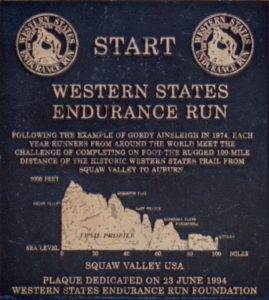
By Davy Crockett Dick Mendenhall runs in the 1977 Western States 100 The establishment of the Western States Endurance Run (Western States 100) in 1977 was one of the most important pivotal events in the history of ultrarunning. During the next decade, the existing ultrarunning sport experienced a major shift from roads and tracks to trails and mountains. Other 100-mile races were spawned from the Western States 100, patterning their mountain race formats and practices after those established by Western States. A new generation of ultrarunners came into the sport and the Western States Endurance Run became the most famous mountain trail 100-miler. Western States validly proclaims that it owns 100-mile racing’s richest and most compelling history. “Western States has been home to some of the sport’s most stirring and legendary competitions and has spurred the capacity of spirit of all runners, of all abilities and from all walks of life, from all over the globe. Western States remains one of the undisputed crown jewels of human endurance.” With such a rich and long history that has been told and retold over the years, it is not surprising that folklore has crept in, and historic errors introduced by mistake or on purpose, making the legend of Western States and its origin story even more compelling. With the establishment of the Internet and social media, much like the “telephone game” myths have been told and retold. My new book: Grand Canyon Rim to Rim History The Western States Endurance Run grew out of the Western States Endurance Ride in the Sierras, in California. That equestrian event also has quite a bit of folklore attached to it. But this fact is clear, there would not have been a Run if the Ride had not existed. The riders who were organizers of the run had the experience and wisdom to establish the Western State Endurance Run. I thought it would be interesting and helpful to look at many of these myths and some clarifying truths about the origin story of both the Western States Trail Ride and Western States Endurance Run. Major events like these, at times approach "mythical" status and place too much credit on certain individuals, pushing aside heritage and others who paved the way for these historical events to take place. The intent of this episode it to have some fun looking at the facts and get the reader to think about history. Truth: Before Gordy Ainsleigh made his historic run in 1974, more than 1,000 people had already run 100 miles in under 24 hours on roads, tracks, and trails. Read Davy Crockett's new book, Running 100 Miles: Part One - A History (1729-1960). This definitive history of the 100-miler races presents the rich history of many, both men and women who achieved 100 miles on foot. Part one of this history includes tales of the trail-blazing British, the amazing Tarahumara of Mexico, and the brash Americans. "All the world is on the go, at the rate of one hundred miles in 24 hours. It looks as if people's legs are running or walking away with their brains." - November 29, 1867, The Fremont Weekly Journal, Fremont, Ohio. Myth #1: The Western States Trail runs all the way to Salt Lake City, Utah Western States 100 runs on the historic Western States Trail. The Western States website and other websites erroneously state that the Western States Trail extends all the way from Salt Lake City, Utah. It does not and never did. The trail that crosses the desert of Nevada is the California Trail. In Western Nevada there were branches off the California trail to various gold field destinations or settlements. The main routes initially (1846–48) were the Truckee Trail to the Sacramento Valley and after about 1849 the Carson Trail route to the American River and to the Pacerville gold diggings. There was no route called the Western States Trail in the 1800s. But a route did exist, used primarily by gold miners, that went from Lake Tahoe to Auburn, California.
Ep 2727: Yiannis Kouros – Greek Greatness
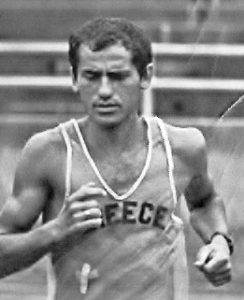
By Davy Crockett Get the new book that tells the story of Spartathlon and Kouros' famed 1983 run there Yiannis Kouros from Greece is considered by most, as the greatest ultrarunner of all time. That is a bold statement, but there are few that dispute this statement. The late “Stubborn Scotsman,” Don Ritchie, is certainly in the conversation, Some can try arguing for certain mountain trail ultrarunners, but what Kouros accomplished, dominating for more than a 20-year period, and setting world records that have lasted for decades is nothing but mind-boggling. Every ultrarunner needs to know about Yiannis Kouros and his accomplishments. One of his competitors, Trishal Cherns of Canada, said, “There’s the elite, the world class, then there’s Yiannis.” Yiannis Kouros was born on February 13, 1956 in Tripoli, Greece, a city of about 20,000 people at that time. His father was a carpenter and the family lived in poverty. They did not always have enough food, requiring Yiannis to perform his first manual laboring at the age of five. He could not afford to go to the movies so he went to a stadium to run for fun. Sports was also a refuge from his family trouble. Kouros explained, “I had a misfortune in my family. When I was born, my father thought I was not his own, he was of course wrong. For that reason, he used to lash out on me. My mother was uneducated and instead of nurturing me she fought me even more. So I grew up in a hostile environment.” He spent much of his childhood with his grandparents who were strong disciplinarians. Kouros awarded 1st Place in Long Jump In elementary school, he was awarded first place in the long jump. In high school he couldn’t stay home after school because of family troubles, so he had to go somewhere and went to track. He began formal athletic training and started running races at the age of sixteen. At first his coach dismissed Kouros as being “a mediocre athlete who just didn’t have the build to go fast.” But he progressed to be one of the top high school runners in Greece. He was a junior champion at the 3, 000 and 5,000 meter distances. After high school he left home and lived on his own in Athens for a time. Kouros didn’t only have interests in running. At the age of 12 he began writing his own poetry and songs. In his high school years, he took music and singing lessons. Eventually he published four albums and took part in music competitions. But his world greatness emerged in his running skills. In 1977 at that age of 21, Kouros ran his first marathon in 2:43:15. His times continued to improve to 2:25 in 1981. Soon he discovered that he excelled far more at ultra-distances. In 1981 at the age of 25, Kouros started building a house for himself in Tripolis which would take years to complete. He worked during the days as a guard at the athletic stadium and in the evenings worked on his house alone and trained about twice per day. He averaged only 2.5 hours sleep per night. By the end of the year, he asked the Sports Council to send judges to witness his attempt to run 100k, running on a 20k road course, seeking to set a national record. He finished in 7:35 but no judges came. Spartathlon By 1983, at the age of 27, Kouros had finished 25 marathons, winning one (1981 Athens), He read about a new race from Athens to Sparta, called the Spartathlon. The race traced the historic footsteps of Pheidippides, an Athenian messenger in 490 BC. This race of about 156 miles (251 km) started at the Acropolis in Athens and ran through ancient towns including Corinth to Sparta. Earlier in October 1982 a team of British athletes from the Royal Air Force covered the course, with the first man finishing in 34.5 hours, proving it could be done. Kouros signed up, hoping to be the first Greek finisher. It was his first ultramarathon! He jumped right from the marathon distance to about 156 miles (251 km)! World record ultrarunner Eleanor Adams of England also signed up,
Ep 2626: Edward Payson Weston’s 1909 Walk Across America
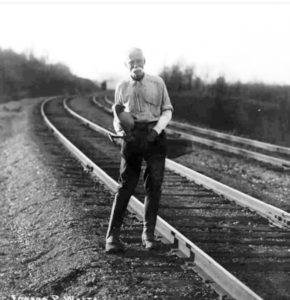
By Davy Crockett Both a podcast episode and a full article In previous articles, stories were shared about various walks across America in the 1800s. In 1909 Edward Payson Weston, the most famous American Pedestrian of the 1800’s made his transcontinental walking attempt in the twilight of his walking career, at the age of 70. His amazing walk captured the attention of the entire country and was the most famous transcontinental walk across America in history. Edward Payson Weston (1839-1929) was born in Providence, Rhode Island on March 15, 1839. He was not particularly strong as a boy and took up walking to improve his health with exercise. When he was 22, on a bet, he walked from Boston to Washington to witness the inauguration of President Abraham Lincoln, covering 453 miles in about 208 hours. In 1867, he walked from Portland, Maine to Chicago, about 1,200 miles, in about 26 days. That walk brought him worldwide fame. Over the next few decades, he was a professional walker and took part in many indoor multiday races. He gained more fame when he went and competed in England in 1876. Later in life, Weston gained intense attention in America in 1907 when at the age of 68, he again walked from Maine to Chicago and beat his 1867 time by more than a day. Since 1869 Weston expressed a desire to walk across America. Many had claimed that they accomplished it. Finally, in 1909 he decided he would make his attempt starting on his 70th birthday. Here is the story of his famous 1909 transcontinental walk. Plans In January 1909, Weston publicly announced his plans to walk across the continent from New York to San Francisco. He intended to accomplish it in 100 walking days, taking off Sundays each week. Including some planned side trips, he intended or the distance to be 4,000 miles, meaning that he would need to average walking 40 miles per day. In 1909 there weren’t any paved roads across the country, just some pavement in the cities. His route would be on dirt road “turnpikes” and on railroads. Along the way he wanted to deliver lectures, and give walking demonstrations, probably for money. Because of all the past fraudulent transcontinental walks by others, he wanted witnesses to keep him under surveillance to verify his accomplishment. It was recognized by the press, “Several alleged walks across the continent have been heralded from time to time, but their accuracy has been so vague as to be valueless for records of bona fide achievements.” At first Weston planned to walk from New York to Seattle and then head south to San Francisco. For his past long point-to-point walks, he had used horse carriages as crew, but the horses would wear out. This time he made plans for an automobile to go along with him. He wanted his route to include bridges, with no ferries, so he could walk every foot of the way. He purposely wanted to boycott going through Cleveland because in 1907 he was treated poorly by city crowds and didn’t receive what he thought was proper protection for that walk. Instead of bringing camping gear with him in the automobiles, he felt confident that lodging would be found in towns each night across the country. Among his planned provisions to always have on hand would be eggs, tea, meat, and plenty of ginger ale. He also wanted to have ice with him at all times, and included plans for blankets, extra shoes, and changes of clothing. As the day approached Weston changed route plans. Instead of heading to Seattle, he planned to head to Los Angeles and then north to San Francisco. He planned send daily updates of his walk to the New York Times by telegraph. Those updates are the primary source for this article The Start The crowd at the start Weston started his transcontinental walk on his 70th birthday, on March 15, 1909, at the General Post Office in lower Manhattan, in New York City. He was late to arrive at his planned start time at 4:15 p.m. which worried many,
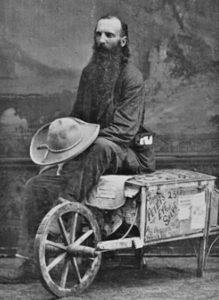
Ep 2525: The Wheelbarrow Man – Lyman Potter
By Davy Crockett Both a podcast episode and a full article In recent years, some of the ultrarunners who have run across America performed it by pushing baby joggers to carry their stuff in a self-supported mode. Once when Phil Rosenstein was pushing his jogger during his transcontinental run, an alarmed passing motorist called the police, and reported that a crazy person was pushing his baby along a busy highway in a baby carriage. In the general public’s mind, it is just too crazy to imagine someone running across the country pulling or pushing a contraption. What about pushing a one-wheeled, wooden wheelbarrow across the country? That is exactly what Lyman Potter of Albany, New York did in 1878. He was one of the earliest known ultrawalkers to legitimately walk across America. He became known as “The Wheelbarrow Man.” The country was fascinated by him, but behind his back, he was called by many an idiot, a lunatic, and a fool. Why would anyone want to push a wheelbarrow across America, especially across the West when there were just rough wagon roads and a few railroads? This is the story of “The Wheelbarrow Man” who would eventually be called "the hero of the greatest feat of pedestrianism." R. Lyman Potter Richard “Lyman” Potter was born about 1840 in Marietta, Ohio. His father was an inventor, establishing patents. In 1862 the Potter family moved to Albany, New York. Lyman Potter then served as a private in the civil war. He returned to Albany where he worked with his father in patents and later as a plumber, an upholsterer, a cabinet maker, and a mattress maker. In 1872 when President Ulysses Grant was reelected, Potter was so upset that he vowed he wouldn't cut his hair or shave his face until a Democratic president was in the white house. His neighbors always thought he was very odd. 1875 New York Census in Albany In 1875 at the age of 35, he was a widower. His wife likely died in childbirth the year before. He was left to raise two daughters, Bertha age four, and Harriet, an infant. They were cared by a live-in nanny/housekeeper, Mary Robinson. His furniture business soon experienced hard times so he did odd jobs in the city to support his family. He was a smaller man, about 5 foot 8 inches, 137 pounds, and wore a long straggling black beard and long hair. In early 1878, he was 37 years old, although looked older. The Wheelbarrow Wager In 1878 Potter and some friend were discussing the exploits of the famous Pedestrian, Daniel O’Leary. They started to banter about “this and that,” including whether any of them could walk for 100 consecutive hours. Potter said that was too easy, and before he knew it, a $1,000 wager resulted challenging Potter to push a wheelbarrow all the way from Albany, New York, to San Francisco, California. There were many individuals who put up money for the $1,000 purse which was deposited in a bank for Potter to collect if he was successful. Potter explained, “It all came from too much talk. We was talkin’ about work and earnin’ money, and hard times, and I said I’d wheel a wheelbarrow to San Francisco for a dollar a day rather’n be without work. The Albany fellows took me up and made up $1,000. I had nothin’ to do and I wouldn’t back down.” The terms for the wager required that he make it to San Francisco in 215 traveling days and in no more than 250 total days and must walk up to 4,085 miles during that time. He was not to travel on Sundays. Why was he doing truly doing it? He figured that he could make money, take many photographs, and write a book about his experiences along the way. A newspaper stated, “He is like the rest of mankind, ‘on the make,’ and is not doing all this wheelbarrowing for glory." Potter’s unique wheelbarrow was made specially for the trip. It was constructed as a box and weighed less than 45 pounds, although it looked heavier. When loaded with his things it weighed up to 75 pounds.
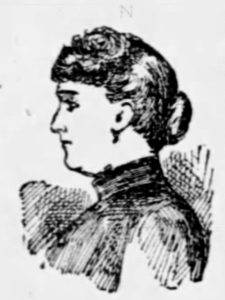
Ep 2424: Zoe Gayton – Woman Transcontinental Walker
By Davy Crockett Both a podcast episode and a full article On May 10, 2019, America will celebrated the 150th anniversary of the completion of the transcontinental railroad. This is the third article in a series to recognize some historic accomplishments walking or running across the American continent. In the previous articles, the history was given of the 1855 walk across South America by Nathaniel Holmes Bishop, and the story of Dakota Bob was shared as an a example of the many fraudulent characters who would claim to walk across America. Women got into the game too! The most famous of the transcontinental woman walkers of the late 1800s, and perhaps the first, was a Spanish-American world-famous actress, Zoe Gayton. The may have also been the first person to walk the history transcontinental railroad end-to-end. Here is her amazing story of her walk in 1890-91. Zorika Gaytoni Lopez Ares “Zoe Gayton,” was born in about 1854, in Madrid, Spain. When she was about four years old, her father became a political exiled immigrant and they came to New York City. Zoe Gayton started performing in the theater at the early age of 14 in Tennessee and then joined a company in New York City. Zoe Gayton married at about 18 years old, to famous rich man, John H. Church, who was the owner of the Golden Gate Theater in Oakland, California. He had many wives, some at the same time. Zoe toured with him to South America. They lived in Utah for a time, building the first hotel in Little Cottonwood Canyon, Utah (location now of Alta and Snowbird ski resorts). They divorced in 1873 and Zoe then went through a series of other marriages as she continued to perform. She later joined companies in the west, performed in many places, and took a company to perform in Hawaii. Mazeppa Zoe Gayton became a world-known “equestrian actress impersonator” who traveled performing a four-act play based on a legendary poem, “Mazeppa” by Lord Byron. In the plot, Zoe played the male character Mazeppa, a horseman and page for a Polish Count. When Mazeppa is caught in an affair with the Countess, he is tied naked to a steed and set loose. The terrifying scene is the play is when Zoe is bound to a horse in scant clothing and rides on planks to the theater’s ceiling. It was much like a circus act. One newspaper described it this way, Zoe “is strapped to the side of her ‘barbed steed' and ascends the precipitous ‘runs’ to the ‘flies’ in the roof of the theater. It is a very exciting scene, and never fails to elicit tumultuous applause from the audience.” Another paper wrote, “Besides possessing a clear and pleasing voice, she has a splendid physique and graceful movement.” In 1882 Zoe Gayton performed “Mazeppa” in England at Queen Victoria’s New Royal Theatre. As she was touring, Zoe was arrested for stealing things at a boarding house where she was staying with her manager William J. Marshall. She took ten table clothes, a silk-velvet cape, a shawl, an umbrella, a lace scarf, and other items. They were found in her possession, she was convicted and sentenced to four months in prison. In 1883 she was back touring in the United States in Los Angeles, San Francisco, Oakland, New Orleans, and Alabama. In 1884 in deep financial trouble, after performing in Alabama, she raffled off her famous performing white Arabian steed, “Gypsy” to raise money to pay off debts when her theater company “went to pieces.” In 1885 she was performing with a new steed, “Fearless.” Zoe had performed all over the world including England, Scotland, France, Spain, Germany, Australia, India, Peru and all over America. But her years of success playing Mazeppa finally came crashing down. In 1885 her company was bankrupted performing in Kansas and her personal luggage was sold off to pay debts. In 1886 Zoe was traveling and performing again but in a new roles as Leah in Jewish play, "Leah, the Forsaken," and in another play, a military drama, “The French Spy.

Ep 2323: Dakota Bob – Transcontinental Walker
By Davy Crockett Both a podcast episode and a full article Dakota Bob On May 10, 2019, America will celebrate the 150th anniversary of the completion of the transcontinental railroad. This is the second article in a series to recognize some historic accomplishments walking or running across the American continent. In the previous article, the history was given of the 1855 walk across South America by Nathaniel Holmes Bishop that inspired others to try transcontinental walks. Starting around 1890, dozens of “pedestrians” attempted transcontinental walks and many claimed to have succeeded. In 1896 a Buffalo article commented, "No less that a score have passed through Buffalo within a year." But did these walkers really accomplish these journeys all the way on foot? Verification was impossible in those days, Walkers wanted to succeed at all costs and were motivated by large wagers and the potential for great fame. Even in more modern times there have been fraudulent attempts and claims. Some of these very early walks that received attention may have been legitimate, but with careful analysis of the evidence left behind, most of these early transcontinental walks were likely hoaxes. The Buffalo Enquirer further stated in 1896, "Dead broke pedestrians have lived off gullible hotel keepers and charitably-inclined residents of the various states through which they pass. The American people like to humbugged." It wasn’t until about 1909 that more of the press started to accept the fact that many of these walkers cheated. One reporter wrote, “Several alleged walks across the continent have been heralded from time to time, but their accuracy has been so vague as to be valueless for records of bona fide achievements.” Faking Transcontinental Walks The biggest challenge for walks of the late 1880s and early 1900s was the very remote western states section. From Kansas to over the Sierra in California, towns were very spread out and the dirt roads were terrible, still rutted wagon roads. Winter travel on these rural roads was extremely dangerous and frequently impassible. It was impossible for walkers to travel that section solo without aid. Aid by automobile wasn’t yet practical. Rainy weather made roads impassable by the early motor vehicles. The first transcontinental dirt road highway, the Lincoln Highway, wasn’t completed until 1913 and even then, the automobiles were very unreliable for such journeys and frequently became stuck in sand or mud. Using a pack horse or having a rider along on a horse providing aid was possible, but not practical because the horses would need to be changed out. Those who claimed to do it solo without a pack horse, or without a rider, were very likely frauds. Walking on the railroad between California and Kansas, like a hobo, was a practical solution in those early days but it involved a slow surface that was mostly away from roads. On the railway line, the towns and way stations were very spread out. For walkers to really succeed passing through the west, they would need to have a lot of help from locals providing food, liquid, and shelter. Night walking would be critical during summer months. Newspapers frequently covered these attempts, but because communication and verification were poor, it was very simple to fool the public and the press, performing fraudulent transcontinental walks. In 2019, with so many old digital newspapers available, it is fairly simple to track an early walker’s travels reported in the papers and stitch the stories together to determine fact or fiction. The story of Dakota Bob is a great example to examine and illustrates the reality of most transcontinental walks before 1910. Dakota Bob was a colorful figure who became very famous in the East. During his walking career, he walked across the North America continent eight times or more! Or did he? Here is the story of Dakota Bob. Dakota Bob Dakota Bob

Ep 2222: 1855 Walk Across South America
By Davy Crockett Both a podcast episode and a full article On May 10, 2019, America will celebrate the 150th anniversary of the completion of the transcontinental railroad in 1869, that was recognized with a “Golden Spike” ceremony at Promontory Point, Utah. For more than 150 years adventurers desired to travel across the American continent by various means: horse, wagon, train, automobile, and eventually on foot in one go. With this celebration coming up, it seemed appropriate to recognize some historic accomplishments walking or running across the American continent. The most notable early walk across America was accomplished by the famous Pedestrian Edward Payson Weston in 1909. Weston accomplished the transcontinental walk at the age of 71. That was just six years after the first two men drove an automobile across America from San Francisco to New York in 63 days. By the time Weston began his famed walk, the fastest known time driving across the continent had been lowered to 15 days, 2 hours, 10 minutes. A train had accomplished it in 71 hours 27 minutes. Weston would capture the attention of the country and the world when he accomplished it on foot in 1909. That story will be covered in an upcoming article. However, Weston first got the idea in 1869 when a best-seller book was being read about a young man, who years before had walked across South America. Weston very likely got the idea to walk across North America from the adventure that took place in 1855. Few have heard this story. It needs to have a place in ultrarunning history because it inspired the Pedestrian world and planted in the minds of many to do cross continent walks and runs in the future. Not only would runners run across America (3,100+ miles), but they would go across Australia (2,890), New Zealand (1,350 miles), Europe (1,729 miles), Canada (4,179 miles), Asia (5534 miles), the Soviet Union (7,321 miles), the length of Great Britain (840 miles), Ireland (375 miles), and South America (8,500 miles). But it seemed to all start with a young seventeen-year-old American adventurer in 1855. Here is his story. Nathaniel Holmes Bishop (1837-1902) Nathaniel Holmes Bishop was born to a wealthy family on March 23, 1837 in the city of Medford Massachusetts, near Boston. As a youth he had a restless adventuresome spirit and at seventeen years old vowed that he would walk across South America from Argentina to Chile, climbing over the Andes. With only $45 in his pocket, he hired on as crew on a roach-infested merchant ship that was heading for Buenos Aires, Argentina. He endured weeks of seasickness but “became tolerably familiar with the duties of life at sea” growing strong and hearty. For three weeks the rainy season arrived, and he was “wet to the skin” as clothes, bedding, everything was “saturated from the effects of a leaky deck.” He arrived in South America during the “pampero” hurricane season and witnessed tragedy as other vessels were capsized and sailors drown. Buenos Aires Buenos Aires At Buenos Aires Bishop was still obliged to his mariner duties and remained on the ship for an entire month waiting for orders that he could be set free. Finally on February 20, 1855, he was discharged and was able to go ashore and went to the American consulate. The Consul thought he was crazy to undertake a walk of about 1,000 miles across the continent alone especially because he was unable to speak Spanish. Bishop wrote, “However he furnished me with the necessary papers of protection, together with letters of introduction to various persons in the interior.” Bishop would first have to face the vast “Pampas” which are vast plains including places without trees. He learned that the realistic way to cross the Pampas on foot, was to hitch up with a caravan of merchants, otherwise it would be impossible to obtain food, water and follow the right trail. This is because after March the Pampas sees very little rain and is fi...

Ep 2121: Mote Bergman (1887-1978)
By Davy Crockett Both a podcast episode and a full article After the golden age of Pedestrianism of the late 1800's, a new breed of ultra-distance runners emerged in the early 1900s. Events were few. The world wars and the great depression all but snuffed out their efforts to continue to go the distance, to demonstrate what was possible. It became impossible to try to make a living with their legs. In America, only the most determined runner emerged out of the strife of the 1930s and 1940s to continue their craft into the post-war modern era of ultrarunning. One of these athletes was Alvin "Mote" Bergman. In 1896 the first marathon was competed in the inaugural Olympic Games at Athens, Greece. The idea was quickly adopted elsewhere and the Boston Marathon soon was established. Other marathons followed and competing at that distance grew in attention. But there were only a small number of runners competing at longer distances such as 50 miles and 100 miles. The Trans-America races "Bunion Derbies" of 1928-29 did gather together talented runners, but soon America turned their attention to just surviving during the depression. Without very many ultra-distance professional events to compete in, some of these early ultrarunners used their marketing creativity to transition to "solo artists." Mote Bergman would eventually take this road in the Pittsburgh, Pennsylvania area and would become known as "the wizard of the colossal art of walking,” and the “world champion birthday walker,” He was one of the very few American ultrarunners who kept up ultrarunning through the Great Depression, through the World War II years, and went on to span into the modern era. He was likely the first American to walk or run a sub-24-hour 100-miler in the post-war modern era of ultrarunning. Early Running/Walking Career Alvin Floyd Bergman (Bergmann) was born in Virginia on May 14, 1887 weighing only four pounds. His father was a carpenter and his grandparents came from Germany. He was frail as a child and started walking for exercise when he was ten years old. His family moved to Leetsdale, Pennsylvania, a small town on the Ohio River outside of Pittsburgh. In 1900, at the age of 13, he began long distance walks to build himself up physically. He had read a story about the walking champion, Edward Payson Weston, who advised people seeking good health to “walk, walk, walk.” That year he started a very long string of his birthday walks, matching miles to his age. Those birthday walks were eventually featured in Ripley’s “Believe it or Not” column and Mote would keep them going until he was 80 years old. He wasn’t a powerful looking man, only 145 pounds and 5 ½ feet tall. His nickname “Mote” was derived from his small stature. Mote became a barber, also turned into a professional runner in 1909, and participated in some running races. That year he ran a "marathon" of about 36 miles, near Pittsburgh, in a bad snowstorm and finished in 5:25. Late that year he also participated in a 72-hour "go as you please" race. Mote in 1909 Walking from his hometown in Pennsylvania to many major cities in the East became a lifetime activity in the summer during his vacation time. In 1914 at the age of 27, Mote set off on a 300 mile walk from his home in Leetsdale to Huntington, West Virginia, a distance of about 300 miles. He expected it to take eight days. For the first day, his birthday, he walked 27 miles to celebrate. His various walks received newspaper attention and he said he believed he could break the "world's record of 121 miles without a stop." In 1915 at the age of 28, he achieved his most proud accomplishment. He walked from Pittsburgh to Chicago, a distance of about 503 miles in an incredible six days, 23:45, believed to be a “world record” at that time. During that trip he walked with pedestrian legends, Dan O’Leary of Chicago and Edward Payson Weston of New York. Old Soldier Barnes

Ep 2020: Barkley Marathons – First Few Years
By Davy Crockett Both a podcast episode and a full article Learn about the beginnings of Barkley, and the early years in this new book The Barkley Marathons, the toughest trail race in the world, is held in and near Frozen Head State Park in Tennessee, with a distance of more than 100 miles. The first year it was held was in 1986, and it is now world famous. Only 40 runners are selected to run. Barkley is the brainchild of Gary Cantrell (Lazarus Lake) and Karl Henn (Raw Dog). In 1985, they had been intrigued by the very few miles that James Earl Ray had covered back in 1977 during his 54.5-hour prison escape in the mountains. Cantrell felt that he could do much better. See Barkley Marathons – The Birth That year Cantrell and Henn went up into that wilderness to backpack, in two days, the “boundary trail,” about 20 miles, constructed by the Civilian Conservation Corps decades earlier. Four people died building the trail. When they showed the rangers their route around the park, they were told that they wouldn’t be able to make it. The rangers didn’t want them to go on the hike because they didn’t want to have to rescue them. But the rangers were convinced to give them a permit. The first 7.5 miles took the two ten hours to cover. They did finish their backpack trip and told the rangers that they had some friends who would probably like to run the trail. The idea for Barkley had been hatched and a course was designed and plans put into place for the first year of the Barkley in 1986 at Frozen Head State Park. Cantrell later said, “The best description of the course I’ve heard? Someone told me that every ultra has its signature hill, the nasty one that’s totally unreasonable and makes or breaks the race—the Barkley is like all those hills just put end on end.” Frozen Head State Park CCC Dynamite shack In 1933, the Tennessee Governor set aside a large portion of the Brushy Mountain State Prison’s lands to establish the Morgan State Forest. That year the Civilian Conservation Corps came and constructed roads, facilities, and some trails that Barkley uses today including the Boundary Trail. The CCC worked for multiple years. Rattlesnakes and all the prison escapes taking place every year made it difficult to establish a camp in the forest until 1938. In 1952 a large portion of the forest was burned and prison inmates were used to fight the fire. In about 1970 the Frozen Head State Park was established. One of the unknown heroes of the Barkley is Don Todd (1918-2005) of Wartburg, Tennessee. He was active since the 1960s in an effort to protect the area that became Frozen Head State Park. Since the 60s he led wildflower-spotting hikes within the park to acquaint others with its diversity of plants and animals. Don Todd Todd pushed to have nine square miles around Frozen Head declared unsuitable for coal mining and helped stop plans for a huge strip mine on Frozen Head which would have been visible from 80% of the trails within the park. Thankfully that didn’t happen and Todd was proud that the park looks pretty much the way it did when “the first white men came.” He said, ”it’s something I put value on trying to improve the quality of life in the mountains a little bit. In 1985 he was awarded the Gulf Conservation Award for his efforts. Coal strip mining was a constant worry for the area. In 1971 a coordinated effort gathered petitions and fought to not allow state land close to the park to be sold off to potential strip miners. In 1973 a state bill was introduced to prevent strip-mining of 2,500 acres of coal land near Frozen Head. But strip mining was a constant threat to the park. In 1978 a public hearing was held in Wartburg about doing strip mining on Bird Mountain, right on the future Barkley course. The hearing was heated and dominated by miners. Three members (including two women) of the “Save Our Cumberland Mountains” organization were “verbally and physically abused” by min...
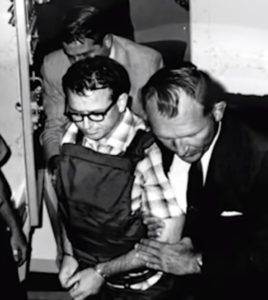
Ep 1919: Barkley Marathons – The Birth
By Davy Crockett Both a podcast episode and a full article The famous prison and the start gate Read about the beginnings of the Barkley and the early years in this new book. Get it in your country's Amazon site. The Barkley Marathons, with its historic low finish rate (only 15 runners in 30 years), is perhaps the most difficult ultramarathon trail race in the world. It is held in and near Frozen Head State Park in Tennessee, with a distance of more than 100 miles. The Barkley is an event with a mysterious lore. It has no official website. It is a mystery how to enter, It has no course map or entrants list is published online. It isn't a spectator event. For the 2018 race, 1,300 runners applied and only 40 selected. Those seeking entry must submit an essay. The entrance fee includes bringing a license plate from your home state/country. Runners are given the course directions the day before the race and aren't told when the race exactly starts. They are just given a one-hour warning when the conch is blown. To prove that they run the course correctly, books are placed a various places on the course where the runners must tear out a page from each book matching their bib number. If they lose a page or miss a book, they are out. Directly opposite of most ultras, the course is specifically designed to minimize the number of finishers. The inspiration for creating the Barkley in 1986 was the 1977 prison escape by James Earl Ray from Brushy Mountain State Prison. Ray was the convicted assassin of Martin Luther King Jr. He spent more than two days trying to get away in the very rugged Cumberland Mountains where the Barkley later was established. Ray's escape has been a subject of folklore. This article will reveal the details of his escape, where he went, what he did, and why he was only found a few miles from the prison. This is how the madness of the Barkley Marathons started... This history along with the early history of the Barkley Marathons, and the origins of other classic ultramarathons are now contained in a new book: Classic Ultramarathon Beginnings by Davy Crockett, available in your country's Amazon site. Gary Cantrell (Lazarus Lake) In 1978, Gary Cantrell (later also became known as Lazarus Lake), was an accounting student at Middle Tennessee State University. He was a tough marathon runner with eight finishes to his name at that time. He even finished one marathon after shotgun pellets struck him in the legs during a race. (It turned out that there were some hunters in nearby woods shooting quail). Cantrell was interested in stepping up to run an ultramarathon, so in 1979, he and his fellow “Horse Mountain Runners” created their own ultra to run, Strolling Jim 40-mile Run in Wartrace, Tennessee. It was named after a famed horse and became one of the oldest yearly ultras in the country. This was Cantrell’s first experience at creating a tough race. He said, “Six or eight doctors will be in the race and that sort of surprised me. You’d think of all people they’d know better.” Cantrell’s masochistic race directing skills were further honed when in 1981 he put together “The Idiot’s Run” in Shelbyville, Tennessee consisting of 76 miles and 37 significant hills. He was surprised when several runners expressed interest. He said, “Is there no run so tough as to discourage these maniacs? If we had a 250 miler through Hell with no fluids allowed, I think we’d get 10-15 people.” A dozen runners showed up for The Idiot’s Run and only two finished. The next year, 1982, he extended “The Idiot’s Run” course length to 108 miles and eliminated flat sections, gaining experience adjusting courses each year to make them harder. Cantrell explained, “The objective isn’t so much to see who finishes first as to simply see who survives for the longest distance. I’m confident this is the single grimmest race held anywhere in the world.” An article about his race was printed in newspapers...
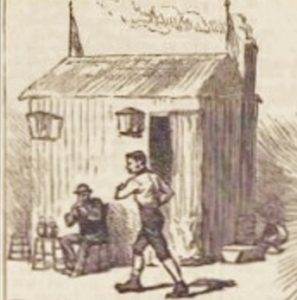
Ep 1818: 1,000 Milers – Part 2 – The Barclay Match
By Davy Crockett Both a podcast episode and a full article Richard Manks Can a person walk or run 1,000 miles in 1,000 hours, doing a mile in each and every hour for nearly 42 days? That was the strange question that surfaced in 1809 in England. In Part 1 of the 1000-milers I covered the attempts to reach 1,000 miles as fast possible. This part will cover what became known as the Barclay Match, walking a mile every hour, which was a feat of enduring sleep deprivation and altering sleep patterns dramatically. In a way, these matches were similar endurance activities to the bizarre walkathons of the 1930s that required participants to be on their feet every hour. Critics of these 1,000-mile events called them "cruel exhibitions of self-torture" that had no point except to "win the empty applause of a thoughtless mob" and put a few pounds into the pockets of the walkers. They said, "there is nothing to learn from such exhibitions save they are positively injurious, physically and morally." But others thought the matches gave "convincing proof that man is scarcely acquainted with his own capacity and powers.” These "1,000 miles in 1,000 hours" events captivated the world, were cheered in person by tens of thousands of people, were wagered with the equivalent of millions of today's value in dollars and launched the sport of pedestrianism into the public eye. It was first thought that this 1,000-mile feat was an impossibility, and it was called a “Herculean” effort. Betting was heavy and wagers were nearly always against success. But during a 100-year period, there were more than 200 attempts of this curious challenge and more than half were successes. How did this all begin? Captain Robert Barclay Robert Barclay Allardice, or "Captain Barclay," of Ury, Scotland, was born to a Scottish family in 1779. His father had been a member of Parliament and owned extensive estates. When young Barclay was fifteen years old, he won a 100 guineas wager, walking heal-toe six miles in one hour which at that time was considered a great accomplishment. When he was twenty years old, he covered 150 miles in two days, and in 1801, in very hot weather, he walked 300 miles in five days. Also, that year he walked/ran 110 miles in 19:27 in a muddy park. He became a very experienced walker who took on many wagers. He also was an officer in the army and thus called “Captain.” In September 1808 Barley started to consider accepting a challenge to walk 1,000 miles in 1,000 consecutive hours for 1,000 guineas, a large fortune at that time. (Worth about $155,000 in 2019). For a farm laborer, a year’s wages were about 50 guineas. Barclay first conducted a secret test at his estate in Scotland. One of his tenant farmers was able to walk one mile, every hour for eight days. Barclay decided to accept the 1,000 miles in 1,000 hours challenge. Others had attempted this before, but no one went longer than 30 days. For example, in 1772 a tailor began a walk on a large wager to walk 1,000 mile in 1000 hours on “a spot of ground marked out for the purpose near Tyburn Turnpike” in London. It is believed that he was unsuccessful. A pedestrian named Jones sought to walk every hour for a month but quit in less than three weeks. Others were defeated by lack of sleep, swollen legs, and other various problems. A man from Gloucestershire rode a horse 1,000 miles in 1,000 hours, one mile in each hour, on Stinchcombe Hill in Dursley, England. “He won with ease.” As word spread about this challenge, other 1000-mile ideas were spawned, including by George Wilson, who wanted to attempt walking 1,000 miles in less than half the time, in 20 hours. (See Part 1). 1,000 Miles in 1,000 Consecutive Hours Months passed and Barclay’s challenge was put together to be performed on open land near Newmarket, England. A half mile course was laid out to be walked out and back in a straight line over smooth and even uncultivated land.
Ep 1717: 1,000-milers – Part 1
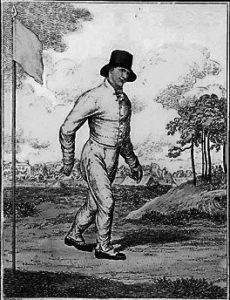
By Davy Crockett Both a podcast episode and a full article In the 1980s running 100 miles started to become more popular for the non-professional runner to attempt. By 2017 some in the ultrarunning community viewed running 100 miles as fairly common place. In recent years a saying of “200 is the new 100” emerged as a few 200-mile trail races were established, meaning that 100 miles used to be viewed as very difficult but 200 miles was the new challenging standard. This may be true, but what about running 1,000 miles? Will 1,000 milers ever be the “new 200?” What? Who runs 1,000-mile races? In 1985 America’s first modern-day 1,000 mile race was held in Flushing Meadows Corona Park in Queens, New York with three finishers. The 1986 race was probably the most famous modern-day 1,000-mile race held with a show-down of several of the world greats. But most ultrarunners have never heard about 1,000-mile races. 1,000-mile attempts in one go have taken place for more than two centuries. A curious 1,000-mile frenzy took place for about ten years in England during the early 1800s by professional walkers/runners. They took on huge wagers making those who succeeded, very wealthy men. These 1,000-mile events attracted thousands of curious spectators who also wagered and spent much of their money at the sponsoring pubs during the multi-week events. This will be a three-part series on 1,000 milers. Two main formats for these 1,000-milers took place during early 1800s. In Part 1, the stories will be told about walking 1,000 miles, “go as you please” as fast as the pedestrians could, to reach the distance within a certain number of days to win the wagers. They were not really interested in achieving best times. They were simply interested in reaching 1,000 miles in time to win the wager and gain lots of money donated by spectators. Massive amounts of money changed hands in bets. In Part 2, stories even more famous will be told about reaching 1,000 miles in 1,000 hours, an effort commonly called, the “Barclay Match.” With this format the pedestrians were required to walk a mile during every successive hour, a strange battle to establish bizarre sleep patterns for nearly 42 days. Part 3 will include the modern-day 1,000-mile races. Very Early 1,000 Mile Attempts Running or walking the 1,000-mile distance in an event has taken place for more than 250 years. Before the modern era of ultrarunning (post-WWII), attempts to reach that specific distances were mostly conducted as solo attempts involving wagers. Wake Green Windmill The earliest known 1,000-miler was attempted in 1759 by George Guest, a wagoner from Warwickshire, England. At Birmingham, England, for a “considerable wager”, Guest attempted to walk 1,000 miles in 28 days. He knew that he needed to walk about 36 miles per day. His course was in the area of Mosely-Wake Green, about two miles from Birmingham. He only walked 31 miles the first day but from then on stayed on schedule. Half way through, on day 14 he was back on schedule at mile 490. It was reported, “He is perfectly well and it is thought he will perform the whole in the time.” By day 21 he had walked 720 miles. With two days to go, Guest still had 106 more miles to go. He was feeling fine and to show off a bit, “he walked the last six miles within an hour, though he had a full six hours in which to complete his task.” He finished on February 1, 1759. The next month he again attempted to walk 1,000 miles, this time in 24 days for 1,000 guineas in five-pound shoes. His attempt took place on horse grounds in South Lambeth, a southern district of London. It is unknown if he was successful, probably not. 1,000 Miles in 20 Days George Wilson George Wilson of Newcastle-on-Tyne, England, was born in 1766. He was one of the pioneers of pedestrianism and would become known as “the Blackheath Pedestrian.” In his 40s, he had a “draper and hosier” (cloth and clothing) business that required h...
Ep 1616: Western States 100 Beginnings
By Davy Crockett Both a podcast episode and a full article In Part One on Endurance Riding, I covered the very early history of the sport of endurance riding from 1814-1954 when forgotten individuals established the sport they called "endurance riding" and paved the future for the sport. In Part Two I covered the early history of the Western States Trail Ride (Tevis Cup) from 1955-1970 and worked through some folklore about the history of the Ride. In this concluding part we will wade through some controversy and get to the ultrarunning fun, the founding of the Western States Endurance Run or commonly called, the Western States 100. By 1970 with all the numerous endurance rides held across the country, the Western States Trail Ride, or “the Tevis” had emerged as being the toughest and the premier endurance ride in the country. It had survived intense criticism over the years from the public and animal rights groups. Under the leadership of Wendell Robie, the ride had made adjustments, weathered the storms of criticism, and increased in popularity. By 1970 among the dozens of endurance rides, there were still only a few that patterned their event after the Western States Trail Ride, Virginia City 100, and two 50-milers in California, Castle Rock 50 and Blue Mountain 50. In 1971 two more were established, Big Horn 100 in Wyoming, and Diamond 100 in California which awarded a Wendell Robie Cup. In all, across the country there were nearly 100 endurance rides of various flavors held in 1971. Some histories grossly under count and mislead readers into thinking there were just a handful of endurance rides in existence at that time. During 1971 there were at least 20 new rides established with distances between 25-100 miles and several of them were influenced by the Western States Trail Ride in one way or another. Some started to award belt buckles and some rode on tough trails. But most of these new “races” were doing their own thing. For example, the Wasatch Mountain 50 Mile Endurance Ride in Utah was particularly tough, doing loops near the present-day Wasatch Front 100 course with some big climbs. By 1971, endurance riding was ready to enter into a new era with the strong influence by those associated with the Western States Trail Ride. North American Trail Ride Conference Finishers of the 1945 Concord Mt Diablo 80 Back in 1941, at Concord, California, an endurance ride was established by the Concord Chamber of Commerce, and was patterned after the Green Mountain Ride in Vermont. It was a two-day (later three-day), 80-mile ride going from the city of Concord on trails, winding across ranches, through wooded canyons, and along the slopes of Mt. Diablo. They emphasized that “to finish was to win,” that the last finisher could be the winner. This endurance ride in California was established 14 years before the first edition of the Western States Trail Ride in 1955. Twenty years later, in 1961, members of the rider association in Concord established the North American Trail Ride Conference. That year in a newspaper article it was stated, “The purpose of the conference, or organization is to coordinate dates so there will be no conflicts, develop rules and regulations for member rides and riders, and generally help and promote new rides just getting established.” With the many critics from influential organizations like The Humane Society, the NATRC emphasized looking after the “soundness of horses.” The NATRC said that their events were not “endurance rides” (but they really were). They also started to refer to their flavor of endurance riding as “competitive trail riding.” This semantic approach was used to distance themselves from the intense criticism that the Western States Trail Ride was receiving even though the Tevis claimed that it wasn’t a race (but it really was). The careful use of words was obviously part of a strategy to fend off attention and criticism from animal rights groups and ...
Ep 1515: Sandra Brown – 200+ 100-milers
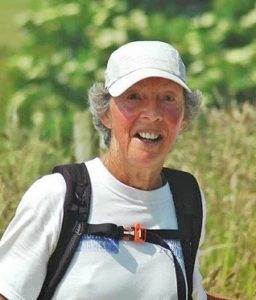
By Davy Crockett Both a podcast episode and a full article The 100 x 100 list now includes 21 accomplished athletes who have finished 100 or more races of 100 milers or more. This article will introduce the Sandra and Richard Brown, both on the list, and highlights their amazing 100-mile careers and some of the events in Europe unfamiliar to American ultrarunners. Sandra was the very first person in the world who finished 100 100-milers and the first to reach 200. By the end of July 2021, Sandra Brown, age 72, of England had accomplished a world-best, 208 100-milers, walking and running on tracks, roads, and trails in various event formats. About 160 of her 208 100-milers were accomplished in less than 24 hours, also a world best. Most 100-milers in the World Yes, Sandra Brown reached 100 miles 200+ times in organized events, more than anyone in the world. Ed Ettinghausen (The Jester) has been working very hard to catch up and exceed that number. (He passed that number in 2021). The World’s Greatest Sandra Brown is the world’s greatest woman ultra-distance walker ever, but she was also a world-class ultrarunner and still is for her age-group. In 2018 she was 69 years old and completed eleven 100-milers that year, including some sub-24-hour 100-milers. Her 208 100-milers came in several different types of walking and running events on tracks, roads, and trails. These types of events will be described in this article. She is the holder of current world records and it is time that the ultrarunning community learn about Sandra and her amazing accomplishments. Also on the100x100 list is Sandra’s husband, world-class runner and walker Richard Brown, who delights in being overshadowed at times by Sandra’s accomplishments. They are inseparable and have been married for nearly 50 years. Richard has finished about 140 100+ mile events. Also read about all these 19 athletes. Walking and Running Does it matter that most of Richard and Sandra’s 100-milers were performed walking? Not at all. For today’s ultrarunning events that reach 100 miles, they are “go-as-you-please.” You can walk or run, it does not matter. What matters is reaching 100 miles. World ultrarunning historian, Andy Milroy agrees, “covering a distance on foot is valid, whether walking, running or a mixture of both.” Among her 208 100s, Sandra has completed about 130 100-milers in events that were judged with racewalking rules. But she also completed 100 miles in more than 30 running events and usually she finished at the top. Other 100s were walking events where you could walk any way you wished to reach 100 miles. Piling up 100-milers while living in England is very impressive because there are far fewer events compared to the US. Sandra wrote, “I’ve always envied athletes in the USA where there are so many ultra-distance and 100 miles events! In the UK there are now several, mainly off-road, 100s, and a couple of 24-hour events. On the Continent, events are mainly 24 hours, though our Dutch and Belgian friends share our love of 100s.” Ultra Walking Before getting to Richard and Sandra’s amazing careers, it would help to understand the background of walking competitions, especially in England. Ultradistance Walking (or Ultra Walking), is the practice of walking in competitions of distances more than the marathon length. They have existed for centuries and truly have roots in 19th century Pedestrianism. “Heel and toe” walking rules were established for these foot races that became a popular wagering venue. Walking competitions were conducted for many distances short, long, ultradistances, and eventually for six days or more. By 1880 walking rules were further established and amateur competitions started to be held. In general, rules required that the walkers’ back toe could not leave the ground until the heel of the front foot has touched. Rules would change over the years.

Ep 14100 x 100-milers
By Davy Crockett Both a podcast episode and a full article (Listen an old podcast episode too, with audio clips from some of the runners.) Early history of 100-milers The sport of running 100 miles competitively has existed for multiple centuries. In the 1800s, the most prolific 100-mile runner was Frank Hart (1856-1908), a black runner from Boston, Massachusetts. He reached 100 miles in at least 85 of his races across his 25-year running career. Most of those races were six-day races where he usually ran far more than 300 miles. In the modern era, by the mid-1970s, running 100 miles in competition started to become more available to anyone. Before 1980, no one ran dozens of 100-milers during their running career, only a handful of 100s. Ultrarunning legend Ted Corbitt (1919-2007) ran fewer than ten 100-milers. By the end of 1999, a few prolific ultrarunners had piled up 100-mile race finishes. Richard and Sandra Brown of England were way out in front with 87 and 82, reaching 100 miles in both running and walking events. Ray Krolewicz of South Carolina was next with about 60 100-mile finishes to his name. Don Choi, the prolific multi-day runner from San Francisco, had more than 40 100-mile finishes but had retired from 100-mile running in 1997 at the age of 48. The world's greatest, Yiannis Kouros had an estimated 40 100-milers, most of them wins. As the decades passed, in 2025, there were 38 talented ultrarunners who had achieved 100 100 milers in organized races. Who are they? Recent News: Ronald Ross, age 68 in 2026, of Medina, Ohio, who finished his 100th race of at least 100 miles on March 29, 2026, at the Vernal Equinox 48 Hour Race in Batavia, Ohio. He became the 38th person in the world to reach this milestone. Ron started running in 1972 on his high school track and cross-country teams, where he set school records. He continued running competitively in college at West Point, where he started running marathons and began his military career. He ran on the Army Marathon team. He ran his first ultra in 1979 at the Lake Waramaug 50 in Connecticut and his first 100-miler in 1983 at Western States. He also dabbled in triathlons, and competed in the world triathlon championships in Nice, Frace, in 1985. After his military service in 1987, and settled in the Cleveland, Ohio area where he continued to run. He served 22 years in the Medina Police Department. Ron has finished nearly 300 ultras and over 200 marathons with a marathon PR of 2:38. He is very loyal to local races and has run the same ones repeatedly. In 2026, he planned to run his 40th Cleveland Marathon. Also, he plans to get his 30th finish at Mohican 100 two weeks later. He has also run every Cincinnati Flying Pig Marathon and will run his 28th this year. As far as 100-miles go, Mohican is his longest streak. He also has 13 finishes at Burning River 100. In April 2026, Ron was 24th in the world for the longest 100-mile career, with 42 years and nine months. Now in his late 60s, keeping some running streaks going are common and longevity is fun to be a part of. He chooses his races carefully to make sure he can finish under cutoffs. He cross-trains with weightlifting, biking, and hiking. His Personal Records are: marathon 2:38, 50K 3:38:02, 50 miles 6:10:27, 100K 10:21:13, 100 miles 20:58:00. The 100x100 Club Determining how many 100-mile+ race finishes a person has is a hard task because there is no official list and no single database has a complete list of results. The criteria I and others in this "club" have used to count 100-mile races includes: An official race, overseen by a race director, where 100 miles (161 kms) or more is achieved within a 48-hour period. Results are found on ultrasignup.com, DUV database, or verified with a race director. 100 miles must be reached within the established cut-off time for the race. A race of more than 100 miles is counted as only one,
Ep 1313: Endurance Riding – Part 2 (1955-1970)
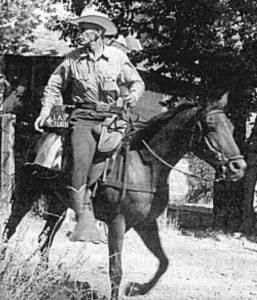
By Davy Crockett Both a podcast episode and a full article You might ask, what does the history of endurance riding have to do with ultrarunning? There are many close parallels between these two endurance sports. Ultrarunners should feel indebted to those of the endurance riding sport who had the vision to establish some early trail 100-milers for runners. The trail 100-miler inherited many of the same procedures of aid stations, course markings, trail work, crews, medical checks, cut-off times, and of course the belt buckle award. Part 1 covered the very early history of Endurance riding up to 1955. By 1955 the sport of endurance riding had existed in America for more than 40 years since the initial competitive 1913 ride in Vermont. The sport was called “endurance riding” by those who participated in it for the early decades. Part 2 will cover the very significant birth of the famed Western States Trail Ride (aka Tevis Cup), which inherited practices from the older endurance rides, especially the Vermont 100 Trail Ride. Introduction: Different Formats For Endurance Rides When you read some of the histories on the Internet about endurance riding, It is odd to an outsider to read such things like, "endurance riding was born in 1955 with the first Western States Trail Ride“ and "a new nationwide sport was born.” These "birth" references ignore the roots of the endurance riding sport that existed for decades and was shared in Part 1. Why? About 1970, a redefinition was invented to solve disputes of competing endurance riding factions. The main difference is whether an endurance ride should enforce a minimum finish time to protect the horse. It appears that much of what was called in the past, "endurance riding," wasn't really endurance riding, it was "competitive trail riding" simply because they had a different format and distance. To this outsider history buff, you shouldn't rename the past to fit your format preference of the present. Nevertheless, most of those who prefer the present-day "endurance riding" definition believe that their sport gave birth in 1955 with not much acknowledgment of the past. That "birth" will be covered in this part. The parallel with ultrarunning history is fascinating. Many runners think incorrectly that the entire ultrarunning sport was born with the creation of the Western States Endurance Run in 1977. Similarly, many riders think that the entire endurance riding sport was born with the creation of the Western States Trail Ride. In both cases the legend and folklore of these major events are taking too much credit at the expense of pushing aside their heritage and those who made their events possible to be established. The creation of the Western States Trail Ride was certainly a pivotable historic event for the sport. It would eventually lead to the creation of the American Endurance Ride Conference (AERC) governing organization in 1971 that helped launch the endurance riding sport into a new modern era. Even more impactful to the endurance world was the creation of the Western States Endurance Run in 1977. Both of those events will be covered in the next article/episode. The State of Endurance Rides in 1955 In the 1950s and 1960s there was no overarching governing body for endurance rides to set standards or to sanction the events. Much like trail ultrarunning today, riding competitions were created by independent associations and clubs. Event directors could set the distances and rules themselves. Public perception and criticism influenced how the events were handled. Rides were created patterned after other rides held in the country. But the endurance riding sport did exist before 1955 and was growing. Miss USA awards the winner of the 1955 Vermont 100 In 1955, the premier endurance ride, the Green Mountain 100 Mile Trail Ride, held its 20th annual ride and was alive and well. Miss USA presented the Ride awards in South Woodstock Vermont. Also,
Ep 1212: Endurance Riding – Part 1 (1814-1954)
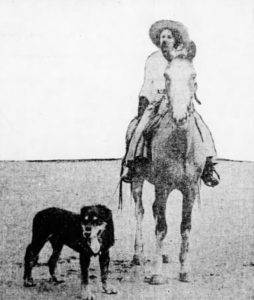
By Davy Crockett Both a podcast episode and a full article Endurance riding is the equestrian sport that includes controlled long-distance riding/racing. The sport has existed for more than a century in various forms. 100-mile trail ultramarathons, especially the Western States Endurance Run, Old Dominion 100, and Vermont 100 can trace their roots to endurance riding. Other trail 100s that emerged in the 1980s were also influenced by endurance riding practices. Ultrarunners should feel indebted to those of the endurance riding sport who had the vision to establish some early 100-mile trail races for runners. The trail 100-miler inherited many of the same procedures of aid stations, course markings, trail work, crews, medical checks, and of course the belt buckle award. Once ultrarunners understand their history, a common kinship is felt between the two sister endurance sports. So trade in your running shoes for horse shoes for a few minutes and learn about an inspiring and adventuresome endurance riding history that impacted the sport of ultrarunning. The Origins of the Endurance Riding Sport in America Usually the credit for establishing the endurance riding sport is given to Wendell Robie of Auburn, California when he initiated the Western States Trail Ride (Tevis Cup) in 1955. (That history will be covered in Part 2). But endurance riding competitions of various formats existed long before 1955. Vermont must be recognized as the birthplace for the endurance rides in America. Perhaps it depends on the definition for the “endurance ride.” The debate around the definition of what an endurance ride is, is similar to the definition of what an ultramarathon is. Is an ultramarathon anything over a marathon or do they start at 50 miles? One published definition for the endurance ride is “a timed test against the clock of an individual horse/rider team’s ability to traverse a marked, measured cross-county “trail” over natural terrain consisting of a distance of 50 to 100 miles in one day.” That is a modern, very limited definition especially the “trail” limitation, and the one-day limitation. But it still does apply to many very early endurance rides that predated the Western States Trail Ride. Just as ultramarathons did not originate with the 1977 Western States Endurance Run, organized endurance riding did not originate with the 1955 Western States Trail Ride as Wikipedia erroneously states. Such a claim can also be found in other histories on the Internet. Some of the early endurance ride pioneers and events seem to have been forgotten or pushed aside. Rides That Inspired Endurance Riding Sam Dale monument In 1814, Sam Dale (1772-1841), the "Daniel Boone of Alabama" made a famous 670-mile ride on horseback in eight days from Georgia to New Orleans in the dead of winter to deliver a dispatches from Washington D.C. to General Andrew Jackson during the War of 1812. Some have called this the "greatest ride in United States history." Francis Aubry Long before there was organized mail delivery, a French Canadian, Francis Aubry (1823-1852) was a American frontier legend who delivered mail from Santa Fe, New Mexico to Independence, Missouri during the war with Mexico during the 1840s. He purposely sought to break speed records and would on occasion ride his horses or mules to death. Depiction of Aubry's arrival at Missouri In 1848 Aubry accepted a bet of $1,000 that he could make the 800-mile ride between Santa Fe and Independence in six days. He made arrangements to switch horses at various locations along the route about 100 miles apart. He ate as he rode, tied himself to the saddle, and took brief naps. An army Major stated, “He passed my train at a full gallop without asking a single question as to the danger of Indians ahead of him.” After 100 miles he was going to switch out his yellow mare “Dolly,” but the relay station man had been killed and scalped and the horse were gone,
Ep 1111: John Seiler – The Flying Yank (1921-1983)
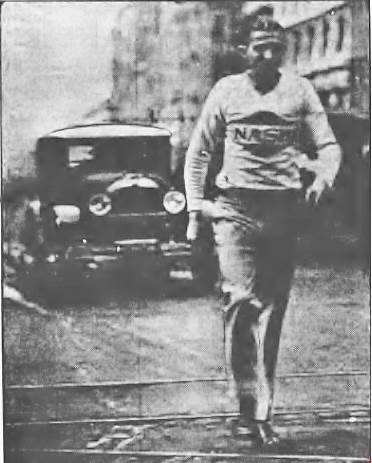
By Davy Crockett Both a podcast episode and a full article There is a special breed of ultrarunner that historian Jim Shapiro in 1980 called the “solo artist.” These runners usually had solid ultrarunning abilities, but instead of regularly completing in races, they used their abilities to accomplish stunts. This was done to garner attention from spectators and fans and to gain income and sponsorships. Solo artists would always invent and claim “world records.” They had creative nicknames and their marketing people would prop them up as being the “world's greatest runner.” Solo artists have always existed in ultrarunning and still exist today. In the 1920s and 1930s as professional running races were drying up, many of the ultrarunners of that time used their creativity to become a solo artist. They did various stunts and accomplished numerous point-to-point "journey runs” to claim “world records” or what today we call a “fastest known times” for a runs between cities. Some of the solo artists fabricated their accomplishments to bolster their running resume. Reporters at the time just believed and published what the runner or their manager would say about them without any verification. Fabrication of accomplishments even happens today. Many of these solo artists were fascinating charismatic characters who had impressive running abilities and accomplished many outlandish stunts. One of these amazing characters was “The Flying Yank,” John J. Seiler (1903-1983) of Brooklyn, New York. He would leave a lasting impression on tens of thousands of fans and young high school students by putting on entertaining running stunts, organizing city hikes, and giving interesting lectures on fitness and health. Young Runner Emerges John Seiler said that as early as sixteen years old, he started to do long journey walks. He came out of nowhere and said he was a "champion pedestrian." He claimed that in 1919 at the age of 16 he had walked from New York to Los Angeles, 3,500 miles on the Lincoln Highway, in three months, twenty days, beating Edward Payson Weston’s mark by 13 days. He also claimed that he had walked from Boston to Jacksonville, Florida in 24 days, slicing seven days off the “record.” He said he had run from New York to Philadelphia, a distance of 106 miles in 24 hours. Were all these accomplishment true at such a young age? We will never know for sure. In 1921 at the age of 18 he claimed to have walked from Brooklyn, New York to Houston, Texas, taking a round-about route for a distance of about 2,500 miles. Newspapers found him in various cities along the way. By stitching those stories together, he traveled at a believable rate of about 28 miles per day. But in later years he claimed that he covered the entire distance in only 44 days which was an impossibility at that pace. This was the first clue that perhaps some of Seiler's claims were grossly exaggerated. The Flying Yank of Tampa, Florida In 1921 at the age of 18, Seiler claimed that he walked from Brooklyn, New York to Tampa, Florida, starting with only $10 in his pocket. He wanted to go to Tampa to put on running exhibitions. In Tampa, he started going by “The Flying Yank,” and had a vision of touring the country performing running stunts. He wisely sought to hire a manager and eventually did. In November, 1921, Seiler put on a creative walking exhibition around a half-mile track at a baseball game in Hillsborough, Florida. He didn't just walk, he had a fascinating gimmick. A reporter wrote, “Seiler flew, turning around as he went and pacing backwards just for the fun of it, changing his stride and otherwise giving the fans in the grandstand some new wrinkles in what our heels and toes are for.” He made it around each lap in 4:30. He claimed that he was the amateur champion of the United States in heel and toe walking, but he wasn’t. He said that he could walk backward from second base to home plate in a “record” 13 seconds.
Ep 1010: The Ultradistance Marches (1941-45)
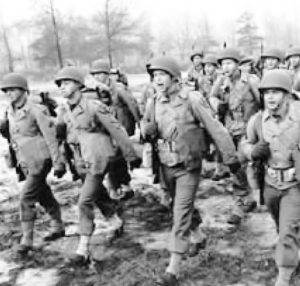
By Davy Crockett Both a podcast and a full article During the World War II period in 1940s, ultradistance races in America totally disappeared. Many of the talented runners turned in their leather running shoes for leather boots and served their country in war. But as servicemen, there were many endurance activities that took place both on the bases and on the battle field. A “forced march” is a relatively fast march over a distance carrying a load. It was a common military exercise during the war. These marches were fast hikes with full military gear. Their history can be traced back to Roman legions who were required to march 18.4 miles carrying 45 pounds in 12 hours. Incredible marches occurred in times of war covering ultradistances. Most have been forgotten. There were very many that can be found for those who want to search the pages of history. A few noteworthy marches from 1941-45 are covered in this article to illustrate the toughness and determination of servicemen who put their lives on hold to defend freedom. Infantries liked to keep marching records. In 1916 two companies from the 4th Missouri Infantry marched a distance of 45 miles in 15 hours during the Mexican Border War. The march broke all known marching records for US troops. The Japanese Forced March In 1942 as World War II was raging and less than a year since that Japanese bombed Pearl Harbor, an article was published in Reader’s Digest sharing a story of an amazing Japanese Forced march that was part of their training. The Japanese claimed that one of their army units had set a new marching record. It got the attention of US servicemen who were training for battle. The Japanese march occurred prior to the bombing of Pearl Harbor. An American observer marched with the Japanese company and wrote the fascinating article. The observer explained that each man carried a firearm, 150 rounds of ammunition and a 40-pound pack. The march commenced in a driving rain at 3 a.m. “Roads turned into quagmires, rifles, packs, clothing, shoes were water-soaked. All morning, all afternoon and half of the night the regiment slogged on.” By midnight the troops had marched 31 miles. They halted for a half hour to eat and adjust packs. By 8 p.m. the next evening the regiment had marched another 30 miles. Before they could eat, they were required to dig a 600-yard of trench. “As each squad completed its section, they gulped a helping of rice, then fell asleep in the trench.” After only four hours’ sleep the men were ordered to make a forced march back to their barracks. Up to this point they had marched 61 miles in 40 hours with only five hour’s rest. “Once again the regiment took to the road in the darkness before dawn. The march continued all day in a broiling sun. The river of packs moved forward. Hour after hour the long serpent of weary men struggled through the darkness. There were two 20-minute halts that night. After rice balls at 6 a.m. we went on in the dogged silence of iron determination.” At noon as they approached the finish, an order came to double-time. This group had marched 122 miles in 72 hours with only four hours of sleep. The weary column broke into a painful ragged trot. The gates of the barracks finally came into sight. The observer wrote, “They were home. The forced march, which no other army in the world could have endured, was completed.” The Japanese colonel explained about conducting the final mile in double-time. “Tired men can always march just one more mile to take another enemy position. This is the only way to prove it to them.” One man who collapsed during the double-time later died in a hospital. The Paratrooper 155-mile March Colonel Robert F. Sink (1905-1965), commanding officer over the 506th U.S. Parachute Infantry Regiment, in the 101st Airborne Division, wanted to conduct a "toughening practice” and felt his men could do better than the Japanese. The Regiment was located at a paratrooper training sc...
Ep 99: The Walkathon of the 1930s
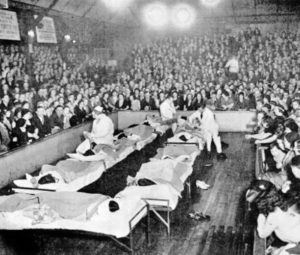
By Davy Crockett Both a podcast and a full article 1918 advertisement The original walkathons were not the relatively tame fundraising walks of the 1970s for causes. Instead these walkathons were brutal endurance events that had their heyday in the mid-1930s. These walkathons were not ultrarunning events. They were rather twisted walking events, if it could even be called walking. They were mostly a crazy test of enduring sleep deprivation. But still, it is important to understand the history of these competitions, because they had a negative impact on true extreme endurance sports such as ultrarunning in the minds of Americans for future decades. The Walkathon was believed to be invented in America, in 1913, at Terra Haute, Indiana. Achieving miles was not the objective. The goal for the walkathon was to survive for weeks and to be the last one standing. The walkathons were similar to the more despised dance marathons of that time. Both involved couples. The difference was that the walkathon contestants walked instead of danced. Because the name referred to walking, they didn’t carry the stigma of that time against dancing in many areas of the country. These contests were held in halls, playhouses, theaters, fairgrounds, and tents where participants walked nearly non-stop for days, weeks, and even months. Most walkers were quite young and they shuffled along with the hope of obtaining large prize money. Walkathons became big business because they attracted a huge number of spectators who were thrilled to witness suffering and to cheer their favorite couple. Thousands, and even tens of thousands of curious onlookers would pay 25-50 cents to watch the carnage as long as they pleased. The walkathons were so popular that they were even regularly broadcast multiple times per day by radio stations. Rules During a rest period, cots were brought out on the floor in front of the crowds. Contestants sleep or get treatment. Rules varied and could be changed mid-stream. In order to have an event last for weeks, generally after the first three hours, rests were given each hour. For example at a 1932 walkathon in Oregon, contestants would walk for 45 minutes, and then rest/sleep 11 minutes off stage. They would come back out at the sound of a gong or airhorn and then sit in front of the audience for four minutes getting ready for the next hour. Sometimes during the evenings, cots were brought out onto the floor in front of the crowds and walkers were forced to stay on the floor to rest and sleep. Man shaves while walking Couples walked together and could hold each other up when things got rough. One verteran contestant would hold his partner up for four hours while she slept on her feet. When rest periods came, they gained the skill of being able to fall asleep within ten seconds. If one member of the couple dropped (literally) out, the other person could continue for a time “solo” with the disadvantage of not being aided by another person. When another person of the opposite sex became available because their team member was also out, the two could team up as a new couple. Dancing was sometimes allowed among the contestants during hours stipulated by the state law and city ordinances. (Des Moines Register, Sep 1, 1929). The promoters took their events to various cities, renting halls and seeking entrants. One took his walkathon to Europe with a traveling company. Overseas, spectators wanted them to be even faster and more furious. When the company returned they brought home a new feature to the walkathon that was embraced by all of the promoters. The new feature was a daily one-hour “derby,” that spiced things up. In the evenings a derby would be used to thrill the spectators and further test the walkers even more. The “sprint” derby was popular which required the walking couple to cover a certain number of laps in a given time. Contestants often won prizes for being the best in the derby.

Ep 88: The 50-Miler History
By Davy Crockett Both a podcast and a full article The fifty-mile race is a distance most of today's ultrarunners eventually run. In 2017 there were about 300 50-mile races held in America with about 16,000 unique finishers. At nearly twice the distance of a marathon, it truly involves a different approach than running a marathon both mentally and physically. Ultrarunning legend, David Horton once wrote, “Most ultra-runners, me included, consider that real ultras are 50 miles or longer.” Since the 1960s, the shorter distances (50K, etc.) were typically used by aspiring ultrarunners to train for completing at the 50-mile distance. When did the 50-mile race begin? Early classic American 50-milers include: the JFK 50 starting in 1963 in Maryland, the Metropolitan 50 starting in 1971 in Central Park, New York City, the Lake Waramaug 50 starting in 1974 in Connecticut, and the American River 50 started in 1980 in California. But just as 100-mile races in America did not originate with Western States in the 1970s, the 50-miler did not originate with the JFK 50 in 1963. In all began much earlier than that. 50-milers From Long Ago "Anciently" in 1592 a footrace of just over 50 miles was held in northern France. It was won in twelve hours by a runner from what now is southern Netherlands. In 1787, Reed, of Hampshire, England, walked 50-miles on the sands of Weymouth in a little more than nine hours. Also around that time it was said that Foster Powell, from England ran 50 miles in seven hours. Worldwide, competing for 50 miles on foot had been around, as far back as the 1820s. But it wasn’t until around 1870 that 50-mile races started to be held regularly. They were conducted in various circumstances, indoors, outdoors, tracks, roads, in loops, and point-to-point. Most of the early races were competed indoors on small tracks by professional pedestrian walkers who also competed in six-day events. Challenges and wagers were a key reason these 50-mile events were put on, along with the profits to be gained from spectator gate proceeds. Many times gifted walkers or runners would post challenges in newspapers to specific runners or all-comers to race 50-miles for large amounts of money. 50-mile walking races The 50-mile races conducted in the 1880s were walking events with strict walking "heel and toe" rules. In America the earliest 50-mile walking competition that could be found was held in 1870. James Adams of New York won a “50 Miles Champion’s Cup of the United States.” Several head-to-head races between two walkers were also held. For many of these 50-mile matches, once a walker quit, the other walker was declared the winner and didn't go on for the full 50 miles. Agricultural Hall How fast could they strictly walk 50 miles? In 1877, pedestrian legend, Daniel O’Leary (1841-1933), in a 100-mile challenge match against John Ennis for $500, walked 50 miles in 8:41:30 in the Exposition Building in Chicago for an American best time. In 1878 that time was improved when William McCann of Albany New York walked a 8:36 in a solo trial walk to get ready for a high stakes challenge race. The world walking best around that time was set in 1878 by British walker, William Howes, with an amazing walking time of 7:57:41 in the Agricultural Hall in London. Buffalo, New York was the home of many walking contests including an amateur 50-miler in 1879 with seven starters. The second-place walker protested the race, claiming that the winner was seen running. Go-as-you-please 50-milers In 1879 “Go as you please” 50-mile events were established that allowed the competitors to run. Amateurs entered the sport around that time started to dominate 50-mile competitions. Distance "records" were divided into professional and amateur records. Races of twenty-five miles were much more common, but over the years, the 50-miles distance in England and the United States became recognized as an ultradistance standard,

Ep 77: The 1930 500-mile Peter Dawson Relay
By Davy Crockett Both a podcast and a full article As the Great Depression began raging across the world, race events for professional ultrarunners pretty much dried up in the United States. All professional sports suffered in America during that time. For a few years, promoters in Canada filled the void, and were able to attract some of the most talented American ultrarunners to head northward, to run in their races. One such race was the 1930 Peter Dawson Relay held in the province of Quebec. This was one of those forgotten races that deserves a place in the history of ultrarunning. Both New York and Boston bid for the race but it was awarded to Quebec. It included many of the greatest American ultrarunners of that time. Most of them have been totally forgotten and all have now passed away, but some of them lived into the 1980s and 1990s. Please consider becoming a patron of ultrarunning history. Help to preserve this history by signing up to contribute a little each month through Patreon. Visit https://ultrarunninghistory.com/member The race participants were an interesting breed. They had a passion for endurance running and enjoyed the attention it gave them. Most of the American entrants in the relay had run together for many weeks in 1928 or 1929, racing across America in C.C. Pyle’s "Bunion Derbies," They knew each other well. Several of the Canadians had competed against each other at a 200-mile “Green Stripe” snowshoe race held the previous winter, an event that caught the imagination and attention of Quebec and elsewhere. The Race Formation Armand Vincent The 1930 Peter Dawson Relay was organized by sports promoter, Armand Vincent (1900-1948). He was a well-known boxing promoter in Quebec. The race involved teams of two runners each, using a similar relay format that was popular at the time for six-day bicycle races. A description of the race included, “Unlike the man-killing Pyle 1928-29 marathon races across America which saw individual runners plodding along wearily the width of the continent, the Peter Dawson event will be raced in relays. The relay arrangement ensures more sustained and greater speed, a far more testing race.” The distance for the race was planned for about 500 miles, in daily stages, for eight days. The top runners would average running the entire distance at nearly six-minute-mile pace. Rules for each stage would determine how often the runners were allowed to switch off with their teammate. The race was set for July 1930 by the sponsors, Samuel and Allan Bronfman of the Distillers Corporation of Montreal. Yes, it was sponsored by a liquor company during the period of prohibition in America. These two businessmen had successfully put on the Great Stripe International Swimming Marathon in 1929 and the 1930 Green Stripe 200-mile six-stage snowshoe race from Quebec City to Montreal. The sponsors named this running event, “Peter Dawson,” after a popular brand of Whisky. They had made a fortune exporting alcohol to the United States during the prohibition years, which wasn’t against the law to do in Canada. The start was set to start in Montreal. The course would follow roads, mostly dirt at that time, making a giant circle within the Quebec Province. For the last stage, a marathon (26.2 miles) was planned to be held in the large baseball stadium at Montreal. It is important to put this and other ultradistances races of the time it their proper historical perspective. These runners were true trail ultrarunners who ran dirt roads. They would not be running six-minute-miles on nice smooth paved roads, they were running on rutted dirt roads that went over hills and became muddy. Several of these runners had already run up and over mountains, running across America -- twice. Many had recently run against horses for hundreds of miles and beat them. Think about the inaccurate claim that was told in recent decades,
Ep 66: The Last Day Run (1965-1972)
By Davy Crockett Both a podcast and a full article Runners seen through the window running 1970 Last Day Run For the common man, we frequently make history without knowing it at the time. As years pass, one can look back and discover that certain events, which at the time seemed insignificant, actually played an important part in history. Such events weren’t forgotten or pushed aside; their stories just had not been told. Such is the case with "The Last Day Run.” Ultrarunning existed in the late 1800s and early 1900s. The participants were mostly professionals who performed for spectators. As the Great Depression hit, events for professional ultrarunners dwindled and dried up in America. But rising from the tragedy and ashes of World War II, ultrarunning events slowing appeared again, but this time for amateurs looking to test their endurance. They were first hiking events such as the Padre Island Walkathon (110 miles) of the 1950s in Texas, and the JFK 50 starting in 1963 in Maryland. But soon running events surfaced and the term "ultramarathon" was first used around 1964. Absent in the pages of very early American ultrarunning history is the story of the “Last Day Run.” Please consider becoming a patron of ultrarunning history. Help to preserve this history by signing up to contribute a little each month through Patreon. Visit https://ultrarunninghistory.com/member The Los Angeles Athletic Club The Los Angeles Athletic Club The Los Angeles Athletic Club (LAAC) was established in 1880, the first private club in the city. Monthly dues were $1 per month that first year. In 1912 the club’s new home was established downtown in a 12-story building with an indoor swimming pool on its upper floor which caused quite a stir. In the 1950s the downtown club was modernized and by the 1960s an indoor, 165-yard rubber tartan track was built on the 7th floor. The indoor track would be the site of 1960’s ultrarunning history. Steve Seymour Steve Seymour (front) receives the Olympic silver medal in 1948 Steve Seymour (1920-1973), was an elite javelin thrower. He spent 1946 in Finland training with that nation’s world-class throwers. In 1947, he established an American record of 75.80 meters, within ten feet of the world record, which opened the door for him to compete at the 1948 Olympics where he was awarded the silver medal. In 1950 Steve achieved his third national championship in the event and in 1951 he was the silver medalist in the Pan American Games. Steve became a physician. He practiced as an osteopath and also operated a clinic for alcoholics. In 1965 Dr. Seymour didn't realize it, but he became an American ultrarunner pioneer as a long-time influential member of the Los Angeles Athletic Club. The LAAC logo The Last Day Run Begins The year was 1965. Steve Seymour arranged to put on a 24-hour race at the indoor Los Angeles Athletic Club. It was called the “24-hour Last Day Run” and was held on Halloween. This event was very significant to American ultrarunning history for many reasons, the first being that it is believed to be the first modern-day American 24-hour race. Steve started the enthusiasm for this event by participating in it and going the furthest distance. It all started at 12:00 a.m., early on October 31, 1965. Steve ran 50 miles in 17.5 hours. Why was it held on Halloween, and why was it called “Last Day Run?” The event was called “Last Day” because it was associated with an annual 30-day “jog” competition that originated in California. This event was established in 1964 by the Olympic Club of San Francisco. Runners would run for 30 days in October. The club would award trophies to the running club with the highest total mileage, with the most participants, and with the highest average miles per person. In 1964 the LAAC participants totaled 3,897 miles. Steve Seymour decided to establish the 1965 “Last Day Run” to help the club competitors pile up miles...
Ep 55: Crossing the Grand Canyon
By Davy Crockett Both a podcast and a full article (Listen to the podcast episode which includes the bonus story about my love for the Grand Canyon, and the 1,000 miles I've run down in it.) Crossing the Grand Canyon on foot is something many visitors of the spectacular Canyon wonder about as they gaze across its great expanse to the distant rim. Crossing the Canyon and returning back is an activity that has taken place for more than 125 years. Each year thousands of people cross the famous canyon and many of them, return the same day, experiencing what has been called for decades as a “double crossing,” and in more recent years, a "rim-to-rim-to-rim." In 1891, crossings of the Grand Canyon using rough trails on both sides of the Colorado River, in the "corridor" area, were mostly accomplished by miners and hunters. Double crossing hikes, in less than 24 hours started as early as 1949. More were accomplished in the 1960s and they started to become popular in the mid-1970s. Formal races, for both single and double crossings, while banned today, are part of ultrarunning history. This article tells the story of many of these early crossings and includes the creation of the trails, bridges, Phantom Ranch, and the water pipeline Please consider becoming a patron of ultrarunning history. Help to preserve this history by signing up to contribute a little each month through Patreon. Visit https://ultrarunninghistory.com/member Grand Canyon Today - note the dates Introduction For those who have not yet had the experience of crossing the Grand Canyon, this overview will help understand the history. Today if you hike or run across the Grand Canyon you have choices. You can start from the South Rim or from the North Rim. It depends where you are traveling from. A South start is more common. On the South side, you can use either the Bright Angel Trail from Grand Canyon Village, or the South Kaibab Trail that starts a few miles to the east, using a shuttle to Yaki Point. On the North side, the North Kaibab Trail is used. These are the main trails into the Grand Canyon and referred to as the "Corridor Trails," used by the masses and mule trains. There are two bridges along the Corridor to cross the Colorado River, Black Bridge (used by mules and South Kaibab Trail) or Silver Bridge (Bright Angel Trail). When this history story starts, there was no Grand Canyon Village, no Phantom Ranch at the bottom, and these trails didn't exist. There were few visitors to either Rim because they lacked roads and there were no automobiles yet. It is believed that Native Americans crossed the Canyon for centuries in many locations up and down the canyon and early miners used many places to cross, including the Bass location. I have run double crossings using the Grandview Trail (twice) and Hermit Trail, so there are many possibilities. This article will concentrate on the corridor region near Grand Canyon Village where most modern crossings are taking place. Creation of Bright Angel Trail (South Side) South Rim about 1890 The upper part of Bright Angel Trail, coming down from the South Rim, was originally a route used by the Havasupai to access Garden Creek, 3,000 feet below. In 1887, Ralph Cameron (1863-1953), future US senator for Arizona, prospected and believed he found copper and gold near Indian Garden. The original idea for a trail was for mining. Work began on December 24, 1890 and it would take 12 years to complete. In 1891 Peter D. Berry (1856-1932) obtained rights for the trail, including collecting tolls. By 1892 it was called the “Bright Angel Trail.” It cost about $100,000, and at its height was worked on by 100 men. How did the trail get its name? This is a subject of legend and folklore. One story was told by "Captain" John Hance (1840-1919) who came to live at the canyon in about 1883 and was famous for his stories and yarns about the canyon.
Ep 44: The 1963 50-Mile Frenzy
By Davy Crockett Both a podcast and a full article Prior to the 1960s, most of the ultrarunners participating in ultradistance races were professionals. It was a spectator sport. The general public never had serious thoughts that they too could run ultradistances. My New Book! Grand Canyon Rim to Rim History In 1963, President John F. Kennedy unintentionally played a key role that provided the spark to ignite interest for ultrarunning in America and elsewhere. The door was flung open for all who wanted to challenge themselves. An unexpected 50-mile frenzy swept across the U.S. like a raging fire that dominated the newspapers for weeks. Tens of thousands of people attempted to hike 50 miles, both the old and the very young. Virtually unnoticed was a small club event run/hiked by high school boys in Maryland that eventually became America's oldest ultra, the JFK 50. Kennedy's Push for Physical Fitness John F. Kennedy had campaigned with a goal to improve the nation’s physical health, and once in office he made that a priority. He feared that the future generations would be spectators of sport rather than participants on the field of play because of their lack of physical fitness. Shortly after he was elected, President-elect Kennedy published an article in Sports Illustrated called, “The Soft American,” in which he wrote, “we can fully restore the physical soundness of our nation only if every American is willing to assume responsibility for his own fitness and the fitness of his children. All of us must consider our own responsibilities for the physical vigor of our children and of the young men and women of our community. We do not want our children to become a generation of spectators. Rather, we want each of them to be a participant in the vigorous life." In 1961 a “Fit as a Fiddle” newsreel was produced by Kennedy’s Physical Fitness Program targeting youth to understand the importance of physical fitness. Also, that year, 200,000 copies of a song called “Chicken Fat” was distributed to all schools with the lyrics, “Nuts to the flabby guys! Go, you chicken fat, go away!” Detroit officials banned the song, judging the lyrics to be in bad taste for children. There was also resistance to the idea exercising to music. Fitness Test for Marines General David M. Shoup Back in 1908, President Theodore Roosevelt issued an executive order that every Marine captain and lieutenant should be able to hike 50 miles in 20 hours. If necessary, this could be accomplished over a three-day period. For the final half mile, the test required the marines to "double-time" to the finish. In 1962 Kennedy discovered this executive order and asked his Marine Commandant, David M. Shoup (1904-1983), to falsely claim that the discovery was his. Kennedy then wanted Shoup to find out how well his present-day officers could do with the 50-mile test. Shoup made it an order to his Marines. Twenty Marine officers would be selected, ten captains and ten lieutenants to take the test in mid-February 1963, at Camp Lejeune, North Carolina. News Article Starts the Frenzy An Associated Press article was published nationwide on February 5, 1963, that shared the story of the Roosevelt test and Shoup's order to test 20 of his Marines. It received intense national attention. President Kennedy never directly challenged America to take the 50-mile challenge, and no walks were sponsored by the Fitness Council, but the article inspired many across the country, who were eager to test themselves too. Naïve, untrained citizens, immediately decided to hit the road without much planning to undertake the challenge in the middle of the cold winter. In response, the government tried to make it clear that they were not encouraging and sponsoring 50-mile hikes conducted by the public. The Public Starts Hiking 50 Miles Colonel Tuma during his run/hike On the very evening after the article was published, Lt. Colonel James W. Tuma,

Ep 33: Hardrock Simpson (1904-1978)
By Davy Crockett Both a podcast and a full article Paul “Hardrock” Simpson, of Burlington, North Carolina, was an elite colorful, professional ultrarunner of the late 1920s who worked to continue in the sport during the Great Depression. He was one of the very few talented ultradistance runners who bridged to the post-war modern era of ultrarunning in the 1950s. With creativity, charisma, and strong performances, he successfully captured the imagination of the nation during both the periods. During that time, he was recognized as one of the greatest long-distance runners in America. Paul Simpson was born in 1904. When he was a child on the family farm, he had to do the shopping. The nearest store was two miles away. Instead of walking, he ran the four miles to and from the store. He said, “I couldn’t see the point in wasting time walking the distance so I just dug my toes into the hot sand and ran the entire distance.” He began running regularly at age fifteen and won a mile race in high school. Please consider becoming a patron of ultrarunning history. Help to preserve this history by signing up to contribute a little each month through Patreon. Visit https://ultrarunninghistory.com/member Early Running When Paul was still fifteen in 1919, he entered the army by lying about his age. While in the service he gained his first true experience running, by trotting four miles around the post each morning with a boxer friend. He said that it made the morning eggs taste better. Becoming a general was his goal, but since the war ended, he resigned a few months later with 250,000 other soldiers. Once home, Paul decided to finish high school and still hoped to become a general by going to West Point. He was given the name of “Hardrock” by his high school classmates at Burlington high school where he “ran and ran on long straightaways or in circles. He wasn’t so fast, not as sprinters go, but he was durable and defiant to physical wear and tear.” He won the state title in the mile. While on the football team he never missed a play. He indeed was “Hardrock.” Hardrock received an appointment to West Point, but when he finished high school, he decided not to accept it. Instead he entered Elon College where he starred on the track and field team in the 100-yard dash, low hurdles, javelin throw, and the two-mile run. He was also the captain of the cross-country team and set a state record in the 6-mile run. Racing a Horse In 1927 at the age of nineteen, a carefully planned publicity stunt was devised by leading businessmen in Burlington as a way to gain national recognition and more business for the city. Hardrock agreed to race against a Texas Pony, running from his home town of Burlington, North Carolina to Morehead City and back, about 500 miles. A ceremony sent away the two contestants with the town lining the streets to cheer him on. In the early stages he and the horse traded the lead, but by mile thirty-five, Hardrock took control. After 62 miles on the first day, the two exhausted contestants both turned in for the night. By the next afternoon, the horse was leading. Cars lined the roads cheering them on in the various towns. While running through Raleigh, kids chased Hardrock and threw rocks at him. Other towns provided police escorts. Accounts about the finish on the third day vary and changed as Hardrock’s legend grew. The true story is that at about mile 144, a doctor determined that Hardrock’s foot was infected and that he needed to stop running. He did. The horse was in poor shape too, with stiff legs, five miles ahead of him. They both stopped. Hardrock did not win and was not awarded the $500 winner's prize. The truthful story that his family helped compile after his death matched contemporary reports. But the story changed in the years to come. Perhaps the city businessmen purposely told a different story. The changed version was eventually published in Ripley’s “Believe ...
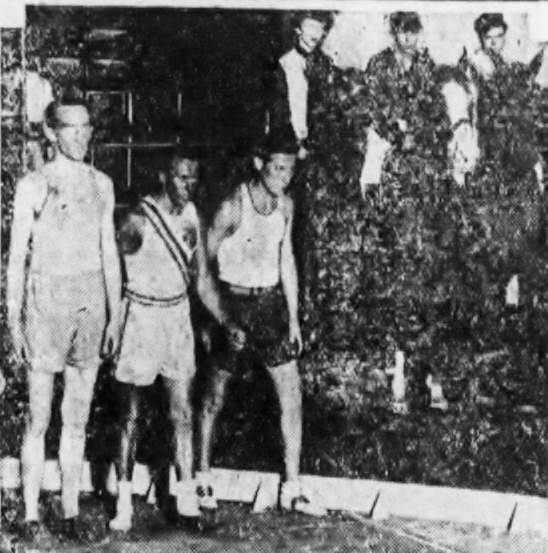
Ep 22: Man vs. Horse
By Davy Crockett Both a podcast and a full article The start of the Man vs Horse race held in 1929 at the Philadelphia Arena For more than two centuries, people have debated if humans on foot could beat horses. Those on the side of humans argued that over a long enough distance, human beings could outrun horses. It has been contended that humans are capable of covering vast distances after the horse becomes winded and unable to continue. To try to prove this point, ultradistance races billed as “Man vs. Horse” were competed as early as 1879. But it was a 157-mile "man vs. horse" race held in Utah, in 1957-58. that captured the attention of America and beyond. Check out Davy Crockett's new book, Strange Running Tales: When Ultrarunning was a Reality Show, https://ultrarunninghistory.com/strangetales/ 19th Century In 1818 at Feltham, Hertfordshire, England, a Mr. J Barnett, a long-distance runner "pedestrian" of Feltham, took on a bet for 200 guineas that he could beat a fast horse in a 48-hour race. The horse carried 168 pounds. The horse went out fast and reached 90 miles in 13 hours, stopping to feed only twice. After 24 hours, the score was horse: 118 miles, Barnett: 82 miles. After 48 hours the horse won, 179 miles to 158 miles. It was believed that the horse could have only gone a few more miles if the race was for another day. Shorter races involving a steeple chase were competed too. In 1840 at Hyde Park in Sheffield, England, a match was conducted between a Mr. Cootes and an old hunting horse, "George IV." Along the way the two were required to leap over hurdles four feet high. "Cootes took the lead at starting, but the horse refused the first leap and could not get along. The biped continued to increase his lead, the horse repeatedly refusing the hurdles. In the eleventh round, and at the 55th leap, horse gave in, after which Cootes had the race to himself, and won as he liked." In 1855, a unique race was conducted in Paris, France. A Spaniard, Genaro, was pitted against thirteen English racehorses. The rules for this race required the horses to constantly run or trot. If a horse started to walk, they were out. Genaro could run or walk. The race was limited to seven hours and the person or horse to go the furthest distance was the winner. Laps were made around a large circus area, about a mile and a half. All but two horses gave up before Genaro was tired and quit. He had covered about 46 miles and the two horses, about 60 miles. It was clear to the public of that era that horses could easily beat runners at short distances. For entertainment there were many events where they established handicaps to make it more competitive. In 1857 a race was held in Rochester, New York pitting Charles Curtis against a famous horse, Frank Hayes. The horse needed to run three miles against Churtis' one mile. The horse completed miles in 2:53 and 2:48, but Curtis won with a mile time of 8:42, winning by two seconds, "admid the tremendous cheers of the large concourse of people present on the track to witness the feat." By 1869, contests that pitted men on early bicycles against horses were being held. On May 11, 1869 at Riverside Park in Boston, Massachusetts, Walter Brown, a talented oarsman, riding a velocipede raced against a horse John Stewart. A month earlier Brown had amazed the country by riding his primitive bike 50 miles in four hours. In this race, Brown had to cover three miles to the horse's five miles. Brown won in 26:20. The horse completed nine miles in 26:35. In 1878, the endurance aspects of humans vs. horses again surfaced in newspapers. In Holmes Ohio, a man wagered he could walk further in a week than a horse ridden by a farmer. The results are unknown, but a debate resulted. "It is affirmed that a man's powers of endurance are superior to those of a horse. The question is one of endurance, not rapidity of gait. Properly tested,

Ep 11: Padre Island 110-miler 1953-1956
By Davy Crockett What was the first American ultradistance race in the modern era? Perhaps the answer is the Padre Island Walkatahon 110-miler, a three-day stage race that was started in 1953. It may have even been the first modern trail ultra in the world. This unusual race was a point-to-point race that ran along the sandy beaches of the Gulf of Mexico in Texas. Those who put it on were very forward-thinking, introducing features that would be used in ultras decades later. Previously long endurance races were mostly limited to professionals. This race was for everyone, the old, the young teenagers, and even women during an era when female participation in endurance events was viewed as inappropriate. Please consider becoming a patron of ultrarunning history. Help to preserve this history by signing up to contribute a little each month through Patreon. Visit https://ultrarunninghistory.com/member About Padre Island The Gulf-Side Casino Hotel Padre Island, about 113 miles long, is the longest barrier island in the world. This long, skinny, sandy island is the second largest island by area in the lower-48 states. Only Long Island in New York tops it. In 1908 the first development was established on the island, the Gulf-Side Casino Hotel, near the southern tip of the island. But the hotel received serious damage from storms and hurricanes over the years. For many years it closed to make repairs. Finally in 1945 the top story of the hotel was taken off by a storm and the entire structure was finally demolished in the early 1950s. Padre Island today The Padre Island Causeway Around 1930 a causeway was built to connect Corpus Cristi to the northern end of the island allowing access to the Gulf’s beaches. During World War II, the northern section of the island was used as a bombing range. By 1953, the island was again undeveloped and used almost exclusively by ranchers. It wasn’t until 1970 that development started again. Founding the Race In 1951, Cash Asher (1891-1981), a journalist and author, was the publicity man for the Padre Island Park Board and the causeway. He likely came up with the idea of holding the race and became the race director. The objective was, to walk the length of the island end-to-end. This would be a way to get more publicity for the island and thus attract tourists. Asher named the race “Padre Island Walkathon.” The term ultramarathon would not be used until 1964. The controversial “walkathons” held in indoor halls had ceased by 1953, and that term would start to be used for any long walking event. This event sometimes also called a "Bunion Derby," taking that name from a coast-to-coast event in the 1920s. Why walk and not run? In the 1950s the idea of someone being able to run ultra distances still was viewed as inconceivable. Word of the race was publicized, and registration opened in early 1953. Race Format The format for the event was as a three-day staged race from the south tip of the island to the northern end, a distance of about 110 miles. The contestants would walk on no roads, just beach and sandy tracks pounded down by vehicles. This could have been the first trail ultramarathon event in American History, at least in modern history. For the first year, the walkers would cover 25 miles the first day, 42 miles the second day, and 43 miles the final day. They would all camp at the start and then for each night after Day 1 and Day 2. A large support caravan of vehicles would go along with the walkers, providing food, medical treatment, news coverage, and transportation for those who dropped out. If a walker dropped out, they were expected to continue with the caravan to the finish. Entrants would to be provided tents. The rules were pretty simple. Running was prohibited. The published rules stated, “anyone caught running will be thrown out of the race.” Beer or hard liquor were also prohibited during the race. Anyone who partook,

0: Introduction to the Ultrarunning History Podcast
Welcome to Ultrarunning History Podcast. In this introductory episode, you will hear what the podcast will contain and I’ll reveal a little about myself, what it is like living with the name, Davy Crockett. These episodes won’t be dry history lessons from some old stodgy history professor. They will be fun with plenty of lame jokes from some old stodgy ultrarunner. In this episode I will answer some questions such as: What is it like living with the name Davy Crockett? When did I become interested in Ultrarunning History? What can you expect in the upcoming episodes? Listen and find out! Make sure you subscribe and tell your friends about the Podcast.