Ultrarunning History
179 episodes — Page 3 of 4
Ep 7878: Strolling Jim 40 Mile Run
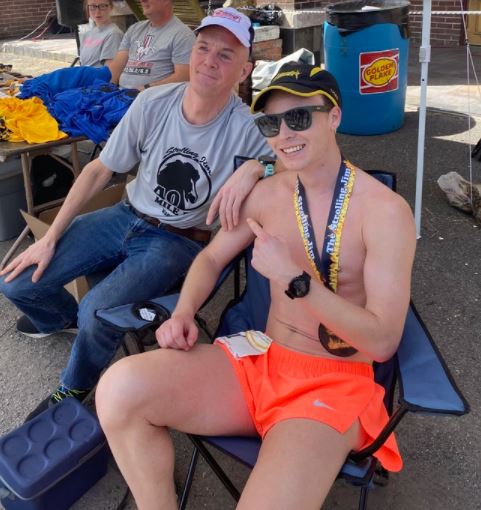
By Davy Crockett The Strolling Jim 40, held in Wartrace, Tennessee, is one of the top-five oldest ultras in America that is still being held to the present-day (2021). It is a road race that runs on very hilly paved and dirt roads, the brainchild of Gary Cantrell (Lazarus Lake). Because its distance is a non-standard ultra-distance of 41.2 miles, the race perhaps has not received as much publicity as it deserves among the ultrarunning sport. But buried within, is a storied history along with a seemly unbreakable course record set in 1991 by Andy Jones of Canada (and Cincinnati, Ohio), one of the greatest North American ultrarunners who most of the current generation of ultrarunners have never heard of before. My new book! The classic Strolling Jim 40 came back into ultrarunning focus during early May 2021, when Andy Jones’ remarkable record was finally broken by Zack Beavin, of Lexington, Kentucky. The story of Strolling Jim must be told along with the progression of its famed course record. Who was Strolling Jim? Strolling Jim (1936-1957) was the first Tennessee Walking Horse to become a National Grand Champion show horse for his breed. He was first trained to pull a wagon and a plow until he was noticed by a well-known Walking Horse trainer, William Floyd Carothers (1902-1944), who owned the Walking Horse Hotel in Wartrace, Tennessee. Carothers thought the horse had potential and bought him for $350 and started training him. In 1939, Strolling Jim competed and won at the Tennessee Walking Horse National Celebration held at Wartrace, Tennessee. He went on with a very successful show career around the U.S., retiring in 1948 in Tennessee. He died in 1957 and was buried by his stables behind the Walking Horse Hotel in Wartrace. Idea for a Race In 1979, Gary Cantrell (1954-), of Shelbyville, Tennessee, was an accounting student at Middle Tennessee State University. He was a veteran of eight marathon finishes and wanted to run in an ultra. But at the time, there were few being held in the South. So, he decided to put on his own ultra for his Horse Mountain Runners Club who trained around the Wartrace, Tennessee area. John Anderson, 29, a sub-3-hour marathoner from Bell Buckle, Tennessee remarked, “Gary and I wanted to run an ultramarathon and so we decided to put on one of our own. He got out the maps and lined out a course. At first, I thought we should call it the ‘Idiots Run,’ but I believe Gary came up with a more appropriate name.” They decided to start Strolling Jim 40 in the town of Wartrace, nicknamed the “Cradle of the Walking Horse.” Cantrell said, “The course is mostly hills, and I believe for a runner to finish the race it will be less what’s in the legs and more of what’s in the mind. It is about 90 percent mental. It will pretty much be up to each runner to make it on his own. Runners will have to run with the course rather than at it.” The news reported, “The race will be anything but a stroll. The 40-mile loop begins near the well house which guards the old sulfur and mineral water source near the middle of the town. The course winds through rural Bedford County communities before heading back to the finish line in front of the Walking Horse Hotel. Along the route numerous hills will furnish tortuous entertainment for the ultramarathoners.” Cantrell added, “It’s an isolated backwaters place that has changed little in this century.” He was surprised that many wanted to run the difficult race. “Six or eight doctors will be in the race and that sort of surprised me. You’d think of all people they’d know better.” Inaugural Race Entrants Gary and Mary Cantrell Ronald Moore (1946-), of Hermitage, Tennessee signed up for the race and planned feed on plenty of dates along the way. He said, “I intend to try and blend in with the course and just try to finish. I’ve been looking for a challenge and this course is really an obstacle.

Ep 7777: The 100-miler: Part 24 (1978-1979) Alan Price – Ultrawalker
By Davy Crockett Episode 75 introduced the Fort Meade 100 held in Maryland from 1978-1989. Lost in the Fort Meade history of the late 1970s was the fact that it also attracted Centurion racewalkers who attempted to walk 100 miles in less than 24-hours. It was reported, “Some participants were walkers engaged in an odd-looking sport of walking heel-to-toe as fast as possible. It’s a small sport, there’s a lot of camaraderie in it, with only about 600 people participating nationwide.” Alan Price, an African American racewalker, was a fixture at Fort Meade 100 each year. He was an incredible athlete who became perhaps the greatest American ultra-distance racewalker ever. Price was truly an ultrarunning legend. Also covered in this episode is a division of the ultrarunning sport that most Americans have never heard about before. It is The Long Distance Walkers Association (LDWA) in England that started holding 100-mile walking events during the 1970s that attracted the general public and some 100-mile runners. The events set the stage for many of the modern 100-mile trail events. Alan Price – 100-mile walker Alan Eugene Price (1947-2015) was an African America walker from Washington D.C. who sold herbs and health products. He took up the ultra-walking sport in 1974, and explained, “I had been running the 880-yard run for a club called the Travelers. The trouble was that I never seemed to finish better than last. There was this one meet where I finished my usual last. Then I heard the announcer make the first call for a two-mile race-walk. I looked around and saw that only one person had responded. Since there were three trophies being given out for the event, I decided to give it a try. I accidently took third place.” At that time, marathon fields consisted of hundreds of runners, while racewalking fields included only about a dozen walkers. This helped him decide to stick with racewalking because of the better chance to win a trophy. It took Price some time to get the walking technique down. He said, "There can be a thin line between walking and running. It all depends on how the judges view it. When I first started out, I was guilty of things like not having both feet on the ground at all times. That made me more careful than anything else. It's no fun to go out for five or six miles and then have someone disqualify you." Bennicker Junior High School As a black American, Price was a pioneer in the sport. He became a member of the Potomac Valley Seniors track club and said he felt funny practicing his walking in the daylight in Washington D.C., so he would train in the darkness of night at the track at Bennicker Junior High School. He said, “People who don’t do this, think it’s easy. That’s because they haven’t tried it yet.” Just as today, the ultra-walking sport back in the late 1970s wasn’t well understood by the public. Price would be the object of taunts and laughter. "People saw the switching of the behind and arms flailing, and they seemed to get a big kick out of it. But after seeing for a while, they begin to realize that there must be some difficulty in it. People who saw me train in Malcolm X Park over the years respected what I was doing." Larry O'Neil Price first walked for personal satisfaction. He said, “It was something that I felt natural doing.” Then in 1976, he went to a meet at Niagara Falls, New York, where the top racewalkers in America were trying out for the Olympics. The top three finishers qualified, and he was only one minute behind. He said, “I was surprised, and it was at that point that I knew I could hang with the big boys.” Episode 63 introduced “Centurions,” a brotherhood of walkers who had reached 100 miles in a judged racewalking event. Larry O’Neil (1907-1981), a lumberjack from Kalispell, Montana was America’s 100-mile walking pioneer who dominated events during the early days, setting in 1967 the American out-door record of 19:24:34.

Ep 7676: The 100-miler: Part 23 (1983) The 24-Hour Two-Man Relay
By Davy Crockett This is a bonus episode about the Fort Meade races covered in episode 75. In the 1970s, a 24-hour relay craze took place at high schools, colleges and running clubs. By 1972, Runner's World Magazine, in Mountain View, California, was publishing results along with some standardized rules for these relays participated by hundreds of runners. The Washington and Baltimore Road Runners Clubs were early adopters the relay format when they established a 24-hour 10-man-team relay race in 1970 on the track at Mullins Field in Fort Meade where participants would run one-mile legs. The event would eventually expand to 50-mile and 100-mile solo races competed by many of the best American ultrarunners of the time. By the early 1980s, a few ultrarunners had tried to see how far they could go in 24-hours with just a two-man team. The known world record was 193 miles. During that time, the Philadelphia area was the home of many great roadrunners, with much credit to Browning Ross who organized numerous competitive races in the region for years. In 1983, two elite ultrarunners in America became inspired to try to break the world two-man 24-hour record on that track at Fort Meade in Maryland. These ultrarunners were Neil Weygandt and Dan Brannen. Neil Weygandt Neil Weygandt was from Havertown, Pennsylvania and worked at a sports store. During his running career, he was best known for his 45 consecutive finishes of the Boston Marathon, including 24 consecutive finishes in less than three hours. But in ultras circles during the 1980’s and 90’s he was known for his achievements in fixed-time races, especially 6-day races. Weygandt in 1963 Weygandt ran cross country at Haverford High School and became their top runner and team captain. In 1962 at the age of fifteen, he met future ultrarunning great Tom Osler (see episode 67), who was 22 at the time. Weygandt started to go on long training runs with Osler, beginning a life-long friendship and mentorship. In 1966 Weygandt went on to college and ran on the cross-country team at Pennsylvania Military Colleges (later named Widener University) where he became a champion. He also ran with on the South Jersey Track Club with Osler and Ed Dodd. Weygandt ran his first marathon in 1966, with a time of 2:50:10. He said, "It wasn't as hard as I thought it would be." Osler convinced Weygandt to run the Boston Marathon in 1967 starting his long association with that storied event. From 1968 to 1971 Wegandt was a member of various track clubs that would run in races against other clubs. He and Osler competed together and frequently won in road races up to 17 miles long. From 1971-73 he worked with the Road Runners of America as a Vice President over the Eastern United States. In 1977, he began to run ultras, with the Metropolitan 50-miler in Central Park, finishing in 6:39. By 1980 Weygandt stepped up to the 100 km distance and excelled running the Great Philadelphia to Atlantic City Road Race. In 1982 set a world indoor best running 133 miles in 24 hours at the Haverford College fieldhouse. That year he also ran his lifetime best for 100 miles at Shea Stadium in New York with a time of 14:35.27. In 1983, he was living in Ardmore, Pennsylvania and a member of the Haverford Athletic Association along with Dan Brannen. Dan Brannen Dan Brannen (1953-) was from Upper Darby, a suburb of Philadelphia, Pennsylvania. He would make a life-time impact on the sport of ultrarunning. The Brannen family were Irish Catholics, and he went to Catholic schools growing up, including St. Joseph’s Prep in Philadelphia, the same school that ultrarunning legend, Ed Dodd attended several years earlier (see episode 74). Brannen's senior picture In high school Brannen was required to participate in an athletic extra-curricular activity. He explained, “I was a shrimpy little kid. I played little league baseball, but I wasn’t particularly athletic or coordinated.

Ep 7575: The 100-miler: Part 22 (1978) Fort Meade 100
By Davy Crockett Park Barner at Fort Meade During the 1960s and 1970s, most of the 100-mile races were held on oval tracks. Additionally, 100 miles were achieved during 24-hours races, usually also held on tracks. Running for 100 miles on an oval track seemed like an extreme oddity back then, even as it does today. During that period, there were 19 known track 100-mile running races held worldwide, that were not also 24-hours races. In addition, there were many other 100-mile racewalking competitions in both England and America where walkers sought to become a “Centurion” by walking 100 miles in 24 hours of less (see episode 63). The first modern-era track 100-miler (running) was held in Durban, South Africa in 1964 won by Manie Kuhn in 17:48:51. In America, the first track 100 was held in 1975 in New York, the Queensborough 100, won by Park Barner in 13:40:59 (see episode 66). Beginning in 1978, an important track 100-miler started to be held, that became the premier track 100-miler. The race was held on an military base at Fort Meade, Maryland in America. It would be held there for twelve years. This 100-miler was dominated by Ray Krolewicz of South Carolina, who won it six times. Sadly, this race has been mostly forgotten in the annuls of ultrarunning history. Please help support this podcast. I’ve joined a partnership with Ultrarunning Magazine. I can offer a 25% discount on Ultrarunning Magazine subscriptions and renewals. Visit https://ultrarunninghistory.com/mag Subscribe or renew today with this link. Fort Meade Fort Meade (Camp Meade) in Maryland became an active Army installation in 1917 built for troops drafted into World War I. It was located between Baltimore and Washington, D.C. Before being established there was barely a town in the area, just peach orchards and “one-horse towns.” The principal feature was the railroad. The location for the camp near the Potomac River was chosen because of the good access to the railroad. The camp was named after Major General George G. Meade for his victory at Gettysburg which led toward victory for the North during the Civil War. During World War I, about 500,000 soldiers were trained at Camp Meade. After the war, tanks were brought back from Europe, and the camp was selected to be the home for the Tank Corp. Generals George Patton and Dwight D. Eisenhower met there and established a friendship. During World War II, the post was designated as Fort Meade and a staggering 3.5 million men passed through there. In 1943 it also housed about 1,700 Italian and German war prisoners. After the war, the fort reverted to more routine Army peacetime activities. It housed the National Security Agency (NSA) and was used for air defense systems during the Cold War. During the 1970s it became the primary location for national intelligence. 24-hour Relays In the 1970s, a 24-hour relay craze took place at high schools, colleges and running clubs. Records were claimed, but hard to compare because the number of team members in the relays varied so much and record keeping was always suspect. These type of running relays took place as early as 1907. (see episode 72). In 1970, the Washington and Baltimore Road Runners Clubs organized a 24-hour 10-man-team relay race on the track at Mullins Field in Fort Meade. The event would eventually expand to 50-mile and 100-mile solo races competed by many of the best American ultrarunners of the time. The base opened their doors to runners and kindly made facilities available including restrooms and showers. Nick Marshall wrote, “This was an era when many military bases had very open policies. They had guardhouses at the gates, but security was often minimal. Showing I.D. was not required before getting on the Fort Meade base. We would just pause at the gate and mention that we were running the race and they would wave us through. It was definitely very casual.”
Ep 7474: The 100-miler: Part 21 (1978) Ed Dodd and Don Choi
By Davy Crockett 1978 was the year when more 100-mile and 24-hour races started to be established in the United States. In 1976, Tom Osler of New Jersey brought renewed American ultrarunning attention to the 24-hour run when he ran a solo 24-hour run on that track at Glassboro State College where he was teaching. (see episode 67). Enthusiasm for attempting to race for more than 100 miles in 24 hours started to spread. Two very influential ultrarunning pioneers, Ed Dodd, of Collingswood, New Jersey, and Don Choi of San Francisco, California, brought their race directing and running skills to the 24-hour arena in the 1978. These two legendary runners developed a friendship during that year which would later result in the reestablishment of the modern-era multi-day races, including the renowned six-day race. Dodd and Choi can be considered the “fathers” of the modern multi-day ultras. This all came about as Dodd uncovered the history of 19th century Pedestrians, and they both gained experience running 100 miles in 1978, and put on ultramarathons. Please help support this podcast. I’ve joined a partnership with Ultrarunning Magazine. I can offer a 25% discount on Ultrarunning Magazine subscriptions and renewals. Visit https://ultrarunning.com/ultrarunning-history/ Subscribe or renew today with this link. The March 2021 issue includes Gary Cantrell's run across America and the top 2020 Fastest Known Time performances. First modern-era American 24-hour races 24-hour attempts and records returned in the post-war modern era of ultrarunning in the early 1950s when Wally Hayward (1908-2006) of South Africa broke the world record in 1953, running on a track in London, reaching 159 miles, 562 yards (see episode 61). In 1967, Steve Seymour (1920-1973), an Olympic athlete in the javelin throw, established the first modern-era American 24-hour race, which was held indoors on the Los Angeles Athletic Club indoor track. It was called the “24-hour Last Day Run” and was held annually on Halloween (see episode 6). Seymour reached 100 miles in the 1967 inaugural race. On September 6, 1969, an African-American maintenance worker, father of seven children, Jared R. Beads (1928-1996), age 41, ran solo 121 miles, 440 yards in 22:27 on a high school track at Timonium, Maryland. It was thought to be the best unofficial track mark in America in 66 years. "A dozen friends kept records of times he circled the track, jogged along with him, and passed him sodas and fruit." Later that year, Lu Dosti, of California, improved the American 24-hour record to 127 miles on the Los Angeles indoor track. In 1970, Miki Gorman became the first modern-era woman to cover 100 miles in 24-hours on the same track in 1970, reaching 100 miles in 21:04:04 for a world record (see episode 64). In 1976, Tom Osler of New Jersey, ran 114 miles on an outdoor track at Glassboro State College as a fund-raising event and as an experiment for a run/walk ratio test. He reached 100 miles in 18:19:27. (see episode 67). In 1977 Max Telford also ran a solo road 24-hour run in Hawaii, reaching 155 miles (see episode 69). More than a dozen modern-era 24-hour races on the track were held in Europe, Australia, New Zealand, and South Africa before 1978. But track 24-hour races were slow to return to America. The stage was set for the return. Ed Dodd Edward Levi Dodd Jr. (1946-) was originally from Drexel Hill, a suburb of Philadelphia, Pennsylvania. His father, Edward Levi Dodd Sr (1923-1994), was a machinist, and mother, Theresa Wellock Dodd (1927-2003) was a receptionist at a doctor’s office. In 1960, as a freshman at a Catholic Prep School, St. Joseph’s, in Philadelphia, Dodd became introduced to running. He explained, “That summer, a bunch of us went to a local high school track and thought we would try to run around the track ten times. We didn’t even know how far it was. We ran around and got done, huffing and puffing and lying around,

Ep 7373: The 100-miler: Part 20 (1978-79) The Unisphere 100
By Davy Crockett 1978 was a year when new road 100-milers started to spring up across America, put on by independent race directors. Most of these races were available for the non-elite long-distance runners to give the epic distance a try. These 100-milers were held in Hawaii, California, New Jersey, Maryland, Missouri. One race in particular was established that would eventually become a national championship event: the 100-miler at Flushing Meadows in Queens, New York. Going forward 100-mile or 24-hour races would be held at this venue into the 1990s. World and American records would be set on the grounds normally used by thousands of park visitors. Please help support this podcast. I’ve joined a partnership with Ultrarunning Magazine. I can offer a 25% discount on Ultrarunning Magazine subscriptions and renewals. Visit https://ultrarunning.com/ultrarunning-history/ Subscribe or renew today. Unisphere 100 Flushing Meadows Park was created in 1939 for the New York World’s Fair and was also the venue for the 1964 World’s Fair. The races’ namesake, the Unisphere, a massive spherical steel representation of the Earth, was created as part of the 1964 World’s Fair. It is 140 feet high and 120 feet in diameter and weighs 700,000 pounds. The rings around it represent the tracks of the first men to orbit the earth, celebrating the beginning of the space age. The course for the 1978 100-mile race was a flat, but uneven, 2.27-mile loop that went closely around Meadow Lake. The race included a strong field and was an invitational race where participants needed to have previous ultramarathon experience. Twenty-two qualified runners participated although few had ever run the 100-mile distance before. Five of these runners deserve to be highlighted. Park Barner Park Barner (1944-), “The Human Metronome,” was a computer programmer from Pennsylvania. He was the pre-race favorite for the Unisphere 100. Barner had served in the Army and was stationed in Germany during the late 1960s. While there, he watched a movie that inspired him to start running and set a goal to run a marathon. At the 1971 Boston Marathon, he met ultrarunning legend Ted Corbitt (1919-2017) and asked him, “How do you run 100 miles?” Corbitt’s reply was, “You just have to tell yourself to keep going.” Barner at the age of 27, in 1971, started running ultra-distance races and quickly became the greatest American ultrarunner of the 1970s. In 1976 he gained fame by running 300 km on the C&O Towpath in Maryland, in 36:48:34. During that run he reached 100 miles in 16:14:10. On August 16, 1975, Barner ran his first formal 100-mile race. It was held on a quarter-mile track at New York’s Queensboro Community College, put on by the New York Road Runners. There were only seven starters and all but Barner dropped out along the way. He reached 50 miles in 6:32 but without any competition, he faded the second half. He won with a time of 13:40:59 for a lifetime best. By 1978, Barner had finished 41 races of 50 miles or longer and won 19 of them. Barner’s 41 finishes was incredible for a time when relatively few ultras were being held. For more about Barner, see episode 51. Nick Marshall Nick Marshall (1948-) was from Camp Hill, Pennsylvania. He was an athlete in high school on the track team and the statistician for the basketball team. In his yearbook he was quoted, “I don’t want to be an engineer, I’d rather be President.” Marshall started running marathons in 1973. He realized that the longer the race, the better he could compete. He said, “I was motivated by a simple curiosity over a basic question: How far can you go?” He set his marathon best of 2:41:15 in 1975 at the Harrisburg Marathon. Marshall’s introduction to ultras came in 1974, at the C&O Canal 100K on a point-to-point course from Washington D.C. to Harpers Ferry. He finished in second place to Park Barner and was then hooked on ultras. By 1977,
Ep 7272: The 100-miler: Part 19 (1977) Don Ritchie World Record
By Davy Crockett During the early 1970s, the majority of the American ultramarathons were held in the eastern states, including 100-milers. But by the late ‘70s, a western migration was taking place and soon the state of California was holding the most ultras. Ultrarunners learned about races mostly by word-of-mouth from other runners who they would see before and after a race. That is how American, Frank Bozanich, a future ultrarunning hall of famer, received an invitation to run in a historic race, the 1977 24-hour Crystal Palace Track Race in England, where the Scot, Don Ritchie would make 100-mile history. Details of that race is told for the first time in this episode. Please help support this podcast. I’ve joined a partnership with Ultrarunning Magazine. I can offer a 25% discount on Ultrarunning Magazine subscriptions and renewals. Visit https://ultrarunning.com/ultrarunning-history/ Subscribe or renew today. Nick Marshall Starts Compiling 100-mile Finishes. In 1976, future American ultrarunning hall of famer, Nick Marshall (1948-) of Camp Hill, Pennsylvania, published the world’s first newsletter dedicated purely to ultrarunning. This annual publication became known as the Ultradistance Summary. Marshall wrote, “There had always been a coverage-void for the fledgling sport, and I sort of filled it by default, simply because no one else was doing anything along these lines.” He explained, “No summary is perfect, but I think this one provides a fairly complete and quick summary touching of the major bases.” Marshall tried to compile the top American 100-mile times in history. His attempt to compile the top 100-mile times was a Herculean effort given the lack of access to resources and newspapers. He found 20 Americans who had reached 100 miles in less than 20 hours by 1977. Some performances were of course missed. Also, if 100-milers were included for runners throughout the entire world before 1977, the sub-20-hour list exceeds 200 world-wide runs. Marshall’s 1977 Ultradistance Summary stated that no formal 100-mile races took place in 1977, but actually a few were held worldwide along with a half-dozen 24-hour races. One significant 100-miler that was overlooked because it was not yet tied into the ultrarunning sport -- the first Western States 100 from Squaw Valley to Auburn, California. While the Western States course was actually only 89 miles at the time, the 1977 race has an important place in 100-mile history. (see episode 71). Don Ritchie – the Stubborn Scotsman Donald A. Ritchie (1944-2018) was from Scotland and some people argue that he was the greatest ultrarunner in history on tracks and roads for ultra-distances of 100 miles or less. In his early teens he took part in school sports as a sprinter and usually finished in the top three. When he was sixteen years old, he participated in his first “walking race” which was popular at that time. The race was for seven miles and had 45 walkers. Ritchie finished “a tired fifth” and walked in his working clothes and shoes. He walked the race again the following year and was bothered that two girls beat him. He concluded that he probably needed to train. Ritchie ran cross-country in school, and during the track season raced the 440 and 880 yard races. His coach advised him to concentrate on the 880. In 1963 at the age of 19, he started to run fifteen miles regularly with Alastair Wood (1933-2003), one of the great ultrarunners of the early 1970’s, who later won London to Brighton race in a record time. Ritchie eventually started to keep up with him on training runs. Don Ritchie and Alastair Wood Scottish Athletics required that runners be at least 21 years old in order to run in marathons. In 1965 Ritchie was old enough and entered a marathon with Alastair Wood. The furthest Ritchie had trained was 17 miles. He did great and was pleased with his finish time of 2:43. His mentor Wood, won the race in 2:24.

Ep 7171: The 100-miler: Part 18 (1977) Western States 100
By Davy Crockett The 1977 Western States 100 Andy Gonzales In 1977, Wendell T. Robie (1895-1984), the president of the Western States Trail Foundation and the director of the Western States Trail Ride (Tevis Cup), decided that it was time to add a runner division to his famous Ride. For more than two decades this 100-mile endurance horse race had been held on the famous trail in the California Sierra. Could ultrarunners also race the course? Robie had previously helped seven soldiers successfully complete the course on foot in 1972 (See Forgotten First Finishers), the first to do so, and had been pleased that Gordy Ainsleigh had been the first to finish the trail in under 24-hours in 1974. (See Episode 66). In addition, dozens of people had backpacked the trail since then, and a couple others had tried to run the course solo during the Ride. Robie believed it was time to organize a foot race on "his trail" for the first time. This first Western States 100 in 1977 was hastily organized by riders, not runners. There was no consultation with the existing well-established ultrarunning sport at that time. Practices were put in place that mostly mirrored the endurance horse sport such as mandatory medical checks, but did not use the existing ultrarunning practice of setting up aid stations. The event would be held with nearly 200 riders and horses also competing on the course at the same time as the runners. The day would turn out to be perhaps the hottest ever for the historic race. The risks were extremely high for this small rookie running race staff and some rather naïve runners. Who were the runners who turned out for this historic first race? Did they have the experience to finish or just survive? Please help support this podcast. I’ve joined a partnership with Ultrarunning Magazine. I can offer a 25% discount on Ultrarunning Magazine subscriptions and renewals. Visit https://ultrarunning.com/ultrarunning-history/ Subscribe or renew today. Race Organization Gordy Ainsleigh On Robie's race staff was Gordy Ainsleigh, of nearby Meadow Vista, California. He was perhaps the most experienced runner in on the staff with some cross-country running experience. He had also run in some Ride & Tie events and of course had run the course solo three years earlier. Ainsleigh had hoped to get the race director job from Robie and talked about putting in a qualifier requirement that the runners had to have completed a marathon in at most 3:15. He said, “We don’t want anyone who isn’t a good runner.” Thankfully, that requirement was not put in place. Ainsleigh did not have the organizational skills to put together a race and was not the race founder. Robie was the man in charge for the 1977 race and gave the race director job to Curt Sproul. Curt Sproul Curtis Cutter Sproul (1948-), of Weimer, California, originally from Pebble Beach, was designated by Robie as the 1977 Western States 100 manager, assisted by his wife, Marion "Mo" Orrick Sproul (1951-). Curt Sproul was an experienced endurance rider and a young attorney. He was the grandson of Robert Gordon Sproul (1891-1975) who was the first system-wide President of the University of California system and president of UC Berkeley. Mo and Curt Sproul in 1972 Curt Sproul, born into privilege, received his love for the outdoors from his parents. His father was also an attorney, an outdoors enthusiast and environmentalist, who frequently took his family on trips to Yosemite National Park and camping trips to Wyoming. His mother had once climbed to Everest Base Camp. Sproul's wife, Mo, was originally from San Francisco. Her father was an attorney and the president of the San Francisco Opera Association. The Sprouls met and married when both attending UC Berkley. They both would become very important contributors toward the founding and growth of Western States 100. Race Planning The first year, in 1977,
Ep 7070: The 100-miler: Part 17 (1973-1978) Badwater Roots
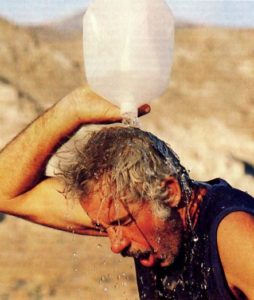
By Davy Crockett Walks and runs across Death Valley, in California during the hot summer started as early as 1966 when Jean Pierre Marquant (1938-) from Nice, France accomplished a 102-mile loop around the valley that included climbing two of the high mountains. (see episode 62). This started a Death Valley hiking and running frenzy in the lowest and hottest place in North America. It mostly concentrated on 100+ mile end-to-end journeys across the blazing wilderness. End-to-end records were set, broken, and recorded by the Death Valley Monument rangers. All of these accomplishments were the roots for what eventually would be the Badwater Ultramarathon. But when did trekking from Badwater (-282 feet) to the top of Mount Whitney (14,505 feet) start? Please help support this podcast. I’ve joined a partnership with Ultrarunning Magazine. I can offer a 25% discount on Ultrarunning Magazine subscriptions and renewals. Visit https://ultrarunning.com/ultrarunning-history/ Subscribe or renew today. Early Ideas In 1937, Texaco tested 14 automobiles of various models going from Mt. Whitney portal to Badwater in temperatures in the 120s to see if both engines and tires could handle it. It was called, “one of the most grueling tests ever given to automobiles in history” and was successful. In 1939, the low and high points received more attention when the San Francisco Examiner published a “motorlogue” stating that seeing both in one drive was a “must see.” More attention brewed in 1956, when a Los Angeles newspaperman, Richard Hathcock made a film of a four-day trip by car from Badwater to Mt. Whitney that was shown on ABC’s “Bold Journey” show. In 1958 an article in the Boston Globe promoted the area with, "Do you like extremes? You can see Mt. Whitney, the highest point in the United States, and Badwater, the lowest point, from the same place at Dante's View. You can travel in a few hours from the heat of the desert to the snow fields of the High Sierra." First Badwater-Mt Whitney Trek The first documented hikers to go from Badwater to the top of Mount Whitney were James Harvey Burnworth (1926-2013) and Stanley David Rodefer (1925-2019) from San Diego, California, who in November 1969, backpacked the route in two weeks. Instead of using the roads, they took a direct route across the Valley. They said they did it “just for the heck of it.” They survived on food and water that they had buried in various locations ahead of time. By 1970, many hikers were making the trek across Death Valley, but not yet up to Mt. Whitney summit too. It was reported, “The way park rangers tell it, they’ll need crosswalks pretty soon to handle all the foot traffic across Death Valley." In 1970 about a half-dozen hikers made the trek including one pulling a miniature covered wagon. A ranger reported, “We’ve got a big list of inquiries from persons who want to walk, run, hike, skip, jump and handstand their way through here and we just can’t keep up with them all anymore.” In 1978 a man even went across the Valley on a Tricycle. Rangers stopped trying to keep end-to-end Valley records. They had given up keeping tabs on hikers. There were just too many. Paul Pfau Paul Pfau (1950-), age 21, of Arcadia, California, was a student at St. Mary’s College in California. As a class project in psychology, he decided to try to run Death Valley end-to-end, 120 miles. He accomplished it during the winter of 1971 in three days, two hours. He thought he was the first to do this but was not. (see episode 62). About a month later, he ran back in the other direction, again taking three days but was on his feet for 26 hours. He was the first known person to run it in both directions. A couple months later in May, he also climbed Mt. Whitney with a friend, but not in a continuous trip from Badwater. But news of both his Death Valley runs and climb up Mt. Whitney were widely published together. In January 1972,
Ep 6969: The 100-miler: Part 16 (1976-1977) Max Telford and Alan Jones
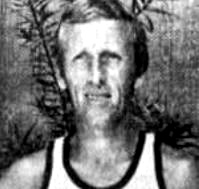
By Davy Crockett In the 1970s, the sport of ultrarunning received very little attention in the mainstream media. In April 1974, Park Barner from Pennsylvania, the top ultrarunner in America at the time, did appear on a local television show. The episode was entitled, “The Loneliness of the Ultra-Distance Runner.” He also later was on CBS's PM Magazine. But the ultrarunners who really succeeded in getting the attention of the public were those who rarely participated in formal races and instead put on endurance stunts that were attention-grabbers. The most prominent runners had the help of skilled marketing resources to keep their name in the spotlight. Their goal was not to go after sanctioned records or even formal course records. Instead, they focused mostly on getting their name into the Guinness Book of World Records to claim invented "world records," which are what we call today "fastest known times." Because the most elite ultrarunners in the world were not self-promoters, they remained in general obscurity except among their ultrarunning competitors and clubs. It was the self-promoter record-seekers who truly became famous. Two of these individuals who caught the attention of the American public in the mid-1970s were Max Telford of New Zealand and Alan Jones, a marine from Iowa, who was stationed in Oregon. Telford was touted as being the greatest long-distance runner in the world and Jones became known as "Captain America." Both ran 100 miles and both their stories are fascinating and inspirational. It is believed that neither went down the fraudulent road as many other self-promoters did. Please help support this podcast. I’ve joined a partnership with Ultrarunning Magazine. I can offer a 25% discount on Ultrarunning Magazine subscriptions and renewals. Visit https://ultrarunning.com/ultrarunning-history/ Subscribe or renew today. Max Telford Max Telford (1936-) was from Scotland, New Zealand, Hawaii, and the Philippines. He was a legitimate elite ultrarunner who sought out amazing running adventures to be the first or the fastest. He did race in some legitimate competitive races, but never really competed against the best in the world. Instead, he did many successful solo stunts and self-promotions, working with sponsors who at times made "over the top" claims about his abilities. He greatly inspired others to run. He had ambitions “to become the greatest long distance runner of all time” and many people of his time believed he was. Telford grew up in Scotland. He went to work in the clothing industry and played rugby and soccer when serving in the military. After moving to New Zealand in 1958, when he was 22 years old, he joined the Mount Albert Athletic Club to get into shape for rugby season. He enjoyed running and did pretty well, so he decided to stick with it. Arthur Lydiard Telford first ran middle distances and cross-country. He trained with legendary Arthur Lydiard’s group of middle and long-distance athletes. Lydiard was recognized as one of the greatest coaches of all time and credited for popularizing the sport of running. On May 2, 1964, Telford gave a try at running 100 miles, and set a New Zealand 100-mile record of 14:58:36. At the age of 32, when Telford didn’t qualify for the Mexico Olympics in 1968, he discussed with Lydiard what he should do next and decided to move up to ultra-distances. To get in his miles, he would put in an eight-hour shift at work and then go run 30 miles. At the peak for his ultra training, he would run three times per day and run 200-mile weeks. Telford said, "I quickly found I could run incredibly long distances with no strain really. I stood up to it very well, and soon was covering 50 miles, then 100." In April 1970, he ran for 24 hours on Lovelock Trick in Auckland and reached 114 miles. Around 1971 he quit his job in the clothing business to run full-time and do physical fitness instruction.
Ep 6868: The 100-miler: Part 15 (1975-1976) Andy West
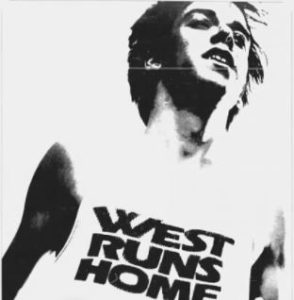
By Davy Crockett Since the dawn of the sport of ultrarunning more than a century ago, a unique breed of ultrarunner has existed which I will call the "self-promoter." They were skilled in using their running talents to gain fame and fortune, mostly by doing "stunts" rather than participating in competitions. There is nothing inherently wrong with seeking to make a living this way. Before World War II, most ultrarunners were "professionals" who lived off winnings, wagers, and gate receipts from doing stunts. But sadly, many self-promoters would make false claims, play on the sympathies of a gullible public, and some would resort to fraud and thievery. When telling the history of the sport, these stories of self-promoters must be delicately pointed out so that their achievements can put in their proper place. Caution must be used to sort through a multitude of claims to find the legitimate. In 1985, Gary Cantrell (of Barkley fame) warned the sport about this type of runner who would step forward to claim an undeserved spotlight for gain, disrespecting the entire sport. Ultrarunning historian, Andy Milroy, explained that there were indeed some true scam artists that were quite skilled at their craft. “Many of the rest were delusional who believed they had run the distances claimed. Most saw it as an easy meal ticket.” Self-promoting practices crept into 100-mile history and had a place in it, good or bad. Typically, once the runner received some fame, they performed self-promoting stunts to gain local or national attention, often in the guise of raising money for charity. Some were scammers who were hard to detect at the time, and they were mostly adored. Others were legitimate talents who figured out creative ways to shine the spotlight on their accomplishments. Patterns of behavior of these runners have been similar over the decades. Most of these ultra-distance runners had true talent, would become serious self-promoters, and then would shy away from true competition against the best in the sport. Instead of competing, they put on stunts that would impress others. Their goal was typically to get their names in the Guinness Book of World Records, which during the 1970s had low standards of verification. These runners often claimed their own created "world records," sought after speaking engagements, and inspired many with their stories (with a little or a lot of fiction sprinkled in). Occasionally a skeptical reporter would find out that many of their accomplishments were actually falsified, that they claimed feats that never happened. Not all self-promoters were frauds, but most of the frauds were self-promoters who claimed they were the best ultrarunners in the world. Past Examples Over the years, many self-promoting stunt artists gravitated toward accomplishing walks or runs across America, or even the entire world in record times, or doing other such amazing accomplishments. In the early 1900s an army of "globe trotters" showed up in towns nearly every month in the Midwest United States, claiming to be on amazing journeys on foot, seeking lecture opportunities and free room and board. More than 90% of them were frauds. (See episodes 23, 40, and 41). Some runners just made claims about things they did in long-past years that were impossible to verify at the time. An early example was Dumirtru Dan (1890-1978), who became a Romanian hero in the late 1960s. He claimed that he walked 60,000 miles in 1910-1916, all over the world in an "amazing race" of hundreds of runners. He spent the latter years of his life touring, increasing his fame, lecturing, and teaching children about geography using his tales. He was kind and loved by all. Years after his death, nearly $100,000 was spent for a room in a museum about him, his grave was made into a shrine, and an endurance race is still named after him. But sadly, no one took the time to verify his impossible claims, most of which never happened.
Ep 6767: The 100-miler: Part 14 (1975-1976) Cavin Woodward and Tom Osler
By Davy Crockett In the early 1970s, several highly competitive 100-mile races had been held in England, but they were still primarily organized for attempts to break British or world records. In 1975 another classic race was held, perhaps one of the greatest and most competitive 100-mile race ever held. It left one reporter speechless, witnessing something that he would never forget, watching some of the fastest 100-mile runners ever, and experiencing the sportsmanship of ultrarunning for the first time. This story must be retold. In America, 100-mile races were being held, open to anyone who wanted to give it a try, even the naïve. In 1975, the annual Camellia 100 held in the Sacramento, California area was held for the fifth year. But the oldest annual American 100-miler that tends to be forgotten, was the Columbia 100 Mile Walk held in Columbia, Missouri. In 1975 It was held for the ninth year. There had been 23 sub-24-hour 100-miler finishes in its history. But this was nothing compared to Great Britain. There, 100-mile walking races had been held annually since 1946, for 30 years, with more than 450 finishes in less than 24 hours. Elsewhere, the Durban 100 held every-other year in South Africa, had been competed six times, with at least 33 finishers (only partial results have been preserved). In Italy, 24-hour races had been held every year since 1970 with 100-mile finishers. In 1975, a 24-hour race with many 100-mile finishers was competed inside the Soviet controlled iron curtain, in Czechoslovakia. Please help support this podcast. I’ve joined a partnership with Ultrarunning Magazine. I can offer a 25% discount on Ultrarunning Magazine subscriptions and renewals. Visit https://ultrarunning.com/ultrarunning-history/ Subscribe or renew today. The Greatest 100-miler – Acolade 100 On October 25, 1975, at the Tipton Sports Union Stadium in Tipton, England, the British Road Runners Club put on the Acolade 100-mile race that has been called the “Greatest 100 Miles” by world ultrarunning history authority, Andy Milroy. Why was it so significant? The 100-miler was an invitation-only race and 18 competitors were carefully selected out of a large group who were interested. All were very experienced ultrarunners, but only a few had actually finished a 100-miler. The most experienced 100-miler runner was Ron Bentley, the current 24-hour world-record holder of 161 miles (see episode 65). But Bentley was hampered by a recent groin injury. The race was held just three weeks after the major ultramarathon of the time, London to Brighton (52 miles). This was a concern because some of the runners also ran there, but they held to the scheduled date. Cavin Woodward Cavin Woodward (1947-2010) was an accountant from Whitnash, England. He started running at the age of 16 in 1963 when he joined the Leamington Cycling and Athletics Club (LC&A), starting a lifetime membership. Cavin Woodward in 1967 He took up marathon running in 1971 because he “felt sorry” for Leamington’s veteran marathoner, Tom Buckingham (1918-1976), age 53, who seemed like he always was the only club member competing in marathon events. Buckingham had started running in 1946. Woodward said, “Tom never seemed to have any support so I decided to run with him. Other distance runners then joined the club.” Soon several runners in the club started to compete in London to Brighton (52 miles). At first Woodward competed in races more for enjoyment than for winning. He said, “But my wife Carol changed that. She was fed up with coming to watch me do not good, so she mapped out a training schedule for me and made sure that I kept to it. It proved a great incentive because Carol comes to watch all my races and gives me encouragement.” She would also bring along their twin boys. Woodward ran his first London to Brighton (52 miles) in 1971 and finished 17th. He said, “I was more interested in finishing than my final posit...
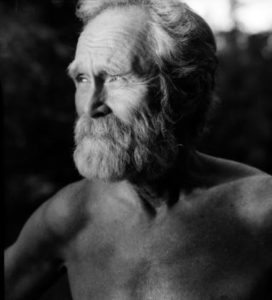
Ep 6666: The 100-miler: Part 13 (1974-1975) Gordy Ainsleigh
By Davy Crockett Several 100-mile races and solo runs were held in 1974 across the globe that year, but the most significant run, which mostly went unnoticed at the time, was performed by Gordy Ainsleigh in the rugged, hot mountains in California. You were probably told he was the first, but he was actually the 8th to cover that trail on foot during the Tevis Cup horse ride and the sport of trail ultrarunning was not invented that year. Previous to 1974, more than 1,000 sub-24-hour 100-mile runs had been accomplished on roads, tracks, and trails. Thus, Ainsleigh's run did not get much attention until several years later, when with some genius marketing, it became an icon for running 100 miles in the mountains, the symbol for Western States 100, founded in 1977. Using this icon, they inspired hundreds to also try running 100 miles in the mountains on trails. Also hidden in the annals of the Western States Endurance Run history, is a forgotten story of 53 individuals, men and women, who covered the Western States Trail on foot in 1974, just one week after Ainsleigh made his famous run. This was another story that was well-known at the time but wasn't mentioned in the Western States origin story. Perhaps, it isn't significant, but it is interesting and will be shared. Gordy Ainsleigh 1974 was the year when Gordy Ainsleigh made his famed run on the Western States Trail in the California Sierra. Ainsleigh’s solo journey run must be mentioned, examined, and put in its proper historic context, peeling away the decades of marketing hype and myths that grew out of it. Early Years Harry Gordon Ainsleigh, from Meadow Vista, California, was born in Auburn, California in 1947. Frank Ainsleigh Ainsleigh grew up going by the name of Harry. He was the son of Frank Leroy Ainsleigh (1926-2007) who served in the Korea and Vietnam wars, in the Air Force. Frank and Bertha Gunhild (Areson) Ainsleigh (1918-2004) married while Frank was very young. The marriage didn’t work out, and they filed for divorce one month before Gordy was born. He was then raised by his mother (a nurse) and his Norwegian-born grandmother, Bertha Fidjeland Areson (1894-1984), who was also divorced. Frank Ainsleigh left the home, quickly remarried, and eventually settled in Florida where he raced stock cars and worked in a Sheriff’s office as maintenance supervisor over patrol cars. Bertha Ainsleigh remarried in 1952, when Gordy was five, to Walter Scheffel of Weimar, California. He was employed at a sanatorium. But Gordy’s family life continued to be in an uproar. They divorced less than a year later. Nevada City Gordy spent his childhood years in Nevada City, California (about 30 miles north of Auburn). He recalled his first long run. "One day when I was in second grade. I came out on the playground with a bag lunch that Grandma had packed for me, and I just couldn't see anybody who would have lunch with me. I panicked. And I just felt like I couldn't breathe. And I just dropped my lunch, and I ran home for lunch." On another day he missed the bus for school and didn't want to admit to his mother that he again missed it, so he just ran several miles to the school. He explained, "I came in a little late. The teacher knew where I lived. She asked, 'Why are you late?" I said, 'I missed the bus, so I ran to school." She was so impressed that she didn't punish him. By the age of fourteen, he started to get into trouble with the law, so his mother decided it was time to move out of town, back to the country. They moved back closer to Auburn, to a small farm near the hilly rural community of Meadow Vista. In junior high school, his gym teacher treated P.E. like a military boot camp with lots of pushups. He recalled, "I'd goof off and he'd make me run. I made sure I wore a real pained expression whenever he could see me. Actually, I was having a good time." Living on a farm, he grew up among livestock animals,

Ep 6565: The 100-miler: Part 12 (1971-1973) Ron Bentley and Ted Corbitt
By Davy Crockett During the 1970s, the modern-era of ultrarunning was slowly increasing. The term “ultramarathon” (“ultra” for short) was introduced by legendary Ted Corbitt about 1957 and by the early 1970s it was being used more often to make the distinction with the public that athletes could run further than the marathon distance. 100-mile races were not yet widely prevalent and open to all, but the spark had been kindled to bring back the distance that many hundreds of runners had achieved before World War II. The shorter ultra-distance races including 50-miles were ever-increasing, including races such as the JFK 50 in Maryland, the Metropolitan 50 in New York City, London to Brighton in England, and the Comrades Marathon in South African. Many other ultradistance races were put on around the New York area by Ted Corbitt and various point-to-point ultras were raced throughout Great Britain. Please consider supporting ultrarunning history by signing up to contribute a little each month through Patreon. Visit https://www.patreon.com/ultrarunninghistory During this emerging 1970s modern era, some of the fastest all-time 100-mile accomplishments were achieved and they have been mostly forgotten. In 1972, an equestrian mountain-trail in the California Sierra named Western States was conquered by seven military veterans, sparking the notion to bring back mountain trail 100-milers that had ceased for decades. Ron Bentley In the Midlands region of England, emerged a tough ultrarunner who would take the 100-mile distance to new levels and influence British runners for generations. Ron Bentley (1930-2019) was born in the Midlands, near Birmingham, England. He grew up in large family, in very humble living conditions. They lived in a two-bedroom home without electricity, where meals were cooked with a pressure stove heated by open fire. As a young boy, he remembered hearing his father tell running stories around the fire. He had been a professional road-runner and influenced his sons to also run. He also lived near British running great, Jack Holden (1907-2004) who left an early impression on him about running. Bentley served in the British army starting in 1949 and participated in many sports with the servicemen including football, basketball and hockey. He did not do much running at first but did ran a race around a hockey field one day. After doing some training in the hills, he started to win cross-country races and his officers could see that he was naturally gifted to run. While serving, he was the overall champion in a Army Track and Field meet, winning middle-distance running events and the Pole Vault. The Tipton Harriers Jack Holden Ron Bentley While home on leave, he watched Jack Holden race in the area. That motivated Bentley to train harder and he went on weekly long runs of about 10 miles. Once out of the service in 1951, he joined the Tipton Harriers, wanting to concentrate on long-distance running. He participated in many races but didn’t start racing the marathon until 1958 when he was 29. He placed third at the Midland Marathon at Baddesley with a time of 2:47:18. Bentley became one of the core leaders of Tipton’s cross-country and road running teams which developed into the most successful club in England. Ron’s voice could always be heard above all others shouting encouragement for his team. Ben Nevis Race Bentley ran a classic trail race in Scotland for many years, the “Ben Nevis Race.” It was only about 10 miles (depending on the route taken) but ran to the top of Britain’s highest mountain, Ben Nevis (4,406 feet), and back down. It was said, “It is not an unusual sight to see exhausted runners carried off to the hospital.” The Ben Nevis race began in 1895 and it became a regular organized event in 1937. “Due to the seriousness of the mountain environment, entry was restricted to those who had completed three category A hill races,
Ep 6464: The 100-miler: Part 11 (1970-1971) Women run 100-milers
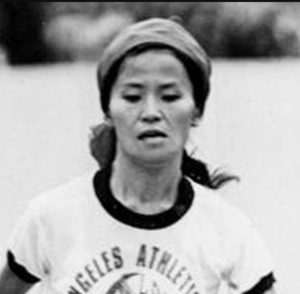
By Davy Crockett As the 1970s began, for the first time in decades, daring pioneer long-distance women athletes again joined in the 100-mile quest, with some opposition because of the lack of public acceptance for women to compete in long distances. By 1970, the Amateur Athletic Union (AAU) was governing American amateur running and working to prepare athletes for the Olympics. The AAU received growing criticism regarding its governance, arbitrary rules, locking out some runners, and banning women from competitions. But some races started to ignore the AAU rules and allow women to run. Most ultramarathons let them run, at least unofficially. It took a special breed of runner to push through the strong cultural gender bias to break into the male-dominated sport of distance running during the early 1970s. As the 1970s began, 100-mile races continued in South Africa and England. They began to expand in other areas of the world including the United States, Australia, and Italy. World records continued to be lowered. Women 100-milers It had been decades since women had participated in 100-milers. During the 1870s, many women became 100-mile Pedestrians putting on performances that astonished the American public (see episode 55). In 1869 Anne Fitzgibbons "Madame Moore" became the first known woman to walk 100 miles in less than 24 hours in upstate New York. In 1877, Carrie Parker from Illinois was perhaps the next. People believed it ruined her life and drove her to insanity. She was “a raving maniac” when she was brought before a court. “Her father testified that ever since the walking match his daughter had been suffering with great nervous prostration and recently she suddenly conceived of the idea that her whole body was charged with electricity and she would not touch her feet to the floor.” She was sent to an asylum. The next year, M’lle Dupree, a French-American seamstress from Sparta, Wisconsin, claimed to break the 24 hour 100-mile barrier. In September 1878, she achieved a time of 23:05, indoors at Mankato Opera House in Minnesota. She indeed was the fastest woman 100-miler of her time and was referred to as “The Wonder of the World.” Geraldine Watson – Pre-war 100-miler The last of the pre-war women 100-mile runners was Geraldine Watson (1883-). She was a schoolteacher from South Africa. She was a very tough individual who would set off on long walks up to 200 miles carrying a small automatic pistol for protection. When she ran the Comrades Marathon (54 miles) in 1931, she received intense public attention. The first woman to run in that race was Frances Hayward (1891-) who in 1923 finished with a time of 11:35. By 1931 the route was significantly faster, the road fully paved. Watson ran unofficially and finished in a little over 11 hours, admitting afterward that she had nearly given up. She repeated in 1932 with a time of 11:56 and in 1933 ran an amazing 9:31:35, still unofficial because women were not allowed to compete. No other woman would run the race until 1965. Watson entered a 100-mile road race organized in Durban, South Africa in 1934. The race was held on a circular road course. Watson ran a sub-24-hour 100 on June 30, 1934. Her time was 22:22:00 and was performed in strong gusty winds and rain. Two men also finished the race, Fred Wallace with a time of 16:52:20 and Bill Cochrane (1900-), with 17:25:00. Miki Gorman – 100 Mile World Record Holder Michiko "Miki" Suwa (1935-2015) was born in China to Japanese parents. In 1963 she moved to the United States, attended college, and married businessman Michael Gorman. They moved to Los Angeles where she became a secretary for a Japanese trading company. In 1968, she bought a membership in the Los Angeles Athletic Club (LAAC) where she enrolled in a calisthenics class. She was offered the choice of a stationary bike or jogging to warm up. She chose running, and for the next five years the LAAC track on the seventh floor of a ...
Ep 6363: The 100-miler: Part 10 (1968-1969) Walton-on-Thames 100
By Davy Crockett During the late 1960s, 100-mile races started to make a comeback both in England and in the United States. Walking 100 miles in under 24 hours became popular in Europe and similar events also started to be held in America, featuring a legendary lumberjack walker from Montana. Racing 100 miles also rose from the ashes. A long-forgotten indoor 24-hour race started up in Los Angeles California where western ultrarunners strived to reach 100 miles on a tiny track, up seven stories, in the busy downtown metropolis. But the most significant 100-mile race of the decade was held in 1969, at Walton-on-Thames in Surrey, England. The race featured many of the greatest ultrarunners of the world at that time who were interested in trying to run 100 miles. It was a fitting way to finish out the 1960s and news of the event would help spawn many other 100-milers in the 1970s. In America it re-opened the sport to distances longer than 50 miles. Race-Walking 100 miles In England during the 1960s, popularity for walking 100 miles using race-walking rules, grew and 145 walkers became British “Centurions” for the first time. In 1911 the Surrey Walking Club established the Brotherhood of Centurions to honor those who walked 100 miles in 24-hours or less. (See episode 58). Many walkers from the Netherlands started to participate as the 1960s walking craze spread across Europe. The Dutch founded their own Centurion club in 1966. Huw Neilson, age 44 of Welwyn Garden City, England, an aircraft worker, was a member of the Woodford Green Athletic Club. He was a very experienced walker who became a centurion back in 1948. In 1955 he walked London to Brighton and back (about 104 miles), establishing the fastest time on the course since the race was reestablished after World War II, with a time of 18:26:27. On October 15, 1960, Neilson beat the all-time world 100-mile walking record, walking around a 440-meter track at Walton-on-Thames. He reached 100 miles in 17:18:50. He then continued on, and in 24 hours reached an amazing 131 miles, breaking a world record that had existed for 52 years. His records are still held to the present-day. Larry O’Neil – America’s Walking Champion Lawrence “Larry” Ernest O’Neil (1907-1981) of Kalispell, Montana, was a lumber industry executive, or “lumberjack.” At a youth he moved from Montana to Pomona, California and attended college in Clairmont. He dabbled in baseball, basketball, swimming and track, but never advanced beyond the level of junior varsity. He was only 120 pounds and was afflicted by tonsillitis which was believed at the time to cause a weakened heart, requiring him to get permission to participate in sports. After graduation from college in 1928, with a degree in economics, O’Neil joined his father’s lumber business in Kalispell and then founded the Forest Products Company, a retail lumber yard in Kalispell. He began training to be a marathon runner, hoping to run at Boston in 1932. However, he injured his Achilles tendon at work and that finished his serious running career. But with his arduous outdoor life in Montana, he stayed very physically fit. Kalispell, Montana In 1964 he attended a National AAU meet held in Kalispell, Montana. It included a 3,000-meter walking race. O’Neil came to watch. He explained, “I looked at the track and field program and saw this 3,000-meter walking event. I didn’t know what it was, but I figured it would be the easiest event of the meet. About that time, there was an announcement over the loudspeaker that two walkers had dropped out.” Walkers were recruited from the stands and O’Neil, age 57, hustled over to enter on a dare. He did well, finishing 4th out of 10 walkers. O’Neil remembered, “I’m sure my form back then might have been declared illegal today. Some judges must have been wearing dark glasses to allow us to finish.” O’Neil discovered that walking long distances were his forte a started seriously competing ...
Ep 6262: The 100-miler: Part 9 (1966-1968) First Death Valley 100 Milers
By Davy Crockett For the first time, Death Valley became a harsh target location for athletes that are now long-forgotten to prove they could overcome suffering and cover 100 miles during intense summer heat. These attempts received national attention and also frustrated Death Valley Monument rangers. But they would lay the foundational idea of what eventually became the Badwater Ultramarathon. During the 1960s, formal 100-mile races took a backseat to the shorter ultrarunning distances that were starting to draw talented runners into the sport from marathon running. The 50-mile distance was on ultrarunning centerstage as London to Brighton emerged as the premier world ultrarunning race along with Comrades Marathon, competed in South Africa. In New York City, Ted Corbitt started to organize ultradistance races with an eye to qualify runners for London to Brighton. In 1967 the first American 50-mile National Championship was held in Poughkeepsie, New York. Ultrarunning was growing again. In America, a 50-mile craze took place by the general public in 1963 due to comments made by President John F. Kennedy (see episode 4) and some bold individuals proved they could do a double: 100 miles. 100-mile races were waiting to the wings to being competed seriously again. However, the 100-mile distance on foot fascinated the general public, especially men in the military. Many people in all walks of life found ways during the 1960s to achieve it. Please help support this podcast. I’ve joined a partnership with Ultrarunning Magazine. I can offer a 25% discount on Ultrarunning Magazine subscriptions and renewals. Visit https://ultrarunning.com/ultrarunning-history/ Subscribe or renew today with this link. 100 Miles Across Death Valley Missing and forgotten in the famed Badwater Ultramarathon history are the earliest 1960s attempts to go more than 100 miles in Death Valley during the hottest part of the summer. These brutal hikes received intense national attention at the time and certainly planted ideas that progressed to the formal race established two decades later. Death Valley is in eastern California contains the point of lowest elevation in North America at 282 feet below sea level. The Average daily high temperature in July is 116 degrees F. Jean Pierre Marquant’s 1966 Death Valley 100-miler Jean Pierre Marquant was an ex-paratrooper from Nice, France. He went to the United States in early 1965 and hitchhiked around the country. In 1966, Marquant, age 28, set off to walk across Death Valley in the heat of July. Officials thought he was the first person to deliberately attempt a crossing of Death Valley in the summer. Marquant had experience. He earlier spent 103 days hiking over 1,000 miles of Algerian desert. He said, “It was desert country, but of course not nearly as hot and dry as Death Valley.” He spent five days before his start conditioning himself to the heat, taking short walks near the national monument headquarters. Marquant’s extremely difficult route was not along the paved roads. He planned to make a huge circular route that include scaling 9,000-foot Wildrose Peak and 11,000-foot Telescope Peak along the way. He left a map with the rangers outlining his route and gave estimates for arrival at various places in the valley. Officials said, “Because of the extreme heat, a ground search party will not be sent to look for Marquant if he should fail to turn up at a checkpoint. The only help we can offer is to place a call to Edwards or George Air Force bases and request a helicopter fly the area to try to spot him. We admire Marquant’s courage. We have serious doubts he will succeed.” Marquant knew the dangers, “It is a challenge. The sun is so hot it scorches every part of the body. You become dehydrated and your strength is sapped. But because it is a challenge and no one has ever made a long hike in such heat, I relish the opportunity.
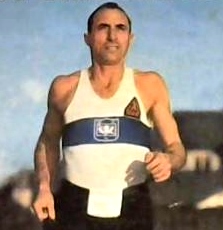
Ep 6161: The 100-miler: Part 8 (1950-1960) Wally Hayward and Ron Hopcroft
By Davy Crockett 100-mile attempts mostly ceased across the world during the 1940s due to World War II. By 1946 some isolated 100-mile attempts reemerged, including a walking event in England where seven athletes accomplished the distance in less than 24-hours. Rex Whitlock of Great Britain walked the 100-mile Bath Road course in an amazing 17:44:40 in 1952. Ultrarunning, at other distances, also came to life again in South Africa when the Comrades Marathon (55 miles) was held again in 1946 and the Pieter Korkie 50 km was established in Germiston. In England, the London to Brighton running race (52 miles) was established in 1951, using the famed road used by walking and biking events for decades earlier. Ultrarunning was reawakening. During the prewar decades, hundreds of successful 100-mile attempts and events were held. Would the 100-miler truly come back in the modern era of ultrarunning? World War II formally concluded, but conflicts continued across the world. During the aftermath of the war, with evolving superpowers, the changing world map, and the resulting Cold War, it made it a difficult time for ultrarunning to emerge widely. But the running sport has always been resilient. Korean War 100-mile Marches During the Korean War, 100-mile death marches took place. In July 1950, Burdett Eggen, age 18 from North Hollywood, California experienced his first and only day of combat. He was with 1,800 men who were told to take three hills but were ambushed near Hadong. Only 125 survived including Eggen who played dead but discovered and captured. After being held in a church that then was bombed and strafed, the surviving prisoners were taken to a prisoner of war camp in Seoul. But after a month, Eggen and others were forced to march 100 miles to Pyongyang to stay ahead of advancing U.S. troops. Eggen said, “During the march they fed us things like dog biscuits. We didn’t have much water, but the biscuits had to be soaked before you could eat them But pretty soon even the biscuits ran out, and we had nothing to eat except what we could steal along the way.” They were divided up into groups of 50 and those in the last group, the weakest would get shot when they fell out. “Everybody tried to help his buddies, half carrying the weaker ones along.” At the finish of their 100-miler they were taken further by train and stopping near a tunnel. Most of Eggen’s group of 30 were massacred there and he was shot in the leg and again played dead. Six survived, went into the woods and later were found and rescued by American airborne troops. Great Escape 100-miler In 1950, at Monroe, Louisiana, two boys age 15 and 16, escaped from the Louisiana Training Institute and walked 100 miles in two days to Shreveport on railroad tracks. Both were eventually found at the home of one of their mothers and taken into custody by the police. “State troopers investigating the case said the boys had blisters as big as your fist on both feet.” Cotton Picker 100 During November 1951, about 100 migrant Mexican workers quit their cotton-picking jobs in west Tennessee and started a 100-miler. The men had been brought from Mexico to work on a plantation owned by Terry Jamison. He said they just “walked out” of their contract. The Mexicans had quit their job because of bad food and pay. As of November 22, 1951, forty-nine of them had finished the 100 miles, arriving in Memphis Tennessee, footsore and frightened, complaining bitterly their working conditions to Angel Cano, the Mexican consul. The feet of most of the finishers were badly blistered. They were given government-paid lodging and food in a local hotel. Fifty-one other men were still on the road walking. It was reported that others had been thrown in to jail when they tried to leave Tiptonville, Tennessee. A Sheriff admitted to jailing about 20 of the 100-miler entrants. The group was eventually provided transportation back to their homeland.
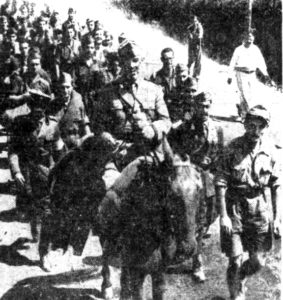
Ep 6060: The 100-miler: Part 7 (1930-1950) Wartime 100-Milers
By Davy Crockett After decades of 100-mile races, matches and successful finishes in less than 24 hours before 1930, the Great Depression turned ultrarunners’ attention to more important matters – surviving. Opportunities to earn a living as a professional runner dried up as public interest waned. Memories of past accomplishments and records faded. Occasionally the newspapers would pull out of their dusty archives a story about Edward Payson Weston’s walking wonders which was treated as “believe it or not” oddities, rather than something that others could accomplish. But the spark of running or walking 100 miles on foot still smoldered during the next two decades despite the severe difficulties of the Depression and World War II. Isolated 100-mile accomplishments took place to remind the public what the human body could do, but 100 miles was still considered to be very far and out of reach by all but freakish athletes. Gruber’s “softies” During the World War II years, 100-mile races ceased, but some solo endurance efforts were sparked due to comments made by Brigadier General, Edmund L. “Snitz” Gruber (1879-1941) who stated that American youth were “soft.” Gruber was the author and composer of the song “The Caissons Go Rolling Along.” In January 1941, speaking before a church’s men’s club in Kansas City, Missouri, he said, “Our men have been living too soft a life.” He stated that the military draft had revealed an astonishing weakness in the physical, vocational, and moral qualities of youth. He claimed that one out of every two youths were rejected because of physical fitness. Gruber died five months later during a game of bridge at the age of 61. Gruber’s comments cause a bit of an uproar and debate across America. Newspaper commentary included, “We know of no way to prove the general is in error and of no way to prove that he is right.” But young men across the country found a way to provide some anecdotal proof that Gruber was wrong. A week before Gruber’s brash statement, Ted Morton, age 19, a former high school track star from Kansas City, was being denied a job as a clearing house messenger because the company’s president didn’t think he had the physical stamina for the work. He stated, “The lad looked rundown to me.” Miffed over this rejection and mad about General Gruber’s comments, Morton started a crusade to prove his doubters wrong. Morton first ran 34 miles in 13:29 with a moving time of 7:30 as proof. A $10 wager also pushed him along. He ran in alternating hours, resting an hour in between. His inspiring accomplishment was performed on a 400-yard high school track. The day after he said, “I feel fine today. Got up and went to church too. I hope the general hears about this.” The general did hear about it. Gruber wrote a letter of congratulations to the youth stating that he hoped the performance “would inspire other young men to watch their health and keep themselves in good physical condition.” Morton was soon hired by the army as messenger for a commanding officer and made daily walks and runs of 8-15 miles to deliver messages. Morton continued to try to prove Gruber wrong, even after his death. In July 1941, he organized a 50-mile race in Kansas City that included six former track stars. The race was billed as “an attempt to prove that American youth is adequately fit to defend their country.” Representatives from the AAU even came to watch along with thousands of spectators. A six-mile course was used in Swope Park and the young men were required to rest for fifteen minutes every two hours. “The oldest contestant, Milton Graham, a 30-year-old truck driver, gave out at the end of eight miles, complaining a football knee was troubling him. As the sun climbed and the mileage passed 20 miles, there was little running going on. Ted Morton collapsed three times on his fourth 6-mile lap, but he recovered sufficiently from severe leg cramps to finish second,
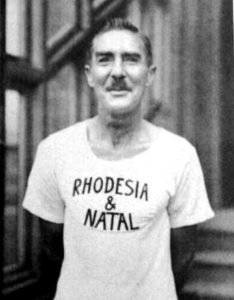
Ep 5959: The 100-miler – Part 6 (1927-1934) Arthur Newton
By Davy Crockett In the 1920s one of the greatest British ultrarunner ever appeared, who made a serious impact on the forgotten 100-mile ultrarunning history before World War II. He was Arthur Newton of England, South Africa, and Rhodesia was a rare ultrarunning talent who had world-class ability in nearly all the ultrarunning distances from 50 km to 24-hours. Newton learned most of his serious running on a farm in remote Africa and was bold enough to step onto the world stage and beat everyone. His dominance in the early years of South Africa’s Comrades Marathon (54 miles) helped the race get off the ground to become the oldest and largest ultramarathon in the world. But Arthur Newton’s best distance was 100 miles. With few 100-mile races to compete in during the 1920s, he resorted to participating in highly monitored solo events to prove that a farmer from Africa was the best in the world, and he was. His 100-mile experience will be shared, but also a good portion of his life story needs to be explained to understand the man, the ultrarunner, one of the greatest, Arthur Newton. Early life Bedford School Arthur Francis Hamilton Newton (1883-1959) was born in Axbridge, Somerset, England. His father, Henry, was at first a civil engineer and then went into religions ministry and served as a clerk in the Church of England. The family moved to Brighton, England when Arthur was two years old. At age seven he started to live in boarding schools fulltime, first at Lady Matron School, and then as a teenager at Bedford School, a school for boys. He finished up in a private school in Banham, England. During his school years, he was active in soccer, cricket and tennis but never had any particular interest in running. Durban, South Africa After graduation in 1901, at the age of 18, he thought he would become a teacher. His father instead wanted him to be a clerk and sent him to South Africa to join two older brothers who were living in Durban. He tried the clerk career for a couple years but it was not for him, so he began teaching in the province of Natal. He played the piano, was an avid reader, and loved riding motorcycles. But he also was a regular smoker living a rather sedentary life. He explained, “I sacrificed the exercise necessary to a young man in order to dive deeper into metaphysics and allied subjects. Common sense soon came to the rescue and I knew I should be able to make a better job of my mental work if I made certain of a healthy physique. So I started a daily walk, whether I liked it or not.” The running teacher in South Africa Drakensberg Mountains Newton began walking to his work and progressed to jogging distances up to six miles. “Sometimes people would stare quizzically at the eccentric Englishman running down the road.” He became bothered by these reactions and so moved his exercise during the early hours when few people were out. He began very fit and demonstrated his abilities to the schoolboys he was teaching. He once organized a 300-mile round trip to the Drakensberg mountain range that involved bike riding and hiking. Howick Newton’s first running race took place when he was age 24 in February 1908. It was a 11-mile “Go as you please” race in the small rural town of Howick. The town was the site of a sad British internment camp where many women and children died a few years earlier during the Anglo-Boer War. He was one of eight runners who took part and he finished in fourth place with a time of about 90 minutes. He soon started to win some races. On a long excursion to the mountains he ran out of cigarettes and was convinced by a friend to start using a pipe instead. In 1909 his father found him a job as a tea planter in Ceylon (Sri Lanka) where the family had previously lived when his father was working as a civil engineer. So he returned to England. By the time he arrived, the opportunity was gone and at age 26, he was without permanent work.
Ep 5858: The 100-miler – Part 5 (1902-1926) London to Brighton and Back
By Davy Crockett For at least 150 years, running or walking 100 miles within 24 hours has been an impressive feat sought after by thousands. Part 4 of this 100-miler series covered the history of 100-mile races held in America in the early 1900s before World War I. But during this period, there were 100-mile races held in other places around the world, especially in England. During the early 1900s a remarkable shift occurred. In the late 1800s, America was the home for ultra-distance walking competitions. But as pedestrian competitions fell out of favor and outlawed in the U.S., ultrawalking ceased for a time. The shift went back to the old country and 100-mile amateur walking competitions eventually became very popular in England. On ultrarunninghistory.com, each article/episode takes about 30 hours of effort to research, write, script, edit, publish and publicize. Each month more there are more than 100,000 downloads of these history stories. Help is needed to continue this effort. Please consider becoming a patreon member of ultrarunning history. You can become part of the effort to preserve and document this history by signing up to contribute a few dollars each month. Visit https://ultrarunninghistory.com/member London to Brighton More than 100 years ago, there are a few venues and courses that had a significant impact on the history of ultrarunning, 100-mile races, and endurance sports in general. These include Madison Square Garden in New York City, Agricultural Hall in London, and above them all, the London to Brighton route (52+ miles) in England. For many decades, whether on foot, on bike, on horse, or in an automobile, the road to Brighton was the place to race, including 100 miles on foot. Eventually many ultrarunning legends would complete on the Brighton Road including Don Ritchie, Cavin Woodward, Ted Corbitt, Eleanor Robinson, Sandra Kiddy, Donna Hudson, Alastair Wood, Bruce Fordyce. Park Barner, Stu Mittleman, Jim King, Ruth Anderson, and Frank Bozanich. London to Brighton was traditionally a one-way race of 52-55 miles, but in the first half of 20th century, it was also used to compete 100 miles by walking or running a double London to Brighton. Brighton Road Brighton Aquarium In the mid-1800s, the seafront affluent resort city of Brighton became very popular as the railroad was built from London about 52 miles away. Prior to that, people came by horse coaches that made the trip multiple times per day with ever-increasing speed. Brighton was a city of the upper class and featured an Aquarium which opened in 1872. It included marine exhibits, a 100,000-gallon tank, sea lions, an octopus, and a distinctive clock tower and gateway. It was also the site for organ recitals, concerts, lectures, and exhibitions. Day trips to Brighton became popular and railroad speed records were boasted about for the route. The road to Brighton was measured from the Big Ben clock tower north of Westminister Bridge in London to the Aquarium in Brighton. The clock tower was completed in 1859 and at the time was the largest and most accurate four-facing striking and chiming clock in the world. The tower stands 315 feet and is found on the north end of the Palace of Westminster. London to Brighton ran across River Thames on Westminster Bridge which was originally completed in 1750, and replaced in 1862, the oldest bridge still crossing the Thames. The original course went through the towns of Croydon, Redhill, Horley, Crawley, and Cuckfield. Over the years the route competed increased in distance somewhat with the creation of modern roads and more towns to go through. Early Cycling London to Brighton John Mayhall Participants in the new sport of cycling started to ride along the route. This would soon prompt runners and walkers to also give it a try. As early as 1869. John Mayall Jr. was the first person to reach Brighton from London by velocipede.
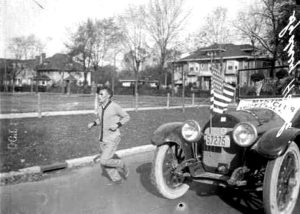
Ep 5757: The 100-miler – Part 4 (1900-1919) 100-Mile Records Fall
By Davy Crockett Many of today’s ultrarunners think that ultrarunning was invented during their lifetime. An article appeared in April 2020 Ultrarunning Magazine that stated falsely, “the format that most of us know as ‘ultrarunning’ today (trail and road races, typically 50k to 100 miles) is barely 50 years old.” Such statements are ignorant of the rich history of the past and the ultrarunners who paved the way, running ultradistances on dirt roads and trails for more than two centuries. In April 2020, Runners World published an article proclaiming falsely that the first 100-mile ultra was held in 1974. This is part 4 of a rich 100-miler history. More than 1,000 ultrarunners finished 100 miles in less than 24 hours before 1974. If you missed the other parts, you can start with Part 1. Subscribe to the Ultrarunning History Podcast. Visit https://ultrarunninghistory.com/subscribe-to-podcast/ Ultarunning and the 100-miler face extinction Madison Square Garden II During the late 1800s, and the early 1900's for about 30 years, 100-milers and Pedestrian six-day races were held indoors, when they were a unique spectator and gambling sport until about 1908. In 1889 the home of Pedestrianism, the original Hippodrome, Madison Square Garden was demolished. It had become a “patched-up, grimy, drafty, combustible old shell.” A new Madison Square Garden arena was constructed on the site and opened its doors to the golden era of multi-day bicycle races. 1900 Bike race in Madison Square Garden In the early 1900's, as local laws in America were more widely passed outlawing multi-day running and bike races, indoor 100-milers ceased and the 100-miler faced the threat of extinction again. In the former heart of 19th century ultrarunning, New York City, it was written, “These protracted tests of physical endurance serve no good purpose. They prove nothing beyond the fact that some men can force themselves to harmful exertion even when every fiber of their physical being is in active revolt.” But a flicker of life still remained in America. Starting in 1905 the 100-miler reemerged into the outdoors on the dirt roads in Illinois, thanks to some legendary marathon runners from Chicago who sought to attain the 100-mile distance. The 1906 mountain trail 100-miler However, there was a place in the world where ultra-distance running never took a vacation. Running 100 miles or more was ingrained into the culture of the Tarahumara, a civilization of about 30,000 people who seemingly were untouched by the modern world. They lived in Mexico, in the northern portion of the Mexican Sierra Madres. In the early 1900s, American railroad contractors, who were building a mining railroad to the Tarahumara village of Bocoyna, were spellbound with the running exploits of the people who lived in the canyons. The workers amused themselves by wagering large sums of money on long-distance running races. William Deming Hornaday A historic 1906 race was held from Bocoyna to Minaca and back, about 110 miles on “exceedingly rough” trails over the mountains. William Demming Hornaday (1868-1942), an American journalist, and the publicity director for the National Railways of Mexico, was there to watch this race and reported that the Americans collected a purse of $100 for the winner. “Great interest was manifested in the race, for the sum offered was quite a fortune to the members of the tribe. A council of war was immediately held by the chiefs, and two of the fastest runners were selected to do battle for the prize. The pair were also subjected to a close inspection by the Americans, who wagered large sums on the result.” On the day of this historic mountain trail ultramarathon, the two Tarahumara set off running through the rugged mountains. “The runners set out from Bocoyna first at a slow swinging gait. As they went along, they warmed to their work and the pace was quickened.
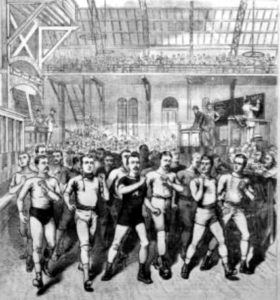
Ep 5656: The 100-miler – Part 3 (1879-1899) 100 Miles Craze
By Davy Crockett Contrary to popular misinformed opinion, 100-mile races did not originate in California, with the Western States 100 in 1978. One hundred years before, by the end of 1878, more than 200 successful 100-mile finishes had taken place in the 19th century, most of them with times under 24-hours, on dirt roads, trails, and indoor tracks. Part 1 and Part 2 of this 100-mile series covered the stories of remarkable long-forgotten ultrarunning pioneers. By 1879, a remarkable shift started to take place. The most elite professional 100-mile walkers and runners became focused on competing in indoor six-day races for huge prizes and fame. That year more amateurs entered the sport and attempted to run or walk 100 miles for wagers or for nothing at all. More of the general public started to hit the roads and tracks trying to achieve ultra-distances on foot. The newspapers called this obsession “walking match fever,” “tramp fever” or “pedestrian mania.” A Pennsylvania newspaper reported, "One of the most absurd manias that has recently afflicted humanity is the pedestrian craze which at present disturbs the mental balance of several cities in the interior of this state. The pedestrian craze infects lawyers, tradesmen and physicians. Half the population walk habitually on a dog-trot, and the police are instructed to see that amateur matches on the public streets do not interfere with the transaction of business. To what purpose is this waste of energy and enthusiasm?" A Kansas newspaper wisely observed, "This is a great country for crazes. They sweep over the country like cyclones. Whence they come and whither they go, man knoweth not. Recently, the entire country was in the throes of the pedestrian craze. In every city, town and village athletes were wearily tramping around and around a sawdust circle, while thousands of spectators applauded the dreary exhibition. The men had had the red necktie craze and recovered from it in time to laugh at the suspender craze. America soon loves her fads to death." It was wondered what craze would come next. "How would it do to inaugurate 'standing on your head' matches as the next? They would certainly draw, and the man who will first stand on his head for a thousand consecutive hours will go down to posterity, and be remembered to the remotest generation." Ultrarunning historian Andy Milroy commented, “Dan O’Leary’s 1877 and 1878 six-day wins in London created a huge stir in the US. It inspired ordinary people to undertake Pedestrianism. Most could not afford the time to tackle a six-day, or even a 50-miler. That was beyond them. So, they became fixed on the 25 mile distance. There was an explosion of such events, newspapers wrote of a plague of such events gradually spreading out from New York.” For the successful ultrarunners of the time, the financial impact on their lives was significant. There has never been an era in ultrarunning when being a professional impacted so many runners and brought in so much money. The amount that was successfully won in one race could be the equivalent of a lifetime's earnings. Managing that wealth was another challenge. Edward Payson Weston won an enormous amount of money during this era but lived a lifestyle where he spent more than he brought in. He missed some key international events because he had to deal with legal troubles involving his finances. All this potential wealth also attracted greed and the potential for fraud. This article will include stories of that side of the sport. 1879: 100-mile craze continues In 1879, many daring new-comers sought for attention by trying the 100-mile distance either in races (matches) or in solo attempts. More than fifty successful 100-mile finishes that were found in the newspapers for 1879 and there were likely many more that weren’t reported. Numerous races were announced in papers to stir up attendance for the event, but often the results were not published.
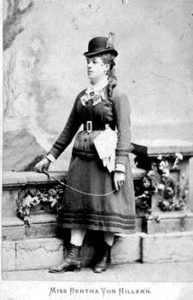
Ep 5555: The 100-miler – Part 2 (1874-1878) Women Pedestrians
By Davy Crockett Competitions to walk or run 100 miles have taken place for more than 300 years. Part 1 (1737-1875) of this series shared the very early attempts to reach this ultra-distance milestone on foot. By 1867, walking 100 miles in one-go started to receive intense attention, especially in America. A multi-year 100-mile frenzy was launched. In this part, the story is told how the 100-mile craze expanded. In 1878, thanks to those in England, the 100-miler opened up to runners who could “go as you please” rather than sticking to a strict “heel-toe” walking style that was emphasized in America. That year, well over one hundred successful 100-mile finishes were accomplished with times that fell dramatically as the 100-mile athletes learned to trot. Also that year, women especially left their mark on the 100-mile sport in America, as the country became fascinated with their accomplishments. The most prolific 100-milers in 1878 were women! It was written, “One of the most peculiar features of the walking mania is the number of lady pedestrians now on stage, and the surprising speed and powers of endurance which they exhibit.” Mark Twain’s 100-miler Samuel Clemens “Mark Twain” (1835-1910) even joined in the 100-mile craze. He attempted to walk 100 miles from Hartford, Connecticut to Boston, Massachusetts in two days with his pastor, J. H. Twitchell. The two had taken many ten-mile walks together to enjoy social chat and exchange views. They would always return home from these walks with “jaw ache” but were never foot sore. So, they hoped to walk all the way to Boston to store up enough “jaw” to last then through the winter. The two started on November 19, 1874 at 9 a.m. intending to stay on an old turnpike, see the hamlets along the way, and avoid walking on the railroads. After ten hours and 28 miles, they stopped for the night. “Before retiring, they had a consultation and decided that their undertaking had developed into anything but a pleasure trip and was actually hard work.” They decided to postpone their pedestrian tour for a year or so. In the morning they walked seven more miles for a total of 35 miles, and then took the train to Boston. Twain said, "My knee was so stiff that it was like walking on stilts." It was written, “Mark Twain wishes it to be distinctly understood that the walk was not a failure and they would have continued the trip had Mr. Twitchell not have been under engagement to preach in Newton on Sunday morning.” He said that next time he would reserve a week for the 100 miles but that he was not anxious to take away Edward Payson Weston’s laurels because he did consider that he was at least as good as Weston. Daniel O’Leary In 1874, Daniel O’Leary (1841-1933) came into the 100-mile scene, stealing away much of the spotlight that had been on Edward Payson Weston (1839-1929). O’Leary was born in Ireland and as a child lived through terrible years of potato blight, causing horrible starvation and disease. In 1866, like so many other Irish, he immigrated to America. He could not find work in New York City, so he settled in Chicago worked in a lumber yard and sold books door-to-door. He built up his endurance from speed walking his routes. In 1874 O’Leary overheard a group discussing Weston’s attempts to walk 100 miles in twenty-four hours. One person said that only a Yankee could accomplish the feat. Another commented that Weston was planning on going to Europe. O’Leary said, “If he dropped into Ireland on the way he’d get beaten so bad that he’d never again call himself a walker.” Everyone laughed at him. He finally said that he thought he could beat Weston. They then roared with laughter. O’Leary wanted to prove that an Irishman could be a successful distance walker too. He rented the West Side Rink on at the corner of Randolf and Ada Streets in Chicago, and announced that he would be attempting to walk 100 miles in 24 hours. For training,
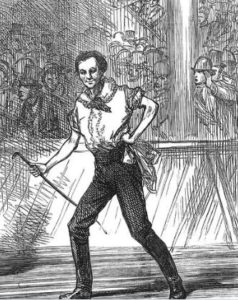
Ep 5454: The 100-miler – Part 1 (1737-1875) Edward Payson Weston
By Davy Crockett The 100-miler! Running or walking 100 miles in one-go is an amazing accomplishment. Unfortunately, some people of today still mistakenly believe that the 100-miler was invented in 1974 when a man without his horse ran 100 miles. Contrary to the cunning marketing hype that has been spread for decades, the history of the 100-miler ultra on all surfaces started long before that year. The sub-24-hour 100-miler was accomplished by hundreds of people before that famed journey in the California Sierra in 1974. In April 2020, Runner's World magazine erroneously called that run "The First 100-mile Ultra." The “mile” measurement has roots back to Roman times. The statute mile, a British incarnation in 1593, became adopted in the United Kingdom and later also by the United States. It should not be too surprising that walking and running, specifically the round number of 100 miles came out of Great Britain and America. The concept of walking or running extreme distances has taken place for thousands of years in many cultures, motivated mostly to relay swift communication between settlements or armies. Historic stories have been found regarding distances that were further than 100 miles such as Pheidippides' run from Athens to Sparta in 490 B.C., a distance of about 153 miles. In more recent centuries, "running footmen" were used by aristocrats to deliver letters. In 1728 it was reported that Owen M’Mahon, an Irish running footman covered 112 mile in 21 hours running from Trllick to Dublin. Attempts to walk 1,000 in competition started as early as 1759 in England. But what about achieving the round-number distance of 100 miles? When did the 100-mile quest begin and how did it evolve? Earliest 100-milers The earliest 100-milers were solo attempts that were motivated by wagers and usually required the person to achieve that distance in less than 24 hours. The earliest known attempt was accomplished in 1737 by an unnamed journeyman carpenter. On the road to Newington, England, a half-mile course was marked off from “Mother-Red-Caps” toward “Stamford Hill.” Many wagers were made. The carpenter struggled to finish in under 24 hours and missed it by just four minutes. It was reported, “However, the persons who imagined they had lost, had the ground measured again and found there were three yards extra, which in the whole, amounts to 600 yards.” The bets were refunded because the carpenter likely finished 100 miles in less than 24 hours after all. John Hague of Binns (Marsden), England, was the next 100-mile walker listed in history. For “a considerable wager,” on August 9, 1762, Hague walked 100 miles on a Manchester Road in 23:15:00, proving that such a journey was possible in less than a day. Foster Powell (1734-1793) of London worked as a lawyer’s clerk. He became perhaps the earliest notable pedestrian in 1764 when he walked 50 miles in seven hours on a wager. A few years later he walked 400 miles from London to York and back in five days and 18 hours, bringing focus on the idea of a six-day contest. He made this journey on a wager many times. In 1786 he sought to walk 100 miles in less than 24 hours and succeeded in 23:45. He lowered his 100-mile time two years later with 21:20, walking on the Bath Road. He was treated like a national celebrity but died in poverty. His death announcement in 1793 included, “These extraordinary feats never produced him enough to keep him above the reach of indigence. Poverty, which he ought always to have kept a day’s march behind him, was his constant companion in his travels through life, even to the hour of his death.” Captain Robert Barclay Robert Barclay Allardice, or “Captain Barclay,” of Ury, Scotland, was born to a Scottish family in 1779. His father had been a member of Parliament and owned extensive estates. When young Barclay was fifteen years old, he won a 100 guineas wager, walking heal-toe six miles in one hour which at that time was con...
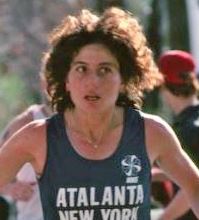
Ep 5353: Marcy Schwam: Pioneer Ultrarunner
By Davy Crockett Marcy Schwam, from Massachusetts, was an ultrarunning pioneer in the 1970s and early 1980s, during an era when some people still believed long-distance running was harmful to women. She won about 30 ultramarathons and set at least six world records at all ultra-distances from 50 km to six-days. At one point she ran 100 miles faster than any woman had ever run that far. She was bold, brazen, with an impressive “get-out-of-my-way” attitude and racing style. She would take command of a race and preferred to lead rather than follow. This courageous attitude also helped to break through the stigma held against women runners of the time. She dared to be the only woman in a race. She inspired many other women to get into the sport and reach high. Schwam trained hard and raced hard. She always knew what she was doing. Nick Marshall, who ran against her observed, “she set lofty goals for herself and she was gutsy enough to go after them with wild abandon. She might soar, or she might crash, but either way it was going to be a maximum effort.” She thoroughly enjoyed competitive racing where limits were explored and tested often. Bronx, New York Marcy Schwam was born February 11, 1953, in New York City. Her parents, Stanley and Irma Weisberg Schwam, were both long-time residents of the City. Stanley worked in the women’s under garment industry for 57 years. During the 1950s the family lived in the Bronx but later moved to Valhalla in the suburbs, near White Plains, New York. Grandfather Marcy’s ancestry was Polish. Her grandparents and her father were Jewish immigrants who came to the United States from Poland during the early 1900s, thankfully before World War II. They worked hard and successfully supported and raised their families in the big city. At the early age of five, Marcy Schwam started to take up tennis and dreamed of becoming a professional tennis player. Her father commented, “Marcy never walked anywhere. She was in constant motion all the time. She was also very competitive. If she lost at Monopoly as a kid, she wouldn’t talk to you for a week.” In high school she was very athletic and played basketball, softball, volleyball, field hockey and even lacrosse. She did some running but it was just a way to stay fit for tennis. To her, there was nothing else in the world that counted except playing tennis. From 1971-1975 Schwam attended Indiana University of Pennsylvania (IUP) where she eventually received a bachelors’ degree in Health and Physical Education. (Later she also worked on a master’s degree in Exercise Physiology at Adelphi University and San Francisco State). At IUP She became a member of the tennis team, excelled, and became ranked number one in the state. First Running Races Schwam started running some races in 1972, at the age of 21. She explained, “As a sophomore in college in 1972, I ran a 3-mile race in Pittsburgh. I was on the tennis team and a friend on the cross-country team talked me into it. I was running to and from tennis practice and someone dared me to run the Boston Marathon.” Start of 1973 Boston Marathon In 1972, the Boston Marathon opened their race to women for the first time. Schwam entered the next year in 1973, a true pioneer women’s distance runner. The Boston Athletic Association sent entrants blue or pink entrant postcards depending on their gender and sent her a blue card with the name Marc. Apparently, they just couldn’t get used to the fact that women were running marathons. It took effort getting that corrected at check-in. She was one of only 12 women to run, finished in 4:50 and said, “I really wanted to prove that women could do these types of things. There was such a stigma about women and long-distance running that needed to be proven false and I took that upon myself to do.” Competitive Tennis 1973 Tennis Team. Marcy Schwam center kneeling But tennis was still her main sport.
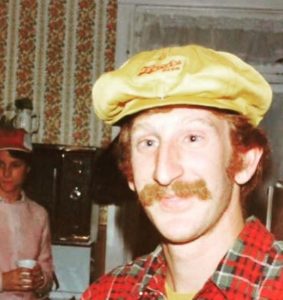
Ep 5252: Charlie Trayer – 1980s Ultrarunning Legend
By Davy Crockett Charlie Trayer, of Reading, Pennsylvania, was one of the greatest “short-range” American ultrarunners of the 1980s. During his ultrarunning career, he accumulated at least fifteen ultra wins from 1981-1990, including several national championships. He was known for bolting out into the lead like a “wild banshee” at the start of a race with a “kamikaze attitude” no matter what the distance. It was a winning strategy that he used very effectively. Trayer went from running in the Olympic Marathon Trials to ultrarunning. He was one of the very few elite American ultrarunners of the 1980s who competed against the best runners in the world internationally. He is credited for bringing American ultrarunning to the world stage, and became both feared and greatly respected by runners in the ultrarunners in Europe. He was definitely a runner to watch. In 1987 he was named the Ultrarunner of the year by Ultrarunning Magazine and was honored also in 1987 as the first recipient of the TAC Ted Corbitt Award. He was easy to pick out and known for his bright red hair and beard. At one time he was described as a cross between a leprechaun and Yosemite Sam. Raymond Trayer - 1936 Dorothy Trayer - 1941 Charles Anthony Trayer was born September 14, 1954 in Richmond, Indiana. His father was Raymond Steiger Trayer (1916-2012), and mother was Dorothy M. Coldren Trayer (1922-1971). His ancestors lived for generations in Pennsylvania. Charlie’s father, Ray was highly educated with a degree in philosophy and religion. As he studied religions, he decided to join the The Religious Society of Friends, commonly called the "Quakers." In 1941, Ray married Dorothy of Hershey Pennsylvania. She was employed at a local doctor’s office and studying as a laboratory technician. Ray believed in nonviolence and during the World War II years, the young couple moved to North Carolina where Ray served in a civilian public service camp and Dorothy worked as a secretary at a nearby college. In 1951, the Trayers moved to Richmond, Indiana, where Ray was employed as the manager of a farm at Earlham College, a private Quaker school. The Trayers lived on the farm, which was stocked with pigs, cattle, horses, and used for teaching agricultural science. Charlie’s childhood Charlie was born into the family in 1954, joining his older siblings, Susan, Alex and Tim. Always in a hurry, he arrived six weeks early, and spent the first few weeks of life in an incubator. In 1955 Ray left his position as manager of the farm, taking a teaching position in the college’s school of agricultural science. The Trayers moved to their own 45-acre farm northwest of Richmond. Charlie was raised in the Quaker religion. Susan and Alex Trayer - 1960 When Charlie was four years old, a fire devastated the Trayer farm, destroying their large barn and a hog house. Two fire trucks came to battle the flames. They had difficulty getting to the fire because of all the spectators who came to watch the flames. It was reported, “No livestock was lost. Quick thinking by Alex Trayer, the 11-year-old son, saved a truck which was parked in the barn. Young Trayer drove the truck out of the burning barn as soon as he noticed the fire.” When Charlie was about age seven, in 1961, the Trayer family sold their farm and moved to a farm at Hershey, Pennsylvania. Hershey is the home of the famous chocolate company. Milton S. Hershey built his famous company there, and in 1905 and a well-planned city was built there. Living on a farm, Charlie was very active and had a newspaper route, delivering by foot and by bicycle. He worked hard on the farm and had to keep up with the baler on foot. All this contributed to building up his running strength as a child. As a Quaker, meditation also taught him how to focus, be stronger, and to endure. As a child, he went by the name of "Tony Trayer," using his middle name and he was very active in cub scouts.
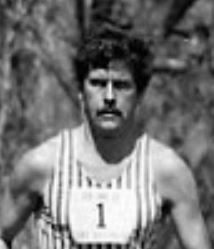
Ep 5151: Park Barner – The Human Metronome
By Davy Crockett Park Barner of Pennsylvania was one of the greatest American ultrarunners of the 1970s. He was the first competitive American ultrarunner to become broadly known outside the ultrarunning community. He was shy, disarmingly humble and a man of few words. He avoided the spotlight, never was a self-promoter, and was known for his relentless metronome pace rather than speed. Barner won, and he won often. At one time he held the world record for the 24-hour run and other ultra-distance American records. But he said that he didn’t really need trophies or wins to feel satisfied. To him, running was something he enjoyed doing. He said, “It makes me feel good. I sort of feel like a kid.” Of Barner, it was written, “He had a unique depth of constitutional strength and resiliency. The stories of his ‘outside the box’ exploits are nearly as impressive as those of his greatest races and have contributed to his almost mythical status in the history of the sport. He was called, “The Lonely Machine,” “The American Record,” “The Human Treadmill,” and “The Human Metronome” for his even-paced racing. In 1974, one who knew him well wrote, “What Park has done is merely to shatter the existing standards of what the human body is physiologically capable of doing. He is establishing himself as a living legend in the ultra-distance events.” During the oil crisis of 1979, it was written about him, “Park Barner is the guy with the answer to gasoline prices.” Today few runners have heard about Park Barner. Here is his story. Early Years Park Barner Sr. Park Ivan Barner Jr. was born January 13, 1944. His father, Park Ivan Barner Sr. (1922-1992) was an electrical technician and in military service when Park was born, He soon went away to serve with the Army in World War II while Park was only an infant. Their Barner ancestors were farmers who lived in Pennsylvania for six generations and had immigrated from Switzerland in the mid-1700s. They settled in the beautiful farm area that is known as the Pennsylvania Dutch (German) region, near Harrisburg, along the Susquehanna River. Park Barner was on the track team in high school and ran the mile. His best time was 5:45 in school and he never ran a mile faster than 5:19 in his lifetime. In his 1961 high school yearbook, it was written about him, “If you need to know any scores in sports and don’t feel like looking them up, Just ask Park, who is also interested in collecting coins and stamps. His school activities include art editor for the yearbook, Choir, and track.” Barner became a serious bowler and during the early 60s bowled about 200 games per month. His ability was nearly at pro-bowler status. He served in the Army, in Germany, during the late 1960s. While there, he watched a movie that inspired him to start running. He said, “I remember coming home and getting out a piece of paper and drawing a track on it and writing the word ‘run’ in big letters. I went right out and ran three miles.” He took part in some running and race-walking events, sometimes competing in 2-3 events on one weekend. Fort Devens After returning to the United States in 1968, he was stationed at Fort Devens in Massachusetts. One evening after a ball game he decided to walk the 38 miles back to the base. He went through the night and finished at 10:00 a.m. in the morning. Soon after, he started running seriously at the age of 24. Barner said, “nothing special got me going into running. It’s just wanting to run farther and farther all the time. Running just made me feel better.” In 1969 after spending four years in the army, as he was getting ready for civilian life, he was told by an Army doctor looking at his aching knees, “You’d better forget about running.” But Barner had been dreaming about running the Boston Marathon and after he got out of the Army, he started to seriously train. Three months later he finished Boston slowly, in 5:16. He said,

Ep 5050: Grand Canyon Rim-to-Rim History – Part 5: The Races
By Davy Crockett Part 5 of the Rim-to-Rim History Series. See also Part 1, Part 2, Part 3, and Part 4 Believe it or not, races across the Grand Canyon used to be conducted for hikers and runners. Early on, they occurred with the approval of the National Park, but in later years they were held contrary to rules set forth by the park. Eventually underground races or large commercial rim-to-rim hikes became a point of controversy and outsiders commented that rim-to-rim hikers and runners were turning the Grand Canyon into their own private sports arena for a day. But within all these various events appeared some incredible athletic accomplishments and unforgettable experiences. There are many ways to enjoy the Canyon whether fast or slow, in a day or within a week. There were some key individuals who helped others open their minds to understand what adventures were possible that decades earlier were thought to be impossible. Most were careful to respect the Canyon and the others enjoying it, but others were not. Jerry Jobski Jerry Jobski Jerry Jobski, born in 1944, never ran track in high school, was co-captain of his basketball team, but sat on the bench. He went into military service during the Vietnam War, and when he returned, he thought he might try baseball at Arizona State University at Tempe. But when he saw a notice seeking cross-country runners, he applied. The coach asked him about his running history, and he said he had none. Jobski said, “I had no idea what cross-country runners wore, so I went down and bought me a pair of track shoes.” When he showed up with those shoes, one team member laughed, “Man, you don’t need those where we’re going to run in the desert.” Jobski quickly became one of the team’s premier distance runners. He broke the university’s 3-mile record in 1969 with 13:30. He and teammate Chuck LaBenz would run 150-mile weeks at times. LaBenz had broken a four-minute mile with 3:58.4 1970 Race, North to South In October 1970, perhaps the earliest race across the Canyon was held. It was a three-man race, north to south. The participants were former Arizona State University (ASU) elite distance runners, Jerry Jobski, Chuck LaBenz, and George Young. Their goal was to break the three-hour barrier. The current fastest-known time was 3:56 set in 1963 by Allyn Cureton of Williams Arizona. About the Grand Canyon race, Jobski said, “It was George’s idea and Chuck thought it was great. I said they were both nuts. The night before the run, I had no intention of participating. But “Baldy” (Senon “Baldy” Castillo (1919-2009), ASU track coach) called me up and I said I’d go, on the spur of the moment." Jobski won the rim-to-rim race with a time of 3:08, lowering the fastest known time. For his win, he received a Coke and a hand-made ribbon from Young’s wife. A few months later, in 1971 Jobski ran his first marathon winning the Admission’s Day Marathon with 2:36:42, breaking that marathon’s record by 14 minutes. Jobski said, “I didn’t know you were supposed to take sustenance during the race, so I ran all the way without a drink.” In 2020, Jobski was 75 years old and living in Page, Arizona. For a time in the early 70s, LaBenz was America's greatest miler, known for a blazing kick, beating famed runners such as Dave Wottle, Marty Liquori, and others. In 2020 LaBenz was 71 and living in Scottsdale, Arizona. Bill Emerton’s Double Crossing attempt In 1974 Bill Emmerton (1920-2010), a self-promoting ultrarunner legend from Australia, living in Ohio, went to the Canyon to run a double crossing. Previously Emmerton had run 800 kilometers from Melbourne to Adelaide in 1965. He also ran two long-distance runs through Death Valley is soaring temperatures in the 1960s. For his Grand Canyon run, Emmerton, at age 53, spent a day of training at Flagstaff’s Northern Arizona University to prepare for his run. He received significant newspaper attention for his rather foolish hot Augus...

Ep 4949: Grand Canyon Rim-to-Rim History – Part 4: Aiken Family
By Davy Crockett Part 4 of the Rim-to-Rim History Series. See also Part 1, Part 2, and Part 3 New Book! For anyone hiking or running rim-to-rim, most people will usually stop at a location about a mile below Roaring Springs that today is called the Manzanita Rest area, named after a creek coming down a small nearby side canyon. But the name and the rest area are a fairly new, a 2015 creation. Newer visitors have no idea that there is a rich history that took place at that location from 1973-2005. For veteran rim-to-rim hikers and runners, they still call this place fondly, “The Aiken Home.” Yes, a couple lived there and raised three children in the depth of the canyon for more than three decades. The Aiken family made a deep impact on rim-to-rim history by helping, greeting, and even feeding thousands of visitors over the years. Bruce Aiken managed the crucial water system at nearby Roaring Springs completed in 1971, and Mary Aiken taught and raised their children and assisted hikers. Who were the Aikens? How did they come to live in the Canyon? What was it like for three energetic children to spend their childhood in the Canyon away from many modern conveniences and “normal” entertainment and childhood friends? What was life like for them? Their tale is now almost forgotten, and evidence that they lived there has been replaced by a rest area and ranger station. But when I visit that amazing spot (nearly 40 times), I always think about the Aiken family and visualize the unique family that lived there for so many years. There are now more than 100 stories like this on the Ultrarunning History Podcast. Subscribe today! Bruce Aiken’s early years Richard Aiken - painting by Margaret Aiken Bruce Aiken was born September 10, 1950 in New York City’s Greenwich Village to Richard and Margaret Aiken. He was the second of a family of five boys. His father, Richard Little Aiken (1918-1997) grew up in Pittsburgh, Pennsylvania where his father was a lawyer. Richard graduated from the Carnegie Institute of Technology in 1940, in theatre. He worked as a sports announcer for a local radio station and an actor. Following Pearl Harbor, Richard enlisted in the Navy, and became a naval aviator. He met Margaret during the war and afterwards they married and settled in Greenwich Village, New York City, where all their children were born. There, he worked for NBC as a television producer. Margaret Aiken - self portrait Margaret Davis Aiken (1924-2003) was born in Las Cruces, New Mexico, raised in Arizona along the Mexican border, where her father was an immigration inspector. During the Great Depression her family moved to Phoenix, Arizona where she studied art at Arizona State University. During World War II, she served in the navy women’s reserve as a WAVE in Santa Ana, California, where she met Richard. Margaret became a very accomplished artist. Her paintings were widely shown in New York, Florida, and at the Grand Canyon. Bruce in 1963 The family moved to Long Island where young Bruce started to draw and paint with his mother. The family often went on vacations to Arizona, to visit his grandparents and cousins. A 1963 visit to the Canyon had a deep impact on young Bruce. In art school - 1968 In 1968, Bruce graduated from high school and was voted “most talented.” Following in his mother’s footsteps, he was interested in art and enrolled in New York’s prestigious School of the Visual Arts. His father wanted him to go into advertising because he believed that was where the money was, but Bruce wanted to be an artist. Bruce said, “I suppose he was trying to help, but I think he was too domineering, too demanding and too unwilling to hear or understand what I was trying to do.” This caused a rift between the two that would last for years. Aiken attended the art school for only two years, saying, “I got caught up in all the things happening in the ‘60s and decided that what I re...
48: Grand Canyon Rim-to-Rim History – Part 3 (1964-1972)
By Davy Crockett This is the third part of the rim-to-rim series. Read first Part 1 and Part 2 As the Grand Canyon entered the 1940s, the corridor trails were in place along with the Black Bridge across the Colorado River, making rim-to-rim travel on foot possible. By the early 1960s, a few daring athletes were hiking or running rim to rim in a day and even a few completing double crossings in a day. Credit goes to Pete Cowgill (1925-2019) and his Southern Arizona Hiking Club from Tucson, Arizona, who demonstrated to all that crossing the Canyon on foot in a day was not only possible but was an amazing adventure. The Boy Scouts in Arizona started to offer rim-to-rim patches to those who completed the hike. A rim-to-rim-to-rim patch appeared in 1963. Publicity for the patches were being published in national scouting magazines. That year a fifty-mile hike craze was also burning throughout the country attracting more hikers to the Canyon. Arizona State College in Flagstaff started to organize large rim-to-river and back hikes. Warnings were offered by the wise: "It is more rugged than anything you have every pictured. Despite its famed beauty, the canyon is a natural killer and hardly a year goes by that it doesn't claim at least one life in some way." In 1963, visitors topped 1.5 million and serious growing pains were felt at Grand Canyon Village with traffic, crowded lodging, and strained Park services. More development was needed but the big limitation was water. The quest for water would result pausing in rim-to-rim travel for more than five years. The Trans-Canyon Water Pipeline As you hike or run rim to rim, you see can see at times pipes and other indications that there is a pipeline buried under the North Kaibab and other trails. This is the trans-canyon pipeline which is the lifeblood for the South Rim and other locations along the way that supplies the water for your adventure. There is significant history behind the creation of this pipeline and several people even lost their lives during construction. As you travel rim to rim you should observe and know what once took place on the trails you travel including a massive 1966 flood, the most destructive event to the corridor inner canyon in recorded history. South Rim Water tankers deliver to South Rim Obtaining water for both Grand Canyon rims has always been a challenge. Since before 1900, on the South Rim, water was hauled in from 18 miles or more. By 1919, the Santa Fe railroad hauled up to 100,000 gallons per day to Grand Canyon Village. In 1926 a reclamation plant was built to reclaim water for non-drinking uses which helped some. Deep wells did not exist because of all the sedimentary rock layers. Rainwater would just run out of the rock and down into the Canyon. Tram lowering trailer In 1931 construction of a water system began at Indian Garden to pump water up to the South Rim. A cable tramway was constructed from the rim to about a mile above the Garden which was used to bring down a five-ton tractor to help with construction. The tram was removed in 1932 but signs of it still be seen 50 yards northeast of the 3-mile rest house. By 1934, the pump was in operation bringing about 150,000 gallons per day 3,200 feet up a six-inch pipe to the South Rim. The water was still supplemented during the summer with water tank train cars and million-gallon storage tanks. Portions of this pipeline are still visible. North Rim Over on the North Rim, there were a few springs a couple hundred feet below the rim. During the early 1920s. young Robert Wylie McGee would make daily trips to a spring to haul water by burro to Wiley Way Camp. He wrote, “The spring was about 5/8th of a mile, down in the mouth of a draw, west of the camp. The climb was probably a 200-foot change in elevation. Brighty (the burro) and I would make about four to seven trips daily. I filled the cans out of a wood barrel that the spring dribbled into using a b...

Ep 4747: Grand Canyon Rim-to-Rim History – Part 2 (1928-1964)
By Davy Crockett This is the second part of the Rim-to Rim story. Read/Listen/Watch to Part 1 here. Descending into the inner Grand Canyon is an experience you will never forget. Part one covered the very early history of crossing the Canyon from 1890-1928. Trails that could accommodate tourists were built, including Bight Angel and South Kaibab trails coming down the South Rim. A tourist in 1928 explained, "the Kaibab trail is a fine piece of work, easy grade, wide and smooth, while the Bright Angel trail still belongs to the local county and is maintained by it, and is steep, narrow and poorly kept up. Each person going down Bright Angel pays a toll of one dollar." There was no River Trail yet, so those who came down the Bright Angel Trail used the Tonto Trail at Indian Garden to connect to the South Kaibab Trail. "The Tonto trail was perfectly safe and the scenic views were wonderful." Phantom Ranch was established in the early 1900s. The same tourist continued, "It is beautiful down here now in the dusk with the towering cliffs above and a mountain brook singing along in front of my cabin, and the weather at least 20 degrees warmer than up on the rim, where the ground is covered with snow. After a hearty, well-cooked beefsteak dinner, I am settled in a one-room, stone walled, cement floored cabin, with a roaring fire in a cute corner open fireplace." My new book! Grand Canyon Rim to Rim History The North Kaibab trail coming down from the North Rim was completed in 1928. The steep, rough Old Bright Angel Trail coming down the North Rim was abandoned and today is an unmaintained rugged route. A scary swinging suspension bridge spanned the Colorado River, bringing tourists over to Phantom Ranch. Multi-day rim-to-rim hikes had begun both from the North Rim and the South Rim. How all this came to be by 1928 is told in Part One. If you have not read, listened to, or watched Part One first, you should. Black Bridge On the Swinging Suspension Bridge In 1926. nearly 23,000 automobiles entered the park, bringing 140,000 visitors. As tourist traffic continued to increase to Phantom Ranch, a new bridge was needed. The swinging suspension bridge that was constructed in 1921 was nearly impossible to cross when it was windy. High winds had capsized it more than once. "In using the old swinging bridge, it was necessary for tourist parties to dismount in crossing, the animals being taken over one at a time. This caused congestion and delay at one of the hottest points on the trans-canyon trip." One visitor mentioned, "We crossed the Colorado river on a frail looking bridge, one mule at a time only, rider unmounted, and the bridge waving up and down under the weight. Having gained so much weight since leaving home, I was obliged to cross considerably in advance of my mule." Bringing down a main cable In 1927, $48,000 was quickly appropriated for a new bridge to connect the two Kaibab trails. Construction began on a new bridge on March 9, 1928 with nine laborers who established their camp on the confluence with Bright Angel Creek. The crew soon grew to twenty. All the 122 tons of structural materials were brought down into the canyon on mules except for the massive four main support cables. Forty-two men, mostly Havasupai Indian workers, spaced 15 feet apart, carried the huge 550-foot main bridge support cables down the South Kaibab Trail on their shoulders, about fifty pounds per man. Each of the four cables weighed 2,154 pounds. Bringing down a wind cable “When they got to the bottom of the canyon, after getting rid of the cable, they went down onto a flat, gathered brush, made sort of a trench of it, and placed big boulders on the brush. Then they set fire to it. After the fire died down, they spread their blankets over a wooden frame that they had constructed, doused the rocks and live coals with water, and walked through this tunnel of blankets getting steam baths and then jumped into the mudd...

46: Grand Canyon Rim-to-Rim History – Part 1 (1890-1928)
By Davy Crockett For both ultrarunners and hikers, the Grand Canyon is considered by most, one of the greatest destinations to experience. Thousands make their pilgrimages each year to experience the joy of journeying across the Canyon's great expanse, rim-to-rim (R2R). Crossing the Canyon and returning back is an activity that has taken place for more than 125 years. Native Americans crossed the Canyon centuries earlier. During the spring and fall, each day people cross the famous canyon and many of them, return the same day, experiencing what has been called for decades as a “double crossing,” and in more recent years, a "rim-to-rim-to-rim" (R2R2R). Anyone who descends into the Canyon should take some time learning about the history of the trails they use. This article tells the story of many of these early crossings and includes the creation of the trails, bridges, Phantom Ranch, and the water pipeline, the things you will see along your journey. Hopefully this will help you to have a deeper respect for the Canyon and those who helped make it available for us to enjoy. New Book! Grand Canyon Rim to Rim History. This book shares a 130-year history of the Canyon crossings and contains twice the amount of content and stories compared to these articles. Order on Amazon Grand Canyon Today - note the dates Introduction My new book! Grand Canyon Rim to Rim History Today if you hike or run across the Grand Canyon you have choices. You can start from the South Rim or from the North Rim. A South start is more common. On the South side, you can use either the Bright Angel Trail from Grand Canyon Village, or the South Kaibab Trail that starts a few miles to the east, using a shuttle to Yaki Point. On the North side, the North Kaibab Trail is used. These are the main trails into the Grand Canyon and referred to as the "Corridor Trails," used by the masses and mule trains. Today, there are two bridges along the Corridor to cross the Colorado River, Black Bridge or Silver Bridge. When this history story starts abut 1890, there was no Grand Canyon Village, no Phantom Ranch at the bottom, and these trails did not exist. There were few visitors to either Rim because they lacked roads and there were no automobiles yet. Early miners used many places to descend. This article will concentrate on the corridor region near Grand Canyon Village where most modern crossings are taking place. Creation of Bright Angel Trail (South Side) South Rim about 1890 The upper part of Bright Angel Trail, coming down from the South Rim, was originally a route used by the Havasupai to access what became known as Indian Garden, halfway down the Canyon, about 3,000 feet below. In 1887, Ralph Cameron (1863-1953), future US senator of Arizona, prospected and believed he found copper and gold near Indian Garden. He said, "At that time my only purpose in building the trail was to use it in pursuing mining operations." Peter Berry Work began on December 24, 1890 and it would take 12 years to complete. In 1891 Peter D. Berry, (1856-1932), longtime friend of Cameron succeeded in obtaining rights for the trail, including rights to collect tolls which were not collected until 1901. Berry had also helped engineer the Grandview Trail (Berry Trail) further east. Other trails were being used. Hardy tourists were descending down to the Colorado River using the Bass Trail far to the west. By the end of 1891, after spending $500, and two months of labor, a very rough trail existed that descended the Bright Angel fault to Indian Garden. The trail's name John Hance Originally called the "Cameron Trail", by 1892 the trail was also named “Bright Angel Trail.” It would cost about $100,000 and 12 years to fully build, and at its height was worked on by 100 men. How did the trail get its name? This is a subject of entertaining legend and folklore. One story was told by "Captain" John Hance (1840-1919) who cam...

Ep 4545: Dave Kunst – Walk Around the World – Part 2
By Davy Crockett This is the second part of the Dave Kunst story. Read/Listen/Watch to Part 1 here. Dave Kunst, originally from Minnesota, now from California, claims that he was “the first person verified to have completed circling the entire land mass of the earth on foot.” Kunst's 1970-74 walk has historic importance for the modern-era of ultra-distance walking. I believe that Konstantin Rengarten was actually the first in 1894-1898 (See Part 3). I will show that Kunts' "verified" claim is dubious, but his amazing walk did happen, and the story is fascinating and exciting. But at what cost to those who believed in him? With the end just days away, everything seemly fell apart. In 1970, Dave Kunst of Waseca, Minnesota, started a walk around the world with his brother John. Part 1 of this story covered their travels east to New York, by plane to Portugal, and then on foot with a mule to Afghanistan where John was shot and killed by bandits. Dave was wounded and returned to Minnesota to recover in November 1972. Dave felt strongly that the walk should be continued, and he deeply wanted to get back on the road to experience an exciting and free life, without family, job, or financial obligations. He said, “The walk will definitely go on. I want to keep the ball rolling. I will be back to finish what my brother and I started so he will not have died for nothing.” Plans to resume the walk Pete and Dave In January 1973, only three months since he had been shot in the chest, Dave Kunst announced that he would resume his walk in March 1973 with his brother Pete. They would travel back to Afghanistan and resume the walk from the mountain pass where their brother John was killed. Dave said, “Pete’s wife was reluctant before, but now she is in favor of it.” Pete said, “It’s too important to all of us to abandon this idea now. My wife understands this, especially since John gave his life for it. We have to finish the job.” Dave’s wife, Jan, was not as sure. She had mixed emotions about him again leaving her alone to raise their young children. She said, “I knew he really wanted to do it. I told him if he had to go, to go and get it over with before the kids are teenagers. I’m scared for him to go back there, but it doesn’t seem to bother him.” His reply to her worries appeared to be rather harsh. “Well that’s a typical reaction of a lot of people. That’s really the difference in individuals. Adventurers don’t think of things like that. Columbus – if he’d thought of that, he wouldn’t have discovered America. Definitely, she’s right, but if I sat here and thought about that. I’d be miserable as hell here.” Dave's brother, Pete Kunst, 28, of Santa Ana, California, was a former marine who served in the Vietnam war. He was a stock clerk at Data Technology Corp. He was married to Nancy with four children. He didn’t originally join his two brothers because his wife was expecting in 1970. Dave said, “We kind of decided, the three of us, that if one of us dropped out, Pete was going to finish.” Pete said, “I knew one way or another, I was going to go.” Pete had joined Dave and John on the walk in 1970 for three days when they were in Pennsylvania, but now he was going to join full-time. They estimated that to complete the walk, it would take them at least another year. Pete took out a $2,000 loan to help Nancy support the family while he was gone and she also worked as a secretary. Friends helped to raise money for their air fare back to Afghanistan. The two made preparations both in California and in Minnesota to drum up support. they met with Hubert Humphrey before they left, again collecting a letter of introduction and securing his support. They involved UNICEF as part of their walk. UNICEF did not endorse their effort, but was happy to receive any donations they brought in. For the first two and a half years of the walk, the only verified donation amount was just $3,000.
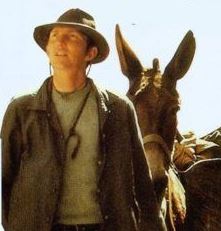
Ep 4444: Dave Kunst – Walk Around the World – Part 1
By Davy Crockett Who was the first person to truly walk around the world? If your search the Internet the answer that come back is: Dave Kunst, an American who claimed to do it in 1970-1974. Dave Kunst, originally from Minnesota, claims that he is “the first person verified to have completed circling the entire land mass of the earth.” The previous parts of this series have hopefully taught the reader to be very skeptical of such claims. Is his claim true? Did he really walk around the entire world in 1970-1974? Was he the first? Was it truly independently verified, and how? Well, with any such bold claims there are problems with it, even if Guinness was at some point convinced to include it in their record book. The Kunst tale must be told and it will be covered in two parts. He was not the first to walk around the world. Konstantin Rengarten of Belarus and Latvia was the first in 1894-1898. (See Part 3). But I believe Kunst was the first to walk around the "world" in the modern, post-war era. His walk had the usual route and verification issues as other globetrotters before him. Kunst published a 1979 book about his walk, that is difficult to read. I will tell the tale primarily from the hundreds of newspaper articles published between 1970-1974, and I chose to not use addition tales from his book that were full of ego, which were not mentioned in the newspapers. Dave Kunst’s walk inspired and entertained hundreds of thousands of people who witnessed it, read about it in the newspapers, and heard about it on television and radio. But sadly, the walk left within its wake, tragedy, death, heartbreak, deception, and betrayal. Thousands around the world thought the purpose of the Kunst walk was to support a humanitarian cause and they freely financially supported him. But actually, the walk was motivated by a man with a huge ego and with selfish intentions. The truth eventually came out and it surprised and disappointed many people with a shocking ending. Nevertheless, the walk happened, and in the decades that followed, Kunst would inspire thousands of youngsters to dare to fulfil their dreams. Before the walk Kunst family in 1940 census David William Kunst was born on July 16, 1939 at Caledonia, Minnesota where he was raised. His parents were Aloysious “Al” Kunst (1919-2010), a salesman, and Augusta Onstad Kunst (1921-2007). The family was longtime Minnesota residents. Dave’s grandfather, Frank Kunst, immigrated from Germany and was a harness maker. Dave’s mother’s family, the Onstads, immigrated from Norway. In his early years, Dave’s family lived with his Kunst grandparents in Caledonia. While Dave was young, his father Al served in the U.S. Army during World War II and was deployed to the Philippines. On his return he managed lumberyards and then became a salesman. Dave's father, Al Kunst Dave was raised in the Catholic faith and attended a private Catholic school which certainly exposed him to a greater level of rules from authority figures that influenced his later attitudes. He also participated in the scouting organization. He had two younger brothers, Pete and John. Dave said, “My mom had an adventurous spirit, and she instilled that in me during my Caledonia years.” His mom would at time drop him off to go hunting for three days in the woods. At times on those trips he wouldn't hunt but would cover 20-30 miles exploring. He would always come back in a good mood. Jan Wabner Kunst In 1959, Dave married young, at age 19, to Janice “Jan” Wabner, who became a very important figure in the walk story. In her senior yearbook it was written of her, “She can live without poetry, music or walking, but she can’t live without talking.” She was active is Chorus and Drama. Dave went to work for the local county and eventually led a team of surveyors that worked on the highways. In the 1960s the Kunsts had three children, Daniel, Debra, and Brad. In 1970, the Kunst family lived in Waseca,
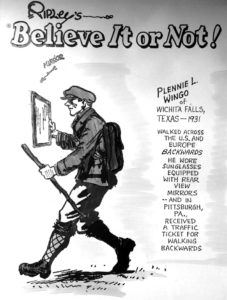
Ep 4343: Walking Backwards Around the World – Part 6
By Davy Crockett Attempts to walk backwards for ultra-distances has taken place for more than two centuries. Why? One backwards walker once said, “With the whole world going backwards, maybe the only way to see it is to turn around.” Obviously, such attempts caused a stir of attention. Common comments heard around these individuals were, “What is that fool doing?” and “When did he get out of the asylum?” In recent years some have actually encouraged the practice as a way to burn more calories, sharpen senses, train your peripheral vision, and improve balance. But walking backwards for hundreds and thousands of miles is simply bizarre. Let's first take a look at the very early history of walking backwards for ultra-distances and then examine the stories of attempts to walk backwards across America and around the world. Get Davy Crockett's new book, Strange Running Tales: When Ultrarunning was a Reality Show Early backwards walking On July 11, 1817, at Wormwood Scrubbs, England, Darby Stevens started to walk backwards for 500 miles in 20 days on a wager for 50 guineas. “A line is laid along the ground which is 200 yards in length, and which he takes hold of when he deems necessary.” It is unknown if he was successful. The next day Daniel Crisp of Paddington, England took his place at the same location without the aid of a rope and walked 280 miles backwards in only seven days. A newspaper editorialized, “We have reason to believe that the idle scene of walking backwards, which continues to disgrace even Wormwood Scrubs, is encouraged for the very worst purposes and the public disgust will be still more excited, when we state that it is meant to continue these vicious scenes throughout the whole of the summer. Another of these reprehensible matches is already determined upon.” In 1821 on a road near Bath, England, John Townsend walked 21 miles backward in 6:45. In 1822 he walked backwards 38 miles in 12 hours for three successive days. “This arduous task he performed, and won in great style, admidst the acclamation of a great number of spectators.” Townsend really stepped up his backward game in 1823 when he walked 73 miles backward in 24 hours at Bristol, England on a mile out-and-back. “He commenced at midnight, a man preceded him with a lantern during the night.” He started walking 15-minute miles and large betting took place. Later that year he broke his record with 74 miles. Also that year, Townsend walked backwards 64 miles per day for ten successive days at Ipswich, England. In 1824, Richard Sutton walked backwards 250 miles in six days in Sydney Gardens, in Bath, England. During the Pedestrian heyday of the 1870s and 1880, several individuals claimed that they were the "champion backward walker" and many matches were held. In 1907, Paul Guavarra, a Spaniard who claimed to be a descendant of Christopher Columbus was arrested in New Jersey for walking backwards in houses to beg. He explained that he had been on the island of Marinique when Mount Pelee hand blown up and “contracted the habit of going backwards because he didn’t dare turn his back to the volcano while he was running away from it. He walked backwards into the cell assigned him at the jail.” Patrick Harmon - San Francisco to New York City Patrick Harmon was born in 1865, in Ohio. By 1910 he was living in Great Falls, Montana working for the railroad. He also became a joint owner of Semaphone Cigar Shop at Great Falls. A new mayor was elected on a anti-gambling platform in 1913. Harmon’s place was scrutinized, and the law discovered that gambling was taking place in his establishment. It was raided an in October 1913, Harmon was arrested along with others, admitted that he had a card room, was found guilty and fined $100. In early 1915 Harmon sold his ownership of the shop, moved to Seattle Washington, and started to experiment with backwards walking in the mountains. A farmer friend, William H.

Ep 4242: Around the World on Foot – Part 5 – Dumitru Dan
By Davy Crockett During the early 1900s, hundreds of people were claiming falsely that they were walking around the world and were given free room and board by the trusting public as they came into towns. Nearly every “around the world on foot” walker mentioned a wager as their motivation for making the attempt, similar to Jules Verne’s Phileas Fogg’s wager in his 1872 novel “Around the World in 80 Days.” More than 95% of these globetrotters made claims that were false. Beginning about 1904, a new twist emerged. A few of the globetrotters claimed that they were part of a race or competition with others to be the first to circle the globe on foot within a certain period. Such a competitive event created a stir of interest when walkers came into town. Wow, it sounded like the modern-day “Amazing Race” reality show. One common thread involving these race claims was that they were organized by the “Touring Club de France.” Did this organization really get involved in Pedestrian races? One participant in such a race was a famous Romanian globetrotter, Dumitru Dan. Numerous articles about him in recent years claim that he was the first person to walk around the world and he is considered a Romanian local hero. Was he truly a participant in a race and did he really walk 62,000 miles around the world as he claimed? For the first time, this will be examined closely. First, I will analyze carefully Dumitru Dan's walking story which he sadly fabricated. It was not true. Then I will examine the similar false race tales of others. The story of Dumitru Dan and other globetrotters is told in the new book by Davy Crockett, Around the World On Foot: The Early Globetrotters. The Touring Club de France The Touring Club de France (TCF) was established in 1890 as a French social club devoted to travel. It was founded by cyclists, inspired by a similar club, the British Cyclist’ Touring Club founded two decades earlier. Originally the club was relatively small with about 3,000 members, but after 15 years it had grown to nearly 75.000. By 1900 the club was also promoting “automobilism.” The club, headquartered in Paris, published an annual journal about places of interest in Europe and the condition of roads. By 1910 they had spent more than four million dollars on improving roads and putting up road signs in France. It also offered many annual prizes to encourage planting and the preservation of trees. Organizing races was not part of their mission. Dumitru Dan - Romanian globetrotter Dumitru Dan (1890-1979) was from Buzau, Romania and eventually became a recognized hero in his city. Some believe he was the first person to walk around the globe and in 1978, he was listed in the Guinness Book of World Records. Decades after his walk, a reporter tape-recorded an interview with Dumitru Dan, and he gave a detailed story of his historic walk. His memoirs given late in his life were the main source for the details of his travels. In addition, there were 1914-1915 newspapers articles from America and Europe, along with some surviving certificates that tell a much different tale than Dumitru Dan's personal story. Most biographers for Dumitru Dan have believed everything he stated in his lectures and the interview/journal, without doing any fact-checking. I realize that some people will not be happy with my story and its analysis. For all the dozens of “around the world on foot” walkers I’ve analyzed, I first assume they are legitimate, and then analyze the evidence left behind, trying to prove that they were authentic efforts. I treated this story carefully, realizing it is about a recognized hero. Prepare yourself, most of his story was fiction. The Touring Club de France competition Dumitru Dan claimed in his story given decades later that in 1908, the Touring Club de France announced a six-year “around the world on foot” race with a prize of a staggering 100,
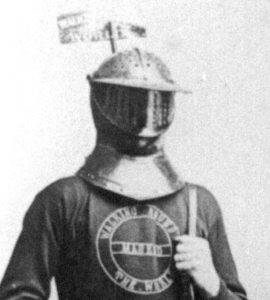
Ep 4141: Around the World on Foot – Part 4 – The Bizarre
By Davy Crockett Before returning to more serious ultrarunning history, three more “around the world on foot” tales must be told. These stories are so bizarre that they are hard to believe, but they did happen. These individuals gave up years of their lives to gather attention by walking thousands of miles enduring much hardship. Eventually as world conflict exploded into World War I, much of what the public thought was nonsense, disappeared for a time. These three stories involved a “masked walker,” an English man who tried to walk around the world in an iron mask. Also, an Austrian man who tried to push his family in a baby carriage around the world. And finally, the “king of the casks”, two Italians who tried to roll a giant barrel around the world. While wager conditions surrounding all three were hoaxes, the extreme walking efforts that took place were genuine. Attention was given worldwide to their efforts. Commenting on one of them, it was written, “He is one of the oddest of the cranks that have started to go around the earth.” The Masked Walker - 1908 The “man in the iron mask” was a prisoner held in a French prison during the 1600s. Books, theatrical plays, and movies have been produced involving his story. In 1847 Alexander Dumas, author of The Three Musketeers, wrote a fictional tale about the man in the iron mask which captured the imagination of readers in the 19th century. In 1908, word came from England about a bizarre “around the world walk” that had begun, involving a man in an iron mask. A news report included, “When the average English newspaper is looking hard for a genuine unmitigated ass, it’s a plugged Canadian dime to a double eagle that it will settle on an American millionaire.” Indeed, it was believed that an American multi-millionaire put up $100,000 for a person to walk around the world in very unusual circumstances. The conditions included that the man must wear a mask keeping his identity a secret for the entire journey! In addition, he must start with less than five dollars, earn money along the way, get a signature from a town official from every town he entered along with a cancelled postage stamp, must push a perambulator (baby carriage), and must find a wife along the way. Many scoffed that this must be a joke. “The English reading public will believe anything that can be invented by the most prolific and imaginative of minds and expressed in the confines of a newspaper column. The English dailies print a whole lot of stories that would be laughed out of an American newspaper office.” The "iron mask" on a postcard with his assistant Nevertheless, a man in England took up the challenge, and encased his head in a black iron mask “of the fashion of the Middle Ages” and started from London’s Trafalgar Square on January 1, 1908. He pushed a perambulator into a biting wind to begin his ten-year walk around the world, accompanied by an assistant. The masked walker said, “I at once made up my mind to accept the wager. Upon telling the millionaire the decision I had come to, he at once made arrangement with another well-known American gentleman to accompany me. He is only doing it for the sport.” The masked walker preferred that he be called “the iron mask” and the press wondered how he would find someone willing to marry him without looking at his face. But they guessed if he had a chance of winning $100,000 that there would be plenty of takers. He stated that his future wife must be between 25-30 years old, well-educated, of even temper, and have some knowledge of music. As he left Trafalgar Square, he waved to the crowd and yelled, “Farewell, see you in ten years.” He then went over London Bridge and down the Old Kent Road with a large crowd following. He said, “I shall sell photographs and pamphlets while on the journey.” The perambulator was filled with them. That first day he was selling them as fast as he could grab the money.
Ep 4040: Around the World on Foot – Part 3 (1894-1899)
By Davy Crockett During the very late 1800s, people from various countries started to attempt to walk around the world for attention, money, and fame. In Part 2 of this series on walking around the world, I shared many stories of “fakes” who took advantage of the American public by traveling around the Midwest United States claiming to be on treks around the world, but making little or no effort to actually leave the States. However, others at that time made more sincere attempts and successfully did extended walking on multiple continents, accompanied by newspaper stories confirming their presence in different countries. Several walkers were well-educated and certainly not the typical tramps and drunks that were highlighted in Part 2. Some of the individuals covered in this article became famous as explorers and were given credit for conducting valid walks around the world. But did they actually do it? What was their motivation for spending months and years in this activity? What did they do with their lives after their walk? Here are five intriguing stories of individuals who became very famous. They were a Russian, a Frenchman, a Greek. and two Americans. Konstantin Rengarten – Russian walker - 1894 Konstantin Konstantinovich Rengarten (1864-1906) was born in the Baltics in the Minsk province (today in Belarus). His father was a district overseer of a tax department. He became a ship boy and was an athlete in high school. He was fond of traveling and at an early age went to Western Europe, Asia, and Africa. He longed to walk around the world and spent ten years preparing for the journey. Rengarten started a walk around the world west to east from Riga, Russia (capital of present-day Latvia) on August 15, 1894. He was highly educated, rich, well-funded, and represented ten German newspapers and magazines, five that were published in Russia including the St. Petersburg Herold. He would regularly write columns to be published. He would also ship back home "all manner of specimens, rare and interesting, that are duly arranged and classified by his wife, who is an ardent scientific student." He spoke German, French, Russian, and a little English. He expected to walk for three years. Nikolai Greinert volunteered to go with him. Unlike most of the other globetrotters of the time, Rengarten did not travel due to a wager and paid his own way instead of expecting locals to always support him. When they crossed through Ukraine, the rainy season slowed them down terribly. Greinert gave up and returned to Riga. Rengarten continued alone. In his backpack he carried climbing equipment, woolen underwear, a camel-wrap, a gun, a large hunting knife, a cooking pot, a camera, and a small supply of food. More than a year later, on October 9, 1895, he arrived at Tashkent in present-day Ubekistan, about 4,000 miles to the east. His pace was about 10 miles per day average. He had taken a route through South Russia, to the Black Sea, across the Caucasus Mountains (in Georgia), across Persia (Iran). At Armenia, the Kurds believed that he was a great physician. The lame, halt and blind flocked to him for treatment. “Rengarten wears only woolen clothes, and for the most part adopts the foot-wear used in the countries through which he passes. During the whole journey he has not once had to call in the advice of a doctor, but he has lost a good deal of weight." During Rengarten’s walk through Persia (Iran), he observed terrible conditions and he found their customs abominable. He said, “all women and girls from 10 years up are absolute slaves, while the male part are lazy, filthy, vile barbarians. The Persian prisons are veritable hells, where the government takes no responsibility except to incarcerate the victims.” His pace through Persia was faster, where he walked 1,100 miles in 70 days, 110 miles per week. He had to spend several nights sleeping in sheds and stables.
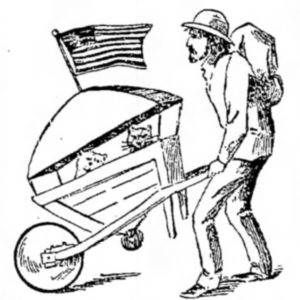
Ep 3939: Around the World on Foot – Part 2 (1894-96)
By Davy Crockett In Part 1 of this series, about walking around the world, I covered the very early attempts. By 1894, dozens, if not hundreds of walkers, started to participate in an “around the world on foot” craze. For many it was a legitimate ultrawalking attempt, but for most it was just a scam to travel on other people's generous contributions. The typical scam went like this: They claimed that they were trying to walk around the world to win thousands of dollars on a wager, but they had to do it without bringing any money. They needed to be funded through the generosity of others, get free room and board, and free travel on ships. Walkers came out of the woodwork and the newspapers were fascinated by these attempts. Eventually some in the press started to get wise. These walkers started to be referred derisively as tramps, globetrotters, cranks, fools, or "around the world freaks." One reporter wrote, “A great majority of these wanderers upon the face of the earth are men who would rather do anything than work.” Another astute reporter identified many of these walkers as “frauds, traveling over the country practicing a smooth game in order to be wined and dined.” Sprinkled in with these self-promoting frauds were also those who were legitimately striving to circle the globe on foot. Their efforts were real and very hard. They underestimated the difficulty involved yet had amazing experiences. There were too many of these “globetrotters” to even list. This article will share some amazing and bizarre tales of the naive, those that failed, the cheats, and the fakers. In the next article, I will share stories about successful walks around the world. Samuel Wilson and Horace Yorke – British walkers - 1893 Those that went in pairs usually went the furthest. In 1894 two men from England started a unique walk around the world that would cross through Canada. Samuel Wilson, age 30, of Australia and Horace G. Yorke, an American living in England, both journalists, started their east to west walk around the world from Lincoln, England on August 11, 1893 and they were required to finish it in an unrealistic 18 months. Crazy restrictions were imposed as part of their “journalistic enterprise” that they could not spend any money on food or clothing but had to depend on the hospitality of others they met. Wilson, a journalist, spoke six languages, claimed that he had previously walked from Cape Horn to Boston and had been the guest of President Grover Cleveland at the White House. (No evidence was found of this ever happening). They first walked across Britain to Liverpool and then took a steamer to Quebec City, Canada. They walked the railroad tracks to Montreal, arriving there on Aug 28, 1894. There, they received permission from the Canadian Pacific Railway Company to walk the line across Canada and use all the bridges. The paper wrote, “Nearly every person possesses a craze of some sort, but probably the latest development towards the extreme point of the sensation is that of Mr. Samuel Wilson who informed us that it was his intention to tramp round the world. He simply carries a satchel containing his register, wherein he gets subscribed his visits to the various towns he passes through.” Wilson was asked why he was really doing the walk. “I am engaged by the Sydney Bulletin for certain purposes and when my books are published, I shall of course, receive remuneration for them” Why was he going without money? “I believe a man can go through anywhere with civility. You hear a lot of nonsense and tomfoolery in this country about savages, but I have never been seriously molested by them.” The two continued their walk across Canada going from railroad section house to the next, day by day and never camped out as they made their way to Calgary during the winter of 1893-94. “It was useless to carry food or water because both would become frozen. Neither was there any wood to build a fire,
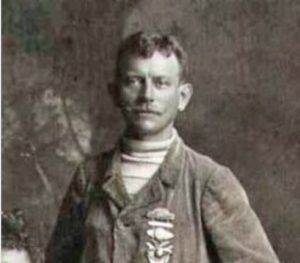
Ep 3838: Around the World on Foot – Part 1 (1875-1895)
By Davy Crockett In 1873, Jules Verne published his classic adventure novel, Around the World in 80 Days, which captivated imaginations of the possibility of traveling around the world in a given time and the wonders that could be seen. Also at that time, Pedestrianism, competitive walking, was in its heyday. Starting in 1875 individuals began to discuss if it would be possible to somehow walk around the world. Wagers were made and attempts began. They had no true idea how far it was or how long it would take. It wouldn’t be until more than 100 years later that some guidelines would be established for those who truly wished to walk around the world. Yes, such an activity was real and still is today. How far is it to walk around the world? Today the World Runners Association has set a standard that it must be at least 16,308 miles. Early pedestrians were estimating that it would be between 14,000-18,000 miles. Today the fastest known recognized time is 434 days returning to the point of origin. It all started in earnest around 1875. During that year, circumnavigation ultrawalkers emerged along with frauds who fooled the public to win wagers and made a living off giving lectures about their "walk." Most American transcontinental walks of the 1800s involved fraud and fabrication. Some examples are covered in: "Dakota Bob - Transcontinental Walker." The same was true for most early attempts to circle the globe on foot, but their tales are still fascinating. This multi-part article will share the stories and make some corrections on false claims that have been published in many books. Corporal Lediard - 1786 The earliest known attempt was made more than 230 years ago. During the winter of 1786-87 an English marine corporal named Lediard, an American by birth, started from London with the plan of walking around the globe, or going as far as possible. He planned to cross Europe and Asia, and then be ferried across the Bering Straight to North America, continue to New York and return to England. A sum of $250 was raised for him and he started out. He walked to Hamburg Germany, to St. Petersburg, Russia, and continued into Siberia as far as the city of Yakutsk where he stopped for the winter of 1787-88. But in January 1788, he was arrested by the order of the Empress of Russia. "In half an hour's time, he was carried away under the guard of two soldiers and an officer, in a post sledge (sled) for Moscow, without his clothes, money, and papers and then taken back to St. Petersburg." He was expelled from Russian, sent to Poland with orders not to return to Russia, and thus his walk around the world was foiled. "During all this time, he suffered the greatest hardships, from sickness, fatigue and want of rest, so that he was almost reduced to a skeleton. He said it had been a miserable journey but was very disappointed to not achieve his daring enterprise." Christian Frederick Schaefer - 1866 Christian Frederick Schaefer was a German who spent much of his entire life traveling. In 1866, about the age of 30, he said that he had been traveling the world for the previous 15 years. He reached Kansas and it was reported, "He has visited nearly all countries in Europe, Asia and Africa and is now en route to the Pacific coast. He estimates that he has traveled over 68,000 miles on foot. He has passports in fifteen different languages and his autograph book contains recommendations and signatures of many of the most distinguished men in this country and in Europe. He is a small man and has been suffering since his birth with a deformity of the spine. But he has unbounded energy and perseverance, is thoroughly impressed with the idea of making a tour around the world and will succeed." His autographs included Andrew Johnson, Ulysses M. Grant, and Brigham Young. After crossing America he claimed to go across China and to Singapore. It 1867 he made it to Australia. In 1882, it was announced,
Ep 3737: Soldier Barnes – Six-day Race Relic (1846-1916)
By Davy Crockett Old Soldier Barnes was a Civil War veteran from Pennsylvania who became a very popular professional ultrarunner in 1900 when he was in his early 50s. He must have not worn his age well, because people always thought he was much older than he really was. He entered the sport when the six-day race was making a comeback in Pennsylvania, about 20 years since its heyday in the 1800s when it was a huge spectator sport, watching walkers and runners go in circles for six days trying to travel as many miles as possible. There was a brief resurgence of six-day "go as you please" races in America from 1898-1903 until states passed laws to halt these all-day and all-night running affairs along with similar six-day bicycle races. Soldier Barnes, in his 50s, became a highly competitive tough multi-day runner who was well-respected and always a crowd favorite. He was one of the most prolific six-day runners of that time. This article will follow his participation in the sport and hopefully leave readers with a deep understanding of the fascinating six-day running races that were held about 120 years ago. Stephen Gilbert Barnes was born on May 23, 1846, in Sharpsburg, Pennsylvania. He lived in that area near Pittsburgh his entire life and went by "Gilbert" during his running years. Gilbert Barnes’ ancestors were nonconformists of England, some who suffered martyrdom in England. His ancestor, Richard Barnes settled in the Massachusetts Bay Colony before 1636. His grandfather and namesake, Captain Stephen Barnes (1736-1800) commanded a company during the Revolutionary war and settled in Pennsylvania. His parents were Pennsylvania natives. His father, Joseph Barnes (1777-1855), was a millwright and built ferry boats, and his mother Clara Elizabeth Leer (1818-1847), died about a year after he was born. Early Life At the outbreak of the Civil War, Barnes enlisted in the Pennsylvania Reserves. At the end of his enlistment, he tried to reenlist but they were not recruiting at the time. He then joined Company K of the Pennsylvania Cavalry and fought with them throughout the rest of the war. 1870 Census. Occupation: dry goods merchant After the war, in 1868, Barnes married Margaret Elizabeth Couch (1848-1915) and they had six children from 1869 to 1884. By 1874, he was a dry goods merchant in Springdale, Pennsylvania, but had huge debts of about $7,000 and filed for bankruptcy. It was granted and some of his property was put up for sale and liens liquidated within two years. 1880 census. Occupation: Ticket Agent By 1880 he lost his store and was a ticket agent for the railroad. On Mar 26, 1880, he became postmaster for the town of Armstrong, Pennsylvania. In 1884 a newspaper was started in Indiana, Pennsylvania called the “Indiana Weekly News.” Barnes was employed as the editor for many years. Barnes was always proud of his military service and was a member of the G.A.R. (Grand Army of the Republic) in Post 157. The G.A.R was a fraternal organization composed of veterans of the Union Army, Union Navy, and Marines who served in the Civil War. By 1898 Barnes became a professional runner and he worked very hard to be able to finish high enough to win monetary awards. Fixed-time multi-day races, especially the six-day race had become well-established in the 1870s. Those who competed in them were call pedestrians. These races at first observed strict “heel-toe” walking rules but eventually progressed into “go-as-you-please” formats open to both walkers and runners. Barnes became a runner. 1898 Pittsburgh 72-hour six-day race In February 1898, it was announced that the six-day race "go as your please" footrace would be revived in Pennsylvania after a long absence. A 142-hour race was planned to be held in Saenger Hall, the largest "amusement building" in the city. Unfortunately, plans were changed to hold a six-day bicycle race instead, building on a recent successful event held in Ma...
Ep 3636: Ruth Anderson – Pioneer Ultrarunner
By Davy Crockett Ruth Anderson pioneered women's marathon and ultrarunning in the 1970s, at a time when virtually no American women participated in the sport. She established numerous American ultra women's records and became an inspiration for the first generation of American ultrarunning women. She was a nuclear chemist and began running at all distances, especially marathons, in her 40s. Thus, all of her many running accomplishments, including world records, were achieved as a masters runner. She became an icon and inspiration in the Northern California running community where she was probably its most prolific runner in local races. But her greatest impact on the sport was made behind the scenes. She aggressively worked hard to open up the doors for women and masters runners to compete in long distance running. The famed ultramarathon London to Brighton race was opened up to women in the 1970s largely because of her persistent lobbying. The women’s masters division was established in running because she wouldn’t accept “no” as an answer. She strived to tear down decades of bias and false beliefs about women and their capability participating in the sport. Ultrarunning legend, Ann Trason said, “I don’t think the sport would be where it is today without Ruth. She was a very fair, generous and kind person who you could really share the love of running with.” Ruth Frances Purney (1929-2016) was born in Omaha Nebraska, in 1929. She was raised in Nebraska by highly educated and professional parents. Ruth’s mother, Florence Nason at age 25 Dr. Purney Ruth's father, Dr. James Francis Purney (1892-1970), was also born in Nebraska. He finished dental school about 1917 and served in the dental corps during World War I. In his professional career, he was a leader and served as president and secretary for various dental associations. He was also an athlete who played football, golf, tennis, and was a member of the Omaha Tennis Club. Dr. Purney was also very involved in the theater, both acting and directing in the 1920s, 30s and 40s. In 1928 he was the director for a performance put on in the local playhouse. His assistant director was a young 23-year-old actor who would become very famous, Henry Fonda. Ruth’s mother was Florence Barney Nason (1890-1952) also of Omaha. Both her parents were graduates of the University of Nebraska. Her mother graduated, in 1915, in Home Economics, specialized in dietetics, and was employed as the head dietitian in a hospital for a time. Her parents were married in 1918. As Ruth grew up, her mother taught home economics at Benson High School in Omaha, Nebraska. During World War II, she was active in the Red Cross, working with the Clarkson Hospital Service League. Grandparents To truly understand who Ruth Anderson was, it is also helpful to know who her grandparents were. Emil Purney Ruth's father’s parents were Emil Jackson Purney (1854-1894), born in Ohio and Ella Rachel DeLay (1873-1900) born in Illinois. They were married in Denver, Colorado and lived in Wyoming, Nebraska, and Portland, Oregon. Emil Purney, who was called “Cheyenne” by his co-workers was a railroad night switchman who worked for the Northern Pacific. In 1894 at the age of 40, he died suddenly of a heart attack, working in the telegraph operator’s room during the night. “He suddenly complained that his heart was troubling him, and lying down on the floor, expired before medical aid could be summoned." Ella Purney was left a young widow, age 21 with five very young children including Ruth’s one-year-old father. Sadly, Ellen Purney also died six years later when Ruth’s father was just six years old. He and two of his siblings went to live with their uncle and aunt, Jerry and Mary Scott, in Kearney, Nebraska. Dr. Abner Nason Ruth’s mother’s parents were Abner Weaver Nason (1849-1921) and Jennie V. Barney (1858- 1930 census record.
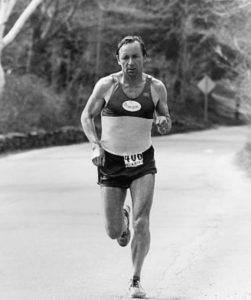
Ep 3535: Bernd Heinrich – Naturalist Ultrarunner
By Davy Crockett During the first half of the 1980s, Bernd Heinrich, of Vermont, was the fastest ultrarunner in America. Today, few know of him and his amazing running records and accomplishments. Heinrich is the birdman and beeman of ultrarunning. He also was unique from most other ultrarunners in that rather than competing in many races, he was very selective in his race choices. When he ran, he had specific goals to win or set records, with laser focused training for these few specific events. Using this approach, he was able to win and set several American records. Heinrich appeared suddenly on the ultrarunning scene, setting a record in his very first ultra, and he quickly rose to the top of the sport. He was named “Ultrarunner of the Year” three of the first four years of Ultrarunning Magazine. He had a quiet nature and never sought for the running spotlight, but eventually was one of the few to be inducted in the American Ultrarunning Hall of Fame. As a boy, Heinrich grew up living deep in a forest in war-torn Germany. In his life priorities, running was secondary to his true love, observing, researching, teaching and writing about nature. During his intense running years, he was able to find a balance to become a world-renowned expert in his professional naturalist career. Ultrarunning historian, Nick Marshall wrote about Heinrich in 1984, “Often runners don’t know much about the backgrounds of individuals whose athletic accomplishments may be very familiar to them, so it is quite nice to see one of our sport’s star gain recognition as a successful pioneer in a totally unrelated field.” Childhood in Germany Forest in The Hahnheide Bernd Heinrich was born in Poland in 1940. Near the end of World War II, he and his family fled their large farm near Gdansk to escape advancing Russian troops in 1944 and crossed what would be the future boarder for East Germany. Henrich recalled, “The times were not easy. The biggest problem was filling our bellies. Papa decided that the best chance of finding food would be in the forest. We came across a large reserve called “the Hahnheide,” and within it a small empty hut used before the war by a nature club from Hamburg. The forester in charge gave us permission to move in. We lived deep in the forest for five years. We had no work and hardly ever any money.” They survived by foraging for nuts, berries, mushrooms, and hunting small rodents and ducks. This experience began his love for nature and was, “a rare mix of survival and enchantment.” Mushrooms in The Hahnheide Heinrich recalled, “We were totally immersed in nature. Like most animals, our major concern was finding food. I didn’t like picking berries because I had to move so slowly, from bush to bush. I much preferred picking mushrooms when I could run at will through the damp forest, feeling the soft green moss under my bare feet.” Young Heinrich collected beetles and birds’ eggs for his family’s food supply. He became obsessed with the creatures around him. “I had no playmates and never owned a toy. Yet I didn’t feel deprived. Who needs toys after having seen caterpillars from up close and knowing they can turn into moths?” Heinrich became fascinated with bugs and insects. When he was nine, he drew a birthday card for his father and on the back, he wrote that he had collected 447 beetles of 135 species. “I loved spending all day in the woods, and I dreaded the idea of growing up and having to work all day.” He said that he discovered “the joy of running after tiger beetles through warm sand on bare, tough-soled feet.” He said, “When I was a child my family called me Wiesel (Weasel) because I was always running through the forest. A lot of people might think of it as a deprived childhood. I feel just the opposite. I see people in the suburbs as very deprived. They don’t get to touch nature.” The Heinrich family on immigration records coming by the ship Batory in 1951 to New York City.
Ep 3434: The Mount Baker Ultramarathon (1911-1913)
By Davy Crockett An ultramarathon held in 1911, The Mount Baker Race, was America’s first mountain trail ultramarathon. It was held in the state of Washington on a volcano, Mount Baker, located in the North Cascade mountains above the city of Bellingham. This historic forward-thinking race required participants to run between 28-32 miles and climb more than 10,000 feet through forests, over snow trails, across glaciers, and up to the wind-blown summit overlooking the Puget Sound to the west. This very early mountain trail ultra, held for only three years, involved drama, danger, and near tragedies. It also included a unique feature never to be seen again in ultras. Those in 1911 explained, “The race is most unusual, combining not only mountain climbing but automobile racing and racing by special railway train as well.” Runners would race from Bellingham to their choice of trailhead, run to the summit of Mount Baker and back, and then speed back to town using cars or the train. The race organizers emphasized, “This is not over some ideal racecourse but over rocks and ice and snow, with an element of risk to chance.” Wow! Yes, it was exciting and dangerous. Mount Baker Mount Baker is the third highest mountain in the state of Washington at 10,781 feet. It is located about 30 miles east of the city of Bellingham and is the second-most thermally active volcano in the Cascades after Mount St. Helens. In geological time, Mount Baker is a baby, perhaps 40,000 years old. Its summit grew about 12,000 years ago, but it has remained busy. Sherman Crater About 6,500 years ago, a major blast created Sherman Crater, just south of the summit and it is the site of escaping steam and gases. In 1864 it was reported that “a shock of an earthquake was felt in Washington Territory and the same day a portion of the top of Mount Baker fell inward. The portion of the mountain which collapsed is said to have been upward of a mile in width." Steam venting from Mount Baker More recently, “In 1975, a large quantity of muddy steam rose into the sky, turning much of the ice-filled Sherman Crater into a steaming lake. An eruption was feared, so the mountain and Baker Lake were closed for the summer.” Activity gradually declined in the following years, but it still is listed as one of Americans volcanoes with a “very high threat” status. Mount Baker is also one of the snowiest places in the world. In 1999 the Mount Baker Ski Area set a world record for recorded snowfall in a season with 1,140 inches (95 feet). Discovery and first accent In 1792, British explorer, George Vancouver (1757-1798) surveyed the Pacific Northwest coast. Of Mount Baker he wrote. “About this time a very high conspicuous craggy mountain presented itself, towering above the clouds, covered with snow, called by me Mount Baker." Native Americans who lived in the foothills certainly climbed the mountain in early times. In 1866, Edmund Thomas Coleman (1824-1892), from England, was the first known Anglo to attempt to climb Mount Baker. On his first attempt he was turned back by local Native Americans, but later that year he made a second attempt from a different route. He aborted seven hundred feet from the summit because of an “overhanging cornice of ice” and threatening weather. First summit photo Two years later, in 1868, Coleman with others successfully reached the summit. On August 16, 1868. “With the traditional spiked boots, knapsack, provisions, rope, pole, etc., they commenced the real ascent and at 4 p.m. stood on the summit. The last 500 feet were accomplished by the use of a pick to make foot holes in the ice. On top of Grant Peak they raised the Stars and Stripes. Reaching above the clouds In 1910 in the Bellingham area, there was considerable interest whether climbers could summit the mountain and be back to the city within 24 hours. The local newspaper posted a $100 reward to anyone who accomplished it.
Ep 3333: Marathon Golfing (1874-2019)
By Davy Crockett For more than a century there has been a “sport” involving combining ultrarunning with golf. No, this isn’t a joke. In 2016, Karl Meltzer of Utah, who has more 100-mile trail wins than anyone, set a world 12-hour speed golfing record of 230 holes, covering about 100 kms in the process. This created attention in ultrarunning circles, and we were left to wonder, how long has such a thing been going on? Running my local golf course What has been called “Marathon Golf” is the art of playing as many rounds or holes as possible in a certain amount of time, usually a day (24 hours), recording strokes for each round. Golf purists have despised this activity over the years. Ultrarunners are amused and fascinated by it. In 1923 a marathon golf frenzy spread across America and again in 1934 several athletes were contending furiously for the world record. How many miles is covered by playing a golf round? It depends on the length of the course of 18 holes. Today's courses average about 6,500 yards. When I run every hole of my local 7,000-yard golf course straight line using a GPS, the distance comes to about 5.5 miles. Today for the average course, an average distance for a round is probably about five miles. Years ago, before golf technology improved, average courses were shorter with a length closer to 4.5 miles. There were, and still are, very short nine-hole courses where playing 18 holes could be as short as 3 miles. Birth in Scotland It is believed that marathon golfing was born in Scotland on a bet. In 1874, an Aberdeen Scotland golfer, W. G. Bloxom, wagered that he could play twelve rounds, 180 holes, on a short 15-hole, 2.3-mile course, and then walk ten more miles, all in 24 hours (about 38 miles total). He won the wager. Musselburgh Links. One of the world's oldest golf courses Bloxom found something he was very good at. Next, he played 16 rounds (96 holes) of the Musselburgh Links nine-hole course, for about 35 miles, against Bob Fergerson. They started at 6 a.m. and finished at 7 p.m. Bloxom averaged a score of 40 for the nine-hole rounds and won five pounds. While the Scots were perfecting their marathon golf skills, a golfer in Canada also wanted to golf an entire day. On June 19, 1906, Canadian, Leveson Gower, of the Ottawa Golf Club completed seven rounds (126 holes) in one day, starting at 3:45 a.m., finishing at 7:30 p.m. His average score was 97, and he covered about 32 miles on a very hot day. English point-to-point matches Maidstone Littlestone-on- Sea In 1898, two English golfers successfully golfed a 35-mile cross-country hole from Maidstone to Littlestone-on-Sea. A wager of five pounds was placed that it couldn’t be done in less than 2,000 strokes. T. H. Oyler and A.G. Oyler took up the wager and a student at Cambridge served as the umpire to keep score, “although if he knew the large amount of monotonous work attached to it, it is very doubtful if he would have accepted it.” The golfers took clubs with them along with about a half-gallon of balls that were newly painted, carried in a bag. Progress in the morning across fields was slow with hazards of hedges and ditches. After lunch, they played the road rather than across fields. But the balls tended to roll into the ditches on the side of the road, so they returned to the fields and woods. They stopped for the night and were back at it the next day. While on a farm, the owner demanded to know what they were doing on his land. “We’re playing golf.” He replied, “I just request you to leave as quickly as possible.” Difficulties include strong winds and a high fence that took five strokes to get over. On the third day, one of the golfers explained, “Twice our ball hit a sheep and we were frequently in small ditches, but could generally play out.” The challenge was accomplished in 1,087 strokes, 17 lost balls, and 72 penalty strokes. One critic stated,
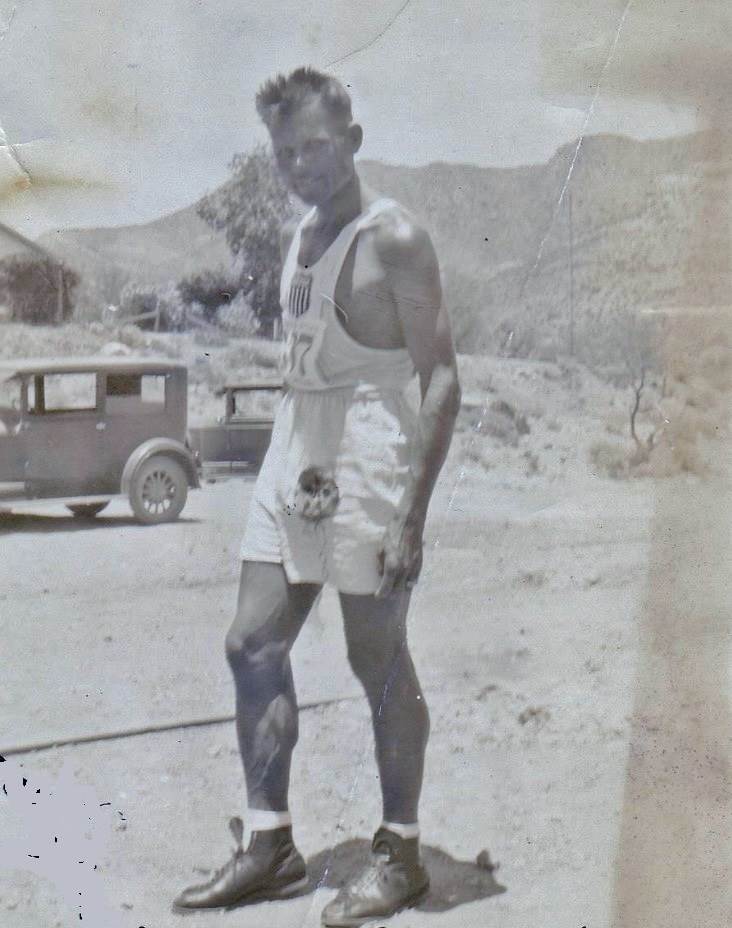
Ep 3232: Johnny Salo – 1929 Bunion Derby
By Davy Crockett Johnny Salo, of Passaic, New Jersey, was the greatest American ultrarunner of the first half of the 1900s. This is part two of the story of his amazing life and the story of the 1929 "Bunion Derby." If you haven’t already, go read Part One, Johnny Salo - 1928 Bunion Derby which highlights Salo’s rise to running fame when he placed second in the 1928 race across America in the “Bunion Derby.” In this concluding article, Salo’s fame grows even more when he ran in the 1929 Bunion Derby with perhaps one of the most exciting finishes in ultrarunning history. But sadly, his amazing running career soon was cut short by tragedy. You may want to find a tissue for the end of this story. This article attempts to celebrate the amazing accomplishments and impactful life of Johnny Salo. Once a huge hero, he has now been forgotten, even by his hometown of Passaic, New Jersey, and needs to be remembered again. Plans for 1929 Bunion Derby By Feb 1929, Charles C. Pyle (1882 – 1939), known as “Cash and Carry Pyle” was at it again, promoting an upcoming 1929 “International Continental footrace” (Bunion Derby) that this time would go from New York to Los Angeles with a more southern route. He traveled in his huge bus around to cities to get contract agreements signed for stopping points. In March, Salo announced locally his intention to get unpaid leave from the Passaic, New Jersey police force to run in the 1929 Bunion Derby. An editorial in his hometown newspaper thought the idea was terrible. “For a long time after his return he was not altogether a well man Salo shouldn’t think of going into another such nerve-wrecking, body-breaking test of endurance. For his own sake and his family’s, he should be dissuaded from making this next race. His sturdy physique, weakened by the last effort could be shattered in the next.” Andy Payne By late March, 81 runners from 14 countries had gathered at Pyle’s training camp on Long Island preparing for race day. They all sought to win the $25,000 first place prize or at least finish in the top fifteen to get a piece of the total $60,000 pot. About 30 of the 1928 Bunion Derby runners returned to run again. The 1928 winner, Andy Payne wouldn’t try to defend his title. “The Oklahoma farm boy, now quite wealthy through the purchase of coal and oil land, will go along as a helper.” He would be Pyle’s, public figure head, be a featured attraction at Pyle’s nightly side-show, and would also act as the “chief patrolman” during the daily runs, aiding runners and crews. The Start Crowds at the start at Columbus Circle Start area jammed The 1929 Bunion Derby began on March 31, 1929. An estimated 50,000 people jammed Columbus Circle in New York City for the send-off. Steve O’Neill, football star of the New York Giants pulled the trigger of the starting gun. The runners first ran 2.5 miles to board an electric ferry on 23rd street (Pier 63) to cross the Hudson River. Running to the ferry About 500,000 people lined the route to Elizabeth, New Jersey, the first stopping point. Police in Elizabeth enforced its Sunday “blue laws” and refused to let Pyle put up his evening side show. The start from the ferry in New Jersey Salo unfortunately became ill early because of the heat, so he took it easy on that first day. But all along the way, he was the center of attention among the fans. Many would ask, “where is Salo?” He ran along in his same usual stride. A Passaic motorcycle cop, Michael Palko (1897-1975), opened up a running lane ahead as they entered Elizabeth, New Jersey where Salo finished in 10th place for the first day. Salo (107) running on the first day William “Bill” Wiklund (1907-1980), his trainer, and Salo's wife Amelia, who was also part of his crew driving along, helped him the best they could to overcome his stomach trouble. Wiklund, also Finnish-American, had been the captain of the champion Passaic High cross country track team in...
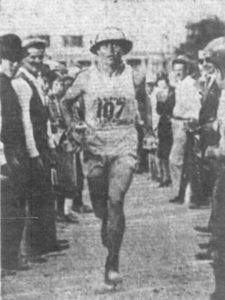
Ep 3131: Johnny Salo – 1928 Bunion Derby
By Davy Crockett Both a podcast episode and a full article Johnny Salo was perhaps the greatest American ultrarunner of the late 1920s. Ultrarunning historian, Andy Milroy, rated him as the top American ultrarunner of the first half of the 1900s. His career was cut short due to tragedy, but during the years 1928-1930 there was no one better or faster. His story is a “rags to riches” tale as he sprang onto the national scene practically overnight. He was the most popular and most successful runner in C. C. Pyle’s historic transcontinental races of 1928-29. He and other fellow Finnish-American long-distance runners of that time were greatly talented and were able to dominate at many distances. Today, few know of the name of Johnny Salo of Passaic, New Jersey. His story needs to be told. In telling his story, I will also tell the story of the very famous races across America that were nicknamed the “Bunion Derbies.” Several fine books have been written about this famed race held for two years, that attracted the greatest ultrarunners in the world. I won’t try to duplicate all the details of those races but will tell that story from the perspective of its greatest ultra-distance runner, Johnny Salo. The primary source used are the daily updates published in Salo's hometown newspaper. The is the first of two articles about Salo and the Bunion Derbies. Immigrant living in New York City Salo's application for U.S. citizenship John “Johnny” Salo was born May 25, 1893 in Wiborg, Finland. His original Finnish name was Johannes Nakka. Johnny became a sailor during his teen years. He first visited America in 1908 at the age of 15, loved the country and felt the desire to someday live there, and leave his homeland that at that time was under Russian control Running was a part of the lives of many Finns. At the age of 16, Salo was said to be Finland’s top amateur cross-country runner. In 1911 at the age of 18, he immigrated to the United States to Gulfport, Mississippi, through Antwerp, Belgium. He came over on the ship ”Cis” as a member of the crew of that ship. In 1914, living in New York City, he started to apply for United States citizenship but it wasn’t granted at that time. He worked for the United States Shipping Board, working himself up to the first officer. Salo in the merchant marines As World War I broke out he enlisted into the service along with about 500,000 other immigrants with the hope of receiving citizenship later. Johnny joined the Merchant Marines and served a three-year tour of duty on an emergency fleet based out of Staten Island, New York. He worked his way up through the ranks and achieved the officer rank of Ensign. During the war, he made ten trips on convoys across the dangerous waters of the Atlantic, that were infested by submarines. In 1917, at Brooklyn, he was injured in a scary trolley crash. The car carrying about 50 people was being pulled up a hill on 39th street in Brooklyn when the coupling broke and it slid down the grade. The motorman tried fruitlessly to reverse power and then leaped into the street. The trolley car crashed into a car with passengers. Salo along with 19 others were injured and treated. Salo had other poor luck living in the city. One day he was assaulted as he was coming up the stairs out of a subway. “The assailant inflicted lacerations and contusions on Salo’s head and face.” In 1917, Salo married Amelia Hoveland (1894-1956), his boyhood sweetheart also from Finland. They soon had a son Leo John Salo (1918-1970) and a daughter Helen (1920-1992). World War I ended in 1918 but Salo continued to work on ships. In August 1919, Salo was on an American steamer, Englewood, with 47 seamen bound for Rotterdam. As it was near the North Sea on the Thames River, it struck a mine. They radioed for help and tugs came in time for the rescue and the ship did not sink. In 1922 Salo was finally granted U.S. citizenship. He was among 192,
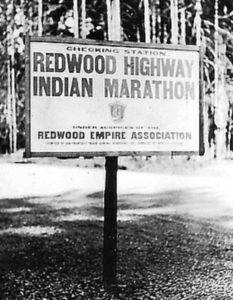
Ep 3030: 1927 Redwood Indian Marathon – 480 Miles
By Davy Crockett 1893 Native American Relay in Taos, New Mexico For centuries, many Native Americans were known to be outstanding long-distance runners who could run ultra-distances. Their talents were used in important roles to carry messages and news to distant communities. One of the most famous ultra-messaging events took place in 1680 when a very coordinated system of message runners were dispatched from Taos Pueblo, in present-day New Mexico to Hopi Villages in present-day Arizona, nearly 400 miles away, to coordinate a successful, simultaneous, revolt involving 70 villages against their Spanish oppressors. In the 1860s a Mesquakie runner in his mid-50s ran 400 miles from Green Bay, Wisconsin to the Missouri River to warn another tribe about an impending attack. Such runners would dedicate their lives to this role of being an ultrarunning messenger. My new book! Grand Canyon Rim to Rim History As Native American Talents became more widely known by Anglo-Americas, competitive wagers arose to prove their capabilities. In 1876 “Big Hawk Chief” ran 120 miles within 20 hours accompanied by an observer on a horse. In the early 1900s gifted ultra-distance runners were known to be among the Hopi, Yaqui, Tarahumara in Mexico, and the Seri of Tiburon Island in the gulf of California. The Hopi had been known to cover 130 miles within 24 hours. The Native American runners occupied a central role in ultrarunning during the early twentieth century. Sadly, this fact has largely been forgotten or overlooked. In 1927, a 480-mile race took place on the California/Oregon Redwood Highway that received intense daily attention in newspapers across America. This article will provide the detailed story for the first time of that historic, forgotten race. Get Davy Crockett's new book, Grand Canyon Rim to Rim History. This book, with more than 400 photos, tells a 130-year story of many of the early crossers in their own words. It also covers the creation of the trails, bridges, Phantom Ranch, and the water pipeline, the things that are seen during a rim-to-rim journey. Plans for the 1927 Redwood Indian Marathon By 1921, the running talents of the Native Americans were being noticed. The Los Angeles Herald, suggested, “If the Olympic commissioners want to find an Olympic Marathon runner who can beat the world, it might be a good scheme to look the Indian reservations over.” By 1926 In Arizona, “Indian Marathons” started to become features at local fairs and festivals. One such race was organized in Phoenix, running 25 miles from downtown to the fair grounds. “Only Indians who, in former days, ran over hot desert sands for various tribal missions will be called upon to appear in the race. The Hopi and Navajo Indian runners will serve as one of the best advertising features of the affair.” Soon this idea spread, to link exhibitions of Native American extreme running with national events. In 1927, with all the recent national attention to Native American runners, including the Tarahumara who were coming to run in Texas, the Chamber of Commerce in San Francisco conceived of a marketing idea to focus on the newly constructed highway stretch called the “Redwood Highway.” This new stretch of mostly dirt road went from San Francisco, California on Highway 101 to Crescent City California, and then east on Highway 199 to Grants Pass, Oregon, weaving through dense forests of redwood trees. In order to get more attention to the highway, and fill hotels along the way, they had a pretty brilliant idea to hold a “Redwood Marathon” foot race on the highway stretch. To gain even more media coverage they wanted to exploit the “Indian runner frenzy” at that time by limiting the entrants to Native Americans. Oregon Cavemen at the Oregon Caves in 1926. Members promoted Grants Pass tourism by dressing in animal skins. In March, Clyde Edmunson, the manager of the Redwood Empire Association,
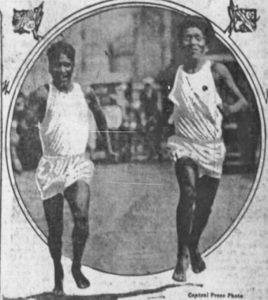
Ep 2929: The Tarahumara Ultrarunners
By Davy Crockett In recent years, the story of the amazing Tarahumara (Rarámuri) runners from Mexico exploded into international attention with the publication of Christopher McDougall’s best-selling 2009 book, Born to Run. Runners everywhere in 2009 naively tossed their shoes aside for a while and wanted to run like these ancient native Americans from hidden high Sierra canyons in Chihuahua, Mexico. Many other runners left the marathon distance behind, sought to run ultramarathons, and dreamed about running the Leadville 100, which exploded with new entrants. Readers of Born to Run think that the Tarahumara Indians made their debut running in America in 1992. Born to Run features their 1994 race at Leadville, Colorado. It has been falsely claimed that this was the first time that this indigenous people showed up to run outside their native environs. This is not true. Yes, the Tarahumara competed in America, in 1992, but it was not the first time that they displayed their running abilities in the United States. The Tarahumara competed in America more than six decades earlier when they made an even deeper impact on ultrarunning history. The story of the Tarahumara was only half told by Christopher McDougall. Their early running stories have been forgotten and need to be retold. This is the story of the Tarahumara before Born to Run. Please consider supporting ultrarunning history by signing up to contribute a little each month through Patreon. Visit https://www.patreon.com/ultrarunninghistory The Tarahumara are introduced to America Tarahumara in 1892 Frederick Schwatka In 1889, America was first introduced to the Tarahumara by an American exploring expedition that traveled through Mexico and published a long fascinating multi-part article in many newspapers. The author, explorer, Frederkick Schwatka (1849-1892) wrote, "The Tarahumari tribe of Indians are not at all well-known, for I doubt if one reader in a thousand of this article have ever heard of them. The savage Tarahumari lives generally off all lines of communication, shunning even the mountain mule trails if they can. His abode is a cave in the mountain-side or under the curving of some huge boulder on the ground." Schwartka gave a brief mention of the Tarahumara running abilities, "In the depth of winter, with snow on the ground, the Tarahumari hunter, with nothing on but his rawhide sandals and a breech-clout, will start in pursuit of a deer and run it down after a chase of hours in length, the thin crust of snow impeding the animal so that it finally succumbs to its persistent enemy.' Carl Sofus Lumholtz Norwegian explorer Carl Sofus Lumholtz (1851-1922) lived among the Tarahumara for more than a year. In 1894 he published a book, In the Land of Cave and Cliff Dwellers and lectured to American Geographical Society about the people. "Mr. Lumholtz found the Turahumari unyieldingly opposed to the use of his camera on them until the fortunate day arrived when his photographing was followed by much-needed rain. Ever after the use of the "rain maker," as the camera then came to be known, was sought as a favor." He mentioned "their fondness for extensive foot contests, of which careful account is kept by a simple system of stone counters." But it wasn't until 1905 that America started to have a true fascination with the Tarahumara Indians. Articles appeared across the country telling tales of “the most interesting tribe in the world.” They were described at that time as being a “savage” people of about 30,000 who seemed to be untouched by modern civilization and lived in the northern portion of the Mexican Sierra Madres. The Tarahumara were thought to be the only tribe on the American continent who still made homes in hillside caves similar to the cliff-dwelling ancient Anasazi found in the southwest United States. There were no highways to their towns. They had their own native language and only a few of them spoke ...