Ultrarunning History
179 episodes — Page 2 of 4
Ep 128128: Frank Hart – Part 3: Facing Racial Hatred
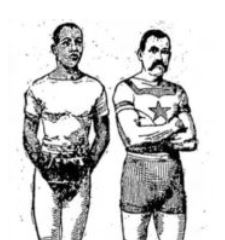
By Davy Crockett You can read, listen, or watch Read the full story of Frank Hart in my new book: Frank Hart: The First Black Ultrarunning Star In 1880, Frank Hart, age 23, was recognized as one of the top ultrarunners/pedestrians in the world. But after a life-threatening illness, many speculated that he would never return to his dominant form. He had also gone through a life-changing transition by accumulating more wealth in one year than most men acquired in a lifetime, and he was freely spending his fortune. Make sure you read/listen/watch parts one and two. Hart’s six-day world record of 565 miles had been broken by Charles Rowell (1852-1909) of England by one mile in November 1880, which deeply bothered Hart. In January 1881, he accepted a challenge from Rowell to meet head-to-head later in the year. That became his focus and he tried to get back into world championship shape. But then another rival appeared on the scene full of racist hatred. Racism from a Competitor John Hughes John “Lepper” Hughes (1850-1921) of New York did not hide his racist hatred for Hart. He had been a “poor day laborer” before he found success in pedestrianism. He was born in Roscrea, Tipperary, Ireland, and was the son of a competitive runner. When he was a boy, he was a fast runner, won some races, and could run close to hounds in fox hunts. With no formal education, he emigrated to America in 1868 at eighteen, became a citizen, and worked for the city of New York in Central Park. It was said that he was “stubborn as a government mule.” He was called, “the Lepper” because of his peculiar way of walking with an odd jumping gait. 2nd Astley Belt Race - O'Leary and Hughes Hughes was known for his temper and often showed inappropriate behavior in races. He desperately wanted to be recognized as the champion pedestrian of the world. It was reported, “Hughes is a boastful and ignorant fellow, with a fine physique and unlimited confidence in his powers.” He had a deep personal hostility against fellow Irish American, Daniel O’Leary, who had beaten him soundly in the Second Astley Belt Race in 1878. Hughes blamed his backers for purposely poisoning his milk and swindling him out of all his prize money. Hughes in International O'Leary Belt Since then, Hughes had experienced some success but had failed to win any of the big six-day races. His best six-day mark was 520 miles, when he finished sixth at the Rose Belt Race in 1879, won by Hart. But finally, on January 29, 1881, Hughes had the finest race of his career when he broke the six-day world record, achieving 568 miles in the “First O’Leary International Belt Race” held at the American Institute Building in New York City. Hart did not compete in the race, choosing instead to get ready to defend the original “American” O’Leary Belt, to be held the following month. As the Third O’Leary Belt approached, Hughes desperately wanted to win that O’Leary belt too and beat Hart. He boasted he would cover 600 miles. Hart and Hughes Fight In 1881, Bernard Wood’s Gymnasium and Athletic Grounds on North 9th and 2nd Street (Wythe Ave) in Brooklyn, New York, was a popular place for runners to train on an indoor sawdust track. In February 1881, both Hart and Hughes used the track to train for the upcoming O’Leary Belt. Hughes would often yell hate-filled racist slurs at Hart. Hart had nothing good to say about Hughes. One Sunday afternoon, while both were training there, they competed in an ego-based sprint together, which Hughes won. Hart joked that at the upcoming match there would be no poison soup, referring to Hughes’ excuse for losing the Second Astley Belt. He added he would beat Hughes at the upcoming match. “Hughes turned around and shouted, ‘You lie, you black (n-word).’ Saying this, he struck Hart with a powerful blow under the chin. Hart fell flat on his back but was up again in an instant and hit Hughes over the right eye.
Ep 127127: Frank Hart – Part 2: World Record Holder
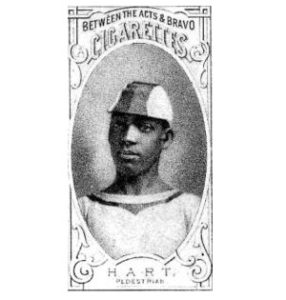
By Davy Crockett You can read, listen, or watch Read the full story of Frank Hart in my new book: Frank Hart: The First Black Ultrarunning Star Frank Hart, at age 22, broke through racial barriers with his fourth-place finish in the 5th Astley Belt Race in Madison Square Garden, held in September 1879. Despite being black, Hart became a local hero in his hometown of Boston, Massachusetts. He had proven himself worthy of praise, competing on the grandest sporting stage in the world. The ultrarunning/pedestrian promoters, backers, and bookmakers had allowed for diversity in this most popular spectator sport in America of that time. But was an American public ready to accept a black champion, just 15 years since the end of the bloody Civil War, with racial bigotry still prevalent in nearly all aspects of society? Hart, an immigrant from Haiti (see Part 1), had not grown up in slavery, and had the determination to reach the highest level of the sport in 1880, if he would be allowed. After the good training he received from O’Leary, and with his recent success, fame, and fortune, he was ready to go out on his own. He hired his own trainer/handler, John D. Oliver (1860-1914), age 19, who became better known as “Happy Jack Smith.” Smith was originally from Richmond, Virginia, born to Irish parents. Within months he became recognized as the best pedestrian trainer in America. He developed a reputation for being able to keep his runners in the competition to the bitter end. J. J. Gottlob Hart also needed a manager/agent. He again turned to a very young, unproven, but dynamic talent. He hired nineteen-year-old Jacob Julius “J.J.” Gottlob (1860-1933). Gottlob, a commercial traveler and theater man with west coast ties, took interest in pedestrianism. He would become known as the “Dean of Pacific Coast Theater managers.” As he acquired money, he would be Hart’s backer for several years. The Rose Belt With these two young men to look after him, in December 1879, Hart went to compete at the next big six-day tournament, the “Great International Six-Day Race” or “Rose Belt” held in Madison Square Garden in New York City. The manager of the race was Daniel Eugene Rose (1846-1927) of New York City, a pedestrian promoter and owner of the D. E. Rose cigarette manufacturing company. This was perhaps the largest six-day race in history with 65 starters. An expensive Rose Belt, valued at $400, was created for the winner, with seven rectangular sections. The center section included a globe with running figures and colored flags, and the words, “American International Champion of the World.” About 200 scorers were employed. Scores were displayed on dials for each runner. Each runner had a big number both on their chest and on their back. Hart was not the only black runner in the field, there were three others, Edward Williams of New York City, Paul Molyneaux Hewlett (1856-1891) of Boston, and William H. Jacob Pegram (1846-1913) of Boston, who would often run together with Hart on laps. Pegram was a former slave from Sussex, Virginia. He won a small 60-hour race in Brighton, Massachusetts against whites, a month before Hart started competing. Pegram spoke in a thick southern black dialect that at times was mocked by the press. After the first day, December 22, 1879, Hart was in second place with 117 miles. On day two, after Peter J. Panchot (1841-1917), of Buffalo, New York, withdrew from the race, Hart took over first place. By evening, only 48 of the 65 starters remained in the race. Christian Faber On Christmas Eve, day three, the race continued, and Hart lost the lead in the evening to Christian Faber (1848-1908), of Newark, New Jersey, when he went to get some sleep. Grumbles were heard by those with wagers on Hart, worried that he would not return. But Hart had not had very much sleep and needed it badly. He returned at midnight to kick off day four.
Ep 126126: Frank Hart – Part 1: First Black Ultrarunning Star
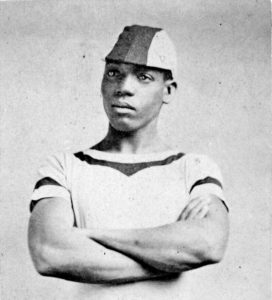
By Davy Crockett You can read, listen, or watch Read the full story of Frank Hart in my new book: Frank Hart: The First Black Ultrarunning Star In 1879, just twelve years after the Civil War ended, Frank Hart of Boston, Massachusetts, became the first black running superstar in history, and the most famous black athlete in America. In a sense, he was the Jackie Robinson of the sport of ultrarunning in the 19th century, overcoming racial barriers to compete at the highest level in the world, in the extremely popular spectator sport of ultrarunning/pedestrianism. Frank Hart’s full story has never been told before. It is an important story to understand, both for the amazing early inclusiveness of the sport, and to understand the cruel racist challenges he and others faced as they tried to compete with fairness and earn the respect of thousands. He was the first black ultrarunner to compete and win against whites in high-profile, mega-mile races. This biography also presents twenty-three years (1879-1902) of the amazing pedestrian era history as experienced by Hart when ultradistance running was the most popular spectator sport in the country. He competed in at least 110 ultras, including eleven in Madison Square Garden, where he set a world record, running 565 miles in six days in front of tens of thousands of spectators and wagerers. During his running career, he won the equivalent of $3.5 million in today’s value. NOTE: This tale must be viewed through the historic lens of nearly 150 years in the past. It will present news article quotes using the words and labels used in that era, that today are now universally viewed as racist, heartless, and offensive. But by stepping back in time, one can appreciate the courage and determination that Frank Hart experienced in a world that at times tried to work against him. Items in quotations are taken directly from newspaper articles of the era. Also note, this multi-part series is an abridgement of the book, Frank Hart: The First Black Ultrarunning Star. Frank H. Hart (1856-1908) was believed to have been born in Haiti, in 1856. He said his given name was Fred E. Hichborn, although on several legal documents in the years before he started running, and throughout his life, he stated his name was Frank Hart. He said that his parents were Joseph Hart and Elizabeth (Mallory) Hart. It is likely that the Harts adopted him. “Frank Hart” was not just a stage name. Adult School, West End Boston Hart's family immigrated to the west end of Boston, Massachusetts in 1866, after the Civil War ended, while Hart was a boy of about ten years. Why Boston? Haiti had been experiencing political turmoil and revolts for several years. The West End of Boston at that time was one of the few areas of the country where blacks were allowed to have a political voice. In the years following the civil war, many blacks from the South migrated to Boston. More than 60% of Boston’s black population lived in the West End. It would be the future home of the Museum of African American History. As a young man in Boston, during the 1870s, Hart worked as a grocery clerk, teamster, fireman and did “general jobbing,” developing into a talented athlete, and became an American citizen in 1878. He competed as an amateur in single sculling rowing competitions at Silver Lake in Tewksbury, Massachusetts, where he demonstrated “remarkable staying qualities as an oarsman.” Pedestrianism became popular in black communities. In April 1876, John Briscow called “the colored pedestrian” attempted a 50-hour walk without sleep or rest in a billiard saloon, in Washington D.C. He swelled up and had to quit six hours short. In March 1879, a 25-hour race was conducted in Baltimore, Maryland, for all the "colored pedestrians" in the area. Black pedestrians competing against whites was still a rare occurrence. Hart Enters the Sport, Crossing the Racial Barrier Cambridge Street, Boston

Ep 125125: Ultrarunning Stranger Things – Part 13: The Strange and Tragic
By Davy Crockett You can read, listen, or watch In 1882 it was declared, “The six-day walking matches are the sickest swindles gamblers have yet invented for defrauding a virtuous public.” Well, many of both the public and the running participants were not the most virtuous people on the planet at that time, contributing to the wild strange stories that continually occurred related to the sport of ultrarunning/pedestrianism. My new book! Grand Canyon Rim to Rim History Also, this opinion expressed in the New York Herald was common, “A six-day walking match is a more brutal exhibition than a prize fight or a gladiatorial contest. In the last half of a six-day walk, nearly every contestant is vacant minded or literally crazy, he becomes an unreasoning animal, whom his keepers find sometimes sullen, sometimes savage, but never sensible.” During this era from 1875-1909, at least 400 six-day races were competed worldwide with millions of paid spectators. The stranger things that occurred related to the sport of that age were a collection of surprises and tragedies. John Dermody Joins a Women’s Six-day Race Brooklyn, 1880 In December 1879, John Dermody, age 45, was a homeless lemon peddler in Brooklyn, New York. The six-day race ultrarunning/pedestrian fever was raging in America. He believed that his business had hardened his leg muscles with great strength and that he would make an excellent professional pedestrian, and he longed to compete in one of the dozens of races that were being held in the New York City area that year. Dermody could not find anyone to back him financially and help him pay an entrance fee to a race. A Women’s International Six-Day Tournament was scheduled for December 15-20, 1879, in Madison Square Garden with 26 entrants. As it approached, Dermody became so interested in it that he had been unable to think or talk of anything else. Saloon site today On the Sunday afternoon before the start, Dermody entered the Darwin & Kindelon saloon at 507 Third Avenue, drinking perhaps too much and jabbering about the sport of walking, wishing that he could see the start of the women’s tournament. Darwin, a known practical joker, asked Dermody how he would like to enter this contest. “Dermody seemed perfectly delighted. His acceptance of the proposition was hailed by some practical jokers as a good chance for amusement, and they at once began to improvise a female wardrobe which would conceal his sex. His flowing reddish beard was shaved off in a neighboring barber shop, and he was dressed in a calico skirt and spotted jacket.” They added a pair of long stockings, a handkerchief around his head, a blue veil around his neck, and three yards of white gauze to make a sash to hide his face. They made a bib number with “32” to be suspended from his neck. Ready to go, his new backers took him to Madison Square Garden where the race was about to start. Out on the Track “The party hid his raiment under an overcoat as they entered and unshrouding him in a sequestered part of the place. That done, they slipped him under the railing out on the track and away he sped, with his arms going like windmills and his raiment flying out behind him like a comet. A batch of the authentic contestants had just passed, and the counterfeit put on a spurt to overhaul them.” A roar of laughter arose as the audience began to discover what was going on. Around the track he went in a happy-go-lucky style, trying to catch up to the leader. Just as he was finishing the first lap, Sergeant Keating of the 29th precinct, observant that the bib number 32 didn’t make sense because there were only 26 starters, stepped on the track to arrest Dermody. Arrest “It was no easy matter catching up with the phenomenal contestant, but the Sergeant at length brought Dermody’s pace down to a walk and made a circuit of the track in his captor’s custody.” He locked him up for the night at the precinct.

Ep 124124: Ultrarunning Stranger Things – Part 12: George Noremac and Murder
By Davy Crockett You can read, listen, or watch On a summer morning in 1883 in midtown Manhattan, New York City, a young boy ran down 34th Street, getting the attention of a policeman. He cried out, “A man has killed some folks.” Officer John Hughes ran with the boy to a new saloon that recently opened. There he saw a man, pale, and trembling. He found out that the man was George Noremac, one of the most famous ultrarunners/pedestrians in the country. Noremac led the officer up two flights of stairs to the apartment where he lived. On the dining room floor lay two dead bodies, Noremac’s young wife, Elizabeth, and his longtime friend and trainer, George Beattie. A revolver lay on the floor near Beattie's left hand. The murder and suicide occurred while Noremac was downstairs, but his two young children, still crying, had sadly witnessed it all. How could this have happened? Get Davy Crockett's new book, Frank Hart: The First Black Ultrarunning Star. In 1879, Hart broke the ultrarunning color barrier and then broke the world six-day record with 565 miles, fighting racism with his feet and his fists. George Duncan “Noremac” Cameron (1852-1922) was born in Edinburgh, Scotland in 1854. He was the oldest of nine children. His father, John Cameron (1834-1902) was a lithographic printer, and George took up the same occupation. Lithography artwork was becoming very popular because it could create many copies of portraits for a reasonable cost. As a young adult George became interested in running in 1872 at the age of 20. His first achievement was winning a one-mile race in 5:13 at Powder Hall Grounds, Edinburgh, Scotland. He quickly became recognized as one of the best sprinters in Scotland and would compete in various one-mile races during town fairs, always placing high. He improved his one-mile personal best to 4:21 and won three-mile races too. In 1875 at the age of twenty-two, George married eighteen-year-old Elizabeth Edwards (1855-1883). She was also born in Edinburgh, growing up in a large family of nine children. Her father was a pastry and candy maker. Elizabeth also learned the candy-making business. She gave birth to four children in Scotland, Alexander Edward Cameron (1877-1946) and daughter Jessie Brown Cameron (1880-1952), and two others who died as infants. Elizabeth was described as “a short, stout woman, with regular features, light complexion and pleasing manners, with blue eyes and brown hair.” Entering Pedestrianism Sport My new book! Grand Canyon Rim to Rim History In 1879, long-distance pedestrianism started to get intense attention in Scotland as Edward Payson Weston barnstormed Great Britain, putting on walking exhibitions and competing in races. With so many others, George entered the sport that year. He was a small man, ideal for long-distance running, standing only 5’3”” and weighing about 122 pounds. He decided to take on the stage name of “Noremac” which is Cameron spelt backwards. He did not originate the idea of using his transposed name as an alias. Other Camerons before him had also used the Noremac alias both in Scotland and America. George Hazael Noremac’s earliest known ultra-distance race came in July 1879. He ran in a 26-hour, outdoor six-day running tournament, at the Aberdeen Recreation Grounds in Inches, Scotland. Contestants ran four hours a day and six hours on the last day. It was put on by the 100-mile world record holder, George Hazael of London. “By the finish, an immense concourse of people had congregated within the enclosure, who seemed to take on eager interest in the competition, cheering one or other of the competitors whenever a spurt was made.” Noremac reached an impressive 156 miles. Noremac continued to win nearly every race. In January 1880, a two-day (12-hours per day) race was held at Perth, Scotland in Drill Hall. There were 23 starters. The track was very tiny, 31 laps to a mile.
Ep 123123: Dan Brannen – Ultrarunning’s Pioneer Administrator
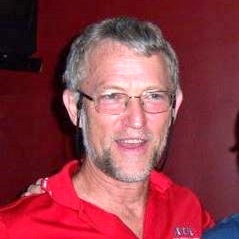
By Davy Crockett You can read, listen, or watch Dan Brannen (1953-) of Morristown, New Jersey, has made a lifetime contribution to ultrarunning and the running sport in general. His dedicated work, mostly from behind the scenes, helped to establish world and national ultrarunning championships. His efforts have affected thousands of ultrarunners in America and around the globe for decades. Dan was inducted into the American Ultrarunning Hall of Fame in 2022. Get Davy Crockett's new book, Frank Hart: The First Black Ultrarunning Star. In 1879, Hart broke the ultrarunning color barrier and then broke the world six-day record with 565 miles, fighting racism with his feet and his fists. Early Running Brannen's senior picture The Brannen family were Irish Catholics from Upper Darby, a suburb of Philadelphia, Pennsylvania. He went to Catholic schools growing up, including St. Joseph’s Prep in Philadelphia. In high school, he was required to participate in an athletic extracurricular activity. Dan explained, “I was a shrimpy little kid. I played little league baseball, but I wasn’t particularly athletic or coordinated. One of the sophomores who came in to give the orientation, said, ‘If you can’t do anything else, go out for cross-country.’ So, I did, my freshman year even though I was terrible at it.” St. Joe's Prep Cross Country Team During Dan’s senior year, a new coach, Larry Simmons (1942-2004), a successful distance runner and racewalker took over the team. He lit a fire into the team and into Dan whose course times dramatically improved, resulting in his promotion to the varsity team. His rapid success, instilled by the inspiration of Simmons, turned him into a runner for life. The cross country team at Bucknell Dan went to Bucknell University in Central Pennsylvania and got in on the ground floor of a new cross-country team. His coach, Art Gulden (1942-2001) developed the team into a highly successful running program at Bucknell. Dan continued to improve under his tutelage and recalled, “Each year Gulden was able to recruit faster and faster high school runners. They included state champions, and it was very competitive. I was able to stay with the second tier of those guys. One of the best feelings I had about myself as an improving runner was when I was running and keeping up with state high school champions.” Brannen as a coach Dan ran a few marathons during college, graduated in 1975, and joined the well-established road-racing scene in the Philadelphia and New Jersey area. He was a self-described “running bum,” living a subsistence lifestyle as he concentrated on his running passion. His weekly mileage would average about 100-120 miles per week. Boston in 1979 His personal best marathon occurred at the 1979 Boston Marathon which he ran in 2:31:13. He was intoxicated with distance running and it would later evolve into a true career for life. Part-time he worked editing research manuscripts which enhanced his writing skills. He also coached cross country at his former high school for a few of these years in the late 1970s. Dan was a member of the Haverford Athletic Club. Road running was very competitive in the Philadelphia area during the late 1970s. He became acquainted with the future ultrarunning legends in the area. “One of the prime organizers in the area was Browning Ross who was a great Villanova runner and Olympian. Browning founded the Road Runners Club of America and started the Long Distance Log which was the very first running magazine. I would go over to South Jersey and met Ed Dodd, Tom Osler, and Neil Weygandt in those races.” Dan ventured into the shorter ultrarunning races in 1978, running the Knickerbocker 60 km in Central Park, and ran in a few others the next year, including the classic ultra, Two Bridges 36-mile Road Race in Scotland. Win at 1980 JFK 50 In 1980, Dan ran a 50-mile race for the first time at JFK 50 in Maryland.
Ep 122122: Ultrarunning Stranger Things – Part 11: Arrests
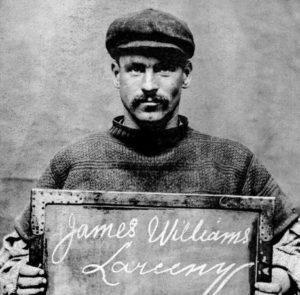
By Davy Crockett You can read, listen, or watch Ultrarunners/Pedestrians of the late 1800s were a unique breed of determined and aggressive individuals who were in the sport primarily trying to cash in on the huge prize money potential and to get their names in the newspapers as “world champions.” They would gladly endure the torture of running hundreds of miles in a week for a perceived easy way to earn life-changing money. Such opportunities obviously attracted individuals that weren’t necessarily the most outstanding citizens and had run-ins with the law. But the law and others at times wanted to bring down the sport and the athletes, and thus confrontations occurred. Get Davy Crockett's new book, Frank Hart: The First Black Ultrarunning Star. In 1879, Hart broke the ultrarunning color barrier and then broke the world six-day record with 565 miles, fighting racism with his feet and his fists. Race Accused of Disorderly Conduct in a Saloon In 1885, two female pedestrians, Emma Frazier (1861-1914) and Elizabeth Carr were arrested in Philadelphia at a saloon on Walnut Street, along with 25 spectators and the race manager, James B. Jamison (1830-1900) for disorderly conduct. A policeman visited the event and went to obtain an arrest warrant. A raid was conducted, the race stopped, and arrests were made. It was discovered that Carr was a minor, aged 19. “The excitement over the match was at its height, some thirty persons being assembled in the bar and showroom. The raid had been carefully kept secret and was completely successful. Everybody in the house was taken out of it and marched in a melancholy procession to the Central Station where they were locked up to await a hearing the next morning. One of the young pedestrians had the good fortune to be wearing a calico skirt over her bloomer costume, but the other, in the regulation fancy dress tights and short jacket of red, was marched through the streets, to the amusement of the ‘groundlings.’” Walnut Street Theatre Jamison, who also had a retail store, had previous run-ins with the law and believed the raid “was a piece of spite work on the part of a neighbor with whom he was competing in business.” At the hearing, it was testified that the place was noisy and disorderly. “Mr. J. L. Grotenthaler, the owner of the competing business, said the place was interfering with his business, and he was losing his lady customers. Officer Watson said that he visited the place because of complaints that young girls were enticed into it. He saw a man guarding the entrance to the show room allowing nobody to enter without one of the checks presented by the barkeeper with each glass of beer or liquor sold. He saw both men and women drinking. Jamison was held for $1,000 to answer the charge of keeping a disorderly house and the other prisoners were released.” Mark All, the 60,000-mile Pedestrian Arrested Mark All (1828-1925), of England, was an interesting pedestrian character. He claimed to be one of the mega-mile “around the world” walkers of the time and claimed to be the “champion walker of the world.” Many stories are told about these journey walkers in episodes 38-45. Most of these professional walkers were taking advantage of the naïve Americans, but Mark All was a rare elderly walker who was entertaining the British. All was born in Greenwich, England in 1828 where he learned an electrical engineering career. For years he was employed by a firm of engineers. But during a great strike of 1897-98, he lost his employment. Since he was 72 years old, he made up his mind to start a walking tour and find employment wherever he could, to prove that a man isn’t “used up” in old age. All claimed that he started a long walk on August 6, 1900, and walked 30,000 miles before his efforts were noticed by the sports newspapers of that era in 1904. He said that three of the papers raised a £500 prize for him if he could continue and reach 60,

Ep 121121: Pam Reed – The Desert Ultrarunning Legend
By Davy Crockett You can read, listen, or watch Pam Reed, age 61 in 2022, from Jackson Wyoming, and Scottsdale, Arizona, is a 2022 inductee in the American Ultrarunning Hall of Fame, its 21st member. Over the years she has been a prolific, successful runner, especially in desert races in the western United States. Leonard Peterson Pam (Saari) Reed (1961-) grew up in the Upper Peninsula of Michigan, in the small mining town of Palmer. She is the daughter of Roy E. Saari (1932-2018) and Karen H. Peterson (1935-2014). Her father worked at an enormous open pit iron mine in town and was always on the go. Her mother was a nurse who instilled in her daughters “the values of initiative and assertiveness,” and was active in outdoor sports such as snowmobiling and cross-country skiing. Pam has Scandinavian ancestry: Finish on her father’s side, Norwegian and Swedish on her mother’s side. Her grandfather Leonard D. Peterson (1895-1972) was a man of determination who worked two full-time jobs, for the railroad and the Chicago Transit System. Once he walked all the way from Merrill, Wisconsin to Chicago, about 300 miles. Get Davy Crockett's new book, Grand Canyon Rim to Rim History. The trails, bridges, early daring canyon crossers. Enhance your Rim-to-Rim experience. Early Years As a youngster, Pam, with her competitive nature, would enjoy challenging the boys in races and games. She had dreams of competing in the Olympics in gymnastics, but she became better at tennis. At the age of fifteen, she started running to get into shape for tennis Pam attended Negaunee High School, about ten miles away, and was very active in sports and activities including track, tennis, gymnastics, cheerleading and choir. On the high school track team, she didn’t like the long three-mile runs because they were boring, and she would lead her friends cross-country across backyards to cut down the distance. Suicide Ski Jump Negaunee is the home of the Suicide Ski Jump facility and a luge track. Winter sports were an important part of the region where Pam grew up, although she didn’t especially enjoy skiing, because she didn’t like the cold. She remembered, “I grew up skiing. My dad would take me skiing and I didn’t like going. I was five years old and there was tons of really heavy snow, and I broke my leg.” She didn’t know it then, but she was destined for the desert. Hard work was in her blood. She said, “Physical toughness was a strong point in my family, and maybe in the Upper Peninsula as a whole. It was cultivated and bred into us over many generations, so it came easily to us. It was expected of us, and it was what we expected of ourselves.” For college, Pam attended Michigan Tech in the remote town of Houghton, Michigan, about 90 miles away, where she continued to compete in tennis and excelled. She majored in Business and later transferred to Northern Michigan University in Marquette. She soon married her high school boyfriend, Steve Koski. They moved to Tucson, Arizona where Pam transferred to the University of Arizona to complete her college education and she eventually received a Bachelor of Science in Business. Pam became an aerobics director at a Tucson health club and started to compete in triathlons in 1989 at the age of 28. She also started running marathons. (She would eventually run more than 100 marathons, with 2:59:10 at the 2001 St. George Marathon as her personal best.) Pam had two young sons, but her marriage to Steve ended in divorce. She soon married Jim Reed, an accountant, who also competed in Ironmans. He also had two sons. Becoming an Ultrarunner Bennie Linkhart In 1991, a friend, Bennie Linkhart (1931-2017), age 60, gave Jim a copy of Ultrarunning Magazine. Bennie was a state weightlifting champion who had taken up running and was training to run Leadville 100. When Jim introduced Pam to Bennie, she thought, “Who in the heck runs 100 miles? No one can do that.”

Ep 120120: Ultrarunning Stranger Things – Part 10: Richard Lacouse – Scoundrel
By Davy Crockett You can read, listen, or watch The strange story of ultrarunner Richard Lacouse has never been told before. Piecing together his unusual life story was an adventure in itself. He was once a famous, elite, ultrarunner/pedestrian from Boston during the late 19th century, one of the most prolific six-day pedestrians during the early years of the sport. As with other runners of his time who amassed a fortune in winnings, he chose to use that money for nefarious purposes, rather than for good. His life turned from a race around a track for six days, to a race to stay ahead of the law and to dodge one of the most skilled detectives in the country. In his wake he left behind abuse and corruption until deciding to make an honest living in Montana in the mine industry to conclude his life. Get Davy Crockett's new book, Frank Hart: The First Black Ultrarunning Star. In 1879, Hart broke the ultrarunning color barrier and then broke the world six-day record with 565 miles, fighting racism with his feet and his fists. Early Circus Life Parents: Joseph and Emelie Lacourse Richard “Dick” Amos Lacouse (1848-1923), a French Canadian, was born in 1848, in Sainte-Marcell, Quebec, Canada. He was the son of Joseph Octave Lacourse (1825-1876), a carpenter, and Emelie Guilbert (1826-1892), the oldest of eight children. His Lacourse ancestors had lived in Quebec, Canada for many generations. By 1870, the family moved to Fall River, Massachusetts. Once he reached adulthood, Richard left home seeking adventure and athletic performances, and for unknown reasons dropped the “r” in his last name for half of his life. He claimed that he became acquainted with Charles Blodin (1824-1897), a man who had shocked the world by walking over Niagara Falls on a tight rope in 1859. Blodin taught Lacouse how to rope walk, but the young man gave it up after a serious fall during an exhibition. He next became a trapeze performer for several years, claiming to be a star in P.T. Barnum’s circus. In 1873, he gave up the circus, settled in Boston, Massachusetts, married Catherine Buckley (1844-), and started a fish market. The business venture failed, and he became a bricklayer. Lacouse first appeared in newsprint in 1875, not for a great accomplishment. He was arrested and accused of stealing $150 worth of property from various people outside of Boston. He was living in the slums of Boston, where he worked as a bouncer and bartender in various houses of ill-repute. Beantown Pedestrian In May 1879, at the age of 31, Lacouse made his debut in pedestrianism when he participated in the first big ultrarunning event in Boston, Massachusetts. It was an interstate pedestrian tournament relay race between teams from Massachusetts, Maine, and Rhode Island. It was also called, “The Bean Pot Tramp” held in a mammoth tent at the Riding Academy in Back Bay, Boston. Barton Street, Boston With the popularity of pedestrianism taking fire, Lacouse decided to try out for the big event. It was reported, “he said he was undersized at that time, but his legs were hard as iron and sinews of steel wire. The tryout was a revelation to the management of the tournament which immediately bargained with Lacouse to join the Massachusetts team.” He was described as weighing 135 pounds, standing at 5’7”, a “stocky Frenchman,” who lived on Barton Street in Boston. Each state’s team consisted of 12 runners. Each day, for six days, two runners on each team would run for six hours each. Maine came out on top, but Lacouse, often referred to as “the Frenchman,” ran more than 35 miles during his turn which was the second furthest of all the runners in the competition, earning him $75. For the final week of the tournament, he competed in a six-day walking match with 20 others. He put on an impressive performance. “Lacouse is still in the lead. He is a wonderful specimen of humanity. His feet are badly blistered,
Ep 119119: Ultrarunning Stranger Things – Part 9: Corruption and Bribes
By Davy Crockett You can read, listen, or watch With the great success of ultrarunning (known as pedestrianism) in the 1880s, and the millions of dollars of legal wagering involved, corruption raised its ugly head in the sport. “Match Fixing,” was the most common form of corruption used. This practice made it possible for bookmakers to maximize their profits. Sports scholar Mike Huggins wrote, “The fixing of sports events has a history that is probably as old as organized sport. Persons off the field directed match fixing to make often illegal financial gains using a mixture of legal and illegal sports betting platforms, sharing some of that profit with those connected to the sport who executed the fix on the field.” In this nineth part of the Ultrarunning Stranger Things series, some strange stories are shared about attempts to fix pedestrian matches. They are only the “tip of the iceberg” for what was taking place. Get Davy Crockett's new book, Frank Hart: The First Black Ultrarunning Star. In 1879, Hart broke the ultrarunning color barrier and then broke the world six-day record with 565 miles, fighting racism with his feet and his fists. Bill Daly Runs for Six Days Without Fatigue Denver in 1880 In 1894, a strange story was published in the Washington Post about a six-day race that occurred in 1880, in Denver, Colorado. The story was widely published and affected public opinion about the sport and the corruption involved. The six-day race was organized by Mark Montgomery Thall (1858-1901) and James Henry Love (1852-1902), celebrated agents and promoters with a firm in Denver. Previously, together they established Forester’s Theater, one of the first in Denver. Thall was born in Montgomery, Alabama and went to California with his family in 1865. After living in Placerville for four years, he ran away from home and joined the circus at the age of eleven. He rose to become one of the best-known theatrical men in the country. Mark Thall Thall and Love were referred to as “hustlers” and had been involved in organizing six-day races as early as 1879 in San Francisco where he was arrested for running off with $85 of the proceeds. The following year he went to Denver and established a theatrical business with J. H. Love called “Love, Thall & Co.” Old Sport Campana The race in Denver was held in a big tent on a track going around the edge with raised seats in the middle. About sixteen runners started including Peter Napoleon “Old Sport” Campana (1836-1906) and others. A rookie started that no one really knew – Bill Daly, who did not look very strong. Another local runner participated, “Rocky Mountain Sam” who traveled around the track with an impressive long stride. The race was popular and kept the tent full with spectators. By day four, young Daly caught up with the leader, Rocky Mountain Sam. “The pace had been so swift that day, that Sam was all used up. His feet were swollen, and he was sick, but he kept up after Daly.” Most of the other runners had dropped out, it was a two-man race, or so they thought. After a rest, everyone was amazed how Daly would come out so fresh, skipping around and whistling “Yankee Doodle.” Sam’s backers encouraged him and even had a brass band march along with him. On the last day, a large crowd came to watch the finish. “It got down to the last hour. Bill Daly was running easy and gaining one lap in five on poor old Sam.” In the end Daly won by over 40 miles and received a check for $3,000. The Hoax is Discovered However, something seemed wrong, and Sam made an investigation. “It didn’t take him long to find out that it was a fixed race. You see that damned Bill Daly was twins. His twin brother Jim looked just like him to a dot. Bill would walk until he got tired and then he would go into the tent, and in an hour or so, Jim would come out. Neither one of them could walk much, or they would have beat the world record.”
Ep 118118: Ultrarunning Stranger Things – Part 8: Love Scandals
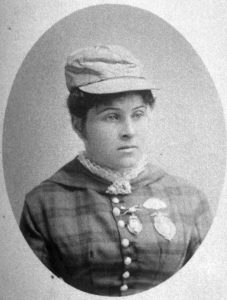
By Davy Crockett You can read, listen, or watch Perhaps this is the tabloid episode of 19th century pedestrianism. In the late 1800s, ultrarunners (called pedestrians back then), both male and female spent a prolonged time away from their homes and families as they traveled to compete in races across American and in England. As with other professional athletes and celebrities, even in our day, love scandals would at times emerge that made for popular gossipy news stories. Many of these ultrarunners/pedestrians became instantly wealthy and had numerous adoring fans and friends who wished to be part of this new wild free-spending lifestyle. Some of these love scandals were covered in newspapers all over the country. Get Davy Crockett's new book, Frank Hart: The First Black Ultrarunning Star. In 1879, Hart broke the ultrarunning color barrier and then broke the world six-day record with 565 miles, fighting racism with his feet and his fists. Fannie Edwards’ Love Triangle Brewster Hall In 1879, Fannie Edwards (1856-) of New York City, born in Portland Maine, burst onto the stage of pedestrianism when she succeeded in walking 3,000 quarter miles in 3,000 quarter hours at Brewster Hall in New York City on March 20, 1879. But along with her fame came scandal. She became quickly involved in a love triangle. She had been seen in public with Frank Leonardson for several months in the New York City area. Frank, also a pedestrian, was described as very good looking. He served as her trainer during her successful month-long walk. Fannie was described as “quite young, below the medium height and of slight 100 pounds, almost fragile physique. She has large lustrous brown eyes, an abundance of dark hair, and well-rounded features, suffused with the glow of health.” In March 1879, Frank’s wife of seven years, Delia Leonardson, filed for abandonment and wanted some of his estimated $800 of pedestrian winnings for the support of their two children. Frank was arrested and a trial was held. “Lenardsen admitted the marriage and desertion, but said he could hardly support himself, but was willing to do whatever he could for his wife.” He claimed that he had only earned $31 as Fannie’s trainer but made no mention of his previous success as a pedestrian. He had started competing in May 1878, in a 36-hour race, as a member of the Scottish American Athletic Club in New York City. He could balance a quart bottle filled with beef tea on his head as he walked. They had been likely involved for a year. “It was learned during the hearing that Miss Edwards induced him to forsake his wife for her company, sharing her earnings with him.” She had even hired his lawyer for the trial. Fannie Edwards The judge ruled that Frank must pay his wife $200 and pay $3 per week for alimony. “Fannie screamed, ‘Is that all?’ with delight and surprise. She then bounded, brushed past Mrs. Lenardsen, and offered her gold watch and chain, her necklace, bracelets, and earrings to the court as security to have Frank released.” The judge said, “The court is not a pawn shop for lovers.” She then wrote out a check for the $200 and $156 for a year of support, and said, “That’s cheap enough, I’d pay a thousand dollars to be rid of her.” Delia was left in a corner of the courtroom “crying as if her heart would break.” Frank and Fannie Edwards went off together. To get away from the scandal, they went to California to compete. At some point during their relationship, Frank took on the stage name of “Frank L. Edwards,” and they told people in California that he was Fannie’s brother. They weren’t discrete enough, the press noticed that Fannie soon had a diamond ring that they figured out came from Frank. But evidently their relationship only lasted a few months more. Fannie Edwards Destroys Another Marriage Greenpoint, Brooklyn, New York Fannie Edwards was not through destroying marriages. William A. Cousins (1858-1880),
Ep 117117: Ultrarunning Stranger Things – Part 7: Murder of Alice Robison
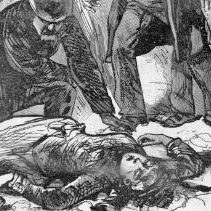
By Davy Crockett You can read, listen, or watch On April 24, 1897, ultrarunning/pedestrian champion Alice Robison was running in second place on the last day of a three-day race held at the Fifth Street Rink in East Liverpool, Ohio, with five runners. She was very intent on catching her long-time friend who was a few laps ahead of her. Needing a rest, she retired to her room provided at the Hotel Grand next door. That afternoon, a man came into town on a train from Pittsburgh, Pennsylvania. The mustached man wore a new suit with a price tag still attached, and a white hat with a black band. He went to the hotel and inquired where Alice was staying. He ascended the stairs and went to the third-story room. Shortly after, a gunshot was heard! The porter of the hotel rushed into the room and found the woman on the floor bleeding from a gunshot wound in her head and saw the man leaning over her, holding a revolver. How could this happen, an ultrarunner was murdered during a race! Please help the ultrarunning history effort continue by signing up to contribute a little each month through Patreon. https://www.patreon.com/ultrarunninghistory Jones family in 1870 census Alice Robison’s true name was Agnes Jane Jones (1860-1897). She was from Pittsburgh Pennsylvania, the oldest of eleven children, a daughter of a coal miner. She married very young to James Waters, a coal miner, had three children, and later divorced. In 1882, at the age of 22, she next married again to Zachariah S. Robison (1851-1906). Robison family in 1880 census with first wife Alice was Zachariah’s second wife. His first wife, Martha Alexandria (1854-1881) from Kentucky, died in 1881 at the youthful age of 27, leaving behind four children who had gone to live with their Robison grandparents. Alice eventually took on the role of mother and stepmother to all these seven children ages 3-12, and then had two more of her own, Robert (1883-) and Georgia (1886-) for nine children in the home on a small farm. Zachariah Robison Beallsville, Pennsylvania, where Robisons lived Alice's new husband, Zachariah Robison, was born in 1851. His Robison ancestors came from Ireland and settled in Beallsville, Pennsylvania, about 30 miles south of Pittsburgh, where his father was a cabinet maker. Of Zachariah it was said, “from the time he was 5-6 years old, he was puny and sickly and frequently had epileptic fits.” When his mother Susan Robison (1831-1906) would discipline him, he would fall to the floor in convulsions and remain unconscious. Once married to Alice in 1883, the Robison family moved around to various places in the west suburbs of Pittsburgh across the Ohio River. Alice became the boss of the family and was in control of all the family finances, including property in Crofton, Pennsylvania rumored to be worth $10,000. She worked hard as a washerwoman and house cleaner. Both Zachariah and Alice had drinking problems and would get drunk causing difficulties in the family. The oldest son David S. Robison (1871-1931), when age 15 in 1886, did not like the manner of life led by his father and stepmother Alice, so he left home and learned the trade of a tailor. Becoming a Professional Boxer In 1887, Alice started to take boxing lessons. She was very strong and weighed about 165 pounds. A newspaper article revealed her motivation for learning how to fight. She was in serious conflict with Hattie Stewart, a boxing champion who her first husband had become infatuated with years earlier. Alice wanted to fight her in some sort of dual. Zachariah was even trying to put up a $1,000 bet that she would win the fight. An editorial stated, "We have no concern whatever as to which woman comes off victorious, but if some fellow would just wallup Robison until he couldn't see straight for a month, we should experience a restful pleasure." Zachariah also took lessons and the two would box each other.
Ep 116116: Ultrarunning Stranger Things – Part 6: Fraud, Theft, and Nuisance
By Davy Crockett You can read, listen, or watch By 1906, when the pedestrian era was over, most of the elite pedestrians turned to legitimate professions to support their families. Daniel O’Leary was traveling for a big publishing house. John “Lepper” Hughes was in the real estate business, Jimmy Albert was a Texas cattleman, Robert Vint was an oil agent in Russia. Samuel Day was a house painter in Pittsburgh, Pennsylvania. But many others had a darker side, driven by motivations of greed and were not necessarily the most outstanding citizens. It should not be too surprising that many were involved in wild free-spending lifestyles, scandals, illegal activities, and run-ins with the law. This episode will concentrate on the strange darker side of the sport during the late 1800s. Future episodes will focus on corruption during the races and some bizarre love triangles among the running community. Run Davy Crockett's Pony Express Trail 50 or 100-miler to be held on October 14-15, 2022, on the historic wild west Pony Express Trail in Utah. Run among the wild horses. Crew required. Your family and friends drive along with you. http://ponyexpress100.org/ Publicity Fraud and Redemption The year 1879 saw an explosion of people trying to enter the ultrarunning/pedestrian sport with at least 90 six-day races held worldwide with 900 starters. That year, Madame Waldron and Walter Moore tried their hands at going after the fame and fortune of pedestrianism. Their story is interesting because they both degraded into serious fraud but later, they turned around their lives serving the downtrodden in their community. Harriet “Hattie” L. (Waldron) Adams (1845-1911), of Brooklyn, New York (also known as Madame Waldron), became a female pedestrian in 1879. She married very young, in 1861, at the age of seventeen, to Henry Adams and they had a daughter, Emma. Henry likely died and in 1879, as the Pedestrian craze took hold in America, Hattie turned to the sport to start a new life and attempt to earn a fortune. Skating in the Brooklyn Rink In January 1879, Adams (Madame Waldron) walked 150 miles in 50 hours at the Adelphi Theatre in New York City. Next, on March 3, 1879, she competed in an “International Pedestrian and Billiard Tournament” that was held at the Brooklyn Roller Skating Rink, near Dr. Justin D. Fulton’s Temple. Pedestrians, male and female from nine countries attempted various walks for huge money on seven sawdust tracks, each 20 laps to a mile, set up in the building. It was an amazing spectacle. “Its entire appearance had been changed from a mammoth, bleak and dreary barn to a bright and cheery place of amusement. Between the tracks were placed rows of evergreens, shrubs and flowing plants which gave the floor much of the appearance of a garden. Three full-sized billiard tables were placed in a space in the center of the rink. From the roof were pendant hundreds of bright flags. At the rear of the hall was a large music gallery.” Adams/Madame Waldron and one of the most famous female pedestrians, May Marshall, attempted to walk 4,000 quarter miles in 4,000 quarter hours. Adams was said to be “of large statue but attractive,” 180 pounds, and claimed to be “the heavyweight champion of America.” She did not succeed in the very difficult 1,000-mile walk but had tasted the spotlight of fame and wanted more. A couple months later, Adams competed against Walter Moore (1854-1915), a novice walker and construction worker from Brooklyn, attempting 2,700 miles in 2,700 quarter hours in Brooklyn at Bennett’s Hotel on Atlantic Avenue. They did not make it, covered at least 111 miles, but they did evidently find love and got married. Walter Moore started going by the name of Charles Livingston and claimed that he successfully walked 4,000 quarter miles in 4,000 quarter hours, which was not true. Fasting for 42 Days After their short pedestrian careers were over,
Ep 115115: Ultrarunning Stranger Things – Part 5: Steve Brodie – New York Newsboy
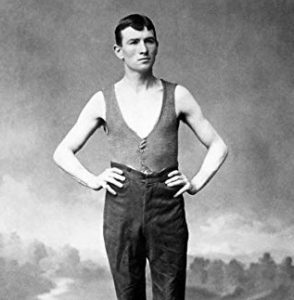
By Davy Crockett You can read, listen, or watch Steve Brodie The 19th century ultrarunner was a different breed of athlete compared to those today who participate in the sport. A large number of those early runners were not necessarily the most outstanding citizens. For the vast majority, the motivation for participating was not to see what they could personally accomplish running long distances. They were primarily motivated by greed and gaining fame. It should not be too surprising that many were involved in wild free-spending lifestyles, scandals, illegal activities, and run-ins with the law. A pattern emerged for many of the most successful ultrarunners of the 1800s. They would quickly gain fame and build up a massive fortune, only to come crashing down a few years later through their own mismanagement, dishonesty, and huge egos. Even the most famous pedestrian of all, Edward Payson Weston, blew through his money, filed for bankruptcy, and was criticized for abandoning his family at times. In this episode, the story of seventeen-year-old Steve Brodie of New York City is a case study of one who gained fame and fortune ultrarunning but treated many people terribly along the way and eventually used fraud to revive his fame. The American vernacular term “do a Brodie” meaning taking a bad risk, or experiencing a complete failure/flop, came about because of Steve Brodie, the New York Newsboy Pedestrian. Run Davy Crockett's Pony Express Trail 50 or 100-miler to be held on October 14-15, 2022, on the historic wild west Pony Express Trail in Utah. Run among the wild horses. Crew required. Your family and friends drive along with you. http://ponyexpress100.org/ Stephen Brodie, (1861-1901) “the New York Newsboy,” was the son of Richard and Mary Brodie of New York City. Richard was a member of the Bowery Boys street gang that menaced the city in the Bowery neighborhood in Lower Manhattan. The gang was an anti-Catholic, anti-Irish, and a somewhat criminal gang. The uniform of a Bowery Boy generally consisted of a stovepipe hat, a red shirt, and dark trousers tucked into boots. Richard was murdered shortly after Steve was born in 1861. The Bowery Boys reached the height of their power in 1863 taking part in looting much of New York Citty during the New York Draft Riots. Steve’s older brothers were groomed for the gang at a young age. Steve Brodie was the youngest of seven children. Instead of attending school, Steve worked as a child selling newspapers starting at the age of six. His older brothers constantly beat him and took his hard-earned money. At age nine, he moved out of his poverty-stricken home and moved into a boy’s home and later went to live in a newsboy lodging house. Newsboy The career was a newsboy was explained, “You had to sell newspapers every day, or else your risked becoming homeless. You fought for street corners and fought to protect your property. Men robbed the boys and older boys robbed the younger boys.” In his late teens, he led his own gang of newsboys. “He won the friendship of everyone he came in contact. He became acquainted with people of many classes, brokers, capitalists, lawyers, newspaper men, athletes, sporting men, actors, cranks, crooks, bums, and all the various kind of humanity that united to make New York an inexhaustible field for the student of mankind.” Brodie was a strong and daring swimmer who became a member of the Life Saving Corps organized on the East River front. As a youth he was credited for making many rescues including two women who fell of an excursion barge. Brodie’s First Ultra In February 1879, at the age of 17, Brodie made his first attempt to break into the sport of Pedestrianism. The New York Daily Herald took notice. “Pedestrianism has wrought its way into the favor of the upper circles of newsboydom, as was proven last evening by the commencement of the feat, proposed by Master Stephen Brodie,
Ep 114114: Ultrarunning Stranger Things – Part 4: Race Disruptions
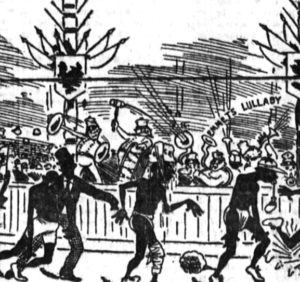
By Davy Crockett You can read, listen, or watch Today’s ultras usually have few disruptions from outsiders or spectators. The most serious disturbances are typically from people who take down course flagging which can cause runners to go off course, potentially putting them in serious danger. But during the era of ultrarunning more than 120 years ago, with thousands of spectators watching exhausted runners go in circles for six days, strange disruptions were commonplace. During high profile races, squads of policemen were required to keep the order. This is the fourth part of the Ultrarunning Stranger Things series. See Part 1, Part 2 (Hallucinations), and Part 3 (Sickness and Death). Run Davy Crockett's Pony Express Trail 50 or 100-miler to be held on October 14-15, 2022, on the historic wild west Pony Express Trail in Utah. Run among the wild horses. Crew required. Your family and friends drive along with you. http://ponyexpress100.org/ Disruptions In 1879, at Canarsie, Brooklyn, New York, an indoor six-day walking competition was taking place between five walkers in front of a nice crowd in Lehmann’s Hotel. It was put on by William Van Houten (1857-1914). The event was going along fine until two well-known local men entered the room, John Wilson, and Aleck Fisher. At the time most of the competitors were off track, sleeping, and so were many of the spectators. “Wilson jumped on the track and commenced breaking it up, while Fisher went about the room upsetting the benches on which were the sleeping Canarsieites." "One of the walkers, Clinton Drake, requested Wilson to desist from breaking up the track, whereupon Wilson caught Drake by the shoulders, shook him and threatened to throw him out the window. Wilson broke the track up to such an extent that it became necessary to stop the walk.” The two men were arrested by a constable but pleaded not guilty. Drake pressed charges of assault and battery again Wilson, who pleaded not guilty to that charge too. In 1879 at the 3rd Astley Belt Race in Gilmore's Garden, New York City, as the leader, Charles Rowell (1852–1909), was trotting on the track, a man rushed from the west side of the building and yelled "an offensive epithet" at Rowell. "At this instant the English pedestrian got afraid, and there was tremendous excitement. A policeman arrested the man and took him out, and a policeman accompanied Rowell round the track until order was restored." A Gang Interferes Apgar in later years Also in 1879, a contest in the Industrial Art Building in Philadelphia experienced many disruptions. Melville B. Apgar (1950-1934), of New York City, who fought in the Civil War as an underage infantryman, was in the lead on day four of a six-day race when an incident ruined his race. “He was going around at a fair gait when a drunken man came on the track, and the acting referee, Jones, ordered him off. He refused to go, and a scuffle ensued, during which the drunken man fell against Apgar as he was passing and knocked him down.” Apgar tried to continue for several miles, but his knee had been sprained and he had to withdraw from the race. Apgar and his friends criticized the race management, and one of them, Clark, made a very inflammatory speech about the terrible treatment received. “He was instantly surrounded by a crowd, and cries of ‘Put him out,” and “Kill him” and the like were freely used, and a rush was made.” The race manager asked the police to kick Clark out of the building and they did. Rumors circulated that there were further threats against Apgar and his friends from John Comber’s notorious “Reading Hose Gang”. A large police force of officers was brought in to prevent any more disturbances. But still, “Tricks” Muldoon, a member of the gang stole a cornet from a musician who was playing in the band during the event. The Reading Hose gang was an infamous group of ruffians that made their headquarters near the Reading Railroad depot...
Ep 113113: Ultrarunning Stranger Things – Part 3: Sickness and Death
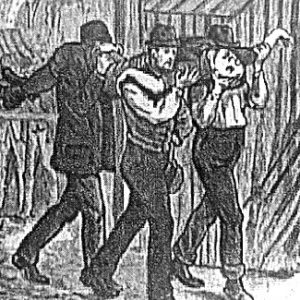
By Davy Crockett You can read, listen, or watch Sadly, some professional walkers and runners from the “pedestrian” era, more than 120 years ago, became afflicted by mental and physical illness during and after six-day runs, likely caused by the powerful drugs and stimulants that were used at the time, and also due to mental stress breakdowns. Enormous pressure was put on them by their financial backers to be successful. Their “trainers” or crew would at times resort to measures that would have long-term effects on the health of their runners to get a short-term financial windfall. Not only would they load their runners full of stimulants, but would use cruel methods to keep them awake, including sticking needles in their skin, whipping them, and waking them up with very loud horns. Run Davy Crockett's Pony Express Trail 50 or 100-miler to be held on October 14-15, 2022, on the historic wild west Pony Express Trail in Utah. Run among the wild horses. Crew required. Your family and friends drive along with you. http://ponyexpress100.org/ Runners Accused of Becoming Insane In some cases, runners acted so irrationally that they were declared insane and committed to institutions. John Gowan In 1891, John Gowan (real name Robert Sherlock), called “the salvation army walker” participated in a six-day race in Madison Square Garden and had reached 278 miles. Just after midnight, Gowan showed signs of mental trouble. Instead of sleeping during the night he rested while singing gospel hymns. In the morning he started walking again, but his eyes grew wild and staring, and he let out a wild-west war whoop. “His trainer squeezed a sponge soaked in water and ammonia in his face. Gowan struck his trainer in the face and made a bolt for the Madison Avenue end of the Garden.” He cleared the fence of the track in one leap. “Then the fellow rushed wildly down the paved lobby, cleared the brass railing at the ticket box, and ran out into Madison Square Garden arrayed in all the glory of dirty tights and a bright bule silk jumper. Two policemen gave chase and caught the escaped pedestrian. Bringing him back, the officers lifted him bodily over the rail, and his trainers led him back to his hut and put him to bed. A moment later one of them opened the door to take a peep at the fatigue-crazed pedestrian and Gowan plumped him a singing blow in the face.” He was then locked in his hut but later broke out, insisting on returning to the track, half naked. A policeman convinced him to change his mind. “The crazed fellow drank nearly a quart of kerosene oil that was in the hut which he had been locked into by the trainers.” His friends next took him to a room in Putnam House and locked him in. But he escaped through a window and down a fire escape. "Upon reaching the street he sped down 4th Avenue in quicker time than was ever made on the tanbark. At this point he was spied by an officer. When the officer tried to arrest the man, he fought like a tiger and finally assistance had to be called. He was taken to the police precinct and thence in an ambulance to Bellevue hospital." It was concluded that his illness was caused by a lack of nourishment. The trainers were accused of giving Gowan so much whisky that it would have knocked out a man. It was believed that he had gone insane. A few days later, he had recovered. “A short rest was all that was needed to restore his mind.” His sister commented that he had not been fit for the severe mental or physical effort demanded by a six-day race. He retired from the sport. Ultrarunning Fans Committed Not only would runners be accused of going insane from six-day races, but there was also one case of a spectator acting strangely. In 1888, Julia Finley of New York City had attended a six-day match with great enthusiasm. Afterwards it was said that she was found constantly walking around her apartment, believing that she was beating the world record.
Ep 112112: Ultrarunning Stranger Things – Part 2: Hallucinations
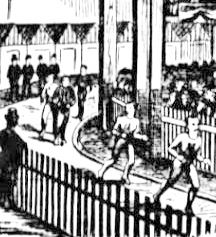
By Davy Crockett You can read, listen, or watch The sport of ultrarunning during the 19th century was truly filled with tales of strange things that are unthinkable and shocking to us today. This series of episodes presents a collection of the most bizarre, shocking, funny, and head-scratching events that took place in ultrarunning during a 25-year period that began about 150 years ago. The first part covered two strange tales, one shocking and one sad. This episode will report on the “cranky or daffy runners” whose minds turned to mush after several days of running without much sleep. They started to experience hallucinations, doing crazy things, delighting the thousands of spectators who came hoping to watch a train wreck of runners. Please help the ultrarunning history effort continue by signing up to contribute a little each month through Patreon. Signup and get a bonus episode about the first major six-day race held in California. Visit https://www.patreon.com/ultrarunninghistory Cranky Runners For the "pedestrian era" of ultrarunning, more than 120 years ago, spectators hoped to watch a runner go what they called, “cranky” in this reality show. It was said that by hour 36 of a six-day race that runners could be expected to do stranger things as exhaustion and sleep deprivation caused hallucinations. It was explained, “The cranky spell is reached, and the contestants furnish no end of amusement. Their tired brains are in a whirl, and it is only to be expected that the men should act like inmates of a ‘funny house.’” For example, during a 1901 six-day race on a small track in the old city hall in Pittsburgh, Pennsylvania, Martin Fahey (1857-1937), a Shenandoah miner went cranky and became violent after 150 miles. He demanded that the scorers credit him with a mile every time he completed a lap, probably 1/15th of a mile. “He claimed that the scorer and spectators had entered into a conspiracy to defraud him and was so demonstrative that his trainers found it advisable to take him out of the race.” He was soon fast asleep and put on a train for home. “As the news went out from Old City Hall that the men were going insane from the terrible strain of the race, people flocked to the place expecting to see the men do something violent. The hall was crowded to its capacity by the curious, who one minute sympathized with the men in their apparent suffering and the next minute were moved to laughter by their antics.” Tony Loeslein (1873-1939), a tailor from Erie, Pennsylvania, went cranky after 200 miles, left the track, and went into the crowd. “He asked the spectators to aid him in claiming that his trainers had stolen all his money and clothes. He tried to convince a small group of people that he was a much-abused man, and would have succeeded, had not his trainer arrived on the scene and placed him back on the track, where he continued to run, seemingly well-satisfied.” Missing Runners Runners would at times go bonkers so badly that they went missing. “One of the leaders suddenly stopped and climbed over the rail and ran into the tent of one of the other contestants. He was missed by his trainers who eventually found him and dragged him out, and in a few minutes was back on the track going around as steadily as ever." Frank Hart James Dean, of Boston, Massachusetts, one of the brave black runners of the era was a stenographer. During a race, he suddenly accused his crew of attempting to poison him and then would not accept food from them unless it was first tasted by someone to prove that it wasn’t poisoned. After he reached 412 miles on the last day of his six-day race, he was in a “daffy” condition, and he was taken to the hospital. He then escaped his attendants while in the bathroom. He went through an open window and down a fire escape. St. Francis Hospital “A search was at once instituted and kept up for several hours without finding any trace of the missing racer...
Ep 111111: Ultrarunning Stranger Things – Part 1: Two Tales
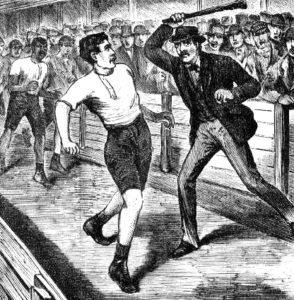
By Davy Crockett You can read, listen, or watch On March 3, 1879, at the Fifth Regiment Armory in New York City, during Peter Van Ness’ attempt to walk 2,000 half-miles in 2,000 consecutive half-hours, one of the most shocking events in ultrarunning history took place. Van Ness, sleep deprived, drunk, and in intense pain, got hold of a gun and shot his trainer, Joseph Burgoine, in the arm, next took a shot at his manager, Simon Levy, grazing his silk hat. Panic resulted among the spectators. It could have resulted in mass murder. How could this be? My new book! Grand Canyon Rim to Rim History The sport of ultrarunning during the 19th century was truly filled with tales of strange things that are unthinkable and shocking to us today. This is the first part of more than ten true surprising articles/episodes taken from 19th century newspapers about wild tales that took place in the sport of ultrarunning/pedestrianism This episode will present two bizarre and shocking stories that have never been fully told and have been forgotten -- the Van Ness shooting, and the head-scratching story of John Owen Snyder, "The Indiana Walking Wonder," who may have walked and run more miles in three years than anyone in history. Subscribe to the Ultrarunning History Podcast to get alerts and downloads automatically when new episodes are published every two weeks: https://ultrarunninghistory.com/subscribe-to-podcast/ Peter Van Ness Peter Lewis Van Ness (1853-1900) was from Brooklyn, New York. He began his famed professional pedestrian career in 1876 when he started to walk six-day matches against women, reaching 450 miles. He was about six-feet tall and was known to plod along in “rakish style” and a strange gait, wearing striped stockings up to his knees. He had walked in several six-day races and had success in 50-mile races. On January 27, 1879, Van Ness, age 25, started his 2,000 half miles in 2,000 half hours competition in New York City against Edward Belden (1856-1926), age 22, of Milwaukee, Wisconsin. The venue was in the old Fifth Regiment Armory located in lower Manhattan, at Hester and Elizabeth Streets. The wagering stakes between the two were huge, $500 ($5,800 value today). Belden was trying to cover the 2,000 half miles in consecutive 20-minute segments. A track of sawdust and loam was created in the Armory’s drill room with eleven laps to the mile. The 1,000 Mile Match Begins View from Armory, many street peddlers Everything started out well during the first week. Both started to complain of calloused heels and Van Ness suffered from headaches. But both looked well and didn't show signs of exhaustion. "Van Ness walks with a free and easy movement of his whole body, keeping a sharp eye on his opponent and laughing and talking with friends in the room. His walk is strongly suggestive of a hungry man on his way to dinner." His fastest half-mile was clocked in 4:20. Belden wore velvet trunks, red socks and a light-colored vest covered with medals. After a couple of weeks, Belden hit his knee against one of the stakes of the ring and it was feared that we would have to quit. "A speedy application of liniment relieved the pain and kept down the swelling so that the effects of the blow soon wore off." Van Ness was said to be very nervous and cross, and "frequently has difficulties with his trainer when 'time' is called, and he has to appear on the track." The dismal hall had strong odors of stale cigar smoke and beer. A small Italian orchestra played tunes on a harp, violin, and flute. After 20 days, Beldan was a mess. “His feet are a mass of blisters and it is almost impossible to wake him up.” The stress put on both men, physically and mentally was incredible. On Feb 23rd, after 28 days, Belden was successful in his grueling task and reached his 1,000 miles. “After finishing his journey, he retired to his room, donned citizens’ clothes,
Ep 110110: Six-day Race Part 16: Women’s International Six-Day (1879)
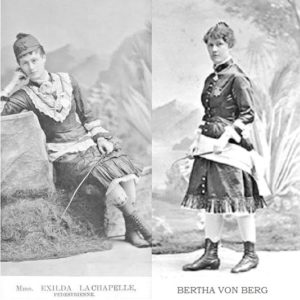
By Davy Crockett You can read, listen, or watch Many women participated in six-day races during the 1800s. With the great publicity of the Astley Belt Six-Day races, and the popularity of the new go-as-you-please format inviting running, the six-day race exploded into a craze in America and Great Britain. Of the 850 total starters in 85 six-day races in 1879, more than 120 starters were women. The details of the 17 women’s races held that year were fascinating, full of surprising drama, and needs to be remembered in this history, especially given the strong discriminating feelings toward women athletics in that era and for the century that followed. Please help the ultrarunning history effort continue by signing up to contribute a little each month through Patreon. Signup and get a bonus episode about the first major six-day race held in California. Visit https://www.patreon.com/ultrarunninghistory Women’s International Six-Day Gilmore's Garden After the Third Astley Belt Race was concluded in New York City’s Gilmore’s Garden (Madison Square Garden) on March 15, 1879, (see episode 109), it was quickly announced that a “Grand Ladies’ International Six-Day Race” would also be held at Gilmore’s Garden in less than two weeks. It would be the first “go-as-you-please” (running-allowed) six-days race for women. Yes, women would start running to the shock of the Victorian Age public. Because of scheduling conflicts in the building, the race would need to span across a Sunday. At first, they were told they would be allowed to run on Sunday. However, the police chief later decided that they would have to take a 24-hour rest on Sunday during the race. For the first time, a women’s ultrarunning race would include spectacular prizes for the winner. The first-place prize would be $1,000 ($28,750 value today) in cash along with a belt similar to the Astley belt, called the “Walton Belt” made by Tiffany valued at $250. The manager of the race was Francis Theodore “Plunger” Walton (1837-1911), a racehorse man and manager of the St. James Hotel in New York City. A hefty entrant’s fee of $200 was required to ensure that only the most serious women pedestrians would participate. All women who reached 325 miles, would get their fee back. Many women athletes expressed interest, including a number of amateur pedestrians trying to break into the sport. The same track for the Third Astley Belt race would be used. Army tents were provided for each competitor and three medical attendants would take care of them during the race. The Start On the evening of March 27, 1879, as a promenade concert was being held, many women accompanied by friends. carried bundles, bedding, trunks, and other possessions to the row of white tents in Gilmore’s Garden. At 11 p.m., the eighteen women starters listened to race rules that included a new rule against dogging the runner’s heels ahead, a rule that wouldn’t be enforced very well. The ladies were arranged in four rows and started with the word “go,” accompanied by music from the band and the cheers of about 1,000 people. Exilda La Chapelle, of Canada, was the early favorite, but few bets were made. The news press was generally unfavorable about having women participating in such an event. They wrote, “The pitiful spectacle of 18 women starting on a six days’ walk for money prizes was witnessed by about 1,000 spectators.” New York City’s foremost pedestrian promoter, William B. Curtis, (1837-1900), founder of the New York Athletic Club, refused to have anything to do with the race other than collecting the money to guarantee the promised prize package of $1,750. It was reported, “As soon as the eighteen were well under way, the fun began. The crowd seemed to regard the affair much in the same farcical light as they would a burlesque entertainment at a theatre. They were a strange lot. Tall and short, heavy and slim, young and middle-aged,
Ep 109109: Six-day Race Part 15: Third Astley Belt Race – Finish (1879)
By Davy Crockett You can read, listen, or watch As this concluding part of the Third Asley Belt Race opens, four elite ultrarunners were competing to be the Champion of the World in New York City in 1879, seeking to become the holder of the Astley Belt. The current world champion, Daniel O’Leary had apparently dropped out because of health reasons after 215 miles on day three. Great Britain’s best hope, Charles Rowell was in lead with 250 miles. Two others were still in the race, John Ennis of Chicago, and Charles Harriman of Massachusetts. Who would win? Don't miss part one, which included a violent riot at the start of the race. The shocking details are covered in Part one. (Read/Listen/Watch first). Please help the ultrarunning history effort continue by signing up to contribute a little each month through Patreon. Signup and get a bonus episode about the first major six-day race held in California. Visit https://www.patreon.com/ultrarunninghistory Gilmore's Garden On day three, the race continued in Gilmore’s Garden which would be renamed in a couple months to Madison Square Garden. The biggest story about this historic race wasn’t about the competition taking place on the track, it was about what occurred among the crowds of tens of thousands of spectators and the impact of the race on the entire city. Ultrarunning would emerge as the greatest spectator sport of its era in America. The New York Sun prophesied truly, "When the historian, a hundred years hence, looks over the files of this week's newspapers, he will not believe all that he finds on the subject is sober history. He will take it for a poor joke or a big humbug. And what is there to show for the week's excitement? Several heads clubbed, thousands of poor wretches encouraged in their betting and gambling proclivities, and four men worn out. This is a great country!" Tragic Accident At about 8:15 p.m., on day three, a tragic accident occurred among the spectators causing “such a scene of wild and indescribable confusion and alarm that has rarely been witnessed inside a public building.” Certainly, it was the greatest accident among spectators in ultrarunning history. A temporary upper gallery had been constructed that was divided into boxes. It was an ideal location to view the entire track and was very overcrowded with ten times the number of people intended. “A throng of ladies and gentlemen crowded every available inch of the place, some seated and many perched upon chairs and tables.” Suddenly, a portion of the gallery collapsed down upon the roof of a pavilion below. “The first intimation of the danger was the gradual settling of the flooring, then a loud, creaking noise, and away went a section of fifteen yards of the gallery, carrying with it over one hundred people.” Many, including ladies, were hurled 18 feet below. Thankfully, the structure did not collapse all at once, giving many below some time to escape, including those tending glass blower and flower bouquet stands. A few others below were less fortunate. “The frail structure broke into small pieces in the descent, and the unfortunate people who were precipitated with it were jammed between the debris, several of them being seriously injured.” The most serious injuries involved a broken leg, broken hand, broken collar bone, a spine injury, and a concussion. “A wall of struggling, groaning, maimed and terrified persons was piled up. A gashed face peeped through the broken timbers, an outstretched arm there. Panic ensued as people started stepping on injured people trying to get away.” A cloud of dust spread, seen by all in the building. It didn’t stop there. Panic spread throughout the building as some spectators thought that the entire building was collapsing. The runners stopped and left the track. A surge of people pressed forward to exit the building near the collapsed area. The police started rescue efforts among the rubble.
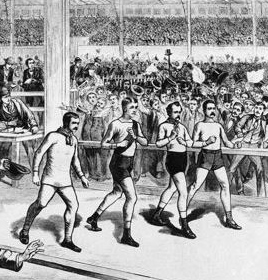
Ep 108108: Six-day Race Part 14: Third Astley Belt Race – 1 (1879)
By Davy Crockett You can read, listen, or watch By the end of 1878, at least 41 six-day races had been held in America and Great Britain since P.T. Barnum started it all with the first race in 1875. Daniel O’Leary of Chicago was still the undefeated world champion with ten six-day race wins. He was a very wealthy man, winning nearly one million dollars in today’s value during 1878. All the racing was taking a toll on O’Leary, and he had frequent thoughts about retiring. However, he still had obligations as the holder of the Astley Belt and the title of Champion of the World. If he could defend the Astley Belt one more time, three wins in a row, by rule he could keep the belt. A Third Astley Belt Race was in the early planning to be held sometime during the summer of 1879. In January he went to Arkansas to rest at the famous hot springs with its six bathhouses and 24 hotels. Little did he know that the Third Astley Belt Race would be one of the most impactful spectator events in New York City 19th century history witnessed by more than 80,000 people. It impacted ten of thousands of workers' productivity for a week and even distracted brokers on Wall Street away from their ticker tapes. The major New York City newspapers included more than a full page of details every day that revealed the most comprehensive details ever of a 19th century six-day race. Because of its historic importance, this race will be presented in two articles/episodes. Please help the ultrarunning history effort continue by signing up to contribute a little each month through Patreon. Visit https://www.patreon.com/ultrarunninghistory Astley Backs a Potential British Champion John Astley Sir John Astley wanted to make sure a Brit would next win the belt. After putting on an English Championship in late October 1878, he identified the best British candidate that he thought could contend with O’Leary and bring the Astley Belt back to England. His man was Charles Rowell, who had recently placed third in Astley’s English Championship Six-Day race with 470 miles. Astley formally issued a challenge to O’Leary on behalf of Rowell. Charles Rowell Charles Rowell (1852-1909), age 26, was born in Chesterton, Cambridge, England, and was fond of sports athletics in his childhood. He had gained some fame as a rower at Cambridge and was regarded as one of Britain’s top emerging athletes. He started his running career in 1872, winning some races. In 1874 he won a 19-mile race in 1:57:45 and later covered 32 miles in four hours. He was no doubt very fast. When Edward Payson Weston first came to England in 1876, Rowell raced against him in a 275-mile track race in the Agricultural Hall in London. He mostly played the role as a pacer and completed 175 miles to Weston’s 275 miles. Astley charged Rowell to get himself fit and promised to pay the expenses for him to travel to America for the Third Astley Belt Race. After a few weeks of training, Astley invited Rowell to his estate and observed his running abilities. “I was satisfied that he was good enough to send over to try and bring back the champion belt to England.” He provided £250 for his expenses. Prior to leaving England, it was rumored that he had covered a world record 539 miles in a private six-day trial, but Rowell would not confirm or deny it. Third Astley Belt Scheduled On November 7, 1878, John Ennis of Chicago, was the first runner to properly apply to London’s Sporting Life (the stakeholder) to challenge for the Astley Belt. Charles A. Harriman of Boston was the next, followed by Charles Rowell on December 1, 1878. By the end of January 1879, O’Leary accepted the challenges and started planning for a June race. But within a few days, John Astley, the founder of the Astley Belt series, decided that the next Astley Belt Challenge would be held in March 1879 at New York City in Gilmore’s Garden, soon to be renamed Madison Square Garden.
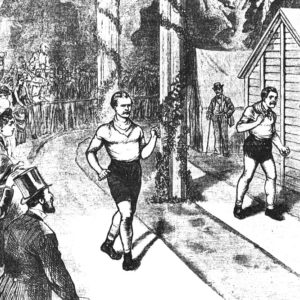
Ep 107107: Six-day Race Part 13: Second Astley Belt Race (1878)
By Davy Crockett You can read, listen, or watch In 1878, Daniel O’Leary of Chicago was the undisputed world champion of ultrarunning/pedestrianism. He cemented that title with his victory in the First International Astley Belt Six-day Race in London, defeating seventeen others, running and walking 520.2 miles. The Astley Belt quickly became the most sought-after trophy in ultrarunning. O'Leary was then the most famous runner in America and Great Britain, pushing aside the fleeting memory of Edward Payson Weston. As with any championship, want-a-be contenders came out of the woodwork. They coveted the shiny, heavy, gold and silver Astley Belt and wanted to see their own names engraved upon it. But more than anything, they also wanted the riches and the fame from adoring fans of the new endurance sport which was about to experience an explosion of popularity in both England and America. Please help the ultrarunning history effort continue by signing up to contribute a little each month through Patreon. Visit https://www.patreon.com/ultrarunninghistory Challenger: William Howes William Howes On the same day of O’Leary’s Astley Belt six-day victory, he received a challenge for the belt from William Howes (1839-), age 39, a waiter from Haggerston, England. Howes had been a very vocal critic of the Americans, O’Leary and Weston. He must have looked old because he was referred to as being “rather advanced in years.” He was 5’4” and had competed in running for many years. Back in December 1876, O’Leary had experienced the first pedestrian defeat of his career against Howes in a 300-mile 72-hour race when O’Leary had to drop out mid-race because of sickness. Howes had accused O’Leary of faking the illness to delegitimize Howe’s victory. Then a month later, Howes anonymously tried to put together a race against O’Leary, Weston and himself. But then Howes experienced an injury, couldn’t participate, and was very mad that the race wasn’t postponed for him. Howes Issue Challenge to O’Leary Howes was a legitimate ultrarunner, who in February 1878 had set a new world walking record for 100 miles (18:08:20) and 24 hours (127 miles). But for unknown reasons, Howes withdrew his entry for the Astley Belt race a week before the race. Now, instead of racing against the 18 runners in that race, he wanted a head-to-head match against O’Leary to try to snatch away the coveted Astley Belt. O’Leary was required to accept any challenge within three months and defend the belt within 18 months, but he had no intention of staying in England with his family to race against the pesky Howes. Howes, who clearly dodged competition in the First Astley Belt Race, just one week later, on March 30, 1878, raced against ten others for 50 miles in the Agricultural Hall in London. Howes, won by two minutes and broke the world record with 7:57:54, the first to break the eight-hour barrier. (Later in the summer he would lower it further to 7:15:23 at Lillie Bridge). Also, just three days after O’Leary’s victory, Weston, who had also pulled out of the Astley Belt race claiming illness, realizing the huge money that could be involved, issued his own challenge against O’Leary. Other challenges came from Brits, Henry Vaughan, William Corkey, and Blower Brown, all veterans of the First Astley Belt Race. O’Leary Returns to America with the Belt O’Leary infuriated Howes and many others in England when he made it clear that he was returning to America and that any challenge to the belt would need to be competed against him there. He said, “Having won the belt, I had the say where the walking should be done. I wouldn’t walk in London again. They don’t know where America is, and of course wouldn’t go there.” This didn’t please Sir John Astley who feared that the belt would never come back to England. He stated that if it didn’t come back, he would create an identical belt for the British to compete for,
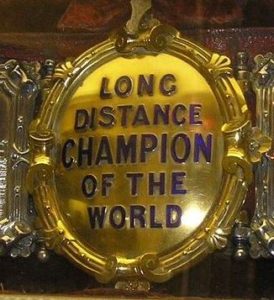
Ep 106106: Six Day Race Part 12 – First Astley Belt (1878)
By Davy Crockett You can read, listen, or watch By 1878, interest in ultrarunning/pedestrianism had taken a strong hold in Great Britain. The six-day race was viewed as a unique new branch of the running sport that fascinated many sporting enthusiasts. Like P.T. Barnum who was the first major promoter of ultrarunning in America, John Astley became the first prominent ultrarunning promoter in England. Astley’s significant involvement in 1878 helped to legitimize pedestrianism and he was the person who put “running” into "ultrarunning." He thankfully removed the walking restriction in the six-day race and established the first international championship race, later called “The First Astley Belt.” Please consider supporting ultrarunning history by signing up to contribute a little each month through Patreon. Visit https://www.patreon.com/ultrarunninghistory Sir John Astley Sir John Dugdale Astley (1828-1894) was a member of Parliament representing North Lincolnshire. He grew up in a wealthy family and was a lieutenant colonel in the Scots Fusilier Guards, serving in the 1854 Crimea War where he was wounded in the neck at the Battle of Alma. He was a great sportsman and while young, was an elite runner at the sprint distances. Astley was truly a “larger than life” character. “He was a big, burly, old man, fond of strong language and strong drink. Wherever he went he was made conspicuous by his large figure, white hair and beard, the enormous cigar, never out of his mouth, save when he was eating, drinking or sleeping, his strident voice and his frequent, boisterous laugh.” A friend said, “He must have smoked more miles of cigars than any man living.” William Gale Astley also had a passion for horses and boxing and wagered large sums of money. He lost a small fortune betting against O’Leary in the Edward Payson Weston vs. Daniel O’Leary II race of 1877 (see episode 105). Astley introduced the first belt (not belt buckle), into ultrarunning when he awarded William Gale a massive belt for accomplishing 4,000 quarter miles in 4,000 consecutive periods of ten minutes during October-November 1877 for 28 days. Championship belts had been introduced in boxing as early as 1810, and Asley brought the belt into the sport of pedestrianism. “Sir John Astley girded Gale’s waist with a belt of crimson velvet and massive silver. But the belt was too large, so amid much applause and some little merriment, it was slung across one of his shoulders.” Plans for the Long-Distance Championship for the Astley Belt On December 8, 1877, Astley announced that a six-day championship race would be held in the Agricultural Hall in London, open to all pedestrians in the world. A perpetual belt valued at £100 pounds would be awarded to the winner. The entrance fee was initially set at £10 (about $1,400 in today’s value). A telegram was sent to the recognized world champion, Daniel O’Leary in Chicago with an invitation. O’Leary quickly responded that he was interested. Go-As-You-Please Rules Introduced In January 1878, more detailed plans were announced for the historic event. The date was set for March 18th, with a prize package of £750. The field would be limited to twenty starters. But the most significant announcement was that the race would not be limited to heel-toe walking. The athletes could run if they wanted. It was called “Go-as-you-please.” This was a historic decision made by Astley to embrace running along with walking. The decision to open up the competition to running was made for two reasons. 1. Weston was constantly criticized that his walking style of wobbling was not always true “heel-toe” walking. Even O’Leary had also been accused of running at times in his matches. This put pressure on judges during events and caused anger among wagerers. 2. In recent decades, the British had been developing running, not walking, and were at a clear disadvantage to Weston’s and O’Leary’s skill at walk...
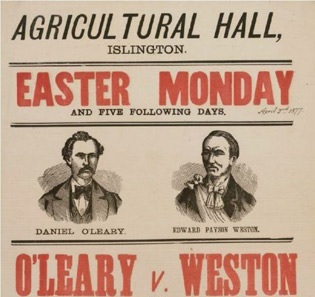
Ep 105105: Six Day Race Part 11: O’Leary vs. Weston II (1877)
By Davy Crockett You can read, listen, or watch In America, 1876 had been a “loopy” six-day race year, with at least eighteen races held. Interest was high, but there were also skeptics. Closing out the last episode, Daniel O’Leary, of Chicago, the champion pedestrian of the world, reached 500 miles for the third time in six days, but his reputation had been tarnished due to some false accusations that in some people’s minds also put a black eye on the ultra-distance sport. With criticism swirling around him, it was time for O’Leary to show England that he was the true champion ultrarunning/pedestrian of the world, not Edward Payson Weston, who had been winning over the British respect and their money for months. By going to England, O’Leary would face off in a rematch with Weston for their historic second six-day race. It would receive nearly as much attention as the Ali vs. Frazer II boxing match that took place 97 years later in Madison Square Garden. O'Leary would become a key figure in the history of the sport that attracted international excitement for the six-day race, and also would bring back a massive fortune. Please consider supporting ultrarunning history by signing up to contribute a little each month through Patreon. Visit https://www.patreon.com/ultrarunninghistory O’Leary Heads to England In late September 1876, while O’Leary was on a ship crossing the Atlantic, Weston finally succeeded reaching 500 miles in six days for the second time. This was accomplished at the Ice-Skating Rink at Toxteth Park, in Liverpool and he went a little further, to 500.5 miles. Weston Ad O’Leary arrived in London a few days later, in early October, and immediately tried to help the British understand that he was the true pedestrian champion, not Weston. O’Leary wrote, “I am desirous of forever settling the question, ‘Who shall be the champion pedestrian of the world? Should Weston be desirous of entering into a side-by-side contest of 500 miles with me, I hereby agree to give him a start of 25 miles in that distance.” Weston ignored O’Leary’s challenge and didn’t want to share the spotlight that was shining on him by the British public. He was even getting money from a product endorsement, doing ads for a cream to help with rheumatism, sprains, chest-colds, and lumbago. O’Leary Beats Weston’s Six-day Mark in Liverpool Frustrated that a race could not be scheduled, O’Leary wanted to prove to the British that he was better than Weston. He also went to Liverpool, determined to beat Weston’s recent mark set there of 500.5 miles in six days. On October 16-21, he also walked in the Admiral Street Skating Rink at Toxteth Park on a track measured 11 laps to a mile. Sam Hauge (1828-1901) of Liverpool, organized the event with a bet against O'Leary of £100, that O'Leary could not beat Weston's recent solo six-day mark of 500.5 miles under the exact same conditions on the same track. The English, skeptical of this newcomer, commented, “He is much prettier and a more rapid walker than Weston, but his dress is not near so neat as that worn by Weston.” To the British, how you looked was just as important as how you performed. Interest in Liverpool was intense. Trams were filled, taking spectators to the rink where they would pay one shilling to watch day and night, and be entertained by a band. O’Leary walked strongly on the first day, reaching 106 miles. On day two, show fatigue, he reached 169 miles and was 11 miles behind Weston’s pace. He usually walked with a pacer who helped keep him awake by chatting and he improved, reaching 263 miles after three days despite being ill. Unable to take in solid food, he fueled mostly on soup and "slops." He didn't like walking to the music of a brass band, so a string orchestra replaced it. On the final days he lived on oysters stewed in milk. After five days, he reached 427 miles, and it was believed to be “doubtless” that he would succeed.
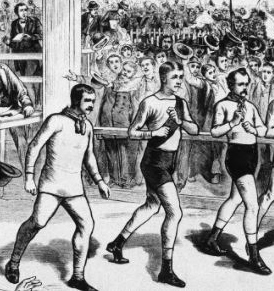
Ep 104104: Six Day Race Part 10: Grand Walking Tournament (1876)
By Davy Crockett You can read, listen, or watch The year 1876 was a particularly important year in ultrarunning/pedestrian history and thus several episodes have covered the events held that year. It was the year when the six-day races started to spread across America for the first time. Lost in ultrarunning history, is the story of the first major six-day race held in America with twelve competitors. It was called “The Grand Walking Tournament for the Championship of the World,” held in May 1876, in the massive Exposition Building in Chicago, Illinois. For the first time, the story of this historic race will be retold. In addition, that year, Daniel O’Leary, took the six-day race to California. Please consider becoming a patron of ultrarunning history. Help to preserve this history by signing up to contribute a little each month through Patreon. Visit https://ultrarunninghistory.com/member Daniel O’Leary’s influence upon American Pedestrianism In America, in 1876, Daniel O’Leary, the true pedestrian champion of America, was the driving force to spark interest in the sport. He competed, trained and encouraged other athletes, and invested his own time and money to make events successful. Early in 1876, he especially supported Chicago’s female pedestrians (see episodes 101 and 102). But with his success, outspoken critics emerged. Oleary had been criticized by some for his handling of the first women's six-day race between Bertha Von Hillern and Mary Marshall that ended in controversy. (see episode 101) “Mr. O’Leary may be a splendid walker, and he may have lined his pockets by this last appearance in public, but as a manager he has proved a lamentable failure and has not added to his reputation as a gentleman.” Challengers to O’Leary’s Title O’Leary received continual six-day challenges from others. Now that he was the champion over Weston, he was careful not to waste time with pretenders. When Caleb W. Sidnam (1829-1902), age 57, a travel agent from Chicago, publicly challenged him, O’Leary’s response included, “Of course, I am most desirous of preserving my championship medal, as also the reputation already acquired.” But he countered with strict conditions for the contenders to put up or shut up. Put up guaranteed money to show that they were serious. He said, “During the past few months I have been much annoyed by persons requesting me to give them a start of several miles. I will give no odds whatever, being convinced of the necessity of having such persons make a record on strength of their own merits.” Henry Schmehl (1851-1932), a German-American, and O’Leary’s friend, was one who hoped to be a challenger. He made it clear that he wanted no handicaps or favors, “that I had better establish a record for myself before I presumed to challenge him.” Thus, he first participated in the six-day race against Ellen Wickers and reached an impressive 502 miles, second only to O’Leary (see episode 102). When Weston was only able to reach 450 miles in six days in England (see episode 99), Chicago called him a “fraud” and wondered why no international attention was being paid to O’Leary or Schmehl who both exceeded Weston’s best. “Verily, if the Englishmen are astonished at Weston, will they not be amazed at O’Leary if he brings his match to England?” O’Leary heads to California Daniel O'Leary O’Leary took the Overland Railroad across the country in March 1876 to San Francisco, California. He then published a challenge to any man on the Pacific Coast, to race against him from 100-500 miles for as much as $10,000. If a challenger didn’t come forward, he would do a solo six-day walk for 500 miles and try to beat the world best time of 142:54:00, which was a little more than an hour less than six days. How would California react to this new sport and O’Leary’s brash challenges? One newspaper wrote, “If O’Leary would devote his leg-ability to some useful employment, say,
Ep 103103: Ukrainian Ultrarunners
By Davy Crockett You can read, listen, or watch Ultrarunning in Ukraine has had a long, wonderful history since the early 1970s. As the country is being ravaged from war, ultrarunners around Ukraine have turned their attention to survival, defending their country, or fleeing as refugees to other countries. Ultramarathons, once held regularly in Ukraine, are sadly gone for now. This episode will highlight the history of ultrarunning in Ukraine and profile some of the very talented Ukrainian ultrarunners who over the years have been a great inspiration. Ultrarunners from Ukraine ran with joy in the past, but now they run in fear. With most communications cut off from them, thoughts and prayers go out as they deal with the severe violence taking place in their homeland. Some recent news is being heard from Ukrainian ultrarunners. Over the years, there have been more than 5,000 ultrarunners from Ukraine who have walked or ran in ultramarathon events around the world from distances from 50 km to 3,100 miles. Before the pandemic, in 2019, there were 30 ultramarathons held in Ukraine and at least 1,300 Ukrainians finished ultras that year. 100km Along the Belt of Glory The first ultra in Ukraine was started in 1974, while the country was still part of the Soviet Union. It is called “100km Along the Belt of Glory” held in Odessa, Ukraine’s biggest port city. The race has been held every year since, for the 48 years. It was established to dedicate the day of liberation of Odessa from the Nazi invaders on April 10, 1944. The race, with a 24-hour cutoff, used to run a big loop around Odessa, but recently starts in Shevchenko Park, near the monument to the "Unknown Soldier," and then runs a big loop through Odessa, visiting many of monuments of the Second World War. It was first organized as a walking event in 1974 with 128 starters, and eventually evolved into a running ultra. The race’s largest year was in 1988 when there were 2,111 starters and 889 finishers in under 12 hours. The current organizers wrote this description, “On April 10, 1944, the troops of the 3rd Ukrainian Front liberated our city from the fascist invaders. And on April 6, 1974, the inaugural ‘100 km along the Belt of Glory’ took place. Since then, every year, without exception, at the beginning of April, a walking “hundredth” starts. "We can run because you stood still!" - this phrase has become the motto of the hundred. Sadly, and obviously, the race will not be held this year for the first time since 1974. The Belt of Glory 100km has had many traditions through the years. Guitarists walk along playing songs, accompanying the walkers and runners for the first 15 kilometers. At the finish line is played, “We are the Champions,” recognizing all those that finish as champions of the event. Finishers then get to dine on a signature soup cooked with love in the field kitchen. During the 1980s, the race was dominated by Vitalii Kovel (1947-) of Russia, a seven-time finisher, who still holds event record with a time of 6:14:12. He also holds five of the six fastest times in the history of the race. Among the women, Natalya Marimorich (1949-) of Ukraine has had the most wins, six from 1976 to 1985. The course record is held by Tatiana Khomich of Belaris with a time of 8:31:00, set in 1990. In 2021, the overall winner was Saaryan Andrey Pavlovich with 8:13. The women’s champion was Valentina Kovalskaya with 10:05. The Stadium Run in Odessa The runners in Odessa can be credited for being the pioneers of Ukrainian Ultrarunning. In 1988, another race was established in Odessa, a 24-hour track race that started a long tradition of fixed-time ultras in Ukraine. It was held annually in late October for ten years and called the “24 Hours Stadium Run” and held in Spartak Stadium. For the first year, there were 35 runners from Ukraine, Russia, Latvia, and Moldavia. Valerii Gubar (1948-) of Russia won with 163 miles/262 kms.
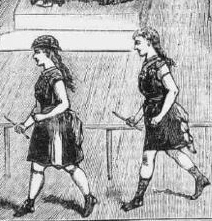
Ep 102102: Six Day Race Part 9: Women’s Six-day Frenzy (1876)
By Davy Crockett You can read, listen, or watch Women's Six-Day Race In 1876, Chicago, Illinois was the six-day race capital of the world. A six-day race frenzy broke out in many other cities, after the incredible Mary Marshall vs. Bertha Von Hillern race was held in February 1876. (see episode 101). They showed America that not only could men pile up miles in six days, but women could too, even mothers. Both men and women sought to race for fame and fortune, even some who weren’t properly trained. There were so many people who wanted a piece of this action that the Chicago Tribune wrote that it would no longer publish challenges unless there was proof that money had been forfeited (secured) for a six-day wager. This new policy was put in place “in view of the extraordinary lunacy which has lately been prevalent among the boys and women of Chicago on the question of walking matches and challenges.” The 1876 six-day craze took place especially among women. This episode will continue to tell the story of the earliest women six-day races. At least twelve six-day races involving women were held in 1876. Pedestrian historians have missed most of this history. The forgotten story has been discovered and can now be told. Please consider supporting ultrarunning history by signing up to contribute a little each month through Patreon. Visit https://www.patreon.com/ultrarunninghistory Millie Rose vs. Anna Mattice in Cincinnati Millie Rose, age 27, the infamous cowhide-wielding fiery pedestrian originally from England, had tasted some of the exciting six-day race between Mary Marshall and Bertha Von Hillern in early February 1876. (See episode 101). She immediately wanted a race of her own and found it in Cincinnati, Ohio. There, she competed against Anna Mattice, a Canadian living in Cincinnati, who was an "older runner." The race began on February 14, 1876, at the Cincinnati Exposition Hall, on a track measured to be 15 laps to the mile. Rose, who had not yet won a race, claimed to be “the champion female pedestrian of America.” For a surprise side-show during this Cincinnati race, Rose’s seven-year-old daughter Louise “Lulu” Rose walked an impressive 10 miles in 2:25:50. In the end, Millie Rose won in a shortened five-day match with 207 miles to Mattice’s 187 miles. Mattice only managed 19 miles on the last day. Millie Rose vs. Clara Hubbard in Toledo With that success, Rose wanted more. Just one week later, on February 26, 1876, another woman’s six-day race was held. At Toledo, Ohio, in Toledo Hall, Rose took on young Clara A. Hubbard (1859-1909), age 18, of Chicago, Illinois. The race started on a Saturday at 10 a.m., probably to attract spectators, instead of the typical early Monday start right after midnight. This race was scheduled for six and a half days. The event attracted great curiosity in Toledo. On day two, more than 1,000 spectators watched as Rose reached 88 miles and Hubbard 77 miles. On day three (after 2.5 days), both were doing well, and the score was Rose 132 and Hubbard 121. Running was obviously permitted or ignored because the women were able to clock amazingly fast miles. Hubbard’s fastest mile was run in 8:22. On day five, Rose’s seven-year-old daughter Lulu, raced against a nine-year-old boy for an hour. She reached five miles in 57 minutes. The little girl, with her mother’s fire, immediately challenged the boy to continue the race to 20 miles, but the boy wisely declined. Crowd-control was always a problem during these popular events. During the evening, a local bartender forced his way onto the track and refused to leave. “The affair caused a little excitement, but the fellow was ejected in a few minutes and the performance went on. The management took precautions against any such annoying episodes in the future.” Rose was ahead with 204 miles to Hubbard’s 186. On day six, Rose had a 24-mile lead, but Hubbard was narrowing the deficit fast,
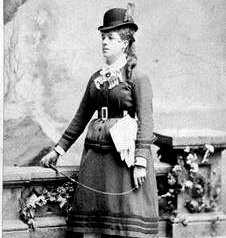
Ep 101101: Six Day Race Part 8: First Women’s Race (1876)
By Davy Crockett You can read, listen, or watch In early 1876 while Edward Payson Weston was taking on England in storm, embarrassing the British long-distance walkers and runners in the first six-day race in that country (see episode 99), the six-day race continued to be of growing interest in America, this time among women! Some in the press called these female wonders, “Pedestriennes.” Was America truly ready to accept that idea that women could walk or run for days, for hundreds of miles? Obviously, there were strong cultural beliefs during the era that it was improper for women to participate in distance walking and running. An editorial in the New York Times stated, “Today it is the walking match, soon the [women's vote] will come.” It isn’t surprising that once the women started to compete that New York City considered passing an ordinance banning “all public exhibitions of female pedestrianism.” Please consider supporting ultrarunning history by signing up to contribute a little each month through Patreon. Visit https://www.patreon.com/ultrarunninghistory Early Women Pedestrians Emma Sharp - Barclay walker from 1864 In 1876, female pedestrians were not entirely new. As early as 1844 in England, women started to attempt the Barclay Match, walking 1,000 miles in consecutive 1,000 hours, one mile each hour (see episode 18). Several British women were successful over the next thirty years. Often men wagering against their success would attempt to assault them to make them fail. In America, in 1868, Anne Fitzgibbons, “Madame Moore,” a clog dancer from England, exported women pedestrianism to America. She began putting on 50-mile walking exhibitions in upstate New York, wearing “male attire” during her walks, for which she was arrested. She went on to be the first known woman to walk 100 miles in less than 24 hours. There was speculation whether American women could be ultra-distance pedestrians. “American girls are generally poor walkers, and it will soon be a difficulty to find an American lady who can walk more than twenty minutes without complaining of fatigue. They pay too much attention to the shape and make of their boots for pedestrian performances.” A few isolated ultra-distances walks were performed by women during the early 1870s. In 1871, Lydia Nye walked 30 miles in eight hours over a rough, mountainous road near Bennington, Vermont. She received national attention in the newspapers. In 1874 a woman created quite a stir who had walked all the way from Kansas City, to Sacramento, California “in search of a truant husband.” She wouldn’t take rides offered or ride the railroad because of a fear of trains. “That husband will be the biggest fool of the two if he ever lets her catch him.” Other women soon started to make walks of huge distances, getting their names in the news. In 1875, M’lle Lola, a gymnast, and trapeze performer, walked 30 miles against a man in P.T. Barnum’s New York City Hippodrome (see episode 97) gaining intense fame. Time for a Women-only Six Day Race Chicago, Illinois seemed to be the right place for women pedestrians to race for six days for the first time and gain initial acceptance. Daniel O’Leary had energized the city with his historic six-day victory over Edward Payson Weston late in 1875 (see episode 98). Two daring women took the stage to be the first women in history to compete in a six-day race: Bertha Von Hillern and Mary Marshall. Bertha Von Hillern Bertha Von Hillern (1853-1939) was born in Stadtkreis Trier, Rheinland-Pfalz, Germany on August 4, 1853. Her mother encouraged and trained her in activities of strength and endurance. She joined in with boys in walking contests and she would outlast them all. They would “gaze with mortified astonishment at the little figure, erect, quiet, moving silently and steadily on toward the goal.” It was reported, "She began to study the science of pedestrianism when but twelve ...
Ep 100100: Western States 100 – The First Finishers on Foot
By Davy Crockett and Phil Lowry You can read, listen, or watch In Auburn, California, on the evening of July 30, 1972, an awards banquet was held at the fairgrounds for the finishers of the Western States Trail Ride, also known as the Tevis Cup. There was additional excitement that year among the exhausted riders, who early that morning had finished the most famous endurance ride in the world. Not only would the 93 riders receive their finisher belt buckles, but they would witness a trophy awarded to the first person in history to finish the famed trail, not on a horse, but on foot. The special trophy was made and would be presented by the ride’s founder, and president, Wendell Robbie. But when the trophy was presented, it was not awarded to Gordy Ainsleigh. His important accomplishment would come two years later. He was not the first to finish Western States on foot, despite the marketing hype you may have been told for 45 years. Ainsleigh was in the audience and watched the trophy and other awards go to the true first finishers. This is the story that has been left out of Western States 100 history. Note: Also listen to the audio episode for a discussion at the end between the two researchers/authors of this article. Learn the true history of Western States 100, including this story in the new books covering the history of the 100-milers. This true story is covered in detail in part two: https://ultrarunninghistory.com/100miles2/ Fort Riley, Kansas Today, where is the trophy for the first finisher on foot? It likely resides forgotten in a dusty storage room in Fort Riley, Kansas, 140 miles west of Kansas City. Perhaps, similar to the depiction in the movie Raiders of the Lost Ark, the trophy will stay hidden for another 50 years. What is the true story behind this “first finisher on foot” trophy, and who received it? It was a front-page story in the Auburn Journal that was later forgotten and buried. How the First Finisher Story Started Mary Lyles McCarthy The Western States first finisher story started in 1967 with a young woman named Mary Bradley Lyles (1948-), of Visalia, California. Mary's father had served in the cavalry in World War II and passed on his passion for horsemanship to his daughters. As teens, Mary and her two sisters, Anne and Peggy became very involved in equestrian events, shows, competitions and weekly training events outside their back door. Their mother would support them by driving horse trailers all over. Mary became a very experienced rider and completed the 1967 Western States Trail Ride at the age of 18. It had been an amazing experience riding day and night across the High Sierra. She married Joseph Thomas McCarthy (1945-) in 1969, who was in the army and soon was sent off to fight the war in Vietnam. Joseph McCarthy in 1969 After returning from the war, Capt. McCarthy was stationed at Fort Riley, Kansas. He became the leader of an adventure team consisting of many Vietnam veterans still in the service. As McCarthy was looking for a hard endurance adventure to test his team, his wife, Mary, proposed that the team try to cover the Western States Trail on foot, with the horses, during the Western States Trail Ride that year. General Edward Flanagan McCarthy loved the idea and received initial approval from Fort Riley post commander, General Edward M. Flanagan, Jr. (1921-2019), who had formed the adventure team, part of the 6th Battalion of the 67th Air Defense Artillery Regiment. Having the team climb over the Sierra for 100 miles in military-issue leather boots and fatigues could be viewed as “fun” for recruiting purposes. Plans for the March Wendell Robie Early in 1972, McCarthy contacted Wendell Robie (1895-1984), the president of the Western States Trail Ride to ask permission for his team to march the trail during the upcoming ride. He explained to Robie, “The Army has a new program of providing its men with challenges...
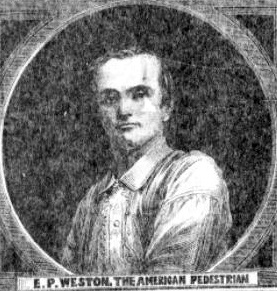
Ep 9999: Six-Day Race Part 7: Weston Invades England (1876)
By Davy Crockett You can read, listen, or watch The six-day challenge (running as far as you could in six days) originally started in England during the late 1700s. Fifty years later, in the 1820s, a six-day frenzy occurred as many British athletes sought to reach 400 or more miles in six days (see episode 91). But then, six-day attempts were essentially lost for the next 50 years. Surprisingly, it was the Americans who resurrected these events in the early 1870s and brought them indoors for all to witness. The Brits believed they owned the running sport and surely their athletes were superior and could beat the upstart Americans, Edward Payson Weston and Daniel O'Leary. It was written, “They cannot be expected to be much better than those bred in England.” Both American and British runners/walkers wanted to prove that they were the best and challenges were sent back and forth across the Atlantic Ocean. The British did not realize that in 1875, there was no one truly skilled and trained in England to do heel-toe walking for the distances that Weston and O’Leary were doing in America. Thus, Weston took the English bait and boarded a steamship to England. Please consider becoming a patron of ultrarunning history. Help to preserve this history by signing up to contribute a little each month through Patreon. Visit https://ultrarunninghistory.com/member British Pedestrian Talent The British attitude toward Americans in athletics at the time was characterized in one of their sporting newspapers. “Americans have long looked upon us as being far behind the times, while they have prided themselves on their ability to go ahead of all creation. This may be true, or it may not be so, but there can be no doubt that we have on all occasions shown ourselves fully equal to them in all branches of sport.” Another explained it this way, “We Englishmen only believe what we see of American prowess is the extreme untruthfulness of American sportsmen. We are not in the least degree jealous of their athletic prowess, we are only skeptical.” Lillie Bridge Grounds The current Pedestrian hero in England was William T. Perkins, “The Champion Walker in England.” On September 20, 1875, at the Lillie Bridge grounds in London, England, the home of the London Athletic Club, he covered eight miles in 59:05 in front of 5,000 people. In England “Pedestrianism” was not limited to walking, it included distance running and short-distance “sprint running.” But interest was low. During December 1875, a Sporting newspaper wrote, “Professional pedestrianism is at its lowest ebb in London.” The first long-distance running race, professional or amateur in more than a year was scheduled for December 26th that year, a ten mile-race held at Lillie Bridge. Reaction in England to Weston-O’Leary Race Weston and O'Leary British sports writers doubted the results of the December 1875 Weston-O’Leary six-day race in Chicago won by O’Leary (see episode 98). A respected British sportswriter, Easterling, wrote, “Either O’Leary is a wonder of endurance such as has never been before even dream of, or he isn’t, and that can only be tested by his walking against some known man round a large ground or on a road. Not to mince matters, the reason we Englishmen only believe what we see of American prowess, is the extreme untruthfulness of American sportsmen.” A running/walking expert in London carefully looked over the statistics of the Weston-O’Leary six-day race. He was impressed with the amount of data collected but wondered about competing that distance in “a covered building.” Indoor running competitions were not yet taking place in England, and it was believed that there were many British professional athletes who could beat “the Yankee horses,” Weston or O’Leary, easily on roads outside, rather than in comfy looping indoor accommodations, events which they referred to as “dreary tramps.” William Curtis
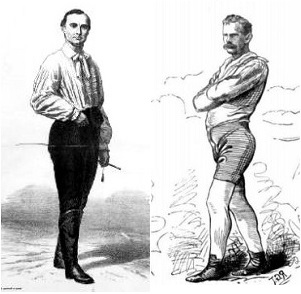
Ep 9898: Six-Day Race Part 6: Weston vs. O’Leary (1875)
By Davy Crockett You can read, listen, or watch In 1875, Edward Payson Weston was the most famous ultrarunner (pedestrian) in the world. Like a heavyweight boxing champion dodging his competition to keep his crown, he avoided repeated challenges to race against the up-and-comer, Daniel O’Leary of Chicago, Illinois. The two were the most famous American athletes in 1875. During August 1875, it was announced in New York City that plans were unfolding to hold “a grand international pedestrian tournament” in October that would include a six-day race with $1,000 going to the winner. It was hoped that all the great pedestrians including Weston and O’Leary would compete. Unfortunately, that race never unfolded, but Weston and O’Leary would soon battle head-to-head, not in New York City, but on O’Leary’s turf in Chicago. Please consider becoming a patron of ultrarunning history. Help to preserve this history by signing up to contribute a few dollars each month through Patreon. Visit https://ultrarunninghistory.com/member Weston vs. O’Leary - Finally Finally, on October 30, 1875, it was announced that Weston and O’Leary would compete in a six-day race on November 15th, with $5,000 going to the winner and $2,500 to the loser. O’Leary’s men had approached Weston offering $500 extra to cover his expenses. It was just too much money for Weston to resist, potentially about $140,000 in today’s value if he won. The venue would be in the massive new Interstate Exposition Building in Chicago. The building, measuring 800x400 feet, had opened in 1873, just two years after the Great Chicago Fire. It was rented with promises of receiving 15% of gross gate receipts. The announcement created great excitement across the country. To many at the time, it was similar to the dream matchup between Muhammad Ali and Joe Frazier in 1971, regarded as the greatest boxing match in history. However, there were critics against holding the event. In Ottawa, Illinois it was written, “What excites our wonderment is, who pays the $7,500? What benefit can it be to anybody whether they walk 100 or 1,000 miles in six days. A horse or mule able to walk 600 miles in six days might be worth something, but who cares how many miles Weston or O’Leary can walk in a day or month, so long as they don’t kill themselves?” Similarly, in Mobile, Alabama: “Suppose these men had ploughs, wouldn’t they add something in this way to the wealth of the world?” Pre-Race Gardner House Weston arrived in Chicago three days before the race with his two black servants and stayed at the luxurious Gardner House, next to the Exposition Building on the Lake Michigan lakefront. It was reported, “He is in good condition and confident of success. O’Leary also is in excellent trim, and confident of victory as his opponent. The contest will no doubt prove very exciting.” Wagering was heavy with Weston being a slight favorite. Exposition Building Map The Chicago Tribune gave a pre-race commentary about the two pedestrians. “O’Leary has made some excellent feats, and has but one failure to his credit, while Weston, with also a good record at times, has a considerable number of bad fizzles on his list of attempts. Both men have before attempted the 500-mile walk, and both have succeeded. O’Leary made the distance in a little over 153 hours, while Weston covered the same ground in ten hours less. However, some doubt was cast on the accuracy of the timing and measurements which resulted.” O’Leary visited Weston and talked over plans for the race. Weston inspected the track and gave his approval. Two separate tracks would be used, the outer six laps to a mile, and the inner, seven laps to a mile. Weston was offered his choice and he picked the inside track. The Start Spectators began to assemble in the building an hour before the start. There wasn’t a huge crowd, only about 100 people, and consisted mostly of men interested in sports.
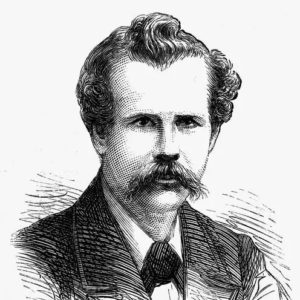
Ep 9797: Six-Day Race Part 5: Daniel O’Leary (1875)
By Davy Crockett You can read, listen, or watch Daniel O'Leary By March 1875, Edward Payson Weston, from New York City, was on top of the ultrarunning world (called Pedestrianism). He had just won the first six-day race in history, was the only person who had ever walked 500 miles in six days and held the 24-hour world walking record of 115 miles. Through his efforts and the promotion of P.T. Barnum, the sport had been given a rebirth and was on the front pages of newspapers across America. Weston had won hundreds of thousands of dollars in today’s value for his exploits and obviously others wanted a piece of this action too. Was Weston one of a kind, or would others succeed in dethroning him? A true rival did emerge from Chicago, an Irishman who worked hard to try to become the best, Daniel O’Leary. Please consider becoming a patron of ultrarunning history. Help to preserve this history by signing up to contribute a few dollars each month through Patreon. Visit https://ultrarunninghistory.com/member Others Try to be Six-Day Kings After his victory in the first six-day race in history, held in P.T. Barnum’s New York City Hippodrome, Weston had established himself as the undisputed six-day king. Others attempted to match Weston’s 500-mile six-day accomplishment achieved in New Jersey, in December 1874. The press still could not resist taking a poke at Weston. “Samuel Williamson of Milwaukee imitated Weston’s attempts to walk 500 miles in six days, and the imitation was so successful that he failed ridiculously.” In April 1875, Allen Brown claimed to walk 500 miles in six days in Nashville, “the first pedestrian who has accomplished the feat without a charge of trickery.” It is very unlikely that this was legitimate. Brown was unknown and was never again mentioned in connection with Pedestrianism. Brown was just a pretender, but a true contender immerged in Chicago, Illinois. Daniel O’Leary Daniel O’Leary (1846-1933) was born in Carrigroe, Clonakilty, Ireland and as a child lived through terrible years of potato blight, causing horrible starvation and disease. It was said that he began walking very early in life, jumped out of the cradle early, and walked three miles in under an hour while still a toddler. It was written, “This was looked upon as astonishing, considering his size and years, and it was predicted that he would become a great pedestrian.” As a youth he rarely took rides and instead relied on his legs to go from place to place. Under great difficulties, he was able to get a good education in Ireland. "In the village playground, amongst his classmates, he showed quite a preeminence in athletic sports, while he was yet in his teens. He was the ringleader of all the boys in the locality and was a favorite." During his late teens he worked hard for two years in the interest of Ireland with all his energy and when free, fled the taxation coming. In 1865, at the age of nineteen, like so many other Irish, he immigrated to America. He could not find work in New York City, so he settled in Chicago, where he first worked in a lumber yard. He next sold pictures door-to-door for B. Bierfield and then sold Bibles door-to-door. After the tragic massive Chicago fire of 1871, he became financially crippled and because of so many homeless people in Chicago, he had to peddle books in surrounding villages. He built up his endurance from speed walking his routes. It was said that when he tried to sell books to people, that many told him to “take a walk,” so he did. O’Leary Takes up Long-Distance Walking Chicago In 1874, O’Leary was a tailor and toymaker in the heart of Chicago. He overheard a group discussing Weston’s walking exploits, including his attempts to walk 500 miles in six days. One person said that only a Yankee could accomplish the feat. Another commented that Weston was planning on going to Europe. O’Leary said, “If he dropped into Ireland on the way he’d get b...

Ep 9696: Across the Years – The First Year (1983)
By Davy Crockett The Across the Years race, established in 1983, is one of the oldest fixed-time races in the world that is still held annually. The race is always held at the end of the year, crossing over to the new year with a grand celebration. Through the years, it has attracted many of the greatest fixed-time ultrarunners in the world and still today is the premier and largest fixed-time race in America. Over its impressive history, about 2,500 runners have logged more than 500,000 miles at Across the Years. It all started in 1983, the brainchild of Harold Sieglaff, of Phoenix, Arizona. This episode is a tribute to Sieglaff and the other pioneer ultrarunners who were the first to run this famed ultra. This history and the histories of eight other classic races are contained in my new book, Classic Ultramarathon Beginnings, available on Amazon. For fixed-time ultramarathons, instead of competing at a fixed distance like 50 miles or 100 miles, the competition involves running the furthest you can in a fixed time. Fixed-time races have existed for centuries, with the first known 24-hour race in 1806, held in England. In the modern post-war era of ultrarunning, the first 24-hour race in America was the 1964 Last Day Run held indoors at the Los Angeles Athletic Club in downtown Los Angeles. 1983 – A Revolutionary Year The year 1983 was called a “revolutionary year” because 24 hours, 48 hours, and 6-day races that ran in circles started to pop up all over the world. More than fifty fixed-time events were held that year (thirty-one in America) compared to just eighteen 100-mile races held worldwide. How many of those early fixed-time races still exist? Of the fixed-time races held in America during 1983, Across the Years is one of only three that still exists. Cornbelt Running Club 24 Hour race held in Eldridge, Iowa is the oldest, first held in May 1982. The second oldest fixed-time race is Across the Years held in Arizona, that started in April 1983. Badgerland F/X 24 Hour race, held in Wisconsin, is the third oldest, first held in September 1983. Many 1980s ultrarunners felt that this race format was “loopy.” One runner wrote that he believed these events were “reserved for masochists” that they “degenerate into a scene with the majority of the competitors parading ghost-like and crippled around the track for what probably seems to be an eternity. Maybe that’s where St. Peter sends bad ultrarunners.” But most of those who have taken part in these races, especially at Across the Years, know the truth, that it can be an amazing experience, especially because you are always in contact with the other runners who you can get to know well. Best 24-hour Achievements by 1983 Dave Dowdle after setting 24 hour world record in 1982 What were the best 24-hour performances as of 1983? The world best for 24-hours at that time was 170 miles, 974 yards on the track, held by Dave Dowdle (1954-) of Great Britain, and 170 miles, 1,231 yards on the road, held by Bernard Gaudin (1949-2010) of France. The American best of 162 miles (which wasn’t ratified for technical reasons) was set in 1979 by Park Barner (1944-) at Huntington Beach, California. The ratified American record was held by Bernd Heinrich (1940-) of Vermont, who ran 156 miles in 1983 at Rowdy 24-Hours on a track at Brunswick, Maine. Harold Sieglaff – Across the Years Founder Harold Paul Sieglaff (1934-2015) was the founder of Across the Years. He was from Phoenix, Arizona in 1983 when he started it. Harold was born in Canton, South Dakota in 1934, and experienced a very unusual upbringing because his parents were away for much of his childhood in Africa. Harold and Thelma Sieglaff in 1943 He was the son of Reverend Harold Elmer Sieglaff (1904-1983) and Thelma Savereide Sieglaff (1907-2001). They were from Iowa and South Dakota. Harold Sr. was educated to become a teacher and received a master’s degree from the University of...
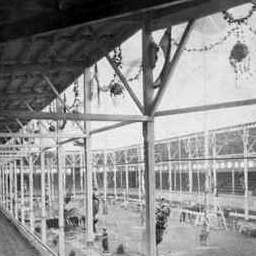
Ep 9595: Six-Day Race Part 4: First Six-Day Race (1875)
By Davy Crockett You can read, listen, or watch P.T. Barnum featured ultrarunners (pedestrians) in 1874 who were attempting to reach 500 miles in six days, to bring paying patrons into his massive indoor Hippodrome in New York City 24-hours a day. Even though the first attempts by Edward Payson Weston and Edward Mullen came up short (see part 3), America became fascinated by these very unusual efforts of extreme endurance. New York Life Building, where the Hippodrome once stood. But with the failures, critics cried out that it was all just a money grab on the gullible public. It wasn’t a true race. It was said to be similar to watching “a single patient horse attached to a rural cider-press” going in circles for six days until it dropped. Experienced athletes and educated doctors believed that walking or running 500 miles in six days was an impossible feat. P.T. Barnum, “a sucker is born every minute,” did not care what the critics thought, knowing he had a winning spectacle to spotlight. He was right and would put on the first six-day race in history, billed as "the greatest competitive trial of endurance ever attempted." Help is needed to support the Ultrarunning History Podcast, website, and Hall of Fame. Please consider becoming a patron of ultrarunning history. Help to preserve this history by signing up to contribute a few dollars each month through Patreon. Visit https://ultrarunninghistory.com/member P.T. Barnum promotes Professor Judd’s Six-Day Attempt By December 1874, Barnum’s circus was back in full operation in New York in the Hippodrome for the winter season. It was lit by many lanterns, featured chariot races, and presented a menagerie of 600 “wild beasts.” Barnum turned to a walker other than Weston and hosted “Professor” John R. Judd (1836-1911) at the Hippodrome. Judd had been a gym owner and trainer from Buffalo, New York but recently had moved to New York City. He had gained some fame training boxers and pedestrians and had previously issued a challenge for a walking match against Edward Payson Weston, which was ignored. Judd's former hometown wrote, “Judd is excessively muscular. His ‘professorship’ being not anything in the line of learning but simply that of gymnastics.” Another observer wrote, “He is a splendidly formed man, but with a figure better fitted for boxing or wrestling than for walking. He moves heavily and ploddingly, and on account of his great muscular development, he is obliged to keep his whole body in constant motion. He has great powers of endurance but is a slow walker.” Judd’s true background was suspect. He had been born in England and became very athletic. He claimed to have become a professor of Physical Culture, and trained the Prince of Wales and other royalty. In reality, as noted by those in Buffalo, New York, he was just a gym owner and trainer who liked to do exhibitions of feats of strength. His pedestrian experience was limited. Once he walked 105 miles in four days and claimed to have accomplished other long walks under an alias of John Davison. In 1871, there was a Pedestrian by that name that attempted to walk four days without eating or sleeping at Littlerock Arkansas City Hall. Judd had been announcing that he would do a six and a half day walk in the Empire Skating Rink in New York City. Barnum hired him to instead do it in the Hippodrome. The track was measured carefully the week before the event where Judd put on a five-mile exhibition walk, including walking backwards while carrying an anvil. On December 8, 1874, Judd started his attempt but was said to have made very poor progress on day one. Judd believed in holding a steady pace and could succeed if he walked 77 miles a day. His plans were different than those who tried before him. “He will carry a 100-pound anvil for a quarter of a mile on the fifth and six days and half a mile on the last half day.” On day four he had reached 224 miles when he stoppe...
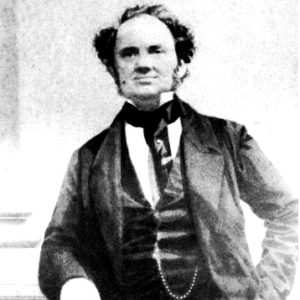
Ep 9494: Six-Day Race Part 3: P.T. Barnum – Ultrarunning Promoter (1874)
By Davy Crockett You can read, listen, or watch The ultimate showman, P.T. Barnum of circus fame, was surprisingly the first serious ultrarunning promoter and established the first six-day race in America. He was famous for the saying “There’s a sucker is born every minute,” and figured out how to get America to come out by the thousands to watch skinny guys walk, run and suffer around a small indoor track for hours and days as part of his “Greatest Show on Earth” presented in the heart of New York City. In this episode, details of Barnum’s connection to ultrarunning history are told for the first time. In part one of this six-day series, Foster Powell started it all in 1773 in England, seeking to reach 400 miles in less than six days. In part two, nearly a century later, the challenge was restored in America with the famous walker Edward Payson Weston, who was both cheered and ridiculed. As this third part opens, Weston seeks more than anything to reach 500 miles in six days, which had never been accomplished before. He had failed in his first serious attempt, reaching “only” 430 miles and was called by some, “The Great American Fizzler.” P.T. Barnum soon enters the story to lend support. Help is needed to continue the Ultrarunning History Podcast, website, and Hall of Fame. Please consider becoming a patron of ultrarunning history. Help to preserve this history by signing up to contribute a few dollars each month through Patreon. Visit https://ultrarunninghistory.com/member Edward Mullen Seeks 500 Miles in Six Days Weston's failure to reach 500 miles spurred others to give it try, even those with little experience, in an attempt to cash in on wagers. A key figure in this history, Edward Mullen, of Boston, Massachusetts, came on the stage in 1874 to try to steal the spotlight from Weston. Mullen was a talented ten-mile walker, but unproven at ultra-distances. His "500 miles in six days" attempt came at the Washington Riding Academy at 26th Street and 6th Ave in New York City. Beacon Trotting Park It was reported, “Mullen has never, previous to the present time, engaged in any walking match for any long distance, the longest race hitherto being twelve miles.” Mullen began his pedestrian career only a year earlier in July 1873 at Beacon Trotting Park, Boston, when he won a short-distance walking race. That was the first of many impressive wins up to ten miles. But it seemed rather bold for him to go after the 500-mile six-day barrier. The track for his attempt was said to be 17.3 laps to a mile (305 feet). He began his quest at 12:24 a.m. on June 15, 1874. “Mullen was dressed in full walking costume, consisting of white Guernsey, blue silk trunks and white hose, with Oxford shoes. He is somewhat slimly built, is about five feet ten inches high and weighs 130 pounds. As he turned to commence his journey, he started off somewhat slowly, his step, however, being elastic and springy.” He finished his first mile, in a very surprisingly fast time of 7:22. On day one, he accomplished the 115-mile 24-hours task, beating Weston's 115-mile time by five minutes. At that point he collapsed and had to be carried off the track by his backers. By day three, the determined Mullen had reached 233 miles on very swollen legs, one mile ahead of Weston's failed pace. Fraud Detected On day four, an observant New York Daily Herald reporter suspected that a "trick" was taking place as he counted Mullen's paces per lap. "The Herald reporter watched for some hours and finally concluded that the pace at which Mullen was walking did not agree with the time announced. This aroused a suspicion that there was something wrong with the track and that the walk was not an honest one." He also noticed that Mullen was taking rests more than twice as long as Weston had during his walk, and yet Mullen kept pace somehow. Also odd, Mullen’s respiration was very labored after walking a stretch of only a few mi...
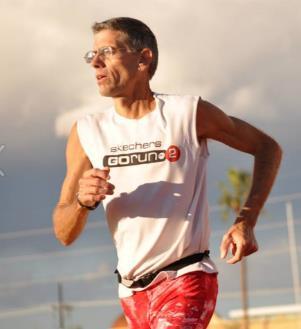
Ep 9393: Eric Clifton – Legendary 100-mile Trail Ultrarunner
By Davy Crockett You can read, listen, or watch Congratulations to Eric Clifton, originally from North Carolina, now of California, who was inducted into the American Ultrarunning Hall of Fame on November 19, 2021. Clifton was the fastest and most dominating 100-mile trail runner during the 1990s as trail ultras became popular in America. His “go for broke” race strategy was legendary, as he demonstrated to the rapidly expanding sport that amazing speed on trails could be achieved. During his entire career, he has attained more than 60 ultra wins, including 17 of his 31 100-mile finishes. He was known for his colorful running tights and was the original “Jester” of ultrarunning. During the 1990s, Clifton had the most overall 100-mile trail wins in the world. He was a prolific ultrarunner and very fast, with more sub-15-hour 100-mile finishes on trails than anyone during that era. He would win by wide margins on hilly trail courses, sometimes by hours. He set more than 20 course records, still holding some of them after three decades. Help is needed to continue the Ultrarunning History Podcast and website. Please consider becoming a patron of ultrarunning history. Help to preserve this history by signing up to contribute a few dollars each month through Patreon. Visit https://ultrarunninghistory.com/member Eric Clifton was born in 1958, Albuquerque, New Mexico but moved to North Carolina when he was young where his father went into the milk business. Eric started distance running as a senior at Northeast Guilford High School in 1976, in North Carolina, where he ran the two-miler. After finished his first race, he swore to himself that he would never run that hard, and that fast for the rest of his life. A friend suggested that he go out for cross-country. Clifton said, “Running cross-country? That sounds like me, I want to do that. I asked, ‘How many miles a day do you guys run?’ He replied, “About ten miles a day.’ OK, I’m out. He scared me away.” Little did Clifton know that he would average running 10 miles a day for much of his future running career. Serious Running Begins Clifton in 1978 in Greensboro, NC Clifton went to college at the University of North Carolina at Greensboro, where running teams were not fielded. The running boom had not yet reached North Carolina. But in 1977, he started his true running career. As a college freshman, he read an article in the school newspaper about a professor who would be running in the Boston Marathon. He recalled, “I read this article and I was amazed. Wait a minute, there are races that are competitive events for people who aren’t in school doing track or cross-country? It blew my mind.” Within a week he entered his first race, a seven-miler. He had a blast and was hooked on running after that. Running at Boston became his primary goal. At the time, the qualifying standard for him was 2:50. He ran his first marathon in 3:38. As he kept trying, his finish times went up instead of down. It took him three years before his times dramatically improved. “I finally had a race where I didn’t die. I ran strongly the entire way and did a 2:39. And everybody asked, ‘What did you do?’ I replied, 'It was what I didn’t do, I didn’t die.'” But by the time he qualified for Boston, he had lost interest and did not run there until many years later. Triathlons 1981 First Triathlon Win In 1980, Clifton watched the Ironman on television in its third year and knew that the event was for him. During the ‘80s, Clifton shifted away from running marathons, turned to triathlons and excelled. He ran his first of several Ironmans in 1981. First Ultra - 1982 In 1982, Clifton ran in his first ultra, a 50-mile road race in Wilmington, North Carolina, called “The Lite Ultra” that ran on a four-mile loop. Don Aycock, age 30, originally from Baton Rouge, Louisiana, one of Clifton’s training partners, had subscribed to Ultrarunning Magazine.

Ep 9292: Six-Day Race Part 2: Edward Payson Weston (1870-1874)
By Davy Crockett You can read, listen, or watch The six-day race became the most popular ultrarunning (pedestrian) event of the 19th century. In Part 1 of this series, Foster Powell started it all in 1773 when he ran 400 miles in six days in England. During the next fifty years, ultrarunners tried to match and beat his historic effort, especially during a four-year six-day frenzy of 1822-25. But after that, interest faded for the next fifty years until American, Edward Payson Weston came onto the pedestrian stage. Reaching the 1870s, the six-day challenge had not yet been exported outside Britain. But that changed as the challenge reached America and moved almost exclusively indoors, thanks to Weston. He became the most famous pedestrian in history. Weston was introduced in episode 54 for his impact on 100-mile history and in episode 26 for his famed transcontinental walk. Now we will examine his early impact of importing the six-day event to America, trying to reach 400 and 500 miles. Help is needed to continue the Ultrarunning History Podcast and website. Please consider becoming a patron of ultrarunning history. Help to preserve this history by signing up to contribute a few dollars each month through Patreon. Visit https://ultrarunninghistory.com/member Edward Payson Weston Edward Payson Weston (1839-1929) was born in Providence, Rhode Island on March 15, 1839. He was not particularly strong as a boy and took up walking to improve his health with exercise. As a teenager, he worked for a time in traveling circuses. He was athletic and won prizes in “wrestling, running, walking and leaping competitions.” He started long-distance walking by selling a book written by his mother door to door for 40 miles in Connecticut. When he was 22, after losing a bet, he walked from Boston to Washington to witness the inauguration of President Abraham Lincoln, covering 453 miles in about 208 hours. In 1867, he walked from Portland, Maine to Chicago, about 1,200 miles, in about 26 days, resting on Sundays. That walk brought him worldwide fame. But later he also received criticism as he failed in some wagered walking attempts, and he was called a “humbug” by many. Weston's Fame Grows Weston walking 100 miles In April 1870, Weston walked 100 miles in 21:38:20 in New York City, an accomplishment that silenced many critics. (For more about his early walking career, see episode 54.) During 1870, Weston came up with the idea to attempt to walk 400 miles in five days, as pedestrians fifty years earlier were trying to do. Had Weston, in 1870, heard about Foster Powell’s historic runs? In July 1870, British newspapers were announcing that Weston was coming to England in August to make his attempt, so it is likely that he understood some of the British pedestrian history involving six-day running. Weston did not travel to England in 1870 because he could not find enough financial backing but said he would make his attempt in America during the fall. Did Weston truly walk? His distinctive wobbly walking gait was a swinging stride, with a relaxed upper body and shoulders without pumping his arms. The action came mostly from his knees. Starting in the 1840s, a “fair heel-and-toe” racewalking style was established for walking in competitions. Weston was criticized by some of not using a true heel-toe racewalk, that it border-lined on running at times, with both feet off the ground at the same time. Weston’s First Multi-Day Attempt - 1870 During November 1870, Weston made his attempt to reach 400 miles within six days, and he was confident that he could actually do it within five days. He may have thought that no one had accomplished it before, and he would set a record. (James Tenny, in 1822. had reached 400 miles in four days, 23 hours, 22 minutes.) Weston’s $5,000 wager agreement required him to reach 400 miles in five days, and he also needed to walk 112 miles within a 24-hour period ...
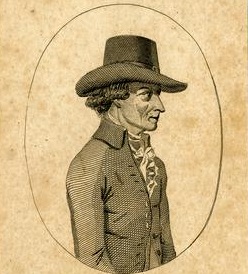
Ep 9191: Six-Day Race Part 1: The Birth (1773-1870)
By Davy Crockett You can read, listen, or watch Recently, the six-day race received some attention in ultrarunning news because the International Association of Ultrarunners (IAU) announced that they would no longer recognize the six-day event or keep records for it. This shocked many ultrarunning historians and particularly runners who participate in multi-day fixed-time races. After a brief uproar, the new IAU leadership back-peddled, somewhat admitted to their ignorance about six-day ultrarunning history and agreed to continue to recognize the event that has roots in the sport going back nearly 250 years. Ultrarunners who exclusively run trails may wonder, “what is this six-day race and why is it important?” The six-day race is an event to see how far you can run or walk in a period of 144 hours or six days on roads, tracks, or trails. Six days was a historic time limit established to avoid competing on Sundays, respecting local laws of the time and the religious beliefs of many of the participants. Help is needed to continue the Ultrarunning History Podcast and website. Please consider becoming a patron of ultrarunning history. Help to preserve this history by signing up to contribute a few dollars each month through Patreon. Visit https://ultrarunninghistory.com/member Six-Day Background Today, the six-day world record is held by Yiannis Kouros of Greece, who covered an astonishing distance of 635 miles on a track in New York City in 1984. Later in 1988, he covered 639 miles on a paved loop course at Flushing Meadows, also in New York. Historically, the six-day race grew out of solo six-day challenges, motivated by significant wagers and fame. They were first accomplished by ultra-distance walker/runners referred to as “pedestrians” who covering staggering distances during the late 1700s. Recent research has discovered that there were far more athletes than previously known, who took up the six-day challenge in the early 1800s. These occurred exclusively in Britain. Their grueling runs/walks were accomplished outdoors on dirt and muddy roads/trails, frequently in harsh weather conditions. In the late 1800s, as attention was revived for these six-day solo accomplishments, egos and greed of participants and organizers also grew. The six-day challenges evolved into competitions in America between multiple walkers, and the six-day races were born, attracting thousands of spectators. It became the most popular spectator sport in America for more than a decade. How did the six-day challenge begin? Here is the story. Foster Powell, the Father of the Six-Day Race Long before the six-day races began in the late 1800s, there were numerous six-day walking feats that have been mostly lost in history. The first famous British “pedestrian,” Foster Powell (1734-1793) started the focus on walking/running for six days and can be considered the “Father of the Six-Day Race.” Foster Powell was born in 1734, in the small village of Horsforth, Yorkshire, England, near the city of Leeds. His father was William Powell, a prominent farmer. When Foster Powell was 28, in 1762, he moved to London to work as a law clerk for a “temple lawyer” at an inn. There were a group of inns in London called the “Inns of Court” attached to Churches, used as offices for clerks and lawyers. These inns consisted of sections called the Inner Temple and Middle Temple. In 1766, Powel moved, and went to work for his uncle at New Inn (next to Clements Inn), another inn for clerks and lawyers. He worked and lived there for the rest of his life. Powell worked hard but was the object of ridicule by his fellow clerks who regarded him as “a milksop and a muff.” He was described as “a cadaverous-looking young fellow, thin and apparently weak. He was thought very little of, either in respect of his mental or physical qualities.” He was “a quiet inoffensive lad, shy, and somewhat unsocial,
Ep 9090: JFK 50 – America’s Oldest Ultramarathon
By Davy Crockett You can read, listen, or watch Get this history in my new book In 1963, President John F. Kennedy unintentionally played a role that provided the spark to ignite interest for ultrarunning both in America and elsewhere. The door was flung open for all who wanted to challenge themselves. An unexpected 50-mile frenzy swept across America like a raging fire that dominated the newspapers for weeks. Tens of thousands of people attempted to hike 50 miles, both the old and the very young. Virtually unnoticed was a small club 50-mile event hiked by high school boys in Maryland, that eventually became America's oldest ultra: The JFK 50, founded by Buzz Sawyer. Kennedy's Push for Physical Fitness While running for president, Kennedy had campaigned with a goal to improve the nation’s physical health, and once in office he made that a priority. He feared that the future generations would be spectators of sport rather than participants on the field of play because of their lack of physical fitness. In 1961 a “Fit as a Fiddle” newsreel was produced by Kennedy’s Physical Fitness Program targeting youth to understand the importance of physical fitness. Also, that year, 200,000 copies of a song called “Chicken Fat” was distributed to all schools with the lyrics, “Nuts to the flabby guys! Go, you chicken fat, go away!” Fitness Test for Marines General David M. Shoup Back in 1908, President Theodore Roosevelt issued an executive order that every Marine captain and lieutenant should be able to hike 50 miles in 20 hours. In 1962 Kennedy discovered this order and asked his Marine Commandant, David M. Shoup (1904-1983), to find out how well his present-day officers could do with the 50-mile test. Shoup made it an order to his Marines. Twenty Marine officers were selected to take the test in mid-February 1963, at Camp Lejeune, North Carolina. News Article Starts the Frenzy An Associated Press article published nationwide on February 5, 1963, shared the story of the 50-mile test. It received intense national attention. President Kennedy never directly challenged the American public to take the 50-mile challenge, but the article inspired many across the country, who were eager to test themselves too. The Public Starts Hiking 50 Miles Naïve, untrained, civilians, immediately decided to hit the road without much planning to undertake the challenge in the middle of the cold winter. On the very evening after the article was published, Lt. Colonel James W. Tuma, age 48 (1914-1990) from Michigan, stationed at Fort Huachuca, near Tucson, Arizona, immediately decided to start a 50-mile hike through the Sonoran desert. You would think, Tuma, who held a Ph.D. in physical education, would have more sense, but away he went. He hiked through the night, not sleeping. He said, "Everybody was nice along the way, wanting to give me a ride." The next morning, he finished his 50 miles with a sprint for a time of 13.5 hours and was credited as the very first one to finish 50-miles at the start of the nation-wide craze. Robert F. Kennedy's 50-mile Hike On February 9th, four days after the story went public, Attorney General Robert F Kennedy decided to take the challenge himself and hike 50 miles. Without any specific training, Kennedy hiked away on the Chesapeake and Ohio (C&O) Canal towpath (the future home of the JFK 50) with his dog Brumis and some aids. After his 50-mile hike, Ethel Kennedy helps RFK recover. After 25 miles, the group was ready to give up. But the press had caught wind of what Kennedy was doing, and a helicopter arrived soon after with photographers and journalists. So, Kennedy set off again. His last aide dropped out by 35 miles, but Kennedy pushed on to the end and reached 50 miles in 17:50, accomplished in a pair of leather Oxford dress shoes. Everyday People Hike Hundreds of 50-mile challenges were held all over America and throughout the world.
Ep 8989: Spartathlon Part 2 (1983) – The First Race
By Davy Crockett You can read, listen, or watch Get this history in my new book Spartathlon, an ultra of 246 km (153 miles), takes place each September in Greece, running from Athens to Sparta and with its 36-hour cutoff. It is one of the toughest ultramarathons to finish. In Part 1 of this series, episode 88, the story was told how Spartathlon was born in 1982, the brainchild of an officer in the Royal Air Force, John Foden. Three servicemen successfully covered a route that was believed to have been taken in 490 B.C., by the Greek messenger, Pheidippides. The 1982 trial run set the stage for the establishment of the Spartathlon race. The race's 1983 inaugural year is covered in this part won by Yiannis Kouros of Greece. There are now ten books in the Ultrarunning History series by Davy Crockett, available on Amazon. https://ultrarunninghistory.com/urhseries/ The Founding of Spartathlon in 1983 The Three Finishers. After John Foden and two others finished the historic 1982 trial run between Athens and Sparta, Foden told those at the finish, “You need to make the route we have run, a race.” However, he did not think seriously that a race would be organized anytime soon. Michael Graham Callaghan (1945-2013), an Athens businessman, and a member of the British Hellenic Chamber of Commerce (BHCC) in Greece was the driving force and the founder of the formal Spartathon race. Back in 1982, Callaghan had helped Foden organize his trial run and obtained sponsors. Callaghan was at the finish in Sparta and awarded the three finishers crowns of olive leaves. A month later, Callaghan received a kind letter from Air Marshal Thomas Kennedy from the Royal Air Force (RAF) in Germany, thanking him for his support of Foden’s 1982 RAF expedition run from Athens to Sparta. The letter included, “John Foden has told me about the invaluable help you gave the expedition when it found itself in financial straits that made its abandonment seem certain, and also in revamping its low-key publicity into a campaign that achieved international TV and press coverage. I should like to thank you most sincerely for your interest and your enterprise which prevented the possible cancellation of the expedition, and your initiative in recognizing that its success could be used to reinforce the friendly relations that exist between Great Britain and Greece. We are all very much in your debt.” This kind letter further helped Callaghan become captivated with the idea for a race and he charged ahead to make it happen. Plans for Spartathlon come together Just four months after the historic 1982 RAF expedition, in February 1983, the Hellenic Amateur Athletics Association (SEGAS) announced that Spartathlon would be held on September 30, 1983. The name for the race combined the Greek words for Sparta and Feat. Officially that first year it was called, the “Open International Spartathlon Race.” A multi-national team of supporters came together led by Callaghan and was based at the British Hellenic Chamber of Commerce in Athens. Under Greek law, Callaghan was not allowed to be the actual president of the organization, but he was the first race organizer. Foden said, “My idea to have a race would never have taken off if were not for Callaghan’s energy, enthusiasm and talents as a salesman. At the start he might not have known much about running and relied on the advice I gave him during visits to Greece, but he soon became very knowledgeable.” A group of Athens-based British businessmen were signed up to be the main sponsors for the 1983 race. Entrants Forty-four men and one woman from twelve countries were entered into the first Spartathlon. They arrived in Athens four days before the race, on September 26, 1983, and took a two-day bus ride to preview the course and sight-see. At Sparta they were honored by the Mayor of Sparta at a taverna dinner. Returning back to Athens,
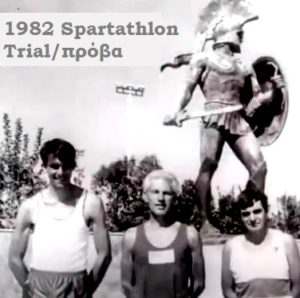
Ep 8888: Spartathlon Part 1 (1982) – The Birth
By Davy Crockett You can read, listen, or watch Get this history in my new book Spartathlon is one of the most prestigious ultramarathons in the world. It is a race of about 246 km (153 miles), that takes place each September in Greece, running from Athens to Sparta on a highly significant route in world history. It attracts many of the greatest ultrarunners in the world. This is part one of a series on the history of Spartathlon. In this episode, we will cover how Spartathlon was born, a story that has never been fully told until now. It was the brainchild of an officer in the Royal Air Force, John Foden. Pheidippides’ Historic Run Battle of Marathon In 490 B.C., one of the most famous battles in world history was held between the Athenians and the Persians who invaded what we now call Greece, landing at Marathon. Before that battle, a professional messenger named Pheidippides was sent by Athenian generals to Sparta, with an urgent message to ask for reinforcements against the much larger Persian incursion. Pheidippides ran an estimated 250 kms (155 miles) and arrived at Sparta on the next day, likely about 36 hours, and then returned walking. There are many versions of this story. Some say his run was before the battle and others say after. One Romon version, more than a centry later, states that he ran back and he died on returning. But the important thing about the story for ultrarunning, is that Pheidippides made an ultra-distance run of about 155 miles in less than two days. If it were from dawn to dusk of the second day, that would have been 36 hours. The Spartan reinforcements did not immediately leave to help because of a festival and arrived too late for the Battle of Marathon, but the Athenians had triumphed over the more numerous Persians. People have wondered for years if the tale of Pheidippides could be true, running that difficult long distance across the rugged land in less than two days. John Foden His father James Foden John Boyd Foden (1926-2016) was born on May 7, 1926, in Winchester, Australia. His parents, also Australian, were James Clement Foden (1894-1978) and Rosalind Ida Boyd (1888-1957) of Scottish ancestry. The Fodens had lived in Australia for generations. John's father, James, was an aviator who learned to fly a biplane in Hendon, England, in 1917. James served during World War I in the Royal Flying Corps and was awarded the Air Force Cross. In 1924 he was promoted to a Flight Lieutenant. He made his career in the Royal Air Force and he retired a Group Captain. His love for aviation and the Royal Air Force was passed down to his son John. 1933 Ship passenger list Over the years, the Foden family would make multiple long sea voyages to Great Britain to visit family in England and Scotland. At the age of seven, John travelled to and from England by steam ship with his mother, his three-year-old sister, Pauline Margaret Foden, and his uncle, James Shields Boyd. Foden served in World War II as a paratrooper for Australia and after the war went to England. In 1948, at the age of 22, he married Vera Joan Colyer (1926-2001) of England. He later became a career officer in the Royal Air Force (RAF). In 1952, they had a son, David Michael Foden. Foden Takes Up Running The years passed and Foden continued his career in the RAF. By 1976, at the age of 49, he had taken up running. He belonged to the Veterans Athletic Club. In 1977, Foden ran in his first marathon. At that time, he was working as a flight instructor. He was assigned to teach cadets on various topics, including first aid, map reading, aircraft, and RAF knowledge. Herodotus In 1978, Foden was studying for an advanced degree at a university. As part of an assignment, he read about the story of Pheidippides’ run from Athens to Sparta as recorded by Greek historian Herodotus. He read in that history, “Pheidippides was sent by the Athenian generals, and,
Ep 8787: The 100-miler: Part 27 (1979) – Old Dominion 100
By Davy Crockett You can read, listen, or watch The Old Dominion 100, established in 1979, was held in Virginia along the beautiful Shenandoah River. It was one of the first classic modern-era American trail 100-milers. Today, few ultrarunners have even heard about this race. Old Dominion 100’s origin story is similar to Western States 100. It also emerged from the horse endurance riding sport. The Old Dominion 100-mile Run patterned its practices from Western States, established two years earlier in 1977. Old Dominion 100 gave East Coast ultrarunners a trail 100-miler on their side of the country. Western States 100 claims it is the “world's oldest 100-mile trail race” (still being held), but technically Old Dominion 100 has legitimate rights to that claim because in those early years Western States was actually only 89 miles. Help is needed to continue the Ultrarunning History Podcast and website. Please consider becoming a patreon member of ultrarunning history. Help to preserve this history by signing up to contribute a few dollars each month. Visit https://ultrarunninghistory.com/member Alex Bigler Governor John Bigler Alexander Bowman Bigler Jr. was born Jun 8, 1935, in Merced, California. He played an important part in the history of Old Dominion 100. He came from a very prominent California family. His great-grandfather, John Bigler, was California’s third governor. Lake Tahoe was almost named Lake Bigler. His grandfather, Alexander B. Bigler was an attorney and superior court judge in Santa Barbara County for many years. His father, Dr. Alexander B. Bigler (1904-1968) was a medical doctor and a civic leader in Madero County, California and had a keen interest in California history. Bigler grew up in Northern California and went to Chowchilla Union High School during the early 1950s. He then attended Stanford University and lived in Redwood City where his first wife taught school. Bigler had a love for horseback riding. In 1960 he was president of the Auburn Sierra Rangers, a horseman’s club that was organized in 1946 to further the interest in riding, breeding better horses, and putting on showmanship and recreation events. Bigler became a close friend to Wendell Robie, the founder of the Western States Trail Ride (Tevis Cup) that in 1955 started to be held on the trail from Lake Tahoe to Auburn. Bigler became a big supporter of horse endurance rides. By 1961, public opinion came out against the Tevis Cup and its effect on horses, backed by the Society for the Prevention of Cruelty to Animals. A few horses had died during the rides. Bigler, living in Auburn, vigorously defended the horse endurance event. He wrote, “To participate in this event, riders and horses must be in excellent condition. Both must be well-trained which is accomplished only through months of rigorous training. In proper training, the rider comes to know this horse and its capabilities and therefore will not drive it beyond its limit. This event is well-organized and veterinarians are located at check points to watch for overly exhausted horses. In my opinion this ride is an outstanding event in terms of both pleasure and a sporting activity and is contributing much to our knowledge and history of the horse.” In 1966 and 1967, Bigler rode in the Western States Trail Ride on a thoroughbred, Joaquin, and finished well, in 16:46 and 17:12. During the early 1970s he served as a member of the Board of Directors for the Western States Trail Ride. Old Dominion 100 Mile Ride By 1973, Bigler and his wife Ila moved to Northern Virginia, where he took a job that was involved in planning for equestrian facilities. He brought with him a desire to organize a ride similar to the Western States Trail Ride. He gathered together a small group of enthusiastic endurance riders to organize an event. A non-profit organization was incorporated under the name “Old Dominion 100 Mile Endurance Ride” with sev...
Ep 8686: Jackie Mekler (1932-2019) – Comrades Legend
By Davy Crockett You can read, listen, or watch Jackie Mekler from South Africa was perhaps the greatest ultrarunner in the world during the late 1950s and early 1960s and was a five-time winner of the Comrades Marathon (54 miles). His path to greatness is particularly inspiring because as a boy in an orphanage, he became a self-taught runner. He was boosted by fierce self-determination that grew out of his lonely and harsh childhood experience. The Comrades Marathon held in South Africa is the world’s largest and oldest ultramarathon race that is still held today with fields that have topped 23,000 runners. The year 2021, marked the 100th anniversary of Comrades Marathon. Help is needed to continue the Ultrarunning History Podcast and website. Please consider becoming a patreon member of ultrarunning history. Help to preserve this history by signing up to contribute a few dollars each month. Visit https://ultrarunninghistory.com/member This episode on Jackie Mekler is the sixth part of a series honoring Comrades and South African ultrarunning. 80: Comrades Marathon – 100 years old 59: Arthur Newton 83: Hardy Ballington – The Forgotten Great Ultrarunner 84: Wally Hayward (1908-2006) – South African Legend 85: Mavis Hutchison – Galloping Granny 86: Jackie Mekler - Comrades Legend This episode is largely based on Jackie Mekler's autobiography Running Alone: The autobiography of long-distance runner Jackie Mekler where you can read far more details about his running career. Childhood Jakie's mother with sister Hannah Jack “Jackie” Mekler was born March 4, 1932, in Johannesburg, South Africa. His parents, Mike and Sonia Mekler emigrated to South Africa from Eastern Europe in the 1920s with little more than the clothing on their backs. His father had studied to become a dental mechanic but was unable to find employment and the young couple struggled to survive financially. Children were born, first Hannah and then Jackie. Bertrams suburb of Johannesburg in 1930s The Meklers first lived in a large room with family friends in Bertrams, a Johannesburg suburb, A few years later, there were able to afford buying a fairly new home nearby. Sadly, Jackie’s mother, a nurse, developed Parkinson’s disease that crippled her requiring the young children to care for her. His father worked long hours selling fruit from the back of a horse-drawn cart trying to support the young family. Jackie wrote, “Physically, I was always small and underweight for my age – facts that caused my parents considerable concern in my preschool years. I remember regular visits to the local hospital, where I was put on innumerable courses of ‘pink pills’ and tonics.” Jackie’s obsessive personality started to show through when as a child he would spend hours kicking a soccer ball against a wall, humming a tune about soccer boots. In the summer months he would rush home from school and loved to go off to the local municipal baths at Ellis Park to swim. Life at an Orphanage When red-headed Jackie was nine years old, his mother became so ill that she needed to be sent to a nursing home. His father just couldn’t deal with raising children and also working long hours, so he decided to send Jackie and Hannah to live at the Arcadia orphanage. Jackie came home from school one day to find a large black sedan parked in front of their house waiting to take them to the orphanage. The two children cried and argued with their father, who bribed them with a half a crown each if they agreed to go. They no choice and moved into the orphanage. A couple weeks later their father visited with news that their mother had died. Arcadia Orphanage Arcadia was a Jewish orphanage that was established at a villa in 1923. Jackie Mekler was required to participate in Jewish rituals and rules which was a major adjustment for him. There were about 300 children who lived in large dormitories,
Ep 8585: Mavis Hutchison – The Galloping Granny
By Davy Crockett You can read, listen, or watch Mavis Hutchison was a pioneer ultrarunner from South Africa who blazed the trail for women runners worldwide. She finished Comrades Marathon (55 miles) eight times in years when very few women ran. She had an impressive ultrarunning career that took her to many countries, and she went on to become one of the most popular women in South Africa. Childhood Mavis Vaugn and her identical twin sister, Doreen, were born on November 24, 1924, in Kimberley, South Africa to George Phillipus Vaughan (1895-1969) and Catharina “Kitty” Barnard Vaughan (1900-1996). The Vaughan family had lived in South Africa for multiple generations. There hometown city of Kimberley was the capital of South Africa’s Northern Cape Province and known for its diamond mines, and "the biggest manmade hole on earth." Mavis’ father. George was one of the top middle-distance runners in South Africa and a rugby player. He worked for a diamond mining company. Sadly, both twin girls had defects in their legs. Doreen had a damaged hip causing her to limp through life and Mavis had a leg that was somewhat “slow”. After contracting rhematic fever as a child, Mavis suffered from nervous breakdowns during her teens requiring hospitalization and was unable to walk or talk for a time. She had to relearn those skills and those breakdowns left her feeling fragile. While a teenager, Mavis really wanted to be a good athlete. Her father had been training girls at her school, so she joined in. She said, "I started out full of enthusiasm. I seemed to be getting nowhere fast. I told myself that if I did not have instant success I would never get there. I found excuses to give up. I believe my dad was disappointed, but he never forced me. I restarted a few times but ended the same each time a failure." Mavis and her mother in 1980 Because of her poor health, her schooling suffered, and she never graduated from high school. World War II arrived, and she worked at the government mint in her hometown making tools for the manufacture of weapons. She wanted to join the Army, but her father would not give consent. He gave her good advice and always emphasized that she needed to be nice to others but should also stand up for herself. He wanted her to work hard but take time to smell the roses. Of her mother, she said, “My mom was a very private person, but some things did rub off and what rubbed off on me most was about going the extra mile, working hard, being not just a starter but a finisher, and being there for one another.” Troubled Marriage Mavis sought for more independence and when she was twenty-two, she married a man who turned out to be a heavy drinker bringing misery and abuse into her life. In 1947 she gave birth to twin boys prematurely and one only lived a day. The other son, Jess, was severely disfigured and underwent many operations. At the age of twenty-four she was worn out mentally and physically, feeling like an old woman. Her husband deserted her by the time she gave birth to another son, Alan, in 1949. She divorced in 1951 and started a new life with her two little boys. After working as a saleslady in Kimberley, she moved to Johannesburg working first for an art dealer and later for record companies. Her family nanny for the past 25 years came along with her and helped raise the boys. New Life Mavis and Ernie in 1955 A few years after moving to Johannesburg, Mavis met and married Ernest “Ernie” John Hutchison (1916-1991) who was a miner. He was a quiet man, but a great stabilizing influence on her and always supportive. After a short courtship they married in 1955. Ernie had two children of his own and adopted Mavis’ sons. Two more daughters arrived, making up a “yours, mine and ours” family of six children. In 1960, Hutchison’s boys, Jess and Allan got involved in the latest new fad, racewalking. She and Ernie watched them train and compete.
Ep 8484: Wally Hayward (1908-2006) – South African Legend
By Andy Milroy You can read, listen, or watch An audio podcast episode has been added to this article. Early conditioning can be very important. Wally Hayward came from a very tough background. His father, Wallace George Hayward, the son of a coal agent, had been born in Peckham in London, England in 1880, and emigrated to South Africa sometime between 1901 and 1906, in his early twenties. It looks probable he actually arrived soon after 1904 when the sand bar which had restricted Durban Harbour to bigger ships was dredged and deepened. This allowed the weekly Union Castle passenger ships from Southampton to enter the port. Bearing in mind Wallace’s later employment, and absence from Union Castle passenger lists, it is possible that he served as a barman on one of these passenger ships, departing the ship at Durban. On ultrarunninghistory.com, each article/episode takes about 30 hours of effort to research, write, script, edit, publish and publicize. Each month more there are more than 100,000 downloads of these history stories. Help is needed to continue this effort. Please consider becoming a patreon member of ultrarunning history. You can become part of the effort to preserve and document this history by signing up to contribute a few dollars each month. Visit https://ultrarunninghistory.com/member Durban, South Africa After arriving in Durban he met Cornelia Gerhardina Jacoba Kritzinger. Cornelia was the youngest of eight children of an Afrikaner farmer, Louis Kritzinger and his wife Rachel. The Kritzinger family had a 3000 acre farm in Zululand, then part of the British province of Natal (now KwaZulu-Natal). The three sons worked on the farm with their father and the women had a whole raft of household tasks to complete - baking and preserving, making and repairing clothes, sewing, knitting and cooking. The sisters took in turn to tackle each of these tasks. Cornelia Hayward Cornelia was born in 1878 but by her mid-twenties she seems to have rebelled against this demanding regime and left the farm for the city life of Durban. Perhaps the demands and deprivation of the Second Boer War had been the final straw. Cornelia got a job as a cook in a children’s home and some time in 1906/07 she met the younger Wallace Hayward. He had become a barman in a Durban hotel and the couple later lived in one of the hotel rooms. On the 10 July 1908 Wallace "Wally" Henry was born, named after his father and his grandfather, Henry Hayward. Two years later a sister Agnes was born, then two years after that a brother Horace and finally a sister Gertrude. The names chosen show a great deal about the dynamics between the couple. Basically the children were named after Wallace’s siblings. None of Cornelia’s family had a child named after them. This was in the aftermath of the Anglo-Boer War which had made such a horrendous impact on the Afrikaans. Wallace’s dominance in the naming of the children, may have been a response of a victor over the vanquished, but seems at the very least, insensitive. Johannesburg When Wally was eighteen months old, the family moved to Johannesburg. Without skills, his father found it difficult to get work, and once again wound up as a barman in a hotel. Already a heavy smoker, he began drinking heavily. The Haywards had come to Johannesburg at the prompting of one of Cornelia's sisters. The Kritzingers had been involved in the Anglo-Boer War (1899-1902). Originally from Germany, three Kritzinger brothers came to South Africa in 1820 and two of them married Dutch women. A descendant, Pieter Hendrik Kritzinger, was a Boer general and guerrilla fighter during the Second Boer War. Around 1914, when Wally was six, his father got a job working in a mine, eventually becoming a mine captain at the East Rand Propriety Mines, mining gold at Boksburg, a settlement not far from Johannesburg. Wallace Hayward In 1916 Wallace enlisted in the South African Overseas Expedi...
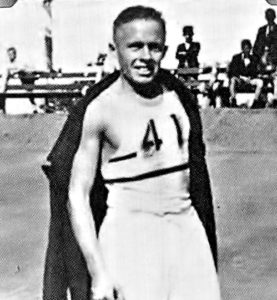
Ep 8383: Hardy Ballington – The Forgotten Great Ultrarunner
By Andy Milroy You can read, listen, or watch The forgotten man of Ultrarunning is arguably Hardy Ballington (1912-1974), lauded in 1939 in Natal, South Africa, as “the second Newton” and a “human machine”. Dominant immediately before and after the Second World War, he was awarded the prestigious Helms Trophy for his remarkable performances In England in 1937. The authoritative Lore of Running, (2003) written by Professor Tim Noakes, advocated a training programme drawn up by Hardy Ballington and his archrival and friend Bill Cochrane. The program provided daily, weekly, and monthly training goals in terms of total distance covered; it was focused on gradual progression in training but did not specify the intensity of that training. The goal was to condition the body to run the long distances required for an ultramarathon. Ballington’s training strategy was still seen as relevant 70 years later! The Ultrarunning History Podcast is included in the People Choice podcast awards in the history category. Please help me by voting for the Ultrarunning History Podcast. During July 2021, go to https://podcastawards.com to register and nominate “Ultrarunning History” in the “History” category. Thanks! Early Family Life Hardy Robert Ballington was born on the 14 July 1912, in Durban, one of the major ports in South Africa. His father was Edward William Ballington and his mother Kate Elizabeth Sims, both born in England. He was one of five brothers and two sisters, the third eldest child, one of twins. 1881 Census record from Staffordshire showing Hardy's father, Edward Ballington as a child in his family. His mother was a sergeant's wife. His father, Edward, came from a peripatetic military family, which was not uncommon during the height of the British Empire. Born in Tynemouth in the north of England in 1870, he enlisted in the North Staffordshire regiment of the army at age fourteen but must have been discharged for some reason. By 1892, at the age of 21, he was working for the Lancashire and Yorkshire Railway as a shunter/switcher. Life was rough. That year he was convicted for stealing twelve table knives and two pair of carver's knives and sentenced to one month at a prison in Wakefield. A number of years later, Edward likely re-enlisted in the Army at the outbreak of the Boer War. In 1905 he was awarded the South African medal and clasp. David Ballington's birth record In South Africa he met and married an English immigrant, Kate Elizabeth Sims and in 1910 they had their first son Edward William, named after his father. Another son Basil followed in 1911, twins Hardy and Ernest Stanley followed in 1912, Jean in 1914, Doris in 1916, David in 1918 followed by John in 1920. In 1915 the whole family to that date, all four boys, travelled by ship to England, presumably to see grandparents and other relations. This was the first of Hardy’s trips to England. Edward's Death Certificate Tragedy struck the young family. In 1921 his father died prematurely in his early fifties, leaving his wife to take care of six children alone. But worse was to follow. In 1924, the 40-year-old Kate Elizabeth gave birth to her eleventh child, but complications and a heart attack caused her death. The baby died. The six living Ballington children were orphaned. The eldest, Edward, was fourteen years old. Hardy was only eleven. Six minor children initial put in the care of the Society for Protection of Child Life in Cape Town With seemingly no relatives in South Africa, caring for eight orphaned children, with the youngest only four years old, was problematic. The six minor children were initially put in the care of the Society for Protection of Child Life in Cape Town. There was a Children’s Aid Society in Durban which could provide some financial and emotional institutional support. In 1923 an Adoption Act had been passed and the Greyville Crèche was a primary school for the care of white children ...

Ep 8282: Roller Skating Ultra Distances – 1885 Six Days
By Davy Crockett You can read, listen, or watch Professional ultrarunners/pedestrians of the late 1800s and early 1900s were constantly looking for endurance races or head-to-head matches to prove their abilities and make significant amounts of money. During the mid 1880s, some of them, including popular black ultrarunner Frank Hart, changed out their leather running shoes for roller skates during periods of endurance rolling skate fads. Six-day foot race in Madison Square Garden While not technically ultrarunning, the emerging six-day roller skate races mirrored significantly the six-day foot races that had become the most popular spectator sport for several years in the United States. Why not put wheels on those ultrarunning feet and see what could be done? The results were fascinating, and in 1885 the Boston Globe left behind very detailed play-by-play results that revealed what these unique races were like. How many miles could an extreme endurance athlete skate in six days on primitive rolling skates? The Ultrarunning History Podcast is included in the People Choice podcast awards in the history category. Please help me by voting for the Ultrarunning History Podcast. During July 2021, go to https://podcastawards.com to register and nominate “Ultrarunning History” in the “History” category. Thanks! Early Roller Skating Roller skating was thought to be invented as early as 1735 by John Joseph Merlin of Belgium. It was said that while showing off his new wheeled shoes at a party in London, that he crashed into a mirror. In the early 1800s roller skates were introduced in isolated cases into the theater as an alternative to ice skating performances. In 1854 a French company performed “La Prophet” in New Orleans, Louisiana, and the entire ballet of one hundred performers appeared on roller skates. 1866 advertisement In 1863, the four-wheeled roller skate, or quad skate, was invented by James Leonard Plimpton making it possible for amateurs to participate. The first public roller rink was opened in 1866 by Plimpton in New York City, who also introduced a roller skating academy. At first, he did not mass-market his patented skate and would only let them be used in rinks with maple floors. Cities including Cincinnati, Ohio and St. Louis, Missouri, opened roller rinks. The main worries were that participants would be careless about their attire and would over-exert themselves. “It is true that roller skating is an exercise which soon throws practitioners into a furious perspiration, but it is an established fact that after a person has become even moderately skilled, and does not get excited and confused, there are hardly more perspiration and fatigue induced than are found in a gentle ramble in the shade.” There was also concern that participants would “find their feet have gone off in an unexpected radiation from a common centre.” Many thought the practice was immoral. “Does it improve a young girl’s modesty or morals to fall in a heap on a skating rink floor, in the gaze of hundreds, with perhaps her feet in the air and her clothes tossed over her head? Is it good for her proper training to see other females in such plight?” The Six-Day Race On March 1, 1875, P. T. Barnum, of circus fame, put on the first formal six-day foot race in America, held at his Hippodrome in New York City. It was a $5,000 match race between Edward Payson Weston and Professor Judd. Weston reached 431 miles during that first American six-day race. Six-day cycling started three years later in 1878, in England, with a race between seven competitors held in the Agricultural Hall in London. It was won by W. Cann of Sheffield who reached 1,060 miles. Riders were only allowed to ride 18 hours each day. The first known six-day skating match was held from May 5-10, 1879, in Philadelphia, Pennsylvania, between three skaters, won by Mayer with 685 miles. Into the 1880s,
Ep 8181: The 100-miler: Part 26 – The 1978 Western States 100
By Davy Crockett You can read, listen, or watch The 1978 Western States 100 was the second year the race was held. Six years earlier, seven soldiers from Fort Riley Kansas proved that the horse trail could be conquered on foot, and they were awarded with the “First Finishers on Foot” trophy by Western States founder, Wendell Robie (1895-1984). Two years later, in 1974, Gordy Ainsleigh surprised his horse endurance peers when he ran the 89-mile Western States Trail in less than 24 hours. Three years later, in 1977, Robie decided it was time to organize a foot race on his trail. The inaugural race was hastily put together by a few volunteers who had horse endurance race experience but did not have much experience with human running races (see episode 71). The first race was mostly self-supported and fairly dangerous in very high temperatures. They were lucky that there were no serious heat-related emergencies, and only three of the 16 starters finished. Planning for the 1978 Western States 100 Run became more serious and was much better organized. The 1978 race should be considered as the first fully supported Western States Endurance Run which gave all entrants a good chance to finish. Please help support this podcast. I can offer a 25% discount on Ultrarunning Magazine subscriptions and renewals. Some proceeds help fund this website. Visit https://ultrarunninghistory.com/mag Subscribe or renew today with this link. Gang of Four - Curt and Mo Sproul, Phil and Shannon Gardner A Western States Endurance Run Board of Governors was formally organized by race founder, Wendall Robie. The four members, affectionately called “The Gang of Four,” were all horse endurance riders, still learning what ultrarunning was all about. They were Phillip (1944-) and Shannon Gardner (1947-), and Curtis (1949-) and Marion “Mo” Sproul (1952-). Curt served as the president. Even though they still had much to learn about the running sport, they blazed ahead into history to put together a mountain ultra that many other key ultras would mimic. Joe Sloan, age 44, an experienced runner and public relations specialist from Auburn who ran in the Boston Marathon that year claimed that he was also on the new Board of Governors that year. Gardner's Western States office at the bank Because of difficulties experienced in 1977 with both runners and horses on the same trail, especially with single-track sections, the run was moved to the month before the Tevis Cup (Western States Trail Ride), on June 24, 1978. Shannon Gardner worked at Robie’s bank, Heart Federal Savings and Loan, made contacts to get the word out, and fielded calls from interested runners. Marketing Western States 100 Marketing for the Run was mostly by word-of-mouth, but in a 1978 Runner’s World magazine, an advertisement was included that read: “Western States 100-mile Endurance Run. An experience only for ultramarathon veterans. Course: rugged, uncertified over mountains, through streams, with snakes and bears. All entries must pass physical exam. No one under 18. 30-hour time limit.” The entrant's fee was $10. Mo Sproul explained, “We did try to make our publications as top-drawer as they could be, so that we presented an organized face to the outside world, even though a lot of it was being done in my kitchen or at Shannon’s desk.” The 1978 entry form warned, “Do not enter unless in excellent physical condition, have run marathon distances over 26 miles, and have had a complete physical examination, preferably including a stress electrocardiogram.” The Gordy Ainsleigh myth begins The race organizers started to prop up the legend of Gordy Ainsleigh and numerous news articles erroneously stated that he was the first to cover the course on foot. They purposely decided to make no mention of the soldiers from Fort Riley, Kansas who completed the course on foot during the Tevis Cup in 1972 and were given the "First Finisher on Foot"...
Ep 8080: The Comrades Marathon
By Davy Crockett You can read, listen, or watch The Comrades Marathon (about 55 miles), held in South Africa, is the world’s largest and oldest ultramarathon race that is still held today with fields that have topped 23,000 runners. The year 2021, marked the 100th anniversary of Comrades Marathon “The Ultimate Human Race.” Comrades today is one of the most paramount ultrarunning events on the international calendar. It has a rich 100-year history packed with amazing accomplishments by more than 400,000 finishers through the years. How did it start and what kept it going for a century? This episode will cover the first two years of the race in 1921 and 1922. New Book! Classic Ultramarathon Beginnings Read about the early history of Comrades and other classic Ultramarathons. Available on Amazon. Vic Clapham Vic Clapham (1886-1962) was a train engineer from Durban, South Africa and became the founder of the Comrades Marathon. He was born in London and went to South Africa with his parents when he was 13 years old in 1899 while the Anglo-Boer War was taking place between the British Empire and two Boer states who were fighting against British rule. Diamonds and gold had been discovered in those states. As a boy during the war, Clapham enrolled as an ambulance man in the Cardock Town Guard. Thousands died on both side of the conflict, especially women and children Boers. As a youth, Clapham attended Wynberg Boy’s High School, one of the best academic schools in Cape Town, and second oldest in South Africa. He would often walk about eight kilometers to school each day from his home. Usually he was given a three-penny “tickey” each day to pay for a train ride home so he could help in his father’s grocery store. Once he spent the money on sweets and instead walked back home. That resulted in a beating from his grandmother, and he never repeated that offence. He married Nellie in 1912 and they eventually had six sons. World War I broke out in 1914 when Clapham was age 28. As South Africa entered the bloody conflict, Clapham signed up with the 8th South African Infantry and was sent to German East Africa, now Tanzania. During his service he went on a 1,700-mile march in East Africa. He came down with blackwater fever, dysentery, malaria, and was close to death because of the diseases. In 1917 when he was mostly recovered, he travelled home by wagon and on a hospital ship where he was deemed medically unfit. Once home he worked for the local government railway as a fireman. The Idea for Comrades Marathon Returning British soldiers formed the “League of Comrades of the Great War” to represent the rights of veterans of the war. Clapham was interested in establishing a memorial to the suffering and deaths of his comrades during the war. Instead of creating a statue, he wanted a living memorial that would grow and embody the spirit of fortitude, endurance and bravery that typified his fallen comrades. He produced an idea to organize an event on foot from his hometown in Pietermarizburg to the coastal city of Durban, a distance of about 56 miles. Clapham was inspired by the London to Brighton walking races that were held before World War I (see episode 58) and wanted to create a similar race in South Africa. It was reported, “He felt that if infantrymen, drafted into the armed forces from sedentary jobs, could endure forced marches over great distances, trained athletes could cover the distance between the two cities without great difficulty.” Clapham approached the League of Comrades about the idea in 1918 but received no support. They thought that the idea was crazy, far too strenuous for even trained runners. But he did not give up over the next several years, and eventually received approval for the event to be held in 1921. The League wanted their name associated with the event and sponsored it by lending Clapham one pound sterling which needed to be repaid.
Ep 7979: The 100-miler: Part 25 (1978-1984) Early Hawaiian 100-milers
By Davy Crockett You can read, listen, or watch In the late 1970s, Hawaii had the most runners per-capita than any other state. Some called it the “running capital of the world.” Hawaii was also an early adopter of the 100-mile race and other ultras distances races. Similar to the Fort Mead 100 in Maryland (see episode 75), Hawaii’s first 100-milers grew out of ultra-distance relays and shorter ultras. In 1976, “Primo Ultramarathon and Relays” began at Hawaii Kai on the eastern tip of Oahu, using a four-mile paved road loop. A solo 50-miler was included and by 1978 expanded into solo distances of 50K, 50-miles, 100K, and 100 miles. A massive 40-mile relay was also held each year with teams of ten runners. Running on the islands exploded. This popularity did not happen by chance. It came about because of many key individuals who devoted much of their lives to make distance running races available to the general public in Hawaii. To have an appreciation of the first 100-milers established in Hawaii, one must learn about the rich running history that evolved there over the years. Norman Tamanaha – The Father of Distance Running in Hawaii Distance running took place on the Hawaiian islands for centuries. Legends exist of ultrarunners running around the various islands well before the Kingdom of Hawaii was established. During the years before World War II, Norman K. Tamanaha (1907-1977) of Palama, Hawaii, emerged as a top runner when he won the Diamond Head five-miler in 1937. The first known marathon held in the islands was in 1943 from Moiliili to Makapuu. In 1946 Tamanaha became the Hawaiian AAU 10-mile champion, and he was the first Hawaiian to finish the Boston Marathon the following year. He dominated Hawaiian races for a decade in his 40s and finished the Boston Marathon a total of five times. His best performance there came in 1952 when he finished in fifth place with 2:52:10. He achieved great fame on the islands, organized many races, was a longtime high school track coach, and became known as “the father of distance running in Hawaii.” Roger Toguchi - AAU Races in Hawaii As early as 1954, the AAU in Hawaii was organized and became active in putting on road races of various distances including the Hawaiian AAU Marathon. Roger S. Toguchi (1924-1978), a service station owner, was the chairman of the AAU Hawaiian long distance running committee for many years. He was a respected running pioneer who helped a generation of long-distance runners. He designed the initial marathon course to finish in front of his service station. Continuing into the 1960s, Toguchi made a huge contribution, including financially, to amateur athletics in the Islands, not only to distance running but also to weightlifting and women’s track. For his efforts, in 1962 he was awarded a life-time membership in the AAU. From 1963-66, the Hawaiian AAU Marathon was run as loops at Kapiolani Park and then changed to follow a route that later became the course for the Honolulu Marathon. Johnny Faerber Johnny Faerber (1936-) was a legendary runner in Hawaii. He won the 1967 Hawaii marathon and recalled, “I was the only one to finish in ’67. We got started at 8 a.m. and it was really hot by the time we got out to Hawaii Kai. There were six or seven other guys running, but they all dropped out. We didn’t have water stops or any of that stuff then." In 1971 Tamanaha helped move the marathon to Maui and in 1976 it was renamed to “Maui Marathon.” Tamanaha died at the age of 70 in 1977 and Toguchi died at the young age of 53 in 1978. Kapiolani Park Kapiolani Park, in Honolulu on the east end of Waikiki, became the centerpiece for Hawaiian running. It is one of the oldest public parks in Hawaii. In 1952, the 300-acre park started to become popular for use, when it was renovated. The two-mile circumference became a very common place to run with views of the ocean and Diamond Head. Over the years,