TrustTalk - It's all about Trust
147 episodes — Page 3 of 3
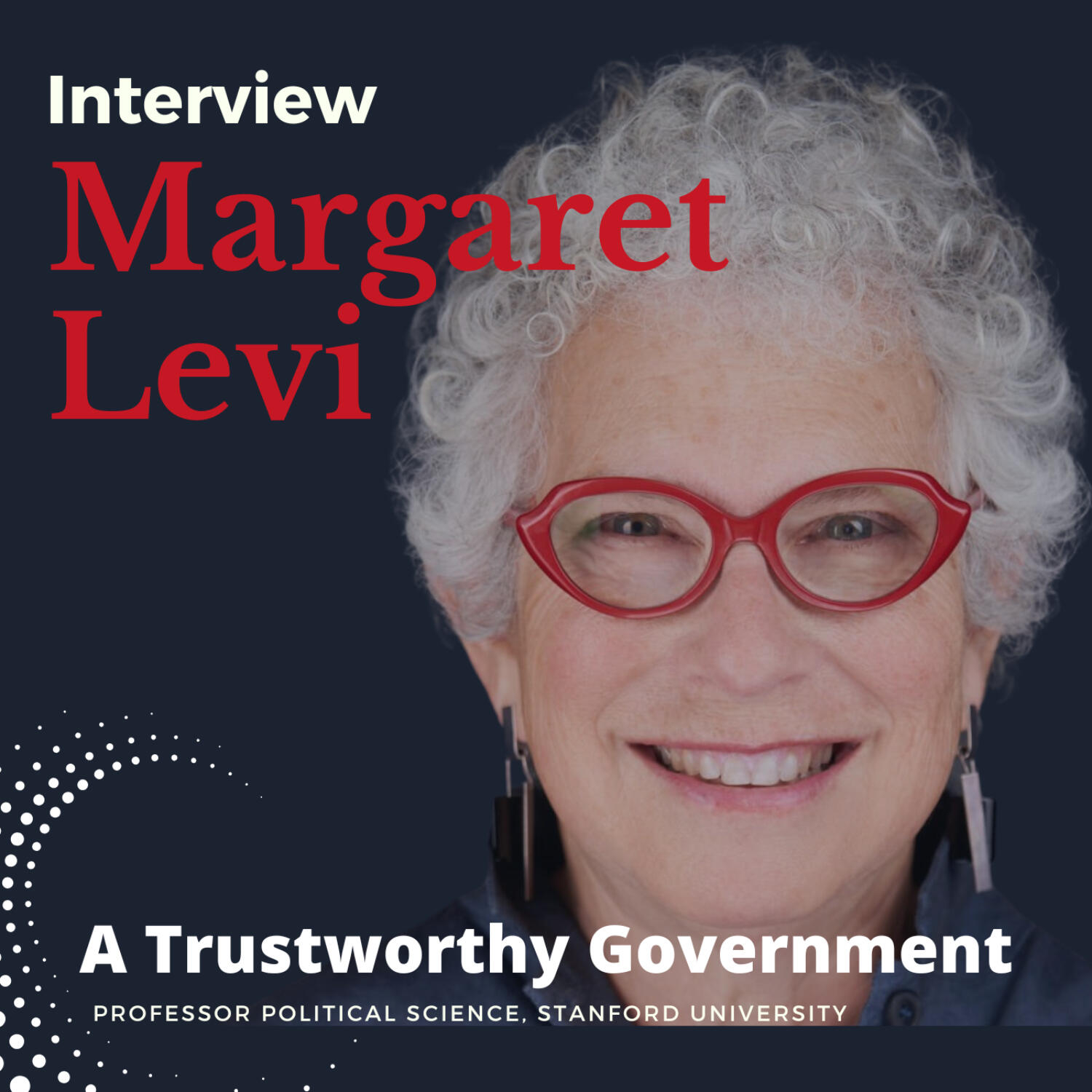
Ep 46A Trustworthy Government
Our guest today is Margaret Levi, professor of Political Science and Director of the Centre for Advanced Study in the Behavioural Sciences at Stanford University. She talks about her upbringing in a middle-class Jewish suburb, how the protest marches she was going to with her mother, and the books she got from her father made her believe that you have to stand up to something that’s wrong. Her publications concentrate on trust in government, the ways in which citizens and governments interact, about institutions providing a setting in which we feel protected. She talks about the social contract between citizens and their institutional leaders and the role of accountability. The Covid pandemic has produced new insights into citizens’ behaviors. In her book “In the Interest of Others” she explains why members of organizations are willing to engage in costly actions, using the Australian transportation unions as an example. To create trust, credible and fact-based communication is essential. Asked what the challenges are for future generations of political scientists, she mentions the threat democracy is under.
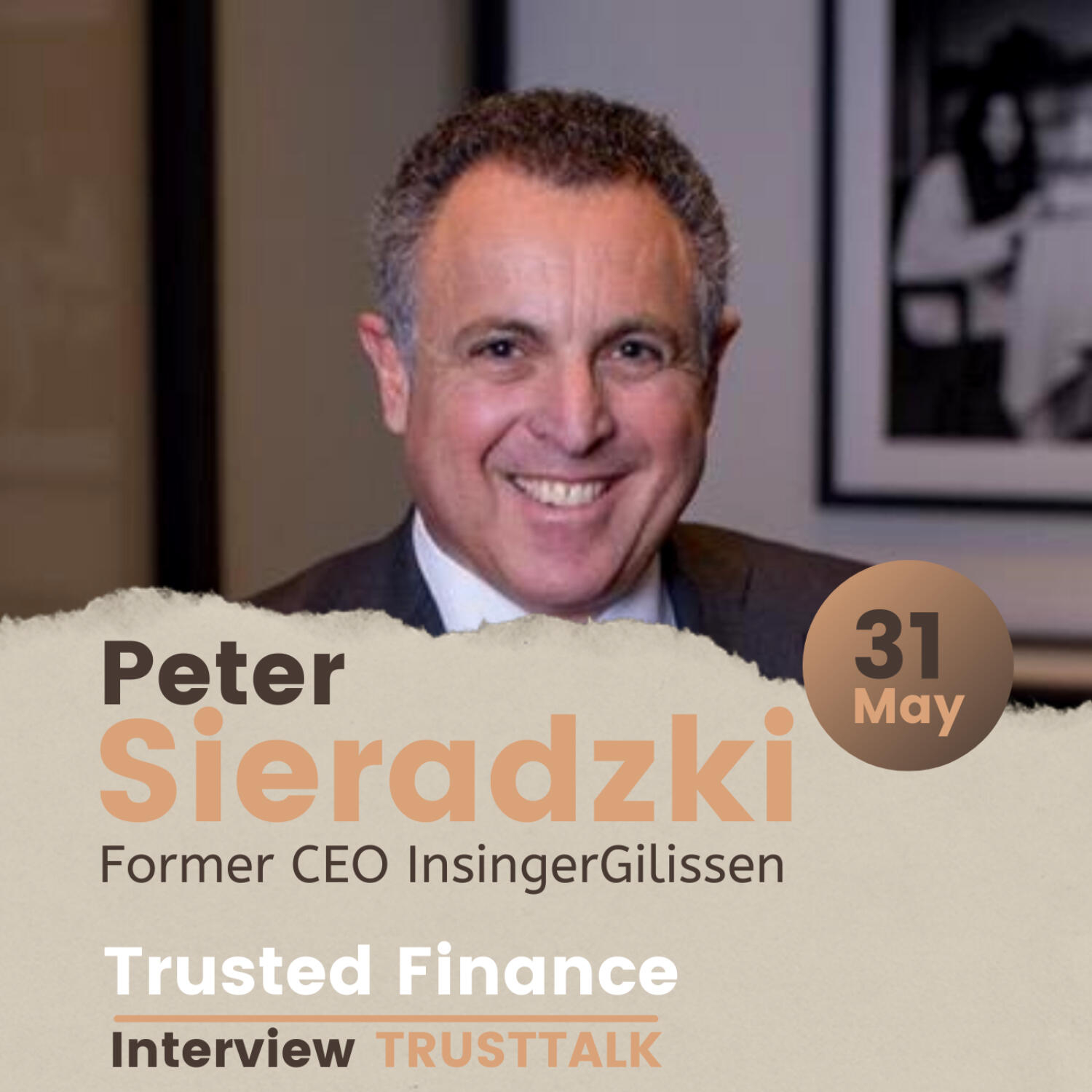
Ep 45Trusted Finance
In today’s interview with Peter Sieradzki, former CEO of the private bank InsingerGilissen, he talks about trust built on institutional processes, the breaches of trust in corporations and banks, the role of integrity and sustainability in the banking business, and about fintech providing a great impetus in the development of new technology and new systems in banks. He reflects on cryptocurrencies and whether they can gather sufficient integrity to be seen as a trusted financial instrument and on trust challenges for banks in the foreseeable future.
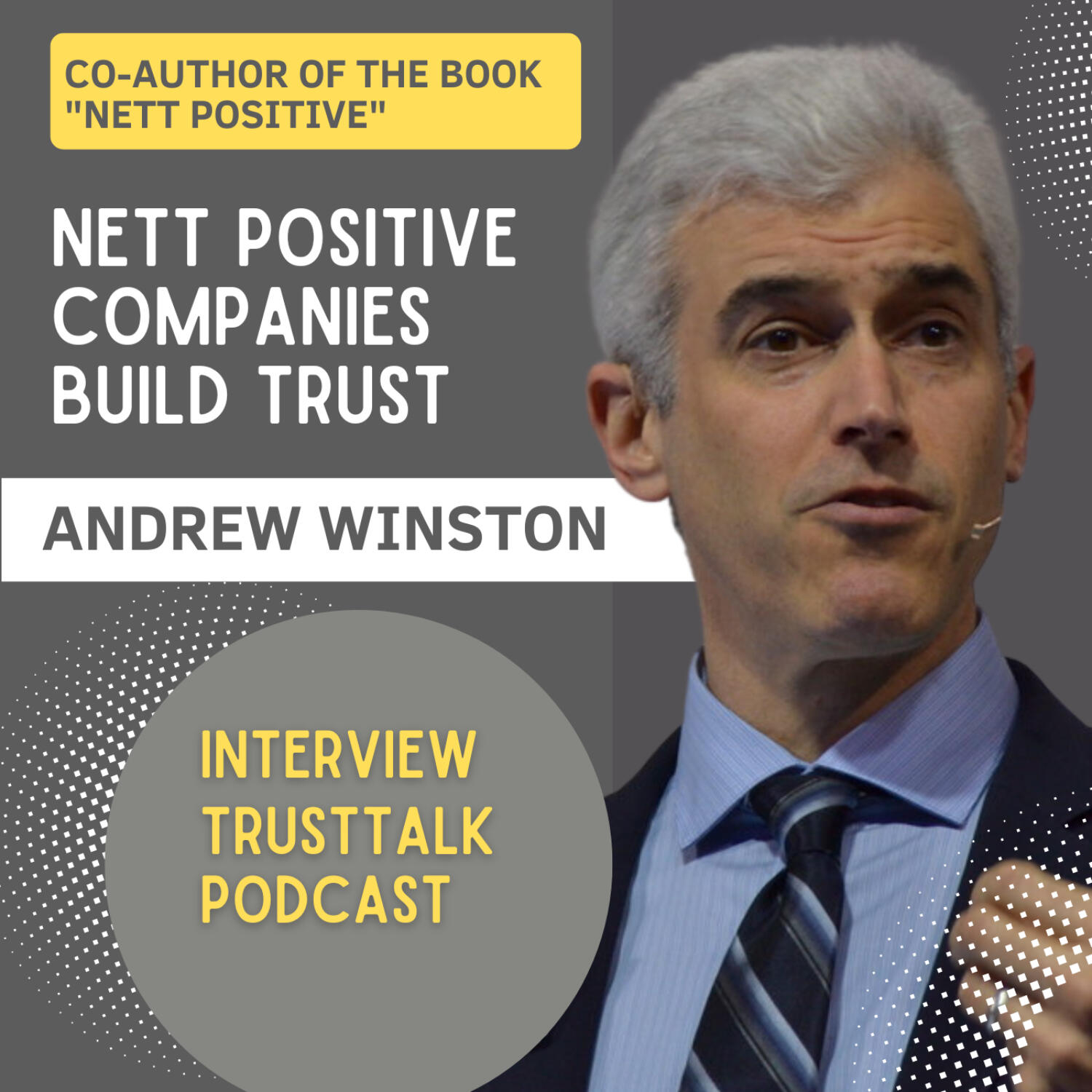
Ep 44Net Positive Companies Build Trust
Andrew Winston, the co-author of the book “Net Positive”, talks about the challenges that lay ahead and the limited time we have to contribute to the world’s problems. A net positive company improves the well-being of everyone they impact and the lives of everyone it touches, from customers and suppliers to employees and communities, greatly increasing long-term shareholder returns in the process, taking ownership of all the social and environmental impacts its business model creates. This in turn provides opportunities for innovation, savings, and builds a more humane, connected, and purpose-driven culture. He talks about the important connection of building trust with the external world so you can get to the kinds of partnerships and collaborations that we need to solve really big problems, without that trust built up, it's going to be nearly impossible, as one cannot have a very functional partnership unless there's some level of trust. This is no utopian fantasy. Courageous leaders are already making it real and the stakes couldn't be higher. With bold vision and compelling stories, he sets out the principles and practices that will deliver the scale of change and transformation the world so desperately needs.
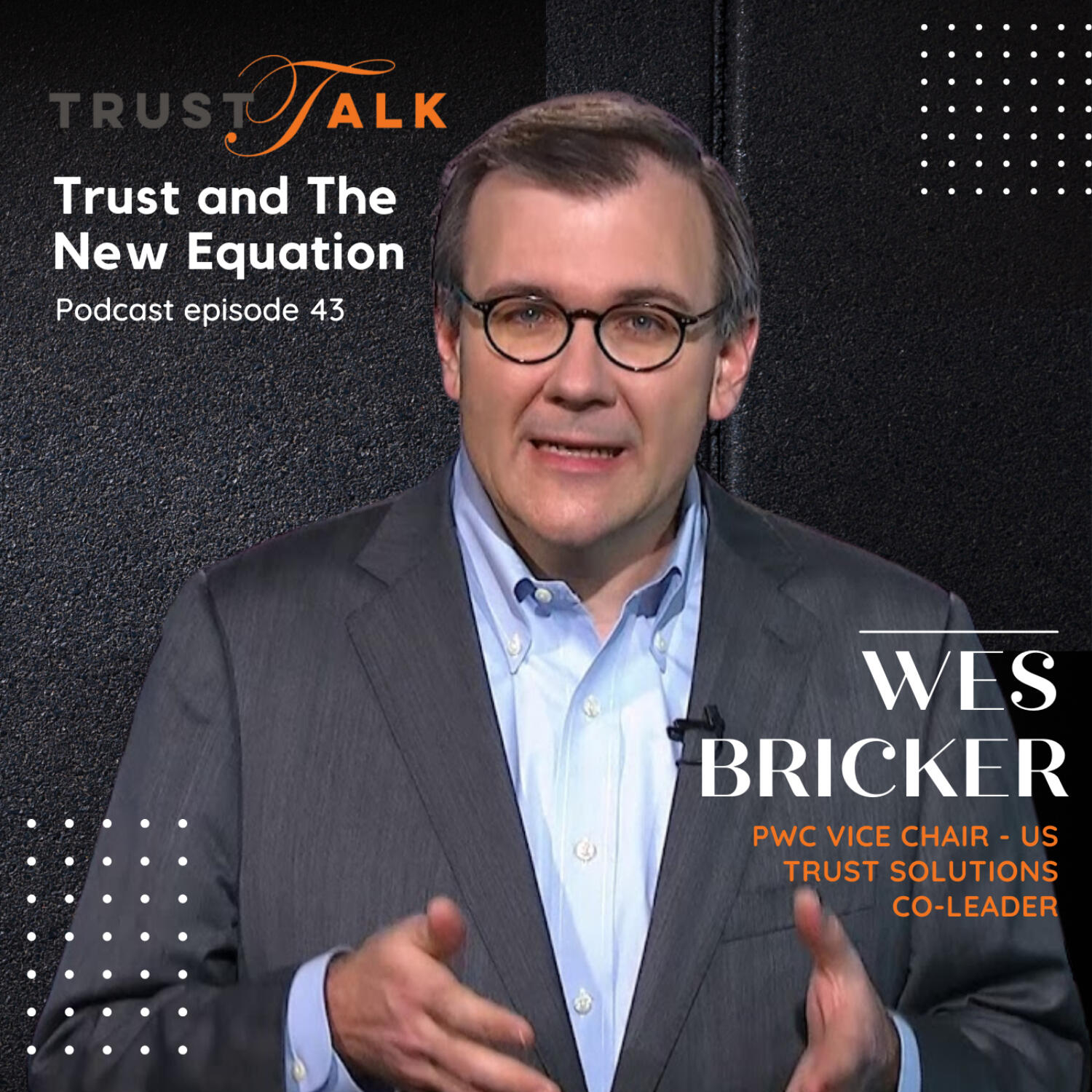
Ep 43Trust Solutions and The New Equation
Today’s guest is Wes Bricker, US Vice-Chair and US Trust Solutions Co-Leader of PwC. He served as Chief Accountant at the US Security Exchange Commission. In this interview he talks about PwC’s project “The New Equation” and the two most fundamental needs clients and organizations are grappling with today: Firstly the urgency to successfully respond to, and change, in the face of major shifts shaping the world: technological disruption, climate change, fractured geopolitics, social tension, and the continuing effects of the COVID-19 pandemic. Secondly, the need to build trust at a time when it is both more fragile and more complicated to earn.
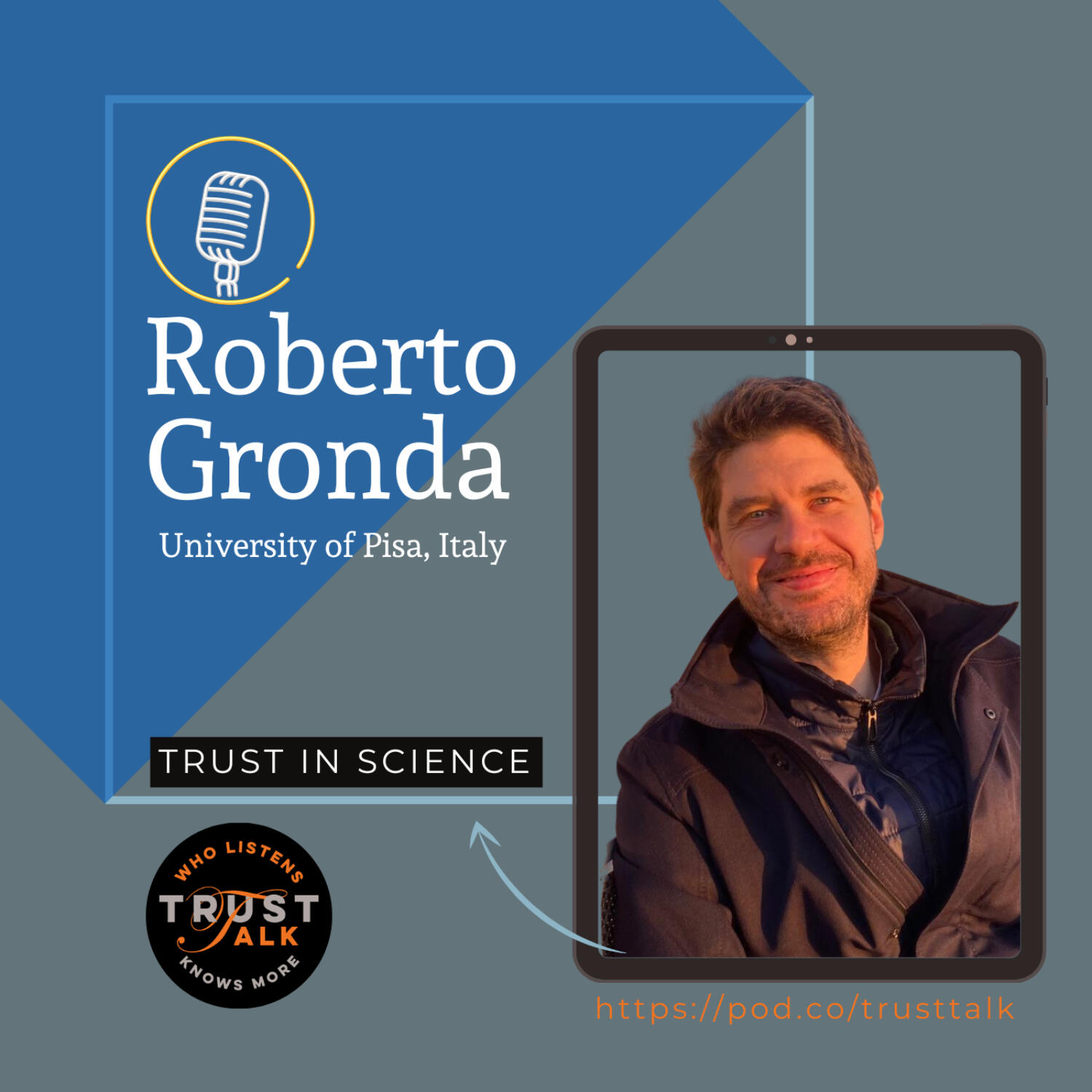
Ep 42Do We Trust Science or the Scientist?
The Covid pandemic has learned us that we have to rely on science, at the same time when scientists appear in public they are often criticized and mistrusted. In this interview, Roberto Gronda (University of Pisa, Italy) explains why this is: operating as a scientist in the context of a university or laboratory renders more trust than a scientist doing consultancy where the scientist has to show more qualifications, like being media savvy. A lot of scientists work in big groups, so they need to trust each other because they do not have all the skills necessary to assess every bit of knowledge. The old idea is that there is a scientist who has enough skills to build everything from scratch, to know everything about his field of research to be completely autonomous from all the other people. That's not possible anymore. So lay people need to trust a scientist. But the relationship between laypeople and scientists is a relationship of inequality. As for what knowledge is concerned, there is no chance that laypeople can know things better than scientists in their field of research.
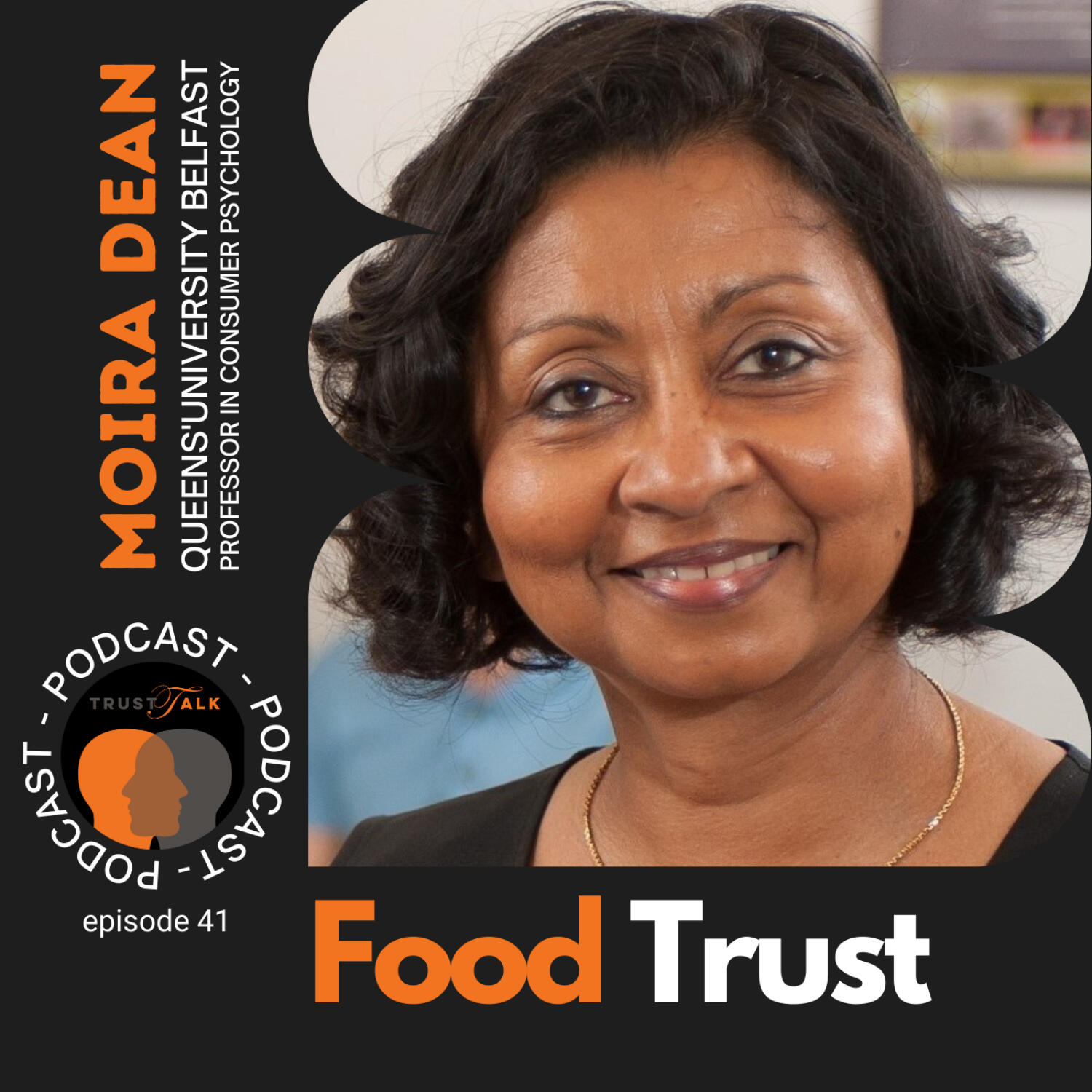
Ep 41Food Trust
In this interview with Moira Dean, Professor in consumer psychology and food security at Queens University in Belfast, Northern Ireland (UK) we talk about her research into consumer food choices, food safety, food fraud, risk perceptions, and food supply chain management and food labeling. Consumers developed different food habits during the pandemic and lockdowns. We talk about the “head, heart, and hands” or the perceptions, attitudes, and behaviors of consumers and producers along the food supply chain to explore food security challenges and create trust in food. She explores the challenges in global food integrity and how the world’s growing population will get food in a sustainable, cost-effective, and environmentally friendly way. In the interview, we cover the 2020 Deloitte survey into consumer attitudes on ethical and environmentally produced food. How can labeling products enlarge the trust of consumers? What is the role of all players in the food production chain, the farmers, food producers, and retail?
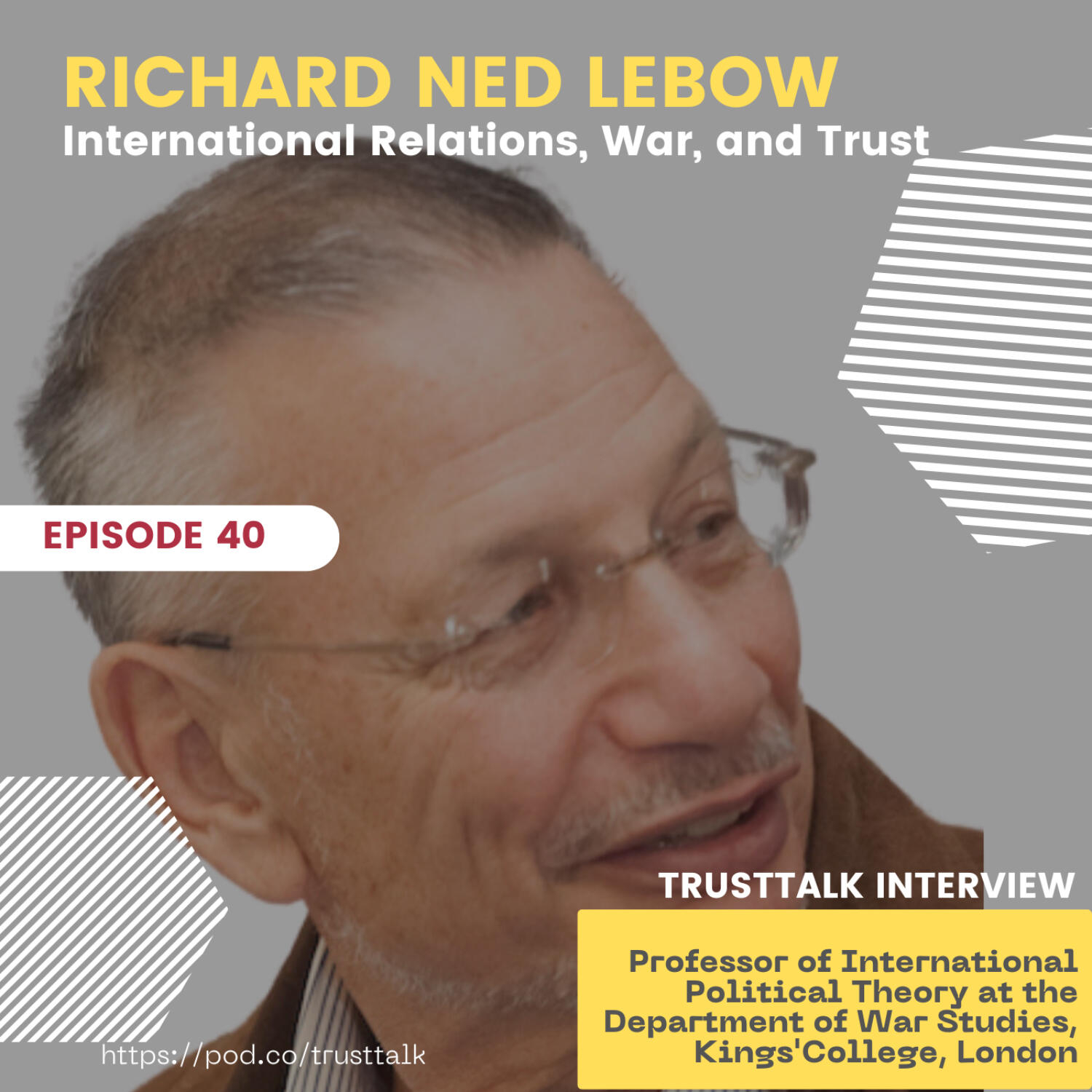
Ep 40International Relations, Diplomacy & Trust
This interview with Richard Ned Lebow, Professor of International Political Theory at the Department of War Studies at King’s College in London, was taken, just before Russia invaded Ukraine. We talked about trust in international relations, about the view that asking Ukraine to renounce membership of NATO is dangerous (which he does not agree with), a discussion that rendered moot with the news about Russia invading Ukraine. Trust is an important element in diplomacy mentioning three famous examples in history. Trust in diplomacy should be distinguished from trust in nations. He talks about the role of disinformation during World War II. Russia was not the only country using disinformation (“maskirovka”) in warfare. General Patton of the Allied Forces staged a non-existent army in Kent, including radio traffic as if it was a real army to strengthen the German belief that an allied invasion would start in the French Port of Calais. He comments on Stanford professor Larry Diamond’s view that we see a trend of a “democratic depression”, about deterrence and realist models of International relations assuming that trust is in short supply.
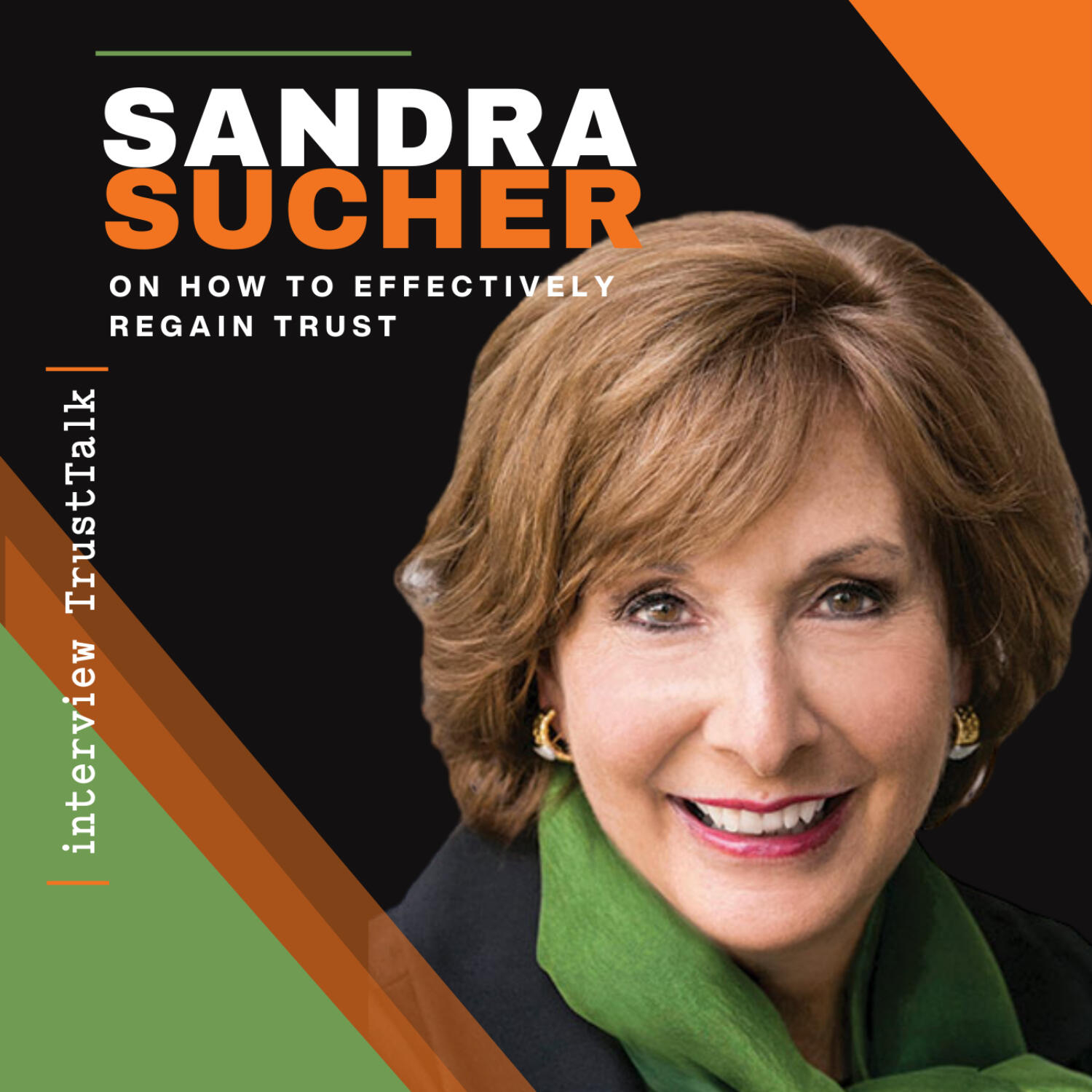
Ep 39How to Effectively Regain Trust?
When companies or politicians break trust, it takes three equally important steps to repair trust. Sandra Sucher, professor of management practice at Harvard Business School and co-writer of the book “The Power of Trust: How Companies Build It, Lose It, Regain It”, takes us through some examples of apologies after broken trust that were ineffective, causing tremendous harm. UBER is a very competent company, yet they are losing customers due to a lack of trust, Volkswagen had its trust failure after rigging emissions test of their diesel cars, for which the CEO apologized, but did so unconvincingly, with great consequences. But there are examples of successful trust repair. Who remembers Japanese-based platform business Recruit Holdings, who after a scandal showed how to repair broken trust, or the PWC gaffe from 2017, where employees mixed up the winner's envelope, as a result of which La La Land was announced the Oscar winner, instead of Moonlight. Both did a remarkable job in restoring trust. In the interview, she explains what it took to restore those trust failures. She talks about a study by Kurt Dirks who found that the NCAA basketball team won the most games due to the trust they had in their coach and about the way politicians can restore broken trust, about creating a trusted work environment for women, and the four attributes of trust repair.
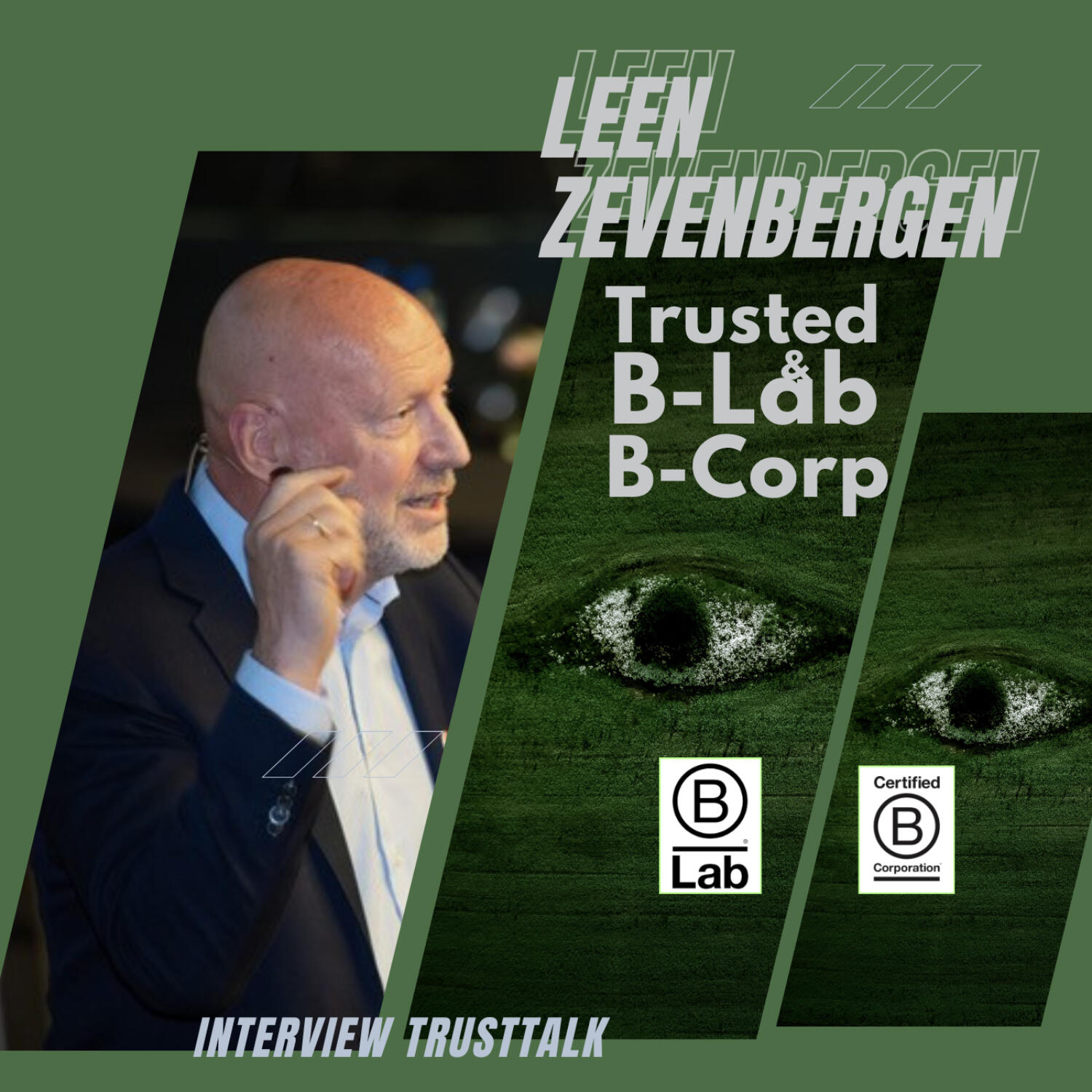
Ep 38Trusted B-Lab & B-Corp companies
Today’s guest is entrepreneur Leen Zevenbergen. Together with Marcello Palazzi, he started the non-profit organization “B Lab”, with the idea that a different kind of economy was not only possible but necessary and that business could lead the way towards a new, stakeholder-driven model. B Lab has become known for certifying B Corporations (or “Benefit Corporations”). A “B Corp” is a company that meets high standards of social and environmental performance, accountability, sustainability, and transparency. Currently, there are over 4,000 B Corps in 75 countries. He talks about the Impact Measurement Tool of B Lab which 160,000 companies in the world are using. The country with the most B-Corps is Italy.
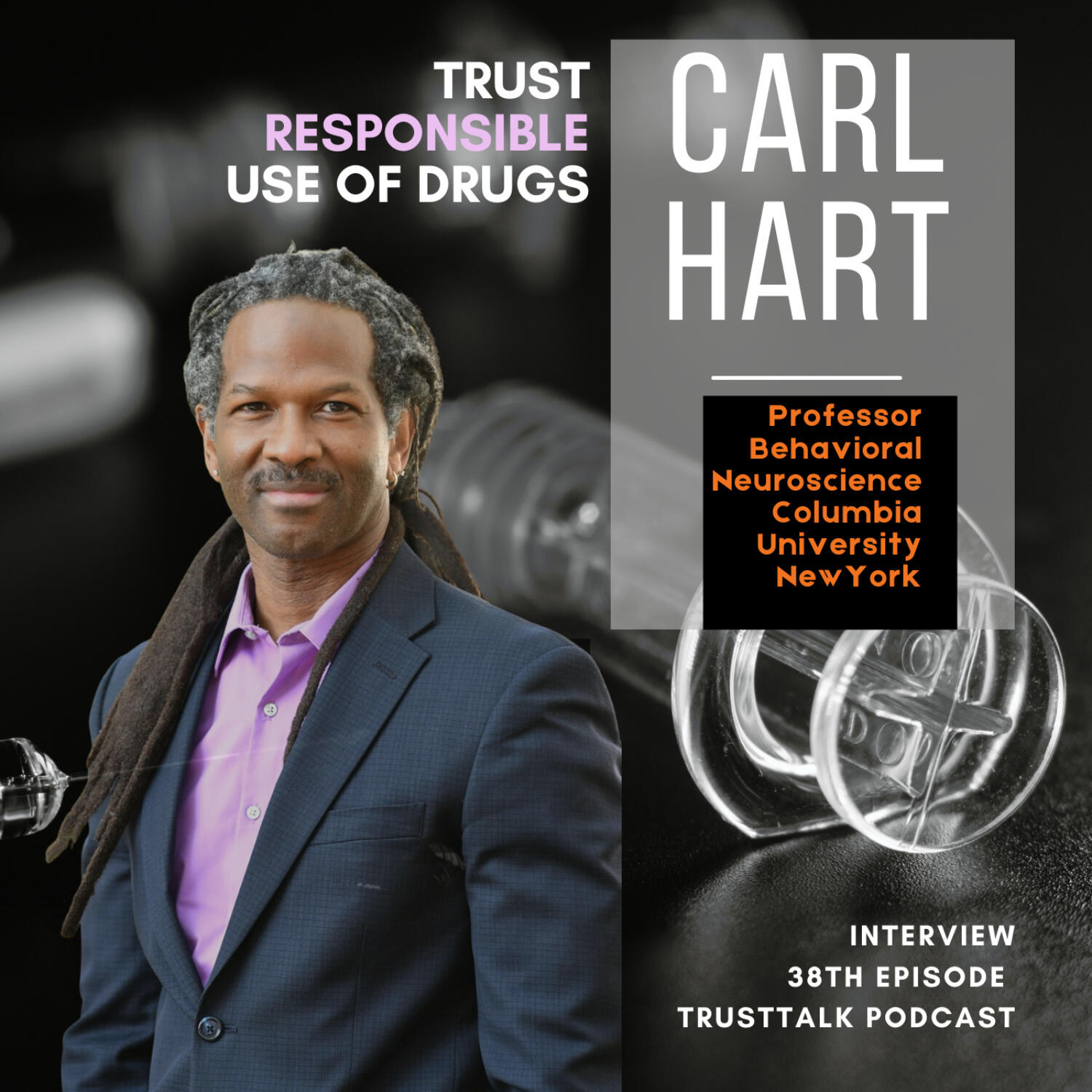
Ep 37Trust Responsible Drug Use
In this interview with Carl Hart, professor of neuroscience at Columbia University, New York, he sets out his belief that the way we think about drugs and addiction is wrong and prevents society to live up to its ideals of liberty and the pursuit of happiness. All drugs, he argues, should be fully legalized, and instead of punishing or shaming people for drug use, we should focus on helping them use drugs wisely. Do we trust the people that regulate drugs to do the right thing to keep people safe? In his view, the answer to this question is a resounding no. We don't trust those people.
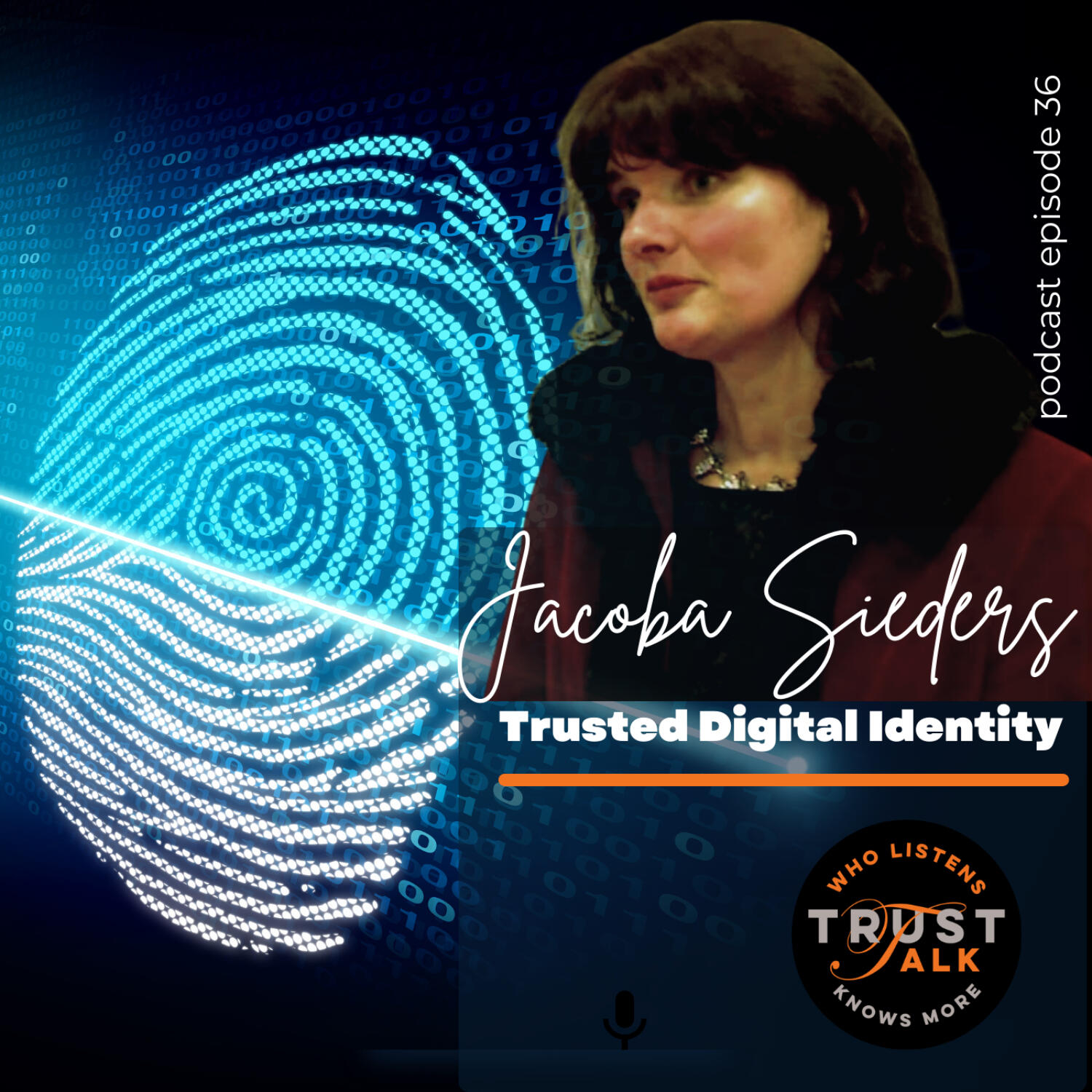
Ep 36Trusted Digital Identity
Jacoba Sieders is among the top experts on digital identity in Europe. In this second interview with her (the first one was published on April 18, episode 17) she talks about the three phases of how digital identity developed over time, about “federated identity”, one password to log in to different organizations. In a third stage, you upload your data and by doing so establish your own digital identity in your own digital wallet. The newest innovation, is “distributed identity”, that you as a user are the center of your own digital identity and not the organizations that need to trust you. It is called self-sovereign identity (SSI) with zero-knowledge proof, the idea that your claim (e.g. that you are over 18 and can buy alcohol or are entitled to drive) is right, without sharing all your personal data. She explains the necessary “triangle” of the digital wallet, the holder, issuer, and validator of personal data and talks about the ten requirements of proper identity management, among which is privacy and the “right to be forgotten”. She explains the attempt by the EU to create a single digital market by eIDAS, or electronic IDentification, Authentication, and trust Services), an EU regulation on electronic identification and trust services for electronic transactions in the European Single Market. Can we get rid of cookies, or passwords, altogether? Finally, she speaks about medical and other very private data in 2G apps fighting the coronavirus.
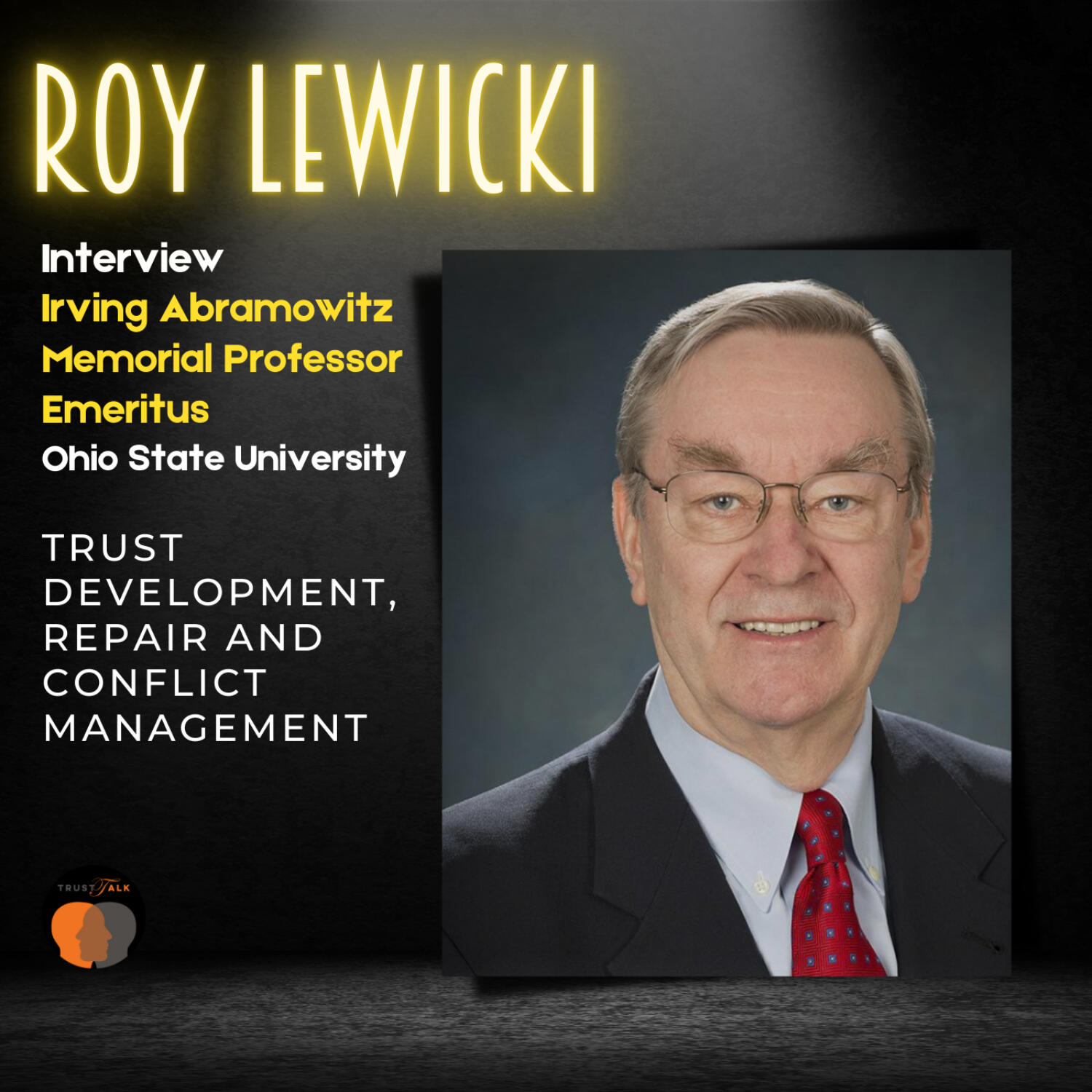
Ep 35Trust Development and Conflict Management
Roy Lewicki, the Irving Abramowitz Memorial Professor Emeritus at the Ohio State University, Columbus, OH. He is a leading scholar in the study of trust development and trust repair, negotiation, and conflict management processes. Trust repair is a critical part of negotiations, but also in marital therapy, community mediation, or business relationships. Apologies are important for repairing trust. He talks about the six components that make an apology work to restore trust. Trust works both on a cognitive level, a brain level rationally determining whether the other is trustworthy as well as a strong emotional component. Groups that study larger trust dynamics like politics, or economics, or the law, often pay not enough attention to those emotional components. In economics transactional trust is important, it is the glue that holds our economic, political, and community systems together. Broken trust in social media is not less of a research subject. Lying, cheating and dishonesty are as much a part of organizational dynamics as they are among the fleeting relationships in social media. So the phenomena are more similar than they are different. Trust in negotiation is about telling the truth, but not giving away your bargaining position, not using tactics that are intended to emotionally manipulate the other party like lies or dirty tricks or sneaky tactics. And about following through and honoring your promises and commitments both on their part and on your part.
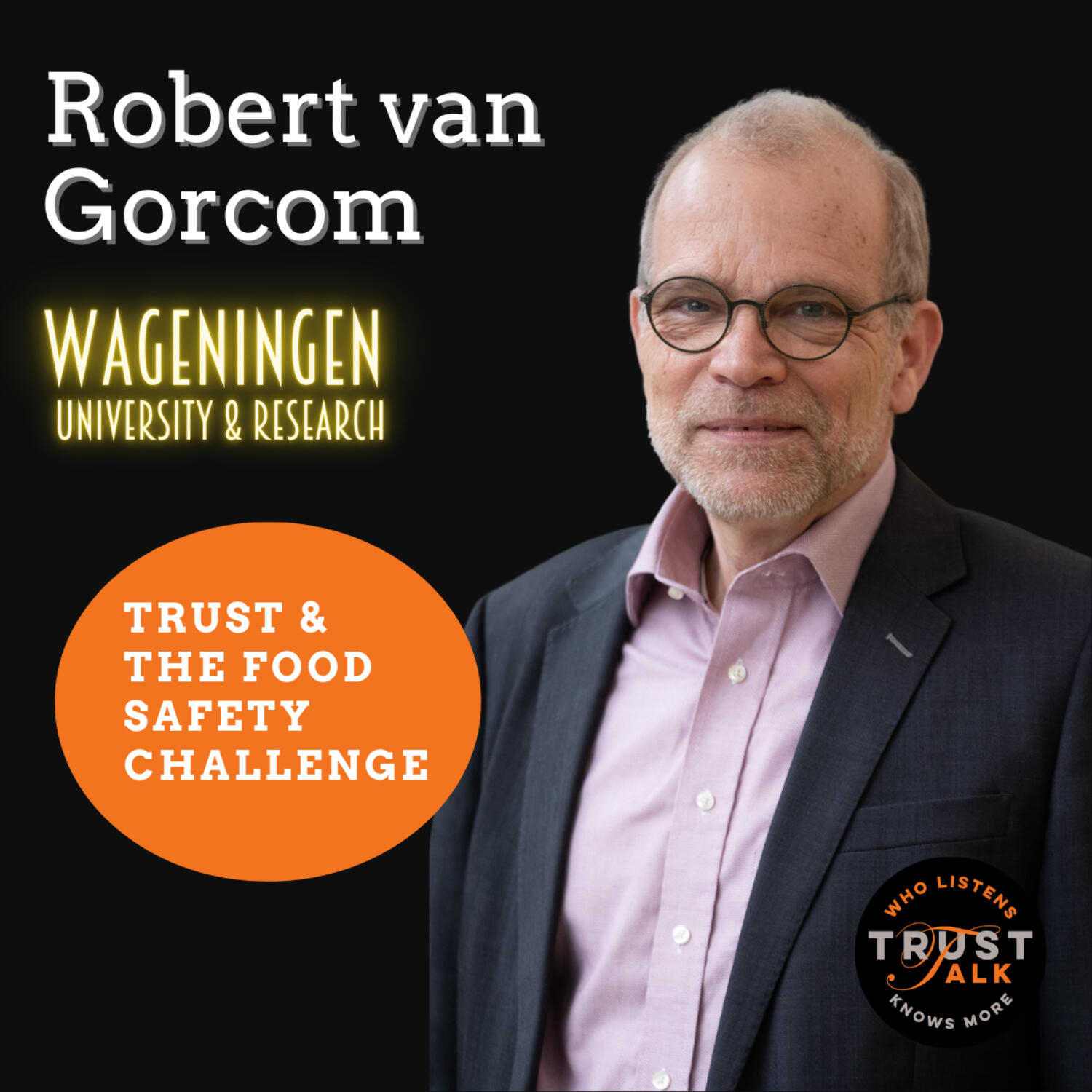
Ep 34Trust and the Food Safety Challenge
Can we trust the world to be able to feed 10 billion mouths in 2050? In this interview with Robert van Gorcom, director of Wageningen Food Safety Research he talks about the means to feed the world in 30 years in a sustainable way, respecting our planet. Science has to deliver the innovations necessary for the food production. There are 3 factors that create trust in food: sustainability, safety, and supply. Consumers expect nothing less than 100% safe foods but food production also involves risks. The food system we design has to be in balance with our planet. The food supply chain has been made too complex. Consumers do not realize enough that the price they pay in the supermarket is not the “real” price, because we don’t pay for the depletion of resources, we do not pay for animal welfare. He talks about the role of supermarkets, in stimulating trust by adding transparency to the food production system.
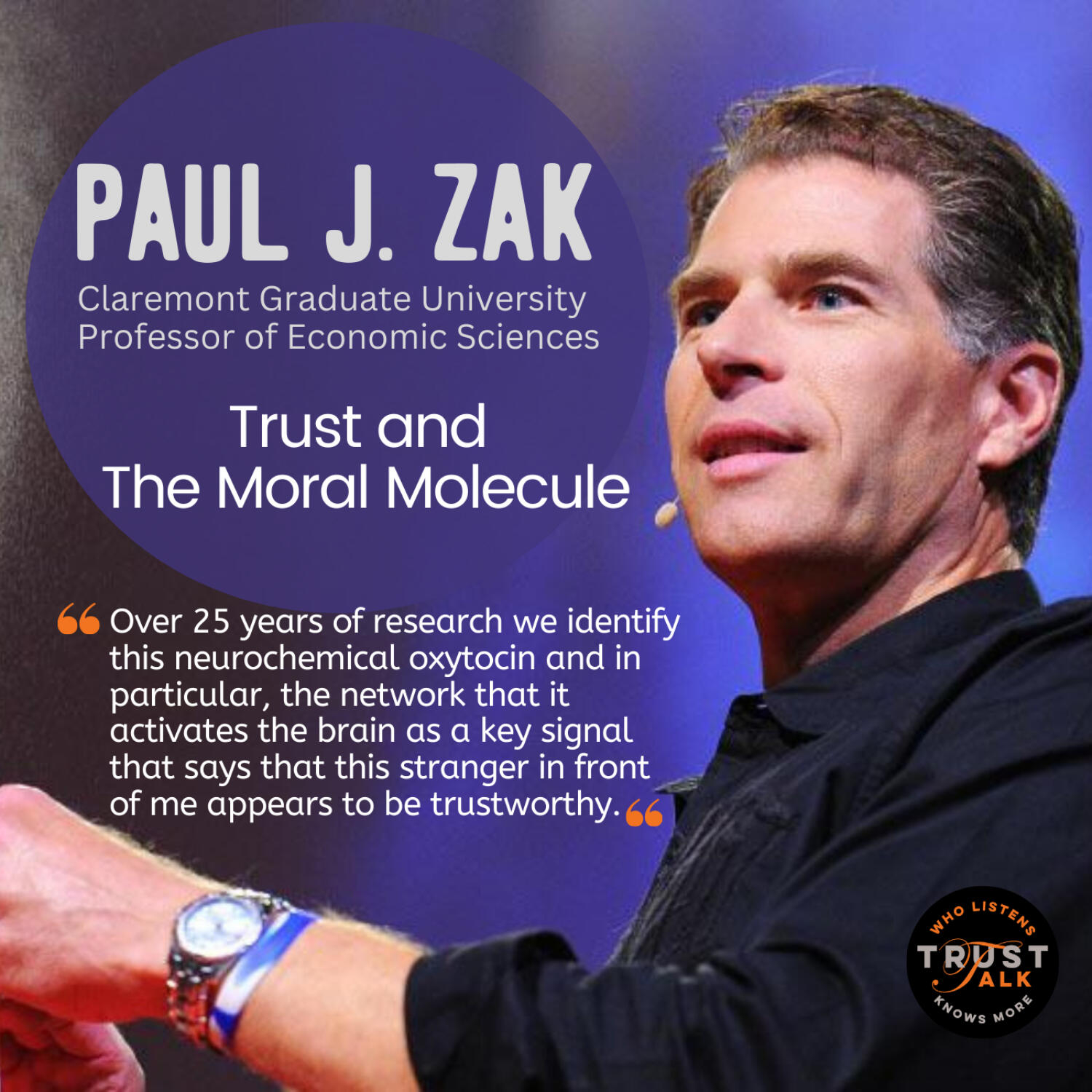
Ep 33Trust and the Moral Molecule
Paul Zak is a professor at Claremont Graduate University in Southern California and the Founder of Immersion Neuroscience. He talks about the neuroscience of trust. His experiments researching the neurochemical oxytocin (the "Trust Molecule") show that most humans are biologically wired to cooperate, but that business and economics ignore the biological foundations of human reciprocity, risking loss. Building a culture of trust is what makes a meaningful difference. Employees in high-trust organizations are more productive, have more energy at work, collaborate better with their colleagues, and stay with their employers longer than people working at low-trust companies. They also suffer less chronic stress and are happier with their lives, and these factors fuel stronger performance.
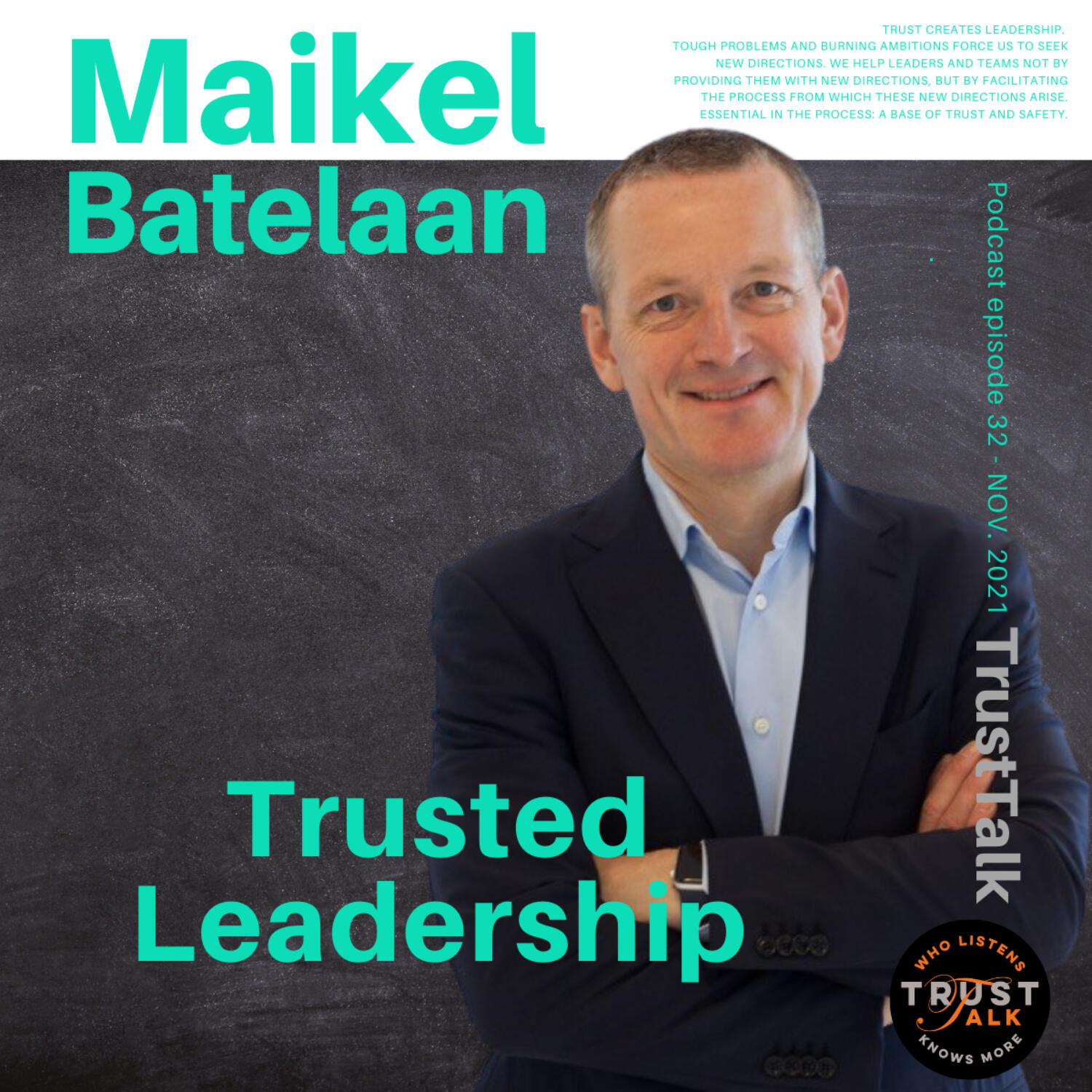
Ep 32How to handle Distrust in Organizations?
Maikel Batelaan, consultant and co-author of the book “Why Should I Trust You” talks about the ideal of every organization: smooth collaboration. In practice, it is more unruly. After all, there are always complex problems that need to be solved. Many leaders then react impulsively: they flee or they fight. Increasingly, we see leaders who choose the solution that lies exactly in between: they create trust. Organizations are much more equitable, much flatter than they used to be. If there is a need to create change or to overcome existing rivalries, the first thing that comes to mind is to restore trust among the key players, trust between leaders and co-workers. And that's why he thinks that in most cases where organizations want to change, trust is something that should be seriously looked at. Distrust blocks basic team performance, and it also makes people very unhappy in their private life. If a situation like that exists, it's important in the first place to identify the elephant in the room. He talks about the taboo to talk about this lack of trust and the remedies to restore trust.
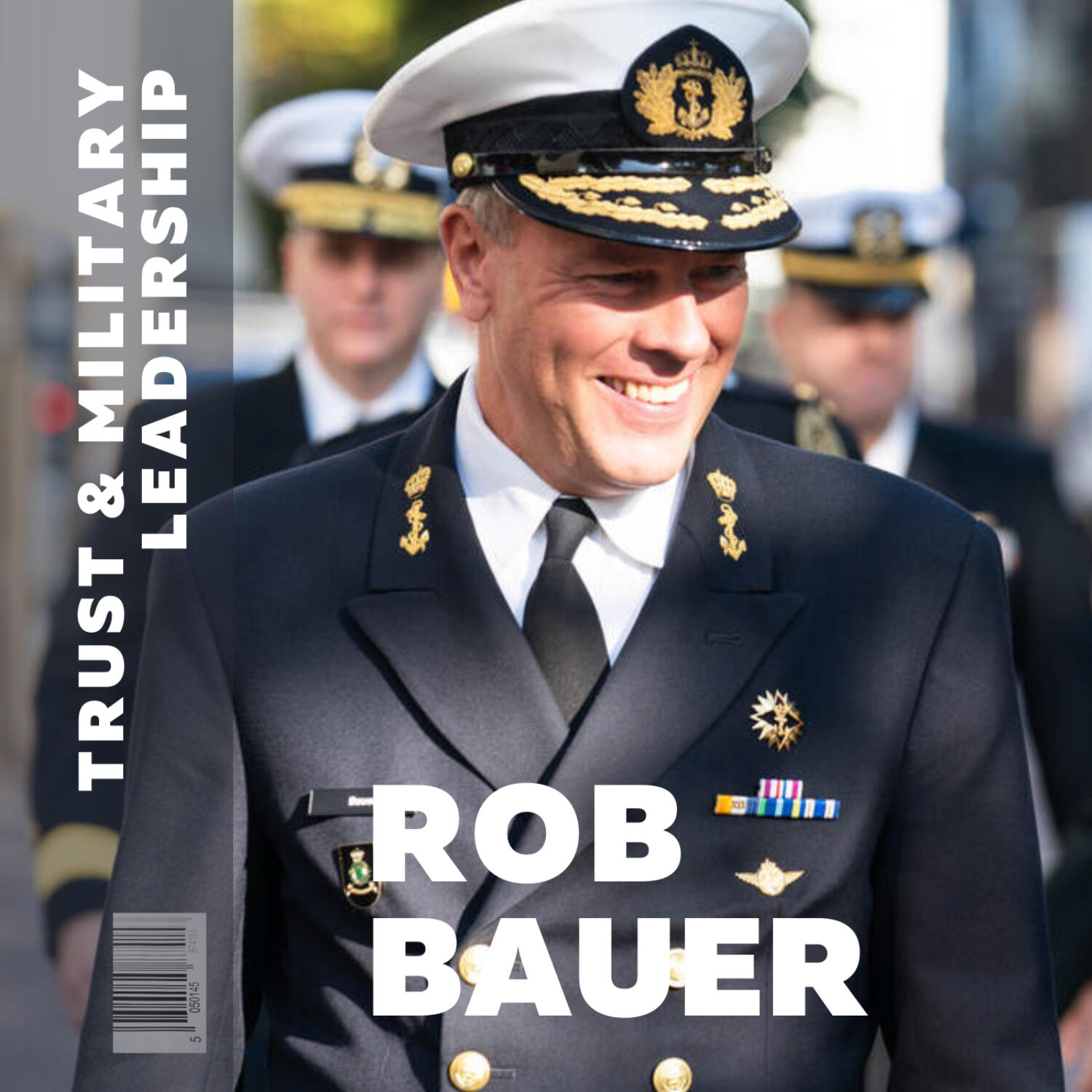
Ep 31Trust and Military Leadership
Admiral Rob Bauer is NATO’s most senior military officer. In his first podcast interview he talks about the crucial role of trust in the military training and operations, about his years at the Naval Academy and the international retreat from Afghanistan, about “mission command” and his personal mantra “Expect the Unexpected”. He speaks of military personnel as highly educated and trained professionals, who do not conform to popular stereotyping, about ethical choices in combat and the difference between trust and performance.
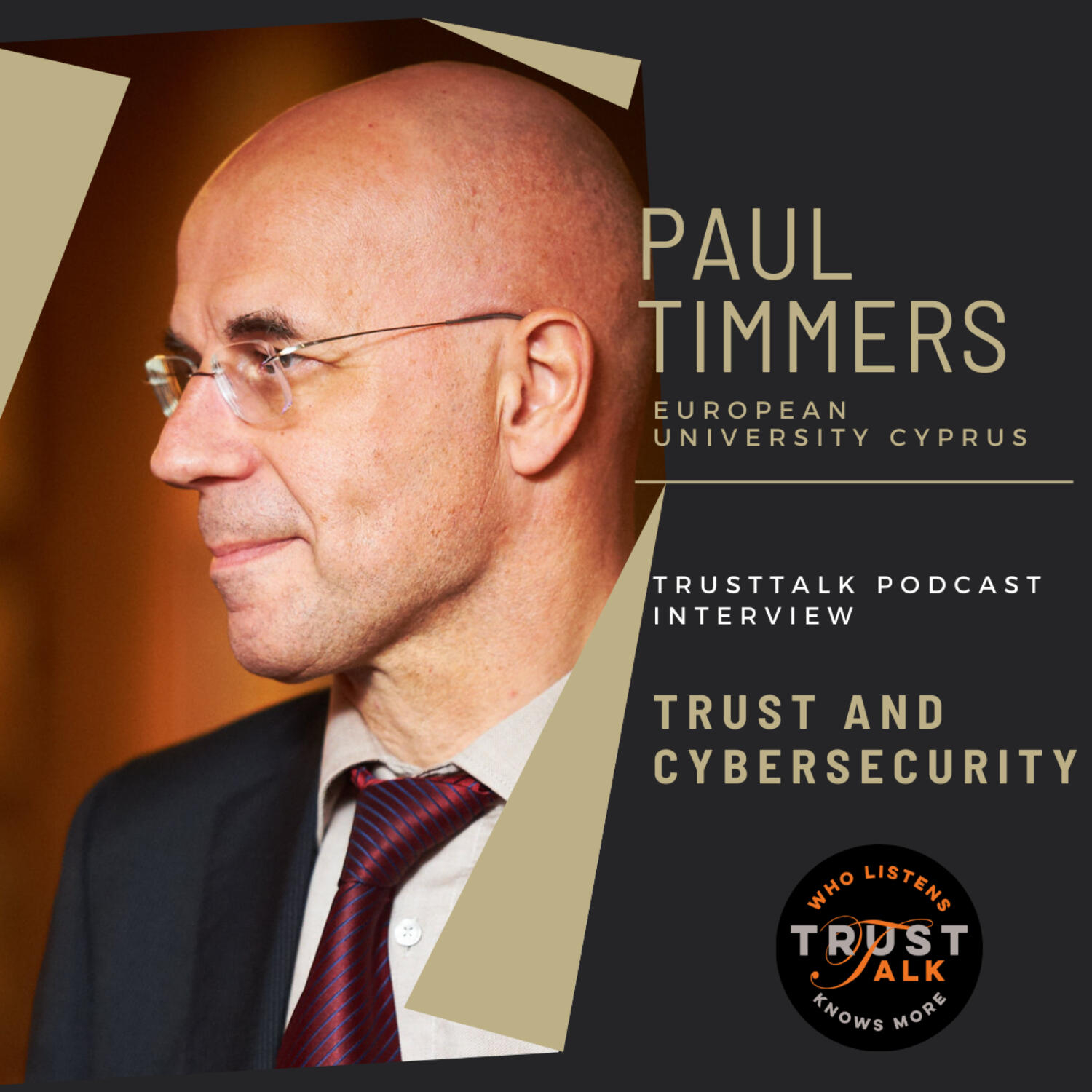
Ep 30Trust and Cybersecurity
Paul Timmers talks about trust and cybersecurity. Cyber threats undermine trust in the daily practice of working with digital systems and in geopolitical relations. But even if we should increase our control of digital technologies, some myths about digital sovereignty must be debunked. Nevertheless, there are also sensible ways forward to strengthen strategic autonomy in the digital world. Importantly, the debate about trust and technology is going really to the foundations of the kind of society that we want to have.
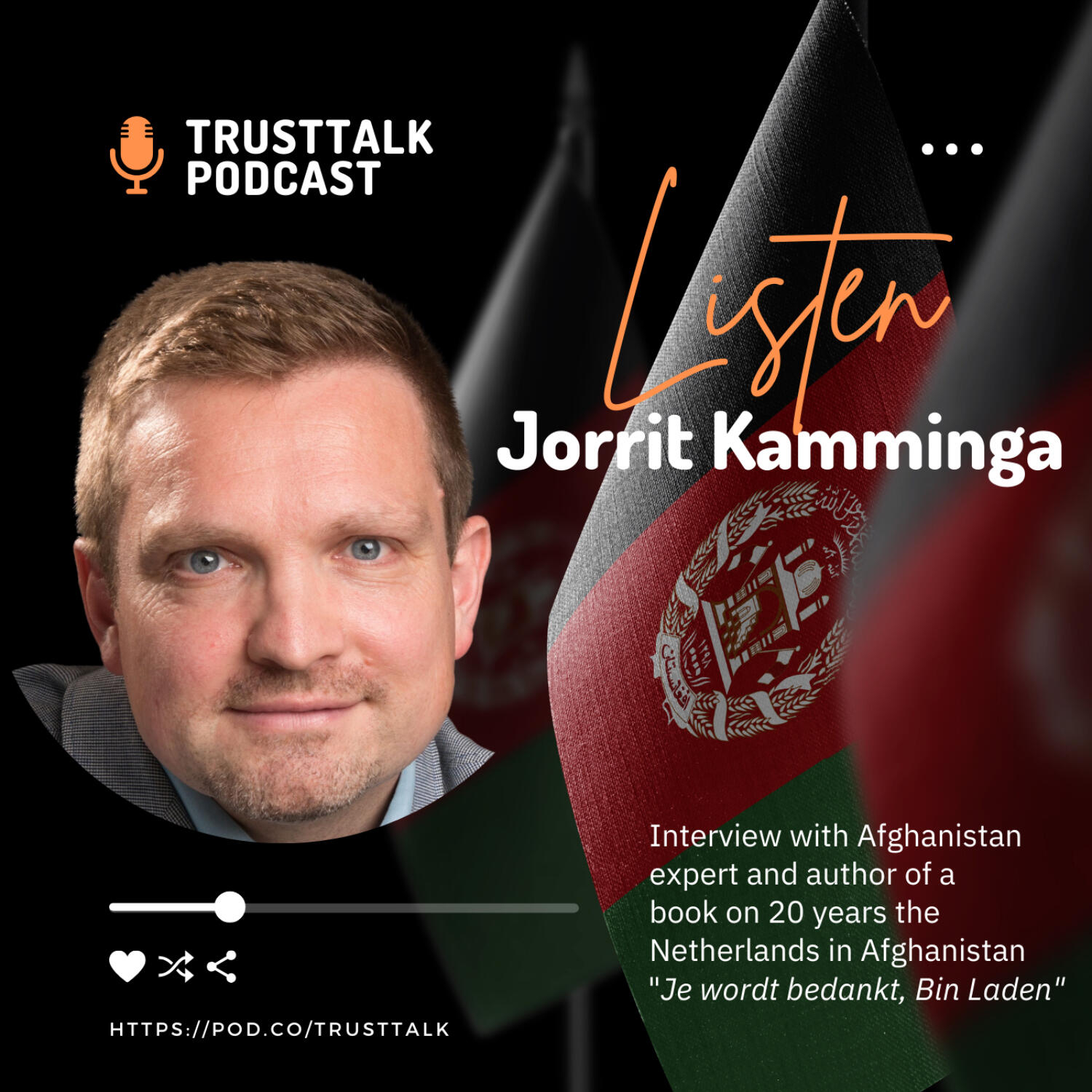
Ep 29Trust, Tragedy, Taliban and twenty years Afghanistan
Afghanistan has been all over the news in the past weeks. The reason was far from positive. The Taliban unexpectedly returned to power, just at the time that the last international troops were being withdrawn from the country. The final chapter of twenty years of international engagement became the most tragic one, as countries tried to evacuate their citizens and the Afghans that had worked for them. In TrustTalk we talk to Jorrit Kamminga, an associate fellow of the Dutch Clingendael Institute who spent 16 years in Afghanistan and has recently published a Dutch book about twenty years of the Netherlands in Afghanistan. With him, we explore the various layers of trust that existed in the past twenty years. From the national parliaments of donor countries and the international military coalitions to the Afghans on the receiving end and the new interim government of the Taliban.
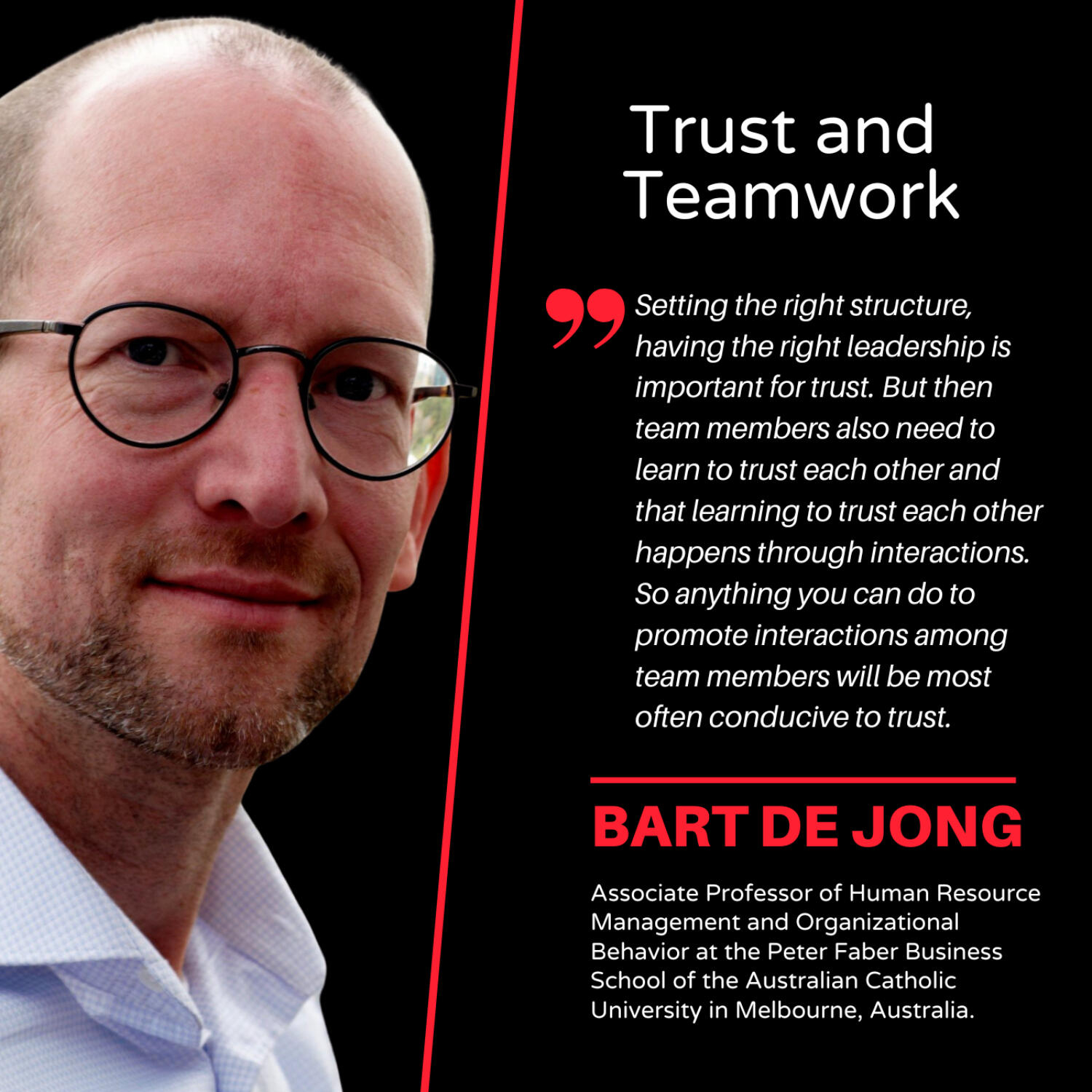
Ep 28Trust and Teamwork
In this interview with trust researcher Bart de Jong he focuses on the impact of trust on teams in organizational settings, about the difference in hierarchy or rank among team members. Trust building in a team should not be a one-off exercise but an inherent element of every interaction, every day. He talks about three ways managers can have control over that they can use to build and maintain trust, about differences in online and face-to-face team meetings. He researched three waves of trust research, spanning a period of more than 25 years.
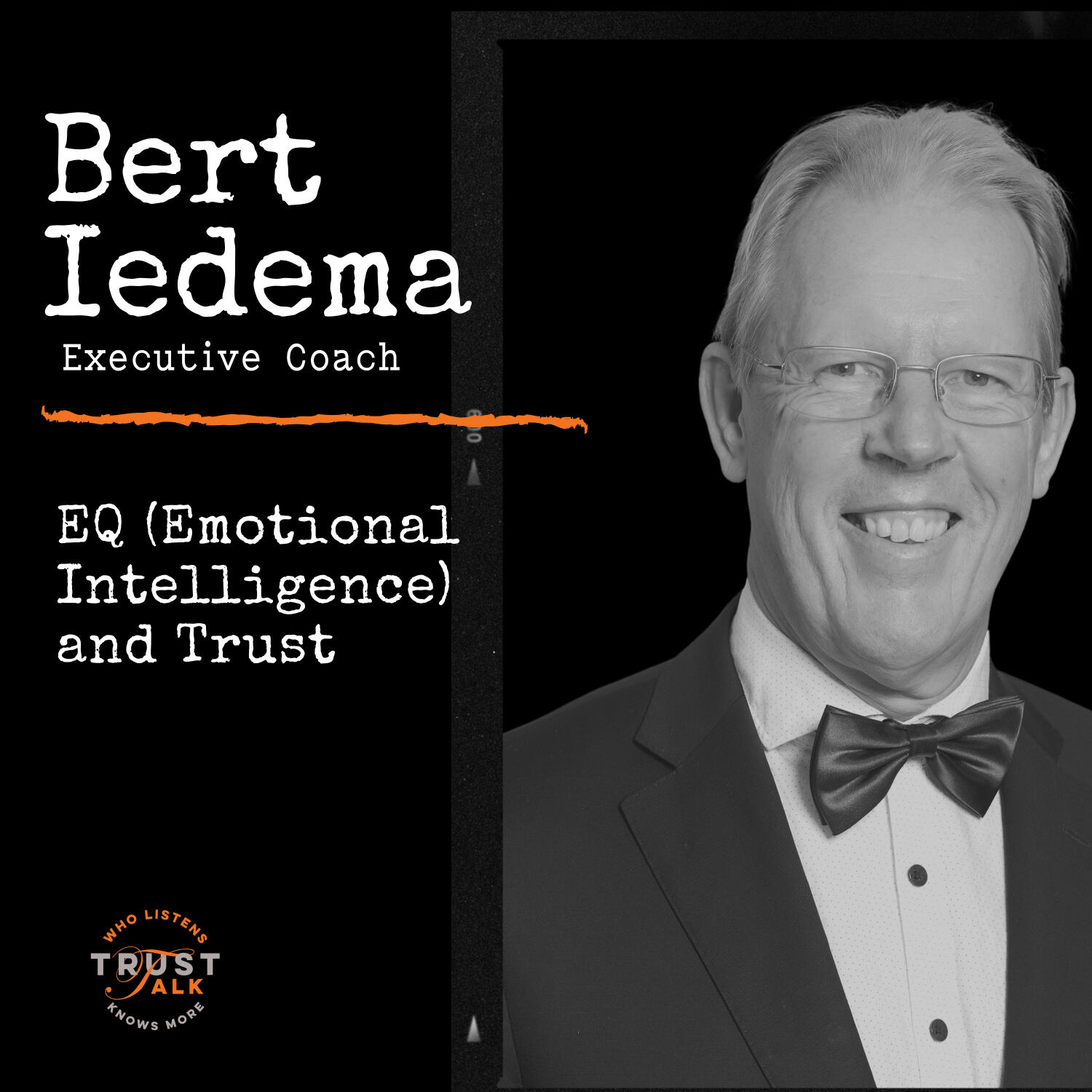
Ep 27Emotional Intelligence (EQ) and Trust
Deep trust and high expectations are set to be two pillars of high-performing cultures and Emotional Intelligence (EQ) is essential to both. It is said that when leaders set high expectations without the EQ necessary to create trust, they breed anxiety. They breed stress and burnout. Bert Iedema, board room coach has extensive experience with EQ and how to improve it by training, helping to create trust.
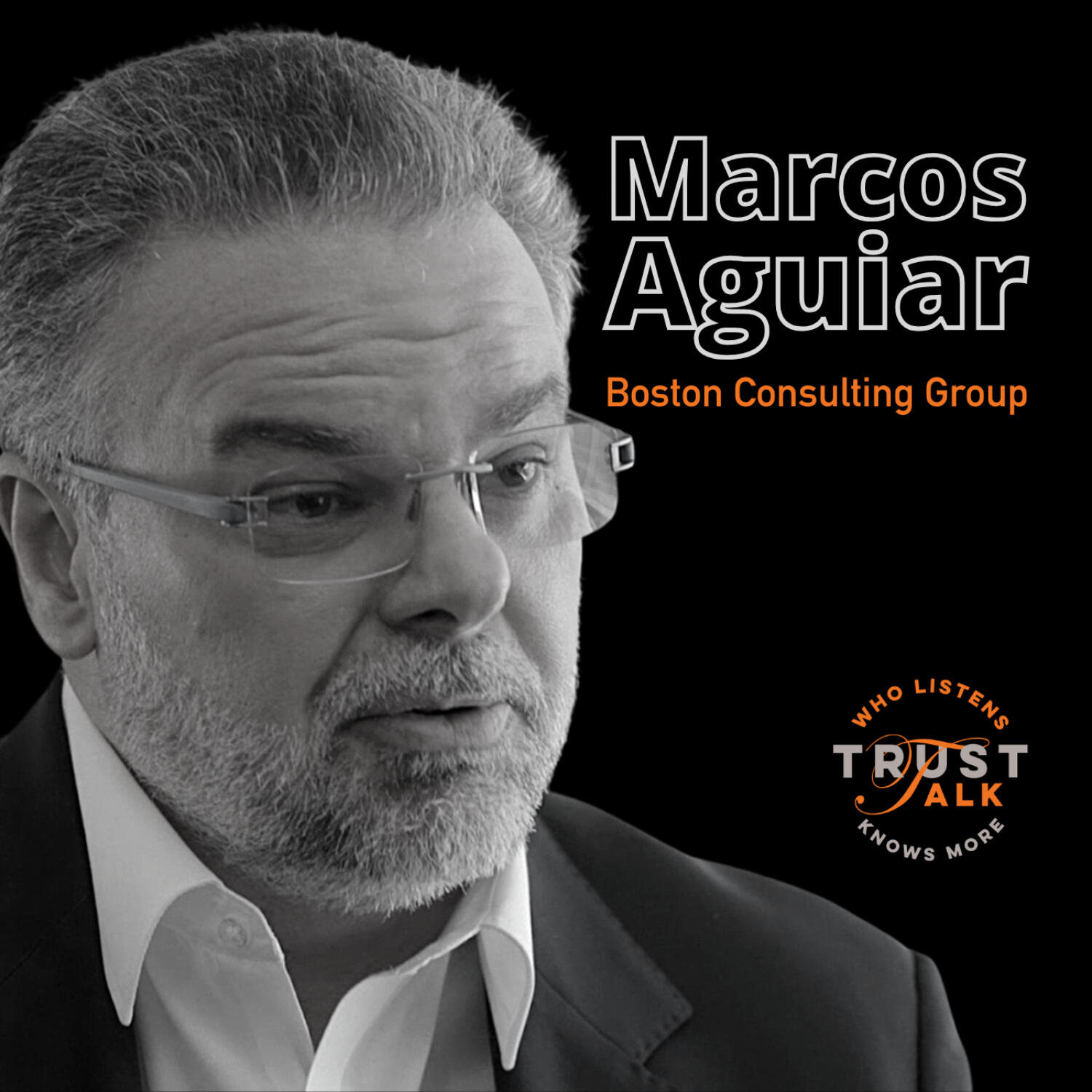
Ep 26Seven tools for building a business people trust
According to Marcos Aguiar, senior partner and managing director at BCG Sao Paulo, Brazil, 7 out of the 10 most valuable companies in the world, are ecosystems. When there is no trust or if the level of trust falls in an ecosystem, participants are less likely to cooperate and frictions occur, harming their performance. Competence is by far the most prevalent trust driver in the ecosystems he studied, among others companies like Sony, Amazon, Handy, HopSkipDrive, Spotify, BaseCamp, Blix, Tile, Match, Ant Group’s Trusple, Doordash, TaskRabbit and Apple. There are tools you can use to reinforce trust, or to substitute for trust, which is what the BCG Henderson Institute identified in the successful ecosystems they studied, the “7 tools for building a business people trust”.
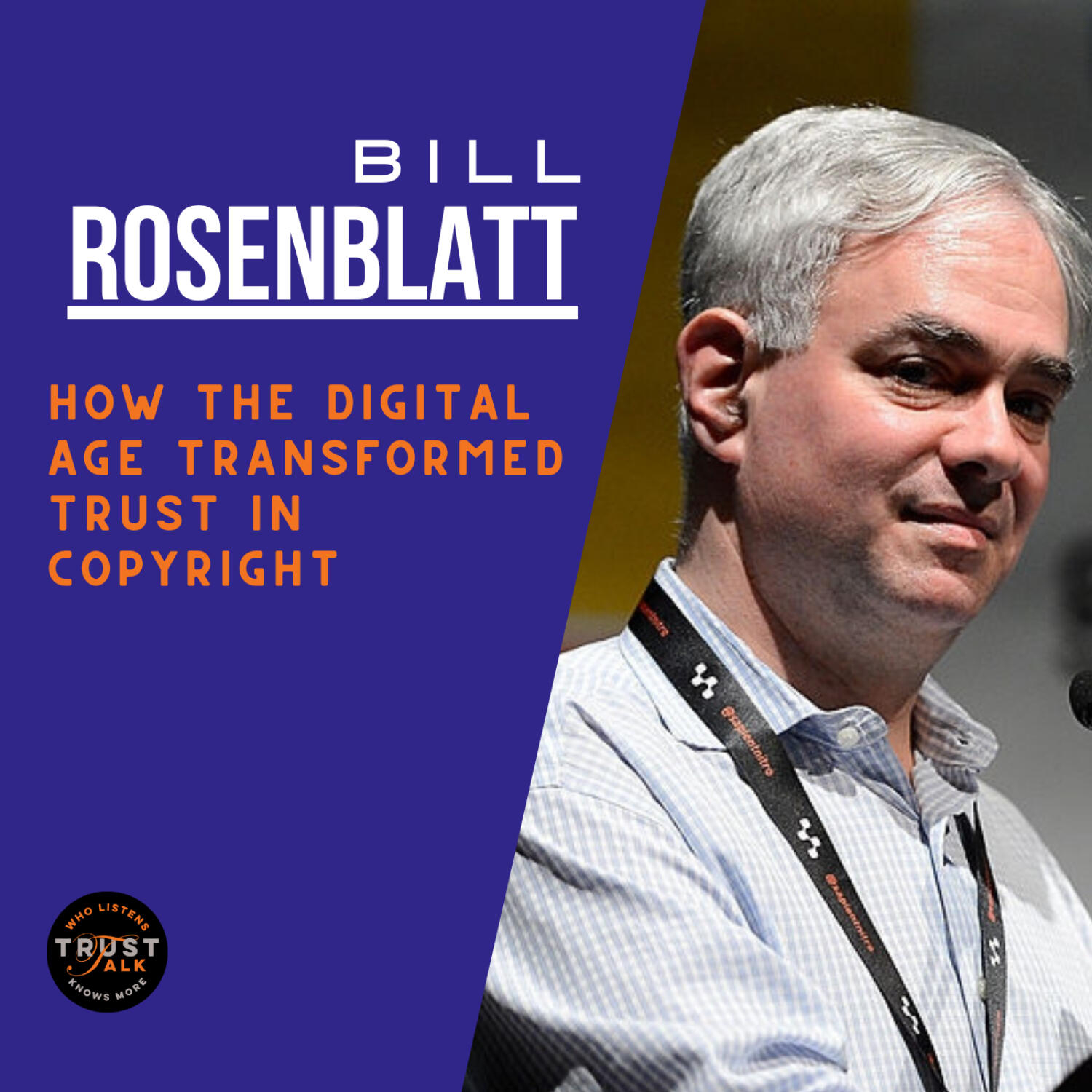
Ep 25How the digital age transformed trust in copyright
Our guest is Bill Rosenblatt. Trust becomes an issue in copyright in the digital age because it is based on an implicit understanding of the way content is copied and distributed versus how copyright could be infringed. In the pre-digital age, it is based on a foundation of trust between businesses and the amount of trust that was implied in relationships between creators and consumers. In the digital age, every user has the ability to make virtually an infinite number of copies of creative works for almost no cost and distribute them to anyone they want in the world. And so the copyright owner no longer has this ability to obtain recourse against people who he doesn’t know and who to trust. Bill discusses the various technical means to establish that trust in digitally distributed works, from digital rights management, watermarking, financial means like levies, and other means. He reminds us of the US CASE law and the problem with legislation to solve the trust issue in dispersing digital copyrighted material.
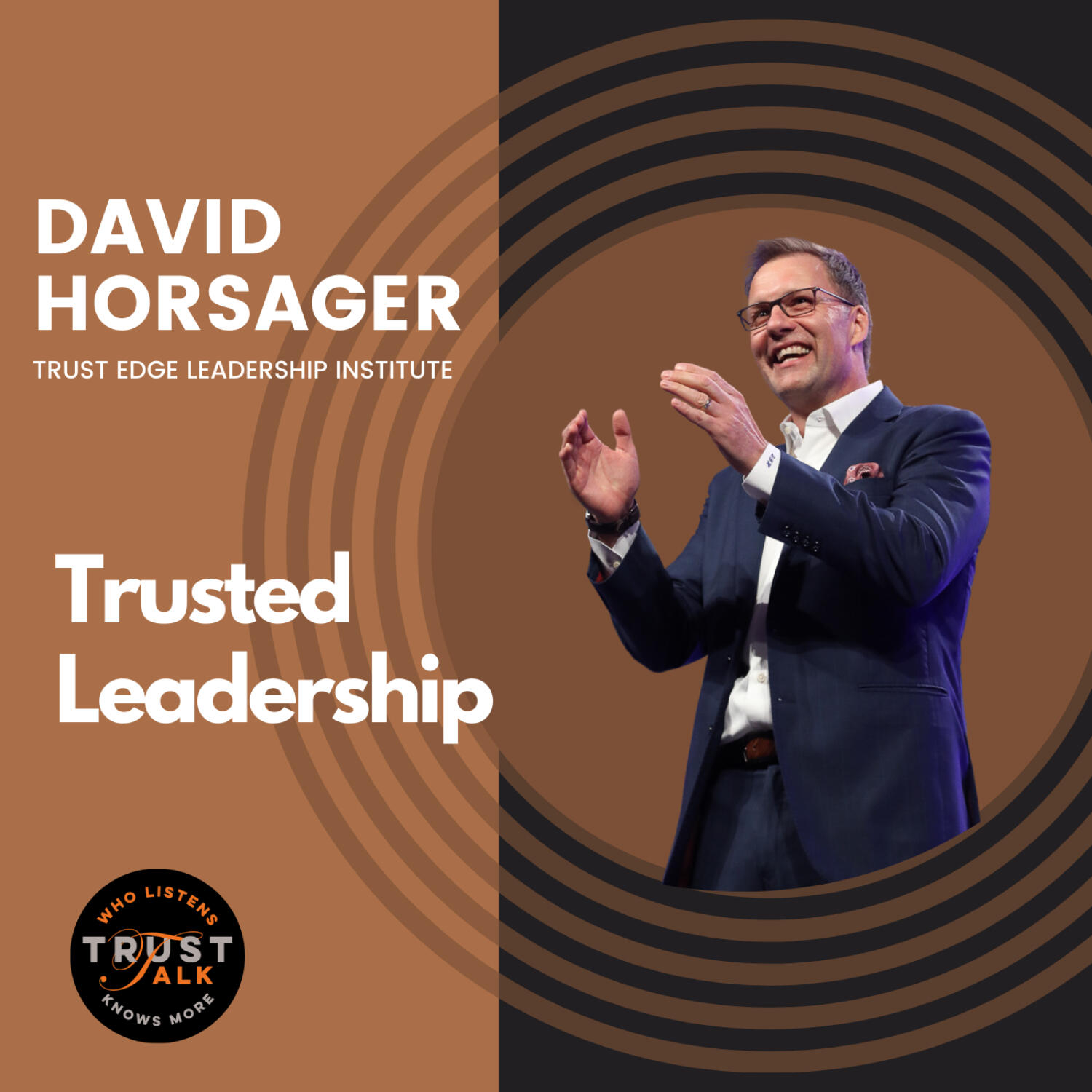
Ep 24Trusted Leadership
David Horsager is a global expert on trust and CEO of Trust Edge Leadership Institute where the mission is to develop trusted leaders and organizations. Trust is a fundamental, bottom-line issue. Without it, leaders lose teams, salespeople lose sales, and organizations lose reputation, retention, and revenue. But high-trust teams and organizations bring out the best in their people and get the greatest results. Through David’s industry-leading research The Trust Outlook and firsthand experience working with the world’s highest-performing organizations, David reveals the 8 Pillar Framework for driving business results and becoming the most trusted in your industry.
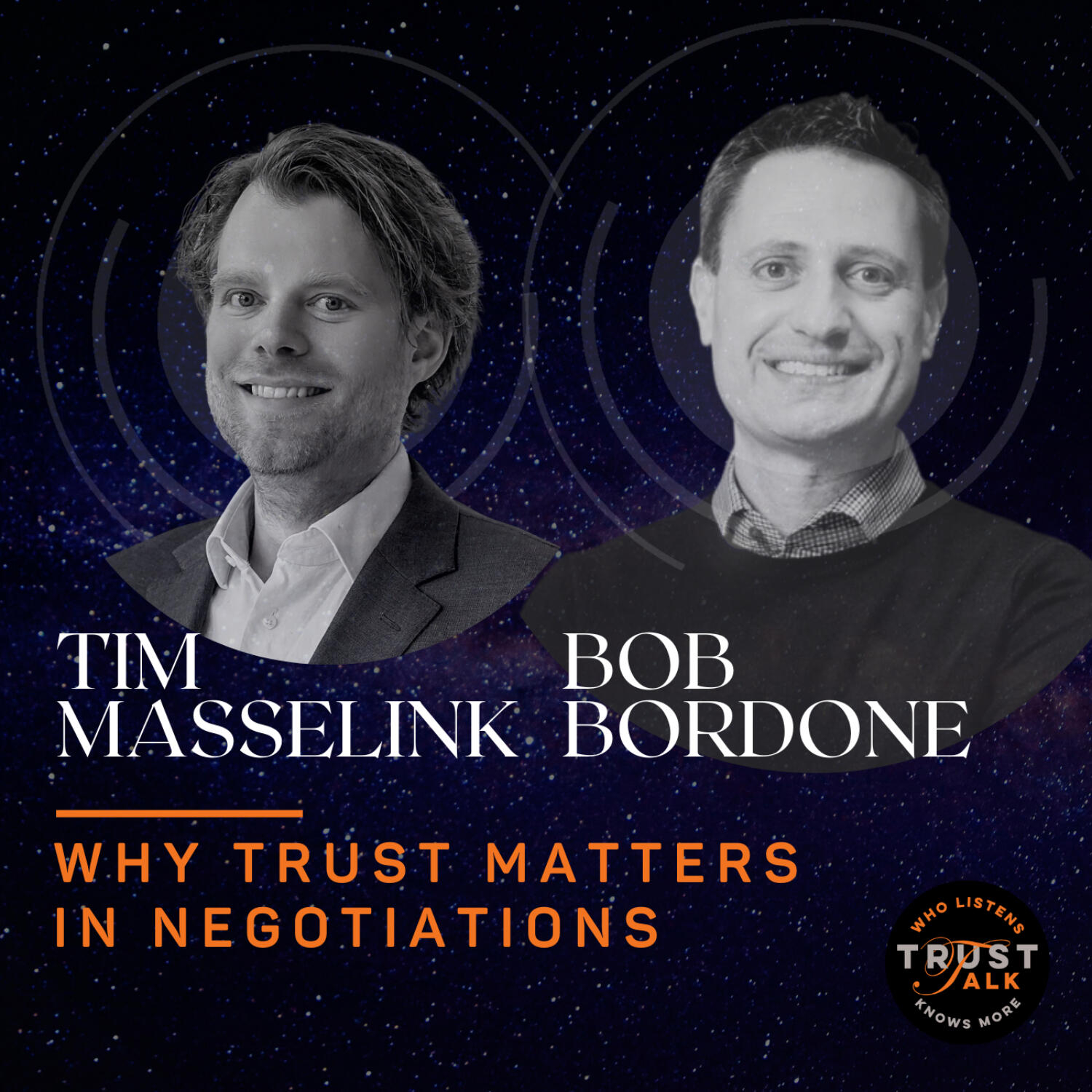
Ep 23Trust in negotiations and dispute resolution
In this interview negotiation experts, Bob Bordone and Tim Masselink explain what it takes to build trust during negotiations. Negotiation includes any intent, any effort, any set of communications to influence or to persuade. So embedded under negotiation are things like dispute resolution or conflict resolution or mediation in my mind, because all of those tasks in some way are around trying to influence behavior. Negotiation is bigger than that. Negotiation includes both making deals and helping people resolve conflicts or helping people manage disputes in some way. What do skillful negotiators have to make them succeed? The importance to create value with the other side: the more negotiators feel that there is trust with their counterpart, the less risky it is for any of the parties to share information about their preferences, the less risky it is for them to engage in a joint venture with them. The role of online or real-life meetings for the outcome of negotiations, the importance of being honest and predictable. Have men and women different skills? Negotiation is not a debate. The "shadow of the future" hanging over negotiations. We talk about negotiations via virtual tools (ZOOM, TEAMS), can they be effective, and the role of confidentiality.
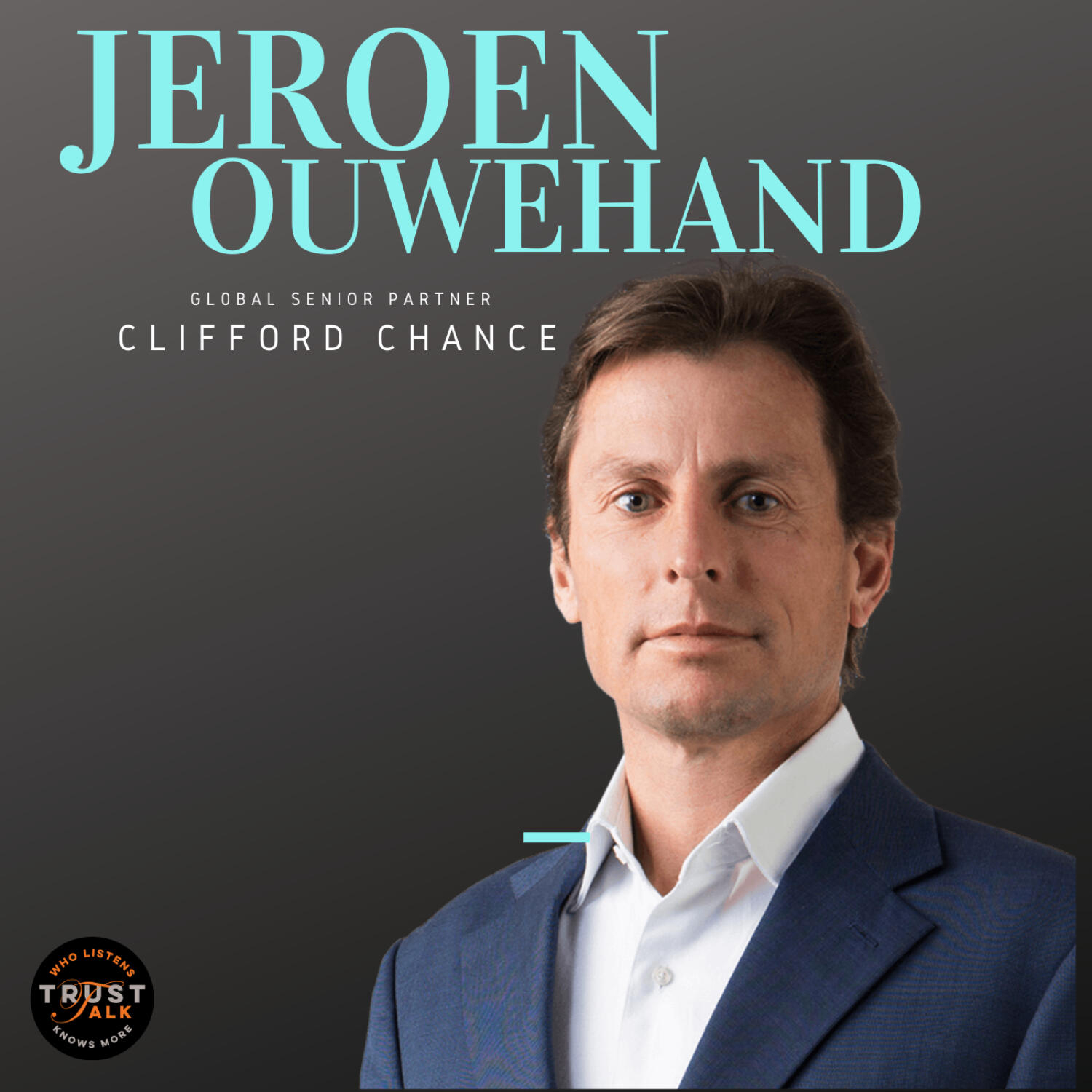
Ep 22Trust, a Key Factor in a Law Firm
Interview with Jeroen Ouwehand. He is Global Senior Partner of the international law firm Clifford Chance. In this role, he not only represents 580 partners but also chairs the Partnership Council but he is above all the ambassador for the firm externally. The work of lawyers is all about trust, reputation, and quality. Once competing for instructions, during the pandemic there has been a flight to trusted relationships and quality and clients revert back to those relations that are strongest, which have the most trust. Trust is about being honest, about integrity, about doing the right thing when no one is watching, and about keeping promises, managing expectations, and being honest about what you can do and can't do. Within the corporate culture Clifford Chance trust-building is essential, the firm trains legal and non-legal skills, negotiation skills, presentation skills commercial awareness skills, but also many parts of curriculums are focused on trust and interpersonal skills. Internal networking is also important. Jeroen talks about his litigation practice and the mentoring program the firm built: a reverse mentoring program whereby partners are mentored by more junior lawyers or by business professionals who have a different background. He talks about second opinions, the corporate culture where trust-building is essential, Fons Trompenaars’ high and low trust cultures, and the role of intimacy between client and the lawyer.
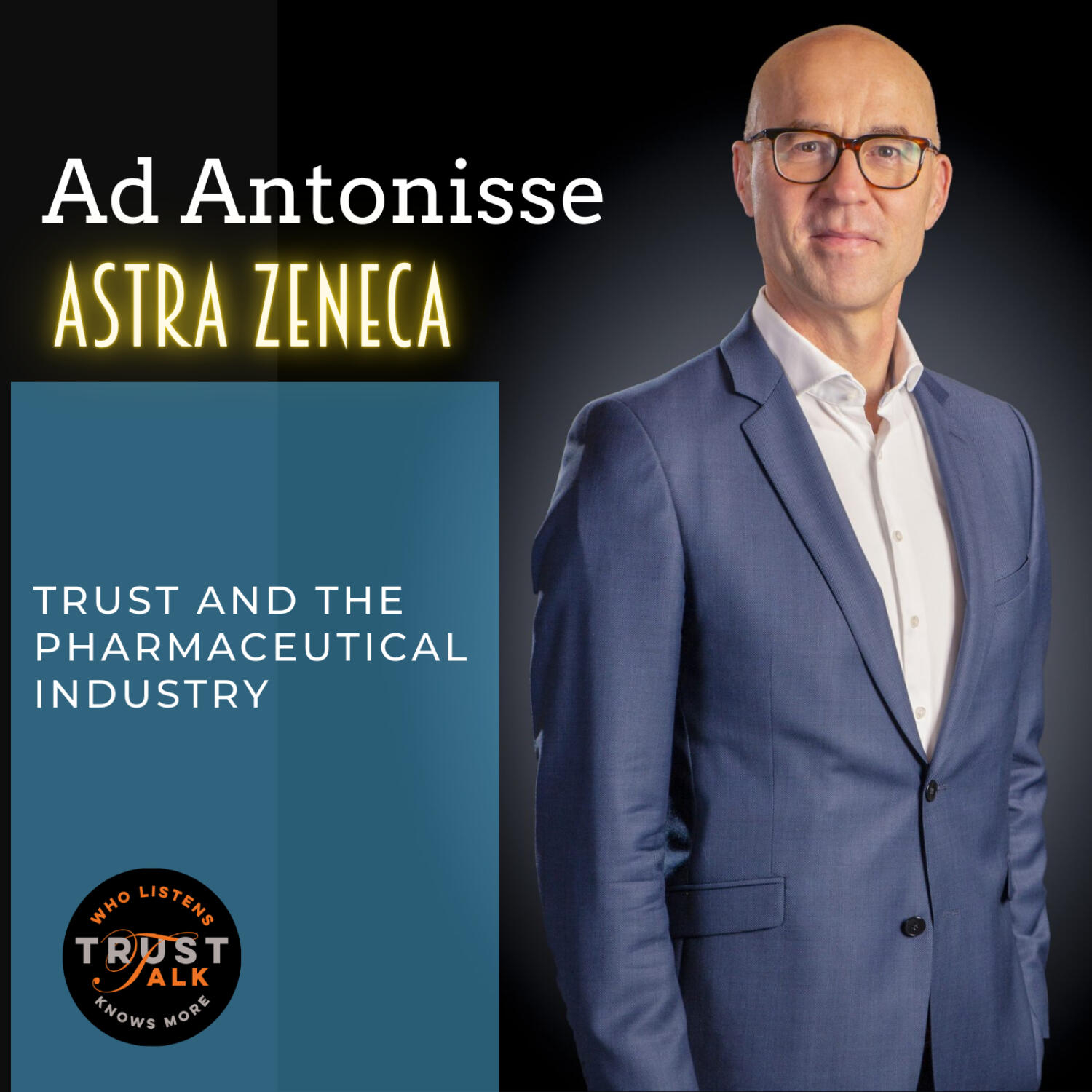
Ep 21Trust and the pharmaceutical industry
Our today’s guest is Ad Antonisse, Director Market Access and External Affairs of AstraZeneca in The Netherlands. He talks about AstraZeneca as a producer of personalized medicine for cancer treatments and the company’s public-private relationship with the inventor of the Covid-19 vaccine, Oxford University in the UK. Despite being in the middle of a pandemic, he doesn’t consider being in the crosshairs of the public eye as a burden. The company makes sure its vaccine product is available all over the world at affordable prices. Due to laws and strict regulations, the company has very limited space to respond to questions that arise around the vaccine and its availability. The company does its best to produce the vaccine and maintain its quality on a non-profit basis during the pandemic. He replies to the question about compulsory licensing. In his view, complex manufacturing processes and quality issues make it very hard for anyone else but trusted partners to produce the vaccine. Producing a vaccine a little more than a year after the breakout of the pandemic is a remarkable achievement of science. Growing distrust in society also affects the pharmaceutical industry. He talks about the role of his department to discuss with politicians issues about cost-benefit and how medicine is produced. (The interview took place on April 26, in the middle of the second coronavirus wave)
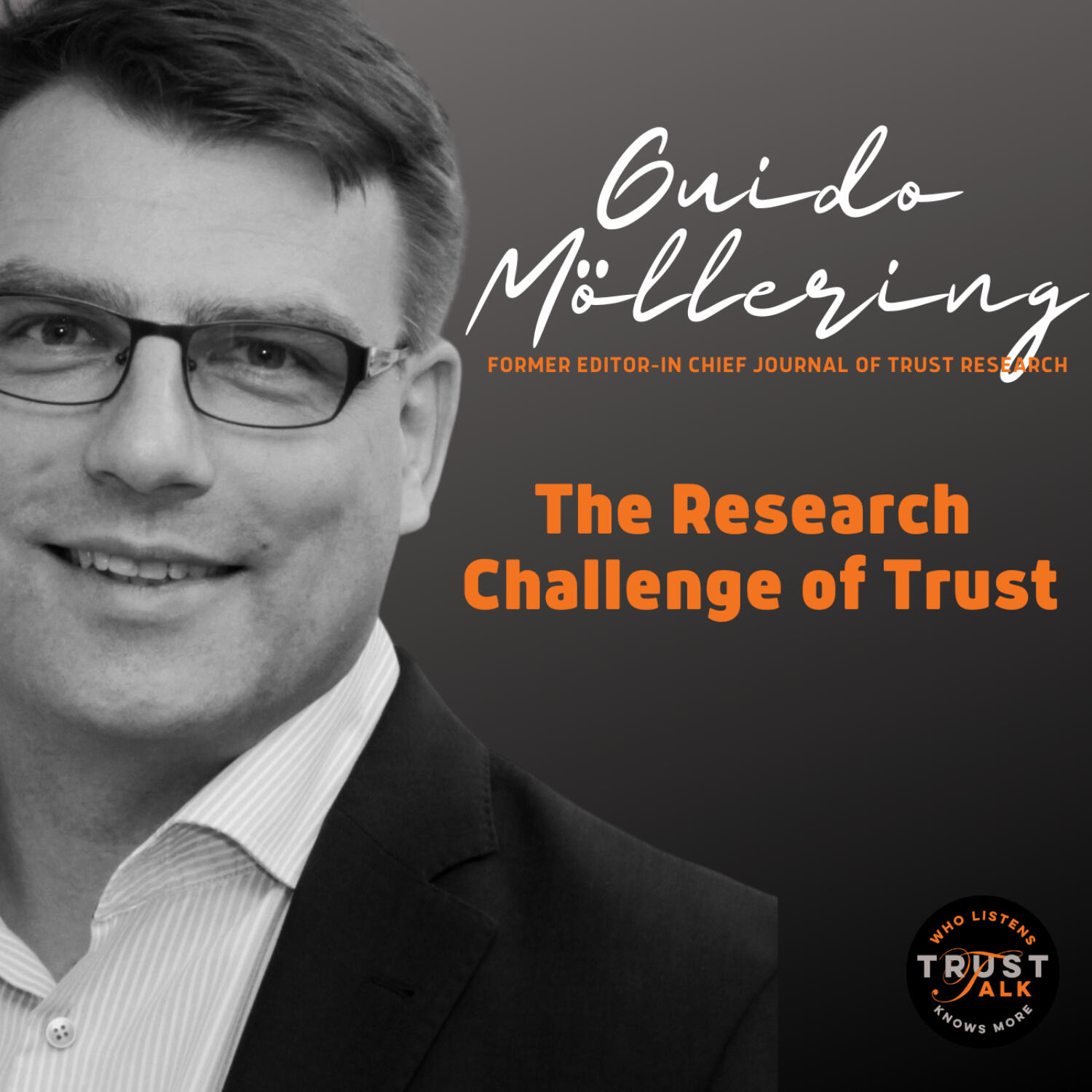
Ep 20The Research Challenge of Trust
Our guest today is Guido Möllering, director and Chair of Management at the Reinhard Mohn Institute at the Witten-Herdecke University in Witten, Germany, and editor-in-chief of the “Journal of Trust Research”. Is trust a useful subject for research as it is so elusive and hard to define? We discuss his 2006 book “Trust, Reason, Routine, Reflexivity". Inspired by the German sociologist Georg Simmel he reflects on trust as the ability to believe in someone without being able to say what it is you believe. He mentions trusting versus trust and how pharmaceutical companies and the HIV/AIDS community finally got to trust each other. About the “trust gap” where longtime business partners like Apple and Qualcomm and Microsoft and Intel had to readjust their relationship, once very successful but went sour because they realized too late that their relationships had become locked-in.
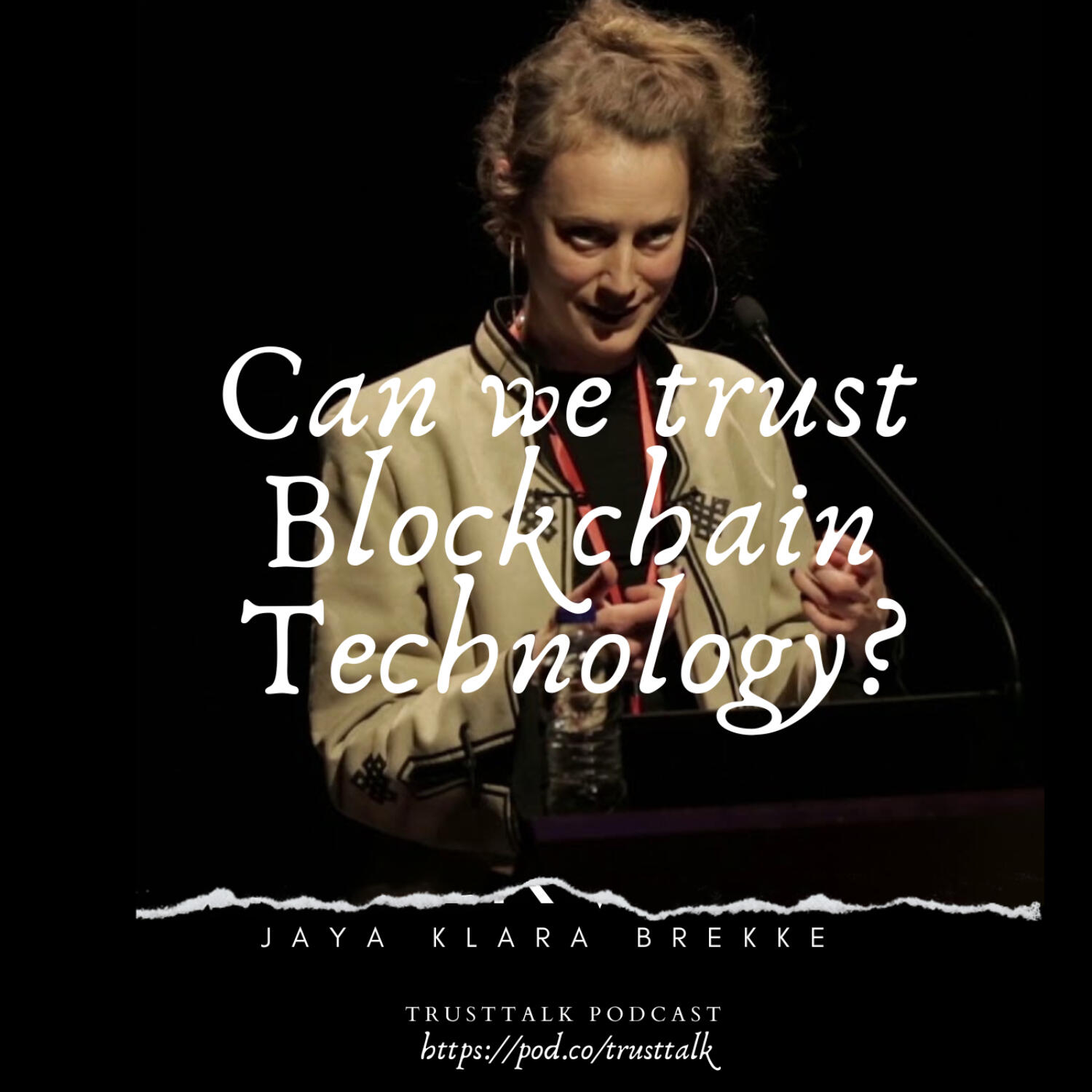
Ep 19Trust and the Promise of Blockchain
In this interview, Jaya Klara Brekke talks about the politics of blockchain technology and whether it solves the problem of power, how a technology that was meant to be “neutral” tends to ignore the fact that engineers and developers making real decisions on how the system should be designed, thereby quickly becoming politically contentious. She frames the term “Hippocratic Oath” making people more conscious of the actual decisions taking place in the design of blockchain. She talks about the bitcoin blockchain technology and the competitive process in bitcoin mining which creates a game that assumes a race for profit. #blockchain #bitcoin #technology #politics
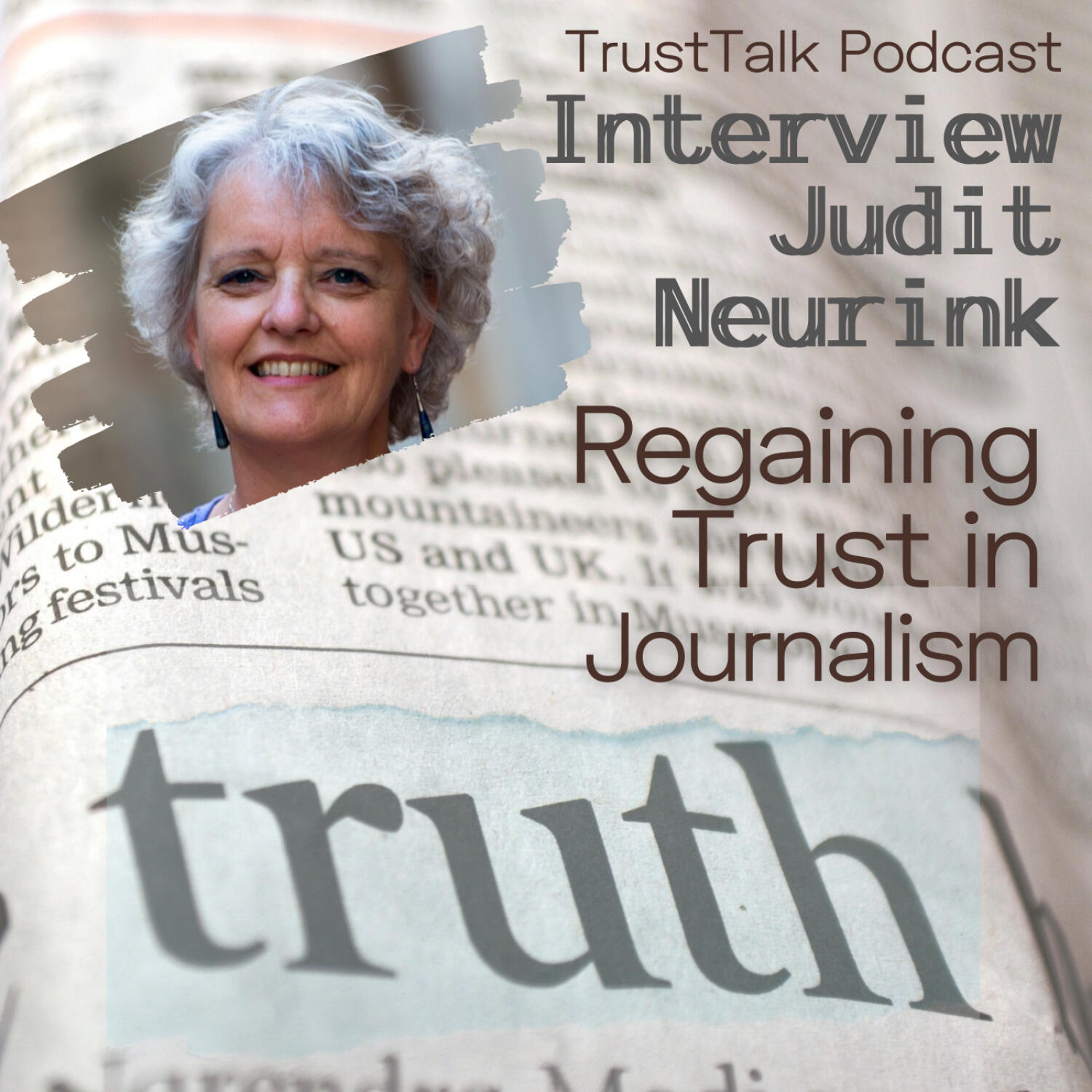
Ep 18Regaining Trust in Journalism
Interview with Judit Neurink, an independent journalist who lived and worked in the Middle East. Trust is of great importance in her field of work. When training young journalists in Iraq she warned them that if they lie to their public, people will lose their trust. But many had no choice, as they worked for party media only interested in the truth of the party. Talking to Yezidi victims who escaped from the Islamic terror group ISIS, she was appalled to see some international colleagues breaking the trust the young women showed by talking about their ordeal. It had direct consequences for other journalists too, as many women no longer felt like talking to them. This problem she currently encounters is a result of the distrust fake news has sowed towards journalists and regular media. As a result, people become less well informed, so less able to make the right decisions. She concludes that now, plain and simple, honest and trustworthy information that is not biased or opinionated is more important than ever.
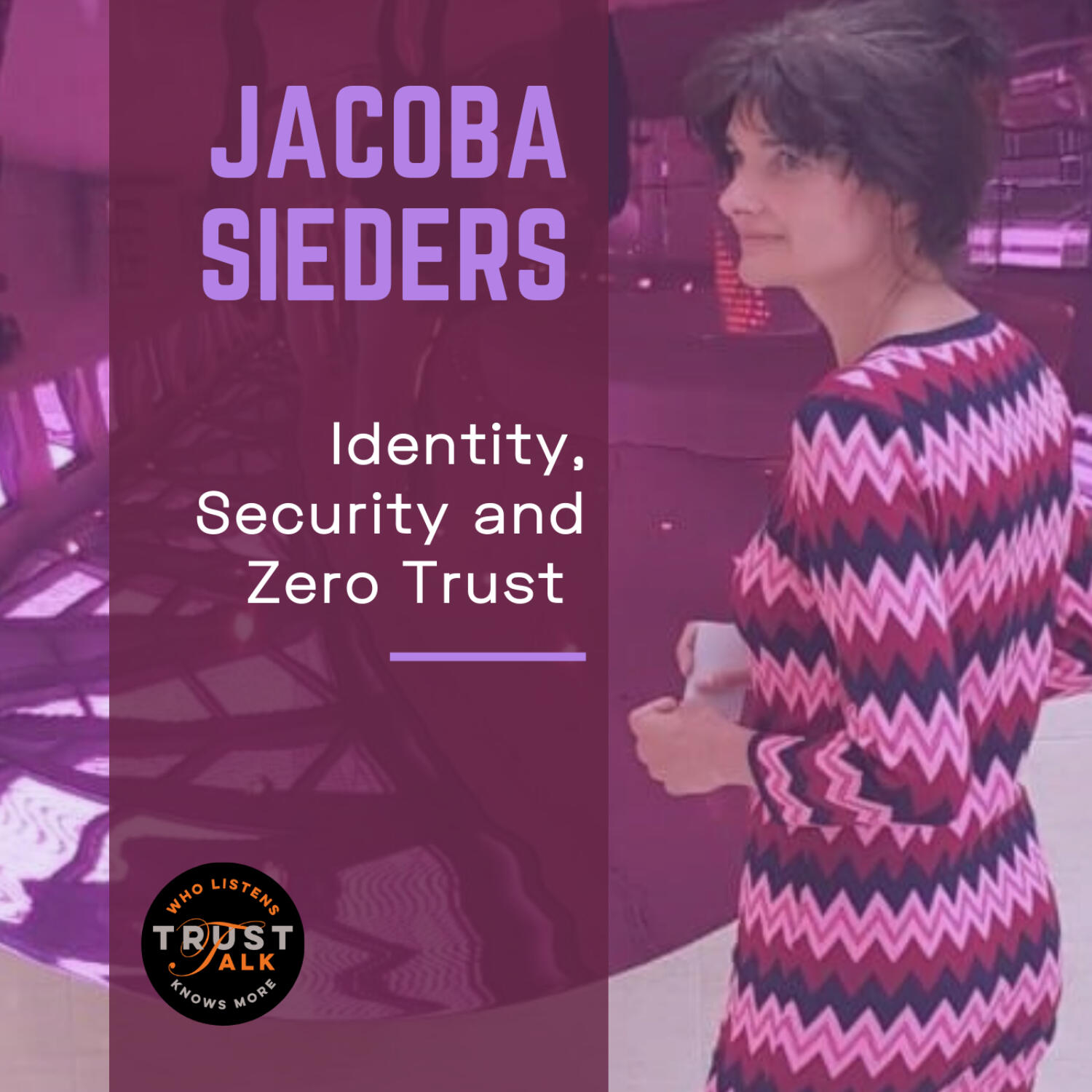
Ep 17Identity, Security and Zero Trust
Interview with Jacoba Sieders, Independent digital identity thought leader. In her view, controls and architectures to protect our important information need to be adjusted to a new reality of “zero trust”: data is distributed and in transit everywhere, across safe and unsafe devices and hyperconnected ecosystems. Identity- and access management is the guardian angel at the front door of systems and touches on all digital processes. Ideally, user convenience, privacy, and security are equally robust. Fundamental security by design is a must. Prescribing security levels through legislation is not easy, because security cannot be measured, and risk levels are volatile. Incidents teach that governments should probably be audited and tested for security as heavily as banks.
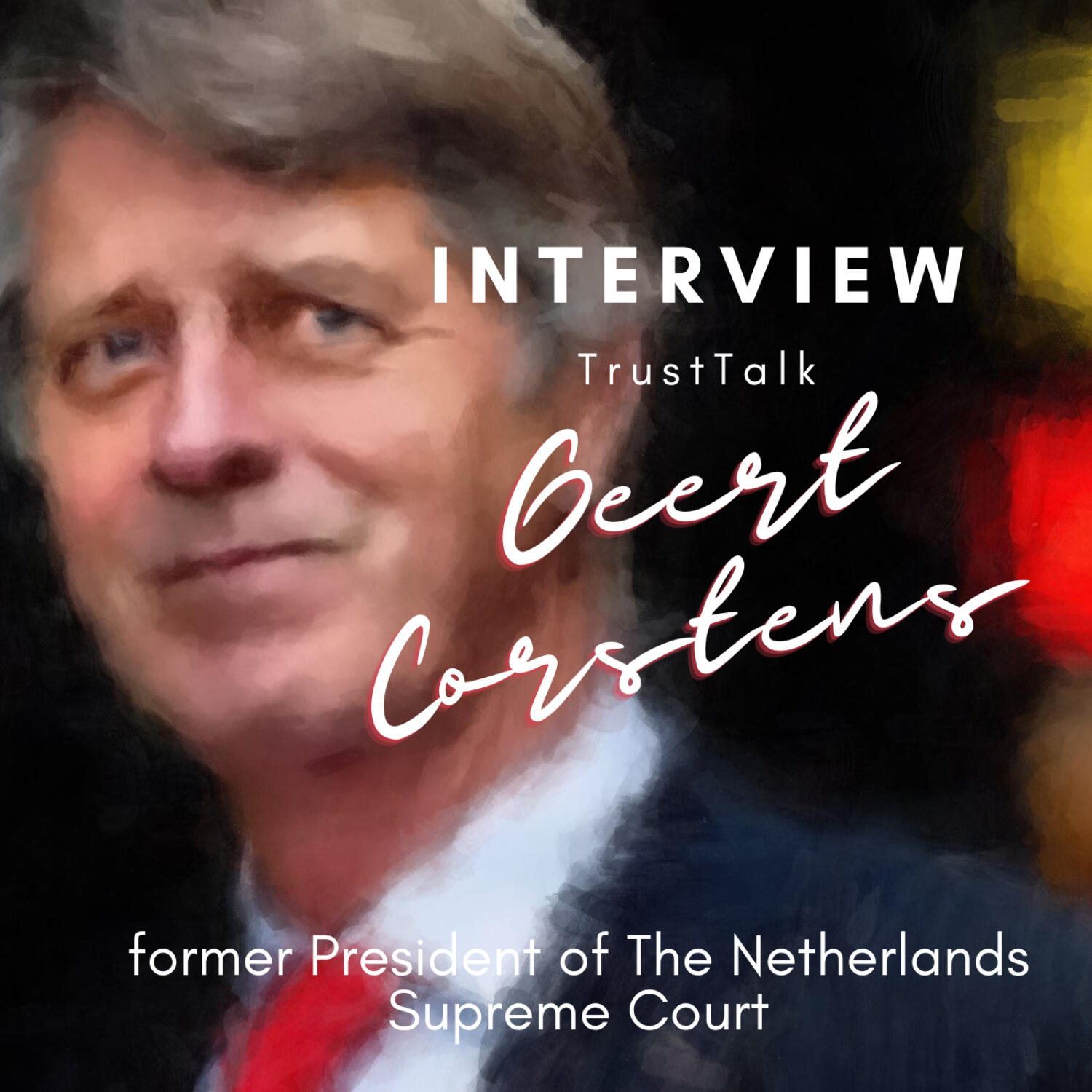
Ep 16Trust and the Judiciary
Interview with Geert Corstens. As a former President of the Netherlands Supreme Court, he made great efforts to improve and maintain trust in the judiciary by advocating more openness in publishing judgments, press summaries, and giving interviews, which was not always wholeheartedly applauded by his colleagues. The legislative branch of government and the executive, two parts of the Trias Politica, have financial means and can enforce even by using force if need be, the third part, the judiciary, has only the trust of the people. Courts have to constantly show their independence and impartiality. Judges have to be both modest and courageous when the executive does not obey the law or when the legislator enacts a law contrary to an international treaty. Sometimes judges have to step in where politicians fail to agree but society requires a decision, giving the example of euthanasia, where the Supreme Court decided in a case in the 1980s setting out circumstances where euthanasia is allowed. He denies there is anything like clear “dikastocracy” in The Netherlands.
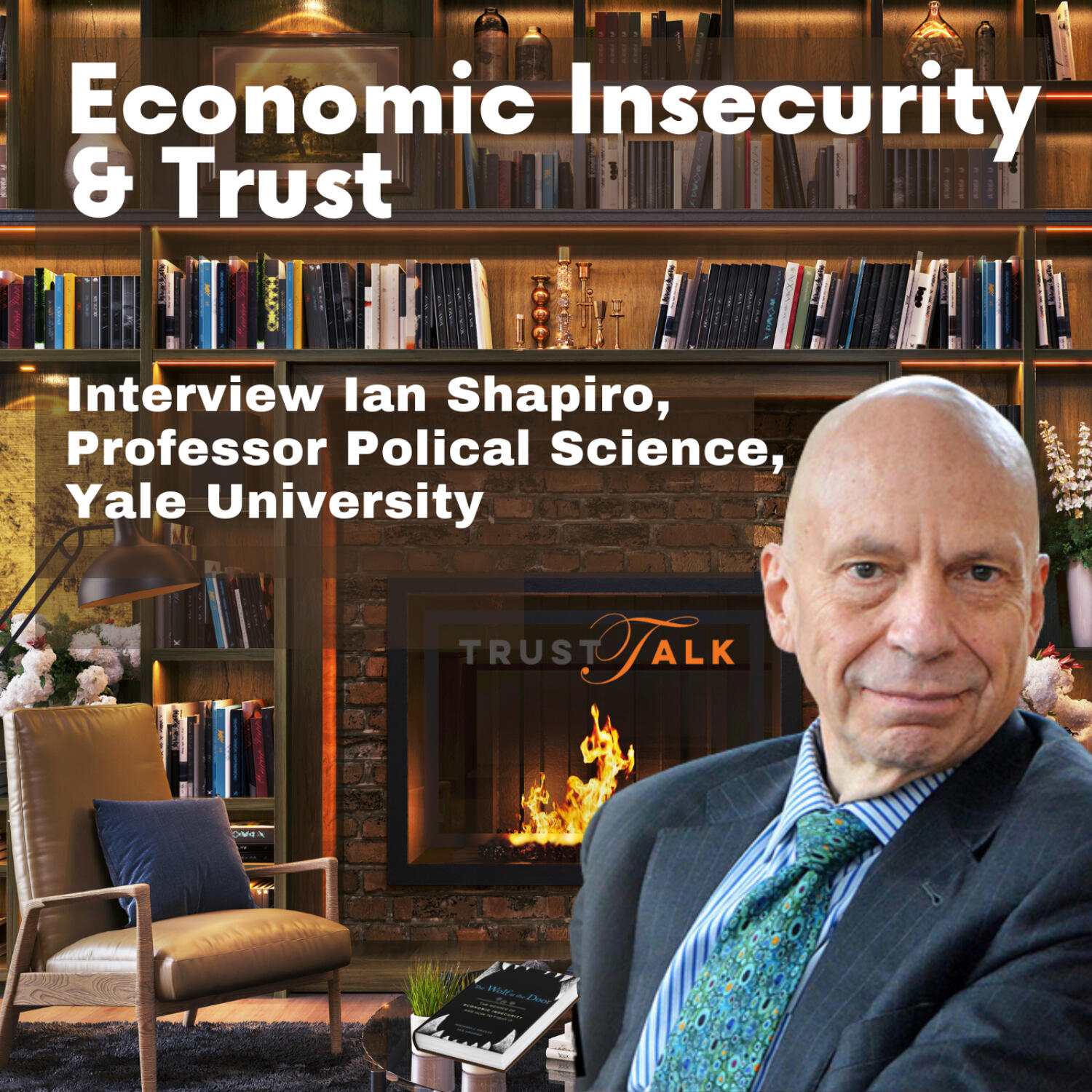
Ep 15Economic Insecurity and Trust
Interview with Ian Shapiro, professor of Political Science at Yale University. In his view, the underlying problem of increased mistrust is economic: the disappearance of long-term employment security, the decline of middle-class incomes, and the downward mobility of many middle-class people. A great motivator of action is the fear of experiencing a loss, which fear is exploited for political gain. In Europe, it is the failure of left-of-center parties to protect their constituencies and the inability of the traditional social democratic mainstream parties to deliver the sort of protections that they used to provide. This is all linked to economic factors, the decline of industrial jobs, the collapse of labor unions, globalization, jobs going to technology. That is causing mistrust in political institutions which is exploited by political entrepreneurs as a way of getting to power, resulting in populism. It is a failure of the political, educational, and economic system to deliver security that is breeding mistrust. He talks about the cause of polarization in political parties and the complacency of businesses while desperate people are being mobilized by politicians who are going to do things those businesses don’t like: immigration, trade wars, protectionism. The interview covers also his newly published book “The Wolf at the Door” which he wrote with Michael Graetz, about rising inequality as a threat to democracy.
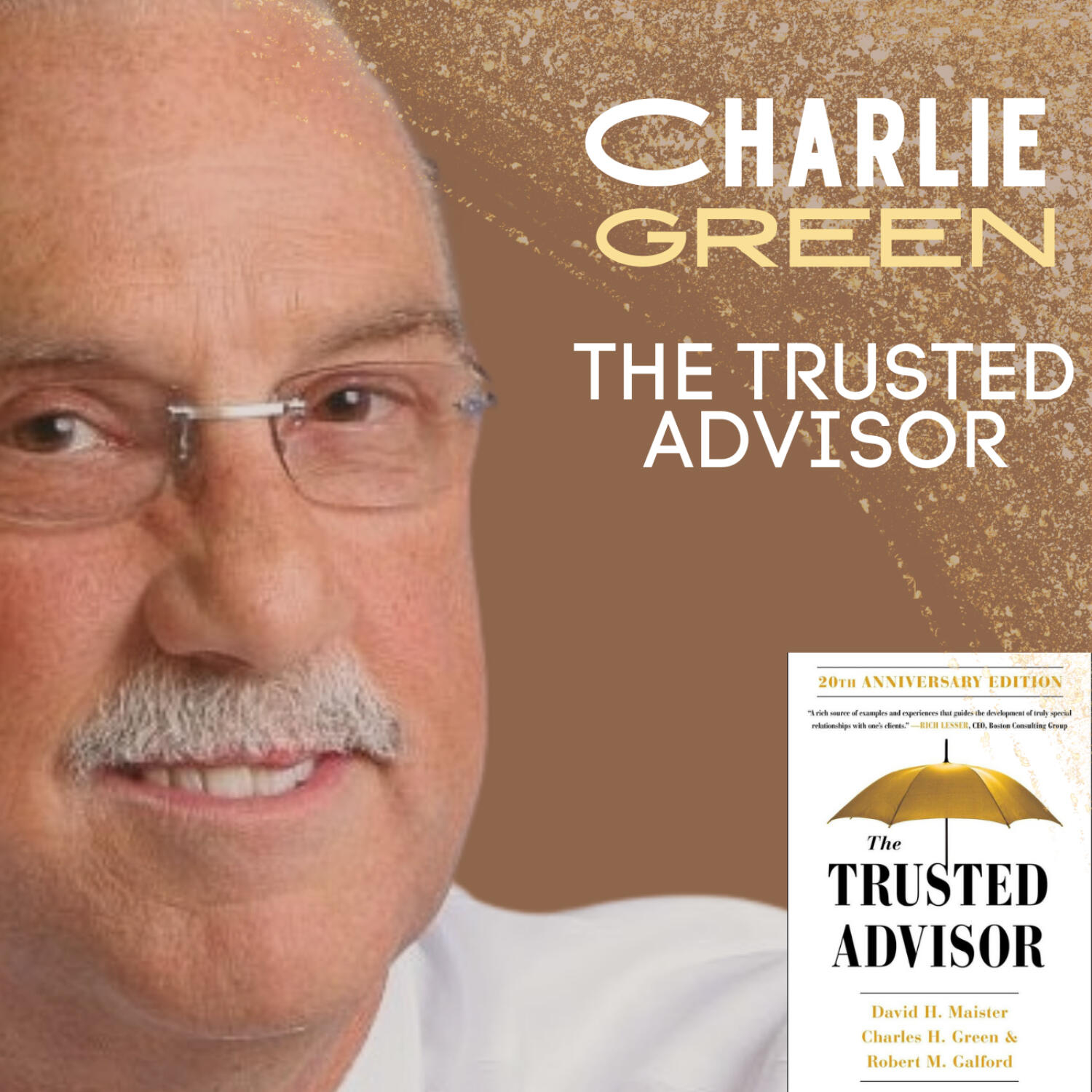
Ep 14The Trusted Advisor - 20th Anniversary
Today's guest is Charles H. Green, co-author of the seminal book “The Trusted Advisor” (2001) now celebrating its 20th anniversary. He talks about the trust paradoxes, the shift from trust as a personal attribute to reputation and branding. Is making a genuine connection harder using on-screen connectivity tools? He reflects on the Trust Equation which hasn’t changed over the last 20 years. Potentially the most powerful component, “intimacy” (feeling emotional security in dealing with a person) is more important than most professionals realize and who feel more confident about sharing content than showing intimacy. He reflects on the importance of listening as a profound method of trust, and the future of the Trust Equation.
Ep 13The Trust Gap
We interview Steven Heywood, General Manager of Edelman in The Netherlands, known for the annual Edelman Trust Barometer. The 2021 findings of the Edelman Trust Barometer show an alarming divergence in trust between two distinct groups of people, the “informed public” and the mass population, which has a much lower level of trust. A minority of those surveyed practice “good information hygiene’ which includes news management, avoiding echo chambers, verify information and not amplifying unvetted information. Steven explores how this global “infodemic” has driven trust in all news sources to record lows with social media and owned media the least trusted. He talks about the weaponisation of fake news, the need for Action Communications, and how brands should take real steps to change the way they service their customers and take part in society.
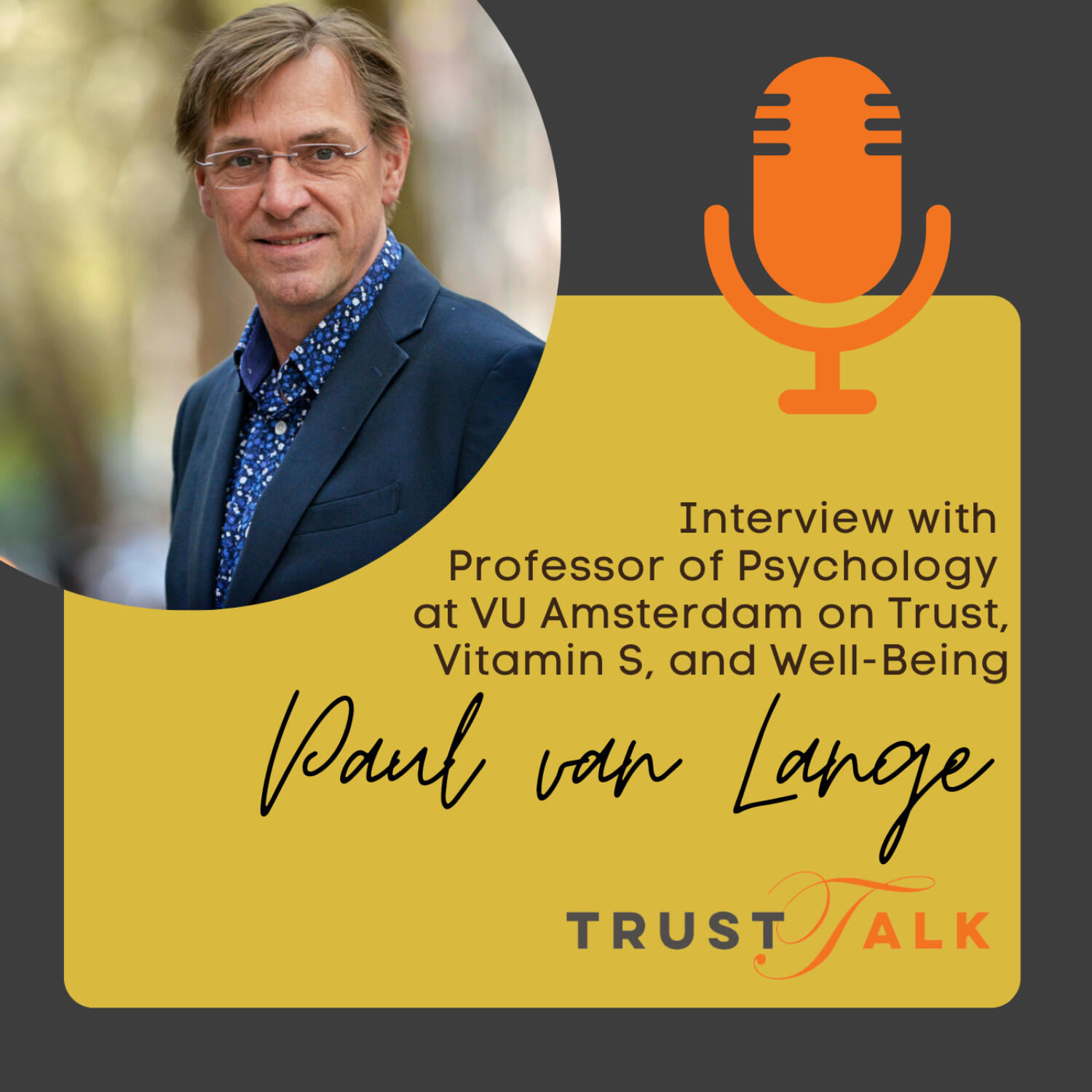
Ep 12Trust, Vitamin S, and Well-Being
Interview with Paul van Lange, Professor of Social Psychology at the Vrije Universiteit Amsterdam (netherlands). He discusses the importance of social contact, which he and his co-author Simon Columbus frame in terms of “Vitamin S”, arguing that brief encounters with strangers can yield some happiness, an insight that is important for (young) adults during this era of COVID-19 lockdowns. He views trust in terms of accepting dependence on others and anticipating some critical level of pro-sociality from others. Norm violations by other people pose a challenge to trust, including norm violations enacted by strangers. Yet most people have developed a capacity to navigate to a relatively high level of trust, a default that we are often are not aware of. Like well-being, we start to ponder about trust in others when it is seriously challenged by others’ norm-violations. Various other intriguing questions are addressed. For example, what are the benefits of one-on-one interactions in pairs over interactions in larger groups? Why do we seek interactions with like-minded people? And why do we sometimes disclose more private information with a taxi-driver than with a friend?
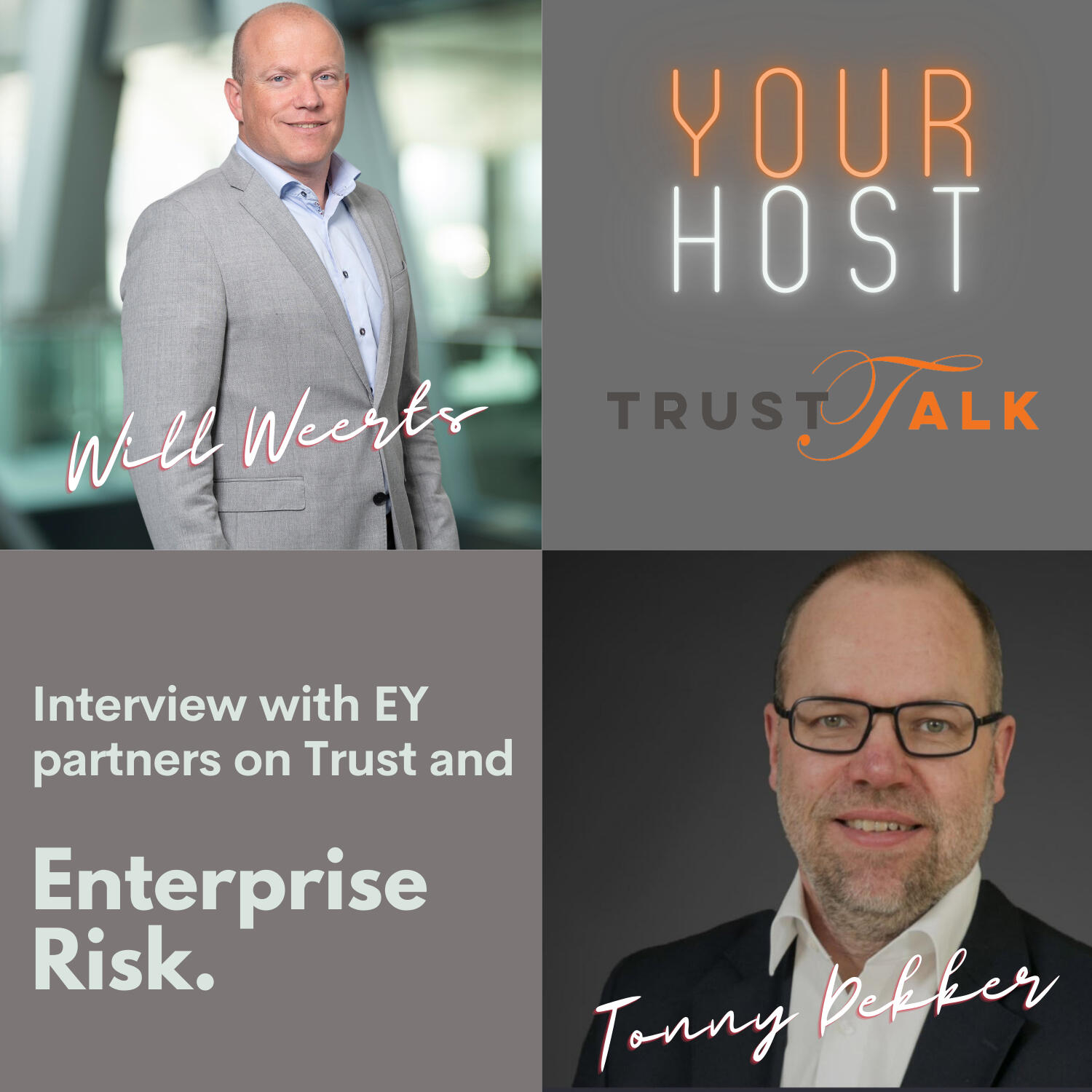
Ep 11Enterprise Risk and Trust
Interview with two partners of EY, the global accounting and consulting firm, Will Weerts and Tonny Dekker. Risk management is a key element of any management role. The ability to identify risks before they arise, and then plan a strategy to deal with them is paramount. The consequences of not doing this could be a business failure. In this interview, both reflect on the importance of risk management, the challenges, and the opportunities, and its relation with trust. They talk about the “Three Lines of Defence model”, IP risks, and the importance of resilience. They describe the “Catch-22” situation risks managers find themselves in, as risk management is too-often treated as a matter of compliance., whereas internal audit is -especially in the US - focused on financial control.
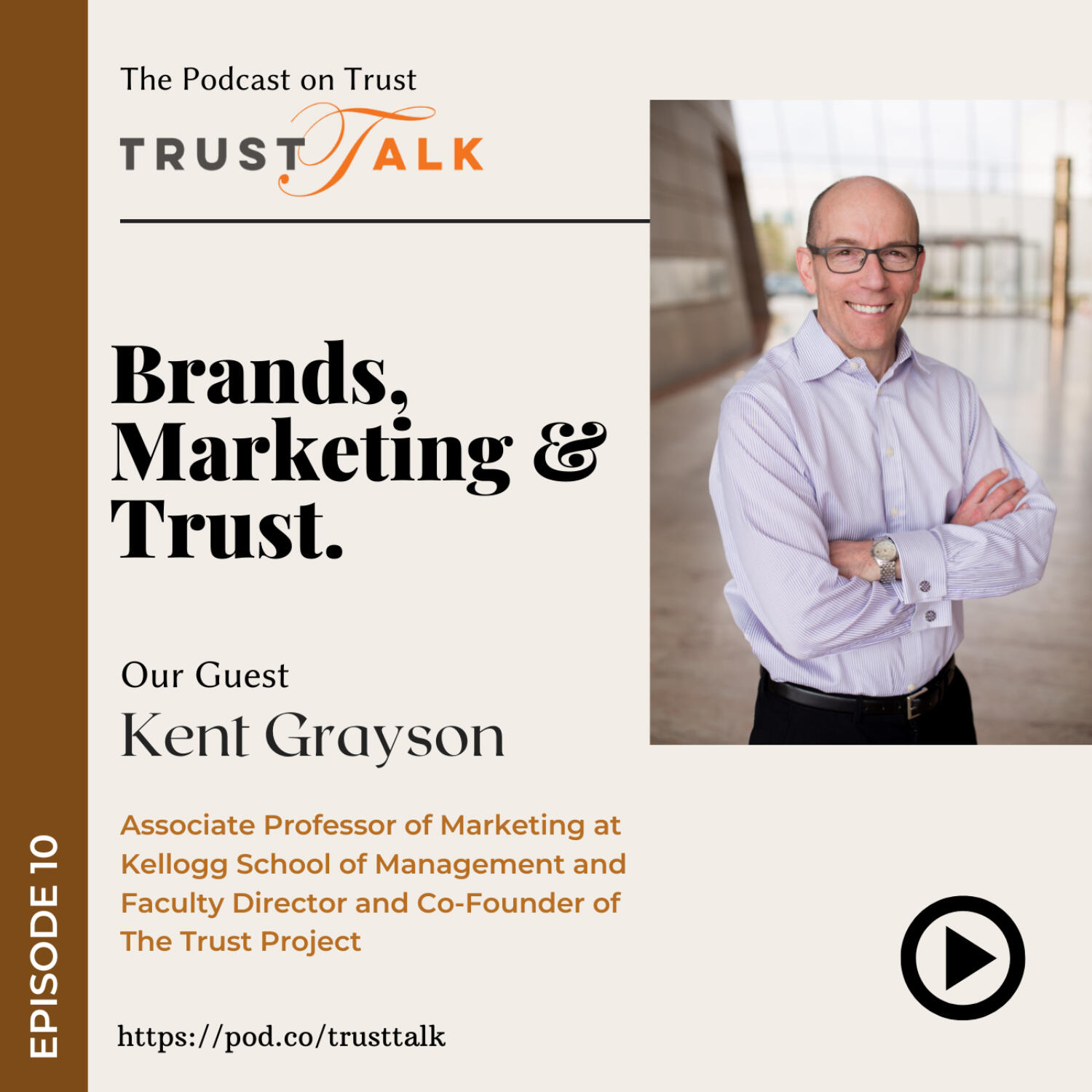
Ep 10Brands, Marketing & Trust
Today’s guest is Kent Grayson, associate professor of Marketing at Kellogg School of Management and co-founder of The Trust Project. Many academics study trust but there is a need to bridge the language used by academics and business people and practitioners. Although every discipline has a different perspective of trust, when you pass the language, we are talking about the same thing: what encourages someone to make themselves vulnerable and to rely on another person for something important. Marketing is not just advertising, or how to sell a product or service via social media or communication. At business schools, students learn that marketing communication is the final step in the marketing process. It is about understanding the target customer sufficiently well, their goals, problems, or needs. Trust is essential for that understanding. You have to find a way to trust what the consumer is telling you so that you can be confident that your solution will solve their needs. Generation Z, when asked are there any brands or business you trust, they will talk passionately about a handful of organizations. Kent speaks about the “wack-a-mole” challenge in marketing, the efforts of truthfully communicate with your customers, the role of influencers, about honesty and sincerity, and the relation between trust and transparency. Trust is about making sure you understand the other party's motives, that you believe they have your best interests at heart, and telling you the truth and keep your promises.
Ep 9Covid-19 Vaccines, Trust and Public Health
Interview with Barry R. Bloom, Professor at Harvard T.H. Chan School of Public Health. He speaks about trust and public health aspects and of the Covid-19 virus vaccines, its development, and distribution, about the differences with developing vaccines against diseases like polio, influenza, and pneumonia. He blames social media for causing distrust as people think that science has been fast in producing a vaccine in just 11 months since we first experienced the virus. He points out that more than 10 years of investment in science are underlying the new vaccines (“there is no vaccine for misinformation”). From a public-health perspective, the nationalistic races between countries that can vaccinate first are completely irrelevant. Vaccination is not just a matter of implementation as careful research and data are necessary to keep up with new mutants of the vaccine, as are questions about who can produce the vaccines, syringes, and other equipment and who can effectively distribute the vaccines and who can do coaching, and providing information on who gets the first and second shot, all things that are very tough to organize, due to the fact that each state and country have their own health systems. This requires a lot of planning, which is not a trivial undertaking. The new mutant variations of the virus that appeared in the UK, South Africa, Nigeria and parts of Europe lead us into a “Darwinian game”. Those vaccine variants may cause a dramatic rise in infections, but the good news is that given current science pharma companies need potentially as short as 6 weeks to produce new vaccines that protect against those new virus mutations. Public health is good at dealing with science and molecular biology and genetic engineering, but where it is not so good at is the science of human behavior. His biggest concern is how local and national leaders can inspire trust while facing distrust anywhere in the world and how they might be unable to motivate people to change their behavior and to protect themselves and everyone else and at the same time realize that until everyone is protected we all remain susceptible to the virus.
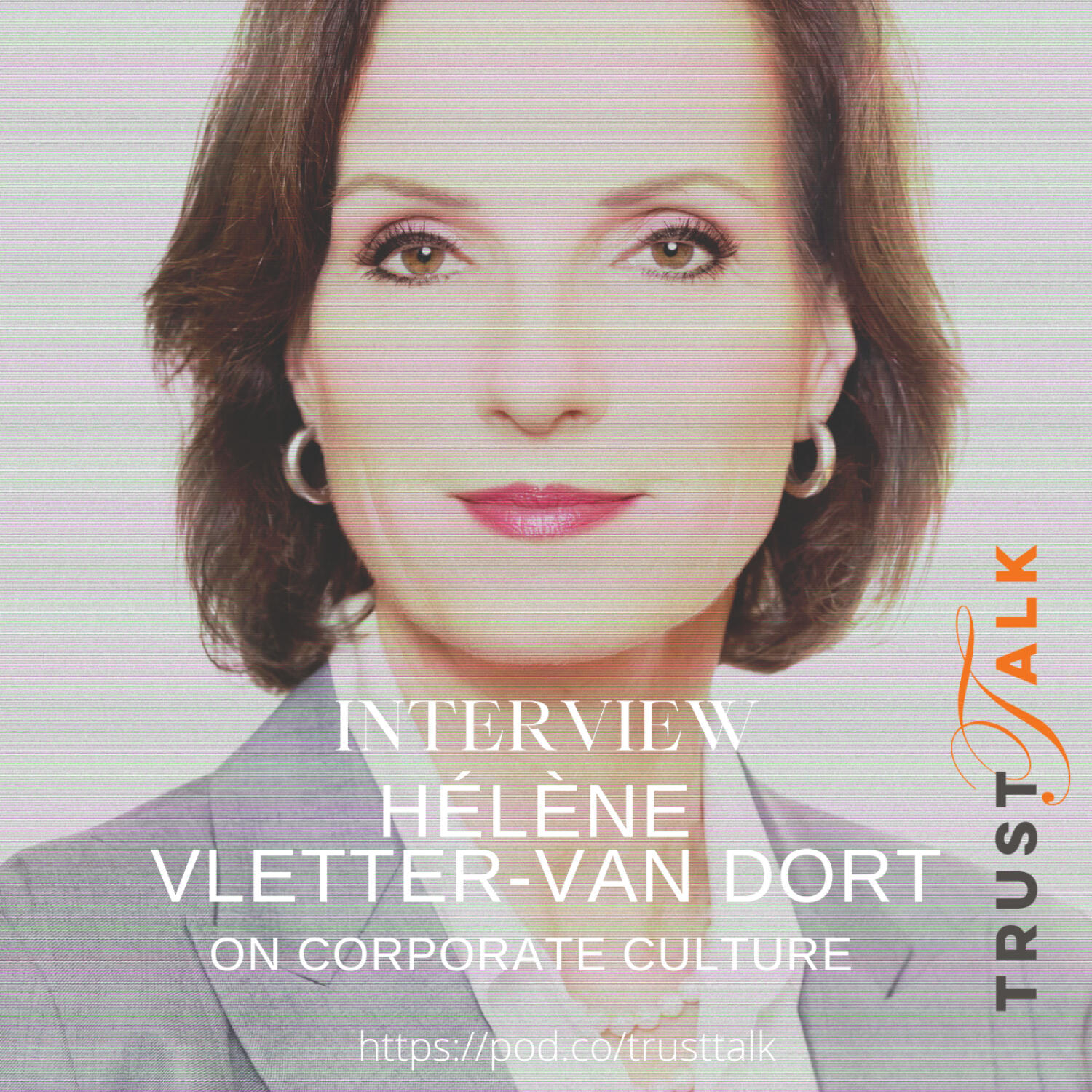
Ep 8Corporate Culture and Gaining Trust
Interview with Hélène Vletter-van Dort. She is a professor in Financial Law and Corporate Governance at Erasmus University in Rotterdam, Netherlands. She is a member of the Supervisory Boards of financial services company NN (formerly known as Nationale Nederlanden) and The Dutch Public Broadcasting Organization NPO as well as Chair of the Supervisory Board of Intertrust NV. She speaks about commitment and culture and is inspired by Ben Horowitz’s book: “What You Do is Who Your Are”. At the center of her work is the importance of corporate culture and the relationship with corporate values. Culture is not what is on a corporate website but what really lives in a company. She talks about UBER, a company that went through a thorough self-reflection on its corporate culture and her experience with a hospital where she was overseeing the board.
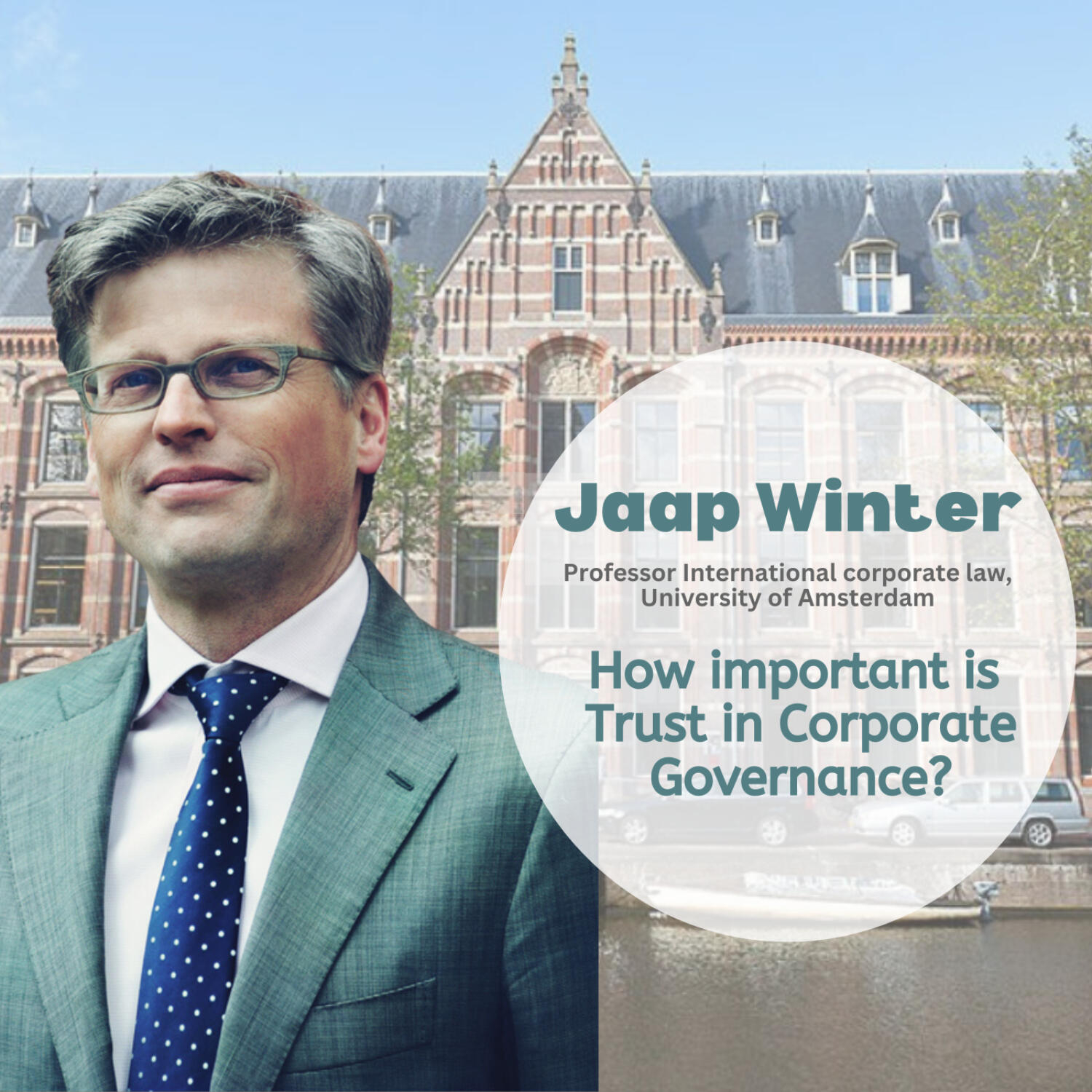
Ep 7How important is Trust in Corporate Governance?
Interview with Jaap Winter, one of Europe’s leading experts on corporate governance on the importance of trust. He contributed to the first corporate governance rules in The Netherlands, “Code Tabaksblat”. He talks about the “Agency theory” and “substantial variable pay” arrangements for corporate executives, about acting in self-interest and how the wrong incentives create mistrust, which, in the words of Harvard professor Michael Jensen, would only led agents (executives) to “lie twice”. Trust is on the other side of a bureaucratic model, but trust is not enough, discipline is important. He reflects on the two models of INSEAD and London School of Economics professor Sumantra Ghoshal: the Dark-Calcutta model and the Spring-at-Fontainebleau model. Trust is easier to establish if there is proximity, something that often lacks with shareholders who are far away the company, almost anonymous. In that situation it is difficult to establish trust. There is a need for systems and controls, yet he is not in favor to answer to financial and other crises with even more rules and regulations, rather building an international reflective mission leading to a new corporate culture, like Siemens did after the bribery scandal that hit the company in 2008. For that you need discipline and a core element is trust, built through honesty and speaking “face-to-face”, “as if one would speak with a friend” (citing Exodus 33:11 where God speaks directly to Mozes).
Ep 6Global Institutions and Technology-Mediated Trust
Balázs Bodó, a researcher at the Institute of Information Law at the University of Amsterdam, describes 3 dimensions of “technology-mediated trust”. The known and unknown risks of new technologies, how we interact with these technologies, and whether they are trustworthy. Global institutions – moving at a slow pace - have failed to establish trust that they are capable of handling worldwide challenges like climate change, mass human displacement, and global pandemics, or other forms of crises. This lack of international leadership leads to a trust crisis. The emergency of new technology platforms – or “trust mediators”- facilitate coordination and establish trust between strangers through various methods. Platforms, such as Uber, or Airbnb manage reputations; blockchain technologies try to minimize the need for trust; AI systems promise to reduce future uncertainties. Balázs touches on the relationship between risks and trust and the “costs of trust”. He contrasts technologies where trust was verifiable, such as the workings of nuclear reactors, and digital technologies where it is much more difficult to establish their trustworthiness. Unlike global organizations and governments, technological trust mediators may be able to establish trust among users, but we must think about how they can do it in a verifiable and trustworthy manner.
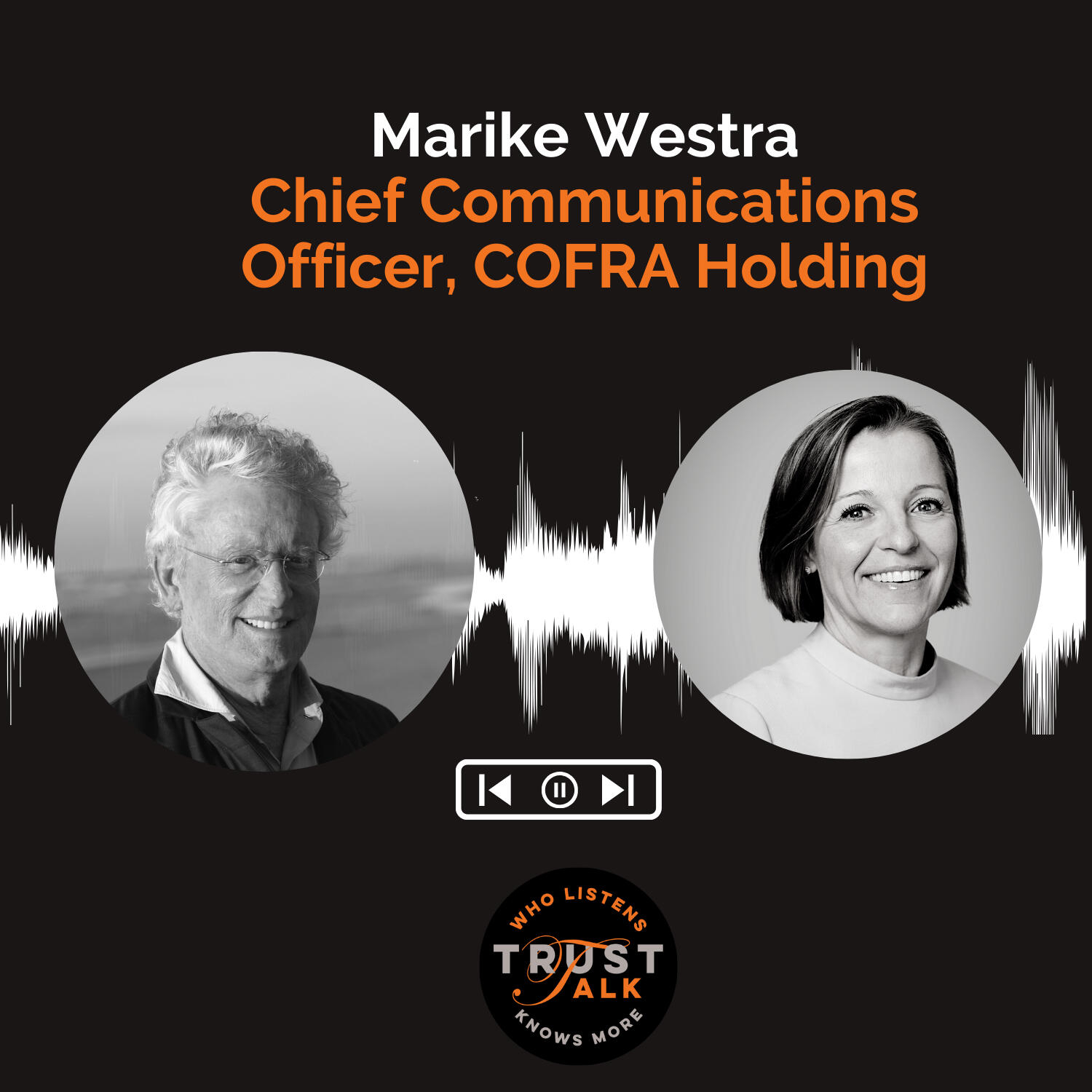
Ep 5Trust and the Role of Communications
Interview with Marike Westra, Chief Communications Officer at COFRA, a privately held 6th generation family business on the central role of trust in communications. She believes communication is fundamental in creating trust in both business and brands. The interview touches upon the role of social media who have “democratized” society, even if bad actors try to misinform, on the importance of transparency in doing responsible business. She reminds us that things that are closer to you, you tend to trust more. Marike further talks about how employers can influence the direction of their company and the challenges in keeping trust in brands and the importance of data: “we should be data-informed, not data-driven”. Transparency in communications is key to trust.
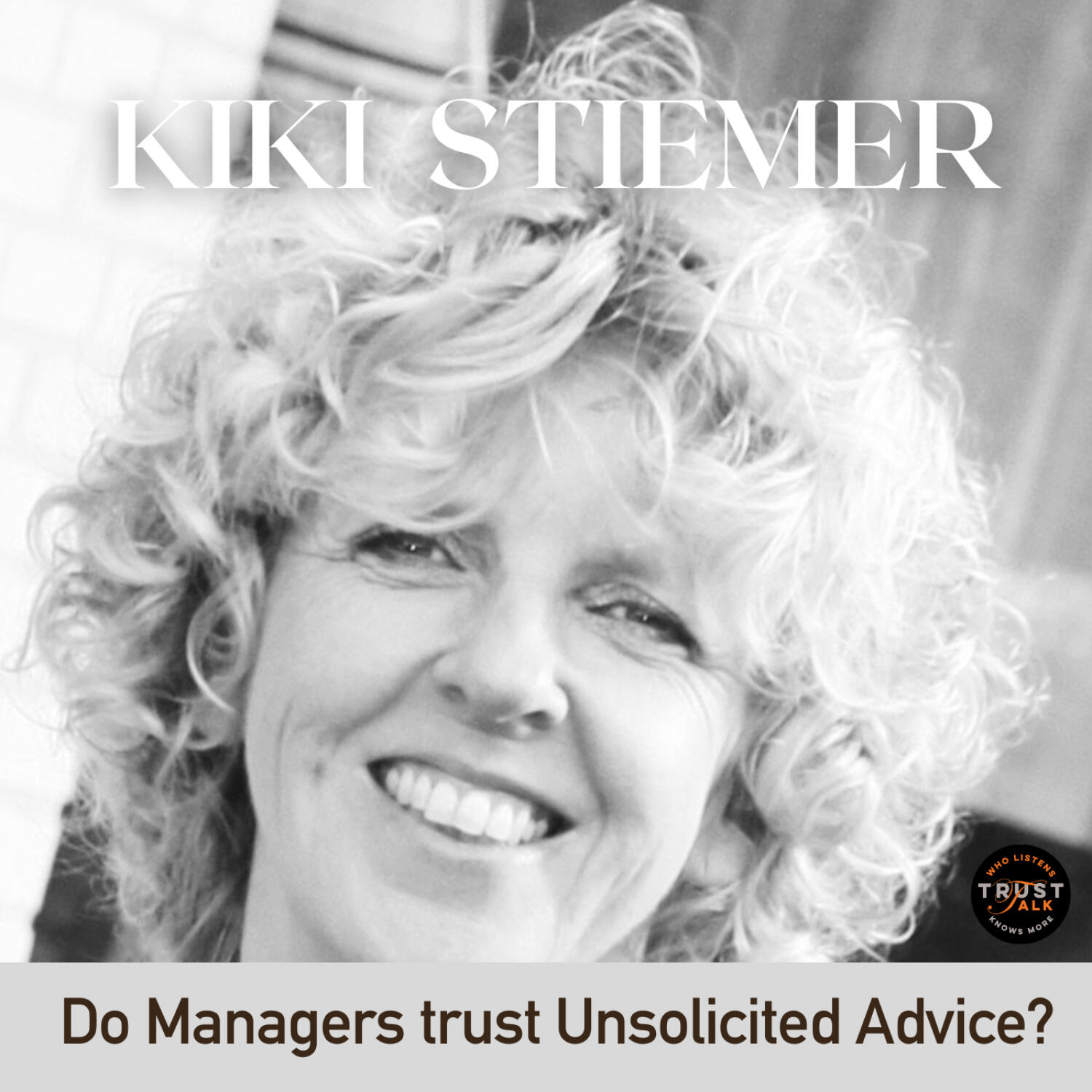
Ep 4Do managers trust unsolicited advice?
Our guest today is Kiki Stiemer, management consultant and former SVP at Royal AholdDelhaize. She talks about her research while at INSEAD, the role of trust in unsolicited advice senior managers (CEOs and Board Members) receive from an employee or external advisor. How does the famous trust formula of Maister, Green & Galford (in: “The Trusted Advisor”) work out in case of unsolicited advice? How do managers react when they receive advice they did not ask for? In her research, Kiki Stiemer interviewed Netherlands CEOs of large companies and noted the difference between their responses and the hard reality. In this interview, she touches on the role of trust, as well as the importance of credibility, reliability, intimacy, and self-orientation when giving advice.
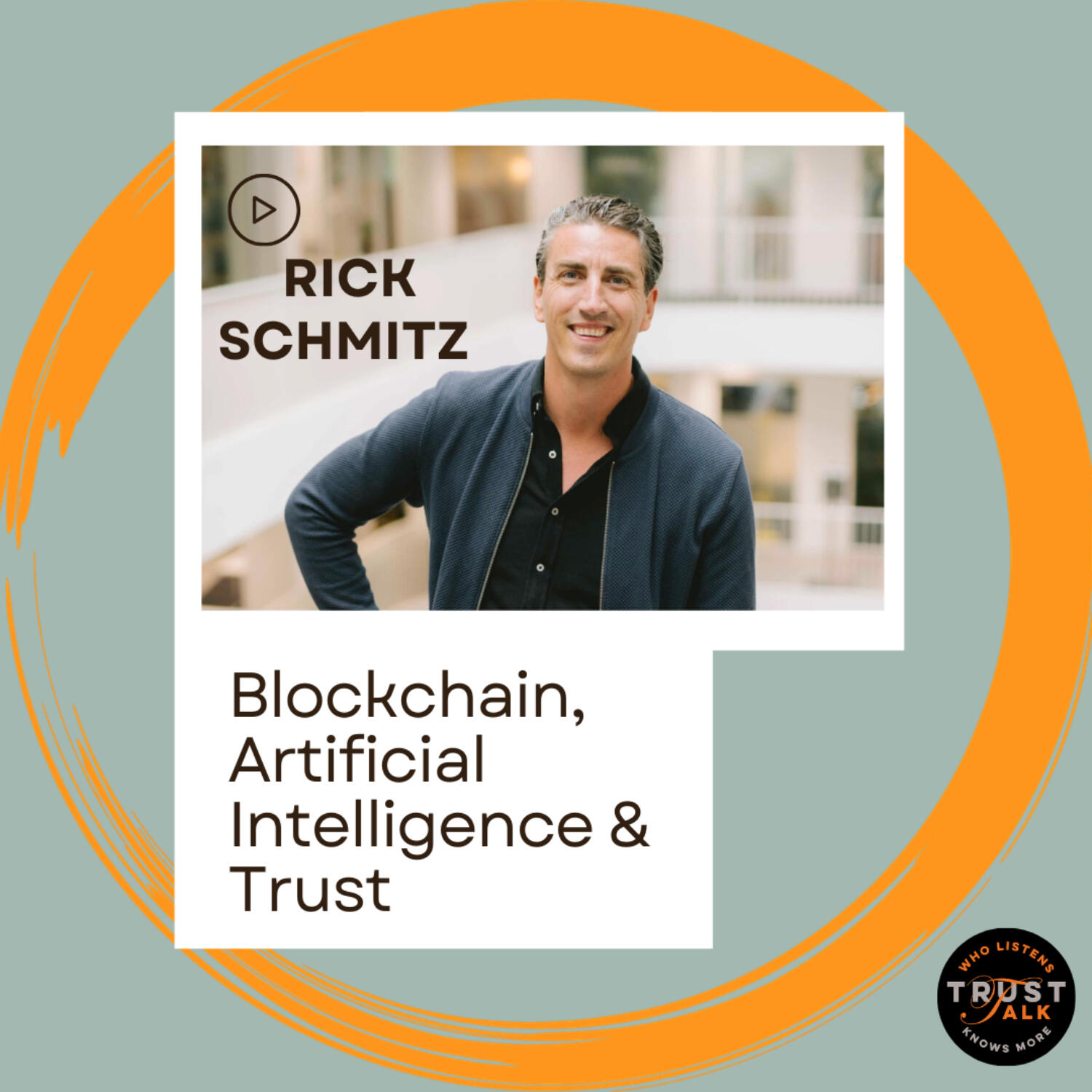
Ep 3Blockchain, Artificial Intelligence and Trust
Our guest is Rick Schmitz, former CEO of Netherlands-based LTO Network, a provider of a secure, blockchain-based, GDPR and compliant platform for companies that rely on trustworthy contract certification, data sharing, process automation, and collaboration. We talk about the importance of trust for blockchain solutions. We talk with Rick about the relationship between blockchain, artificial intelligence, internet of things and the role of trust. Blockchain adds a trust layer on data. Do we need to embrace or fear AI? What role plays LTO Network in providing trust to parties who share information and collaborate?
Ep 2Digital Trust
Over 2.5 quintillion bytes of data (2.5 with 17 zeros!) are created every single day. Facebook, Google, Amazon have vast amounts of data. Do we trust the data being used in a way we can control or consent to? How much influence do we have on data owned by Data Management Platforms? Companies should set clear principles on how they use customer data and should be transparent with regard to artificial intelligence and the way customers can control their data. Without trust, nothing works
Ep 1Trust: What do we mean by it?
What is trust? It is harder then you think, to define trust is not as easy as it sounds. It depends on who you ask. We try to get some insights in the meaning of trust.
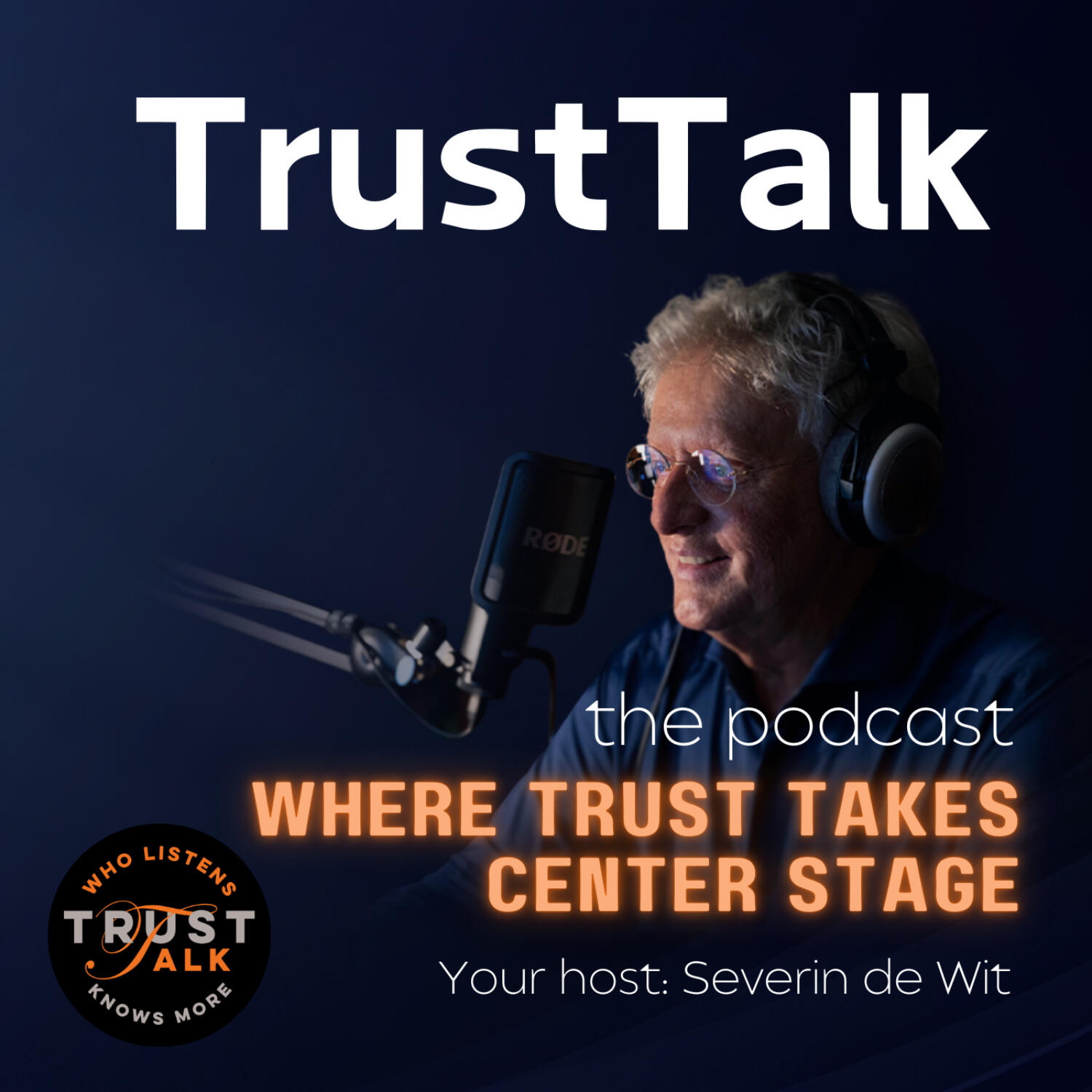
Introduction to TrustTalk, Where Trust Takes Center Stage
trailerWelcome to TrustTalk – where we explore the critical role of trust in our world. Through insightful conversations with experts from across the globe—scholars, business leaders, and visionaries—we uncover how trust shapes relationships, institutions, and societies. From governance and business ethics to psychology and leadership, each episode offers fresh perspectives on why trust matters and how it influences our daily lives. Join us as we navigate the complexities of trust with those who study it, build it, and challenge it.