Tricycle Talks
211 episodes — Page 4 of 5

The Hungry Ghosts Among Us
We often look to buddhas and bodhisattvas as the heroic protagonists of the Buddhist cosmos. But even the most wretched creatures can teach us a thing or two about the dharma. Andy Rotman, a scholar of South Asian religions at Smith College in Northampton, Massachusetts, is one of the few academics researching the history of hungry ghosts—the denizens of hell who suffer from greed and envy cultivated in past lives. Rotman and Tricycle’s editor-in-chief James Shaheen discuss ancient ghost stories in today’s episode of Tricycle Talks. Together, they reflect on how these cautionary tales and nightmarish images reveal not only some of the fears and concerns of early Buddhist communities but also many of our own. What these tormented souls are meant to do, according to Rotman, is to shock us out of selfish complacency and delusion and wake us up to a more compassionate way of being.

How a Buddhist Mom and Activist Took on the National Rifle Association
The day after the Sandy Hook tragedy in 2012, Shannon Watts, a former communications executive and stay-at-home mom of five, founded Moms Demand Action for Gun Sense in America. Since then, the grassroots initiative has matured into a nationwide movement with over 6 million supporters fighting to end gun violence. Now the largest gun-prevention organization in the US, Moms Demand Action has had major successes at the ballot box, on school boards, city councils, in state legislatures, and in corporate America. In the latest episode of Tricycle Talks, Watts tells Tricycle’s editor-in-chief James Shaheen and cohost Sharon Salzberg about what it’s like to work with communities afflicted by gun violence and how her Buddhist meditation practice has kept her in the fight despite Twitter trolls and fierce pushback from the National Rifle Association.

Tired of Pretending to Be Me
Not too long ago I attended an online retreat with Joseph Goldstein, cofounder and guiding teacher at the Insight Meditation Society in Barre, Massachusetts. I've sat with Joseph on retreats before, but what really struck me this time were the repetitive patterns playing out in my mind and body, whether it was getting lost in stories and caught up in self-judgment, or simply being distracted by physical pain—all pretty common experiences on a meditation retreat. In today’s episode, I sit down with Joseph, who recently emerged from a 3-month silent retreat himself, to ask him some questions that have been at the top of my mind. We’ll talk about the value and challenges of a long retreat, the wisdom of investigation and curiosity, and why we need to make more room for joy and humor on retreat and off. At the end of our conversation, Joseph will lead us in a brief mindfulness meditation to re-ground ourselves in the present moment. —James Shaheen, editor-in-chief of Tricycle: The Buddhist Review.

Inside Tricycle's Summer 2021 Issue
In the latest episode of Tricycle Talks, editor-in-chief James Shaheen sits down to talk with four contributors to Tricycle’s Summer issue out this May. First up are psychotherapist Mindy Newman and translator and musician Kaia Fischer. Together over the past year they have presented a series of teachings from a newly translated Tibetan sutra. Through their collaborative writing practice, Mindy and Kaia have been able to explore psychology and scriptural exegesis, Buddhist storytelling, and guru devotion in the Tibetan tradition. Poet and short story writer Souvankham Thammavongsa is a rising star in the literary world. Born in a Lao refugee camp in Thailand and raised in Toronto, Thammavongsa is known for her nuanced reflections on immigrant and refugee experiences. In this episode, she joins us to talk about her family’s history, the power and limits of language, dislocation, and loss—themes woven throughout her short story How to Pronounce Knife, which appears in the current issue. In his feature article, “The Land of Many Dharmas,” Kenneth Tanaka, a Jodo Shin Buddhist priest and professor emeritus of Buddhist Studies at Musashino University in Tokyo, discusses how, for the first time, Buddhists from virtually every tradition can be found living side by side in North American cities. He explores America as a site of unprecedented religious pluralism and asks what this means for the future, especially in light of the recent wave of anti-Asian violence. Also in this issue: Pamela Ayo Yetunde and Cheryl A. Giles—the editors of the anthology Black and Buddhist—discuss what the dharma and the experience of Black people in America can teach us about the nature of suffering and freedom; scholar Donald S. Lopez writes about how, for most of its history, Buddhist teachings have had little to offer social activism; and the photography of Burmese artist Nge Lay captures the collision of Myanmar’s past and present.
The Middle Way Through the Long Haul
Many years before the COVID-19 pandemic began, Toni Bernhard was thinking and writing about the isolating experiences of illness—and what it really means to be “well” in our society. After an acute viral infection led to a chronic condition, Bernhard was forced to retire from her long career as a law professor and dean of students. She learned to live within her body’s new limitations, and even wrote four books in the process. In this episode of Tricycle Talks, Tricycle’s editor-in-chief James Shaheen talks to Bernhard about her Buddhist practice, how her journey to self-acceptance and authorship began, and what advice she would give to people who are “too young to be sick,” or those who are suffering from long-haul COVID-19 symptoms. Toni Bernhard is the author of the award-winning How to Be Sick: A Buddhist-Inspired Guide for the Chronically Ill and Their Caregivers, which is now available as a pocket guide. She’s also written two other books on living well with chronic illness.

Grieving Mindfully
We have end-of-life rituals for a reason—to help us accept loss and fully grieve. Of all the rituals disrupted by the pandemic, the loss of funerals and other communal spaces that allow us to support those dealing with the death of a loved one has been one of the hardest to cope with. Virtual gatherings can mitigate feelings of loss and isolation to a certain extent, but there is no real substitute for being with others. With well over half a million lives lost to the pandemic so far, grieving may look different under lockdown but it has no off-switch. In this episode of Tricycle Talks, Sameet Kumar, a clinical psychologist, grief counselor, and author, joins Tricycle’s editor-in-chief, James Shaheen, and co-host Sharon Salzberg for a conversation about grief, how we’ve come to redefine it during this time of social distancing, and the importance of staying present to it. Buddhist teachings, breathing techniques, and meditation, Kumar tells us, have shown him how to hold great pain and make it bearable for himself and for those he counsels.

Dekila Chungyalpa: Becoming a Buddhist Climate Scientist
For the last 12 years, Dekila Chungyalpa has worked with religious and indigenous leaders, scientists, and policymakers to design community-based environmental and climate programs. But having grown up in the northeastern Indian state of Sikkim, surrounded by strong women who chose to walk the monastic path, Chungyalpa hasn’t always found it easy to show up as both a devout Tibetan Buddhist and a conservation scientist. In this episode of Tricycle Talks, Chungyalpa shares with Tricycle’s editor James Shaheen how she’s come to integrate her commitments to science and faith, deal with climate deniers, and head the Loka Initiative, a climate-change outreach program that empowers and uplifts religious communities. In the face of so much eco-anxiety, climate distress, and doom and gloom, it is ultimately Buddhist teachings on emptiness, impermanence, non-attachment, and compassion, she says, that sustain her.

Inside Tricycle’s Spring 2021 Issue
In this episode of Tricycle Talks, Editor and Publisher James Shaheen is joined by three contributors to take a closer look at our Spring 2021 issue. First, James speaks with Zen priest and psychologist Seth Zuiho Segall, whose feature article, “The Best Possible Life,” situates ancient Greek ideals of human flourishing against Buddhist enlightenment. Seth talks about what’s lost—and what’s gained—when practices from one culture find a home in a new one. Next, James and writer Daisy Hernández discuss the Buddhist concept of mudita, or sympathetic joy, and why it matters more than ever to take pleasure in other people’s happiness. Daisy’s article “The Joy of Joy” addresses the initial skepticism she felt about the term—and how that changed as she continued to practice mudita. Finally, the poet Arthur Sze talks with James about his poem “Wang Wei,” his artistic process, selections from his National Book Award-winning collection, Sight Lines, and the relationship between poetry and meditation. Also in this issue: Roshi Pat Enkyo O’Hara’s dharma talk, “Bodhisattvas Have More Fun,” which emphasizes the delight that comes with helping others; what video games can teach us about karma, written by the head writer for the Onion, Mike Gillis; an essay by Buddhist teacher Fred Eppsteiner about the time he spent with Thich Nhat Hanh outside Paris in 1975; and a portfolio of Buryat artist Dashi Namdakov’s eerily fantastical sculptures.

Black and Buddhist: Pamela Ayo Yetunde and Cheryl Giles
The United States and the world watched in shock last month, when on January 6, a mob of Trump supporters, many of them white and motivated by racist and nativist ideologies, laid siege to the US Capitol as lawmakers were certifying the 2020 presidential election results. As the US tries to rally around unity instead of division, Tricycle has been taking stock of recent events by looking inward—at why we, as a nation, need to deal with the roots of suffering first, before we can move toward collective healing. Race-based suffering, resilience, and transformation are at the core of a new collection of “freedom stories” written by Black Buddhist voices. In our latest episode of Tricycle Talks, editor and publisher James Shaheen speaks about what it means to be Black and Buddhist in America with Pamela Ayo Yetunde and Cheryl Giles, coeditors of Black and Buddhist: What Buddhism Can Teach Us About Race, Resilience, Transformation, and Freedom. In this conversation, Yetunde, a pastoral counselor and practitioner in the Zen and Insight traditions, and Giles, a professor of pastoral care and counseling at Harvard Divinity School and clinical psychologist, examine racial ignorance and color blindness in Buddhist communities as well as how their dharma practice has helped them to reaffirm and celebrate their Blackness. Together, they reflect on how this anthology of liberation stories can offer all practitioners, regardless of race, a different way of being—of relating to ignorance, anger, trauma, fear, and pain.

Sam van Schaik: Buddhist Magic and Why We Shouldn’t Cast It Aside
When we think about Buddhism, we don’t often think about monks and nuns conjuring spells or curses to break up lovers, exorcise demons, prevent unwanted pregnancies, or kill enemies. But for over two and a half millennia, magic and healing rituals have been an integral part of everyday Buddhism. They were also key to Buddhism becoming a cosmopolitan religion, flourishing in areas beyond the Indian Buddhist heartland. The magical aspects of Buddhist history, however, have been ignored or dismissed by scholars of Buddhism and by Buddhists themselves, resulting in a distorted view of the traditions we may study and practice today. In his new book, Buddhist Magic: Divination, Healing, and Enchantment Through the Ages, Sam van Schaik, a textual historian and practitioner of Tibetan Buddhism, makes a compelling case for why we should pay attention to Buddhism’s magical heritage—and what we lose by casting it aside. Having previously worked for the International Dunhuang Project, van Schaik currently heads the Endangered Archives Programme at the British Library in London. He is the author of Tibet: A History, Tibetan Zen, The Spirit of Zen, and The Spirit of Tibetan Buddhism. In our latest podcast episode with Tricycle’s Editor and Publisher James Shaheen, van Schaik debunks misperceptions about early Buddhism by showing how magical literature can offer a more holistic and realistic view of Buddhism from the ground up. He also paints a vivid picture of the role monks and nuns may have played in the magical-gig economy as well as how we can view mindfulness meditation in a comparable way—as the magic of our current age.
Barbara Bonner: Is Forgiveness Buddhist?
In a year of intense suffering, forgiveness may be the last thing on our minds. Some of us may be harboring resentment for family members, government leaders, or maybe the grocery store cashier who didn’t look like they were smiling under their mask this morning. But a new book encourages our capacity for reconciliation by retelling the stories of people who forgave under seemingly impossible circumstances. In Inspiring Forgiveness: Poems, Quotations, and True Stories to Help with Forgiving Yourself and Others, author Barbara Bonner recounts stories about people who found in it themselves to forgive themselves and others when the stakes were exceedingly high. A mother forgives herself after her son commits a school shooting. Eva Kor forgives the doctors who performed medical experiments on her and her sister during the Holocaust. John Lewis forgives George Wallace. The loved ones of the Emanuel Nine forgive the killer and vow to move toward love. In this episode of Tricycle Talks, Tricycle’s Editor and Publisher James Shaheen sits down with Barbara and meditation teacher Sharon Salzberg to discuss these instances of forgiveness as well as the conditions we need to forgive, and to what extent Buddhists engage with the practice. Committed to a life of Buddhist study and practice, Barbara Bonner has her own consulting practice supporting nonprofit leadership. She’s also the author of Inspiring Generosity and Inspiring Courage.

Dzigar Kongtrul Rinpoche: Patience to Make It Through
In this episode of Tricycle Talks, Tricycle’s Editor and Publisher James Shaheen sits down with Dzigar Kongtrul Rinpoche to discuss turning inward to steady oneself for the world, using humor to combat hurt feelings, and how patience is not passivity. Dzigar Kongtrul Rinpoche is a Tibetan teacher and the founder of Mangala Shri Bhuti, an organization in the Longchen Nyingtik lineage of Tibetan Buddhism. He’s also the author of eight books, including Training in Tenderness: Buddhist Teachings on Tsewa.

Jack Miles: Religion As We Know It
What is religion? Is Buddhism a religion? How about democracy? And how religious (or not) do you have to be to ask? In the latest episode of Tricycle Talks, Tricycle’s Editor and Publisher James Shaheen speaks to Jack Miles, the Pulitzer Prize-winning author and scholar of religion, about what we mean when we say something is a religion and how Miles's own life has led him back to this question time and again. Miles’s latest book, Religion As We Know It: An Origin Story, was released in 2019. In it, he explores the commonsense understanding of religion as one realm of activity among many, and how this definition serves and fails us. Miles is also the author of God: A Biography, which won the Pulitzer Prize in 1996, as well as the general editor of the Norton Anthology of World Religions and professor emeritus of English and religious studies at the University of California, Irvine.

Real Change: A Succession Star on the Power of Empathy
Arian Moayed is perhaps best known for his role as Stewy in the HBO series Succession. So for fans of the show, it may seem strange that for almost two decades, he’s been working to build a more empathic world through art and outreach. Arian is the co-founder of Waterwell, an organization working to tackle society’s issues through theater, art, and education. In this episode, Tricycle’s Editor and Publisher James Shaheen sits down with Arian and Sharon Salzberg to discuss the power and practice of both theater and meditation. Arian also speaks about loss and growing up as an immigrant in the United States—as well as the hard choices immigrants must make in this country. It’s part of Tricycle Talks’ Real Change podcast series based on Sharon’s new book Real Change: Mindfulness to Heal Ourselves and the World, which offers a new perspective on how activism and meditation practice can uplift each other. Their conversation is the final installment of the five-part series featuring Sharon’s book and the people in it who are creating change in their communities. Make sure to check out our episodes with Sharon Salzberg, Shelly Tygielski, and Michael Kink, and Daisy Hernández.

Real Change: Finding Our Refuge in Ourselves
“Equanimity” might seem like just another Buddhist buzzword, but Daisy Hernández doesn’t think so. The author of the award-winning memoir A Cup of Water Under My Bed and the co-editor of Colonize This! Young Women of Color on Today's Feminism, Daisy is an Assistant Professor in the Creative Writing Program at Miami University in Ohio. Through her meditation practice, Daisy found refuge in her body and also discovered that it was possible to practice the Buddhist concept of equanimity—even when it felt like her life was falling apart. In this episode, Tricycle’s Editor and Publisher James Shaheen sits down with Daisy and Sharon Salzberg to discuss the personal circumstances that led Daisy and Sharon to Buddhist practice. It’s part of Tricycle Talks’ Real Change podcast series based on Sharon’s new book Real Change: Mindfulness to Heal Ourselves and the World, which offers a new perspective on how activism and meditation practice can uplift each other. Their conversation is the fourth in the five-part series featuring Sharon’s book and the people in it who are creating change in their communities. Tricycle Talks will be releasing the other episodes throughout the month. Stay tuned to hear our conversation with Arian Moayed—and make sure to check out our episodes with Sharon Salzberg, Shelly Tygielski, and Michael Kink.
Real Change: Economic Justice for All
Buddhism’s four noble truths start with the truth—and the inevitability—of suffering. So what does that mean for an activist? For Michael Kink, suffering became the fuel to power action for justice. The executive director of the Strong Economy for All Coalition, a labor-community organization focused on income inequality and fighting for a fair wage for all workers, Michael has been on the frontline of changemaking for decades. But Michael found that practicing Buddhism radically improved how he showed up to work. Meditation, he discovered, is something that is always helpful and always available—even in the midst of chaos. In this episode, Tricycle’s Editor and Publisher James Shaheen sits down with Michael and Sharon Salzberg to discuss how Michael’s practice empowers his work. It’s part of Tricycle Talks’ Real Change podcast series based on Sharon’s new book Real Change: Mindfulness to Heal Ourselves and the World, which offers a new perspective on how activism and meditation practice can uplift each other. Their conversation is the third in the five-part series featuring Sharon’s book and the people in it who are creating change in their communities. Tricycle Talks will be releasing the other episodes throughout the month. Stay tuned to hear conversations with Daisy Hernandez and Arian Moayed—and make sure to check out our episodes with Sharon Salzberg and Shelly Tygielski.

Real Change: Pandemic of Love
Since the pandemic began earlier this year, mutual aid funds have become a major resource for people suffering from the burden of job loss and financial strain. One mutual aid fund, Pandemic of Love, has helped thousands of people access funds for things like food, health insurance payments, and even money for funerals for loved ones who have died from COVID-19. The fund, started by mindfulness teacher, writer, and organizer Shelly Tygielski, has matched over 292,000 individuals and families with patrons, garnering over $38.4 million in direct transactions since March 14. But Shelly never expected an organization that she started for her local community to have such a nationwide reach. In this episode, Tricycle’s Editor and Publisher James Shaheen sits down with Shelly and Sharon Salzberg to discuss how Shelly turned grief into action. They also talk about the retreats the two of them have held for victims of mass shootings. It’s part of Tricycle Talks’ Real Change podcast series based on Sharon’s new book Real Change: Mindfulness to Heal Ourselves and the World, which offers a new perspective on how activism and meditation practice can uplift each other. Their conversation is the second in the five-part series featuring Sharon's book and the people in it who are creating change in their communities. Tricycle Talks will be releasing the other episodes throughout the month. Stay tuned to hear conversations with Michael Kink, Daisy Hernandez, and Arian Moayed.
Real Change: Meditation and Action
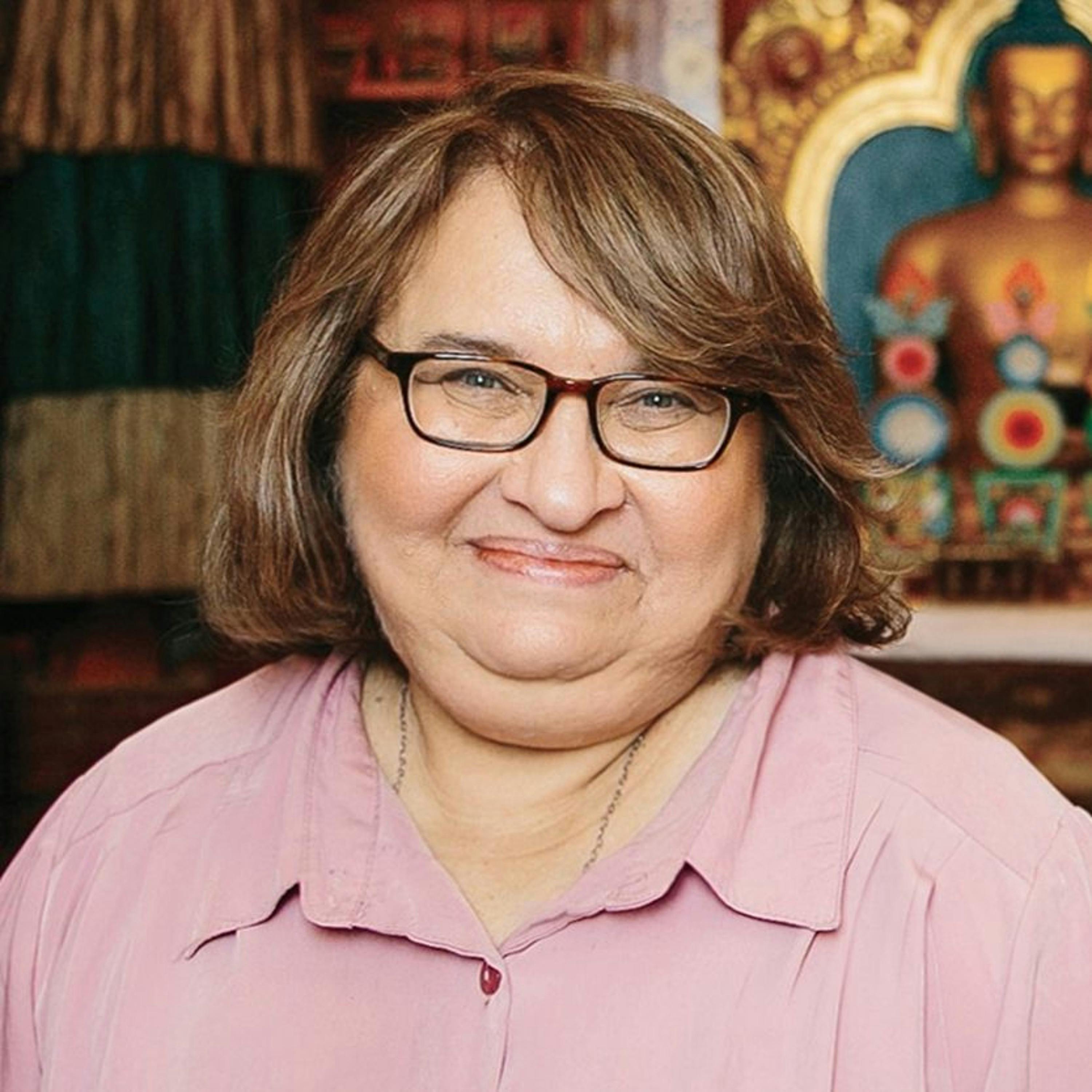
Some Buddhists would say that the proper response to the current suffering of the world is to turn inward—to use the tools of meditation to develop skillful states of mind. Others might say this isn't enough, that we should be out there—helping others in our communities and demanding action from our representatives. But these two options do not preclude each other, says meditation teacher and author Sharon Salzberg. Her new book, Real Change: Mindfulness to Heal Ourselves and Our World, provides a guide to freeing ourselves from negative emotions in order to summon the courage to act against injustice, as well as ways we can sustain ourselves through activist burnout and feelings of despair. In this episode, Tricycle’s Editor and Publisher James Shaheen speaks to Sharon about the making of the book and how her meditation practice provides an emotional anchor in difficult times. This month, Tricycle Talks is releasing five podcasts featuring people who are creating change in their communities. Stay tuned for episodes with four other changemakers—Shelly Tygielski, Michael Kink, Daisy Hernandez, and Arian Moayed—who are using their unique platforms to bring about real change in the world.
Sebene Selassie: You Belong
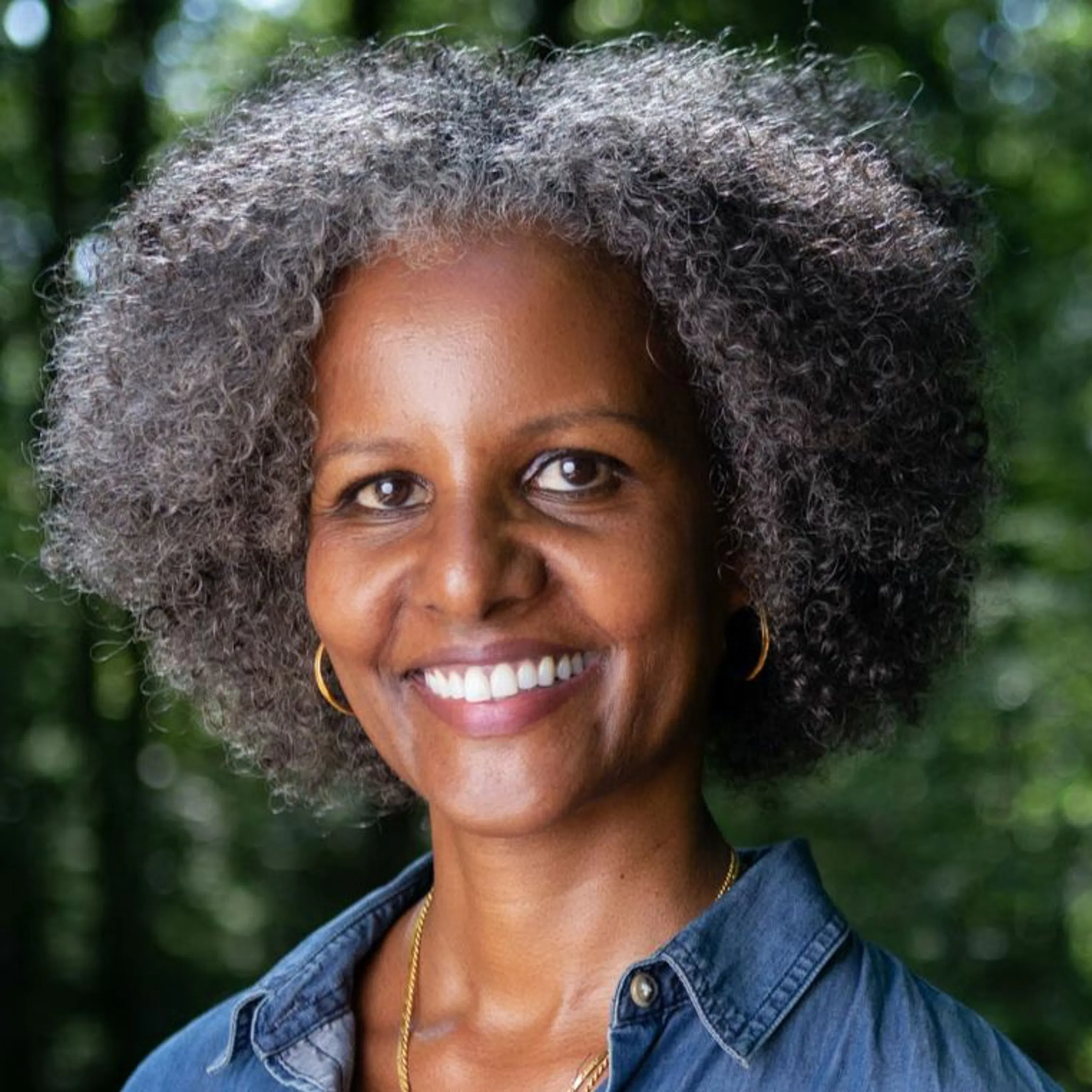
What does it mean to belong? Many of us come to Buddhist practice because we feel we don't. But Sebene Selassie, a meditation teacher in the Insight meditation tradition, uses Buddhist teachings to explain how we can be—wherever we are—truly at home in the world. Growing up in the nation's capital as the daughter of Ethiopian and Eritrean immigrants, Selassie herself spent much of her life on the outside looking in. In her new book, You Belong: A Call for Connection, she mixes personal narrative with classical Buddhist teachings on interconnectedness to make a compelling case for why we all—without exception—do belong. Coming to know this is like coming home—to our deep connection to others and, most importantly, to ourselves. In this episode, Tricycle’s Editor and Publisher James Shaheen talks with Selassie to discuss You Belong and what it means to be alive in a time when our separateness is more emphasized than our connection.

Wisdom for My Grandson with Charles Johnson
For many of us, the past several months have been a time to get reacquainted with one of the Buddhist truths that has always guided our lives: impermanence. But while this may provide a philosophical compass to help us weather the storms of a pandemic, pronounced racial and economic inequality, and acts of police brutality, we may still find ourselves asking: how do we help the next generation? In this episode of Tricycle Talks, Tricycle’s Editor and Publisher James Shaheen sat down with Charles “Chuck” Johnson to discuss his latest work, Grand: A Grandparent’s Wisdom for the Next Generation, a book of advice for his grandson, Emery. Much of the advice is rooted in Buddhist wisdom. Charles Johnson is a scholar, an award-winning novelist, an essayist, a cartoonist, and a martial arts teacher, whose works include Middle Passage and The Way of the Writer.

Stephen Batchelor: The Art of Solitude
As this episode goes live on May 9, 2020, many of us have been sheltering in place for the past few months, and some of us are experiencing the myriad effects of solitude on the human psyche. Stephen Batchelor’s new book, The Art of Solitude, was released in mid-February of this year, right before most of us were forced into isolation due to COVID-19. The book documents his explorations of solitude—and how he learned to live in ease with our fundamental aloneness. Stephen is co-founder of Bodhi College, a UK-based organization dedicated to contemplative learning, and is the author of many books on what he has called secular, or agnostic, Buddhism, including After Buddhism: Rethinking the Dharma for a Secular Age. Tricycle’s Editor and Publisher James Shaheen sat down with Stephen in front of a live audience at New York Open Center in Manhattan on February 19—a few weeks before social distancing measures went into effect.

Joanna Macy: The Work of Our Time
In recent weeks, reporters, activists, and others have drawn parallels between the global pandemic and the climate crisis. It seems early to say, but we can sense that the two problems are more related than we think, as they are both challenges that we all must face together. Despite the fear, panic, and pain that rages on in our world, Joanna Macy says that she’s lucky to be alive in this moment—because when everything starts to unravel, we have an opportunity to rediscover our deep belonging with the Earth. No voice has been as clear or as compelling as Joanna Macy's in the intersection that lies between Buddhist practice and ecological movements. An environmental activist, author of eight books, and a scholar of Buddhism and deep ecology, Joanna has been on the front lines of the environmentalist movement for decades. In recent years, as our impact on the environment has become both more apparent and more perilous, activist groups like Extinction Rebellion and others have been turning to Joanna’s work as a source of inspiration. A new book, A Wild Love for the World: Joanna Macy and the Work of Our Time, out today, celebrates her contributions with a selection of Joanna’s essays as well as writings by the many people she has inspired. Tricycle’s Editor and Publisher James Shaheen talks to Joanna about how she believes we can move forward in a time of great despair—and how we can transform our despair into action.

Carina Stone: The Legacy of Michael Stone
Many in the Buddhist world were shocked at the death of Insight Meditation and yoga teacher Michael Stone in 2017. He was only 42 years old, and few were aware that he had been struggling with bipolar disorder. It was later revealed that he had died from an opioid overdose. His death brought up many questions about the stigmas against mental illness, and the responsibility of teachers to reveal their personal challenges. Here, Michael’s wife Carina Stone sits down with Tricycle’s Editor and Publisher James Shaheen to discuss Michael’s legacy. Last year, Carina finished working on "The World Comes to You: Notes on Practice, Love, and Social Action," a collection of Michael’s teachings. While editing the book, Carina grappled with difficult questions about Michael’s life, all while working through her own grief around his death.

Evan Thompson: Why I'm Not a Buddhist
Buddhism is not a religion at all––at the same time, it’s the true essence of all religions. And yet it is also compatible with science, or even a “mind science” itself. Do these ideas sound familiar? They’re part of a constellation of claims that scholar Evan Thompson calls “Buddhist exceptionalism,” the idea that Buddhism stands apart from all other religions as uniquely rational. Evan is a professor of philosophy at the University of British Columbia as well as a longtime fellow at the Mind and Life Institute, which examines the intersection of science and contemplative wisdom. However, in his new book—provocatively titled Why I’m Not a Buddhist—Evan argues that Buddhism and science are not uniquely compatible, despite what many have claimed, and challenges the popular modernist belief that science can validate Buddhism’s soteriological and ontological goals. Here, Evan talks with Tricycle Editor and Publisher James Shaheen to discuss the problems with Buddhist modernism, his own spiritual and philosophical journey, and why he is, in fact, not a Buddhist.
Tara Brach: Radical Compassion
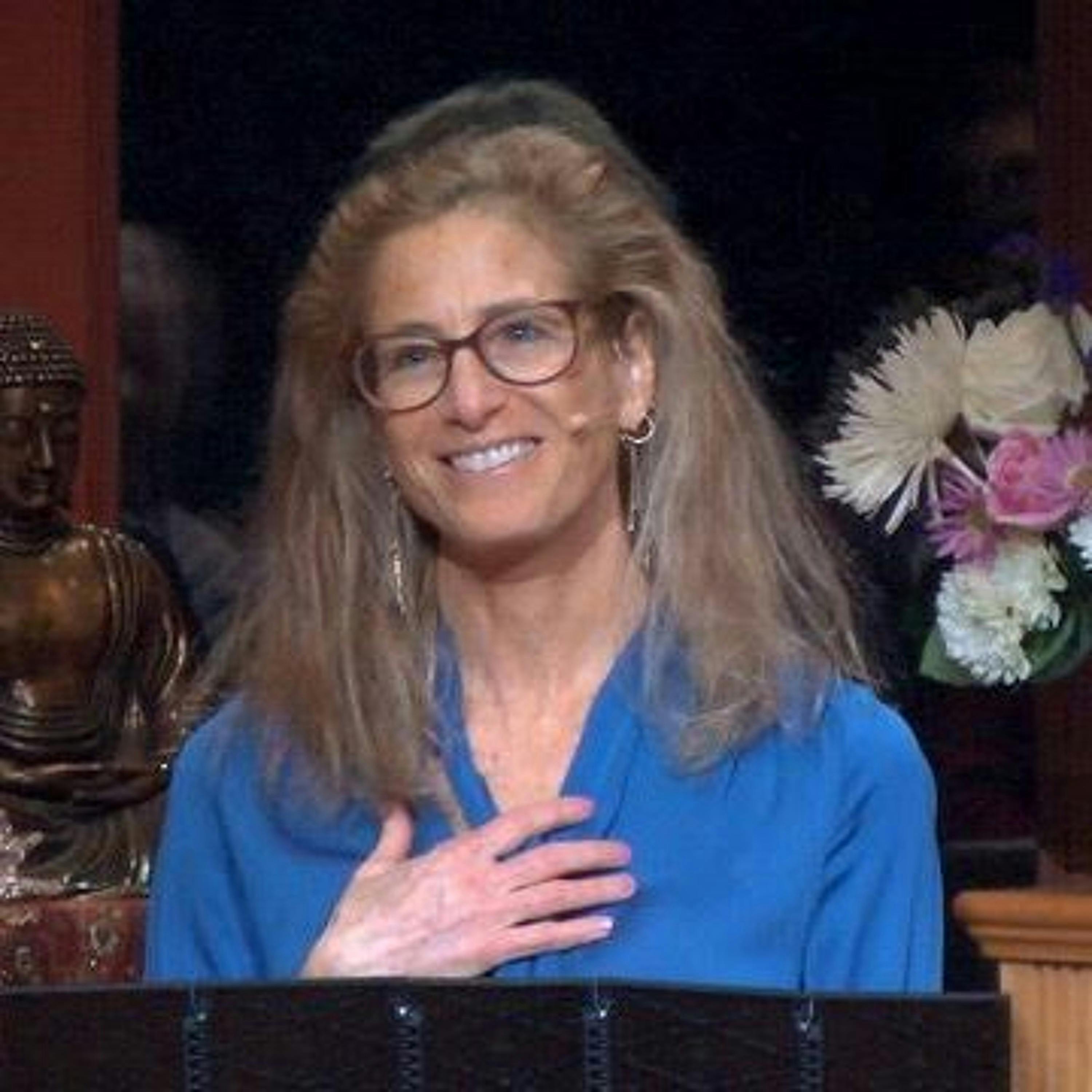
Many of us struggle to silence our inner critic on a daily basis. According to meditation teacher Tara Brach, that’s because we are living in a “trance of unworthiness,” and are addicted to self-judgment. Tara is the the founder of the Insight Meditation Community of Washington, D.C., a best-selling author, and a clinical psychologist who has been at the forefront of blending Buddhist meditation and therapeutic methods. She is perhaps best known for her teachings on RAIN, an acronym that stands for Recognize, Acceptance, Investigation, and Nurturing, and that describes a method for applying mindfulness to difficult emotions. In her new book, Radical Compassion, she focuses on using RAIN to cultivate compassion—beginning with compassion for ourselves.

Haemin Sunim: Letting Go of the Perfect Self
When we begin a Buddhist practice, we often set our sights on lofty spiritual goals. Yet the day-to-day problems we face can be stepping stones to deeper understanding. For Zen monk Haemin Sunim, helping regular people with low self-esteem, feelings of loss, or career failure is an integral part of his monastic duties, and a way to spread the dharma in his home country of South Korea, where Buddhism has been on the decline. Dubbed the “Twitter monk” after his account garnered more than 1 million followers, Haemin Sunim in 2015 founded the School of Broken Hearts in Seoul, where he offers both traditional Buddhist instruction and classes designed to help people with the painful parts of life—such as bullying, bereavement, anger management, and dating violence. His latest book, Love for Imperfect Things: How to Accept Yourself in a World Striving for Perfection, is an international best-seller. Here, Haemin Sunim sits down with Tricycle Editor and Publisher James Shaheen to discuss his journey from US college professor to Korean household name, and how he teaches people to let go of their ideas about perfection.

Koshin Paley Ellison: Waking Up from Zombieland
So often we succumb to our narratives about the people in our lives without taking a moment to examine what’s really going on, and this mindset leaves us feeling isolated. Koshin Paley Ellison calls this state of existence “zombieland,” and says that the habits that keep us locked in our mental stories—and glued to our devices—are rooted in a deep-seated fear of awkwardness and discomfort. Koshin is a Zen chaplain and teacher and co-founder of the New York Zen Center for Contemplative Care, a non-profit that offers training programs in clinical chaplaincy meditation and spiritual counseling. His recent book Wholehearted: Slow Down, Help Out, Wake Up, is a reflection on how the 16 Zen precepts can apply to life today and help us enter into compassionate relationships with ourselves and others. Here, Koshin sits down with Tricycle Editor and Publisher James Shaheen to discuss his journey from “lone wolf” to Zen chaplain and how being with people who are dying has taught him to live a more meaningful life.

Donald Lopez & Jacqueline Stone: How to Read the Lotus Sutra
The Lotus Sutra is one of the most important Buddhist texts, but for the uninitiated reader, it can make little to no sense. Our guests are two of the foremost scholars in Buddhist studies, Donald Lopez, Jr., Arthur E. Link Distinguished University Professor of Buddhist and Tibetan Studies at the University of Michigan, and Jacqueline Stone, who recently retired from her position as Professor of Japanese Religions at Princeton University. They have written a chapter-by-chapter guide to the Lotus Sutra called Two Buddhas Seated Side by Side: A Guide to the Lotus Sutra (October 2019, Princeton University Press). The book is a highly readable commentary and introduction to the sutra that flips between ancient India, when the sutra was written, and medieval Japan, when it took on a new meaning for the Buddhist priest and reformationist Nichiren. Here, Stone and Lopez sit down with Tricycle Editor and Publisher James Shaheen to discuss the issues, such as religious meaning, reinvention, and adaptation, that this book brings to the surface.

Rhonda Magee: Learning to See Our Racial Biases
Law professor and mindfulness instructor Rhonda Magee says the recent resurgence of overt racism shows that we failed to address its root cause—our own racial biases. Magee is a professor at the University of San Francisco’s School of Law, where she teaches about racial justice and uses mindfulness to help students surface their own prejudices. She has written about her work in a new book, The Inner Work of Racial Justice: Healing Ourselves and Transforming Our Communities Through Mindfulness.
Lawrence Shainberg: Staring at the Wall with Samuel Beckett & Norman Mailer
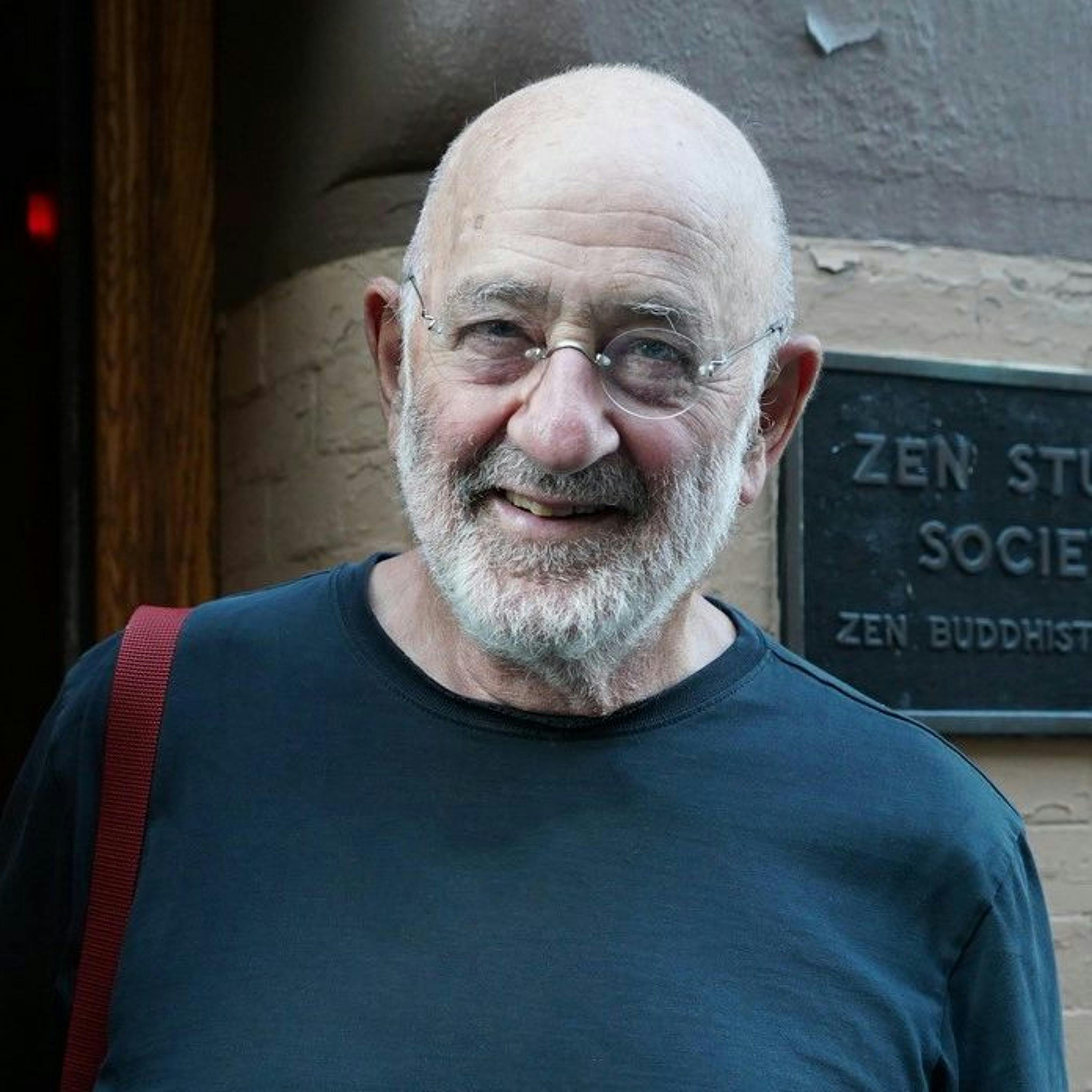
Writer and longtime Zen student Lawrence Shainberg joins Tricycle Editor and Publisher James Shaheen to discuss his new book, "Four Men Shaking: Searching for Sanity with Samuel Beckett, Norman Mailer, and My Perfect Zen Teacher." They talk about Shainberg’s struggles as a practitioner and an author and how he brings them together in his new memoir, which recounts his conversations with his literary heroes, Samuel Beckett and Norman Mailer, along with his teacher, Roshi Kyudo Nakagawa. You can read an excerpt from Four Men Shaking in our Fall 2019 issue.

Ronald Purser: McMindfulness
Ronald Purser is a professor of management at San Francisco State University and a longtime Buddhist practitioner who popularized the term McMindfulness in a piece he wrote for the Huffington Post in 2013. In it, he argued that mindfulness practice has been commercialized, and reduced to a mere “self-help technique.” His new book, McMindfulness: How Mindfulness Became the New Capitalist Spirituality, offers an argument against the mindfulness movement, claiming that corporations have embraced the practice in order to advance a neoliberal agenda. Here, Purser strikes a more balanced tone and discusses the good and bad of the mindfulness movement, explains what he means by the catch-all term McMindfulness, and presents his view that mindfulness has an untapped potential to bring about real social change.

Helen Tworkov: Dying Every Day
At the age of 36, the Tibetan Buddhist meditation master Yongey Mingyur Rinpoche sneaked out of his monastery in Bodhgaya, India, in the middle of the night to live as a beggar and traveling yogi. The story of how he left behind his privileged lifestyle for a four-year wandering retreat is told in the new book, In Love With the World: A Monk's Journey Through the Bardos of Living and Dying, which he co-wrote with his student and Tricycle’s founding editor, Helen Tworkov. Tworkov sits down with James Shaheen, Tricycle’s publisher and editor, to discuss how she helped Mingyur Rinpoche tell his story, the near-death experience that transformed his life and teachings, and how seeing the small deaths we experience each day can help us alleviate our fears of dying. They also discuss the origins of the magazine and how the Western Buddhist landscape has changed over time.

Candy Gunther Brown: Is School Mindfulness Bringing Religion into the Classroom?
In recent years, school mindfulness programs have sprung up across the country, setting off a debate about whether the nominally secular programs derived from religious practices violate laws about the separation of church and state. In her new book, Debating Yoga and Mindfulness in Public Schools, Indiana University Bloomington religious studies professor Candy Gunther Brown takes a look at the history of the separation of church and state and the mindfulness movement and makes the case that mindfulness programs have overstepped their bounds. While she does not recommend that the programs should be banned, she argues that making them mandatory is unconstitutional and that students must be asked to opt-in to the classes. (Even opt-out options, she claims, place an illegal burden on the students.) Here, Brown talks with Tricycle Editor and Publisher James Shaheen about how her view, the legal precedents set from the school prayer debate, and the claims that mindfulness is a form of “stealth Buddhism.” This episode is sponsored by Maitripa College. www.maitripa.org

Pico Iyer: Inside Japan as an Outsider
Acclaimed travel and spirituality writer Pico Iyer has written two new books about his life in Japan, Autumn Light (Penguin, April 2019), and the forthcoming A Beginner’s Guide to Japan: Observations and Provocations (Penguin, September 2019). Iyer views the books as complimentary: while Autumn Light describes his experience within the culture, A Beginner’s Guide offers his perspective as an outsider. Since marrying and moving in with his wife in her home city of Nara three decades ago, Iyer has become one of the foremost translators of Japanese culture to Western audiences. Iyer discusses his latest books as well as the way impermanence colors Japanese life and what it means to try to understand other cultures at a time when the term globalist has become, in many parts, a dirty word.

Duncan Ryuken Williams: When Buddhists Were a “National Security Threat”
On February 19th, 1942, President Franklin Delano Roosevelt issued an executive order designating military zones along the West Coast and laying the groundwork for US authorities to remove citizens of Japanese descent from their homes and imprison them in camps. While it is widely acknowledged that racism was central to this shameful chapter of American history, the role of religious discrimination cannot be overlooked, says scholar and Soto Zen priest Duncan Ryuken Williams. Here, Williams joins Tricycle Editor and Publisher James Shaheen to discuss his new book, American Sutra, how Japanese Americans stood up for religious freedom, and how this disturbing legacy of persecution has taken on new relevance.

Elaine Pagels: Why Do We Still Have Religion?
Acclaimed scholar of religion Elaine Pagels discusses the role of faith today, the practical consequences of religious ideas, and what led her to ask, "Why Religion?" with Tricycle's editor and publisher, James Shaheen. Pagels is the Harrington Spear Paine Foundation Professor of Religion at Princeton University, a MacArthur Fellow, and a best-selling author who won the National Book Award for her groundbreaking 1989 work, "The Gnostic Gospels." Her latest book, "Why Religion? A Personal Story" explores why religion has persisted through a blend of meticulous research and an earnest exploration of her own struggles with faith and grief.

Lawrence Levy: Beating Burnout by Just Being
Feeling burnt out does not make you a failure. That’s the first thing Buddhist teacher and former tech executive Lawrence Levy would want you to know. Burnout, Levy says, is a healthy response when our human needs aren’t being met. As the former Chief Financial Officer of Pixar, Levy knows what it means to have a demanding job. But it was during his many years practicing in the Gelug lineage of Tibetan Buddhism that Levy began to find a way to apply Buddhist principles to the difficulties that we face in our everyday lives, leading him to co-found Juniper, an organization devoted to making meditation and the dharma accessible in a modern context. Here, Tricycle Editor and Publisher James Shaheen talks to Levy about the importance of continuous self-care in a mutually supportive environment and how meditation, learning, and connection can help us tend to the conditions that lead to burnout.

Lama Tsultrim Allione: Transforming Negativity Through Fierce Feminine Wisdom
Women have a lot to be angry about. A history of inequality and violence in the Buddhist world and beyond persists to this day. The question remains: what can we do with that anger? Lama Tsultrim Allione says that we have the ability to transform it into a source of strength and clarity—and that goes for all of us, not just women. Known in good part for her work exploring feminine power in Tibetan Buddhism, she examines the figure of the dakinis, fierce feminine embodiments of wisdom, and how they challenge the dominant role models for femininity in Western culture. Lama Tsultrim, who was once Allen Ginsberg’s meditation teacher, has written a new book called Wisdom Rising: Journey into the Mandala of the Empowered Feminine. Here, Lama Tsultrim talks to Executive Editor Emma Varvaloucas about mandala meditation as well as her personal struggle to rediscover Buddhism’s fierce female role models and advocate for equality in a male-dominated culture.

Arno Michaelis & Pardeep Singh: How to Fight Hate (Without Your Fists)
In recent years, ethno-nationalist movements have had an apparent resurgence. What can we do to counter the hateful ideologies that have led to so much harm? Arno Michaelis, an ex-neo-Nazi, and Pardeep Singh Kaleka, whose father was murdered by a white supremacist, say that a combination of lovingkindness (Pali, metta) and relentless optimism (Punjabi, chardi kala) is the only path forward. The pair came together after the 2012 Sikh temple shooting in a Milwaukee suburb that left Kaleka fatherless. The gunman, Wade Michael Page, who killed Pardeep’s dad and five others, was a member of the white power group that Arno had founded years earlier. (Arno had since left the organization and later became a Buddhist.)How Arno and Pardeep met and began working together to spread their anti-hate message is the subject of their new book, The Gift of Our Wounds. Here, they talk to Tricycle web editor Matthew Abrahams about their lives and their mission.

Roshi Joan Halifax: Empathy's Double-Edge
Altruism. Empathy. Integrity. Respect. Engagement. These five psychological states are keys to living a compassionate, courageous life, according to Buddhist teacher, anthropologist, and social activist Roshi Joan Halifax. However, each has the potential to become counter-productive: altruism can become pathological, empathy can prevent you from seeing another’s situation clearly, and engagement can become an endless to-do list. In her latest book, Standing at the Edge, Roshi Halifax likens these states to ecosystems that are the most instructive when we work from their edges. Here, Roshi Joan Halifax speaks to author Sandy Boucher about how “edge states” have been vital to her work as a change-agent, and how they might help us nourish love and justice in society today.

Judson Brewer: The Mindful Way to Kick a Craving
The second of the four noble truths teaches that craving leads to suffering. But that would be obvious to anyone struggling with addiction. Psychiatrist Judson Brewer, who is the director of research at the Center for Mindfulness in Medicine, Health Care and Society at the University of Massachusetts Medical School, brings mindfulness practice to the treatment of addiction. Here, Brewer talks to Tricycle contributing editor Amy Gross about the mechanisms in the brain that activate when we have cravings and how Buddhist teachings can help combat a wide variety of addictions.

Johan Elverskog: How Buddhist & Muslim Stereotypes Conceal the Real History
In the 13th century, Muslim soldiers attacked the Buddhist monastery Nalanda in India. This event is held up as an example of how Muslim invaders were responsible for the eventual destruction of Buddhism in the Indian subcontinent. But it is far from the full story. Here, history professor and Chair of Religious Studies at Southern Methodist University, Johan Elverskog, talks to Tricycle editor and publisher James Shaheen about common misconceptions about the history of Islam and Buddhism, which are often rooted in stereotypes. Elverskog also debunks the assertion that the Mughal invasions were the sole cause of Buddhism’s waning on the subcontinent, a long-held narrative often used to justify Islamophobia.

Mark Epstein: The Task Is Being You
The Buddha had a prescription to end suffering—the eightfold path. But can the Western tradition of psychotherapy build upon these essential steps? Here, Buddhist psychotherapist and bestselling author Epstein talks with Tricycle contributing editor Amy Gross about how the two realms of wisdom view the idea of self as both problematic and helpful. Drawing from his new book, Advice Not Given: A Guide to Getting Over Yourself, to discuss the ways meditation illuminates aspects of ourselves that we’re afraid or ashamed of, allowing us to let go of the identities that constrict us.

Guy Armstrong: What Do Buddhists Mean When They Talk About Not-Self?
The foundational Buddhist concept of "no-self" can be a headbanger. What does it mean that our self is fundamentally empty? And if that’s true, who are we? In our latest Tricycle Talks podcast, Insight meditation teacher Guy Armstrong explains the concept to Tricycle contributing editor Amy Gross. Drawing from his book Emptiness: A Practical Guide for Meditators, he breaks down what happens when we stop constructing a sense of “I, me, mine” and begin to let go of the extraneous mental activity that leads to unnecessary suffering.

(Part 1) Mindfulness in Prison and Beyond: with Fleet Maull
In this two-part Tricycle Talks episode, Tricycle’s web editor, Wendy Joan Biddlecombe, speaks with Acharya Fleet Maull at the Engaged Mindfulness Institute in Deerfield, Massachusetts, about his work, and why he’s moving beyond prisons to train the next generation of mindfulness teachers. Facing 30 years on a drug smuggling conviction, Maull viewed prison as his “monastery time,” devoting himself to practice and serving others.

(Part 2) Mindfulness in Prison and Beyond: On Retreat at the Engaged Mindfulness Institute
Tricycle’s web editor, Wendy Joan Biddlecombe, speaks with Acharya Fleet Maull at the Engaged Mindfulness Institute in Deerfield, Massachusetts, about his work, and why he’s moving beyond prisons to train the next generation of mindfulness teachers. In the second part of this Tricycle Talks episode, you'll go behind the scenes at a recent retreat with Fleet Maull and hear from four people going through the training about why they practice mindfulness and how it helps the populations they serve.

Robert Wright: Why (Science Says) Buddhism Is True
In this episode of Tricycle Talks, best-selling author Robert Wright speaks with Tricycle’s web editor, Wendy Joan Biddlecombe, about how evolutionary psychology supports what the Buddha taught us about suffering and not being satisfied in the present moment. In the talk, Wright explains why we haven’t evolved past difficult emotions such as anxiety and how mindfulness meditation can provide a way to work through—and maybe even free us from—them.

Shozan Jack Haubner: When Your Sangha’s Sex Scandal Goes Viral
Shozan Jack Haubner, the pen name of a Zen monk, went to the monastery in search of wisdom—and left with a sex scandal. Haubner joins Tricycle’s executive editor Emma Varvaloucas in this podcast to discuss how writing helps him unravel the “big things” in life; the patterns of behavior commonly seen in communities where sexual abuse occurs between teacher and student; and his advice for any group that has a problem that’s been driven underground. “It’s alive,” he says, “and it’s calling for you to deal with it.”

Michael Kinnamon: How Religion Can Bring Peace to a Fearful World
We live in a world of fear. But need we be driven by it? In this episode of Tricycle Talks, Dr. Pilar Jennings, a Tibetan Buddhist practitioner and psychotherapist, speaks with Michael Kinnamon, former Dean of the Lexington Theological Seminary and author of the The Witness of Religion in an Age of Fear, about the restlessness, anxiety, and even panic characteristic of contemporary society. Tune in to learn about the differences between healthy and unhealthy fear and the role that each of us can play in bringing peace to both ourselves and a fearful world.

Sharon Salzberg: Breaking Down Love
Love isn’t just a feeling, says meditation teacher Sharon Salzberg. It’s an ability. This ability to love is inherent in all beings, but it’s up to us whether we develop it or not. Listen in to our newest Tricycle Talks podcast for a conversation with Sharon, author of the just-released Real Love, about the keys for cultivating this innate, indestructible ability, which can help deepen and open up our relationships with everyone from our partner to a stranger on the street—not to mention ourselves.