
Three Things I Learned In SaaS, Sports, Tech & Live Events Podcast
159 episodes — Page 3 of 4
S2 Ep 41Three Things: Ticketing Explodes On The Scene Week
Three Things I Learned This Week In Saas, Sports, Tech & Live Events - Ticketing Week 1) Michael Rubin isn't "frightened by ticketing" - as he said at the SBJ World Congress this week. He sees it for what it is: clean data. Which is really expensive. Part of what made Apple and Google so valuable was direct access to the consumers using their products - think app store and PPC. With ticketing going fully digital, primary ticketing companies are privy to clean data. Customers have to go through their entrance points to attend the event. That data is invaluable in the gaming, NFT, Merch, collectibles and F&B world. Ticketing is going to get even more commoditized and won't surprise us if it eventually becomes a loss leader - think rooms and drinks to the casino gaming model. Rubin knows tickets. His last CCO was Cole Gahagan, who was CRO at Ticketmaster and now runs Learfield. They're coming. Soon. Either direct or through a massive strategic deal. 2) Seat Geek goes public- I met Jack and Russ back in 2009 at a ticket conference in NYC. Their ideas were data driven. More efficiency into an inefficient market. My goodness how that's evolved. They've followed the enterprise b2b2c blueprint - landing customers for validation, getting the big names as loss leaders, and are now hitting a market ripe for disruption (see #1 this week) with a scary team which includes Ryan Smith (Utah Jazz) who has about as good a reputation as one can have. They see vertical integration as something done through multiple vendors - interesting bet. Plenty of room. See #1. 3) MLB is making a nine figure push to move all baseball teams to TDC. This rumor has been out there for weeks now and we've heard it from a dozen people so it's no real secret. TDC tried this in the early 2000's and ran into some holdouts. With the StubHub deal up for renewal and all the new business opps tied to tickets (see #1), wouldn't surprise us if those rumors are true. What a week. It's good to be back to normal with some news. Ticketing is not just tickets. It's access control and data at scale. And it's about to change everything.
S2 Ep 40Three Things: What do you do when you hit "Rock Bottom" for your company
Three Things I Learned This Week In Saas, Sports, Tech & Live Events - Rock Bottom Edition We've all had times in our careers or, for entrepreneurs, in our businesses, of intense doubt or bad news which can feel like rock bottom. Here's what not to do, both from experience and those we were saved from by mentors: 1) Never make decisions in an extreme state. In the end, we're human. We have emotions. Sometimes they swing one way or the other a bit extremely. Add stress or travel to a lack of sleep, a cold, and some crappy weather and we can find ourselves in some rough headspaces no matter how much meditating and mindfulness we practice. Every psych book out there will tell us - do not make important decisions when too far in the dumps or in the clouds. Recognize you're there and follow the playbook. Big decisions wait for more level days. 2) Map it out once then move on. It's easy to get into a forecasting hole where we stare at numbers. I did it for years. The amount of hours I spent laying out different scenarios just to stem nerves and find some certainty I'll never get back. Spend at most one hour a week. Then move on. 3) Keep moving forward. For the vast majority of us building something great takes a lot of time and a lot of ups and downs…..and dog days, and boredom, and fear, and and and. When you don't believe - and you won't often- keep moving. Set a date in the future, far enough out - at least six months, and just swim to there. At that point, we can evaluate and make decisions. You may surprise yourself.* I spent my first week at StubHub moping in my room. What a waste. Once I got to it….we had a lot of fun. 4) Know it's okay. It's okay for it to suck and for us to be down sometimes, especially in the tough times (2008 and early 2012 for us), for weeks at a time. Trying to avoid these common feelings only puts us in a worse place and wastes time. 5) Don't try to work harder. 10 hour work days are enough. We all think we're superhuman, especially at the beginning, and that we can work our way out of the darkness by pushing even harder. I've seen the end of that road. Trust me, you don't want to - not for yourself or your team. In the end, that extra work was usually ends up crappy anyways. Scared money don't make money. 6) Accept quitting may be a good option. When racing east looking for a sunset, the first person to turn around is the winner. Once you've done 1-5, if "this" isn't what you thought it was, go do something else. There's no shame in it. Nobody cares as much as we think they do and the ones who matter will be supportive. We only go around the carousel once - it's a tragedy to waste it on something we don't love.
S2 Ep 39Three Things: Conference Week at Saastr and SBJ Ticket Symposium
Three Random Things I Learned This Week in Saas, Sports, Tech & Live Events at the SBJ Ticketing Symposium 1) TicketNetwork hired a banker and is going to market to sell. The live events industry will watch closely how they're valued. TN has a lot of data, but outsources quite a bit too. Personally, I think they find someone to overpay. 2) Teams don't see the softness those in the know are seeing in the secondary. Publicly, "everything's great." But in private, those at the controls are seeing some alarming signs of weakness. There was a saturation problem before Covid and it didn't magically go away overnight. Covid as "the great accelerator" is holding true - events which were doing well are doing great post covid. Those which were struggling….it's about to accelerate and get worse. 3. There is opportunity for the hustlers - Right Now. Talked to a friend who has raised more for their fund in the past 3 weeks hitting the road than the previous 10 months WFH. The SBJ conference was 1/5th the size it has been in years past. And what an opportunity it was for those in attendance. Meetings and facetime never easier to get with execs. And yet, so many stayed home and missed it. Hope that continues =)
S2 Ep 38Three Things: Three phrases our mentors gave us which have changed our team and business.
Three Random Things I Learned This Week in Saas, Sports, Tech & Live Events The best leadership advice we've gotten from mentors smarter than us. Each one we've used time and again and they almost always work: 1) "Help me understand." It takes managers a loooong time to learn the vast majority of mistakes and politics aren't actually nefarious by intent. Took me years. Most situations are fluid and complex yet managers tend to treat them as relatively black and white. "Why did you do X?" is offensive. It is similar to a bad coach barking "what are you doing?!" at a stunned kid. Try to understand intent first so we can spot these things in the future. I'm still surprised at what's uncovered. (Spoiler: I learn over and over my assumptions are very often wrong). 2) "As opposed to?" Complaining is a necessity in business and in life. We all need to dump our baggage on someone. Sometimes new founders are so personally hurt when they hear complaining. Don't be. It's normal. Work with your team to find solutions and teach them when and where it is okay to complain. An easy example: "Yes, we may not like X, but as opposed to what?" It often leads to the understanding and agreement the changes are necessary and, in some cases, they come up with better ideas. 3) "Say OK and extend the play." In most scenarios, more information is helpful. When in a tough spot, it's always easy to answer simply with "ok" and see what comes next. I'm shocked at how often this works and changes the conversation. It's a free timeout. Always worth a try.
S2 Ep 37Three Things Sept 17, 2021: Coach, don't play, if we want to level up - Hiring in a tight job market - "who's (expletive) your wife?"
1) Coach. Don't play. On top of my to-do list every morning, the first entry is bolded: "Coach. Don't play." For the vast majority of high achievers or entrepreneurs, letting go of what their great at is the biggest hurdle - especially when times get tough. When the code isn't done, the pipeline isn't full, or the CS metrics are dropping, we do what hall of fame boxing trainer Freddie Roach says everyone does "Once they get hit in the ring, they’re going to revert back to what they are." You, and your team, will do this often. If we can't level up and coach, we'll never grow to where we want to go. 2) Never lower your bar. Let others. Talent is hard to come by these days. It's not the first time we've seen it. Numbers are staring us in the face and the talent pool has more leverage than ever. We have to give in to the pleas and lower our bar right? Or we'll left behind? Do NOT. We did once, it went as Steve Jobs said it would (from a past three things) "The B's hire C's and then the bozo parade takes over." Letting others make bad decisions is a win. It's hard to see in the moment - but trust us. 3) "Who's (expletive) your wife? If you're not, who is?"- Frank "Ponch" Poncherello in CHiPs. Went through a recruiting process over the weekend for a family member. Incumbents lost some talent they didn't expect to lose. Why? It was simple: they didn't give enough love to the returnees vs what others were telling them while focusing too much on the new recruits. (*didn't apply to us). If you're not telling your great ones they're great and rewarding them….someone else is.
S2 Ep 36Three Things Sept 10, 2021: How stubborn can be a positive, Who owns the little things and why it matters most, Everyone has "best tech stack"....then what?
Three Random Things I Learned in Saas, Sports, Tech & Live Events 1. "If nobody is taking ownership, nothing is going to get solved." Jocko Willink shared this nugget of simplicity when discussing failed operations in the middle east. Easy is easy, simple is hard. Everything requires an owner. Everything. From who is responsible for the coffee machine to who is running the most important projects. I know, I know, it's obvious. And obviously overlooked often. 2. "The best players are "7's" on the scale of 1 being most coachable and 10 being most stubborn." A high profile juniors tennis coach shared with me a year ago and it changed everything about how we see our team and prospective talent. In Isaacson's "Innovators" the author suggests "being stubborn and focused creates the best innovations." The coach elaborated further: "Overcoaching saps the kids talent and they don't learn themselves. They get stiff and don't explore what they're capable of" - sounds like exactly what happens in businesses. Be stubborn to who you are, and who your team is, while picking up what's valuable along the way. Too much emulating others and you'll lose the authenticity that makes people great. 3. In enterprise tech, everyone has the best stack. I haven't met a vendor or company who believes otherwise. Let's start by assuming the tech is stable/scalable - as it is easy to diligence - and focus on the core differentiators. Once we reach scale in the wild, we can all start espousing the best tech. Until then, focus on differentiators around the tech - as most tech breakthroughs are copied pretty quick. And much easier than we'd like to believe. And budget to refresh your tech often - many don't.

S2 Ep 35Three Things: A hack to manage change, the allure of chasing silver bullets, David took a rock to a sword fight
Three Random Things I Learned in Saas, Sports, Tech & Live Events 1. Change is always resisted internally and externally. Our job, when building a new business, is change. Our team's careers, our customer's processes, our partners status quo. Those who implement change are well-rewarded. A quick tip: Set a check point and commit your word to it. 'This will be and feel like a lot of change, however at month six, we're going to celebrate our biggest concern of the moment wasn't even on the list today.' Then execute. If we can, we build loyalty with our teams, our partners and our investors. 2. Silver bullets are so enticing, but we can get lost chasing them. We often hear stories about the outlier growth stories and how they found a silver bullet. Most businesses, including the wild successes, are built by a lot of tiny wins. Projects, programs, incentives and campaigns which sometimes get overlooked b/c they don't "move the ball enough." Add up all those yards, however, and you may just end up sitting on a eight or nine figure business. 3. "David took a rock to a sword fight." I love this song lyric for so many reasons. I have a meeting every two weeks or so with someone considering starting their own business and walking away from their security blanket. A common piece of advice: When you take a rock to a sword fight, you get mocked. And that doesn't sound so bad until it impacts your family and your friends. Trust me, it's awful what people will say (and still do)…and we hear and feel all of it.
S2 Ep 34Three Things: Lying in job interviews, Tom Brady on winning today, Make the best of the inevitable bad choices
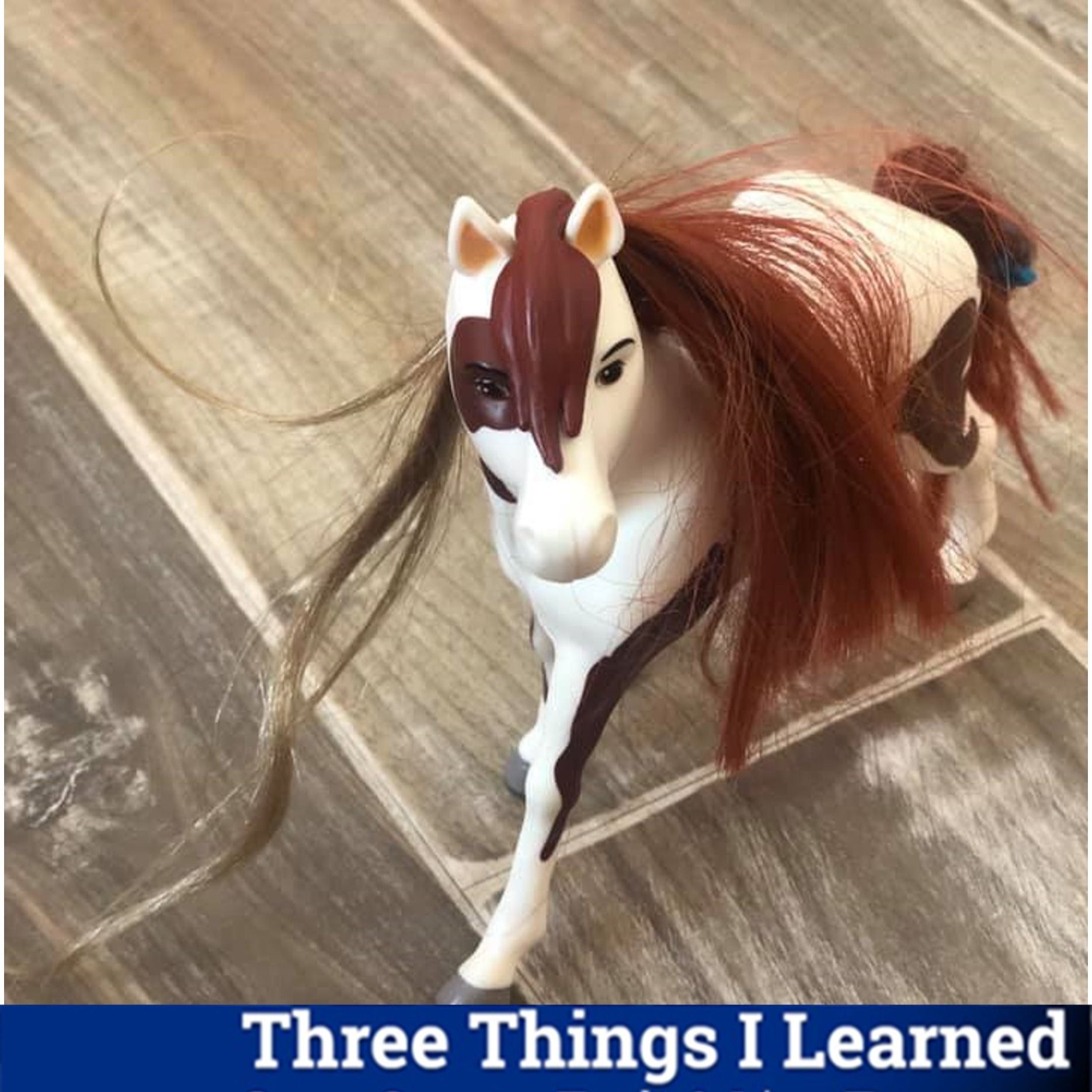
1. Don't lie in an interview. Ever. Like volunteering when it's been 4 years, saying you played football at a local college, you were "top 3" on the sales standings or that you currently have a VP of sales gig and live in the city when you were terminated 8 months prior for getting trashed on a company booze cruise and have been living on mom's couch in jersey (none of those things are bad or disqualifying. Lying though? That is). So how to spot the liars? You can't call their current employer. But you CAN once they start with you. And it's worth it. Can't have dishonesty on the team. It's a killer. 2. What happens outside our walls impacts what happens inside our walls. And we must be aware of how we can use it. Great quote by Tom Brady: “Life,” Brady said, “is about always changing and adapting to different things. Today, the world wants to blame, and shame, and guilt, and fear everything all the time. We would never teach our kids that, you know? We would never say, ‘This is how you’re gonna get through life the best—you’re gonna blame everyone when things don’t go right.’ Or, ‘I always get it my way but you should never get it your way.’ It’s not how to live a joyful life." Interview is worth all of our time- linked in the comments 3. Make the best of bad choices. Six months ago I heard screaming from upstairs. Preparing for the worst I ran in to find our youngest daughter had cut her own hair. The morning after the madness, I asked her why. "I wanted to put it on my unicorns to make them beautiful." Mom, understandably, threw the hair away the night prior. I fished it out, found some tape and here we are 6 months later. Bad judgement happens at your company. Embrace the good in it while using the bad to grow together.
S2 Ep 33Media Training! Tips on working with press and media to help your business
Three Random Things I Learned in Saas, Sports, Tech & Live Events Press week. If you're going to lead a growing company, you're likely going to work with the media. Here are a few tips on how to work with the media to help your business. 1) Be as helpful to them as possible. Even if you're not quoted or don't get what you want, become someone they know can help them. Make introductions. Even (gasp) give up your coverage to someone better suited to opine. Play the long game. 2) Ask for questions in advance. Type out your quotes. Read them during the conversation and send them when done. 3) You're getting a one line quote. Maybe two if you're lucky. Even though you may talk for 20 minutes. Remember, it's their story, not yours. Newbies are always shocked when they do a 15 minute interview in front of the camera and 30 seconds gets used. 4) Do. Not. Babble. From the 48 Laws of Power: when uncomfortable, people say what they shouldn't. Stick to the notes. 5) Never ever bend the truth, lie or leave anything out. Journalists work hard to earn their customers trust. If you cost them that, you're blackballed (and rightfully so). 6) Don't schill the company line. Many do. It's makes for a boring story and you're, again, off the list. 7) Don’t rush. Sometimes they're on a deadline and you can't confirm what you need to in time. I know, it's free exposure! Unfortunately, sometimes the timing just doesn't work out 8) Respect the relationship. If someone calls asking about a story and you're a source for them then you get another call from another journalist on the same story, disclose you've already been a source. 9) In a new relationship, don't say anything you wouldn't feel comfortable being public, no matter how much reassurance you get. Save those for the journalists you build a relationship with and trust.
S2 Ep 32Three Things: How to get the most out of your advisors
Three Things I Learned in Saas, Sports, Tech & Live Events Advisors Week Advisors are either exponentially additive or they are empty calories with very little between. Three things we'd advise given our many mistakes and wins with advisors 1) All equity requires an investment- even if very small. Even advisors who are getting paid. It's a controversial take but anyone who is working with you without skin in the game is a vendor, not an advisor. There is plenty of room to bring on vendors who can help you. Keep your advisory positions for those who will dedicate the time and brainpower your company needs to be successful. 2) Start right away. Reach out to 5 potential advisors every week until you have 5 good ones who will give you at least one uninterrupted hour a month minimum. 3) Define what they are doing to advise. Are they operational, business development/introductions, vanity/influencers or personal care advisors? Make sure you have a balance of each. 5 sexy advisors looks great to the outside but won't help your business get where it needs to go. 4) Take total responsibility for communication. They are part of the team. They get all company updates, invites to team meetings and even the informal meet-ups. Too often entrepreneurs think it is on the advisor to be proactive b/c they have shares or are getting paid. That's backwards. Keep them involved and they'll offer more value. Remember, great advisors are usually very busy. 5) Listen. We chose them for a reason. Even if, in the moment, we disagree, it is important and honest feedback. I've had a number of those calls over the years. To date, our advisors have saved us more money and heartache than we could measure. Some made north of $500k for an hour a month over a few years and it was worth every penny. Nail your advisors right away and you will reap the benefits.
S2 Ep 31Three Things: It's all fake! And yet we fall for it anyways - How to approach the Build or Buy list - Stars and confidence, how a star changed my life with one sentence
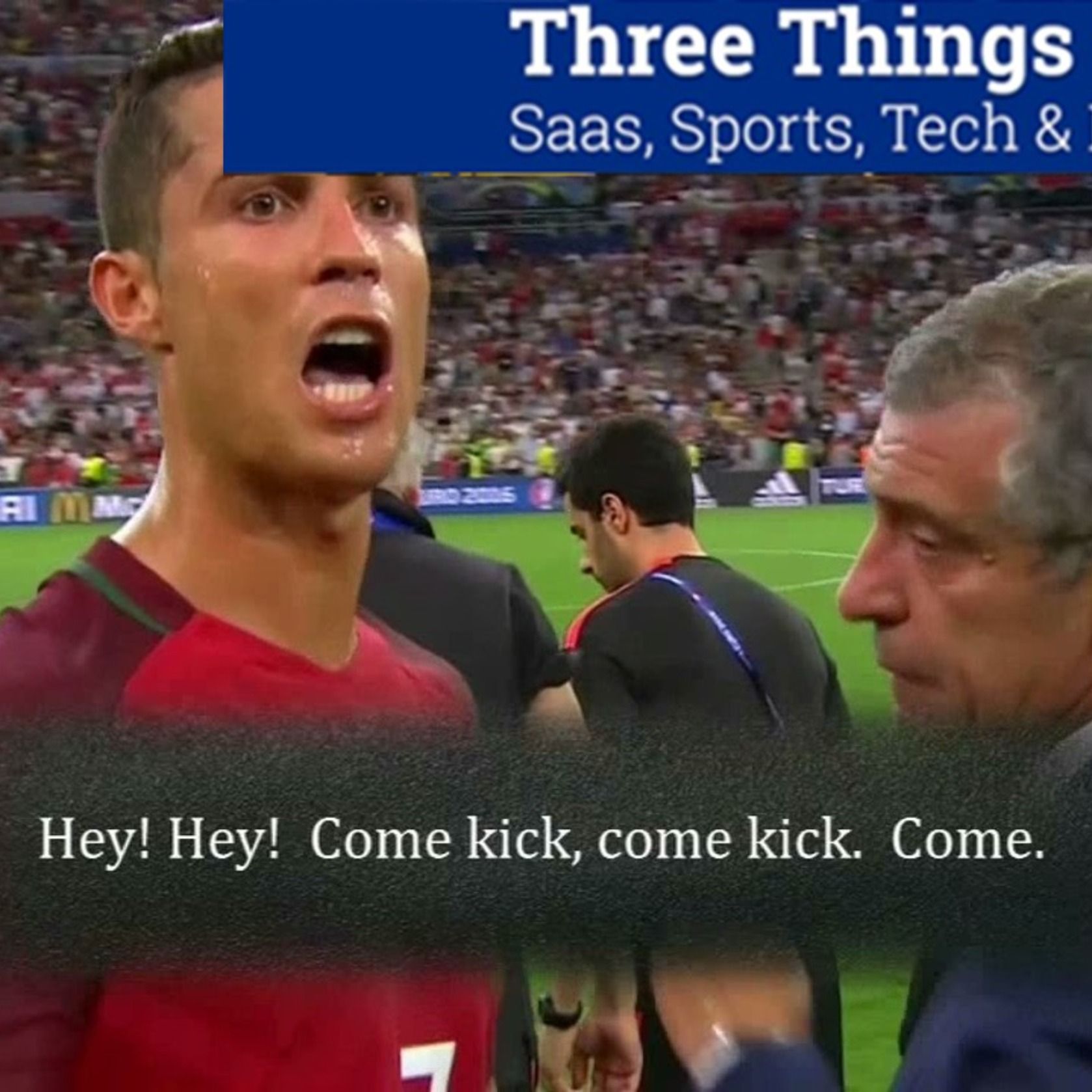
Three Things I Learned In Saas, Sports, Tech and Live Events 1) It's all fake! And it works. When we were growing, PR companies called us to "pump up our Glassdoor or Yelp reviews." Yet it is cited by all our new hires. Getting onto the NYT Bestseller list costs ~$250k. In a bet with a friend, I pumped views on a past three things by 1000 in ten minutes - for 4 dollars. As Kahneman points out in "Noise" - it doesn't matter. We like what others like, even when totally manipulated 2) If successful, your business will end up on a "build or buy" list. Every step we take from day one, in all departments, impacts the outcome. Work backwards from that day for clues to make it so valuable it ain't worth copying. We get those calls, and threats, almost weekly now. 3) After years on the bench, I finally made it into a big match in May 1997. I had to go all in. Shouting. Demanding the ball. Taking chances. I hadn't in a big match, ever, but this was my chance. I was uncomfortable but playing well. Out of timeout, an a-hole teammate commented to our all-world player behind my back chuckling "who is this guy." I froze in self doubt. Until he answered "I don’t care if he plays like this. I like him." I heard it. Validation. I didn't sit again. If you're a star, one sentence can change a life. What a terrific gift. I saw this story repeated on a much bigger stage in 2016 when Portugal megastar Cristiano Ronaldo encouraged a very nervous Joao Moutinho to participate in the penalty shootout. Fantastic theater and a glimpse at a winner's mindset out in the open.

S2 Ep 30Three Things: Anxiety, Panic Attacks and Your Business
Three Things I Learned In Saas, Sports, Tech and Live Events Starting a growth business is high pressure. You or someone on your team will be hit with life changing anxiety the way I was in 08. It feasts on high performers using their drive against them. Six things I learned through recovery and how it can help your business. 1. Get the right help. I got the wrong help. 3x. The wrong people lean on drugs first, quick fixes and unproven theories. They don't work. Find an expert in ACT and trust nobody offering a quick fix 2. Stop thinking we're unique or different. We are but not nearly as much as we think. Recovery and a normal life is very doable, no matter how far away they can seem. 3. Be patient. It takes time to understand and move forward. 4. Drugs are a last and final resort. The vast majority of us can recover successfully without them. They were pressed on my by everyone first thing. It wasn't till I chucked them that i got a lot better. 5. Know it isn't permanent. The hardest part, for me, was finding stories of those whose lives panic and anxiety didn't change. We exist. 6. Talk about it openly. Life altering anxiety is so much more common than most think. I can't count how many staff, peers and friends have come to me feeling defeated by it. And it's often the high performers. If you don't have any experience with it personally but you are a leader, learn about it. It will help your business and save you money. During my incessant drive to find a "cure," a common mistake by many, I read just about every book out there. Seriously, I read like 50 books on anxiety and panic attacks. The top three I would recommend: 1. The Panic Attacks Workbook by Dave Carbonell. This book changed my life more than anything short of the Bible. He has a lot of content on his website www.anxietycoach.com 2. The Happiness Trap by Russ Harris. His videos, found here, are simple and do a terrific job of helping explain why people are wired the way they are 3. Emotional Agility by Susan David, PhD

S2 Ep 29Three Things: How Playing To Not Lose Cost Us Money
Three Things I Learned In Saas, Sports, Tech & Live Events Playing not to lose is one of the most common mistakes in starting a business (and, recently, in Euro 2020). Three ways playing to not lose crushes our business (and career) from our own mistakes 1. Hiring. We take the safe hires. The candidates from the big names who'd "done it before" over the most talented bc they're the most impressive to banks and investors. 2. Customers. When playing not to lose, we let customers dictate terms where we all lose. Churn is expensive. Customers failing to achieve goals with our products is worse than losing the sale. "We fix $5 haircuts." 3. Careers. We give up too much upside to guarantee unneeded downside protection. Nobody gets rich on salary, but it's the most over-negotiated point. It costs us money and happens way too often. If not betting on oneself, why should anyone else?
S2 Ep 28The Three Most Common Mistakes New Entrepreneurs Make
Three Things I Learned In Saas, Sports, Tech & Live Events Mentor edition We've seen hundreds of funded companies in the past decade. Here are the three most common mistakes start-up entrepreneurs make: 1) Being overly defensive. It's our baby. I get it. I was the same way. But being defensive will cost you money. Mentors don't bother giving advice to know-it-alls and the overly defensive. They just placate you and move on. 2) Advice from the wrong people. In the past decade, being an angel investor or mentor has gotten very sexy. So everyone wants to do it, actual tangible experience be damned! An easy way to pick the flame outs is to see who they're taking advice from and who they're throwing options at. 3) They partner with their friends. I did it too. It's nice and can work. But do you know what works better? Partnering with the most qualified person at that discipline. It was the #1 piece of feedback we got in our seed raise, on which we had a number of strong offers. They were all right. We were wrong.
S2 Ep 27Three Things: The Headcount Trap - Get you a Hype Man - Nobody is their own boss
Three Things I Learned In Saas, Sports, Tech & Live Events 1) Headcount comes last. When things start to go well, your team will have a new kind of fear - "how do we keep up?" Often, the first reaction is headcount. And that's okay. Just be careful. Headcount is the most expensive, most permanent, and often least efficient answer. 2) Get you a hype man! A good friend went through a job change at the worst possible time- during a live events pandemic shut down. Like all of us, as the time piled up, they started to doubt. We spoke a few times as they were considering jobs which, imo, were way below their talent. Got a call last week about their new gig - which is the right gig. We all need ambassadors of Quan, especially when it seems dark. 3) We're a number too! The other day a close friend/vendor stated they wished they had the certainty we have as a founder/CEO. Had to remind them, as I do the team often, everyone has superiors. Entrepreneurs, once they raise capital or rely on a bank, are easily ousted and often have many who can enact the process. Get used to the lack of certainty- it's the only certainty in life.
S2 Ep 26Three Things: The first place Giants secret - Nick Saban on building teams - Accountability as fuel
Three Things I Learned In Saas, Sports Tech and Live Events: 1) The SF Giants are in first place thanks to cast of pitchers having career years. How? How can we do this in our business? Get everyone doing what they're best at and clear off the rest of their plate. Very similar to what Jobs did when he returned to Apple with the iMac. Find what we're best at - a simple hack 2) "We're not looking for a team full of exceptions" - Kirby Smart in the early days of the Alabama dynasty. The Tide were getting pressure for not recruiting some media darling recruits. That pressure grows in the early days. Exceptions and exceptional are different things. That pressure was very real for us. 3) Nobody likes accountability but everyone likes winning. Can't win without accountability, no matter how many surveys tell us we all, and our staffs, don't want it. When leading a bible study for 10 years, that weekly stake in ground made me do the work when I didn't want to. Next thing you know, you'll have years of three things to share with your loved ones.
S2 Ep 25The Roaring 20's and our savings - How to treat job hunters - What to do when others fool your people
Three Things I Learned In Saas, Sports Tech and Live Events: 1. The dramatic increase in the consumer savings rate - from $2.7T to $4.6T- is leading live events companies into a new "Roaring 20s," at least that's what they're pitching to investors and financiers as seen in the below linked Vivid Seats pipe deck. The plan calls for 2x-3x as many live shows in the coming 18 months which, if bought, would normalize the savings rate. It's a spring for market share we're all about to watch. 2. Live events are rushing back and staffing up quick. It's a stampede. Hiring managers, remember the experience from the other side. When they didn’t call us. When we couldn't get a chance. When we didn't have a way in and tried our best with a cold outreach. Return calls. Return notes. Have the courage to give feedback. Don’t leave people waiting by the phone - good news or bad. Help. If even for self interest - you never know where they end up. 3. "It's easier to fool people than to convince them they've been fooled" - Mark Twain. If around long enough, you'll lose an employee, a prospect, a deal or a partner to dishonesty. It's best to take time working to "unfool" them as nobody likes to admit they've fallen for a deception….at least not right away.
S2 Ep 24The best advice I ever ignored and why it cost us money - Each early hire is the equivalent of 20 people - Building a rolodex's biggest mistak
1. The best advice seems so obvious it is easy to miss. I blew off so much good advice as too simple in the early days. Youthful ignorance which cost us money. It isn't nefarious - I was focused on the trains leaving on time and "grinding." In reality, I thought I was the exception, like we all do. There is so much nuance to the obvious. If we don't pay attention, we may miss it. 2. Early hires matter so much more than I knew. We're in a hurry and we need to staff up to meet demand. Slow down. Treat every early teammate like twenty teammates - because that is a conservative number of how many a good hire will impact as you grow. Take your time and never ever settle- especially in the first hires after each round. 3. Keep in touch. A huge regret. Along the way, through all the raises, shows, and conferences, I met a lot of people who I did a poor job of keeping up with. Again, too focused on the here and now. Costly. Our company really could have benefited by me doing a better job of staying in touch with all the panelists and stars I met in the early days.
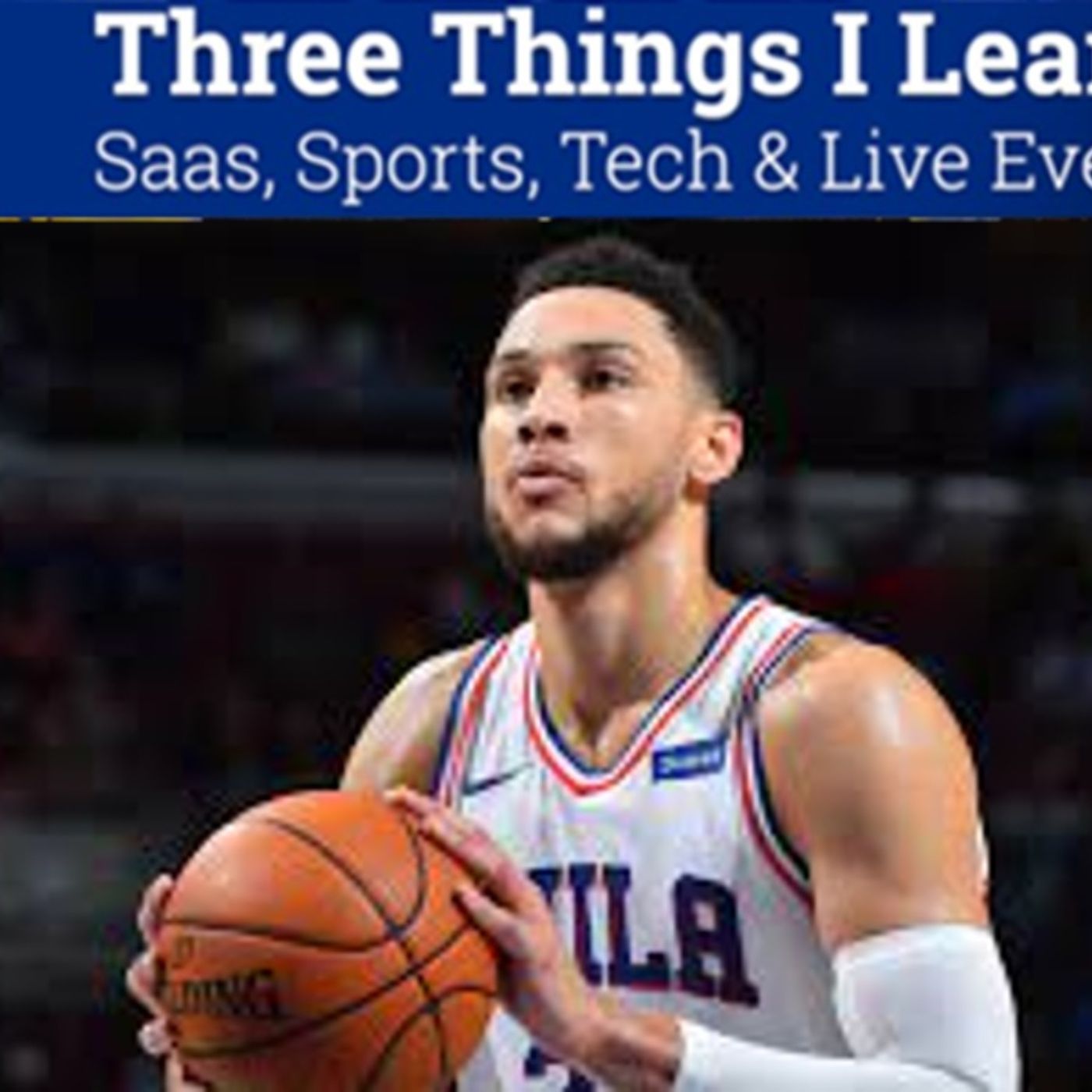
S2 Ep 23Three Things: No Show as a No-No - Paying up for the IOC Olympics - Shoot the ball grannie Ben Simmons
Three Things I Learned in Saas, Sports Tech and Live Events 1. No showing, or cancelling last minute, is the biggest networking mistake anyone can make. When I was 22 I no-showed an interview with the Clippers.* I paid for it years later. A decade ago a team exec no showed me. He met with our team last month and asked why we don't work with his firm. It's common, I get stood up often. It ain't worth it though. 2. Endeavor went big on their bid for Olympics hospitality. So did Facebook when buying Instagram, Google buying YouTube and Apple buying Next. Even Ballmer buying the Clippers for $2b doesn't seem so crazy already. Markets are efficient but they often miss transcendent value. Know your worth. 3. Pride loses. Ben Simmons can't shoot a free-throw. It changes the game. Shaq couldn't either- but he was over 80% shooting grannie style, as Gladwell points out here. My Senior year in HS club a new coach arrived wanting to introduce the back slide to our offense. Only girls hit slides. It was worse than grannies. Buried on the bench, I was the only MB to swallow my pride and try it. Changed the game, our offense, and my prospects completely. We won silver**. Pride is in the win column. Have the courage to change the game.
S2 Ep 22Five ways we screwed up our SDR program for over a decade
Three Things I Learned In Saas, Sports, Tech & Live Events How we screwed up our SDR program for over a decade (and counting) In today's blog post and video commentary we share, in depth, the mistakes we've made in building an SDR program The five ways - with much more in the blog and vlog: 1. Make room for everyone to succeed - or don't hire them 2. Stop the fight 3. No first impressions 4. Zero turnover from 120 to 730 5. Kill the manager Hope ya'll enjoy learning from our mistakes….
S2 Ep 21How to be the #1 SDR
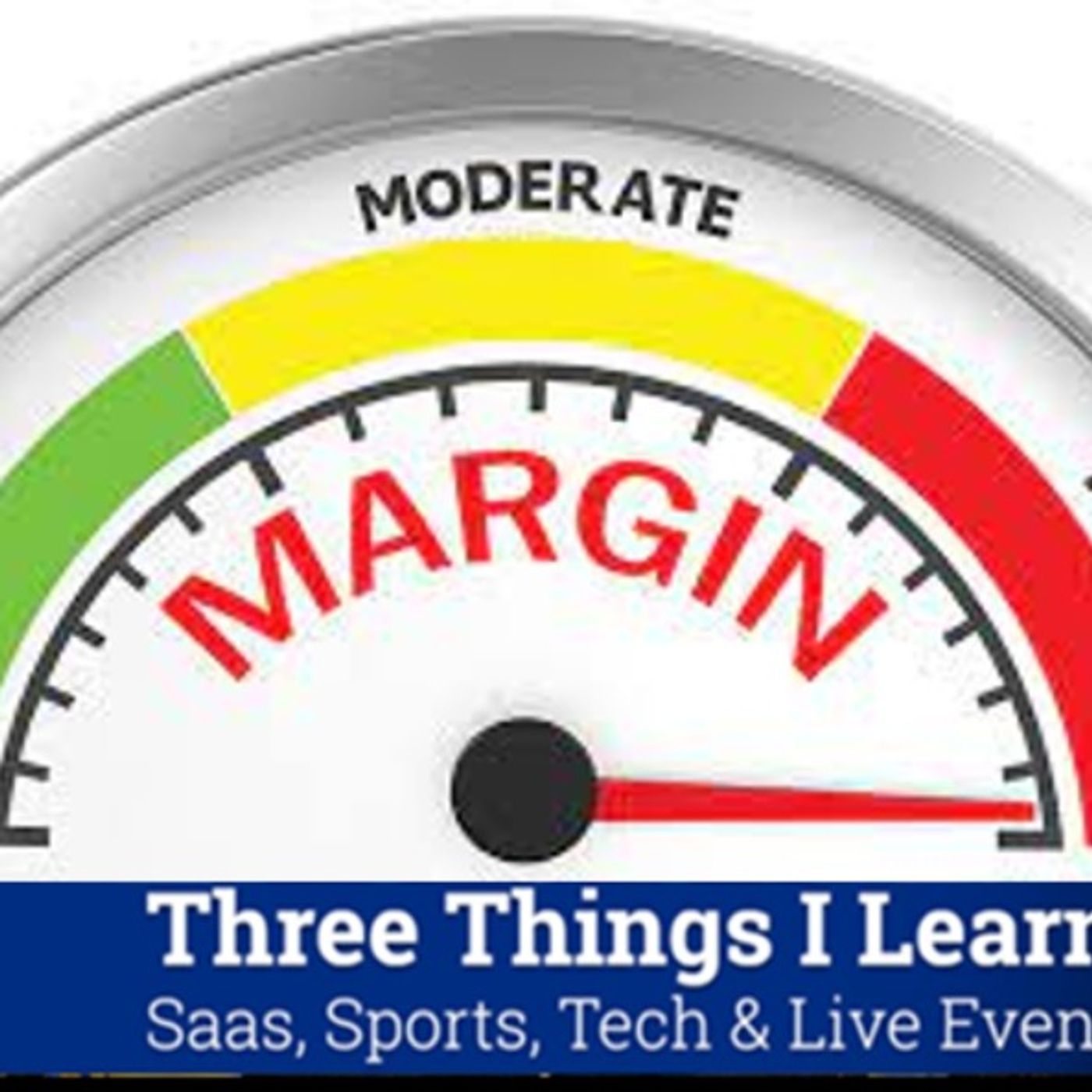
S2 Ep 20Three Things: Why price is a trade secret - Stay in your lane - Never go into tough convos without a lawyer
Three Things I Learned in Saas, Sports Tech & Live Events 1. Margin is directly tied to value and pricing is a trade secret. Learfield IMG College made news when Sportico released their net profit on a number of deals. Learfield fought the release of the info citing trade secrets. They're right. The ability to provide value to partners and run a growing business is as difficult as it sounds. Protect your financials to protect your customers. 2. Stay in your lane. Chasing the shiny thing, when outside your core competency, slowly kills companies. An example: After years of misplaced application of the blockchain to live events*, it has found a home. Specific collectibles which have a high counterfeit rate benefit greatly from blockchain. There's $ to be made in the NFT 1.0 world, just don't take your eye off the ball to chase the gold rush. 3. Never have any important interactions without a lawyer. Ever. Finished Cialdini's follow-up to his best seller Influence (Pre-Suasion). The amount of false admissions of guilt is stunning. Never enter any combative situation without a lawyer in your business. Terminations, high stakes negotiations with customers/partners, or M&A talks. You think Learfield's expensive? Try these convos without counsel....

S2 Ep 19Three Things: Do you want to be rich or king? - Terminating is always our fault - Filling the leadership void
1. "Do you want to be rich or do you want to be king"- was reminded of this great line from "The Founder's Dilemma." Scale requires help. Great help. Great help will want to share in the bounty. Keeping it too tight to the vest has the potential to really hurt growth. Giving out too much?....well that hurts too- trust me, I learned that one the hard way early. 2. Nearly everyone wants to lead- but they don’t want to do what's needed to BE a great leader. Expand your leadership reach. Read. Volunteer to coach. Get exposure to leaders outside of our direct boss, teacher, coach, parents. And make absolutely certain our leaders are doing the same. Otherwise, bad habits compound and spread like a virus. If we're not looking outside our experience, we'll never be great leaders. 3. "When should we let go of someone we have questions about? A) The moment the question is first asked." The biggest problem entrepreneurs have is terminating people. It's hard. It sucks. And it is always our fault. However, the most common feedback after making the hard choice: "We should have made the move sooner." The only thing worse than making a bad hiring decision (and by bad, we mean bad for everyone), is letting it continue. Nobody benefits.
S2 Ep 18Three Things: Four times NOT to reach out to execs to sell or network
Getting in front of executives is very hard. Four times not to try: 1. After a big announcement or achievement - When a professional buys or sells a company, announces a big win or raises money, it can be the busiest time for them. Add to the work the avalanche of congratulations, job requests, long lost friends and sales pitches, and our message is easily lost. 2. After an appearance. People do press or conferences for a few reasons: To promote their business/selves, to help a cause they care about or as a favor to a friend. Some conferences do a terrific job of allowing to 'meet the speaker' but even then, it isn't the time for a pitch 3. Upon a career change. When an exec takes a new job, think about the amount of work they have in front of them. Every other sales person has the same triggers, read the same trades, and call them at the same time. We get lost. 4. After a partnership announcement with a competitor. A company goes through a process choosing a vendor/partner, gets approval for that partner, and is now on the hook for their success. Think about the optics being displayed here. Are we rooting for them to fail? B/c that's what it sounds like

S2 Ep 17The First RFP: When it got really real...
Three Things I Learned in Saas, Sports Tech & Live Events The first RFP win...when it got really real. In 2008, when business was tough, we got our first RFP....and won! It changed our lives. Here's what we learned in winning our first SaaS RFP 1. Authenticity is your only differentiator. I told the truth. That simple. These other companies are bigger, more powerful and your team will find them the safe choice. But you're all I've got. Here's my cell phone. Call it anytime. Still goes today for all our customers. And she does still call our mobile phones, which is welcomed with a smile. 2. Pick the right customers to take a chance on. In enterprise SaaS, everything you do at the beginning matters tenfold. This customer had the right vision. They had similar ideas and we honestly aligned. The wrong first customer will destroy your roadmap and cost you millions. First customers set the future. Pick wisely. 3. Welcome the hate. Once you win, the incumbents will ratchet up their vitriol. Some won't, but most will. They will denounce you. Recruit your people. Threaten you with lawsuits. Try to undercut every customer. This is good. You've got their attention. The more they focus on you, the less they're focusing on the customer.
S2 Ep 16Three Things: Why we take sides - How to exaggerate when doing deals - Great leaders repeat themselves
Three Things I Learned in Saas, Sports Tech & Live Events 1. Take some time…in the middle. The human brain can only process so much. When we're overloaded, as we all are now, we default to binary decision making. The either/or logical fallacy. It leads to Red/Blue, Vaccine/Never, With/Against us thinking. We are all guilty of it. Had a friend compliment another for "being able to change their mind." What a sad place we've found ourselves in. 2. Getting fast and loose with ARR doesn't fool anyone. It's usually just a soft bullet point to match a narrative. We all feel pressure to exaggerate, usually b/c others are doing so. Just know diligence finds everything and being dishonest loses credibility which can't be earned back 3. It takes 8 to 16 touches to get a person's attention. The same goes when leading a team. The most common mistake new leaders make is to assume everyone is hanging on their every word. They're not. Saying to do something 3 to 5 times isn't enough. Repeating isn't disrespectful, it's great leadership done right.
S2 Ep 15Three Things: The new force majeure - Hospitality at the Olympics - Performance based sponsorships
Companies have found a way to get a form of force majure into their contracts - and it is genius. Knowing a pandemic clause is too ambiguous, they are adding tiers of spend based on the allowed attendance. Fall below 25% allowed in the event, pay nothing. Over 50%? Pay the rate. We believe it will become the norm, as it already is in most tech contracts Have heard from multiple sources Endeavor is the winner of the Paris '24, Milan '26, LA '28 hospitality provider shoot-out, which included CAA, Comcast, Legends and Quint. With Tokyo fan-less and Beijing a recent history repeat (2008) mired in political controversy, big upfronts needed for three marquee games in destination citiesPerformance based sponsorship contracts are the rage but be very careful. They go both ways. One of the biggest benefits of live events deals is the uncapped upside. Buy into a crummy team, they turn it around, and the loyal buyer reaps rewards for years. One of my biggest mistakes: in 2013 we sponsored three teams. The fourth and last one out: the Golden State Warriors. Yes, the team who went on to win the title the next year and play in five straight finals. It was a three year deal at only $70k annually. That deal would be $400k today. Swing and a miss.
S2 Ep 14Three Things: Be careful what we answer to - Why success is obvious while failure is unique - No rental cars on Maui? What does that mean?
1. It ain't what they call you, it's what you answer to. WC Fields. We all have labels. I was a jock but I answered to good student - which we addressed last week. At AEG they called us ticket salesman. We answered to entrepreneurial sales professional. At Stubhub they called us brokers. We answered to tech disruptors. At TicketManager they've called us niche. We answer to market creators. I get called a lot of names. I answer to one. What we answer to defines the chances we take, what we think we can do, and where we end up. It sounds easier than it is. There are difficult moments where we have almost no leverage and we have to stand up for ourselves- I'll share one in the future from my experience at the Dodgers and again at AEG - but it is more important than we think. 2. "All happy families resemble one another but each unhappy family fails in its own way." Business advice seems so obvious when offered by the successful. But when put together as "ands" not "ors", it is anything but. Check all the boxes or..... 3. There are no rental cars anywhere on Maui this week. Nor dinner reservations. Two months ago, we paid $16/day for a car and the island was empty. Walk-in anywhere even only at 30% capacity. Package sales are through the roof for future events and it isn't corporate - it's consumers paying super premiums for 2's and 4s. Everything our customers post is selling for over face- even the crappy games and parking passes. The faucet is turning on and gaining speed. If it continues - look out.
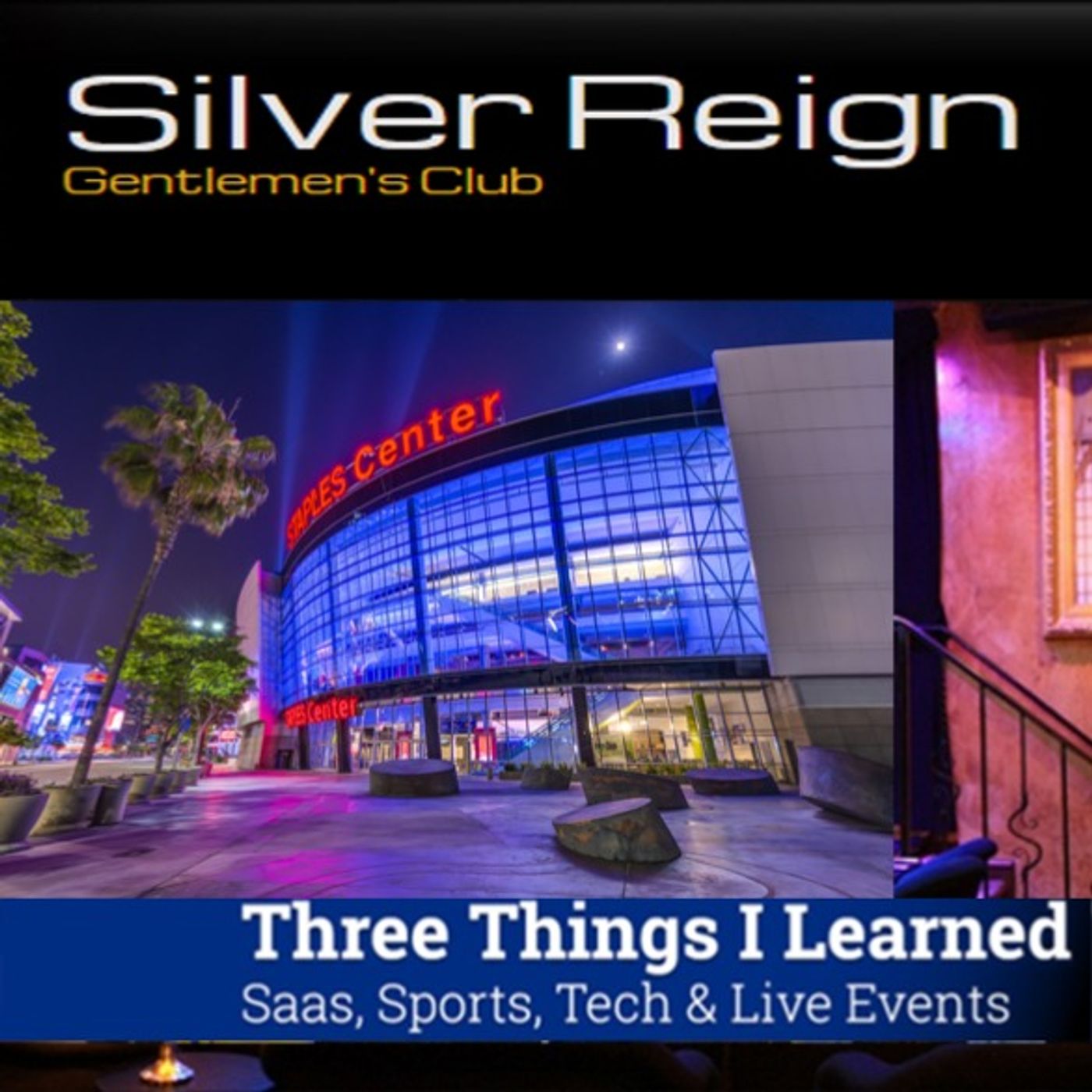
S2 Ep 13Three Things: What I learned from selling a boxing sponsorship to a gentleman's club
Three Things I Learned in Saas, Sports Tech & Live Events What I learned selling a boxing sponsorship to a gentleman's club* In 2004, STAPLES Center hosted an HBO fight and we were contracted to sell sponsorship packages. I was assigned the inbound phone lines.. A call came in from Stars Planet, Inc which owned clubs in DTLA. David, the caller, asked what we would sell to his business After consulting with my boss, we sent over a list of what was available. Traditional packages including signage, tickets, and sought after inventory. We were wrong in all of our assumptions. David called a few days later and ordered the following assets:* 10 tickets ringside on the TV side * 6 signage placements in the concourse * 10 bus parking passes * 3 signage placements outside the building It was all undesirable inventory we didn't even know how to price. Eventually, the whole sponsorship was ~$110k, with the tickets being 90% of the cost. What did he do?* He sent his talent to the fight draped in gear promoting his club near each sign* The signage was all arrows pointing to his parking spots where... * He had 10 shuttle busses taking guests to his club after the fight Here are the three things I learned from the time I sold a sponsorship to a strip club: David called me on Monday to inform me it was the biggest night they'd had in ten years - and to invite me to the club "for a VIP experience you'll never forget" (I didn't go). Here are the three things I learned from the time I sold a sponsorship to a strip club: The customer knows their business far better than we ever will. We have to ask what they want before we build packages. Everything we suggested was wrong for his use case. What got the sale for us was that we gave him all the information and he knew what he wanted. If this were a competitive situation, we would have lost. (I have no doubt he was being coy for a reason given the circumstances) Pricing is very difficult and too often overlooked. To most, including the 12 core sponsors and the standard categories we sold to, what Stars Planet bought wasn't worth much. For his use case, they were the best assets and we underpriced them. We've learned that lesson over and over at TicketManager as well. Experience is underrated - and getting more so. He knew his customers and what would work. Analytics, elimination of bias and innovation are necessary. But nearly all of the famous innovators stories had someone with extensive experience involved to help Apple, Google, Microsoft, Facebook grow in their markets. Whether investors or mentors, they are very public, just not as public as the founders. * The three things intent is to share stories of what we've learned along the way. It is not to judge others, preach our beliefs and ethics, or discuss those decisions in the moment. If put in the situation today, I would ask off the deal and wouldn't put our team in that position. But that was a decision made from much higher up nearly 20 years ago. I'm not one to promote gentleman's clubs and am a financial supporter of the International Justice Mission. Please check them out and give if you can. It is a wonderful group changing lives every day. Becoming a Freedom Partner is only $24 a month.
S2 Ep 12We are not our jobs and how identity can wreck havoc on founders - Respect the customer's process in sales - Never root for a candidate
1. Our job is not our identity. I played volleyball at a very high level growing up- for Nike, then USC and the U20 US National team. So did my sisters. The whole time, my dad would tell us "You are not a volleyball player. That is not your identity, it is something you do." His wisdom was lost on me but I listened. And it made my transition so much smoother than my teammates. I fell into that trap again the early years of TicketManager - thinking failure would define me b/c TicketManager was my identity. Avoid my mistake. And drop "what do you do" as an early question =) 2. The generic inbox is not a waste of time. For a salesperson, hearing "please email '[email protected]' or the 'supplier portal' is a blow off…most of the time. Two of our earliest customers, both Fortune 50 companies, came from the generic inbox. One of which I had forgotten I filled out two years earlier. They signed on to become our biggest customer at the time. 3. Many great teammates genuinely care about others. It can expose a dangerous hiring flaw: They root for candidates. They're optimistic and want others to be successful. Unfortunately, great people can't save everyone. They have to focus on what drives the best results. A simple rule: if you find yourself rooting for a candidate, time to take a step back and ask: am I confident with the ball in their hands?

S2 Ep 11What would you do? The time we were broke and got a miracle $350k check in the mail....by mistake
Would You Keep The Money? In early 2009, we were bootstrapping and close to the edge. We had ~$60k in the business. Total Then one day, a customer (a Fortune 100 company) sent us a check, by mistake, for $356k. It was double paying the business done in 2008. Pure profit. A lifesaver. I called the customer to alert them we were sending the check back. They said not to. Too much of an accounting issue. So we suggested keeping on file as a pre-payment. Again, they said not to. It would trigger a major audit which would cost the company far more than the check itself. They said to keep the money. They liked us. They knew we were small. And they didn't want to go through the hassle of getting the check returned. It was a mistake, but one we could benefit from. They were insistent. Here are the three things I learned from the time we got a miracle check in the mail - and what we did with the money. 1. How you handle every situation at the beginning of your company/career will shape your decisions in the future. $350k was a ton of money for a company of six people, three of which were not taking any paycheck. The numbers get bigger, but the stakes, and pressures, not get any higher. 2. Nothing is ever black and white. That's too easy. Satan dances in the gray area. This was the first time, but definitely not the last we had a very murky situation. 3. There are not kudos for doing the right thing. This ain't the movies. Usually those who do the right thing are mocked, fired or left behind. The game is a lot harder when you play it with the 'handicap' of telling the truth and having integrity. And it's worth it. We returned the check. I've proposed this scenario to many entrepreneur meetings, fireside chats and even to an ethics class at Pepperdine over the years. Although it seems like many would return the check when first hearing the story, the majority usually vote to keep it. Remember, he was insistent and sending it back, his company dealt in billions so this was a rounding error, and doing so could cost us his business - he was our second largest customer at the time. There were three of us running the company at the time and the vote was 2 to 1. It came down to a simple thought: He was being entrusted with the public shareholder's money and we didn't feel comfortable taking it.
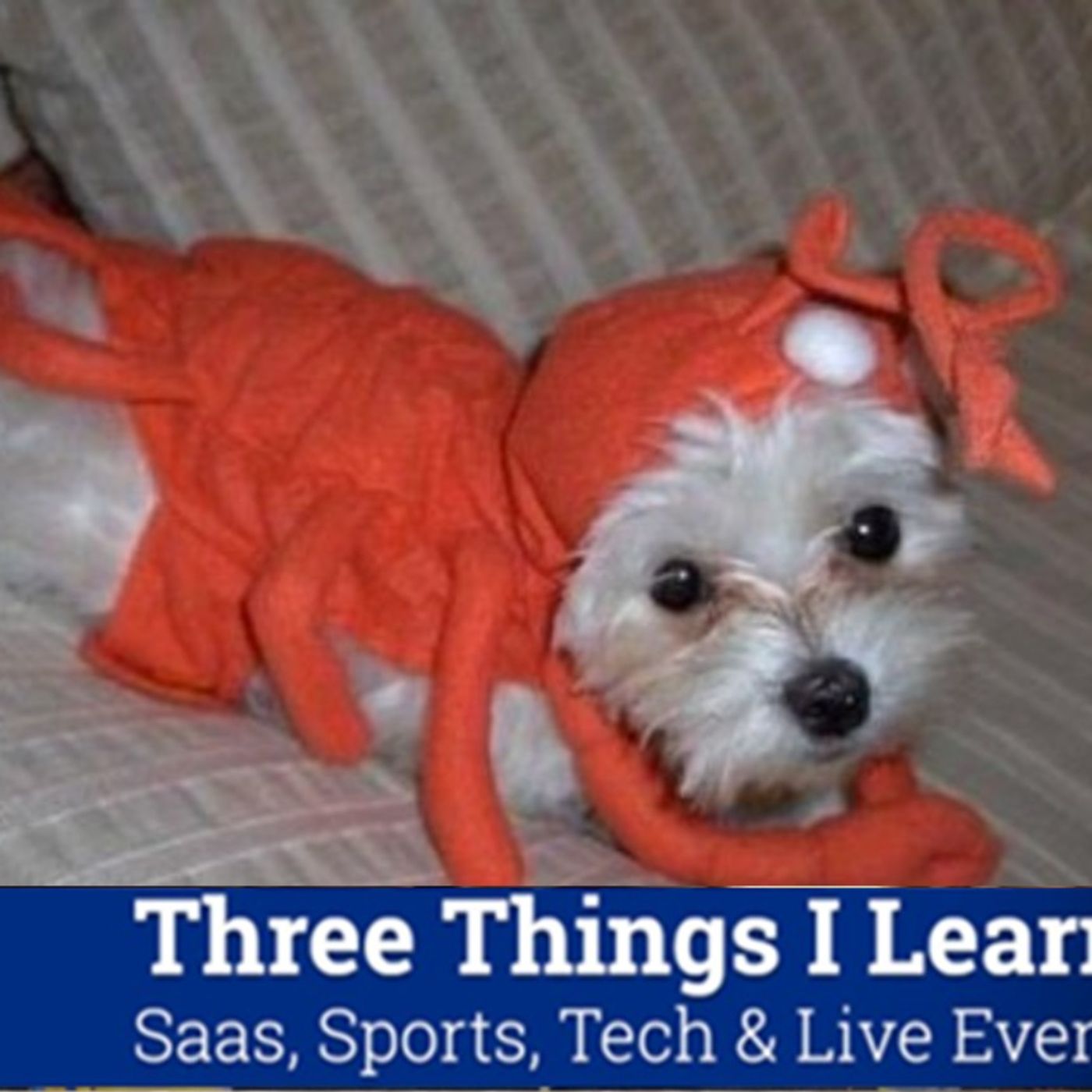
S2 Ep 10What I learned about business in 15 years with my best friend - our puppy, Hula
Tough week as we said goodbye to my best friend of 15 years, our puppy Hula. Who was with us for the entire thirteen year plus run of our business. 1. Ignore the odds. Hula was born a runt who became a giant. She had a heart murmur, life threatening allergies, and her knees went bad when she was 3. Didn't slow her at all. All businesses are told what our limitations are. Forget them. Heart is all that matters - and she had enough for us all. 2. Just be there. In our earliest years, I struggled terribly with panic and anxiety which made it so I couldn't sleep. Every night, every single one, Hula would sit by my head and wait for me to fall, and stay, asleep. No advice, no answers- just making it clear I am loved and not alone. It changed (saved) my life and how we all interact together. It wasn't the experts I sought out who helped me, it was Her. 3. You can't do it alone. TicketManager has been a success story for so many. People have met here and gotten married. Others have made lifelong friends. And still others have made a lot of money. None of it happens without Her. We don’t get through '08-'10. She carried more weight than anyone will know. Your team isn't just your team - it is the loved ones around them who help them carry their cross. I will miss You terribly 'My Dog My Love.' And am so thankful for our time together
S2 Ep 9Piss soaked fight in the men's room week! What happens when the fight comes to you in business
1) Don’t pick fights. Better yet, avoid them at all costs. You never know what the other side has in them and the winner never wins without a cost. In business, too many big companies underestimate start-ups and smaller firms. Some of them have serious fight in them and won't take to bullying. 2) Better to be a Warrior in a garden than a gardener in a war. With #1 in mind, know companies will pick fights with you. Big firms will pick on you, talk down about you, and try to flex their size against you. Building your defense is no different than real life: prepare. Stress test your contracts, partnerships and culture. And know that being kind and being a killer when needed for your team are not mutually exclusive. 3) Have an impartial system for your internal sales fights. People fight over customers, commissions, queue time et al. We suggest a third party council which can be called on anytime there is an unclear disagreement. Giving your team a fair voice goes further than you think.
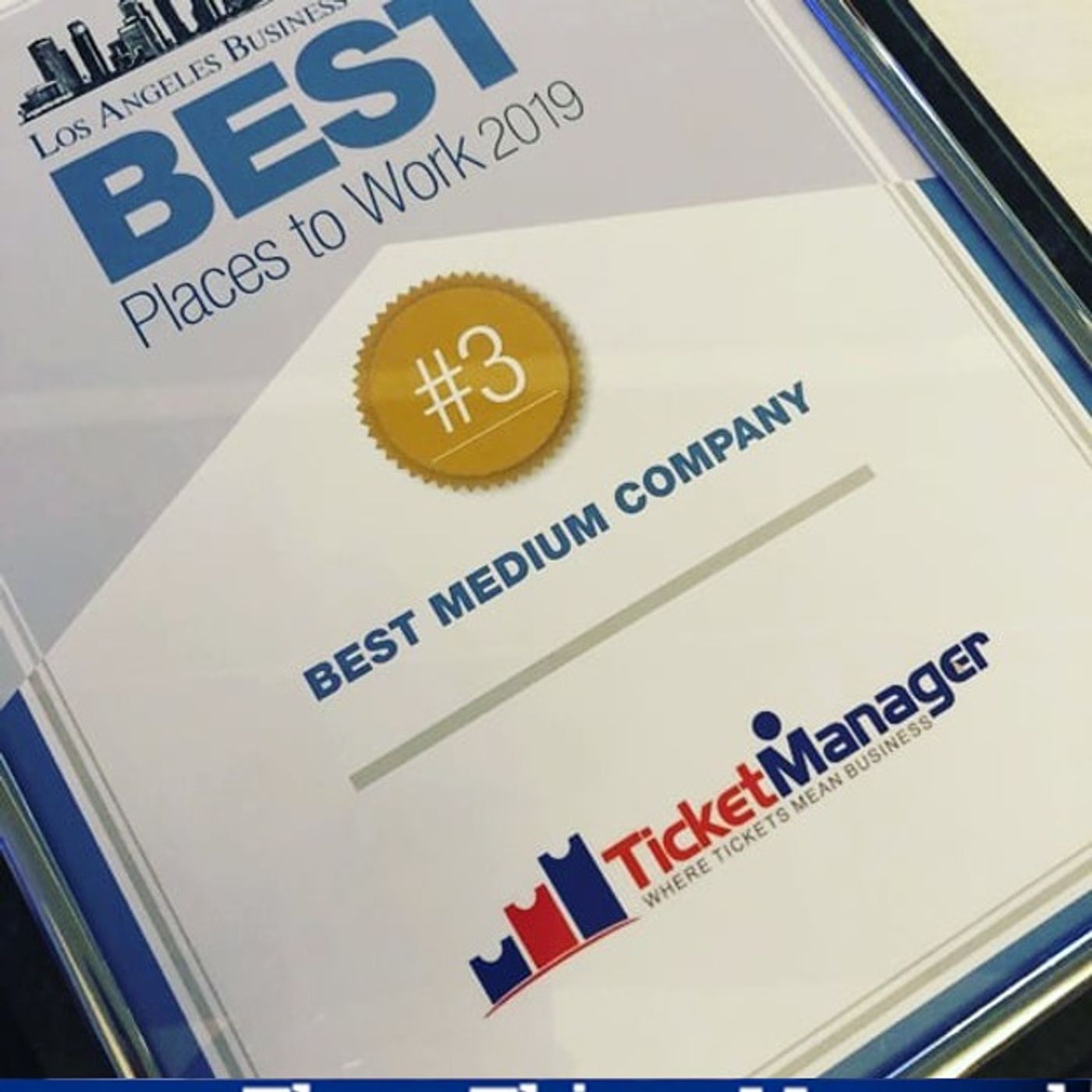
S2 Ep 8Mistakes we made while building what became an award winning culture
Here are four things we learned in building a team who wins culture awards over and over* 1. We learned to stop focusing on how people *should* think and started understanding how they *do* think. Instead of trying to find or create perfect people, we tried to create the best environment for imperfect people to succeed. 2. We learned "If you want to be loved, you have to give up trying to being liked" and it changed our leadership style. We stopped trying to be liked by many and started focusing on being loved by our community - for all of our faults and positives alike. It sounds nice, but it ain't for the faint of heart. 3. We stopped caring if our team 'liked' each other - but demanded they respect one another. Friendships are nice but they are not necessary for success. There are people at our company who I'm not friends with - and I'm quite certain they don't 'like' me - but we respect one another and I trust them. We made it known success is quitting and working backwards from there. How are we helping them get to the place where they will quit successfully for us all and measure ourselves against that goal every single week.
S2 Ep 7What our feeds are doing to our ability to think and act - The laws of power state winners win while losers lose - When analytics goes wrong
Three Things I Learned In SaaS, Sports, Tech and Live Events 1) The algorithm isn't helping young entrepreneurs. There are many influencers offering soundbites tailored to get attention or get you to like them. They are promoted in all our timelines - not just yours - creating a noise, bias and most dangerously- groupthink - while burying useful media. We've found the most applicable advice is a bit controversial and harder to find. Another poll on which WFH model we like is empty carbs. 2) When a measure becomes a target, it ceases to be a good measure. It took us years to engrain this foundation culturally as people today need gamification and instant successes - so they chase measures and not outcomes - and use those measures as justification for lack of performance. Bad companies chase KPI's of the day. Salespeople chase activity numbers. Marketers - vanity metrics. My to do list killed me until it became a progress list. 3) Winners Win and Losers lose. In The 48 Laws of Power, #10 is to "avoid the unhappy and the unlucky." Or, as he says more clearly - losers lose for reasons we sometimes don’t see. Avoid them. I've found the converse to be true as well, both in experience and in study. When you find winners, get near them. Overpay them. Know there's more than we're seeing as to why they keep winning. See: Tom Brady
S2 Ep 6People Vote With Their Feet - Brands Have Incredible Power in Live - Tell Your Loved Ones You Love Their Scars
Three Things I Learned In SaaS, Sports, Tech and Live Events 1. People vote with their feet. When evaluating a company, supervisor, customer or partner, forget the awards, the posts, the review sites and the trade mag features. Most awards are bought. Most features are in exchange for advertising/favors (we get offered them all the time). Review sites are fake/gamed. Pay attention to the team. Are they moving vertically when leaving? Are they staying? If not, you may have your answer. 2. Brands are partners, not customers, and the numbers from the NFL enforce it. Too often, live events 'sell to' brands as if they're consumers. They're not. They're using the live event to sell their own products - that's what sponsorship really is - and we just got a ten month stress test on live sports as a marketing tool. Just wait until you see the #'s on engagement and growth these brands get from being there. 3. Tell them you love their scars. We have people in our lives, personally and professionally, who carry their mistakes and insecurities like weights. They try to hide them. Make sure to let them know those scars aren't liabilities, they're usually why we appreciate them most. I knew I was with the one when she told me what she loved most about me was something I thought a blemish.
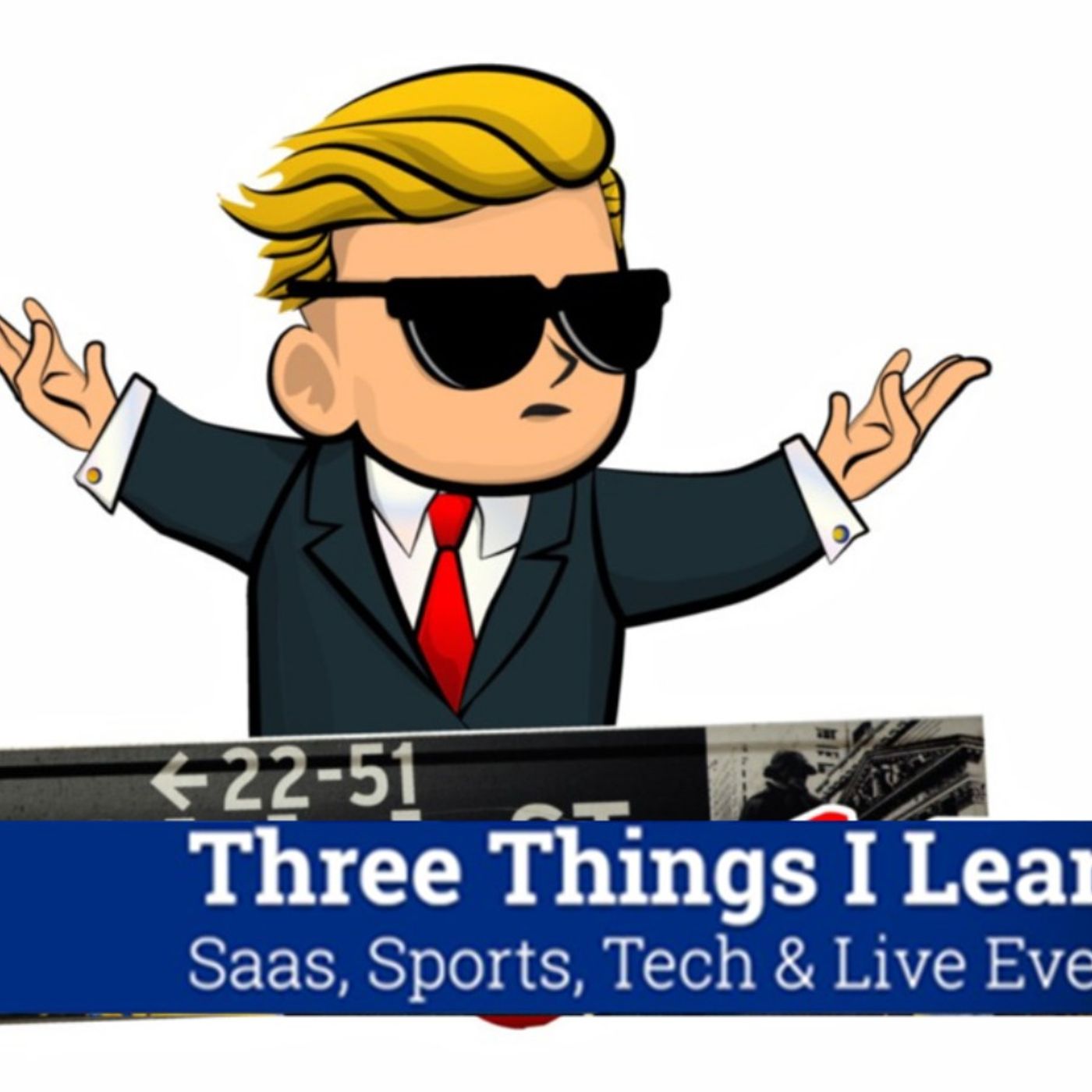
S2 Ep 5Three Things: GameStop, Wall St Bets & Super Bowl Tickets- We've Seen This Short Game Before...So What Next?
Chaos broke out this week when a group of retail investors took to a reddit message board to play a massive short squeeze on Wall St hedge funds using options on highly shorted companies GameStop, AMC, Blackberry, and others. Everyone chimed in from Elizabeth Warren to Elon Musk. We've seen this kind of short action before in sports business at the 2015 Super Bowl. A summary of what happened with a number of links can be found here: That squeeze got so out of control sellers who had sold Super Bowl tickets for $5k each were breaking their orders, paying the marketplaces the money back, then reselling to the speculators who had to cover their losses for $15k+. It left the original buyers stranded in Arizona without tickets and a flimsy "money back guarantee." The marketplaces found themselves where Robinhood is today - having to decide between ethics, survival and what was best for their customers. The three things we learned from the infamous speculator squeeze of 2015 and how it forecasts the future for Robinhood, Wall St Bets and Gamestop. Much, much more in the video this week with many citations. The consumer forgets quickly. There are a lot of pundits and competitors out there piling on Robinhood saying they cannot recover trust. Maybe. Maybe not. Robinhood sold out their customers so they could survive. It is that simple. The stakes are much higher than back then, but SeatGeek, TicketNetwork and Vivid Seats did the same- choosing to refund buyers instead of honor their obligations. StubHub and Ticketmaster famously took the losses. Six years later, nobody remembers and the StubHub CEO who did the right thing was out just 24 months later. http://www.espn.com/nfl/playoffs/2014/story/_/id/12255886/hundreds-super-bowl-tickets-fall-through"Money distorts the truth like a fat hippo in a thong." Robinhood is doing everything they can not to tell the real truth - they couldn't cover the upcoming action and had a liquidity problem. They had little choice. They either went down with the ship or lived to fight another day. Outlier events tank companies like the 2010 World Cup tanked Razor Gator. They did what they had to do. Just know that's what many people do in hard times and plan accordingly. https://www.cnbc.com/id/38428197" Behold I send you out as sheep amidst the wolves." In every market there are many who believe the ends justify the means. Their word means nothing. " We all like to believe we'd run into the burning building, but until we feel that heat, we can never know" - Tenet. Every market has a majority who do what they do for money and power at all costs - morality and ethics be damned. Know they're out there. Hedge Funds. Bad guy brokers. Don’t budge. "Better is a little righteousness, than vast revenues without justice." - Proverbs 16:8. The sheep will win in the end. Stick together.
S2 Ep 4The arms race heats up in sports property consulting - Private equity impact on sports and Super Bowl tickets - Don't sell out. Ever.
We discuss the upcoming arms race in sports property consulting How private equity money has changed the Super Bowl Ticket market in only 5 years and why we won't sell out - and those who suggest as much are worth of ignoring
S2 Ep 3Why everything a leader says is scrutinized - Why teams take the credit (and is a good thing) - and how flossing applies to your remote work strategy
Three Things I Learned In SaaS, Sports, Tech and Live Events 1) "The only thing I could ever give him credit for is hiring me." Many give little credit to those who enabled their success. I was the same way It's not personal. Just know that's likely how your team sees it and that's a good thing. (And don't be that person….) 2) Only 30% of the population flosses. "So many come in here and, by the looks of their gums, they just started flossing this week to try and trick us." Flossing is cheap, easy, and has painful consequences if not done. How do you think people view that job they don't love? We tried the "trust your people" for a long time. It works, for a few. What's better for us? Clear and measurable metrics to keep us all moving! 3) Chekhov's gun is a dramatic principle that every element in a story must be necessary. Your business conversations are no different. Have a purpose in all you do. If we don't, we fall into Hemingway's trap. Ernest mocked Chekhov's gun by introducing unnecessary characters into "The Art of the Short Story" then didn't reference them again. It led to unbridled conjecture. The audience will read into everything you say - even if you don't mean them to. Your team…no different.
S2 Ep 210 Years to $10mm ARR - How to negotiate with channel partners - Why internal competition is necessary
Three Things I Learned In SaaS, Sports, Tech and Live Events 1. "10 years to 10m ARR." The social media gurus talk often about the growth rate needed for your saas to be a unicorn. Don't get too roped in by black-and-white approaches to business. We've had a number of successful private equity firms looking for "10 years to 10m in ARR." Many more friends who took that path and eventually became massive success - some unicorns. 2. Don't ever pay for meetings. Pay for outcomes. There so many vendors, channel partners, value-added resellers, consultants and the like out there who will want to "help" you sell. Many of them are compensated by meetings or introductions. It's a trap. Say no and offer much more for outcomes. If they won't agree to the terms your sales team does - run. 3. Internal competition, denounced and disliked by many in the moment, is necessary and must be encouraged. I lamented constantly fighting for the starting job in my prep and college career in the moment. Looking back now, what a blessing it was. That chip on Tom Brady's shoulder? Google Drew Henson's high school recruitment. Competition internally is good for everyone, even when they don't like it in the moment.

S2 Ep 1How to cope with the urge to quit. How to assure we don't miss the next big thing. The best snippet I saw in 2020
Everybody wants to quit sometimes, especially in the very early days or hard days which many experienced for the first time in 2020. And that's normal. If handled poorly, however, it can be terminal to your business. It happens to every leader no matter the position on the org chart at some point - Check out Numbers 11:10 where Moses quits. I get calls from friends at "the top" regularly. It's imperative to find a safe outlet who isn't involved in the business. Many use YPO, Vista, small groups, therapists or friendsBig industry changes happen in bunches. 2021 will bring lots of new ideas, new companies, and ideas as there is such a major societal change. Network with up and coming buisnesses equally with incumbents. It's a critical mistake many made with us. Our incumbent competitors ignored, threatened and mocked us. Many partners did too. We benefited from a similar situation coming out of the '08 meltdown. My favorite for the year: "You're on a rock going 65,000 mph around the sun. Your entire existence is a miracle. Don’t be afraid." - Jon Gordon. So many layers in business and personally. This was the first full year of the three things. I hope some enjoyed it as much as I enjoyed doing it. Happy New Year!

S1 Ep 25How to handle stress and decision making during chaos
How do we handle stress and hard decisions during chaotic events? What helps us center ourselves to make better decisions and stay focused on our long-term life goals? 1) If you want to make GOD laugh, tell HIM about your plans. When the world fell apart, we did what we always do - plan for everything. We laid out eight models. Then we got to work. Nine months later? None of those scenarios were close to what happened. That preparation helped a lot. But being flexible was much more useful. 2) "Life will decide for you." Great advice for nearly every situation. When leading a company, there are never ending decisions - and none of them are easy (as covered earlier-https://www.linkedin.com/posts/anthonyknopp_three-random-things-i-learnedheard-this-activity-6618944043286167553-Ai-d). It is always a good idea to buy time and, often, life will show a clear path. 3) Make time to set down your cross. In March, our world was falling apart. Every night was sleepless. Loved ones dying and companies disappearing. Having been through 2008, I put a calendar invite to "have a drink and thank the LORD." for December 21st. We made it. Many didn't. Smile. Take a drink, or a smoke, or a deep breath, or whatever it is you do. Then…onward knowing we'll never be tested with what we can't handle (1 Cor 10:13)
S1 Ep 24How Did You Know When To Start Your Own Business?
We explore what led us to start our own company includingThe most common question asked is "how did you do this." Truth is, I dont know. The answer I keep coming back to: we were willing to make a lot of mistakes and, once we jumped, the economy collapsed and we didn't have any choice but to continueThe driving force was fear of regret. We talked about it often. We were more afraid of ending our careers working for somebody else and wondering 'what if.' It trumped all else, good and bad. If we ended up there, at least we tried. It can't be a side hustle. We did a few of those and there are a lot of successes that way. We would have failed. Put aside six months of untouchable cash in case you fail (we didn't- stupid mistake) and then remove the safety net. Your will to survive will surprise you.
S1 Ep 23Should I Take a Ticket Sales Job? Should I Take an SDR Job In Tech?
Should I take a Ticket Sales or SDR job edition. A common piece of advice when starting your career is to find what you love and get your foot in the door. There are a lot of examples - Jack Welch at GE, Erik Spoelstra of the HEAT, Bill Belichick of the Patriots, Barry Diller etc. Businesses and teams use these inspirational anomalies to recruit. I started in a Ticket Sales job and I've managed SDR's for 15 years. Three things I learned about taking a ticket sales/tech SDR job 1. If you don't want to sell for your career - not IN your career- FOR your career, do not take an SDR job. The most common mistake made. It is a sure fire way to failure. It's okay to not love sales or even to be good at it. 2. Stay away from the Hunger Games. A common, and lazy, approach is to hire a large class of underpaid kids and promise the top few will get promoted. Add in the gossip, favoritism and nepotism, and it makes them death traps for careers. 3. Nothing matters more than reputation - both company and department. At many firms, SDRs are viewed as second rater citizens. They'll never tell you this in the interview, but it limits upward mobility
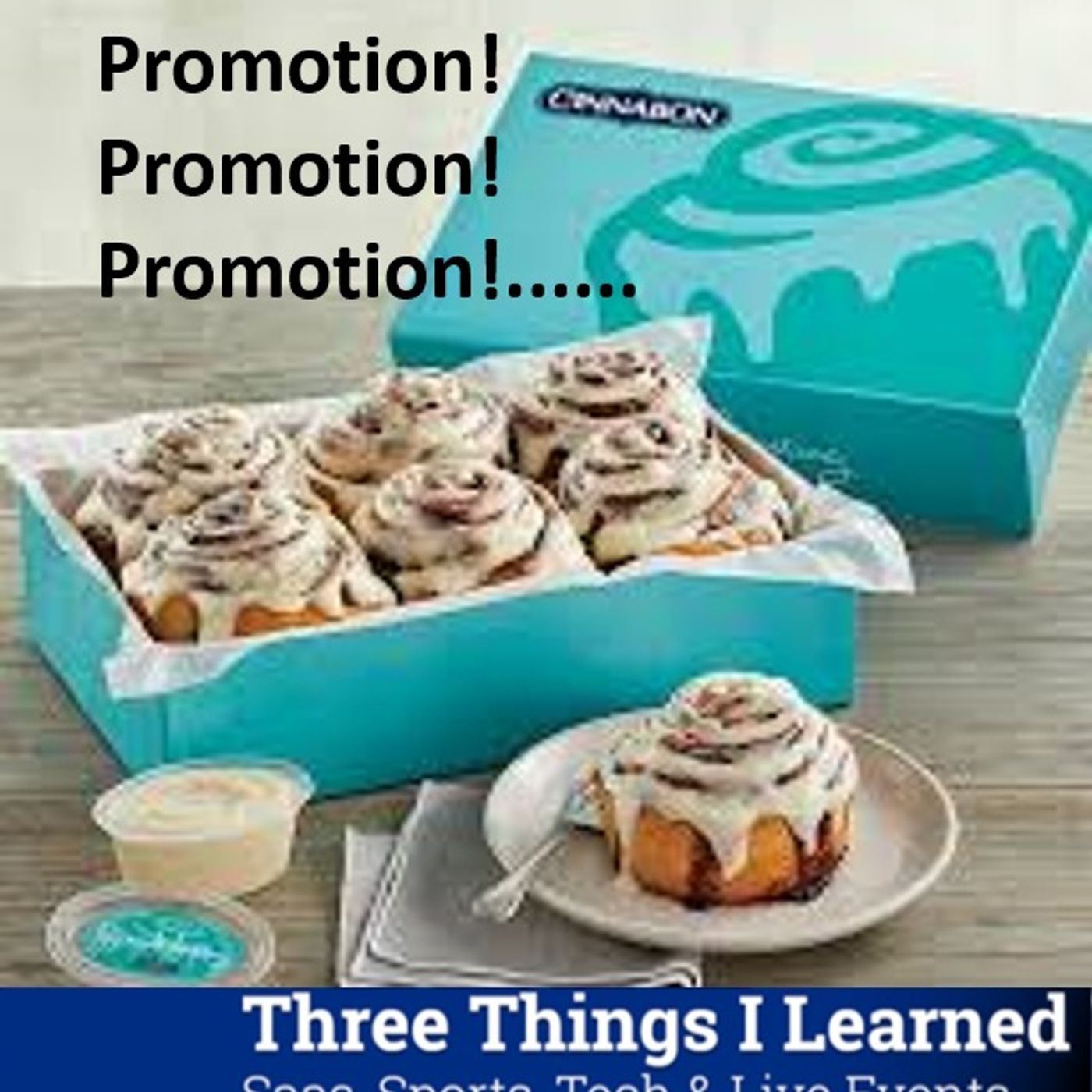
S1 Ep 22How To Deliver Bad News To A Team - The Infamous "Promotion, Promotion, Promotion....Cinnamon Rolls" Meeting
Promotion, promotion, promotion, cinnamon roll edition. How Not To Deliver Bad News In spring 2004 it was clear an NHL work stoppage was coming. Our team of 20+ salespeople sold full-time through the summer. Then we hoped for a season. As the games were cancelled, we "lost" the commission we would have earned. Finally, the season was cancelled and a meeting called the next morning for an hour earlier than our start time. Finally there would be answers. How would commission be handled? Were we being furloughed? Laid-off? When? The room was set up with 6 managers in the front, the rest in a U around the room and plates of cinnamon rolls in the middle. It was the single most tone deaf experience in my career as management announced promotions for one another giving them new revenue streams to manage and raises while we'd all just lost tens of thousands. It concluded with management smiling and encouraging us to "enjoy the cinnamon rolls!" That meeting shaped my career. Three things I learned- all applicable today: 1) Never announce your own good fortune to a team getting no benefit from it. It ruins morale and serves no benefit. That includes the self-aggrandizing individual achievement press releases and posts. 2) If you get a "cinnamon roll," it's time to go find somewhere you're appreciated elsewhere. 3) Always be learning. As Matthew McConaughey says: To find out who you are you can first decide who you are not. Nobody on any team I serve will ever feel like that. Ever. The story has a happy ending. Three of us did leave- two are CEOs of $100mm+ businesses and another is a multi-millionaire. Oh….and I didn't eat any cinnamon rolls. (And if you know me, you know I LOVE cinnamon rolls).
S1 Ep 21Why Optimists Grow Your Career While Pessimists Kill It - Find The Resilient & Stay Near Them - Always Play The Long Game
2020 Thanksgiving Thankful For Edition 1. Optimists. Cycles happen and that's when the tough get going. It's also when the paralyzed, the pessimists and the naysayers get loud. I'm thankful for those who don't accept what's "supposed to be." I've learned they will lift your career to the highest highs. There aren't many of them as it's always easier to be a pessimist. Pessimism isn't fun, even when you win. 2. The resilient. We work in live events. And here we are, still standing on Thanksgiving. I'm thankful for our team and investors. When we went through our hiring and capital raise processes, we had mentors who demanded discipline which seemed overdone- even moving us away from some flashy VCs and hires. Character matters and is too often overlooked for price 3. Patience. Cycles, in the moment, feel like forever. In the grand scheme of things, they're not. Ten months without pay in 2004 felt like a lifetime. 14 months in 2008/09 broke me. I shouldn't have let it. This is a long cycle, but in the course of a 45 year career, it's a blip. I learned to play the long game years ago. I hope you do too. Ignore all those out there looking for a quick Covid buck. Play the long game.
S1 Ep 20Avoid Hiring Other Company's Bad Habits - How To Hire Loyalty
Three random things I learned/heard this week in saas, sports, tech, and live events: 1) "Don't hire other company's bad habits." Erika Nardini of Barstool caused a stir when putting an SDR on blast for a poorly written solicitation email*. Where you learn your craft matters. It is not the SDR's fault her company is teaching crappy habits. But it is hurting her development and stalling her ability to grow her career. Worse, the experience SDRs gain is what they 'sell' to their next employer. Make it worthwhile 2) In 2001, I got my first job in July. 9/11 hit sixty days in. In 2004, My pay got cut 75% for ten months due to the hockey lockout. In 2008, we were only one year into our new co. when it all fell down and our investor jumped ship. We didn't make any money personally for 14 months. In 2020, well we all know that story. And our generation has had it easiest of all. Find the resilient - especially now 3) "Hearts and minds. You can buy a person's hands. You can buy a person's back. But hearts and minds are only given voluntarily." With all the layoffs, furloughs and pay cuts, this saying has never been more important. The live events industry is gonna see who was buying culture awards and who was actually winning em when the lights come back on.
S1 Ep 19How to treat competitors - One person off script can kill a deal - Some life advice from Mama Knopp about fitting in
In this week's episode, we discuss how to view your competition, and how they likely view view. We explore how just one person off script can kill a deal and how that happened to Nike with the future two-time MVP Steph Curry (and us with FedEx) Finally we share a story about trying to fit in during middle school and some life advice which changed how we viewed friendship and business. 1) Treat competition with respect. It's not unlikely you'll end up teammates down the road 2) It just takes one person off script to kill a deal. Ask "Steve" Curry 3) Surround yourself with those who fill your cup. Especially when looking at what's next
S1 Ep 18The difference between networking & selling - What to do with tough feedback - Hard convos coming in the NBA
We explore the often misunderstood difference between networking and selling and why it separates great salespeople from good ones. We get tough feedback from our teams. We discuss how to handle it and what to do with it. And finally, the NBA is coming back December 22nd and there are some hard convos on the way if fans are to return 1) Hard conversations on the way in the NBA 2) Consider the source of feedback before making decisions - especially in the job search 3) Networking vs Selling
S1 Ep 17How and why to do due diligence - Only hire who you can work for - Pressure is a privilege
We explore how and why due diligence is so important to all we do and what that's meant in our journey. We discuss what our role is as a leader when hiring a team. And we learn that pressure is a privilege for only a select few.