The Wild Life
198 episodes — Page 1 of 4
Mass Extinctions, Dinosaurs, and Chasing Dreams with Juan-Pablo Piña @paleoauthor
The Earth has ended before.Five times in the last half-billion years, life on this planet has been nearly wiped clean—reset by asteroid impacts, volcanic winters, and cataclysms we can barely imagine. And now? We’re living through number six. The difference? This one’s caused by us.But buried in those ancient endings are stories—lessons about resilience, adaptation, and the strange, beautiful creatures that made it through.In this episode, I’m joined by JP, better known online as @paleoauthor, the mind behind the upcoming book Primordial: A Biology of Ancient Triumphs and Tragedies. Together, we explore:Previous mass extinction events and what they can teach us about the one we’re in nowWhy dinosaurs still capture our collective imaginationThe weirdest prehistoric animals you’ve never heard ofThe influence of media and film on our understanding of deep timeHow telling the stories of the past might help us change the futureIt’s part science, part storytelling, and part love letter to life itself.Links & Resources:Follow JP on Instagram: @paleoauthorSupport The Wild Life on Patreon
Field Guide of Wonder: The Aye-Aye
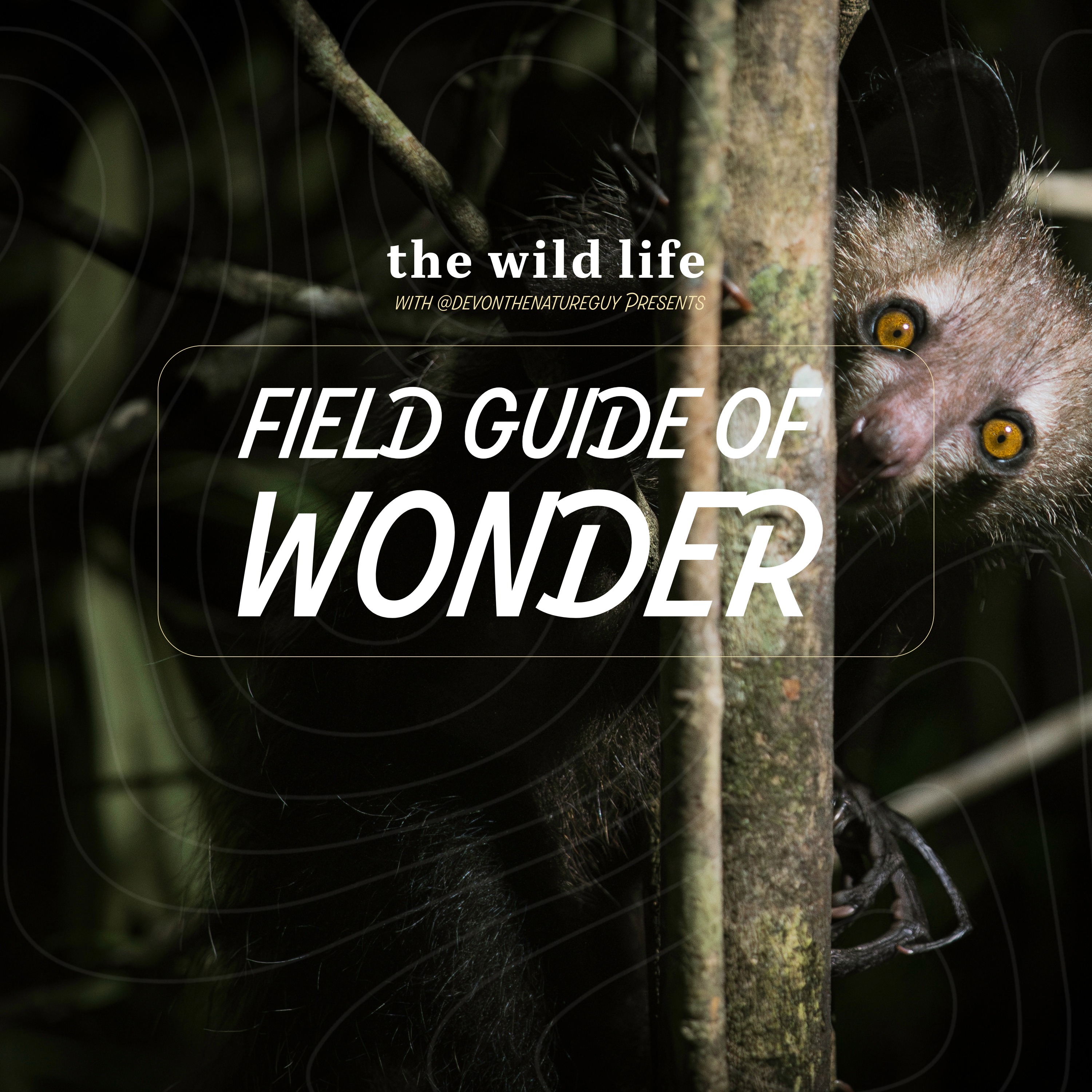
Meet the aye-aye (Daubentonia madagascariensis), a creature so strange that early scientists couldn’t even decide if it was a rodent, a squirrel, or… something entirely new. Native to Madagascar and the largest nocturnal primate in the world, the aye-aye sports perpetually growing teeth, a bat-like ear for echolocation, and a freakishly long, bony middle finger that can hook grubs from deep inside tree trunks—or, yes, pick its own nose.In this episode, we dive into its percussive foraging superpower, its evolutionary mystery, and why it fills the same ecological niche as a woodpecker. Field Guide of Wonder is a companion to my main show The Wild Life, giving you quick, vivid snapshots of the planet’s most remarkable creatures.If you enjoy the show and want to help keep it going, consider supporting on PatreonStay weird :)-Devon
Field Guide of Wonder: The Capybara
Meet the world’s largest rodent—the capybara (Hydrochoerus hydrochaeris), a creature so wonderfully chill it makes a golden retriever look high-strung. In this episode, we dive beyond the memesto explore what makes capybaras such an evolutionary success story.We’ll talk:Why “semi-aquatic social loaf of bread” might be the perfect lifestyleTheir remarkable teeth, digestive superpowers… and yes, why they eat their own poopThe wild variety of vocalizations they use to chat with each otherHow babysitting is a survival strategyThe surprising ways their biology connects to the ecosystems they live inFrom their South American wetlands to their unlikely friendships with everything from birds to caimans, capybaras prove that being laid-back is a legitimate survival tactic.Listen, wonder, and maybe… book a ticket to the Pantanal.Support The Wild Life's Field Guide of Wonder at www.patreon.com/thewildlife for as little as $1 per month
Field Guide of Wonder: The Honduran White Bat
Hey everyone! I have some news to share 😊Field Guide of Wonder—my social media video series— is getting a podcast companion!And here is the first episode!It'll be short, spectacular stories of the weirdest, wildest, most wonderful creatures on earth, in a format that hopefully gives these animals more room to stretch their wings, claws, pseudopods, or whatever it is they’ve got.It’ll be bite-sized but packed with questions you didn’t know you had, facts that feel like magic, and connections that make this tangled web of life feel even more alive.If you'd like to support the creation of this series, you can join my patreon at www.patreon.com/thewildlife for FREE. You can also support its creation at patreon for as little as $1 per month. Y’all, you know I post A LOT 😅 $1 per month comes out to 1.33 CENTS per piece of content. Like, literally, I did the math 😂Stay weird. Stay curious. Stay wild.
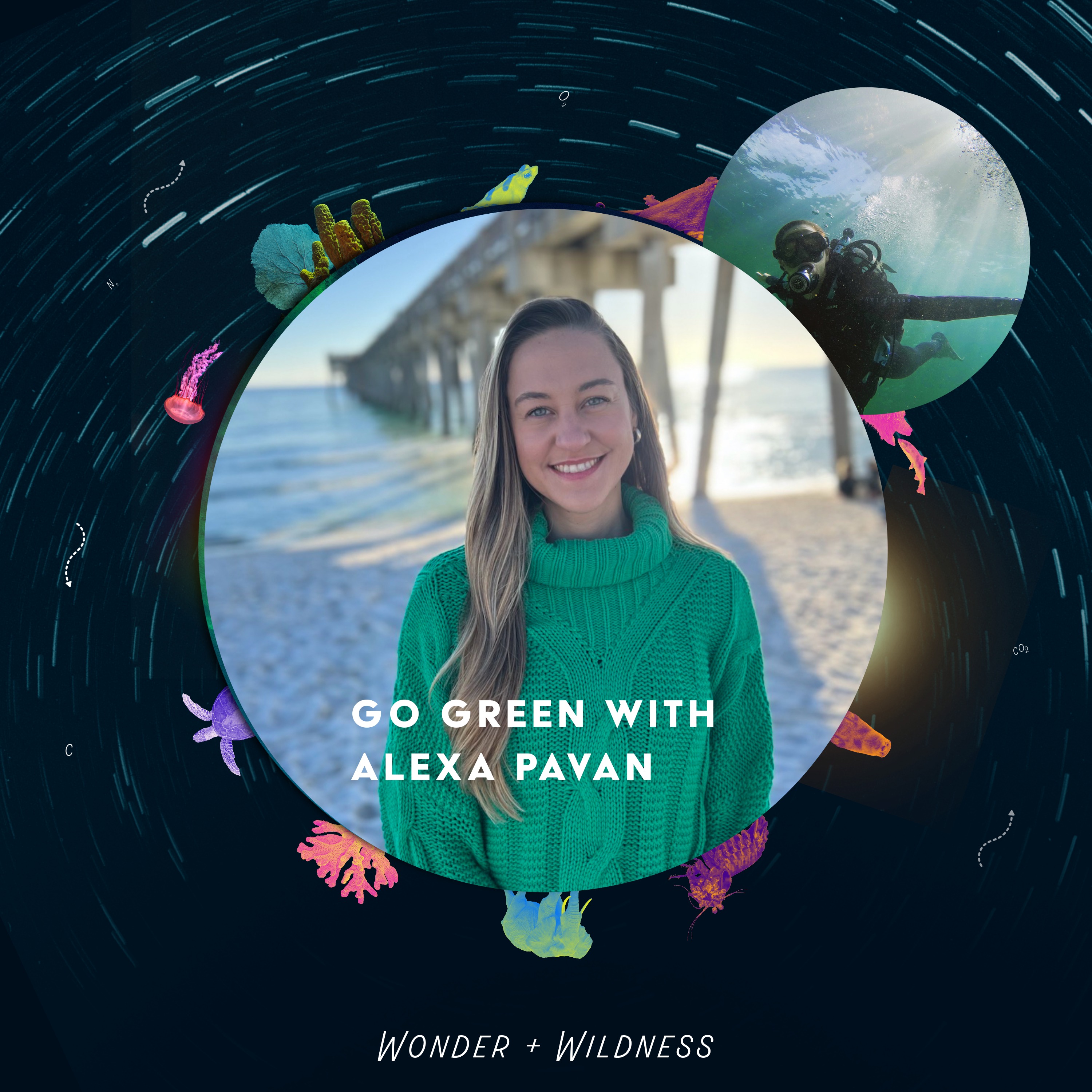
Go Green with Alexa Pavan
Hey everyone!I’m really excited to share with you all my conversation with the thoughtful and inspiring Alexa Pavan, aka @GoGreenWithAlexa.We dive into everything from accessible sustainability and composting, to coral bleaching, water bottles, and beach cleanups. It’s a chat about progress over perfection, the importance of small, everyday actions, and finding hope in the face of big, global challenges.We talk:🪸 Coral reefs and climate change♻️ Reducing waste without shame🌱 What it actually means to live sustainably💚 How individual choices can ripple outward🌍 Interconnectedness, agency, and actionable hopeIt’s full of insight, encouragement, and gentle reminders that we don’t have to do everything—but we can all do something.As always, thank you for listening to The Wild Life. If you’d like to help continue making episodes like this possible, you can join for as little as $1 per month (a penny per piece of content) at www.patreon.com/thewildlife. Your support means the world—and makes this work sustainable (see what I did there?).-Devon
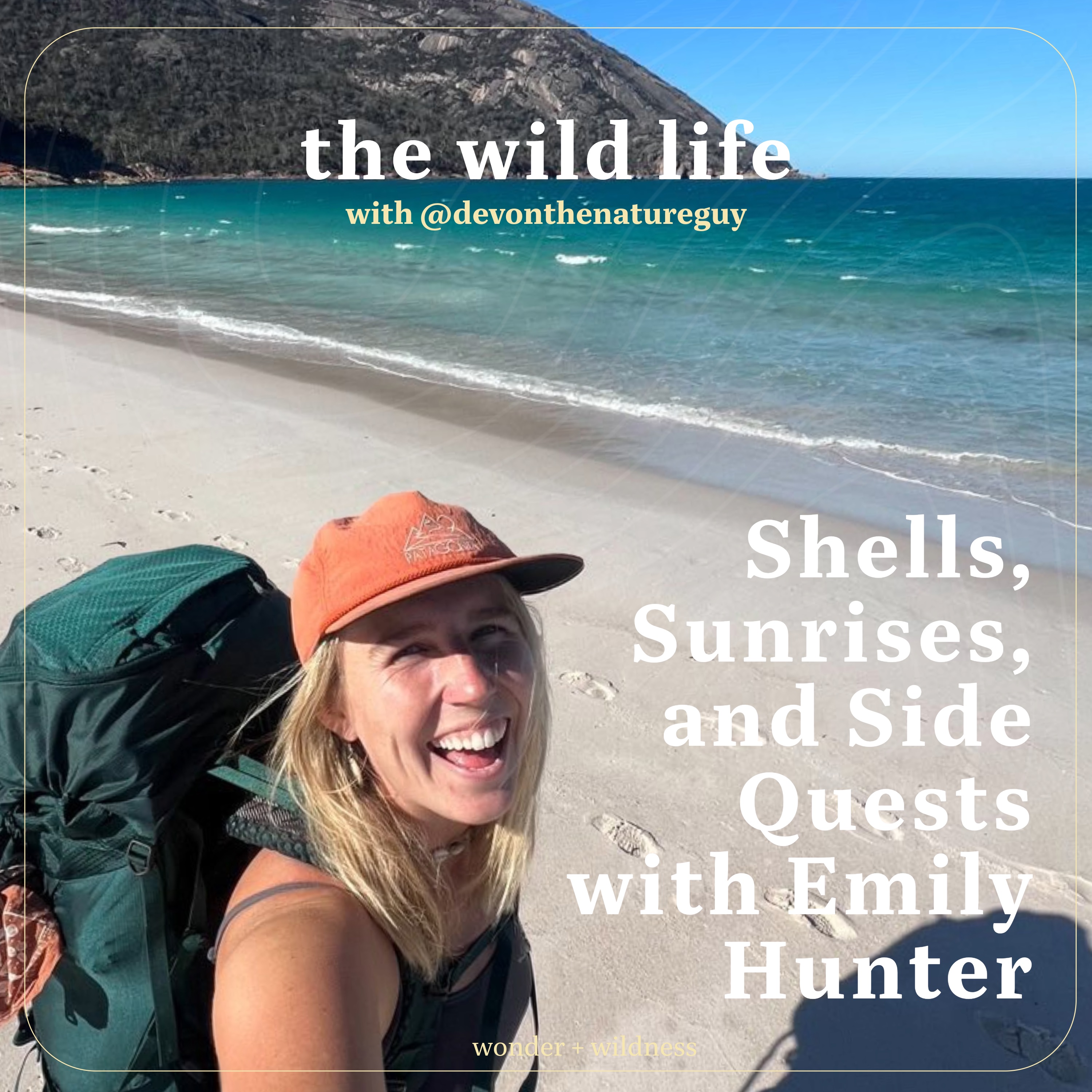
Shells, Sunrises, and Side Quests with Emily Hunter
What happens when you follow curiosity wherever it leads?In this episode of The Wild Life, I’m joined by Emily Hunter—a passionate environmental science educator, interpretation specialist, bushwalk guide, and nature communicator currently living and working along Australia’s Ningaloo Reef.Emily shares her journey from being a "tree hugger" kid in Idaho to becoming a globe-trotting interpreter of nature's stories, using awe as a tool for connection. We explore the power of wonder as a precursor to knowledge, how interpretation helps break down scientific gatekeeping, and what it really means to talk on behalf of the land, sea, and sky.Along the way, we dive into:Why knowledge alone doesn’t spark change—but wonder mightThe magic of the Ningaloo ReefWhat it's like to snorkel with first-timers and hike with strangers before sunriseWhy environmental education needs weirdness, joy, and emotional honestyAnd how following a sticker or a Facebook post can change your lifeWhether you’re a student wondering how to get started, a teacher trying to bring passion into your practice, or someone who’s just trying to rekindle that childhood spark of curiosity—this one’s for you.🌏 You don’t have to live near a coral reef to live a rich, curious, nature-connected life.Sometimes it starts with a question. Or a shell. Or a really good sunrise.📣 Share this episode with someone who needs to be reminded that weird is good—and wonder matters.
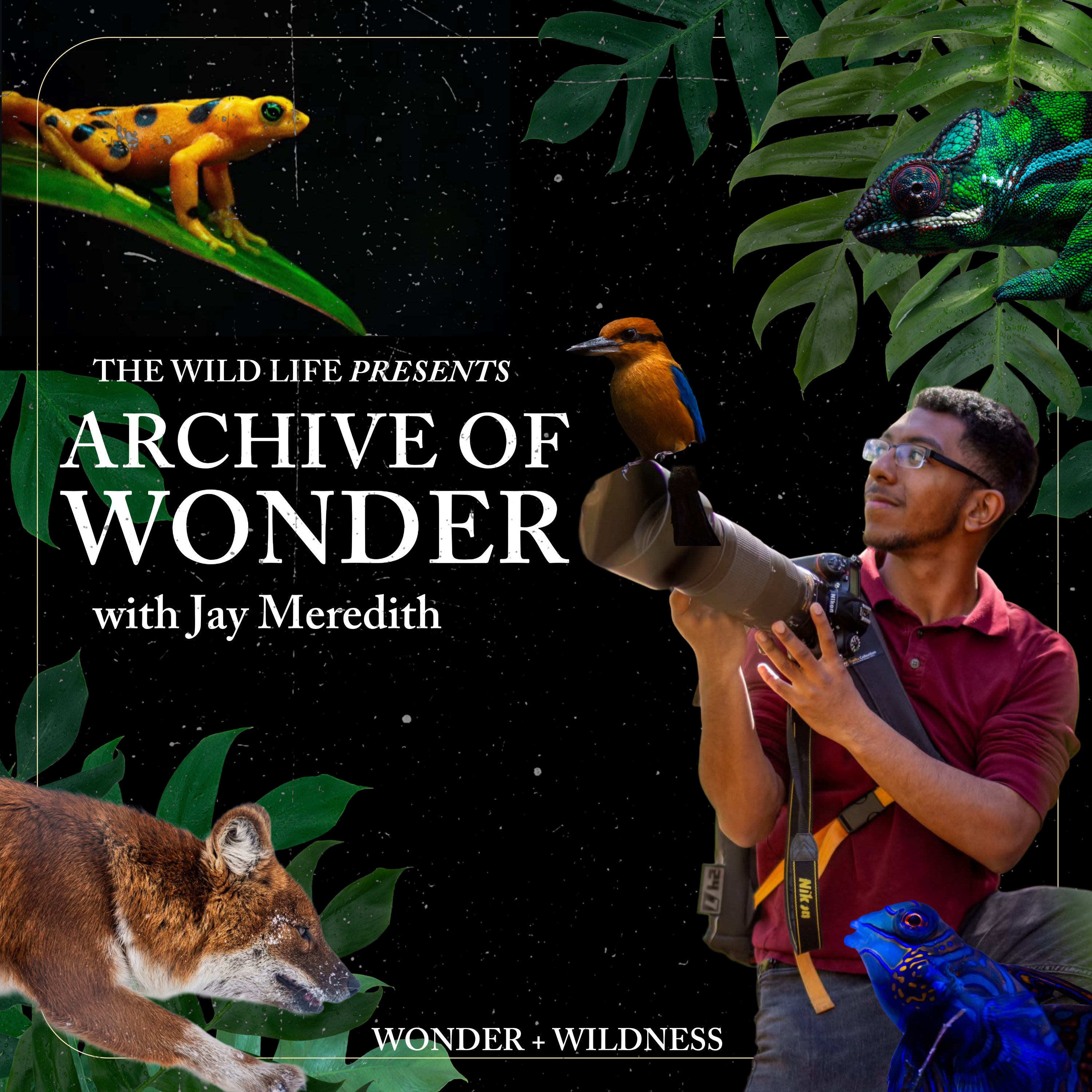
Archive of Wonder with Jay Meredith
What do a gaur, an aardvark, a flattened musk turtle, and a Matschie’s tree kangaroo have in common?They’ve all been photographed beautifully, reverently, and intentionally by my next guest—wildlife and zoo photographer Jay Meredith.In this episode, Jay shares the story behind his incredible project, The Animal Archives, documenting over 1,000 animal species across accredited zoos, aquariums, and conservation centers. But this is more than a numbers game. It’s a mission to help people fall in love with the overlooked, the endangered, and the often-forgotten.We talk about how Jay transitioned from zookeeper to photographer, the difference between photographing wild vs. captive animals, what it means to truly see an animal, why education and storytelling are just as important as the image itself, and the little-known species Jay wants everyone to know about!This episode is about photography, yes—but really, it’s about wonder. It’s about noticing. And it’s about how we grow empathy for the world when we take time to look closely.📸 Follow Jay on Instagram: @photos_with_jay_108 🦥 Support The Wild Life and Get Early Access at www.patreon.com/thewildlife
My Message for World Oceans Day
Today is #WorldOceansDay and I’m feeling a whole lot of things. Wonder. Grief. Hope. Determination.The ocean isn’t just a place to visit. It’s not just a good backdrop for photos.It’s breath. It’s mystery. It’s the engine of life on Earth. And right now? It needs us.This isn’t a doom post. It’s a love letter.To the sea slugs and phytoplankton.To coral metropolises and whales that sing.And to whoever has felt small in the best possible way, standing in front of something as vast and alive as our seas.Let’s protect what’s left.Let’s restore what we can.Let’s be the kind of people the ocean would be proud of.~Devon
Ancient Finds, Changing Times with Andrew Schwartz
What if the key to understanding our future was hidden in the teeth of creatures that lived millions of years ago? In this episode, we dive into the world of dental microwear with paleontologist Andrew Schwartz (@eyesonthedirt), who takes us from the fossil beds of ancient Wyoming to the jungles of Costa Rica and the highlands of the Wari Empire. Along the way, we uncover how past climate shifts reshaped life on Earth—and what that means for us today.We explore:How capuchin monkeys and ancient Andean civilizations left clues in their teethWhat the Paleocene-Eocene Thermal Maximum (PETM) can teach us about modern climate changeWhy some mammals shrank while others thrivedWhat a warming world could mean for our ecosystems, agriculture, and future survivalLinks & Resources:Learn more about Andrew Schwartz’s researchDeep dive into the PETM and its modern implicationsSupport The Wild Life on Patreon!If you love deep dives into science and nature, consider supporting The Wild Life on Patreon. Your support helps me continue making episodes like this, bringing expert voices and fascinating stories. Plus, Patrons get bonus content, early access, and more! Join us at Patreon.com/TheWildLife.Let me know what you think! Leave a review, share the episode, and keep exploring the wild world around you.
Giant River Otters and Other Adventures with Kat Foree
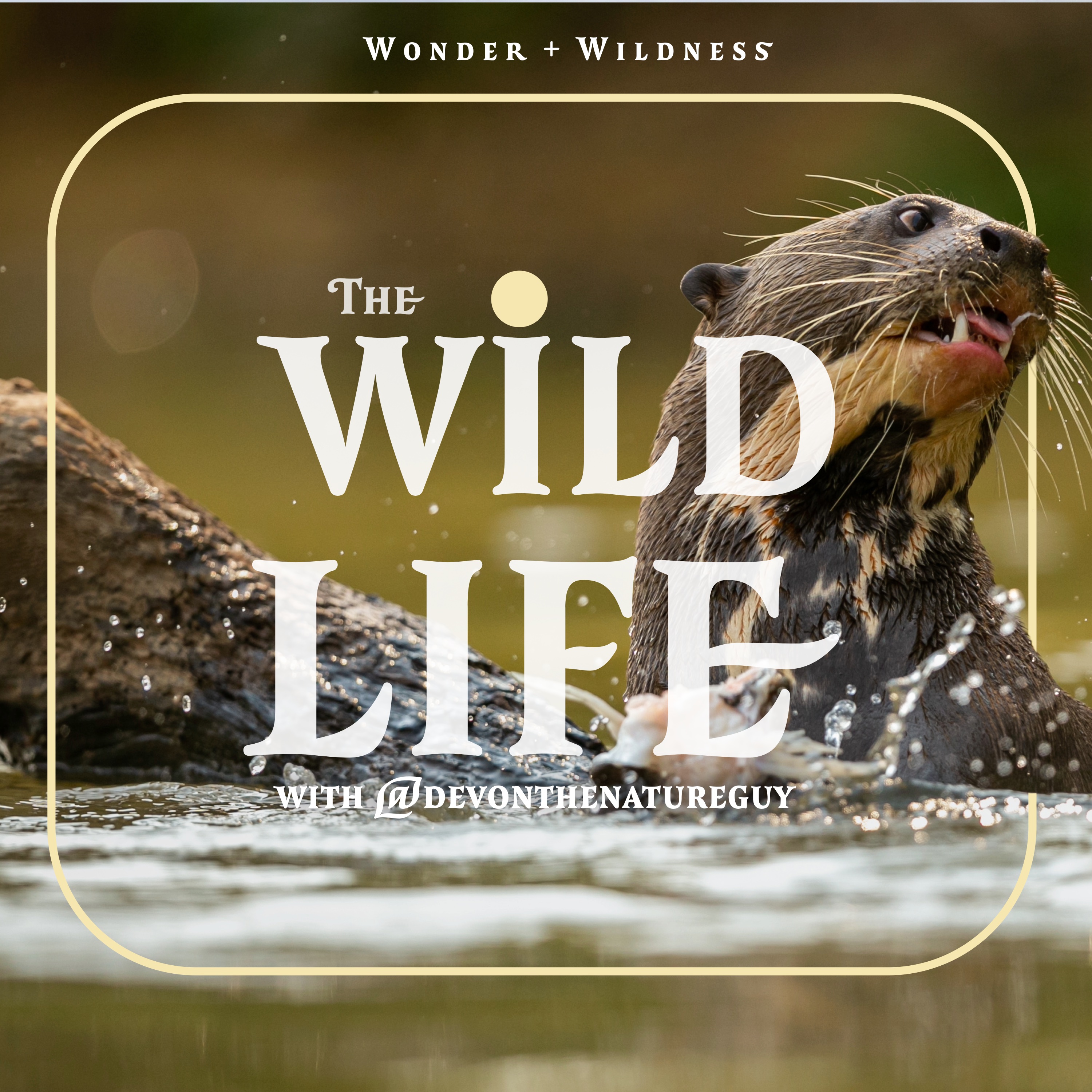
Giant river otters are social, intelligent, and deeply connected to the health of their ecosystems—but what happens when their food supply starts to dwindle? In this episode of The Wild Life, we’re joined by Katherine Foree, a researcher studying how these apex predators use their habitat in the Madre de Dios region of Peru. With a Fulbright grant supporting both her research and cultural exchange, Katherine is three months into her work at Cocha Cashu Biological Station and preparing for a second study on the impact of fish depletion on otter food-sharing behaviors. We also dive into her past experiences with orangutans, lemurs, and conservation challenges around the world. Join us as we explore the fascinating lives of giant river otters and what they can teach us about the delicate balance of the Amazon’s waterways, talk books, the often overlooked humanity of scientists, animal psychology, and so much more!Support The Wild Life at www.patreon.com/thewildlifeFollow Kat on Instagram @a.kat.named.rin
Harvest Mice, 3-Legged Beavers, and Elephant Conflicts with Dylan Beckham
Joining The Wild Life today is Dylan Beckham! She spent two years as a zookeeper caring for all sorts of exotics, including reptiles, invertebrates, fish, emus, wallabies, genets and Eurasian harvest mice. As a herpetology enthusiast, she was surprised to find it was the mice that stole her heart. This led to the development of her independent research project investigating their nesting behaviors in captivity, before ultimately leaving the zoo to pursue her passion for wildlife research. She managed to fit in an adventure to Canada, where she interned at a wildlife rehab facility, wrestled raccoons, and fell madly in love with a three-legged beaver! Now she's wading through nearly a hundred hours of harvest mouse data, while preparing to return to university for a top-up Bachelor's degree in September, where she'll be doing a research project on human-elephant conflict in Equatorial Guinea. Whether you're fascinated by the world of zookeeping, curious about the nuances of data collection, or passionate about conservation, this episode is for you. Follow Dylan on InstagramHave questions, topic suggestions, or want to be on the show? Email me at [email protected] or dm me on Instagram or TikTok @devonthenatureguySupport The Wild Life for as little as $1 per month at www.patreon.com/thewildlife
Where There's Smoke, There's Fire—with Ross Barreto
Where there's smoke, there's fire. But when that fire tears through a landscape, what happens next? Today, we dive into the world of pyrophytic ecosystems—those that not only survive but thrive on fire. Our guide on today's journey is Ross Barreto, a master's student studying native plant population dynamics and spatial ecology. He's also an Urban Forester and likes to experiment with native plant propagation, seed production, and outplanting for restoration and horticulture purposes. We explore the role of fire in Florida's ecosystems, native plants, and the resilience of nature.Follow Ross on Instagram @barross0505Have questions, topic suggestions, or want to be on the show? Email me at [email protected] or dm me on Instagram or TikTok @devonthenatureguySupport The Wild Life for as little as $1 per month at www.patreon.com/thewildlife
Wildlife Cinematography with Jake Davis
Welcome to The Wild Life! On today's episode, we have a fascinating guest: wildlife cinematographer Jake Davis.Jake’s career began by focusing on the wildlife of the Greater Yellowstone Ecosystem. Growing up, he spent his summers in Jackson Hole, Wyoming, where the Teton Range's jagged peaks and abundant wildlife fostered a deep love for nature and a desire to share and preserve it. Today, while Jake travels the globe to film the stories of vulnerable wildlife, the Greater Yellowstone Ecosystem remains his home.As a cinematographer, Jake works on natural history productions for renowned platforms like BBC, National Geographic, Disney, Netflix, and Apple. Most recently, he spent five months filming snow leopards in Mongolia for the third installment of BBC's famous series "Planet Earth.” His recent work has been part of a series nominated for a 2023 Emmy and for Best Cinematography at the prestigious Jackson Wild Film Festival.Jake’s work incorporates diverse filming techniques, including long lens, drone, and gimbals, but he is best known for his novel approach to filming wildlife with high-tech camera traps. He also created the world’s first collection of wildlife Ambrotypes, featuring images on glass plates. Among his accolades, Jake was a 2019 finalist in the renowned Wildlife Photographer of the Year competition held by the London Natural History Museum, and his work has been displayed at the Smithsonian in the Exhibition of Nature's Best Photography. His nature greeting card line is sold in stores across the western United States, including REIs and the Yellowstone stores.In this episode, we discuss the importance of understanding animal behavior and ecology to capture the perfect shot and effectively tell their stories. We explore the future and potential of artificial intelligence in wildlife filmmaking, the "chicken or the egg" question of wildlife cinematography, and the challenges of working off-grid. Jake shares his experiences with camera traps, the heart-wrenching decisions of the footage chopping block, and how to craft compelling narratives without words.Join us for an in-depth conversation that highlights the blend of artistry and science required to bring the wild to our screens. Check out his website and order some printsCheck out his galleryFollow Jake on InstagramHave questions, topic suggestions, or want to be on the show? Email me at [email protected] or dm me on Instagram or TikTok @devonthenatureguySupport The Wild Life for as little as $1 per month at www.patreon.com/thewildlife
Animal Ethics with Maggie Herskowitz
In this episode of The Wild Life, animal welfare scientist Maggie Herskowitz helps us navigate the tangled webs society has woven around the treatment of animals, both wild and domestic. Gray areas, moral calculations, trophy hunting, industrial-scale fishing and livestock, and the emerging field of conservation ethics. Our conversation spans a range of topics including sloth bears, baby chicks, wolves, porpoises, The Grind, social media's impact on monkeys, and the infamous case of Cecil the Lion.Please be aware that this episode includes discussions about the death and killing of animals, mistreatment, and animal abuse, among other sensitive topics. Listener discretion is advised.Join us for a thought-provoking and often challenging discussion that sheds light on the complex and sometimes uncomfortable realities of animal welfare. Let's dive in with Maggie Herskowitz and explore the critical issues at the heart of how we treat our fellow creatures.Follow Maggie on XLearn more about MaggieCheck out her YouTube!Have questions, topic suggestions, or want to be on the show? Email me at [email protected] or dm me on Instagram or TikTok @devonthenatureguySupport The Wild Life for as little as $1 per month at www.patreon.com/thewildlife
SciComm, Squids, and Staying Hopeful with Dr Carly Anne York
The world is full of science and, in turn, scientists, and not enough people who truly have that spark for communicating all of that discovery and wonder to the rest of the world. People like today's guest—Dr Carly Anne York (@BiologyCarly). She's an Associate Professor at Lenoir-Rhyne University, an Animal Physiologist, a Science Communicator, and an Author.Today, science communication, children’s books, squid physiology, mindblowing animal facts, things that are true that are hard to believe, academic and environmental activism, holding onto hope in a world that seems insistent that we shouldn’t, and advice for future scientistsCheck out her websiteCarly on XCarly on InstagramCarly on TikTokYou can support The Wild Life by becoming a member on Patreon for as little as $1 per month Have questions, guest recommendations, or want to join the email list? Contact me here OR at [email protected]
Carnivore Ecology with Aidan Branney
Welcome to The Wild Life, the podcast where we explore the wonders of the natural world and the science that helps us understand it. In this episode, we have an extraordinary guest: Aidan Branney. When we first recorded this interview nearly a year ago, Aidan was working as the large carnivore scientific aid for the California Department of Fish and Wildlife. Today, he’s a Presidential Research Fellow at the University of Georgia, where he studies large carnivores including lions, leopards, cheetahs, and spotted hyenas in Etosha National Park in Namibia.In this episode, we delve into Aidan's fascinating educational and professional journey, his work on ocelots in Texas, and his research on coyotes, black bears, and bobcats. We'll explore what defines carnivores and the complex challenge of balancing ecological needs with stakeholder interests. Aidan shares insights into estimating populations and monitoring changes in these majestic animals, and we'll discuss how to maintain hope and persevere in a world where conservation efforts often feel like trying to slow a leaking dam with duct tape.Join us as we venture into the wild world of carnivore ecology with Aidan Branney, uncovering the science, the struggles, and the triumphs of studying and protecting some of the planet's most charismatic creatures.Aidan on InstagramAidan on XSupport The Wild Life
Feathers, Fossils, and Old Friends with Dr Tiffany Slater
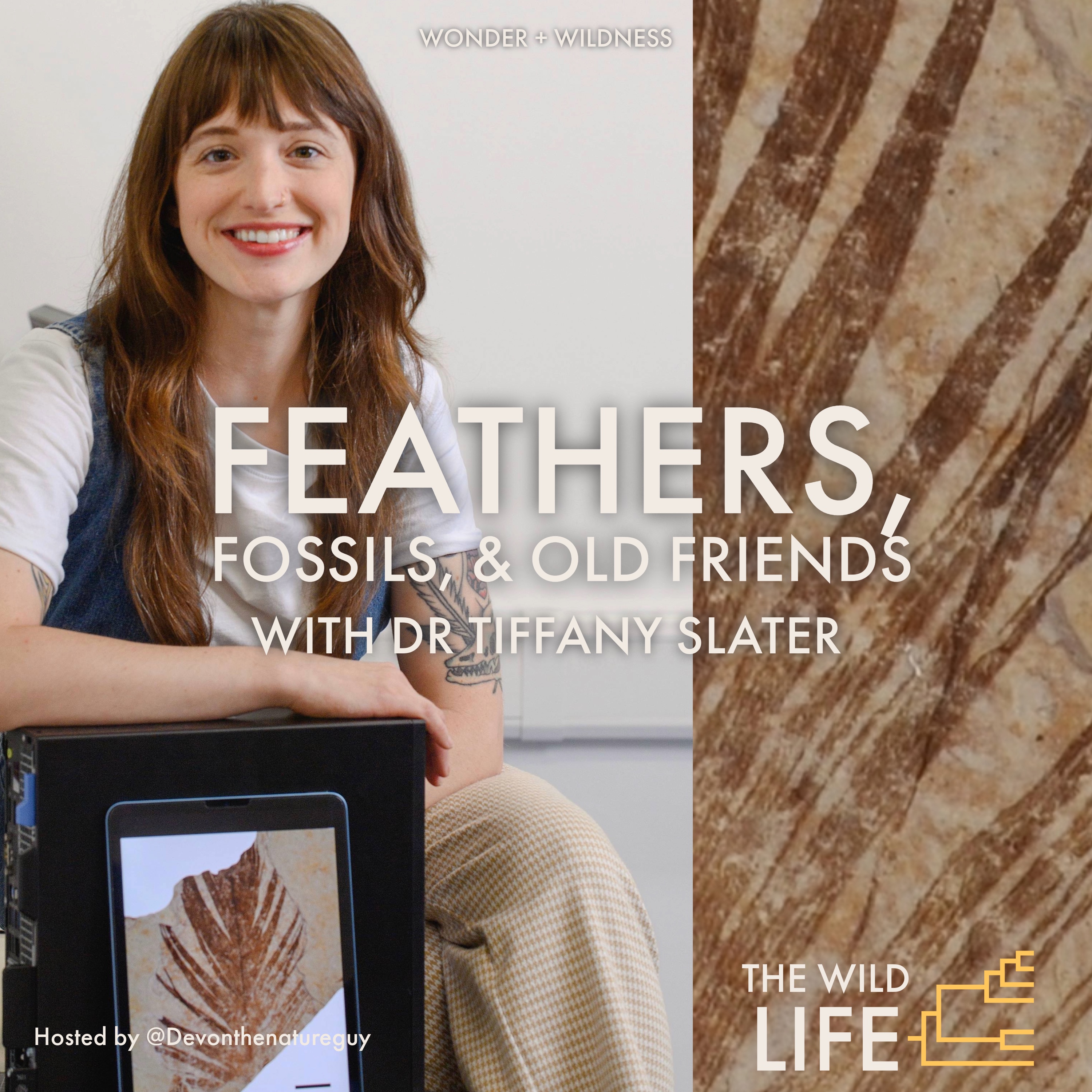
17 years ago, I was a 14 year old attending Connor Middle School in Hebron, Kentucky. Small little town, just across the Ohio River. In 2018, I moved away, back down to Houston, TX. But in the few years I was there, I met and became friends with some of the most amazing people, most of which I lost contact with over the yearsThen one day, sometime last year or so, a familiar name popped up on my feed—an old friend, and today’s guest.On today's episode, Dr Tiffany Slater tells us all about her amazing discoveries and career as a taphonomist! Searching for molecular ghosts in the fossil record, ginger frogs, ancient proteins, learning there’s a difference between aging fossils and dating fossils, feathered connections, archaeopteryx, perspectives, particle accelerators, and of course, catching up…Dinosaur feathers reveal traces of ancient proteinsDr Tiffany Slater's University of College Cork ProfileSupport the ShowContact | [email protected] Devon on TikTok and InstagramFollow Tiffany on Twitter
Secrets of the Octopus with Sy Montgomery and Warren Carlyle
From their three hearts to their ability to transform and communicate, discover the extraordinary world of octopuses with host Devon Bowker and special guest Sy Montgomery, the "octopus whisperer" herself, and octopus expert Warren Carlyle, founder of OctoNation®. In a new adventure, Secrets of the Octopus, they dive deep into the secrets of the ocean's most enigmatic creatures, exploring the latest revelations in octopus research and conservation efforts. With captivating storytelling and stunning visuals, the pair uncover why these creatures are worthy of our admiration and protection.Secrets of the Octopus | BookTRAILER| Secrets of the Octopus on National Geographic and Disney+OctoNationSupport the ShowContact | [email protected] Devon on TikTok and InstagramFollow Sy MontgomeryFollow Warren Carlyle
The Joy of Working with Wildlife with Lauren Jackson, Queen of the Wild
In this episode, Devon (@devonthenatureguy) sits down with Lauren Jackson (@lauren.queenofthewild on Instagram and HERp_trap_queen on TikTok) to chat about becoming a wildlife tech, woodpeckers, federal jobs, the friction of private land, scicomm and education, battles big and small, and above all else, love for the world around us.Support the show at www.patreon.com/thewildlife for as little as $1 per month
Cephalopods and SciComm with Octopus Biologist Meg Mindlin
Today’s episode, social media SciComm, all things cephalopod, their super cool brains, their mind-blowing camouflage, RNA editing, peculiar romances, underappreciated "living fossils", and why octopuses are most definitely not aliens. All with special guest Meg Mindlin, Octopus BiologistMeg's WebsiteSave the Ocean, Save the World HoodieMeg's Sticker ClubSupport The Wild Life
A World of Wasps with Eric Eaton
In this episode, I sit down with Eric Eaton, author of Insectpedia: a Brief Compendium of Insect Lore, Wasps: The Astonishing Diversity of a Misunderstood Insect, and more!Wasps are far more diverse than the familiar yellowjackets and hornets that harass picnickers and build nests under the eaves of our homes. These amazing, mostly solitary creatures thrive in nearly every habitat on Earth, and their influence on our lives is overwhelmingly beneficial. Wasps are agents of pest control in agriculture and gardens. They are subjects of study in medicine, engineering, and other important fields. Wasps pollinate flowers, engage in symbiotic relationships with other organisms, and create architectural masterpieces in the form of their nests. From minute fairyflies to gargantuan tarantula hawks, wasps exploit almost every niche on the planet. So successful are they at survival that other organisms emulate their appearance and behavior. The sting is the least reason to respect wasps and, as you will see, no reason to loathe them, either. Find Eric on Twitter/XCheck out Eric's BlogSupport the ShowFind me on Instagram and TikTok @devonthenatureguyContact: [email protected]
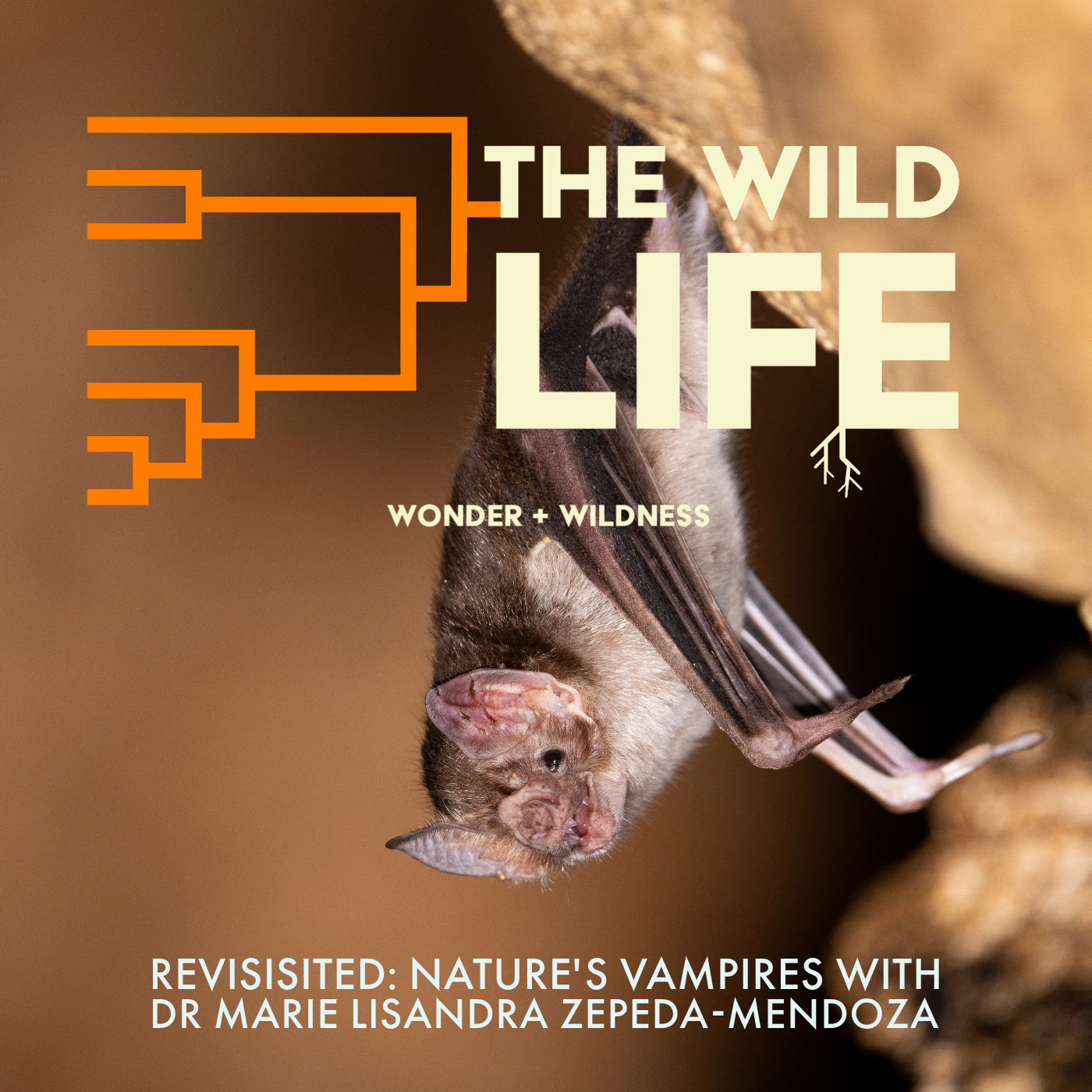
Revisited: Nature's Vampires with Dr Marie Lisandra Zepeda-Mendoza
This episode, which originally aired on March 24 2018, takes us all the way from Copenhagen to the rainforest of South America, from the belly of the beast to its excrement, as we explore nature’s Vampires.Our guest is Dr Marie Lisandra Zepeda Mendoza, who had recently finished her postdoc in Copenhagen, Denmark and whose recently published research on vampire bats and how they survive on such a peculiar diet is at the center of this story.If you'd like to support the creation of this show, the blog, and my science communication efforts on social media, you can do so for as little as $1 per month at www.patreon.com/thewildlife
Shark Conservation with Dr Alexandra McInturf
Sharks are in the water. But is the ocean shark-infested, or shark-depleted? I sat down to talk with Dr Alexandra McInturf to find out.Learn more about Alexandra and her workPapers Referenced:Half a Century of Global Decline in Sharks and RaysHalf a century of rising extinction risk of coral reef sharks and raysGlobal catches, exploitation rates, and rebuilding options for sharksBycatch SolutionsNOAA Link
Revisited: Busting Bat Myths and Mistruths with Liz Dengate
Another stroll down memory lane as I revisit the second-ever guest episode of The Wild Life, Myth-Understood: Busting Bat Myths and Mistruths with Liz Dengate from March 6th of 2018.If you'd like to support the creation of this show, the blog, and my science communication efforts on social media, you can do so for as little as $1 per month at www.patreon.com/thewildlifeThis week we focus on an animal that has been the victim of superstition and fear for thousands of years. Despite what many believe, these creatures are extremely important to our everyday lives.
Revisited: The Mystery of Zebra Stripes with Dr Tim Caro
This was the first ever episode of The Wild Life back in 2017, and it was never supposed to happen. That's right, The Wild Life, as a podcast, was an accident. The result of a series of unfortunate events. But that's life, isn't it? It happens in the most unexpected of ways. I never imagined that this is where I would be today, and I'm so incredibly grateful for the experience and all those who have been a part of it, as guests, as listeners, and as people who believed in the work I was doing and helped me to succeed.The mystery of zebra stripes has long been a subject of debate, at least since the days of Charles Darwin and Alfred Russell Wallace. Now, thanks to Dr. Tim Caro, a professor of wildlife biology at the University of California-Davis, we finally have our answer.Next week, we're exploring Shark Conservation with Alexandra McInturf!If you'd like to support the creation of this show, the blog, and my science communication efforts on social media, you can do so for as little as $1 per month at www.patreon.com/thewildlifePeace out, rainbow trouts!
Reintroducing The Wild Life + The Path Forward
It's been awhile. I think it's time for some reintroductions.I've spent a lot of time over the past year, 6 years really, reflecting on the journey so far, the ups and downs, the struggles, the wins, the change (oh, so much change), and I think I've finally landed comfortably with where I am and what I want this to be. I look forward to sharing my work and the perspectives of scientists from around the world with you every Wednesday as we explore the natural world, the dizzying amount of connections we share to it and each other, and find the courage to protect this planet we call home.If you managed to get through all 25-ish minutes, thank you so much for your time.The release schedule for the remainder of the year is as follows:REVISITED: The Mystery of Zebra StripesShark Conservation with Alexandra McInturfREVISITED: Bat Myths and MistruthsWasps with Eric EatonREVISITED: Nature's VampiresCephalopodcast with Meg MindlinREVISITED: Canary in the Coal MineConversation with Lauren Queen of the WildREVISITED: The Air We BreatheCarnivores with Aiden BranneyREVISITED: Metamorphosis MetaphorConversation with Dr Carly Anne YorkREVISITED: Is Anybody Out There?Animal Ethics with Mad About Animals MagsREVISITED: Ant FarmIf you are able and would like to help sustain and support The Wild Life, you can do so at www.patreon.com/thewildlife for as little as $1 per monthFollow me on social media @devonthenatureguy
SHORT | Do Ticks Fall From Trees?
Ticks, for as small as they are, strike a disproportionate amount of fear and disgust into our hearts and minds (no matter what good they might do!). Perhaps it’s their arachnid nature. Maybe it’s the fact that they burrow their creepy mouthparts into your body and feast off of your blood. Oh yeah, and there’s Lyme Disease and the ever-increasing red meat allergies. Whatever the reason, one thing’s for certain— nothing quite warps our conceptions of reality like fear.For example, there’s a common misconception that ticks fall from trees and drop onto unsuspecting victims. Let’s explore the truth behind this myth and shed light on how ticks actually go about finding their hosts.Have a question you want answered on the show? Send them over to [email protected]!Have your voice featured on the show when you send a voice memo recorded directly on your phone!Support the creation of The Wild Life for as little as $1 per month at www.patreon.com/thewildlifeTranscript
SHORT | Can Porcupines Shoot Their Quills?
While it's true you should keep your distance, is there any truth to the tale of a tenacious porcupine shooting their quills?Have a question you want answered on the show? Send them over to [email protected]!Have your voice featured on the show when you send a voice memo recorded directly on your phone!Support the creation of The Wild Life for as little as $1 per month at www.patreon.com/thewildlifeTranscript
SHORT | Why Do Worms Come Out When It Rains?
Unfortunately, we can’t ask the worms directly, but it turns out that plenty of scientists have been asking this very question for, well, a very long time. Today, we explore the leading hypotheses for what drives worms to the surface for these rainy-day adventures.Have a question you want answered on the show? Send them over to [email protected]!Have your voice featured on the show when you send a voice memo recorded directly on your phone!Support the creation of The Wild Life for as little as $1 per month at www.patreon.com/thewildlifeTranscript
SHORT | How a Puffin Problem Led to the Creation of a Star Wars Icon
Star Wars is as much a product of human ingenuity as it is a space odyssey. Just look at how they solved the Puffin Problem.Have a question you'd like answered on The Wild Life? Email me at [email protected] can even have your voice featured by sending a voice memo recorded directly on your phone!You can support the creation of The Wild Life for as little as $1 per month at www.patreon.com/thewildlife AND get exclusive perks as a bonus :)Transcript
Wide-Eyed | Why Goats & Cuttlefish Have Weird Shaped Pupils
Who doesn’t love goats? Especially baby ones. Their gait, their bleat, their tiny horns. But there comes a time in any goat interaction I’ve had where we lock eyes and I’m struck with a mixture of curiosity and unease. On today's episode, why goats have rectangular pupils, their auto-leveling eyes, and a surprising connection to cuttlefish!TranscriptSupport The Wild LifeCheck out Avast! and Planthropology
Polar Bears and the Illusion of Color
Most would agree that Polar Bears are white, but there's more to the story than things may appear.TranscriptSupport The Wild Life at https://www.patreon.com/thewildlife for as little as $1 per monthand check out Avast!, a pirate pod from my friend Paul Csomo
NEWS: New Study Suggests the Dugong is 'Functionally Extinct' in China
According to a paper published on August 24th, 2022 in the journal Royal Society Open Science, the Dugong is now “functionally extinct” in China. These gentle marine mammals, sometimes referred to as sea cows, are one of four species of the order Sirenia. They are the cousins of the Amazonian manatee, West Indian manatee, West African manatee, and the now extinct Steller’s sea cow. These peaceful creatures invoked myths of mermaids and fantasy, existing in Chinese waters for thousands of years. Now, because of habitat loss, food loss, hunting, and collisions with watercraft, the Dugong is now one step closer to meeting the fate of their Steller cousin, and only other member of the Dugongidae family.TranscriptSupport
SHORT: Can Other Animals Get Sunburns?
Ask yourself, when was the last time you saw a roseate rhinoceros, a bronzed bunting, or a peeling porcupine? Can other animals get sunburns?TranscriptSupport The Wild Life
SHORT: Crocodiles Would Bankrupt the Tooth Fairy
Crocodiles are known to be notoriously cantankerous creatures, but what’s less known is this crazy fact about Crocodile teeth–they can go through up to 4,000 teeth in their lifetime!TranscriptSupport The Wild Life
SHORT: Why do Hedgehogs have Spikes?
Hedgehogs are easily one of the most unmistakable little critters out there, but how much do you know about them? Sonic is (somehow) a hedgehog, but they’re not really known for being quick on their feet. They’re irrefutably adorable, sometimes pets, and prickly little fellas that roll themselves up like a pill bug, but what else? Where are they native to? What do they eat? Why do hedgehogs have spikes?TranscriptSupport The Wild Life
SHORT: Sea Otters Have Secret Skin Pockets in Their Armpits
Yes, you read that right. Move over marsupials, you’re not the only mammals with skin pockets.Transcript and memesSupport
Class: The Demo Model (DEMOSPONGIAE)
The basic idea behind the theory of evolution behind natural selection is this: if you get eaten or otherwise die before you’ve had the chance to reproduce then your genes, or traits, don’t get passed on. It’s a dead end. But if you survive… some of your traits get passed down to a new generation. Maybe you were just a bit faster than the other wildebeest. Maybe your coloration gave you better camouflage than some of the rest. Who knows? It could be a ton of things. The point is, over time, these little changes in the proportion of traits will add up to big changes, maybe even entirely new species! There’s a misconception out there though related to this idea called Survival of the Fittest. That evolution works through the survival of the strongest, fastest, toughest, meanest of the bunch and that things get stronger, faster, tougher, and meaner over time. Thing is, that’s just not true. Problematic associations aside, that idea doesn’t explain the persistence of seemingly useless traits, or the loss of seemingly useful traits, or traits that simply don’t change for millions of years at a time. Sometimes, things persist simply because there’s no pressure for them not to. Sometimes, things just work. In the case of sponges, there’s the Demo ModelSupport the Show at www.patreon.com/thewildlife
Class: The Art of Glass (Hexactinellida)
In October 2020, Ocean Exploration Trust’s E/V Nautilus crew discovered something extraordinary—vast clusters of glass spongesGlass sponges in general are a rare sight, but what made this discovery even more surprising is where they were found.Beginning just 25 miles off the coast of California, The Channel Islands National Marine Sanctuary is a 1,470 square mile refuge for wildlife as well as a human heritage site. Regions where the ocean floor can be found just 1,000 feet or so below, like Footprint Ridge and the Piggy Bank, have been pretty thoroughly explored.But between those two sites lies a valley, plunging another thousand feet below. This time, in late 2020, the scientific team famous for their live-streaming of footage captured by ROV’s, decided to give that valley a closer look.That’s when the NOAA experts, on Nautilus Live, stumbled upon a vast underwater field of glass.Finds like these are becoming increasingly important as potential habitats for diverse life and as indicators of ocean health in a changing world.But, aside from the obviously fascinating fact that these creatures have skeletons made of glass, what exactly are these so-called glass sponges?That’s what this episode of Class is all about, the art of glass.Support the Show and this Series at www.patreon.com/devonbowker
Class: The Sponge Plunge
This season on Class, a deep dive into the amazing life history of sponges. starting with getting to the bottom of what exactly a sponge is!TranscriptSupport
New Series Preview: Class
The first episode is coming this week!
On Birding and Time
This, like many things lately, is a different type of content from The Wild Life. Who knew you could learn so much about authentic expression and finding yourself from producing a podcast? In this episode, I go out for a birding excursion with a major time constraint and ponder on my relationship with time itself.If you're listening or reading this, I would really appreciate some feedback or a simple "hello" so that I can get an idea of, well, if anyone is really out there, and if anyone has any thoughts on the show.You can email me at [email protected] can support the show at www.patreon.com/devonbowker
How to Build an Animal: Body Cavities
So far in the How to Build an Animal series, we’ve been taking a look at the very things that make an animal, well, an animal. In Part One we explored types of symmetry and got oriented with the directions of cephalization. In Part Two we dove into the early development of animals, from fertilization to the gastrula. We also defined the early layers called the ectoderm, mesoderm, and endoderm and hinted at their future by revealing what tissues they are responsible for developing into.Each of these things has been a branching point on the tree of animal life. Now it’s time for another.Transcript
Change, Time, & Lessons from a Caterpillar
Time marches on, change is never ceasing, and yet in spite of it all, there are lessons to be learned from even the smallest of creatures, like the caterpillar.Transcript
The Law of Conservation of Energy, and You
The Law of Conservation of Energy states that energy cannot be created or destroyed, just transferred and transformed.This means many things, not the least of which is that energy itself, across the entirety of the universe, is finite. There’s only so much that can exist. There’s only so much capacity.Energy comes in many forms in this universe, just as it does in the universe of your mind and body. We live lives in denial of this inconvenient truth on virtually every scale of human existence. We burn through resources in all their iterations with little thought for what is lost.But the truth is, it wasn’t lost at all.It was given away.Transcript
How to Build An Animal: Development
There really is no shortage of ways to build an animal, but there are rules to be followed. To truly understand, we have to go to the very beginning. Check out Part 3 of my pre-kick-off series to my new zoology series, Class, and get oriented with the development of animal life.Link to the amazingly spectacular video I mentionedTranscriptSupport at www.patreon.com/devonbowker
How to Build an Animal: Symmetry
There really is no shortage of ways to build an animal, but there are rules to be followed—rules with deep roots. Check out Part 2 of my pre-kick-off series to my new zoology series, Class, and get oriented with the basic body patterns of animal life.TranscriptSupport at www.patreon.com/devonbowker
What are Animals?
From the biggest elephant to the littlest fly. From every fish in the sea, to all the birds in the sky. Animals are all around us.Dolphins are animals. Just like owls, salamanders, and the anoles in the tree. A salamander may not look like an owl, and an owl definitely doesn’t look like an elephant. Yet, even still, you can tell they are animals just by looking at them.But why? What could all of these things possibly have in common? What makes an animal an animal?What is an animal?TranscriptSupport the Show
The Wild Life of the Largemouth Bass
The Largemouth Bass is a freshwater fish of the Black Bass genus named for—you guessed it—its large mouth. The Largemouth Bass is different than the equally common Smallmouth Bass in that it does in fact have a larger mouth. Who knew? Depending on your location, this fish is known by a variety of other names such as green bass, black bass, bucketmouth bass, big mouth bass, largies, or Steven Tyler—the last of which I just made up.Transcript
The Wild Life of the Gulf-Coast Pygmy Sunfish
The Gulf Coast Pygmy Sunfish is found in the coastal river drainages of the Sunshine State, Florida, over to southern Georgia. They can be found in areas of dense vegetation in the drainage portions of rivers along the coasts of where they live off of a diet of small invertebrates such as worms, insects, and tiny crustaceans.TranscriptSupport the Show