The Science of Motherhood
238 episodes — Page 1 of 5
Ep 241. Birth Trauma Explained: Signs, Causes and Healing
Ep 240. Birthing on Country: What Culturally Safe Care Looks Like
Ep239. Birth Centres Explained: Is One Right for You?
Ep 238. What to Expect From Private Midwifery Care on Day One
Ep 237. Pregnancy Rewires Your Brain. Here's What You Gain
Ep 236. What Your Child's Brain Is Doing Mid-Meltdown
Ep 235. Does Fibre Affect Your Fertility? New Research Explained
Ep 234. Why Doesn't My Midwife Ask About My Mental Health?
Ep 233. Navigating Grandparents Without Losing Your Mind
Ep 232. Anxious, Overwhelmed, Numb: The Mental Health Reality of IVF
Ep 231. Trying to Conceive: What to Expect Emotionally and Physically
Ep 230. IVF, IUI, and Egg Freezing: A Guide to Trying to Conceive
Ep 229. Does Stress Affect Fertility? The Science Behind Your Hormones
Ep 228. What Should You Actually Do Before Trying to Conceive?
Ep 227. Fertility Preparation: What to Do Before You Try To Conceive
Ep 226. Why Hyperemesis Gravidarum Is Genetic, Not Psychological
Ep 225. Could Holistic Care Improve Fertility and Prevent PTSD?
Ep 224. Why Your Joints Feel Loose and Unstable Postpartum
Ep 223. How OTs are helping Neurodivergent Mothers Navigate the System
Ep 222. Being an Autistic Mother: Pregnancy, Birth and the Postpartum Period
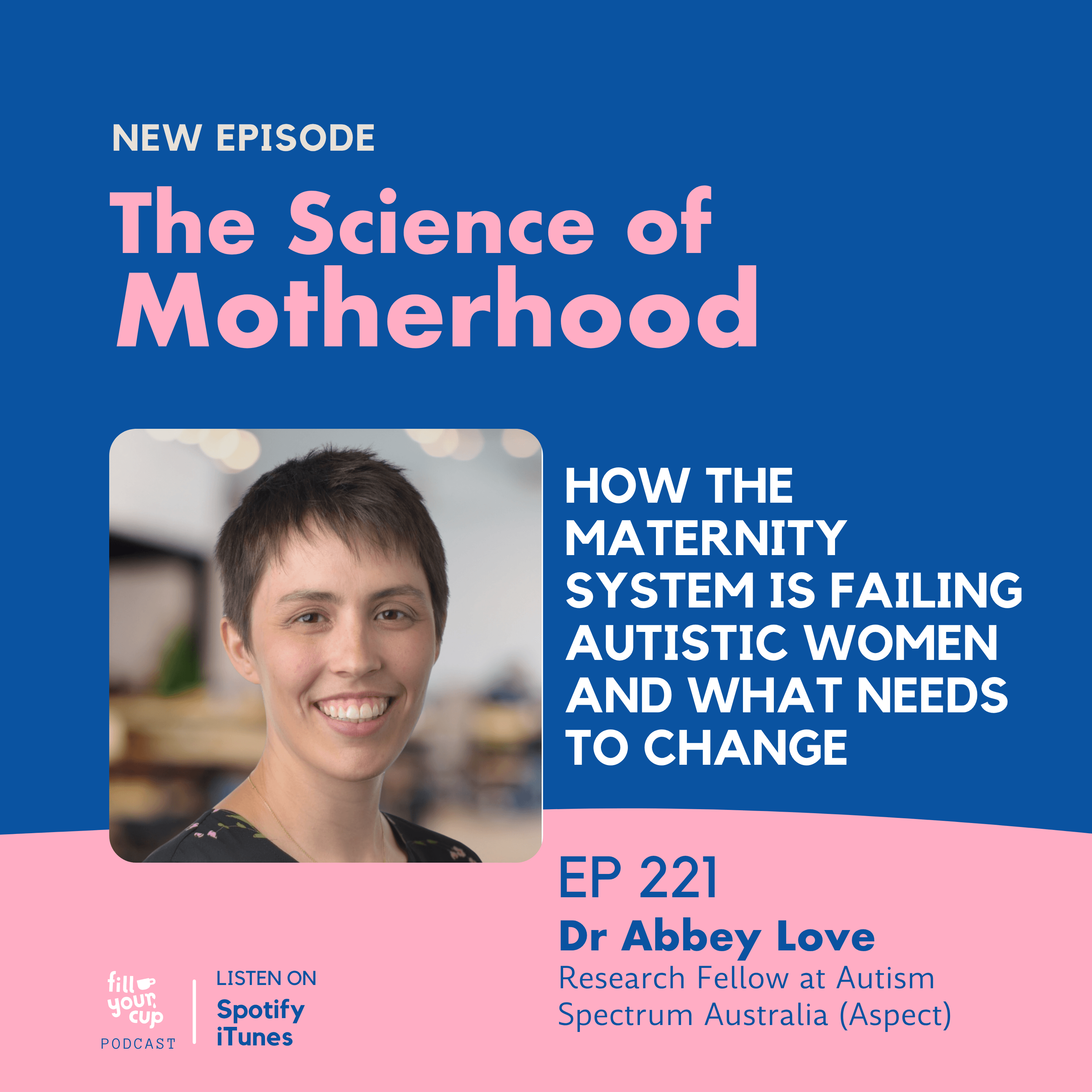
S2 Ep 221Ep 221. How the Maternity System Is Failing Autistic Women and What Needs to Change
Most women who are autistic don't find out until they're sitting in a room watching their child get diagnosed. And then everything clicks.And yet most of them navigated pregnancy and early parenthood without any evidence-based support specific to their experience, often without even knowing why things felt so much harder.In this episode of The Science of Motherhood, Dr Renee White sits down with Dr Abbey Love, Educational Psychologist and Research Fellow at Autism Spectrum Australia, to explore the lived experiences of autistic parents through the perinatal period and the research that led to the creation of the Aspect New Parents Hub. Together they unpack what the evidence actually shows about pregnancy, sensory experience, healthcare barriers and what genuine support can look like.The hub was built on Australian research co-produced with autistic parents themselves, and what they found has real implications for every neurodivergent woman navigating this season.This is Part 1 of The Science of Motherhood's three-part autism series, stay tuned for Parts 2 and 3 coming soon.You'll hear about:Why sensory experiences intensify during pregnancy for neurodivergent womenHow autistic parents shaped the research behind the Aspect hubWhat healthcare providers say gets in the way of delivering good careWhy continuity of care matters so much for neurodivergent familiesHow a birth plan can become a communication and advocacy toolYou don't need a diagnosis to find something useful in this conversation. What Dr Abbey Love and her team found is that neurodivergent parents bring enormous strength and competence to this season, and the gap isn't in them, it's in the support around them.If this episode resonated, share it with someone who might need to hear it. And subscribe so you don't miss the next episode of The Science of Motherhood.Resources & Links📲 Connect with Renee on Instagram: @fillyourcup_ 🌐 Learn more about Dr Renee White and explore Fill Your Cup Doula services 🍪 Treat yourself with our Chocolate + Goji lactation cookies About Dr Abbey Love and Aspect 🔗 Explore the Aspect New Parents Hub: Autistic Pregnancy and Parenthood Hub 🔗 Learn more about Dr Abbey Love and the Aspect research team: Aspect Research Team 🔗 Connect with Aspect on Instagram: @aspect_ausThis episode is proudly supported by Fill Your Cup, Australia's first doula village, with doulas available across Melbourne, Geelong, Sydney, Newcastle, Brisbane, Gold Coast, Hobart and Perth.Disclaimer The information on this podcast presented by Fill Your Cup is not a substitute for independent professional advice. Nothing contained in this episode is intended to be used as medical advice and it is not intended to be used to diagnose, treat, cure or prevent any disease, nor should it be used for therapeutic purposes or as a substitute for your own health professional's advice.
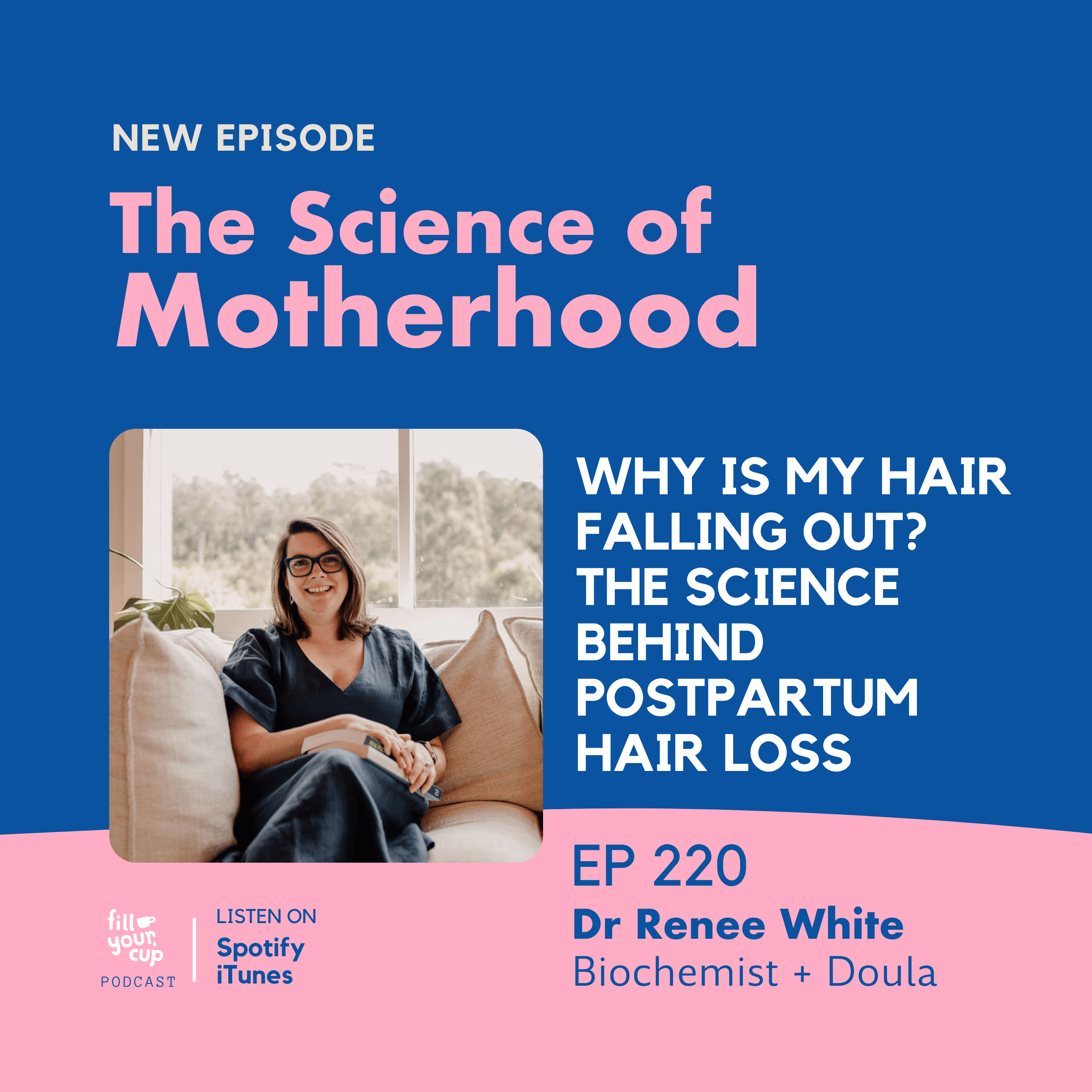
S2 Ep 220Ep 220. Why Is My Hair Falling Out? The Science Behind Postpartum Hair Loss
You survived birth, the sleepless nights and the newborn haze. And then somewhere around three or four months in, you reach up to wash your hair and pull your hand away covered in it.It's alarming, and for most of us, nobody warned us it was coming.This episode is for every mum who has stood over the shower drain wondering if something is seriously wrong. It isn't. But understanding the biology behind what's happening makes it so much easier to move through.This is part of The Science Behind series, where Dr Renee White takes your real questions and unpacks the science in a way that actually makes sense in real life.You'll hear about:Why pregnancy hormones cause your hair to stop shedding normallyWhat telogen effluvium is and why it hits at three to four monthsWhy you're not losing follicles, just catching up on stored hairWhich nutrient deficiencies can compound postpartum hair lossWhen your hair is likely to return to its pre-pregnancy densityYour body isn't falling apart. It's recalibrating. The shedding you're experiencing is a sign of how extraordinary your hormonal landscape was during pregnancy, and your body is simply finding its way back.Resources & Links📲 Connect with Renee on Instagram: @fillyourcup_🌐 Learn more about Dr Renee White and explore Fill Your Cup Doula services🍪 Treat yourself with our Chocolate + Goji lactation cookiesThis episode is proudly supported by Fill Your Cup, Australia's first doula village, with doulas available across Melbourne, Geelong, Sydney, Newcastle, Brisbane, Gold Coast, Hobart and Perth.If this episode helped, share it with a mum friend who's standing over the shower drain wondering what on earth is happening. And don’t forget to subscribe so you never miss an episode of The Science of Motherhood.Disclaimer: The information on this podcast presented by Fill Your Cup is not a substitute for independent professional advice. Nothing contained in this episode is intended to be used as medical advice and it is not intended to be used to diagnose, treat, cure or prevent any disease, nor should it be used for therapeutic purposes or as a substitute for your own health professional's advice.
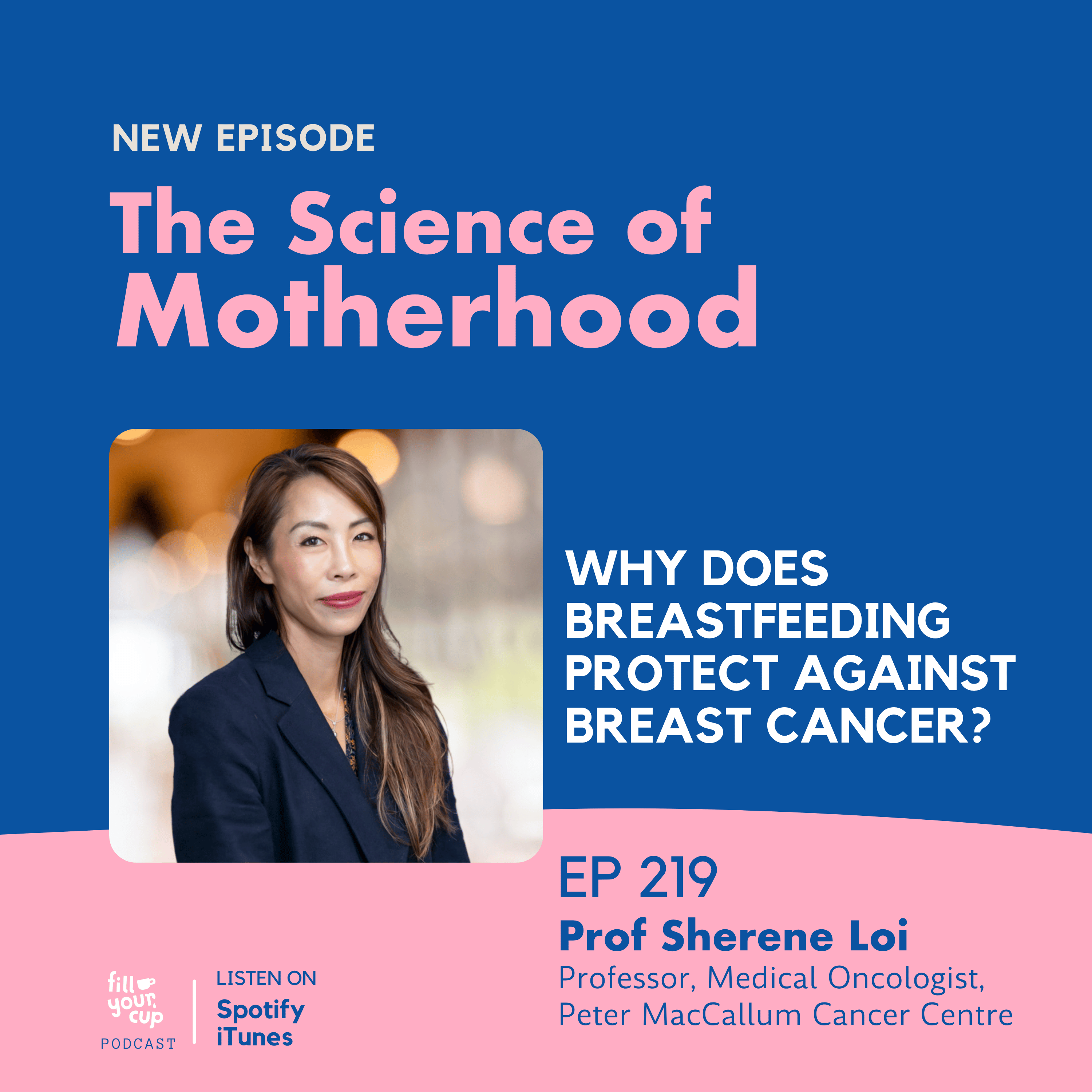
S2 Ep 219Ep 219. Why Does Breastfeeding Protect Against Breast Cancer?
We've known for decades that breastfeeding is associated with a reduced risk of breast cancer. What we've never fully understood is why.That question is what makes this research so significant.In this episode of The Science of Motherhood, Dr Renee White sits down with Professor Sherene Loi, Medical Oncologist and Group Leader at the Peter MacCallum Cancer Centre in Melbourne, to discuss a landmark paper published in Nature that identifies the immune mechanism behind that long-observed link. Together they explore how pregnancy and breastfeeding appear to reprogram the breast's immune environment in ways that can persist for years, and what that could mean for the future of breast cancer prevention.It turns out the body's been doing something extraordinary all along. Science is only now catching up to explain it.You'll hear about:Why breastfeeding appears to reprogram a mother's immune systemHow T cells in breast tissue connect to long-term cancer protectionWhat "anything is better than nothing" actually means for breastfeeding durationWhy women's reproductive history has been missing from major cancer datasetsHow this research could shape future prevention strategies for all womenThis research doesn't add pressure to the breastfeeding conversation. It adds meaning to it.If this episode resonated, share it with someone who'd want to understand the science behind their own body. And subscribe so you never miss an episode of The Science of Motherhood.Resources & Links📲 Connect with Renee on Instagram: @fillyourcup_🌐 Learn more about Dr Renee White and explore Fill Your Cup Doula services🍪 Treat yourself with our Chocolate + Goji lactation cookies🔗 Learn more about Professor Sherene Loi and her lab hereThis episode is proudly supported by Fill Your Cup, Australia's first doula village, with doulas available across Melbourne, Geelong, Sydney, Newcastle, Brisbane, Gold Coast, Hobart and Perth.Disclaimer: The information on this podcast presented by Fill Your Cup is not a substitute for independent professional advice. Nothing contained in this episode is intended to be used as medical advice and it is not intended to be used to diagnose, treat, cure or prevent any disease, nor should it be used for therapeutic purposes or as a substitute for your own health professional's advice.
S2 Ep 218Ep 218. Why Being Nap Trapped is So Beneficial
If you've ever been nap trapped and spent the whole time quietly worrying that you're creating a dependency your baby will never grow out of, this one's for you. What's actually happening in your baby's brain while they sleep on your chest is one of the most compelling pieces of science in early infancy, and you deserve to know it.This episode is for every mum who has sat there convinced she should be doing something more productive, or that the way her baby sleeps is somehow a problem she created. Understanding the biology behind contact napping doesn't just answer the question. It changes how this whole season feels.This is part of The Science Behind series, where Dr Renee White takes the questions every mama is asking and unpacks the actual biology behind them.You'll hear about:Why your baby's brain is still under construction at birthWhat oxytocin and cortisol are doing during contact napsHow your body regulates your baby's nervous systemWhy your baby's nervous system is designed for a body, not a cotWhat the research actually says about contact napping and independenceContact napping isn't something you stumbled into by accident. It's one of the most neurologically productive things your baby can do, and your presence, even when it feels passive, is actively building their brain. You're not doing nothing. You're doing everything.If this episode gave you something to hold onto, share it with a mum who needs to hear it. And subscribe so you don't miss an episode of The Science of Motherhood.Resources & Links 📲 Connect with Renee on Instagram: @fillyourcup_🌐 Learn more about Dr Renee White and explore Fill Your Cup Doula services🍪 Treat yourself with our Chocolate + Goji lactation cookiesThis episode is proudly supported by Fill Your Cup, Australia's first doula village, with doulas available across Melbourne, Geelong, Sydney, Newcastle, Brisbane, Gold Coast, Hobart and Perth.Disclaimer The information on this podcast presented by Fill Your Cup is not a substitute for independent professional advice. Nothing contained in this episode is intended to be used as medical advice and it is not intended to be used to diagnose, treat, cure or prevent any disease, nor should it be used for therapeutic purposes or as a substitute for your own health professional's advice.
S2 Ep 217Ep217. What Does It Mean to Thrive, Not Just Cope, as a New Mum?
Most conversations about maternal mental health start in the same place: the one in five women who experience postnatal depression or anxiety. But what about the other four in five? What are we doing to help them thrive?It is a question that stops you in your tracks, because most of us have never thought to ask it.In this episode Dr Renee White sits down with Lesley Pascuzzi, an Applied Psychologist and PhD candidate at Curtin University whose research focuses on optimising the mental health and emotional wellbeing of women on their journey to parenthood, to explore what it actually means to feel emotionally well, not just the absence of illness, but something richer and more personal than that. Together, they unpack why so many women struggle to define their own wellbeing, and what it would look like to change that.It turns out that when women are given the space to think about it, they know what they need. The challenge is creating the conditions for them to hear themselves.You'll hear about:Why emotional wellbeing is so hard to defineWhat perspectives on wellbeing can teach us about inner knowingHow social media falls short for maternal mental healthWhy midwifery-led care is key to helping women thriveHow to start trusting your instincts with yourselfYou already have more answers about what you need than you might realise. This conversation is an invitation to slow down, get quiet, and start listening for them.Resources & Links 📲 Connect with Renee on Instagram: @fillyourcup_🌐 Learn more about Dr Renee White and explore Fill Your Cup Doula services🍪 Treat yourself with our Chocolate + Goji lactation cookies 🔗 Connect with Lesley Pascuzzi on LinkedInResearch mentioned in this episodeLesley Pascuzzi's research paper: Exploring emotional wellbeing in the perinatal period: A qualitative study in Australia Best Beginnings study — Hannah Dahlen and Hazel Keedle, Western Sydney University: linked hereThis episode is proudly supported by Fill Your Cup, Australia's first doula village.If this episode resonated, share it with someone who might need permission to think about their own wellbeing for a change. And subscribe so you never miss an episode of The Science of Motherhood.Disclaimer The information on this podcast presented by Fill Your Cup is not a substitute for independent professional advice. Nothing contained in this episode is intended to be used as medical advice and it is not intended to be used to diagnose, treat, cure or prevent any disease, nor should it be used for therapeutic purposes or as a substitute for your own health professional's advice.
S2 Ep 216Ep 216. Why Hasn't My Milk Come In? The Science Behind Your Supply
If you've just had your baby and your milk hasn't arrived yet, the first thing to know is that your body is not failing you. It's actually doing something remarkably complex behind the scenes, and most people, including most healthcare providers, never take the time to explain what that actually looks like.This episode is for every mum who has found herself Googling this question at 2am, wondering if something has gone wrong. It hasn't. But understanding the biology of what's happening can make all the difference in how you feel about it.This is the first episode of our brand new series, The Science Behind, where Dr Renee White takes your real questions and unpacks the science in a way that actually makes sense in real life.You'll Hear About:Why your milk supply started months before your baby arrivedWhat progesterone, prolactin and oxytocin are actually doing to establish your supplyWhy stress has a measurable impact on your letdown reflexHow the demand and supply loop works, and what it means for those early feedsWhen a delay beyond day five is worth a conversation with your midwife or GPWhat your body is doing right now is extraordinary. Coordinating multiple hormonal systems, responding to your baby's cues, producing something completely new, all while recovering from one of the most physically demanding experiences a human body goes through. The timing of your milk coming in is biology, not a measure of how well you're doing.If you found this episode helpful, share it with someone who needs to hear it. And subscribe so you don't miss an episode of The Science of Motherhood.Resources & Links📲 Connect with Renee on Instagram: @fillyourcup_🌐 Learn more about Dr Renee White and explore Fill Your Cup Doula services🍪 Treat yourself with our Chocolate + Goji lactation cookiesThis episode is proudly supported by Fill Your Cup, Australia's first doula village, with doulas available across Melbourne, Geelong, Sydney, Newcastle, Brisbane, Gold Coast, Hobart and Perth.Disclaimer: The information presented in this podcast by Fill Your Cup is not a substitute for independent professional advice. Nothing contained in this episode is intended to be used as medical advice and it is not intended to be used to diagnose, treat, cure or prevent any disease, nor should it be used for therapeutic purposes or as a substitute for your own health professional's advice.
S2 Ep 215Ep 215. Contraception After Birth: IUDs, Pills, Implants Explained
Have you been to your six-week checkup and walked out with only a script for the pill? Or found yourself wondering what your actual options are now that you've had a baby?This week, Dr Renee White sits down with Dr Natasha Vavrek, women's health GP and clinical director at The Bubble, to break down all the contraceptive options available after birth. Not just the pill. Everything.This conversation started from a real question from a listener who felt her options weren't fully discussed at her six-week check. So Natasha walks through what's actually available, how breastfeeding affects your choices, when timing matters and what you need to know to have an informed conversation with your GP.You'll hear about:The full range of contraceptive options available after birthHow breastfeeding affects different contraceptives and milk supplyThe differences between Mirena, Kyleena and copper IUDsWhat to expect with side effects, costs and return to fertilityWhy vasectomy should be part of the conversationWhether you're heading into your six-week checkup, feeling unsure about what you're using or just wanting to understand your options, this episode gives you what you need to make informed choices that work for your body and your life.Resources & Links📲 Connect with Renee on Instagram: @fillyourcup_🌐 Learn more about Dr Renee White and explore Fill Your Cup Doula services🍪 Treat yourself with our Chocolate + Goji lactation cookies📲 Connect with Dr Natasha Vavrek and The Bubble on Instagram: @thebubbletasmania🌐 Learn more about The Bubble and women's health services in Tasmania🎧 If this episode helped you understand your options better, share it with a friend who might need it too. And if you haven't already, hit subscribe so you never miss an episode.Disclaimer: The information on this podcast presented by Fill Your Cup is not a substitute for independent professional advice. Nothing contained in this episode is intended to be used as medical advice and it is not intended to be used to diagnose, treat, cure or prevent any disease, nor should it be used for therapeutic purposes or as a substitute for your own health professional's advice.
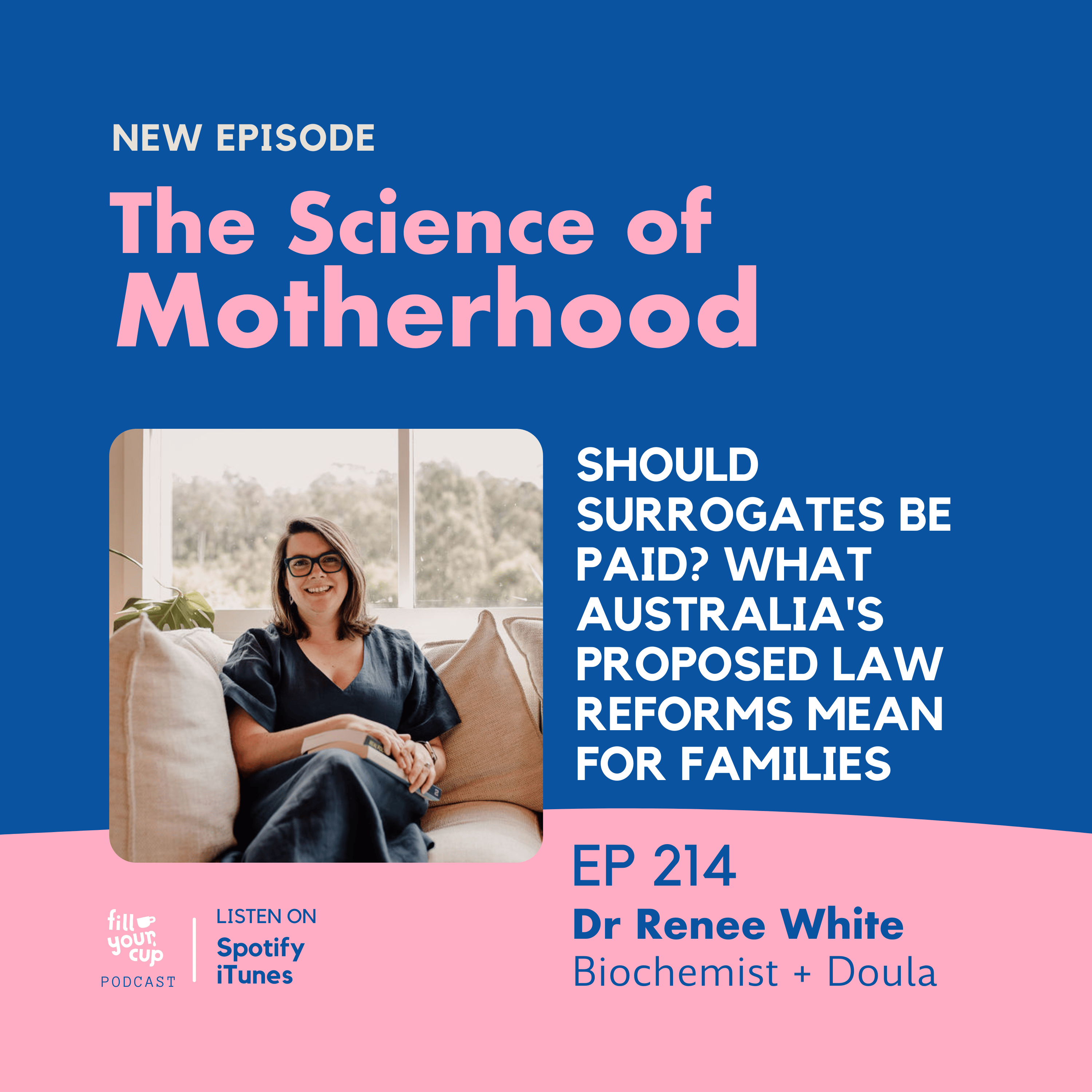
S2 Ep 214Ep 214. Should Surrogates Be Paid? What Australia's Proposed Law Reforms Mean for Families
Have you ever wondered why some Australian families travel overseas for surrogacy? Or been confused by headlines about proposed payments for surrogates and whether that crosses a line?Australia's surrogacy laws have been called "confusing, restrictive, and not fit for purpose." Now there's talk of reform, including monthly payments to surrogates. But it raises questions about whether we're finally acknowledging the labour involved, or creating new problems.In this episode, Dr Renee White explores Australia's proposed surrogacy law reforms and sits with some uncomfortable questions that don't have simple answers. Like whether it's more exploitative to pay someone for nine months of physical and emotional labour, or to expect them to do it for free while the doctors, lawyers and agencies all get paid.This isn't about having all the answers. It's about creating space to think about what fair support and real protection actually look like.You'll hear about:Why 369 families a year go offshore for surrogacy and whether our current laws are protecting anyoneThe thinking behind altruistic surrogacy and why surrogates are the only ones not compensatedWhat the proposed reforms actually include and why people are so dividedWhether we can put a price on pregnancy and who gets to decide what counts as exploitationHow this connects to bigger questions about valuing reproductive labour and care workWhether you've considered surrogacy, know someone who has, or you're just trying to understand this complex issue, this episode offers space to think critically about what we owe to surrogates, children and families navigating this path.Resources & Links📲 Connect with Renee on Instagram: @fillyourcup_🌐 Learn more about Dr Renee White and explore Fill Your Cup Doula services🍪 Treat yourself with our Chocolate + Goji lactation cookies✨ This episode is proudly supported by Fill Your Cup, Australia's first doula village.If this episode sparked something for you, share it with someone who'd value the conversation. And don't forget to hit subscribe so you never miss an episode of The Science of Motherhood.DisclaimerThe information on this podcast presented by Fill Your Cup is not a substitute for independent professional advice. Nothing contained in this episode is intended to be used as medical advice and it is not intended to be used to diagnose, treat, cure or prevent any disease, nor should it be used for therapeutic purposes or as a substitute for your own health professional's advice.
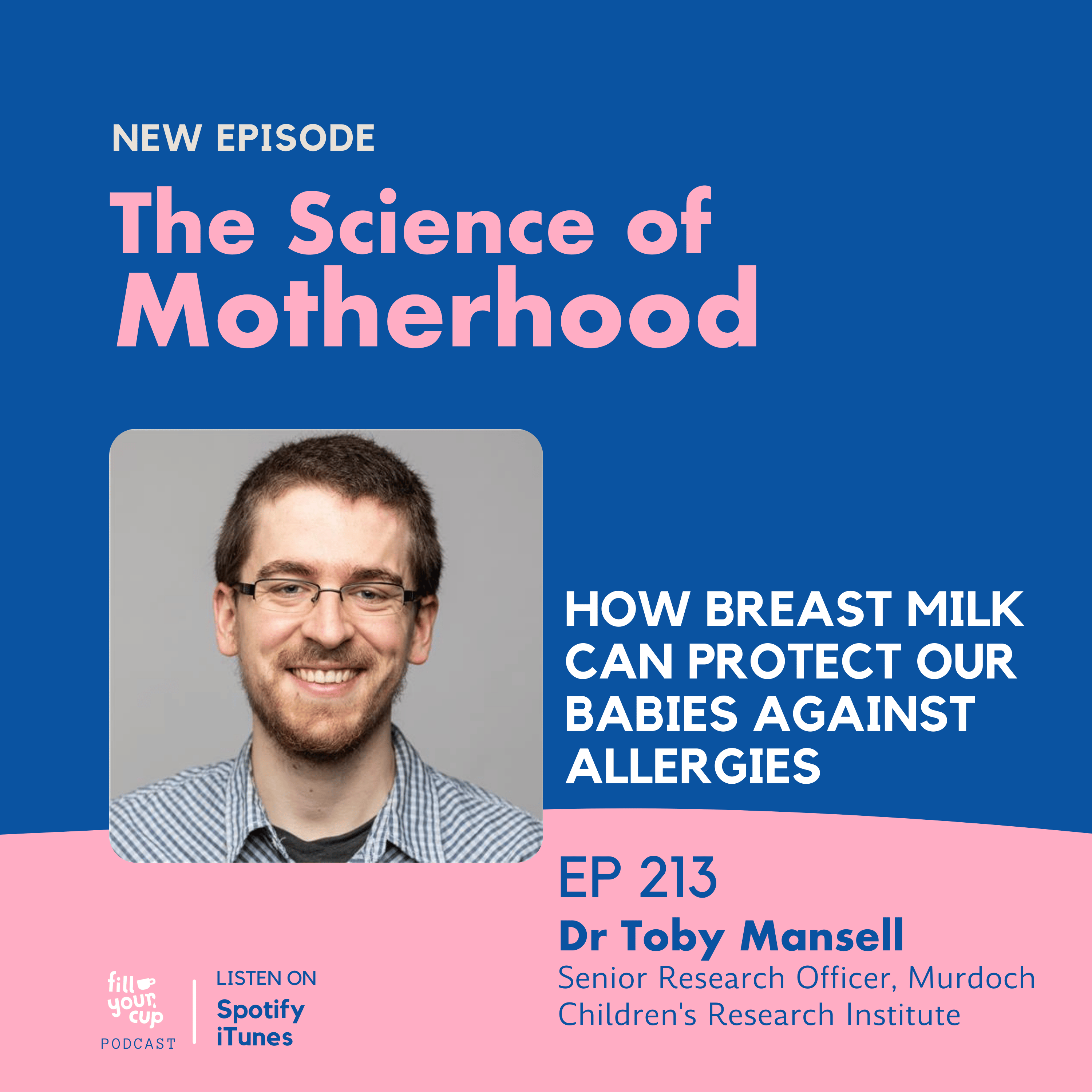
S2 Ep 213Ep 213. How breast milk can protect our babies against allergies
You've heard breastfeeding protects against allergies and asthma. But have you ever wondered what's actually happening inside your baby's body to make that possible?It's one of those things people say all the time, but rarely explain. And when you're in the thick of feeding, you deserve more than soundbites.In this episode, Dr Renee White sits down with Dr Toby Mansell, a researcher from the Murdoch Children's Research Institute here in Australia. His team studied nearly 900 babies from pregnancy through childhood, and what they found is genuinely fascinating.Together they talk about what happens at the molecular level when babies breastfeed, why certain fats in breast milk seem to reduce inflammation, and what this might mean for immune health down the track.It's science, yes. But it's also context. And hopefully, it helps things make a bit more sense.You'll hear about:How the Barwon Infant Study tracked 900 babies to understand what influences health from early lifePlasmalogens, lipids abundant in breast milk but absent in formula, and why they reduce inflammationWhat chronic inflammation in infancy means for allergies, asthma, and metabolic health laterHow breastfeeding changes infant metabolism at the cellular levelWhat this could mean for formula composition and supplements for all babiesWhether you're breastfeeding, formula feeding, or somewhere in between, this episode helps you understand what's happening biologically. It's research-based clarity without pressure or judgment.Resources & Links:📲 Connect with Renee on Instagram: @fillyourcup_🌐 Learn more about Dr Renee White and explore Fill Your Cup Doula services🍪 Treat yourself with our Chocolate + Goji lactation cookies🔗 Connect with Dr Toby Mansell: Murdoch Children's Research Institute - Inflammatory Origins Group🌐 Resources mentioned:Barwon Infant StudyMurdoch Children's Research InstituteRoyal Children's Hospital MelbourneThis episode is proudly supported by Fill Your Cup, Australia's first doula village.If this episode helped you feel more informed or less alone, share it with a mum who needs a steadier perspective. And don't forget to hit subscribe so you never miss an episode.DisclaimerThe information on this podcast presented by Fill Your Cup is not a substitute for independent professional advice. Nothing contained in this episode is intended to be used as medical advice and it is not intended to be used to diagnose, treat, cure or prevent any disease, nor should it be used for therapeutic purposes or as a substitute for your own health professional's advice.
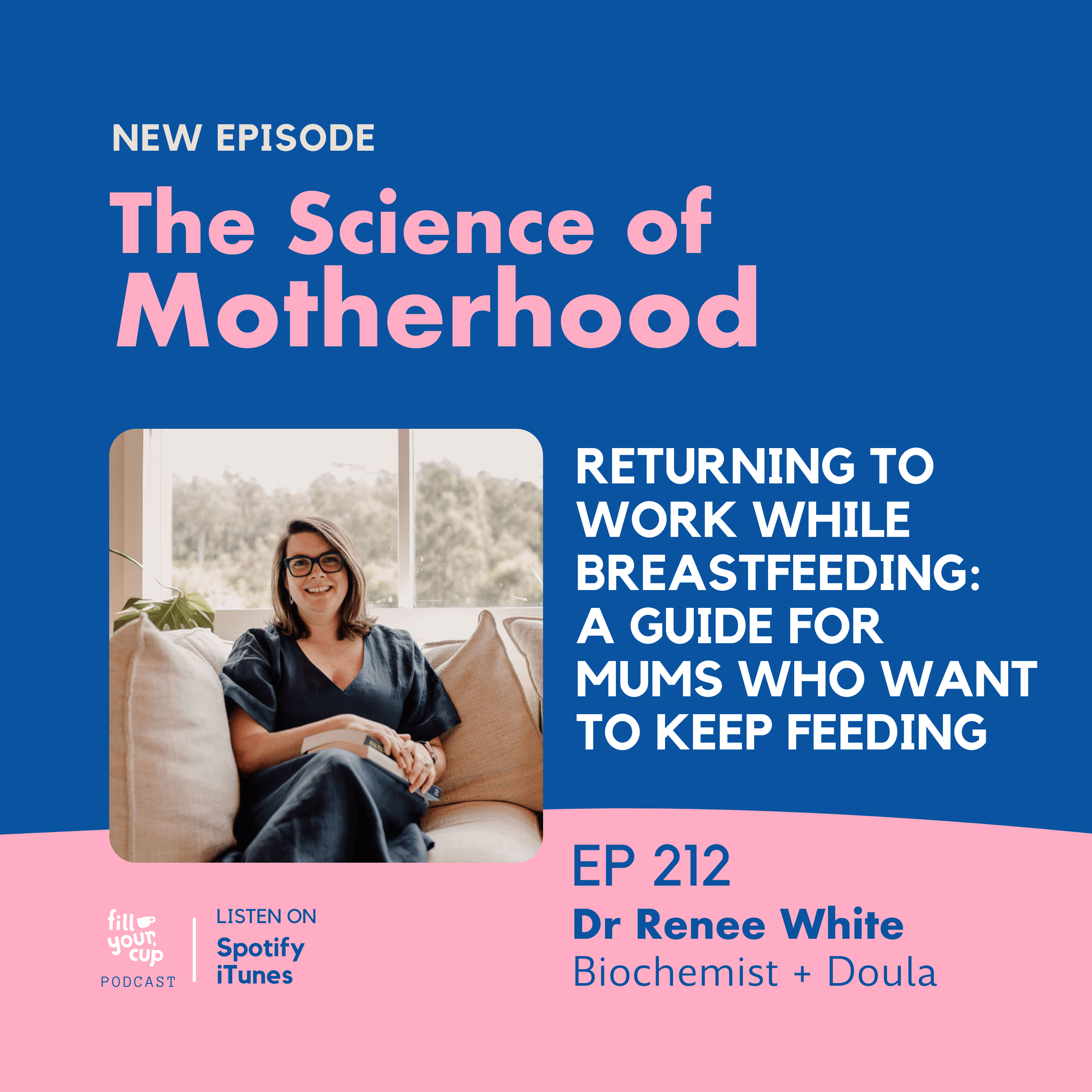
S2 Ep 212Ep 212. Returning to Work While Breastfeeding: A Guide for Mums Who Want to Keep Feeding
If you’re staring at a breast pump late at night and wondering how this is meant to work once you’re back at work, you’re not alone.Returning to work while breastfeeding is one of the most common and least supported transitions in early motherhood. It’s practical, emotional and deeply personal. Many mums feel caught between feeding their baby, returning to their role at work and trying to hold onto a sense of themselves in the process.In this episode of The Science of Motherhood, Dr Renee White offers a calm, evidence-informed conversation about what this transition really looks like. Not the Instagram version. The real one. With practical guidance, emotional reassurance and permission to do this in a way that works for you and your family.Renee explores the realities of combining breastfeeding and paid work, including the systemic gaps that make it harder than it needs to be. She shares practical strategies to prepare before you return, alongside gentle reminders that there is no single right way to feed or work.This episode is about clarity, choice and giving yourself room to adapt as your needs change.You’ll hear about:How to talk to your workplace about expressing, your rights and the space you needWhen to introduce bottles, and what to try if your baby won’t take oneSetting up a pumping and feeding rhythm that actually fits your workdayWhat usually happens to supply when you go back, and why small dips are commonThe emotional load of this season, and why guilt, grief and relief can all show up at onceSuccess isn’t about how long you breastfeed or how often you pump. It’s finding what works for your body, your baby, your work and your mind, and letting that be enough. You don’t have to nail it on day one. You’re allowed to tweak, change your mind and ask for support as you go.Resources & Links📲 Connect with Renee on Instagram: @fillyourcup_🌐 Learn more about Dr Renee White and explore Fill Your Cup Doula services🍪 Treat yourself with our Chocolate + Goji lactation cookies✨ This episode is proudly supported by Fill Your Cup, Australia’s first doula village.If this episode helped, share it with a mum who needs a break but doesn’t want the chaos. And don’t forget to hit subscribe so you never miss an episode of The Science of Motherhood. 💛DisclaimerThe information on this podcast presented by Fill Your Cup is not a substitute for independent professional advice. Nothing contained in this episode is intended to be used as medical advice and it is not intended to be used to diagnose, treat, cure or prevent any disease, nor should it be used for therapeutic purposes or as a substitute for your own health professional's advice.
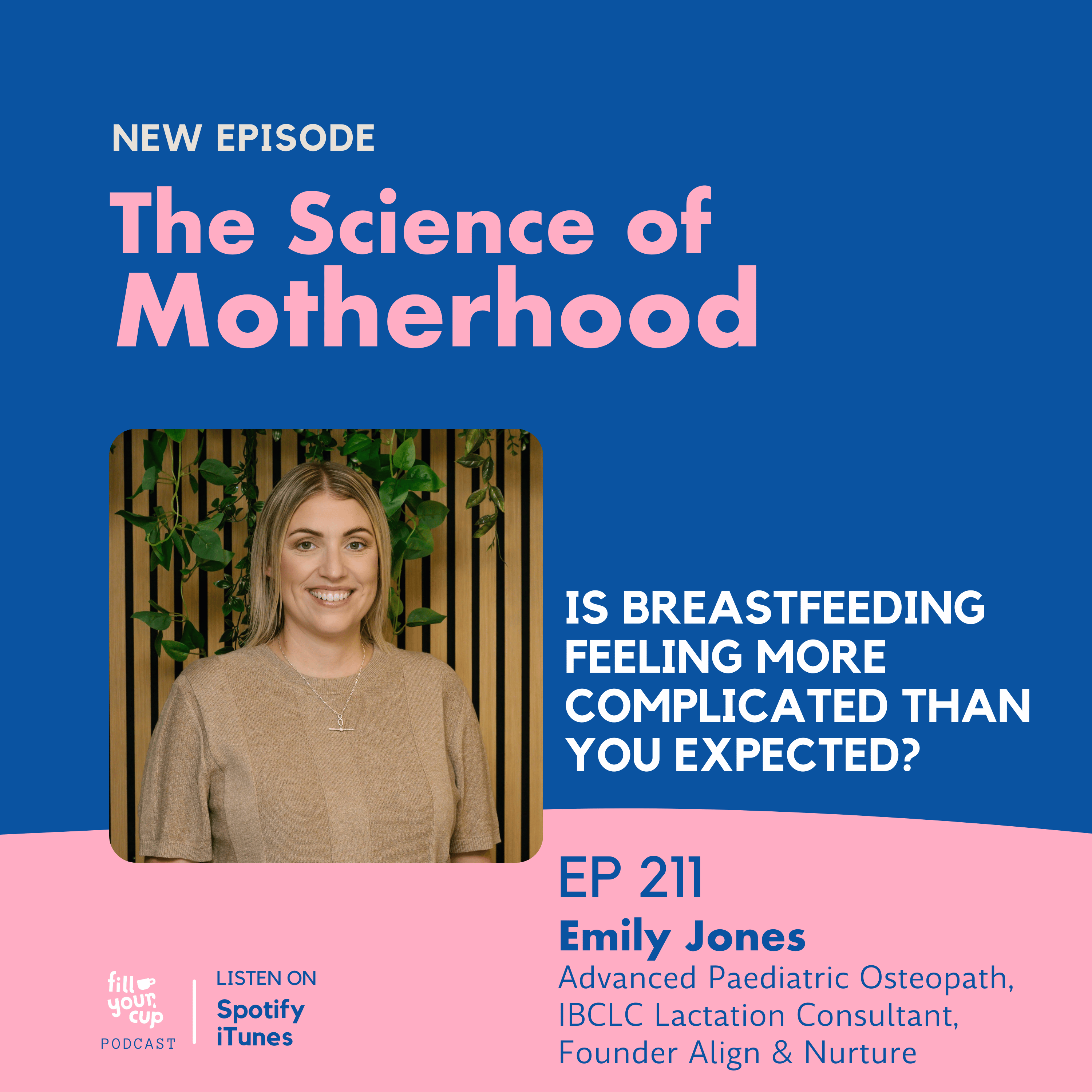
S2 Ep 211Ep 211. Is Breastfeeding Feeling More Complicated Than You Expected?
Breastfeeding is often spoken about as something that should feel natural, intuitive, and just click. But for many mums, the reality looks very different.Pain that doesn’t settle. A baby who feels tense, sleepy, or unsettled at the breast. And a quiet question running in the background, why is this so hard for us?In this episode of The Science of Motherhood, Dr Renee White sits down with Emily Jones, an Advanced Paediatric Osteopath, IBCLC Lactation Consultant, mother, and founder of Align & Nurture, to unpack what’s happening beneath the surface when feeding feels challenging, and why struggling does not mean you’re doing anything wrong.Together, they explore breastfeeding through both a physical and emotional lens, helping make sense of how birth experiences, body tension, positioning, and nervous system regulation can all shape early feeding journeys.You’ll hear about:How different birth types can shape early feedingSigns your baby’s body might be making latching harderWhen breastfeeding pain needs more than “pushing through”Simple positioning tweaks to ease feeding for you bothWays to look after your mental health while you work on feedingBreastfeeding challenges are rarely about effort. They’re often about your baby’s body, your recovery from birth, and the support around you. This episode gives you practical context for what might be going on, and what you can do next, without blame.Resources & Links:📲 Connect with Renee on Instagram: @fillyourcup_🌐 Learn more about Dr Renee White and explore Fill Your Cup Doula services🍪 Treat yourself with our Chocolate + Goji lactation cookies🔗 Learn more about Australian Breastfeeding Association https://www.breastfeeding.asn.au/🔗 Connect with Emily and Align & NurtureWebsite: https://www.alignandnurture.com.auInstagram: https://www.instagram.com/alignandnurtureThis episode is proudly supported by Fill Your Cup, Australia’s first doula village.If this episode helped, share it with a mum who needs a break but doesn’t want the chaos. And don’t forget to hit subscribe so you never miss an episode of The Science of Motherhood. 💛DisclaimerThe information on this podcast presented by Fill Your Cup is not a substitute for independent professional advice. Nothing contained in this episode is intended to be used as medical advice and it is not intended to be used to diagnose, treat, cure or prevent any disease, nor should it be used for therapeutic purposes or as a substitute for your own health professional's advice.
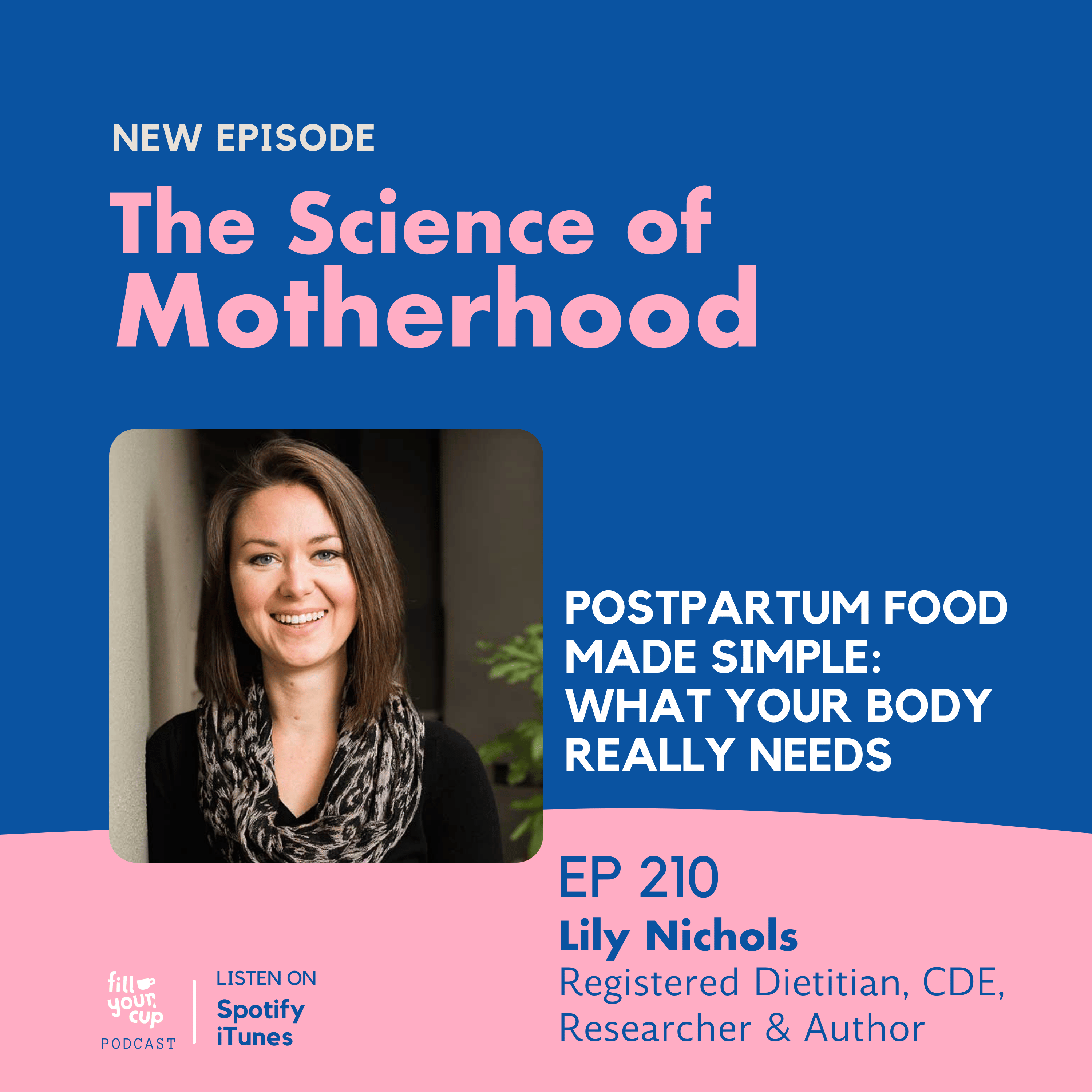
S2 Ep 210Ep 210. Postpartum Food Made Simple: What Your Body Really Needs
Have you ever wondered why you’re still so hungry after having a baby, or why postpartum recovery feels heavier than you expected?For many mums, the early months after birth are a mix of healing, feeding, broken sleep and trying to make sense of advice that often feels confusing or contradictory. Especially when food and blood sugar have already felt closely monitored during pregnancy.This episode is part of The Science of Motherhood Summer Series, where Dr Renee White revisits some of your most listened to conversations, the ones that help you feel calmer, more informed, and less alone.In this replay, Renee is joined by Lily Nichols, a registered dietitian, certified diabetes educator, researcher and author, known for her evidence based approach to prenatal and postpartum nutrition. Together, they unpack what the research actually shows about postpartum nutrient needs, breastfeeding hunger, and recovery after gestational diabetes.It’s a steadying conversation that offers clarity without pressure, and context for why your body might be asking for more right now.You’ll hear about:Why postpartum hunger can feel intense and persistent, especially while breastfeedingHow pregnancy and breastfeeding draw on nutrient stores, and which ones are commonly depletedWhy protein needs are higher postpartum than many mums are toldWhat follow up after gestational diabetes is actually for, and why constant monitoring isn’t always neededHow to think about food, rest and recovery in a way that supports your body, not controls itIf postpartum nutrition or life after gestational diabetes has felt confusing, overwhelming, or loaded with pressure, this episode offers reassurance and evidence to help you breathe out.Links and Resources📲 Want to chat more about this? Connect with Renee on Instagram: @fillyourcup_🌐 Want to learn more about Dr Renee White and explore Fill Your Cup Doula services🍪 If you want to gobble up our famous Chocolate + Goji lactation cookies, look no further!📲 Follow Lily on Instagram: @lilynicholsrdn🌐 Explore Lily’s work and resources: lilynicholsrdn.com📘 Learn more about her bestselling book: realfoodforpregnancy.com🎧 If this episode gave you a little more clarity or confidence, share it with a fellow mum or mama-to-be. And don’t forget to hit subscribe so you never miss an episode.Disclaimer: The information on this podcast presented by the Fill Your Cup is not a substitute for independent professional advice.Nothing contained in this podcast is intended to be used as medical advice and it is not intended to be used to diagnose, treat, cure or prevent any disease, nor should it be used for therapeutic purposes or as a substitute for your own health professional's advice.
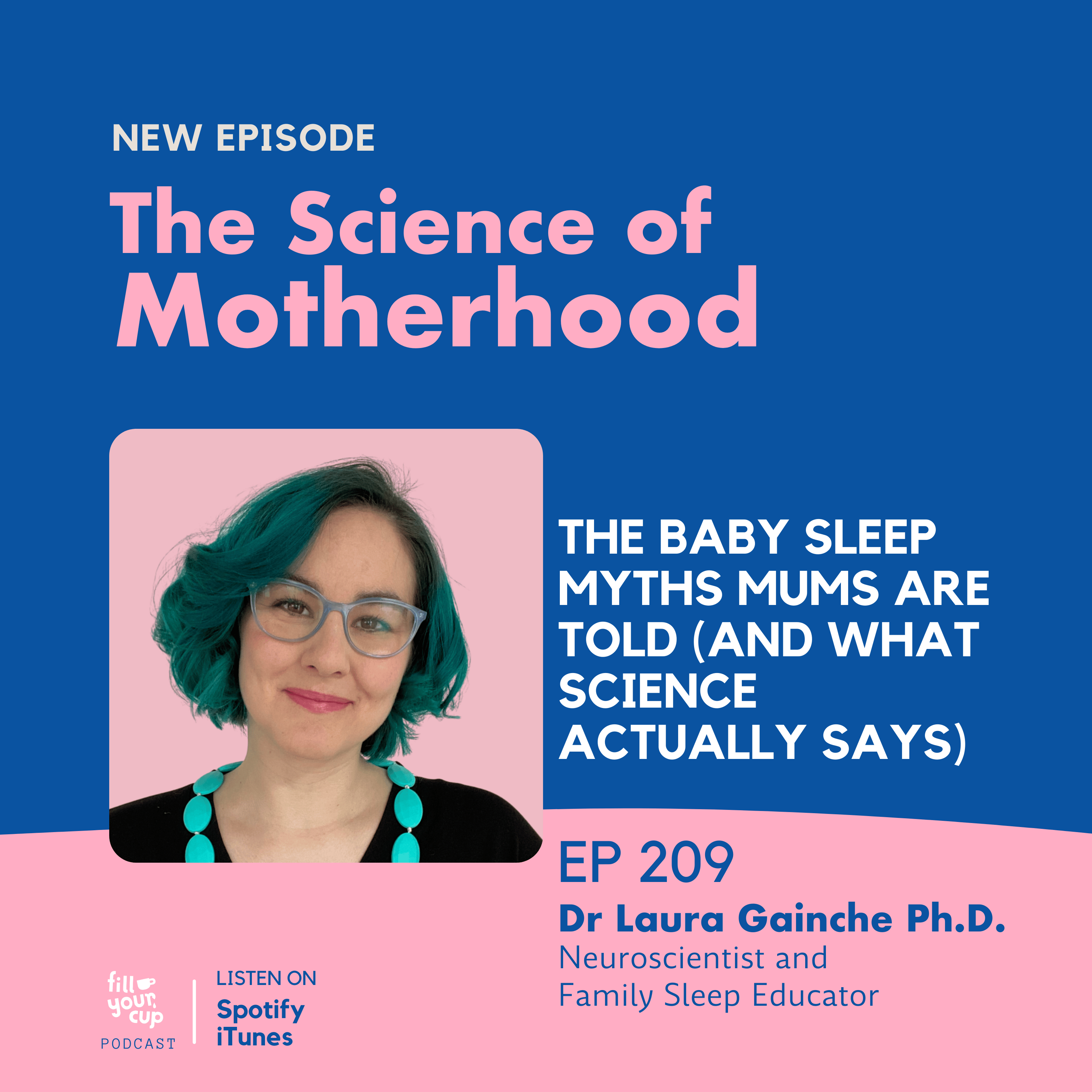
S2 Ep 209Ep 209. The Baby Sleep Myths Mums Are Told (and What Science Actually Says)
Have you ever wondered if you’re doing something wrong because your baby won’t sleep the way you were told they “should”?Because it’s not just the broken sleep.It’s the pressure. The timelines. The numbers. The feeling that everyone else has it figured out, and you somehow missed the memo.This episode is part of The Science of Motherhood Summer Series, where Dr Renee White revisits some of your favourite conversations, the ones that made you feel calmer, more informed, and less alone.In this replay, Renee is joined by Dr Laura Gainche Ph.D., a Family Sleep Educator with a background as a neuroscientist and sleep scientist. Through her Scienceforallwomen platform, Laura helps parents turn sleepless into more blissful nights using science and connection, and supports families to find their own unique way to parent at night.Together, Renee and Laura unpack how modern sleep expectations have been shaped, why the “12-hour night” has become such a powerful benchmark, and what the research actually shows about normal baby sleep. It’s a conversation that offers science, yes, but also permission to breathe out and stop treating night waking like a personal failure.Together they explore:Why the “12-hour night” expectation sets so many families up to feel like they’re failingWhat sleep research actually shows about normal baby sleep and night wakingWhy the “best” approach at night depends on your family, not one set of rulesHow fear-based sleep messaging can fuel guilt and self-doubtWhat it can look like to find your way at night, with science and connectionIf baby sleep has been making you question yourself, this conversation is a steadying one. Share it with a parent who needs the reminder that they’re not broken, and hit subscribe so you don’t miss the next replay.Resources & Links📲 Connect with Renee on Instagram: @fillyourcup_🌐 Learn more about Dr Renee White and explore Fill Your Cup Doula services🍪 Treat yourself with our Chocolate + Goji lactation cookies📲 Connect with Dr Laura Gainche on Instagram: @scienceforallwomenThis episode is proudly supported by Fill Your Cup, Australia’s first doula village.DisclaimerThe information on this podcast presented by Fill Your Cup is not a substitute for independent professional advice. Nothing contained in this episode is intended to be used as medical advice and it is not intended to be used to diagnose, treat, cure or prevent any disease, nor should it be used for therapeutic purposes or as a substitute for your own health professional’s advice.
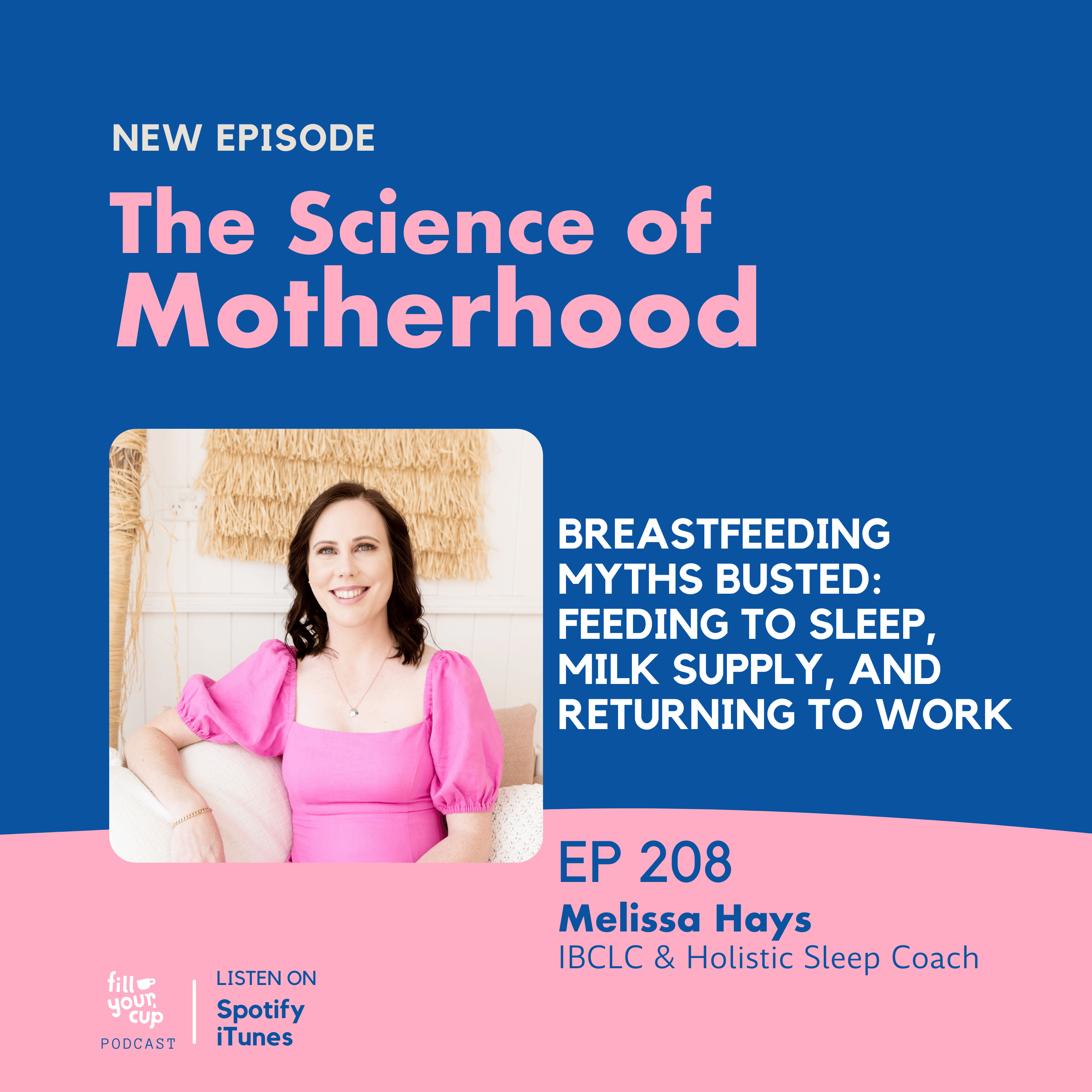
S2 Ep 208Ep 208. Breastfeeding Myths Busted: Feeding to Sleep, Milk Supply, and Returning to Work
Have you ever googled something at 2am and walked away feeling more confused than before?Feeding and sleep advice can be loud, conflicting, and often loaded with unnecessary pressure, especially in the early weeks when you’re already tired and trying to figure everything out as you go.This episode is part of The Science of Motherhood Summer Series, where Dr Renee White revisits some of your favourite conversations, the ones that made you feel calmer, more informed, and less alone.In this replay, Renee chats with Melissa Hays, international board certified lactation consultant (IBCLC), holistic sleep coach, and former paediatric nurse and midwife, about the myths that cause the most stress for new mums. They talk about feeding to sleep, milk supply, breast size, contact sleep, and the belief that going back to work means breastfeeding has to end.If you’ve ever felt like you’re doing it wrong because your baby feeds often, settles best close to you, or doesn’t fit the “should” advice you’ve heard, this episode brings things back to what’s normal and what’s actually supported by evidence.You’ll hear about:Why feeding to sleep is normal, and why guilt around it is so commonWhy breast size has nothing to do with supply, and what affects feeding patterns insteadWhat’s happening in the early weeks when milk supply regulatesWhy newborns are wired for closeness, and why “only sleeps on me” is so commonWhy you don’t have to wean to return to work, and what continuing can look likeIf feeding or sleep has felt heavier than you expected, this one will help you breathe out. Share it with a mum who needs a steady voice, and hit subscribe so you don’t miss the next replay.Resources & Links📲 Connect with Renee on Instagram: @fillyourcup_🌐 Learn more about Dr Renee White and explore Fill Your Cup Doula services🍪 Treat yourself with our Chocolate + Goji lactation cookies📲 Connect with Melissa Hays on Instagram: @cocoonandcradle🌐 Learn more about Melissa’s breastfeeding & sleep support servicesThis episode is proudly supported by Fill Your Cup, Australia’s first doula village.DisclaimerThe information on this podcast presented by Fill Your Cup is not a substitute for independent professional advice. Nothing contained in this episode is intended to be used as medical advice and it is not intended to be used to diagnose, treat, cure or prevent any disease, nor should it be used for therapeutic purposes or as a substitute for your own health professional's advice.
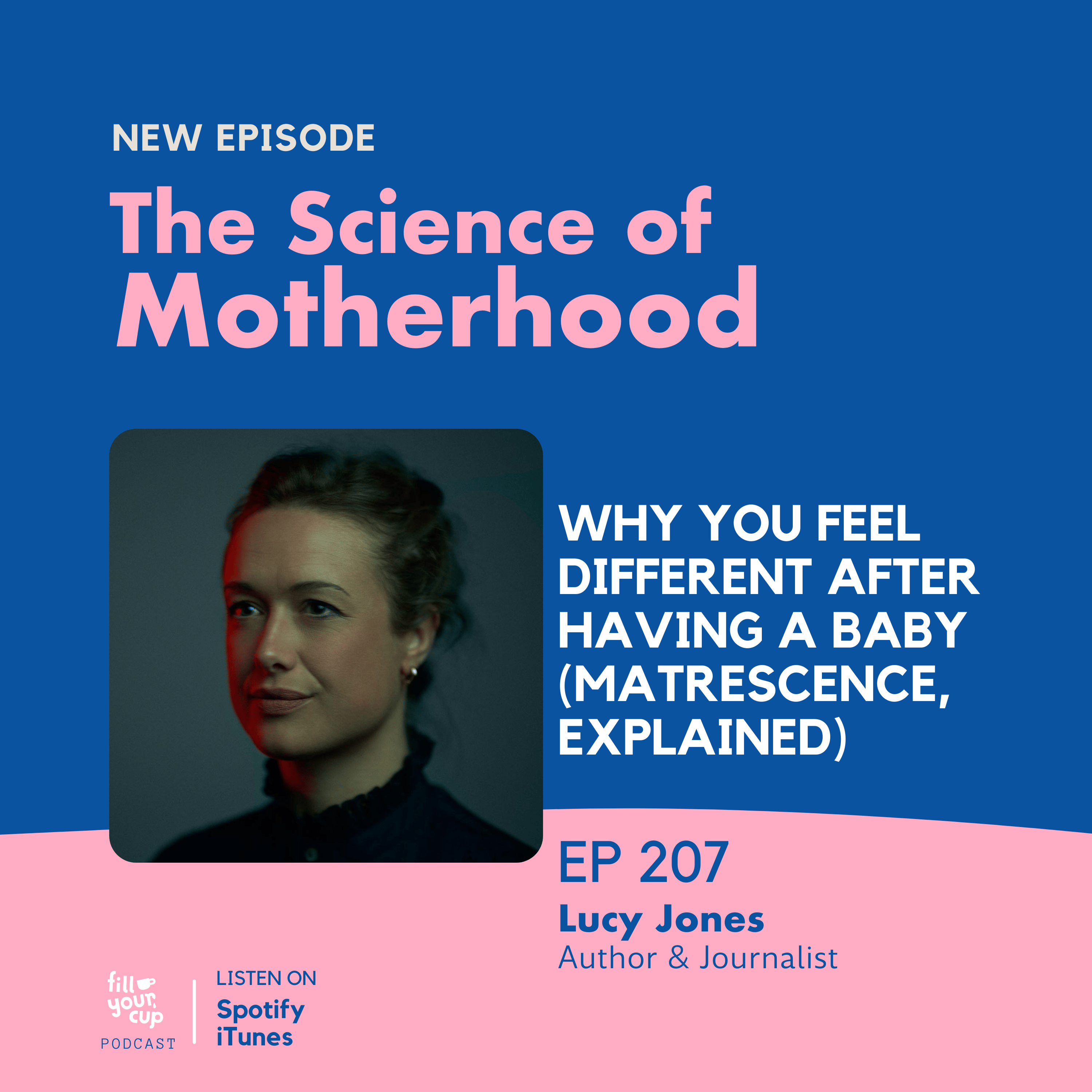
S2 Ep 207Ep 207. Why You Feel Different After Having a Baby (Matrescence, Explained)
Have you ever felt like becoming a mum changed more than your daily routine? Like it changed you?If you’ve felt a shift in your identity, confidence, or sense of self since having a baby, this episode will put words to it.This episode opens The Science of Motherhood Summer Series, where Dr Renee White revisits some of your favourite episodes, the ones that made you feel seen, understood, and less alone in your motherhood journey.In this replay, Renee sits down with Lucy Jones, science writer and author of Matrescence: On the Metamorphosis of Pregnancy, Childbirth, and Motherhood, to unpack the real transformation that happens in pregnancy, birth, and postpartum. Not just emotionally, but biologically and socially too.You’ll hear about:What matrescence is, and why motherhood can feel like a full-body identity shiftHow your brain and body change through pregnancy and postpartumWhy the “this should be natural” narrative can fuel shame and silenceWhat helps mums feel steadier, supported, and more like themselves againIf you’ve been thinking, “Why didn’t anyone tell me it could feel like this?”, you’re not alone. This episode gives you language, validation, and a way to make sense of what you’re experiencing.If it helped, share it with a mum who needs it, and hit subscribe so you don’t miss the next replay.Resources & Links📲 Connect with Renee on Instagram: @fillyourcup_🌐 Learn more about Dr Renee White and explore Fill Your Cup Doula services🍪 Treat yourself with our Chocolate + Goji lactation cookies📚 Lucy Jones’ book: Matrescence: On the Metamorphosis of Pregnancy, Childbirth, and Motherhood🌐 Lucy’s website: https://lucyfjones.com/📲 Lucy on Instagram: @lucyfjonesThis episode is proudly supported by Fill Your Cup, Australia’s first doula village.DisclaimerThe information on this podcast presented by Fill Your Cup is not a substitute for independent professional advice. Nothing contained in this episode is intended to be used as medical advice and it is not intended to be used to diagnose, treat, cure or prevent any disease, nor should it be used for therapeutic purposes or as a substitute for your own health professional's advice.
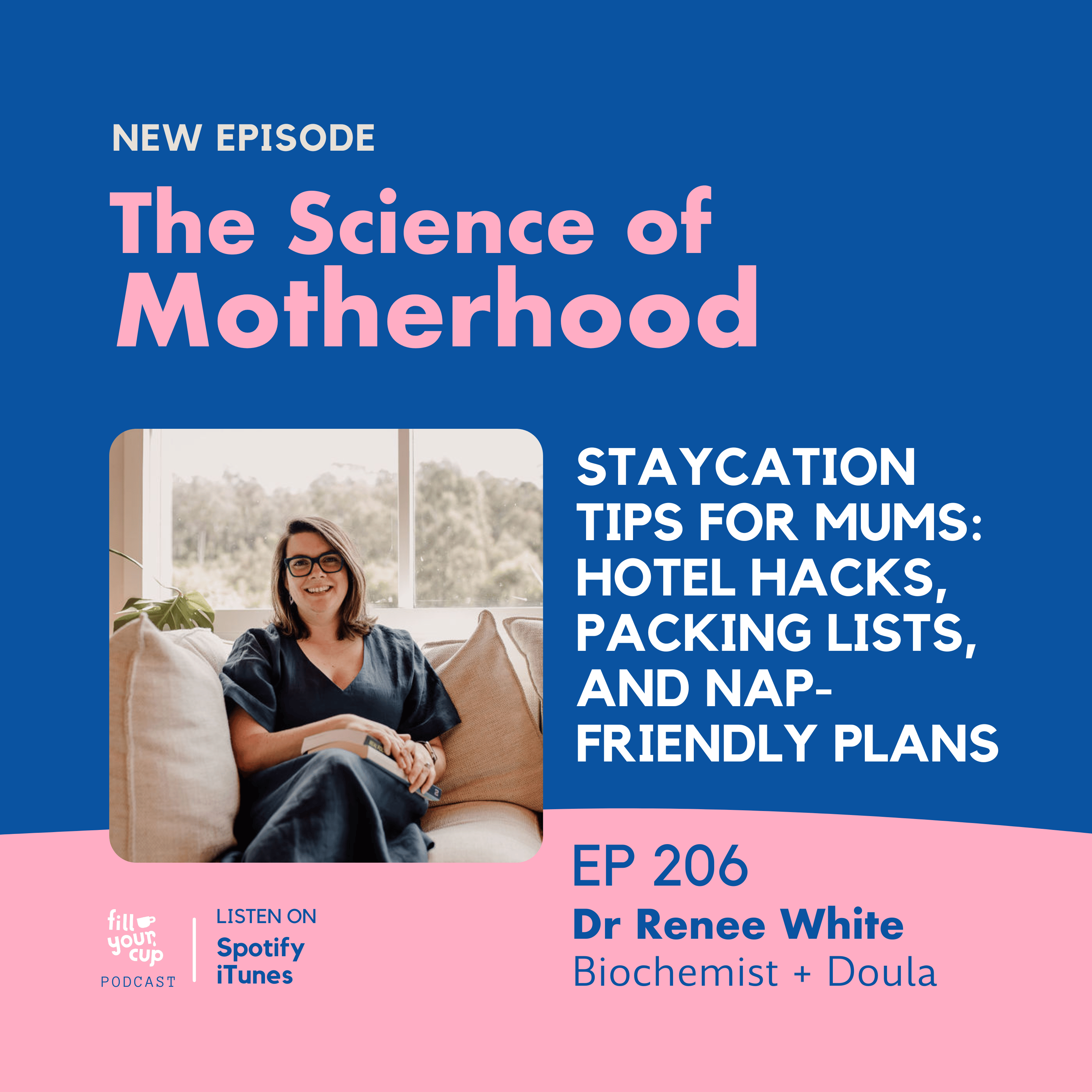
S2 Ep 206Ep206. Staycation Tips for Mums: Hotel Hacks, Packing Lists, and Nap-Friendly Plans
Have you been scrolling past everyone’s overseas holiday photos and feeling that quiet pang of “we can’t afford that right now”?And even if a local getaway sounds doable, you might be thinking about the packing, the nap timing, the feeding stuff, the toddler meltdowns, and wondering if it’s even worth the effort.In this episode, Dr Renee White shares practical, mum-tested tips for planning a staycation that actually feels like a break. Not perfect. Not Instagrammable. Just genuinely restorative.Renee walks you through what to pack, what to skip, simple hotel hacks that make life easier, and one money-saving tip that could save your family hundreds on accommodation. Because sometimes the reset you need isn’t a week overseas. It’s a couple of nights close to home where someone else makes the bed and you don’t have to do the dishes.You’ll hear about:A simple membership tip that can save hundreds of dollars on accommodationRenee’s essential packing list for travelling with babies and toddlers (and what you can leave behind)Easy hotel hacks to make sleep, feeding, and settling smootherHow to plan your days around naps without feeling stuck in the roomThe mindset shift that helps staycations feel enjoyable in this season of motherhoodIf you’ve been craving a break but feeling like holidays are off the table, this episode will meet you right where you are. You don’t need to go far to feel the benefit. You just need a change of scenery, fewer jobs on your plate, and permission to keep it simple.Resources & Links📲 Connect with Renee on Instagram: @fillyourcup_🌐 Learn more about Dr Renee White and explore Fill Your Cup Doula services🍪 Treat yourself with our Chocolate + Goji lactation cookies✨ This episode is proudly supported by Fill Your Cup, Australia’s first doula village.If this episode helped, share it with a mum who needs a break but doesn’t want the chaos. And don’t forget to hit subscribe so you never miss an episode of The Science of Motherhood. 💛DisclaimerThe information on this podcast presented by Fill Your Cup is not a substitute for independent professional advice. Nothing contained in this episode is intended to be used as medical advice and it is not intended to be used to diagnose, treat, cure or prevent any disease, nor should it be used for therapeutic purposes or as a substitute for your own health professional's advice.

S2 Ep 205Ep 205. The Invisible Link Between Mum and Baby Brains
Have you ever felt like your baby knows what you’re feeling before you even say a word?Maybe you’ve noticed them light up when you’re feeling calm and happy — or pull away a little when you’re flat or overwhelmed. These little moments often feel invisible, but they’re doing more than we think.In this episode, Dr Renee White explores new research on how a mother’s brain and her baby’s brain can literally sync up during moments of connection. Using a tool called dual EEG, researchers were able to capture real-time brain activity between mums and babies, showing that our emotional tone can directly influence how our brains work together.This isn’t about being “on” all the time. It’s about understanding why the moments where you feel most present with your baby matter so much.You’ll hear about:What brain-to-brain connection looks like between mum and babyWhy emotional tone plays a big role in learning and developmentThe science behind eye contact, cooing and everyday connectionHow maternal wellbeing supports brain synchronyWhy it's not about perfection, but presenceWhat matters most is remembering that even on the tough days, your presence is powerful. You don’t have to perform. You don’t need to do more. You’re doing enough, and it’s making a difference.Resources & Links📲 Connect with Renee on Instagram: @fillyourcup_🌐 Learn more about Dr Renee White and explore Fill Your Cup Doula services🍪 Treat yourself with our Chocolate + Goji lactation cookiesIf you found this episode helpful, share it with a friend or tag @fillyourcup_ on Instagram. And don’t forget to follow The Science of Motherhood so you never miss an episode.Disclaimer:The information on this podcast presented by Fill Your Cup is not a substitute for independent professional advice. Nothing contained in this episode is intended to be used as medical advice and it is not intended to be used to diagnose, treat, cure or prevent any disease, nor should it be used for therapeutic purposes or as a substitute for your own health professional's advice.
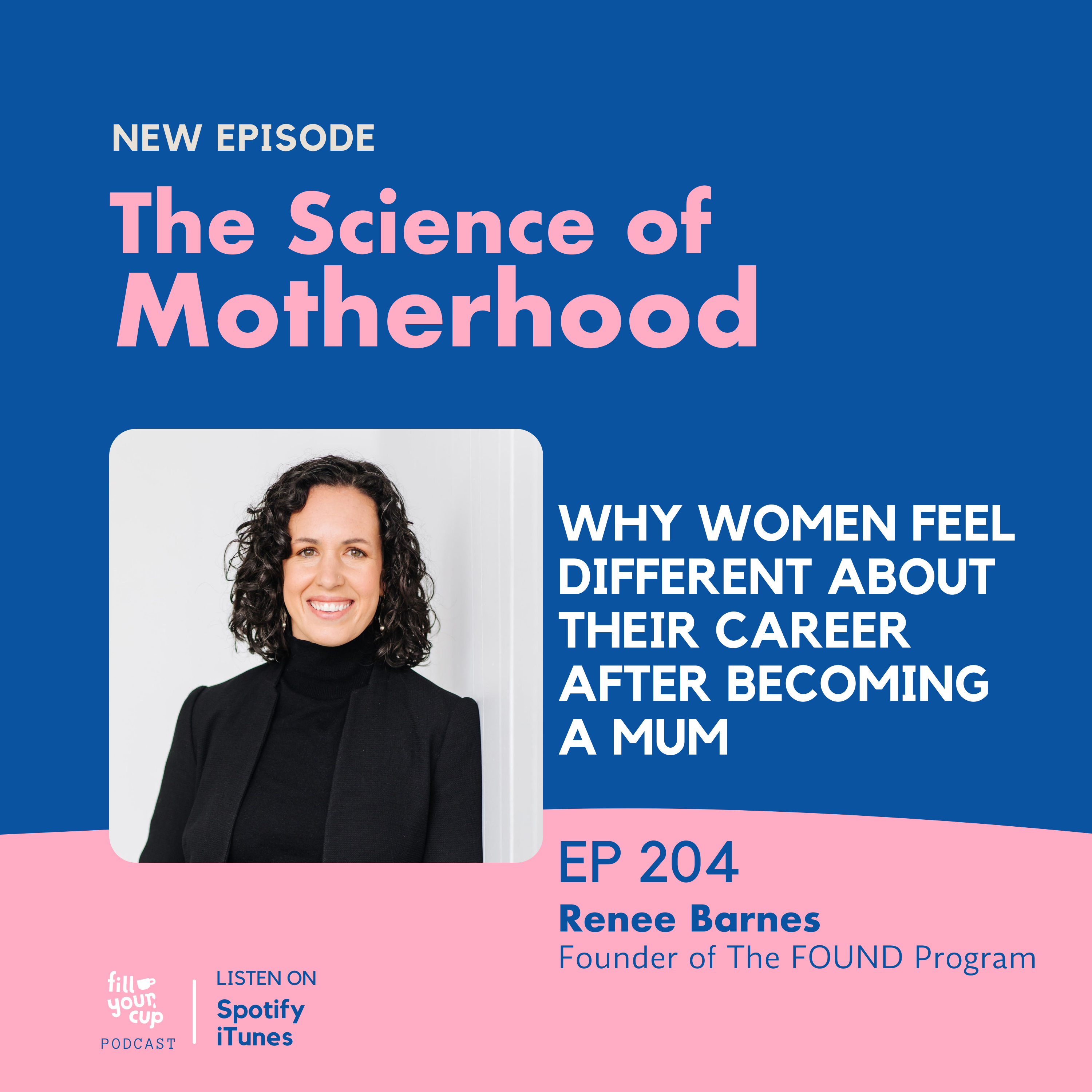
S2 Ep 204Ep 204. Why Women Feel Different About Their Career After Becoming a Mum
Motherhood changes the way you see yourself, your work and what you’re capable of. And when everything feels unfamiliar, it can be hard to recognise the opportunities that come with those changes.In this week’s episode of The Science of Motherhood, Dr Renee White chats with Renee Barnes, People and Culture professional and Director of The People Paradox. After navigating her own identity shift in motherhood, Renee created The FOUND Program, supporting parents to feel more confident, capable and empowered in both work and home life.Together, they explore what happens to your identity, your strengths and your leadership when you become a parent, and how these shifts can open new possibilities you may not have noticed yet.You’ll hear about:Why identity shifts feel so strong in early motherhoodHow sensitivity and hypervigilance can become leadership strengthsWhat parents really need when returning to workHow the emotional load builds and why it often goes unseenSimple ways to feel more grounded and confident in this new seasonMotherhood doesn’t come with a map. If you’re feeling stretched, unsure or in transition, you’re not alone. This episode will help you understand what’s changing and how to move through it with more clarity and confidence.Resources and Links📲 Connect with Renee on Instagram: @fillyourcup_🌐 Learn more about Dr Renee White and explore Fill Your Cup Doula services🍪 Treat yourself with our Chocolate + Goji lactation cookies🌐 Explore Renee Barnes’ work and The FOUND Program📲 Connect with Renee Barnes on Instagram: @found_learningmotherhood📲 The first 10 listeners to DM Renee Barnes will receive a 15% discount on stage 1 of the FOUND program. (Expires in 10 days 19 Dec 2025)If this episode helped you feel supported, share it with another parent who might need it. And make sure you’re subscribed so you don’t miss the next episode of The Science of Motherhood.This episode is proudly supported by Fill Your Cup, Australia’s first doula village.Disclaimer:The information on this podcast presented by Fill Your Cup is not a substitute for independent professional advice. Nothing contained in this episode is intended to be used as medical advice and it is not intended to be used to diagnose, treat, cure or prevent any disease, nor should it be used for therapeutic purposes or as a substitute for your own health professional's advice.
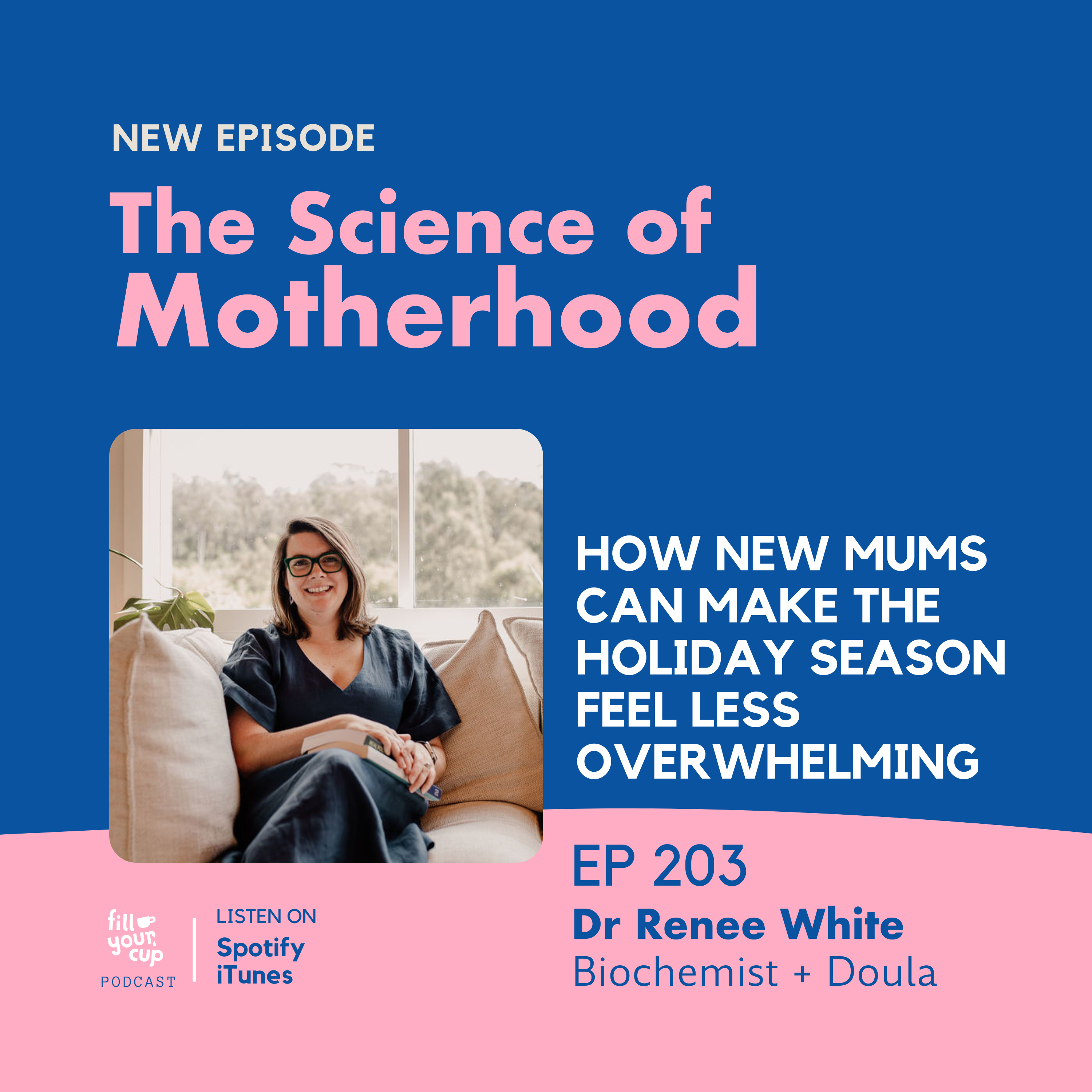
S2 Ep 203Ep 203. How New Mums Can Make the Holiday Season Feel Less Overwhelming
The holiday season can feel intense for many mums. The plans, the expectations, the drop-ins, the comments. It stacks up fast and makes it hard to tune into what you actually need.In this episode, Dr Renee White breaks down why setting boundaries can feel challenging in early motherhood and why guilt often shows up the moment you try to protect your time or space. She offers simple, supportive language that helps mums communicate their needs without feeling overwhelmed.These insights are practical, calm and designed to help you move through the season without feeling stretched thin.You’ll hear about:Gentle phrases to end visits or step away when you’ve reached your limitA calm one-sentence response to handle unwanted adviceHow to step away when things feel too busy or too loudWays to protect your energy during busy seasonsPermission to choose what feels manageable for you and your babyWhat matters most is remembering that your needs count too. You’re allowed to set limits. You’re allowed to rest. And you don’t need to justify decisions that support your wellbeing.Resources and Links📲 Connect with Renee on Instagram: @fillyourcup_🌐 Learn more about Dr Renee White and explore Fill Your Cup Doula services🍪 Treat yourself with our Chocolate + Goji lactation cookiesThis episode is proudly brought to you by Fill Your Cup. Head to our website to learn more about our birth and postpartum doula offerings.🎧 If this episode gave you clarity or comfort, share it with a fellow mum who might need it too. And don’t forget to hit subscribe so you never miss an episode.Disclaimer: The information on this podcast presented by Fill Your Cup is not a substitute for independent professional advice.Nothing contained in this podcast is intended to be used as medical advice and it is not intended to be used to diagnose, treat, cure or prevent any disease, nor should it be used for therapeutic purposes or as a substitute for your own health professional's advice.
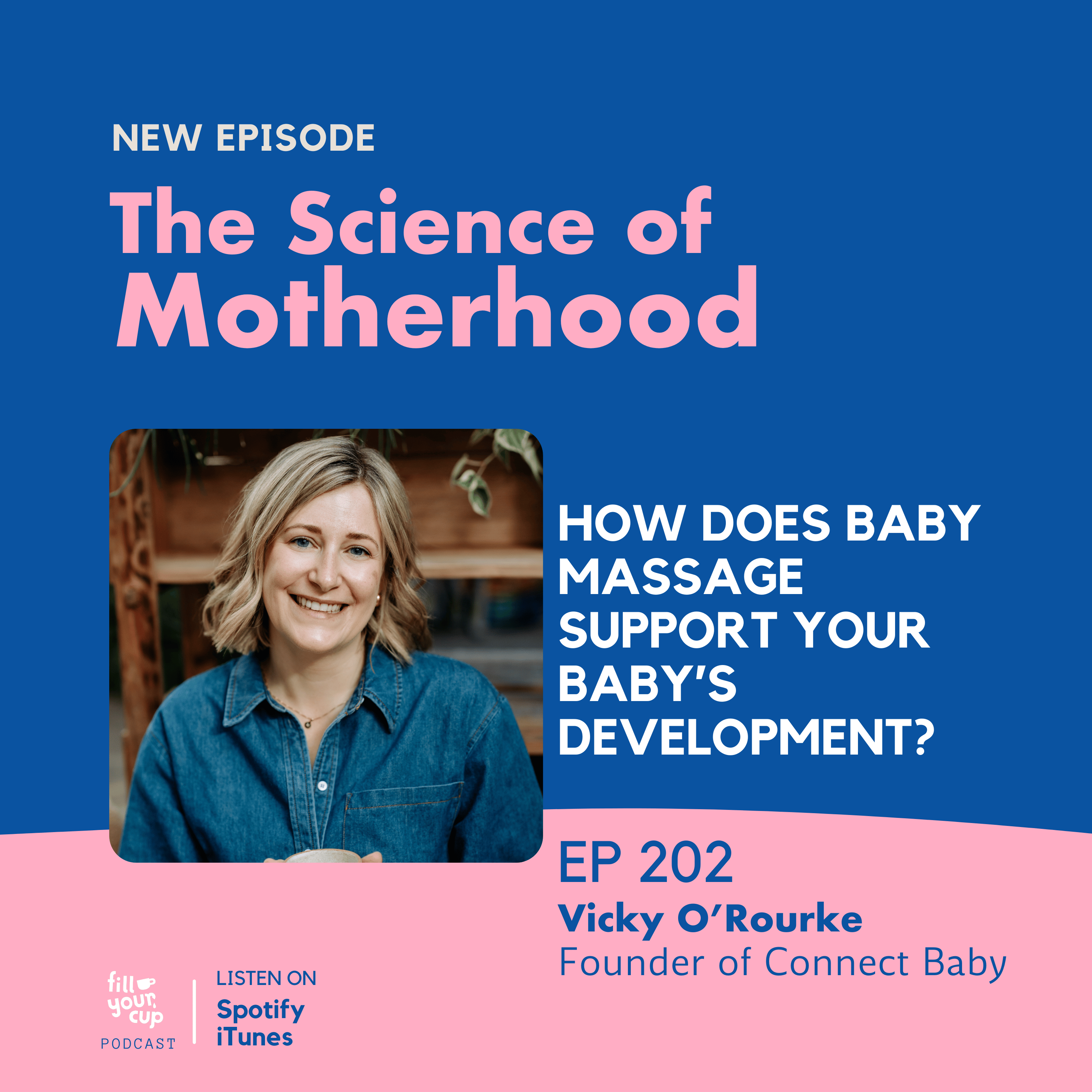
S2 Ep 202Ep 202. How Does Baby Massage Support Your Baby’s Development?
If you’ve ever looked at your baby and wondered how to feel more connected, you’re not alone. The early weeks can feel busy, emotional and a little uncertain. You’re feeding, settling, changing and doing your best, but sometimes it still feels like something is missing.And then you hear about baby massage. Some people say it’s essential. Others say it’s just a nice extra. It’s hard to know what’s real.In this week’s episode of The Science of Motherhood, Dr Renee White chats with Vicky O’Rourke, founder of Connect Baby, experienced occupational therapist and mum of three. Vicky blends 14 years of paediatric clinical experience with the gentle practice of infant massage, offering parents a simple, evidence-backed way to support their baby’s development while strengthening their bond.Vicky breaks down what baby massage actually is, what the research says, and why touch is one of the most powerful tools you already have.Renee and Vicky talk through what matters, what parents often misunderstand, and how you can build more confidence in the early weeks with small, simple moments.You’ll hear about:How baby massage supports bonding, regulation and early development.Why cue based touch helps you understand your baby’s signals more clearly.The role of oxytocin and how it benefits both you and your baby.Practical ways to use touch during unsettled days, sleep struggles or sensory overload.Why connection matters more than perfect technique.You’re allowed to slow down, follow your baby’s lead and use touch as a way to reconnect when everything feels overwhelming. This episode will give you grounded, evidence based guidance so you can feel clearer and more confident moving forward.Resources and Links📲 Connect with Renee on Instagram: @fillyourcup_🌐 Learn more about Dr Renee White and explore Fill Your Cup Doula services🍪 Treat yourself with our Chocolate + Goji lactation cookies📘 Connect with Vicky O’Rourke:Website: www.connectbaby.com.auInstagram: @connectbaby__✨ This episode is proudly brought to you by Fill Your Cup. Head to our website to learn more about our birth and postpartum doula offerings.If this episode helped you feel more supported, share it with a friend who needs it. And hit subscribe so you don’t miss the next episode of The Science of Motherhood.DisclaimerThe information on this podcast presented by Fill Your Cup is not a substitute for independent professional advice. Nothing contained in this episode is intended to be used as medical advice and it is not intended to be used to diagnose, treat, cure or prevent any disease, nor should it be used for therapeutic purposes or as a substitute for your own health professional's advice.
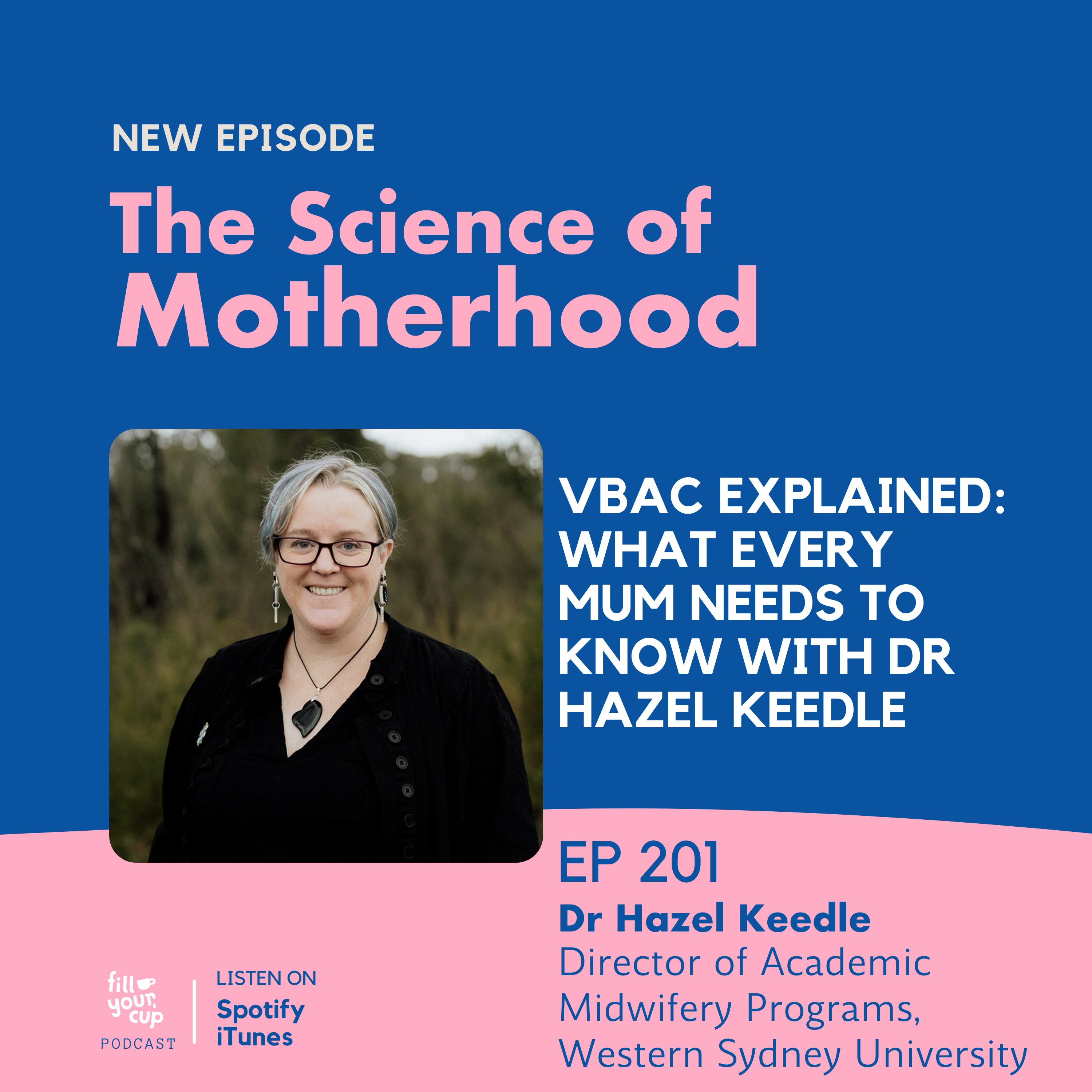
S2 Ep 201Ep 201. VBAC Explained: What Every Mum Needs to Know with Dr Hazel Keedle
If you’ve had a caesarean before, you’ve probably been given a whole mix of advice about what to do next time. Some people warn you off VBAC. Others tell you to go for it. And then there’s you, stuck in the middle, trying to make sense of it all.In this week’s episode of The Science of Motherhood, Dr Renee White chats with Dr Hazel Keedle, one of Australia’s leading VBAC researchers and a Senior Lecturer of Midwifery at Western Sydney University. Hazel has spent decades listening to women, studying their stories, and breaking down what truly supports a positive birth after caesarean. She’s down to earth, easy to listen to, and offers the kind of straight-up clarity mums are craving.Renee and Hazel talk through what actually matters, what’s outdated, and how you can feel more confident in your choices moving forward.You’ll hear about:Hazel’s four factors framework for planning a supportive VBAC.Why “once a caesarean, always a caesarean” is old thinking.How your care team shapes your experience more than you realise.The system pressures that mums often feel, but rarely get explained.Practical tips for choosing people who genuinely support your birth wishes.You’re allowed to slow down, ask questions, and choose the care that feels right for you. VBAC isn’t about proving anything. It’s about feeling informed, backed, and respected. This episode will give you that grounding so you can move forward with more clarity and less noise.Resources and Links📲 Connect with Renee on Instagram: @fillyourcup_🌐 Learn more about Dr Renee White and explore Fill Your Cup Doula services🍪 Treat yourself with our Chocolate + Goji lactation cookies📲 Connect with Dr Hazel KeedleWebsite: https://hazelkeedle.comInstagram: @hazelkeedleHazel’s book The Clinician's Guide to Better Birth After Cesarean is available through Amazon and major online retailers.If this episode helped you feel a bit clearer or more supported, pass it on to another mum who’s weighing up her options too. And hit subscribe so you don’t miss the next episode of The Science of Motherhood.DisclaimerThe information on this podcast presented by Fill Your Cup is not a substitute for independent professional advice. Nothing contained in this episode is intended to be used as medical advice and it is not intended to be used to diagnose, treat, cure or prevent any disease, nor should it be used for therapeutic purposes or as a substitute for your own health professional's advice.
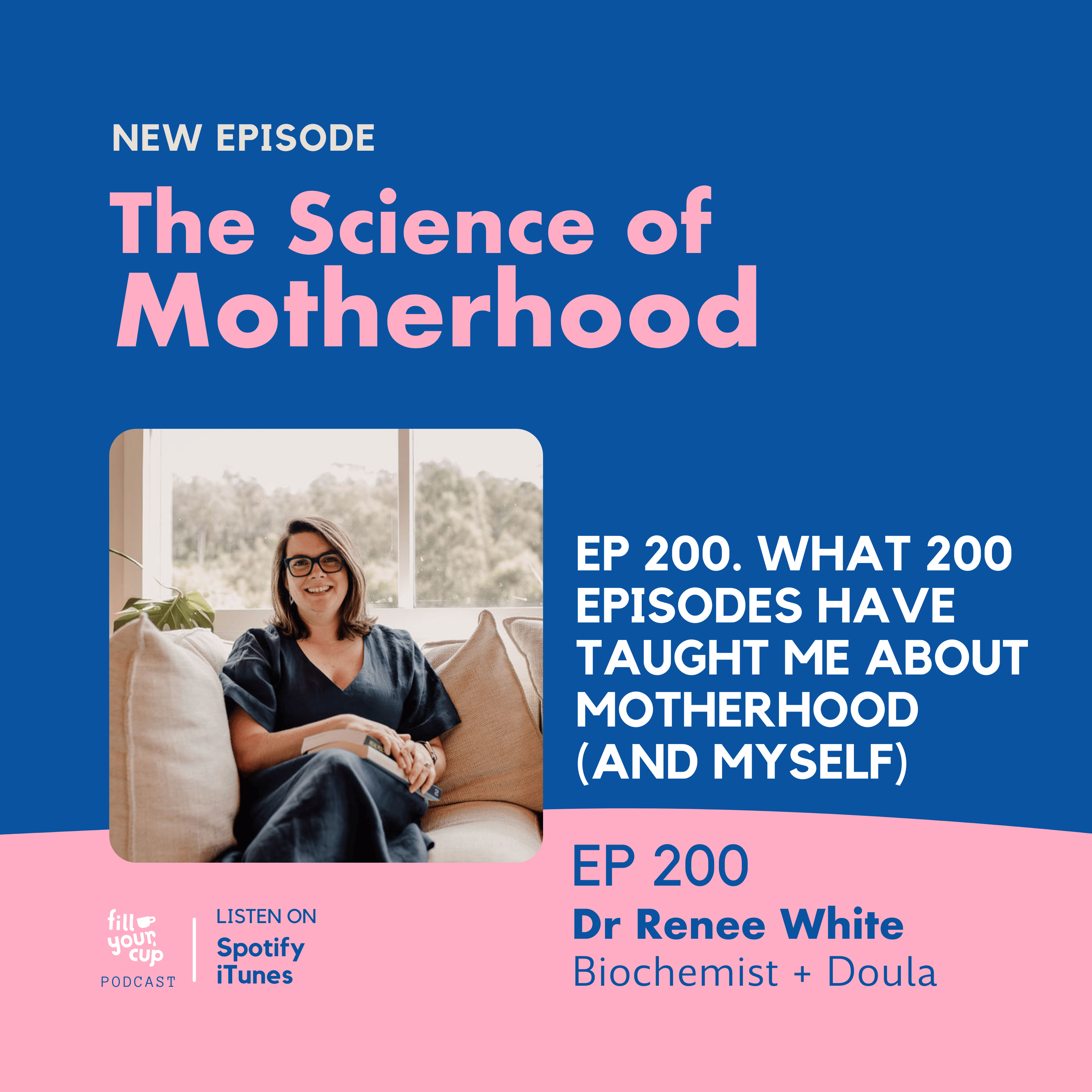
S2 Ep 200Ep 200. What 200 Episodes Have Taught Me About Motherhood (and Myself)
Have you ever thought, “If only I’d known then what I know now?”You’re not alone.In this milestone episode, Dr Renee White reflects on the biggest lessons she’s learned from the last 100 conversations on The Science of Motherhood from researchers and clinicians to doulas and mums who’ve shared their lived wisdom. With honesty and heart, Renee opens up about what she’d do differently if she could experience early motherhood all over again, and how the science has reshaped her understanding of what mums truly need.Whether you’re pregnant, preparing for postpartum, or deep in the motherhood trenches, this episode is a compassionate guide to doing things differently… with more knowledge, confidence, and self-kindness.You’ll hear about:• Why understanding matrescence before birth matters more than any baby book• The mental health practices that protect your wellbeing long before postpartum hits• What the research really says about infant sleep (and why your baby isn’t broken)• The power of nourishment, rest, and realistic expectationsThis is the episode Renee wishes she could have listened to before becoming a mum and one that reminds you that you’re not broken, you’re transforming.Resources & Links:📲 Connect with Renee on Instagram: @fillyourcup_🌐 Learn more about Dr Renee White and explore Fill Your Cup Doula services🍪 Treat yourself with our Chocolate + Goji lactation cookiesRelated episodesEp 116. Lucy Jones – The Art of MatrescenceEp 138. Kate Johnstone – How to Find Self-Compassion in MotherhoodEp 192. Prof. Helen Ball - Why Baby Sleep Advice Often Fails MumsEp 150. Dr Laura Gainche – Latest Research on Infant SleepEp 198. Julie Borninkhof - Catching It Early: How to Protect Your Mental Health in MotherhoodEp 106. Alex Sinickas – Not All Breast Pumps Are Created EquallyEp 108. Kate Visser – How and Where to Start on a Relactating JourneyEp 184. Lily Nichols - Pregnancy Food Made Simple: What Your Body Really NeedsIf this conversation resonates, share it with another mum or mum-to-be who needs to feel seen, supported, and reassured and make sure you’re subscribed so you never miss an episode.Disclaimer:The information on this podcast presented by Fill Your Cup is not a substitute for independent professional advice. Nothing contained in this episode is intended to be used as medical advice and it is not intended to be used to diagnose, treat, cure or prevent any disease, nor should it be used for therapeutic purposes or as a substitute for your own health professional's advice.
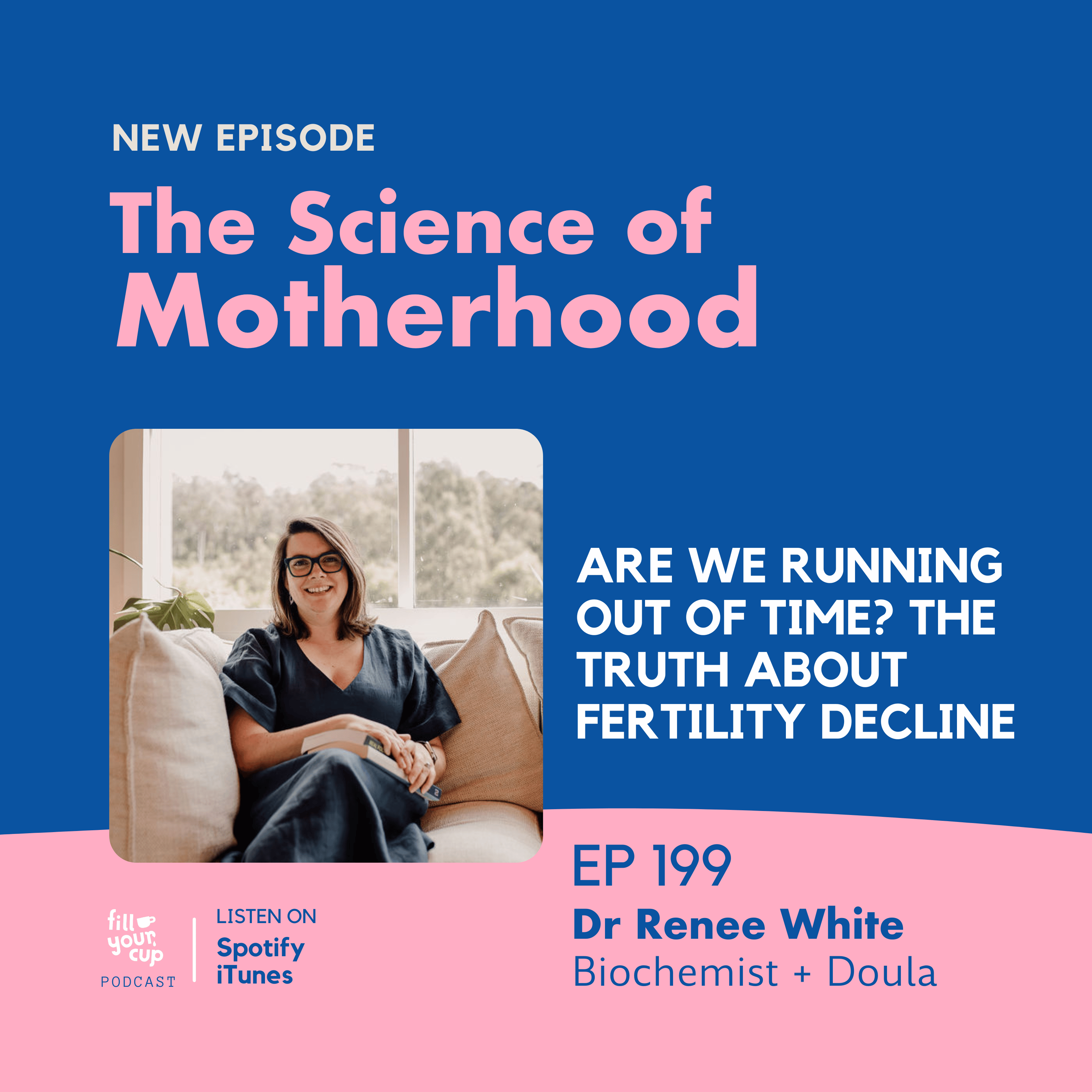
S2 Ep 199Ep 199. Are We Running Out of Time? The Truth About Fertility Decline
Have you ever caught yourself wondering if time’s slipping away to start or grow your family? Maybe you’ve been trying for months and it’s starting to feel heavy, or maybe you’re in your 20s or 30s thinking there’s plenty of time to figure it out.In this week’s episode of Dr Renee White sits down for a heart-to-heart about something that affects more families than we realise… fertility. With World Fertility Day around the corner, she unpacks what the latest research actually says about fertility rates, age, and the hidden barriers that make family planning harder than it should be.This isn’t about creating panic. It’s about getting the facts, feeling informed, and knowing that wherever you’re at, you’re not alone in figuring it out.You’ll hear about:The real science behind fertility decline and how age plays a roleWhy one in six couples worldwide experience infertilityThe male factor that often goes unnoticedHow housing costs, financial pressure and gender inequality impact family planningSimple, evidence-based steps you can take if you’re trying now or planning aheadWe don’t talk about fertility enough. There’s still so much silence, shame and confusion around it. Renee brings honesty and compassion to a conversation that so many families need to hear. It’s the kind of chat you’d have over coffee with a friend who just gets it, full of care, facts, and hope.If you’ve ever found yourself thinking, “Maybe it’s just me,” this episode will remind you it’s not.Resources & Links:📲 Connect with Renee on Instagram: @fillyourcup_🌐 Learn more about Dr Renee White and explore Fill Your Cup Doula services🍪 Treat yourself with our Chocolate + Goji lactation cookiesRelated episodesEp 66. Professor David Gardner – The Science Behind IVFEp 64. Dr Manuela Toledo – What to Expect on Your IVF Journey?Ep 146. Dr Cheryl Phua – What You Need to Know About Freezing Your EggsEp 160. Dr Cheryl Phua – Fertility Treatments 101Ep 172. Dr Kokum Jayasinghe – How Endometriosis Affects Fertility and What You Can DoIf you found this episode helpful, share it with another mum who might need a reminder that she’s not alone. And make sure you’re subscribed so you don’t miss the next episode of The Science of Motherhood.✨ This episode is proudly supported by Fill Your Cup, Australia’s first doula village.Disclaimer:The information on this podcast presented by Fill Your Cup is not a substitute for independent professional advice. Nothing contained in this episode is intended to be used as medical advice and it is not intended to diagnose, treat, cure or prevent any disease, nor should it be used for therapeutic purposes or as a substitute for your own health professional's advice.
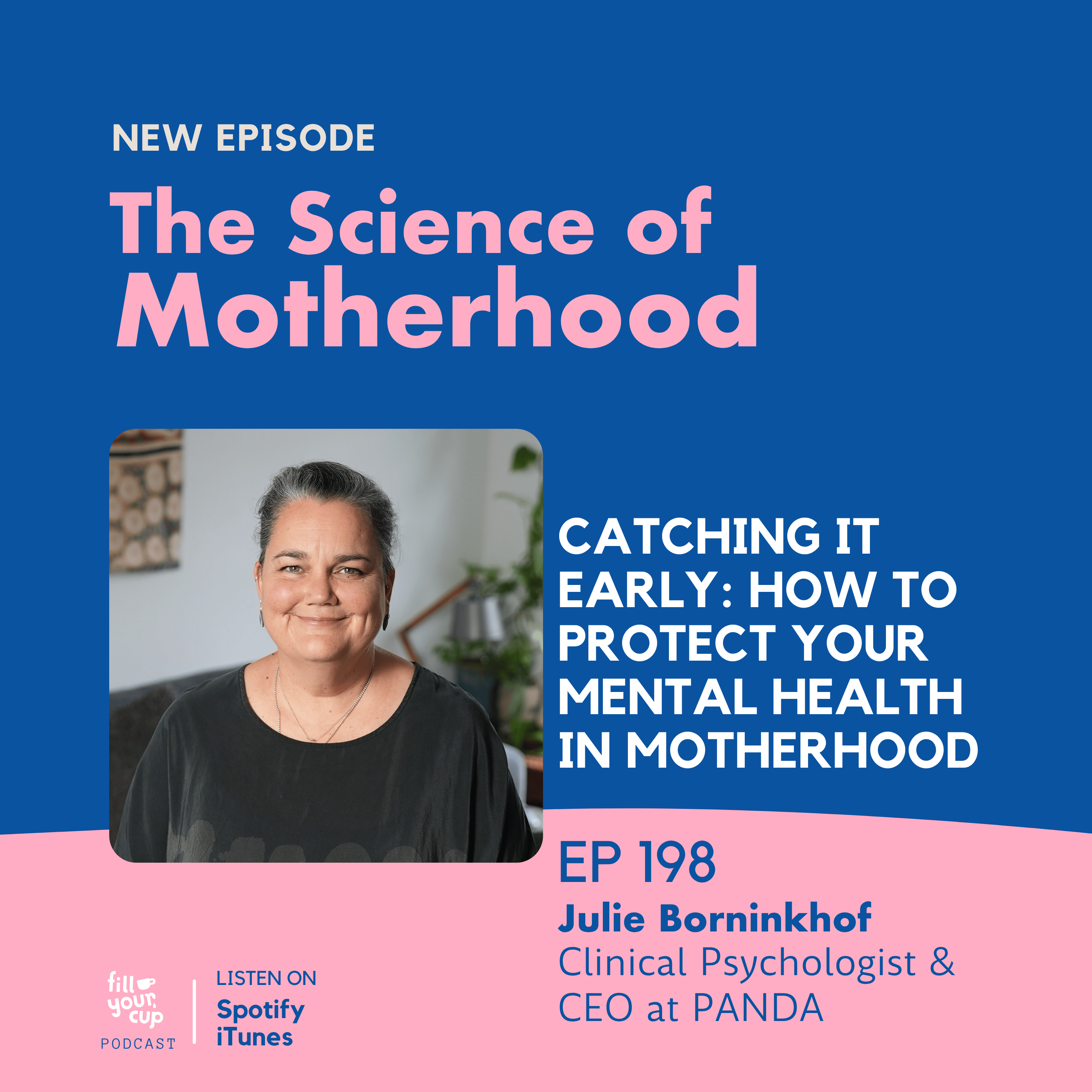
S2 Ep 198Ep 198. Catching It Early: How to Protect Your Mental Health in Motherhood
When you’re deep in early motherhood, it’s easy to think you’re just tired or that others have it worse. But what if asking for help early could change everything for you and your baby?In this week’s episode Dr Renee White speaks with Julie Borninkhof, CEO of PANDA (Perinatal Anxiety & Depression Australia) and Clinical Psychologist. Julie has spent years supporting Australian families through pregnancy and early parenthood.Together, they explore the signs that something’s not quite right, what actually happens when you call PANDA, and how preparing your mental health before baby arrives can help you feel more grounded when life changes overnight.You’ll hear about:What perinatal mental health covers and why early support mattersWhat to expect when calling the PANDA HelplineCommon reasons parents and families reach out for helpHow to prepare your mental wellbeing during pregnancyHow partners, grandparents and friends can support new parentsMotherhood isn’t meant to be done alone. If something feels off, trust that instinct. Support is available and it’s never too soon to ask for help.Resources & Links:📲 Connect with Renee on Instagram: @fillyourcup_🌐 Learn more about Dr Renee White and explore Fill Your Cup Doula services🍪 Treat yourself with our Chocolate + Goji lactation cookies🤍 Connect with Julie Borninkhof and PANDAWebsite: www.panda.org.auInstagram: @pandanationalHelpline: 1300 726 306If you found this episode helpful, share it with another mum who might need a reminder that she’s not alone. And make sure you’re subscribed so you don’t miss the next episode of The Science of Motherhood.✨ This episode is proudly brought to you by Cake MaternityCake Maternity specialises in high-quality nursing bras that are supportive, functional, comfortable, and stylish because you shouldn’t have to compromise as a mum.With sizes from 6–22 bands and A to JJ cups, their range includes seamless, flexi-wire, hands-free pumping, and absorbent birthing bras. Explore the collection at au.cakematernity.com and use code FYC15 for 15% off your order.Disclaimer:The information on this podcast presented by Fill Your Cup is not a substitute for independent professional advice. Nothing contained in this episode is intended to be used as medical advice and it is not intended to be used to diagnose, treat, cure or prevent any disease, nor should it be used for therapeutic purposes or as a substitute for your own health professional’s advice.
S2 Ep 197Ep 197. Folic Acid and Pregnancy: Could Too Much Be Causing Gestational Diabetes?
For years, mums have been told to take folic acid to support their baby’s development. It’s been one of public health’s biggest success stories, helping prevent serious birth defects. But new research suggests there might be more to the picture.In this episode, Dr Renee White explores an Australian study that questions whether excess folic acid could be contributing to rising rates of gestational diabetes. Renee breaks down the findings, what they mean for pregnant women, and why personalised care matters when it comes to supplements and pregnancy health.You’ll hear about:How folic acid fortification changed pregnancy outcomes worldwideWhat researchers found about folate levels and gestational diabetes riskThe role genetics, like MTHFR variants, may play in folic acid metabolismWhy a “one size fits all” approach to supplementation might need rethinkingWhat to discuss with your healthcare provider before making changesThis episode reminds us that science evolves, and understanding the evidence helps us make informed choices. Mamas stay curious, ask questions, and keep working with your healthcare team to find what’s right for you.Resources & Links📲 Connect with Renee on Instagram: @fillyourcup_🌐 Learn more about Dr Renee White and explore Fill Your Cup Doula services🍪 Treat yourself with our Chocolate + Goji lactation cookiesIf you found this episode helpful, share it with a friend or tag @fillyourcup_ on Instagram. And don’t forget to follow The Science of Motherhood so you never miss an episode.Disclaimer:The information on this podcast presented by Fill Your Cup is not a substitute for independent professional advice. Nothing contained in this episode is intended to be used as medical advice and it is not intended to be used to diagnose, treat, cure or prevent any disease, nor should it be used for therapeutic purposes or as a substitute for your own health professional's advice.

S2 Ep 196Ep 196. How to Support Yourself or Someone You Love After Pregnancy Loss
Have you ever felt like you were supposed to just move on after pregnancy loss?So many mums are told to “be grateful”, to stay positive, or to focus on the next step. But grief doesn’t follow a tidy timeline. It lingers, it reshapes us, and it deserves space to be felt.In this heartfelt conversation, Dr Renee White sits down with Dr Bianca Mastromanno, a Clinical Psychologist who has dedicated her career to supporting individuals and couples through the emotional terrain of pregnancy loss, pregnancy after loss, and early parenthood. Together, they talk about what real healing looks like, the kind that makes room for sadness, love, and everything in between.Bianca brings both her professional expertise and lived experience to this episode, offering a deeply compassionate perspective for anyone navigating grief, fear, or the uncertainty that often comes with trying again after loss. This is a conversation for mums, partners, and support people who want to understand how to approach pregnancy loss with empathy, courage, and care.You’ll hear about:The biggest myths about grief that keep mums stuck and silentHow shame can show up after pregnancy loss and gentle ways to move through itWhat trauma-informed care really means for postpartum supportThe conversations every couple should have before pregnancy or birthWhy self-compassion, not perfection, is the foundation of mental health for both parent and childDr Bianca’s insights are tender, real, and full of hope. This episode is a reminder that healing doesn’t mean forgetting or moving on. It’s about learning to carry your grief with love and surrounding yourself with people who see and support you through it.If you’ve experienced loss yourself, or if someone you care about has, this episode offers the understanding, language, and practical tools to feel less alone in it.Resources & Links📲 Connect with Renee on Instagram: @fillyourcup_🌐 Learn more about Dr Renee White and explore Fill Your Cup Doula services🍪 Treat yourself with our Chocolate + Goji lactation cookies💬 Connect with Dr Bianca Mastromanno:Instagram | @drbiancamastromannoWebsite | drbiancamastromanno.com.auDownload Bianca’s free Pregnancy Loss GuideResources mentioned in this episode:The Whole-Brain Child by Dan SiegelParenting from the Inside Out by Dan SiegelThe Baby Loss Guide by Zoe Clark-CoatesPink Elephants Support NetworkPANDA (Perinatal Anxiety & Depression Australia)Time to Talk TFMR Podcast🎧 If this conversation helped you feel more informed, pass it on to another mum navigating her fertility journey. And make sure you’re subscribed so you’ll always catch the next episode.The Science of Motherhood is proudly presented by Fill Your Cup, Australia’s first doula village.Disclaimer:The information on this podcast presented by Fill Your Cup is not a substitute for independent professional advice. Nothing contained in this episode is intended to be used as medical advice and it is not intended to diagnose, treat, cure or prevent any disease, nor should it be used for therapeutic purposes or as a substitute for your own health professional’s advice.
S2 Ep 195Ep 195. Why Understanding Autism in Motherhood Matters More Than Ever
Motherhood is already a sensory overload at the best of times. But for autistic women, pregnancy, birth and early motherhood can be an entirely different experience that’s often overlooked and misunderstood.In this week’s episode, Dr Renee White explores a powerful literature review uncovering what’s really happening when autistic women become mothers. From diagnostic bias to sensory overwhelm and stigma in healthcare, this conversation highlights the resilience, love and advocacy of neurodivergent mums who’ve been navigating a system not built with them in mind.Renee breaks down the research in her signature science-meets-soul style, helping mums, families and healthcare providers understand the reality behind the statistics and why inclusive care matters for everyone.You’ll hear aboutWhy autism in women has been historically under-recognised and misunderstoodThe six key themes emerging from research on autistic mothers and healthcareHow masking and sensory overload impact pregnancy and postpartum experiencesSimple ways healthcare providers can create safer, more inclusive spacesThe remarkable empathy, creativity and strength autistic mothers bring to parentingThis episode is a reminder that every woman deserves to feel seen, supported and safe in her motherhood journey. Whether you’re autistic, supporting someone who is, or simply curious to learn, this conversation will open your eyes and your heart to a more inclusive future for maternal health.You’re not alone in this, and your needs matter. 💛Resources and Links📲 Connect with Renee on Instagram: @fillyourcup_🌐 Learn more about Dr Renee White and explore Fill Your Cup Doula services🍪 Treat yourself with our Chocolate + Goji lactation cookies✨ This episode is proudly brought to you by Cake Maternity Cake Maternity specialises in high-quality nursing bras that are supportive, functional, comfortable, and stylish because you shouldn’t have to compromise as a mum.With sizes from 6–22 bands and A to JJ cups, their range includes seamless, flexi-wire, hands-free pumping, and absorbent birthing bras. Explore the collection at au.cakematernity.com and use code FYC15 for 15% off your order.If this episode resonated with you, share it with another mum who might need to hear she’s not alone.Disclaimer: The information on this podcast is not a substitute for independent professional advice.Nothing contained in this episode s intended to be used as medical advice and it is not intended to be used to diagnose, treat, cure or prevent any disease, nor should it be used for therapeutic purposes or as a substitute for your own health professional's advice.
S2 Ep 194Ep 194. Pregnancy After 35: What Every Mum Needs to Know About Fertility and Birth
Many women are starting families later in life, and for some, that means turning to IVF. But what’s fact, what’s myth, and what really matters when you’re navigating fertility in your late 30s or 40s?In this episode, Dr Renee White speaks with Dr Kellie Tathem, a Fertility Specialist, Gynaecologist and Obstetrician at Queensland Fertility Group. Kellie has a special interest in endometriosis, pelvic pain and fertility care. She’s passionate about making sure women have clear information and the space to make informed choices.You’ll hear about:The biggest fertility myths women face in their 30s and 40sWhen to consider IVF and how long to try naturally firstEgg freezing, donor eggs and embryo donation explainedHow age affects fertility, pregnancy and birth outcomesWhat lifestyle factors really make a difference for egg and sperm healthThis episode is here to give you evidence-based answers and support if you’re thinking about IVF, considering egg freezing, or planning pregnancy later in life.Resources & Links📲 Connect with Renee on Instagram: @fillyourcup_🌐 Learn more about Dr Renee White and explore Fill Your Cup Doula services🍪 Treat yourself with our Chocolate + Goji lactation cookiesConnect with Dr Kellie TathemQueensland Fertility Group: https://www.qfg.com.auAkoya Health (coming soon): Search Akoya Health BrisbaneResources mentioned in this episodeIVF Australia – reliable information on egg freezing, IVF processes, and costs: https://www.ivf.com.auMedicare – information on rebates for medically indicated egg freezing and fertility treatments: https://www.servicesaustralia.gov.au/medicare🎧 If this conversation helped you feel more informed, pass it on to another mum navigating her fertility journey. And make sure you’re subscribed so you’ll always catch the next episode.The Science of Motherhood is proudly presented by Fill Your Cup, Australia’s first doula village.Disclaimer: The information on this podcast presented by Fill Your Cup is not a substitute for independent professional advice.Nothing contained in this podcast is intended to be used as medical advice and it is not intended to be used to diagnose, treat, cure or prevent any disease, nor should it be used for therapeutic purposes or as a substitute for your own health professional's advice.
S2 Ep 193Ep 193. Can Mastitis Be Predicted Before It Happens?
If you’ve ever experienced sudden breast pain, fever, or flu-like chills while breastfeeding, you’ll know just how quickly mastitis can take hold. For many mums, it’s the first real crisis in their breastfeeding journey, painful, overwhelming, and sometimes serious enough to land them in hospital.But what if there was a way to predict mastitis before it happened?In this Check In Tuesday episode, Dr Renee White explores new research out of China that’s using artificial intelligence to identify which mothers are most at risk of developing mastitis. The study found that a combination of biological markers and personal factors could predict mastitis with 84% accuracy.While it’s still early days, this research offers hope for a future where we can move from reacting to mastitis to preventing it altogether.You’ll hear about:What mastitis actually is, how it develops, and why symptoms can be confusingHow AI and machine learning are being used to predict mastitis riskThe five key indicators researchers identified, from nipple cracks to inflammation markersThe limitations of this study and what still needs to be exploredPractical reminders for mums about seeking help early and knowing mastitis is treatableScience is always evolving. While we’re not yet at the point of having a true early warning system for mastitis, studies like this one are building the foundations of more personalised and predictive maternal healthcare.This episode is here to remind you that you’re not alone in your breastfeeding journey. Your instincts matter, your body’s signals are important, and support is out there.Resources and Links📲 Connect with Renee on Instagram: @fillyourcup_🌐 Learn more about Dr Renee White and explore Fill Your Cup Doula services🍪 Treat yourself with our Chocolate + Goji lactation cookies🎧 If this episode gave you clarity or comfort, share it with a fellow mum who might need it too. And don’t forget to hit subscribe so you never miss an episode.Disclaimer: The information on this podcast presented by Fill Your Cup is not a substitute for independent professional advice.Nothing contained in this podcast is intended to be used as medical advice and it is not intended to be used to diagnose, treat, cure or prevent any disease, nor should it be used for therapeutic purposes or as a substitute for your own health professional's advice.
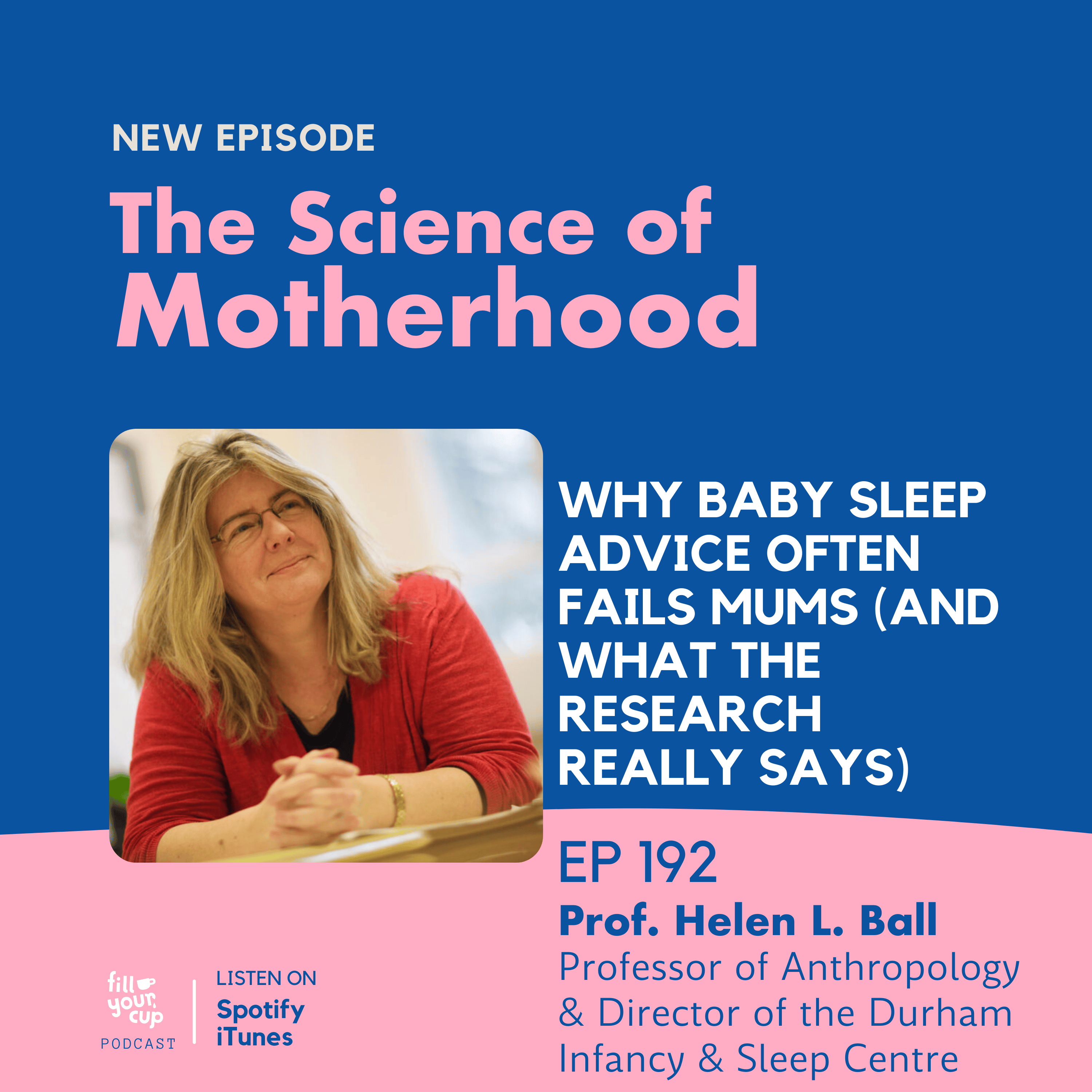
S2 Ep 192Ep 192. Why Baby Sleep Advice Often Fails Mums (and What the Research Really Says)
If you’ve ever been told your baby is “broken” because they don’t sleep through the night, you’re not alone. So many mums feel pressured by rigid schedules, conflicting advice, and the constant comparison game. But here’s the truth: babies aren’t meant to sleep like adults, and understanding their natural biology can make a world of difference for both you and your little one.In this episode, Dr Renee White sits down with Professor Helen L. Ball, Professor of Anthropology and Director of the Durham Infancy & Sleep Centre. Helen has spent decades researching infant sleep and is the founder of the Baby Sleep Information Source (BASIS). Her work bridges the gap between science and parenting, offering evidence-based guidance that supports both parents and health professionals.Together, Renee and Helen explore the realities of baby sleep, challenge outdated myths, and share practical ways you can feel more confident (and more rested).You’ll hear about:The origins of strict baby sleep schedules – and why they don’t align with infant biology.Safe bedsharing and breastfeeding – what the research actually shows.Swaddling myths – how it impacts arousal, feeding, and safety.Recognising when sleep struggles might signal something else – and when to seek help.Practical strategies you can try tonight to harmonise your rest with your baby’s natural rhythms.Whether you’re a first-time mum trying to navigate newborn nights or a parent feeling burnt out by sleep advice that just doesn’t work for your family, this conversation is here to bring you clarity, reassurance, and some much-needed perspective. You’re not doing it wrong. Your baby isn’t broken. And you are most certainly not alone.✨ Subscribe, share with a friend, and remember: the more we spread evidence-based knowledge, the more we can support every mum to feel confident and cared for.Resources and Links:📲 Connect with Renee on Instagram: @fillyourcup_🌐 Learn more about Dr Renee White and explore Fill Your Cup Doula services🍪 Treat yourself with our Chocolate + Goji lactation cookiesLearn more about Professor Helen L. Ball’s work:Website: BASIS – Baby Sleep Information SourceWebsite: How Babies SleepInstagram: @basis_babysleepinfosourceFacebook: Baby Sleep Information SourceIf this episode reassured you or shifted how you think about baby sleep, pass it on to another mum who might need it.✨ This episode is proudly brought to you by Cake MaternityCake Maternity specialises in high-quality nursing bras that are supportive, functional, comfortable, and stylish because you shouldn’t have to compromise as a mum.With sizes from 6–22 bands and A to JJ cups, their range includes seamless, flexi-wire, hands-free pumping, and absorbent birthing bras. Explore the collection at au.cakematernity.com and use code FYC15 for 15% off your order.Disclaimer: The information on this podcast is not a substitute for independent professional advice.Nothing contained in this episode s intended to be used as medical advice and it is not intended to be used to diagnose, treat, cure or prevent any disease, nor should it be used for therapeutic purposes or as a substitute for your own health professional's advice.