
The Sales Evangelist
2,020 episodes — Page 6 of 41
Ep 1782Take Control of The Meeting | Donald Kelly - 1782
Do you have full control over your sales meeting? Is it difficult getting your prospects to go in the direction you want them to go? You answer "no" to the first question and "yes" to the second question. Right? Well, you know what to do now! Tune into this episode of "The Sales Evangelist Podcast," where host Donald Kelly dives deep into mastering client interactions. Within this five-minute episode, you'll be ready to take control, establish authority, and confidently guide your prospects. Take advantage of these critical strategies that can accelerate your sales success! Taking Control of Your Sales Meetings The key to having a successful sales meeting is being in control of its direction. Donald emphasizes that while catering to the prospect's requests is essential, offering them a meeting roadmap ensures they recognize you as an expert in your field. The Agenda of A Guided Sales Session To lead your sales meeting, set a clear agenda. Address the prospect's hopes and set the stage for the main goal. It's to guide them through informed choices. Donald suggests asking prospects what they want to learn. This is to consider the meeting effective. Then, build the conversation around those objectives. Also, share your expertise and insights. Expert Advice on Pricing Queries One common challenge salespeople face is when a prospect jumps straight to pricing. Donald advises against catering to this demand blindly. Instead, offer transparency about your pricing range while steering the conversation back to understanding their specific challenges and whether your service is a good fit. Maintaining Control with A Robust Conclusion Donald stresses that you should reserve the last five minutes to review the main points and schedule the next meeting. This strategy helps maintain the sales process's momentum and positions you as a prepared and experienced professional. Join “The Sales Mastermind” for hands-on guidance and an interactive learning environment. It's an opportunity for you to practice, role-play, and get actionable tips to enhance your sales performance. Lastly, subscribe to keep up with the newest content to improve your sales game! “The key is to get them to feel they're giving you all the stuff they need and want to give.” - Donald Kelly. Resources The Sales Evangelist Sales Mastermind LinkedIn Sales Navigator Donald C. Kelly on LinkedIn Sponsorship Offers This episode is brought to you in part by Hubspot. With HubSpot sales hubs, your data tools and teams join a single platform to close deals and turn prospects into pipelines. Try it for yourself at hubspot.com/sales. This episode is brought to you in part by LinkedIn. Are you tired of prospective clients not responding to your emails? Sign up for a free 60-day trial of LinkedIn Sales Navigator at linkedin.com/tse. This episode is brought to you in part by the TSE Sales Foundation. Improve your connection on LinkedIn and land three or five appointments with our LinkedIn prospecting course. Go to the salesevangelist.com/linkedin. Credits As one of our podcast listeners, we value your opinion and always want to improve the quality of our show. Complete our two-minute survey here: thesalesevangelist.com/survey. We’d love for you to join us for our next episodes by tuning in on Apple Podcast, Google Podcast, Stitcher, or Spotify. Audio provided by Free SFX, Soundstripe, and Bensound. Other songs used in the episodes are as follows: The Organ Grinder written by Bradley Jay Hill, performed by Bright Seed, and Produced by Brightseed and Hill. Mentioned in this episode:HubSpot and bluëmago | STUDIOSHubSpot and bluëmago | STUDIOS hubpspot.com/marketers bluemangostudios.com

Ep 1781Best Sellers In History - "Mary Kay Ash" | Donald Kelly - 1781
Today, we're going into the archive and bringing out an episode from the best sellers in history series. Let’s talk about Mary Kay Ash and how she built her empire from the strong skill sets she developed as a salesperson. Sales Spotlight - Mary Kay Ash Mary Kay Ash is world-renowned for being the makeup and skincare queen. Her pink Cadillac has become iconic. How did this come from someone who kept getting passed over for promotion? Because she is considered to be one of the best sellers in history. Here are five reasons why: Had a purpose and a why Created a vision or a common cause Had a strong and impressive work ethic Had the desire to create and give rewards Willing to take action Mary Kay Ash was born on May 12, 1918, in Hotwells, Texas. For most of her childhood, she took care of her sick dad while her mother made the family's earnings. At 17 years old, Mary Kay married Ben Rogers and had three children with him before Ben went to war in WWII. Their marriage eventually ended, and Mary Kay was left with three children to care for. She needed to make money to feed her children, so she started working for Stanley Home Products in 1939. She’d go into someone’s home and host parties to encourage people to buy household items. Mary Kay was great at her job, and she became a top seller. By 1952, Mary Kay was hired by World Gifts. After 10 years, however, she quit her job. At that time, the sales force was mostly made up of men, and no matter how hard she tried, she couldn’t get ahead because she was a woman. She saw the men she was training were getting promoted, going onto better jobs, and they were getting a much higher wage. Had a purpose and a why With $5000, Mary Kay used the money to build her empire. Mary Kay had a purpose. She was a mother who needed to take care of her kids and a woman who wanted to see other women succeed. Mary Kay also had a vision that helped her achieve her dreams. She had a why. As a salesperson, a vision and purpose can propel you beyond a bad sales day. For many people, a paycheck isn’t enough. There has to be a deeper connection, something bigger. Having a purpose is the motivation that moves you to show up even when things get hard. Have a purpose that pushes you to create an opportunity for the people you care about the most. Mary Kay had a purpose that was even bigger than herself. While she wanted to care for her family, she also wanted to create something to help other women. Created a vision and a common cause Every great salesperson in this series had a vision and created a common cause. Mary Kay recognized that women were undervalued in the sales industry and other workplaces. Women were not considered as capable as men. This misconception prompted Mary Kay to build an empire that would give women the opportunity to succeed and do more. Her business opened doors for women to become six-figure earners and, as a result, became the breadwinners for their families, giving them a community where they were valued. The company grew, and by the end of its second year, it had made $1 million in product sales. Salespeople can also achieve greater success if they communicate a common cause to their clients. Creating a brand message that solves problems and identifying a common struggle can create a unifying purpose. Had a strong and impressive work ethic Mary Kay had an impressive work ethic and worked hard. She got up every day at 5:00 AM. She said, “If you get up at 5 o’clock three times a week, you’ll gain an extra day. You need to try it a few times because you realize a great feeling of satisfaction at 8:00 in the morning when you’ve already finished what would have taken you six hours to do after 8 o’clock because of the interruptions.” Make it your goal to wake up early, put in the time, start working, and be productive without distractions. Allow yourself to practice and challenge yourself as Mary Kay did. Had the desire to create and give rewards The Harvard Business Review laid out three reasons why people leave their jobs: because they don’t like their boss they don’t see an opportunity for promotion or they were offered a better job. Mary Kay understood this and set up a system with four levels of promotion: Independent beauty consultant Red jacket beauty consultant Independent sales director National sales director As salespeople hit their numbers, they were promoted to the next level and received different rewards. This motivated people and gave them room to grow. The system made them very successful. The ultimate success for any employee in Mary Kay is winning the pink Cadillac. As a sales rep or sales leader with a small business, give your team a path and an opportunity to grow. Give them a goal, and offer a reward when they hit that mark. They will see that as an opportunity to earn and achieve. It helps your company because you’ll have an employee who works hard to earn the reward. Willing to take action Mary Kay left her full-time job and decided to create
Ep 1780How To Fight For Your Share of Wallet and Win Each Time | Claudio Meidler - 1780
Are you ready to uncover the secrets of successful sales strategies in a highly competitive landscape? In this episode of "The Sales Evangelist Podcast," host Donald Kelly chats with guest Claudio Meidler, an experienced sales professional working as an account executive for Google's German team in Dublin. Claudio shares his insights on navigating the competitive landscape and securing the share of the wallet when selling to enterprise or mid-level organizations. Tune in to this enriching episode and gain a fresh perspective on navigating the modern sales landscape with confidence and finesse. Building Credibility and Delivering Value Claudio emphasizes the importance of standing out in terms of service level and delivering value beyond the competition. He discusses the significance of conducting thorough research before approaching potential clients understanding their needs, pain points, and industry-specific knowledge. Claudio highlights the effectiveness of providing insights, market knowledge, predictions, case studies, and testimonials early in the conversation to build immediate credibility and trust. Unconventional Approaches to Success Donald and Claudio discuss breaking away from traditional sales tactics and how being direct and tactful can yield powerful results. Claudio discusses the importance of addressing unspoken concerns and objections, expressing understanding and empathy, and using direct language to navigate potential hesitations or objections from the buyer's side. The role-play between the two demonstrates how this approach can open up dialogues and lead to deeper, more fruitful conversations. Creating a Lasting Impact Claudio shares his perspective on delivering service without expecting an immediate return on investment, following up on bold questions, and continually striving to exceed the client's expectations. He emphasizes the value of constant learning and adaptability in the sales process, where leveraging unconventional techniques can create a lasting impact and differentiation in the market. Claudio Meidler shares invaluable insights and strategies for success in the competitive sales landscape. Learn how to stand out in a competitive environment, build trust with your prospects, and ultimately secure that coveted share of your wallet. Take advantage of this opportunity to revolutionize your sales approach! Listen to the full episode now to discover how to enhance your sales strategies and achieve outstanding results. "Do your homework beforehand, deliver information and service without expecting an immediate return on investment, ask bold questions, and deliver testimonials or case studies to build credibility straight from the start." - Claudio Meidler. Resources SimilarWeb Claudio Meidler on LinkedIn Sponsorship Offers This episode is brought to you in part by Hubspot. With HubSpot sales hubs, your data tools and teams join a single platform to close deals and turn prospects into pipelines. Try it for yourself at hubspot.com/sales. 2. This episode is brought to you in part by LinkedIn. Are you tired of prospective clients not responding to your emails? Sign up for a free 60-day trial of LinkedIn Sales Navigator at linkedin.com/tse. 3. This episode is brought to you in part by the TSE Sales Foundation. Improve your connection on LinkedIn and land three or five appointments with our LinkedIn prospecting course. Go to the salesevangelist.com/linkedin. Credits As one of our podcast listeners, we value your opinion and always want to improve the quality of our show. Complete our two-minute survey here: thesalesevangelist.com/survey. We’d love for you to join us for our next episodes by tuning in on Apple Podcast, Google Podcast, Stitcher, or Spotify. Audio provided by Free SFX, Soundstripe, and Bensound. Other songs used in the episodes are as follows: The Organ Grinder written by Bradley Jay Hill, performed by Bright Seed, and Produced by Brightseed and Hill.Mentioned in this episode:HubSpot and bluëmago | STUDIOSHubSpot and bluëmago | STUDIOS hubpspot.com/marketers bluemangostudios.com
Ep 1779How To Properly Prep Your Prospect For Your First Meeting | Donald Kelly - 1779
Are you properly preparing for first-time meetings? Failing to do so can lead to missed opportunities and lost sales. But don't worry—in this episode of "The Sales Evangelist Podcast," host Donald Kelly will share valuable tips on effectively preparing prospects and ensuring a smoother, more productive interaction. Click play to hear what one of the industry's top sales leaders says about this essential step in the sales process. The Importance of Preparing Prospects Donald emphasizes the significance of prepping prospects before meeting with them. In a world with automated scheduling tools, it's essential to go the extra mile to personalize and optimize the prospect's meeting experience. The Strategy Donald suggests a simple yet powerful strategy to prepare prospects effectively. He recommends sending a quick video introduction to the prospect, providing a warm welcome, and addressing potential questions or concerns they might have. Additionally, including specific details about the upcoming meeting and offering personal contact information can further enhance the prospect's preparedness and engagement. Enhancing Engagement and Courtesy By implementing this strategy, sales professionals can significantly enhance engagement and courtesy from prospects. Providing personal contact information encourages prospects to connect and communicate, establishing a more respectful and engaged relationship from the outset. Overcoming Concerns Donald addresses common concerns associated with this strategy, such as the fear of potential cancellations. He explains that having prospects inform you of a cancellation is more beneficial, demonstrating their courtesy and genuine interest, rather than dealing with unexplained no-shows. Recommended Tools Donald recommends executing this strategy using video platforms like Loom, Vidyard, or BombBomb. Even for those uncomfortable with video, he encourages leveraging these tools to convey the preparatory message effectively. Ultimately, sales professionals gain a competitive edge by effectively preparing prospects and increasing their chances of closing deals. Join Donald Kelly as he continues to empower sales professionals to thrive and succeed in their endeavors. "I want you to thrive, succeed, and raise your level of thinking." Donald Kelly. Resources The Sales Evangelist Sales Mastermind LinkedIn Sales Navigator Donald C. Kelly on LinkedIn Sponsorship Offers This episode is brought to you in part by Hubspot. With HubSpot sales hubs, your data tools and teams join a single platform to close deals and turn prospects into pipelines. Try it for yourself at hubspot.com/sales. 2. This episode is brought to you in part by LinkedIn. Are you tired of prospective clients not responding to your emails? Sign up for a free 60-day trial of LinkedIn Sales Navigator at linkedin.com/tse. 3. This episode is brought to you in part by the TSE Sales Foundation. Improve your connection on LinkedIn and land three or five appointments with our LinkedIn prospecting course. Go to the salesevangelist.com/linkedin. Credits As one of our podcast listeners, we value your opinion and always want to improve the quality of our show. Complete our two-minute survey here: thesalesevangelist.com/survey. We’d love for you to join us for our next episodes by tuning in on Apple Podcast, Google Podcast, Stitcher, or Spotify. Audio provided by Free SFX, Soundstripe, and Bensound. Other songs used in the episodes are as follows: The Organ Grinder written by Bradley Jay Hill, performed by Bright Seed, and Produced by Brightseed and Hill.Mentioned in this episode:HubSpot and bluëmago | STUDIOSHubSpot and bluëmago | STUDIOS hubpspot.com/marketers bluemangostudios.com
Ep 1778The Best Sales Plan For The Quarter | Hannah Ajikawo - 1778
Are you ready to unlock the secrets to successful sales strategies and go-to-market plans? In this episode of “The Sales Evangelist Podcast,” host Donald Kelly speaks with Hannah Ajikawo, a seasoned sales professional with over 15 years of experience in the industry. Hannah shares invaluable insights into understanding the B2B buyer journey, setting up go-to-market infrastructure, and optimizing sales processes to drive higher deal value. She also reveals the essential elements of a winning sales strategy plan and uncovers the secrets behind successful sales initiatives. Tune in now to discover proven strategies and insider tips that will propel your business to new heights! Hannah's Professional Journey Hannah provides an overview of her rich professional background, emphasizing her extensive career in sales. Her professional journey spans from prominent global corporations to disruptive startups. Notably, she shares her experience of working with an AI company in 2011, showcasing her early engagement with groundbreaking technologies and go-to-market strategies. The Evolution of AI Technology Drawing from her experience with an AI company, Hannah recounts her involvement in selling visionary AI solutions to leading B2B information providers. She elaborates on the groundbreaking nature of their tool, highlighting its potential to automate data processes and generate substantial value for businesses, including a memorable interaction with Google. Sales Strategy Planning Donald and Hannah discuss the importance of developing a strategic sales plan for the quarter, emphasizing the need for meticulous planning, especially for deals with substantial value. Hannah provides actionable advice, stressing the significance of understanding prospects' budgeting cycles and planning interactions well in advance to align with their financial timelines. Territory Management and Strategic Approach Hannah outlines the strategic approach required for sales territory management, encouraging sales professionals to adopt a CEO mindset when structuring their territories. She emphasizes the importance of identifying white spaces, key customers, and optimal use cases to streamline the sales process and drive meaningful results. Seasonal Budgeting Cycles Addressing the challenges of seasonal budgeting cycles, Hannah emphasizes the value of nurturing relationships and delving deeper into buyers' experiences within their organizations. She shares insights into discovering discretionary budgets and leveraging CEO's wallets to drive successful deals, emphasizing the need to build rapport and acquire nuanced knowledge about buyers' capabilities. Hannah Ajikawo shares valuable insights on developing a killer sales strategy plan to set you up for success in your sales endeavors. Her wealth of experience as a career salesperson and go-to-market consultant shines through as she shares practical tips and strategies for sales professionals and organizations alike. If you're ready to revolutionize your sales approach and take your game to the next level, then this episode is a goldmine of actionable advice. Tune in now to gain valuable knowledge that can transform your sales approach and drive remarkable results. “If you have a deal value of over 15 K, you must know your prospect's budgeting cycle period. No matter how strong your value proposition is, it doesn't matter how much they love you or how many of these panels and YouTube videos you watch, or whatever you watch. If they physically cannot get the budget because everything is clocked in, particularly above fifteen K and above, it will be so hard to try and sell to them in that quarter.” - Hannah Ajikawo. Resources Hannah Ajikawo on LinkedIn Sponsorship Offers This episode is brought to you in part by Hubspot. With HubSpot sales hubs, your data tools and teams join a single platform to close deals and turn prospects into pipelines. Try it for yourself at hubspot.com/sales. 2. This episode is brought to you in part by LinkedIn. Are you tired of prospective clients not responding to your emails? Sign up for a free 60-day trial of LinkedIn Sales Navigator at linkedin.com/tse. 3. This episode is brought to you in part by the TSE Sales Foundation. Improve your connection on LinkedIn and land three or five appointments with our LinkedIn prospecting course. Go to the salesevangelist.com/linkedin. Credits As one of our podcast listeners, we value your opinion and always want to improve the quality of our show. Complete our two-minute survey here: thesalesevangelist.com/survey. We’d love for you to join us for our next episodes by tuning in on Apple Podcast, Google Podcast, Stitcher, or Spotify. Audio provided by Free SFX, Soundstripe, and ...
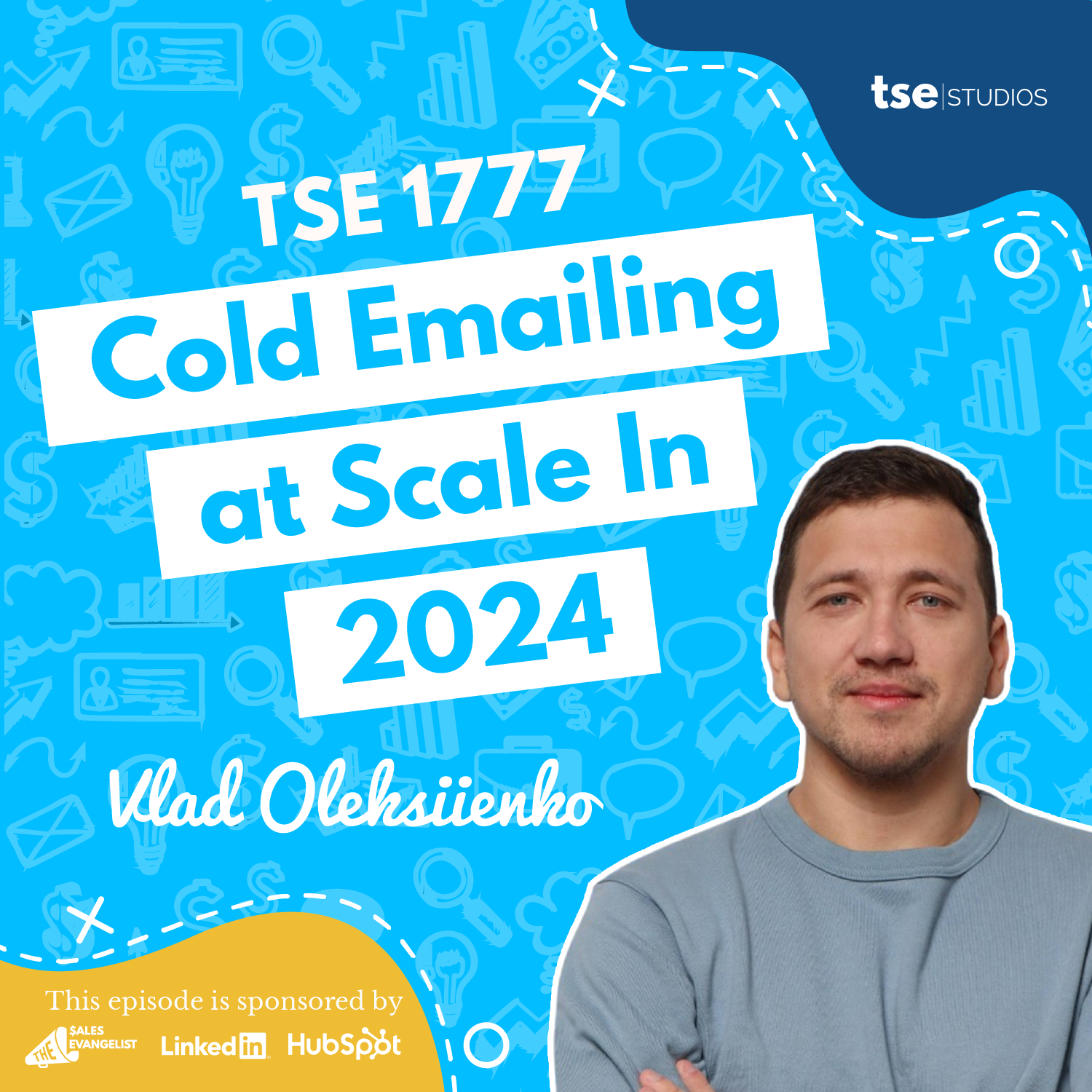
Ep 1777Cold Emailing at Scale In 2024 | Vlad Oleksiienko - 1777
Are you ready to transform your cold email outreach strategy for 2024? In this episode of "The Sales Evangelist Podcast," host Donald Kelly speaks with Vlad Oleksiienko, a growth leader with extensive experience in sales development and cold outreach at scale. Vlad shares valuable insights into the evolving landscape of cold emailing in 2024 and beyond. He focuses on the challenges and effective strategies for sales reps to scale their outreach efforts. Prepare to revolutionize your approach to cold emailing and propel your sales growth to new heights. Tune in to learn from the expert himself! The Challenges of Cold Emailing at Scale Vlad delves into the challenges faced by sales reps in the realm of cold outreach. He highlights the evolving nature of email inboxes, the impact of AI-generated emails, and the growing demand for personalized and relevant communication from buyers. Tailoring Cold Outreach for Different Markets Vlad emphasizes the importance of tailoring cold outreach strategies based on the market and company. He distinguishes between high-volume, low-touch cold emails at scale for SMBs and mid-market companies without SDRs and the more targeted approach taken by enterprise SDRs. Intent-Based Cold Outreach Vlad introduces the concept of intent-based cold outreach, emphasizing the significance of leveraging specific signals or triggers to identify prospects likely to engage with the outreach on a deeper level. He outlines various tools and methods for determining intent, including leveraging sales navigator, social listening, and technographics. Crafting Effective Cold Email Sequences Donald and Vlad delve into the practical implementation of intent-based outreach, focusing on the structure of email sequences and the need for conditional personalization based on the recipient's persona and industry. Vlad provides insights into creating relevant and compelling email sequences while avoiding overcomplication and balancing personalization and scalability. Navigating Google and Yahoo Changes Vlad clarifies the implications of Google and Yahoo changes and offers practical tips to ensure compliance and maintain deliverability. He advises against over-complicating the situation, emphasizing the need for relevancy, opt-out links, and technical considerations to address deliverability challenges. Discover practical strategies for implementing intent-based cold outreach and navigating the evolving email marketing landscape. Vlad shares valuable insights on leveraging intent signals, crafting highly relevant emails, and staying out of Google and Yahoo's spam radar. Tune in for actionable advice, real-world examples, and proven techniques to supercharge your cold email campaigns. "Cold outreach and outbound marketing are still effective channels, probably still one of the most effective ways to generate new revenue and keep your company growing." - Vlad Oleksiienko. Resources Vlad Oleksiienko on LinkedIn [email protected] Sponsorship Offers This episode is brought to you in part by Hubspot. With HubSpot sales hubs, your data tools and teams join a single platform to close deals and turn prospects into pipelines. Try it for yourself at hubspot.com/sales. 2. This episode is brought to you in part by LinkedIn. Are you tired of prospective clients not responding to your emails? Sign up for a free 60-day trial of LinkedIn Sales Navigator at linkedin.com/tse. 3. This episode is brought to you in part by the TSE Sales Foundation. Improve your connection on LinkedIn and land three or five appointments with our LinkedIn prospecting course. Go to the salesevangelist.com/linkedin. Credits As one of our podcast listeners, we value your opinion and always want to improve the quality of our show. Complete our two-minute survey here: thesalesevangelist.com/survey. We’d love for you to join us for our next episodes by tuning in on Apple Podcast, Google Podcast, Stitcher, or Spotify. Audio provided by Free SFX, Soundstripe, and Bensound. Other songs used in the episodes are as follows: The Organ Grinder written by Bradley Jay Hill, performed by Bright Seed, and Produced by Brightseed and Hill.Mentioned in this episode:HubSpot and bluëmago | STUDIOSHubSpot and bluëmago | STUDIOS hubpspot.com/marketers bluemangostudios.com
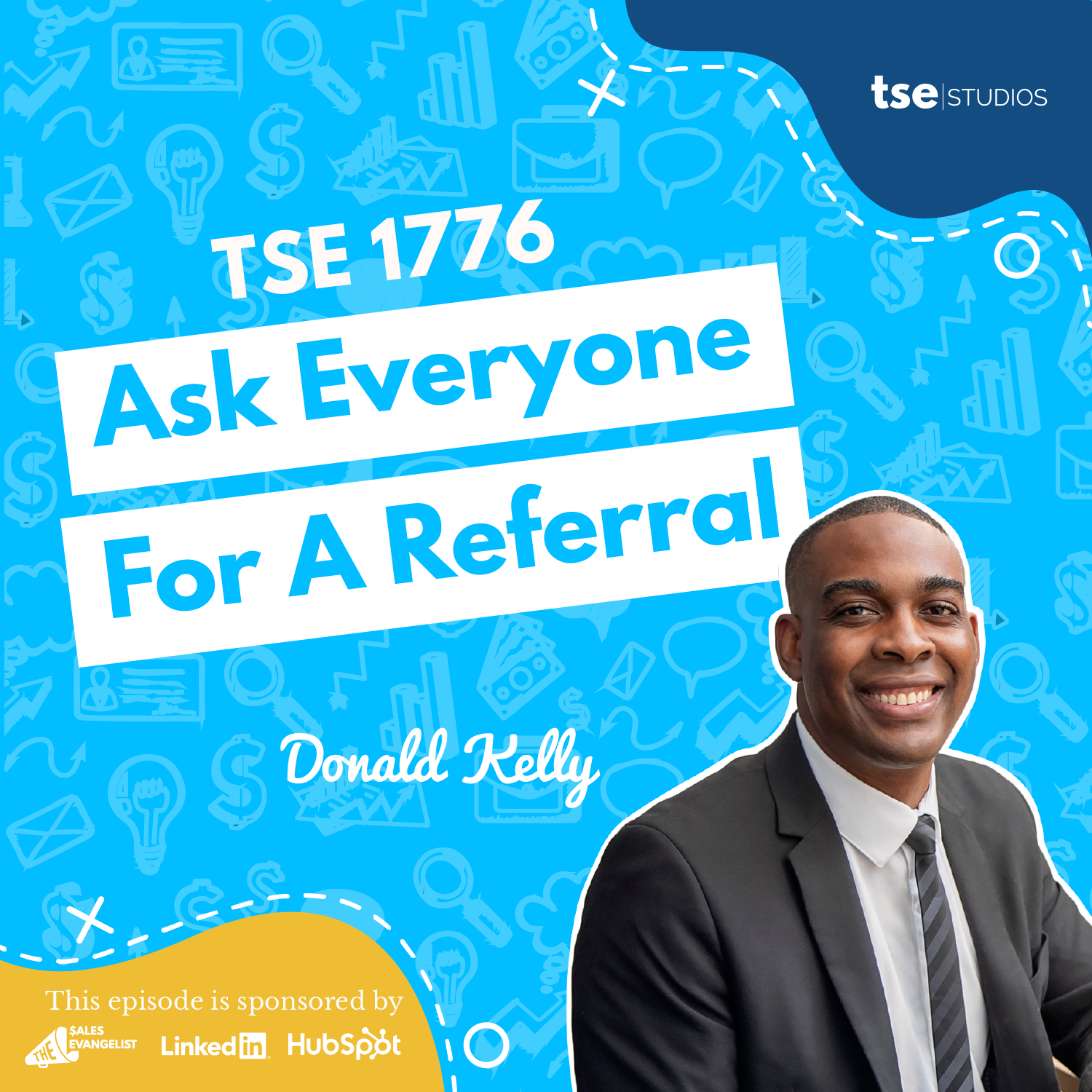
Ep 1776Ask Everyone For A Referral | Donald Kelly - 1776
You have a client on the phone, and they decide not to close the deal. Do you? Tell them to have a good day and hang up, or ask if they know anyone else needing your services. In this episode of "The Sales Evangelist Podcast," host Donald C. Kelly shares the most overlooked strategy of asking everyone for referrals. With a passion for empowering sales professionals, Donald shares valuable insights and practical tips to help you unlock the potential of referral generation. Tune in to elevate your sales prowess and harness the power of referrals! Utilizing Untapped Potential Donald discusses the importance of recognizing the untapped potential in every interaction. He encourages sales professionals to assume that everyone they speak with knows someone who could benefit from their services. The Art of the Ask From his own experiences, Donald shares a simple yet powerful approach to requesting referrals. He outlines the process of respectfully inquiring if the contact knows anyone who could benefit from the offered product or service. Donald emphasizes delivering value and building rapport before requesting a referral. Referral Incentives and Tools Donald explores the potential of incentivizing referrals by offering small gifts or incentives to contacts who provide valuable referrals. He suggests options such as gift cards or utilizing specialized software to facilitate the process. By incorporating these incentives, sales professionals can encourage contacts to consider and actively refer potential leads. Start embracing this proactive approach to seeking referrals and recognize every interaction's vast potential. Challenge yourself and apply these principles to elevate your sales game. Listen to the full episode now and embark on your path to monumental achievement! “Nine out of ten customers are willing to give referrals, but only 11% of salespeople ask for referrals. So there's a big gap of people wanting to provide you with business, but you aren't taking advantage of them.” - Donald Kelly. Resources The Sales Evangelist Sales Mastermind LinkedIn Sales Navigator Donald C. Kelly on LinkedIn Sponsorship Offers This episode is brought to you in part by Hubspot. With HubSpot sales hubs, your data tools and teams join a single platform to close deals and turn prospects into pipelines. Try it for yourself at hubspot.com/sales. 2. This episode is brought to you in part by LinkedIn. Are you tired of prospective clients not responding to your emails? Sign up for a free 60-day trial of LinkedIn Sales Navigator at linkedin.com/tse. 3. This episode is brought to you in part by the TSE Sales Foundation. Improve your connection on LinkedIn and land three or five appointments with our LinkedIn prospecting course. Go to the salesevangelist.com/linkedin. Credits As one of our podcast listeners, we value your opinion and always want to improve the quality of our show. Complete our two-minute survey here: thesalesevangelist.com/survey. We’d love for you to join us for our next episodes by tuning in on Apple Podcast, Google Podcast, Stitcher, or Spotify. Audio provided by Free SFX, Soundstripe, and Bensound. Other songs used in the episodes are as follows: The Organ Grinder written by Bradley Jay Hill, performed by Bright Seed, and Produced by Brightseed and Hill.Mentioned in this episode:HubSpot and bluëmago | STUDIOSHubSpot and bluëmago | STUDIOS hubpspot.com/marketers bluemangostudios.com
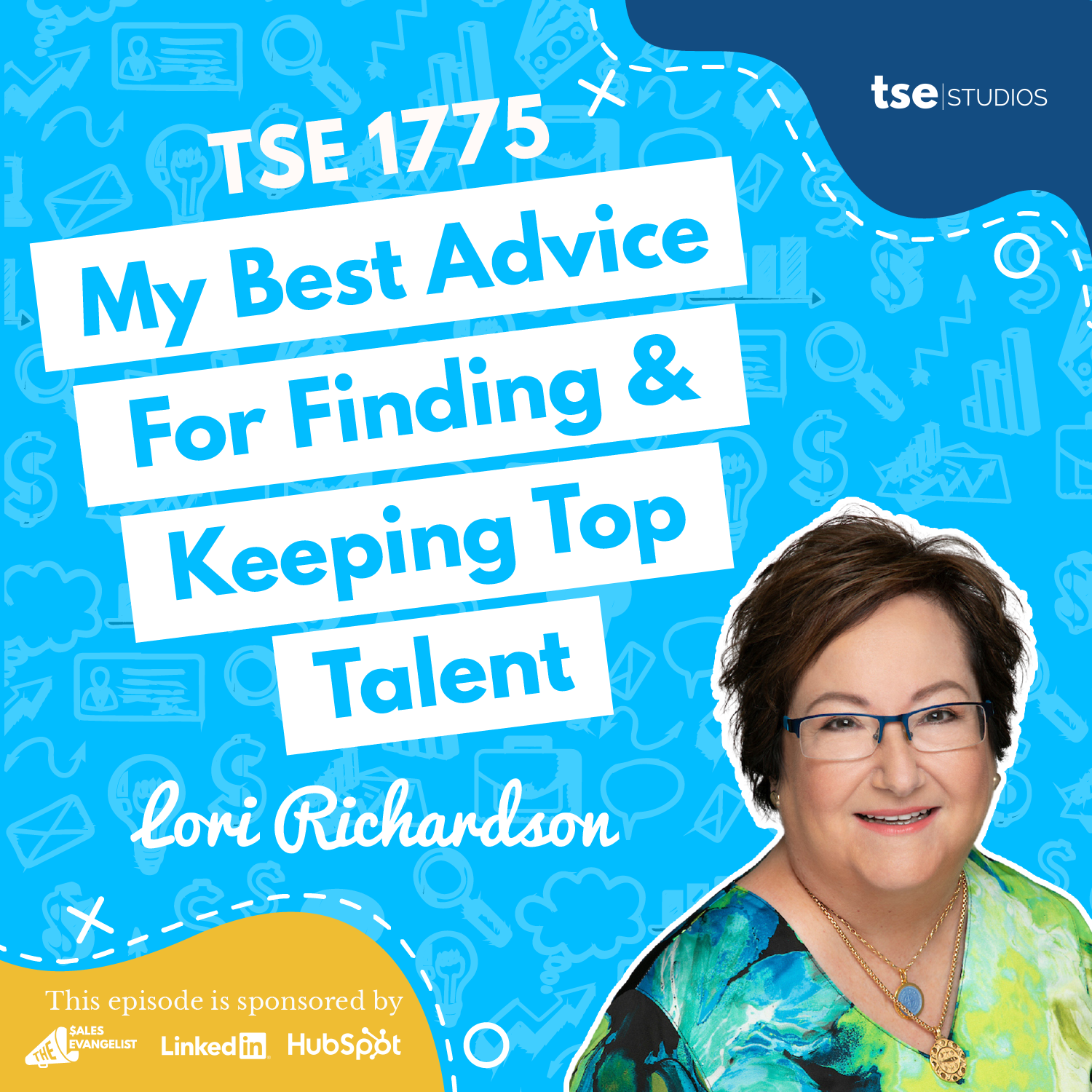
Ep 1775My Best Advice For Finding & Keeping Top Talent | Lori Richardson - 1775
Are you tired of the high turnover rate in your sales team? How do you identify and retain top sales talent? In a world where finding the right sales professionals can be challenging, Lori Richardson, a seasoned sales strategist with over 20 years of experience, joins Donald on "The Sales Evangelist Podcast" to share her invaluable insights on bringing in the right talent and keeping them motivated for long-term success. In this episode, Lori offers practical advice for both sales professionals and leaders, shedding light on the qualities to look for in salespeople, the role of effective leadership, and how to identify the right company culture. If you're ready to revolutionize your sales team and boost your own sales career, you won't want to miss this episode! Qualities of Successful Salespeople Lori emphasizes the importance of key qualities in successful salespeople. She highlights the significance of coachability, strong will, and the ability to accept rejection without being deterred. Lori also acknowledges the role of personal attitudes and beliefs, emphasizing the need for individuals to have a positive mindset and a commitment to continuous improvement in sales. Hiring the Right Talent Donald and Lori discuss the challenges of identifying the right talent for sales roles. Lori stresses the necessity for individuals considering a sales career to test the waters and emphasizes the need for companies to look for coachability and sales DNA in potential hires. Additionally, she provides insights into a comprehensive process that utilizes data to achieve more accurate hiring decisions, providing a proactive approach to identifying and nurturing sales talent. Tools and Processes for Evaluating Sales Talent Lori outlines the use of specific tools and processes that can aid sales leaders in evaluating and identifying top sales talent. She highlights the importance of pre-hire assessments to understand potential hires better. Additionally, she emphasizes the availability of solutions and programs tailored to help companies make informed decisions when hiring sales professionals. The Role of Sales Leadership What’s the impact of sales leadership on the success and retention of sales talent? Lori underscores the pivotal role of sales managers in influencing and supporting their teams. She highlights the significance of supportive beliefs and motivations, emphasizing the need for managers to treat their team members with respect and recognize individual differences. Retaining Sales Talent and Workplace Culture Lori provides insights into the current dynamics of the job market, emphasizing the importance of workplace culture, strong leadership, and a clear vision to retain sales talent. She discusses industry-specific challenges and the shifting dynamics in employee retention, particularly within the tech industry, where volatility and rapid job movement are common. Strategies for Prospective Sales Professionals Lori advises individuals to seek referrals and gather insights from current or former employees about potential employers. She underscores the value of conducting in-depth research into the company's mission, vision, and employee support initiatives to make informed career decisions. Lori Richardson's insights and expertise in sales strategy make this episode a must-listen for anyone in the sales industry. From identifying the right talent to the crucial role of leadership in fostering a thriving sales team, these discussions offer invaluable lessons for individual contributors and sales leaders. Tune in to the full episode to delve deeper into Lori's wealth of knowledge and gain actionable strategies for hiring the right talent! "If you have a sense of failure and messages in your head that are not supporting you to go forward, there's a lot of things that can keep you from being successful." - Lori Richardson. Resources Lori Richardson on LinkedIn Women Sales Pro Women Sales Pro Instagram Sponsorship Offers This episode is brought to you in part by Hubspot. With HubSpot sales hubs, your data tools and teams join a single platform to close deals and turn prospects into pipelines. Try it for yourself at hubspot.com/sales. 2. This episode is brought to you in part by LinkedIn. Are you tired of prospective clients not responding to your emails? Sign up for a free 60-day trial of LinkedIn Sales Navigator at linkedin.com/tse. 3. This episode is brought to you in part by the TSE Sales Foundation. Improve your connection on LinkedIn and land three or five...
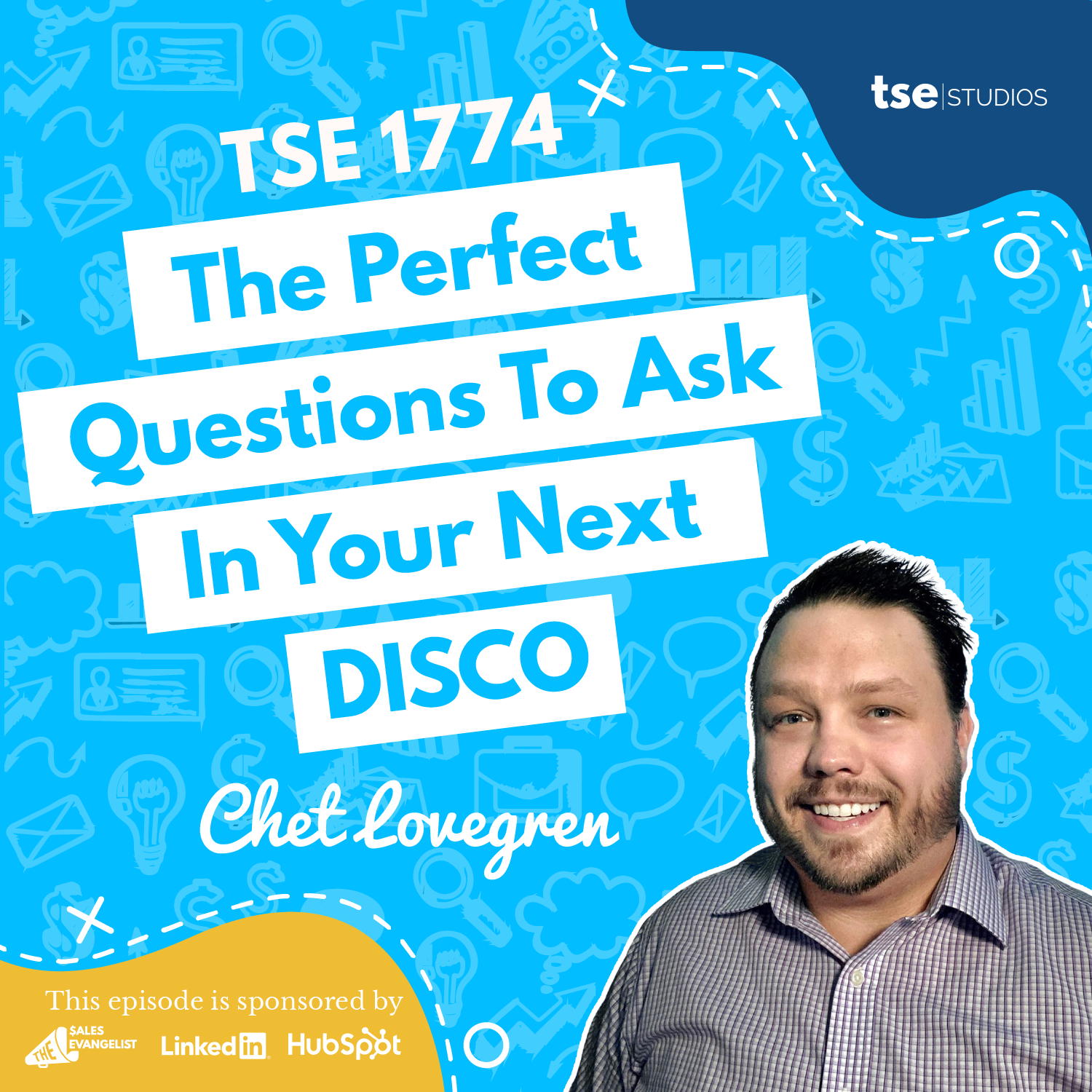
Ep 1774The Perfect Questions To Ask In Your Next DISCO | Chet Lovegren - 1774
Are you tired of lengthy, drawn-out discovery calls that seem to go on forever without getting to the heart of the matter? Imagine condensing those time-consuming conversations into just 15 minutes while delivering maximum impact. In this episode of "The Sales Evangelist Podcast," host Donald Kelly speaks with Chet Lovegren to reveal the secrets behind shortening discovery calls while achieving outstanding results. Chet, a master at sales consulting, shares practical role-playing examples and outlines four key questions that can transform your discovery process. You'll witness practical demonstrations on identifying challenges, understanding their context, gauging expertise, and establishing implications—resulting in streamlined yet effective discovery interactions. Tune in to revolutionize your discovery calls and enjoy results that speak for themselves! The Essential Four Questions for a Successful Discovery Chet highlights the importance of the four key questions that form the foundation of a successful discovery process. These questions involve identifying challenges, understanding context, gauging expertise, and establishing implications. Chet emphasizes the need for sales professionals to tailor these questions to the specific needs of their prospects and their respective industries. Simplifying Complex Sales Processes Donald and Chet stress the significance of simplifying the sales process and avoiding overly complex approaches. Chet shares his experience of condensing discovery calls from 30 minutes to just 15 minutes, showcasing the effectiveness of streamlined conversations. This approach saves time and ensures that prospects receive immediate value and quantifiable solutions. Expert Guidance and Effective Communication Chet discusses the importance of positioning oneself as an expert during sales interactions. He stresses the need for sellers to guide their prospects and provide clear, concise communication. Drawing parallels to a successful car buying experience, the importance of offering a simple and easily understandable process becomes evident. Establishing Implications and Quantifying Value Chet emphasizes the need for sales professionals to establish the implications of not addressing key challenges. By quantifying their solutions' potential value and impact, sellers can effectively showcase their offerings' immediate and tangible benefits. This approach ensures that prospects can make informed decisions based on the real, measurable value they stand to gain. Personalized Discovery Templates Chet generously offers personalized discovery templates for sales professionals looking to enhance their approach. You can receive customized resources and expert guidance tailored to your needs by contacting him. This offer reflects Chet's commitment to helping sales professionals excel in their discovery processes and drive valuable results. In this episode, you'll witness a powerful role play where Donald and Chet dive deep into the art of the discovery process. With the simplicity and value-focused approach, Chet demonstrates how an effective discovery doesn't have to be an hour-long ordeal. Click play and listen to Chet's engaging content and insightful perspectives on sales strategy and discovery processes. "You don't need 30 minutes for discovery, man. You need 15 minutes." - Chet Lovegren. Resources Chet Lovegren on LinkedIn The Sales Doctor Sponsorship Offers This episode is brought to you in part by Hubspot. With HubSpot sales hubs, your data tools and teams join a single platform to close deals and turn prospects into pipelines. Try it for yourself at hubspot.com/sales. 2. This episode is brought to you in part by LinkedIn. Are you tired of prospective clients not responding to your emails? Sign up for a free 60-day trial of LinkedIn Sales Navigator at linkedin.com/tse. 3. This episode is brought to you in part by the TSE Sales Foundation. Improve your connection on LinkedIn and land three or five appointments with our LinkedIn prospecting course. Go to the salesevangelist.com/linkedin. Credits As one of our podcast listeners, we value your opinion and always want to improve the quality of our show. Complete our two-minute survey here: thesalesevangelist.com/survey. We’d love for you to join us for our next episodes by tuning in on Apple Podcast, Google Podcast, Stitcher, or Spotify. Audio provided by Free SFX, Soundstripe, and Bensound. Other songs used in the episodes are as follows: The Organ Grinder written by Bradley Jay Hill, performed by Bright...
Ep 1773Stop Lazy Prospecting | Donald Kelly - 1773
Are you ready to revolutionize your approach to finding prospects? Do you sit back and hope they'll come to you, or are you casting wide nets on LinkedIn, crossing your fingers for a response? Let's face it. These tactics scream "lazy prospecting." But fear not! In this thrilling episode of The Sales Evangelist, the charismatic Donald Kelly is here to transform your strategy. Dive into this power-packed five-minute episode and unravel the secrets behind proactive prospecting. Say goodbye to the old ways and hello to a new era of engagement. Don't miss out! What Is Lazy Prospecting? What exactly is lazy prospecting? In the episode, Donald explains it’s making a phone call without researching the prospect. When prospecting, you should do your prep work. This involves seeing who else works in the organization and looking at the individual’s LinkedIn profile. However, most sellers take this time to scroll through their phones, hoping for the best. Donald explains how most sales representatives become lazy prospectors without realizing it. LinkedIn Profile Before making a phone call, review the prospect's LinkedIn profile. Scroll through to see their achievements, recent work events, or posts they’re engaging in. Donald shares how you can use this information during a phone conversation with your prospects. Hint: Use LinkedIn Sales Navigator during your research! Multi-Threading in Sales Speaking of Sales Navigator, it’s the ideal tool for multi-threading. Use it to find someone within our prospect’s organization you can engage with and talk to on LinkedIn. Donald shares how to multi-thread within the episode correctly to help you connect with your prospects and close a deal. Are you a fan of quick, impactful insights? Dive into our five-minute episodes that pack a punch! Hit subscribe and immerse yourself in the latest trends and updates from the sales world. Our mission? To empower you to double your deal closures by enhancing your pipeline like never before. Join us for these brief yet potent episodes and say goodbye to lackluster prospecting. Transform into the sales leader you're destined to be. Let's do this! “The more shots you take on goal, the more chances you have of scoring.” - Donald Kelly. Resources The Sales Evangelist Sales Mastermind LinkedIn Sales Navigator Donald C. Kelly on LinkedIn Sponsorship Offers This episode is brought to you in part by Hubspot. With HubSpot sales hubs, your data tools and teams join a single platform to close deals and turn prospects into pipelines. Try it for yourself at hubspot.com/sales. This episode is brought to you in part by LinkedIn. Are you tired of prospective clients not responding to your emails? Sign up for a free 60-day trial of LinkedIn Sales Navigator at linkedin.com/tse. This episode is brought to you in part by the TSE Sales Foundation. Improve your connection on LinkedIn and land three or five appointments with our LinkedIn prospecting course. Go to the salesevangelist.com/linkedin. Credits As one of our podcast listeners, we value your opinion and always want to improve the quality of our show. Complete our two-minute survey here: thesalesevangelist.com/survey. We’d love for you to join us for our next episodes by tuning in on Apple Podcast, Google Podcast, Stitcher, or Spotify. Audio provided by Free SFX, Soundstripe, and Bensound. Other songs used in the episodes are as follows: The Organ Grinder written by Bradley Jay Hill, performed by Bright Seed, and Produced by Brightseed and Hill. Mentioned in this episode:HubSpot and bluëmago | STUDIOSHubSpot and bluëmago | STUDIOS hubpspot.com/marketers bluemangostudios.com
Ep 1772The Data Says To Go Small & Niche Right Now | Derek Rahn - 1772
It's all in the data, right? But what's good is the data if you don't know how to utilize the information? In this episode of "The Sales Evangelist Podcast," Host Donald Kelly chats with Derek Rahn about current sales data trends and the need for sellers to niche down within their industry. Tune in and discover how to help you build your pipeline and close twice as many deals as you are now. Derek Rahn’s Background Derek has over 15 years of experience in sales and marketing, specifically within the B2B space. He is the VP of demand generation of Lead Genius, which crafts tools to help companies find their ideal customers. His position allows him to see the current trends and changes within the sales industry. Challenges in the SaaS Landscape One challenge Derek sees within the SaaS industry is that too many team members interact with one customer. This harms the client's relationships with the company and can easily cause misunderstandings. He suggests limiting the number of employees speaking with potential clients during the sales process. Derek also noticed that sales representatives have too much going on with their daily workloads. For example, IC roles are becoming more management-oriented due to the increased team size. He explains whether this has a positive or negative impact on sales companies. Current Sales Data Trends One trend that Derek notes is the rise of verticalization within the industry. The old method of selling was based on geographical areas, and sales reps would know the insides and outs of the business within this region. However, the way sales companies niche down is different now, thanks to remote work. The focus shifts towards pain points, subject matters, and specific industries. For example, there used to be only two well-known CRMs that were used for all industries. Now, there are millions of CRMs for specific industries. The second trend Derek observes is that sales companies must actively target SMBs. This is because there’s a need to continue growing revenue, and more data tools are needed to help sales teams reach SMBs. Utilizing the Data as a Sales Leader Derek shares how sales leaders can utilize data effectively to help their teams reach goals. He suggests starting with the ICP and segmenting it into different, unique categories. He also explains how he helped a company break down its ICP categories and their benefits. The money is in the data! Pay attention to your data if you want your sales company to reach its fullest potential. This is where you’ll find everything you need to grow your business. Listen to this episode to discover how to use data effectively and why you must niche down! “If teams want to see more success, automation is the only way to achieve this.” - Derek Rahn. Resources Derek Rahn on LinkedIn Lead Genius Sponsorship Offers This episode is brought to you in part by Hubspot. With HubSpot sales hubs, your data tools and teams join a single platform to close deals and turn prospects into pipelines. Try it for yourself at hubspot.com/sales. 2. This episode is brought to you in part by LinkedIn. Are you tired of prospective clients not responding to your emails? Sign up for a free 60-day trial of LinkedIn Sales Navigator at linkedin.com/tse. 3. This episode is brought to you in part by the TSE Sales Foundation. Improve your connection on LinkedIn and land three or five appointments with our LinkedIn prospecting course. Go to the salesevangelist.com/linkedin. Credits As one of our podcast listeners, we value your opinion and always want to improve the quality of our show. Complete our two-minute survey here: thesalesevangelist.com/survey. We’d love for you to join us for our next episodes by tuning in on Apple Podcast, Google Podcast, Stitcher, or Spotify. Audio provided by Free SFX, Soundstripe, and Bensound. Other songs used in the episodes are as follows: The Organ Grinder written by Bradley Jay Hill, performed by Bright Seed, and Produced by Brightseed and Hill.Mentioned in this episode:HubSpot and bluëmago | STUDIOSHubSpot and bluëmago | STUDIOS hubpspot.com/marketers bluemangostudios.com
Ep 1771The Biggest Mistakes Sellers Make When Negotiating | Patrick Tinney - 1771
Wanna know the secrets to mastering the art of sales negotiation? Once you learn them, you'll never go hungry again! But first, you must tune in to hear this episode of "The Sales Evangelist Podcast." Host Donald Kelly chats with Patrick Tinney, author and founder of Centroid Training & Marketing. They delve deep into the world of sales negotiation and strategic planning. Patrick also explains why these sales techniques are a lost art in the industry and the biggest mistakes most sellers make. Listen and discover how to become a better sales negotiator in this episode. Also, don't forget to grab your copy of Patric Tinney's books down below. He shares a world of sales knowledge within this episode and his books! Patrick Tinney’s Background Patrick is the author of four books. The one he shares and discusses within the episode is “Unlocking Yes: The Revised Edition.” He was among the first to write a sales negotiation book after Brian Tracy. Only a select few are brave enough to share their knowledge of sales negotiation. This is due to its complexity; you need the right experience to teach others. Common Mistakes and Challenges in Sales Negotiation Partick discusses how, in the Far East, people live for negotiation. However, in North America, people prefer to avoid the negotiation process and find it uncomfortable. He also shares how some sellers are afraid to make mistakes during negotiations. But you shouldn't let this stop you from trying to negotiate. In the world of business, mistakes are bound to happen. It's also the best way to learn the sales negotiation process. Another mistake Partick finds is how most sellers hammer their potential buyers into decisions. They are always rushing to make deals, which is a huge mistake. It's better to wait it out, and he shares why in the episode. Becoming a Better Strategic Planner Negotiator Patrick shares why more sellers need to consider SWAT analysis and business cases. He discusses why this is important and how it can make everything easier for professional buyers. Patrick debunks the myth that using the SWAT analysis is useless. He discusses how sellers can leverage their threats and weaknesses to become better negotiators. Patrick shares his sales philosophy of becoming a better strategic planner. It’s to remove negative risks and replace them with positive ones. His last advice is to think about what a great deal looks like at the end of the sales process. This episode is a must-listen for those struggling with sales negotiation and strategic planning. You’ll discover invaluable advice from Patrick’s knowledge within the sales world. Tune in to hear this insightful chat with host Donald Kelly and special guest Patrick Tinney! “If you don’t have the chomps, you just can not speak with great clarity.” - Patrick Tinney. Resources Centroid Training & Marketing Patrick Tinney on LinkedIn Unlocking Yes - Revised Edition: Sales Negotiation Lessons & Strategy Perpetual Hunger: Sales Prospecting Lessons & Strategy Nothing Stops Me: Sales Success from Adversity The Bonus Round: Corporate Sales Lessons & Strategy Sponsorship Offers This episode is brought to you in part by Hubspot. With HubSpot sales hubs, your data tools and teams join a single platform to close deals and turn prospects into pipelines. Try it for yourself at hubspot.com/sales. 2. This episode is brought to you in part by LinkedIn. Are you tired of prospective clients not responding to your emails? Sign up for a free 60-day trial of LinkedIn Sales Navigator at linkedin.com/tse. 3. This episode is brought to you in part by the TSE Sales Foundation. Improve your connection on LinkedIn and land three or five appointments with our LinkedIn prospecting course. Go to the ...

Ep 17704 Simple Steps For Handling Any Objection | Donald Kelly - 1770
A potential buyer just told you no on a deal you have been trying to close for months. Should you accept this objection or use sales techniques to help them change their minds? In this short and sweet episode of the Sales Evangelist Podcast, host Donald Kelly shares four steps for handling objections with you. Discover these techniques and how they can help change a potential buyer from saying no to yes. Tune in now and test these sales methods with your prospects. 1. Mindset Donald discusses that most sellers start thinking negatively when a prospect says they’re not interested in their products. Sometimes, it’s due to them really not being interested, and you’ll be able to tell by their actions. However, some prospects don’t know if they can decide on a potential deal. Donald explains how to switch negative thinking into positive thinking to help these prospects decide. 2. Why Donald explains why some prospects may view a potential deal as a threat. Your job is to figure out why they have this viewpoint. They may have had a bad experience with a different vendor and see your product as the same as theirs. Ask deeper questions to figure out the problems. 3. Value/Risk Once you understand why they have negative viewpoints, Donald discusses how you can help prospects see the value in your product. Help potential clients understand their unknown risks and tell them how your product can eliminate them. 4. Invitation Once you provide value to your prospect, give them an invitation to set a meeting with you. Donald shares how to invite prospects to schedule a meeting and close a deal. Dealing with sales objections is never easy, especially when you don’t know how to combat them correctly. However, if you listen to this episode, you’ll learn how to handle objections. Tune in to hear this exciting five-minute episode of The Sales Evangelist Podcast. “The idea behind an objection is that there’s a need for more clarity.” -Donald Kelly. Resources The Sales Evangelist Sales Mastermind Donald C. Kelly on LinkedIn Sponsorship Offers This episode is brought to you in part by Hubspot. With HubSpot sales hubs, your data tools and teams join a single platform to close deals and turn prospects into pipelines. Try it for yourself at hubspot.com/sales. This episode is brought to you in part by LinkedIn. Are you tired of prospective clients not responding to your emails? Sign up for a free 60-day trial of LinkedIn Sales Navigator at linkedin.com/tse. This episode is brought to you in part by the TSE Sales Foundation. Improve your connection on LinkedIn and land three or five appointments with our LinkedIn prospecting course. Go to the salesevangelist.com/linkedin. Credits As one of our podcast listeners, we value your opinion and always want to improve the quality of our show. Complete our two-minute survey here: thesalesevangelist.com/survey. We’d love for you to join us for our next episodes by tuning in on Apple Podcast, Google Podcast, Stitcher, or Spotify. Audio provided by Free SFX, Soundstripe, and Bensound. Other songs used in the episodes are as follows: The Organ Grinder written by Bradley Jay Hill, performed by Bright Seed, and Produced by Brightseed and Hill. Mentioned in this episode:HubSpot and bluëmago | STUDIOSHubSpot and bluëmago | STUDIOS hubpspot.com/marketers bluemangostudios.com
Ep 1769The REAL Truth Behind Why You're Not Prospecting Enough | Dr. Jean Oursler - 1769
Having the right mindset is crucial to being a successful salesperson. So why do we often get locked up in a mindset of fear, and how can we change that? In this episode, your host Donald Kelly and Dr. Jean Oursler (Ph.D. in Business Psychology from the Chicago School) are here to teach us about our “Caveman Brain” so that we can harness the way we are wired and make it work to our advantage. What is Your Caveman Brain? The amygdala is a part of the brain that controls our fear responses to our environment. Dr. Oursler calls this the “caveman brain” Our “caveman brain” exists to protect us from getting hurt or dying, so we can’t get rid of it or turn it off! We don’t have to run away from predators or protect our young from danger anymore, so nowadays, we fear things like rejection, losing our reputation, or being a pushy salesperson. How Do We Work WITH the Caveman Brain? The amygdala only knows what it sees and hears. Pay attention to the media and information you consume! Identify your personal fears. Know what is holding you back and why. Use positive self-talk to give the caveman brain information to overcome your fears. Think of these as affirmations or talking yourself up. [Tweet "Almost everything that’s happening in your life that isn’t happening the way you want it to comes down to your caveman brain. When you realize that and you start to fix that, everything else falls back into place.” – Dr. Jean Oursler"] Resources https://cavemanbrain.com/ Sponsorship Offers This episode is brought to you in part by Hubspot. With HubSpot sales hubs, your data tools and teams join a single platform to close deals and turn prospects into pipelines. Try it for yourself at hubspot.com/sales. 2. This episode is brought to you in part by LinkedIn. Are you tired of prospective clients not responding to your emails? Sign up for a free 60-day trial of LinkedIn Sales Navigator at linkedin.com/tse. 3. This episode is brought to you in part by the TSE Sales Foundation. Improve your connection on LinkedIn and land three or five appointments with our LinkedIn prospecting course. Go to the salesevangelist.com/linkedin. Credits As one of our podcast listeners, we value your opinion and always want to improve the quality of our show. Complete our two-minute survey here: thesalesevangelist.com/survey. We’d love for you to join us for our next episodes by tuning in on Apple Podcast, Google Podcast, Stitcher, or Spotify. Audio provided by Free SFX, Soundstripe, and Bensound. Other songs used in the episodes are as follows: The Organ Grinder written by Bradley Jay Hill, performed by Bright Seed, and Produced by Brightseed and Hill.Mentioned in this episode:HubSpot and bluëmago | STUDIOSHubSpot and bluëmago | STUDIOS hubpspot.com/marketers bluemangostudios.com
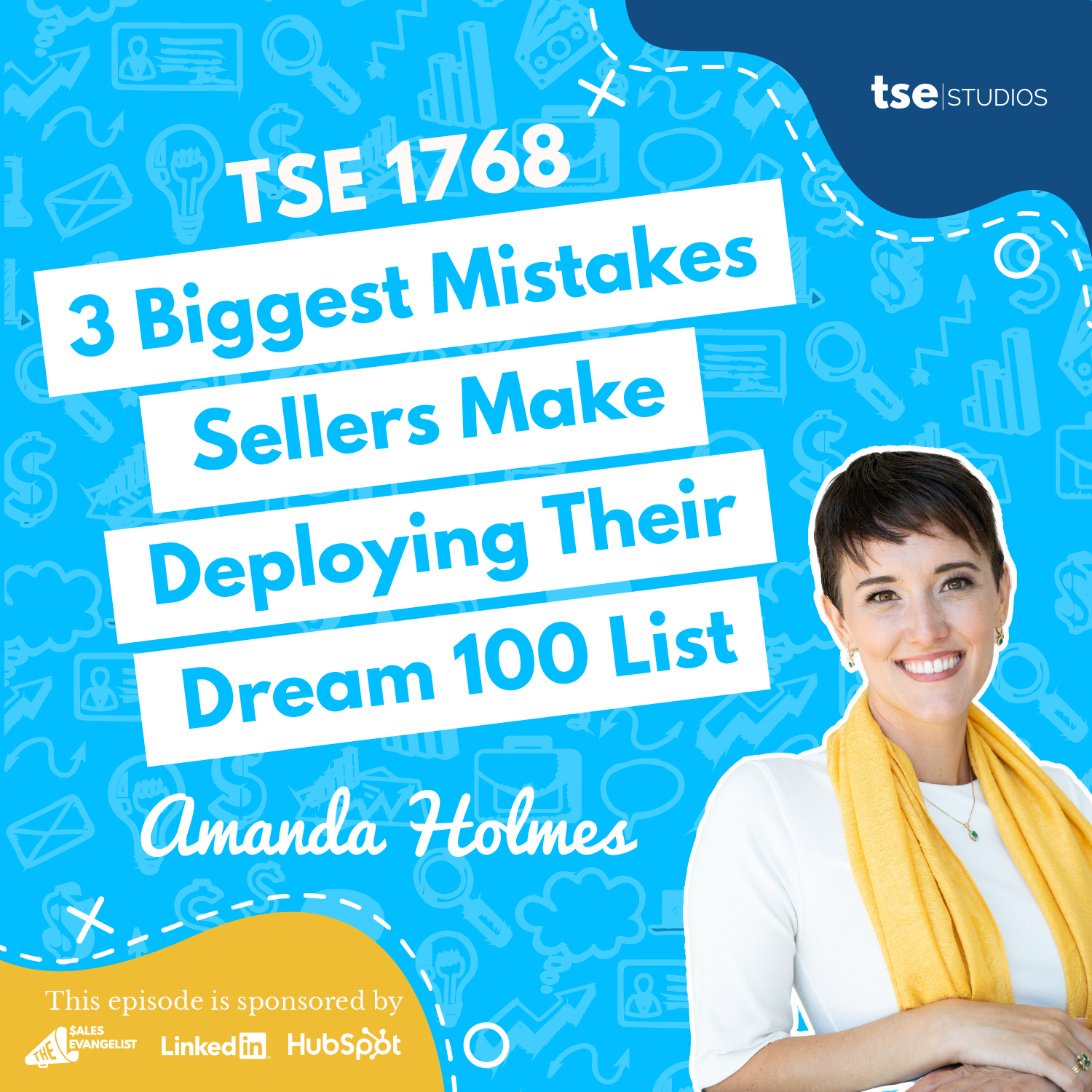
Ep 17683 Biggest Mistakes Sellers Make Deploying Their Dream 100 List | Amanda Holmes - 1768
New reps and veteran sellers alike are looking for the missing piece in their sales game – look no further. In this electrifying interview, your host Donald Kelly speaks with Amanda Holmes, CEO of Chet Holmes International, about how her finger-on-the-pulse approach connects with the foundational elements of her father’s work (The Ultimate Sales Machine) to bring us into the future of selling. What is a Dream 100? There is always a smaller number of better buyers than there are buyers. Selling to your better buyers is smarter and cheaper than selling to anyone else. When he was a seller, Chet Holmes spent his energy focusing on his ideal clients rather than selling to 20,000 prospects. “In your face, in your space, in your place.” Chet Holmes used a lot of marketing tactics WITHOUT spamming. Aim to be interested instead of interesting! Identify YOUR Dream 100 Start by going through your contacts and identifying the people who could be in your Dream 100 – without social media. Don’t get overwhelmed – start with a Dream 5 or Dream 10! Place your focus there, and build on it. 3 Dream 100 DON’Ts It doesn’t need to be “100”. The most important thing to do is find your better buyers – the customers who are really right for you. It doesn’t need to be people outside of your sphere. After looking through your contacts, check your social media, your CRM (customer relationship management), and other places in your SOI (sphere of influence). Bigger isn’t always better. Even if big accounts bring in a lot of money, they may not be profitable, and they may not need you. You may not like working with them, which makes them NOT a dream client! "My father was a fifth-degree blackbelt. He realized that there are only so many ways that you kick or you punch, and it’s just a matter of practicing these things over, and over, and over again. He’s famous for the saying, ‘Mastery isn’t about doing 4,000 different things, it’s about doing 12 things 4,000 times.” – Amanda Holmes Resources http://ultimatesalesmachine.com (Chapter 4 of the book is free!) Reach out to Amanda directly @amanditaholmes on Instagram Sponsorship Offers This episode is brought to you in part by Hubspot. With HubSpot sales hubs, your data tools and teams join a single platform to close deals and turn prospects into pipelines. Try it for yourself at hubspot.com/sales. 2. This episode is brought to you in part by LinkedIn. Are you tired of prospective clients not responding to your emails? Sign up for a free 60-day trial of LinkedIn Sales Navigator at linkedin.com/tse. 3. This episode is brought to you in part by the TSE Sales Foundation. Improve your connection on LinkedIn and land three or five appointments with our LinkedIn prospecting course. Go to the salesevangelist.com/linkedin. Credits As one of our podcast listeners, we value your opinion and always want to improve the quality of our show. Complete our two-minute survey here: thesalesevangelist.com/survey. We’d love for you to join us for our next episodes by tuning in on Apple Podcast, Google Podcast, Stitcher, or Spotify. Audio provided by Free SFX, Soundstripe, and Bensound. Other songs used in the episodes are as follows: The Organ Grinder written by Bradley Jay Hill, performed by Bright Seed, and Produced by Brightseed and Hill.Mentioned in this episode:HubSpot and bluëmago | STUDIOSHubSpot and bluëmago | STUDIOS hubpspot.com/marketers bluemangostudios.com
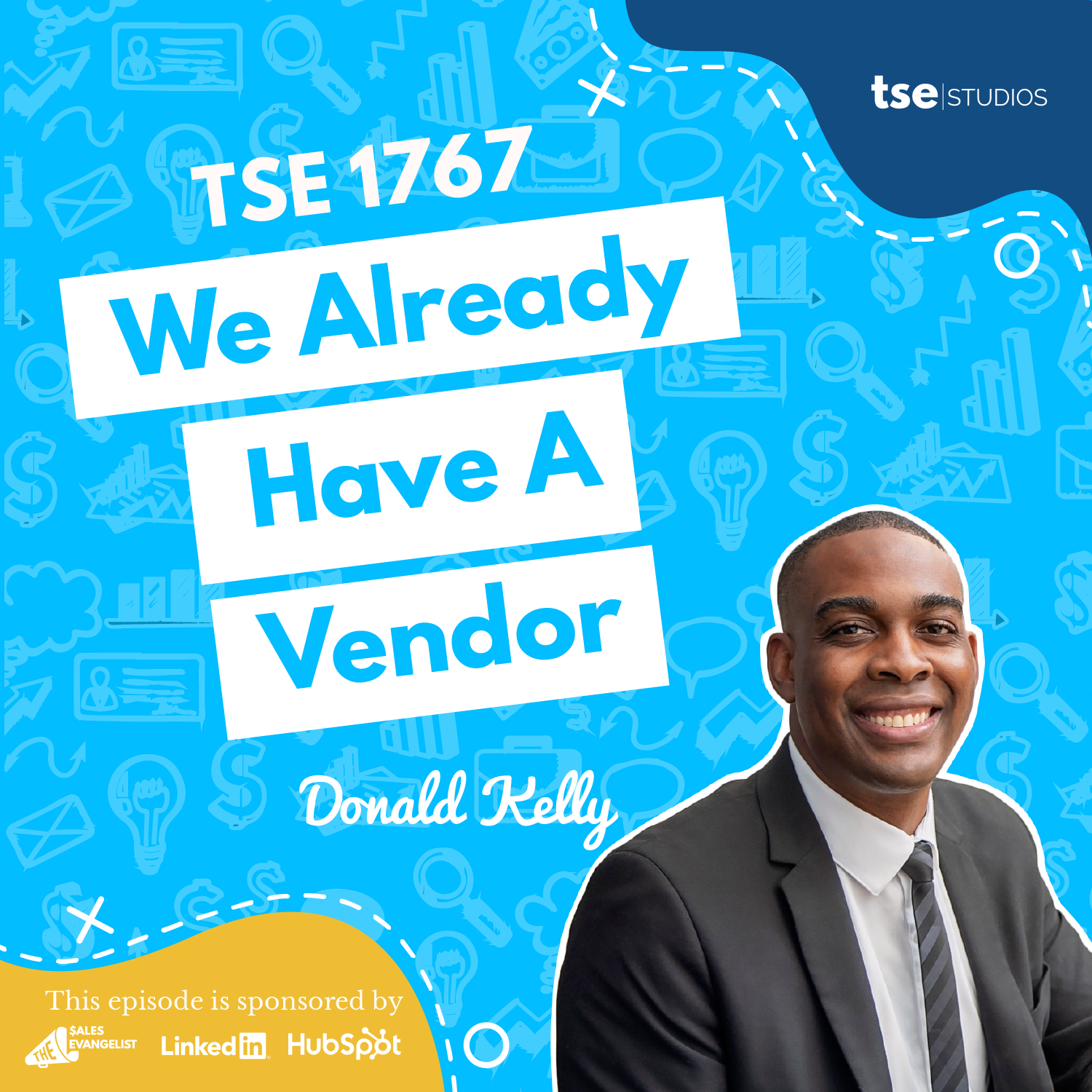
Ep 1767We Already Have A Vendor | Donald Kelly - 1767
Nothing is more frustrating than hearing a potential customer tell you they already have a vendor and don't need your services. Having spent so much time researching them, you feel it was all for nothing. Now you're wondering if you should try to convince them your services are better than their current vendor. But what tactic can you use to help win them over? In this episode of the Sales Evangelist podcast, host Donald Kelly shares his best strategy for handling the common sales objection, "We already have a vendor; we're not interested." He'll show you how to uncover the prospect's true interest, provide value, and keep the conversation toward a potential deal. Listen to this five-minute episode to unlock the secret approach to turning these objections into opportunities. Understanding Objections Donald emphasizes that objections don't always indicate disinterest but rather a lack of information. It's crucial to understand the prospect's specific needs and ensure that your solution is relevant to their challenges. Identifying the right fit and relevant problems is essential in addressing objections effectively. Engaging the Prospect By acknowledging the prospect's statement (e.g., "We already have a vendor"), Donald suggests taking the conversation in a different direction. He emphasizes the importance of catching the prospect off guard and demonstrating an understanding of their concerns and potential areas for improvement. Uncovering Pain Points Through skillful questioning, sales professionals can uncover pain points or dissatisfaction with the current vendor. A deeper dialogue can be initiated by asking open-ended questions and displaying genuine interest in the prospect's challenges. Presenting a Solution Donald advises presenting a compelling solution that directly addresses the identified pain points. By showcasing the unique value of your offering and how it can effectively resolve the prospect's challenges, you can open the door to further discussion and potential collaboration. Effective Communication Utilizing effective communication techniques, such as active listening and mirroring the prospect's language, is pivotal. By demonstrating genuine empathy and understanding, sales professionals can build rapport and trust, laying the groundwork for productive conversations. Closing the Deal The episode highlights the significance of transitioning the conversation towards a potential next step, such as setting up a follow-up call or meeting. Donald stresses the importance of articulating the value proposition clearly and effectively to drive the prospect's interest in further exploration. Handling these types of objections doesn't have to be a dead-end but can actually be an opportunity to showcase your value. In this episode, Donald unpacked the best strategy for navigating this common objection, providing actionable tips to turn these conversations around and set the stage for successful deal closures. This episode is a must-listen if you're serious about enhancing your sales game. So, tune in to the Sales Evangelist podcast and equip yourself with the tools to handle objections and thrive in turning them into opportunities. Don't miss out on this invaluable insight to unleash your sales potential! "Objections don't necessarily mean somebody's not interested. It's that they don't know enough to be able to be truly interested." - Donald Kelly. Resources The Sales Evangelist Sales Mastermind Donald C. Kelly on LinkedIn Sponsorship Offers This episode is brought to you in part by Hubspot. With HubSpot sales hubs, your data tools and teams join a single platform to close deals and turn prospects into pipelines. Try it for yourself at hubspot.com/sales. This episode is brought to you in part by LinkedIn. Are you tired of prospective clients not responding to your emails? Sign up for a free 60-day trial of LinkedIn Sales Navigator at linkedin.com/tse. This episode is brought to you in part by the TSE Sales Foundation. Improve your connection on LinkedIn and land three or five appointments with our LinkedIn prospecting course. Go to the salesevangelist.com/linkedin. Credits As one of our podcast listeners, we value your opinion and always want to improve the quality of our show. Complete our two-minute survey here: thesalesevangelist.com/survey. We’d love for you to join us for our next episodes by tuning in on Apple Podcast, Google Podcast, Stitcher, or Spotify. Audio provided by Free SFX, Soundstripe, and Bensound. Other songs used in the episodes are as follows: The Organ Grinder written by Bradley Jay Hill, performed by Bright Seed, and Produced by Brightseed and Hill. Mentioned in this episode:HubSpot and bluëmago | STUDIOSHubSpot and bluëmago | STUDIOS hubpspot.com/marketers bluemangostudios.com
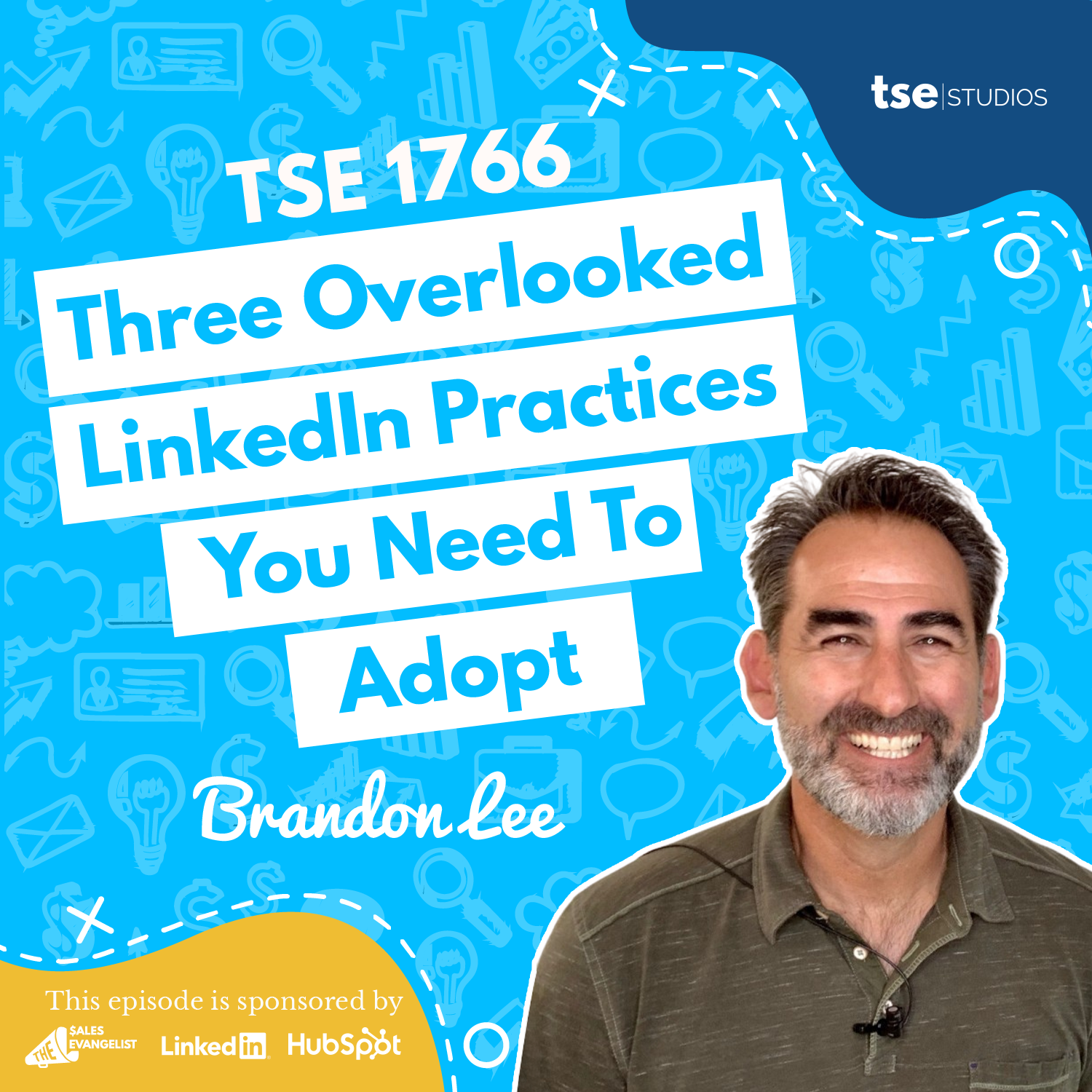
Ep 1766Three Overlooked LinkedIn Practices You Need To Adopt | Brandon Lee - 1766
How do you move beyond having a network of connections on LinkedIn to leveraging it to drive meaningful conversations and opportunities? In this episode of “The Sales Evangelist Podcast,” host Donald Kelly chats with Brandon Lee, the founder of FistBump, on the best practices for maximizing your impact on LinkedIn. Discover powerful techniques for engaging with prospects, creating compelling content, and establishing genuine connections that lead to tangible results. Tune in to hear essential strategies for utilizing LinkedIn to drive sales success. Brandon Lee’s Background Brandon founded Fist Bump, which offers a done-for-you and done-with-you model aimed at C-suite sales leaders looking to leverage LinkedIn more effectively. The service appeals to individuals seeking guidance on improving their LinkedIn utilization and those lacking the time to do it themselves. LinkedIn as a Sales Tool Donald and Brandon discuss the critical role of LinkedIn in B2B sales and business. They tackle the common issue of professionals failing to effectively utilize their LinkedIn connections after making them, highlighting the need for a more strategic approach to networking and relationship-building on the platform. Best Practices for Utilizing LinkedIn Brandon emphasizes the importance of adopting a networking, rather than a purely sales-driven, mindset when using LinkedIn. He shares the challenges of coming across as just another demanding voice in the crowd and advises on shifting from a lead generation to a demand creation mindset. Creating Intriguing Content Brandon stresses the significance of sharing educational and informative content that resonates with buyers, regardless of whether they are currently in the market. He delves into the strategy of transforming valuable customer insights into engaging social posts and provides examples of how to offer industry-related solutions rather than straightforward sales pitches. Making Content Relatable Donald and Brandon explore the concept of relatable content and the impact of sharing experiences and insights that resonate with the audience. They discuss the effectiveness of content that addresses common industry challenges and offers solutions, emphasizing its relatability and value to the target audience. Maximizing Engagement Through Comments Brandon advocates for consistent and meaningful engagement by commenting on relevant posts and extending conversations by commenting on comments. He emphasizes the algorithm’s positive response to active engagement and encourages leveraging it to increase post visibility and exposure to a broader audience. Taking Advantage of Profile Views Brandon highlights the benefit of monitoring profile views and utilizing them as an opportunity to extend connection requests and initiate conversations. He stresses the importance of personalizing connection requests and seeking common ground with potential connections, ultimately fostering a more extensive and valuable professional network. Overcoming Impostor Syndrome Brandon shares advice for individuals hesitant to leverage LinkedIn, focusing on overcoming impostor syndrome. He emphasizes the value of personal experiences and the significance of taking the initial step, as well as reinforcing the learning curve and the benefits of perseverance. Brandon’s expertise provides invaluable insights into fostering meaningful connections, creating engaging content, and maximizing visibility on LinkedIn, offering actionable tactics for those seeking to elevate their sales game on the platform. With practical tips and a focus on authentic human connection, Brandon's approach is both compelling and achievable for anyone seeking to excel on LinkedIn. Tune in to the full episode for a wealth of actionable insights and take your LinkedIn game to the next level! “I think Sales Navigator is a great sales tool, and LinkedIn is a great networking tool. But if we confuse them and try to sell before we network, we try to sell before we build a rapport or a reputation, then we're just a cold voice demanding or asking people for their time. People have had enough of that!” - Brandon Lee. Resources https://getfistbumps.com/ Brandon Lee on LinkedIn Sponsorship Offers This episode is brought to you in part by Hubspot. With HubSpot sales hubs, your data tools and teams join a single platform to close deals and turn prospects into pipelines. Try it for yourself at hubspot.com/sales. 2. This episode is brought to you in part by LinkedIn. Are you tired of prospective clients not responding to your emails? Sign up for a free 60-day trial of LinkedIn Sales Navigator at <a
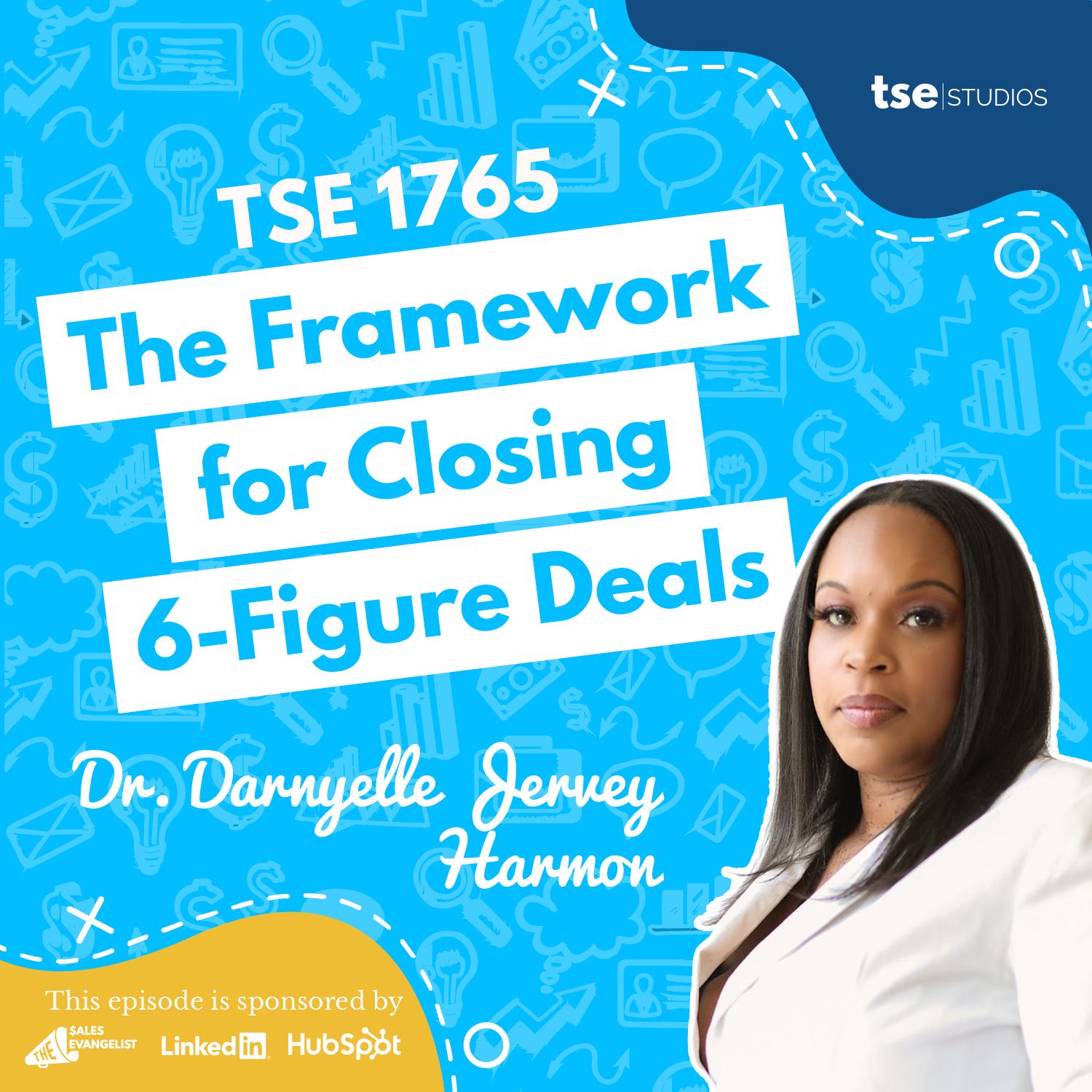
Ep 1765The Framework for Closing 6-Figure Deals | Dr. Darnyelle Jervey Harmon - 1765
Are you ready to elevate your sales game and close those six-figure deals? In this episode, Dr. Darnyelle Jervey Harmon joins host Donald to share her insights on transforming sales mindset and strategy. Dr. Darnyelle has a wealth of experience and knowledge working with business leaders to achieve significant revenue growth and success. Her approach integrates business growth strategy, talent development, leadership development, and sales psychology. Discover how to revolutionize your sales approach and cultivate a mindset that drives unprecedented success. Tune in to this episode with Dr. Darnyelle Jervey Harmon and ignite your journey to selling millions! Overview of Dr. Darnyelle Jervey Harmon's Work Dr. Darnyelle Jervey Harmon is the founder of Incredible One Enterprises, a company that specializes in helping business leaders reach their revenue goals. The focus is on driving revenue growth and achieving millionaire status. Transforming Sales Mindset Dr. Darnyelle emphasizes the importance of understanding the connection between how salespeople see themselves and how they perceive money. She highlights the critical impact of early childhood beliefs about money and the need to dismantle limiting beliefs to drive sales success. The Sell Millions Method Dr. Darnyelle introduces the "Sell Millions Method," which encompasses five pillars: strategy, sales, systems, support, and success mindset. Each pillar aligns sales strategies with individual mindset and money consciousness to drive improved sales outcomes. Understanding the Problems and Solutions The first pillar, “Strategy,” involves understanding the client's problems that they have been unable to solve independently and presenting the solutions that appeal to the client's self-selection of the offered solution. Sales Tools and Systems The "Sales" pillar leverages sales tools and key performance indicators (KPIs) to enhance conversion rates. The "Systems" pillar highlights the importance of establishing standard operating procedures leveraging software and automation to make the sales process predictable and efficient. The Power of Education-Based Marketing The episode underscores the power of education-based marketing in connecting with potential clients and how it helps build trust and understanding around the products or services offered. Furthermore, it explores the need for education to align with different segments of potential clients based on their stage in the decision-making process. Investing in People and Mindset Dr. Darnyelle emphasizes the critical role of a well-supported and trained sales team. She shares her experience of transforming underperforming teams into top performers through dedicated training and development programs. Additionally, she highlights the essential value of equipping sales teams with financial literacy and shifting their mindset toward money to enable them to sell effectively. Key Insights on Sales and Money Consciousness The conversation delves into statistics revealing the pervasive financial stress and lack of financial literacy among employees, which leads to a substantial loss for employers. Dr. Darnyelle highlights the significance of transforming how sales professionals view money to facilitate successful sales outcomes. Dr. Darnyelle Jervey Harmon delivers a masterclass on selling effectively and unlocking the potential for large deals. With her Sell Millions Method framework, she illuminates the critical connection between mindset, money consciousness, and sales success. Dr. Darnyelle's insights on strategy, sales tools, systems, support, and mindset shift the paradigm around sales leadership and empower sales professionals to supersede limitations and accelerate sales conversions. Tune in to this episode to gain invaluable wisdom on transforming your sales approach, cultivating a success mindset, and leveraging education-based marketing to drive results. Dr. Darnyelle's expertise is a game-changer for anyone seeking to elevate their sales game and achieve remarkable results. “60% of adults live paycheck to paycheck. So that means the people that are selling in your organization live paycheck to paycheck, which means they don't understand money. It means that they don't have a strong relationship with money. These people are responsible for getting your customers to buy more of your product and service in exchange for money. Oh, that's a bad place to be.” - Dr. Darnyelle Jervey Harmon. Resources Movetomillions.com Sponsorship Offers This episode is brought to you in part by Hubspot. With HubSpot sales hubs, your data tools and teams join a single platform to close deals and turn prospects into pipelines. Try it for yourself at hubspot.com/sales. 2. This episode is brought to you in part by LinkedIn. Are you tired of prospective clients not responding to your emails? Sign up for a free 60-day trial of LinkedIn Sales Navigator at <a href=...
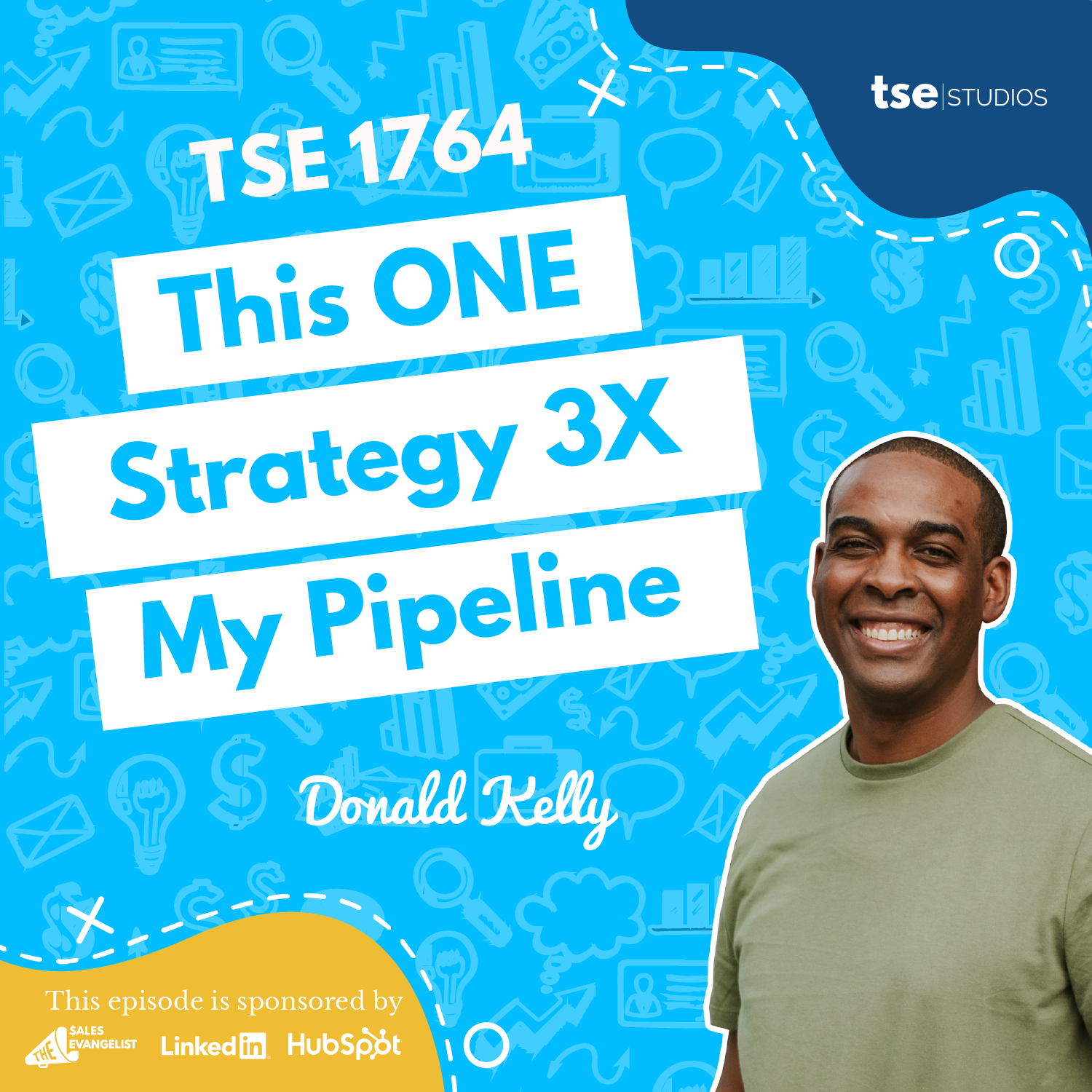
Ep 1764This ONE Strategy 3X My Pipeline | Donald Kelly - 1764
Do you want to learn a simple strategy to improve the quality of your deals? If so, you must tune in to this quick 5-minute episode of “The Sales Evangelist Podcast.” In this episode, host Donald Kelly shares a simple yet powerful strategy that served as a game-changer in significantly improving the quality of deals in his pipeline. He stresses the impact of accountability and how it transformed his sales approach, leading to a remarkable three-fold increase in revenue. Discover the secrets to boosting your sales performance through the power of accountability. With the right mindset and strategy, you can achieve remarkable sales success. The Power of Accountability Donald emphasizes the crucial role of accountability in driving sales performance, drawing from his experience as a CEO striving to maintain consistent prospecting efforts amidst a busy schedule. He acknowledges the lack of individual accountability many sales professionals face and the transformative effect it can have on productivity and results. The Mastermind Experience Drawing from his participation in a mastermind group of high-achieving individuals, Donald reveals how the group's collective accountability and peer pressure fueled his professional growth. The environment of striving for improvement and supporting one another led to a significant spike in revenue and provided invaluable insights that could be applied to the sales team. Implementing Accountability in Sales Donald shares how he translated the mastermind concept into a sales team context, creating a mutual accountability and goal-setting culture. By breaking down overarching goals into manageable micro goals, the team saw a substantial elevation in their performance, ultimately resulting in increased revenue and productivity. Unleashing the Potential for Growth Highlighting the transformative impact of accountability, Donald underscores that even high-performing individuals can achieve more by embracing the concept of continuous improvement. He encourages representatives to seek accountability partnerships within their organizations to unlock their full potential and elevate their sales game. The power of accountability cannot be underestimated when it comes to achieving sales success. Donald's experience demonstrates the impact of having a support system, whether through a mastermind group, a peer, or an accountability partner. Whether you are a sales leader, a remote worker, or an individual contributor, finding a source of accountability can be a game-changer in your sales performance. It's about continuously striving to improve, earn more, and reach the top level of performance that you are capable of. If you want to elevate your sales results, consider taking “The Sales Evangelist Sales Mastermind” program. Embrace the power of accountability and start making remarkable strides in your sales journey today! "But when you do have that accountability, that one ingredient, that one strategy, it changes the game." - Donald Kelly. Resources The Sales Evangelist Sales Mastermind Donald C. Kelly on LinkedIn Sponsorship Offers This episode is brought to you in part by Hubspot. With HubSpot sales hubs, your data tools and teams join a single platform to close deals and turn prospects into pipelines. Try it for yourself at hubspot.com/sales. This episode is brought to you in part by LinkedIn. Are you tired of prospective clients not responding to your emails? Sign up for a free 60-day trial of LinkedIn Sales Navigator at linkedin.com/tse. This episode is brought to you in part by the TSE Sales Foundation. Improve your connection on LinkedIn and land three or five appointments with our LinkedIn prospecting course. Go to the salesevangelist.com/linkedin. Credits As one of our podcast listeners, we value your opinion and always want to improve the quality of our show. Complete our two-minute survey here: thesalesevangelist.com/survey. We’d love for you to join us for our next episodes by tuning in on Apple Podcast, Google Podcast, Stitcher, or Spotify. Audio provided by Free SFX, Soundstripe, and Bensound. Other songs used in the episodes are as follows: The Organ Grinder written by Bradley Jay Hill, performed by Bright Seed, and Produced by Brightseed and Hill. Mentioned in this episode:HubSpot and bluëmago | STUDIOSHubSpot and bluëmago | STUDIOS hubpspot.com/marketers bluemangostudios.com
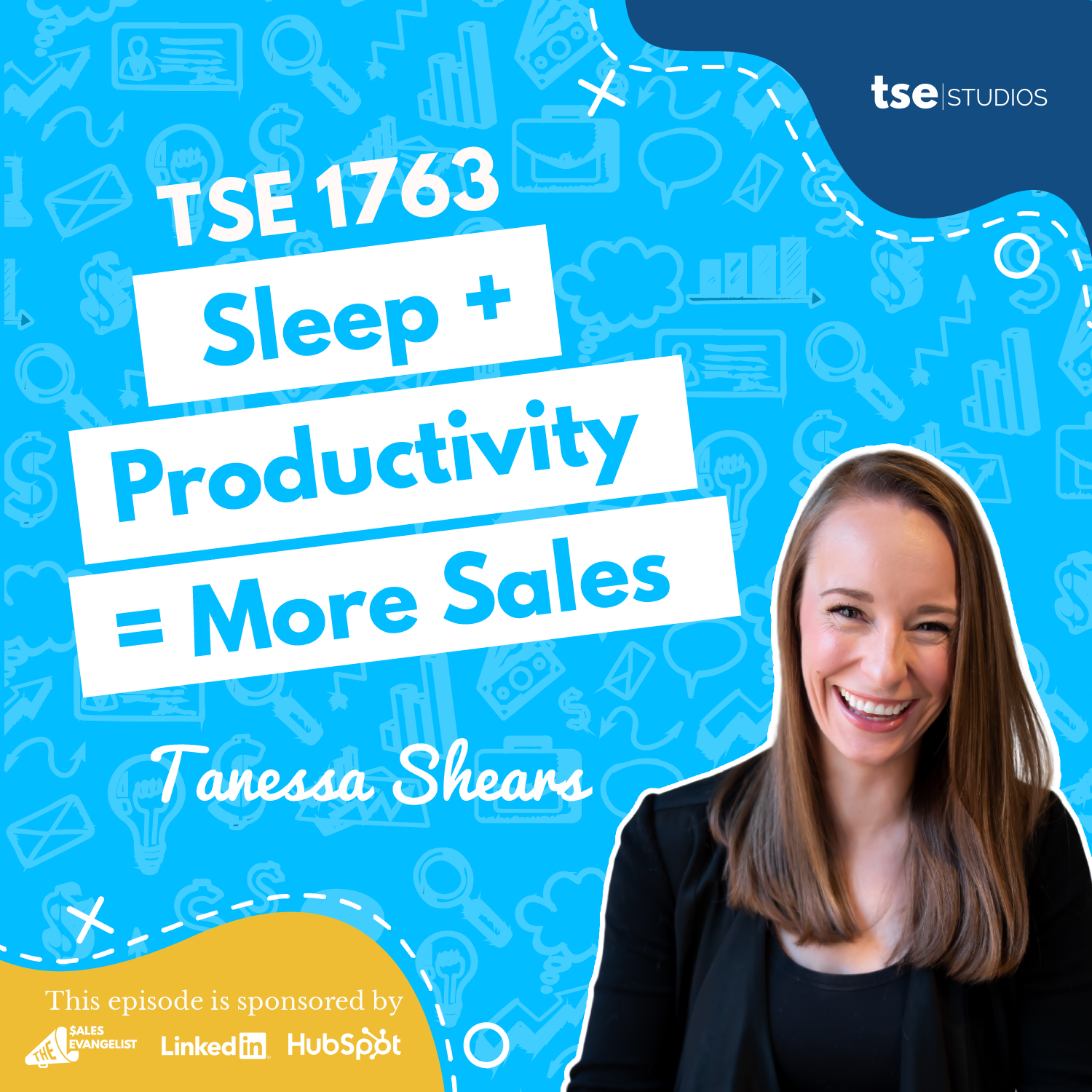
Ep 1763Sleep + Productivity = More Sales | Tanessa Shears - 1763
How do sleep and sales relate? You’ll have to listen to this exciting Sales Evangelist Podcast episode to find out. Host Donald Kelly delves into the crucial topic of sleep and its impact on sales performance with guest expert Tanessa Shears. Tanessa, a specialist in wearable tech and health hacks, discusses how improving sleep quality can lead to increased energy, clarity, and better problem-solving skills, making it a foundational element for a successful sales career. Tune in now to gain access to Tanessa's wealth of knowledge and uncover actionable strategies to optimize your sleep quality, enhance your energy levels, and revolutionize your sales performance. Impact of Sleep on Sales Professionals Tanessa highlights the common tendency among sales professionals to neglect quality sleep to pursue productivity and achieve sales targets. The "hustle and grind" culture often leads to sacrificing sleep and neglecting personal health while striving for professional success. She emphasizes the detrimental effects of insufficient sleep, including brain fog, stress, and compromised cognitive function, that can significantly hinder sales professionals' performance. Addressing Sleep Challenges in Sales Tanessa shares her experiences working with entrepreneurs, a group often caught up in the fast-paced business world, where neglecting sleep and health has become normative. She emphasizes the need to recognize the actual sleep time versus the time spent in bed, the importance of consistent sleep schedules, and the significant impact of sleep quality on overall performance. Practical Tips for Improving Sleep Highlighting the significance of sleep duration and consistency, Tanessa provides actionable ways to improve sleep quality. She advises sales professionals to allocate enough time for sleep, maintain consistent sleep schedules, and focus on the quality of sleep, particularly emphasizing the benefits of deep and REM sleep. In addition, she emphasizes the need for a wind-down time before sleep, minimizing external input, and avoiding screen time to enhance sleep quality. Understanding Sleep Quality and Resilience Tanessa unravels the connection between sleep quality and resilience, shedding light on how sleep impacts the ability to handle stress, cognitive function, emotional stability, and energy levels. She emphasizes the crucial role of deep and REM sleep in enhancing problem-solving abilities, memory retention, and emotional stability, all of which are essential for sales professionals. Behavioral Changes for Enhanced Sleep Tanessa presents practical changes individuals can make to enhance their sleep quality, such as minimizing screen time before bed, fostering a wind-down routine, and prioritizing activities that facilitate relaxation and unwinding. She also discusses the impact of reading before bed, offering insights into the types of reading that can either hinder or enhance sleep quality. Balancing Sleep Practices Discussing the balance between embracing leisurely sleep-ins and maintaining consistent sleep schedules, Tanessa addresses the importance of managing sleep debt and maintaining a balanced approach to sleep practice. She offers guidance on allowing a degree of flexibility while also ensuring that oversleeping does not compensate for insufficient sleep during the week. Benefits of Enhanced Sleep for Sales Professionals Tanessa elaborates on the benefits of improved sleep for sales professionals, including increased energy, enhanced problem-solving skills, improved memory retention, and the ability to build strong rapport with clients. She stresses the importance of showing up with energy and clarity to attract and retain clients. Resource for Further Learning Tanessa provides a free downloadable resource, the "12 Ways to Biohack Your Energy" playbook, which offers actionable hacks to boost energy levels and create productive mornings. The playbook, containing practical tips and insights, aims to empower individuals to apply simple yet powerful strategies to enhance their energy and overall performance. Tanessa Shears shares invaluable insights about sleep's crucial role in our productivity, resilience, and overall well-being as sales professionals. From uncovering the hidden truths about our actual sleep hours to delving into the impact of social jet lag, Tanessa's expertise sheds a powerful light on the often overlooked aspects of our sleep habits. Don't miss out on this opportunity to gain invaluable techniques to optimize your sleep and become a high-energy, top-performing sales leader. Listen to the full episode now and take the first step towards unlocking your true potential. "It's not only just the time that you're spending sleeping, but how you're cueing your brain during the day and during the night to have a really good sleep." - Tanessa Shears. Resources Becoming Limitless Podcast Tanessa Shears on Instagram <p...

Ep 1762Your Stuff Just Not Relevant To Me! | Julie Thomas - 1762
When looking for potential clients, do you actually take the time to do proper research? Or do you quickly scan their website and pitch to them, hoping they'll reply? If you do not research properly, you'll never join the top 10% sales representatives club. In today's fast-paced sales environment, it's becoming increasingly essential for sellers to ensure they're selling the right products to the right people. Discover why value selling is vital in this episode of "The Sales Evangelist Podcast." Host Donald Kelly speaks with Julie Thomas, the CEO of Value Selling Associates, about the challenges facing sales teams and the power of value selling. Julie shares insights into the changing dynamics of sales, the key to grabbing the attention of potential buyers, and the importance of being authentic and customer-centric in sales. Click the link to listen now and discover strategies to propel your sales success to new heights. Value Selling and Julie's Background Donald congratulates Julie on her book and delves into her background at Value Selling Associates. Julie explains the company's role as a world-class sales methodology used by B2B sales teams globally. She shares her journey of writing the book to highlight what has changed and what has remained constant in the sales landscape. Challenges in Grabbing Attention Julie discusses the challenges sales teams face in today's marketplace, emphasizing that getting the attention of potential buyers for initial conversations is harder than ever. She describes how the inundation of outreach and the presence of bots and AI have increased the difficulty of differentiating oneself and engaging with potential prospects. Differentiating in Outreach Julie offers insights into how sales representatives can differentiate themselves from the competition. She emphasizes the importance of demonstrating an understanding of the prospect, sharing valuable insights, and refraining from leading with product demonstrations. Also, she stresses the need to focus on being relevant, providing value, and understanding the prospect's challenges before proposing a solution. The Art of Communication and Engagement Donald and Julie discuss the significance of omnichannel communication, emphasizing the need to engage authentically and personally. Julie shares her thoughts on using LinkedIn for outreach, one-on-one communication (such as direct email and phone calls), and one-on-many approaches through networking events and webinars. Building Authentic Connections Julie highlights the importance of authenticity and engagement in social media, emphasizing the need for genuine, humble, and insightful content. She stresses that engagement and dialogue are crucial on platforms like LinkedIn and that the goal is to move conversations from online interactions to meaningful, real-world connections. The Concept of Interest and Value Selling Julie explains the fundamental principle of value selling, emphasizing the need to understand the customer and position one's solution as the best alternative for the buyer's problem. She stresses that the key to value selling is ensuring that the problem being addressed is genuinely worth solving. Julie shares invaluable insights into sales professionals' challenges and how to overcome them. Through her expertise in value selling, Julie emphasizes the significance of understanding your customer and positioning your solution as the best alternative for a problem worth solving. Her emphasis on authentic, engaging communication and creating genuine value for potential buyers is a game-changer for any sales professional. Listen to the full episode to better understand how to differentiate yourself in a crowded market, engage with potential customers, and leave a lasting impression. This episode is a must-listen if you're ready to transform your sales approach and drive meaningful results. So, grab your headphones and prepare to learn from one of the best in the sales industry! “If you want me to be interested in you, you must demonstrate your interest in me. Think of the social examples of the people you know, that it's all about them. Let me tell you about how great my job is. Let me tell you how cool my new car is. Let me tell you how great of a cook I am. Let me tell you how great this is. And after about 30 seconds. You just want to get away from those people. Yeah, but the people that come up and say, hey, how's your podcast going? What's new in your world and are interested in you, you tend to lean in and share a little bit more.” - Julie Thomas. Resources Value Selling Associates Julie Thomas on LinkedIn The Power of Value Selling Sponsorship Offers This episode is brought to you in part by Hubspot. With HubSpot sales hubs, your data tools and teams join a single platform to close deals and turn prospects into pipelines. Try it for yourself at hubspot.com/sales. 2. This episode is brought to you in part by LinkedIn. <p class="MsoNormal" style=...
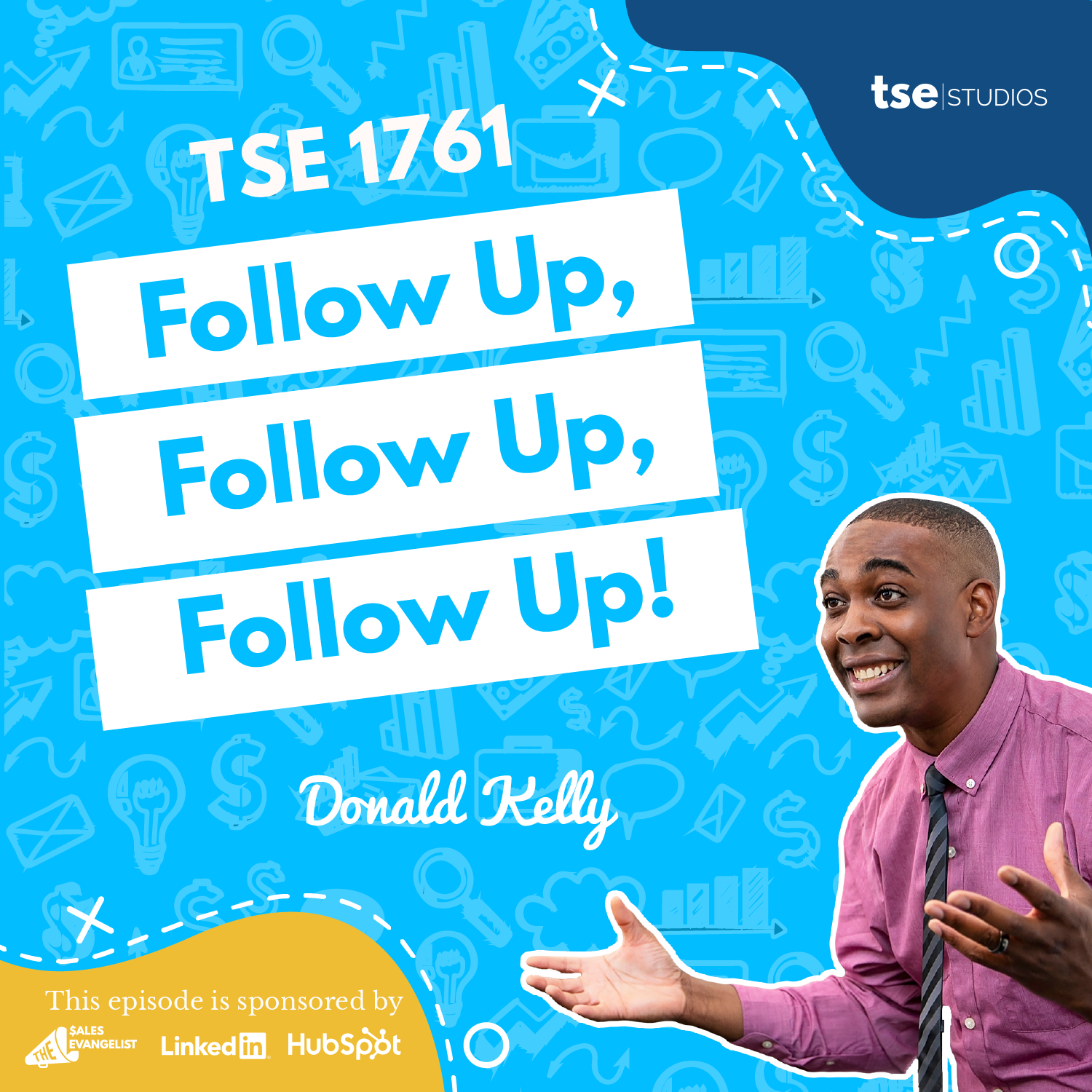
Ep 1761Follow Up, Follow Up, Follow Up! | Donald Kelly - 1761
Are you struggling to follow up with your prospects and close more deals effectively? Imagine if you could learn a proven method to follow up with potential clients that actually works. In this episode of “The Sales Evangelist Podcast,” host Donald Kelly delves into the crucial aspect of follow-up in sales. He emphasizes the importance of strategic, persistent, and creative follow-up methods to nurture prospects and drive sales success. Tune in to discover practical tips to enhance your follow-up process, supercharge your sales pipeline, and double your closed deals! Importance of Follow-Up Donald begins by highlighting the common pitfall of salespeople failing to follow up with prospects effectively. He stresses that a lackluster "just following up" approach is ineffective and doesn't make a lasting impression. Acknowledging the complexity of prospects' lives and competing priorities, he emphasizes the need for sales professionals to take proactive steps to stay top of mind. Strategic Approach to Follow-Up Donald advocates for strategic follow-up, urging sales professionals to always book the next appointment with a prospect at the end of the initial meeting. He emphasizes the importance of setting clear expectations and providing an agenda to ensure that follow-up meetings are structured and productive. This proactive approach demonstrates professionalism and keeps the sales process moving forward. Creativity in Follow-Up An important aspect of Donald's advice is the need for creative follow-up methods. He encourages salespeople to explore alternative channels such as LinkedIn connections, messages, or engaging with the prospect's content. Using different touchpoints, sales professionals can effectively trigger prospects to reconnect and keep the conversation alive. Overcoming Reluctance in Follow-Up Addressing the common reluctance to follow up, Donald dispels the notion of being a nuisance. He emphasizes that if a sales professional truly believes in the value of their offering, persistent follow-up is a service to the prospect. He urges salespeople to shed their reservations and embrace the power of follow-up as a means to provide relevant solutions and drive positive outcomes for their prospects. Sales Mastermind Opportunity Donald invites sales professionals to explore “The Sales Evangelist Sales Mastermind,” where individuals can engage in meaningful discussions, practice sales approaches, seek feedback, and gain valuable insights to enhance their sales strategies. With a focus on quality interaction and practical skill-building, the mastermind offers a supportive environment for sales professionals to refine their follow-up techniques and overall sales performance. Effective follow-up is the key to growing your sales pipeline and closing more deals. It's not about being a pest, but about providing value and staying top of mind with your prospects. If you want to learn more about mastering the art of follow-up and multiplying your sales opportunities, tune in to this engaging episode of The Sales Evangelist Podcast. Discover actionable tips that can transform your sales approach and lead to significant growth in your business. “We often get off of a call and feel like we don't want to pressure the prospect, or maybe they're in a rush, so we just tell them, hey, I'll call you. I'll follow up with you. It is dead on divine.” -Donald Kelly. Resources Donald C. Kelly on LinkedIn The Sales Evangelist Sales Mastermind Sponsorship Offers This episode is brought to you in part by Hubspot. With HubSpot sales hubs, your data tools and teams join a single platform to close deals and turn prospects into pipelines. Try it for yourself at hubspot.com/sales. 2. This episode is brought to you in part by LinkedIn. Are you tired of prospective clients not responding to your emails? Sign up for a free 60-day trial of LinkedIn Sales Navigator at linkedin.com/tse. 3. This episode is brought to you in part by the TSE Sales Foundation. Improve your connection on LinkedIn and land three or five appointments with our LinkedIn prospecting course. Go to the salesevangelist.com/linkedin. Credits As one of our podcast listeners, we value your opinion and always want to improve the quality of our show. Complete our two-minute survey here: thesalesevangelist.com/survey. We’d love for you to join us for our next episodes by tuning in on Apple Podcast, Google Podcast, Stitcher, or Spotify. Audio provided by Free SFX, Soundstripe, and Bensound. Other songs used in the episodes are as follows: The Organ Grinder written by Bradley Jay Hill, performed by...

Ep 1760Stop Approaching Prospects As Subservient But As a Peer | Jim Vaselopulos - 1760
How do you approach your prospects as a sales rep? Do you send them hundreds of emails when you connect with them, or do you take the time to build a relationship with them? In this episode of "The Sales Evangelist Podcast," you'll find the best way to approach prospects. Host Donald Kelly speaks with guest Jim Vaselopulos, a CEO consultant and leadership expert, on selling and building long-term relationships in business-to-business (B2B) sales. Jim shares the keys to building long-term client relationships, behaving as a peer, and delving into consultation-oriented sales. You'll also witness a role-play scenario showing how to engage with potential clients at a peer level and focus on solving their real business challenges. Click play now and prepare to gain a wealth of wisdom that will transform your sales game forever! Embracing the Role of Salesperson Jim candidly shares his initial reservations about the sales profession, describing his reluctance and skepticism due to preconceived notions about salespeople being perceived as "slimy." However, through his journey, he discovered a new perspective under the mentorship of Ford Harding, a renowned figure in the realm of sales. Harding's insight that "sales is the highest form of consulting" profoundly impacted Jim's perception and approach, leading him to embrace the role of a salesperson with pride. Challenges in Building Peer Relationships Donald and Jim delve into the concept of establishing peer relationships in sales, highlighting the significance of approaching clients as equals from the outset. They discuss the pitfalls of appearing desperate or subservient, emphasizing the detrimental impact on sales dynamics and the importance of target audience selection. The Power of Understanding Problems An essential facet that surfaces in the conversation is the emphasis on understanding the client's problems. Jim stresses the power of active listening and asking pertinent questions to grasp the client's challenges. Sales professionals can establish trust and foster valuable long-term relationships by aligning with clients and demonstrating a deep understanding of their predicaments. Curiosity is a Key Trait for Sales Professionals Drawing from his extensive experience, Jim underscores the pivotal role of curiosity in sales professionals. He shares a notable interview tactic for identifying individuals with inherent curiosity, a trait essential for successful sales endeavors. The conversation highlights the benefits of fostering an environment where curiosity thrives, equipping sales teams with the ability to ask relevant questions and engage in meaningful dialogues with clients. Role Play: Demonstrating Peer Engagement The episode culminates with a role-play exercise, portraying a sales scenario where Jim, as the seller, engages Donald, the executive buyer. Through this simulated interaction, Jim exemplifies the art of engaging as a peer, strategies for eliciting pertinent information, and navigating the client's concerns with empathy and understanding, ultimately fostering a collaborative relationship. The episode offers a wealth of knowledge and actionable insights for sales professionals at all levels. Jim Vaselopulos' expertise shines through, providing a roadmap for fostering peer relationships, understanding client needs, and driving successful sales engagements. Listen to the full episode for never-before-heard strategies to revolutionize your approach to sales and transform client relationships forever! "But when it's a business discussion, and you talk to someone as a business peer, talking about the real problems they're having, not what they asked you for, not what they want, but what they need. And that is really when you can make great strides." - Jim Vaselopulos. Resources Businesswisdom.com Jim Vaselopulos on LinkedIn “Clarity: Business Wisdom to Work Less and Achieve More,” by Jim Vaselopulos The Leadership Podcast Sponsorship Offers This episode is brought to you in part by Hubspot. With HubSpot sales hubs, your data tools and teams join a single platform to close deals and turn prospects into pipelines. Try it for yourself at hubspot.com/sales. 2. This episode is brought to you in part by LinkedIn. Are you tired of prospective clients not responding to your emails? Sign up for a free 60-day trial of LinkedIn Sales Navigator at linkedin.com/tse. 3. This episode is brought to you in part by the TSE Sales Foundation. Improve your connection on LinkedIn and land three or five appointments with our LinkedIn prospecting course. Go to the salesevangelist.com/linkedin. Credits As one of our podcast listeners, we value your opinion and always want to improve the quality of...
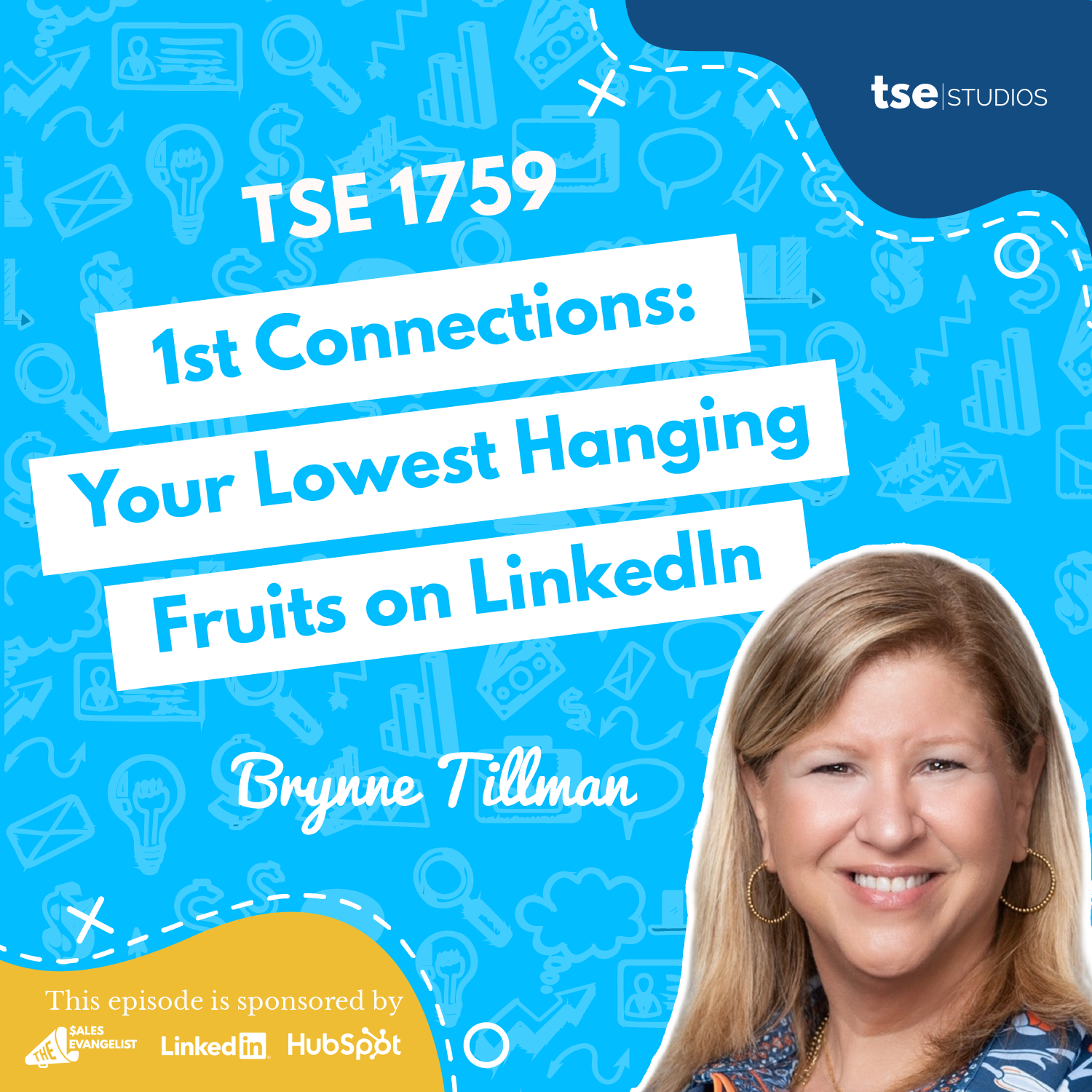
Ep 17591st Connections: Yours Lowest Hanging Fruits on LinkedIn | Brynne Tillman - 1759
What’s the best way to get referrals on LinkedIn? Find out in this episode of “The Sales Evangelist Podcast.” Host Donald Kelly speaks with Brynne Tillman, an expert leveraging LinkedIn for sales outreach. Brynne provides valuable insights and practical tips on using LinkedIn to secure referrals. Her game-changing strategies will help you master the art of building valuable relationships, sparking meaningful conversations, and closing more deals. Ready to supercharge your sales game? Listen to this electrifying episode now! Brynne Tillman’s Background Brynne is a renowned expert in LinkedIn outreach, particularly in helping sales professionals establish credibility and start conversations with potential customers. She highlights the importance of leveraging social proximity and delivering value through LinkedIn outreach to facilitate genuine conversations and identify potential opportunities. Understanding Referrals on LinkedIn Brynne emphasizes the significance of understanding social proximity and leveraging connections to reach targeted prospects through referrals, introductions, and permission to name-drop. She breaks down the concept of referrals, introductions, and permission to name-drop, shedding light on how each approach facilitates trust-based interactions and fruitful opportunities. The Power of Referrals Brynne provides statistics on the effectiveness of referrals, citing impressive connection rates, call acceptance rates, and the conversion of referrals into pipeline opportunities. She emphasizes the potency of referrals and introductions in establishing trust and credibility, ultimately leading to meaningful sales conversations and opportunities. Making Referral Outreach Practical Brynne shares practical tips for making referral outreach easy and effective, emphasizing the importance of connecting to a vast network of professionals and past clients on LinkedIn. She also encourages sales reps to start with warm connections and gradually expand their outreach to leverage their broader network effectively. Overcoming Challenges and Embracing Relationship-Centric Outreach Donald and Brynne discuss the challenges of implementing relationship-centric outreach in sales environments that often prioritize volume-based activities. Brynne addresses the reluctance to adopt a more personalized and relationship-focused approach, highlighting the importance of filling the comfort zone and practicing with existing relationships to overcome initial hesitation. Advice for Sales Representatives Brynne offers practical advice for sales reps looking to implement referral outreach, emphasizing the significance of targeting warm connections and networking partners to initiate the referral process. She encourages sales reps to seize the opportunity to leverage LinkedIn for effective and genuine outreach. Connect with Brynne Tillman Gain more of Brynne's wealth of knowledge and the resources available through her podcast, "Making Sales Social," and her free library at socialsaleslink.com. Connect with Brynne on LinkedIn and access her valuable resources for enhancing their LinkedIn-based outreach strategies. Brynne Tillman shares powerful insights on leveraging LinkedIn for sales success. If you're ready to revolutionize your approach to sales and transform your LinkedIn game, this episode is a must-listen. Discover how this game-changing episode will redefine your approach to LinkedIn and sales! “It's just our observation and statistics from ourselves and our clients that about 50% of the people you get referred to, 100% will connect with you. I mean, very few will not connect. 50% of them will take your call. Typically, depending on what you do, there will be about a 50% pipeline opportunity now or in the future.” - Brynne Tillman. Resources Brynne Tillman on LinkedIn Making Sales Social Podcast socialsaleslink.com Sponsorship Offers This episode is brought to you in part by Hubspot. With HubSpot sales hubs, your data tools and teams join a single platform to close deals and turn prospects into pipelines. Try it for yourself at hubspot.com/sales. 2. This episode is brought to you in part by LinkedIn. Are you tired of prospective clients not responding to your emails? Sign up for a free 60-day trial of LinkedIn Sales Navigator at linkedin.com/tse. 3. This episode is brought to you in part by the TSE Sales Foundation. Improve your connection on LinkedIn and land three or five appointments with our LinkedIn prospecting course....
Ep 1758I Want Some Love TOO: I Never Get Any Engagements On My LinkedIn Posts! | Donald Kelly - 1758
You spent a week crafting the perfect LinkedIn post and are ready to share it. However, after five hours, you only get crickets on your post. Maybe if you wait a few days, someone will acknowledge it. Two days later, you receive one like on your LinkedIn post. Frustrated, you scream, “Why is no one paying attention to my content on LinkedIn!” In this episode of The Sales Evangelist Podcast, host Donald C. Kelly discusses the importance of generating engagement on LinkedIn. He provides valuable insights on creating compelling content to capture the attention of potential prospects. Donald outlines three key strategies to boost engagement: focusing on top-of-funnel discussions, addressing objections, and curating relevant content. Discover the best way to get attention on LinkedIn in this five-minute episode. Understanding Your Audience for Effective Content Creation Donald emphasizes the significance of understanding the needs and interests of one's ideal customers. He recommends aligning content with top-of-funnel topics, such as common questions and initial concerns in prospect conversations. Using his own experience, Donald illustrates how he addresses queries about leveraging LinkedIn for sales and team performance, emphasizing the importance of tailoring content to address prospective clients' early-stage inquiries. Overcoming Objections Through Strategic Content Creation Donald delves into how sales professionals can transform common objections into engaging LinkedIn posts. He introduces the "feel, felt, found" strategy, a powerful approach to constructing persuasive content by acknowledging objections, empathizing with prospects, and ultimately offering solutions. Through an example related to CRM adoption objections, Donald demonstrates how to craft a thought-provoking post that delineates common objections and effectively provides insights into the benefits of CRM integration. Leveraging Curated Content for Enhanced Engagement Acknowledging the value of third-party insights, Donald advocates for incorporating curated content into LinkedIn posts. By sourcing relevant articles and resources addressing prevalent challenges experienced by prospects, sales professionals can position themselves as valuable sources of industry knowledge. Donald highlights employee retention as a critical concern for businesses and encourages leveraging curated content to offer insights and solutions, fostering engagement and demonstrating expertise. Try these three strategies within this episode to elevate your LinkedIn presence. Implementing these strategies can help you attract more engagement and ultimately drive valuable conversations and opportunities. Listen to the episode now and take your LinkedIn game to the next level! “When it comes to the content you're posting on LinkedIn, the first thing I want you to understand is that if your content isn't good enough, people will not like it.” - Donald Kelly. Resources Donald C. Kelly on LinkedIn TSE LinkedIn Prospecting Course Sponsorship Offers This episode is brought to you in part by Hubspot. With HubSpot sales hubs, your data tools and teams join a single platform to close deals and turn prospects into pipelines. Try it for yourself at hubspot.com/sales. This episode is brought to you in part by LinkedIn. Are you tired of prospective clients not responding to your emails? Sign up for a free 60-day trial of LinkedIn Sales Navigator at linkedin.com/tse. This episode is brought to you in part by the TSE Sales Foundation. Improve your connection on LinkedIn and land three or five appointments with our LinkedIn prospecting course. Go to the salesevangelist.com/linkedin. Credits As one of our podcast listeners, we value your opinion and always want to improve the quality of our show. Complete our two-minute survey here: thesalesevangelist.com/survey. We’d love for you to join us for our next episodes by tuning in on Apple Podcast, Google Podcast, Stitcher, or Spotify. Audio provided by Free SFX, Soundstripe, and Bensound. Other songs used in the episodes are as follows: The Organ Grinder written by Bradley Jay Hill, performed by Bright Seed, and Produced by Brightseed and Hill.Mentioned in this episode:HubSpot and bluëmago | STUDIOSHubSpot and bluëmago | STUDIOS hubpspot.com/marketers bluemangostudios.com
Ep 1757Effective Discovery That Helps Prospects Create a Vision | Paul Butterfield - 1757
Are you tired of the same old tactics falling flat in your sales discovery calls? Everyone wants to make a sale, but too often, the approach is to pitch the product or service right out of the gate. Is there a better way to connect with your prospects and truly understand their needs before you dive into your sales pitch? Host Donald Kelly speaks with guest Paul Butterfield on having a solid strategy for sales discovery in this episode of "The Sales Evangelist Podcast." Paul dives deep into the importance of understanding the customer's journey and shares insights on creating a unified, customer-focused experience across various teams. He emphasizes the need for a robust discovery process and how it can significantly impact the quality of the buyer's experience. Tune in to hear how effective discovery calls can revolutionize your sales approach and elevate your success in closing deals. Paul's Experience and Expertise Paul is the founder of the Revenue Flywheel Group, focusing on enabling B2B companies to create a unified customer journey. With extensive experience in the field, Paul brings real-world examples to support his insights, making this episode a valuable resource for sales leaders and individual contributors. The Flawed Approach to Discovery Calls Paul highlights the all-too-common practice of immediately jumping into a demo without fully understanding the customer's needs. He acknowledges the prevalence of pitch decks laden with bragging rights and emphasizes the need for a shift in mindset regarding the purpose of a sales interaction. The Power of Effective Discovery Paul passionately advocates for a more in-depth approach to discovery calls, stressing the importance of preparing for a business-level conversation. He believes that a successful discovery call can create a vision in the prospect's mind and help them understand how to achieve their future state. Moreover, Paul emphasizes how this approach enhances the customer experience and filters out deals that may not be a good fit early in the process. Elevating the Role of BDRs Paul shares valuable insights on the role of Business Development Representatives (BDRs) in preparing for successful discovery calls. He underlines the significance of equipping BDRs with business acumen, allowing them to elevate their conversations beyond the traditional script and initiating a more meaningful interaction with prospects. Key Strategies for Sales Success Paul expands on the significance of maintaining finesse when handling buyers fixated on immediate demos. He advocates for an approach that understands the underlying business challenges and provides insights tailored to the prospect's specific needs. Overcoming Inferiority Complex in Sales Acknowledging the common struggle of feeling inferior in front of high-profile prospects, Paul shares personal experiences and insights on how sales professionals can overcome this mindset. He emphasizes the importance of being seen as an industry authority, fostering a mutual learning environment between the seller and the buyer. In this enriching TSE episode, Paul has shed light on the transformative potential of effective discovery calls in sales. Paul's practical tips and real-world examples are a game-changer for sales professionals and leaders striving to differentiate themselves and enhance the buyer experience. This episode is a must-listen if you're seeking ways to boost conversion rates, negotiation effectiveness, and overall sales performance. Take advantage of this opportunity to refine your sales strategy and drive exceptional results. Tune in to the full episode now and take your sales game to the next level! “The opportunity to differentiate through the sales experience and the quality of that buyer experience. That opportunity is huge. The bar is very low in the way that outbound, even inbound prospecting, qualifying, and discovery are being done. And you will set yourself up for better conversion rates and better negotiating if you come in strong with a higher-quality discovery process. I cannot overestimate that.” - Paul Butterfield. Resources Paul Butterfield on LinkedIn Sponsorship Offers This episode is brought to you in part by Hubspot. With HubSpot sales hubs, your data tools and teams join a single platform to close deals and turn prospects into pipelines. Try it for yourself at hubspot.com/sales. 2. This episode is brought to you in part by LinkedIn. Are you tired of prospective clients not responding to your emails? Sign up for a free 60-day trial of LinkedIn Sales Navigator at linkedin.com/tse. 3. This episode is brought to you in part by the TSE Sales Foundation. Improve your connection on LinkedIn and land three or five appointments with our LinkedIn prospecting course. Go to the salesevangelist.com/linkedin. Credits As one of our podcast listeners, we value your opinion and...
Ep 1756Three Simple Follow Up Strategies Every Seller Should Adopt | Jake Tacher - 1756
Do you take the time to follow up with potential clients? Maybe a client told you right now is not the time they want to work with you. Just because they said no then doesn't mean you should give up. Sales representatives need to have a follow-up process to know when it's time for them to contact old business deals. In this episode of "The Sales Evangelist Podcast," host Donald Kelly speaks with Jake Tacher on the importance of doing follow-ups to gain clients. Jake shares his wealth of knowledge and experience in the sales world, shedding light on the critical role of follow-up in sales success and providing actionable insights for sales leaders and individual contributors. Discover the three follow-up strategies he shares in this episode. Jake's Background and Expertise Jake is a seasoned fractional CRO professional and sales director. With a career that spans from starting as an SDR to becoming a sales manager, he now focuses on driving growth through sales coaching, consulting, and recruiting. Jake also offers sales training programs and shares his extensive experience transforming underperforming SDRs into high-performing assets. The Definition of Effective Follow-Up Jake defines effective follow-up as any contact attempt-based activity with a prospect that aims to push them along the buyer's journey. Whether it's aiming for a meeting or a closed deal, the essence of follow-up lies in continually engaging with prospects to move them closer to the desired outcome. Challenges and Solutions in the Follow-Up Process Jake addresses the common challenges faced by sales professionals regarding the follow-up method. He highlights the fear of rejection and the need for preparation or confidence in approaching follow-up conversations. Jake observes that these obstacles often stem from inadequate training and resource allocation within sales organizations. Tactical Approaches to Effective Follow-Up Jake offers a systematic approach to enhance follow-up effectiveness. He emphasizes the importance of staying organized and prepared, suggesting daily task reassignment and contextualizing follow-up tasks to provide specific details for each prospect. Furthermore, he stresses the significance of offering valuable resources and customized solutions during follow-up interactions. The Power of Data in Follow-Up Jake elaborates on the effectiveness of leveraging data during the follow-up process. By citing averages and typical scenarios, he suggests that prospects can better relate to and trust the offered solutions. Utilizing third-party sources and real-time industry developments, Jake recommends integrating data-driven insights tailored to each prospect's specific pain points and objections. Operationalizing Follow-Up in Sales Teams Jake proposes a structured approach for sales leaders to operationalize effective follow-up within sales teams. He recommends creating a follow-up calendar and asset vault, organizing follow-up strategies, and putting valuable resources based on various buyer avatars and potential objections into a system that is easily accessible and conducive to consistent execution. Key Takeaways for Sales Leaders and Individual Contributors Jake's insights emphasize the importance of facilitating and enabling success for sales professionals. He encourages sales leaders to streamline the follow-up process and empower their teams. He urges individual contributors to take ownership of their sales process and constantly seek growth and improvement. Jake Tacher offers practical wisdom and actionable strategies to elevate the follow-up game. He empowers sales leaders and individual contributors to utilize a systematic, resource-driven approach that puts the client's needs and objections first. Learn how sales leaders and representatives can develop follow-up processes to help bring in more clients in this episode of “The Sales Evangelist Podcast.” “You should follow up before they tell you to follow up with no agenda. You should be doing that if you're serious about booking these meetings. Especially if you're not in a volume SDR role.” - Jake Tacher. Resources Jake Tacher on Instagram Jake Tacher on LinkedIn Jake Tacher on TikTok Sponsorship Offers This episode is brought to you in part by Hubspot. With HubSpot sales hubs, your data tools and teams join a single platform to close deals and turn prospects into pipelines. Try it for yourself at hubspot.com/sales. 2. This episode is brought to
Ep 1755When Is It The Right Time To Email A Prospect? | Donald Kelly - 1755
Are you struggling to get responses from prospects on LinkedIn after reaching out to them? Do you wonder what's the best time and approach to email them? If so, you're not alone. In this episode of "The Sales Evangelist Podcast," host Donald Kelly delves into a strategy to help you navigate this challenge and increase your chances of securing appointments with your dream clients. So, grab a seat and dive into the world of effective LinkedIn outreach strategies. Understanding the Best Timing to Email Prospects Reaching out to prospects on LinkedIn is just the first step. Donald stresses that the best time to email prospects is after establishing a connection. He emphasizes the need to refrain from automatically pitching your services as soon as someone connects with you. Instead, he advocates for a more personalized and strategic approach. Creating Personalized Connections Donald explains that the key to effectively transitioning from a LinkedIn connection to an email pitch is to identify a relevant challenge that the prospect is facing to which you have a potential solution. He provides an example of leveraging a LinkedIn conversation to create a personalized email pitch, ensuring that the prospect feels valued and understood. Bridging the Gap with Relevancy To increase the chances of a positive response, Donald emphasizes bridging the relevancy gap between the prospect's challenges and the solutions you can offer. By waiting for the right trigger events or relevant factors, you can craft a compelling email that resonates with the prospect's current needs and priorities. Unlocking the Power of LinkedIn for Sales In addition to the valuable insights shared in this episode, Donald invites you to join his master class, focusing on leveraging LinkedIn to generate three to five appointments per week without spamming. With proven strategies and a deeper understanding of how to harness the potential of LinkedIn, you can enhance your sales pipeline and maximize the quality of opportunities. This episode encourages you to elevate your thinking and take decisive action to achieve your sales objectives. By implementing the strategies discussed in this episode, you can effectively engage with prospects on LinkedIn and convert connections into meaningful business opportunities. Join Donald in his mission to help you achieve remarkable success in your sales endeavors! "An idea, a tip, a strategy that will help you to be able to not only know when to reach out to your ideal customers after you connect with them on LinkedIn, but also to ensure that you actually get an appointment." - Donald Kelly. Resources Donald C. Kelly on LinkedIn TSE LinkedIn Prospecting Course Sponsorship Offers This episode is brought to you in part by Hubspot. With HubSpot sales hubs, your data tools and teams join a single platform to close deals and turn prospects into pipelines. Try it for yourself at hubspot.com/sales. 2. This episode is brought to you in part by LinkedIn. Are you tired of prospective clients not responding to your emails? Sign up for a free 60-day trial of LinkedIn Sales Navigator at linkedin.com/tse. 3. This episode is brought to you in part by the TSE Sales Foundation. Improve your connection on LinkedIn and land three or five appointments with our LinkedIn prospecting course. Go to the salesevangelist.com/linkedin. Credits As one of our podcast listeners, we value your opinion and always want to improve the quality of our show. Complete our two-minute survey here: thesalesevangelist.com/survey. We’d love for you to join us for our next episodes by tuning in on Apple Podcast, Google Podcast, Stitcher, or Spotify. Audio provided by Free SFX, Soundstripe, and Bensound. Other songs used in the episodes are as follows: The Organ Grinder written by Bradley Jay Hill, performed by Bright Seed, and Produced by Brightseed and Hill.Mentioned in this episode:HubSpot and bluëmago | STUDIOSHubSpot and bluëmago | STUDIOS hubpspot.com/marketers bluemangostudios.com
Ep 1754The Unscripted Path: Ditching Sales Scripts for Creativity and Connection | Grant Lira - 1754
You rely heavily on your sales script to win over prospects. Right? If you do, there's no need to feel ashamed about using them. The company created them to help you know what to say. However, a creative approach in your sales pitch is a better way to gain clients. This is especially true when trying to build authentic relationships. In this episode, host Donald Kelly engages in an insightful conversation with Grant Lira, the co-founder of the Empathy Firm, discussing the art of creatively connecting with prospects in sales. Through Grant's valuable insights, you'll learn practical strategies for establishing genuine connections with potential clients. Tune into this episode of "The Sales Evangelist Podcast" to help you become more authentic and productive in sales interactions. Embracing Authenticity in Sales Conversations Grant emphasizes the importance of embracing authenticity in sales conversations, encouraging sales professionals to engage in genuine dialogue rather than adopting a scripted or robotic approach. He highlights the significance of establishing a human connection, as it fosters an environment conducive to open communication and mutual understanding. By approaching potential prospects with authenticity and sincerity, sales professionals can build trust and rapport from the outset. Preparing for Meaningful Interactions Grant shares proactive strategies for preparing meaningful interactions with prospects before the actual sales call. He recommends sending a pre-call email with relevant resources, such as articles, case studies, and a personal video message. This approach demonstrates the seller's genuine interest in the prospect's needs and equips the prospect with valuable information to enhance the upcoming conversation. Grant believes sending personalized video messages offers a glimpse of the seller's personality, fostering a more personable connection before the call. The Power of Humanizing Interactions Donald and Grant discuss the importance of humanizing interactions with prospects. Grant shares his approach of envisioning sales calls as conversations with a friend, advising sales professionals to engage with prospects in a manner that reflects genuine human interaction. Avoiding the pitfall of pigeonholing prospects based on their titles, Grant emphasizes the significance of acknowledging the human experiences and challenges individuals face daily. By humanizing interactions, sales professionals can bridge the gap between traditional sales tactics and authentic engagement. Creating Lasting Impressions Grant sheds light on the impact of thoughtful gestures in creating lasting impressions. Sales professionals can demonstrate a genuine commitment to prospects using personalized elements, such as a follow-up email with valuable resources. The approach shows you understand potential clients' needs and care about solving their issues. Grant's emphasis on creating a memorable pre-call experience aligns with the overarching theme of genuine, human-centric engagement in sales interactions. Implementing Creative Approaches Grant provides actionable insights for implementing creative approaches to foster meaningful connections with prospects. His approaches reflect a shift towards humanizing and enriching the pre-call experience for both the seller and the prospect. Using these creative strategies, sales professionals can establish genuine connections with prospects and differentiate themselves from conventional sales approaches. Despite how useful your sale script may be, consider improvising sometimes. Humanizing the sales process and engaging in meaningful ways cultivates genuine connections with prospects. Thanks to Grant's insights in this episode, you'll discover the transformative power of authenticity and creativity in sales interactions. Through his expertise, Grant redefines the art of connecting with prospects, illuminating the path toward more impactful and successful sales engagements. As a token of gratitude, Grant extends a special offer to listeners. Send an email to Grant with the subject line "The Sales Evangelist" for the exclusive gift. He'll improve your outreach efforts on three online platforms and boost your social media presence. “But what you should really be focusing on is, can I help these people? What does their current system look like? Can we work with it? Do we actually think we could get results? And then, if yes, you should have a pretty good explanation of what you do and how it helps them.” - Grant Lira. Resources Grant Lira Grant Lira on LinkedIn The Empathy Firm Email: [email protected] Sponsorship Offers This episode is brought to you in part by Hubspot. <p class="MsoNormal" style= "line-height: normal; margin: 0in 0in .0001pt
Ep 1753The 3x3 Sales Coaching Method | Matt Doyon - 1753
Are you ready to boost your sales performance to the next level? You can start by taking ownership of your professional development. Stop waiting for the company to provide the necessary training and build your sales skills yourself. How can you do this? In this episode of “The Sales Evangelist Podcast,” host Donald Kelly speaks with Matt Doyon, a seasoned sales leader, on the game-changing concept of the 3x3 coaching methodology. Matt shares his experiences and insights to show how this coaching framework can revolutionize sales training and improve performance. Hear why sales representatives must take ownership of their skill development for tangible results. Matt Doyon's Background During his tenure at Rock Content, Matt Doyon pioneered the "three by three coaching" method. With a focus on empowering individual sellers, Matt's approach emphasizes skill development, accountability, and personal ownership of the coaching process. The Three-by-Three Coaching Method Explained At the core of the three-by-three coaching method lies the belief that individual sellers are the owners of their coaching process. This framework provides guardrails to enhance accountability and drive skill development. The first "three" refers to the skill category - technical, professional, and personal skills. These categories encompass core sales skills, professional skills like time management, and personal skills such as emotional intelligence and growth mindset. The "par" methodology governs the second "three" by outlining the point of focus, action plan, and results. This empowers sellers to identify specific areas for improvement, create actionable strategies, and measure the tangible impact of their efforts. Real-life Success Stories Matt shares a compelling success story where a struggling sales rep was able to identify and improve their process using the "three by three" framework. By isolating the point of focus and enabling the agent to craft their own action plan, the coach guided the seller to internalize and adapt the necessary changes. This hands-on approach leads to sustainable and meaningful skill development, ultimately driving improved performance. Empowering Sellers through Self-Directed Coaching Emphasizing the importance of allowing sellers to find their own path to success, the "three by three" method challenges traditional coaching approaches. Rather than providing all the answers, managers act as guides, empowering sellers to take ownership of their growth. This approach fosters independence and ensures sellers fully invest in their personal development. The Tangible Impact Matt further asserts sellers need to move out of their comfort zones and embrace discomfort as a catalyst for change. With insightful economic perspectives, he highlights the evolving market dynamics and the need for sellers to take their profession more seriously. This strategic focus on skill development and continuous improvement is the key to thriving in the competitive sales landscape. The 3x3 coaching method empowers individual sellers to take control of their professional growth. As the sales landscape evolves, salespeople must embrace self-directing coaching and skill-building for success. Discover how this coaching method sets the stage for sustainable growth and impactful performance improvement. "It really comes down to empowering every individual to own their own business and really create the wins as much as they can without the help of a manager or a VP or a director." - Matt Doyon. Resources Matt Doyon on LinkedIn Triple Session Sponsorship Offers This episode is brought to you in part by Hubspot. With HubSpot sales hubs, your data tools and teams join a single platform to close deals and turn prospects into pipelines. Try it for yourself at hubspot.com/sales. 2. This episode is brought to you in part by LinkedIn. Are you tired of prospective clients not responding to your emails? Sign up for a free 60-day trial of LinkedIn Sales Navigator at linkedin.com/tse. 3. This episode is brought to you in part by the TSE Sales Foundation. Improve your connection on LinkedIn and land three or five appointments with our LinkedIn prospecting course. Go to the salesevangelist.com/linkedin. Credits As one of our podcast listeners, we value your opinion and always want to improve the quality of our show. Complete our two-minute survey here: thesalesevangelist.com/survey. We’d love for you to join us for our next episodes by tuning in on Apple Podcast, <a href=...
Ep 1752What Should I Put In My LinkedIn Headline? | Donald Kelly - 1752
Filling out your LinkedIn profile is a lot more challenging than you thought it would be. However, whatever you add must make you stand out from everyone else within your industry. One way to do this is by creating a memorable headline to grab a person's attention. But what's the trick to crafting a headline to make someone want to work with you? In this short episode of "The Sales Evangelist Podcast," Host Donald Kelly shares tips on how to write the perfect LinkedIn headline. Get your notebooks and pens ready and learn how to do this simple SEO technique. LinkedIn Headline: What Do You Put in It? The LinkedIn headline is right underneath a person’s name and is a title they created for themselves. They may have their position and the company they work for within this section—for example, Sales Representative at HubSpot. Donald shares that the number one reason for creating a LinkedIn headline is search engine optimization (SEO). Your potential clients are looking for someone to help solve their problems. The best way to help them find you on LinkedIn is by using SEO keywords in your headline. For example, a person may seek someone knowledgeable about marketing automation. You should write “marketing automation specialist” as an SEO keyword within your LinkedIn headline. Donald also discusses it’s okay to use the company that works for the name within the headline section if it’s a big company, such as Google. However, using an SEO keyword is better if you work for an unknown company. Donald shares examples of crafting the perfect LinkedIn headline within the episode. The Sales Evangelist Podcast is always here to provide you with the best tips within the sales industry. If you want to improve your sales skills, subscribe to the podcast for more episodes. Also, don’t forget to check out TSE’s LinkedIn Prospecting Course. Sign up today before it’s too late! “Buyers want to learn, and sellers want to sell.” - Donald Kelly. Resources Donald C. Kelly on LinkedIn LinkedIn Sales Navigator Course Sponsorship Offers This episode is brought to you in part by Hubspot. With HubSpot sales hubs, your data tools and teams join a single platform to close deals and turn prospects into pipelines. Try it for yourself at hubspot.com/sales. 2. This episode is brought to you in part by LinkedIn. Are you tired of prospective clients not responding to your emails? Sign up for a free 60-day trial of LinkedIn Sales Navigator at linkedin.com/tse. 3. This episode is brought to you in part by the TSE Sales Foundation. Improve your connection on LinkedIn and land three or five appointments with our LinkedIn prospecting course. Go to the salesevangelist.com/linkedin. Credits As one of our podcast listeners, we value your opinion and always want to improve the quality of our show. Complete our two-minute survey here: thesalesevangelist.com/survey. We’d love for you to join us for our next episodes by tuning in on Apple Podcast, Google Podcast, Stitcher, or Spotify. Audio provided by Free SFX, Soundstripe, and Bensound. Other songs used in the episodes are as follows: The Organ Grinder written by Bradley Jay Hill, performed by Bright Seed, and Produced by Brightseed and Hill.Mentioned in this episode:HubSpot and bluëmago | STUDIOSHubSpot and bluëmago | STUDIOS hubpspot.com/marketers bluemangostudios.com
Ep 1751This Is The ONLY Way You Should Offer A Discount! | Richard Harris - 1751
What's the best way to offer a discount to a client? Find out in this exciting episode of The Sales Evangelist Podcast. Host Donald Kelly speaks with sales expert Richard Harris about his new book, "The Seller's Journey," and dives into the intricacies of mastering sales strategies. Richard shares valuable tactics around sales, pricing, negotiation, and creating win-win scenarios with customers. He also addresses the critical role of understanding procurement and highlights the importance of qualifying for discounts and leveraging them as a sales rep. Hear why you should pick up a copy of Richard's new book and how it can help you in your sales career. Richard’s Background Richard is a sales strategist and trainer with extensive experience in go-to-market and founder-led sales strategies. He is also the author of the recent book, "The Seller's Journey," which encapsulates his decade-long expertise in sales. Earning the Right to Ask Questions Richard discusses his niche in sales training, where he emphasizes the importance of earning the right to ask questions, which questions to ask, and the timing of these questions in the sales process. Through his extensive experience in consulting, Richard has honed his framework for enabling sales professionals to navigate the intricacies of engaging buyers effectively. Highlights from "The Seller's Journey" Book Richard delves into the core concepts of his book, "The Seller's Journey." The book is divided into two parts: the mindset and framework, followed by 13 tactics that delve into critical aspects of sales strategies. These tactics include addressing respect in sales, effective negotiation techniques, and the art of framing questions around needs, economic impact, access to authority, and timelines. Richard emphasizes that the book delves into the mindset needed for navigating the sales domain effectively. With the right mindset, sales professionals can approach their roles with confidence and strategic insight. Roleplay and Pricing Strategies Richard and Donald engage in a roleplay scenario that unveils strategic pricing communication tactics. Richard's approach illuminates how sales professionals can effectively address pricing discussions while adding substantial value to the offerings. The roleplay also demonstrates the power of emotionally driven questions and strategic shifts to add value and establish a market-based price anchor. Handling Discounting Requests Donald and Richard discuss the challenging aspect of handling client discounting requests amidst a cautious investment environment. Richard provides actionable insights into handling clients' discount requests, balancing sales leaders' expectations to maximize deals, and the art of leveraging discounts for mutual gain. Understanding Procurement Dynamics Richard sheds light on understanding procurement dynamics and emphasizes the need for early engagement with procurement teams. He explains that procurement isn't the enemy. Taking the time to build rapport and understand client’s needs can lead to mutually beneficial outcomes. The Role of Win-Win Scenarios Donald and Richard also explore the role of win-win scenarios in sales negotiations. Richard offers practical insights into leveraging discounts, additional value adds, and testimonials to foster positive outcomes that benefit both the sales professional and the client. This episode provides a wealth of knowledge for new and seasoned sales professionals. However, you must grab a copy of his book to learn his best sales tactics. In Richard's book, you'll discover the importance of cultivating the right mindset and building client relationships. He provides comprehensive strategies to help you become a master in sales. Gain instant access to the first two chapters of "The Seller's Journey" below. "They're not the enemy, and they actually do want to work with you. They actually want you to talk to them way sooner than the end of the deal." - Richard Harris. Resources “The Seller’s Journey” by Richard Harris Richard Harris on LinkedIn The Harris Consulting Group Sponsorship Offers This episode is brought to you in part by Hubspot. With HubSpot sales hubs, your data tools and teams join a single platform to close deals and turn prospects into pipelines. Try it for yourself at hubspot.com/sales. 2. This episode is brought to you in part by LinkedIn. Are you tired of prospective clients not responding to your emails? Sign...
Ep 1750How to Build Pipeline Non Traditionally | Monica Stewart - 1750
Sometimes, stepping outside of the box works magic when traditional methods fail. Sales representatives must quickly think of unique ways to build their pipeline when nothing else works. But what if you can't think of any new sales techniques? Listen to this episode of "The Sales Evangelist Podcast" to discover new sales methods. In today's insightful episode, host Donald Kelly speaks with guest Monica Stewart, an expert in aiding startup founders to grow and scale their sales organizations sustainably. They discuss various critical points addressing the challenges and innovations within sales strategies. Monica shares valuable insights and suggestions for revolutionizing sales approaches. Learn non-traditional sales methods for building a pipeline in this TSE episode. The Paradigm Shift in Sales Training Monica and Donald discuss the vast differences in training among salespeople and the urgency of embracing nontraditional methods for pipeline development. They acknowledge that adapting B2C selling tactics to B2B environments has multiple benefits. Monica also illustrates the importance of creativity in nurturing partnerships, the strategic use of influencers, and inbound methodologies to decrease customer acquisition costs and expedite the sales process. The Art of Building Partnerships Monica emphasizes the need for careful consideration while forming partnerships. She points out the necessity of assigning a dedicated person to manage these relationships, ensuring these valuable connections don't become an afterthought. Partnership nurturing is a pivotal activity to prevent the stagnation of these crucial relationships. Monica delved into the nuances of understanding what motivates partners beyond financial incentives. She recounted her experience with SalesLoft at Scaled, where she pioneered their unofficial partner program and spent considerable time fostering relationships, significantly impacting both businesses. Leveraging Networks: The Nearbound Concept Nearbound marketing refers to the strategy of utilizing one's personal and professional networks to build pipelines and secure customers. Monica shed light on how this sales approach can lead to information gathering and earning referrals within target companies. When using this concept, she advised one to be deliberate and original in reaching out to the right individuals, leveraging existing customers' networks, and staying involved in the circles of the target demographic. Startup Growth and Scaling Challenges Monica shares a story about a client who focused on constructing a partnership network instead of traditional outbound sales, culminating in reduced customer acquisition costs and successful sales endeavors. She pointed out the difficulties in cold outbound sales, including a low success rate. She attributed it to issues such as over-hiring, lack of thorough training, remote work dynamics, and scattered sales techniques. Emphasizing Trust and Connection Monica and Donald also cover the significance of trust and personal connection in business dealings. They explore innovative means of identifying and contacting potential clients through LinkedIn and the profound impacts of establishing relationships with industry influencers. Building Nontraditional Sales Foundations Monica stresses the importance of uniting sales teams under a shared vision and a consistent methodology. Furthermore, she advocates for the CEO or sales leader to initiate and drive partnerships. However, the 'nearbound' concept is usable by anyone with a network to leverage for potential business prospects. Thanks to Monica’s invaluable insights, you now have several untraditional sales methods to test out. For those interested in delving deeper into the strategies discussed, contact Monica for further conversations and strategic consultations. Also, subscribe to The Sales Evangelist Podcast for more advice in the sales industry. "And that doesn't necessarily mean that those techniques are even good. It also doesn't mean that those are the right techniques for your market and buyers and for the way you need to sell for your company." - Monica Stewart. Resources Monica Stewart on LinkedIn Sponsorship Offers This episode is brought to you in part by Hubspot. With HubSpot sales hubs, your data tools and teams join a single platform to close deals and turn prospects into pipelines. Try it for yourself at hubspot.com/sales. 2. This episode is brought to you in part by LinkedIn. Are you tired of prospective clients not responding to your emails? Sign up for a free 60-day trial of LinkedIn Sales Navigator at linkedin.com/tse. 3.
Ep 1749How To Turn Lost Deals Into Opportunity | Donald Kelly - 1749
Two months ago, your client said they didn't want to close the deal. So, this means that it's over and done with. You should just move on to the next one. Or maybe you should follow up to see if they will work with you now. Why? In this episode of "The Sales Evangelist Podcast," host Donald Kelly shares why those lost deals are actually golden opportunities. So, don't cross those potential clients off your list yet, and hear why you need to contact them again. The Number One Strategy To Close Deals Donald begins by breaking down the math of how many prospective clients a sales rep may lose within a given year. Most salespeople don’t take the time to return to those prospects and move on to the next one. However, Donald shares an excellent strategy for contacting those potential clients again to close a deal. LinkedIn Sales Navigator List After you take the time to figure out how many prospects told you no, create a lost deal list in LinkedIn Sales Navigator. You'll receive notifications on their recent activities after you add these individuals to the list. These activities could include a change of job, recent posts, and more. Donald shares why contacting someone who recently changed jobs and works in another company is a great idea. Also, pay attention to the individual's activities within the last 30 days. If you see they posted something, take the time to comment on it. It's a great way to start a conversation and build relationships on LinkedIn. Remember, you can use Sales Navigator for a 2-month free trial to see if you like it. The link is down below within the resource section. Do you want more sales tactics to boost your pipeline? Subscribe to The Sales Evangelist Podcast to help close twice as many deals as you are now! "Lost deals are never truly lost. They're opportunities in disguise." - Donald Kelly. Resources Donald C. Kelly on LinkedIn LinkedIn Sales Navigator Course Sponsorship Offers This episode is brought to you in part by Hubspot. With HubSpot sales hubs, your data tools and teams join a single platform to close deals and turn prospects into pipelines. Try it for yourself at hubspot.com/sales. This episode is brought to you in part by LinkedIn. Are you tired of prospective clients not responding to your emails? Sign up for a free 60-day trial of LinkedIn Sales Navigator at linkedin.com/tse. This episode is brought to you in part by the TSE Sales Foundation. Improve your connection on LinkedIn and land three or five appointments with our LinkedIn prospecting course. Go to the salesevangelist.com/linkedin. Credits As one of our podcast listeners, we value your opinion and always want to improve the quality of our show. Complete our two-minute survey here: thesalesevangelist.com/survey. We’d love for you to join us for our next episodes by tuning in on Apple Podcast, Google Podcast, Stitcher, or Spotify. Audio provided by Free SFX, Soundstripe, and Bensound. Other songs used in the episodes are as follows: The Organ Grinder written by Bradley Jay Hill, performed by Bright Seed, and Produced by Brightseed and Hill. Mentioned in this episode:HubSpot and bluëmago | STUDIOSHubSpot and bluëmago | STUDIOS hubpspot.com/marketers bluemangostudios.com

Ep 1748Sales is Changing... Here's Why and how To Adopt | Aaron McReynolds - 1748
You might have already realized this, but the sales world is changing. To make it, you must learn marketing skills to gain new clients. But everyone is not meant to be a marketer. How can you adapt to these changes and become successful at relationship-based selling? Start by listening to this episode of “The Sales Evangelist Podcast” to learn how to adopt SaaS marketing skills. In this episode, Donald engages in a dynamic conversation with Aaron, the CEO and founder of Alysio, a people performance management platform for go-to-market teams. Listen for valuable insights on the changing landscape of sales, the need for creativity and personalization, and the principles that drive effective sales strategies in the modern era. Adapting to the Changing Sales Landscape Aaron begins the conversation by shedding light on the evolution of sales. He emphasizes the need to adapt to the dynamic nature of sales, especially with the significant changes brought about by technology and unprecedented events like the COVID-19 pandemic. Drawing from his extensive experience in B2B SaaS sales, he presents a compelling case for embracing data-driven strategies and connecting with customers in a way that resonates with the current sales landscape. The Three Dimensions of Sales Success Drawing from Alysio's approach to sales, Aaron eloquently articulates the three critical dimensions of a great day in sales - customer data, revenue data, and people data. He underscores the importance of leveraging data at the team and individual levels to coach and train sales representatives effectively. Aaron's vision of a future where these three dimensions intertwine seamlessly reflects the innovative and strategic mindset that drives Alysio's approach to empowering sales teams. Embracing Creativity and Personalization in Sales One of the core themes of the conversation is the need for creativity and personalization in sales. Aaron shares impactful examples of creative approaches to outreach, such as leveraging personalized emails and running a successful podcast to connect with CROs. He emphasizes the shift from traditional sales tactics to engaging, entertaining, and personalized strategies that resonate with the modern buyer's mindset. The Human Touch in a Digital World Aaron emphasizes the importance of injecting a human touch into sales interactions in an age characterized by high-tech automation and AI. He brings forth the concept of being top of mind through creative and personalized outreach, citing instances where unconventional approaches have yielded remarkable results. Aaron's insights offer a fresh perspective on how sales professionals can leverage their creativity to stand out in a crowded digital landscape. Integration of Sales and Marketing Acknowledging the evolving role of sales professionals, Aaron highlights the significance of integrating marketing principles into sales strategies. He discusses the concept of every salesperson being a marketer in today's ecosystem and emphasizes the need for sales professionals to build their personal brand and establish trust. Aaron's approach reflects a holistic understanding of the interconnectedness of sales and marketing, emphasizing the importance of aligning these functions to drive impactful business outcomes. Empowering Sales Teams to Embrace Change Aaron shares pragmatic advice for sales professionals, encouraging them to be scrappy, creative, and consistently engaging in their outreach efforts. He emphasizes the value of trial and error, the power of creativity in outreach, and the need for continuous adaptation to stay ahead in a rapidly evolving sales environment. Now is the time for sales representatives to become creative, add personalization, and adopt modern sales dynamics to be successful. Aaron's insights offer a blueprint for reimagining sales strategies, integrating marketing principles, and harnessing the power of human connection in a digitally driven sales landscape. Do you want more sales advice? Subscribe to the TSE podcast for more inspiring testaments to transform and grow your business. "If I'm not great at cold calls, why spend three to 4 hours doing cold calls? It's not efficient. That's not the best use of my time." - Aaron McReynolds. Resources Alysio.ai Aaron’s email: [email protected] Aaron on LinkedIn Sponsorship Offers This episode is brought to you in part by Hubspot. With HubSpot sales hubs, your data tools and teams join a single platform to close deals and turn prospects into pipelines. Try it for yourself at hubspot.com/sales. This episode is brought to you in part by LinkedIn. Are you tired of prospective clients not responding to your emails? Sign up for a free 60-day trial of LinkedIn Sales Navigator at linkedin.com/tse. This episode is brought to you in part by the TSE Sales Foundation. Improve your connection on LinkedIn and land three or five appointments with our LinkedIn prospecting course. Go to the salesevangelist.com/linkedin. Credits A
Ep 1747ATTENTION: The Next Big Things In Sales | Adam Robinson - 1747
The world is changing, and sales representatives must adapt. This is especially true when it comes to content creation. Do you know what the top-performing social media content is nowadays? It's video creation! If you're not taking the time to create and promote videos, it may keep you from building your pipeline. In this thought-provoking TSE episode, host Donald Kelly speaks with Adam Robinson, founder and CEO of Retention, about his approach to content creation. Adam discusses the significance of establishing content pillars and sub-pillars to maintain coherence and deliver a unified message. This technique has been instrumental in Adam's success, solidifying the foundation for his content strategy. Discover Adam's methods to improve your sales techniques. The Chris Walker Method Adam credits Chris Walker for the impact his approach has had on Adam's own content creation journey. By consistently reinforcing a central message, Adam emphasizes the role of repetition in strengthening the audience's understanding and recall. He also touches upon the growing propensity for video content, hinting at the potential crossover for YouTubers into corporate positions, as video prowess becomes increasingly valuable in business. Building Trust with Organic Content Both Adam and Donald concur on the superior efficacy of organic social content compared to traditional ads when building trust. Donald personally reflects on his inclination towards products discovered on social media, favoring YouTube for its less intrusive nature over website videos. This preference underscores the shift towards content platforms that offer a more genuine connection with audiences. Adam's Philosophy on Social Media and Connection Adam elucidates the pivotal role of social media in forming relationships and amplifying one's presence. He shares his own narrative of venturing into content creation, underlining the initial uncertainties and the growth that followed. His experiences testify to the value of perseverance and authenticity in the content creation landscape. Establishing a Unique Voice The conversation delves into Adam's early challenges in content creation within an unfamiliar niche, his strategic moves to raise brand awareness, and the evolution that led him to discover his unique voice. Adam parallels Chris Walker's style, acknowledging the influence and adaptation of Chris's methods in his video production process. Behind-the-Scenes and List-Style Content Adam and Donald discuss the fascinating effect of behind-the-scenes style videos and their ability to captivate audiences with a sneak peek into the creative process. Adam also extols the unexpected success of unconventional formats like lengthy list-style LinkedIn posts and sideways 'fake podcast' videos, which resonate more with audiences than high-budget docuseries. Content Creation: A Blend of Art and Inspiration Adam underscores that while there is no foolproof blueprint for success in content creation, a wealth of inspiration can be harnessed. He advises taking cues from flourishing creators and incorporating their ideas with a personal flare. Adam encourages starting modestly on one platform and prioritizing iterative improvement. In this illuminating TSE podcast episode, sales representatives can reflect on the insightful journey through the art of content creation, the trust-building power of organic social content, and the pivotal role of video in today's business landscape. Discover the importance of authenticity, perseverance, and the strategic use of social platforms to amplify one's voice and brand. Lastly, don't forget to join Adam's waiting list for his pioneering software, Retention. “There is no more effective way and efficient way to build trust to an audience than organic social.” - Adam Robinson. Resources Adam Robinson on LinkedIn Billion Dollar Challenge Retention Chris Walker Sponsorship Offers This episode is brought to you in part by Hubspot. With HubSpot sales hubs, your data tools and teams join a single platform to close deals and turn prospects into pipelines. Try it for yourself at hubspot.com/sales. This episode is brought to you in part by LinkedIn. Are you tired of prospective clients not responding to your emails? Sign up for a free 60-day trial of LinkedIn Sales Navigator at linkedin.com/tse. This episode is brought to you in part by the TSE Sales Foundation. Improve your connection on LinkedIn and land three or five appointments with our LinkedIn prospecting course. Go to the salesevangelist.com/linkedin. Credits As one of our podcast listeners, we value your opinion and always want to improve the quality of our show. Complete our two-minute survey here: thesalesevangelist.com/survey. We’d love for you to join us for our next episodes by tuning in on Apple Podcast, Google Podcast, Stitcher, or Spotify. Audio provided by Free SFX, Soundstripe, and Bensound. Other songs used in the episodes are as follows: The Organ Grinder written by Bradley
Ep 17463 Ways To Get Responses From Your ICP on LinkedIn | Donald Kelly - 1746
You’re sending LinkedIn connects one after the other. But no one responds to your messages. It’s making you lose confidence in your professional sales skills. However, you shouldn’t give up hope just yet. Take the time to listen to this five-minute Sales Evangelist podcast episode. Host Donald Kelly shares three actionable tips to help sales representatives always get responses from their ICPs on LinkedIn. Tune in and hear what those tips are. Tip 1: Make Sure They're Active on LinkedIn Donald shares that just because you see someone on LinkedIn doesn't mean they actually get on the platform. To ensure they're active on the platform, take the time to see if they're posting anything and how often they do it. You can quickly look into this by using LinkedIn Sales Navigator. If you don't have the tool, Donald shares an actionable tip on how to do this within the episode. He also suggests you listen to past TSE episode 1743 on how to find active ICPs on LinkedIn. Tip 2: Be Patience One of the biggest mistakes most sales reps make on LinkedIn is connecting with people and trying to sell immediately. Donald discusses that connecting with them and building a relationship is better before trying to sell. This will help the potential buyer feel more comfortable talking with you and trust that your product is worth the money. You can do this by engaging with them on the platform. Start by reviewing what they share on LinkedIn and commenting on their posts. Tip 3: See What They Like on LinkedIn Another way to start conversations on LinkedIn is to see what content they like. You can review their recent activities on their profiles to see if a conference is coming up or if they like posts from a specific trend. Donald also shares you need to connect with people within your ICP company. Doing this will make you seem less of a stranger and help your potential buyer feel more comfortable talking to you. Bonus Tip: Write Personalized LinkedIn Messages Sending a personalized message doesn’t mean discussing personal matters such as children or the college they attended. Instead, it means you took the time to review their profile or activity and see what really matters to them on the platform. If they took the time to write a blog post on LinkedIn, you can send a personalized message asking a question about it. There you have it! These are short and sweet LinkedIn tips to help you find and connect with your ICPs. For those new to the show, subscribe to the podcast to help build your pipeline and close twice as many deals as you are now. “Focus on what matters to that individual. It’s the best way to start conversations on LinkedIn.” - Donald Kelly. Resources Donald C. Kelly on LinkedIn LinkedIn Sales Navigator Course Sponsorship Offers This episode is brought to you in part by Hubspot. With HubSpot sales hubs, your data tools and teams join a single platform to close deals and turn prospects into pipelines. Try it for yourself at hubspot.com/sales. This episode is brought to you in part by LinkedIn. Are you tired of prospective clients not responding to your emails? Sign up for a free 60-day trial of LinkedIn Sales Navigator at linkedin.com/tse. This episode is brought to you in part by the TSE Sales Foundation. Improve your connection on LinkedIn and land three or five appointments with our LinkedIn prospecting course. Go to the salesevangelist.com/linkedin. Credits As one of our podcast listeners, we value your opinion and always want to improve the quality of our show. Complete our two-minute survey here: thesalesevangelist.com/survey. We’d love for you to join us for our next episodes by tuning in on Apple Podcast, Google Podcast, Stitcher, or Spotify. Audio provided by Free SFX, Soundstripe, and Bensound. Other songs used in the episodes are as follows: The Organ Grinder written by Bradley Jay Hill, performed by Bright Seed, and Produced by Brightseed and Hill. Mentioned in this episode:HubSpot and bluëmago | STUDIOSHubSpot and bluëmago | STUDIOS hubpspot.com/marketers bluemangostudios.com

Ep 1745The Jolt Effect: How Top Performers Overcome Customer Indecision | Matt Dixon - 1745
On today’s episode of The Sales Evangelist, our host, Donald Kelly, talks with Matt Dixon about how top performers overcome customer indecision. At the beginning of the pandemic, sales went entirely virtual overnight. Matt, and his team, studied 2.5 million recorded sales calls to answer the questions: what possesses a customer to go through an entire sales process and then not follow through, and what do the best salespeople do to avoid that happening to them? The answer is the JOLT effect. What do most salespeople do when customers get cold feet? Many salespeople are taught that the reason this happens is that you haven’t beaten their status quo. They dial up the FOMO. Matt found that this increases the odds that the customer will do nothing. Two reasons that the deal could be lost to no decision The customer still feels the pull of the status quo and they believe what they are currently doing is good enough. They don’t see that switching to your product is a better alternative. They are indecisive about changing the status quo. They don’t know what to pick, they feel a lack of information, or they feel like they won’t get what they are paying for. How do you overcome customer indecisiveness? The JOLT effect During Matt's study, he found that there are four behaviors that high performers use to get customers unstuck. The acronym JOLT. Judging the level of indecision. The best salespeople use a technique of pings and echoes. Offering a recommendation. If everything looks good, then doing nothing seems like the best option. The best salespeople narrow the options and then recommend to the customer what they believe would be best. Limiting the exploration. When the customer asks for more information it may feel like the customer is making progress. Beyond a certain point, the customer is engaging in analysis paralysis. To limit their exploration you need them to trust you and consider you the expert. Taking risks off the table. Manage expectations early on and then give them a safety net. Resources To learn more about Matt’s company visit dcminsights.com To learn more about the Jolt effect visit the Jolteffect.com Sponsorship Offers This episode is brought to you in part by Hubspot. With HubSpot sales hubs, your data tools and teams join a single platform to close deals and turn prospects into pipelines. Try it for yourself at hubspot.com/sales. 2. This episode is brought to you in part by LinkedIn. Are you tired of prospective clients not responding to your emails? Sign up for a free 60-day trial of LinkedIn Sales Navigator at linkedin.com/tse. 3. This episode is brought to you in part by the TSE Sales Foundation. Improve your connection on LinkedIn and land three or five appointments with our LinkedIn prospecting course. Go to the salesevangelist.com/linkedin. Credits As one of our podcast listeners, we value your opinion and always want to improve the quality of our show. Complete our two-minute survey here: thesalesevangelist.com/survey. We’d love for you to join us for our next episodes by tuning in on Apple Podcast, Google Podcast, Stitcher, or Spotify. Audio provided by Free SFX, Soundstripe, and Bensound. Other songs used in the episodes are as follows: The Organ Grinder written by Bradley Jay Hill, performed by Bright Seed, and Produced by Brightseed and Hill.Mentioned in this episode:HubSpot and bluëmago | STUDIOSHubSpot and bluëmago | STUDIOS hubpspot.com/marketers bluemangostudios.com
Ep 1744How To Become A Top Seller In Any Company | Kristie Jones - 1744
What makes the top ten percent of sellers different from the other ninety percent? Listen to this episode of the Sales Evangelist podcast to find out. Donald sits down with Kristie Jones in this riveting episode to discuss strategies for excelling in the sales industry. Kristie, an expert working with early-stage startups, shares her extensive experience in formalizing sales processes and managing hiring practices. This episode delves into the intricacies of selecting the correct sales role, leveraging one's strengths, and the importance of personal development for career success. Tune in and gain insightful advice on helping young sales professionals reach their full potential. Choosing the Right Sales Role Kristie explains the motivation behind her book, addressing the common pitfall of entering unsuitable sales positions. She stresses the vital role of self-awareness in sales success, advocating for individuals to understand themselves before attempting to comprehend the prospect. Drawing parallels with sports, she discusses the significance of finding a perfect match in one's sales career to reach their full potential. Taking Ownership and Embracing Opportunities Amid the exploration of various sales approaches, Kristie emphasizes the necessity to take initiative and seek one's own opportunities. Referencing sports icons like LeBron James and Novak Djokovic, she underscores the dedication and sacrifice required to achieve greatness, a principle applicable in both sports and sales. The Path to Personal Growth and Career Advancement Kristie dives into the importance of evaluating whether a job shift aligns with one's personal growth objectives. Her interview process focuses on qualifying candidates thoroughly to ensure job alignment with long-term career goals. Donald and Kristie share insights about the significance of career clarity and making intentional job transitions. The Importance of Self-Care and Personal Development A key theme of the conversation is the prioritization of self-care and personal development by top performers. Kristie and Donald highlight how exercising, reading, and nurturing family relationships contribute to success. They contend that personal growth and understanding human psychology are critical in sales. Identifying and Nurturing Your Sales Superpower Kristie talks about discovering one's 'sales superpower'—a unique ability that makes individuals stand out in their field. She shares her personal superpower and advises on identifying and refining these innate skills to thrive in sales. Donald and Kristie also analyze the traits that mark high-performing B2B sellers in enterprise environments. Visualizing Success: Lessons from Athlete to Sales Expert As a former competitive racquetball player and current tennis enthusiast, Kristie expounds on the mental side of competitive sports. She discusses the role of visualization and positive affirmations in achieving excellence, drawing analogies with successful CEOs and athletes. This mental fortitude, she implies, is directly translatable to the discipline needed in the sales domain. Kristie further discusses the importance of sales representatives building their foundational skills and sales leaders providing comprehensive training. Donald echoes this sentiment, encouraging listeners to seek continuous personal and professional growth. For those wanting to dive deeper into Kristie’s sales philosophies, be on the lookout for her newest book. Sign up for the newsletter here, “Selling Your Way In: The Playbook for Setting Your Income and Owning Your Life.” “When you're a top ten percenter, you have a lot of choices, and you get to select the position, that role, the company, the industry that will fit your long-term career goals best.” - Kristie Jones. Resources Kristie Jones on LinkedIn Sales Acceleration Group Selling Your Way In Newsletter Sponsorship Offers 1. This episode is brought to you in part by Hubspot. With HubSpot sales hubs, your data tools and teams join a single platform to close deals and turn prospects into pipelines. Try it for yourself at hubspot.com/sales. 2. This episode is brought to you in part by LinkedIn. Are you tired of prospective clients not responding to your emails? Sign up for a free 60-day trial of LinkedIn Sales Navigator at linkedin.com/tse. 3. This episode is brought to you in part by the TSE Sales Foundation. Improve your connection on LinkedIn and land three or five appointments with our LinkedIn prospecting course. Go to the salesevangelist.com/linkedin. Credits As one of our podcast listeners, we value...

Ep 1743How Do I Find "Engaging" Prospects on LinkedIn? | Donald Kelly - 1743
Do you need help finding your ideal prospects on LinkedIn? In this five-minute episode of the “Sales Evangelist” podcast, you’ll discover seven ways to find the perfect clients. Host Donald Kelly shares simple methods to help sales representatives find clients they really want to work with. Discover the seven best ways to find the right LinkedIn contacts. 1. Use LinkedIn Sales Navigator Donald stresses the point of finding clients who need your services. He suggests creating an Ideal Customer Profile (ICP) to help you find the right ones. One of the best ways to do this is using LinkedIn Sales Navigator. You can use the spotlight filter to find engaging people posting on the platform. You can use your ICP to target potential customers based on their industry, interests, and the companies they work for. Also, pay attention to how often they post on LinkedIn. Potential clients are more likely to engage with you than ignore you. 2. Look at the Engagement on LinkedIn Posts Consider looking for LinkedIn posts based on your industry. Then, pay attention to the individuals engaging with these posts. Look through their profiles and see if any of them match your ICP. 3. Industry Influencers No matter your industry, some individuals are prevalent within the space. These individuals are more than likely to receive the most engagement on LinkedIn. Find these influencers and see who is engaging with their posts. Again, check to see if they match your ICP. It’s a great way to send a personal connection with potential customers. 4. Contacts of Companies Like influencers, searching for companies within your industry allows you to find potential customers who follow them. Donald provides an example of how to do this within the episode. 5. People Who Follow Your Company One of the best ways to find your ICPs is by seeing who follows your company. You can easily do this with the LinkedIn Sales Navigator tool. 6. General Filter If you’re not using LinkedIn Sales Navigator, you can use the general filter on the platform. Go to the search bar and use the filter to find people who fit your ICP. 7. Focus on People Who Engage With Your Post You should post on LinkedIn regularly and pay attention to those engaging with your content. They’re likely potential customers who may need your products or services. Once again, wonderful tips from Donald Kelly. If you’re ready to build your pipeline and close twice as many deals as you do now, subscribe to the TSE podcast for more sales advice. “Engagement leads to conversations. Conversations lead to opportunities.” - Donald Kelly. Resources Donald C. Kelly on LinkedIn LinkedIn Sales Navigator Course Sponsorship Offers This episode is brought to you in part by Hubspot. With HubSpot sales hubs, your data tools and teams join a single platform to close deals and turn prospects into pipelines. Try it for yourself at hubspot.com/sales. 2. This episode is brought to you in part by LinkedIn. Are you tired of prospective clients not responding to your emails? Sign up for a free 60-day trial of LinkedIn Sales Navigator at linkedin.com/tse. 3. This episode is brought to you in part by the TSE Sales Foundation. Improve your connection on LinkedIn and land three or five appointments with our LinkedIn prospecting course. Go to the salesevangelist.com/linkedin. Credits As one of our podcast listeners, we value your opinion and always want to improve the quality of our show. Complete our two-minute survey here: thesalesevangelist.com/survey. We’d love for you to join us for our next episodes by tuning in on Apple Podcast, Google Podcast, <a href=...
Ep 174210 High-Performance Habits That Lead To Success | Justin Su'a - 1742
An article entitled 10 High-Performance Habits that Lead to Success by Justin Su’a is noteworthy. This isn’t a normal article. It talks about 10 specific principles that, if practiced carefully, will help increase one’s performance and mental toughness. Justin Su’a is a former competitive baseball player and despite not having the physical prowess and physical ability like some other players, he was still able to gain success. His family trained him to face any adversity with a positive mindset. Their team also had a sports psychologist who spoke to the players about tools and strategies that were taught to Olympians. The principles taught by the sports psychologist resonated with Justin and ignited a desire for him to follow the same career path. These principles not only work for sports but can be applied by people of all walks to every aspect of life. Here are the 10 high-performance habits that lead to success: Win the morning Do hard things Embrace feedback Learn from failure Choose your attitude Do one more Have a purpose Recommit every single day Be patient Fear no one Win the morning Winning the morning is all about starting strong. People complain they don’t have enough time in the day but the truth is, there’s not enough time because they’re not using the time they have. Instead, they’re wasting it. All you need to do is to start the morning strong by getting up with purpose. Successful people and high-performers are able to do hard things. Sometimes one of these is to wake up early when nobody else does. Move towards your goal by telling your body to get up, even when it wants to sleep. This is you practicing to dominate your body. If you do that over and over again, you are going to be able to train yourself to do difficult things. When you don’t want to pick up the phone to make a sales call, train yourself by telling yourself to pick up the phone anyway. Make that first decision ad it will get easier. Winning the morning is important because it starts your day off with taking control. Tell yourself to do one thing and attack it. Regardless of whether you’re a night person or a morning person, your morning begins when you wake up. Wake up strong by doing it on purpose and with passion. Set up a routine, workout, eat right, fill your mind, and fill your heart. There are two things that people often underestimate when trying to achieve greatness: How long it’s going to take and how hard it’s going to be. Whether you set a personal goal or a professional goal, don’t underestimate how difficult it’s going to be or how long it’s going to take for you to achieve the goals. The danger in doing so is that you’re mentally unprepared when adversity comes. When problems strike, many would-be performers pull the plug and give up. High-performers, on the other hand, have the ability to do hard things because they have acknowledged beforehand that achieving their goals may be hard. They’ve prepared themselves mentally and physically for the hard things. Successful people didn’t realize their achievements overnight. Many hours, days, months, and sometimes years are spent working towards their goals. They win the morning and keep going. Little things matter People tend to seek out the hard actions and don’t realize the tedious detail-oriented things matter just as much. Examples are reading for on-going education and taking notes during training. Great performers don’t take these details for granted. The details that need to be executed will be different from one person to the next. The key is to find the details that apply to your success and whatever they are, do them. Learn from failures The inability to learn from failure is the number one factor that destroys would-be performers. Many professionals from various careers and industries are afraid of failure. It’s not necessarily even the failure in itself, but their interpretation of failure. They perceive that failure means they’re not good enough. These negative phrases that play over and over in someone’s mind lead to feelings of failure but you can train yourself to understand these feelings don’t reflect the truth of the situation. Instead of viewing failure negatively, It can be looked at as an opportunity to learn. Every successful entrepreneur has seen failure and fought against it. They overcome these adversities by using failures as a means to learn from their mistakes and get better. Sarah Blakely, the CEO of Spanx, was asked why she’s so good at her job. She attributed her success to the training that got from her father. Sarah’s father would ask her, “How did you fail today and what did you learn from it?” She grew up learning from failure. Those who are willing to learn from failure will fear it less and those who fear it less are more dangerous because they know how to use it. When you can wake up every morning, not being afraid of failure, you take the pressure off yourself. You’re able to go after your goals and take chances you might not h

Ep 17415 European Outreach Practices Americans Must Adopt In 2024 | Kiran Ramaiah - 1741
Have you ever wondered how the sales process is in Europe? One of the key differences between American and European outreach methods is phone usage. European sales representatives rely less on phone calls than in America when contacting potential customers. But why is this, and could it be a better outreach strategy? In this exciting episode of the Sales Evangelist podcast, host Donald Kelly speaks with guest Kiran Ramaiah, a sales expert, on European outreach strategies. Sales representatives across the globe rely less on spamming their prospects and instead focus on building authentic relationships when selling. Tune in and discover why it’s better to follow this method. Understanding GDPR and Sales Outreach in Europe The General Data Protection Regulation (GDPR) has significantly shifted the landscape of sales outreach in Europe. Consent is paramount, with emails and LinkedIn messages being the go-to methods, while phone calls require prior consent. Kiran and Donald discuss how prospecting in Europe demands a nuanced approach—longer cadences, compelling subject lines, and concise messaging—to navigate this regulated environment successfully. Prospecting with Precision Kiran outlines the cornerstone of European prospecting: tailored messaging and meticulous research on buyer personas. He emphasizes the effectiveness of LinkedIn for uncovering trigger events and crafting relevant connections. Donald concurs, stressing the importance of simple yet impactful messages resonating with the prospect's interests and needs. Sales Sequences in the European Market Challenges in Europe include the difficulty in cold calling and the necessity to refine sales tactics based on contacts' roles and industries. Kiran shares why grasping buyer personas and industry-specific peculiarities is key to developing effective sales sequences. Sales Cadences and Cultural Considerations Recognizing cultural differences in outreach is crucial. European cadences stand in stark contrast to their American counterparts, requiring thoughtful spacing of communication to respect the recipient's time and avoid being marked as spam. Kiran advises against requesting calls in the first email, promoting respect for the prospect's decision-making process. Closing Deals with Relevance and Value Both Donald and Kiran concur on the significance of communicating value. Kiran shares methodologies that accentuate relevance to prospects, boosting the chances of successful deal closing. The expert duo caution against repetitive 'bumping up' of emails, advocating for personalization and aligning with the prospect's priorities. Leveraging LinkedIn and Crafting Subject Lines Kiran's strategy of leveraging LinkedIn to engage prospects illustrates the power of platform research and personalized subject lines. Donald emphasizes using LinkedIn to stay informed on current events and fostering genuine connections. Timing and Follow-Up Communication An essential strategy that Kiran highlights is the timing of follow-ups. He suggests allowing at least five days for recipients to respond, advocating for patience, and respecting the prospect's process. Before you try selling to a client in Europe, learn some of the techniques sales representatives use to help win them over. European sales representatives rely on social media and email before calling a potential customer. Building a relationship with a prospect before selling to them is important. If you do it the American way, you’re more than likely going to get ignored. “But the moment you ask them for a call on the very first email, they will not even reply to you at some time. They will say, okay, not interested.” - Kiran Ramaiah. Resources Kiran Ramaiah on LinkedIn Sponsorship Offers This episode is brought to you in part by Hubspot. With HubSpot sales hubs, your data tools and teams join a single platform to close deals and turn prospects into pipelines. Try it for yourself at hubspot.com/sales. This episode is brought to you in part by LinkedIn. Are you tired of prospective clients not responding to your emails? Sign up for a free 60-day trial of LinkedIn Sales Navigator at linkedin.com/tse. This episode is brought to you in part by the TSE Sales Foundation. Improve your connection on LinkedIn and land three or five appointments with our LinkedIn prospecting course. Go to the salesevangelist.com/linkedin. Credits As one of our podcast listeners, we value your opinion and always want to improve the quality of our show. Complete our two-minute survey here: thesalesevangelist.com/survey. We’d love for you to join us for our next episodes by tuning in on Apple Podcast, Google Podcast, Stitcher, or Spotify. Audio provided by Free SFX, Soundstripe, and Bensound. Other songs used in the episodes are as follows: The Organ Grinder written by Bradley Jay Hill, performed by Bright Seed, and Produced by Brightseed and Hill. Mentioned in this episode:HubSpot and bluëmago | STUDIOSHubSpot and bluëmago | STUDIOS hubpspot.com/

Ep 1740Creating 2024 Sales Vision, Standard and Goals | Donald Kelly - 1740
Do you have a clear vision of what you want for 2024? If not, then you are already setting yourself up for failure. This year should be about improving your income, succeeding, and thriving in the sales industry. But the only way to do this is by establishing a clear vision for yourself. In this episode of the Sales Evangelist podcast, host Donald C. Kelly dives into the importance of creating a vision as a salesperson. He provides practical insights and tips on how sales professionals can develop a vision, set effective standards, and achieve their goals to thrive and succeed in 2024. Understanding Vision, Mission, and Standards Donald clarifies the distinction between vision and mission. He highlights that while the mission statement reflects current actions and objectives, the vision pertains to future aspirations and long-term goals. Drawing from an example by the Lassian blog, he illustrates how a sales professional's vision may encompass aspirational goals, such as becoming the top performer in their organization or making a meaningful impact in a specific area, while their daily mission involves tasks and responsibilities to achieve that vision. Incorporating Standards Donald emphasizes the importance of setting minimally acceptable levels or benchmarks, which individuals should continually work towards. He draws parallels between standards in sales and other professions, emphasizing that standards serve as critical metrics that align with an individual's mission and vision. These standards represent the key performance indicators (KPIs) necessary to achieve long-term goals. Practical Application for Sales Professionals Donald provides actionable advice for sales professionals, focusing on implementing these principles in their daily routines. He emphasizes identifying three critical standards directly contributing to achieving the set vision. Additionally, he suggests incorporating specific daily goals or KPIs that align with these standards. For instance, he recommends setting goals for prospecting time, outreach efforts, and referral requests, emphasizing their direct impact on achieving the established vision and standards. This episode provides valuable guidance for sales professionals seeking to elevate their performance and achieve long-term success in 2024. Join Donald as he shares his insights and actionable strategies for sales representatives. “The vision is very different from the mission statement. The mission statement is what you or your company is doing right now. The vision is something you’ll accomplish in the future.” - Donald Kelly. Resources The Sales Evangelist Master Program Donald C. Kelly on LinkedIn Sponsorship Offers This episode is brought to you in part by Hubspot. With HubSpot sales hubs, your data tools and teams join a single platform to close deals and turn prospects into pipelines. Try it for yourself at hubspot.com/sales. This episode is brought to you in part by LinkedIn. Are you tired of prospective clients not responding to your emails? Sign up for a free 60-day trial of LinkedIn Sales Navigator at linkedin.com/tse. This episode is brought to you in part by the TSE Sales Foundation. Improve your connection on LinkedIn and land three or five appointments with our LinkedIn prospecting course. Go to the salesevangelist.com/linkedin. Credits As one of our podcast listeners, we value your opinion and always want to improve the quality of our show. Complete our two-minute survey here: thesalesevangelist.com/survey. We’d love for you to join us for our next episodes by tuning in on Apple Podcast, Google Podcast, Stitcher, or Spotify. Audio provided by Free SFX, Soundstripe, and Bensound. Other songs used in the episodes are as follows: The Organ Grinder written by Bradley Jay Hill, performed by Bright Seed, and Produced by Brightseed and Hill. Mentioned in this episode:HubSpot and bluëmago | STUDIOSHubSpot and bluëmago | STUDIOS hubpspot.com/marketers bluemangostudios.com
Ep 1739Do A Negativity Fast This Year | Anthony Iannarino - 1739
Have you ever noticed how hostile the world is today? You go to turn on the news, and the reporter is discussing the latest shootings or the war in Russia. When you scroll through social media, you notice the many arguments people are having over the slightest disagreement. What about your inner self? Do you find your mental health in a primarily negative state? When one bad thing happens to you, do you fixate on it all day? With so much negativity around, how can you change it to thrive in a more positive environment? In this episode of "The Sales Evangelist Podcast," host Donald Kelly speaks with Anthony Iannarino, the author of the book "The Negativity Fast." Tune in to discover the health risks of negativity, the benefits of gratitude, and why you need to grab a copy of this book. Negativity Fast Background After the shutdown and people returning to their regular routines, Anthony noticed how everyone around had a negative aurora around them. Everybody complained about everything, no matter how minor the issue was. Due to this, he conducted research on why humans are more pessimistic and struggle with staying positive. In his book, you’ll discover the scientific reasons for negativity and how people can switch to becoming more positive. One thing he noticed while researching and writing the book was that he was writing it for the wrong group of people. He believes mindfulness and knowing the importance of mental health should be taught to children in elementary schools. Doing so will help them remain optimistic as they become adults, and they can struggle less when it comes to their mental health. Why Are People So Negative? Anthony discusses how many people operate on negativity bias in his book. This prevents them from seeing the positives in their lives. He also shares the four elements of negativity bias: Negative potency: Negative things register more emotionally than positive things. Steeper negative gradients: The closer you get to an adverse event, the more damaging it feels to you. Negative dominance: You focus more on something negative, even though something positive just happened to you. Negative differentiation: It’s harder for your brain to process negative experiences. He also shares that people are more negative due to being in an ACDC environment. ACDC stands for Accelerated Constant Disruptive Change. Anthony provides an example of AI technology and how everyone saw it as unfavorable based on the ACDC environment analogy. How Do You Stop Complaining? Anthony shares that life expectancy is going down due to fentanyl and suicide. People turn to drugs and believe they need to escape due to not seeing the positives in life and not having anything good to look forward to. His secret to stop complaining is to remember it’s bad for his physical and mental health. From his research, he discovered that when someone is a chronic complainer, the hippocampus gland in the brain begins to shrink. As it shrinks, it’s harder for you to figure out how to fix your problem. He also discusses how those who complain all of the time ruin their relationships as it pushes people away. Nobody wants to listen to somebody be negative all of the time. Anthony shares that the best thing to do about your problem is to correct it. Importance of Gratitude When you buy his book, you'll notice two pages of citations on the benefits of gratitude. He included the sources because he wanted people to know the scientific research behind gratefulness. Some benefits include better cognitive thinking, reduced chances of heart attack, a stronger immune system, closer relationships, and reduced inflammation within the body. Suppose you want to help others or yourself to practice more gratitude. Anthony says it's best to follow Martin Seligman's advice. At the end of your day, write down three things that went well for you and why they did. After doing it for a month, you'll notice that more good things happen to you than bad things. This will help you shift your focus on the negatives and realize the good within your life. Why You Should Help Others? Anthony shares a story of him buying dogs from the humane society. The workers posted a picture of him on Facebook, calling him an angel. After that, more people came to the organization to buy animals. He also shares a story of why he gave a homeless man $80.00, and his daughter thought he was crazy for doing so. However, it was a wonderful thing that he helped the man. The moral of the stories is that taking the time to help others makes you forget about what you’re complaining about. The last piece of advice from Anthony is to remember your time here is short, and you should spend it in a positive state as much as you can. You're the source of your negativity and can shift it to positive. If you are in a negative state of mind most of the time, you must listen to this TSE podcast episode. It's an insightful episode that'll show you how important it is to care for your mental well
Ep 1738Our Most Downloaded Episode in 2023! | Chris Beall - 1738
In today’s episode of The Sales Evangelist, our host Donald Kelly meets with Chris Beall to talk about the MOST important objection you’ll face as a seller and why sellers often can’t overcome it. Who is Chris Beall? Chris is the CEO of the software company ConnectAndSell and offers one INSANELY valuable tool to sellers: The ability to talk to as MANY people as you want at the push of a button. Throughout his career, however, he’s encountered one trend. The Number One Objection Sellers Face: In the COUNTLESS sales reps that Chris has worked with, the most common objection they face, and the hardest to overcome, is a simple phrase. That phrase is “I’m all set.”. What triggers this objection? Most people think that cold calls are mostly marketing. Marketing gets TOO involved within the process of the cold call, and going into a cold call with a marketing mindset is deadly. One of the most FREQUENTLY used tactics in marketing is establishing a niche. Define your niche or area of expertise and then do something to differentiate yourself from the competition. Although this is a useful avenue for marketing, it’s TERRIBLE during cold calls. The reason is simple: If you try to establish a category or niche during a cold call, you come off as condescending. Think about it: You’re effectively telling whoever you’re calling that THEY’RE incompetent and that YOU are better at whatever your specific niche is. Doing this within the first cold call, to a completely new buyer, is a surefire way to get the “we’re all set” objection. Why should the buyer go with your solution when they think their solution is already effective? So, how should sellers overcome this objection? You have to RELIVE the fear of whoever you’re calling. Virtually ALL cold callers assume the person they’re calling is angry or annoyed with them. In reality, though, this person is scared. You’re someone they do not know, and we’re naturally afraid of the unknown. To overcome this natural fear, empathize with them. View the world through THEIR eyes. They see YOU as a problem. Acknowledge that, and then offer a solution to that problem. This begins to build TRUST between you and the person you’re calling. If you want to learn more about Chris’s strategies, you can check out his podcast called Market Dominance Guys, or his company website at ConnectAndSell.com. Sponsorship Offers This episode is brought to you in part by Hubspot. With HubSpot sales hubs, your data tools and teams join a single platform to close deals and turn prospects into pipelines. Try it for yourself at hubspot.com/sales. This episode is brought to you in part by LinkedIn. Are you tired of prospective clients not responding to your emails? Sign up for a free 60-day trial of LinkedIn Sales Navigator at linkedin.com/tse. This episode is brought to you in part by the TSE Sales Foundation. Improve your connection on LinkedIn and land three or five appointments with our LinkedIn prospecting course. Go to the salesevangelist.com/linkedin. Credits As one of our podcast listeners, we value your opinion and always want to improve the quality of our show. Complete our two-minute survey here: thesalesevangelist.com/survey. We’d love for you to join us for our next episodes by tuning in on Apple Podcast, Google Podcast, Stitcher, or Spotify. Audio provided by Free SFX, Soundstripe, and Bensound. Other songs used in the episodes are as follows: The Organ Grinder written by Bradley Jay Hill, performed by Bright Seed, and Produced by Brightseed and Hill.Mentioned in this episode:HubSpot and bluëmago | STUDIOSHubSpot and bluëmago | STUDIOS hubpspot.com/marketers bluemangostudios.com
Ep 17375 Ways To Start Conversations With Cold Prospects On Linkedin | Donald Kelly - 1737
After scrolling through LinkedIn for fifteen minutes, you finally found the perfect potential client. Now, it’s time for you to start a conversation with them. But how do you do this without them ignoring you? You’ll discover exactly how in this episode of “The Sales Evangelist Podcast.” Host Donald Kelly shares five tips on starting conversations with cold prospects on LinkedIn. Tune in and hear what he has to say! 1. Ask For Help Don’t be ashamed; everyone needs help sometimes. Donald discusses how you can ask for help from others on LinkedIn. 2. Ask a Question When you DM a cold prospect, consider asking a question. But remember to be humble! 3. Compliment Them Everyone loves compliments it’s no secret. Take the time to say something nice to your cold prospect. They may be more willing to accept your sales pitch when you congratulate them. 4. Share Their Stuff People want their content to reach a wide audience, even out of their network. So, help them out and share what they post. Also, it’s one of the best ways to start a conversation on the platform. 5. Send An Audio Or Video Message Face it, our world is obsessed with technology, and people are tired of outdated methods. Stand out among your competitors and send an audio or video message. It will help you connect better with cold prospects because they see more than just a pretty picture on LinkedIn. Donald Kelly always shares wonderful advice to help sales reps step their game up. Did you like these short tips on starting a conversation with cold prospects? Wouldn’t you like more advice on how to utilize LinkedIn effectively? Subscribe to TSE Podcast to build your pipeline and sell three times more than you’re now! Also, don’t forget to connect with Donald on LinkedIn. Resources Donald C Kelly LinkedIn TSE LinkedIn Prospecting Course Sponsorship Offers This episode is brought to you in part by Hubspot. With HubSpot sales hubs, your data tools and teams join a single platform to close deals and turn prospects into pipelines. Try it for yourself at hubspot.com/sales. This episode is brought to you in part by LinkedIn. Are you tired of prospective clients not responding to your emails? Sign up for a free 60-day trial of LinkedIn Sales Navigator at linkedin.com/tse. This episode is brought to you in part by the TSE Sales Foundation. Improve your connection on LinkedIn and land three or five appointments with our LinkedIn prospecting course. Go to the salesevangelist.com/linkedin. Credits As one of our podcast listeners, we value your opinion and always want to improve the quality of our show. Complete our two-minute survey here: thesalesevangelist.com/survey. We’d love for you to join us for our next episodes by tuning in on Apple Podcast, Google Podcast, Stitcher, or Spotify. Audio provided by Free SFX, Soundstripe, and Bensound. Other songs used in the episodes are as follows: The Organ Grinder written by Bradley Jay Hill, performed by Bright Seed, and Produced by Brightseed and Hill. Mentioned in this episode:HubSpot and bluëmago | STUDIOSHubSpot and bluëmago | STUDIOS hubpspot.com/marketers bluemangostudios.com
Ep 17363 Things Every Seller Must Do The Last Week of December | Donald Kelly - 1736
It’s the end of the year, and you’re enjoying the good food, presents, and holiday spirits. But you still need to complete some tasks before December is over. In this short episode of “The Sales Evangelist Podcast,” host Donald Kelly shares three things sellers must do by the last week of December. What are those three tasks? Tune in and find out! They may set you up for bigger wins in 2024. 1. Be Transparent With Past Potential Customers · You want to tell your past potential buyers that you’re still trying to close the deal, but not how you think it should be done. · Donald shares excellent examples of how to do this correctly. · Remember, it’s not about you and trying to close deals. It’s about how you and the product can help solve their issues. · Donald discusses how you can take advantage of LinkedIn in the episode. If you need help, consider taking the LinkedIn Sales Navigator course. 2. Reconnect With Customers and Connections · You probably have hundreds or thousands of connections on LinkedIn. But how many of them do you actually engage with? · Donald discusses why this is important and provides examples of reconnecting with customers on LinkedIn. · Money in the bank: customers are more likely to offer referrals! 3. Focus On Lost Deals · Do you ever circle back to your lost deals? You may want to give this a try. · Donald shares why this technique works for sales representatives around this time of the year. · Who knows, they are more willing to work with you now than they were last time. It won’t hurt to try. Short, sweet, and juicy sales tips! While waiting for the last week of December to be over, take the time to try these three sales techniques. They’ll have you bringing in the New Year with more clients and money! “Start a conversation, and you’ll be amazed at how many people will reply back.” - Donald Kelly Resources Donald C. Kelly on LinkedIn LinkedIn Sales Navigator Course TSE LinkedIn Prospecting Course Sponsorship Offers 1. This episode is brought to you in part by Hubspot. With HubSpot sales hubs, your data tools and teams join a single platform to close deals and turn prospects into pipelines. Try it for yourself at hubspot.com/sales. 2. This episode is brought to you in part by LinkedIn. Are you tired of prospective clients not responding to your emails? Sign up for a free 60-day trial of LinkedIn Sales Navigator at linkedin.com/tse. 3. This episode is brought to you in part by the TSE Sales Foundation. Improve your connection on LinkedIn and land three or five appointments with our LinkedIn prospecting course. Go to the salesevangelist.com/linkedin. Credits As one of our podcast listeners, we value your opinion and always want to improve the quality of our show. Complete our two-minute survey here: thesalesevangelist.com/survey. We’d love for you to join us for our next episodes by tuning in on Apple Podcast, Google Podcast, Stitcher, or Spotify. Audio provided by Free SFX, Soundstripe, and Bensound. Other songs used in the episodes are as follows: The Organ Grinder written by Bradley Jay Hill, performed by Bright Seed, and Produced by Brightseed and Hill.Mentioned in this episode:HubSpot and bluëmago | STUDIOSHubSpot and bluëmago | STUDIOS hubpspot.com/marketers bluemangostudios.com
Ep 17356 Sales Tips That Most Salespeople Don't Know | Phil Agnew - 1735
Here’s one thing you’re not taking the time to learn: the human mind. Understanding why people buy things allows you to have the upper hand in the sales process. In this episode of “The Sales Evangelist Podcast,” host Donald Kelly invites Phil Agnew, the UK's number one marketing podcast host, to share insights on psychological nudges that can benefit salespeople. With his background in marketing and expertise in behavior science and psychology, Phil brings to light six psychological effects that can significantly impact sales. Tune in and learn how psychology greatly influences people’s buying decisions. Understanding the Effects The episode features a comprehensive discussion of six effects psychologists and behavioral scientists discovered over the years. These effects are anchoring, scarcity, reciprocity, social proof, the Prattful effect, and the labor illusion. Anchoring and Its Impact on Sales Phil explains the anchoring effect, which is the concept that individuals are anchored to the initial information they receive. He delves into practical examples of how anchoring influences decision-making and shares insights on how salespeople can use anchoring to their advantage. Leveraging Scarcity in Sales The conversation then moves on to scarcity, a psychological concept where a scarce resource is perceived as more valuable than an abundant one. Phil discusses innovative ways to apply scarcity and shares compelling studies demonstrating the effectiveness of leveraging scarcity in marketing and sales strategies. Reciprocity in Salesmanship Phil delves into the concept of reciprocity, focusing on the human tendency to return a favor. He shares engaging stories, including the fascinating tale of the world's most successful used-car salesman, and provides practical insights on implementing reciprocity in sales strategies. The Power of Social Proof Social proof is the next psychological effect examined in the episode. Phil elaborates on individuals' tendency to follow others' actions and illustrates how salespeople can use social proof to influence the decision-making process of potential buyers. His insights shed light on the persuasive nature of social proof in sales scenarios. Exploring the Prattful Effect The conversation takes a fascinating turn as Phil discusses the Prattful effect, an intriguing psychological phenomenon that underscores how showcasing a weakness can actually enhance likability and desirability. He provides valuable examples and practical applications for leveraging the Prattful effect in sales strategies. The Labor Illusion and Its Value in Sales The episode culminates with exploring the labor illusion, where the perceived effort and work put into a product or service enhance its value. Phil highlights studies that illustrate the influence of the labor illusion on consumer decision-making and provides actionable guidance for sales professionals. Practical Applications and Real-World Examples Throughout the episode, Phil intertwines the psychological effects with practical, real-world examples, translating complex psychological concepts into actionable strategies that sales professionals can implement to enhance their sales approach. From leveraging scarcity in product marketing to highlighting weaknesses to build trust, Phil's insights provide a wealth of actionable ideas for sales enhancement. In this enthralling episode, Phil Agnew provides a deep dive into the fascinating realm of psychological nudges and their impact on sales strategies. Explore these six psychology sales tricks to enhance your approach. "The initial bit of information that we hear when we're about to enter a sales conversation can actually anchor us and change how we act." - Phil Agnew. Resources Nudge Podcast by Phil Agnew LinkedIn: Phil Agnew Sponsorship Offers This episode is brought to you in part by Hubspot. With HubSpot sales hubs, your data tools and teams join a single platform to close deals and turn prospects into pipelines. Try it for yourself at hubspot.com/sales. This episode is brought to you in part by LinkedIn. Are you tired of prospective clients not responding to your emails? Sign up for a free 60-day trial of LinkedIn Sales Navigator at linkedin.com/tse. This episode is brought to you in part by the TSE Sales Foundation. Improve your connection on LinkedIn and land three or five appointments with our LinkedIn prospecting course. Go to the salesevangelist.com/linkedin. Credits As one of our podcast listeners, we value your opinion and always want to improve the quality of our show. Complete our two-minute survey here: thesalesevangelist.com/survey. We’d love for you to join us for our next episodes by tuning in on Apple Podcast, Google Podcast, Stitcher, or Spotify. Audio provided by Free SFX, Soundstripe, and Bensound. Other songs used in the episodes are as follows: The Organ Grinder written by Bradley Jay Hill, performed by Bright Seed, and Produced by Brightseed and Hill. Mentioned in this epi
Ep 1734The Get To Know Me Post | Donald Kelly - 1734
How do you get people to know you before they meet you? In this five-minute episode of “The Sales Evangelist Podcast,” host Donald Kelly will tell you exactly how. Donald emphasizes the importance of creating a point of reference and humanizing oneself in prospects' eyes before initiating sales conversations. Discover valuable insights on building connections with potential prospects before engaging with them. Building Relationships on LinkedIn Donald discusses the challenges of reaching prospects through traditional means, such as emails and phone calls, and highlights the effectiveness of creating a point of reference on LinkedIn. He suggests that LinkedIn serves as a social gathering spot and provides an opportunity to bridge the gap between a sales professional and a prospective client by allowing them to see the human side of the individual. The "Get to Know Me" Post One of the key strategies that Donald shares is the concept of the "Get to Know Me" post on LinkedIn. He encourages listeners to utilize the featured section of their LinkedIn profiles to highlight a post that showcases their personal side instead of a sales pitch. By steering prospects to this post, individuals can offer a glimpse into their personal life and interests, thereby breaking down the initial barrier and shaping a more relatable image in the eyes of potential clients. Humanizing the Sales Approach Donald stresses the significance of adding personality and humor to the "Get to Know Me" post. By injecting elements of fun and sharing personal quirks or preferences, individuals can attract prospects on a human level, transcending the typical sales persona. He draws from a guest's advice to incorporate humor into the post, as laughter is a powerful tool to forge connections with others. Encouraging Authentic Connections Donald encourages listeners to experiment with the "Get to Know Me" post on LinkedIn and invites them to share their experiences with him. He emphasizes the universal need for genuine human connections and advocates for transforming LinkedIn from a professional networking platform to a human networking platform. Donald shares powerful tips in this five-minute episode. Try implementing these strategies to help build your pipeline and close more deals. Join us in the next episode for more insightful discussions and actionable sales strategies. “They see you as a sales professional. How can we break down that barrier so they can see you as a human being and then, from that, converse and start the conversation and talk to you? They're not just looking at a seller. They're looking at Mary, or they're looking at DJ.” - Donald Kelly. Resources Donald Kelly on LinkedIn Sponsorship Offers This episode is brought to you in part by Hubspot. With HubSpot sales hubs, your data tools and teams join a single platform to close deals and turn prospects into pipelines. Try it for yourself at hubspot.com/sales. 2. This episode is brought to you in part by LinkedIn. Are you tired of prospective clients not responding to your emails? Sign up for a free 60-day trial of LinkedIn Sales Navigator at linkedin.com/tse. 3. This episode is brought to you in part by the TSE Sales Foundation. Improve your connection on LinkedIn and land three or five appointments with our LinkedIn prospecting course. Go to the salesevangelist.com/linkedin. Credits As one of our podcast listeners, we value your opinion and always want to improve the quality of our show. Complete our two-minute survey here: thesalesevangelist.com/survey. We’d love for you to join us for our next episodes by tuning in on Apple Podcast, Google Podcast, Stitcher, or Spotify. Audio provided by Free SFX, Soundstripe, and Bensound. Other songs used in the episodes are as follows: The Organ Grinder written by Bradley Jay Hill, performed by Bright Seed, and Produced by Brightseed and Hill.Mentioned in this episode:HubSpot and bluëmago | STUDIOSHubSpot and bluëmago | STUDIOS hubpspot.com/marketers bluemangostudios.com
Ep 1733Why Sellers Are Not Hitting Their Numbers | Gretchen Gordon - 1733
No matter what you do, you never reach your monthly sales goals. You try every sales technique in the book, but your quota is nowhere near where it should be. Maybe you’re a sales leader with one or two reps meeting their monthly quota. But, the rest is struggling to make it. How can you quickly change this around and ensure every seller on your team meets their numbers? Tune in and listen to this week’s episode of “The Sales Evangelist Podcast.” In this episode, we delve into the world of sales leadership with Gretchen Gordon, the president and founder of Braveheart Sales Performance, a sales consulting firm. Focusing on small and medium-sized businesses, Gretchen leads a team dedicated to maximizing organizational growth and developing individuals in sales roles and sales leadership positions. Grab your notebook and pen and listen to her insightful advice for sales representatives. The Importance of Effective Sales Leadership Gretchen provides insights into the crucial role of effective sales leadership in maximizing growth and individual performance within organizations. She emphasizes the significance of confidence, skill sets, and mindset in creating a happy, accomplished sales team. Challenges in Sales Leadership Gretchen discusses the common challenge of promoting top sales performers into leadership roles without providing the necessary training and resources, leading to ineffective leadership practices. This highlights the need for a shift in mindset and skill set when transitioning from an individual contributor to a leadership position. Adapting to Changing Work Environments Addressing the impact of the pandemic and hybrid work environments, Gretchen emphasizes the importance of cultivating intimate connections with team members to understand their motivations and challenges. She acknowledges the need for proactive engagement and coaching in remote or hybrid work settings. Coaching for Success Gretchen emphasizes the significance of coaching as a fundamental aspect of effective sales leadership. She distinguishes between informal and formal coaching, highlighting the need for consistent engagement and personalized development plans tailored to individual goals. Implementing Formal Coaching In detailing the formal coaching structure, Gretchen emphasizes the importance of scheduled coaching sessions and real-time participation in sales activities. She stresses the value of involving team members in identifying areas for improvement and providing targeted support and guidance. The Role of Accountability in Sales Leadership Gretchen presents a nuanced approach to accountability, moving beyond mere quantitative metrics to qualitative assessment of behaviors and practices. She emphasizes the role of a sales manager as an accountability partner focused on enabling continuous improvement. Motivation and Personalized Accountability Gretchen highlights the need to understand the unique motivational drivers of team members to personalize accountability measurements. She outlines a more engaging and personalized approach to driving performance by linking performance goals to individual aspirations. Elevating Sales Leaders In discussing the evolution from individual contributor to sales leader, Gretchen highlights the necessity for distinct skill sets and mindsets in effective management. She encourages aspiring sales leaders to focus on continuous self-improvement and development, elevating themselves to elevate their teams. Gretchen Gordon's insights provide a comprehensive understanding of successful sales leadership principles. She offers a roadmap for organizations and aspiring sales leaders to achieve growth and success by addressing the challenges, strategies, and key elements of effective leadership. “We have to think about the key traits that would predict success in management if you're a top salesperson, and frequently it's not being the top salesperson because they're a solo practitioner. I would say be open to the fact that you don't have to know everything, and it's okay not to know what you don't know.” - Gretchen Gordon. Resources Braveheart Sales Performance Gretchen Gordon’s book, “The Happy Sales Manager.” Gretchen Gordon’s email: [email protected] Braveheart Sales Performance on LinkedIn Sponsorship Offers This episode is brought to you in part by Hubspot. With HubSpot sales hubs, your data tools and teams join a single platform to close deals and turn prospects into pipelines. Try it for yourself at <a...