
The Sales Evangelist
2,019 episodes — Page 11 of 41
Ep 1531How Do I Get Enterprise Buyers to Watch My Videos? | Tyler Lessard - 1531
Video is one of the most successful and valuable tactics salespeople can implement to land more meetings and reach higher sales goals. But it can be challenging to start without understanding the basics. On today’s episode of The Sales Evangelist, Donald is joined by Vidyard’s VP of Marketing and Chief Video Strategist Tyler Lessard to discuss how you can start integrating video content into your outreach campaigns. Common Video Mistakes: The largest mistake is the perception of video in today’s business world. Video is no longer a one-to-many, high-quality product like movies and advertisements. Now it’s about connection, not perfection. Video is just a new mode to communicate with prospects like phone calls, social media, and traditional email. However, short videos are a visual medium that drastically help create a connection. You don’t need a scripted, rehearsed monologue. The goal is authenticity. A viewer can see the passion and excitement for the product or service that email just can’t quite convey, making it a more emotionally effective strategy than traditional messaging. Subject LIne Best Practices: People typically send video messages as an email. Therefore, getting people to open the email is your greatest challenge. Teasing a video in the subject line piques curiosity and stands out from what’s happening out there, resulting in higher open rates. When people end video the same way they send emails, it doesn't feel right. These videos are an opportunity to convey authenticity and show passion, likely with a more interest-based CTA. If you can incorporate something immediately relatable to your audience, it can stimulate higher engagement. How creative do you need to be to send video content? You don’t need to be a creative video-maker. However, be creative in your messaging. For example, visiting a prospect’s LinkedIn profile with a screen-share to show something you notice. Consider filming pre-meeting and post-meeting videos. Even if it’s a short, 20-second reminder, it creates a rhythm of communication and increases the meeting show rate. Post-meeting, send a video recap to attendees and people who missed the meeting, which increases your exposure and familiarity with the team. Tyler’s final takeaway? Whatever industry you’re in, video is here to stay and now is the time to figure out how you can use it to communicate your ideas. Vidyard has a tremendous amount of free resources for salespeople on their website, vidyard.com. Get in touch with Tyler on LinkedIn for more resources and content. His book, The Visual Sale, is available on Amazon. Check out co-author Marcus Sheridan’s appearance on The Sales Evangelist. This episode is brought to you in part by Skipio. Are you sick of crickets? As a salesperson, the pain of reaching out with phone calls or emails and not receiving a response is real. But all text messaging is not created equal. 85% of people prefer text over email and phone calls because they want to engage in a conversation, not listen to bots. Be more like people and start having conversations that end in the conversions you want. Try Skipio at www.Skipio.com. This episode is brought to you in part by mParticle. Are you tired of wading through thousands of open sales positions to find the one perfect for you? Well, look no further. mParticle is one of the leading independent customer data platforms out there, and they’re looking for motivated remote sellers (just like yourself.) With top-name clients from Spotify and Burger King to Airbnb, we don’t want you to let this opportunity go to waste! For more information and to view open positions, go to https://www.mparticle.com/careers/. This course is brought to you in part by the TSE Sales Certified Training Program, designed to help new and struggling sellers master sales fundamentals and close more deals. Help elevate your sales game and sign up now to get the first two modules free! You can visit www.thesalesevangelist.com/closemoredeals or call (561) 570-5077 for more information. We value your opinion and always want to improve the quality of our show. Complete our two-minute survey here: thesalesevangelist.com/survey. We’d love for you to join us for our next episodes by tuning in on Apple Podcast, Stitcher, or Spotify. You can also leave comments, suggestions, and ratings for each episode you listen to! Read more about sales or listen to audiobooks on Audible and explore their huge online library. Register now to get a free book and a 30-day trial. Audio provided by Free SFX and Bensound. Other songs used in the episodes are as follows: The Organ Grinder written by Bradley Jay Hill, performed by Bright Seed, and Produced by Brightseed and Hill.Mentioned in this episode:HubSpot and bluëmago | STUDIOSHubSpot and bluëmago | STUDIOS hubpspot.com/marketers bluemangostudios.com
Ep 1530Speed to Lead: Converting New Web Visitor Interest to Revenue | Nicolas Vandenberghe - 1530
Converting web leads is the dream for virtually every B2B company. What if we told you there’s a way to increase the conversion rate for web visitors by as much as double your current rates? In today’s episode of The Sales Evangelist, Donald is joined by co-founder and CEO of Chili Piper, Nicolas Vandenberghe, to discuss how his SaaS platform does just that. Only a fraction of website visitors turns into sales leads. The key to improving your conversion rate is to automate your inbound process. The old inbound strategy depended on a human salesperson reaching out to a prospect (typically based on a form submission.) This humanist delay can result in up to days of lag time between the form and the response. And the business world is just too fast-paced for that. Speed to Lead helps overcome this issue by automating the qualification process and scheduling meetings in real-time. Prequalification is critical to faster client acquisition. You don’t want to waste time interacting with a potential client who won’t be suitable for your product. (And conversely, you shouldn’t want to waste their time.) Because so much data is available, clients can be pre-qualified automatically. For example, prequalification based on company size or revenue is easily accessible information that can be automatically checked with the initial form submission. Qualifying based on intent is trickier, but it can be accomplished through observing website visit frequency to gauge intent. Consider reallocating manpower to positions only humans can do. Human beings are better at influencing and building trust, which is why Nicholas recommends inbound SDRs be reallocated to outbound SDR positions. Many elements of the inbound process are menial and repetitive, like scheduling meetings and answering form submissions. People don’t need to spend so much time on the administrative elements of the profession. The added value of a real salesperson is in our ability to influence - something machines just can't do as effectively. Nicolas’s final takeaway? The beauty of machines is that you can continually optimize them to better serve you and your prospects. You can experiment with which criteria are most important and adjust accordingly. Decisions are made fast, and they go to the fastest-moving person. So don’t let a lag time in inbound messaging cause slow sales cycles that result in opportunity loss. If you're interested in demoing this automated conversion platform, visit chilipiper.com. (They use their tool, so we’re sure you’ll be contacted promptly.) This episode is brought to you in part by mParticle. Are you tired of wading through thousands of open sales positions to find the one perfect for you? Well, look no further. mParticle is one of the leading independent customer data platforms out there, and they’re looking for motivated remote sellers (just like yourself.) With top-name clients from Spotify and Burger King to Airbnb, we don’t want you to let this opportunity go to waste! For more information and to view open positions, go to https://www.mparticle.com/careers/. This course is brought to you in part by the TSE Sales Certified Training Program, designed to help new and struggling sellers master sales fundamentals and close more deals. Help elevate your sales game and sign up now to get the first two modules free! You can visit www.thesalesevangelist.com/closemoredeals or call (561) 570-5077 for more information. We value your opinion and always want to improve the quality of our show. Complete our two-minute survey here: thesalesevangelist.com/survey. We’d love for you to join us for our next episodes by tuning in on Apple Podcast, Stitcher, or Spotify. You can also leave comments, suggestions, and ratings for each episode you listen to! Read more about sales or listen to audiobooks on Audible and explore their huge online library. Register now to get a free book and a 30-day trial. Audio provided by Free SFX and Bensound. Other songs used in the episodes are as follows: The Organ Grinder written by Bradley Jay Hill, performed by Bright Seed, and Produced by Brightseed and Hill.Mentioned in this episode:HubSpot and bluëmago | STUDIOSHubSpot and bluëmago | STUDIOS hubpspot.com/marketers bluemangostudios.com
Ep 1529Two Things Your Prospect Want To Know On Your Cold Call | Donald Kelly - 1529
There aren’t many people in the world who look forward to cold calling. (And if you're one of those people, you deserve an award.) But if you want to see an immediate improvement in your cold outreach, there are two things your prospects should know as soon as you start your first interaction. Find out what those are on today’s episode of The Sales Evangelist. 1: Who are you? Your initial outreach should include your name (we hope that’s obvious). Still, it should also include the relevant information about you that will ease prospect anxiety and make them more receptive to what you have to say. This information could be how you found them, like LinkedIn or at a networking event. Even better, you could reference other people in the company the prospect works with, and that they suggested the connection. 2: What do you want? Once a prospect understands who you are, the seller must explain why they’re calling. Typically, there’s a reason you selected these specific people to cold call. As a result, you (hopefully) know a few pain points that you can use to prompt them into a conversation. They might not be receptive to an interaction at this particular time, but in explaining what you want, even if it’s just to schedule a follow-up meeting to discuss if your product is right for them, they’ll be more likely to agree to the next step. Remember, you call dozens of similar people each day; you have experience and knowledge beneficial to these prospects. This two-part strategy is necessary for any cold outreach campaign, whether on the phone, email, or LinkedIn networking. Bring value to the table, and you’ll have a better chance of landing that next appointment. This episode is brought to you in part by Skipio. Are you sick of crickets? As a salesperson, the pain of reaching out with phone calls or emails and not receiving a response is real. But all text messaging is not created equal. 85% of people prefer text over email and phone calls because they want to engage in a conversation, not listen to bots. Be more like people and start having conversations that end in the conversions you want. Try Skipio at www.Skipio.com. This episode is brought to you in part by mParticle. Are you tired of wading through thousands of open sales positions to find the one perfect for you? Well, look no further. mParticle is one of the leading independent customer data platforms out there, and they’re looking for motivated remote sellers (just like yourself.) With top-name clients from Spotify and Burger King to Airbnb, we don’t want you to let this opportunity go to waste! For more information and to view open positions, go to https://www.mparticle.com/careers/. This course is brought to you in part by the TSE Sales Certified Training Program, designed to help new and struggling sellers master sales fundamentals and close more deals. Help elevate your sales game and sign up now to get the first two modules free! You can visit www.thesalesevangelist.com/closemoredeals or call (561) 570-5077 for more information. We value your opinion and always want to improve the quality of our show. Complete our two-minute survey here: thesalesevangelist.com/survey. We’d love for you to join us for our next episodes by tuning in on Apple Podcast, Stitcher, or Spotify. You can also leave comments, suggestions, and ratings for each episode you listen to! Read more about sales or listen to audiobooks on Audible and explore their huge online library. Register now to get a free book and a 30-day trial. Audio provided by Free SFX and Bensound. Other songs used in the episodes are as follows: The Organ Grinder written by Bradley Jay Hill, performed by Bright Seed, and Produced by Brightseed and Hill.Mentioned in this episode:HubSpot and bluëmago | STUDIOSHubSpot and bluëmago | STUDIOS hubpspot.com/marketers bluemangostudios.com
Ep 15287 Steps to Making 7 Figures in Enterprise SaaS Sales | Brandon Fluharty - 1528
Many salespeople dream of reaching the illustrious seven-figure earners club. But how can you achieve this goal? In today’s episode of The Sales Evangelist, Donald is joined by Brandon Fluharty to discuss his seven-step framework for making seven figures in enterprise SaaS sales. There are core truths to seven-figure selling: You’re likely selling to large enterprise companies. While you can do it with small and medium-sized companies, it is challenging. You have experience (and confidence) selling to large clients. You need the patience to endure incredibly long sales cycles. Get in the right environment. Find your “Goldilocks” situation concerning your ideal workplace, whatever that may be. What kind of internal infrastructure do you need to feel comfortable and successful? Build a transformation mindset Seven-figure earners sell a transformation that doesn’t just solve an issue; it prevents the problem from happening again. In SaaS, you want to be the player touching multiple parts of the business. And that takes a transformational mindset. Be strategic about your target account list. Sell to clients that give you purpose. Identify the reasons you like you prefer your ideal client, and search for more that fit those criteria. Doing so keeps you motivated during dishearteningly long sales cycles that enterprise companies have. Create a standard no one else delivers. The Diamond Standard - Picture a coal field in your competitive scenario, and be the diamond for your clients. It is easier to perform to this standard when working with the clients you are interested in and passionate about. Break through personal limitations The higher you climb, the more imposter syndrome you’ll feel. For example, Brandon initially thought his introversion limited his success. But, as he climbed the ranks, Brandon realized he could listen more than talk. And that weakness turned into a strength. Write down traits you feel hold you back. Then, how can you repurpose those and turn them into strengths? Rally others inside your organization Nothing great is achieved alone. And when you’re talking about seven and eight-figure deals, you’ll need help. Be a generalist with your skillset, but be a specialist with your outcome. Be confident that you’re engaged and can make an impact. Don’t dictate; collaborate. Develop a personal operating system Move out of hustle culture and work more intelligently. DFC: Discipline, flexibility, and curiosity. Anything with a start, middle, and end should utilize these components. PREP: Plan, Rest, Effort, Performance. Balance these two frameworks to operate and live life instead of hustling around the clock. (It’s a much more humanistic approach.) Follow Brandon on LinkedIn for more content, information, and insights. Subscribe to his bi-weekly email newsletter Be Focused, LIve Great for a discounted copy of his e-book upon its release! This episode is brought to you in part by Skipio. Are you sick of crickets? As a salesperson, the pain of reaching out with phone calls or emails and not receiving a response is real. But all text messaging is not created equal. 85% of people prefer text over email and phone calls because they want to engage in a conversation, not listen to bots. Be more like people and start having conversations that end in the conversions you want. Try Skipio at www.Skipio.com. This episode is brought to you in part by mParticle. Are you tired of wading through thousands of open sales positions to find the one perfect for you? Well, look no further. mParticle is one of the leading independent customer data platforms out there, and they’re looking for motivated remote sellers (just like yourself.) With top-name clients from Spotify and Burger King to Airbnb, we don’t want you to let this opportunity go to waste! For more information and to view open positions, go to https://www.mparticle.com/careers/. This course is brought to you in part by the TSE Sales Certified Training Program, designed to help new and struggling sellers master sales fundamentals and close more deals. Help elevate your sales game and sign up now to get the first two modules free! You can visit www.thesalesevangelist.com/closemoredeals or call (561) 570-5077 for more information. We value your opinion and always want to improve the quality of our show. Complete our two-minute survey here: thesalesevangelist.com/survey. We’d love for you to join us for our next episodes by tuning in on Apple Podcast, Stitcher, or Spotify. You can also leave comments, suggestions, and ratings for each episode you listen to! Read more about sales or listen to audiobooks on Audible and explore their huge online library. Register now to get a free book and a 30-day trial. Audio provided by Free SFX and Bensound. Other songs used in the episodes are as follows: The Organ Grinder written by Bradley Jay Hill, performed by Bright Seed, and Produced by Brightseed and Hill.Mentioned in this episode:HubSpot and bluëmago | STUDIOSHubSpot
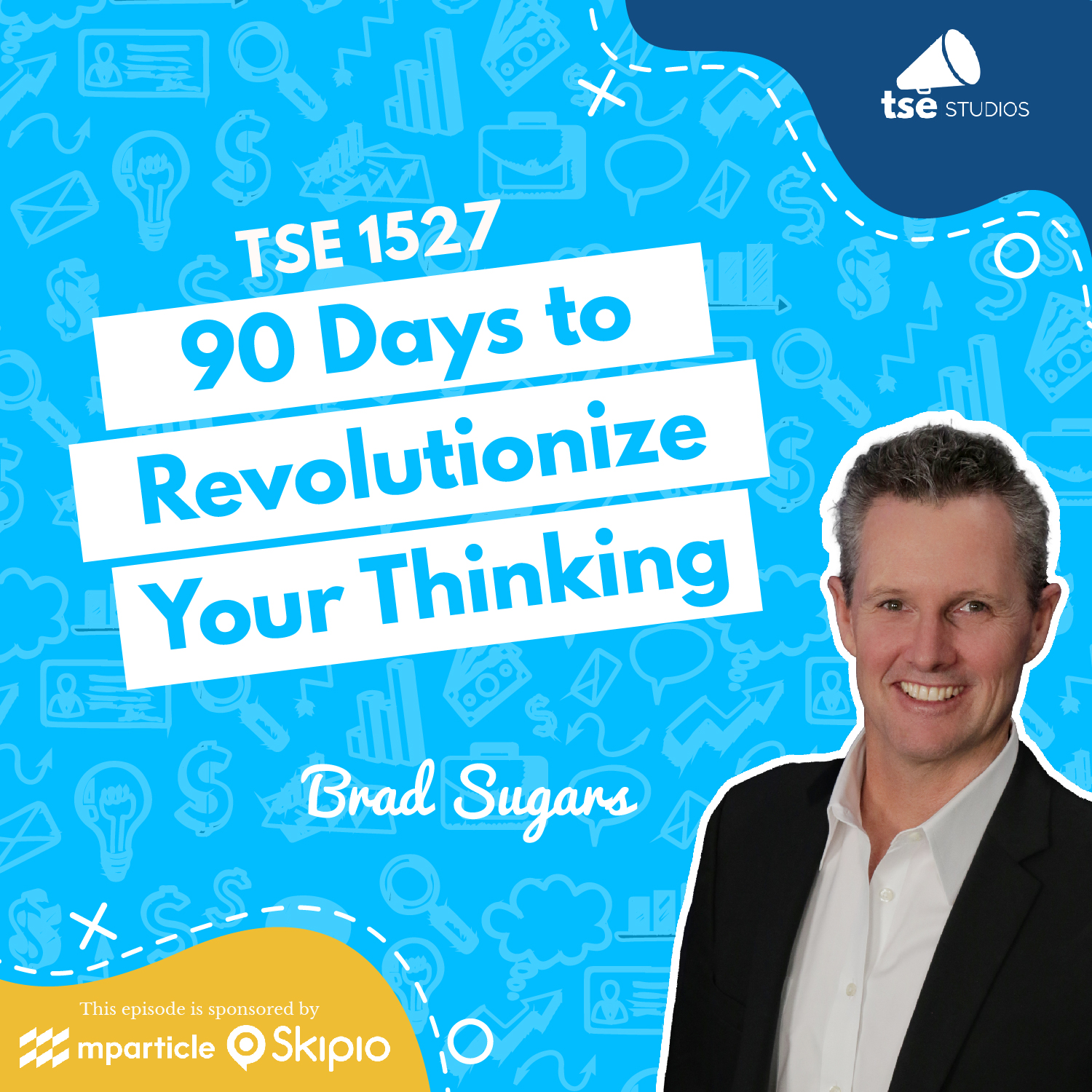
Ep 152790 Days to Revolutionize Your Thinking | Brad Sugars - 1527
As we enter the new year, there’s no time like the present to set new goals and embrace the productive mindset you’ve always wanted. In today’s episode of The Sales Evangelist, Donald is joined by lifelong businessman, best-selling author, and coach Brad Sugars to discuss how you can revolutionize your thinking. Revolutionize your mindset to get to the next level: It starts with the acknowledgment that your attitude needs to change. Brad’s formula for success: Dreams x Goals x Learning x Planning x Action. Getting to that next level involves all five of these components. Many of us are taught not to “bite off more than we can chew.” But change often means diving into the deep end and moving past our comfort zones. But why should you jump into the deep end? Immersing yourself in a new way of doing things creates a new identity, and that identity shift is the change people need. Put yourself in situations where you aren’t the smartest or most productive person in the room. Doing so gives you the push to grow and learn. Instead of looking to beat your average quarter, beat your best quarter. You never see sports professionals aim to perform above their average; they aim to perform above their best. Your goal is not your glass ceiling. Don’t let a low goal influence your ability to thrive. Pick your favorite mentor growing up. How would you be different if you got to sit with them for thirty minutes for the next 90 days? Brad’s quick lead generation advice: What are most salespeople using for lead generation? Email, social media, and other standard practices. What are they missing? Simply asking who is interested; they’re trying to make a sale rather than see who’s interested. If someone expresses interest, that’s the ideal person to start a conversation with, Brad’s final takeaway? Set goals, don’t be the smartest person in the room, and grow into your goals. (Because if you knew how to achieve that goal today, you’d already be doing it.) Visit Brad’s website at https://bradsugars.com/ for more content and information. Contact him on LinkedIn, Instagram, or Twitter and mention you came from Donald’s podcast to receive 90% off his 90-day course. This episode is brought to you in part by Skipio. Are you sick of crickets? As a salesperson, the pain of reaching out with phone calls or emails and not receiving a response is real. But all text messaging is not created equal. 85% of people prefer text over email and phone calls because they want to engage in a conversation, not listen to bots. Be more like people and start having conversations that end in the conversions you want. Try Skipio at www.Skipio.com. This episode is brought to you in part by mParticle. Are you tired of wading through thousands of open sales positions to find the one perfect for you? Well, look no further. mParticle is one of the leading independent customer data platforms out there, and they’re looking for motivated remote sellers (just like yourself.) With top-name clients from Spotify and Burger King to Airbnb, we don’t want you to let this opportunity go to waste! For more information and to view open positions, go to https://www.mparticle.com/careers/. This course is brought to you in part by the TSE Sales Certified Training Program, designed to help new and struggling sellers master sales fundamentals and close more deals. Help elevate your sales game and sign up now to get the first two modules free! You can visit www.thesalesevangelist.com/closemoredeals or call (561) 570-5077 for more information. We value your opinion and always want to improve the quality of our show. Complete our two-minute survey here: thesalesevangelist.com/survey. We’d love for you to join us for our next episodes by tuning in on Apple Podcast, Stitcher, or Spotify. You can also leave comments, suggestions, and ratings for each episode you listen to! Read more about sales or listen to audiobooks on Audible and explore their huge online library. Register now to get a free book and a 30-day trial. Audio provided by Free SFX and Bensound. Other songs used in the episodes are as follows: The Organ Grinder written by Bradley Jay Hill, performed by Bright Seed, and Produced by Brightseed and Hill.Mentioned in this episode:HubSpot and bluëmago | STUDIOSHubSpot and bluëmago | STUDIOS hubpspot.com/marketers bluemangostudios.com
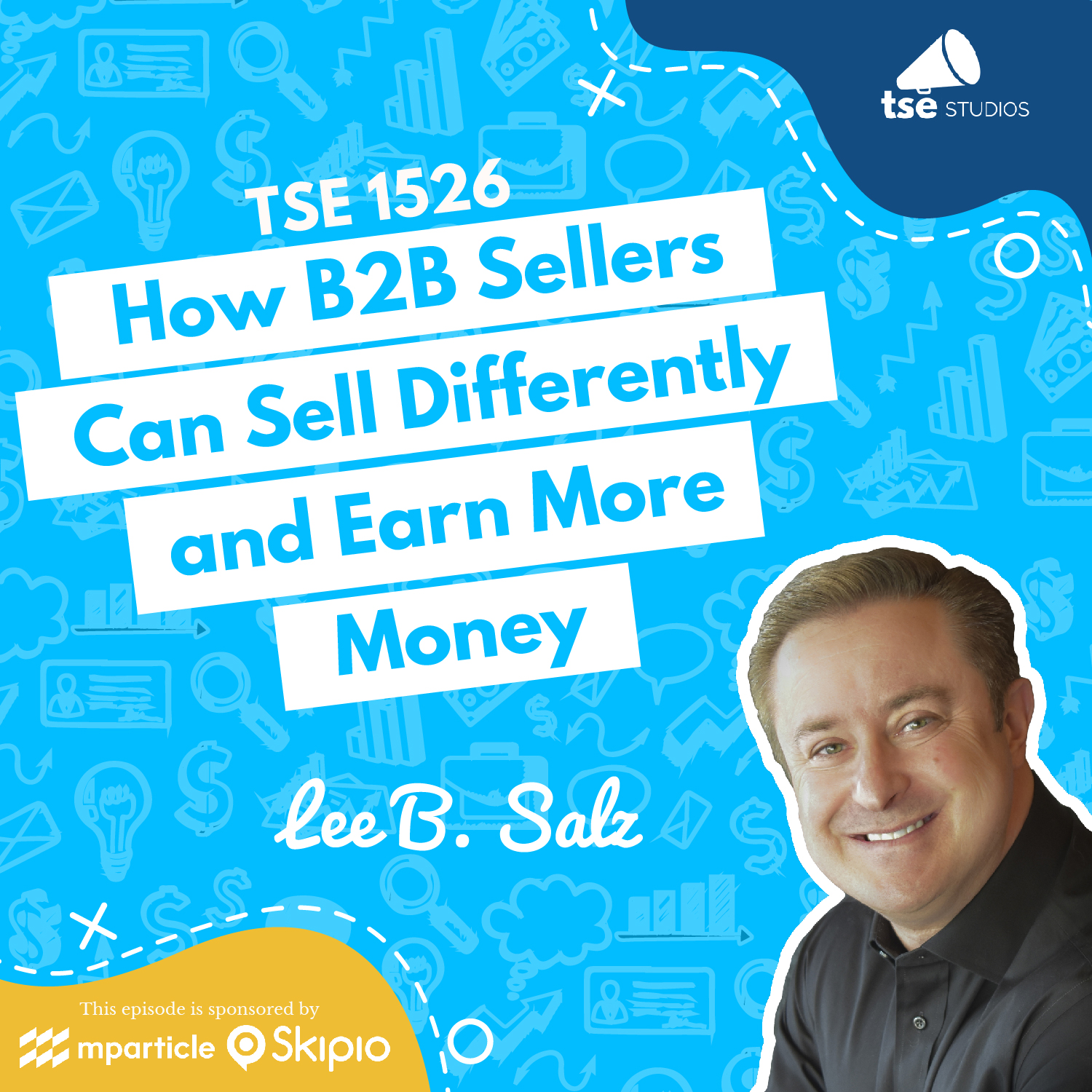
Ep 1526How B2B Sellers Can Sell Differently and Earn More Money | Lee B. Salz - 1526
Differentiation is critical when operating as a B2B seller. But what’s the best way to differentiate and ensure you earn more money? In today’s episode of The Sales Evangelist, Donald is joined by management strategist Lee B. Salz to understand how to effectively set yourself apart in B2B sales. Why does Lee have a passion for B2B sales strategy? The short answer? Golden Girls. The long answer? Lee needed a job his junior year of high school, so he was hired to drive the vehicle for a dry cleaning delivery service. Lee was fascinated that people were willing to spend more for the convenience of delivered dry cleaning. However, it was only certain people - those with long work commutes. Those who worked local found it unneceessary. The takeaway? Understand who gets meaningful value from what you’re selling, because not everyone will. Find the people who see meaningful value in what you’re selling. Visit targetclientprofile.com to download a free worksheet to identify your target profile client. It’s not an ideal client profile; it’s a target profile client. Ideal is who you want to sell to in a perfect world. Target clients are who you can and should sell to today (and any day of the week.) Your product won’t be meaningful to everyone. If something is marketed to everyone, it’s marketed to no one. Some people just won’t see value in your product. Innovation happens everywhere. As long as someone sees value in your innovation, there’s place for it in the market. There are always people who are going to compete against you. It’s one of the oldest comparisons you see - salespeople are the athletes of the business world. But one difference completely invalidates the comparison. Professional athletes work behind the scenes to deliver flawless performance. Salespeople, on the other hand, play the game without improving their performance. What can you do today to improve your game? It takes the work, research, and tools to be a professional. Competition has never been more fierce. And if we’re being honest, the differences between your product and your competition’s product is probably insignificant. Despite these more minor differences, how many companies are lowering quotas? None. Salespeople are expected to win at higher rates. You have to take a step back and look at every touchpoint in the buyer’s journey to analyze where you can outsmart and outsell a competitor. (Which is exactly what Lee discusses in his book.) Lee’s major takeaway? Don’t just sell; sell differently. Look at your touchpoints, discovery meetings, customer service, and every aspect of your sales practice to identify what you can do differently. To stay up-to-date on Lee’s content and practice, follow him on LinkedIn. Read the first chapter of his new book for free at selldifferentbook.com This episode is brought to you in part by Skipio. Are you sick of crickets? As a salesperson, the pain of reaching out with phone calls or emails and not receiving a response is real. But all text messaging is not created equal. 85% of people prefer text over email and phone calls because they want to engage in a conversation, not listen to bots. Be more like people and start having conversations that end in the conversions you want. Try Skipio at www.Skipio.com. This episode is brought to you in part by mParticle. Are you tired of wading through thousands of open sales positions to find the one perfect for you? Well, look no further. mParticle is one of the leading independent customer data platforms out there, and they’re looking for motivated remote sellers (just like yourself.) With top-name clients from Spotify and Burger King to Airbnb, we don’t want you to let this opportunity go to waste! For more information and to view open positions, go to https://www.mparticle.com/careers/. This course is brought to you in part by the TSE Sales Certified Training Program, designed to help new and struggling sellers master sales fundamentals and close more deals. Help elevate your sales game and sign up now to get the first two modules free! You can visit www.thesalesevangelist.com/closemoredeals or call (561) 570-5077 for more information. We value your opinion and always want to improve the quality of our show. Complete our two-minute survey here: thesalesevangelist.com/survey. We’d love for you to join us for our next episodes by tuning in on Apple Podcast, Stitcher, or Spotify. You can also leave comments, suggestions, and ratings for each episode you listen to! Read more about sales or listen to audiobooks on Audible and explore their huge online library. Register now to get a free book and a 30-day trial. Audio provided by Free SFX and Bensound. Other songs used in the episodes are as follows: The Organ Grinder written by Bradley Jay Hill, performed by Bright Seed, and Produced by Brightseed and Hill.Mentioned in this episode:HubSpot and bluëmago | STUDIOSHubSpot and bluëmago | STUDIOS hubpspot.com/marketers bluemangostudios.com
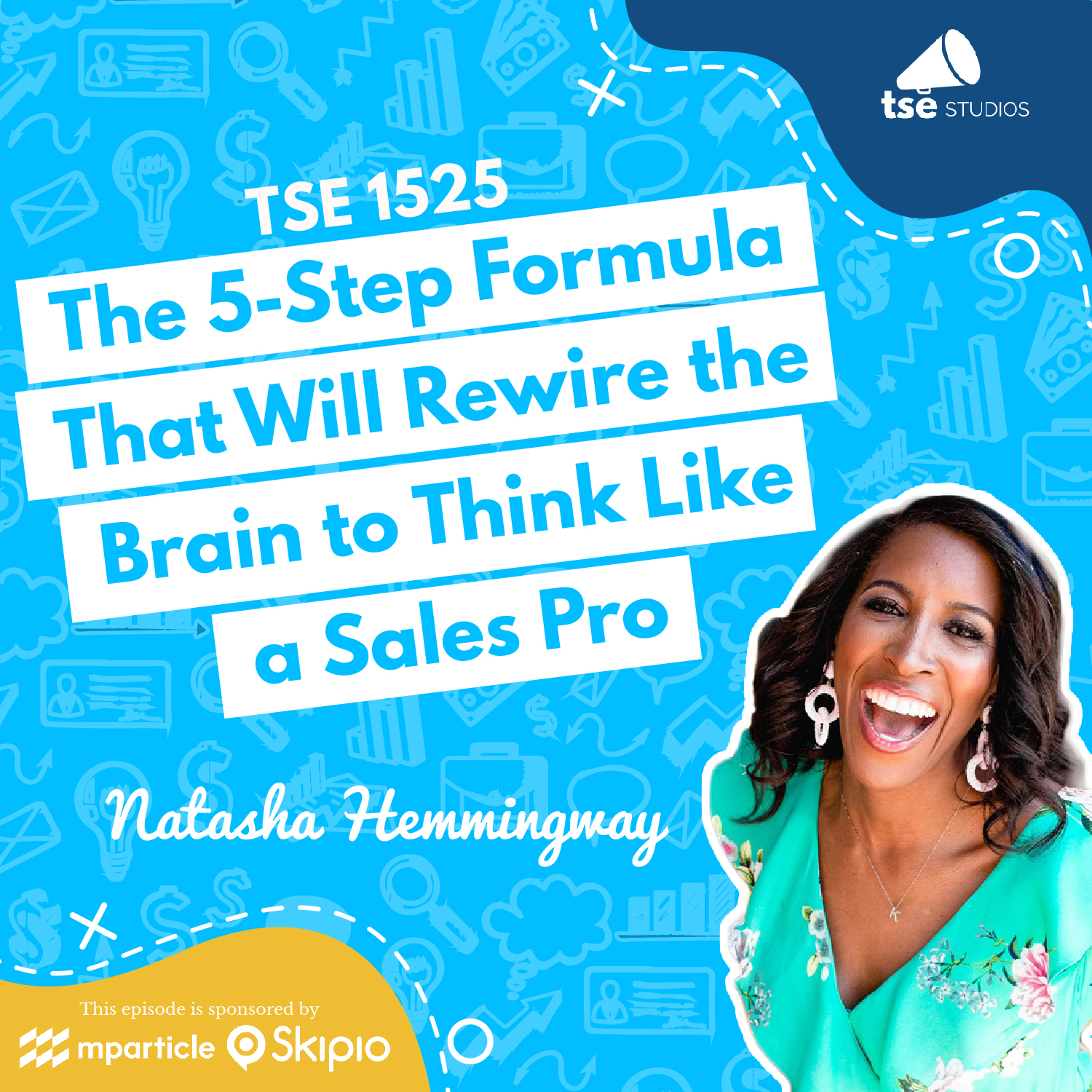
Ep 1525The 5-Step Formula That Will Rewire the Brain to Think Like a Sales Pro | Natasha Hemmingway - 1525
For many salespeople, a change in mindset encourages growth as you cultivate your sales practice. And on today’s episode of The Sales Evangelist, Donald is joined by sales consultant and speaker Natasha Hemmingway to learn her 5-step formula to rewire the brain and think like a sales pro. With 16 years of corporate sales experience (and multiple years as a professional sales consultant), Natasha believes that sales changes everything. It gives us access, opportunities to impact and influence others and help solve their problems. Step One: Mindset Many sales teams focus exclusively on the numbers, hustling for new clients purely for financial gain. But this mentality just doesn’t help anyone. Selling with heart means putting the client at the front of your selling technique. Serving them should be your priority. Selling is a partnership just as much as it is a transaction, and it is the willingness to walk away from a deal if it isn’t right for the prospect. Step Two: Communication Communication cannot come without the proper mindset, and it requires an understanding of what you’re selling and who you’re selling it to. In your communication, come from a place of confidence, ease, and grace. Most small and mid-size companies need to focus on their main thing. Selling dozens of slightly different products doesn’t encourage a purchase; it prevents it. Developing your authentic sales voice will help the client determine their best purchase (which should be your goal.) Step Three: Energy How are you showing up to work? People know if you’re nervous, anxious, or just want money. You just can’t hide it. Without the proper energy, you will encounter challenges converting sales and finding growth, regardless of how good your product or service might be. Step Four: A sales process Solo entrepreneurs, small businesses, and even medium-sized businesses frequently don’t have a sales process. If you wing your sales process, you’re likely repeating the same mistakes. A sales process quickly helps increase conversions and prevent these mistakes. At a minimum, a sales process should detail the components of a sales call, pricing, follow-up, and closing. Step Five: A sales strategy Even if your business is similar to fifty other people, your sales strategy and process are likely quite different. People (especially in the sales world) mimic what they believe is successful. But can you deliver your authentic self while trying to be someone else? (Hint: No.) Natasha’s main takeaway? If you aren’t communicating and touching the human behind the payment, there’s a critical gap in your sales process. Connect with Natasha on LinkedIn or Instagram, and visit natashahemmingway.com for free downloads, sales quizzes, and other excellent resources. This episode is brought to you in part by Skipio. Are you sick of crickets? As a salesperson, the pain of reaching out with phone calls or emails and not receiving a response is real. But all text messaging is not created equal. 85% of people prefer text over email and phone calls because they want to engage in a conversation, not listen to bots. Be more like people and start having conversations that end in the conversions you want. Try Skipio at www.Skipio.com. This episode is brought to you in part by mParticle. Are you tired of wading through thousands of open sales positions to find the one perfect for you? Well, look no further. mParticle is one of the leading independent customer data platforms out there, and they’re looking for motivated remote sellers (just like yourself.) With top-name clients from Spotify and Burger King to Airbnb, we don’t want you to let this opportunity go to waste! For more information and to view open positions, go to https://www.mparticle.com/careers/. This course is brought to you in part by the TSE Sales Certified Training Program, designed to help new and struggling sellers master sales fundamentals and close more deals. Help elevate your sales game and sign up now to get the first two modules free! You can visit www.thesalesevangelist.com/closemoredeals or call (561) 570-5077 for more information. We value your opinion and always want to improve the quality of our show. Complete our two-minute survey here: thesalesevangelist.com/survey. We’d love for you to join us for our next episodes by tuning in on Apple Podcast, Stitcher, or Spotify. You can also leave comments, suggestions, and ratings for each episode you listen to! Read more about sales or listen to audiobooks on Audible and explore their huge online library. Register now to get a free book and a 30-day trial. Audio provided by Free SFX and Bensound. Other songs used in the episodes are as follows: The Organ Grinder written by Bradley Jay Hill, performed by Bright Seed, and Produced by Brightseed and Hill.Mentioned in this episode:HubSpot and bluëmago | STUDIOSHubSpot and bluëmago | STUDIOS hubpspot.com/marketers bluemangostudios.com
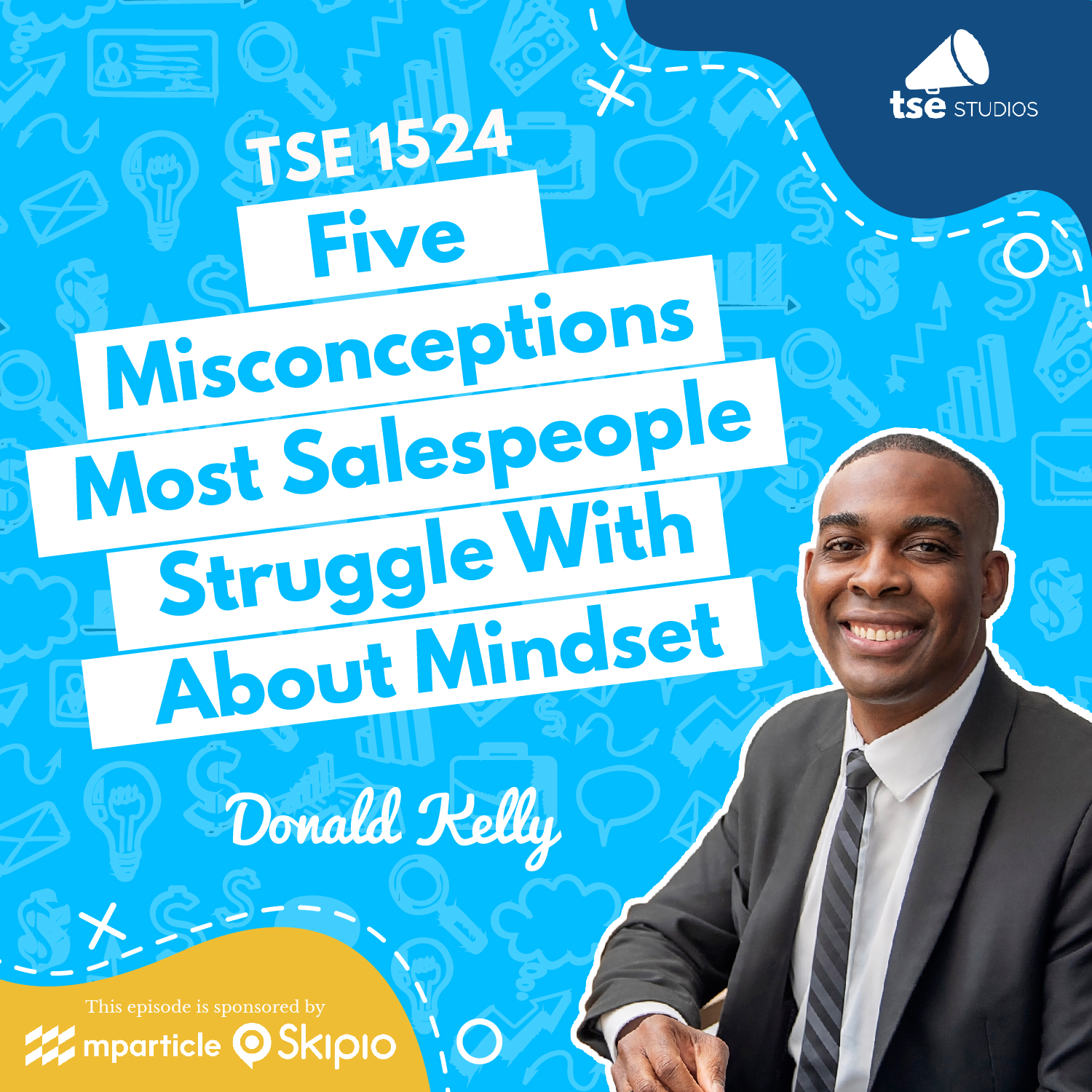
Ep 1524Five Misconceptions Most Salespeople Struggle With About Mindset | Donald Kelly - 1524
Many salespeople have a misconstrued mindset about mindset itself, hindering success and costing more money. In today’s episode of The Sales Evangelist, Donald discusses five common sales misconceptions and how to overcome them. So start the new year by overcoming these common misconceptions. Myth #1: Mindset is a soft skill and can’t be proven to result. Yes, motivational things are important and cool. But pep talk motivation has a purpose - it helps you perform. If your mind is game-ready, the performance will follow. Mindset isn’t just your motivation; it’s the way you think. Motivation is only a tiny (but necessary) part of that. Myth #2: I don’t need mindset, I can just hustle and complete tactics. When you get to a certain point, “hustling” only gets you so far. People who shatter records, earn promotions, and go beyond their current limit need more than hustle; they need the proper mindset. Research shows 80% of our daily thoughts are negative, and we do this to keep ourselves in our comfort zones. Mindset training teaches you to combat and subvert those subconscious thoughts. Myth #3: I don’t need mindset training to strengthen my mind. Even the most mentally tough person on Earth has another level they can reach. People sell themselves short to avoid disappointment down the line. But you can definitely do more. And mindset coaches help with that. Myth #4: Mindsets are an either-or proposition Mindset by Carol Dweck establishes the dichotomy of a fixed or growth mindset. But the truth is, it’s not an either-or situation. You can be both! We have thoughts on both sides of the scale, between overcoming negativity in the workplace to our goals and career aspirations. Myth #5: Anyone can do anything Okay, this sounds pessimistic. But it’s simply reality. You can’t grow wings. You can’t breathe in space. And, most likely, you won’t make the NBA. There are things you can’t or shouldn’t do. Understanding this doesn't mean you have a bad mindset. Instead, it encourages you to shift your focus to things you have control, which allows you to see greater results. This episode is brought to you in part by Skipio. Are you sick of crickets? As a salesperson, the pain of reaching out with phone calls or emails and not receiving a response is real. But all text messaging is not created equal. 85% of people prefer text over email and phone calls because they want to engage in a conversation, not listen to bots. Be more like people and start having conversations that end in the conversions you want. Try Skipio at www.Skipio.com. This episode is brought to you in part by mParticle. Are you tired of wading through thousands of open sales positions to find the one perfect for you? Well, look no further. mParticle is one of the leading independent customer data platforms out there, and they’re looking for motivated remote sellers (just like yourself.) With top-name clients from Spotify and Burger King to Airbnb, we don’t want you to let this opportunity go to waste! For more information and to view open positions, go to https://www.mparticle.com/careers/. This course is brought to you in part by the TSE Sales Certified Training Program, designed to help new and struggling sellers master sales fundamentals and close more deals. Help elevate your sales game and sign up now to get the first two modules free! You can visit www.thesalesevangelist.com/closemoredeals or call (561) 570-5077 for more information. We value your opinion and always want to improve the quality of our show. Complete our two-minute survey here: thesalesevangelist.com/survey. We’d love for you to join us for our next episodes by tuning in on Apple Podcast, Stitcher, or Spotify. You can also leave comments, suggestions, and ratings for each episode you listen to! Read more about sales or listen to audiobooks on Audible and explore their huge online library. Register now to get a free book and a 30-day trial. Audio provided by Free SFX and Bensound. Other songs used in the episodes are as follows: The Organ Grinder written by Bradley Jay Hill, performed by Bright Seed, and Produced by Brightseed and Hill.Mentioned in this episode:HubSpot and bluëmago | STUDIOSHubSpot and bluëmago | STUDIOS hubpspot.com/marketers bluemangostudios.com

Ep 1523Sales Challenges in a Fully Remote or Hybrid Environment | Richard White - 1523
Remote and hybrid work environments can be challenging. Back-to-back Zoom calls quickly blur together, and many salespeople find that, even with note-taking, there are gaps in recollection when the follow-up meeting arrives. In today’s episode of The Sales Evangelist, Donald is joined by Richard White to discuss his sales app, Fathom, which helps address and overcome these sales issues. Salespeople juggle note-taking, conducting conversations, and remembering essential elements of meetings for later discussions. Because of this huge workflow, it’s easy for things to fall through the cracks. So, Richard built the free app Fathom for Zoom that records, transcribes, and (most importantly) highlights key moments of calls so you can focus on having an actual conversation. In a typical call, only 15% of the conversation is note-worthy. That means 85% of the conversation probably isn’t very important. And that 85% drowns out the 15% pretty quickly. As a salesperson, you’re routinely giving pitches, answering questions, and overcoming similar objections across clients and prospects. Remembering the different results of these similar conversations gets increasingly difficult as you have more meetings. Notes are incredibly helpful to help prep before a follow-up call. Rather than stress about what was discussed and where you left off, Fathom provides a short highlight reel with that 15% of important information. How can this app and system help a remote sales rep or leader? Fathom’s video highlights are compiled with a sales methodology. Timeline, pain points, and other noteworthy topics are automatically flagged to revisit later. Zoom has cloud recording, but you often don’t get the recording until thirty minutes after the call. Because Fathom is real-time, so you get it immediately. Several platforms provide helpful coaching metrics, but that’s only after the call. Fathom’s real-time recording alerts you during the call if you’ve been monologuing, helping provide the best experience possible for the prospect. The goal is to perform smarter, not harder. The main takeaway from this episode? Zoom calls don’t have to be as stressful as they are. Visit fathom.video/pod to skip the waitlist and get this free tool for yourself, and connect with Richard on LinkedIn for more great updates and content. This episode is brought to you in part by Skipio. Are you sick of crickets? As a salesperson, the pain of reaching out with phone calls or emails and not receiving a response is real. But all text messaging is not created equal. 85% of people prefer text over email and phone calls because they want to engage in a conversation, not listen to bots. Be more like people and start having conversations that end in the conversions you want. Try Skipio at www.Skipio.com. This episode is brought to you in part by mParticle. Are you tired of wading through thousands of open sales positions to find the one perfect for you? Well, look no further. mParticle is one of the leading independent customer data platforms out there, and they’re looking for motivated remote sellers (just like yourself.) With top-name clients from Spotify and Burger King to Airbnb, we don’t want you to let this opportunity go to waste! For more information and to view open positions, go to https://www.mparticle.com/careers/. This course is brought to you in part by the TSE Sales Certified Training Program, designed to help new and struggling sellers master sales fundamentals and close more deals. Help elevate your sales game and sign up now to get the first two modules free! You can visit www.thesalesevangelist.com/closemoredeals or call (561) 570-5077 for more information. We value your opinion and always want to improve the quality of our show. Complete our two-minute survey here: thesalesevangelist.com/survey. We’d love for you to join us for our next episodes by tuning in on Apple Podcast, Stitcher, or Spotify. You can also leave comments, suggestions, and ratings for each episode you listen to! Read more about sales or listen to audiobooks on Audible and explore their huge online library. Register now to get a free book and a 30-day trial. Audio provided by Free SFX and Bensound. Other songs used in the episodes are as follows: The Organ Grinder written by Bradley Jay Hill, performed by Bright Seed, and Produced by Brightseed and Hill.Mentioned in this episode:HubSpot and bluëmago | STUDIOSHubSpot and bluëmago | STUDIOS hubpspot.com/marketers bluemangostudios.com
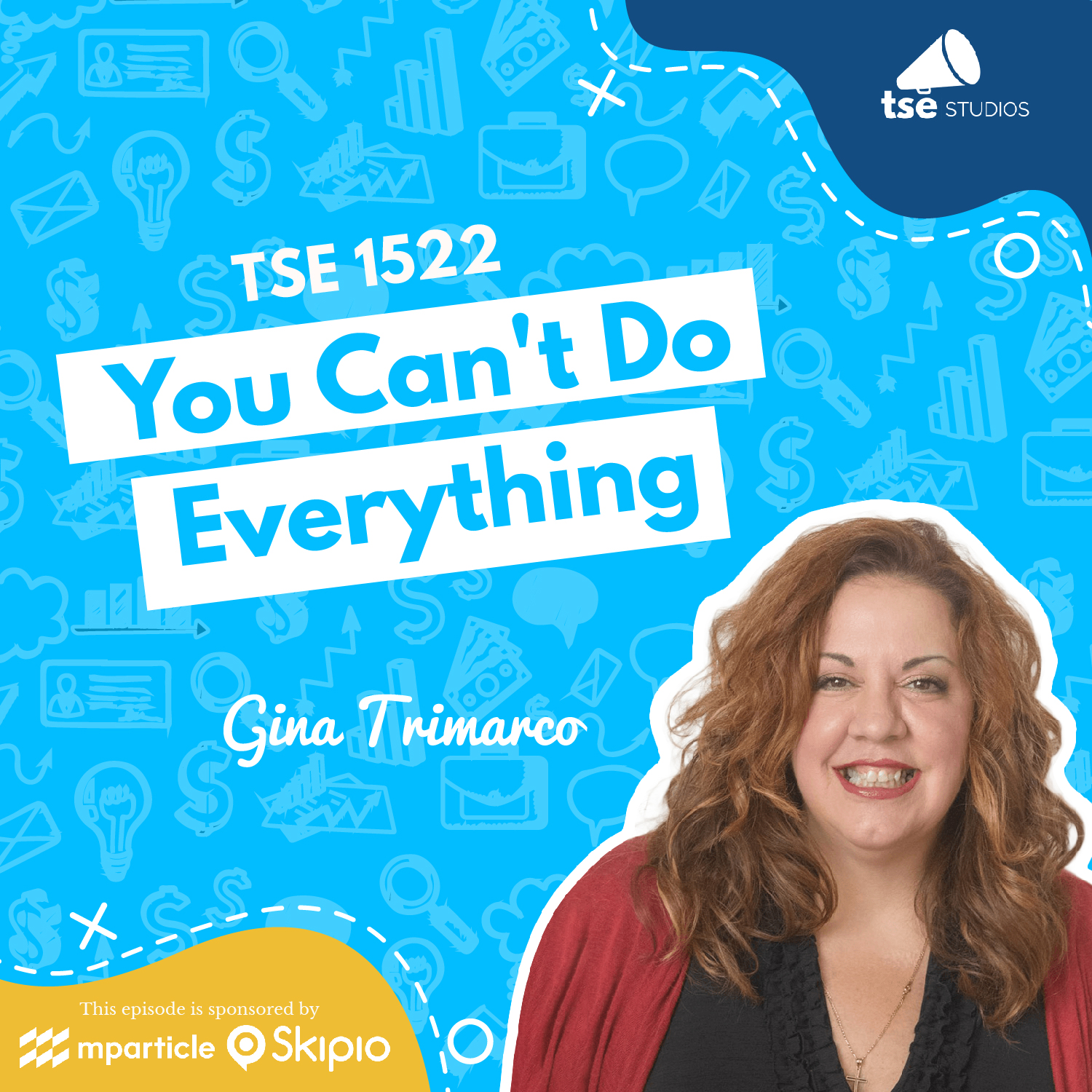
Ep 1522You Can't Do Everything | Gina Trimarco - 1522
Back-to-back meetings can drain your mental energy and, subsequently, your commission check. Working a hybrid of virtual and in-person work can be challenging while caring for your physical and mental health. In today’s episode of The Sales Evangelist, Donald is joined by master sales trainer and Sales Gravy coach Gina Trimarco to discuss her strategy to find balance in a world where salespeople are expected to do everything. Twelve years of owning a sales company (and an improv theatre) taught Gina important life lessons. Namely, the soft skills of improv help people be more organic in their sales efforts. Donald didn’t make his college’s improv team. Not that we’re holding a grudge or anything. More importantly, in those roles, Gina realized the importance and the need to set healthy boundaries between her work and personal life. People think they can do more than they should. This issue was drastically increased during the pandemic - we went from an in-person world to virtual seemingly overnight. Now that things are opening again (although we’re eyeing that omicron variant), there’s an expectation to continue virtual meetings while resuming in-person, depending on the prospect’s preference. Gina realized this situation was getting out of hand when she scheduled calls in transit at 6 a.m. Constant availability is simply not sustainable. But what’s the detriment to getting more done? The 24/7 hustle fatigues you in every way possible, professionally, physically, and mentally. You’ll notice declines in productivity and a lack of focus when you don’t have space to relax and decompress. From the virtual selling perspective, limit how much time you spend on zoom per day. The zoom fatigue is real. Google Calendar can automatically install buffer time in-between meetings. Make that a standard scheduling practice to ensure you give yourself the time you need. Respect your boundaries. If you’re someone who agrees to every work and meeting invite, block segments on your calendar for family, travel, and personal time. Set the precedent that you need time away from a conversation. Leadership needs to stay hyperaware of their teams. As a leader, you want to get the most out of your team. But if you notice cracks in the foundation of someone’s work, that should be a reason to pause and pay attention. Support that person when they need it. They won’t always need the space, but you need to respect it when they do. Regularly check in to see how your team is doing. Identify their thoughts on the balance between in-person and virtual work and provide a space for honesty. Look at the numbers - is there a decline in productivity? That could be because of a lack of boundaries and overextended employees. Contact Gina at [email protected], or connect with her on Instagram, LinkedIn, and Facebook. You can also check out her website, call her at (843)-597-6393, and tune in to her podcast Women My Mother Warned Me About. (You can check out Donald’s guest episode here.) This episode is brought to you in part by Skipio. Are you sick of crickets? As a salesperson, the pain of reaching out with phone calls or emails and not receiving a response is real. But all text messaging is not created equal. 85% of people prefer text over email and phone calls because they want to engage in a conversation, not listen to bots. Be more like people and start having conversations that end in the conversions you want. Try Skipio at www.Skipio.com. This episode is brought to you in part by mParticle. Are you tired of wading through thousands of open sales positions to find the one perfect for you? Well, look no further. mParticle is one of the leading independent customer data platforms out there, and they’re looking for motivated remote sellers (just like yourself.) With top-name clients from Spotify and Burger King to Airbnb, we don’t want you to let this opportunity go to waste! For more information and to view open positions, go to https://www.mparticle.com/careers/. This course is brought to you in part by the TSE Sales Certified Training Program, designed to help new and struggling sellers master sales fundamentals and close more deals. Help elevate your sales game and sign up now to get the first two modules free! You can visit www.thesalesevangelist.com/closemoredeals or call (561) 570-5077 for more information. We value your opinion and always want to improve the quality of our show. Complete our two-minute survey here: thesalesevangelist.com/survey. We’d love for you to join us for our next episodes by tuning in on Apple Podcast, Stitcher, or Spotify. You can also leave comments, suggestions, and ratings for each episode you listen to! Read more about sales or listen to audiobooks on Audible and explore their huge online library. Register now to get a free book and a 30-day trial. Audio provided by Free SFX and Bensound. Other songs used in the episodes are as follows: The Organ Grinder written by Bradley Jay Hill, performed by Bright Seed,
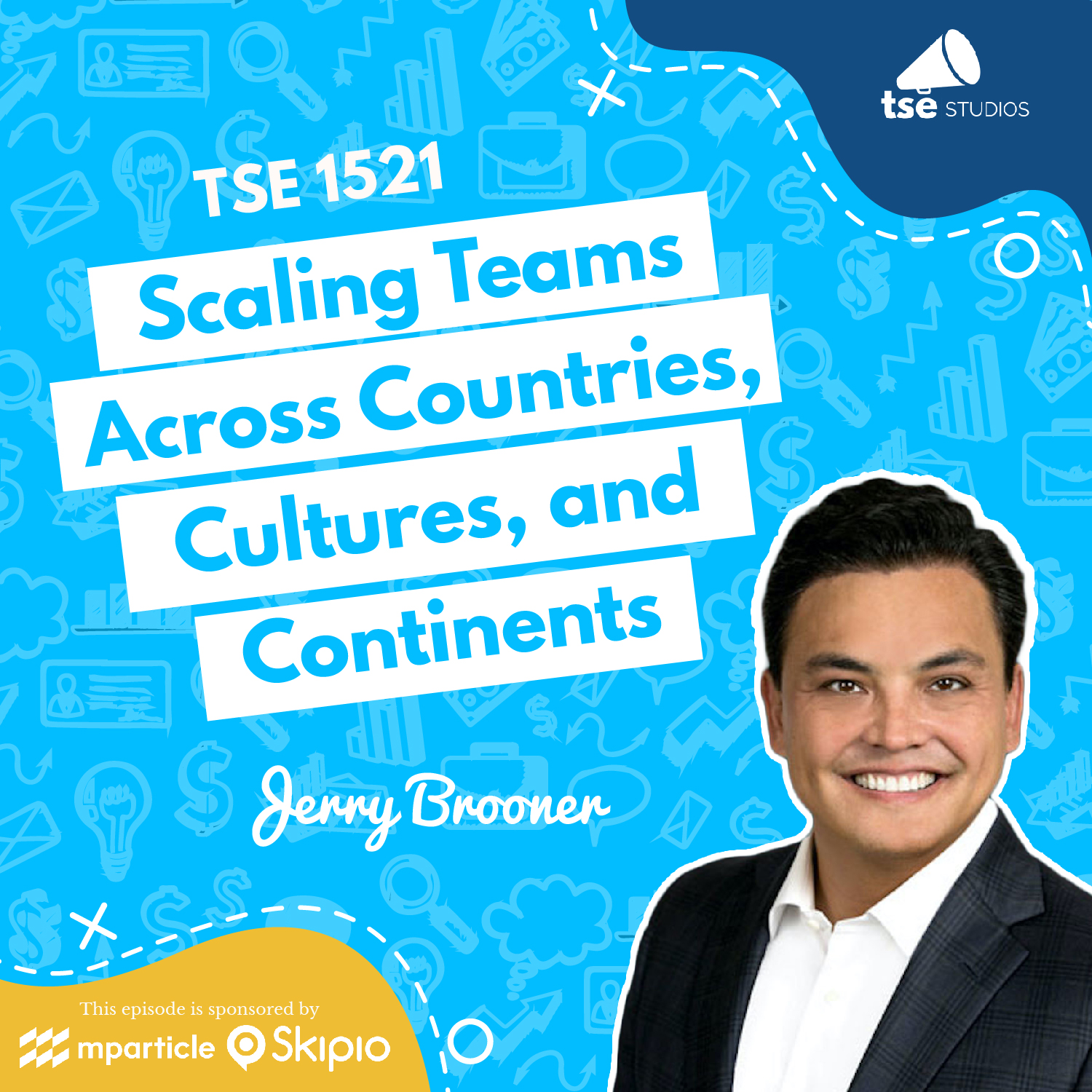
Ep 1521Scaling Teams Across Countries, Cultures, and Continents | Jerry Brooner - 1521
Without sales, companies wouldn’t generate revenue! And with hundreds of thousands of niches and topics for sales professionals, creating an effective hiring strategy is critical for companies to fill their team with qualified and creative talent. In today’s episode of The Sales Evangelist, Donald is joined by Jerry Brooner, President of Global Field Operations at Enable, to discuss his best sales hiring practices. Finding and keeping good talent is a warzone. To be clear, there is no shortage of talent. But many hiring managers just aren’t searching in the right places for the right people. For example, hiring managers who look only in major U.S. cities completely ignore the rest of the country (let alone the rest of the world.) In reality, there are intelligent and capable people no matter where you go, and they all bring different perspectives to a team. Jerry’s strategies to recruit a diverse team: First, think about what’s important for the company and the sales team. In most instances, that means a wider array of diversity and experiences. Jerry’s team searches not only in different states and countries but also beyond the major areas of those places. So, for example, when recruiting in the UK, they check locations besides London. How to plan a recruitment strategy: Work backward. Look at your customers, your team’s territories, and the industries those territories fall in, and look for knowledgeable people in those areas. Make entry-level jobs entry-level. Determine if the number of years of experience you’ve selected is essential. Most of the time, it isn’t. Look for accomplishments rather than years of experience to ensure everyone has an opportunity for consideration. Addressing and fostering diversity in his own company: Jerry believes that diversity is his company’s biggest asset, but he acknowledges that you must prioritize it. Focus on a diversity of country, gender, and race to create a team capable of understanding and interacting with clients in prospects in a way that works best for them. Don’t look to fill a diversity quota; look to fill roles with good people. You just can’t get the best people by searching one location. If you’re hiring entry-level BDRs, don’t just go to the same three or four colleges. Instead, broaden your selections to find candidates beyond those institutions. Jerry’s final word of advice? The sales profession is made better with a diverse group of people. In the long term, we’ll all be better for it. For more information or to contact Jerry, reach out to him at [email protected]. This episode is brought to you in part by Skipio. Are you sick of crickets? As a salesperson, the pain of reaching out with phone calls or emails and not receiving a response is real. But all text messaging is not created equal. 85% of people prefer text over email and phone calls because they want to engage in a conversation, not listen to bots. Be more like people and start having conversations that end in the conversions you want. Try Skipio at www.Skipio.com. This episode is brought to you in part by mParticle. Are you tired of wading through thousands of open sales positions to find the one perfect for you? Well, look no further. mParticle is one of the leading independent customer data platforms out there, and they’re looking for motivated remote sellers (just like yourself.) With top-name clients from Spotify and Burger King to Airbnb, we don’t want you to let this opportunity go to waste! For more information and to view open positions, go to https://www.mparticle.com/careers/. This course is brought to you in part by the TSE Sales Certified Training Program, designed to help new and struggling sellers master sales fundamentals and close more deals. Help elevate your sales game and sign up now to get the first two modules free! You can visit www.thesalesevangelist.com/closemoredeals or call (561) 570-5077 for more information. We value your opinion and always want to improve the quality of our show. Complete our two-minute survey here: thesalesevangelist.com/survey. We’d love for you to join us for our next episodes by tuning in on Apple Podcast, Stitcher, or Spotify. You can also leave comments, suggestions, and ratings for each episode you listen to! Read more about sales or listen to audiobooks on Audible and explore their huge online library. Register now to get a free book and a 30-day trial. Audio provided by Free SFX and Bensound. Other songs used in the episodes are as follows: The Organ Grinder written by Bradley Jay Hill, performed by Bright Seed, and Produced by Brightseed and Hill.Mentioned in this episode:HubSpot and bluëmago | STUDIOSHubSpot and bluëmago | STUDIOS hubpspot.com/marketers bluemangostudios.com
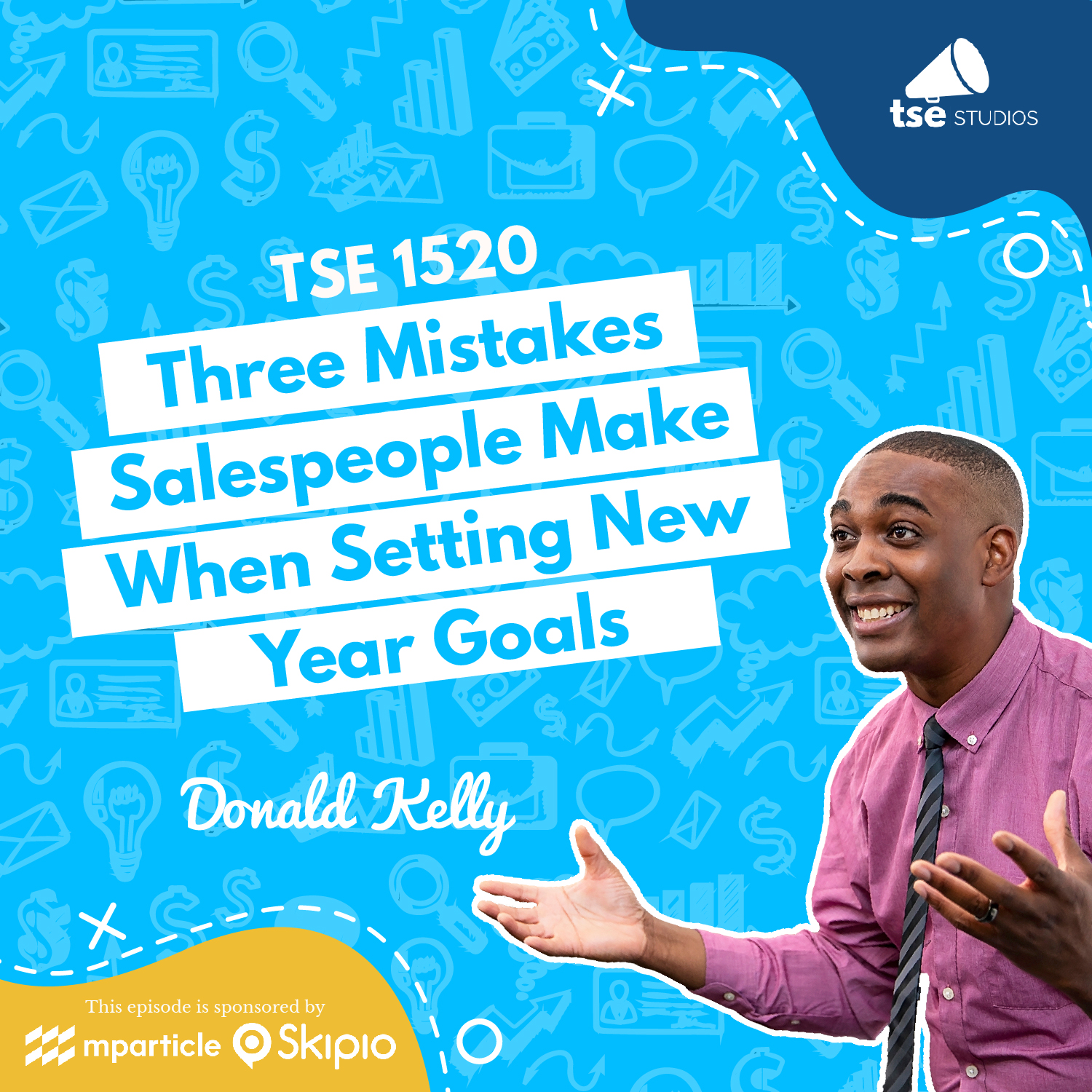
Ep 1530Three Mistakes Salespeople Make When Setting New Year Goals | Donald Kelly - 1520
It’s easy to make simple mistakes when setting goals for the new year, especially if you quickly fall back into the same habits as you did the previous year. So on today’s episode of The Sales Evangelist, Donald discusses the three mistakes salespeople make when setting goals and how you can prevent those same pitfalls. And happy birthday to Donald’s sister, Jessica! 1. Don’t set huge goals without a plan. A Harvard study revealed that people aren’t likely to succeed in huge goals. The key is to set micro-goals that are far easier to obtain and make you happier. The 12-Week Year concept is powerful because it does precisely that - breaks down an overarching goal into smaller, easier-to-obtain segments. Whether it’s to make a million dollars in sales or lose a certain amount of weight, micro-goals are far easier to obtain than a massive goal. 2. Be more descriptive when setting goals 65% of the population are visual people, and it’s natural for humans to think in pictures. If you have a goal in mind, making it descriptive allows you to visualize and thus better understand why the goal is important in the first place. If your goal is to hit a quota, what are the benefits of hitting that quota? Associate the benefits and results of the goal with the goal itself to overcome objections you might create for yourself. To learn more about the benefits and how to engage in a descriptive mindset, check out the Sales Evangelist Sales Mindset Training Program. 3. Set a goal, not a dream. It takes discipline to accomplish a goal. And you might have habits that are in direct conflict with achieving a goal. You can’t just wish on a plan - set it up and designate steps to accomplish that goal to see it come true! 4. Of course, a bonus: Believe in yourself! Whether in personal or professional goals, many people don’t believe in their ability to reach them. Affirmations are a great way to affirm your beliefs in yourself. The problem - they’re typically too vague, Keep them in the present tense, keep them visual, and keep them descriptive. It’s a great way to force yourself to believe in yourself and your goals. This episode is brought to you in part by Skipio. Are you sick of crickets? As a salesperson, the pain of reaching out with phone calls or emails and not receiving a response is real. But all text messaging is not created equal. 85% of people prefer text over email and phone calls because they want to engage in a conversation, not listen to bots. Be more like people and start having conversations that end in the conversions you want. Try Skipio at www.Skipio.com. This episode is brought to you in part by mParticle. Are you tired of wading through thousands of open sales positions to find the one perfect for you? Well, look no further. mParticle is one of the leading independent customer data platforms out there, and they’re looking for motivated remote sellers (just like yourself.) With top-name clients from Spotify and Burger King to Airbnb, we don’t want you to let this opportunity go to waste! For more information and to view open positions, go to https://www.mparticle.com/careers/. This course is brought to you in part by the TSE Sales Certified Training Program, designed to help new and struggling sellers master sales fundamentals and close more deals. Help elevate your sales game and sign up now to get the first two modules free! You can visit www.thesalesevangelist.com/closemoredeals or call (561) 570-5077 for more information. We value your opinion and always want to improve the quality of our show. Complete our two-minute survey here: thesalesevangelist.com/survey. We’d love for you to join us for our next episodes by tuning in on Apple Podcast, Stitcher, or Spotify. You can also leave comments, suggestions, and ratings for each episode you listen to! Read more about sales or listen to audiobooks on Audible and explore their huge online library. Register now to get a free book and a 30-day trial. Audio provided by Free SFX and Bensound. Other songs used in the episodes are as follows: The Organ Grinder written by Bradley Jay Hill, performed by Bright Seed, and Produced by Brightseed and Hill.Mentioned in this episode:HubSpot and bluëmago | STUDIOSHubSpot and bluëmago | STUDIOS hubpspot.com/marketers bluemangostudios.com
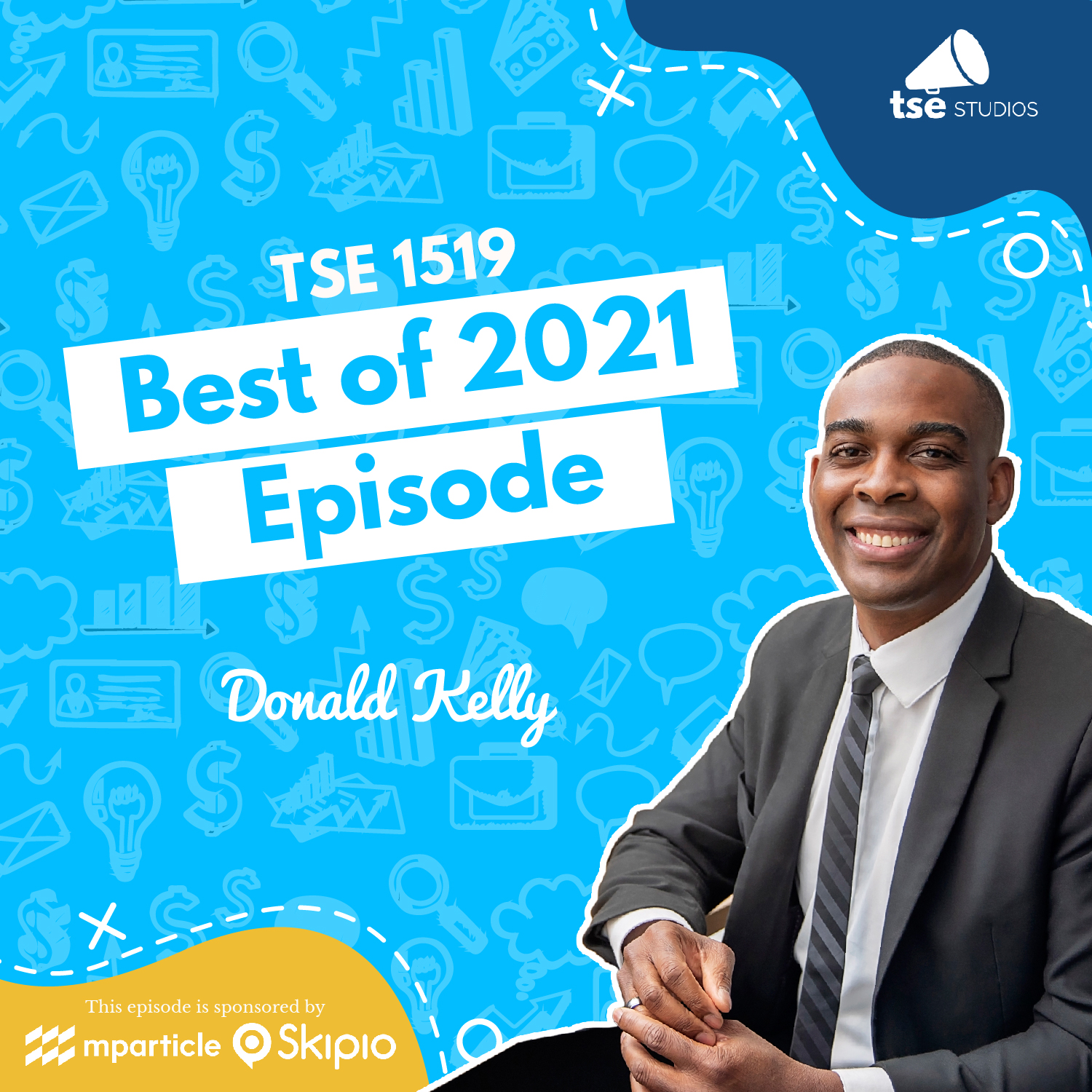
Ep 1519Best of 2021 Episode | Donald Kelly - 1519
Today’s special episode of The Sales Evangelist Podcast looks back on five of the best episodes of 2021. (If you were wondering, yes, it was a tough decision.) Check out the links to visit each episode if you missed it to listen! Episode 1508: Insight-Led Selling: Adopting An Executive Mindset To Learn How Buyers Think with Dr. Stephen Timme and Melody Astley This episode encouraged sellers to focus on how your product or service fixes a prospect’s problem. Focus on how to bring value versus the “what” of the sale. Reorient your selling practices to understand how the customer buys rather than how the seller sells. For more great information, read their book, “Insight-Led Selling: Adopt an Executive Mindset, Build Credibility, Communicate with Impact.” Episode 1505: How To Develop Your Account-Based Strategy Outreach Messaging with Scott Leese In this episode discussing account-based outreach strategies, Scott stressed the importance of the message above all else- if you’re going to reach out to a prospect, target messages to the prospect. Don’t make the conversation about yourself - initial outreach should get into some dialogue or discussion where the prospect is the center. For more great content from Scott, check out his podcast, The Surf and Sales Podcast. Episode 1493: 3 Things Every Seller Needs To Know About The Future Of Selling Sales and marketing must come together. It’s no longer enough to work in tandem - they must be integrated to drive revenue. An integrated experience should put the customer journey first versus different departments judging success based on different outcomes. Episode 1425: Objections: How To Overcome The Most Common Objections In B2B Sales with Nadia Rashid Nadia has a four-step process to overcoming prospect objections: listen, understand and validate, respond, and confirm. Whenever you encounter an objection you aren’t sure how to address, there is no shame in admitting that. However, commit to finding an answer and make a proactive effort to address it later. For more great content from Nadia, follow her on LinkedIn. Episode 1514: How “The Practice” And Being Different Can Help Sellers Connect With More Prospects with Seth Godin Google didn’t succeed because of a stellar sales team- Google succeeded because Google made a product that sold itself. If you want to measure salespeople based solely on the outcome, figure out how to normalize it based on what you’re selling. Juggling isn’t about catching; it’s about throwing. If you get good at the practice of your job, the results take care of themselves. Make sure to check out Seth’s book The Practice for more awesome content and advice. This episode is brought to you in part by Skipio. Are you sick of crickets? As a salesperson, the pain of reaching out with phone calls or emails and not receiving a response is real. But all text messaging is not created equal. 85% of people prefer text over email and phone calls because they want to engage in a conversation, not listen to bots. Be more like people and start having conversations that end in the conversions you want. Try Skipio at www.Skipio.com. This episode is brought to you in part by mParticle. Are you tired of wading through thousands of open sales positions to find the one perfect for you? Well, look no further. mParticle is one of the leading independent customer data platforms out there, and they’re looking for motivated remote sellers (just like yourself.) With top-name clients from Spotify and Burger King to Airbnb, we don’t want you to let this opportunity go to waste! For more information and to view open positions, go to https://www.mparticle.com/careers/. This course is brought to you in part by the TSE Sales Certified Training Program, designed to help new and struggling sellers master sales fundamentals and close more deals. Help elevate your sales game and sign up now to get the first two modules free! You can visit www.thesalesevangelist.com/closemoredeals or call (561) 570-5077 for more information. We value your opinion and always want to improve the quality of our show. Complete our two-minute survey here: thesalesevangelist.com/survey. We’d love for you to join us for our next episodes by tuning in on Apple Podcast, Stitcher, or Spotify. You can also leave comments, suggestions, and ratings for each episode you listen to! Read more about sales or listen to audiobooks on Audible and explore their huge online library. Register now to get a free book and a 30-day trial. Audio provided by Free SFX and Bensound. Other songs used in the episodes are as follows: The Organ Grinder written by Bradley Jay Hill, performed by Bright Seed, and Produced by Brightseed and Hill.Mentioned in this episode:HubSpot and bluëmago | STUDIOSHubSpot and bluëmago | STUDIOS hubpspot.com/marketers bluemangostudios.com
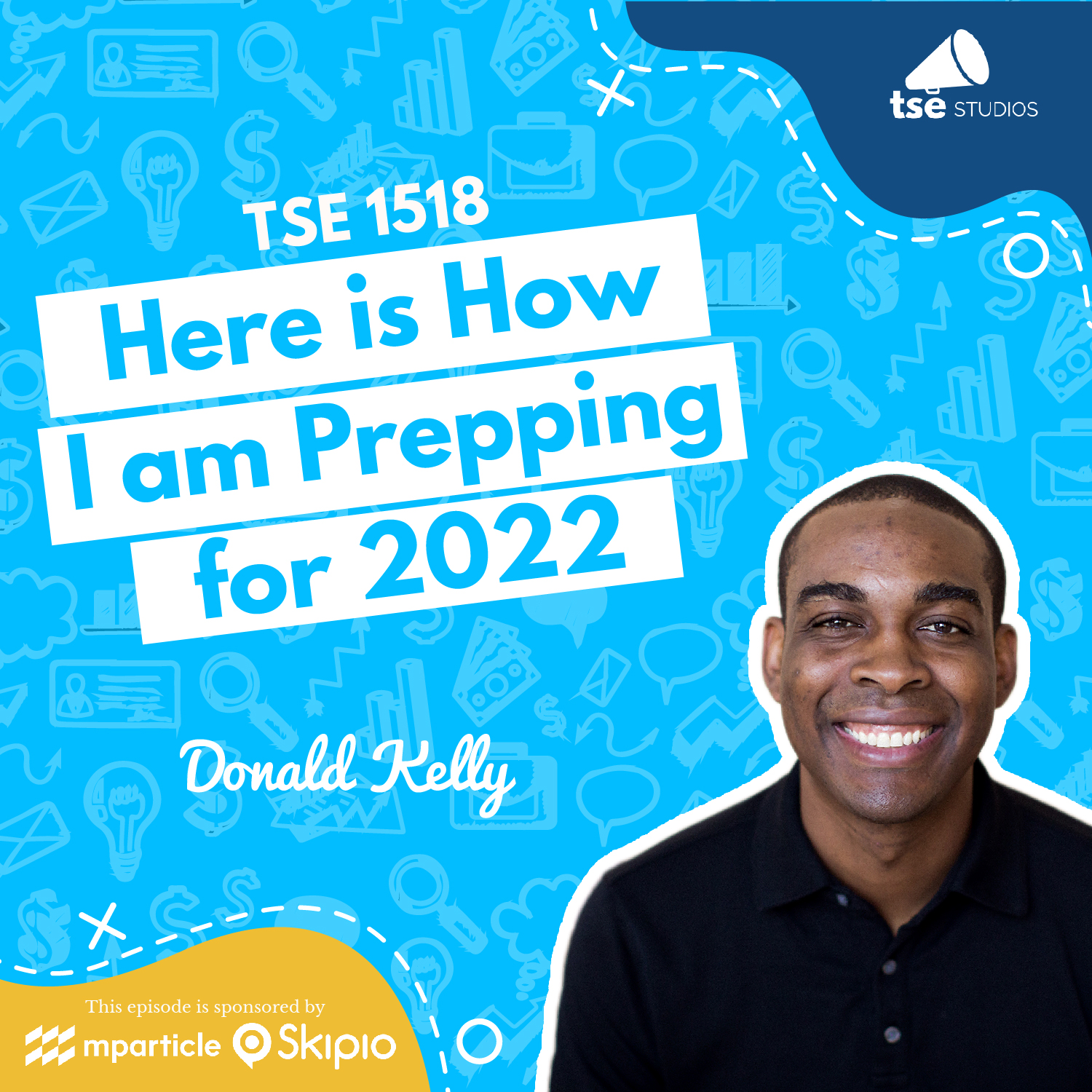
Ep 1518Here is How I am Prepping for 2022 | Donald Kelly - 1518
As we move into 2022, there’s no time like the present to set new goals and be prepared for the year ahead. So what is Donald doing to prepare for 2022? He’s adding three books to his reading list (and you should too.) The Big Leap by Gay Hendricks: Getting past your comfort zone can be a challenge. When it comes to quotas, commissions, and sales targets, many salespeople trap themselves into thinking that they can only do a certain amount. But I’ll ask you this - why can’t you make more? Don’t be your own worst enemy! If your company limits your commissions, maybe it's time to find a new job to break through and get to the next level. The Billion Dollar Secret by Rafael Badziag: This guy interviewed billionaire people and asked them what it takes to make a billion dollars. You may not get a billion dollars in sales revenue yourself, but why can’t you get six or seven figures? Get past limits you set yourself to unlock more money for you. Salespeople reap what they sow - focusing on the ideal customer who makes more significant purchases can be what brings onto the 7-figure level. The 12 Week Year by Brian Moran: Salespeople are super productive between October and December because of the shorter quarter. But why can’t you have this same urgency throughout the year? The 12 Week Year breaks down overarching goals into smaller, 12-week-long goals that help you achieve whatever goals you’ve set for yourself. And now, the bonus book: Donald’s Sales Planner! (Yes, this is a shameless plug.) When searching for a sales planner, Donald realized those in the market weren’t what he wanted. Instead of a reactive planner, he wanted one that kept him focused on his goals and moving forward. His planner encourages you to focus on tasks that directly correlate to success by utilizing the 12-week concept framework. It features a performance tracker at the end of each day or week. It is a 3-month planner, promoting focus on each quarter, and features a performance tracker for each day and week to ensure you’re on track to reach quotas. Even if you don’t use this planner, plan! Spend 30 minutes each day planning the next day to see more success in the new year. To order the planner for the start of 2022, visit thesalesevangelist.com/salesplanner. This episode is brought to you in part by Skipio. Are you sick of crickets? As a salesperson, the pain of reaching out with phone calls or emails and not receiving a response is real. But all text messaging is not created equal. 85% of people prefer text over email and phone calls because they want to engage in a conversation, not listen to bots. Be more like people and start having conversations that end in the conversions you want. Try Skipio at www.Skipio.com. This episode is brought to you in part by mParticle. Are you tired of wading through thousands of open sales positions to find the one perfect for you? Well, look no further. mParticle is one of the leading independent customer data platforms out there, and they’re looking for motivated remote sellers (just like yourself.) With top-name clients from Spotify and Burger King to Airbnb, we don’t want you to let this opportunity go to waste! For more information and to view open positions, go to https://www.mparticle.com/careers/. This course is brought to you in part by the TSE Sales Certified Training Program, designed to help new and struggling sellers master sales fundamentals and close more deals. Help elevate your sales game and sign up now to get the first two modules free! You can visit www.thesalesevangelist.com/closemoredeals or call (561) 570-5077 for more information. We value your opinion and always want to improve the quality of our show. Complete our two-minute survey here: thesalesevangelist.com/survey. We’d love for you to join us for our next episodes by tuning in on Apple Podcast, Stitcher, or Spotify. You can also leave comments, suggestions, and ratings for each episode you listen to! Read more about sales or listen to audiobooks on Audible and explore their huge online library. Register now to get a free book and a 30-day trial. Audio provided by Free SFX and Bensound. Other songs used in the episodes are as follows: The Organ Grinder written by Bradley Jay Hill, performed by Bright Seed, and Produced by Brightseed and Hill.Mentioned in this episode:HubSpot and bluëmago | STUDIOSHubSpot and bluëmago | STUDIOS hubpspot.com/marketers bluemangostudios.com
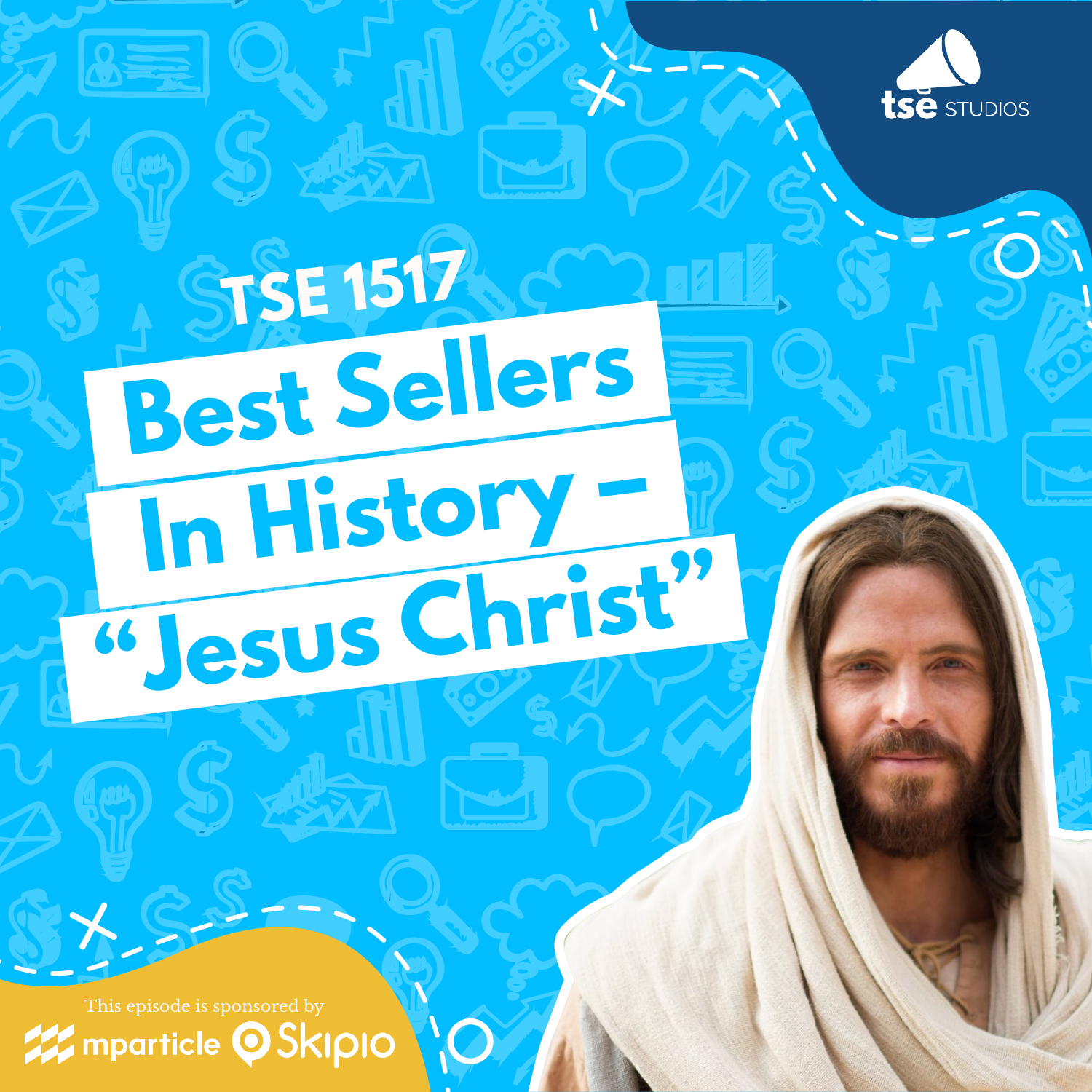
Ep 1517Best Sellers In History – “Jesus Christ” | Donald Kelly - 1517
Disclaimer: This episode isn’t to convince listeners to become Christians; it’s to highlight how Jesus Christ persuaded people (a crucial sales trait.) As we near Christmas Day, we thought it would be fun to revisit an episode from the TSE Archives. In this episode, Donald kicked off his “Best Sellers in History” series with Jesus Christ. How did he start a movement, persuade people, and convince people to change their lives? Well, he sold them on the idea! And here are the seven reasons he was so successful: He Showed Sympathy and Built Rapport: Even when nobody else would, he sat with ordinary people and those marginalized by society. People didn’t understand these actions, but Jesus shared that a physician comes to heal the sick, not the healthy. In the same way, Jesus spent time with people who needed his help the most. He made an impact: Jesus modeled how he wanted people to treat one another. As a sales rep, set yourself apart from others by understanding your prospect's pain points and then offering a solution. Consider writing a blog or creating content related to your prospect's challenges. He Was a Skilled Storyteller: In one instance, a man tried to trap Jesus while preaching by asking him how to receive eternal life. In response, Jesus replied with a question about what was written in the law. The lawyer replied that one should love the Lord with all his heart, soul, and strength and love his neighbor as he loves himself. He then asked Jesus who he should consider his neighbor, and Jesus shared the story of the Good Samaritan. The story of the Good Samaritan was relatable, and the people listening understood the point he was making. He Shared a Vision People believed in Jesus because he fulfilled prophecies laid out in scripture. When Jesus preached, people listened to his message of hope. As a sales rep, understand a prospect’s pain points and challenges. As you get to know them, you’ll have the opportunity to offer hope through your product or service. He Challenged the Status Quo: Challenging the status quo helped people trust Jesus to make the right decisions. In sales, we can experience the status quo and get stuck in familiar patterns. The most daunting competitor isn’t another sales rep but your client’s comfort zone. The conversation may be bold, but sometimes it takes boldness to get people to change. He Listened Effectively Throughout his ministry, Jesus listened to people’s stories and showed mercy and compassion. As a salesperson, imitate Jesus by listening to your prospects. Whether through a phone conversation, a LinkedIn post, or an email, listen to what they say. Go through reports, annual filings, and quarterly earnings to better understand a prospect’s pain points and focus on what they say rather than what you can say next. He Asked Powerful Questions In sales, you don’t have to give your prospects an answer right away if additional questions or clarifications are needed. When you hear “I’m not interested,” don’t take that at face value and end the conversation. In every objection you face, you can learn more and get closer to finding a solution. He Invited People to Change Jesus asked people to do hard things. He gathered his disciples early in his ministry and told them to leave their livelihood as fishermen to become fishers of men. When salespeople ask clients to use their products or services, you invite change to occur. Be proactive, ask for change, and be prepared to show prospects the action steps. This episode is brought to you in part by Skipio. Are you sick of crickets? As a salesperson, the pain of reaching out with phone calls or emails and not receiving a response is real. But all text messaging is not created equal. 85% of people prefer text over email and phone calls because they want to engage in a conversation, not listen to bots. Be more like people and start having conversations that end in the conversions you want. Try Skipio at www.Skipio.com. This episode is brought to you in part by mParticle. Are you tired of wading through thousands of open sales positions to find the one perfect for you? Well, look no further. mParticle is one of the leading independent customer data platforms out there, and they’re looking for motivated remote sellers (just like yourself.) With top-name clients from Spotify and Burger King to Airbnb, we don’t want you to let this opportunity go to waste! For more information and to view open positions, go to https://www.mparticle.com/careers/. This course is brought to you in part by the TSE Sales Certified Training Program, designed to help new and struggling sellers master sales fundamentals and close more deals. Help elevate your sales game and sign up now to get the first two modules free! You can visit www.thesalesevangelist.com/closemoredeals or call (561) 570-5077 for more information. We value your opinion and always want to improve the quality of our show. Complete our two-minute survey here: thesalesevangelist.com/survey.
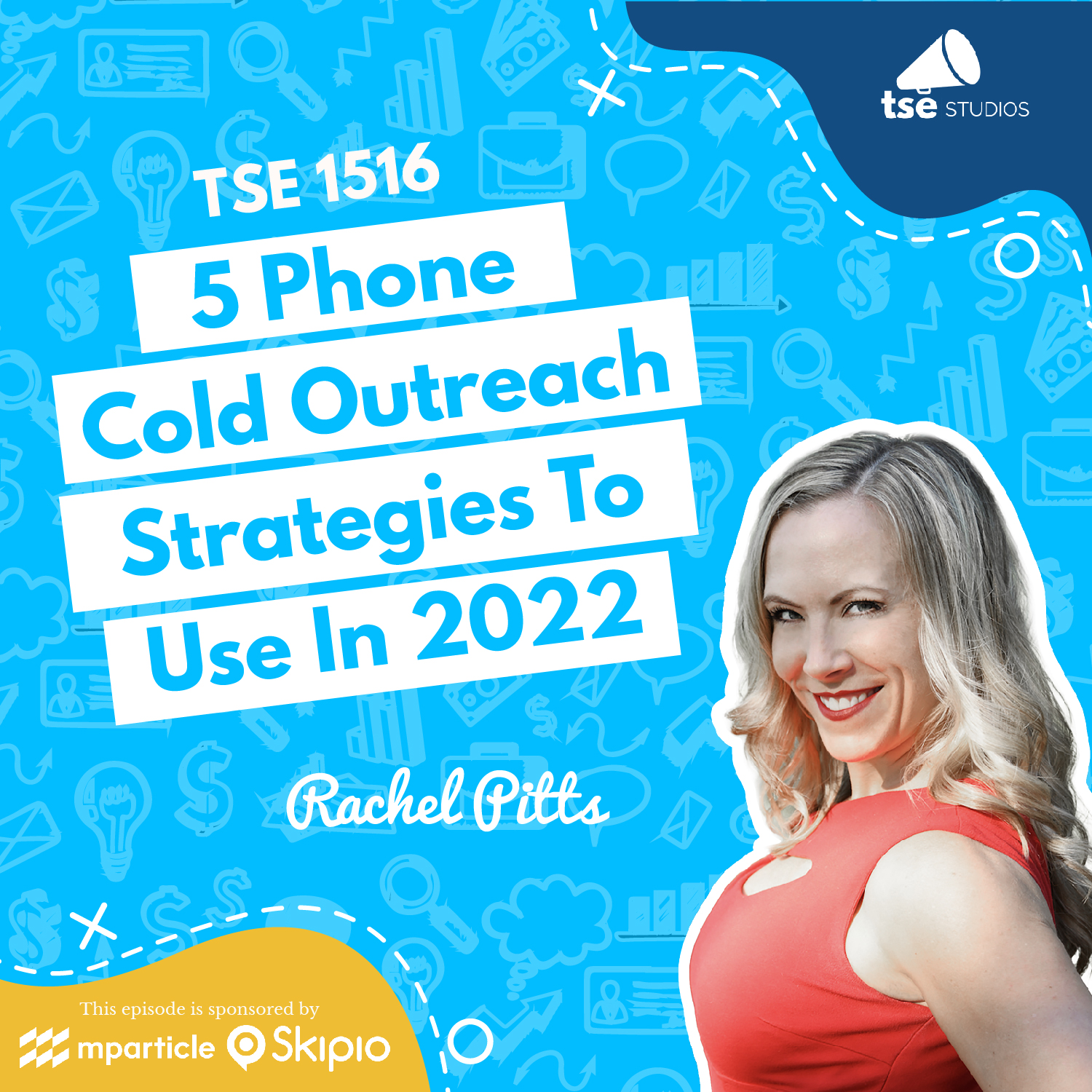
Ep 15165 Phone Cold Outreach Strategies To Use In 2022 | Rachel Pitts - 1516
Cold outreach can be the worst part of your day for most salespeople. But if you had an easy-to-follow strategy, would that make it better? (Our answer: absolutely!) In today’s episode of The Sales Evangelist, Donald is joined by Rachel Pitts, co-host of Women Your Mother Warned You About, to discuss five cold outreach strategies to use in 2022. Rachel’s selling journey started in real estate: Rachel started her real estate journey during the 2008 market crash (AKA a lousy time to start), where she worked for ten years. After later working in the mortgage industry, she realized her dream was to own a dance studio. And now, she is a full-time dance studio owner. (Congratulations, Rachel!) Why are people afraid of the phone? Well, there are many reasons. But namely, people believe nobody answers. But coming out of COVID, people are isolated and more willing to answer the phone. Plus, communicating over the phone is better at fostering personal connections. Many salespeople are afraid they’re bothering others. But, as a salesperson, you are a professional interrupter. You should interrupt people. However, learn how to interrupt efficiently that doesn’t piss people off. Five Strategies You Should Use: Call your existing contacts, and ask if they know anyone who needs your product or service. Consider it a warm-up; you likely already know these people to some capacity, and you’re more likely to have a positive conversation with them. Leave a voicemail. One of the great courses offered at Sales Gravy University is the fanatical prospecting boot camp (based on Jeb Blount’s book Fanatical Prospecting.) Be clear and concise. Say your name, your company, and the prospect's direct opportunity by calling. (And, of course, a return phone number.) Get to the point. People like to know the reason for things. By clearly stating your reason for calling, you’re giving the prospect an early opportunity to decide if they care to listen or not. Schedule the next call, and make that the mission of your call. If they’re busy, offer a follow-up time to continue the conversation, and get their email as a backup to send them your calendar. Develop a creative strategy to supplement your outcome. For example, when selling a mortgage, it’s boring. So, Rachel did singing parodies. And it differentiated her from everyone else. Whatever you love to do, lean into that and find a way to incorporate it into your work. To contact Rachel, find her on Instagram at both @ultrafiftlifestyle and @thesinginglender, or send her an email at [email protected]. This episode is brought to you in part by Skipio. Are you sick of crickets? As a salesperson, the pain of reaching out with phone calls or emails and not receiving a response is real. But all text messaging is not created equal. 85% of people prefer text over email and phone calls because they want to engage in a conversation, not listen to bots. Be more like people and start having conversations that end in the conversions you want. Try Skipio at www.Skipio.com. This episode is brought to you in part by mParticle. Are you tired of wading through thousands of open sales positions to find the one perfect for you? Well, look no further. mParticle is one of the leading independent customer data platforms out there, and they’re looking for motivated remote sellers (just like yourself.) With top-name clients from Spotify and Burger King to Airbnb, we don’t want you to let this opportunity go to waste! For more information and to view open positions, go to https://www.mparticle.com/careers/. This course is brought to you in part by the TSE Sales Certified Training Program, designed to help new and struggling sellers master sales fundamentals and close more deals. Help elevate your sales game and sign up now to get the first two modules free! You can visit www.thesalesevangelist.com/closemoredeals or call (561) 570-5077 for more information. We value your opinion and always want to improve the quality of our show. Complete our two-minute survey here: thesalesevangelist.com/survey. We’d love for you to join us for our next episodes by tuning in on Apple Podcast, Stitcher, or Spotify. You can also leave comments, suggestions, and ratings for each episode you listen to! Read more about sales or listen to audiobooks on Audible and explore their huge online library. Register now to get a free book and a 30-day trial. Audio provided by Free SFX and Bensound. Other songs used in the episodes are as follows: The Organ Grinder written by Bradley Jay Hill, performed by Bright Seed, and Produced by Brightseed and Hill.Mentioned in this episode:HubSpot and bluëmago | STUDIOSHubSpot and bluëmago | STUDIOS hubpspot.com/marketers bluemangostudios.com
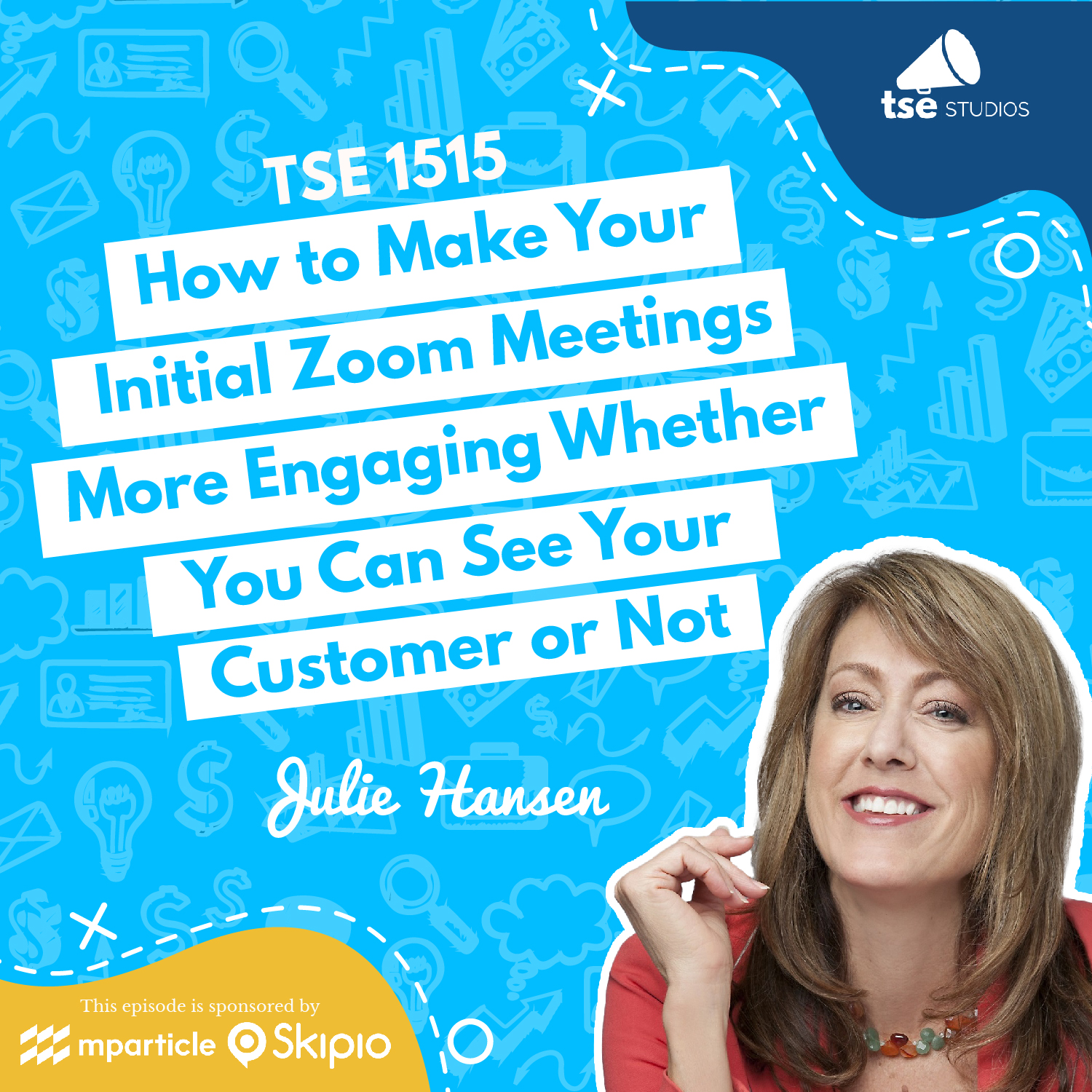
Ep 1515How to Make Your Initial Zoom Meetings More Engaging Whether You Can See Your Customer or Not | Julie Hansen - 1515
While we might be in a post-pandemic world, the myriad of zoom calls is here to stay. But, for any professional, creating and maintaining professional virtual relationships is more complex than in-person. In today’s episode of The Sales Evangelist, Donald is joined by actor, author, and founder of Selling On-Video Master Class Julie Hansen to learn how to better engage our virtual audiences. When transitioning from theatre to camera, she had to practice communication. When everyone went virtual, Julie noticed other people struggling (as she was) to communicate through a camera. So, she created her masterclass to teach skills salespeople could apply to their virtual sales techniques. She also wrote an Amazon bestselling book, Look Me In the Eye, to further educate people in virtual communication. Communicating with a client whose video is off can be challenging. The value of having your video on is huge. Even if the prospect is unseen, looking at the camera as if they’re speaking will create a stronger relationship. Salespeople tend to assume the worst - that the client is bored, disengaged, or not paying attention. And that attitude tends to bring out the worst in the salespeople, resulting in skipping ahead and rushing through content. Visualize the prospect having a great reaction, even if you can’t see it, because it encourages you to maintain positive momentum. Resist the urge to watch yourself: Never have your own image on; you’ll focus on your faults and be entirely out of the moment. (Remember, It’s not a mirror!) While Julie recommends setting your camera as close to the screen or image as possible, remember that humans are precise with eye contact. So even if it’s off by only a couple of inches, most people will recognize that. In general, look directly at the camera whenever someone else is speaking. (Yes, it’s counterintuitive, but it’s true!) How can you better engage with virtual prospects? Break the passive pattern of the virtual call - especially if there’s more than one person. When we get in front of a screen, we're trained to be in a receiving mode- looking at something, reading something, or typing something. We aren’t usually engaged with other people. To break that, use the power of eye contact. People will feel more compelled to respond when you look at the camera. Whenever you want someone to respond to what you’re saying, look directly at the camera (rather than the screen) to indicate you’d like a verbal response. In-person communication utilizes much more body language than we realize. But if your face has nothing to say, why are you on video? Being expressive will help book more meetings. Julie’s major takeaway? Don’t expect this to be something you’ll figure out independently. While you can minimize the importance of these skills, recognize others are perfecting this craft to deliver great virtual communication. And they’ll make their customers feel seen and heard. To contact Julie, follow her on Twitter @acting4sales, LinkedIn (@juliehansensalestraining), or YouTube. This episode is brought to you in part by Skipio. Are you sick of crickets? As a salesperson, the pain of reaching out with phone calls or emails and not receiving a response is real. But all text messaging is not created equal. 85% of people prefer text over email and phone calls because they want to engage in a conversation, not listen to bots. Be more like people and start having conversations that end in the conversions you want. Try Skipio at www.Skipio.com. This course is brought to you in part by the TSE Sales Certified Training Program, designed to help new and struggling sellers master sales fundamentals and close more deals. Help elevate your sales game and sign up now to get the first two modules free! You can visit www.thesalesevangelist.com/closemoredeals or call (561) 570-5077 for more information. We value your opinion and always want to improve the quality of our show. Complete our two-minute survey here: thesalesevangelist.com/survey. We’d love for you to join us for our next episodes by tuning in on Apple Podcast, Stitcher, or Spotify. You can also leave comments, suggestions, and ratings for each episode you listen to! Read more about sales or listen to audiobooks on Audible and explore their huge online library. Register now to get a free book and a 30-day trial. Audio provided by Free SFX and Bensound. Other songs used in the episodes are as follows: The Organ Grinder written by Bradley Jay Hill, performed by Bright Seed, and Produced by Brightseed and Hill. This episode is brought to you in part by mParticle. Are you tired of wading through thousands of open sales positions to find the one perfect for you? Well, look no further. mParticle is one of the leading independent customer data platforms out there, and they’re looking for motivated remote sellers (just like yourself.) With top-name clients from Spotify and Burger King to Airbnb, we don’t want you to let this opportunity go to waste! For
Ep 1514How "The Practice" and Being Different Can Help Sellers Connect With More Prospects | Seth Godin - 1514
We could spend hours discussing the importance of honing your craft. But, whether it’s perfecting your golf swing, mixing the perfect cocktail, and of course, making sales, practice is what leads to a better result. Today’s episode of The Sales Evangelist features NYT bestselling author Seth Godin. He and Donald discuss elements of his most recent book “The Practice” and how salespeople can use these principles to connect with prospects. There is a disconnect between what selling used to be and what selling is now. A salesperson is no longer responsible for informing prospects or conducting a sale- the internet does that. A salesperson is responsible, however, for the transference of emotion. And that is the skill most salespeople need to cultivate. How can the idea of trusting yourself from “The Practice” help an individual sales rep? Most people are their own worst boss. They’re never satisfied with their work and undermine their future potential. The challenge that comes with trusting yourself is acknowledging two voices in your head - the scared one that needs reassurance and the generous, connected voice. Silence the first voice a little bit and listen to the other one. In a B2B setting, we don’t need a replaceable salesperson lined up to argue about some RPF; we need people with creativity and confidence. Remember, the client isn’t just buying the product; they’re buying the story. Instead of saying “I need to be the expert,” say “ I know all the questions.” Young BDRs don’t position themselves to be seen as the expert. View yourself as a consultant to be more confident in conducting meaningful conversations. If you know the ten questions that change everything for a client, that’s useful. You aren’t pushing people to buy your answer, but it’s about being present for someone to find their own. Look at Fred Wilson’s blog (one of the most successful venture capitalists of all time.) Be like Jackson Pollock. Both Jackson and his brother Charles took painting classes from Thomas Hart Benton. Charles’s work looked like Benton’s, and he went unknown. On the other hand, Jackson’s work was creative. However, everyone hated it. But when the right collectors saw his work, Jackson found success. The moral of the story: Don’t look for gimmicks or stunts. Just be unique. The desire to be liked and fit in drives many salespeople to the role. But great salespeople are willing to bring friction to the table to get people out of their rut. Be a Purple Cow and look for ways to stand out. Being a purple cow isn’t talking about yourself. What it means to be remarkable is that people make remarks about you. They're not going to talk about you because you need to make a sale. They're going to talk about you because you're generous, see status roles, understand affiliation, have insight, and make their life better. Seth’s takeaway for people new to the sales industry? You don’t need to learn all the tactics yet. First, decide if you want to be a professional, look to the future, and fail along the way. For more content from Seth, check out his blog for daily articles, and purchase his new book The Practice or his previous book Purple Cow (among others), available on Amazon. This episode is brought to you in part by Skipio. Are you sick of crickets? As a salesperson, the pain of reaching out with phone calls or emails and not receiving a response is real. But all text messaging is not created equal. 85% of people prefer text over email and phone calls because they want to engage in a conversation, not listen to bots. Be more like people and start having conversations that end in the conversions you want. Try Skipio at www.Skipio.com. This course is brought to you in part by the TSE Sales Certified Training Program, designed to help new and struggling sellers master sales fundamentals and close more deals. Help elevate your sales game and sign up now to get the first two modules free! You can visit www.thesalesevangelist.com/closemoredeals or call (561) 570-5077 for more information. We value your opinion and always want to improve the quality of our show. Complete our two-minute survey here: thesalesevangelist.com/survey. We’d love for you to join us for our next episodes by tuning in on Apple Podcast, Stitcher, or Spotify. You can also leave comments, suggestions, and ratings for each episode you listen to! Read more about sales or listen to audiobooks on Audible and explore their huge online library. Register now to get a free book and a 30-day trial. Audio provided by Free SFX and Bensound. Other songs used in the episodes are as follows: The Organ Grinder written by Bradley Jay Hill, performed by Bright Seed, and Produced by Brightseed and Hill.Mentioned in this episode:HubSpot and bluëmago | STUDIOSHubSpot and bluëmago | STUDIOS hubpspot.com/marketers bluemangostudios.com
Ep 1513Boost Engagement Through Prospect-Centered Selling | David Smith - 1513
Selling can be a complicated process, especially when prospects have multiple objections to your solution. In today’s episode of The Sales Evangelist, Donald is joined by David Smith to discuss how he uses prospect-centered selling to overcome these objections and help prospects make authentic and genuine decisions. David encountered this issue when developing senior housing communities in St. Louis. His job was easy: to fill the communities. But David’s problem wasn’t generating leads; it was converting them to make a final decision. It’s a difficult decision to leave your home and move into a retirement community. It’s a decision many people don’t want to make, even though it is logically the right choice. Motivational speaker Brian Tracy says there are four prerequisites to a sale: Having a product or service Being able to afford it Being able to use it Having a desire for it - this was the critical missing from David’s prospects. The solution? David had to draw motivation out of them. It’s a complex, heuristic sale based on emotional resistance. And until someone recognizes and overcomes that emotional resistance, there’s no solution. David recognized that moving out of your home comes with a loss of identity. He needed to look at this transaction not from an investor perspective but the perspective of each individual prospect. When David sells, he looks for themes and values of the individual to build a foundation. And this approach applies to any product or service. Upon finishing this project, David could go back to law or help others fill their communities. He chose the latter. He built a methodology (with the help of his partner, Alexandra Fisher) based on the psychology of change. He also build the CRM Sherpa, which launched in June of 2014 and is now used by 1500 communities around the globe. With his CRM, David extrapolated helpful information that further guided his methodology: If you spend more time in direct selling activity, you’ll have better results. How you use that time in the selling zone matters. The more time per lead worked, the better results will be. Effectively use the time spent planning subsequent engagements Creatively and purposely connect and follow up with prospects. It’s not in the hearing; it’s in the telling. Hearing keeps interest and motivation along the way. But the most crucial part is for the prospect to articulate their thoughts and feelings. And you do that by asking clarifying questions and showing a genuine interest. His goal is to help his prospects make an authentic, autonomous decision that reflects their own values. His major advice? It’s not one size fits all when it comes to selling. Everyone responds differently. Be yourself, be heroic, and be authentic. For more content from David, check out his book “It’s About Time,” available on Amazon. Visit his website, oneonone.com, and check out his CRM at sherpacrm.com. This episode is brought to you in part by Skipio. Are you sick of crickets? As a salesperson, the pain of reaching out with phone calls or emails and not receiving a response is real. But all text messaging is not created equal. 85% of people prefer text over email and phone calls because they want to engage in a conversation, not listen to bots. Be more like people and start having conversations that end in the conversions you want. Try Skipio at www.Skipio.com. This course is brought to you in part by the TSE Sales Certified Training Program, designed to help new and struggling sellers master sales fundamentals and close more deals. Help elevate your sales game and sign up now to get the first two modules free! You can visit www.thesalesevangelist.com/closemoredeals or call (561) 570-5077 for more information. We value your opinion and always want to improve the quality of our show. Complete our two-minute survey here: thesalesevangelist.com/survey. We’d love for you to join us for our next episodes by tuning in on Apple Podcast, Stitcher, or Spotify. You can also leave comments, suggestions, and ratings for each episode you listen to! Read more about sales or listen to audiobooks on Audible and explore their huge online library. Register now to get a free book and a 30-day trial. Audio provided by Free SFX and Bensound. Other songs used in the episodes are as follows: The Organ Grinder written by Bradley Jay Hill, performed by Bright Seed, and Produced by Brightseed and Hill.Mentioned in this episode:HubSpot and bluëmago | STUDIOSHubSpot and bluëmago | STUDIOS hubpspot.com/marketers bluemangostudios.com
Ep 1512How to Use Follow Up to Increase Sales Up to 60% | Daphne Thomson - 1512
Studies show it takes 8-12 touchpoints to convert a prospect to a client, yet many salespeople give up after the first one or two. In today’s episode of The Sales Evangelist, Donald interviews Fractional CMO and digital marketing expert Daphne Thomson to learn her strategy for effective sales follow-ups and why you should revitalize your process. First things first, the follow-up is more than just a phone call. A follow-up is a value you provide in that touchpoint, and it should be roughly 80% value and 20% sales. Because 60% of conversions occur only after the 12th touchpoint, you must have a system in place to ensure prospects regularly receive valuable messaging. See the prospect as a person, not just a lead. The connection becomes much more powerful once you relate to them on a human level. Salespeople bring in the business, so you’re indirectly responsible for a large part of your team. Hopefully, that drives and motivates you to continue to follow up. To continue to add value to prospects throughout their touchpoints, make sure you place them in the funnel specific to the value they want. The majority of follow-up platforms are similar. She uses Zoho, ActiveCampaign, and MailChimp as follow-up systems, but there are many. So it really depends on your needs. What should an organization do to establish a better follow-up system? Educate yourself. If you can learn these systems, you are educated and have power. For salespeople, perform a survey to ask people for reviews on platforms or your value messaging. When a salesperson comes to sell their product or service, ask them what platforms they use. Particularly for follow-up platforms, see if they even use their own. Remember, it’s not going to happen overnight. This is a process that requires consistency to make effective. If you’re worried about reaching out to people too many times, realize those people were likely not going to buy from you in the first place, especially if that’s the typical style for your company. Final takeaway? Keep consistent. Remember that 60% of sales aren’t made until the 12th touchpoint, so keep at it. Visit www.catchthebeat.ca for a full webinar on the specific funnels you should create for optimal success. For more great content and information from Daphne, connect with her on LinkedIn, or find her on Facebook and Instagram (@daphnethomson2901.) She also hosts weekly small business shows on Clubhouse (@daffer.) This episode is brought to you in part by Skipio. Are you sick of crickets? As a salesperson, the pain of reaching out with phone calls or emails and not receiving a response is real. But all text messaging is not created equal. 85% of people prefer text over email and phone calls because they want to engage in a conversation, not listen to bots. Be more like people and start having conversations that end in the conversions you want. Try Skipio at www.Skipio.com. This course is brought to you in part by the TSE Sales Certified Training Program, designed to help new and struggling sellers master sales fundamentals and close more deals. Help elevate your sales game and sign up now to get the first two modules free! You can visit www.thesalesevangelist.com/closemoredeals or call (561) 570-5077 for more information. We value your opinion and always want to improve the quality of our show. Complete our two-minute survey here: thesalesevangelist.com/survey. We’d love for you to join us for our next episodes by tuning in on Apple Podcast, Stitcher, or Spotify. You can also leave comments, suggestions, and ratings for each episode you listen to! Read more about sales or listen to audiobooks on Audible and explore their huge online library. Register now to get a free book and a 30-day trial. Audio provided by Free SFX and Bensound. Other songs used in the episodes are as follows: The Organ Grinder written by Bradley Jay Hill, performed by Bright Seed, and Produced by Brightseed and Hill.Mentioned in this episode:HubSpot and bluëmago | STUDIOSHubSpot and bluëmago | STUDIOS hubpspot.com/marketers bluemangostudios.com
Ep 1511What Exactly is Sales Engagement? | Donald Kelly - 1511
When we dive into the nitty-gritty of sales, there’s a critical difference between sales engagement and sales enablement. While both are important, especially when developing relationships with prospects, the differences can be challenging to determine. That’s why, on today’s episode of The Sales Evangelist, Donald discusses what sales engagement is and how you can implement it in your own sales practice. So, what is sales engagement? Simply put, sales engagement is an interaction between you and the prospect. (But there’s obviously more to it than that.) Sales enablement is giving salespeople the tools to know what to say and do it effectively. Effectively implementing sales engagement: Many tools offer both sales enablement and sales engagement. And back in the day, salespeople would dial-up contacts in a phone book. But that isn’t effective today. Instead of phone book contacts, we rely on intent-based marketing and information to gather potential leads. How can you know if an HR director is looking for contacts? Platforms like ZoomInfo and 6sense allow the sales rep to find companies based on keywords relevant to your product or service. Tools like Outreach and Salesloft help you understand when emails are opened and their interaction with content. It’s like Whack-a-Mole - frustrating when you hit empty space. But, if you knew where the moles would pop up, you could predict where they’d be. And you’d whack with confidence!* *TSE does not endorse whacking prospects. Fine-tuning the sales engagement workflow: Know when to reach out to a prospect and what type of outreach is most effective for that prospect. Use analytics to drive content decisions. Utilize tools like video and other content (based on what your prospects are most likely to use.) Today’s final takeaway? In the B2C world, major companies are experts at sales engagement. (Amazon probably knows more about you than you do yourself.) B2B organizations are working towards that goal to understand the situation, problem of the prospect, and series will help you do the same. This episode is brought to you in part by Skipio. Are you sick of crickets? As a salesperson, the pain of reaching out with phone calls or emails and not receiving a response is real. But all text messaging is not created equal. 85% of people prefer text over email and phone calls because they want to engage in a conversation, not listen to bots. Be more like people and start having conversations that end in the conversions you want. Try Skipio at www.Skipio.com. This course is brought to you in part by the TSE Sales Certified Training Program, designed to help new and struggling sellers master sales fundamentals and close more deals. Help elevate your sales game and sign up now to get the first two modules free! You can visit www.thesalesevangelist.com/closemoredeals or call (561) 570-5077 for more information. We value your opinion and always want to improve the quality of our show. Complete our two-minute survey here: thesalesevangelist.com/survey. We’d love for you to join us for our next episodes by tuning in on Apple Podcast, Stitcher, or Spotify. You can also leave comments, suggestions, and ratings for each episode you listen to! Read more about sales or listen to audiobooks on Audible and explore their huge online library. Register now to get a free book and a 30-day trial. Audio provided by Free SFX and Bensound. Other songs used in the episodes are as follows: The Organ Grinder written by Bradley Jay Hill, performed by Bright Seed, and Produced by Brightseed and Hill.Mentioned in this episode:HubSpot and bluëmago | STUDIOSHubSpot and bluëmago | STUDIOS hubpspot.com/marketers bluemangostudios.com
Ep 1510Everything You Need to Know About Selling to Enterprise Organizations | Thomas Niewiara - 1510
Account-based selling isn’t like your typical sales procedure. While both take skill and finesse, Account-based selling requires mastery over both your company and your clients. For the past year and a half, Thomas has worked for Amazon Web Services, making nine-figure deals. And on today’s episode of The Sales Evangelist, he and Donald discuss what you need to know about selling to enterprise organizations. (Fun fact: On today’s undisclosed episode of recording, it’s our guest Thomas Niewiara’s birthday!) Amazon is (to say the least) not a small organization, and they do both account-based and traditional sales approaches. Working with Amazon Web Services’ global accounts team, Thomas manages large AWS customers. Before, he did many sales and sales engineering roles from Google Cloud to a cybersecurity startup. The difference between traditional and account-based selling: the conventional model is a top-down funnel centered around creating and nurturing brand awareness. In account-based sales, you start by identifying critical strategic accounts to focus on and then building lead generation around them. How to start account-based selling: Develop executive-level relationships because prospecting with a bottom-up approach might not work when 1000s of people work within one company segment. Because most of these larger accounts are public, analyze available financial statements (such as 10k’s) to frame your specific solutions. Thomas spends much more time than average on research. He spends 40% of his time researching for his accounts, with the remaining 60% going towards pitching, presenting, and other facets of his work. Why does he spend so much time researching? You need to understand the problem before you prescribe the solution. As an account rep with these clients, you are the expert. You’re expected to know all the key players within that account and how they work with each other. He has google alerts for both of his accounts, and he uses LinkedIn Sales Navigator for company alerts. He moves nine-figure deals. With that amount of money, you need to bring knowledge and professionalism to the table. Thomas’ final takeaways and sales advice: It’s essential to develop a relationship with the customer, but for account-based selling, it becomes even more important to network internally. Know all the tools available to you to do your job as best you can. For listeners working in bigger companies, check if coworkers have past connections and ins into the company. You’d be surprised how much overlap there is. Quick Tik Tok Talk: Follow Tom on Tik Tok at techsalestom (and follow our own Donald Kelly at donaldckelly.) It turns out the app is far more than just dancing! Follow Tom for conversations about tech sales and how it goes beyond the standard software sale. If Tik Tok isn’t your thing, you can connect with him on LinkedIn. This episode is brought to you in part by Skipio. Are you sick of crickets? As a salesperson, the pain of reaching out with phone calls or emails and not receiving a response is real. But all text messaging is not created equal. 85% of people prefer text over email and phone calls because they want to engage in a conversation, not listen to bots. Be more like people and start having conversations that end in the conversions you want. Try Skipio at www.Skipio.com. This course is brought to you in part by the TSE Sales Certified Training Program, designed to help new and struggling sellers master sales fundamentals and close more deals. Help elevate your sales game and sign up now to get the first two modules free! You can visit www.thesalesevangelist.com/closemoredeals or call (561) 570-5077 for more information. We value your opinion and always want to improve the quality of our show. Complete our two-minute survey here: thesalesevangelist.com/survey. We’d love for you to join us for our next episodes by tuning in on Apple Podcast, Stitcher, or Spotify. You can also leave comments, suggestions, and ratings for each episode you listen to! Read more about sales or listen to audiobooks on Audible and explore their huge online library. Register now to get a free book and a 30-day trial. Audio provided by Free SFX and Bensound. Other songs used in the episodes are as follows: The Organ Grinder written by Bradley Jay Hill, performed by Bright Seed, and Produced by Brightseed and Hill.Mentioned in this episode:HubSpot and bluëmago | STUDIOSHubSpot and bluëmago | STUDIOS hubpspot.com/marketers bluemangostudios.com
Ep 15093 Things Your Company Must Do To Successfully Implement Account-Based Marketing | Lisset Sanchez-Schwartz - 1509
ABM (or account-based marketing) is the latest buzzword in the sales world, but how can we integrate this strategy within an existing marketing strategy? More importantly, should you? On today’s episode of The Sales Evangelist, Donald is joined by the Director of Global Account-Based Marketing at ON24, Lisset Sanchez-Schwartz, to learn her approach to implementing account-based marketing campaigns successfully. Determine what ABM really means and which type you should utilize. ABM is a cross of a full range of communications, from events to content delivery. It’s segmenting customer bases into unique groups where you can apply different and specific messages. In some cases, that could even mean a 1:1 strategy. It’s not a tactic or campaign type, but it's an orchestration amongst many team members to holistically approach an account. There are three ABM approaches: one-to-one, one-to-few, and one-to-many. Of course, the personalized you get, the more expensive it is to implement. Determine if an ABM strategy will be effective. Admittedly, this should probably be a discussion before you determine the type of ABM. But remember, not every account needs an ABM strategy attached. ABM needs to be a partnership with sales. (Many places even call it ABX, because it applies to so much more than just marketing.) Lisset’s pro tip: Don’t try to boil the ocean. It takes money, time, and effort over a long period to see results. Develop the infrastructure to support your ABM approach If you don’t have the infrastructure to do retargeting at scale, select a handful of accounts and research. Apply an ABM strategy where it makes sense. To determine if an account might benefit from an ABM strategy, evaluate and research. If you have a limited budget, use information from your sales team to build the most robust plan possible. If you have a larger budget, utilize third-party data to gain more information about a potential company. This is a great way to learn if a company is interested in you (or a competitor.) The more time you spend on the model, the better the backend will be How do you aggregate this information if you don’t have the software to find all these data points? Hopefully, you have a CRM. The first-party data you’ve built up will pay dividends. Start with what you have today. Even if your data isn’t the cleanest, start a 1:1 with a company you’re more confident about. Lisset’s final takeaway? Have the conversation and have patience. A long-term strategy might not seem successful initially, but it will pay dividends down the line with consistency. Visit ON24.com for more company information and connect with Lisset on LinkedIn to learn more. This episode is brought to you in part by Skipio. Are you sick of crickets? As a salesperson, the pain of reaching out with phone calls or emails and not receiving a response is real. But all text messaging is not created equal. 85% of people prefer text over email and phone calls because they want to engage in a conversation, not listen to bots. Be more like people and start having conversations that end in the conversions you want. Try Skipio at www.Skipio.com. This course is brought to you in part by the TSE Sales Certified Training Program, designed to help new and struggling sellers master sales fundamentals and close more deals. Help elevate your sales game and sign up now to get the first two modules free! You can visit www.thesalesevangelist.com/closemoredeals or call (561) 570-5077 for more information. We value your opinion and always want to improve the quality of our show. Complete our two-minute survey here: thesalesevangelist.com/survey. We’d love for you to join us for our next episodes by tuning in on Apple Podcast, Stitcher, or Spotify. You can also leave comments, suggestions, and ratings for each episode you listen to! Read more about sales or listen to audiobooks on Audible and explore their huge online library. Register now to get a free book and a 30-day trial. Audio provided by Free SFX and Bensound. Other songs used in the episodes are as follows: The Organ Grinder written by Bradley Jay Hill, performed by Bright Seed, and Produced by Brightseed and Hill.Mentioned in this episode:HubSpot and bluëmago | STUDIOSHubSpot and bluëmago | STUDIOS hubpspot.com/marketers bluemangostudios.com
S21 Ep 1508Insight-Led Selling: Adopting an Executive Mindset to Learn How Buyers Think | Dr. Stephen Timme & Melody Astley - 1508
How can you interact with potential buyers (especially enterprise clients) that encourage a dialogue? After all, landing the sale isn’t the only part of the equation; you first have to get their attention! In today’s episode of The Sales Evangelist, Donald is joined by Dr. Stephen Timme and Melody Astley to discuss their recent book Insight-Led Selling, which details how to learn how buyers think. But first, why did they write a book? Ultimately, Stephen and Melody wanted to create a resource their clients and community could utilize. It’s harder than ever to sell to enterprise sellers (yes, people say that every year. But it’s true!) And COVID-aside, the subscription-based economy is growing. There are more stakeholders than ever before in traditional buying processes. At the same time, implementation costs for platforms are lower, making it easier to switch between service providers. They interviewed many executives to see how they felt about sales. From AT&T, Coca-Cola, Proctor and Gamble, and even Honey-Baked Hams, Stephen and Melody interviewed executives to learn firsthand how they felt about salespeople. (If you were curious, Honey-Baked Hams didn’t even give them coupons. We’re just as disappointed as you are.) They asked one simple question: what could sellers do better? Below were the three overwhelming responses: First, tell me something I don’t know. Second, how does what you’re selling align with my goals and strategies. Third, make my life easy (and don’t give me a 30-page proposal.) Personalization is more than inserting the name of each person in an email blast. It’s developing a point of view that is interesting to the person you’re talking to. Hold on, let’s say that again for those who missed it: spend a moment to develop a point of view interesting to the person you’re talking to. As a sales leader, we expect output from our BDRs. But we can’t do this and expect results from a spray-and-pray method. The game has changed. How can you implement these sales techniques? For publicly-traded companies, you have access to specific financial figures; use that to align your selling proposition with their capabilities. Explain the “how” you can help them before you can get into the “how much.” For sales leaders, equip your salespeople with the specialized knowledge they might need. You can self-learn if you feel unsupported by your organization, or (and an even better strategy), ask your organization for support. Their final takeaway? Understanding the language of how a customer speaks (and relating that to financial objectives) is a skill that will last the rest of your career. Insight-Led Selling is available for purchase on Amazon or Barnes & Noble. To contact Melody and Stephen, reach out at [email protected] or connect on their business’s LinkedIn page. (Or connect directly with Stephen and Melody.) This episode is brought to you in part by Skipio. Are you sick of crickets? As a salesperson, the pain of reaching out with phone calls or emails and not receiving a response is real. But all text messaging is not created equal. 85% of people prefer text over email and phone calls because they want to engage in a conversation, not listen to bots. Be more like people and start having conversations that end in the conversions you want. Try Skipio at www.Skipio.com. This course is brought to you in part by the TSE Sales Certified Training Program, designed to help new and struggling sellers master sales fundamentals and close more deals. Help elevate your sales game and sign up now to get the first two modules free! You can visit www.thesalesevangelist.com/closemoredeals or call (561) 570-5077 for more information. We value your opinion and always want to improve the quality of our show. Complete our two-minute survey here: thesalesevangelist.com/survey. We’d love for you to join us for our next episodes by tuning in on Apple Podcast, Stitcher, or Spotify. You can also leave comments, suggestions, and ratings for each episode you listen to! Read more about sales or listen to audiobooks on Audible and explore their huge online library. Register now to get a free book and a 30-day trial. Audio provided by Free SFX and Bensound. Other songs used in the episodes are as follows: The Organ Grinder written by Bradley Jay Hill, performed by Bright Seed, and Produced by Brightseed and Hill.Mentioned in this episode:HubSpot and bluëmago | STUDIOSHubSpot and bluëmago | STUDIOS hubpspot.com/marketers bluemangostudios.com
S21 Ep 1507Professional Gatekeepers Advice for Connecting with Decision Makers | Natasha Bowles - 1507
Gatekeepers: the infamous villains of the sales world. Regardless of industry, most high-level executives employ some type of executive assistant or secretary to serve as a gatekeeper. A necessary part of the professional world, these assistants act as a filter that forces salespeople to maintain high standards and thoughtful targeting to pass. In today’s episode of The Sales Evangelist, Donald interviews Natasha Bowles, founder of Natasha Bowles Professional Staffing Agency, to learn more about how salespeople should interact with gatekeepers for more successful results. The main priority of an executive assistant: securing the executive’s time. If Natasha didn’t protect her executive’s time, salespeople (among others) would occupy all their time. That doesn’t mean salespeople are bad. But it does mean she ensures the salespeople she lets pass are prepared and offer a product or service genuinely beneficial to her executive’s company. Executives receive 250-1000 emails every day. She is a necessary filter that helps executives find time to do their jobs. Therefore, as salespeople, you must convince both the executive and the gatekeeper that you’re worthy of their time. Get past the virtual inbox - Natasha’s tips for email outreach: Natasha automatically discards anything that looks like an email blast- emails containing no information about the company and just discuss the sender’s product. To get to the executive, show initiative, research the target company and show how you can help solve a problem. It’s not just personalizing the email; it’s demonstrating understanding of the target and what you can offer them. It’s basic human decency, but still applicable: be respectful. Gatekeepers will notes a dismissive or demanding salesperson. And, if they need that product or service, the gatekeeper will look elsewhere. In 2018, Natasha was tasked with finding an alarm system, water cooler, and other aspects for a new building. The man she was looking to buy from refused to talk to her, insisting on interacting with her executive at every stage of the buying journey. Natasha ultimately ended the partnership with his company because he refused to work with her, and she found a different supplier. Salespeople have a long-standing perception that they need to speak with the decision-maker. But the decision-maker doesn’t necessarily mean the top-level executive. It’s whoever is in charge of the decision (I know, it’s shocking.) Develop (and maintain) a relationship with the gatekeeper to be effective. Find a balance between demonstrating product knowledge without going over people’s heads. Don’t explain hyper-specific nuances, but emphasize what sets your product apart from the competition. Maintaining a relationship is just as important as the initial sale. Remember, executives meet with 5-15 people each day. And executive assistants interact with dozens more. If you don’t interact with the gatekeeper until it’s time to upsell a year later, that gatekeeper will not remember you. Maintain the relationship, stay in touch, and develop a personal connection to ensure the gatekeeper reaches out when the time comes. Connect with her on LinkedIn (at natashabeingww) to learn more about her experiences. This episode is brought to you in part by Skipio. Are you sick of crickets? As a salesperson, the pain of reaching out with phone calls or emails and not receiving a response is real. But all text messaging is not created equal. 85% of people prefer text over email and phone calls because they want to engage in a conversation, not listen to bots. Be more like people and start having conversations that end in the conversions you want. Try Skipio at www.Skipio.com. This course is brought to you in part by the TSE Sales Certified Training Program, designed to help new and struggling sellers master sales fundamentals and close more deals. Help elevate your sales game and sign up now to get the first two modules free! You can visit www.thesalesevangelist.com/closemoredeals or call (561) 570-5077 for more information. We value your opinion and always want to improve the quality of our show. Complete our two-minute survey here: thesalesevangelist.com/survey. We’d love for you to join us for our next episodes by tuning in on Apple Podcast, Stitcher, or Spotify. You can also leave comments, suggestions, and ratings for each episode you listen to! Read more about sales or listen to audiobooks on Audible and explore their huge online library. Register now to get a free book and a 30-day trial. Audio provided by Free SFX and Bensound. Other songs used in the episodes are as follows: The Organ Grinder written by Bradley Jay Hill, performed by Bright Seed, and Produced by Brightseed and Hill.Mentioned in this episode:HubSpot and bluëmago | STUDIOSHubSpot and bluëmago | STUDIOS hubpspot.com/marketers bluemangostudios.com
Ep 1506Why Transforming Your Mindset Before Coordinating a Sale Makes All the Difference for Your Numbers | Robert Workman - 1506
Like with any job, your sales performance will be far better with the proper mindset. A focused attitude, combined with a strong feeling of self-worth and knowing who you are as a human being, affects all areas of your life. On today’s episode of The Sales Evangelist, Donald is joined by Robert Workman to learn how to empower ourselves to have a mindset conducive to sales success. You need to have confidence in both your work and yourself. Have confidence that you’ll show up as yourself, regardless of what meeting, event, or circumstance you find yourself in. Many salespeople lack a strong sense of confidence but finding that confidence empowers you to do whatever you need to do to succeed. How you can be more focused as a sales professional: Once you’re confident in yourself, you can accomplish what you know is suitable for your career rather than what other people might tell you is correct. Robert’s book Selling - The Most Dangerous Game encourages you to look at the leadership and style of work in your workplace to determine if it is the right environment for you. Have the confidence to acknowledge if this workplace will be conducive to your success rather than forcing something that doesn’t work. To ensure success, take ownership of your time. Eliminating distractions is paramount to the success of a salesperson. When dealing with adversity, you have to have a total belief in yourself. You have to believe you can walk into a business meeting and accomplish what you need to do. To get in touch with Robert, visit his website, hiredgun.us, for his email, contact information, and links to his books. This episode is brought to you in part by Skipio. Are you sick of crickets? As a salesperson, the pain of reaching out with phone calls or emails and not receiving a response is real. But all text messaging is not created equal. 85% of people prefer text over email and phone calls because they want to engage in a conversation, not listen to bots. Be more like people and start having conversations that end in the conversions you want. Try Skipio at www.Skipio.com. This course is brought to you in part by the TSE Sales Certified Training Program, designed to help new and struggling sellers master sales fundamentals and close more deals. Help elevate your sales game and sign up now to get the first two modules free! You can visit www.thesalesevangelist.com/closemoredeals or call (561) 570-5077 for more information. We value your opinion and always want to improve the quality of our show. Complete our two-minute survey here: thesalesevangelist.com/survey. We’d love for you to join us for our next episodes by tuning in on Apple Podcast, Stitcher, or Spotify. You can also leave comments, suggestions, and ratings for each episode you listen to! Read more about sales or listen to audiobooks on Audible and explore their huge online library. Register now to get a free book and a 30-day trial. Audio provided by Free SFX and Bensound. Other songs used in the episodes are as follows: The Organ Grinder written by Bradley Jay Hill, performed by Bright Seed, and Produced by Brightseed and Hill.Mentioned in this episode:HubSpot and bluëmago | STUDIOSHubSpot and bluëmago | STUDIOS hubpspot.com/marketers bluemangostudios.com
Ep 1505How To Develop Your Account-Based Strategy Outreach Messaging | Scott Leese - 1505
Whether or not you and your business utilize account-based selling, you won’t obtain the sales figures you want without the right messaging and communication. In today’s episode of The Sales Evangelist, Donald is joined by sales consultant and strategic advisor Scott Leese to learn how salespeople can ensure they’re using messaging that delivers results. How can a salesperson ensure solid messaging? Have the client explain and describe what problems and challenges they have. During the first interaction with a potential client, some businesses will try to talk about themselves. Don’t do that. Selling is more than convincing the prospect to buy your product. The first step is simply to pique their interest. The traditional mass-email strategy is no longer effective. People are inundated with vague email pitches. While this was once a good strategy, the pendulum has now swung in the opposite direction, and the number of importance is no longer volume; it’s conversions. We have to be thoughtful, customer-focused, and targeted. How to create thoughtful messaging: Find out more about your target. Research the individual and the company, find one or two key points and then reach out. Most importantly: Understand you won’t hit a home run every time. Don’t spend hours researching one prospect. Instead, find something to have a simple but thoughtful conversation. If you put yourself out there in a casual, thoughtful, authentic way, that puts people at ease. And that ease allows them to pass that onto somebody else. Scott’s main takeaway is: Be sincere, be human, and be thoughtful. Don’t overthink or try to get an A+; college is over. To get in touch with Scott, connect with him on LinkedIn, and check him out on Thursday Night Sales, the longest-running virtual sales happy hour. You can also tune in to his podcast, The Surf & Sales Podcast. This episode is brought to you in part by Skipio. Are you sick of crickets? As a salesperson, the pain of reaching out with phone calls or emails and not receiving a response is real. But all text messaging is not created equal. 85% of people prefer text over email and phone calls because they want to engage in a conversation, not listen to bots. Be more like people and start having conversations that end in the conversions you want. Try Skipio at www.Skipio.com. This course is brought to you in part by the TSE Sales Certified Training Program, designed to help new and struggling sellers master sales fundamentals and close more deals. Help elevate your sales game and sign up now to get the first two modules free! You can visit www.thesalesevangelist.com/closemoredeals or call (561) 570-5077 for more information. We value your opinion and always want to improve the quality of our show. Complete our two-minute survey here: thesalesevangelist.com/survey. We’d love for you to join us for our next episodes by tuning in on Apple Podcast, Stitcher, or Spotify. You can also leave comments, suggestions, and ratings for each episode you listen to! Read more about sales or listen to audiobooks on Audible and explore their huge online library. Register now to get a free book and a 30-day trial. Audio provided by Free SFX and Bensound. Other songs used in the episodes are as follows: The Organ Grinder written by Bradley Jay Hill, performed by Bright Seed, and Produced by Brightseed and Hill.Mentioned in this episode:HubSpot and bluëmago | STUDIOSHubSpot and bluëmago | STUDIOS hubpspot.com/marketers bluemangostudios.com
Ep 1504What Exactly is Account Based Selling? | Donald Kelly - 1504
Every salesperson has been in this situation at some point: marketing delivers a handful of leads, only for nobody to respond after you initiate contact. While frustrating, that’s an unfortunate downfall of the lead-based selling model, and a great reason why pivoting to an account-based sales model could be beneficial for you. In today’s episode of The Sales Evangelist, Donald explains what account-based selling is and how you can implement it into your approach. Account-based selling is an excellent approach for many businesses. Rather than utilize a traditional lead-based model, an account-based approach focuses on the ideal client account of your company and how you can attract similar clients to them. An account-based strategy will keep your marketing and sales departments unified and focused on the same target, generating more touchpoints and communications with the ideal client most likely to purchase. How to start using an account-based approach: First, make a list of the people most likely to buy from you. This list should be a series of criteria that only a select group will fit. Second, discover companies that fit these descriptions. Finally, multithread. Don’t reach out to just one person at the company; find three to five people you might want to interact with. What is the benefit of account-based selling? Marketing and sales will continue their typical outreach: the white papers, the events, and the webinars. Only now, it’ll come with a focus and a mission that is aligned with the ideal account most beneficial to the salespeople. Account-based targeting allows you to create content specifically for your ideal client. While the reach might be smaller, the likelihood of moving those ideal clients through the funnel is much more significant. It takes time and work to develop the playbook to make this process run seamlessly. But once the plan is in place, you’ll find opportunities for more growth and more sales. Join our Facebook group, The Sales Evangelizers, to share your sales story and join a community of people dedicated to growing their profession. This episode is brought to you in part by Skipio. Are you sick of crickets? As a salesperson, the pain of reaching out with phone calls or emails and not receiving a response is real. But all text messaging is not created equal. 85% of people prefer text over email and phone calls because they want to engage in a conversation, not listen to bots. Be more like people and start having conversations that end in the conversions you want. Try Skipio at www.Skipio.com. This course is brought to you in part by the TSE Sales Certified Training Program, designed to help new and struggling sellers master sales fundamentals and close more deals. Help elevate your sales game and sign up now to get the first two modules free! You can visit www.thesalesevangelist.com/closemoredeals or call (561) 570-5077 for more information. We value your opinion and always want to improve the quality of our show. Complete our two-minute survey here: thesalesevangelist.com/survey. We’d love for you to join us for our next episodes by tuning in on Apple Podcast, Stitcher, or Spotify. You can also leave comments, suggestions, and ratings for each episode you listen to! Read more about sales or listen to audiobooks on Audible and explore their huge online library. Register now to get a free book and a 30-day trial. Audio provided by Free SFX and Bensound. Other songs used in the episodes are as follows: The Organ Grinder written by Bradley Jay Hill, performed by Bright Seed, and Produced by Brightseed and Hill.Mentioned in this episode:HubSpot and bluëmago | STUDIOSHubSpot and bluëmago | STUDIOS hubpspot.com/marketers bluemangostudios.com
Ep 1503Why You Need To Become A Data Driven Sales Seller ASAP! | Peter Kazanjy - 1503
Embracing the technological capabilities of the modern-day isn’t just a good idea; it’s a necessity. On today’s episode of The Sales Evangelist, Donald is joined by Peter Kazanjy, the founder of Atrium and Modern Sales Pros (the nation’s largest sales, operations and leadership peer-education community.) As an author on early-stage sales excellent (Founding Sales), Peter is a sales expert who knows why you need to become a data-driven sales seller. What does it mean to be a data-driven seller? It’s very similar to the innovation we’ve seen in athletics and high-end professions: someone utilizes every available advantage. Especially with people working from home, there’s an opportunity to use new information to improve rep and team performance. If you don’t utilize these new technological innovations to make data-informed decisions, you’re going to be in a bad spot. How do you sell embracing technology to managers? There are two historical reasons sales managers are typically blocked from a data-driven perspective: their ability and enablement, or the available tooling. Simple deal inspection is a standard management style, but it’s no longer the most effective. Enabling managers to manage metrics and goals is necessary to close the number of deals needed to stay viable. Transitioning to a data-driven framework, especially as a manager, only benefits the team and brings in more money, making it a practical adjustment when given the proper resources. How can I go about starting if I don’t have management support? Start paying attention to the important precursors. There's a conversion rate for the total number of accounts you interact with and the number of opportunities you create. Similarly, there will be a correlation between outreach efforts and movement through a conversion funnel. It’s like doing your daily pushups - consistency is key. Even if you don’t have the support of those around you, tracking simple metrics yourself will significantly help your own sales goals. What metrics should we tackle first? The further upstream you can get, the better. Ensure you are meeting not just the quantity threshold you need, but one of quantity. Don’t email a few people; spread your portfolio. Who are you engaging with? Are you doing a good job, indicated by the response rate and opportunities created? Peter’s major takeaway: Understand the importance of data-driven sales management. Whether that’s investing in highly specialized software or just keeping track on a whiteboard in your living room, using data to make decisions will provide critical opportunities for growth in your organization. To get in touch with Peter, connect with him on LinkedIn. His company Atrium is offering special deals on various resources (and even coffee mugs) for listeners of The Sales Evangelist, which you can access at atriumhq.com/tse. This episode is brought to you in part by Skipio. Are you sick of crickets? As a salesperson, the pain of reaching out with phone calls or emails and not receiving a response is real. But all text messaging is not created equal. 85% of people prefer text over email and phone calls because they want to engage in a conversation, not listen to bots. Be more like people and start having conversations that end in the conversions you want. Try Skipio at www.Skipio.com. This course is brought to you in part by the TSE Sales Certified Training Program, designed to help new and struggling sellers master sales fundamentals and close more deals. Help elevate your sales game and sign up now to get the first two modules free! You can visit www.thesalesevangelist.com/closemoredeals or call (561) 570-5077 for more information. We value your opinion and always want to improve the quality of our show. Complete our two-minute survey here: thesalesevangelist.com/survey. We’d love for you to join us for our next episodes by tuning in on Apple Podcast, Stitcher, or Spotify. You can also leave comments, suggestions, and ratings for each episode you listen to! Read more about sales or listen to audiobooks on Audible and explore their huge online library. Register now to get a free book and a 30-day trial. Audio provided by Free SFX and Bensound. Other songs used in the episodes are as follows: The Organ Grinder written by Bradley Jay Hill, performed by Bright Seed, and Produced by Brightseed and Hill.Mentioned in this episode:HubSpot and bluëmago | STUDIOSHubSpot and bluëmago | STUDIOS hubpspot.com/marketers bluemangostudios.com
Ep 1502Why the Decision To Own or Outsource Your SDR Team Is So Important | Mike Farrell - 1502
To own or not to own, that is the question. In today’s episode of The Sales Evangelist, Donald is joined by Mike Farrell, who specializes in outsourcing SDR work so their clients can focus on other tasks. Should you and your company use an external SDR team, or should you invest in and develop a team yourself? Find out in today’s episode. With 18 years in the SDR world, Mike knows when to outsource versus invest in a team yourself. The answer? It all depends on where your company is in its maturation process. Startups and recently created companies likely don’t have the tools, people, or finances in place to develop their own team successfully (and should therefore outsource.) On the other hand, after receiving two or three rounds of investment, it might be wise to create your own team with a more in-depth understanding of what your company offers. What even is “outsourcing”? Mike’s company has two different outsourcing methods: they use their own software, systems and people to perform the tasks themselves. This means the SDR team can be rapidly deployed, but a third-party organization still owns it. This is a common model for startups. The other model is a pay-per-appointment method, reserved more for companies that have enterprise companies as clients. How to determine if you should outsource your team’s SDR work: Work backward: First, decide on your final sales goals and objectives. Look at how many deals you made in a time frame and the win rate of the prospects you contacted. Total the number of prospects you interacted with across all mediums, and determine if you have the number of staff required to reach your goals based on your win rate. If the answer is no, you need to hire an external vendor to augment that (or staff up your internal SDR organization.) To get in contact with Mike, visit his company website at Greenleads.com or email him at [email protected]. This episode is brought to you in part by Skipio. Are you sick of crickets? As a salesperson, the pain of reaching out with phone calls or emails and not receiving a response is real. But all text messaging is not created equal. 85% of people prefer text over email and phone calls because they want to engage in a conversation, not listen to bots. Be more like people and start having conversations that end in the conversions you want. Try Skipio at www.Skipio.com. This course is brought to you in part by the TSE Sales Certified Training Program, designed to help new and struggling sellers master sales fundamentals and close more deals. Help elevate your sales game and sign up now to get the first two modules free! You can visit www.thesalesevangelist.com/closemoredeals or call (561) 570-5077 for more information. We value your opinion and always want to improve the quality of our show. Complete our two-minute survey here: thesalesevangelist.com/survey. We’d love for you to join us for our next episodes by tuning in on Apple Podcast, Stitcher, or Spotify. You can also leave comments, suggestions, and ratings for each episode you listen to! Read more about sales or listen to audiobooks on Audible and explore their huge online library. Register now to get a free book and a 30-day trial. Audio provided by Free SFX and Bensound. Other songs used in the episodes are as follows: The Organ Grinder written by Bradley Jay Hill, performed by Bright Seed, and Produced by Brightseed and Hill.Mentioned in this episode:HubSpot and bluëmago | STUDIOSHubSpot and bluëmago | STUDIOS hubpspot.com/marketers bluemangostudios.com
Ep 1501Why Businesses That Invest in Branding Will Win Out Over Those That Don’t | Marc Gutman - 1501
Branding is way more than the marketing or the marketing team - it’s establishing and helping people realize you’re an authority. In today’s episode of The Sales Evangelist, Donald is joined by branding expert Marc Gutman to learn why businesses that invest in branding win out over those that don’t. Marc’s branding journey started because of the power of storytelling: Marc worked in the movie business, working with award-winning director Oliver Stone. It was in this field where he learned what the power of storytelling could do for an organization. He moved to branding after moving to Colorado, where he discovered a fantastic community of startup entrepreneurs. Marc started his own business (which he ended up selling) and then started his branding agency, Wild Story. A brand has one job: Get people to buy more stuff for more years at a higher price. There are two ways for an organization to increase its margins: lower costs or increase the price of goods or services. To raise the price without reducing transactions, you must increase the product’s perceived value so people are more willing to pay more. Everyone has a brand, even as an individual: Whether you like it or not, people want to know about you if they’re going to work with you. And because people no longer work in the same career or organization their entire life, you always need to be building a brand reputation for your future. There’s only room for one person to be the cheapest in the market. For everyone else, there is branding to emphasize what you bring to the table. What can an organization do to develop a brand? Become a thought leader and make content. Whether that’s video, podcasts, or blogs, pick a medium that you like and start creating! A brand is not your logo, tagline, or website. It’s the words and underlying DNA behind your organization. People have a gut feeling about your products and service, and you influence that through your words. A brand should become repetitive to you internally, but it should never feel repetitive externally. Check him out on Instagram, LinkedIn, and visit his website at wildstory.com. This episode is brought to you in part by Skipio. Are you sick of crickets? As a salesperson, the pain of reaching out with phone calls or emails and not receiving a response is real. But all text messaging is not created equal. 85% of people prefer text over email and phone calls because they want to engage in a conversation, not listen to bots. Be more like people and start having conversations that end in the conversions you want. Try Skipio at www.Skipio.com. This course is brought to you in part by the TSE Sales Certified Training Program, designed to help new and struggling sellers master sales fundamentals and close more deals. Help elevate your sales game and sign up now to get the first two modules free! You can visit www.thesalesevangelist.com/closemoredeals or call (561) 570-5077 for more information. We value your opinion and always want to improve the quality of our show. Complete our two-minute survey here: thesalesevangelist.com/survey. We’d love for you to join us for our next episodes by tuning in on Apple Podcast, Stitcher, or Spotify. You can also leave comments, suggestions, and ratings for each episode you listen to! Read more about sales or listen to audiobooks on Audible and explore their huge online library. Register now to get a free book and a 30-day trial. Audio provided by Free SFX and Bensound. Other songs used in the episodes are as follows: The Organ Grinder written by Bradley Jay Hill, performed by Bright Seed, and Produced by Brightseed and Hill.Mentioned in this episode:HubSpot and bluëmago | STUDIOSHubSpot and bluëmago | STUDIOS hubpspot.com/marketers bluemangostudios.com

Ep 1500Celebrating 1500 Episodes! | Donald Kelly - 1500
It’s time to celebrate The Sales Evangelist’s 1500th episode! To celebrate this milestone, today’s episode is a little different. Rather than bringing in a guest, Donald looks back at past episodes to discuss five sales principles that have been important to him as a salesman, businessman, and just throughout his life. Just getting started Listening to the first TSE episode is...rough. But there’s an important takeaway: don’t judge your “episode one” to someone else’s episode 1500. As a new seller, don’t compare yourself to a veteran seller with years of experience. Nobody is great at something initially. So, just start, and don’t compare yourself to the quality of others. The principles of selling are the same. This podcast has interviewed all types of people, from authors and sellers to industry experts. According to Jeb in a previous episode, the selling process has not evolved because salespeople still go through similar processes, connect with people, and solve problems. What has changed are the tools and information available and the buyers’ expectations. Winning the morning Episode seven of the podcast was about something critical: time management. According to the guest from that episode, Justin Su’a, winning the morning means starting strong. The problem isn’t that there aren’t enough hours in the day; the problem is that we don’t take advantage of the time available. Winning the day doesn’t mean you have to wake up at three or four in the morning (necessarily); just put the most pressing tasks and high-priority items first. Learning to be agile According to the one and only Jill Conrad, salespeople need to find a way to stay agile. Agile selling is getting up to speed on sales practices as soon as possible. Learning these new practices makes salespeople more relevant and helpful to their prospects. To become a more agile seller, set aside a portion of your day to read, study, and understand new sales techniques and practices. Your net worth will directly tie into your network. People connect LinkedIn connections like Pokemon. (Which we can guarantee you isn’t the best practice.) Don’t just add people and never respond. Instead, make genuine connections with people! Create a stronger relationship that will provide help and support later down the line. A great intro to reach out to someone on LinkedIn? Share your favorite episode of The Sales Evangelist or Donald’s article in Success Magazine! (It might be a shameless plug on our end, but can you blame us?) This episode is brought to you in part by Skipio. Are you sick of crickets? As a salesperson, the pain of reaching out with phone calls or emails and not receiving a response is real. But all text messaging is not created equal. 85% of people prefer text over email and phone calls because they want to engage in a conversation, not listen to bots. Be more like people and start having conversations that end in the conversions you want. Try Skipio at www.Skipio.com. This course is brought to you in part by the TSE Sales Certified Training Program, designed to help new and struggling sellers master sales fundamentals and close more deals. Help elevate your sales game and sign up now to get the first two modules free! You can visit www.thesalesevangelist.com/closemoredeals or call (561) 570-5077 for more information. We value your opinion and always want to improve the quality of our show. Complete our two-minute survey here: thesalesevangelist.com/survey. We’d love for you to join us for our next episodes by tuning in on Apple Podcast, Stitcher, or Spotify. You can also leave comments, suggestions, and ratings for each episode you listen to! Read more about sales or listen to audiobooks on Audible and explore their huge online library. Register now to get a free book and a 30-day trial. Audio provided by Free SFX and Bensound. Other songs used in the episodes are as follows: The Organ Grinder written by Bradley Jay Hill, performed by Bright Seed, and Produced by Brightseed and Hill.Mentioned in this episode:HubSpot and bluëmago | STUDIOSHubSpot and bluëmago | STUDIOS hubpspot.com/marketers bluemangostudios.com
S19 Ep 1499How to Multi-Thread Throughout the Organization | Amy Hrehovcik - 1499
A common problem for salespeople is interacting solely with just one stakeholder. But in reality, involving multiple people is the perfect strategy to help deals go through (and make more people excited about them.) In today’s episode of The Sales Evangelist, Donald is joined by Amy Hrehovcik to discuss her strategy to apply multi-threading throughout your sales process. Amy’s sales experience is extensive. After selling for nearly a decade, Amy finished at Thomson Reuters before transitioning to marketing consulting (eventually working in a startup as the Chief of Customer Value.) She later pivoted to sales enablement, realizing she had a passion for teaching sellers and empowering sales leaders. Amy now hosts the podcast Revenue Real Hotline, where she discusses uncomfortable conversations in sales. Why did she start the podcast? She wrote an article (Mental Health, The Greatest Competitive Advantage That You’ll Ever Know), and it was viewed by the great Andy Paul. He invited her onto his show, and participating in that made her realize the importance of podcasting in sales. (Check out Donald’s guest appearance on her show.) Today’s topic: Multi-threading Multi-threading describes liaising with multiple stakeholders and executive sponsors throughout an organization. The average number of buyers involved in the buying motion was 6.7. Since that time, it has increased. Because her main selling vertical was big law, Amy realized the importance of proactively engaging with multiple stakeholders early on to minimize the objections buyers would have when moving the deal forward. Why should you consider this selling approach? Not to sound cliche (but we will anyway), it’s the same reason you don’t put all your eggs in one basket. Amy began to hold off on doing deep-dive demos until at least three executive sponsors were in the room because it diversified the risk for the individuals involved. They were no longer the sole advocate for a product (assuming they like it), thus limiting the amount of blame and buyer’s remorse people might feel after implementation. Because the buying process is getting longer, executives will invariably drop out of the acquisition process. But when you have two or three other executives who want to see the deal move forward, it is much more likely to move through. How can you begin to develop this approach? Communicate with the original executive sponsor that you want to help them make the right decision, and you can do that by demonstrating the business case on your behalf. Ask permission to have conversations with others or other departments to learn how others reach a particular goal. The Heath Brothers wrote in one of their books (Made to Stick) the idea of bright spots. Because of the relationships she developed throughout this discovery phase, she could return to her original executive sponsor and deliver a detailed report that helped both of their causes. One major takeaway from multithreading? Just do it. It’s like anything else- you might not be good at it at first. But with practice, you’ll begin to see success. To contact Amy, connect with her on LinkedIn to learn more about her process with multithreading. This episode is brought to you in part by Skipio. Are you sick of crickets? As a salesperson, the pain of reaching out with phone calls or emails and not receiving a response is real. But all text messaging is not created equal. 85% of people prefer text over email and phone calls because they want to engage in a conversation, not listen to bots. Be more like people and start having conversations that end in the conversions you want. Try Skipio at www.Skipio.com. This course is brought to you in part by the TSE Sales Certified Training Program, designed to help new and struggling sellers master sales fundamentals and close more deals. Help elevate your sales game and sign up now to get the first two modules free! You can visit www.thesalesevangelist.com/closemoredeals or call (561) 570-5077 for more information. We value your opinion and always want to improve the quality of our show. Complete our two-minute survey here: thesalesevangelist.com/survey. We’d love for you to join us for our next episodes by tuning in on Apple Podcast, Stitcher, or Spotify. You can also leave comments, suggestions, and ratings for each episode you listen to! Read more about sales or listen to audiobooks on Audible and explore their huge online library. Register now to get a free book and a 30-day trial. Audio provided by Free SFX and Bensound. Other songs used in the episodes are as follows: The Organ Grinder written by Bradley Jay Hill, performed by Bright Seed, and Produced by Brightseed and Hill.Mentioned in this episode:HubSpot and bluëmago | STUDIOSHubSpot and bluëmago | STUDIOS hubpspot.com/marketers bluemangostudios.com
Ep 1498Be Customer-Centric or Die | David Henzel - 1498
It’s the golden rule of life: treat others the way you want to be treated. As sales professionals, you do this by playing the long game, building relationships rather than focusing on the sale. In today’s episode of The Sales Evangelist, Donald interviews David Henzel to learn David’s approach and strategy to being customer-centric in modern selling. What does it mean to be customer-centric? In essence, a customer-centric salesperson sets customers up for success. It’s helping your customers succeed (or positioning them to be successful) instead of worrying purely about making a sale. Selling out of fear only provides mediocre results. If you sell to make a commission, the customer’s problem might not be solved, and they might not want to be your advocate as readily. A happy customer tells their friend, but an unhappy customer tells the world. To close customer success gaps, you can either write copy on your website to inform potential buyers (as a facet of content marketing) or partner with a sales coach to teach proper outbound messaging. To understand your client’s needs, you must play the long game. Don’t give the customer what you think they want; find out what they need and give them that. You’ll naturally get referrals if you sell what the customer needs instead of what you want them to need. People won’t typically brag about a platform or service they use, but they will brag about material things. Try giving gifts to your clients to generate more referrals and word-of-mouth marketing. The key, however, is to give stuff people will use. Otherwise, it’ll end up in someone’s closet (or trash can.) If your rapport with the customer is strong enough, simply ask! David’s major piece of advice: act out of love, not fear. It’ll change not just your professional relationships but your personal ones as well. For more great content from David, check out his podcast How We Solve. The questionnaire on Understanding the jungle that will help understand your customer better. You can also learn more about his portfolio companies on his personal website https://www.davidhenzel.com/, and connect with him on LinkedIn to stay updated on everything he’s doing! (And be sure to mention you came from The Sales Evangelist.) This episode is brought to you in part by Skipio. Are you sick of crickets? As a salesperson, the pain of reaching out with phone calls or emails and not receiving a response is real. But all text messaging is not created equal. 85% of people prefer text over email and phone calls because they want to engage in a conversation, not listen to bots. Be more like people and start having conversations that end in the conversions you want. Try Skipio at www.Skipio.com. This course is brought to you in part by the TSE Sales Certified Training Program, designed to help new and struggling sellers master sales fundamentals and close more deals. Help elevate your sales game and sign up now to get the first two modules free! You can visit www.thesalesevangelist.com/closemoredeals or call (561) 570-5077 for more information. We value your opinion and always want to improve the quality of our show. Complete our two-minute survey here: thesalesevangelist.com/survey. We’d love for you to join us for our next episodes by tuning in on Apple Podcast, Stitcher, or Spotify. You can also leave comments, suggestions, and ratings for each episode you listen to! Read more about sales or listen to audiobooks on Audible and explore their huge online library. Register now to get a free book and a 30-day trial. Audio provided by Free SFX and Bensound. Other songs used in the episodes are as follows: The Organ Grinder written by Bradley Jay Hill, performed by Bright Seed, and Produced by Brightseed and Hill.Mentioned in this episode:HubSpot and bluëmago | STUDIOSHubSpot and bluëmago | STUDIOS hubpspot.com/marketers bluemangostudios.com
Ep 1497The Future of Sales Management Will Be About Managing Technology | Derrick Williams - 1497
The future of sales is evolving, with the main components of modern selling being drastically different from the pillars of sales twenty years ago. Namely, sales is no longer just managing people; it’s managing software and technology. Today Donald is joined by Derrick Williams to learn how to manage technology while still providing the same level of interpersonal communication. Technology has become infinitely more important in the sales arena. Yet despite its importance, there is still a massive concentration on the people management side instead of the technical side. The modern sales leader needs technical aptitude to lead an effective team. Maximizing the effectiveness of sales engagement platforms, sequence building, and even data insights help sales professionals be more effective in their outreach efforts. It’s not just using the platforms provided to you, but how can you structure and optimize all aspects of it (like importing contacts and information) Sales leadership sold in a completely different manner than salespeople today. Because of their experience, there might be a laggard mentality towards technology adoption, even in tech companies (yes, we see the irony.) Understanding the technology and how it works together can seem daunting, but you’ll find much more success by leveraging it than you otherwise would. Technology has more applications than anyone initially thinks. For example, do you want to know which SDRs are talking too much when interacting with customers? There’s a technological way to determine that. Sure, you could do most things without technology. But technology will create an unbiased report that is far faster and more accurate than doing it on your own. (As well as saving time and resources.) If you don’t have the time or money to acquire technology platforms, leverage third-party implementation consultants (which exist in virtually every industry.) How do you determine where to implement technology in your business? Put your process to paper. Use whatever tools you have to create a simple play-by-play of what SDRs go through each day. What software are they using? What’s involved in their process? Have salespeople give honest feedback and determine where in the process there are the most issues. Derrick’s final fast fact? Casual Friday does not mean casual effort. To contact Derrick, follow him on Instagram or LinkedIn, and visit his company website. This episode is brought to you in part by Skipio. Are you sick of crickets? As a salesperson, the pain of reaching out with phone calls or emails and not receiving a response is real. But all text messaging is not created equal. 85% of people prefer text over email and phone calls because they want to engage in a conversation, not listen to bots. Be more like people and start having conversations that end in the conversions you want. Try Skipio at www.Skipio.com. This course is brought to you in part by the TSE Sales Certified Training Program, designed to help new and struggling sellers master sales fundamentals and close more deals. Help elevate your sales game and sign up now to get the first two modules free! You can visit www.thesalesevangelist.com/closemoredeals or call (561) 570-5077 for more information. We value your opinion and always want to improve the quality of our show. Complete our two-minute survey here: thesalesevangelist.com/survey. We’d love for you to join us for our next episodes by tuning in on Apple Podcast, Stitcher, or Spotify. You can also leave comments, suggestions, and ratings for each episode you listen to! Read more about sales or listen to audiobooks on Audible and explore their huge online library. Register now to get a free book and a 30-day trial. Audio provided by Free SFX and Bensound. Other songs used in the episodes are as follows: The Organ Grinder written by Bradley Jay Hill, performed by Bright Seed, and Produced by Brightseed and Hill.Mentioned in this episode:HubSpot and bluëmago | STUDIOSHubSpot and bluëmago | STUDIOS hubpspot.com/marketers bluemangostudios.com
Ep 14965 Steps Leaders Can Take Immediately to Chart a Course to Customer Loyalty and Results | Brad Cleveland - 1496
From small entrepreneurial startups to major corporations, customer loyalty and customer service are vital for business. After all, without customers, would you be able to stay in business? In today’s episode of The Sales Evangelist, Donald is joined by Brad Cleveland, author, speaker, and something, to learn Brad’s five steps leaders should take to build customer loyalty. Establish a vision. Think REI: we inspire, educate, and outfit for a lifetime of outdoor adventure and stewardship. It’s clear, concise, and anyone hearing it will know exactly what the company is about. Visions aren’t exclusive to companies; they should be for individuals too. So why do you do what you do? Tap into innovation. As you interact with your contacts, prospects, and customers, think about what you can learn from the exchange. The more you pay attention to the root causes driving interactions with your customers, the better you’ll be able to serve them. Cast a wide net of listening. Brainstorm every possible way a customer might try to interact with you. Between email, social media, physical, website forms, there’s a myriad of potential sources you have to be prepared to listen to. The quietest voices can be the most powerful, but you’ve got to be willing to hear them. Build your approach around ten customer expectations. Customer expectations aren’t changing; be responsive, be available, simple things that just make common sense. Find ways to provide the service your customer wants. Build processes around recurring problem areas. Even after implementing the four previous steps, you might still encounter recurring frustrations, and that’s normal. If this happens, identify those problem areas and work to solve those issues. Then, develop processes that avoid or fix the areas moving forward. Brad’s major takeaway? Be uniquely you. There might be things you can learn from other people or organizations, but trying to emulate them will prevent you from developing the authentic relationships you want. Visit him at bradcleveland.com to view his courses, get in contact with him, and find out more about his journey. Read his book Leading the Customer Experience and visit the International Customer Management Institute to find a community of professionals dedicated to providing the perfect customer experience. This episode is brought to you in part by Skipio. Are you sick of crickets? As a salesperson, the pain of reaching out with phone calls or emails and not receiving a response is real. But all text messaging is not created equal. 85% of people prefer text over email and phone calls because they want to engage in a conversation, not listen to bots. Be more like people and start having conversations that end in the conversions you want. Try Skipio at www.Skipio.com. This course is brought to you in part by the TSE Sales Certified Training Program, designed to help new and struggling sellers master sales fundamentals and close more deals. Help elevate your sales game and sign up now to get the first two modules free! You can visit www.thesalesevangelist.com/closemoredeals or call (561) 570-5077 for more information. We value your opinion and always want to improve the quality of our show. Complete our two-minute survey here: thesalesevangelist.com/survey. We’d love for you to join us for our next episodes by tuning in on Apple Podcast, Stitcher, or Spotify. You can also leave comments, suggestions, and ratings for each episode you listen to! Read more about sales or listen to audiobooks on Audible and explore their huge online library. Register now to get a free book and a 30-day trial. Audio provided by Free SFX and Bensound. Other songs used in the episodes are as follows: The Organ Grinder written by Bradley Jay Hill, performed by Bright Seed, and Produced by Brightseed and Hill.Mentioned in this episode:HubSpot and bluëmago | STUDIOSHubSpot and bluëmago | STUDIOS hubpspot.com/marketers bluemangostudios.com

S19 Ep 1495Why Has the Global Education System Overlooked Sales? | Paul Fifield - 1495
With every other major field in the business world, professionals undergo years of training and education to learn the standard practices, techniques, and skills to make them successful. But with sales, it’s the exact opposite. In today’s episode of The Sales Evangelist, Donald is joined by Paul Fifield, CEO, and co-founder of Sales Impact Academy, to learn why the education system has overlooked sales (and what we can do to fix it.) It’s okay to feel like you don’t know what you’re doing. Imposter syndrome is common in sales professionals because nobody is told what they should be doing. There is no structured learning or education in sales, which Paul deems “the greatest educational tragedy.” What if we applied a similar educational journey to finance? To reinforce the point, think about another important B2B profession: finance. What if the way you got into finance was to go get a degree in math and then just walk up and start working? It’s absurd, yet that’s exactly what happens in sales. The core role of higher education is to equip people with the skills to contribute meaningfully to the economy. The pace of change for sales is too quick for it to be integrated easily into traditional education because traditional universities just can’t keep up with these shifts. The result? Everybody feels like an imposter, and nobody follows the best practices. And the wheel is being reinvented each and every day. Some quick facts: A search on LinkedIn reveals 60 million people are in sales. There’s not even one book on revenue operations, yet over three million people hold revenue operations titles on LinkedIn. The GDP of B2B companies is roughly 43 trillion dollars, and that staggering amount of money is resting on the sales staffed by people who’ve never been educated on their positions. How can we make an impact and these changes to teach sales principles? Educate yourself. Learn the sales standards and educate around those standards. That’s the platform Paul’s company solves by teaching these standards and best practices. Paul’s major takeaway? Get a subscription for the sales academy (yes, it’s a shameless plug. But it really will help!) To connect with Paul, connect with him on LinkedIn or reach out to him at [email protected] or +44 075-988-3543. Visit The Sales Impact Academy to find courses and learnings that will help you in your sales career. This episode is brought to you in part by Skipio. Are you sick of crickets? As a salesperson, the pain of reaching out with phone calls or emails and not receiving a response is real. But all text messaging is not created equal. 85% of people prefer text over email and phone calls because they want to engage in a conversation, not listen to bots. Be more like people and start having conversations that end in the conversions you want. Try Skipio at www.Skipio.com. This course is brought to you in part by the TSE Sales Certified Training Program, designed to help new and struggling sellers master sales fundamentals and close more deals. Help elevate your sales game and sign up now to get the first two modules free! You can visit www.thesalesevangelist.com/closemoredeals or call (561) 570-5077 for more information. We value your opinion and always want to improve the quality of our show. Complete our two-minute survey here: thesalesevangelist.com/survey. We’d love for you to join us for our next episodes by tuning in on Apple Podcast, Stitcher, or Spotify. You can also leave comments, suggestions, and ratings for each episode you listen to! Read more about sales or listen to audiobooks on Audible and explore their huge online library. Register now to get a free book and a 30-day trial. Audio provided by Free SFX and Bensound. Other songs used in the episodes are as follows: The Organ Grinder written by Bradley Jay Hill, performed by Bright Seed, and Produced by Brightseed and Hill.Mentioned in this episode:HubSpot and bluëmago | STUDIOSHubSpot and bluëmago | STUDIOS hubpspot.com/marketers bluemangostudios.com
S19 Ep 1494Developing the Mental Stamina For Sales | Janice B. Gordon - 1494
Because of the hustle and bustle salespeople experience each day, it can be challenging to be our most focused and productive selves. So what steps can we take to be more productive throughout the day? Today, Donald is joined by Janice B. Gordon to learn her tips for staying focused and energized throughout the day. Always listen to your body: Janice does yoga and meditation, which she’s been doing for nearly forty years. .If you enjoy what you do, that makes all the difference. She chooses to focus on energy management because many people, especially after the pandemic, feel low energy and motivation. People think pulling a 10, 12 or 15 hour day is productive. But you are far less effective pulling these days than focusing your time and energy for shorter lengths of time. Symptoms arise if you don’t address your personal energy needs. You just feel negative. And instead of having a bad moment, you turn that moment into a bad day. When you feel you’re having a bad day, you are less productive and less likely to make the most of the time you have available. The four dimensions of energy: Physical energy - All the nutrients going into your body. Exercise and recovery time can bring up your physical energy. Emotional energy is the interconnectedness between people and is the energy that suffered because of the pandemic. There is less interaction with others, be it in the office, at a restaurant, or even around the neighborhood. Mental energy is associated with thinking and problem-solving. As sales professionals, we use this form of energy all the time. For this energy type, practicing drastically helps cultivate this energy. However, ensure you take mental breaks. Spiritual energy - This is your purpose and mission. Spiritual energy influences your character, your personality, and your choices. This is the overarching concept that connects your different energies. If your spiritual energy is low, your motivation will suffer. To solve this, take a mindful walk. Notice and observe what’s around you and empty your brain. Then, when you go back to the office, you’ll be incredibly focused and productive. Listen to your body and give it what it needs. Always have water at your desk, and drink it constantly. To get more content from Janice, check out her podcast, the Scale Your Sales Podcast (and check out episode 95 to listen to Donald’s guest appearance!) You can also connect with Janice on LinkedIn. Join Donald’s Facebook group, The Sales Evangelizers, to find a community of people to share, reflect, and grow with on your sales journey. This episode is brought to you in part by Skipio. Are you sick of crickets? As a salesperson, the pain of reaching out with phone calls or emails and not receiving a response is real. But all text messaging is not created equal. 85% of people prefer text over email and phone calls because they want to engage in a conversation, not listen to bots. Be more like people and start having conversations that end in the conversions you want. Try Skipio at www.Skipio.com. This course is brought to you in part by the TSE Sales Certified Training Program, designed to help new and struggling sellers master sales fundamentals and close more deals. Help elevate your sales game and sign up now to get the first two modules free! You can visit www.thesalesevangelist.com/closemoredeals or call (561) 570-5077 for more information. We value your opinion and always want to improve the quality of our show. Complete our two-minute survey here: thesalesevangelist.com/survey. We’d love for you to join us for our next episodes by tuning in on Apple Podcast, Stitcher, or Spotify. You can also leave comments, suggestions, and ratings for each episode you listen to! Read more about sales or listen to audiobooks on Audible and explore their huge online library. Register now to get a free book and a 30-day trial. Audio provided by Free SFX and Bensound. Other songs used in the episodes are as follows: The Organ Grinder written by Bradley Jay Hill, performed by Bright Seed, and Produced by Brightseed and Hill.Mentioned in this episode:HubSpot and bluëmago | STUDIOSHubSpot and bluëmago | STUDIOS hubpspot.com/marketers bluemangostudios.com
Ep 14933 Things Every Seller Needs To Know About The Future of Selling | Donald Kelly - 1493
Where is the future of selling? The future of selling is here. For anyone thinking of joining the professional sales world, or who knows someone who wants to join sales, or knows someone who knows someone (I’m sure you get the idea), this is the series for you. In today’s episode, Donald gives three things every seller needs to know about the future of selling. Your plays are outdated. When you think of sports like football, you think of the playbook that dictates the different actions the team might take. Unfortunately, sales has become way too similar to that. Many organizations try to streamline the sales process and provide plays for salespeople to follow. While great in theory, it doesn’t work when every salesperson runs the same plays. To make it worse? Not only are salespeople doing it, but the prospects are as well! Bring something unique to the table by using a revenue-centric approach. How does the company you want to work with making money? Go rogue. Business development representatives need to think differently because prospects want you to come to the table with business problems. Don’t just try to offer sales or marketing help when interacting with a prospect. Instead, ask the right questions, find their specific problem, and address those issues. Sales and marketing need to come together. An article from Forbes states that sales and marketing can “no longer work in tandem.” Being aligned is no longer sufficient; the departments need to be integrated. Place the customer journey first, and develop a curated buying experience for the consumer instead of building different components for the same building. What or where do you think the future of sales is going to be? Join Donald’s Facebook group, The Sales Evangelizers, to find a community of people to share, reflect, and grow with on your sales journey and share your thoughts and response. This episode is brought to you in part by Skipio. Are you sick of crickets? As a salesperson, the pain of reaching out with phone calls or emails and not receiving a response is real. But all text messaging is not created equal. 85% of people prefer text over email and phone calls because they want to engage in a conversation, not listen to bots. Be more like people and start having conversations that end in the conversions you want. Try Skipio at www.Skipio.com. This course is brought to you in part by the TSE Sales Certified Training Program, designed to help new and struggling sellers master sales fundamentals and close more deals. Help elevate your sales game and sign up now to get the first two modules free! You can visit www.thesalesevangelist.com/closemoredeals or call (561) 570-5077 for more information. We value your opinion and always want to improve the quality of our show. Complete our two-minute survey here: thesalesevangelist.com/survey. We’d love for you to join us for our next episodes by tuning in on Apple Podcast, Stitcher, or Spotify. You can also leave comments, suggestions, and ratings for each episode you listen to! Read more about sales or listen to audiobooks on Audible and explore their huge online library. Register now to get a free book and a 30-day trial. Audio provided by Free SFX and Bensound. Other songs used in the episodes are as follows: The Organ Grinder written by Bradley Jay Hill, performed by Bright Seed, and Produced by Brightseed and Hill.Mentioned in this episode:HubSpot and bluëmago | STUDIOSHubSpot and bluëmago | STUDIOS hubpspot.com/marketers bluemangostudios.com
Ep 1492Ship Great Products and Thrive in Crowded Markets | Ved Rasic - 1492
Sometimes all it takes to differentiate from the competition successfully is to think past the first solution. In today’s episode of The Sales Evangelist, Donald is joined by the co-founder of Leaddelta, Ved Rasic, to learn how he launched a successful company after thinking past the first solution. Understand the main assumptions of a crowded market: If you’re in a crowded market, that means there’s a demand. The leading mistake salespeople make: they scan what others do and try to repeat it. Your goal should be to move past that first option (option A) and create option B. Understand how people arrive at the stage where they need your product. To do this successfully, know the pain points and goals of your customers. Once you understand the why, how do you differentiate based on those pain points? For the small businesses that utilize full-cycle sale reps, you have several interactions with your customers. It’s cliche, but listen to those interactions. Don’t just listen for phrases you want to hear, but understand their problems and goals to determine how to help them best. Be curious. Let prospects talk more because that often leads to higher closing rates. Leaddelta can be incredibly helpful in differentiation. The platform is essentially a table or CRM-style view of your first-degree LinkedIn connections. This setup makes LinkedIn a better platform because it provides a spam-free, ad-free environment to add notes, tags and save time. Leaddelta has over 1400 users, and 50% are paid. And that’s what you can get from thinking about the option B perspective. The typical salesperson collects LinkedIn connections like Pokemon cards. Instead, use those connections to create powerful relationships. Think about what customers talk about that makes them want a product or service. Use storytelling to help you become a better sales rep. Follow Ved on LinkedIn and Twitter, and visit his company website at leaddelta.com for more information. Join Donald’s Facebook group, The Sales Evangelizers, to find a community of people to share, reflect, and grow with on your sales journey. This episode is brought to you in part by Skipio. Are you sick of crickets? As a salesperson, the pain of reaching out with phone calls or emails and not receiving a response is real. But all text messaging is not created equal. 85% of people prefer text over email and phone calls because they want to engage in a conversation, not listen to bots. Be more like people and start having conversations that end in the conversions you want. Try Skipio at www.Skipio.com. This course is brought to you in part by the TSE Sales Certified Training Program, designed to help new and struggling sellers master sales fundamentals and close more deals. Help elevate your sales game and sign up now to get the first two modules free! You can visit www.thesalesevangelist.com/closemoredeals or call (561) 570-5077 for more information. We value your opinion and always want to improve the quality of our show. Complete our two-minute survey here: thesalesevangelist.com/survey. We’d love for you to join us for our next episodes by tuning in on Apple Podcast, Stitcher, or Spotify. You can also leave comments, suggestions, and ratings for each episode you listen to! Read more about sales or listen to audiobooks on Audible and explore their huge online library. Register now to get a free book and a 30-day trial. Audio provided by Free SFX and Bensound. Other songs used in the episodes are as follows: The Organ Grinder written by Bradley Jay Hill, performed by Bright Seed, and Produced by Brightseed and Hill.Mentioned in this episode:HubSpot and bluëmago | STUDIOSHubSpot and bluëmago | STUDIOS hubpspot.com/marketers bluemangostudios.com
Ep 1491Why Me if All Other Metrics are the Same? | Thomas Capraro - 1491
You can differentiate in more ways than one. In today’s episode of The Sales Evangelist, Donald is joined by Thomas Capraro to learn what he did to differentiate himself after decades in the industry, especially selling when competition is incredibly similar. Be prepared and be confident enough to ask tough questions. You want the prospect to be able to tell you that you’ve done your homework. Software like ZoomInfo, LinkedIn, and Salesforce help you understand a prospect’s background and learn more about them. Treat your small clients just like your large clients. You never know who your clients are connected to. For example, one of Thomas’s clients once referred him to a huge IT company headquartered in Boca, leading to a substantial business transaction. Thomas wants his clients to be treated equally, so his company requires every customer to receive a visit every 90 days to ensure their needs are met. A human connection makes all the difference in the sales process. In an increasingly automated field, a personal connection can make all the difference. People buy from people. Thomas has a certain cadence that he follows, which outlines what type of interaction he should do. At night he does what he likes to call administrivia Thomas completes reports and administrative tasks at the end of the day or on weekends, so he has the time to focus on his craft. As new ways of operating and selling come into play, do your homework. Know when to listen (which is most of the time.) Ask open-ended questions and make an effort to genuinely feel like you want to know the value as a person and friend before as a prospect. And that relationship will take time. The days of the one-call closes are gone. As soon as you leave a meeting, take notes and record them on your phone or write them down so the next time you talk to that prospect, you can recap the previous conversation. You can send them news articles or other pertinent information that they might like to show you were paying attention. Major takeaway: Do your research and come knowing more than the other person/ Be prepared, both physically and mentally, and be ready to ask the right questions (and listen to the responses.) You can find Thomas on Facebook to learn more about his thoughts and experiences. Join Donald’s Facebook group, The Sales Evangelizers, to find a community of people to share, reflect, and grow with on your sales journey. This episode is brought to you in part by Skipio. Are you sick of crickets? As a salesperson, the pain of reaching out with phone calls or emails and not receiving a response is real. But all text messaging is not created equal. 85% of people prefer text over email and phone calls because they want to engage in a conversation, not listen to bots. Be more like people and start having conversations that end in the conversions you want. Try Skipio at www.Skipio.com. This course is brought to you in part by the TSE Sales Certified Training Program, designed to help new and struggling sellers master sales fundamentals and close more deals. Help elevate your sales game and sign up now to get the first two modules free! You can visit www.thesalesevangelist.com/closemoredeals or call (561) 570-5077 for more information. We value your opinion and always want to improve the quality of our show. Complete our two-minute survey here: thesalesevangelist.com/survey. We’d love for you to join us for our next episodes by tuning in on Apple Podcast, Stitcher, or Spotify. You can also leave comments, suggestions, and ratings for each episode you listen to! Read more about sales or listen to audiobooks on Audible and explore their huge online library. Register now to get a free book and a 30-day trial. Audio provided by Free SFX and Bensound. Other songs used in the episodes are as follows: The Organ Grinder written by Bradley Jay Hill, performed by Bright Seed, and Produced by Brightseed and Hill.Mentioned in this episode:HubSpot and bluëmago | STUDIOSHubSpot and bluëmago | STUDIOS hubpspot.com/marketers bluemangostudios.com
Ep 1490Speaking Your Customer's Language | Shaheem Alam - 1490
A fundamental aspect of sales is communication (that much is obvious.) But no matter how good at communicating you are, if you’re speaking a different language than the prospect, your chance of landing the sale is slim. As we continue our series stressing the importance of differentiation, Donald is joined by the co-founder of FiveRings Marketing, Shaheem Alam, to learn how to speak like the prospect to make a lasting (and positive) impression. What does that mean to speak your customer language? It’s basic psychology: people buy from people they like, and people like people similar to themselves. There are tons of resources on mirroring body language, tonality, and matching behavior. But one of those key points is just speaking their language. Think of it like a teacher; everyone has different learning styles. By speaking your customer’s language, you’re helping them understand and educate themselves in the best way possible. Shaheem learned this strategy by going straight to the source: his customers. When a customer is buying a product, they're buying it to do a job for them. For example, you might buy pizza at Domino’s or a fancy pizza place. But both restaurants serve different jobs. Domino’s is for fast pizza to feed your kids for dinner. The fancier place might be for a date or the experience rather than just the food. So when Shaheem interacted with his past customers, he asked what jobs were they ultimately trying to accomplish. The answer, obviously, is to get more sales. But why? To attract investors and raise funds? To demonstrate product-market fit? The job is seldom just to generate more sales. Figure out why your client wants to do that to understand your value and contributions. When speaking to a customer, Shaheem doesn’t tell them he’ll get leads or meetings or sales - he tells them he helps with customer discovery and product-market fit. Don’t sell yourself the way everyone else is; sell yourself in a way that demonstrates unique value and an ability to discover a prospect’s underlying needs. If a company tries to put you in a typical mold, say no and emphasize the unique value you bring to the table. Shaheem’s major takeaway? Do everything you can to understand your customers. Learn how they behave, think, and speak, because that’s who buys and pays for your product. Visit his company website to get in contact with Shaheem or connect with him on LinkedIn. You can also visit his company’s LinkedIn page for more information. Join Donald’s Facebook group, The Sales Evangelizers, to find a community of people to share, reflect, and grow with on your sales journey. This episode is brought to you in part by Skipio. Are you sick of crickets? As a salesperson, the pain of reaching out with phone calls or emails and not receiving a response is real. But all text messaging is not created equal. 85% of people prefer text over email and phone calls because they want to engage in a conversation, not listen to bots. Be more like people and start having conversations that end in the conversions you want. Try Skipio at www.Skipio.com. This course is brought to you in part by the TSE Sales Certified Training Program, designed to help new and struggling sellers master sales fundamentals and close more deals. Help elevate your sales game and sign up now to get the first two modules free! You can visit www.thesalesevangelist.com/closemoredeals or call (561) 570-5077 for more information. We value your opinion and always want to improve the quality of our show. Complete our two-minute survey here: thesalesevangelist.com/survey. We’d love for you to join us for our next episodes by tuning in on Apple Podcast, Stitcher, or Spotify. You can also leave comments, suggestions, and ratings for each episode you listen to! Read more about sales or listen to audiobooks on Audible and explore their huge online library. Register now to get a free book and a 30-day trial. Audio provided by Free SFX and Bensound. Other songs used in the episodes are as follows: The Organ Grinder written by Bradley Jay Hill, performed by Bright Seed, and Produced by Brightseed and Hill.Mentioned in this episode:HubSpot and bluëmago | STUDIOSHubSpot and bluëmago | STUDIOS hubpspot.com/marketers bluemangostudios.com
S18 Ep 1489The Power of the Proposal | Kyle Racki - 1489
Email, cold calls, and LinkedIn messages are all great avenues to connect with your prospect. But perhaps the most underutilized component of the sales process is (spoiler alert) the proposal itself. Whether you’re a newly established business or one of international renown, an enticing proposal dramatically helps your business efforts. And today, Donald is joined by co-founder and CEO of Proposify, Kyle Racki, to learn how sales leaders and teams can understand the power of the proposal. Your proposal is a unique space to differentiate yourself from the competition. When a prospect asks for more information, typically a salesperson sends a google doc with raw numbers, small print, and terms and conditions. In other words, you’re missing a critical marketing touchpoint where you can tell your story. The result? Your proposal will be dumped in the (virtual or physical) trash. Create a proposal that isn’t just a series of words. You’re pitching to a person, not a machine. There’s a thought process behind it that can lead to a better and more personal proposal. Proposals that include images close at a higher rate. Nobody will read a 10-20 page document, but people will skim a proposal for the highlights. Framing your text with images will make it far easier to read. Including images and video makes for a more engaging and interactive experience that communicates the experience of actually working with the company. Other overlooked proposal elements: Sometimes people will accept the first proposal they get, regardless of pricing or offerings. And even if there are discrepancies, there is a positive correlation between the speed of proposal delivery and closing rates. If you make a prospect wait two weeks for a proposal, they’ll have already solved the problem or found a different solution. 16% of proposals are won within 5 minutes of it being sent, and 42% within 24 hours. If your prospect opens it twice, they’re interested. But if they open it four or more times, the chance to close goes down. The great thing about the proposal file is that you can see proposal open rates and how many times people click through it. Proposal reviews, whether over-the-phone or in-person, with the prospect, lead to better closing rates because you can clarify points and directly address potential objections. Kyle’s major takeaway? If you put more effort into sending a fast proposal (and still put effort into it) you’ll edge out most of the competition. Check out proposify.com to check out the platform and their blog, which contains helpful sales and proposal information. You can also connect with Kyle directly on LinkedIn. Join Donald’s Facebook group, The Sales Evangelizers, to find a community of people to share, reflect, and grow with on your sales journey. This episode is brought to you in part by Skipio. Are you sick of crickets? As a salesperson, the pain of reaching out with phone calls or emails and not receiving a response is real. But all text messaging is not created equal. 85% of people prefer text over email and phone calls because they want to engage in a conversation, not listen to bots. Be more like people and start having conversations that end in the conversions you want. Try Skipio at www.Skipio.com. This course is brought to you in part by the TSE Sales Certified Training Program, designed to help new and struggling sellers master sales fundamentals and close more deals. Help elevate your sales game and sign up now to get the first two modules free! You can visit www.thesalesevangelist.com/closemoredeals or call (561) 570-5077 for more information. We value your opinion and always want to improve the quality of our show. Complete our two-minute survey here: thesalesevangelist.com/survey. We’d love for you to join us for our next episodes by tuning in on Apple Podcast, Stitcher, or Spotify. You can also leave comments, suggestions, and ratings for each episode you listen to! Read more about sales or listen to audiobooks on Audible and explore their huge online library. Register now to get a free book and a 30-day trial. Audio provided by Free SFX and Bensound. Other songs used in the episodes are as follows: The Organ Grinder written by Bradley Jay Hill, performed by Bright Seed, and Produced by Brightseed and Hill.Mentioned in this episode:HubSpot and bluëmago | STUDIOSHubSpot and bluëmago | STUDIOS hubpspot.com/marketers bluemangostudios.com
S18 Ep 1488Standing Out in a Crowded Market | Mark Harari - 1488
When it comes to sales, standing out from the competition often comes down to how successfully you differentiate yourself from competitors. But how can we do that? Today on The Sales Evangelist, Donald is joined by Mark Harari, author, podcaster, and VP of Remodelers Advantage, to discuss how you can position yourself to stand out in a crowded market. The one thing you should do to differentiate yourself: The one thing Mark recommends (and he discusses further in his book) is to identify what makes you unique. You’re facing other people, products, and platforms just as good as you who do the same thing. So what sets you apart? What sets you apart and differentiates you can be what leads to a prospect selecting you over someone else. Differentiation is critical. If you don’t have that differentiating factor, the selection comes down to price, which isn’t good for anybody. Instead, make yourself the obvious choice. A common barrier to differentiation is targeting an entire area of people rather than focusing on a specific section of people you can connect and interact with. To find your ideal target group (if you’re an existing company), go back to your past client list and identify the best types of people you worked with. For new businesses, there might be trial and error. But try to identify who you think would be the ideal fit for your company and adjust as you continue to grow and develop. The six parts of a successful positioning statement: Identify your target Identify their unmet need (which your service or product solves) Frame your competitors Find your point of difference: What makes you unique Reasons to believe: Statements that empower and prove the point of difference. Brand personality Discovering that unmet need: There are two components to an unmet need: functional and emotional. People rarely have a personal functional need. That means capitalizing on your unique value to address the emotional need is where you can stand out. Mark’s major takeaway? Identifying your unique selling proposition can be challenging. To find yours, try thinking backward. What goes wrong when a company works with a bad seller or product? How could you prevent those bad things from happening? That could help you identify where you differentiate in the process. Connect with Mark on LinkedIn, and check out his book at bethelobster.com or find it on Amazon. Then, join Donald’s Facebook group, The Sales Evangelizers, to find a community of people to share, reflect, and grow alongside! This episode is brought to you in part by Skipio. Are you sick of crickets? As a salesperson, the pain of reaching out with phone calls or emails and not receiving a response is real. But all text messaging is not created equal. 85% of people prefer text over email and phone calls because they want to engage in a conversation, not listen to bots. Be more like people and start having conversations that end in the conversions you want. Try Skipio at www.Skipio.com. This course is brought to you in part by the TSE Sales Certified Training Program, designed to help new and struggling sellers master sales fundamentals and close more deals. Help elevate your sales game and sign up now to get the first two modules free! You can visit www.thesalesevangelist.com/closemoredeals or call (561) 570-5077 for more information. We value your opinion and always want to improve the quality of our show. Complete our two-minute survey here: thesalesevangelist.com/survey. We’d love for you to join us for our next episodes by tuning in on Apple Podcast, Stitcher, or Spotify. You can also leave comments, suggestions, and ratings for each episode you listen to! Read more about sales or listen to audiobooks on Audible and explore their huge online library. Register now to get a free book and a 30-day trial. Audio provided by Free SFX and Bensound. Other songs used in the episodes are as follows: The Organ Grinder written by Bradley Jay Hill, performed by Bright Seed, and Produced by Brightseed and Hill.Mentioned in this episode:HubSpot and bluëmago | STUDIOSHubSpot and bluëmago | STUDIOS hubpspot.com/marketers bluemangostudios.com
Ep 1487Sales Differentiation Through Message Building | Tim Pollard - 1487
As we kick off our latest series on the importance of differentiation from competition in the sales process, Donald is joined by Tim Pollard to learn more about message building. As the CEO of Oratium, he’s learned the importance of messaging that delivers results and makes an impact on its audience. The most common messaging problems: There is no differentiation. Differentiation has to be embedded somewhere. Otherwise, you will not be memorable. Three toxic mistakes characterize the way we structure messaging: We pack too much into messaging. Forty-slide decks are overwhelming, and nobody pays attention to them. Most modern sales messaging is too confusing or has an unclear value proposition. Almost all messaging is self-oriented. It’s about the salesperson or their company instead of relating it to the client. This leads to two problems: The initial sales meeting isn’t compelling. Most messaging fails the retellability test. The goal shouldn’t be first meeting success; it should be second meeting success. You should tell your story in that first sales meeting. But It’s even more about that person’s ability to retell your story and solution in their private meeting with a decision-maker later on (AKA the second meeting.) Sales messaging has an important goal: retellability. You can’t speak just to the interest of the person in the meeting, you have to talk to the interests of that next meeting. This is even more difficult when virtual. It’s more complicated than remembering to wear pants; it’s moving a social practice to an asocial environment. Think about the clarity and specificity of your message. If you have too much information, you have even less chance of keeping attention. The loss of feedback and social cues when virtual can be a barrier to success. It’s a paradox of communication - we do things we hate to experience ourselves. We go back and do the things that don’t work - it’s out of habit and it’s easy to continue to do it. And nobody has ever given a workable model. The true key to breaking bad habits is to teach a workable and different solution. You’ve got to know your story. If you’re reading from a deck, you won’t succeed. To learn how to develop better communication habits, check out Tim’s books The Compelling Communicator and Mastering the Moment. Oratium has a ten-lesson e-learning for designing and executing a sales conversation, designed specifically for a virtual environment, on their website. Tim’s major takeaway? Many people try to whittle down their messaging by cutting a deck from 50 to 25 slides. Just stop using the deck altogether! Instead, fundamentally restructure your communication to no longer use a failed model. Create an aligned messaging structure based on what works. Connect with Tim on LinkedIn. Join Donald’s Facebook group, The Sales Evangelizers, to find a community of people to share, reflect, and grow with! This episode is brought to you in part by Skipio. Are you sick of crickets? As a salesperson, the pain of reaching out with phone calls or emails and not receiving a response is real. But all text messaging is not created equal. 85% of people prefer text over email and phone calls because they want to engage in a conversation, not listen to bots. Be more like people and start having conversations that end in the conversions you want. Try Skipio at www.Skipio.com. This course is brought to you in part by the TSE Sales Certified Training Program, designed to help new and struggling sellers master the fundamentals of sales and close more deals. Help elevate your sales game and sign up now to get the first two modules free! You can visit www.thesalesevangelist.com/closemoredeals or call (561) 570-5077 for more information. We value your opinion and always want to improve the quality of our show. Complete our two-minute survey here: thesalesevangelist.com/survey. We’d love for you to join us for our next episodes, tune in on Apple Podcast, Stitcher, and Spotify. You can also leave comments, suggestions, and ratings for each episode you listen to! Read more about sales or listen to audiobooks on Audible and explore their huge online library. Register now to get a free book and a 30-day trial. Audio provided by Free SFX and Bensound. Other songs used in the episodes are as follows: The Organ Grinder written by Bradley Jay Hill, performed by Bright Seed, and Produced by Brightseed and Hill.Mentioned in this episode:HubSpot and bluëmago | STUDIOSHubSpot and bluëmago | STUDIOS hubpspot.com/marketers bluemangostudios.com
Ep 1486Three Simple Ways to Differentiate Yourself From Competitors | Donald Kelly - 1486
Today’s episode kicks off the latest Sales Evangelist series: differentiating from your competitors! As we move into this series, it’s time you learn three easy ways you can stand out from the competition. (Best of all, the majority of sales reps aren’t doing these things.) But why is differentiating critical? You have so many other salespeople to compete against. When one person stands out from the other, they’re more likely to land the sale (even if your products do the exact same thing.) Be curious. Most salespeople go into a conversation and ask boilerplate questions. The problem? Everyone asks those questions, so you aren’t getting any more information than your competition. Sales reps should come to the table with information that leads to better questions, which means finding the right intel. Not only what the prospect and their company are doing, but why they’re doing it. Stay one step ahead. Determine how you can be one step ahead of the competition. Have an agenda when you go into the meeting. Send a recap email once you’re finished. If a prospect sees those things, they’ll see the effort and understand that you want to make positive changes for their organization. Especially when you have a meeting with a business executive, they might have 15 meetings a day. Sending an agenda shows these business professionals that you mean business. Be creative. Think outside the box! Find ways you can do something other people simply don’t do. Find some way to personalize a message. Handwrite a note. Send a small gift. Just try to make yourself stand out, and the prospect will notice. And of course, a bonus tip: make them look good: Make the prospect look good, either internally or externally. Maybe you write a nice post on LinkedIn talking about them, adding a quote they said to show you were paying attention. Mention an article they published or were posted in, and share that with your audience. They’ll certainly appreciate the sentiment! Join Donald’s Facebook group, The Sales Evangelizers, to find a community of people to share, reflect, and grow with! This episode is brought to you in part by Skipio. Are you sick of crickets? As a salesperson, the pain of reaching out with phone calls or emails and not receiving a response is real. But all text messaging is not created equal. 85% of people prefer text over email and phone calls because they want to engage in a conversation, not listen to bots. Be more like people and start having conversations that end in the conversions you want. Try Skipio at www.Skipio.com. This course is brought to you in part by the TSE Sales Certified Training Program, designed to help new and struggling sellers master the fundamentals of sales and close more deals. Help elevate your sales game and sign up now to get the first two modules free! You can visit www.thesalesevangelist.com/closemoredeals or call (561) 570-5077 for more information. We value your opinion and always want to improve the quality of our show. Complete our two-minute survey here: thesalesevangelist.com/survey. We’d love for you to join us for our next episodes, tune in on Apple Podcast, Stitcher, and Spotify. You can also leave comments, suggestions, and ratings for each episode you listen to! Read more about sales or listen to audiobooks on Audible and explore their huge online library. Register now to get a free book and a 30-day trial. Audio provided by Free SFX and Bensound. Other songs used in the episodes are as follows: The Organ Grinder written by Bradley Jay Hill, performed by Bright Seed, and Produced by Brightseed and Hill.Mentioned in this episode:HubSpot and bluëmago | STUDIOSHubSpot and bluëmago | STUDIOS hubpspot.com/marketers bluemangostudios.com
Ep 1485My Number One Productivity Strategy For Sales | Donald Kelly - 1485
Today’s plan is simple: Donald is sharing his number one productivity strategy for sales. What is it? Find out on today’s episode of The Sales Evangelist. Focus on one thing at a time. (Earth-shattering, I know.) This idea might not be crazy, but the results that come of it sure can be. Only 2.5% of people are able to multitask successfully. (That’s a very slim number of people.) That means you probably can’t respond to clients, check your email, and prospect on LinkedIn while maintaining the standards you would for just one thing. But even if you can, no matter how productive you are, it isn’t as efficient as focusing on one singular task at hand. How does this affect our productivity? You get an email. You leave your current task to check your email. That email leads you to check your availability for a get-together. You check Facebook for information about the get-together. You start to watch videos while on Facebook. Before you know it, an hour has gone by, and you still haven’t finished the task at hand. Sound familiar? Donald’s advice? Close the tabs and remove the distractions that aren’t conducive to the task at hand. Even you’re one of the 2.5% who can actually multitask, do what you can to ensure you’re giving your best to the task at hand, and only do one thing if you find yourself slacking or not performing your best. Create the proposal or update the CRM. But close ESPN, Facebook, and those 15 different google docs. Remember, the more productive you are throughout your day, the more tasks you’re able to check off. Do you have a productivity hack? Share it in Donald’s Facebook group, The Sales Evangelizers! (But don’t do it while working on something. We’ll be here when you’re done.) This episode is brought to you in part by Skipio. Are you sick of crickets? As a salesperson, the pain of reaching out with phone calls or emails and not receiving a response is real. But all text messaging is not created equal. 85% of people prefer text over email and phone calls because they want to engage in a conversation, not listen to bots. Be more like people and start having conversations that end in the conversions you want. Try Skipio at www.Skipio.com. This course is brought to you in part by the TSE Sales Certified Training Program, designed to help new and struggling sellers master the fundamentals of sales and close more deals. Help elevate your sales game and sign up now to get the first two modules free! You can visit www.thesalesevangelist.com/closemoredeals or call (561) 570-5077 for more information. We value your opinion and always want to improve the quality of our show. Complete our two-minute survey here: thesalesevangelist.com/survey. We’d love for you to join us for our next episodes, tune in on Apple Podcast, Stitcher, and Spotify. You can also leave comments, suggestions, and ratings for each episode you listen to! Read more about sales or listen to audiobooks on Audible and explore their huge online library. Register now to get a free book and a 30-day trial. Audio provided by Free SFX and Bensound. Other songs used in the episodes are as follows: The Organ Grinder written by Bradley Jay Hill, performed by Bright Seed, and Produced by Brightseed and Hill.Mentioned in this episode:HubSpot and bluëmago | STUDIOSHubSpot and bluëmago | STUDIOS hubpspot.com/marketers bluemangostudios.com
Ep 1484How to Make More Money, Have a Bigger Impact, and Take More Time Off | Roy Redd - 1484
If there was a way for you, as a salesperson, to make more money, would you? (We hope you’d answer yes to that question.) Don’t worry, we got you! Today’s episode of The Sales Evangelist features Roy Redd, who shares his three strategies for you to make more money, have a bigger impact, and take more time off (which sure sounds like a deal to us.) USP: Determine your unique selling proposition. Make your business unique. Dominoes Pizza changed the pizza game with their “hot and ready in thirty minutes or it’s free.” Know what your company offers, what your message is, and what you can deliver. What can you do that’s unique? Can you guarantee something? Is it speed? Is it language? There are many ways to be different. Roy’s podcast, The Entrepreneur Underdog, is different. Why? Because it tailors to specific emotional perception of some entrepreneurs. The best method to identify your USP is to ask your audience. Ask them why they worked with you? Go through those responses to see what stands out to your customers. Positioning: Be the guru at the top of a mountain in your industry. Tony Robbins is the best-positioned person in his space. There are multiple ways to put yourself at the top. Get to the point where you’re realized as the best in your game. How do you get to that point? It’s all about branding. A brand is artifacts in the market that say who you are and what you do. Depending on what your business, maybe you write a book, speak at a presentation or conference, or even create a course. The most well-positioned people show they can help educate and provide information people want. Systems: Money doesn’t create freedom, systems do. You got into business for the freedom. Business owners have a hundred things they’re doing and a hundred things they aren’t. Figure out what’s working, and do that. Use lead results and measures to set up a plan to get you where you want to go. For example, Roy knows for every 150 managers he emails, he gets one repsonse. Plan your goals and daily schedule around that. Why do people have challenges creating systems? It’s not about time management; it’s about energy management. You’ve got to hire, delegate, and prioritize the tasks that make you successful and develop systems around those strategies. Whether that’s email outreach, LinkedIn messaging, utilize it. (And take advantage of AI!)) Anything you do consistently can be automated. Figure out how to automate your workload to develop systems. Major takeaway: There are only two ways to grow sales: pricing (charging more) and improving business processes (which is utilizing the three strategies in the episode.) To get in touch with Roy, DM him on Instagram (@roy_redd) and visit his website for a free downloadable book that dives deeper into today’s topics. You can also connect with him on LinkedIn. This episode is brought to you in part by Skipio. Are you sick of crickets? As a salesperson, the pain of reaching out with phone calls or emails and not receiving a response is real. But all text messaging is not created equal. 85% of people prefer text over email and phone calls because they want to engage in a conversation, not listen to bots. Be more like people and start having conversations that end in the conversions you want. Try Skipio at www.Skipio.com. This course is brought to you in part by the TSE Sales Certified Training Program, designed to help new and struggling sellers master the fundamentals of sales and close more deals. Help elevate your sales game and sign up now to get the first two modules free! You can visit www.thesalesevangelist.com/closemoredeals or call (561) 570-5077 for more information. We value your opinion and always want to improve the quality of our show. Complete our two-minute survey here: thesalesevangelist.com/survey. We’d love for you to join us for our next episodes, tune in on Apple Podcast, Stitcher, and Spotify. You can also leave comments, suggestions, and ratings for each episode you listen to! Read more about sales or listen to audiobooks on Audible and explore their huge online library. Register now to get a free book and a 30-day trial. Audio provided by Free SFX and Bensound. Other songs used in the episodes are as follows: The Organ Grinder written by Bradley Jay Hill, performed by Bright Seed, and Produced by Brightseed and Hill.Mentioned in this episode:HubSpot and bluëmago | STUDIOSHubSpot and bluëmago | STUDIOS hubpspot.com/marketers bluemangostudios.com
Ep 1483Three Must Do Strategies For Effective Sales Meetings | Alex Dripchak - 1483
When you have sales meetings with your prospects, the last you need is a boring presentation turning people away from your awesome content. You want them to get excited! And on today’s episode of The Sales Evangelist, Donald is joined by Alex Dripchak, relationship manager at Mercer, to give us his inside tips to learn how to lead, run, and organize effective meetings. Why is Alex so passionate about demystifying sales? Alex founded and runs Commence, a college to career development skill program. He’s also recently published a book on destigmatizing sales for younger people, which breaks down the positive traits and skills salespeople have. With 57 U.S. colleges having an official sales major, the word “sales” is slowly become less of a dirty word. However, there is an entrenched viewpoint people need to overcome. How can you lead effective meetings in your sales life? There are components of meetings, whether virtual or in-person, that just suck. Namely, when people push their own agendas down your throat. So, how instead can you turn that into an effective meeting? Structure your meetings around reaching individual goals that lead to the end result. Keep yourself dynamic and versatile in responding to the needs of individual clients. Ask better questions that lead to higher engagement to encourage the prospect’s voice. To save time, create a framework to use for every first call, contract negotiation, or meeting with a specific purpose. Then, tailor that framework for individual clients, so you don’t recreate the wheel each time. The Three Strategies: Shut up and listen Develop effective questions Rehearse and practice Of course, what would TSE be without a bonus strategy? Understand the subtlety between question and engagement prompts. The default is inertia, or lack of movement. Get your prospects to engage with you. For example, Alex responds, “did I answer your question in full” after answering a prospect’s question. Not only does this put the onus on himself, but it also encourages prospects to further indicate if they need more explanation. Integrate engagement prompts throughout a presentation or meeting to keep people focused. Don’t set aside 20 minutes for a Q&A that may or may not be needed. Stop treating people as roles, prospects, and managers. Think of them as people. They aren’t just invested in the company, they’re invested in themselves. Alex’s major takeaway: Especially in complex sales, make sure you spend time proportionally to its importance. If you aren’t bordering on something tedious and tiresome for an important task, you haven’t gone far enough. To get in contact with Alex, you can find him at his website (which includes links and information to his new book), his coaching website for current college students and recent graduates, or connect with him on LinkedIn. This episode is brought to you in part by Skipio. Are you sick of crickets? As a salesperson, the pain of reaching out with phone calls or emails and not receiving a response is real. But all text messaging is not created equal. 85% of people prefer text over email and phone calls because they want to engage in a conversation, not listen to bots. Be more like people and start having conversations that end in the conversions you want. Try Skipio at www.Skipio.com. This course is brought to you in part by the TSE Sales Certified Training Program, designed to help new and struggling sellers master the fundamentals of sales and close more deals. Help elevate your sales game and sign up now to get the first two modules free! You can visit www.thesalesevangelist.com/closemoredeals or call (561) 570-5077 for more information. We value your opinion and always want to improve the quality of our show. Complete our two-minute survey here: thesalesevangelist.com/survey. We’d love for you to join us for our next episodes, tune in on Apple Podcast, Stitcher, and Spotify. You can also leave comments, suggestions, and ratings for each episode you listen to! Read more about sales or listen to audiobooks on Audible and explore their huge online library. Register now to get a free book and a 30-day trial. Audio provided by Free SFX and Bensound. Other songs used in the episodes are as follows: The Organ Grinder written by Bradley Jay Hill, performed by Bright Seed, and Produced by Brightseed and Hill.Mentioned in this episode:HubSpot and bluëmago | STUDIOSHubSpot and bluëmago | STUDIOS hubpspot.com/marketers bluemangostudios.com
Ep 1482Cutting Pitch Development Time in Half | Jason Lapp - 1482
Developing a sales pitch can be time-consuming and challenging, especially when creating an entirely new presentation or document each time. But there’s undoubtedly an easier process, right? That’s exactly what today’s guest did. In today’s episode of The Sales Evangelist, Donald is joined by Jason Lapp, the president and COO of Beautiful.ai, to explain how you can cut your pitch development time in half. But first, what is a pitch? Pitches can look wildly different for each person and company. Some might be an in-person meeting, some just a document, and others somewhere in between. In today’s world of remote selling, you have to be highly engaging, have great content, and be precise. The biggest change? You can no longer expect a decision at that moment. You have to focus on the follow-up, sending the right information, in addition to the pitch itself. A big challenge with creating a deck is finding a balance between premade content and content for your specific pitch. Branding should always be consistent, but the method you convey aspects of your pitch could vary. There are 30 million presentations created per day, and over 1 billion people with presentation software installed on their desktops. The challenge? Those common presentation platforms were created 30 years ago. Platforms like Canva and Beautiful.ai don’t force people to start from scratch; they provide a starting point to get things done faster. Beautiful.ai focuses on design automation. You create content based on what you want to say while the platform designs for you. Marketing departments can (and should) build out templates to provide starting points for the salesperson. This way, salespeople have pre-approved content they can then tweak for their specific client. Creating a pitch: Once you know what you want to present, storyboard concepts before production. Storyboarding cuts down time by filling in the dots instead of plotting out where the dots need to go. Use some sort of collaborative platform, especially in today’s virtual marketplace. Salespeople need to focus on sales. They shouldn’t waste time on marketing elements when they could have pre-approved templates with design elements pre-approved. Somebody out there is asking, “why not use google slides?” Google slides is excellent. Any platform that allows for collaboration is certainly a step in the right direction. The challenge with slides, keynote, or PowerPoint is that they are primarily design softwares. You can use old decks, but you then make each design edit yourself, whereas Beautiful.ai makes design decisions for you. We do things as sales professionals that were established over the decades. But that doesn’t necessarily mean it’s right. We no longer have to be designers. Jason’s major takeaway? Don’t reinvent the wheel. If you’re creating a pitch, you should have content and templates to start from. Don’t spend time designing, spend time on selling. To contact Jason, visit his company website Beautiful.ai, and the software is free to trial and use. And, anybody that mentions they came from The Sales Evangelist gets 25% off! (How can you resist that?) This episode is brought to you in part by Skipio. Are you sick of crickets? As a salesperson, the pain of reaching out with phone calls or emails and not receiving a response is real. But all text messaging is not created equal. 85% of people prefer text over email and phone calls because they want to engage in a conversation, not listen to bots. Be more like people and start having conversations that end in the conversions you want. Try Skipio at www.Skipio.com. This course is brought to you in part by the TSE Sales Certified Training Program, designed to help new and struggling sellers master the fundamentals of sales and close more deals. Help elevate your sales game and sign up now to get the first two modules free! You can visit www.thesalesevangelist.com/closemoredeals or call (561) 570-5077 for more information. We value your opinion and always want to improve the quality of our show. Complete our two-minute survey here: thesalesevangelist.com/survey. We’d love for you to join us for our next episodes, tune in on Apple Podcast, Stitcher, and Spotify. You can also leave comments, suggestions, and ratings for each episode you listen to! Read more about sales or listen to audiobooks on Audible and explore their huge online library. Register now to get a free book and a 30-day trial. Audio provided by Free SFX and Bensound. Other songs used in the episodes are as follows: The Organ Grinder written by Bradley Jay Hill, performed by Bright Seed, and Produced by Brightseed and Hill.Mentioned in this episode:HubSpot and bluëmago | STUDIOSHubSpot and bluëmago | STUDIOS hubpspot.com/marketers bluemangostudios.com