
The Quanta Podcast
368 episodes — Page 1 of 8
‘Jumping Genes’ Are More Than Parasitic DNA
Audio Edition: For Hong Wang, Living Fully in the Math World Means Threading the Needle
Are the Little Red Dots Actually Black Hole Suns?
Four-Color Theorem Is Still a Math Favorite
Audio Edition: ‘Reverse Mathematics’ Illuminates Why Hard Problems Are Hard
Does Computer Science Need Computers?
How the Brain Compresses Our Noisy World
Audio Edition: A Cell So Minimal That It Challenges Definitions of Life
Picking Teams With the Math of Imbalance
What Makes a Fluid a Fluid?
Audio Edition: New Proofs Probe Soap-Film Singularities
Is AI Reasoning Right for the Wrong Reasons?
Why Am I Left-Handed?
Audio Edition: Old ‘Ghost’ Theory of Quantum Gravity Makes a Comeback
A Dark Dimension Could Link Two of the Universe’s Great Unknowns
Is Life Just Different?
Audio Edition: ‘World Models,’ an Old Idea in AI, Mount a Comeback
How Many Shuffles Do You Really Need to Randomize Your Deck?
Will We Ever Be Able To Forecast Volcanic Eruptions Like Weather?
Audio Edition: Tiny Tubes Reveal Clues to the Evolution of Complex Life
Are Memories Transferable — or Edible?
How Many Elementary Particles Are There, Really?
Audio Edition: What Is the Fourier Transform?
The 'Truth Machine' That Is Changing Math
Ecotypes Make the Idea of a Species Even Fuzzier
What Actually Causes Lightning?
Audio Edition: Astrophysicists Find No ‘Hair’ on Black Holes
The AI Revolution in Math Has Arrived
Ice Is Way More Complex Than It Seems
Audio Edition: How Distillation Makes AI Models Smaller and Cheaper
Our Immune Systems Are Full of Ancient Weapons
What Can We Gain by Losing Infinity?
Audio Edition: The Cells That Breathe Two Ways
Quantum Mechanics Might Be a Secret Key to Secure Communication
Is String Theory Still Our Best Hope?
Audio Edition: New Physics-Inspired Proof Probes the Borders of Disorder
One of Nature’s Most Complex Molecular Machines
The Fundamental Tension at the Heart of Math
Audio Edition: AI Comes Up With Bizarre Physics Experiments. But They Work.
Artificial intelligence software is designing novel experimental protocols that improve upon the work of human physicists, although the humans are still “doing a lot of baby-sitting.”The story AI Comes Up With Bizarre Physics Experiments. But They Work. first appeared on Quanta Magazine.
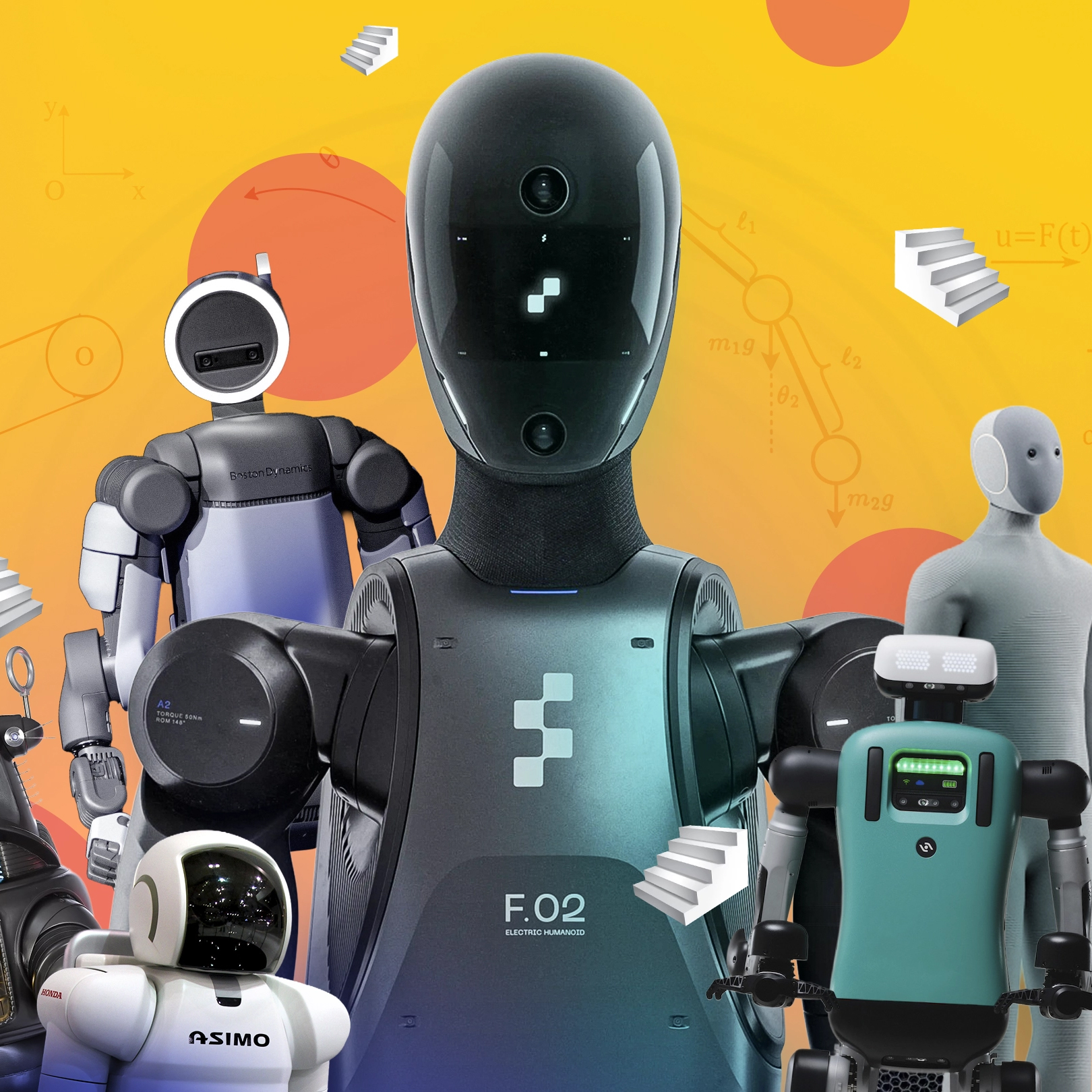
Why Do Humanoid Robots Still Struggle With the Small Stuff?
Humanoid robots can run, crawl, and sort objects in flashy demos. So why can’t they reliably climb stairs or open doors? On this episode of The Quanta Podcast, host Samir Patel speaks with contributing writer John Pavlus on why robots still struggle with the messy physics of the real world. This topic was covered in a recent story for Quanta Magazine. Each week on The Quanta Podcast, Quanta Magazine editor in chief Samir Patel speaks with the people behind the award-winning publication to navigate through some of the most important and mind-expanding questions in science and math.In this video, Atlas walks, runs and crawls using reinforcement learning. This work was done as part of a research partnership between Boston Dynamics and the Robots and AI (RAI) Institute:https://youtu.be/I44_zbEwz_w?si=KuKC34o_PiKs8zJP
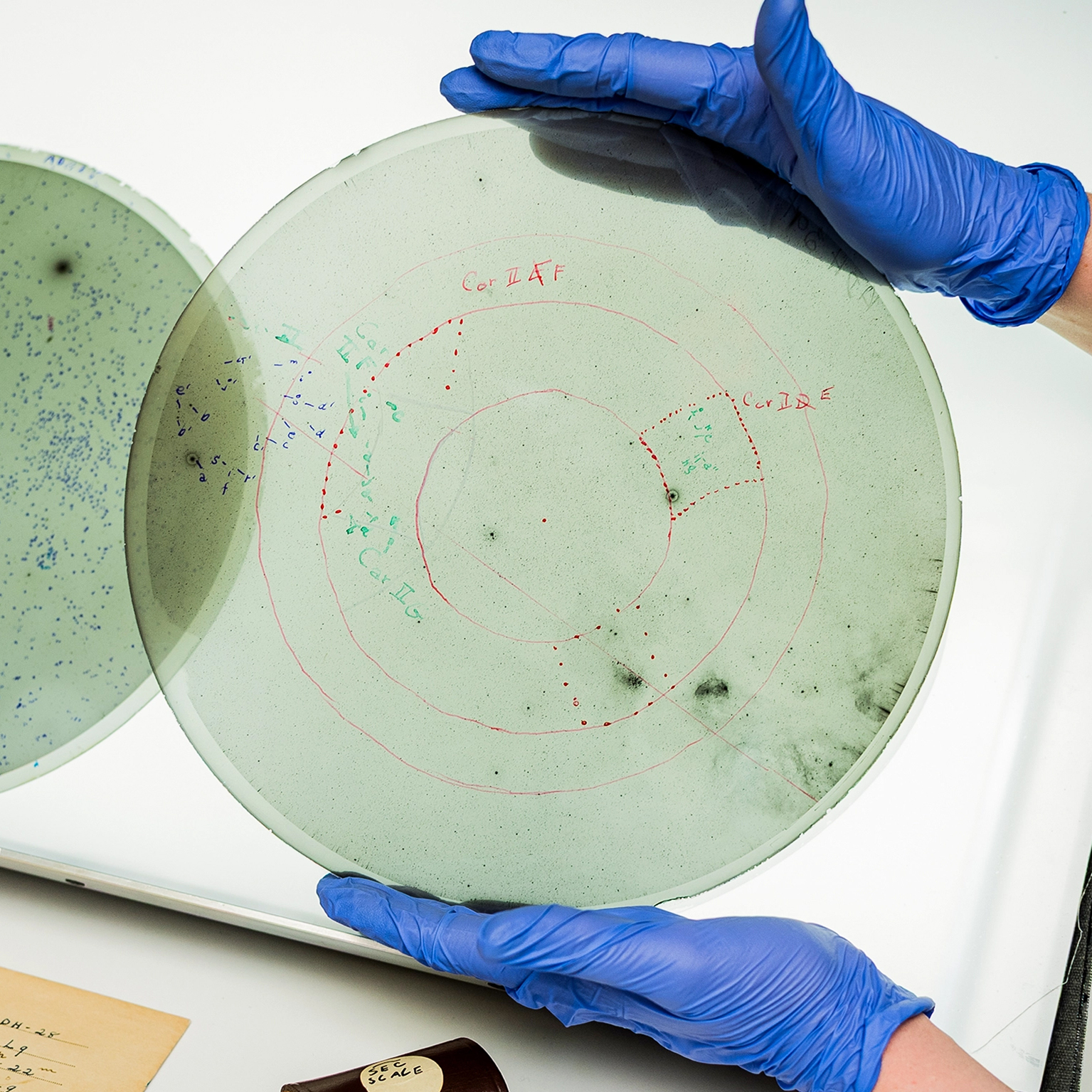
Uniting a Century of Digital and Analog Astronomy
To better understand our cosmos, some astronomers and astrophysicists go old school. Preserved beautifully on a hundred years of glass plate photographs are images of our night sky and its ever changing variations. On this episode of The Quanta Podcast, host Samir Patel speaks with writer Liz Kruesi about how these antique plates are updating our modern understanding of the universe. This topic was covered in a recent story for Quanta Magazine. Each week on The Quanta Podcast, Quanta Magazine editor in chief Samir Patel speaks with the people behind the award-winning publication to navigate through some of the most important and mind-expanding questions in science and math.Audio coda by Diana Chester. This project by Diana Chester was made possible through a Powerhouse Research Fellowship at the Museum of Arts and Applied Sciences in Sydney, Australia, a collaboration with Dr. Anna Raupach, and with the support of the Sydney Observatory and the New South Wales archives.
Audio Edition: Researchers Uncover Hidden Ingredients Behind AI Creativity
Image generators are designed to mimic their training data, so where does their apparent creativity come from? A recent study suggests that it’s an inevitable by-product of their architecture.The story Researchers Uncover Hidden Ingredients Behind AI Creativity first appeared on Quanta Magazine.
Astrocytes Might Be in Charge of the Brain
We tend to think of neurons as the sole engine of our thoughts, emotions, and everything in between. For decades, a group of large brain cells called astrocytes have been thought of as mere packing peanuts for the brain. But new research suggests otherwise. On this episode of The Quanta Podcast, host Samir Patel speaks with writer Ingrid Wickelgren about these big cells’ big responsibilities, which include controlling brain states like hopelessness, sleep, and hunger. This topic was covered in a recent story for Quanta Magazine. Each week on The Quanta Podcast, Quanta Magazine editor in chief Samir Patel speaks with the people behind the award-winning publication to navigate through some of the most important and mind-expanding questions in science and math.Audio Coda by NASA.
The Infinite Heist - Part 2
In 1874, Georg Cantor published one of the most important papers in math’s 4,000-year history. Some ideas in it were stolen. On this episode of The Quanta Podcast, the second of a two-parter, host Samir Patel speaks with math editor Jordana Cepelewicz about the fate of Cantor, the myths surrounding math history, and one man's search for the truth. These episodes are based on a recent Quanta story. Explore our new special series, “The Evolving Foundations of Math,” on our website.Each week on The Quanta Podcast, Quanta Magazine editor in chief Samir Patel speaks with the people behind the award-winning publication to navigate through some of the most important and mind-expanding questions in science and math.Audio coda courtesy of TheAlpineSisters Alphorn Players.
Audio Edition: The Ecosystem Dynamics That Can Make or Break an Invasion
By simulating ecological networks with microbes, researchers revealed properties that may make natural communities susceptible to invasion.The story The Ecosystem Dynamics That Can Make or Break an Invasion first appeared on Quanta Magazine.
The Infinite Heist - Part 1
In 1874, Georg Cantor published one of the most important papers in math’s 4,000-year history. Some ideas in it were stolen. On this episode of The Quanta Podcast, the first of a two-parter, host Samir Patel speaks with math editor Jordana Cepelewicz about the hard-fought journey to embed the concept of infinity into math’s foundations. The real story is a lot more complicated than the one remembered in math history. These episodes are based on a recent story; stay tuned for the conclusion next week. Explore our new special series, “The Evolving Foundations of Math,” on our website. Each week on The Quanta Podcast, Quanta Magazine editor in chief Samir Patel speaks with the people behind the award-winning publication to navigate through some of the most important and mind-expanding questions in science and math.
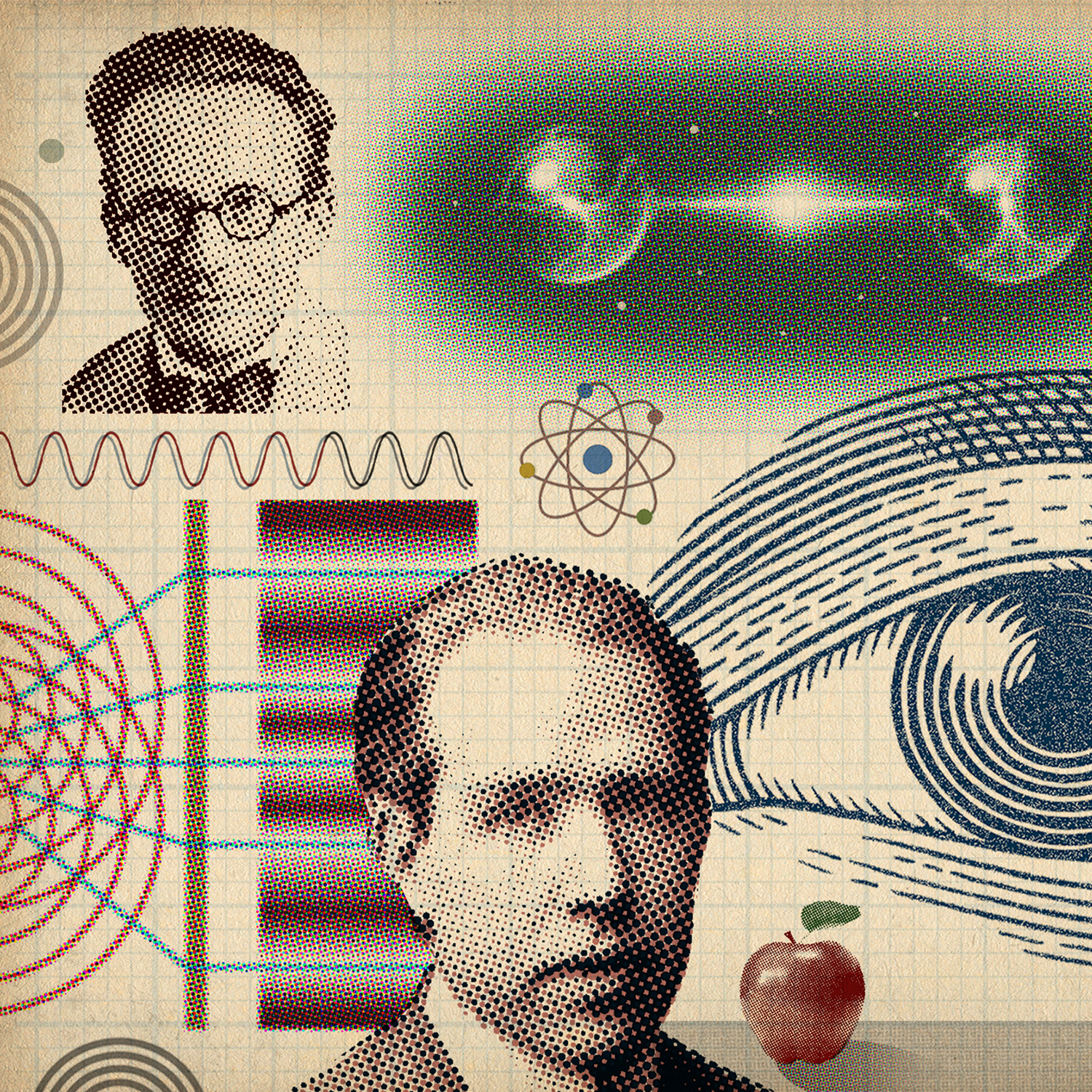
Decoding the Mysteries of Quantum Mechanics
Parallel universes, mysterious collapses, divided worlds. These are among the interpretations of quantum theory’s relationship with reality. It’s no wonder that everyone still has questions. But a century after quantum theory emerged, some of its old mysteries may be finally dissolving. On this episode of The Quanta Podcast, host Samir Patel and contributing writer Philip Ball check in on the age-old question: What 𝘪𝘴 reality? This topic was covered in a recent story for Quanta Magazine. Each week on The Quanta Podcast, Quanta Magazine editor in chief Samir Patel speaks with the people behind the award-winning publication to navigate through some of the most important and mind-expanding questions in science and math.Audio coda courtesy of the Institute for Quantum Computing, University of Waterloo.
Audio Edition: Epic Effort to Ground Physics in Math Opens Up the Secrets of Time
By mathematically proving how individual molecules create the complex motion of fluids, three mathematicians have illuminated why time can’t flow in reverse.The story Epic Effort to Ground Physics in Math Opens Up the Secrets of Time first appeared on Quanta Magazine.
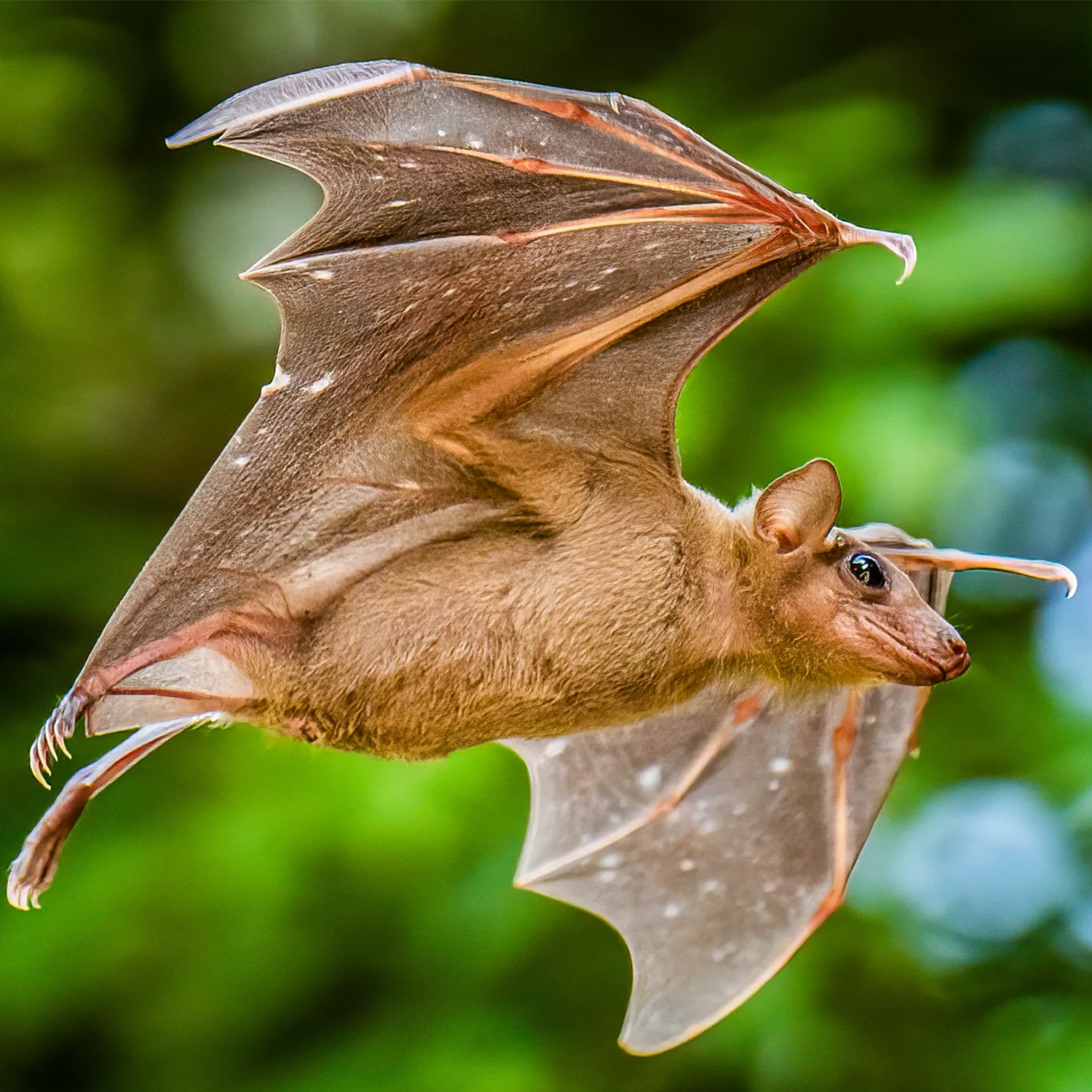
How Animals Build a Sense of Direction
What guides a bat’s internal compass? It’s not the stars in the sky, or the Earth’s magnetic field. On this episode of The Quanta Podcast, host Samir Patel speaks with staff writer Yasemin Saplakoglu about how new research into animals’ sense of direction could help explain the feeling of getting “turned around,” or even why some of us are so bad at finding our way. This topic was covered in a recent story for Quanta Magazine. Each week on The Quanta Podcast, Quanta Magazine editor in chief Samir Patel speaks with the people behind the award-winning publication to navigate through some of the most important and mind-expanding questions in science and math.Audio Coda from Prat, Y., Taub, M. & Yovel, Y. Everyday bat vocalizations contain information about emitter, addressee, context, and behavior. Sci Rep 6, 39419 (2016). https://doi.org/10.1038/srep39419

Mathematicians Want To Make Fluid Equations Glitch Out
In reality, water doesn’t glitch out. It can’t instantly change direction or spurt randomly into the sky. But on a purely mathematical level, such things are possible. On this episode of The Quanta Podcast, host Samir Patel speaks with staff writer Charlie Wood about the equations that describe our rivers, whirlpools, and breezes — and the “unstable blowups” that mathematicians are probing them for. This topic was covered in a recent story for Quanta Magazine.Each week on The Quanta Podcast, Quanta Magazine editor in chief Samir Patel speaks with the people behind the award-winning publication to navigate through some of the most important and mind-expanding questions in science and math.