The Quanta Podcast
368 episodes — Page 3 of 8
S1 Ep 6Singularities Are Hard to Kill
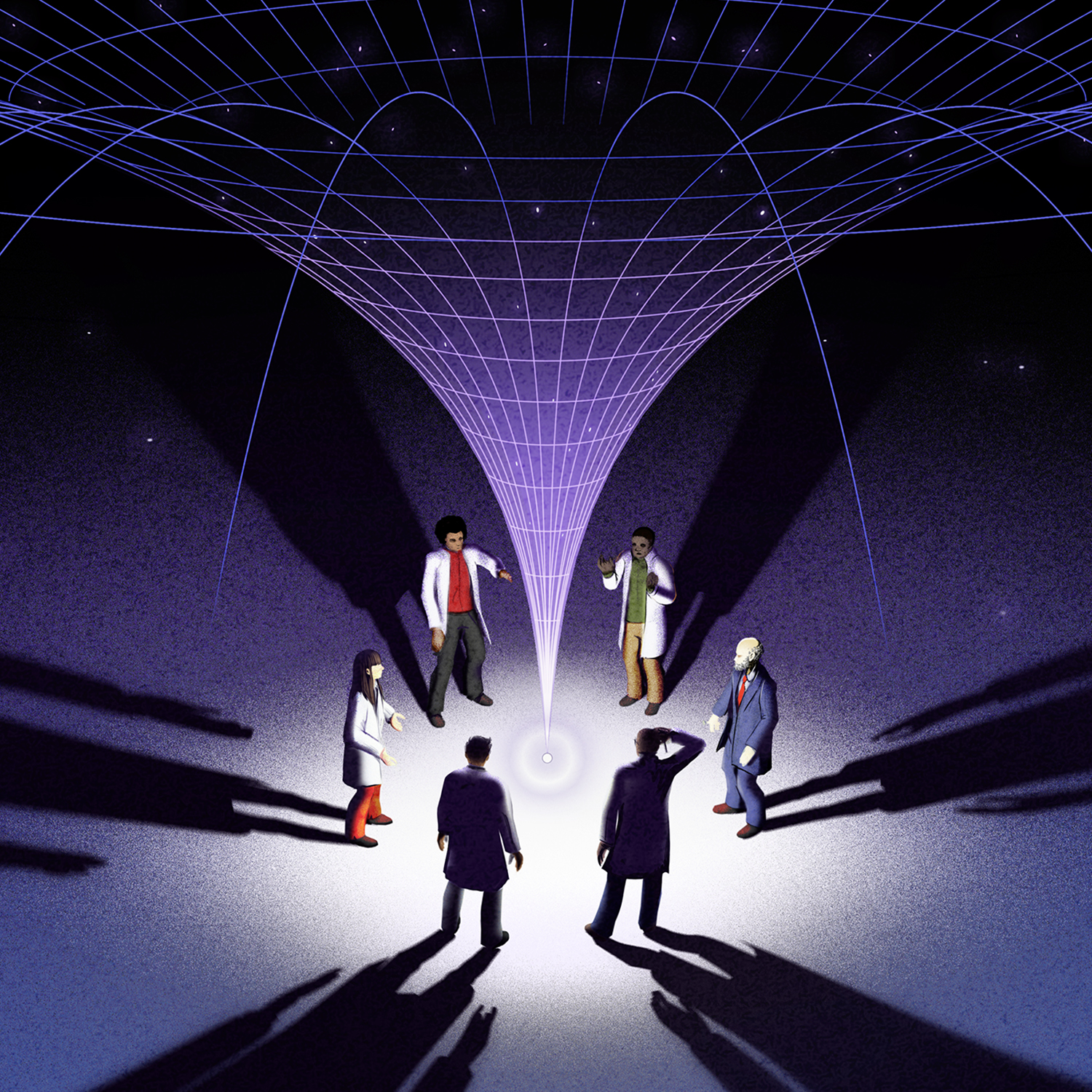
Black hole and Big Bang singularities break our best theory of gravity. A trilogy of theorems hints that physicists must go to the ends of space and time to find a fix.This is the fourth episode of The Quanta Podcast. In each episode, Quanta Magazine editor in chief Samir Patel speaks with the minds behind the award-winning publication to navigate through some of the most important and mind-expanding questions in science and math.
S1 Ep 5Audio Edition: Heat Destroys All Order. Except for in This One Special Case.
Heat is supposed to ruin anything it touches. But physicists have shown that an idealized form of magnetism is heatproof.The story Heat Destroys All Order. Except for in This One Special Case first appeared on Quanta Magazine.
S1 Ep 4In Computers, Memory Is More Useful Than Time
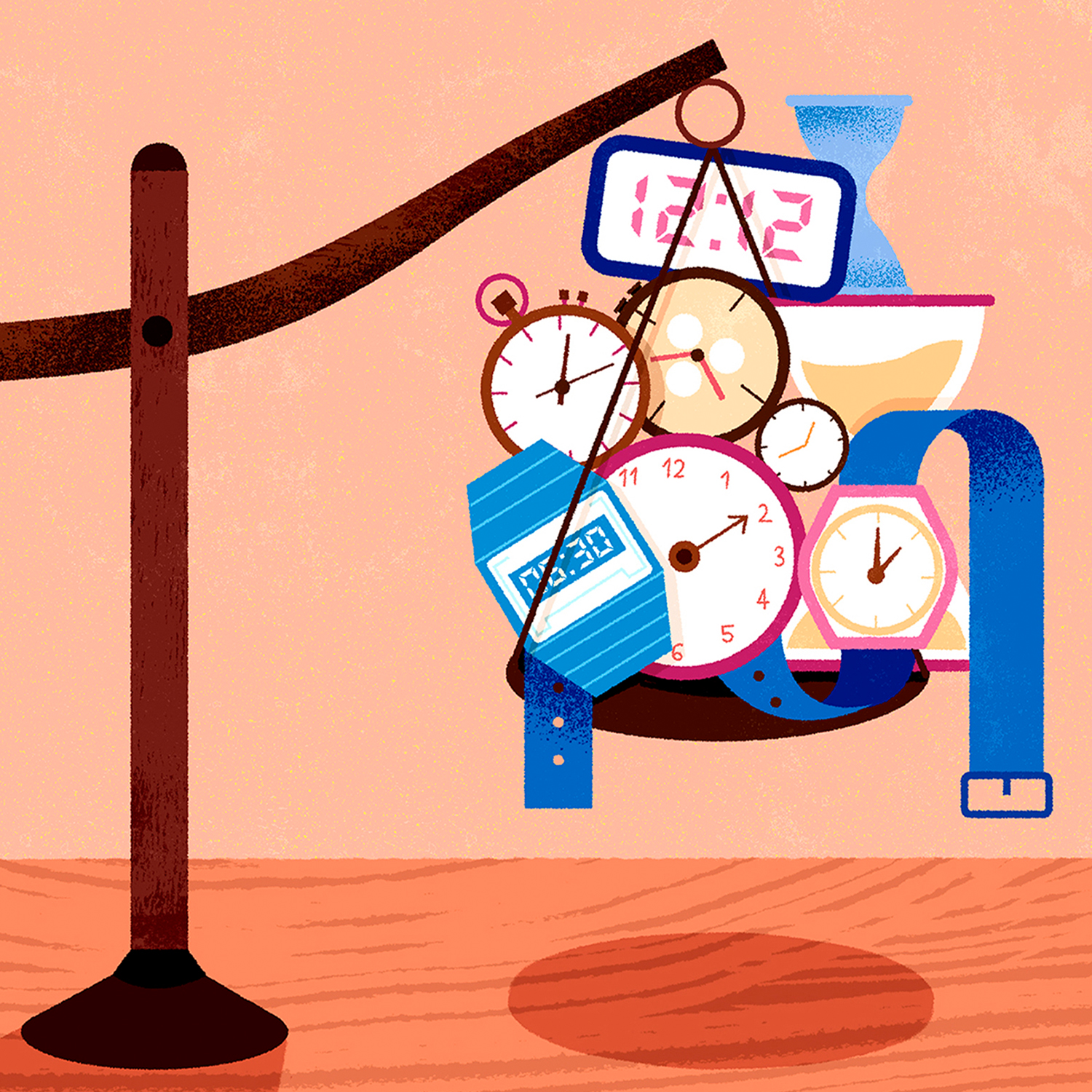
One computer scientist’s “stunning” proof is the first progress in 50 years on one of the most famous questions in computer science.This is the third episode of our new weekly series The Quanta Podcast, hosted by Quanta Magazine editor in chief Samir Patel. This week's guest is Ben Brubaker; he recently published "For Algorithms, a Little Memory Outweighs a Lot of Time.”(If you've been a fan of Quanta Science Podcast, it will continue as 'audio edition episodes' in this same feed every other week.)Historical Recording © Jack Copeland and Jason Long
S1 Ep 3Math and Beauty in the Age of AI
Mathematicians have started to prepare for a profound shift in what it means to do math.This is the second episode of our new weekly series The Quanta Podcast, hosted by Quanta magazine Editor-in-Chief Samir Patel. This week's guest is Jordana Cepelewicz; she recently published "Mathematical Beauty, Truth and Proof in the Age of AI" for Quanta's AI special package.(If you've been a fan of Quanta Science Podcast, it will continue as 'audio edition episodes' in this same feed every other week.)

S1 Ep 2Audio Edition: Can AI Models Show Us How People Learn? Impossible Languages Point a Way.
Certain grammatical rules never appear in any known language. By constructing artificial languages that have these rules, linguists can use neural networks to explore how people learn.The story Can AI Models Show Us How People Learn? Impossible Languages Point a Way first appeared on Quanta Magazine
S1 Ep 1AI Is Nothing Like a Brain, and That’s OK
The brain’s astounding cellular diversity and networked complexity could show how to make AI better.This is the first episode of our new weekly series The Quanta Podcast, hosted by Quanta magazine Editor-in-Chief Samir Patel. This week's guest is Yasemin Saplakoglu; she recently published "AI Is Nothing Like a Brain, and That’s OK" for Quanta's AI special package.(If you've been a fan of Quanta Science Podcast, it will continue as 'audio edition episodes' in this same feed every other week.)
S1 Ep 1Introducing The Quanta Podcast
trailerThe Quanta Podcast is your weekly dispatch from the frontiers of science and mathematics. In each episode, editor in chief Samir Patel will talk to the writers and editors behind our most popular, interesting and thought-provoking stories. The first episode of The Quanta Podcast will be live on May 20. In this trailer episode, Patel talks to executive editor Michael Moyer about what Quanta covers, how it has changed over time and our recent special series on “Science, Promise and Peril in the Age of AI.”Join us every Tuesday for stimulating conversations and insights about the biggest ideas in basic science and mathematics.
Quantum Computers Cross Critical Error Threshold
In a first, researchers have shown that adding more “qubits” to a quantum computer can make it more resilient. It’s an essential step on the long road to practical applications. The post Quantum Computers Cross Critical Error Threshold first appeared on Quanta Magazine
Fish Have a Brain Microbiome. Could Humans Have One Too?
The discovery that other vertebrates have healthy, microbial brains is fueling the still controversial possibility that we might have them as well. The post Fish Have a Brain Microbiome. Could Humans Have One Too? first appeared on Quanta Magazine
Exotic New Superconductors Delight and Confound
Three new species of superconductivity were spotted this year, illustrating the myriad ways electrons can join together to form a frictionless quantum soup. The post Exotic New Superconductors Delight and Confound first appeared on Quanta Magazine
It Might Be Possible to Detect Gravitons After All
A new experimental proposal suggests detecting a particle of gravity is far easier than anyone imagined. Now physicists are debating what it would really prove. The post It Might Be Possible to Detect Gravitons After All first appeared on Quanta Magazine
How the Human Brain Contends With the Strangeness of Zero
Zero, which was invented late in history, is special among numbers. New studies are uncovering how the brain creates something out of nothing. The post How the Human Brain Contends With the Strangeness of Zero first appeared on Quanta Magazine
The Hidden World of Electrostatic Ecology
Invisibly to us, insects and other tiny creatures use static electricity to travel, avoid predators, collect pollen and more. New experiments explore how evolution may have influenced this phenomenon. The post The Hidden World of Electrostatic Ecology first appeared on Quanta Magazine
The Cellular Secret to Resisting the Pressure of the Deep Sea
Cell membranes from comb jellies reveal a new kind of adaptation to the deep sea: curvy lipids that conform to an ideal shape under pressure. The post The Cellular Secret to Resisting the Pressure of the Deep Sea first appeared on Quanta Magazine
Computer Scientists Prove That Heat Destroys Quantum Entanglement
While devising a new quantum algorithm, four researchers accidentally established a hard limit on entanglement. The post Computer Scientists Prove That Heat Destroys Quantum Entanglement first appeared on Quanta Magazine
Physicists Pinpoint the Quantum Origin of the Greenhouse Effect
Carbon dioxide’s powerful heat-trapping effect has been traced to a quirk of its quantum structure. The finding may explain climate change better than any computer model. The post Physicists Pinpoint the Quantum Origin of the Greenhouse Effect first appeared on Quanta Magazine
What Happens in a Mind That Can't 'See' Mental Images
Neuroscience research into people with aphantasia, who don’t experience mental imagery, is revealing how imagination works and demonstrating the sweeping variety in our subjective experiences. The post What Happens in a Mind That Can’t ‘See’ Mental Images first appeared on Quanta Magazine
What Could Explain the Gallium Anomaly?
Physicists have ruled out a mundane explanation for the strange findings of an old Soviet experiment, leaving open the possibility that the results point to a new fundamental particle. The post What Could Explain the Gallium Anomaly? first appeared on Quanta Magazine
Cryptographers Discover a New Foundation for Quantum Secrecy
Researchers have proved that secure quantum encryption is possible in a world without hard problems. The post Cryptographers Discover a New Foundation for Quantum Secrecy first appeared on Quanta Magazine
Electric 'Ripples' in the Resting Brain Tag Memories for Storage
New experiments reveal how the brain chooses which memories to save and add credence to advice about the importance of rest.
AI Starts to Sift Through String Theory's Near-Endless Possibilities
Using machine learning, string theorists are finally showing how microscopic configurations of extra dimensions translate into sets of elementary particles — though not yet those of our universe.
Insects and Other Animals Have Consciousness, Experts Declare
A group of prominent biologists and philosophers announced a new consensus: There’s “a realistic possibility” that insects, octopuses, crustaceans, fish and other overlooked animals experience consciousness.
Dark Energy May Be Weakening, Major Astrophysics Study Finds
A generation of physicists has referred to the dark energy that permeates the universe as “the cosmological constant.” Now the largest map of the cosmos to date hints that this mysterious energy has been changing over billions of years.
Brain's 'Background Noise' May Explain Value of Shock Therapy
Electroconvulsive therapy is highly effective in treating major depressive disorder, but no one knows why it works. New research suggests it may restore balance between excitation and inhibition in the brain.
Swirling Forces, Crushing Pressures Measured in the Proton
Long-anticipated experiments that use light to mimic gravity are revealing the distribution of energies, forces and pressures inside a subatomic particle for the first time.
Never-Repeating Tiles Can Safeguard Quantum Information
Two researchers have proved that Penrose tilings, famous patterns that never repeat, are mathematically equivalent to a kind of quantum error correction. Read more at QuantaMagazine.org. Music is “Quasi Motion” by Kevin MacLeod.
Radio Maps May Reveal the Universe's Biggest Magnetic Fields
A controversial technique has produced detailed maps of the magnetic fields in colossal galaxy clusters. If confirmed, the approach could be used to reveal where cosmic magnetic fields come from.
New Clues for What Will Happen When the Sun Eats the Earth
Recent observations of an aging, alien planetary system are helping to answer the question: What will happen to our planet when the sun dies? Read more at QuantaMagazine.org. Music is “Dark Toys” by SYBS.
New Cell Atlases Reveal Untold Variety in the Brain and Beyond
Recent efforts to map every cell in the human body have researchers floored by unfathomable diversity, with many thousands of subtly different types of cells in the human brain alone. Read more at QuantaMagazine.org. Music is “Confusing Disco” by Birocratic.
Extra-Long Blasts Challenge Our Theories of Cosmic Cataclysms
Astronomers thought they had solved the mystery of gamma-ray bursts. A few recent events suggest otherwise. Read more at QuantaMagazine.org. Music is “Light Gazing” by Andrew Langdon.
Meet Strange Metals: Where Electricity May Flow Without Electrons
For 50 years, physicists have understood current as a flow of charged particles. But a new experiment has found that in at least one strange material, this understanding falls apart. Read more at QuantaMagazine.org. Music is “Thought Bot” by Audionautix.
In the Gut's 'Second Brain,' Key Agents of Health Emerge
Sitting alongside the neurons in your enteric nervous system are underappreciated glial cells, which play key roles in digestion and disease that scientists are only just starting to understand. Read more at QuantaMagazine.org. Music is “Running Out” by Patrick Patrikios.
During Pregnancy, a Fake 'Infection' Protects the Fetus
Cells in the placenta have an unusual trick for activating gentle immune defenses and keeping them turned on when no infection is present. It involves crafting and deploying a fake virus. Read more at QuantaMagazine.org. Music is “Unanswered Questions” by Kevin MacLeod.
Why the Human Brain Perceives Small Numbers Better
The discovery that the brain has different systems for representing small and large numbers provokes new questions about memory, attention and mathematics. Read more at QuantaMagazine.org. Music is “Quasi Motion” by Kevin MacLeod.
Inside Scientists' Life-Saving Prediction of the Iceland Eruption
The Reykjanes Peninsula has entered a new volcanic era. Innovative efforts to map and monitor the subterranean magma are saving lives. Read more at QuantaMagazine.org. Music is “Fire Water” by Saidbysed.
Echoes of Electromagnetism Found in Number Theory
A new magnum opus posits the existence of a hidden mathematical link akin to the connection between electricity and magnetism. Read more at QuantaMagazine.org. Music is “Clover 3” by Vibe Mountain.
Tiny Language Models Come of Age
To better understand how neural networks learn to simulate writing, researchers trained simpler versions on synthetic children’s stories. Read more at QuantaMagazine.org. Music is “Thought Bot” by Audionautix.
Rogue Worlds Throw Planetary Ideas Out of Orbit
Scientists have recently discovered scores of free-floating worlds that defy classification. The new observations have forced them to rethink their theories of star and planet formation. Read more at QuantaMagazine.org. Music is “Light Gazing” by Andrew Langdon.
What Makes Life Tick? Mitochondria May Keep Time for Cells
Every species develops at its own unique tempo, leaving scientists to wonder what governs their timing. A suite of new findings suggests that cells use basic metabolic processes as clocks. Read more at QuantaMagazine.org. Music is “Pulse” by Geographer.
An Old Conjecture Falls, Making Spheres a Lot More Complicated
The telescope conjecture gave mathematicians a handle on ways to map one sphere to another. Now that it has been disproved, the universe of shapes has exploded. Read more at QuantaMagazine.org. Music is “Slow Burn” by Kevin MacLeod.
Even Synthetic Life Forms With a Tiny Genome Can Evolve
By watching “minimal” cells regain the fitness they lost, researchers are testing whether a genome can be too simple to evolve. Read more at QuantaMagazine.org. Music is “Hidden Agenda” by Kevin MacLeod.
Selfish, Virus-Like DNA Can Carry Genes Between Species
Genetic elements called Mavericks that have some viral features could be responsible for the large-scale smuggling of DNA between species. Read more at QuantaMagazine.org. Music is “Clover” by Vibe Mountain.
Exoplanets Could Help Us Learn How Planets Make Magnetism
New observations of a faraway rocky world that might have its own magnetic field could help astronomers understand the seemingly haphazard magnetic fields in our own solar system. Read more at QuantaMagazine.org. Music is “Light Gazing” by Andrew Langdon.
To Move Fast, Quantum Maze Solvers Must Forget the Past
Quantum algorithms can find their way out of mazes exponentially faster than classical ones, at the cost of forgetting the paths they took. A new result suggests that the trade-off may be inevitable. Read more at QuantaMagazine.org. Music is “Confusing Disco” by Birocratic.
Underground Cells Make 'Dark Oxygen' Without Light
In some deep subterranean aquifers, cells have a chemical trick for making oxygen that could sustain whole underground ecosystems. Read more at QuantaMagazine.org. Music is “Pulse” by Geographer.
How the Brain Protects Itself From Blood-Borne Threats
To buffer the brain against menaces in the blood, a dynamic, multi-tiered system of protection is built into the brain’s blood vessels. Read more at QuantaMagazine.org. Music is “Good Times” by Patrick Patrikios.
JWST Spots Giant Black Holes All Over the Early Universe
Giant black holes were supposed to be bit players in the early cosmic story. But recent James Webb Space Telescope observations are finding an unexpected abundance of the beasts. Read more at QuantaMagazine.org. Music is “Light Gazing” by Andrew Langdon.
Is It Real or Imagined? How Your Brain Tells the Difference.
New experiments show that the brain distinguishes between perceived and imagined mental images by checking whether they cross a “reality threshold.” Read more at QuantaMagazine.org. Music is “Who’s Using Who” by The Mini Vandals.
Chatbots Don't Know What Stuff Isn't
Today’s language models are more sophisticated than ever, but they still struggle with the concept of negation. That’s unlikely to change anytime soon. Read more at QuantaMagazine.org. Music is “Hidden Agenda” by Kevin MacLeod.
Global Microbiome Study Gives New View of Shared Health Risks
The most comprehensive survey of how we share our microbiomes suggests a new way of thinking about the risks of developing some diseases that aren’t usually considered contagious. Read more at QuantaMagazine.org. Music is “Transmission” by John Deley and the 41 Players.