
The Principles of War - Lessons from Military History on Strategy, Tactics, Doctrine and Leadership.
214 episodes — Page 1 of 5
155 - Guadalcanal - Combat Innovation and leadership Lessons from Lawton Collins at the Battle of Mt Austen
154 - Guadalcanal's Battle of the Gifu - Cannabalism in the jungle
153 - Guadalcanal - Battle of Mount Austen - Hyakutake vs Patch, intelligence failures, sabotage raids and crippling casualties.
152 - National Guard vs Imperial Japanese Army on Guardalcanal - Lessons Learnt for employing green troops at 5th Matanikau
151 - How Sea Control doomed the 17th Army to Starvation on Guadalcanal: The failure of the Tokyo Express
150 - What new tactics did Carlson's Raiders use to hunt Shoji's Regiment during the Long Patrol on Guadalcanal?
How do you defend an island nation when 40% of your trade flows through contested waters?
Strategic Context for Australia's WW2 mobilisation
Australia's Road to War - 1936 to 1941 - Dr Peter Layon
149 - Why did the Marines stop 1,000 yards short of victory at 4th Matanikau - Guadalcanal
148 - The Battle of Henderson Field - Guadalcanal 1942

S1 Ep 147147 - The Japanese tank attack in the Battle of Henderson Field - Guadalcanal
This episode looks at the Sumiyoshi's tank attack across the Matanikau - an attempt to draw defenders away from the perimeter of Henderson Field. We also discuss why Muryama coundn;t synchronise his forces and the dysfunction within the Japanese Headquarters. We look at - What are the consequences of relieving a subordinate commander on the eve of battle? (And what role did Tsuji play in Kawaguchi's dismissal?) What happens when multiple attacking elements operate independently without coordination? How should armour, infantry, and artillery be coordinated in an assault? What is the value of pre-registered artillery fires in defense? How can the Japanese achieve tactical surprise despite proximity? What is the purpose and risk of outposts forward of the main defensive line? Dave Holland is an ex-Marine and was posted to Guadalcanal with the Australian Federal Police. He regularly leads battlefield study tours through the area. He is a world-leading expert on the battles of Guadalcanal and author of Guadalcanal's Longest Fight - The Pivotal Battles of the Matanikau Front. *]:pointer-events-auto [content-visibility:auto] supports-[content-visibility:auto]:[contain-intrinsic-size:auto_100lvh] scroll-mt-[calc(var(--header-height)+min(200px,max(70px,20svh)))]" dir="auto" tabindex="-1" data-turn-id= "59f613f3-b8a9-420c-bd76-32fbc72206af" data-testid= "conversation-turn-4" data-scroll-anchor="true" data-turn= "assistant"> Check out the show notes for the Guadalcanal series. https://www.patreon.com/cw/principlesofwar - if you've learnt something from this episode and you can afford it, please support the podcast at Patreon. Looking for YouTube PME videos? Check out the Principles of War YouTube Channel. Great Professional Military Education for your Unit. This episode covers co-operation, the employment of armour and command dysfunction.

S1 Ep 146146 - Halsey's question for Vandegrift about Henderson Field's defence that influenced Pacific Strategy.
This episode looks at the defensive and offensive planning undertaken by the IJA and the USMC. It also looks closely at Vandegrift's meeting with Halsey and the outcome of the meeting. This is a pivotal moment in the campaign. Halsey has taken over from Ghormley and he prepares to back Vandegrift with everything the Navy has to help defend Guadalcanal. How does intelligence fusion enable a commander to choose the time and place of battle? The combination of coast-watchers, aerial photography, signals intercepts, prisoner interrogation, and traffic analysis gives Vandegrift sufficient warning to disengage from the Matanikau and assume a prepared defensive posture before the Japanese assault begins. What are the compounding effects of logistics failure on combat power? Japanese soldiers carry only five days' rations for a march that takes far longer than planned. By the time the assault goes in, troops are hungry, exhausted, and degraded — before they have fired a shot. How does the defence leverage knowledge of terrain? The defenders have patrolled and observed their ground for months, have pre-registered every likely approach, and understand the avenues of attack in detail — advantages the attacking Japanese, navigating by inaccurate maps in pitch darkness, completely lack. What is the relationship between strategic commitment and tactical success? The Marines' ability to hold Henderson Field is directly tied to whether higher command is willing to accept naval losses to keep the sea lanes open. Halsey's personal commitment to "give you all I have" is the strategic enabler for everything that follows tactically. How does the defender's advantage of fighting on familiar ground translate into combat power? Vandegrift's troops are dug in, know their sectors, have rehearsed their fire plans, and can rotate reserves along interior lines — while the Japanese are exhausted, disoriented, under-supplied, and attacking in darkness across ground they have never seen. Dave Holland is an ex-Marine and was posted to Guadalcanal with the Australian Federal Police. He regularly leads battlefield study tours through the area. He is a world-leading expert on the battles of Guadalcanal and author of Guadalcanal's Longest Fight - The Pivotal Battles of the Matanikau Front. *]:pointer-events-auto [content-visibility:auto] supports-[content-visibility:auto]:[contain-intrinsic-size:auto_100lvh] scroll-mt-[calc(var(--header-height)+min(200px,max(70px,20svh)))]" dir="auto" tabindex="-1" data-turn-id= "59f613f3-b8a9-420c-bd76-32fbc72206af" data-testid= "conversation-turn-4" data-scroll-anchor="true" data-turn= "assistant"> Check out the show notes for the Guadalcanal series. https://www.patreon.com/cw/principlesofwar - if you've learnt something from this episode and you can afford it, please support the podcast at Patreon. Great Professional Military Education for your Unit. This episode covers economy of effort, intelligence fusion, and defensive fires planning.

S1 Ep 146145 - 973 rounds in 83 minutes. The Battleship Bombardment of Henderson Field
This episode looks at the IJN and IJA combined planning for the assault on Henderson's Field, including the naval gunfire from the Kongo and Haruna under Rear Admiral Kurita where 973 14-inch rounds were fired in 83 minutes. We also discuss the development of the Maruyama Trail for the approach march of the 2nd Sendai Division. This episode discusses: What happens when commanders visualise terrain from a distance rather than conduct ground reconnaissance? How does poor mapping degrade operational planning? How does confirmation bias infect intelligence assessment? What is the relationship between terrain and combat power? What munition selection tells us about the limits of naval gunfire support against land targets? How do you maximise the effect of a fire support mission through observation planning? What does the Henderson Field bombardment teach us about fire saturation and its psychological effects? How does loss of aviation fuel translate directly into loss of air superiority? What is the danger of planning based on the timeline you want rather than the timeline the terrain imposes? Dave Holland is an ex-Marine and was posted to Guadalcanal with the Australian Federal Police. He regularly leads battlefield study tours through the area. He is a world-leading expert on the battles of Guadalcanal and author of Guadalcanal's Longest Fight - The Pivotal Battles of the Matanikau Front. *]:pointer-events-auto [content-visibility:auto] supports-[content-visibility:auto]:[contain-intrinsic-size:auto_100lvh] scroll-mt-[calc(var(--header-height)+min(200px,max(70px,20svh)))]" dir="auto" tabindex="-1" data-turn-id= "59f613f3-b8a9-420c-bd76-32fbc72206af" data-testid= "conversation-turn-4" data-scroll-anchor="true" data-turn= "assistant"> Check out the show notes for the Guadalcanal series. https://www.patreon.com/cw/principlesofwar - if you've learnt something from this episode and you can afford it, please support the podcast at Patreon. Great Professional Military Education for your Unit. This episode covers the Command and Control and generating combined arms.

S1 Ep 144144 - Situational Awareness and the fight for Guadalcanal's Key Terrain - 3rd Battle of the Matanikau
USMC 1st Marine Division vs the IJA 2nd (Sendai) Division in the fight to control the Matanikau River. The 3rd Battle of the Matanikau Part II - This is the tenth episode of our Guadalcanal series with historian and author Dave Holland. This episode discusses: 1st Marine Division Combined Arms integration at the Third Battle of the Matanikau? How did the loss of the Matanikau River crossing have on planning for the assault on Henderson Field? How did Japanese command and control failures at the battalion and regimental level contribute to their defeat at the Third Matanikau? What are the tactical lessons from Marine Corps fire support coordination? How did weather and terrain shape manoeuvre and command and control? How did the Marines use reverse slope positions and indirect machine gun fire to defeat Japanese delaying forces? What were the contrasting night combat doctrines of the USMC and the Imperial Japanese Army? How did delayed battlefield reporting and communications breakdown affect IJA operational decision-making? What is the operational significance of denying an enemy its artillery firing platforms, as demonstrated at the Third Battle of the Matanikau? How did Lt Gen Hyakutake manage two simultaneous campaigns — Guadalcanal and the Kokoda withdrawal — from an austere forward headquarters in October 1942? How did American air superiority over Henderson Field shape Japanese logistics and sea control during the Guadalcanal campaign? What role did intelligence integration — coast watchers, signals intercepts, and radar — play in Allied air defence during the Guadalcanal campaign? Dave Holland is an ex-Marine and was posted to Guadalcanal with the Australian Federal Police. He regularly leads battlefield study tours through the area. He is a world-leading expert on the battles of Guadalcanal and author of Guadalcanal's Longest Fight - The Pivotal Battles of the Matanikau Front. *]:pointer-events-auto [content-visibility:auto] supports-[content-visibility:auto]:[contain-intrinsic-size:auto_100lvh] scroll-mt-[calc(var(--header-height)+min(200px,max(70px,20svh)))]" dir="auto" tabindex="-1" data-turn-id= "59f613f3-b8a9-420c-bd76-32fbc72206af" data-testid= "conversation-turn-4" data-scroll-anchor="true" data-turn= "assistant"> Check out the show notes for the Guadalcanal series. https://www.patreon.com/cw/principlesofwar - if you've learnt something from this episode and you can afford it, please support the podcast at Patreon. Great Professional Military Education for your Unit. This episode covers the Command and Control and generating combined arms.

S1 Ep 143143 - Inside the Japanese OODA loop on Guadalcanal - Vandegrift and 3rd Matanikau
Maruyama vs Vandegrift in the fight to control the Matanikau River. The 3rd Battle of the Matanikau Part I - This is the ninth episode of our Guadalcanal series with historian and author Dave Holland. This episode discusses: How did the Japanese plan to exploit the Second Battle of the Matanikau to set up their October 1942 offensive to retake Guadalcanal? Why was the Matanikau River "key terrain" in the Guadalcanal Campaign for both the IJA and the US Marines defending Henderson Field? What was Japan's concept for suppressing Henderson Field before the main assault? What was Vandegrift's operational intent in launching the 7 October 1942 attack (Third Battle of the Matanikau), and why was it such a risk? What was the "One Log Bridge" on the Matanikau River, and why did it matter tactically? How did the weather have on the Matanikau operation? Dave Holland is an ex-Marine and was posted to Guadalcanal with the Australian Federal Police. He regularly leads battlefield study tours through the area. He is a world-leading expert on the battles of Guadalcanal and author of Guadalcanal's Longest Fight - The Pivotal Battles of the Matanikau Front. *]:pointer-events-auto [content-visibility:auto] supports-[content-visibility:auto]:[contain-intrinsic-size:auto_100lvh] scroll-mt-[calc(var(--header-height)+min(200px,max(70px,20svh)))]" dir="auto" tabindex="-1" data-turn-id= "59f613f3-b8a9-420c-bd76-32fbc72206af" data-testid= "conversation-turn-4" data-scroll-anchor="true" data-turn= "assistant"> Check out the show notes for the Guadalcanal series. https://www.patreon.com/cw/principlesofwar - if you've learnt something from this episode and you can afford it, please support the podcast at Patreon. Great Professional Military Education for your Unit. This episode covers the operational art and importance of Offensive Action - seizing and retaining the initiative.

S1 Ep 142Puller, Munro, and Monssen - the daring resuce of 1/7 Marines - 2nd Battle of the Matanikau Part II
2nd Matanikau - Guadalcanal and Pullers rescue of the 1/7th Marines. The 2nd Battle of the Matanikau Part II - This is the eighth episode of our Guadalcanal series with historian and author Dave Holland. This episode discusses: What was the plan for 27 September, and why was it inherently risky? How did a breakdown in command-and-control affect the Marines' river-crossing plan at the Matanikau River? How did the Japanese react so fast, and what trap did they set behind Chesty Puller? Why did the Raiders get stopped short of the One Log Bridge—and what happened to Ken Bailey? What role did comms failure play once the fight started to go wrong? How did the amphibious "end run" force end up trapped west of Point Cruz? What made the situation worse once they were cut off—equipment and radios? How did the "HELP" undershirt signal actually work, and what did the pilot do? How was the rescue executed—who coordinated it, and what enabled withdrawal under fire? What were the lessons learnt and why are they important today? Who was Samuel B. Griffith? *]:pointer-events-auto [content-visibility:auto] supports-[content-visibility:auto]:[contain-intrinsic-size:auto_100lvh] scroll-mt-[calc(var(--header-height)+min(200px,max(70px,20svh)))]" dir="auto" tabindex="-1" data-turn-id= "59f613f3-b8a9-420c-bd76-32fbc72206af" data-testid= "conversation-turn-4" data-scroll-anchor="true" data-turn= "assistant"> Dave Holland is an ex-Marine and was posted to Guadalcanal with the Australian Federal Police. He regularly leads battlefield study tours through the area. He is a world-leading expert on the battles of Guadalcanal and author of Guadalcanal's Longest Fight - The Pivotal Battles of the Matanikau Front. Check out the show notes for this episode. https://www.patreon.com/cw/principlesofwar - if you've learnt something from this episode and you can afford it, please support the podcast at Patreon. Great Professional Military Education for your Unit. This episode covers C2, Littoral Manoeuvre and naval support to land operations.

S1 Ep 141141 - Chesty Puller, 1/7 Marines and 2nd Matanikau, Guadalcanal
The 2nd Battle of the Matanikau - This is the seventh episode of our Guadalcanal series with historian and author Dave Holland. This episodes discusses: *]:pointer-events-auto [content-visibility:auto] supports-[content-visibility:auto]:[contain-intrinsic-size:auto_100lvh] scroll-mt-[calc(var(--header-height)+min(200px,max(70px,20svh)))]" dir="auto" tabindex="-1" data-turn-id= "59f613f3-b8a9-420c-bd76-32fbc72206af" data-testid= "conversation-turn-4" data-scroll-anchor="true" data-turn= "assistant"> How did the arrival of the 7th Marines transform Vandegrift's Guadalcanal strategy from survival to aggressive "active defence"? What was Japan's Operation Ka, and how was it meant to crush the Marines and recapture Henderson Field in one decisive blow? How did the sinking of USS Wasp and the escorting convoy turn Guadalcanal logistics into a day-to-day survival crisis for the 1st Marine Division? In what ways did Vandegrift and Admiral Kelly Turner pioneer the modern CLF–CATF relationship during the Guadalcanal campaign? Why did the Marines abandon textbook 'defence in depth' and trial a all round defensive cordon with little depth around Henderson Field—and why did it work? How badly did Marine intelligence underestimate Japanese strength around the Matanikau, and how did it effect operational planning? Who was Lt Col "Chesty" Puller in 1942, and why was he Vandegrift's preferred commander for the first major offensive patrol west of Henderson Field? What really happened on Chesty Puller's reconnaissance-in-force over Mount Austin, and how close did his battalion come to disaster? Why does Dave Holland call the failed Matanikau crossing "Alligator Creek in reverse," and what brutal small-unit lessons come out of that sandbar assault? Why did more sailors than soldiers and Marines die in the Guadalcanal campaign, and what does that reveal about sea control and amphibious logistics? Dave is an ex-Marine and was posted to Guadalcananal with the Australian Federal Police. He regularly leads battlefield study tours through the area. He is a world-leading expert on the battles of Guadalcanal and author of Guadalcanal's Longest Fight - The Pivotal Battles of the Matanikau Front. Check out the show notes for this episode. https://www.patreon.com/cw/principlesofwar - if you've learnt something from this episode and you can afford it, please support the podcast at Patreon.
140 - Battle of Edson's Ridge: How the Marines saved the Cactus Air Force
This is the sixth episode of our Guadalcanal series with historian and author Dave Holland. This episodes discusses: *]:pointer-events-auto [content-visibility:auto] supports-[content-visibility:auto]:[contain-intrinsic-size:auto_100lvh] scroll-mt-[calc(var(--header-height)+min(200px,max(70px,20svh)))]" dir="auto" tabindex="-1" data-turn-id= "59f613f3-b8a9-420c-bd76-32fbc72206af" data-testid= "conversation-turn-4" data-scroll-anchor="true" data-turn= "assistant"> How close did Japanese forces come to capturing Henderson Field in September 1942? Why was Edson's Ridge the key terrain for defending Guadalcanal's airfield? How did pre-registered artillery fire shape the outcome on Edson's Ridge? What command decisions did Edson make when his defensive plan began to unravel? How did the Marines adapt to Japanese infiltration tactics during the night attacks? In what ways did Edson's Ridge save the Cactus Air Force? Why did Kawaguchi underestimate the Marines defending Henderson Field? What leadership failures forced the September purge of underperforming Marine officers? How did logistics and fatigue shape the Marines' combat effectiveness on the ridge? What lessons from Edson's Ridge matter for modern all-arms defensive planning? Dave is an ex-Marine and was posted to Guadalcananal with the Australian Federal Police. He regularly leads battlefield study tours through the area. He is a world-leading expert on the battles of Guadalcanal and author of Guadalcanal's Longest Fight - The Pivotal Battles of the Matanikau Front. Check out the show notes for this episode. https://www.patreon.com/cw/principlesofwar - if you've learnt something from this episode and you can afford it, please support the podcast at Patreon.
S1 Ep 139139 - Guadalcanal - Edson and the defence of Bloody Ridge
This is the fifth episode of our Guadalcanal series with historian and author Dave Holland. This episodes discusses: *]:pointer-events-auto [content-visibility:auto] supports-[content-visibility:auto]:[contain-intrinsic-size:auto_100lvh] scroll-mt-[calc(var(--header-height)+min(200px,max(70px,20svh)))]" dir="auto" tabindex="-1" data-turn-id= "59f613f3-b8a9-420c-bd76-32fbc72206af" data-testid= "conversation-turn-4" data-scroll-anchor="true" data-turn= "assistant"> Why was Henderson Field the single piece of decisive terrain on Guadalcanal? How did Edson know the main Japanese attack would come over the ridge, not the beach? What went wrong in Kawaguchi's three-pronged night attack on the Marine perimeter? How did fragile Guadalcanal logistics shape the tempo in September 1942? What made Edson's Ridge a natural avenue of approach to the airfield? How did the Tanambogo/Gavutu raider actions tip the Marines to Japanese intentions? What do Edson vs. Kawaguchi show about combat leadership in jungle/littoral fights? How did malaria, dysentery, and hunger blunt Marine combat power before the battle? Why did Vandegrift accept a thin, incomplete perimeter around Henderson Field? How did daily Japanese air raids limit Marine prep of the ridge before 12–14 Sept 1942? Dave is an ex-Marine and was posted to Guadalcananal with the Australian Federal Police. He regularly leads battlefield study tours through the area. He is a world-leading expert on the battles of Guadalcanal and author of Guadalcanal's Longest Fight - The Pivotal Battles of the Matanikau Front. Check out the show notes for this episode.
S1 Ep 138138 - Guadalcanal - Battle of the Tenaru: How the Marines stopped Ichiki's night assault on the Alligator Creek
This is the fourth episode of our Guadalcanal series with historian and author Dave Holland. This episodes discusses: How did the Marines employ the 37 mm gun firing canister at Alligator Creek? Why did Colonel Ichiki attack without heavy weapons— trading firepower for speed and what was the cost? What are the myths about scout Jacob Vouza? How did barbed wire obstacles and coconut-log bunkers employed for to create an engagement zone? How did pre-registered fires shape the Battle of Tenaru? What early warnings did coastwatchers and patrols provide before the assault? How did Marine tanks at dawn finish the fight across the sandbar? What role did the Cactus Air Force play in the Battle of Tenaru? Was Ichiki killed in action or by seppuku—what's the best evidence? What operational lessons from Tenaru guided both sides at Henderson Field? Dave is an ex-Marine and was posted to Guadalcananal with the Australian Federal Police. He regularly leads battlefield study tours through the area. He is a world-leading expert on the battles of Guadalcanal and author of Guadalcanal's Longest Fight - The Pivotal Battles of the Matanikau Front. Check out the show notes for this episode.
S1 Ep 137137 - The Marines' Assault on Guadalcanal
This is the third episode of our Guadalcanal series with historian and author Dave Holland. This episodes discusses: How the Marines seized conducted the landing and seized Guadalcanal's decisive terrain. Red Beach landing bypasses IJA fortifications at Lunga Point. Vandegrift prioritizes tight perimeter, airfield defense. Carriers withdraw; logistics halved, myths debunked. Japanese forces surprised and how they reacted. Combined arms landings: infantry, artillery, engineers. What really happened with the Goettge Patrol? Logistics speed amphibious resupply. Amtracs and beachmasters enable rapid combat buildup. Modern littoral operations: enduring risk management lessons. Dave is an ex-Marine and was posted to Guadalcananal with the Australian Federal Police. He regularly leads battlefield study tours through the area. He is a world-leading expert on the battles of Guadalcanal and author of Guadalcanal's Longest Fight - The Pivotal Battles of the Matanikau Front. Check out the show notes for this episode.
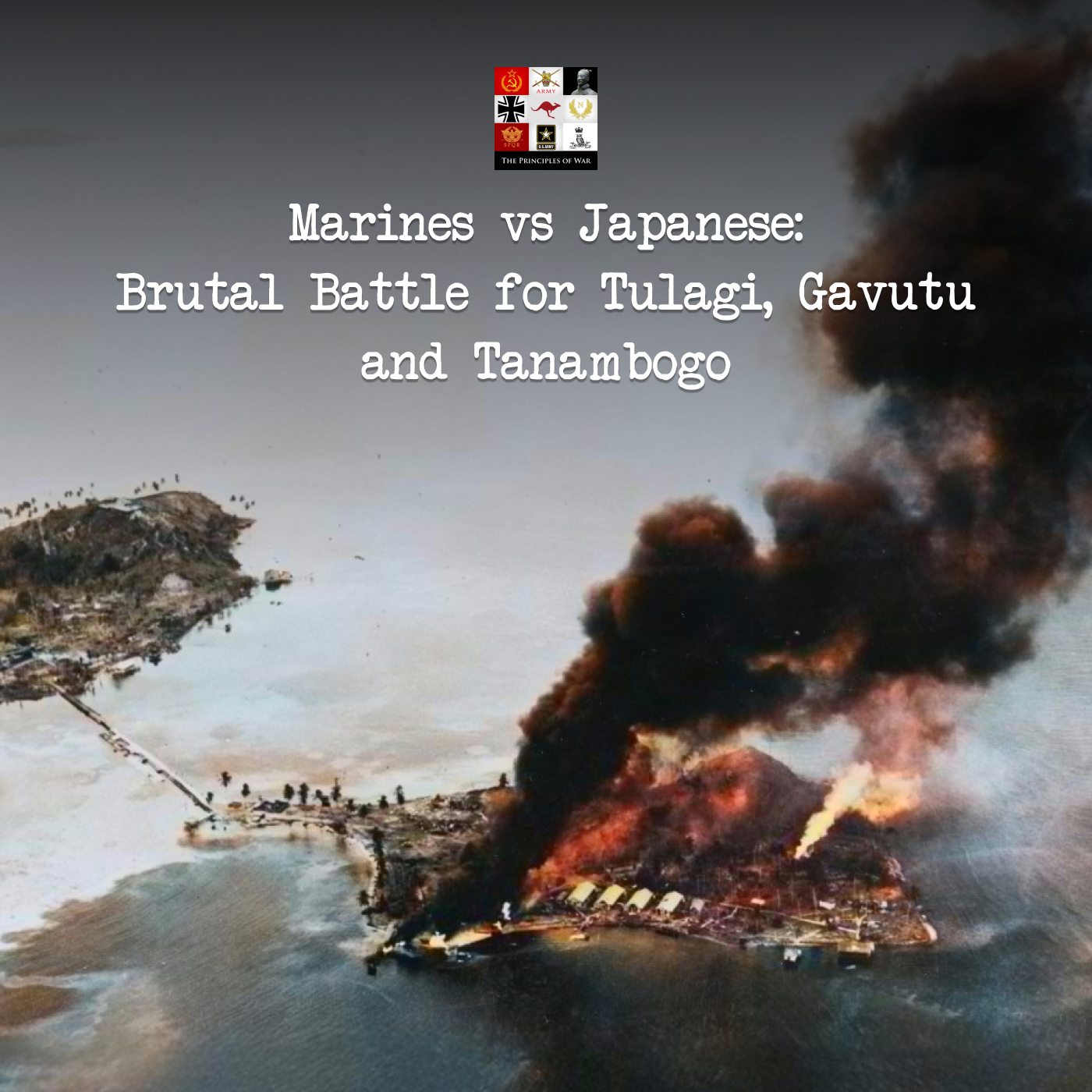
S1 Ep 136136 - Marines vs Japanese: Brutal Battles for Tulagi, Gavutu and Tanambogo
This is the second episode of our Guadalcanal series with historian and author Dave Holland. Shoestring invasion planning Koro rehearsals fiasco Risking the aircraft carriers vs time to unload the convoy Crutchley's covering cruisers Rupertus leads Tulagi Blue Beach landing Fighting at "the Cut" Improvised cave tactics Gavutu–Tanambogo battles Tanks combat Dave is an ex-Marine and was posted to Guadalcananal with the Australian Federal Police. He regularly leads battlefield study tours through the area. He is a world-leading expert on the battles of Guadalcanal and author of Guadalcanal's Longest Fight - The Pivotal Battles of the Matanikau Front. Check out the show notes for this episode.
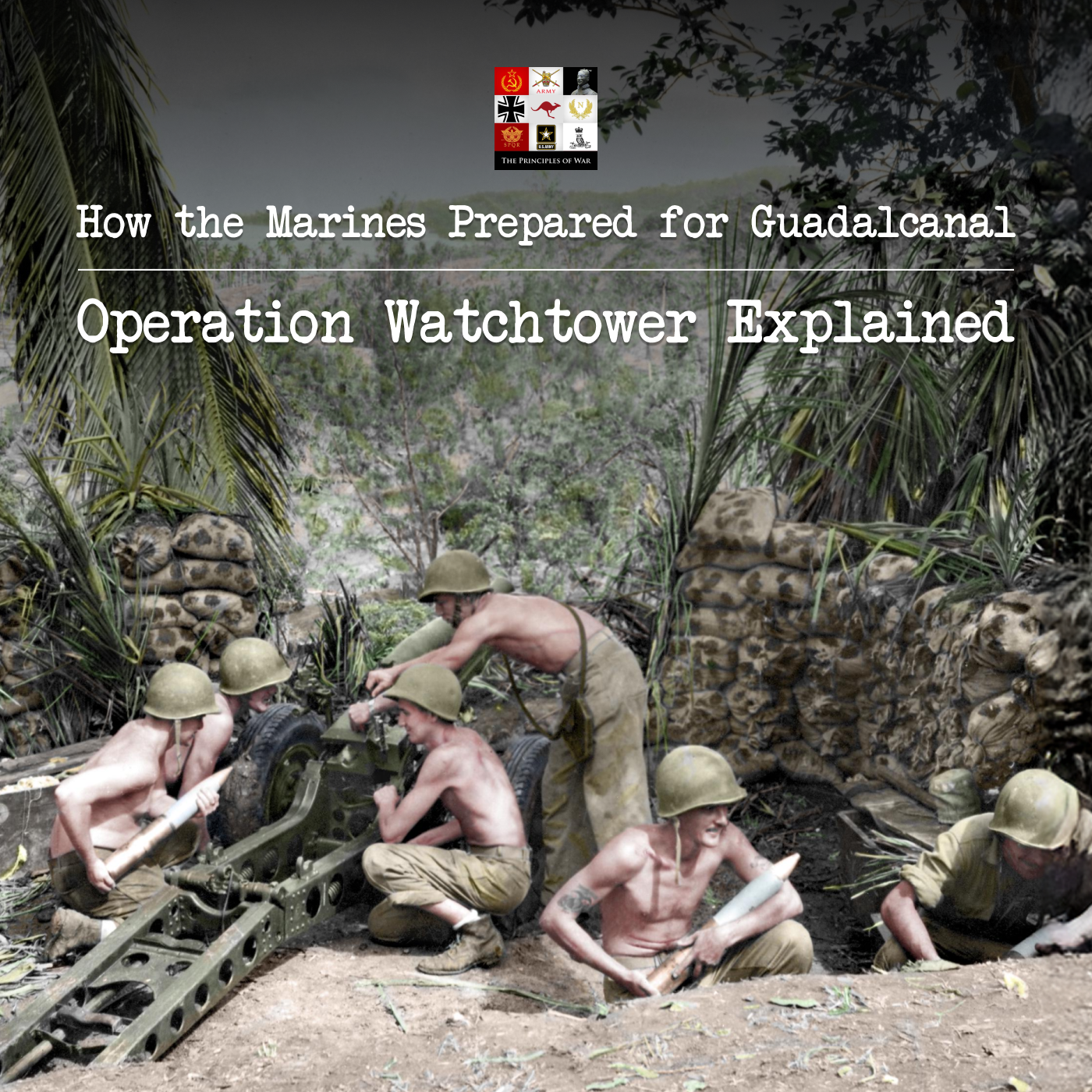
S1 Ep 135135 - How the Marines Prepared for Guadalcanal | Operation Watchtower Explained
This is the first in a major series of podcasts looking at the Battles of Guadalcanal. This is an interview with Dave Holland. This episode looks at: Guadalcanal's strategic significance Terrain and Climate of Guadalcanal Development of Marine Amphibious Doctrine Combat experience within the 1st Marine Division Strength and structure of a Marine Division US intelligence preparation before the landings Japanese intelligence and intentions US decision to land on Guadalcanal and Tulagi Operation Shoestring Dave is an ex-Marine and was posted to Guadalcananal with the Australian Federal Police. He regularly leads battlefield study tours through the area. He is a world-leading expert on the battles of Guadalcanal and author of Guadalcanal's Longest Fight - The Pivotal Battles of the Matanikau Front.
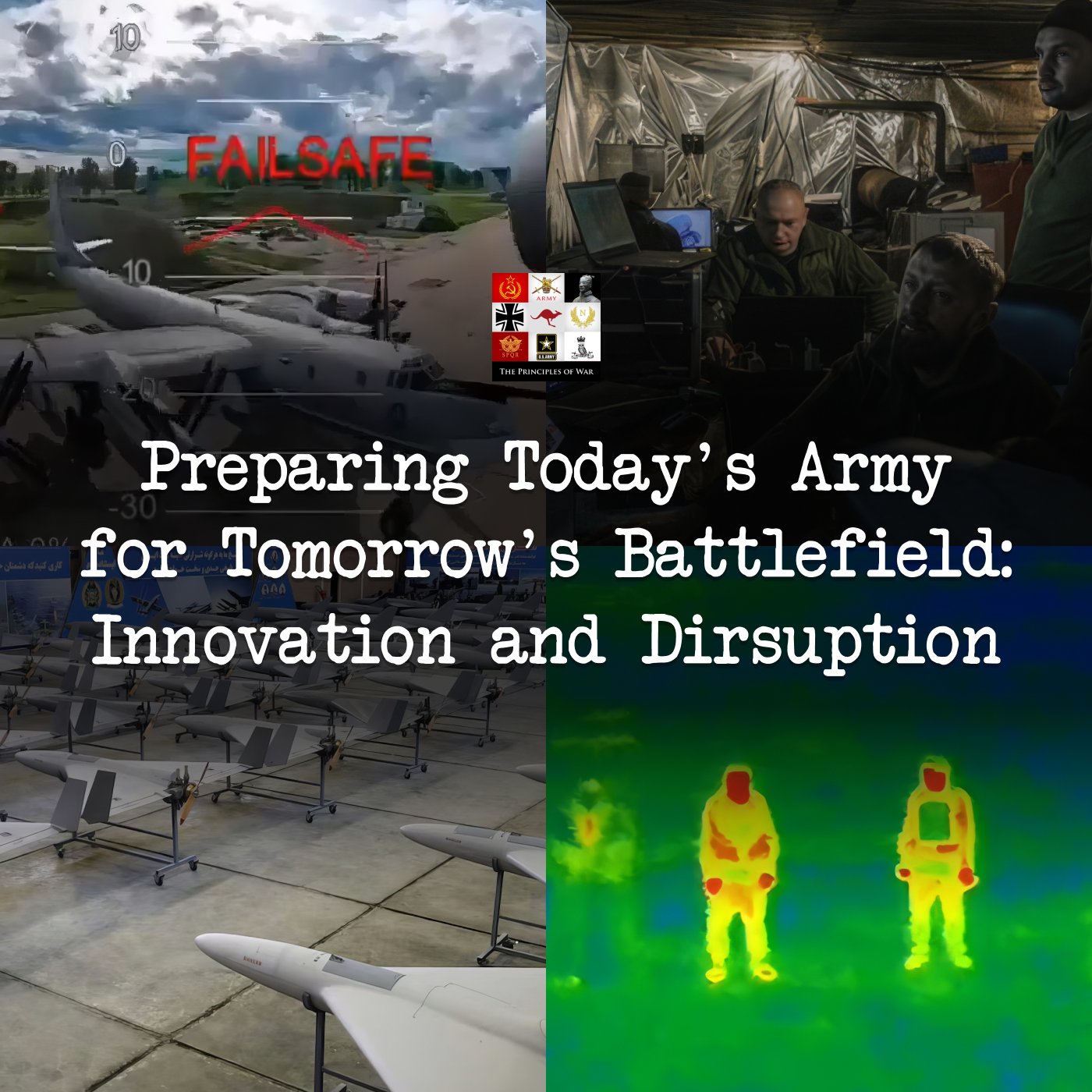
S1 Ep 134134 - Preparing Today's Armies for Tomorrow's Wars: Battlefield Innovation and Disruption
This is the final episode of three in our series from our interview with Retired Colonel John Antal discussing his research into contemporary combat and how technology is changing the modern battlefield. John makes a series of great points during the interview: Modern War Is Fought in a Transparent Battlespace Visibility through drones, sensors, and AI means traditional massing of forces is now lethal. You must deceive and disrupt enemy sensors or be destroyed. Masking Should Be a Principle of War Masking = multi-domain deception to confuse enemy ISR. Use decoys, optical/thermal camouflage, and emission control—make the enemy see what you want them to see. Camouflage and Concealment Are Critically Neglected Western armies (incl. U.S. and Australian) have virtually no meaningful camouflage training. Without drones for perspective or thermal checks, soldiers can't learn what the enemy sees. Command Posts Are Death Traps Tents and Winnebago-style mobile HQs are vulnerable to drone and artillery strikes. Forces must restructure command posts: smaller, distributed, better masked, and mobile. Infiltration Is the Primary Tactic of Modern War Seen in Nagorno-Karabakh, Ukraine, and Gaza, infiltration bypasses strongpoints and succeeds in high-transparency environments where massing is suicidal. Mobile Phones Kill Units Civilian phones constantly emit signals. Unless militaries ban personal devices or deploy secure comms, they invite precision targeting. Drones Are the Machine Guns of the 21st Century Drones must be ubiquitous, especially at the squad level. But to manage this, armies need a dedicated drone corps—trained, maintained, and operationalised like any combat arm. Resilience Beats Exquisite Systems Over-reliance on billion-dollar platforms (e.g., B-2s, F-35s) is a strategic risk. Operation Spiderweb Cheap drones can destroy exquisite systems. Forces must be able to take hits and continue fighting. Training Is Outdated and Unrealistic Many exercises simulate conventional war (e.g., Desert Storm) rather than dispersed, dark, denied environments. We fall to the level of our training—not rise to our expectations. Leaders Must Prepare for First Strike and Distributed Ops The enemy will hit first. Western forces must train to disperse, operate without emissions, reassemble fast, and strike with real-time decision-making. The key: agility, initiative, and survivability. Check out the show notes for all of the information that we cover in this episode as well as the images and other details that didn't make it into the podcast.
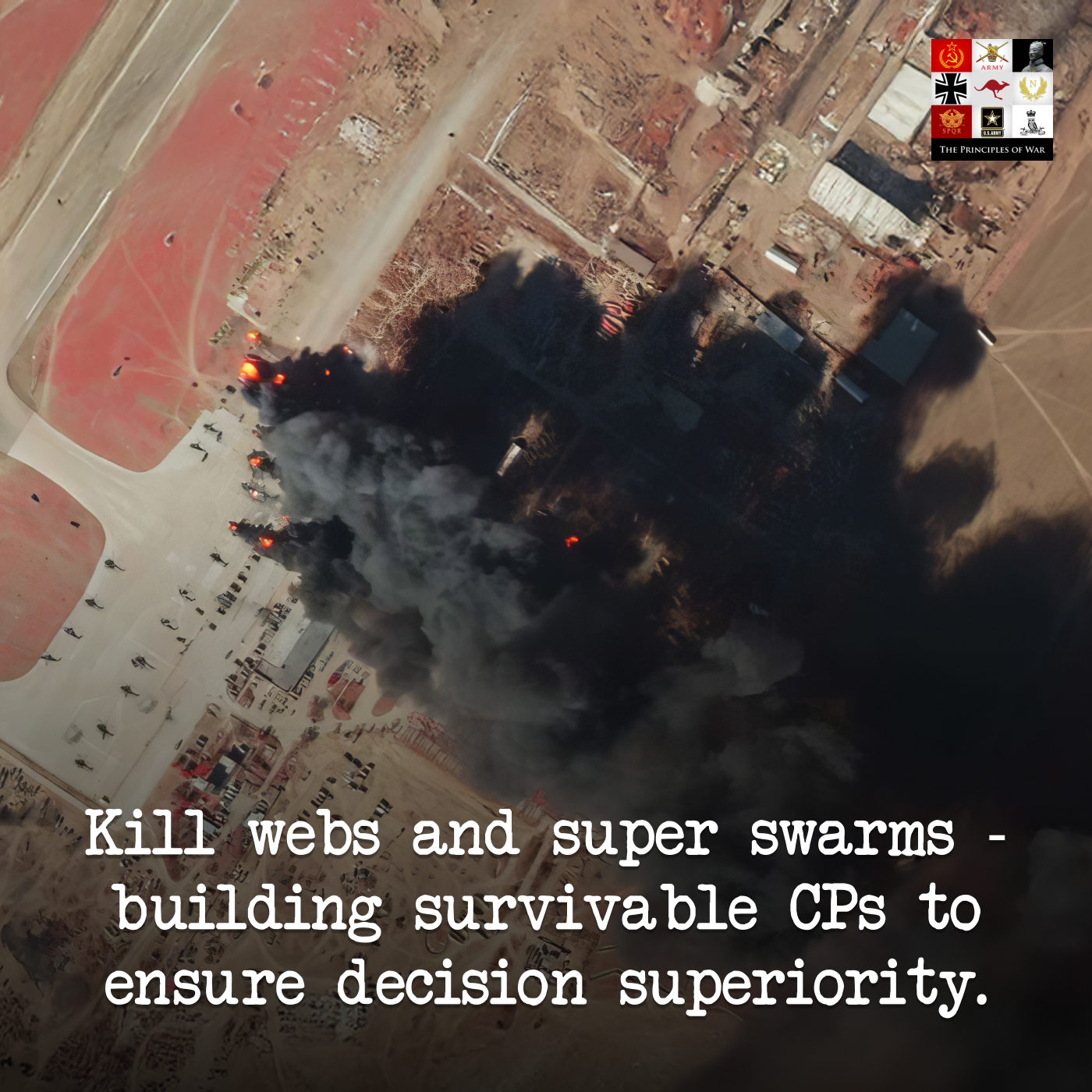
S1 Ep 133133 - Kill webs and super swarms - building survivable CPs for decision superiority
This is the second episode of our interview with Retired Colonel John Antal discussing his research into contemporary combat and how technology is changing the modern battlefield. We discuss the lessons learnt from 2nd Nagorno-Karabakh, Ukraine and recent Israeli battles and how technology is changing the modern battlefield. Check out the show notes for all of the information that we cover in this episode as well as the images and other details that didn't make it into the podcast.
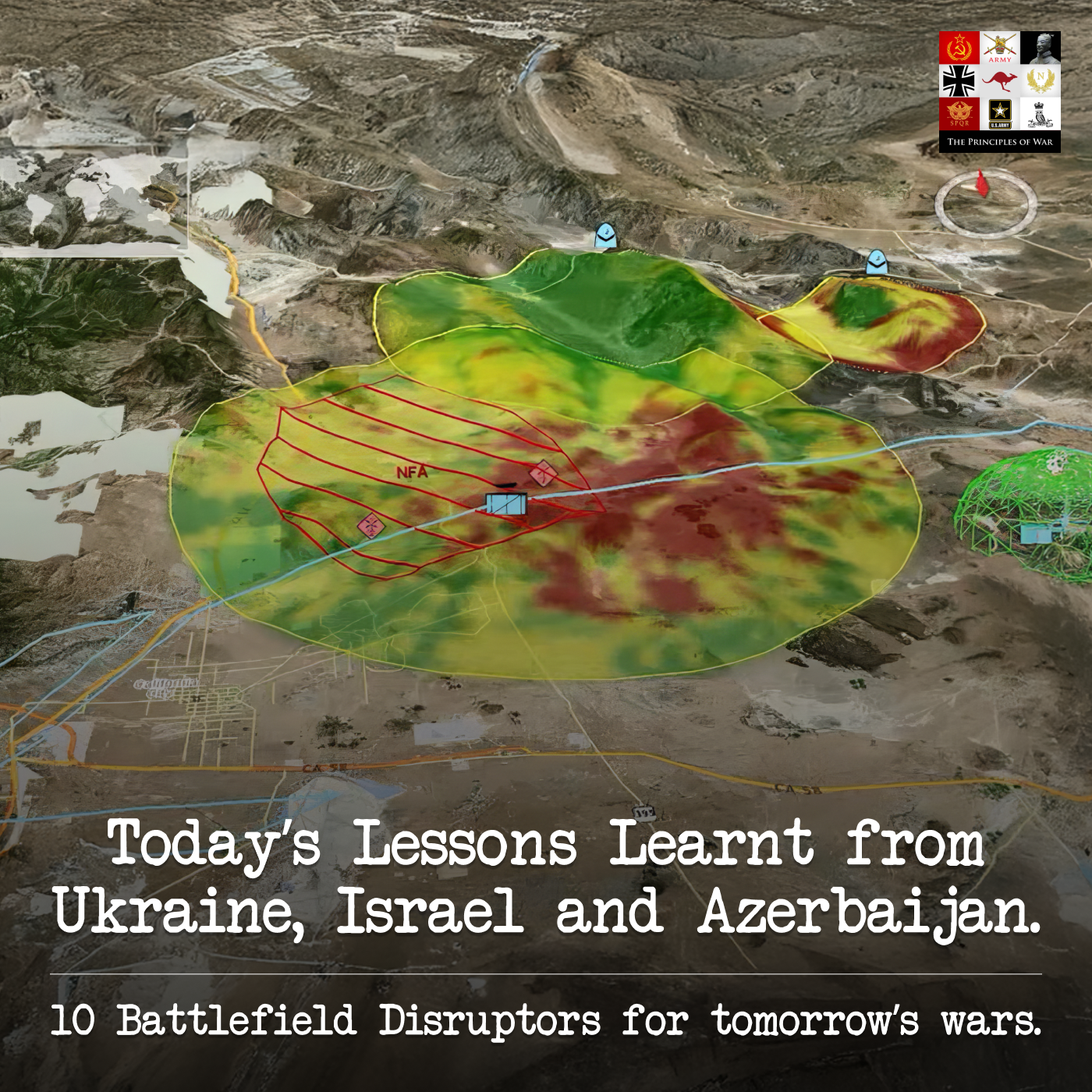
S1 Ep 132132 - Ten Battlefield Disruptors for Tomorrow's Wars
How is the modern battlefield changing? What role is technology like Artificial Intelligence, drones, precision strike and electronic warfare changing command and control, ISR and combined arms? This is the first of 3 episodes with retired Colonel John Antal, who has studied 2nd Nagorno-Karabakh, recent Israeli battles and the war in Ukraine. Check out the show notes for all of the information that we cover in this episode as well as the images and other details that didn't make it into the podcast.
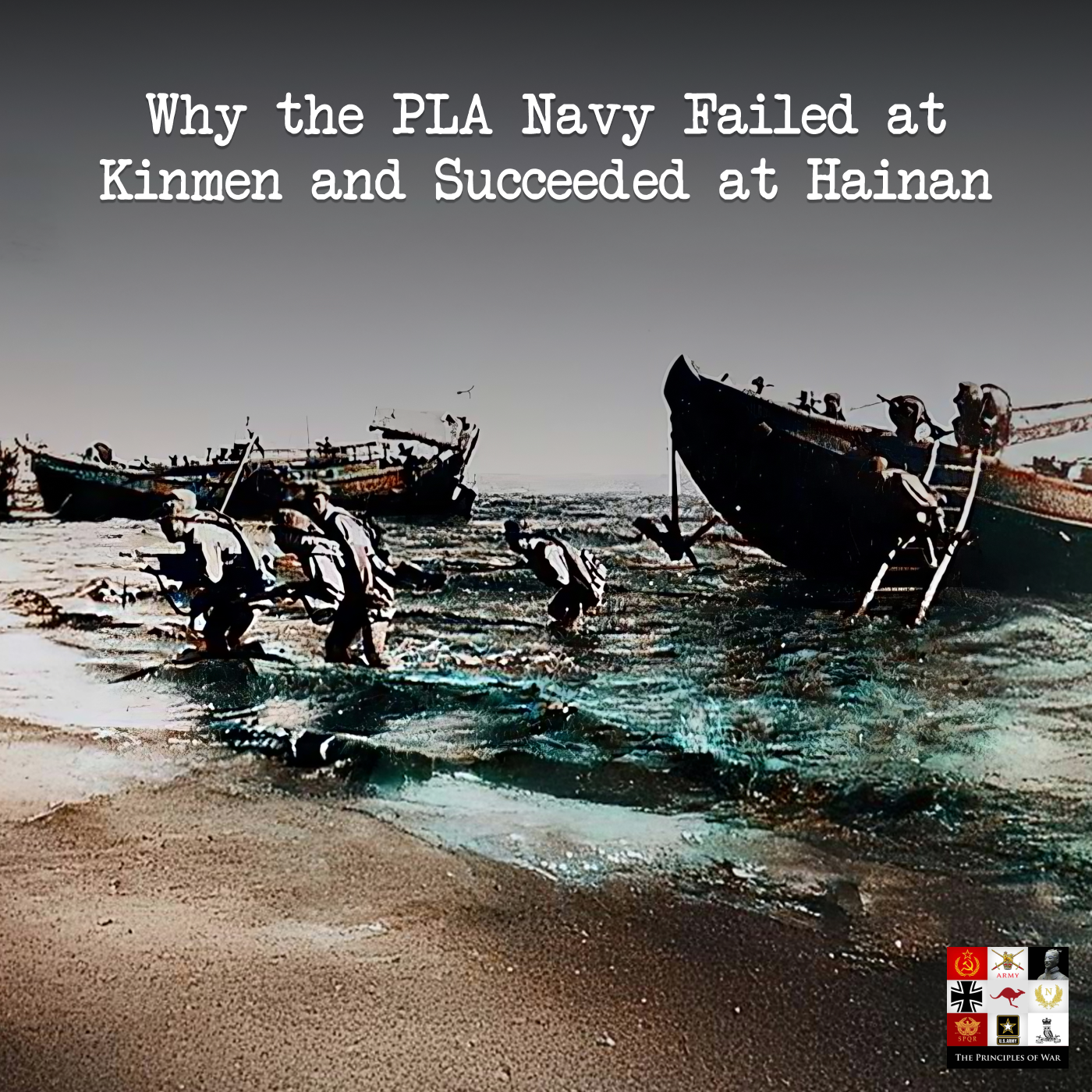
S1 Ep 131131 - Amphibious Ambitions and Island Defeats - How Kinman and Hainan shaped China's Navy
This is the second of a two-part series looking at the origin story of the PLA Navy. This episode looks at the crucial Kinmen and Hainan Islands campaigns. This is an interview with Dr Toshi Yoshihara, an expert in the history of China's Navy. How was each campaign planned and executed? What were the results for the Chinese Navy? What did the PLA Navy learn from these campaigns? How have these early littoral manoeuvre campaigns shaped the PLA today? We discuss the roles of Mao Zedong, Lin Biao, Xiao Jinguang, in these early important battles for China. Check out the show notes for all of the information that we cover in this episode as well as the images and other details that didn't make it into the podcast.
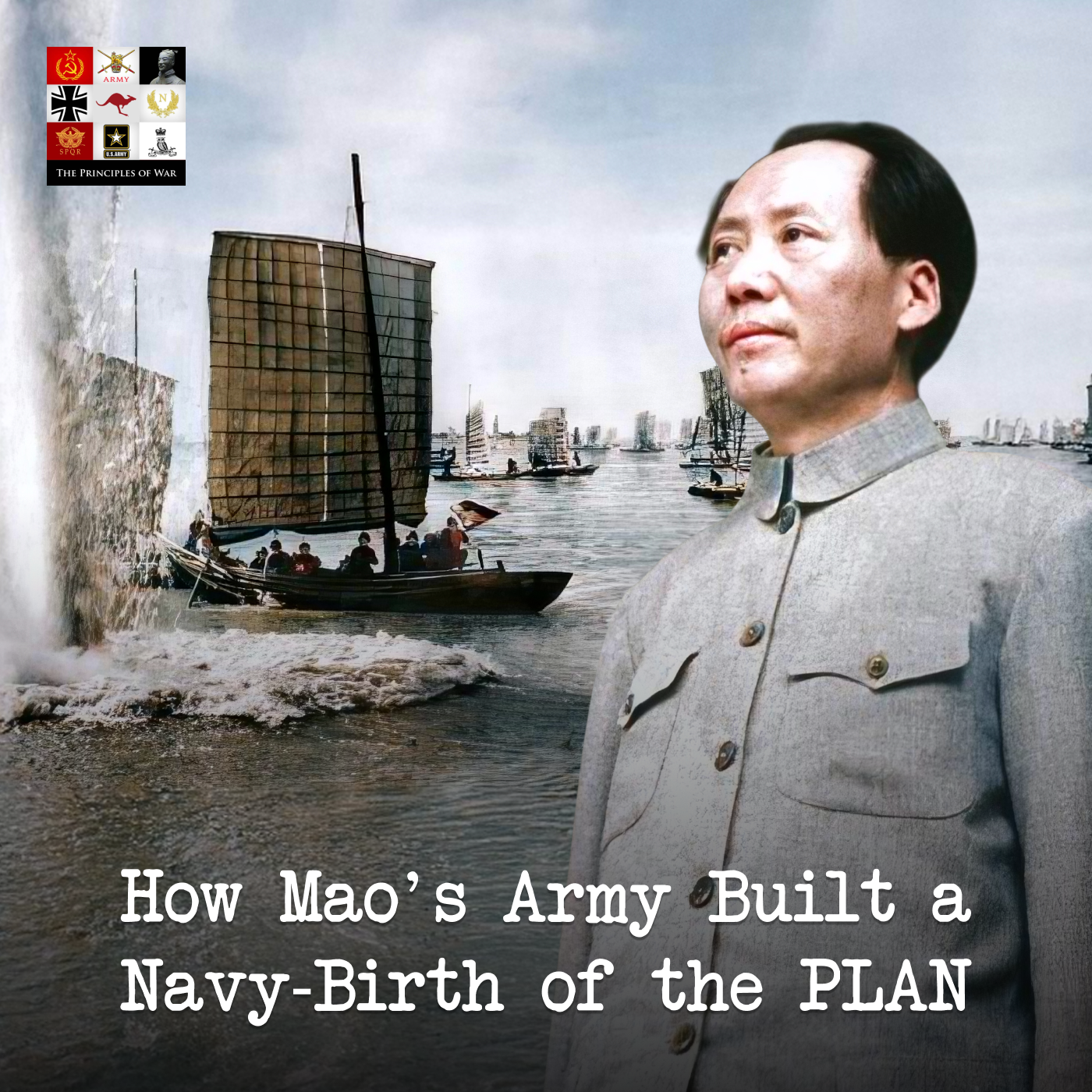
S1 Ep 130130 - From River Crossings to Amphibious Operations - How the PLA Built a Navy from scratch and learned littoral manoeuvre
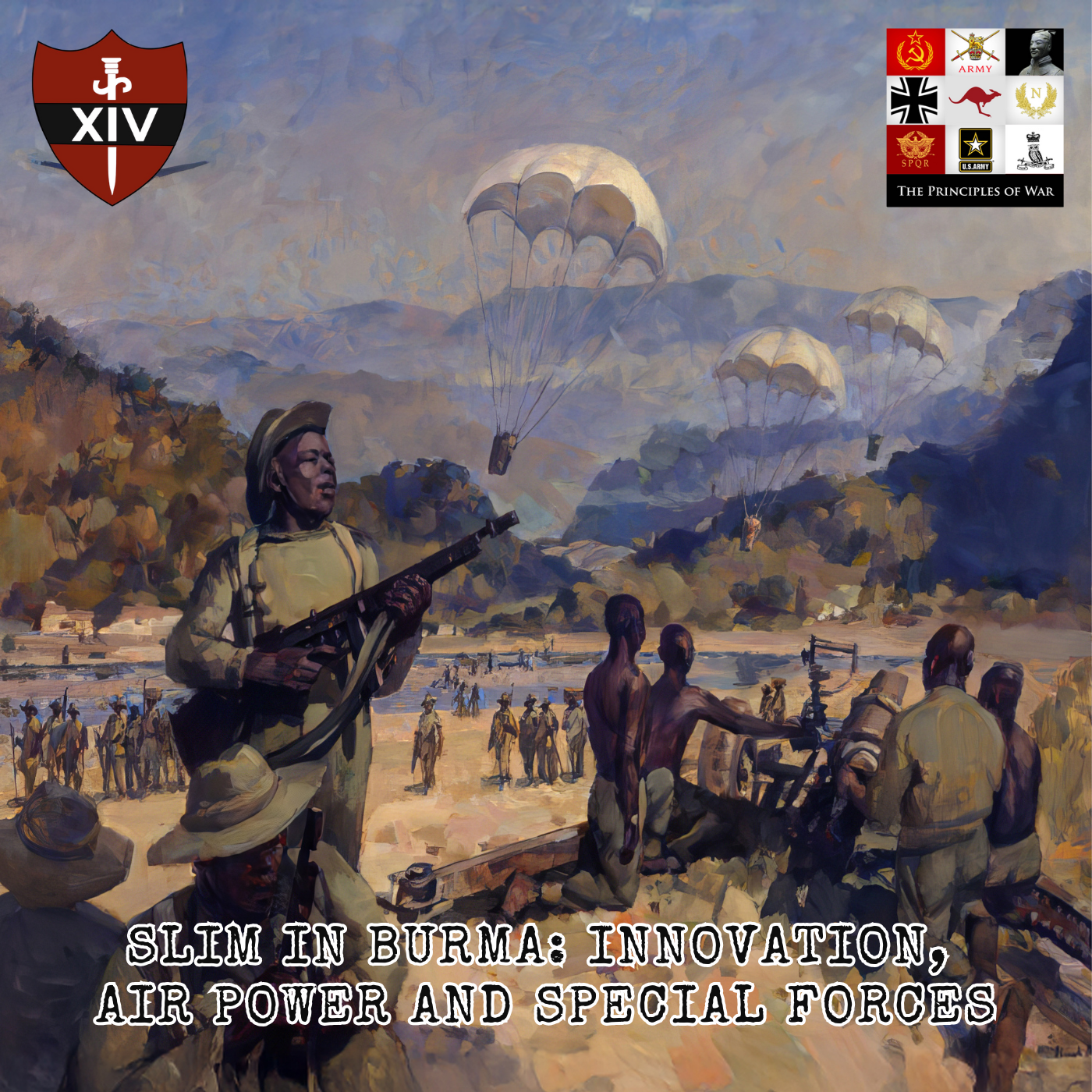
S1 Ep 129129 - Slim in Burma - Innovation, Air Power and Special Forces
How did Field Marshall Slim innovate in the Burma Campaign? This is a look at military innovation through necessity that developed key capabilities for the 14th Army to defeat the Japanese forces in the Burma theatre. We discuss: Slim's innovation overcame critical resource shortages in Burma. Developed aerial resupply, air evacuation, and improvised naval logistics. Used teakwood barges to cross rivers with tanks. Created monsoon-proof airfields with hessian and tar. Strong advocate of Special Forces—mobilized Force 136 and Karen levies. Outmanoeuvred Japanese by leveraging terrain and logistics. Fought against Generals Aida, Mutaguchi, and Kimura. Trained the Indian Army in combined arms warfare. Built floating bridges across vast rivers like the Chindwin. Crossing the Irrawaddy. Led with humility and authenticity, known to Indian troops as "Uncle Bill." This interview is the third part of a 3-part series with Dr Robert Lyman, the expert on the Burma Campaign and Field Marshall Sir William Slim. Check out the show notes for all of the information that we cover in this episode as well as the images and other details that didn't make it into the podcast.

S1 Ep 128128 - Rebuilding an Army: Morale, Leadership, Training and Mission Command in the 14th Army with Slim
How did Slim rebuild the 14th Army after it's 1,000 mile withdrawal from Burma? We look at how lessons were learnt and doctrine was developed to forge an Army capable of taking on the Japanese. We discuss the important question - what makes an Army officer a good trainer of soldiers. This interview is the second part of a 3 part series with Dr Robert Lyman, the expert on the Burma Campaign and Field Marshall Sir William Slim. Check out the show notes for the podcast for all of the information that we cover in this episode as well as the images and other details that didn't make it into the podcast.

S1 Ep 127127 - The General who wouldn't quit: Slim and the longest retreat
The withdrawal from Burma was almost 1,000 miles in 100 days and yet Slim, as commander of Burma Corps, maintained his optimism throughout the operation. We look at Slim's early career and background to study his optimism and resilience in the face of an overwhelmingly poor tactical situation. This interview is the first part of a 3 part series with Dr Robert Lyman, the expert on the Burma Campaign and Field Marshall Sir William Slim. Check out the show notes for the podcast for all of the information that we cover in this episode as well as the images and other details that didn't make it into the podcast.
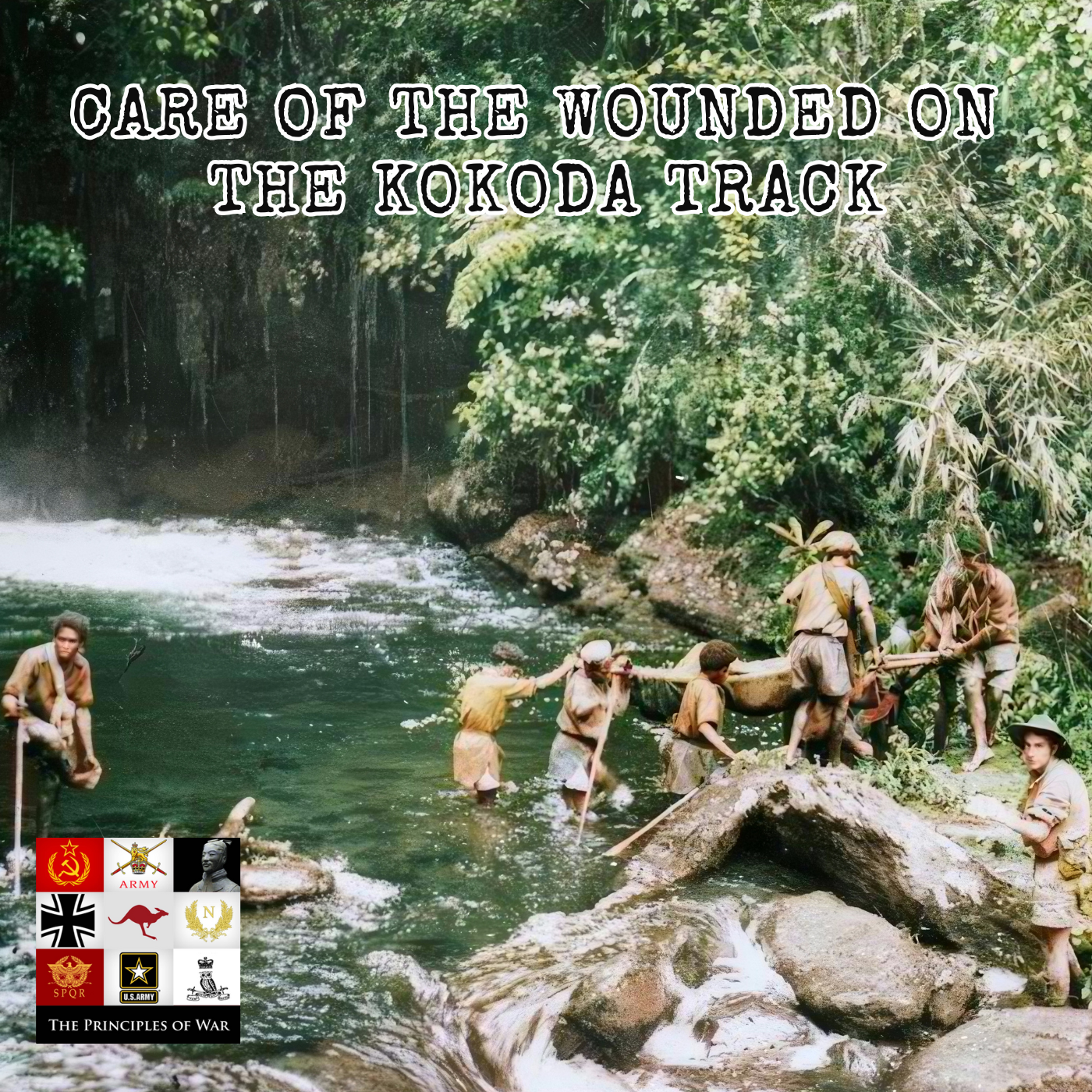
S1 Ep 126126 - Care of the wounded on the Kokoda Track
This episode looks at the care of the wounded on the Kokoda Track. What level of care did sick and wounded soldiers receive? Why was the medical planning still being conducted whilst the Battle of Isurava was in progress? What was the issue with medical logistics and how were casualties to be casevaced from the battlefield? We listen to the story of CAPT Stan Bissett as he describes how his brother Butch was wounded just north of Isurava and later died of his wounds. Medical care was provided under the most difficult conditions, in the jungle, in steep terrain and during the withdrawal. Important lessons for the planning and execution for the treatment of wounded during combat. This episode continues our Kokoda Campaign Podcast series. Check out the show notes for the podcast for all of the information that we cover in this episode as well as the images and other details that didn't make it into the podcast.
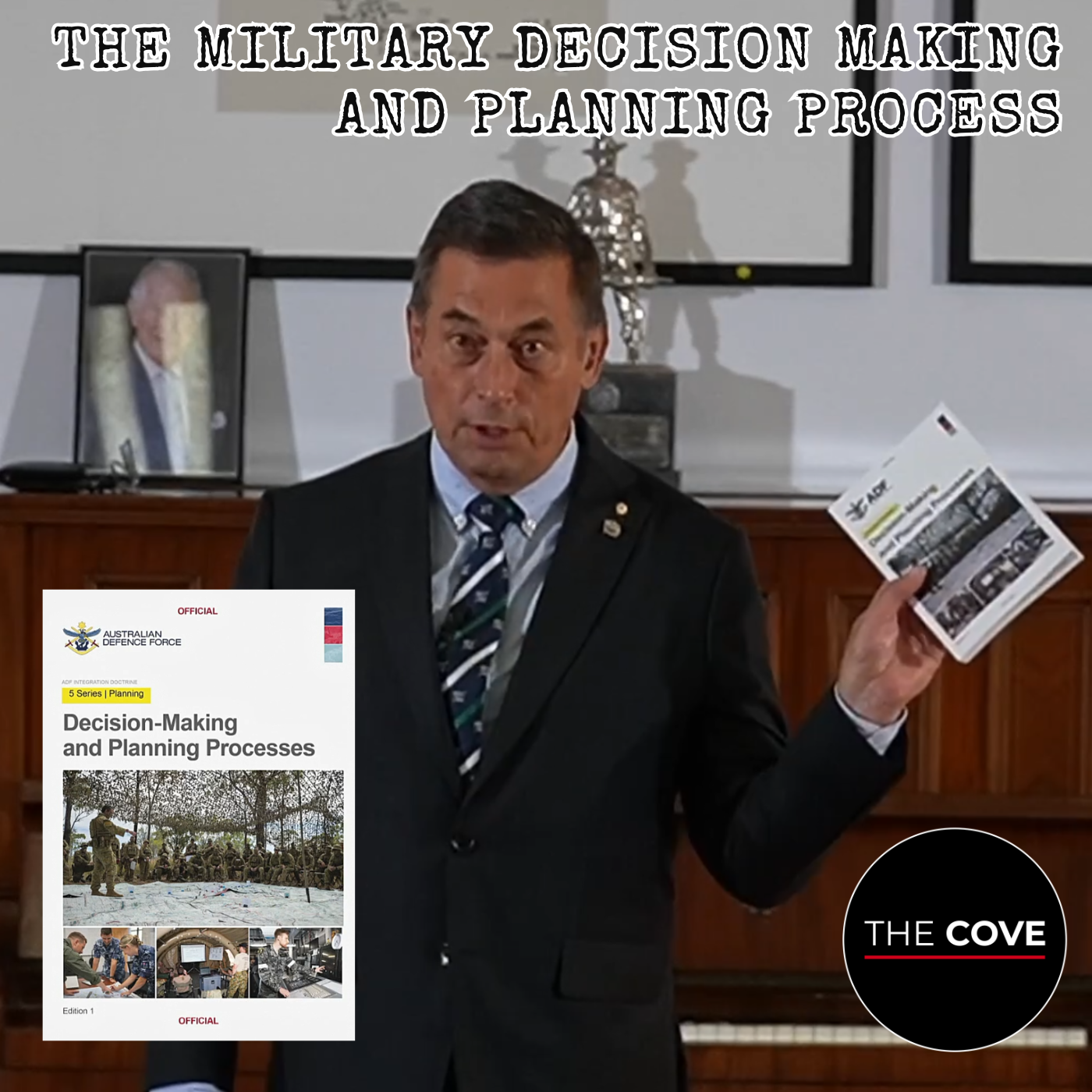
S1 Ep 125The Military Decision Making and Planning Process
bonusThis episode is a cross-post from The Cove Podcast. This is a recording of MAJGEN Mick Krause, AM - the author the new ADF-I-5 doctrine - Decision Making and Planning Processes. He presented a PME session at Holdsworthy Barracks to discuss the new doctrine. ADF-I-5 Decision Making and Planning Processes replaces the Joint JMAP (Joint Military Appreciation Process) doctrine along with the Army LWD 5-1-4 The Military Appreciation Process. It covers in role of the Commander in the planning process and the importance of timeliness in the decision making and production of orders process. Check out the show notes for the podcast for all of the information that we cover in this episode as well as the images and other details that didn't make it into the podcast.
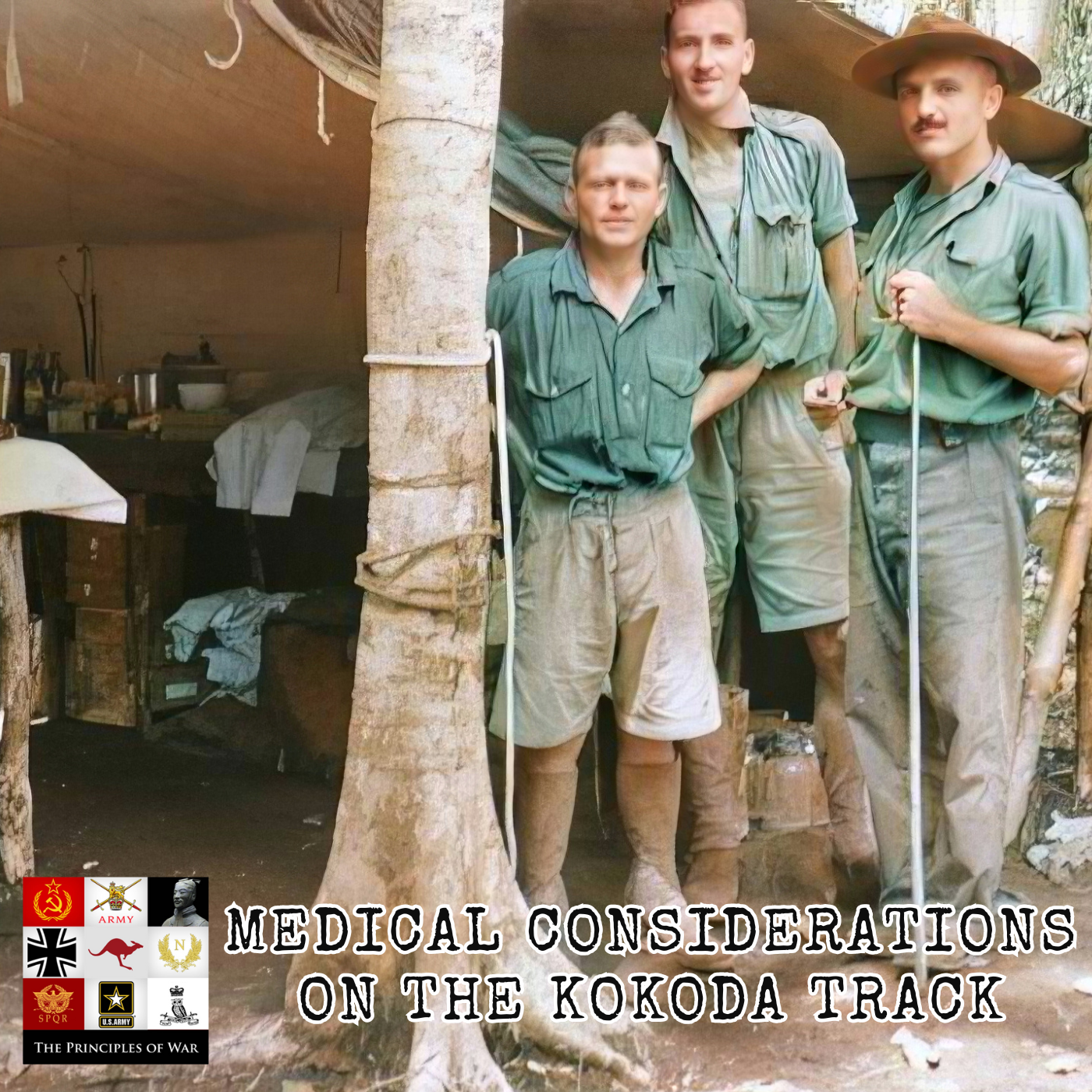
S1 Ep 125125 - Medical considerations on the Kokoda Track
What medical treatment was avaiable for the soldiers fighting on the Kokoda Track. How were ill and injured soldiers cared for and what were the difficulties in providing surgical and medical care in the austere conditions of the Jungles of Kokoda? This episode continues our Kokoda Campaign Podcast series. Check out the show notes for the podcast for all of the information that we cover in this episode as well as the images and other details that didn't make it into the podcast.

S1 Ep 124124 - Leadership lessons from the Jungles of Vietnam with Gary McKay
This episode is the second of a two part interview with retired LTCOL Gary McKay, who was a Platoon Commander in Vietnam, in D Coy, 4 RAR. He fought in Op Ivanhoe at the battle of Nui Le, where he was wounded. For his awarded the Military Cross for his performance during the battle. He was later the Commanding Officer of 8/9 RAR between 1988 and 1990. This episode continues our Kokoda Campaign Podcast series. The training, doctrine and tactics used in Vietnam are a legacy of the expensive lessons learnt in the jungles of New Guinea. Gary discusses the Battle of Nui Le, a part of Op Ivanhoe. Gary shares his reflections on leadership, with some excellent thoughts for Junior Officers and SNCOs. Check out the show notes for the podcast for all of the information that we cover in this episode as well as the images and other details that didn't make it into the podcast.

S1 Ep 123123 - Jungle Combat in Vietnam with Gary McKay
This episode is the first of a two part interview with retired LTCOL Gary McKay, who was a Platoon Commander in Vietnam, in D Coy, 4 RAR. He fought in Op Ivanhoe at the battle of Nui Le, where he was wounded. For his awarded the Military Cross for his performance during the battle. He was later the Commanding Officer of 8/9 RAR between 1988 and 1990. This episode continues our Kokoda Campaign Podcast series. It specifically looks at how Australian soldiers were prepared for combat in the jungle and also looks at what makes jungle combat one of the most difficult types of terrain to fight in. As you are listening to Gary's story, compare that with the soldiers from the Second World War fighting the early jungle battles. The legacy of those hard won lessons on the Kokoda Track can clearly be heard in Gary's story. Check out the show notes for the podcast for all of the information that we cover in this episode as well as the images and other details that didn't make it into the podcast.

S1 Ep 122122 - Japanese Lessons Learnt for Jungle Warfare
This episode continues our Kokoda Campaign Podcast series. This episode is Part 5 of our interview with Dr with Dr Adrian Threlfall, an expert in how the Australian Army learned to learn about combat in the jungles of Malaya, Singapore, Papua, New Guinea, and many other islands to the north of Australia. This episode looks at the introduction of the Jungle Scales Division into the Australian Army, the development of the Owen Gun and finally how the Japanese adapted to Australian tactically improvements in Jungle Warfare. Check out the show notes for the podcast for all of the information that we cover in this episode as well as the images and other details that didn't make it into the podcast.

S1 Ep 121121 - The Jungle Warfare Training Centre, Canungra
This episode continues our Kokoda Campaign Podcast series. This episode is Part 4 of our interview with Dr with Dr Adrian Threlfall, an expert in how the Australian Army learned to learn about combat in the jungles of Malaya, Singapore, Papua, New Guinea, and many other islands to the north of Australia. This episode discusses the development of the Jungle Warfare Training Centre, Canungra, the role that it played in preparing soldiers for combat in the Jungle and the legacy it created for the Australian Army as experts in jungle warfare. Check out the show notes for the podcast for all of the information that we cover in this episode as well as the images and other details that didn't make it into the podcast.

S1 Ep 120120 - Preparing for Combat in the Jungle
This episode continues our Kokoda Campaign Podcast series. This episode looks at Jungle Warfare Doctrine Development, with Dr Adrian Threlfall, an expert in how the Australian Army learned to learn about combat in the jungles of Malaya, Singapore, Papua, New Guinea, and many other islands to the north of Australia. We look at how the soldiers prepared for combat in the Jungle against the Imperial Japanese Army. What were the barriers to the lessons learnt process? We look at the British Army and allies in Burma, the Marines on Guadalcanal and the Australian Army in New Guinea. Check out the show notes for the podcast for all of the information that we cover in this episode as well as the images and other details that didn't make it into the podcast.

S1 Ep 119119 - Learning to learn: Jungle Warfare
This episode continues our Kokoda Campaign Podcast series. This episode looks at Jungle Warfare Doctrine Development, with Dr Adrian Threlfall, an expert in how the Australian Army learned to learn about combat in the jungles of Malaya, Singapore, Papua, New Guinea, and many other islands to the north of Australia. We discuss how the Australian Army learnt to learn, starting to collate the lessons learnt from combat with the Japanese in the Jungles, and the process to turn that into doctrine. Check out the show notes for the podcast for all of the information that we cover in this episode as well as the images and other details that didn't make it into the podcast.
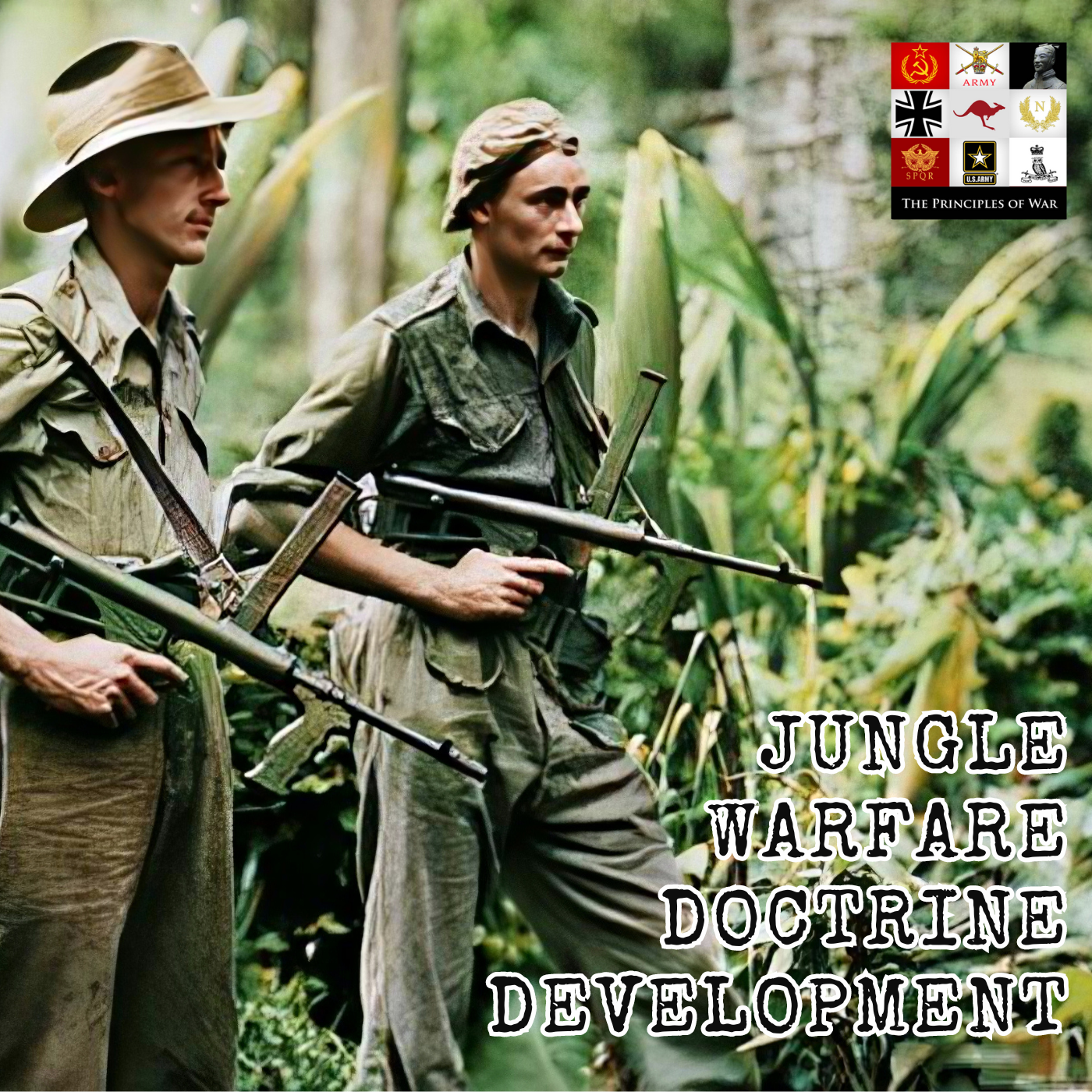
S1 Ep 118118 - Jungle Warfare Doctrine Development in the Australian Army
We return to the fetid jungles of New Guinea and our Kokoda Campaign Podcast series, looking at the 53rd Battalion and it's combat performance at Isurava. This episode is the start of a series looking at Jungle Warfare Doctrine Development, with Dr Adrian Threlfall, an expert in how the Australian Army learned to learn about combat in the jungles of Malaya, Singapore, Papua, New Guinea, and many other islands to the north of Australia. Check out the show notes for the podcast for all of the information that we cover in this episode as well as the images and other details that didn't make it into the podcast.

S1 Ep 117117 - Lessons learnt from Drone combat in Ukraine
This special episode is an interview with Sam Bendett from the Center for a New American Security and is an expert on UAS Combat between Ukraine and Russia. This interview covers the lessons learnt so far in the rapidly evolving UAS combat. We discuss how drone combat has evolved from the point of view of the Russian and Ukrainian forces, how it is impacting manouvre on the battlefield and how the combined arms effect is generated with a range of UAS platforms. From FPV (First Person View) drones through to LRF (Long Range Fires) UAS, we discuss the changing character of war. Check out the show notes for the podcast for all of the information that we cover in this episode as well as the images and other details that didn't make it into the podcast.
S1 Ep 116116 - Air Power during the Kokoda and Milne Bay Campaigns.
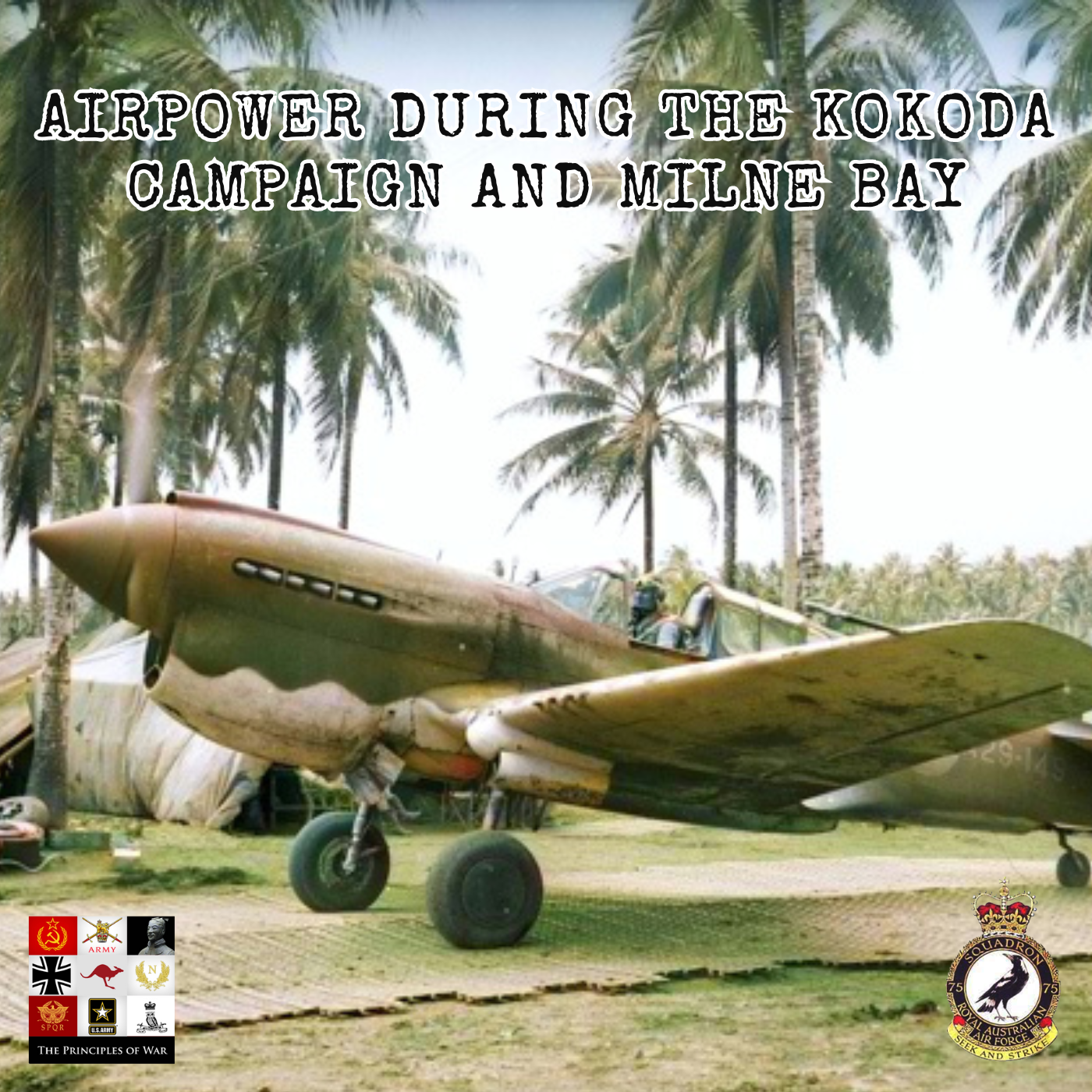
How did air power influence the Kokoda Campaign? We review the employment of air power and compare it with the Milne Bay operation, where Air Power's effect was described as 'decisive' by both MAJGEN Clowes and LTGEN Rowell. The episode picks up the story with the elevation of Les Jackson to CO of No 75 Squadron after the death of his brother, John. We discuss the importance of training pilots for the responsibilities for Squadron Command and the requirement for a panel of potential candidates, before looking at the Battle of Milne Bay. This is Part 18 of our series looking at the Kokoda Campaign, focusing on the combat performance of battalions on the Kokoda Track and the fourth and final episode as we look at Air Power, RAAF Leadership and doctrine development during the Kokoda Campaign. Check out the show notes for the podcast for all of the information that we cover in this episode as well as the images and other details that didn't make it into the podcast.
S1 Ep 115115 - No. 75 Squadron Leadership at Port Moresby
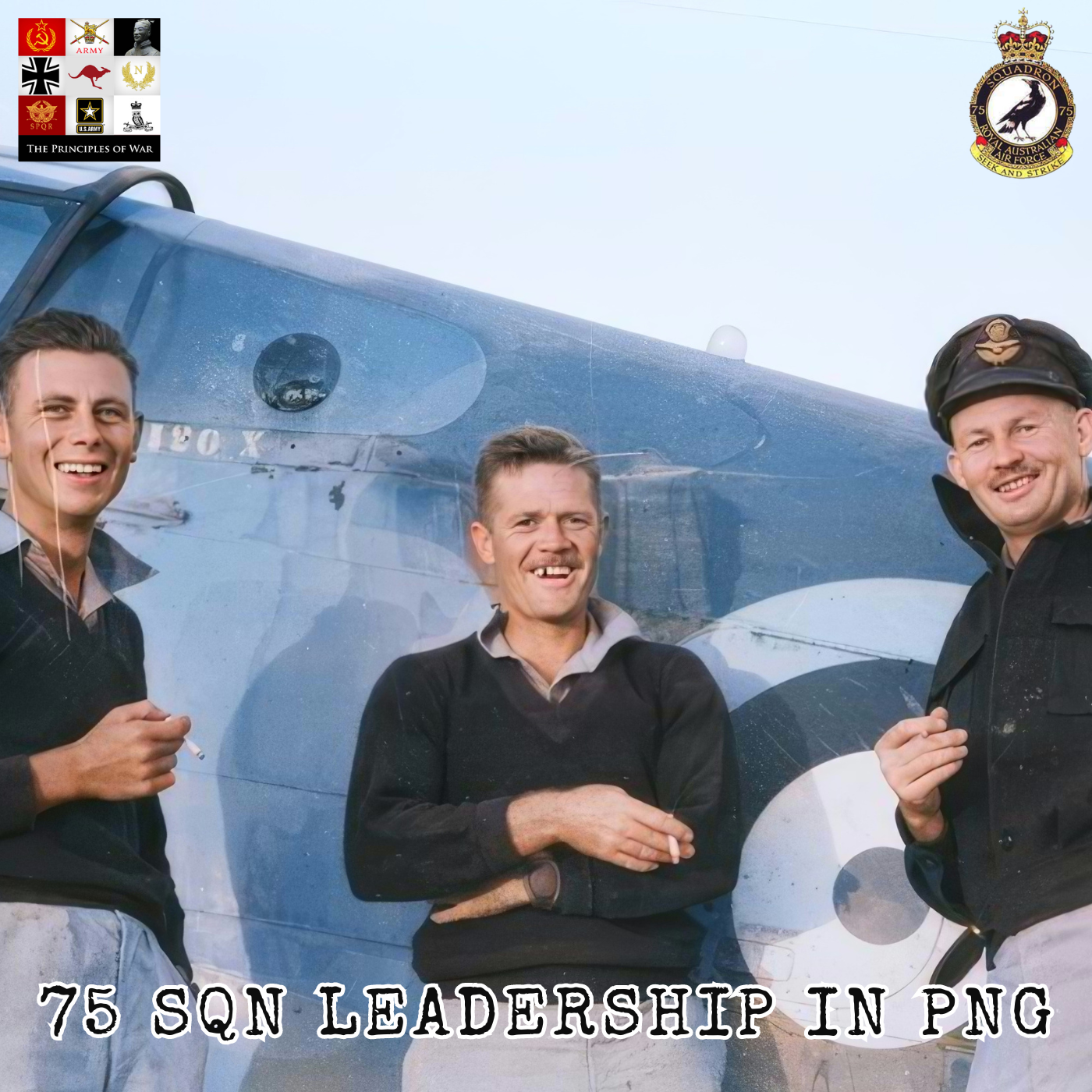
What was RAAF Leadership like in No. 75 Squadron at Port Moresby. We look at the career and Leadership of Squadron Leader John Jackson, a great RAAF pilot who lead from the front. We look at the tactics that he developed to fight the more agile Japanese Zeroes and what was it that caused him to ignore his own tactics on the day that he was shot down and killed. This is Part 17 of our series looking at the Kokoda Campaign, focusing on the combat performance of battalions on the Kokoda Track and how the militia were prepared for combat at the tactical, operational and strategic level. This episode looks at the combat leadership of John Jackson. Check out the show notes for the podcast for all of the information that we cover in this episode as well as the images and other details that didn't make it into the podcast.

S1 Ep 114114 - P40Es vs Zeroes - 75 Squadron and their 44 days at Port Moresby
How did the P-40E compare against the Japanese Zero? We look at how Australia was prepared for the war in the air over Port Moresby. How well were the pilots prepared and how well was the squadron bought up to operational standard? This is Part 16 of our series looking at the Kokoda Campaign, focusing on the combat performance of battalions on the Kokoda Track and how the militia were prepared for combat at the tactical, operational and strategic level. This episode looks at the first combats fought over the skies of Port Moresby and how the Squadron Leader of No 75 Squadron, John Jackson, took the fight to the Japanese. Check out the show notes for the podcast for all of the information that we cover in this episode as well as the images and other details that didn't make it into the podcast.

113 - 75 Squadron and the Kokoda Campaign
It was 900 days from the declaration of war against Germany in 1939 to the bombing of Darwin. When Darwin was bombed, there were no RAAF fighters to defend, and it was three weeks before Darwin was had fighter coverage (and they were US fighters). We look at how the RAAF was prepared for war, prepared for war for Japan and prepared to defend Australia. This is Part 15 of our series looking at the Kokoda Campaign, focusing on the combat performance of battalions on the Kokoda Track and how the militia were prepared for combat at the tactical, operational and strategic level. This episode looks at how No 75 Squadron contributed to the Joint Battle during the Kokoda Campaign. We focus on how the RAAF looked to mobilise and scale up. We discuss EATS, Check out the show notes for the podcast for all of the information that we cover in this episode as well as the images and other details that didn't make it into the podcast.
S1 Ep 112112 - Combined Arms on the Kokoda Track
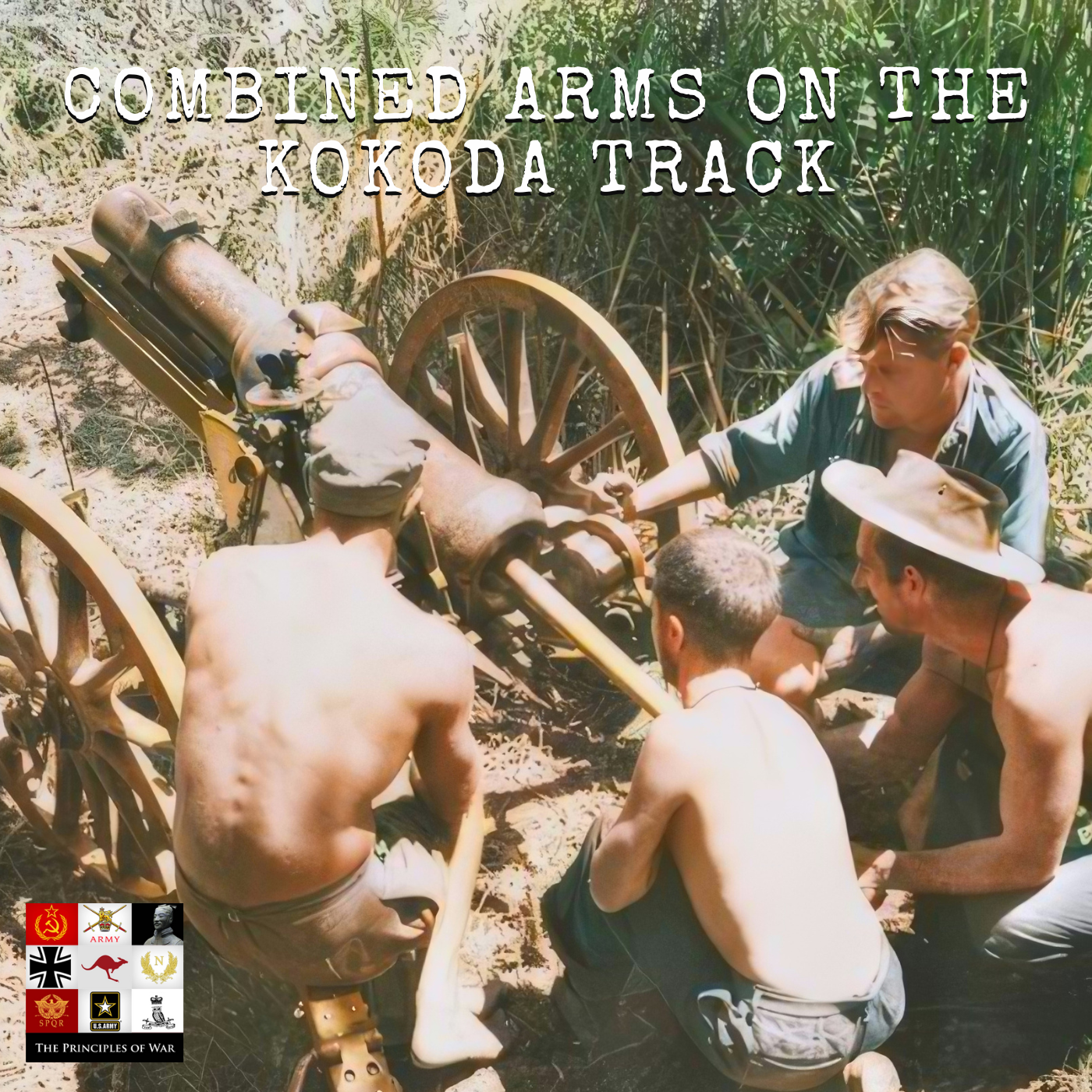
This is Part 14 of our series looking at the Kokoda Campaign, focusing on the combat performance of battalions on the Kokoda Track and how the militia were prepared for combat at the tactical, operational and strategic level. This episode looks at how the Australians and the Japanese generated combined arms on the Kokoda Track. Check out the show notes for the podcast for all of the information that we cover in this episode as well as the images and other details that didn't make it into the podcast.

S1 Ep 111111 - Friendly Fire on the Kokoda Track
This is Part 13 of our series looking at the Kokoda Campaign, focusing on the combat performance of the 53rd Battalion and how the militia were prepared for combat at the tactical, operational and strategic level. This episode looks at the tragic friendly fire incident that occured during the Battle of Isurava, where the 2/14th C Company attacked into the Battalion Headquarters. What were the factors in this and how could it have been avoided? Check out the show notes for the podcast for all of the information that we cover in this episode as well as the images and other details that didn't make it into the podcast.

S1 Ep 110110 - The JIPOE / IPB for the Kokoda Track
This is Part 12 of our series looking at the Kokoda Campaign, focusing on the combat performance of the 53rd Battalion and how the militia were prepared for combat at the tactical, operational and strategic level. The Kokoda Campaign for the Japanese is a manifestation of the effects of the manourvrist approach. We then discuss MAJGEN Basil Morris - at the time he took over command of the 8th Military District he was a substantive Colonel. We look at the Joint Intelligence Preparation of the Operating Environment for the Kokoda Campaign. What was the decisive terrain in the Morris' plan and how did he use his available resources? We discuss the 49th Battalion and how they were employed. Check out the show notes for the podcast for all of the information that we cover in this episode as well as the images and other details that didn't make it into the podcast.