The Peaceful Parenting Podcast
Peaceful parenting with calm and confidence for your spirited, highly-sensitive, strong-willed, or neurodivergent child- and support for YOU.
Sarah Rosensweet
Show overview
The Peaceful Parenting Podcast has been publishing since 2021, and across the 5 years since has built a catalogue of 266 episodes. That works out to roughly 180 hours of audio in total. Releases follow a weekly cadence.
Episodes typically run thirty-five to sixty minutes — most land between 32 min and 52 min — though episode length varies meaningfully from one episode to the next. None of the episodes are flagged explicit by the publisher. It is catalogued as a EN-language Kids & Family show.
The show is actively publishing — the most recent episode landed 2 months ago, with 20 episodes already out so far this year. Published by Sarah Rosensweet.
From the publisher
Welcome to the Peaceful Parenting Podcast, the podcast where Sarah Rosensweet covers the tools, strategies and support you need to end the yelling and power struggles and encourage your kids to listen and cooperate so that you can enjoy your family time. Each week, Sarah will bring you the insight and information you need to make your parenting journey a little more peaceful. Whether it's a guest interview with an expert in the parenting world, insight from Sarah's own experiences and knowledge, or live coaching with parents just like you who want help with their challenges, we'll learn and grow and laugh and cry together! Be sure to hit the subscribe button and leave a rating and review! sarahrosensweet.substack.com
Latest Episodes
View all 266 episodesFeeding Kids with Ease, Health and Joy: Episode 230
🎉 Celebrating 7 Years (+ A Special Anniversary Offer) 🎂
Emotionally Immature Parents with Morgan Pommells: Episode 229
Dopamine Kids with Michaeleen Doucleff: Episode 228
FREE Peaceful Parenting Reset
All About Meltdowns: Episode 227
The Psychology of Peaceful Parenting with Dr. Justin Coulson: Episode 226
Teens, Tweens and Peaceful Parenting: Episode 225
You, Your Partner and Same Page Parenting with Martina Nova: Episode 224
Just Because You Can Doesn’t Mean You Should: Episode 223
You can listen wherever you get your podcasts or check out the fully edited transcript of our interview at the bottom of this post.In this episode of The Peaceful Parenting Podcast, Corey and I explore the pressure of intensive parenting and the idea that “just because you can doesn’t mean you should.” We discuss burnout, productivity culture, and how letting go of unrealistic or unnecessary expectations can help us be the parents we truly want to be.Know someone who might appreciate this episode? Share it with them!And if you love the podcast, FREE ways to help us out:1- Rate and review the podcast in your podcast player app 2- “Like” this post by tapping the heart icon ♥️ 3- Share this with a friend. THANK YOU!We talk about:* 00:00 — Intensive parenting and unrealistic expectations: “Just because you can doesn’t mean you should”* 03:00 — Cultural expectations and productivity mindset and the “perfect parent” standard* 06:00 — How parents get overwhelmed: Sports, activities, food, and overscheduling* 09:00 — Choosing what actually matters- “Does this spark joy?” and letting go of unnecessary tasks* 13:00 — Doing less to feel better* 15:00 — Productivity, burnout, and rest* 17:00 — Letting go of control and accepting help and why independence isn’t everything* 21:00 — Questioning parenting norms* 25:00 — Why care and interdependence matter* 30:00 — Corey’s injury story + the cost of overdoing it* 34:00 — The importance of receiving care* 36:00 — Rethinking what it means to be a “good parent”Resources mentioned in this episode:* Rejecting Impossible Parenting Standards: What Disability Teaches Us About Care and Community with Jessica Slice: Episode 220 * Ditch Special Time? Connecting with complex kids when connecting is hard: Episode 212 * Episode 60: Hunt, Gather, Parent with Michaeleen Doucleff * Yoto Screen Free Audio Book Player* The Peaceful Parenting Membership* Evelyn & Bobbie bras* Strong-Willed Kids WorkshopConnect with Sarah Rosensweet:* Instagram* Facebook Group* YouTube* Website* Join us on Substack* Newsletter* Book a short consult or coaching session callxx Sarah and CoreyYour peaceful parenting team- click here for a free short consult or a coaching sessionVisit our website for free resources, podcast, coaching, membership and more!>> Please support us!!! Please consider becoming a supporter to help support our free content, including The Peaceful Parenting Podcast, our free parenting support Facebook group, and our weekly parenting emails, “Weekend Reflections” and “Weekend Support” - plus our Flourish With Your Complex Child Summit (coming back in the summer for the 3rd year!) All of this free support for you takes a lot of time and energy from me and my team. If it has been helpful or meaningful for you, your support would help us to continue to provide support for free, for you and for others.In addition to knowing you are supporting our mission to support parents and children, you get the podcast ad free and access to a monthly ‘ask me anything’ session.Our sponsors:YOTO: YOTO is a screen free audio book player that lets your kids listen to audiobooks, music, podcasts and more without screens, and without being connected to the internet. No one listening or watching and they can’t go where you don’t want them to go and they aren’t watching screens. BUT they are being entertained or kept company with audio that you can buy from YOTO or create yourself on one of their blank cards. Check them out HEREEvelyn & Bobbie bras: If underwires make you want to rip your bra off by noon, Evelyn & Bobbie is for you. These bras are wire-free, ultra-soft, and seriously supportive—designed to hold you comfortably all day without pinching, poking, or constant adjusting. Check them out HERESarah: Hey everyone. Welcome back to another episode of the Peaceful Parenting Podcast. Today, Corey and I discuss an idea we’ve been thinking about a lot lately and talking to each other about: intensive parenting, the choices we make, and the impossibly high standards we’re up against, and how these things affect our mental and physical health as parents and as humans.After I interviewed Jessica Slice, disability activist and author of the book Unfit Parent, who talks about these things and what she’s learned from disability culture and being disabled herself, Corey captured all of these complicated ideas about productivity, care, and how we can sometimes drive ourselves too hard as: just because you can.I’m going to say that again: just because you can doesn’t mean you should.Listen in to our conversation about how this idea can inform the choices we make as parents and how we can make changes to make life feel easier and more connected and fun.If you find this episode useful, please share it with a friend. That’s actually only one of the no-cost ways you can support the podcast. You can also take a minute to rate and review the Peaceful Parenting Podcast on your favorite podcast player app. Sharing with friends and r
Teaching Kids Emotional Self-Regulation: Episode 222
You can listen wherever you get your podcasts or check out the fully edited transcript of our interview at the bottom of this post.In this episode of The Peaceful Parenting Podcast, I interview Kahlila Robinson and Sarah Gerstenzang about self-regulation, co-regulation, repair, and what realistic emotional expectations look like for children ages five to eight. We discuss why parent self-regulation matters so much, how to support kids through big feelings, and practical strategies families can use together.Know someone who might appreciate this episode? Share it with them!And if you love the podcast, FREE ways to help us out: 1- Rate and review the podcast in your podcast player app 2- “Like” this post by tapping the heart icon ♥️ 3- Share this with a friend. THANK YOU!We talk about:* 00:00 — Meet Kahlila Robinson and Sarah Gerstenzang* 03:00 — The book and self-regulation. What self-regulation is and why it starts with parents* 06:00 — What’s realistic for kids (ages 5–8) and why big emotions are normal at this age* 11:00 — Co-regulation: What it is and how parents support it* 15:00 — Supporting kids through big feelings: Why feelings shouldn’t be rushed or shut down* 20:00 — Revisiting hard moments and why conversations after the fact matter* 23:00 — Repair: How and why to repair after conflict* 29:00 — Practical tools and simple regulation strategies* 35:00 — When strategies don’t work: Why practice and flexibility matter* 38:00 — Where to find the guests* 39:00 — Final reflections: Advice to their younger parenting selvesResources mentioned in this episode:* The Self-Regulation Workbook for Ages 5-8* Kahlila’s website and IG @kahlilarobinson* Sarah G’s website * Yoto Screen Free Audio Book Player* The Peaceful Parenting Membership* Evelyn & Bobbie bras* Strong-Willed Kids WorkshopConnect with Sarah Rosensweet:* Instagram* Facebook Group* YouTube* Website* Join us on Substack* Newsletter* Book a short consult or coaching session callxx Sarah and CoreyYour peaceful parenting team- click here for a free short consult or a coaching sessionVisit our website for free resources, podcast, coaching, membership and more!>> Please support us!!! Please consider becoming a supporter to help support our free content, including The Peaceful Parenting Podcast, our free parenting support Facebook group, and our weekly parenting emails, “Weekend Reflections” and “Weekend Support” - plus our Flourish With Your Complex Child Summit (coming back in the summer for the 3rd year!) All of this free support for you takes a lot of time and energy from me and my team. If it has been helpful or meaningful for you, your support would help us to continue to provide support for free, for you and for others.In addition to knowing you are supporting our mission to support parents and children, you get the podcast ad free and access to a monthly ‘ask me anything’ session.Our sponsors:YOTO: YOTO is a screen free audio book player that lets your kids listen to audiobooks, music, podcasts and more without screens, and without being connected to the internet. No one listening or watching and they can’t go where you don’t want them to go and they aren’t watching screens. BUT they are being entertained or kept company with audio that you can buy from YOTO or create yourself on one of their blank cards. Check them out HEREEvelyn & Bobbie bras: If underwires make you want to rip your bra off by noon, Evelyn & Bobbie is for you. These bras are wire-free, ultra-soft, and seriously supportive—designed to hold you comfortably all day without pinching, poking, or constant adjusting. Check them out HEREWelcome back to another episode of the Peaceful Parenting Podcast. Today’s guests are Kahlila Robinson and Sarah Gerstenzang, who wrote The Self-Regulation Handbook for Kids ages five through eight. Although their book is aimed at parents of kids these ages, the truth is that so much of what we discussed applies to parents of kids of all ages, toddlers to teens.A lot of the themes we discuss today will be familiar to you as listeners because you’ve heard me talk a lot about self-regulation, co-regulation, and repair. Listen into our conversation to learn why these are important for us as parents and why they are so crucial for teaching kids self-regulation no matter what age they are.Let’s meet Kahlila and Sarah.Sarah R: Hi, Kahlila. Hi, Sarah. Welcome to the podcast.Kahlila: Thank you so much, Sarah. Thank you for having us.Sarah R: Yeah. We’re going to be talking about your book, The Self-Regulation Workbook for Children Ages Five to Eight. But before we dive in, maybe if you could each introduce yourselves and tell us a little bit about who you are and what you do.Kahlila: Sure. I’m Kahlila Robinson. I’m a licensed clinical psychologist based in New York City. I have a private practice where I see kids, families, and adults. I’m also a mom myself of two kids, and I’m very happy to be here talking about the book and sharing more about our process and

Why Strong-Willed Kids Are So Hard to Parent (and Why They’re Amazing)
Strong-willed kids can be some of the most challenging — and the most incredible — kids to parent.In this bonus mini-episode, Sarah and Corey talk about what makes strong-willed kids unique, why they can feel so hard to parent in everyday moments, and why their determination, honesty, and sense of justice are traits to be celebrated.They also discuss how small shifts in how we communicate with strong-willed kids can dramatically reduce power struggles while preserving connection.If you’re parenting a child who pushes back, refuses to be bossed around, and stands firmly in their beliefs, this conversation will help you see their strengths and learn how to work with their temperament instead of constantly fighting against it.Sarah also shares details about her upcoming workshop on parenting strong-willed kids. You can find the workshop at https://reimaginepeacefulparenting.com/workshop00:00 — Strong-willed kids: a blessing and a challengeWhy Sarah and Corey both love working with strong-willed kids.01:00 — What makes strong-willed kids specialTheir sense of justice, independence, and willingness to question authority.02:00 — Why strong-willed kids can make everyday parenting harderWhen kids won’t “just put their coat on.”03:00 — A real-life example of strong-willed determinationSarah’s story about her niece tying her shoes while holding a fidget spinner.05:00 — The nervous system reaction to being told what to doWhy strong-willed people resist being bossed around.06:00 — The surprising realization Sarah’s son had at age 13Why he thought one parent was “better.”07:00 — Power struggles and how to avoid themWhy connection matters so much with strong-willed kids.08:00 — Workshop announcementParenting Strong-Willed Kids: Tools to Reduce Power Struggles Without Crushing Their Spirit.Sarah: Hi, Corey.Corey: Hey, Sarah.Sarah: Let’s talk about strong-willed kids. Are your kids strong-willed?Corey: Absolutely.Sarah: Yeah, both. What about you?Corey: Both of them. And yes—the apple doesn’t fall far from the tree. I am extremely strong-willed.Sarah: Me too. And my kids— all three of my kids are strong-willed. And me and my husband. You should see us play board games together.It did make it harder to parent them. And I also love how I am, and I love how my kids were and are. What do you love about strong-willed kids?Corey: I love so much about strong-willed kids. I actually think some of my favorite clients to work with are those who have strong-willed kids.Sarah: For sure.Corey: Because these kids are just… what I love about them is they’re going to change the world. They’re not going to just go along with the crowd. They’re not going to just do things because you said so. They’re going to really think deeply about things. They have this deep sense of right and wrong.Sarah: Justice. Yeah.Corey: Yes—justice guiding who they are and what they want to do in the world.Sarah: Yeah. What I love about strong-willed kids is that they speak their truth. You know how they feel. They’re not afraid to speak their truth about what they like and what they don’t like.Corey: Yeah. You always know where you stand with them. There’s no guesswork involved with a strong-willed kid.Sarah: Yeah. And they’re so willing to stand up for what they believe in—even if it comes at a cost to them.I love how they won’t be bossed around. Because they’re little and they’re still learning, sometimes they don’t realize it’s at their own expense.Corey: Yes.Sarah: I think it’s something to be admired. And also, as a parent, it makes it tough sometimes to work with them.Corey: Absolutely. There have been so many times where I look at my kids, or I’m talking to clients, and we’re just like, “Why can’t they just go put their coat on now?”We have these busy schedules we’re trying to get through, and sometimes when you have these little strong-willed kids, you feel like you can’t get through the schedule because they won’t just go do what you ask them to do.Sarah: Yeah.One time when I was teaching a workshop on strong-willed kids—and another one’s coming up; we’ll get to that—I looked up the dictionary definition of strong-willed. It was something like: tends to do what one wants, even if others advise against it.And I love that.It reminds me of something that happened recently. As you know, I was visiting my sister and my niece, who’s eight. I was helping get my niece ready for school. She was tying her shoes, and she had a fidget spinner in one hand while trying to tie them.Of course, tying your shoes is already tricky when you’re still learning, and trying to do it with a fidget spinner makes it even harder.I casually said, “Let me hold that.”She said, “No.”I started laughing, and she looked at me.I said, “Have you ever heard the expression cut off your nose to spite your face?”She said no.I explained that it basically means making things harder for yourself just to prove a point. I told her, “I don’t care if you hold that fidget spinner while you tie your sh

Why Kids Need More Freedom (and Less Supervision) — with Lenore Skenazy: Episode 221
You can listen wherever you get your podcasts or check out the fully edited transcript of our interview at the bottom of this post.I am so excited I was able to interview a parenting thought leader I greatly admire. Lenore did not disappoint! So much wisdom, and so much fun! I think you’ll love this podcast episode.In this episode of The Peaceful Parenting Podcast, I interview Lenore Skenazy, author of “Free-Range Kids,” which grew into the Free-Range Kids movement. Now she is president of Let Grow, the national nonprofit that is making it easy, normal, and legal to give kids back independence. We talk about screens, anxiety, free play, and why childhood independence matters more than ever.👉 Also- just announced- I’m teaching a workshop next week: “Parenting Strong-Willed Kids: Tools to Reduce Power Struggles without Crushing Their Spirit.” All the details HERE.Know someone who might appreciate this episode? Share it with them! And if you love the podcast, FREE ways to help us out: 1- Rate and review the podcast in your podcast player app 2- “Like” this post by tapping the heart icon ♥️ 3- Share this with a friend. THANK YOU! We talk about:* 00:00 — Introduction to Lenore Skenazy* 03:00 — The disappearance of unstructured childhood and why kids need risk, boredom, and problem-solving* 06:00 — How independence builds confidence* 08:00 — The social pressure parents feel* 09:00 — How communities can bring back free play* 15:00 — What kids learn through unsupervised play* 19:00 — Why kids prefer real-world play to screens* 24:00 — How fear reshaped parenting* 29:00 — The rise of tracking and constant surveillance* 34:00 — Independence and mental health* 37:00 — The Let Grow Experience* 41:00 — Kids are not actually addicted to screens* 42:00 — Bringing back the teenage babysitter* 46:00 — How giving kids independence reduces the pressure of intensive parenting* 49:00 — The value of “kid world”* 50:00 — Lenore’s advice to her younger parent selfResources mentioned in this episode:* Lenore’s Book Free Range Kids * Two free independence-building programs for schools * The free “Four Weeks to a Let Grow Kid” program* Yoto Screen Free Audio Book Player* The Peaceful Parenting Membership* Evelyn & Bobbie bras* Strong-Willed Kids WorkshopConnect with Sarah Rosensweet:* Instagram* Facebook Group* YouTube* Website* Join us on Substack* Newsletter* Book a short consult or coaching session callxx Sarah and CoreyYour peaceful parenting team- click here for a free short consult or a coaching sessionVisit our website for free resources, podcast, coaching, membership and more!>> Please support us!!! Please consider becoming a supporter to help support our free content, including The Peaceful Parenting Podcast, our free parenting support Facebook group, and our weekly parenting emails, “Weekend Reflections” and “Weekend Support” - plus our Flourish With Your Complex Child Summit (coming back in the summer for the 3rd year!) All of this free support for you takes a lot of time and energy from me and my team. If it has been helpful or meaningful for you, your support would help us to continue to provide support for free, for you and for others.In addition to knowing you are supporting our mission to support parents and children, you get the podcast ad free and access to a monthly ‘ask me anything’ session.Our sponsors:YOTO: YOTO is a screen free audio book player that lets your kids listen to audiobooks, music, podcasts and more without screens, and without being connected to the internet. No one listening or watching and they can’t go where you don’t want them to go and they aren’t watching screens. BUT they are being entertained or kept company with audio that you can buy from YOTO or create yourself on one of their blank cards. Check them out HEREEvelyn & Bobbie bras: If underwires make you want to rip your bra off by noon, Evelyn & Bobbie is for you. These bras are wire-free, ultra-soft, and seriously supportive—designed to hold you comfortably all day without pinching, poking, or constant adjusting. Check them out HEREHey everyone. Welcome back to another episode of the Peaceful Parenting Podcast. Today’s guest is Lenore Skenazy. You might know her as the author of the book Free-Range Kids and the founder of the movement of the same name. Now she’s president of Let Grow, the national nonprofit she co-founded with Peter Gray, Daniel Shuchman, and Jonathan Haidt. Their mission: making it easy, normal, and legal to give kids back some old-fashioned independence.Lenore says our kids are smarter, safer, and stronger than our culture gives them credit for. If you’re worried about the ubiquitousness of screens in your child’s life and/or about the rise of childhood anxiety, you’re going to want to have a listen to this episode. Lenore and I discussed the importance of unstructured, unsupervised time in childhood, why it disappeared, how to bring it back, and what happens when we do or don’t.She was so much fun to speak with, and
The hardest part of parenting: Sarah and Corey on TRANSITIONS!
Transitions — mornings, bedtime, leaving the house, stopping play — are some of the toughest moments for kids and parents. If these daily shifts often turn into power struggles, this live workshop is for you.Our workshop Transitions Without Battles: Guiding Kids Through Mornings, Bedtime, and Everything In Between will help you understand why transitions are so hard (especially for sensitive, strong-willed, and neurodivergent kids) and give you practical, respectful tools you can use right away.In this live training, you’ll learn:* Why transition moments trigger resistance* Simple & specific tools to make transitions smoother* How to stay regulated when things get tense* Reset and redo strategies when it falls apartDate: Wednesday February 18Time: 12 PM EasternCost: $27Replay included if you can’t make it liveFree for Peaceful Parenting MembersRegister here:reimaginedpeacefulparenting.com/workshop This is a public episode. If you'd like to discuss this with other subscribers or get access to bonus episodes, visit sarahrosensweet.substack.com/subscribe
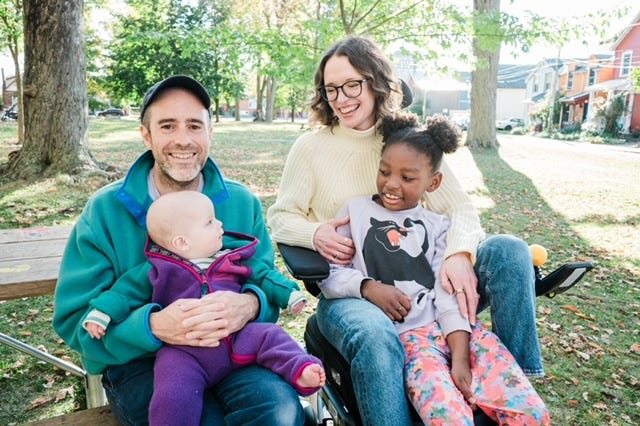
Rejecting Impossible Parenting Standards: What Disability Teaches Us About Care and Community with Jessica Slice: Episode 220
You can listen wherever you get your podcasts or check out the fully edited transcript of our interview at the bottom of this post.In this episode of The Peaceful Parenting Podcast, I interview Jessica Slice, a disability activist and the author of Unfit Parent, a Disabled Mother Challenges an Inaccessible World. We discuss the effect of Jessica’s disability on her life and parenting, and what non-disabled parents can learn from her about parenting.Know someone who might appreciate this episode? Share it with them!📣 And PSSST- New workshop next week- Transitions without Battles: Helping Your Child Move From One Thing to the Next without Meltdowns, Power Struggles, or Yelling- Get all the details hereWe talk about:* 00:00 — Intro + Jessica Slice and her book* 00:02 — Jessica’s disability story and diagnoses* 00:05 — Wheelchair, identity shift, and living as disabled* 00:06 — The disability paradox explained* 00:08 — Perfectionism, capitalism, and happiness* 00:11 — Disability culture vs. hustle culture* 00:13 — Becoming a parent unexpectedly (foster → newborn)* 00:14 — Why early parenting can be easier for disabled parents* 00:18 — Skill overlap: disability + parenting* 00:20 — Myths about disabled parenting* 00:26 — Fear of care, aging, and needing help* 00:27 — Parenting and interdependence* 00:29 — Community support and parenting* 00:30 — Letting go of control and certainty* 00:32 — Everyone needs help* 00:34 — Advice to younger parent self* 00:35 — Where to find JessicaResources mentioned in this episode:* Yoto Screen Free Audio Book Player* The Peaceful Parenting Membership* Evelyn & Bobbie bras* Jessica’s books * Jessica’s Substack * Jessica on A Slight Change of Plans Connect with Sarah Rosensweet:* Instagram* Facebook Group* YouTube* Website* Join us on Substack* Newsletter* Book a short consult or coaching session callxx Sarah and CoreyYour peaceful parenting team-click here for a free short consult or a coaching sessionVisit our website for free resources, podcast, coaching, membership and more!>> Please support us!!! Please consider becoming a supporter to help support our free content, including The Peaceful Parenting Podcast, our free parenting support Facebook group, and our weekly parenting emails, “Weekend Reflections” and “Weekend Support” - plus our Flourish With Your Complex Child Summit (coming back in the summer for the 3rd year!) All of this free support for you takes a lot of time and energy from me and my team. If it has been helpful or meaningful for you, your support would help us to continue to provide support for free, for you and for others.In addition to knowing you are supporting our mission to support parents and children, you get the podcast ad free and access to a monthly ‘ask me anything’ session.Our sponsors:YOTO: YOTO is a screen free audio book player that lets your kids listen to audiobooks, music, podcasts and more without screens, and without being connected to the internet. No one listening or watching and they can’t go where you don’t want them to go and they aren’t watching screens. BUT they are being entertained or kept company with audio that you can buy from YOTO or create yourself on one of their blank cards. Check them out HEREEvelyn & Bobbie bras: If underwires make you want to rip your bra off by noon, Evelyn & Bobbie is for you. These bras are wire-free, ultra-soft, and seriously supportive—designed to hold you comfortably all day without pinching, poking, or constant adjusting. Check them out HEREPodcast Transcript:Sarah: Hey everyone. Welcome back to another episode of the Peaceful Parenting Podcast. Today’s guest is Jessica Slice. She is a mother, a writer, and a disability activist, and the author of Unfit Parent: A Disabled Mother Challenges an Inaccessible World. I love this book and I’ve been telling everyone about it. I highly recommend you pick up a copy. We will link to it in the show notes. Until then, have a listen to my interview with Jessica, where we talk about disability and parenting and what non-disabled parents can learn from her about parenting. Whether you are interested in learning more about disability culture, or want some new and somewhat startling answers to the question, “Why is parenting so hard?” I think you’ll have a lot to think about after listening to this episode. Let’s meet Jessica.Sarah: Hi Jessica. Welcome to the podcast.Jessica: Thanks so much for having me.Sarah: I’m so glad to have you here. If you wouldn’t mind just starting out by introducing yourself and telling us a little bit about who you are and what you do.Jessica: Of course. My name’s Jessica Slice, and I’m really happy to be here. I am an author and a speaker and just write in general about disability and perfectionism and our shared fragility. I live in Toronto with my two kids and my husband, and we have a dog named Honey Puppy, and I’m, yeah, really happy to be here.Sarah: It’s so good to have you here. So your book about parenthood and disability—I was
Be the Person You Want Your Kids to Be: Episode 219
You can listen wherever you get your podcasts or check out the fully edited transcript of our interview at the bottom of this post.In this episode of The Peaceful Parenting Podcast, Corey and I talk about modeling the person you want your child to be—instead of trying to force them into having good character or good values. We discussed the difference between being a gardener or a carpenter parent, raising kind and helpful children, and how to trust the modeling process. We give lots of examples of what this has looked like for parents in our community as well as in our own homes.**If you’d like an ad-free version of the podcast, consider becoming a supporter on Substack! > > If you already ARE a supporter, the ad-free version is waiting for you in the Substack app or you can enter the private feed URL in the podcast player of your choice.Know someone who might appreciate this episode? Share it with them!We talk about:* 00:00 — Intro + main idea: be the person you want your child to be* 00:02 — How kids naturally model what we do (funny real-life stories)* 00:04 — When modeling goes wrong (rabbit poop + shovel story)* 00:06 — Not everything kids do is learned from us (fight/flight/freeze)* 00:08 — Gardener vs. carpenter parenting metaphor* 00:10 — Why “don’t do anything for your child” is flawed advice* 00:12 — Helping builds independence (adult example + kids stepping up)* 00:17 — Hunt, Gather, Parent: let kids help when they’re little* 00:19 — How to encourage helping without power struggles* 00:23 — Family team vs. rigid chores* 00:26 — Trust, faith, and “I’m sure you’ll do it next time”* 00:29 — Respecting kids like people (adultism)* 00:31 — Living values without preaching* 00:36 — It’s the small moments that shape kids* 00:38 — Don’t be a martyr: let some things go* 00:40 — When this works (and when it doesn’t)* 00:42 — Closing reflections on trust and nurturingResources mentioned in this episode:* Yoto Screen Free Audio Book Player * The Peaceful Parenting Membership * Hunt, Gather, Parent podcast episode* Evelyn & Bobbie brasConnect with Sarah Rosensweet:* Instagram* Facebook Group* YouTube* Website* Join us on Substack* Newsletter* Book a short consult or coaching session callxx Sarah and CoreyYour peaceful parenting team-click here for a free short consult or a coaching sessionVisit our website for free resources, podcast, coaching, membership and more!>> Please support us!!! Please consider becoming a supporter to help support our free content, including The Peaceful Parenting Podcast, our free parenting support Facebook group, and our weekly parenting emails, “Weekend Reflections” and “Weekend Support” - plus our Flourish With Your Complex Child Summit (coming back in the summer for the 3rd year!) All of this free support for you takes a lot of time and energy from me and my team. If it has been helpful or meaningful for you, your support would help us to continue to provide support for free, for you and for others.In addition to knowing you are supporting our mission to support parents and children, you get the podcast ad free and access to a monthly ‘ask me anything’ session.Our sponsors:YOTO: YOTO is a screen free audio book player that lets your kids listen to audiobooks, music, podcasts and more without screens, and without being connected to the internet. No one listening or watching and they can’t go where you don’t want them to go and they aren’t watching screens. BUT they are being entertained or kept company with audio that you can buy from YOTO or create yourself on one of their blank cards. Check them out HEREEvelyn & Bobbie bras: If underwires make you want to rip your bra off by noon, Evelyn & Bobbie is for you. These bras are wire-free, ultra-soft, and seriously supportive—designed to hold you comfortably all day without pinching, poking, or constant adjusting. Check them out HEREPodcast Transcript:Sarah: Hey, everyone. Welcome back to another episode of the Peaceful Parenting Podcast. I have Corey with me today. Hi, Corey.Corey: Hey, Sarah.Sarah: I’m so happy to be talking about what we’re going to be talking about today because it’s something that comes up a lot—both with our coaching clients and in our membership.Today we’re talking about modeling the person you want your child to be—being the person you want your child to be—instead of trying to force them into having good character or good values.Corey: This is one of my favorite topics because people don’t really think about it. There’s that phrase that’s so rampant: “Do as I say, not as I do.” And we’re actually saying: do the exact opposite of that.Sarah: Yeah. And I think if people did this, that phrase wouldn’t have to exist. Because if you’re being the person you want your child to be, then you really can just say, “Do as I do.”I guess that “Do what I say, not what I do” comes up when you’re not being the person you want your child to be. And it shows how powerful it is that kids naturally follow what we do, right?Corey
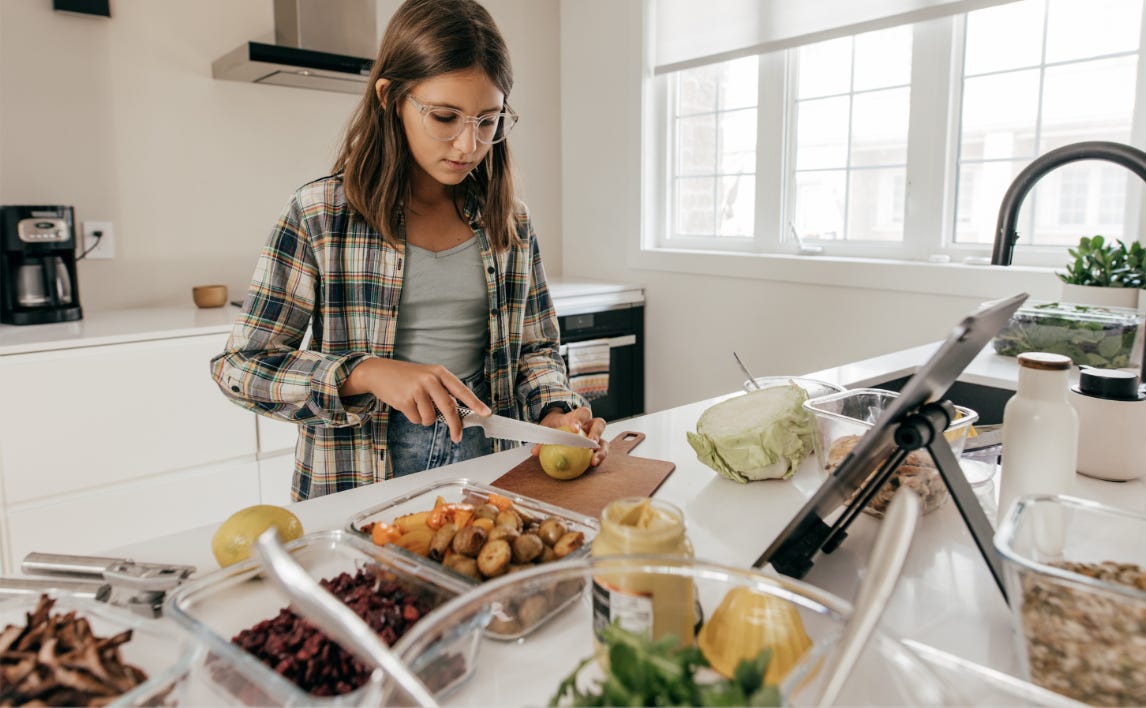
Raising Kids with Life Skills for Successful Independence with Katie Kimball: Ep 218
You can listen wherever you get your podcasts or check out the fully edited transcript of our interview at the bottom of this post.In this episode of The Peaceful Parenting Podcast, I speak with Katie Kimball of Raising Healthy Families. We discussed getting kids in the kitchen and getting them to love cooking, raising teenagers and why they are wonderful, managing screens at different ages, and what kind of skills kids need to become independent, well-rounded and self-sufficient once they leave our homes.Make sure to check out Katie’s course Teens Cook Real Food! **If you’d like an ad-free version of the podcast, consider becoming a supporter on Substack! > > If you already ARE a supporter, the ad-free version is waiting for you in the Substack app or you can enter the private feed URL in the podcast player of your choice.Know someone who might appreciate this episode? Share it with them!We talk about:* [00:00] Introduction to the episode and guest Katie Kimball; overview of topics (cooking, teens, life skills, screens)* [00:01] Katie’s background: former teacher, mom of four, and how her work evolved into teaching kids and teens to cook* [00:04] Why the teen years are actually great; what teens need developmentally (agency and autonomy)* [00:08] Beneficial risk and safe failure; how building competence early reduces anxiety later* [00:10] Getting kids into cooking: start small, build confidence, and let them cook food they enjoy* [00:16] Cooking as a life skill: budgeting, independence, and preparing for adulthood* [00:21] Screen time: focusing on quality (consumptive vs. creative vs. social) instead of just limits* [00:25] Practical screen strategies used in Katie’s family* [00:28] Motivating teens to cook: future-casting and real-life relevance (first apartment, food costs)* [00:33] Teens Cook Real Food course: what it teaches and why Katie created it* [00:37] Fun foods teens love making (pizza, tacos)* [00:39] Where to find Katie and closing reflectionsResources mentioned in this episode:* Teens Cook Real Food Course https://raisinghealthyfamilies.com/PeacefulParenting* Evelyn & Bobbie bras: https://reimaginepeacefulparenting.com/bra* Yoto Screen Free Audio Book Player https://reimaginepeacefulparenting.com/yoto* The Peaceful Parenting Membership https://reimaginepeacefulparenting.com/membership* How to Stop Fighting About Video Games with Scott Novis: Episode 201 https://reimaginepeacefulparenting.com/how-to-stop-fighting-about-video-games-with-scott-novis-episode-201/Connect with Sarah Rosensweet:* Instagram: https://www.instagram.com/sarahrosensweet/* Facebook Group: https://www.facebook.com/groups/peacefulparentingfreegroup* YouTube: Peaceful Parenting with Sarah Rosensweet @peacefulparentingwithsarah4194* Website: https://reimaginepeacefulparenting.com* Join us on Substack: https://substack.com/@sarahrosensweet* Newsletter: https://reimaginepeacefulparenting.com/newsletter* Book a short consult or coaching session call: https://book-with-sarah-rosensweet.as.me/schedule.phpxx Sarah and CoreyYour peaceful parenting team-click here for a free short consult or a coaching sessionVisit our website for free resources, podcast, coaching, membership and more!>> Please support us!!! Please consider becoming a supporter to help support our free content, including The Peaceful Parenting Podcast, our free parenting support Facebook group, and our weekly parenting emails, “Weekend Reflections” and “Weekend Support” - plus our Flourish With Your Complex Child Summit (coming back in the summer for the 3rd year!) All of this free support for you takes a lot of time and energy from me and my team. If it has been helpful or meaningful for you, your support would help us to continue to provide support for free, for you and for others.In addition to knowing you are supporting our mission to support parents and children, you get the podcast ad free and access to a monthly ‘ask me anything’ session.Our sponsors:YOTO: YOTO is a screen free audio book player that lets your kids listen to audiobooks, music, podcasts and more without screens, and without being connected to the internet. No one listening or watching and they can’t go where you don’t want them to go and they aren’t watching screens. BUT they are being entertained or kept company with audio that you can buy from YOTO or create yourself on one of their blank cards. Check them out HEREEvelyn & Bobbie bras: If underwires make you want to rip your bra off by noon, Evelyn & Bobbie is for you. These bras are wire-free, ultra-soft, and seriously supportive—designed to hold you comfortably all day without pinching, poking, or constant adjusting. Check them out HEREPodcast Transcript:Sarah: Hi everyone. Welcome back to another episode of the Peaceful Parenting Podcast. Today’s guest is Katie Kimball of Raising Healthy Families. She has been helping parents feed their kids and, more recently—in the past few years—teach their kids to cook. We had a great conversation abo

You’re On Fire, It’s Fine: Teens and Big Feelings: Episode 217
You can listen wherever you get your podcasts or check out the fully edited transcript of our interview at the bottom of this post.In this episode of The Peaceful Parenting Podcast, I speak with Katie K. May, a licensed therapist and author of the book You’re On Fire. It’s Fine: Effective Strategies for Parenting Teens With Self-Destructive Behaviors. We discussed children/teens who are “fire feelers”, why intense emotions can lead to risky behaviours, how to respond to self-harm urges, how to stay connected or rebuild your connection with your teen, and what parents of younger children can do now to prevent challenges in their teen years.**If you’d like an ad-free version of the podcast, consider becoming a supporter on Substack! > > If you already ARE a supporter, the ad-free version is waiting for you in the Substack app or you can enter the private feed URL in the podcast player of your choice.Know someone who might appreciate this episode? Share it with them!We talk about:* 00:05 — What Is a Fire Feeler?* 00:06 — What Emotional Dysregulation Really Means* 00:07 — Fire Feelers Often Have Fire-Feeler Parents- Genetic and Environmental Components* 00:10 — Why Teens Are So Easily Overwhelmed* 00:12 — What Fire Feelers Do When Overwhelmed* 00:20 — How Parents Should Respond to Self-Harm Urges* 00:22 — When to Get Professional Help* 00:24 — Why Depression Looks Different in Teens* 00:25 — Teens Still Need Their Parents* 00:26 — How to Stay Connected to Teens* 00:28 — Judgment vs Validation* 00:31 — How to Rebuild Connection When Things Are Broken- Katie’s Hierarchy of Connection* 00:34 — Sensitivity & Impulsivity* 00:35 — What Parents of Younger Kids Can Do Now* 00:37 — Why Control Works When Kids Are Young — and Fails Later* 00:38 — Why “Tough Love” Doesn’t WorkResources mentioned in this episode:* Evelyn & Bobbie bras* Yoto Player-Screen Free Audio Book Player* The Peaceful Parenting Membership* Get a free chapter of Katie’s book * Katie’s website Connect with Sarah Rosensweet:* Instagram* Facebook Group* YouTube* Website* Join us on Substack* Newsletter* Book a short consult or coaching session callxx Sarah and CoreyYour peaceful parenting team- click here for a free short consult or a coaching sessionVisit our website for free resources, podcast, coaching, membership and more!>> Please support us!!! Please consider becoming a supporter to help support our free content, including The Peaceful Parenting Podcast, our free parenting support Facebook group, and our weekly parenting emails, “Weekend Reflections” and “Weekend Support” - plus our Flourish With Your Complex Child Summit (coming back in the summer for the 3rd year!) All of this free support for you takes a lot of time and energy from me and my team. If it has been helpful or meaningful for you, your support would help us to continue to provide support for free, for you and for others.In addition to knowing you are supporting our mission to support parents and children, you get the podcast ad free and access to a monthly ‘ask me anything’ session.Our sponsors:YOTO: YOTO is a screen free audio book player that lets your kids listen to audiobooks, music, podcasts and more without screens, and without being connected to the internet. No one listening or watching and they can’t go where you don’t want them to go and they aren’t watching screens. BUT they are being entertained or kept company with audio that you can buy from YOTO or create yourself on one of their blank cards. Check them out HEREEvelyn & Bobbie bras: If underwires make you want to rip your bra off by noon, Evelyn & Bobbie is for you. These bras are wire-free, ultra-soft, and seriously supportive—designed to hold you comfortably all day without pinching, poking, or constant adjusting. Check them out HEREPodcast Transcript:Sarah: Hey everyone. Welcome back to another episode of the Peaceful Parenting Podcast. Today’s guest is Katie May. She’s a therapist and the author of You’re On Fire. It’s Fine: Effective Strategies for Parenting Teens With Self-Destructive Behaviors. We talked about why some teens are what she calls “fire feelers,” and about how best to support them—and ourselves—when emotional dysregulation is common, troubling, and can be destructive.If you don’t have a teen yet, but you have a kiddo with big feelings, have a listen, because Katie also talks about what she wishes parents of younger kids knew so they didn’t end up with these sorts of challenges down the road. Let’s meet Katie.Sarah: Hi, Katie. Welcome to the podcast.Katie: Hey, Sarah. I’m glad to be here. Excited to talk about teens and parenting today—stuff I’m jazzed to share.Sarah: Me too. Yeah. And I loved your book. I’ll ask you about that in a second—or maybe you can tell us who you are and what you do.Katie: Yeah. My name is Katie K. May. I’m a licensed therapist in Pennsylvania, and I lead a team of other therapists. We all specialize in working with high-risk teens and their parents. So every day, we’re in t

Big Feelings and Mindfulness with Hunter Clarke-Fields: Episode 216
👉 Before we get started- On Wednesday, I’m hosting a live workshop called When You Know Better, but Still Yell, where we focus on understanding what happens in those moments and how to interrupt yelling and repair without shame. If that sounds supportive to you, you can find more information at reimaginepeacefulparenting.com/workshop.Now the episode!! You can listen wherever you get your podcasts or check out the fully edited transcript of our interview at the bottom of this post.In this episode of The Peaceful Parenting Podcast, I speak with Hunter Clarke-Fields, the host of the Mindful Mama Podcast and author of the book Raising Good Humans. We discussed taking care of difficult feelings including how blocking our feelings can backfire and the role mindfulness plays in accepting and working through our own and our children’s feelings.**If you’d like an ad-free version of the podcast, consider becoming a supporter on Substack! > > If you already ARE a supporter, the ad-free version is waiting for you in the Substack app or you can enter the private feed URL in the podcast player of your choice.Know someone who might appreciate this episode? Share it with them!We talk about:* 00:00:35 — Guest intro: Hunter Clarke-Fields (Raising Good Humans, Mindful Mama Podcast)* 00:01:00 — Big feelings as the root of so many parenting struggles + why willpower isn’t enough* 00:04:00 — Hunter’s background: mindfulness, sensitivity, and parenting an intense child* 00:10:00 — Two common coping patterns: blocking feelings vs flooding (and why both backfire)* 00:21:00 — Mindful acceptance: what it is + how allowing feelings helps them move through* 00:27:00 — Reflective listening + “name it to tame it” (why labeling feelings lowers intensity)* 00:31:40 — Co-regulation in action: a real-life story of staying steady with a dysregulated teen* 00:38:10 — Takeaways + where to find Hunter + workshop reminder + closingResources mentioned in this episode:* Workshop: When You Know Better but Still Yell Workshop* Evelyn & Bobbie bras* Yoto Player-Screen Free Audio Book Player* The Peaceful Parenting Membership* Hunter’s website* Raising Good HumansConnect with Sarah Rosensweet:* Instagram* Facebook Group* YouTube* Website* Join us on Substack* Newsletter* Book a short consult or coaching session callxx Sarah and CoreyYour peaceful parenting team- click here for a free short consult or a coaching sessionVisit our website for free resources, podcast, coaching, membership and more!>> Please support us!!! Please consider becoming a supporter to help support our free content, including The Peaceful Parenting Podcast, our free parenting support Facebook group, and our weekly parenting emails, “Weekend Reflections” and “Weekend Support” - plus our Flourish With Your Complex Child Summit (coming back in the spring for the 3rd year!) All of this free support for you takes a lot of time and energy from me and my team. If it has been helpful or meaningful for you, your support would help us to continue to provide support for free, for you and for others.In addition to knowing you are supporting our mission to support parents and children, you get the podcast ad free and access to a monthly ‘ask me anything’ session.Our sponsors:YOTO: YOTO is a screen free audio book player that lets your kids listen to audiobooks, music, podcasts and more without screens, and without being connected to the internet. No one listening or watching and they can’t go where you don’t want them to go and they aren’t watching screens. BUT they are being entertained or kept company with audio that you can buy from YOTO or create yourself on one of their blank cards. Check them out HEREEvelyn & Bobbie bras: If underwires make you want to rip your bra off by noon, Evelyn & Bobbie is for you. These bras are wire-free, ultra-soft, and seriously supportive—designed to hold you comfortably all day without pinching, poking, or constant adjusting. Check them out HEREPodcast transcript:Hey everyone. Welcome back to another episode of the Peaceful Parenting Podcast. Today’s guest is Hunter Clark Fields. She’s a mindfulness teacher and parenting expert, host of the Mindful Mama Podcast, and author of the book Raising Good Humans. We focused our conversation today around taking care of difficult feelings—both yours and your child’s.So often, big feelings are the cause of parenting challenges and friction in our families. Hunter shared some great strategies for how to make these moments that happen every day more tolerable, and even how our lives get better when we learn to accept our own feelings and our child’s feelings.And don’t worry if you’re like me and you sort of shut down when someone starts telling you that you should have a mindfulness practice. You can use Hunter’s suggestions even if you know that meditation isn’t necessarily in your future.Interestingly, one thing Hunter and I spoke about is that you can’t stay calm or not yell in difficult situations just by willpower.
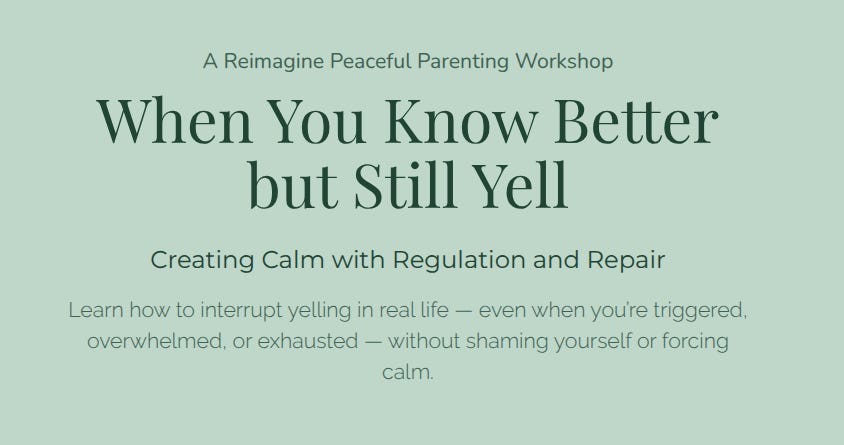
Hot take on yelling: an announcement from me and Corey
This week’s episode is a conversational invitation rather than a full podcast episode. We’re talking about why yelling happens even when you know better — and why willpower alone isn’t the answer.If you’ve ever felt ashamed, frustrated, or confused about why old patterns show up under stress, you’re not alone. We also share details about a live workshop, When You Know Better but Still Yell, for parents who want support with regulation and repair in real-life moments. Happening on Weds. Jan 21Workshop details and registration are HEREor go to https://reimaginepeacefulparenting.com/workshop This is a public episode. If you'd like to discuss this with other subscribers or get access to bonus episodes, visit sarahrosensweet.substack.com/subscribe