The OT Lifestyle Movement
Lifestyle Optimisation, Occupation, Wellbeing, Coaching, Entrepreneurship, Visionaries.
The OT Lifestyle Movement · Rhiannon Crispe
Show overview
The OT Lifestyle Movement has been publishing since 2020, and across the 6 years since has built a catalogue of 59 episodes. That works out to roughly 50 hours of audio in total. Releases follow a roughly quarterly cadence.
Episodes typically run thirty-five to sixty minutes — most land between 39 min and 1h 8m — though episode length varies meaningfully from one episode to the next. None of the episodes are flagged explicit by the publisher. It is catalogued as a EN-AU-language Health & Fitness show.
There hasn’t been a new episode in the last ninety days; the most recent episode landed 7 months ago. The busiest year was 2023, with 23 episodes published. Published by Rhiannon Crispe.
From the publisher
Come take a front row seat on the most inspiring OT conversations that will inject you with unbound confidence and leave you feeling lit up and empowered to take action in your life, work and business. This is for the occupational therapy professionals who dare to think differently, who deeply resonate with a lifestyle approach to therapy and who endeavour to create meaningful change in the lives of others. It’s for the OT’s who are eager to take the roof off their expectations and live up to their own occupational potential.
Latest Episodes
View all 59 episodes
133: Starting Your Online OT Business feat. Beki Eakins
In this business-focussed episode of The OT Lifestyle Movement, I sit down with Beki Eakins to talk about what building a thriving online OT business actually looks like – the numbers, the strategy and the mindset behind it all. We discuss: What Beki's online business looks like today – her offers, her week and how she structures her time across a full work day The real numbers behind a successful online OT business The marketing strategies that have genuinely moved the needle for her – and what she now teaches others from hard-won experience How to attract and serve your ideal clients, even if you're starting from scratch The mindset shifts that helped Beki stop playing small and start scaling with purpose ….and SO MUCH MORE! Connect with Beki Eakins: Website: www.bekieakins.com/ Linked In: www.linkedin.com/in/bekieakins/ Instagram: www.instagram.com/otyourselftofreedom/ Beki Eakins is a business coach for occupational therapists who are done with burnout, low pay, and building businesses that still depend on their time. After seeing how traditional OT roles keep highly skilled clinicians overworked and underpaid, she built a freedom-based business working just 12 hours a week, generating consistent high-ticket sales and supporting OTs across the world to do the same. Her work challenges the industry norms many therapists feel stuck in, showing them how to move away from referrals, funding dependence, and exhausting caseloads, and into scalable online businesses that create more income, impact, and control. Through her programme, the OT Freedom Collective, and her podcast “OT Yourself to Freedom”, she has helped hundreds of OTs rethink what is actually possible in their career. She is known for her direct, no-nonsense approach, calling out what is not working and showing therapists how to build businesses that actually support their lives.

132: Occupation-Based Practice – Reclaiming The Soul of Occupational Therapy ft Wendy Stav
In this powerful and thought-provoking episode of The OT Lifestyle Movement, I sit down with Dr. Wendy Stav to explore the heart of our profession - occupation. We discuss: Why Wendy never abbreviates “OT” and always says “occupational therapy” - and why language matters The difference between occupation as means and occupation as end, and why it matters in practice How to hold onto authentic occupational therapy values in highly medicalised systems Practical steps to reclaim occupation-centred care An introduction to the Dynamic Model of Occupation-Based Practice - what it is and how it supports transformative, occupation-driven work ....and SO MUCH MORE! Connect with Wendy Stav: Website The Dynamic Model of Occupation-Based Practice

131: Burn In Mini-Series | #3: The Flame + The 8 Ecosystem Elements Explained
In this episode Michelle Luken and I discuss: Why The Burn In Model is based on a metaphor. The flame at the heart of The Burn In Model. The flame represents the alignment between who you are (being), what you do (doing) and who and what you're connected to (belonging) What it means to tend to your inner flame vs your outer flame A breakdown of the 8 Ecosystem Elements that influence alignment: 1. Sticks – the personal and occupational factors that fuel or dampen your fire 2. Rocks – boundaries; your foundations of safety, regulation and capacity 3. Rain + Wind – physical and social environment 4. Coal – burnout 5. Smoke – signs and signals of burnout 6. Ash – end of life and what we leave behind; lineage and legacy 7. Spark – life itself; and where there is life, there is hope 8. Embers – the gifts we offer the world If you are interested to join our upcoming 6 week guided journey through The Burn In Model, you can learn more here: burninnotout.com

130: Burn In Mini-Series | #2: The Origins of The Burn In Model
In this episode, I’m chatting with Michelle Luken, Occupational Therapist and co-creator of The Burn In Model, about how it all began. We discuss: The moment Burn In was first named How Michelle and I, on opposite sides of the world, were exploring similar concepts and how the Universe clearly connected us to bring The Burn In Model to life What the model means to us now vs. when it started How a single post turned into a worldwide co-creation The development of The Burn In Model - group collaboration, focus groups and over 700 messages between Michelle and I The mission to spark a global movement, beyond OT To join us for a 6 week guided journey - to burn in, not out, head to burninnotout.com

129: Burn In Mini-Series | #1: Our Burnout Stories ft Michelle Luken
In this episode, I’m joined by Michelle Luken - Occupational Therapist, U.S. Army Veteran, and co-creator of The Burn In Model. We dive deep into the personal stories that sparked this model, including: Michelle’s OT journey and the roles she’s held across military and mental health settings Her own experience of burnout and why it didn’t feel just like exhaustion, but something deeper Why our definition of burnout expands beyond the World Health Organisation’s The factors that led to misalignment in my own life and practice Why we both began to understand burnout not as a collapse, but as a misalignment — between who we are, what we do, and who and what we're connected to This is where The Burn In Model begins... with story, reflection and the decision to burn in, not out. Learn more about our upcoming free Webinar or join our 6 week journey where we guide you through The Burn In Model, so you can use it personally and professionally: www.burninnotout.com
128: Who Are We Really? A Critical Look at OT Identity ft Justine Jecker
In this episode, I chat with Justine Jecker - an occupational therapist I instantly fell in love with for her grounded wisdom, her realness, her critical thinking and the way she speaks so deeply to the heart of our profession. This conversation is rich, reflective and full of insight into what it really means to be an OT today. We discuss: How our personal identity shapes how we show up as occupational therapists What identity means within the OT profession and why it matters The rich history of OT and how it influences our current professional identity The challenge of defining what OTs do vs. what OT is The importance of staying grounded in occupation as the heart of OT How we can communicate the value of occupational therapy more clearly Why being an OT and something else is becoming more common It’s not always about us trying to explain OT - it's can others describe what it is we’re doing? Justine Valencia Jecker is an occupational therapist with Canadian and European lineage who would self-describe as being a global citizen. She was raised in Hamilton, Ontario, Canada until the age of 17 before traveling to Japan to finish high school. In the 20+ following years, she has traveled to more than three dozen countries and has personal and professional connections around the world. Justine's academic background include a BSc. Kinesiology, MSc. Occupational Therapy, and a PhD in Educational Leadership. Her occupational therapy background within the past two decades has involved working in Forensic Mental Health, Community Indigenous Health, Interprofessional Education, and National Association work focusing on the practice of OT in Canada. Justine, officially Aussie nicknamed "Juzzy", is passionate about how our personal identities shape our professional lives, and has joined us to discuss this adventurous topic.
127: The Identity We Weave: Professional Identity, Language & the Future of OT
Have you ever fumbled to explain what you do as an OT? Questioned your place in the profession because the reality feels so far from what you were taught? Shrunk your words just to be understood - and still weren’t? Felt unseen, undervalued or like you care too much in systems that don’t? You’re not alone. Correcting someone who thinks you’re a physio… Trying to justify your value in a system obsessed with KPIs… Shrinking your occupation-based words just to make them easier for someone else to sit with… Wondering if the version of OT you believed in still exists. This solo episode is a raw and real reflection. We talk about the disconnect so many OT practitioners are feeling. This isn’t a teaching episode. It’s a truth-telling one. A space to speak what so many of us have been carrying — and maybe haven’t said out loud. And if any part of this lands with you, I’d love to invite you to join me for: The Identity We Weave — a FREE, live global event for OTs where we’ll be diving into these exact conversations, alongside Emeritus Professor Gail Whiteford and Professor Elizabeth Townsend. It’s free. It’s real. And it’s for you.

126: The Neuroscience of Emotional Regulation, OT Coaching & Supervision Strategies ft Dr. Áine O’Dea
In this episode we are talking all talking about a wide range of topics that surprisingly have a lot in common! We're talking about emotional regulation, OT coaching and supervision strategies with the wonderful Dr. Áine O'Dea. We discuss: How understanding the brain helps OTs in supporting emotional regulation. The effects of stress on the nervous system and effective strategies for OTs. The integration of bottom-up and top-down therapeutic strategies in sessions. Differences between coaching and traditional therapy and when to use each approach. The role of neuroscience in coaching and its impact on behaviour change. Applying self-determination theory in occupational therapy. Key coaching strategies and the transition challenges OTs face in adopting new roles. Strategies for supervisors to foster reflective practice and critical thinking. Ways supervisors can assist OTs coping with stress and burnout. Connect with Dr. Áine O'Dea: Website LinkedIn Instagram

125: OTs on the Money: Pathways to Financial Freedom ft Doug Vestal
In this episode we're exploring how to achieve both time and financial freedom. We dive deep into practical strategies and actionable tips with our guest, Doug Vestal, to empower you on your journey towards a more liberated and fulfilling OT life. We discuss: What financial freedom and time freedom mean for OTs and how to achieve them. The importance of financial literacy for OTs. Tips for occupational therapists to gain financial independence, including paying off student debt, diversifying income and automating business operations. Understanding and utilizing the "Freedom Number" to set financial goals. Aligning spending with personal values and rethinking financial priorities. Tackling common financial misconceptions in the OT community and the benefits of financial well-being. Strategies for OTs to manage and pay off student debt effectively. Practical advice for enhancing financial growth and managing debt for occupational therapists. Doug Vestal is the author of the book: Financial Freedom for OTs: A Guide to Building Wealth Without Burnout. Doug helps OTs achieve occupational choice and freedom by starting private pay practices. He co-founded The Functional Pelvis, a private pay OT practice with his OT wife, Lindsey Vestal. He has over 10 years’ experience managing an OT private practice and has helped 100s of OTs start private practices. Before working with OTs he spent 15 years in senior management positions on Wall Street. He loves combining his business acumen, passion for entrepreneurship, and his knowledge of OTs to help them find time and money freedom on their terms. He has a Master’s in Financial Mathematics and a Ph.D. in Applied Probability. Connect with Doug: Website Instagram YouTube
121: The Power of Stretch Therapy & Nervous System Regulation in Occupational Therapy Practice ft Karlye Williamson
In this episode, we dive deep with Karlye Williamson, an experienced occupational therapist who has seamlessly integrated stretch therapy and nervous system regulation into her practice. Join us as we explore how Karlye's journey into OT led her to develop a unique approach that enhances both mental and physical well-being. We discuss: Karlye’s journey from traditional OT to specialising in stretch therapy and nervous system regulation. The fundamentals of stretch therapy and its application in occupational therapy. The role of nervous system regulation in supporting meaningful engagement in daily activities. The polyvagal theory and its implementation in therapeutic OT practices. Mind-body connection and its importance in healing from chronic stress or trauma. Sensory-based techniques for people experiencing mental health challenges. An overview of her private practice, including in-person sessions, online programs for clients and OTs, and her upcoming workshops. The impact of combining in-person therapy with online resources to enhance client outcomes. An introduction to Karlye’s online program, "Regulating Nervous System Pathways," designed for individuals dealing with stress, anxiety, and those seeking overall well-being improvement. You can connect with Karlye and learn more about her programs here: Instagram Website
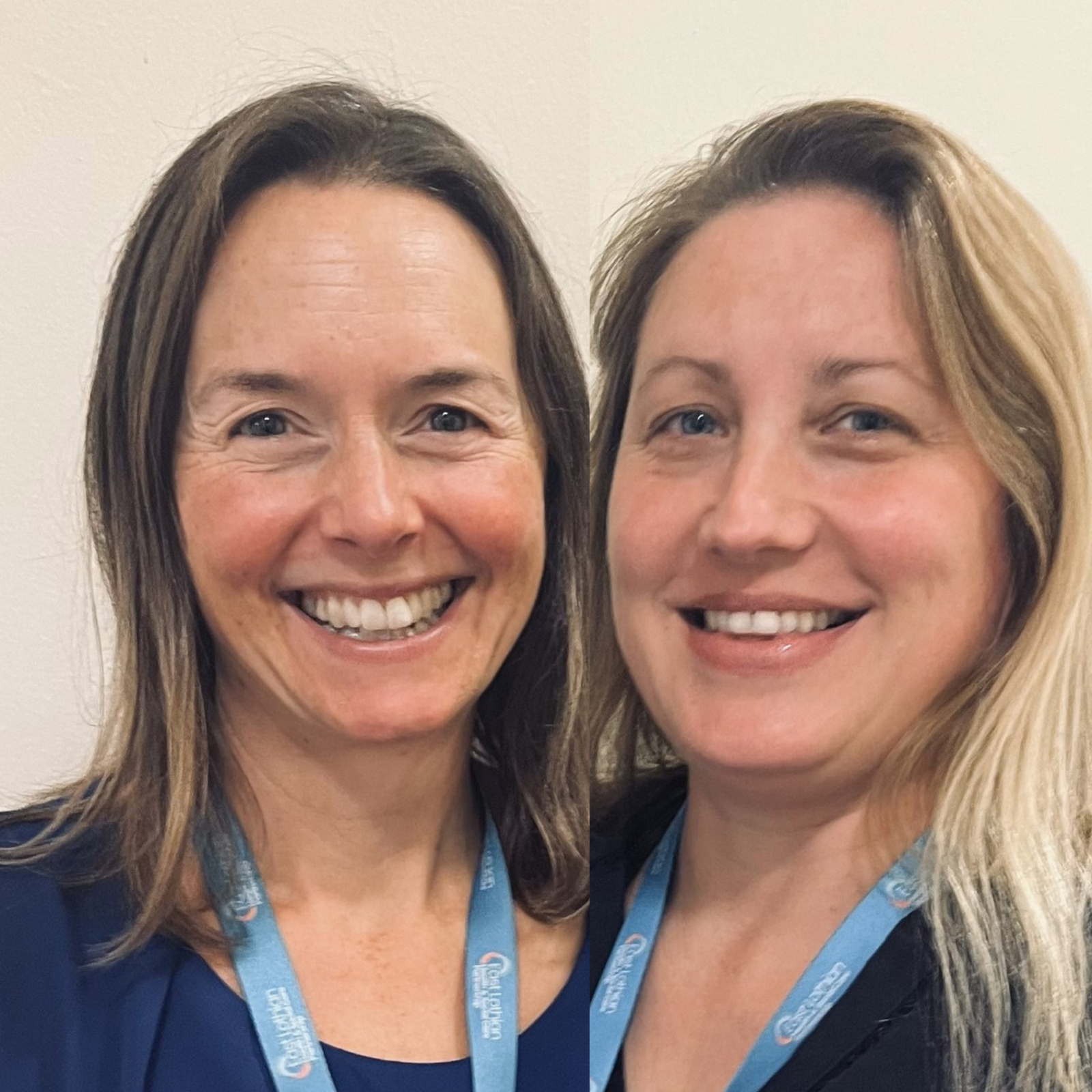
119: The OT Carer Pathway: Empowering Caregivers through Holistic Occupational Science-Informed Support with Cat and Ali
In this episode we are talking all about supporting caregivers through the lens of occupational therapy. We discuss: Practical occupational therapy strategies to support carers. What The OT Carer Pathway is and how you can use it in your practice. How occupational science informs The OT Carer Pathway. The tier system within the OT Carer Pathway. Occupational therapy carer assessments. Carer education and intervention. Ali Buchanan created The OT Carer Pathway. It is a specialised program designed specifically for caregivers, addressing the unique challenges they face in their roles. This initiative is crafted to provide targeted support to carers, who are often the unsung heroes in healthcare, assisting them to manage both the demands of caring for others and maintaining their own health and wellbeing. Cat is the Band 6 OT collaborating with individuals using The OT Carer Pathway to support them on their journey. The OT Carer Pathway is a program that Ali and Cat want every OT to have access to. If you'd like to learn more about it, feel free to email Ali at: [email protected] Cat was a mature student (juggling 2 small children). She has worked across the life span, from paediatrics to supporting people at the end of their journey. She has been a community-based OT which means she has developed a diverse clinical skill set. Cat describes herself as an OT geek through and through and she is very passionate about the power of meaningful occupation. Cat is currently working towards securing her Masters and this advanced learning is supporting her as she explores new clinical pathways. Ali graduated in 1998 and has worked across acute, rehab and community settings. She has a passion for neurology, and community-based rehabilitation. Ali is currently a Clinical Lead in the East Lothian Rehabilitation Service in Scotland leading the occupational therapy component of their unscheduled care pathways, primary care and the Occupational Therapy Carers Pathway. She is passionate about Occupational Therapy and is currently completing a Masters degree in Advancing Practice of Occupational Therapy at Queen Margaret University, Edinburgh. Ali is a proud mum of 2 teenagers, loves the outdoors, swimming, netball and her family. For more information about The OT Carer Pathway: Website
117 – (ASK ME ANYTHING): From Doubt to Done: Starting a Business, Imposter Syndrome & Building Confidence
In this special episode, I'm on the other side of the microphone! I'm taking the guest seat as I chat with a fellow OT, Jo, who reached out via Instagram. We realised our conversation could benefit a wider audience, tackling some of the most pressing questions in the world of occupational therapy and starting a business. We're diving deep into the issues that matter - to you! In this episode we discuss: Tackling the overwhelming feeling when starting a private practice. Understanding the potential in independent private practice for OT and pediatrics. How a niche can streamline your practice. Strategies for gaining confidence as you start your practice. Navigating imposter syndrome. Dealing with the fear of not knowing enough. Session planning – to do or not to do? How to feel assured about the knowledge you impart. Handling expectations from clients and their families regarding therapy outcomes. Strategies for dealing with challenging interactions in practice. Methods to use for evaluating therapy effectiveness. Preventing feelings of isolation when running a solo practice. Keeping your knowledge and skills up-to-date in a dynamic field. Making sure your interventions are genuinely rooted in occupational therapy principles, and you’re not just doing activities. Jo is a Children's OT based in Bristol and Bath in the UK. She is in the process of setting up Little Rainbow OT, an independent service for children who have handwriting and fine motor difficulties, and desires to bring some art and creativity into her role as an OT through her new business. She has previously worked in social care as a Children's OT in the UK providing specialist seating and equipment to children with physical disabilities. Prior to re-training as an OT she lived in Sydney, Australia and worked in many different roles including an Events Organiser, a Nanny, a Children's Swimming Teacher and an artist selling her paintings in Sydney markets! Now she is excited about tying all these experiences together to create a new business and follow her OT dream. She is a wife and mama to 3 beautiful girls who keep her on her toes. When she has a spare moment to herself, she is usually painting, creating polymer clay jewellery or hunting for wildflowers in the countryside.
116 – Sensory Healing After Developmental Trauma ft Marti Smith
In this episode we are talking all about the powerful impact of sensory healing after developmental trauma. We discuss: The concepts ‘sensory healing’ and ‘developmental trauma’ The Neurosequential Model of Therapeutics by Dr Bruce Perry The 6 R’s of a trauma-compassionate treatment plan: rewarding, relational, relevant, respectful, rhythmic, and repetitive Low-cost, budgeted sensory activities to maximise the potential for healing after trauma Precautions we need to be aware of when integrating sensory strategies into trauma-informed care We we need to move away from traditional behaviour management approaches towards a focus on relational understanding Fostering curiosity and a relational approach in therapy Animals and farm-based care in therapy Real-life clinical examples and Marti’s clinical reasoning Writing and publishing a book: self-published vs traditional publishing (Marti has done both!) And SO much more! Marti Smith is an esteemed occupational therapist based in Austin, Texas, where she works at a care farm dedicated to serving individuals who have experienced trauma and adversity. With a profound commitment to healing through sensory integration, Marti has authored two influential books: The Connected Therapist: Relating Through the Senses and Sensory Healing after Developmental Trauma: The Connected Therapist's Guide to Low-Cost Activities for Working with Children. Her work emphasizes the importance of sensory strategies and relational approaches in trauma-informed care, making significant contributions to the field of occupational therapy. You can learn more about Marti Smith and her books here: Marti's website
115 – The New Canadian Model of Occupational Participation (CanMOP) ft Mary Egan
The CanMOP is an evolution of the Canadian occupational model, previously known as the CMOP and the CMOP-E. This new iteration places a strong emphasis on occupational participation, encouraging therapists to extend their focus beyond just performance and engagement. Occupational participation is placed at the heart of this new model, emphasising access to, initiation and sustaining valued occupations and meaningful relationships and contexts. In this episode we discuss: What inspired the re-creation of the Canadian Model of Occupational Participation (CanMOP) Overview of the changes to the Canadian occupation model over the years. Why there has been a shift from performance and engagement to participation. An overview of the CanMOP and how it might be applied. How the CanMOP allows occupational therapists to evolve our practice to better serve individuals and communities. Image: https://www.researchgate.net/figure/Canadian-Model-of-Occupational-Participation-Source-According-to-Egan-Restall-2022_fig2_371248871 Mary is the director of the School of Rehabilitation Sciences at the University of Ottawa. During the first 10 years of her career Mary worked with adults and children in institutional and community-based settings. She has worked in various regions across Canada. Mary completed graduate work in occupational therapy at the University of Alberta and in epidemiology at McGill University which provided her with the tools to continue her career as an educator and researcher. Mary’s research is driven by curiosity regarding the legitimate goals of occupational therapy and how these are best reached. She is particularly interested in how people return to valued activities within meaningful social contexts following serious health events. This has led to work, related to how occupational therapy and rehabilitation are conceptualized, and how processes of occupational therapy support – or hinder – occupational participation.
114 – Collaborative Relationship Focused Occupational Therapy ft Professor Gayle Restall
In this episode we are talking all about Collaborative Relationship Focused Occupational Therapy with Professor Gayle Restall. Gayle is co-editor of the new book; Promoting Occupational Participation: Collaborative Relationship-Focused Occupational Therapy. Collaborative Relationship Focused Occupational Therapy underscores the core purpose of occupational therapy—enabling access to, initiation of, and continued participation in occupations. It highlights the essence of occupational therapy as a practice built on collaborative relationships with individuals, families, groups, communities, and populations. The focus is on leveraging the strengths, knowledge, talents, and resources of people and groups. Key focuses include: Client Relationships: Explaining how therapists work closely with their clients. Practice Goals: Defining the main aims of occupational therapy. Focus on Justice: Shifting towards promoting fairness, equality, and rights in therapy. We discuss: What Collaborative Relationship Focused Occupational Therapy is all about Why and how we need to evolve from client-centered practice A dive into the four elements of Collaborative Relationship Focused Occupational Therapy: contextually relevant, nuanced, safe and promote rights based self determination What inspired Gayle to collaborate with Mary Egan and team of others to conceptualise this new practice The components of Canadian Inter-relational Practice Process Framework (COTIPP) and how it is different from other frameworks Gayle is a Professor Emerita at the University of Manitoba. She lives works, plays, and builds relationships in Winnipeg where she lives. Gayle is a registered occupational therapist with a PhD in Community Health Sciences. Her scholarship is driven by a passion for involving people who require health and social services in their own care, program development, research, and social policymaking. Through her research, she explores the systems and policy changes needed for people with chronic health conditions to fully participate in community life. She is committed to lifelong work to facilitate justice and equity for individuals and collectives. Spending time in the boreal forest to hike, cycle, or cross-country ski is a favorite pastime.
113 – Social Justice and Narrative-Driven Practice ft Dr Nick Pollard
In this episode we are lucky enough to be speaking with Dr Nick Pollard. We discuss: What Wilcock’s mantra ‘doing, being, becoming and belonging’ means to Nick What occupational justice looks like How occupational therapists can contribute in addressing the inequalities in health Reflecting on the concept of "Occupational Therapy Without Borders" How the use of narrative plays a role in promoting occupational justice How occupational therapy practitioners are political beings (and what this means) The power and potential of occupational therapy Nick is a senior lecturer in occupational therapy at Sheffield Hallam University. Nick’s teaching concerns social contexts for occupational therapy, community based interventions and underpinning concepts including occupational science and social occupational therapy. He teaches research methods and interprofessional modules, and has researched, written and presented extensively on a range of topics, particularly community based rehabilitation, critical explorations of occupational therapy as well as mental health, wellbeing and physical exercise. Nick has coedited several landmark occupational therapy texts, notably the Occupational Therapy without Borders books.
112 – From Stagnation to Inspiration: Reigniting Our OT Spark ft Brad Williams
In this episode we are talking all about: Why we often doubt our work as occupational therapists Recognising and addressing imposter syndrome within occupational therapy Strategies for rekindling passion in occupational therapy Words of wisdom for the OT professionals in the trenches right now Exploring what identity-led work means and its practical applications in OT Understanding the importance of narrative and storytelling in the therapy process The Becoming Collective - a space for occupational therapists to connect, learn and grow together Brad is a father of two and husband, occupational therapist, the host and creator of The Becoming Collective and founder of Naturally Gathered - an OT in nature practice. He is a deep thinker and challenger of the status quo. Brad loves spending time in nature whether it be bird watching, hiking, camping or snorkelling. Professionally, he finds joy and energy in noticing and exploring unresolved problems and contemplating new ideas. You can learn more about Brad and The Becoming Collective here: The Becoming Collective Instagram

111 – Inside the Mind: An Occupational Therapist’s Journey with Serious Mental Illness and the Path to Resilience
In this episode we are talking all about serious mental illness and a path to resilience with Liz Grace. Liz is an occupational therapist in recovery from Schizoaffective Disorder who lives with the daily challenges of profound hearing loss. We discuss: Serious mental illness and its impact on relationships, work and everyday activities Schizoaffective disorder – what it is and Liz’s lived experience What delusions look and feel like from Liz’s perspective, and specific examples If it’s possible to distinguish between delusional thoughts and those that are grounded in reality Self-harm, cutting and recovery Hospitalisation for mental illness – the good, the bad and the ugly The stigma and misunderstandings related to serious mental illness Physical restraint and why it should no longer be used The most important gift an OT can offer a person living with serious mental illness Profound hearing loss and cochlear implants How Liz’s challenging life experiences have made her a better OT Why Liz decided to write a book and openly share her personal experiences The challenges living with mental illness and being an OT Liz’s concerns about losing her OT job before publishing her book ‘Resilient’. Liz Grace is a first-time author of her book titled - Resilient. At seventeen, Liz's world collapsed into a place of mental illness and revolving hospital doors. It took a strong family to help her survive to university life, where she exceled. But before she could start her career as an occupational therapist, Schizoaffective Disorder rears to threaten all that she has worked towards. Liz Grace is an occupational therapist in recovery from Schizoaffective Disorder who lives with the daily challenges of profound hearing loss. Starting at the age of sixteen, she gradually lost her hearing, learned American Sign Language in university and at age twenty-six, was implanted with bilateral cochlear implants. Liz lives in Southwestern Ontario, Canada with her hearing dog and works in community home care. Content Warning: This podcast episode includes discussions about self-harm, which may be triggering for some listeners. If you or someone you know is struggling with self-harm or related issues, please consider your own well-being and consult with a mental health professional for support. Liz's Book: Resilient (click here)
110 – Strengths-Based Practice in Occupational Therapy ft Kavita Murthi
In this episode we are talking all about strengths based occupational therapy with Kavita Murthi. We discuss: What strengths-based practice is How we can embrace a strengths-based approach in our assessment and therapy How we can write strengths-based reports What strengths-based practice looks like when working with neurodivergent people How to stop using a deficits-based approach today How we can identify the strengths of the people we work with Research that supports strengths-based approach And SO much more! Kavitha Murthi is pursuing her doctoral studies at NYU Steinhardt in the Department of Occupational Therapy. She works with Counselor to the President, Dr. Kristie Patten, on a National Science Foundation (NSF) project titled “Developing Abilities and Knowledge for Careers in Design and Engineering for Students on the Autism Spectrum by Scaling Up Making Experiences.” Through this project, Kavitha intends to explore the impact of interest-driven and strength-based engineering activities on autistic students’ learning and social development. She is very interested in understanding how neurodiverse adolescents interested in engineering and designing participate in maker clubs to problem-solve using the Engineering Design Process (EDP) independently. She is also very keen to find and highlight the missing authentic autistic voices through her research by partnering with them in the research process. Resources: 1. The scoping review: https://research.aota.org/ajot/article/77/2/7702185060/24094/Strengths-Based-Practice-to-Enhance-Mental-Health?searchresult=1 2. Double empathy problem by Dr. Damian Milton: https://www.tandfonline.com/doi/abs/10.1080/09687599.2012.710008 3. Assessments that promote strengths: a. American Institute of Research (AIR) Self-determination Scale: https://www.ou.edu/education/zarrow/resources/assessments b. Child Occupational Self-Assessment (COSA): https://moho-irm.uic.edu/productDetails.aspx?aid=3 c. Child Self Efficacy Scale (CSES): https://www.rand.org/education-and-labor/projects/assessments/tool/2006/childrens-self-efficacy-scale-cses.html d. Participation and Environment Measure (PEM_CY): https://www.canchild.ca/en/resources/248-participation-and-environment-measure-for-children-and-youth-pem-cy 4. Paper that talks about the value of language and terminologies: https://www.liebertpub.com/doi/full/10.1089/aut.2020.0014?fbclid=IwAR0xbVb5qTBFAxI9hU2DXtJSJX3GsE4Ljh1qAqrQ27hqxf_Jn-oQAYJE5lE 5. Round table discussion that helped us develop the operational definition: https://doi.org/10.1089/aut.2019.29002.aju 6. Assessment that uses strengths-based visual assessment: https://molecularautism.biomedcentral.com/articles/10.1186/s13229-015-0006-3 7. Paper on strengths-based assessments: https://journals.sagepub.com/doi/10.1177/154079690603100206 8. ASD Nest Model: https://steinhardt.nyu.edu/metrocenter/asdnest/about-nyu-asd-nest-support-project
108 – Human Rights, Social Inclusion & Population Health ft Clare Hocking
In this episode we are talking all about human rights, social inclusion and population health with Clare Hocking. We discuss: The paradigm shift Clare proposes from the conventional notion of "you are what you eat" to the more encompassing concept of "you are what you do" How to drive social change as an OT Addressing issues of injustice and human rights that are impacting participation and engagement in occupations How we can promote inclusion, diversity and more equitable communities Ways our profession can address anti-racism and decolinization Clare Hocking is a New Zealand occupational therapy academic, and New Zealand's first occupation therapy professor. She is currently a full professor at the Auckland University of Technology. Clare’s goal is to transform occupational therapy by influencing practitioners, academics, researchers and students, nationally and internationally. Clare co-authored the 3rd edition of Wilcock's Occupational Perspective of Health, co-edited Occupational Science: Society, Inclusion, Participation, and has authored more than 30 chapters and encyclopedia entries, and over 120 journal articles. Clare has served as the Executive Editor of the Journal of Occupational Science since 1997, and partnered with Emeritus Professor Liz Townsend to revise the World Federation of Occupational Therapy's Position Statement on Human Rights.