
The Next Page
185 episodes — Page 2 of 4

Ep 130Informing Interwar Internationalism: The League of Nations Information Service
In this episode, Emil Seidenfaden, an historian presently undertaking postdoctoral research at the Saxo Institute, University of Copenhagen, joined us to talk about his recent book, Informing Interwar Internationalism. This fascinating work combines international history and media history and explores the intersection of journalism and diplomacy at the time of the League of Nations. Emil talks about the relationship between public information and legitimacy, and how the Information Section officials at the League negotiated the tensions between propaganda, public opinion and internationalism. Resources Seidenfaden, E. E. (2024). Informing Interwar Internationalism: The Information Strategies of the League of Nations. Bloomsbury Academic. Histories of Internationalism Seidenfaden, E. E. (2020). Daniel Hucker, Public Opinion and Twentieth-Century Diplomacy. A Global Perspective. Leiden: Brill. Potter, S. J. (2023). Broadcasting in the Cause of Peace: Regulating International Radio Propaganda in Europe, 1921–1939. The International History Review, 45(6), 843–864. https://doi.org/10.1080/07075332.2023.2224352 Sweetser, A. (1916) Roadside Glimpses of the Great War. Macmillan. London. Covenant of the League of Nations: https://libraryresources.unog.ch/ld.php?content_id=32971179 The League of Nations Information Section: https://libraryresources.unog.ch/LONSecretariat/information Emil’s book recommendation: Cohen, D. (2023). Last Call at the Hotel Imperial. The Reporters Who Took On A World At War. Penguin Random House. Where to listen to this episode Apple podcasts: https://podcasts.apple.com/us/podcast/the-next-page/id1469021154 Spotify: https://open.spotify.com/show/10fp8ROoVdve0el88KyFLy YouTube: Content Guest: Emil Seidenfaden Host, producer and editor: Amy Smith Recorded & produced at the United Nations Library & Archives Geneva

Ep 129Henri La Fontaine, un enragé de la paix avec Pierre Van den Dungen
Pour cet épisode, nous sommes enchantés d’accueillir Pierre Van Den Dungen pour parler d’Henri La Fontaine, un homme intense et fascinant gratifié du prix Nobel de la Paix en 1913. Pierre Van Den Dungen, docteur en Philosophie et Lettres (Histoire), a consulté la totalité des papiers personnels de La Fontaine au Mundaneum, à Mons, afin de rédiger la biographie intitulée « Henri La Fontaine, prix Nobel de la Paix 1913 : une vie » publiée aux Editions Samsa en 2022. Pierre Van Den Dungen nous présente les grandes lignes de la personnalité de La Fontaine, en mettant en lumière son entourage, ses réseaux et sa sphère intime. Il explore ensuite les convictions pacifistes et mondialistes de La Fontaine, ainsi que son long mandat de 36 ans à la présidence du Bureau international de la Paix. Il traite également de la période de la vie de La Fontaine durant la Première Guerre mondiale, de son implication au sein de la Société des Nations, pour finalement évoquer les dernières années de sa vie durant la Seconde Guerre mondiale. Ressources Van den Dungen, Pierre. (2022) Henri La Fontaine, prix Nobel de la Paix 1913 : une vie. Bruxelles. Editions Samsa. https://www.henrilafontaine.be/ouvrage/henri-la-fontaine-2/ Rencontre avec Pierre Van Den Dungen : https://www.henrilafontaine.be/2023/01/07/chaire-hlf-rencontre-avec-pierre-van-den-dungen/ Fondation Henri La Fontaine : https://www.henrilafontaine.be/la-fondation/ Mundaneum : http://www.mundaneum.org/fr Discours d’Henri La Fontaine, 8ème séance plénière de la première Assemblée de la Société des Nations, 20 novembre 1920 (p. 171 du PDF) : https://archives.ungeneva.org/the-records-of-the-first-assembly-plenary-meetings Description des archives du Bureau International de la Paix (1891-1951) : https://archives.ungeneva.org/international-peace-bureau Où écouter cet épisode Apple podcasts: https://podcasts.apple.com/us/podcast/the-next-page/id1469021154 Spotify: https://open.spotify.com/show/10fp8ROoVdve0el88KyFLy YouTube: Henri La Fontaine, un enragé de la paix avec Pierre Van den Dungen (youtube.com) Contenu Invité : Pierre Van den Dungen Hôte : Hermine Diebolt Réalisation : Amy Smith Enregistré et réalisé à la Bibliothèque & Archives des Nations Unies à Genève

Ep 128Surviving the UN - a conversation with Robert Bruce Adolph
Robert Bruce Adolph joined us for this short episode to talk about his book Surviving the UN: The Unexpected Challenge. Robert worked on assignments in many conflict areas in the world in the 1990s during his second career as a UN Chief Security Officer, following his retirement as US Army Special Forces Lieutenant-Colonel. He was present during the deadly bomb attack on the UN compound in Baghdad on 19 August 2003. Over two decades later, as we approach the anniversary of that horrific event, Robert Adolph talks about why he wrote the book and about learning from failure. Resources Adolph, Robert Bruce. (2020). Surviving the UN: The Unexpected Challenge. New Academia Publishing/Vellum. (Available at the UNOG bookstore) Website: Robert Bruce Adolph - https://robertbruceadolph.com/ Bob's book recommendation Pinker, Steven. (2012). The Better Angels of Our Nature: Why Violence Has Declined. Penguin Books. Where to listen to this episode Apple podcasts: https://podcasts.apple.com/us/podcast/the-next-page/id1469021154 Spotify: https://open.spotify.com/show/10fp8ROoVdve0el88KyFLy YouTube: https://www.youtube.com/ Content Host: Amy Smith Speakers: Robert Bruce Adolph Production and editing: Amy Smith Recorded & produced at the United Nations Library & Archives Geneva *This episode was recorded online and we apologize for the low sound quality.

Ep 127Multilateralism, Multiculturalism and Working at the UN
The interns working at the UN Library & Archives Geneva gathered for a discussion with the Director of the Library & Archives, Francesco Pisano, on their thoughts on multilateralism, multiculturalism and working at the UN. Raphaela, Lucas, Alicia, Mengna and Ashrul come from different countries, are studying at different institutions and have different academic backgrounds. They share with us inside tips on applying for UN internships, explain their own motivations and give a glimpse of what they have learned during their time at the Library & Archives and UN Geneva. Together, they explore what multilateralism, multiculturalism and multilingualism mean to them in their lives and work. Resources UN Internships: https://www.un.org/en/academic-impact/page/internships UN Careers: https://careers.un.org/home?language=en Where to listen to this episode Apple podcasts: https://podcasts.apple.com/us/podcast/the-next-page/id1469021154 Spotify: https://open.spotify.com/show/10fp8ROoVdve0el88KyFLy YouTube: https://www.youtube.com/ Content Host: Franceso Pisano Speakers: Interns at the UN Library & Archives Geneva Ashrul Bin Mohammad Azmi Raphaela Gutierrez Alicia Grünert Lucas Westphal Jensen Mengna CHEN Concept and editing: Mengna CHEN Producer: Amy Smith Recorded & produced at the United Nations Library & Archives Geneva
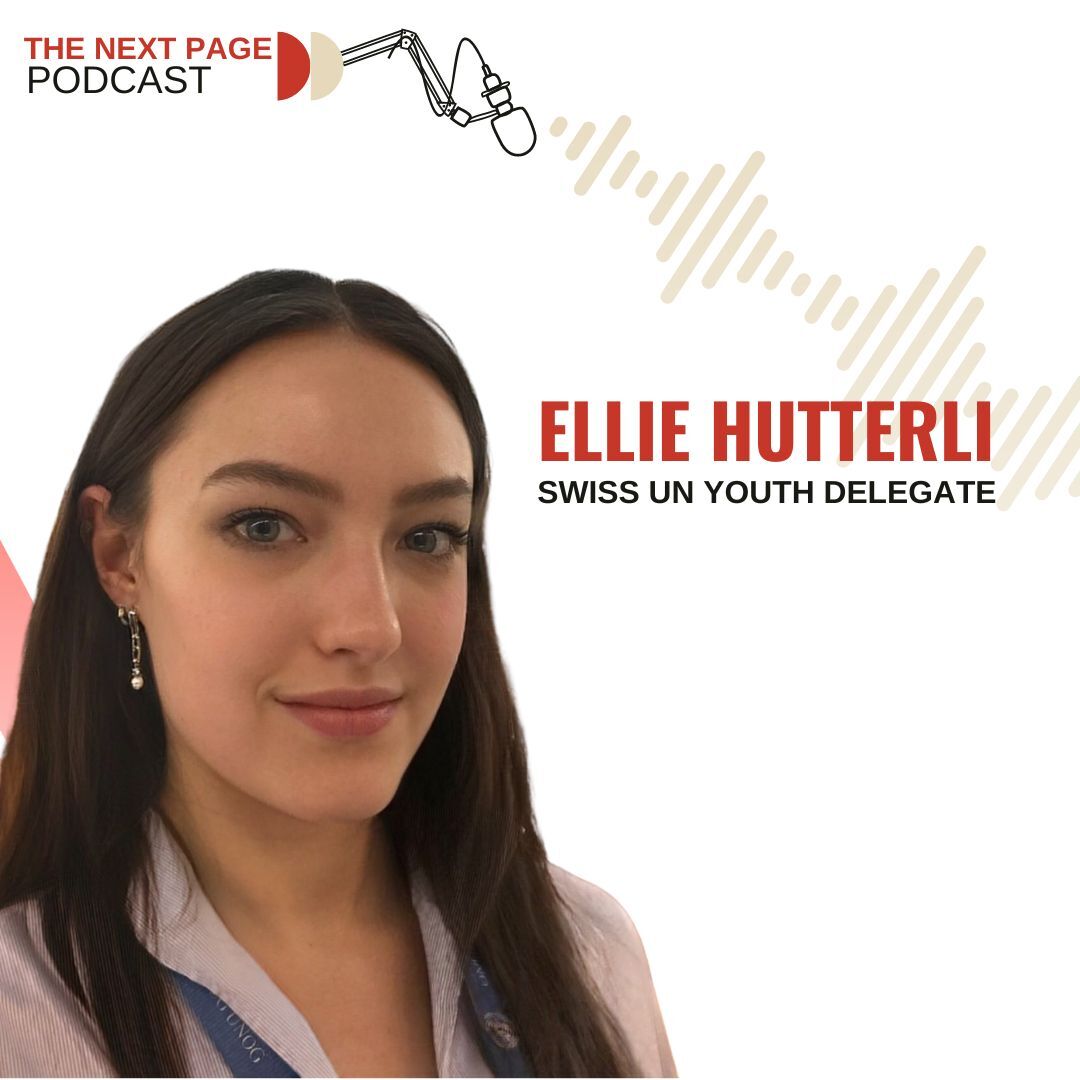
Ep 126Youth in Multilateralism - a conversation with Ellie Hutterli
Ellie Hutterli is a Senior Swiss UN Youth Delegate for 2022-24 and her priority topics are sustainable cities and communities, digitalization, reduced inequalities with a special focus on gender equality, and youth participation and inclusion. Ellie joins us for this episode to talk more about the Youth Delegate programme, her priority topic on women’s rights and gender equality, as well her thoughts more broadly on youth participation in the United Nations. Resources Conseil Suisse des Activités de Jeunesse : https://www.sajv.ch/en/projects/youth-rep Youth Delegate Programme: https://social.desa.un.org/issues/youth/un-youth-delegate-programme#:~:text=The%20roles%20of%20a%20youth,attending%20meetings%20and%20informal%20negotiations. Youth: https://social.desa.un.org/issues/youth Our Common Agenda: https://www.un.org/en/common-agenda Where to listen to this episode Apple podcasts: https://podcasts.apple.com/us/podcast/the-next-page/id1469021154 Spotify: https://open.spotify.com/show/10fp8ROoVdve0el88KyFLy YouTube: https://www.youtube.com/watch?v=TCxsgnF67Lw Content Guest: Ellie Hutterli, Swiss Youth Delegate Host, producer and editor: Amy Smith Recorded & produced at the United Nations Library & Archives Geneva

Ep 125Long Problems: Climate Change and the Challenge of Governing Across Time
Thomas Hale is Professor in Public Policy (Global Public Policy) at the Blavatnik School of Government at the University of Oxford. He also co-leads the Net Zero Tracker and the Net Zero Regulation and Policy Hub. His research explores how we can manage transnational problems effectively and fairly. In this conversation, Professor Hale talks with Francesco Pisano, Director of the UN Library & Archives Geneva, about his new book: Long Problems: Climate Change and the Challenge of Governing Across Time. The book offers a fresh perspective on addressing climate change through the lens of political science. They explore the challenge of long problems and Thomas Hale argues that political science must play a crucial role, alongside natural sciences, in finding solutions to existential threats like climate change through new frameworks for long-term policymaking. Resources: https://www.bsg.ox.ac.uk/people/thomas-hale Hale, T. (2024) Long Problems: Climate Change and the Challenge of Governing Across Time. Princeton University Press. Long Problems | Princeton University Press Where to listen to this episode Apple podcasts: https://podcasts.apple.com/us/podcast/the-next-page/id1469021154 Spotify: https://open.spotify.com/show/10fp8ROoVdve0el88KyFLy YouTube: Content Guest: Professor Thomas Hale Host: Francesco Pisano Producer and editor: Amy Smith Recorded & produced at the United Nations Library & Archives Geneva
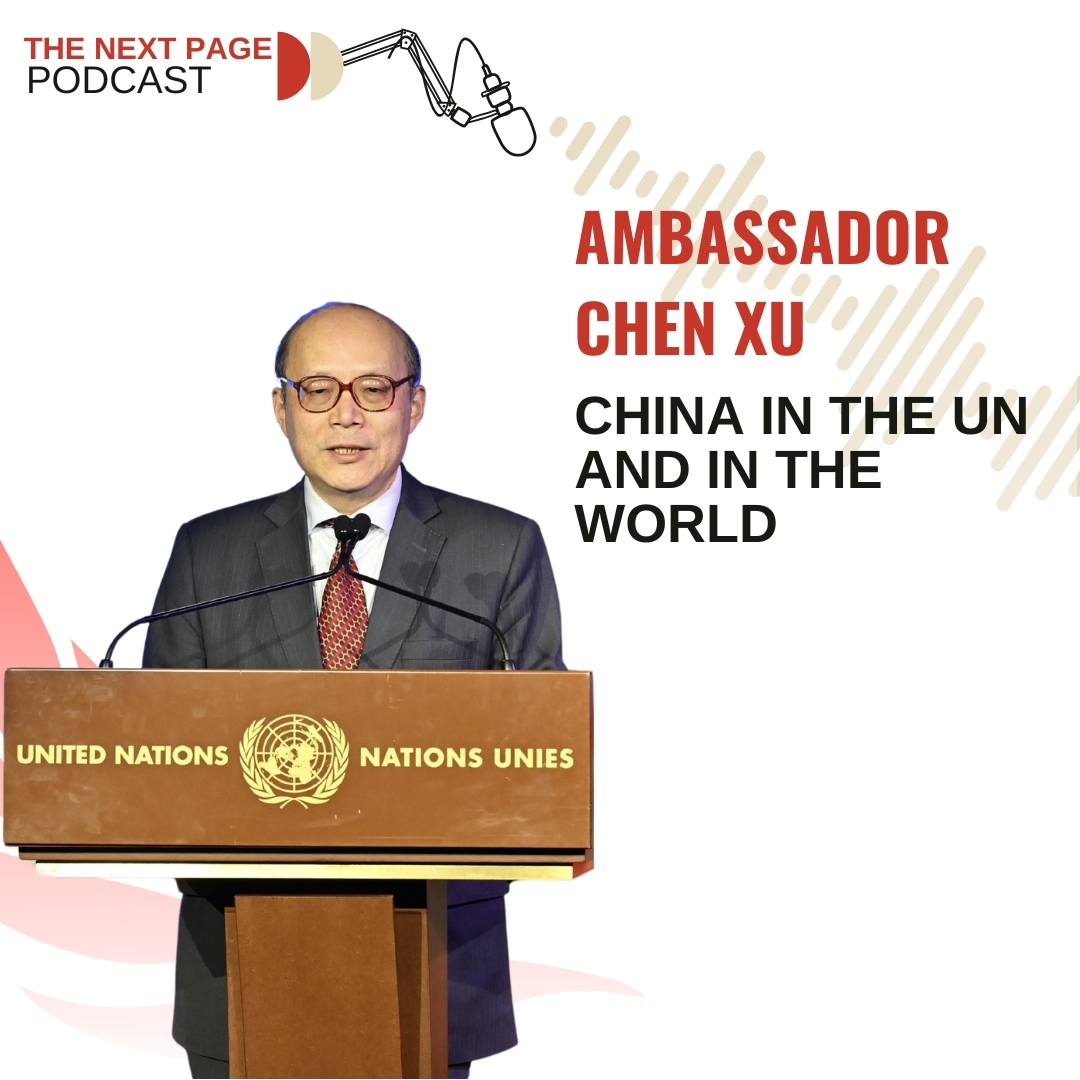
Ep 124China in the UN and in the world
Join us for the next episode in our ambassadors series in which H.E. Mr. CHEN Xu, Ambassador Extraordinary and Plenipotentiary, Permanent Representative of the People's Republic of China to the United Nations Office at Geneva and other International Organizations in Switzerland talks with the Director of the Library & Archives, Francesco Pisano. Ambassador Chen speaks of the history of China, its role in the Asian region and in the world, as well as in the United Nations. Content Speaker: Ambassador CHEN Xu Host: Francesco Pisano Producer and editor: Amy Smith Recorded & produced at the United Nations Library & Archives Geneva
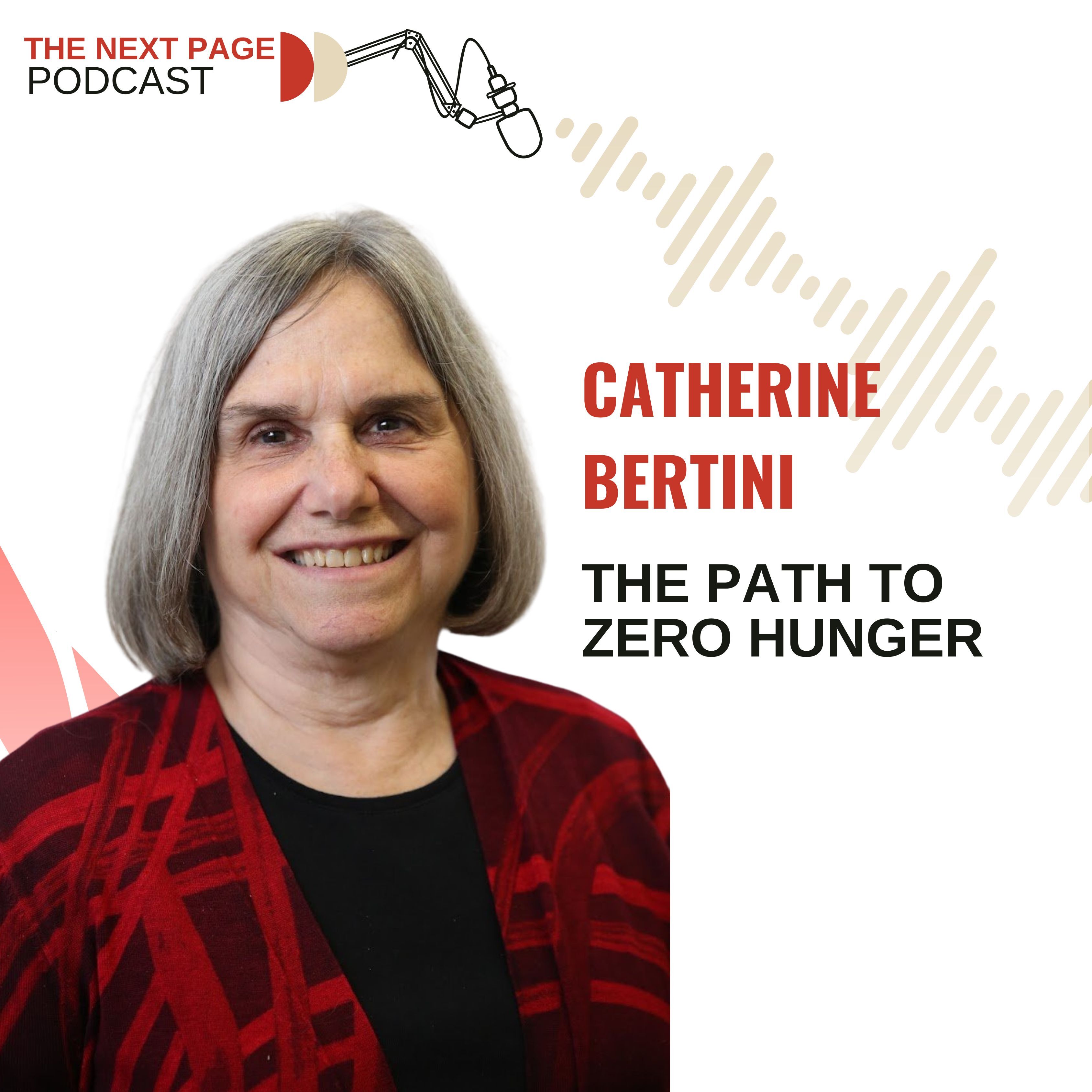
Ep 123The Path to Zero Hunger - a conversation with Catherine Bertini
Catherine Bertini is The Rockefeller Foundation Managing Director for Food, former Executive Director of the World Food Programme and World Food Prize Laureate (2003). We were delighted to have her join the Director of the Library & Archives, Francesco Pisano, for this episode to explore the question of food security and the vision of achieving zero hunger in an equitable world. The Rockefeller Foundation published a report last year providing an analysis of the current obstacles to food security and offers innovative ideas to overcome them. You can read the report via the link below. Resources The Rockefeller Foundation Report: https://www.rockefellerfoundation.org/report/defining-the-path-to-zero-hunger-in-an-equitable-world/ International Food Policy Research Institute: https://www.ifpri.org/event/commitments-impact-analyzing-global-commitments-toward-promoting-food-security-and-healthy Catherine Bertini: https://www.catherinebertini.com/ Where to listen to this episode Apple podcasts: https://podcasts.apple.com/us/podcast/the-next-page/id1469021154 Spotify: https://open.spotify.com/show/10fp8ROoVdve0el88KyFLy YouTube: https://youtu.be/DgKDGI8ZRi4 Content Guest: Catherine Bertini, The Rockefeller Foundation, Food Host: Francesco Pisano Producer: Amy Smith Editing: Mengna Chen Recorded & produced at the United Nations Library & Archives Geneva
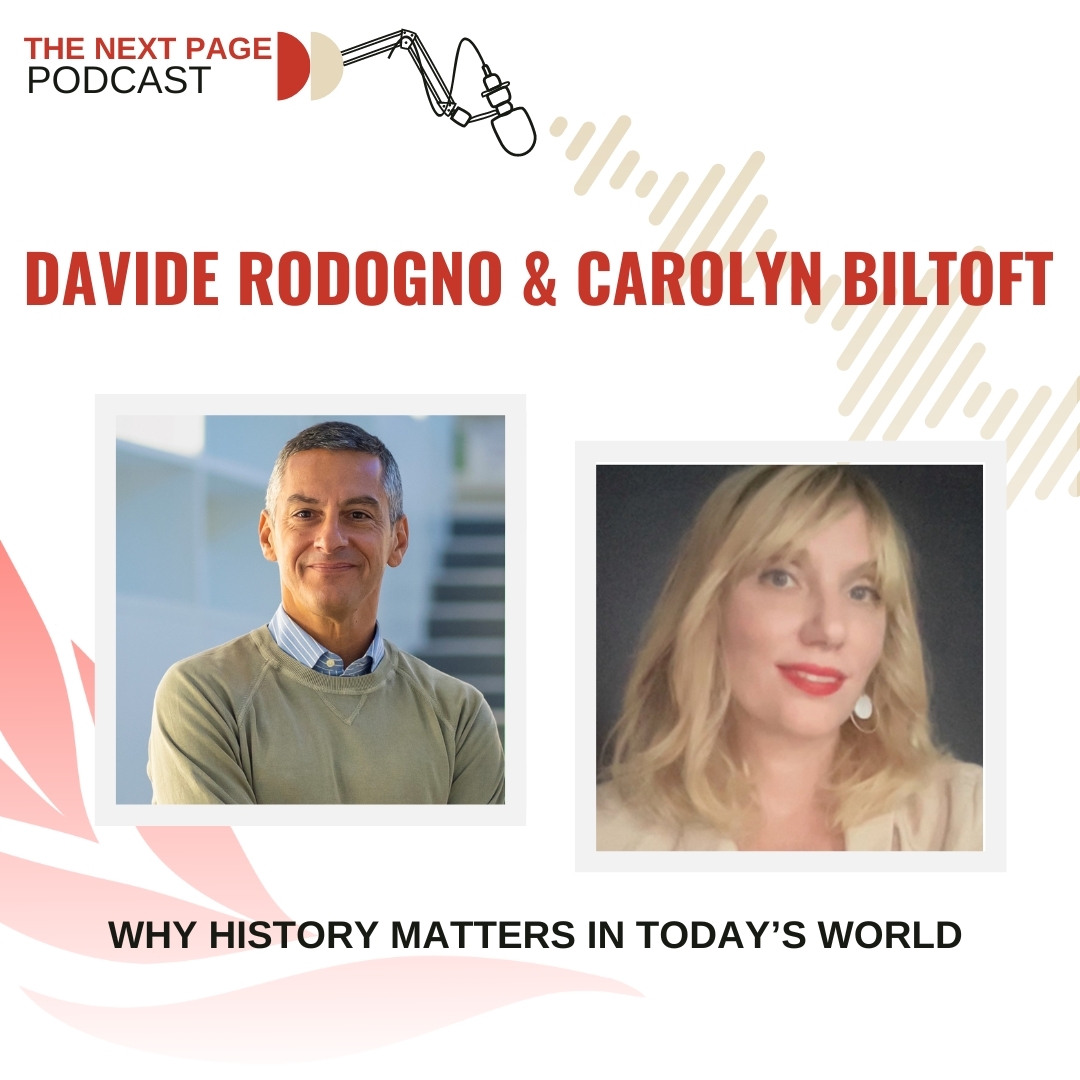
Ep 122Why history matters in today's world – with Davide Rodogno and Carolyn Biltoft
In this rich conversation with Professors Davide Rodogno and Carloyn Biltoft, we delve into a world of meaning making and examine the depth and breadth that history offers for policymaking. Davide Rodogno is professor of International History and Politics and the Head of the Interdisciplinary Master Programme at the Graduate Institute of International and Development Studies in Geneva. He specializes in researching international organizations and philanthropic foundations, and transnational networks and movements since the 19th century. Carolyn Biltoft is associate professor of international history and politics at the Graduate Institute of International and Development Studies. Her works fuses the tools of world history, intellectual history, cultural studies and critical theory. She is interested broadly in the dynamic interactions between globalising structures and infrastructures and diverse beliefs, emotions, concepts and human life-worlds. Resources Geneva Graduate Institute: https://www.graduateinstitute.ch/international-history-politics Carolyn Biltoft’s book suggestions: Hartman, Saidiya. (2019). Wayward Lives, Beautiful Experiments: Intimate Histories of Social Upheaval. W. W. Norton & Company (February 19, 2019). Johnson, Denis. (2012) Train Dreams: A Novella. Picador Smail, Daniel Lord. (2007) On Deep History and the Brain. University of California Press; First Edition Davide Rodogno’s book suggestions: García Márquez, Gabriel (1967) One Hundred Years of Solitude / Cien años de soledad. García Márquez, Gabriel. (1985). Love in the Time of Cholera. García Márquez, Gabriel. (1992) Strange Pilgrims. Twelve Short Stories. (Bon Voyage Mr. President, is set in Geneva) Where to listen to this episode Apple podcasts: https://podcasts.apple.com/us/podcast/the-next-page/id1469021154 Spotify: https://open.spotify.com/show/10fp8ROoVdve0el88KyFLy YouTube: https://www.youtube.com/watch?v=h32UaG8AgZc Content Guests: Davide Rodogno and Carolyn Biltoft Host and Producer: Amy Smith Editing and social media designs: Mengna Chen Recorded & produced at the United Nations Library & Archives Geneva

Ep 121Diplomacy and technology: from smoke signals to artificial intelligence with Dr. Jovan Kurbalija
Founder and Executive Director of Diplo Foundation, Dr. Jovan Kurbalija, takes us on a journey from the past to the present and across civilizations to explore the interplay of technology and diplomacy. Diplomacy and technology are at the heart of Diplo’s mission. Dr. Kurbalija emphasizes the importance of writing as a diplomatic tool and begins by telling us the story in the Sumerian poem “Enmerkar and the Lord of Aratta”, recounting how Enmerkar invents writing on clay tablets to relieve the messenger of having to remember the increasing number of messages with which he is charged. Jovan talks about the similarity of the Ancient Egyptian Amarna letters to today’s diplomatic notes, the advanced messaging system of the Persians at the time of Cyrus the Great, how the Romans and Byzantines concealed information, the advances in technology during the Renaissance period and he highlights the themes of continuity and change all the way to present day. He also speaks about the impact of social media, AI, and our need to remain open to embracing technology in a smart way. Resources Diplo website: https://www.diplomacy.edu/ Kurbalija J. (2023) History of Diplomacy and Technology: From Smoke Signals to Artificial Intelligence available at: https://www.diplomacy.edu/resource/history-of-diplomacy-and-technology-from-smoke-signals-to-artificial-intelligence/ Where to listen to this episode Apple podcasts: https://podcasts.apple.com/us/podcast/the-next-page/id1469021154 Spotify: https://open.spotify.com/show/10fp8ROoVdve0el88KyFLy YouTube: https://www.youtube.com/ Content Guest: Jovan Kurbalija, Executive Director, Diplo Host and Producer: Amy Smith Editing and social media designs: Mengna Chen Recorded & produced at the United Nations Library & Archives Geneva
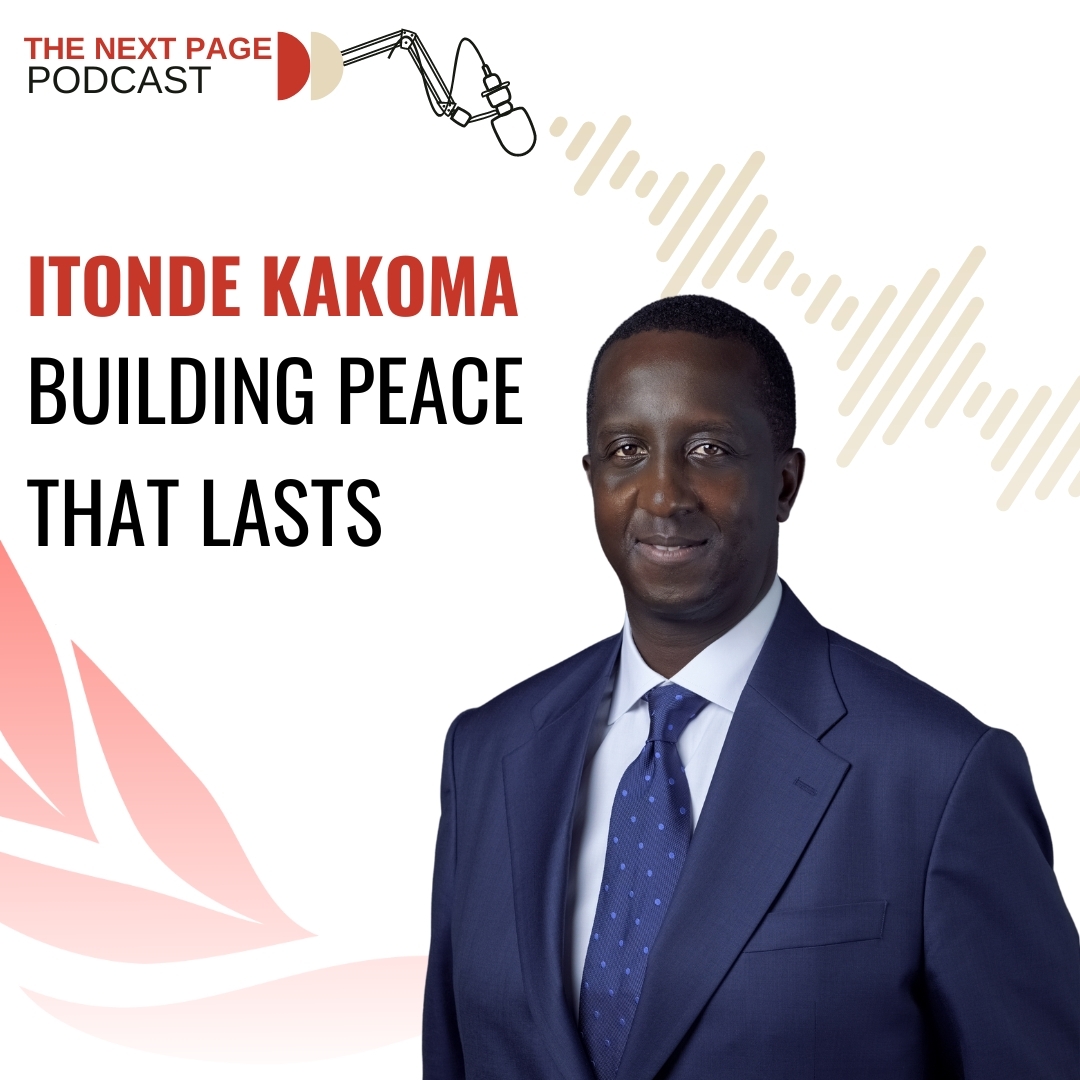
Ep 120Building Peace that Lasts - a conversation with Itonde Kakoma
We invited Itonde Kakoma, the new President and CEO of Interpeace, to talk about the mission of Interpeace – an organization that had its origins in the UN and works to prevent violence and build lasting peace. Interpeace has over 30 years of experience working in Africa, the Middle East, Asia, Europe and Latin America. In this conversation with the Director of the UN Library & Archives, Francesco Pisano, Itonde Kakoma talks about inclusive peacebuilding, a participatory approach and a vision of peace anchored in the cohesion and resilience of citizens, the diversity and inclusion of communities and the responsiveness and trustworthiness of State institutions. They discuss the obstacles around implementing the strategic aims of rethinking peace, enhancing resilience and embedding peace, as well as the nexus between peacebuilding and multilateralism. Resources Interpeace website: https://www.interpeace.org/ Where to listen to this episode Apple podcasts: https://podcasts.apple.com/us/podcast/the-next-page/id1469021154 Spotify: https://open.spotify.com/show/10fp8ROoVdve0el88KyFLy YouTube: https://www.youtube.com/ Content Guest: Itonde Kakoma, President, Interpeace Host: Francesco Pisano Producer: Amy Smith Editing and social media designs: Mengna Chen Recorded & produced at the United Nations Library & Archives Geneva
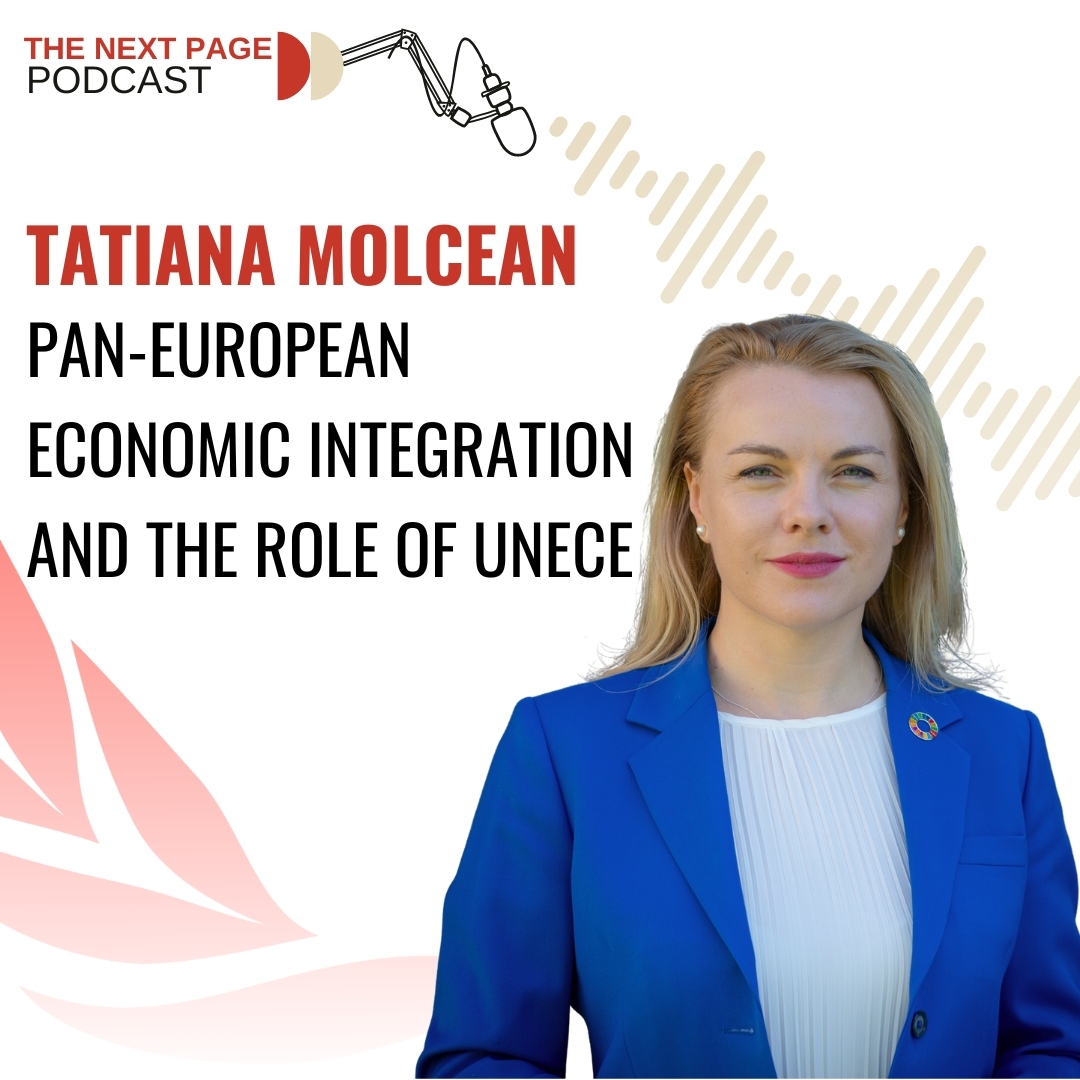
Ep 119Pan-European economic integration and the role of UNECE
A conversation with Under-Secretary-General Tatiana Molcean, Executive Secretary of UNECE The United Nations Economic Commission for Europe (UNECE) is one of the five Regional Commissions of the United Nations. ECE was set up in 1947 to promote pan-European economic integration. Francesco Pisano met with UNECE’s new Executive Secretary, Ms. Tatiana Molcean for a conversation on the role of the Commission and how it serves multilateralism. They also talk about the vision for European economic integration and the challenges currently facing the wider European region. Resources UNECE website: https://unece.org/ Where to listen to this episode Apple podcasts: https://podcasts.apple.com/us/podcast/the-next-page/id1469021154 Spotify: https://open.spotify.com/show/10fp8ROoVdve0el88KyFLy YouTube: https://www.youtube.com/watch?v=R06Hz-T2C0M&t=3s Content Guest: Tatiana Molcean, United Nations Under-Secretary-General and Executive Secretary of UNECE Host: Francesco Pisano Producer: Amy Smith Editing and social media designs: Mengna Chen Recorded & produced at the United Nations Library & Archives Geneva
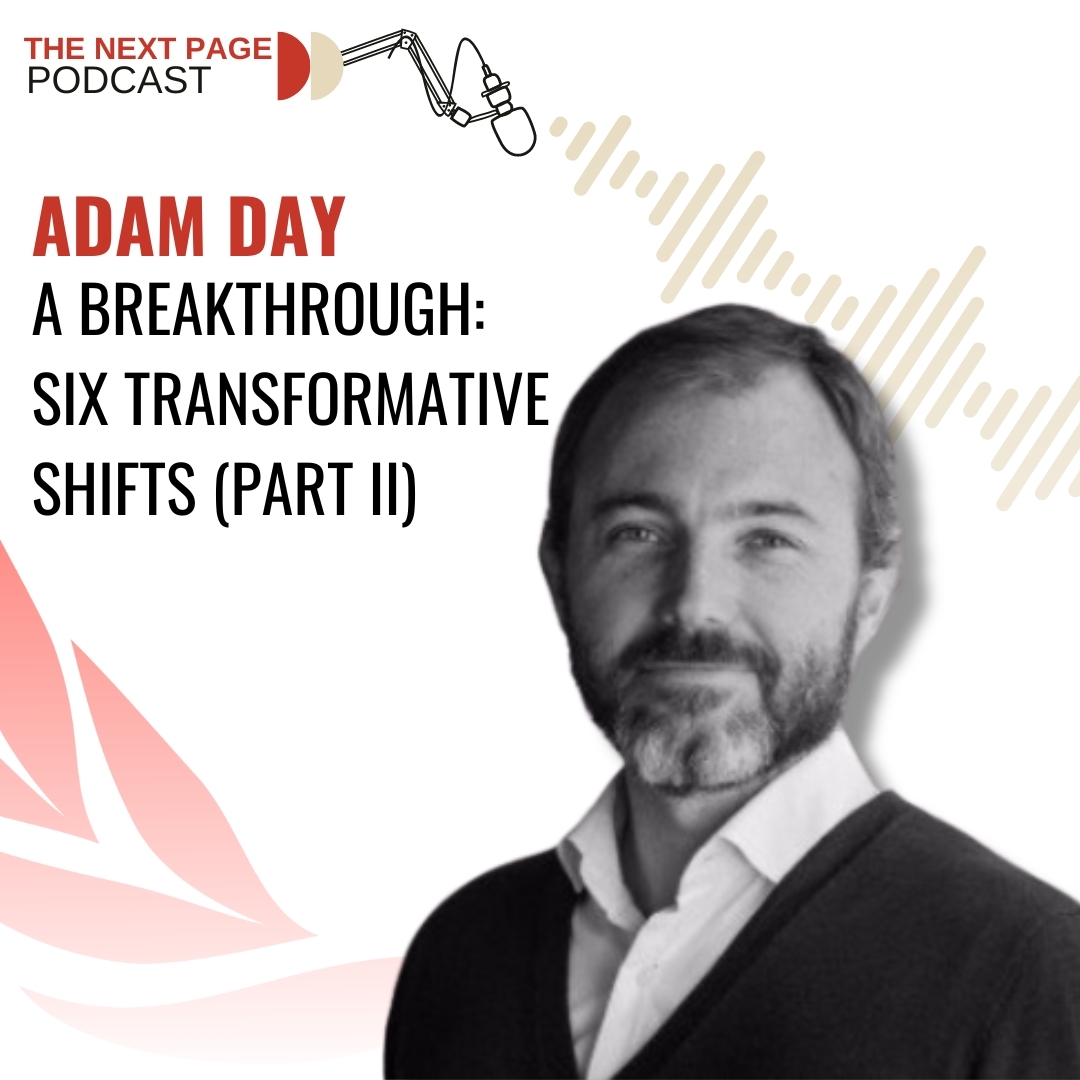
Ep 118A Breakthrough: six transformative shifts (Part II) with Adam Day
Will we have a breakthrough or a breakdown? In this second episode with Adam Day, Head of the Geneva Office of the United Nations University Centre for Policy Research, we continue the exploration of the Six Transformative Shifts proposed by the High-Level Advisory Board on Effective Multilateralism for a more secure and sustainable future. Adam Day talks with Francesco Pisano, Director of the Library & Archives about the second three shifts: digital and data governance, peace and prevention and anticipatory action. They also discuss how the UN architecture that was set up post-World War II has aged and what a review of the UN Charter would look like. Resources HLAB Report: https://highleveladvisoryboard.org/breakthrough/ Our Common Agenda policy briefs: https://www.un.org/en/common-agenda/policy-briefs United Nations University Centre for Policy Research: https://unu.edu/cpr/abouthttps://unu.edu/explore Slaughter, A.-M. (2017). The Chessboard and the Web: Strategies of Connection in a Networked World. Yale University Press. Previous episodes with Adam Day: A Breakthrough. Part I: https://unitednationslibrarygeneva.podbean.com/e/a-breakthrough-six-transformative-shifts-part-i/ A time for change and effective multilateralism – a conversation with Adam Day | The Next Page (podbean.com) Where to listen to this episode Apple podcasts: https://podcasts.apple.com/us/podcast/the-next-page/id1469021154 Spotify: https://open.spotify.com/show/10fp8ROoVdve0el88KyFLy YouTube: https://www.youtube.com/watch?v=R06Hz-T2C0M&t=3s Content Guest: Adam Day Host: Francesco Pisano Producer: Amy Smith Editing and social media designs: Menga Chen Recorded & produced at the United Nations Library & Archives Geneva
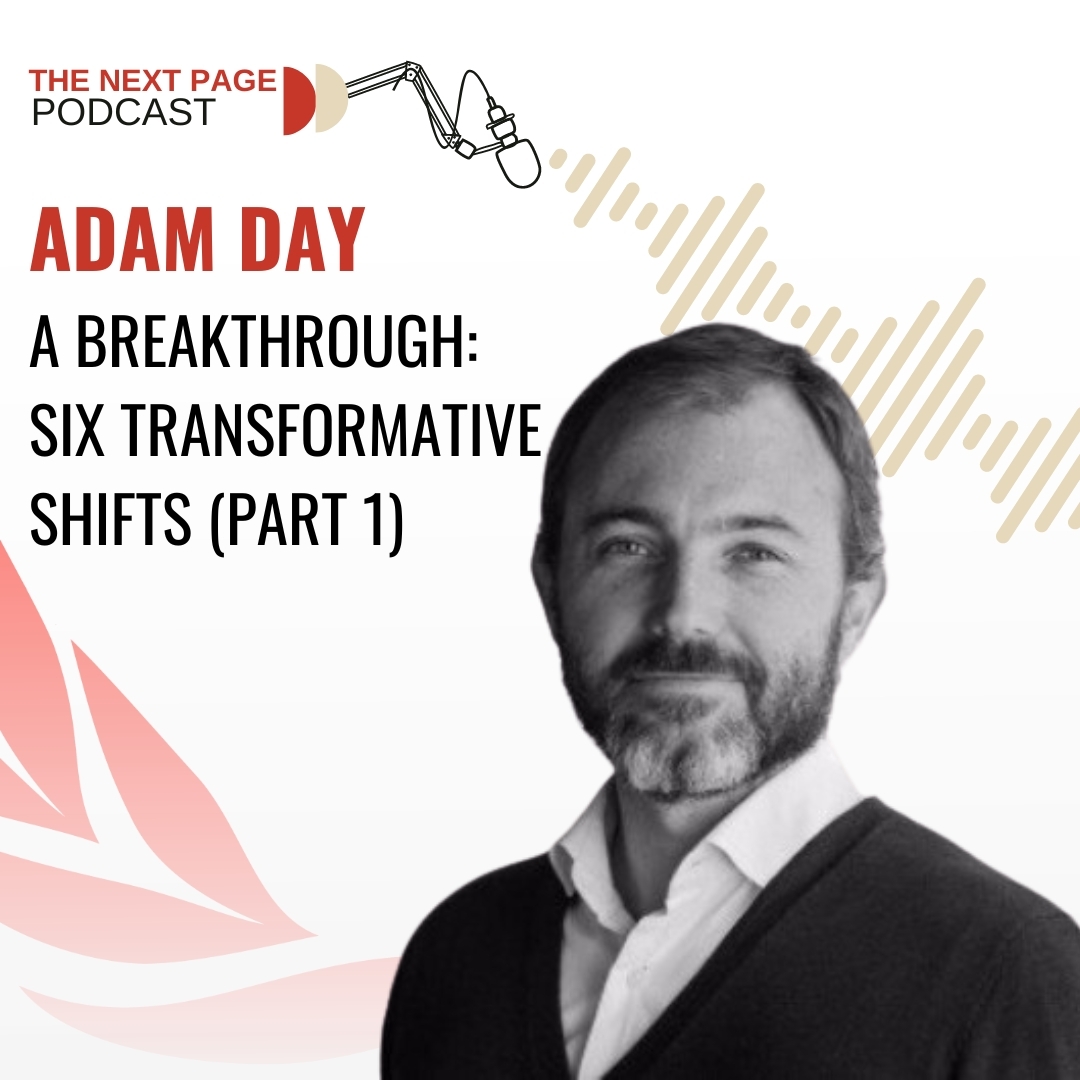
Ep 117A Breakthrough: Six Transformative Shifts (Part I)
In this and the following episode, we take a deep dive with Adam Day, Head of the Geneva Office of the United Nations University Centre for Policy Research, into the Six Transformative Shifts proposed by the High-Level Advisory Board (HLAB) on Effective Multilateralism for a more secure and sustainable future. Here, in part 1, Adam Day talks with Francesco Pisano, Director of the Library & Archives, about the first three shifts: rebuilding trust in multilateralism; planet and people; and global finance. They talk about re-thinking what consensus means, making multilateralism inclusive and the rights of future generations. Adam also focuses on the vital need to elevate environmental issues, he discusses peace as a public good, and looks at the viable yet ambitious track on finance. Resources Previous episode with Adam Day: A time for change and effective multilateralism – a conversation with Adam Day | The Next Page (podbean.com) HLAB Report: https://highleveladvisoryboard.org/breakthrough/ Our Common Agenda policy briefs: https://www.un.org/en/common-agenda/policy-briefs United Nations University: https://unu.edu/explore Where to listen to this episode Apple podcasts: https://podcasts.apple.com/us/podcast/the-next-page/id1469021154 Spotify: https://open.spotify.com/show/10fp8ROoVdve0el88KyFLy YouTube: https://www.youtube.com/watch?v=R06Hz-T2C0M Content Guest: Adam Day, Head of the Geneva Office, United Nations University Centre for Policy Research Host: Francesco Pisano Producer: Amy Smith Editing and social media designs: Menga Chen Recorded & produced at the United Nations Library & Archives Geneva

Ep 116Chile in the U.N. and in the world
We are starting our 2024 series with an episode with H.E. Mrs. Claudia Fuentes Julio, Permanent Representative of Chile. Ambassador Fuentes Julio talks about her interesting career path into diplomacy and representing her country. She tells us about the geography of Chile, bounded between the magnificent Andes and the vast Pacific Ocean, and she relates some of the history of Chile and its long connection with multilateralism, including as a founding Member of the United Nations. Where to listen to this episode Apple podcasts: https://podcasts.apple.com/us/podcast/the-next-page/id1469021154 Spotify: https://open.spotify.com/show/10fp8ROoVdve0el88KyFLy YouTube: https://www.youtube.com/watch?v=KdlO3HCabTk Content Speakers: Ambassador Claudia Fuentes Julio Host: Francesco Pisano Producer: Amy Smith Editing and social media designs: Menga Chen Recorded & produced at the United Nations Library & Archives Geneva
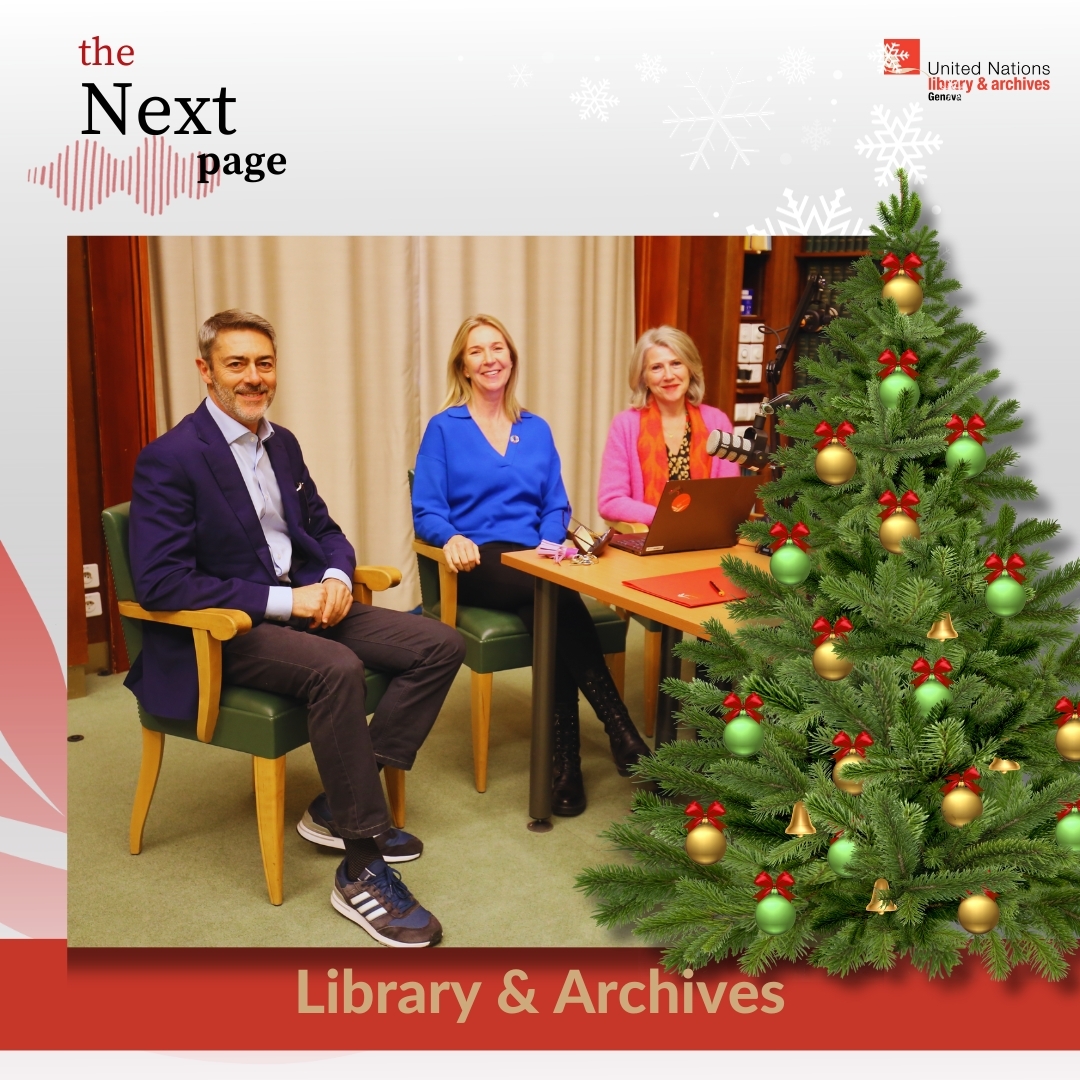
Ep 115Knowledge matters in incomprehensible times
In this end of year episode, Francesco Pisano, Director of the Library & Archives and senior managers Sigrun Habermann and Blandine Blukacz-Louisfert, find themselves on the other side of the table to talk about why knowledge matters in our times, whether libraries matter, what expertise we need and what digitization, technology and AI can mean for knowledge services. Together, they come up with an innovative list of wishes to bring you advanced knowledge services for work and research in multilateralism. Resources: https://www.ungeneva.org/en/library-archives Where to listen to this episode Apple podcasts: https://podcasts.apple.com/us/podcast/the-next-page/id1469021154 Spotify: https://open.spotify.com/show/10fp8ROoVdve0el88KyFLy YouTube: Content Speakers: Francesco Pisano, Sigrun Habermann, Blandine Blukacz-Louisfert Host: Amy Smith Producer: Amy Smith Editing & social media: Mengna Chen, Amy Smith Recorded & produced at the United Nations Library & Archives Geneva

Ep 114Barbados in the UN and in the world
A conversation with Ambassador Matthew Wilson As part of our ambassadors’ series, for this episode we invited the Permanent Representative of Barbados, Ambassador Matthew Wilson, to explore the role of Barbados in the Caribbean region and in the world today, and its enduring partnership with the UN over 40 years. Ambassador Wilson talks with Francesco Pisano, Director of the Library & Archives, providing us with a comprehensive insight into Barbados' fascinating history, its position as the hub for the UN Multi-Country Office (MCO) for Barbados and the Eastern Caribbean and as a Permanent Representative of the key global challenges facing multilateralism, and its profound engagement with the UN as a small country. Where to listen to this episode Apple podcasts: https://podcasts.apple.com/us/podcast/the-next-page/id1469021154 Spotify: https://open.spotify.com/show/10fp8ROoVdve0el88KyFLy YouTube: (2) Barbados in the UN and in the world - YouTube Content Speaker: H.E. Ambassador Matthew Wilson Host: Francesco Pisano, Director, UN Library & Archives Producer: Amy Smith Editing & social media: Mengna Chen, Amy Smith Recorded & produced at the United Nations Library & Archives Geneva

Ep 113Le monde d’ici commence ailleurs : bookcast avec Isabelle Durant
Le Monde d’ici commence ailleurs : coopérations utiles pour des temps compliqués Pour cet épisode, nous sommes ravis d’accueillir Isabelle Durant, ancienne Secrétaire générale adjointe de la Conférence des Nations Unies sur le Commerce et le Développement (CNUCED). Isabelle Durant est une femme politique belge, membre du parti Ecolo qu'elle dirigea à deux reprises, elle fut sénatrice et Vice-Première ministre fédérale en Belgique. Elle a été vice-présidente du Parlement européen pendant la 7e législature et elle a ensuite été élue au Parlement de la Région de Bruxelles-Capitale. Son livre, Le Monde d’ici commence ailleurs : coopérations utiles pour des temps compliqués vient de paraître aux Editions Couleur livres. Isabelle Durant parle avec Francesco Pisano, Directeur de la Bibliothèque & Archives de l’ONU Genève de son parcours, de son livre et elle se penche sur deux thématiques très actuels : les « obsessions identitaires et migrations » et la question du « multilatéral à l’agonie ? » Ressources Livre : Durant, I. (2023) Le Monde d’ici commence ailleurs : coopérations utiles pour des temps compliqué. Éditions Couleur livres Où écouter cet épisode Apple podcasts: https://podcasts.apple.com/us/podcast/the-next-page/id1469021154 Spotify: https://open.spotify.com/show/10fp8ROoVdve0el88KyFLy YouTube: Contenu Invitée : Isabelle Durant Hôte : Francesco Pisano Réalisation et montage : Amy Smith Conception pour réseaux sociaux : Amy Smith & Mengna Chen Recorded & produced at the United Nations Library & Archives Geneva

Ep 112Futures of multilateralism
Futures of multilateralism – an applied research project on the challenge of transforming the global order In this episode, three young researchers from the Graduate Institute in Geneva, Simfora Bangasimbo, Karim Achy, Sohini Chakrabarti talk about their applied research project on Futures of Multilateralism. The UN Office at Geneva and the Graduate Institute collaborate in several knowledge and research domains and this research project on futures of multilateralism was submitted by the Library & Archives and The Fab, the Institute’s innovation lab. Francesco Pisano, Director of the Library & Archives, discusses with the graduate students as they explore what multilateralism may look like in the following 3 scenarios: a world of stable and cooperative geopolitics and open access technology; a world of volatile geopolitics and open access technology; and a world of volatile geopolitics and closed access technology. In the second part, the students move on to a stimulating discussion reflecting on their research. Resources: IHEID - The Fab: https://www.graduateinstitute.ch/FAB Our Common Agenda: https://www.un.org/en/common-agenda Where to listen to this episode Apple podcasts: https://podcasts.apple.com/us/podcast/the-next-page/id1469021154 Spotify: https://open.spotify.com/show/10fp8ROoVdve0el88KyFLy YouTube: Content Speakers: Simfora Bangasimbo, Karim Achy, Sohini Chakrabarti Host: Francesco Pisano, UN Library & Archives Producer: Amy Smith Editing & social media: Mengna Chen, Amy Smith Recorded & produced at the United Nations Library & Archives Geneva

Ep 111A UN for the future
A conversation with Swiss Youth Representative, Flora Chiper This episode with Flora Chiper, Swiss UN Youth Representative for 2023-2025, explores the role of Youth Representatives and their current work, vision and hopes for multilateralism. Flora Chiper is multicultural and multilingual and brings a scientific perspective to the team of Swiss youth reps. She is currently a postgraduate student at the University of Basel, Department of Biomedicine Tissue Engineering Group and was previously at Harvard Medical School researching cartilage regeneration using stem cells. Flora advocates for a more data-driven decision making, long-term thinking and for more meaningful inclusion of youth in the multilateral system. Resources: UN Youth Delegate Programme: https://social.desa.un.org/issues/youth/un-youth-delegate-programme#:~:text=The%20roles%20of%20a%20youth,attending%20meetings%20and%20informal%20negotiations. Conseil Suisse des Activités de Jeunesse : https://www.sajv.ch/en/projects/youth-rep Youth: https://social.desa.un.org/issues/youth Our Common Agenda: https://www.un.org/en/common-agenda SDG Report. Towards a Rescue Plan for People & Planet: The-Sustainable-Development-Goals-Report-2023.pdf (un.org) Where to listen to this episode Apple podcasts: https://podcasts.apple.com/us/podcast/the-next-page/id1469021154 Spotify: https://open.spotify.com/show/10fp8ROoVdve0el88KyFLy YouTube: Content Speaker: Flora Chiper, Swiss Youth Rep Host: Amy Smith, UN Library & Archives Producer: Amy Smith Editing & social media: Mengna Chen, Amy Smith Photo: © Jos Schmid Recorded & produced at the United Nations Library & Archives Geneva

Ep 110Slovakia in the UN and in the world
A conversation with Ambassador Dušan Matulay This episode is part of our ambassadors’ series hosting Permanent Representatives of UN Member States in Geneva for conversations about the role of their countries in the UN and in the world. We invited the Permanent Representative of Slovakia, H.E. Mr. Dušan Matulay, on the occasion of the 30th anniversary of Slovakia’s membership in the UN. Ambassador Matulay talks with Francesco Pisano, Director of the Library & Archives and tells us more about Slovakia’s long history, its position as a landlocked country at the very heart of Europe, what Slovakia stands for and wants to share with the world, and what it means to be a smaller country at the United Nations. Where to listen to this episode Apple podcasts: https://podcasts.apple.com/us/podcast/the-next-page/id1469021154 Spotify: https://open.spotify.com/show/10fp8ROoVdve0el88KyFLy YouTube: https://www.youtube.com/watch?v=i1B5wwFLa5k Content Speaker: H.E. Ambassador Dušan Matulay Host: Francesco Pisano, Director, UN Library & Archives Producer: Amy Smith Editing & social media: Amy Smith, Nadia Al Droubi, Mengna Chen Recorded & produced at the United Nations Library & Archives Geneva
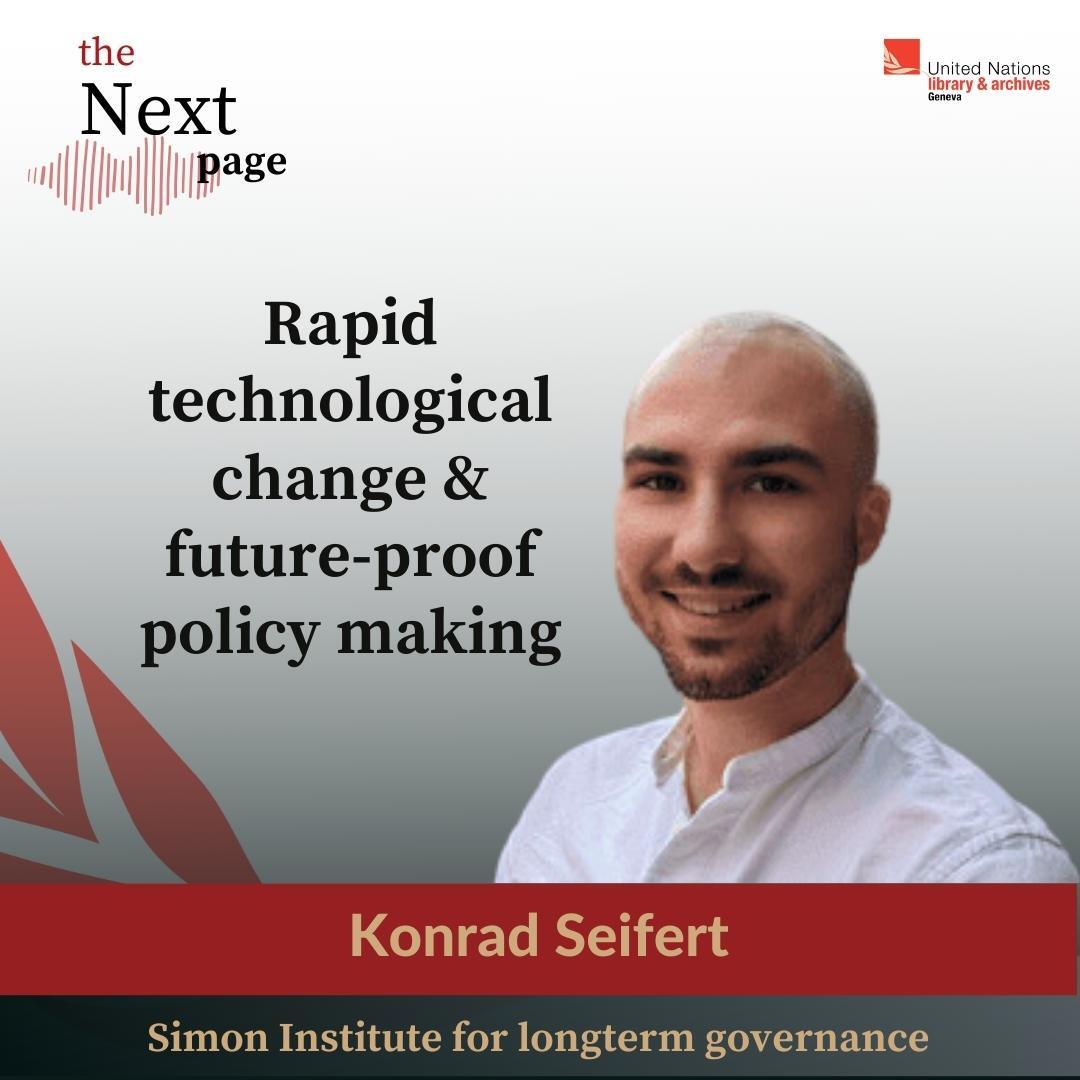
Ep 109Rapid technological change & future-proof policy making
In this episode we continue our explorations in view of the Summit of the Future. The Summit of the Future (in 2024) will be a key moment to reaffirm and recommit to effective multilateralism in the interest of both people and the planet. But how do we set out to redesign multilateralism and craft the future we all want in our era of ultra-rapid technological change? And how do we factor in our decisions of today the interests of future generations? Can we still rely solely on classical forms of decision making? Can we trust AI and other emerging technologies to remain tools at our service instead of becoming our masters? We talk with Konrad Seifert who is the co-founder of the Simon Institute. He also co-founded and led Effective Altruism Switzerland, developing theories of change and looking at the future beyond the current generation. Resources Simon Institute : https://www.simoninstitute.ch/ Longtermism: https://en.wikipedia.org/wiki/What_We_Owe_the_Future Where to listen to this episode Apple podcasts: https://podcasts.apple.com/us/podcast/the-next-page/id1469021154 Spotify: https://open.spotify.com/show/10fp8ROoVdve0el88KyFLy YouTube: Content Speaker: Konrad Seifert Host: Francesco Pisano, Director, UN Library & Archives Producer: Amy Smith Editing & social media: Amy Smith & Nadia Al Droubi Recorded & produced at the United Nations Library & Archives Geneva

Ep 108Germany in the UN and in the world - a conversation with Ambassador Dr. Katharina Stasch
Our ambassadors’ series hosts Permanent Representatives of UN Member States for conversations about the role of their countries in the UN and in the world. In this episode we invited the Permanent Representative of Germany, Ambassador Dr. Katharina Stasch, on the occasion of the 50th anniversary of Germany’s membership in the UN. In 1973 there were two German states. The Federal Republic of Germany and the German Democratic Republic were both admitted to membership in the United Nations fifty years ago, on 18 September 1973. Ambassador Dr. Stasch tells us more about this historic moment, how it has shaped Germany’s membership in the UN, and what happened once the two countries were reunited in 1990. Where to listen to this episode Apple podcasts: https://podcasts.apple.com/us/podcast/the-next-page/id1469021154 Spotify: https://open.spotify.com/show/10fp8ROoVdve0el88KyFLy YouTube: Content Speaker: H.E. Ambassador Dr. Katharina Stasch Host: Francesco Pisano, Director, UN Library & Archives Producer: Amy Smith Editing & social media: Amy Smith & Nadia Al Droubi Photo: Photo: Antoine Tardy.© StäV Recorded & produced at the United Nations Library & Archives Geneva

Ep 107The Democracy-Multilateralism Nexus with Corinne Momal-Vanian
Corinne Momal-Vanian is the Executive Director of the Kofi Annan Foundation. Previously, she worked in various senior positions and a variety of countries for the United Nations, most recently as Director of Conference Management at the United Nations Office at Geneva (2015-2020) and Director of Information (2010-2015). We invited Corinne Momal-Vanian back to The Next Page for a conversation with the Director of the Library & Archives, Francesco Pisano to explore an intriguing topic: the nexus between democracy and multilateralism. In an increasingly interconnected world, how do these two fundamental ideas interact and shape the global IR landscape? They discuss how democracy can serve and support multilateralism, the evolution of multilateralism and the rise of non-state actors and civil society organizations, and the role of youth in democratizing multilateralism. Twitter: https://twitter.com/CMomal https://twitter.com/KofiAnnanFdn Facebook: https://www.facebook.com/kofiannanfoundation LinkedIn: https://www.linkedin.com/company/kofi-annan-foundation YouTube: https://www.youtube.com/user/kofiannanfoundation Instagram: www.instagram.com/kofiannanfoundation Resources Website - V-Dem (Varieties of Democracy): https://v-dem.net/ Ruggie, J. (1998) Constructing the World Polity: Essays on International Institutionalization. London and New York: Routledge. Where to listen to this episode Apple podcasts: https://podcasts.apple.com/us/podcast/the-next-page/id1469021154 Spotify: https://open.spotify.com/show/10fp8ROoVdve0el88KyFLy YouTube: Content Speaker: Corinne Momal-Vanian Host: Francesco Pisano, Director, UN Library & Archives Producer: Amy Smith Editing & social media: Amy Smith & Nadia Al Droubi Recorded & produced at the United Nations Library & Archives Geneva

Ep 106Marcel Griaule - une conversation avec Yves Pourcher
Marcel Griaule, un ethnographe dans la diplomatie de l’entre-deux-guerres avec Yves Pourcher Pour cet épisode, nous sommes ravis d’accueillir Yves Pourcher pour parler de Marcel Griaule, un anthropologue, explorateur et écrivain au destin particulier notamment parce qu’il est entré dans la diplomatie lors de la crise d'Abyssinie. Yves Pourcher, professeur de science politique, a rassemblé plus de 50 textes de Marcel Griaule dans une publication, parue en 2023, intitulée Envahir l’Ethiopie. L’ethnologue en guerre (1935-1936). Il détaille le parcours de vie original de Marcel Griaule et, en particulier, sa fonction de conseiller particulier d’Haïlé Sélassié pendant la guerre italo-éthiopienne qui l’a mené à participer à la rédaction du fameux discours prononcé par l’Empereur d’Ethiopie devant l’Assemblée de la Société des Nations, à Genève, le 30 juin 1936. Un extrait sonore, avec la voix d’Haïlé Sélassié enregistré le jour du discours, est à écouter pendant l’épisode. Yves Pourcher s’exprime également sur l’engagement des ethnologues qui sont confrontés à une guerre sur leur « terrain » d’étude. Ressources Livre « Envahir l’Ethiopie. L’ethnologue en guerre (1935-1936) », éditions Anacharsis : https://www.editions-anacharsis.com/Envahir-l-Ethiopie Plus d'informations sur Yves Pourcher : https://lassp.sciencespo-toulouse.fr/Yves-POURCHER Différend entre l’Ethiopie et l’Italie. Requête du gouvernement éthiopien (commentaires de M. Marcel Griaule) (14 septembre 1935) : https://archives.ungeneva.org/differend-entre-lethiopie-et-litalie-requete-du-gouvernement-ethiopien Texte du discours d’Haïlé Sélassié devant l’Assemblée de la Société des Nations (30 juin 1936) en français et amharique : https://archives.ungeneva.org/ethiopia-speech-by-the-emperor-haile-selassie-to-the-league-assembly-2 Enregistrement sonore du discours d’Haïlé Sélassié devant l’Assemblée de la Société des Nations (30 juin 1936) : https://archives.ungeneva.org/haile-selassie-eth-whole-speech-in-amharic Où écouter cet épisode Apple podcasts: https://podcasts.apple.com/us/podcast/the-next-page/id1469021154 Spotify: https://open.spotify.com/show/10fp8ROoVdve0el88KyFLy YouTube: Contenu Invitée : Yves Pourcher Animatrice : Hermine Diebolt Réalisation et montage : Amy Smith Conception pour réseaux sociaux : Amy Smith & Nadia Al Droubi Recorded & produced at the United Nations Library & Archives Geneva

Ep 105Night on Earth - a bookcast with Davide Rodogno
In this episode, Davide Rodogno introduces his book Night on Earth, an account of international humanitarian programmes in Central and Eastern Europe, the Balkans, and the Near East in the interwar period from 1918 to 1930. Professor Rodogno explains how concepts of international 'relief' and 'development' were deeply connected long before the existence of the United Nations. Through the conversation, we explore the long history of humanitarians operating in the region devastated by war and famine and in which state sovereignty was deficient and hear about the colonial motivations and ideologies that influenced the activities of the various secular and religious organizations and philanthropic foundations in their attempts to reshape communities and nations through reconstruction and rehabilitation programmes. Davide Rodogno is Professor of International History and Politics, Head of the Interdisciplinary Programmes at the Graduate Institute of International and Development Studies in Geneva. He specializes in researching international organizations and philanthropic foundations, and transnational networks and movements since the 19th century. https://www.graduateinstitute.ch/academic-departments/faculty/davide-rodogno Resources Rodogno, D. (2021) Night on Earth. A History of International Humanitarianism in the Near East, 1918–1930. Cambridge University Press Rodogno, D. (2015) Against Massacre: Humanitarian Interventions in the Ottoman Empire (1815-1914), Princeton University Press – Series: Human Rights and Crimes Against Humanity, Princeton, 2011, paperback. Daughton, J.P. (2012) In the Forest of No Joy: The Congo-Ocean Railroad and the Tragedy of French Colonialism. New York. Norton Foliard, D. (2022). The violence of colonial photography. Manchester University Press. Levi, P. (1988) The Drowned and the Saved. Simon & Schuster Paperbacks. New York. Maalouf, A. (2006). Origines. Le Livre de Poche. Pamuk, O. (2022) Nights of Plague. Knopf. Robson, L. (2017). States of Separation: Transfer, Partition, and the Making of the Modern Middle East. Oakland, CA: University of California Press. White, B. T. (2011). The Emergence of Minorities in the Middle East: The Politics of Community in French Mandate Syria. Edinburgh University Press. Where to listen to this episode Apple podcasts: https://podcasts.apple.com/us/podcast/the-next-page/id1469021154 Spotify: https://open.spotify.com/show/10fp8ROoVdve0el88KyFLy YouTube: Content Speaker: Professor Davide Rodogno Host: Francesco Pisano, Director, UN Library & Archives Producer: Amy Smith Editing & social media: Amy Smith & Nadia Al Droubi Recorded & produced at the United Nations Library & Archives Geneva

Ep 104Women who shaped the UN - a conversation with Rebecca Adami
We invited Dr. Rebecca Adami, Associate Professor, Senior Lecturer at Stockholm University, Award winner of the 2022 Bertha Lutz Prize for highest quality public writing and research on women in diplomacy by the Diplomatic Studies Section (DPLST) of the International Studies Association (ISA), for a conversation around the role non-Western women had in shaping the UN system, from the UN Charter to the Universal Declaration of Human Rights. In this rich conversation, Dr. Adami shares with us the context of situation post-World War II and tells us the story of how the rights of women were included in the text of the Universal Declaration of Human Rights. She introduces us to several of the prominent non-Western women who were behind the negotiations both at the San Francisco Conference and for the drafting of the Universal Declaration of Human Rights, including Hansa Jivraj Mehta and Lakshmi Menon from India, Minerva Bernardino from the Dominican Republic, and Begum Shaista Ikramullah from Pakistan. Resources Adami, R and Plesch, D. (2022) Women and the UN: a new history of women's international human rights. London: Routledge https://www.routledge.com/Women-and-the-UN-A-New-History-of-Womens-International-Human-Rights/Adami-Plesch/p/book/9780367478230# Adami, R. (2019). Women and the Universal Declaration of Human Rights. New York: Routledge https://www.routledge.com/Women-and-the-Universal-Declaration-of-Human-Rights/Adami/p/book/9781138345355 Where to listen to this episode Apple podcasts: https://podcasts.apple.com/us/podcast/the-next-page/id1469021154 Spotify: https://open.spotify.com/show/10fp8ROoVdve0el88KyFLy YouTube: https://www.youtube.com/watch?v=fslNo-7U9hg Content Speaker: Dr. Rebecca Adami, Associate Professor, Host: Francesco Pisano, Director, UN Library & Archives Producer: Amy Smith Editing & social media: Amy Smith & Nadia Al Droubi Recorded & produced at the United Nations Library & Archives Geneva
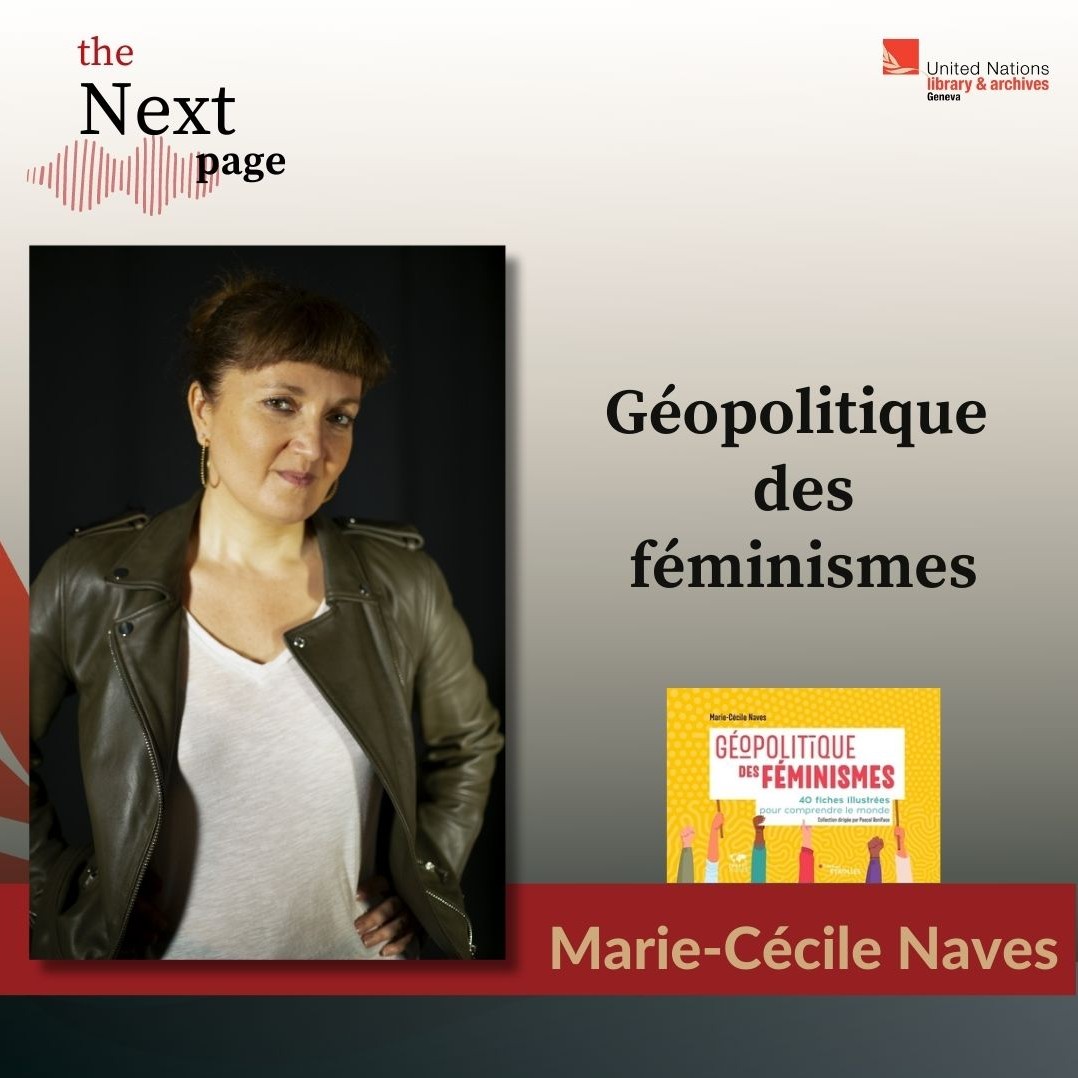
Ep 103Géopolitique des féminismes – une conversation avec Marie-Cécile Naves
Nous continuons notre série en lien avec le rapport du Secrétaire-général Notre programme commun, le Sommet pour les ODD, et le Sommet de l’avenir avec un épisode qui souligne l’importance de mettre l’égalité des genres au cœur de l’architecture multilatérale. Pour cet épisode, nous avons invité Marie-Cécile Naves, Directrice de recherche et Directrice de l‘Observatoire « Genre et géopolitique » à l’Institut de Relations Internationales et Stratégiques (IRIS) afin qu’elle nous parle de son dernier livre « Géopolitique des féminismes » publié aux Éditions Eyrolles. Marie-Cécile Naves aborde la géopolitique par le genre et nous explique l’importance du gender maintreaming dans toutes les thématiques de l’agenda international. Elle nous emmène faire un tour de monde grâce à ses exemples inspirants dans la lutte pour l’égalité. Ressources Site de Marie-Cécile Naves : https://mariececilenaves.com/mcn/ IRIS : https://www.iris-france.org/observatoires/observatoire-genre-et-geopolitique/ Naves, M.C., 2023. Géopolitique des féminismes. Editions Eyrolles. Naves, M.C., 2023. « Calmez-vous madame, ça va bien se passer ». Calmann-Levy. Où écouter cet épisode Apple podcasts: https://podcasts.apple.com/us/podcast/the-next-page/id1469021154 Spotify: https://open.spotify.com/show/10fp8ROoVdve0el88KyFLy YouTube: Contenu Invitée : Marie-Cécile Naves Animatrice : Amy Smith Réalisation et montage : Amy Smith Conception pour réseaux sociaux : Amy Smith & Nadia Al Droubi Photo Marie-Cécile Naves : @ Xavier Desplas Recorded & produced at the United Nations Library & Archives Geneva

Ep 102Multilateralism & the UN today - a conversation with Richard Gowan
In this episode, we met with Richard Gowan, UN Director at International Crisis Group (ICG) to get his perspective on current issues and trends in multilateralism. He shared his thoughts on reasons for optimism and pessimism about the way multilateralism is functioning, the ways in which it is evolving and the values on which it stands. We also talked about the UN, possibilities of reform, the SDGs, the Secretary-General’s report Our Common Agenda and the Summit for the Future. Richard also explained the importance of the UN entities based in Geneva in the UN system. Richard Gowan can be followed on Twitter @RichardGowan1 Resources International Crisis Group: https://www.crisisgroup.org/ Where to listen to this episode Apple podcasts: https://podcasts.apple.com/us/podcast/the-next-page/id1469021154 Spotify: https://open.spotify.com/show/10fp8ROoVdve0el88KyFLy YouTube: https://www.youtube.com/watch?v=RO1Vt8_OC7g&t=3s Content Speaker: Richard Gowan, UN Director, International Crisis Group Host: Amy Smith Producer: Amy Smith Editing & social media: Amy Smith & Nadia Al Droubi Recorded & produced at the United Nations Library & Archives Geneva

Ep 101A time for change and effective multilateralism – a conversation with Adam Day
In this episode we explore a recent report of the High-Level Advisory Board on Effective Multilateralism - A Breakthrough for People and Planet: Effective and Inclusive Global Governance for Today and the Future (United Nations University, 2023) - which offers a pathway to revitalize the multilateral system in view of the Summit of the Future. The Summit of the Future will be a key moment to reaffirm and recommit to effective multilateralism in the interest of both people and the planet. Adam Day is Head of the Geneva Office of United Nations University Centre for Policy Research. He oversees programming on peacebuilding, human rights, peacekeeping, climate-security, sanctions, and global governance, while also acting as co-lead on UNU-CPR’s support to the High-Level Advisory Board on Effective Multilateralism. Resources United Nations University: https://unu.edu/explore HLAB Report: https://highleveladvisoryboard.org/breakthrough/pdf/56892_UNU_HLAB_report_Final_LOWRES.pdf High Level Advisory Board: https://highleveladvisoryboard.org/ Books mentioned: Slaughter, Anne-Marie. (2018). The Chessboard and the Web: Strategies of Connection in a Networked World. Yale University Press. Carayannis, Tatiana & Weiss, Thomas G. (2021) The “Third” United Nations: How A Knowledge Ecology Helps the UN Think. Oxford University Press. Where to listen to this episode · Apple podcasts: https://podcasts.apple.com/us/podcast/the-next-page/id1469021154 · Spotify: https://open.spotify.com/show/10fp8ROoVdve0el88KyFLy · YouTube: https://www.youtube.com/watch?v=Jc7CX2RRWZ8&list=PLmzrhlc0gF6KlZ8KES5Jzho0d-UZdyuIx Content Speaker: Dr. Adam Day, Head of Geneva Office, United Nations University Centre for Policy Research Host: Francesco Pisano Producer, editing & social media: Amy Smith Recorded & produced at the United Nations Library & Archives Geneva

Ep 100Knowledge and Learning for Multilateralism - a conversation with UN Assistant Secretary-General Nikhil Seth
UN Assistant Secretary-General Nikhil Seth, Executive Director of UNITAR, joined Francesco Pisano for a conversation about knowledge and learning for multilateralism in this 60th anniversary year of UNITAR. UNITAR was created by the United Nations General Assembly in 1963 and started operating in March 1965.The Institute originally had its headquarters in New York and a European Office in Geneva. In 1993, UNITAR’s headquarters were moved to Geneva. Over the past decades the Institute has acquired unique expertise, accumulating experience, knowledge and capacities to design and implement a variety of training activities. Nikhil and Francesco discuss the work of UNITAR, the role of knowledge in multilateralism, and look at where we are going post 2030 and what we need to meet the challenges ahead. Resources UNITAR website: https://unitar.org/ Where to listen to this episode Apple podcasts: https://podcasts.apple.com/us/podcast/the-next-page/id1469021154 Spotify: https://open.spotify.com/show/10fp8ROoVdve0el88KyFLy YouTube: Content Speaker: United Nations Assistant-Secretary-General, Nikhil Seth Host: Francesco Pisano Producer: Amy Smith Editing and social media designs: Sotheapanha Theng Recorded & produced at the United Nations Library & Archives Geneva

Ep 99Re-imagining International Relations - a conversation with Professor Amitav Acharya
Re-imagining International Relations - A conversation with Amitav Acharya Taking as a starting point that today’s multilateralism is in urgent need of an upgrade, Library & Archives Director, Francesco Pisano talks with Professor Amitav Acharya about how Global International Relations could broaden the Eurocentric way concepts and ideas in international relations developed, so that the practice of international relations could transform to be better adapted to the pluralistic world in which we live. Amitav Acharya is the UNESCO Chair in Transnational Challenges and Governance and Distinguished Professor at the School of International Service, American University, Washington, DC. Previously he was a Professor at York University, Toronto and the University of Bristol, U.K. He is currently Honorary Professor at Rhodes University, South Africa, and Guest Professor at Nankai University, China. He was the inaugural Boeing Company Chair in International Relations at the Schwarzman Scholars Program at Tsinghua University, Fellow of Harvard’s Asia Center and John F. Kennedy School of Government, and Christensen Fellow at Oxford. Amitav Acharya is also the recipient of an International Studies Association (ISA) Distinguished Scholar Award 2023 for his “extraordinary impact” in globalizing the study of International Relations and “mentorship of emerging scholars”. Resources Website: https://www.american.edu/sis/faculty/aacharya.cfm Amitav Acharya’s Blog, The Multiplex World: https://multiplexworld.com/ Twitter: @AmitavAcharya https://twitter.com/amitavacharya Books: Acharya, A. & Buzan, B. (2021). Re-imagining International Relations. World Orders in the Thought and Practice of Indian, Chinese, and Islamic Civilizations. Cambridge University Press. Acharya, A. & Buzan, B. (2019). The Making of Global International Relations. Origins and Evolution of IR at its Centenary. Cambridge University Press. Acharya, A. (2018). Constructing Global Order. Agency and Change in World Politics. Cambridge University Press. Acharya, A. (2018). The End of American World Order, 2nd Edition. Wiley. Acharya, A. (2013). Rethinking Power, Institutions and Ideas in World Politics. Whose IR? Routledge. Where to listen to this episode Apple podcasts: https://podcasts.apple.com/us/podcast/the-next-page/id1469021154 Spotify: https://open.spotify.com/show/10fp8ROoVdve0el88KyFLy YouTube: https://www.youtube.com/watch?v=WdteR2XP-A4&list=PLmzrhlc0gF6KlZ8KES5Jzho0d-UZdyuIx Content Speaker: Professor Amitav Acharya Host: Francesco Pisano Producer: Amy Smith Editing & Social media designs: Amy Smith and Sotheapanha Theng Recorded & produced at the United Nations Library & Archives Geneva

Ep 98Inside the Human Rights Council – a conversation with Ambassador Federico Villegas
Inside the Human Rights Council – a conversation with Ambassador Federico Villegas, 16th President of the Human Rights Council Human rights are a burning issue at the centre of the international arena because they are fundamental to humankind. The interpretation and respect of human rights and the response to their violations depend on discussions held annually by the Human Rights Council that convenes in Geneva. Ambassador Villegas was President of the Council in 2022, one of the most challenging years on the body's record. In this podcast episode, Ambassador Villegas explains why the Council is so important, talks about the state of human rights in the world today and shares his thoughts on the strong connection between human rights and multilateralism. Resources Website: https://www.ohchr.org/en/hr-bodies/hrc/sessions Where to listen to this episode Apple podcasts: https://podcasts.apple.com/us/podcast/the-next-page/id1469021154 Spotify: https://open.spotify.com/show/10fp8ROoVdve0el88KyFLy YouTube: Content Speaker: Ambassador Federico Villegas Host: Francesco Pisano Producer: Amy Smith Editing & Social media designs: Sotheapanha Theng Recorded & produced at the United Nations Library & Archives Geneva
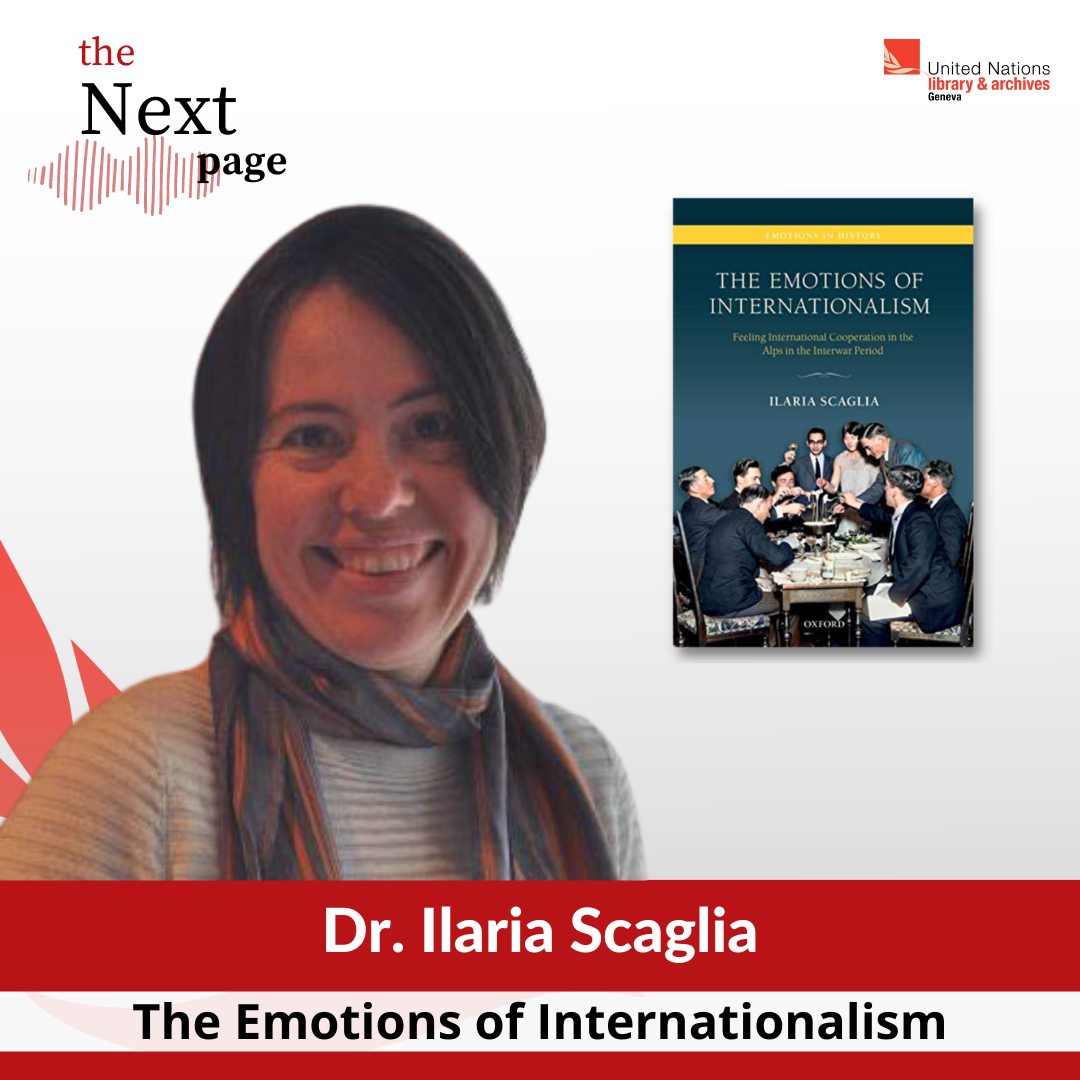
Ep 97The Emotions of Internationalism – a conversation with Ilaria Scaglia
The Emotions of Internationalism – a conversation with Ilaria Scaglia Dr. Ilaria Scaglia takes us on an Alpine journey to explore the emotions that internationalists around the League of Nations sought to encourage and share. Along the way we hear mention of Heidi, the Pope, Einstein and Marie Curie, alpinists and climbers, as well as renowned doctors practicing in the Alps. Through this study of the history of emotions, we come to understand better the vision of international cooperation in the interwar period. Resources Scaglia, I. (2020). The Emotions of Internationalism: Feeling International Cooperation in the Alps in the Interwar Period, Oxford University Press. doi.org/10.1093/oso/9780198848325.001.0001 Novick, P. (1988). That Noble Dream: The 'Objectivity Question' and the American Historical Profession (Ideas in Context). Cambridge: Cambridge University Press. doi:10.1017/CBO9780511816345 Sluga, G., & Clavin, P. (Eds.). (2016). Internationalisms: A Twentieth-Century History. Cambridge: Cambridge University Press. doi:10.1017/9781107477568 Website: https://ilariascaglia.com/ Where to listen to this episode Apple podcasts: https://podcasts.apple.com/us/podcast/the-next-page/id1469021154 Spotify: https://open.spotify.com/show/10fp8ROoVdve0el88KyFLy YouTube: Content Speaker: Dr. Ilaria Scaglia Host: Amy Smith Producer: Amy Smith Editing & Social media designs: Sotheapanha Theng Recorded & produced at the United Nations Library & Archives Geneva
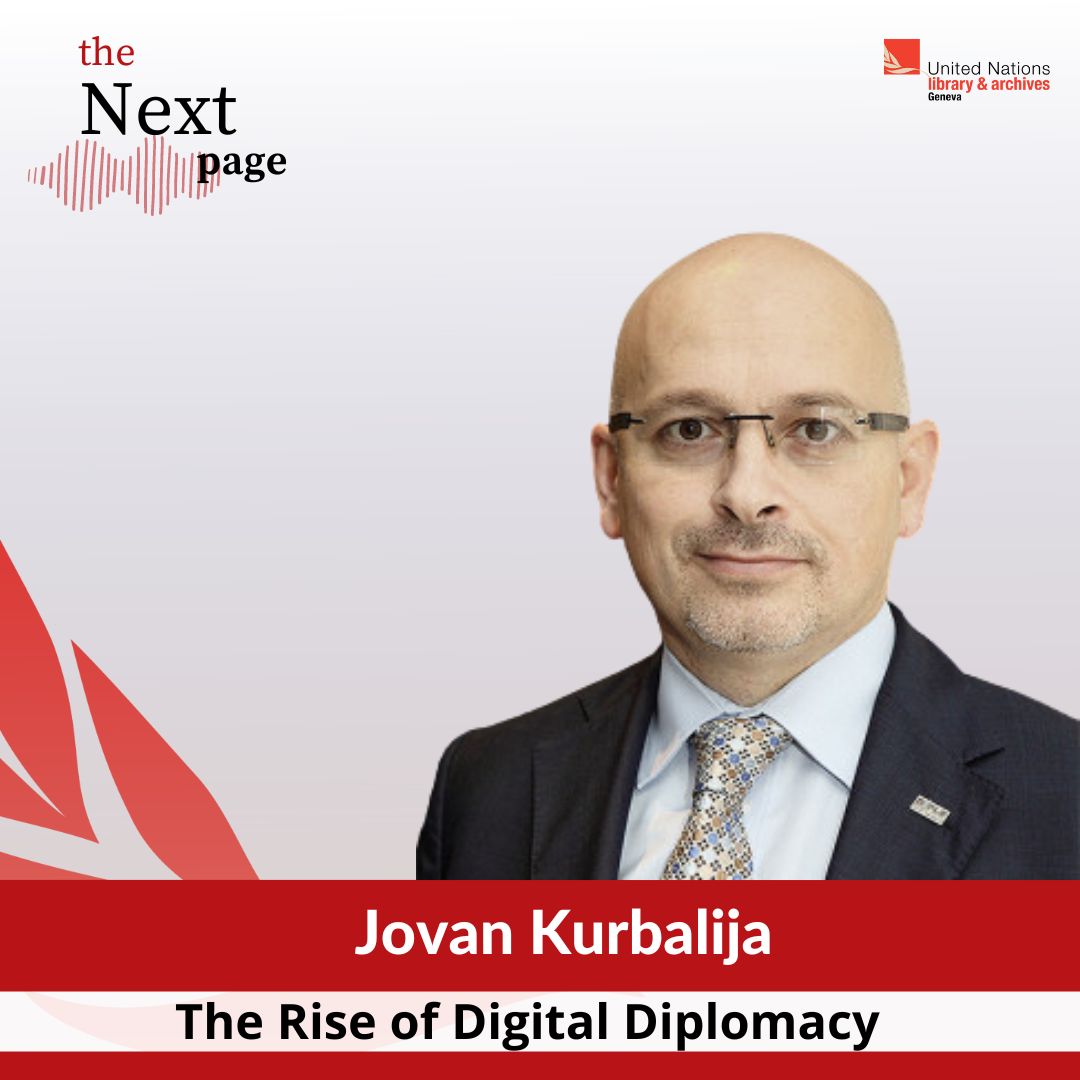
Ep 96The Rise of Digital Diplomacy - a conversation with Jovan Kurbalija
The Rise of Digital Diplomacy Francesco Pisano talks with Dr. Jovan Kurbalija, Director of DiploFoundation, about the mission of Diplo. We discover more about digital diplomacy and the impact it has on multilateralism and international cooperation. Jovan Kurbalija shares highlights from the 2022 Summit on Digital Diplomacy and Governance held in Malta and discusses the trends in digital geopolitics and geoeconomics. He underlines that diplomats need new skills to keep pace with changing technology in a digital world. Resources Diplo website: At DIPLO technology meets diplomacy Resources - DiploFoundation (diplomacy.edu) Report: Stronger digital voices from Africa Geneva Internet Platform Digital Watch website: https://dig.watch/ Where to listen to this episode Apple podcasts: https://podcasts.apple.com/us/podcast/the-next-page/id1469021154 Spotify: https://open.spotify.com/show/10fp8ROoVdve0el88KyFLy YouTube: Content Speaker: Dr. Jovan Kurbalija Host: Francesco Pisano Producer: Amy Smith Editing and social media designs: Sotheapanha Theng Recorded & produced at the United Nations Library & Archives Geneva

Ep 95The Right to Science - a conversation with Helle Porsdam & Sebastian Porsdam Mann
The Right to Science – a conversation with Helle Porsdam & Sebastian Porsdam Mann In this episode, we host the editors of a recently published book, The Right to Science: Then and Now (2021). Professor Helle Porsdam, Professor of History and Cultural Rights at the Centre for Interdisciplinary Studies of Law (CIS) at the University of Copenhagen and who holds a UNESCO Chair in Cultural Rights, and Dr. Sebastian Porsdam Mann at the University of Oxford, speak about the fascinating history of this less well-known Human Right. They discuss what it means to participate and share in culture and science, the importance of diversity and inclusion, and what a human rights perspective brings to complex issues. Universal Declaration of Human Rights. Article 27 - Everyone has the right freely to participate in the cultural life of the community, to enjoy the arts and to share in scientific advancement and its benefits. Resources Porsdam, H., & Porsdam Mann, S. (Eds.). (2021). The Right to Science: Then and Now. Cambridge: Cambridge University Press. doi:10.1017/9781108776301 Open access: https://www.cambridge.org/core/books/right-to-science/right-to-science-then/B61DA8232EC2F7B539C224ACCBF48D92 Website: https://en.unesco.org/human-rights/science Where to listen to this episode Apple podcasts: https://podcasts.apple.com/us/podcast/the-next-page/id1469021154 Spotify: https://open.spotify.com/show/10fp8ROoVdve0el88KyFLy YouTube: Content Speakers: Professor Helle Porsdam and Dr. Sebastian Porsdam Mann Host: Amy Smith Editor & Producer: Amy Smith Social media designs: Sotheapanha Theng Recorded & produced at the United Nations Library & Archives Geneva

Ep 94Why we need a new eco-social contract – a conversation with Paul Ladd
Why we need a new eco-social contract – a conversation with Paul Ladd In this episode we discuss with Paul Ladd, Director of the UN Research Institute on Social Development, about the contribution of the Institute to multilateralism at this 60-year milestone since UNRISD's establishment. In particular, we take a deep dive into the latest report, "Crises of Inequality", which shows why, in order to break the cycle of multiple, interlocking crises and to address inequality, we need a new eco-social contract. Paul Ladd tells us about how UNRISD's research has, in many instances, been ahead of the curve leading to positive impact. He explains in depth key themes in the recent UNRISD flagship report and gives us clear pointers to ways in which multilateralism must evolve. Resources Flagship report: https://www.unrisd.org/en/library/publications/crises-of-inequality UNRISD website: https://www.unrisd.org/en UNRISD Twitter: https://twitter.com/unrisd Where to listen to this episode Apple podcasts: https://podcasts.apple.com/us/podcast/the-next-page/id1469021154 Spotify: https://open.spotify.com/show/10fp8ROoVdve0el88KyFLy YouTube: Content Speakers: Paul Ladd Host: Francesco Pisano Production, editing and social media: Amy Smith and Panha Theng Recorded & produced at the United Nations Library & Archives Geneva

Ep 93Shifting Power in an Unequal World – a conversation with Katja Hujo and Maggie Carter
Shifting Power in an Unequal World – a conversation with Katja Hujo and Maggie Carter Inequality is undoubtedly one of today’s greatest challenges. In this episode, Katja Hujo and Maggie Carter, editors of the recently published book Between Fault Lines and Front Lines: Shifting Power in an Unequal World, talk about how inequalities have reshaped structures from the local to the transnational level and the impact and consequences of inequalities. They explore the conceptual thinking around inequality and its drivers and illustrate this with examples from cases studies from around the world. Resources Book: Hujo, K. & Carter, M. (Eds.) (2022) Between Fault Lines and Front Lines: Shifting Power in an Unequal World. Bloomsbury Publishing. https://www.bloomsbury.com/uk/between-fault-lines-and-front-lines-9781350229020/ Flagship report: https://www.unrisd.org/en/library/publications/crises-of-inequality UNRISD website: https://www.unrisd.org/en UNRISD Twitter: https://twitter.com/unrisd Where to listen to this episode Apple podcasts: https://podcasts.apple.com/us/podcast/the-next-page/id1469021154 Spotify: https://open.spotify.com/show/10fp8ROoVdve0el88KyFLy YouTube: Content Speakers: Katja Hujo and Maggie Carter Host: Francesco Pisano Production, editing, social media: Amy Smith and Panha Theng Recorded & produced at the United Nations Library & Archives Geneva

Ep 92Canada & the multilateral system. A conversation with Ambassador Leslie E. Norton
This first episode of 2023 continues our series with Permanent Representatives to the United Nations at Geneva. Ambassador Leslie E. Norton tells us about her diplomatic career, speaks about Canada and its role in the world today, as well as exploring the long history of Canada’s involvement in multilateralism. Canada is a founding member of the United Nations, was part of the League of Nations, and has membership in many international and regional organizations, including the World Trade Organization, the G20 and other forums like the Organization of American States and the Asia-Pacific Economic Cooperation forum. Canada has served on the UN Security Council 8 times, the most recent being in 2000. Resources Where to listen to this episode Apple podcasts: https://podcasts.apple.com/us/podcast/the-next-page/id1469021154 Spotify: https://open.spotify.com/show/10fp8ROoVdve0el88KyFLy YouTube: https://www.youtube.com/watch?v=xqTBLYAgiWM&list=PLmzrhlc0gF6KlZ8KES5Jzho0d-UZdyuIx Content Speakers: Ambassador Leslie E. Norton Host: Francesco Pisano Editor & Producer: Amy Smith Social media designs: Amy Smith and Yiying Zhang Recorded & produced at the United Nations Library & Archives Geneva
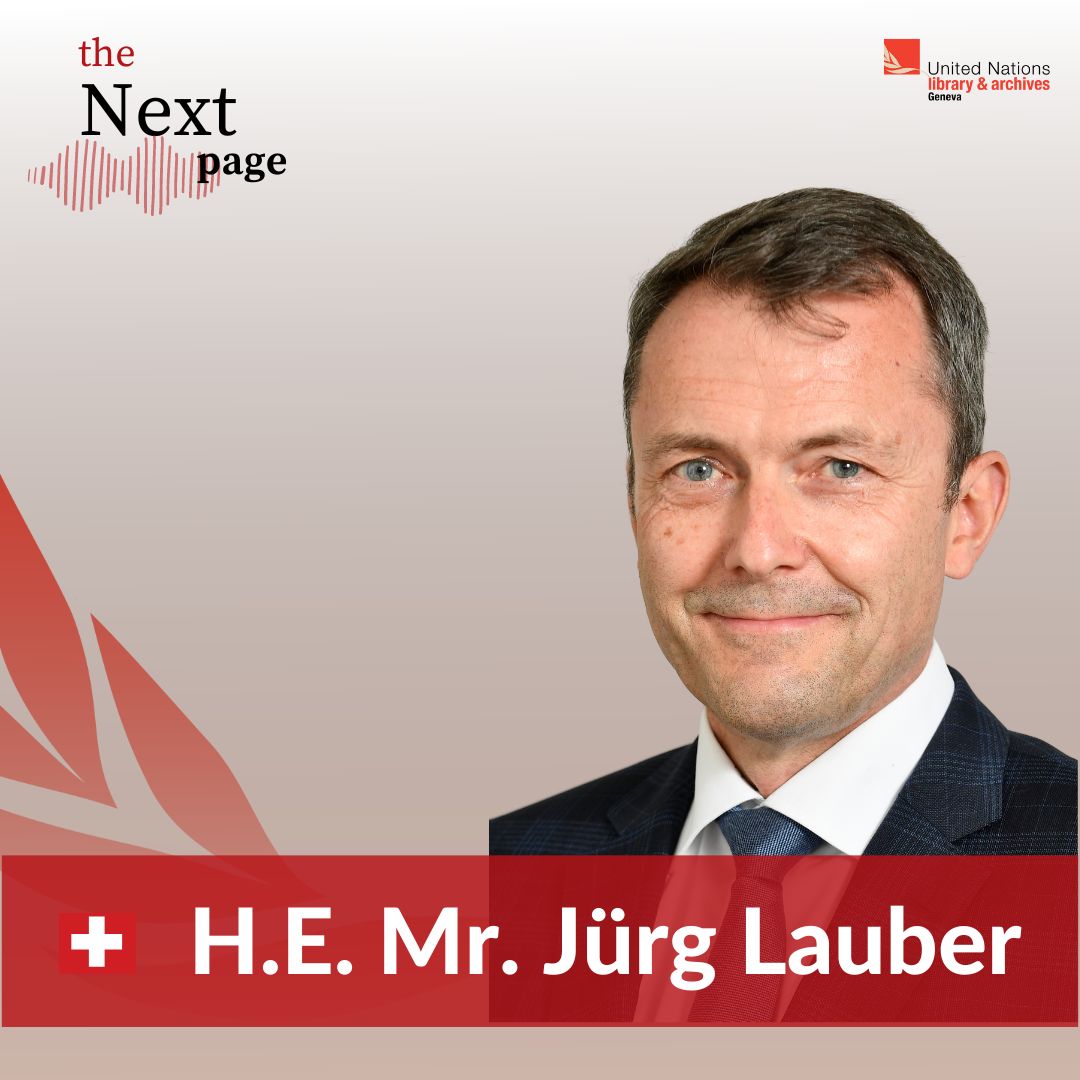
Ep 91Switzerland celebrates 20 years in the UN. A conversation with Ambassador Jürg Lauber
This episode marks the 20th anniversary of Switzerland’s membership in the United Nations. Switzerland became the 190th member of the UN following a national referendum in March 2002, in which the majority of population (54.6%) voted in favour of joining the UN. Ambassador Jürg Lauber, Permanent Representative of Switzerland to the United Nations at Geneva joined The Next Page for a conversation about Switzerland’s journey in the UN and to reflect on the two decades since its accession. Resources Follow the Permanent Mission of Switzerland on Twitter: SwitzerlandUN@swiss_un The Geneva Science and Diplomacy Anticipator: https://gesda.global/ Where to listen to this episode Apple podcasts: https://podcasts.apple.com/us/podcast/the-next-page/id1469021154 Spotify: https://open.spotify.com/show/10fp8ROoVdve0el88KyFLy YouTube: (2) Switzerland celebrates 20 years in the UN. A conversation with Ambassador Jürg Lauber - YouTube Content Speakers: Ambassador Jürg Lauber, Permanent Representative of Switzerland to the United Nations Office at Geneva Host: Francesco Pisano Editor & Producer: Amy Smith Social media designs: Ana Hauert, Yiying Zhang, Amber Yin Recorded & produced at the United Nations Library & Archives Geneva

Ep 90Diplomate, pour quoi faire ? Une conversation avec Jérôme Bonnafont
Diplomate, pour quoi faire ? est le titre du nouveau livre de Jérôme Bonnafont, Ambassadeur, Représentant permanent de la France auprès des Nations unies à Genève. Le Directeur de la Bibliothèque & Archives, Francesco Pisano discute avec Monsieur l’Ambassadeur en sa qualité d’écrivain ainsi qu'autour de son livre pour nous donner un aperçu de son expérience du métier, l’importance de la diplomatie multilatérale à travers les années et parler de l’avenir de la diplomatie. Ressources : Bonnafont, J. (2022) Diplomate, pour quoi faire ? Editions Odile Jacob Où écouter cet épisode Apple podcasts: https://podcasts.apple.com/us/podcast/the-next-page/id1469021154 Spotify: https://open.spotify.com/show/10fp8ROoVdve0el88KyFLy YouTube: https://www.youtube.com/watch?v=SCnx8MAtIrw&list=PLmzrhlc0gF6KlZ8KES5Jzho0d-UZdyuIx Contenu Invité : S.E. M. Jerôme Bonnafont Hôte : Francesco Pisano Réalisation et montage : Amy Smith Conception pour réseaux sociaux : Ana Hauert, Yiying Zhang, Amber Yin Photo : ©FPA Enregistré et réalisé à la Bibliothèque & Archives des Nations Unies à Genève
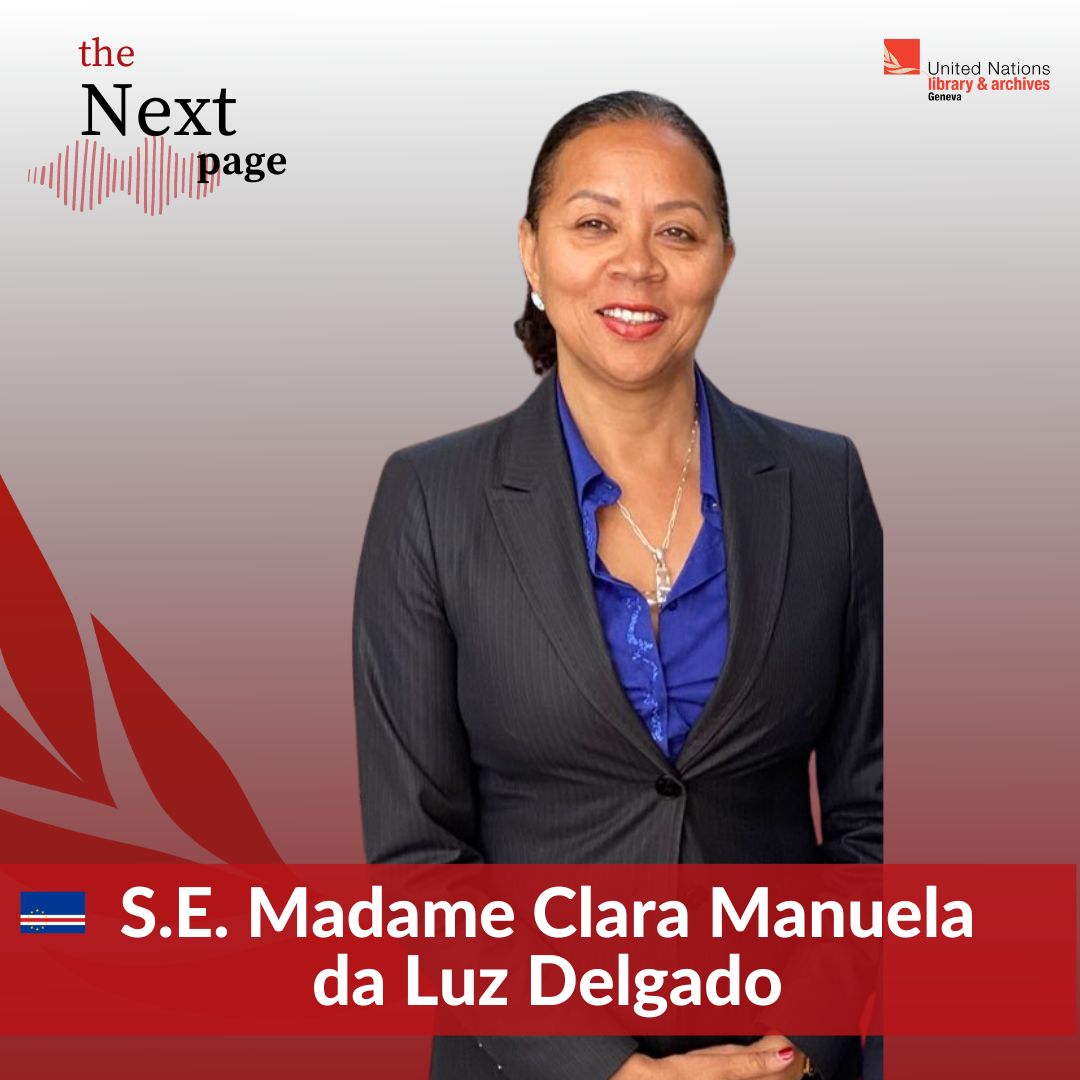
Ep 89Le Cap-Vert et la coopération multilatérale. Une conversation avec Madame l’Ambassadeur Clara Manuela da Luz Delgado Jesus
Cet épisode poursuit notre série de conversations avec des Représentants permanents auprès de l'Office des Nations Unies à Genève, où nous explorons leurs points de vue en tant que diplomates dans le système multilatéral et ce que l'ONU signifie pour eux aujourd'hui. Clara Manuela da Luz Delgado Jesus, Représentante permanente et Ambassadeur extraordinaire et plénipotentiaire du Cap-Vert auprès de l'Office des Nations Unies à Genève et d'autres organisations internationales rejoint le directeur de la Bibliothèque & Archives, Francesco Pisano et notre collège Adriano Goncalves e Silva, pour cette conversation bilingue en français et en portugais sur le Cap-Vert. Le Cabo Verde a fait partie des Nations Unies depuis 1975 et a siégé au Conseil de Sécurité une fois comme membre de l’ONU. Madame l’Ambassadeur raconte le parcours du Cabo Verde, ainsi que son rôle dans la région et dans le monde, tout en partageant son propre parcours dans la diplomatie. Elle parle de l'importance de la coopération multilatérale aujourd'hui. Ressources Où écouter cet épisode Apple podcasts: https://podcasts.apple.com/us/podcast/the-next-page/id1469021154 Spotify: https://open.spotify.com/show/10fp8ROoVdve0el88KyFLy Youtube: (1) Le Cap-Vert et la coopération multilatérale. Une conversation avec Madame l’Ambassadeur Clara Manuel - YouTube Contenu Intervenants : S.E. Madame Clara Manuela da Luz Delgado Jesus, Francesco Pisano et Adriano Goncalves et Silva Réalisation et montage : Amy Smith Conception pour réseaux sociaux : Ana Hauert Enregistrée et réalisé à la Bibliothèque & Archives des Nations Unies à Genève
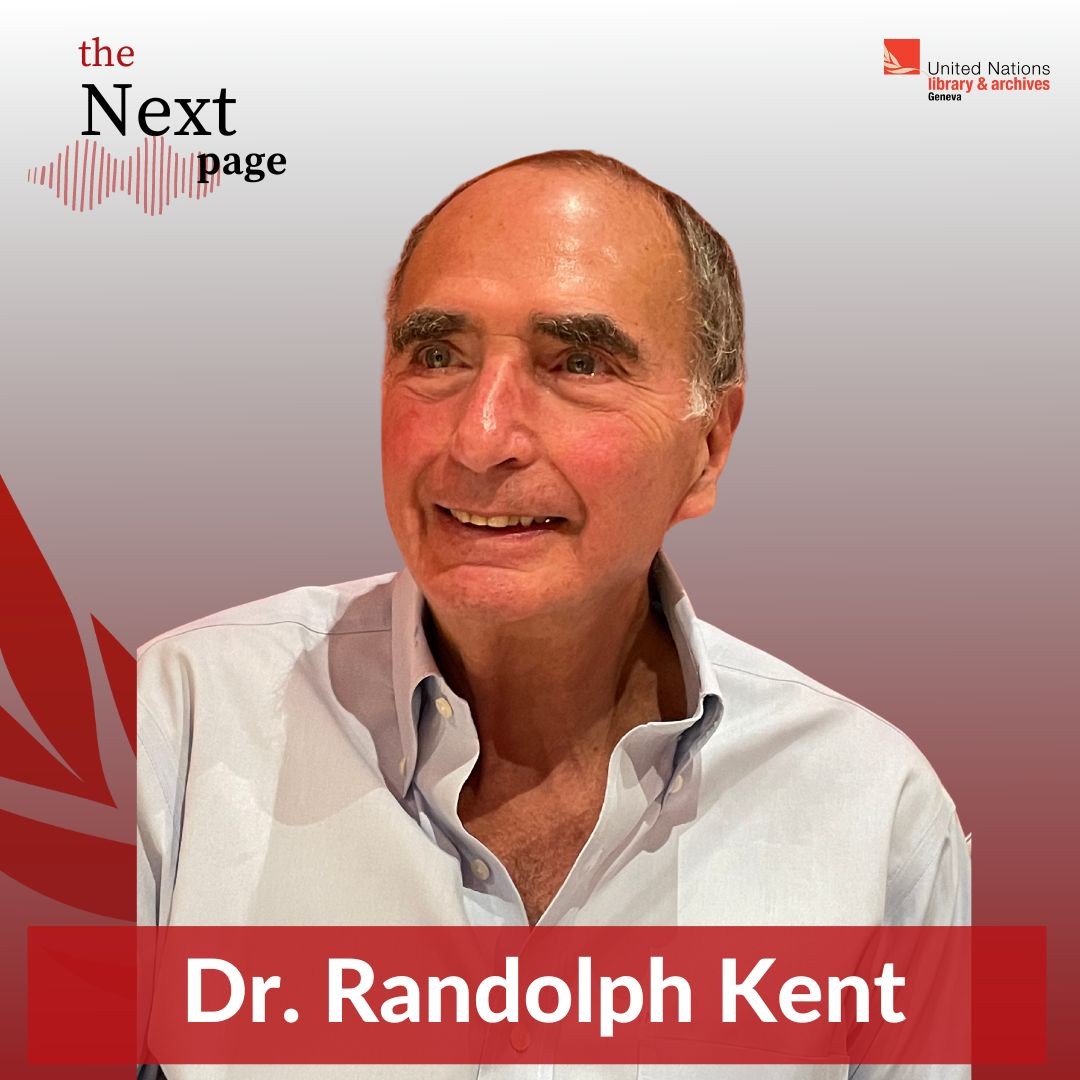
Ep 88Polylateralism and Preparing for the Future, with Dr. Randolph Kent
The global challenges we face today are often complex, inter-connected and inter-related. How, as a global community, can we prepare for the global threats of the future? In this episode of the #NextPagePod, we speak with Dr. Randolph Kent about his research on future global crises, and why he thinks polylateralism is needed to face them collectively. D. Kent is the Director of the Humanitarian Futures Initiative, Visiting Professor at the African Leadership Centre at King’s College London, and Senior Associate Fellow at the Royal United Services Institute, where he works on an initiative called the Futures Project. His past roles include several in the humanitarian sector of the UN system, including as UN Resident and Humanitarian Coordinator for Somalia (2002), UN Humanitarian Coordinator in Kosovo (1999), UN Humanitarian Coordinator in Rwanda (1994-1995), and emergency and preparedness roles in Sudan and Ethiopia. Dr. Kent speaks with us about his experiences in the UN, and how they've shaped his work today in futures thinking and polylateralism. What is futures methodology and should it matter for the UN and multilateralism? What exactly is polylateralism, and why does he think it's necessary to better meet global crises as an international community? Let's find out. Resources Read Dr. Kent's report "Building an International Architecture for Managing Global Threats": https://rusi.org/explore-our-research/publications/emerging-insights/building-international-architecture-managing-global-threats Learn more about Humanitarian Futures: https://www.humanitarianfutures.org/ Listen to the #NextPagePod episode with historian Margaret MacMillan as she speaks about the shaping of modern multilateralism: https://unitednationslibrarygeneva.podbean.com/e/episode-32-margaret-macmillan/ Where to listen to this episode Apple podcasts: https://podcasts.apple.com/us/podcast/the-next-page/id1469021154 Spotify: https://open.spotify.com/show/10fp8ROoVdve0el88KyFLy Youtube: https://www.youtube.com/watch?v=Udgjtu1vB7U Content Speakers: Dr. Randolph Kent Host: Natalie Alexander Editor & Producer: Natalie Alexander Social media designs: Natalie Alexander & Alma Selvaggia Rinaldi Recorded & produced at the United Nations Library & Archives Geneva
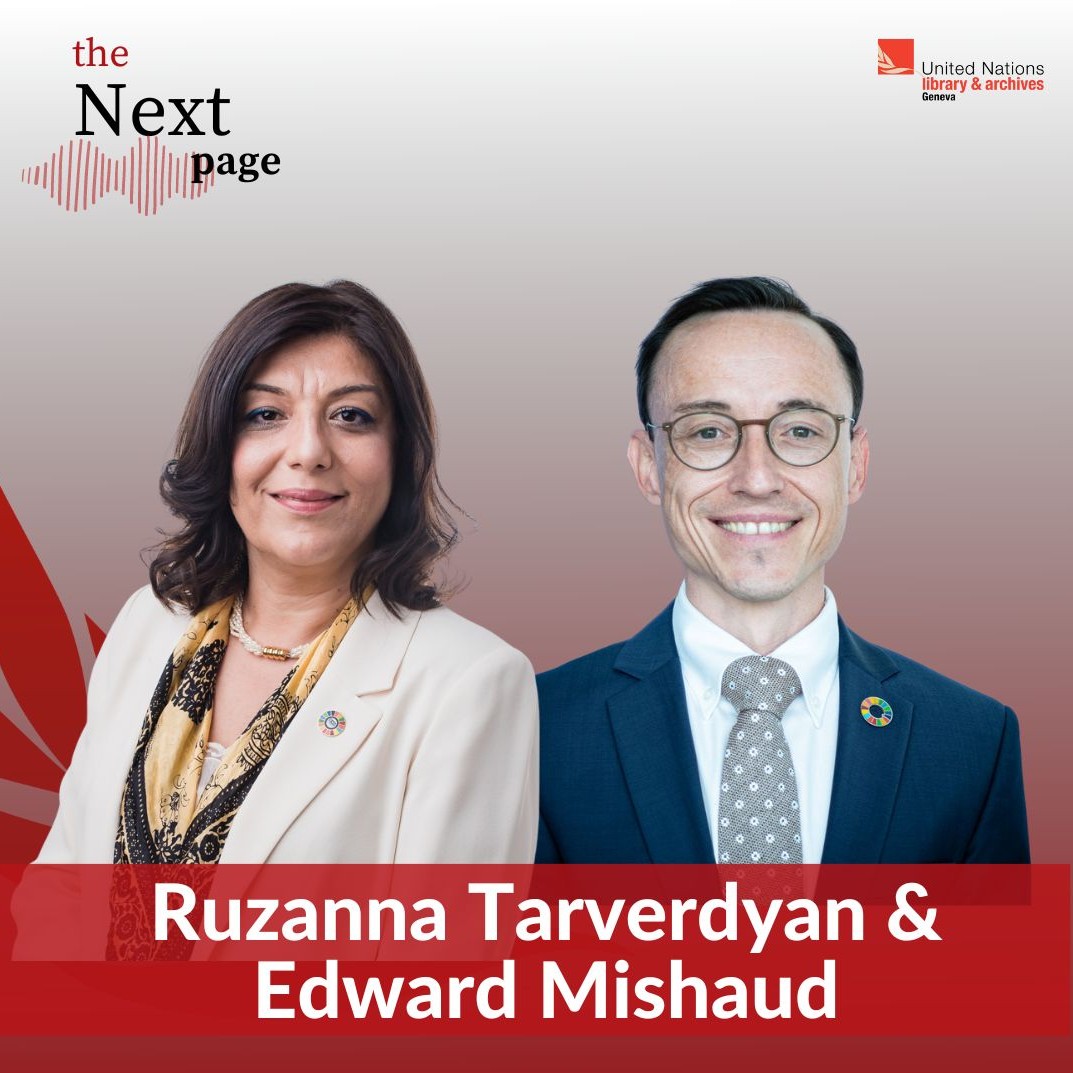
Ep 87Achieving the SDGs: How Can We Really Measure Progress? A Conversation with Ruzanna Tarverdyan & Edward Mishaud
Today's episode delves into data. It’s all around us in our daily lives, but how important is data for multilateralism today? Especially, as we look to Agenda 2030, and measuring our progress to achieve the Sustainable Development Goals (the SDGs)? The #NextPagePod is joined by Ruzanna Tarverdyan, Founding President of the Geneva Consensus Foundation, and author of the book, “Measuring sustainable development goals performance”, as well as Edward Mishaud, Acting Director of the SDG Lab at UN Geneva. How can we really measure if we’re achieving the SDGs? Are countries’ ready to integrate the social, economic and environmental dimensions of development? What does the data tell us about crises, and our ability to face future challenges? And how can science impact multilateralism? We explore these questions in this episode. Resources Learn about the book “Measuring sustainable development goals performance”, by Ruzanna Tarverdyan & Sten Thore. Read the article from the Official Journal of the European Union entitled "Opinion of the European Economic and Social Committee on Listening to the citizens of Europe for a sustainable future" (Sibiu and beyond)’ adopted in 2019 when the European Economic and Social Committee chose to use Ruzanna Tarverdyan & Sten Thore's definition of the notion “Sustainable Competitiveness”. Visit SDG Lab website: https://www.sdglab.com/ Visit the UN Sustainable Development Goal indicators website Listen to the #NextPagePod series collaboration with the SDG Lab at UN Geneva, It Takes A Global Crisis on YouTube or here on Podbean. Where to listen to this episode Apple podcasts: https://podcasts.apple.com/us/podcast/the-next-page/id1469021154 Spotify: https://open.spotify.com/show/10fp8ROoVdve0el88KyFLy Youtube: https://www.youtube.com/watch?v=DugVc5uUABU Content Speakers: Ruzanna Tarverdyan & Edward Mishaud Host: Natalie Alexander Editors & Producers: Alma Selvaggia Rinaldi & Natalie Alexander Social media designs: Alma Selvaggia Rinaldi & Natalie Alexander Recorded & produced at the United Nations Library & Archives Geneva
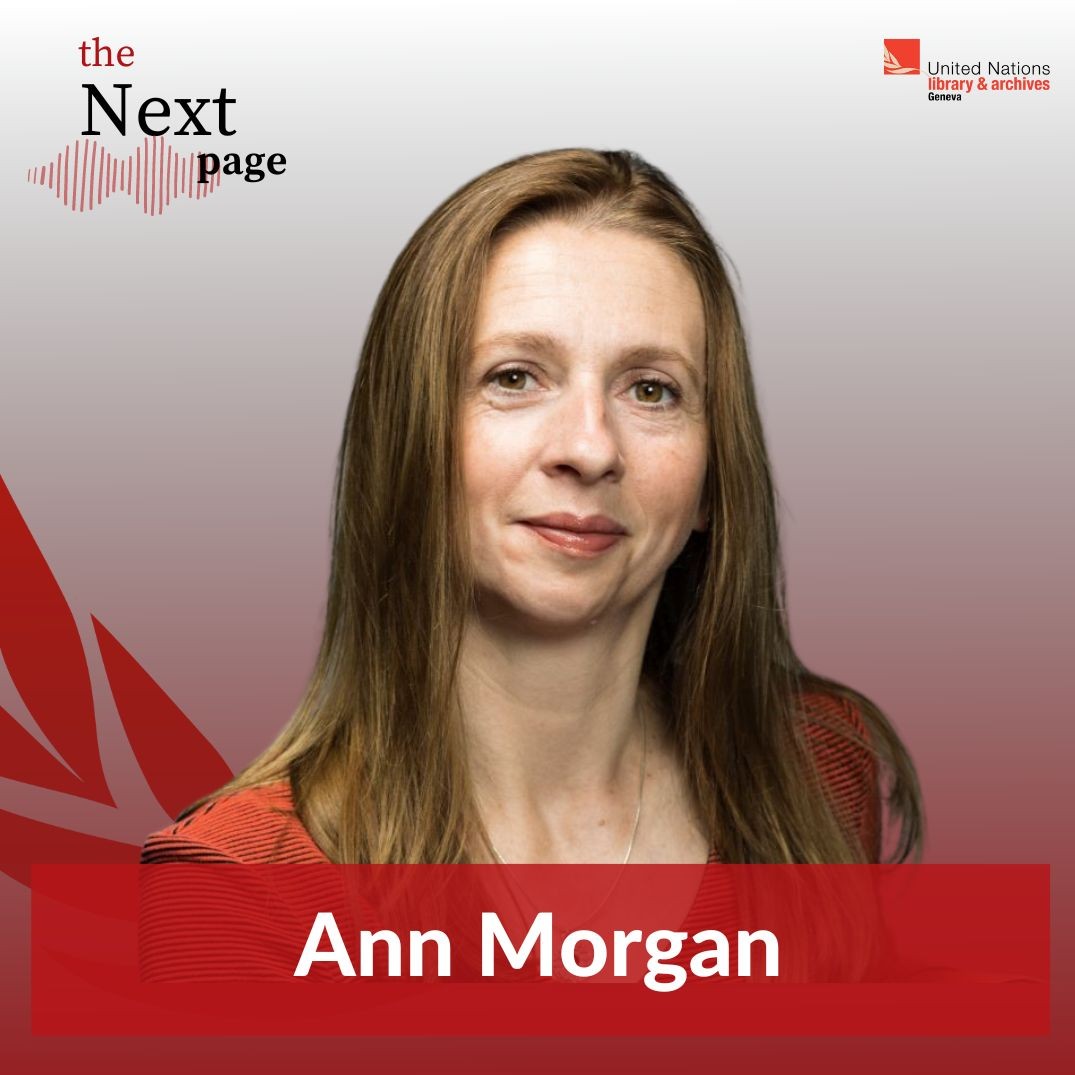
Ep 85Developing International Understanding by Reading the World: a Journey with Ann Morgan
Join us with our guest, Ann Morgan, an author, editor, Royal Literary Fund Fellow, TED speaker, literary activist, based in the U.K., for a conversation on the power of stories to connect us. At the heart of the UN Library & Archives Geneva is its mission to promote international understanding. We reached out to Ann Morgan to tell us more about her ongoing adventure of Reading the World and how reading literature from different places can help us embrace the unknown, suspend judgement and avoid jumping to fill the gaps, so that we can move from incomprehension to understanding and take part in the richness and joy of the shared experience of a story. In this episode, we consider how reading the world’s literature can help us develop the sort of cross-cultural communication skills that are necessary for diplomacy and multilateralism. Resources The List: https://ayearofreadingtheworld.com/thelist/ Photo credit: Igor Emmerich Books: Morgan, A. (2022) Reading the World: How I Read a Book from Every Country. Harvill Secker/Random House (UK Edition) Morgan, A. (2015) The World Between Two Covers: Reading the Globe. Liveright/Norton (US Edition) Morgan, A. (2016) Beside Myself. Bloomsbury Publishing Website: https://ayearofreadingtheworld.com/ TED talk: https://www.ted.com/talks/ann_morgan_my_year_reading_a_book_from_every_country_in_the_world?language=en Where to listen to this episode Apple podcasts: https://podcasts.apple.com/us/podcast/the-next-page/id1469021154 Spotify: https://open.spotify.com/show/10fp8ROoVdve0el88KyFLy Youtube: https://youtu.be/kJN3NTf6Yok Content Speakers: Ann Morgan Host: Amy Smith Editors & Producers: Amy Smith Social media designs: Natalie Alexander & Alma Selvaggia Rinaldi Recorded & produced at the United Nations Library & Archives Geneva
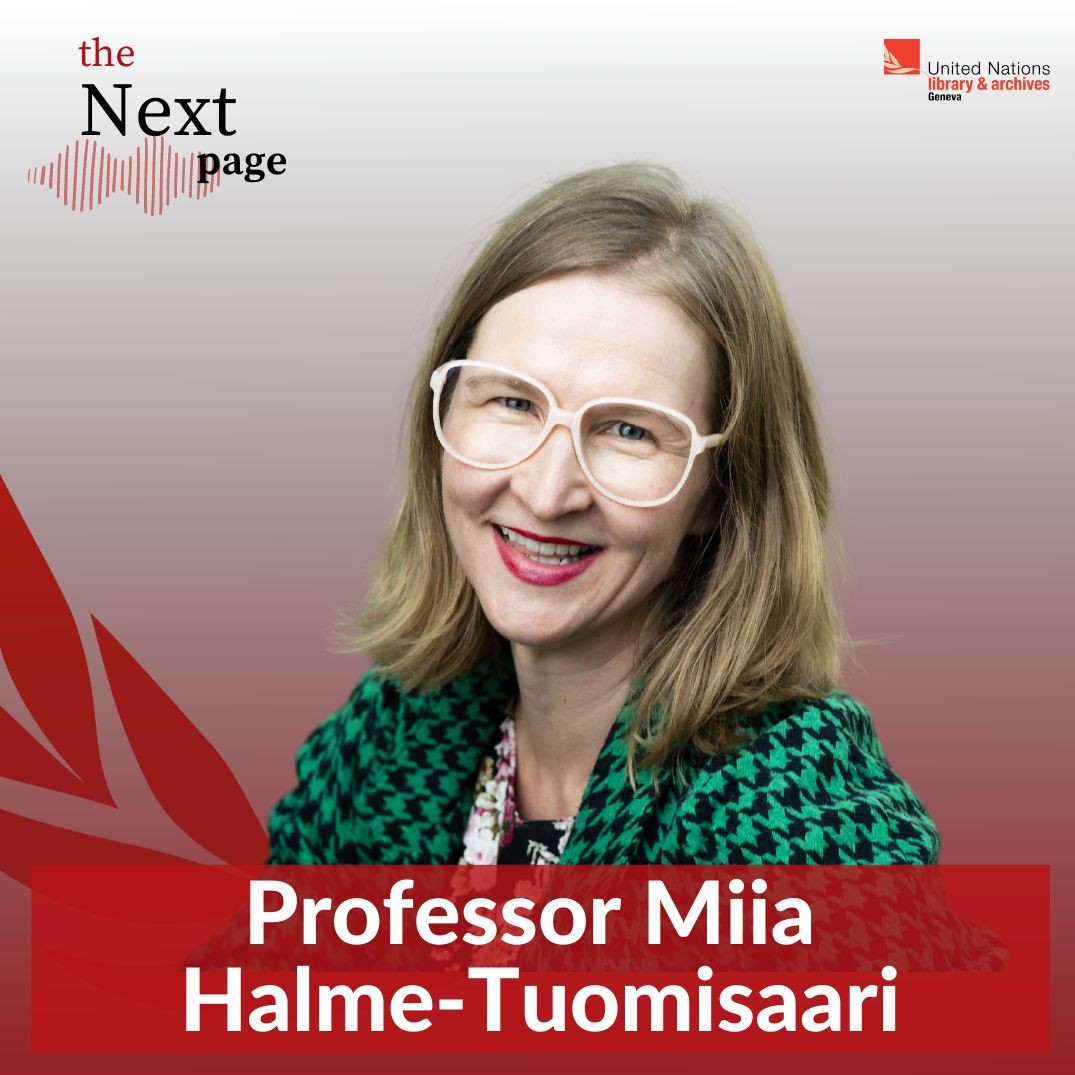
Ep 84How Anthropology Helps Us Understand Multilateralism
In this episode of the #NextPagePod, we are joined by Professor Miia Halme-Tuomisaari, Associate Professor in Human Rights studies at Lund University in Sweden, and Research Associate at the Global Governance Centre at the Geneva Graduate Institute. Professor Halme-Tuomisaari is a social anthropologist with a background in international law, whose focus is on the study of the contemporary human rights phenomenon. Why does anthropology matter to the study of International Organisations and multilateralism? Our Director at the UN Library and Archives Geneva, Francesco Pisano, joins Professor Halme-Tuomisaari to find out what her research reveals. Resources Visit Professir Halme-Tuomisaari's website: https://miiahalmetuomisaari.net/, as well as her Instagram https://www.instagram.com/observari/ and Twitter: https://twitter.com/HalmeTuomisaari Visit the Allegra Lab website: https://allegralaboratory.net/ Where to listen to this episode Apple podcasts: https://podcasts.apple.com/us/podcast/the-next-page/id1469021154 Spotify: https://open.spotify.com/show/10fp8ROoVdve0el88KyFLy Youtube: Content Speakers: Miia Halme-Tuomisaari Host: Francesco Pisano Editors & Producers: Alma Selvaggia Rinaldi & Natalie Alexander Social media designs: Alma Selvaggia Rinaldi & Natalie Alexander Recorded & produced at the United Nations Library & Archives Geneva

Ep 83Would the world be better without the UN? A conversation with author Thomas G. Weiss
In this episode of the #NextPagePod, we are joined by Professor Thomas G. Weiss, of the CUNY Graduate Center, a renowned researcher of the United Nations secretariat and the UN system at large. Our Director at the UN Library and Archives Geneva, Francesco Pisano, explores with Professor Weiss one of his latest books, Would the World Be Better without the UN? In his early career, he served with various parts of the UN Secretariat and UN specialised agencies. He has published countless works on the UN system, international relations, humanitarian affairs and peacekeeping. Resources Transcript: http://bitly.ws/t7zg Where to listen to this episode Apple podcasts: https://podcasts.apple.com/us/podcast/the-next-page/id1469021154 Spotify: https://open.spotify.com/show/10fp8ROoVdve0el88KyFLy Youtube: https://www.youtube.com/watch?v=tc2iLBRbHEU Content Speakers: Thomas Weiss Host: Francesco Pisano Editors & Producers: Alma Selvaggia Rinaldi, Yunshi (Daisy) Liang, Natalie Alexander Social media designs: Alma Selvaggia Rinaldi & Natalie Alexander Recorded & produced at the United Nations Library & Archives Geneva

Ep 82Organiser le Monde, une Autre Histoire de la Guerre Froide avec Sandrine Kott
Aujourd'hui, la Cheffe de la Section de la mémoire institutionnelle à la Bibliothèque et aux Archives de l'ONU à Genève, Blandine Blukacz-Louisfert, est rejointe par Sandrine Kott, Professeur d'histoire contemporaine à l'Université de Genève et professeur invitée à la New York University, pour la présentation de son ouvrage Organiser le Monde, une Autre Histoire de la Guerre Froide apparu en 2021 aux éditions du Seuil. Sandrine Kott est spécialiste de l'histoire du travail et des politiques sociales. Ses travaux récents se sont intéressés plus particulièrement aux organisations internationales comme lieu de circulation des savoirs et expertises en matière économique et sociale. Dans cet ouvrage, Kott s’intéresse aux organisations internationales et ce qu’elles peuvent révéler sur la période de la guerre froide. Elle souligne également l’importance des archives dans l’analyse de l’histoire, ainsi que ce que cela révèle sur les origines et les fonctionnements du multilatéralisme. Enfin, elle souligne également l’importance de Genève dans l’histoire du multilatéralisme, ainsi que ce que cette tradition multilatérale signifie aujourd’hui. Ressources Transcript: https://libraryresources.unog.ch/audio/transcripts/Organiser-le-Monde-une-Autre-Histoire-de-la-Guerre-Froide-avec-Sandrine-Kott Kott, S. (2021). Organiser le Monde, une Autre Histoire de la Guerre Froide, Seuil. https://www.seuil.com/ouvrage/organiser-le-monde-sandrine-kott/9782021408669 Où trouver cet épisode Apple podcasts: https://podcasts.apple.com/us/podcast/the-next-page/id1469021154 Spotify: https://open.spotify.com/show/10fp8ROoVdve0el88KyFLy Youtube: http://bitly.ws/sGHo La Bibliothèque et Archives des Nations unies à Genève Facebook: https://www.facebook.com/UNOGLibrary Twitter: https://twitter.com/UNOGLibrary Contenu Intervenants: Sandrine Kott Animatrice: Blandine Blukacz-Louisfert Réalisation et montage: Alma Rinaldi & Natalie Alexander Design des réseaux sociaux : Alma Selvaggia Rinaldi Transcription: Alma Selvaggia Rinaldi Enregistré et produit à la Bibliothèque & Archives des Nations Unies à Genève

Ep 81Why International Organizations Hate Politics with Dr. Lucile Maertens & Dr. Marieke Louis
Marieke Louis and Lucile Maerten’s book, Why International Organizations Hate Politics: Depoliticizing the World, draws on the extensive literature on functionalism and the related topic of technocracy, on anti-politics and bureaucractic multilateralism, and the wider, crosssectional research on expertise, knowledge and technicization, to systematically analyse and shine new light on the less explored topic of depoliticization. Through current and historical case studies they examine behind the facades to reveal the common structures, mechanisms and logics of the depoliticization process at work and point to the unintended consequences and impacts on the very issues that IOs were created to address. Their argument is carefully constructed and very nuanced and they invite us to consider their whole book and to question everyday practices that may, as they say, “backlash”. Marieke Louis is Associate Professor in Political Science and International Relations at Sciences Po Grenoble, PACTE, University Grenoble Alpes. Lucile Maertens is Senior Lecturer in Political Science and International Relations at IEP / CRHIM, University of Lausanne. Resources • Transcript: http://bitly.ws/sBna • Louis, M. & Maertens, L. (2021). Why International Organizations Hate Politics. https://www.taylorfrancis.com/books/oa-mono/10.4324/9780429466984/international-organizations-hate-politics-marieke-louis-lucile-maertens • Finnemore, M. and Barnett, M.N. (2004) Rules for the world: international organizations in global politics. Cornell University Press. • Hay, C. (2007) Why we hate politics (Vol. 5). Polity. • Hay, C. (2014) “Depoliticisation as Process, Governance as Practice: What Did the ‘First Wave’ Get Wrong and Do We Need a ‘Second Wave’ to Put it Right?,” Policy and Politics 42, no. 2. 293–311. • Human Development Index. UNDP. https://hdr.undp.org/data-center/humandevelopment-index#/indicies/HDI • Keohane, R. O. (1978) “The Functional Theory of Politics. By David Mitrany. (New York: St. Martin's Press, 1975. Pp. xxv 294),” American Political Science Review. Cambridge University Press, 72(2), pp. 805–806. doi: 10.2307/1954263. • Littoz-Monnet, A. (2017) The politics of expertise in international organizations. London: Routledge. • Mérand, F. (2021) The Political Commissioner: A European Ethnography. Oxford University Press. • Müller, B. (ed.) (2013) The gloss of harmony: the politics of policy‐making in multilateral organisations. London. Pluto Press. • Ruwet, C. (2012) “La RSE négociée: règles du jeu et contenus. Le cas d'ISO 26000,” Négociations 2, no. 18 (2012): 93–108. • Steffek, J. (2021) International Organization as Technocratic Utopia. Oxford University Press. • Steffek J, Holthaus L. (2018) The social-democratic roots of global governance: Welfare internationalism from the 19th century to the United Nations. European Journal of International Relations. 24(1):106-129. doi:10.1177/1354066117703176. Where to listen to this episode Apple podcasts: https://podcasts.apple.com/us/podcast/the-next-page/id1469021154 Spotify: https://open.spotify.com/show/10fp8ROoVdve0el88KyFLy Youtube: https://youtu.be/Vzr7xmBwokU Content Speakers: Dr. Lucile Maertens & Dr. Marieke Louis Host: Amy Smith Editors & Producers: Amy Smith, Alma Rinaldi & Natalie Alexander Social media designs: Alma Rinaldi & Natalie Alexander Recorded & produced at the United Nations Library & Archives Geneva

Ep 80Le rôle du Maroc au niveau multilatéral, avec Ambassadeur Omar Zniber.
Cet épisode poursuit notre série de conversations avec des ambassadeurs auprès de l'Office des Nations Unies à Genève, où nous explorons leurs points de vue en tant que diplomates dans un système multilatéral et ce que l'ONU signifie pour eux aujourd'hui. Notre directeur de la Bibliothèque et Archives des Nations Unies à Genève, Francesco Pisano, est rejoint par le représentant permanent et ambassadeur du Royaume du Maroc auprès de l'Office des Nations Unies à Genève et d'autres organisations internationales, Omar Zniber. En 1956, le Royaume du Maroc a rejoint les Nations Unies. L'ambassadeur Zniber raconte le parcours historique du Maroc, les défis auxquels il est confronté aujourd'hui, ainsi que son rôle au niveau régional et mondial, tout en partageant comment il a commencé à travailler dans la diplomatie. Il évoque également les souhaits du Maroc pour la communauté internationale, exprimant l'importance de la coopération multilatérale et les défis auxquels le multilatéralisme est confronté aujourd'hui. Ressources: Transcript: https://libraryresources.unog.ch/audio/transcripts/Morrocan-Ambassador-Omar-Zniber Suivez la Mission permanente du Maroc auprès de l'ONU Genève sur Twitter : https://twitter.com/morocco_un Où trouver cet épisode Apple podcasts: https://podcasts.apple.com/us/podcast/the-next-page/id1469021154 Spotify: https://open.spotify.com/show/10fp8ROoVdve0el88KyFLy Youtube: La Bibliothèque et Archives des Nations unies à Genève Facebook: https://www.facebook.com/UNOGLibrary Twitter: https://twitter.com/UNOGLibrary Contenu Intervenants: Omar Zniber et Francesco Pisano Animatrice: Alma Selvaggia Rinaldi Réalisation et montage: Yunshi (Daisy) Liang, Natalie Alexander et Alma Selvaggia Rinaldi Design des réseaux sociaux : Alma Selvaggia Rinaldi Image de Omar Zniber: Yunshi (Daisy) Liang Transcription: Yunshi (Daisy) Liang et Alma Selvaggia Rinaldi Enregistré et produit à la Bibliothèque & Archives des Nations Unies à Genève