
The Machinist
304 episodes — Page 5 of 7

Long Reads: Aaron Benanav on Automation and the Long Downturn
FullPodcast: Jacobin Radio (LS 60 · TOP 0.1% what is this?)Episode: Long Reads: Aaron Benanav on Automation and the Long DownturnPub date: 2022-11-07Get Podcast Transcript →powered by Listen411 - fast audio-to-text and summarizationScience fiction has traditionally depicted a robot takeover as a conscious bid for global domination by our mechanical offspring. From The Terminator to The Matrix, we’ve been invited to picture a war to the death between man and machine. More recently however, figures like Elon Musk have spoken about the rise of the robots as a more insidious threat to humanity; the machines may bear us no ill will, but they’ll cast us on the scrap heap of technological unemployment anyway.Aaron Benanav, author of Automation and the Future of Work, joins Long Reads to discuss what this conventional wisdom around technology and jobs gets wrong—and what a realistic path to a post-scarcity world might look like.Long Reads is a Jacobin podcast looking in-depth at political topics and thinkers, both contemporary and historical, with the magazine’s longform writers. Hosted by Features Editor Daniel Finn. Produced by Conor Gillies, music by Knxwledge.The podcast and artwork embedded on this page are from Jacobin, which is the property of its owner and not affiliated with or endorsed by Listen Notes, Inc.

Chris Salter, "Sensing Machines: How Sensors Shape Our Everyday Life" (MIT Press, 2022)
FullPodcast: New Books in Sociology (LS 40 · TOP 2% what is this?)Episode: Chris Salter, "Sensing Machines: How Sensors Shape Our Everyday Life" (MIT Press, 2022)Pub date: 2022-11-01Get Podcast Transcript →powered by Listen411 - fast audio-to-text and summarizationSensing machines are everywhere in our world. As we move through the day, electronic sensors and computers adjust our thermostats, guide our Roombas, count our steps, change the orientation of an image when we rotate our phones. There are more of these electronic devices in the world than there are people--in 2020, thirty to fifty billion of them (versus 7.8 billion people), with more than a trillion expected in the next decade. In Sensing Machines: How Sensors Shape Our Everyday Life (MIT Press, 2022), Chris Salter examines how we are tracked, surveilled, tantalized, and seduced by machines ranging from smart watches and mood trackers to massive immersive art installations.Salter, an artist/scholar who has worked with sensors and computers for more than twenty years, explains that the quantification of bodies, senses, and experience did not begin with the surveillance capitalism practiced by Facebook, Amazon, Netflix, and Google but can be traced back to mathematical and statistical techniques of the nineteenth century. He describes the emergence of the "sensed self," investigating how sensor technology has been deployed in music and gaming, programmable and immersive art environments, driving, and even eating, with e-tongues and e-noses that can taste and smell for us. Sensing technology turns our experience into data; but Salter's story isn't just about what these machines want from us, but what we want from them--new sensations, the thrill of the uncanny, and magic that will transport us from our daily grind.Galina Limorenko is a doctoral candidate in Neuroscience with a focus on biochemistry and molecular biology of neurodegenerative diseases at EPFL in Switzerland. Learn more about your ad choices. Visit megaphone.fm/adchoicesSupport our show by becoming a premium member! https://newbooksnetwork.supportingcast.fm/sociologyThe podcast and artwork embedded on this page are from New Books Network, which is the property of its owner and not affiliated with or endorsed by Listen Notes, Inc.

UO Today interview: Juliet Schor, Economist and Professor of Sociology, Boston College
FullPodcast: UO TodayEpisode: UO Today interview: Juliet Schor, Economist and Professor of Sociology, Boston CollegePub date: 2022-10-26Get Podcast Transcript →powered by Listen411 - fast audio-to-text and summarizationJuliet Schor is an Economist and a professor of Sociology at Boston College. She discusses her research on consumer society and consumer culture, working hours and lifestyles, environmental degradation, the sharing economy. Schor is the 2022 Wayne Morse Chair in Law and Politics. She gave a talk "Gig Economy: Predatory Platforms, Precarious Work" as part of the Morse Center’s two-year focus on Making Work Work.The podcast and artwork embedded on this page are from Oregon Humanities Center, which is the property of its owner and not affiliated with or endorsed by Listen Notes, Inc.

A Harem of Computers: The History of the Feminized Machine
FullPodcast: Ideas (LS 63 · TOP 0.1% what is this?)Episode: A Harem of Computers: The History of the Feminized MachinePub date: 2024-11-14Get Podcast Transcript →powered by Listen411 - fast audio-to-text and summarizationDigital assistants, in your home or on your phone, are usually presented as women. In this documentary, IDEAS traces the history of the feminized, non-threatening machine, from Siri and Alexa to the "women computers" of the 19th century. *This episode originally aired on Oct. 26, 2022.The podcast and artwork embedded on this page are from CBC, which is the property of its owner and not affiliated with or endorsed by Listen Notes, Inc.

Chip exports and US-China relations
FullPodcast: Digital Planet (LS 52 · TOP 0.5% what is this?)Episode: Chip exports and US-China relationsPub date: 2022-10-25Get Podcast Transcript →powered by Listen411 - fast audio-to-text and summarizationThe Biden administration announced a monumental policy shift earlier this month, set to limit and control the exportation of artificial intelligence and semiconductor technologies to China. The restrictions will block leading U.S. chip designers from accessing the Chinese market; selling goods that form the backbone of AI and supercomputing. Gregory Allen from the Centre for Strategic and International Studies explains how these actions could potentially ‘strangle’ large segments of the Chinese technology industry. Whilst access to the World Wide Web becomes ever more integral to modern day life, the digital divide is growing. Those residing in Africa and the Americas appear to have the least affordable, least reliable and slowest internet. Elena Babarskaite at Surfshark, a VPN service company located in the Netherlands, unpicks their latest investigation into our Digital Quality of Life.In one Ghana household, an AI powered chatbot tutor called Rori, developed by Rising Academies, helps its student stay up to date with his favourite subject, maths. Lucinda Rouse hears how this smart teacher, available through Whatsapp, could soon reach 200,000 children across West Africa, bypassing expensive tuition fees.(Image: Semiconductor and circuit board. Credit: Getty Images) The programme is presented by Gareth Mitchell with expert commentary from Bill ThompsonStudio Manager: Giles Aspen Producer: Harrison LewisThe podcast and artwork embedded on this page are from BBC World Service, which is the property of its owner and not affiliated with or endorsed by Listen Notes, Inc.

On Social Media and Hinduism
FullPodcast: New Books in Indian Religions (LS 33 · TOP 5% what is this?)Episode: On Social Media and HinduismPub date: 2022-10-25Get Podcast Transcript →powered by Listen411 - fast audio-to-text and summarizationDheepa Sundaram (she/her/hers) is scholar of performance, ritual, yoga, and digital culture in South Asia at the University of Denver which sits on the unceded tribal lands of the Cheyenne and Arapahoe people. Her research examines the formation of Hindu virtual religious publics through online platforms, social media, apps, and emerging technologies such as virtual reality and artificial intelligence. Sundaram's current monograph project titled Globalizing Dharma examines how commercial ritual websites fashion a new, digital canon for Hindu religious praxis, effectively "branding" religious identities through a neoliberal "Vedicizing" of virtual spaces. Her most recent article explores how West Bengal’s Tourism initiatives use Instagram to foster virtual, ethnonationalist, social networks during Durga puja. Spotlighting issues of access/accessibility to religious spaces and the viability and visibility of online counter-narratives, especially those from minoritized/marginalized caste, gender, and class communities, Sundaram shows how Asur tribal groups who seek to recover an alternative history of their ancestor Mahisasura, are not only excluded, but, effaced through this kind of digital cultural marketing campaign. A forthcoming piece examines so-called YouTube yogis and how the commercial landscape of yoga as part of lifestyle "cures" becomes an unwitting partner in Hindu nationalist project of repatriating yoga as a national cultural artifact. Learn more about your ad choices. Visit megaphone.fm/adchoicesSupport our show by becoming a premium member! https://newbooksnetwork.supportingcast.fm/indian-religionsThe podcast and artwork embedded on this page are from Marshall Poe, which is the property of its owner and not affiliated with or endorsed by Listen Notes, Inc.

Digital Authoritarianism in the Middle East & Authoritarian Adaptation (S. 12, Ep. 6)
FullPodcast: POMEPS Middle East Political Science Podcast (LS 32 · TOP 5% what is this?)Episode: Digital Authoritarianism in the Middle East & Authoritarian Adaptation (S. 12, Ep. 6)Pub date: 2022-10-20Get Podcast Transcript →powered by Listen411 - fast audio-to-text and summarizationMarc Owen Jones Hamad bin Khalifa University joins Marc Lynch on this week's podcast to discuss his new book, Digital Authoritarianism in the Middle East: Deception, Disinformation and Social Media. The book analyzes how social media has been weaponised by states and commercial entities in the Middle East. (Starts at 0:45). Andre Bank of the German Institute for Global and Area Studies and Sean Yom of Temple University discuss their chapter in The Political Science of the Middle East: Theory and Research Since the Arab Uprisings, which focuses on how authoritarianism has remained the predominant form of government in the MENA (co-authored with Eva Bellin, Michael Herb, Lisa Wedeen, and Saloua Zerhouni). (Starts at 35:27). Music for this season’s podcast was created by Myyuh. You can find more of her work on SoundCloud and Instagram.The podcast and artwork embedded on this page are from Marc Lynch, which is the property of its owner and not affiliated with or endorsed by Listen Notes, Inc.

Dead End: How Tech is driving gridlock
FullPodcast: Burning PlatformsEpisode: Dead End: How Tech is driving gridlockPub date: 2022-10-16Get Podcast Transcript →powered by Listen411 - fast audio-to-text and summarizationThe future of transportation is abuzz with disruption, from ride-sharing to electric vehicles to AI traffic flows. Burning Platforms asks - will these build transport systems for the better or worse? With special guest Paris Marx, Author of Road to Nowhere: What Silicon Valley Gets Wrong about the Future of Transportation, and host of 'Tech Won't Save Us'. Burning Platforms is brought to you by the Centre of the Public Square - an initiative of Per Capita. The podcast and artwork embedded on this page are from Per Capita Australia, which is the property of its owner and not affiliated with or endorsed by Listen Notes, Inc.
The Anti-Fascist Approach to AI
FullPodcast: The Anti-Dystopians (LS 25 · TOP 10% what is this?)Episode: The Anti-Fascist Approach to AIPub date: 2022-10-19Get Podcast Transcript →powered by Listen411 - fast audio-to-text and summarizationThe Anti-Dystopians is back from its summer hiatus! In this episode, Alina Utrata talks to Dan McQuillan, a Lecturer in Creative & Social Computing in the Department of Computing at Goldsmiths University of London, about his new book “Resisting AI: An Anti-Fascist Approach to Artificial Intelligence.” They discuss how the dangers of automated bureaucracy and algorithmic cruelty, what Max Weber and Hannah Arendt can tell us about AI, whether AI might bring back eugenics in a new coat and how to resist AI and fascism across the world.You can order Dan's book here: https://bristoluniversitypress.co.uk/resisting-ai For a complete reading list from the episode, check out the Anti-Dystopians substack at bit.ly/3kuGM5X.You can follow Dan McQuillan on Twitter @danmcquillan, Alina Utrata @alinautrata and the Anti-Dystopians podcast @AntiDystopians.All episodes of the Anti-Dystopians are hosted and produced by Alina Utrata and are freely available to all listeners. To support the production of the show, subscribe to the newsletter at bit.ly/3kuGM5X.Nowhere Land by Kevin MacLeodLink: https://incompetech.filmmusic.io/song/4148-nowhere-landLicense: http://creativecommons.org/licenses/by/4.0/ Hosted on Acast. See acast.com/privacy for more information.The podcast and artwork embedded on this page are from Alina Utrata, which is the property of its owner and not affiliated with or endorsed by Listen Notes, Inc.
Geert Lovink, "Stuck on the Platform: Reclaiming the Internet" (Valiz, 2022)
FullPodcast: New Books in Sociology (LS 40 · TOP 2% what is this?)Episode: Geert Lovink, "Stuck on the Platform: Reclaiming the Internet" (Valiz, 2022)Pub date: 2022-10-13Get Podcast Transcript →powered by Listen411 - fast audio-to-text and summarizationWe’re all trapped. No matter how hard you try to delete apps from your phone, the power of seduction draws you back. Doom scrolling is the new normal of a 24/7 online life. What happens when your home office starts to feel like a call center and you’re too fried to log out of Facebook? We’re addicted to large-scale platforms, unable to return to the frivolous age of decentralized networks. How do we make sense of the rising disaffection with the platform condition? Zoom fatigue, cancel culture, crypto art, NFTs and psychic regression comprise core elements of a general theory of platform culture. Geert Lovink argues that we reclaim the internet on our own terms. Stuck on the Platform: Reclaiming the Internet (Valiz 2022) is a relapse-resistant story about the rise of platform alternatives, built on a deep understanding of the digital slump.Geert Lovink is a Dutch media theorist, internet critic and author of Uncanny Networks (2002), Dark Fiber (2002), My First Recession (2003), Zero Comments (2007), Networks Without a Cause (2012), Social Media Abyss (2016), Organisation after Social Media (with Ned Rossiter, 2018) and Sad by Design (2019). In 2004 he founded the Institute of Network Cultures at the Amsterdam University of Applied Sciences (HvA). His center organizes conferences, publications and research networks such as Video Vortex (online video), The Future of Art Criticism and MoneyLab (internet-based revenue models in the arts). Recent projects deal with digital publishing experiments, critical meme research, participatory hybrid events and precarity in the creative sector. In December, 2021 he was appointed Professor of Art and Network Cultures at the Art History Department, Faculty of Humanities of the University of Amsterdam for one day a week.Reuben Niewenhuis is interested in philosophy, theory, technology, and interdisciplinary topics. Subscribe to his interviews here. Learn more about your ad choices. Visit megaphone.fm/adchoicesSupport our show by becoming a premium member! https://newbooksnetwork.supportingcast.fm/sociologyThe podcast and artwork embedded on this page are from New Books Network, which is the property of its owner and not affiliated with or endorsed by Listen Notes, Inc.

197. The Limits of Tech Inquiry
FullPodcast: This Machine Kills (LS 49 · TOP 0.5% what is this?)Episode: 197. The Limits of Tech InquiryPub date: 2022-10-06Get Podcast Transcript →powered by Listen411 - fast audio-to-text and summarizationWe discuss recent events of a report by Tech Inquiry about big tech’s military contracts was pulled by its funders — a major union and a major social democratic party — over Tech Inquiry’s refusal to censor its criticism of Microsoft. We offer our own critical analysis of organizations focused on building short-term, self-interested alliances with capital instead of ones focused on building long-term, worker power that is antagonistic to capital. Some references: ••• On the censorship of our report on government purchasing from Microsoft, Amazon, and Alphabet https://techinquiry.org/?about=UNI-censorship&guard= ••• Labor union censored report criticizing Microsoft’s military contracts https://theintercept.com/2022/09/07/microsoft-military-union-cwa/ ••• German SPD politician justifies murder of Rosa Luxemburg https://www.wsws.org/en/articles/2019/01/18/thie-j18.html Subscribe to hear more analysis and commentary in our premium episodes every week! patreon.com/thismachinekills Grab TMK gear: bonfire.com/store/this-machine-kills-podcast/ Hosted by Jathan Sadowski (www.twitter.com/jathansadowski) and Edward Ongweso Jr. (www.twitter.com/bigblackjacobin). Production / Music by Jereme Brown (www.twitter.com/braunestahl)The podcast and artwork embedded on this page are from This Machine Kills, which is the property of its owner and not affiliated with or endorsed by Listen Notes, Inc.

Christopher Lukman, "Control Machines: Toward a Dispositive Theory of Computer Games" (Lit Verlag, 2022)
FullPodcast: New Books in Critical Theory (LS 47 · TOP 1% what is this?)Episode: Christopher Lukman, "Control Machines: Toward a Dispositive Theory of Computer Games" (Lit Verlag, 2022)Pub date: 2022-10-11Get Podcast Transcript →powered by Listen411 - fast audio-to-text and summarizationToday I talked to Christopher Lukman about his new book Control Machines: Toward a Dispositive Theory of Computer Games (Lit Verlag, 2022).In light of its immense popularity, a critical examination of the medium of the videogame is due. This particular anthology – Control Machines. Computergames and the theory of the dispositifs – works on a theory of the 'dispositif' of the videogame and is thus dedicated to the connections between knowledge and power.The medium of the videogame is looked at in its complicity with neoliberalism and the control society as well as in its media-technological conditionality and its qualities of self-reflection and self-criticism.Rudolf Inderst is a professor of Game Design with a focus on Digital Game Studies at the IU International University of Applied Science and editor of “Game Studies Watchlist”, a weekly messenger newsletter about Game Culture. Learn more about your ad choices. Visit megaphone.fm/adchoicesSupport our show by becoming a premium member! https://newbooksnetwork.supportingcast.fm/critical-theoryThe podcast and artwork embedded on this page are from Marshall Poe, which is the property of its owner and not affiliated with or endorsed by Listen Notes, Inc.
The Battle Over Semiconductors & US-China Competition | Chris Miller
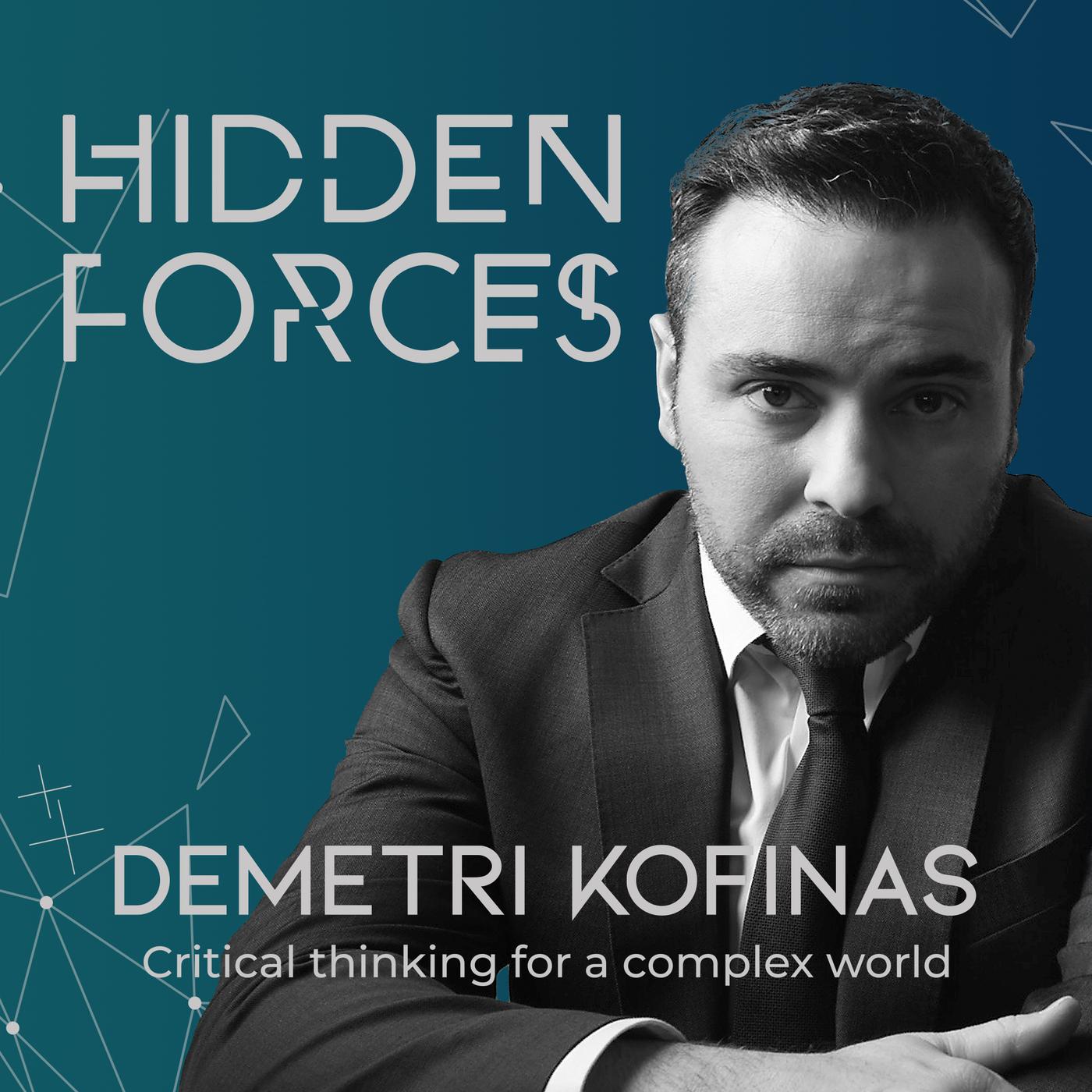
FullPodcast: Hidden Forces (LS 61 · TOP 0.1% what is this?)Episode: The Battle Over Semiconductors & US-China Competition | Chris MillerPub date: 2022-10-03Get Podcast Transcript →powered by Listen411 - fast audio-to-text and summarizationIn Episode 274 of Hidden Forces, Demetri Kofinas speaks with Chris Miller. Chris is Associate Professor of International History at the graduate school of global affairs at Tufts University. He is also the author of Chip War, which chronicles the geopolitical history of a decades-long battle to control the modern world's most critical resource: the microchip (or semiconductor) and the commercial industry that supports it. We spend the first hour discussing the technological, commercial, and distributional characteristics of the existing semiconductor supply chain. Chris explains the various steps involved in the production process, the incentives that operate in the industry, the technological imperatives that inform investment decisions, and the role of government subsidies and regulations, all of which explain the globally distributed and highly efficient nature of the semiconductor industry and why it is more vulnerable than ever to geopolitical disruption. The second hour is where we focus our attention on the geostrategic dimension of chip competition, the steps that are being taken to reorganize the industry, the efforts being made to build resiliency into various parts of the supply chain, and what the main challenges are to doing that successfully for both the US and China. The goal of this conversation is to bring clarity to a subject that has not only captivated the public interest but which increasingly determines the national security priorities and strategic investment decisions of the United States and without which the modern world would cease to function. You can access the full episode, transcript, and intelligence report to this week's conversation by going directly to the episode page at HiddenForces.io and clicking on "premium extras." All subscribers gain access to our premium feed, which can be easily added to your favorite podcast application. If you have questions about our genius tier, which includes access to the Hidden Forces community, Q&A calls with guests, in-person events, and dinners, you can learn more at HiddenForces.io/subscribe. If you have further questions, feel free to send an email to [email protected], and Demetri or someone else from our team will get right back to you. If you enjoyed listening to today's episode of Hidden Forces you can help support the show by doing the following: Subscribe on Apple Podcasts | YouTube | Spotify | Stitcher | SoundCloud | CastBox | RSS Feed Write us a review on Apple Podcasts & Spotify Subscribe to our mailing list at https://hiddenforces.io/newsletter/ Producer & Host: Demetri Kofinas Editor & Engineer: Stylianos Nicolaou Subscribe & Support the Podcast at https://hiddenforces.io Join the conversation on Facebook, Instagram, and Twitter at @hiddenforcespod Follow Demetri on Twitter at @Kofinas Episode Recorded on 09/27/2022The podcast and artwork embedded on this page are from Demetri Kofinas, which is the property of its owner and not affiliated with or endorsed by Listen Notes, Inc.
Why Google’s Toronto Smart City Failed w/ Josh O'Kane
FullPodcast: Tech Won't Save Us (LS 58 · TOP 0.5% what is this?)Episode: Why Google’s Toronto Smart City Failed w/ Josh O'KanePub date: 2022-09-29Get Podcast Transcript →powered by Listen411 - fast audio-to-text and summarizationParis Marx is joined by Josh O’Kane to discuss how Sidewalk Labs decided to build a city “from the internet up” in Toronto, the concerns that existed with the project, and why it ultimately fell apart.Josh O’Kane is an award-winning technology reporter at the Globe and Mail and the author of Sideways: The City Google Couldn't Buy. Follow Josh on Twitter at @joshokane.Tech Won’t Save Us offers a critical perspective on tech, its worldview, and wider society with the goal of inspiring people to demand better tech and a better world. Follow the podcast (@techwontsaveus) and host Paris Marx (@parismarx) on Twitter, and support the show on Patreon.The podcast is produced by Eric Wickham and part of the Harbinger Media Network.Also mentioned in this episode: An excerpt of Josh’s book was published in the Globe and Mail. Josh wrote about how Canada’s Liberal government under Justin Trudeau isn’t as friendly with tech companies as it was earlier in its time in power. Around the time of Sidewalk Toronto, opponents were able to defeat Amazon’s HQ2 project in New York, Google’s Berlin startup hub, Apple’s planned central Stockholm store, and its planned store in Melbourne’s Fed Square. Bianca Wylie was one of the prominent critics of the project, and was called the “Jane Jacobs of the smart city.” In 2019, documents leaked showing Sidewalk Labs wanted a lot more power and access to more land than was agreed upon, and that further fueled opposition. In May 2020, Wylie wrote about the cancelation of the project and the lessons that should be learned. Support the showThe podcast and artwork embedded on this page are from Paris Marx, which is the property of its owner and not affiliated with or endorsed by Listen Notes, Inc.
Data is not the new oil with Genevieve Bell
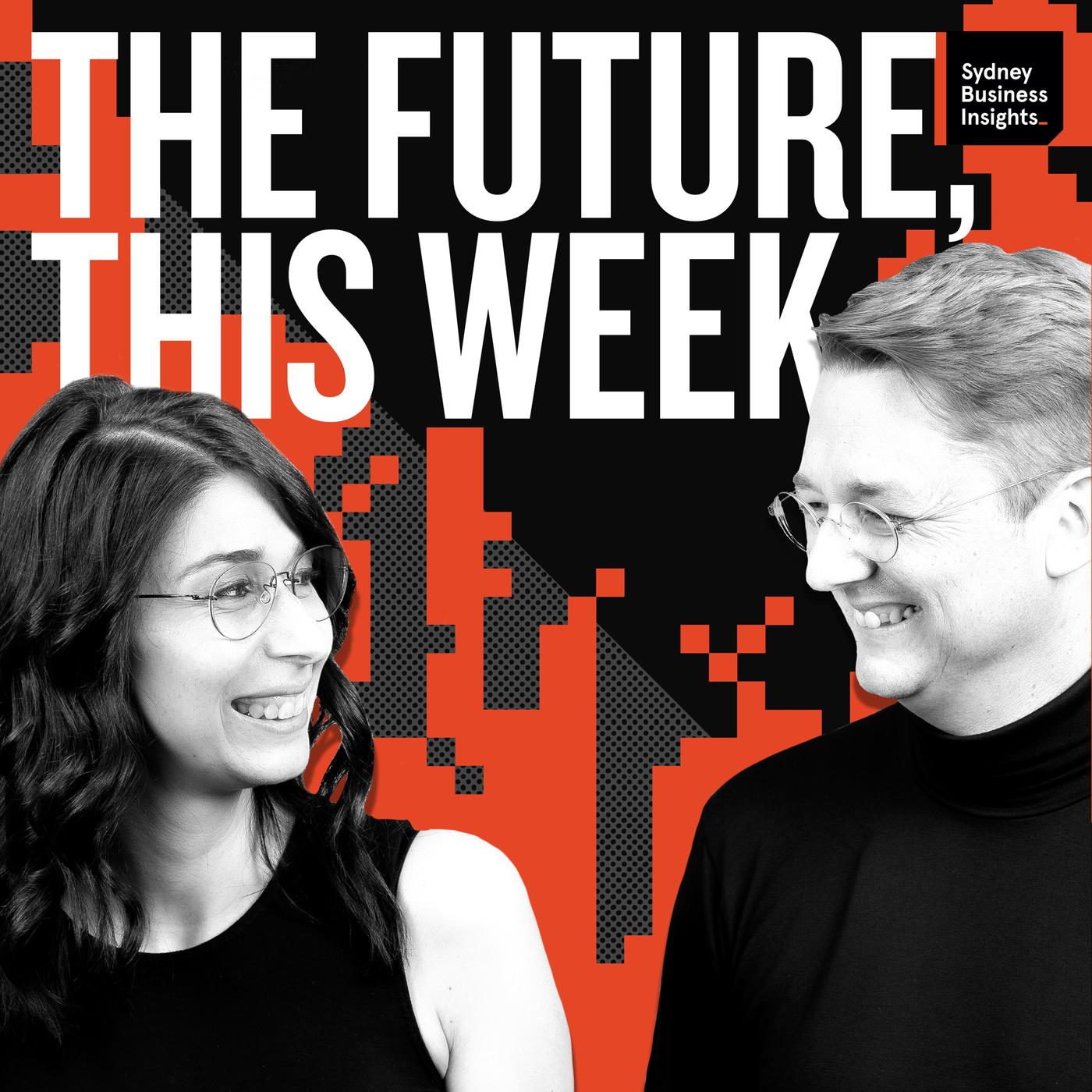
FullPodcast: The Future, This Week (LS 31 · TOP 5% what is this?)Episode: Data is not the new oil with Genevieve BellPub date: 2022-09-29Get Podcast Transcript →powered by Listen411 - fast audio-to-text and summarizationThis week: our 300th episode. We’re joined by Professor Genevieve Bell to settle once and for all – if data is not the new oil, then what is it? Sandra Peter (Sydney Business Insights) and Kai Riemer (Digital Futures Research Group) meet once a week to put their own spin on news that is impacting the future of business in The Future, This Week. You can find transcripts, links for the curious and more episodes on our website: https://sbi.sydney.edu.au/data-is-not-the-new-oil-with-genevieve-bell/ Subscribe to our new podcast, The Unlearn Project. You can follow us to keep updated with our latest insights on Flipboard, LinkedIn, Twitter and WeChat. Send us your news ideas to [email protected]. We read your emails. Music by Cinephonix. Image: generated by DALL-E 2See omnystudio.com/listener for privacy information.The podcast and artwork embedded on this page are from Sydney Business Insights, which is the property of its owner and not affiliated with or endorsed by Listen Notes, Inc.
Data Privacy and Women’s Rights with Rebecca Finlay
FullPodcast: The Radical AI Podcast (LS 40 · TOP 2% what is this?)Episode: Data Privacy and Women’s Rights with Rebecca FinlayPub date: 2022-09-28Get Podcast Transcript →powered by Listen411 - fast audio-to-text and summarizationWhat is the reality of data privacy after the overruling of Roe v. Wade? In this episode, we interview Rebecca Finlay about protecting user data privacy and human rights, following the US Supreme Court ruling of Dobbs v. Jackson Women’s Health Organization. Rebecca Finlay is the CEO of the non-profit, Partnership on AI overseeing the organization’s mission and strategy. In this role, Rebecca ensures that the Partnership on AI and their global community of Partners work together so that developments in AI advance positive outcomes for people and society. Full show notes for this episode can be found at Radicalai.org. The podcast and artwork embedded on this page are from Radical AI, which is the property of its owner and not affiliated with or endorsed by Listen Notes, Inc.
Fill Your Love Gap feat. Jathan Sadowski
FullPodcast: TRASHFUTURE (LS 57 · TOP 0.5% what is this?)Episode: Fill Your Love Gap feat. Jathan SadowskiPub date: 2022-09-19Get Podcast Transcript →powered by Listen411 - fast audio-to-text and summarizationThis week, Riley, Milo, Hussein, and Alice join special guest and friend of the show Jathan Sadowski (@jathansadowski) of the This Machine Kills podcast (@machinekillspod) to discuss microfinance. Despite the Nobel Prizes involved, it turns out it’s just app-connected loan sharking in many ways. We also discuss a mental health app that provides crowdsourced therapy. Is it licensed? Hey, that’s just a technicality. If you’re looking for a UK strike fund to donate to, here’s one we’ve supported: https://www.rmt.org.uk/about/national-dispute-fund/ If you want access to our Patreon bonus episodes, early releases of free episodes, and powerful Discord server, sign up here: https://www.patreon.com/trashfuture *MILO ALERT* Here are links to see Milo’s upcoming standup shows: https://www.miloedwards.co.uk/live-shows *AUSTRALIA ALERT* We are going to tour Australia in November, and there are tickets available for shows in Sydney: https://musicboozeco.oztix.com.au/outlet/event/3213de46-cef7-49c4-abcb-c9bdf4bcb61f and Brisbane https://www.eventbrite.com.au/e/trashfuture-live-in-brisbane-additional-show-tickets-396915263237 and Canberra: https://au.patronbase.com/_StreetTheatre/Productions/TFLP/Performances *WEB DESIGN ALERT* Tom Allen is a friend of the show (and the designer behind our website). If you need web design help, reach out to him here: https://www.tomallen.media/ Trashfuture are: Riley (@raaleh), Milo (@Milo_Edwards), Hussein (@HKesvani), Nate (@inthesedeserts), and Alice (@AliceAvizandum)The podcast and artwork embedded on this page are from TRASHFUTURE, which is the property of its owner and not affiliated with or endorsed by Listen Notes, Inc.

Understanding Digital Dragnets: Surveillance in the Age of Smartphones
FullPodcast: The Tech Policy Press Podcast (LS 38 · TOP 2% what is this?)Episode: Understanding Digital Dragnets: Surveillance in the Age of SmartphonesPub date: 2022-09-14Get Podcast Transcript →powered by Listen411 - fast audio-to-text and summarizationIn this episode of the Tech Policy Press podcast, we’re going to explore how law enforcement and other government agencies in the United States acquire data drawn from commercial data brokers for investigative purposes, and the questions raised by these practices.This is an issue that is still at question in the nation’s courts and is under active discussion on Capitol Hill. For instance, this summer the House Judiciary Committee hosted a hearing it titled Digital Dragnets: Examining the Government's Access to Your Personal Data. At the hearing, experts witnesses testified that government agencies at all levels, including federal agencies such as the Department of Homeland Security (DHS), Central Intelligence Agency (CIA), Internal Revenue Service (IRS), the Department of Defense (DOD), as well as state and local law enforcement are collecting a massive amount of personal data on American citizens, sidestepping constitutional protections against unwarranted search and seizure provided in the Fourth Amendment. The hearing included discussion of the proposed Fourth Amendment is Not For Sale Act, which would restrict government entities from engaging in such practices.But while the courts and Congress deliberate, government agencies are acquiring this information from software providers, including one such firm that was the subject of a recent investigative report from the Associated Press titled Tech tool offers police ‘mass surveillance on a budget. Today, I’m joined by the two reporters who spent months trying to understand how a little known company in Virginia goes about acquiring commercially available data and selling it to police in departments across the country- global investigative journalist Garance Burke and national investigative reporter Jason Dearen.The podcast and artwork embedded on this page are from Tech Policy Press, which is the property of its owner and not affiliated with or endorsed by Listen Notes, Inc.
The Dark Arts of Online Advertising
FullPodcast: Burning PlatformsEpisode: The Dark Arts of Online AdvertisingPub date: 2022-09-18Get Podcast Transcript →powered by Listen411 - fast audio-to-text and summarizationBurning Platforms goes under Big Tech’s hood with new research into the increased opacity of online advertising - and the impact of that secrecy on public discourse. With special guests: Nicholas Carah, Associate Professor at University of Queensland Aimee Brownbill, Senior Research and Policy Advisor at Foundation for Alcohol Research and Education Burning Platforms is brought to you by the Centre of the Public Square - an initiative of Per Capita.The podcast and artwork embedded on this page are from Per Capita Australia, which is the property of its owner and not affiliated with or endorsed by Listen Notes, Inc.
Surveillance Won’t Protect Students w/ Chris Gilliard
FullPodcast: Tech Won't Save Us (LS 58 · TOP 0.5% what is this?)Episode: Surveillance Won’t Protect Students w/ Chris GilliardPub date: 2022-09-08Get Podcast Transcript →powered by Listen411 - fast audio-to-text and summarizationParis Marx is joined by Chris Gilliard to discuss the push to expand surveillance technologies in schools during the pandemic and in response to school shootings, and why they’re making life worse for students without addressing the problems they claim to solve.Chris Gilliard is Just Tech Fellow at the Social Science Research Council at a recurring columnist at Wired. Follow Chris on Twitter at @hypervisible.Tech Won’t Save Us offers a critical perspective on tech, its worldview, and wider society with the goal of inspiring people to demand better tech and a better world. Follow the podcast (@techwontsaveus) and host Paris Marx (@parismarx) on Twitter, and support the show on Patreon.The podcast is produced by Eric Wickham and part of the Harbinger Media Network.Also mentioned in this episode: Chris recently wrote about why school surveillance won’t protect kids from shootings. Chris and David Golumbia wrote about luxury surveillance for Real Life. Pia Ceres wrote about how students’ school devices are still tracking what they do on them. Amazon is launching a new show called “Ring Nation” to make Ring surveillance videos seem less invasive. Studies by the Center for Democracy and Technology have found negative effects from surveillance on student expression and increasing their contact with police. After nine members of Axon’s AI ethics board resigned, plans for a taser drone in schools seem to still be inching forward. Todd Feathers reported on how school monitoring tools could flag searches for sexual and reproductive health resources. Pasco County in Florida deployed a predictive policing system targeting children. Some books mentioned: David Noble Progress Without People and Forces of Production, and Dan Greene wrote The Promise of Access: Technology, Inequality, and the Political Economy of Hope. Support the showThe podcast and artwork embedded on this page are from Paris Marx, which is the property of its owner and not affiliated with or endorsed by Listen Notes, Inc.
Community Networks: Connecting the unconnected
FullPodcast: Digital Planet (LS 52 · TOP 0.5% what is this?)Episode: Community Networks: Connecting the unconnectedPub date: 2022-09-13Get Podcast Transcript →powered by Listen411 - fast audio-to-text and summarizationThe Digital Divide in Tribal Communities Across the North American continent, there is a stark difference in the availability of the internet to different communities. Tribal lands are typically remote, rural, and rugged landscapes, and often have very patchy, or non-existent internet connectivity. Dr. Traci Morris explains why such a digital divide exists and how tribes are working together, both within their communities and with each other, to create and gain access to communications networks. Digital Deras connecting farmers in rural Pakistan In rural Punjab in Pakistan, farmers and villagers gather in places called ‘Deras’ to socialise, drink tea and coffee and discuss their farms. But one project has created a community network to transform one of these Deras to have digital facilities – a ‘Digital Dera’. Farmers use this Digital Dera to access crucial weather forecasts and other information to help them manage their farms more efficiently. It also helps them battle the impact of climate change, as the crop cycles change due to shifting weather patterns. Founders of the project Fouad Bajwa and Aamer Hayat speak to Gareth about the impact of the Digital Dera project on the farming community. Offline interview in Cuba Cuba is one of the least digitally connected countries in the Western hemisphere. This is due to the US trade embargo but also poor internet infrastructure and tight control of its own government on the flow of information. Although accessing digital technologies is getting better, for ordinary Cubans going online is still a challenge. The internet connection is slow, unreliable, and prohibitively expensive. To combat this, they have created an offline underground internet called ‘El Paquete Semanal’ or ‘Weekly Package’ – it is a one-terabyte collection of eclectic material of movies, tv-series, sports, and music while turning a blind eye to copyright. Reporter Snezana Curcic visited to learn more about this Cuban alternative to broadband internet. This programme was first transmitted on Tuesday 7th June 2022.The programme is presented by Gareth Mitchell with expert commentary from Bill Thompson.Studio Manager: Jackie Margerum Producer: Hannah Fisher(Photo: 5G data stream running through a rural village Credit: Huber & Starke/Digital Vision/Getty Images)The podcast and artwork embedded on this page are from BBC World Service, which is the property of its owner and not affiliated with or endorsed by Listen Notes, Inc.
The Quantified Worker
FullPodcast: In our Tech SocietyEpisode: The Quantified WorkerPub date: 2022-09-11Get Podcast Transcript →powered by Listen411 - fast audio-to-text and summarizationWhat does evermore tracking and surveillance mean for workers? I'm joined by Dr Phoebe V. Moore, a Senior Policy Adviser at the International Labour Organisation and Professor of Management at the University of Essex. 2.15: Origins of quantification 7.22: Algorithms and responsibility in management 13.15: Is productivity (especially in ideas-generating and teamwork-based work) actually measurable? 20:10: Who are AI Trainers? 27.45: Automation and content moderation The podcast and artwork embedded on this page are from Paddy Stephens, which is the property of its owner and not affiliated with or endorsed by Listen Notes, Inc.

Crises & Roots: Towards an Understanding of World-Ecology, Nature & the Capitalocene with Jason W. Moore - Episode 40
FullPodcast: Rising with the TideEpisode: Crises & Roots: Towards an Understanding of World-Ecology, Nature & the Capitalocene with Jason W. Moore - Episode 40Pub date: 2022-08-29Get Podcast Transcript →powered by Listen411 - fast audio-to-text and summarization50 Conversations! That's what this beautiful talk with Jason W. Moore marks for your two curious hosts. Thank you so so much for giving us your time and attention, and for listening to our silly rants and constant tangents. And a huge thank you to every one of our fifty guests for coming along and putting up with us! In this milestone episode, your hosts find a strange tree in their backyard. So they begin digging to see where its roots lie. But as the hole gets deeper, the roots show no sign of thinning or ending; they curl and twist and entangle and as the ground caves in, an subterranean wonder comes to light. As they explore these mysterious tunnels of endless roots and otherworldly sights, they run across Professor Jason W. Moore, an apparent connoisseur of this strange and wonderful web of life. As they walk along, Jason recounts the often-hushed history of our world: the importance of 1492 in capitalism's history, the constructed divide of Humans/Nature as a way to extend frontiers of capital accumulation, and how these extend into our present. They discuss the faulty concept of the Anthropocene and Jason's suggested alternative, the Capitalocene, as well as the idea of understanding Capitalism as a world-ecology, that is a system that engulfs and extends beyond mere economy, affecting the entirety of the web of life on Earth. Though they had to end their walk & talk due to Skander's sore calves, the trio managed to quickly touch on questions of Degrowth, academic sectarianism, and Scientism. As Jason points them to a ladder leading back to their yard, your hosts feel encouraged by the professor's writings and reflections to better understand the history of our world, to delve deeper into the roots of our crises, and to seek solutions which better embolden the struggle of life against death and profit. You can find Jason on Twitter - @oikeios Or on his website! Let us know your thoughts at [email protected] as well as what you'd like us to talk about next! Links to all streaming platforms and socials: linktr.ee/risingwiththetide Or head to our website! www.risingwiththetide.org Song for the episode: "So What" by PinegroveThe podcast and artwork embedded on this page are from Rising with the Tide, which is the property of its owner and not affiliated with or endorsed by Listen Notes, Inc.
Justin Grimmer et al., "Text as Data: A New Framework for Machine Learning and the Social Sciences" (Princeton UP, 2022)
FullPodcast: New Books in Economics (LS 37 · TOP 2.5% what is this?)Episode: Justin Grimmer et al., "Text as Data: A New Framework for Machine Learning and the Social Sciences" (Princeton UP, 2022)Pub date: 2022-09-05Get Podcast Transcript →powered by Listen411 - fast audio-to-text and summarizationFrom social media posts and text messages to digital government documents and archives, researchers are bombarded with a deluge of text reflecting the social world. This textual data gives unprecedented insights into fundamental questions in the social sciences, humanities, and industry. Meanwhile new machine learning tools are rapidly transforming the way science and business are conducted. Text as Data shows how to combine new sources of data, machine learning tools, and social science research design to develop and evaluate new insights.Text as Data: A New Framework for Machine Learning and the Social Sciences (Princeton UP, 2022) is organized around the core tasks in research projects using text--representation, discovery, measurement, prediction, and causal inference. The authors offer a sequential, iterative, and inductive approach to research design. Each research task is presented complete with real-world applications, example methods, and a distinct style of task-focused research.Bridging many divides--computer science and social science, the qualitative and the quantitative, and industry and academia--Text as Data is an ideal resource for anyone wanting to analyze large collections of text in an era when data is abundant and computation is cheap, but the enduring challenges of social science remain. Overview of how to use text as data Research design for a world of data deluge Examples from across the social sciences and industry Peter Lorentzen is economics professor at the University of San Francisco. He heads USF's Applied Economics Master's program, which focuses on the digital economy. His research is mainly on China's political economy. Learn more about your ad choices. Visit megaphone.fm/adchoicesSupport our show by becoming a premium member! https://newbooksnetwork.supportingcast.fm/economicsThe podcast and artwork embedded on this page are from Marshall Poe, which is the property of its owner and not affiliated with or endorsed by Listen Notes, Inc.

Spotlight: Kevin Witzenberger
FullPodcast: Media Futures PodcastEpisode: Spotlight: Kevin WitzenbergerPub date: 2022-09-04Get Podcast Transcript →powered by Listen411 - fast audio-to-text and summarizationIn this spotlight episode of the Media Futures Podcast, Kevin Witzenberger joins Associate Professor Michael Richardson to discuss his PhD research on predictive technologies in education. This episode is part of a six week series of short interviews spotlighting the work of Media Futures Hub researchers. Based at UNSW Sydney on unceded Bedegal Country, the Media Futures Hub works at the intersection of media and cultural studies to shape the theories, methods and practices needed for more just media futures. Visit the Hub at www.mediafutureshub.org or follow us on Twitter at https://twitter.com/MediaFuturesHubThe podcast and artwork embedded on this page are from A podcast about how media and cultural studies can shape more just media futures from the Media Futures Hub at UNSW Sydney and @MediaFuturesHub on Twitter., which is the property of its owner and not affiliated with or endorsed by Listen Notes, Inc.
Spotlight: Simon Taylor
FullPodcast: Media Futures PodcastEpisode: Spotlight: Simon TaylorPub date: 2022-08-21Get Podcast Transcript →powered by Listen411 - fast audio-to-text and summarizationIn this spotlight episode of the Media Futures Podcast, Simon Taylor joins Associate Professor Tanja Dreher to discuss his PhD research on histories of artificial intelligence and much more. This episode is part of a six week series of short interviews spotlighting the work of Media Futures Hub researchers. Based at UNSW Sydney on unceded Bedegal Country, the Media Futures Hub works at the intersection of media and cultural studies to shape the theories, methods and practices needed for more just media futures. Visit the Hub at www.mediafutureshub.org or follow us on Twitter at https://twitter.com/MediaFuturesHubThe podcast and artwork embedded on this page are from A podcast about how media and cultural studies can shape more just media futures from the Media Futures Hub at UNSW Sydney and @MediaFuturesHub on Twitter., which is the property of its owner and not affiliated with or endorsed by Listen Notes, Inc.
Humans of AI - The Women Labour behind Data Annotation
FullPodcast: All Things Policy (LS 39 · TOP 2% what is this?)Episode: Humans of AI - The Women Labour behind Data AnnotationPub date: 2022-08-26Get Podcast Transcript →powered by Listen411 - fast audio-to-text and summarizationIn this episode, Carl Jaison speaks to Karishma Mehrotra, Journalist & Fulbright Scholar on her story about women from Ranchi and Mannarkad who play an unglamorous but critical role in the machine learning pipeline.The podcast and artwork embedded on this page are from Takshashila Institution, which is the property of its owner and not affiliated with or endorsed by Listen Notes, Inc.
Digital Lethargy with Tung-Hui Hu
FullPodcast: The Radical AI Podcast (LS 40 · TOP 2% what is this?)Episode: Digital Lethargy with Tung-Hui HuPub date: 2022-08-31Get Podcast Transcript →powered by Listen411 - fast audio-to-text and summarizationWhat is Digital Lethargy? How can we adapt to an age of disconnection? How can art act as a force of resistance? In this episode we interview Tung-Hui Hu about digital exhaustion in the modern day, and his new upcoming book from MIT Press: “Digital Lethargy: Dispatches from an Age of Disconnection.” Tung-Hui is an associate professor of English at the University of Michigan and the author of A Prehistory of the Cloud from MIT Press. He is on the advisory board of the McLuhan Centre for Culture and Technology and is also a poet. Full show notes for this episode can be found at Radicalai.org. The podcast and artwork embedded on this page are from Radical AI, which is the property of its owner and not affiliated with or endorsed by Listen Notes, Inc.

The Philosophy of AI with Dr. Mark Coeckelbergh
FullPodcast: Pondering AI (LS 31 · TOP 5% what is this?)Episode: The Philosophy of AI with Dr. Mark CoeckelberghPub date: 2022-08-03Get Podcast Transcript →powered by Listen411 - fast audio-to-text and summarizationDr. Mark Coeckelbergh is a Professor of Philosophy of Media and Technology, a member of the High-Level Expert Group on Artificial Intelligence (EC) and the Austrian Council on Robotics and AI.In this insightful discussion, Mark explains why AI systems are not merely tools or strictly rational endeavors. He describes the challenges created when AI systems imitate human capabilities and how human sciences help address the messy realities of AI. Mark also demonstrates how political philosophy makes conversations about multidimensional topics such as bias, fairness and freedom more productive. Kimberly and Mark discuss the difficulty with global governance, the role of scientific expertise and technology in society, and the need for political imagination to govern emerging technologies such as AI. Along the way, Mark illustrates the debate about how AI systems could vs. should be used through the lens of gun control and climate change. Finally, Mark sounds a cautionary note about the potential for AI to undermine our fragile democratic institutions.A transcript of this episode can be found here. The podcast and artwork embedded on this page are from Kimberly Nevala, Strategic Advisor - SAS, which is the property of its owner and not affiliated with or endorsed by Listen Notes, Inc.
Should the Government use AI? with Shion Guha
FullPodcast: The Radical AI Podcast (LS 40 · TOP 2% what is this?)Episode: Should the Government use AI? with Shion GuhaPub date: 2022-07-27Get Podcast Transcript →powered by Listen411 - fast audio-to-text and summarizationHow does the government use algorithms? How do algorithms impact social services, policing, and other social services? And where does Silicon Valley fit in? In this episode we interview Shion Guha about how governments adopt algorithms to enforce public policy. Shion is an Assistant Professor in the Faculty of Information at University of Toronto. His research fits into the field of Human-Centered Data Science, which he helped develop. Shion explores the intersection between AI and public policy by researching algorithmic decision-making in public services such as criminal justice, child welfare, and healthcare. Full show notes for this episode can be found at Radicalai.org. The podcast and artwork embedded on this page are from Radical AI, which is the property of its owner and not affiliated with or endorsed by Listen Notes, Inc.
James Steinhoff, "Automation and Autonomy: Labour, Capital and Machines in the Artificial Intelligence Industry" (Palgrave Macmillan, 2021)
FullPodcast: New Books in Sociology (LS 40 · TOP 2% what is this?)Episode: James Steinhoff, "Automation and Autonomy: Labour, Capital and Machines in the Artificial Intelligence Industry" (Palgrave Macmillan, 2021)Pub date: 2022-07-27Get Podcast Transcript →powered by Listen411 - fast audio-to-text and summarizationAutomation and Autonomy: Labour, Capital and Machines in the Artificial Intelligence Industry (Palgrave Macmillan, 2021) argues that Marxist theory is essential for understanding the contemporary industrialization of the form of artificial intelligence (AI) called machine learning. It includes a political economic history of AI, tracking how it went from a fringe research interest for a handful of scientists in the 1950s to a centerpiece of cybernetic capital fifty years later. It also includes a political economic study of the scale, scope and dynamics of the contemporary AI industry as well as a labour process analysis of commercial machine learning software production, based on interviews with workers and management in AI companies around the world, ranging from tiny startups to giant technology firms. On the basis of this study, Steinhoff develops a Marxist analysis to argue that the popular theory of immaterial labour, which holds that information technologies increase the autonomy of workers from capital, tending towards a post-capitalist economy, does not adequately describe the situation of high-tech digital labour today. In the AI industry, digital labour remains firmly under the control of capital. Steinhoff argues that theories discerning therein an emergent autonomy of labour are in fact witnessing labour’s increasing automation.James Steinhoff is a Postdoctoral Fellow at the University of Toronto, Canada. Reuben Niewenhuis works as a software developer for a warehouse automation company. He double majored in computer science and philosophy at Calvin University. In addition to philosophical theory, he is interested in interdisciplinary topics. Learn more about your ad choices. Visit megaphone.fm/adchoicesSupport our show by becoming a premium member! https://newbooksnetwork.supportingcast.fm/sociologyThe podcast and artwork embedded on this page are from New Books Network, which is the property of its owner and not affiliated with or endorsed by Listen Notes, Inc.
Smart City: Dumb Idea?
FullPodcast: What Next | Daily News and Analysis (LS 62 · TOP 0.1% what is this?)Episode: Smart City: Dumb Idea?Pub date: 2022-07-24Get Podcast Transcript →powered by Listen411 - fast audio-to-text and summarizationToronto’s Quayside project is a telling example of how smart cities have failed. Could it also show how to make them better?Guest: Ben Green, Jennifer KeesmaatHost: Lizzie O'Leary Hosted on Acast. See acast.com/privacy for more information.The podcast and artwork embedded on this page are from Slate Podcasts, which is the property of its owner and not affiliated with or endorsed by Listen Notes, Inc.
Grassroots data – holding the powerful to account
FullPodcast: Digital Planet (LS 52 · TOP 0.5% what is this?)Episode: Grassroots data – holding the powerful to accountPub date: 2022-07-26Get Podcast Transcript →powered by Listen411 - fast audio-to-text and summarizationOpen source investigators We live in an age where there is data on almost everything, and a large chunk of it is publicly available. You only need to know where to look. There are many investigators on the internet that are gathering Open Source Intelligence, or OSINT for short, and conduct research and verification, much of it focussed on war zones. The most prominent collective in this field is the NGO Bellingcat, but there is a whole ecosystem of amateur sleuths online. Gareth speaks to Charlotte Godart who leads the volunteer programme at Bellingcat, on how they effectively crowdsource part of their investigations, and we hear from several hobbyists who rose to prominence on Twitter about why they spent much of their free time on this type of research.Data tackling gun violence Brazil has a gun violence issue, and a public data issue. In the Rio de Janeiro metropolitan area, there were, on average, 13 shootings every single day last year, and the only reason we know this is because of open data platform Fogo Cruzado. They collect data in real-time on shootings happening in Rio and other cities across Brazil via their app, social media, and public police reports, and they make that data publicly available for ordinary citizens, organisations, and journalists to use. The founder of Fogo Cruzado, Cecília Olliveira, explains how it all works, and how having data can help set the public agenda.The blue map: environmentalist action in China Only 10 years ago, Beijing was a city covered in smog with many residents opting to wear pollution masks. Now, the situation has, remarkably, improved, with blue skies being a normal sight. One possible reason for this drastic change is environmentalist Ma Jun, who, in 2006, started the blue map database aggregating government data and making it more easily accessible to the public. Since then, the blue map project has grown into an app that lets users check many types of environmental data and even contribute to the database themselves by simply taking a picture of a dirty river, a cloud of smog, or a factory that isn’t following environmental guidelines. Gareth speaks to Ma Jun, founding director of China’s Institute of Public & Environmental Affairs and founder of the Blue Map, about how this crowdsourcing approach works, and how environmental activism in China differs from Western countries.The programme is presented by Gareth Mitchell with expert commentary from Angelica Mari.Studio Manager: Michael Millham Producer: Florian Bohr(Image: Crowd and data credit: Getty Images)The podcast and artwork embedded on this page are from BBC World Service, which is the property of its owner and not affiliated with or endorsed by Listen Notes, Inc.
Human justice and machine intelligence | Joanna Bryson
FullPodcast: Philosophy For Our Times (LS 53 · TOP 0.5% what is this?)Episode: Human justice and machine intelligence | Joanna BrysonPub date: 2022-07-12Get Podcast Transcript →powered by Listen411 - fast audio-to-text and summarizationShould we be scared of AI?Looking for a link we mentioned? It's here: https://linktr.ee/philosophyforourtimesJoanna Bryson discusses how she became interested in the ways different species use intelligence, how the typical tropes in science fiction misunderstand AI and the problem of anthropomorphism. In this interview, Bryson discusses the most pressing ethical challenges concerning the future of artificial intelligence and whether or not we can stabilize democracy when we have so much information about each other. She also touches on how the problems that arise with AI aren't always to do with the technology itself but with the social conditions that often produce it.Joanna Bryson is professor at Hertie School in Berlin. She works on Artificial Intelligence, ethics and collaborative cognition. She advises governments, corporations, and other agencies globally, particularly on AI policy.There are thousands of big ideas to discover at IAI.tv – videos, articles, and courses waiting for you to explore. Find out more: https://iai.tv/podcast-offers?utm_source=podcast&utm_medium=shownotes&utm_campaign=human-justice-and-machine-intelligenceSee Privacy Policy at https://art19.com/privacy and California Privacy Notice at https://art19.com/privacy#do-not-sell-my-info.The podcast and artwork embedded on this page are from IAI, which is the property of its owner and not affiliated with or endorsed by Listen Notes, Inc.

EP61: Enter the Zuckerverse (ft. Sandrine Han and Ian Bogost)
FullPodcast: Darts and Letters (LS 36 · TOP 2.5% what is this?)Episode: EP61: Enter the Zuckerverse (ft. Sandrine Han and Ian Bogost)Pub date: 2022-07-15Get Podcast Transcript →powered by Listen411 - fast audio-to-text and summarization The term “metaverse” was coined in a 1993 science fiction novel. Since then, it’s grown from a dystopian literary concept to a reality that corporations want to sell you. Strap on some VR goggles and escape your tired analog life! Except that the systemic issues we already have seem to be creeping into the metaverse, too. As the lines between virtuality and physicality continue to blur, companies like Mark Zuckerberg’s Meta are setting their sights on virtual worlds. It’s a new frontier, full of potential – and full of our valuable data. Metaverses like Second Life or World of Warcraft can be positive and even game-changing experiences on the individual level, but when it comes to the navigating a virtual society with a capitalist backdrop…things get a bit dicey. On this episode, guest host and producer Ren Bangert explores the metaverse. First, we hear a love story from the glory days of Second Life, told to us by Sandrine Han – a scholar of virtual worlds and a long-time Second Lifer. Then, writer and game developer Ian Bogost takes us on a deep dive into the corporatization of the metaverse. We’ll hear how the metaverse has grown from a dystopian warning from science fiction to a sinister data-mining reality – and how even the shiniest of tech utopias are still functioning under the same old capitalism. ——————-FURTHER READING, LISTENING AND WATCHING—————— Check out Ian Bogost’s article “The Metaverse is Bad” in The Atlantic. Ian’s got lots of excellent reading content listed on his website – perfect for a deep dive into game theory. For a further imagining of democracy in a metaverse, check out Eliane Boey’s short story “The Forgotten”. You can read it in Clarkesworld Magazine, or listen to an audio version on the Clarkesworld podcast. Watch the Wall Street Journal’s Joanna Stern get trapped in the metaverse for 24 hours. It’s a an emotional rollercoaster. Han, H. C. (2013). Visual learning in the virtual world: The hidden curriculum of imagery in Second Life. Immersive Environments, Augmented Realities and Virtual Worlds: Assessing Future Trends in Education. http://www.igi-global.com/chapter/visual-learning-virtual-world/74048 Stephenson, N. (1993). Snow Crash. New York: Bantam Books. ——————-ABOUT THE SHOW—————— For a full list of credits, contact information, and more, visit our about page.The podcast and artwork embedded on this page are from Cited Media, which is the property of its owner and not affiliated with or endorsed by Listen Notes, Inc.

Profit Uber Alles - The Uber Files / Dean Starkman
FullPodcast: This Is Hell! (LS 57 · TOP 0.5% what is this?)Episode: Profit Uber Alles - The Uber Files / Dean StarkmanPub date: 2022-07-18Get Podcast Transcript →powered by Listen411 - fast audio-to-text and summarizationWe welcome Dean Starkman of the International Consortium of Investigative Journalists to talk about the coverage of the Uber Files, detailing the misdealings and corruption that the rideshare giant engages in. Producer Seb Wuepper gets on his soapbox to talk about the old question whether or not the United States is a democracy, we present your hangover cure for this week, and also introduce this week's Question from Hell!The podcast and artwork embedded on this page are from This Is Hell!, which is the property of its owner and not affiliated with or endorsed by Listen Notes, Inc.
Are internet shutdowns evolving?
FullPodcast: Digital Planet (LS 52 · TOP 0.5% what is this?)Episode: Are internet shutdowns evolving?Pub date: 2022-07-12Get Podcast Transcript →powered by Listen411 - fast audio-to-text and summarizationInternet shutdowns have been a global issue for many years, and Digital Planet has reported on many of them, from Cuba and Myanmar to Iran. A new United Nations Human Rights Office (OHCHR) report now warns of the dramatic real-life effects. Gareth speaks to Peggy Hicks, one of the authors of the report, about how internet shutdowns impact the lives of millions worldwide. In addition, Rest of World journalist Peter Guest, and #KeepItOn campaign manager at AccessNow, Felicia Anthonio, join live in the studio to discuss why internet shutdowns occur, and whether they have changed over time. Quantum-safe algorithms The encryption methods we currently use to keep our data safe and secure could be a thing of the past soon. Experts expect quantum computers to be able to crack these encryption codes quite easily in the future, which could have devastating consequences. After a six year selection process, the National Institute of Standards and Technology in the United States has chosen four initial algorithms for their quantum-safe cryptography standards. Gareth speaks to Anne Dames, an engineer at IBM, where three of the final four were developed.Mobile app for tinnitus Hearing a ringing or buzzing in your ear can be very difficult to deal with. A number of mobile tinnitus apps are now promising help. One of them, called TinniBot, even includes an AI chatbot that provides support whenever it is needed. Our reporter Fern Lulham has been finding out more.The programme is presented by Gareth Mitchell with expert commentary from Bill ThompsonProducer: Florian Bohr Studio manager: Duncan Hannant(Image: Abstract Digital Pixel Noise Credit: The7Dew/iStock/Getty Images Plus)The podcast and artwork embedded on this page are from BBC World Service, which is the property of its owner and not affiliated with or endorsed by Listen Notes, Inc.
Understanding Crypto 6: Bruce Schneier: Security, Trust, and Blockchain
FullPodcast: The Rational Reminder Podcast (LS 58 · TOP 0.5% what is this?)Episode: Understanding Crypto 6: Bruce Schneier: Security, Trust, and BlockchainPub date: 2022-07-08Get Podcast Transcript →powered by Listen411 - fast audio-to-text and summarizationWelcome back to another episode of our limited addition Crypto Series on the Rational Reminder Podcast, a weekly reality check about sensible investing and financial decision-making. Are cryptocurrencies and the associated technologies beneficial? Could they change the world for the better? There is a lot of controversy surrounding the use and application of cryptocurrencies and the associated technologies. Some say the innovation is ultimately useless while others think it is the answer to society's problems. To help us unpack this complicated and hot-button topic is Bruce Schneier, an internationally-renowned security technologist, author, and educator. The focus of his work is the intersection of security, technology and people. Bruce also has an immense passion for educating people about cryptocurrencies. Examples of his well-known books include Liars and Outliers and Data and Goliath, which provide much-needed insight to readers about DeFi technologies and big monopolies. He also lectures in public policy at the Harvard Kennedy School and is a fellow at the Berkman Klein Center for Internet and Society. In our conversation, we discuss the debate surrounding cryptocurrencies such as privacy concerns of digital cash, what makes Bitcoin different from earlier digital currencies, aspects of public blockchain technology, the misapplications of crypto technology, the different forms and approaches to cryptocurrencies, and whether DeFi technologies can be beneficial to society, and what the biggest concerns are regarding cryptocurrencies. Join us today as we take a detailed look into the value and drawbacks of crypto and DeFi technology with Bruce Schneier! Key Points From This Episode: What the objective was of early digital cash projects, like DigiCash. [0:03:27] The privacy concerns associated with digital cash. [0:04:45] Whether financial surveillance should be a concern for people. [0:05:45] Differences between Bitcoin and earlier forms of digital cash. [0:08:35] How good technology is at solving economic and political problems. [0:09:30] Details about the pieces that come together to make public blockchains work. [0:10:29] Why Bruce considers proof of work to be an idiotic way to form consensus. [0:13:43] Whether alternatives to proof of work resolve wasteful energy practices. [0:16:01] The new properties that public blockchains offer. [0:17:04] We find out if public blockchains do what their proponents say they do. [0:17:37] The claims that crypto proponents make regarding blockchain are discussed. [0:19:29] We discuss the misapplications of crypto and DeFi technologies. [0:20:23] Outline of the systems of trust that humans use to incentivize good behaviour. [0:23:26] Whether cryptocurrency technologies will become secure and trusted. [0:27:49] Reasons for the perspective 'code is law' from crypto technologists. [0:30:02] Whether 'one CPU, one vote' is how blockchains are working in practice. [0:31:35] We discuss other ideas and emerging technologies in the crypto space. [0:33:24] If government intervention is needed for crypto technologies and currencies. [0:36:21] How cryptocurrencies can be included in the mainstream financial system. [0:39:06] Bruce shares his opinion on the future of NFTs for artists to be able to capitalize on their creativity. [0:40:08] What the potential impacts of crypto technologies on younger generations are. [0:43:48] How blockchain erodes moral and reputational incentives to act responsibly. [0:45:26] Ways in which cryptocurrencies can help people who are 'bankless' and avoid high bank fees. [0:46:13] Break down of a real-world scenario where blockchain is being used in an alternative way. [0:49:00] Bruce tells us whether Bitcoin is suitable as a global currency. [0:50:55] The message that Bruce hopes his students will take away after his class. [0:51:59] If the government is beginning to take regulation of cryptocurrencies seriously. [0:52:43] What aspects, if any, excites Bruce about cryptocurrencies. [0:53:04] What Bruce's biggest concerns about cryptocurrencies are. [00:53:43] The podcast and artwork embedded on this page are from Benjamin Felix, Cameron Passmore, and Dan Bortolotti, which is the property of its owner and not affiliated with or endorsed by Listen Notes, Inc.

Algorithms of Education: Data and its role in education policy
FullPodcast: University of Minnesota PressEpisode: Algorithms of Education: Data and its role in education policyPub date: 2022-07-12Get Podcast Transcript →powered by Listen411 - fast audio-to-text and summarizationHow do educational policy studies need to shift to remain adequate to the emergence of powerful forms of technology? In ALGORITHMS OF EDUCATION, Kalervo N. Gulson, Sam Sellar, and P. Taylor Webb explore how, for policy makers, big data creates the illusion of greater control over educational futures. They propose that schools and governments are increasingly turning to “synthetic governance”—where what is human and what is machine becomes less clear—as a strategy for optimizing education. In this episode, Gulson and Sellar discuss new strategies for, and a new politics of, education.Kalervo N. Gulson is professor in education policy at the University of Sydney. He is author of Education Policy, Space, and the City: Markets and the (In)visibility of Race and coauthor of Education Policy and Racial Biopolitics in Multicultural Cities. Sam Sellar is professor in education policy at the University of South Australia. Most recently he coedited the World Yearbook of Education 2019: Comparative Methodology in the Era of Big Data and Global Networks.References:N. Katherine HaylesLuciana ParisiGilles DeleuzeFélix GuattariBernard StieglerPierre BourdieuMichel FoucaultIsabelle StengersKeller Easterling (Extrastatecraft)AlphaGo (and 2017 documentary of it)Shoshana ZuboffThe podcast and artwork embedded on this page are from University of Minnesota Press, which is the property of its owner and not affiliated with or endorsed by Listen Notes, Inc.

Roberto J. González, "War Virtually: The Quest to Automate Conflict, Militarize Data, and Predict the Future" (U California Press, 2022)
FullPodcast: New Books in Anthropology (LS 39 · TOP 2% what is this?)Episode: Roberto J. González, "War Virtually: The Quest to Automate Conflict, Militarize Data, and Predict the Future" (U California Press, 2022)Pub date: 2022-07-01Get Podcast Transcript →powered by Listen411 - fast audio-to-text and summarizationA critical look at how the US military is weaponizing technology and data for new kinds of warfare—and why we must resist. War Virtually: The Quest to Automate Conflict, Militarize Data, and Predict the Future (University of California Press, 2022) is the story of how scientists, programmers, and engineers are racing to develop data-driven technologies for fighting virtual wars, both at home and abroad. In this landmark book, Roberto J. González gives us a lucid and gripping account of what lies behind the autonomous weapons, robotic systems, predictive modeling software, advanced surveillance programs, and psyops techniques that are transforming the nature of military conflict. González, a cultural anthropologist, takes a critical approach to the techno-utopian view of these advancements and their dubious promise of a less deadly and more efficient warfare.With clear, accessible prose, this book exposes the high-tech underpinnings of contemporary military operations—and the cultural assumptions they're built on. Chapters cover automated battlefield robotics; social scientists' involvement in experimental defense research; the blurred line between political consulting and propaganda in the internet era; and the military's use of big data to craft new counterinsurgency methods based on predicting conflict. González also lays bare the processes by which the Pentagon and US intelligence agencies have quietly joined forces with Big Tech, raising an alarming prospect: that someday Google, Amazon, and other Silicon Valley firms might merge with some of the world's biggest defense contractors. War Virtually takes an unflinching look at an algorithmic future—where new military technologies threaten democratic governance and human survival.Dr. Gonzalez is Professor and Chair of the San Jose State University Anthropology Department. He has authored four books including Connected: How a Mexican Village Built Its Own Cell Phone Network and Militarizing Culture: Essays on the Warfare State. You can learn more about his work here. Learn more about your ad choices. Visit megaphone.fm/adchoicesSupport our show by becoming a premium member! https://newbooksnetwork.supportingcast.fm/anthropologyThe podcast and artwork embedded on this page are from New Books Network, which is the property of its owner and not affiliated with or endorsed by Listen Notes, Inc.
15 Years of the iPhone w/ Brian Merchant
FullPodcast: Tech Won't Save Us (LS 58 · TOP 0.5% what is this?)Episode: 15 Years of the iPhone w/ Brian MerchantPub date: 2022-06-30Get Podcast Transcript →powered by Listen411 - fast audio-to-text and summarizationParis Marx is joined by Brian Merchant to discuss the impact of the iPhone after 15 years, including its effects on how we work, how we use technology, and what it’s meant for Apple.Brian Merchant is a tech journalist, author of The One Device: The Secret History of the iPhone, and co-editor of Terraform: Watch/Worlds/Burn. Follow Brian on Twitter at @bcmerchant.Tech Won’t Save Us offers a critical perspective on tech, its worldview, and wider society with the goal of inspiring people to demand better tech and a better world. Follow the podcast (@techwontsaveus) and host Paris Marx (@parismarx) on Twitter, and support the show on Patreon.Find out more about Harbinger Media Network at harbingermedianetwork.com.Also mentioned in this episode: In 2011, Cory Moll tried to unionize Apple stores. In June 2022, a store in Maryland became the first to vote to form a union. Apple’s claims about privacy are, at least to some degree, a clever marketing campaign. Paris previously wrote about some of Apple’s environmental messaging. The previous episode with Brian on the iPhone is episode 78 (Sep 16, 2021), and I also spoke to Jenny Chan about the conditions at Foxconn factories where iPhones are manufactured on episode 27 (Sep 17, 2020). Support the showThe podcast and artwork embedded on this page are from Paris Marx, which is the property of its owner and not affiliated with or endorsed by Listen Notes, Inc.

Understanding the cryptocurrency crash
FullPodcast: Today in Focus (LS 70 · TOP 0.05% what is this?)Episode: Understanding the cryptocurrency crashPub date: 2022-07-05Get Podcast Transcript →powered by Listen411 - fast audio-to-text and summarizationThis year has been a disaster for many investors in cryptocurrencies. Alex Hern draws the parallels of the spreading panic in the new digital economy with the 2008 financial crisis. Help support our independent journalism at <a href="https://www.theguardian.com/infocus">theguardian.com/infocus</a>The podcast and artwork embedded on this page are from The Guardian, which is the property of its owner and not affiliated with or endorsed by Listen Notes, Inc.
Mark Andrejevic, "Automated Media" (Routledge, 2019)
FullPodcast: New Books in Critical Theory (LS 47 · TOP 1% what is this?)Episode: Mark Andrejevic, "Automated Media" (Routledge, 2019)Pub date: 2022-06-24Get Podcast Transcript →powered by Listen411 - fast audio-to-text and summarizationIn this era of pervasive automation, Mark Andrejevic provides an original framework for tracing the logical trajectory of automated media and their social, political, and cultural consequences.Automated Media (Routledge, 2019) explores the cascading logic of automation, which develops from the information collection process through to data processing and, finally, automated decision making. It argues that pervasive digital monitoring combines with algorithmic decision making and machine learning to create new forms of power and control that pose challenges to democratic forms of accountability and individual autonomy alike. Andrejevic provides an overview of the implications of these developments for the fate of human experience, describing the "bias of automation" through the logics of pre-emption, operationalism, and "framelessness."Automated Media is a fascinating and groundbreaking new volume: a must-read for students and researchers of critical media studies interested in the intersections of media, technology, and the digital economy.Mark Andrejevic is Professor of Media Studies at Monash University where he heads the Automated Society Working Group in the School of Media, Film and Journalism. He is the author of Infoglut: How Too Much Information Is Changing the Way We Think and Know, iSpy: Surveillance and Power in the Interactive Era; and Reality TV: The Work of Being Watched, as well as numerous journal articles and book chapters on surveillance, popular culture, and digital media. Learn more about your ad choices. Visit megaphone.fm/adchoicesSupport our show by becoming a premium member! https://newbooksnetwork.supportingcast.fm/critical-theoryThe podcast and artwork embedded on this page are from Marshall Poe, which is the property of its owner and not affiliated with or endorsed by Listen Notes, Inc.

Shitcoins: are pointless cryptocurrencies a scam or a gamble?
FullPodcast: Science Weekly (LS 59 · TOP 0.5% what is this?)Episode: Shitcoins: are pointless cryptocurrencies a scam or a gamble?Pub date: 2022-06-28Get Podcast Transcript →powered by Listen411 - fast audio-to-text and summarizationWhen the Guardian’s UK technology editor Alex Hern was contacted on Twitter to ask if he was involved in a new cryptocurrency called Tsuka, he assumed they just wanted him to buy it. He ignored the messages. But soon after Alex realised that, without knowing it, he was already involved. What happened next reveals a lot about the strange world of ‘shitcoins’ – cryptocurrencies with no reason for existence beyond buying low and selling high. Madeleine Finlay speaks to Alex Hern about his shitcoin saga, and how the lines can get blurred between a gamble and a scam. Help support our independent journalism at <a href="https://www.theguardian.com/sciencepod">theguardian.com/sciencepod</a>The podcast and artwork embedded on this page are from The Guardian, which is the property of its owner and not affiliated with or endorsed by Listen Notes, Inc.
170. Seasons in the Crypto Abyss (ft. David Gerard)
FullPodcast: This Machine Kills (LS 49 · TOP 0.5% what is this?)Episode: 170. Seasons in the Crypto Abyss (ft. David Gerard)Pub date: 2022-06-24Get Podcast Transcript →powered by Listen411 - fast audio-to-text and summarizationWe are joined by David Gerard – longtime critic of blockchain, even before it was cool – to discuss the experience of staring into the crypto abyss and having it stare back into you. Follow, read, and support David here: ••• Twitter: https://twitter.com/davidgerard ••• Attack of the 50 Foot Blockchain: https://davidgerard.co.uk/blockchain/book/ ••• Libra Shrugged: https://davidgerard.co.uk/blockchain/libra/ ••• Patreon: https://www.patreon.com/davidgerard Subscribe to hear more analysis and commentary in our premium episodes every week! patreon.com/thismachinekills Grab fresh new TMK gear: bonfire.com/store/this-machine-kills-podcast/ Hosted by Jathan Sadowski (twitter.com/jathansadowski) and Edward Ongweso Jr. (twitter.com/bigblackjacobin). Production / Music by Jereme Brown (twitter.com/braunestahl)The podcast and artwork embedded on this page are from This Machine Kills, which is the property of its owner and not affiliated with or endorsed by Listen Notes, Inc.

Ellen Broad talks Cybernetics, Data Science, and Life.
FullPodcast: Make Me Data LiterateEpisode: Ellen Broad talks Cybernetics, Data Science, and Life.Pub date: 2022-06-17Get Podcast Transcript →powered by Listen411 - fast audio-to-text and summarization“I love that the thing that I work on is actually so consequential to better decision making, to solving real world problems. To understanding and evaluating forces in our world. I just love that I’m part of a way of making a difference that has applications in so many settings.” “How do we start to… Continue reading Ellen Broad talks Cybernetics, Data Science, and Life.The podcast and artwork embedded on this page are from Dr Linda McIver, Australian Data Science Education Institute, which is the property of its owner and not affiliated with or endorsed by Listen Notes, Inc.
Streaming Wars: Revenge of the Cinema? w/ Gita Jackson
FullPodcast: Tech Won't Save Us (LS 58 · TOP 0.5% what is this?)Episode: Streaming Wars: Revenge of the Cinema? w/ Gita JacksonPub date: 2022-06-16Get Podcast Transcript →powered by Listen411 - fast audio-to-text and summarizationParis Marx is joined by Gita Jackson to discuss how streaming has altered the film and television industry, what happens as their business models are coming under question, and whether cinemas have reason to celebrate streaming’s woes.Gita Jackson is a staff writer at Motherboard, Vice’s tech vertical. Follow Gita on Twitter at @xoxogossipgita.Tech Won’t Save Us offers a critical perspective on tech, its worldview, and wider society with the goal of inspiring people to demand better tech and a better world. Follow the podcast (@techwontsaveus) and host Paris Marx (@parismarx) on Twitter, and support the show on Patreon.Find out more about Harbinger Media Network at harbingermedianetwork.com.Also mentioned in this episode: Gita wrote about why Eternals was still bad even though it was diverse, Netflix laying off Tudum writers, and some of the challenges Netflix faces. Paris wrote about the end of the Paramount Decrees, the need to break up the media giants, and the problem with the new Spider-Man movies. EA considered a merger with NBC Universal, and had talks with other companies. Raven Software at Activision Blizzard and Bioware contractors at Keywords Studios have voted to unionize. Microsoft’s Phil Spencer said the company would recognize the Raven Software union if its acquisition of Activision Blizzard goes through. CNN+ was shut down after a few weeks of operation. Netflix is changing its content investment strategy as investors lose confidence. Netflix’s share price plummeted in April after reporting it lost subscribers. The following week, the cinema celebrated the negative turn on streaming at CinemaCon. The Mandalorian pioneered a new kind of film set with massive LED screens instead of green screen. Support the showThe podcast and artwork embedded on this page are from Paris Marx, which is the property of its owner and not affiliated with or endorsed by Listen Notes, Inc.

Critical submarine cables: a deep dive into undersea infrastructure
FullPodcast: The National Security Podcast (LS 42 · TOP 1.5% what is this?)Episode: Critical submarine cables: a deep dive into undersea infrastructurePub date: 2022-06-16Get Podcast Transcript →powered by Listen411 - fast audio-to-text and summarizationIn this episode of the National Security Podcast, Samuel Bashfield and Anthony Bergin join William Stoltz to discuss the importance and vulnerabilities of submarine cables.In the Indo-Pacific, submarine cables carry over 95 per cent of international data traffic, including telephone and data communications. But they are vulnerable to a variety of environmental, accidental and malicious threats. Samuel Bashfield and Dr Anthony Bergin, join Dr William Stoltz, to analyse the current challenges facing undersea cable infrastructure in the Indo-Pacific, and policy recommendations that could increase their resilience. Samuel Bashfield is a PhD candidate and Research Officer at the ANU National Security College. His research engages with Indian Ocean security issues, with a focus on the past, present and future of the Chagos Archipelago (British Indian Ocean Territory). Dr Anthony Bergin is a Senior Fellow with the Australian Strategic Policy Institute. For 20 years Dr Bergin served as an academic at the Australian Defence Force Academy. From 1991-2003 he was the Director of the Australian Defence Studies Centre. Dr William A. Stoltz is Policy Director at the ANU National Security College. He is a Visiting Fellow at the Robert Menzies Institute at the University of Melbourne, and an Associate Member of the Centre for the Study of Subversion, Unconventional Interventions and Terrorism (SUIT) at the University of Nottingham.Show notes Options for safeguarding undersea critical infrastructure: Australia and Indo-Pacific submarine cables, Samuel Bashfield and Anthony Bergin, (2022)The Deep-Sea Cables, Rudyard Kipling, (1893) We’d love to hear from you! Send your questions, comments, and suggestions to [email protected]. Tweet us @NSC_ANU and be sure to subscribe so you don’t miss out on future episodes. The National Security Podcast is available on Acast, Apple Podcasts, Spotify, and wherever you get your podcasts. Hosted on Acast. See acast.com/privacy for more information.The podcast and artwork embedded on this page are from ANU National Security College, which is the property of its owner and not affiliated with or endorsed by Listen Notes, Inc.
Automated Warfare
FullPodcast: KPFA - Against the Grain (LS 48 · TOP 1% what is this?)Episode: Automated WarfarePub date: 2022-06-08Get Podcast Transcript →powered by Listen411 - fast audio-to-text and summarizationMany U.S. military establishment bigwigs are pushing the development of automated and autonomous weapons systems. Roberto González questions whether this robo-fanaticism, as he calls it, is justified. He also describes efforts to address human warfighters’ distrust of machines. Roberto J. González, War Virtually: The Quest to Automate Conflict, Militarize Data, and Predict the Future University of California Press, 2022 The post Automated Warfare appeared first on KPFA.The podcast and artwork embedded on this page are from KPFA, which is the property of its owner and not affiliated with or endorsed by Listen Notes, Inc.

Depeche Modem w/ Kevin Driscoll on early net culture (NM44)
FullPodcast: New Models (LS 45 · TOP 1% what is this?)Episode: Depeche Modem w/ Kevin Driscoll on early net culture (NM44)Pub date: 2022-06-01Get Podcast Transcript →powered by Listen411 - fast audio-to-text and summarizationNM speaks with Kevin Driscoll, author of The Modem World: A Pre-history of Social Media (Yale Univ. Press, 2022), which examines the physical — and social — technology that underpinned the DIY side of networked technology’s evolution in the ‘80s and ‘90s. Parallel to institutional network culture were the proto-dark-forest communities of BBS networks and other pre-www systems. From FidoNet to De Digitale Stad (DDS) Netherlands, Kevin maps out this early territory, with a brief history of the French Minitel system along the way. Through his work, Kevin asks us to consider what it really means to be “autonomous” online and what alternate conceptions of “the internet” might be possible when we consider the broader origin story of the digital social sphere. (Subscriber release: 23 May 2022) For More: https://kevindriscoll.info/ https://mitpress.mit.edu/books/minitel https://yalebooks.yale.edu/book/9780300248142/modem-world/The podcast and artwork embedded on this page are from New Models, which is the property of its owner and not affiliated with or endorsed by Listen Notes, Inc.