
The Machinist
304 episodes — Page 3 of 7

How China Regulates Tech
FullPodcast: The Tech Policy Press Podcast (LS 38 · TOP 2% what is this?)Episode: How China Regulates TechPub date: 2024-06-23Get Podcast Transcript →powered by Listen411 - fast audio-to-text and summarizationAngela Zhang is the author of High Wire: How China Regulates Big Tech and Governs Its Economy, published this year by Oxford University Press. With a career in the practice of law and in teaching it, Zhang has held roles King’s College London and at New York University School of Law, and most recently served as Director of Philip K. H. Wong Center for Chinese Law at the University of Hong Kong. She will join the University of Southern California as a Professor of Law in fall 2024.The podcast and artwork embedded on this page are from Tech Policy Press, which is the property of its owner and not affiliated with or endorsed by Listen Notes, Inc.

The geopolitics of undersea cables in the Indo-Pacific
FullPodcast: Ear to Asia (LS 37 · TOP 2.5% what is this?)Episode: The geopolitics of undersea cables in the Indo-PacificPub date: 2024-06-18Get Podcast Transcript →powered by Listen411 - fast audio-to-text and summarizationUndersea cables underpin global communication and the digital economy, with between 95-99% of data for international banking, e-commerce, video calls, and intelligence sharing travelling via these largely hidden transoceanic routes. However, this critical multi-billion-dollar infrastructure faces increasing risks from shipping accidents, natural disasters, geopolitical tensions, and sabotage threats. Meanwhile, in the Indo-Pacific region US-China tech competition is leading to a fragmented cable network with contrasting standards and governance models. Great power competition is forcing Southeast Asian nations into making political choices over what should be engineering decisions. So how are nations navigating this difficult balancing act and what role should regional frameworks play? And with digital data flows rising sharply, what steps are needed to enhance the resilience and protection of undersea cables? Maritime security researchers Elina Noor from the Carnegie Endowment for International Peace, and Cynthia Mehboob from the Australian National University take a deep dive into the world of these ocean-spanning data conduits. With host Sami Shah. An Asia Institute podcast. Produced and edited by profactual.com. Music by audionautix.com.The podcast and artwork embedded on this page are from Asia Institute, The University of Melbourne, which is the property of its owner and not affiliated with or endorsed by Listen Notes, Inc.
Silicon Valley is Courting Gulf Monarchies to Fund AI w/ Nitasha Tiku
FullPodcast: Tech Won't Save Us (LS 58 · TOP 0.5% what is this?)Episode: Silicon Valley is Courting Gulf Monarchies to Fund AI w/ Nitasha TikuPub date: 2024-06-13Get Podcast Transcript →powered by Listen411 - fast audio-to-text and summarizationParis Marx is joined by Nitasha Tiku to discuss how US tech companies are flocking to Saudi Arabia and the United Arab Emirates to fund their expensive AI ambitions.Nitasha Tiku is a tech culture reporter at the Washington Post.Tech Won’t Save Us offers a critical perspective on tech, its worldview, and wider society with the goal of inspiring people to demand better tech and a better world. Support the show on Patreon.The podcast is made in partnership with The Nation. Production is by Eric Wickham. Transcripts are by Brigitte Pawliw-Fry.Also mentioned in this episode: Read the pieces Nitasha contributed to on Silicon Valley getting funding from Saudia Arabia and the United Arab Emirates and its embrace of the US military. Jamal Khashoggi was murdered in Saudi Arabia’s consulate in Istanbul in 2018. There’s still be no accountability. Saudi Crown Prince Mohammad bin Salman met with many Silicon Valley CEOs months before Khashoggi’s murder. The United Arab Emirates launched its own AI strategy in 2018. The UAE also put Pegasus spyware on the phone of Khashoggi’s wife months before his murder. Nvidia CEO Jensen Huang was photographed signing a woman’s chest on June 4. Many Arab Americans in Silicon Valley have reported being scared to speak out in support of Palestinians for fear of retaliation. Support the showThe podcast and artwork embedded on this page are from Paris Marx, which is the property of its owner and not affiliated with or endorsed by Listen Notes, Inc.

Episode 486: The Computable City
FullPodcast: Talking Headways: A Streetsblog Podcast (LS 45 · TOP 1% what is this?)Episode: Episode 486: The Computable CityPub date: 2024-06-06Get Podcast Transcript →powered by Listen411 - fast audio-to-text and summarizationThis week on Talking Headways we're joined by Michael Batty, Professor of Planning at the University College London. We chat about his book The Computable City: Histories, Technologies, Stories, Predictions which includes histories of computing, smart city critiques, what the discourse on AI should really be about, and discussions on the future of urban forms. *** Follow us on twitter @theoverheadwire Follow us on Mastadon [email protected] Follow us on Threads or Instagram @theoverheadwire Support the show on Patreon http://patreon.com/theoverheadwire Buy books on our Bookshop.org Affiliate site! And get our Cars are Cholesterol shirt at Tee-Public! And everything else at http://theoverheadwire.comThe podcast and artwork embedded on this page are from The Overhead Wire, which is the property of its owner and not affiliated with or endorsed by Listen Notes, Inc.
A Perspective on Meta's Moderation of Palestinian Voices
FullPodcast: The Tech Policy Press Podcast (LS 38 · TOP 2% what is this?)Episode: A Perspective on Meta's Moderation of Palestinian VoicesPub date: 2024-05-26Get Podcast Transcript →powered by Listen411 - fast audio-to-text and summarizationA conversation with Marwa Fatafta, who serves as policy and advocacy director for the nonprofit Access now, which has worked on digital civil rights, connectivity and censorship issues for the past 15 years. Along with other groups, Access Now has engaged Meta in recent months over what it says is the “systematic censorship of Palestinian voices” amidst the Israel-Hamas war in Gaza. The podcast and artwork embedded on this page are from Tech Policy Press, which is the property of its owner and not affiliated with or endorsed by Listen Notes, Inc.
Human Rights & Robot Wrongs w/ Dr. Susie Alegre
FullPodcast: FUTURES Podcast (LS 35 · TOP 3% what is this?)Episode: Human Rights & Robot Wrongs w/ Dr. Susie AlegrePub date: 2024-05-22Get Podcast Transcript →powered by Listen411 - fast audio-to-text and summarization Human rights lawyer Dr. Susie Alegre shares her insights into the threat artificial intelligence poses to human creativity, the importance of the Universal Declaration of Human Rights (UDHR) in safeguarding freedom of thought, and applying existing laws to regulate the development and deployment of emerging technologies. Dr. Susie Alegre is a leading international human rights lawyer and Associate at Garden Court Chambers. She has been a legal pioneer in digital human rights, in particular the impact of artificial intelligence on the human rights of freedom of thought and opinion. She is also a Senior Research Fellow at the University of Roehampton, and a Senior Fellow at CIGI. This episode was recorded in front of a live audience for an event in partnership with Engage Works. ABOUT THE HOST Luke Robert Mason is a British-born futures theorist who is passionate about engaging the public with emerging scientific theories and technological developments. He hosts documentaries for Futurism, and has contributed to BBC Radio, BBC One, The Guardian, Discovery Channel, VICE Motherboard and Wired Magazine. CREDITS Producer & Host: Luke Robert Mason Join the conversation on Facebook, Instagram, and Twitter at @FUTURESPodcast Follow Luke Robert Mason on Twitter at @LukeRobertMason Subscribe & Support the Podcast at http://futurespodcast.netThe podcast and artwork embedded on this page are from Luke Robert Mason, which is the property of its owner and not affiliated with or endorsed by Listen Notes, Inc.
Digital surveillance and reproductive rights
FullPodcast: Technically Optimistic (LS 36 · TOP 2.5% what is this?)Episode: Digital surveillance and reproductive rightsPub date: 2024-05-15Get Podcast Transcript →powered by Listen411 - fast audio-to-text and summarizationDigital surveillance is becoming increasingly threatening to the reproductive rights of women and pregnant people in America after the fall of Roe v. Wade. Behavioral data collected from apps can be used to catalog — and criminalize — our health care choices. In this “wild west” surveillance economy, who is responsible for safeguarding our privacy? Could more and more of our data be weaponized against us in this same way? How can technology be harnessed to help protect privacy, rather than further jeopardize it? Host Raffi Krikorian talks to people working to protect reproductive freedom in an ever-changing landscape. Guests include Sue Dunlap, the President and CEO of Planned Parenthood Los Angeles; Melanie Fontes Rainer, Director of the U.S. Department of Health & Human Services Office for Civil Rights; Kevin Williams, VP of digital products at Planned Parenthood; Amy Merrill, digital director and co-founder of Plan C; and Congressman Ted Lieu (D-CA).To learn more about Technically Optimistic and to read the transcript for this episode: emersoncollective.com/technically-optimistic-podcastFor more on Emerson Collective: emersoncollective.comLearn more about our host, Raffi Krikorian: emersoncollective.com/raffiTechnically Optimistic is produced by Emerson Collective with music by Mattie Safer.Subscribe to our weekly newsletter: technicallyoptimistic.substack.comFollow on social media @emersoncollective and @emcollectivepodcastsEmail us with questions and feedback at [email protected] To learn more about listener data and our privacy practices visit: https://www.audacyinc.com/privacy-policy Learn more about your ad choices. Visit https://podcastchoices.com/adchoicesThe podcast and artwork embedded on this page are from Emerson Collective, which is the property of its owner and not affiliated with or endorsed by Listen Notes, Inc.

Episode 370 - Escaping Surveillance Capitalism (w/ Matthew Crain)
FullPodcast: Bad Faith (LS 62 · TOP 0.1% what is this?)Episode: Episode 370 - Escaping Surveillance Capitalism (w/ Matthew Crain)Pub date: 2024-05-09Get Podcast Transcript →powered by Listen411 - fast audio-to-text and summarizationSubscribe to Bad Faith on Patreon to instantly unlock our full premium episode library: http://patreon.com/badfaithpodcast Associate Professor of Media & Communication at Miami University Matthew Crain joins Bad Faith to explain how surveillance advertising took over the internet, the threat current monetization strategies pose to journalism, what alternatives exist, and whether there are any real data privacy concerns with respect to TikTok. Matthew reassures Briahna that being a luddite is ok, even as he inches her closer to understanding the internet. Subscribe to Bad Faith on YouTube for video of this episode. Find Bad Faith on Twitter (@badfaithpod) and Instagram (@badfaithpod). Produced by Armand Aviram. Theme by Nick Thorburn (@nickfromislands).The podcast and artwork embedded on this page are from Briahna Joy Gray, which is the property of its owner and not affiliated with or endorsed by Listen Notes, Inc.
Forward Thinking: Can feminism fix the internet?
FullPodcast: The Documentary Podcast (LS 66 · TOP 0.05% what is this?)Episode: Forward Thinking: Can feminism fix the internet?Pub date: 2024-04-24Get Podcast Transcript →powered by Listen411 - fast audio-to-text and summarizationFrom deepfakes to the fear of AI taking jobs, to the social media giants making money from abusive content, our technology dominated world is in a crisis – what are the solutions?AI researcher Kerry McInerney applies a feminist perspective to data, algorithms and intelligent machines. AI-powered tech, and generative AI in particular, pose new challenges for cybersecurity. Kerry proposes a new take on AI, looking at how it can be used on a small scale, acknowledging culture and gender, tailoring the technology for local applications rather than trying to push for global, one size fits all strategies.And in addressing corporate responsibility for Big Tech, Kerry discusses how tackling harassment online requires an understanding of the social, political and psychological dimensions of harassment, particularly of women in the wider world, as opposed to seeing this as a technical problem.Dr Kerry McInerney is a research fellow at the Leverhulme Centre for the Future of Intelligence, University of Cambridge, and the AI Now Institute.This is the last of four programmes from the Oxford Literary Festival, presented by Nuala McGovern, produced by Julian Siddle.Recorded in front of an audience at Worcester College Oxford.The podcast and artwork embedded on this page are from BBC World Service, which is the property of its owner and not affiliated with or endorsed by Listen Notes, Inc.

New Robber Barons Prevent Using Tech for the Common Good / Loretta Napoleoni
FullPodcast: This Is Hell! (LS 57 · TOP 0.5% what is this?)Episode: New Robber Barons Prevent Using Tech for the Common Good / Loretta NapoleoniPub date: 2024-04-23Get Podcast Transcript →powered by Listen411 - fast audio-to-text and summarizationLoretta Napoleoni returns to discuss her new book, “Technocapitalism: The Rise of the New Robber Barons and the Fight for the Common Good.” "Rotten History" follows the interview. Check out Loretta's book here: https://www.sevenstories.com/books/4601-technocapitalism Help keep This Is Hell! completely listener supported and access weekly bonus episodes by subscribing to our Patreon: https://www.patreon.com/thisishellThe podcast and artwork embedded on this page are from This Is Hell!, which is the property of its owner and not affiliated with or endorsed by Listen Notes, Inc.

Heather Parry, "Electric Dreams: Sex Robots and Failed Promises of Capitalism" (404 Ink, 2024)
FullPodcast: New Books in Sex, Sexuality, and Sex Work (LS 24 · TOP 10% what is this?)Episode: Heather Parry, "Electric Dreams: Sex Robots and Failed Promises of Capitalism" (404 Ink, 2024)Pub date: 2024-04-20Get Podcast Transcript →powered by Listen411 - fast audio-to-text and summarizationIn the future, we’ll all be having sex with robots… won’t we?Roboticists say they’re a distracting science fiction, yet endless books, films and articles are written on the subject. Campaigns are even mounted against them. So why are sex robots such a hot topic?Electric Dreams: Sex Robots and Failed Promises of Capitalism (404 Ink, 2024) by Heather Parry picks apart the forces that posit sex robots as either the solution to our problems or a real threat to human safety, and looks at what’s being pushed aside for us to obsess about something that will never happen.This interview was conducted by Dr. Miranda Melcher whose new book focuses on post-conflict military integration, understanding treaty negotiation and implementation in civil war contexts, with qualitative analysis of the Angolan and Mozambican civil wars. Learn more about your ad choices. Visit megaphone.fm/adchoicesThe podcast and artwork embedded on this page are from New Books Network, which is the property of its owner and not affiliated with or endorsed by Listen Notes, Inc.

Exposing Silicon Valley's multimillion dollar fraud
FullPodcast: Lives Less Ordinary (LS 59 · TOP 0.5% what is this?)Episode: Exposing Silicon Valley's multimillion dollar fraudPub date: 2024-04-07Get Podcast Transcript →powered by Listen411 - fast audio-to-text and summarizationErika Cheung went from a trailer park to a top tech company job, but something was off.She knew how to work hard, growing up in a one-bedroom trailer, she dreamed of pursuing her passion for science and helping others. So Erika was thrilled to land her first job out of university at a booming tech company promising a revolution in healthcare. Fronted by the glamorous and wealthy Elizabeth Holmes, Theranos claimed to have the technology to be able to tell from a few drops of blood whether someone had a range of diseases. That was not true. And it took Erika, one of their most junior employees, to blow the whistle – at great personal risk. Presenter: Jo Fidgen Producer: Mary Goodhart Editor: Munazza KhanGet in touch: [email protected] or WhatsApp: 0044 330 678 2784The podcast and artwork embedded on this page are from BBC World Service, which is the property of its owner and not affiliated with or endorsed by Listen Notes, Inc.

How Palantir Is Using AI in Ukraine
FullPodcast: Angry Planet (LS 58 · TOP 0.5% what is this?)Episode: How Palantir Is Using AI in UkrainePub date: 2024-03-26Get Podcast Transcript →powered by Listen411 - fast audio-to-text and summarizationDefense contractors and governments can run a thousand simulations, but the data they get will never be as good as what’s generated on a battlefield. When Russia invaded Ukraine, tech companies saw an opportunity. A land war in Europe presented a unique chance to test cutting-edge technologies. That’s why, a few months after the 2022 invasion, Palantir CEO Alex Karp drove into the capital to meet with Ukrainian President Volodymyr Zelensky. TIME Senior Correspondent Vera Bergengruen is here on Angry Planet to tell the story. She traveled to Ukraine herself to see how tech companies have turned the country into a test bed for AI and other advanced technologies. As the war grinds on, Kyiv is singing the praises of the companies that help keep it safe. But wars aren’t forever and what becomes of some of the more invasive technology like facial recognition when the fighting stops?How Tech Giants Turned Ukraine Into an AI War LabA Palantir-published tech demoSupport this show http://supporter.acast.com/warcollege. Hosted on Acast. See acast.com/privacy for more information.The podcast and artwork embedded on this page are from Matthew Gault and Jason Fields, which is the property of its owner and not affiliated with or endorsed by Listen Notes, Inc.

Episode 2012: David Donnelly on the catastrophic costs to humanity of Silicon Valley surveillance capitalism
FullPodcast: Keen On America (LS 42 · TOP 1.5% what is this?)Episode: Episode 2012: David Donnelly on the catastrophic costs to humanity of Silicon Valley surveillance capitalismPub date: 2024-03-27Get Podcast Transcript →powered by Listen411 - fast audio-to-text and summarizationSurveillance capitalism is ubiquitous. If we’re not being watched by Google or Facebook, then we are watching movies warning about how these digital platforms are watching us. David Donnelly’s new documentary, COST OF CONVENIENCE, trots all the familiar charges that we’ve heard over the years from KEEN ON guests like Shoshana Zuboff , Jaron Lanier, Nick Carr and Roger McNamee. It’s good stuff, I guess, even if we’ve heard these existential warnings many times before. The problem is what to do about it. Like most Silicon Valley critics, Donnelly’s fixes - from more education and regulation to greater self control - aren’t very realistic. Ultimately, I guess, we’ll find something else to worry about. The real question, however, is if we forget about the screen, will the screen forget about us? DAVID DONNELLY is an American filmmaker renowned for his impactful documentaries in the classical music realm, notably his award-winning debut, Maestro, featuring stars like Paavo Järvi, Joshua Bell, Hilary Hahn, and Lang Lang. This film, translated into multiple languages and has been broadcast worldwide, is highly regarded as an educational tool in music education. Following Maestro, Donnelly directed Nordic Pulseand Forte, completing a trilogy offering an unparalleled glimpse into classical music. His work, relevant amid the Ukraine invasion, includes narratives on Estonia's Singing Revolution, showcasing his storytelling's depth. Donnelly's films have been showcased at prestigious venues like the Whitney Museum and the Kennedy Center, underlining his status in both the art and film communities. In 2021, he co-founded CultureNet and announced The Cost of Convenience, the first in a new trilogy exploring technology's cultural implications. Donnelly's career extends beyond filmmaking; he's a sought-after speaker, sharing insights from interviews with global thought leaders across over 30 countries.Named as one of the "100 most connected men" by GQ magazine, Andrew Keen is amongst the world's best known broadcasters and commentators. In addition to presenting KEEN ON, he is the host of the long-running How To Fix Democracy show. He is also the author of four prescient books about digital technology: CULT OF THE AMATEUR, DIGITAL VERTIGO, THE INTERNET IS NOT THE ANSWER and HOW TO FIX THE FUTURE. Andrew lives in San Francisco, is married to Cassandra Knight, Google's VP of Litigation & Discovery, and has two grown children.Keen On is a reader-supported publication. To receive new posts and support my work, consider becoming a free or paid subscriber. This is a public episode. If you'd like to discuss this with other subscribers or get access to bonus episodes, visit keenon.substack.com/subscribeThe podcast and artwork embedded on this page are from Andrew Keen, which is the property of its owner and not affiliated with or endorsed by Listen Notes, Inc.

Episode 199: The Golden Age of Crybullyism
FullPodcast: Citations Needed (LS 67 · TOP 0.05% what is this?)Episode: Episode 199: The Golden Age of CrybullyismPub date: 2024-03-20Get Podcast Transcript →powered by Listen411 - fast audio-to-text and summarization"Ex-officer Amber Guyger testifies in wrong-apartment murder trial: 'I was scared to death,'" a " story reported in 2019. "Starbucks Files Complaints with Labor Board, Accuses Union Organizers of Bullying and Harassment," reported Food & Wine Magazine in April 2022. "Labour MPs fear for safety as pro-Palestine protesters target offices," The Guardianwarned in November 2023. Within the last decade, we've seen the rise of a phenomenon we'll refer to as "elite crybullying," in which people in power engage in political manipulation in order to portray themselves as victims. Routinely, we hear that armed American police fear for their safety around unarmed civilians, lawmakers feel for the their safety after there's a sit in protest and corporate executives are being unfairly intimated by union organizers. It's a sleazy, manipulative tactic that not only flattens, but flips, power dynamics. By claiming to have been bullied or traumatized by those who oppose them, wealthy and influential figures suddenly transform themselves from victimizers into victims. Meanwhile, by this same perverse logic, they characterize their actual victims–be they organizing workers and peace activists, who merely seek to stand up for themselves, or people killed by military and police violence – as victimizers. On this episode, we explore the rise of ruling-class crybullyism, how elites increasingly traffic in the language of anti-bullying and therapy-speak to indemnify themselves from criticism, examine how cynical distortions of power relations recast the upholders of colonialism, labor abuses, and police violence as the oppressed, and the people who dare to object as the oppressors, all in an effort to silence dissent from the justifiably angry masses. Our guests are Mari Cohen and Saree Makdisi.The podcast and artwork embedded on this page are from Nima Shirazi and Adam Johnson, which is the property of its owner and not affiliated with or endorsed by Listen Notes, Inc.

Paolo Gerbaudo on algorithms, markets, China-US relations, social movements, and autonomism
FullPodcast: culturalstudies (LS 25 · TOP 10% what is this?)Episode: Paolo Gerbaudo on algorithms, markets, China-US relations, social movements, and autonomismPub date: 2024-03-03Get Podcast Transcript →powered by Listen411 - fast audio-to-text and summarizationPaolo Gerbaudo on algorithmic recommendations, closed digital communities, the market economy, China-US relations, lithium, party politics, social movements, and autonomism You can read more about Paolo’s work here: https://www.ucm.es/histegepo/paolo-gerbaudo-english The podcast and artwork embedded on this page are from Toby Miller, which is the property of its owner and not affiliated with or endorsed by Listen Notes, Inc.

Jacob Ward, "Visions of a Digital Nation: Market and Monopoly in British Telecommunications" (MIT Press, 2024)
FullPodcast: New Books in Economic and Business History (LS 32 · TOP 5% what is this?)Episode: Jacob Ward, "Visions of a Digital Nation: Market and Monopoly in British Telecommunications" (MIT Press, 2024)Pub date: 2024-02-23Get Podcast Transcript →powered by Listen411 - fast audio-to-text and summarizationIn Visions of a Digital Nation: Market and Monopoly in British Telecommunications (MIT Press, 2024), Jacob Ward explains why the privatization of British Telecom signaled a pivotal moment in the rise of neoliberalism, and how it was shaped by the longer development and digitalization of Britain’s telecommunications infrastructure. When Margaret Thatcher sold British Telecom for £3.6 billion in 1984, it became not only, at the time, the largest stock flotation in history, but also a watershed moment in the rise of neoliberalism and deregulation. In Visions of a Digital Nation, Ward offers an incisive interdisciplinary perspective on how technology prefigured this pivot. Giving due consideration to the politicians, engineers, and managers who paved the way for this historic moment, Ward illustrates how the decision validated the privatization of public utilities and tied digital technology to free market rationales. In this examination of the national and, at times, global history of technology, Ward’s approach is sweeping. Utilizing infrastructure studies, environmental history, and urban and local history, Ward explores Britain’s nationalist and welfarist plans for a digital information utility and shows how these projects contested and adapted to the “market turn” under Margaret Thatcher. Ultimately, Visions of a Digital Nation compellingly argues that politicians did not impose neoliberalism top-down, but that technology, engineers, and managers shaped these politics from the bottom up.Jacob Ward is Assistant Professor in the History Department and Science, Technology and Society Studies Research Program at the Faculty of Arts and Social Sciences at Maastricht University. He is coeditor of Histories of Technology, the Environment and Modern Britain.Filippo De Chirico is a PhD student in History and Politics of Energy at Roma Tre University (Italy). Learn more about your ad choices. Visit megaphone.fm/adchoicesThe podcast and artwork embedded on this page are from New Books Network, which is the property of its owner and not affiliated with or endorsed by Listen Notes, Inc.
AI and Digital Love - Part 2
FullPodcast: AI FYIEpisode: AI and Digital Love - Part 2Pub date: 2024-02-14Get Podcast Transcript →powered by Listen411 - fast audio-to-text and summarizationPart Two! Ever wondered how your heartstrings could be tugged by lines of code? Join us as we trace the captivating evolution of chatbots and their starring role in modern romance. Fresh, controversial take? Hot take? Who knows. The podcast and artwork embedded on this page are from Andrea Butkovic, Joe Cloughley, Kiran Vajapey , which is the property of its owner and not affiliated with or endorsed by Listen Notes, Inc.
What’s Really Killing the News Media? w/ Victor Pickard
FullPodcast: Tech Won't Save Us (LS 58 · TOP 0.5% what is this?)Episode: What’s Really Killing the News Media? w/ Victor PickardPub date: 2024-02-01Get Podcast Transcript →powered by Listen411 - fast audio-to-text and summarizationParis Marx is joined by Victor Pickard to discuss the continued layoffs in news media, and how they are symptomatic of a deeper, structural crisis in journalism.Victor Pickard is Professor of Media Policy and Political Economy at University of Pennsylvania. He’s also the author of Democracy Without Journalism?: Confronting the Misinformation Society.Tech Won’t Save Us offers a critical perspective on tech, its worldview, and wider society with the goal of inspiring people to demand better tech and a better world. Support the show on Patreon.The podcast is made in partnership with The Nation and produced by Eric Wickham. Transcripts are by Brigitte Pawliw-Fry.Also mentioned in this episode: Paris will be speaking in Christchurch on February 4 and Wellington on February 8. Victor wrote for Niemen Lab about the need to divorce news and capitalism, and argued for public newspapers in the Washington Post. In the US, two-thirds of newspaper jobs, or 43,000 journalists, have been lost since 2005. Robert McChesney and John Nichols propose a Local Journalism Initiative. Police raided a newspaper in Kansas on August 11, 2023, setting off a major scandal that’s now seen the police chief suspended. Support the showThe podcast and artwork embedded on this page are from Paris Marx, which is the property of its owner and not affiliated with or endorsed by Listen Notes, Inc.
How Spotify Tried to Take Over Podcasting w/ Eric Silver
FullPodcast: Tech Won't Save Us (LS 58 · TOP 0.5% what is this?)Episode: How Spotify Tried to Take Over Podcasting w/ Eric SilverPub date: 2024-01-25Get Podcast Transcript →powered by Listen411 - fast audio-to-text and summarizationParis Marx is joined by Eric Silver to discuss Spotify’s big plan to dominate podcasting, why it’s now pulling back from those efforts, and the difference between highly produced and more independent podcasts.Eric Silver is a podcast producer and head of development at Multitude.Tech Won’t Save Us offers a critical perspective on tech, its worldview, and wider society with the goal of inspiring people to demand better tech and a better world. Support the show on Patreon.The podcast is made in partnership with The Nation and produced by Eric Wickham. Transcripts are by Brigitte Pawliw-Fry.Also mentioned in this episode: Paris will be in Christchurch on February 4 (details here) and Wellington on February 8 (details here). He’s hoping to get an Auckland date organized and is open to going to Australia. Spotify pulled back on its podcasting ambitions last year, canceling big shows and laying off staff. After buying Gimlet and Parcast, it merged them into Spotify Originals last year. Ashley Carman posted a slide from a Spotify presentation presenting the RSS feed as “outdated tech” because it’s harder for them to harvest data from. Support the showThe podcast and artwork embedded on this page are from Paris Marx, which is the property of its owner and not affiliated with or endorsed by Listen Notes, Inc.
AI Hype Distracted Us From Real Problems w/ Timnit Gebru
FullPodcast: Tech Won't Save Us (LS 58 · TOP 0.5% what is this?)Episode: AI Hype Distracted Us From Real Problems w/ Timnit GebruPub date: 2024-01-18Get Podcast Transcript →powered by Listen411 - fast audio-to-text and summarizationParis Marx is joined by Timnit Gebru to discuss the past year in AI hype, how AI companies have shaped regulation, and tech’s relationship to Israel’s military campaign in Gaza. Timnit Gebru is the founder and executive director of the Distributed AI Research Institute. Tech Won’t Save Us offers a critical perspective on tech, its worldview, and wider society with the goal of inspiring people to demand better tech and a better world. Support the show on Patreon. The podcast is produced by Eric Wickham. Transcripts are by Brigitte Pawliw-Fry. Also mentioned in this episode: Paris is speaking in Montreal on January 20. Details here. Billy Perrigo reported on OpenAI lobbying to water down the EU’s AI Act. Nitasha Tiku wrote about the push to train students in a particular idea of AI. Politico has been doing a lot of reporting on the influences on AI policy in the US and UK. OpenAI made a submission in the UK to try to get permission to train on copyrighted material. Arab workers in the tech industry fear the consequences of speaking out for Palestinian rights. 972 Magazine reported on Israel’s use of AI to increase its targets in Gaza. Jack Poulson chronicles the growing ties between military and tech. Timnit mentioned No Tech for Apartheid, Antony Loewenstein’s The Palestine Laboratory, and Malcolm Harris’ Palo Alto. Support the showThe podcast and artwork embedded on this page are from Paris Marx, which is the property of its owner and not affiliated with or endorsed by Listen Notes, Inc.

Would a World Without Algorithms Be Better? — With Kyle Chayka
FullPodcast: Big Technology Podcast (LS 54 · TOP 0.5% what is this?)Episode: Would a World Without Algorithms Be Better? — With Kyle ChaykaPub date: 2024-01-17Get Podcast Transcript →powered by Listen411 - fast audio-to-text and summarizationKyle Chayka is a New Yorker staff writer and author of FILTERWORLD: How Algorithms Flattened Culture. Chayka joins Big Technology Podcast to talk about his book — which debuts this week — and dig into whether algorithms really do make our culture flatter. In this spirited conversation, we interrogate the role of algorithms in society, ask how they reflect in the real world, and ponder how products would be redesigned to take back control. Stay tuned for the second half, where we discuss Chayka's story on people falling in love with AI bots. ---Enjoying Big Technology Podcast? Please rate us five stars ⭐⭐⭐⭐⭐ in your podcast app of choice.For weekly updates on the show, sign up for the pod newsletter on LinkedIn: https://www.linkedin.com/newsletters/6901970121829801984/Questions? Feedback? Write to: [email protected] Learn more about your ad choices. Visit megaphone.fm/adchoicesThe podcast and artwork embedded on this page are from Alex Kantrowitz, which is the property of its owner and not affiliated with or endorsed by Listen Notes, Inc.
Power Grab: David Runciman on the Reach of Corporations, States and AI
FullPodcast: Intelligence Squared (LS 60 · TOP 0.1% what is this?)Episode: Power Grab: David Runciman on the Reach of Corporations, States and AIPub date: 2024-01-08Get Podcast Transcript →powered by Listen411 - fast audio-to-text and summarizationDavid Runciman is Professor of Politics at Cambridge University and the author of books including The Politics of Good Intentions, Political Hypocrisy and The Confidence Trap. He also hosts the popular Past Present Future podcast. His latest book is The Handover: How We Gave Control of Our Lives to Corporations, States and AIs. The book argues that states and corporations are the immensely powerful artificial entities that now rule our world, with AI a third frontier about to join an already well established model. Joining Runciman in conversation for this episode is Adam McCauley, Senior Policy Advisor at the Department of National Defence in Canada and a writer on issues such as politics, technology, and the future. McCauley was previously based at the Department of Politics and International Relations at the University of Oxford.If you'd like to get access to all of our longer form interviews and members-only content, just visit intelligencesquared.com/membership to find out more. For £4.99 per month you'll also receive:- Full-length and ad-free Intelligence Squared episodes, wherever you get your podcasts- Bonus Intelligence Squared podcasts, curated feeds and members exclusive series- 15% discount on livestreams and in-person tickets for all Intelligence Squared events- Our member-only newsletter The Monthly Read, sent straight to your inbox...Or Subscribe on Apple for £4.99:- Full-length and ad-free Intelligence Squared podcasts- Bonus Intelligence Squared podcasts, curated feeds and members exclusive series...Already a subscriber? Thank you for supporting our mission to foster honest debate and compelling conversations! Visit intelligencesquared.com to explore all your benefits including ad-free podcasts, exclusive bonus content, early access and much more...Subscribe to our newsletter here to hear about our latest events, discounts and much more.https://www.intelligencesquared.com/newsletter-signup/ Learn more about your ad choices. Visit podcastchoices.com/adchoicesThe podcast and artwork embedded on this page are from Intelligence Squared, which is the property of its owner and not affiliated with or endorsed by Listen Notes, Inc.

The Platform Society, Public Values, and Politics, with Prof. José van Dijck
FullPodcast: Social Media and Politics (LS 37 · TOP 2.5% what is this?)Episode: The Platform Society, Public Values, and Politics, with Prof. José van DijckPub date: 2019-07-14Get Podcast Transcript →powered by Listen411 - fast audio-to-text and summarizationJosé van Dijck, Distinguished Professor in Media and Society at Utrecht University, guests to discuss her latest book, The Platform Society: Public Values in a Connective World (Oxford University Press).We break down key concepts from the book, including Platform Societies and Platform Power. We discuss the importance of public values in the Platform Society, and how these values might differ across the United States, the European Union, and China.Prof. van Dijck also shares her thoughts on how platforms can be reverse engineered in ways that promote the public good.The podcast and artwork embedded on this page are from Michael Bossetta , which is the property of its owner and not affiliated with or endorsed by Listen Notes, Inc.

Won't Somebody Please Think of the Workers?!
FullPodcast: The Ned Ludd Radio Hour (LS 28 · TOP 10% what is this?)Episode: Won't Somebody Please Think of the Workers?!Pub date: 2023-12-11Get Podcast Transcript →powered by Listen411 - fast audio-to-text and summarizationJathan Sadowski, my guest today, is an academic and our conversation is going to sound a bit academic. He’s a senior fellow at the Emerging Technologies Research Lab at Monash University in Melbourne. He has also authored a book called, worryingly, Too Smart: How Digital Capitalism is Extracting Data, Controlling Our Lives, and Taking Over the World and co-hosts a, much more successful, weekly podcast called This Machine Kills.I recorded this interview with Jathan back in the summer, so I’m not going to be discussing Christmas shopping, nor am I going to be asking him for advice on whether I should pick up a couple of weeks of extra work as a gift wrapper at Waterstones (top Christmas tip: books are easy to wrap). But what we are going to be talking about is the history of Luddism as a labour movement. To some extent, everything that I’ve been doing with this podcast over the past couple of months has been in service of that question. How can we prevent the current changes to the world of work penalising the poorest in our society?I sent this question over to Ned who is, predictably, having a very busy festive period and took an age to respond (hence why this episode is coming out late). Here’s what they had to say:“SORRY FOR SLOW REPLY NICK. BEEN SNOWED UNDER – ALMOST NO PUN INTENDED. THE ONLY PROACTIVE DECISION THAT TECH INVESTORS ARE RESPONDING TO, IN THIS ERA THAT WE MIGHT CALL THE LATE PRE-ARTIFICIAL WORKER ERA, IS CUTTING. HUMAN CAPITAL IS THE FIRST THING TO BE CUT. CUT CUT CUT. THE QUESTION IS COMING VERY SOON ABOUT WHETHER RATHER THAN CUTTING THEY CAN REPLACE; OPTIMISE OUTPUTS WHILE REDUCING COSTS. THIS SHOULD BE A VERY PROFOUND WORRY – IT WILL START IN SILICON VALLEY, ZURICH, SHENZHEN AND ZHONGGUANCUN – BUT IT WILL BE A GROWING CONCERN AMONGST ALL EMPLOYERS. INCREASING REVENUE IS A PROJECT THAT REQUIRES PATIENCE; REDUCING COSTS CREATES AN IMMEDIATELY DISCERNIBLE CHANGE. THERE IS NO WORKER WHO SHOULD BE COMPLACENT RIGHT NOW.”The Ned Ludd Radio Hour is a Podot podcast, written and presented by me, Nick Hilton.The theme music is Internet Song by Apes of the State, used with their generous permission. The artwork is by Tom Humberstone.For socials go to NEDLUDDLIVES.COM and spread the word. Hosted on Acast. See acast.com/privacy for more information.The podcast and artwork embedded on this page are from Podot, which is the property of its owner and not affiliated with or endorsed by Listen Notes, Inc.

The spy tech firm managing NHS data
FullPodcast: Today in Focus (LS 70 · TOP 0.05% what is this?)Episode: The spy tech firm managing NHS dataPub date: 2023-11-27Get Podcast Transcript →powered by Listen411 - fast audio-to-text and summarizationPalantir, the US spy-tech firm co-founded by the billionaire Peter Thiel, has won a contract to handle NHS data. It’s a deal that has left privacy advocates such as Cori Crider with serious questions. Help support our independent journalism at <a href="https://www.theguardian.com/infocus">theguardian.com/infocus</a>The podcast and artwork embedded on this page are from The Guardian, which is the property of its owner and not affiliated with or endorsed by Listen Notes, Inc.
The Fight Over the Future of OpenAI w/ Mike Isaac
FullPodcast: Tech Won't Save Us (LS 58 · TOP 0.5% what is this?)Episode: The Fight Over the Future of OpenAI w/ Mike IsaacPub date: 2023-11-23Get Podcast Transcript →powered by Listen411 - fast audio-to-text and summarizationParis Marx is joined by Mike Isaac to discuss the drama around Sam Altman being temporarily removed from OpenAI, what it means for the future of the company, and how Microsoft benefits from its partnership with the company.Mike Isaac is a technology reporter at the New York Times. He’s also the author of Super Pumped: The Battle for Uber.Tech Won’t Save Us offers a critical perspective on tech, its worldview, and wider society with the goal of inspiring people to demand better tech and a better world. Support the show on Patreon.The podcast is produced by Eric Wickham. Transcripts are by Brigitte Pawliw-Fry.Also mentioned in this episode: Mike summarized the OpenAI-Sam Altman affair with his colleagues in the New York Times. He's been reporting on it since it began. Paris wrote about the Sam Altman-Microsoft relationship in Disconnect. Semafor reported that in 2018, Elon Musk tried to take over OpenAI but was pushed out instead. Forbes reporter Sarah Emerson went through Emmett Shear’s old tweets — and yikes. Support the showThe podcast and artwork embedded on this page are from Paris Marx, which is the property of its owner and not affiliated with or endorsed by Listen Notes, Inc.

How I is AI?
FullPodcast: The Infinite Monkey Cage (LS 74 · TOP 0.01% what is this?)Episode: How I is AI?Pub date: 2023-11-22Get Podcast Transcript →powered by Listen411 - fast audio-to-text and summarizationBrian and Robin (the real ones) are joined by mathematician Prof Hannah Fry, compute scientist Dr Kate Devlin and comedian Rufus Hound to discuss the pros and cons of AI. Just how intelligent is the most intelligent AI? Will our phones soon be smarter than us – will we fail a Turing test while our phone passes it? Will we have AI therapists, doctors, lawyers, carers or even politicians? How will the increasing ubiquity of AI systems change our society and our relationships with each other? Could radio presenters of hit science/comedy shows soon be replaced with wittier, smarter AI versions that know more about particle physics... surely not!New episodes released Wednesdays. If you're in the UK, listen to the newest episodes of The Infinite Monkey Cage first on BBC Sounds: bbc.in/3K3JzyFExecutive Producer: Alexandra Feachem.The podcast and artwork embedded on this page are from BBC Radio 4, which is the property of its owner and not affiliated with or endorsed by Listen Notes, Inc.
19 Kenneth Saltman - Beyond Bodies and Numbers: AI, Education, and the Digital Politics of Knowledge
FullPodcast: Collective Intellectualities (LS 24 · TOP 10% what is this?)Episode: 19 Kenneth Saltman - Beyond Bodies and Numbers: AI, Education, and the Digital Politics of KnowledgePub date: 2023-11-17Get Podcast Transcript →powered by Listen411 - fast audio-to-text and summarizationKenneth J. Saltman is Professor of Educational Policy Studies at the University of Illinois Chicago. Ken’s work covers neoliberal privatization, politics of education, culture, and subjectivity in education through critical theory and critical educational tradition. He joins us on this episode of Collective Intellectualities to chat about his new book, The Alienation of Fact: Digital Educational Privatization, AI, and the False Promise of Bodies and Numbers, out now on MIT Press.Links to selected works:The Alienation of Fact: Digital Educational Privatization, AI, and the False Promise of Bodies and Numbers (MIT Press, 2022)https://mitpress.mit.edu/9780262544368/the-alienation-of-fact/The Disaster of Resilience: Education, Digital Privatization, and Profiteering (Bloomsbury, 2023)https://www.bloomsbury.com/us/disaster-of-resilience-9781350342439/The podcast and artwork embedded on this page are from Alex Means and Amy Sojot, which is the property of its owner and not affiliated with or endorsed by Listen Notes, Inc.

Open, with David Gray Widder
FullPodcast: The Data Fix with Dr. Mél Hogan (LS 27 · TOP 10% what is this?)Episode: Open, with David Gray WidderPub date: 2023-10-23Get Podcast Transcript →powered by Listen411 - fast audio-to-text and summarizationWhile efforts to make “AI” more “open” have gained momentum lately, it seems like both concepts are worth scrutinizing and historicizing so that we can better understand how these marketing terms become a focus (and distraction), as material conditions are downplayed. With David Gray Widder, we discuss where “ethics” are located and how “AI” workers of all kinds imagine responsibility to be someone else’s problem, or somewhere else down the chain. Recorded Sept 12, 2023. Released Oct 23, 2023.The Myth of ‘Open Source’ AIhttps://www.wired.com/story/the-myth-of-open-source-ai/ Open (For Business): Big Tech, Concentrated Power, and the Political Economy of Open AIhttps://papers.ssrn.com/sol3/papers.cfm?abstract_id=4543807 Limits and Possibilities for “Ethical AI” in Open Source: A Study of Deepfakeshttps://davidwidder.me/deepfakes.pdf Dislocated accountabilities in the “AI supply chain”: Modularity and developers’ notions of responsibilityhttps://davidwidder.me/supply-chain.pdf Computer scientists designing the future can’t agree on what privacy meanshttps://www.technologyreview.com/2023/04/03/1070665/cmu-university-privacy-battle-smart-building-sensors-mites/ Hosted on Acast. See acast.com/privacy for more information.The podcast and artwork embedded on this page are from Mél Hogan, which is the property of its owner and not affiliated with or endorsed by Listen Notes, Inc.

Exploring Language Modeling and Cybernetics: A Conversation with Mark Rainey
FullPodcast: Varn Vlog (LS 41 · TOP 1.5% what is this?)Episode: Exploring Language Modeling and Cybernetics: A Conversation with Mark RaineyPub date: 2023-10-12Get Podcast Transcript →powered by Listen411 - fast audio-to-text and summarizationEver wondered how the complexity of Language Modeling (LLMs) and cybernetics can revolutionize the way we communicate and interact? Are you curious about the sociopolitical implications of such advancements? Join us in an enlightening discussion with the well-versed Mark Rainey, as we dissect these technologies and their potential impact on our society.Our journey begins with an exploration of LLMs, their potential, and inherent limitations. We discuss the nuanced logic of human language, Boolean operators, and their influence on the design of these systems. We then shift gears to delve into the intriguing world of cybernetics, viable systems, and the behavioralist and cognitivist wars. We scrutinize the implications of these advancements and the tests used to measure intelligence, all the while contemplating the potential and pitfalls of Stafford Beer's Viable System Model. As we navigate further, we probe into the relationship between technology and Marxism, questioning the teleological feedback loop of capital and its effects on the proletariat. We also explore the exciting realm of cybernetic planning and the potential role of LLMs in such systems. Finally, we reflect on the concepts of agency, alienation, class dynamics, and the implications of capitalism on social reproduction. This rich and riveting conversation with Mark Rainey is not to be missed!Send us Fan Mail Musis by Bitterlake, Used with Permission, all rights to BitterlakeSupport the showCrew:Host: C. Derick VarnIntro and Outro Music by Bitter Lake.Intro Video Design: Jason MylesArt Design: Corn and C. Derick VarnLinks and Social Media:twitter: @varnvlogblue sky: @varnvlog.bsky.socialYou can find the additional streams on YoutubeCurrent Patreon at the Sponsor Tier: Jordan Sheldon, Mark J. Matthews, Lindsay Kimbrough, RedWolf, DRV, Kenneth McKee, JY Chan, Matthew Monahan, Parzival, Adriel Mixon, Buddy Roark, Daniel Petrovic,JulianThe podcast and artwork embedded on this page are from C. Derick Varn, which is the property of its owner and not affiliated with or endorsed by Listen Notes, Inc.
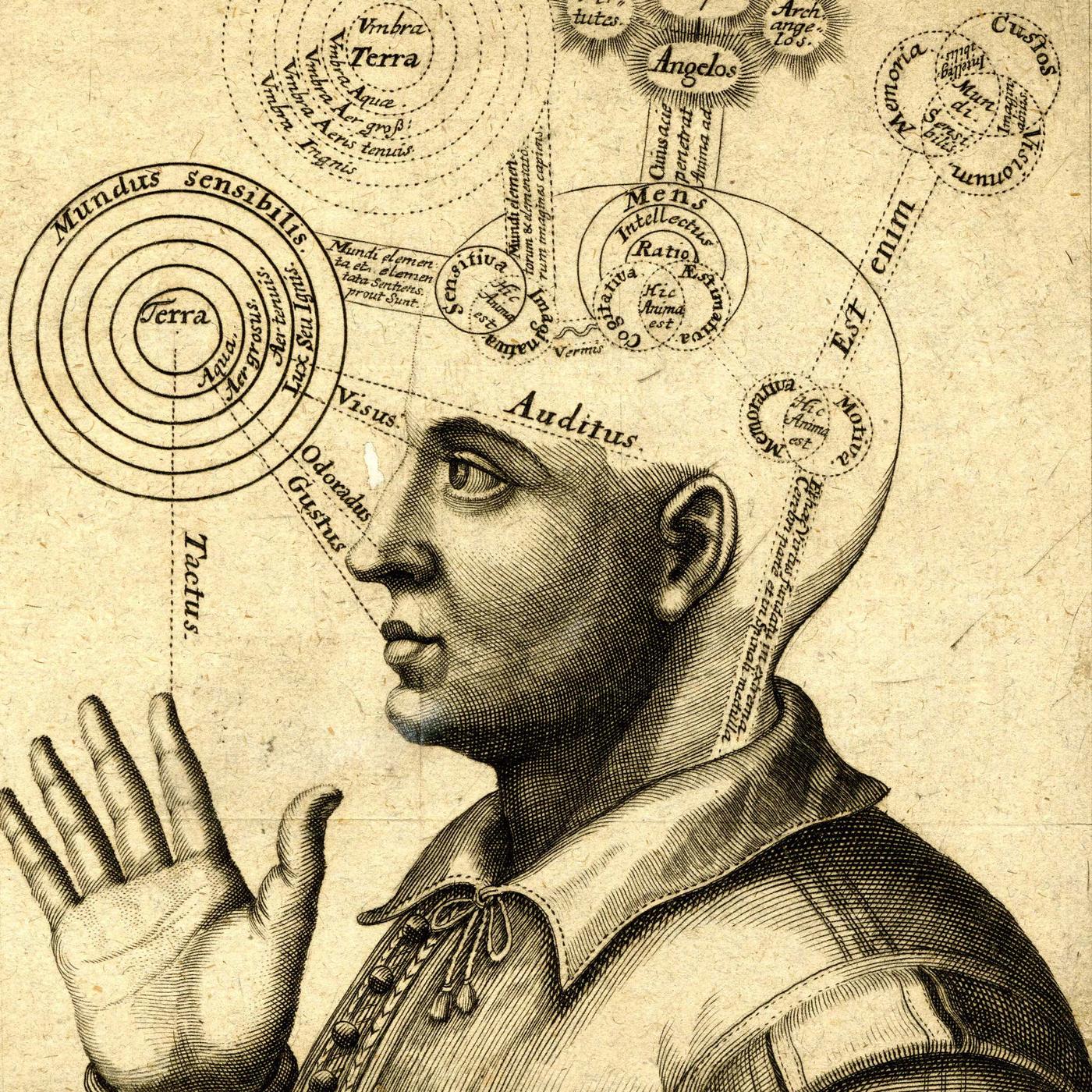
Faculty Spotlight: R.H. Lossin on Sabotage, Luddites, Violence, and the Digital Library Dystopia
FullPodcast: The Podcast for Social Research (LS 37 · TOP 2.5% what is this?)Episode: Faculty Spotlight: R.H. Lossin on Sabotage, Luddites, Violence, and the Digital Library DystopiaPub date: 2023-10-14Get Podcast Transcript →powered by Listen411 - fast audio-to-text and summarizationIn episode six of Faculty Spotlight, Mark and Lauren sit down with R.H. Lossin, postdoctoral fellow at Harvard's Warren Center of Studies in American History and a leading scholar of the theory and practice of sabotage. The three discuss: what led R.H. to the study of sabotage; why sabotage is more ordinary than you think; R.H.'s beef with the "universal library"—i.e., the total digitization of books; how readers have become producers; why Luddites have a bad rap; the meaning of "capitalist sabotage"; and the violent origins of all private property—among other scintillating subjects.The podcast and artwork embedded on this page are from The Brooklyn Institute for Social Research, which is the property of its owner and not affiliated with or endorsed by Listen Notes, Inc.
Platforms, Power, and Politics — with Bruce Mutsvairo
FullPodcast: Below the Radar (LS 31 · TOP 5% what is this?)Episode: Platforms, Power, and Politics — with Bruce MutsvairoPub date: 2023-10-17Get Podcast Transcript →powered by Listen411 - fast audio-to-text and summarizationBruce Mutsvairo, Professor of Media and Culture Studies at Utrecht University, and a 2023 SFU CERi researcher-in-residence, sits down with Am Johal to discuss his journey from journalism into academia and the state of journalism in Africa. He and Am also discuss the complexities of citizen journalism in relation to influencers, especially in the context of transparency, misinformation, and inequality. Full episode details: https://www.sfu.ca/vancity-office-community-engagement/below-the-radar-podcast/episodes/223-bruce-mutsvairo.html Read the transcript: https://www.sfu.ca/vancity-office-community-engagement/below-the-radar-podcast/transcripts/223-bruce-mutsvairo.html Resources: Bruce Mutsvairo: https://www.uu.nl/staff/bmutsvairo Introducing Bruce Mutsvairo: https://www.sfu.ca/ceri/blog/2023/Introducing-Bruce-Mutsvairo.html Platforms, Power and Politics: https://www.politybooks.com/bookdetail?book_slug=platforms-power-and-politics--9781509553570&fbclid=IwAR0qhMg8n4OLgGo0ucxHYcTwtdXSF38ZpYbDYYCLmcCNpZIEWuf3tCuSsv4 Bio: Bruce Mutsvairo is a Professor in the department of Media and Culture Studies at Utrecht University, where he also doubles as the UNESCO Chair on Disinformation, Data and Democracy. His research revolves around the importance of community engagement in academia. Bruce is SFU CERi’s researcher-in-residence from January until August 2023. Cite this episode: Chicago Style Johal, Am. “Platforms, Power, and Politics — with Bruce Mutsvairo.” Below the Radar, SFU’s Vancity Office of Community Engagement. Podcast audio, October 17, 2023. https://www.sfu.ca/vancity-office-community-engagement/below-the-radar-podcast/episodes/223-bruce-mutsvairo.html.The podcast and artwork embedded on this page are from SFU's Vancity Office of Community Engagement, which is the property of its owner and not affiliated with or endorsed by Listen Notes, Inc.

Christa Laser on the Law of the Blockchain
FullPodcast: Ipse Dixit (LS 41 · TOP 1.5% what is this?)Episode: Christa Laser on the Law of the BlockchainPub date: 2023-10-07Get Podcast Transcript →powered by Listen411 - fast audio-to-text and summarizationIn this episode, Christa Laser, Assistant Professor of Law at Cleveland State University College of Law, discusses her article "Legal Issues in Blockchain, Cryptocurrency, and NFTs," which will be published in the Nebraska Law Review. Laser begins by explaining that we should think about the relationship between law and the blockchain as posing questions about how to apply abstract concepts to problems posed by new technologies, not an obligation to create a new body of law. She describes how regulators and courts have applied securities law, intellectual property law, and contract law to blockchain-related problem. And she encourages regulators, courts, and legislators to learn more about how this new technology works before acting to regulate it. Laser is on Twitter at @ChristaLaser.This episode was hosted by Brian L. Frye, Spears-Gilbert Professor of Law at the University of Kentucky College of Law. Frye is on Twitter at @brianlfrye. Hosted on Acast. See acast.com/privacy for more information.The podcast and artwork embedded on this page are from CC0/Public Domain, which is the property of its owner and not affiliated with or endorsed by Listen Notes, Inc.
Inside Crypto's House of Cards
FullPodcast: What Next | Daily News and Analysis (LS 62 · TOP 0.1% what is this?)Episode: Inside Crypto's House of CardsPub date: 2023-10-01Get Podcast Transcript →powered by Listen411 - fast audio-to-text and summarizationThe trial of Sam Bankman-Fried marks the end of an era where crypto rose to dizzying, Super-Bowl-commercial heights. Where does the industry go from here? Guest: Zeke Faux, investigative reporter for Bloomberg and author of Number Go Up: Inside Crypto’s Wild Rise and Staggering Fall. If you enjoy this show, please consider signing up for Slate Plus. Slate Plus members get benefits like zero ads on any Slate podcast, bonus episodes of shows like Slow Burn and Dear Prudence—and you’ll be supporting the work we do here on What Next TBD. Sign up now at slate.com/whatnextplus to help support our work. Hosted on Acast. See acast.com/privacy for more information.The podcast and artwork embedded on this page are from Slate Podcasts, which is the property of its owner and not affiliated with or endorsed by Listen Notes, Inc.
Disinformation In Warfare with Olga Tokariuk
FullPodcast: The Last QuestionEpisode: Disinformation In Warfare with Olga TokariukPub date: 2023-09-30Get Podcast Transcript →powered by Listen411 - fast audio-to-text and summarizationHow is Russia deploying disinformation following its full scale invasion of Ukraine? What's the difference between disinformation, misinformation, and propaganda? Can memes win wars? Check out this fascinating interview with Olga Tokariuk - journalist and disinformation researcher - to find out. Olga Tokariuk is an independent journalist, non-resident fellow at CEPA (Center for European Policy Analysis) and former fellow at the Reuters Institute for the Study of Journalism in Oxford, where she is currently based. Her main professional interests are international affairs and research on disinformation. Olga has vast experience in Ukrainian and international media. Her reports and op-eds have been featured in TIME, The Washington Post, The Daily Beast, NPR, BBC, Monocle, EFE (Spain), Il Foglio, ANSA (Italy). She is a former head of foreign news desk at the independent Ukrainian Hromadske TV. Also in this episode, we read a listener mail from Dr. Sreevas Sahasranamam about how artificial intelligence may influence the future of the Hindu faith. You can email us at [email protected] or keep up to date with DataFest at https://datafest.global and on Twitter @datafest_ Your hosts are Gordon Johnstone - Head of DataFest at The Data Lab, Scotland's innovation centre for data and artificial intelligence hosted by the University of Edinburgh - and Lily Higham, Senior Automation Engineer at the BBC World Service. Music provided by Post Coal Prom Queen.The podcast and artwork embedded on this page are from DataFest, which is the property of its owner and not affiliated with or endorsed by Listen Notes, Inc.
The Problem with the "Big" in Big Tech
FullPodcast: The Tech Policy Press Podcast (LS 38 · TOP 2% what is this?)Episode: The Problem with the "Big" in Big TechPub date: 2023-09-17Get Podcast Transcript →powered by Listen411 - fast audio-to-text and summarizationToday’s episode features two segments, both of which consider the scale of technology platforms and their power over markets and people. In the first, Rebecca Rand delivers a conversation with University of Technology Sydney researcher Dr. Luis Lozano-Paredes about a community of drivers in Colombia who have hacked together a way to preserve their power alongside the adoption of ride sharing apps. And in the second, Justin Hendrix speaks with Columbia University Law School Professor of Law, Science and Technology Tim Wu, who recently spent two years on the National Economic Council in the White House as Special Assistant to the President for Competition and Technology. The conversation touches on privacy legislation, ideas about competition and scale, and Wu's observations on the landmark antitrust trial between the Justice Department and Google, which wrapped up its first week of testimony on Friday. The conversation took place at the All Tech is Human Responsible Tech Summit, hosted with the Consulate General of Canada in New York, on September 14th.The podcast and artwork embedded on this page are from Tech Policy Press, which is the property of its owner and not affiliated with or endorsed by Listen Notes, Inc.

Chatter: Geopolitics and the Rise of the English Language with Rosemary Salomone
FullPodcast: The Lawfare Podcast (LS 68 · TOP 0.05% what is this?)Episode: Chatter: Geopolitics and the Rise of the English Language with Rosemary SalomonePub date: 2023-08-31Get Podcast Transcript →powered by Listen411 - fast audio-to-text and summarizationThe English language has recently developed a historically unique dominance in the global marketplace--a situation that brings plenty of benefits and just as many downsides. Rosemary Salomone, Kenneth Wang Professor of Law at St. John's University, has researched and analyzed various perspectives on English's supremacy in her recent book The Rise of English, which has a paperback version with a new preface coming early in 2024.David Priess spoke with Rosemary about her background in linguistics and education studies, the origins of the English language's dominance, the role of pop culture in the balance between English as spoken in the United States and as spoken in the United Kingdom, divergent official language policies of international organizations like the United Nations and the European Union, the Anglophone bubble, English as a marketable skill, the debate about the English language within France, French vs Chinese inroads in Africa, the role of the French and English languages in the Rwandan genocide and its aftermath, the controversy over the People's Republic of China-funded Confucius Institutes, the rise of English as the language of protest internationally, the culture around foreign language learning in the US, views about computer coding as a "foreign langauge," Ukrainian President Zelensky's use of the English language, the possibility of Spanish replacing English as the most global language, and more.Among the works mentioned in this episode:The book The Rise of English by Rosemary SalomoneThe book True American by Rosemary SalomoneThe book Visions of Schooling by Rosemary SalomoneThe book Madam Speaker by Susan PageChatter is a production of Lawfare and Goat Rodeo. This episode was produced and edited by Noam Osband and Cara Shillenn of Goat Rodeo. Podcast theme by David Priess, featuring music created using Groovepad.Support this show http://supporter.acast.com/lawfare. Hosted on Acast. See acast.com/privacy for more information.The podcast and artwork embedded on this page are from The Lawfare Institute, which is the property of its owner and not affiliated with or endorsed by Listen Notes, Inc.

281. The Smoking Gun of Techno-Capitalism (ft. Meredith Whittaker)
FullPodcast: This Machine Kills (LS 49 · TOP 0.5% what is this?)Episode: 281. The Smoking Gun of Techno-Capitalism (ft. Meredith Whittaker)Pub date: 2023-09-07Get Podcast Transcript →powered by Listen411 - fast audio-to-text and summarizationWe are joined by one of our favorite friends — Meredith Whittaker — for a giant discussion that bridges her two latest articles. First a historical analysis of Charles Babbage and the smoking gun that directly links plantation logics of control with the industrial design of computation. Then a political economy of “open” AI and the material power that dominates the entire stack for these systems. ••• Follow Meredith: https://twitter.com/mer__edith ••• Origin Stories: Plantations, Computers, and Industrial Control | Meredith Whittaker https://logicmag.io/supa-dupa-skies/origin-stories-plantations-computers-and-industrial-control/ ••• Open (For Business): Big Tech, Concentrated Power, and the Political Economy of Open AI | David Gray Widder, Meredith Whittaker, Sarah Myers West https://papers.ssrn.com/sol3/papers.cfm?abstract_id=4543807 Subscribe to hear more analysis and commentary in our premium episodes every week! https://www.patreon.com/thismachinekills Hosted by Jathan Sadowski (www.twitter.com/jathansadowski) and Edward Ongweso Jr. (www.twitter.com/bigblackjacobin). Production / Music by Jereme Brown (www.twitter.com/braunestahl)The podcast and artwork embedded on this page are from This Machine Kills, which is the property of its owner and not affiliated with or endorsed by Listen Notes, Inc.
Donna J. Drucker, "Fertility Technology" (MIT Press, 2023)
FullPodcast: New Books in Public Policy (LS 34 · TOP 5% what is this?)Episode: Donna J. Drucker, "Fertility Technology" (MIT Press, 2023)Pub date: 2023-08-29Get Podcast Transcript →powered by Listen411 - fast audio-to-text and summarizationA concise overview of fertility technology—its history, practical applications, and ethical and social implications around the world. In the late 1850s, a physician in New York City used a syringe and glass tube to inject half a drop of sperm into a woman’s uterus, marking the first recorded instance of artificial insemination. From that day forward, doctors and scientists have turned to technology in ever more innovative ways to facilitate conception. Fertility Technology (MIT Press, 2023) surveys this history in all its medical, practical, and ethical complexity, and offers a look at state-of-the-art fertility technology in various social and political contexts around the world. Donna J. Drucker’s concise and eminently readable account introduces the five principal types of fertility technologies used in human reproduction—artificial insemination; ovulation timing; sperm, egg, and embryo freezing; in vitro fertilization; and IVF in uterine transplants—discussing the development, manufacture, dispersion, and use of each. Geographically, it focuses on countries where innovations have emerged and countries where these technologies most profoundly affect individuals and population policies. Drucker’s wide-ranging perspective reveals how these technologies, used for birth control as well as conception in many cases, have been critical in shaping the moral, practical, and political meaning of human life, kinship, and family in different nations and cultures since the mid-nineteenth century.Donna J. Drucker is Assistant Director of Scholarship and Research Development at the Columbia University School of Nursing.Caleb Zakarin is the Assistant Editor of the New Books Network. Learn more about your ad choices. Visit megaphone.fm/adchoicesSupport our show by becoming a premium member! https://newbooksnetwork.supportingcast.fm/public-policyThe podcast and artwork embedded on this page are from New Books Network, which is the property of its owner and not affiliated with or endorsed by Listen Notes, Inc.

How Do We Assure Social Security to Gig Workers?
FullPodcast: All Things Policy (LS 39 · TOP 2% what is this?)Episode: How Do We Assure Social Security to Gig Workers?Pub date: 2023-08-04Get Podcast Transcript →powered by Listen411 - fast audio-to-text and summarizationThe State of Rajasthan recently passed a law on social security for platform-based gig workers. Under the law, a 1-2 percent welfare cess will be levied on the value of every online transaction and the amounts will go into a welfare fund to be used for the benefit of gig workers. In this episode, Anupam Manur & Shrikrishna Upadhyaya discuss the drawbacks of the Rajasthan model of social security for gig workers. They dwell on the nature of gig jobs in India, problems with socialising social security in the form of a single fund, the responsibility of the state to offer universal social security to all its citizens, and alternative ways of securing social security for the gig workers. Readings: Indian gig workers ought to get a well-crafted social security net | Mint Don’t rush to mimic Rajasthan gig workers law Compensation for Accident Victims Isn’t a ‘Favour’ – and the State Must Be More AccountableThe podcast and artwork embedded on this page are from Takshashila Institution, which is the property of its owner and not affiliated with or endorsed by Listen Notes, Inc.

Ambient Commons: Attention in the Age of Embodied Information
FullPodcast: New Books in Architecture (LS 30 · TOP 5% what is this?)Episode: Ambient Commons: Attention in the Age of Embodied InformationPub date: 2023-08-02Get Podcast Transcript →powered by Listen411 - fast audio-to-text and summarizationThe world is filling with ever more kinds of media, in ever more contexts and formats. Glowing rectangles have become part of the scene; screens, large and small, appear everywhere. Physical locations are increasingly tagged and digitally augmented. Amid this flood, your attention practices matter more than ever. You might not be able to tune this world out. So it is worth remembering that underneath all these augmentations and data flows, fixed forms persist, and that to notice them can improve other sensibilities. In Ambient Commons, Malcolm McCullough explores the workings of attention through a rediscovery of surroundings.McCullough describes what he calls the Ambient: an increasing tendency to perceive information superabundance whole, where individual signals matter less and at least some mediation assumes inhabitable form. He explores how the fixed forms of architecture and the city play a cognitive role in the flow of ambient information. As a persistently inhabited world, can the Ambient be understood as a shared cultural resource, to be socially curated, voluntarily limited, and self-governed as if a commons? Ambient Commons invites you to look past current obsessions with smart phones to rethink attention itself, to care for more situated, often inescapable forms of information.Malcolm McCullough is Associate Professor of Architecture and Design at the University of Michigan. Learn more about your ad choices. Visit megaphone.fm/adchoicesSupport our show by becoming a premium member! https://newbooksnetwork.supportingcast.fm/architectureThe podcast and artwork embedded on this page are from Marshall Poe, which is the property of its owner and not affiliated with or endorsed by Listen Notes, Inc.

Alice E. Marwick, "The Private Is Political: Networked Privacy and Social Media" (Yale UP, 2023)
FullPodcast: New Books in Science, Technology, and Society (LS 35 · TOP 3% what is this?)Episode: Alice E. Marwick, "The Private Is Political: Networked Privacy and Social Media" (Yale UP, 2023)Pub date: 2023-07-30Get Podcast Transcript →powered by Listen411 - fast audio-to-text and summarizationOnline privacy is under constant attack by social media and big data technologies. But we cannot rely on individual actions to remedy this—it is a matter of social justice. In The Private Is Political: Networked Privacy and Social Media (Yale UP, 2023), Alice E. Marwick offers a new way of understanding how privacy is jeopardized, particularly for marginalized and disadvantaged communities—including immigrants, the poor, people of color, LGBTQ+ populations, and victims of online harassment.Marwick shows that there are few resources or regulations for preventing personal information from spreading on the internet. Through a new theory of “networked privacy,” she reveals how current legal and technological frameworks are woefully inadequate in addressing issues of privacy—often by design. Drawing from interviews and focus groups encompassing a diverse group of Americans, Marwick shows that even heavy social media users care deeply about privacy and engage in extensive “privacy work” to protect it. But people are up against the violation machine of the modern internet. Safeguarding privacy must happen at the collective level.Jake Chanenson is a computer science Ph.D. student at the University of Chicago. Broadly, Jake is interested in topics relating to HCI, privacy, and tech policy. Jake’s work has been published in top venues such as ACM’s CHI Conference on Human Factors in Computing Systems. Learn more about your ad choices. Visit megaphone.fm/adchoicesSupport our show by becoming a premium member! https://newbooksnetwork.supportingcast.fm/science-technology-and-societyThe podcast and artwork embedded on this page are from New Books Network, which is the property of its owner and not affiliated with or endorsed by Listen Notes, Inc.

An Asian Perspective on CBDCs & Cross-border Payments with Dr Oriol Caudevilla
FullPodcast: The Irish Tech News PodcastEpisode: An Asian Perspective on CBDCs & Cross-border Payments with Dr Oriol CaudevillaPub date: 2023-07-24Get Podcast Transcript →powered by Listen411 - fast audio-to-text and summarizationAn Asian Perspective on CBDCs & Cross-border Payments In this episode Dr. Efi Pylarinou talks to Dr Oriol Caudevilla, an honorary fellow at the Asian Institute of International Financial Law at the University of Hong Kong and a board director at the Global Impact FinTech Forum, about his research on the Digital Yuan and Cross-border payments, and CBDCs in the East.Description: A conversation with Dr Oriol Caudevilla, an important Fintech voice and a CBDC researcher. Dr Oriol Caudevilla is an influential voice in the fintech area. He is an honorary fellow at the Asian Institute of International Financial Law at the University of Hong Kong and a board director at the Global Impact FinTech Forum. He is also a well-known international speaker on central bank digital currencies and blockchain.More information about Oriol and his works are available at his website: www.oriolcaudevilla.com and LinkedIn profile: https://www.linkedin.com/in/oriolcaudevilla/ Dr. Efi Pylarinou is the No.1 Global Woman Influencer in Finance & the Data conversation by Refinitiv, a Top Thought Leader by Onalytica, and a Top Digital Futurist, Linkedin and Twitter Voice, by Engatica. A seasoned Wall Street professional & a recognized technology thought leader on innovation topics. Founder of Efi Pylarinou Advisory servicing Big Tech, Financial Services and Fintech clients. She strongly believes in building bridges between the old and the new economy. She shares her passion of content creation with her 190,000+ followers on Linkedin and 18,000+ on Twitter. Join her on the social platforms https://linktr.ee/Efiglobal The podcast and artwork embedded on this page are from Irish Tech News, which is the property of its owner and not affiliated with or endorsed by Listen Notes, Inc.
Logistics and Labour - Charmaine Chua on Amazon's supply chains and workers' resistance (WSS02)
FullPodcast: Max Haiven (and company)Episode: Logistics and Labour - Charmaine Chua on Amazon's supply chains and workers' resistance (WSS02)Pub date: 2023-07-18Get Podcast Transcript →powered by Listen411 - fast audio-to-text and summarizationAmazon's exploitation of data, robotics, and workers has created a breathtaking global empire. Charmaine Chua, a labour organizer with Amazonians United and an assistant professor at University of California Santa Barbara's Department of Global Studies, is uniquely well qualified to guide us through what that means, for workers and for the world. Her work focuses on the ways working people resist and build solidarity against what can seem like insurmountable odds. * https://www.charmainechua.com/ * https://www.amazoniansunited.org/ * https://www.global.ucsb.edu/people/charmaine-chua The Workers' Speculative Society is a research podcast about the world Amazon is trying to build and the workers, writers, and communities that are demanding a different future. It is part of the Worker as Futurist Project, which supports rank-and-file Amazon workers to write speculative fiction about "The World After Amazon." It is hosted by Xenia Benivolski, Max Haiven, Sarah Olutola, and Graeme Webb and is an initiative of RiVAL: The ReImagining Value Action Lab, with support from the Social Sciences a Humanities Research Council of Canada. Editing and theme music by Robert Steenkamer. * https://soundcloud.com/reimaginevalue/sets/the-workers-speculative * http://workersspeculativesociety.org * http://reimaginingvalue.caThe podcast and artwork embedded on this page are from The ReImagining Value Action Lab, which is the property of its owner and not affiliated with or endorsed by Listen Notes, Inc.

Moving Innovation: A History of Computer Animation
FullPodcast: The MIT Press Podcast (LS 37 · TOP 2.5% what is this?)Episode: Moving Innovation: A History of Computer AnimationPub date: 2023-07-06Get Podcast Transcript →powered by Listen411 - fast audio-to-text and summarizationComputer graphics (or CG) has changed the way we experience the art of moving images. Computer graphics is the difference between Steamboat Willie and Buzz Lightyear, between ping pong and PONG. It began in 1963 when an MIT graduate student named Ivan Sutherland created Sketchpad, the first true computer animation program. Sutherland noted: "Since motion can be put into Sketchpad drawings, it might be exciting to try making cartoons." This book, the first full-length history of CG, shows us how Sutherland's seemingly offhand idea grew into a multibillion dollar industry.In Moving Innovation, Tom Sito--himself an animator and industry insider for more than thirty years--describes the evolution of CG. His story features a memorable cast of characters--math nerds, avant-garde artists, cold warriors, hippies, video game enthusiasts, and studio executives: disparate types united by a common vision. Sito shows us how fifty years of work by this motley crew made movies like Toy Story and Avatar possible.Tom Sito has been a professional animator since 1975. One of the key players in Disney’s animation revival of the 1980s and 1990s, he worked on such classic Disney films as The Little Mermaid (1989), Beauty and the Beast (1991), and The Lion King (1994). He left Disney to help set up the Dreamworks Animation Unit in 1995. He is Professor of Cinema Practice in the School of Cinematic Arts at the University of Southern California.The podcast and artwork embedded on this page are from The MIT Press, which is the property of its owner and not affiliated with or endorsed by Listen Notes, Inc.

Technology and Surveillance on Migrants, with Austin Kocher and Jake Wiener, Pt 2
FullPodcast: It Could Happen Here (LS 67 · TOP 0.05% what is this?)Episode: Technology and Surveillance on Migrants, with Austin Kocher and Jake Wiener, Pt 2Pub date: 2023-07-06Get Podcast Transcript →powered by Listen411 - fast audio-to-text and summarizationJames continues his interview with Austin and Jake, this time discussing ICE's Alternatives to Detention program, and the impacts this has on privacy and the wellbeing of people in the program.See omnystudio.com/listener for privacy information.The podcast and artwork embedded on this page are from Cool Zone Media and iHeartPodcasts, which is the property of its owner and not affiliated with or endorsed by Listen Notes, Inc.

Labor Precarity in the Digital Age with Rafael Grohmann
FullPodcast: Brazil Unfiltered (LS 32 · TOP 5% what is this?)Episode: Labor Precarity in the Digital Age with Rafael GrohmannPub date: 2023-06-21Get Podcast Transcript →powered by Listen411 - fast audio-to-text and summarizationRafael Grohmann is an Assistant Professor of Media Studies with focus on Critical Platform Studies at the University of Toronto. Leader of DigiLabour initiative. Co-director of Critical Digital Methods Institute. Researcher of Fairwork and Platform Work Inclusion Living Lab (P-WILL) projects. Founding Board Member of Labor Tech Research Network. His research interests include platform cooperativism and worker-owned platforms, work & AI, workers' organization, platform labour, communication/media and work. His research appeared in academic outlets such as New Media & Society and International Journal of Communication, and media outlets such as BBC UK, Wired, The Verge and VICE. He is currently working on a book manuscript on worker-owned platforms in Latin America.Brazil is going through challenging times. There’s never been a more important moment to understand Brazil’s politics, society, and culture. To go beyond the headlines, and to ask questions that aren’t easy to answer. 'Brazil Unfiltered,' does just that. This podcast is hosted by James N. Green, Professor of Brazilian History and Culture at Brown University and the National Co-Coordinator of the U.S. Network for Democracy in Brazil.Brazil Unfiltered is part of the Democracy Observatory, supported by the Washington Brazil Office. This podcast is edited and produced by Camilo Rocha in São Paulo.https://www.braziloffice.org/en/observatory#activitiesThe podcast and artwork embedded on this page are from Washington Brazil Office, which is the property of its owner and not affiliated with or endorsed by Listen Notes, Inc.
Cory Doctorow: Platform capitalism and the curse of "enshittification"
FullPodcast: Future Tense (LS 53 · TOP 0.5% what is this?)Episode: Cory Doctorow: Platform capitalism and the curse of "enshittification"Pub date: 2023-07-02Get Podcast Transcript →powered by Listen411 - fast audio-to-text and summarizationAmazon now feels more like a racket than an open shopping platform; you can't find posts from your friends on Facebook because it's clogged with unsolicited advertising; and Uber no longer seems like a cool, efficient taxi service, it's morphed instead into a global machine for turning gig workers into the new underclass – it's all part of a process Cory Doctorow has dubbed "enshittification". In this feature interview, the acclaimed Canadian sci-fi author, journalist and digital rights activist explains why the digital world seems so exploitative and taudry. But he has optimism for how things might be improved in the future.The podcast and artwork embedded on this page are from ABC, which is the property of its owner and not affiliated with or endorsed by Listen Notes, Inc.
Big Tech Wants You to Think AI Will Kill Us All
FullPodcast: CYBER (LS 54 · TOP 0.5% what is this?)Episode: Big Tech Wants You to Think AI Will Kill Us AllPub date: 2023-06-16Get Podcast Transcript →powered by Listen411 - fast audio-to-text and summarizationDid you know that AI is set to automate as many as a third of your tasks? In the future we’re all going to be saving a lot of time. That’s as long as no one invents artificial general intelligence that fires all the nukes or turns us all into paperclips. Which, some experts seem to think, will surely happen.Today we’re gonna talk about hype. Not the exciting kind of hype, but Criti-Hype, a kind of techno doomerism we’re often fond of here at Motherboard. Social media, biogenetics, Artificial Intelligence. These things could ruin us all. At least … that’s what people tell you when they’re selling something.Lee Vinsel is a professor of Science, Technology, and Society at Virginia Tech and the host of the People & Things podcast. His Medium post that caught our eye is: You’re Doing it Wrong: Notes on Criticism and Technology Hype.Stories discussed in this episode:You’re Doing It Wrong: Notes on Criticism and Technology HypeThe Open Letter to Stop 'Dangerous' AI Race Is a Huge MessWe’re recording CYBER live on Twitch. Watch live during the week. Follow us there to get alerts when we go live. We take questions from the audience and yours might just end up on the show.Subscribe to CYBER on Apple Podcasts or wherever you listen to your podcasts. Hosted on Acast. See acast.com/privacy for more information.The podcast and artwork embedded on this page are from VICE, which is the property of its owner and not affiliated with or endorsed by Listen Notes, Inc.