The Lawfare Podcast
3,067 episodes — Page 21 of 62
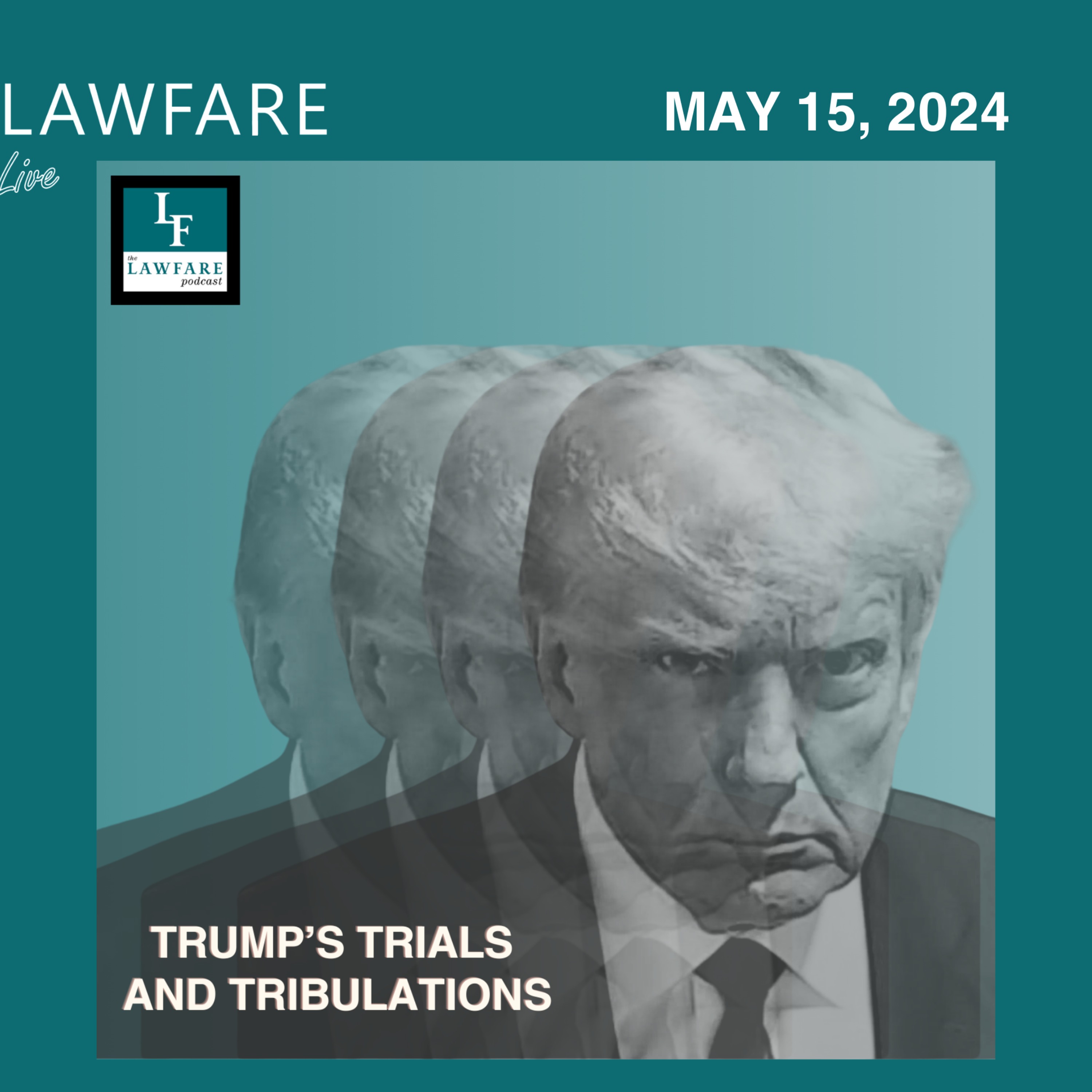
Lawfare Daily: Trump Trials and Tribulations Weekly Round-up (May 15, 2024)
This episode of “Trump's Trials and Tribulations,” was recorded on May 15 in front of a live audience on YouTube and Zoom. Lawfare Editor-in-Chief Benjamin Wittes talked to Lawfare Senior Editor Roger Parloff, Managing Editor Tyler McBrien, and Legal Fellow and Courts Correspondent Anna Bower about the lack of action in Fulton County, the Southern District of Florida and D.C. They then took a deep dive into the New York City Trump trial and looked ahead to whether there are witnesses left in the case. And of course they took audience questions from Lawfare Material Supporters on Zoom.To be able to submit questions to the panelists and receive ad-free podcasts, become a Lawfare Material Supporter at www.patreon.com/lawfare. You can also support Lawfare by making a one-time donation at https://givebutter.com/c/trumptrials.Support this show http://supporter.acast.com/lawfare. Hosted on Acast. See acast.com/privacy for more information.
Lawfare Daily: What Happened to the Fake Electors?
After the 2020 Presidential Election, a plan was hatched in seven swing states that had voted for Joe Biden. Lawsuits challenging the election outcomes in those states continued to fail, but this plan attempted to find another path to keep Trump in office—using the Electoral College process. The idea was to create slates of electors for Trump that would oppose the duly-elected Biden electors, and to send those slates of electors to DC to be counted on Jan. 6. Then, Vice President Mike Pence was supposed to either choose the Trump electors, thereby overturning the 2020 election results, or kick the competing slates back to the states to be sorted out, thereby delaying Congress's certification of the election. It's a plan that the Jan. 6 Committee would later dub "the fraudulent electors scheme." The whole scheme relied on specific individuals in each state—the fake electors themselves. So, three and a half years later, what has happened to them? Lawfare Executive Editor Natalie Orpett spoke with Senior Editor Quinta Jurecic, who has been closely following the issue from the beginning. Last month, she published an article explaining what happened to the fake electors in these seven states with Lawfare Student Contributors Hunter Evans, Adam George, and Emma Plankey.To receive ad-free podcasts, become a Lawfare Material Supporter at www.patreon.com/lawfare. You can also support Lawfare by making a one-time donation at https://givebutter.com/c/trumptrials.Support this show http://supporter.acast.com/lawfare. Hosted on Acast. See acast.com/privacy for more information.
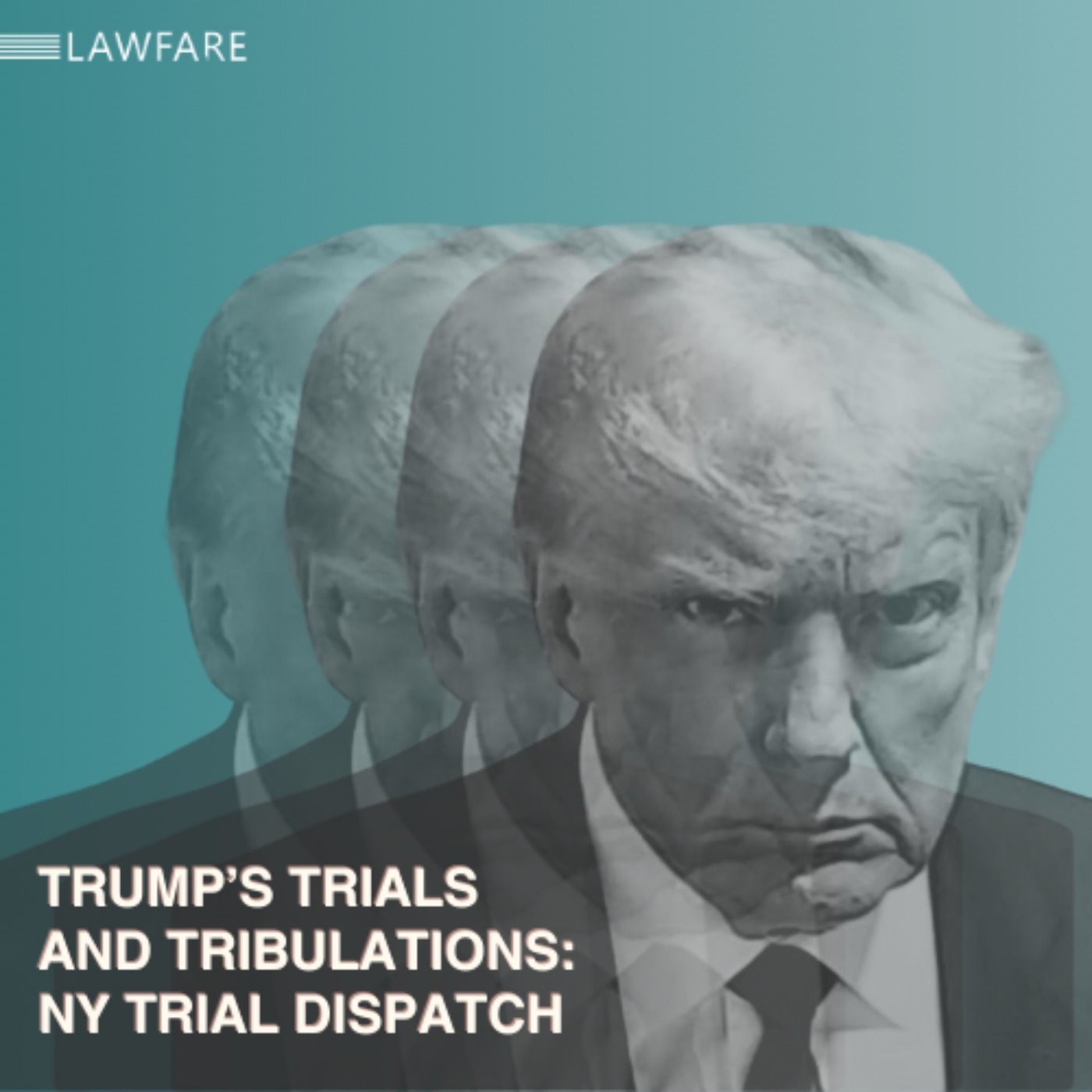
Trump Trials and Tribulations: N.Y. Trial Dispatch (May 14, 2024)
It's Trump's Trials and Tribulations, New York Trial Dispatch, May 14 Roger Parloff sat down with Benjamin Wittes, Anna Bower, and Tyler McBrien to discuss what happened in the courtroom today.The podcast was edited by Noam Osband of Goat Rodeo. Our theme song is from Alibi Music.Support this show http://supporter.acast.com/lawfare. Hosted on Acast. See acast.com/privacy for more information.
Chatter: Climate Migration with Gaia Vince
Migration has always been a part of humanity's story. It will continue to be so long after any of us now living are gone. Population shifts in the coming century, spurred by climate change, are on track to become more extreme than at any point in our history--with hundreds of millions, probably billions, of people on the move. For this episode, David Priess spoke with Gaia Vince, self-described former scientists and author of the book Nomad Century (among other works), about various aspects of climate change-driven mass migration, including perceptions of borders across history, attitudes toward climate change mitigation vs. adaptation, why the "Dubai model" isn't a global solution, demographic shifts in the global north, migration as a cause of evolutionary and cultural development, myths about migrants and jobs and wages, nurses from the Philippines as a case study, how enlightened leadership can guide the most productive migration outcomes, and much more.Works mentioned in this episode:The book Transcendence by Gaia VinceThe book Nomad Century by Gaia VinceChatter is a production of Lawfare and Goat Rodeo. This episode was produced and edited by Cara Shillenn of Goat Rodeo. Podcast theme by David Priess, featuring music created using Groovepad.Support this show http://supporter.acast.com/lawfare. Hosted on Acast. See acast.com/privacy for more information.
Lawfare Daily: Law Enforcement Hacking as a Tool Against Transnational Cyber Crime
The U.S. Federal Bureau of Investigation (FBI) reported that the United States lost a record $12.5 billion to various types of cyber crime in 2023. Law enforcement hacking is one tool increasingly used to combat transnational cyber crime. Stephanie Pell, Senior Editor at Lawfare, sat down with Gavin Wilde, Senior Fellow in the Technology and International Affairs Program at the Carnegie Endowment for International Peace, and Emma Landi, Research Assistant in the Technology and International Affairs Program at the Carnegie Endowment for International Peace, to talk about their new paper exploring law enforcement efforts to “hack the hackers” in the fight against cyber crime. They talked about the types of hacking operations performed by law enforcement, when law enforcement may be better suited to address the actions of malicious cyber actors as compared with the military and private sector, and some of the major policy questions posed by law enforcement hacking.To receive ad-free podcasts, become a Lawfare Material Supporter at www.patreon.com/lawfare. You can also support Lawfare by making a one-time donation at https://givebutter.com/c/trumptrials.Support this show http://supporter.acast.com/lawfare. Hosted on Acast. See acast.com/privacy for more information.
Trump Trials and Tribulations: N.Y. Trial Dispatch (May 13, 2024)
It's Trump's Trials and Tribulations, New York Trial Dispatch, May 13 Roger Parloff sat down with Benjamin Wittes, Anna Bower, and Tyler McBrien to discuss what happened in the courtroom today.The podcast was edited by Noam Osband of Goat Rodeo. Our theme song is from Alibi Music.Support this show http://supporter.acast.com/lawfare. Hosted on Acast. See acast.com/privacy for more information.
Lawfare Daily: The U.S. International Cyberspace and Digital Policy Strategy with Adam Segal
On May 6, the U.S. State Department unveiled its U.S. International Cyberspace and Digital Policy Strategy. Lawfare's Fellow in Technology Policy and Law, Eugenia Lostri, discussed the new strategy with Adam Segal, Senior Advisor in the Bureau of Cyberspace and Digital Policy. They talked about how the strategy fits with other cyber actions from the Biden administration, what the principle of digital solidarity looks like in practice, and how to future-proof these initiatives. To receive ad-free podcasts, become a Lawfare Material Supporter at www.patreon.com/lawfare. You can also support Lawfare by making a one-time donation at https://givebutter.com/c/trumptrials.Support this show http://supporter.acast.com/lawfare. Hosted on Acast. See acast.com/privacy for more information.
Lawfare Archive: A Band-Aid for a Bomber: Is Medical Assistance to Terrorists Protected Under IHL?
From September 12, 2015: On this week’s Lawfare Podcast, Benjamin Wittes sits down with Professor Gabriella Blum, professor at Harvard Law School, and Dustin Lewis, a senior researcher at Harvard Law Schools’ Program on International Law and Armed Conflict, to discuss their new report written with Naz Modirzadeh entitled Medical Care in Armed Conflict: IHL and State Responses to Terrorism. The conversation takes a look at whether we should consider medical care a form of illegitimate support to terrorists. Their argument? We shouldn't, because IHL lays down extensive protections for medical care, and those protections in many instances should also constrain domestic material support cases. Yet the authors make clear that in their view, there's also more to be done, as there are gaps and weaknesses in the protections afforded by IHL itself.Support this show http://supporter.acast.com/lawfare. Hosted on Acast. See acast.com/privacy for more information.
Lawfare Archive: After Trump, Episode 4: Prosecuting a President
From May 3, 2021: In the fourth episode of “After Trump,” the six-part limited podcast series based on the book, "After Trump: Reconstructing the Presidency," by Bob Bauer and Jack Goldsmith, we explore how and when a president is held to account for wild and sometimes criminal behavior.Support this show http://supporter.acast.com/lawfare. Hosted on Acast. See acast.com/privacy for more information.
Trump Trials and Tribulations: N.Y. Trial Dispatch (May 10, 2024)
It's Trump's Trials and Tribulations, New York Trial Dispatch, May 10. Roger Parloff sat down with Benjamin Wittes, Anna Bower, and Business Insider's Jacob Shamsian to discuss what happened in the courtroom today.The podcast was edited by Noam Osband of Goat Rodeo. Our theme song is from Alibi Music.Support this show http://supporter.acast.com/lawfare. Hosted on Acast. See acast.com/privacy for more information.
Lawfare Daily: David Pozen on ‘The Constitution of the War on Drugs’
David Pozen is the Charles Keller Beekman Professor of Law at Columbia Law School and the author of the new book, “The Constitution of the War on Drugs,” which examines the relationship between the Constitution and drug prohibitions. He joined Jack Goldsmith to talk about the constitutional history of the war on drugs and why the drug war was not curbed by constitutional doctrines about personal autonomy, limits on the federal government’s power, the Equal Protection Clause, or the prohibition on cruel and unusual punishment. They also talked about whether the political process is working with advancing decriminalization and how this impacts the constitutional dimension of the drug war.To receive ad-free podcasts, become a Lawfare Material Supporter at www.patreon.com/lawfare. You can also support Lawfare by making a one-time donation at https://givebutter.com/c/trumptrials.Support this show http://supporter.acast.com/lawfare. Hosted on Acast. See acast.com/privacy for more information.
Trump Trials and Tribulations: N.Y. Trial Dispatch (May 9, 2024)
It's Trump's Trials and Tribulations, New York Trial Dispatch, May 9. Roger Parloff sat down with Tyler McBrien, Benjamin Wittes, and Claire Meynial to discuss what happened in the courtroom today.The podcast was edited by Noam Osband of Goat Rodeo. Our theme song is from Alibi Music.Support this show http://supporter.acast.com/lawfare. Hosted on Acast. See acast.com/privacy for more information.
Rational Security: The “B- B-Roll” Edition
EThis week, Alan, Quinta, and Scott were joined by Lawfare’s Fellow in Technology Policy and Law Eugenia Lostri, to to hash through the week’s big national security news, including:“Digital Solid Parody.” The Biden administration is making major moves when it comes to emerging technologies, with Secretary of State Antony Blinken rolling out a new multilateral strategy for “digital solidarity” this week at the annual RSA cybersecurity conference, among other actions. What is new about what the Biden administration is doing? And where will it lead? “Avengers’ Endgame.” Israeli military operations in Gaza may be entering a final stage, as forces may have begun an assault on Rafah—one that U.S. policymakers have warned against, as it could harm the countless Gazan civilians that have sought refuge there. Will this be a breaking point for U.S. support for Israeli military operations? And how will it impact ongoing ceasefire negotiations?“Stomp and Circumstance.” College campuses around the country are at a standstill due to student protests over U.S. support for the war in Gaza. Some universities have agreed to consider student demands, including divestment, while others have worked with local law enforcement to arrest protesters and break up encampments. How should universities (and the Biden administration) be responding?For object lessons, Alan endorsed the new period miniseries Fellow Travelers. Lacking any Menendez updates, Quinta broadened her beat to cover the new indictment of Rep. Henry Cuellar (D-TX). Scott sang the praises of a childhood classic he and his son have rediscovered, James Gurney’s “Dinotopia.” And Eugenia celebrated the early look at retirement provided by one of her favorite video games, Sims 4.To receive ad-free podcasts, become a Lawfare Material Supporter at www.patreon.com/lawfare. You can also support Lawfare by making a one-time donation at https://givebutter.com/c/trumptrials.Support this show http://supporter.acast.com/lawfare. Hosted on Acast. See acast.com/privacy for more information.
Lawfare Daily: Trump Trials and Tribulations Weekly Round-up (May 8, 2024)
This episode of “Trump's Trials and Tribulations,” was recorded on May 8 in front of a live audience on YouTube and Zoom. Lawfare Editor-in-Chief Benjamin Wittes talked to Lawfare Senior Editor Roger Parloff, Managing Editor Tyler McBrien, and Legal Fellow and Courts Correspondent Anna Bower about Judge Cannon’s order suspending the trial start date of May 20 in the classified documents case, the Georgia Court of Appeals decision to hear former President Trump and his co-defendants’ appeal of Judge McAfee’s decision keeping DA Fani Willis on the case, and more. And of course they took audience questions from Lawfare Material Supporters on Zoom.To be able to submit questions to the panelists and receive ad-free podcasts, become a Lawfare Material Supporter at www.patreon.com/lawfare. You can also support Lawfare by making a one-time donation at https://givebutter.com/c/trumptrials.The podcast was edited by Noam Osband of Goat Rodeo. Our theme song is from Alibi Music.Support this show http://supporter.acast.com/lawfare. Hosted on Acast. See acast.com/privacy for more information.
Lawfare Daily: Juliette Kayyem on the New Critical Infrastructure Memo
The White House on April 30 released a “National Security Memorandum on Critical Infrastructure Security and Resilience.” According to the White House, the memo marks the beginning of a new comprehensive initiative to safeguard U.S. infrastructure against current threats and those on the horizon. The Department of Homeland Security is tasked with leading this effort—through coordination with other federal agencies, states and localities, and private-sector actors.Lawfare Research Fellow Matt Gluck discussed the memo and what it reveals about the U.S. strategy for protecting its critical infrastructure with Juliette Kayyem, a Professor of International Security at the Harvard Kennedy School. What does it mean to share responsibility and information in this context? How does geopolitics affect the United States’ approach to protecting critical infrastructure? Which types of infrastructure are more closely tied to national security than others?To receive ad-free podcasts, become a Lawfare Material Supporter at www.patreon.com/lawfare. You can also support Lawfare by making a one-time donation at https://givebutter.com/c/trumptrials.Support this show http://supporter.acast.com/lawfare. Hosted on Acast. See acast.com/privacy for more information.
Trump Trials and Tribulations: N.Y. Trial Dispatch (May 7, 2024)
It's Trump's Trials and Tribulations, New York Trial Dispatch, May 7. Roger Parloff sat down with Tyler McBrien, Benjamin Wittes, and Claire Meynial to discuss what happened in the courtroom today.The podcast was edited by Noam Osband of Goat Rodeo. Our theme song is from Alibi Music.Support this show http://supporter.acast.com/lawfare. Hosted on Acast. See acast.com/privacy for more information.
Chatter: Phantom Orbit with Journalist David Ignatius
David Ignatius has worked at the Washington Post for more than 35 years in various roles and won many awards. He has written a column on foreign affairs for 25 years and reported some of the most significant national security stories over the last couple of decades. And he has done it while pumping out best-selling spy thrillers.Lawfare Research fellow Matt Gluck spoke with Ignatius about his newest spy thriller, Phantom Orbit, which is a story of intelligence and the advance of space technology in the age of intensified geopolitical competition between the U.S., China, and Russia. They spoke about Ignatius’s character development in the book, what the book reveals about the new strategic space race, gender in the Central Intelligence Agency, and scientific discovery, among other things.For more about David:His book “Phantom Orbit”David’s Twitter PageChatter is a production of Lawfare and Goat Rodeo. This episode was produced and edited by Cara Shillenn of Goat Rodeo. Podcast theme by David Priess, featuring music created using Groovepad.Support this show http://supporter.acast.com/lawfare. Hosted on Acast. See acast.com/privacy for more information.
Lawfare Daily: Wargaming’s Past, Present, and Future with Andrew Reddie
Andrew Reddie is an Associate Research Professor of Public Policy at the University of California, Berkeley, and the founder and faculty director of the Berkeley Risk and Security Lab. Lawfare Managing Editor Tyler McBrien spoke with Andrew about wargaming as a tool to manage risk from war to climate—and beyond.To receive ad-free podcasts, become a Lawfare Material Supporter at www.patreon.com/lawfare. You can also support Lawfare by making a one-time donation at https://givebutter.com/c/trumptrials.Support this show http://supporter.acast.com/lawfare. Hosted on Acast. See acast.com/privacy for more information.
Trump Trials and Tribulations: N.Y. Trial Dispatch (May 6, 2024)
It's Trump's Trials and Tribulations, New York Trial Dispatch, May 6. Roger Parloff sat down with Tyler McBrien, Benjamin Wittes, and Anna Bower to discuss what happened in the courtroom today.The podcast was edited by Noam Osband of Goat Rodeo. Our theme song is from Alibi Music.Support this show http://supporter.acast.com/lawfare. Hosted on Acast. See acast.com/privacy for more information.
Lawfare Daily: Benjamin Wittes on Israel, Gaza, and Implications for U.S. Foreign and Domestic Policy
On April 24, Lawfare Editor-in-Chief Benjamin Wittes delivered a Watson Distinguished Lecture at the Watson Institute for International and Public Affairs at Brown University to discuss the Israel-Gaza war and the implications for U.S. foreign and domestic policy. He talked about Israel’s incompatible objectives of freeing hostages and eradicating Hamas, the moral context of the war, U.S.-Israeli relations in this context, what the U.S. and Israel still have in common—and what they no longer have in common—in this environment, and how the war could affect U.S. presidential elections.To receive ad-free podcasts, become a Lawfare Material Supporter at www.patreon.com/lawfare. You can also support Lawfare by making a one-time donation at https://givebutter.com/c/trumptrials.Support this show http://supporter.acast.com/lawfare. Hosted on Acast. See acast.com/privacy for more information.
Lawfare Archive: Alex Vindman on the Escalation in Ukraine
From April 9, 2021: Tensions are heating up between Russia and Ukraine, seven years after the seizure by the Russians of the Crimean Peninsula and the incursions into Eastern Ukraine. With troop movements and some saber rattling, is Vladimir Putin trying to send a message to Joe Biden, or perhaps to Ukrainian President Zelensky? Is he trying to satisfy domestic constituencies or distract them? Benjamin Wittes sat down with Alexander Vindman to talk about what Russia is doing and why, and what the Biden administration should do about it.To receive ad-free podcasts, become a Lawfare Material Supporter at www.patreon.com/lawfare. You can also support Lawfare by making a one-time donation at https://givebutter.com/c/trumptrials.Support this show http://supporter.acast.com/lawfare. Hosted on Acast. See acast.com/privacy for more information.
Lawfare Archive: Natan Sachs on Bibi's Big Day in Washington
From March 7, 2015: This week, Israel's Prime Minister Benjamin Netanyahu delivered a controversial address to a joint session of Congress in a move not coordinated with President Barack Obama. The speech, repeatedly interrupted by thunderous applause, focused on the nature of the developing nuclear accord between the P5+1 and Iran and insisted a better deal was possible. The speech was also heavily colored by its proximity to the upcoming Israeli elections, with many Israel watchers wondering whether it was meant to play more to Israeli voters than to Congress. Just after Netanyahu's address, we invited Brookings Fellow Natan Sachs into the Lawfare studios to unpack the speech, including what it means for the US-Israeli relationship, the ongoing nuclear talks with Iran, and Bibi's chances in the upcoming election.To receive ad-free podcasts, become a Lawfare Material Supporter at www.patreon.com/lawfare. You can also support Lawfare by making a one-time donation at https://givebutter.com/c/trumptrials.Support this show http://supporter.acast.com/lawfare. Hosted on Acast. See acast.com/privacy for more information.
Trump Trials and Tribulations: N.Y. Trial Dispatch (May 3, 2024)
It's Trump's Trials and Tribulations, New York Trial Dispatch, May 3. Benjamin Wittes sat down with Tyler McBrien and Anna Bower to discuss what happened in the courtroom today.The podcast was edited by Ian Enright of Goat Rodeo. Our theme song is from Alibi Music.Support this show http://supporter.acast.com/lawfare. Hosted on Acast. See acast.com/privacy for more information.
Lawfare Daily: Domestic Deployment of the National Guard
Over the past several years, governors around the country from both political parties have used their respective National Guards for an increasingly unconventional array of domestic missions, ranging from teaching in public schools to regulating immigration at the southern border. To discuss how this trend may impact the National Guard—and our broader democracy, particularly in this pivotal election year—Lawfare Senior Editor Scott R. Anderson recently sat down with a panel of senior former National Guard and Defense Department officials, including: General Craig McKinley, General Joseph Lengyel, Brigadier General Allyson Solomon, Major General Daryl Bohac, and former Assistant Secretary of Defense Dr. Paul Stockton. A video recording of the panel is available at https://www.brookings.edu/events/domestic-deployment-of-the-national-guard/. To receive ad-free podcasts, become a Lawfare Material Supporter at www.patreon.com/lawfare. You can also support Lawfare by making a one-time donation at https://givebutter.com/c/trumptrials.Support this show http://supporter.acast.com/lawfare. Hosted on Acast. See acast.com/privacy for more information.
Trump Trials and Tribulations: N.Y. Trial Dispatch (May 2, 2024)
It's Trump's Trials and Tribulations, New York Trial Dispatch, May 2. Benjamin Wittes sat down with Tyler McBrien and Anna Bower to discuss what happened in the courtroom today.The podcast was edited by Ian Enright of Goat Rodeo. Our theme song is from Alibi Music.Support this show http://supporter.acast.com/lawfare. Hosted on Acast. See acast.com/privacy for more information.
Rational Security: The “RatSecapella” Edition
EThis week, Alan, Quinta, and Scott were joined by Lawfare Contributing Editor Eric Ciaramella to talk through the week’s big natsec stories, including:“Not Done Nyet.” U.S. foreign assistance is finally on its way to Ukraine, along with additional support from European allies. But will it be enough to solidify or advance the beleaguered Ukrainian military’s position? What is the state of the conflict and how does it look set to move forward?“Official Tracts.” Last week, the Supreme Court heard wide-ranging arguments in Trump v. United States, the appeal of Trump’s criminal prosecution for events related to Jan. 6 considering his far-reaching claims of presidential immunity. Several of the justices seemed quite committed to weighing in on where the lines of immunity should be drawn (even if few seemed to think they were relevant in this particular case), but there was far less consensus on the actual limits. Where is the Court headed and what will it mean for Trump’s prosecution? “Live and Let Modi.” The Washington Post has broken a major story suggesting that the United States inadvertently disrupted a plot by Indian intelligence to assassinate a Sikh dissident (and U.S. national) on U.S. territory. What will this major breach of sovereignty mean for the budding U.S.-India alliance? And how should the Biden administration manage it?For object lessons, Alan got on the Amor Towles admiration train and endorsed both his book “A Gentleman in Moscow” and the forthcoming TV adaptation. Quinta recommended the classic 2003 journalism period piece “Shattered Glass.” Scott log-rolled for a forthcoming project by our friends at Goat Rodeo and Project Brazen: Fur and Loathing, which looks at one of the most significant chemical weapons attacks in U.S. history, which took place at a 2014 convention for furries. And Eric shared a cultural lesson his Italian friend impressed upon him about the impropriety of drinking a cappuccino after 11:00am.To receive ad-free podcasts, become a Lawfare Material Supporter at www.patreon.com/lawfare. You can also support Lawfare by making a one-time donation at https://givebutter.com/c/trumptrials.Support this show http://supporter.acast.com/lawfare. Hosted on Acast. See acast.com/privacy for more information.
Trump Trials and Tribulations: Weekly Round-Up (May 1, 2024)
It's another episode of “Trump's Trials and Tribulations,” recorded on May 1 in front of a live audience on YouTube and Zoom.Lawfare Editor-in-Chief Benjamin Wittes sat down with Lawfare Legal Fellow Anna Bower and Lawfare Senior Editors Roger Parloff and Quinta Jurecic to talk about state-level prosecutions of "fake electors," what Judge Cannon is up to in the classified documents case, and what has happened in the New York hush money and election interference trial so far. And of course, they took audience questions from Lawfare Material Supporters on Riverside. To receive ad-free podcasts and to be able to submit questions to the panelists, become a Lawfare Material Supporter at www.patreon.com/lawfare. You can also support Lawfare by making a one-time donation at https://givebutter.com/c/trumptrials.Support this show http://supporter.acast.com/lawfare. Hosted on Acast. See acast.com/privacy for more information.
Lawfare Daily: Protecting Information and Communications Technology and Services, with Director Elizabeth Cannon
What do port cranes, TikTok, artificial intelligence, and connected vehicles have in common? They may all be subject to regulation by a new office within the Department of Commerce: the Office of Information and Communications Technology and Services (OICTS). Between 2019 and 2023, the president issued multiple executive orders aimed at securing the United States' information and communications technology and services. They focused on the supply chain, cybersecurity, sensitive data of U.S. persons, and artificial intelligence. And in 2023, OICTS was created to implement them.Executive Editor Natalie Orpett and Contributing Editor Brandon Van Grack spoke with the Office's Executive Director, Elizabeth Cannon. They talked about the Office's recent activities, who it regulates, and how it sets priorities. This is the latest episode in our special series, “The Regulators,” co-sponsored with Morrison Foerster, in which we talk with senior government officials working at the front lines of U.S. national security policy.To receive ad-free podcasts, become a Lawfare Material Supporter at www.patreon.com/lawfare. You can also support Lawfare by making a one-time donation at https://givebutter.com/c/trumptrials.Support this show http://supporter.acast.com/lawfare. Hosted on Acast. See acast.com/privacy for more information.
Lawfare Daily: Dmitri Alperovitch on ‘World on the Brink’
Dmitri Alperovitch is the author, with Garrett Graff, of the new book, “World on the Brink: How America Can Beat China in the Race for the Twenty-First Century.” He’s also the cofounder and chairman of Silverado Policy Accelerator. He joined Lawfare Editor-in-Chief Benjamin Wittes to discuss the book, tensions in the Taiwan Strait, deterring China from invading Taiwan, and the history of what Dmitri calls “Cold War II.” To receive ad-free podcasts, become a Lawfare Material Supporter at www.patreon.com/lawfare. You can also support Lawfare by making a one-time donation at https://givebutter.com/c/trumptrials.Support this show http://supporter.acast.com/lawfare. Hosted on Acast. See acast.com/privacy for more information.
Trump Trials and Tribulations: N.Y. Trial Dispatch (Apr. 30, 2024)
It's Trump's Trials and Tribulations, New York Trial Dispatch, April 30. Benjamin Wittes sat down with Tyler McBrien and Anna Bower to discuss what happened in the courtroom today.The podcast was edited by Ian Enright of Goat Rodeo. Our theme song is from Alibi Music.Support this show http://supporter.acast.com/lawfare. Hosted on Acast. See acast.com/privacy for more information.
Chatter: How the Cold War Made Miami with Vince Houghton
For a period of time in the 1960s, the Central Intelligence Agency was one of the biggest, if not the biggest, employer in the city of Miami. The CIA had set up a base of operations there, aimed primarily at undermining the regime of Cuban leader Fidel Castro. From those early days, writes historian Vince Houghton, the Cold War battle against communism shaped the city, which he says should rank among the world’s great capitals of espionage. Houghton and co-author Eric Driggs, both Miami natives, chronicle the city’s spooky history in their rolicking new book Covert City: The Cold War and the Making of Miami. Houghton spoke to Shane Harris about some of the colorful characters that span this decades-long story, why Miami has played such a pivotal role in the history of U.S. spying, and how the the Cuban intelligence service became one of the best in the world. The books, people, events, films, TV shows, video games, and actors discussed in this book include: Covert City https://www.hachettebookgroup.com/titles/vince-houghton/covert-city/9781541774575/?lens=publicaffairs The Mariel Boatlift https://www.washingtonpost.com/wp-srv/inatl/longterm/cuba/mariel_port.htm Operation Mongoose https://nsarchive.gwu.edu/briefing-book/cuba/2019-10-03/kennedy-cuba-operation-mongoose “Griselda” https://www.imdb.com/title/tt15837600/ “Contra,” the video game https://en.wikipedia.org/wiki/Contra_(video_game) Queen of Cuba: An FBI Agent's Insider Account of the Spy Who Evaded Detection for 17 Years by Peter J. Lapp, with Kelly Kennedy https://44thand3rdbookseller.com/book/9781637589595 Chatter episode about Montes with author Jim Popkin https://www.lawfaremedia.org/article/chatter-podcast-ana-montes-american-who-spied-cuba-jim-popkin 537 Votes https://www.imdb.com/title/tt13128292/?ref_=fn_al_tt_1 More about Vince Houghton https://www.nsa.gov/Press-Room/News-Highlights/Article/Article/2423003/from-soldier-to-scholar-vince-houghton-named-director-of-national-cryptologic-m/ https://twitter.com/intelhistorian?lang=en Chatter is a production of Lawfare and Goat Rodeo. This episode was produced and edited by Cara Shillenn of Goat Rodeo. Podcast theme by David Priess, featuring music created using Groovepad.Support this show http://supporter.acast.com/lawfare. Hosted on Acast. See acast.com/privacy for more information.
Lawfare Daily: How Congress Passed the National Security Package with Molly Reynolds
On April 24, President Joe Biden signed the National Security Package into law. It's a bundle of legislation that provides aid to Ukraine, Israel, and Taiwan and requires TikTok's Chinese parent company to divest from the app or face a national ban, among various other provisions. Lawfare Associate Editor Katherine Pompilio sat down with Lawfare Senior Editor Molly Reynolds to unpack what exactly is in the package and explore the legislation’s journey through Congress. They talked about the group of hardline Republicans that blocked the legislation in the House, how Speaker Mike Johnson had to rely on the help of Democrats to get the aid package for a vote on the House floor, how Majority Leader Chuck Schumer and Minority Leader Mitch McConnell worked together to get the legislation through the Senate to Biden’s desk, and more.To receive ad-free podcasts, become a Lawfare Material Supporter at www.patreon.com/lawfare. You can also support Lawfare by making a one-time donation at https://givebutter.com/c/trumptrials.Support this show http://supporter.acast.com/lawfare. Hosted on Acast. See acast.com/privacy for more information.
Lawfare Daily: Justin Sherman on the Benefits and Limits of a New Law Governing Data Brokers
On March 20, the House of Representatives passed the Protecting Americans’ Data From Foreign Adversaries Act. The House bill was passed by the Senate on April 23 as part of the larger foreign aid package, which President Biden signed into law on April 24. Lawfare Senior Editor Stephanie Pell sat down with Justin Sherman, Senior Fellow at Duke University’s Sanford School of Public Policy, to talk about the benefits and limits of the new legislation, now law. They talked about the path that led to the bill’s passage in both the House and Senate, similarities and differences between this new legislation and a recent Executive Order focusing on the preventing the sale of American’s bulk sensitive personal data, and some ways the new law could be improved. To receive ad-free podcasts, become a Lawfare Material Supporter at www.patreon.com/lawfare. You can also support Lawfare by making a one-time donation at https://givebutter.com/c/trumptrials.Support this show http://supporter.acast.com/lawfare. Hosted on Acast. See acast.com/privacy for more information.
Lawfare Archive: TikTok, WeChat and Trump
From September 28, 2020: It's been a wild few weeks with President Trump threatening to shut WeChat and TikTok out of the U.S. market and rip them out of the app stores. There have been lawsuits, a preliminary injunction—and a sudden deal to purchase TikTok and moot the issue out. To chew it all over, Benjamin Wittes spoke with Lawfare co-founder Bobby Chesney, a professor at the University of Texas at Austin Law School, and Jordan Schneider, the voice behind the podcast ChinaTalk. They talked about how we got here, whether the threat from these companies is real or whether this is more Trump nonsense, and whether the deal to save TikTok will actually work.Support this show http://supporter.acast.com/lawfare. Hosted on Acast. See acast.com/privacy for more information.
Lawfare Archive: Jim Sciutto on ‘The Shadow War’
From June 15, 2019: Russian and Chinese leaders understand that they’re unlikely to win a shooting war with the United States, but they have other ways to challenge Western interests, turning our greatest strengths—open societies, dominance of technology on Earth and in space, and military innovation—into weaknesses.CNN anchor and chief national security correspondent Jim Sciutto calls it “the shadow war,” and it’s the subject of his new book of the same name. David Priess sat down with Jim to talk about these asymmetric threats to national security, and what the United States and its allies can do to fight back.Support this show http://supporter.acast.com/lawfare. Hosted on Acast. See acast.com/privacy for more information.
Trump Trials and Tribulations: N.Y. Trial Dispatch (Apr. 26, 2024)
It's Trump's Trials and Tribulations, New York Trial Dispatch, April 26. Benjamin Wittes sat down with Tyler McBrien and Anna Bower to discuss what happened in the courtroom today.The podcast was edited by Ian Enright of Goat Rodeo. Our theme song is from Alibi Music.Support this show http://supporter.acast.com/lawfare. Hosted on Acast. See acast.com/privacy for more information.
Lawfare Daily: Presidential Immunity at the Supreme Court
In today's Lawfare Podcast, Lawfare Executive Editor Natalie Orpett sat down with Lawfare Senior Editors Quinta Jurecic, Roger Parloff, and Alan Rosenstein. In a live conversation recorded less than an hour after Supreme Court Oral Arguments concluded, they discussed presidential immunity, and whether former president Trump is immune from prosecution for his alleged efforts to overturn the 2020 election.To receive ad-free podcasts, become a Lawfare Material Supporter at www.patreon.com/lawfare. You can also support Lawfare by making a one-time donation at https://givebutter.com/c/trumptrials.Support this show http://supporter.acast.com/lawfare. Hosted on Acast. See acast.com/privacy for more information.
Trump Trials and Tribulations: N.Y. Trial Dispatch (Apr. 25, 2024)
It's Trump's Trials and Tribulations, New York Trial Dispatch, April 25. Benjamin Wittes sat down with Tyler McBrien and Anna Bower to discuss what happened in the courtroom today.The podcast was edited by Ian Enright of Goat Rodeo. Our theme song is from Alibi Music.Support this show http://supporter.acast.com/lawfare. Hosted on Acast. See acast.com/privacy for more information.
Rational Security: The “Don’t Call It a Comeback (Because I’m Technically Still on Leave)” Edition
This week, Alan, Quinta, and Scott were finally reunited to talk through the week’s big natsec stories, including:“First is the Worst.” The historic first criminal trial of a former president has commenced in New York state courts. Both sides have sketched out their cases in opening arguments. What will the charges being brought against former President Trump relating to alleged hush money payments on his behalf mean for him and his 2024 presidential campaign?“Fair Whither Friend.” After months of delay that have, by some accounts, pushed Ukraine dangerously close to defeat, the House has finally passed legislation that would provide them with essential foreign assistance, alongside other aid packages for Israel and Taiwan as well as a handful of related foreign affairs measures. What is good, bad, and ugly about the package that finally got through? And what do the dynamics of its passage mean for other U.S. foreign policy interests in the near term?“The Clock is Tocking.” Among the side measures passed by the House and likely to be enacted into law is a bill targeting the popular social media platform TikTok — one that would ban that platform if its owners, ByteDance, do not divest due to concerns with the degree of control the Chinese government may have over it. But is this sort of regulation of a social media platform constitutional? And is banning one good policy?For object lessons, Alan finally put down the damn remote and recommended an actual book, Charles Mann’s “The Wizard and the Prophet,” about the competing, prescient visions of the future put forward by early 20th-century scientists William Vogt and Norman Borlaug. Quinta picked it up and urged listeners to check out the new documentary “Stormy,” about Stormy Daniels and the impact her alleged involvement with former President Trump and its aftermath has had on her life. And Scott shouted out one of his favorite purveyors of the silver screen, Alamo Drafthouse, and their thoughtful “sensory friendly” showings that turn up the lights and down the noise for those with young children or sensory sensitivities — something that recently allowed him and his wife to see “Dune 2” in the theater with a newborn in tow.Support this show http://supporter.acast.com/lawfare. Hosted on Acast. See acast.com/privacy for more information.
Lawfare Daily: Trump Trials and Tribulations Weekly Round-up (Apr. 24, 2024)
In today's Trump's Trials and Tribulations, Benjamin Wittes sat down with Tyler McBrien, Anna Bower, Quinta Jurecic and Roger Parloff for a round-up of the most recent news in all of Donald Trump's ongoing legal cases.To receive ad-free podcasts, become a Lawfare Material Supporter at www.patreon.com/lawfare. You can also support Lawfare by making a one-time donation at https://givebutter.com/c/trumptrials.The podcast was edited by Cara Shillenn of Goat Rodeo. Our theme song is from Alibi Music.Support this show http://supporter.acast.com/lawfare. Hosted on Acast. See acast.com/privacy for more information.
Lawfare Daily: CYBERCOM Legal Conference: The Role of the Private Sector in Conflict
The annual U.S. Cyber Command (USCYBERCOM) Legal Conference convenes lawyers across government and the private sector working on cyber issues. This year’s conference focused on the power of partnerships. Executive Editor Natalie Orpett moderated a panel, titled “The Business of Battle: Navigating the Role of the Private Sector in Conflict,” featuring Jonathan Horowitz of the International Committee for the Red Cross, Laurie Blank of the Defense Department’s Office of the General Counsel, and Adam Hickey of the law firm Mayer Brown. They talked about how government and private sector actors bring different frames of reference and different equities when faced with a conflict, and how they can work together to address it.To receive ad-free podcasts, become a Lawfare Material Supporter at www.patreon.com/lawfare. You can also support Lawfare by making a one-time donation at https://givebutter.com/c/trumptrials.Support this show http://supporter.acast.com/lawfare. Hosted on Acast. See acast.com/privacy for more information.
Trump Trials and Tribulations: N.Y. Trial Dispatch (Apr. 23, 2024)
It's Trump's Trials and Tribulations, New York Trial Dispatch, April 23. Benjamin Wittes sat down with Tyler McBrien and Anna Bower to discuss what happened in the courtroom today.The podcast was edited by Ian Enright of Goat Rodeo. Our theme song is from Alibi Music.Support this show http://supporter.acast.com/lawfare. Hosted on Acast. See acast.com/privacy for more information.
Chatter: New Cold Wars with Journalist David Sanger
David Sanger has been writing for the New York Times since he graduated from college more than four decades ago. Over that period, Sanger has served as a business correspondent in Silicon Valley, the Times bureau chief in Japan, and has covered the last five presidents—which has given Sanger a front-row seat to U.S. foreign policy for much of the post-Cold War period. It is that experience that informs Sanger’s newest book, “New Cold Wars,” in which Sanger argues—relying on a voluminous and colorful set of interviews with administration officials—that the U.S. has entered two new military, technological, and economic conflicts with Russia and China.Lawfare Research Fellow Matt Gluck spoke about the book with Sanger. They discussed how the United States slipped into these conflicts through misreading Chinese and Russian geopolitical intentions and how the U.S. is seeking to navigate this new era. They also discussed how close Biden administration officials believed Vladimir Putin was to using a nuclear weapon in the fall of 2022.For more about David:His book “New Cold Wars”David's Twitter PageChatter is a production of Lawfare and Goat Rodeo. This episode was produced and edited by Noam Osband and Cara Shillenn of Goat Rodeo. Podcast theme by David Priess, featuring music created using Groovepad.Support this show http://supporter.acast.com/lawfare. Hosted on Acast. See acast.com/privacy for more information.
Lawfare Daily: Ambassador Robert Lighthizer on Trade Policy
Ambassador Robert Lighthizer is the former United States Trade Representative in the Trump administration and the author of the 2023 book, “No Trade Is Free: Changing Course, Taking on China, and Helping America's Workers.” He sat down with Jack Goldsmith to talk about his work as Deputy U.S. Trade Representative under President Reagan, why extreme neoliberal trade policy took hold in the 1990s, his core philosophy on trade and how it departed from the 1990s neoliberal consensus, and the main ways he implemented this view in the Trump administration and with what results. They also discussed the importance of the U.S.-Mexico-Canada Agreement and why it was controversial, the extent to which the Biden administration adopted Lighthizer’s views on free trade, and the relationship between national security and trade policy.To receive ad-free podcasts, become a Lawfare Material Supporter at www.patreon.com/lawfare. You can also support Lawfare by making a one-time donation at https://givebutter.com/c/trumptrials.Support this show http://supporter.acast.com/lawfare. Hosted on Acast. See acast.com/privacy for more information.
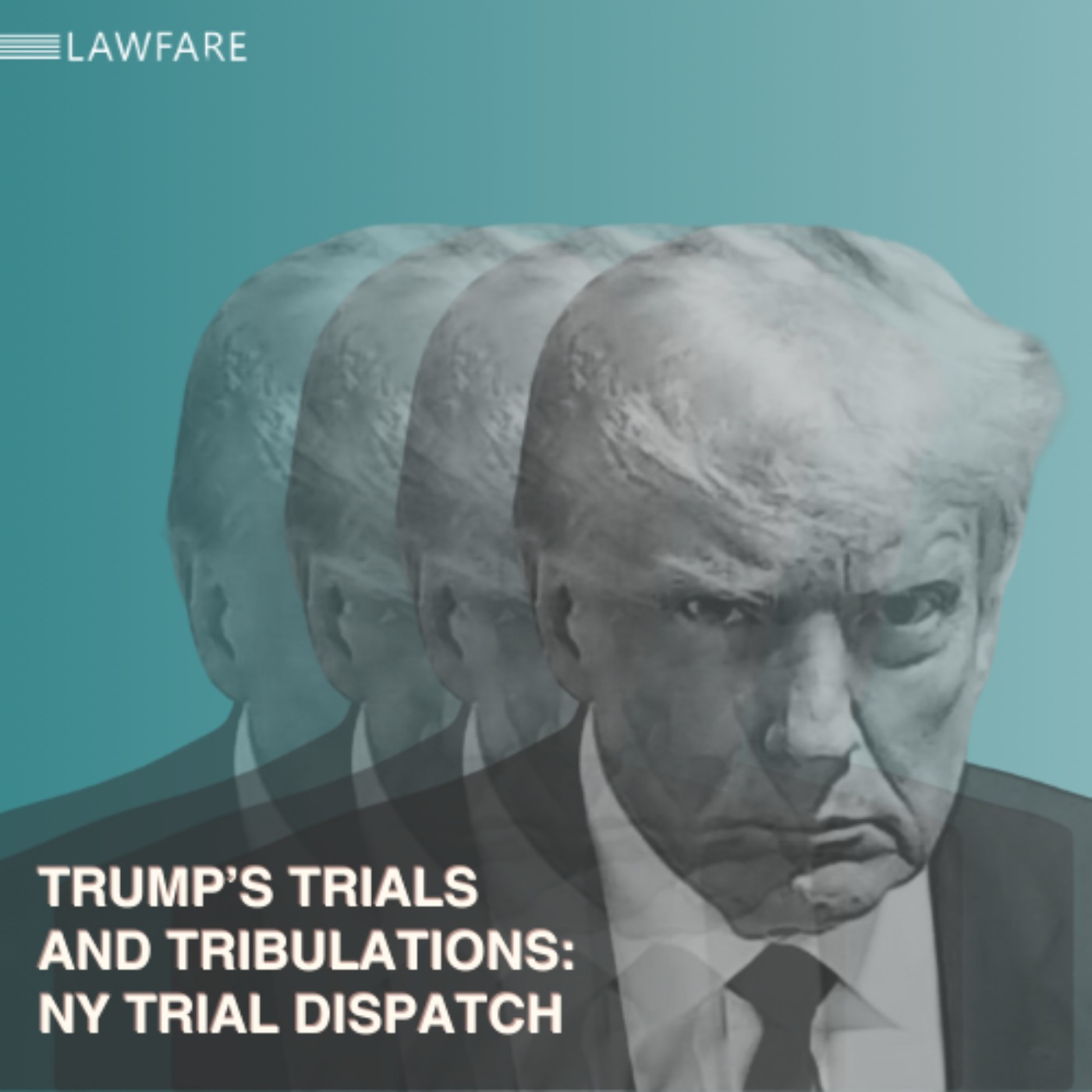
Trump Trials and Tribulations: N.Y. Trial Dispatch (Apr. 22, 2024)
It's Trump's Trials and Tribulations, New York Trial Dispatch, April 22. Tyler McBrien sat down with Benjamin Wittes and Anna Bower to discuss what happened in the courtroom today.The podcast was edited by Ian Enright of Goat Rodeo. Our theme song is from Alibi Music.Support this show http://supporter.acast.com/lawfare. Hosted on Acast. See acast.com/privacy for more information.
Lawfare Daily: The Case for a U.S. Cyber Force
Lawfare’s Fellow in Technology Policy and Law, Eugenia Lostri, talks to Dr. Erica Lonergan, Assistant Professor in the School of International and Public Affairs at Columbia University. Dr. Lonergan recently authored a report making the case for establishing a U.S. Cyber Force as a way to address the military’s difficulty to recruit, train, and equip sufficient personnel to meet growing cyber challenges. They talked about the types of problems the cyber mission faces, different ways in which they can be addressed, and why establishing a distinct cyber force might be the best path forward.To receive ad-free podcasts, become a Lawfare Material Supporter at www.patreon.com/lawfare. You can also support Lawfare by making a one-time donation at https://givebutter.com/c/trumptrials.Support this show http://supporter.acast.com/lawfare. Hosted on Acast. See acast.com/privacy for more information.
An Announcement from Lawfare
Starting Monday, April 22, the Lawfare Podcast feed is gonna look a little different.Our daily show, the Lawfare Podcast, will remain on this feed, along with Rational Security and Chatter. We’ll also be adding some important new content as well.Starting with opening statements in the New York state court trial against Donald Trump, we will discuss the events of the day’s proceedings on a short livestream dispatch on our YouTube channel. These dispatches, which we’ll record after court lets out on trial days (Mondays, Tuesdays, Thursdays, and Fridays), will be available in podcast form on this feed the following day. They’ll be called Trump Trials & Tribulations: N.Y. Trial Dispatch.Our weekly Trump’s Trials & Tribulations livestream, which we’ve been holding on Thursdays, will move to Wednesday afternoons, when court is not in session. (We’ve been releasing podcast versions of the livestream on Saturdays; these will move to Thursdays.) In addition to a short overview of the previous week’s proceedings in the New York case, we will continue to bring you updates on the cases in Florida, Fulton County, and Washington, D.C. As always, our Material Supporters will be able to join the discussion via Riverside and ask questions live.Support this show http://supporter.acast.com/lawfare. Hosted on Acast. See acast.com/privacy for more information.
Rational Security: The “Trump and Elon Both Love Lawfare” Edition
EThis week on Rational Security, Alan and Quinta sat down with Lawfare Editor-in-Chief Benjamin Wittes to talk through the week’s big national security news, including:“Ayatollahs and Airstrikes.” In retaliation for an Israeli strike that killed several high-ranking Iranian military officers in Syria, over the weekend Iran launched a wave of drone and missile attacks against Israel. The vast majority of these were shot down by Israel and its allies, including notably Jordan, causing minimal injuries and damage in Israel. As Israel considers whether to respond, its American and European allies are putting pressure on it to deescalate. What’s Israel’s next move and can broader regional war be avoided?“Beginning of the end or just the end of the beginning?” It has been six months since Hamas’s attack on October 7 and the start of Israel’s war in Gaza, which appears to be entering a new, potentially lower-intensity phase. Israel has withdrawn most of its troops from southern Gaza, although it still argues that it needs to invade Rafah, on the border with Egypt, to defeat Hamas. Meanwhile, violence between Jewish settlers and Palestinians in the West Bank continues to increase. What’s next in the ongoing conflict?“What’s a little obstruction between friends?” Earlier this week, the Supreme Court heard oral argument in Fischer v. United States, a case challenging the government’s use of a common statute used to prosecute participants in the Jan. 6 attack on the Capitol. The six conservative Justices appeared skeptical of the government’s argument that a statute that makes it a crime to “obstruct any official proceeding” applies to physical disruptions. How is the Court likely to rule and how might such a ruling affect Donald Trump’s federal trial for trying to overthrow the 2020 election?For object lessons, Quinta recommended a throwing-the-wife-under-the-bus update in New Jersey's Senator Bob Menendez's ongoing legal troubles, and Alan and Ben both recommended excellent, if anxiety-inducing, national security themed movies: the recently released Civil War and the upcoming War Game.To receive ad-free podcasts, become a Lawfare Material Supporter at www.patreon.com/lawfare. You can also support Lawfare by making a one-time donation at https://givebutter.com/c/trumptrials.Support this show http://supporter.acast.com/lawfare. Hosted on Acast. See acast.com/privacy for more information.
Trump’s Trials and Tribulations: 13 Jurors Down, Five to Go
It's another episode of “Trump's Trials and Tribulations,” recorded on April 18 in front of a live audience on YouTube and Riverside. Lawfare Editor-in-Chief Benjamin Wittes sat down with Lawfare Senior Editor Roger Parloff to talk about oral arguments at the Supreme Court in Fischer v. United States, over an obstruction charge used to charge hundreds of Jan. 6 defendants, including former President Trump. They checked in on Judge Cannon and last week's hearing on motions from Trump's co-defendants, De Oliveira and Nauta. They also checked in with Lawfare Managing Editor Tyler McBrien to discuss the ongoing jury selection in the hush money case in New York, why it is going faster than expected, and whether we can really expect opening statements to occur on Monday. And of course, they took audience questions from Lawfare Material Supporters on Riverside.To receive ad-free podcasts and to be able to submit a question to the panelists, become a Lawfare Material Supporter at www.patreon.com/lawfare. You can also support Lawfare by making a one-time donation at https://givebutter.com/c/trumptrials.Support this show http://supporter.acast.com/lawfare. Hosted on Acast. See acast.com/privacy for more information.
Lawfare Archive: Orin Kerr on Carpenter
From November 29, 2017: The Supreme Court heard oral arguments Wednesday in Carpenter v. United States, a major Fourth Amendment case asking whether a warrant is necessary before law enforcement can obtain cell site data identifying a suspect phone's location from a service provider. Lawfare contributor and Fourth Amendment expert Orin Kerr discussed the case with Benjamin Wittes at Brookings shortly after the argument.Support this show http://supporter.acast.com/lawfare. Hosted on Acast. See acast.com/privacy for more information.