The Lawfare Podcast
3,067 episodes — Page 20 of 62
Lawfare Archive: Eric Posner on ‘The Demagogue's Playbook'
From June 29, 2020: Jack Goldsmith sat down with Eric Posner, the Kirkland & Ellis Distinguished Service Professor of Law at the University of Chicago, and the author of the new book, "The Demagogue's Playbook: The Battle for American Democracy from the Founders to Trump." They discussed why demagogues are a characteristic threat in democracies, how the founders of the U.S. Constitution tried to ensure elite control and prevent a demagogue from becoming president, how these safeguards weakened over time and how Donald Trump's demagoguery helped him win election as president. They also explored how Posner's perception of Trump as a threat to American democracy fits with his writings in support of a powerful president.To receive ad-free podcasts, become a Lawfare Material Supporter at www.patreon.com/lawfare. You can also support Lawfare by making a one-time donation at https://givebutter.com/c/trumptrials.Support this show http://supporter.acast.com/lawfare. Hosted on Acast. See acast.com/privacy for more information.
Chatter: The People Who Turn Lies into Reality, with Renée DiResta
Renée DiResta is the author of Invisible Rulers: The People Who Turn Lies into Reality. Until the other day, she was one of the brains behind the Stanford Internet Observatory, where she did pioneering work studying Internet information streams how they generate. The day before this podcast was recorded, news broke that Stanford was shutting down—or revamping—the SIO, and DiResta is no longer associated with it. In this conversation with Lawfare Editor in Chief Benjamin Wittes, DiResta talks about how she came to study online information flows, how they work, and how she and her work came to be the subject of one herself.Chatter is a production of Lawfare and Goat Rodeo. This episode was produced and edited by Noam Osband of Goat Rodeo. Podcast theme by David Priess, featuring music created using Groovepad.Support this show http://supporter.acast.com/lawfare. Hosted on Acast. See acast.com/privacy for more information.
Lawfare Daily: Former Amb. Roberta Jacobson on the Mexico Presidential Election
On June 2, Mexico held one of the largest elections in its history, and the electorate voted in the country's first woman, and Jewish, president, Claudia Sheinbaum. Sheinbaum was endorsed by outgoing President Andrés Manuel López Obrador (AMLO), who critics charge as pushing a series of anti-democratic policies including a substantial judicial overhaul. To discuss this historic election and what President-elect Claudia Sheinbaum may do in office, Lawfare Associate Editor for Communications Anna Hickey sat down with former United States Ambassador Roberta Jacobson. They discussed the issues voters were concerned about, political violence by cartels plaguing the country, and whether Sheinbaum will follow AMLO's trajectory as a populist or chart her own path. To receive ad-free podcasts, become a Lawfare Material Supporter at www.patreon.com/lawfare. You can also support Lawfare by making a one-time donation at https://givebutter.com/c/trumptrials.Support this show http://supporter.acast.com/lawfare. Hosted on Acast. See acast.com/privacy for more information.
Lawfare Daily: Senator Menendez On Trial
Lawfare Senior Editors Molly Reynolds and Quinta Jurecic checked in on the status of Senator Bob Menendez’s ongoing criminal trial in the Southern District of New York. Together with Dan Richman of Columbia Law School and Eric Columbus, who previously served as special litigation counsel at the U.S. House of Representatives’ Office of General Counsel, they discussed the challenges faced by prosecutors in bringing corruption charges against a sitting member of Congress. The Justice Department alleges that Menendez took bribes in exchange for unregistered lobbying for the governments of Egypt and Qatar—among other incidents of unsavory behavior. But after the Supreme Court’s decision in McDonnell v. United States, and given the protections available to members of Congress under the Speech or Debate Clause, will prosecutors be able to make the charges stick?To receive ad-free podcasts, become a Lawfare Material Supporter at www.patreon.com/lawfare. You can also support Lawfare by making a one-time donation at https://givebutter.com/c/trumptrials.Support this show http://supporter.acast.com/lawfare. Hosted on Acast. See acast.com/privacy for more information.
Lawfare Archive: John Allen and Darrell West on Artificial Intelligence
From July 17, 2020: Darrell West and John Allen are the authors of the book, "Turning Point: Policymaking in the Era of Artificial Intelligence," a broad look at the impact that artificial intelligence systems are likely to have on everything from the military, to health care, to vehicles and transportation, and to international great power competition. They spoke with Benjamin Wittes about the book and the question of how we should govern AI systems. What makes for ethical uses of AI? What makes it scary? What are the anxieties that people have about artificial intelligence, and to what extent are the fears legitimate?To receive ad-free podcasts, become a Lawfare Material Supporter at www.patreon.com/lawfare. You can also support Lawfare by making a one-time donation at https://givebutter.com/c/trumptrials.Support this show http://supporter.acast.com/lawfare. Hosted on Acast. See acast.com/privacy for more information.
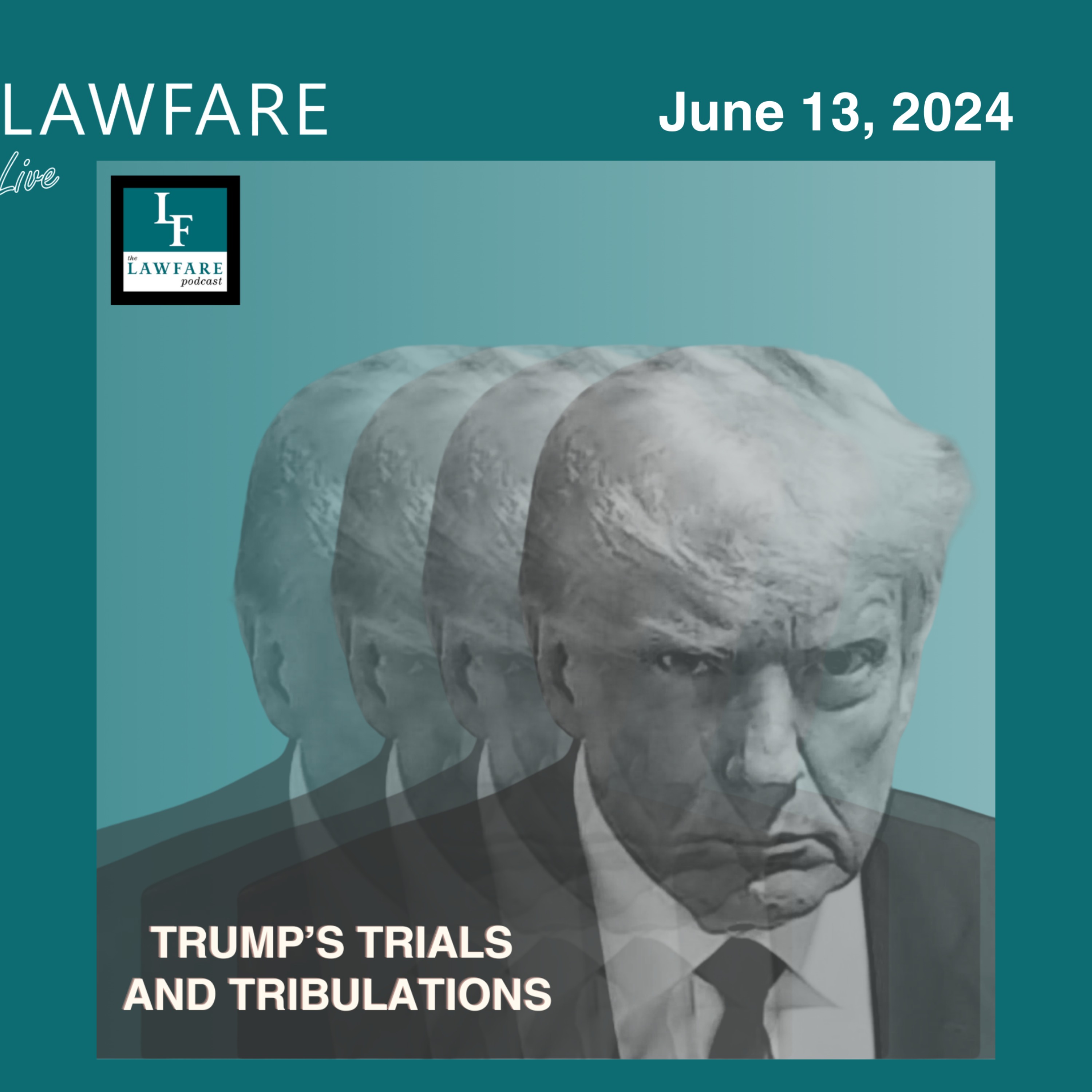
Lawfare Daily: Trump Trials and Tribulations Weekly Round-up (June 13, 2024)
This episode of “Trump's Trials and Tribulations,” was recorded on June 13 in front of a live audience on YouTube and Zoom.Lawfare Associate Editor for Communications Anna Hickey talked to Lawfare Editor-in-Chief Benjamin Wittes and Senior Editor Quinta Jurecic about Judge Cannon's order denying in part former President Trump's motion to dismiss the classified document case, what Judge McAfee is up to in Fulton County, and of course, they took audience questions from Lawfare Material Supporters on Zoom.Support this show http://supporter.acast.com/lawfare. Hosted on Acast. See acast.com/privacy for more information.
Missouri’s Legal Fight Against China Continues with Sean Mirski and Aaron Sobel
On today’s episode, Matt Gluck, Research Fellow at Lawfare, spoke with Sean Mirski and Aaron Sobel of Arnold & Porter. Mirski practices foreign-relations, international, and appellate law, and Sobel practices international and appellate law. They discussed Mirski and Sobel’s recent Lawfare piece, co-authored with John Bellinger and Catherine McCarthy, on the Eighth Circuit’s decision reviving part of Missouri’s coronavirus-related lawsuit against several defendants connected to the Chinese government.They spoke about the Foreign Sovereign Immunities Act, Missouri’s claims and why one of them survived the Eighth Circuit’s jurisdictional review, how this decision might affect other coronavirus lawsuits, and the potential implications of the decision for U.S. foreign policy, among other topics.Check out Mirski’s recent book, “We May Dominate the World: Ambition, Anxiety, and the Rise of the American Colossus,” which examines the roots of the United States’ ascension to hegemony and was rated by Kirkus as one of the 100 best non-fiction books of 2023.To receive ad-free podcasts, become a Lawfare Material Supporter at www.patreon.com/lawfare. You can also support Lawfare by making a one-time donation at https://givebutter.com/c/trumptrials.Support this show http://supporter.acast.com/lawfare. Hosted on Acast. See acast.com/privacy for more information.
Rational Security: The “Miami Vices” Edition
EThis week, Alan, Quinta, and Scott were joined by Lawfare Editor-in-Chief Benjamin Wittes to talk through some of the week’s biggest national security news stories, including:“Save the Last Gantz.” Leading opposition figure Benny Gantz has left Israel’s war cabinet over Prime Minister Benjamin Netanyahu’s failure to establish post-conflict plans for Gaza, raising serious questions about the stability of Netanyahu’s far-right government. What does Gantz’s departure mean for the future of the conflict?“Congress Shall Make No Law…Abridging the Freedom of [BEEP], or of the [PRESS ENTER KEY].” California is on the verge of enacting one of the country’s first AI safety laws. But critics are arguing that the type of restrictions it imposes may run afoul of the First Amendment. How does AI fit with the freedom of speech—and does the First Amendment put it beyond regulatory reach?“A Stale Macron is One Tough Cookie.” Recent elections to the European Parliament saw a surge in right (and particularly far-right) parties across the continent, and most specifically in France and Germany. Fearing what this groundswell might mean for his centrist coalition, French President Emmanuel Macron has sought to cut it off at the pass by calling for snap national parliamentary elections. Is this a risky strategy or a sound one?For object lessons, Ben asked listeners how they intended to celebrate #RussiaDay on June 12. Alan celebrated an inedible apple. Quinta followed up on last week’s discussion to share the American Immigration Council’s analysis of the new border executive order. And Scott sang the praises of Roka, a brand of glasses that finally stays on his dumb flat face.To receive ad-free podcasts, become a Lawfare Material Supporter at www.patreon.com/lawfare. You can also support Lawfare by making a one-time donation at https://givebutter.com/c/trumptrials.Support this show http://supporter.acast.com/lawfare. Hosted on Acast. See acast.com/privacy for more information.
Lawfare Daily: Is Complying with the Law of War a Defense to Genocide?
On today’s episode, Lawfare General Counsel and Senior Editor Scott R. Anderson sat down with Gabor Rona, Professor of Practice at Cardozo Law, and Natalie Orpett, Lawfare’s Executive Editor, to discuss their recent Lawfare piece examining whether a state pursuing an armed conflict in compliance with international humanitarian law could nonetheless violate the Genocide Convention. They discussed how these two areas of law intersect, their relevance to the ongoing proceedings over Israel’s conduct in Gaza before the International Court of Justice, and what the questions their analysis raises might mean for the future of accountability for genocide.You can find their article, "Can Armed Attacks That Comply With IHL Nonetheless Constitute Genocide?," online at https://www.lawfaremedia.org/article/can-armed-attacks-that-comply-with-ihl-nonetheless-constitute-genocide.To receive ad-free podcasts, become a Lawfare Material Supporter at www.patreon.com/lawfare. You can also support Lawfare by making a one-time donation at https://givebutter.com/c/trumptrials.Support this show http://supporter.acast.com/lawfare. Hosted on Acast. See acast.com/privacy for more information.
Lawfare Daily: Natan Sachs on the Latest Israeli Political Crisis
Natan Sachs is the Director of the Center for Middle East Policy at the Brookings Institution. He joined Lawfare's Editor in Chief, Benjamin Wittes, to discuss the resignation of Israeli war cabinet member Benny Gantz, the fate of Benjamin Netanyahu's right-wing government, and Israeli perceptions of the Gaza war.To receive ad-free podcasts, become a Lawfare Material Supporter at www.patreon.com/lawfare. You can also support Lawfare by making a one-time donation at https://givebutter.com/c/trumptrials.Support this show http://supporter.acast.com/lawfare. Hosted on Acast. See acast.com/privacy for more information.
Chatter: FDR, Charles Lindbergh, and Presidential Libraries with Paul Sparrow
Paul Sparrow, who served as Director of the Franklin D. Roosevelt Presidential Library and Museum from 2015 to 2022, has written the book Awakening the Spirit of America about the war of words between FDR and Charles Lindbergh in 1940-41.He joined host David Priess to discuss his path to the FDR Library, the history of presidential libraries, how the Roosevelt-Lindbergh war of words reveals much about the American experience before and during the Second World War, why Lindbergh never ran for president, the America First movement, Roosevelt's chaotic approach to intelligence, FDR's popular legacy, and more.Works mentioned in this episode:The book Awakening the Spirit of America by Paul SparrowThe book The Plot Against America by Philip RothThe book K is for Killing by Daniel EastermanThe book Those Angry Days by Lynne OlsonThe podcast UltraThe book Prequel by Rachel MaddowThe book The Wave of the Future by Anne LindberghThe book An Unfinished Love Story by Doris Kearns GoodwinThe book The Killing Shore by K. A. NelsonChatter is a production of Lawfare and Goat Rodeo. This episode was produced and edited by Cara Shillenn of Goat Rodeo. Podcast theme by David Priess, featuring music created using Groovepad.Support this show http://supporter.acast.com/lawfare. Hosted on Acast. See acast.com/privacy for more information.
Lawfare Daily: Behind the Scenes of Lawfare's Trump New York Trial Coverage
The first criminal trial of a former president of the United States began in April and reached a verdict on May 30. As Lawfare readers and listeners know, we covered the trial in great detail. Normally based in Washington, D.C., we opened a temporary “bureau” in New York City so that we could report on each and every day of the proceedings from inside the courtroom. We produced written and oral dispatches every day on top of our usual deep-dive analysis of the legal issues at stake. So we’ve talked a lot about the trial itself. This time, we’re talking about the experience of covering the trial. Executive Editor Natalie Orpett spoke with Legal Fellow Anna Bower, Senior Editor Quinta Jurecic, Managing Editor Tyler McBrien, and Editor-in-Chief Benjamin Wittes about how it all worked, why Lawfare’s coverage was unique, and what it was like to actually be there.To receive ad-free podcasts, become a Lawfare Material Supporter at www.patreon.com/lawfare. You can also support Lawfare by making a one-time donation at https://givebutter.com/c/trumptrials.Support this show http://supporter.acast.com/lawfare. Hosted on Acast. See acast.com/privacy for more information.
Lawfare Daily: Charlotte Willner and David Sullivan on Content Moderation in the Age of AI
Charlotte Willner, Executive Director of the Trust and Safety Professional Association, and David Sullivan, Executive Director of the Digital Trust & Safety Partnership, join Lawfare's Tarbell Fellow Kevin Frazier and Senior Editor Quinta Jurecic to discuss content moderation in the age of AI. Following 97 self-described data labellers, content moderators, and AI workers publishing an open letter describing deplorable working conditions, Charlotte and David break down what's new and what's not about the ongoing trade-offs involved in content moderation. The group also dives into the evolution of content moderation and analyzes the effects of relatively recent regulations, such as the EU's Digital Services Act, on trust and safety work.To receive ad-free podcasts, become a Lawfare Material Supporter at www.patreon.com/lawfare. You can also support Lawfare by making a one-time donation at https://givebutter.com/c/trumptrials.Support this show http://supporter.acast.com/lawfare. Hosted on Acast. See acast.com/privacy for more information.
Lawfare Archive: A Trip Around Africa with Judd Devermont and Emilia Columbo
From March 3, 2020: The population of Africa is projected to double by 2050, giving the continent one quarter of the world's people by then. Nigeria alone will have a larger population than the United States. To the extent they aren't so already, the world's problems and opportunities will be Africa's, too, and African problems and opportunities will also be the world's. David Priess spoke about developments in African politics and international engagement with two experts from the Africa Program at the Center for Strategic and International Studies—its director Judd Devermont, and one of its senior associates, Emilia Columbo.To receive ad-free podcasts, become a Lawfare Material Supporter at www.patreon.com/lawfare. You can also support Lawfare by making a one-time donation at https://givebutter.com/c/trumptrials.Support this show http://supporter.acast.com/lawfare. Hosted on Acast. See acast.com/privacy for more information.
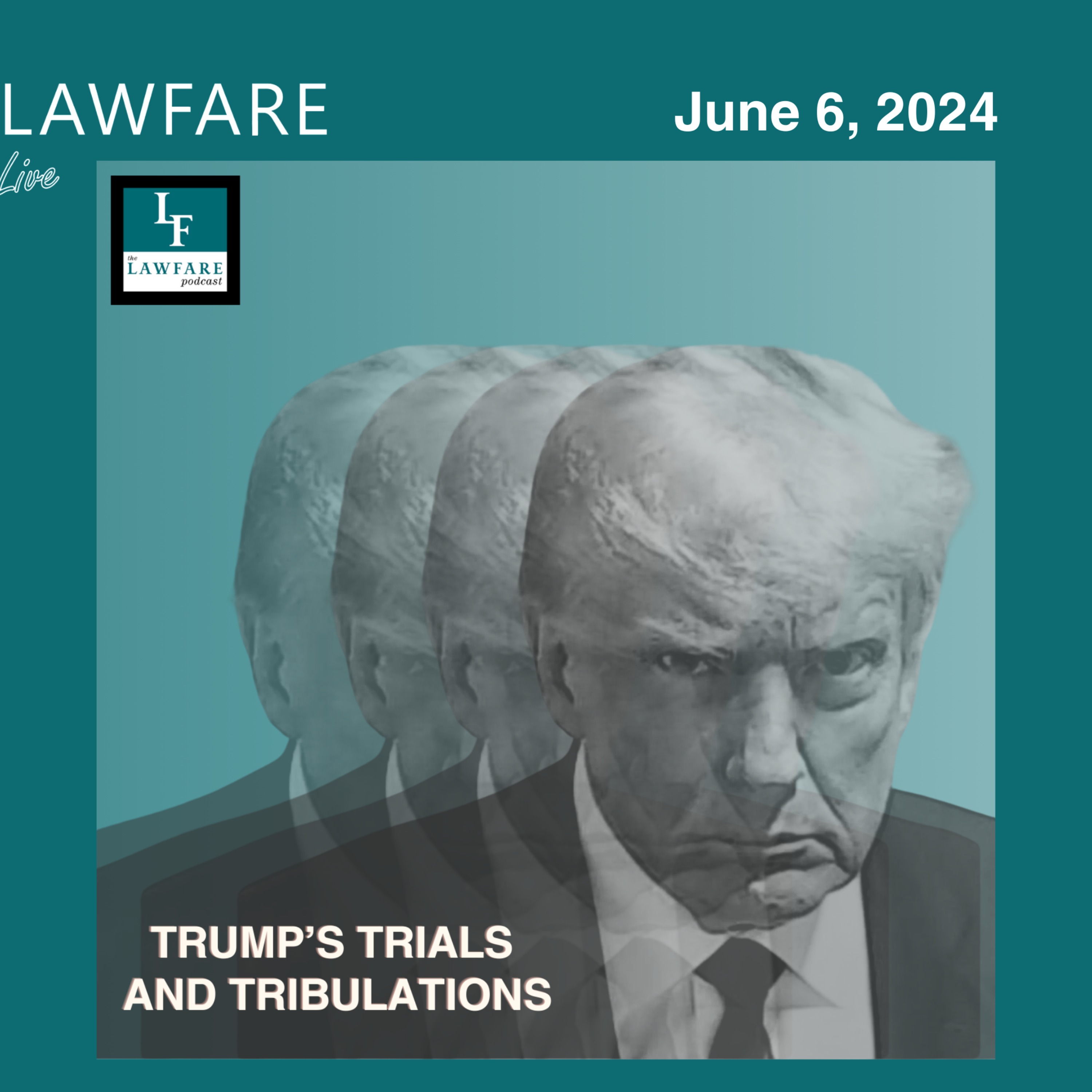
Lawfare Daily: Trump Trials and Tribulations Weekly Round-up (June 6, 2024)
bonusThis episode of “Trump's Trials and Tribulations,” was recorded on June 6 in front of a live audience on YouTube and Zoom.Lawfare Editor-in-Chief Benjamin Wittes talked to Lawfare Senior Editor Roger Parloff, Lawfare Courts Correspondent and Legal Fellow Anna Bower, and New York Times reporter Alan Feuer about the Georgia Court of Appeal's order staying trial court proceedings in the Fulton County case, what Judge Cannon has been up to in the Southern District of Florida, including scheduling days of hearings, and more. And of course, they took audience questions from Lawfare Material Supporters on Zoom.Support this show http://supporter.acast.com/lawfare. Hosted on Acast. See acast.com/privacy for more information.
Lawfare Archive: The Migrant Caravan and Its Dissenters
From October 27, 2018: There is a caravan—you've probably heard something about it. Stephanie Leutert, director of the Mexico Security Initiative at the Robert S. Strauss Center for International Security and Law, has heard something about it. On Friday, Benjamin Wittes caught up with Leutert to talk about her time on the Mexico-Guatemala border traveling with migrants who are following a trail not unlike that of the caravan. They talked about why people are joining this caravan, what are alternatives to it, why certain migrants are shunning it, the factors pushing people out of countries like Honduras and Guatemala, and what it's like to be a child on the long trek to the United States.To receive ad-free podcasts, become a Lawfare Material Supporter at www.patreon.com/lawfare. You can also support Lawfare by making a one-time donation at https://givebutter.com/c/trumptrials.Support this show http://supporter.acast.com/lawfare. Hosted on Acast. See acast.com/privacy for more information.
Lawfare Daily: Mary McCord on the Effort to Hold Fake Electors Accountable
In 2022, Georgetown University Law Center’s Institute for Constitutional Advocacy and Protection and Stafford Rosenbaum filed a lawsuit against ten Wisconsin fraudulent electors, Kenneth Chesebro, and James Troupis for their efforts to subvert the 2020 election. Earlier this year, ICAP reached two settlements with the defendants, which resulted in thousands of pages of text messages, emails, and other correspondence being turned over, providing new insight into how exactly the fake electors scheme was developed and implemented in Wisconsin and across the country. Lawfare Associate Editor for Communications Anna Hickey sat down with ICAP Executive Director Mary McCord to discuss the settlements reached with the Wisconsin fraudulent electors, what new information was revealed in the thousands of pages of documents turned over, and whether the recent criminal charges filed against Kenneth Chesebro, James Troupis, and Mike Roman revealed any new information.To receive ad-free podcasts, become a Lawfare Material Supporter at www.patreon.com/lawfare. You can also support Lawfare by making a one-time donation at https://givebutter.com/c/trumptrials.Support this show http://supporter.acast.com/lawfare. Hosted on Acast. See acast.com/privacy for more information.
Rational Security: The “Morning After” Edition
EThis week, Quinta and Scott were joined by Lawfare Managing Editor Tyler McBrien to discuss how he is coping with the end of the New York trial and to run through some of the week’s big national security news stories, including:“A Perfect Conviction.” Last week, after less than two days of deliberation, a jury in New York state criminal court found former President Trump guilty of all 34 criminal counts on which he was being tried. He’s now scheduled to be sentenced just days before the Republican National Convention this summer, where he is expected to be named the party’s 2024 presidential nominee. What does this conviction mean for Trump’s campaign? What are his prospects for appeal? And what happens if he still wins?“Biden Time.” Last week, President Biden laid out a three-step cease-fire plan for Gaza, sending the clearest signal yet that he is intent on ending the conflict there. Both sides have accepted the plan in principle but have yet to reach agreement on the particulars—and, meanwhile, Israel’s Rafah operation has continued. Is this finally a sign of the Gaza end game? Or that the end is nigh for Israeli Prime Minister Netanyahu’s government, which is under increasing domestic and international pressure?“Order on the Border.” This week, the Biden administration unveiled a new executive order that will make it harder for migrants crossing the southern U.S. border to apply for and receive asylum during periods of high border traffic, facilitating their prompt removal. Is this move a reasonable policy measure, cynical election politics, or something else entirely?For object lessons, Quinta recommended Zadie Smith’s new-ish novel, “The Fraud.” Scott shared a note from the archives about high cetacean fashion. And Tyler passed along an inspirational story about Osaka airport’s amazing luggage record.To receive ad-free podcasts, become a Lawfare Material Supporter at www.patreon.com/lawfare. You can also support Lawfare by making a one-time donation at https://givebutter.com/c/trumptrials.Support this show http://supporter.acast.com/lawfare. Hosted on Acast. See acast.com/privacy for more information.
Lawfare Daily: OpenAI’s Shutdown of State-Backed Information Operations with Alex Iftimie
On today’s episode, Lawfare Senior Editor Scott R. Anderson sits down with Alex Iftimie, a Deputy General Counsel at OpenAI, to talk over their recent report revealing that OpenAI has shut down several state-backed information operations using OpenAI’s artificial technology services. They discussed the operations themselves, how OpenAI is investigating and responding to such activities, and what they tell us about how the nascent artificial intelligence industry is impacting state-backed information operations, among other types of problematic behavior.To receive ad-free podcasts, become a Lawfare Material Supporter at www.patreon.com/lawfare. You can also support Lawfare by making a one-time donation at https://givebutter.com/c/trumptrials.Support this show http://supporter.acast.com/lawfare. Hosted on Acast. See acast.com/privacy for more information.
Lawfare Daily: Ashley Deeks and Mark Klamberg on AI and National Security
Ashley Deeks, Professor at the University of Virginia School of Law, and Dr. Mark Klamberg, Professor at Stockholm University, Visiting Professor at American University, and Fellow with the Atlantic Council, join Lawfare's Tarbell Fellow Kevin Frazier and Senior Editor Alan Rozenshtein to discuss the weaponization of AI. The group explores a number of related topics including ongoing domestic and international efforts to regulate military use of AI, the national security implications of weaponized AI, and whether AI companies bear any legal responsibility for military use of their AI systems. Professor Deeks and Dr. Klamberg bring their extensive AI knowledge to the fore in this illuminating podcast. Keep an eye out for their respective forthcoming publications on military use of AI.To receive ad-free podcasts, become a Lawfare Material Supporter at www.patreon.com/lawfare. You can also support Lawfare by making a one-time donation at https://givebutter.com/c/trumptrials.Support this show http://supporter.acast.com/lawfare. Hosted on Acast. See acast.com/privacy for more information.
Chatter: The Harrowing History of the Soviet Space Program with John Strausbaugh
In the wake of World War II, the United States and the Soviet Union set off on the great space race, competing to see which super power could put the first human in space and eventually land them on the Moon. As historian John Strausbaugh writes, that race should have been over before it even started. Strausbaugh’s new book, The Wrong Stuff: How the Soviet Space Program Crashed and Burned, is a harrowing and frequently hilarious account of how political leaders and engineers slapped together a space program with little apparent concern for the lives of the cosmonauts they hurled into Earth’s orbit. Moscow blustered about the size of its rockets and the triumph of its space pioneers. But that patriotic rhetoric hid the true nature of a program that was harried and haphazard, and whose leaders weren’t quite sure how to return their pilots to Earth after launching them into space. The Soviet space program stands in stark contrast, Strausbaugh told Shane Harris, to the methodical and comparatively risk-averse NASA program, which eventually overtook its rival. Books, historical figures, and near-death space walks discussed in this episode include: The Wrong Stuff: How the Soviet Space Program Crashed and Burned https://www.hachettebookgroup.com/titles/john-strausbaugh/the-wrong-stuff/9781541703346/?lens=publicaffairs The Right Stuff by Tom Wolfe https://us.macmillan.com/books/9780312427566/therightstuff Off the Planet: Surviving Five Perilous Months Aboard the Space Station Mir by Jerry Linenger https://www.amazon.com/Off-Planet-Surviving-Perilous-Station/dp/007136112X Sergei Korolev https://www.skyatnightmagazine.com/space-missions/sergei-korolev-life-history-timeline Yuri Gagarin https://www.pbs.org/redfiles/rao/gallery/gagarin/index.html Alexi Leonov https://time.com/5802128/alexei-leonov-spacewalk-obstacles/ More about John Strausbaugh:https://www.hachettebookgroup.com/contributor/john-strausbaugh/?lens=twelve Chatter is a production of Lawfare and Goat Rodeo. This episode was produced and edited by Cara Shillenn of Goat Rodeo. Podcast theme by David Priess, featuring music created using Groovepad.Support this show http://supporter.acast.com/lawfare. Hosted on Acast. See acast.com/privacy for more information.
Lawfare Daily: Eisenhower, D-Day, and the Birth of the American Superpower with Michel Paradis
This episode, Lawfare Senior Editor Scott R. Anderson sat down with author, attorney, legal scholar, and Lawfare Contributing Editor Michel Paradis to discuss the 80th anniversary of D-Day and his new book, “The Light of Battle: Eisenhower, D-Day, and the Birth of the American Superpower.”They discussed understudied aspects of Eisenhower’s unique personal and professional history, how they prepared him for leading what would become the Allied invasion of Europe, and how his actions set the stage for much of the 20th century that would follow.To receive ad-free podcasts, become a Lawfare Material Supporter at www.patreon.com/lawfare. You can also support Lawfare by making a one-time donation at https://givebutter.com/c/trumptrials.Support this show http://supporter.acast.com/lawfare. Hosted on Acast. See acast.com/privacy for more information.
Lawfare Daily: What the ‘Kids’ Think of NATO with Rachel Rizzo
Rachel Rizzo, a nonresident senior fellow at the Atlantic Council’s Europe Center, joins Lawfare Managing Editor Tyler McBrien to talk about last month’s NATO Youth Summit. Building off of her chapter “NATO, Public Opinion, and the Next Generation: Remaining Relevant, Remaining Strong,” in the 2021 book, “NATO 2030: Towards a New Strategic Concept and Beyond,” Rizzo discusses what NATO thinks of Gen Z and Millennials, the many efforts the Alliance is making to pitch to them its relevance and purpose, and the ways in which NATO could better integrate youth voices into discussions about the Alliance’s future. She also explains how and why Gen Z and Millennial views on NATO, foreign policy, and America’s changing role in the world differ from older generations. And yes, they even discuss Taylor Swift and Olivia Rodrigo.To receive ad-free podcasts, become a Lawfare Material Supporter at www.patreon.com/lawfare. You can also support Lawfare by making a one-time donation at https://givebutter.com/c/trumptrials.Support this show http://supporter.acast.com/lawfare. Hosted on Acast. See acast.com/privacy for more information.
Lawfare Archive: Should Humans Communicate With Aliens?
From July 31, 2018: For years, Shane Harris of the Washington Post has been fascinated with the search for extraterrestrial life in the universe. But that search raises a profound question: Should we try to communicate with aliens? Is there a risk to alerting a potentially hostile species to our presence? On July 12, Shane moderated a conversation hosted by Future Tense with Lucianne Walkowicz, the chair of astrobiology at the Library of Congress, and NASA astrophysicist Elisa Quintana, to talk about the ethics of the search for ETs and the associated risks with trying to make contact.To receive ad-free podcasts, become a Lawfare Material Supporter at www.patreon.com/lawfare. You can also support Lawfare by making a one-time donation at https://givebutter.com/c/trumptrials.Support this show http://supporter.acast.com/lawfare. Hosted on Acast. See acast.com/privacy for more information.
Lawfare Archive: Scott Anderson and Richard Gowan on the Disagreement in the Security Council on the Snapback of UN Sanctions on Iran
From August 19, 2020: Late last week, the UN Security Council voted down a resolution, offered by the United States, to indefinitely extend a conventional arms embargo on Iran set to expire in October. The lifting of the arms embargo was one of the sweeteners that was part of the Obama administration's Iran nuclear agreement. Now, the Trump administration has announced it will begin the process of triggering the snapback of UN sanctions on Iran using procedures outlined in UNSCR 2231—a move that could be the death knell for the Iran nuclear agreement. Margaret Taylor sat down with Lawfare senior editor Scott Anderson and Richard Gowan, the UN director for the Crisis Group, an independent research and advocacy organization that recently released a report on the U.S. attempt to reimpose sanctions, to talk through the legal and political issues, as well as what will unfold on this matter in the weeks and months to come.To receive ad-free podcasts, become a Lawfare Material Supporter at www.patreon.com/lawfare. You can also support Lawfare by making a one-time donation at https://givebutter.com/c/trumptrials.Support this show http://supporter.acast.com/lawfare. Hosted on Acast. See acast.com/privacy for more information.
Lawfare Daily: Trump Trials and Tribulations Weekly Round-up (May 30, 2024)
This episode of “Trump's Trials and Tribulations,” was recorded on May 30 in front of a live audience on YouTube and Zoom.Lawfare Editor-in-Chief Benjamin Wittes talked to Lawfare Senior Editors Quinta Jurecic and Roger Parloff about the timing of the D.C. case, Judge Aileen Cannon's denial of Special Counsel Jack Smith's gag order request in Florida, updates in the Fulton County case, the performance of Trump's attorneys and jury deliberations in the New York case, and more. And of course, they took audience questions from Lawfare Material Supporters on Zoom.Support this show http://supporter.acast.com/lawfare. Hosted on Acast. See acast.com/privacy for more information.
Trump Trials and Tribulations: N.Y. Trial Dispatch - Trump Convicted
This episode of “Trump's Trials and Tribulations, N.Y. Dispatch” was recorded on May 30 in front of a live audience on YouTube and Zoom.Lawfare Editor-in-Chief Benjamin Wittes talked to Lawfare Senior Editors Quinta Jurecic and Roger Parloff, Lawfare Managing Editor Tyler McBrien, and Courts Correspondent and Legal Fellow Anna Bower about Trump's conviction in his N.Y. criminal case. Trump was found guilty on 34 felony counts for falsification of business records in the first degree. They discussed the the mood in the courtroom when the jury delivered the verdict, what this means for the 2024 election, big takeaways from the trial, and more.Support this show http://supporter.acast.com/lawfare. Hosted on Acast. See acast.com/privacy for more information.
Rational Security: The “Cute Little Ears” Edition
This week, a Quinta-less Alan and Scott sat down with Lawfare all-stars Natalie Orpett, Eugenia Lostri, and Kevin Frazier to talk about the week’s big national security news, including: “Waiting to Expel.” The New York Times reported this week that the anticipated transfer of almost a dozen detainees from Guantanamo Bay to Oman was halted in the wake of the Oct. 7 massacre. This as Oman is reportedly preparing to expel a number of former detainees already resident there with their families. What do these developments mean for the effort to resettle detainees and ultimately close Guantanamo?“The First Law of Robotics is Don’t Talk About the Law of Robotics.” AI safety is back on the front pages again, after the resignation of much of OpenAI’s “superalignment” team, which had been tasked with preventing the AIs being developed from becoming a threat to humanity. A bipartisan group of senators, meanwhile, has laid out a roadmap to guide legislative efforts. But is it on the right track? And just how much should we be sucking up to our future robot overlords?“20,000 Leaks Under the Sea.” Strategic competition is slowly leading U.S. officials to give more careful consideration to the network of undersea cables on which much of the global telecommunications system relies—and which China and Russia seem increasingly intent on being able to access or disrupt. But what will addressing this threat require? And is the antiquated legal regime governing undersea cables up to the task?To receive ad-free podcasts, become a Lawfare Material Supporter at www.patreon.com/lawfare. You can also support Lawfare by making a one-time donation at https://givebutter.com/c/trumptrials.Support this show http://supporter.acast.com/lawfare. Hosted on Acast. See acast.com/privacy for more information.
Lawfare Daily: Former FCC Chair Tom Wheeler on AI Regulation
Former FCC Chair Tom Wheeler joins Lawfare Tarbell Fellow Kevin Frazier and Lawfare Senior Editor Alan Rozenshtein to discuss the latest developments in AI governance. Building off his book, “Techlash: Who Makes the Rules in the Digital Gilded Age?” Wheeler makes the case for a more agile approach to regulating AI and other emerging technology. This approach would likely require the creation of a new agency. Wheeler points out that current agencies lack the culture, structure, and personnel required to move at the speed of new technologies. He also explores the pros and cons of the Bipartisan Senate AI Working Group’s roadmap for AI policy. While Wheeler praises the collaboration that went into the roadmap, he acknowledges that it may lack sufficient focus on the spillover effects of more AI development and deployment. To receive ad-free podcasts, become a Lawfare Material Supporter at www.patreon.com/lawfare. You can also support Lawfare by making a one-time donation at https://givebutter.com/c/trumptrials.Support this show http://supporter.acast.com/lawfare. Hosted on Acast. See acast.com/privacy for more information.
Lawfare Daily: Georgia's Foreign Agent Bill with Thomas de Waal
On May 14, the Georgian parliament passed a controversial foreign agent bill titled “Transparency of Foreign Influence,” which has led to mass protests across the country. Although President Salome Zourabichvili's vetoed the bill, Georgia Dream, the majority party, overturned the veto on May 28, ensuring the enactment of this legislation.Lawfare Associate Editor for Communications Anna Hickey sat down with Senior Fellow at Carnegie Europe Thomas de Waal to discuss what exactly was in the bill, why it was so controversial, how the U.S. and European Union have reacted, and why Georgia Dream decided to pass it now.To receive ad-free podcasts, become a Lawfare Material Supporter at www.patreon.com/lawfare. You can also support Lawfare by making a one-time donation at https://givebutter.com/c/trumptrials.Support this show http://supporter.acast.com/lawfare. Hosted on Acast. See acast.com/privacy for more information.
Trump Trials and Tribulations: N.Y. Trial Dispatch (May 28, 2024)
It's Trump's Trials and Tribulations, New York Trial Dispatch, May 28. Roger Parloff sat down with Benjamin Wittes, Anna Bower, Tyler McBrien, and Katerine Pompilio to discuss what happened in the courtroom today.The podcast was edited by Noam Osband of Goat Rodeo. Our theme song is from Alibi Music.Support this show http://supporter.acast.com/lawfare. Hosted on Acast. See acast.com/privacy for more information.
Chatter: Oceania's Nuclear and Climate Storytelling with Anaïs Maurer
Raised in Mā’ohi Nui (French Polynesia), Dr. Anaïs Maurer is assistant professor of literature at Rutgers University and author of The Ocean on Fire. Her research and writing, including this book, have explored the intersection of the legacy of colonial powers' massive nuclear detonations in Oceania, critical threats from climate change, and the stories the people of Oceania tell about it all.David Priess chatted with Maurer about her experience growing up in Oceania, the scope of the nuclear detonations in the region, how the people of Oceania have addressed radiation effects through stories, why cultural resilience has remained a greater theme than individualism or victimhood, how these narratives inform our current era of climate change, and more.Works mentioned in this episode:The book The Ocean on Fire by Anaïs MaurerThe book Quand le cannibale ricane by Paul TavoThe short story "Eden" in the collection Vai: La Rivière au ciel sans nuages by Ra'i ChazeThe book The Whale Rider by Witi IhimaeraThe visual art French Apocalypse Now by CronosThe Coconut poetry series by Teresa TeaiwaThe book Pensées insolentes et inutiles by Chantal SpitzChatter is a production of Lawfare and Goat Rodeo. This episode was produced and edited by Cara Shillenn of Goat Rodeo. Podcast theme by David Priess, featuring music created using Groovepad.Support this show http://supporter.acast.com/lawfare. Hosted on Acast. See acast.com/privacy for more information.
Lawfare Daily: The EU Parliamentary Elections and What’s Ahead with Molly Reynolds, Tara Varma, and Sophie Roehse
Between June 6–9, voters across the EU’s member states will go to the polls to select members of the European Parliament. For today’s episode, Brookings Senior Fellow and Lawfare Senior Editor Molly Reynolds chatted with Tara Varma, Visiting Fellow, and Sophie Roehse, Senior Research Assistant, both of the Center for the United States and Europe at Brookings, to discuss these elections, what they mean for European politics, and how they might affect key issues also facing the U.S., including the war in Ukraine, relations with China, and how to handle asylum seekers.For further reading and listening on topics discussed, see:· Why should Americans care about the European Parliament election?, Tara Varma and Sophie Roehse, May 17, 2024· Ukraine Index: Tracking developments in the Ukraine war, April 15, 2024· The Lawfare Podcast: Asylum-Seekers and the EU Migration Pact, April 1, 2024To receive ad-free podcasts, become a Lawfare Material Supporter at www.patreon.com/lawfare. You can also support Lawfare by making a one-time donation at https://givebutter.com/c/trumptrials.Support this show http://supporter.acast.com/lawfare. Hosted on Acast. See acast.com/privacy for more information.
Lawfare Archive: Trump Takes Aim at TikTok and WeChat
From August 12, 2020: President Trump recently issued executive orders aimed at banning TikTok and WeChat from operating in the United States. To discuss the sanction, Bobby Chesney sat down with Dr. Sheena Chestnut Greitens, an associate professor at the LBJ School of Public Affairs at the University of Texas at Austin and a faculty affiliate with the Strauss Center for International Security and Law and the Clements Center for National Security at UT; and Dr. Ronald Deibert, a professor of political science and the founder and director of The Citizen Lab at the University of Toronto's Munk School of Global Affairs and Public Policy. In addition to the executive orders concerning TikTok and WeChat, they also discussed the larger U.S.-China relationship and the role of technology competition in that space.To receive ad-free podcasts, become a Lawfare Material Supporter at www.patreon.com/lawfare. You can also support Lawfare by making a one-time donation at https://givebutter.com/c/trumptrials.Support this show http://supporter.acast.com/lawfare. Hosted on Acast. See acast.com/privacy for more information.
Lawfare Archive: Scott Anderson and Suzanne Maloney on Iran, WTF?
From June 17, 2019: It's getting ugly in the Persian Gulf: Iran allegedly attacks two oil tankers. It announces that it's going to violate the JCPOA, the so-called Iran nuclear agreement. There's talk of military strikes. Europe is edgy, and the Secretary of State is on Sunday talk shows being edgier still.Benjamin Wittes sat down with Suzanne Maloney and Scott R. Anderson to talk it all through. They talked about whether the AUMF covers Iran, why Iran is doing this stuff, whether the Trump administration brought this all on itself, and where it's all going from here.To receive ad-free podcasts, become a Lawfare Material Supporter at www.patreon.com/lawfare. You can also support Lawfare by making a one-time donation at https://givebutter.com/c/trumptrials.Support this show http://supporter.acast.com/lawfare. Hosted on Acast. See acast.com/privacy for more information.
Lawfare Daily: Trump Trials and Tribulations Weekly Round-up (May 23, 2024)
This episode of “Trump's Trials and Tribulations,” was recorded on May 23 in front of a live audience on YouTube and Zoom.Lawfare Editor-in-Chief Benjamin Wittes talked to Lawfare Senior Editors Quinta Jurecic and Roger Parloff and Legal Fellow and Courts Correspondent Anna Bower about the Wednesday hearing in the Southern District of Florida and Judge Cannon's decision to unseal several court filings. They checked in on Fulton County to see how DA Fani Willis and Judge Scott McAfee fared in their elections on Tuesday before discussing what is left in the New York City Trump trial. And of course, they took audience questions from Lawfare Material Supporters on Zoom.Support this show http://supporter.acast.com/lawfare. Hosted on Acast. See acast.com/privacy for more information.
Lawfare Daily: How to Protect Undersea Cables with Kevin Frazier
Undersea cables carry more than 95 percent of the world’s digital traffic. The system of cables is vulnerable to a range of threats, from fishing accidents and acts of nature to tampering from state actors. To discuss how to best protect this critical infrastructure, Lawfare's Fellow in Technology Policy and Law, Eugenia Lostri, talked with Kevin Frazier Assistant Professor at St. Thomas University College of Law and Lawfare's Tarbell Fellow. They talked about the different types of threats to undersea cables, the importance of redundancy, and what's in the way of policy solutions.To receive ad-free podcasts, become a Lawfare Material Supporter at www.patreon.com/lawfare. You can also support Lawfare by making a one-time donation at https://givebutter.com/c/trumptrials.Support this show http://supporter.acast.com/lawfare. Hosted on Acast. See acast.com/privacy for more information.
Rational Security: The “Closing the Clubhouse” Edition
EThis week, Alan, Quinta, and Scott were joined by Lawfare Editor-in-Chief Benjamin Wittes, fresh from his New York rumspringa, to talk over the week’s big national security news, including:“You Don’t Have to Go Home, But You Can’t Stay Here.” That’s the message that will soon be going out to those Lawfare team members that have been camping out at our temporary Manhattan studio, as, after weeks of proceedings, it is officially closing time for former President Donald Trump’s criminal prosecution in New York. How has the trial proceeded? And what have we learned up to this point, before the verdict comes in?“Spinning the Wheels of Justice.” The prosecutor for the International Criminal Court has made a landmark request for arrest warrants targeting Hamas’s three most senior officials as well as Israeli Prime Minister Benjamin Netanyahu and Defense Minister Yoav Gallant on the grounds that they have committed war crimes and crimes against humanity. Is this a step towards justice? Or towards an end to the conflict?“Take a Hayek.” The Biden administration has now followed in the Trump administration’s footsteps in imposing major tariffs on imports from China, and both parties seem comfortable with a level of trade protectionism that would have been inconceivable just a few decades ago. Is this the end of the neoliberal experiment? And what seems set to come about in its wake?For object lessons, Alan recommended pianist Víkingur Ólafsson’s reworking of Bach's Organ Sonata No. 4. Quinta shouted out two cartoonists illustrating the Trump trial: Liza Donnelly for the New Yorker and Josh Cochran for the New York Times. Scott recommended the new book forthcoming from friend-of-the-pod Michel Paradis, a new portrait of Dwight Eisenhower in the lead-up to D-Day entitled “The Light of Battle.” And Ben gave an unlikely endorsement to one of Trump’s legal counsel, the somewhat vampiric but nonetheless effective Emil Bove.To receive ad-free podcasts, become a Lawfare Material Supporter at www.patreon.com/lawfare. You can also support Lawfare by making a one-time donation at https://givebutter.com/c/trumptrials.Support this show http://supporter.acast.com/lawfare. Hosted on Acast. See acast.com/privacy for more information.
Lawfare Daily: Prosecuting the Gaza War Before the International Criminal Court with Chimène Keitner
For today’s episode, Lawfare Senior Editor Scott R. Anderson sat down with Chimène Keitner, a Professor of Law at UC Davis School of Law and former Counselor on International Law at the U.S. Department of State, to discuss the recent applications for arrest warrants filed by the prosector for the International Criminal Court (ICC), accusing several senior Hamas leaders as well as Israeli Prime Minister Benjamin Netanyahu and Minister of Defense Yoav Gallant of crimes against humanity and war crimes in Gaza. They discussed the nature of the allegations, how the ICC has come to exercise jurisdiction over the Gaza conflict, and what impact this recent action may have on the broader conflict.To receive ad-free podcasts, become a Lawfare Material Supporter at www.patreon.com/lawfare. You can also support Lawfare by making a one-time donation at https://givebutter.com/c/trumptrials.Support this show http://supporter.acast.com/lawfare. Hosted on Acast. See acast.com/privacy for more information.
Lawfare Daily: DHS Under Secretary Robert Silvers on the CSRB's Report on the Summer 2023 Microsoft Exchange Online Intrusion
In March, the Cyber Safety Review Board issued a report examining the Summer 2023 Microsoft Exchange Online Intrusion. Stephanie Pell, Senior Editor at Lawfare, sat down with Robert Silvers, Under Secretary for Policy at the Department of Homeland Security and Chair of the Cyber Safety Review Board to discuss the report. They talked about the Board’s determination that the intrusion was preventable and should never have occurred, Microsoft’s response to the report, and the Board’s unique role as a true public-private partnership, giving it a powerful position from which to drive change.To receive ad-free podcasts, become a Lawfare Material Supporter at www.patreon.com/lawfare. You can also support Lawfare by making a one-time donation at https://givebutter.com/c/trumptrials.Support this show http://supporter.acast.com/lawfare. Hosted on Acast. See acast.com/privacy for more information.
Trump Trials and Tribulations: N.Y. Trial Dispatch (May 21, 2024)
It's Trump's Trials and Tribulations, New York Trial Dispatch, May 21. Katherine Pompillo, an associate editor of Lawfare, sat down with Benjamin Wittes, Anna Bower, Quinta Jurecic, and Tyler McBrien to discuss what happened in the courtroom today.The podcast was edited by Noam Osband of Goat Rodeo. Our theme song is from Alibi Music.Support this show http://supporter.acast.com/lawfare. Hosted on Acast. See acast.com/privacy for more information.
Chatter: American Evangelicals in an Age of Extremism, with Tim Alberta
Tim Alberta is an American journalist and author, and son of an evangelical pastor. Following his father’s death in 2019, Alberta began a four year journey, talking to American evangelicals ranging from megachurch pastors who preach to thousands to pastors at churches with a few dozen congregants to understand the schism occurring in the American evangelical community. His book “The Kingdom, the Power, and the Glory: American Evangelicals in an Age of Extremism,” puts American evangelicalism under a microscope as Alberta grapples with how the community he grew up in has changed.Lawfare Associate Editor Anna Hickey spoke to Alberta about what led him to write this book, the effects of the COVID-19 pandemic on the evangelical community, the Jan. 6 attack on the Capitol, what Croatian theologist Miroslav Volf warns about creeping totalitarianism that results from religion, how evangelicals talk about Christian nationalism, and more.Among the works mentioned in this episode:The book, “The Kingdom, the Power, and the Glory: American Evangelicals in an Age of Extremism,” by Tim AlbertaReporting in The Atlantic by Jennifer SeniorChatter is a production of Lawfare and Goat Rodeo. This episode was recorded by Noam Osband and produced and edited by Cara Shillenn of Goat Rodeo. Podcast theme by David Priess, featuring music created using Groovepad.Support this show http://supporter.acast.com/lawfare. Hosted on Acast. See acast.com/privacy for more information.
Lawfare Daily: Chinese Property Ownership and National Security
Across the country, state lawmakers are joining the effort to address the perceived national security threat from China by passing a number of measures attempting to curb Chinese influences in their states. One such effort in Florida prevents Chinese citizens from owning property in the state. Lawfare’s Associate Editor Hyemin Han spoke with Matthew Erie, Associate Professor at the University of Oxford, about what makes the Florida law and the ongoing litigation challenging it particularly notable, the state of property rights challenges against Chinese citizens across the U.S., the tension between state and federal oversight of national security issues, and how this fits into the growing economic battles between the U.S. and China.To receive ad-free podcasts, become a Lawfare Material Supporter at www.patreon.com/lawfare. You can also support Lawfare by making a one-time donation at https://givebutter.com/c/trumptrials.Support this show http://supporter.acast.com/lawfare. Hosted on Acast. See acast.com/privacy for more information.
Trump Trials and Tribulations: N.Y. Trial Dispatch (May 20, 2024)
It's Trump's Trials and Tribulations, New York Trial Dispatch, May 20. Roger Parloff sat down with Benjamin Wittes, Anna Bower, Quinta Jurecic, and Tyler McBrien to discuss what happened in the courtroom today.The podcast was edited by Noam Osband of Goat Rodeo. Our theme song is from Alibi Music.Support this show http://supporter.acast.com/lawfare. Hosted on Acast. See acast.com/privacy for more information.
Lawfare Daily: Peter Salib on AI Self-Improvement
In foundational accounts of AI risk, the prospect of AI self-improvement looms large. The idea is simple. For any capable, goal-seeking system, the system’s goal will be more readily achieved if the system first makes itself even more capable. Having become somewhat more capable, the system will be able to improve itself again. And so on, possibly generating a rapid explosion of AI capabilities, resulting in systems that humans cannot hope to control.Alan Rozenshtein, Associate Professor of Law at the University of Minnesota and Senior Editor at Lawfare, spoke with Peter Salib, who is less worried about this danger than many. Salib is an Assistant Professor of Law at the University of Houston Law Center and co-Director of the Center for Law & AI Risk. He just published a new white paper in Lawfare's ongoing Digital Social Contract paper series arguing that the same reason that it's difficult for humans to align AI systems is why AI systems themselves will hesitate to self-improve.To receive ad-free podcasts, become a Lawfare Material Supporter at www.patreon.com/lawfare. You can also support Lawfare by making a one-time donation at https://givebutter.com/c/trumptrials.Support this show http://supporter.acast.com/lawfare. Hosted on Acast. See acast.com/privacy for more information.
Lawfare Archive: Jameel Jaffer on the 'The Drone Memos'
From January 14, 2017: At this week's Hoover Book Soiree, Jack Goldsmith interviewed Jameel Jaffer about his new book, The Drone Memos: Targeted Killing, Secrecy, and the Law.It's a wide-ranging discussion about targeted killing and its legality, and of Jaffer's work at the ACLU—where he ran national security litigation until recently—in holding the government to account for its practices. And it includes a fascinating debate between him and Jack about whether, in that role, he won more than he lost or lost more than he won, a debate in which each side takes exactly the opposite view than one might expect.To receive ad-free podcasts, become a Lawfare Material Supporter at www.patreon.com/lawfare. You can also support Lawfare by making a one-time donation at https://givebutter.com/c/trumptrials.Support this show http://supporter.acast.com/lawfare. Hosted on Acast. See acast.com/privacy for more information.
Lawfare Archive: Alex Stamos on Fighting Election Disinformation in Real Time
From August 20, 2020: This week on Lawfare's Arbiters of Truth series on disinformation, Evelyn Douek and Quinta Jurecic spoke with Alex Stamos, the director of the Stanford Internet Observatory and former chief security officer of Yahoo and Facebook. Alex has appeared on the podcast before, but this time, they discussed a new coalition he helped set up called the Election Integrity Partnership—a coalition focused on detecting and mitigating attempts to limit voting or delegitimize election results. Disinformation and misinformation around the U.S. presidential election has already started popping up online, and it’s only going to increase as November draws closer. The coalition aims to counter this in real time. So how will it actually work?They also asked Alex for his hot takes on TikTok—the popular video sharing platform facing pressure over concern about influence from the Chinese government.To receive ad-free podcasts, become a Lawfare Material Supporter at www.patreon.com/lawfare. You can also support Lawfare by making a one-time donation at https://givebutter.com/c/trumptrials.Support this show http://supporter.acast.com/lawfare. Hosted on Acast. See acast.com/privacy for more information.
Lawfare Daily: Pablo Chavez on Digital Solidarity
The recently released International Cyberspace and Digital Strategy focuses on building digital solidarity as an alternative to digital sovereignty policies. Lawfare's Fellow in Technology Policy and Law, Eugenia Lostri, spoke with Pablo Chavez, Adjunct Senior Fellow with the Center for a New American Security’s Technology and National Security Program. Pablo first promoted the idea of digital solidarity in a Lawfare article in 2022. They talked about the range of policies that can fall under the digital sovereignty category, how digital solidarity offers an alternative position, and the evolution of the term from his 2022 article to the international strategy.The article Eugenia and Pablo reference in their conversation is “Defending the ‘S Word’: The Language of Digital Sovereignty Can be a Tool of Empowerment,” by Arindrajit Basu.To receive ad-free podcasts, become a Lawfare Material Supporter at www.patreon.com/lawfare. You can also support Lawfare by making a one-time donation at https://givebutter.com/c/trumptrials.Support this show http://supporter.acast.com/lawfare. Hosted on Acast. See acast.com/privacy for more information.
Trump Trials and Tribulations: N.Y. Trial Dispatch (May 16, 2024)
It's Trump's Trials and Tribulations, New York Trial Dispatch, May 16. Roger Parloff sat down with Benjamin Wittes, Anna Bower, and Tyler McBrien to discuss what happened in the courtroom today.The podcast was edited by Noam Osband of Goat Rodeo. Our theme song is from Alibi Music.Support this show http://supporter.acast.com/lawfare. Hosted on Acast. See acast.com/privacy for more information.
Rational Security: The “Active Listening Noises” Edition
EThis week, Alan, Quinta, and Scott were joined by Lawfare Executive Editor Natalie Orpett to go over the week’s big national security news, including:“Does NSM Stand for No Such Memo?” Last week, in a long-awaited report required by National Security Memorandum 20 that President Biden issued earlier this year, the Biden administration concluded that there were credible reasons to believe that Israel may well have violated international law and obstructed U.S.-backed humanitarian flows in its conduct of the war in Gaza. But it still declined to find Israeli assurances to the contrary lacking in credibility enough to interrupt U.S. security assistance. What does this tell us about the state of U.S. support for Israel—especially as Israeli forces appear increasingly set to pursue an offensive on Rafah that Biden has openly opposed?“What to Expect When You’re Not Expecting.” A sharp global decline in birth rates—often below replacement levels, especially (but not exclusively) in highly developed countries—has some academics and policymakers panicking about everything from the global balance of power to the future of social support systems. But are these concerns misplaced? And how (if at all) should we be thinking about the relationship between national security and family planning?“AzerbaiSCAM.” The Justice Department has indicted a second Democratic legislator—Rep. Henry Cuellar of Texas—for working as an unregistered agent of a foreign government, this time that of Azerbaijan, even as a federal court in New York seats a jury for the prosecution of Sen. Bob Menendez for allegedly doing the same on behalf of Egypt and Qatar. Is this reflective of a broader problematic trend? And what should policymakers be doing about it?For object lessons, Alan lamented the passing of great Canadian Alice Munro. Quinta celebrated the semi-resolution of a long-running mystery involving Prague. Scott renewed his call for people to grill more pizza this summer and shared some tips before handing the mic to producer Noam, who shared that he’s performing at the DC Improv on May 23. And Natalie reminisced fondly (?) on her time living in New York. To receive ad-free podcasts, become a Lawfare Material Supporter at www.patreon.com/lawfare. You can also support Lawfare by making a one-time donation at https://givebutter.com/c/trumptrials.Support this show http://supporter.acast.com/lawfare. Hosted on Acast. See acast.com/privacy for more information.