
The Jim Rutt Show
461 episodes — Page 9 of 10

Extra: COVID-19 Transformations with Nora Bateson
bonusIn this short extra episode, Jim talks to Nora Bateson about how the pandemic is changing our relationship to time & mortality, recontextualizing the essential, non-linear future speculation, opportunities & dangers, the fragility of efficiency, changing how we work & travel, our political priorities, prioritizing community, family, locality, health and more. Episode Transcript JRS: EP30 Nora Bateson on Complexity & the Transcontextual Nora Bateson is an award-winning filmmaker, writer and educator, as well as President of the International Bateson Institute, based in Sweden. Her work asks the question, “How we can improve our perception of the complexity we live within, so we may improve our interaction with the world?” An international lecturer, researcher and writer, Nora wrote, directed and produced the award-winning documentary, An Ecology of Mind, a portrait of her father, Gregory Bateson. Her work brings the fields of biology, cognition, art, anthropology, psychology, and information technology together into a study of the patterns in ecology of living systems. Her book, Small Arcs of Larger Circles, is a revolutionary personal approach to the study of systems and complexity.

Extra: COVID-19 Network Epidemiology with Michelle Girvan
bonusIn this short extra episode, Jim talks to Michelle Girvan about the network dynamics of COVID-19 spread, fat-tailed risks, unintuitive network insights, social distancing dynamics, efficiency vs robustness, challenges of modeling the backside of the curve, the need for testing, economic analysis, potential corporate roles, the Network Epidemiology Online Workshop Series, and more. Episode Transcript JRS: Extra: On COVID-19 Strategies with Robin Hanson JRS: Extra: On COVID-19 Opportunities with Jessica Flack Network Epidemiology Online Workshop Series COMBINE Network Biology at UMD on YouTube Michelle Girvan is an Associate Professor in the Department of Physics and the Institute for Physical Science and Technology at the University of Maryland, College Park. She is also a member of the External Faculty at the Santa Fe Institute. Her research operates at the intersection of statistical physics, nonlinear dynamics, and computer science and has applications to social, biological, and technological systems. More specifically, her work focuses on complex networks and often falls within the fields of computational biology and sociophysics. While some of the research is purely theoretical, Girvan has become increasingly involved in using empirical data to inform and validate mathematical models.

S1 Ep 49EP49 Laurence Gonzales on Deep Survival
Laurence Gonzales talks to Jim about his book “Deep Survival” a look at survival in extreme conditions from a cognitive science & “you are there” POV, and more... Author Laurence Gonzales talks to Jim about his book “Deep Survival” a fascinating look at survival in extreme conditions from both a cognitive science and “you are there” narrative perspective. Includes: multiple survival stories, the value of being cool in survival situations, preparing for an emergency, his perceive & believe heuristic, dangerous group dynamics, fighting stress with humor, learned helplessness, using emotion & reason properly in stressful situations, negative emotional capture, the value of failure, deep fatigue & rest, the value of being helpful, normal accidents, the nature of being lost, positive mental attitude, formal survival training, surviving survival, and more. Episode Transcript Mentions & Recommendations Laurence's Website Laurence's book, Deep Survival Laurence's book, Flight 323 JRS: EP46 Daniel Schrag on Climate Dynamics JRS: Extra: On COVID-19 Potentials with Bonnitta Roy\ Thinking, Fast and Slow by Daniel Kahneman The Kekulé Problem Essay by Cormac McCarthy Normal Accidents by Charles Perrow Laurence Gonzales is the author of numerous books and has won many awards, including two National Magazine Awards and the Distinguished Service Award from the Society of Professional Journalists. He was also awarded the Montaigne Medal from the Eric Hoffer Society in 2018 and won the Eric Hoffer Award in both 2018 and 2019. Laurence is also a keynote speaker, lecturer & editor. In 2015 he received the Miller Distinguished Scholarship from the Santa Fe Institute and in 2016 was given an appointment as a Miller Scholar there. Scholars are internally nominated and may have backgrounds in the humanities, arts, or sciences.

Extra: On COVID-19 Opportunities with Jessica Flack
bonusIn this short extra episode, Jim talks to Jessica Flack about stressing & testing cultural organization styles, optimizing for wholistic robustness, acting-oriented sensemaking, a department of wicked risks, top-down vs bottom-up response dynamics, liminal spaces, speculative market safeguard techniques, long-term thinking, safety nets, inequality, and more. Episode Transcript JRS: EP48 Jessica Flack on Complex System Dynamics Hedonometer Long-Term Stock Exchange Jessica Flack is a professor at the Santa Fe Institute. Flack directs SFI’s Collective Computation Group (C4). Flack was formerly founding director of the Center for Complexity and Collective Computation in the Wisconsin Institute for Discovery at the University of Wisconsin, Madison. Flack received her Ph.D. from Emory in 2003, studying cognitive science, animal behavior and evolutionary theory, and B.A. with honors from Cornell in 1996. Flack’s work has been covered by scientists and science journalists in many publications and media outlets, including Quanta Magazine, the BBC, NPR, Nature, Science, The Economist, New Scientist, and Current Biology.

Extra: On COVID-19 Strategies with Robin Hanson
bonusIn this short extra episode, Jim talks to Robin Hanson about possible dosage related effects on exposure and the related trade-offs of viral dose & deliberate infection strategies, the need for more investment in robustness, capacity vs flexibility, optimizing for adaptability, our lack of leadership, and more. Episode Transcript JRS: EP2 Robin Hanson – Decision Making and “The Age of Em” Robin Hanson is an Associate Professor of Economics, and received his Ph.D in 1997 in social sciences from Caltech. He joined George Mason’s economics faculty in 1999 after completing a two-year post-doc at U.C Berkely. His major fields of interest include health policy, regulation, and formal political theory.
Extra: On Post-COVID-19 Impact with Simon DeDeo
bonusEIn this short extra episode, Jim talks to Simon DeDeo about what moving out of social isolation could be like, social norms for risk management, the wide diversity of COVID reactions, making sense personally & collectively, homeostasis & hysteresis, post-COVID impacts on data privacy, travel, free time, education, and more. Episode Transcript Simon's post on Getting the quarantine end game right... JRS: EP1 Simon DeDeo – The Evolution of Consciousness Simon DeDeo is an Assistant Professor at Carnegie Mellon University in the Department of Social and Decision Sciences, and External Professor at the Santa Fe Institute. He is also affiliated with the Cognitive Science program at Indiana University, where he runs the Laboratory for Social Minds. For three years, from 2010 to 2013, he was an Omidyar Fellow at the Santa Fe Institute. He and his collaborators study how people use words and signals, and the ideas they represent, to create a world. They have studied a diverse set of systems that includes the French Revolution, the courtrooms of Victorian London, the research strategies of Charles Darwin, the insurgency of modern-day Afghanistan, the emergent bureaucracy of Wikipedia, the creation of power hierarchies among the social animals, and the collusions and conspiracies of petrol stations in the American Midwest. They combine data from the contemporary world, archives from the deep past, statistical tools from cosmology, and models of human cognition from Bayesian reasoning and information theory to understand how cultures grow, flourish, innovate, and evolve.
S1 Ep 48EP48 Jessica Flack on Complex System Dynamics
Jessica Flack talks to Jim about causality in complex systems, theoretical biology, emergence, agent-based modeling, social policing, & much more... Professor Jessica Flack talks to Jim about micro vs macro causality in complex systems, coarse-graining, primate power hierarchies, downward causation, robustness, free will as a feeling, consciousness theories, theoretical biology, laws in adaptive systems, the non-spookiness of emergence, her work's philosophical connections, question asking vs answering, social engineering dynamics, Lord of The Rings & The Foundation Trilogy, agent-based modeling, social policing & punishment, how mature complexity science really is, Jessica's reflection on her experiences with primates, and more. Episode Transcript Mentions & Recommendations Collective Computation Group @ SFI Jessica's paper, Coarse-graining as a downward causation mechanism The Feeling of What Happens by António Damásio Geoffrey West The Emergence of Everything by Harold Morowitz Jessica on Edge.org JRS: EP1 Simon DeDeo – The Evolution of Consciousness Jessica's paper, Policing stabilizes construction of social niches in primates Networks: An Introduction by Mark Newman Jessica Flack is a professor at the Santa Fe Institute. Flack directs SFI's Collective Computation Group (C4). Flack was formerly founding director of the Center for Complexity and Collective Computation in the Wisconsin Institute for Discovery at the University of Wisconsin, Madison. Flack received her Ph.D. from Emory in 2003, studying cognitive science, animal behavior and evolutionary theory, and B.A. with honors from Cornell in 1996. Flack's work has been covered by scientists and science journalists in many publications and media outlets, including Quanta Magazine, the BBC, NPR, Nature, Science, The Economist, New Scientist, and Current Biology.

Extra: On COVID-19 Potentials with Bonnitta Roy
bonusIn this short extra episode, Jim talks to Bonnitta Roy about what it means to ‘stay with the trouble’, habitual behavior, the value of reflection, consumerism, scarcity & abundance, resourcefulness, the allure of going back to the rat race, system dependence vs interconnection, lack of community in the capitalist system, Game B, the downsides & narrow capabilities of monetary efficiency, and more. Episode Transcript Referenced Quote Bonnitta Roy teaches insight practices for individuals who are developing meta-cognitive skills, and hosts collective insight retreats for groups interested in breaking away from limiting patterns of thought. She teaches a masters course in consciousness studies and transpersonal psychology at the Graduate Institute. Her teaching highlights the embodied, affective and perceptual aspects of the core self, and the non-egoic potentials from which subtle sensing, intuition and insight emerge. Through her company, APP-AI, Bonnitta is developing applications that can visualize changing patterns as teams work through complex problems. Her research shows how simple but powerful protocols that underlie these patterns can be used to represent various dispositional states of human systems. Bonnitta is the author of the popular Medium publication Our Future at Work. She is an associate editor of Integral Review where you can also find her articles on process approaches to consciousness, perception, and metaphysics.

Extra: On Post COVID-19 Impacts with Ben Goertzel
bonusIn this short extra episode, Jim talks to Dr. Ben Goertzel about the economic & cultural impacts we could expect after the peak of COVID-19, the end of the tech backlash, income inequality, homeostasis & hysteresis, business travel bets from Jim & Ben, in-person vs virtual events, potential opportunities, cryptocurrency & blockchain, answering the cultural wakeup call, dynamics of centralized responses in decentralized systems, and more. Episode Transcript SingularityNET Blog EP3 Dr. Ben Goertzel – OpenCog, AGI and SingularityNET Dr. Ben Goertzel is Chief Scientist of robotics firm Hanson Robotics and financial prediction firm Aidyia Holdings; Chairman of AI software company Novamente LLC and bioinformatics company Biomind LLC; Chairman of the Artificial General Intelligence Society and the OpenCog Foundation; Vice Chairman of futurist nonprofit Humanity+; Scientific Advisor of biopharma firm Genescient Corp.; Advisor to the Singularity University and Singularity Institute; Research Professor in the Fujian Key Lab for Brain-Like Intelligent Systems at Xiamen University, China; and general Chair of the Artificial General Intelligence conference series. His research work encompasses artificial general intelligence, natural language processing, cognitive science, data mining, machine learning, computational finance, bioinformatics, virtual worlds and gaming and other areas. He has published a dozen scientific books, 100+ technical papers, and numerous journalistic articles.
Bonus: Jim on The Stoa, COVID & Game B
bonusEOn this Bonus episode, Jim hosts a talk & Q&A on The Stoa. He reflects on the impacts & opportunities created by COVID-19, Game A vs Game B, complexity, & much more... In this bonus episode, Jim hosts a talk & Q&A on The Stoa. Peter Limberg sets the context for this talk and they then go on to reflect on the impacts & opportunities created by COVID-19, homeostasis vs hysteresis, flaws of Game A thinking, Game B in the developing world & evolution vs revolution, parasitizing Game A, complex systems design, meta-narratives, the evolution of media, and more. Episode Transcript Mentions & Recommendations Game B The Memetic Tribes Of Culture War 2.0 The Stoa: John Vervaeke - The Meaning Kairos Jim's article, A Journey To GameB Jim's article, In Search of the 5th Attractor Extra: On COVID-19 & Complexity with Jordan Hall EP30 Nora Bateson on Complexity & the Transcontextual EP8 Jordan “Greenhall” Hall and Game B Situational Assessment 2017: Trump Edition Rally Point Alpha The Stoa was once a covered portico where Stoics met to philosophize. Now it’s a digital space, where we can gather and talk about what matters most right now, at the razor’s edge of this pandemic.

Extra: On COVID-19 & UBI with Bob Reid
bonusIn this short extra episode, Co-Founder & CEO of Everest Bob Reid talks with Jim about the core elements of an effective UBI, short vs long term UBI approaches for the US, the Everest platform’s UBI capabilities & implementation timelines, biometrics, fraud, security, feasibility, and more. Episode Transcript Everest.org Extra: On COVID-19 & Complexity with Jordan Hall Bob Reid: GM, BitTorrent, Partner Kai Labs (blockchain consultancy), CEO & Co-founder VelocityBits, Strategy & Biz Dev DivX, CEO Skyclix, leads teams, 2 IPOs, 2 acquisitions.

Extra: On COVID-19 & Complexity with Jordan Hall
bonusIn this short extra episode, Jim talks with Jordan Hall about the lessons we are learning with respect to complex system dynamic response capabilities including: our current sensemaking & limitations, distributed decision-making, finding warning signals in cultural noise, potential prevention & preparedness measures, bottom-up resilience, cultural change-management, exponential vs linear thinking, applying agile processes at the cultural scale, modernizing digital, physical, & operational infrastructure, and more Episode Transcript Coronavirus: The Hammer and the Dance EP26 Jordan Hall on the Game B Emergence EP8 Jordan “Greenhall” Hall and Game B Jordan is the Co-founder and Executive Chairman of the Neurohacker Collective. He is now in his 17th year of building disruptive technology companies. Jordan’s interests in comics, science fiction, computers, and way too much TV led to a deep dive into contemporary philosophy (particularly the works of Gilles Deleuze and Manuel DeLanda), artificial intelligence and complex systems science, and then, as the Internet was exploding into the world, a few years at Harvard Law School where he spent time with Larry Lessig, Jonathan Zittrain and Cornel West examining the coevolution of human civilization and technology.

Extra: On COVID-19 with John Robb
bonusEIn this short extra episode Jim talks with John Robb about how prepared we were for a pandemic like this, manufacturing, the economic & health impacts, CA & NY trends, impacts of ignoring quarantine, what is needed for a societal recovery, the political response, UBI vs bailouts, and more. Episode Transcript John’s Global Guerrillas Report EP19 John Robb on Asymmetric & Networked Conflict & Strategy John is an author, inventor, entrepreneur, technology analyst, astro engineer, and military pilot. He’s started numerous successful technology companies, including one in the financial sector that sold for $295 million and one that pioneered the software we currently see in use at Facebook and Twitter. John’s insight on technology and governance has appeared on the BBC, Fox News, National Public Radio, CNBC, The Economist, The New York Times, The Wall Street Journal, and BusinessWeek. John served as a pilot in a tier-one counter-terrorism unit that worked alongside Delta and Seal Team 6. He wrote the book Brave New War on the future of national security, and has advised the Joint Chiefs of Staff, NSA, DoD, CIA, and the House Armed Services Committee.

S1 Ep 47EP47 Mark Burgess on the Physics of Money
Mark Burgess talks with Jim about money through the promise theory lense -- banks, debt, interest, deflation, stockpiling, entropy, crypto, and much more... Author, founder & scientist Mark Burgess talks with Jim about promise theory, the many functions of money, its network transfer & physical components, spacetime’s connection to money’s ability to store value, the role of banks, memory & debt, interest & the logic of never-ending growth, deflation & negative interest rates, micro vs macro perspectives on money, geopolitics & foreign exchange, monetary velocity & impacts of stockpiling, currency demurrage, entropy in money, trust, the emerging monetary system in China, Mark’s views on cryptocurrencies & smart contracts, how he sees the future of work & DevOps being connected to money, and more. Episode Transcript Mentions & Recommendations Mark’s Website EP28 Mark Burgess on Promise Theory, AI & Spacetime Mark's Money Book, Money, Ownership, and Agency And the Weak Suffer What They Must? by Yanis Varoufakis The Global Minotaur by Yanis Varoufakis Debunking Economics by Steve Keen Stabilizing an Unstable Economy by Hyman P. Minsky The Money Illusion by Irving Fisher Jim’s Lecture on Dividend Money Mark’s first book, Promise Theory: Principles and Applications Mark Burgess is a theoretician and practitioner in the area of information systems, whose work has focused largely on distributed information infrastructure. He is known particularly for his work on Configuration Management and Promise Theory. He was the principal Founder of CFEngine, ChiTek-i, and now co-founder and chief innovation officer at Aljabr Inc. Mark is emeritus professor of Network and System Administration from Oslo University College. He is the author of numerous books, articles, and papers on topics from physics, Network and System Administration, to fiction. He also writes a blog on issues of science and IT industry concerns. Today, he works as an advisor on science and technology matters all over the world.
S1 Ep 46EP46 Daniel Schrag on Climate Dynamics
Daniel Schrag talks with Jim about global collective action, climate models & data collection, geoengineering, long-term thinking, our uncertain future, and much more... Professor Daniel Schrag talks with Jim about Geology’s connection to climate change, the dynamics & scope of abrupt climate changes, global collective action, the value & limits of climate models, thermal inertia in the ocean, the potential impacts of ocean acidification, climate data collection, pros & cons of geoengineering, short-term vs long-term thinking & action, hyperbolic discounting, Dan’s view on sustainable energy generation & storage, the challenges & cost of building a decarbonized infrastructure, our uncertain future, and more. Episode Transcript Mentions & Recommendations Daniel Shrag’s Harvard Website The Logic of Collective Action by Mancur Olson Argo, Global Climate Observing System Murray Gell-Mann Daniel Schrag is the Sturgis Hooper Professor of Geology, Professor of Environmental Science and Engineering at Harvard University, and Director of the Harvard University Center for the Environment. He also co-directs the Program on Science, Technology and Public Policy at the Belfer Center for Science and International Affairs at the Harvard Kennedy School. Dan’s interests include climate change, energy technology, energy policy, and digital technology policy. He is currently working on understanding how tropical ocean dynamics relates to decadal climate variability and climate prediction.

S1 Ep 45EP45 Beth Pyles on Faith, Peace & Community
Beth Pyles talks to Jim about why she left trial law to become a pastor, affluenza, spirituality & religion, peacemaking, foreign intervention, and much more... Beth Pyles talks to Jim about small community living, why she left trial law to become a pastor, the dynamics affluenza & the hedonistic treadmill, how she views meaning & faith, spirituality vs religion, metaphysics, Presbyterianism vs Methodism, the value of community in religion & faith, hell & the devil, her peacemaking experiences in Iraq, the Kurdish people, US foreign intervention, remote warfare & its impact on veterans, questions that will define our future, and much more. Episode Transcript Mentions & Recommendations Christian Peacemaker Teams McDowell Presbyterian Church McDowell Presbyterian on Facebook Xenia A Kebab Grille Seymour Hersh Beth Pyles practiced law as a trial lawyer in West Virginia for twenty-two years before responding to the call to ministry, attending Princeton Theological Seminary, from where she graduated with an M. Div. in 2005. She is an ordained minister in the Presbyterian Church (USA), serving McDowell Presbyterian Church in Highland County, Virginia since 2005 in a part-time pastorate, which allowed her time to spend two months a year in Iraq with Christian Peacemaker Teams (CPT) from 2005 – 2010. CPT is a faith-based violence reduction organization with teams in Iraq, Israel/Palestine, Colombia, and part-time presences in northern Canada and on the border between the U.S. and Mexico.

S1 Ep 44EP44 Steve LeVine on EV Battery Tech
ESteve LeVine talks with Jim about battery tech's role in sustainable transportation, his writing process for The Powerhouse, EV predictions, and much more... Steve LeVine talks with Jim about why battery innovation is so important for sustainable transportation, the challenges & promises of transitioning to electric vehicles, how Steve researched & wrote his book (The Powerhouse), key milestones for electric vehicle range & costs, Tesla’s advantages, Volkswagen's electric aspirations, why charlatans are so common in battery R&D, the pace of progress in battery tech, the history & future of Argonne National Labs, the dynamics & socialization of US R&D, Steve’s predictions for the future of the electric car & battery markets, and more. Episode Transcript Mentions & Recommendations Steve’s book, The Powerhouse The Soul of a New Machine by Tracy Kidder Argonne National Labs BloombergNEF Jeffrey Chamberlain Stevelevinebooks.com EP42 Jessika Trancik on Tech & Research vs Climate Change Bernie’s Green New Deal Follow Steve on Medium Steve's latest article, The Geopolitics of Aliens Steve LeVine is Editor at Large at Medium, writing on tech, economic, geopolitical and demographic trends. He formerly founded and directed the Future newsletter at Axios, and prior to that was Washington Correspondent for Quartz, the mobile-first startup. Steve is also a senior fellow at the Atlantic Council's Foresight, Strategy and Risks Initiative and an adjunct professor at Georgetown University, where he teaches in the graduate-level Security Studies Program. Previously, Steve was a foreign correspondent for 18 years in the former Soviet Union, Pakistan and the Philippines, running a bureau for The Wall Street Journal, and before that writing for The New York Times, the Financial Times, and Newsweek. He is also an author of two books.

S1 Ep 43EP43 Daniel Christian Wahl on a Regenerative Future
EDaniel Christian Wahl talks with Jim about bioregional regeneration, Game B, complexity theory, epistemic modesty, questions vs answers, money, spirituality, and much more... Daniel Christian Wahl talks with Jim about catalysis, Game B, geo therapy vs geoengineering, the short-term perspective of fossil fuels & limited resources, viewing population projections in relation to climate impact, the difference between sustainable & regenerative, the bioregional approach, diversity in ecosystems, how Daniel was influenced by systems thinking & complexity theory, epistemic modesty, questions vs answers, why humanity is worth sustaining, the Fermi paradox, seeing our future from the ‘three horizons’ perspective, abundance vs scarcity mindsets, what conviviality is, the roles of money & its impact on regenerative action, Daniel’s view on spirituality & the quest for meaning, personal vs collective action, and much more. Episode Transcript Mentions & Recommendations Daniel’s Website The Last Hours of Ancient Sunlight by Thom Hartmann Shifting our Mental Model – “ Sustainability ” to Regeneration by Bill Reed SDG Training of Multipliers, the SDG Flashcards and the SDG Canvas Holochain Game B EP37 Jared Janes on Spirituality Regenerating the wealth of the Earth’s commons Regenerative culture and the future of Mallorca Designing Regenerative Cultures Videos of regenerative projects from around the world Daniel is an international consultant and educator specializing in biologically-inspired whole systems design and transformative innovation. He is a biologist (University of Edinburgh and University of California), holds an MSc in Holistic Science (Schumacher College) and a PhD in Design (CSND, University of Dundee, 2006). Daniel has worked with local and national governments on foresight and futures, facilitated seminars on sustainable development for the UNITAR affiliated training centre CIFAL Scotland, consulted companies like Camper, Ecover and Lush on sustainable innovation, and has co-authored and taught sustainability training courses for Gaia Education, LEAD International and various universities and design schools. He is also a member of the International Futures Forum, a fellow of the Royal Society of the Arts (FRSA), co-founder of Biomimicry Iberia, and brought Bioneers to Europe in 2010. Daniel currently works for Gaia Education and the SMART UIB project of the Universidad de las Islas Balears. Triarchy Press published his first book, Designing Regenerative Cultures, in 2016.

S1 Ep 42EP42 Jessika Trancik on Tech & Research vs Climate Change
EMIT professor & researcher Jessika Trancik talks with Jim about the dynamics & state of renewable energy tech & policies, decarbonization, carbon taxes, climate despair, and much more... MIT professor & researcher Jessika Trancik talks with Jim about energy return on investment (EROI), the power of learning curves, the feasibility of an all-electric society, base vs intermittent renewable energy, ‘energy storage plus’, the role & power of soft technologies, ‘soft costs’ of energy production, less known clean energy tech, the challenge of energy distribution & diversification, our collective action problem, discussion of carbon taxes, Jessika’s research priorities, the decarbonization-first perspective & achievable policy targets, how renewable tech innovation could impact the developing world, climate despair, the state & future of solar, wind, storage, nuclear, carbon removal & more. Episode Transcript Mentions & Recommendations Trancik Lab Jessika on Determinants of technology improvement Jessika’s TEDx, How To Make Technology Solve Big Problems? Jessika’s Course, Understanding & Predicting Technological Innovation... Moore’s law Jessika Trancik is an Associate Professor in the Institute for Data, Systems and Society (IDSS) at the Massachusetts Institute of Technology. She is also an external professor at the Santa Fe Institute. She received her B.S. in materials science and engineering from Cornell University and her Ph.D. in materials science from the University of Oxford as a Rhodes Scholar. Her research group studies the dynamic costs and environmental impacts of energy technologies to inform technology design and policy.

S1 Ep 41EP41 Daniel Mezick on the Agile Organization
EDaniel Mezick talks with Jim about agile process & organizations, how agile scrums work, openspace tech, change management, leadership, authority, complex systems, and much more... Daniel Mezick talks with Jim about how he got into business consulting & agile processes, what an openspace organization is & how it scales with business size/type, Jim’s experience with agile, how an agile scrum is structured, the value of DevOps & product managers, types of agile processes & common pitfalls, learned helplessness, what openspace technology is & how it works, managing ambiguity & change management, inviting vs delegating as a leader, understanding authority & its connection to complex system functionality, boundary management, semiotics, and more. Episode Transcript Mentions & Recommendations Daniel’s book, The Openspace Agility Handbook Jeff Sutherland The Agile Imposition Revisited Extreme programming (XP) Daniel’s book, Inviting Leadership Signals and Boundaries by John H. Holland Daniel’s book, The Culture Game Peirce on Signs: Writings on Semiotic by Charles Sanders Peirce Daniel Mezick leads NewTech, a business management consultancy keenly focused on Agile transformation and Business Agility. He coaches executives and teams on how to get rapid, effective and lasting improvement. In his books and workshops, he teaches very specific ways to quickly and predictably get real and lasting results, by encouraging self-management at scale.

S1 Ep 40EP40 Eric Smith on the Physics of Living Systems
Eric Smith talks with Jim about geochemistry & the origins of life, monetary systems & dynamics, interdisciplinarity linguistics, sustainability, civil society, and much more... Multidimensional thinker Eric Smith has a wide-ranging talk with Jim about the origins of life, monetary systems, language & sustainability. Eric starts by sharing how geochemistry informs the origin of life topic, the dynamics of autocatalytic processes, how little we know about biological systems & what this might tell us about the Fermi paradox. The conversation then goes into the importance of institutions & a dynamic perspective on monetary systems, the subprime mortgage crisis, money substitutes & crypto. They then finish this chat by talking about Eric’s interest in linguistics & what it can learn from modern probability, key areas of focus for ecosystem sustainability, the challenge of reconciling ‘small local’ & ‘global policy’ approaches to sustainability, the role of civil society, and much more. Episode Transcript Mentions & Recommendations Eric's book, The Origin and Nature of Life on Earth The Theory of Money and Financial Institutions by Martin Shubik Slapped by the Invisible Hand: The Panic of 2007 by Gary Gorton Stabilizing an Unstable Economy by Hyman Minsky Jim's talk on Dividend Money Linas Vepstas on Learning Language... Blessed Unrest by Paul Hawken FRONTLINE Doc, In the Age of AI D. Eric Smith received the Bachelor of Science in Physics and Mathematics from the California Institute of Technology in 1987, and a Ph.D. in Physics from The University of Texas at Austin in 1993, with a dissertation on problems in string theory and high-temperature superconductivity. From 1993 to 2000 he worked in physical, nonlinear, and statistical acoustics at the Applied Research Labs: U. T. Austin, and at the Los Alamos National Laboratory. From 2000 he has worked at the Santa Fe Institute on problems of self-organization in thermal, chemical, and biological systems. A focus of his current work is the statistical mechanics of the transition from the geochemistry of the early earth to the first levels of biological organization, with some emphasis on the emergence of the metabolic network.

S1 Ep 39EP39 John Koza on Bleeding Edges
Jim talks to the multi-talented thinker & creator John Koza about his secure lottery ticket tech, his genetic programming work, how & why he created the National Popular Vote bill, and much more... Multi-talented thinker & creator John Koza & Jim start by talking about what led him to create secure lottery ticket tech early in his career. They then go on to talk about how he got interested in genetic algorithms, his pioneering work in genetic programming, how powerful it is, and some of its stand-out applications. Lastly, John tells Jim what led him to create the National Popular Vote bill, how it works, its current state support, how it addresses the prisoner’s dilemma, the role partisanship plays, responses to common concerns about the bill, and more. Episode Transcript Mentions & Recommendations John's book, Genetic Programming Human-Competitive Awards National Popular Vote Every Vote Equal Book Answering Myths Page John R. Koza is Chair of National Popular Vote and a member of the Board of Directors. He received his Ph.D. in computer science from the University of Michigan in 1972. He published a board game involving Electoral College strategy in 1966. From 1973 through 1987, he was co-founder, chairman, and CEO of Scientific Games Inc. where he co-invented the rub-off instant lottery ticket used by state lotteries. In the 1980s, he and attorney Barry Fadem were active in promoting adoption of lotteries by various states through the citizen-initiative process and state legislative action. Between 1988 and 2003, he taught a course on genetic algorithms and genetic programming at Stanford University, where he was a consulting professor. He is lead author of the book Every Vote Equal: A State-Based Plan for Electing the President by National Popular Vote and originator of the National Popular Vote legislation. Koza has visited 29 states on behalf of National Popular Vote.

S1 Ep 38EP38 Tristan Harris on Humane Tech
ETristan Harris & Jim talk about his background in design ethics, dangers of ad targeting, game theory, time well spent, the global information war, trends to be optimistic about, and much more... Tristan Harris & Jim start by talking about how Tristan’s career & education in design ethics are informed by being a magician in his youth. They then go on to talk about his experience at the Stanford Persuasive Technology Lab, the history of psychologically informed business, the power of personalized digital/AI targeting, how algorithms can radicalize us & erode societal trust, the game theory of an attention economy, the breakdown of sense-making, impacts of ad-supported business models & possible alternatives, applying the fiduciary model to advertising & potential impacts taxing ads, political & social issues that come from rapid tech innovation, what’s needed for business to orient towards time well spent, the global information war & how we might protect societies from it, deep fakes, social media anonymity, what Tristan is optimistic about and much more. Episode Transcript Mentions & Recommendations Center for Humane Technology Tristan’s Podcast, Your Undivided Attention B.J. Fogg Free: The Future of a Radical Price by Chris Anderson Tristan’s Congressional Testimony This Person Does Not Exist Tristan’s shout-outs of positive examples: Siempo, Headspace, Waking Up, Calm.com, Letter.wiki, vTaiwan, Artery, Hipcamp Tristan Harris is the Co-Founder & Executive Director of the Center for Humane Technology, and the Co-Host of the podcast, “Your Undivided Attention.” He was called the “closest thing Silicon Valley has to a conscience” by The Atlantic magazine, Tristan was the former Design Ethicist at Google. He is a world expert on how technology steers us all, leaving Google to engage the issue publicly. Tristan spent over a decade understanding subtle psychological forces, from his childhood as a magician, to working with the Stanford Persuasive Technology Lab, to his role as CEO of Apture, which was acquired by Google. His work on the attention economy started in 2013, when he created a slide deck within Google that went viral, warning about the technology industry’s arms race to capture human attention and the moral responsibility companies have for the ways they restructure society. Tristan’s work has been featured on TED, The Atlantic, 60 Minutes, The New York Times, The Associated Press, Wall Street Journal. and many more. Tristan has briefed Heads of State, technology company CEOs, and members of U.S. Congress about the attention economy.
S1 Ep 37EP37 Jared Janes on Spirituality
EJared Janes talks with Jim about spiritual language, altered states vs traits, suffering, the confabulated self, embodiment, concentration practices, metaphysics, and more... Meditator & thinker Jared Janes talks with Jim about why he still uses the word ‘spiritual’, altered states vs altered traits, the equation & dynamics of suffering, understanding our own intentions, the confabulating mind, embodied intuition, the value & limits of conceptuality, what the self is & its usefulness, attention & awareness, the pleasure of concentration, metaphysics, and more. Episode Transcript Mentions & Recommendations Jared’s Website Jared on Twitter Waking Up by Sam Harris The Science of Enlightenment by Shinzen Young The Mind is Flat by Nick Chater The Feeling of What Happens by António R. Damásio GameB Culadasa (John Yates, Ph.D.) Jared Janes is a podcast producer/host (The Jim Rutt Show, Both/And, & Impactful), a management consultant, and a committed meditator. He’s been a daily meditator for over five years, has completed multiple meditation courses from different traditions, attends multiple meditation retreats each year, and personally coaches meditators in his spare time. Before podcasting & consulting he built a career in digital operations & management, started & ran a nonprofit, played a video game semi-professionally, and spent his spare time learning about personal performance, science & philosophy.
S1 Ep 36EP36 Hanzi Freinacht on Metamodernism
Hanzi Freinacht talks with Jim about postmodernism, value memes, cognitive complexity, societal code, the promises/dangers of metamodernism, and much more... Hanzi Freinacht, political philosopher, historian, sociologist, & author has a wide-ranging talk with Jim that starts by exploring what postmodern views are, how many postmodernists there might be & how they act. They, then go on to cover effective values memes & how they arise/interact, the dynamics of the model of hierarchical complexity, societal code, the progression from modern to post-modern & metamodern perspectives, how code & cognitive complexity interact, whether post-modernism is valuable, similarities of metamodernism & GameB, the promises & dangers of running metamodern code, why spirituality is important & its value/dynamics, Jim’s experience & ideas about mystical states, the yoga bourgeoisie, and much more. Episode Transcript Mentions & Recommendations Hanzi’s book, The Listening Society Hanzi’s book, Nordic Ideology Jordan Hall Am I dreaming? by James Kingsland Metamoderna Site Part 2: EP53 Hanzi Freinacht on the Nordic Ideology Hanzi Freinacht is a political philosopher, historian & sociologist, author of The Listening Society, Nordic Ideology, and the upcoming book The 6 Hidden Patterns of World History. As a writer, Hanzi combines in-depth knowledge of several sciences and disciplines and offers maps of our time and the human condition with his characteristically accessible, poetic and humorous writing style – challenging the reader’s perspective of herself and the world. He epitomizes much of the metamodern philosophy and can be considered a personification of this strand of thought.

S1 Ep 35EP35 Ken McCarthy on the History of Online Business
EKen McCarthy talks with Jim about the commercial shift of the internet, the evolution of internet media, online market potential, the high cost of free, and much more... Internet pioneer Ken McCarthy talks with Jim about why & how he first got on the internet in 1993, what it was like to be in tech in the 90’s, the walled gardens of the early internet, the birth of email, Well.com, the pre-commercial internet, brand vs direct response advertising & how they made their way to the internet, Ken’s online businesses, the early days of AOL, the timeline of internet media, the state of podcasting today, understanding market potential & targeting, dangers of sleazy marketing & ad-supported business models, the high cost of free services, Facebook & Google’s ad supremacy & what the future holds for them, publishing business models, the .com crash, and more. Episode Transcript Mentions & Recommendations Ken's Site Ken on Twitter JazzontheTube.com Webcomhistory.com Ryan Holiday I Hope They Serve Beer in Hell by Tucker Max Skylighter Free: The Future of a Radical Price by Chris Anderson How to get the right help to people fast when they need it - An Internet story How to use superior marketing to beat bullies Ken McCarthy was one of the earliest and most effective evangelists of the movement to commercialize the Internet. Ever click on a banner ad? Ever calculate a click-through rate? Ever send an email with commercial intent? These things had an origin. Ken had a hand in all of them and was literally present at their creation. Ken was also one of the first to see the potential of and use the then-new pay-per-click ad platforms back when clicks were uniformly priced at a dime each. He was one of the earliest advocates of Google AdWords which had a lot of trouble gaining traction, let alone comprehension, in its first year.

S1 Ep 34EP34 Joe Edelman on the Power of Values
EJoe Edelman talks with Jim about values, social norms & ideological commitments, pluralism & coherence, ‘time well spent’, ethical advertising, and much more... Joe Edelman, philosopher, social scientist & designer starts this conversation with Jim by talking about how meaningfulness is connected to values, social norms & ideological commitments. Then, they go on to talk about the pros & cons of pluralism & coherence in today’s digital world, why Joe coined the phrase/metric ‘time well spent’ & its influence so far, pros & cons of ad-supported tech & potential changes to existing models, the trend of more private social media spaces, how to view the Overton window today, the future of ethical advertising, the promise of Notion.so, the goals of Turtleocracy, the Turtling game, and much more. Episode Transcript Mentions & Recommendations On Values, Norms & Ideological Commitments On Values Jolly Human System Classes Joe’s Site Joe Edelman is a philosopher, social scientist, and designer who believes the current political moment demands a change in the way human systems are designed. A change that will require a clearer understanding of individual and group dynamics. Joe’s work has provided the basis for an online school called Human Systems and he has learned directly from people like Alan Kay, Terry Winograd, and Bill Verplank at Interval Research, Casey Fenton at CouchSurfing (where he developed the metrics which guided the company), and Howie Shrobe and Marvin Minksy at MIT. He also continues to learn from his ongoing passionate conversations with Tristan Harris, Nathan Vanderpool, and Anne Selke.
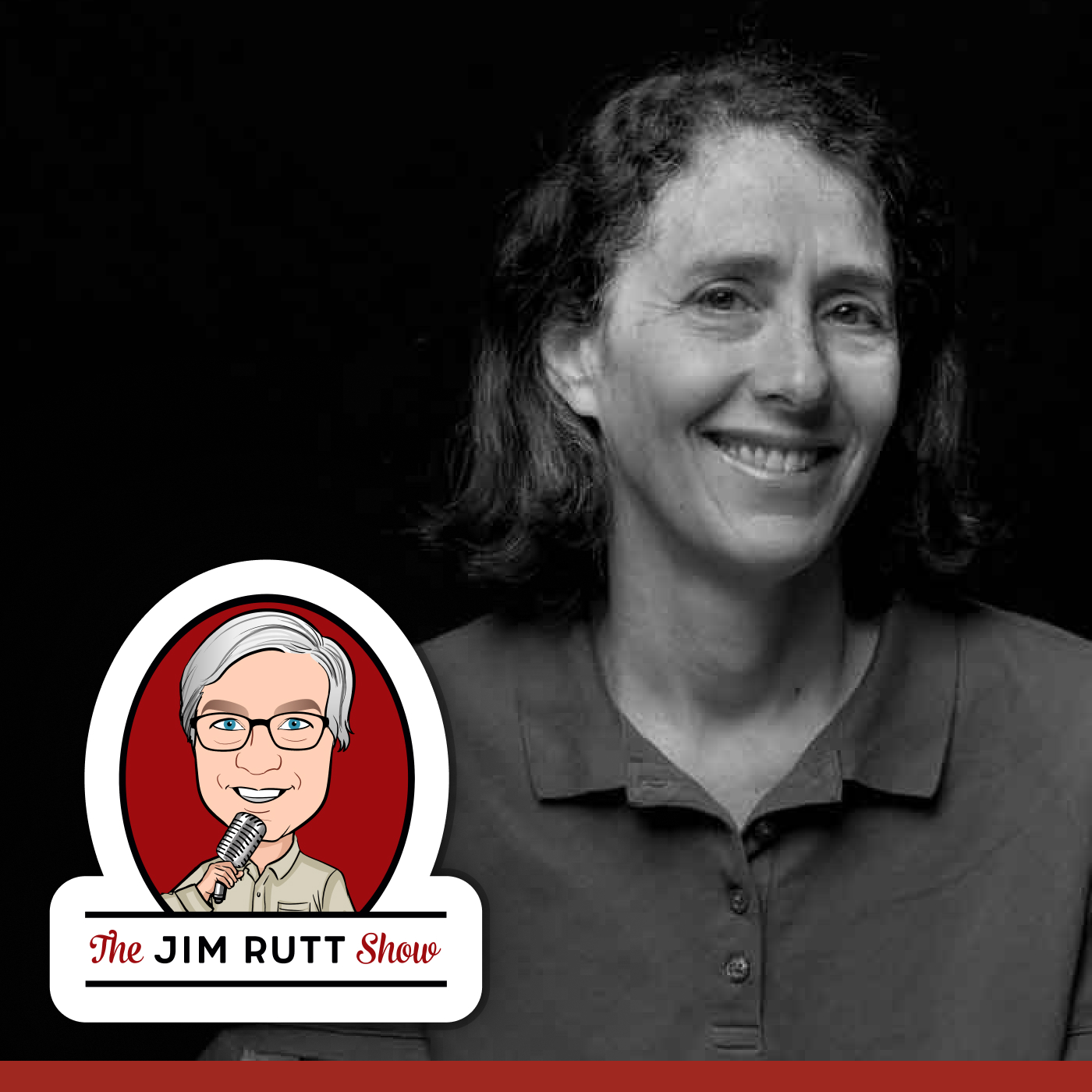
S1 Ep 33EP33 Melanie Mitchell on the Elements of AI
Melanie Mitchell & Jim talk about the many approaches to creating AI, hype cycles, self-driving cars, what can be learned from human intelligence, and much more... Professor & Author Melanie Mitchell and Jim have a wide-ranging talk about her work in the field of Artificial Intelligence (AI). They explore the differences between deep learning, symbolic techniques & hybrid systems, AI springs/winters & hype cycles, self-driving cars, strong (general) vs weak (narrow) intelligence, the black-box element of human & artificial intelligence, limitations of neural nets, the potential of evolutionary approaches to AI, embodied & social cognition, whether consciousness is needed for intelligence, reinforcement learning, common sense & understanding in AI, the value of metaphors & analogies in intelligence, and much more. Episode Transcript Mentions & Recommendations Melanie’s Book, Introduction to Genetic Algorithms Complexity Explorer Courses Melanie’s Book, Artificial Intelligence: A Guide for Thinking Humans Rod Brooks’ Twitter Thread on Evolutionary AI The Feeling of What Happens by António Damásio The Cyc Platform Gödel, Escher, Bach by Douglas Hofstadter Metaphors We Live By George Lakoff Melanie's Book, Complexity: A Guided Tour Melanie’s Recommended Papers on Analogy & Metaphor Papers on Analogy and Similarity, The Copycat project, Seeing the Meaning, Deep Visual Analogy-Making, Beyond imitation, Visalogy Melanie Mitchell is Professor of Computer Science at Portland State University, and External Professor and Co-Chair of the Science Board at the Santa Fe Institute. Mitchell has also held faculty or professional positions at the University of Michigan, Los Alamos National Laboratory, and the OGI School of Science and Engineering. She is the author or editor of seven books and numerous scholarly papers in the fields of artificial intelligence, cognitive science, and complex systems, including her latest, Artificial Intelligence: A Guide for Thinking Humans.
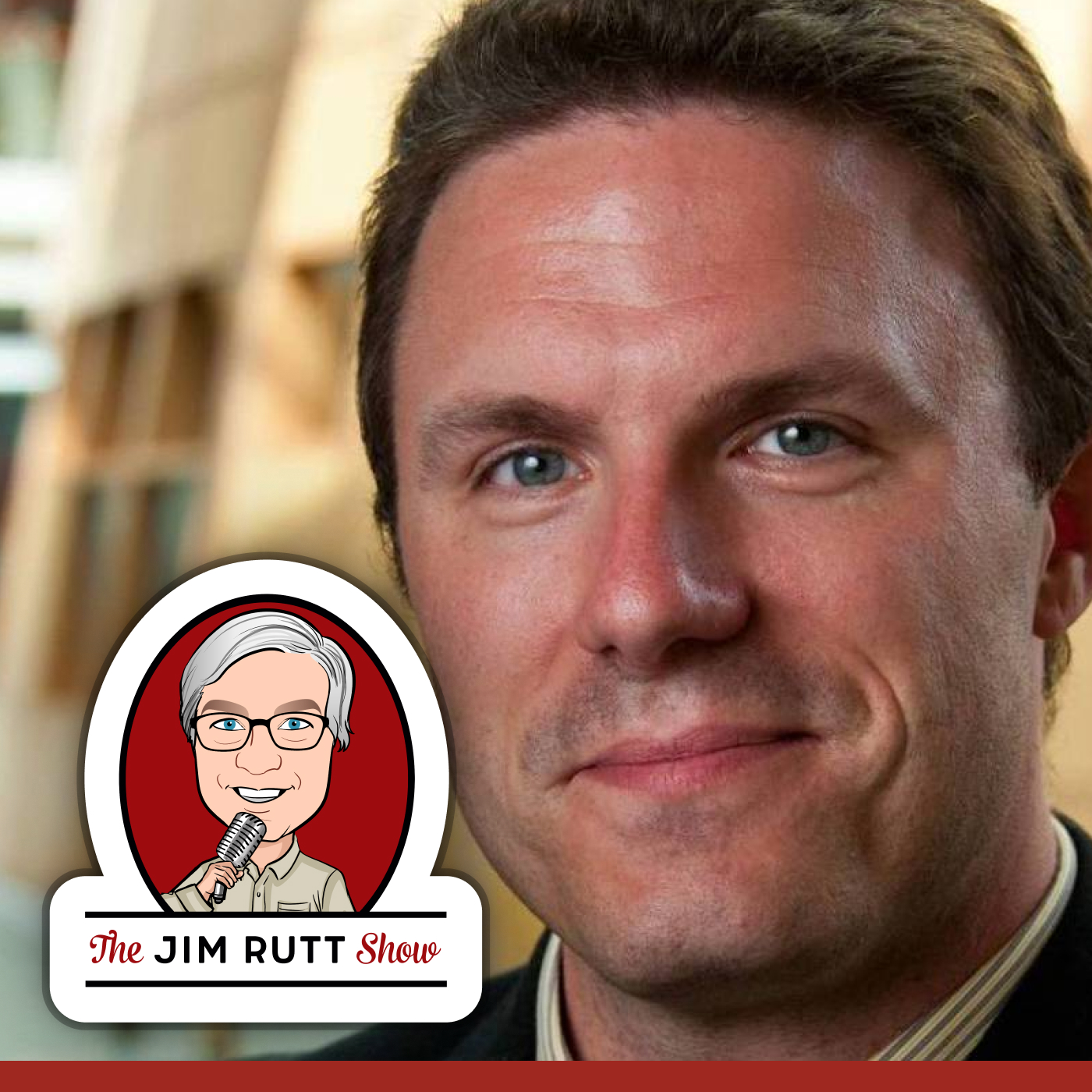
S1 Ep 32EP32 Jason Brennan on Irrational Democracy & Academia
Author & Professor Jason Brennan talks with Jim about teaching business school, libertarianism, poor incentives/outcomes in democracy & academia, and much more... Author & Research Professor Jason Brennan talks with Jim about teaching in business school after studying philosophy, what a bleeding heart libertarian is, the ignorance & irrationality of voters, how well group identity predicts personal values, whether political engagement leads to rational politics, political discrimination, social signaling, epistocracy & other alternatives to democracy, what course evaluations actually measure in academia, grading inconsistencies & their unintended outcomes, college advertising & tuition costs, the moral grandstanding of tenure, and much more. Episode Transcript Mentions & Recommendations Jason’s book, Against Democracy Jason’s book, Cracks in the Ivory Tower Jason’s posts on the Bleeding Heart Libertarians Blog Adam Smith’s, The Theory of Moral Sentiments Jim’s Letter.wiki with Max Borders, On Libertarianism & Anarchism Northwestern study, Nonvoters in America 2012 Christopher Achen’s book, Democracy for Realists Jason Brennan is Robert J. and Elizabeth Flanagan Family Professor of Strategy, Economics, Ethics, and Public Policy at the McDonough School of Business at Georgetown University. He is also Research Professor at the University of Arizona’s Freedom Center and Department of Political Economy and Moral Science. He specializes in politics, philosophy, and economics. Jason is the author of 10 books, including Cracks in the Ivory Tower, with Phil Magness; When All Else Fails: The Ethics of Resistance to State Injustice; and Against Democracy.
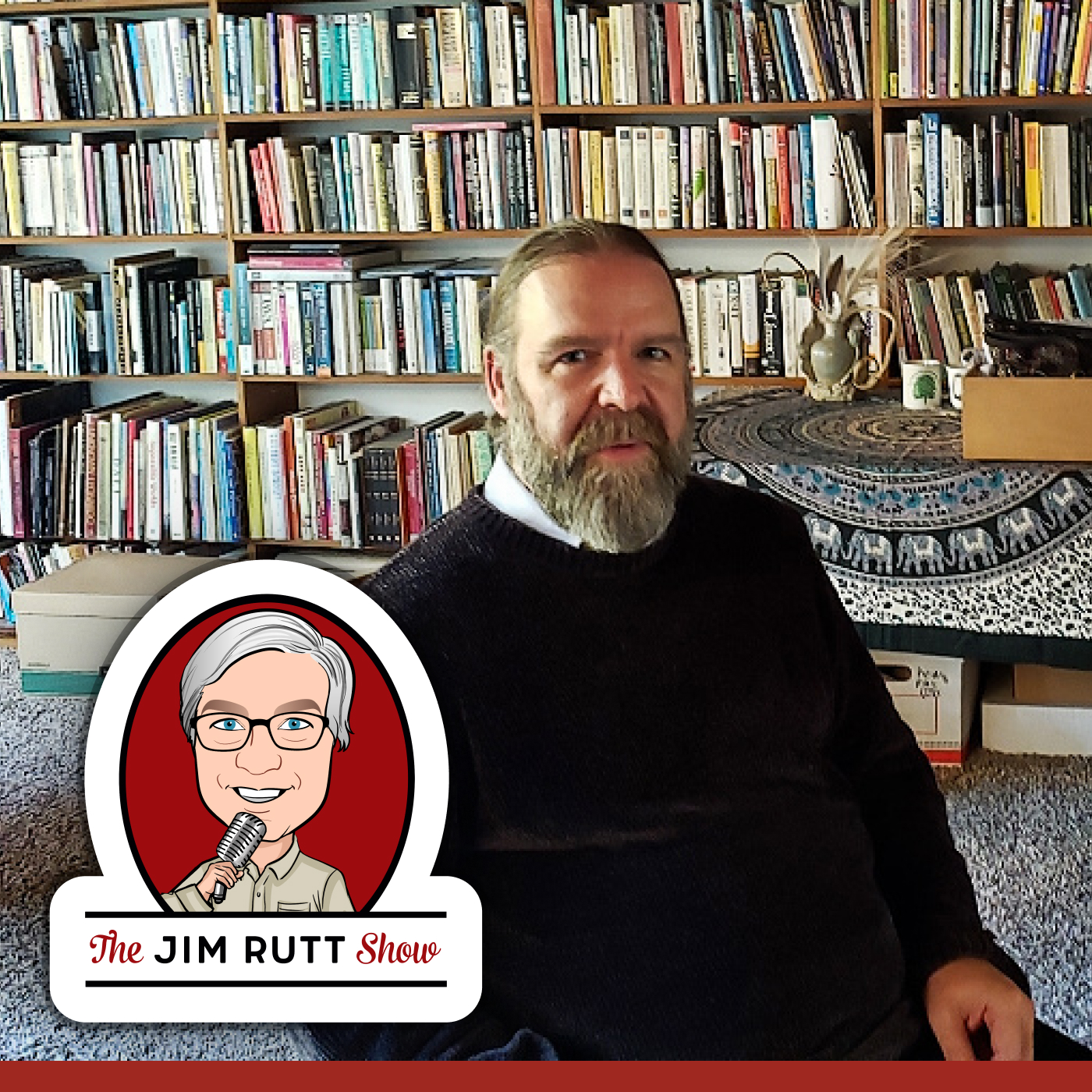
S1 Ep 31EP31 Forrest Landry on Building our Future
The multi-talented Forrest Landry talks with Jim about what motivates him, ethics & metaphysics, meaning & sense-making, collective action, collapse, and much more... Forrest Landry, philosopher, writer, researcher, scientist, engineer, craftsman, and teacher talks with Jim about his company (Magic-Flight), what motivates his work, how he defines ethics, metaphysics & its connection to realism, free will & choice, the nature of time, how he defines & utilizes meaning, value & purpose, interaction between complicated & complex systems, human/ecological sustainability, core dynamics of collective intelligence, the challenges of sense-making, choice-making & implementation, civilizational collapse, the Fermi paradox, and much more. Episode Transcript Mentions & Recommendations The Epistemic Sandwich EP5 Lee Smolin – Quantum Foundations and Einstein’s Unfinished Revolution EP11 Dave Snowden and Systems Thinking Center for Humane Technology Game B Forrest's TEDx, The Accident of Unconsciousness More about Forrest Forrest's paper, On The Nature of Human Assembly Forrest Landry is a philosopher, writer, researcher, scientist, engineer, craftsman, and teacher focused on metaphysics, the manner in which software applications, tools, and techniques influence the design and management of very large scale complex systems, and the thriving of all forms of life on this planet. Forrest is also the founder and CEO of Magic Flight, a third-generation master woodworker who found that he had a unique set of skills in large scale software systems design. Which led him to work in the production of several federal classified and unclassified systems, including various FBI investigative projects, TSC, IDW, DARPA, the Library of Congress Congressional Records System, and many others.
S1 Ep 30EP30 Nora Bateson on Complexity & the Transcontextual
ENora Bateson talks with Jim about her recent book, her father & grandfather’s academic impact, thinking transcontextually, Game B, warm data labs, and much more... Nora Bateson, award-winning filmmaker, writer, educator, and President of the International Bateson Institute talks with Jim about the work of the International Bateson Institute, her father (Gregory Bateson) & grandfather’s (William Bateson) academic histories & the impact they had on her work, complex systems, the dangers of mental monocropping, what it means to think transcontextually, cross-cultural collaboration & awareness, some of her observations on Swedish culture & the role of the state, conviviality in modern culture, the generational component of Game B, what’s emerging in her warm data labs, liminality, leadership as a Jazz solo, and much more. Episode Transcript Mentions & Recommendations Nora’s book, Small Arcs of Larger Circles Nora’s movie, An Ecology of Mind David Graeber’s book, Bullshit Jobs Nora Bateson is an award-winning filmmaker, writer and educator, as well as President of the International Bateson Institute, based in Sweden. Her work asks the question, “How we can improve our perception of the complexity we live within, so we may improve our interaction with the world?” An international lecturer, researcher and writer, Nora wrote, directed and produced the award-winning documentary, An Ecology of Mind, a portrait of her father, Gregory Bateson. Her work brings the fields of biology, cognition, art, anthropology, psychology, and information technology together into a study of the patterns in ecology of living systems. Her book, Small Arcs of Larger Circles, is a revolutionary personal approach to the study of systems and complexity.

S1 Ep 29EP29 Michael Mauboussin on The Success Equation
Michael Mauboussin talks with Jim about his latest book, SFI, investment, using variance & complexity, luck & skill, bias, IQ vs RQ, forecasting, and more... Michael Mauboussin, Director of Research at BlueMountain Capital Management, Author, and Adjunct Professor at Columbia University talks with Jim about how he came to be the Chairman of the Board at the Santa Fe Institute, his perspective on investing & its challenges, the Colonel Blotto game, using variance & complexity in game theory, defining luck & skill and their relative importance in several domains, outcome bias, the importance of understanding sample size, intelligence quotient (IQ) vs. rationality quotient (RQ), bad and good forecasting by experts, increasing the variance when you are behind, looking for weak games, how age impacts skill in people & organizations, deliberate practice, time management, and more. Episode Transcript Mentions & Recommendations Michael’s new book, The Success Equation Michael’s paper, Who Is On The Other Side Is There Anything Good about Men? By Roy F. Baumeister Success Equation Simulation: Polya Urn Model Thinking in Bets by Annie Duke Narrative Economics by Robert J. Shiller Superforecasting by Philip E. Tetlock Expert Political Judgment by Philip E. Tetlock Full House by Stephen Jay Gould The Sports Gene by David Epstein Range by David Epstein Michael’s Website Michael J. Mauboussin is Director of Research at BlueMountain Capital Management. Prior to joining BlueMountain, he was Head of Global Financial Strategies at Credit Suisse and Chief Investment Strategist at Legg Mason Capital Management. He is also the author of three books, including More Than You Know: Finding Financial Wisdom in Unconventional Places, named in the The 100 Best Business Books of All Time by 800-CEO-Read. Michael has been an adjunct professor of finance at Columbia Business School since 1993, and received the Dean's Award for Teaching Excellence in 2009 and 2016. He is also chairman of the board of trustees of the Santa Fe Institute, a leading center for multi-disciplinary research in complex systems theory.

S1 Ep 28EP28 Mark Burgess on Promise Theory, AI & Spacetime
EAuthor, founder & scientist Mark Burgess talks with Jim about his career, physics skill set, CFEngine, Promise Theory, AI, free will, spacetime, and much more... Author, founder & scientist Mark Burgess talks with Jim about why he made the switch from theoretical physics to computer science, the widely applicable skill set of physicists, what led him to create CFEngine, computer immunology, how he came up with Promise Theory & its connection to physics & network science, the relativity of systems, consistency in large-scale systems, what physics can teach computer science about uncertainty, the limits of Turing machines & deep learning, free will, Promise Theory’s connection to agile & Daniel Mezick’s work, dynamic subordination, logic vs emotion, spacetime, quantum gravity, how scale presents interesting solutions to the Fermi Paradox, and much more. Episode Transcript Mentions & Recommendations Mark’s Website Kubernetes, Chef, & Docker Mark's Promise Theory Geoffrey West EP27 Jamie Wheal on Flow & the Future of Culture The Feeling of What Happens by António R. Damásio Mark’s Smart Spacetime EP5 Lee Smolin on Quantum Foundations & Einstein’s Unfinished Revolution The Hidden Life of Trees by Peter Wohlleben Star Trek Episode, Wink of an Eye Mark Burgess is a theoretician and practitioner in the area of information systems, whose work has focused largely on distributed information infrastructure. He is known particularly for his work on Configuration Management and Promise Theory. He was the principal Founder of CFEngine, ChiTek-i, and now co-founder and chief innovation officer at Aljabr Inc. Mark is emeritus professor of Network and System Administration from Oslo University College. He is the author of numerous books, articles, and papers on topics from physics, Network and System Administration, to fiction. He also writes a blog on issues of science and IT industry concerns. Today, he works as an advisor on science and technology matters all over the world.

S1 Ep 27EP27 Jamie Wheal on Flow & the Future of Culture
EJamie Wheal talks to Jim about flow, intrinsic & extrinsic motivation, group flow, GameB, the future of ecstatic state tech, cult leaders, and much more... Author Jamie Wheal talks with Jim about working with the Navy SEALs, what characterizes flow, intrinsic vs extrinsic motivation, the Eleusinian Mysteries, Plato, Aristotle & Pythagoras, soft-leadership & dynamic hierarchies, group flow, if courage & integrity can be taught & what that means for Game B, coherent pluralism, spiritual bypassing, the dangers & promises of ecstatic state technology, the realities of collapse, what we might learn from the Amish, cult leaders & the dynamics of their power, and more. Episode Transcript Mentions & Recommendations Stealing Fire Flow Genome Project The Flow Profile Jim’s Interview on Zion 2.0 Hierarchy in the Forest by Christopher Boehm Jim’s article, In Search of the 5th Attractor Article In-Group Empathy Paper Devil's Playground Jamie Wheal is the author of the global bestseller and Pulitzer Prize nominated Stealing Fire: How Silicon Valley, Navy SEALs and Maverick Scientists are Revolutionizing the Way We Live and Work and the founder of the Flow Genome Project, an international organization dedicated to the research and training of ultimate human performance. Since founding the organization in 2011, it has gone on to become the leading voice of evidence-based peak performance in the world, counting award-winning academics, legendary professional athletes, special operations commanders, and Fortune 500 business leaders among the hundreds of thousands of people in its global community.
S1 Ep 26EP26 Jordan Hall on the Game B Emergence
EJordan Hall & Jim outline Game B's advantage over Game A, explore embodied wisdom, meaningfulness, Game B transitions & life, parasitizing Game A, and much more... Jordan Hall and Jim have another wide-ranging conversation about Game B. They start with a quick overview of Game A and then move on to talk about the emerging collaboration of Game B & how it happened, its competitive advantage over Game A, liminal spaces, embodied wisdom, sovereignty & sense-making, the pre-B phase, changing our lives to be Game B oriented, meaningfulness, the transition to Game B, parenting & working in Game B, the importance of conviviality & multidimensional health, policing & justice in Game B, the dynamics of coherence, the hard problem of scaling Dunbar’s number, parasitizing Game A to boot up Game B, the role of locality & remote collaboration, the value of failure, and more. Episode Transcript Mentions & Recommendations EP8 Jordan “Greenhall” Hall and Game B Neurohacker Collective Daniel Schmachtenberger Game B Google Doc John Vervaeke’s ‘Awakening from the Meaning Crisis’ Tools for Conviviality by Ivan Illich Joe Edelman Rally Point Alpha Guy Sengstock Jordan is the Co-founder and Executive Chairman of the Neurohacker Collective. He is now in his 17th year of building disruptive technology companies. Jordan’s interests in comics, science fiction, computers, and way too much TV led to a deep dive into contemporary philosophy (particularly the works of Gilles Deleuze and Manuel DeLanda), artificial intelligence and complex systems science, and then, as the Internet was exploding into the world, a few years at Harvard Law School where he spent time with Larry Lessig, Jonathan Zittrain and Cornel West examining the coevolution of human civilization and technology.

S1 Ep 25EP25 Gary Marcus on Rebooting AI
EAuthor & CEO Gary Marcus talks with Jim about his book, Rebooting AI, driverless cars, AI learning & intelligence, hybrid AI models & AI bias, and much more... Scientist, author & entrepreneur Gary Marcus talks with Jim about his latest book, Rebooting AI. In this wide-ranging conversation they cover the gullibility gap, the illusory progress gap, the robustness gap, driverless car progress & safety, how narrow AI is today, model building, the free-lunch theorem, nativism in animals & humans, how Jim’s experience with war games demonstrates the learning limitations of AI, Cyc & ConceptNet, symbolic algorithms, potential of graph neural nets, why Gary thinks hybrid models are the future of AI, challenges of evolutionary AI approaches, data mining & AI echo-chambers, AGI, and much more. Automated Episode Transcript Mentions & Recommendations Robust.AI What AI Can Learn From Romeo & Juliet NELL: Never-Ending Language Learning Solving Rubik’s Cube with a Robot Hand Ernest Davis Gary on Twitter Gary’s Website Gary Marcus is a scientist, best-selling author, and entrepreneur. He is Founder and CEO of Robust.AI, and was Founder and CEO of Geometric Intelligence, a machine learning company acquired by Uber in 2016. He is the author of five books, including The Algebraic Mind, Kluge, The Birth of the Mind, and The New York Times bestseller Guitar Zero, as well as editor of The Future of the Brain and The Norton Psychology Reader. He has published extensively in fields ranging from human and animal behavior to neuroscience, genetics, linguistics, evolutionary psychology, and artificial intelligence, often in leading journals such as Science and Nature, and is perhaps the youngest Professor Emeritus at NYU. His newest book, co-authored with Ernest Davis, Rebooting AI: Building Machines We Can Trust aims to shake up the field of artificial intelligence.
S1 Ep 24EP24 Bret Weinstein on Evolving Culture
EBret Weinstein & Jim talk about unsustainable culture, dangerous algorithms, GameB, complexity, trade-offs, social media, today's left, Darwinian religion, and much more... Bret Weinstein and Jim talk about the evolutionary & game-theoretic dynamics that have led humanity to an unsustainable place, the impact of today’s algorithms & how they’re connected to human evolution, the recent shift of corporate values, how Game B should view complex systems, design vs. navigation, trade-offs from a theoretical biology perspective, approaches to keeping online collaboration & networks net-positive, how the political left has changed & how Jim & Bret relate to it, the biological perspective & its connection to the is–ought problem, the role of gender in today’s culture, new atheism, and the implications of seeing religion as a result of Darwinian evolution. Episode Transcript Mentions & Recommendations Haber–Bosch process Daniel Schmachtenberger Well.com Rally Point Alpha The Madness of Crowds by Douglas Murray Breaking the Spell by Daniel Dennett Bret's DarkHorse Podcast Bret’s YouTube Channel Bret’s Website Bret on Twitter Bret’s Patreon Page Bret Weinstein has spent two decades exploring the frontiers of evolutionary biology. He is currently working to uncover the evolutionary meaning of large scale patterns in human history, and seeking a game-theoretically stable path forward for humanity. His scholarly research is focused on evolutionary trade-offs. He has worked on the evolution of senescence and cancer, species diversity gradients, and the adaptive significance of human morality and religion. He has written for The Wall Street Journal and testified to the U.S. Congress regarding questions of freedom of expression on college campuses. He is the host of Bret Weinstein’s DarkHorse Podcast.

S1 Ep 23EP23 Jeff Gomez on Narrative & Cultural Change
Jim talks with CEO Jeff Gomez about working on movies, games & media, transmedia storytelling, fandom, working with the US gov, propaganda, Game B, and much more... CEO Jeff Gomez and Jim have a wide-ranging talk about Jeff’s work with massive movies like Pirates of the Caribbean, his work with transmedia storytelling & worldbuilding, how nerdy Jim really is, how narrative & story differ & the role the audience plays, fandom, the perennial Star Wars vs Star Trek question, the far reaches of fan fiction, Jeff’s work in Collective Journey & its broader connection to the internet & politics, the hero’s journey & its ‘Hollywood’ization’, how Jeff’s interest in narrative led him to work on transmedia & geopolitics with the Department of Defence & other government agencies, understanding & fighting malicious cultural propaganda, the connection between Putin & Trump/Bannon strategy, Extinction Rebellion, speculation about the future of Gen Z & tribalism, social coherence, Jeff’s advice for the Game B community about using narrative, personal development & media literacy, and online vs in-person relationships & collaboration. Episode Transcript Mentions & Recommendations Starlight Runner Jordan Hall Jeff on Twitter Jeff on LinkedIn Jeff on Facebook Jeff Gomez, CEO of Starlight Runner, is a leading expert in the fields of brand narrative, story world development, creative franchise design, and transmedia storytelling. He specializes in the expansion of entertainment properties, premium brands, and socio-political themes into highly successful multi-platform communications and international campaigns. As a producer accredited by the Producers Guild of America, Jeff also develops the story worlds of films, TV shows, videogames, toys, books, comics, apps, virtual reality projects, and theme park attractions. Jeff’s pop culture work has impacted such blockbuster properties as Disney’s Pirates of the Caribbean, James Cameron’s Avatar, Hasbro’s Transformers, Sony Pictures’ Spider-Man and Men in Black, Microsoft’s Halo, and Nickelodeon’s Teenage Mutant Ninja Turtles.

S1 Ep 22EP22 Sara Kindsfater-Yerkes on the Evolution of Business
Consultant Sara Kindsfater-Yerkes & Jim talk about leadership today, HR teams, embracing change, team engagement, honesty, gender dynamics, being offended, and much more... Business Consultant Sara Kindsfater-Yerkes and Jim start this episode by reflecting on working together in their earlier careers. They then go on to talk about today’s multi-generational workforce, commonalities of Gen Z & Boomers, workplace mindsets, recruitment strategies & HR teams, shifts in today’s leadership approaches, hierarchical vs flat organizations, building company cultures that embrace change, nourishing employee engagement & intellectual honesty, the James Demore & Uber scandals, the Me Too Movement, women & men in the workforce, the word “fuck” as an intensifier, and the risks & rewards of being potentially offensive in the workplace. Episode Transcript Mentions & Recommendations bluSKY Strategy Vohtr Sara’s Email Sara Kindsfater-Yerkes is a hands-on expert in transforming cultures, guiding strategic change, and developing leaders and teams. As a Consultant and Coach at bluSKY Strategy, a company she founded, Sara works with leaders who want to infuse their organizations with startup innovation, a customer-first mindset, and operational agility. Her clients span the private sector and federal agencies — coaching HR and IT leaders in managing the impact of emerging technology, building a best in class workforce, implementing lean thinking, and creating cultures of change and agility.
S1 Ep 21EP21 Roman Yampolskiy on the Outer Limits of AI
AI expert Roman Yampolskiy & Jim have a wide-ranging talk about simulation theory, types of intelligence, AI research & safety, the singularity, and much more... This conversation with Jim and Dr. Roman V. Yampolskiy–author, tenured associate professor, founding director of Cyber Security Lab–starts by covering the vast variance of possible minds. They then go on to talk about Boltzmann brains, the implications of an infinite universe, simulation theory’s limits & if we could find its glitches, symbolic vs deep learning & the role of language understanding in AI, the Turing test, limitations of human intelligence, limits of AI safety, the singularity & if it would happen fast or slow, the paper clip maximizer, impacts of narrow AI, pros & cons of open-source AI development, game theory applied to AI, AGI timeframes, and the Fermi paradox. Episode Transcript Mentions & Recommendations The Space of Possible Mind Designs Types of Boltzmann Brains Glitch in the Matrix: Urban Legend or Evidence of the Simulation? Leakproofing the Singularity Predicting future AI failures from historic examples Open AI Artificial Intelligence Safety and Security Artificial Superintelligence: A Futuristic Approach Roman’s Google Scholar Page Dr. Roman V. Yampolskiy is a Tenured Associate Professor in the department of Computer Engineering and Computer Science at the Speed School of Engineering, University of Louisville. He is the founding and current director of the Cyber Security Lab and an author of many books including Artificial Superintelligence: a Futuristic Approach. Dr. Yampolskiy is a Senior member of IEEE and AGI; Member of Kentucky Academy of Science, and Research Advisor for MIRI and Associate of GCRI. His main areas of interest are AI Safety, Artificial Intelligence, Behavioral Biometrics, Cybersecurity, Digital Forensics, Games, Genetic Algorithms, and Pattern Recognition.

S1 Ep 20EP20 Pamela McCorduck on Her Life & Times with AI
Author Pamela McCorduck talks to Jim about her new book, the humanities & sciences divide, her friendships with AI pioneers, risks of AI, feminism, and more... Author Pamela McCorduck talks with Jim about themes of her latest book, This Could Be Important: My Life and Times with the Artificial Intelligentsia. They talk about C.P. Snow’s Two Cultures thesis that explores the divide between the humanities & sciences, Pamela’s professional & personal friendships with AI pioneers (Julian Feldman, Allen Newell, Marvin Minsky, Ed Feigenbaum, Raj Reddy & Herb Simon), how language is related to AI, symbolic vs. deep learning, drinking sherry with Herb Simon, how her writings on AI were perceived by publishers, scientists & creatives, Arno Penzias’ strong views on AI, potential risks & rewards of future AI, computational art, and the progress of feminism in academia & culture at large. Episode Transcript Mentions & Recommendations Pamela’s The Fifth Generation: Artificial Intelligence & Japan's Computer Challenge to the World C.P. Snow’s The Two Cultures Pamela’s Machines Who Think Pamela’s Aaron’s Code Max Tegmark’s Life 3.0: Being Human in the Age of Artificial Intelligence Pamela McCorduck is the author of eleven published books, four of them novels, seven of them non-fiction, mainly about aspects of artificial intelligence. She’d first met AI when she was an undergraduate English major at Berkeley, and became steeped in the culture at Stanford and Carnegie Mellon Universities. In 1979 she published the first modern history of artificial intelligence, Machines Who Think, a book said to have influenced a generation of young AI researchers. Her latest book, This Could Be Important: My Life and Times with the Artificial Intelligentsia, is memoir, social history, and group biography of the founding fathers of AI, and describes the friendships, professional and personal, that laid the foundation for her continuing fascination with AI. McCorduck lived for 40 years in New York City until family called her back to California where she now lives in the San Francisco Bay Area.
S1 Ep 19EP19 John Robb on Asymmetric & Networked Conflict & Strategy
Author, inventor, tech analyst, engineer, and military pilot John Robb talks to Jim about drone attacks, internet-age networks, geopolitics, AGI, and much more... This conversation with Jim and John Robb–author, inventor, entrepreneur, technology analyst, astro engineer, and military pilot–starts by covering the impact of the recent drone attack on a Saudi fuel processing center, and the current US political situation. They then go on to talk about how John compares resistance and the insurgency networks, the dynamics of tribes, institutions & markets in this internet age, the role open-source dynamics play, coherence vs. corruption, how Extinction Rebellion & Game B fit in this picture, the neo-fascism of China & its impact on corporations, the Honk Kong protests, unleashing intelligence agencies on domestic terrorism, how autonomous robotics could impact future military engagements, and much more. Episode Transcript Mentions & Recommendations John’s Global Guerrillas Report George Colony of Forrester September Special GG Report: Disrupting Saudi Arabia Rally Point Alpha Facebook Page Jordan Hall’s Situational Assessment 2017: Trump Edition Article The_Donald on Reddit Peter Turchin David Ronfeldt Societal Evolution Framework Bruce Sterling’s Short Story, Maneki Neko Daniel Schmachtenberger Jim's article, In Search of the 5th Attractor Article John is an author, inventor, entrepreneur, technology analyst, astro engineer, and military pilot. He's started numerous successful technology companies, including one in the financial sector that sold for $295 million and one that pioneered the software we currently see in use at Facebook and Twitter. John's insight on technology and governance has appeared on the BBC, Fox News, National Public Radio, CNBC, The Economist, The New York Times, The Wall Street Journal, and BusinessWeek. John served as a pilot in a tier-one counter-terrorism unit that worked alongside Delta and Seal Team 6. He wrote the book Brave New War on the future of national security, and has advised the Joint Chiefs of Staff, NSA, DoD, CIA, and the House Armed Services Committee.

S1 Ep 18EP18 Stuart Kauffman on Complexity, Biology & T.A.P.
Professor, MacArthur Fellow & author Stuart Kauffman talks with Jim about complexity, biology & the origins of life, social/technical evolution, and much more... Professor, MacArthur Fellow and author Stuart Kauffman talks with Jim about the major themes of his career: complexity, auto-catalytic chemical sets, protocells and the origins of life, the problem of the error catastrophe, human evolution, social and technical evolution, the Fermi Paradox and much more. Stuart also introduces his new T.A.P. equation and his view that it drives creativity and complexity across many scales. Episode Transcript Mentions & Recommendations Stuart's A World Beyond Physics: The Emergence and Evolution of Life Stuart's The Origins of Order: Self-Organization and Selection in Evolution Stuart's At Home in the Universe: The Search for the Laws of Self-Organization and Complexity Thomas Piketty’s Capital in the Twenty-First Century Brian Arthur’s The Nature of Technology: What It Is and How It Evolves Article on Autocatalytic Sets and the Origin of Life by Mike Steel, Wim Hordijk & Jotun Hein Stuart Kauffman is a professor at the University of Calgary with a shared appointment between biological sciences and physics and astronomy. He is also the leader of the Institute for Biocomplexity and Informatics (IBI) which conducts leading-edge interdisciplinary research in systems biology. Dr. Kauffman is also an emeritus professor of biochemistry at the University of Pennsylvania, a MacArthur Fellow and an external professor at the Santa Fe Institute. Originally a medical doctor, Dr. Kauffman's primary work has been as a theoretical biologist studying the origin of life and molecular organization. Thirty-five years ago, he developed the Kauffman models, which are random networks exhibiting a kind of self-organization that he terms "order for free." Dr. Kauffman was the founding general partner and chief scientific officer of The Bios Group, a company (acquired in 2003 by NuTech Solutions) that applies the science of complexity to business management problems. He is the author of The Origins of Order, At Home in the Universe: The Search for the Laws of Self-Organization, Investigations, and Reinventing the Sacred: A New View of Science, Reason, and Religion.
S1 Ep 17EP17 – Bonnitta Roy on Process Thinking and Complexity
Bonnitta Roy teaches insight practices for individuals who are developing meta-cognitive skills, and hosts collective insight retreats for groups interested in breaking away from limiting patterns of thought. She teaches a masters course in consciousness studies and transpersonal psychology at the Graduate Institute. Her teaching highlights the embodied, affective and perceptual aspects of the core self, and the non-egoic potentials from which subtle sensing, intuition and insight emerge. Through her company, APP-AI, Bonnitta is developing applications that can visualize changing patterns as teams work through complex problems. Her research shows how simple but powerful protocols that underlie these patterns can be used to represent various dispositional states of human systems. Bonnitta is the author of the popular Medium publication Our Future at Work. She is an associate editor of Integral Review where you can also find her articles on process approaches to consciousness, perception, and metaphysics. Introduction to Bonnitta Roy and Process Thinking 10 minutes Consciousness, Causality + Complexity 7 minutes Process Philosophy, Course Graining + Duration 23 minutes Numinous Causality + The Evolution of the Universe 18 minutes Language, Mycorrhizae + Natural Farming Techniques 11 minutes Collapse, Migration + Game B 27 minutes Transcripts for The Jim Rutt Show featuring Bonnitta Roy Keynames for EP17: Jim Rutt, Santa Fe Institute, Bonnitta Roy, Integral Review, Our Future at Work, Alfred North Whitehead, David Ray Griffin, Charles Hartshorne, Albert Einstein, Isaac Newton, Pierre-Simon Laplace, Edward Lorenz, Stephen J. Gould, Stuart Kauffman, Harold J. Morowitz, "The Origin and Nature of Life on Earth", Lee Smolin, Peter N. Peregrine, David Krakauer, Daniel Schmachtenberger, Peter Byck, "One Hundred Thousand Beating Hearts", Joel Salatin, Polyface Farm, Jared Diamond, Thomas Malthus, Carl Friedrich Gauss, Mark Blyth, Christopher Alexander, Robin Dunbar, Jordan Hall, Jordan Greenhall Keywords for EP17: Jim Rutt, Bonnitta Roy, complexity science, process thinking, insight practices, consciousness, metaphysics, religion, complex philosophy, process philosophy, reification, Newtonian physics, model building, pattern recognition, causality, complexity, organizational design, deterministic chaos, determinism, Lorenz attractor, three-body problem, emergence, evolution, developmental fields, course graining, duration, cosmology, astrophysics, Big Bang, temporal vs. spatial, network theory, functional relationships, DNA, RNA, evolutionary computation, panspermea, numinous causality, evolution of the universe, energy flux, evolution of language, Cambrian explosion, evolution of cognition, evolution of consciousness, Singularity, mycorrhizae, emergent patterns, stack of dependencies, population growth, population decline, Malthusian barrier, Gaussian function, Black Death, coherence, decoherence, migration, climate change, decomposability, living structure, pattern language, hunter gatherer, Dunbar number, fissioning, Game B, fake needs, conviviality, design for action

S1 Ep 16EP16 Anaconda CTO Peter Wang on The Distributed Internet
Peter Wang is Chief Technology Officer and Co-Founder of Anaconda, the leading Python tools and data analytics company. Peter holds a B.A. in Physics from Cornell University and has been developing applications professionally using Python since 2001. Before co-founding Anaconda (formerly Continuum Analytics) in 2011, Peter spent seven years designing and developing applications for a variety of companies, including investment bankers, high-frequency trading firms, oil companies, and others. Peter also developed Chaco, an open-source, Python-based toolkit for interactive data visualization. Introduction to Peter Wang, Anaconda + New Python Tools 20 minutes Deep Fakes, Virtuality + Speciation 15 minutes Gatekeepers, Sensemaking + The Cycle of Glut 21 minutes Nonrivalrous Economics + Building a Better Facebook 7 minutes Beaker Browser, Dat Project + The Distributed Internet 21 minutes Transcripts for The Jim Rutt Show featuring Peter Wang Keynames for EP16: Jim Rutt, Santa Fe Institute, Peter Wang, Anaconda, Python, TensorFlow, RAPIDS, Nvidia, Numba, Dask, PyTorch, Chainer, CuPy, PyData, StackOverflow, Github, Indeed, LinkedIn, David Krakauer, Neil Postman, "Amusing Ourselves to Death", Eric Weinstein, Donald Trump, WordPress, Jacques Ellul, The Technological Society", Facebook, Netflix, Meetup.com, John Vervaeke, Joe Edelman, Emerge Podcast, Jordan Hall, Robin Dunbar, NumPy, Pandas, Matplotlib, Markus Persson, Notch, Minecraft, Will Wright, SimCity, Peter Thiel, Uber, Intel, Sun NeWS, Daniel Schmachtenberger, Twitter, Wikipedia, Jupyter Notebook, Facebook Libra, Ralph Merkle, Dropbox, Beaker Browser, beakerbrowser.com, Dat Project, datproject.com, Slack Keywords for EP16: Jim Rutt, Peter Wang, Anaconda, Python, data analytics, scientific computing, web technologies, computer programming, software development, vector computing, computer languages, open source, python version three, deep learning, machine learning, deep learning, artificial intelligence, AI, visualization, tensor wrappers, gift economy, code sharing, curation, authentication, deep fake, malware, generative adversarial networks, GANs, speciation, Facebook, weak link vs. strong link, Five Star Movement, Game B, mediation, curation, gatekeepers, sensemaking, the enlightenment, trust, Dunbar number, Unix, TCP-IP, ACTP, HTTP, OpenSSL, web rings, heartbleed bug, Java, nonrivalrous economics, intellectual property, copyright, client/server, peer-to-peer, distributed internet, distributed web, IPFS, CRDT, Merkle chain, file sharing

S1 Ep 15EP15 Futurist David Brin on The Case for Optimism
David Brin is best-known for shining light — plausibly and entertainingly — on technology, society, and countless challenges confronting our rambunctious civilization. His bestselling novels include The Postman (filmed in 1997) plus explorations of our near-future in Earth and Existence. Other novels are translated into over 25 languages. His short stories explore vividly speculative ideas. Brin's nonfiction book The Transparent Society won the American Library Association's Freedom of Speech Award for exploring 21st century concerns about security, secrecy, accountability and privacy. As a scientist, tech-consultant and world-known author, he speaks, advises, and writes widely on topics from national defense and homeland security to astronomy and space exploration, SETI and nanotechnology, future/prediction, creativity, and philanthropy. Urban Developer Magazine named him one of four World's Best Futurists, and he was cited as one of the top 10 writers the AI elite follow. Introduction to David Brin and The Case for Optimism 20 minutes Is the World Improving? Zero Sum vs. Positive Sum 12 minutes Ritualized Combat in Science, Sports, Markets, Courts, Democracy 14 minutes "The Transparent Society" + The Surveillance Society 20 minutes The Fermi Paradox or "The Great Silence" + Uplift 7 minutes SETI, METI, NASA, NIAC + The Drake Equation 11 minutes Transcripts for The Jim Rutt Show featuring David Brin Keynames for EP15: Jim Rutt, David Brin, "The Postman", "The Transparent Society", "Existence", "Earth", "Chasing Shadows", "Elevation", "Star Wars on Trial", "The Loom of Thessaly", "Uplift War", Santa Fe Institute, Hugo Award, Nebula Award, Arnold J. Toynbee, Matthew Woodring Stover, Karl Popper, "The Open Society and Its Enemies", Adam Smith, "The Wealth of Nations", "The Theory of Moral Sentiments", Karl Marx, Franklin Delano Roosevelt, Newt Gingrich, Dennis Hastert, Bill Clinton, Steven Pinker, Peter Diamandis, XPRIZE, Dean Kamen, Elon Musk, Jeff Bezos, NASA, Fox News, Donald Trump, Junker, Republican Party, Democratic Party, Facebook, Gutenberg, Mark Zuckerberg, Paul Tsongas, Warren Rudman, Martin Luther King Jr., Bull Connor, China, Estonia, Charlie Brooker, "Black Mirror", Contrary Brin, davidbrin.blogspot.com, Electronic Frontier Foundation, EFF, American Civil Liberties Union, ACLU, Sierra Club, Robin Hanson, "The Circle", Enrico Fermi, Jill Tarter, SETI, Nick Bostrom, METI, Liu Cixin, "The Three-Body Problem", Frank Drake, Douglas Vakoch, Joe Norman, NASA Innovative and Advanced Concepts, NIAC Keywords for EP15: Jim Rutt, David Brin, science fiction, SciFi, artificial intelligence, AI, optimism, Hollywood, propaganda, Star Trek, Star Wars, Captain Kirk, competition, evolution, progress, cheating, rules, umpires, regulated capitalism, intense regulation, oligarchy, supply side, zero sum, positive sum, consumer surplus, abundance, XPRIZE, innovation, competition vs. cooperation, media evolution, ritualized combat, sensemaking, attention economy, Tea Party, feudalism, slavery, emancipation, land redistribution, entitlements, surveillance, law enforcement cameras, social credit, snitching, "sousveillance", facial recognition, radical transparency, The Enlightenment Experiment, The Fermi Paradox, The Drake Equation, extraterrestrial, aliens, The Precautionary Principle, extremophiles, space colonization, NIAC grants
S1 Ep 14EP14 Astrophysicist Jill Tarter on SETI and Technosignatures
Jill Tarter received her Bachelor of Engineering Physics Degree with Distinction from Cornell University and her Master’s Degree and a Ph.D. in Astronomy from the University of California, Berkeley. She served as Project Scientist for NASA’s SETI program, the High Resolution Microwave Survey, and has conducted numerous observational programs at radio observatories worldwide. Since the termination of funding for NASA’s SETI program in 1993, she has served in a leadership role to secure private funding to continue the exploratory science. Currently, she serves on the management board for the Allen Telescope Array, an innovative array of 350 (when fully realized) 6-m antennas at the Hat Creek Radio Observatory, it will simultaneously survey the radio universe for known and unexpected sources of astrophysical emissions, and speed up the search for radio emissions from other distant technologies by orders of magnitude. Jill is a frequent speaker for science teacher meetings and at museums and science centers, bringing her commitment to science and education to both teachers and the public. Many people are now familiar with her work as portrayed by Jodie Foster in the movie Contact. Introduction to Jill Tarter and the SETI Institute 9 minutes Building a Better Drake Equation 12 minutes The SETI Protocol and the False Positive of 1998 12 minutes Binary Stars and Adding Neural Networks to Signal Detection 6 minutes Extremophiles, Exoplanets, and Technosignatures 7 minutes Breakthrough Listen, Laser SETI, PANOSETI 6 minutes METI, Funding for SETI, What SETI Needs 13 minutes Transcripts for The Jim Rutt Show featuring Jill Tarter, Ph.D. Keynames for EP14: Jim Rutt, Jill Tarter, SETI Institute, SETI Research, SETI@home, NASA, "Contact", Santa Fe Institute, Enrico Fermi, Frank Drake, Stuart Kauffman, Philip Morrison, Lynn Margulis, International Academy of Astronautics, IAA, National Radio Astronomy Observatory, Bill Broad, The New York Times, Carl Sagan, Ann Druyan, Seth Shostak, SETIleague.org, Laurance Doyle, Arthur C. Clarke, Karl Schroeder, David Wolpert, Freeman Dyson, Robin Hanson, Jason Wright, Nikolai Kardashev, Breakthrough Listen, Parkes Observatory, Robert Ferguson, LaserSETI, PANOSETI, Stu Boyer, Buckminster Fuller, Gordon Moore, David Brin, Stephen Hawking, Steven Pinker Keywords for EP14: Jim Rutt, Jill Tarter, SETI, astronomy, astrophysics, Fermi Paradox, spectrometry, Drake Equation, aliens, extraterrestrials, outer space, planets, livable planets, exoplanets, stars, binary stars, Bayesian probability, Kepler space telescope, evolution, evolutionary theory, DNA, symbiosis, Greenbank, Project Phoenix, Rio Scale, Rio Scale 2.0, neural networks, machine learning, extremophiles, radiodurans, Dyson shells, Dyson sphere, Tabby's Star, technosignatures, biosignatures, megastructure, TRAPPIST-1, WISE Satellite, Kardashev Type, Allen Telescope Array, Square Kilometer Array, MeerKAT, FAST telescope, radio telescope, spigot telescope, TMT, LSST, Moore's Law, METI

S1 Ep 13EP13 Trent McConaghy: Blockchain, AI and DAOs
Trent McConaghy is the Founder of Ocean Protocol. He has 20 years of deep technology experience with a focus on machine learning, data visualization and user experience. He was a researcher at the Canadian Department of Defense and in 1999, he co-founded Analog Design Automation Inc. and was its CTO until its acquisition by Synopsys Inc. In 2004, he co-founded Solido Design Automation Inc., once again in the role of CTO. Trent has written two critically acclaimed books on machine learning, creativity and circuit design and has authored or co-authored more than 40 papers and patents. He lives in Berlin, Germany. Introduction to Trent McConaghy + Blockchain Technology 10 minutes The DCS Triangle, BigChainDB + Interplanetary File System (IPFS) 14 minutes Smart Contracts + Decentralized Finance 5 minutes Decentralized Autonomous Organizations (DAOs) 5 minutes The Ocean Protocol Platform for Decentralized Data Exchange 13 minutes MOBI and the Ontology Problem with Shared Data 5 minutes AI on Ocean Protocol + SingularityNet 3 minutes Blockchain Governance, Ethics + Token Engineering 13 minutes Transcripts for The Jim Rutt Show featuring Trent McConaghy Keynames for EP13: Jim Rutt, Trent McConaghy, Santa Fe Institute, Analog Design Automation, Ocean Protocol, Synopsys, Solido Design Automation, Siemens, "Why Nations Fail", James A. Robinson, Daron Acemoglu, Ascribe, "Code", Lawrence Lessig, Bitcoin, Ethereum, Polkadot, Algorand, Dfinity, Cosmos Network, Bitcoin Cash, Bitcoin SV, Litecoin, Zcash, Robin Dunbar, SingularityNet, Ben Goertzel, Ralph Merkle, David Krakauer, Facebook, Google, Amazon, IBM, Toyota, BMW, Docker, TensorFlow, Vint Cerf, Bob Kahn, AWS, EC2, Golem, David Holtzman, W. Brian Arthur, "The Nature of Technology" Keywords for EP13: Jim Rutt, Trent McConaghy, audio, podcast, interview, Ocean Protocol, blockchain, cryptocurrency, encryption, Bitcoin, Ethereum, DCS triangle, BigChainDB, decentralized autonomous organizations, DAO, Interplanetary File System, IPFS, AI, AGI, mobility open blockchain initiative, MOBI, smart contracts, Moore's Law, incentives, data security, data privacy, engineering ethics, IP, IP security, transparency, public ledger, DCS Triangle, Decentralized - Consistent - Scalable, MongoDB, load balancing, double spend problem, BigChainDB, permissionless, censorship resistant, Interplanetary File System, IPFS, CRDT, distributed databases, replication, Byzantine fault tolerant protocols, BFT protocols, sharding, Dunbar number, smart contracts, decentralized finance, peer-to-peer lending, Merkle tree, nanotechnology, antifragile, data economy, big data, big AI, tokens, autonomous vehicles, federated learning, ontology, TCP/IP vs. OSI, IP, copyright, IP blockchain, data extraction, AI algorithms, blockchain governance, hard fork, token engineering

S1 Ep 12EP12 Brian Nosek – Open Science and Reproducibility
Brian Nosek is Co-Founder and Executive Director of the Center for Open Science (COS) that operates the Open Science Framework. COS is enabling open and reproducible research practices worldwide. Brian is also a Professor in the Department of Psychology at the University of Virginia. He received his Ph.D. from Yale University in 2002. Brian co-founded Project Implicit, an multi-university collaboration for research and education investigating implicit cognition — thoughts and feelings that occur outside of awareness or control. Brian investigates the gap between values and practices, such as when behavior is influenced by factors other than one's intentions and goals. Research applications of this interest include implicit bias, decision-making, attitudes, ideology, morality, innovation, and barriers to change. Nosek applies this interest to improve the alignment between personal and organizational values and practices. Introduction to Brian Nosek and the Center for Open Science 9 minutes Registered Reports = Publication + Funding 23 minutes Open Science, Open Source, Open Data, Open Code 14 minutes Peer Review, Open Access, OSF Preprints 8 minutes The Reproducibility Project and Experimental Design 11 minutes The Implicit Association Test and Project Implicit 6 minutes Transcripts for The Jim Rutt Show featuring Brian Nosek Keynames for EP12: Jim Rutt, Brian Nosek, Santa Fe Institute, Center for Open Science, University of Virginia, "Nature", "Human Behavior", "eLIFE", GitHub, Open Science Framework, OSF, Thomson-Reuters, Westlaw, Transparency and Openness Promotion Guidelines, TOP Guidelines, National Institutes of Health, NIH, National Science Foundation, NSF, Rebecca Sachs, MIT Brain and Cognitive Science, Eli Broad, Broad Institute, Elsevier, Taylor & Francis, Wiley, OSF Preprints, arXiv, bioRxiv, PeerJ, CogPrints, Reproducibility Project, Charles R. Ebersole, Daniel J. Simons, Philip Zimbardo, Stanford prison experiment, Stanley Milgram, Milgram experiment, Project Implicit, Mahzarin Banaji, Anthony Greenwald, Blindspot Keywords for EP12: Jim Rutt, Brian Nosek, audio, podcast, interview, reproducibility, irreproducibility, confirmation, replication, verifiability, failure to replicate, selective reporting, science governance, scientific papers, scientific publications, scientific journals, open source, open science, open source science, open access publication, open data, open code, registered reports, psychological experiments, incentives, motivation, process transparency, information integrity, reward badges, peer review, publication bias, confirmation bias, research articles, research reports, TOP guidelines, medical research, scientific research, biomedical research, open source software, software code, citations, core operating facilities, FAIR data, ontology, data integration, paywalls, preprints, preprint server, experimental design, implicit bias, blindspot, implicit association test
S1 Ep 11EP11 Dave Snowden and Systems Thinking
Dave Snowden is Founder and Chief Scientific Officer of Cognitive Edge. His work is international in nature and covers government and industry looking at complex issues relating to strategy and organizational decision-making. He has pioneered a science-based approach to organizations drawing on anthropology, neuroscience, and complex adaptive systems theory. He is a popular and passionate keynote speaker on a range of subjects, and is well-known for his pragmatic cynicism and iconoclastic style. Dave holds visiting Chairs at the Universities of Pretoria and Hong Kong Polytechnic University as well as a visiting fellowship at the University of Warwick. He is a senior fellow at the Institute of Defense and Strategic Studies at Nanyang University and the Civil Service College in Singapore. Introduction to Dave Snowden and Cynefin 13 minutes Complicated vs. Complex + Apex Predator Theory 14 minutes Agent-Based Modeling + "Anticipatory Triggers" 9 minutes Artificial Intelligence + Chomsky Bashing 9 minutes Practical Applications for Managers 9 minutes Downward Causality + Red Team 6 minutes SenseMaker Software 6 minutes Mapping the Present 8 minutes Transcripts for The Jim Rutt Show featuring Dave Snowden Keynames this Episode: Jim Rutt, Dave Snowden, Santa Fe Institute, SFI, Cognitive Edge, Cynefin, SenseMaker, University of Pretoria, Hong Kong Polytechnic University, University of Warwick, IBM, DARPA, Harvard Business Review, HBR, Stuart Koffman, Walter Freeman, Ralph Stacey, Luis Lobo-Guerrero, David Chandler, René Thom, Clayton Christensen, Extinction Rebellion, Thomson-Reuters, Murray Gell-Man, Carl Friedrich Gauss, Vilfredo Pareto, Nassim Taleb, David Wolpert, Gary Marcus, Ben Goertzel, Josh Tenenbaum, Ogletree Deakins, Noam Chomsky, Jacques Lacan, Ayn Rand, "Nudge", "Thinking, Fast and Slow", Daniel Kahneman, Baxter, VECO, Rikolto, Myers-Briggs, Andy Clark Keywords this Episode: Jim Rutt, Dave Snowden, audio, podcast, interview, decision-making, strategy, design, knowledge management, business management, process engineering, management science, complexity, cognitive neuroscience, order, chaos, disorder, constrained, enabling constraints, competence induced failure, symbiosis, populism, Ebola, contagion, Apex Predator, global warming, Hong Kong protests, China strategy, coevolutionary fitness landscapes, agent-based model, simulation, correlation, causation, downward causality, Gaussian distribution, Pareto distribution, artificial intelligence, AI, general artificial intelligence, AGI, symbolic AI, deep learning, anticipatory triggers, counterterrorism, 9/11, No Free Lunch Theorem, Alpha Go, abstraction, epigenetics, intelligence, autism, evolutionary biology, philosophy of mind, behavioral economics, diversity, dissent, red team, narrative, business scan, employee survey, employee evaluation, employee review, assessments, 360-degree assessments, cultural evolution, agile development, Six Sigma, astrology