
The Jim Rutt Show
461 episodes — Page 6 of 10
S1 Ep 150EP 150 Jeremy Lent on the Web of Meaning
Jim has a wide-ranging talk with Jeremy Lent about his latest book, The Web of Meaning: Integrating Science and Traditional Wisdom to Find Our Place in the Universe... Jim has a wide-ranging talk with Jeremy Lent about his latest book, The Web of Meaning: Integrating Science and Traditional Wisdom to Find Our Place in the Universe. They discuss the dominant worldview in today's advanced economies, its lack of scientific basis, how worldviews shape the direction of history, myths of selfishness & separation, how viewing nature as resource leads to self-reinforcing feedback loops, money-on-money return, origins of capitalism & colonialism, the extractive mindset as a European development, a complex-systems approach to spirituality, "natural attractors" as spirits, discovering Taoism, wu wei & yu wei, animate vs conceptual consciousness, integrated consciousness, yu wei as multipolar trap, problems with using GDP as a metric, improving the relationship between I & self, a democracy of consciousness, contemplative & embodied practices as a way of moving the brain toward new attractors, false ideas about evolution e.g. the selfish gene, how cells began cooperating, how humans might do the same, changing our social operating system, stepping off the hedonic treadmill, fixing transnational corporations, and much more. Episode Transcript The Web of Meaning (website) The Patterning Instinct: A Cultural History of Humanity's Search for Meaning, by Jeremy Lent Before European Hegemony: The World System A.D. 1250-1350, by Janet L. Abu-Lughod JRS EP148 - Antonio Damasio on Feeling and Knowing My Stroke of Insight: A Brain Scientist's Personal Journey, by Jill Bolte Taylor Metaphors We Live By, by George Lakoff & Mark Johnson Neural Darwinism (Wikipedia) Selfish gene (Wikipedia) JRS EP116 - Doug Erwin on the Cambrian Explosion B corporation (Wikipedia) JRS - EP107 Tristan Harris on Our Social Dilemma Jeremy Lent is an author and speaker whose work investigates the underlying causes of our civilization’s existential crisis and explores pathways toward a life-affirming future. Born in London, England, Lent received a BA in English Literature from Cambridge University, an MBA from the University of Chicago, and was a former internet company CEO. He is founder of the nonprofit Liology Institute, dedicated to fostering an integrated worldview that could enable humanity to thrive sustainably on the Earth. He lives with his partner in Berkeley, California. Lent also writes topical articles exploring the deeper patterns of political and cultural developments at Patterns of Meaning.
Currents 047: Samuel Scarpino on the Epidemiology of Covid-19
EJim has a wide-ranging talk with Samuel Scarpino on Covid-19 epidemiology and disease surveillance... Jim has a wide-ranging talk with Samuel Scarpino on Covid-19 epidemiology and disease surveillance. They discuss some of the biggest surprises in Covid research since its beginning, the importance of understanding the evolutionary trajectory of the virus, the oscillation pattern of case rates, wastewater-based epidemiology, current bottlenecks in gene sequencing, the latest evidence about Omicron's contagiousness & severity, obstacles created by HIPAA protections, how to build a data system that will be ready for the next pandemic, the role of interdisciplinary complex-systems research centers, a disaster scenario that keeps Scarpino up at night, herd immunity, social contact data from phones & what it would cost to process it all, how much more the US spends on weather data & defense than on pandemic data, and much more. Episode Transcript Pandemic Prevention Institute - Omicron & Other Covid-19 Variants The Complex Alternative: Complexity Scientists on the COVID-19 Pandemic, ed. David Krakauer and Geoffrey West Transmission: SFI insights into COVID-19 Samuel V. Scarpino, Ph.D. is the Managing Director of Pathogen Surveillance at The Rockefeller Foundation's Pandemic Prevention Institute. In addition, Dr. Scarpino is an Affiliate Assistant Professor in the Department of Physics and holds appointments in the Network Science Institute, Institute for Experiential AI, Khoury College of Computer Sciences, Global Resilience Institute, and Roux Institute at Northeastern University. Scarpino has 10+ years of experience translating research into decision support and data science/ML tools across diverse sectors from public health and clinical medicine to real estate and energy. From 2017 to 2020, he was Chief Strategy Officer and head of data science at Dharma Platform–a social impact–technology startup. Scarpino has nearly 100 publications in academic journals and books. His expert commentaries on science and technology have appeared in publications such as: Nature, Science, PNAS, and Nature Physics. His research has been covered by the New York Times, Wired, the Boston Globe, NPR, VICE News, National Geographic, and numerous other venues. For his contributions to complex systems science, he was made a Fellow of the ISI Foundation in 2017, an External Faculty member of the Santa Fe Institute in 2020, and an External Faculty member of the Vermont Complex Systems Center in 2021. Scarpino earned a Ph.D. from The University of Texas at Austin in 2013 and was a Santa Fe Institute Omidyar Fellow from 2013 – 2016.
S1 Ep 149EP 149 Joshua Vial on Enspiral
Jim has a wide-ranging talk with Joshua Vial, co-founder of the multifaceted social-impact support network Enspiral... Jim has a wide-ranging talk with Joshua Vial, co-founder of the multifaceted social-impact support network Enspiral. They discuss Enspiral's origin story, its organizational structure, tradeoffs between exploration & exploitation, coherent pluralism, how to do a company without bosses, keeping product & consulting companies separate, the origins of Loomio in Occupy Wall St. consensus processes, how to invite external investors without shitshow VC culture, building to sell vs building to keep, Enspiral as intentional-contributor collider, face-to-face vs virtual collaborations, effects of international growth, the Golden Pandas livelihood pod, unsettling permission-seeking habits in communities, management theories as picking grounds for practices, Dev Academy & cutting out "ball-chasing" in education, Web3 as a chance for citizens to win, DAOs as possible next unit of human culture, worthy social-impact projects in the blockchain space, and much more. Episode Transcript JRS EP51 - Richard Bartlett on Self-Organizing Collaboration Game-B.org Microsolidarity JRS EP140 - Robin Dunbar on Friendship The Difference: How the Power of Diversity Creates Better Groups, Firms, Schools, and Societies, by Scott Page Loomio P’s in a pod: Purpose, Proximity & Product — the journey of the Golden Pandas Enspiral Handbook Better Work Together (book) Dev Academy GitCoin ecodao Regen Network Cosmos DEVxDAO Joshua Vial is an entrepreneur, programmer and educator with a passion for business, technology and social change. He has been running technology businesses since 2004 and launched Enspiral in 2010. In 2013 he co-founded Enspiral Dev Academy and has been focused on teaching and accelerated education since then.

Currents 046: Henry Elkus & Sam Feinburg on Solving Societal Problems
EJim talks with Henry Elkus and Sam Feinburg, founders of the global problem solving organization Helena...Jim talks with Henry Elkus and Sam Feinburg, founders of the global problem solving organization Helena. They discuss how Helena identifies society's big problems, the group's origin story, how they attracted a large membership of people who are first-class in their domains, facilitating The Covid Network to quantitatively prioritize supply distribution, creating the Shield Project to address dire vulnerabilities in the electrical grid, Energy Vault's method of gravity energy storage, over-siloing of issue areas & problem-solving modalities, why it's important to proliferate both social & hard technologies, and much more. Episode Transcript Helena.org EMP Commission Report (2008) Henry Elkus is Founder and CEO of Helena. He cares immensely about creating systems that can be leveraged to enact global, scalable, and systemic change. Henry dropped out of Yale in his second year to lead Helena full time. Sam Feinburg is the Chief Operating Officer and Executive Director of Helena. He cares deeply about building a fairer and stronger civilization for all in the presence of growing catastrophic and existential risks.

S1 Ep 148EP148 Antonio Damasio on Feeling and Knowing
Jim has a wide-ranging talk with neuroscientist Antonio Damasio about his latest book, Feeling & Knowing: Making Minds Conscious... Jim has a wide-ranging talk with neuroscientist Antonio Damasio about his latest book, Feeling & Knowing: Making Minds Conscious. They discuss the importance of separating intelligence from the nervous system, feeling as the inaugural event of consciousness, distinguishing consciousness from mind, the permeability of intellectual & affective processes, debunking William James's "stream of consciousness" metaphor, interoception, proprioception, & exteroception, how anesthesia works, attention as the cursor of consciousness, introducing vulnerability into AI, and much more. Episode Transcript Feeling & Knowing: Making Minds Conscious, by Antonio Damasio JRS EP97 - Emery Brown on Consciousness & Anesthesia Antonio Damasio is Dornsife Professor of Neuroscience, Psychology and Philosophy, and Director of the Brain and Creativity Institute at the University of Southern California in Los Angeles. Trained as both neurologist and neuroscientist, Damasio has made seminal contributions to the understanding of brain processes underlying emotions, feelings, and consciousness. His work on the role of affect in decision-making has made a major impact in neuroscience, psychology, and philosophy. He is the author of several hundred scientific articles and is one of the most eminent psychologists of the modern era (see Damasio, A. Feelings and Decisions. In: R. Sternberg, S. Fiske, D. Foss (Eds.), Scientists Making a Difference: One Hundred Eminent Behavioral and Brain Scientists Talk about Their Most Important Contributions, 2016). He is one of the most cited scientists worldwide.
S1 Ep 147EP147 John Vervaeke Part 5: Awakening from the Meaning Crisis
John Vervaeke joins Jim for the final episode of a five-part series examining the ideas put forward in Vervaeke’s popular YouTube series, Awakening from the Meaning Crisis... John Vervaeke joins Jim for the final episode of a five-part series examining the ideas put forward in Vervaeke’s popular YouTube series, Awakening from the Meaning Crisis. They discuss relevance's lack of essence, sacredness as inexhaustibility, separating cognitive indispensability from metaphysical necessity, religio & the perennial problems, whether Enlightenment++ principles can offer a place to stand, the need for new symbols of self-transcendence, reverse-engineering Enlightenment, mindfulness practices as serious play, the "religion of no religion," signal detection theory, a "collective dynamic Socrates," rationality's malleability, active open-mindedness, and much more. Episode Transcript JRS EP143 - John Vervaeke Part 1: Awakening from the Meaning Crisis JRS EP30 - Nora Bateson on Complexity & the Transcontextual Nora Bateson's Warm Data Labs The Open Society and Its Enemies, by Karl Popper "A Journey To GameB," Jim Rutt What Intelligence Tests Miss: The Psychology of Rational Thought, by Keith Stanovich John Vervaeke is an Associate Professor, in the teaching stream. He has been teaching at the University of Toronto since 1994. He currently teaches courses in the Psychology department on thinking and reasoning with an emphasis on insight problem solving, cognitive development with an emphasis on the dynamical nature of development, and higher cognitive processes with an emphasis on intelligence, rationality, mindfulness, and the Psychology of wisdom. He is the director of the Cognitive Science program where he also teaches courses on the introduction to Cognitive Science, and the Cognitive Science of consciousness wherein he emphasizes 4E (embodied, embedded, enacted, and extended) models of cognition and consciousness. In addition, he teaches a course in the Buddhism, Psychology and Mental Health program on Buddhism and Cognitive Science. He is the director of the Consciousness and the Wisdom Studies Laboratory. He has won and been nominated for several teaching awards including the 2001 Students' Administrative Council and Association of Part-time Undergraduate Students Teaching Award for the Humanities, and the 2012 Ranjini Ghosh Excellence in Teaching Award. He has published articles on relevance realization, general intelligence, mindfulness, flow, metaphor, and wisdom. He is first author of the book Zombies in Western Culture: A 21st Century Crisis, which integrates Psychology and Cognitive Science to address the meaning crisis in Western society. He is the author and presenter of the YouTube series Awakening from the Meaning Crisis.

Currents 045: Dorian Abbot on Protecting Academic Freedom
Jim has a timely discussion with geophysicist Dorian Abbot, whose public lecture was recently canceled by MIT—Jim's alma mater—due to Dorian's views on affirmative action... Jim has a timely discussion with geophysicist Dorian Abbot, whose public lecture was recently canceled by MIT—Jim's alma mater—due to Dorian's views on affirmative action. They discuss the (unrelated) scientific content of the canceled lecture, Abbot's & Ivan Marinovic's proposed Merit, Fairness, and Equality (MFE) framework, the Chicago Principles, the Kalven Report, mainstream support for merit-based hiring decisions, the relationship between liberal humanism & academic freedom, results of a secret-ballot poll of MIT faculty, how Diversity, Equity, and Inclusion (DEI) functions in current hiring systems, the goal of a university, what listeners can do to fight for academic freedom, a proposal for a Center for a Free Society at the University of Chicago, and much more. Episode Transcript "The Diversity Problem on Campus," Dorian Abbot & Ivan Marinovic "The Political Problem on Campus," Dorian Abbot, Sergiu Klainerman, & Ivan Marinovi (the latest op-ed) Pew Research Center report on diversity and hiring "Academic Freedom and Cancel Culture," Eric Kaufmann Change.org Petition MIT Free Speech Alliance Dorian Abbot is an associate professor in the Department of Geophysical Sciences at the University of Chicago. He uses mathematical and computational models to understand and explain fundamental problems in Earth and Planetary Sciences. He has worked on problems related to climate, paleoclimate, the cryosphere, planetary habitability, and exoplanets.
S1 Ep 146EP146 John Vervaeke Part 4: Awakening from the Meaning Crisis
John Vervaeke joins Jim for the fourth of a five-part series examining the ideas put forward in Vervaeke’s popular YouTube series, Awakening from the Meaning Crisis... John Vervaeke joins Jim for the fourth of a five-part series examining the ideas put forward in Vervaeke’s popular YouTube series, Awakening from the Meaning Crisis. They discuss Nietzsche as a prophet of the meaning crisis, the politicization of the quest for meaning, recreating religion, the deep functionality of Christianity, meaning cultivation, Newell & Simon's error, the essentialism heuristic, combinatorial explosions, the no-free-lunch theorem, relevance realization as the engine of general intelligence & its role in religio, secular wonder, "I" & "me," transjectivity & flow, the sense of sacredness, the importance of meta-meaning systems, the function & dangers of symbols, and much more. Episode Transcript JRS EP143 - John Vervaeke Part 1: Awakening from the Meaning Crisis "Relevance Realization and the Emerging Framework in Cognitive Science," John Vervaeke, Timothy Lillicrap, Blake Richards Nelson Goodman (Stanford Encyclopedia of Philosophy) Awakening from the Meaning Crisis EP33 - The Spirituality of RR: Wonder/Awe/Mystery/Sacredness "A Secular Wonder," Paulo Costa (paywalled) John Vervaeke is an Associate Professor, in the teaching stream. He has been teaching at the University of Toronto since 1994. He currently teaches courses in the Psychology department on thinking and reasoning with an emphasis on insight problem solving, cognitive development with an emphasis on the dynamical nature of development, and higher cognitive processes with an emphasis on intelligence, rationality, mindfulness, and the Psychology of wisdom. He is the director of the Cognitive Science program where he also teaches courses on the introduction to Cognitive Science, and the Cognitive Science of consciousness wherein he emphasizes 4E (embodied, embedded, enacted, and extended) models of cognition and consciousness. In addition, he teaches a course in the Buddhism, Psychology and Mental Health program on Buddhism and Cognitive Science. He is the director of the Consciousness and the Wisdom Studies Laboratory. He has won and been nominated for several teaching awards including the 2001 Students' Administrative Council and Association of Part-time Undergraduate Students Teaching Award for the Humanities, and the 2012 Ranjini Ghosh Excellence in Teaching Award. He has published articles on relevance realization, general intelligence, mindfulness, flow, metaphor, and wisdom. He is first author of the book Zombies in Western Culture: A 21st Century Crisis, which integrates Psychology and Cognitive Science to address the meaning crisis in Western society. He is the author and presenter of the YouTube series Awakening from the Meaning Crisis.
S1 Ep 145EP145 John Vervaeke Part 3: Awakening from the Meaning Crisis
EJohn Vervaeke joins Jim for the third of a five-part series examining the ideas put forward in Vervaeke’s popular YouTube series, Awakening from the Meaning Crisis... John Vervaeke joins Jim for the third of a five-part series examining the ideas put forward in Vervaeke’s popular YouTube series, Awakening from the Meaning Crisis. They discuss altered states of consciousness, phenomenology as clue to functionality, fluency, weakening egocentrism, ecologies of practice, the Solomon effect, complexification, Buddhism's intervention in parasitic processing, a corrective reading of dukkha, Alexander the Great & post-Alexandrian domicide, Stoicism as therapy, eros & agape, St. Augustine's grand synthesis, Thomas Aquinas's solidification of two-worlds mythology, Galileo's murder of the universe, the Enlightenment & Romanticism, genocidal implications of the True Self, and much more. Episode Transcript JRS EP143 - John Vervaeke Part 1: Awakening from the Meaning Crisis JRS EP144 - John Vervaeke Part 2: Awakening from the Meaning Crisis "From housing to homemaking," Brian Walsh How the West Really Lost God, by Mary Eberstadt JRS EP106 - Michael Strevens on the Irrational History of Science Spinoza, by Michael Della Rocca John Vervaeke is an Associate Professor, in the teaching stream. He has been teaching at the University of Toronto since 1994. He currently teaches courses in the Psychology department on thinking and reasoning with an emphasis on insight problem solving, cognitive development with an emphasis on the dynamical nature of development, and higher cognitive processes with an emphasis on intelligence, rationality, mindfulness, and the Psychology of wisdom. He is the director of the Cognitive Science program where he also teaches courses on the introduction to Cognitive Science, and the Cognitive Science of consciousness wherein he emphasizes 4E (embodied, embedded, enacted, and extended) models of cognition and consciousness. In addition, he teaches a course in the Buddhism, Psychology and Mental Health program on Buddhism and Cognitive Science. He is the director of the Consciousness and the Wisdom Studies Laboratory. He has won and been nominated for several teaching awards including the 2001 Students' Administrative Council and Association of Part-time Undergraduate Students Teaching Award for the Humanities, and the 2012 Ranjini Ghosh Excellence in Teaching Award. He has published articles on relevance realization, general intelligence, mindfulness, flow, metaphor, and wisdom. He is first author of the book Zombies in Western Culture: A 21st Century Crisis, which integrates Psychology and Cognitive Science to address the meaning crisis in Western society. He is the author and presenter of the YouTube series Awakening from the Meaning Crisis.
S1 Ep 144EP144 John Vervaeke Part 2: Awakening from the Meaning Crisis
EJohn Vervaeke joins Jim for the second of a five-part series examining the ideas put forward in Vervaeke's popular YouTube series, Awakening from the Meaning Crisis... John Vervaeke joins Jim for the second of a five-part series examining the ideas put forward in Vervaeke’s popular YouTube series, Awakening from the Meaning Crisis. They discuss virtue & virtuosity, Plato's man-monster-lion model, hyperbolic discounting, agent & arena, Plato's parable of the cave, the continuity between Plato & Aristotle, personality vs character, Erich Fromm's idea of having vs being, modal confusion, reversal theory, mindfulness as meta-modal optimization, opponent processing, hierarchical complexity, mystical experiences & putting transformation above metaphysics, the danger of reifying consciousness, global workspace theory, the g factor, integrated information theory, an emerging consensus about the function of consciousness, and much more. Episode Transcript JRS EP143 - John Vervaeke on Awakening from the Meaning Crisis: Part 1 John Vervaeke on Twitter Awakening from the Meaning Crisis Zombies in Western Culture: A Twenty-First Century Crisis, by John Vervaeke, Christopher Mastropietro, & Filip Miscevic "Hyperbolic Discounting," George Ainslie et. al. (paywalled) Anagoge Spiritual bypassing Plato's Critique of Impure Reason, by D.C. Schindler To Have or to Be?: The Nature of the Psyche, by Erich Fromm Piaget's stages of cognitive development JRS EP97 - Emery Brown on Consciousness & Anesthesia Buddhism Without Beliefs, by Stephen Batchelor Why I Am Not a Buddhist, by Evan Thompson JRS - EP105 Christof Koch on Consciousness JRS - EP108 Bernard Baars on Consciousness "Applying global workspace theory to the frame problem," Murray Shanahan and Bernard Baars "The Chinese Room," John Searle John Vervaeke is an Associate Professor, in the teaching stream. He has been teaching at the University of Toronto since 1994. He currently teaches courses in the Psychology department on thinking and reasoning with an emphasis on insight problem solving, cognitive development with an emphasis on the dynamical nature of development, and higher cognitive processes with an emphasis on intelligence, rationality, mindfulness, and the Psychology of wisdom. He is the director of the Cognitive Science program where he also teaches courses on the introduction to Cognitive Science, and the Cognitive Science of consciousness wherein he emphasizes 4E (embodied, embedded, enacted, and extended) models of cognition and consciousness. In addition, he teaches a course in the Buddhism, Psychology and Mental Health program on Buddhism and Cognitive Science. He is the director of the Consciousness and the Wisdom Studies Laboratory. He has won and been nominated for several teaching awards including the 2001 Students' Administrative Council and Association of Part-time Undergraduate Students Teaching Award for the Humanities, and the 2012 Ranjini Ghosh Excellence in Teaching Award. He has published articles on relevance realization, general intelligence, mindfulness, flow, metaphor, and wisdom. He is first author of the book Zombies in Western Culture: A 21st Century Crisis, which integrates Psychology and Cognitive Science to address the meaning crisis in Western society. He is the author and presenter of the YouTube series Awakening from the Meaning Crisis.
S1 Ep 143EP143 John Vervaeke Part 1: Awakening from the Meaning Crisis
John Vervaeke joins Jim for the first of a five-part series examining the ideas put forward in Vervaeke's popular YouTube series, Awakening from the Meaning Crisis... John Vervaeke joins Jim for the first of a five-part series examining the ideas put forward in Vervaeke's popular YouTube series, Awakening from the Meaning Crisis. In this episode they focus on defining core concepts, including meaning, non-reductive science, symptoms of the meaning crisis, attention, shamanism, psychotechnology, ritual, serious play, participatory vs perspectival knowing, the flow state, mindfulness, the Bronze Age collapse & transition into the Axial Age, two-worlds mythologies, faith as loving commitment, the perniciousness of romantic comedies, kairos & its relation to Game B, the Socratic revolution, Socrates's imprecation to "know thyself," lying & bullshit, availability bias, salience vs transformation, and much more. Episode Transcript John Vervaeke on Twitter Awakening from the Meaning Crisis Zombies in Western Culture: A Twenty-First Century Crisis, by John Vervaeke, Christopher Mastropietro, & Filip Miscevic Flow: The Psychology of Optimal Experience, by Mihaly Csikszentmihalyi JRS EP27 - Jamie Wheal on Flow & the Future of Culture JRS EP123 - Jamie Wheal on Recapturing the Rapture Sam Harris's Waking Up app On Bullshit, by Harry Frankfurt John Vervaeke is an Associate Professor, in the teaching stream. He has been teaching at the University of Toronto since 1994. He currently teaches courses in the Psychology department on thinking and reasoning with an emphasis on insight problem solving, cognitive development with an emphasis on the dynamical nature of development, and higher cognitive processes with an emphasis on intelligence, rationality, mindfulness, and the Psychology of wisdom. He is the director of the Cognitive Science program where he also teaches courses on the introduction to Cognitive Science, and the Cognitive Science of consciousness wherein he emphasizes 4E (embodied, embedded, enacted, and extended) models of cognition and consciousness. In addition, he teaches a course in the Buddhism, Psychology and Mental Health program on Buddhism and Cognitive Science. He is the director of the Consciousness and the Wisdom Studies Laboratory. He has won and been nominated for several teaching awards including the 2001 Students' Administrative Council and Association of Part-time Undergraduate Students Teaching Award for the Humanities, and the 2012 Ranjini Ghosh Excellence in Teaching Award. He has published articles on relevance realization, general intelligence, mindfulness, flow, metaphor, and wisdom. He is first author of the book Zombies in Western Culture: A 21st Century Crisis, which integrates Psychology and Cognitive Science to address the meaning crisis in Western society. He is the author and presenter of the YouTube series Awakening from the Meaning Crisis.
Currents 044: Zak Stein on Propaganda and the Information War
bonusZak Stein & Jim have a wide-ranging talk inspired by two recent Consilience Project essays on the information war & propaganda... Zak Stein & Jim have a wide-ranging talk inspired by two recent Consilience Project essays on the information war & propaganda. They discuss the culture wars as a case of mutually assured destruction, distinguishing education from propaganda, developing widespread resistance to propaganda, epistemic nihilism, key indicators of propaganda, the function of thought-terminating clichés, a typology of propaganda, leaders' failure to educate rather than propagandize regarding Covid vaccines, modulating noise & chaos in the information ecosystem, redirecting technological innovation toward new goals of educational development, and much more. Episode Transcript Zak’s Website JRS: EP57 Zak Stein on Education in a Time Between Worlds JRS: EP60 Zak Stein on Educational Systems Collapse JRS: EP62 Zak Stein on Education, Tech & Religion JRS: EP 113 Zak Stein on Hierarchical Complexity "It's a MAD Information War" - The Consilence Project "WE DON'T MAKE PROPAGANDA! THEY DO!" - The Consilience Project JRS: EP143 Robert Tercek on the Metaverse "The science literacy paradox: Why really smart people tend to have the most biased opinions" On Bullshit, by Harry G. Frankfurt Propaganda: The Formation of Men's Attitudes, by Jacques Ellul Zachary Stein is a writer, educator, and futurist working to bring a greater sense of sanity and justice to education. He studied philosophy and religion at Hampshire College, and then educational neuroscience, human development, and the philosophy of education at Harvard University. While a student at Harvard, he co-founded what would become Lectica, Inc., a non-profit dedicated to the research-based, justice-oriented reform of large-scale standardized testing in K-12, higher-education, and business. He has published two books. Social Justice and Educational Measurement was based on his dissertation and traces the history of standardized testing and its ethical implications. His second book, Education in a Time Between Worlds, expands the philosophical work to include grappling with the relations between schooling and technology more broadly. He writes for peer-reviewed academic journals across a range of topics including the philosophy of learning, educational technology, and integral theory. He’s a scholar at the Ronin Institute, Co-President and Academic Director of the activist think-tank at the Center for Integral Wisdom, and scientific advisor to the board of the Neurohacker Collective, as well as a co-founder of The Consilience Project.

Currents 043: Lene Rachel Andersen on Bildung
bonusLene Rachel Andersen & Jim have a wide-ranging talk about the meaning of Bildung & the growing Bildung movement, inspired by last week's Global Bildung Festival... Lene Rachel Andersen & Jim have a wide-ranging talk about the meaning of Bildung & the growing Bildung movement, inspired by last week's Global Bildung Festival. They discuss easily transferable "horizontal" knowledge vs. emotional, social, & bodily development, the need to confront exponentially increasing rates of change, appropriate learning for appropriate ages, the wasted effort of teaching math to young children, participatory knowing in childhood play, how to expand our sense of responsibility, ten concentric circles of belonging, humans as a custodial species, applying Kant's categorical imperative to food choices, highlights of the Bildung Festival, and more. Episode Transcript Bildung: Keep Growing by Lene Rachel Andersen The Nordic Secret by Lene Rachel Andersen and Tomas Björkman JRS: EP67 Tomas Björkman on The Nordic Secret John Vervaeke, Awakening from the Meaning Crisis (lecture series) Sand Talk by Tyson Yunkaporta Many of the lectures mentioned are available on the Global Bildung Network YouTube page. Further reading: "What is Bildung?" (paper by Lene Rachel Andersen) Global Bildung Network The Global Bildung Manifesto Nordic Bildung European Bildung Network North American Bildung Bildung América Latina Bildung on Medium Lene Rachel Andersen is an economist, author, futurist, philosopher and Bildung activist. She heads the think tank Nordic Bildung in Copenhagen and is a member of the Club of Rome. After studying business economy for three years, she worked as a temp teacher before studying theology. During her studies, she wrote entertainment for Danish television until she decided to quit theology, become a full-time writer, and focus on technological development, big history, and the future of humanity. Since 2005, she has written 18 books and received two Danish democracy awards: Ebbe Kløvedal-Reich Democracy Baton (2007) and Døssing Prisen, the Danish librarians’ democracy prize (2012). Among her books are The Nordic Secret (2017), co-developed and edited by Club of Rome member Tomas Björkman, Metamodernity (2019), and Bildung (2020).

S1 Ep 142EP142 Robert Tercek on the Metaverse
Jim has a wide-ranging talk with returning guest Robert Tercek about competing visions of the metaverse... Jim has a wide-ranging talk with returning guest Robert Tercek about competing visions of the metaverse, centralized vs. decentralized models, the importance of interoperability standards, differences between VR & AR, digital twins, digitization of the supply chain, AI-enabled creation of artificial worlds, Unity’s democratizing approach to 3D creation tools, the metaverse's potential for social harm, Marc Andreessen’s statements about “Reality Privilege,” whether the metaverse will be an extension of digital feudalism, mental-health externalities of social media, keeping “useless humans” occupied versus a world where everyone can be useful, meaning & craftsmanship in digital worlds, the challenge of 3D search, the illusion of “free” services, and more. Episode Transcript EP 133 – Robert Tercek on Digital Strategies EP 139 – Robert Tercek on Education Today Mark Zuckerberg’s interview in The Verge WSJ article about effects of Instagram on teenage girls (paywalled) Homo Deus: A History of Tomorrow, by Yuval Noah Harari The Social Dilemma (documentary film) Sources for unpacking the metaverse: Matthew Ball’s website Jon Radoff (Medium) GS1US.org Robert Tercek is an award-winning author and one of the world’s leading authorities on dematerialization and the virtual economy. He has supervised the launch of new digital services that are used by hundreds of millions of people every day, including the first streaming video on mobile phones, the largest live educational program on the web, and some of the earliest games on a variety of platforms, including PCs, the web, and mobile.

S1 Ep 141EP141 Heather Heying on Confronting Hyper-Novelty
Jim has a wide-ranging talk with evolutionary biologist Heather Heying about her & Bret Weinstein’s new book, A Hunter-Gatherer’s Guide to the 21st Century: Evolution and the Challenges of Modern Life... Jim has a wide-ranging talk with evolutionary biologist Heather Heying about her & Bret Weinstein’s new book, A Hunter-Gatherer’s Guide to the 21st Century: Evolution and the Challenges of Modern Life. They discuss hyper-novelty & its challenges, niche-switching as the human niche, the naturalistic fallacy, the Ancient Beringians’ entry into the Americas, the hubris of reductionism & neo-cornucopianism, humans as the blankest slates, metaphoric & literal campfires, scaling laws in social groups, theory of mind, social media’s flattening effects including flattened affects, social media sabbaticals, the Sucker’s Folly, human population explosion, the Personal Responsibility Vortex, Proto-B communities, the lineage view of evolution, understanding exponentials & fat-tail events, culture as evolutionary adaptation (the Omega Principle), humanity’s Fourth Frontier, and more. Episode Transcript Heather’s Website DarkHorse Podcast JRS: EP24 - Bret Weinstein on Evolving Culture JRS: Currents 17 - Bret Weinstein on Unity 2020 JRS: EP140 - Robin Dunbar on Friendship Heather Heying is an evolutionary biologist who applies the toolkit of evolutionary theory to problems large and small. She is a professor in exile, cohost of the DarkHorse Podcast alongside her husband Bret Weinstein, and the author of numerous essays.
S1 Ep 140EP140 Robin Dunbar on Friendship
EJim talks to Robin Dunbar (of Dunbar's number) about his new book, Friends: Understanding the Power of our Most Important Relationships... Jim talks with evolutionary psychologist Robin Dunbar, discoverer of Dunbar's number, about his latest book, Friends: Understanding the Power of our Most Important Relationships. They cover the importance of friendship, the loneliness epidemic, loneliness as a signal rather than a disease, oxytocin & endorphins, physical touch, synchrony & other ways of triggering the endorphin system, new data sources in the study of social networks, the social brain hypothesis, theory of mind/mind-reading, limitations of our mind-simulating capacities, the discovery of the Dunbar number(s), examples of the pattern from Navy Seals to Christmas cards, the mystery behind the scaling law of three, the seven pillars of friendship, costs & benefits of diversity, why friendships end, and more. Episode Transcript Friends: Understanding the Power of our Most Important Relationships Dunbar’s number Framingham Heart Study “Toward a Neurology of Loneliness” - by John Cacioppo & others Robin Dunbar is Professor of Evolutionary Psychology at the University of Oxford, an Emeritus Fellow of Magdalen College, and an elected Fellow of the British Academy and the Royal Anthropological Institute. His principal research interests focus on the evolution of sociality (with particular reference to primates and humans). He is best known for the social brain hypothesis, the gossip theory of language evolution and Dunbar’s Number (the limit on the number of relationships that we can manage). His publications include 15 authored or edited academic books and nearly 550 scientific journal articles. In addition, he has published a great deal of science print journalism in newspapers and magazines, and 11 popular science books.

Currents 042: John Robb on Afghanistan Withdrawal
bonusJohn Robb & Jim meet for a timely discussion about the U.S. withdrawal from Afghanistan... John Robb & Jim meet for a timely discussion about the U.S. withdrawal from Afghanistan, the current mess at the Kabul airport, how the Taliban are controlling the flow of evacuations, likely backroom negotiations, dynamics of the intelligence and command failures that led us here, the U.S.’s failure to switch from guerilla warfare to maneuver warfare, the overreliance on diplomacy, OODA loops & shears, tempo change, how the Taliban could force the U.S. into an overland retreat & whether they will, the brutality of nation-building, Afghanistan & Iraq as foreign-policy distractions, further examples & consequences of “assumption rot”, and more. Episode Transcript JRS - Currents 021: John Robb on Jan 6th, 2021 John’s Patreon: Global Guerillas Report John is an author, inventor, entrepreneur, technology analyst, astro engineer, and military pilot. He’s started numerous successful technology companies, including one in the financial sector that sold for $295 million and one that pioneered the software we currently see in use at Facebook and Twitter. John’s insight on technology and governance has appeared on the BBC, Fox News, National Public Radio, CNBC, The Economist, The New York Times, The Wall Street Journal, and BusinessWeek. John served as a pilot in a tier-one counter-terrorism unit that worked alongside Delta and Seal Team 6. He wrote the book Brave New War on the future of national security, and has advised the Joint Chiefs of Staff, NSA, DoD, CIA, and the House Armed Services Committee.
S1 Ep 139EP139 Robert Tercek on Education Today
Robert Tercek & Jim continue their conversation in this wide-ranging chat about learning & education... Robert Tercek & Jim continue their conversation in this wide-ranging chat about learning & education. They discuss the dematerialized economy, technological unemployment risk, underestimating software automation, AI as a career superpower, changing cost & quality of college, what education is for, Bryan Caplan’s challenge to the value of college, COVID & online education, online educational resource curation, VR learning potential, the metaverse discovery problem, why higher ed hasn’t vaporized, microcredentials & the push for alternative credentialing, 2 vaporized-education business proposals, and more. Episode Transcript JRS: EP133 Robert Tercek on Digital Strategies Vaporized: Solid Strategies for Success in a Dematerialized World “The Future of Employment: How Susceptible Are Jobs to Computerisation?” (Oxford University) Academically Adrift: Limited Learning on College Campuses, by Richard Arum and Josipa Roksa The Case Against Education: Why the Education System Is a Waste of Time and Money by Bryan Caplan JRS: EP32 – Jason Brennan on Irrational Democracy & Academia Johnny Carson Center for Emerging Media Arts Virtual Film School Open Badges Robert Tercek is an award-winning author and one of the world’s leading authorities on dematerialization and the virtual economy. He has supervised the launch of new digital services that are used by hundreds of millions of people every day, including the first streaming video on mobile phones, the largest live educational program on the web, and some of the earliest games on a variety of platforms, including PCs, the web, and mobile.

Currents 041: Jonathan Rowson on Our Metacrisis Pickle
bonusJonathan Rowson & Jim continue their conversation by exploring Jonathan's recent essay, Tasting the Pickle: Ten flavours of meta-crisis and the appetite for a new civilization... Jonathan Rowson & Jim continue their conversation by exploring Jonathan's recent essay, Tasting the Pickle: Ten flavours of meta-crisis and the appetite for a new civilization. They cover contextualizing our entangled meta-crisis, finding better language, limits of intellect & usefulness of felt experience in sensemaking (tasting the pickle), dividing vs distinguishing, mapping the pickle, saving humanity & spreading life, the "is it too late" question & our collective action problem, hidden aspects of the pickle, unifying vs pluralistic views, spiritual bypassing, metaphysical speculation, defining "meta", 10 flavors of the pickle, and more. Episode Transcript Jonathan's Website JRS: EP127 Jonathan Rowson on The Moves That Matter Dr. Iain McGilchrist Jim's article, In Search of the 5th Attractor Jonathan Rowson is co-founder and director of the research institute Perspectiva based in London. He is also the former director of the Social Brain Centre at the Royal Society of Arts and is a chess grandmaster and three-time British Chess Champion. His books include The Seven Deadly Chess Sins, Chess for Zebras, Spiritualize: Cultivating Spiritual Sensibility to Address 21st Century Challenges, and, The Moves That Matter: A Chess Grandmaster on the Game of Life.
Currents 040: Jim Rutt Show Changes & Reflections
bonusJim Rutt Show producer, Jared Janes & Jim announce some changes to the podcast... Jim Rutt Show producer, Jared Janes & Jim announce some changes to the podcast, preview upcoming guests, talk about the Jim Rutt Show (JRS) origin story, Jim's guest prep process, the evolution of JRS, its impact on Jim's reading habits, reading fiction, civilization collapse, contemporary influencers & counter cultures, curation as a service, what Jim likes the most about the podcast, core JRS themes, the art of yarning, stand out episodes & collaborations that came from the podcast, meditation, and more. Episode Transcript Mentioned Future Guests – Robin Dunbar, Heather E Heying, Robert Tercek, John Vervaeke, Antonio Damasio Mentioned Episodes – JRS: EP136 Harvey Reid on Troubadour Music, JRS: EP75 Nick Chater: “The Mind Is Flat”, JRS: EP116 Doug Erwin on the Cambrian Explosion, JRS: EP51 Richard Bartlett on Self-Organizing Collaboration, JRS: EP37 Jared Janes on Spirituality Mentioned Guests – Tyson Yunkaporta JRS Episodes, Gregg Henriques JRS Episodes, Max Borders JRS Episodes, Michel Bauwens JRS Episodes, Daniel Schmachtenberger JRS Episodes, Simon DeDeo JRS Episodes, Zak Stein JRS Episodes, Samo Burja JRS Episodes, Mark Burgess JRS Episodes John Vervaeke's Series, Awakening from the Meaning Crisis Roam Research Jim Rutt on Medium Bobby Akart Ursula K. Le Guin Robert A Heinlein War and Peace Denis Villeneuve The Consilience Project Waking Up App from Sam Harris

S1 Ep 138EP138 W. Brian Arthur on the Nature of Technology
W. Brian Arthur & Jim have a wide-ranging talk about his book, The Nature of Technology: What It Is and How It Evolves... W. Brian Arthur & Jim have a wide-ranging talk about his book, The Nature of Technology: What It Is and How It Evolves. They talk about the surprisingly little work on the nature of technology, invention vs innovation, understanding technology as harnessed phenomena, human purpose, the fluid relationship between economies & tech, technology as building on existing components, multi=level evolutionary dynamics in tech, theory of invention & problem solving, domains of technology, relationship between tech & science, tech density & modularity, geographic clusters of tech, knowledge vs deep craft, and more. Episode Transcript The Nature of Technology: What It Is and How It Evolves W. Brian Arthur is an economist and complexity thinker. He is best known for his work on network effects locking markets in to the domination of a single player. He is also one of the pioneers of the science of complexity—the science of how patterns and structures self-organize. He is a member of the Founders Society of the Santa Fe Institute and in 1988 ran its first research program. He has served on SFI's Science Board for 18 years and its Board of Trustees for 10 years, and is currently External Professor at SFI. He held the Morrison Chair of Economics and Population Studies at Stanford from 1983 to 1996. He has degrees in operations research, economics, mathematics, and electrical engineering.

Currents 039: Alexander Beiner on Psychedelic Turf Wars
bonusAlexander Beiner & Jim have a wide-ranging talk about Beiner’s recent essay “Who’s in Charge of Psilocybin?”... Alexander Beiner & Jim have a wide-ranging talk about Beiner’s recent essay “Who’s in Charge of Psilocybin?”. They discuss the state of play regarding psilocybin’s legality, its effectiveness in therapeutic contexts, therapeutic versus personal-growth uses, the value and limitations of clinical trials, metaphors for psychedelics risk, the differences between synthesized and natural-grown psilocybin, COMPASS Pathways’ big patent grab and its threat to psilocybin access, the battle for narrative control around psychedelics, money-on-money return as an engine of Game A, psychedelic sensemaking, psychedelics as a Game B psychotechnology, an LSD-fuelled skiing trip, an idea for a business, and much more. JRS: Currents 019: Alexander Beiner on Indigenous Narcissism Who’s In Charge of Psilocybin? Psilocybin: From Serendipity to Credibility? (paper by James Rucker and Allan Young) Ayahuasca’s ‘afterglow’: improved mindfulness and cognitive flexibility in ayahuasca drinkers Porta Sophia - Psychedelic Prior Art Library (open source patent library) Beiner’s debate with Compass Pathways co-founder Lars Wilde Carey Turnbull’s nonprofit Freedom to Operate Usona Institute Multidisclipinary Association for Psychedelic Studies (MAPS) Alexander Beiner is a writer, facilitator and cultural commentator. As a co-founder of Rebel Wisdom, he leads on Rebel Wisdom’s written content and live experiences, and is particularly focused in finding new ways of having in-person conversations around the most essential and challenging ideas. He is also one of the directors of Breaking Convention, Europe’s largest conference on psychedelic science and culture. His work on psychedelic culture has been published in the 2016 book Neurotransmissions, as well as The Guardian. He also writes fiction and plays traditional Irish music.

Currents 038: Connor Leahy on Artificial Intelligence
bonusConnor Leahy continues his conversion with Jim in this wide-ranging chat about Artificial Intelligence... Connor Leahy continues his conversion with Jim in this wide-ranging chat about his new GPT-J model, the background & approach of Aleph Alpha, attention in AI, our food maximizer & AGI risk, narrow algorithm impacts, proto-AGI, risk thresholds & timelines, safeguard complexities, slow vs fast AI take-off, Connor's brilliantly strange Counting Consciousness series, biological blockchain & the hard problem of trust, the AI consciousness diversity question, and more. JRS: Currents 033: Connor Leahy on Deep Learning Multimodality: attention is all you need is all we needed Eliezer Yudkowsky's Tweet on AI risk JRS: EP137 Ken Stanley on Neuroevolution Counting Consciousness, Part 1 EleutherAI Connor Leahy is an AI Researcher at German startup Aleph Alpha and founding member of the loose AI research collective EleutherAI. Eleuther is best known for their ongoing efforts to produce a full open source GPT-3 sized language model. Connor currently researches large, general purpose language models and how to align them to human values.

S1 Ep 137EP137 Ken Stanley on Neuroevolution
Ken Stanley & Jim have a wide-ranging talk about one of his co-authored papers, "Designing neural networks through neuroevolution"... Ken Stanley & Jim have a wide-ranging talk about one of his co-authored papers, "Designing neural networks through neuroevolution". They cover neuroevolution dynamics, resistance to evolutionary thinking in AI, the evolutionary timescale, understanding genetic algorithms, neural networks & their role in neuroevolution, Ken's unifying NeuroEvolution of Augmenting Topologies (NEAT) method, scaling NEAT, the importance of diversity in innovation, novelty search, indirect encoding, Hybercube-based NeuroEvolution of Augmenting Topologies (HyperNEAT), co-evolutionary dynamics, the evolution of learning, and much more. Episode Transcript Ken's Website Designing neural networks through neuroevolution JRS: EP130 Ken Stanley on Why Greatness Cannot Be Planned Ken Stanley leads a research team at OpenAI on the challenge of open-endedness. He was previously Charles Millican Professor of Computer Science at the University of Central Florida and was also a co-founder of Geometric Intelligence Inc., which was acquired by Uber to create Uber AI Labs, where he was head of Core AI research. He received a B.S.E. from the University of Pennsylvania in 1997 and received a Ph.D. in 2004 from the University of Texas at Austin. He is an inventor of the Neuroevolution of Augmenting Topologies (NEAT), HyperNEAT, novelty search, and POET algorithms, as well as the CPPN representation, among many others.

Currents 037: Sam Harris on Surviving Our Smartphones
bonusReason.fm co-founder Sam Harris talks to Jim about his TEDx talk, "The Genius You Need to Listen to Is Yourself"... Reason.fm co-founder Sam Harris talks to Jim about his TEDx talk, "The Genius You Need to Listen to Is Yourself". They cover technology attention highjacking, putting our phones away, social media algorithms, playing games you can win, utilizing rules, natural social interactions, online dating dynamics, time blocking, the value of boredom, where humanity is heading, and much more. Episode Transcript TEDx: The Genius You Need to Listen to Is Yourself Jim's Ep on Sam's Growth Mindset Podcast Reason.fm (formerly Syncify) Reclaiming Our Cognitive Sovereignty The Social Dilemma

S1 Ep 136EP136 Harvey Reid on Troubadour Music
ESongwriter, multi-instrumentalist, writer, and music educator Harvey Reid talks to Jim about his book, The Troubadour Chronicles: A History, A Celebration and A Manifesto... Songwriter, multi-instrumentalist, writer, and music educator Harvey Reid talks to Jim about his book, The Troubadour Chronicles: A History, A Celebration and A Manifesto. They talk about Harvey's musical background, what a troubadour is, solo performance & collaborations, Jim & Harvey's favorite troubadours & performances, Bob Dylan, musical education's failure to support troubadours, over-emphasis on sight-reading & notation, music tablature, tunning variation, multi-cultural troubadour history, technical evolutions in music, Robert Johnson Recordings, COVID impacts on music, visionary black musicians, embracing the improper, and much more. Episode Transcript Woodpecker Multimedia The Troubadour Chronicles Zen and the Art of Motorcycle Maintenance Harvey's Favorite Troubadour Performances John Prine Songwriter, multi-instrumentalist, writer and music educator Harvey Reid has honed his craft since the 1970's in countless clubs, festivals, streetcorners, cafes, schools and concert halls across the nation. He has been called a "giant of the steel strings" and "one of the true treasures of American acoustic music," and is considered to be one of the modern masters and innovators of the acoustic guitar, autoharp and 6-string banjo. He has absorbed a vast repertoire of American contemporary and roots music and woven it into his own colorful, personal and distinctive style. His 32 recordings on the Woodpecker record label showcase his mastery of many instruments and styles of acoustic music, from hip folk to slashing slide guitar blues to bluegrass, old-time, Celtic, ragtime, and even classical. Full Bio Here

S1 Ep 135EP135 Dennis Waters on Behavior & Culture in One Dimension
Jim has a wide-ranging talk with Dennis Waters about his book, Behavior and Culture in One Dimension: Sequences, Affordances, and the Evolution of Complexity... Jim has a wide-ranging talk with Dennis Waters about his book, Behavior and Culture in One Dimension: Sequences, Affordances, and the Evolution of Complexity. They chat about the challenges of interdisciplinary work in academia, value in understanding sequences, emergent behavior, constraint dynamics, instructive & descriptive sequences, emergent patterns, why "talk is cheap", co-evolution, the Fermi paradox, origins of life, energetic costs, rate independence vs dependence, laws vs rules, self-referentiality, the importance of language & writing, DNA & RNA, open-endedness, coherent pluralism, the Cambrian explosion, the role of interactors, Dennis' view of AGI plausibility, and much more. Episode Transcript Behavior and Culture in One Dimension Santa Fe Institute Facebook Page The Nature of Technology: What It Is and How It Evolves JRS: EP40 Eric Smith on the Physics of Living Systems Dennis P. Waters received his Ph.D. in 1990 from the Watson Engineering School at Binghamton University, where his advisor was Howard Pattee. Rather than travel the academic road, Waters became a serial entrepreneur, founding and selling several technical publishing businesses. Since retiring from business, Waters has returned to the research project that inspired his Ph.D., how one-dimensional patterns of DNA, language, and computer code orchestrate the behavior of the three-dimensional world in which we live.
S1 Ep 134EP134 Forrest Landry on Non-Relative Ethics
Forrest Landry & Jim continue their exploration of metaphysics by diving deep into the Non-Relative Ethics that arise from Forrest’s Immanent Metaphysics... Forrest Landry & Jim continue their exploration of metaphysics by diving deep into the Non-Relative Ethics that arise from Forrest’s Immanent Metaphysics. They cover ethical philosophies, defining effective choice, ethics vs morality, the relationship of choice & ethics, defining self beyond the human, localization in perception, the uncertainty of choice & limits of reason, the role of integrity, prioritizing symmetry & continuity, value, purpose, meaningfulness, Forrest's view on the meaning crisis, ethical practice, autism & sociopathy, perception & expression relationship, three essential rights, cooperation, wants, needs, desires, feeling & thinking towards choices, and much more. Episode Transcript Non-Relative Ethics Immanent Metaphysics Forrest's past JRS Episodes John Vervaeke Forrest Landry is a philosopher, writer, researcher, scientist, engineer, craftsman, and teacher focused on metaphysics, the manner in which software applications, tools, and techniques influence the design and management of very large scale complex systems, and the thriving of all forms of life on this planet. Forrest is also the founder and CEO of Magic Flight, a third-generation master woodworker who found that he had a unique set of skills in large-scale software systems design. Which led him to work in the production of several federal classified and unclassified systems, including various FBI investigative projects, TSC, IDW, DARPA, the Library of Congress Congressional Records System, and many others.
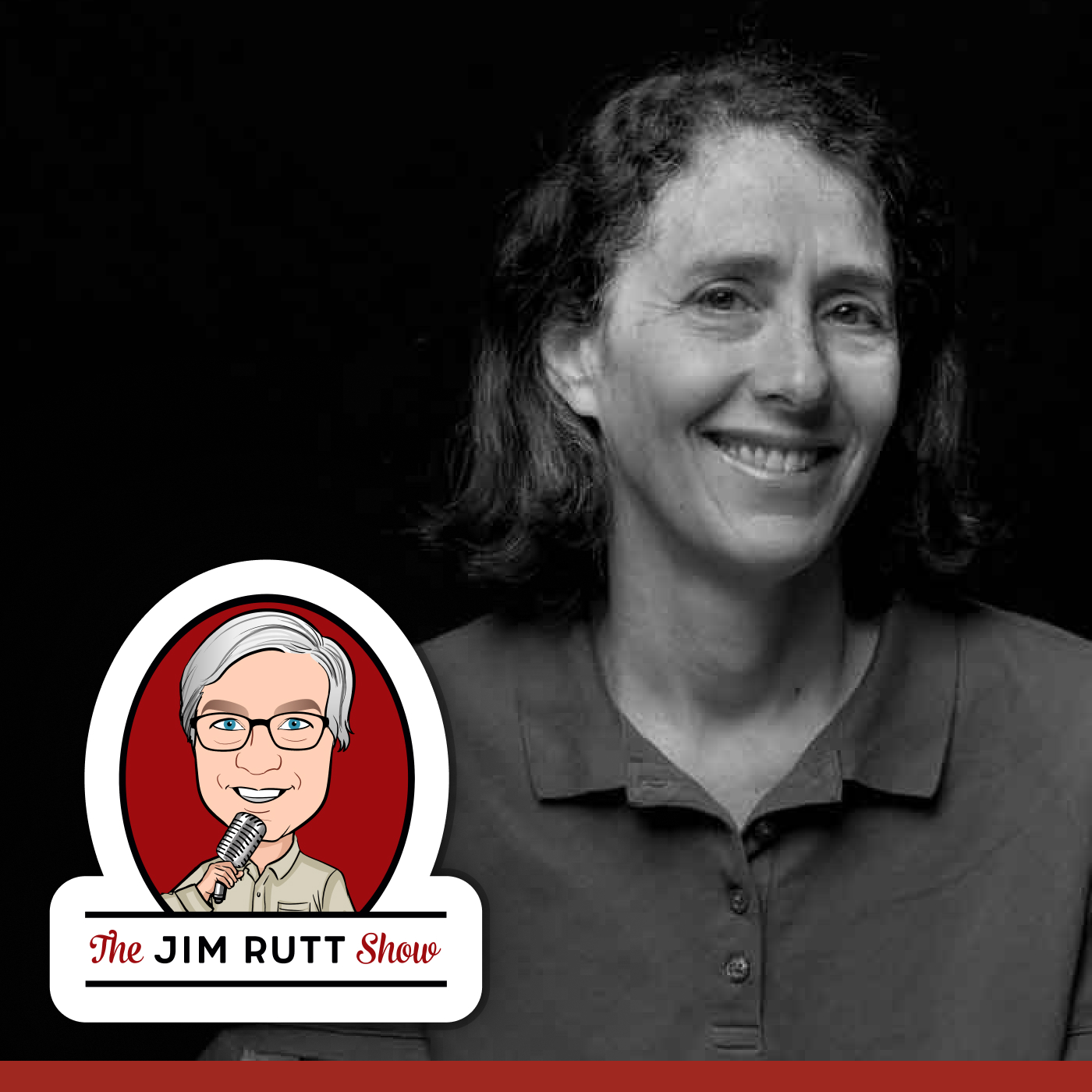
Currents 036: Melanie Mitchell on Why AI is Hard
bonusJim talks to Melanie Mitchell about her recent paper, "Why AI is Harder Than We Think"... Melanie Mitchell & Jim talk about her recent paper, "Why AI is Harder Than We Think". They cover AI fantasies, self-driving cars, prediction failures, AI winters & summers, Melanie's four fallacies, common sense, theory of mind, defining understanding, embodied cognition, the role of emotions in intelligence, the future of AI, and more. Episode Transcript "Why AI is Harder Than We Think" JRS: EP33 Melanie Mitchell on the Elements of AI Complexity: A Guided Tour Artificial Intelligence: A Guide for Thinking Humans JRS: EP25 Gary Marcus on Rebooting AI JRS: Currents 015: Jessica Flack & Melanie Mitchell on Complexity Melanie Mitchell is Professor of Computer Science at Portland State University, and External Professor and Co-Chair of the Science Board at the Santa Fe Institute. Mitchell has also held faculty or professional positions at the University of Michigan, Los Alamos National Laboratory, and the OGI School of Science and Engineering. She is the author or editor of seven books and numerous scholarly papers in the fields of artificial intelligence, cognitive science, and complex systems, including her latest, Artificial Intelligence: A Guide for Thinking Humans.

Currents 035: Steve Barbour on Mining Bitcoin with Methane
bonusSteve Barbour talks to Jim about his company, Upstream Data Inc. — a company that uses natural gas to mine bitcoin... Steve Barbour talks to Jim about his company, Upstream Data Inc. — a company that uses natural gas to mine bitcoin. They cover the dynamics of excess natural gas release, how methane is normally vented or burnt up, Upstream's environmental impact, mining hardware setup & efficiency, cost per kilowatt, customer RIO, bitcoin uses, monetary theory, 2nd & 3rd generation cryptocurrencies, inflationary currencies, zero-sum environmental thinking, and more. Episode Transcript Upstream Data Inc. Steve on Twitter Bitmain Steve Barbour is a mechanical engineer and owner of Upstream Data Inc., an oilfield services business focused on bitcoin mining and power generation for upstream oil and gas facilities. Steve is a strong advocate for bitcoin and believes it represents a paradigm shift in monetary technology. He was born and raised in St. John's, Newfoundland and currently resides in Calgary, Alberta with his lovely wife Morgan.
S1 Ep 133EP133 Robert Tercek on Digital Strategies
Robert Tercek has a wide-ranging talk with Jim about his book, Vaporized: Solid Strategies for Success in a Dematerialized World... Robert Tercek talks to Jim about his book, Vaporized: Solid Strategies for Success in a Dematerialized World. They cover the usefulness of the vapor metaphor, centralization vs decentralization, the impact of closed application ecosystems, value in intangible assets, hardware vs software profitability, the telling story of Tower Records, rapid consumer market changes, big tech bundling strategies, the birth of mobile games, Epic Games vs Apple, digital goods, race to the VR metaverse, digitized smart cities, future TV evolutions, interactive TV & Twitch, switchboards vs platforms vs markets vs ecosystems, and much more. Episode Transcript RobertTercek.com Vaporized: Solid Strategies for Success in a Dematerialized World CodeMiko Robert Tercek is an award-winning author and one of the world’s leading authorities on dematerialization and the virtual economy. He has supervised the launch of new digital services that are used by hundreds of millions of people every day, including the first streaming video on mobile phones, the largest live educational program on the web, and some of the earliest games on a variety of platforms, including PCs, the web, and mobile.

S1 Ep 132EP132 Britt Adkins on Celestial Civilization
Britt Adkins & Jim on the space industry: prioritization, funding, misconceptions, meaning, cultural & political impact, policy, and much more... Britt Adkins has a wide-ranging talk with Jim about the space industry. They explore prioritizing space funding & common misconceptions, power of the overview effect, global vs celestial community, cultural & political impacts, public participation strategies, physical / psychological adaptation to space & other planets, scaling humanity, urban planning in space, orbital debris & waste, environmental design dynamics, cultural commons in space, policy challenges & the Outer Space Treaty, diversity in the space industry, Elon Musk worship, off-earth self sufficiency, and much more. Episode Transcript Britt on Twitter Celestial Citizen Celestial Citizen Podcast Podcast: The Habitat HI-SEAS Invisible Women: Data Bias in a World Designed for Men Britt is the first space urban planner and founder of Celestial Citizen. She is passionate about the intersection of urban planning, engineering, science, and social justice as humans look to build new societies in space. Britt also hosts the Celestial Citizen podcast where she looks to spark unique conversations about the human factors that will be essential to our long-term survival and evolution into a spacefaring civilization. She's currently dually-enrolled at the University of Southern California’s Price School of Public Policy pursuing a Master of Urban Planning, and at the Colorado School of Mines, where she will be receiving a Master of Science in Space Resources. She also graduated from the MIT-Wellesley Double Degree program where she received the S.B. in Urban Studies & Planning from the Massachusetts Institute of Technology and a B.A. from Wellesley College in Architecture.

Currents 034: Samo Burja on the Consilience Project
bonusSamo Burja joins Jim to talk about the Consilience Project: a project that aims to create positive cultural change in unique ways... Samo Burja joins Jim to talk about the Consilience Project: a project that aims to create positive cultural change in unique ways. They cover its founding goals & approaches, big tech's ability to amplify negative externalities, the rise of Trump, memetic noise & virality, how digital cultures change, types of articles, sense-making, meaning-making, choice-making & social norms, de-energizing society & carbon accounting, unique ways the Consilience team collaborates & operates, new/upcoming articles, and much more. Episode Transcript Consilience Project Samo on Twitter JRS: Currents 030: Daniel Schmachtenberger on The Consilience Project JRS: EP125 Samo Burja on Societal Decline: Part 2 JRS: EP117 Samo Burja on Societal Decline Democracy and the Epistemic Commons Taiwan's Digital Democracy Samo Burja is the founder and President of Bismarck Analysis, a consulting firm that specializes in institutional analysis for clients in North America and Europe. Bismarck uses the foundational sociological research that Samo and his team have conducted over the past decade to deliver unique insights to clients about institutional design and strategy. Samo’s studies focus on the social and material technologies that provide the foundation for healthy human societies, with an eye to engineering and restoring the structures that produce functional institutions. He has authored articles and papers on his findings. His manuscript, Great Founder Theory, is available online. He is also a Research Fellow at the Long Now Foundation and Senior Research Fellow in Political Science at the Foresight Institute. Samo has spoken about his findings at the World Economic Forum at Davos, Y Combinator’s YC 120 conference, the Reboot American Innovation conference in Washington, D.C., and elsewhere. He spends most of his time in California and his native Slovenia.

S1 Ep 131EP131 Jason Mauck on #FarmWeird
Jason Mauck talks to Jim about starting Constant Canopy and the dynamics, technologies & economics of innovative farming strategies... Jason Mauck talks to Jim about what lead him to farm, how & why he started Constant Canopy, agriculture innovation dynamics & economics, finding crop combinations, turning manure into methane, utilizing Biochar, acquiring a meat-packing business, building direct-to-consumer meat distribution & strategy, farm integration models (livestock, agro, food, entertainment...), robotic berry picking, and much more. Episode Transcript Jim's Mauck Me Episode Jason on Twitter Constant Canopy Mauck Me Podcast Jason is obsessed with narrowing the gaps of agriculture. An apostle of relay cropping, Mauck, is blazing a new path using cash and cover crops in unison. One middle at a time, the maverick grower is uncovering clues and running wide open toward greater farming efficiency. Jason works 3,000 acres of corn, soybeans and wheat, in addition to 25,000 hogs per year. His company, Constant Canopy, is developing cutting-edge farming methods and currently holds the Indiana state record for the highest yield per acre for soybeans and has developed scalable systems for corn yields that surpass most high-test plots.
S1 Ep 130EP130 Ken Stanley on Why Greatness Cannot Be Planned
Ken Stanley and Jim talk about his wide-ranging book Why Greatness Cannot Be Planned: The Myth of the Objective... Ken Stanley and Jim talk about his wide-ranging book Why Greatness Cannot Be Planned: The Myth of the Objective. They cover the no free lunch theorem, exploitations vs exploration, the myth & issues of objectives, the room of all images & adjacent possible, the problems & dynamics of deception, the power of serendipity, gradients of interestingness, intuition & novelty search, social change & innovation, emergent education & AI insights, incrementalism, risk & reward, Ken's unique journal idea, and much more. Episode Transcript Ken's Site Why Greatness Cannot Be Planned: The Myth of the Objective JRS: EP25 Gary Marcus on Rebooting AI Ken Stanley leads a research team at OpenAI on the challenge of open-endedness. He was previously Charles Millican Professor of Computer Science at the University of Central Florida and was also a co-founder of Geometric Intelligence Inc., which was acquired by Uber to create Uber AI Labs, where he was head of Core AI research. He received a B.S.E. from the University of Pennsylvania in 1997 and received a Ph.D. in 2004 from the University of Texas at Austin. He is an inventor of the Neuroevolution of Augmenting Topologies (NEAT), HyperNEAT, novelty search, and POET algorithms, as well as the CPPN representation, among many others.
Currents 033: Connor Leahy on Deep Learning
bonusEConnor Leahy has a wide-ranging chat with Jim about the state & future of Deep Learning... Connor Leahy has a wide-ranging chat with Jim about the state & future of Deep Learning. They cover the history of EleutherAI, how GPT-3 works, the dynamics & power of scaling laws, ideal sampling rates & sizes for models, data sets, EleutherAI's opensource GTP-Neo & GTP-NeoX, PyTorch vs TensorFlow, TPU's vs GPU's, the challenge of benchmarking & evaluations, quadradic bottlenecks, broad GTP-3 applications, Connors thoughts on Jim's proposed GPT-3 research project, untapped GPT-3 potential, OpenAI's move away from opensource, alignment, AI safety, the unknown future, and much more. Episode Transcript Connor on Twitter Jared Kaplan The Pile CoreWeave Connor Leahy is an AI Researcher at German startup Aleph Alpha and founding member of the loose AI research collective EleutherAI. Eleuther is best known for their ongoing efforts to produce a full open source GPT-3 sized language model. Connor currently researches large, general purpose language models and how to align them to human values.
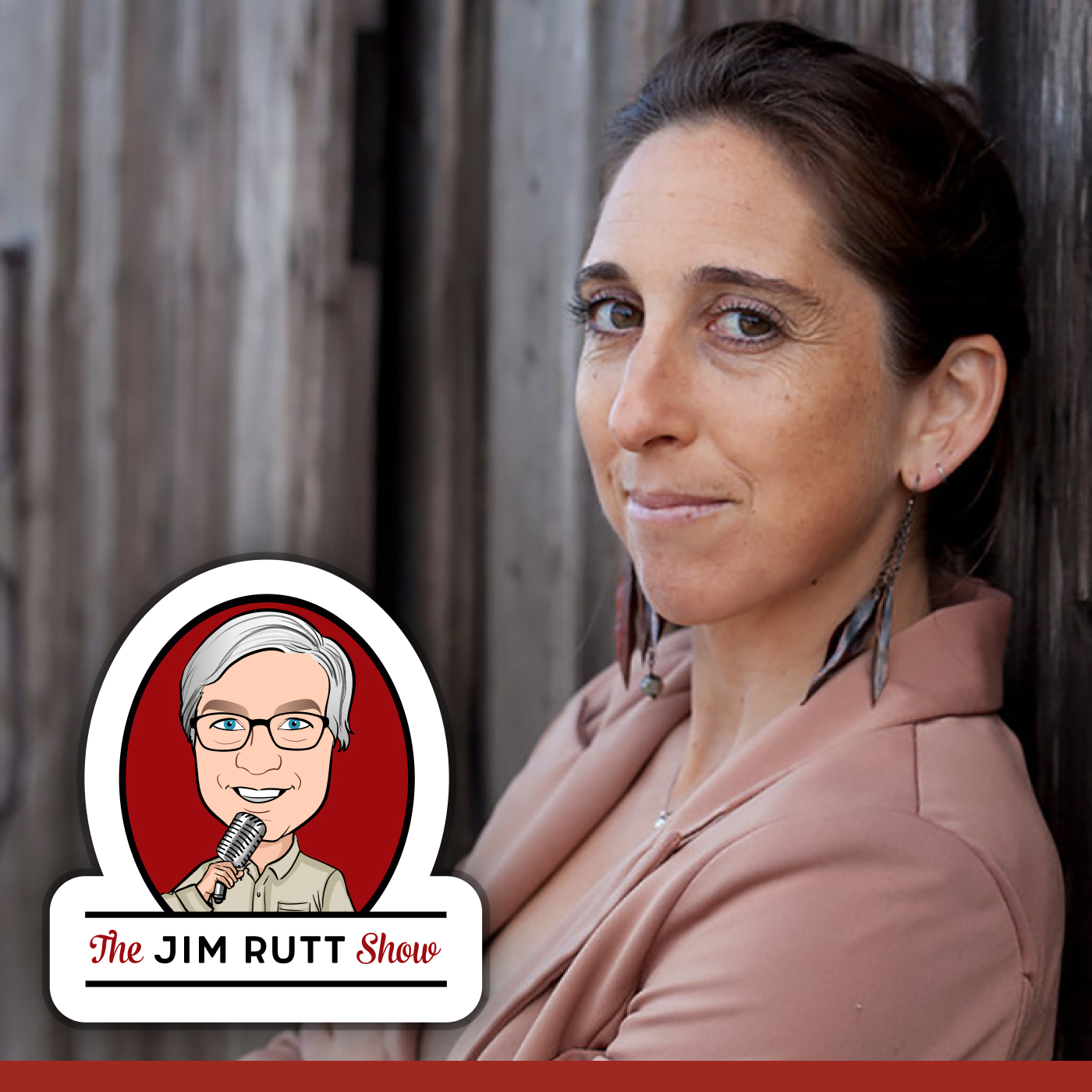
S1 Ep 129EP129 Stephanie Lepp on Deep Reckonings
EStephanie Lepp & Jim have a wide-ranging talk on her two-time Webby Award winning video series, Deep Reckonings... Stephanie Lepp & Jim have a wide-ranging talk on her two-time Webby Award winning video series, Deep Reckonings. They start by covering the history & intentions of Deep Reckonings, deep fake technology, our post-truth crisis, and the pros & cons of irony. They then go on to talk about the Deep Reckonings videos: how she chose people to include, reflections on the Mark Zuckerberg video, the challenge of remaining in good faith, free speech & censorship, GameB, Joe Rogan & Alex Jones, reflections the Brett Kavanaugh video, analyzing Jim's own Robin DiAngelo deep reckoning script, capitalism, how the video scripts changed Stefanie, materialism, the role of conviviality in moving away from GameA, Potlatch, and more. Episode Transcript Stephanie's Site Reckonings Podcast Deep Reckonings JRS: EP52 Steven Levy on Facebook: The Inside Story Mark Zuckerberg Deep Reckoning Brett Kavanaugh Deep Reckoning Stephanie Lepp is a storyteller, producer, and strategist interested in exploring worldview transformation, the relationship between personal and social change, and sense-making in a post-truth world. She's a member of the Guild of Future Architects and two-time Webby Awards winner, and her work has been recognized by institutions such as the Mozilla Foundation and Yerba Buena Center for the Arts.
S1 Ep 128EP128 Forrest Landry on Immanent Metaphysics: Part 3
Forrest Landry & Jim continue their exploration of Forrest's Immanent Metaphysics by diving deep into its Incommensuration Theorem (ICT)... Forrest Landry & Jim continue their exploration of metaphysics by diving deep into a theorem that arises from Forrest's Immanent Metaphysics called Incommensuration Theorem (ICT). They start by defining the key concepts of ICT: symmetry & continuity, domains & their three elements, what it means to know something, measurement & comparison, sameness & difference, content & context, access control limits, time & causality, the principle of identity, and the nature of epistemic processes. Then, using these concepts, they go into what ICT says about possible relationships of continuity & symmetry, everyday & scientific implications of those revealed relationships, quantum interpretations from the view of ICT, and much more. Episode Transcript Incommensuration Theorem (ICT) Dialog Bell's theorem Superdeterminism Gödel's theorem JRS: EP96 Forrest Landry on Immanent Metaphysics: Part 1 JRS: EP109 Forrest Landry on Immanent Metaphysics: Part 2 JRS: EP31 Forrest Landry on Building our Future Forrest Landry is a philosopher, writer, researcher, scientist, engineer, craftsman, and teacher focused on metaphysics, the manner in which software applications, tools, and techniques influence the design and management of very large scale complex systems, and the thriving of all forms of life on this planet. Forrest is also the founder and CEO of Magic Flight, a third-generation master woodworker who found that he had a unique set of skills in large scale software systems design. Which led him to work in the production of several federal classified and unclassified systems, including various FBI investigative projects, TSC, IDW, DARPA, the Library of Congress Congressional Records System, and many others.
S1 Ep 127EP127 Jonathan Rowson on The Moves That Matter
Jonathan Rowson & Jim have a wide-ranging talk about his book, The Moves That Matter: A Chess Grandmaster on the Game of Life... Jonathan Rowson & Jim have a wide-ranging talk about his book, The Moves That Matter: A Chess Grandmaster on the Game of Life. They cover chess as a meta metaphor, partial vs full info, randomness, freedom, concentration vs flow states, chess player ratings, mastery, embodied intuition, AI, fundamental dimensions of chess, utilizing time, climate change, wisdom, the strong vs the weak, religion & fundamental reality, metaphysical & ontological modesty, purpose, meaning, and much more. Episode Transcript Jonathan's Site Perspectiva The RSA What is Emerging JRS: EP67 Tomas Björkman on The Nordic Secret JRS: EP112 Annie Duke on Bets & Better Decisions Two Concepts of Liberty by Isaiah Berlin Aeon article on Flow & Concentration Paper on Flow & Macroeconomic Design The Feeling of What Happens: Body and Emotion in the Making of Consciousness The Consilience Project Tasting the Pickle Unapologetic: Why, Despite Everything, Christianity Can Still Make Surprising Emotional Sense Jonathan Rowson is co-founder and director of the research institute Perspectiva based in London. He is also the former director of the Social Brain Centre at the Royal Society of Arts and is a chess grandmaster and three-time British Chess Champion. His books include The Seven Deadly Chess Sins, Chess for Zebras, Spiritualize: Cultivating Spiritual Sensibility to Address 21st Century Challenges, and, The Moves That Matter: A Chess Grandmaster on the Game of Life.

S1 Ep 127EP126 Jordan Gruber & James Fadiman on Our Symphony of Selves
Jordan Gruber & James Fadiman talk with Jim about their new book, Your Symphony of Selves: Discover and Understand More of Who We Are... Jordan Gruber & James Fadiman talk to Jim about their book, Your Symphony of Selves: Discover and Understand More of Who We Are. They cover our multiple selves, self vs mood, arguing with ourselves, David Bowie, history of the single-self assumption, connecting with our younger selves, self-switching benefits & methods, authenticity, contextuality, connections to mental illness, psychedelics & meditation, integrating selves, cultural differences, and much more. Episode Transcript Mentions & Recommendations Your Symphony of Selves: Discover and Understand More of Who We Are The Origin of Consciousness in the Breakdown of the Bicameral Mind Jordan Gruber, J.D., M.A., Renaissance Wordsmith—writer, collaborative writer, ghostwriter, editor, and coach—has created and sculpted authoritative volumes in forensic law, financial services, psychology, and health and wellness. A graduate of Binghamton University and the University of Virginia School of Law, he founded the Enlightenment.Com website. He has recently co-authored Your Symphony of Selves (on healthy multiplicity) with James Fadiman, as well as The Bounce (on rebound exercise) with Joy Daniels. He lives in Menlo Park, California, with his wife and family. James Fadiman is an American psychologist and writer. He is acknowledged for his extensive work in the field of psychedelic research. He co-founded, along with Robert Frager, the Institute of Transpersonal Psychology, which later became Sofia University, where he was a lecturer in psychedelic studies.
S1 Ep 125EP125 Samo Burja on Societal Decline: Part 2
Samo Burja & Jim continue their convo about Great Founder Theory: history, bureaucracy vs delegation, competition, ambition, empire theory, and much more... Samo Burja & Jim continue their conversation about his book, Great Founder Theory. They talk about Samo's interest in exploring why there's never been an immortal society, lack of historical Greece documentation, defining functional bureaucracy & delegation, competition pros/cons & dynamics, skill distribution & capitalization, measuring & defining skills over time scales, utilizing & nurturing ambition, what empire theory exposes about societies & institutions, inevitable oligarchy, rivalrous vs non-rivalrous systems, insights from Chinese history, and much more. Episode Transcript Mentions & Recommendations Part 1: EP117 Samo Burja on Societal Decline Great Founder Theory The Free World: Art & Thought in the Cold War The Logic of Collective Action: Public Goods & the Theory of Groups Samo Burja is the founder and President of Bismarck Analysis, a consulting firm that specializes in institutional analysis for clients in North America and Europe. Bismarck uses the foundational sociological research that Samo and his team have conducted over the past decade to deliver unique insights to clients about institutional design and strategy. Samo’s studies focus on the social and material technologies that provide the foundation for healthy human societies, with an eye to engineering and restoring the structures that produce functional institutions. He has authored articles and papers on his findings. His manuscript, Great Founder Theory, is available online. He is also a Research Fellow at the Long Now Foundation and Senior Research Fellow in Political Science at the Foresight Institute. Samo has spoken about his findings at the World Economic Forum at Davos, Y Combinator’s YC 120 conference, the Reboot American Innovation conference in Washington, D.C., and elsewhere. He spends most of his time in California and his native Slovenia.
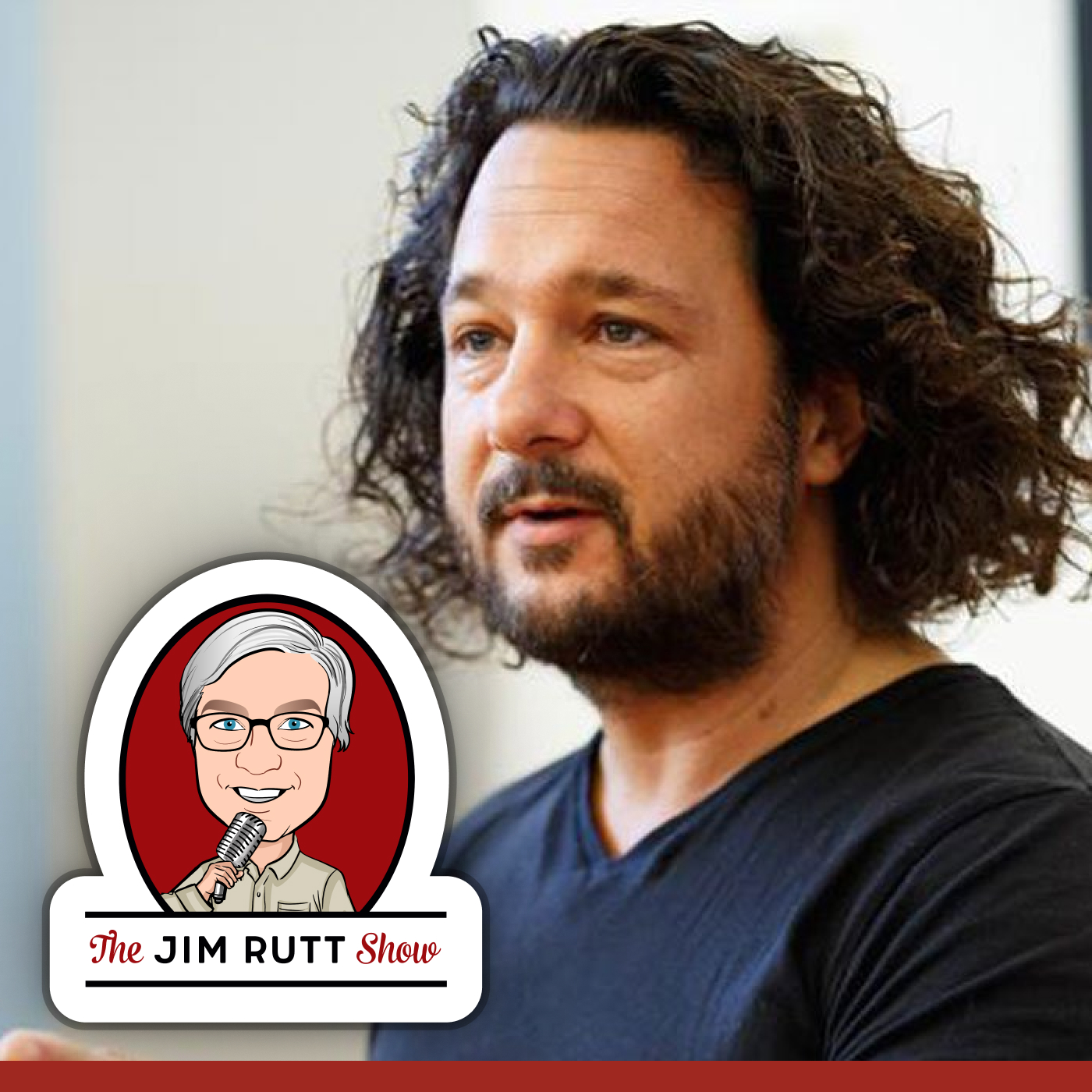
Currents 032: Tyson Yunkaporta on Spirits, GameB & Protopias
bonusETyson Yunkaporta joins Jim for another wide-ranging yarn that covers DMT & machine elves, survivance, ego death, selling souls, and much more... Tyson Yunkaporta joins Jim for another wide-ranging yarn that starts off with DMT & machine elves. They cover Jim's misspent youth, police violence, nuance vs Occam's razor, Tyson's impressions of GameB & the sensemakers, Tyson's unpublished Survivance essay, Jim's recent emu encounter & live intentional ego death, utilizing drugs, selling our souls to social media, debt jubilee & the road to GameB, ProtoBs as a dynamic exploration, utopia vs protopia, the value of cognitive dissonance, and much more. Episode Transcript Tyson's Podcast, The Other Others Sand Talk: How Indigenous Thinking Can Save the World JRS: Currents 010: Tyson Yunkaporta on Humans As Custodial Species JRS: EP66 Tyson Yunkaporta on Indigenous Knowledge JRS: EP65 Tyson Yunkaporta on Indigenous Complexity The Utopia of Rules: On Technology, Stupidity, and the Secret Joys of Bureaucracy JRS: Currents 030: Daniel Schmachtenberger on The Consilience Project JRS: EP123 Jamie Wheal on Recapturing the Rapture EmancipationParty.org Tyson Yunkaporta is an academic, an arts critic, and a researcher who is a member of the Apalech Clan in far north Queensland. He carves traditional tools and weapons and also works as a senior lecturer in Indigenous Knowledges at Deakin University in Melbourne. He lives in Melbourne and is the author of Sand Talk: How Indigenous Thinking Can Save the World.

S1 Ep 124EP124 Jim Hackett on Ford, Electric Cars & More
Former Ford CEO, Jim Hackett & Jim have a wide-ranging talk about the history & future of electric cars, the automotive industry, and much more... Former Ford CEO, Jim Hackett & Jim have a wide-ranging talk about the history & future of electric cars. They cover Ford & Edison's first electric car, the current state of the electric cars, understanding scaling & natural systems, business change vs death, the evolution of car models & sizes, all-electric car plausibility, carbon taxes, electric range & charging time, electricity demand & smart grids, the history of Ford's Mustang Mach-e, the road to self-driving cars, safety & trust, startup car companies, the importance of user experience design, Apple, Ford & IDEO, the future of Ford, and much more. Episode Transcript Mentions & Recommendations JRS: EP94 Shahin Farshchi on Self-Driving Tech JRS: EP44 Steve LeVine on EV Battery Tech Santa Fe Institute Scale: The Universal Laws of Growth, Innovation, Sustainability, and the Pace of Life in Organisms, Cities, Economies, and Companies The Innovator's Dilemma: The Revolutionary Book that Will Change the Way You Do Business Jim Hackett is an American businessman. He was the president and chief executive officer of Ford Motor Company from May 2017 to October 2020.

Currents 031: Trent Loos on Family Ranching
bonusTrent Loos talks to Jim about his multi-generational Nebraska-based ranching operation... Trent Loos talks to Jim about his multi-generational Nebraska-based ranching operation. They cover the deep history of the family ranch, types of animals, dealing with predators, pork production & breeding, the decline in quality of industrial pork, beef production and breeds, grass vs grain-fed beef, old-time animal trailing, 4-H fairs and auctions, slaughterhouse labor shortages, food economics & cultural norms, super CSA's, soil health & livestock, generational knowledge, and much more. Episode Transcript Trent Loos Podcast Jim's on Trent's Podcast Trent Loos is a sixth-generation United States Rancher that is documenting life in the business of food production while protecting the environment.

S1 Ep 123EP123 Jamie Wheal on Recapturing the Rapture
EJamie Wheal talks to Jim about his new book, Recapture the Rapture: Rethinking God, Sex, and Death in a World That's Lost Its Mind... Jamie Wheal talks to Jim about his new book, Recapture the Rapture: Rethinking God, Sex, and Death in a World That's Lost Its Mind. They talk about the world losing its mind & the meaning crisis, the pros & cons of modernism, the danger & dynamics of rapture ideologies, alignment beyond agreement, dehumanization, commonalities of political poles, hyper-capitalist incentives & impacts, social media & free speech, idealizing fame, victimization, post-modernism vs wokeism, moving towards the post-tragic, civic nationalism, coherent pluralism, and GameB. They finish the episode by talking about Jamie's alchemic cookbook: breathing, drugs, sex, religion, altered states, meditation, death, rebirth, mystery, and more. Episode Transcript Mentions & Recommendations Stealing Fire JRS: EP27 Jamie Wheal on Flow & the Future of Culture Recapture the Rapture Flow Genome Project Beforeigners Zak Stein JRS Episodes Finite and Infinite Games by James Carse Jamie Wheal is the Executive Director of The Flow Genome Project and leading expert in the neurophysiology of human performance. His work combines a background in expeditionary education, wilderness medicine, and surf rescue, with over a decade of advising high-growth companies on strategy, execution, and leadership. Jamie's coaching ranges from Fortune 500 companies like Cisco, Google, and Nike, to the U.S. Naval War College, and Red Bull. You'll find him speaking on the intersection of science and human potential to diverse, high-performance communities like Young President's Organization, Summit Series, TED, and MaiTai Global. At the Flow Genome Project, he leads a team of the world’s top scientists, athletes, and artists dedicated to mapping the genome of the peak-performance state known as Flow. He lives on the Colorado River with his wife Julie, their two kids Lucas and Emma, and a righteous Golden Retriever named Cassie.

Currents 030: Daniel Schmachtenberger on The Consilience Project
bonusDaniel Schmachtenberger & Jim talk about his newly launched project, The Consilience Project... Daniel Schmachtenberger & Jim talk about his newly launched project, The Consilience Project. They start by covering some background for the project: why start it, primary focuses, cultural renaissance, the role of education & press, eroding knowledge commons, rapidly changing culture & scales, and learning from history. They then talk about the project's approaches & strategies: bottom-up problems-solving processes, understanding externalities, identifying core problems, content strategy, narrative navigation, post-tribalism, epistemic commons, meta news, fighting confirmation bias, modern memetic dynamics, social media moderation, out-group reading, civic virtue, post-modernism, science, 1st 2nd & 3rd person epistemologies, the target audience, being a media role model, community building, and much more. Episode Transcript The Consilience Project JRS: EP80 Daniel Schmachtenberger on Better Sensemaking JRS: EP7 Daniel Schmachtenberger and the Evolution of Technology Past Zak Stein JRS Episodes JRS: EP84 William Perry & Tom Collina on The Nuclear Button Consilience article, "Democracy and the Epistemic Commons" Consilience article, "Challenges to Making Sense of the 21st Century" Consilience article, "Were Pallets of Bricks Planted at Black Lives Matter Protests?" The Civil War: A Narrative by Shelby Foote JRS: EP107 Tristan Harris on Our Social Dilemma First Things Journal Daniel is a founding member of The Consilience Project, aimed at improving public sensemaking and dialogue. The throughline of his interests has to do with ways of improving the health and development of individuals and society, with a virtuous relationship between the two as a goal. Towards these ends, he’s had particular interest in the topics of catastrophic and existential risk, civilization and institutional decay and collapse as well as progress, collective action problems, social organization theories, and the relevant domains in philosophy and science. Motivated by the belief that advancing collective intelligence and capacity is foundational to the integrity of any civilization, and necessary to address the unique risks we currently face given the intersection of globalization and exponential technology, he has spoken publicly on many of these topics, hoping to popularize and deepen important conversations and engage more people in working towards their solutions. Many of these can be found here.

S1 Ep 122EP122 Ashley Colby on Subsistence Agriculture
Ashley Colby & Jim talk about her book, Subsistence Agriculture in the US, moving to Uruguay, starting the Rizoma Field School, and much more... Ashley Colby & Jim start this episode by talking about her book, Subsistence Agriculture in the US: Reconnecting to Work, Nature and Community. They cover Gemeinschaft vs Gesellschaft, Dual Process Theory, bottom-up change, arriving at paradox & the purist failure, creating social capital, food producer demographics & insights, modern industrial alienation, the value of shadow structures, the urban chicken movement, subsistence agriculture motivations, practical environmentalism, & doomer optimism. They finish the episode by talking about how & why Ashley started the Rizoma Field School, moving to Uruguay, and her plans for a future online marketplace to help the subsistence agriculture movement. Episode Transcript Mentions & Recommendations Ashley's book, Subsistence Agriculture in the US Rizoma Field School Ashley on Twitter Ashley Colby is an Environmental Sociologist who studied at Washington State University. In her book she explores subsistence food production as a potentially revolutionary act. She is interested in and passionate about the myriad creative ways in which people are forming new social worlds in resistance to the failures of late capitalism and resultant climate disasters. Ashley is a qualitative researcher so she tends to focus on the informal spaces of innovation. She is now focused on doing anything she can to foment local, decentralized networks of people who can get us to the next iteration of society, and fast. The most urgent of these initiatives is SuLoFair, a cooperative startup whose mission is to accelerate local economies.
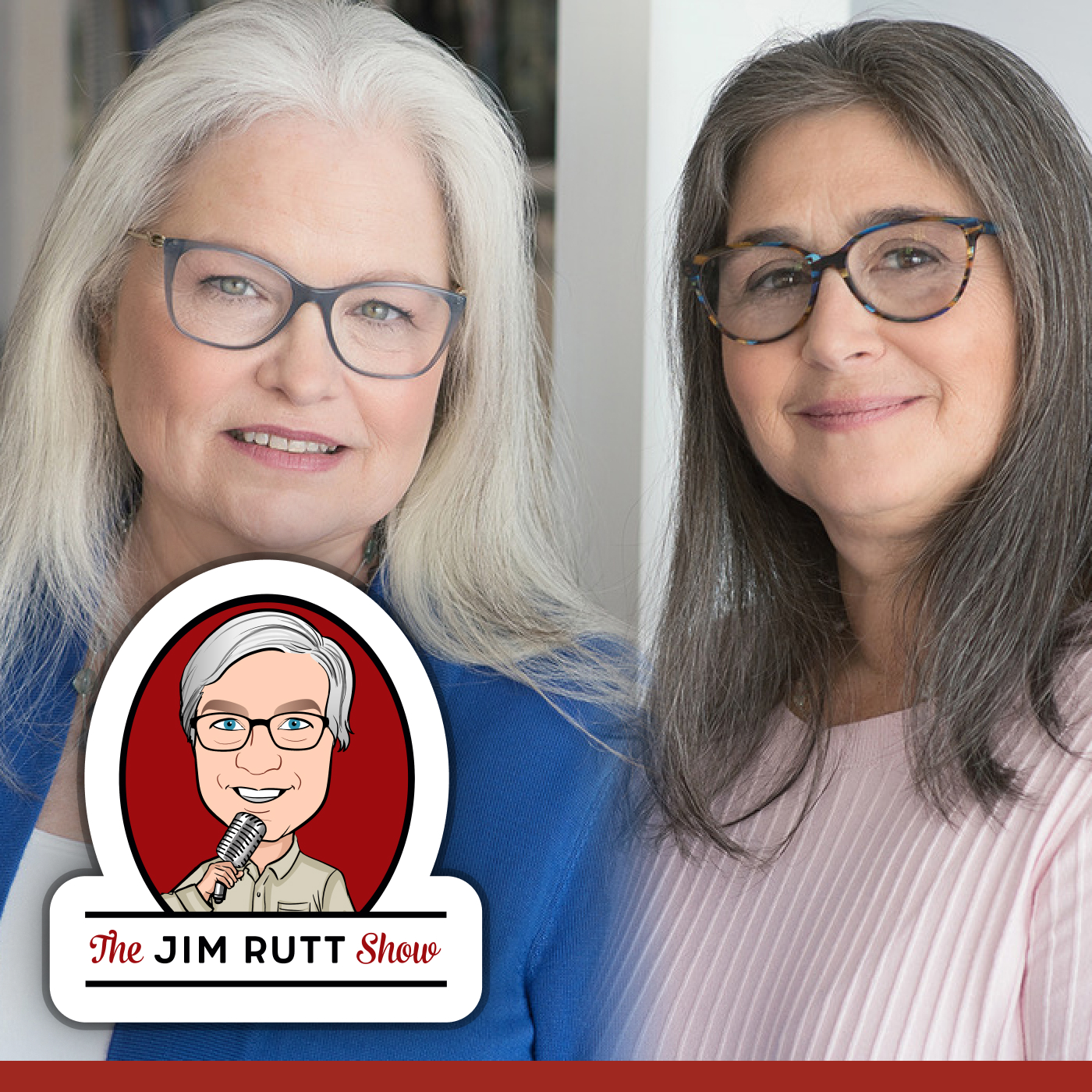
S1 Ep 121EP121 Broke in America with Joanne Goldblum & Colleen Shaddox
Joanne Goldblum & Colleen Shaddox talk to Jim about their book, Broke in America: Seeing, Understanding, and Ending U.S. Poverty... Joanne Goldblum & Colleen Shaddox talk to Jim about their book, Broke in America: Seeing, Understanding, and Ending U.S. Poverty. They cover the "give a man fish" fallacy, poverty quicksand, two vs one-parent households, nurture vs nature, poverty's impact on children, poverty definition & demographics, rural vs urban poverty, water access issues & pricing, malnutrition, low-cost food plan, time poverty, National Diaper Bank Network, affordable housing & zoning laws, building codes & tiny homes, gov. commitment to social welfare / security / health, UBI vs guaranteed income, a national jobs guarantee, minimum wage, poverty advocates & activists, and more. Episode Transcript

S1 Ep 120EP120 James Ehrlich on ReGen Villages Part 2
James Ehrlich & Jim continue their conversation on ReGen Villages: smart houses & neighborhoods, regulatory hurdles, status/progress, and much more... James Ehrlich & Jim continue their conversation on ReGen Villages. They cover smart houses in dumb neighborhoods, defining smart, what COVID exposed about cities, ReGen Village dynamics & their permacultural core, rural jobs, UBI, rural regulatory challenges, village funding & costs, electric self-sufficiency approach, media & making ReGen Villages sexy, protecting villages with kindness, ReGen Villages status & progress, and more. Episode Transcript Mentions & Recommendations JRS: EP103 James Ehrlich on ReGen Villages ReGen Villages James Ehrlich is Founder of ReGen Villages a Stanford University spin-off company realizing the future of living in regenerative and resilient communities, with critical life support of organic food, clean water, renewable energy and circular nutritional flows at the neighborhood scale. James is also an Entrepreneur in Residence at the Stanford University School of Medicine Flourishing Project, Faculty at Singularity University, Senior Fellow at NASA Ames Research Center and (Obama) White House Appointee for Regenerative Infrastructure. Ehrlich founded ReGen Villages as a Dutch (EU) impact-profit company in 2016, with its patented VillageOS™ operating system software to use artificial intelligence and machine learning to define, design and autonomously manage regenerative neighborhoods that promote healthy long-term outcomes for residents and wider communities. ReGen Villages are planned for global replication and scale in collaboration with established industrial partners, universities, governments and sovereign wealth and pension funds, enabling an optimistic post-COVID green transition.

S1 Ep 119EP119 Max Borders on Post-Collapse
EMax Borders & Jim continue their last conversation on his book, After Collapse: The End of America and the Rebirth of Her Ideals... Max Borders & Jim continue their last conversation on his book, After Collapse: The End of America and the Rebirth of Her Ideals. They cover fully automated luxury communism, utilizing traditional economics & markets, Elinor Ostrom's commons, institutional experimentation, post-scarcity economics, Joseph Pine's experience economy, bottom-up collaboration, masculine & feminine, eros & thanatos, the law of flow, Holacracy, limitations of electoral democracy, state secession, cellular democracy, global collective action, common vs civil law, Polyarchy, guild credentialism, and more. Episode Transcript Mentions & Recommendations After Collapse: The End of America and the Rebirth of Her Ideals JRS: EP115 Max Borders on America’s Collapse JRS: EP76 Max Borders on the Social Singularity Signals and Boundaries by John Holland Antifragile by Nassim Taleb JRS: EP111 Anatol Lieven on Climate & Nationalism Max Borders is a futurist, a theorist, a published author and an entrepreneur. He is the author of The Social Singularity and the founder and Executive Director of Social Evolution—a non-profit organization dedicated to liberating humanity through innovation. Max is also co-founder of the Voice & Exit event and former editor at the Foundation for Economic Education (FEE).