The History of the Christian Church
248 episodes — Page 5 of 5

48-Charlemagne Part 1
The title of this 48th episode of CS is “Charlemagne – Part 1.”The political landscape of our time is dominated by the idea that nation-states are autonomous, sovereign societies in which religion at best plays a minor role. Religion may be an influence in shaping some aspects of culture, but affiliation with a religious group is voluntary and distinct from the rest of society.What we need to understand if we’re going to be objective in our study of history is that, that idea simply did not exist in Europe during the Middle Ages.In the 9th C, the Frank king Charles the Great, better known as Charlemagne, sought to makes Augustine’s vision of society in his magnum opus, The City of God, a reality. He merged Church and State, fusing a new political-religious alliance. His was a conscious effort to merge the Roman Catholic Church with what was left of the old Roman political house, creating a hybrid Holy Roman Empire. The product became what’s called Medieval European Christendom.How did it come about that Jesus’ statement that His kingdom was not of this world, could be so massively reworked? Let’s find out.300 years after the Fall of the Western Empire to the Goths, the idea and ideal of Empire continued to fire the imaginations of the people of Europe. Though the barbarians were divided into several groups and remained at constant war with each other, the longing for peace and unity that marked the region under the Roman Eagle held a powerful attraction. Many looked forward to the day when a new Empire would appear. Just as the Eastern Empire centered at Constantinople saw itself as Rome-still, the vestiges of the Western Empire along with their German neighbors hoped the Empire would (insert Star Wars reference) strike back and rise again.By merging the Roman and Germanic religions, customs and peoples, the Franks under Clovis became the odds on favorite to accomplish what many hoped for. But Clovis’ dynasty began to fall apart not long after he passed from the scene. His descendants were at odds with each other, vying for pre-eminence. They became adept at intrigue and treachery.The power vacuum created by their squabbles gave room for wealthy aristocrats to gain power. Like 2 dogs fighting over a scrap of food, while they’re busy snarling and snapping at each other, the cat comes and quietly steals away what they’re fighting over. So it was with Clovis’ descendants, the Merovingians. While they fought each other, the landed nobility quietly stole more and more of their authority. Among these emerging aristocrats was one who worked his way into the heart of power to become the most influential figure in the kingdom. He was called the “majordomo” or “mayor of the palace.”The majordomo was the real power behind the throne. He ran the kingdom while the king served as little more than a ceremonial figurehead. The idea was that the son of the previous king wasn’t necessarily the one most fit to rule just because of his birth. So while the title went legally to him, the day-to-day business of running the realm was better served by another with the skills to get the job done.In 680, Pepin II became majordomo for the Franks. He made no pretense of his desire to supplant the Merovingian line with his own as the de-facto rulers. He took the title of Duke and Prince of the Franks and made moves to ensure his line would eventually sit the throne.His son, Charles Martel, became majordomo in 715. Charles allowed the Merovingian kings to retain their title but as little more than figureheads. What catapulted Charles to the throne was his defeat of the Muslims in 732.In 711 a Muslim army from North Africa called the Moors invaded Spain and rolled back the weak kingdom of the Visigoths by 718. With the Iberian Peninsula under their control, the Moors began raiding across the Pyrenees into Southern Gaul. Until this time, the Muslims had advanced at a steady pace out of the Middle East, across North Africa, then into Europe. It seemed no one in the West could stop them and the fear of the infidel hordes running amuck throughout the lands of Christendom was a terror.In 732 Charles led the Franks against a Moor raiding party near Tours, deep inside the Frank’s land. He inflicted such heavy losses the Moors retreated to Spain and were never again a major threat to Western Europe. For this and his other conquests, Charles was called Martell – “the Hammer.”Martel’s son, Pepin III, also known as Pepin the Short, considered it time to make the power of the Frank majordomo more official. Why not give the title of “king” to the guy who was actually ruling, instead of some royal spoiled brat who thought armies were just large toys to play with? Pepin III asked Pope Zachary for a ruling saying whoever actually wielded power was the legal ruler. He got what he wanted, promptly deposed the last Merovingian King, Childeric III, and was crowned the first of the Carolingian kings by the bishop of Mainz in 751. Childeric was quietly shuffle

47-Challenge
This week’s episode is titled – “Challenge.”We’ve tracked the development and growth of the Church in the East over a few episodes. To be clear, we’re talking about the Church which made its headquarters in the city of Seleucia, twin city to the Persian capital of Ctesiphon, in the region known as Mesopotamia. What today historians refer to as The Church in the East called itself the Assyrian Church. But it was known by the Catholic Church in the West with its twin centers at Rome and Constantinople, by the disparaging title of the Nestorian Church because it continued on in the theological tradition of Bishop Nestorius, declared heretical by the Councils of Ephesus in 431 and Chalcedon 20 years later. As we’ve seen, it’s doubtful what Nestorius taught about the nature of Christ was truly errant. But Cyril, bishop of Alexandria, more for political reasons than from a concern for theological purity, convinced his peers Nestorius was a heretic and had him and his followers banished. They moved East and formed the core of the Church in the East.While that branch of the Church thrived during the European Middle Ages, the Western Catholic Church coalesced around 2 centers; Rome and Constantinople. Though they’d reached agreement over the doctrinal issues regarding the nature of Christ and expelled both the Nestorians to the East and the Monophysite Jacobites to their enclaves in Syria and Egypt, the Western and Eastern halves of the Roman Church drifted apart.The Council of Constantinople in 692 marked one of several turning points in the eventual rift between Rome and Constantinople. Called by the Emperor, the Council was attended only by Eastern Bishops. It dealt with no real doctrinal matters but set down rules for how the Church was to be organized and worship conducted. The problem is that several of the decisions went contrary to the long-held practice in Rome and the churches in Western Europe that looked to it. The Pope rejected the Council. à And the gulf between Rome and Constantinople widened.This gap between the Eastern and Western halves of the Church mirrored what was happening in the Empire at large. As we’ve seen, Justinian I tried to revive the gory of the Roman Empire in the 6th C, but after his death, the Empire quickly reverted to its path toward disintegration. What helped this dissolution was the emergence of Islam from the southeast corner of the Empire.Historically, the Arabs were a people of multiple tribes who shared both a common culture and distrust of one another which fueled endless conflict. But the early 7th C saw them united by a new and militant religion. The endless struggles that had kept them at each other’s throats, were merged into a shared mission of setting them at everyone else’s. Why steal from each other in generations of just transferring the same loot back and forth when they could unite and grab new plunder from their neighbors?And so much the better when those neighbors who used to be too strong to attack, were now in decline and under-defended?It was a Perfect Storm. The emergence of the Muslim armies in the early 7th C, bursting forth from the furnace that forged them, came right at the time when the once unstoppable might of the Roman Empire was finally a relic of a bygone age. Constantinople was able to hold the invaders at bay for another 700 years, but Islam spread quickly over other lands of the once great Empire; into the Middle East, North Africa, and was even able to get a foothold in Europe when they jumped the Straits of Gibraltar and landed in Spain. In the East, the Muslims swept up into Rome’s ancient nemesis, Persia, and quickly subdued it as well.It all began with the birth of an Arab named Muhammad in 570.Since this is a podcast on the history of Christianity rather than Islam, I’ll be brief in this review of the new religion that moved the Arabs out of their peninsula during the 7th C.Islam marks its beginning to the Hegira, Muhammad’s move from his hometown of Mecca to the city of Medina in AD 622. This began the successful phase of his preaching. Muhammad built a theology that included elements of Judaism, Christianity, and Arabian polytheism.While there’s much talk today about Islam’s place with Judaism and Christianity as a monotheistic religion, a little research reveals Muhammad really only elevated one of the Arab’s gods over the others – that is Il-Allah, or as it is known today – Allah. Allah was the moon god and patron deity of Muhammad’s Quraysh tribe. The enduring proof of this is the symbol of the crescent moon that adorns the top of every Muslim mosque and minaret and is the universal symbol of Islam.Muhammad’s new religion included elements of both Judaism and Christianity because he hoped to include both groups in his new movement. The Jews refused his efforts while several Christians joined the new movement. It’s understandable why. The church Muhammad was familiar with was one that had been co-opted by Arab superstition. It hard

46-Liturgy
This episode of Communio Sanctorum is titled, “Liturgy.”What comes to mind when you hear that word – “Liturgy.”Most likely—it brings up various associations for different people. Some find great comfort in what the word connotes because it recalls a time in their life of close connection to God. Others think of empty rituals that obscure, rather than bring closer a sense of the sacred.The following is by no means meant as a comprehensive study of Christian liturgy. Far from it. That would take hours. This is just a thumbnail sketch of the genesis of some of the liturgical traditions of the Church.First off, using a broad-brush the word ‘liturgy’ refers to the order and parts of a service held in a church. Even though most non-denominational, Evangelical churches like the one I’m a part of doesn’t call our order of service on a Sunday morning a “liturgy” – that’s in fact what it is. Technically, the word “Liturgy” means “service.” But it’s come to refer to all the various parts of a church service, that is, when a local church community gathers for worship. It includes the order the various events occur, how they’re conducted, what scripts are recited, what music is used, which rituals are performed, even what physical objects are employed to conduct them; things like special clothes, furniture, & implements.Even within the same church, there may be different liturgies for different events and seasons of the year.For convenience sake, churches tend to get put into 2 broad categories; liturgical & non-liturgical. Liturgical churches are often also called “high-church” meaning they have a set tradition for the order of the service that includes special vestments for priests & officiants; and follow a pattern for their service that’s been conducted the same way for many years. Certain portions of the Bible are read, then a reading from another treasured tome of that denomination, people sit, stand and kneel at designated times, and clergy follows a set route through the sanctuary.In a non-liturgical church, while they may follow a regular order of service, there’s little of the formalism and ritual used in a high-church service. In many liturgical churches, the message a pastor or priest is to share each week is spelled out by the denominational hierarchy in a manual sent out annually. In a non-liturgical church, the pastor is typically free to pick what he wants to speak on.The great liturgies arose in the 4th to 6th Cs then codified in the 6th & 7th. They were much more elaborate than the order of service practiced in the churches of the 2nd & 3rd Cs.Several factors led to the creation of liturgies àFirst: There’s a tendency to settle on a standard way to say things when it comes to the beliefs & practices of a group. When someone states something well, or does something in an impressive way, it tends to get repeated.Second: Bishops & elders tended to take what they learned in one place and transplanted it wherever they went.Third: A written liturgy made the services more orderly.Fourth: The desire to hold on to what was thought to be passed down by the Apostles became a priority. This worked against any desire for change.Fifth: A devotion to orthodoxy, combined for a concern about heresy tended to sanctify what was old and opposed innovation. Changes in a liturgy sparked controversy.The main liturgies that emerged during the 5th & 6th Cs bear similarities in structure & theme; even in wording, while also having distinct features.The main liturgical traditions can be listed as . . .In the EastThe Alexandrian or sometimes called Egyptian liturgies.The West Syrian family includes the Jerusalem, Clementine, & Constantinoplitan liturgies.The East Syrian family includes the liturgies that were used in the Nestorian churches of the East.In the West, the principal liturgical families were Roman, Gallican, Ambrosian, Mozarbic & Celtic.As we saw in Epsidoe 41, Pope Gregory the Great in the 7th C embellished the liturgy & ritual practiced in the Western Roman Church. Elaborate rituals were already a long-time tradition in the Eastern Church, influenced as it was by the court of Constantinople.If Augustine laid down the theological base for the Medieval church, Pope Gregory can be credited with its liturgical foundation. But no one should assume Gregory created things out of a vacuum. There was already extensive liturgical fodder for him to draw from.And this brings us to a 4th C document called The Pilgrimage of Etheria – or The Travels of Egeria.We’re not sure who she was but can narrow it down to either a nun or a well-to-do woman of self-sufficient means from Northern Spain.She toured the Middle East at the end of the 4th C, then wrote a long letter to some women she call her sisters & friends, chronicling her 3 year adventure. While the beginning and end of the letter are missing, the main body gives a detailed account of her trip, made from extensive notes.The fi

45-Look Who’s Driving the Bus Now
This episode of Communio Sanctorum is titled, “Look Who’s Driving the Bus Now.”As noted in a previous episode, it’s difficult in recounting Church History to follow a straight narrative timeline. The expansion of the Faith into different regions means many storylines. So it’s necessary to do a certain amount of backtracking as we follow the spread of the Gospel from region to region. The problem with that though in an audio series, it can be confusing as we bounce back & forth in time. We’ve already followed Christianity’s expansion to the Far East & went from the 4th C thru about the 6th, then did a quick little jaunt all the way to the 17th C. Then in the next episode we’re back in Italy talking about the 3rd C.This week’s episode is a case in point. We’re going to take a look at 2 interesting & important individuals in the history; not only of the Faith, but of the world. It’s a couple men we’ve already looked at - Bishop Ambrose of Milan and Emperor Theodosius I. The reason we’re considering these 2 is because their relationship was instrumental in setting the tie between Church & State that becomes one of the defining realities of Europe in the Middle Ages.I know some of this is a repeat of earlier material. Hang with me because we need to consider the background of the players here.Ambrose was born into the powerful Roman family of Aurelius about 340 in the German city of Trier, which served at the time as the capital of the Roman province of Gaul. Both his parents were Christians. His father held the important position of praetorian prefect. His mother was a woman of great intellect & virtue.His father died while he was still young & as was typical for wealthy Romans of the time, Ambrose followed his father into the political arena. He was educated in Rome where he studied law, literature, & as we’d expect of someone going into politics - rhetoric. In 372 he was made the governor of the region of Liguria, its capital being Milan, the 2nd capital of Italy after Rome. In fact, in the later 4th C, Milan was the new Imperial Capital. The Western Emperors deemed Rome as both in need of major repairs & too far removed from where all the action was. For decades the Emperors in Rome were too distant from the constant campaigns against the Germanic tribes. They wanted to be closer to the action, so imperial HQs shifted to Milan.Not long after he became governor, the famous controversy between the Arians & Catholics heated up. In 374 the Arian bishop of Milan, Auxentius, died. Of course, the Arians expected an Arian would be named to replace him. But the Catholics saw this as an opportunity to install one of their own. The ensuing controversy threatened to destroy the peace of the City, so Governor Ambrose attended the church meeting called to appoint a new bishop. He thought his presence as the chief civil magistrate would forestall rioting. Imagine that! The Christians had a reputation for getting unruly when they didn’t get their way. Sounds like LA when the Lakers win.Yep è Those Christian in Milan! Running amok in the streets, overturning chariots & looting street vendors selling fish tacos – Shameful!Anyway, Ambrose attended the election, hoping his presence would remind the crowd à Rioting would be forcefully suppressed. He gave a speech to those gathered about the need to show restraint & that violence would dishonor God. His message was so reasonable, his tone so honorable, when it came time to nominate candidates for the bishop’s chair, a voice called out “Ambrose for bishop!” There was a brief silence, then another voice said, “Yes, Ambrose.” Soon a whole chorus was chanting, “Ambrose for bishop. à Bishop Ambrose.”The governor was known to be Catholic in belief, but had always shown the Arians respect in his dealing. They saw the way the political winds were blowing and knew in a straight vote, a Catholic bishop was sure to be elected. They realized Ambrose, though of the other theological camp, wouldn’t be a bad choice. So they added their voices to the call for his investiture as bishop of Milan.At first, Ambrose vehemently refused. He was a politician, not a religious leader. He knew he was in no way prepared to lead the Church. He hadn’t even been baptized yet and had no formal training in theology. None of this mattered to the crowd who’d not take his refusal as the last word. They said he was bishop whether he liked it or not.He fled to a colleague's house to hide. His host received a letter from the Emperor Gratian saying it was entirely proper for the civil government to appoint qualified individuals to church leadership positions since the Church served an important role in providing social stability. If there were people serving in the political realm who’d be more effective in the religious sphere, then by all means, let them transfer to the Church. Ambrose's friend showed him the letter & tried to reason with him but Ambrose wouldn’t budge.

44-Expansion
This Episode’s title is – “Expansion ”.We’re going to spend a little time now tracking the expansion of the Faith into different areas during the Early Middle Ages.We ended last time with the story of the conversion of the Frank king Clovis in 496. When he was baptized on Christmas Day by Bishop Remigius of Rheims {Reems}, 3,000 of his warriors joined him. It was the first of several mass baptism that took place during the Middle Ages in Europe. And it raises the issue of the paganizing of Christianity.The task of Missions usually proceeds in 1 of 2 ways.The first & more common route is that of individual conversion. Though in the NT we find converts being called into immediate baptism, it wasn’t long before conversion was followed by a period of instruction before baptism. That time for instruction in the basics of the Faith could be either short or long, depending on the standards of the bishop or community of believers. This form of missions, that of individual conversion & baptism was the method used by the Church for the first 3 Cs, & by most Protestant missions from the 19th C to today. That’s because of the emphasis on an individual change of heart in Evangelicalism. While this certainly finds support in Scripture, it can miss an important dynamic when people convert to Christ out of a pagan culture. Their change in faith almost certainly means being uprooted from that culture; sometimes leading to the need to physically relocate to an area where their faith will not endanger their life or the lives of their family.For that reason, another method of Missions has sometimes been used; that of mass conversion, where an entire group of people make a communal decision to forsake their old religion in favor of Christianity.Now, I suspect some of those listening will respond to this idea of mass conversion with distaste. Evangelicalism has placed such an emphasis on personal salvation that the idea of the conversion of an entire community at once is highly suspect. We often talk of receiving Christ as one’s PERSONAL Savior. So the idea that an entire village or tribe would turn to faith in Christ at once seems disingenuous.But consider this: The idea of personal, individual freedom is in many ways a distinctly modern, western & democratic concept. Even in our own time, much of the world has little concept of personal or individual freedom. They understand themselves as part of a family, village, or tribe; as a member of a community of people where autonomous individuality is regarded as dangerous & a threat to the survival of the group. For much of history and a good part of the world, the idea that you would change your religion all on your own while everyone else believed in other gods was simply unthinkable. Conversion would enrage the old gods & so endanger your family & neighbors. This was something several Roman Emperors used as a reason for opposing Christianity.Some Christian missionaries realized the key to the conversion of these communal pagan peoples was to win the leader. Because his choice was nearly always adopted by the entire tribe. To be sure, these missionaries understood salvation was an individual issue. But they knew the key to being able to work for individual salvations was to win the leader, who would in turn lead his people in a mass conversion. Then they could be free to work the faith into the lives of the people in a more intimate & personal way.The downside to mass conversion is obvious. Many who formally converted by being baptized, never went on to a real faith in Christ. They took the label of Christian without ever being genuinely converted. What made this especially troublesome was when it was the ruler who feigned conversion. Some did for purely pragmatic ends. Submitting to baptism often brought them political & economic gain. Mass conversions might make it easier for genuine converts to practice a new worldview, but it also imperiled the Faith because the unconverted brought with them old superstitions, blending them into Christianity in a syncretistic religious amalgam.This was the case with the Frank king Clovis. He went through the motions of conversion, but Jesus remained little more for him than a divine warlord.Gregory of Tours, who lived a century after Clovis, was his main biographer. Gregory says even after his conversion, Clovis used deceit, cunning, & treachery to expand his kingdom. He sent bribes to nobles and those responsible for protecting a rival king to betray him. He told another king's son if he killed his father, Clovis would support the son's ascent to the throne & make an alliance with him. The son did as Clovis hoped & killed his father. Clovis them promptly announced the son guilty of the heinous crimes of patricide & regicide & took over his realm.As Dan Carlin likes to point out in his Hardcore History podcast-episode, Thor’s Angels, when you think of the Goths & the Franks of this ti

43-Into the Middle
This episode of Communion Sanctorum is titled – “Into the Middle”Justinian I’s reconquest of Italy and liberating it from its brief stint under barbarian control was even briefer. Soon after Justinian’s eastern forces regained control of portions of the peninsula and put them back under the Empire’s dominion, yet another Germanic group invaded and put most of Italy under their jurisdiction.The Lombards were a Scandinavian group who’d emerged as the dominant Germanic tribe. In 568, they conquered Byzantine Italy and formed what is known as the Kingdom of Italy, which lasted to the late 8th C when it was brought down by the Franks, though Lombard nobles continued to rule portions of the peninsula until the 11th C.The Lombards conquered Italy during Gregory the Great’s term as pope. As the Lombards advanced on the city of Rome, with not a whit of hope of help from the Imperial ruler sitting in Ravenna, Gregory took control in Rome. He secured supplies for the coming siege though both famine and plague were decimating the land. He bolstered Rome’s defenses and commissioned new military leaders to lead an army into the field to meet the Lombards. Once these plans were underway, Gregory opened negotiations with the enemy and finalized a peace with them, though made without the Emperor’s approval.It’s difficult for the modern student of history to understand how the Roman popes managed to wield such political power as they did during the Middle Ages. We tend to layer back onto history the current state of affairs. And as Europe is now firmly ensconced in a post-Christian era where the Pope has little political power, it’s difficult to see how he could have been the single most powerful political force for hundreds of years.While the influence of the Pope grew ever since the days of Leo the Great, it was under Gregory the Great that the office of the Pope became a defining role in the History of Europe.Though Gregory was in his senior years and increasingly frail, what he accomplished was simply astounding! At the same time, he was dealing with the Lombards and the daily needs of the city of Rome, he administered the Church. He oversaw its estates, cared for the needs of his flock, provided leaders for the churches of Gaul and Spain, dealt with the ever-present challenge of the church at Constantinople which vied with Rome for pre-eminence, and on top of all that, as we’ve seen, planned for the expansion of the Faith into new realms like England.Gregory’s term as pope marks the transition from the ancient world where Imperial Rome ruled, to the medieval world united by the Roman Catholic Church.The Church played a major, maybe even the most important role, in the shift to the medieval world. It was the one institution that survived and transmitted Roman culture into the Middle Ages.Though altered to fit its unique spiritual emphasis, the Roman church drew its organizational and administrative structure from the old Imperial form. Each city had its own bishop and each region an archbishop. Within each bishop’s realm of oversight, called a diocese, there was a staff of assistants that closely resembled Roman civil administration.Church rules, called “Canon Law” were parallel to Roman Civil law. At first Canon Law was defined by Church Councils that met to decide both practical and doctrinal issues. Eventually, Canon Law came to include decisions of the Pope, a form of Imperial edict.Latin became the common tongue, and Roman forms of literature and education spread wherever the Church took hold. Whenever a new church was built, its form was that of the old Roman meeting-hall; a basilica.As we saw at the end of the previous episode, though the Germanic barbarians conquered the Western Empire, it wasn’t long until the Church conquered them. While most of the Germanic tribes were Arian, when they moved south into areas controlled by the Roman church, they converted to Catholic Christianity. The Lombards were the last of the Germanic tribes to invade Italy. Part of Pope Gregory’s strategy in negotiating with them was to convert them; turning them into brothers in Christ. They too began as Arians, but he supported the Lombard Queen Theodelinda, a Catholic. It didn’t take long before the Lombards were firmly planted in the Catholic Faith.Gregory appealed to other Germanic leaders in Western Europe and they shed their Arianism as well. The Visigoths of Spain became Catholic when Gregory’s letter reached their leader Reccared.There was only one Germanic tribe to enter the Empire as pagans rather than as Arians – the Franks. They occupied an area near the Rhine River. When their king died in 481, he was succeeded by his 15-year-old son: Clovis. 5 yrs later Clovis led his warriors southwest against other Frank tribes. He extended his rule all the way to the Seine. Throughout this time he worshipped and gave credit to the ancient Frankish gods.Clovis' victories moved the rulers of neighboring tribes to attempt negotiations. One

42-Living It
This episode of Communio Sanctorum is titled, “Living It.”For generations, scholars have debated the cause of the Fall of Rome in the West. In his monumental work, The Decline & Fall of the Roman Empire historian Edward Gibbon laid a large part of the blame on Christianity. And for decades that view dominated the popular view of the history of 5th C Europe.Christianity certainly played a role in the course of events in Europe during that time, and I’m loath to contend with such an eminent & erudite scholar as Mr. Gibbon, but The Roman Empire did not fall in the 5th C when barbarians overran the West. As we’ve seen in previous episodes, the Empire continued on quite nicely, thank you very much, in the East for another thousand years. What we see in Gibbons is the western provincialism typical of an 18th C European. He largely disregards the Eastern Empire once the West fell; this despite the fact the Eastern Empire continued to identify itself as Roman for hundreds of years.And as for Christianity being the most significant cause for the West’s fall? Wait – Christianity was no less in place in the East as the West. We can make a case for saying it was even more so ensconced in the seat of power. After all, while Church and State remained largely separate in the West, in the East they merged. So why didn’t the Eastern Empire fall to the no less frequent and concerted attacks by so-called barbarians?The reasons the West fell while the East continued are numerous and far more complex than we have the time to deal with here. Besides, this is a church history, not a history of the Roman Empire podcast. For that, you want to listen to Mike Duncan’s excellent The History of Rome.Gibbon’s justifies his position by saying the Christian faith encouraged chastity and abstinence, resulting in a population decline within the Empire. That meant fewer men for the army. And those men who did enlist were influenced by a passivism taught by the Church that didn’t want to fight. They were all a bunch of 5th Century hippies. “Make love, not war, broh.” Gibbon’s assumption is that at the same time, the Barbarians popped out warriors like rabid attack-rabbits amped to go to war as soon as they could swing a sword.Hold on Mr. Gibbon, those barbarians, weren’t they Christians too? Arian Christians to be sure, but weren’t they of the same general moral stripe as the Romans you claim were getting soften up and ready for the slaughter by a milk-toast brand of religion? So why were the barbarians different?A far better cause to look for on why the barbarians took down the West was the pressure they faced from other barbarians invading their territory. It was easier, and quite frankly far more tempting, to just vacate territory being invaded by blood-thirsty savages from distant lands, and move toward the rich pickings of a decadent and largely under-defended Empire. An Empire where the quality of governing officials had so declined the people would rather be ruled by barbarians than the rapacious, brutal and corrupt officials sent by Rome, or Milan, or Ravenna – where ever the Western capital now sat.So, did Christianity contribute to the fall of the Empire in the West?Some of Gibbon’s criticisms may have merit. But whatever factors the Church contributed to weakening the Empire were offset by the benefits the Faith brought. As we’ve already seen, had it not been for the Church and its very capable bishops, entire regions would have gone without any governance.What would have happened to Rome if Pope Leo hadn’t convinced Attila & his Hunnish hordes to turn back? What would have happened to the City had he not convinced the Vandals to limit their deprivations to looting?To be sure, the percentage of genuine believers in the Empire was small. But their influence was growing. And Christianity began to alter the culture of the Empire in both the East and West.In the mid 5th C, an elder of the church at Marseilles named Salvian wrote a book titled The Government of God. He wanted to answer the same question the great Augustine of Hippo wrestled with, “Why did Rome fall? Why would God bring suffering on a Christian people?” You’ll remember Augustine’s answer to that perplexing problem everyone was talking about was the book The City of God. Salvian said the suffering of Christians in Gaul at the hands of invaders was not a measure of God’s just rule; it was His judgment on the wicked aristocrats and greedy officials who’d mercilessly oppressed the poor.Salvian is unique because, until that time, writers tended to denigrate the common man in favor of the rich and powerful. After all, who bought books in those days? Salvian wrote for fellow believers, to help make sense of what they saw every day at the hands of barbarian invaders. He said God had let them in because the rich landowners and civil officials were corrupt and abused the common people.While the case he makes is simplistic, it did contain a measure of truth others thoug

41-God’s Consul
This week’s episode of Communio Sanctorum is titled, “God’s Consul .”One of the Roman Emperor Diocletian’s most important contributions to the Empire was to divide the top-tier leadership up so that it could rule more efficiently. The Empire had grown too large to be governed by a single Emperor, so he selected a co-Augustus & divided their regions of oversight between Western & Eastern realms. Since the issue of succession had also been a cause for unrest in previous generations, Diocletian also provided for that by assigning junior Caesars for both himself & his co-Augustus. When they stepped down, there would be someone waiting in the wings, pre-designated to take control. The idea was then that when their successors stepped into the role of being co-Augusti – they’d appoint new junior Caesars to follow after them. It was a solid plan and worked well while Diocletian was the senior Augustus. When he retired to raise prize-winning cabbages, the other rulers decided they liked power & didn’t want to relinquish it.Over the years that followed, rule of the Empire alternated between a single Emperor & Diocletian’s idea of shared rule. The general trend was for shared rule with the senior Augustus making his capital in the East at Constantinople. This left the weaker & subordinate ruler in the west with increasingly less power at the same time Germanic tribes pressed in from the North.What eventually spelled doom for the Western Empire was that Rome had forged treaties with some of those Germanic tribes; turning them into mercenaries who were armed & trained in the Roman style of war. When Rome stopped paying them to fight FOR Rome against their Germanic brothers & the Goths, it was inevitable they’d join them to fight against the rich pickings of the decaying Empire who could no longer field armies against them.We’ve seen previously, as the barbarians pressed into the Western Empire from the North & East, civil authorities had diminishing ability to do anything about them. People began looking to the Church to provide order. Because the Church was gifted with some remarkable leaders who genuinely cared about the welfare of the people, they managed to hold the decaying Empire together for a time. Pope Leo even managed to meet with the Hun leader Attila as he prepared to march on Rome. Leo persuaded the Huns to turn around, leaving the City intact. But Leo didn’t have as much luck with the Vandals who arrived a few years later. He did manage to persuade them to limit their sack to plunder & pillage. The population was saved from death & rape. After a 2 week loot-fest, the Vandals boarded their ships & sailed away - leaving the city otherwise unmolested.Historians mark the year 476 as the date when the Western Empire fell. It was then that the Goth leader Odoacer deposed the last Western Emperor, Romulus Augustulus. Odoacer is called a barbarian, but he was, in fact, a military leader in the Roman army; a mercenary who led a revolt against the very people he’d once fought FOR. While historians mark 476 as the year of Rome’s fall, for the people living at that time, they would not have seen much if any difference between the reign of Augustulus & Odoacer. Things carried on much as they had from the previous decades. Which is to say – it was a mess!With the Fall of Rome, the Western Empire moved into what we know as the Middle Ages. This was a time when the Church played an ever-increasing role in society. The form that influence took varied over the centuries; sometimes being more religious & spiritual in nature, at other times being predominantly political. But there’s no denying that in Europe during the Middle Ages, the Church played a major role.During the 5th & early 6th Centuries, as civil society disintegrated, people looked to alternatives. Some found an answer in monastic communities. There’d been communes of Christians since the 3rd Century, but the number of monasteries began to grow during the 5th. Some were highly structured while others were more loosely organized.The monastic movement took off due to the leadership of Benedict of Nursia whom we’ve already talked about. Benedict’s early attempts at being the leader or abbot of a monastery didn’t go so well; the monks tried to poison him. But as he matured, Benedict applied the lessons learned from his previous mistakes & founded a monastery on Monte Cassino in Italy that became the proto-typical monastery for years to come.Benedict was a genius for administration and organization. He formulated a simple plan for monastic living that was easily transferred to other communes. Known as the Rule of St. Benedict, it became the organizing & governing principle for monastic life & under it, hundreds more monasteries were begun. The Rule held forth a daily routine of Bible reading, prayer, and work. Benedict’s sister Scholastica adopted a similar formula for convents.Monasteries became

40-The Divide
This episode is titled – The Divide.I begin with a quote from a man known to scholars as Pseudo Dionysius the Areopagite. In a commentary on the names of God he wrote . . .The One is a Unity which is the unifying Source of all unity and a Super-Essential Essence, a Mind beyond the reach of mind and a Word beyond utterance, eluding Discourse, Intuition, Name, and every kind of being. It is the Universal Cause of existence while Itself existing not, for It is beyond all Being and such that It alone could give a revelation of Itself.If that sounds more like something an Eastern guru would come up with, don’t worry, you’re right. Dionysius isn’t called Pseudo for nothing.We’ll get to him a bit deeper into this episode.The late 5th & 6th Cs saw important developments in the Eastern church. It’s the time of the premier Byzantine Emperor, Justinian. But 2 contemporaries of his also made important contributions to the most important institutions of the medieval church in the West. One of them we’ve already mentioned in brief, the other we’ll devote an episode to; Benedict of Nursia & Pope Gregory the Great.By the end of the 6th C, the unique characteristics of the Eastern and Western churches had coalesced in two different traditions. While the West remained loyal to the pattern held at Rome, the East emerged in 3 directions.The major Councils held at Ephesus & Chalcedon to decide the issue raised by the debate between Cyril of Alexandria & Nestorius, bishop of Constantinople, over the nature of Christ, produced a 3-way split in the Eastern church. That split continues to this day and is seen in what’s called the . . .(1) Chalcedonian or Byzantine Orthodox church(2) Those called Monophysites or Oriental Orthodox, which follows the theological line of Cyril &(3) The Nestorian Church of the East.Without going into all the intricate details of the debates, suffice it to say the Eastern Church wasn’t satisfied with the Western-inspired formula describing the nature of Jesus adopted at the Council of Chalcedon in 451. In a scenario reminiscent of what had happened all the way back at the first council at Nicaea in 325, while they concluded the council at Chalcedon with an agreed creed, some bishops later hemmed & hawed over the verbiage. To those Eastern bishops beholden to Cyril, Chalcedon sounded too Nestorian to swallow. Chalcedon said Jesus was “1 person in 2 natures.” The balking bishops wanted to alter that to say he was “out of 2 natures” before the incarnation, but after he was 1 nature.Now, for those listening to several of these podcasts in a row rather than spaced out over several weeks, I know this is repetitious. In a brief summary let me recap Cyril’s & Nestorius’ views. Regarding how to understand who Jesus is; that is, how His identities as both God & Man related to each other . . .Cyril said he was both God & Man, but that the divine so overwhelmed the human it became virtually meaningless. The analogy was that his humanity was a drop of ink in the ocean of His divinity. Therefore, Mary was the Theotokos – the mother of God.Nestorius, balked at that title, saying Mary was Jesus human mother who became the means by which Jesus was human but that she should not be called the mother of God. Nestorius said Jesus was both human & divine and emphasized his humanity and the role it played in the redemption of lost sinners.Because Nestorius reacted to what he considered the aberrant position of Cyril, and because he lacked tact and a knew when to shut up, his opponents claimed he taught Jesus wasn’t just of 2 natures but was 2 persons living in the same body. For this, he was branded a heretic.But when the Council of Chalcedon finally issued its official stand on what compromised Christian orthodoxy regarding the person & natures of Christ, Nestorius said they’d only articulated what he’d always taught.So it’s little wonder post-Chalcedon bishops of the Cyrillian slant rejected Chalcedon. Their view left the humanity of Christ as an abstract and impersonal dimension of His nature. Because they SO emphasized His deity, at the cost of his humanity, they were branded as “Monophysites” or sometimes you’ll hear it pronounced as “muh-noph–uh-sites.” Sadly, just as those labeled Nestorian weren’t heretical as the name came to mean, the term Monophysite is also inaccurate because they did not DENY Jesus’ humanity.The Greek prefix mono implies “only one” nature. A better descriptor is monophysite. Hen- is the Greek prefix meaning one, but without the “only” limiter.But the Eastern push-back on Chalcedon wasn’t just theological; it was also nationalistic. The church in Egypt went into revolt after the Council because their patriarch Dioscorus was deposed!Then in Canon 28 of the Council’s creed, Constantinople was elevated as 2nd only to Rome in terms of prestige, so both Alexandria & Antioch got their togas in a bunch. Those bishops who supported Chalcedon were labeled “Mel

39-Popes
This episode is titled - Popes.We begin with a quote from Pope Leo I and his Sermon 5 ...It is true that all bishops taken singly preside each with his proper solicitude over his own flock, and know that they will have to give account for the sheep committed to them. To us [that is: the Popes], however, is committed the common care of all; and no single bishop's administration is other than a part of our task.The history of the Popes, AKA the bishops of Rome, could easily constitute its own study & podcast. Low & behold there IS a podcast by Stephen Guerra on this very subject. You can access it via iTunes or the History podcasters website. (more…)

38-Barbarians at the Gates . . . and Everywhere Else
The title of this episode is “Barbarians at the Gates – and Everywhere Else”I live on the coast of Southern California in one of the most beautiful places on the planet – Ventura County. The weather is temperate all year round with an average temperature of 70 degrees. The beaches are pristine and most of the time, uncrowded. The County has several prime surf spots. But every so often, usually during the Winter, storms throw up huge waves that trash the shore. Some of these storms are local and wash down huge piles of debris from the hills that then wash up on the beach. Others are far to the south, off the coast of Mexico but they roll up waves that travel North and erode tons of sand, altering the shoreline.In the 5th and 6th Centuries, waves of barbarian invasion from the North and East swept across Europe to alter the political and cultural landscape and prime Europe for the Middle Ages.When Bishop Augustine of Hippo died in 430, the Vandals were laying siege to the city. While the Council of Chalcedon was meeting in 451, Pope Leo negotiated with the Huns to leave Rome unmolested.European history of the 5th and 6th Cs was dominated by the movement of mostly Germanic peoples into the territory of the old Roman Empire. The subsequent displacement and population shifting had a major impact on Christianity in the West. Medieval civilization was a result of this barbarian upheaval coupled with the vestiges of late Roman society and the impact Augustine had on the theology and practice of the Church.The incursion of Germanic tribes into the Roman Empire was just the first of 4 massive waves of migration.The Germans came in the 5th C. The Vars and Slavs swept into the Balkans in the 6th. The Muslims in 7th. And the Vikings in the 8th to 10th Cs.The resulting societal changes created by these invasive migrations had a monumental effect on the Church. We’ll take a look now at just the first of these population shifts - the Germanic invasions.The 5th C saw the climax of what was really a long process of mostly controlled immigration by the Germans. They settled land at the Empire’s frontier and served in the military. In truth, while the Romans referred to the Germans as barbarians, they often preserved the Empire by filling gaps in the declining population of Roman lands and by manning the legions. It was the Perfect Storm that saw things figuratively go south for Rome. Factors combining to generate this Perfect Storm were à1) The Germans were pressed by invaders out of central Asia,2) Key treaties between the Romans and Germans were broken,3) The warm weather that had seen a population boom in Northern Europe was followed by bitter cold so that the Germans were forced to move South in search of lands to sustain their larger numbers. It didn’t help Rome that the Germans now knew Roman military tactics and bore Roman arms.Note to Self: If you don’t want your neighbor to take over your house, don’t give him the keys and alarm code.Certain dates in the first half of the 5th C are important àIn 410, Alaric, leader of the Western Goths, or Visi-goths, sacked the city of Rome. This was an understandably traumatic event for the Western Empire. His successor, Ataulf, married the Emperor Honorius’ sister.In 430, Augustine, attempted to explain Rome’s Fall to the Visigoths in his classic work The City of God. He died the year before the Council of Ephesus and the fall of his city, Hippo in N Africa to the Vandals.In 451, Attila and the Huns from central Asia, swept thru Western Europe, then were defeated by an alliance of Romans and Germans led by Aëtius.In 455, Aëtius and Emperor Valentinian III were assassinated, and the Vandals under Gaiseric again sacked Rome.The first contact the Romans had with the Goths came during the reign of the Emperor Decius. During Constantine’s reign they became allies and often entered the Legions at elevated ranks. The Visigoths were being pressured from the East by the Huns, and in 376 sought refuge on the Roman side of the Danube. The emperor Valens granted their request, and there began a mass conversion of the Goths to Arianism. Due to mistreatment by Roman governors, they revolted in 378 and killed the Emperor Valens in the famous Battle of Adrianople. Thus began the real Germanic invasions of the Empire. By 419 The Visigoths had subdued Southern Gaul and all of Spain.As we’ve noted in previous episodes, when the Goths invaded the Western Empire in the 5th C, for the most part, they came, not as pillaging pagans but as Arian Christians. A Goth Bishop named Theophilus had attended the Council at Nicaea in 325.The missionary who carried the Gospel to the Goths was Ulfilas in the mid to late 4th C. Ulfilas had amazing success in seeing the Germans won to faith for 2 reasons . . .1) Their native religion was in decline. Simply put, their gods seemed rather old and shabby.2) The many German tribes shared a common language.Realizing translating the Bible into German was a key to successful

37-Patrick
This week’s episode is titled, “Patrick”Last week’s episode was a brief review of Christianity’s arrival in Britain. We saw how the Anglo-Saxons pressed in from the east coast where they’d been confined by what remained of the Roman army. But when the Roman’s pulled out in 410, the Saxons quickly moved in to take their place, confining the Romano-British Christians to the western region of the Island. It was from that shrinking enclave of faith that a spark of faith leapt the Irish Sea to land in the dry tinder of Celtic Ireland. That spark’s name was Patrick.While there’s much legend surrounding Patrick’s life, there’s scant hard historical evidence for the details of his story. We have little idea when or where he was born, where he lived & worked, when & where he died, & other important specifics. What we do have are incidental clues & his own records, vague as they are.The record of Christianity in Ireland prior to Patrick is sketchy. A bishop named Palladius was appointed by Pope Celestine to the island, but he didn’t stay long. He left the same year Patrick arrived.Patrick was born into an affluent & religious home. His father was a deacon; his grandfather a priest. The family was likely of the Romano-British nobility & owned minor lands along the shores of western Britain. Several locations claim to be Patrick’s ancestral home. At the age of 16, he was captured by Irish slavers who regularly raided Britain’s coast. He was taken back to Ireland & sold into captivity.Patrick recounts little of his 6 yrs as a slave except to say he was a shepherd or swine-herd who spent long periods tending his charges. Being a slave, he endured long periods of hunger, thirst & isolation. This trial moved him to seek God in earnest. The faith of his parents became his own.Years later, in writing what is known as his Confessio, Patrick said he believed his slavery was discipline for spiritual apathy. Not only did he attribute his own slavery as the chastening of the Lord, he said thousands of fellow Britons also suffered for the same reason. He came to see the discipline as God’s grace because it led him to God. He wrote -More and more, the love of God and the fear of Him grew in me, and my faith was increased and my spirit enlivened. So much that I prayed up to a hundred times in the day, and almost as often at night. I even remained in the wood and on the mountain to pray. And—come hail, rain, or snow—I was up before dawn to pray, and I sensed no evil nor spiritual laziness within.At 22, Patrick said he heard a supernatural Voice calling him to fast in preparation for returning home. Not long after, the Voice spoke again: ‘Behold! Your ship is prepared.’ The problem was, Patrick was 200 miles from the sea. Confident he followed the direction of God, he struck out for the coast. When he arrived & informed the captain he was supposed to board, the captain recognized him as a runaway slave and refused. Patrick realized now his situation was precarious and looked for a place to hide. Seeing a nearby hut he began to make his way there when one of the crew shouted at him to hurry up and board. It seems the crew was short-handed & thought to use Patrick as extra a novice seaman, paying for his fare by the hard work of a lowly deck-hand.The ship set sail & 3 days later landed. Where is a bit of a mystery as Patrick is vague at this point. The best guess was northern Gaul. He says once they landed the crew wandered in a kind of wilderness for nearly a month. We do know that between 407 & 410, the Goths & Vandals ran amok across this region. Things grew desperate and the captain began to berate Patrick, mocking his trust in an all-powerful, all-loving God. Where was all that power and love now that they were in danger of starving to death? Patrick wasn’t intimidated by the challenge. As we’ll see, this kind of opportunity called forth from Patrick an even more determined faith. He told the captain, “Nothing is impossible for God. Turn to Him and He will send us food for our journey.” In desperation the crew obeyed. And as they prayed, a herd of pigs suddenly appeared. The sailors feasted & thanked Patrick, but they balked at embracing his faith in God.There’s a break in Patrick’s account at this point so we’re not sure what happened next. A couple years pass and he’s back home in Britain with his family. They pleaded with him to stay but he’d learned enough of the will of God to know not to make such promises. A short time later he heard the call back to Ireland. He says he had a visionary dream in which an Irishman invited him back to the land of his slavery. Patrick writes in the Confesso -His name was Victoricius, and he carried countless letters, one of which he handed over to me. I read aloud where it began: ‘The Voice of the Irish’. And as I began to read these words, I seemed to hear the voice of the same men who lived beside the forest of Foclut, which lies near the

36-Did Those Feet?
This episode is titled – “Did Those Feet?” Why it bears that title is this . . .Have you ever heard the anthem “Jerusalem”, whose lyrics come from a poem by William Blake? The song was performed by the 1970’s progressive rock band, Emerson, Lake & Palmer on their album, Brain Salad Surgery.The opening lines are . . .And did those feet in ancient time -- Walk upon England’s mountains green?And was the holy Lamb of God -- On England’s pleasant pastures seen?A mysterious riddle for those not aware of the ancient legends surrounding Britain’s entrance upon the Christian faith.For centuries England prided itself that the church there was founded by Jesus himself. This tale was invoked in British disputes with France over preeminence & in late Protestant claims that Rome had nothing to do with the English church. It’s unclear how much the mystic, artist, and poet William Blake believed the tale, but his question remains famous.In the Council of Basel in 1434, the Council decreed, “The churches of France and Spain must yield in points of antiquity and precedence to that of Britain, as the latter church was founded by Joseph of Arimathea immediately after the passion of Christ.”Uh, huh?!!?Okay, so à We all know this is supposed to be a history podcast, not a wild, flight of fancy, let’s repeated every crazy thing people have believed, podcast. So, why am I sharing this? It’s illustrative of how many, maybe even most, of the churches of the ancient world laid claim to a special origin and identity. By way of illustration, let’s look at the legends surrounding England’s embrace of the Faith.According to well-established legend, Joseph of Arimathea, the Jewish leader who petitioned Pilate to bury Jesus’ body, was also Mary’s uncle. When Mary, Joseph and 12-year-old Jesus went to Jerusalem for Passover, it was at Uncle Joseph’s place they stayed. Sometime later, Uncle Joe took the teenage Jesus on a tin-trading trip to Glastonbury, in England.Other legends put the adult Jesus in Glastonbury, using his constructions skills in making a house and working as a ship’s carpenter. Older and even less reliable legends leave Jesus in Israel but send Uncle Joseph to Britain alone 30 years after Jesus’ ascension.In the 12th Century, a monk named William of Malmesbury made a record of the history of the Church at Glastonbury. In the introduction added a century later, the story goes that the Apostle Philip sent Joseph & 11 others to Britain where they were allowed to build a church there. Then, after yet another century, John of Glastonbury said Joseph of Arimathea was an ancestor of King Arthur & bringer of the Holy Grail to England.Okay, enough of the legends. What is certain is Origen’s reference to the Gospel having been received among the Britons in the early 3rd Century. And the faith hadn’t just come there, it was widely accepted. Even the North African apologist Tertullian wrote in An Answer to the Jews some time around ad 200 that the Faith had taken root and was growing in Britain. The first church historian Eusebius notes that “some apostles passed over the ocean to what are called the British Isles.”In AD 43, 2 years after Claudius was hailed Emperor of Rome, 40,000 Roman soldiers finally achieved Julius Caesar’s plan to invade Britain. Times had changed; Claudius invaded the island mainly because he could, and he needed the prestige of a military victory. Having landed on the coast of Kent, the legions subdued Wales and England, but found themselves overextended after a few victories against the Picts of Scotland.The British Celts adapted quickly to the lifestyle of their Roman conquerors. Celtic languages were abandoned in favor of Latin, and Celts began bowing to the gods of the Roman pantheon.It was because of this new Romanized British religion we learn the name of a British Christian: Alban.Alban was a pagan, but a friendly one. He welcomed a Christian priest fleeing persecution into his home. Which persecution is uncertain but the Anglo-Saxon church historian the Venerable Bede says it was under Diocletian at the end of the 3rd Century. It didn’t take long for the priest’s devotion to influence Alban. He renounced idolatry and put his faith in Christ. But no sooner had Alban knelt in prayer than soldiers appeared at the door, having been informed of the priest’s location. The new convert swapped clothes with the priest. It wasn’t until Alban was brought before the judge that his identity was revealed. The judge said Alban would bear the priest’s punishment. He had only one out à to sacrifice to the idols. Alban refused.The judge asked, “What’s your family and race?’Alban replied, “What does that concern you? If you want to know the truth about my religion, know that I’m a Christian and practice Christian rites.’The Judge blustered à “I demand to know your name!”Alban answered, “My parents named me Alban. And I worship and adore the living and true God, who created all things.”Again the judge orde

35-Overview 1
This episode of CS the first of a couple summary reviews we’ll do. My plan is to continue on as we have, pausing occasionally to in one episode catch us up in broad strokes on what we’ve covered so far.My hope is to avoid the whole, “Can’t see the forest for the trees” thing. For those listeners where English is a second language, that phrase is an idiom that means the loss of perspective behind too many details.Though I want to give a clean straight narrative for our story of the Church, we can’t help but bounce around ab it between times & places. It’s just the nature of trying to examine all of church history, instead of its course in one location. Still, I hope to build a basic sense of historical flow. To that end, stopping every so often to step back and provide a quick summary of the material we’ve covered so far seems appropriate.Overviews won’t have nearly the detail as a regular episode, but they will have a lot more names & dates since it’s a culling & gleaning of what the last so many episodes have covered.Okay, here we go with our first Overview . . .While the Christian Faith began as an inordinately tiny sect within 1st Century Judaism, it grew rapidly, first among Jews, then among Gentiles. This growth can be attributed to two main causes. First, was the generally lethargic spiritual condition of the ancient world, most especially in those regions dominated by the Roman Empire. Several factors conspired to make people ripe for the message the Gospel proclaimed. Second, was the spiritual dynamic provided by early followers of Jesus. They demonstrated an exceptional lifestyle that attracted others. Even while Rome followed an official policy of opposition to the Faith, the number of its adherent grew.Early Christianity is divided by historians into 2 periods: the Apostolic & Post-Apostolic.The Apostolic lasts from the mid-1st Century to the early 2nd when the last of the Apostolic Fathers died. The Apostolic Fathers are counted not only as the original disciples of Jesus and their peers but their direct followers; men like Clement of Rome, Ignatius of Antioch & Polycarp.The Post-Apostolic period stretches from the early 2nd Century to the beginning of the 4th. During this time the leadership of the church moved from direct dependence on the Apostolic Fathers to local church leaders, known as pastors. As the decades passed, these local lead pastors morphed into bishops who oversaw a growing episcopal structure.This period was marked by episodic & regional persecution of Christians in Roman lands. It wasn’t until the mid to late 3rd Century that persecution became a widespread policy. It ended with the arrival of Emperor Constantine and the Edict of Milan in 313. Names associated with this time are Irenaeus, Justin Martyr, Tertullian, Origen.Besides persecution, the main challenge the Post-Apostolic church faced was presented by heresy.Early Christians heeded the New Testament’s repeated call for maintaining correct belief and refuting false teaching. The Faith wasn’t just the philosophical ramblings of a sun-burnt sage. It was rooted in historical events both ancient & recent. When aberrant teachers attempted to hijack core & cardinal doctrines, bishops gathered to study what their Scriptures said and arrive at a consensus. In this way, they refuted the challenge of such groups & teaching as Docetism and its later evolution, Gnosticism. They rebuffed Marcionism, the Ebionites, Manachaeists & the aberrant teaching of Montanus. The greatest threat rose from a Bishop named Arius who denied Jesus’ deity. Though Arianism was officially quashed at the First of the Great or what are called Ecumenical Councils held at Nicaea in 325, it continued to be espoused in many regions for the next century and a half. The Council of Nicaea established the orthodox Christian position today known as Trinitarianism, which holds that God is one in essence while three in persons. While 300 bishops signed the Nicaean Creed, many of them went away from the Council unsettled about the terminology used in the Creed to define the correct view of God. The task of sharpening the terms & arriving at the proper description of the Biblical doctrine of the Trinity was left to the Cappadocian Fathers some time later.The Post-Apostolic period is also when the Church Fathers realized the need to provide a definitive list of books that comprised the Bible. The work of several councils finally closed the Canon during this time.The Post-Apostolic Period was followed by what’s often called Catholic Christianity; not to be confused with ROMAN Catholic. The term ‘catholic’ means universal and stands in contrast to the many often subtle doctrinal challenges that arose following the Council of Nicaea. This period, stretching from the beginning of the 4th Century to the end of the 5th saw 7 major Church Councils that all met to address some new or renewed challenge to orthodoxy, specifically as it

34-The Great Recession
This episode is titled – The Great Recession.I usually leave house-keeping comments for CS to the end of each episode but wanted to begin this by saying thanks to all who subscribe, listen regularly, and have turned others on to the podcast.Website stats tell us we have a lot of visitors & subscribers. Far more than you faithful ones who’ve checked in on the Facebook page & hit the “like” button. Can I ask those of you who haven’t yet to do so?Then, if you’re one of the many who accesses the podcast via iTunes, you probably know how difficult it can be to find what you’re looking for there. Millions use iTunes as their podcast portal yet the search feature is clunky. So tracking down what you want can be a challenge. What helps people find content on iTunes is reviews. So, if you’re an iTunes user and like CS, you could be a great asset by writing a brief review for the podcast. Thanks ahead of time.Okay, enough shameless self-promotion . . .Christianity more than proved its vitality by enduring waves of persecution prior to Constantine the Great. When persecution was withdrawn & the Faith climbed out of the catacombs to become the darling of the State, the question was whether it would survive the corruption political power inevitably brings. While many thousands of pagans professed faith because it was the politically expedient thing to do, some sincere believers marked the moral corruption that took place in the church & forsook society to practice a purer faith in monasteries, as we saw in our last episode.The institutional Church, on the other hand, organized itself in a manner that resembled the old Roman Imperial system. When the Empire crumbled under the weight of its own corruption, that fall accelerated by barbarian invasions, the question was, would Christianity fall with it?The story of Christianity in the West is a remarkable tale of survival. So often in history, when a culture is swept away, so is its religion. Christianity has proven an exception. As often as not it endured when the culture changed. Such was the case in Europe and the events that followed the Fall of Rome at the end of the 5th Century.When the Gospel first came to those urban centers which were the cultural heart of the Roman Empire in the late 1st & early 2nd Centuries, it was regarded as a Jewish reform movement. Its first converts were Jews scattered around the Empire and those Gentiles who’d attached themselves to the Jewish synagogues. But once these God-fearing Gentiles came to faith, they evangelized their Gentile friends. Following Paul’s example in speaking to the philosophers on Mars Hill, these Gentile Christians recast the Gospel in Greco-Roman terms, using ideas & values familiar to the pagan mind.When I say “pagan” don’t think of it as the insult it is in our modern vernacular; someone void of moral virtue. By pagan, I mean those who practiced the religion of the Greeks & Romans with its pantheon of gods. In that sense, Plato & Aristotle were pagans. Zeno, the philosopher who developed Stoicism, was a pagan. These were all men who developed the philosophical framework that shaped the worldview of Greco-Roman culture & society. They asked some penetrating questions that provided the intellectual backdrop of the 1st & 2nd Centuries. Gentile Christians picked up these questions & used them to say they’d found their answers in Christ. Many other pagans found these arguments convincing & were won to faith. Some of the Early Church Fathers even appealed to the ancient philosophers in the formal letters they wrote to the Emperors on why persecution of Christians was bad policy. They argued for a promotion of the Faith as a boon to the health of culture, not a harm to it. Their defense of the Faith was couched in terms the Emperors were familiar with because they shared the same philosophical language.My point here is that Christianity made an appeal to the Greco-Roman worldview it was growing in the midst of. So, what would happen when that society fell?Also, the Church’s organizational structure increasingly came to resemble the Imperial structure. What would happen when that was dismantled? Would the Faith survive? Had Christianity grown too close to the culture?The answer is à Yes & no. The Empire’s demise did pose a set-back to the Church. But we might ask if maybe that was good. The institutional Church had in many ways deviated from its purpose & calling. Not a few bishops were far more concerned for their political power than for their role as spiritual shepherds. In many minds, spiritual & earthly power had merged into the same thing.Rome’s fall allowed the Faith to break away from the political attachments that had corrupted it for a century & a half. But there’s little doubt that from the 6th through 9th Centuries, Christianity suffered a kind of spiritual declension. Over that 400 years, the total number of people who claimed be Christians drop

33-Monks
This episode of CS is titled – Monks.We took a look at the hermits in Episode 18 and delved into the beginnings of the monastic movement that swept the Church. The hermits were those who left the city to live an ultra-ascetic life of isolation; literally fleeing from the world. Others who longed for the ascetic life could not abide the lack of fellowship and so retreated from the world to live in sequestered communes called monasteries & nunneries.The men were called monks and the women; the feminine form of the same word – nonnus, or nuns. In recent episodes, we’ve seen that the ascetic lifestyle of both hermits & monks was considered the ideal expression of devotion to God during the 4th & 5th Centuries. We’re going to spend more time looking at monastery-life now because it proves central to the development of the faith during the Middle Ages, particularly in Western Europe but also in the East.Let’s review from Episode 18 the roots of monasticism . . .Leisure time to converse about philosophy with friends was highly prized in the ancient world. It was fashionable for public figures to express a yearning for such intellectual leisure, or “otium” as they called it; but of course, they were much too busy serving their fellow man. It became hip to adopt the attitude, “I’m so busy with my duties, I don’t get much ‘Me-time’.”Occasionally, as the famous Roman orator & Senator Cicero portrayed it, they scored such time for philosophical reflection by retiring to write on themes such as duty, friendship & old age. That towering intellect & theologian Augustine of Hippo had the same wish as a young man, & when he became a Christian in 386, left his professorship in oratory to devote his life to contemplation & writing. He retreated with a group of friends, his son & his mother, to a home on Lake Como, to discuss, then write about The Happy Life, Order & other such subjects, in which both classical philosophy and Christianity shared an interest. When he returned to his hometown of Tagaste in North Africa, he set up a community in which he & his friends could lead a monastic life, apart from the world, studying scripture & praying. Augustine’s contemporary, Jerome; translator of the Latin Vulgate, felt the same tug. He too made an attempt to live apart from the world.The Christian version of this yearning for a life of philosophical retirement had an important difference from the pagan version. While reading & meditation remained central, the call to do it in concert w/others who set themselves apart from the world was added.For the monks and nuns who sought such a communal life, the crucial thing was the call to a way of life which would make it possible to ‘go apart’ & spend time w/God in prayer and worship.Prayer was the Opus Dei, the ‘work of God’.As it was originally conceived, to become a monk or nun was an attempt to obey to the full the commandment to love God with all one is & has. In the Middle Ages, it was also understood as a fulfillment of the command to love one’s neighbor, for monks & nuns were supposed to be primarily praying for the world. They really did believe they were performing an important task on behalf of lost souls. So among the members of a monastery, there were those who prayed, those who ruled, and those who worked. The most important to society were those who prayed. Ideally, while monks & nuns might have different duties based on their station & assignment, they all engaged in both work & prayer.But a difference developed between the monastic movements of East & West.In the East, the Desert Fathers set the pattern. They were hermits who adopted extreme forms of asceticism, and came to be regarded as powerhouses of spiritual influence; authorities who could assist ordinary people w/their problems. The Stylites, for example, lived on platforms on high poles; an object of reverence to those who came to ask their spiritual advice. Others, shut off from the world in caves or huts, denied themselves contact with the temptations of the world, especially women. There was in this an obvious preoccupation with the dangers of the flesh, which was partly a legacy of the Greek dualists’ conviction that matter was inherently evil.I want to pause here & make a personal, pastoral observation. So warning! – Blatant opinion follows.You can’t read the New Testament without seeing a clear call to holiness. But that holiness is a work of God’s grace as the Holy Spirit empowers the believer to live a life pleasing to God. New Testament holiness is a joyous privilege, not a heavy burden & duty. It enhances life, never diminishes it.This is what Jesus modeled so well, and why genuine seekers after God were drawn to Him. He was attractive! He didn’t just do holiness, He WAS Holy. Yet no one had more life. Where He went, dead things came to life!As Jesus’ followers, we’re supposed to be holy in the same way. But if we’re h

32-Augustine Part 2
This episode of CS is titled “Augustine – Part 2.”Augustine wrote a work called Retractions in which he lists the many books and treatises he’d penned. Each work is given a summary and additional notes are added charting the development of his thought over time.He wrote some 113 books & treatises, close to 250 letters, some of which are treatises themselves, and 500 sermons.Here’s a rundown on some of them …The best introduction to Augustine’s thoughts is his Enchiridion – also known as On Faith, Hope, & Love. The section on faith is an exposition of the Apostle’s Creed. Hope is captured in the Lord’s Prayer, while Love is the summary of the Commandments.On Christian Teaching is Augustine’s theology of Scripture; what it teaches, how it ought to be understood, and a practical theology on how to share it. It’s here he developed the foundational principle of the analogy of faith. It establishes the rule that no teaching which is contrary to the general tenor and story of the Scriptures can be developed from any particular passage. The history of heresy and pseudo-Christian cults makes clear most of them violate this basic rule of hermeneutics.On Catechizing the Uninstructed gives both a long and short form for how to deal with inquirers.Augustine’s On the Good of Marriage affirms the benefits of marriage as bringing children into the world, protecting fidelity, and serves as a picture of Christ and the Church. Although, keeping with the sensibilities of the time, it made clear the superior position of celibacy.Shortly after arriving back home in Tagaste, around 389, Augustine wrote what is probably his most famous work – Confessions. The word meant more then than it typically does today. Yes, it bears his confession of sin, but Augustine also meant the word as his profession of faith and a declaration of the goodness of God. Completed by 401, it lays bare his soul. He describes his life before conversion, the events leading to his conversion, and his path back to North Africa. The Confessions of St. Augustine is counted as one of the greatest autobiographical works of all time. It contains the oft-quoted “You have made us for Yourself, O God, and our hearts are restless until they find their rest in Thee" in the first paragraph. Scholars & students of ancient literature are moved by Augustine’s remarkably candid and perceptive analysis of his struggle with sin. At one point he shares the struggle he had with lust this way. He cried out to the heavens, “Give me chastity and holy desire; Only—not yet.”After the Confessions, Augustine’s most important work, and one he labored on for 14 years is The City of God. This is arguably the climax of Christian Latin apologetics and became the blueprint for the Middle Ages.It began as a response to the Sack of Rome by the Goths in 410. Though Rome was no longer the capital of the Empire, it remained the enduring symbol of it. Pagans loudly protested Rome was sacked because the old gods were furious they’d been forsaken; thrown over for this new deity out of the Middle East name Jesus.Augustine began the work as a reply to this damning charge. It grew into a comprehensive philosophy of history; an eloquent apologetic for what would come to be known as the Providential View of History.Augustine posited 2 cities; One of the world, the other of Heaven. These 2 cities are the result of 2 kinds of love; the love of self and the love of God. It begins with a negative and apologetic part that attacks paganism and its claims against the Faith. The next section is positive and describes Augustine’s philosophy of history. He describes the origin, progress and terminus of both cities. When I say “city” think society, for that is what Augustine meant.Such a description as this, and most others may make it appear Augustine posits the 2 cities as ever distinct. That’s not the case; rather, they are, at least as they are manifest in the world, always confused and mixed; yet ever at odds.In earlier works, Augustine laid out a pattern for history as progressing from . . .Before the Law,Under Law,Under Grace,& In Peace. These corresponded to the individual believer’s spiritual path as well. Augustine also charted 7 periods of history based on the Creation-week. Five of them fell under the Old Testament, one in the new, and the 7th was the Millennium, which in this earlier work he described as coming after Jesus’ Return.But in The City of God, Augustine’s idea of history was Amillennial. He cast the 1000 years of Rev 20 as symbolic either of the Church age or the ultimate summation of history. THAT view replaced the prior, literal millennial eschatology that had been the position of the Church to that time. The Amillennial position became the dominant view in Western Christianity thru the Middle Ages and beyond.The City of God is so noble in its treatment of theology and philosophy it’s endured as a classic statement of Christians’ views on a wide range of topics. Augustin
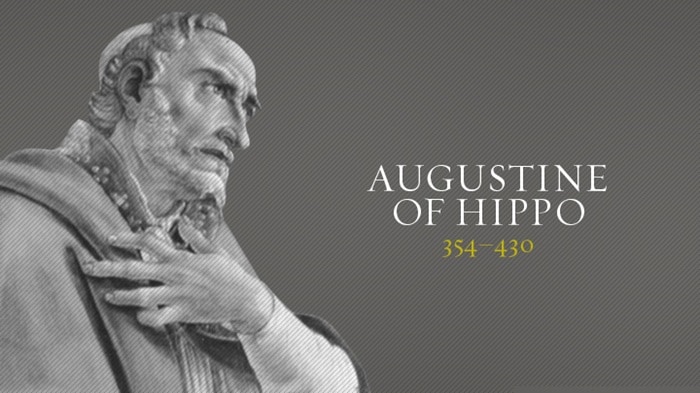
31-Augustine Part 1
This episode of CS is titled “Augustine – Part 1.”Late have I loved You, O Beauty so ancient yet so new; Late have I loved you. You were within while I was without. I sought You out there. Unlovely, I rushed heedlessly among the lovely things You made. You were with me, but I was not with You. These things kept me far from You; even though they’d not even be unless You made them. You called and cried aloud, and opened my deafness. You gleamed and shined, and chased away my blindness. You breathed fragrant odors and I drew breath, and now I pant for You. I tasted, and now I hunger and thirst. You touched me, and I burned for Your peace.Wrote Augustine of Hippo in his classic Confessions.We turn now to the life and work of a man of singular importance in the history of the Church due to his impact on theology. I’ll be blunt to say what it seems many, maybe most, are careful to avoid when it comes to Augustine. While the vast majority of historians laud him, a much smaller group are less enthused with him, as I hope becomes clear as we review the man and his impact.Augustine is the climax of patristic thought, at least in the Latin world. By “patristics,” I mean the theology of the Church Fathers. If you’ve ever had a chance to look through collections of books on theology or church history, you’ve likely seen a massive set of tomes called the Ante & Post Nicene Fathers. That simply means the Church Fathers that came before the Council of Nicaea and those who came after and helped lay the doctrinal foundation of the Church. Augustine was THE dominant influence on the Medieval European; so much so, He’s referred to as the Architect of the Middle Ages. Augustine continues to be a major influence among Roman Catholics for his theology of the church and sacraments, and for Protestants in regard to his theology of grace & salvation.Augustine’s back-story is well-known because there’s plenty of source material to draw from. Some say we know more about Augustine than any other figure of the ancient world because—not only do we have a record of his daily activities from one of his students; Possidius, Bishop of Calama; we also have a highly detailed record of Augustine’s inner life from his classic work, Confessions. We also have a work titled Retractions where Augustine chronicles his intellectual development as he lists 95 of his works, explains why they were written, and the changes he made to them over time.Let me begin his story by laying the background of Augustine’s world . . .The end of the persecution of the first 2 centuries was a great relief to the church. No doubt the reported conversion of Emperor Constantine seemed a dream come true. The apostle Paul told the followers of Christ to pray for the king and all those in authority. So the report of the Emperor’s conversion was a cause of great rejoicing. It was likely only a handful of the wise who sensed a call to caution in what this new relationship between church and state would mean and the perils it might bring.During the 4th Century, churches grew more rapidly than ever. But not all those who joined did so with pure motives. With persecution behind them, some joined the Church to hedge their bets and add one more deity to their list. Others joined thinking it would advance their social status, now that being a Christian could earn them points with officials. Some sincere Christians witnessed the moral and spiritual dumbing down of the faith and fled to the wilderness to pursue an ascetic lifestyle as a hermit or into a monastery as a monk. But most Christians remained in their cities and towns to witness the growing affiliation between the church and earthly institutions. The invisible, universal or catholic church began increasingly to be associated with earthly forms and social structures.I need to pause here and make sure everyone understands that the word Catholic simply means UNIVERSAL. Historically, this is the Age of Catholic Christianity – not ROMAN Catholic Christianity. Historians refer to this time and the Eastern Orthodox Church as Catholic, to differentiate it from the several aberrant and heretical groups that had split off. Groups like the Arians, Manichaeans, Gnostics, and Apollinarians, and half a dozen other hard to pronounce sects. But toward the end of the 4th Century, the Institutional replaced the Communal aspects of the Faith. The Gospel was supplanted by dogma and rituals in many churches.Jesus made it clear following Him meant a call to serve, not be served. Christians are servants. They serve God by serving one another and the world. During the first 3 centuries when the church was battered, the call to serve was valued as a priority. The heroes of the faith served by offering themselves in the ultimate sense-with their lives. But when the Church rose out of the catacombs to enter positions of social influence and power during the 4th Century, being a servant lost priority. Church leaders, who’d led by serving for 300
30-Ambrose
The title of this episode is simply à “Ambrose.” And once we learn a little about him, we’ll see that title is enough.For Ambrose was one of the most interesting figures in Church History, a hinge around which the course of the Faith swung.Born in 340, Ambrose was the second son of Ambrosius, the imperial governor of Gaul and part of an ancient Roman family that included the famous Marcus Aurelius. Not long after Aurelius, and his disastrous son and heir Commodus, the family became Christians who provided not a few notable martyrs. Ambrose was born at Trier, the imperial capital of Gaul. While still a child, Ambrose’s father died, and he was taken to Rome to be raised. His childhood was spent in the company of many members of the Christian clergy, men of sincere faith with a solid grasp on the theological challenges the Church of that day wrestled with; things you’re familiar with because we’ve spent the last several episodes dealing with them; that is, the Christological controversies that swirled first around Arius, then the blood-feud between Cyril & Nestorius.Now would be a good time for me to toss in some place-markers so we can get a sense of what was going on as Ambrose grew up. Donatus is the bishop of Carthage. The Cappadocian Fathers, Basil, and the 2 Gregory’s are hammering out the proper verbiage to understand the Trinity. Athanasius has his long run as THE chief defender or Biblical orthodoxy. When Ambrose was 16, the famous Desert Father Anthony of Egypt died. The Goths ran rampant over Northern Europe, causing great consternation in the Roman Empire. When Ambrose was 38 the Goths defeated the Romans at the Battle of Adrianople in a loss so thorough, the Emperor Valens was killed.During Ambrose’s lifetime, Pope Damasus will rule the Church at Rome. Jerome will move to Bethlehem and complete the Vulgate. John Chrysostom will serve as Patriarch at Constantinople.Clearly, a lot with major import was going on during Ambrose’s lifetime.When he turned 30, Ambrose, based in the capital at Milan, became governor of all NW’n Italy. He was charged with the responsibility to officiate church disputes. This was at a time when Nicaean & Arian believers were at war with each other; a war not fought with literal weapons but with words. Ambrose was no friend to the Arians, but he was so fair-minded and well-regarded, both sides supported him in his role as governor. When the Arian bishop of Milan died, Ambrose attended the meeting to elect his replacement, hoping his presence would forestall violence. To his surprise, both sides shouted their wish that he be the replacement.Ambrose didn’t want it. He was doing quite well as a political leader. Following the practice of many at that time, he hadn’t even been baptized yet. But the people wrote to Emperor Valentinian, asking for his approval of their selection. Ambrose was placed under arrest until he agreed to serve a Milan’s new bishop.Now, if the Arians had hoped to gain favor by supporting Ambrose as bishop, they were destined to disappointment. Their new bishop helped define what the word ‘orthodox’ meant. He soon took the Arians to task & refused to surrender a building for them to meet in. He wrote several works against them that went on to prove instrumental in ultimately bringing an end to Arianism.Trained in rhetoric and law, and having studied Greek, Ambrose became known for his knowledge of Greek scholars, both Christian and pagan. In addition to Philo, Origen, and Basil of Caesarea, he quoted the Neo-platonist Plotinus in his sermons. He was widely regarded as an excellent preacher.In many of his messages, Ambrose expounded upon the virtues of asceticism. He was so persuasive that noble families sometimes forbade their daughters to attend his services, fearing they’d trade their marriageable status withy its potential for a bride price, for the life of nun.One piece of his pastoral advice became a maxim for the clergy: “When you are at Rome, live in the Roman style; when you are elsewhere, live as they live elsewhere.”Ambrose also introduced congregational singing, and was accused of “bewitching” Milan by introducing Eastern melodies into the hymns he wrote. Because of his influence, hymn-singing became an important part of Western liturgy.While Ambrose was a fierce opponent of heresy, as seen in his stand against Arianism, his opposition to religious issues didn’t morph over into how people were treated civilly. Arians & pagans were still citizens who possessed rights as citizens. As human beings, they were still objects of God’s love and desire for salvation. Respect needed to be shown them, even while opposing them theologically. That was a rare perspective for the time; inordinately rare. And it earned Ambrose tremendous respect from all quarters.While the people of Ambrose’s time credited his writings and worship innovations as the most notable feature of his life & ministry, history attributes two other momentous events to

29-Syncretism
This episode of CS is titled, “Syncretism.”Recent episodes have chronicled the growing rift between the Eastern church centered at Constantinople and the Western-based in Rome. At the Council of Chalcedon in 451 Eastern bishops elevated the Bishop of Constantinople to near equal status and authority with the Bishop of Rome, giving the Church 2 heads. It was increasingly obvious politics played a greater role in church affairs than the quest for doctrinal purity or faithfulness to the Gospel–mandate. East & West were moving in opposite directions.Since Constantinople as the “New Rome” was the political center of the empire the Eastern church grew increasingly linked to Imperial power. In the year 380, on Feb. 27th in his Edict of Thessalonica, Emperor Theodosius declared Christianity the official state religion and banned paganism. Since the Church had no authority or power to enforce compliance to the Faith or to punish unconverted pagans, Imperial power was lent to enforce the Emperor’s will.This forced-conversion of vast multitudes of pagans saw an influx of new church members whose commitment to the Gospel was doubtful. Priests were now in the uncomfortable position of having to lead people they knew were at best, only nominally-committed.Since the Christianity of the 4th C had moved away from its roots in Judaism with its knee-jerk hostility to idolatry, a growing number of priests, who’d themselves been idol-worshiping pagans before conversion, though it might facilitate the assimilation of new converts to the Faith if concessions were made to the old forms. Why not take age-old traditions and direct them toward new ends? The veneration of angels, saints, relics, pictures, and statues was an attempt to bring ex-pagans into a more familiar form of worship and accommodate their religious sensitivities. Of this process, Philip Schaff writes, “The Christianizing of the State amounted in great measure to a paganizing and secularizing of the church. The world overcame the Church, as much as the Church overcame the world, and the temporal gain of Christianity was in many respects canceled by its spiritual loss. The mass of the Roman Empire was baptized only with water, not with the Spirit and fire of the Gospel, and it smuggled heathen manors and practices into the sanctuary under a new name.” [1]It’s a risky venture attributing motive to those removed from us by such a long distance in time, but I suspect for many church leaders the assimilation of pagan forms into the liturgy of the Church was seen as a necessary concession to the large numbers of barbarians now required to convert. The hope was that as these new, nominal church members learned the Gospel, the truth would set them free from their superstitions and the Church could return to a pure and orthodox liturgy. No doubt the reasoning went something like à God had become man to reach sinful men. Why could not the Church become, to use Paul’s words "all things to all people in order to win the more?"The problem is, if that was the rationalization for adopting pagan forms of worship, it didn't work. The Church didn't temporarily materialize its liturgy to accommodate nominal members; it institutionalized those pagan forms, making them into new traditions, some of which continue to this day.Another unfortunate development during this time was the distance that developed between the clergy and laity. For the first 3 Cs, lead pastors or bishops as they were called, were honored as God-ordained leaders by their congregations, but they weren't regarded as special. The elevation of bishops and priests into a special class developed slowly during the 4th & 5th Cs. By the dawn of the 6th they were regarded as being unique; part of a distinct category. The reason for this elevation differed in the East and West. In the East, Church & State were joined in a religio-political union. Because of the close of affinity between priest and politician, clergy adopted the lavish trappings Eastern officials affected. Constantine began this trend when he moved his capital to Constantinople. He adorned himself as a traditional opulent Eastern monarch rather than an austere Western Emperor.For the first 2 Cs, Western clergy wore clothing similar to their congregations. But as the monastic movement began providing more priests for the church, the monk’s habit became more prominent. This continued for some time among the priesthood, but as the political structure of the Western Empire fell apart and church leaders were increasingly looked to, to provide civil governance, some bishops adopted garments that marked them as civil rulers, flavoring their robes with religious symbols. But the message was clear à Church and State had merged in the office of Bishop.At General Councils, when Western bishops observed the sumptuous regalia of their Eastern peers, they aspired to wear similarly elegant gear and began to don the Eastern fashions. All this only served to further

28-Justinian Sayin’
This week’s episode of Communion Sanctorum is titled – “Justinian Sayin’”During the 5th C, while the Western Roman Empire was falling to the Goths, the Eastern Empire centered at Constantinople looked like it would carry on for centuries. Though it identified itself as Roman, historians refer to the Eastern region as the Byzantine Empire & Era. It gets that title from Byzantium, the city’s name before Constantine made it his new capital.During the 5th C, the entire empire, both East & West went into decline. But in the 6th Century, the Emperor Justinian I lead a major revival of Roman civilization. Reigning for nearly 40 years, Justinian not only brought about a re-flowering of culture in the East, he attempted to reassert control over those lands in the West that had fallen to barbarian control.A diverse picture of Justinian the Great has emerged. For years the standard way to see him was as an intelligent, ambitious, energetic, gregarious leader plagued by an unhealthy dose of vanity. Dare I say it? Why not: He wanted to make Rome Great Again. While that’s been the traditional way of understanding Justinian, more recently, that image has been edited slightly by giving his wife and queen Theodora, a more prominent role in fueling his ambition. Whatever else we might say about this husband and wife team, they were certainly devout in their faith.Justinian's reign was bolstered by the careers of several capable generals who were able to translate his desire to retake the West into reality. The most famous of these generals was Belisarius, a military genius on par with Hannibal, Caesar, & Alexander. During Justinian's reign, portions of Italy, North Africa & Spain were reconquered & put under Byzantine rule.The Western emperors in Rome's long history tended to be more austere in the demonstrations of their authority by keeping their wardrobe simple & the customs related to their rule modest, as befitted the idea of the Augustus as Princeps = meaning 1st Citizen. Eastern emperors went the other way & eschewed humility in favor of an Oriental, or what we might call “Persian” model of majesty. It began with Constantine who broke with the long-held western tradition of Imperial modesty & arrayed himself as a glorious Eastern Monarch. Following Constantine, Eastern emperors wore elaborate robes, crowns, & festooned their courts with ostentatious symbols of wealth & power. Encouraged by Theodora, Justinian advanced this movement and made his court a grand showcase. When people appeared before the Emperor, they had to prostrate themselves, as though bowing before a god. The pomp and ceremony of Justinian’s court were quickly duplicated by the church at Constantinople because of the close tie between church & state in the East.It was this ambition for glory that moved Justinian to embark on a massive building campaign. He commissioned the construction of entire towns, roads, bridges, baths, palaces, & a host of churches & monasteries. His enduring legacy was the Church of the Holy Wisdom, or Cathedral of St. Sophia, the main church of Constantinople. The Hagia Sofia was the epitome of a new style of architecture centered on the dome, the largest to be built to that time. Visitors to the church would stand for hours in awe staring up at the dome, incredulous that such a span could be built by man. Though the rich interior façade of the church has been gutted by years of conflict, the basic structure stands to this day as one of Istanbul’s premier attractions.Justinian was no mean theologian in his own right. As Emperor he wanted to unite the Church under one creed and worked hard to resolve the major dispute of the day; the divide between the Orthodox faith as expressed in the Council of Chalcedon & the Monophysites.By way of review; the Monophysites followed the teachings of Cyril of Alexandria who'd contended with Nestorius over the nature of Christ. Nestorius emphasized the human nature of Jesus, while Cyril emphasized Jesus’ deity. The followers of both took their doctrines too far so that the Nestorians who went East into Persia tended to diminish the deity of Christ, while the Cyrillians who went south into Egypt, elevated Jesus’ deity at the expense of his humanity. They put such an emphasis on his deity they became Monophysites; meaning 1 nature-ites.Justinian tried to reconcile the Orthodox faith centered at Constantinople with the Monophysites based in Egypt by finessing the words used to describe the faith. Even though the Council of Chalcedon had officially ended the dispute, there was still a rift between the Church at Constantinople and that in Egypt.Justinian tried to clarify how to understand the natures of Jesus as God & Human. Did He have 1 nature or 2? And if 2. How did those 2 natures co-exist in the Son of God? Were they separate & distinct or merged into something new? If they were distinct, was one superior to the other? This was th

27-Orthodoxy, with an Eastern Flavor
This Episode of CS is titled, “Orthodoxy, with an Eastern Flavor.”We need to begin this episode by defining the term “Orthodoxy.”It comes from Greek. Orthos means “straight” & idiomatically means that which is right or true. Doxa is from the verb dokein = to think; doxa is one’s opinion or belief.As it’s most often used, orthodoxy means adherence to accepted norms. In reference to Christianity, it means conforming to the creeds of the early Church; those statements of faith issued by the church councils we’ve looked at in recent podcasts and we have a series on in Season 2.In opposition to orthodoxy is what’s called heterodoxy; other-teaching. Heterodoxy deviates from the Faith defined by the Creeds. Specific instances of heterodoxy, that is - deviant doctrines are called heresy; with those who hold them known as heretics. When heresy causes a group of people to remove themselves from the Communion of Saints so they can form their own distinct community, it’s called a Schism.But there’s another, very different way the word Orthodox is used in Christianity. It’s the name of one of the 4 great branches of the Church; Roman Catholic, Protestant, & Eastern Orthodox. The fourth is that branch of the Faith we’ve been looking at for the last couple episodes – The Nestorian Church, AKA The Church of the East.In the West, we’re familiar with Roman Catholicism & Protestantism. We’re less aware of Eastern Orthodoxy and most people haven’t even heard of the Nestorian Church. Ignorance of Eastern Orthodoxy is tragic considering the Byzantine Empire which was home to the Orthodox Church continued to embody the values & traditions of the Roman Empire until the mid-15th C, a full millennium after the Fall of Rome in AD 476.It’ll be many episodes of CS before we get to the year 1054 when the Great Schism took place between the Eastern & Western churches. But I think it helpful to understand how Eastern Orthodoxy differs from Roman Catholicism so we can stay a little closer to the narrative timeline of how the Church developed in upcoming episodes.One of the ways we can better understand the Eastern Orthodox Church is to quickly summarize the history of Roman Catholicism in Europe during the Middle Ages as a contrast.In the West, the Church, led by the Pope with cardinals & bishops, oversaw the spiritual & religious aspects of European culture. The affiliation between church & state that began with Constantine the Great & continued for the next century & a half was at best a tense arrangement. Sometimes the Pope & Emperor were close; at other times they were at odds & competed for power. Overall, it was an uneasy marriage of the secular & religious. During the Middle Ages, the Church exerted tremendous influence in the secular sphere, & civil rulers either sought to ally themselves with the church, or to break the Church’s grip on power. Realizing how firm that grip was, some civil rulers even sought to infiltrate the ranks of the church to install their own bishops & popes. The Church played the same game & kept spies in many of Europe’s courts. These agents reported to Rome & sought to influence political decisions.The situation was dramatically different in the East where the church & state worked in harmony. Though foreign to the Western Mind, & especially the Modern Western Mind which considers a great barrier between Church & State, in the ancient Byzantine Empire, Church & State were partners in governance. They weren’t equivalent, but they worked together to shape policies & provide leadership that allowed the Eastern Empire to not only resist the forces that saw the West collapse, but to maintain the Empire until the 15th C when it was finally over-run by the Ottoman Turks.In our attempt to understand Eastern Orthodoxy, we’ll look to the description Marshall Shelly provides in his excellent book, Church History in Plain Language.The prime starting point for understanding Orthodoxy isn’t to examine its basic doctrines but rather its use of holy images called icons. Icons are highly stylized portrayals of one or more saints, set against a golden background and a halo around the head. Icons are crucial in understanding Eastern Orthodoxy. Orthodox believers enter their church and go first to a wall covered with icons called the iconostasis. This wall separates the sanctuary from the nave. The worshipper kisses the icons before taking his/her place in the congregation. A visitor to an Orthodox home will find an icon in the east corner of the main room. If the guest is him/herself Orthodox, they’ll greet the icon by crossing themselves & bowing. Only then will they greet the host.To the Orthodox, icons are much more than man-made images. They’re manifestations of a divine ideal. They’re considered a window into heaven. In the same way grace is thought to be imparted through the Roman Catholic Mass, grace is thought to flow from hea

26-And In the East Part 2
This episode of Communio Santorum is titled, “And In the East – Part 2.”In our last episode, we took a brief look at the Apostle Thomas’ mission to India. Then we considered the spread of the faith into Persia. Further study of the Church in the East has to return to the Council of Chalcedon in the 5th C where Bishop Nestorius was condemned as a heretic.As we’ve seen, the debate about the deity of Christ central to the Council of Nicea in 325, declared Jesus was of the same substance as the Father. It took another hundred years before the deity-denying error of Arianism was finally quashed. But even among orthodox & catholic, Nicean-holding believers, the question was over how to understand the nature of Christ. He’s God – got it! But he’s also human. How are we to understand His dual-nature. It was at the Council of Chalcedon in 451 that issue was finally decided. And the Church of the East was deemed to hold a position that was unorthodox.The debate was sophisticated & complex, and not a small part decided more by politics than by concern for theological purity. The loser in the debate was Bishops Nestorius, Patriarch of Constantinople. To make a complex issue simple, those who emphasized the unity of the 2 natures came to be called the Monophysites = meaning a single nature. They regarded Nestorius as a heretic because he emphasized the 2 natures as distinct; even to the point of saying Nestorius claimed Jesus was 2 PERSONS. That’s NOT what Nestorius said, but it’s what his opponents managed to get all but his closest supporters to believe he said. In fact, when the Council finally issued their creedal statement, Nestorius claimed they only articulated what he’d always taught. Even though the Council of Chalcedon declared Nestorianism heretical, the Church of the East continued to hold on to their view in the dual nature of Christ, in opposition to what they considered the aberrant view of monophysitism.By the dawn of the 6th C, there were 3 main branches of the Christian church:The Church of the West, which looked to Rome & Constantinople for leadership.The Church of Africa, with its great center at Alexandria & an emerging center in Ethiopia;And the Church of the East, with its center in Persia.As we saw last episode, the Church of the East was launched from Edessa at the border between Northern Syria & Eastern Turkey. The theological school there transferred to Nisibis in Eastern Turkey in 471. It was led by the brilliant theologian Narsai. This school had a thousand students who went out from there to lead the churches of the East. Several missionary endeavors were also launched from Nisibis – just as Iona was a sending base for Celtic Christianity in the far northwest. The Eastern Church mounted successful missions among the nomadic people of the Middle East & Central Asia between the mid-5th thru 7th Cs. These included church-planting efforts among the Huns. Abraham of Kaskar who lived during the 6th C did much to plant monastic communities throughout the East.During the first 1200 years, the Church of the East grew both geographically & numerically far more than in the West. The primary reason for this is because in the East, missionary work was largely a movement of the laity. As Europe moved into the Middle Ages with its strict feudal system, travel ground to a standstill, while in the East, trade & commerce grew. This resulted in the movement of increasing numbers of people who carried the Faith with them.Another reason the Church in the East grew was persecution. As we saw last time, before Constantine, the persecutions of the Roman Empire pushed large numbers of believers East. Then, when the Sassanids began the Great Persecution of Christians in Persia, that pushed large numbers of the Faithful south & further East. Following the persecution that came under Shapur II, another far more severe round of persecution broke out in the mid-5th C that saw 10 bishops and 153,000 Christians massacred within a few days.When we think of Arabia, many immediately think of Islam. But Christianity had taken root in the peninsula long before Muhammad came on the scene. In fact, a bishop from Qatar was present at the Council of Nicea in 325! The Arabian Queen Mawwiyya, whose forces defeated the Romans in 373, insisted on receiving an orthodox bishop before she would make peace. There was mission-outreach to the south-eastern region of Arabia, in what is today Yemen before the birth of Muhammad by both Nestorian & Monophysite missionaries. By the opening of the 6th C, there were dozens of churches all along the Arabian shore of the Persian Gulf.The rise of Islam in the 7th C was to have far-reaching consequences for the Church in the East. The Persian capital at Ctesiphon fell to the Arabs in 637. Since the Church there had become a kind of Rome to the Church of the East, the impact was massive. Muslims were sometimes tolerant of religious minorities but only as communit

25-And In the East Part 1
This episode of Communio Santorum is titled, “And In the East – Part 1.”The 5th C Church Father Jerome wrote, “[Jesus] was present in all places with Thomas in India, with Peter in Rome, with Paul in Illyria, with Titus in Crete, with Andrew in Greece, with each apostle . . . in his own separate region.”So far we’ve been following the track of most western studies of history, both secular & religious, by concentrating on what took place in the West & Roman Empire. Even though we’ve delved briefly into the Eastern Roman Empire, as Lars Brownworth aptly reminds us in his outstanding podcast, 12 Byzantine Emperors, even after the West fell in the 5th Century, the Eastern Empire continued to think of & call itself Roman. It’s later historians who refer to it as the Byzantine Empire.Recently we’ve seen the focus of attention shift to the East with the Christological controversies of the 4th & 5th Cs. In this episode, we’ll stay in the East and follow the track of the expansion of the Faith as it moved Eastward. This is an amazing chapter often neglected in traditional treatments of church history. It’s well captured by Philip Jenkins in his book, The Lost History of Christianity.We start all the way back at the beginning with the apostle Thomas. He’s linked by pretty solid tradition to the spread of Christianity into the East. In the quote we started with from the early 5th C Church Father Jerome, we learn that the Apostle Thomas carried the Gospel East all the way to India.In the early 4th C, Eusebius also attributed the expansion of the faith in India to Thomas. Though these traditions do face some dispute, there are still so-called ‘Thomas Christians’ in the southern Indian state of Kerala today. They use an Aramaic form of worship that had to have been transported there very early. A tomb & shrine in honor of Thomas at Mylapore is built of bricks used by a Roman trading colony but was abandoned after ad 50. There’s abundant evidence of several Roman trading colonies along the coast of India, with hundreds of 1st C coins & ample evidence of Jewish communities. Jews were known to be a significant part of Roman trade ventures. Their communities were prime stopping places for the efforts of Christian missionaries as they followed the Apostle Paul’s model as described in the Book of Acts.A song commemorating Thomas’ role in bringing the faith to India, wasn’t committed to writing till 1601 but was said to have been passed on in Kerala for 50 generations. Many trading vessels sailed to India in the 1st C when the secret of the monsoon winds was finally discovered, so it’s quite possible Thomas did indeed make the journey. Once the monsoons were finally figured out, over 100 trade ships a year crossed from the Red Sea to India.Jesus told the disciples to take the Gospel to the ends of the Earth. While they were slow to catch on to the need to leave Jerusalem, persecution eventually convinced them to get moving. It’s not hard to imagine Thomas considering a voyage to India as a way to literally fulfill the command of Christ. India would have seemed the end of the Earth.Thomas’s work in India began in the northwest region of the country. A 4th C work called The Acts of Thomas says that he led a ruler there named Gundafor to faith. That story was rejected by most scholars & critics until an inscription was discovered in 1890 along with some coins which verify the 20-year reign in the 1st C of a King Gundafor.After planting the church in the North, Thomas traveled by ship to the Malabar Coast in the South. He planted several churches, mainly along the Periyar River. He preached to all classes of people and had about 17,000 converts from all Indian castes. Stone crosses were erected at the places where churches were founded, and they became centers for pilgrimages. Thomas was careful to appoint local leadership for the churches he founded.He then traveled overland to the Southeast Indian coast & the area around Madras. Another local king and many of his subjects were converted. But the Brahmins, highest of the Indian castes, were concerned the Gospel would undermine a cultural system that was to their advantage, so they convinced the king at Mylapore, to arrest & interrogate him. Thomas was sentenced to death & executed in AD 72. The church in that area then came under persecution and many Christians fled for refuge to Kerala.A hundred years later, according to both Eusebius & Jerome, a theologian from the great school at Alexandria named Pantaenus, traveled to India to “preach Christ to the Brahmins.”[1]Serving to confirm Thomas’ work in India is the writing of Bar-Daisan. At the opening of the 3rd Century, he spoke of entire tribes following Jesus in North India who claimed to have been converted by Thomas. They had numerous books and relics to prove it. By AD 226 there were bishops of the Church in the East in northwest India, Afghanistan & Baluchistan, with thousands o
24-Can’t We All Just Get Along?
The title of this episode is, “Can’t We All Just Get Along?”In our last episode, we began our look at how the Church of the 4th & 5th Cs attempted to describe the Incarnation. Once the Council of Nicaea affirmed Jesus’ deity, along with His humanity, Church leaders were left with the task of finding just the right words to describe WHO Jesus was. If He was both God & Man as The Nicaean Creed said, how did these two natures relate to one another?We looked at how the churches at Alexandria & Antioch differed in their approaches to understanding & teaching the Bible. Though Alexandria was recognized as a center of scholarship, the church at Antioch kept producing church leaders who were drafted to fill the role of lead bishop at Constantinople, the political center of the Eastern Empire. While Rome was the undisputed lead church in the West, Alexandria, Antioch & Constantinople vied with each other over who would take the lead in the East. But the real contest was between Alexandria in Egypt & Antioch in Syria.The contest between the two cities & their churches became clear during the time of John Chrysostom from Antioch & Theophilus, lead bishop at Alexandria. Because of John’s reputation as a premier preacher, he was drafted to become Bishop at Constantinople. But John’s criticisms of the decadence of the wealthy, along with his refusal to tone down his chastisement of the Empress, caused him to fall out of favor. I guess you can be a great preacher, just so long as you don’t turn your skill against people in power. Theophilus was jealous of Chrysostom’s promotion from Antioch to the capital and used the political disfavor growing against him to call a synod at which John was disposed from office as Patriarch of Constantinople.That was like Round 1 of the sparring match between Alexandria and Antioch. Round 2 and the deciding round came next in the contest between 2 men; Cyril & Nestorius.Cyril was Theophilus’ nephew & attended his uncle at the Synod of the Oak at which Chrysostom was condemned. Cyril learned his lessons well and applied them with even greater ferocity in taking down his opponent, Nestorius.Before we move on with these 2, I need to back-track some & bore the bejeebers out of you for a bit.Warning: Long, hard to pronounce, utterly forgettable word Alert.Remember è The big theological issue at the forefront of everyone’s mind during this time was how to understand Jesus.Okay, we got it: àThe Nicaean Creed’s been accepted as basic Christian doctrine.The Cappadocian Fathers have given us the right formula for understanding the Trinity.There’s 1 God in 3 persons; Father, Son & Holy Spirit.Now, on to the next thing: Jesus is God and Man. How does that work? Is He 2 persons or 1? Does He have 1 nature or 2? And if 2, how do those natures relate to one another?A couple ideas were floated to resolve the issue but came up short; Apollinarianism and Eutychianism.Apollinaris of Laodicea lived in the 4th C. A defender of the Nicene Creed, he said in Jesus the divine Logos replaced His human soul. Jesus had a human body in which dwelled a divine spirit. Our longtime friend Athanasius led the synod of Alexandria in 362 to condemn this view but didn’t specifically name Apollinaris. 20 Yrs later, the Council of Constantinople did just that. Gregory of Nazianzus supplied the decisive argument against Apollinarianism saying, “What was not assumed was not healed” meaning, for the entire of body, soul, and spirit of a person to be saved, Jesus Christ must have taken on a complete human nature.Eutyches was a, how to describe him; elderly-elder, a senior leader, an aged-monk in Constantinople who advocated one nature for Jesus. Eutychianism said that while in the Incarnation Jesus was both God & man, His divine nature totally overwhelmed his human nature, like a drop of vinegar is lost in the sea.Those who maintained the dual-nature of Jesus as wholly God and wholly Man are called dyophysites. Those advocating a single-nature are called Monophysites.What happened between Cyril & Nestorius is this . . .Nestorius was an elder and head of a monastery in Antioch when the emperor Theodosius II chose him to be Bishop of Constantinople in 428.Now, what I’m about to say some will find hard to swallow, but while Nestorius’s name became associated with one of the major heresies to split the church, the error he’s accused of he most likely wasn’t guilty of. What Nestorius was guilty of was being a jerk. His story is typical for several of the men who were picked to lead the church at Constantinople during the 4th through 7th Cs; effective preachers but lousy administrators & seriously lacking in people skills. Look, if you’re going to be pegged to lead the Church at the Political center of the Empire, you better be a savvy political operator, as well as a man of moral & ethical excellence. A heavy dose of tact ought to have been a pre-requisite. But guys kept ge
23-Who Do You Say He Is?
This episode is titled “Who Do You Say He Is?”We begin this episode by reading from the Chalcedonian Creed of AD 451, the portion devoted to the orthodox view of Christ.We, then, following the holy Fathers, all with one consent, teach men to confess one and the same Son, our Lord Jesus Christ, the same perfect in Godhead and also perfect in manhood; truly God and truly man, of a rational soul and body; consubstantial with the Father according to the Godhead, and consubstantial with us according to the Manhood; in all things like unto us, without sin; begotten before all ages of the Father according to the Godhead, and in these latter days, for us and for our salvation, born of the Virgin Mary, the Mother of God, according to the Manhood; one and the same Christ, Son, Lord, only begotten, to be acknowledged in two natures, inconfusedly, unchangeably, indivisibly, inseparably; the distinction of natures being by no means taken away by the union, but rather the property of each nature being preserved, and concurring in one Person and one Subsistence, not parted or divided into two persons, but one and the same Son, and only begotten, God the Word, the Lord Jesus Christ; as the prophets from the beginning declared concerning Him, and the Lord Jesus Christ Himself has taught us, and the Creed of the holy Fathers has handed down to us.Compare that to the simple words of the Apostles Creed quoted by many Christians from memory 300 years before.I believe in . . . Jesus Christ, God’s only begotten Son, our Lord: Who was conceived by the Holy Ghost, born of the Virgin Mary, suffered under Pontius Pilate; was crucified, dead and buried. He descended into hell. The third day he rose again from the dead. He ascended into heaven and sits at the right hand of God the Father Almighty. From thence he shall come to judge the living and the dead.Quite a difference. What caused the Church to draw such exacting language regarding who Jesus was between the early 2nd & mid 5th Cs? That’s the subject of this and the next episode. Along the way, we’ll see of interesting developments in the Church and learn of some colorful characters.In the 16th chapter of Matthew’s Gospel, we read of a time near Caesarea Philippi in Galilee when Jesus asked His disciples, “Who do people think I am?” After hearing what the popular talk was, Jesus asked them “Who do YOU say I am?” That set the stage for Peter to confess his faith in Jesus as Messiah.We might think Jesus’ affirmation of Peter’s reply would put an end to the controversy. It was only the beginning. That controversy raged over the next 500 yrs as Church leaders wrestled with HOW to understand Jesus.We’ve already touched on this subject in previous episodes. I’ve mentioned we’d return to deal with it specifically in a future episode. This is it; and here’s why we need to slow down a bit and take our time reviewing the history of the controversy over how to understand Who Jesus was. We need to camp here for a bit because this issue consumed a good amount of the Church’s intellectual energy during the 4th & 5th Cs.Today, we accept the orthodox view of the Trinity & the Nature of Jesus as God and Man readily; not realizing the agony the Early Church Fathers endured while they labored over precisely HOW to put into just the right words what Christians believe. One theologian said Theology is the fine art of making distinctions. Nowhere is that more clear than here; in our examination of how orthodox theologians described a Christ.The first great Ecumenical Council was held at Nicaea in 325 at the urging of the Emperor Constantine. Some 300 bishops representing the entire Christian world attended to hammer out their response to Arianism; the idea that Jesus was human, but not divine. As the Council dragged on, Constantine, itching to get back to the business of running the Empire, pressed the bishops to adopt a Statement that affirmed Jesus was both God & man. But many of the bishops left Nicaea discontented with the wording of the Nicaean Creed. They felt it was imprecise. It failed to capture the full truth of Who Jesus is. This lack of support for the Nicaean Creed opened the doors for many of the later controversies that would wrack the Church. The Council of Chalcedon 125 yrs later tightened up the language on Nicaea but didn’t fundamentally alter the Creed. Let’s take a look at the time between Nicaea & Chalcedon . . .Sometimes, in an attempt to bring clarity to a complex situation, we over-simplify. I run the risk of doing that here. But for the sake of brevity, I beg the listeners’ indulgence as I chart the path from 325 to 451.Following Nicaea, with the affirmation that Jesus is both God & Man, the Church had to first harmonize that with the Biblical reality there’s ONE God, not Two. And wait, someone asked, what about the Holy Spirit; doesn’t the Bible says He’s also God? The classic, orthodox statement of the Trinity, that God is 1 in substance or essence, b
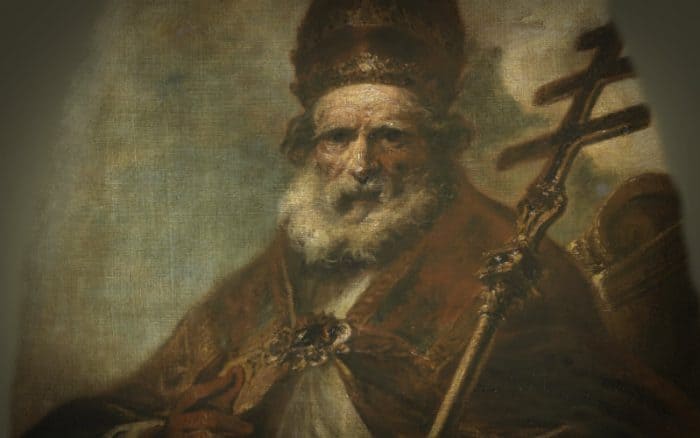
22-Leo
This Episode is simply titled “Leo”While there’d been several bishops of the church at Rome who’d been capable leaders and under their guidance had established Rome as the premier church, if not the whole Christian world, at least in the western portion of the now declining Roman Empire, it can be fairly said that for most of the earlier bishops the person was eclipsed by the office. Bishops Callistus, Stephen, Damasus, & Innocent I all added significant authority to the Roman See. But it was Leo the Great who saw the Bishop of Rome become what we might call the first real Pope. It was with Leo I that the idea of the Papacy became real.While previous bishops at Rome had certainly been theologically astute, as befitted their office, Leo can be classed as a first-rate theologian, arguably the greatest theologian of any who came before in that office and for a century & a half after. He battled the Manichæan, Priscillianist, & Pelagian heresies, and won enduring fame for helping to finish codifying the orthodox doctrine of the person of Christ.Leo’s early life is shrouded in mystery. The chief source of information about him comes from his letters & they don’t commence till AD 442 when he was already an adult. Leo was mostly likely a Roman who became a deacon, then a legate under Bishops Celestine I & Sixtus III. A legate is a special messenger, sent by a bishop, to carry messages to civil rulers. Think à Church ambassador to the king. Leo was so astute in his task as a representative for the Church, Emperor Valentinian III sent him on a special mission to settle a dispute in Gaul between a couple feuding generals. This was at a time of great turmoil in the north due to the barbarian threat. While Leo was on this peace-making mission, Bishop Sixtus died and Leo was chosen to take his seat. He served for the next 21 years.Leo describes his feelings at the assumption of his office in a sermon;“Lord, I have heard your voice calling me, and I was afraid: I considered the work which was enjoined on me, and I trembled. For what proportion is there between the burden assigned to me and my weakness, this elevation and my nothingness? What is more to be feared than exaltation without merit, the exercise of the most holy functions being entrusted to one who is buried in sin? Oh, you have laid upon me this heavy burden, bear it with me, I beseech you be you my guide and my support.”Leo’s papacy faced 2 immense problems.First: The emergence of heresies threatened the integrity of the Church; and àSecond: The political disintegration of the Western Roman Empire.Leo offered 3 tactics in dealing with these difficulties à1) Actions to provide essential church doctrine with a clear, orthodox position;2) Efforts to unify church government under a sovereign papacy; and3) Attempts at peace by negotiating with the Empire’s enemies.On the doctrinal front, Leo theologically refuted the era’s main heresies & utilized imperial criminal prosecution & banishment to get rid of unrepentant heretics. Leo’s finest achievement was probably the formation and acceptance of an orthodox Christological dogma.Though Arianism was in retreat, the 5th C battled with what’s called Eutychianism. We’re going to get into this in more depth in a soon coming episode so for now let me just say that Eutychianism was one of the 4th & 5th Cs’ attempts to understand the nature of Jesus. Was He God, Man or both? And if both, how do the 2 nature relate to each other? Eutychianism said Jesus had 2 natures, human & divine, but that the divine had completely dominated the human, like a drop of vinegar is overwhelmed by the sea. Later it will come to be known by a label you may have heard = Monophysitism.Leo’s manner of dealing with this aberrant teaching was brilliant. Rather than rely on suppression, he brought it’s main advocate, Eutychus, to Rome for lengthy discussions and, after painstaking research & deliberation, issued a carefully written letter, the famous Tome of Leo. It set forth a clear exposition of Christ’s 2 natures in 1 person & became the basis in 451 for the Council of Chalcedon’s enduring formulation of Christological doctrine.This alone would mark Leo as worthy of the honorific “Great” but he did more, much more. He rescued the city of Rome from destruction, not once, but twice! When Attila & his Huns, known as the “Scourge of God,” destroyed the Italian city of Aquileia in 452 & everyone knew Rome was next on the barbarian’s hit list, Leo, with a couple companions, travelled north, entered the hostile camp, and persuaded Attila to leave off sacking the City. Think of it; a bishop’s simple word accomplished what the waning might of the once mighty Rome could not, convince the barbarian hordes to go home.Then, 3 yrs later when the Vandal king Genseric was poised to do what Attila had been deflected from, Leo was able to obtained a promise the Vandals would relieve the city of its wealth but not b

21-The New Center
This episode is titled – “The New Center.”Spread over 3 pages in Vol. 3 of his monumental work History of the Christian Church, author Philip Schaff makes a compelling argument for why it was inevitable Christianity would eventually emerge from the Roman catacombs to join the State in governing the hearts & lives of the people of the Empire. And while it was inevitable, Schaff describes how the merger resulted in the corruption of the Church. He wrote, “The Christianizing of the State amounted in great measure to the paganizing and secularizing of the Church.”We've already seen how the Church at Rome emerged to become a headquarters of Western Christianity. We need to spend a little more time here as this period of church history is crucial for understanding the eventual rift that occurred between East and West and what emerged in Europe after this, not only for the Church but for the nations that arose there.The idea of the rule of the entire Church by the Roman Pope was a slow and halting process. The title “Pope / Papa” wasn’t important to the emergence of the Bishop of Rome as the leader of the Church. It was a term of affection used by many Christians for their pastor and was used in a more formal sense in Alexandria decades before it was used of the Roman Bishop. It wasn't until the 6th C that the word “Pope” was reserved exclusively for Rome's Bishop, long after he'd already claimed primacy as Peter’s successor.It's important as well we make a distinction between the honor the Roman church held and the overarching authority its bishop later claimed. There’s ample evidence of the respect accorded Rome's Christian community.Rome was, after all, the capital of the Empire.The church there was the largest and richest. By the mid-3rd C, it claimed some 30,000 members, served by 150 priests, supporting 1500 widows & the poor.It had a long record of remaining orthodox and generous. For these reasons, it was regarded as the lead church of the Western Empire. Though there’s no solid historical evidence to support it, Christians of the 2nd thru 4th Cs believed Peter and Paul founded the church at Rome. It was thought each bishop of Rome handed his authority and office to his successor so that the current Pope, whoever that was, was sitting in the Apostolic seat of Peter.We can see why this would be important to the Church when the Gnostics were a threat to the faith. They claimed to possess special secret knowledge & traditions that had been passed on by Jesus to the apostles, then to them. In contrast to this fiction, Rome could actually name their bishops all the way back to the original apostles. This list was memorized by young believers like state capitals are memorized by students today.While the church at Rome was regarded with great respect by most believers, this honor didn't always extend to its bishop. There’s much evidence of church fathers, like Irenaeus & Cyprian who disagreed vehemently with positions taken by the bishop of Rome. Until Constantine, there’s no evidence the church at large took direction from Rome's lead pastor.It's important at this point to speak about the changes that took place in the structure of the churches during the 3rd & 4th Cs. This change came about for 2 reasons: Councils & Arch-bishops.The first development that led to an alteration in the way churches developed was Church Councils. As the Church grew & individual congregations developed in more places, leaders of the Church recognized the need to coordinate their efforts & teaching. The emergence of heretics prompted elders and pastors to gather to discuss how to address the challenge of false teaching. These gatherings were at first informal and irregular, called at random by provincial leaders. In the 3rd C they began meeting annually in more formal Councils to share news and establish policy that would be observed in each church. These provincial councils proved so helpful, in the 4th C several provinces started sending their bishops to larger regional councils.When Constantine became Emperor and the churches faced major obstacles, the call was sent out for all bishops to meet. The first such General or Ecumenical Council was held in 314 at Arles (are-L) although only the Western church leaders were called. The first true all-Church Council was held at Nicaea not far from Constantinople in 325 and dealt with the threat of Arianism. The findings of these General Councils became the rule for the churches.The 2nd development that helped shape the Church was the emergence of archbishops. During the provincial and regional councils, all bishops were supposed to be equals. But in practice, some of the older bishops and those who lead larger, older, and more respected churches were held in higher regard. Also, as the Church grew it tended to locate first in urban centers, then reached out to the surrounding rural countryside where smaller churches sprang up, usually led by pastors sent out

20-Golden Tongue
The title of this episode it “Golden Tongue”His preaching was so good, they called him the Golden-mouthed.John Chrysostom was raised by a widowed mother in the city of Antioch. During the mid-4th C, Antioch was a major city of the Eastern Roman Empire & a major center of Christian thought & life. Coming from a wealthy family, John’s young mother decided to remain a widow & devoted herself to her son’s education. She hired a tutor named Libanius, close friend of the Emperor Julian the Apostate. Libanius instilled in John a love of the Greek classics & a passion for rhetoric that laid the foundation for his later life.He began a career as a lawyer but when he heard the Gospel, became a believer & was baptized in 368. His zeal drove him to that time’s most regarded example of what it meant to follow Jesus – he became a monk. But the deprivations of the ascetic life ruined his health. In 380, he left his cave to rejoin life in his hometown of Antioch. Six years later the bishop there ordained John a priest and he began a remarkable preaching career.During this time, he penned On the Priesthood, a justification for his delay in entering the priesthood but also a mature look at the perils and possibilities of ministry. He wrote, “I do not know whether anyone has ever succeeded in not enjoying praise. And if he enjoys it, he naturally wants to receive it. And if he wants to receive it, he cannot help being pained and distraught at losing it.”It was in Antioch Chrysostom’s preaching began to be noticed, especially after what has been called the “Affair of the Statues.”In the Spring of 388, a rebellion erupted in Antioch over the announcement of increased taxes. By way of protest, statues of the emperor and his family were desecrated. Imperial officials responded by punishing city leaders, going so far as killing some. Archbishop Flavian rushed some 800 miles to the capital in Constantinople, to beg the emperor for clemency.In the bishop’s absence, John preached to the terrified city: “Improve yourselves now truly, not as when during one of the numerous earthquakes or in famine or drought or in similar visitations you leave off your sinning for 3 or 4 days and then begin the old life again.” When Flavian returned 8 wks later with the good news of the emperor’s pardon, John’s reputation soared.From then on, he was in demand as a preacher. He preached through many books of the Bible, though he had his favorites. “I like all the saints,” he said, “but St. Paul the most of all—that vessel of election, the trumpet of heaven.” In his sermons, he denounced abortion, prostitution, gluttony, the theater, and swearing. About the love of horseracing, he complained, “My sermons are applauded merely from custom, then everyone runs off to the races again and gives much more applause to the jockeys, showing indeed unrestrained passion for them! There they put their heads together with great attention, and say with mutual rivalry, ‘This horse did not run well, this one stumbled,’ and one holds to this jockey and another to that. No one thinks any more of my sermons, nor of the holy and awesome mysteries that are accomplished here.”His large bald-head, deeply set eyes, and sunken cheeks reminded people of Elisha the prophet. Though his sermons, lasting between 30 minutes & 2 hours, were well-attended, he sometimes became discouraged: “My work is like that of a man trying to clean a piece of ground into which a muddy stream constantly flows.”Preaching and teaching had always been central to a priest’s work, but under John, it took on new significance. His messages were markedly different from the allegorical mish-mash common at that time. John’s sermons were straight-forward, literal interpretations & applications of Scripture. Over 600 of his messages have come down to us so we get a feel for the power of his eloquence, which earned him the nick-name “Chrysostom = Golden-mouthed.” Though he was slight of build, the quality of his voice was remarkable. He could be heard clearly by large crowds.In early 398, John was seized by soldiers and transported to the capital, where he was forcibly consecrated as the bishop of Constantinople. His kidnapping was arranged by a government official who wanted to adorn the church in the capital with the best orator in Christianity. Rather than rebelling against the injustice, John accepted it as God’s providence.But rather than soften his words for his new & more prestigious audience, including many from the imperial household & court, John continued the same themes he’d preached in Antioch. He decried abuses of wealth and power. His own lifestyle became a scandal because he refused the decadence the wealthy & influential were given over to. He instead lived an ascetic life, used his considerable household budget to care for the poor, and built hospitals.He continued preaching against the great public sins. In a sermon against the theater, he said, “Long after

19-Jerome
This episode is titled, “Jerome.”By his mid-30’s, Jerome was probably the greatest Christian scholar of his time. He’s one of the greatest figures in the history of Bible translation, spending 3 decades producing a Latin version that would be the standard for a thousand years. But Jerome was no bookish egghead. He longed for the hermetic life we considered in the previous episode & often exhibited a sour disposition that showered his opponents with biting sarcasm and brutal invective.His given name was Eusebius Hieronymus Sophronius and was born in 345 to wealthy Christian parents either in Aquileia in NE Italy or across the Adriatic in Dalmatia.At about 15, Jerome and a friend went to Rome to study Rhetoric & Philosophy. He engaged with abandon many of the immoral escapades of his fellow students, then followed up these debaucheries with intense self-loathing. To appease his conscience, he visited the graves & tombs of the martyrs and saints in Rome’s extensive catacombs. Jerome later said the darkness & terror he found there seemed an appropriate warning for the hell he knew his soul was destined for.This tender conscience is interesting in light of his initial skepticism about Christianity. That skepticism began to thaw when he realized what he was experiencing was the conviction of the Holy Spirit. His mind could not hold out against his heart and he was eventually converted. At 19, he was baptized.He then moved to Trier in Gaul where he took up theological studies & began making copies of commentaries & doctrinal works for wealthy patrons.Jerome then returned to Aquileia, where he settled in to the church community and made many friends.Several of these accompanied him when he set out in 373 on a journey thru Thrace and Asia Minor to northern Syria. At Antioch, 2 of his companions died and he became seriously ill. During this illnesses, he had a vision that led him to lay aside his studies in the classics and devote himself to God. He plunged into a deep study of the Bible, under the guidance of a church leader at Antioch named Apollinaris. This Apollinaris was later labeled a heretic for his unorthodox views on Christ. He was one of several at this time trying to work out how to understand and express the nature of Jesus; was He God, Man or both? And if both, how are we to understand these two natures operating within the One, Jesus? Apollinaris said Jesus had a human body & soul, but that his mind was divine. This view, creatively called Apollinarianism, was declared heretical at the Council of Constantinople in 381, though the church had pretty well dispensed with it as a viable view of Christ back in 362 at a Synod in Alexandria, presided over by our friend Athanasius.While in Antioch & as a fallout of his illness & the loss of his friends, Jerome was seized with a desire to live an ascetic life as a hermit. He retreated to the wilderness southwest of Antioch, already well-populated by fellow-hermits. Jerome spent his isolation in more study and writing. He began learning Hebrew under the tutelage of a converted Jew; and kept in correspondence with the Jewish Christians of Antioch. He obtained a copy of the Gospels in Hebrew, fragments of which are preserved in his notes. Jerome translated parts of this into Greek.Returning to Antioch in 379, he was ordained by Paulinus, whom you’ll remember was the bishop of the Nicaean congregation there. This is the Bishop & church supported by Rome when the Arian church in Antioch was taken over a new also-Nicaean Bishop named Meletius. Instead of the 2 churches merging because the cause of their division was now removed, they became the political frontlines in the battle for supremacy between Rome & Constantinople.Recognizing Jerome’s skill as a scholar, Bishop Paulinus rushed to ordain Jerome as a priest, but the monk would only accept it on the condition he’d never have to carry out priestly functions. Instead, Jerome plunged himself into his studies, especially in Scripture. He attended lectures, examined parchments, and interviewed teachers and theologians.He went to Constantinople to pursue a study of the Scriptures under Gregory of Nazianzus. He spent 2 years there, then was asked by Paulinus back in Antioch to accompany him to Rome so the whole issue over who the rightful bishop in Antioch was. Paulinus knew Jerome would make a mighty addition to his side. Indeed he did, and Pope Damasus I was so impressed with Jerome, he persuaded him to stay in Rome. For the next 3 years, Jerome became something of a celebrity at Rome. He took a prominent place in most of the pope’s councils. At one point his influence over the pope was so great he had the audacity to say, “Damasus is my mouth.”He began a revision of the Latin Bible based on the Greek manuscripts of the New Testament. He also updated the Book of Psalms that prior to that time had been based on the Septuagint; a Greek translation of Hebrew.In Rome, he was sur
18-Hermits
This week’s episode is titled “Hermits.”A few episodes back when I introduced Athanasius, I mentioned the religious hermits he visited in the wilderness near Alexandria in Egypt, bringing them food. As a young man, Athanasius honored these men who'd forsaken the ease of city life to pursue an undistracted but difficult life of devotion to God.Who were these hermits, and what moved them to such a radical departure from the lifestyle modeled by Jesus and the Apostles?While the theology of monks & monasteries evolved over many generations, its earliest foundation rested on the example of John the Baptist, the forerunner of Christ who was something of an ascetic. His normal haunt was the Judean wilderness where it intersected the Jordan River. He wore a less than a fashion-conscious wardrobe and ate a strict organic diet grudgingly provided by the wilderness.The earliest hermits put great weight in Jesus's counsel to the rich young ruler to sell his possessions, giving it all to the poor, & following the Lord. They embraced the New Testament’s frequent idiom that the flesh is in a battle with the spirit & vice versa. They concluded flesh & spirit are irreconcilable. Hermits literally renounced the world by leaving the cultured life of the city to live in a primitive setting in the wilderness. This lifestyle of deprivation and discomfort was regarded as the truest route to unhindered communion with God by the hermits and a growing number of their admirers.The first time we see a written expression of this emerging mindset is in the Shepherd of Hermas about AD 140. This early Christian document defines a higher & lower route believers can take in their devotion to God. Faith, hope, & love are the lower route required of all Christians. But for those who aspire to closer intimacy with God, self-denial is required. This denial of the self took many forms with celibacy & renouncing marriage one of the more radical, yet popular.The practice of penance became common with believers moved to dramatic acts of charity and bravery in order to prove their devotion to God. When persecution was a frequent threat, Christians used penance as a way to compensate for moments of weakness & fear. And of course, the martyrs were luminous heroes even some pagans admired! But with the repeal of persecution, the Church needed new heroes & found them in the hermits who engaged in extreme acts of self-denial.The earliest monks were hermits; individuals who took refuge in the desert, hinting at where they got their start; in Egypt, where the desert is plentiful outside the fertile strip of land along the Nile. The word or hermit comes from the Greek word for desert.About AD 250, a 20-year-old named Anthony took Jesus’ command to the rich young ruler to sell his possessions & follow him -- literally. Anthony sold everything & went to live in an abandoned tomb. Legends quickly grew up about his battles with temptation that took visible form in attacks by demons, seductive women, & wild beasts. Anthony emerged from each battle with a greater sense of devotion to God that inspired others to follow his ascetic example. Soon, hundreds made their way to the wilderness to pursue a life of rigid self-denial. Anthony was Athanasius’ favorite. Since Anthony lived to be over a hundred, he was alive when the future bishop of Alexandria was taking supplies to the desert monks. Athanasius wrote a biography of Anthony, which became widely popular. This book, more than any other factor helped boost the esteem & appeal of the hermetic life.Monasticism grew apace with the new-found imperial favor under Constantine and his successors. It's not difficult understanding why the number of ascetics jumped & monasticism became popular at the same time the Church & State were buddying up. Being a Christian was no longer dangerous, so the sincerity of many new members declined. When people realized belonging to a church was a social & political plus, the sincerity factor dipped even further. Genuine believers noted the sagging quality of faith among so many of the church’s fair-weather friends & chose responded by embracing a more rigorous path. The models of that era were the monks; those standout Christian heroes who’d attained an honor similar to that given the martyrs of the previous era-and hey! I don't have to get my head chopped off. Cool.So the monks of this time weren't so much fleeing the world as they were protesting a worldly church.Part and parcel of the hermetic life was an isolated individualism that stands in contrast to the communal life modeled by Jesus and the Apostles and urged in the New Testament. You don’t have much of a Body of Christ when it’s just one guy in a cave. Hermits found refuge in the wilderness an easy way to avoid the temptations of the external world but what of the far more dangerous inner temptations of the soul = things like pride & envy?The temptation to

17-What a Difference a Century Makes
This 17th episode is titled “What a Difference a Century Makes.”During the mid-4th Century, the history of the Church walked apace with the history of the Roman Empire. With the death of Constantine the Great, the rule of the Empire divided among his 3 sons, Constantine II, Constans, & Constantius. In the power-hungry maneuverings that followed, they did their upbringing in a Christian education little honor. They quickly removed any challenge by their father’s relatives, then set to work on one another. 3 years after their father’s death they went to war in a struggle for sole supremacy. Constantine II was slain by Constans, who was in turn murdered by a Gallic commander of the Imperial guard named Magnentius. After the defeat and suicide of Magnentius, Constantius became sole Emperor & reigned till his death in 361.Constantius departed from his father Constantine’s wise policy of religious toleration. Constantius was greatly influenced by the Arian bishop of Constantinople Eusebius who inspired him to use the authority of his office to enforce the Arian-brand of Christianity not only on the pagans of the Empire but also on those Christians who followed the Nicene Orthodoxy. Paganism was violently suppressed. Temples were pillaged and destroyed with the loot taken from them given either to the Church or Constantius’ supporters. As Christians had earlier been subject to arrest & execution, so now were pagans. Not unexpectedly, large numbers of former pagans came over to Christianity; their conversion feigned. A similar persecution was applied towards Nicaean Christians. They were punished with confiscation and banishment.Constantius meddled in most of the Church’s affairs, which during his reign was fraught with doctrinal controversy. He called a multitude of councils; in Gaul, Italy, Illyricum, & Asia. He fancied himself an accomplished theologian and enjoyed being called Bishop of bishops.Constantius justified his violent suppression of paganism by likening it to God’s command to Israel to wipe out the idol-worshipping Canaanites. But intelligent church leaders like Athanasius argued instead for toleration. Athanasius wrote,Satan, because there is no truth in him, breaks in with ax and sword. But the Savior is gentle, and forces no one to whom He comes, but knocks on and speaks to the soul: ‘Open to me, my sister?’ If we open to Him He enters but if we will not, He departs. For the truth is not preached by sword and dungeon, by the might of an army, but by persuasion and exhortation. How can there be persuasion where the fear of the Emperor is uppermost? How exhortation, where the contradictory has to expect banishment and death?The ever-swinging pendulum of history foretells that the forced-upon faith of Constantius will provoke a pagan reaction. That reaction came immediately after Constantius during the reign of his cousin, Julian the Apostate. Julian had only avoided the earlier purge of his family because he was too young to pose a threat. But the young grow up. Julian received a Christian education and was trained for a position in church leadership. But he harbored and nurtured a secret hatred for the religion of the court, a religion under which his family was all but exterminated. He studied the banned texts of Eastern mystics & Greek philosophers; all the more thrilling because they were forbidden. Julian became so immersed in paganism, he was made the leader of a secret order devoted to keeping the ancient religion alive.Despite his hostility toward Christianity, Julian recognized the Faith was too deeply entrenched in the Empire to turn back the sundial to a time when Christians were persona non grata. He decided instead to simply pry loose the influence they’d established in the civil realm. He appointed non-Christians to important posts & reclaimed some of the old pagan temples that had been turned into churches back to their original use.Julian enacted a policy of religious tolerance. Everyone was free to practice whatever faith they wanted. Make no mistake, Julian wanted to eliminate Christianity. He felt the best way to accomplish that, wasn’t by attacking it outright. After all, 200 years of persecution had already shown that wasn’t effective. Rather, Julian figured all the various sects of Christianity would end up going to war with one another and the movement would die the death of a thousand cuts, all self-inflicted. His plan didn’t work out, of course, but it was an astute observation of how factious the followers of Christ can be.When Julian was killed in 363 in an ill-advised war against the Sassanids, the pagan revival he’d hoped for fizzled. The reasons for its demise were many. Because Paganism is an amalgam of various often contradictory beliefs and worldviews it lacked the cohesion needed to stare down Christianity. And compared to the virtuous morality and ethical priorities of Christianity, paganism paled.Julian’s hoped-for elimination of Christianit

16-The Daggers Come Out
This week’s episode is “The Daggers Come Out.”The Council of Nicaea dealt with more than just the Arian controversy over how to understand the nature of Christ. The 300 bishops who gathered in Nicaea also issued a score of rulings on issues of church life that had been subjects of discussion for years. Chief among these was setting the date for the annual celebration of the resurrection of Christ. They also set various rules for organizing the Church & the ministry of deacons and priests.As the Church grew with more congregations being formed, the need for some organization became apparent. So for administrative purposes, the church-world was divided into provinces with centers at Rome in the West & in the East, four headquarters; Alexandria, Antioch, Jerusalem & Constantinople. It may seem odd to us today that only 1 church was the Western center while the East had 4. Why so many? The answer is that it was in the E the Church had its greatest extent & growth.The bishops at these 5 churches were given oversight of their surrounding regions. This stoked a major rivalry between Alexandria & Antioch, the Empire’s 2nd & 3rd largest cities after Rome. These 2 cities vied with each other for leadership of the entire East. That rivalry became more complex when the church at Constantinople, the new eastern capital of the Empire, was added to the mix. The contest between them at first took place mostly in the realm of theological debates but later became sinister when ecclesiastical position equaled power and wealth.But, the amazing unanimity of the bishops at the Council of Nicaea seemed to presage the dawn of an era of peace and tranquility for the Church and Empire. It was not to be. While the bishops agreed on the word “homo-ousias” to describe Jesus being one substance with the Father, many bishops, possibly even most, left Nicaea feeling the Emperor Constantine's pressure coerced them into taking a position they weren’t happy with. After Nicea, many of them regretted knuckling under & grew resentful of his pressure to settle the issue.I don't want to get too technical here, but that's precisely what this all was; a highly technical issue of the parsing of words, trying to find an accurate expression of their belief about the humanity and deity of Christ. It isn't that the bishops didn't believe Jesus was anything less than God. It's just that the word used in the Nicene Creed, ‘homo-ousias,’ didn't capture what they thought the truth of Jesus deity was. Many of the bishops were uncomfortable with that word because the Gnostics had used it to describe their beliefs about Jesus a few decades before.So not long after the Nicean Council, many of those who’d signed the Creed backed away from it. Several alternate creeds were offered, some close to the Nicene version and others at great distance from it. None of them repeated the word ‘homo-ousias.’It was in the East that the greatest theological turmoil ensued. After Constantine, several of the Emperors were decidedly hostile to the Nicene position. A few were openly friendly with the Arianism Nicaea was supposed to have buried.As we saw last time, though Alexandria was a lead church in the East, its Bishop Athanasius was the sole standard-bearer for the Nicene Creed in the East. Though Constantine had sponsored and endorsed Nicaea and enforced its terms by the use of civil authority, his desire to bring unity to the Empire and Church moved him to press bishops to re-install Arius and his followers; not as leaders, but simply as church members. When Athanasius and other Nicene-keeping bishops refused, Constantine punished them with banishment. Then, after a season, he changed his mind and allowed them to return. But when those same church leaders again proved too principled for Constantine's taste in some other ruling he wanted adopted, he’d banished them once again. Constantine’s successors followed his lead.For reasons relating more to politics than doctrinal concerns, the half-century after the Council of Nicaea, saw the Eastern church effectively taken over by Arians. The Pro-Arian Bishop of Nicomedia, Eusebius (not the famous church historian) was allowed to return to his post after a 2-year exile. He immediately set about to undo Nicea. He persuaded Constantine to reverse Arius’ exile and when the heretic appeared before the Emperor, he confessed a statement of faith that appeared to line up with the orthodoxy of Nicaea, but was in fact only a clever piece of verbal gymnastics that fooled the Emperor. Athanasius wasn't fooled and refused to affirm Arius as a member in good standing. So Eusebius and his supporters plotted to get rid of him. A council of Eastern bishops was called in 335 at Tyre as they were on their way to Jerusalem to celebrate the dedication of the Church of the Holy Sepulcher Constantine had just had built. At Tyre, the bishops condemned Athanasius as guilty of conduct unbecoming a Bishop. Which is tragically com

15-Contra Munda
This week’s episode is titled, “Contra Munda”In our last episode we noted how the Emperor Constantine hoped Christianity would be a unifying influence in the far-flung & troubled Roman Empire. But as soon as he & his co-emperor Licinius passed the Edict of Milan granting religious tolerance to all the Empire’s subject, the doctrinal & theological debates that had been in place for years began to surface.When the Church was being hammered by persecution prior to Constantine, Christians had a more imminent threat to deal with. But now that persecution was lifted, secondary issues moved to the foreground.As we saw at the conclusion of the last episode, the Donatists of North Africa asked the Emperor to mediate their dispute with their non-Donatist adversaries. At the Council at Arles, the Donatists lost the debate over whether or not lapsed church leaders could be reinstalled. When they refused to capitulate, Constantine sent troops to Carthage, the lead church in N Africa, to enforce his will. For the first time, the power of the State was used to enforce Church policy on other Christians.An interesting aside from the Council of Arles was the presence of 3 bishops from Britain. This gives us an idea how far the Gospel had penetrated by the beginning of the 4th C.But the Donatist Controversy wasn’t the only or near the largest debate that would engulf the Church at that time. The biggest doctrinal challenge facing the Church was how to understand the person of Jesus Christ. A pastor of a church near Alexandria, Egypt named Arius became the champion for a position which said Jesus was human but not God.As we embark on this chapter in Church History, let me begin by saying it was in these early years, as church leaders wrestled with the identity of Christ and His relation to man & God, that the theological groundwork was laid for what we hold today as Orthodoxy. It took many years & several Councils before the Church Fathers worked out the right wording that captures the essence of what we now call orthodox doctrine. Getting there was no easy trip. The journey was fraught with great trouble, distress, and at times, bloodshed. It began with a debate over the nature of Christ; was He God, man, or both? If both, how are we to understand Him; did He have 2 natures or 1 hybrid nature that merged the 2? And if Jesus is God, then how do we describe God as one, yet being both Father & Son? Oh – and don’t forget the Holy Spirit? How are we going to describe all this without saying something about God that’s untrue?I warn you that as we carry all this into the 5th & 6th Cs, especially the discussions over how to understand the nature of Christ, we’re going to see some church leaders acting in a decidedly non-Christian manner. One of the Church Councils called to settle this matter ended up in a bloody riot! So hang on because we have some fun stuff ahead.For now, realize what we’re looking at in this era of our review is a big deal and will frame the course of Church life over the next nearly 300 years.How do I explain the debate as it emerged in the challenge Arius presented?Well, because of their pagan background, many people didn’t believe God experienced emotions as humans experience them. Yet it’s clear from the Gospels Jesus did experience such emotions. Therefore, logic seemed to dictate Jesus could not have been divine, because if He was, then God experienced human emotions. Arius’ solution was that Jesus was God’s first & greatest creation. Denying that Jesus was eternal, he said, “Once, the Son did not exist.” Arius wanted to get his ideas into the public mind quickly so he set his doctrine to catchy little tunes & soon, many were singing his songs.Arius’ position was popular among the common people who found the Christian doctrines of the Incarnation & the Trinity difficult. How could there be 1 God eternally manifest as 3 persons? Arius’ description of Jesus as a kind of divine hero beneath the 1 God fit more easily into their pagan background so they adopted his theology. While Arius’ teaching spread rapidly among his pagan neighbors, those with a keener awareness of the Bible opposed his aberrant views. They composed their own chorus that today is known as the Gloria Patri – “Glory be to the Father, and to the Son, and to the Holy Ghost; As it was in the beginning, is now and ever shall be, world without end.”Alexander, the bishop of Alexandria, so Arius’ spiritual overseer, led the opposition to Arius and called together a group of Church leaders in 320. They reviewed Arius’ theology and declared it heretical. When Arius refused to back down, they excommunicated him. Arius then went to the Empire’s Eastern capital at Nicomedia & asked for the support of his friend, the bishop of the church there, a guy named Eusebius. Not the church historian Eusebius who lived at the same time.The 2 most influential churches of the East were set in opposition to each other, Nicom

14-Keeping a Record
This week’s episode is titled, “Keeping a Record”The first 3 Cs of Church History are at times a difficult puzzle to sort out because no coherent historical narrative was being kept.Luke’s account in the Books of Acts recounts a time span of about 30 yrs & roughly narrates the spread of the Faith from Jerusalem to Rome. The next narrative doesn’t come till the writings of the Christian historian Eusebius in the 4th C. What we have for a period of over 200 yrs are the writings of the Fathers whose letters give little more than a thumbnail sketch of what was happening. We have to infer & assume a lot by picking up what facts we can about what was happening. As we’ve seen, the work of the Church Fathers focused mainly on providing pastoral & apologetic support. Gaining an historical framework for this period comes from merging secular accounts of history with the commentary of the Fathers. But with the work of Eusebius at the opening of the 4th C, the narrative becomes significantly clearer.Eusebius began compiling his magnum opus of Church History in the 290’s. Titled Ecclesiastical History, it’s an attempt to provide a narrative of the Communion of the Saints from the Apostles to his time.Eusebius was born & raised in Caesarea on the coast of Israel. He was a student of the Christian leader Pamphilas, who was himself a student of the great Apologist Origen. Eusebius became the bishop at Caesarea in 313. He played a major role in the Council of Nicaea in 325, which we’ll take a closer look at in a future episode.Eusebius is a key figure in the study of Church History because his Ecclesiastical History is the first work after Luke’s to attempt an historical narrative of the Faith. He’s also an important figure because of his close association with the Emperor Constantine.I want to quote the opening of Eusebius’ narrative because it gives us a sense of the monumental nature of his work. He knew he was attempting to reconstruct a narrative of the Church from scant resources.In Chapter 1, which he titled, “The Plan of the Work” he writes –It is my purpose to write an account of the successions of the holy apostles, as well as of the times which have elapsed from the days of our Savior to our own; and to relate the many important events which are said to have occurred in the history of the Church; and to mention those who have governed and presided over the Church in the most prominent parishes, and those who in each generation have proclaimed the divine word either orally or in writing.It is my purpose also to give the names and number and times of those who through love of innovation have run into the greatest errors, and, proclaiming themselves discoverers of knowledge falsely so-called, have like fierce wolves unmercifully devastated the flock of Christ. …But at the outset I must crave for my work the indulgence of the wise, for I confess that it is beyond my power to produce a perfect and complete history, and since I am the first to enter upon the subject, I am attempting to traverse as it were a lonely and untrodden path. I pray that I may have God as my guide and the power of the Lord as my aid, since I am unable to find even the bare footsteps of those who have traveled the way before me, except in brief fragments, in which some in one way, others in another, have transmitted to us particular accounts of the times in which they lived. From afar they raise their voices like torches, and they cry out, as from some lofty and conspicuous watch-tower, admonishing us where to walk and how to direct the course of our work steadily and safely.Having gathered therefore from the matters mentioned here and there by them whatever we consider important for the present work, and having plucked like flowers from a meadow the appropriate passages from ancient writers, we shall endeavor to embody the whole in an historical narrative. …This work seems to me of especial importance because I know of no ecclesiastical writer who has devoted himself to this subject; and I hope that it will appear most useful to those who are fond of historical research.Eusebius was unaware of any previous attempt to provide an historical narrative of the development of the Faith from the late 1st C to his time in the early 4th, a period of a little over 200 yrs. From a modern perspective, Eusebius’ account might be considered suspect, relying as it does on tradition & at best fragmentary evidence. What must be remembered is the importance of that oral tradition and the accuracy of such transmission over long periods of time. Because the ancient world didn’t possess cheap and plentiful means of recording information, it was dependent on oral tradition & rote memorization. With the advent of the printing press and more economic media, the priority of the oral tradition declined. Eusebius had both written and oral source material to draw from. His work can be considered dependable, while subject to question when it leaned

13-How Close
This episode of is titled, “How Close?”One of the things modern Christians want to know is how close their church is to the primitive church of the 1st & 2nd Cs. Congregations and entire movements claim their particular expression of the Faith is closest to the original. So, what were early church services like? Where did they meet and what did they do?Until the end of the 2nd C, Christians met for services in private homes, deserted buildings, caves, near graves of martyrs, & in catacombs. Catacombs were a common feature of many cities of the Empire. Besides their primary use as burial places, they were frequent hiding places for refugees, smugglers, and groups that wanted to meet away from the watchful eye of authorities. Rome’s catacombs were a massive subterranean tunnel system.Jesus’ Followers used these places to meet because during these first centuries they were mostly drawn from the poorer classes of society & couldn’t afford a unique place devoted solely to worship. Their meetings were often banned, requiring they meet in secret. Another reason they tended to meet in locations away from the busy streets was because of the prevalence of lewd graffiti, ubiquitous in Roman cities. Graffiti isn’t a recent phenomenon; it has a long & storied history. Much of the graffiti encountered in Rome’s streets was political cartoons & commentary. But it was also bawdy and offensive to the sensitive morality of many Christians. So they looked for places outside the city to meet where pornography wasn’t scrawled on nearby walls.One of the points made by the Church Fathers knowns as the Apologists, who answered the attacks of pagan critics was that Christians had neither temples nor altars because their religion was fundamentally spiritual and needed no place for ritual. Their critics jumped on this lack of religious place as evidence of the silliness of the Faith. After all, if God was worthy of worship, they reasoned, wouldn’t He require a building? Origin replied eloquently to this attack by saying Christians were living statues of the Holy Spirit – and that each human being was immensely more glorious than any temple made of mere stone. In a significant remark from Justin Martyr to a Roman governor, he wrote that “Christians assemble wherever it’s convenient, because their God is not like the gods of the heathen, enclosed in space, but is invisibly present everywhere.”The homes early Christian met in had to have been large enough to accommodate a congregation. Based on what we now know about Roman architecture, such a home had a dining hall providing the best place to assemble. In the center of the long wall an elevated chair was set where the leader of the service led the assembled. Near him was a simple table upon which the elements of the Lord’s Supper were set. If they met in catacombs, a similar arrangement was made.The Early Church Father Tertullian was one of the first to speak of “going to church;” using the word “church” for the place where a congregation met. Clement of Alexandria who lived about the same time, makes reference in his writings to how the word “church” meant both the people & the place they met.About AD 230, the Roman Emperor Alexander Severus granted the followers of Jesus the right to have a building in Rome dedicated exclusively to worship. What’s interesting about this is that the loudest hew & cry against the church using its own building came from the tavern-keepers. The church was going to be located in a place rife with taverns and it meant some of them would have to be relocated to build the church. They also didn’t like the moral influence a church would bring.This Imperial permission to build a church greatly encouraged other cities around the Empire to allow the fast-growing Christian sect to build more facilities dedicated exclusively to holding services. The persecutions of Decius & Diocletian at the end of the 3rd & beginning of the 4th C put a hold on such construction, and saw many of the buildings that had been built either torn down or converted to pagan use. Diocletian began his persecution in 303 by tearing down the huge church in his capital at Nicomedia. Yet by the beginning of the 4th C, Rome had some 40 churches!While we know the building of churches took place in the last half of the 3rd C, we have little idea of what they looked like. That changes with the acceptance of Christianity by the Emperor Constantine. It’s reasonable to assume the earlier churches were in some way similar to the basilicas Constantine built for both civil & religious use.They were rectangular with a proportion of 3 by 4. A semi-circular niche lay at the narrow end opposite the main door. The niche was the place where the elevated seat was set for the lead pastor, AKA the bishop. Ranging down the aisles of the main hall was a colonnade where people gathered in smaller groups, or if the central floor of the nave was full, they could spill into duri

12-The Lapsed Dance
This episode of CS is provocatively titled “The Lapsed Dance.”In the 4th episode titled “Martyrs”, we examined the persecution Christians faced at the hands of the Roman authorities. We noted that persecution, while at times fierce, wasn’t one, long campaign of terror that lasted for a couple centuries. It tended to be spasmodic & regional, based on the whim of the current emperor, enforced in spotty fashion by governors who either agreed or disagreed with the official policy from far-away Rome. There were a couple seasons of Empire-wide persecution in the 3rd C that proved to be the most intense.Following Trajan’s more even-handed attempt to deal with the problem of the Christians in the early 2nd C, 2 Emperors followed a more rigorous campaign of persecution & pressed its application to the borders of the Empire. In the mid to late 3rd C, Decius & Diocletian considered Christianity a dangerous threat. Their reasons for opposing the Faith were several but looming large was the concern Christianity would weaken the Army, desperately needed to protect the borders being harassed by barbarians. Also, die-hard pagans claimed the old gods who’d overseen Rome’s rise to greatness were angry so many of their worshippers had turned to the new Faith. They warned disaster loomed; the only way to stay it was to appease the wrath of the gods by slaking it with Christian blood.To this end, some Emperors renewed an old practice: Emperor worship. While the details of this practice varied from time to time & place to place, the basic routine went like this . . .Once every so many years, the residents of a city had to appear in the public square, where they ascended a raised platform, picked up a pinch of incense, dropped it on some hot coals and announced, “Caesar is Lord.” The exact words of the oath varied depending on who was sitting on the throne. But the point was to honor the reigning Roman Emperor as a deity, minor as that deity might be in the pagan pantheon. While pagans who already recognized a plethora of gods had no problem adding one more to the list, Christians owned a fierce repulsion to confessing anyone other than Jesus Christ as Lord. They simply couldn’t do it. As the pagan left the dais after going through this little rite, he was handed a libelli – a certificate proving his loyalty. He kept that certificate as proof of loyalty, producing it whenever an authority asked him to show his compliance with Rome’s decree. In this manner, the Christians were marked out; they had no libelli.Now, as can be imagined, this challenge led to some memorable martyrdoms, especially in North Africa where Christianity flourished. It also led to one of the biggest controversies the Church had yet faced.Some Christians, under the threat of death, capitulated to the pressure, burned the incense & spoke fealty to Caesar. They took the libelli and went about their business. Once the Emperor Decius was gone and persecution eased, these capitulators repented their weakness and applied for readmission to the Church. The challenge for church leaders was = What was to be done with these “lapsed” members, as they were called?Some advocated their re-admission to the felloowship pending a review of their specific case by the local elders. Others, led by a church leader named Novatian, argued vehemently for their exclusion. For Novatian and his supporters, there was no room for any kind of negotiation. The lapsed were to be barred from fellowship. The controversy between the Novatianists and the majority of churches which by that time had made the church at Rome their unofficial headquarters became so great, it seemed there was only one way to solve it. The Novatianists were declared heretical by the majority and put outside the Communion of Saints.The Novatianist controversy flared up again following the last great persecution under the Emperor Diocletian. This time it went by the name of Donatism.During the Diocletian persecution, in order to avoid becoming martyrs, some Church leaders had not only submitted to Caesar worship, they’d surrendered sacred texts to imperial authorities, and, shamefully ratted out other believers. Such lapsed leaders were called “traditores” meaning, those who surrender. One of these traditores was Caecilian, also known as Cyprian. Cyprian hadn’t capitulated and worshipped Caesar, but he did go into hiding when the edict reached Carthage where he was bishop. His critics said he was no better than those who lapsed by this desertion of his post. When the persecution lifted, he wanted to returned to his position. The Church at Carthage was the lead church of all North Africa, a region with a large population of Christians. The Novatianist-leanings of the previous generation were most strong there and were renewed at this time, sparked by the re-installation of Cyprian. Those who refused to accept him, selected their own leader in an elder named Majorinus, whom they made a rival bishop to C

11-What Shall We Call Them
This Episode is titled, “What Shall We Call Them?”The survival of the Christian church in the 2nd & 3rd Cs is surely a testimony to the favor of God. Any objective consideration of the challenges faced by the Christian community during this time has to wonder at the tenacity of the followers of Christ. This was a 200 yr period when they faced constant challenges from heretics & false teachers, as well as intense external pressure in the form of persecution.It was also a time in which Christian theology was still being developed & local churches improvised how they were led. Let’s take a closer look at how the leadership of the Church developed during this crucial time of formation.Little is given in the NT by way of a design for church government. What we find is a description of the character of those who serve as elders and deacons. But precisely what these offices were to do isn’t spelled out. We can only infer their duties from the word used to describe them. Since the term ‘elder’ is synonymous with ‘pastor’ in the NT, the elders were to lead, feed & protect the flock of God. Deacons, as their title suggests, performed a ministry of practical service in attending to the physical needs of the fellowship.In Acts, we see the Apostle Paul ensuring the churches he started had some form of pastoral leadership when he left. From his letters, we glean there were 2 classes of church leaders; itinerant & resident. One group, comprised of Apostles, Evangelists & Prophets moved from place to place, while Pastors & Deacons serviced a single congregation or tended a limited region were several smaller fellowships met.Ignatius of Antioch gives an important insight into the maturing of church leadership that took place at the beginning of the 2nd C. In order to make sure each congregation was well served by its leaders, Ignatius argued for a single, pastor-elder to lead the church, assisted closely by a group of fellow-elders & deacons. Though the word ‘bishop’ simply means ‘overseer’ & is synonymous with the elder & pastor, the lead-elder was given the title of “bishop.” Ignatius urged churches to adopt this model of leadership.This form of church government facilitated communication within & between churches. With a bishop in each congregation, there was now one person to ensure communication with other congregations & their bishop. Having a bishop helped ensure a consistent policy in the distribution to the poor & produced a consistent voice in dealing with the challenge of false teachers.It was a few decades until Ignatius’ Bishop-Elders-Deacons form of church government was broadly established, but it eventually became the model most congregations adopted. Yet even when churches embraced it, they implemented it differently. For instance, in Asia & Africa, each local congregation had its own bishop. In Western Europe, a bishop of a church in a large city often exercised oversight in the smaller churches of surrounding towns & villages by appointing their elders & pastors.By the late 2nd C, the undisputed leader in church affairs was the bishop. It was the challenge of Gnosticism that greatly encouraged this. Here’s why . . .The Gnostics claimed an unbroken succession of specially enlightened teachers all the way back to Jesus. They claimed Jesus entrusted a secret message to the Apostles, who in turn passed it on to others & of course, the Gnostics were the latest in that succession of enlightenment, who for the right price would impart that secret knowledge to the next generation of Gnostics leaders.In countering Gnosticism, the Church emphasized the public, rather than secret, character of the Gospel as openly taught by Jesus & His Apostles. They stressed that the tradition of the Apostles had not gone underground but that those leading the churches of the 2nd C could trace their connection to Jesus thru the Apostles by a visible line of communication & affirmation. Crucial to this argument was the role of those churches that had been established by the original Apostles & their close associates, the Apostolic Fathers. In the 2nd C, the list of those who’d served as the lead-elders wasn’t something lost to the mists of time. People knew who’d been the pastors at Corinth & Ephesus, in Rome & Smyrna, and other keys churches.In the mid-2nd C, an historian named Hegesippus made a trip from Israel to Rome, interviewing bishops all along the route. Now—check this out because it’s super-important. Hegesippus discovered the bishops all shared the same message and viewed the Faith in the same way. They also went about their task of leading the church in the same general manner. He wrote, “In every succession and city, what the law and the prophets and the Lord preached is faithfully followed.” Hegesippus even drew up lists of bishops, showing their succession in unbroken lines going back to the Apostles.Not long after Hegesippus, Iren
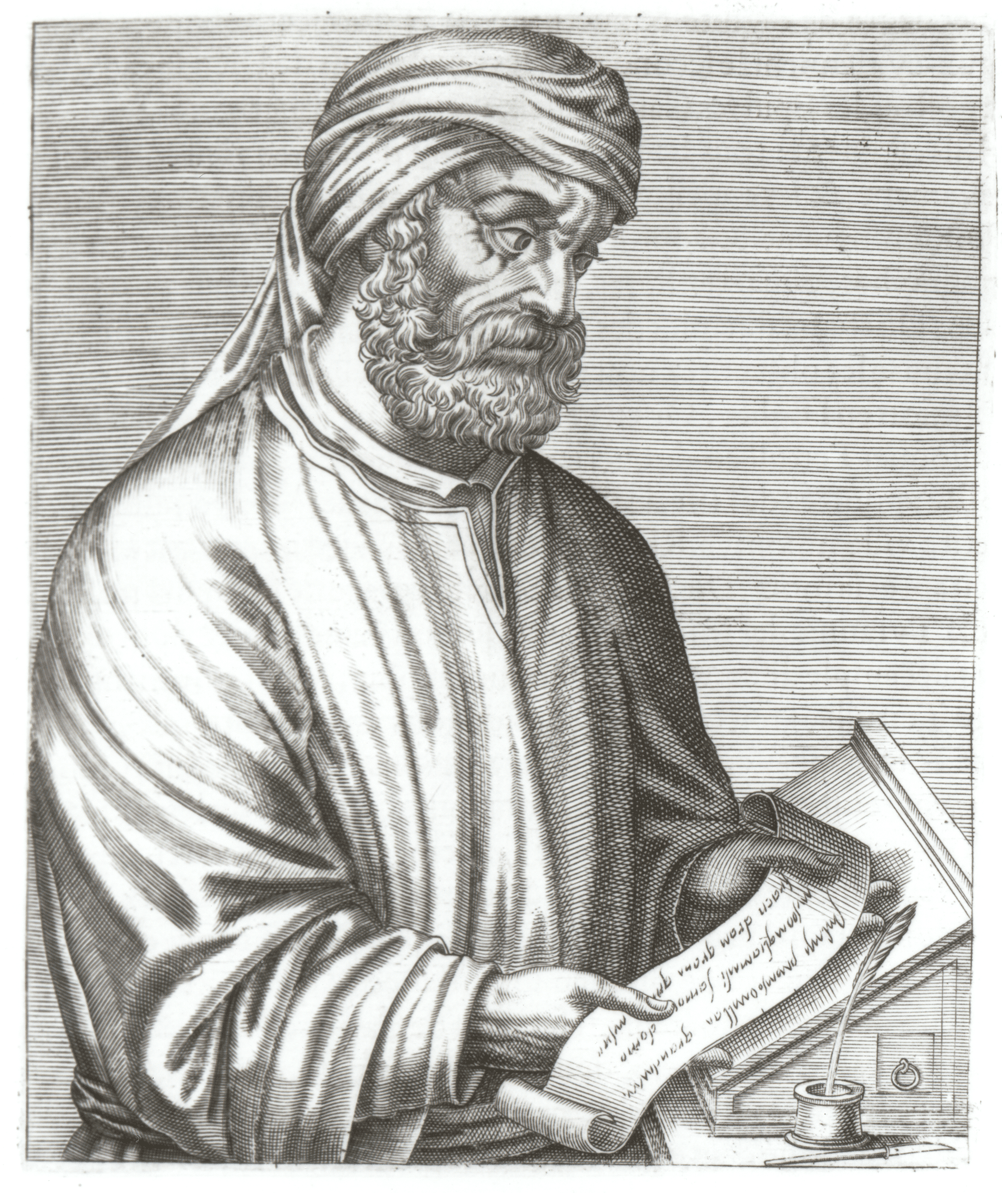
10-Hammering Out the Details
This week’s episode is titled “Hammering out the Details. ”That group of guys known as the Early Church Fathers for the most part were pastors. They were leaders of churches who had a pastoral concern for both the Faith & their people.The later 1st through 3rd Cs saw the Church expand around the Mediterranean basin, in a few places up into central Europe, across North Africa, across the Middle East and into Mesopotamia and the Persian East. While believers contended with periodic outbursts of persecution in Roman controlled territory, the great threat was that presented by aberrant sects that kept rising up aiming to hijack the Faith.It’s understandable why this was such a problem in these early centuries. Christian theology was still being hammered out. In fact, it was the threat posed by aberrant groups that forced church leaders to formalize precisely what it was Christians believed. Just as today, some new wind of doctrine blows thru the church and most Christians have little idea what’s wrong with it; they just sense something is. It doesn’t sound or feel right, but they couldn’t say precisely what it is. It takes some astute pastor, Bible student, or theologian to show HOW said doctrine is contrary to Scripture. Then everyone’s clued in and has an idea of why & how that aberration or heresy is off.Multiply that process by many years & lots more of those winds of doctrine, and you can see how a large & detailed body of Christian theology developed. Most times, church leaders turn to the Bible to compare the new idea to what’s already known to be God’s Word & Will. But sometimes what’s needed is some new words – or at least to make sure we know what the words we’re using when we explain something mean! And we need to make sure we all mean the same thing by those words. We see how important this is today when dealing with the cults. Two people can say they’re Christians, and both believe in & follow Jesus. But while one person’s “Jesus” is the eternal Son of God, conceived by the Holy Spirit in the womb of a virgin Jewish teenager named Mary, the other person’s “Jesus” is really just a manifestation of the archangel Michael, or à the human son of a god named Elohim who used to be a man on another planet a long time ago who ascended into being a god with a heavenly harem by which he produces spirits looking for human bodies. Believe it or not, that is what a couple prominent pseudo-Christian cults believe today.My point is è we need to make sure we pour the same meaning into the words we use, especially when we’re talking theology, because what we believe about God is the most important thing about us.We’ll see how complex & what a major deal this all was when we get to the debates about the trinity & the nature of Jesus in the 4th & 5th Cs. For now, realize that even earlier, during the latter 1st thru 3rd Cs, it was usually pastors who did most of the theological work as they dealt with the challenge of goofy teachings about God & Jesus confronting the people they led.Let’s take a brief look at some of the major doctrinal challenges & groups that challenged the early church.We already considered the threat of Gnosticism. We spent a whole episode on that topic because it was a huge challenge that a few letters of the NT addressed.We considered the challenge Marcion presented, with his virulent anti-semitism & attempt to separate the God of the OT from the God of the New.We took a brief look at Montanus and his, what we might call, early Charismatic Movement. Ws saw that while there were indeed some aberrant elements in Monantism, they did not rise to the level of heresy the Early Church ended up labeling them with.A group we’ve not looked at yet was a kind of anti-Marcionist sect called the Ebionites. They emerged toward the end of the 1st Century & continued into the 4th. Their beliefs smack of the error the Apostle Paul deals with in his Galatian Epistle.Ebionites said Jesus wasn’t the Eternal Son of God; he was just a successor to Moses whose mission was to enforce a strict legalism. They claimed Jesus was just a Jew who kept the law perfectly. And because He did, at his baptism, the Spirit of God descended on him, empowering him to be a prophet. This sounds a lot like one of the many Gnostic sects.Ebionites were ascetics who avoided any & all forms of pleasure, assuming if it was pleasurable, it had to be wrong. They practiced poverty, ultra forms of self-denial, & elaborate religious rituals. They abhorred the Gospel of Grace. Their name, “Ebionites” comes from the Hebrew word meaning “Poor Ones.” They likely took this name to honor their founder, Ebion, who spurned his given-name in favor of the title “Poor One.”What little we know about the Ebionites comes to us from the accounts of their opponents. The first Christian to write about them was Irenaeus who mentions them in his work, Against Heresies. Origen also mentions them, his account

09-Striving to Give an Answer
This episode is titled, “Striving to Give an Answer”In his first epistle, the Apostle Peter urged Jesus’ followers to always be ready to give a defense, an apologia, of their faith to anyone who asked. That word meaning an articulate, reasoned position. It was used of the arguments lawyers carried into court to argue their case. Peter added that the Christian must share his/her defense of the Faith, not in a combative or argumentative tone, but with meekness & respect.If there was any Church Father who sought to embody that command, it was Origen of Alexandria.Origen was what some might term a “religious fanatic” who gave up his job, slept on the floor, ate no meat, drank no wine, fasted twice a week, owned no shoes, & according to one account castrated himself for the faith. He was also the most prolific scholar of his age, penning hundreds of manuscripts. He was a 1st rate philosopher, & profound student of Scripture.So outstanding in resisting all the forces that came against him, Origen was nick-named “Adamantius” = man of steel. If that sounds familiar, Adamantine is the metal that makes up Wolverine’s skeleton in the X-Men series. But no! Origen was not a 3rd C Wolverine. à Let’s not get carried away.A child prodigy, Origen was born near Alexandria in Egypt about AD 185. The oldest of 7 children, he grew up in a Christian home learning the Bible & the meaning of commitment. In 202 his father, Leonidas, was beheaded for the faith in one of those regular rounds of persecution at the hands of hostile Roman officials during the reign of Septimius Severus. The grief stricken 17 year old Origen wanted to join his father as a martyr but his mother prevented him from leaving the house by hiding his clothes.So; I guess he was willing to DIE in public but not go out naked in it. Sounds like your typical 17 yr old to me.Origen quickly realized he had more to offer than martyrdom & went to work to support his family. He started a grammar school, copied texts, & instructed new believers in the basics of the faith. While engaged in all this, he himself studied under the pagan philosopher Ammonius Saccas in order to better defend his faith against the arguments of hostile pagans.As persecution went on, Origen boldly visited the imprisoned, attended their trials, & comforted the condemned. His fame spread & the number of his students increased rapidly. The Bishop of Alexandria at this time was Demetrius, with whom Origen had a hot & cold relationship. There were brief seasons of good will broken by longer periods of antagonism between the two. Origen was by far the sharper intellect & it seems Demetrius was jealous. He demanded Origen limit himself to teaching students issues of doctrine alone. He was not allowed to preach.Around AD 211-12, during the reign of the Caracalla, Origen visited Rome. The moral looseness he witnessed on the part of Church officials disturbed him. You see, Origen was a confirmed ascetic; committed to self-discipline & an austere lifestyle that shunned anything hinting of a weakening of moral virtue. So on his return to Alexandria he resumed his teaching with a zeal increased by his determination to not follow the example he saw in the capital.His school had by this time outgrown the strength of a single instructor & administrator. The students clamored for more instruction, & graduates wanted materials to help them study the Bible. Origen brought on others and increasingly devoted himself to the study of the Bible and producing high quality resources. He learned Hebrew so he could get at the text of the OT more efficiently. It was at this time, about 212, that Origen became friends with a wealthy man named Ambrose of Alexandria. Ambrose was a Gnostic whom Origen persuaded to leave his errant views and become a Christian.Their friendship continued for years, & in appreciation for Origen’s friendship & concern for his soul, Ambrose provided several secretaries to help transcribe Origen’s copious writings. A large number of Origen’s works were dedicated to this friend, Ambrose.In 214, Origen visited Arabia & the Holy Land. The following year, a popular uprising at Alexandria caused the Emperor Caracalla to allow his soldiers to loot the city. The schools were closed & all foreigners expelled. This meant Ambrose had to leave so Origen went with him. They took refuge in Caesarea on the coast of Israel. Though he wasn’t an ordained priest, the bishops of both Jerusalem & Caesarea asked Origen to carry on a temporary preaching ministry in the local churches.While this was in line with the practice of the churches in Israel, it was NOT allowed by the Church in Alexandria. When Origen returned there in 216, Bishop Demetrius was furious & tried to limit Origen’s on-going work.Of his activity over the next decade little is known. He likely engaged mostly in writing & the instruction of new believers.Origen understood the t

08-Not Really An Apology
This episode is titled, “Not Really an Apology.”Anyone who embarks on a study of church history and starts at the beginning will soon run in to a pile of church leaders known as the Church Fathers. They’re often divided into the Ante-Nicean and Post-Nicean Fathers; meaning the church leaders who lived ante-before the First great Ecumenical Church Council of Nicea in AD 315, and those who lived during & after it.; thus the prefix – post.The Fathers can further be broken up into 3 groups, based on the primary focus of their writings. Those 3 groups are the Apostolic Fathers, the Apologists and the Theologians.While there’s some overlap time-wise, we can say that generally the period of the Apostolic Fathers was from the end of the 1st to mid-2nd C. As we saw in a previous episode, the Apostolic Fathers weren’t Apostles; they were followers & students of the Apostles & had a close relationship with them.Then from the mid-2nd C thru the end of the 3rd is the time of the Apologists. They’re called this because their work focused on defending the Faith against attacks both from without & within.Following the Apologists were the Theologians who provided leadership of the Church from the beginning of the 4th thru the 6th C. Their work hammered out precisely what it was Christians believed regarding some of the more complex aspects of the Faith.In the previous episode we considered the Apologist Justin Martyr who wrote 2 important defenses of the Faith and addressed them to 2 Roman Emperors, Antoninus Pious and Marcus Aurelius.Now we look at another important Apologist, Irenaeus.But before we dive into his story, let me be clear for those unfamiliar with the term ‘Apologist.’The modern English word “apology” means to say you’re sorry for having made an error. It’s an acceptance of blame and a way to restore good will. That’s not what the Apologists gave. They had nothing to be sorry for. The word comes from the Greek word Apologia – which was a formal defense of one’s position. It’s a legal word. An apologia is something an attorney would prepare going into court. It was an attempt to prove something by use of evidence and reason. That’s why today Apologetics is the term used for defending the Faith. The tradition of Apologetics goes all the way back to the earliest days of Church History when the Christian Faith was emerging into a hostile pagan world.The Apologists were those Early Church Fathers, usually pastors of local churches, who wrote up formal works to be given to Roman officials like the Emperor or a provincial governor, explaining why persecution was an inappropriate reaction to the followers of Jesus.One of the premier Apologists who was also one of the earliest Theologians, was Irenaeus, bishop of Lyon, in France. His career was spent battling the dangerous threat of Gnosticism.Born in Asia Minor, probably the city of Smyrna about 135, he was influenced by the Apostolic Father & student of the Apostle John, Polycarp. Irenaeus was deeply affected by his mentor, saying he wrote down what he learned from him, not on paper but on his heart.After attending school in Rome, Irenaeus went out as a missionary to Southern Gaul. He served as an elder in a couple churches that witnessed the heavy persecution born by the believers there during the reign of Marcus Aurelius.It was during this time that the Montanist controversy broke. We talked about them in a previous episode. Here’s where we find out it was an issue many churches weighed in on. One faction thought the Montanists ought to be declared heretical and banned. Others found their theology aberrant but didn’t qualify as heresy. They thought the Montanists ought to be reined in, not kicked out.The churches of Southern Gaul were of this second persuasion and in AD 178 sent Irenaeus to Rome to voice their opinion. When Irenaeus returned to Lyon, he learned its Bishop had been martyred. He was selected to fill his place.From then till his death in 14 yrs later, Irenaeus stayed a busy man. He was a prolific writer and tireless pastor & missionary.Irenæus proved to be a great asset for the Church in the later 2nd C and provided a solid foundation for the Church of the next 2 centuries. While he struggles w/the native language of Gaul, he was a master of Greek. He was adept at using Greek culture, language and thought forms in the defense of the Faith and helped lay a philosophical & theological foundation later church leaders drew on.And don’t forget, Irenaeus’ connection back to Christ was close, though he lived toward the end of the 2nd C. His teacher was the long-lived Polycarp, who’d been the disciple of the aged John – direct disciple of Jesus!This helps us put his emphasis on apostolic succession in perspective. This became a key concept in his writing. Irenaeus didn’t argue for some kind of dynastic principle in Church leadership so much as the idea that the Faith itself; its doctrines, tenets, values & mission where drawn

07-The Spreading Tree
This episode is titled, “The Spreading Tree “Tertullian, pastor of the church of Carthage in North Africa, addressed unbelievers at the beginning of the 3rd C, saying à“We are but of yesterday, and yet we already fill your cities, islands, camps, your palace, senate and forum; we have left to you only your temples.”That introduces our theme for this episode; the expansion of the Faith in the early centuries.Writing in the middle of the 2nd C, Justin Martyr said,“There is no people, Greek or barbarian, or of any other race, by whatsoever appellation or manners they may be distinguished, however ignorant of arts or agriculture, whether they dwell in tents or wander about in covered wagons—among whom prayers and thanksgivings are not offered in the name of the crucified Jesus to the Father and Creator of all things.”Comments by other Early Church leaders like Irenæus, Arnobius, & Origen lead us to conclude that by the end of the 3rd C the name of Christ was known, revered, & persecuted in many provinces & cities of the Roman Empire. In one of his edicts, the Emperor Maximian says that “almost all” had abandoned the worship of the old gods for the new sect called Christianity.In the absence of hard numbers, tallying the number of Jesus’ followers can’t be precise, but a reasonable assumption of the faithful stands about 10 to 12% of the total population at the beginning of the 4th C. In some places, the number was much higher as local movements saw the Gospel take firmer root. According to Chrysostom, the Christian population of the city of Antioch at the end of the 4th C. was half the whole.While 10% of the entire Empire may not seem that impressive a number, keep in mind that 10% shared a spiritual unity that made them appear a far larger group when set over against the highly-fragmented 90% of the pagan world.Looking back to Asia where the whole thing started, the Apostles had spread the new faith over Israel, Syria, & Asia Minor. According to Pliny the Younger, at the dawn of just the 2nd C, the pagan temples in Asia Minor were almost completely neglected & animal sacrifices hardly performed because so many pagan had converted to the new faith.In a first step of what would prove to be a major outreach to the East, during the 2nd C Christianity took root in the city of Edessa in Mesopotamia along with several regions in Persia. In the 3rd C., it reached North into Armenia & South into Arabia.There’s an enduring legend that the apostles Thomas & Bartholomew carried the Gospel to India. For sure, a Christian teacher named Pantaeus of Alexandria went there about 190. By the 4th C, vibrant national churches were growing in the subcontinent.It was the moving of the seat of power from Rome to Constantinople in the early 4th C that helped ensure the migration of the Faith eastward. It also meant that all the important early Church Councils were held in or around Constantinople. The great doctrinal controversies over the Trinity & Nature of Christ were carried out mostly in Asia Minor, Syria, & Egypt.Speaking of Egypt, Christianity in Africa gained a firm foothold first there, during the time of the Apostles. The city of Alexandria was a world center of learning & culture. It’s libraries & schools drew from all over the world and many Jews called it home. It was in Alexandria that the Hebrew Bible was translated into Greek, 200 yrs before Jesus. This Greek Bible, called the Septuagint, opened the seemingly opaque ideas of the Jews to Gentiles seekers after truth for the first time. It was in Alexandria that the religion of Moses was set alongside the philosophy of Plato and Aristotle. It was there the Jewish philosopher Philo sought to harmonize Greek & Jewish thought. Many of his ideas were picked up by later Christian apologists in defending the faith against Roman misconceptions.Ancient tradition says it was Mark who laid the foundation of the church in Alexandria, which became one of the 5 most important & influential churches of the first Centuries. A theological school flourished in Alexandria from the 2nd C in which the great church fathers Clement & Origen taught. From Alexandria, the Gospel spread South into Nubia (modern Sudan) & Ethiopia. At a council of Alexandria in 235, 20 African bishops attended from all over the Nile basin.During the 4th C, in a subject we’ll treat more fully in a later episode, Egypt coughed up the Arian heresy, then quickly answered it with Athanasian orthodoxy. Egypt was the birthplace of monasticism as practiced by its earliest advocates, Antony & Pachomius. Monasticism then spread across the rest of the Christian world. But that’s yet another subject for a couple later episodes.Christianity spread from Egypt across the rest of North Africa quickly. It helped that there were numerous Roman outposts reached by 3 or 4 days sailing from Italy. The faith spread rapidly over the fertile fields & burning sands of Maur

06-BOGO
This week's episode is titled “Buy One, Get One Free.”In the last episode we touched briefly at a heretic named Marcion. He was one of the first to introduce a false teaching that would evolve into a major challenge to the emerging Christian Faith; that errant movement was known as Gnosticism.Marcion was the son of the pastor of the church in Pontus, on the Southern coast of the Black Sea. He was a ship-owner sailing passengers & shipping cargo throughout the Empire. Around AD 140, Marcion’s father disfellowshipped him from the congregation. This was the result either of Marcion’s seduction of a young woman, his increasingly heretical ideas, or both. Whatever the reason, he relocated to Rome where he was unknown & his reputation was untarnished. When he made a large contribution to the church at Rome, it greased the wheels of his acceptance as a member in good standing.But Marcion soon began espousing ideas that diverged from what the elders taught. In his previous travels, Marcion had been influenced by a teacher named Cerdo, an early advocate of what today is known as Gnosticism.Now, let me be clear, Gnosticism was more a religious trend than a united movement with a settled set of doctrines. While Gnostics held a common set of core beliefs, they interpreted them widely. This makes describing Gnosticism difficult. Generally, we can say it was a mash-up of àGreek philosophy,Eastern mystery cults, andChristian terminology. From Greek philosophy, Gnostics borrowed the idea that all physical matter was inherently an unalterably evil, while the spiritual realm was equally, inherently & unalterably good. From esoteric & occult Eastern mystery sects they took the idea there was a secret body of knowledge that when understood granted enlightenment. This enlightenment was the Gnostic equivalent of salvation because it liberated one’s consciousness from mere physical existence into a kind of permanent spirituality.Gnosticism took its name from this idea of “salvation thru enlightenment.” The Greek word ‘gnosis’ means ‘knowledge.’Because the Christian movement was growing rapidly, Gnostics adopted Christian forms & terms as a sneaky marketing ploy, hoping to pawn off their ideas as an elite form of Christianity. The ploy worked & Gnosticism took root in several congregations just as winds of false teaching do in every generation.Marcion was one of the first to introduce Gnostic elements in his highly-edited form of Christianity. Drawing from Cerdo, he proposed 2 different gods; an angry, vengeful OT deity, & a warm, fuzzy father-figure of the NT. Toting the Gnostic line, Marcion said the physical body was evil & promoted a rigorous asceticism that denied all physical pleasure. Marcion’s followers took communion by drinking water because wine was too tasty. They went so far as to say even marital sex was taboo.Marcion claimed Jesus was not born of Mary. He said Jesus appeared at Capernaum in AD 29 as a grown man. Note that = Jesus only appeared. Marcion said Jesus didn't have a literal body. He couldn't since being physical, the body was evil. Jesus only appeared, or seemed to have a body; in truth, he was more phantom than tangible.This is called Docetism; one of the earliest forms of Gnosticism. Docetism comes from the word meaning to seem. Marcion said the death & resurrection of Christ weren't literal; they couldn't be since Jesus wasn't corporeal. They were just a phantom demonstration of God's love and sacrifice. Though the church at Rome quickly became hip to Marcion’s theological shenanigans & declared his ideas heretical in 144, they gained some traction and Marcion set up a counterfeit church in both Italy & in Asia Minor where the Eastern mystery cults were popular. Marcionite fellowships reached as far as Arabia & Egypt & were still operating well into the 4th Century.Marcion’s was only one of several streams of Gnosticism that developed during the 2nd & 3rd Centuries to challenge Christian orthodoxy. The main feature of all the Gnostics was their sharp dualism, splitting up the physical & spiritual into utterly divergent realms. They believed the spiritual realm contained a hierarchy of spiritual beings who were layered upward toward a transcendent & ultimate spirit. This transcendent god had given rise to a lower deity, which had done likewise, & so on over thousands of spiritual emanations until there was a spirit distant enough from the origin to be so low as to be able to create the physical universe. Some Gnostics like Cerdo & Marcion, said this lowly creator spirit was the Jewish God of the OT.Gnostics believed that sparks of divinity, little portions of pure spirit were locked inside some, but not all, humans. Those who had them, they said, would become Gnostics. Another clever marketing ploy; after all, who doesn’t want to think they have a little spark of something special? So, they were tempted to go Gnostic to prove they d

05-Writings
This episode is titled “Writings.”The history of the Christian Faith & Church inevitably has to deal with the importance of Books. From its earliest days the Faith has been intimately linked to the Scriptures. At first, Scripture was the Hebrew Bible or what is known today as the Old Testament. But other writings were added to the Church’s Bible as the years passed.The question of what writings to include in the Bible was one of the major topics of discussion during the first 4 centuries. But the question of what ought to be included or excluded is not nearly the contentious debate skeptics claim. With rare exception, church leaders generally agreed what texts comprised Scripture. Their reluctance to make an official pronouncement was because humility prohibited them claiming the authority to do so. Still, by the 4th Century, Church leaders recognized time was running out on those who were in a position to make the needed determination.Following the age of the martyrs, the next period of Church history was marked by theological challenge. It was crucial local congregations have a standard to go by, an authoritative body of doctrine by which to evaluate what was being taught. That authority was the Bible.Christians started with those Scriptures the Jews already revered as God’s Word, the Tanach, or as Christians referred to it, the OT. To this base of 39 books, believers added another set of writings they called the New Testament. Together, these 2 Testaments comprise what's called the “Canon of Scripture.”Canon means a measuring rod, as in a ruler. The Canon of Scripture is the standard for measuring if something is straight, if it aligns with truth. The Bible was esteemed Truth because it was regarded as God's inspired & inerrant Word.And that's what proved such a daunting challenge to Church leaders as they considered what to include in the NT Canon. Who were they to decide what was inspired by the Holy Spirit & ought to be regarded as the standard by which to evaluate all else? Still, the task was necessary so they developed a criteria by which to decide what ought to be included in the Canon. Their reasoning went like this . . .First was the OT canon of Jewish Scriptures. Then Jesus came as the Word of God made flesh. Though Jesus wrote no books, His life and words were written on the hearts and minds of the Apostles, whose teaching in both oral & written form was accepted as authoritative.Early evidence makes it clear that letters from the Apostles were circulated & read in the churches, being accepted as laying down the norms of Christian belief and practice. A ravenous hunger for stories of Jesus moved the Apostles to develop a standard oral tradition that we see today forming the core of the Synoptic Gospels of Matthew, Mark, & to a certain degree, Luke.But how do we get to the 27 books that form today's NT canon? What criteria did Church leaders use when they finally identified those books?1St - A candidate writing for inclusion had to have a self-identifying quality about it as having been inspired by God. It had to possess a certain power to affect the lives of readers toward God.2nd - A candidate writing had to have a long reputation among the churches for having been used in worship to the edification of believers.3rd - A writing had to have a close connection to an Apostle. If not written by the Apostle himself, was the author a close associate of an Apostle & did it bear the mark of the Apostle’s influence?For example . . .Luke wasn’t an apostle but his Gospel and the Book of Acts are included in the NT because he was a close associate of the Apostle Paul and had interviewed the other Apostles in researching Jesus’ story.Mark wasn’t an apostle, but received his information about Jesus from the Apostle Peter. He was also a companion of Paul’s; sort of. But that’s another story.On the other side of the issue, in the late 1st Century, Clement, the 2nd or 3rd pastor at Rome, wrote a letter to the church at Corinth. That letter was read often at Corinth in the years that followed and proved of great benefit. But because Clement wasn't deemed to have an Apostolic connection, his letter wasn't included in the NT canon. There wasn't even much debate if it should be. It didn’t pass the test, so it wasn’t included.Because the test of Apostolic origin was crucial to canonical books, the Church leaders of the late 2nd Century realized time was running out on reliable witnesses who could confirm a writing’s Apostolic authority. The pressure was on to put their imprimatur of acceptance on those works connected to the Apostles.Since we’re speaking about the writings that made it INTO the NT, let me mention a couple of influential works that didn’t but were nevertheless crucial in shaping the early understanding of the Faith.One of the most important extra-Biblical writings of the early church was the Didache. We don’t know when it was written but it was in use as a manual for chu

04-Martyrs
This 4th Episode is titled, “Martyrs.”Modern marketing tactics first produced, and now feed contemporary culture's obsession for “the latest thing.” The slogan & label "New & Improved" is a frequent feature in packaging.The opposite was the case in 1st Century Rome. That Eternal City, and really most of the ancient world, was suspicious of anything new and novel, especially when it came to ideas. They had tremendous respect for tradition, believing what was true had already been discovered and needed to be preserved. Innovation was grudgingly accepted, but only in so far as it did not substantially alter tradition.The religion of the Greeks and Romans was sacrosanct precisely because it was ancient. Judaism, with its fierce devotion to only one God was incompatible with the Greco-Roman pantheon of gods, but it was tolerated by the Romans precisely because it was ancient.Also, while Jews were fiercely loyal to their religion & became violent when attempts were made to convert them to paganism, they were not, as a rule, engaged in making converts of others. Judaism is not, by nature, a proselytizing faith.Christianity's early struggle with Rome began in earnest when Judaism officially denounced the Christians and banish them as a movement within Judaism. This took place shortly after the destruction of Jerusalem in 70 AD. Until that time, followers of Jesus were considered as a kind of reform movement within Judaism. But toward the end of the 1st Century, Rome realized the Jews had divorced themselves from the Christians. Christianity was something new; a religious novelty; so, under suspicion.And whereas Judaism tended not to proselytize, Christians couldn't help winning others to their Faith. This brought Christianity into close scrutiny by the authorities. The more they investigated, the more concerned they grew. Like the Jews, Christians believed in one God. But their God had become a man. Christians had no idols, practiced no sacrifices, & built no temples. These were yet more religious innovations that fired suspicion. The Christians seem to be so reductionist in their practice they were suspected of being, get this à Atheists.As we saw in the previous episode, the paganism practiced by most people of the Empire in the 1st & 2nd Centuries wasn't so much a heart-felt devotion to the gods as it was a sense of civic duty. “Respect the gods by visiting their temples with the proper offerings, or, suffer their wrath.” à Well, every new convert to the Christians meant one less pagan throwing their appeasing bones to the watchful & increasingly upset gods. People began to worry the growing neglect of the gods would lead to trouble. And indeed, whenever a drought, flood, fire, or some other catastrophe ensued it was inevitably blamed on "Those atheists = the Christians."“Christians to the lions,” became a frequent solution to the ills of the world.The concern of the pagans was ill-attributed, but well-founded. Not because their gods were angry, but because in some places so many had become Christians the pagan temples were nearly empty. Acts 19 tells us this happened in Ephesus and a letter from the Governor of Bithynia in the early 2nd Century repeats the concern. This led to a growing call for punishment of the Christians. A few would be rounded up and put to death to prove to the gods the earnestness of the pagans to appease them.Other factors that encouraged hostility towards believers was their secrecy. A description of Christians by Pliny, the Roman governor of Bithynia, to the Emperor Trajan in AD 111 is enlightening. Pliny had already executed some Christians based on little more than their scandalous reputation. He’d given them an opportunity to recant but when they refused, Pliny saw this rebuff of his mercy as a provocative stubbornness worthy of punishment. But after a flurry of executions, Pliny had 2nd thoughts: Was the mere reputation of Christians dangerous enough to warrant their arrest and trial? So he wrote his friend, the Emperor Trajan, asking for advice. Here’s a quote from Pliny's letter. After describing some ex-Christians who recanted their faith, Pliny gives their report on what their practice had been when they were still Christians."They affirmed the whole of their guilt was that they were in the habit of meeting on a fixed day before it was light, when they sang in alternate verses a hymn to Christ as to a God, and bound themselves by a solemn oath, not to commit any wicked deeds; no fraud, theft or adultery, never to falsify their word, nor deny a trust when they should be called upon to deliver it. After which it was their custom to separate, then reassembled later to partake of food — but food of an ordinary an innocent kind.”A little later in the letter Pliny adds that to verify this report he secured through the torture of 2 slaves that this was an accurate description of Christian meetings and that nothing more needed to be added. Pliny called Christian

03-Strategic
This week’s episode is titled "Strategic."We ended the last episode with a look at the different perspectives of 1st & 2nd Generation Christians. The debate centered on what role the Jewish law held for Jesus’ followers. Culturally-immersed 1st Generation Jewish believers tended to cleave to the law, while the more Greco-Roman acculturated 2nd & later generations adhered to the Gospel as articulated by the Apostle Paul.Keep in mind that Paul's arrival at the Gospel of Grace through Faith wasn't an easy journey. He began as a strict Pharisee, fanatically loyal to Moses & Jewish tradition. It was Paul who presided at the execution of Stephen, the first Christian martyr. And Stephen was put to death precisely because he dared to say that the new covenant Jesus inaugurated superseded the old covenant installed by Moses & represented by the Temple & priesthood in Jerusalem which were now effectively obsolete in God’s plan. This drove the Jewish ruling council into a literal rage that led to Stephen’s death.Paul well understood the arguments of the Judaizing legalists who advocated adherence to custom. He understood them because he’d once held them. But he came to realize faith in Christ alone bestowed the righteousness God requires. Salvation was not the product of human work; it was a gift God bestows, a gift received by faith.Amped by this realization of salvation by grace through faith, Paul was compelled to take the Gospel were ever he could. The book of Acts describes 3 journeys he took to spread the Faith & plant churches.On his 1st journey he and his friend Barnabas went to the island of Cyprus & the urban centers of the mainland north of there, a province called "Galatia" in modern-day Turkey.On his 2nd adventure Paul went back over the fledgling fellowships begun on the previous journey, then travelled to the West coast of Asia Minor. Taking ship, he sailed across the Aegean Sea and landed in Macedonia. The Gospel had arrived in Europe, possibly for the first time.Then Paul swung south into Greece where he visited Athens & other key Greek cities. Returning to his home base at Antioch in Syria, he didn't stay long before once again setting out on a 3rd mission with the aim of planting churches in strategic locations.Paul had a plan. He didn’t just go wherever the winds of fancy drove him. He was strategic, recognizing the need to plant congregations in influential cities. He knew if healthy churches could be set up in the urban centers of the Empire they’d act as jumping off points for mission work to their surrounding provinces. The strategy worked & Christianity spread rapidly.We’re not unaware of the religious and philosophical environment the early Christians lived in. Outside Israel, much of the Roman Empire was a spiritual hodgepodge. The Greek & Roman pantheon was ubiquitous, with most commoners paying homage to the gods, not out of any genuine piety or devotion so much as out of a sense of civic duty. “Respect the gods or pay the price" was the attitude of the common people. Everyone had a duty to throw the gods their proverbial bone now and then, lest they get angry & withhold the rain-or-send floods. No one wanted to be the cause of disaster, so most went through the forms to pacify the gods & keep them off the collective back. But heartfelt devotion to the gods was rare.Living alongside this kind of generalized respect for the gods was a much less common, but far more devoted adherence by some to the philosophies of a handful of Greek sages. Guys like Epicurus & Zeno. The concern of such philosophies was how to have the best life. Though their ideas often contradicted the demands of the gods, many who held to Epicureanism, Stoicism or one of the other philosophies saw no tension between their beliefs & religious practices.But by the 1st Century, many across the Romans world had grown disillusioned with the old gods & old ways. Desiring something new, mystery cults from Egypt & the Far East took root. Though the official stance of Rome was to oppose these cults, there was something enticing in what was considered forbidden. Secret knowledge, imparted only to an elite stimulated curiosity. The cults of Isis & Mithras grew.One message that appealed to some pagans throughout the empire was Judaism with its radical proposition there was only One, all-powerful, all-knowing God. The Jews had taken their Faith out of the merely religious realm & developed a comprehensive and coherent philosophy with it. It convinced many Gentiles who began attending Jewish synagogues located all over the empire. Not willing to fully convert to Judaism with its kosher requirements & circumcision, these "God fearers" as they were called, believed in the God of Israel & renounced the pagan deities of their neighbors.When the Apostle Paul visited a new city he typically went first to the local Jewish synagogue where he systematically showed Je

02-Transitions
This episode of CS is titled – “Transitions”We ended the previous episode with Jesus on the cross just outside the walls of Jerusalem late Friday afternoon. The Jewish leaders & Romans thought that was the last of the enigmatic trouble-maker from Galilee. For that matter, His followers thought that was the end as well.If that HAD BEEN the end of Jesus’ story, how might history have labeled Him?Modern skeptics who consider the resurrection a mythic post-script, added by Jesus’ later followers, cast Jesus as a religious & social reformer; one whose goal was to turn the stiff formalism of 1st Century Judaism into a more personal & intimate faith in God. These skeptics recast the miracles attributed to Jesus as myths meant to explain the effect of His charismatic personality on others. They contend Jesus didn’t really turn a few fish & loaves into fish sandwiches for thousands; He merely used the generosity of a young boy to provoke the crowd to share with one another. He didn’t really walk on water, He merely came along the shore in a low lying mist. And He didn’t really rise from the dead; His example of love for God and others merely inspired the disciples to follow His example. His MEMORY endured, not His literal person; says the skeptic.So, WAS Jesus merely a reformer? Was His mission just to return Judaism to something Moses would have given a hearty thumbs-up to?While Moses would indeed endorse Jesus, He wasn’t merely one of the many prophets God sent to call people back to Himself. Moses would approve of Jesus because all Moses did pointed to & prepared the way for Jesus. Jesus was the original Former, not a RE--former; He was, the “I AM” Who spoke to Moses from the burning bush & commissioned him to lead Israel out of bondage, into the Promised Land.This becomes clear when we consider the words of Jesus at that last meal He shared with His disciples. When He took the cup to inaugurate the rite of Communion, He said something remarkable. “This is the NEW COVENANT in my blood which is shed for you.” Those young men sitting round that table could not mistake what Jesus meant, for it was something that had been burned into them since childhood. Jesus made claim to the cherished promise of the Prophet Jeremiah who in ch. 31 said,“Behold, the days are coming, says the Lord, when I will make a new covenant with the house of Israel and with the house of Judah—not according to the covenant that I made with their fathers in the day that I took them by the hand to lead them out of the land of Egypt, My covenant which they broke, though I was a husband to them, says the Lord. But this is the covenant that I will make with the house of Israel after those days, says the Lord: I will put My law in their minds, and write it on their hearts; and I will be their God, and they shall be My people. No more shall every man teach his neighbor, and every man his brother, saying, ‘Know the Lord,’ for they all shall know Me, from the least of them to the greatest of them, says the Lord. For I will forgive their iniquity, and their sin I will remember no more.”Jesus laid claim to that promise, saying He was its fulfillment & what He was about to do in going to the cross would activate the New Covenant. Jesus didn’t come just to reform Judaism or refresh the covenant Moses mediated with Israel. He came to consummate that covenant and initiate a new, based not on the performance of the Mosaic Law, but on abiding faith in Him.Of course, if Jesus had remained in the tomb, He’d be nothing but a miniscule footnote to the history of the 1st Century, if that! à Just one more in a long parade of Jewish trouble-makers who had a little flurry of popularity among some malcontents. Nothing of consequence would have followed.But His resurrection changed everything. It turned His timid band of followers into men of unquenchable vision & voracious determination. Only the resurrection can account for the dramatic change that took place in those who’d followed Jesus.In writing to the Corinthians some years later, the Apostle Paul said that in His post-resurrection appearances, Jesus was seen by some 500 at one time—not just the original handful of disciples. It was this critical mass of witness that made sure the news of His resurrection wasn’t suppressed by the authorities. And it was the surety Jesus had been dead, then made alive that compelled His followers to remain faithful, even in the face of martyrdom.So, after a brief stint back in their home region of Galilee, the disciples permanently relocated to Jerusalem. It was reasonable that the center of their movement be at the heart of the Jewish world.Though Jesus said His followers would one day come from all over the world, those first believers had a difficult time seeing the Church as anything other than fundamentally Jewish. They met as a large group in the temple courtyard where they listened to the disciples teach on the life & words of Jesus. Becau
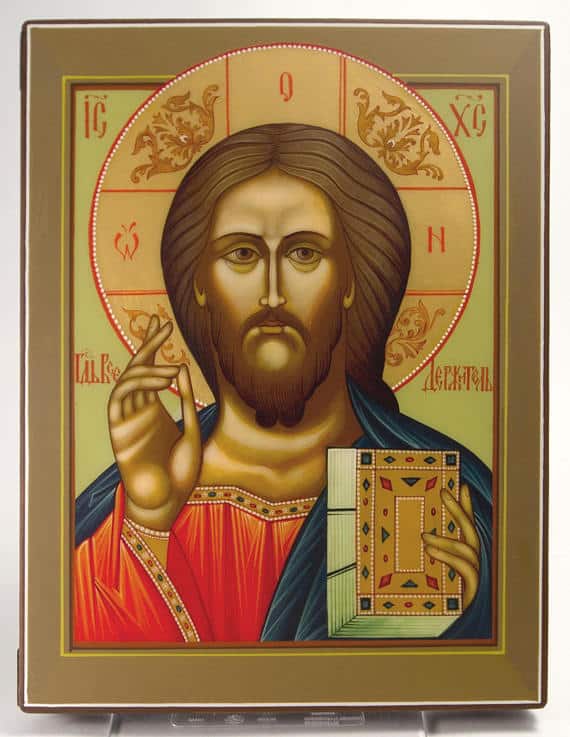
01-It Begins
This 1st episode of CS is titled, “It Begins.”The best place to start is at the beginning. But with Church History, where is that? Where do we begin?Most MODERN Christians would probably start with Jesus. That seems pretty straight-forward.But where would the FIRST Christians have begun?They were Jews, and considered what they believed as a purified form of Judaism; a faith Moses would have approved of. They believed Jesus was Messiah, the long hoped for & oft prophesied Savior Who came to restore the faith God revealed to Abraham 2000 years before.So à Where would Peter, Andrew, John, James, or Thomas have begun telling the story?The Apostle John begins his story of Jesus at creation with the words “In the beginning …” We’ll come up in time considerably and start with the man known as Jesus of Nazareth engaged in His public ministry; traveling through Northern Israel with a dozen disciples.At that time, the 1st Century of what modern historians like to called the Common Era, Israel was an uneasy part of the Roman Empire. Unlike some provinces that counted being part of Rome a privilege, Israel loathed their Roman occupiers. Most Jews resisted more than just political domination by a foreign power; they also despise the Greek culture the Romans brought with them.All this stirred the pot of popular expectation among Jews for the arrival of the Messiah who they anticipated would be primarily a political figure. Scripture foretold He’d replace corruption with paradise; the wicked would be punished, the righteous rewarded, and Israel exalted among the nations. Messiah would restore David's throne and rule over the affairs of Earth.Some prophets spoke of a war between good and evil that would resolve in the Messiah's victory. This flavored the anticipation of many. They cast Rome as the chief adversary Messiah would crush.By the 1st Century, different groups had developed around their belief in what was the right way to prepare for this political Messiah.The Pharisees devoted themselves to the Law of Moses and religious tradition.The Essenes took a segregationist approach, pursuing holiness by moving to isolated communes to await Messiah's arrival.Zealots advocated armed resistance against Rome as well as those Jews who collaborated with the hated enemy. Zealots drew their inspiration from the successful Maccabean Revolt against the Syrian Greeks a couple hundred years before.A 4th group were the Sadducees who took a more pragmatic approach to the Roman presence & accommodated themselves to the Greco-Roman culture they were convinced would eventually become the status quo. Sadducees were a minority but held most of the positions of political and religious leadership in Jerusalem.The last and by far largest group among the Jews of 1st Century is rarely mentioned; the Common People. They were neither Pharisee, Sadducee, Essene nor Zealot. They were just à Jews; everyday people in covenant with God but preoccupied with fields, flocks, trades, markets, family, & well—Life; the daily grind. They held opinions regarding politics and religion but were too busy surviving to join one of the groups who claimed superiority to the others. It was these commoners who were most attracted to Jesus. They were drawn to Him because He did a masterful job of refusing to be co-opted by the elites.Jesus came in the traditional mode of a Rabbi, but was anything but traditional. Like other rabbis, He had disciples who followed Him, but His teaching stood in contrast to theirs. His words carried authority that challenged the thick, hard shell of tradition that had become encrusted round their religion. Listening to Jesus wasn't like listening to a commentary on Torah, which so many other teachers DID sound like. Listening to Jesus was like listening to Moses himself, explaining what the law was meant to be and do. Then—Jesus did something that really made people pay attention; He validated His teaching by performing miracles. And not a few. He did many!It was a tough assignment to carve a path through Jewish society that didn't intersect with the Pharisees, Essenes, Zealots or Sadducees, but Jesus negotiated it perfectly. Both His life and teaching powerfully demonstrated genuine Judaism and revealed the shabby counterfeit of the religious pretenders. At first they tried to co-opt Him and turn his rising popularity to their agenda. When He refused to make common cause with them, they turned on Him.Jesus furthermore resisted the efforts of the common people to make him King. Their hope that He was Messiah swelled to the call that He claim Israel’s throne. They wanted a political leader. But that was not Jesus’ mission & He resisted their attempts to install Him as monarch.Jesus’ consistent message was the true nature of the Kingdom of God. Contemporary Judaism saw that Kingdom as primarily political, military, & economic. A realm in which …Israel would rule instead of Rome.Messiah would reign in place of Caesar.Judais