The History of the Christian Church
248 episodes — Page 4 of 5

98-Cracks
This episode is titled “Cracks.”One of the great concerns of the Roman Church at the outset of the Reformation was just how far it would go, not so much in terms of variance in Doctrines, although that also was a concern. What Rome worried over was just how many different groups the Faith would split into. After all, division wasn’t new. There’d already been a major break between East and West a half century before. In the East, the Church was already fragmented into dozens of groups across Central Asia.But up till the Reformation, the Western Church had managed to keep new and reform movements from splitting off. Most had eventually been subsumed back into the larger reach of the Church structure.The Reformation brought an end to that as now there were groups that defined themselves, not by the Roman Church, but by more local and national churches and movements. It didn’t take long till even some of the early Reformers began to worry about how far the break from Rome would go. The cracks that formed in the Church kept spreading, like a nick on a car windshield sends out just a tiny crack at first, but keeps spreading.The Reformation ended up spinning out dozens of groups; some big, many small.There were Lutherans, Presbyterians, Huguenots, Swiss Brethren, dozens of Anabaptist groups, Mennonites, Hutterites, etc. etc. etc..In Episode 90, we touched briefly on the tragedy that struck at Munster when the Anabaptist movement strayed from its moorings in God’s Word and replaced it with the lunacy of a couple of its leaders who went way off the rails in an apocalyptic frenzy that ended up destroying the town.Munster became a cautionary tale for other Anabaptists and Reformers. The explanation given for the tragedy was Munster’s abandonment of the pacifism preached and practiced by other Anabaptists. Anabaptists regarded the Sermon on the Mount as their guiding ethic and said it could only be followed by a Faith that was committed to the practice of a love that resigned consequences to God’s hands.A leading figure among the Anabaptists was Menno Simons, a Dutch Catholic priest.Simons was moved to reconsider the rightness of infant baptism when he witnessed the martyrdom of an Anabaptist in 1531. Five years later, the same year the leaders of Munster were executed, Simons left his position as a parish priest and embraced Anabaptism. He joined a Dutch fellowship, where his followers came to be known as Mennonites.Although persecution was fierce, Menno survived and spent his time traveling through Northern German and Holland, preaching and encouraging his followers. He also wrote a large number of essays of which Foundations of the Christian Doctrine in 1539, became the most important.Menno was convinced pacifism was an essential part of true Christianity, and refused to have anything to do with Anabaptists of a revolutionary flavor. He also held that Christians ought not offer any oaths, and shouldn’t take occupations requiring them. But he maintained Christians should obey civil authorities, as long as they weren’t required to disobey the Lord.Menno preferred to baptize by pouring water over the head of adults who confessed their faith publicly. He said neither baptism nor communion confer grace, but rather are outward signs of what takes place inwardly between God and the believer. Mennonites also practiced foot-washing as a reminder of their call to humility and a life of service.Even though the Mennonites were so manifestly harmless, they were classed as subversive by many governments simply because they wouldn’t take oaths and as pacifists refused to join the military. Persecution scattered them throughout Eastern Europe and Western Russia.Many Mennonites eventually left for the New World where they were offered religious tolerance. In both Russia and North America they ran into trouble when the authorities expected them to serve in the military and they declined yet again. Though the US and several other countries eventually granted Mennonites an exemption from military service, before that exemption came, many Mennonites moved to South America where there were still places they could live in isolation. By the 20th C, Mennonites were the main branch of the old Anabaptist movement of the 16th C, and now they are highly-regarded for their determined pacifist stance and on-going acts of social service for the public good.As the Reformation carved up Europe into a seemingly hopeless hodge-podge of political and religious factions, different attempts were made to resolve the tensions, either by war, by treaty, or alliance.I have to say, the history of 16th C Europe is a tangled mess. If we dive into the details, what you’ll hear are a lot of names and dates that’s the very kind of history reporting we want to avoid here. A part of me feels like we’re leaving out important information. Another part gives an anticipatory yawn at all the historical minutiae we’d have to cover. Things like The Peace of Nuremberg, The

97-Wars of Religion
This episode is titled, “Wars of Religion”In our review of the Reformation, we began with a look at its roots and the long cry for reform heard in the Roman church. We saw its genesis in Germany with Martin Luther and Philip Melanchthon, its impact on Switzerland with Zwingli and later with the Frenchman John Calvin. John Knox carried it to his native Scotland and Thomas Cranmer led it in England.We’ve taken a look at the Roman Catholic response in what’s called the Counter-Reformation, but probably ought to be labelled the Catholic Reformation. We briefly considered the Council of Trent where the Roman Church affirmed its perspective on many of the issues raised by Protestants and for the first time, a clear line was drawn, marking the differences in doctrine between the two groups. We saw the Jesuits, the learned shock-troops of the Roman Church sent out on both mission and to counter the impact of the Reformation in the regions of Europe being swung toward the Protestant camp.Let’s talk a little more about the Catholic Counter-Reformation because Europe is about to plunge into several decades of war due to the differing religious affiliations of its various kingdoms.There were at least four ingredients in the Counter-Reformation.The first concerned the religious orders of the Catholic Church. There was a spiritual renewal within older orders like the Franciscans, Dominicans, and Benedictines. Reform among the Franciscans led to the founding of the Capuchins in 1528. Their energetic work among the Italian peasantry kept them loyal to Rome.Second, new orders sprang up. Groups like the Theatines [Thee a teen] who called both clergy and laity to a godly lifestyle. The Ursulines [Ursa-leens] were an order for women who cared for the sick and poor. And then of course, there were the Jesuits.The Society of Jesus, or Jesuits, were the most important of the new orders. Founded in Paris in 1534 by Ignatius of Loyola, the order required total obedience of its members for the furtherance of the interests of the Roman church. While there were good and godly Jesuits, men who worked tirelessly to expand the Kingdom of God, there were also some whose motives were less noble. Okay, let’s be frank; they were diabolical. Utterly unscrupulous in their methods, they believed it was permissible to do evil if good came of it. They resurrected the Inquisition in the 16th C making it an effective tool in stomping out the Reformation in Italy, Spain, Portugal, and Belgium.Jesuits infiltrated government offices and used every means fair or foul to advance the cause of the Rome. Lest Catholic listeners take offense to this, understand that their power became so great and their methods so immoral, the Pope suppressed the order from 1773 to 1814.Also, it should be noted when Ignatius launched the Society, a counterattack on the Reformation was not in view. His ambition was missionary with a keen desire to convert Muslims. The three major goals of the Jesuits were to convert pagans, combat heresy, and promote education. It was their solemn oath to obey the Pope that led to their being used as a tool of the Counter-Reformation.A third aspect of the Counter-Reformation was the Council of Trent. The cardinals elected a Dutch theologian as a reform pope in 1522. He admitted that the problems Rome had with the Lutherans came because of the corruption of the Church, from the papal office down. As was saw a couple episodes ago, in 1536, Pope Paul III appointed a special panel of cardinals to prepare a report on the condition of the Church. That report gave Luther much ammunition for his critique of Rome. It conceded that Protestantism resulted from the “ambition, avarice, and cupidity” of Catholic bishops.The Roman Church realized it needed to address the issues raised by the Reformers. The Council of Trent was the answer. It met in three main sessions, under the terms of three different popes, from 1545 to 63. Participants came from Italy, Spain, France, and Germany. The Council decided a wide array of issues.In direct response to Lutheran challenges, the Council abolished indulgence-sellers, defined obligations of the clergy, regulated the use of relics, and ordered the restructuring of bishops.The doctrinal work of Trent is summarized in the Tridentine Profession of Faith, which championed Roman Catholic dogma and provided a theological response to Protestants. Trent rejected justification by faith alone and promoted the necessity of meritorious works as necessary for salvation. It validated the seven sacraments as bestowing merit on believers and their necessity for salvation. It affirmed the value of tradition as a basis of authority alongside the Bible. It approved the canonicity of the apocryphal books of the Old Testament; made official the existence of purgatory; the value of images, relics, indulgences, the invocation of saints; and the importance of confession to a priest. It also defined more specifically the sacrificial aspects

96-English Candles
This episode of CS is titled is titled “English Candles.”We’ve spent the last several episodes looking at the Reformation & Counter-Reformation in Europe. In this episode we’ll take a look at how the Reformation unfolded, specifically in England.The story of the Church in England is an interesting one. The famous, or infamous, Henry the VIII was king of England when Luther set fire to the kindling of the Reformation. Posturing as a bulwark of Catholic orthodoxy, Henry wrote a refutation of Luther’s position in 1521 titled “Defense of the Seven Sacraments” and was rewarded by Pope Leo X with the august title, Defender of the Faith. Ironic then that only about a decade later, Henry would hijack the church, officially ousting the Pope as head of the Church IN England and making himself head of the Church OF England.What makes the story of these years in England so interesting is the marital & political shenanigans Henry VIII played. The intrigues played out for the thrones of Spain, France & England all make for the best drama and most people don’t realize that so many of the famous names of history all lived right at this time and knew each other, at least by reputation. If the story was a movie dreamed up in Hollywood, most would consider it too far-fetched.Without getting into the minutiae of the details of Henry’s multiple marriages, it was his lust for power & desire to produce a son & heir that motivated him marry, divorce, re-marry and do it all over again. Henry persuaded the Pope to allow him to marry his sister-in-law, that is, his dead brother’s wife, Catherine of Aragon, herself the daughter of Queen Isabella & King Ferdinand of Spain, sponsors of Christopher Columbus. Catherine gave Henry a daughter named Mary but no sons. So Henry put her aside and married his mistress, the vivacious & opinionated Anne Boleyn.In order to set Catherine aside so he could wed Anne, Henry had to persuade the Pope, who had taken some persuading to allow him to marry Catherine in the first place, to annul that marriage, saying he ought never have been allowed to marry her in the first place. The archbishop of Canterbury Thomas Cranmer was employed by Henry to put pressure on Rome to grant the annulment. But Pope Clement VII wouldn’t budge. So in 1531, Henry announced to the clergy they were from then on to look to him as the head of the Church in England. It’s at that point we may say that the Church IN England, became the Church OF England.For the next few years, there was effectively little difference between Roman Catholicism and what later came to be called Anglicanism. But under Thomas Cranmer’s guidance, the Church of England began a halting process of departure from its Roman past.It seems this departure can be assigned in part to Anne Boleyn. A woman of astute intellect & firm convictions, she found much merit in the Reformed position and had a hand in seeing Thomas Cranmer appointed as Archbishop of Canterbury.Cranmer is an interesting figure. He seems in his early years to vacillate in his opinions and comes off as being anything but the stalwart bulldog of protestant ideals, as a Luther or Calvin. Yet, he went to the stake at the end of his life rather than recant his most dearly held beliefs. And what he did in the Church of England was truly remarkable.Once the break with Rome came, Cranmer quietly set about to install the Reformation ideas of Calvin in England. He didn’t really do much while Henry VIII sat the throne but as soon as his reform-minded son Edward became king, he went to work in earnest.Cranmer was born in Nottinghamshire and attended Cambridge, where he was ordained a priest. He threw himself into his studies, becoming an outstanding theologian, a man of immense, though not original, learning. In 1520, he joined other scholars who met regularly to discuss Luther’s theological revolt in Europe.Cranmer’s theological leanings remained merely academic until he was drawn into the politics of the day. In August 1529, King Henry VIII happened to be in a neighborhood Cranmer was visiting, and he ended up conversing with the king. Henry was trying to figure out how to divorce Catherine so he could wed Anne Boleyn. Impressed with Cranmer’s reasoning, Henry commanded Cranmer to write a treatise backing the king’s right to divorce and then made Cranmer one of his European ambassadors.It was in this capacity that Cranmer made a trip to Germany, where he met the Lutheran reformer Andreas Osiander, and his niece, Margaret. Both Osiander’s theology and niece so appealed to Cranmer, despite his vow to celibacy, he married Margaret in 1532. Because of the complex political situation in England, he kept this a secret.In August 1532, the aged archbishop of Canterbury died, and by March of the next year, Cranmer was consecrated as the new archbishop. Cranmer immediately declared the king’s marriage to Catherine void & the king’s previously secret union w/Anne Boleyn valid.Cran

95-Point Counter-Point
This episode is titled Point – Counter Point and details The Catholic Reformation.We’ve spent the last several episodes considering the Protestant Reformation of the 16th C. The tendency is to assume the Roman Church just dug in its heels in obdurate opposition to the Protestants. While the 17th C will indeed see much blood shed between the religious factions of Europe, it would be wrong to assume the Roman Church of the early decades of the Reformation was immediately adversarial. Don’t forget that all the early Reformers were members of and usually priests in the Roman Church. And reform was something many had called for a long time prior to Luther’s break. The Conciliar Movement we talked about some episodes back was an attempt at reform, at least of the hierarchy of the church, if not some of its doctrine. Spain was a center of the call for Reform within the church. But Luther’s rift with Rome, and the floodgate it opened put the Roman Church on the defensive and caused it to respond aggressively. That response was what’s called the Catholic Counter-Reformation. But that title can be misleading if one assumes the Catholic Church became only more hide-bound in reaction to the Protestants. Several important reforms were made in the way the Church was run. And Protestant theology urged Catholic theologians to tighten up some of theirs.I like the way one historian describes the 16th C in Europe. If the 16th C was likened to a football game, with every 25 years representing a quarter, by the end of the 1st quarter, the Protestants were winning 7 to 0.By halftime, it was Protestants 35, Roman Catholics 7By the end of the 3rd quarter its 42-35 in favor of the Protestants.But by the end of the game, it’s 42 to 45 in favor of the Catholics.I apologize to our European listeners who find American Football a mystery. Don’t worry, many Americans do as well.The point is—Protestants had some quick gains, but by the end of the 16th C, largely because of the Jesuits, the Roman Church had recouped many of its losses and had gone on to a revitalized church and faith.When Rome realized the seriousness of the Protestant challenge, it mobilized its spiritual warriors = The Society of Jesus, better knowns as the Jesuits. They convened a new and militant council and reformed the machinery of Church Hierarchy. Faced with the rebellion of half of Europe, Catholicism rolled back the tide of Protestantism until by the end of the 16th C it was limited to the northern third of Europe.Well before Luther posted his theses on Wittenberg’s castle-church door, an aristocratic group at Rome had formed a pious brotherhood called the Oratory of Divine Love. They had a vision for reformation of both Church and Society but one that began within the individual soul.The Oratory was never larger than fifty members, yet had huge influence. It provoked reform in the old monastic orders and contributed leaders to the Church of Rome as it laid plans for a general council to deal with internal reform and the emerging Protestant movement. Among the members of the Oratory who later emerged as significant figures were Sadoleto, who debated with Calvin; Reginald Pole, who tried under Bloody Mary to turn England back to Rome; and Pietro Caraffa, who became Pope Paul IV.But throughout the 1520s and 30s, when the Protestants were making their most rapid advancements, the Catholic Church took no real steps toward reform. The reason was political. The changes that needed to be made had to be settled in a Council and Emperor Charles V and popes fought a running battle over the calling of that Council. The feud lasted twenty years. They couldn’t agree on where it was to be held, who would be invited, nor what the agenda would be. All these had far-reaching consequence. So the Council was never called; and the reforms it might have adopted were delayed.There were all kinds of other intrigues between the Emperor and Popes as Charles waged war with what were supposed to be Catholic kings and rulers beholden to the Pope. At one point, Charles ordered his troops to march on Rome. In May 1527, when their commanders were killed, Spanish and German mercenaries stormed Rome and pillaged, plundered, and murdered for weeks. The pope took refuge in the Castle of St. Angelo, but finally had to surrender and endure half a year of imprisonment. Many saw this sack of Rome as evidence of how out of hand things had gotten. They took it as a manifestation of divine judgment, enhancing the need and call for reform.Reform came with the arrival of Pope Paul III in 1534. He was a most unlikely candidate for spiritual leadership. He had four children. But the sack of Rome sobered him. He realized time had come for reform to begin in the House of God. He started where he felt a change of heart was most urgently needed, in the College of Cardinals. He appointed a number of advocates for reform. Among them, leaders of the Oratory of Divine Love. Pope Paul then appointed nine of the new c

94-The Ultimate Fighter: Reformation Edition
This episode is titled, The Ultimate Fighter; Reformation Edition.The pioneer of Protestantism in western Switzerland was William Farel. Some pronounce it FAIR-el, but we’ll go with the more traditional Fuh–REL.He began as an itinerate evangelist; always in motion, tireless, full of faith and fire. He was bold as Luther but more radical. He also lacked Luther’s genius.He’s called the Elijah of the French Reformation and “the scourge of priests.”Once a devoted Roman Catholic who studied under pro-reform professors at the University of Paris, Farel became a loyal Protestant, able only to see only what was wrong with the Catholicism of his past. He loathed the pope, branding him antichrist, as did many Protestants of the time. Of course, the popes returned the favor and labeled Reformation leaders with the same title. Farel declared that all the statues, pictures and relics found in Roman churches were heathen idols which ought be destroyed.While Farel was never officially ordained, he thought himself divinely called, like a prophet of old, to break down idolatry and clear the way for the worship of God according to God’s Word. He was a born fighter and echoing Jesus, said he came, not to bring peace, but a sword. He contended with priests who carried firearms and clubs under their frocks, and fought them with the spiritual sword of the Scriptures. Once he was fired at, but the gun blew up. Turning to the man who’d shot at him, he said, “I’m not afraid of your shots.” He never used violence himself, except in the verbal salvos he was fond of firing at critics.Farel was never discouraged or dissuaded by opposition. On the contrary, persecution stimulated him to even greater labor. His outward appearance gave no hint to his indomitable will: he was of short stature and looked frail. His pale complexion was oft sunburnt. His red beard was left to grow wild.What his appearance lacked, his voice made up for. When he spoke, he used both gestures and language that commanded attention and produced conviction. His contemporaries referred to the thunder of his eloquence and of his earnest and moving prayers.His sermons were extemporaneous but sadly weren’t preserved. Their power lay in their delivery. Farel was the George Whitefield of the 16th C.His strength ended up a weakness. His lack of moderation and discretion unburdened him from second guessing himself, so he would speak his mind without the need to put a fine point on everything for fear of breaking a few eggs, so to speak. But his outspokenness got him into trouble again and again, not only with Roman Catholics but with his Protestant peers.He was an iconoclast. His verbal violence provoked unnecessary opposition, and often did more harm than good. One Reformation leader of the time wrote Farel saying, “Your mission is to evangelize, not curse. Prove yourself to be an evangelist, not a tyrannical legislator. Men want to be led, not driven.” Shortly before his death, Zwingli exhorted Farel not to be so rash.That may be a good way to see Farel’s contribution to the Reformation. His work was destructive rather than constructive. He could pull down, but not build up. He was a conqueror, not an organizer of his conquests; a man of action, not a man of letters; a preacher, not a theologian. In a large construction company, the first team that comes in is the demolition crew. They’re job is to clear away the old and prepare for the new.Farel was a one-man demo squad; a religious wrecking-crew.The thing is, he knew it, and handed his work over to the genius of his younger friend John Calvin. You’ll remember it was William Farel who persuaded Calvin to help out in Geneva. In the spirit of genuine humility and self-denial, he was willing to decrease that Calvin might increase. This is the finest trait in his character.William Farel, the oldest of seven children of a noble but poor family, was born in 1489 at Gap. No, he wasn’t born in the changing room of a clothing store in the mall. Gap was a small town in the Alps of SE France, where the Waldensians once lived. He inherited the Roman Catholic faith of his parents. While still young, he made a pilgrimage with them to a supposed piece of miracle-working wood believed to be taken from the original cross. He shared in the superstitious veneration of pictures and relics, and bowed before the authority of monks and priests. He was, as he later said of that period of his life, more popish than the Pope.At the same time he had a great thirst for knowledge, and was sent to Paris to further his education. There he studied ancient languages, philosophy, and theology. His main teacher, was Jacques LeFèvre, pioneer of the French Reformation and translator of the Scriptures who introduced Farel to Paul’s Epistles and the doctrine of justification by faith. LeFèvre told Farel in in 1512: “My son, God will renew the world, and you will witness it.” Farel acquired a Master of Arts in 1517 and was appointed teacher at the college of C

93-Knox Knox; Who’s There?
This Episode is titled, Knox, Knox, Who’s There?John Knox was born in 1514 in the small burgh of Haddington, south of Edinburgh. At the age of 15 he entered the University of St. Andrews to study, not golf, but theology. After 7 yrs he was ordained a Roman Catholic priest and became a notary since his studies specialized in the Law. Being a gifted speaker, he was employed as a tutor for the sons of some local lairds, a term referring to lower rung of Scottish nobility.Dramatic events unfolded in Scotland during Knox’s youth. Many were angry with the Roman church which owned more than half the land and gathered an annual income of almost 20 times that of the crown. Bishops and priests were more often than not political appointments, and many so morally corrupt, they didn’t even try to hide their debaucheries. Cardinal Beaton, archbishop of St. Andrews, openly consorted with concubines, fathering ten children.The constant traffic between Scotland and Europe saw much Protestant literature smuggled into the country. Church authorities were alarmed by the pernicious German “heresy” as they labeled it and tried to suppress it. Patrick Hamilton, an outspoken Protestant convert, was burned at the stake in 1528.In the early 1540s, while tutoring the sons of Protestant families, Knox came under their influence, and at the preaching of Thomas Guilliame, joined them. Knox then became a bodyguard for the firebrand Protestant preacher George Wishart, at that time touring Scotland.In 1546, Cardinal Beaton had Wishart arrested, tried, strangled, and just to make sure everyone knew how mad he was, Wishart’s body was burned. The Protestants decided such outrage would not go unanswered. So sixteen Protestant nobles stormed the castle, assassinated Beaton, and mutilated his body in retribution for what he’d done to Wishart, who posthumously could wonder where they’d been earlier. Might have been a little smarter for them to take the castle when he was still a prisoner. Oh well.With the castle now in Protestant hands, a fleet of French ships arrived and laid in a siege. Catholic France was an ally to Catholic Scotland. Though Knox was not party to the Cardinal’s murder, he did approve of the action, and during a break in the siege, joined the besieged inside the castle to show solidarity.This siege wasn’t your typical surrounding of a castle where the attackers try to starve the besieged into submission. It was a half-hearted, partial siege, more about appearances than an earnest attempt to bring the Cardinal’s killers to justice. So, life wasn’t disrupted for the people in the castle all that much. Things went on pretty much as normal.Then, during a church service one Sunday, Protestant preacher John Rough spoke on the election of ministers, turned to John Knox and asked if he’d please take on the office of resident preacher. When the congregation confirmed the call, Knox was overwhelmed and reduced to tears. At first he declined, thinking himself unqualified, but eventually submitted to what he quickly realized was the call of God. It was a short-lived ministry. In 1547, the siege of St. Andrews Castle was laid on in earnest and the Protestants had to surrender. Some were imprisoned while others like Knox were made galley-slaves. Which, if you know anything about that, sends a shiver up your spine. You’d be hard pressed to find a lower lot for a man to sink to. An ironic post for a man who’d just wept in humility at being called to pastor a church.A year and a half passed before Knox and his fellow galley-slaves were released. That they lived a year and a half is a miracle in itself. Knox spent the next five yrs in England, and his reputation for preaching boomed. When the Catholic Queen Mary Tudor inherited the throne from her brother Edward VI in Oct 1553, Knox fled to France. Smart move, since Mary did her best to reverse the path toward Protestantism her brother had followed. She executed so many she’s known to history as “Bloody Mary.”Knox’s choice of France as a place of refuge seems odd, since things were little better there than in England. He soon realized that as well and made his way to Geneva, where he met John Calvin. Calvin described Knox as a “brother … laboring energetically for the faith.” Knox was so impressed with Calvin’s Geneva, he called it, “the most perfect school of Christ that was ever on earth since the days of the apostles.”Knox was then sent by Calvin to the German city of Frankfurt to pastor a church of Protestant English refugees. There, he quickly became embroiled in controversy. The Protestants couldn’t agree on an order of worship. Arguments became so heated one group stormed out, refusing to worship in the same building as Knox.I mention this little moment in Knox’s life because it becomes sadly indicative of what begins to happen all across Europe as the Reformation spread. Once people split off from the Roman Church, they kept splitting off from each other. While it’s difficult for us to u

92-The School of Christ
This 92nd episode of CS is titled “The School of Christ” and is part 2 in our look at the Reformer, John Calvin.We left off with Calvin back in Geneva after being banished for a few years following a run in with the City Council. They realized how much they needed him to design the reforms they felt they had to make so they asked him to return and accommodated themselves to being the agents by which his plans could be implemented.While Calvin designed the policies enacted by the city government, he kept himself to his role as a minister in the church. Besides preaching and teaching almost daily, he served as a professor of Old Testament studies three times a week. He was a busy pastor, offering guidance in church matters and assisting the deacons in the administration of their task by offering sage counsel.While later nay-sayers cast Calvin as a kind of dictator in Geneva, that’s certainly NOT what he was. He was appointed and paid by the city council as an advisor. He could have been dismissed by them at any time, as he in fact was in 1538 for a year and a half. Don’t forget that he was a Frenchman, living in Switzerland. He didn’t even become a citizen till his last years.Calvin’s authority was more due to his moral and spiritual gravitas than anything else. His influence was the result of other’s acceptance of an authority gained from God’s call. It stemmed from his conviction he was simply the agent of God’s Word and will. While there’ve been many throughout history who got drunk on the power-potion and became abusive, Calvin was humbled that such influence had been given him and labored to wield it in a manner that brought glory to God alone and would work genuine and long-lasting good among others.As listeners to CS know, I attempt to present as unbiased a presentation of church history as I can. But I will occasionally insert my personal perspective. When I do, I mark it off with a verbal parenthesis. One follows now …I’m not an adherent of Calvinism and Reformed Theology. While an Evangelical Protestant, I’m more of the Traditionalist camp in regards to my theological position. So while I disagree with several points of Calvin’s theology, especially in regard to the doctrines of Election and Determinism, I recognize Calvin himself was apparently a man of unimpeachable character. God alone sees the heart, but from what history tells us, John Calvin was someone who consistently practiced what he preached. A good and humble man committed to God’s glory and love of his fellow man.Later critics who fault him for some of what happened in Geneva during his time there make the all-too-common mistake of applying modern sensibilities to the past. They lack historical perspective. It is no more right to condemn Calvin for the failures in Geneva than it is to blame doctors during the Black Death for not knowing about germs and viruses. Like it or not, we are all the product of our time. It’s the height of arrogance for today’s 20 year old, sitting in the comfort of a college classroom, to condemn those of the 16th Century because they failed to live by standards and a moral code that didn’t even emerge till many years later.The evidence tells us Calvin was a moral and spiritual standout whose sole flaw was that he could have been less intense, less severe. è So! It’s at this point we must speak to a tragic moment in Geneva’s history and Calvin’s part in it.Michael Servetus arrived in Geneva in 1553 after having fled from Catholic authorities seeking to arrest him as a heretic. Servetus denied the Trinity, a position considered blasphemous throughout Europe in the 16th C. Servetus probably thought the Reformation center of Geneva would be more tolerant of his ideas. After all, the Catholics hated the Genevans too. The enemy of my enemy is my friend, right?Well, not in this case.Geneva was no more inclined to allow heresy than Rome. The brilliant but erratic Spanish physician was arrested but refused to recant. Everyone knew a heretic’s fate; immolation = burned at the stake. Calvin wanted a less severe punishment for Servetus, but this was a moment when certain elements on the Geneva city council were at odds with him. If Calvin had pushed his point and demanded a lightening of Servetus’ punishment, Calvin’s opponents would have had ammo to use against him. So Calvin failed to push for the lesser sentence his conscience told him was just. Servetus was burned at the stake, as were so many at this time in Europe.Let’s pause here and take the time to dig down a little on this execution. As I said, a common fate for those found guilty of heresy. It all seem ludicrous to us today – that someone could be executed as an act of official state policy simply because they dared to announce a belief in something others didn’t agree with. After all, freedom of speech is a treasured value of modern democratic societies. Radicals are allowed to say all kinds of things, and as long as they take no harmful action or plot to carr

91-Thrust Into the Game
This episode is titled, Thrust Into the Game.So far we’ve marked the rise of 2 of the 3 major branches of the Reformation. We’ve considered Lutheranism and the Radical Reformers or Anabaptists. Over the next few episodes we’ll consider the 3rd branch, called Calvinism, AKA, Reformed Christianity.I begin with a summary of the opening section of Bruce Shelley’s excellent, Church History in Plain Language and his chapter of John Calvin.Because the road to Strasbourg was closed by the war between France and Spain, the young French scholar had to pass thru Geneva. His plan was to spend a night. He ended up spending many.The city was in disarray. Immorality was rampant, the political situation a mess, and there was little prospect for help.The fiery reformer, William Farel had preached in Geneva for four years, and masses at the Catholic church were halted. But Geneva’s embrace of the Reformation was more out of political ambition than sincere allegiance to Protestant theology. No one had taken the lead in transforming the city’s institutions along Biblical lines. Geneva needed a manager; someone who could step into the political and spiritual vacuum and bring order. When Farel heard John Calvin was spending the night, he made it a point to call on him. He found Calvin to be a candidate to meet Geneva’s need, and urged him to stay and help establish the work.Calvin begged off, saying he had further studies he needed to pursue. Farel told him, “Bah! You’re only following your own wishes! If you don’t help us in this work of the Lord, He will punish you for seeking your own interest rather than His.” Calvin was terror–stricken. The last thing he wanted was to offend God. So he stayed and took up the cause of installing the principles of the Reformation in Geneva.Years later, Calvin remarked, “Being by nature a bit antisocial and shy, I always loved retirement and peace.… But God has so whirled me around by various events that He’s never let me rest anywhere, but in spite of my natural inclination, has thrust me into the limelight and made me ‘get into the game,’ as they say.”Thus >> the title of this week’s episode.John Calvin was born in the small town of Noyon, 60 miles NE of Paris. His father was a lawyer and eager to see John and his two brothers become priests. It was clear from an early age John was both intelligent and serious, so a local wealthy family sponsored his education. He entered the University of Paris at 14 and quickly mastered Latin. He then entered the school of philosophy where he showed brilliance in writing and skill in logical argument. People might not like what Calvin said but they couldn’t misunderstand what he meant. He left the University in 1528 with a Master of Arts degree. He was 19.John turned to the study of law at the University of Orleans, but after his father’s death in 1531, Calvin returned to Paris as a student of the classics, intent upon a career as a scholar. His studies brought him in contact with new and dangerous ideas circulating round Paris. The Reformation had arrived. It wasn’t long before Calvin was converted to faith in Christ and the task of Reformation. He gave up his career as a classical scholar and identified with the Protestant cause in France.In the Fall of 1533, Nicholas Cop, rector of the University of Paris gave a strong Protestant address. Many suspected it was Cop’s close friend, John Calvin, who’d written it. The University was thrown into such an uproar, Calvin had to flee the city. He took refuge in Basel, Switzerland, where in March, 1536, he published the first edition of his highly influential Institutes of the Christian Religion – the Reformation’s first systematic theology.A systematic theology is one that devotes chapters to specific doctrinal subjects. There’s a chapter on God …another on Christology = the study of God the Son,one on Pneumatology = the Holy Spirit,Soteriology = Salvation,Scripture,Ecclesiology = The Church,even a theology of Anthropology = Human Beings.Many systematic theologies often conclude with a chapter on what’s called Eschatology = the Study of the End Times. Calvin’s work was the most cogent, logical, and readable explanation of Protestant doctrine the Reformation produced. It gave its young author overnight fame. Calvin worked on the Institutes for the rest of his life, adding more volumes and editing the existing content. But 20 years later it was essentially the same work though much larger. His core ideas never changed. At first it was a slim volume but five revisions later saw the last in 1559 containing four books of 80 chapters.The preface to the Institutes was addressed to King Francis I of France. It defended the Protestants from the criticisms of their enemies, vindicating their rights to fair treatment. No one had spoken so effectively in their behalf, and with this letter Calvin was assigned the leadership of the Protestant cause after Martin Luther.Speaking of Luther, a comparison between he and Calv

90-Taking It Further
This episode is titled, Taking It Further.History, or I should say, the reporting of it, shows a penchant for identifying one person, a singular standout as the locus of change. This despite the recurring fact there were others who participated in or paralleled that change. Such is the case with Martin Luther and the Swiss Reformer Ulrich Zwingli. While Luther is the “historic bookmark” for the genesis of the Reformation, in some ways, Zwingli was ahead of him.Born in Switzerland in 1484, Ulrich Zwingli was educated in the best universities and ordained a priest. Possessing a keen mind, intense theological inquiry coupled to a keen spiritual struggle brought him to a genuine faith in 1516, a year before Luther tacked his 95 thesis to Wittenberg’s door. Two yrs later, Zwingli arrived in Zurich where he spent the rest of his life. By 1523, he was leading the Reformation in Switzerland.Zwingli’s preaching convinced Zurich’s city council to permit the clergy to marry. They abolished the Mass and banned images and statues in public worship. They dissolved the monasteries and severed ties with Rome. Recognizing the central place the Bible was to have in the Christian life, the Zurich reformers published the NT in their own vernacular in 1524 and the entire Bible 6 yrs later; 4 yrs before Luther’s German translation was available.Zwingli didn’t just preach a Reformation message, he lived it. He married Anna Reinhart in 1522.In one important respect, Zwingli followed the Bible more specifically than Luther. Martin allowed whatever the Bible did not prohibit. Zwingli rejected whatever the Bible did not prescribe. So the Reformation in Zurich tended to strip away more traditional symbols of the Roman church: the efficacy of lighting candles, the use of statues and pictures as objects of devotion, even church music was ended. Later, in England, these reforms would come to be called “Puritanism.”But more than the application of Reformation principles, Zwingli’s bookmark in history is pegged to the Eucharistic controversy his teaching stirred. He was at the center of a major theological debate concerning the Lord’s Table. Between 1525 and 8, a bitter war of words was waged between Zwingli and Luther. During this debate, Luther would write a tract and Zwingli would reply. Then Zwingli would pen a treatise and Luther would reply. This went back and forth for 3 yrs. It was a war fought with pamphlets as the ammunition.Both sides rejected the Roman doctrine of transubstantiation—that the prayer of a duly authorized priest transformed the elements into the literal body and blood of Christ. Their disagreement centered on Jesus’ words, “This is My body.” Luther and his followers adopted the position known consubstantiation, which says Jesus is present “in, with, and under” the elements and taking Communion spiritually strengthens the believer.Zwingli and his supporters regarded this as an unnecessary compromise with the doctrine of transubstantiation. They said Jesus’ words had to be understood symbolically. The elements represented Jesus’ blood and body, and Communion was merely a memorial. An important memorial to be sure, but the bread and wine were just symbols.The debate remains to this day.It should be noted that during his last years, Zwingli seems to have moved to a new position in regard to Communion. He came to recognize a spiritual presence of Christ in the elements, though reducing the idea to words is a proposition far beyond the capacity of this podcast to do. This later position of Zwingli was the position of Philip Melanchthon, Luther’s assistant and spiritual heir.Following hundreds of years of tradition, Zwingli, along with many other Reformers, believed the State and Church should reinforce one another in the work of God; there should be no separation. That’s why the Reformation became increasingly political and split Switzerland into Catholic and Protestant cantons, and eventually saw all of Europe carved up into differing religious regions. The terrible Wars of Religion were the result.Switzerland at that time was a network of 13 counties called cantons. These were loosely federated and basically democratic. Culturally, the north and east were German, while the west was French, and the south was Italian. The Reformation spread from Zurich, chief city of the capital canton, to the rest of German Switzerland, who were nevertheless reluctant to come under the politic al control of Zurich. Several cantons remained militantly Roman Catholic and resisted Zwingli’s influence for largely economic reasons.As political tensions grew, several Protestant cantons formed the Christian Civic League. Feeling pressed and threatened, the Catholic cantons also organized and allied themselves with the king of Austria. A desire to avoid war led to the First Peace of Kappel in 1529. But as often happens, once a treaty was hammered out, the only option left was war. Sure enough, two yrs later, five Roman Catholic cantons attacke

89-Luthers’ Legacy
This episode of CS is titled Luther’s Legacy.Long time subscribers to CS know that while the podcast isn’t bias free, I do strive to treat subjects fairly. However, being a pastor of a non-denominational, evangelical Christian church in SoCal, I do have my views and opinions on the material we cover. When I share those opinions, I try to mark them as such. So >> Warning; Blatant opinion now ensues …We live in the Era of the Instant. People expect to have things quickly and relatively easily. Technology has produced an array of labor-saving devices that reduce once arduous tasks to effortless, “push a button and voila” procedures. Sadly, many assume such instantifying applies to the acquisition of knowledge as well. The internet enhances this expectation with ready access to on-line information, not just thru a desktop computer, but via smartphones where ever we are.And of course, if it’s on the interwebs, it must be true.But knowledge and understanding are different things. Knowing a fact doesn’t equal understanding a concept, truth or principle. And many people now want their history in condensed form. They don’t really care to understand so much as to “get an A on the quiz” or, be able to answer trivia game questions. They can answer multiple choice but wouldn’t have a clue how to write an essay.I say all this as we fill in some of our gaps on Martin Luther for two reasons.First – The very nature of this podcast, short snippets on Church history, can easily foster a cavalier attitude toward our subject. So I need to make a MASSIVE qualifier and say that if all someone listens to is CS, they must never, ever assume they know Church History. My entire aim is to give those who listen reference points, a broad sweep of history with just enough detail to spark your embarking on your own journey of studying this fascinating subject. Pick one era, maybe just 1st C, and one region, then study everything you can find about it. Become an expert on that one span of history. Press in past the dates and people and places, seeking to truly understand. Then use that to expand your study either backward or forward in time.Second – When we think of someone like Martin Luther, we tend to make him an index for a certain idea or movement. “Martin Luther: Father of the Reformation.” The problem with this is that we then tend to assume Luther was born with the intent of breaking away from the Roman church, as our last 2 episodes have shown was not at all the case. The evolution of Luther’s thoughts was an amazing microcosm of what was happening in at least hundreds, and probably thousands of people at that time. He just happened to be positioned as the lightening rod of change.In this episode, I want to fill in some of the gaps the previous couple episodes left because of our time-limited routine here on CS. What follows is a bit of a hodge-podge meant to provide a little more context for understanding Luther and how he came to the ideas he articulated and millions ended up embracing.Martin Luther ranks as one of the most influential figures of the last thousand years. While Marco Polo and Columbus opened new lands, Shakespeare and Michelangelo produced some of the most sublime art, and Napoleon and Stalin changed the political face of their times, Luther triggered a change in the human spirit that’s reached billions all around the world. The ideas announced in his sermons and written in books have affected virtually every realm and sphere of human activity, from politics to art, work to leisure. Truth be told, Luther’s main body of work was a conscious part of the early American character and continued to play a central role until recently. It was Luther who played wet-nurse to the Modern world’s emergence from Medievalism. We can neither credit nor blame Luther for the whole of what eventually became Protestantism, but as one who played a critical role in the emergence of a new movement and a new way of life for millions of people, the influence of his actions and beliefs on the past 500 years is beyond calculating. The modern world can barely be understood without Luther and the Reformation he sparked.Once Martin Luther was ordained a priest and settled into his ministry at Erfurt, his superiors in the Augustinian order decided he should continue with his theological studies. Having gained a Master of Arts, he was qualified to lecture on philosophy. But he knew he needed more study to qualify as a lecturer on the Bible.The first step toward that end was to lecture on the Sentences of Peter Lombard, a standard theology textbook of the Middle Ages, which collected extracts from Scripture and the early church Fathers, arranged under topical headings to enhance discussion of theological issues. Under the guidance of Johann Nathin, a Professor of Theology and a senior member of Luther’s order, Luther set to work studying texts such as Gabriel Biel’s Dogmatics, a commentary on Lombard’s Sentences. Luther devoured Lombard’s

88-Luther’s Struggle
This episode of CS is titled, Luther’s Struggle.As we saw last time, Luther’s situation after appearing before Emperor Charles V at the Diet of Worms didn’t look hopeful. The majority of officials there decided to apply the papal bull excommunicating Luther and removing his protection. Some of the nobles knew they could incur the Pope’s favor by taking matters into their own hands and assassinating the troublesome priest. But the German prince Frederick the Wise, one of the Emperor’s most important supporters, arranged to air-quotes à “kidnap" Luther on his way back to Wittenberg. He secreted Luther to his castle at Wartburg under an assumed identity. Now in hiding, Luther used the time to translate the NT from Greek into a superbly simple German Bible. He finished it in the Fall of 1522 and followed it up with an OT translation from Hebrew. This took longer and wasn’t finished till 1534. The completed Bible proved to be no less a force in the German-speaking world than the King James Version was later to be in the English sphere, and it’s considered one of Luther’s most valuable contributions.The revolt against Rome sparked by Luther’s list tacked to the castle church door at Wittenberg began to spread. In town after town, priests and town councils removed statues from churches and abandoned the Mass. More priests and monks stepped forward, adding their voice to the call for reform, many more radical than Luther. More importantly, an increasing number of civil officials decided to back Luther in defiance of the Emperor and Pope.By 1522, it was clear to Luther he could safety return to Wittenberg and put into practice the reforms he was convinced the Church needed to install. What he did there became the model for a good part of Germany. He abolished the office of bishop because he couldn’t find it in Scripture. Local churches needed pastors who were servants, not a religious royalty.During his time at the Wartburg, Luther gave much thought to the issue of celibacy. He wrote a tract called On Monastic Vows where he expounded on the idea that a sequestered life wasn’t really Biblical. When he returned to Wittenberg, he dissolved the monasteries and ended clerical celibacy. The resources of the monasteries were used to relieve the poor, and marriages between former celibates became the order of the day. Erasmus noted that the tragedy of the break with Rome looked like it would finish as a comedy; with everyone married and living happily ever after.Luther himself took a wife in 1525, the former nun, Katherine von Bora. The story goes she was an eminently practical woman but not all that attractive. When her fellow sisters got married, she was left single and approached Luther, saying it was his fault she was now alone and without support. She suggested it was his duty to remedy her situation. When he asked how he as supposed to do that, she replied marrying her was his best option. So he did.A new image of full-time ministry appeared in western Christianity—the married pastor living like any other man with his own family. Luther later wrote, “There is a lot to get used to in the first year of marriage. One wakes up in the morning and finds a pair of pigtails on the pillow which were not there before.” By all accounts, while Martin and Katherine’s marriage began as a purely pragmatic arrangement, the love between them grew into a rich joy. Luther was deeply affectionate to his wife, who often was instrumental in keeping Luther’s frequent dark moods from overwhelming him. They had six children.Martin and Katherine lived in what had been the Augustinian convent. Their house was nearly always full of guests who enjoyed sitting at their table. Some of his students the Luthers had in for meals took down their conversation, now published in a work called Table Talk.Luther understood if Reform was to take root and grow, it had to be fueled by the study of the Bible. Studying Scripture required the ability to read it and to reason logically. So he placed a great emphasis on education and urged parents to send their children to school. To assist in the education of youth, he composed a Large Catechism in 1528, then a more popular Small Catechism a year later. In the Small Catechism, Luther gave a simple exposition of the Apostles’ Creed, the Lord’s Prayer, the Ten Commandments, and the two sacraments. He offered forms for confession, morning and evening prayers, and grace at meals.Keep in mind Luther hadn’t begun in 1517 with a fully developed theological position and a plan to Reform the Roman church or break away and start a separate religious franchise. That was nowhere on the horizon. When he tacked his list on Wittenberg’s church door, it was simply a reflection of his desire that church officials begin examining both long-held traditions and more recent innovations by holding them up to the light of Scripture. As things progressed, Luther realized he had to follow his own advice.Many Protestants have heard of Luth
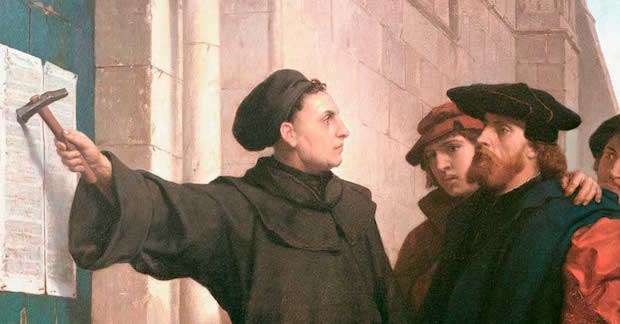
87-Luther’s List
This episode of CS is titled, Martin’s List.In the summer of 1520, a document bearing an impressive seal circulated throughout Germany in search of a remote figure. It began, “Arise, O Lord, and judge Your cause. A wild boar has invaded Your vineyard.”The document was what’s called a papal bull—named after that impressive seal, or bulla bearing the Pope’s insignia. It took 3 months to reach the wild boar it referred to, a German monk named Martin Luther who’d created quite a stir in Germany. But well before it arrived in Wittenberg where Luther taught, he knew its contents. 41 of the things he’d been announcing were condemned as à “heretical, scandalous, false, and offensive to pious ears; seducing simple minds and repugnant to Catholic truth.” The papal bull called on Luther to repent and publicly repudiate his errors or face dreadful consequences.Luther received his copy on the 10th of October. At the end of his 60-day grace period in which he was supposed to surrrender, he led a crowd of eager students outside Wittenberg and burned copies of the Canon Law and works of several medieval theologians. Included in the paper that fed the flames was a copy of the bull condemning him. That was his answer. He said, “They’ve burned my books. So I burn theirs.” That fire outside Wittenberg in December of 1520 was a fitting symbol of the defiance toward the Roman Church raging throughout Germany.Born in 1483 at Eisleben in Saxony to a miner, Luther attended school at Magdeburg under the Brethren of the Common Life. He then went to university at Erfurt where he learned Greek, graduating w/an MA in 1505. His plan was to become a lawyer, but the story goes that one day he was caught in a thunderstorm; a bolt of lightning knocked him to the ground. Terrified, he cried out to the patron saint of miners: “St. Anne, save me! And I’ll become a monk.” To his parents’ dismay, Luther kept the vow. 2 weeks later he entered the Augustinian monastery at Erfurt where he became a dedicated brother. Some years later he said about his being a monk, “I kept the rule so strictly that I may say that if ever a monk got to heaven by sheer monkery, it was I. If I had kept on any longer, I should have killed myself with vigils, prayers, reading, and other work.” Luther pushed his body to health–cracking rigors of austerity. He sometimes engaged in a total fast; no food OR water, for 3 days and slept without a blanket in winter.In the Erfurt monastery he did further theological study and was made a priest in 1507. When he transferred to Wittenberg in 1508, he began teaching moral theology, the Sentences of Peter Lombard, and the Scriptures. A visit to Rome on Augustinian business in 1510 opened Luther’s eyes to the corruption so prevalent among the higher clergy there. When he returned to Wittenberg in 1512 he earned his Doctorate in Theology and was appointed to the Chair of Biblical studies which he occupied for the rest of his life.But throughout this time, Luther was consumed by guilt and the sense his sinfulness. While the majesty and glory of God inspired most, it tormented Luther because he saw himself as a wretched sinner, alienated from an unapproachably holy God.While performing his first Mass, Luther later reported, “I was utterly stupefied and terror-stricken. I thought to myself, ‘Who am I that I should lift up mine eyes or raise my hands to the divine majesty? For I am dust and ashes and full of sin, à and I am speaking to the living, eternal and true God?’” No amount of penance nor counsel from his peers could still Luther’s conviction he was a miserable, doomed sinner. Although his confessor counseled him to love God, Luther one day burst out, “Love God? I do not love Him - I hate him!”Luther found the love he sought in studying the Word of God. Assigned to the chair of biblical studies at the recently opened Wittenberg University, he became fascinated with the words of Christ from the cross, “My God, my God, why have You forsaken me?” Luther found an odd solace in the idea that that Christ was forsaken. Luther was a sinner. Christ wasn’t. The answer had to lie in Christ’s identification with sinful humans. Luther began to ponder the possibility that Jesus endured estrangement from God for us.A new and revolutionary picture of God began to develop in Luther’s restless soul. Finally, in 1515, while pondering Paul’s Epistle to the Romans, Luther came upon the words of Ch1v17 “For therein is the righteousness of God revealed from faith to faith: as it is written, The just shall live by faith.”This was the key that turned the lock and opened the door to everything else that would follow. He said, “Night and day I pondered until I saw the connection between the justice of God and the statement that ‘the just shall live by his faith.’ Then I grasped that the justice of God is that righteousness by which through grace and sheer mercy God justifies us through faith. Thereupon I felt myself to be reborn and to have gone through open d

86-Erasmus
This episode of CS is titled Erasmus.As we begin, I once again want to do a brief, and I promise it will be brief, summary of the threads that conspired to weave the tapestry of the Reformation. Others might refer to them less as threads that weaved a tapestry as those that frayed in the unravelling of the Church caused by a pack of trouble-makers. The reason I’m compelled to do all this summarizing is because of the massive sea-change coming in our study and the need to understand it wasn’t just some malcontents who woke up one day and decided to bail on a healthy church. Things had been bad for a long time and the call for reform had been heard for a couple hundred years.The Western European Church of the 14th and 15th C’s experienced a major crisis of authority. This crisis came from challenges both within and without. They combined to plant seeds of doubt in the minds of many about the credibility and legitimacy of Church leaders. Let’s review some of the things they’d done, and that happened to the Church, to create the crisis.Due to the politics of late medieval Europe, Pope Clement V moved the papal seat to Avignon, France, in 1309 in what’s called the “Babylonian Captivity of the Church” because the Pope came under the influence of the French throne. When another Pope was elected in Rome, the Church was faced with 2 men who claimed the title of “Vicar of Christ.” This Papal Schism confused the people of Europe and stirred strong feelings that the office of Pope was more a political fixture than a spiritual office. At the insistence of the Holy Roman Emperor, the Council of Constance ended the schism. But the solution raised serious questions about the authority of the papacy, further dividing church leaders and distressing the people of Europe.In addition to these political shenanigans, the Church was marked by widespread corruption and fraud. Simony, the buying and selling of ecclesiastical offices, was common. Immorality among monks, priests, bishops and cardinals was at some times and places, not even hidden. The Church spent a fortune acquiring thousands of relics for its cathedrals and paying for them with the selling of indulgences, which we’ll talk about soon.The Inquisition had terrorized whole regions of Europe, especially in Spain and while the Church justified its actions saying it was rooting our dangerous heresy, many knew some victims of the Inquisition were innocent. The Church simply wanted their property and wealth and had used the Inquisition as a means of enriching itself.With the birth of the Renaissance and a new open-mindedness about thinking outside the realm of official authority, the Church became an object of ridicule and satire in pamphlets and books that were readily available with the invention of the printing press.Let me be clear. Some of the harshest criticism of the Church came, not from outsiders, but from faithful priests and monks disgusted with the corruption and error they saw among their peers.As a reaction to the stultifying academic pursuits of Scholasticism, there was a popular movement all across Europe known as Mysticism, in which people simply wanted to “feel” their faith and sought make contact with the divine through meditation and a more personal link to God than going through the official priesthood.Most significant was the movement known as The Brethren of Common Life. Their most famous spokesman was Thomas à Kempis whose little book On the Imitation of Christ continues to be a widely read devotional classic. The Brethren stood in opposition to the monastic orders which for the most part had become centers of corruption. The Brethren breathed new spiritual life into the church. They stressed personal devotion to Jesus through meditative study, confession of sin, and imitating Christ. They emphasized holiness and simplicity in lifestyle. In many ways, the Brethren prefigured the Reformers of the 16th C.With the Bible being translated into the common tongue, no longer did people have to rely on a priest telling them what it said.The 16th C world was one of astonishing change. Medieval civilization, dominated by an institutional Church was disappearing. Modern nation-states challenged the Church for political and economic supremacy, and the voyages of discovery made the world seem smaller at the same time new worlds were opening. The Renaissance of Northern Italy saw many turn from a hide-bound and superstitious Catholicism to the romanticized glories of ancient Greece and Rome.Into this changing world stepped one à Desiderius Erasmus.Taking the pulse of the times, Erasmus ridiculed the Catholic church with biting satire. His works were wildly popular. In his most famous, Praise of Folly written in 1509, Erasmus took jabs at the church’s immorality, corruption, and decadence. He ridiculed such superstitions as fanatical devotion to relics, stories of bleeding Communion bread, and the cult of the saints. In another work, he depicted Saint Peter railing a

85-Dawn
This 85th episode of CS, is titled, Dawn.I want to take a brief moment here at the start to say “Thank you” to all those who’ve spread the word about CS to their friends and family. We’ve had a significant bump in subscribers and lots of new likes on the FB page. So—Kudos to all who’ve spread the word.As most of you know, iTunes is by far the major portal for podcasts. So, if you use iTunes, a review of CS is a great way to boost our rating – and ratings usually translate into new subscribers. Why do we want more subscribers since there’s no commercial interest in CS? Because information and knowledge about history are crucial to a well-rounded worldview. I’m convinced an accurate view of history is crucial to overcoming prejudice, to tearing down the walls that divide people. That is when we discover not just WHAT people believe but WHY – it helps puts things in perspective and disabuses us of errant opinions.Anyway, that’s my hope.As I’ve learned about different groups, I’ve revised my opinions. Traditions almost always have some origin in history, in some ground that at the time seemed perfectly reasonable to the people who created them. We may not agree with them today, hundreds and even thousands of years later, but at least we can respect those who originally framed them; and if not respect, gain a modicum of understanding for the complexities they wrestled with.Okay, back to it …We’ve come now to one of the most significant moments in Church History; the Reformation. Since it’s considered by many the point at which the Protestant church arose, it’s important to realize a couple of things.First – The student of history must remember almost all those who are today counted as the first Protestants were Roman Catholics. When they began the movement that would later be called the Reformation, they didn’t call themselves anything other than Christians of the Western, Roman church. They began as an attempt to bring what they considered to be much-needed reform to the Church, not to start something new, but to return to something true. When the Roman hierarchy excommunicated them, the Reformers considered it less as THEY who were being thrust forth out of the Church as it was those who did the thrusting, pushed them out of the true church which was invisible and not to be equated with the visible religious institution HQ’d in Rome, presided over by the Pope. It’s difficult to say for certain, but you get the sense from the writing of some of the Reformers that they hoped the day would come when the Roman church would recognize in their movement the true Gospel and come to embrace it. Little did they envision how deep and wide the break between them would become, and how their movement would shatter and scatter into so many different sects, just as the Roman hierarchy worried and warned.Second - There’d been groups that diverged from Roman Catholicism and its Eastern cousin the Orthodox Church, for a long time. We’ve already considered the Nestorian Church which dominated the Church in the Far East for hundreds of years and didn’t lose its place of prominence until the Mongol invasions of the 13th C. There were little communities of what can be called non-aligned Christians scattered throughout Europe. And we’ll consider some of those as we turn now to the Reformation.Long before Luther nailed his list of 95 topics for discussion to the chapel door at Wittenberg, others had sniped at the theological position of the Roman church. There’d always had been some who didn’t agree with its teaching, and many had broken off into separate religious communities.By way of review …Peter Waldo was one of the most effective of the pre-Reformers. A wealthy merchant of Lyons, France, moved by Matthew 19:21, he was convinced that poverty in the service to Christ was the path to heaven. So three centuries before Martin Luther, he sold his estate and gave the proceeds to the poor. Within a year, he was joined by others, both men and women, who called themselves the “Poor Men of Lyons,” and took on an itinerant ministry of preaching repentance and living from handouts. These were an early form of what came to be the mendicant monks.Thinking themselves to be good Roman Catholics, they appealed to the Third Lateran Council in 1179 for permission to preach but were refused because they were considered ignorant and unlearned laymen. But they were convinced they were like the first followers of Jesus and should obey God rather than men. So, Peter and his followers continued to preach.In 1184, Pope Lucius III excommunicated them for their disobedience. Contrary to what we might expect, this brought numerous supporters, and the movement spread into southern France, Italy, Spain, the Rhine Valley, and Bohemia. That they gained such support after being drop-kicked by Rome leaves the impression the Church’s reputation wasn’t so grand, at least in the regions where the Waldensians lived and worked.It’s hard to know if all those called “Wal
84-Lost
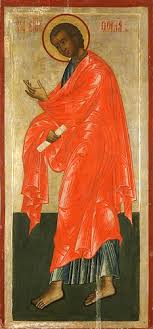
This 84th Episode of CS is titled Lost & is a brief review of The Church in the East.I encourage you to go back and listen again to episode 72 – Meanwhile Back in the East, which conveyed a lot of detail about the Eastern Church & how it fared under the Mongols and Muslim Expansion in the Middle Ages.Until that time, Christianity was widespread across a good part of the Middle East, Mesopotamia, Persia, & across Central Asia – reaching all the way to China. The reaction of Muslim rulers to the incipient Mongol affiliation with Christianity meant a systemic persecution of believers in Muslim lands, especially in Egypt, where Christians were regarded as a 5th Column. Then, when the Mongols embraced Islam, entire regions of Christians were eradicated.Still, even with these deprivations, Christianity continued to live on in vast portions of across the East. (more…)
83-Easter
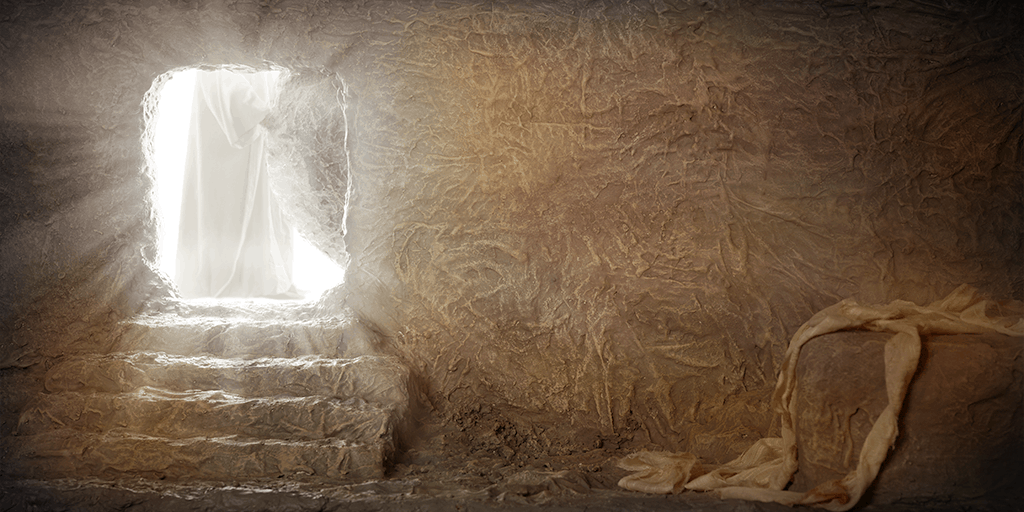
This special episode of CS posts to the sanctorum.us website on Easter Sunday, 2015. I realize many subscribers will hear it at a later time, but since each week’s episode posts early Sunday morning, and this is Resurrection Sunday, a special podcast seemed appropriate. This week, we’ll be taking a look at the place of the celebration of Easter in the Early Church.There’s considerable controversy over the origin of the word Easter as the label that’s come to be attached to the Christian commemoration of the Resurrection of Christ. It’s best to see the word coming from the Germanic languages & the Teutonic goddess of Spring, Eastre. Her festival marked the vernal equinox, & with the arrival of Christianity the holiday morphed to be the anniversary of the resurrection of Christ.Today you’ll occasionally hear someone connect the word Easter to the Canaanite goddess Astarte, the Babylonian Ishtar, or some such other ancient deity. While there may be some etymological connection between the Teutonic Eastre & the Mesopotamian Ishtar, it’s submerged under the mists of time. (more…)

82-The Long Road to Reform 07
This is the 7th and last episode in our series The Long Road to Reform.In Italy, the Renaissance was a time of both prosperity and upheaval.Moderns of the 21st C are so accustomed to thinking of Italy as one large unified nation it’s difficult to conceive of it as it was throughout MOST of its history; a patchwork of various regions at odds with each other. During the Middle Ages and a good part of the Renaissance, Italy was composed of powerful city states like Florence and Venice who vied endlessly with each other. Exacerbating the turmoil, was the interference of France and Germany who influenced affairs to their advantage.It was within this mix of prosperity, intrigue, and emerging Renaissance ideals the papacy carried on during the last decades of the 15th Century.I need to insert a cautionary footnote at this point. As this is the last of our series laying out the history for WHY the Reformation occurred, we need to deal with something that may be a bit unsettling for some of our listeners; the string of popes who were, how shall I describe them? Less than holy, less than the men of God others were. Even many loyal Roman Catholics acknowledge the men who’ve ridden Peter’s chair haven’t always been of sterling reputation. Not a few have been a ragged blight on the Holy See. That there was a string of them in the 15th Century helped set the stage for the Reformation.And I hope this mini-series in CS has made it clear that Reform only became something OUTSIDE the Church when the decades old movement for it WITHIN the Church was forced to exit. Never forget Luther began a Roman monk and priest who was forced out.During his reign in the mid-15th C, Pope Eugene IV sought to decorate Rome with the new artistic styles of the early Renaissance. He recruited Fra Angelico and Donatello. This began a trend among the Popes to imbibe the ideas of the Renaissance, especially in regard to art. They sought to adorn the city with palaces, churches, and monuments worthy of its place as the capital of Christendom. Some of the popes moved to greatly enlarge the papal library.All this construction wasn’t cheap, especially the construction of St. Peter’s Basilica. So the popes came up with new ways to raise funds. A subject we’ll come back to later.Not all Renaissance popes focused on the arts. Some were warlords who led military campaigns. Others took delight in playing the high-stakes game of political intrigue.Eugene IV was succeeded by Nicholas V, who spent his term from 1447 to 55 trying to gain political dominance over the Italian states. His goal was to turn Rome into the intellectual center of Europe. He recruited the best authors and artists. His personal library was said to be the best. But, being a scholar didn’t preclude him being brutal. He ruthlessly pursued and executed any who opposed him. During his reign, Constantinople fell to the Turks. He called for a great Crusade to retake the City, but everyone knew he only wanted it to increase his own prestige, so they ignored him.His successor was Calixtus III, who served only 3 years. Calixtus was the first pope of the Spanish family of Borgia. Under the guise of standing against an invasion by the Turks, Calixtus embarked on a campaign to unite Italy by military conquest. Nepotism reach a new height during his reign. One of the many relatives Calixtus elevated was his grandson Rodrigo, whom he appointed as a cardinal. This Rodrigo would later become the infamous Alexander VI.The next pope was Pius II who served from 1458 to 64. Pius was the last of the Renaissance popes who took his office seriously. He tried to bring about the much-needed Reformation of the Church but his plan was stalled by powerful cardinals. Pius was a true scholar who began work on a vast Cosmography. Unable to complete the work before he died, it was instrumental in shaping the ideas of a certain Genoese ship’s captain named Cristofor Columbo.Pius II was followed by Pope Paul II, an opportunist who, upon learning that his uncle, Eugene IV, had been made pope, decided a career as a churchman was more promising than his occupation as a tradesman. His main interest was collecting jewelry. His lust for luxury was proverbial, his concubines acknowledged by the papal court. Pope Paul wanted to recover the architectural glory of pagan Rome and devoted vast sums to the work. He died of internal bleeding, brought on by his debauchery.Sixtus IV served from 1471 to 84 and came to power by literally buying the papacy. Corruption and nepotism reached new heights. His sole goal was to enrich his family, one of whom would become Pope Julius II. Under Sixtus, the church became a family business, and all Italy was involved in a series of wars and conspiracies whose sole purpose was to enrich the pope’s nephews. His favorite was Pietro who at the age of 26 he made a cardinal, the patriarch of Constantinople, and archbishop of Florence. Another nephew plotted the murder of one of the Medicis in Florence who

81-The Long Road to Reform 06
This is the 6th episode in our podcast mini-series The Long Road to Reform.Much of the reform energy in the European Church of the Late Middle Ages was among the poor. Being poor meant being illiterate. The poor and illiterate don’t, as a rule, write books about their hopes and dreams. So it’s often from sources hostile to the reforming movements of this era we learn of them. That hostility colors the picture of them much of history since has regarded them by.Wycliffe’s ideas lived on, not so much among scholars or nobles who initially endorsed them, as among the poverty-committed Lollards who went from village to village, carrying his reforms like torches, continually setting new places ablaze with reforming zeal. The Lollards preached a simple Gospel that contradicted a great deal of what commoners heard from local priests.In Bohemia, the ideas of Jan Hus, at first so popular among the gentry, ended up being embodied by an Apocalyptic sect called the Taborites, made up largely of the illiterate poor.Another movement took place in the late Middle Ages and into the Renaissance that rarely seems mention. We’ve already talked about how some women were drawn to the monastic life and lived in sequestered communities affiliated with a men’s compound. There were orders for women in both the Franciscans and Dominicans. But in the late Middle Ages, the number of women seeking inclusion in these orders swelled dramatically. So many applied, the orders had to limit their intake of new sisters. Those rejected didn’t just shrug their shoulders and go home; back to the default of being a wife and mother. Many of them decided—if the established orders wouldn’t take them, they’d form their own communities. Though not sanctioned by the Church, they devoted themselves to corporate lives of prayer, devotion, and poverty. Called beguines, [beg-geenz] their communities were usually large houses they converted into beguinages. Just what the word ‘beguine’ means is unclear; most likely a less than complimentary label assigned these women by critics. Because they lived outside the church sanction, they were suspected of being aberrant at best and probably downright heretical, if tested.The Low Countries had many lay-Beguine orders from the 13th thru 16th Cs. While they lived in semi-monastic communities, they didn’t take formal religious vows. They promised not to marry, but only so long as they remained a Beguine, something they could step out of at any time. In a practical sense, the Beguines were an attempt to re-connect with the simplicity of the Gospel as it altered one’s relationship with God and others. So Beguines focused on personal devotion to God and the care of one’s fellow man. Their charitable works were well-known across Northern Europe.Though the Church in many places passed rules banning these unofficial monastic communities, their popularity grew and soon men formed their own version. Such men where called “beg-hards” a word which eventually morphs into today’s “beggar.”Another popular movement first appeared in 1260; the flagellants. They got off to a slow start, but by the 14th C, their numbers swelled.While the personal discipline of flagellants took many forms, the primary method, the one yielding their name, was to whip themselves with the flagellum. Self-flagellation as penance for sin wasn’t new. It was a practice common to many monastic houses. Now it was a popular craze. Thousands of people from all levels of society lashed themselves till bloody, convinced by current events and the fiery preaching of Apocalyptic Announcers the end was near; that God was about to destroy the world for its failure to repent.But don’t think this was all just a bunch of emotionally-worked up illiterates who’d been stoked into some kind of mass hysteria. No: Flagellants followed a specific rite of self-flagellation and other forms of personal mortification. The movement held to a rigid discipline. While the specific details altered over time and place, typically, those who wished to join the Flagellants did so for 33½ days. During that time they owed total obedience to their spiritual overseers.Twice a day, Flagellants marched two by two while singing hymns to the local church. After praying to Mary, they went, still singing, to the public square. They formed a circle and knelt in prayer with bared backs. Then, as they prayed or sang, they commenced the lashes until their backs poured blood. Occasionally, one of their leaders would preach to them on the sufferings of Christ. Then they’d rise, cover their bleeding back and again, withdraw in an ordered procession. Besides these two daily public self-flagellations, they were committed to a private third.As I said, they did this for 33½ days. But for ever after, they were supposed to renew the scourging annually on Good Friday.At first, Church officials saw little danger in the movement. But flagellants soon began to refer to what they were doing as penance and a “second bapti

80-The Long Road to Reform 05
This is the 5th episode in the podcast mini-series we’re calling “The Long Road to Reform.”What do you think of when I say “The Inquisition”?Many shudder. Some get a queasy feeling in their stomach because of the way the Inquisition has been cast in novels and movies. There’s a bit of truth in that portrayal, one-sided and stereo-typed as it may be.We’re backing up yet again in our timeline as we take a closer look at this sad chapter of Church History.The 4th Lateran Council of 1215 was the high-water mark of the medieval papacy under Innocent III. The Council was little more than a rubber-stamp committee for Innocent’s reforms. Those brought much needed positive change to the morals of the clergy, but installed structures that worked against later reform. The 4th Lateran Council established the doctrine of transubstantiation and the sacrament of penance. It also made official the Inquisition, which had begun as a commission of inquiry under Pope Alexander III a generation before, but now became a permanent feature.The major challenge Innocent III faced was from the Albigensians, AKA the Cathars, inhabiting Southern France. Since we covered this maybe-heretical group in an earlier episode, we’ll just say that, if the reports by their opponents about them are true, they were a dualistic pseudo-Christian cult-turned-movement that possessed a lot of energy during its relatively short life. Innocent sought to convert them by preaching and debates, but early efforts met with little success. So he approved a Crusade against them from 1209 that lasted the next 20 yrs. The Crusade crushed the Albigensians, devastating Southern France in the process. It was the Albigensians that so provoked Dominic, and propelled his efforts in launching the Dominicans.Though this heresy was eventually put down, their earlier success convinced Innocent the Church would be better served if it had a means to conduct official investigations into questions of doctrine. Earlier popes authorized bishops to investigate accused heretics based on rumor alone. It was up to the accused to prove their innocence. This became the foundational premise of the Inquisition.The Inquisition was an ecclesiastical institution whose aim was to search out and punish heretics. The punishment for heresy was death, since heresy was regarded on par with treason and witchcraft; crimes that stood to imperil the health and well-being of thousands. In 1199, Innocent III issued a decretal saying for the first time that heresy was treason under Roman law.In the late 12th C, bishops turned confirmed heretics over to secular authorities for execution. The 4th Lateran Council confirmed these regulations and threatened excommunication of temporal rulers who failed to rid their territory of heresy.In 1229, the Synod of Toulouse drew up the procedures for seeking out and punishing heresy. The Inquisitor was subject to no law outside the Pope’s authority and word. He was prosecutor and judge. The “trial” was secret, with the accused having to prove their innocence, as in all courts following Roman law, without the benefit of counsel or knowledge of the accusers.The final step came in 1252 when Pope Innocent IV authorized torture as a means of getting information and confessions from accused heretics.Till then, Church leaders and thinkers rejected with horror the very thought of using torture. But no such reserve remained after Innocent III ascended the papal throne and the Catholic Church achieved its majestic and powerful unity. Noteworthy among the tortures used by the Inquisition is that, while execution was still carried out by the civil government, it was priests who did the torturing, with fire, stretching on the rack, or beatings that allowed no blood-letting. Remember, good Christians can’t shed blood.It was an ugly business, but following the ideas of Augustine, almost everyone agreed that saving the body by amputating a rotten limb was the path of wisdom. The Church was the body; the heretic the rotten limb. One more abhorrent idea we can attribute to Augustine.The Inquisition developed a complex system for classifying heresy and heretics. There were heretics who simply added additional beliefs to the essentials; then there were those who denied those essentials. There were perfect and imperfect heretics. Those accused of heresy were categorized as lightly suspect, vehemently suspect, or violently suspect.Typically, the Inquisitor would arrive in a town and begin his work by preaching a sermon calling for people to bring forth charges against those they knew were guilty of something damnable, or confessing something in themselves they feared was aberrant. People were given a period of grace to make this initial confession. This was called the “General Inquisition.” When that period expired, the “Special Inquisition” began and the accused were summoned to trial.The Inquisitor then functioned as Prosecutor, Judge and Jury. The trial was held in secret, the testimo

79-The Long Road to Reform 04
This is the 4th episode in a mini-series we’re calling “The Long Road to Reform.”It was late Spring of 1490 when a Dominican friar stood at the gates of Florence. This was not the first time the 33 year old Girolamo [ger-all-a-mo] had made the 160 KM / 100 miles trip from his native Ferrara to the city of the Medici’s. He’d lived for a spell in the city. The Florentines admired his scholarship but were put off by the vehemence of his preaching. They had a hard time adapting to his accent. But now he returned at the invitation of Lorenzo de Medici; Lorenzo the Magnificent, who virtually owned Florence, and to whom he’d been recommended by the famous philosopher Mirandola.Girolamo Savonarola joined the monastery of St. Mark and began a series of lectures for his fellow friars. Soon others joined the sessions causing them to relocate to the main hall. The lectures turned into sermons. By the Lenten Season of 1491, Savonarola’s growing fame saw him invited to preach at the main church in Florence. Short on tact, Savonarola lambasted the decadence of the city’s rich, of which there were not a few. Lorenzo de Medici was especially displeased. Who did this upstart think he was? He’d only come to Florence at Lorenzo’s invitation. This was no way for a guest in HIS city to act. Medici hired another preacher to attack Savonarola. It failed since the people sided with Savonarola. He’d become their champion in decrying the exorbitant luxuries of the wealthy.The mercenary preacher refused to accept defeat. He went to Rome to plot his revenge.Savonarola was then elected prior of St. Mark’s and within a short time, reformed the life of the community so thoroughly, the people of Florence all remarked on how holy the order had grown. Savonarola sold off some of the monastery’s estates and gave the proceeds to the poor.Savonarola’s reputation was unimpeachably. Though bitter enemies, when Lorenzo lay dying, he asked for the prior to come bless him. Lorenzo’s successor was Pietro de Medici, who promptly lost all respect from the Florentines. The French King, Charles VIII, was on his way to claim the rule of Naples. Instead of organizing the defense of Florence as he ought, Pietro tried to buy him off. The Florentines were furious and sent their own embassy under Savonarola. They expelled the now hated Pietro and settled with the French by becoming allies. Though Savonarola was technically just a monastic prior, he’d become the civil leader. The Florentines asked him to design a new government. He recommended a republic and installed reforms to heal the ailing economy. He gathered a good part of the gold and silver of the many city churches and sold it to feed the poor. This was the high-water mark of his term.History regards Savonarola as a religious fanatic & ignorant monk. He wasn’t. He was simply someone who understood that the Church and Italian society had gone far from the Biblical ideal. What Savonarola was, was an anti-politician. That is, he had little to no capacity for compromise; doom for anyone engaged in civil politics. Savonarola was unable to distinguish between rules and principles; between non-negotiables and his own opinions. As a result, he was on a collision course with the very people who’d put him in power.Savonarola believed study ought to be at the center of reformation. So the friars at St. Mark’s studied Latin, Greek, Hebrew, Arabic, and Aramaic. He railed against the luxuries of the wealthy, placing them all under the rubric “vanity.” These vanities, he railed, were a distraction that weakened the soul and made it prone to sin. So, at his urging the people of Florence regularly gathered to pile such vanities up and set them ablaze. First, a large pile of wood was erected in the main square. Under it was placed straw and kindling sprinkled with gunpowder. Onto of the pile people put their vanities; frilly dresses, jewelry, wigs, and ostentatious furniture. Amidst singing and ceremony, the thing was set on fire – a Bonfire of the Vanities. These bonfires replaced the traditional celebration of carnival just before Lent, something else Savonarola had banned.His reforms were echoed in surrounding cities. When Florence’s rival republic of Siena requested Savonarola’s assistance, he went with twenty fellow monks. They arrived in Siena and went to work with their reforms. First order of business was to clear house in the monastery there. When some of the expelled monks resisted the reforms, Savonarola decided if they weren’t going along with his plans, he’d leave. He had more luck at Pisa and the monasteries scattered round Tuscany.As we might expect, Savonarola’s downfall came about because of his inability to play the political game.Alexander VI, one of the worst of the popes, made an alliance against France that included a good part of Italy, Germany, and Spain. The smart move was to join the pope’s party. But Savonarola insisted on keeping his promise to the French. The pope responded with severe

78- The Long Road to Reform 03
This is part three of “The Long Road to Reform.”In our last episode we looked at The Conciliar Movement that formed to end the Great Papal Schism and so many hoped would be a permanent fixture for reform in the Church. As well-intentioned as the movement was, it ended up resurrecting the Schism instead of solving it. In its long battle with the Papacy, Conciliarism eventually lost.We turn now to look at a reformer from Bohemia named John Hus; or more properly Jan Hus. One of my personal, all-time favorite church leaders.Bohemia was an important part of the Holy Roman Empire; a sovereign state with its capital at Prague. Today, it roughly corresponds with the Czech Republic. It had a long history as a place of vibrant Christianity, especially monasticism. In 1383, Bohemia and England were linked by the marriage of Anne of Bohemia and the English King Richard II. With this union, students of both countries went back and forth between the colleges of Prague and Oxford where the pre-reformer John Wycliffe.The revolt Wycliffe started at Oxford, expanded when he was booted and met with greater success in Bohemia than England because unlike England, it was joined to a strong national party led by a man named Jan Hus.Hus came from peasant parents in the southern Bohemian town of Husinetz. He studied theology at the University of Prague, earning a Master of Arts before teaching there and diving into the cause of religious reform.While a student, Hus was introduced to the early philosophy of Wycliffe, but it was only after his appointment as the pastor at Bethlehem Chapel that was exposed to Wycliffe’s more radical views on religious reform. He immediately adopted Wycliffe’s views that the church was an invisible company of the elect, with Jesus as its head rather than a Pope.Bethlehem Chapel was located near the University of Prague, giving Hus an open door to circulate Wycliffe’s writings. As his ideas took hold, paintings began to appear on the walls of the church contrasting the behavior of the popes and Christ. In one, the pope rode a horse while Jesus walked barefoot. Another showed Jesus washing the disciples’ feet as the pope’s were kissed.Bethlehem Chapel had been founded in 1391 to encourage the national faith of Bohemia, so Hus’s strong sermons in Bohemian stirred up popular support for reform. And wouldn’t you know it? Where do you think the first protests came from--That’s right: Students rioted both for and against the ideas of Wycliffe being promoted by Hus and his supporters.The Archbishop of Prague realized the threat Hus’s activities had for the upper echelons of Church Hierarchy and complained to the pope. The Pope responded, “Root out the heresy.” So the Archbishop excommunicated Hus. Bad move; for right away the Archbishop realized how little local support he had. When Hus realized he held the backing of the people, he ramped up his criticisms and attacked the pope’s sale of indulgences to support of his war against Naples. That was too much for the Bohemian King Wenceslas. Hus might have the support of the common people, but his condemnation of the sale of indulgences impacted a political issue the king didn’t want messed with. Negotiations between the Pope and king saw Prague being placed under a papal interdict; a political and religious slap on the wrist that had an immediate impact on people across the board. When under an interdict, people remained members of the church, but the sacraments were suspended. All of this happened because of Hus, so he left Prague to live in exile in southern Bohemia. It was during this time Hus wrote his most notable work, titled On the Church.The Council of Constance we recently looked at was fast approaching. This was the council set to solve the problem of the Great Papal Schism. At the urging of the Emperor Sigismund, Hus agreed to appear. He hoped to present his views on the nature of the Church to the members of the Council. He ended up instead a victim of the Inquisition.The rule of the Inquisition was simple. If enough witnesses testified to the guilt of the accused, he had to confess and renounce his error or he’d be executed by being burned, because, well – being good churchmen, they couldn’t shed blood. If the accused confessed, the sentence was life in prison, which in most cases was hardly better than being burnt at the stake. Hus’s case was handled in a manner typical for the Inquisition of that time. Greedy Inquisitors often went after someone simply because they lusted for their property. So people were accused of some grievous crime and there were usually enough witnesses-for-hire around who’d say whatever the Inquisitors paid them to. In Hus’s case, the Inquisitors weren’t after his wealth; the Church simply wanted him gone, so he was accused and found guilty of heresies he’d never taught.Now, Hus said he’d alter his views—IF they could be shown to be contrary to Scripture. But he refused to recant the heresies he’d been falsely accused of. It

77-The Long Road to Reform 02
This is part 2 of “The Long Road to Reform.”Before diving into the THE Reformation, we’ll do some review and add detail to the story of the Church. We do this because I fear too many of us may have the impression Martin Luther and John Calvin were wild aberrations. That they just sprang up out of nowhere. Many Protestants assume the Roman Catholic Church got progressively more corrupt during the Late Middle Ages and that Luther was a lone good guy who stood up and said, “Enough!” Many Roman Catholics would agree that the late medieval Church got a bit off but see what Luther did as a gross over-reaction that took him off the rails.So in this series of podcasts within the larger Church-story, I want to make sure we understand The Reformation was the inevitable result of a long attempt at reform that had gone on for awhile. To do that, we need to go back over some of the ground we’ve already covered.Pope Clement V made his headquarters the French city of Avignon. For the next 70 years, the popes resided there and bent their policies to the advantage of the French throne. The rest of Europe wasn’t real excited about this, giving this period the title of “The Babylonian Captivity of the Church.”When Clement V died in 1314, the cardinals found it difficult to agree on a successor so they decided to elect a 72 year old, assuming he’d not last long, but it would afford them time to reach a consensus on a real pope. But Pope John XXII turned out be far more than a mere place-holder. He lived for 18 years and surprised everyone with his vigorous rule. Pope John was determined to make the Italians honor his papacy and sent troops to force down recalcitrant nobles. To finance these military excursions as well as funding the expansion of the papal court at Avignon, John devised a complex tax system. This only added to resentment against his rule.In the decade Pope Clement VI reigned, nepotism in the Church reached new heights and the papal palace at Avignon rivaled those of the secular courts of Europe in pompous luxury.Innocent VI made arrangements to move back to Rome but died before doing so.The eight years of Pope Urban V were marked by reform. Urban was an austere man of great personal discipline. He simplified the life of the court and removed from office anyone who wouldn’t abide his reforms. In 1365, he returned to Rome to the acclaim of the people. But his policies weren’t pro-Italian enough and loyalty to him quickly eroded. When his rule was defied by large groups, he moved back to Avignon.When Urban V died in 1370, Gregory XI was elected. Gregory’s uncle was Pope Clement VI who made him a cardinal at the age of 17. It’s that nepotism thing I mentioned a moment ago. This Gregory is the pope St. Catherine of Siena urged to return to Rome, we talked about in an earlier episode. On January 17, 1377, amid great rejoicing, Gregory entered Rome. The Babylonian Captivity of the Church was over and most assumed things would return to normal. It was not to be. The Great Papal Schism is just around the corner.The Avignon Papacies engaged in numerous intrigues and conducted military forays into various regions of Europe that had to be funded. So the popes came up with ingenious ways to raise revenue that furthered corruption. When an ecclesiastical position was vacant, its income was sent to Avignon. So the popes rather preferred that these positons weren’t filled and churches went without bishops. When the positon WAS filled, it was auctioned off to the highest bidder in a return to the practice of simony Pope Gregory VII had worked so hard to end. Since these ecclesiastical offices were a source of income, some men managed to secure several of them. But, being that they could only be in one place at a time, they served as absentee landlords in their parishes. Added to this simony and absenteeism, the nepotism that marked the Avignon Papacy was so bad, by the end of the Babylonian Captivity of the Church, there was a widespread sense of the need for radical reform of the Church. And since it was the papacy itself that needed reform, the voices calling for it increasingly understood reform would need to come from someone other than the Pope.While I’d love to dive into the story of the Great Papal Schism, I don’t think it would make for very good podcast material. We’ve already given a decent summary of it in previous episodes. Any more would devolve into a long list of names that become a jumble. The intrigues that went on during this time are rich and complex and would make for a great TV miniseries. But we’re going to pass over it now and just say that the emergence of 2, then 3 popes all claiming to be Peter’s rightful heir is one more obvious evidence things had gone horribly awry in the leadership of the Western Church.It became clear to everyone reform was needed. And in fact, many voices called for it.During the Great Schism, the conciliar movement wanted to reform the structure of the church while leaving its d

76-The Long Road to Reform 01
This episode is the first of several I’m calling “The Long Road to Reform.” As I mentioned at the end of the last episode, we’ll track the Church’s long march to the Reformation, then pause before picking it up acwith THE Reformation by doing some episodes tracking Church History into the East.Until recently, most treatments of the History of Christianity have focused almost exclusively on the Church in Europe and what’s often called “Western” Christianity. Mention is made of the Church’s growth into other regions like North Africa, and the Middle and Far East. But it’s barely a nod in that direction. For every 10,000 words devoted to the Church in Europe, 10 are given to the Church of the East. What’s sad is that this Church has a rich history. We won’t make up for the lack of reporting on the history of the church in these regions, but we will seek to fill in some of the gaps and give those interested resources for learning more.Okay, here we go. We embark now on The Long Road to Reform.At the dawn of the 13th C with Innocent III, the papacy reached the zenith. The Dominicans and Franciscans carried the Gospel far and wide, new universities were hotbeds of theological enterprise, and Gothic Cathedrals seemed to defeat the law of gravity.Europe was united under the pope and the emperor; in theory at least. Because the Crusaders had taken Constantinople, the breach between East and West looked to have been finally healed. Yeah – it looked like Christendom was about to enter a Golden Age.As is often the case, looks can be deceiving. These were.By 1261, the West’s influence in Constantinople was over as well as the bogus union the 4th Crusade claimed to have forged. Over the next 2 centuries, Europe saw several changes that set the scene for the modern world.One of the most important was in the realm of economics.When we think of the Middle Ages in Europe, we remember feudalism with its strict rules of class. There was the land-owning nobility and the commoners, serfs who worked the land for nobles in exchange for protection. We don’t have time to go into it here, but feudalism was largely the result of developments in the technology of warfare. Armored warriors, called knights, were expensive. It took a vast economic base to field them. So serfs worked lands in exchange for protection by knights. These serfs gave loyalty, called fealty, to nobles in ever higher levels from counts and barons to dukes and earls, with the king at the top. A third class in this tiered structure of medieval society were the clergy. The Church also owned lands and had serfs who worked for them. This made priests and abbots responsible for the secular rule of church and monastery estates. But toward the end of the Middle Ages, the cities of Europe began to grow and a new class of commoner emerged – the merchant.There were several reasons for the proliferation of merchants and the growth of villages into town and towns into cities. One of the most important was the boom in trade. The Crusades stimulated Europe’s taste for new things. Someone needed to buy up what Europe produced, which was a lot of wool, and take it to the East were all the goodies were. Increased trade meant increased wealth for merchants, who weren’t land-owners but who did buy themselves nice homes in the growing cities. Those houses needed furniture and art and all the other luxuries that mark a successful merchant so industries popped up to supply those wants – bringing even MORE to the cities. New credit systems were developed as extra money meant people looking to invest for a profit. And slowly but surely, a NEW social class developed – the middle-class who didn’t fit the strict class structure that had dominated Europe for several hundred years. When nobles began taxing the trade crossing their land, the merchants protested and called for a stronger central government that would reign in the nobles. A king could protect trade, quash the bandits that harassed caravans, establish a common currency, and put an end to silly conflicts that disrupted trade.Kings saw the merchants and emerging middle-class that supported them as a way to do an end run around the nobles who so often gave them grief. The king didn’t have to depend now on those nobles to supply knights and men at arms. From the taxes raised from the middle-class, they could field their own army.The growth of strong kings during the late Middle Ages in Europe goes hand in hand with the rising middle-class. And it’s out of this process the modern nations of Europe emerged. Regions that shared a common language and culture coalesced around strong central governments. So, nationalism became one of the factors that will lead to problems for the Church. Until the 13th Century, Europeans identified themselves by their town, city or county. By the 15th Century they identified themselves as English, French, Swedish …Where this emerging nationalism effected the Church was when a pope leaned in his policies tow

75-The Witness of Stones
This episode is titled “The Witness of Stones.”I’ve had the privilege of doing a bit of touring in Europe. I’ve visited the cathedral at Cologne, Germany on several occasions. I’ve been to Wartburg Castle where Luther hid out. Mrs. Communion Sanctorum and I did a 2-week tour of Florence and Rome for our 30th Anniversary. We saw lots of churches and cathedrals. No matter what your thoughts about medieval Christianity, you can’t help but be impressed by the art and architecture the period produced.Some modern Christians, especially those of the Evangelical stripe, visit a medieval European cathedral, and come away impressed at the architecture, but mystified and maybe, a few anyway, a bit angry. Mystified on WHY people would go to such extremes to build such an immense and impressive structure. Angry at the massive expense such a structure meant.This episode seeks to explain the why behind medieval cathedrals.Churches in general and cathedrals in particular served two main purposes. First, the building was a place for worship; that worship being centered on the Mass. Second, the church was a place of instruction.The architecture was used as a tool for BOTH of these.In an age when only a small portion of society was literate, church buildings became a kind of “book in stone,” telling God’s story in the paintings and carvings that adorned the walls, and later, in the dazzling light of stained glass windows.Churches and cathedrals were made elaborate because of the theology of the Mass that we’ve looked at in the episode on the Eucharistic controversy. While the debate was long, the Church eventually settled in on the doctrine of transubstantiation; the belief that at the words of the priest, the bread and wine of Communion are transmuted into the literal body and blood of Christ. A portion of the consecrated host is kept in a container called a tabernacle, making the church into a house that holds the most precious thing in the universe; the body of Christ. It’s for this reason churches have long been regarded as sacred refuges. The church’s specialness derived from the presence of the host. And of course, that host deserved a house worthy of its importance.Think of the consecrated host as the finest gem. Such a jewel deserves an elaborate setting. It was this mentality that fueled the building of Europe’s Medieval Cathedrals. While churches were the meeting place of the faithful, their primary function was to serve as the location where the great miracle of transubstantiation took place.Following the Edict of Milan ending official persecution of Christians, the first church buildings were built in the same pattern and plan as Roman basilicas. These were civil government buildings used for a variety of purposes but officially designated as the hall where the king held court. The Roman basilica was in the shape of a capital “T.” Churches built in the 7th thru 11th C, a period called Romanesque, were built in a small “t” floor plan. The addition of the space at the top of the “t”, called the apse, was to provide room for the clergy who became increasingly distinct from the laity. As more priests and monks were added to the choir, the apse grew.Another major change in Romanesque churches was their roofs. They went from wood to stone. Stone roofs were possible because of the use of semi-circular arches that supported the additional load. When arches transect each other, it forms a vault. The challenge these arches, vaults, and stone roofs put on builders was the lateral stress they exerted. The weight of all that stone had to go somewhere and where it went was to the walls of the church. To keep them from toppling over, they were made sturdier by adding weight and width. So Romanesque churches are massive, imposing structures of thick walls and few windows.In the mid-12th C, Romanesque architecture gave way to a new movement called Gothic. That label was applied much later by those who considered the style barbaric, so worthy of association with the Goths who’d helped bring Rome down. The basic floor plan for churches remained the same, but Gothic architects used pointed, rather than semi-circular arches and vaults. This allowed much higher ceilings. The weight was born by columns rather than walls, which doubled and trebled the lateral thrust on the columns. So external columns were built outside the church and used as additional support for the internal columns by means of an ingenious prop called a flying buttress. Since the weight was now born by columns rather than walls, the walls grew lighter and could be replaced by large stained- glass windows, whose scenes depicted stories from the Bible and lives of the saints.Just imagine the first time a peasant wandered into Cologne Cathedral! The only church he’d ever known was the centuries old massive block building back home that could hold no more than 200. He stands in the plaza in front of Cologne cathedral and tilts back his head as he takes in the church’s fr

74-Overview 2
This 74th Episode of CS is the 2nd Overview, where we pause to sum up the journey we’ve taken since the last overview in Episode 35.That summary began with the Apostolic Church and ran up through the 5th C marking the Fall of the Western Roman Empire. This Overview starts where that left off and brings us up to the 15th C. We’re about to move into what’s called the Reformation and Counter- Reformation Era, but have a bit more work to do in looking at some trends that took place in the Church in Europe in the waning decades of the Middle Ages.Turns out, there was a lot of reform-oriented activity that took place in the Church well before the birth of Martin Luther. So we’ll take a look at that, filling in some of the holes left in the story so far.The reason these overview / review episodes are important is because of the need to set the events of Church history into the larger context of world history. But a danger lies in the very thing many dislike in the study of history; that inevitable list of names and dates. We have an advantage here because the assumption is – you LIKE history > Or for goodness sake, why would you be listening? I sure hope no home-school student has to listen to these, and no parent uses them as a form of discipline. Although, I guess they could be used in some kind of enhanced interrogation technique.Anyway à Here we go . . . Picking up where we left off in the last Overview àChristianity came to England early, at the end of the 3rd C. Patrick took the Gospel to Ireland in the 5th.The Goth and Hun invasions of Europe altered both the political and religious landscape. As the political structures of the Western Roman Empire fragmented, people looked to the Church to provide leadership. Being generally pretty capable leaders, the task of providing guidance fell to the dozens of Christian bishops.Then we briefly examined a subject that could have occupied us for much longer; the emergence of the Roman bishop as the Pope and de-facto leader of the Church.We spent an episode considering Pope Gregory the Great’s monumental impact on the Church in the 6th C, how the Church proved to be a crucial feature of the Middles Ages and how Augustine’s work on theology formed the intellectual core of that era.We charted the Faith’s expansion into Africa, Mesopotamia, Asia and the Far East.Charlemagne’s tenure as Holy Roman Emperor was reviewed. The Iconoclast Controversy in the Eastern Church was covered. Then we saw the rift between the Eastern and Western churches that occurred in the 11th C.The Crusades occupied us for 4 episodes; the growth of monasticism for 5 as we took a closer look at both Francis of Assisi and Dominic. We were fascinated by the career of the brilliant Bernard of Clairvaux. We attempted an examination of two major controversies –Investiture and the Eucharist.Universities were founded; the two most important at Paris and Oxford, but several lesser schools as well – giving rise to the movement known as Scholasticism which we took 3 episodes to cover. Scholasticism was fueled by the earlier work of Anselm and Abelard, but really took off with the labor of Thomas Aquinas and Dun Scotus.Thomas Beckett was made the Archbishop of Canterbury, then killed by over-zealous knights.In the mid-late 12th C, Peter Waldo started a movement of mendicants that would birth a movement that lasts to this day. We haven’t said much about that yet but will in a near episode.The Third Lateran Council met in 1179 and a Middle Eastern Church known as the Maronites made common cause with the Roman Catholic Church rather than the Eastern Orthodox.In 1187, Saladin captured Jerusalem and the 3rd Crusade set out.Innocent III became the most powerful Pope of the Middle Ages and convened the monumental Fourth Lateran Council in 1215.A Crusade was launched against the Cathars in Southern France.King John issued the Magna Carta.Pope Gregory IX appointed the first Inquisitors, another episode of church history we need to devote an episode to.Coming up to recent episodes, we looked at the emerging tension between the Church and State, Popes and Princes, that was a harbinger of Europe’s emergence into the Modern world. Pope Boniface VIII’s papal edict Unam Sanctum in 1302 was the proverbial gauntlet hurled at the foot of the secular power, denying salvation to anyone outside the Church.We reviewed the Great Papal Schism when there was—count them; not 1, nor 2, but for a time, 3 popes!In 1312, the Knights Templar were suppressed.Nine years later the Italian poet Dante Alighieri wrote The Divine Comedy.1337, the Hundred Year’s War began and a decade later the Plague killed off a third of Europe.Then, as we start to move inexorably toward the emergence of serious reform attempts, we saw the central place of Sacramentalism in the mindset of people in the Middle Ages – that salvation is free and by grace, but that it’s dispensed THROUGH the Church, BY the clergy performing the sacraments.One episode looked at the

73-A Glimmer of Reform
The title of this episode of Communio Santorum is A Glimmer of Reform.I assume most listening to this are students of history, or—why would you be listening? Some like history in general. Others find a fascination with certain eras or moments of the past. Whatever your interest, every student recognizes that as time passes, things change. Sometimes that change is merely incidental to the thing changed, a cosmetic difference that does little to the substance. Other change is deep, fundamentally altering the thing changed; and in some cases, doing away with it altogether.Institutions and beliefs held for long periods can be swept away in a matter of days, while others abide for centuries without being touched.Jesus challenged the Guardians of Tradition of His day with the Parable of the Wine-skins. The point of the parable is that while truth doesn’t change, the container it’s put in and dispensed from will change, it MUST change. The rabbinic and Pharisaical Judaism of Jesus’ day had become an inflexible complex of traditions that obscured the Spirit behind the Law. The Rabbis and Pharisees played an important role after the Babylonian Captivity in moving the Jews away from their age old tendency to idolatry. But their exaltation of tradition had become so rigid it ended up missing what the Law of Moses was intended to promote. Jesus came to cut through the thick vines of tradition and make a path back to God.Sadly, some seem to think the parable of the wineskins only referred to 1st C Judaism. They don’t realize what Jesus said is an abiding truth with application to every age; including the Church. Historically, God births a fresh move of the Spirit and people are mobilized to maximize the effect of that movement. Spiritual inspiration builds a structure, a vehicle for the movement to take place in and through. But as time passes, man makes policies and procedures regulate the movement. They’re needed so people can work together. Leaders want to ensure future members of the movement know where they came from and why. The problem is, those policies and procedures often become a limit, a line, a defining mark that says, “This is us, and beyond that line is NOT us. This is who we are; we are not that. This is what we do, we do NOT do that.”Traditions. à Which can be good and necessary for passing on values and identity; but can get in the way of hearing what else God might say.All of this is crucial to the next phase of Churchy History we’re looking at. So bear with me as I use an illustration I hope makes all this clear.Let’s say as a young Christian, I’m addicted to TV. I watch TV hours a day. What I watch isn’t the issue – just that I spend way too much time on it. At church one day, while in worship, I’m convicted about the TV, so I decide to only watch an hour each night, and spend the rest of the time reading, visiting other Christians and volunteering at the local mission.I experience such amazing spiritual growth, I decided to forego TV altogether. After a couple months of astounding deepening, I get angry at all the time I wasted and come to loath TV. So I take it out to the dumpster and toss it. I now abhor TV and when invited over to a friend’s house on the weekend, when he turns on the TV, I excuse myself and go home. As I drive home I grumble about how immature he is for watching TV. After that I use every opportunity I have to “encourage” others to turn off their TV’s and spend that time in more profitable and God-honoring ways. Several of my friends see major spiritual progress and become equally energetic in their anti-TV crusade as I. We form a group that makes watching TV a test as to whether or not someone is a real follower of Jesus. Then something interesting happens. The loss of visual entertainment moves a couple in the group to suggest we start performing dramas that enact Biblical stories and faith lessons. An acting group forms that stages weekly plays. And three years later what’s developed is a whole movement of TV bashers who’ve made mini-plays a part of their traditional church services.When someone in the group suggests they film one of their plays and put it on TV, he’s kicked out of the church.The spiritual condition of the leadership of the Western European church had sunk abysmally in the 14th C. The papacy and its supporting mechanism had become little more than a political battlefield. When the papacy was split between three contenders, all claiming to be Peter’s legitimate successor, it was a evidence things had gotten completely out of hand.It was time for reform; for a new wineskin to contain and dispense God’s Grace and Truth.I want to be clear. While the upper echelons of Roman Catholic hierarchy had become hideously corrupt, thousands of local priests and monks continued to serve God faithfully. Don’t forget that the original Reformers were members of the Roman church.The Babylonian Captivity at Avignon and the Great Schism of the Papacy that followed it revealed a g

72-Meanwhile, Back in the East
This episode is titled “Meanwhile, Back in the East” because before we dive into the next phase of church history in Europe, we need to catch up on what's happening to the East.The Mongol Empire of the 13th and 14th Cs occupied the largest contiguous land empire in history. Rising originally from the steppes of Central Asia and stretching from Eastern Europe to the Sea of Japan; from Siberia in the north to Southeast Asia, the Indian subcontinent, the Iranian plateau, and the Middle East. At its greatest extent it spanned 6000 miles and covered about 16% of the planet's total land area.Genghis Khan was a shamanist, but recognizing the need to unite the Mongol clans. He adopted a policy of religious toleration that remained official policy during his reign and that of his son Ogedai. Several of the tribes that formed the core of the Mongol horde were Christians in at least a cultural sense. The Keriats, Onguds and Uighurs owed the Christianization of their culture to the Eastern expansion of Christianity we’ve looked at in earlier episodes.It's important to insert a short parenthetical comment here. Knowing what devastation the Mongols wrought during the 13th and 14th Cs and the literal wagon-loads of blood they spilled, we have to be careful when we call these tribes Christian. They certainly weren't evangelical missionaries. Their faith was a highly-distorted Nestorian version of the Gospel that exercised little restraint on the barbaric rapaciousness that marked their conquests. Still, they called themselves ‘’Christians and their claimed allegiance to the Gospel had a huge impact on what happened in the Middle East.Genghis Khan’s son Tolui, married a Christian woman from the Keriat tribe. One of their sons was the Mongol ruler Hulegu. Another was the famous Kublai Khan, founder of the Yaun Dynasty in China. While Hulegu seems to have identified as a Christian, Kublai certainly favored Christians in his court. When Hulegu conquered Baghdad, the Islamic capital of the day, his Christian wife urged him to destroy the city's mosques but protect the churches. Her goal was to dismantle Islam in the region and hand it a permanent setback.The Mongols took control of the Caliph’s palace and gave it to Baghdad's Christian patriarch. It ended up being made into a grand church. With such obvious favor being shown Christians, many Mongols converted.Asian Christians who'd suffered under the tyranny and oppression of Islamic rule for generations began to look to the advancing Mongol army as deliverers. One writer lauded the genocidal Hulegu and his wife as great luminaries and zealous combatants for the Christian religion. Beleaguered Western Crusaders were stoked by reports of allies in the East doing noble battle with the Muslims. Some Crusaders even sent emissaries to try to link up with the Mongols and help them in their conquest of the Egyptian Mamelukes in 1260. The Mameluke victory at Ain Jalut over the Mongols was a major disappointment.Hulegu’s son married a Byzantine princess and he favored Christianity over both Buddhism and Islam. Over the next few decades the Mongols didn't persecute Muslims but they did impose what the Muslims felt was a heavy burden. They were no longer able to treat Christians living among them as a subject people they could extract heavy tolls and fines from. The Mongol attitude was that as long as everyone paid their taxes, they were free to practice whatever religion they wanted. So a huge source of wealth to Muslims was lost.Christians all across the Middle East took advantage of their newfound freedom and hoped things would stay that way indefinitely under a sympathetic Mongol rule. With Hulegu and his heirs in power, Christians began doing things that had been forbidden under Islam; like carrying the cross in public processions, drinking wine, and building churches where none had been permitted.Then, in 1268 in Baghdad, I aks you to pay close attention to. Maybe this will bring a little light to why there's such tremendous hatred on the part of certain elements within Islam towards Christians today; especially in that region of the world. The Christian Catholicos, the title of the archbishop, ordered a man drowned for converting from Christianity to Islam. Muslims were scandalized and rioted. Following Mongol policy, the rioting was brutally crushed. Christians took this as further evidence they were now the favored faith. But that favor was soon to turn against them.The Mongol leaders became increasingly aware that Islam, with its embrace of jihad in the extension of the Faith by the power of the sword, was much more compatible with their values than either Christianity or Buddhism. They began to drift towards Islam until 1295, when the new Khan, Mahmoud Gazahn, persecuted Christianity and Buddhism. His successors followed his policies. During the early years of the 14th C, Christians found themselves under the control of a Muslim super-state. Their position radically change from

71-The Mystics
This episode is titled The Mystics and looks at the Mysticism of the Western Church during the Late Middle Ages.Alongside the Scholastics we spent a couple episodes on, was another movement within Medieval Christianity in Europe led by a group known as “The Mystics.”Don’t let that title mislead you. They weren’t wizards with black, long-sleeved robes and tall pointed hats embellished with moons and stars. Don’t picture Gandalf or some old man bent over a dusty tome reciting an incantation. The Mystics weren’t magicians. They were Christians who thought a vital part of the Faith had been left behind by the academic pursuits of the Scholastics. They aimed to reclaim it.Think of the Medieval Christian mystics this way; if the Scholastics sought to synthesize faith and reason, to give a rational base for the Christian faith, the Mystics wanted such reason to be fervent. If Scholastics emphasized the head, Mystics emphasized the heart. They wanted there to be some heat added to the light the Scholastics shined on the Faith. They added adoration to analysis.The primary message of the Mystics was the call for Christians to maintain a deeply personal and intimate connection to God. For some, that still meant going through the sacraments we looked at in the last episode, but the goal was to experience the divine. This is why they were called Mystics; their movement = Mysticism. That experience of the divine was inexpressible—indescribable. No formula can be given to obtain it, and once felt, to adequately describe it. It’s a mystery, one the mystics thought believers ought to aim for; the essence of the soul’s communion with God.The word which best captures the activity of the mystics is devotion. While the Scholastics looked for evidence of God “out there” the Mystics looked within. Not for some internal divine essence, as the earlier Gnostics had or some later mystics would. Rather, they engaged in an inner quest to discover the presence of the Holy Spirit working to conform them to the image of Christ. Faith wasn’t merely an intellectual pursuit. Mystics wanted to FEEL their faith, or better, what their faith was fixed on. They relied more on experience than definitions.There’s a common misconception about the medieval mystics that they were all hermits; living in seclusion in some esoteric pursuit of the divine. That’s not the case. For the most part, they weren’t recluses. They lived in monastic communities.The Mystics drew a good part of their material from the 5th C Church Father Augustine, who also furnished the Scholastics with their core ideas. It was Augustine who said, “You have made us for Yourself O God and our hearts are restless until they find their rest in Thee.”While Mysticism and Scholasticism are often set over against each other as separate movements, the truth is, most of the Scholastics show a flavor of the mystical, just as the Mystics often show a surprising element of the rational. The mystical element was strong in the greatest of the Scholastics; Anselm, Thomas Aquinas, and Bonaventure.While Scholastic theology was developed in the cathedral schools and new universities, Mysticism grew up in convents and monasteries. Clair Vaux and St. Victor near Paris were the nurseries of medieval Mysticism. It was in the cloistered halls of monasteries that the passionate hymns of the Middle Ages were composed.The leading Mystics of this period were Bernard of Clair Vaux, Hugo and Richard of St. Victor, Joachim of Fiore. Hildegard and Elizabeth of Schoenau [Sker-naw] belong in a class by themselves.Bernard is considered one of the first medieval mystics, though he lived well before the flowering of Mysticism in the 13th C. His writings reveal an intimate acquaintance with Scripture. One historian called him the religious genius of the 12th C, the leader of his age, the greatest preacher Germany ever had. In matters of spiritual contemplation he was a new Augustine.Bernard maintained it was prayer and devotion that led to the knowledge of God rather than doctrinal disputes. It’s the saint rather than the scholar who understands God. Humility and love are the fundamental ethical priorities of theology. In other words, Bernard said, if our learning about God does not bring us nearer His moral makeup, it’s a false knowledge.Bernard reformed the community life of convents and monasteries. But he said the cloistered life, with its vigils and fastings, isn’t an end in itself; it’s but a means to develop the two fundamental Christian virtues of humility and love.Sounding very much like one of our finest Bible teachers today, Bernard said our love grows alongside our apprehension of God’s love. He maintained as the soul contemplates the cross it’s pierced with the sword of love, as when the Song of Solomon says, “I am sick from love.” Love towards God has its reward, but love loves without regard for reward.Then, moving more into what we might call classic mystical expression Bernard wrote - As the drop of wa

70-Sacramentalism
In this, the 70th Episode of CS , we take a look at Sacramentalism; a mindset that dominated the religious landscape of late Medieval Christianity.The question that consumed Europeans of the Middle Ages was, “How can I be saved? What must I believe and do that will preserve my soul from the torments of hell?”Rome answered that with what’s called Sacramentalism.Now, let me be clear; the basic answer was, “Trust in the Lord Jesus Christ.” But the Church went on to define what that trust looked like with a set of rules and required practices. Yes, people are saved by grace through faith, but that grace is received by special acts only authorized clergy may conduct. These acts were called “sacraments” from the word “sacred” meaning holy. But there was a specific flavor to the word sacrament that carried the idea of mystery. Precisely HOW the sacraments communicated grace was unknown, while that they did was a certainty. So while salvation was by grace, one had to go to the Church to get that grace. The sacraments were channels of grace and necessary food of the soul. They accompanied human life from the cradle to the grave. An infant was ushered into the world by the sacrament of Baptism while the dying were sent on their way out by the sacrament of Extreme Unction.While all the sacraments were important, the most essential were Baptism and the Eucharist.Baptism was thought to open the door to the Kingdom of Heaven by removing the stain of original sin. But that door to glory was only opened. The baptized needed to follow up their baptism as an infant with later sacraments like Confirmation, Marriage and others. So important was baptism, in an emergency, when an infant appeared to be in distress and a bishop wasn’t close enough to perform the rite, the Church allowed the nearest available pious person to baptize.The Lord’s Table, Communion, or as it’s referred to by some churches, the Eucharist, was the sacrament of grace by which people nourished and nurtured their spirits and progressed in sanctification.Besides these, other rites were called sacraments, but until the time of the Scholastics, there was little agreement as to the proper number. Before the Scholastics, the number of sacraments varied from four to twelve.Bernard of Clairvaux listed ten and including foot-washing and the ordaining or as it was called, “investiture” of bishops and abbots. Abelard named only five. A mystic theologian named Hugo of St. Victor also gave five but went on to suggested thirty possible means by which the Church dispensed special grace. Hugo divided the sacraments into three classes,—First were the sacraments necessary for salvation; Baptism and the Eucharist.Second were those which sanctified the worshipper and made spiritual progress possible. This includes holy water and the use of ashes on Ash Wednesday.A third class prepared the way for the other sacraments.Though Thomas Aquinas listed seven sacraments, he recognized some of the lesser rites as quasi-sacramental in character.The uncertainty concerning the number of the sacraments was a heritage from the Church Fathers. Augustine defined any sacred rite as a sacrament. In 1179, the Third Lateran Council used the term in a wide sense to include the investiture of bishops and burial. The Catholic Church today makes a distinction between certain sacred rites, called sacramentalia, and the seven sacraments. Aquinas gave as the reason for the proper number to be seven—saying that three is the number of Deity, four of creation, and seven represents union of God and man. A rather interesting “reason” for the supreme Scholastic to make since it sounds far more like the work of one of the Mystics.Following the inquisitive nature of the Scholastics however, ingenious and elaborate attempts were made to correlate the seven sacraments to all the areas of mankind’s spiritual need. They were understood as undoing the Fall and its effects.Seven corresponds to the seven classic virtues. Bonaventura allegorized the sacraments to a military career. He said the sacraments furnish grace for the spiritual struggle and strengthened the warrior on the various stages of his/her conflict. Baptism equips him on entering the conflict, confirmation encourages him in its progress, extreme unction helps him at the finish, the Eucharist and penance renew his strength, ordination introduces new recruits into the ranks, and marriage prepares men to be recruits. Augustine compared the sacraments to the badges and rank conferred upon a soldier, a comparison Thomas Aquinas adopted from him.By the authority of the well-regarded Peter the Lombard and Thomas Aquinas, seven was chosen as the sacred number. The seven sacraments are Baptism, Confirmation, Penance which includes confession and absolution, Eucharist, Marriage, Ordination, and Extreme Unction; sometimes called Last Rites.Confirmation was closely connected with baptism as a kind of supplement. It was a way for someone who’d been baptized as an in

69-The Not So Great After All Schism
The title of this episode of CS is The Not-So Great After All Schism.At the end of our last episode, a Frenchman, the Archbishop of Bordeaux was elected by the College of Cardinals in 1305 as Pope Clement. But Clement never set foot in Rome, because the locus of political power had shifted to France and her King, Philip. This marks the beginning of what’s called the Babylonian Captivity of the Papacy, a 72–year long period when France dominated the papacy. After Clement, the next 6 Popes, all French, made their headquarters in Avignon, France rather than Rome. Though it began as a small town when Clement first located there, over the next 70 years it grew to a population of some 80,000, nearly all of them associated in some way with the Church bureaucracy.This transfer of the papacy from Rome to France had a profound impact on the way all Europe came to see both the Pope and the leadership of the Church. Rome was the Eternal City. The Church of Rome, with the Pope as its bishop, went all the way back to Peter. That’s why people regarded it as special; why it called the shots for everyone else. If the Pope no longer sat in Rome, if he could now reside in some other church, what did that say about his authority? Was he indeed Peter’s successor? Was he truly The Vicar of Christ? And what did it mean when the Pope seemed to be little more than the political mouthpiece for the King of France?While the French enjoyed having the Pope close to home, the rest of Europe didn’t find it much to their liking. The duchies and other regions of what would later be called Germany in particular resented it, being in constant tension with their French neighbors.A good part of the hostility toward the Avignon papacy revolved around the abuse of money. Since the Papal States in Italy were no longer contributing, the papacy nearly went bankrupt. To replace lost income, French popes employed a slew of schemes. There were fees for this and taxes for that. Whenever a new bishop was appointed, his first year’s income went to the Pope. Veteran bishops were transferred between churches, so the Pope could start the process all over again. Sometimes no bishop would be appointed so the entire income went to Avignon.The most lucrative practice was the granting of indulgences. These were passed out for just about any reason; any venture the Church figured was in its interest. From minor public works to war could earn someone an indulgence. And what the indulgences earned those they were granted, grew as time passed. The common people, who couldn’t afford to purchase such spiritual extravagances, and trusted in a more sincere form of devotion, saw all of this as a gross departure from the path of genuine righteousness. Bitter feelings toward Avignon grew, especially when the Pope demanded an increase in revenue under the threat of excommunication. Hell was for un-repentant sinners, not people who couldn’t afford to pay ever more taxes and fees.By 1360, the outcry over the French domination of the Church made it clear the Avignon papacy could not continue. But no one foresaw the incredible events a return to Rome would bring.In 1377, the elderly Pope Gregory XI re-entered Rome. But the joy that attended the re-establishment of the papacy there was short-lived. Gregory died within a year. The College of Cardinals, still filled by Frenchmen, yielded to the clamor of a Roman mob and chose an Italian. On Easter Sunday, April 18, Urban VI was crowned as the new Vicar of Christ. As the next months unfolded, it became clear Urban was a harsh dictator. The Cardinals had second thoughts about his election. In August, they announced that in their earlier decision, a mob had forced the selection of an apostate and the proceedings were invalid.End of Round One.A month later, the so-called apostate Pope Urban VI fired off Round Two by creating a new College of Cardinals. The sitting College, dominated by French cardinals, chose a new Pope from among their number, Clement VII. Clement took a tour of Italy to present himself as the real Pope, then headed back to à Avignon.This brings us to what’s known as “The Great Schism.” It lasted 39 years. Each papal court had its own College of Cardinals, insuring the succession of its choice. Each Pope claimed to be the true Vicar of Christ, with the power to excommunicate those who refused to acknowledge him. The other guy was “antichrist.”Of course, the French went with Clement; Italy and most of the rest of Europe, with Urban. But since England went with Urban, Scotland went with – can you guess? Yep – Clement. Within each kingdom, there were minorities of support for the “other guy.” Riots broke out. Property was burned and a new crusade was called for.In 1395, professors at the University of Paris proposed a general council, representing the Universal Church, to meet and heal the schism. Problems immediately arose. Canon Law said only the Pope could call a general council; and only the Pope could ratify any dec

68-Of Popes and Princes
The title of this episode of is Of Popes and Princes.As far as the Church in the West was concerned, the 14th C opened on what seemed a strong note. Early in 1300, Pope Boniface VIII proclaimed a Year of Jubilee, a new event on the Church calendar. The Pope’s decree announced a blanket pardon of all sins for all who visited the churches of St. Peter’s and St. Paul’s in Rome over the next 10 months. Huge crowds poured into the city.Boniface VIII was interesting. He had a flair for the pomp and circumstance of what some might call pretentious ceremony. He regularly appeared in public dressed in royal, or even better, imperial robes, announcing, “I am Caesar. I am Emperor.” His papal crown had 48 rubies, 72 sapphires, 45 emeralds, and 66 large pearls. He could afford to be generous with pardons. At the Church of St. Paul, pilgrims to Rome kept priests busy night and day collecting and counting the unending offerings.For Boniface, looking ahead the years seemed bright. The Vatican had held unrivaled religious and political power for 2 centuries and there was nothing on the horizon that portended change. The Pope had before him the sparkling example of Innocent III, who a hundred years before dominated emperors and kings. Boniface assumed he’d carry on in the same vein.But just 3 years later, Boniface died of a shock of the greatest personal insult ever inflicted on a Pope. Even as the Jubilee celebrants rejoiced, forces were at work to end the hegemony of medieval papal sovereignty.You don’t have to study history long before you realize there are often major changes brewing beneath the surface, long before people are aware of them. The 14th C was such a time. The Roman popes continued on in a “business as usual” mode while radical new ideas and forces were altering the Faith. The idea of Christendom, a Christian Empire unifying Europe from the 6th thru 14th C’s, was rapidly deteriorating.So-called Christendom had been useful in creating 7th and 8th C Europe . But its importance faded in the 12th and 13th Cs. Pope Innocent III had indeed demonstrated that papal sovereignty was effective in rallying princes for a crusade or for defending the Church against heretics. But the 14th and 15th C’s saw a marked decline in papal power and prestige.Because we are used to thinking of the World politically, as a collection of nation-states, it’s difficult to get our heads around the idea they’re a rather recent phenomenon. For most of history, people lived regionally; their lives and thoughts circumscribed by the borders of their county or village. For centuries, Gauls and Goths defined themselves by their tribe. It never occurred to them to call themselves French or German. Such national labels don’t come into play until late, as Europe emerged from the Middle Ages into what we call the Modern World. A world, BTW, marked as modern precisely because of this new way of identifying ourselves.By the 14th C, people were just beginning to get used to the idea they were English or French. This was possible because for the first time, they began to think of the political state in terms independent of their religious affiliation.Europe was moving, ever so slowly, away from its feudal past. Land was less important as hard cash became the new emphasis. Those at the political top came to realize they needed ever-larger sources of revenue, which meant taxes.Edward I of England and Philip the Fair of France were, as was typical for centuries – at odds with each other. To finance their increasingly expensive campaigns of territorial expansion, they decided to tax the clergy. But popes had long maintained the Church was exempt from such taxation, most especially if the money raised was going to be used to let some other guys’ blood out of his body at high speed.In 1296, Pope Boniface VIII issued a decree threatening excommunication for any ruler who taxed the clergy and any clergy who paid w/o the Pope’s consent. But Edward and Philip were of the new kind of monarch advancing to Europe’s many thrones. They were unimpressed by Rome’s threats. Edward warned if the Church didn’t pay, the Crown’s protection of the Church would be removed, their properties seized in lieu of taxes. Phillip’s answer was to block the export of gold, silver, and jewels from France, depriving Rome of a major source of revenue from its collections.Pope Boniface backed down, protesting he’d been misunderstood. He certain had not meant to cut off contributions for defense of the realm in times of need. It was a clear victory for both kings.Their victory over papal power had a way yet to go, though. Reinforced by the success of the Jubilee, Pope Boniface assumed the reverence shown him in every corner of Europe extended to the civil sphere as well. He had another gold ornament added to his crown signifying his temporal power. Then, he went after France’s King Philip, trying to undermine his right to rule. Philip responded by challenging the Pope to show where Jesus gav

67-No Dunce Here
This episode of CS is titled, “No Dunce Here.”The Franciscans had an answer to the Dominican Scholastic we looked at in the previous episode. In fact, Aquinas’ Franciscan counterpart lived at the same time. His name was John Bonaventure.Born in Tuscany in 1221 as John Fidanza, he became known as Bonaventura when he had a miraculous recovery from a grave illness as a child of four. Upon regaining his health, his mother announced, “Bonaventura = Good fortune” and the name stuck.While Aquinas was predominantly a theologian, Bonaventure was both theologian and accomplished administrator in the affairs of the Franciscans. Where Thomas was precise but dry, John was a mystic given to great eloquence. If Aquinas was prose, Bonaventure was poetry.Bonaventure joined the Franciscans and immediately excelled in his studies. He spent 3 years in Paris studying under the Scholastic scholar Alexander of Hales. Alexander paid his pupil a huge compliment when he said that in Bonaventure, “Adam seems not to have sinned.”Finishing his studies in Paris, he stayed to teach, filling the spot of John of Parma when he took on the leadership of the Franciscans. He was only 26. Anyone would have been in over their head at that age since Bonaventure became the leader of the Franciscans when they ere being split by the fracture we talked about in an earlier episode. He took a middle position between the two parties and was able to negotiate an uneasy peace. It was a brutally hard assignment, but Bonaventure pulled it off with aplomb and earned the title of 2nd founder of the order.The entire idea of mendicancy came under assault during his term at the helm of the Franciscans. He penned a tract that silenced the opposition and reinforced support for the Mendicants.At the direction of the first Franciscan General Council at Narbonne in 1260, he wrote the Legend of Francis, the authoritative Franciscan account of the Order’s founder.In 1273, he was made cardinal of Albano, Italy. He died in Lyons while attending a Church council in 1274. The Pope performed extreme unction for him and his funeral was attended by dignitaries from all over the Christian world. He was declared a “Doctor of the Church” in 1587, one of the highest honors the Roman Church can bestow.Dante, a fierce critic of sham religion, gave Bonaventure great honor by placing him beside Thomas Aquinas.These two will always be considered by students of history side by side. One historian of mediaeval theology calls them the illuminating stars on the horizon of the 13th C. Aquinas had the sharper mind, but Bonaventure the warmer heart. Maybe this is why each joined their respective orders; Thomas the Dominicans and John the Franciscans.Bonaventura enjoyed great popularity as a preacher. Being a poet, his sermons were far more eloquent than his peers.When Bonaventure wrote, like Aquinas, he turned his mind to theology and provided much to the cleaning up of the thoughts of the day. To give an idea of what kinds of things the Scholastics wrestled with, here are some of the topics Bonaventure weighed in on. . . .The Trinity, creation, sin, the Incarnation, grace, the Holy Spirit, sacraments, and the Afterlife. Having dealt with these basic topics he engaged a whole host of other subjects more popular to discuss. Things like . . .Could God have made a better world?Could He have made it sooner than He did?Can an angel be in several places at the same time?Can several angels be at the same time in the same place?At the moment of his creation was Lucifer corrupt?Did he belong to the order of angels?Is there a hierarchy among the fallen angels?Do demons have foreknowledge of contingent events? Bonaventure discussed whether or not sexual intercourse took place before the Fall, whether or not before the Fall men and women was equal, did Adam or Eve sin more grievously by eating the forbidden fruit.With such weighty and important stuff, no wonder these guys spent a good part of their time sitting at a desk, studying.Bonaventure agreed with Aquinas in denying that Mary was immaculately conceived and free of original sin. He disagreed with his fellow Franciscan, Duns Scotus, on the issue of transubstantiation. Though Scotus differed from Aquinas on precisely WHAT the bread and wine became, he did accept the idea they became something MORE than mere bread and wine, while Bonaventure held to a symbolic nature for the Communion elements.While Bonaventure was a brilliant mind, it’s not his theology he’s known for. It’s hard to be when you live at the same time as Thomas Aquinas. He’s best known as a mystic and the author of the Life of St. Francis.While Aquinas’ Summa became the theological textbook of the Roman Church, it was Bonaventure’s devotional writings that stirred the hearts of thousands of everyday priests to seek God by grace and through His Word.That brings us to another Franciscan and the last of the Scholastics we’ll consider, John Duns [done] Scotus.Let me begin by saying that th

66-God’s Ox
This Episode is titled “God’s Ox.”I begin with a thanks to those who’ve given a review of CS on the iTunes store where many subscribe to the podcast. While iTunes is just one outlet for the podcast world, it turns out to be THE MAJOR venue for rating and promoting podcasts.Look, what we’re doing here is ultra-amateur. CS is a labor of love and makes no claim at being a scholarly review of history. I share these episodes in the hope others can tag along and learn alongside me. I make no claim that this is exhaustive. On the contrary; it’s a cursory account meant to give a brief overview of Church history; a kind of verbal fly-over; with occasional moments when we linger over something interesting. I aim to give listeners a basic sense of when events occurred in relation to each other; who some of the main actors and actresses were with the part they played. And as I’ve said before, the episodes are intentionally short to make it easy to listen in the brief snatches as people are working out, doing chores, going for a walk, driving to work. What’s a kick is to hear about all the ways people HAVE connected to CS. Several have queued up a bunch of episodes and listened as they drive across country or fly overseas.I was at a conference a while back, talking quietly to some friends when a guy sitting in the row in front of me turned around and said, “Are you Lance? Do you have the podcast, Communio Sanctorum?” He recognized my voice. We had a great time getting to know each other better. Another time while on a tour of Israel, I met a guy in the dining room of one of our hotels who’s a fan of the podcast. What a kcick that was.Anyway – I appreciate it when people leave comments on the FB page or send an email. But best of all is to rate the podcast and write a quick review on iTunes, then tells your friends to give us a listen.Now, back to the Scholastics.Though fueled by the work of Abelard and Anselm, Scholasticism reached its zenith when the Greek philosopher Aristotle was re-discovered by scholars in Europe. The Crusades made contact with Muslim scholars who debated Aristotle’s philosophy. Their thoughts returned with the Crusaders and were passed on to the theological schools located in the mendicant orders of the Dominicans and Franciscans. These were the groups the Church had invested with the study of theology. During the mid-13th C, there was something of an Aristotelian revival in these schools. It’s interesting that at the dawn of the 13th C, the reading of Aristotle was banned! After all, he was a pagan Greek. What could Christians learn from him? But, as any college knows, there’s one way to make sure something gets read. Ban it, place a prohibition on it. So a couple decades later, portions of Aristotle were allowed to be read. By mid-Century, he was required reading and both he and his mentor Plato and his teacher Socrates were unofficially baptized and made over into pre-Christian saints.It makes sense that Aristotle’s philosophy would be resurrected when we remember the goal of the Scholastics was to apply reason to faith; to seek to understand with the rational mind what the spirit already believed. It was Aristotle who’d developed the rules of formal logic.During the Middle Ages in Europe, all learning took place under the watchful eye of the Church. Theology reigned supreme among the sciences. Philosophers like Aristotle, the Muslim Averroes [ah-ver-O –ee], and Jewish Maimonides were studied alongside the Bible. Scholars were especially fascinated by Aristotle. He seemed to have explained the entire universe, not by using Scripture but by his powers of observation and reason.For some ultra-conservatives, this emphasis on reason threatened to undermine traditional belief. Christians had come to think that knowledge could come only through God’s revelation, that only those to whom God chose to reveal truth could understand the universe. How could this be squared with the knowledge taught by these newly re-discovered philosophies?The pinnacle of Scholastic theology arrived with Thomas Aquinas. His work forever shaped the direction of Catholicism. His influence was so profound he was given the title “Dr. Angelicus – the Angelic Doctor.” His magnum opus was Summa Theologica in which he said philosophical reasoning and faith were perfect complements: Reason leads to faith.He was born in Italy to Count Lundulf of Aquino and his wife Theodora. It became clear at a young age that Thomas would be a physically large child. At 5 he was sent to a school at the nearby monastery of Monte Cassino that Benedict had started 700 yrs before. At 14, Thomas went to the University of Naples, where his Dominican teacher so impressed him Thomas decided he too would join the new, study-oriented Dominican order.His family fiercely opposed this, hoping he’d become a wealthy abbot or archbishop rather than take the mendicant’s vow of poverty. Thomas’s brothers kidnapped and confined him for over a year. His family tempted

65-Scholasticism
The title of this episode is ScholasticismOne of the most important questions faced by philosophers and theologians throughout the centuries has been the interplay between Faith and Reason. Are they enemies or allies? Is the Christian faith reasonable, or a blind leap into an irrational darkness? A major advance in answering this came with the emergence of a group of medieval theologians known as the Scholastics. Chief among them were Anselm of Canterbury in the 11th C and Thomas Aquinas in the 13th.In his novel Pillars of the Earth, author Ken Follett spins an intriguing tale of the construction of a cathedral in England. While the cathedral and town are fictional, Follett does a masterful job of capturing the mindset and vision of medieval architecture.I’ve had the privilege of visiting the cathedral in Cologne, Germany a few times and am fascinated by what is found there. While some modern American evangelicals who decry tradition may be put off by all the elaborate decoration and religious symbolism of Europe’s Gothic cathedrals, most find them fascinating studies in art, architecture and with a little research, interesting expressions of theological thought. You see, the Gothic cathedral wasn’t just a building; it was an attempt to embody the period’s thoughts about God and man. As Bruce Shelly says, “The medieval masters of Gothic style tried to portray in stone and glass man’s central religious quest. They wanted to depict a tension. On one hand was man aspiring to reach the heights of heaven; on the other hand was God condescending to address the least of men.”The pillars, arches, and steeples point up like fingers to heaven. But down comes the light through stained glass windows illuminating the Earth, and more specifically, those who’ve gathered inside to seek God. It is the architect’s version of human reason and divine revelation.The schools these cathedrals housed gave rise to the universities of the late Middle Ages. Their task was to understand and explain Creation in light of God’s revealed Word and Ways. As the Crusades were an attempt to extend the authority of God over the Middle East, the universities hoped to extend an understanding of God and His creation over the realm of the mind.But how did the world of ideas bow to the rule of God? How was reason to be made a servant of faith? This era in Christian thought is called “Scholasticism” because distinctive methods of scholarship arose and a unique theology emerged. The aim of the Scholastics was twofold: to reconcile Christian doctrine with human reason and to arrange the teachings of the Church in an orderly system.But, it’s important we mark at the outset that a free search for truth wasn’t on the horizon for the Scholastics. The doctrines of the Christian faith were already fixed. The purpose of the Scholastics was to show the reasonableness of those doctrines and explain them.The early universities were intimately linked to the Church. They were usually housed in the Cathedrals. A medieval scholar was most often a priest or monk. This began centuries before when Benedict of Nursia insisted monks study as a means of their spiritual development. In the 8th C, Charlemagne, while dreaming of a Christian empire, widened the opportunities for study through a decree that every monastery have a school to teach those able to learn. The Emperor himself set an example with a palace school for his children and court.While the cathedral schools were set up primarily to train clergy, it wasn’t long before laymen were invited to attend as well.The curriculum was limited to grammar, rhetoric, logic, arithmetic, geometry, music, and astronomy—the 7 liberal arts, so-called because in ancient Rome their study had been reserved for liberi = freemen. The few texts available were writings of a handful of scholars of the early Middle Ages. Students learned from Cassiodorus, Boethius, Augustine, Pope Gregory the Great, and a handful of Church Fathers the medieval student dared not question.We can track the birth of the great medieval universities to the influence of several outstanding teachers. It was their skill in teaching and enthusiasm for learning that attracted students.Among the first of this new breed of scholar was Gerbert, master of the cathedral school at Rheims [reems] in the latter half of the 10th C. Though he came from peasant stock, Gerbert became Pope Sylvester II. His genius was recognized early on so he was sent to study mathematics in Spain. While there, he was exposed to what at the time was the tolerant culture of the ruling Muslims. This was the first of a several significant contributions Muslims made to the Christian intellectual awakening of the Middle Ages.Gerbert returned to Rheims greatly impressed by the inquisitive, questing spirit of Muslim scholars. When he began to teach, he announced that quotations of the so-called authorities were no longer going to be accepted as the final say. From then on, he required his students t

64-The Eucharistic Controversy
This episode is titled “The Eucharistic Controversy.”As we round out the Middle Ages in Europe, we have several topics we need to cover before we launch into the Era of Scholasticism. Last time we took a brief look at the Investiture Controversy and an even briefer look at a doctrinal error that had a long lifespan and several flavors – Adoptionism.Now we’ll consider another controversy that raged in the church of both East and West for a long time; how to understand the presence of Christ in the Eucharist.For Protestant listeners, the issue was; What do we mean when we say Jesus is present at Communion or the Lord’s Supper.I need to begin by making clear à This is not an attempt to expand on ALL the various theories of the Eucharist. That’s a discussion way beyond my ability. It took me a while to compose this episode because I had to work out exactly how to phrase things. Words are the tools theologians work with. Those words carry precise meanings. But we’re dealing with multiple languages; typically, Greek and Latin. And once the ancient theologians worked out some theological formula over decades, and in some cases, centuries, picking just the right words to express truth, then refining those words, as problems with their earlier choices became clear, then we have to find words in English to accurately translate those. THEN, we face the problem of people pouring different meanings into those words.So, if I get some of this less than totally accurate or clear, I beg your forgiveness ahead of time. I’m no Sheldon Cooper. Just a little guy with a pea-brain.The Eucharistic Controversy owes its origin to the tension between the Bible’s call to worship God in Spirit and truth, and the desire to have something tangible to venerate and make focus attention on. The use and veneration of icons in the East had a correlation in the West with the elevation of the Communion elements.While Christians had long discussed the true nature of the elements of Communion, the real controversy got under way in the mid-9th C by a Frankish monk named Paschasius Radbertus. In 831, he published a book titled On the Body and Blood of the Lord; the first complete treatise on the Eucharist.The most significant part of Radbertus’ work was his insistence that the elements were the REAL, corporeal, body and blood of Jesus.Let me back up: All Christians believed Jesus was present at Communion. Jesus said, “When two or three of you are gathered in My Name, I’m there in your midst.” Communion was just that; a time for Christians to gather in a special way together IN CHRIST. So when they passed round the bread and wine, they regarded it as a holy moment when the Spirit of God mediated the Person of Jesus in a uniquely way. Simply stated, Jesus was present in Communion.But, people understood that presence in different ways. Augustine, with his massive influence on Medieval theology, said Jesus was spiritually present at Communion, but not physically. His presence was a mystery to be acknowledged by faith. Cyril of Alexandria and John of Damascus said Jesus was bodily present in the Eucharist, but they meant His resurrection body, which was spiritual, not corporeal. So for them Christ’s presence in the Eucharist was also a mystery.Radbertus now proposed that the elements of Communion became the literal flesh and blood of Jesus. They were the same stuff as the body born to Mary, as he put it. Phenomenologically, they didn’t look or taste like flesh and blood because that would have been too much for people to deal with, so God graciously allowed the bread and wine to retain their outward properties, but in reality, WERE Jesus’ body and blood. Radbertus said it was in the act of partaking the Eucharist that eternal life was maintained and nurtured. They were the “medicine of immortality.”The elements became Jesus’ body and blood, not by an act of creation but of transformation.This raised the question: If the Eucharist is the real body and blood of Christ, do unbelievers who partake of the elements chew Christ. Radbertus denied it; saying while the elements were the corporeal body of Jesus, they still had to be taken by faith. So while unbelievers might participate in the sacrament, they didn’t in fact partake of Christ.Radbertus got around the lack of correspondence between the reality of Jesus’ bodily presence and its appearance as bread by saying God allowed this to make sure when the elements were taken, they were done so by faith; so their spiritual benefit could accrue to the partaker. So, the bread and wine were made over as symbols once again, which moved back toward Augustine’s position, the very thing Radbertus had set out to undo.Hrbanus Maurus, abbot of Fulda, detested Radbertus’ ideas. He denounced any view of the Eucharist that made it a materialistic manifestation of Jesus’ body. Maurus said the value of Communion lay in the communicant’s faith, not in a piece of bread or drop of wine.Gottschalk, who we’ll come back to later, a

63-Invest
This 63rd episode is titled InvestedWe’ve just concluded a series on medieval monasticism and return to the narrative of the Church during the Middle Ages in Europe.Before we do, let’s remember the story of Church History is much bigger than just what happened in Europe. Until recently, church history spent most its time on the Western Church and only touched other places as it related TO the Western narrative. We’re trying to broaden our horizons, although it’s tough because the source material for the history of the Church beyond the Western realm is much slimmer. It isn’t that there isn’t any; there’s quite a bit; but it’s not presented in the popular format that commends a layman’s format. And an historical layman is certainly what I am So it’s thick wading through most of it.With that said – back to the Church in the European Middle Ages . . .We have several themes and topics to develop. It’s going to take a few episodes to do so. The first we’ll look at, because it ends up being a recurring problem, is what’s called the Investiture Controversy.This was a theological and political dustup that came about as a result of the fusion of Church and State in Feudal Europe. Church officials had both religious and secular roles. Though they weren’t part of the official nobility, they did hold positions in the very strict social structure of the Feudal system. Serfs didn’t just work the lands of the nobility. Many of them worked church lands and holdings. So, many bishops and abbots not only oversaw ecclesiastical duties, they were secular rulers. You can imagine how these clerics were torn in their loyalty between the Pope far off in Rome, and the much closer secular feudal lord; whether a duke, earl, count, or baron, to say nothing of the emerging kings of Europe.When the Roman Empire dissolved in the West, the role and responsibility of civil government often fell to church officials. Most people wanted them to step in. So when feudalism took hold, it wasn’t a difficult transition for these religious leaders to be invested with the duties of secular rule.Because bishops, abbots and other church officials had secular as well as spiritual authority, many of Europe’s nobility began to take it upon themselves to appoint those bishops and abbots when vacancies occurred. It’s not difficult to see why they’d want to, instead of waiting on Rome to make the selection. Local rulers wanted someone running things amiable to their aims. Also, with the inheritance rules the way they were, with everything going to the firstborn son, a lucrative and influential career as a bishop was a plum job for all those second and third sons. This investing of church offices by secular rulers was called Lay Investiture, because it was done by the laity, rather than by ordained clergy. And as you can imagine, it was NOT something Popes were happy about.Though the details are different today, imagine you’re a church member for thirty years. One day your pastor says he’s retiring. You expect your denomination or elders to pick a new pastor. How surprised would you be to find out the local mayor picked your pastor? Oh, and by the way; if you squawk about it, the Police will arrest and toss you in jail till you learn to shut your yap and go along with the new arrangement. è Welcome to lay investiture.While Rome for the most part opposed lay investiture, because administrating the Church all over Europe was a monumental task, for centuries the Popes begrudgingly consented to allow secular rulers to assist in the appointment of church officials. Some of these appointments were wise and provided good and godly men to lead the Church in their domain. Other times, nepotism and crass pragmatism saw, at the best inept and at the worst, corrupt officials installed.The issue became a controversy when the Popes decided to reign things in and required that church officials be appointed by the Church itself. Secular rulers were no longer allowed to do so. But just because the Popes said “No” to lay investiture, didn’t mean secular rulers stopped. And that’s where the brueha kicked in.It came to a head in 1076 when Pope Gregory VII and the Holy Roman Emperor Henry IV came to a loggerheads over the archbishop of Milan. Both men proposed different candidates, and both believed it was his right to appoint the office. The Pope threatened excommunication if the Emperor refused to comply. Henry answered by calling a synod of German bishops at Worms in 1076. The Synod deposed Pope Gregory. Not to be outdone, Gregory excommunicated Henry and absolved his subjects of allegiance to him. A deft move—since at the time, Henry and his Saxon nobles were at odds. These nobles then demanded Henry reconcile with Gregory within a year or forfeit his throne. So the Emperor was forced to make peace with Gregory in a famous meeting at Canossa. Henry demonstrated his contrition by walking around the castle for 3 days in the snow, barefoot! The Pope reversed the excommunication

62-Monastic Wrap Up
This 62nd episode of CS is the 5th and final in our look at monasticism in the Middle Ages.To a lesser extent for the Dominicans but a bit more for the Franciscans, monastic orders were an attempt to bring reform to the Western Church which during the Middle Ages had fallen far from the Apostolic ideal. The institutional Church had become little more than one more political body, with vast tracts of land, a massive hierarchy, a complex bureaucracy, and had accumulated powerful allies and enemies across Europe. The clergy and older orders had degenerated into an illiterate fraternity. Many priests and monks could neither read nor write, and engaged in gross immorality while hiding behind their vows.It wasn’t this case everywhere. But it was in enough places that Francis was compelled to use poverty as a means of reform. The Franciscans who followed after Francis were quickly absorbed back into the Church’s structure and the reforms Francis envisioned were still-born.Dominic wanted to return to the days when literacy and scholarship were part and parcel of clerical life. The Dominicans carried on his vision, but when they became prime agents of the Inquisition, they failed to balance truth with grace.Modern depictions of medieval monks often cast them in a stereo-typical role as either sinister agents of immorality, or bumbling fools with good hearts but soft heads. Sure there were some of each, but there were many thousands who were sincere followers of Jesus and did their best to represent Him.There’s every reason to believe they lived quietly in monasteries and convents; prayed, read and engaged in humble manual labor throughout their lives. There were spiritual giants as well as thoroughly wicked and corrupt wretches.After Augustine of Canterbury brought the Faith to England it was as though the sun had come out.Another among God’s champions was Malachi, whose story was recounted by Bernard of Clairvaux in the 12th C. Stories like his were one of the main attractions for medieval people who looked to the saints for reassurance some had managed to lead exemplary lives, and shown others how to.The requirement of sanctity was easy to stereotype. In the Life of St Erkenwald, we read that he was “perfect in wisdom, modest in conversation, vigilant in prayer, chaste in body, dedicated to holy reading, rooted in charity.” By the late 11th C, it was even possible to hire a hagiographer, a writer of saintly-stories, such as Osbern of Canterbury, who would, for a fee, write a Life of a dead abbot or priest, in the hope he’d be canonized, that is – declared by the Church to be a saint.There was strong motive to do this. Where there’d been a saint, a shrine sprang up, marking with a monument his/her monastery, house, bed, clothes and relics. All were much sought after as objects veneration. Pilgrimages were made to the saint’s shrine. Money dropped in the ubiquitous moneybox. But it wasn’t just a church or shrine that benefited. The entire town prospered. After all, pilgrims needed a place to stay, food to eat, souvenirs to take home proving they’d performed the pilgrimage and racked up spiritual points. Business boomed! So, hagiographers included a list of miracles the saint performed. These miracles were evidence of God’s approval. There was competition between towns to see their abbot or priest canonized because it meant pilgrims flocking to their city.It was assumed that a holy man or woman left behind, in objects touched or places visited, a residual spiritual power, a ‘merit’, which the less pious could acquire for assistance in their own troubles by going on pilgrimage and praying at the shrine. A similar power inhered in the body of the saint, or in parts of the body; fingernails or hair, which could conveniently be kept in ‘relic-holders’ called reliquaries. People prayed near and touching them in the hope of a miracle, a healing, or help in some other urgent request of God.The balance between the active and the contemplative life was the core issue for those who aspired to be a genuine follower of Jesus and a good example to others. They struggled with the question of how much time should be given to God and how much to work in the world? From the Middle Ages, there comes no account of the enlightened idea the secular and religious could be merged into one overall passion for and service of God.In the medieval way of thinking, to be truly godly, a sequestered religious life was required. The idea that a blacksmith could worship God while working at his anvil was nowhere in sight. Francis came closest, but even he considered working for a wage and the call to glorify God mutually exclusive. Francis urged work as part of the monk’s life, but depended on charity for support. It wouldn’t be till the Reformation that the idea of vocation liberated the sanctity of work.Because the cloistered, or sequestered religious life, was regarded as the only way to please God, many of the greats from the 4th C on supported
61-Dominic
This episode is titled, Dominic and continues our look on monastic life.In our last episode, we considered Francis of Assisi and the monastic order that followed him, the Franciscans. In this installment, we take a look at the other great order that developed at that time; the Dominicans.Dominic was born in the region of Castile, Spain in 1170. He excelled as a student at an early age. A priest by the age of 25, he was invited by his bishop to accompany him on a visit to Southern France where he ran into a group of supposed-heretics known as the Cathars. Dominic threw himself into a Church-sanctioned suppression of the Cathars through a preaching tour of the region.Dominic was an effective debater of Cathar theology. He persuaded many who’d leaned toward their sect to instead walk away. These converts became zealous in the resistance against them. For this, the Bishop of Toulouse gave Dominic 1/6th of the diocesan tithes to continue his work. Another wealthy supporter gave Dominic a house in Toulouse so he could live and work at the center of controversy.We’ll come back to the Cathars in a future episode.Dominic visited Rome during the 4th Lateran Council, the subject of another future episode. He was encouraged by Pope Innocent III in his apologetic work but was refused in his request to start a new monastic order. The Pope suggested he instead join one of the existing orders. Since a Pope’s suggestion is really a command, Dominic chose the Augustinians. He donned their black monk’s habit and built a convent at Toulouse.He returned to Rome a year later, staying for about a half year. The new Pope Honorius II granted his petition to start a new order. Originally called the “Order of Preaching Brothers,” it was the first religious community dedicated to preaching. The order grew rapidly in the 13th C, gaining 15,000 members in 557 houses by the end of the century.When he returned to France, Dominic began sending monks to start colonies. The order quickly took root in Paris, Bologna, and Rome. Dominic returned to Spain where in 1218 he established separate communities for women and men.From France, the Dominicans launched into Germany. They quickly established themselves in Cologne, Worms, Strasbourg, Basel, and other cities. In 1221, the order was introduced in England, and at once settled in Oxford. The Blackfriars Bridge, London, carries in its name the memory of their priory there.Dominic died at Bologna in August, 1221. His tomb is decorated by the artwork of Nicholas of Pisa and Michaelangelo. Compared to the speedy recognition of Francis as a saint only two years after his death, Dominic’s took thirteen years; still a quick canonization.Dominic lacked the warm, passionate concern for the poor and needy that marked his contemporary Francis. But if Francis was devoted to Lady Poverty, Dominic was pledged to Sir Truth. If Francis and Dominic were part of a cruise ship’s crew; Francis would be the activities director, Dominic the lawyer.An old story illustrates the contrast between them. Interrupted in his studies by the chirping of a sparrow, Dominic caught and plucked it. Francis, on the other hand, is revered for his tender compassion and care for all things. To this day he’s represented in art with a bird perched on his shoulder.Dominic was resolute in purpose, zealous in propagating Orthodoxy, and devoted to the Church and its hierarchy. His influence continues through the organization he created.At the time of Dominic’s death, the preaching monks, or “friars” as they were called, had sixty monasteries and convents scattered across Europe. A few years later, they’d pressed to Jerusalem and deep into the North. Because the Dominicans were the Vatican’s preaching authority, they received numerous privileges to carry out their mission any and everywhere.Mendicancy, that is begging as a means of support, was made the rule of the order in 1220. The example of Francis was followed, and the order as well as the individual monks renounced all right to personal property. However, this mendicancy was never emphasized among the Dominicans as it was among Franciscans. The obligation of corporate poverty was revoked in 1477. Dominic’s last exhortation to his followers was that they should love, service humbly, and live in poverty but to be frank, those precepts were never really taken much to heart by most of his followers.Unlike Francis, Dominic didn’t require manual labor from the members of the order. He substituted study and preaching for labor. The Dominicans were the first monastics to adopt rules for studying. When Dominic founded his monastery in Paris, and sent seventeen of his order to staff it, he told them to “study and preach.” A theological course of four years in philosophy and theology was required before a license was granted to preach, and three years more of theological study followed.Preaching and the saving of souls were defined as the chief aim of the order. No one was permitted to preach out

60-Francis
This Episode of CS is titled, Francis and continues our look at the mendicant orders.Though we call him Francis of Assisi, his original name was Francesco Bernardone. Born in 1182, his given name was Giovanni (Latin of John). His father Pietro nicknamed him Francesco which is what everyone called him. Pietro was a wealthy dealer in textiles imported from France to their hometown of Assisi in central Italy.His childhood was marked by the privileges of his family’s wealth. He wasn’t a great student, finding his delight more in having a good time entertaining friends. When a local war broke out, he signed up to fight for his and was taken prisoner. Released at 22, Francis then came down with a serious illness. That’s when he began to consider eternal things, as so many have when facing their mortality. He rose from his sick-bed disgusted with himself and unsatisfied with the world.The war still on, he was on his way to rejoin the army when he turned back, sensing God had another path for him. He went into seclusion at a grotto near Assisi where his path forward became clearer. He decided to make a typical pilgrimage to Rome, where it was assumed the godly went to seek God. But there he was stuck by the terrible plight of the poor who lined the streets, many of them just outside the door of luxurious churches.Confronted with a leper, he recoiled in horror. Then it dawned on him that his reaction was no different from an indifferent Church, which tolerated such gross need in their midst but doing nothing to lift the needy out of their condition. He turned around, kissed the leper’s hand, and left in it all the money he had.Returning to Assisi, he attended the chapels in its suburbs instead of the main city church. There seemed less pretention in these humble chapels. He lingered most at the simply furnished St. Damian’s served by a single priest at a crude altar. This little chapel became a kind of Bethel for Francis; his bridge between heaven and earth.The change that came over the one-time party-animal led to scorn and ridicule from those who’d known him. Privileged sons like Francis didn’t grovel in the mucky world of commoners; yet that was exactly what Francis was now doing. His father banished him from the family home. He renounced his obligations to them in public saying: “Up to this time I have called Pietro Bernardone ‘father,’ but now I desire to serve God and to say nothing else than ’Our Father which art in heaven.’” From then on, Francis was wholly devoted to a religious life. He dressed in beggar’s clothes, moved in with a small community of lepers, washed their sores, and restored the damaged walls of the chapel of St. Damian by begging building materials in the squares and streets of the city. He was 26 years old.Francis then received from the Benedictine abbot of Mt. Subasio the gift of a little chapel called Santa Maria degli Angeli. Nicknamed the Portiuncula—the Little Portion. It became Francis’ favorite shrine. There he had most of his visions. It was there he eventually died.While meditating one day in 1209, Francis heard the Words of Jesus to his followers, “Preach, the kingdom of heaven is at hand. Heal the sick, cleanse the lepers, cast out devils. Provide neither silver nor gold, nor brass in your purses.” Throwing away his staff, purse, and, shoes, he made this the rule of his life. He preached repentance and gathered about him several companions. Their Rule was nothing less than full obedience to the Gospel.Their mission was to preach, by both word and deed. Their constant emphasis was to make sure their lives exemplified the Word and Work of God. One saying attributed to him is: “Preach at all times. When necessary, use words.”In 1210, Francis and some companions went to Rome were they were received by Pope Innocent III. The chronicle of the event reports that the pope, in order to test his sincerity, said, “Go, brother, go to the pigs, to whom you are more fit to be compared than to men, and roll with them, and to them preach the rules you have so ably set forth.” This may seem like a cruel put off, but it may in truth have been a test of Francis’ sincerity. He proposed a very different way than priests and monks had chosen. This command would certainly determine if Francis’ claim to poverty and obedience were genuine. Well, Francis DID obey, and returned saying, “My Lord, I have done so.” If the pope had only been mocking, Francis’ response softened him. He gave his blessing to the brotherhood and sanctioned their rule, granted them the right to cut their hair in the distinctive tonsure that was the badge of the monk, and told them to go and preach repentance.The brotherhood increased rapidly. The members were expected to work. In his will, Francis urged the brethren to work at some trade as he’d done. He compared an idle monk to a drone. The brethren visited the sick, especially lepers who sat at the very bottom of the social order. They preached in ever expanding circles, and wen

59-Monk Business Part 2
This episode is titled – Monk Business Part 2In the early 13th C a couple new monastic orders of preaching monks sprang up known as the Mendicants. They were the Franciscans and Dominicans.The Franciscans were founded by Francis of Assisi. They concentrated on preaching to ordinary Christians, seeking to renew basic, Spirit-led discipleship. The mission of the Dominicans aimed at confronting heretics and aberrant ideas.The Dominicans were approved by the Pope as an official, church sponsored movement in 1216, the Franciscans received Papal endorsement 7 years later.They quickly gained the respect of scholars, princes, and popes, along with high regard by the masses. Their fine early reputation is counterbalanced by the idleness, ignorance, and in some cases, infamy, of their later history.To be a Mendicant meant to rely on charity for support. A salary or wage isn’t paid by the church to support mendicant monks.The appearance of these two mendicant orders was one of the most significant events of the Middle Ages, and marks one of the notable revivals in the history of the Christian Church. They were the Salvation Army of the 13th C. At a time when the spirit of the Crusades was waning and heresies threatened authority, Francis d’Assisi and Dominic de Guzman, an Italian and a Spaniard, united in reviving the spirit of the Western Church. They started monasticism on a new path. They embodied Christian philanthropy; the sociological reformers of their age. The orders they birthed supplied the new universities and study of theology with some of their most brilliant lights.Two temperaments could scarcely have differed more widely than the temperaments of Francis and Dominic. The poet Dante described Francis as a Flame, igniting the world with love; Dominic he said, was a Light, illuminating the world.Francis is the most unpretentious, gentle, and lovable of all greats of monastic life.Dominic was, to put it bluntly à cold, systematic, and austere.Francis was greater than the order that sought to embody his ways.The Dominicans became greater than their master by taking his rules and building on them.Francis was like one of the apostles; Dominic a later and lesser leader.When you think of Francis, see him mingling with people or walking through a field, barefoot so his toes can feel the soil and grass. Dominic belongs in a study, surrounded by books, or in court pleading a case.Francis’ lifework was to save souls. Dominic’s was to defend the Church. Francis has been celebrated for his humility and gentleness; Dominic was called the “Hammer of heretics.”The two leaders probable met at least thre times. In 1217, they were both at Rome, and the Vatican proposed the union of the two orders into one organization. Dominic asked Francis for his cord, and bound himself with it, saying he desired the two to be one. A year later they again met at Francis’ church in Assisi, and on the basis of what he saw, Dominic decided to embrace mendicancy, which the Dominicans adopted in 1220. In 1221, Dominic and Francis again met at Rome, when a powerful Cardinal tried to wrest control of the orders.Neither Francis nor Dominic wanted to reform existing monastic orders. At first, Francis had no intention of founding an order. He simply wanted to start a more organic movement of Christians to transform the world. Both Dominic and Francis sought to return the church to the simplicity and dynamic of Apostolic times.Their orders differed from the older monastic orders in several ways.First was their commitment to poverty. Dependence on charity was a primary commitment. Both forbade the possession of property. Not only did the individual monk pledge poverty, the entire order did as well. You may remember from our last episode this was a major turn-around from nearly all the previous monastic orders, who while the individual monks were pledged to poverty, their houses could become quite wealthy and plush.The second feature was their devotion to practical activities in society. Previous monks had fled for solitude to the monastery. The Black and Gray Friars, as the Dominicans and Franciscans were called from the colors of their habits, gave themselves to the service of a needy world. To solitary contemplation they added immersion in the marketplace. Unlike some of the previous orders, they weren’t consumed with warring against their own flesh. They turned their attention to battling the effects of evil on the world. They preached to the common people. They relieved poverty. They listened to and sought to redress the complaints of the oppressed.A third characteristic of the orders was that lay brotherhoods developed à a 3rd order, called the Tertiaries. These were lay men and women who, while pursuing their usual vocations, were bound by oath to practice the virtues of the Christian life.Some Christians will hear this and say, “Wait – isn’t that what all genuine followers in Christ are supposed to do– follow Jesus obediently while being employ

58-Monk Business Part 1
This 58th Episode of CS is titled – Monk Business Part 1 and is the first of several episodes in which we’ll take a look at monastic movements in Church History.I realize that may not sound terribly exciting to some. The prospect of digging into this part of the story didn’t hold much interest for me either, until I realized how rich it is. You see, being a bit of a fan for the work of J. Edwin Orr, I love the history of revival. Well, it turns out each new monastic movement was often a fresh move of God’s Spirit in renewal. Several were a new wineskin for God’s work.The roots of monasticism are worth taking some time to unpack. Let’s get started . . .Leisure time to converse about philosophy with friends was prized in the ancient world. Even if someone didn’t have the intellectual chops to wax eloquent on philosophy, it was still fashionable to express a yearning for such intellectual leisure, or “otium” as it was called; but of course, they were much too busy serving their fellow man. It was the ancient version of, “I just don’t have any ‘Me-time’.”Sometimes, as the famous Roman orator Cicero, the ancients did score the time for such reflection and enlightened discussion and retired to write on themes such as duty, friendship, and old age. That towering intellect and theologian, Augustine of Hippo had the same wish as a young man, and when he became a Christian in 386, left his professorship in oratory to devote his life to contemplation and writing. He retreated with a group of friends, his son and his mother, to a home on Lake Como, to discuss, then write about The Happy Life, Order and other such subjects, in which both classical philosophy and Christianity shared an interest. When he returned to his hometown in North Africa, he set up a community in which he and his friends could lead a monastic life, apart from the world, studying scripture and praying. Augustine’s contemporary, Jerome; translator of the Latin Bible known as the Vulgate, felt the same tug, and he, too, made a series of attempts to live apart from the world so he could give himself to philosophical reflection.Ah; the Good Life!This sense of a divine ‘call’ to a Christian version of this life of ‘philosophical retirement’ had an important difference from the older, pagan version. While reading and meditation remained central, the call to do it in concert with others who also set themselves apart from the world both spiritually and physically was added to the mix.For the monks and nuns who sought such a communal life, the crucial thing was the call to a way of life which would make it possible to ‘go apart’ and spend time with God in prayer and worship. Prayer was the opus dei, the ‘work of God’.As it was originally conceived, to become a monk or nun was to attempt to obey to the full the commandment to love God with all one is and has. In the Middle Ages, it was also understood to be a fulfillment of the command to love one’s neighbor, for monks and nuns prayed for the world. They really believed prayer was an important task on behalf of a morally and spiritually needy world of lost souls. So among the members of a monastery, there were those who prayed, those who ruled, and those who worked. The most important to society, were those who prayed.A difference developed between the monastic movements in the East and West. In the East, the Desert Fathers set the pattern. They were hermits who adopted extreme forms of piety and asceticism. They were regarded as powerhouses of spiritual influence; authorities who could assist ordinary people with their problems. The Stylites, for example, lived on high platforms; sitting atop poles, and were an object of reverence to those who came to ask advice. Others, shut off from the world in caves or huts, sought to deny themselves any contact with the temptations of ‘the world’, especially women. There was in this an obvious preoccupation with the dangers of the flesh, which was partly a legacy of the Greek dualists’ conviction that matter and the physical world were unredeemably evil.I pause to make a personal, pastoral observation. So warning! – Blatant opinion follows.You can’t read the NT without seeing the call to holiness in the Christian Life. But that holiness is a work of God’s grace as the Holy Spirit empowers the believer to live a life pleasing to God. NT holiness is a joyous privilege, not a heavy burden and duty. NT holiness enhances life, never diminishes it.This is what Jesus modeled so well; and it’s why genuine seekers after God were drawn to him. He was attractive. He didn’t just do holiness, He WAS Holy. Yet no one had more life. And everywhere He went, dead things came to life!As Jesus’ followers, we’re supposed to be holy in the same way. But if we’re honest, we’d have to admit that for the vast majority, holiness is conceived as a dry, boring, life-sucking burden of moral perfection.Real holiness isn’t religious rule-keeping. It isn’t a list of moral proscriptions; a set of “Don
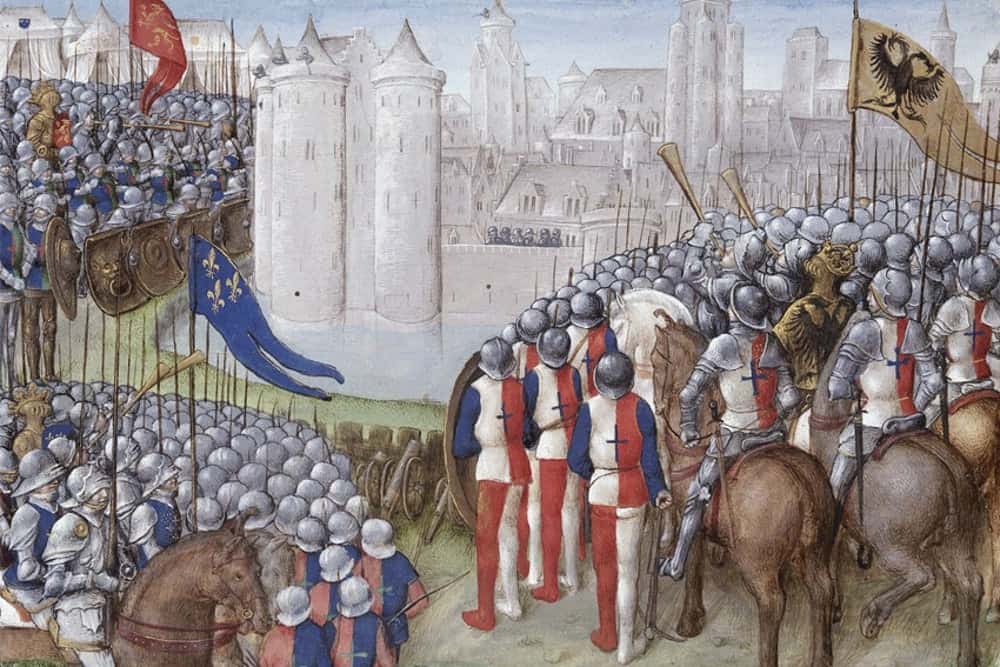
57-The Crusades Part 4
This is part 4 of our series on the Crusades.The plan for this episode, the last in our look at the Crusades, is to give a brief review of the 5th thru 7th Crusades, then a bit of analysis of the Crusades as a whole.The date set for the start of the 5th Crusade was June 1st, 1217. It was Pope Innocent III’s long dream to reconquer Jerusalem. He died before the Crusade set off, but his successor Honorius III was just as ardent a supporter. He continued the work begun by Innocent.The Armies sent out accomplished much of nothing, except to waste lives. Someone came up with the brilliant idea that the key to conquering Palestine was to secure a base in Egypt first. That had been the plan for the 4th Crusade. The Crusaders now made the major port of Damietta their goal. After a long battle, the Crusaders took the city, for which the Muslim leader Malik al Kameel offered to trade Jerusalem and all Christian prisoners he held. The Crusaders thought the Holy Roman Emperor Frederick II was on his way to bolster their numbers, so they rejected the offer. Problem is, Frederick wasn’t on his way. So in 1221, Damietta reverted to Muslim control.Frederick II cared little about the Crusade. After several false starts that revealed his true attitude toward the whole thing, the Emperor decided he’d better make good on his many promises and set out with 40 galleys and only 600 knights. They arrived in Acre in early Sept. 1228. Because the Muslim leaders of the Middle East were once again at odds with each other, Frederick convinced the afore-mentioned al-Kameel to make a decade long treaty that turned Jerusalem over to the Crusaders, along with Bethlehem, Nazareth, and the pilgrim route from Acre to Jerusalem. On March 19, 1229, Frederick crowned himself by his own hand in the Church of the Holy Sepulcher.This bloodless assumption of Jerusalem infuriated Pope Gregory IX who considered control of the Holy Land and the destruction of the Muslims as one and the same thing. So the Church never officially acknowledged Frederick’s accomplishments.He returned home to deal with internal challenges to his rule and over the next decade and a half, the condition of Palestine’s Christians deteriorated. Everything gained by the treaty was turned back to Muslim hegemony in the Fall of 1244.The last 2 Crusades, the 6th and 7th, center on the career of the last great Crusader; the king of France, Louis IX.Known as SAINT Louis, he combined the piety of a monk with the chivalry of a knight, and stands in the front rank of all-time Christian rulers. His zeal revealed itself not only in his devotion to religious ritual, but in his refusal to deviate from his faith even under the threat of torture. His piety was genuine as evidenced by his concern for the poor and the just treatment of his subjects. He washed the feet of beggars and when a monk warned him against carrying his humility too far, he replied, “If I spent twice as much time in gambling and hunting as in such services, no one would find fault with me.”The sack of Jerusalem by the Muslims in 1244 was followed by the fall of the Crusader bases in Gaza and Ashkelon. In 1245 at the Council of Lyons the Pope called for a new expedition to once again liberate the Holy Land. Though King Louis lay in a sickbed with an illness so grave his attendants put a cloth over his face, thinking he was dead, he rallied and took up the Crusader cross.Three years later he and his French brother-princes set out with 32,000 troops. A Venetian and Genoese fleet carried them to Cyprus, where large-scale preparations had been made for their supply. They then sailed to Egypt. Damietta once again fell, but after this promising start, the campaign turned into a disaster.Louis’ piety and benevolence was not backed up by what we might call solid skills as a leader. He was ready to share suffering with his troops but didn’t possess the ability to organize them. Heeding the counsel of several of his commanders, he decided to attack Cairo instead of Alexandria, the far more strategic goal. The campaign was a disaster with the Nile being chocked with bodies of slain Crusaders. On their retreat, the King and Count of Poitiers were taken prisoners. The Count of Artois was killed. The humiliation of the Crusaders had rarely been so deep.Louis’ fortitude shone brightly while suffering the misfortune of being held captive. Threatened with torture and death, he refused to renounce Christ or yield up any of the remaining Crusader outposts in Palestine. For the ransom of his troops, he agreed to pay 500,000 livres, and for his own freedom to give up Damietta and abandon the campaign in Egypt.Clad in garments given by the sultan, in a ship barely furnished, the king sailed for Acre where he stayed 3 yrs, spending large sums on fortifications at Jaffa and Sidon. When his mother, who acted as Queen-Regent in his absence, died—Louis was forced to return to France. He set sail from Acre in the spring of 1254. His queen, Margaret, a

56-The Crusades Part 3
This episode of CS is part 3 of our series on The Crusades.A major result of the First Crusade was a further alienation of the Eastern and Western Churches. The help provided Byzantium by the crusaders were not what The Eastern Emperor Alexius was hoping for.It also resulted in an even greater alienation of the Muslims than had been in place before. 200 years of crusading rampages across the Eastern Mediterranean permanently poisoned Muslim-Christian relations and ended the spirit of moderate tolerance for Christians living under Muslim rule across a wide swath of territory. The only people who welcomed the Crusaders were a handful of Christian minorities who’d suffered under Byzantine and Muslim rule; the Armenians and Maronites living in Lebanon. The Copts in Egypt saw the Crusades as a calamity. They were now suspected by Muslims of holding Western sympathies while being treated as schismatics by the Western Church. Once the Crusaders took Jerusalem, they banned Copts from making pilgrimage there.Things really went sour between East and West when the Roman church installed Latin patriarchates in historically Eastern centers at Antioch and Jerusalem. Then, during the 4th Crusade, a Latin patriarch was appointed to the church in Constantinople itself.To give you an idea of what this would have felt like to the Christian of Constantinople; imagine how Southern Baptists would feel if a Mormon bishop was installed as the President of the Southern Baptist Convention. You get the picture = No Bueno.Another long-lasting effect of the Crusades was that they weakened the Byzantine Empire and hastened its fall to the Ottoman Turks a couple centuries later. Arab governments were also destabilized leaving them susceptible to invasion by Turks and Mongols.A significant new development in monastic history was made at this time in the rise of the knightly monastic orders. The first of these was the Knights Templar, founded in 1118 under Hugh de Payens. King Baldwin gave the Templars their name, and from them the idea of fighting for the Temple passed to other orders. Bernard of Clairvaux, although not the author of the Templar rule, as legend has it, did write an influential piece called In Praise of the New Militia of Christ which lauded the new orders of knights.The Templars were imitated by the Hospitallers, who had an earlier origin as a charitable order. They’d organized in 1050 by merchants from Amalfi living in Jerusalem to protect pilgrims. They provided hospitality and care of the sick, and helped morph the word “hospitality” into “hospital.” Under Gerard in 1120, the Hospitallers gained papal sanction. Gerard’s successor was Raymond de Provence who reorganized the Hospitallers as a military order on the pattern of the Knights Templar. The Hospitallers, also known as the Knights of St. John eventually moved to the islands of Rhodes, then Malta, where they held out in 1565 in a protracted siege against the Turks in one of history’s most significant battles.Another important military order, the Teutonic Knights arose in 1199, during the 3rd Crusade.The knightly monastic orders had certain features in common. They viewed warfare as a devotional way of life. The old monastic idea of fighting demons, as seen in the ancient Egyptian desert hermits, evolved into actual combat with people cast as agents of evil. Spiritual warfare became actual battle. Knights and their attendants took the vows similar to other monks. They professed poverty, chastity, and obedience, along with a pledge to defend others by force of arms. While personal poverty was vowed, using violence to secure wealth was deemed proper so it could be used to benefit others, including the order itself. The Templars became an object of envy for their immense wealth.In studying the relations between Christianity and Islam during the Middle Ages, we should remember there were many peaceful interchanges. Some Christians advocated peaceful missions to Muslims. These peaceful encounters can be seen in the exchange of art. Christians highly valued Muslim metalwork and textiles. Church vestments were often made by Muslim weavers. Such a vestment is located today at Canterbury. It contains Arabic script saying, “Great is Allah, and Muhammad is his prophet.”On the positive side, if there was anything positive to be gleaned from the Crusades, it did promote a greater sense of unity in Western Europe. Remember that one of the reasons Pope Urban sparked the Crusade was to vent the violent habits of the European nobles who were constantly at each other’s throats. Instead of warring with each other back and forth across Europe, watering its fields with blood, they united to go against infidels “way over there.”The Crusades also led to increased prestige for the papacy as they were able to mobilize huge numbers of people. The Crusades also stimulated an intellectual revival in Europe as Crusaders returned with new experiences and knowledge from another part of the world

55-The Crusades Part 2
Episode 55 – The Crusades, Part 2As Bruce Shelly aptly states in in his excellent book Church History in Plain Language, for the past 700 years Christians have tried to forget the Crusades, though neither Jews nor Muslims will let them. Modern Christians want to dismiss that era of Church History as the insane bigotry of the illiterate and superstitious. But to do so is to show our own kind of bigotry, one neglectful of the historical context of the European Middle Ages.The Crusaders were human beings, who like us, had mixed motives often in conflict. The word crusade means to “take up the cross,” hopefully after the example of Christ. That’s why on the way to the Holy Land crusaders wore the cross on their chest. On their return home they wore it on their back. [1]In rallying the European nobility to join the First Crusade, Pope Urban II promised them forgiveness of past sins. Most of them held a deep reverence for the land Jesus had walked. That devotion was captured later by Shakespeare when he has King Henry IV say:We are impressed and engag’d to fight … To chase those pagans in those holy fields, Over whose acres walked those blessed feet, Which fourteen hundred years ago were nail’d, For our advantage on the bitter cross.For Urban and later popes, the Crusades were a Holy War. Augustine, whose theology shaped the Medieval Church, laid down the principles of a “just war.” He said that it must be conducted by the State; its broad purpose was to uphold an endangered justice, which meant more narrowly that it must be defensive to protect life and property. In conducting such a just war there must be respect for noncombatants, hostages, and prisoners. And while all this may have been in the mind of Pope Urban and other church leaders when they called the First Crusade, those ideals didn’t make it past the boundary of Europe. Once the Crusaders arrived in the East, the difficulties of their passage conspired to justify in their minds the wholesale pillaging of the innocent. Even those who’d originally taken up the Crusader cross with noble intent, didn’t want to be left out of acquiring treasure once the looting began. After all, everyone else is doing it?As we return to our narrative of the First Crusade, let’s recap …What triggered the Crusade was a request for assistance from Byzantine emperor Alexios I Komnenos. Alexios worried about the advances of the Muslim Seljuk Turks, who’d reached as far west as Nicaea, a suburb of Constantinople. In March 1095, Alexios sent envoys to the Council of Piacenza to ask Pope Urban II for aid against the Turks. Urban’s reply was positive. It’s likely he hoped to heal the Great Schism of 40 yrs before that had sundered Western and Eastern churches.In the Summer of 1095, Urban turned to his homeland of France to recruit for the campaign. His journey ended at the Council of Clermont in November, where he gave an impassioned sermon to a large audience of French nobles and clergy, detailing the atrocities committed against pilgrims and Christians living in the East by the Muslims.Malcolm Gladwell wrote a bestseller in 2000 called The Tipping Point. The Pope’s speech was one of those, an epic tipping point that sent history in a new direction. Urban understood what he proposed as an act so expensive, long, and arduous that it amounted to a form of penance capable of discharging all sins for those who went crusading. And he understood how his audience’s minds worked. Coming from a noble house himself and having worked his way up through the ranks of the monastery and Church, he understood the puzzle that lay at the heart of popular religious sentiment. People were keenly aware of their sinfulness and sought to expunge it by embarking on a pilgrimage, or if that wasn’t possible, to endow a monk or nun so they could live a life of sequestered holiness on their behalf. But their unavoidable immersion in the world meant it was impossible to perform all of the time-consuming penances which could keep pace with their ever-increasing catalog of sin. Urban saw that he could cut the Gordian knot by prescribing a Crusade. Here at last was a way for men given to violence, one of the most grievous of their misdeeds, to USE it as an act of penance. Overnight, those who were the most in need of penance became the very ones most likely to be the cause of the Crusade’s success.While there are different versions of Urban’s sermon, they all name the same basic elements. The Pope talked about the need to end the violence the European knights continued among themselves, the need to help the Eastern Christians in their contest with Islam, and making the pathways of pilgrims to Jerusalem safe again. He proposed to do this by waging a new kind of war, an armed pilgrimage that would lead to great spiritual and earthly rewards, in which sins would be remitted and anyone who died in the contest would bypass purgatory and enter immediately into heaven’s bliss.The Pope’s speech at Clermont didn’t specif

54-The Crusades – Part 1
Episode 54 – The Crusades – Part 1In the first episode of Communio Sanctorum, we took a look at the various ways history has been studied over time. In the Ancient world, history was more often than not, propaganda. The old adage that “History is written by the winners” was certainly true for the ancients. With the implementation of the Scientific Method in the Modern Era, the researching and recording of history became more unbiased and accurate. It was far from a pure report, but it could no longer be considered blatant propaganda. The Post-Modern Era has seen a return to bias; this time an almost knee-jerk suspicion of ALL previous attempts at recording history. Even attempts of Modernity to document history are suspect and assumed guilty of recording little more than the bias of the authors, though their works were footnoted and peer-reviewed. Post-modern critics adopt a presupposition all recorded history is fabrication, especially if there’s anything heroic or virtuous. If it’s a dark tale of hopelessness and tragedy, well, then, maybe it can be accepted. It’s almost as though Post-moderns want to make up for the ancient historians’ penchant for propaganda. Post-Moderns cast history as “neg-paganda” if I can coin a word.Let’s attempt a shedding of our bias, even though we can’t fully do that, as we look at the Crusades. Instead of layering onto the Christians of Europe in the 11th and 12th Cs the sensibilities of people who live a thousand years later, let’s attempt to understand the reasoning behind the idea of taking up a pitchfork or sword and making a life-altering trip over hundreds of miles, through strange lands, to risk one’s life for è What? Oh yeah, to rid the Holy Land of pagan infidels.Wait; Mr. Crusader-person; have you ever been to the Holy Land? Do you own land there that’s been stolen? Do you have relatives or friends there you need to protect? Have you ever met one of these infidels? Do you know what they believe or why they invaded?No? Then why are you so amped about marching half-way around the world to liberate a land you’ve not been all that interested in before from a people you know nothing about?See? There must have been some powerful forces at work in the minds and hearts of the people of Europe that they’d go in such large numbers on a Crusade. We may find their reasons for crusading to be horribly ill-conceived, but they were totally sold out to them.The Crusades reflected a new dynamism in the Christianity of Medieval Europe. People were driven by religious fervor, a yearning for adventure, and of course if some personal wealth could be thrown in, all the better. For 200 years, Crusaders tried to expel the Muslims from the Holy Land. It seems all the colorful figures of this era were caught up in the cause, from Peter the Hermit in the 1st Crusade, to the godly Louis IX, King of France, who inspired the 6th and 7th.Many Europeans of the medieval period viewed a pilgrimage as a form of especially poignant penance. These pilgrimages were usually trips to a local holy place or shrine erected to commemorate a miracle or to cathedrals where the relics of some saint were kept in a reliquary. But there was one pilgrimage that was thought to gain a special dose of grace – a trip to the Holy City of Jerusalem. The merchants of Jerusalem did a good business in keeping the constant flood of Christian pilgrims supplied with food, lodging and of course sacred mementos. Some pilgrims went by themselves; others in a group—ancient versions of the modern day Holy Land Tour. When pilgrims arrived in Jerusalem they’d make the rounds of all the traditional points of interest. They walked the Via Dolorosa to Calvary then sat for hours praying. When these pilgrims returned home, they were esteemed by their community as real saints; towering figures of spirituality.For centuries, peaceful pilgrims traveled from Europe to Palestine. The arrival of Islam in the Middle East in the 7th C didn’t interfere. By the 10th C European bishops organized mass pilgrimages to the Holy Land. The largest we know of set out from Germany in 1065, with some 7,000 ! That’s a lot of buses.To impede a pilgrim's journey was considered by the medieval Church as a serious breach of protocol because you endangered the pilgrim’s salvation. If his pilgrimage was penance for some sin, you might deny him pardon by your altering his course. The mind-set of European Christians became one of extreme care to not interfere with Pilgrims once they’d set out.All of this faced a major problem in the 11th C when a new Muslim force took control of the Middle East. The Seljuk Turks, new and fanatical converts to Islam, came sweeping in to plunder the region. They seized Jerusalem from their fellow Muslims, then moved north into Asia Minor.The Byzantine Empire tried desperately to stop their advance, but at the Battle of Manzikert in 1071 the Turks captured the eastern emperor and scattered his army. Within a few years nearly all Asia Min
53-Crazy Stuff
This episode of CS is, “Crazy Stuff” because . . . we’ll you’ll see as we get into it.A short while back, we took at look at the Iconoclast Controversy that took place in the Eastern, Greek Orthodox church during the 8th & 9th Cs.While we understand the basic point of controversy between the icon-smashers, called iconoclasts, and the icon-supporters, the iconodules; the theology the iconodules used to support the on-going use of icons is somewhat complex.The iconoclasts considered the veneration of religious images as simple idolatry. The iconodules developed a theology that not only allowed, it encouraged the use of icons while avoiding the charge of idolatry. They said such images were to be respected; venerated even – but not worshiped. Though, for all practical purposes, in the minds of most worshipers, there was no real difference between veneration & the adoration of worship.The acceptance of icons as intrinsic to worship marked the entrance of a decidedly mystical slant that entered the Orthodox Church at this time, and has remained ever since. All of this was seen in the career of an author now known as PSEUDO-DIONYSIUS the Areopagite. He’s called Pseudo-Dionysius because while we know his writings were produced in the early 6th C in Syria, they claim to have been written by the 1st C Dionysius mentioned in Acts 17 who came to faith when Paul preached on the Mars Hill in Athens.Pseudo-Dionysius’ most famous works were titled The Divine Names, Mystical Theology, & The Celestial Hierarchy. The Monophysite Christians of Alexandria were the first to draw inspiration from his work, supposing them to be genuine works of one of the Apostle Paul’s disciples. The Byzantines followed suit & incorporated some of his ideas. Then, in 649 when Pope Gregory I and the Lateran Council accepted them as dating to the 1st C, they became more widely looked to as informing Christian theology.Pseudo-Dionysius’ writings merged Christianity w/Neo-Platonism. He saw the universe as divided into a hierarchy of spirits and believed the Church ought to be organized in a similar way as this spiritual hierarchy. Where Pseudo-Dionysius deviated from the Neo-Platonists was in his rejection of the idea that the goal of each human individual was to lose their individuality by re-uniting with the Creator. He went 180 degrees the other way and said it was the individual’s goal to grow through mystical moments of revelation so that the person emerged into a divine state; more god-like than human. Pseudo-Dionysius taught that these mystical moments were bursts of revelation that brought enlightenment and advanced the soul’s journey to a near-deity. But they weren’t moments of revelation INTO divine knowledge so much as they were a stripping away of it. While early cults like the Docetists & Gnostics had made the acquisition of secret knowledge that imparted enlightenment the hallmark of their creed, Pseudo-Dionysius said knowledge stood in the way of enlightenment. The mind was a barrier to spiritual advancement, not a tool to attain it. He claimed the path to salvation, which he cast as “spiritual fulfillment,” proceeded through 3 stages—Purification, Illumination, and Union.First, the seeker needed to strip him/herself of all earthly and fleshly entanglements. Then by extreme forms of meditation in which the goal was to wipe the mind clean, the special moment would arrive when the person would achieve illumination & realize their union with the divine. If this sounds a bit like Gnosticism and the esoteric offerings of Eastern religion, that’s because they are similar.This synthesis of Christianity & Neo-Platonist concepts had a huge impact on Byzantine theologies of mysticism and liturgy, on Western mystics, scholastics & Renaissance thinkers. Pseudo-Dionysius’ writings were translated from Greek into Latin about 850.They were rejected as inconsistent with the Bible by the Protestant Reformers and exposed as 6th Century forgeries when scholars dug into their origin. But their emphasis on the mystical had already done its damage in the Eastern Church which continued to hold onto many of Pseudo-Dionysius’ ideas. Even to this day, salvation in the Greek Orthodox Church means something rather different than it does in the Western Church, where it’s conceived as redemption from sin and reconciliation to God. In the Eastern Church, salvation is regarded as a return to a process of spiritual transformation enhanced by the Church; it’s priesthood, icons, and rituals, to a destiny that produces a being that is much more than human though not quite attaining to deity. The Eastern idea is that the Redeemed won’t be God, but will be certainly be god-like.Now, this is an over-simplification, but may help make THE crucial distinction between the ways the Western and Eastern Churches understand salvation. The West sees the work of Christ primarily as Salvation FROM sin, while the East understands it as Salvation TO glor

52-Breaking Up Is Hard to Do
This episode of Communio Sanctorum is titled, “Breaking Up Is Hard to Do.”In our study of the History of the Church, we get to examine some periods when the followers of Jesus did some amazing, God-honoring, Christ-exalting, people-blessing things. In future episodes, we’ll take a longer look at how the Gospel has impacted history and world civilization for the better.But, we have to be honest and admit there have been too many times when the Church totally fumbled the ball. Worse than that, after fumbling, they stepped on and kicked it out of bounds!The danger I face as we deal with these atrocious moments in Church History is of being assumed to be hostile to the Body of Christ. When I speak about the abysmal career of some of the popes, some listeners assume I’m Catholic-bashing. Later, when we get to the Reformation era and take a look at some of the Reformers, I’ll be accused of being a closet-Catholic!So I want to pause here and say à This isn’t a podcast about me, but I need to use me as an example . . .As most of you know, I’m a non-denominational Evangelical pastor. I’m not a scholar, not even close. I’m just a guy who loves history and decided to share what he was learning about the history of the church with others because at the time CS began, there just wasn’t a short-format church history podcast available. While I genuinely try to be unbiased in presenting the story of the Church, it’s inevitable I’ll slant the narrative at points. I’ve already made it clear that when I do offer mere opinion, I’ll preface it with a warning, but infrequent side comments can still color the material. Even what adjectives I pick reveal bias.While I aim to be faithful in my own walk with God, my role in my family as a husband and father, and my calling as a pastor, I freely admit I’m still a man in process. I have many faults and a long way to go to be conformed to Christ’s image. Keenly aware of how far I have to go is what causes me to wonder how God could use me! Yet use me He does, week after week, in my role as pastor. I’m such a flawed vessel, yet God keeps pouring His grace thru me. It’s humbling.The point is this: While so much of Church History is flat-out embarrassing, God still uses the Church, still works by His Spirit through His people to accomplish His purposes. So when we see the Church stumble, regardless of what group it is, what era, what label is applied to those who mess up, let’s not white-wash, edit, or redact. Let’s tell it like it is; own it as part of our history, but remember that while man fails, God never does.From the late 9th to 10th C the position of Roman bishop once held by such godly men as Popes Leo and Gregory was turned over to a parade of corrupt nobles who were anything but.This was a time when the position of the pope was a plum political appointment, with the potential of gaining great wealth and power for the pope’s family. The intrigue surrounding the selection of the pope was vast and nefarious. An Italian heiress named Marozia [mah-RO-zee-ah], controlled the bishop’s seat at Rome for 60 years. She was one bishop's mother, another's murderer and a third’s mistress. In what just about everyone recognizes as a low point for the Papacy, Octavianus, Marozia’s grandson, celebrated his impending election as Pope John XII, by toasting the devil. Once in office, his behavior was far from saintly. The immorality that attended his term was legendary. Corruption of the office didn’t end with his death. Reform was desperately needed and many called for it. But one man’s reform is another’s loss of power and access to wealth.Though the Western and Eastern halves of the Church had quarreled for centuries over minor doctrinal issues and who ought to lead the Church, they still saw themselves as one Body. That unity was doomed by many years of contention and the fragmenting of the world into conflicted regions brought about by the dissolving of the Roman Empire and constant invasion of outsiders. The emergence of Islam in the 7th C accelerated the break between East and West. We might assume the 2 halves of the old Empire would unite in face of the Islamic threat, and there were times when that seemed hopeful. But the reality was, Islam presented a threat across such a huge front, the various regions of Christendom ended up having to face the threat on their own.Between the 9th and 13th Cs, three separate challenges split Christianity into 2 disparate camps. Like taps on a diamond, each furthered the emerging rift until finally the break came.The first tap had to do with the Nicene Creed hammered out at the Council of Nicea all the way back in the early 4th C when Constantine was Emperor. In the 9th C, the Nicene Creed still stood as the standard formulation for how Christians in the East and West understood God. But the Spanish church added something they thought would make the creed clearer. The original creed stated, “The Holy Spirit proceeds from the Father.” The revised creed of

51-Icons
This episode is titled Icons.Those with a rough outline of history know we’re coming up on that moment when the Eastern and Western branches of the Church split. The break wasn’t some incidental accident that happened without a lot of preparation. Things had been going sour for a long time. One of the contributing factors was the Iconoclast Controversy that split the Byzantine church in the 8th and 9th Cs.While the Western Church went through monumental changes during the Middle Ages, the Eastern Church centered at Constantinople pretty much managed a holding pattern. It was the preservation of what they considered orthodoxy that moved Eastern Christians to view the Western Church as making dangerous and sometimes even heretical alterations to the Faith. The Eastern Church thought itself to now be alone in carrying the Faith of the Ecumenical Councils into the future. And for that reason, Constantinople backed away from its long-stated recognition that the Church at Rome was pre-eminent in Church affairs.Another factor contributing to the eventual sundering of East from West was the musical chairs played for the Western Emperor while in the East, the Emperor was far more stable. Remember that while the Western Roman Empire was effectively dead by the late 5th Century, the Eastern Empire continued to identify itself as Roman for another thousand years, though historians now refer to it as the Byzantine Empire. At Constantinople, the Emperor was still the Roman Emperor, and like Constantine, the de-facto head of the Church. He was deemed by the Eastern Church as “the living image of Christ.”But that was about to experience a major re-model in the brueha between the iconoclasts and iconodules; terms we’ll define a bit later.The most significant controversy to trouble the Byzantine church during the European Middle Ages was over the use of religious images known as icons. That’s the way many modern historians regard what’s called the Iconoclast Controversy – as a debate over the use of icons. But as usual, the issue went deeper. It arose over the question of what it meant when we say something is “holy”.The Church was divided over the question of what things were sufficiently sacred as to deserve worship. Priests were set apart by ordination; meaning they’d been consecrated to holy work. Church buildings were set apart by dedication; they were sacred. The martyrs were set apart by their deeds; that’s why they were called “saints” meaning set-apart ones. And if martyrs were saints by virtue of giving their lives in death, what about the monks who gave their lives à yet still lived? Weren’t they worthy of the same kind of honor?If all these people, places and things were holy, were they then worthy of special veneration?The holiness of the saints was endorsed and demonstrated by miracles, not just attributed to them while they lived, but also reported in connection with their tombs, relics; even images representing them. By the beginning of the 7th C, many cities had a local saint whose icons were revered as having special powers of intercession and protection. Notable examples were Saint Demetrius of Thessalonica, the Christ-icon of Edessa, and the miracle-working icon of Mary of Constantinople.From the 6th C, both Church and government encouraged religious devotion to monks and icons. Most Christians failed to distinguish between the object or person and the spiritual reality they stood for. They fell into, what many regarded as the dreaded sin of idolatry. But before we rush to judgment, let’s take a little time to understand how they slipped into something Scripture clearly bans.The use of images as help to religious devotion had strong precedent. In pagan Rome, the image of the Emperor was revered as if the Emperor himself were present. Even images of lesser imperial officials were occasionally used as stand-ins for those they represented. After emperors became Christians, the imperial image on coins, in court-houses, and in the most prominent places in the major cities continued to be an object of veneration and devotion. Constantine and his successors erected large statues of themselves, the remains of which are on display today. It was Justinian I who broke with tradition and instead erected a huge icon of Christ over the main gate of the palace at Constantinople. During the following century icons of Christ and Mary came to replace the imperial icon in many settings. Eventually under Justinian II in the early 8th C, the icon of Christ began to appear on coins.While the use of images as accouterments to facilitate worship was generally accepted, there were those who considered such practice contrary to the Bible’s clear prohibition of idolatry. They weren’t against religious art per se; only it’s elevation into what they considered the realm of worship.The debate over icons was really a kind of doctrinal epilogue to the Christological controversies of an earlier time. àWhat was proper in depicting Chr

50-What a Mess
The title of this episode is “What a Mess!”As is often the case, we start by backing up & reviewing material we’ve already covered so we can launch into the next leg of our journey in Church History.Anglo-Saxon missionaries to Germany had received the support of Charles Martel, a founder of the Carolingian dynasty. Martel supported these missions because of his desire to expand his rule eastwards into Bavaria. The Pope was grateful for his support, and for Charles' victory over the Muslims at the Battle of Tours. But Martel fell afoul of papal favor when he confiscated Church lands. At first, the Church consented to his seizing of property to produce income to stave off the Muslim threat. But once that threat was dealt with, he refused to return the lands. Adding insult to injury, Martel ignored the Pope’s request for help against the Lombards taking control of a good chunk of Italy. Martel denied assistance because at that time the Lombards were his allies. But a new era began with the reign of Martel's heir, Pippin or as he’s better known, Pepin III.Pepin was raised in the monastery of St. Denis near Paris. He & his brother were helped by the church leader Boniface to carry out a major reform of the Frank church. These reforms of the clergy and church organization brought about a renewal of religious and intellectual life and made possible the educational revival associated with the greatest of the Carolingian rulers, Charlemagne & his Renaissance.In 751, Pepin persuaded Pope Zachary to allow Boniface to anoint him, King of the Franks, supplanting the Merovingian dynasty. Then, another milestone in church-state relations passed with Pope Stephen II appealing to Pepin for aid against the Lombards. The pope placed Rome under the protection of Pepin and recognized him and his sons as “Protectors of the Romans.”As we’ve recently seen, all of this Church-State alliance came to a focal point with the crowning of Charlemagne as Emperor of the Holy Roman Empire in AD 800. For some time the Popes in Rome had been looking for a way to loosen their ties to the Eastern Empire & Constantinople. Religious developments in the East provided the Popes an opportunity to finally break free. The Iconoclastic Controversy dominating Eastern affairs gave the Popes one more thing to express their disaffection with. We’ll take a closer look at the controversy later. For now, it’s enough to say the Eastern Emperor Leo III banned the use of icons as images of religious devotion in AD 726. The supporters of icons ultimately prevailed but only after a century of bitter and at times violent dispute. Pope Gregory II rejected Leo’s edict banning icons and flaunted his disrespect for the Emperor's authority. Gregory's pompous and scathing letter to the Emperor was long on bluff but a dramatic statement of his rejection of secular rulers’ meddling in Church affairs. Pope Gregory wrote: “Listen! Dogmas are not the business of emperors but of pontiffs.”The reign of what was regarded by the West as a heretical dynasty in the East gave the Pope the excuse he needed to separate from the East and find a new, devoted and orthodox protector. The alliance between the papacy and the Carolingians represents the culmination of that quest, and opened a new and momentous chapter in the history of European medieval Christianity.In response to Pope Stephen's appeal for help against the Lombards, Pepin recovered the Church’s territories in Italy and gave them to the pope, an action known as the 'Donation of Pepin'. This confirmed the legal status of the Papal States.At about the same time, the Pope's claim to the rule of Italy and independence from the Eastern Roman Empire was reinforced by the appearance of one of the great forgeries of the Middle Ages, the Donation of Constantine. This spurious document claimed Constantine the Great had given Rome and the western part of the Empire to the bishop of Rome when he moved the capital of the empire to the East. The Donation was not exposed as a forgery until the 15th Century.The concluding act in the popes’ attempt to free themselves from Constantinople came on Christmas Day 800 when Pope Leo III revived the Empire in the West by crowning Charlemagne as Holy Roman Emperor. It’s rather humorous, as one wag put it – the Holy Roman Empire was neither Holy, nor Roman, and can scarcely be called an Empire.Charlemagne’s chief scholar was the British-born Alcuin who’d been master of the cathedral school in York. He was courted by Charlemagne to make his capital at Aachen on the border between France & Germany, Europe’s new center of education & scholarship. Alcuin did just that. If the school at Aachen didn’t plant the seeds that would later flower in the Renaissance it certainly prepared the soil for them.Alcuin profoundly influenced the intellectual, cultural and religious direction of the Carolingian Empire, as the 300-some extant letters he wrote reveal. His influence is best seen in

49-Charlemagne Part 2
Welcome to the 49th installment of CS. This episode is titled “Charlemagne Pt. 2.”After his coronation on Christmas Day AD 800, Charlemagne said he didn’t know it had been planned by Pope Leo III. If setting the crown of a new Holy Roman Empire on his head was a surprise, he got over the shock right quick. He quickly shot off dispatches to the lands under his control to inform them he was large and in-charge. Each missive began with these words, “Charles, by the will of God, Roman Emperor, Augustus … in the year of our consulship 1.” He required an oath be taken to him as Caesar by all officers, whether religious or civil. He sent ambassadors to soothe the inevitable wrath of the Emperor in Constantinople.What’s important to note is how his coronation ceremony in St. Peter’s demonstrated the still keen memory of the Roman Empire that survived in Europe. His quick emergence as the recognized leader of a large part of Europe revealed the strong desire there was to reestablish a political unity that had been absent from the region for 400 years. But, Charlemagne’s coronation launched a long-standing contest. One we’d not expect, since it was, after all, the Pope who crowned him. The contest was between the revived empire and the Roman Church.In the medieval world, Church and State were two realms comprising Christendom. The Medieval Church represented Christian society aimed at acquiring spiritual blessings, while the Medieval State existed to safeguard civil justice and tranquility. Under the medieval system, both Church and State were supposed to exist side by side in a harmonious relationship, each focused on gaining the good of mankind but in different spheres; the spiritual and the civil.In reality, it rarely worked that way. The Pope and Emperor were usually contestants in a game of thrones. The abiding question was: Does the Church rule the State, or the State the Church? This contest was played out on countless fields, large and small, throughout the Middle Ages.Charlemagne left no doubt about where sovereignty lay during His reign. He provided Europe a colossal father figure as the first Holy Roman Emperor. Everyone was answerable to him. To solve the problem of supervising local officials in his expansive realm, Charlemagne passed an ordinance creating the missi dominici or king’s envoys. These were pairs of officials, a bishop and noble, who traveled the realm to check on local officials. Even the pope was kept under the watchful imperial eye.Though Charlemagne occasionally used the title “emperor” in official documents, he usually declined it because it appeared to register his acceptance of what the Pope had done at his coronation. Charlemagne found this dangerous; that the Pope was now in a position to make an Emperor. The concern was—The one who can MAKE an emperor, can un-make him. Charles thought it ought to be the other way around; that Emperors selected and sanctioned Popes.In truth, what Pope Leo III did on Christmas Day of 800 when he placed the crown on Charlemagne’s head was just a final flourish of what was already a well-established fact – Charles was King of the Franks. One recent lecturer described the coronation as the cherry on the top of a sundae that had already been made by Charles the Great.In our last episode we saw a major objective of Charlemagne’s vision was to make Europe an intellectual center. He launched a revival of learning and the arts. Historians speak of this as the Carolingian Renaissance. Charlemagne required monasteries to have a school for the education of boys in grammar, math and singing. At his capital of Aachen he built a school for the education of the royal court. The famous English scholar Alcuin headed the school, and began the difficult task of reviving learning in the early Middle Ages by authoring the first textbooks in grammar, rhetoric, and logic.It was Charlemagne’s emphasis on education that proved to be his enduring legacy to history. He sent out agents far and wide to secure every work of the classical age they could find. They returned to Aachen and the monastery schools where they were translated into Latin. This is why Latin became the language of scholarship in the ages to come. It was helped along by Charlemagne’s insistence a standard script be developed – Carolingian miniscule. Now, scholars all across Western Europe could read the same materials, because a consistent script was being used for Latin letters.This became one of the most important elements in making the Renaissance possible.Few historians deny Charlemagne’s massive impact on European history, and thereby, the history of the modern world. The center of western civilization shifted from the Mediterranean to Northern Europe. After 300 years of virtual chaos, Charles the Great restored a measure of law and order. His sponsorship of the intellectual arts laid a heritage of culture for future generations. And the imperial ideal he revived persisted as a political force in Europe