
The Full Ratchet (TFR): Venture Capital and Startup Investing Demystified
1,027 episodes — Page 13 of 21
Investor Stories 168: Strange & Unusual (Torenberg, Gembala, Hester, Hsu)
On this special segment of The Full Ratchet, the following Investors are featured: Erik Torenberg Ryan Gembala Jaclyn Hester Jonathan Hsu Each investor describes the most unusual situation or pitch that they've encountered as an investor.
258. Why I Invested in Neu (Kwame Boler)
On this special segment of The Full Ratchet, the following individuals are featured: Nick Moran Kwame Boler This will be a unique segment where, Founder of Neu, Kwame Boler, will discuss his startup story and how he chose New Stack to participate in the funding round. To listen more, please visit http://fullratchet.net/podcast-episodes/ for all of our other episodes. Also, follow us on twitter @TheFullRatchet for updates and more information.

Investor Stories 167: Lessons Learned (Ingersoll, Klaff, Whitney, Basu Trivedi)
On this special segment of The Full Ratchet, the following Investors are featured: Minnie Ingersoll Oren Klaff Jason Whitney Nikhil Basu Trivedi Each investor illustrates a critical lesson learned about startup investing and how it's changed their approach.

257. Investing in First-time Founders, the Evolution of Social, the Future of Big Tech, and the Freedom of Remote Work (Niko Bonatsos)
Niko Bonatsos of General Catalyst joins Nick to discuss Investing in First-time Founders, the Evolution of Social, the Future of Big Tech, and the Freedom of Remote Work. In this episode, we cover: Walk us through your background and path to VC What's the thesis at General Catalyst? Livongo... up nearly 300% since public debut last year — I hear you were in the room during the early formation stages. You have been at GC for almost 10 years — what has been the most significant change in VC, aside from the pandemic, since you began your career? What are your thoughts on the explosion of seed funds and now many angel funds as well? Since the pandemic broke, what's been the most significant adjustment at GC, and/or how do you see the approach to investing changing going forward? What surging trends during the pandemic will continue to grow faster, and which will revert once the pandemic is over? Do you think this fundamentally changes benefits that are offered to employees? I'm not sure if you caught the recent documentary on Netflix — social dilemma explaining social media issues. Many experts argued that we are not evolved to handle all of these inputs and that big tech has and will continue to manipulate our beliefs and actions. What's your take? Tweet: "Are you building a consumer product that is perceived as annoying, controversial, or stupid by most people? If yes, I'd love to hear from you!" What are some examples of consumer successes that started this way? What qualities does a founder need to have for you to be interested in? Break up big tech? The three data points
Investor Stories 166: What's Next (Osterwalder, Suster, Koh, Abbasi)
On this special segment of The Full Ratchet, the following Investors are featured: Alex Osterwalder Mark Suster Melody Koh Farooq Abbasi Each investor discusses sectors, drivers, and/or trends that may have a significant impact in the future and are potentially positioned for outsized-returns.

256. A Proprietary Tool to Source Startups, The Commoditization of Capital, and the New Exit Environment (Villi Iltchev)
Villi Iltchev of Two Sigma Ventures joins Nick to discuss Using "George" a Proprietary Tool to Source Startups, The Commoditization of Capital, and the New Exit Environment. In this episode, we cover: Walk us through your background and path to VC What's the thesis at Two Sigma? Tell us about George. What's George's biggest blind spot? What is your decision framework on investments? What characteristics do you look for in markets when identifying new sectors/spaces of interest? How long after investing in/working with a company do you tend to know whether it's going to work or not? Do you attempt to handicap execution risk vs. technical risk vs. commercial risk? Capital is a commodity and, largely speaking, there doesn't appear to be a lot of differentiation in venture. How do you combat the commoditization of venture? Aside from bankers... who do you think stands to lose the most from the increase in SPACs and direct listings? Any other downsides, unintended consequences, or problematic issues that could arise from the increase in SPACs? A decade from now, will the U.S. be the best country to start a tech company? If it shifts, what are the prime candidate countries to replace the U.S.? International investment strategy for Two Sigma? Three data points... hypothetical investment scenario Let's say you're approached to invest in an enterprise SaaS startup. Founder has a great background. MRR is $200k, growing 20% MoM. LTV:CAC is 5:1. Quick Ratio greater than 4. Catch is, you can only ask 3 questions for 3 specific data points, in order to make your decision. What three questions do you ask?

Investor Stories 165: Why I Passed (Findley, McIntyre, Clarkson, Tavel)
On this special segment of The Full Ratchet, the following Investors are featured: Ty Findley Stephen McIntyre Beezer Clarkson Sarah Tavel Each investor highlights a situation where they decided not to invest, why they passed, and how it played out.
255. Launching Canada's #1 Local Classifieds Site, Kijiji, The Flourishing Canadian Tech Ecosystem, and What to Look for in Early-stage Marketplace Startups (Janet Bannister)
Janet Bannister of Real Ventures joins Nick to discuss Launching Canada's #1 Local Classifieds Site, Kijiji, The Flourishing Canadian Tech Ecosystem, and What to Look for in Early-stage Marketplace Startups. In this episode, we cover: Walk us through your background and path to VC What's the thesis at Real Ventures? Tell us about your time at Kijiji You became the Managing Partner at Real Ventures a few months before the pandemic. What timing to take on the MP role! You've talked about how it's just as important to focus on founder development as it is to focus on business strategy and growth... in what areas do you find that founders need the most development help? Largely speaking, what stats or trends across Canada lead you to believe that it will have a booming tech economy over the next decade? What city gets most of your attention and what city/region is under-the-radar but shouldn't be? What are the top 3 things you're looking for in a marketplace startup? come for tool stay for marketplace... vice-versa? Balanced scorecard Let's say you are approached to invest in a Consumer Marketplace company with $5M in GMV, a 30% take rate, and 20% MoM growth for the last 6 months. Catch is you can only ask for 3 data points to make your decision. What 3 questions do you ask for?
Investor Stories 164: Post Mortems (Tunguz, Isford, Casnocha, Reum)
On this special segment of The Full Ratchet, the following Investors are featured: Tom Tunguz Grace Isford Ben Casnocha Courtney Reum Each investor discusses a portfolio company that did not survive and why it was that they failed.
254. Going Public via SPACs and PIPEs, The First Mover in Ridesharing That Lost to Uber, and Building the Online Marketplace for Used Cars, Shift (George Arison)
George Arison of Shift joins Nick to discuss Going Public via SPACs and PIPEs, The First Mover in Ridesharing That Lost to Uber, and Building the Online Marketplace for Used Cars, Shift. In this episode, we cover: Walk us through your background and path to tech. What was the outcome of taxi magic? Shut down? When you spoke with Bill Gurley - rumor has it he pushed back on the model. Did you consider switching? What is Shift? How are you different than Carvana? How accurately can you price a car sight unseen? It feels like you are effectively CarMax online... If CarMax is such a good value prop for seekers and buyers, why do you think they only have a 1% market share? There were lots of ways you could have expanded early on... your offerings... geography... and even product/business lines (like financing)... talk us through the early decisions that were made and how they were made The name is great but does Gen Z get it? No one shifts anymore Online marketplace solving an extremely frustrating and time-consuming consumer life event but it's a very Infrequent transaction so you need to be top of mind when someone is buying a new car or ready to make a transaction... How are you thinking about that? Talk about your decision to go with a SPAC to go public. The decision to go direct-listing would be in cases where the company is more of a household name? SPACs were a four-letter word in the '90s... apparently, there were some bad situations... what is the risk here, and how has that been addressed by the modern SPAC structure? Do sponsors get 2% or 20% off the top? What was the value of the SPAC vs. the valuation of your company... were you (and other shareholders) diluted by the SPAC investment amount And the rest/the balance of capital comes from a PIPE, correct? As an investor, wouldn't the preference be to invest in the SPAC vs. the PIPE? Building a company in SV or not, and where that is headed? What advice would you have for founders before selecting VC partners? What was the experience as an openly gay man building a tech company -- do you think that presented a more difficult path to success?

Investor Stories 163: Strange & Unusual (Warner, Adeeb, Gallagher, Carolan)
On this special segment of The Full Ratchet, the following Investors are featured: Check Warner Ramy Adeeb Patrick Gallagher Shawn Carolan Each investor describes the most unusual situation or pitch that they've encountered as an investor.
253. The Changing "Search Image" of Founders, Lack of Diversity = Missed Opportunity, and COVID Effects on the BLM Movement in Europe (Eric Collins)
Eric Collins of Impact X Capital joins Nick to discuss The Changing "Search Image" of Founders, Lack of Diversity = Missed Opportunity, and COVID Effects on the BLM Movement in Europe. In this episode, we cover: Walk us through your background and path to VC What's the thesis at Impact X? As a black CEO and fund manager, in what ways do you think your experience fundraising was different than your white, male peers at other firms? How do you approach sourcing? What's unique about the way you've built your network vs. other firms? Less than 1% of venture funding goes to black-led and we've heard the tired line that "not enough companies are founded by underrepresented founders and black founders"... Are you concerned that you'll have fewer deals or less pipeline? What's the right number of deals per year where you feel like you're seeing a sufficient amount? I've heard about the "deep analysis" you do and how that creates the edge. Can you describe what this entails? Do the issues run deeper in the LP community than even the GP community? Are the return expectations different for your LPs vs. a non-Impact fund? A lot of the impact you are creating is long-term in nature. What are the leading indicators of success for your fund? How do you set objectives and measures to know if you're winning/exceeding the plan? In response to the pandemic, the gov't created a number of programs to help fast-growth companies. What was the impact on your underrepresented pipeline and portfolio? Black Lives Matter has been the center of attention here in the states. What's the status of the movement in the UK and how has it impacted your efforts at Impact X?
Investor Stories 162: Lessons Learned (Kerby, Hester, Napier, Blank)
On this special segment of The Full Ratchet, the following Investors are featured: Richard Kerby Jaclyn Hester Lanham Napier Steve Blank Each investor illustrates a critical lesson learned about startup investing and how it's changed their approach.
252. Decentralization of VC, Why Your Fund Size is Your Strategy, and Why Startup Formation is the Most Important Contributor to Economic Growth (Erik Torenberg)
Erik Torenberg of Village Global joins Nick to discuss Decentralization of VC, Why Your Fund Size is Your Strategy, and Why Startup Formation is the Most Important Contributor to Economic Growth. In this episode, we cover: Walk us through your background and path to VC What were the biggest lessons learned from Product Hunt that you took to investing? Recently had Ben Casnocha on... anything specific you'd like to add about the thesis behind Village Global? How do you think about working with experienced vs non-experienced angels? How do you think about portfolio construction for VG? Fast forward... some angels have strong early signals of success, others don't -- do you cull the herd or amplify those that are good pickers? Considering this, why do you think so many VCs have concentrated portfolios? How do you think about follow on investing? What is the role of a pre-seed firm? If there's a weakness in the Village model... what is it? Part of your model is to increase the amount of founders and investors. What do you say to those that argue there's too much capital already? What's does the future look like for Venture? What's your advice for people getting into venture? Three data points Let's say you're approached to invest in an early seed stage SaaS startup... The founder is a technical serial entrepreneur with two solid 8-figure exits. And she has a credible co-founder that is more business/commercially focused; An MVP of the product has been launched and was the top product of the day on Product Hunt, when it launched; and The Product launched two months ago and currently has $5k of MRR. The catch is, you can only ask 3 questions for 3 specific data points, in order to make your decision. What three questions do you ask?
Investor Stories 161: What's Next (Hsu, Vrionis, Vassallo, Hsieh)
On this special segment of The Full Ratchet, the following Investors are featured: Jonathan Hsu John Vrionis Trae Vassallo Kane Hsieh Each investor discusses sectors, drivers, and/or trends that may have a significant impact in the future and are potentially positioned for outsized-returns.
251. Funding the Misunderstood Technical Founder, Self Evaluation as a Solo Capitalist, and Capital to Underwrite R&D risk vs. S&M risk (Farooq Abbasi)
Farooq Abbasi of Preface Ventures joins Nick to discuss Funding the Misunderstood Technical Founder, Self Evaluation as a Solo Capitalist, and Capital to Underwrite R&D risk vs. S&M risk. In this episode, we cover: Walk us through your background and path to VC Why did you launch Preface? What's the thesis at Preface? How do you define enterprise/infrastructure frontier enterprise? What's most different about your approach? Are the businesses you fund created and ideated by the founders or is it a collaboration between you and the founders or do you take concepts and bring them to future founders? What's your approach to sourcing? Because your model is different and the founder profile is a bit different than most... in what unique ways do you provide value post-investment? You're a solo-capitalist... How do you evaluate yourself and keep some checks/balances on your decisions? Did you put together an LPAC -- if so how big is the group, how often do you meet and when/where do they help? Are you actively investing in open-source startups? What are your thoughts on the Bifurcation in the VC industry... capital underwriting of R&D risk vs. S&M risk? What are your thoughts on biases in founder selection, data-driven predictors of founder success? What's been the greatest challenge in your VC career and how have you overcome it? You're passionate about Diversity, having founded Diversity.vc in 2016. How are you practicing a more inclusive style of venture capital? Three data points... hypothetical investment scenario
Investor Stories 160: Why I Passed (Bechtel, Koh, Dash, Fluhr)
On this special segment of The Full Ratchet, the following Investors are featured: Darren Bechtel Melody Koh Somesh Dash Jeff Fluhr Each investor highlights a situation where they decided not to invest, why they passed, and how it played out.
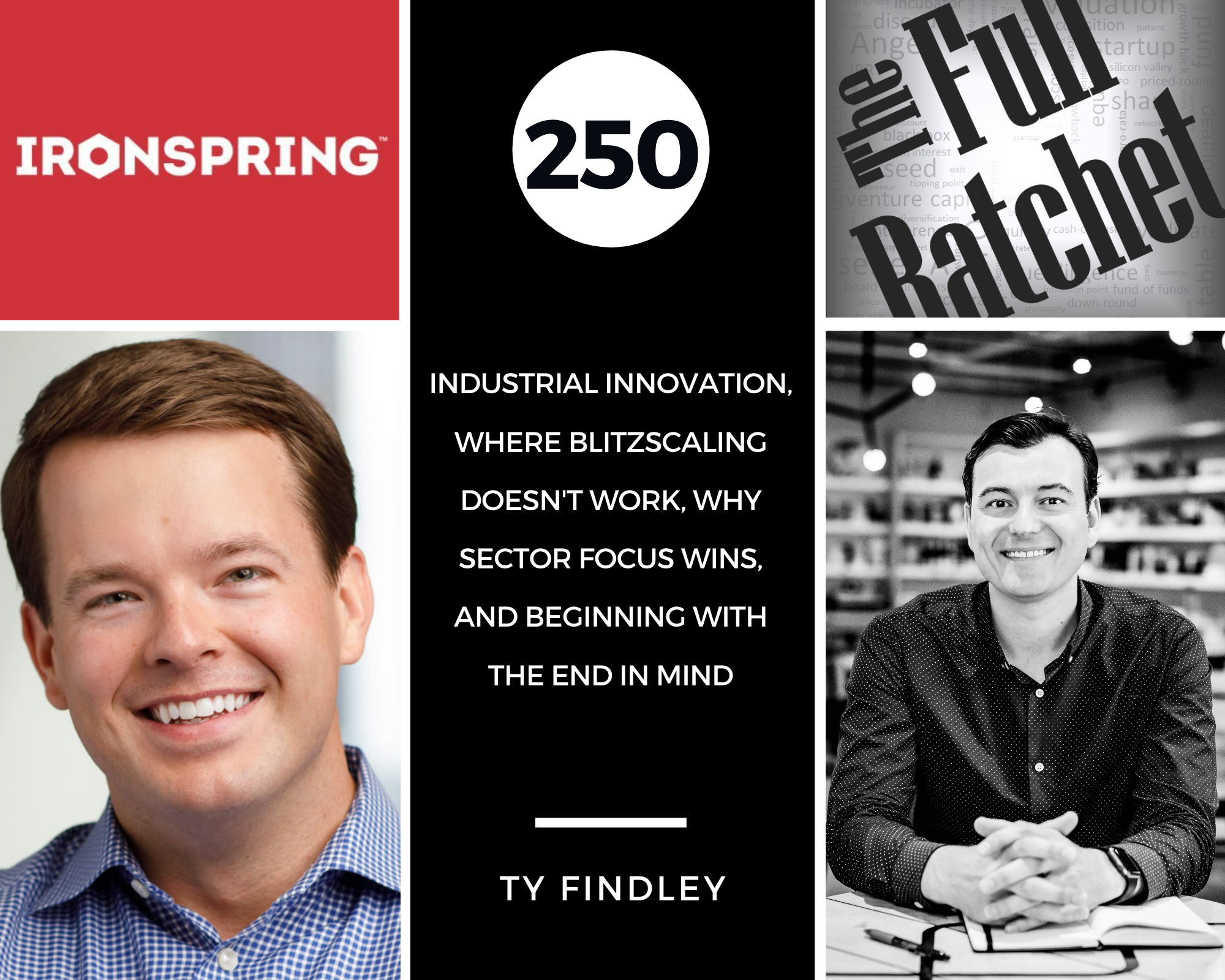
250. Industrial Innovation, Where Blitzscaling Doesn't Work, Why Sector Focus Wins, and Beginning with the End in Mind (Ty Findley)
Ty Findley of Ironspring joins Nick to discuss Industrial Innovation, Where Blitzscaling Doesn't Work, Why Sector Focus Wins, and Beginning with the End in Mind. In this episode, we cover: Walk us through your background and path to VC? Why the decision to leave Pritzker and become an MP at Ironspring? What's the thesis at Ironspring? Lots' of new firms and new funds being launched… How is Ironspring different? You're a "sector-focused" fund… why do you think specialized funds will outperform their generalist counterparts? We work in an asset class that often promotes bliztscaling, exponential growth and often spending ahead of progress… how do you rationalize the expectations of startups in our industry with the much slower pace that many legacy and heavy industrial industries… that your startups are serving… are going to move at? Glacial pace has benefits… long-term durability of cash flows, customer retention, pricing power… the moat Do you think product-led growth can work in these sectors? Talk about the difference between "occupations" vs. "activities" and why this is especially relevant in industrials amidst the pandemic? How do you think your style as an investor differs most from others (ie. discussion of decision making process/thinking in bets… focus on the decision not the outcome) How would you describe your system for investment decision making? 4-part framework of the "Day in the life of a VC fund manager"? Must-haves for an investment? Aligned with your recent collaboration on the article, "Evaluating the Successful Industrial Technology Exits", you've talked about startups in industrial tech "beginning with the end in mind"… why is this important? Rumor has it you're starting a podcast -- lots of new podcasts these days, why will your's standout and what's the objective?
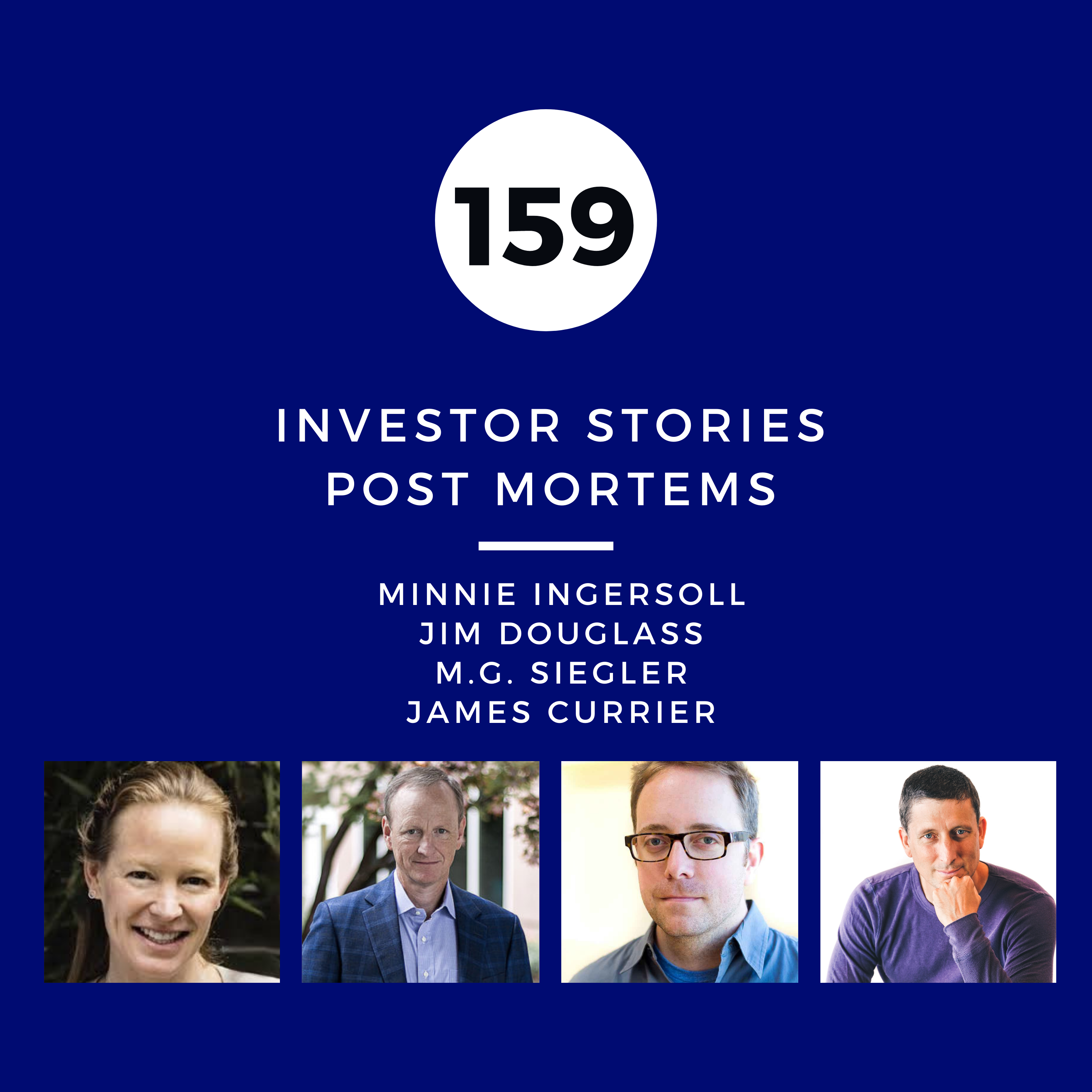
Investor Stories 159: Post Mortems (Ingersoll, Douglass, Siegler, Currier)
On this special segment of The Full Ratchet, the following Investors are featured: Minnie Ingersoll Jim Douglass M.G. Siegler James Currier Each investor discusses a portfolio company that did not survive and why it was that they failed.
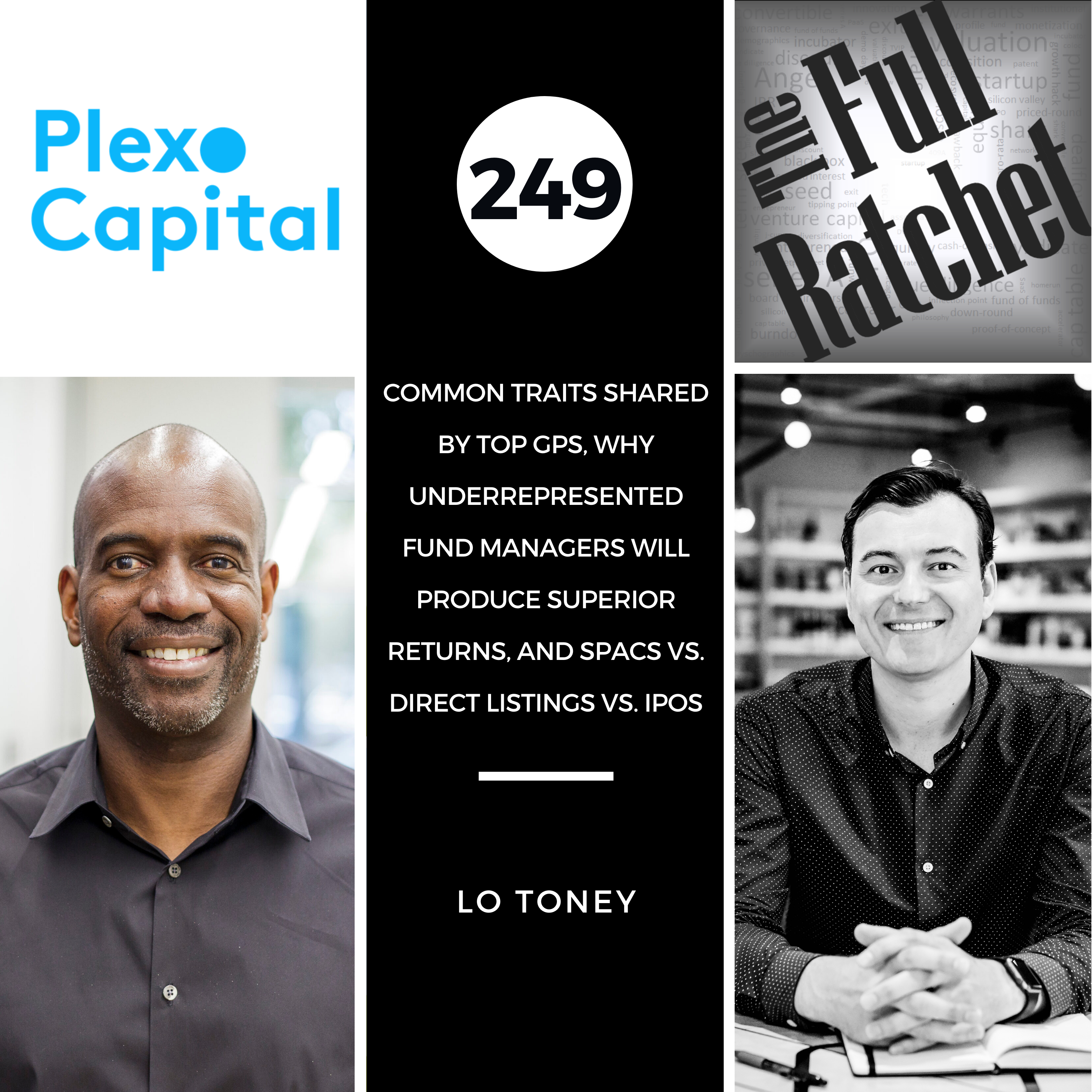
249. Common Traits Shared by Top GPs, Why Underrepresented Fund Managers Will Produce Superior Returns, and SPACs vs. Direct Listings vs. IPOs (Lo Toney)
Lo Toney of Plexo Capital joins Nick to discuss Common Traits Shared by Top GPs, Why Underrepresented Fund Managers Will Produce Superior Returns, and SPACs vs. Direct Listings vs. IPOs. In this episode, we cover: Walk us through your background and path to VC? Why are Product Management skills similar to the skills required for VC? What's the thesis at Plexo Capital? Do you think a thesis on investing in underrepresented founders will produce superior returns? What do you say to pundits that claim you've restricted your options and will have far fewer managers to choose from... which will adversely impact returns? On a percentage basis... will there be more outsided outcomes from diverse founders (or managers) vs. those that are not diverse? How are you innovating on the LP side? We talked about some of the challenges of raising funds... are there ways that you work with and help emerging managers raising a first-time fund? Not just about performance... especially early on. What are the common success traits you see in GPs? What's your position on investing in the management company or even the GP itself? Where do you see the market for secondaries evolving? I'd like to talk about the exit market a bit... What are your thoughts on companies listing direct? How about the explosion of SPACs -- net positive or negative for venture? Any unintended consequences that founders (or investors) need to watch out for? Zoom is now worth more than Uber, Airbnb, and Stripe combined... Are the three companies undervalued or is Zoom overvalued... or is the pricing about right? Amazing to see companies like Paypal and Square have surpassed Goldman in market cap "3 Data Points"... You're approached by a first-time fund manager. The fund manager did not work for a large, brand-name venture firm before and she has never had an institutional investor. She has been actively investing for 3+ years. She plans to raise $20M to invest in 30 seed-stage companies w/ no reserves. The catch is you can only ask 3 questions (for 3 additional data points) to make your decision. What 3 questions do you ask?

Investor Stories 158: Strange & Unusual (Yin, Cardamone, Levy-Weiss, Pezeshki)
On this special segment of The Full Ratchet, the following Investors are featured: Elizabeth Yin Michael Cardamone Gigi Levy-Weiss Niki Pezeshki Each investor describes the most unusual situation or pitch that they've encountered as an investor.
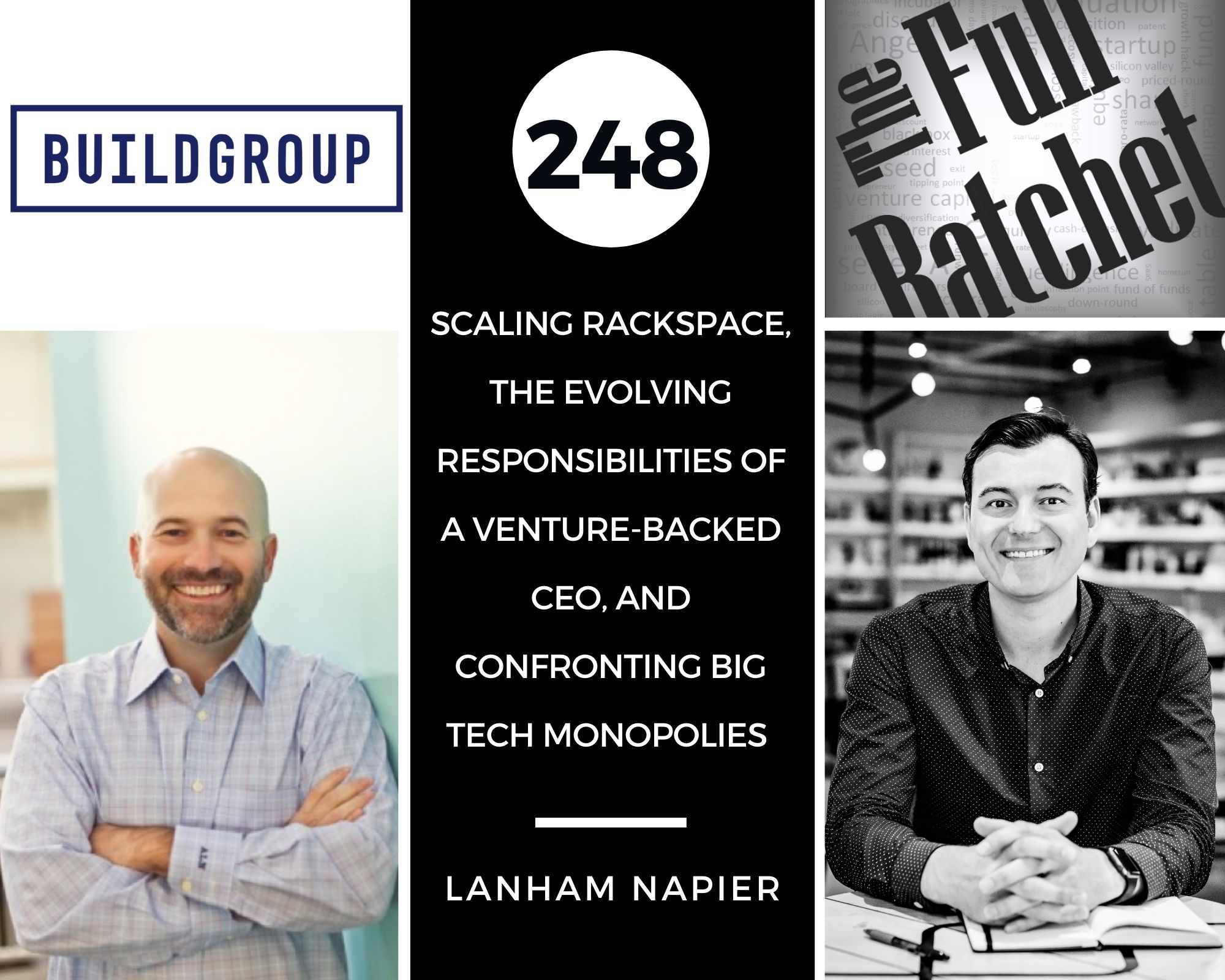
248. Scaling Rackspace, The Evolving Responsibilities of a Venture-Backed CEO, and Confronting Big Tech Monopolies (Lanham Napier)
Lanham Napier of BuildGroup joins Nick to discuss Scaling Rackspace, The Evolving Responsibilities of a Venture-Backed CEO, and Confronting Big Tech Monopolies. In this episode, we cover: You took on capital from Seqouia, Norwest and others while at Rackspace. What was the biggest challenge to taking on venture capital? How were you able to move from the early product-market-fit days to true scale... what were the defining decisions/actions that helped you expand exponentially? As a company leaves the product-market-fit stage and reaches scale, what is the job of the CEO or how does the job of the CEO change as the company scales? You've talked about investing "long-term capital"... what do you mean by that? How have you created a fee-light model, where management fees are eliminated? How do you guide CEOs that have been conditioned to think in 12-18 months cycles, when the long-game is much more critical? You've hired and developed a lot of folks over the years. What advice do you have for young CEOs with regards to selection and/or development of people? Leadership -- great ones emerge in hard times. What are some of the most important lessons you've learned about leadership? We're in an environment where the largest tech companies have monopolized a lot of the upside in the market. Of course recently many of the CEOs appeared in front the house judiciary committee. Where do you stand on the position of large tech companies and how that impacts emerging startups? Do you think China is a threat to the U.S.'s position as world power and tech leader? What would suggest we do about it?
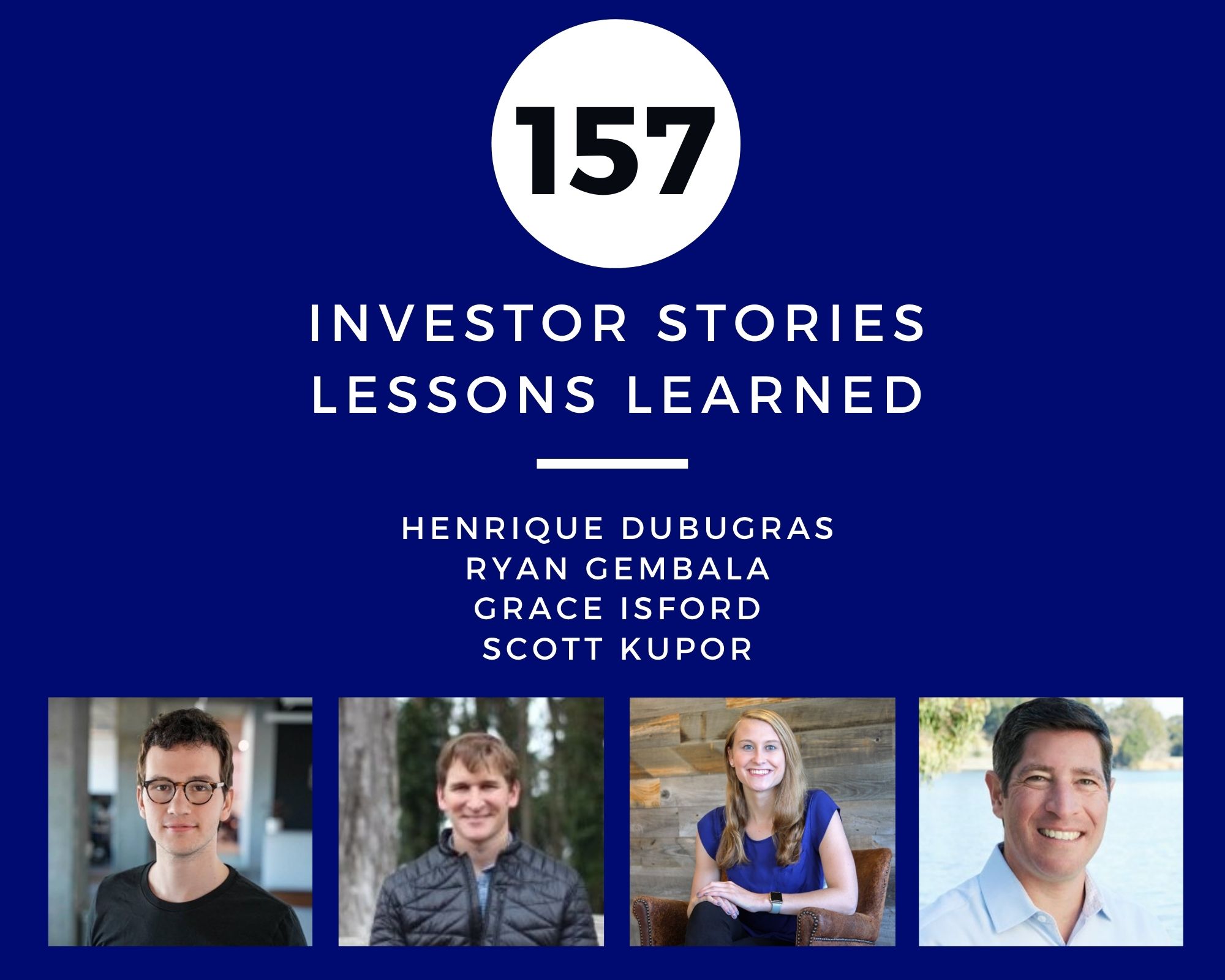
Investor Stories 157: Lessons Learned (Dubugras, Gembala, Isford, Kupor)
On this special segment of The Full Ratchet, the following Investors are featured: Henrique Dubugras Ryan Gembala Grace Isford Scott Kupor Each investor illustrates a critical lesson learned about startup investing and how it's changed their approach.
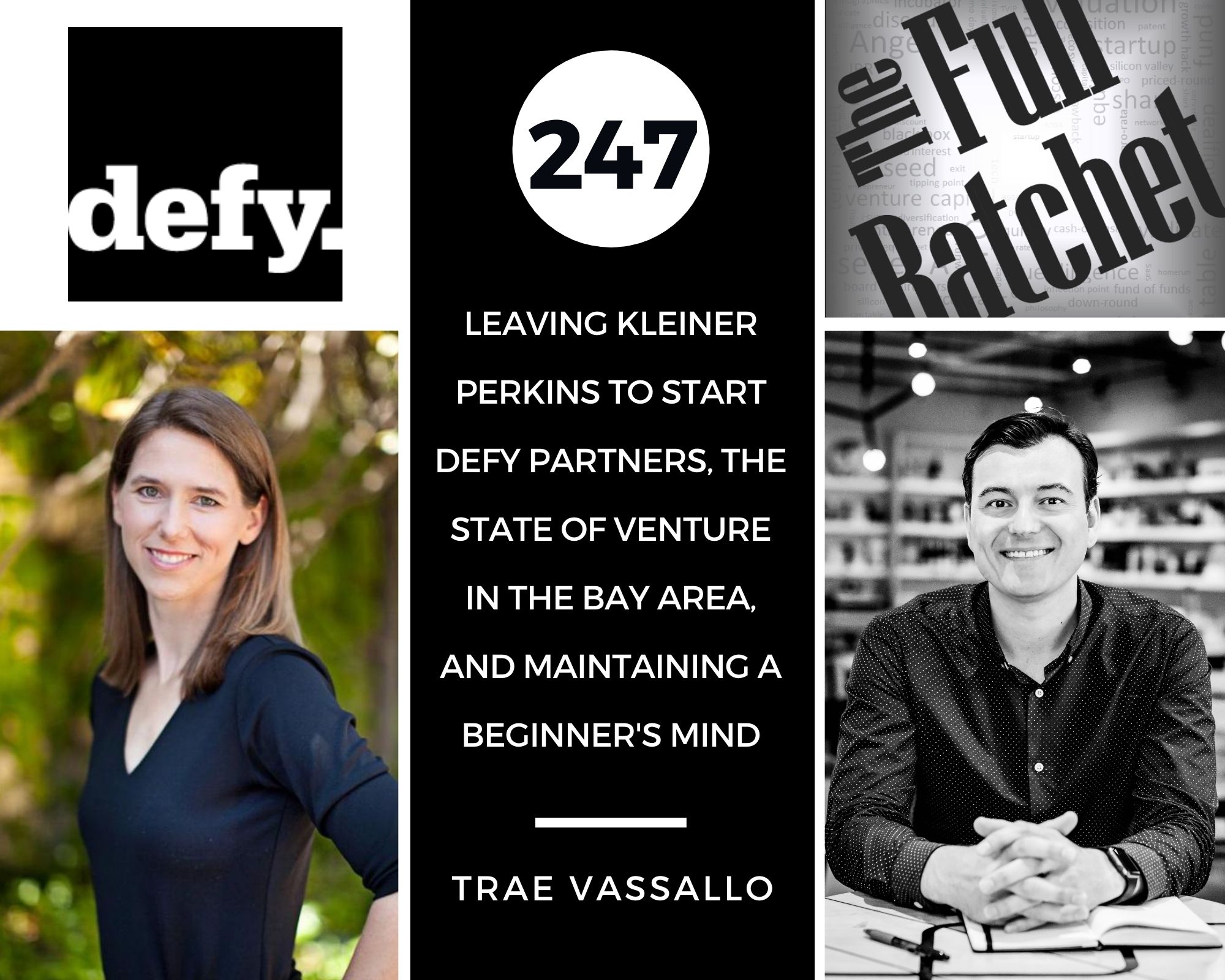
247. Leaving Kleiner Perkins to Start Defy Partners, The State of Venture in the Bay Area, and Maintaining a Beginner's Mind (Trae Vassallo)
Trae Vassallo of Defy Partners joins Nick to discuss Leaving Kleiner Perkins to Start Defy Partners, The State of Venture in the Bay Area, and Maintaining a Beginner's Mind. In this episode, we cover: Can you talk about your transition from Kleiner Perkins? How tough was that decision to make? What was it like to work with John Doerr? What's the thesis at Defy Partners? When you began Defy you chose not to look at San Francisco. Can you talk about why that is? How do you think this plays out? What will tech and venture in the Bay Area look like a few years from now, when COVID is behind us? Any stats on flight of talent form Bay area to other cities/regions? What changes have you observed in venture/tech that this crisis has either caused or accelerated? You've been a founder and can relate w/ the folks you're working with. How do you try and keep that beginner's mindset as you gain more experience and get further away from your founder journey? What are some the biggest mistakes you see founders making when pitching investors? What tips can you give founders around building relationships as well as pitching in a completely virtual environment? You experienced a severe personal experience… near death situation a few years ago. How has that changed you as a person and as an investor? 3 data points… Let's say you're approached to invest in a consumer hardtech startup. The startup is doing $1.5M ARR It's growing at 15% MoM And LTV:CAC is 4:1 Catch is, you can only ask 3 questions for 3 specific data points, in order to make your decision. What three questions do you ask?
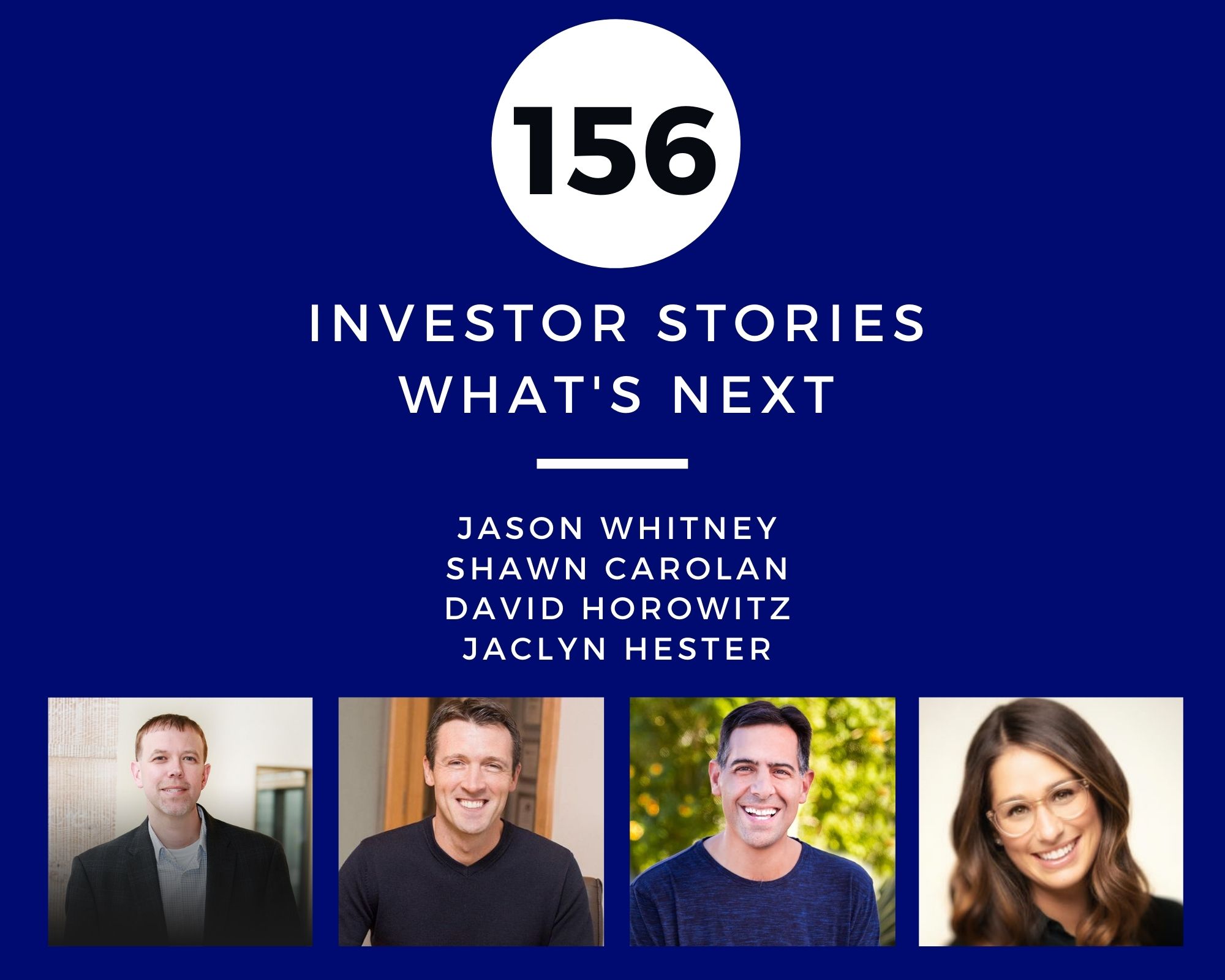
Investor Stories 156: What's Next (Whitney, Carolan, Horowitz, Hester)
On this special segment of The Full Ratchet, the following Investors are featured: Jason Whitney Shawn Carolan David Horowitz Jaclyn Hester Each investor discusses sectors, drivers and/or trends that may have significant impact in the future and are potentially positioned for outsized-returns.
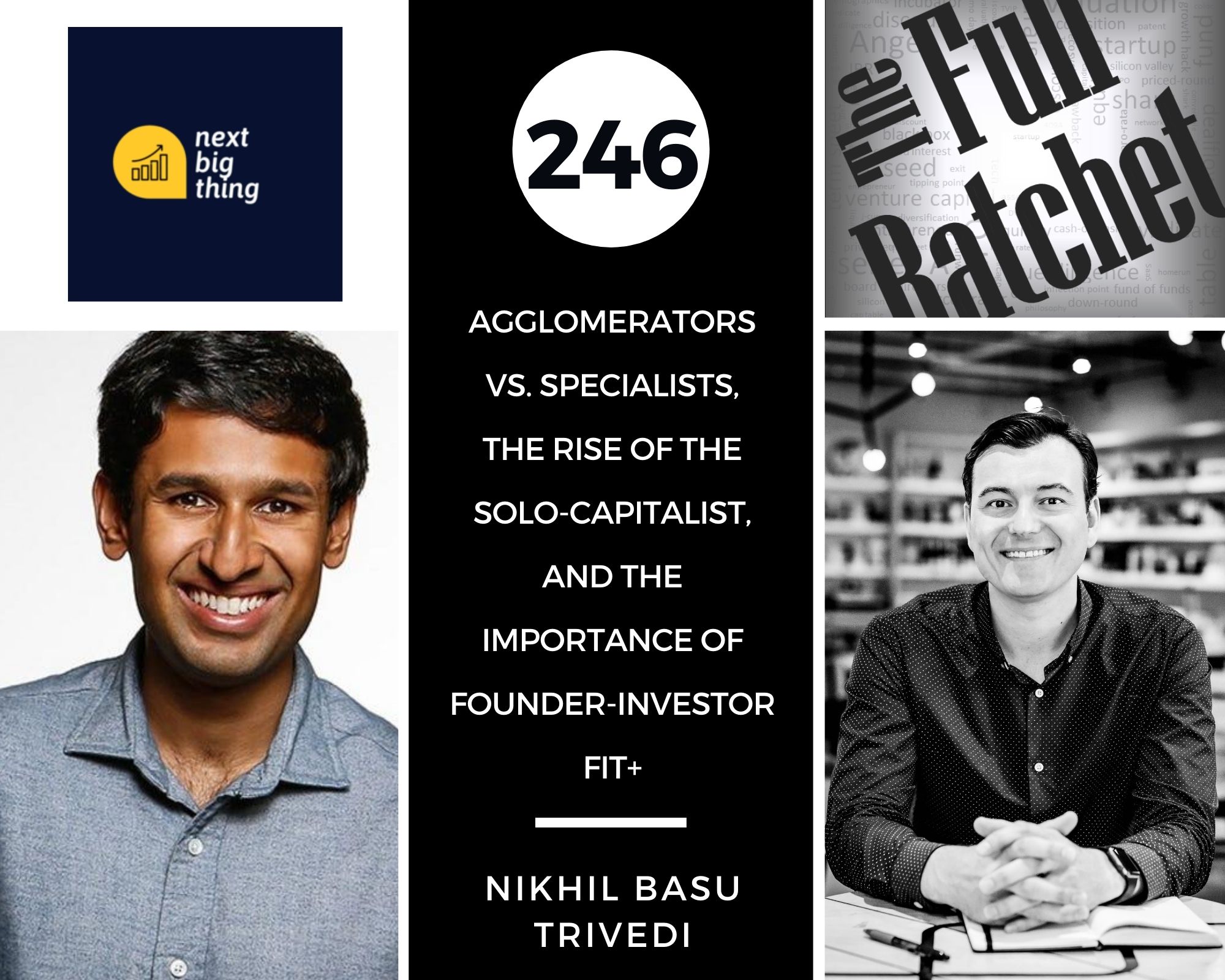
246. Agglomerators vs. Specialists, the Rise of the Solo-Capitalist, and the Importance of Founder-Investor Fit (Nikhil Basu Trivedi)
Nikhil Basu Trivedi of joins Nick to discuss Agglomerators vs. Specialists, the Rise of the Solo-Capitalist, and the Importance of Founder-Investor Fit+. In this episode, we cover: Why did you decide to leave Shasta? What's the plan moving forward? The Rise of Solo Capitalists You wrote a great piece on the rise of this behavior, 'The Rise of the Solo Capitalists'. What do you think has caused the rise in single GP funds? What are the main benefits to both investor and entrepreneur with this model? What are the limitations and/or downsides of this model? You wrote that an LP said that this model 'may be the biggest threat traditional venture capital firms have seen in a long time'. Why? Founder-Investor Fit What do you think are the most important things for founders to consider when choosing an investor? There are many firms that don't care about the "fit" per se... they just want to get money into the best deals. And it can be tough for a founder to turn down the best offer or the biggest name investor. Do you think that lack of fit can lead to the demise of the company? Do you think that founder-investor relationships/dynamics will change significantly over the next decade? Why or why not? Agglomerators vs. Specialists Can you break down the types of focus amongst VCs? Agglomerators vs. Specialists? What do you think has caused the rise of the agglomerators? From a returns (TVPI) standpoint, do you think one model is superior to the other? A large, institutional LP said to me this week that he doesn't believe in sector-focused fund models and returns suggest that they underperform. He only invests in generalists with stage focus. Have you found that the specialists have underperformed the generalists? What do you think about the future of these models? Where will the most crowded section be, five years from now? What are your thoughts on rolling funds?

Investor Stories 155: Why I Passed (Klaff, Steffens, Polovets, Deeter)
On this special segment of The Full Ratchet, the following Investors are featured: Oren Klaff Tamara Steffens Leo Polovets Byron Deeter Each investor highlights a situation where they decided not to invest, why they passed, and how it played out.
245. Backing from Bezos, Zuckerberg, and Gates; Lessons from Reid Hoffman; and Building a Network-centric Venture Firm (Ben Casnocha)
Ben Casnocha of Village Global joins Nick to discuss Backing from Bezos, Zuckerberg, and Gates; Lessons from Reid Hoffman; and Building a Network-centric Venture Firm. In this episode, we cover: - How have things changed for the firm since the pandemic broke? - You've raised from some very big names in tech -- Zuckerberg, Hoffman, Gates, Bezos, Greene, Blakely and many more. How exactly did the formation of Village and fundraise from these notable tech leaders come together? - Village has a unique approach to sourcing... Tell us about the scout network? - Decision making process, architecture when doing deals at this pace and volume? - Many firms talk about their founder networks and Slack Groups. But often if you ask founders, the density and connectivity of those networks are lacking. What is it about your broad founder community that succeeds where others don't? - Worked with Reid Hoffman for two years... what were some of the key lessons from that experience w/ Reid? - YC is in full swing right now... many investors I've chatted with this week are a bit dizzy with the number of companies they're meeting with. Do you invest in companies coming out of YC? - What do you think the future holds for accelerators like YC? - How do you determine when to make an exception on a deal? We all have rules, check-size, valuation range, etc... how do you know when to go off-thesis? - What are your thoughts on the future of Valley-based investing vs. investing outside the Valley? - Thoughts on all these large, multi-stage firms investing at seed and pre-seed? - Capital Supply and concentration is at new levels in the Bay Area... especially for seed investors. While it's reasonable that more great companies will be built with the tools and opportunities available, this all won't end well. I've seen pricing spike and aggressive tactics changing from investors to get access to deal. What are you observing and how do you think it plays out?
Investor Stories 154: Post Mortems (Clarkson, Osterwalder, Gallagher, Blank)
On this special segment of The Full Ratchet, the following Investors are featured: -Beezer Clarkson -Alex Osterwalder -Patrick Gallagher -Steve Blank Each investor discusses a portfolio company that did not survive and why it was that they failed.

244. Cross-Border Startup Expansion -- Lessons from 175 Companies (Stephen McIntyre)
- You recently published research on the expansion of 175 US companies into Europe. I'd like to discuss a number of points from the piece, but first off… what prompted you to do this research and write the piece? - Part of the report is about timing… ie. when is the right time is for a b2b SaaS company to make the leap and expand into Europe. Talk us through your findings and conclusion w/ regard to timing. - In preparation to make that jump, you recently talked about the challenges for "globalizing" a company and that it really starts at the CEO's desk… what do you mean by that? - As an investor, how do you prepare a CEO to shift mindset from US-centric to a more global one? - When a company makes the leap to Europe, what are some of the most common pitfalls/mistakes they make? - How do the challenges of growing a b2b software company across Europe differ from that of growing it in the United States? - Is there a particular playbook that you follow when bridging the gap between the US and European markets, if so can you share the broad strokes of what that entails? - Do you think it's more difficult for companies to start in the United States and grow into Europe or start in Europe and grow into the States? Why? - As part of the report, you talk about the difference between sales led expansion versus product and engineering led expansion, what are the primary differences? - How has COVID affected which expansion strategy to choose, if at all? - How to build a fully functioning sales force remote from the ground up - What, if any, tailwinds have emerged for the growth of the European tech ecosystem?
Investor Stories 153: Strange & Unusual (Solivan, Hsieh, Kerby, Currier)
On this special segment of The Full Ratchet, the following Investors are featured: Leah Solivan Kane Hsieh Richard Kerby James Currier Each investor describes the most unusual situation or pitch that they've encountered as an investor. To listen more, please visit http://fullratchet.net/podcast-episodes/ for all of our other episodes. Also, follow us on twitter @TheFullRatchet for updates and more information.
243. A Quantitative Approach to PMF, Tribe's 8 Ball for Objective Evaluation, and Approaches to Reduce Talent Biases (Jonathan Hsu)
Jonathan Hsu of Tribe Capital joins Nick to discuss how to Acquire Data, Build Abstractions and Do Research. In this episode, we cover: Walk us through your background and path to VC What's the thesis at Tribe Capital? How do you define PMF? Could you explain what the 8 Ball diligence framework is? When is a deal too early -- how much data (or over what time continuum do you need data) in order for the model to assess appropriately? Just for evaluation or also sourcing? Can you apply this tool to a range of business types (ie. SaaS vs. Maretkplaces vs. User-Growth, etc.)? How to avoid false positives? Data looks great for early phase -- early market… How do you know that it isn't luck and the company didn't stumble onto something with early signals of PMF but they don't have the insight or flexibility to evolve the business through growth and scale phases? What aspect of early stage investing don't you use data for? Why is this not appropriate to measure with data? Loss ratio goes down -- do you think it increases potential outcome size? On the evaluating side of things, it seems like Tribe has a big emphasis on using data to understand early product market fit. What is your definition of product market fit? Does Tribe conduct portfolio support in a similar way? What happens when data and intuition clash? Do you always lean one way or another? Examples of either? How do you account for exogenous factors? Ever been a scenario w/ a company misrepresenting data (fake data)? How long did it take to build this out -- what is the current team structure of investors, developers, and data scientists? Where do you and the team at Tribe need to improve most? To listen more, please visit http://fullratchet.net/podcast-episodes/ for all of our other episodes. Also, follow us on twitter @TheFullRatchet for updates and more information.
Investor Stories 152: Lessons Learned (Reum, Suster, Tavel, Calacanis)
On this special segment of The Full Ratchet, the following Investors are featured: Courtney Reum Mark Suster Sarah Tavel Jason Calacanis Each investor illustrates a critical lesson learned about startup investing and how it's changed their approach. To listen more, please visit http://fullratchet.net/podcast-episodes/ for all of our other episodes. Also, follow us on twitter @TheFullRatchet for updates and more information.
242. Structural Disadvantages in Venture, Investing in the "Overlooked," and Open-Sourcing the VC Fund Raise and Investment Playbook (Check Warner)
Check Warner of Ada Ventures joins Nick to discuss Structural Disadvantages in Venture, Investing in the "Overlooked," and Open-Sourcing the VC Fund Raise and Investment Playbook. In this episode, we cover: Background / Path to Venture The thesis at Ada Ventures Is it tough getting the up-rounds from Tier 1 VCs when the profile of the founders doesn't look like the standard, obvious profile that's been funded for the past couple of decades? You look for founders and markets that have been mis-priced… what are the three that you believe to be underpriced? Novel scout program -- how many scouts and who are they? How did you recruit them and how are they incentivized? Talk about your recent fundraise… How did you determine how much to raise? Walk us through the timeline of the fundraise. What resonated most w/ LPs? What was the biggest surprise? How did you create urgency and get LPs to move from a maybe to a yes? What will you do differently next time? You and I have discussed your seed investing framework -- how you make decisions on investments. Can you give us the broad strokes? You have an incredibly transparent approach… from your fundraising to your sourcing to your evaluation. Are there any concerns about revealing too much about your strategy? You publicized your investment process and shared some of your funnel data. Have you noticed any differences or changes (relationships with founders, LPs, brand, PR) from when you shared the inner workings? Many issues w/ racial and gender diversity in the news… what message would you like to share re. Diversity? "3 Data Points" Let's say you are approached to invest in a consumer user-growth company with 30k DAUs, and has a 10% WoW growth rate for the last 4 months. Catch is you can only ask for 3 data points to make your decision. What 3 questions do you ask for? To listen more, please visit http://fullratchet.net/podcast-episodes/ for all of our other episodes. Also, follow us on twitter @TheFullRatchet for updates and more information.
Investor Stories 151: What's Next (Adeeb, Dash, Neilson, Ingersoll)
On this special segment of The Full Ratchet, the following Investors are featured: Ramy Adeeb Somesh Dash Jeremy Neilson Minnie Ingersoll Each investor discusses sectors, drivers and/or trends that may have significant impact in the future and are potentially positioned for outsized-returns. To listen more, please visit http://fullratchet.net/podcast-episodes/ for all of our other episodes. Also, follow us on twitter @TheFullRatchet for updates and more information.
241. Finding Markets with Long-Term Tailwinds; Macro Impacts on Venture; and Robust vs. Fragile Data (Niki Pezeshki)
Niki Pezeshki of Felicis Ventures joins Nick to discuss Finding Markets with Long-Term Tailwinds; Macro Impacts on Venture; and Robust vs. Fragile Data. In this episode, we cover: Background and path to venture. Thesis at Felicis and your focus there? How has the pandemic affected your approach to investment? You've mentioned that you look for market tailwinds, especially tailwinds that will be lasting. Right now, we're seeing a number of shifts that will have lasting effects -- which are you watching most closely? Why do you think the public markets have, largely, stayed high during a very large health and economic crisis? Can you give us an overview on your three-part investing framework for making investment decisions? Where do you look for these large shifts, creating opportunity -- aside from Mary Meeker's report? How do you make sure you are current on-trend instead of getting anchored on data that's old or fragile? What are you looking for in the business model that indicates to you that it is not only the correct approach but can lead to transformational changes in the industry? In which types of businesses do you like to see product-focused founders versus marketing-focused founders, is there a heuristic or systematic way that you think about this? You mentioned that business is a formula and that it's clear early on whether it's going to work or not -- can you give us an example of the formula? What's your approach to coaching and advising founders? There's this fine line between being overbearing w/ advice and not providing enough insight in an area that could derail a company. How do you strike the balance? What keeps you up at night... the ones you invested in that you shouldn't have or the ones you didn't invest in that you wished you had? 3 Data points: Let's say that you have a consumer SaaS company that is doing 300K in ARR, growing 20% MoM and that's all you currently know about the company. Which 3 data points do you ask for and why? To listen more, please visit http://fullratchet.net/podcast-episodes/ for all of our other episodes. Also, follow us on twitter @TheFullRatchet for updates and more information.
Investor Stories 150: Why I Passed (Siegler, Isford, Vrionis, Rust)
On this special segment of The Full Ratchet, the following Investors are featured: M.G. Siegler Grace Isford John Vrionis Ash Rust Each investor highlights a situation where they decided not to invest, why they passed, and how it played out. To listen more, please visit http://fullratchet.net/podcast-episodes/ for all of our other episodes. Also, follow us on twitter @TheFullRatchet for updates and more information.
240. A Blazing Fast Path to $B+; Binary Outcomes; The Fintech Revolution; and A New Approach to Employee Comp (Henrique Dubugras)
Henrique Dubugras of Brex joins Nick to discuss the Blazing Fast Path to $B+; Binary Outcomes; The Fintech Revolution; and A New Approach to Employee Comp. In this episode, we cover: Background -- path that led to Brex? Origin story for Brex Tag-line / One sentence overview What's so different about Brex? Why is more than just a credit card? How has the pandemic affected the business thus far? What do you offer that no one else does? Who do you consider to be competition? What is the moat here - why can't another well funded startup replicate your offering? A criticism I've heard is that, when businesses need credit most, when bank balance/working capital is low, is when Brex cuts off access to credit. What's your response? How would you describe your leadership philosophy? Are you recruiting/hiring? Is the approach different while 100% remote? What's the compensation structure at Brex? One of the fastest companies to multi-billion+ valuation -- more pressure w/ all that capital? With the raise and expectations some suggest that the outcome is binary -- is it? What advice do you have for early-stage, pre-A, founders trying to build a venture scale business? To listen more, please visit http://fullratchet.net/podcast-episodes/ for all of our other episodes. Also, follow us on twitter @TheFullRatchet for updates and more information.
Investor Stories 149: Post Mortems (Gembala, Dorsey, Yin, Fluhr)
On this special segment of The Full Ratchet, the following Investors are featured: Ryan Gembala Scott Dorsey Elizabeth Yin Jeff Fluhr Each investor discusses a portfolio company that did not survive and why it was that they failed. To listen more, please visit http://fullratchet.net/podcast-episodes/ for all of our other episodes. Also, follow us on twitter @TheFullRatchet for updates and more information.
239. What's Next in Gaming; The True Essence of Product-Market-Fit; & Investing with an Emphasis on Retention and Engagement (Gigi Levy-Weiss)
Gigi Levy-Weiss of NFX joins Nick on a special Crisis Coverage installment to discuss What's Next in Gaming; The True Essence of Product-Market-Fit; & Investing with an Emphasis on Retention and Engagement. In this episode, we cover: Background and path to venture. The thesis and your focus at NFX? Did you invest in Houseparty when it was Meerkat? You've written about your thoughts on PMF... How do you assess whether a company has real product market fit? What advice would you have for those still trying to find it? With this focus on product and retention... What's your response to investors that say distribution is more important than product? Why do you think VC interest has been declining in the gaming space? What has been the history/evolution in the gaming sector? What's next for gaming -- Is there a step beyond the platform? Are there any niches or segments within gaming or esports where you see the most potential? 3 Data points: Let's say a gaming startup comes to you... they have 50k DAUs, K value of 1, 20 % MoM growth... What 3 data points do you ask for and why? To listen more, please visit http://fullratchet.net/podcast-episodes/ for all of our other episodes. Also, follow us on twitter @TheFullRatchet for updates and more information.
Investor Stories 148: Strange & Unusual (Kupor, Koh, Tunguz, Douglass)
On this special segment of The Full Ratchet, the following Investors are featured: Scott Kupor Melody Koh Tom Tunguz Jim Douglass Each investor describes the most unusual situation or pitch that they've encountered as an investor. To listen more, please visit http://fullratchet.net/podcast-episodes/ for all of our other episodes. Also, follow us on twitter @TheFullRatchet for updates and more information.
238. GP and LP Alignment, Challenges for Emerging Fund Managers, and How the Explosion in Seed Fund Volume Plays Out (Jaclyn Hester)
Jaclyn Hester of Foundry Group joins Nick on a special Crisis Coverage installment to discuss GP and LP Alignment, Challenges for Emerging Fund Managers, and How the Explosion in Seed Fund Volume Plays Out. In this episode, we cover: Tell us about your background and path to VC. For those who don't know, talk about the approach at Foundry with both the LP and GP model. Foundry traditionally had no apprenticeship model and no junior investors... were you the first? Pandemic... Are you making investments currently and what are you hearing from other LPs? What's your advice for GPs re. building relationships and momentum w/ LPs during these uncertain times? What's the biggest mistake emerging managers make when fundraising? What do new fund managers underestimate when starting a venture firm? Does it matter how specific a thesis is? Do you need to see a unique, focused and compelling edge or are you just as receptive to a generalist w/ a strong network and track record? What question tends to trip up GPs? What are some of the most important things GPs should ask LPs when raising? What do you think are the most important things GPs and LPs need to be aligned on for a successful relationship? How does the explosion in volume of seed funds affect you approach to selection? How do you think this plays out -- most funds fail? Returns more evenly distributed? Power law no longer applies (or is less pronounced)? Fast forward 5 years and let's assume there's been a fundamental shift in early stage Venture. What do you think is the most likely, largest change that's occurred? What advice do you have for young people that aspire to be a VC someday? Not going to ask for favorite GPs but, I will ask, if you could break quarantine to grab a cocktail w/ one GP -- who do you choose? ; ) 3 Data Points... You're approached by an emerging VC firm raising fund II. The fund manager did not work for a large, brand-name venture firm before and she has never had an institutional investor. Net TVPI is 1.4, and Net IRR is 35% and it's a 2018 vintage. The catch is you can only ask 3 questions (for 3 additional data points) to make your decision. What 3 questions do you ask? To listen more, please visit http://fullratchet.net/podcast-episodes/ for all of our other episodes. Also, follow us on twitter @TheFullRatchet for updates and more information.
237. Advice for Founders -- Reaching out to VCs, Pitching over Zoom, and Closing Capital Amidst a Pandemic (Nick Rishwain, Hannah Konitshek, Nick Moran)
Nick Rishwain and Hannah Konitshek of The LegalTechLive Podcast interview Nick to discuss Advice for Founders -- Reaching out to VCs, Pitching over Zoom, and Closing Capital Amidst a Pandemic. In this episode we cover: How have valuations been impacted from the pandemic? How long will lower valuations persist? Are VCs actively doing deals right now? What's the most common mistake that founders make when approaching you for funding? How much information would you prefer a founder share with you upfront (deck, financials, incorporation, docs, etc.)? How often have you met a founder early, been added to their monthly update list and then come back to make an investment? Should founders become more clinical when selecting investors? How do you convince founders on New Stack as an investor? There is one area that New Stack is really hands-on -- what is it? What are some things a founder can do to get funded while he's only got a well thought out idea and business plan? Many founders don't know if their business is venture scale. How do you determine if a business is venture-backable or not? How does a sector that hasn't had huge exits at large multiples (like LegalTech) impact the way you assess startups in that sector? How do you evaluate high recurring revenue vs. low recurring revenue? Do you have any suggestions for a founder that is pitching now that it is completely remote? Overall advice you're giving your portfolio companies right now? To listen more, please visit http://fullratchet.net/podcast-episodes/ for all of our other episodes. Also, follow us on twitter @TheFullRatchet for updates and more information.
Investor Stories 147: Lessons Learned (Osterwalder, Clarkson, Cardamone, Polovets)
On this special segment of The Full Ratchet, the following Investors are featured: Alex Osterwalder Beezer Clarkson Michael Cardamone Leo Polovets Each investor illustrates a critical lesson learned about startup investing and how it's changed their approach. To listen more, please visit http://fullratchet.net/podcast-episodes/ for all of our other episodes. Also, follow us on twitter @TheFullRatchet for updates and more information.
236. The Four Fundamentals of Investing; the Future of Micro Mobility; and Hunting Consumer Unicorns (Shawn Carolan)
Shawn Carolan of Menlo Ventures joins Nick on a special Crisis Coverage installment to discuss the Four Fundamentals of Investing; the Future of Micro Mobility; and Hunting Consumer Unicorns. In this episode, we cover: Tell us about your background and path to venture. What's the thesis at Menlo Ventures? Can you explain the "Four Fundamentals" framework for investing and give us a brief description of each? What are you looking for in terms of unit economics? You like to invest in technologies that change everyday life for the better. Do you have a sense for the needed technologies and then find founders in those areas, or do you identify compelling entrepreneurs that then guide you to emerging technologies that will shape the future? Have you been in the situation where you identified the right consumer trend and technology required to deliver but you picked the wrong startup? Is there a priority of importance amongst the four? Which do you think investors most often get wrong? Let's talk about consumer a bit...Many VCs think that consumers and consumer behaviors evolve quickly in unpredictable ways. And b/c of that many VCs avoid consumer. What's your response? We've seen an explosion in Cloud and SaaS recently, and some question whether there's room for another big consumer company, what is your response to this and which areas do you see the biggest opportunities in? Before the pandemic, the future of scooter companies was murky with challenging unit economics and fleet maintenance... while governments were, in some cases, were imposing regulations and putting a halt to deployment. What does the future hold for the scooter companies? How do you view these situations, like scooters, where there's low differentiation and a number of players trying to scale and grab share quickly? Any other micro-mobility trends that you're watching closely, aside from scooters? Changing gears away from micro mobility and into AI for a bit, why do you think we haven't seen many unicorns in consumer AI? Where (sectors, categories) do you think the initial consumer AI unicorns will come from? Let's say that you have a micro mobility company that is currently operating in 3 cities within one region, grossing $500K monthly and growing 30% month to month. Which 3 data points do you ask for and why? To listen more, please visit http://fullratchet.net/podcast-episodes/ for all of our other episodes. Also, follow us on twitter @TheFullRatchet for updates and more information.
Investor Stories 146: What's Next (Gallagher, Tavel, Deeter, Kim)
On this special segment of The Full Ratchet, the following Investors are featured: Patrick Gallagher Sarah Tavel Byron Deeter Jim Kim Each investor discusses sectors, drivers and/or trends that may have significant impact in the future and are potentially positioned for outsized-returns. To listen more, please visit http://fullratchet.net/podcast-episodes/ for all of our other episodes. Also, follow us on twitter @TheFullRatchet for updates and more information.
235. Why Corporate VC Gets a Bad Wrap; Microsoft's Fresh Approach to CVC; and Key Insights to Acquire Mass Users (Tamara Steffens)
Tamara Steffens of M12 joins Nick on a special Crisis Coverage installment to discuss Why Corporate VC Gets a Bad Wrap; Microsoft's Fresh Approach to CVC; and Key Insights to Acquire Mass Users. In this episode, we cover: Background and path to venture. Overview of the thesis at M12. Investments since COVID? Changes in strategy, markets of interest. CVC has the reputation of being very slow, not leading deals, imposing restrictive terms, and thinking only about broader success of their parent company— what's different about M12? What's your approach to sourcing? You are known as a user acquisition expert in the valley... having generated millions of app downloads for Path, Color and Acompli. One of your main suggestions is to "Dismantle the silos" ... what do you mean by that? You've cited the top three things you need to make your app part of the zeitgeist -- can you walk us through each and why they're critical? Talk about the 'Leaky Bucket' of new user acquisition and how to avoid it? What's a good level of user retention (%) after 6 weeks? What are the biggest differences in approach when acquiring consumers vs. enterprise customers? What are the main KPIs/OKRs you track when optimizing a sales funnel / team? I'd like to talk a bit more about the startups you work with...What are the key factors you're looking for in investments? How do you work with your portfolio companies? Why should every startup be thinking about culture as they build their companies? How are founders today different from founders 20 years ago? What tips do you have for founders pitching investors remotely? To listen more, please visit http://fullratchet.net/podcast-episodes/ for all of our other episodes. Also, follow us on twitter @TheFullRatchet for updates and more information.
234. Breaking into VC; Excelling at Goldman Sachs; and the Origin of BLCK VC (Brian Hollins)
Brian Hollins of BLCK VC joins Nick on a special Crisis Coverage installment to discuss Breaking into VC; Excelling at Goldman Sachs; and the Origin of BLCK VC. In this episode, we cover: Background and path to venture? What was the most surprising thing about venture that you only realized after working in it for awhile? So you've got this great job in venture... Why'd you decide to go back to HBS? Tell us about the origin story of BLCK VC? What are some of the specific activities and programs that BLCK VC is running? On June 4th, BLCK VC held an event, "We Won't Wait", for people in venture to take action. What were the primary goals and outcomes of the event? I want to talk a bit about your experience at Goldman... did you have an opportunity to invest in black and/or underrepresented founders? What, if anything, did Goldman do to support black investors and founders? It's so hard breaking into this industry and orders-of-magnitude harder when you're black -- how have diversity issues and racial profiling affected your professional journey? Can you give us your take on the current social unrest and what path you want to see going forward? Do you think we'll see the systemic changes required this time or do you think progress will be limited? Who are some investors, founders or people in the space you see paving the way and driving change? What can white VCs do, specifically, to contribute to more better balance and stronger representation for black founders and investors? What organizations do you care about? What are sites or resources that our audience can visit to get more involved? Aspen Fellowship... At New Stack we're rolling out a fellowship program to train young, college students in VC... you're back on a college campus... what are some ways that we can get our job description in front of more black, latin and underrepresented minority students? Are there any national organizations or communities for college-aged, black students that are interested in tech? 3 Data Points... Let's say you are approached to invest in an enterprise SaaS business. The startup has $10M ARR, Growing 10% MoM and LTV:CAC is 4:1. Catch is you can only ask 3 questions (for 3 additional data points) to make your decision. What 3 questions do you ask? To listen more, please visit http://fullratchet.net/podcast-episodes/ for all of our other episodes. Also, follow us on twitter @TheFullRatchet for updates and more information.
Investor Stories 145: Why I Passed (Ingersoll, Ajao, Kerby, Horowitz)
On this special segment of The Full Ratchet, the following Investors are featured: Minnie Ingersoll Adeyemi Ajao Richard Kerby David Horowitz Each investor highlights a situation where they decided not to invest, why they passed, and how it played out. To listen more, please visit http://fullratchet.net/podcast-episodes/ for all of our other episodes. Also, follow us on twitter @TheFullRatchet for updates and more information.
233. Investment Decision in < 3 weeks; the Challenges and Opportunities with 3D Printing; and the Future for Industrial Automation (Kane Hsieh)
Kane Hsieh of Root Ventures joins Nick on a special Crisis Coverage installment to discuss Investment Decision in Backstory/Path to Venture Tell us about the the thesis at Root and your focus areas. Any unique outcomes or behaviors you are observing as a result of the pandemic? What's your investment position on 3D printing... bullish or bearish? I used to work in the industrial automation area... developed two different products there and saw limitless opportunities but also many challenges. From your standpoint, what have been the biggest challenges to progress in industrial automation? What excites you most about industrial automation going forward? How will jobs in the industrial space, or any space for that matter, change with the immersion of automation and robotics? Is this a net job eliminator? Startups w/ hardware as a part of their solution (whether off the shelf or developed internally) are often are more capital intensive than their pure software counterparts. How do you balance progress and capital efficiency for these businesses? Do you think the expectations of progress/traction, at different stages, is different for hardware as a service vs. software as a service? One piece of advice for founders of industrial automation startups... what would it be? What are some of the deep tech or capital intensive investment areas that you're avoiding? Heard a rumor that you're starting podcast? I came across a side project, "Transformer Poetry," a book of famous poetry reimagined by OpenAI's GPT-2 language model. I don't even know what to ask here but would love to hear what the inspiration for it was. To listen more, please visit http://fullratchet.net/podcast-episodes/ for all of our other episodes. Also, follow us on twitter @TheFullRatchet for updates and more information.