
The Full Ratchet (TFR): Venture Capital and Startup Investing Demystified
1,027 episodes — Page 16 of 21
176. Creating Powerful Networks, 3 Rules for Great Products, and the Future of Mobile Tech (SC Moatti)
SC Moatti of Mighty Capital joins Nick to discuss Creating Powerful Networks, 3 Rules for Great Products, and the Future of Mobile Tech. In this episode, we cover: Backstory/ Path to becoming involved in venture? What led you to start Mighty Capital? Talk more about Products that Count, what was the origin and why? You successfully built a network of over 25,000 PM's and continue to lead the network... How have you built such a large network? We all have ever-expanding networks... do you have any guidelines or essential rules to maintaining, staying connected, and strengthening your existing network? In your book, you share 3 rules to create successful products. Can you give us an overview of these rules? You've developed products that billions of people use at Facebook, Nokia and Electronic Arts. Can you give us an example of a key product decision or change that you led? Portfolio companies have said that Mighty Capital brings the "best value for the dollar invested." How, specifically, are you creating value for your portcos? How do you determine if a startup has reached product-market fit? Let's say, for example, you come across a product that, based on the metrics, has clear product-market fit, growth is accelerating and the team appears quite strong... but you have serious reservations about the product itself... maybe you question the design principles, the UX requires significant improvement, maybe it feels like it was designed by an engineer for an engineer instead of a customer... how do you approach a investment opportunity like this? Part of your investment criteria is 'Bay Area-based leadership' Why do you only invest in companies based in the Bay Area? Tell us more about your book... why'd you write it and what would you like readers to gain from reading it? So, to go a bit deeper on mobile and mobile products? What are some new innovations or opportunities that you think will emerge in the coming years? What current mobile trends do you think have a limited shelf life and will phase out? What are the most concerning trends to you... whether they be related to mobile, entrepreneurship, product or investing?
Investor Stories 100: Why I Passed (Wallace, Zuberi, Medved)
On this special segment of The Full Ratchet, the following Investors are featured: Brendan Wallace Bilal Zuberi Joe Medved Each investor highlights a situation where they decided not to invest, why they passed, and how it played out. To listen more, please visit http://fullratchet.net/podcast-episodes/ for all of our other episodes. Also, follow us on twitter @TheFullRatchet for updates and more information.
175. From Operator to Accelerator MD to Fund Manager (John Fein)
John Fein of Firebrand Ventures joins Nick to discuss From Operator to Accelerator MD to Fund Manager. In this episode, we cover: So you participated in 5 startups, after which you scaled an organization from zero to 1,500 employees and $2B/year in revenue. Talk about your background and experience at United Health. Tell us a bit about your decision to raise a fund. When I started raising fund I, I had calls w/ 30+ GPs and my target was $5M but I told him, under no circumstances would I raise more than $10M, even if things went really well. He responded that the difference between a $5M and a $10M is significant and that the story and strategy would be very different for the two. So I know that you started with a $7M target and ended at $18M... how did your strategy change and did you get any pushback from early LPs as the fund got larger? How did the process play out... in what ways was it different than what you expected? How early do you go? How did you create urgency w/ prospective LPs to make a decision. From personal experience, I found a number of large LPs that preferred to wait until final close You've gone on the record stating that you'll avoid investing in arrogant founders, where many VCs specifically look for this character trait in entrepreneurs. Do you think it's the best economic decision to avoid working w/ arrogant founders? Everyone says they're a founder-focused VC... but when I speak w/ founders I find that there are very few that are actually qualify. What does this mean from your standpoint and how are you serving founders in ways that others aren't? What are some of the key strengths of your pipeline and dealflow.... how are you seeing more deals and higher quality deals than others? The feedback cycle in venture is really long... you won't truly know how your fund stacks up against others from you vintage for many years. How do you track progress and assess if you're winning over the near term?
Investor Stories 99: Post Mortems (Martino, Simoudis, Narasin)
On this special segment of The Full Ratchet, the following Investors are featured: Paul Martino Evangelos Simoudis Ben Narasin Each investor discusses a portfolio company that did not survive and why it was that they failed. To listen more, please visit http://fullratchet.net/podcast-episodes/ for all of our other episodes. Also, follow us on twitter @TheFullRatchet for updates and more information.
174. VCs Ride the Bus, Comeback Cities & Unorthodox Investing
Roy Bahat of Bloomberg Beta joins Nick to discuss VCs Ride the Bus, Comeback Cities & Unorthodox Investing. In this episode, we cover: Backstory / Path to Bloomberg Beta Bloomberg Beta has taken a self-described "unorthodox approach"-- Tell us about your approach and why it's unique. I was exploring your page on Github and noticed that you've open sourced the entire operating manual-- why'd you do so and do you think other VCs should do the same? What's worked and what hasn't? You've talked about how you struggled figuring out what you wanted to do for a living. Have you figured it out? So, last year a number of SF-based VCs got on a bus and traveled the Midwest in what they called the Comeback Cities tour. Tell us about the experience and why you and others came to the Midwest to look for opportunities? How did the tour lead to a venture fund? Why do you think it's important to work w/ angels in the Midwest? What surprised you on the trip? Can you talk a bit about machine intelligence and how it's impacting the future of work? How do you see the VC asset class changing over the next few years?
Investor Stories 98: The Strange & Unusual (Anderson, O'Reilly, Pascucci)
On this special segment of The Full Ratchet, the following Investors are featured: Sarah Anderson Tim O'Reilly Vic Pascucci Each investor describes the most unusual situation or pitch that they've encountered as an investor. To listen more, please visit http://fullratchet.net/podcast-episodes/ for all of our other episodes. Also, follow us on twitter @TheFullRatchet for updates and more information.
173. Corruption, Extortion and the Fight Against Entrenched Interests-- How a VC Saves Startups from Death by Politics (Bradley Tusk)
Bradley Tusk of Tusk Ventures joins Nick to discuss Corruption, Extortion and the Fight Against Entrenched Interests-- How a VC Saves Startups from Death by Politics. In this episode, we cover: Why and how did you get into VC? You have a nice model where you generate revenue through Tusk Strategies, which allows you to hire great talent and invest forward in startups. How has the model changed over time and how is the organization structured today? How were you able to get allocations and generate dealflow when you were new to VC? You spent some time in Illinois w/ an infamous Governor of our's... and you're very candid in the book about the issues and illegal acts that Rod Blagoyevich instructed you to do. Give us some of the highlights and lowlights from the experience. You highlight the importance of narrative many times throughout the book. Can you touch on the key points w/ regard to picking and framing your narrative for tech startups? You've said that when large industry incumbents are disrupted, "they punch back, and they punch hard"... have you seen situations where startups have died b/c of response of a large incumbent? Talk about some of your experiences. Have you worked w/ any tech companies who's mission doesn't align w/ your political beliefs? How can you possibly win a prolonged battle going jurisdiction by jurisdiction? I enjoyed the section of the book you call "Pick your enemies = Win Your Battles (Strangle the baby in the crib). What's the best message founders can take away from this chapter? We've all heard a lot about the political issues w/ independent contracts vs. employees. Uber has been the headliner in the media but you also cite Handy, in the book, the platform that connects independent handymen w/ home owners... what's been your involvement w/ this issue and where do we stand? Talk a bit about your interactions w/ Elon and the work you did w/ Tesla against the dealership incumbents. You close the book w/ an emphasis on voting and the importance of mobile voting. You've even said that mobile voting is "the biggest disruption fight of them all" and that "restoring our true democracy-- and actually confronting our nation's deepest problem."
Investor Stories 97: Lessons Learned (Einstein, Cohen, Nof)
On this special segment of The Full Ratchet, the following Investors are featured: David Cohen Ben Einstein Jordan Nof Each investor illustrates a critical lesson learned about startup investing and how it's changed their approach. To listen more, please visit http://fullratchet.net/podcast-episodes/ for all of our other episodes. Also, follow us on twitter @TheFullRatchet for updates and more information.
172. Growth Investing in Biotech, Genomics and Pharma (Jim Tananbaum)
Jim Tananbaum of Foresite Capital joins Nick to discuss Growth Investing in Biotech, Genomics and Pharma. In this episode, we cover: -His 25 years in the industry working as both an entrepreneur and investor.. often at the same time -Jim's investment focus at Foresight -The major changes in biotech over the past two decades -The key elements he looks for in a business -The main drivers causing more opportunity in the sector -The key challenges to investing in biotech, pharma and genomics -The role of data science in their process -How the experience of building and IPO'ing companies has helped Jim as an investor -How they target specific areas to invest in -Jim's take on predatory pharmaceutical pricing -And finally how some of these solutions might become more affordable for more people that need them
Investor Stories 96: What's Next (Ascher, Medved, Fontana)
On this special segment of The Full Ratchet, the following Investors are featured: Brian Ascher Joe Medved Ash Fontana Each investor discusses sectors, drivers and/or trends that may have significant impact in the future and are potentially positioned for outsized-returns.
171. Sports Tech and the Future of eSports (Wayne Kimmel)
Wayne Kimmel of SeventySix Capital joins Nick to discuss Sports Tech and the Future of eSports. In this episode, we cover: Talk about the investment focus and approach of your firm When did Ryan Howard start working w/ you and how did he become a part of the leadership team? Talk a bit about sports tech has evolved over the past decade. All these players or former players are getting involved on the investment-side... some pretty savvy, some more green... good thing or bad thing? What lens or framework does your firm use to segment the sportstech landscape? I've heard SportsTech categorized into Athlete performance tech, broadcast audience enjoyment tech, and In-person experience tech. Do you consider startups in these categories and where have you seen the most opportunities? eSports (ie. video games as a sport)... has exploded in popularity. Talk a bit about what you're seeing in esports and how you're approaching it from an investment standpoint. I know a number of sportstech investors that avoid the youth, amateur and collegiate markets, b/c they think all the money is in the professional markets. Missed opportunity or is there something to this position? Lessons from owning the USFL champions, the Stars? What are the specific ways you get involved with portfolio companies? You've spoken a lot about the importance of networking, and even wrote a book about it. What key lessons do you have for listeners w/ regard to networking?
Investor Stories 95: Why I Passed (Kaden, Hardiman, Simoudis)
On this special segment of The Full Ratchet, the following Investors are featured: Rebecca Kaden James Hardiman Evangelos Simoudis Each investor highlights a situation where they decided not to invest, why they passed, and how it played out.
170. Go-to-Market Fit, Tidal Waves, Category Leadership & Split-Personalities (Tae Hea Nahm)
Tae Hea Nahm of Storm Ventures joins Nick to discuss Go-to-Market Fit, Tidal Waves, Category Leadership & Split-Personalities. In this episode, we cover: What was your path to Venture Capital like and why'd you make that career change? You've been very successful with exits- is there a framework you apply to identify these? Can you explain further about your tidal investing strategy and how it has changed? With your expansive experience in Venture, do you believe are changes necessary in the silicon valley mentality? How active of a role do you play with your portfolio founders? You said you love to take the subway and observe what people are doing- what are some things you are spotting now and what are you spotting across the world. Why'd you write "Survival to Thrival"? Through your recent observations, what is the next big thing you are testing in Korea? You talk a lot about split personalities, when did you realize this was a necessary quality and how long did it take you to develop this yourself? How has this also changed over your tenure as a CEO? You've stated that founders have to stay both pragmatic and ambitious. In tech it's often a problem when you build out infrastructure or sales before everything is ready. On the flip side sharing too many problems or issues with your team and investors will make them wary. Have you had any of these occurrences with finding a balance and what would you advise the audience as solutions. How have you developed a positive attitude despite the dichotomy of feelings day in and day out? How would you advise other founders and CEO's to deal with this? How do you actually identify true passion in founders and what are the criteria you use for this? How have you aligned Storm Ventures proclaimed company culture with the unofficial culture? What is your advice to other CEO's trying to find a fit? In your book you talk about the 3 go to market elements. How long did it take you to realize these 3 things? You talk about identifying problems versus disastrous in the book. Can you tell us just the first step you founders should take if a problem is disastrous? Guest Links: Survival to Thrival Tae Hea Nahm Bio Tae Hea Nahm Twitter Tae Hea Nahm Blog Tae Hea Nahm Linkedin To listen more, please visit http://fullratchet.net/podcast-episodes/ for all of our other episodes. Also, follow us on twitter @TheFullRatchet for updates and more information.
Investor Stories 94: The Strange & Unusual (Ramanujam, Turner, Leitersdorf)
On this special segment of The Full Ratchet, the following Investors are featured: Madhavan Ramanujam Guy Turner Yoav Leitersdorf Each investor describes the most unusual situation or pitch that they've encountered as an investor. To listen more, please visit http://fullratchet.net/podcast-episodes/ for all of our other episodes. Also, follow us on twitter @TheFullRatchet for updates and more information.
Investor Stories 93: Lessons Learned (Zuberi, Coelius, Galbut)
On this special segment of The Full Ratchet, the following Investors are featured: Bilal Zuberi Zach Coelius Elizabeth Galbut Each investor illustrates a critical lesson learned about startup investing and how it's changed their approach. To listen more, please visit http://fullratchet.net/podcast-episodes/ for all of our other episodes. Also, follow us on twitter @TheFullRatchet for updates and more information.
169. Product is Paramount (Brian Ascher)
Brian Ascher of Venrock joins Nick to discuss Product is Paramount. In this episode, we cover: What is your story at Venrock and how have both you and your firm evolved over the past two decades. Talk a little about Venrock and your focus there. You were a product manager at Intuit, prior to Venrock.. what do you think is the VCs role in shaping product strategy? What are your thoughts on SaaS investing and this increasing focus on the "Intelligent Enterprise" You wrote an article a few years ago called "Goldilocks and the 3 SaaS Go To- Markets Models"... what are the three flavors of SaaS go-to-market and have they changed since you wrote the article? Business Model: Price/seat vs. metered service vs. price for value We're about to close on our first fintech investment for fund I-- can you talk a bit about fintech and why it's so hot? Some have said that digital currencies and/or the blockchain itself will be as disruptive as the internet-- agree or disagree? Something we've neglected a bit on the program is long-term governance. What are your thoughts on Managing a Board of Directors and what situations have you seen play out-- for better or worse? What is the percentage of healthy, well-functioning boards vs unhealthy boards? How are chairman roles assigned/elected-- are they often explicit and how useful is it to have an official Chairman? To listen more, please visit http://fullratchet.net/podcast-episodes/ for all of our other episodes. Also, follow us on twitter @TheFullRatchet for updates and more information.
Investor Stories 92: What's Next (Martino, Calacanis, Farmer)
On this special segment of The Full Ratchet, the following investors are featured: Paul Martino Jason Calacanis Chris Farmer Each investor discusses sectors, drivers and/or trends that may have significant impact in the future and are potentially positioned for outsized-returns. To listen more, please visit http://fullratchet.net/podcast-episodes/ for all of our other episodes. Also, follow us on twitter @TheFullRatchet for updates and more information.
168. Leadership from Origin to Scale (Carter Cast)
Carter Cast of Pritzker Group joins Nick to discuss Leadership from Origin to Scale. In this episode, we cover: You've been a manager and leader in early stage companies – from startups like Blue Nile (from $0 to $50 million in a couple years) to Walmart.com (from $0 – 5 billion in 7 years). I'm sure each was different but tell us about the experience of scaling such high growth companies? What were some of the key lessons or surprises from those experiences? You went from Operator to VC... Why'd you write the book? You present these catchy archetypes in the book... Captain Fantastic; the Solo Flier; Version 1.0; the One-Trick Pony; the Whirling Dervish. Can you give us a brief overview of each and then maybe we can talk about which, in particular, afflict entrepreneurs? Clearly you've thought deeply about the personal side of entrepreneurship and the psychology of founders. When you're looking at new deals, what sort of traits are you looking for in the founders? You and I have discussed your "Launching and Leading Startups" class at Kellogg-- what do you focus on in the class and why? I tend to see different skill sets and strengths of those running an early stage business vs. those running an IPO-ready company and we recently had David Cohen on the show who said that often the person to start a company is not the right person to scale it or take it public. Do you agree or disagree and how do you think about the changing leadership requirements through scale? To listen more, please visit http://fullratchet.net/podcast-episodes/ for all of our other episodes. Also, follow us on twitter @TheFullRatchet for updates and more information.
Investor Stories 91: Why I Passed (Anderson, Fontana, Duovos)
On this special segment of The Full Ratchet, the following Investors are featured: Sarah Anderson Ash Fontana Chris Duovos Each investor highlights a situation where they decided not to invest, why they passed, and how it played out. To listen more, please visit http://fullratchet.net/podcast-episodes/ for all of our other episodes. Also, follow us on twitter @TheFullRatchet for updates and more information.
167. Cram Session, Episodes 113-119 (Nick Moran)
Welcome back to TFR for another Cram Session. In these special releases, we have aggregated the takeaways and tips from previous episodes. In this installment, we will be recapping the following episodes: 113. The Next Great Startup Ecosystem is… Part 1 (Chris Olsen) 114. The Next Great Startup Ecosystem is… Part 2 (Chris Olsen) 116. Index Investing, Mastering Dealflow & Seeing Everything at Series A, Part 1 (Galen Mason & Brian Axelrad) 117. Index Investing, Mastering Dealflow & Seeing Everything at Series A, Part 2 (Galen Mason & Brian Axelrad) 118. Economic Theory in Venture Capital, Part 1 (Mark Suster) 119. Economic Theory in Venture Capital, Part 2 (Mark Suster) To listen more, please visit http://fullratchet.net/podcast-episodes/ for all of our other episodes. Also, follow us on twitter @TheFullRatchet for updates and more information.
Investor Stories 90: Post Mortems (Wallace, Shah, Medved)
On this special segment of The Full Ratchet, the following Investors are featured: Brendan Wallace Semil Shah Joe Medved Each investor discusses a portfolio company that did not survive and why it was that they failed. To listen more, please visit http://fullratchet.net/podcast-episodes/ for all of our other episodes. Also, follow us on twitter @TheFullRatchet for updates and more information.
166. Techstars: What Worked, What Didn't, What's Next (David Cohen)
David Cohen of Techstars joins Nick to discuss Techstars: What Worked, What Didn't, What's Next. In this episode, we cover: "What was the original vision for Techstars, when you started? How has that vision changed and evolved to where it is now? Techstars Ventures-- any concern that it sends a bad signal for those cohort companies that the fund does not invest in? What does winning look like for Techstars? How do you measure success? Do you measure common VC fund metrics like TVPI, DPI, IRR, etc? Do you compare yourself against the other top accelerators? If so, where do you excel? Started Techstars Anywhere in 2017, first full class in '18... How does one run a remote accelerator w/ the same quality of an in person one? I'm going to put you on the spot here-- some founders do not have a positive experience going through Techstars or other accelerators for that matter. What type of founder is the program a great fit for and what is it a poor fit for? I've noticed a focus both from you and Techstars on Mental health and wellness-- what are your thoughts on this area as an opportunity for startup innovation? How about the Cannabis industry. You're based in Boulder-- what are your thoughts on the sector and opportunity for founders? Do More Faster is one of the must-have books for every founder. Super pragmatic, actionable insights. What lesson or piece of advice doesn't appear in the book that, now in 2018, you'd add as a critical item for founder's to appreciate as they go through their journey Techstars's FounderCon Europe 2018 was less than 2 weeks ago-- What would you say is the biggest difference you've found when working with European startups vs ones in the US? What do you think Techstars looks like in five years? How do you balance time spent between companies that are succeeding vs. those that are failing? If you were to do it all over again, what would you change? What have you learned most about yourself through your experience at Techstars?" To listen more, please visit http://fullratchet.net/podcast-episodes/ for all of our other episodes. Also, follow us on twitter @TheFullRatchet for updates and more information.
Investor Stories 89: The Strange & Unusual (Farmer, Kaden, Narasin)
On this special segment of The Full Ratchet, the following Investors are featured: Chris Farmer Rebecca Kaden Ben Narasin Each investor describes the most unusual situation or pitch that they've encountered as an investor. To listen more, please visit http://fullratchet.net/podcast-episodes/ for all of our other episodes. Also, follow us on twitter @TheFullRatchet for updates and more information.
165. AV, Mobility, and the Disruption of Big Auto (Evangelos Simoudis)
Evangelos Simoudis of Synapse Partners joins Nick to discuss AV, Mobility, and the Disruption of Big Auto. In this episode, we cover: Backstory / Path to becoming an investor What is the investment focus/philosophy of your firm? What are the key drivers of automotive disruption? Can you talk about the role of big data and machine intelligence in AV? Can you give us an overview of the framework you use for investing in mobility and talk about the new investment areas in the category What business models have and will emerge as we adopt autonomous vehicles for on-demand mobility services? What needs to happen for these business models to be implemented and what sort of timeline are we looking at? Talk about some of the notable companies funded in the space and potential exits in the short-, medium-, and long-term? What do you think will happen to the large, incumbent automakers? Where do you find interesting big data and AI startups working on mobility-related problems outside Silicon Valley, Israel, and China? How do you identify areas to invest, create value for your portcos, and help drive exits? Advice for founders working on AV and mobility tech? To listen more, please visit http://fullratchet.net/podcast-episodes/ for all of our other episodes. Also, follow us on twitter @TheFullRatchet for updates and more information.
Investor Stories 88: Lessons Learned (Hardiman, Benaich, Martino)
On this special segment of The Full Ratchet, the following Investors are featured: James Hardiman Nathan Benaich Paul Martino Each investor illustrates a critical lesson learned about startup investing and how it's changed their approach. To listen more, please visit http://fullratchet.net/podcast-episodes/ for all of our other episodes. Also, follow us on twitter @TheFullRatchet for updates and more information.
164. The Cat and Mouse Game of Cyber Security -- Israel, CISOs, and GDPR (Yoav Leitersdorf)
Yoav Leitersdorf of YL Ventures joins Nick to discuss The Cat and Mouse Game of Cyber Security -- Israel, CISOs, and GDPR. In this episode, we cover: How the emergence of new technologies have changed cybersecurity The framework to think about cybersecurity from a VC perspective Where innovation in cybersecurity stems from and how VCs impact this innovation. Industries that have the most volume of devices and the most threatened by breaches The purchase drivers for CSOs/CISOs today and how they determine ROI The impact of GDPR on the cyber industry Asset-centric vs threat-centric approaches toward information security The cybersecurity Cat and Mouse analogy The biggest misconception of cybersecurity To listen more, please visit http://fullratchet.net/podcast-episodes/ for all of our other episodes. Also, follow us on twitter @TheFullRatchet for updates and more information.
Investor Stories 87: What's Next (Nof, Olsen, Galbut)
On this special segment of The Full Ratchet, the following Investors are featured: Jordan Nof Chris Olsen Elizabeth Galbut Each investor discusses sectors, drivers and/or trends that may have significant impact in the future and are potentially positioned for outsized-returns. To listen more, please visit http://fullratchet.net/podcast-episodes/ for all of our other episodes. Also, follow us on twitter @TheFullRatchet for updates and more information.

The 'Softbank Effect', Financial Discipline and the Interworkings of a Top Seed Investment Firm
Joe Medved of Lerer Hippeau joins Nick to discuss The 'Softbank Effect', Financial Discipline and the Interworkings of a Top Seed Investment Firm. In this episode, we cover: The focus at Lerer Hippeau The adoption and integration of the Binary Capital Portfolio Why they dropped ventures from the name Joe's take on the "Softbank Effect" and the challenges and opportunities created by it. how founders should think about raise amount and valuations The effect of late-stage capital on early stage investors The capital strategy mistakes that lead to startup death Joe's take on early-stage investors taking early exits when they are offered liquidity. The strategy for their sixth, $150 million fund How Joe's team approaches sourcing, vetting, diligence LH's focus on outbound vs. inbound Joe mentions a key analysis item that is often overlooked by many investors Lerer Hippeau's portfolio management process: How often they interact and what activities they engage in. The impact of raise amount on outcomes To listen more, please visit http://fullratchet.net/podcast-episodes/ for all of our other episodes. Also, follow us on twitter @TheFullRatchet for updates and more information.
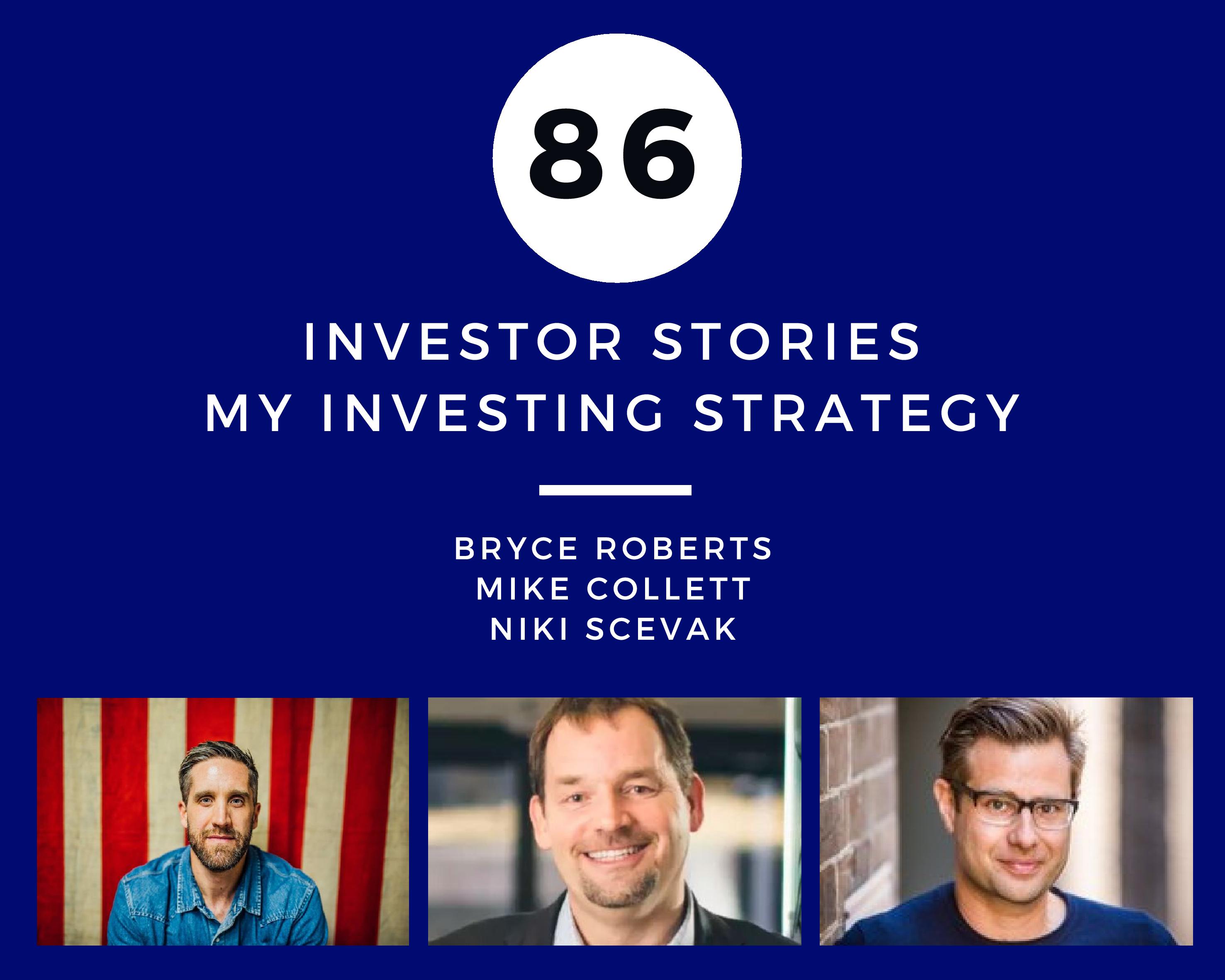
Investor Stories 86: My Investing Strategy (Roberts, Collett, Scevak)
On this special segment of The Full Ratchet, the following Investors are featured: -Bryce Roberts -Mike Collett -Niki Scevak Each investor describes their investment thesis and how they evaluate startups for investment. To listen more, please visit http://fullratchet.net/podcast-episodes/ for all of our other episodes. Also, follow us on twitter @TheFullRatchet for updates and more information.
Investor Stories 85: Why I Passed (Pascucci, Einstein, Kurzweil, Verrill)
On this special segment of The Full Ratchet, the following investors are featured: Vic Pascucci Ben Einstein Ethan Kurzweil David Verrill Each investor highlights a situation where they decided not to invest, why they passed, and how it played out. To listen more, please visit http://fullratchet.net/podcast-episodes/ for all of our other episodes. Also, follow us on twitter @TheFullRatchet for updates and more information.
162. LP Value Creation, Why DPI is King, and Secondaries as a Means of Exit (Sarah Anderson)
Sarah Anderson of Cintrifuse joins Nick to discuss LP Value Creation, Why DPI is King, and Secondaries as a Means of Exit. In this episode, we cover: What is the investment focus/philosophy at Cintrifuse? Can you tell us a bit more about the Cintrifuse model? What impact has the Cintrifuse Syndicate Fund had? Can you explain how this benefits large corporates? What about startups-- what's in it for them? Are the corporate LPs hesitant to invest directly in funds-- Is that why they come to you? Does your diversified portfolio preclude certain vertically-focused corporates from investing in a fund of funds model? Does Cintrifuse work w/ other types of financial institutions, aside from insurance? If so, how have you seen them react to the explosion in crypto and disruptive fintech? Tell us about your role as matchmaker-- how do you get involved and facilitate between VCs, startups and corporations? What's the strategic value-add to a VC fund manager? What industry disruptions have you observed and what are the impacts on large corporate companies? Advice for entrepreneurs-- whether underserved spaces or where they should be focused that they're not? What message do you want to send to founders? In Rob Go's recent study on fund metrics, he said "In the early days of a fund, VCs tend to optimize for TVPI. But in the long run, DPI is king. You can't feed your family with TVPI, and you can't spend IRR." Is he right and what do you suggest to Fund I and Fund II managers that have attractive paper gains but no distributions to paid-in (ie. a DPI of zero)? Let's discuss reinvesting in startups, I want to talk about doubling down on firms and investing more in their new funds. When Chris Duovos was on we discussed the concerning stats related to persistence. And Antoinette Schoar, of MIT did a notable study on fund returns, which showed persistence of returns from private-equity funds has gone down in the last decade. She said: "If LPs are not vigilant, we'll start seeing persistence at the bottom. So many LPs want so much to get into PE that they are not sensitive enough to poor perf and keep reinvesting in partnerships that are not deserving" Sarah, what's your take on the study and her position here?" To listen more, please visit http://fullratchet.net/podcast-episodes/ for all of our other episodes. Also, follow us on twitter @TheFullRatchet for updates and more information.
Investor Stories 84: Post Mortems (Zuberi, Ramanujem, O'Reilly)
On this special segment of The Full Ratchet, the following investors are featured: Bilal Zuberi Madhavan Ramanujem Tim O'Reilly Each investor discusses a portfolio company that did not survive and why it failed. To listen more, please visit http://fullratchet.net/podcast-episodes/ for all of our other episodes. Also, follow us on twitter @TheFullRatchet for updates and more information.
161. Why SaaS is not a fit for VC and How AI Compounds Competitive Advantage (Ash Fontana)
Ash Fontana of Zetta Venture Partners joins Nick to discuss Why SaaS is not a fit for VC and How AI Compounds Competitive Advantage. In this episode, we cover: Categories of AI that Ash is most interested in The difference between real AI and AI-enabled companies Why SaaS will cease to be investable by VCs The current AI stage of adoption How he times the market The four phases of AI What phase of AI they invest in How AI is and will be affected by limited data How startups can compete for talent w/ GAFA (Google, Amazon, Facebook, Apple) The moats being created by their AI-first portcos How they think about metrics and milestones for AI-backed companies If AI should be feared and finally we wrap up w/ Ash's thoughts on Chris Dixon's position that we will see a movement from centralization back to decentralization in tech-- and the role that AI will play To listen more, please visit http://fullratchet.net/podcast-episodes/ for all of our other episodes. Also, follow us on twitter @TheFullRatchet for updates and more information.
Investor Stories 83: The Strange & Unusual (Eakman, Duovos, Shah)
On this special segment of The Full Ratchet, the following investors are featured: Lindel Eakman Chris Duovos Semil Shah Each investor describes the most unusual situation or pitch that they've encountered as an investor. To listen more, please visit http://fullratchet.net/podcast-episodes/ for all of our other episodes. Also, follow us on twitter @TheFullRatchet for updates and more information.
153. Cram Session, Episodes 105-111 (Nick Moran)
Welcome back to TFR for another Cram Session. In these special releases, we have aggregated the takeaways and tips from previous episodes. In this installment, we will be recapping the following episodes: 105. Underserved Startup Ecosystems, Part 1 (Stuart Larkins & Ezra Galston) 106. Underserved Startup Ecosystems, Part 2 (Stuart Larkins & Ezra Galston) 107. Reinventing Venture Capital, Part 1 (Bryce Roberts) 108. Reinventing Venture Capital, Part 2 (Bryce Roberts) 110. Developer Platform Investing, Part 1 (Ethan Kurzweil) 111. Developer Platform Investing, Part 2 (Ethan Kurzweil) To listen more, please visit http://fullratchet.net/podcast-episodes/ for all of our other episodes. Also, follow us on twitter @TheFullRatchet for updates and more information.
Investor Stories 82: Lessons Learned (Mohnot, Turner, Narasin)
On this special segment of The Full Ratchet, the following Investors are featured: Sheel Mohnot Guy Turner Ben Narasin Each investor illustrates a critical lesson learned about startup investing and how it's changed their approach. To listen more, please visit http://fullratchet.net/podcast-episodes/ for all of our other episodes. Also, follow us on twitter @TheFullRatchet for updates and more information.
160. Better Diversity, Better Outcomes (Elizabeth Galbut)
Elizabeth Galbut of SoGal Ventures joins Nick to discuss Better Diversity, Better Outcomes. In this episode, we cover: Her involvement in creating the first VC investment group at Johns Hopkins What the focus is at SoGal and why that creates their edge How she and her partner divide responsibilities How the establishment has reacted to her and her firm We talk about her experience as a design professor and how that impacts her approach she gives an example of a design-centric investment she discusses her thinking when evaluating an early stage business we review their dealflow and sourcing strategy and we wrap up w/ Elizabeth's advice for a younger version of herself if she had the opportunity to give it To listen more, please visit http://fullratchet.net/podcast-episodes/ for all of our other episodes. Also, follow us on twitter @TheFullRatchet for updates and more information.
Investor Stories 81: What's Next (Pascucci, Wallace, Kaden)
On this special segment of The Full Ratchet, the following Investors are featured: Vic Pascucci Brendan Wallace Rebecca Kaden Each investor discusses sectors, drivers and/or trends that may have significant impact in the future and are potentially positioned for outsized-returns. To listen more, please visit http://fullratchet.net/podcast-episodes/ for all of our other episodes. Also, follow us on twitter @TheFullRatchet for updates and more information.
159. The Pioneer of Post-Seed (Paul Martino)
Paul Martino of Bullpen Capital joins Nick to discuss the emergence of the Post-Seed round. In this episode, we cover: Why Paul passed on joining Mike Maples at Floodgate in order to start Bullpen The product/market fit algorithm he developed for Mike If the stages of funding are moving out or if there are just more of them How Bullpen is differentiated The metrics they require to engage with startups How his quant background has helped make this subjective discipline more objective The hardest aspect of developing new, young VCs We discuss lack of innovation in the asset class Why herd mentality is pervasive Other contrarian principles he and Bullpen embrace If it's harder to get A or B round funding for the non-traditional founders or industries that he invests in How Private Equity is impacting exits the differences in sourcing at post-seed and we wrap up w/ Paul's thoughts on how branding and investment focus helps drive opportunity for Bullpen To listen more, please visit http://fullratchet.net/podcast-episodes/ for all of our other episodes. Also, follow us on twitter @TheFullRatchet for updates and more information.
Investor Stories 80: My Investing Strategy (Boyce, Nof, Gurrieri)
On this special segment of The Full Ratchet, the following Investors are featured: Peter Boyce Jordan Nof Sergio Gurrieri Each investor describes their investment thesis and how they evaluate startups for investment. To listen more, please visit http://fullratchet.net/podcast-episodes/ for all of our other episodes. Also, follow us on twitter @TheFullRatchet for updates and more information.
158. The Deep Tech Debate: Why Invest in a Capital Intensive, Long Time-to-Exit Category? (James Hardiman)
James Hardiman of Data Collective joins Nick to discuss The Deep Tech Debate: Why Invest in a Capital Intensive, Long Time-to-Exit Category?. In this episode, we cover: James' definition of deep tech The segments within the category How this area differs from others Types of founders and founder profiles that he looks for Why he's willing to invest in a capital intensive, long-time horizon category Why deep tech will drive the biggest outcomes How founders are able to de-risk deep tech opportunities where many others don't The waves that are coming in deep tech and finally how some consumer, social companies became deep tech companies by accident. To listen more, please visit http://fullratchet.net/podcast-episodes/ for all of our other episodes. Also, follow us on twitter @TheFullRatchet for updates and more information.
Investor Stories 79: Why I Invested (Farmer, Olsen, Cowan)
On this special segment of The Full Ratchet, the following Investors are featured: Chris Farmer Chris Olsen David Cowan Each investor describes a situation where they did decide to invest, what the key factors were that led to "Yes" and how that investment has worked out. To listen more, please visit http://fullratchet.net/podcast-episodes/ for all of our other episodes. Also, follow us on twitter @TheFullRatchet for updates and more information.
157. USV's Newest GP on Leveraged Growth, the Consumer Echo Chamber & Customer Obsession (Rebecca Kaden)
Rebecca Kaden of Union Square Ventures joins Nick to discuss USV's Newest GP on Leveraged Growth, Consumer Brand Building & Customer Obsession. In this episode, we cover: I've heard you talk about Allbirds, Zullily, and others before, can you highlight a few notable investments from your time at Maveron? Previous career as a journalist? Did you write about tech? How'd you end up joining Maveron? Why the move to USV? Fred Wilson said: "Each partner who has joined USV has done two things very well. First, they have figured how to operate inside of our shared investment thesis. And second, they have figured out how to stretch it." You've said: "Next up: exploring the intersection between our core USV thesis around network effects, whether centralized or decentralized and the entrepreneurs building the standout consumer businesses that integrate into our hearts and minds." Talk about the types of Network effects that you look for and can create large, strong businesses on the consumer-side. Investment Process/Structure at Maveron vs. USV? You often talk a lot about one of my favorite items... customer obsession. It's well documented on this podcast that I will not invest in founders that aren't customer obsessed. I'd love to hear your thoughts here and how you test for this characteristic with early-stage founders. What are your thoughts on the role of brand and importance of brand in consumer companies? What are the key elements to building strong brand and can you give us specific examples that you've observed in portfolio companies? Thoughts on vertically-integrated brands-- strengths and weaknesses, is that critical for a brand w/ a physical good for you to make an investment? What's your role as investor, are you passive or active; are you coaching and teaching or more of a listener and support? What's your style? What do you like least about your job? In what ways do woman VCs support and help each other out in this male-dominated industry. Case Study-- very incomplete information, two companies, early stage, very similar sector and product category, both have exceptional founding teams... one has modest growth rates but exceptional NPS scores, the other has exceptional growth rate but modest NPS. All other things being equal, which one are you more likely to invest in? To listen more, please visit http://fullratchet.net/podcast-episodes/ for all of our other episodes. Also, follow us on twitter @TheFullRatchet for updates and more information.
156. Chaos Capital, the new Micro VC Movement and LPs Chasing Hype (Chris Douvos)
Chris Douvos, the Super LP, joins Nick to discuss Chaos Capital, the new Micro VC Movement and LPs Chasing Hype. In this episode, we cover: How his mindset as an LP has evolved Startups out of Standford vs Berkley and if the valley is over-fished how the micro VC movement has changed Chris' selection criteria and what he looks for in managers Why he most often says no The impact on LPs of companies staying private longer Yhe impact of new LPs coming into venture on asset class How the LP community interacts... adversarial, collaborative, competitive or othewise The areas where Chris can grow most as an LP and we wrap up w/ his thoughts on co-investment alongside GPs as well as follow-ons in later rounds To listen more, please visit http://fullratchet.net/podcast-episodes/ for all of our other episodes. Also, follow us on twitter @TheFullRatchet for updates and more information.
Investor Stories 78: Why I Passed (Coelius, Benaich, Calacanis)
On this special segment of The Full Ratchet, the following Investors are featured: -Zach Coelius -Nathan Benaich -Jason Calacanis Each investor highlights a situation where they decided not to invest, why they passed, and how it played out. To listen more, please visit http://fullratchet.net/podcast-episodes/ for all of our other episodes. Also, follow us on twitter @TheFullRatchet for updates and more information.
155. Predicting Technology Shifts Before they Happen (Tim O'Reilly)
The Trend Spotter joins us today on the program. Tim O'Reilly is one of the top minds in tech, who has predicted and/or driven many of the movements that now seem so obvious to us. In today's episode we discuss: Tim's path to becoming an investor How he linked up w/ Bryce Roberts and launched O'Reilly Alphatech The shift in their model w/ Indie VC We talk about Tim's focus on profitability and his counter to those that cite some of the biggest and best tech companies that are not profitable We discuss Tim's new book WTF: What the future and why it's up to us Tim outlines the way he thinks about business model maps He explains his thought process of identifying technology shifts before they happen We discuss fear and it's role in shaping consumer mindset Tim references the historical lessons most overlooked by today's society and we wrap up w/ a conversation on ICOs and cryptocurrencies and get Tim's opinion on their role in the future of tech To listen more, please visit http://fullratchet.net/podcast-episodes/ for all of our other episodes. Also, follow us on twitter @TheFullRatchet for updates and more information.
Investor Stories 77: The Strange & Unusual (Larkins & Galston, Einstein, Zuberi)
On this special segment of The Full Ratchet, the following Investors are featured: Stuart Larkins & Ezra Galston Ben Einstein Bilal Zuberi Each investor describes the most unusual situation or pitch that they've encountered as an investor. To listen more, please visit http://fullratchet.net/podcast-episodes/ for all of our other episodes. Also, follow us on twitter @TheFullRatchet for updates and more information.
154. NEA's Investment Process & The Key Ingredients for Startup Success (Ben Narasin)
Ben Narasin of NEA joins Nick to discuss how NEA makes decisions, why he joined the firm and the key traits he looks for in founders. In this episode, we cover: -Why he made the move to NEA -His Investment focus -the role of Venture Partner at NEA -the investment process the firm... and if decisions are made by committee -Ben's Evaluation Process -the key factor that every successful founder possesses -The common red flags that pop up and cause him to say no to strong startups -Why he believes his job is to say no -How he assess opportunities with 100 reasons to say yes and one reason to say no -Ben's evolving approach toward weighing risk factors in startups -how the tech and investing industry has changed over the past decade -how AUM is driving a bifurcation in venture -finally we get Ben's response to the recent Techcrunch article highlighting the crash in early-stage VC funding To listen more, please visit http://fullratchet.net/podcast-episodes/ for all of our other episodes. Also, follow us on twitter @TheFullRatchet for updates and more information.
Investor Stories 76: What's Next (Turner, Triest & DeMarrais, Mougayar, Ramanujam)
On this special segment of The Full Ratchet, the following Investors are featured: -Guy Turner -Jonathon Triest & Brett DeMarrais -William Mougayar -Madhavan Ramanujam Each investor discusses sectors, drivers and/or trends that may have significant impact in the future and are potentially positioned for outsized-returns. To listen more, please visit http://fullratchet.net/podcast-episodes/ for all of our other episodes. Also, follow us on twitter @TheFullRatchet for updates and more information.
153. How Experimentation Empowers Vision & How Corporates Create an Innovation Culture (Eric Ries)
Eric Ries, author of the Lean Startup and The Startup Way, joins Nick to discuss his new book and his response to the naysayers. In this episode, we cover: Eric's backstory and path to working in tech Steve Blank was on the program and mentioned Peter Thiel's famous comments where he decried the MVP and lean startup approach. Steve thought he was entirely wrong. But I'd love to hear your response to Peter. Peter said in his book, "forget minimum viable products. Ever since Apple started in 1976, Jobs saw that you could change the world through careful planning, not by listening to focus group feedback or copying other's successes." For those that read the lean startup some time ago or maybe those that are newer to tech, can you provide a refresher of the key concepts? Why'd you write The Startup Way? Who is the audience for The Startup Way? Is this for transforming existing, large organizations or for companies establishing their culture and their process? In part one of the book, you talk about the modern company... What, in your estimation, is the biggest problem with the today's corporation? You've said that "the way to stay on top can be traced to two things: treating employees like customers, and treating business units like startups." This runs counter to the common capitalist mentality where there is a focus on margins, incremental product development and creating value for shareholders, not necessarily employees. Are you suggesting significant cultural and strategic change and, if so, how is that possible to achieve? Can large organizations really apply the concepts from the lean startup in the way that a startup can? Do you have a tech and non-tech example of organizations that have successfully applied this methodology? Tell us about the 'Big Picture' elements and your unified theory of entrepreneurship. Mark Suster was on the program and stated that it's nearly impossible to innovate behind the moat... meaning that large corporations should invest in venture and startups on the outside b/c it's too hard for them to disrupt from the inside. How would you respond to Mark's comments? What would you say to those that claim that the entrepreneurial-minded folks often leave large corporations and those that stay are not inclined to embrace these principles? To listen more, please visit http://fullratchet.net/podcast-episodes/ for all of our other episodes. Also, follow us on twitter @TheFullRatchet for updates and more information.