
The Full Ratchet (TFR): Venture Capital and Startup Investing Demystified
1,027 episodes — Page 11 of 21
307. Public Sector Tech, the Merits of Hyper Concentration, and Why Google is More Frightening than the NSA (Yanev Suissa)
Yanev Suissa of SineWave Ventures joins Nick to discuss Public Sector Tech, the Merits of Hyper Concentration, and Why Google is More Frightening than the NSA. In this episode we cover: You've talked about investing "where the Valley, the Fortune 500, and the public sector intersect". How is this different from the typical Valley-based investor? Are there any advantages to working with public sector buyers? Is there legislative risk you take on by selling to an administration? Where do you see the biggest opportunities are coming out of the infrastructure bill? Rapid fire round of questions. Missed a recent episode? Go to The Full Ratchet blog and catch up! Also, follow us on LinkedIn and Twitter.
Investor Stories 217: Why I Passed (Goldberg, Quinn, Maughan, Ebinger)
Each investor highlights a situation where they decided not to invest, why they passed, and how it played out. Did you miss our guests full length episodes? David Goldberg Episode 272 Nicole Quinn Episode 279 Spencer Maughan Episode 284 Jonathan Ebinger Episode 302 For other great episodes, go to The Full Ratchet blog and catch up! Also, follow us on LinkedIn (https://www.linkedin.com/company/27155166/) and Twitter (https://twitter.com/TFR_Pod).

306. Selection at Day 0, Investing in Immigrants, and Navigating Founder-Problem Fit (Manan Mehta)
Manan Mehta of Unshackled Ventures joins Nick to discuss Selection at Day 0, Investing in Immigrants, and Navigating Founder-Problem Fit. In this episode we cover: What is investing at Day 0? What unique challenges do you face in backing immigrant founders? How do you approach sourcing and how you do it differently than other firms? What is Founder-Problem Fit? Missed a recent episode? Go to The Full Ratchet blog and catch up! Also, follow us on LinkedIn and Twitter.
Investor Stories 216: Post Mortems (Guleri, Nauiokas, Chitnis, Perelmuter)
On this special segment of The Full Ratchet, the following Investors are featured: Tim Guleri Amy Nauiokas Sach Chitnis Guy Perelmuter Each investor discusses a portfolio company that did not survive and why it was that they failed. Did you miss our guests full length episodes? For other great episodes, go to The Full Ratchet blog and catch up! Also, follow us on LinkedIn (https://www.linkedin.com/company/27155166/) and Twitter (https://twitter.com/TFR_Pod).
305. Identifying Stand-outs at Pre-Seed, Coaching High-Growth Leaders, and Leveling the Playing Field for Underrepresented Founders (Tony Wilkins)
Tony Wilkins of Standing Oaks Venture Partners joins Nick to discuss Identifying Stand-outs at Pre-Seed, Coaching High-Growth Leaders, and Leveling the Playing Field for Underrepresented Founders. In this episode we cover: Are leaders born or made? How do you select for potentially great leaders at the very beginning of their business journey? How do you think about building a strong and healthy culture within a firm? What's the most important thing for an angel investor to know when they start investing? What will it take to level the playing field for founders?
Investor Stories 215: What's Next (Wiener, Larco, Pascucci)
Each investor discusses sectors, drivers and/or trends that may have significant impact in the future and are potentially positioned for outsized-returns. Did you miss our guests full length episodes? Ben Wiener Vanessa Larco Victor Pascucci Go to The Full Ratchet blog and catch up! Also, follow us on LinkedIn (https://www.linkedin.com/company/27155166/) and Twitter (https://twitter.com/TFR_Pod).

304. IT and Enterprise Tech Investing, The Realities and Myths of PLG, and The Past and Future of NYC Tech (Jonathan Lehr)
Jonathan Lehr of Work-Bench joins Nick to discuss IT and Enterprise Tech Investing, The Realities and Myths of PLG, and The Past and Future of NYC Tech. In this episode we cover: Walk us through your background and path to VC. Tell us a little more about the thesis at Work-Bench. On your website, you mention you invest in "seed and seed II" startups. What is a seed II? What sort of myths are there around PLG companies? How do you advise startups to price their products? Mark Suster recently Tweeted… "If you look at our industry, it's now awash with capital that requires every firm to get very focused on where its edge comes from. If you're not a bulge-bracket VC, choose your positioning wisely"(stage, sector, geography, founder access) … way too many firms are generic". What are your thoughts on the financing environment? You've been a part of the New York tech ecosystem for about a decade now. How has the tech scene evolved over the past 10 years or so? There was a dogma for a while that enterprise startups had to be built in Silicon Valley. Why do you think this is a mistaken belief? Missed a recent episode? Go to The Full Ratchet blog and catch up! Also, follow us on LinkedIn and Twitter.
Investor Stories 214: Why I Passed (Basu Trivedi, Chuang, Woodard, Sun)
On this special segment of The Full Ratchet, the following Investors are featured: Nikhil Basu Trivedi Alfred Chuang Monique Woodard Ben Sun Each investor highlights a situation where they decided not to invest, why they passed, and how it played out. Did you miss our guests full length episodes? For other great episodes, go to The Full Ratchet blog and catch up! Also, follow us on LinkedIn (https://www.linkedin.com/company/27155166/) and Twitter (https://twitter.com/TFR_Pod).
303. Reflections From 10 Years at NextView, Dogma vs Discipline, the Importance of Effective Post Money, and Market Sizing Pitfalls (Rob Go)
Rob Go of NextView Ventures joins Nick to discuss Reflections From 10 Years at NextView, Dogma vs Discipline, the Importance of Effective Post Money, and Market Sizing Pitfalls. In this episode we cover: Is VC fundamentally changing under our feet? What are other biggest industry shifts that have changed the way you operate at Next View? Most LPs are focused on their fund managers' ownership percentage at entry. Explain what effective post-money at exit is and why that has become a north star from next view? Takeaway #3: There is a Goldilocks zone between too much dogma and lack of discipline. Can you give us an example or two of strategies that were difficult to let go of or move on from? Your favorite saying internally is "anything worth doing is worth doing fast". Yet this is a pretty long cycle business and it takes time for a portfolio to mature and drive returns. What were the key learnings with regards to returns and metrics? How do you know if you're winning if the metrics are a bit of a red herring? Are there any alternative metrics or signals you look for to quantitatively gauge performance? You cited the biggest observable misses for most VC's and it's related to market size -- what's been your observation here and where are investors missing? You suggest that founders and investors should make each other a bit uncomfortable. Why? Does this ever prevent you from winning deals? What's your opinion on competition after a decade of investing? How do you think about the competitive set of investors and how to maintain and edge in sourcing and winning the best deals? Do you have any advice for founders w/regards to fundraising? Missed a recent episode? Go to The Full Ratchet blog and catch up! Also, follow us on LinkedIn and Twitter.

Investor Stories 213: Post Mortems (Thakker, Libby, Paxhia, Sim)
On this special segment of The Full Ratchet, the following Investors are featured: Dharmesh Thakker Billy Libby Emily Paxhia Ed Sim Each investor discusses a portfolio company that did not survive and why it was that they failed. Did you miss our guests full length episodes? For other great episodes, go to The Full Ratchet blog and catch up! Also, follow us on LinkedIn (https://www.linkedin.com/company/27155166/) and Twitter (https://twitter.com/TFR_Pod).
302. Donating Half Your Carry, Why Open Banking is the Future, and Recruiting Outside the Bay Area (Jonathan Ebinger)
Jonathan Ebinger of Transform Capital joins Nick to discuss Donating Half Your Carry, Why Open Banking is the Future, and Recruiting Outside the Bay Area. In this episode we cover: Walk us through your background and path to VC Tell us about your experience at Blue Run and why you decided to launch Transform. What is the thesis at Transform? Portfolio construction / stage / check size How did you come up with the model to donate 50% of your carry? What causes are you allocating carry to? What was the biggest challenge in the transition from early stage to late stage venture investing? So you led the Series A in Jackpocket at BlueRun and the later stage Transform. How do you avoid conflicts of interest across both firms? I know you are an active fintech investor -- w/ regards to crypto... what areas are most compelling right now from an investment standpoint? We're in a hot market at the moment -- seeing lots of fund creation, lots of startup formation, and valuations are inflating to 2-3x what they were a few years ago. Is the market overheated and are too many startups getting funded? Is the bay area being threatened in its supremacy? The Economist last week talked about the slowing pace of innovation and rise of mega-companies. What's your take on their position that innovation has slowed -- and what does that mean for venture? Missed a recent episode? Go to The Full Ratchet blog and catch up! Also, follow us on LinkedIn and Twitter. The host of The Full Ratchet is Nick Moran, General Partner of New Stack Ventures, a venture capital firm committed to investing in outsiders. To learn more about New Stack Ventures by visiting our Website and LinkedIn and be sure to follow us on Twitter. Are you a founder looking for your next investor? Visit our free tool VC Rank and tell us about your business. We'll send a list of possible investors right to your email's Inbox!

Investor Stories 212: Lessons Learned (Smerklo, Nauiokas, Shirota, Larco)
On this special segment of The Full Ratchet, the following Investors are featured: Mike Smerklo Amy Nauiokas Tsune Shirota Vanessa Larco Each investor illustrates a critical lesson learned about startup investing and how it's changed their approach. Did you miss our guests full length episodes? For other great episodes, go to The Full Ratchet blog and catch up! Also, follow us on LinkedIn (https://www.linkedin.com/company/27155166/) and Twitter (https://twitter.com/TFR_Pod). The host of The Full Ratchet is Nick Moran (https://www.linkedin.com/in/nick-moran-a738503/), General Partner of New Stack Ventures, a venture capital firm committed to investing in the exceptions. To learn more about New Stack Ventures by visiting our Website (https://www.newstack.vc/) and LinkedIn (https://www.linkedin.com/company/11396054/) and be sure to follow us on Twitter (https://twitter.com/NewStackVC). Are you a founder looking for your next investor? Visit our free tool VC-Rank (http://vc-rank.com/) and tell us about your business. We'll send a list of possible investors right to your email's Inbox!

301. Raising from Family Offices, How to Differentiate as an Emerging Fund, and Common Mistakes Made by Established Firms (Eric Sippel)
Eric Sippel of Sippel Farb Family Office joins Nick to discuss Raising from Family Offices, How to Differentiate as an Emerging Fund, and Common Mistakes Made by Established Firms. In this episode we cover: Walk us through your background and path to running Sippel Farb. Before we jump in can you give us some thoughts on Family Offices investing in Venture and how that has changed over the 25 years that you've been doing this? What are the major investment focus areas for the family office? With regards to manager selection... What gets you excited when you review the profile of an emerging fund? Tell us about the 3 S's that you look for. Rounds are moving faster then ever and prices seem to be escalating to 2-3x of what they were just 3 years ago. Many GPs cite their speed of decision-making as a strength -- What is your opinion of quick investment decisions and short DD timelines? At New Stack, we focus on ownership. However, some managers prefer a less concentrated approach with more shots on goal. What are your key learnings regarding portfolio construction over the past few decades and what do you look for in emerging funds? Many LPs look for differentiated strategies for sourcing and winning deals... and put heavy weight on those factors. Where do you stand? When a GP is pitching any family office, not just yours, what should they be mindful of that may be different than when they're pitching an institution? Family Offices are often a bit opaque... it's hard to find them and know what their investment interests are. Do you have advice or suggestions of ways that fund managers can find and connect with families that may be a fit? Have you seen any strategies from GPs that have connected with you in creative and friendly ways? What mistakes do you see "emerged/established" managers making the most? What about emerging managers? There's a great piece on Substack by Nikhil Trivedi that discusses the rise of the Solo GP. What are your thoughts on the rise of angels to super angels to sole capitalists? Do you perceive this as a threat to traditional VC firms? Last year, Different Funds published a report on the rise of capital going to vehicles outside of flagship/committed funds--i.e. SPV's, Syndicates, Rolling Funds, and Opportunity funds. How does an LP navigate all these vehicles? You've worked with a lot of GP's. What sort of bad behavior have you observed that you attempt to screen for now? Are there signals post-investment, after a certain period of time, that indicate to you that a GP or fund is working well. What's your opinion on using follow-on capital to bridge a company to Series A? What advice, that we didn't cover, would you have for GPs out there that are raising a Fund I or Fund II?
Investor Stories 211: What's Next (Garg, Quinn, Hung, Requarth)
Each investor discusses sectors, drivers and/or trends that may have significant impact in the future and are potentially positioned for outsized-returns. Did you miss our guests full length episodes? For other great episodes, go to The Full Ratchet blog and catch up! Also, follow us on LinkedIn (https://www.linkedin.com/company/27155166/) and Twitter (https://twitter.com/TFR_Pod). The host of The Full Ratchet is Nick Moran (https://www.linkedin.com/in/nick-moran-a738503/), General Partner of New Stack Ventures, a venture capital firm committed to investing in the exceptions. To learn more about New Stack Ventures by visiting our Website (https://www.newstack.vc/) and LinkedIn (https://www.linkedin.com/company/11396054/) and be sure to follow us on Twitter (https://twitter.com/NewStackVC). Are you a founder looking for your next investor? Visit our free tool VC-Rank (http://vc-rank.com/) and tell us about your business. We'll send a list of possible investors right to your email's InBox!
300. The Trillion $ Opportunity in Natural Gas, Building A Strategic LP-Base, and Creating a Strong LPAC (Victor Pascucci)
Victor Pascucci of Energy Capital Ventures joins Nick to discuss The Trillion $ Opportunity in Natural Gas, Building A Strategic LP-Base, and Creating a Strong LPAC. In this episode we cover: Give us an overview of the data and the opportunity within the natural gas sector for tech disruption. What percentage of our energy consumption is natural gas based? Why focus on natural gas? Why is now the right time for a natural gas focused venture fund? Let's talk for a moment about the digital transformation of the natural gas industry. Where can we expect to see the most change going forward? Exploration, development, or production? Any concerns about the volume and quality of dealflow in this specialized sector? What kind of founder do you look for to change this legacy industry? How may these founders differ from the Silicon Valley stereotype? 5 large publicly-traded LPs -- Talk a bit about how you plan to work with the LPs as you make investments, manage the portfolio? How do you avoid the tail wagging the dog? How do you handle a situation where the tech you are investing in is highly disruptive and margin eroding to LPs in the fund? Many talk about the importance of carbon neutrality, yet it's a very opaque and difficult thing to measure. One company's carbon footprint extends beyond just what happens within but all the partners, suppliers, distributors and, at times, customers that they interact with. How can we appropriately assess carbon impact in the pursuit of carbon neutrality? Tell us a bit about learnings and best practices in building an advisory board. I'd suspect that, much like a startup, there is a point where a well-constructed board can really amplify efforts, and a bloated or not well functioning board can kill momentum and progress. How have you structured a board for long term success? Missed a recent episode? Go to The Full Ratchet blog and catch up! Also, follow us on LinkedIn and Twitter. The host of The Full Ratchet is Nick Moran, General Partner of New Stack Ventures, a venture capital firm committed to investing in the exceptions. To learn more about New Stack Ventures by visiting our Website and LinkedIn and be sure to follow us on Twitter. Are you a founder looking for your next investor? Visit our free tool VC-Rank and tell us about your business. We'll send a list of possible investors right to your email's InBox!
Investor Stories 210: Why I Passed (Bannon, Hsu, Rockman, Chitnis)
On this special segment of The Full Ratchet, the following Investors are featured: Maren Bannon Sach Chitnis Jonathan Hsu Glenn Rockman Each investor highlights a situation where they decided not to invest, why they passed, and how it played out. Did you miss our guests full length episodes? Maren Bannon Episode 268 Sach Chitnis Episode 269 Jonathan Hsu Episode 243 Glenn Rockman Episode 282 For other great episodes, go to The Full Ratchet blog and catch up! Also, follow us on LinkedIn and Twitter. The host of The Full Ratchet is Nick Moran, General Partner of New Stack Ventures, a venture capital firm committed to investing in the exceptions. To learn more about New Stack Ventures by visiting our Website and LinkedIn and be sure to follow us on Twitter. Are you a founder looking for your next investor? Visit our free tool VC-Rank and tell us about your business. We'll send a list of possible investors right to your email's InBox!

299. The Decline of Entrepreneurship in America, Systemic Inequity in Supporting Small Businesses, and the "Capital vs. Labor" Debate (Seth Levine & Elizabeth MacBride)
Seth Levine & Elizabeth MacBride of The New Builders joins Nick to discuss The Decline of Entrepreneurship in America, Systemic Inequity in Supporting Small Businesses, and the "Capital vs. Labor" Debate. In this episode we cover: Why did you write the book? I'd actually like to start w/ Chapter 6, which is a history of entrepreneurship in the US… we can't really do it justice in the interview but can you give us an overview of the history and where we are at today? You cover that entrepreneurship has been declining in the US for the past 40 years and more significantly within the past 15. What are some of the big factors that have led to that decline? Why are entrepreneurship and new business creation so important for the future of our country and society? How does the Silicon Valley version of entrepreneurship differ from the reality of entrepreneurship? What does the real profile of entrepreneurship look like vs. what we see in the data on the tech / venture-funded part of entrepreneurship? What can Main Street entrepreneurs learn from the Silicon Valley model of entrepreneurship? You did a lot of research and pulled together data sets/stats for the book — what were some of the most surprising findings from the data? Can you define the 'capital vs. labor' debate for us and give us your stance on that debate? Is this book a call-to-action… are you trying to encourage more broad-based entrepreneurship? Seth, how do you reconcile your interests and recommendations from the book with your career which is geared toward funding a very small percentage of founders that are focused on building multi-billion dollar outcomes? You address some issues that are systemic to our country -- government policies, economic system, etc. -- How big of a role do you think politics have in shaping entrepreneurship for the future? What advice or final thoughts would you like to share w/ listeners? Missed a recent episode? Go to The Full Ratchet blog and catch up! Also, follow us on LinkedIn and Twitter. The host of The Full Ratchet is Nick Moran, General Partner of New Stack Ventures, a venture capital firm committed to investing in the exceptions. To learn more about New Stack Ventures by visiting our Website and LinkedIn and be sure to follow us on Twitter. Are you a founder looking for your next investor? Visit our free tool VC-Rank and tell us about your business. We'll send a list of possible investors right to your email's InBox!

Investor Stories 209: Post Mortems (Christian, Goldberg, Conwell, Sequeira)
On this special segment of The Full Ratchet, the following Investors are featured: Reid Christian David Goldberg McKeever "Mac" Conwell II Neil Sequeira Each investor discusses a portfolio company that did not survive and why it was that they failed. Did you miss our guests' full-length episodes? Reid Christian Episode 259 David Goldberg Episode 272 McKeever "Mac" Conwell II Episode 277 Neil Sequeira Episode 281 For other great episodes, go to The Full Ratchet blog and catch up! Also, follow us on LinkedIn and Twitter. The host of The Full Ratchet is Nick Moran, General Partner of New Stack Ventures, a venture capital firm committed to investing in the exceptions. To learn more about New Stack Ventures by visiting our Website and LinkedIn and be sure to follow us on Twitter. Are you a founder looking for your next investor? Visit our free tool VC-Rank and tell us about your business. We'll send a list of possible investors right to your email's InBox!

298. The $61B Cannabis Market, Overcoming Compliance and Regulation, and the Declining Social Stigma Around Cannabis (Emily Paxhia)
Emily Paxhia of Poseidon Asset Management joins Nick to discuss The $61B Cannabis Market, Overcoming Compliance and Regulation, and the Declining Social Stigma Around Cannabis. In this episode we cover: Can you give us an overview of the Cannabis Space -- size, growth, major sub-segments? Which segments are you most interested in? What areas do you not invest in and why? Raising a cannabis fund in 2013... I have to imagine you had to find a certain type of LP for that pitch to land. How hard was that? Regulation can be a break or a gas pedal --how have you or do you assess and underwrite the regulatory and legal risks in the space? To what extent are Cannabis businesses shut out of the existing financial system? Are there any other major differences in sourcing or diligence for a cannabis focused fund vs. your standard VC fund? How many cannabis focused funds are there and is follow-on financing risk significant when you're dealing with a smaller pool of capital providers? In 2018 we saw this massive boom and bust cycle for cannabis and hemp companies. How cyclical is the industry and, aside from consumer consumption behaviors, what macro drivers do you watch closely? There's recently been news that Molson-Coors has launched a CBD-infused drink and several major health and wellness retailers will offer CBD topicals. 5 years from now will all of the major household CPGs have CBD and Cannabis products available? Missed a recent episode? Go to The Full Ratchet blog and catch up! Also, follow us on LinkedIn and Twitter. The host of The Full Ratchet is Nick Moran, General Partner of New Stack Ventures, a venture capital firm committed to investing in the exceptions. To learn more about New Stack Ventures by visiting our Website and LinkedIn and be sure to follow us on Twitter. Are you a founder looking for your next investor? Visit our free tool VC-Rank and tell us about your business. We'll send a list of possible investors right to your email's InBox!

Investor Stories 208: Strange & Unusual (Grayson & Holt, Tamaseb, Hung, Larco)
On this special segment of The Full Ratchet, the following Investors are featured: Dayna Grayson & Rachel Holt Ali Tamaseb Jonathan Hung Vanessa Larco Each investor describes the most unusual situation or pitch that they've encountered as an investor. Did you miss our guest's full-length episodes? Dayna Grayson & Rachel Holt Episode 291 Ali Tamaseb Episode 289 Jonathan Hung Episode 292 Vanessa Larco Episode 295 For other great episodes, go to The Full Ratchet blog and catch up! Also, follow us on LinkedIn and Twitter. The host of The Full Ratchet is Nick Moran, General Partner of New Stack Ventures, a venture capital firm committed to investing in the exceptions. To learn more about New Stack Ventures by visiting our Website and LinkedIn and be sure to follow us on Twitter. Are you a founder looking for your next investor? Visit our free tool VC-Rank and tell us about your business. We'll send a list of possible investors right to your email's InBox!

297. How to Raise a VC Fund, The YC for Emerging Managers, and Family Office Trends (Winter Mead)
Winter Mead of Oper8r joins Nick to discuss How to Raise a VC Fund, The YC for Emerging Managers, and Family Office Trends. In this episode we cover: Tell us a little more about Oper8or. Why did you leave Sapphire to start this program? Give us an overview of Oper8or? Walk us through the selection process and what you're looking for. Bring us up to speed on progress-to-date, how you measure success, and what the plan is going forward? You published your first book last year -- "How to Raise a Venture Capital Fund". The target audience for the book is fairly obvious... was the motivation to write the book similar to why you started Oper8r? What are the most common mistakes new fund managers make? How do you think about types of LPs or profiles that fund managers should be targeting? What are the patterns, practices or even tactics of the most successful fundraisers that you've observed? You co-authored a research effort w/ First Republic on Family Office Investors -- what were the key takeaways? What are some of the common reasons that LPs pass that might not be so obvious? What's the biggest difference between winning fund strategies of the early 2010s vs winning fund strategies in the next decade? What factor do you find to be of critical importance that is most often underappreciated by LPs? Currently over 1500 active venture funds... Do you think the market can support this high of a volume of funds? Often, a startup investor may get early positive or negative signals on an investment within the first 18-24 months. As an LP, how long does it take to get a sense whether the decision to invest was good or you might want to have that one back? Why is emerging VC compelling as an sub-asset class of VC? Missed a recent episode? Go to The Full Ratchet blog and catch up! Also, follow us on LinkedIn and Twitter. The host of The Full Ratchet is Nick Moran, General Partner of New Stack Ventures, a venture capital firm committed to investing in the exceptions. To learn more about New Stack Ventures by visiting our Website and LinkedIn and be sure to follow us on Twitter. Are you a founder looking for your next investor? Visit our free tool VC-Rank and tell us about your business. We'll send a list of possible investors right to your email's InBox!

Investor Stories 207: Lessons Learned (Woodard, Maughan, Martino, Casnocha)
On this special segment of The Full Ratchet, the following Investors are featured: Monique Woodard Spencer Maughan Paul Martino Ben Casnocha Each investor illustrates a critical lesson learned about startup investing and how it's changed their approach. Did you miss our guest's full length episodes? Monique Woodard Episode 273 Spencer Maughan Episode 284 Paul Martino Episode 275 Ben Casnocha Episode 245 For other great episodes, go to The Full Ratchet blog and catch up! Also, follow us on LinkedIn and Twitter. The host of The Full Ratchet is Nick Moran, General Partner of New Stack Ventures, a venture capital firm committed to investing in the exceptions. To learn more about New Stack Ventures by visiting our Website and LinkedIn and be sure to follow us on Twitter. Are you a founder looking for your next investor? Visit our free tool VC-Rank and tell us about your business. We'll send a list of possible investors right to your email's InBox!

296. Investing in Jerusalem, Applying Helmer's 7 Powers to VC, and Writing a Business Murder Mystery (Ben Wiener)
Ben Wiener of Jumpspeed Ventures joins Nick to discuss Investing in Jerusalem, Applying Helmer's 7 Powers to VC, and Writing a Business Murder Mystery. In this episode we cover: How difficult was it raising a fund to invest only in Jerusalem-originated startups? What do you say to critics who claim that "focusing only one one geo is too limiting?" Are there specific sectors or types of tech that are uniquely positioned to thrive in Jerusalem? What are the similarities and differences in raising a fund vs. raising funds for a startup? You've spoken before about the mismatch between supply and demand for early stage capital in Jerusalem. Has it been tough finding reliable and persistent follow-on capital for A or B rounds? Since inception ~35% of your investments have been in female-led (female founder/CEO) startups, which is an order of magnitude greater than the 2-3% industry average. Talk about sourcing and what you do on the sourcing side to increase the number of diverse and women led startups you meet with? You recently wrote a Murder Mystery novel. It's a startup fiction based on Hamilton Helmer's 7 Powers. Why did you write a business strategy murder mystery? The book focuses on Addie Morita, a young crime researcher working on a serial killer case with clues buried in Hamilton's 7 Powers. What similarities can be drawn from 7 Powers and from solving a murder? Missed a recent episode? Go to The Full Ratchet blog and catch up! Also, follow us on LinkedIn and Twitter. The host of The Full Ratchet is Nick Moran, General Partner of New Stack Ventures, a venture capital firm committed to investing in the exceptions. To learn more about New Stack Ventures by visiting our Website and LinkedIn and be sure to follow us on Twitter. Are you a founder looking for your next investor? Visit our free tool VC-Rank and tell us about your business. We'll send a list of possible investors right to your email's InBox!

Investor Stories 206: What's Next (McIntyre, Luerssen, Findley, Shirota)
On this special segment of The Full Ratchet, the following Investors are featured: Stephen McIntyre Brian Luerssen Ty Findley Tsune Shirota Each investor discusses sectors, drivers and/or trends that may have significant impact in the future and are potentially positioned for outsized-returns. Did you miss our guests full length episodes? Stephen McIntyre Episode #244 Brian Luerssen Episode #290 Ty Findley Episode #250 Tsune Shirota Episode #288 For other great episodes, go to The Full Ratchet blog and catch up! Also, follow us on LinkedIn and Twitter. The host of The Full Ratchet is Nick Moran, General Partner of New Stack Ventures, a venture capital firm committed to investing in the exceptions. To learn more about New Stack Ventures by visiting our Website and LinkedIn and be sure to follow us on Twitter. Are you a founder looking for your next investor? Visit our free tool VC-Rank and tell us about your business. We'll send a list of possible investors right to your email's InBox!

295. Product Manager Turned Investor, Navigating Turbulence pre-IPO on Robinhood's Board, and Unique Sourcing Strategies (Vanessa Larco)
Vanessa Larco of NEA joins Nick to discuss Product Manager Turned Investor, Navigating Turbulence pre-IPO on Robinhood's Board, and Unique Sourcing Strategies. In this episode we cover: Walk us through your background and path to VC. Why did you leave product to join NEA? Give us a update on NEA - AUM, stage, thesis, etc. What is your focus area at the firm? Are you ever tempted to jump back to the startup side (or launch your own startup)? You have significant and formative experience leading product. How do you think that shapes your approach as an investor. Do you think product managers are born or made? I also have a background in product and that has contributed greatly to our culture here at New Stack... I'm curious what, if any, blind spots one might have if they are an investor with a very strong product background or orientation? What KPI's/north star metrics do you use to hold yourself accountable? I'd love to hear the details of your process for sourcing and leading an investment. Everyone getting into tech gets the cliche advice... you've got to network... or "you are your network"... and that leads to a lot of productive and unproductive behavior. What is your approach to building and strengthening relationships and what advice would you give to newer folks in the tech community? Up until the recent IPO you were on the board of Robinhood. You're a board member for four companies and a board observer for several more-- How has your perception of being a good board member differed from the reality of the role after having had some experience on very notable boards. Re. Robinhood What did you learn from Vlad and Baiju that surprised you? I have to ask, take us behind the scenes a bit -- what was happening at Robinhood during the Gamestop and AMC run-ups when trading was halted? Do you invest in emerging tech hubs outside of NY & SF? If so what are the areas of highest interest and how do you see the evolving in the coming years? There's a lot of VC content across many blogs and Twitter threads. How do you cut through the noise? What do you read to stay educated? Missed a recent episode? Go to The Full Ratchet blog and catch up! Also, follow us on LinkedIn and Twitter. The host of The Full Ratchet is Nick Moran, General Partner of New Stack Ventures, a venture capital firm committed to investing in the exceptions. To learn more about New Stack Ventures by visiting our Website and LinkedIn and be sure to follow us on Twitter. Are you a founder looking for your next investor? Visit our free tool VC-Rank and tell us about your business. We'll send a list of possible investors right to your email's InBox!
Investor Stories 205: Why I Passed (Warner, Torenberg, Garg, Grayson & Holt)
On this special segment of The Full Ratchet, the following Investors are featured: Check Warner Dayna Grayson & Rachel Holt Erik Torenberg Avichal Garg Each investor highlights a situation where they decided not to invest, why they passed, and how it played out. Did you miss our guests full length episodes? Check Warner Episode #242 Dayna Grayson & Rachel Holt Episode #291 Erik Torenberg Episode #252 Avichal Garg Episode #261 For other great episodes, go to The Full Ratchet blog and catch up! Also, follow us on LinkedIn and Twitter. The host of The Full Ratchet is Nick Moran, General Partner of New Stack Ventures, a venture capital firm committed to investing in the exceptions. To learn more about New Stack Ventures by visiting our Website and LinkedIn and be sure to follow us on Twitter. Are you a founder looking for your next investor? Visit our free tool VC-Rank and tell us about your business. We'll send a list of possible investors right to your email's InBox!

294. How to Value AI, Data Network Effects vs. Data Learning Effects, and Evolution of the VC Asset Class (Ash Fontana)
Ash Fontana of Zetta Venture Partners joins Nick to discuss How to Value AI, Data Network Effects vs. Data Learning Effects, and Evolution of the VC Asset Class. In this episode we cover: What was the inspiration for the new book? What's the difference between a Data Network Effect and a DLE (data learning effect)? How do you advise those that are building tech where AI will be a valuable piece in the distant future but doesn't really play a role until the growth stage or beyond? Tell us about the Lean AI Method, described in the book, and how companies can use it to start implementing AI. How do you feel about companies using "off-the-shelf" AI, like TensorFlow? Why is now the right time for AI to pervade throughout tech and industry? How do you value AI and determine what's real? How does one put a valuation multiple on fairly nascent category where the value can be exponential and the moat can be unbreachable but there's not a whole lot of precedent? What are the key data categories or types that are most valuable for startups to be capturing and analyzing from day one? How do you find the right types of people with the right capability and mindset to join a startup if they have no formal training or experience directly w/ AI? How do you see the asset class evolving? Do you think the rolling fund product can make the leap to institutional investors, or will it continue to serve smaller, retail investors? What's your opinion on insider rounds? Thoughts on Tiger Global? Does China surpass the U.S. in tech innovation (and AI) over the next decade? Why or Why Not? Missed a recent episode? Go to The Full Ratchet blog and catch up! Also, follow us on LinkedIn and Twitter. The host of The Full Ratchet is Nick Moran, General Partner of New Stack Ventures, a venture capital firm committed to investing in the exceptions. To learn more about New Stack Ventures by visiting our Website and LinkedIn and be sure to follow us on Twitter. Are you a founder looking for your next investor? Visit our free tool VC-Rank and tell us about your business. We'll send a list of possible investors right to your email's InBox!

Investor Stories 204: Post Mortems (Collins, Quinn, Martino, Chuang)
On this special segment of The Full Ratchet, the following Investors are featured: Eric Collins Nicole Quinn Paul Martino Alfred Chuang Each investor discusses a portfolio company that did not survive and why it was that they failed. Did you miss our guests' full-length episodes? Eric Collins Episode #253 Nicole Quinn Episode #279 Paul Martino Episode #275 Alfred Chuang Episode #274 For other great episodes, go to The Full Ratchet blog and catch up! Also, follow us on LinkedIn and Twitter. The host of The Full Ratchet is Nick Moran, General Partner of New Stack Ventures, a venture capital firm committed to investing in the exceptions. To learn more about New Stack Ventures by visiting our Website and LinkedIn and be sure to follow us on Twitter. Are you a founder looking for your next investor? Visit our free tool VC-Rank and tell us about your business. We'll send a list of possible investors right to your email's InBox!

293. Viva Latam Startups, Losing Talent to the U.S., and Building the Zillow of Brazil (Brian Requarth)
Brian Requarth of Latitud joins Nick to discuss Viva Latam Startups, Losing Talent to the U.S., and Building the Zillow of Brazil. In this episode we cover: What's the thesis at Latitud? Could you tell us a little about the company you started, Viva Real? What was your goal in writing the book... Viva the Entrepreneur? You get quite vulnerable w/ regard to your experience building Viva Real. What was the hardest part of your founder journey? You have a large focus on helping entrepreneurs navigate building and scaling venture backable businesses in LatAm. Both Latitud and the book are in service of that mission. What are some of the unique headwinds that LatAm startups face? You recently had Henrique Dubugras, co founder of Brex, on the podcast. Notably, he is a founder that left south america, after some modest starutp success, to launch his large and fast growing company here in the states. How do you keep from losing the most ambitious and creative tech talent to the U.S.? Rappi coming up in Colombia while you were there? What are the leading countries within Latam? El Salvador very recently announced that Bitcoin will be an official currency, marking it the first country to make the coin legal currency. Is this the first country of many to set their reserve currency to Bitcoin? You recently tweeted about a common problem you see with early-stage startups in LatAm -- messed up cap tables with aggressive angels taking 40%+ of the company at formation. This, of course, is a major deterrent for future VC investors. Is this a fixable problem and, if so, how do you help w/ cap table issues? Advice for founders launching a startup focused on Latam market? Me too tech strategies in Latam that have worked in the US? Missed a recent episode? Go to The Full Ratchet blog and catch up! Also, follow us on LinkedIn and Twitter. The host of The Full Ratchet is Nick Moran, General Partner of New Stack Ventures, a venture capital firm committed to investing in the exceptions. To learn more about New Stack Ventures by visiting our Website and LinkedIn and be sure to follow us on Twitter. Are you a founder looking for your next investor? Visit our free tool VC-Rank and tell us about your business. We'll send a list of possible investors right to your email's InBox!

Investor Stories 203: Strange & Unusual (Goldberg, Sun, Shirota, Nauiokas)
On this special segment of The Full Ratchet, the following Investors are featured: David Goldberg Ben Sun Tsune Shirota Amy Nauiokas Each investor describes the most unusual situation or pitch that they've encountered as an investor. Did you miss our guest's full-length episodes? David Goldberg Episode #272 Ben Sun Episode #287 Tsune Shirota Episode #288 Amy Nauiokas Episode #286 For other great episodes, go to The Full Ratchet blog and catch up! Also, follow us on LinkedIn and Twitter. The host of The Full Ratchet is Nick Moran, General Partner of New Stack Ventures, a venture capital firm committed to investing in the exceptions. To learn more about New Stack Ventures by visiting our Website and LinkedIn and be sure to follow us on Twitter. Are you a founder looking for your next investor? Visit our free tool VC-Rank and tell us about your business. We'll send a list of possible investors right to your email's InBox!

292. Why Sales Cycle Determines Success, the Challenges of International Deal Diligence, and Fractional Hiring in a Post COVID World (Jonathan Hung)
Jonathan Hung of Unicorn Venture Partners joins Nick to discuss Why Sales Cycle Determines Success, the Challenges of International Deal Diligence, and Fractional Hiring in a Post COVID World. In this episode we cover: Jonathan's background and path to VC The launch of Unicorn Venture Partners The thesis at Unicorn Venture Partners Deal volume Unicorn Venture Partners is doing each year Jonathan's role as Senior Venture Partner and head of due diligence at Expert Dojo Thesis and workings of Expert Dojo What due diligence entails when targeting companies all across the world and at super early stages How to deal with teams that have different cultural backgrounds when trying to get the psychology of the team and figure out if it's a team that has the ambition and the capability to win and win big Jonathan's role as an LP in over 22 VC funds and the common success factors across those funds? Things that funds do that lend themselves well to success and or failure How Jonathan's decision process is different on the fund side versus the startup side Generally underappreciated metrics that are critical to assess before making an angel or pre-seed investment How to help founders recruit talent and any tips or advice for startups out there to help their portfolio increase their talent without just hiring recruiters Best approach to networking When is it best not to take VC money and just build a great business model? Buyer or seller on NFTs? Jonathan's quick take on SPACs versus Direct Listings versus Traditional IPO. If Jonathan thinks valuations are at an all-time high? Out of the top 10 most valuable companies, five years from now, Jonathan's three that are currently in the top 10 and won't be in the top 10. What do you know, you need to get better at? What's the best way for listeners to connect with Jonathan and follow along with his investment efforts. Missed a recent episode? Go to The Full Ratchet blog and catch up! Also, follow us on LinkedIn and Twitter. The host of The Full Ratchet is Nick Moran, General Partner of New Stack Ventures, a venture capital firm committed to investing in the exceptions. To learn more about New Stack Ventures by visiting our Website and LinkedIn and be sure to follow us on Twitter. Are you a founder looking for your next investor? Visit our free tool VC-Rank and tell us about your business. We'll send a list of possible investors right to your email's InBox!

Investor Stories 202: Lessons Learned (Wallace, Guleri, Thakker, Hirsch)
On this special segment of The Full Ratchet, the following Investors are featured: Brendan Wallace Tim Guleri Dharmesh Thakker Brian Hirsch Each investor illustrates a critical lesson learned about startup investing and how it's changed their approach. Did you miss our guest's full length episodes? Brendan Wallace Episode #276 Tim Guleri Episode #267 Dharmesh Thakker Episode #283 Brian Hirsch Episode #265 For other great episodes, go to The Full Ratchet blog and catch up! Also, follow us on LinkedIn and Twitter. The host of The Full Ratchet is Nick Moran, General Partner of New Stack Ventures, a venture capital firm committed to investing in the exceptions. To learn more about New Stack Ventures by visiting our Website and LinkedIn and be sure to follow us on Twitter. Are you a founder looking for your next investor? Visit our free tool VC-Rank and tell us about your business. We'll send a list of possible investors right to your email's InBox!
291. Competing with Amazon, Combatting 60% Talent Attrition, and Driving Transformation of Foundational Industries (Dayna Grayson & Rachel Holt)
Dayna Grayson & Rachel Holt of Construct Capital joins Nick to discuss Competing with Amazon, Combatting 60% Talent Attrition, and Driving Transformation of Foundational Industries. In this episode we cover: Can you each give us the two-minute background and path to VC? What is the thesis at Construct? How do you define series A? Is there a geographic scope in which you'll invest? Why have you chosen to focus on these sectors and categories? How have you seen the current environment issues affect sales cycles and velocity over the past year? How do you deal with inertia, slow sales cycles, and tech aversion amongst these buyer and user groups? Is there any concern that the skills gap will broaden over time? Will capital intensity, timing of financing rounds, timing to exit, size/scale of exits, valuation multiples, etc. look different for a legacy industry portfolio vs. a standard SV SaaS portfolio? Investment philosophy has shifted from being much more decision-maker focus and top-down startups versus more user bottom-up focus solutions. Is that something that's part of your lens or is it case by case, depending on the startup? There seems to be a lot more VCs/Investors focused in these spaces, so why the need for Construct in this market where so much capital is flowing? What was it like pitching this narrative in the thesis? You raised your inaugural fund during the pandemic — what did you learn from that experience? There are two different philosophies on firm building. One approach is more of an independent/individual sport, the other a team sport. Which do you employ? If one of you wants to do the deal and the other thinks it's not a good way to deploy capital, what happens in that circumstance? How do you think about scaling your efforts and getting more leverage out of your time? What's the post-investment relationship with the founders look like at Construct? What do you know, you need to get better at? What's the best way for listeners to connect with each of you and follow along with Construct? Missed a recent episode? Go to The Full Ratchet blog and catch up! Also, follow us on LinkedIn and Twitter. The host of The Full Ratchet is Nick Moran, General Partner of New Stack Ventures, a venture capital firm committed to investing in the exceptions. To learn more about New Stack Ventures by visiting our Website and LinkedIn and be sure to follow us on Twitter. Are you a founder looking for your next investor? Visit our free tool VC-Rank and tell us about your business. We'll send a list of possible investors right to your email's InBox!

Investor Stories 201: What's Next (Basu Trivedi, Bannister, Chitnis, Perelmuter)
On this special segment of The Full Ratchet, the following Investors are featured: Nikhil Basu Trivedi Janet Bannister Sach Chitnis Guy Perelmuter Each investor discusses sectors, drivers and/or trends that may have significant impact in the future and are potentially positioned for outsized-returns. Did you miss our guests full length episodes? Nikhil Basu Trivedi Episode #246 Janet Bannister Episode #255 Sach Chitnis Episode #269 Guy Perelmuter Episode #280 For other great episodes, go to The Full Ratchet blog and catch up! Also, follow us on LinkedIn and Twitter. The host of The Full Ratchet is Nick Moran, General Partner of New Stack Ventures, a venture capital firm committed to investing in the exceptions. To learn more about New Stack Ventures by visiting our Website and LinkedIn and be sure to follow us on Twitter. Are you a founder looking for your next investor? Visit our free tool VC-Rank and tell us about your business. We'll send a list of possible investors right to your email's InBox!
290. The Rise of Low-Code/No-Code, How Tech is Changing Developer Roles, and the Launch of Founder-Led Venture Funds (Brian Luerssen)
Brian Luerssen of Long Jump joins Nick to discuss The Rise of Low-Code/No-Code, How Tech is Changing Developer Roles, and the Launch of Founder-Led Venture Funds. In this episode we cover: Walk us through your background and path to Draftbit. Tell us about the customer market and who you're targeting with Draftbit. Are there good comps or parallels in the non-mobile space? Will the user of Draftbit still be a developer, or do you have cases where it's the application product manager or others? Is it just web apps and native apps covering the spectrum? There's this principled group of developers, that don't want to use App builders. They want to build the ground up themselves. How do you deal with that objection? Have you guys achieved product-market fit? Yes or no? What's the biggest challenge to getting product-market fit and hitting huge growth numbers? Where do you go now? How do you see the business evolve? What's the end-all large market opportunity for Draftbit? Does it stay a platform that you build on and it exports code or does it end up becoming kind of its own place you build within, like a WordPress, or maybe even a Webflow? Any thoughts or advice for founders out there that are early-stage builders taking on something ambitious? Tell us about the origin story of Long Jump and why was this fund founded? So $100k, across the board for all investments is or is there some discretion to move up or down? Is this kind of like an application accelerator program? What happens if you come upon an opportunity where they're raising an early round. It's coming together quickly. It's something that hits home with one of the GPs. Can you jump into that or does it have to go through your formalized process? I imagine a lot of the LPs are founders, former founders that have been through this. Is that a bad assumption? Do you have some back office or operations support or somebody that's kind of focused on connecting these dots? How have you thought about other established models and kind of taken best practices? Why not direct them to an accelerator program? How do you handle the criticism from investors that claim you should focus on the business Draftbit and not running a fund? What is the future look like for Long Jump? YC vs TechStars. Go. I'm curious as YC is scaling, I think it's like 700 companies a year now, the density and power of the network, is it the same as it once was? I don't know, does the signal decline or not? Have they architected a hub and spoke network or a mesh network? Can the spokes or the nodes get a lot of value out of each other as it expands, or is it overly reliant on the hub for value? I'd be curious to get your comparison advantages, disadvantages, to the Bay Area versus a second-tier ecosystem and how you've seen that change over time. What do you know, you need to get better at? What's the best way for the founders out there to get in touch with Long Jump? What are you looking for? What should they come with to get accepted? Missed a recent episode? Go to The Full Ratchet blog and catch up! Also, follow us on LinkedIn and Twitter. The host of The Full Ratchet is Nick Moran, General Partner of New Stack Ventures, a venture capital firm committed to investing in the exceptions. To learn more about New Stack Ventures by visiting our Website and LinkedIn and be sure to follow us on Twitter. Are you a founder looking for your next investor? Visit our free tool VC-Rank and tell us about your business. We'll send a list of possible investors right to your email's InBox!
Investor Stories 200: Why I Passed (Sim, Napier, "Mac" Conwell II, Smerklo)
On this special segment of The Full Ratchet, the following Investors are featured: Ed Sim Lanham Napier McKeever "Mac" Conwell II Mike Smerklo Each investor highlights a situation where they decided not to invest, why they passed, and how it played out. Did you miss our guests' full-length episodes? Ed Sim Episode #266 Lanham Napier Episode #248 McKeever "Mac" Conwell II Episode #277 Mike Smerklo Episode #278 For other great episodes, go to The Full Ratchet blog and catch up! Also, follow us on LinkedIn and Twitter. The host of The Full Ratchet is Nick Moran, General Partner of New Stack Ventures, a venture capital firm committed to investing in the exceptions. To learn more about New Stack Ventures by visiting our Website and LinkedIn and be sure to follow us on Twitter. Are you a founder looking for your next investor? Visit our free tool VC-Rank and tell us about your business. We'll send a list of possible investors right to your email's InBox!

289. Data on the Key Traits of Billion Dollar Startups with the Author of Super Founders: What Data Reveals About Billion-Dollar Startups (Ali Tamaseb)
Ali Tamaseb of DCVC joins Nick to discuss Data on the Key Traits of Billion-Dollar Startups with the Author of Super Founders: What Data Reveals About Billion-Dollar Startups. In this episode we cover: Founders' history of building Second-time founders and their larger chance of being unicorns Super Founders bouncing to different industries isn't detrimental to their success Having domain experience does not correlate to success How non/technical founders partner with the same How proxy metrics do not define a good founder Painkiller or Vitamin Pill? Which holds success? How geography may be a dying metric for success How Super Founders tend to secure investment even in the opening rounds Which type of competition defines the unicorn Timing remains the most difficult thing to crack Missed a recent episode? Go to The Full Ratchet blog and catch up! Also, follow us on LinkedIn and Twitter. The host of The Full Ratchet is Nick Moran, General Partner of New Stack Ventures, a venture capital firm committed to investing in the exceptions. To learn more about New Stack Ventures by visiting our Website and LinkedIn and be sure to follow us on Twitter. Are you a founder looking for your next investor? Visit our free tool VC-Rank and tell us about your business. We'll send a list of possible investors right to your email's InBox!
Investor Stories 199: Post Mortems (Abbasi, Findley, Toney, Woodard)
On this special segment of The Full Ratchet, the following Investors are featured: Farooq Abbasi Ty Findley Lo Toney Monique Woodard Each investor discusses a portfolio company that did not survive and why it was that they failed. Did you miss our guests' full-length episodes? Farooq Abbasi Episode #251 Ty Findley Episode #250 Lo Toney Episode #249 Monique Woodard Episode #273 For other great episodes, go to The Full Ratchet blog and catch up! Also, follow us on LinkedIn and Twitter. The host of The Full Ratchet is Nick Moran, General Partner of New Stack Ventures, a venture capital firm committed to investing in the exceptions. To learn more about New Stack Ventures by visiting our Website and LinkedIn and be sure to follow us on Twitter. Are you a founder looking for your next investor? Visit our free tool VC-Rank and tell us about your business. We'll send a list of possible investors right to your email's InBox!

288. Tech Competition between China, Japan, and Korea, Why IT is King in Japan, and When American Tech Should Expand to Asia (Tsune Shirota)
Tsune Shirota of World Innovation Lab joins Nick to discuss Tech Competition between China, Japan, and Korea, Why IT is King in Japan, and When American Tech Should Expand to Asia. Other topics include the transition from manual services to software, B2B buying behavior in the US vs Japan, determining the shape of your S-Curve, and best markets - determined by need and distribution. Missed a recent episode? Go to The Full Ratchet blog and catch up! Also, follow us on LinkedIn and Twitter. The host of The Full Ratchet is Nick Moran, General Partner of New Stack Ventures, a venture capital firm committed to investing in the exceptions. To learn more about New Stack Ventures by visiting our Website and LinkedIn and be sure to follow us on Twitter. Are you a founder looking for your next investor? Visit our free tool VC-Rank and tell us about your business. We'll send a list of possible investors right to your email's InBox!
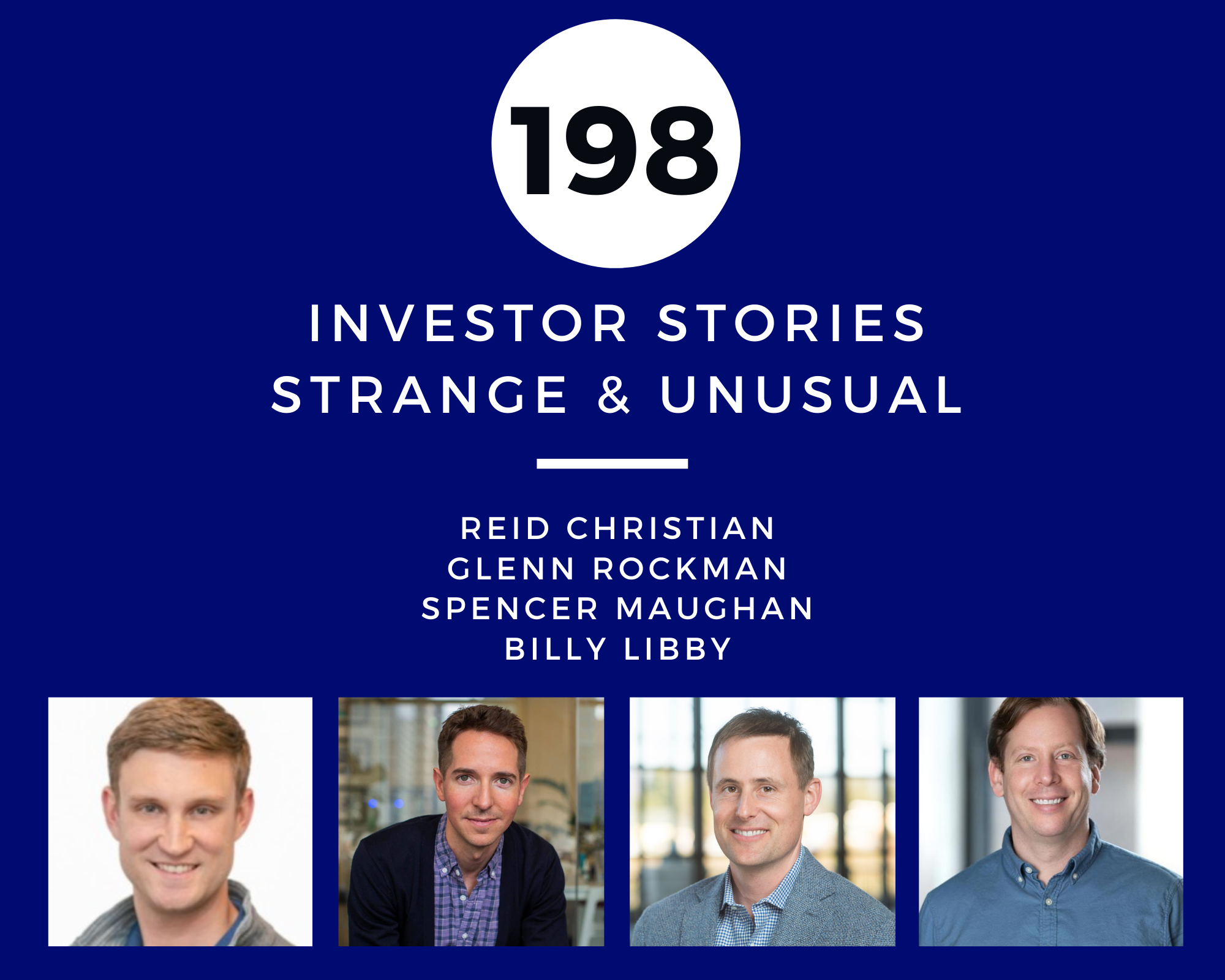
Investor Stories 198 Strange & Unusual (Christian, Rockman, Maughan, Libby)
On this special segment of The Full Ratchet, the following Investors are featured: Reid Christian Glenn Rockman Spencer Maughan Billy Libby Each investor describes the most unusual situation or pitch that they've encountered as an investor.

287. Distribution vs. Product, Founders vs. Markets, and Winning Deals in a Hyper-Competitive Seed Market (Ben Sun)
Ben Sun of Primary Venture Partners joins Nick to discuss Distribution vs. Product, Founders vs. Markets, and Winning Deals in a Hyper-Competitive Seed Market. In this episode, we cover: Can you tell us a bit about your founder journey? What are your thoughts on the major differences and challenges now versus when you started a Community Connect? Is there a bias at Primary toward consumer investments? What region focus does Primary have? Is Miami a viable tech center or is this hype? What is the thesis at Primary? What areas does the Primary team focus on (strategic, sweat equity, talent recruitment)? How collaborative is that formative ideas stage between Primary and the entrepreneurs? I imagine, some of them come and they're ready to raise, and if it's a great fit, you invest, but in other circumstances, ideas may not be fully fleshed out. How much of a role do you play? We've had many folks on the program that say, it's all about the market. The team is important, but there's sort of a base level of competence. Then many others say it's just all about the team and the best teams will find their way to the best markets. Where do you stand on that, and how does that square with kind of the way that you look at talent? Ben, you wrote this tweet, quote, there is no longer such a thing as proprietary deal flow in VC. It's now more about winning a deal versus picking a deal. You know, I'm curious, what has changed? Is it supply side of capital at seed? Is it other factors? What prompted the tweet? So put you on the spot, what is the win rate at Primary? And why do y'all win, going head to head against other firms? What do you know you need to get better at? What is the best way for listeners to connect with you and follow along with Primary?
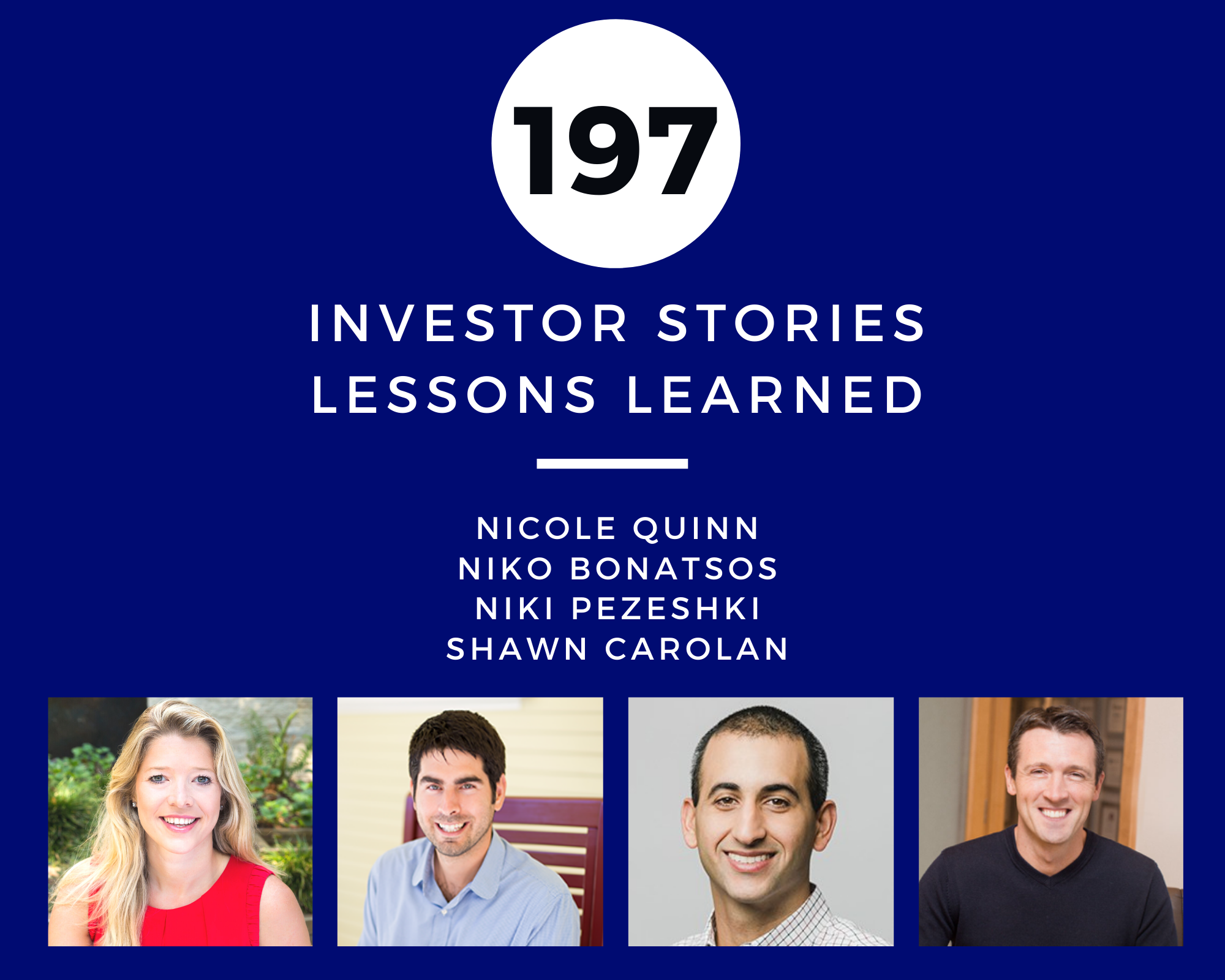
Investor Stories 197: Lessons Learned (Quinn, Bonatsos, Pezeshki, Carolan)
On this special segment of The Full Ratchet, the following Investors are featured: Nicole Quinn Niko Bonatsos Niki Pezeshki Shawn Carolan Each investor illustrates a critical lesson learned about startup investing and how it's changed their approach.

286. Embedded Finance, Community-based Fintech, the Demise of Legacy Institutions, and Driving Returns with a Diversity Investment Mandate (Amy Nauiokas)
Amy Nauiokas of Anthemis Group joins Nick to discuss Embedded Finance, Community-based Fintech, the Demise of Legacy Institutions, and Driving Returns with a Diversity Investment Mandate. In this episode, we cover: Tell us a bit about your background and your path to venture. Anthemis. What is it? Tell us a bit about the thesis and what you guys do? So where do you find yourself spending most of your time? Amy can you give us a quick primer on the difference between FinTech and tech fin? What is your quick take on regulation? Are there still major obstacles that need to be overcome? We've seen large tech in some ways abuse opportunity before in FinTech and in other areas, that I'd be curious to hear what your take is on sort of the established incumbent large legacy financial institutions. How do you see them adapt in order to capture value and attempt to maintain their position as well as direct access to customers? Let's talk more about embedded finance. How do you think that may affect wealth management, investing brokerage going forward? Let's talk a bit about banking as a service. Can you give us an overview of some of these banking as a service platforms and maybe an example of a non financial company? And, you know, maybe the initial offerings that they are incorporating to improve user experience for customers? Is Anthemis looking at virtual assets? What is Anthemis doing to promote diversity and underrepresentation in venture? I suspect there's also a belief that investing in underrepresented folks in women can outperform not doing so is that is that part of the thesis or not? There's been a lot of changes in dynamics going on in venture capital from Spats to huge players in the late rounds and non-VC and financial players entering. There's also the mega-rounds that are now entering early-stage investing. I'd love your quick take on any of those sorts of phenomena that are occurring in venture capital. What do you know, you need to get better at? What's the best way for listeners to connect with you and follow along with Anthemis?
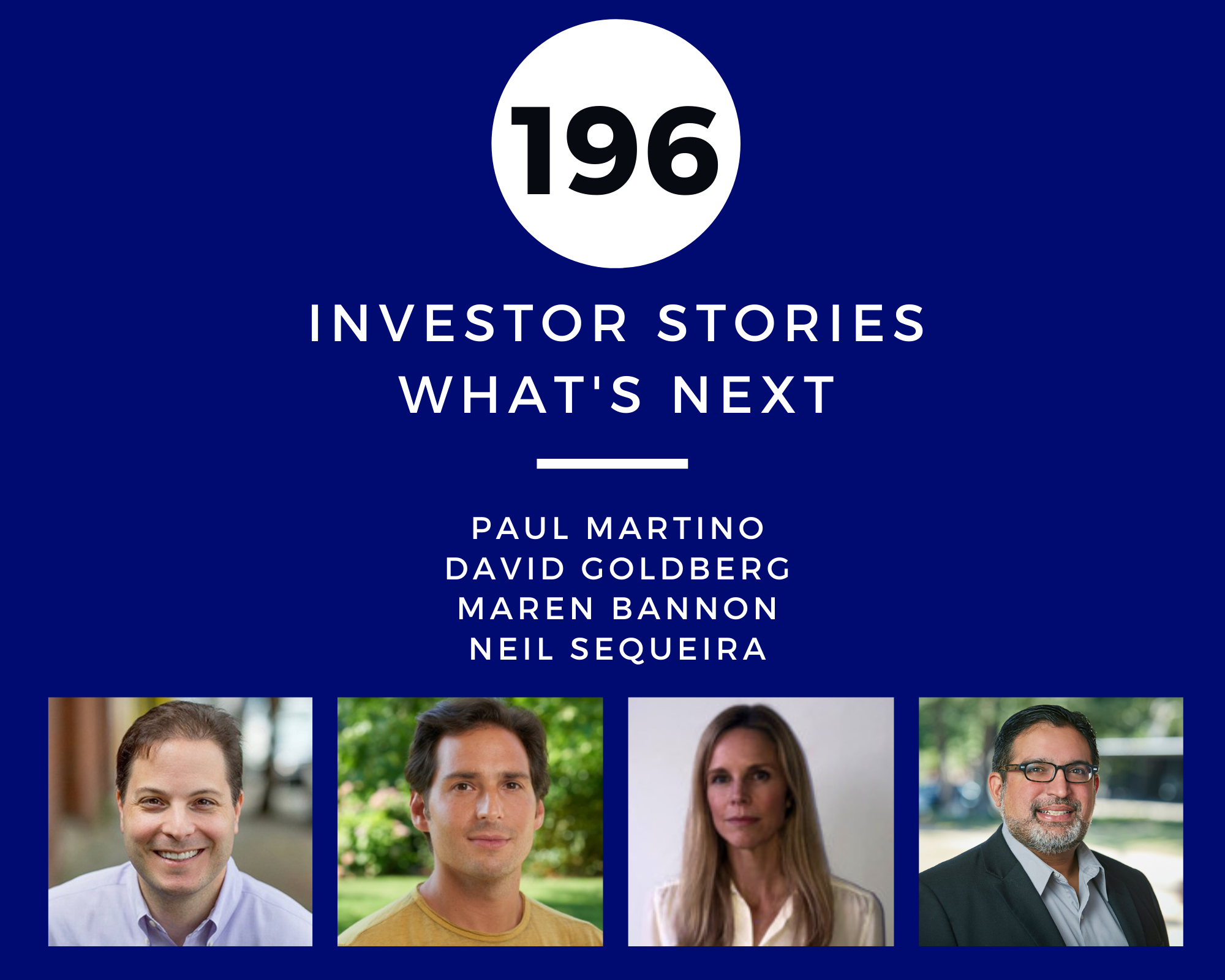
Investor Stories 196: What's Next (Martino , Goldberg, Bannon, Sequeira)
On this special segment of The Full Ratchet, the following Investors are featured: Paul Martino David Goldberg Maren Bannon Neil Sequeira Each investor discusses sectors, drivers and/or trends that may have significant impact in the future and are potentially positioned for outsized-returns.

285. Non-Dilutive Financing Options, Fintech is Eating the World, Digital Asset Aggregation, and Quants Investing in VC (Billy Libby)
Billy Libby of Upper90 joins Nick to discuss Non-Dilutive Financing Options, Fintech is Eating the World, Digital Asset Aggregation, and Quants Investing in VC. In this episode, we cover: Walk us through your background and path to VC. What's the thesis at Upper90? On the website, it says "We are not looking to finance major technology disruptors but rather the derivative businesses being created around them." Can you explain what you mean by that? How do you underwrite and assess the risk of some of these platform-dependent technologies (channel choke)? If you build businesses that are dependent on top of Facebook, for instance, or on top of Slack, or businesses related to the Amazon ecosystem, like Thrasio, how do you think about the risk of the platform deciding they no longer want to play nice with you? What is the split of your fund - the equity versus the debt component? And the terms of the debt, are there multiple different forms and different terms, or have you standardized that? Do you do some debt in non-dilutive financing options for non-portfolio companies? Or is it always an investment plus the credit? Do you include rights in some of those agreements to convert into equity should you choose? We've seen a lot of players, sort of FinTech startup-ish players, springing up providing access to capital for working capital needs and credit needs. Like Pipe and Lighter cap and CapChase and all these players. How are you similar and different from them? And how do you think about that? Is there ever a conflict, you know, when you're making an equity investment, but you also have debt in these companies? If they get in a tight situation? potential for conflicts? You said that you'll enter at seed. Are there certain metrics or revenue levels that you're looking for other structural dynamics, whether it be collateral or SAS subscription revenue? What's too early would be another question. There are a number of market makers here in Chicago that have entered sort of the VC asset class, what skills or strategies from your experience in your background? What do you think lends well, no pun intended, to driving top returns in venture? Can we get your thoughts on big drivers and opportunities in FinTech over, let's say the coming three years. What do you know, you need to get better at?
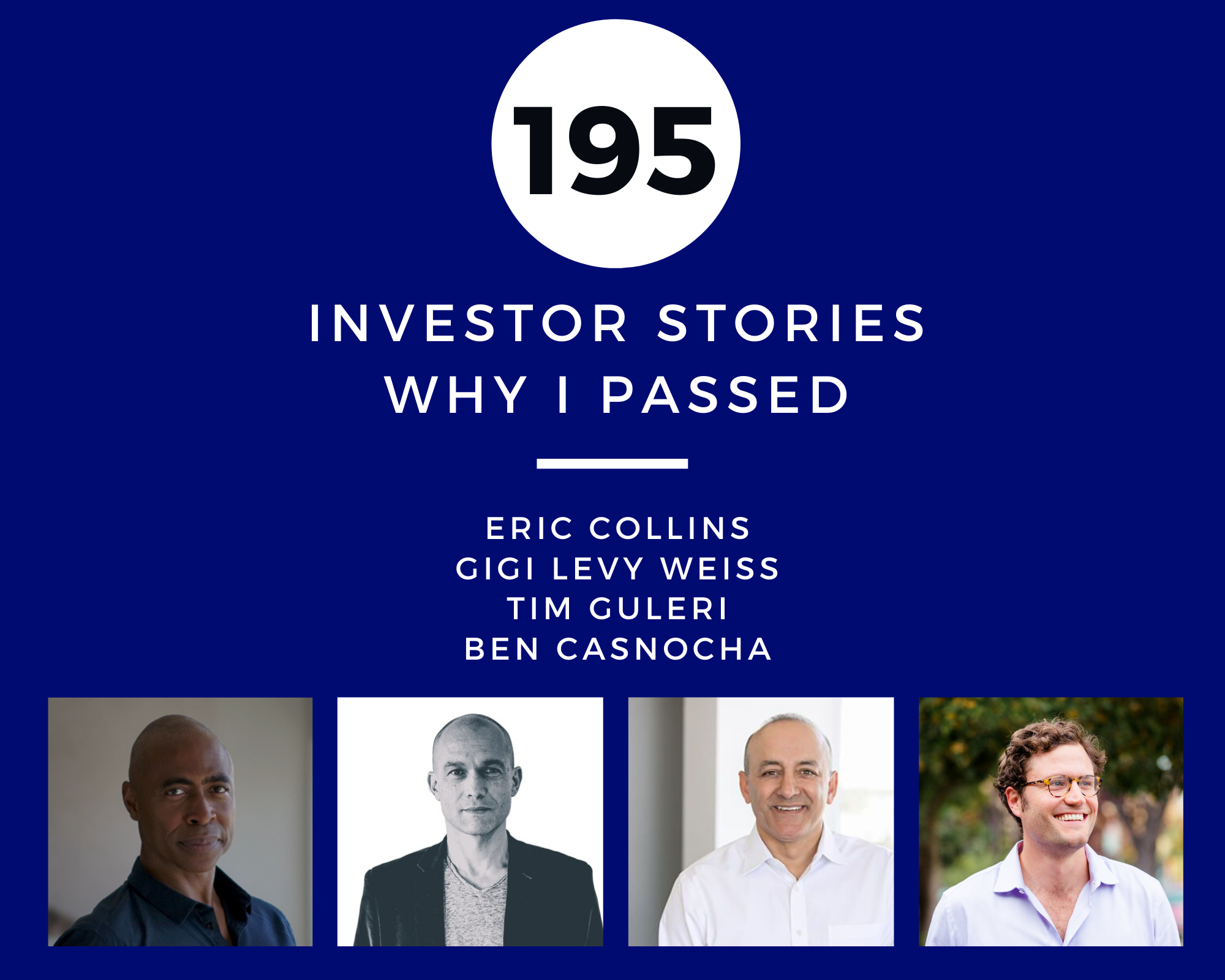
Investor Stories 195: Why I Passed (Collins, Levy Weiss, Guleri, Casnocha)
On this special segment of The Full Ratchet, the following Investors are featured: Eric Collins Gigi Levy Weiss Tim Guleri Ben Casnocha Each investor highlights a situation where they decided not to invest, why they passed, and how it played out.
284. How the Generational Shift Is Affecting Food, Investing in Vertical Farming and in New Biologics, and Platform Solutions to Food Dilemmas (Spencer Maughan)
Spencer Maughan of Finistere Ventures joins Nick to discuss How the Generational Shift Is Affecting Food, Investing in Vertical Farming and in New Biologics, and Platform Solutions to Food Dilemmas. In this episode, we cover: Walk us through your background and path to VC What's the thesis at Finistere Ventures? Focus? Check Size? Talk a bit about your global footprint, and why that is of value to the firm or the founders? What makes Finistere unique? What do you see as some of the biggest drivers of change in the food value chain? Are consumers going to embrace alternative produced meats when they are ready for market? With classically long timelines, they're expensive (producing a cost-effective product) and production is difficult. How do you think about that when you're underwriting the risk on an investment? What do you think of insect-based protein as a primary protein source and nourishment source in developed countries? What are the food-related effects from the pandemic that are ephemeral versus, you know, what do you think are here to stay? Previously, you mentioned a few areas of vertical farming, new pesticides in FinTech within ag-tech that were of interest. So which of those remain sort of strong categories as you see it today? Any other aspects within the ag-tech sort of lens and frame that you guys are investing forward in? You've also spoken about sort of a shift from point solutions in ag-tech to more platform, can you describe what you're observing here, and where you see the shifts occurring? Lobbies wield incredible power in the Food and Ag space. Is that a challenge that must be managed? For you guys, as a firm focused on investing in very disruptive tech in this space? What do you need to get better at?
Investor Stories 194: Post Mortems (Hsu, Bannister, Garg, Iheagwam)
On this special segment of The Full Ratchet, the following Investors are featured: Jonathan Hsu Janet Bannister Avichal Garg Simeon Iheagwam Each investor discusses a portfolio company that did not survive and why it was that they failed.

283. The Future of Cloud, Business Model Transitions from Subscription to Consumption, and The Shift from Technology-first to End-User Value (Dharmesh Thakker)
Dharmesh Thakker of Battery Ventures joins Nick to discuss The Future of Cloud, Business Model Transitions from Subscription to Consumption, and The Shift from Technology-first to End-User Value. In this episode, we cover: Walk us through your background and path to VC. What's the thesis at Battery? Any significant differences in types of products being built across geographies? How does Battery segment the cloud infrastructure market and find opportunity areas in the subsegments of most interest? To what extent do legacy IT and legacy software impede the rate at which we can progress with new toolsets and new infrastructure? Is there more appetite for modern solutions, just due to demographics? When ROI is opaque, how do you measure time to value and how might time to value might be different for different decision-makers within the organization? What does top-down enterprise selling moving to bottom-up user and influencer adoption mean to ROI of significant scale implementation to new infrastructure? What sorts of businesses lend themselves well to product-led growth? You've said that managing churn and focusing on customer success is more important now more than ever. In what ways have you observed leading tech companies apply innovative approaches to customer success (expansion and retention)? Should Startups price on a consumption basis early on? Do you believe should the customer success leader report up through the CRL? What are your thoughts on open source and licensing models? There are impassioned, differing viewpoints on this with some worried about the integrity of open source while others cast blame on large tech companies, like Amazon, that are efficiently able to monetize R&D that they didn't invest in. What's your position and how does it inform the way you approach investing in open source? You've been investing in cloud since, I believe, 2008... what stands out to you as you look across the biggest winners? Any common threads or key differentiators? What do you know, you need to get better at? Battery Ventures provides investment advisory services solely to privately offered funds and neither solicits nor makes its services available to the public or other advisory clients. Nothing herein should be construed as investment advice. This podcast mentions certain Battery portfolio companies; for a full list of all Battery investments and exits, please click here. Content obtained from third-party sources, although believed to be reliable, has not been independently verified as to its accuracy or completeness and cannot be guaranteed.

Investor Stories 193: Strange & Unusual (Woodard, Chitnis, Wallace, Smerklo)
On this special segment of The Full Ratchet, the following Investors are featured: Monique Woodard Sach Chitnis Brendan Wallace Mike Smerklo Each investor describes the most unusual situation or pitch that they've encountered as an investor.