The Fluent Show
242 episodes — Page 4 of 5
"French is Romantic, Arabic Is Aggressive"...Does Culture Stop Us from Learning Languages?
It's a philosophical one with Lindsay this week! Quick note on the topic of audio quality: In this week's episode, you'll hear Lindsay coming through at a slightly lower quality than usual. Our apologies! We'll be back to our usual high standards in the next episode. Here are our two big topics. Donald Trump Is A Tweeter If you're au courant with the news these days, you may have noticed that Donald Trump is a prolific user of Twitter. But what do his tweets reveal about him? Language analysis platform Text Inspector has produced a report on the POTUS's twitter archive, and in this episode Lindsay and I examined what it all means. Plus: What do Donald Trump and Regina George have in common? Does Culture Stop Us from Learning Languages? Learning German makes you efficient. Spanish is sexy. Arabic speakers talk about terrorism. Russian is a macho language. Would you say you're influenced by statements like this? In this episode, we discuss language attitudes and how they have affected our own stories in language learning. The discussion was powerful - starting with the question "Does culture / perception stop you from learning a language?", we talked about travel, terrorism, stereotypes and machine guns. To round it off, we chatted about the good old Sapir-Whorf hypothesis. Always one to draw us linguists out to the campfire. What About You? Do you think that ideas and perceptions have ever stopped you...or encouraged you in language learning? Say hi on Twitter @thefluentshow or write a little message through this website.
What To Do When You're Overwhelmed In Language Lessons
In this week’s episode, I have a fascinating Q&A question, which didn't at all bring the answer that my questioner might have been expecting. My question asker Andy is learning Russian, and finding the amount of word changes overwhelming. We started with grammar, but then discovered a meaningful SECOND issue, which you have probably dealt with in the past, too. Why your success depends on knowing how to analyse the problem How a relationship with a language teacher may hold you back How to create a strategy to overcome discouragement Who will be able to help when you're getting stuck PLUS: How to support students as a tutor
Living And Speaking French Just Like In France
Click or tap here to read the full show notes in my blog article on www.fluentlanguage.co.uk Bonjour les auditeurs, and welcome to a special édition française of the Fluent Show, with my native French speaking guest Géraldine Lepere. Check out Géraldine's AWESOME site Comme Une Française This show is a bilingual podcast, meaning you'll hear me do my best in French. Bilingual? How does that work? It's simple. Throughout this episode of the podcast, Géraldine and I will switch between speaking English and speaking French. You will hear me make mistakes, forget words, and be right there in the truth of making mistakes. I am a French speaker and have studied French for 20+ years, but my French is NOT perfect. If you are not an experienced French learner, there will be some parts of the podcast that you don’t understand. But like all language learners, you’re not alone in that feeling. I always remember what the lovely Ron Gullekson said about listening to a different language: “I want to get used to feeling uncomfortable.” So fear not, trust that we will come back to English again and again, and the interview will still be interesting for you. Get A List Of Vocabulary I Learnt In This Episode + My Main TakeawaysSpecial Guest: Géraldine Lepere.
Q&A: Should You Learn the Dialect of a Language?
How do you feel about learning two dialects of a language at the same time? The Dictionary of Linguistics defines dialect as a variety of a language used by people from a particular geographic area. So in other words, you’re ALWAYS learning a language and often you might be learning one that is a dialect of another. Romanian and Italian are dialects of Latin, if we zoom out far enough. So for you as the language learner, the dialect question is relevant. But do not sweat it because there’s no single answer. Each language you will learn might handle its dialect question slightly differently. So there’s only one way to do this, and that’s to ASK. It’s the classic “what’s a dialect, what’s a language” debate, and whether it really matters. In this episode I discuss the topic in practical terms without going too far into the deep question. Every language has non-standard variants, so let’s just think about what matters most when learning a language. Thank you to my co-host Lindsay Williams for this episode introduction.
What Is Fluency, What Is Mastery...And How Do You Get There?
In this podcast and blog article, we're discussing words that mean a lot to many people, answering questions such as: What is "fluency" and how do you know you're fluent? How can I achieve "mastery" in a language? What can you gain from being a "polyglot" or "digital nomad"? Click or tap here to read the full show notes in my blog article on www.fluentlanguage.co.uk
Q&A: How To Prepare For Language Lessons on Skype
You can find language tutors on sites like italki, in online communities, or by searching for your target language on social networks. Instagram is particularly great here. Before Your First Lesson With A New Skype Tutor Be clear about what you want to get out of your set of lessons, and communicate this to your teacher. Here's a list of suggested questions to ask them. Decide if you want to follow a curriculum Decide how you want corrections to work Listen to simple texts in the language if you can, even podcasts Before Every Lesson With Your Tutor Do your homework Homework isn't necessarily an explicit set of exercises, but sometimes it's just about reading a text or reviewing what the last lesson covered. This is the way for you to get more for your money — interaction and contact are at a premium if you’re self-teaching, so try to stay focused. If your teacher gives you a flashcard deck, interact with it. Always review new vocab from previous lessons. Research the vocabulary of what you want to talk about You can use a mind map to collect vocab around your target topic A post shared by Kerstin Cable (@kerstin_fluent) on Jan 26, 2018 at 12:27am PST Be somewhere quiet with fast internet Ask your tutor for help with what you’re stuck on Ground Rules No matter where you are at in your journey with language tutors, these five tips are going to make your life better and easier when you're working with a tutor. Respect your language tutor (see language exchange podcast) Be open and tell them about yourself Your situation Your experience Ask advice, they’re an expert! Budget for a few months, budget for your next language goal (time budget, financial budget) Decide how you want corrections to work Final thought: TRUST THE PROCESS Don’t doubt yourself too much You won’t get faster just through a few tutoring sessions, but you will move forward through it Don’t expect the world - you cannot buy knowledge! Win $25 With Our Sponsor Smartcards+ This month, Smartcards+ is giving you the chance to win a $25 iTunes gift certificate when you download and try out the app. Here’s how it works: Head over to www.smartcardsplus.com/fluent and download the app onto your iPhone or iPad Create your account and start your first deck Share what you are learning! Post a screenshot with the hashtag #smartcardsplus on Instagram or Twitter Make sure you follow @appdesignplus so you can be notified by direct message if you’re a winner Hot Tip: If you don’t know where to start, select “Import” and “Online Resources”, and you’ll be able to search the deck library at Anki and Quizlet Thank you to Olly Richards for this episode introduction.
Top Tools for Summer 2018
It's time for our seasonal countdown of what's hot in language learning. Lindsay and I have been collecting our top tools, and we select our list of top 3 recommendations on the Fluent Show. Lingodeer Text Inspector Talkalang /r/languagelearning FutureLearn Babadum A lovely image-based vocab game to play in your browser, made by a non-profit design studio from Poland. The range of langauges is massive! Plus: A news segment on what the French have been up to.. 🇫🇷🍔🌭

Q&A: Should I Give Flashcards Another Chance?
Today’s show is based on a question I have been asking myself. And that is… “Should I Give Flashcards Another Chance?” The way I learn vocabulary is always changing, and my methods and strategies evolve all the time. For many years, learning with vocabulary notebooks was my prime way of reviewing new words. But there are also other techniques, and recently I’ve started using a flashcard app, Smartcards+. I review vocab with Labels Lists (hand written and regularly reviewed and condensed) Flashcards I have never used Hand-written flashcards Anki Source Of Vocab These places above are not always where I find Vocab, and it’s a huge success factor to bear in mind that in a way a list or app is your worst source unless the item is super rich. One of the biggest reasons I haven’t used flashcard apps was the quality or relevance of the pre-written courses. Compare learning in class, in real life, in an engaged environment, to just seeing a plain word in a list. It’s arbitrary, and not everyone likes that. Memrise Memrise does really well when you take one of their official courses. Partly because it does exactly that rich thing well, with videos from Membus. But there’s also a bit of low quality fluff on this platform and I’m sad not to see so many mnemonics anymore. Mnemonics In this episode, I use the word "anghysbell" to illustrate how mnemonics work. Recall I don’t care if I can’t recall a word. I’ll see it very often if it’s relevant and important. Again, apps can be an issue here if you get bothered by seeing the same irrelevant term again and again. I do. In my Vocab lists, I am in charge. And being in charge of your own learning is everything. Activate Learning and recalling new Vocab in a list or flashcard is nice. It’s pointless if you cannot use that word though. Conclusion: Vocab is not Language Really, we're worrying about a small part of the whole here. Sometimes I feel frustrated because the new wave of apps tells you “learn a language” when really you’re "learning words and phrases". You need to learn a language over time and keep throwing new things in.
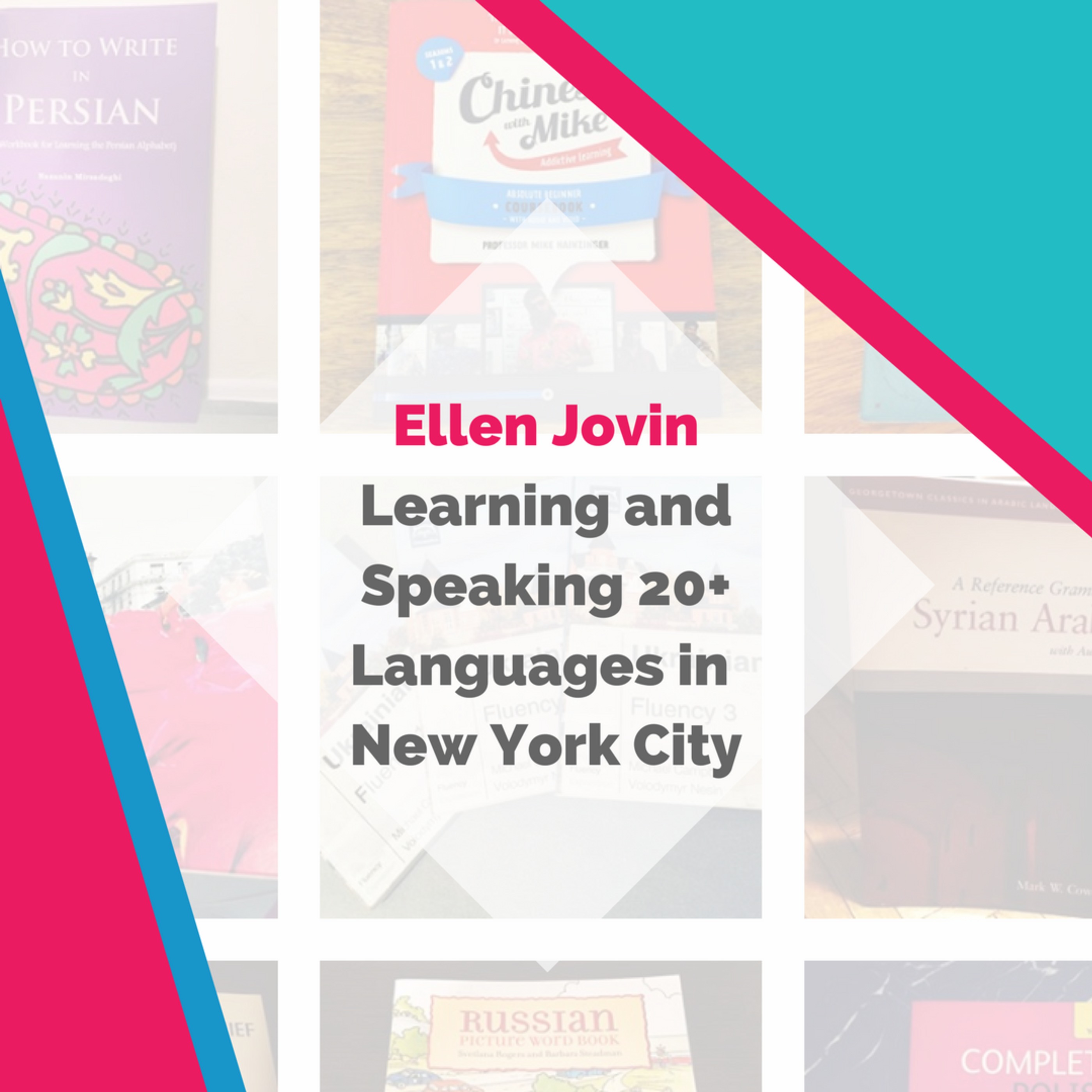
Learning and Speaking 20+ Languages in New York City
This week, I talk to language and grammar fanatic Ellen Jovin. Ellen has spent the last (nearly) decade learning and forgetting over 20 languages, and reviewing hundreds of language learning materials. In this interview, you will learn about How to select the best materials for teaching yourself a language How to grow as a person through using Facebook Why it doesn't matter if a language is hard Why Ellen stopped going to language classes How even the best book can be one you don't enjoy, and what to do when that happens How to use the city, even the building you live in, to learn more languages Why Ellen has reviewed hundreds of materials, but won't tell me (or you!) which one is the best one Why being true to yourself is a better way to learn languages Quotes from Ellen Jovin Ellen is a joy to talk to and to listen to. She has so much love for language and a great way with words, so this interview was packed full of great quotes. "In 2009 I suddenly realised (..) that I can really learn a lot without ever going to class." "I feel a kinship with Slavic languages. There's so much grammar and I love grammar so much that I'm sitting there with my eyes open in disbelief that they could possibly have this many forms." "I feel as though it might really transform my life outlook if I took Latin." "I feel like what I'm doing is true. It's honest. I'm not studying languages because I think I should study them. I'm studying them because it makes me feel happy." "I don't really care about [forgetting languages I've studied]. I did it because I enjoyed the process. It opens up a world into another culture, it enables you to make new friends who are native speakers of other languages....and how is that not worthwhile?" "In a teach yourself environment you really have to tap into the interesting capacity for play, for humour." Special Guest: Ellen Jovin.
Q&A: How to Re-Learn a Language You’ve Forgotten
Re-learning sounds like a daunting task, but today's episode will guide you through what you need to think about. In this episode, you'll learn about the difference between conscious and unconscious language acquisition. discover how to learn vocabulary so you always remember it and the right learning plan for getting that language skills back. Check out The Vocab Cookbook for more about the vocab method Acquire, Memorize, Review. Tips For Starting A Re-Learn Plan If you used to speak the language as a child Increase your exposure to as much as you possibly can get (films, music, youtube, consider if you can read/write?) - especially if you first learnt as a kid, because your unconscious skill is likely high Consider whether you need all 4 core skills. If you want to recover language levels as they were when you were 4 years old, chances are you’re thinking of a time when you were pre-writing. So focus on that speaking and listening, and all will be well. If you get there and then discover that you’re missing something, move on from there and consider the new knowledge Reconnect with the language community, or a language community (community is so important especially if you used to learn, and now you’re feeling like you are on the outside) Get yourself a grammar resource, but only use it when you need it If you previously learnt as an adult Consider what you liked and what worked for you last time, and recreate the conditions for success Go with the exposure as well, though you may not ‘reactivate’ as much Do follow a textbook, but skim as much as you can Speak as soon as you can, with a patient partner on a large range of
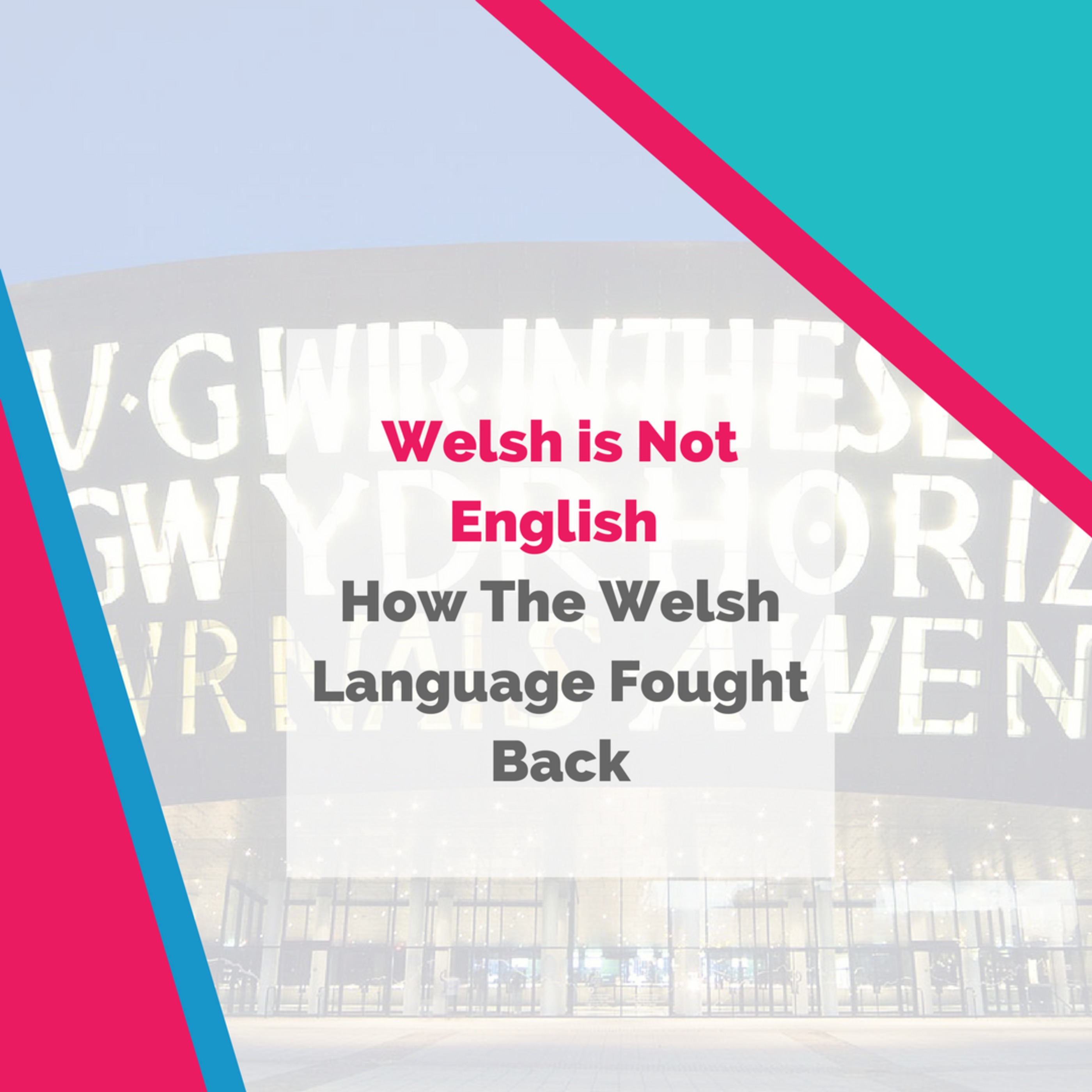
Welsh Is Not English!
When I first moved to the UK, I had no idea that Welsh was a living language. Now it's 15 years later and I can speak it, watch TV in Welsh, and connect with thousands of learners around the world. Welsh is considered a success story by many people who want to revive minority languages. 150 years ago, it was banned by the English speaking government and the English language became the norm. Today, Welsh medium education is on the rise and the Welsh Assembly is promoting a target of getting a million people speaking the language. In today's episode, I bring you interviews with Welsh learners and teachers, sharing their own passions for this ancient language. Click or tap here to read the full story in my blog article on www.fluentlanguage.co.ukSpecial Guest: Gavin.
How To Get Native Speakers To Speak Your Target Language
Great news, everyone! The Fluent Show is now newly available on Spotify, TuneIn Radio, and I Heart Radio. How do you listen? Shout out to our new sponsor, Smartcards Plus. In Today's Show: A Q&A with a question from Shannon on Twitter. She asked: Got advice on how to get bilingual speakers of your native language and your learning language to stick to the language you’re learning? Click or tap here to read the full show notes in my blog article on www.fluentlanguage.co.uk Got a Language Question? Please send your questions or ideas to @thefluentshow so you can hear them on the show and I can keep making Q&A episodes.
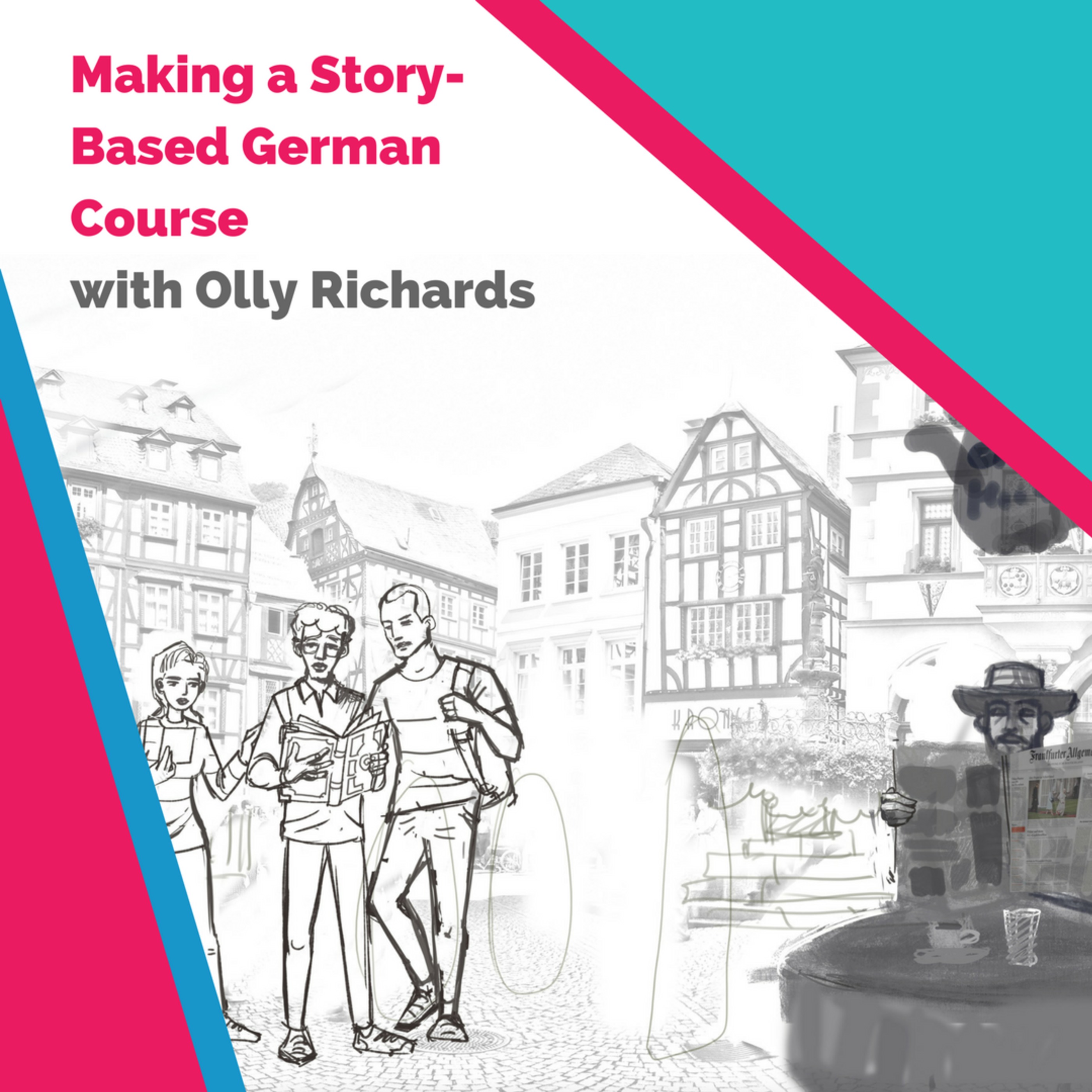
Making a Story-Based German Course with Olly Richards
This week on the podcast, I am joined by Olly Richards from I Will Teach You A Language. We present to you a project that we have been working on together for a while: German Uncovered, a course for beginners who want to become fluent in German. I've been working on this for a few months, and we are slowly getting ready for launch. Exciting times! The special thing about German Uncovered is that it is entirely story-based, meaning you will not just learn the language step by step, but you'll also have read a whole book by the end. Listen in to find out how this works! If you're interested in what drives course creators to come up with innovative ideas, and how a language course comes into being, this show will give you great behind the scenes insights. German Uncovered is coming - sign up here to get a notification of our launch!Special Guest: Olly Richards.
Q&A: What's a Reasonable Weekly Schedule for Language Learning?
Rebecca from New York asked Can you talk about how to set up a reasonable weekly schedule for language learning? In this show, I've got five simple steps for you that will help you plan a successful week in language learning. I'll talk about setting goals, managing your energy, analysing your calendar, and matching your activity to your strengths. A reasonable schedule for learning languages is one that doesn’t make you groan, but isn’t empty either. Here's what matters most: prefer regular to all-in-one Ensure you speak, read, listen, write Have at least one big session, preferably more than one Review after a few weeks

What's The Secret To The Greatest Language Exchange Ever?
The most rewarding way of practicing your language is by connecting with people on a 1-to-1 basis. It takes commitment to make any language exchange successful. On today's show, we discuss what it takes to have the best language exchange experience possible. We also welcome special guest Jonathan Huggins, who knows lots about language exchanges. Click or tap here to read the full show notes in my blog article on www.fluentlanguage.co.ukSpecial Guest: Jonathan Huggins.
Q&A: Should You Get a Masters Degree in Languages?
Today on the show, I'll share a few tips and considerations about studying languages at university. Plus: My own story of doing Translation Studies at the University of Manchester. Chenelle asks: I wanted to know did you only get your bachelors degree or did you actually go and get a masters degree and languages? Listen to get the full details of my tips. At postgrad level, you tend to go either into research or applied mode. Most specialised ones Applied Linguistics / Linguistics Intercultural Communication Translation and Interpreting Teaching And then it specialises more and more Tips for Choosing a Masters Consider practical experience vs research Consider options of FT, PT, distance Ensure the qualification allows you to pursue the career you want Consider fees and scholarships, visas, cost of living Consider your university's reputation, but remember a bad result from a great university can be worse than an amazing result from a less famous university Rankings: Ensure the ranking reflects what you care about
In Language, Are Apps All Amazing? Are All Apps Amazing?
Click or tap here to read the full show notes in my blog article on www.fluentlanguage.co.uk In this episode, we caught up, talked about a new directive on language use in a very special setting: Childbirth! We also discussed language learning apps and how to make the most out of them.
Q&A: How Can You Train Your Listening Skills?
Elisabeth asks: “How do you fit hearing comprehension into your daily routine? I find myself daydreaming a lot during my hearing comprehension time.” What are you training, exactly? Listening comprehension will aid you in understanding spoken language. For most independent language learners, listening comprehension is what starts bridging the gap between reading a textbook and moving on to confident and independent language use. For Elisabeth as a French learner in particular, there’s a lot to unpack. French has a lot of silent letters, liaisons, weird silent bits that you cannot know from listening. The Speak & Spell Connection It’s important to train the four core skills - all of them: listening, speaking, reading and writing. About That Daydreaming Problem Is it really a problem to be daydreaming during your listening sessions? There are different levels of listening. What you don’t want to do is set yourself up for failure or disappointment, so before you switch that input on it’s worth focusing on whether you are here for pleasure to get the gist to study If you’re too tired for study, don’t worry about that aspect and set your expectations differently. Paying lots of attention, extracting 100% of meaning and nuance, listening in detail Podcasts often require attention and demand a lot of attention When you’re listening for study, you will want a transcript! Listening for the gist, being happy understanding most TV can be a good practice element for this, where there’s a narrative to follow - films too. Decide if you want scripted or spontaneous dialogue. Subtitles are absolutely ok, and there are strategies for weaning yourself off them Understanding very little, “immersion listening” at an early point I always remember Ron Gullekson’s quote about making himself uncomfortable as early as possible This is great for exposure, but beware - if it’s just a wall of sound, you’re not doing much good. You need to be able to distinguish where a word starts and ends. Listening for Training — How To Go About It Know your target language’s pronunciation rules Determine what your audio is about, make sure you have some structures and vocab ready to go Listen without reading, just see what you can get, make your notes, stop and start, vary the speeds Repeat Enlist the help of a transcript if available - ideally you do want that transcript there but you can also transcribe the text yourself or summarize it to read it back to a tutor Discuss with a tutor, get them to ask you questions…or if you’ve got no one on hand, read a translation of the text PAY ATTENTION to what you got wrong. In my experience, it’s easy to overestimate your skills. Where can you go to find good listening material? During selection of materials, consider: Level right for you? Language register (formal/informal) right for you? Topic interesting? Affordable and accessible for you? What do you need to understand, what do you want to understand? Remember: “A polyglot cannot survive on audio alone”. Combining with text, visual and even speaking is very crucial for a balanced approach.
"It's Hard Work But It's So Worth It": Everything You Need To Know For Raising Bilingual Children
As a German native speaker who speaks English all day long, I find the prospect of bilingual parenting both daunting and fascinating. I have been looking for an expert on bilingual parenting, and here she is: Marianna du Bosq, host of the awesome Bilingual Avenue podcast, a show for parents who are raising bilingual children. Marianna's incredible energy shines through and she's got SO many tips. I came away with so much more knowledge about what bilingual parenting is really like, and I'm convinced you will too. Click or tap here to read the full show notes in my blog article on www.fluentlanguage.co.uk In the interview, we'll talk about: How much work do you have to put in as the "one language" parent of a bilingual kid What agreements parents should set up with each other when they decide to do this What Marianna does when she needs to reconnect with her husband and tweak her daughter's language environment How to create a more immersive environment for children learning languages Whether you have to hire nannies and tutors and do all the expensive things to make this work How to overcome negative attitudes, and how to help a parent who feels left out when they don't understand their child How to learn a language along with your child What the school experience is like for Marianna's daughter who is in an English-speaking school What the most popular and effective bilingual parenting models are..and which ones are not the best ones to try Which episodes of Bilingual Avenue you should check out next (see below) And most importantly, why raising a bilingual child is so worth the extra work and planning - Marianna makes a passionate case towards the end of our show so don't miss that. I'd love to hear more about your own experiences of parenting in another language. Leave a comment below or find me on Twitter. Please don't forget to rate & review this show in the Podcasts app and visit our awesome sponsor Speechling.Special Guest: Marianna du Bosq.

Q&A: Getting Off the Intermediate Plateau
"How Can I Get Off The Intermediate Plateau?" If you're stuck somewhere in the language weeds, this show will help you untangle them and get those wheels turning again. You'll learn Why you're feeling stuck How to start feeling like the wheels are turning again How to re-think your feeling of being stuck for an instant mood boost Why rewards make all the difference How to figure out the next step
How to Learn Several Languages At The Same Time
In The News This Week A deaf woman wanted to attend a pop concert with her young daughter, but had to fight and even sue the company until she was granted a sign language interpreter. Is this fair? We discuss what 'disability' is, how sign language is very different from other languages in music, and how awesome it is to have interpreter companies in this world. Make sure you watch the great video showing how signers interpret music. How to Learn Several Languages at Once Our show topic this week is all about learning more than one language at the same time. It’s the polyglot dream! Many people, especially polyglots, want to learn as many languages as possible. But is there enough time? How the heck do we fit it in? We discuss advice from polyglots around the internet and compare it with our own life experiences to get to the ultimate tips for learning multiple languages. Click or tap here to read the full list of tips and show notes
The Creative Language Learning Podcast is now the Fluent Show
It's 2018, guys. Time to admit something major: AIN'T NOBODY GOT TIME FOR A 4 WORD PODCAST TITLE 😂 As of today, I am so excited to announce that this podcast is now The Fluent Show, and we are going WEEKLY. Every week from today, I'll be bringing you an interview or a short episode full of actionable, practical language learning advice. The Fluent Show is here to encourage and support you in your language learning journey. There is much more to discover such as: A new jingle (no more "Christmas music") New artwork A Twitter account - follow us @thefluentshow I know we're going to have so much fun and I cannot WAIT to speak to more cool people and answer your questions on the show. The podcast also has a new website address - find us at fluent.show 🆒 Get Involved You can send us your questions and comments and hear them on the show! Simply send a tweet to @thefluentshow or use the hashtag #fluentshow. You can also email your questions to me at [email protected]. We read each and everyone of your messages, and they often make our days. Please Rate and Review The Fluent Show If you can, please leave a review for this show on iTunes this week. Here's the easiest to review: Get your iPhone, or perhaps use a friend's phone (or both!) Open the app "Podcasts" Search for "The Fluent Show" or select our show image from the Library section In the main screen, scroll down to "Ratings & Reviews" Tap on the stars to rate quickly, or tap "Write a Review" You don't have to write a lot and if you want you can only leave a title such as "Great show for language learners"
Robo-Tutors and Translating Megaphones: It's the Future of Language Learning
Click or tap here to read the full show notes In the News... Kazakhstan is going to change the official script of its language from the Cyrillic to the Latin alphabet by 2025 - we admire their SMART goal setting skills and discuss what could motivate a country to make such a big change. Main Topic: The Future of Language Learning What does the future hold for language learners? When a device translates what you say directly into another language, is there even a need to learn languages anymore? We discuss Gadgets and stuff that translates our language into other languages How AI has made language learning apps a lot more useful Virtual Reality and Augmented Reality as learning aids The good and bad sides of tech
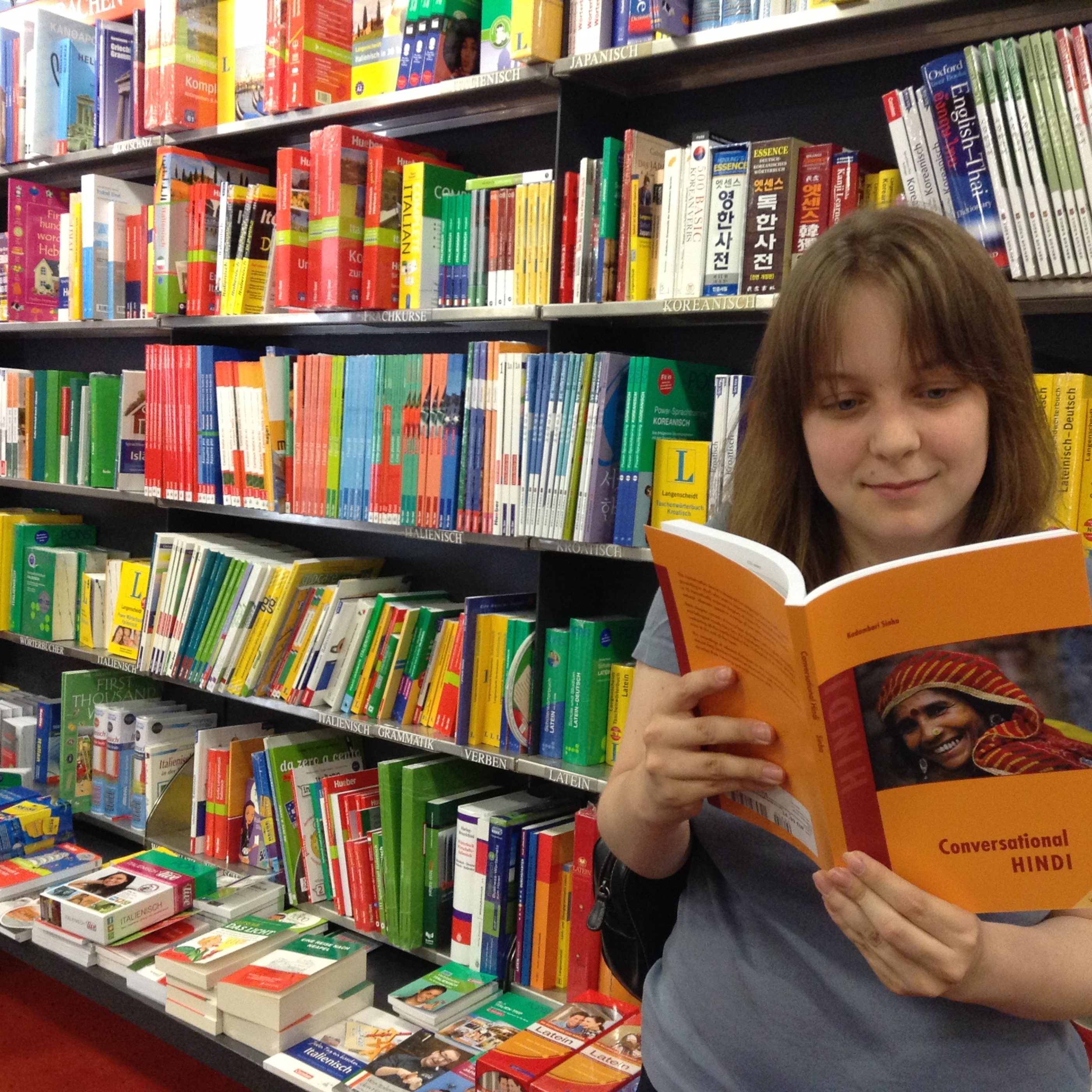
"Ultramarathon for the Brain" (Bilingual Podcast with Judith Meyer)
Click or tap here to read the full show notes German Learners: Click this link to download a full transcript (bilingual) of our conversation, so you can listen and read along at the same time. Judith Meyer is well-known in the language learning world for co-founding the Polyglot Gathering event and writing several language books and courses. She's consulted by many and freely shares her own tips and experiences from learning over 14 languages. We covered a lot of ground and as a language learner you will be delighted to hear her excellent advice. One Thing You Need to Know About This Episode This is a bilingual podcast. Judith and I are both Germans who speak a lot of English in our daily lives and even in our off-mic conversations we regularly switch between German and English. If you are not an experienced German learner, there will be some parts of the podcast that you don’t understand. But like all language learners, you’re not alone in that feeling. Try to stay with us, trust that we will come back to English again and again, and challenge yourself to become comfortable with not understanding everything.Special Guest: Judith Meyer.
What is it that you want to achieve?
Hello from Kerstin and happy new year! In today's show, I've got notes for you on what really mattered for language learning in 2017, and how you can make the most out of these for your own path to fluency. Lessons from 2017: Best practices aren’t going anywhere Ask yourself what you want to achieve Get out of the house and use what you know Contribute to your community Getting organised is the key to actually using those best practices: Plan - Track - Review Setting goals helps me get out of my comfort zone - I’ve never self-studied a language to this level and I can totally do it The Year in Language Learning Events Polyglot Gathering in Bratislava It was warm, busy, and great to visit this Slovak city The organisation was outstanding and there was a real sense of interest in almost every talk A lot of people enjoyed the no-English zone I gave a talk on how to talk to people and the feedback was very interesting (no it was NOT about chatting up girls) Already bought my ticket for 2018 Langfest in Montreal It was warm again, a slightly smaller event, and with so many great volunteers and organisers Langfest stood out in how media-savvy it was, there was live streaming, lots of web coverage, even a little podcasting room Montréal is an amazing city for any polyglot Languages of London A smaller meet-up, great for connecting The podcast came back this year!! Thank you all so much for listening and supporting us. Thank you to my wonderful guests this year: Madeline Vadkerty and Marianne Manz, Gabriel Wyner, Chuck Smith, Kris Broholm, Shannon Kennedy Thank you to our sponsor Clozemaster, and the future sponsors who have shown interest in supporting the Creative Language Learning Podcast A special thank you to my co-host Lindsay Williams Please review!!
"If It Plugs Your Gap, It'll Proper Plug Your Gap": Top Tools for Winter 2018
Click or tap here to read the full shownotes. Follow up on a topic: Pop Music Bilingual lyrics, Spanglish and Justin Bieber of all people winning a Latin grammy. Lindsay brings up the Despacito Effect and we discuss if that's a thing. If you love music, check out our pop music episode. Top Tools for Winter 2018 Here are the nominees - listen to the show to find out how they can help you learn languages. Kerstin: 1. Clairefontaine Vocab Notebook (on Amazon UK, and here's a comparable one on Amazon.com) This is a classic notebook for learning and testing yourself on vocabulary. Write down your words, and use the handy cover tabs for testing yourself. Perfect for one of my favourite vocabulary learning techniques of all time, Write-Look-Cover-Repeat. 2. Libby Libby is a library app designed to give you access to ebooks and audiobooks in your local library's catalogue. So that means you can borrow hundreds of books and even language courses right now, for free, on your phone or tablet. Available for iOS, Android, and Windows 10. 3. Lingq (referral link) After hearing so much high praise for Lingq from Shannon Kennedy on episode 65 of the show, Lingq got a well-deserved new mention. This app is designed to help you read any text in another language, and it remembers the words you study. Check it out as it might plug your gap. Lindsay 1. Léa Knows App This app takes words that you've looked up on google translate and automatically creates flashcards of them. It's out for Android and iOS, and will "proper plug the gap" if you're stuck on how to study all those new words you've looked up, for example during and after speaking practice. 2. Museum leaflets and other "bumf" from tourist attractions near you Discover a museum near you and check out their leaflets in other languages. Perhaps there's even a walking tour so you can get reading and listening practice at the same time, and play around with the available languages. 3. FlowLingo This app is for Spanish users, and gives you access to a huge library of online videos from cartoons to TED talks. You will be able to listen to the video and see the subtitles, and it even pairs with Duolingo. Great for Spanish learners who want to add more video to their routine. This app is out for Android and iOS
Finding friends who love languages (with Chuck Smith)
These days, the Polyglot Gathering pulls in hundreds of language learners who share and enjoy community in the heart of Europe. A lot of this is thanks to Chuck's contributions, along with the wonderful Polyglot Gathering team. This year, Chuck published his first language learning app, Amikumu. What is Amikumu? Want to text another person and ask them to meet up and practice a language...without looking creepy? Amikumu will help you find people near you who love languages. The purpose of the app is to help you find people nearby to chat and meet up, and it supports the world's 7,000+ languages (including 100+ sign languages). The idea for Amikumu came out of Chuck's love for the planned language Esperanto. It’s not a natural language choice, it’s a minority language. Why would anyone bother to learn? Language Learning Apps In recent episodes, we've covered language learning apps on a regular basis. If you have a smartphone and you live in the 21st century, they are an essential component of language learning. More and more developers are working on apps for language learning, and Chuck's experience stands out from the crowd: he is the creator of Duolingo's Esperanto course. In our interview, Chuck explained how he came to work on Duolingo and why he loves gamified learning, how we can bring more soul into language learning apps...and why you could probably learn a language if you have three apps. Check out Chuck's app recommendations in our link list below.Special Guest: Chuck Smith.

Climbing Mount Language from Basecamp to Summit
EBeware listeners: This episode contains a discussion of a few English swearwords, so if you are listening with kids please skip the first 20 minutes. And on to what's in this show: Language Stories: Lindsay has a new podcast, reporting back from her adventures around the language landscapes of cities like Montréal, New York, and more. Even after 20 years of English, I still don't know all the words. We discuss an English slang word that was news to me. Tip: The Psychology of Rewards We discussed why and how you can reward yourself when you reach those study goals. Language Learning Misconceptions Here's the list we discussed on the show: Children learn their first language effortlessly Younger learners learn languages more easily than older learners Intelligent people are better at learning languages Immersion is the best way to learn a language Grammar study is detrimental to second-language acquisition Learning a second language hinders the development of the first language Once a child can speak a language, the language-learning process is complete Consider: All these ideas and beliefs are widespread, but none of them are true when taken at face value!
Gabriel Wyner is NOT a Robot (with Fluent Forever author Gabriel Wyner)
On this show, I spoke to Gabriel (Gabe) Wyner, a well known name to many language learners thanks to his bestselling book "Fluent Forever". In this interview, you will get to know the story of "Fluent Forever", the approach he takes to language learning, and a little bit about what makes him tick as a person. The theme I saw come through in Gabe's approach was that of engineering language learning to be as efficient and productive as it can possibly be. He's an engineer by trade and it shows in how he approaches language learning: find the problem, find a way to solve it, set, and go. It made me curious about his human side, so we also discussed where he finds the joy in learning. Beyond the app, I also took the opportunity to ask Gabe about the inner monologue of self-doubt, and courage in creation and in language learning. But that is not all we talked about...we also discussed what this app is all about In our interview touched on.. how Gabe's own experience of creating over 45,000 (!) flash cards in Anki is going to make language learning so much more efficient what it's like to have created a book that more than 120,000 people have read why the Fluent Forever method started with pronunciation training...then progressed via word lists...and is now ready to take app-based learning to a new level the big, obvious, annoying problem of using ready-made flashcards (this is why you won't remember words) the place for apps in everyday language learning -- is immersion better than apps? is an app better than immersion? Do language learners have to do everything at the same time? how the Fluent Forever has standing based on actual science (and a research book tip if you want to find out more) what to do when you're too scared to start speaking to someone in your target language a Q&A on learning two languages at the same time, where the Fluent Forever app is headed after its HUGE Kickstarter success, and what rewards there are for you when you pledge to support its big Crowdfunding campaign Special Guest: Gabriel Wyner.
Equality, Tea, and Spicing up your Language Learning
Words in the Wild: Equality and Tea I've been out in the wild, seeing and discussing words in the English language, and in this episode I presented the best of them to Lindsay to discuss what they can reveal about us and about society. First, we discussed social justice words. What really IS mansplaining? Is it just a word to describe any occasion when a man explains something to a woman? Or is there more to it? What do you think of the social justice words like hepeating, mansplaining, manel, and the responding #notallmen and broflakes? And our second word in the wild was tea - short and sweet, but is this even translateable? Motivation Tips Even though this is not Lindsay's average October of falling leaves and dropping temperatures, we took a deep dive into the season to discuss how you can get motivated for learning a language in autumn/fall. Plus, we've got some absolute evergreen tips mixed in for you to help anyone learning a language by themselves. Learning a language by yourself is not always easy, and motivation is a huge challenge. There are so many interesting and exciting ways to get going, so here are some of our best: You can read our full list of motivation tips in detail at www.fluentlanguage.co.uk/blog/podcast-episode-67 Little tip: Try our sponsor Clozemaster as your new app addiction. Get it done in the morning, and you'll be set for the day.
"For the Love of Humanity": Using Languages for Good
In this episode, I'm presenting two interviews with women who are working to change people's lives through the power of language. Madeline, Interpreter for Survivors of Torture and Trauma Community Interpreter Madeline Vadkerty gives me an overview of what it is like to interpret for survivors of torture and trauma. This interview was an incredible chance to learn more about interpreting from her, and to hear why helping refugees and toture survivors get their stories heard matters so much. The people Madeline works with were caught in situations that we take for granted in many other countries: running for political office, being a homosexual, or expressing different opinions to the mainstream. She says got into her field "for the love of humanity", and shares what you need to know if interpreting intrigues you. Marianne, Religious education teacher...turned teacher for refugees When Germany accepted a large number of refugees back in 2015, many communities sprang into action. In this interview, I'm learning more from Marianne Manz, a school teacher who decided to put together a motivated group of volunteers to offer language classes in German. Marianne works with a range of untrained language teachers - there are some pitfalls for sure and the group needed to find unusual techniques for teaching.Special Guests: Madeline Vadkerty and Marianne Manz.
"You assume they don't have chick lit in Polish"
In this episode, polyglot expert Shannon fills in for Lindsay - we catch up on our language learning and Duolingo, and then discuss why and how reading makes you fluent and smart and cultured. Remember: If you visit our sponsor Clozemaster at www.clozemaster.com/cllp, you'll be supporting the Creative Language Learning Podcast for free! Listen to find out.. Why did Duolingo wait so long to release Korean? K-Pop and Kimchi lovers, look out for Duolingo's latest offering. We catch up on news with the world's (probably) biggest language learning app, looking at its course offers and money-earning developments. They have a Pro membership now, but we're not mad at them! How early should you read? Reading from day 1 is what it's all about, and we discuss why it can boost fluency and memory when you start by reading right away. Think connecting what you see with what you hear to avoid stumbling blocks like bad spelling, dodgy pronunciation, and all-round low confidence. What about difficult scripts? While I've "elegantly" avoided learning complex writing systems such as Hiragana or Arabic for my languages, Shannon was on hand to advise on what it's like to learn another script. How to find input for your level It's hard to get over these two problems: Coursebooks are obvious, but they're so limited and dull. Books for learners are great, but they take for actual ever to read. In this show, we share a few tips for reading in your target language and in a way that is actually interesting! Shannon reads with her son and loves the Lingq app, and I am a big fan of magazines. Revelation about the Lingq app I have tried reading-focused app Lingq before, but didn't quite get it...while Shannon is their biggest fan! What gives? Shannon shares tips and insights from what it's actually like to use this app. Why you shouldn't just read Harry Potter in another language Translated literature opens up linguistic worlds to you, but you could be missing a trick. There is nothing like reading the words that came from a country, and I make the case that it is always worth it to spend the extra time and effort on finding texts that are originally written in another language. The Language Reading Challenge For more inspiration and a look at what Shannon and other polyglots are reading right now, head to Goodreads to join the Reading Challenge hosted by Shannon. What do you think? What do you read in your target language? And have you tried Shannon's challenge?Special Guest: Shannon Kennedy.
10 Polyglot Conversations from Langfest 2017 in Montréal
This podcast episode is a bit like a Wundertüte - a lucky dip bag of interviews with wonderful people who made the 2017 Langfest event what it was. Thank you so much to all of these lovely people - Langfest was motivating, informative, energising, and of course very, very multilingual. Here's a taste of what you'll find inside the episode: Could you become a multilingual parent? We've all seen the feats of Bella Devyatkina, who speaks 8 languages at age 5. But how does that work? In my interview with conference organizer Tetsu Young, we touched on the everyday actions that he and his wife create a multilingual environment for their three (!) kids. Applying your outside skills to language learning You might not know this, but all of us have hidden skills that help us learn languages. I interviewed Benny Lewis and Tim Pelletier to find out what theirs are. Impressions of Québécois From how to make those dipthong sounds to religious swearing, be a fly on the wall during our French-language lesson on the Québec dialect. A few words in Romanian Listen to me try as hard as possible to get my Romanian pronunciation right with the kind help of presenter Mihai. Ooof! Unconventional Motivational Techniques Jana Fadness is a polyglot, translator, traveller, and introvert. She shares her insights on the most popular motivational techniques - and how she found her own unconventional ways of making things work. Jana's interview was amazing, her honesty stood out among the crowd.Special Guests: Benny Lewis and Shannon Kennedy.
How to Speak Your Target Language Today, Not Tomorrow
Speaking your new language for the first time can be so nerve-wracking! Will they switch to English? Are you good enough? Will you even get the words out? In today's episode, join me to start beating those gremlin questions.
Why is it so Hard to Find Pop Music in Other Languages?
Why does pop music matter for language learning? What influence does the industry have for which music gets made and which doesn't?Why is English such a convenient language for pop music?How should you incorporate pop music into your language learning routine...or should you?Where can language learners find music in their own target language?Who are our favourite artists in other languages?Links from this Podcast EpisodeHow to Use Spotify for Language LearningQuora: Why do non-English speaking countries listen primarily to English-sung songs instead of producing modern/pop songs in their own languages?Guardian: Behind the music: What it costs European acts to sing in their own languagesIn dance music it's generally more important how lyrics sound than what they actually mean. Artists with English as a second language can be less judgmental about what's deemed a cliche.10 Great Songs That Topped US Charts But Weren’t Performed In EnglishForeign language songs that got to Number 1 in the UKThe Hottest German Lesson in Town: Deutschland 83 and Major Tom (PLUS Free Lyric & Vocab SheetHow I Built This, an NPR PodcastHonest Reggaeton (not 100% SFW)The Biggest Pop Genres That Succeed in Other LanguagesLatino popNotable collaborations include Despacito with Luis Fonsi, Daddy Yankee, Justin Bieber, and Bailando with Enrique Iglesias, Sean Paul et al.Alt.Latino PodcastResidente by Residente), an album exploring the artist's international heritageK-PopNew York Times PopcastKCON Music Festival)European Music and EurovisionCheck out Stromae, KRO, Prince Pi, Indochine, Robyn (in English).Our European Day of Music Live EpisodeLindsay's #songsaturday Playlist
The Best Language Learning Tools for Summer 2017
Welcome to Creative Language Learning Podcast episode 56, with our popular roundup of this season's hottest language learning resources and tools. Pop Culture MomentLindsay has been watching Terrace House, a Japanese reality tv show.I found Bore Da, a Welsh breakfast show that displays key vocab right on the screen. Its app even gives you individual items with associated vocab lists.Anyone remember pop-up video? How could would it be to have pop-up vocab video?!And now for the top toolsGrab your sunglasses, get out into the sunshine, and try these brand new language learning resources. This season, we're not all about online learning anymore as you'll hear how Lindsay and I are applying our best tips outside too.1) Prettier NotesHow to: Bullet Journal for Effective Language Learning2) ClozemasterPlay the game at www.clozemaster.com3) Charity Shops and Library SalesFind a charity shop in the UK in this directoryAnd here's what's awesome too.Live Lingua ProjectDubbed YouTube VideosNeed inspiration? Start your search with disney classic "Let It Go"Type your favourite show + your target language into the YouTube search barSubasub and SubsceneAdvanced geeks can even create their own Anki cards using the subtitles on offer (we saw a talk about this at the Polyglot Gathering, but it kinda went over my head -- if you want to go for it, start here.Search for a word or watch a movie while following the script to get the most out of this for learning languagesCheck out this example of scripts mentioning Twin Peaks in English and Spanish
What Motivates Me to Learn Russian (with Kris Broholm)
In episode 55, friend of the show Kris Broholm from Actual Fluency joined me to discuss mindset and accountability in language learning that come from a place of reality and gentle confidence. Tune in to hear us chat and share: Great advice for English speakers who want to have early success in a new language Language learning is such a complicated jigsaw puzzle, so how can we really track what we have actually learnt? Is it presumptuous, are you lacking humility if you set yourself a big, impressive goal? How the reason you are learning a language is DIRECTLY connnected to the success that you are going to have a week, 3 months, and perhaps 12 months down the line The one thing you MUST have in order to get language learning motivated - a sense of "this is who I am" Four Tendencies in Language LearningWe revisit perspectives on the 4 tendencies framework Lindsay and I discussed in episode 32. Kris is on record as an Obliger, saying: "It would be Embarrassing to tell people that I gave up." You can take a test to determine your own tendency here.Links From This Episode The Language Habit Toolkit Gretchen Rubin Kris's Course Language Routine Mastery Clear the List on Kris's Actual Fluency blog The James Altucher Podcast Leave us an iTunes ReviewYour feedback is extremely important to the show. It gives us inspiration, topics, ideas, and it makes us happy. Find us on Twitter and Instagram using hashtag #cllpYou can help our show by going on itunes and leaving us a review yourself - we are invisible without your help!Special Guest: Kris Broholm.
Live from the Polyglot Gathering 2017
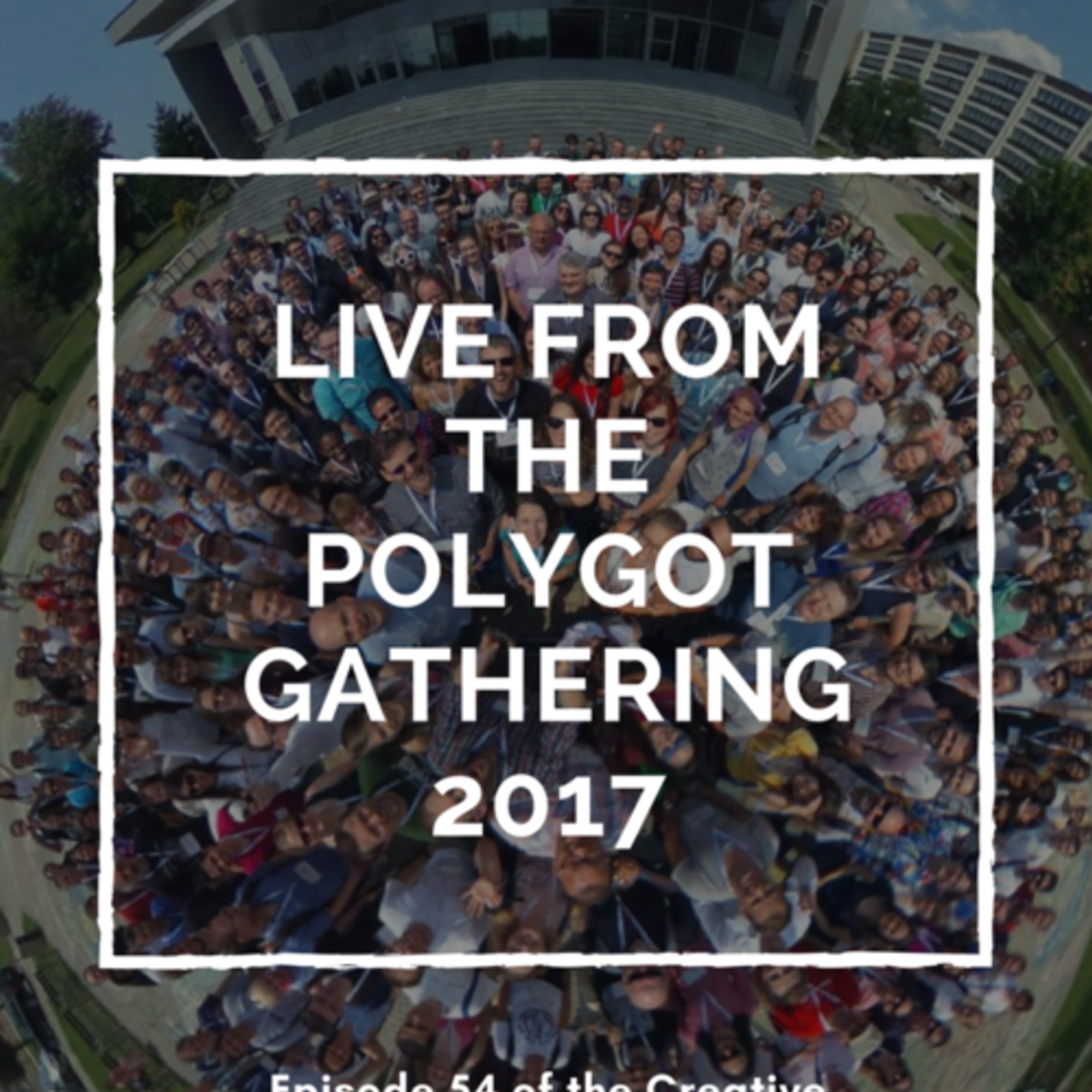
It's one of my favourite episodes of the year - the live clips are in, so you can experience the Polyglot Gathering in 2017 with the Creative Language Learning Podcast as we bring you interviews, impressions and fun from the conference floor. Here's just a hint of what's inside:Wonderful best wishes to you awesome listeners in German, Indonesian, Esperanto, Portuguese, Slovak, Korean, and more!Slovakia Travel Tips and insights into their unlikely national sportFiel's call to arms -- how to bring more love into language learningThe special vocabulary and handy rule 15 of Esperanto grammarWhat Gareth Popkins taught us about polyglotism...and what it has to do with your love lifeCome to an International Polyglot EventIf our episode inspired you to come and participate in a Polyglot event, check out the 2 big international conferences on the calendar:Langfest in Montréal, Canada -- get 25% discount when you enter promo code KERSTINPolyglot Conerence in Reykjavík, Iceland"Polyglot" is nothing to be scared of - not anymore!If this conference has shown me anything, it's that this community called "polyglots" is ever evolving and slowly becoming an ever more supportive, familial group. It's great to see what people of all ages and backgrounds contribute...and of course it feels so fun when you're back home and suddenly realize your phone keyboard now has a Swedish dictionary installed.To learn more about smaller events near you, check out 8 Life-Changing Language Learning Events Around the Globe here on the blog.
"We're Quite a Polite Show Really"
We love having you back with the show. WELCOME if you are a new subscriber. HIGH FIVE if you've always been with us. A lot has happened over the last 8 months and in this show you will hear stories about... The new languages Lindsay has been studying - and why she often changes them How we watch TV in other languages The joys of learning minority languages Our favourite podcasts and blog articles of 2016/17 Where we are travelling this year ...and why we're a polite show You can catch me and Lindsay at the Polyglot Gathering in Bratislava. Listen to hear more about the talks we'll seek out.Links From This Episode The Fault In Our Stars Bench, Amsterdam Polyglot Bratislava Program 2017 Langfest in Montréal, August 2017 <- 25% discount with this link FFasiwn Mecanic, a Welsh talent search show The Language Habit Toolkit Guaraní Language What Gets Easier When You Study More Languages? The Ultimate Guide to Language Learning Podcasts Talk the Talk Podcast SBS News Feeds available in 50+ languages Your feedback is extremely important to the show. It gives us inspiration, topics, ideas, and it makes us happy. Find us on Twitter and Instagram using hashtag #cllpYou can help our show by going on itunes and leaving us a review yourself - we do read them all.
The Best Language Learning Tools for Autumn/Winter 2016
This episode of the Creative Language Learning Podcast is as fun as ever, covering the ultimate Good, Bad and Struggling and our Top 5 Language Learning Tools of 2016/17. Our Favourite Language Learning Tools for Autumn/Winter 2016Listen to the show to get the detailed recommendations, and here is a quick index.1) Lyricstraining.comThis website is awesome!! It pulls in music videos from YouTube and VEVO, adds the lyrics and converts the whole thing into a game. Teachers might call it a "cloze exercise", I call it "fill in the gap", and anyone would call this one a whole lot of fun. Get yourself to Lyricstraining.com and give it a go 2) Gus on The GoA language learning collection created by parents for children. It's fun, it's beautiful, it's available as an app for your smartphone and tablet. In a sea of language learning apps, Gus on the Go stands out for its design and layout. There are apps available in 28 languages. Highly recommended for getting any young person started in a new language! Get the link for your chosen language here 3) TuneIn RadioA language learner's classic for natural input. This app and website lets you listen to radio stations from all around the world. It's perfect if you're at that stage where you're looking for a way to "level up" in your language. There are also podcasts, or you could search by favourite music style. The diverse voices of radio DJs and exciting foreign language music will give you a great new challenge. Download the app or listen live at TuneIn.com. 4) Tiny CardsThis is a new app from the team behind Duolingo. It's all about adorable flashcards helping you review and check your knowledge on anything, from language vocab to colour theory. This promises to take the Duolingo design excellence to a new level. Great if you're looking for a new flashcard app. Right now this is out on iOS only, but you can register Android interest here 5) EggbunYes, it's another super cute app! This innovative little app works like a text chat, where you're chatting with your new friend "Eggbun", who is teaching you the Korean alphabet and language. If you're addicted to texting on your phone, here's an AI teacher who will reply anytime. The app is out for Korean (iOS/Android), Japanese (iOS coming soon, but already out on Android), and soon coming out soon in Chinese. Get your preferred version from the lovely Eggbun website. Honorary MentionThe All 4 App now has a wonderful "Walter Presents" range, bringing in comedies, dramas and crime shows in a really wide range of languages. If you're in the UK, you go and have a look.Learn more about how to use TV to learn a language in podcast episode 31.So The Podcast is Taking a Break..But that does not mean you're going to miss us too much. Lindsay and I have gone through the archives together, selecting our own favourite episodes for you to try.Here are our essential Creative Language Learning Podcast episodes you should not miss: Episode 5 with André Klein, which was a truly inspiring interview about so much more than "German storytelling". André and I discussed why creativity is so important for language learner, and how you can use it to get out of the failures of school learning. Episode 21 - Why Your Language Learning Goal Sucks and What to Do About It, in which I originally got on the mic only to tell you about my new course...but then I had a big rant about goals and why they suck. Episode 30 - How to Achieve a New Year's Goal of Learning a New Language, which is full of small and actionable tips and you're guaranteed to find good advice for your language learning problem. Episode 37 - The Secret Languages of Great Britain, an episode with the incredible Simon Ager of Omniglot in which we discovered that Great Britain actually has more than 10 languages - not just English! Episode 40 - Live from the Polyglot Gathering in Berlin, a fun and lively audio-postcard from Berlin Episode 45 - How to Learn a Language Using Snapchat, which turned out to be such a great guide show and covered one small topic from lots of fab angles Episode 51 - Top 5 Fictional Languages is the podcast episode for listeners who love to spend a lot of time in the land of books, films and video games Other Link From This Episode Futurelearn - free online courses provided by UK universities and organisations. They offer some language courses, including Dutch, Danish, Spanish, and Catalan Sign Language (!) News in Slow French
Top 5 Fictional Languages
Do you speak Sindarin?In this episode, Lindsay and I went full-on nerd and we were loving it! The world of fictional languages is richer than a London billionaire, and we have researched and collected the most awesome fictional languages for you to learn about.In this episode, you'll hear the new Good, Bad and Struggling followed by the Ultimate Fictional Languages Chart. Here in the shownotes, you'll see our Top 5 and the best of all links available so you can follow along and listen to the show. Our Top 5 Fictional Languages Elvish Nadsat/ Newspeak Klingon Minionese Simlish Dothraki, High Valyrian and Game of Thrones Game of Thrones: Creating the Dothraki language The Language Creation Society Elvish, Quenya and Tolkien The Elvish Linguistic Fellowship The J.R.R. Tolkien Audio Collection A free Quenya course from Norway J.R.R. Tolkien Reads (A Poem In Elvish) The Ring Verse read in Black Speech Klingon and Vulcan Youtube clip of Mark Okrand talking about how he developed Klingon of him describing the development). The Klingon Language Institute The Klingon copyright case in 2016 Klingon teacher on Youtube: Lesson 1 Klingon phrasebook for your intergalactic needs Na'vi Learnnavi.org. Naviteri, Paul Frommer's blog about Na'vi Simlish A little Simlish phrasebook 15 Songs You Didn't Know Were Recorded in Simlish Fun - We Are Young in Simlish Minion Language "Ramsbottom" Gag in 19 translations Minions - Trailer on Youtube Minions say Indonesian on YouTube Newspeak in 1984 1984 - Newspeak on YouTube Nadsat in A Clockwork Orange Droogs quarrel in the Korova Milk Bar Other Links and Resources From This Episode Do Canadians Say Autumn or Fall? 6 Fictional Languages You Can Actually Learn Invented Languages - Opinion Piece on Eurolinguiste
Take Our Quiz for European Day of Languages (Live Episode)
<img class="thumb-image" alt="cllp ep 50" data-image="https://static1.squarespace.com/static/500fab79c4aa83ca4b6cacae/t/57f3685a20099ee1f5dea890/1475569775367/cllp+ep+50" data-image-dimensions="1280x1280" data-image-focal-point="0.5,0.5" data-load="false" data-image-id="57f3685a20099ee1f5dea890" data-type="image" src="https://static1.squarespace.com/static/500fab79c4aa83ca4b6cacae/t/57f3685a20099ee1f5dea890/1475569775367/cllp+ep+50?format=1000w" /> We did it! 50 episodes, and one massive live celebration are behind us and a record number of you guys tuned in to listen live and chat to us In This Episode You'll Hear Kerstin's story of creating her European Day of Languages video on YouTube with all of the strangers (did you know I knew nothing about Welsh?) LIVE Good, Bad and Struggling with the Chatroom! Of course, our Huge 36 Question European Day of Languages QUIZ A bittersweet announcement about the show's hiatus after episode 52 Missed the Quiz?Don't miss out! If you want to quiz along, listen to the show recording. We saved all the answers until the end of every round so you can guess along with the live audience.And if you want a PDF of the Questions and Answers, simply hop over here and join the Fluent Language Cool Kids Club.Links From This Episode Kerstin's 25 European Languages Video and Lindsay's 39 European Languages Video That time Lindsay received a haircut on television Russian in 10 Minutes a Day, available from Amazon UK and Amazon US Easy Languages videos on YouTube
Peace, Words 'n Harmony
Hey everyone, welcome to episode 49 of the Creative Language Learning Podcast.The Good, The Bad and The StrugglingRoutines lapsing for the summer, looking forward to September, and permission to half-ass online courses in this week's catch-up with Lindsay and Kerstin. What's your Good, Bad and Struggling?We'd love to hear from you guys on this one. If you want to share what's good, bad and difficult in your languages right now, send your feedback to us. We read every one and your language news could make it to a show intro in the future.Simply do one of the following:1) go on Skype and leave a voice message for fluentlanguage2) or email us at [email protected] - include a voice memo from your phone if you can, so we can feature your voice on the showTopic: Language Learning Can Bring World Peace Language is a beautiful caress that can make strangers melt into friends, but la gusgen is also a verbal door that can be closed in the face of outsiders. (Eddie Butler) We went for deep stuff, and discussed the many ways that language learning can improve the world. From individual peace of mind, via tolerance in your everyday life, to changing the outlook of your country.We found it felt wrong not to talk about moving abroad. Considering what's happening in Britain this year, the discussion turned to migration. Do people miss out when something foreign is added to the community? Our discussion might surprise you, because as always all isn't quite what it seems. And yes, we did say the B-word: Brexit.And what about language education in schools? If we believe that language learning creates world peace, should we make everyone learn as many languages as possible? The Power of LanguageFinally, we only need to give you one word that shows something very interesting: migrant. Even when you're not learning a foreign language, the way that people and media around us use language to shape opinions affects everyone's life. We touch on the idea that language can send signals about all of us, and make or break peace. In our discussion, Lindsay and I got as close as you can get to saying horrible words. But not all the way there.We hope you have a listen to find out more, and get in touch to tell us where you stand on language and world peace.Links and Resources Lingo Newydd, Welsh Learning Magazine Lindsay on IWTYAL and Olly IWTYAL on the Creative Language Learning Podcast Everyone's A Little Bit Racist by Avenue Q Babel, the Language Magazine is talking about how "migrant" as a word has changed BBC Article
Don't Avoid Language Speakers
Hello and welcome to Episode 48 of the Creative Language Learning Podcast!We started off our episode with some insights into what's going on with our language learning - in a new format! It's called the good, the bad and the struggling. Listen in and tell us what you think! What's your Good, Bad and Struggling?We'd love to hear from you guys on this one. If you want to share what's good, bad and difficult in your languages right now, send your feedback to us. We read every one and your language news could make it to a show intro in the future.Simply do one of the following:1) go on Skype and leave a voice message for fluentlanguage2) email us at [email protected] - include a voice memo from your phone if you can, so we can feature your voice on the showTopic: You Do Not Need a Native Speaker For PracticeThis one had a controversial statement at the heart of it, and Lindsay and I debated the merits of hunting, finding, selecting, working with and learning with native speakers.So, do you need a native speaker to learn a language?Or can you learn a language just as well if you don't have a native speaker to practice with?One of us argued that native speakers are almost "fetishized" in the world of language learning -- listen in to find out which one and see where our debate ended up.
A Good Handle on The Hangul
In this episode, we let you guys take us where you wanted us to go with your awesome listener messages.Some of What We Talked AboutWhere to go when you travel to Lithuania (home of our first listener)Great tips for studying Korean, like how to study the grammar and where to go next after learning Hangul scriptIs there ever a perfect language course that is not too slow and not too fast?How to set yourself little language goalsGreat apps on your smartphone that help you learn languagesHow to beat procrastination when you’re supposed to be studying your languages ((Find our homescreen gallery on the blog or at www.fluentlanguage.co.uk/podcast))We want to thank you guys so much for sending us so much feedback (especially Paulina, Stephen and Andy) in this episode. Keep it coming, we always read your reviews and feedback and definitely want more voice messages.You Can Be On The ShowYou can submit your message to us anytime. Simply do one of the following:go on Skype and leave a voice message for fluentlanguageORemail us at [email protected] - include a voice memo from your phone if you can, so we can feature your voice on the showleave a comment on this blog postMake sure you mention your name and which languages you’re learning.Links and Resources From This EpisodePolyglot Symposium in Canada, where Lindsay gave a talk about Social Media and Language LearningNational Eisteddfod - Eisteddfod Genedlaethol, the National Festival of WalesLindsay’s Language Script Challengeitalki, where you can find informal and formal tutoringKoreanHow to Study KoreanFirst Step Korean, free online Korean course on CourseraAudio for Colloquial Korean by RoutledgePodcasts Talk To Me in Korean and Korean Class 101Naver DictionaryWelshBBC Welsh ChallengeSay Something In WelshWelsh Language Album of the YearAppsLinqWlingua, learn Spanish onlineMemriseHelloTalkDuolingoInnovative LanguageMeistertask, for organizing yourselfTandemJW Language by Jehovah’s Witnesses (whoah!)LEO DictionaryThere are so many more that we mention on the show, so don’t forget to check out our home screen gallery for inspiration.Beating ProcrastinationSelf Control App for Mac ComputersLeechblock for FirefoxStayFocusd for Chrome30/30 App for iOS
Mastery and Advanced Level Language Learning
Don't forget to catch the mention of our good friends at Flashsticks, the language learning post-it guys. You can purchase vocabulary post-it notes in 8 languages and get 10% off with the code KERSTIN10 - or just download the free Flash Academy app.When you reach the higher language levels, it's not enough to just study. How does it feel to reach a level where you are looking for ways to go beyond fluency? How can you move towards mastery? There's no Lindsay in this episode (don't worry, she'll be back very soon!), so I found myself two experts who know what they are talking about: Tristan Foy, an American polyglot who's currently my advanced German student and Gareth Popkins from How To Get Fluent The episode is full of tips and strategies for reaching the very advanced levels and getting better even after years of study.Check out the full blog post and show notes for this article at www.fluentlanguage.co.uk/blog/podcast-advanced-languageKey Points: It's Not About Fast Progress Advanced Level Means Finding "More" In The Language "Learning a language is a bit like hugging a cactus - you can never get entirely comfortable" It Takes Work To Progress Enjoy the journey, stop for a breather whenever you feel like it and keep going. Fluency - No One Cares! Tristan sums this up with a wonderful sentence: Don't worry about getting fluent. Worry about getting better. You Need Humility Links and Resources Mentioned In This Episode How to Get Fluent, Gareth's blog - highly recommended Ellen Jovin's idea of the Polyglutton Gareth's summary of the Polyglot Gathering, in which he explains what "The Need Principle" is: Learning another language is a long, hard process, requiring a lot of dedication (..) After all, as an adult trying to learn a new language it’s all about “overcoming human nature”. You need, erm, “need”: you’re either surrounded by the language, you know somebody who speaks it, you have an unusual interest in the country or culture or the language will benefit you at work Wade's Russian Grammar Hammer's German Grammar Teach Yourself Courses Our sponsors Flashsticks Special Guest: Gareth Popkins.
How To Learn a Language Using Snapchat
In our introduction, we take you on a tour de force German kids' TV, Icelandic football cheering, and the pronunciation of Montréal.Don't forget to catch the mention of our good friends at Flashsticks, the language learning post-it guys. You can purchase vocabulary post-it notes in 8 languages and get 10% off with the code KERSTIN10 - or just download the free Flash Academy app. What is Snapchat?Snapchat is a social media app for any smartphone. It lets you share photos or videos, and your snap only lasts 24 hours unless you make it a "memory".Of course you can change the menu language, but with such strong visual focus that alone won't teach you a language.It's designed for camera phones and not available on your desktop computer.Why is it awesome? It's easy, fast and low-pressure. In other photo social networks, you would be tempted to make every picture stunning and impressive and beautiful. But in Snapchat, you'll just play and learn in the process. What does that mean? No more shyness, no more reasons to avoid speaking! It allows you to stitch things together into a story, so you can share a 5-second snap, or go ahead and combine several videos to show how you speak a foreign language. For language learning, the new Memories feature is a way to track your progress. Record yourself speaking today, save the memory, and try the same thing in a month. You'll be surprised at your own progress! Great Accounts to Follow (Click for the Snapcodes) fluentlanguage ldlanguages irishpolyglot flashsticks - recommended! bradchase Links and Further Reading - Become a Snapchat Expert How I Use Snapchat For Language Learning on Lindsay's blog North American Polyglot Symposium, where Lindsay is giving a talk this weekend Ghostcodes app Die Sendung mit der Maus, German kids' TV show with bilingual credits Are You a Snapchat User?If you use Snapchat for language learning (or not), leave us a comment and share your usernames and snapcodes.Thank you guys so much for being podcast listeners, chatting to us on twitter (I'm @kerstinhammes and Lindsay is @ldlanguages) and making your voices heard!
Be Like a Waffle (Language Learning in Country)
Episode 44 is kindly sponsored by our friends at Flashsticks. Check out their new app Flash Academy is out now. It's a language playground offering you light lessons, games and quizzes. Go check it out for free at Flash Sticks and get 10% off everything at the site with code KERSTIN10. Learning a Language In-CountryLearning a language where it is spoken is one of the Top 5 wishes on every learner's bucket list. In this episode, we explore stories and tips about language learning - including Lindsay's travels to Costa Rica, and what Kerstin's English was like on day 1 in England. What's different between home learning and in-country learning? The risk and benefit of having a "home library" for language learning How can you build your in-country vocabulary? Why having no choice is the single best thing you can do for your language skills The three types of in-country learning: Short Stay, Mid-Stay and Complete Life Change How to rank and assess your language level on the "Kerstin Cable Breakfast Food Scale" German learners! Kerstin is inviting you to come to Germany and speak for a week at the Fluent German Retreat Exactly what to do when people correct you as you speak another language What does it mean when you start to dream and think in another language? Plus: Bonus SecretWe started off the show comparing a few Duolingo notes, and finally find out what happens when you finish a Duolingo skill tree. Links and Resources from this Show Becoming Fluent book by Roger Kreuz and Richard Roberts Creative Language Learning Podcast Episode 32 - the one about habit building Learn German in Germany with Kerstin at the Fluent German Retreat Lindsay's "Learning x in x" Series on Youtube Derren Brown David Blaine's interview Paul McKenna - stage hypnotist and self help guy You Can Be On The Show!Do you want to become a part of the Creative Language Learning Podcast? Then send us your feedback! We would love you to record a voicemail on your phone and email it to [email protected] -- send us a question or a comment so you can be on the show.Got Duolingo or Flashsticks Academy on your phone?Then take a picture and send it to [email protected] or tweet @kerstinhammes and @ldlanguages #cllp to see your "learner phone" featured in a future show.
Episode 47: What We Think About Brexit
bonusDear listeners, As this is our first show since the UK's historic EU referendum, we wanted to take a minute to talk to you guys about Brexit, Britain's exit from the European Union. Lindsay and I both stand firmly on the side of "Remain", the campaign that did not want British people to vote for leaving the EU. For me as a German citizen, it is particularly heartbreaking to see my adopted home country vote for a process that is going to strengthen the lines between our countries. For Lindsay as a Brit, it has created an atmosphere in which it's difficult to feel at home. On a personal level, the result devastated both of us, although we respect the many different opinions that will have gone through voters' minds on the day. The reports of xenophobic and intolerant comments and incidents since the result were another shock. Racial abuse is not acceptable behaviour, and this is not a time to turn to politicians promising to improve things by hurting foreigners. Of course, there are also concerns about what leaving the European Union might mean for the UK's other nations and their own languages, especially Wales and Scotland. This is a time of real uncertainty, and Lindsay and I are finding ourselves in the middle of it. We believe that being British does not exclude being European. We want to live in a prosperous, positive and inclusive Europe, and believe in a philosophy that emphasizes unity, working together and holding our country to the highest possible standard. In the following show, you'll hear our stories of being in other countries, and how amazing the experience can be for growth as language learners and as humans. We hope that Britain will find a path that keeps this freedom and commitment to an international fuutre available to all of its citizens, and all that want to experience languages in the UK. Thank you guys so much for listening to our show, and for opening your life to all the benefits of language learning. We wish you all the best today. Kerstin and Lindsay
Language is Everything: Talking Language Activism with Wikitongues
Oour good friends at Flashsticks are back as podcast sponsors - go check out their awesome new app and post-it notes in 8 languages at Flashsticks.com and claim 10% discount using code KERSTIN10. "This is one of the most important things that we can do as humans - to constantly strive to learn about things that we don't understand." An organization dedicated to raising awareness of language diversity.We all know that language is important, but after listening to this episode you'll be amazed at the enormous variety of perspectives on this topic. Non-profit organization Wikitongues looks at languages from all points of view - as a metaphor for life. What do we lose when a language dies?There are communities that lose their ability to lose their own language - when a language is lost, the individuals in that community lose a part of who they are. Language death is both a loss of history and a loss of identity. If you oppose racism, mysogyny, genocide and oppresion, you must support language diversity! And if you thought language discrimination was a thing of the past, think again: Languages like Occitan and Cornish are experiencing it right now.Links from this episode Youtube Channel of Wikitongues Language or Linguistic Rights is the summary of human rights that cover our rights to speak and choose our languages. Poly, the app by Wikitongues The World in Words podcast: Who in Japan speaks Ainu? The World in Words podcast: Welsh is considered a model for language revitalization, but its fate is still uncertain Yvonne Treis's Book about Moselfränkisch: "Ein Kaffee zum Mitholen, bitte!" Some cool languages documented on Wikitongues: Nafasana, a language of Vanuatu (where?) Ainu, a language of Japan Note for pedants: In the interview, the Universal Declaration for Human Rights was mentioned, but the speaker may have meant the Universal Declaration for Linguistic Rights. I researched this but could not find the exact quote in either one. If you know more details, go ahead and leave a comment or itunes review to help us out. <img class="thumb-image" alt="language diversity" data-image="https://static1.squarespace.com/static/500fab79c4aa83ca4b6cacae/t/5767bb70e4fcb52666c8cc95/1466415996901/language+diversity" data-image-dimensions="940x788" data-image-focal-point="0.5,0.5" data-load="false" data-image-id="5767bb70e4fcb52666c8cc95" data-type="image" src="https://static1.squarespace.com/static/500fab79c4aa83ca4b6cacae/t/5767bb70e4fcb52666c8cc95/1466415996901/language+diversity?format=1000w" />