The Dr. Greg Wells Podcast
78 episodes — Page 1 of 2
Great World Race Prep Update with Dr. Greg
All About Healthy Fats with Dr. Richard Bazinet
The Ripple Effect: Dr. Greg Wells’ Masterclass on on Healthy High Performance
The Art of Finding Joy with Jessica Janzen
Why I’m Doing The Great World Race (7 Marathons on 7 Continents in 7 Days) with my Daughter
Rest Refocus Recharge: Dr. Greg Wells’ Masterclass on Slowing Down to Speed Up
The Science of Finishing What You Start With Chris Bailey
Create Behavior Change That Lasts with Dr. Marc Mitchell
Crafting a Life of Adventure and Health with Dr. Alex Hutchinson
From Prescription to Prevention with Dr. Kwadwo Kyeremanteng
Co-Parenting With the Internet - Jake Ernst on Digital Distraction and Mental Health
S8 Ep 107All about the latest science on creatine with Dr. Scott Forbes
Dr. Scott Forbes is trying to cut through the hype and misinformation around creatine so listeners can understand what creatine actually is, what it truly does (and doesn’t do), and how to use it safely and effectively for performance, brain health, and healthy aging.In today’s conversation Dr. Forbes explores why creatine has become one of the most talked-about supplements—and how to separate real science from social-media noise. He explains what creatine is (and why it’s not a steroid), how it supports short-duration high-intensity performance, and what the research says about strength, muscle, endurance “bursts,” and recovery. Scott also dives into emerging findings on brain energy demands—especially under stressors like sleep deprivation and mental fatigue—and why creatine may matter more as we age.You will learn how creatine works in the body’s energy systems, what benefits are realistic (small but meaningful), and how those gains can compound over time. You’ll also learn practical dosing strategies (loading vs. steady daily use), why creatine monohydrate is the best-studied form, how timing fits into the routine, plus the science behind common concerns like hair loss and kidney markers.You will discover that creatine’s biggest strength is “quiet consistency”: it can modestly expand rapid-energy capacity and help maintain performance during physical or mental stress—without needing complicated protocols.Scott helps solve the challenge of making a confident, evidence-based decision about whether creatine belongs in your routine—without fear, myths, or marketing-driven confusion.
S8 Ep 106Longevity, Telomeres, and the Real Foundations of Health with Dr. Elaine Chin
Dr. Elaine Chin is trying to solve the problem of people aging into chronic inflammation, fatigue, and disease because they are surrounded by confusing wellness advice and are guessing instead of using a science-based, personalized approach to healthspan. In this episode, she frames the answer as precision medicine built on measurable biology and consistent daily habits.In today’s conversation Elaine Chin explores how precision medicine and lifestyle medicine can work together to improve healthspan and lifespan. She and Dr. Wells discuss telomeres, inflammation, Mediterranean-style eating, hydration, movement, recovery, and the role of purpose in healthy aging. The conversation stays grounded in practical decisions people can make every day while also emphasizing the value of understanding biomarkers and hormones. Overall, this episode helps listeners cut through health misinformation and return to a more evidence-informed foundation for wellbeing.You will learn how Dr. Chin thinks about lifestyle medicine as an “orchestra” that requires sleep, nutrition, movement, mindfulness, and social wellbeing to work together. You will also hear her explain why she pays close attention to telomeres, chronic inflammation, hydration, ultra-processed foods, omega-3 fats, and biomarker testing. The episode also clarifies the difference between exercise and general activity, and why small daily habits can shape long-term health more than extreme interventions.You will discover that many of the most powerful longevity tools are still the fundamentals: sleep, purpose, movement, hydration, and food quality. Dr. Chin’s core insight is that these are not just “healthy habits”; they are biological signals that shape inflammation, recovery, and the pace of aging.This episode helps solve the challenge of not knowing where to start with health and longevity when the wellness space feels noisy, extreme, and contradictory. Dr. Chin brings the listener back to a simpler model: understand your biology, focus on the basics, and use data to guide smarter decisions.Key take aways:Lifestyle medicine works best in combination.Telomeres reflect the wear of aging.Ultra-processed foods drive inflammation.Movement all day matters.Know your biology before guessing.
S8 Ep 105Mind, Movement, and Mood With Dr. Shimi Kang
Dr. Kang is tackling a modern, high-impact problem: our relationship with technology (and “perma-crisis” busyness) is driving stress, disconnection, and attention fragmentation—especially in kids and teens—unless we build a healthier “tech diet” and lifestyle that restores regulation, connection, and play. In today’s conversation Dr. Shimi Kang explores how brain science can help us thrive in a world shaped by stress, constant change, and persuasive technology. She shares her origin story—from early fascination with the brain to work with the World Health Organization—and explains why mind and body are inseparable in real life. Together, Dr. Kang and Dr. Wells unpack the “tech diet” (toxic, junk, and healthy tech), why kids are uniquely vulnerable, and how simple daily practices—movement, connection, downtime, and music—restore brain health and motivation.
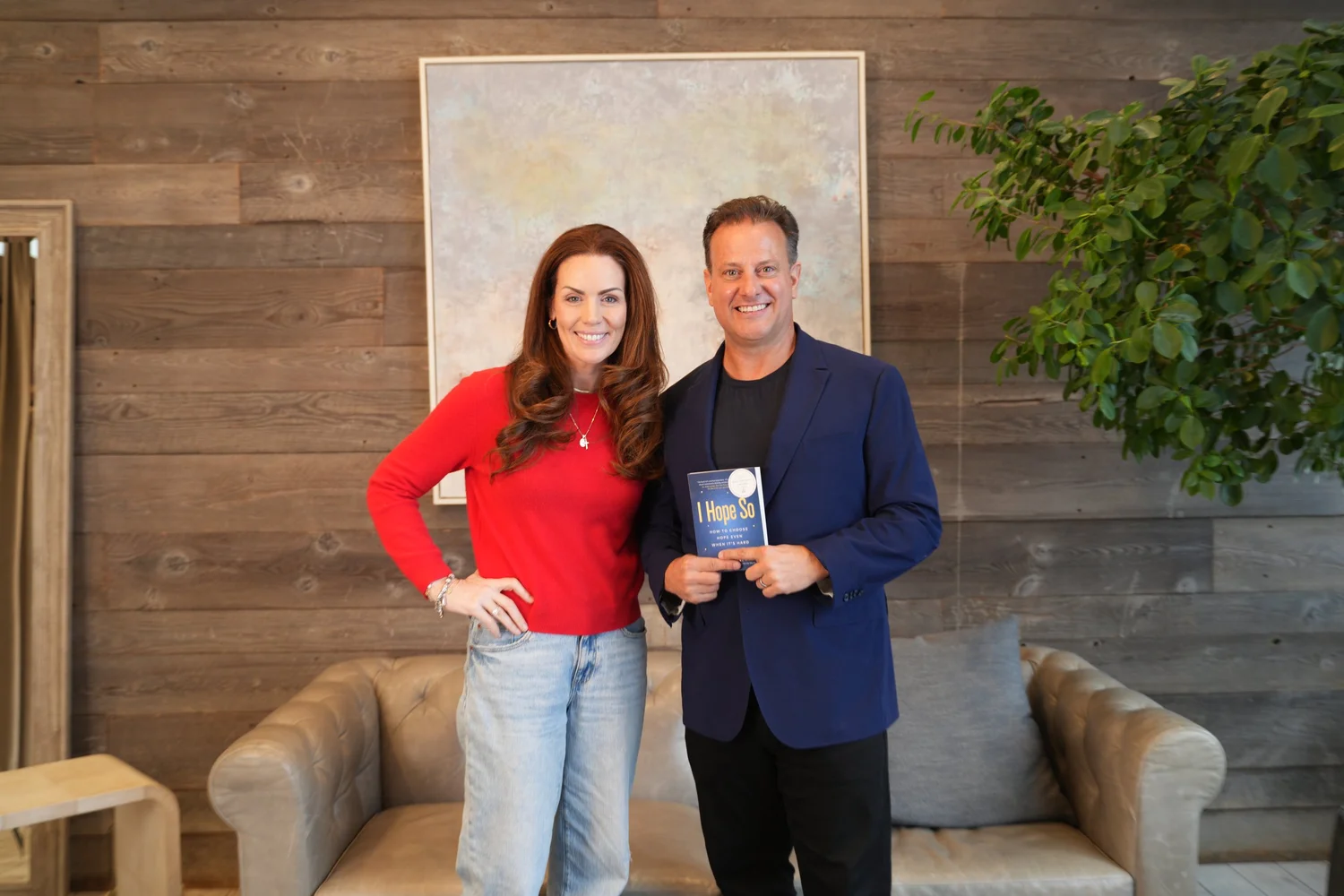
S8 Ep 104How to Choose Hope Even When It’s Hard with Dr. Robyne Hanley-Dafoe
People are navigating stress, setbacks, and uncertainty by trying to control everything and doing it alone—which amplifies anxiety and drains performance. Dr. Robyne’s work in this episode reframes hope as a trainable, practical skill (not “toxic optimism”), and gives listeners a grounded pathway to regain agency, build support, and move forward—especially when life feels wobbly. In today’s conversation Robyne Hanley-Dafoe explores why hope is not the same thing as optimism—and why clinging to outcomes can backfire when life gets hard. She and Dr. Wells unpack “agency thinking” as the antidote to control spirals, then translate that mindset into practical micro-steps: get safe, get resourced, and choose the next right move. You will learn how Dr. Robyne distinguishes hope from optimism and why that matters under pressure, how to replace control-chasing with agency, and how to use “pathway thinking” to identify one realistic next step instead of trying to solve everything at once. You’ll also learn her “get to the shore” approach for moments when you’re overwhelmed. You will discover that hope is a skill you can practice to keep moving forward without needing perfect certainty or a guaranteed outcome. This episode helps you break out of the loop of “I must fix this right now” and move toward a more proactive approach that is achievable and sustainable.
S8 Ep 103Peace Before Performance with Dr. James Rouse
High performers are getting trapped in a modern loop of overdoing + cortisol + information overload, chasing “biohacks” while skipping the inner foundation (hope, self-worth, presence) and the recovery that makes performance sustainable. Dr. James Rouse’s work in this episode is about reclaiming control: building purpose-driven rituals, creating contrast (hard effort + deep rest), and protecting nervous-system regulation so you can perform better without burning out. In today’s conversation James Rouse explores why hope isn’t passive—it’s a personal responsibility you practice daily. He and Dr. Wells unpack the physiology of overdoing (especially living on cortisol), and why sustainable high performance depends on contrast: peak effort paired with deep rest. James shares practical frameworks—“do the one thing,” build self-efficacy, start your day inside (heart coherence before the phone), and close your day with rituals that help you land and recover. You will learn… • How James defines hope as an “inclination of possibility” you choose and cultivate. • Why “biohacking” only works when it’s built on self-love, intention, and responsibility (not shortcuts). • A simple performance strategy: do one thing, witness it, and build self-efficacy (Bandura-style). • The “contrast lifestyle” idea: peak performance + deep rest, plus hot/cold and recovery practices. • James’ real-world morning and evening bookends (heart coherence first; “landing” routine + self-recognition). You will discover that your best performance doesn’t start with more intensity—it starts with more regulation. When you protect peace and presence first, the physiology of focus, energy, and recovery becomes much easier to access. One big challenge this episode solves: This episode helps the listener stop living in the “35–80% zone” of constant effort and constant stimulation—and instead build a repeatable rhythm of all-in effort followed by real recovery, so performance climbs while stress load drops.

S8 Ep 102How to Perform at Your Best When It Matters Most with Dr. Dana Sinclair
High performers often know what to do—but in decisive moments they get pulled into thoughts, feelings, fear, and outcome-focus, which breaks execution. Dana’s work solves the “pressure gap” by giving people a simple, repeatable plan to get calm-ish and refocus on task actions—so they can perform when it matters most. In today’s conversation Dana Sinclair explores why pressure doesn’t ruin performance—drifting into feelings and outcomes does. She breaks down her practical “shift when you drift” approach: get calm-ish (often with breath), identify what’s getting in your way, and lock onto a small number of task cues you can execute right now. Together, Dana and Dr. Wells unpack why confidence and rituals can be overrated if they distract from execution, and how tiny in-the-moment behaviors create better results under stress.You will learn… how to get “calm-ish” quickly using breathing (nose breathing + longer exhales), how to identify your top 2–3 pressure “hotspots” (fear, expectations, mistakes, outcome), and how to turn those into a simple sticky-note performance plan. You’ll also learn how to use performance cues (task actions), build a “facts list” to steady your self-talk, and use brief “daydreaming” (micro-imagery) to rehearse composure and execution.You will discover… that great performance is less about building the “right” feeling and more about choosing the “right” actions—especially when pressure spikes. Dana’s core idea: calm-ish + task cues = results, and results are what eventually build confidence (not the other way around).This episode helps the listener stop getting hijacked by pressure and outcome-thinking—and instead execute a simple in-the-moment reset that brings them back to what they can control: breathing, focus, and the next action.
S8 Ep 101From Mindset to SoulSet With Philip McKernan
In today’s conversation Philip McKernan explores what it really takes to move from “doing all the right things” to living from a deeper, more aligned place—what he calls SoulSet™. He and Dr. Wells unpack why so many driven people chase goals, money, and control…and still feel like something is missing. Philip shares how creating space, asking better questions, and trading judgment for curiosity can open the door to clarity and meaningful change. The result is a practical, courageous path toward the work (and life) you were actually built to live.

S1 Ep 60#60 - Navy SEAL Strategies to Stay Calm and Execute Under Pressure with Steven Drum
Stephen is solving the “pressure gap”: the moment when stress hijacks focus and people react instead of respond—in leadership, business, and life—because they haven’t built a deliberate process to prepare for defining moments.In today’s conversation Stephen Drum explores what it really means to “perform on the X”—the critical moment when everything is on the line and you don’t get a do-over. He breaks down the difference between reacting and responding, and why presence, rehearsal, and simple performance cues matter more than raw intensity. Stephen also shares how Stoic philosophy, mindfulness, performance psychology, and breathing practices help leaders stay steady in chaos.You will learn how Navy SEAL teams prepare for “no-return” moments, and how to translate that into boardroom, relationship, and life pressure. You will learn practical tools to notice your stress signals early, pause, and choose a response that serves you. You will learn why confidence is earned through preparation (not “fake it till you make it”), and how to build a repeatable readiness process. You will learn simple breathing and mental rehearsal techniques that improve focus and composure fast.You will discover that your mind and body often respond to a high-stakes presentation (slides failing, tough feedback, big pitch) with the same stress physiology as truly dangerous situations—and the solution is a trained, deliberate process, not willpower.Stephen helps listeners solve the challenge of staying calm, clear, and decisive when pressure spikes—so they can execute effectively instead of getting pulled into fight/flight/freeze and regretful reactions.

S1 Ep 59#59 - The Three Levers: Andy Blow on sweat, sodium, and smarter hydration
Andy is solving the “guesswork problem” in endurance performance: athletes lose wildly different amounts of fluid and sodium, so generic hydration advice leads to dehydration, cramping, GI distress, or even hyponatremia—and performance falls apart in the heat and over long durations. In today’s conversation Andy Blow explores why hydration and fueling are never one-size-fits-all—and how understanding your sweat losses can transform performance in long or hot training and racing. He and Dr. Wells break down sweat physiology, heat adaptation, and why you can “do everything right” yet still struggle if your sodium and fluid strategy doesn’t match your body. Andy also shares practical guardrails for drinking, electrolyte replacement, and carbohydrate intake, plus the simple “three levers” framework that helps athletes execute better under stress.You will learn why humans sweat (and why it’s a performance superpower), and how sweat is linked to blood plasma and electrolyte loss. You will learn the real-world range of sweat sodium losses (and why that range matters more the longer/hotter the event). You will learn how heat acclimation changes sweating, blood volume, and tolerance over ~2 weeks. You will learn practical hydration guidance (short sessions vs long sessions) and how to avoid overdrinking/underd rinking traps. You will learn the emerging best practices for endurance fueling—from ~30g/hr up to 90–120g/hr for high-output athletes who can tolerate it.You will discover that your “hydration problem” is often a sodium + fluid mismatch—and that getting those two numbers closer to your personal losses can be “night and day” for performance in the heat. Andy helps listeners solve the challenge of finishing long/hot sessions strong—without bonking, cramping, or having the day ruined by avoidable hydration and fueling mistakes.

S1 Ep 58#58 - From “Not Sick” to Optimal: Dr. Melissa Piercell on nutrition that upgrades performance
Melissa is solving the “I’m functioning but not thriving” problem—where high performers feel tired, inflamed, foggy, or stuck with weight/metabolic issues because modern stress + ultra-processed food + hidden toxins quietly push them toward “not sick” instead of healthy and optimal. Her approach is to identify gaps (often via blood work), reduce toxic load, and build realistic nutrition routines that support energy, mood, and long-term disease prevention. In today’s conversation Melissa Piercell explores how we move along the health spectrum from disease → not sick → healthy → optimal using practical, high-impact nutrition and lifestyle changes. She and Dr. Wells unpack epigenetics (how lifestyle influences gene expression), why toxins and processed foods can amplify inflammation, and how digestion and “detox” really work in day-to-day life. Melissa shares simple rules for hydration, fiber, fats for brain health, stress routines, and time-restricted eating—tools that help busy people perform better without getting extreme.You will learn how epigenetics connects daily habits (stress, food, toxins) to long-term health outcomes. You will learn practical “detox” fundamentals—especially the role of daily elimination, fiber, and hydration. You will learn how fats (omega-3 vs omega-6, trans fats, and cooking oils) influence brain function and inflammation. You will learn why chronic stress changes immunity, recovery, and metabolism—and how routines support hormonal rhythms. You will learn realistic strategies for weight/body composition (including time-restricted eating and “no eating after dinner”).You will discover that the biggest breakthroughs often come from small, repeatable upgrades—like consistent sleep timing, daily fiber + water, and nutrient-dense meals—because these changes reduce physiological stress and improve how your body adapts over time.Melissa helps listeners solve the challenge of feeling depleted in a high-demand life—by turning nutrition into a realistic system that stabilizes energy, mood, digestion, and performance (even when schedules are chaotic).

S1 Ep 57#57 - Heart Rate Variability and Real Recovery with Dr. marco Altini
Marco is solving the “data confusion” problem: people are surrounded by wearable metrics and made-up scores, but don’t know what’s actually measured, what’s estimated, and what’s meaningful over time. His work helps people use reliable physiological signals (HR, HRV, temperature) longitudinally to manage stress, avoid bad training decisions, and improve performance and health.In today’s conversation Marco Altini explores how wearable tech has shifted us from one-time lab snapshots to long-term physiology tracking in real life. He explains what wearables can measure accurately at rest (like heart rate and HRV), what they’re estimating (like sleep stages and readiness), and why the most valuable insights come from trends vs your own baseline. Marco also breaks down HRV as a practical stress marker, how wearables can flag “something’s off” (like infection), and the simple morning routine that makes HRV data useful.You will learn what modern wearables measure well at rest (HR/HRV) and why movement still challenges accuracy. You will learn the difference between measured signals versus algorithmic estimates (sleep stages, readiness), and how to avoid being fooled by a single score. You will learn what HRV is (beat-to-beat variation), why it reflects autonomic stress load, and how to interpret changes day-to-day and across training blocks. You will learn why infection detection is usually non-specific (it flags stress, not the exact virus) but still useful for decision-making. You will learn how to start a consistent, one-minute morning HRV routine that produces actionable trends.You will discover that the real superpower of wearables isn’t perfect accuracy—it’s longitudinal tracking: comparing today’s physiology to your history to spot meaningful change early.Marco helps listeners solve the challenge of making better decisions under uncertainty—when training, work stress, sleep disruption, travel, or early illness is pushing the body toward overload—so they can adjust before stress becomes chronic.

S1 Ep 56#56 - Sick Not Weak: Ending the Mental Health stigma with Michael Landsberg
Michael is fighting the core problem of stigma-driven silence—the belief that depression, anxiety, and other mental illnesses are personal weaknesses. His work aims to shift the narrative to “sick, not weak”, so people get help sooner, caregivers understand better, and fewer individuals suffer alone. In today’s conversation Michael Landsberg explores his journey from decades in Canadian sports media to becoming one of the country’s most visible mental health advocates. He shares how anxiety shaped his early life, how a family health crisis preceded a devastating depressive episode, and why speaking openly on-air in 2009 changed the direction of his life. Dr. Wells and Michael dig into how language shapes stigma, why “weakness” is the wrong frame, and how being truly understood is often the first step toward healing. You will learn why mental illness stigma persists—and how a simple shift in language (“sickness, not weakness”) can change whether people reach for help. You’ll learn what depression can actually feel like from the inside, and why “normal stress” language can unintentionally minimize real illness. You’ll learn how honesty (shared with strength, not shame) can empower others to speak up—especially men and high performers who feel pressure to look “fine.” You’ll also learn why caregivers need support too, and how understanding—not fixing—is often the most powerful first move.You will discover that loneliness isn’t about being alone—it’s about not feeling understood—and that finding one person who truly “gets it” can meaningfully reduce isolation and open the door to recovery.Michael helps solve the challenge of how to talk about mental health in a way that reduces shame—so people struggling (and the people who love them) can move from silence to support without judgment.

S1 Ep 55#55 - Be Brave, Focused, and Brilliant: Daily Practices for Great Work with Todd Henry
In today’s conversation Todd Henry explores how everyday professionals can stay creative and effective in a world full of distraction and pressure. He and Dr. Wells unpack why “creativity” isn’t just art—it’s problem-solving—and why tiny daily rituals matter even more when life gets disrupted. Todd shares practical ways to protect attention, reduce overwhelm, and build a sustainable rhythm for producing brilliant work without burning out.

S1 Ep 54#54 - One Step at a Time: Everest, the Sahara, and the Mindset of the Unstoppable with Sebastien Sasseville
How to pursue big goals (in sport, work, or life) without being limited by adversity — by building discipline, experimenting until you understand your “systems,” and leading yourself (and others) one step at a time.In today’s conversation Sébastien Sasseville explores how a diagnosis of type 1 diabetes became a turning point that pushed him toward structure, endurance, and purpose. He shares what it took to summit Mount Everest, why the Sahara strips away expectations fast, and how running across Canada became a mission-driven way to help others living with diabetes. Along the way, Sébastien breaks down the mindset of execution under pressure: balancing control with letting go, focusing on the return trip (not just the summit), and finding meaning beyond performance.You will learn how Sébastien trained for extreme goals by stacking skills, fitness, and logistics over years (not weeks), and how he “experimented” to understand his body well enough to perform safely with type 1 diabetes. You’ll hear why the desert is a masterclass in humility and presence, and how dropping expectations can actually improve performance and enjoyment. You’ll also learn how he translates endurance lessons into leadership: mission-first teams, disciplined execution, and purpose as the fuel that lasts.You will discover why the most dangerous part of big goals is often after the win — and how elite performers stay focused on the “way down,” not just the summit moment.Sébastien helps solve the common high-performer trap of setting ambitious goals but lacking the structure, patience, and process-focus required to execute consistently—especially when conditions are uncertain and discomfort is guaranteed.

S1 Ep 53#53 - How leaders protect performance and mental health with Dr. Marie Helene-Pelletier
Dr. Pelletier is solving the “I’m exhausted and slipping, but I don’t know what to change” problem—helping busy professionals and leaders understand what burnout really is, how to spot the early warning signs, and how to rebalance demands vs. supplies with practical, evidence-based actions at both the individual and organizational level.In today’s conversation Marie-Hélène Pelletier explores why burnout is more than just feeling tired—and how it shows up as exhaustion, cynicism, and declining performance. She breaks down a simple but powerful framework: demands are rising (especially during crisis), and if supply doesn’t increase, we slide downward over time. Dr. Wells and Dr. Pelletier also dig into how to build self-awareness earlier, reduce stigma through more specific conversations (anxiety, depression, substance use, etc.), and protect performance using the fundamentals that move the needle most.You will learn the World Health Organization framing of burnout and why people often misuse the term. You’ll learn how to map your stressors using a “demand list” and identify the small percentage you can change to get meaningful relief. You’ll learn the four foundational behaviors that most strongly support mental health (sleep, nutrition, exercise, and relationships), plus why they require consistency—not quick fixes. You’ll learn simple self-awareness tools (daily 0–10 ratings, nuance over extremes, and check-ins with trusted people) that help you catch problems sooner.You will discover that resilience isn’t just “trying harder”—it often starts by reducing the load you’re carrying and aligning your choices with your values, because some demand levels are impossible to “out-supply.”She helps listeners solve the challenge of staying high-performing without slowly breaking down—by creating a realistic plan to prevent burnout, restore energy, and protect mental health in high-demand workplaces.

S1 Ep 54#52 Burnout-Proof High Performance with Dr. Susan Biali Haas
High-performing people are stuck in a cycle of chronic stress that quietly erodes energy, mood, relationships, and results—until it becomes burnout. Susan’s work (and this conversation) focuses on breaking that cycle with science-based tools that help leaders build sustainable high performance without sacrificing health.In today’s conversation Susan Biali Haas explores how high achievers can build stress resilience and prevent burnout without lowering their standards. She and Dr. Wells unpack why the brain and nervous system can get “stuck” in threat mode, especially after prolonged stress, and how small, repeatable practices can shift you back toward calm, energy, and clarity. They also dig into the performance value of purpose, joy, and mental training—simple levers that help people show up better at work and at home.You will learn how to spot early burnout signals (before you crash), how to use neuroscience-informed strategies to downshift stress and rebuild capacity, how purpose and meaning protect performance over time, and why “fun” and recovery aren’t indulgences—they’re part of the physiology of sustainable output.You will discover that resilience isn’t a personality trait—it’s a trainable skillset, built through small, evidence-based shifts that change how you respond to pressure.This episode helps solve the challenge of trying to maintain elite performance while feeling exhausted, overwhelmed, or emotionally flat—by giving you practical ways to protect your brain, energy, and mental health under real-world demands.

S1 Ep 51#51 - Olympian Kyle Shewfelt on courage, confidence, and comeback
Kyle is tackling the “toxic excellence” problem: how to pursue world-class performance without fear-based coaching, emotional harm, or unsafe culture—by building athlete-driven, supportive environments where people can grow, fail, and thrive.In today’s conversation Kyle Shewfelt explores what it takes to build a healthy, high-performing life after the biggest moments—Olympic gold, devastating injuries, and the emotional crash that can follow achievement. He and Dr. Wells unpack how stress shows up in the body, why perspective is a practice, and how creating space (even sitting alone in a car) can restore clarity and leadership. Kyle also makes a powerful case for safe sport—pushing hard with dignity, respect, and kindness—so athletes can reach the top in a positive way.You will learn practical ways to interrupt “fight-or-flight” when pressure spikes—by getting out of your head and into your body. You will learn how Kyle thinks about leadership during uncertainty, including the value of protecting time and space so you can show up better for others. You will learn what “athlete-driven, parent/coach-supported” development looks like—and why it matters for both performance and long-term wellbeing. You will learn the cultural ingredients of safer, healthier sport environments that still produce excellence.You will discover that the fastest way back to calm isn’t more thinking—it’s noticing your body’s signals (jaw, chest, tension), then using breath and a quick change in environment to reset your physiology.Kyle helps you solve the challenge of staying optimistic, steady, and constructive through setbacks—without losing themselves (or their culture) in fear, control, and reactivity.

S1 Ep 50#50 - HIIT, Fat Adaptation & Smarter Endurance with Dr. Paul Laursen
How to turn overwhelming training science into simple, context-specific programming—so athletes and busy professionals can use HIIT, recovery, and fueling strategies that actually improve performance without burnout. In today’s conversation Paul Laursen explores how to program high-intensity interval training by putting context before content, so sessions match a person’s sport, goals, and physiology. He and Dr. Wells break down when to use short vs. long intervals, why recovery choice (passive vs. active) changes what your muscles can do next, and how to monitor readiness with simple cues and HRV. They also dig into endurance nutrition, including fat-adapted approaches for long events and why “being a nutrivore” matters more than labels. Paul closes with Athletica.ai’s mission—making adaptive endurance plans practical for real life. You will learn how to define HIIT precisely (above critical speed/power with structured recovery) and select interval formats that target the right systems for your sport. You’ll learn why context drives programming—from neuromuscular power work to VO₂-focused intervals—and how recovery type alters muscle oxygen re-loading to enable more quality work. You’ll hear a commonsense framework for endurance fueling, including when and why fat-adaptation can be useful, and how to individualize it. You’ll also learn practical monitoring ideas (readiness cues, HRV, and low-intensity “reset” days) and how adaptive tools like Athletica can translate theory into day-to-day training. You will discover that choosing the right recovery between intervals (often passive, not active) can restore intramuscular oxygen (via myoglobin) and let you accumulate more truly high-quality work. That small switch can transform the same workout into a better stimulus with less grind. It’s hard to navigate conflicting advice on HIIT, readiness, and nutrition. This episode gives a clear decision-tree—match the session to your goal, recover intentionally, and fuel for the demand—so training stops feeling random.
S1 Ep 49#49 - Small Joys, Big Results: Dr. Gillian Mandich on Practicing Happiness
Most people chase happiness as a destination or wait for big, external wins—money, status, milestones—yet still feel flat. Dr. Mandich tackles this by reframing happiness as a learnable, daily practice driven by autonomy, micro-moments of joy, and evidence-based behaviors, not luck or life circumstances. In today’s conversation Gillian Mandich explores why the goal isn’t to be happy all the time and how happiness and sadness are separate—often co-existing—experiences. She explains how autonomy and intentional habits raise our “happiness set point,” creating an upward spiral where both highs and lows trend higher over time. We unpack money myths (why buying time and experiences matters more than things), how smiles can shift brain chemistry, and why happiness spreads through social networks. You’ll leave with simple, research-backed ways to engineer small bursts of joy throughout your day. You will learn how scientists define happiness and why meaning and momentary joy both matter; why autonomy outranks looks, popularity, money, and even sex life as a predictor of happiness; how to build “happiness muscles” with tiny, repeatable behaviors; the science of spending (buy time and experiences); and why your mood can ripple three degrees through your network. You will discover that happiness isn’t found—it’s built through small, consistent practices that raise your baseline over time. You’ll also discover why chasing constant positivity backfires, and how welcoming the full emotional spectrum—without “marinating” in low states—actually makes you more resilient. Feeling stuck, burned out, or “languishing”? Dr. Mandich shows how to regain agency with autonomy-boosting choices and daily micro-joys so you can perform better at work and feel better at home—no overhaul required.
S1 Ep 48#48 - The Space Between: Mark Henick on Rewriting the Mental Health Script
People get stuck in reactive loops—shame, fear, and rigid stories—when stress hits. Mark shows how to expand the gap between stimulus and response, transforming stigma and “awareness only” into practical skills that sustain mental health at work and at home. In today’s conversation Mark Henick explores why resilience isn’t “never falling” but learning to fail well—and how that mindset carried him from adolescent depression and suicidality to rebuilding a purpose-driven life. He and Dr. Wells unpack radical acceptance, the discipline of creating space before you respond, and the role of contact-based education in reducing stigma. Mark shares concrete practices that helped him navigate job loss, grief, and parenting under pressure. The result is an honest playbook for mental fitness that’s equal parts compassion and execution. You will learn how to spot default reactions and train a deliberate pause that leads to better choices. You will learn why pain and suffering aren’t the same thing, and how acceptance reduces friction. You will learn simple reps—journaling, emotion-labeling, perspective shifts—that turn adversity into agency. You will also learn how to “balance the equation”: process difficult emotions and intentionally amplify joy to rewire memory and mood. You will discover that resilience is repeatable: consistent micro-practices expand your response-ability, even in chaos. You will discover how curiosity (“what now?”) reframes setbacks into skill-building moments. Feeling hijacked by worry loops or old narratives. Mark offers tools to notice the story, accept the moment, and choose the next useful action—especially when life doesn’t go to plan.
S1 Ep 47#47 - The Full Spirit Workout: Kate Eckman on Confidence, Presence & Letting Go
Closing the gap between external achievement and inner stability—teaching high achievers how to build trainable confidence, presence, and resilience so performance isn’t hostage to fear, perfectionism, or other people’s opinions. In today’s conversation Kate Eckman explores how to develop “inner fitness” with the same intention we bring to physical training. She shares her swimmer-to-broadcaster-to-coach journey, how early beliefs fueled achievement yet amplified anxiety, and why true confidence means trust—in your preparation, process, and timing. Kate unpacks her “Five Ps of Confidence” (presence, patience, purpose, preparation, practice) with two bonuses (pause, person), then describes “surrendering the outcome” so you can be all-in without gripping. The episode lands on practical rituals—journaling, stillness, breath, and values-driven action—that make composure repeatable. You will learn a repeatable framework for confidence (the Five Ps), how to engineer presence (be where your feet are and bring your energy), and how a short pause protocol prevents reactive emails and bad decisions. You will learn why trust—not theatrics—sits at the core of confidence, and how “surrender the outcome” actually improves execution. You will also learn simple inner-fitness reps (sit-and-stare time, emotion labeling, journaling prompts) that lower anxiety and align action with your values. You will discover that the gap between stimulus and response is trainable—and that letting go of rigid timelines often unlocks faster results. Feeling stuck in self-doubt, over-attachment to outcomes, or performative perfectionism; Kate offers a playbook to trust, loosen the grip, and show up fully.
S1 Ep 46#46 - Mindful by Design: Training Attention, Flexibility & Kindness with Dr. Elli Weisbaum
How to reduce anxiety, burnout, and rigid, reactive thinking by shifting from the brain’s default chatter to trainable, moment-to-moment awareness—and then making that awareness useful in real life (clinics, classrooms, meetings, and at home). In today’s conversation Elli Weisbaum explores how mindfulness builds cognitive flexibility and steadies the nervous system under everyday stress. She traces her path—from attending her first retreat with Thich Nhat Hanh at age ten to researching physician wellbeing—while unpacking the neuroscience of attention and the default mode network (the mind-wander system). You’ll hear practical ways to weave mindfulness into ordinary moments (email, commuting, brushing your teeth), plus how “awareness of awareness” upgrades focus, values clarity, and relationships. Together we connect these skills to leadership, healthcare, and family life with simple, repeatable practices. You will learn what mindfulness is (paying attention to what’s happening inside and around you, with kindness and curiosity) and why it measurably changes brain function and behavior over time. You will learn how to notice the default mode network and gently return attention—without self-criticism—building mental “reps” like strength training. You will learn engaged mindfulness tactics: micro-practices during daily tasks, start/finish rituals for work, and emotion-labeling to create space between stimulus and response. You will also learn how these tools support physician wellbeing, psychological safety, and performance in high-pressure environments. You will discover that calm and clarity are trainable states: short, consistent reps of attention + kindness outcompete willpower. You will discover how “awareness of awareness” turns ordinary moments into recovery and focus boosters. Feeling hijacked by worry loops, email alerts, and shifting plans. Elli offers a prevention-first playbook—brief practices that restore agency and make composure your default, even on hard days.

S1 Ep 45#45 - Beyond the Chatter: Nondual Awareness for Real-World Resilience with Dr. Braticevic
Most people fight anxiety, burnout, and polarized “us vs. them” thinking with surface fixes. Dr. Braticevic is tackling the root problem: over-identification with the mind’s default narrative and a fragmented view of health. She shows how a prevention-oriented, nondual approach—treating mind as embodied, emergent, and relational—builds sustainable mental health and better collaboration. In today’s conversation Milena Braticevic explores how her path from tech entrepreneur through clinical depression to a PhD in Integral Health reshaped her understanding of the mind. She explains the default mode network—the inner story machine—and why training attention, journaling, and emotion regulation interrupt rumination. She lays out nondual awareness as a practical paradigm shift: experiencing reality more directly, strengthening belonging, and working with nature rather than against it. Together you connect these ideas to heart-rate variability, growth mindset under uncertainty, and daily rituals that restore energy and clarity. You will learn why the mind is embodied, emergent, and relational—and how that changes your approach to sleep, movement, nutrition, and relationships. You will learn simple ways to spot when the default mode network is driving anxiety and how to pivot into focused presence. You will learn how journaling surfaces unconscious patterns, how visualization reshapes automatic responses, and why positive emotions (gratitude, hope, joy) compound performance and connection. You will also learn how nondual awareness reframes “How does this affect me?” into “How do I relate and collaborate?”—a shift that supports psychological safety at work. You will discover that calm, clarity, and creativity aren’t traits—you can train them by toggling between effort and deliberate relaxation, measured physiologically through heart-rate variability. You will discover that practicing nondual awareness reduces worry loops and widens your field of options in moments of stress. Feeling trapped in worry, isolation, or burnout—especially during uncertainty. Dr. Braticevic offers a prevention-first playbook to renew energy daily, relate more skillfully, and work from an authentic, non-reactive state.

S1 Ep 44#44 - The Observer Effect: Mastering Thoughts, Emotions & Performance with Todd Stottlemyre
How to break the loop of reactive thinking—replacing guilt, fear, and limiting self-talk with a trainable mindset so you can perform under pressure in sport, business, and life. In today’s conversation Todd Stottlemyre explores what it really takes to win—first in your head, then on the field and in life. He shares formative lessons from growing up around the Yankees, the identity-shaking lows of being sent to the minors, and the all-in decision that saved his MLB career. Todd opens up about the loss of his younger brother, the burden of self-blame, and the breakthrough that came from learning to observe thoughts and emotions rather than react to them. We connect those practices to everyday performance—journaling, movement, and presence—so listeners leave with a clear playbook to change their inner game. You will learn how elite environments expand belief and capacity, and why failure is a non-negotiable part of getting great. You will learn Todd’s “observer” method—document thoughts, name emotions, delay reaction—and how a 7-day journaling challenge builds awareness fast. You will learn practical strategies to convert adversity into agency (forgiveness, reframing, accountability partners) and why presence—being all in where you are—is the only real “balance.” You will discover that the gap between stimulus and response is trainable—and mastering that gap is the unlock for consistent performance. You will discover how letting go of old narratives creates the psychological space to go “all in” on the next chapter. Feeling stuck in repeat reactions—anger, doubt, self-criticism—that sabotage goals. Todd’s tools show you how to observe, reframe, and choose a response aligned with who you want to become.

S1 Ep 43#43 - Work Better, Rest Better: Dr. Lisa Bélanger on Tiny Habits for Big Performance
Closing the gap between intention and action—making evidence-based mental health and performance habits simple enough to do daily at work and at home. In today’s conversation Lisa Bélanger explores how to design days that reliably produce focus, energy, and calm—especially in uncertainty. She and Dr. Wells unpack why behavior change fails when it relies on motivation alone, and how to use “make it easy and attractive” design to make the right choice the default. They dig into exercise as first-line therapy for cancer-related fatigue, what nature does to the brain during recovery, and how “doormat” rituals separate work from home when boundaries blur. Expect practical micro-habits grounded in psychology, neuroscience, and behavioral medicine. You will learn a simple behavior-design formula: engineer your physical and social environments so the desired action is the easiest one available. You will learn why exercise acts like a drug for fatigue (even during treatment) and how clinicians drove 97% adherence with a “just show up” contract. You will learn a three-bucket break model—connect to self, others, or nature—and why even three minutes off-screen changes mood and performance. You will also learn practical mindfulness (notice wandering, bring it back) and “doormat” rituals that bookend the workday so you can be fully present at work and fully present at home. You will discover that motivation usually follows smart design—tiny, friction-free steps compound faster than willpower. You will discover that nature reliably downshifts the brain’s decision-making load, accelerating recovery and clarity. Feeling overwhelmed by uncertainty, screens, and endless to-dos. Lisa gives you a playbook to regain agency—design the next three minutes, not the next three months.
S1 Ep 42#42 - “Imagine If”: Simon Whitfield on Mastery, Visualization & Joy
How to sustain a meaningful, healthy high-performance life—during and after peak achievement—by turning pressure, identity shifts, and fear into purpose, calm decision-making, and daily practices that actually stick. In today’s conversation Simon Whitfield explores the mindset behind his Sydney 2000 Olympic gold and Beijing 2008 silver, and how visualization, breath control, and teamwork shaped those races. He shares the “imagine if” habit from his training log, the deliberate use of a domestique strategy in 2008, and the “do-nothing defense” for regaining composure in decisive moments. Simon opens up about the costs of fame, the post-career identity pivot, and why rebuilding around nature—specifically time on the ocean—restored his presence with family and joy in daily life. The result is a practical blueprint for anyone navigating pressure, change, or reinvention. You will learn how Whitfield used mental rehearsal—“seeing the race” countless times—to solve scenarios before they happened. You will learn how a team-first plan (with Colin Jenkins as domestique) let him dictate Beijing’s race dynamics instead of reacting. You will learn a field-tested calm-under-duress protocol: nasal breathing, relaxing grip/tension, and delaying reactions—the “do-nothing defense.” You will also learn why seeking empty space (water, nature, boredom) is not a luxury but a performance tool that improves focus, relationships, and decision quality. You will discover that mastery is largely the precise application of attention and energy—repeated with joy—more than raw talent. You will discover how simple pre-commitment cues (“imagine if…”) and environmental design (water, horizon, quiet) reliably flip your physiology from panic to presence. Feeling hijacked by pressure or transition. Simon shows how to reset identity and agency—breath first, choose the controllable move, and build rituals that make composure your default under stress.
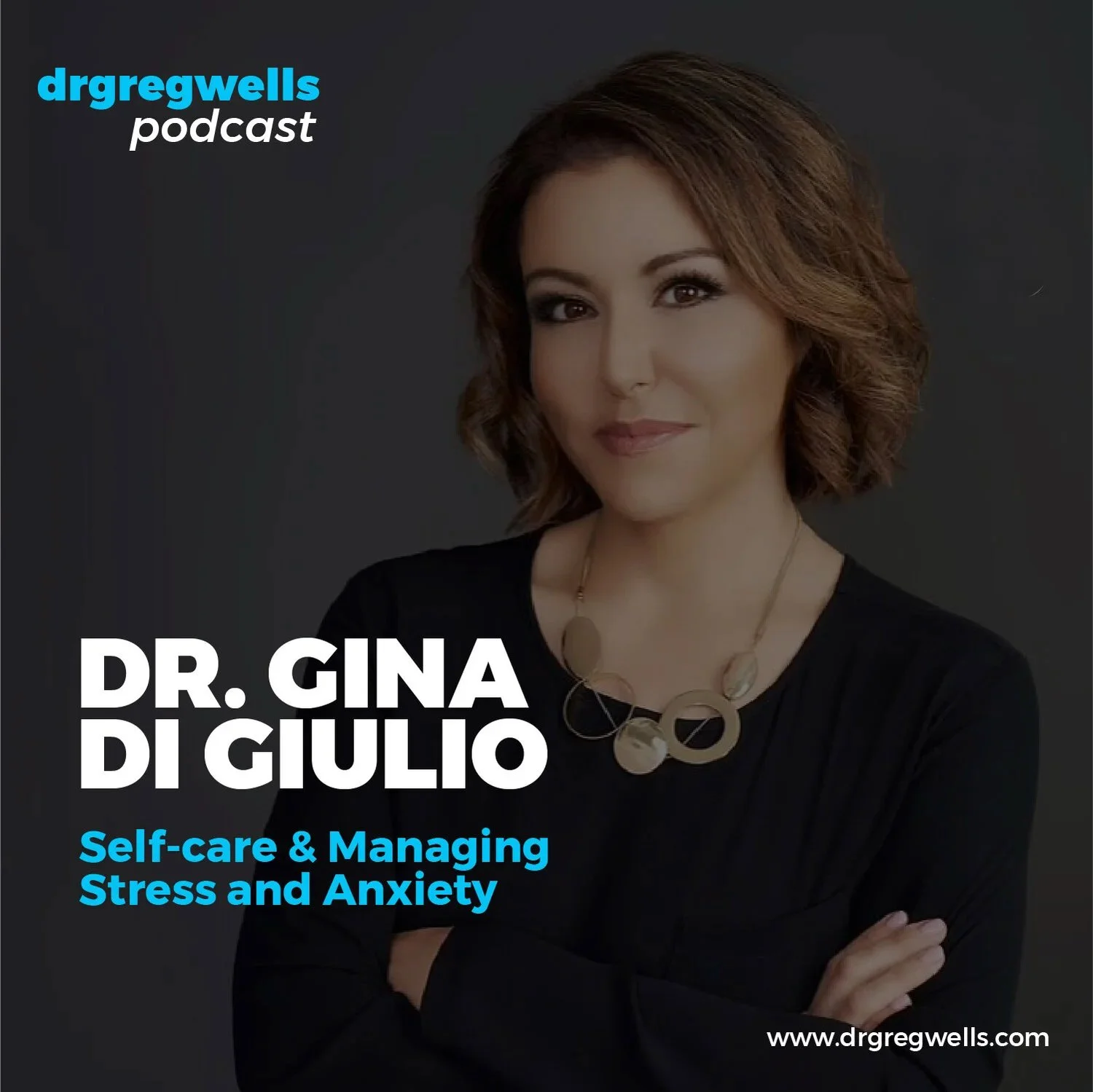
S1 Ep 41#41 - No Health Without Mental Health: Dr. Gina Di Giulio on Practical Mental Health
How to make evidence-based mental health care simpler, faster, and more actionable—so individuals and organizations can reduce anxiety, improve resilience, and access the right support without getting lost in a confusing system. In today’s conversation Gina Di Giulio explores why “there is no health without mental health,” and how to cut through confusion to get high-quality support quickly. She and Dr. Wells unpack practical strategies for coping with anxiety, protecting sleep, using exercise as “medicine,” limiting news exposure, and staying socially connected while physically distant. Gina explains her “action first” philosophy—take a small, controllable step to jump-start motivation—and shares how gratitude journaling and strengths-based psychology move people from neutral to flourishing. You’ll hear real-world, clinician-tested tactics that work for busy leaders, parents, and teams. You will learn a simple decision filter for anxiety: identify what’s controllable and take one small step, because action reduces anxious rumination. You will learn the core pillars of brain recovery—sleep, screen-free time, time in nature, music, and movement—and how to implement them in a modern workday. You will learn why Gina prescribes exercise like a drug (the “3×30” guideline) and how social connection amplifies its mental health benefits. You will also learn how gratitude journaling and a strengths-based approach from positive psychology can shift mood from “minus” to “plus.” You will discover that motivation follows action—not the other way around—and that even a 1% step changes state. You will discover how small daily practices (news limits, scheduled self-care, brief nature breaks) build stress-resilience you can feel. Feeling overwhelmed by uncertainty and decision fatigue. Gina offers a playbook to regain agency—clarify control, take a single step, and build momentum—so you can lead, parent, and perform without burning out.
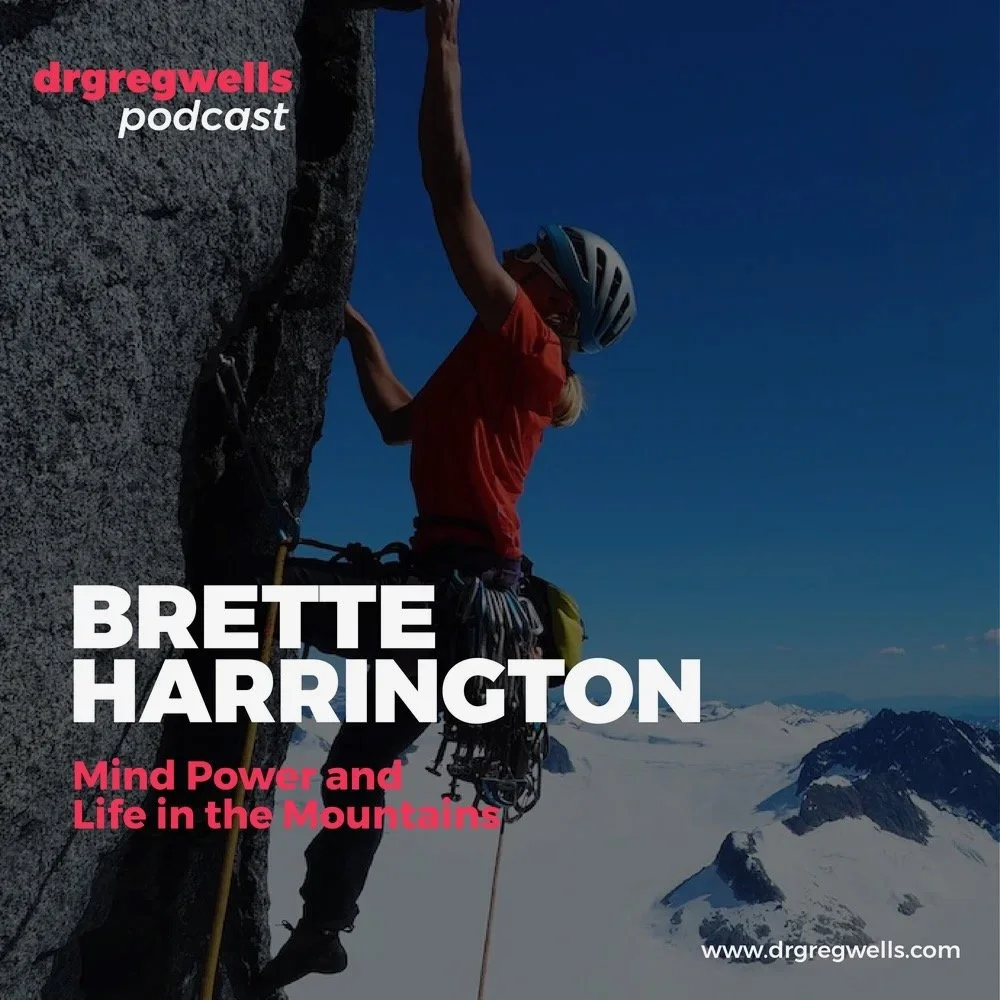
S1 Ep 40#40 - Grief, Risk and Freedom: Climber Brette Harrington on Fear, Loss & Flow
Brette is addressing how to keep living — and performing — fully in the face of fear, grief, and events you can’t control. She’s showing listeners how to trust their own inner voice, manage real risk, and rebuild a meaningful life after trauma instead of letting other people’s fears or expectations dictate their choices. In today’s conversation Brette Harrington explores how a life built in the mountains has shaped her resilience, creativity, and sense of purpose. She shares her journey from skiing with her parents in Lake Tahoe to boarding school in New Hampshire, discovering rock climbing, and eventually becoming one of the world’s leading trad climbers, alpinists, and free soloists — including the first free solo of the 2,500-foot Chiaro di Luna (5.11a) in Patagonia. She and Dr. Wells talk through her serious ski accident and broken neck, the years of big-wall and alpine climbing with her partner Marc-André Leclerc, and the devastating avalanche that took his life in 2018. Brette explains why she chose to return to the mountains against others’ advice, how she now manages fear on big objectives, and why moving slowly, breathing deeply, and listening to her energy are non-negotiable for both safety and performance. You will learn how Brette’s progression from ski racing and freestyle skiing into sport, trad, big wall, and ultimately high-end alpine climbing gave her an unusually broad toolkit for huge mountain objectives. You will learn how she thinks about skill acquisition: layering disciplines over time (rock, ice, mixed, skiing) and deliberately seeking terrain that exposes her weaknesses so she keeps growing. You will learn her practical process for managing fear on a route — starting with honest morning self-assessment, choosing objectives that match her mental energy, and then using breath, heart-rate awareness, and deliberate relaxation to prevent the “overgrip” that leads to mistakes. You will also learn how she navigated breaking her neck in a ski crash, the slow rehab and Atlas realignment work that followed, and how she used running, yoga, and core training to rebuild enough capacity to establish demanding new alpine routes like Life Compass, The Sound of Silence, MA’s Vision, and Just a Nibble after Marc-André’s death. You will discover that calm is a trainable physiological state, not a personality trait — by choosing your days carefully, focusing on breathing, and relaxing your grip, you can keep your brain and body working even when exposure, risk, or stress spike. You will discover that sometimes the most courageous move after loss is to ignore the chorus of “shoulds,” follow the environment where you genuinely heal, and honour the people you’ve lost by continuing the work you started together. Many people feel paralysed by fear — of failure, of risk, of what others will think — especially after something traumatic happens. Brette’s experience shows how to respect real danger while refusing to let fear or outside opinions shrink your life, giving listeners a blueprint for returning to their version of the “big mountains” after injury, grief, or setbacks.

S1 Ep 39#39 - From Olympic Gold Medals to Great Traits: Mark Tewksbury & Debbie Muir on High-Performance Leadership
Mark and Debbie are solving the problem of leaders and high performers chasing results without a clear, teachable framework for how to think, train, and lead like champions. Too many organizations default to hustle, pressure, and vague “motivation” instead of building fundamentals, mind–body awareness, and the habits that actually create sustainable achievement, strong teams, and meaningful legacy. Through The Great Traits framework, they’re turning Olympic-level performance principles into practical tools that anyone can apply at work and in life. In today’s conversation Mark Tewksbury and Debbie Muir explore how an Olympic crisis turned into a blueprint for high-performance leadership. Mark shares the story of being “second best in the world” in the 100m backstroke, watching American rival Jeff Rouse blow the world record apart, and realizing he needed to find over a second of improvement in just ten months — the same improvement it had taken him seven years to earn. Debbie describes how she came out of retirement, brought her synchronized-swimming coaching genius across sports, and helped Mark rebuild his race from fundamentals: starts, turns, underwater dolphin kick, mental scripts, and the mind-body connection. Together with Dr. Wells, they connect that Olympic journey to The Great Traits of Champions framework, their 24 Achiever–Leader–Legacy traits, and the 12-week Corporate Champions Program that now helps leaders around the world train like elite athletes while leading with values and impact. You will learn how Mark and Debbie broke down a seemingly impossible performance gap — 1.2 seconds in a 100m race — by going back to basics instead of chasing gimmicks, focusing on the 30% of the race that happens in the start, turn and underwater phase, where Mark was leaving huge potential untapped. You will learn how Debbie’s “Utilize the Power of Thoughts” trait, metacognition (“think about what you think about”), and tools like the WAIT cue — What Am I Thinking? — help athletes and executives notice and rewire unhelpful mental loops in real time. You will learn how they translated their Olympic playbook into the Great Traits system of 24 Achiever, Leader, and Legacy traits, and why they structure their Corporate Champions Program as an “applied” 12-week training block rather than a one-off workshop. You will also learn how self-reflection, values, and legacy traits like Embody Your Values, Influence Others Wisely, and Continually Evolve can anchor performance so it’s not just about winning medals or hitting targets, but about the ripple effect of who you become in the process. You will discover that the same tools that win Olympic gold — fundamentals, deliberate practice, and mind-body awareness — are exactly the tools leaders need to navigate uncertainty, pressure, and reinvention in their careers. You will discover how bringing unconscious thoughts to the surface, challenging limiting beliefs, and aligning your inner dialogue with your values can unlock a completely different level of performance, confidence, and impact. Their expertise helps solve the challenge of how to systematically grow from talented, driven individuals into purpose-driven leaders who can sustain high performance without burning themselves — or their teams — out. Using The Great Traits framework, they show listeners how to transform vague ideas like “mindset,” “confidence,” and “legacy” into trainable skills that can be practiced week after week, just like an athlete practices starts, turns, and finishes.
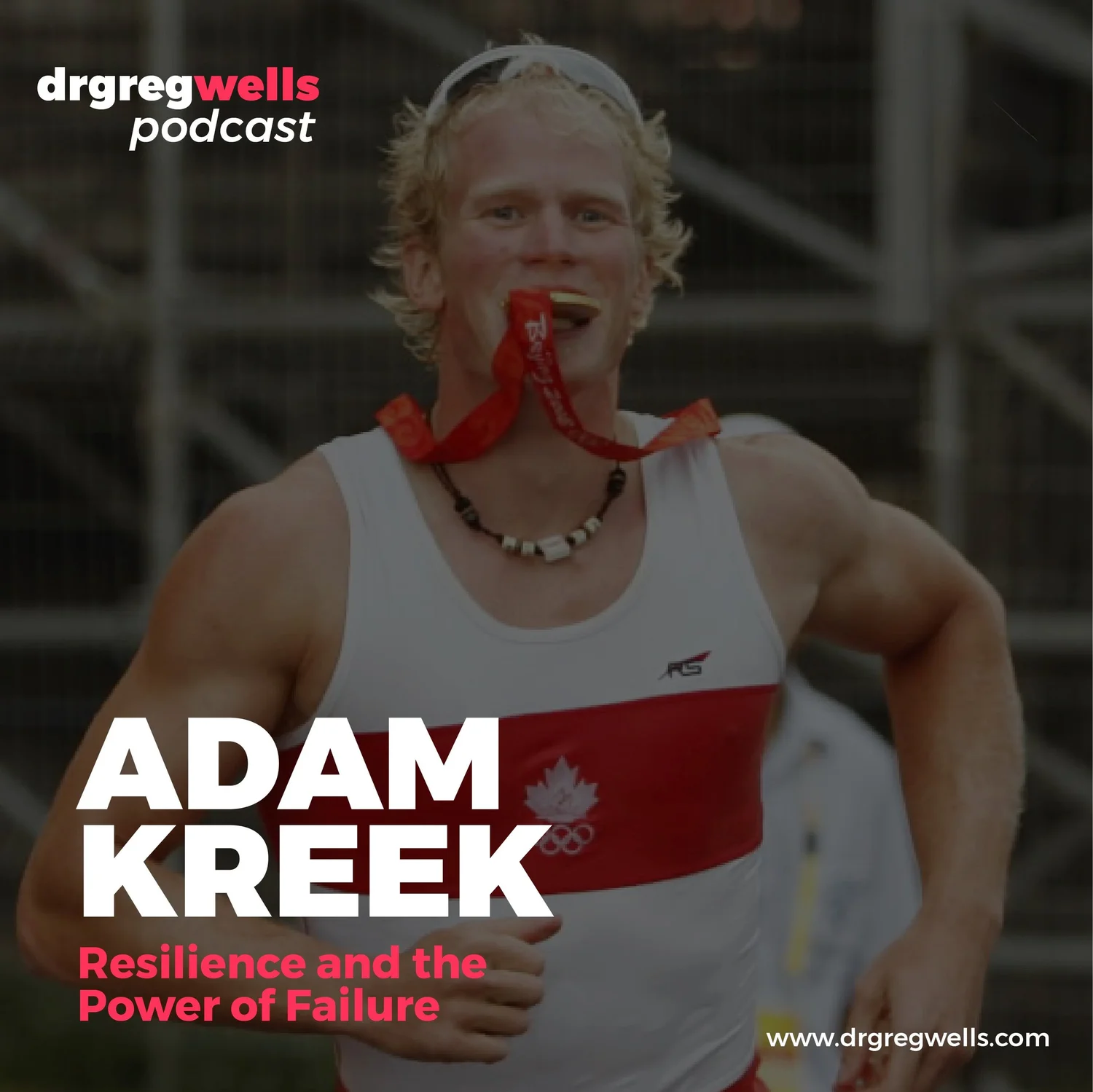
S1 Ep 38#38 - The Responsibility Ethic: Turning Pain into Performance with Adam Kreek
Adam is tackling the problem of high achievers and leaders chasing big goals through grind, quick fixes, and toxic pressure—only to burn out, stall, or implode when failure hits. He’s working to show people how to convert adversity into fuel, align ambition with values, and pursue “Gold Medal Moments” in a way that is physiologically sustainable, emotionally healthy, and effective over the long term. In today’s conversation Adam Kreek explores what it really takes to be “built for hard” in sport, work, and life. He walks through his origin story from an “average kid in an average town” to a world and Olympic champion in the men’s eight, including the high school coach who told him, “You’re an Olympian, you just don’t know it yet,” and why staying multi-sport and not going too hard too early built his durability. Adam and Dr. Wells unpack the heartbreak of choking as favourites at the Athens Olympics, the emotional processing required after a deep failure, and how those lessons led to gold in Beijing via shared leadership, smarter preparation, and better physiology-informed race strategy. They also dive into his 73-day Atlantic rowing expedition, “adventure therapy,” and how he now coaches executives and organizations using the principles from his book The Responsibility Ethic and his threshold-style “healthy failure” workouts for corporate athletes. You will learn how Adam differentiates between cognitive learning from failure and physiological processing of failure—why long, steady aerobic sessions can be one of the best ways to metabolize the emotional load of a big loss so it doesn’t poison future performance. You will learn the science-backed logic behind his Olympic race strategy: the interplay of creatine phosphate, anaerobic and aerobic systems in a 5½-minute all-out effort, how lactic acid and perception of pain spike around the 45–60 second mark, and how his crew exploited that moment psychologically to move on their competitors. You will learn his concept of shared leadership—why great teams operate more like a jazz band than a rigid orchestra, passing influence around so no single leader’s breakdown sinks the boat—and how he translates that into executive coaching and strategic planning for organizations. You will also learn the structure of his threshold rowing workout for busy professionals, the idea of “healthy failure” versus unhealthy suffering, and how his Responsibility Ethic framework helps leaders set non-toxic, values-aligned “Gold Medal Moment” goals that take years—not weeks—to achieve. You will discover that your perception of “being done” is wildly inaccurate—whether it’s in an Olympic final or a demanding project at work, most of us hit the panic button long before our true physiological limits, as Adam’s coach liked to say, “you’re only four-fifths dead.” You will discover how pairing that understanding with clear values, deliberate recovery, and shared leadership lets you pursue big, hard goals without sacrificing health, relationships, or long-term performance. Adam’s expertise helps solve the challenge of sustaining high performance when the stakes are high, the failures are public, and the pressure never really goes away. He gives leaders and teams a practical roadmap to process setbacks, structure training (physical and professional), and build values-driven systems so they can keep showing up at a Gold Medal level for years, not just one season.
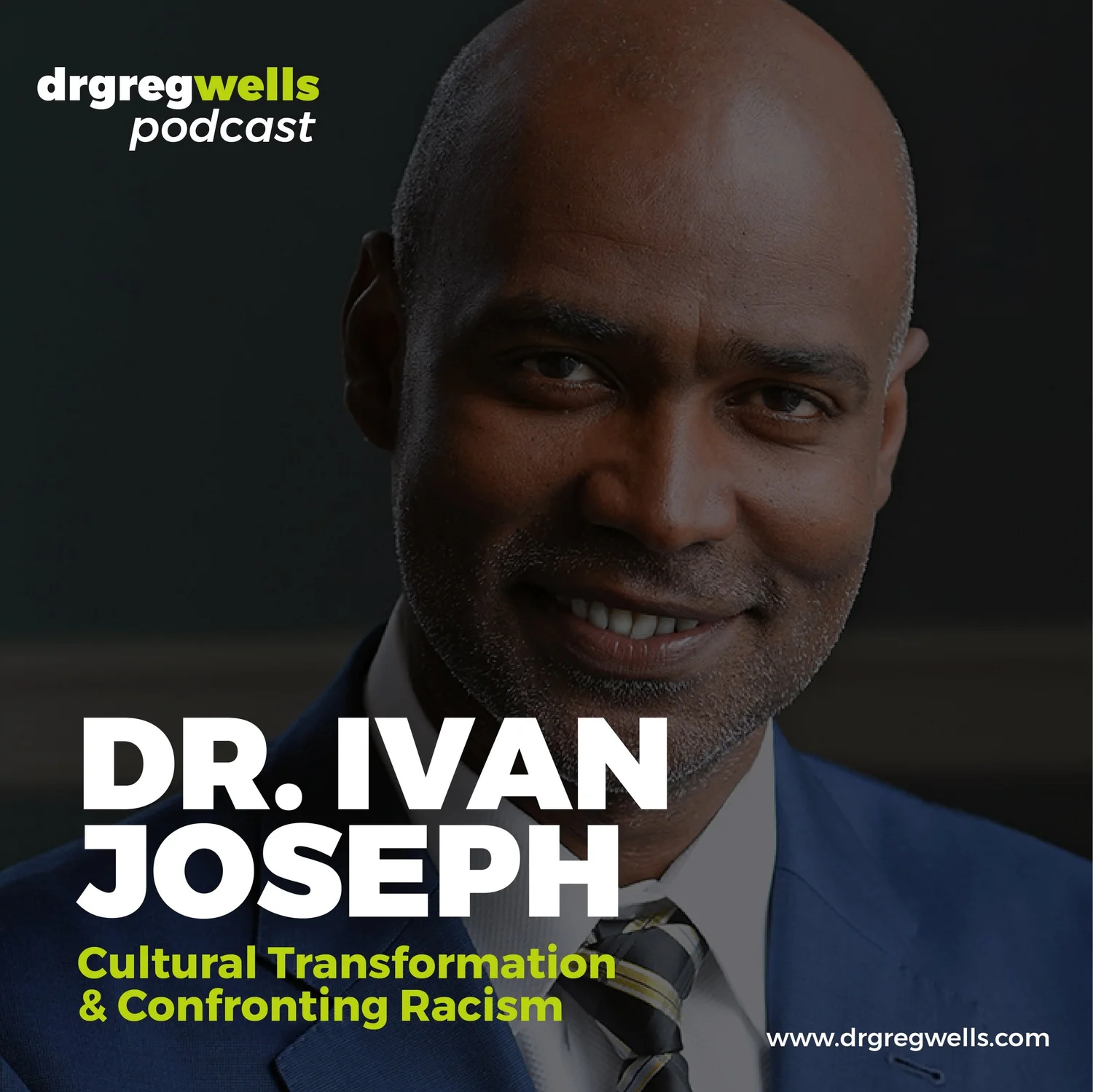
S1 Ep 37#37 - You Got This: Self-Confidence, Belonging & Aligned Actions with Dr. Ivan Joseph
Dr. Ivan Joseph is tackling a double-sided problem: people—especially those from marginalized communities—are battling self-doubt in systems that are stacked against them, while many well-meaning allies feel unsure how to move from guilt and outrage to meaningful, sustained action. In this episode he focuses on how to build real self-confidence and belonging, and how to turn tiny “1%” daily choices into both personal breakthroughs and tangible social change. In today’s conversation Ivan Joseph explores what it means to build genuine self-confidence and belonging in a world still shaped by systemic racism and bias. He shares his journey from growing up in Guyana and a tough Toronto neighbourhood to becoming a national championship coach, PhD sport psychologist, and university vice president—yet still hearing the “twice as good” mantra every Black kid knows. He and Dr. Wells dive into allyship, protests, and why performative, “tourist” activism isn’t enough; instead they talk about micro-behaviours, access to education, and the power of 1% changes that compound over years. They finish by unpacking Ivan’s core work on self-confidence—self-talk, affirmations, gratitude letters, and his “You Got This” letter—and how those same tools help us stay in hard conversations about race, leadership, and change. You will learn why Ivan defines self-confidence as a skill—the genuine belief in your ability to accomplish the task at hand and handle adversity—rather than a fixed personality trait, and how that belief drives performance in sport, work, and life. You will learn how he separates negative feedback that tears you down from critical feedback that still supports your growth, and why curating who you listen to is essential for high performers. You will learn the practical tools he uses with teams and executives: writing a “You Got This” letter listing your past wins, using three daily affirmations, and writing gratitude letters that boost optimism and rewire how you respond to setbacks. You will also learn his 1% approach to social change—simple daily acts like who you sit beside, who you greet, and where you offer free access to your work—that expand belonging and opportunity, especially through education. You will discover that confidence and allyship both grow the same way: through repeated reps under tension, not one-off grand gestures or viral posts. You will discover how changing the words you use with yourself—shifting from “I can’t” to “I’ve got this, and here’s the proof”—reshapes your beliefs, your behaviour, and ultimately the impact you have on the people and systems around you. Many people feel stuck between self-doubt (“Who am I to do this?”) and overwhelm about injustice (“It’s too big; nothing I do matters.”). Dr. Joseph’s work bridges that gap by offering concrete mental tools to build self-confidence and a clear roadmap of small, intentional actions so listeners can both pursue ambitious goals and contribute to a more equitable world—without burning out or checking out.
S1 Ep 36#36 - From Grit to Growth: Explorer Bruce Kirkby on Adventure, Family and Focus
Bruce is tackling the modern trap of distraction, comfort and grind—how busy, screen-saturated lives quietly erode our sense of presence, adventure, connection and growth, especially with our families. In today’s conversation Bruce Kirkby explores what it really means to design a life around adventure, presence and growth instead of stress, traffic and endless grind. He shares how he walked away from a conventional career in engineering to become an expedition guide, writer and photographer, leading journeys across Arabia’s Empty Quarter, Ethiopia’s Blue Nile Gorge and remote mountain ranges around the world. Bruce and Dr. Wells dive into the family expeditions that reshaped his understanding of parenting and technology—from taking his young sons on horseback across the Caucasus to living for months in a Himalayan Buddhist monastery, the story behind his book Blue Sky Kingdom: An Epic Family Journey to the Heart of the Himalaya. They close by unpacking his “grit vs. grind” framework, his recovery from a major back injury, and how consistent, small practices can transform performance and wellbeing over the long haul. You will learn how Bruce intentionally rebuilt his life around wilderness expeditions, writing and speaking after leaving a traditional engineering career, and why time—not money—is the ultimate non-renewable resource. You’ll hear how traveling with his young family through places like Patagonia, the Republic of Georgia and the high Himalaya helped them unplug from screens, deepen their relationships and see fear and discomfort as gateways to growth. You will learn practical ways to bring “micro-adventures” and presence into everyday life—whether that’s paddleboarding between airport layovers, reclaiming your commute, or building small rituals that keep you connected to nature and your kids. You’ll also learn how Bruce reframed his performance after a serious back injury by focusing on mobility, sleep, breathing and consistency instead of heroics and willpower alone. You will discover how the same mindset that keeps a team safe in avalanches, deserts and whitewater can help leaders and organizations navigate distraction, change and uncertainty back home. You will discover why Bruce believes discomfort and fear are not problems to eliminate, but compasses that point toward the experiences and growth we value most. Bruce’s knowledge helps solve the challenge of feeling stuck in a life that looks successful on paper but feels rushed, distracted and uninspiring in practice. By translating lessons from 3,000+ days of wilderness expeditions into simple habits, he shows listeners how to escape grind culture, reconnect with what matters and create more meaningful adventures—at work, at home and in nature.
S1 Ep 35#35 - From Soil to Soul: Paul Chek on Truly Holistic Health
Paul is tackling the problem that modern health, fitness, and medicine are overwhelmingly reductionist—treating bodies like isolated parts, food like inert calories, and symptoms like separate glitches—while the real issues lie in upstream root causes: depleted soil, processed food, dysfunctional breathing, chronic stress, and misaligned beliefs. His work in this episode is about helping people and practitioners shift from symptom-chasing to a truly holistic, “soil-to-soul” model of health that integrates body, mind, emotions, spirit, and environment. In today’s conversation Paul Chek explores his journey from growing up on an organic sheep farm with a yogi mother to training the U.S. Army boxing team, rehabbing “medical failures,” and ultimately founding the CHEK Institute. He explains why understanding living soil, organic farming, and vitamin complexes is essential for real nutrition, and how commercial agriculture leaves both food and humans energetically depleted. Paul and Dr. Wells dive into breathing mechanics, “working in” versus “working out,” and how most people’s chest-dominant, rapid breath keeps them stuck in fight-or-flight. They finish by unpacking his 1-2-3-4 framework, the “Last 4 Doctors You’ll Ever Need,” and his Four Quadrant coaching model that links beliefs, relationships, body, and environment into one coherent map for healing and performance. You will learn how Paul’s early life on a farm and deep study of soil science, mycorrhizae, and paramagnetism led him to see nutrition as starting in the microbiology and energetics of the earth, not in a supplement bottle. You will learn why he views commercial farming as producing “dead food,” why whole-food vitamin complexes differ radically from isolated vitamins, and how this changes the way we think about supplements and health claims. You will learn how dysfunctional breathing patterns—chest breathing, hyperventilation, chronically tight abs—lock people into sympathetic overdrive, impair digestion, and drive pain, and how diaphragmatic breathing and “working in” practices restore balance. You will learn the logic of his 1-2-3-4 system (Dream → Balance of forces → Three choices → Four Doctors) and his Four Quadrant model, which connects inner beliefs, social dynamics, physical findings, and environmental factors so that coaches and practitioners can finally address root causes instead of chasing symptoms. You will discover that lasting health and performance don’t come from one magic diet, exercise, or pill, but from aligning a few fundamental forces: real food from living soil, coherent breathing and movement, clear dreams, and daily choices that support them. You will discover that when you respect the body as a system-of-systems—physical, emotional, mental, and spiritual—complex “mystery” problems often become surprisingly solvable. Many people feel trapped in cycles of chronic pain, fatigue, gut issues, and anxiety despite seeing multiple specialists and trying endless protocols. Paul’s approach offers a way out by teaching listeners how to identify the true upstream drivers—nutrient-poor food, dysfunctional breathing, unresolved beliefs, and toxic environments—and then systematically address them using his 4 Doctors and Four Quadrant frameworks.
S1 Ep 34#34 - Every Moment Matters: Tommy Fleetwood on Confidence, Consistency & Energy
Tommy is tackling a problem that every high performer faces: how do you stay confident, consistent, and energized when expectations rise, results dip, and life becomes a blur of travel, pressure, and comparison to others? His story in this episode is about rebuilding from a slump—using support, self-reflection, and better routines—so you can perform near your best far more often, not just in rare “hot streaks.” In today’s conversation Tommy Fleetwood explores what it really takes to come back from a slump and turn talent into long-term consistency at the very top of professional golf. He shares the story of rising quickly as a young pro, losing his way technically and mentally, and then rebuilding by returning to a childhood coach, bringing a close friend in as his caddie, and assembling a trusted performance team. Tommy and Dr. Wells unpack how confidence actually works, why “every moment matters,” and how journaling, visualization, and brutally honest stats help him lift his baseline on and off the course. They finish by exploring how to protect energy while traveling, build daily routines around what matters most, and stay anchored in the present when the stakes are highest. You will learn how Tommy climbed out of a career dip by simplifying his swing, going back to people who knew him best, and removing some of the pressure that came from trying to copy other stars. You will learn his nightly journaling framework—what was good, what could improve, and how he’ll start tomorrow—and how that practice closes each day so it doesn’t bleed endlessly into the next. You will learn how he uses vivid visualization (including emotions, heart rate, and specific scenes like watching a winning putt drop in scoring) to build confidence before he ever steps onto the first tee. You will learn why he’s built an integrated support team—swing coach, putting coach, short-game coach, fitness coach, psychologist, caddie, and agent—and how clear roles plus deep trust let him focus on playing. You will also learn why protecting energy, choosing events carefully, and raising your “worst day” performance may matter more than chasing occasional flashes of brilliance. You will discover that confidence is not a mysterious personality trait; it’s a memory bank of successful reps that you deliberately build through practice, visualization, and small wins. You will discover that the real competitive edge is raising your baseline—your bad days—by managing your team, your routines, and your energy so you rarely drop far below your best. Many driven people grind harder when things aren’t working—changing everything, pushing more, and silently beating themselves up—only to feel more exhausted and less confident. Tommy’s story offers a different route: surround yourself with the right people, debrief each day with honesty and self-compassion, and focus on controllable habits so you can perform well even when you don’t feel perfect.
S1 Ep 33#33 - Change Maker: Dr. John Berardi on Building Health, Habits, and Real Change
The core problem John is tackling is this: people and professionals are drowning in nutrition noise, all-or-nothing thinking, and “biohack” promises—so they struggle to make consistent progress and to build sustainable careers in health and fitness. His work in this episode is about replacing confusion and perfectionism with limiting-factor thinking, small-wins habits, and clear frameworks that actually produce long-term change for both clients and coaches. In today’s conversation John Berardi explores how real change in health, performance, and career actually happens over years of “always something” rather than bursts of all-or-nothing effort. He walks through his journey from immigrant-kid pressure to “be a doctor,” into graduate research in exercise physiology and nutritional biochemistry, and then on to co-founding Precision Nutrition and coaching hundreds of thousands of clients and professionals. John and Dr. Wells dig into what separates successful athletes and everyday clients, why simple limiting-factor fixes often beat complex named diets, and why game-day nutrition matters far less than what you do for weeks and months beforehand. They finish by unpacking his Change Maker framework for health and fitness professionals—clarifying purpose, building T-shaped skills, and using feedback to craft a meaningful, sustainable career. You will learn why the most successful clients and athletes aren’t the ones who obsess over every gram of food, but the ones who care “just enough” and practice a few simple behaviours consistently over time. You will learn how John uses limiting-factor analysis—finding the one thing (like low iron, magnesium, or B12) that’s holding someone back—instead of dropping people into rigid named diets that create 100 new rules and very little progress. You will learn how Precision Nutrition’s coaching data shows that being roughly 60–70% consistent can deliver excellent health and body-composition outcomes, and why the all-or-nothing mentality is one of the strongest predictors of failure. You will learn how to cut through nutrition noise by “squinting your eyes” and looking for stable patterns—adequate protein, whole foods, energy balance—rather than chasing metabolism-boosting foods, red-wine resveratrol, or the latest biohack. Finally, you’ll learn how John’s Change Maker model helps coaches map purpose, core abilities, and values into a T-shaped skillset and a career blueprint they can actually follow. You will discover that sustainable transformation in health and performance doesn’t require perfect adherence; it requires doing something reasonable most of the time and choosing the highest-leverage “big rocks” instead of obsessing over tiny tricks. You will discover how a single well-chosen intervention—identified through careful assessment—can outperform months of complicated diet rules or biohacks that only tint the “lake” of your physiology by 0.0000002%. A huge challenge for high performers and coaches alike is feeling stuck between overwhelm (too many rules, tools, and protocols) and guilt (when they inevitably can’t keep up). John’s frameworks give listeners a way to simplify: focus on the few behaviours that matter most, accept “good enough” consistency, and build a career or personal routine that can survive illness, kids, deadlines, and real life—without quitting or starting over every few weeks.
S1 Ep 32#32 - Time Under Tension: Dr. Sarah Sarkis on The Psychology of Thriving
High-achieving people are burning a ton of energy trying to “control” their inner world—suppressing emotions, powering through shame, and chasing quick behavioural fixes—while never really learning how to work with their psyche in a way that leads to sustainable thriving. Sarah is tackling that gap: how to build true emotional flexibility, self-awareness, and self-regulation so you can handle discomfort, perform at a high level, and grow from struggle instead of being ruled by it. In today’s conversation Sarah Sarkis explores what it really means to thrive psychologically, beyond the clichés of “just be positive.” She traces her journey from forensic psychology to performance consulting and explains why she’s “not in the business of happiness, but of self-awareness and change.” She and Dr. Wells unpack emotional “time under tension,” the power of developing an observing ego, the damage of abusive self-talk, and how our thoughts shape neurochemistry and even gene expression over time. They finish by diving into flow states, the struggle–release–flow–recovery cycle, and practical ways to design your day so presence and flow are more likely to show up—at work, in sport, and at home. You will learn why Sarah defines thriving as emotional flexibility rather than constant happiness, and how expanding your capacity to feel all your emotions is the foundation for growth. You will learn how to practice self-observation, create space between stimulus and response, and reframe “control” as self-regulation built through small daily reps of sitting with yourself. You will learn how harsh self-talk and perfectionism are often symptoms of deeper shame injuries, and how compassion and curiosity begin to unwind those patterns. You will learn how thoughts drive neurochemical cascades that influence gene expression, what this means for epigenetics, and how simple practices like scheduled stillness, clear intentions, and working in the “challenge channel” help you access more frequent micro-flow states. You will discover that emotional and psychological growth follow the same rules as physical training: it’s all about time under tension. When you repeatedly practice observing yourself—especially in discomfort—you widen your aperture for feelings, shift from white-knuckle control to genuine self-regulation, and make it far easier to access flow and high performance on demand. Most listeners know what they “should” do—meditate, be present, change habits—but feel stuck, avoidant, or overwhelmed when it comes to actually facing their interior world. Sarah’s framework shows you how to move from behaviour-only hacks to deeper psychological work, so you can stop running from difficult emotions and instead use them as raw material for resilience, performance, and more authentic relationships.
S1 Ep 31#31 - Beyond Training: Ben Greenfield on Training, Creativity & Longevity
Ben is tackling the problem of ambitious people training, working, and “biohacking” hard—but still feeling exhausted, inflamed, confused by conflicting advice, and unsure how to perform at a high level without wrecking their long-term health. His core aim is to show how to design training, daily routines, and nutrition so you can achieve remarkable performance while protecting your brain, hormones, and longevity. In today’s conversation Ben Greenfield explores how to train, work, and live “beyond training” by aligning your physiology with your goals. He walks through his hot–cold morning ritual, deep-work habits, and the science behind doing easy movement early in the day and intense workouts later when the body is primed to perform. He then maps out a “perfect week” of exercise that builds mitochondria, VO₂max, lactic-acid tolerance, strength, and stamina without tipping into overtraining. Finally, Ben and Dr. Wells dive into nutrition, genetics, blood sugar control, and the importance of cultivating creativity and meaning—not just muscles—for a truly boundless life. You will learn how Ben structures his mornings with heat, cold, light exposure, breathwork, and gratitude to boost mood, metabolism, and resilience for the rest of the day. You will learn why saving high-intensity training for the afternoon or early evening can improve performance, hormones, and sleep, and how to build a weekly program that targets mitochondria, VO₂max, lactic-acid tolerance, strength, and endurance. You will learn how Ben thinks about genetic individuality—why your training and diet may need to differ from your neighbour’s—and how simple tools like blood testing and glucose monitoring can personalise your plan. You will learn guiding nutrition rules that cut through diet dogma: prioritising nutrient density, digestibility, and low glycemic variability so you can fuel performance without chronic inflammation. You will discover that elite performance is less about doing more and more intense work, and more about timing stressors—exercise, heat, cold, and carbohydrates—so they amplify, rather than erode, your recovery, hormones, and brain function. You will discover how a few precise levers (training structure, carb timing, and blood-sugar control) can transform the same amount of effort into dramatically better health and output. Most high achievers struggle to reconcile their drive to push hard with the quiet signs of overload: poor sleep, brain fog, injuries, gut issues, and flat motivation. Ben’s framework gives listeners a way to redesign their day and their training so they can keep chasing big goals while protecting their long-term health and avoiding the classic “fit on the outside, falling apart on the inside” trap.
S1 Ep 30#30 - Why Process Beats Outcome with Olympic Medalist Kylie Masse
Today we will learn how to sustain world-class performance under rising expectations—by shifting from outcome obsession to process focus, protecting joy in training, and learning to turn the mind down when it matters most. In today’s conversation Kylie Masse explores her path from late-developing age-grouper to world record holder and Olympic medalist. She and Dr. Wells unpack why fun and a supportive training group kept her going when results lagged, how “process over outcome” became a competitive superpower, and what a full race day really looks like. Kylie shares practical tactics for managing pressure—balancing school and sport, using music to set state, and recovering like a pro—while aiming at Worlds and the Olympics. You will learn how elite swimmers structure heavy training loads (8–9 pool sessions/week) alongside school and life; how to recover between heats and finals (warm-down, food, rest, state reset); why focusing on process beats fixating on places and times; how Kylie uses sleep, physio, massage, and compression as a reliable recovery system. You will discover that thinking less can help you perform more: when the preparation is done, quiet the analysis and let the body execute. High performers often carry self-imposed pressure that sabotages execution. Kylie’s approach—focus on one thing, one session, one race—gives a repeatable way to reset after bad practices and compete freely on big stages.

S1 Ep 29#29 - Accept Reality, Reject Limits: Mark Black on Resilience After Transplant
Most people let other people’s limits (doctors, bosses, even loving parents) become their limits — especially after illness, disruption, or big life changes. Mark’s experience and body of work is about showing that you can accept reality without accepting restriction — you can tell the truth about your circumstances and still choose growth. In today’s conversation Mark Black explores how being born with a severe heart defect, surviving two open-heart surgeries as a baby, and then receiving a heart-and-double-lung transplant at 23 taught him the mechanics of real resilience. He tells you what it’s like to be told, “maybe you’ll work part time someday,” and then decide to run four marathons with someone else’s organs. He and Dr. Wells break down the mindset shift from “why me?” to “what now?”, and how his parents’ decision not to bubble-wrap him became the foundation for his speaking and coaching today. The episode lands on a practical, five-step resilience process that anyone can run when life goes sideways. You will learn the difference between denial and healthy acceptance — how to tell the truth about what happened without getting stuck there; why having a picture of a better future (run a 5K → 10K → half → marathon) pulls you through rehab; how to reassess identity when sport, work, or health gets taken away; how to reassign meaning to hard events so they serve you instead of shrink you; and how Mark’s five-step loop — accept → aim → adapt → act → assess — can be used in health recovery, career change, or leadership. You will discover that resilience isn’t a personality trait — it’s a repeatable choice: tell the truth about today, then pick the next hard, possible thing. That choice is available every single day, even after a transplant. When circumstances blow up your old identity (athlete, healthy person, unstoppable leader), people often stay in grief or “it’s not fair” for years. Mark gives a way to honour the loss and move — small goals, stacked wins, new meaning — so life after crisis is bigger than life before.