The Dr. Greg Wells Podcast
Dr. Greg Wells · The Wells Performance Team
Show overview
The Dr. Greg Wells Podcast has been publishing since 2022, and across the 4 years since has built a catalogue of 78 episodes. That works out to roughly 4 hours of audio in total. Releases follow a monthly cadence, with the show now in its 8th season.
Episodes typically run thirty-five to sixty minutes — most land between 48 min and 49 min — and the run-time is fairly consistent across the catalogue. None of the episodes are flagged explicit by the publisher. It is catalogued as a EN-US-language Health & Fitness show.
The show is actively publishing — the most recent episode landed 6 days ago, with 18 episodes already out so far this year. The busiest year was 2022, with 43 episodes published. Published by The Wells Performance Team.
From the publisher
Healthy High Performance for a Limitless Life You can get healthier, improve your wellness, and live a limitless life and physiologist Dr. Greg Wells would love to be your trusted guide on that adventure. Dr. Greg is one of the rare scientists who can take research and make it understandable so that you can have a clear path to achieving your goals. In every episode, Dr. Greg and his expert guests will explain the science of how your body and brain work in a way that you can understand so you that you can get healthy, perform better, and live a limitless life.
Latest Episodes
View all 78 episodesGreat World Race Prep Update with Dr. Greg
All About Healthy Fats with Dr. Richard Bazinet
The Ripple Effect: Dr. Greg Wells’ Masterclass on on Healthy High Performance
The Art of Finding Joy with Jessica Janzen
Why I’m Doing The Great World Race (7 Marathons on 7 Continents in 7 Days) with my Daughter
Rest Refocus Recharge: Dr. Greg Wells’ Masterclass on Slowing Down to Speed Up
The Science of Finishing What You Start With Chris Bailey
Create Behavior Change That Lasts with Dr. Marc Mitchell
Crafting a Life of Adventure and Health with Dr. Alex Hutchinson
From Prescription to Prevention with Dr. Kwadwo Kyeremanteng
Co-Parenting With the Internet - Jake Ernst on Digital Distraction and Mental Health
S8 Ep 107All about the latest science on creatine with Dr. Scott Forbes
Dr. Scott Forbes is trying to cut through the hype and misinformation around creatine so listeners can understand what creatine actually is, what it truly does (and doesn’t do), and how to use it safely and effectively for performance, brain health, and healthy aging.In today’s conversation Dr. Forbes explores why creatine has become one of the most talked-about supplements—and how to separate real science from social-media noise. He explains what creatine is (and why it’s not a steroid), how it supports short-duration high-intensity performance, and what the research says about strength, muscle, endurance “bursts,” and recovery. Scott also dives into emerging findings on brain energy demands—especially under stressors like sleep deprivation and mental fatigue—and why creatine may matter more as we age.You will learn how creatine works in the body’s energy systems, what benefits are realistic (small but meaningful), and how those gains can compound over time. You’ll also learn practical dosing strategies (loading vs. steady daily use), why creatine monohydrate is the best-studied form, how timing fits into the routine, plus the science behind common concerns like hair loss and kidney markers.You will discover that creatine’s biggest strength is “quiet consistency”: it can modestly expand rapid-energy capacity and help maintain performance during physical or mental stress—without needing complicated protocols.Scott helps solve the challenge of making a confident, evidence-based decision about whether creatine belongs in your routine—without fear, myths, or marketing-driven confusion.
S8 Ep 106Longevity, Telomeres, and the Real Foundations of Health with Dr. Elaine Chin
Dr. Elaine Chin is trying to solve the problem of people aging into chronic inflammation, fatigue, and disease because they are surrounded by confusing wellness advice and are guessing instead of using a science-based, personalized approach to healthspan. In this episode, she frames the answer as precision medicine built on measurable biology and consistent daily habits.In today’s conversation Elaine Chin explores how precision medicine and lifestyle medicine can work together to improve healthspan and lifespan. She and Dr. Wells discuss telomeres, inflammation, Mediterranean-style eating, hydration, movement, recovery, and the role of purpose in healthy aging. The conversation stays grounded in practical decisions people can make every day while also emphasizing the value of understanding biomarkers and hormones. Overall, this episode helps listeners cut through health misinformation and return to a more evidence-informed foundation for wellbeing.You will learn how Dr. Chin thinks about lifestyle medicine as an “orchestra” that requires sleep, nutrition, movement, mindfulness, and social wellbeing to work together. You will also hear her explain why she pays close attention to telomeres, chronic inflammation, hydration, ultra-processed foods, omega-3 fats, and biomarker testing. The episode also clarifies the difference between exercise and general activity, and why small daily habits can shape long-term health more than extreme interventions.You will discover that many of the most powerful longevity tools are still the fundamentals: sleep, purpose, movement, hydration, and food quality. Dr. Chin’s core insight is that these are not just “healthy habits”; they are biological signals that shape inflammation, recovery, and the pace of aging.This episode helps solve the challenge of not knowing where to start with health and longevity when the wellness space feels noisy, extreme, and contradictory. Dr. Chin brings the listener back to a simpler model: understand your biology, focus on the basics, and use data to guide smarter decisions.Key take aways:Lifestyle medicine works best in combination.Telomeres reflect the wear of aging.Ultra-processed foods drive inflammation.Movement all day matters.Know your biology before guessing.
S8 Ep 105Mind, Movement, and Mood With Dr. Shimi Kang
Dr. Kang is tackling a modern, high-impact problem: our relationship with technology (and “perma-crisis” busyness) is driving stress, disconnection, and attention fragmentation—especially in kids and teens—unless we build a healthier “tech diet” and lifestyle that restores regulation, connection, and play. In today’s conversation Dr. Shimi Kang explores how brain science can help us thrive in a world shaped by stress, constant change, and persuasive technology. She shares her origin story—from early fascination with the brain to work with the World Health Organization—and explains why mind and body are inseparable in real life. Together, Dr. Kang and Dr. Wells unpack the “tech diet” (toxic, junk, and healthy tech), why kids are uniquely vulnerable, and how simple daily practices—movement, connection, downtime, and music—restore brain health and motivation.
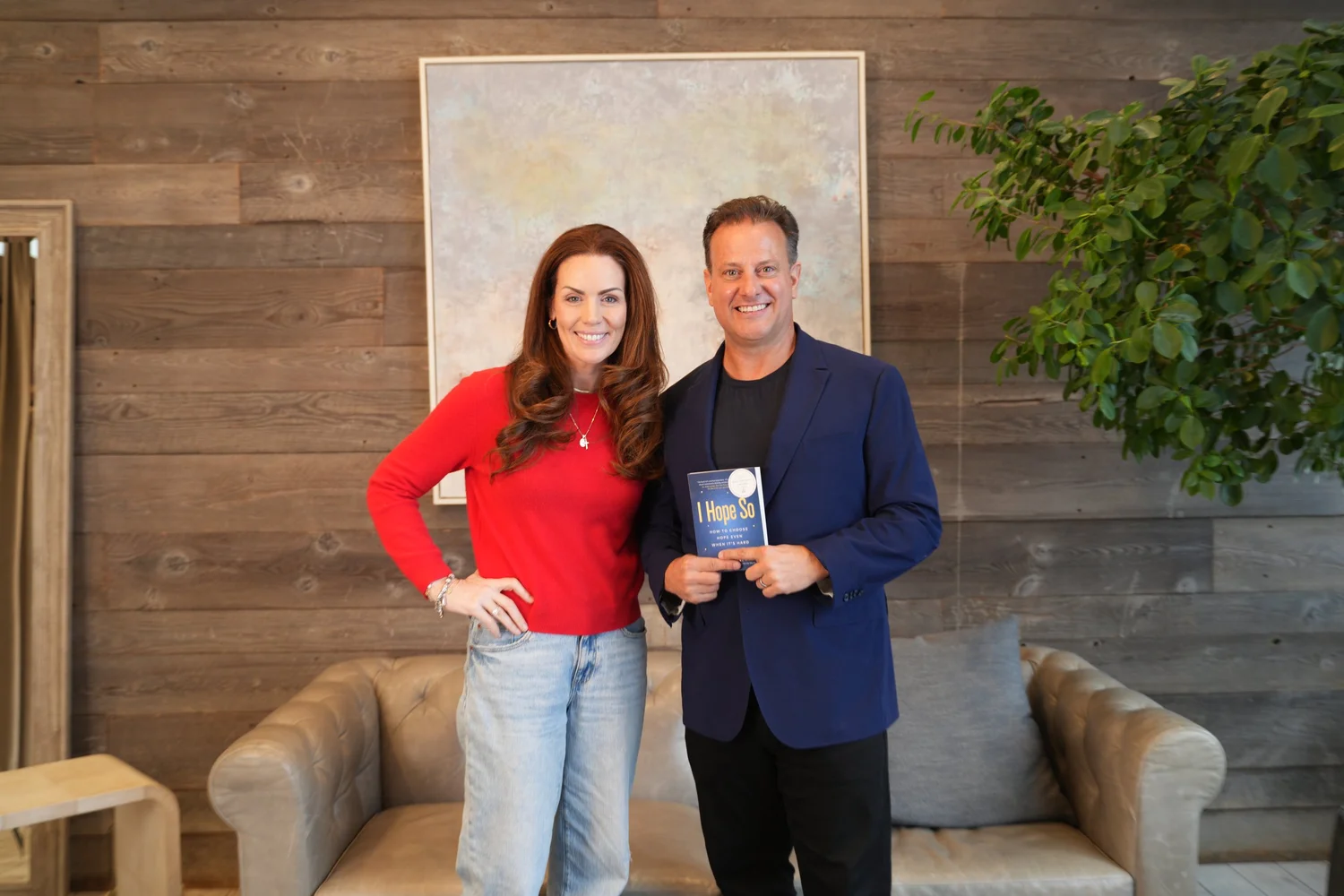
S8 Ep 104How to Choose Hope Even When It’s Hard with Dr. Robyne Hanley-Dafoe
People are navigating stress, setbacks, and uncertainty by trying to control everything and doing it alone—which amplifies anxiety and drains performance. Dr. Robyne’s work in this episode reframes hope as a trainable, practical skill (not “toxic optimism”), and gives listeners a grounded pathway to regain agency, build support, and move forward—especially when life feels wobbly. In today’s conversation Robyne Hanley-Dafoe explores why hope is not the same thing as optimism—and why clinging to outcomes can backfire when life gets hard. She and Dr. Wells unpack “agency thinking” as the antidote to control spirals, then translate that mindset into practical micro-steps: get safe, get resourced, and choose the next right move. You will learn how Dr. Robyne distinguishes hope from optimism and why that matters under pressure, how to replace control-chasing with agency, and how to use “pathway thinking” to identify one realistic next step instead of trying to solve everything at once. You’ll also learn her “get to the shore” approach for moments when you’re overwhelmed. You will discover that hope is a skill you can practice to keep moving forward without needing perfect certainty or a guaranteed outcome. This episode helps you break out of the loop of “I must fix this right now” and move toward a more proactive approach that is achievable and sustainable.
S8 Ep 103Peace Before Performance with Dr. James Rouse
High performers are getting trapped in a modern loop of overdoing + cortisol + information overload, chasing “biohacks” while skipping the inner foundation (hope, self-worth, presence) and the recovery that makes performance sustainable. Dr. James Rouse’s work in this episode is about reclaiming control: building purpose-driven rituals, creating contrast (hard effort + deep rest), and protecting nervous-system regulation so you can perform better without burning out. In today’s conversation James Rouse explores why hope isn’t passive—it’s a personal responsibility you practice daily. He and Dr. Wells unpack the physiology of overdoing (especially living on cortisol), and why sustainable high performance depends on contrast: peak effort paired with deep rest. James shares practical frameworks—“do the one thing,” build self-efficacy, start your day inside (heart coherence before the phone), and close your day with rituals that help you land and recover. You will learn… • How James defines hope as an “inclination of possibility” you choose and cultivate. • Why “biohacking” only works when it’s built on self-love, intention, and responsibility (not shortcuts). • A simple performance strategy: do one thing, witness it, and build self-efficacy (Bandura-style). • The “contrast lifestyle” idea: peak performance + deep rest, plus hot/cold and recovery practices. • James’ real-world morning and evening bookends (heart coherence first; “landing” routine + self-recognition). You will discover that your best performance doesn’t start with more intensity—it starts with more regulation. When you protect peace and presence first, the physiology of focus, energy, and recovery becomes much easier to access. One big challenge this episode solves: This episode helps the listener stop living in the “35–80% zone” of constant effort and constant stimulation—and instead build a repeatable rhythm of all-in effort followed by real recovery, so performance climbs while stress load drops.

S8 Ep 102How to Perform at Your Best When It Matters Most with Dr. Dana Sinclair
High performers often know what to do—but in decisive moments they get pulled into thoughts, feelings, fear, and outcome-focus, which breaks execution. Dana’s work solves the “pressure gap” by giving people a simple, repeatable plan to get calm-ish and refocus on task actions—so they can perform when it matters most. In today’s conversation Dana Sinclair explores why pressure doesn’t ruin performance—drifting into feelings and outcomes does. She breaks down her practical “shift when you drift” approach: get calm-ish (often with breath), identify what’s getting in your way, and lock onto a small number of task cues you can execute right now. Together, Dana and Dr. Wells unpack why confidence and rituals can be overrated if they distract from execution, and how tiny in-the-moment behaviors create better results under stress.You will learn… how to get “calm-ish” quickly using breathing (nose breathing + longer exhales), how to identify your top 2–3 pressure “hotspots” (fear, expectations, mistakes, outcome), and how to turn those into a simple sticky-note performance plan. You’ll also learn how to use performance cues (task actions), build a “facts list” to steady your self-talk, and use brief “daydreaming” (micro-imagery) to rehearse composure and execution.You will discover… that great performance is less about building the “right” feeling and more about choosing the “right” actions—especially when pressure spikes. Dana’s core idea: calm-ish + task cues = results, and results are what eventually build confidence (not the other way around).This episode helps the listener stop getting hijacked by pressure and outcome-thinking—and instead execute a simple in-the-moment reset that brings them back to what they can control: breathing, focus, and the next action.
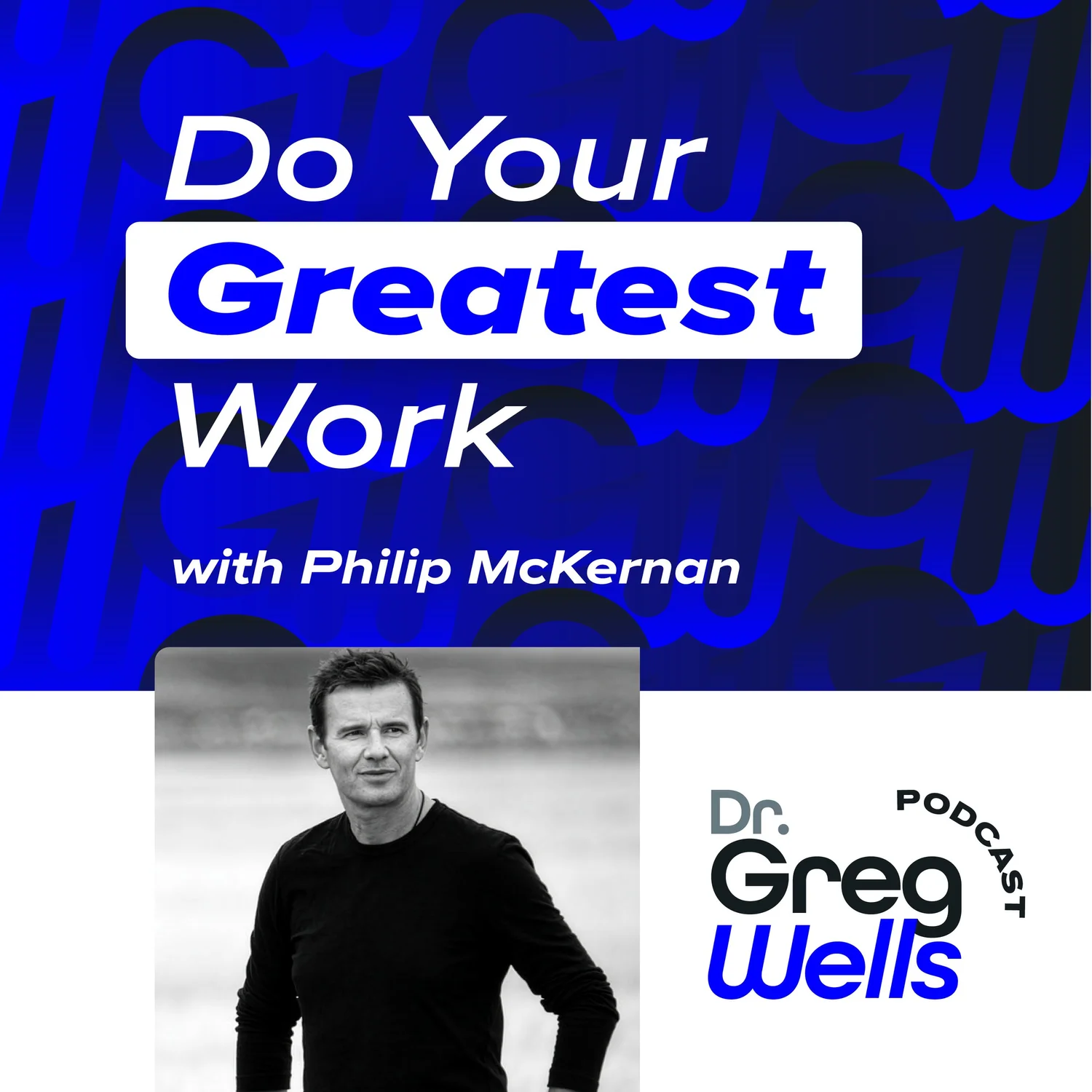
S8 Ep 101From Mindset to SoulSet With Philip McKernan
In today’s conversation Philip McKernan explores what it really takes to move from “doing all the right things” to living from a deeper, more aligned place—what he calls SoulSet™. He and Dr. Wells unpack why so many driven people chase goals, money, and control…and still feel like something is missing. Philip shares how creating space, asking better questions, and trading judgment for curiosity can open the door to clarity and meaningful change. The result is a practical, courageous path toward the work (and life) you were actually built to live.

S1 Ep 60#60 - Navy SEAL Strategies to Stay Calm and Execute Under Pressure with Steven Drum
Stephen is solving the “pressure gap”: the moment when stress hijacks focus and people react instead of respond—in leadership, business, and life—because they haven’t built a deliberate process to prepare for defining moments.In today’s conversation Stephen Drum explores what it really means to “perform on the X”—the critical moment when everything is on the line and you don’t get a do-over. He breaks down the difference between reacting and responding, and why presence, rehearsal, and simple performance cues matter more than raw intensity. Stephen also shares how Stoic philosophy, mindfulness, performance psychology, and breathing practices help leaders stay steady in chaos.You will learn how Navy SEAL teams prepare for “no-return” moments, and how to translate that into boardroom, relationship, and life pressure. You will learn practical tools to notice your stress signals early, pause, and choose a response that serves you. You will learn why confidence is earned through preparation (not “fake it till you make it”), and how to build a repeatable readiness process. You will learn simple breathing and mental rehearsal techniques that improve focus and composure fast.You will discover that your mind and body often respond to a high-stakes presentation (slides failing, tough feedback, big pitch) with the same stress physiology as truly dangerous situations—and the solution is a trained, deliberate process, not willpower.Stephen helps listeners solve the challenge of staying calm, clear, and decisive when pressure spikes—so they can execute effectively instead of getting pulled into fight/flight/freeze and regretful reactions.

S1 Ep 59#59 - The Three Levers: Andy Blow on sweat, sodium, and smarter hydration
Andy is solving the “guesswork problem” in endurance performance: athletes lose wildly different amounts of fluid and sodium, so generic hydration advice leads to dehydration, cramping, GI distress, or even hyponatremia—and performance falls apart in the heat and over long durations. In today’s conversation Andy Blow explores why hydration and fueling are never one-size-fits-all—and how understanding your sweat losses can transform performance in long or hot training and racing. He and Dr. Wells break down sweat physiology, heat adaptation, and why you can “do everything right” yet still struggle if your sodium and fluid strategy doesn’t match your body. Andy also shares practical guardrails for drinking, electrolyte replacement, and carbohydrate intake, plus the simple “three levers” framework that helps athletes execute better under stress.You will learn why humans sweat (and why it’s a performance superpower), and how sweat is linked to blood plasma and electrolyte loss. You will learn the real-world range of sweat sodium losses (and why that range matters more the longer/hotter the event). You will learn how heat acclimation changes sweating, blood volume, and tolerance over ~2 weeks. You will learn practical hydration guidance (short sessions vs long sessions) and how to avoid overdrinking/underd rinking traps. You will learn the emerging best practices for endurance fueling—from ~30g/hr up to 90–120g/hr for high-output athletes who can tolerate it.You will discover that your “hydration problem” is often a sodium + fluid mismatch—and that getting those two numbers closer to your personal losses can be “night and day” for performance in the heat. Andy helps listeners solve the challenge of finishing long/hot sessions strong—without bonking, cramping, or having the day ruined by avoidable hydration and fueling mistakes.